
AS I WRITE, I’m struggling with the idea that this is, for all we know, the last truly untampered Lamborghini V12. It’s one that’s liberated by atmospheric pressure alone, sans forced induction and/or the tech trickery of hybridisation and heavy batteries that are lambasting the classic supercar genre.
Yes, the future is no doubt faster for such crazy creations, but the theatre won’t transcend anywhere near as much. The Aventador SVJ makes me acutely aware of this and the fact it could very well be the last of a dying atmo V12 breed. Of course we don’t know this for sure, but it seems the stay of execution is almost over.
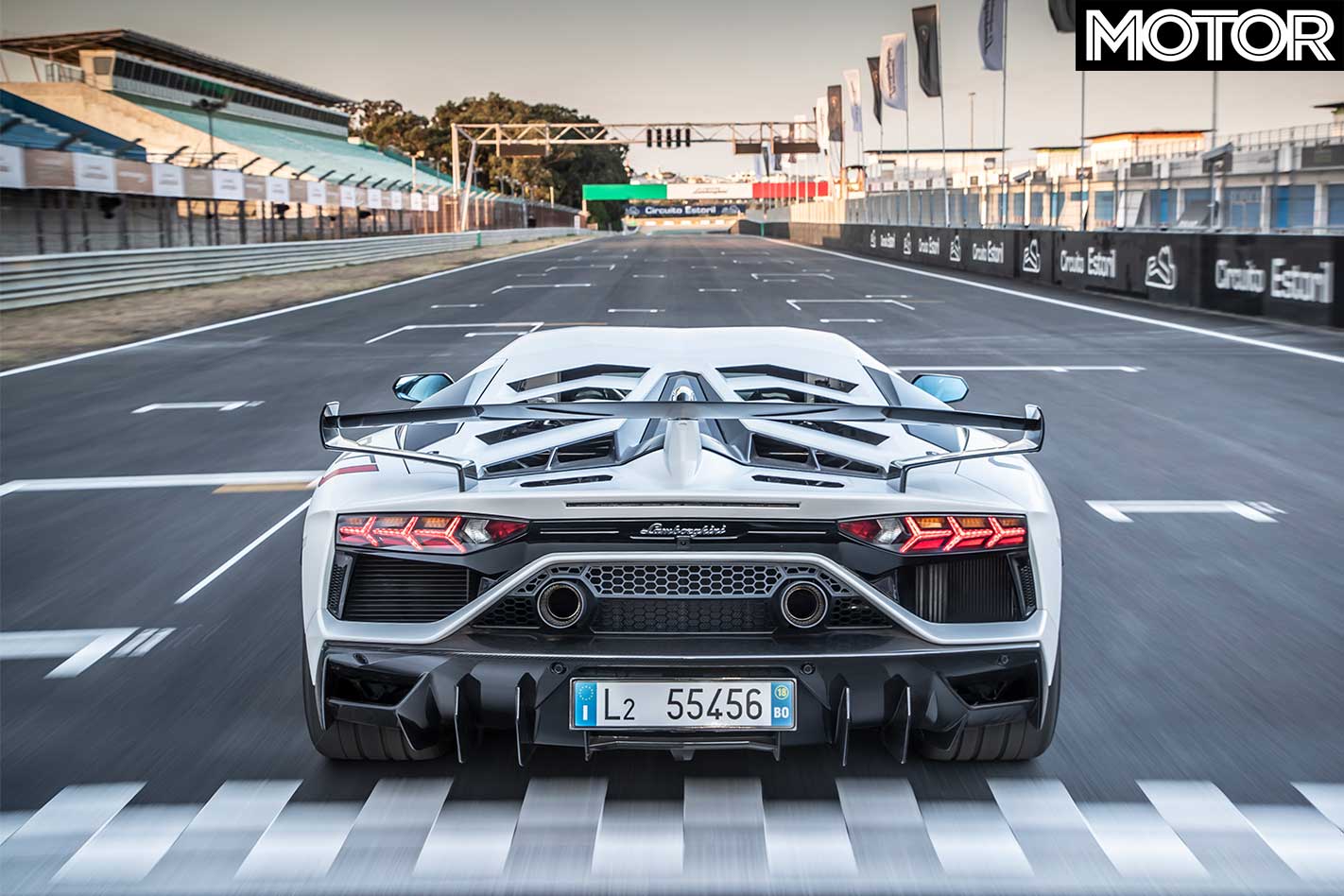
Making my point all too real is the fact that a number of Lamborghini Aventador SVJs are belting down the main straight at Estoril racetrack (a 4.182km circuit that was home to the Portuguese Grand Prix from 1984 to 1996) mere metres away from me. The noise is hard to put into words. It’s simply otherworldly and much more race meeting than track day.
That’s rare in the world of production cars, to the extent that there’s a ‘last of the interceptors’ feel about the Aventador, with its big, mid-mounted naturally aspirated V12 and all of the promise and compromise such an engine brings.
Sure, Ferrari still makes a naturally aspirated V12 (used in the sublime 812 Superfast), as will Aston Martin for a short while, but neither in quite the same setting as the manic Lambo. There’s a difference between a super-GT car and this, a super-sports car. A supercar of the original sense, partly figuratively, but also literally.
An Aventador’s mid-mounted engine breathes through a much shorter exhaust than a front-engined GT, so its bark is louder. It’s a fact that means a car like this will never be ‘so what’. It dominates the experience.
It’s important to remember that, whatever else you think about modern Lamborghinis and the way they’re used. Only five per cent of Aventador buyers will regularly show their car a racetrack. Which is a crying shame, because if owners did, they’d really feel how fast it is, rather than just know it set a 6min 44.97sec lap of the… well, you know where, the famed track somewhere in Europe’s heartland.
It achieves this feat by being more powerful, lighter, more aerodynamically clever, dynamically tweaked and having more grippy tyres than before. The full engineering gamut at Lamborghini’s disposal has been thrown at the Aventador. The J, standing for Jota (see page 52), isn’t just there for show.
Let’s start with the engine. The 6.5-litre V12 has titanium inlet valves, a lighter flywheel, less internal friction, an 8700rpm limiter and now makes an astonishing 566kW at 8500rpm. More importantly, though, the 690Nm peak torque was at 5500rpm on the Aventador SV, but then tailed away rapidly.

The SVJ makes more torque through the entire rev range – before and including 5500rpm – but its 720Nm peak doesn’t arrive until 6750rpm and its curve is flatter after that. Considerably more torque reaches the wheels all the time.
Those wheels are lighter, as are several other body components, so this is a 1525kg car (dry – and given a fuelled Huracan Performante was 200kg more than its claimed dry weight when we put it on our scales last year, you can imagine where this will end up).
Chassis changes see springs unchanged, but dampers and anti-roll bars stiffer, and the torque split typically three per cent more biased to the rear; although it varies anyway. The front is disconnected entirely during braking, to mean the only steering wheel sensations are from braking, and there’s active rear-steer.
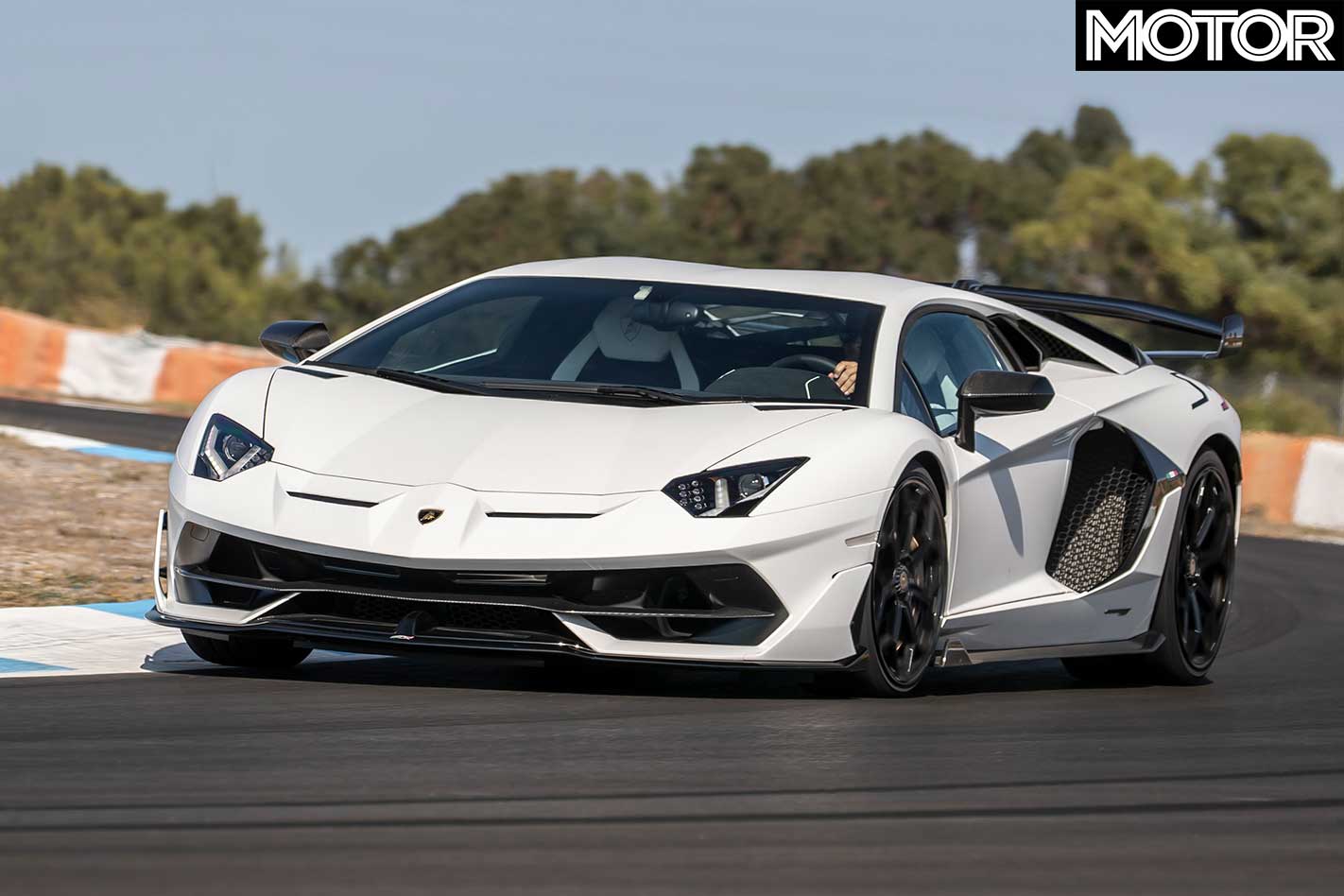
Then there’s the improved aero, which brings the SVJ 40 per cent more downforce than an Aventador S but, significantly, it’s the second-generation of ‘ALA’ (Aerodinamica Lamborghini Attiva 2.0). This means it can push turbulent air out beneath the rear spoiler to stall it, reducing downforce and drag, and which it can split from left to right.
In cornering, then, the SVJ will make more downforce on the inside of the bend, which keeps the body flatter and helps turn-in. Overall lateral g-force isn’t necessarily increased (you’d just put a massive wing on if you wanted to do that), but it apparently means less lock is required to get into a turn.
Given there’s less applied lock, more power can be applied, making corner exits even quicker. I don’t think it makes a lot of difference to an overall lap time, but according to one engineer, it could be between one and three seconds around a near seven-minute lap of the Nürburgring.
Making a bigger difference is the option, for the first time, of race-derived Pirelli P Zero Trofeo tyres, rather than Corsas, as on other Aventadors. It’s difficult to determine the exact benefit, but it’s hard to imagine them not cutting at least 10 seconds on a long lap. Plus, the rears are a staggering 355-section units wrapping 13-inch wide rear wheels. That’s an awfully large patch of rubber for a supercar that already benefits from all-wheel drive and 255-section front hoops.
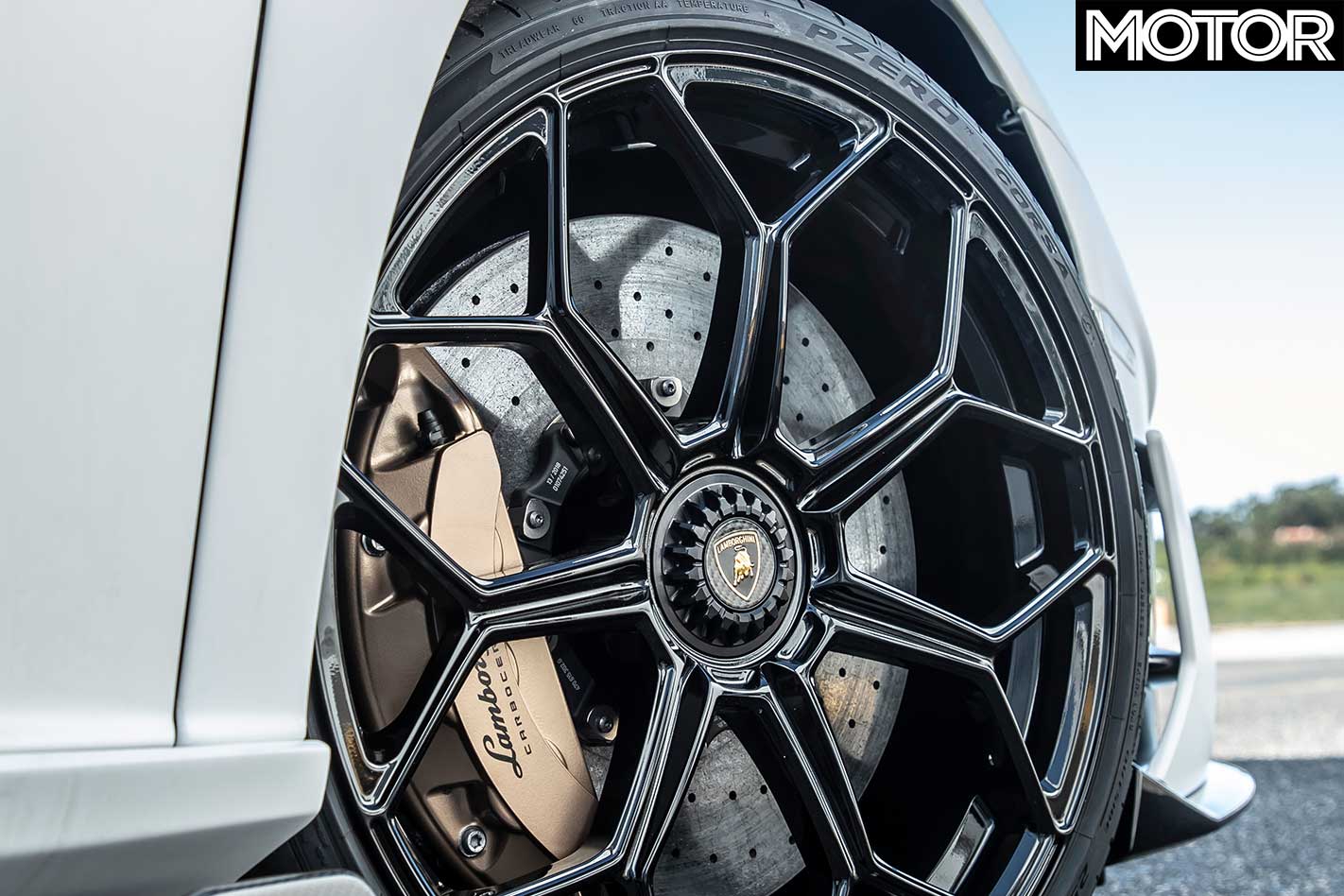
Would it surprise you to learn that the SVJ was extremely fast? Thought not. J is for article J in the old FIA documents that told car makers what they had to do to go sportscar racing. And although the Aventador doesn’t race, there are slower cars that do.
Less focused-feeling ones too. The SVJ is fast in the old-fashioned, brutal way, in a straight line, at least. What might be the world’s greatest production engine is exceptionally urgent, and feels no slower to me than the crop of hypercars I’ve driven. Which, probably, is because it isn’t. Anything that can get to 100km/h in less than 3.0sec isn’t hanging about. Let off the leash, it’ll charge to a 350km/h top speed.
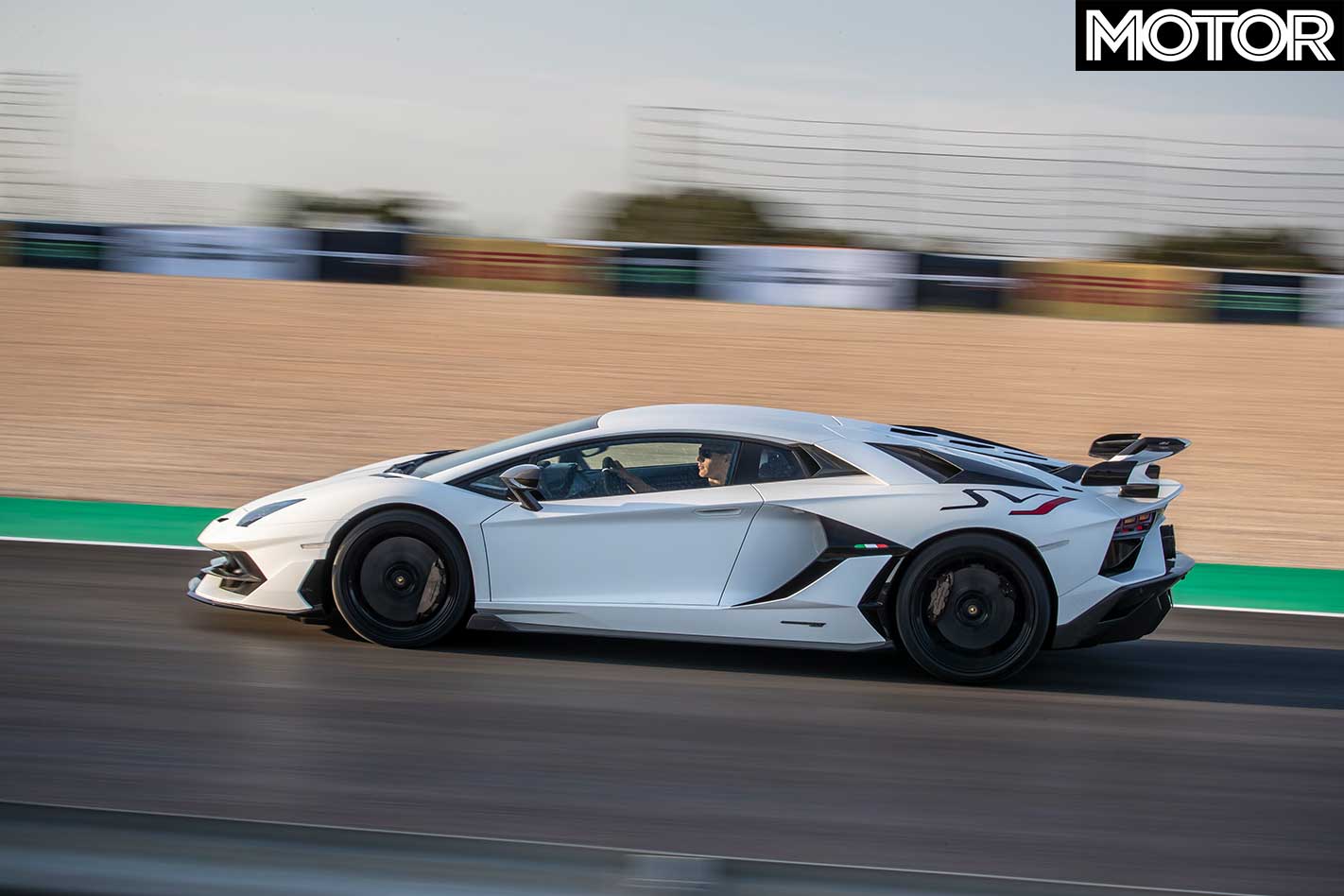
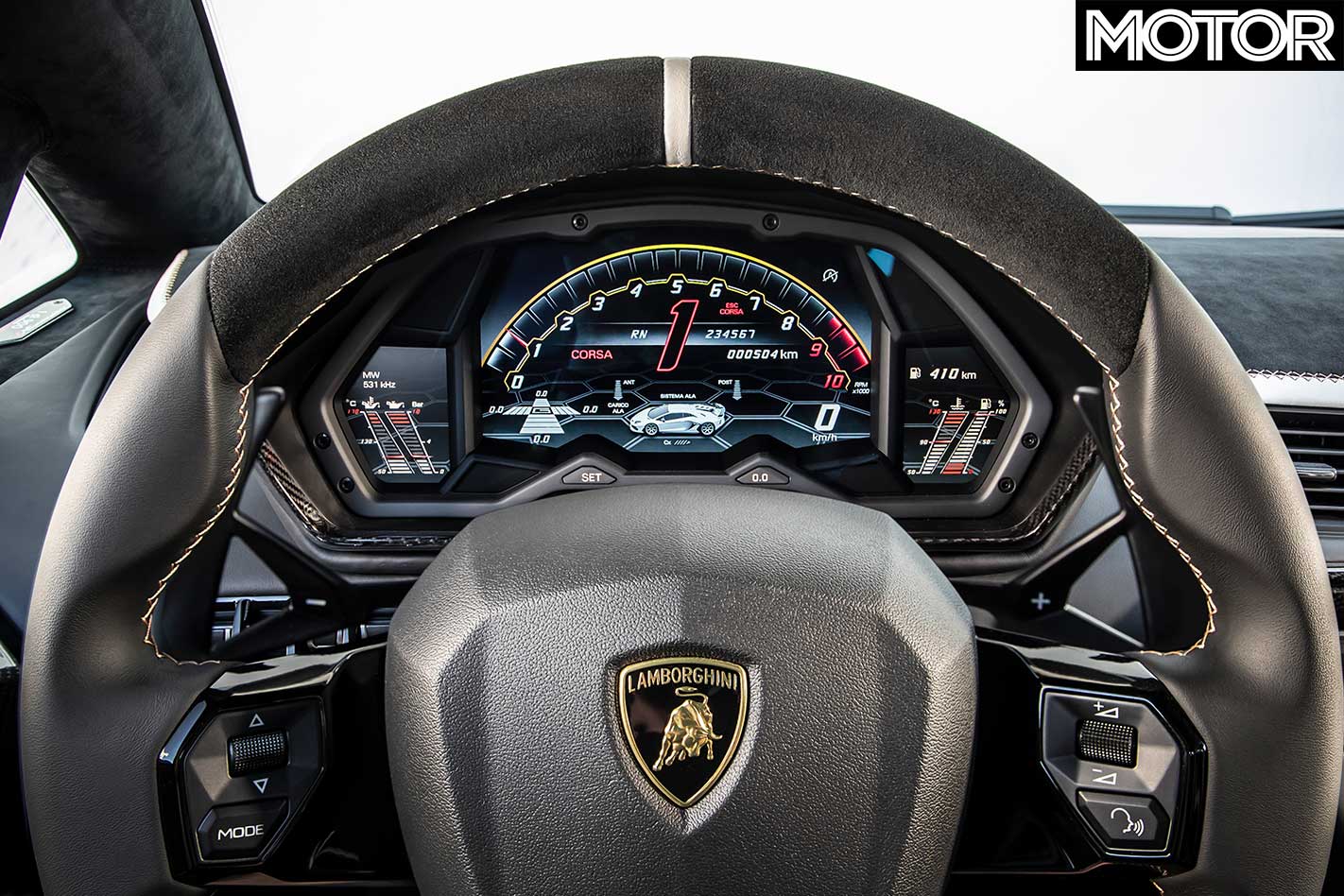
It’s mated to a single-clutch gearbox, which is as terrible most of the time as you’ll expect, fudging through changes with an inordinate amount of head rock. But put the car into ‘Corsa’ mode, which also puts the dynamic steering into a constant rather than variable ratio – so is something you should absolutely do – and it just punches through shifts with a fairly satisfying venom.
Braking is excellent, in terms of strength. You’re aware of the car’s shimmies, though that might be down to the fact that you can feel them well, rather than that they’re more severe than in other cars. Plus there’s the fact that, at the end of Estoril’s main straight, you’re likely doing more than 270km/h. From lower speeds, the SVJ pulls up brilliantly.
What it does from there, though, and into corner entry, can feel odd. It’s natural in a big car to ease off the brakes gently as you begin to turn – it keeps the car’s nose planted and reduces understeer. The rear-steer in the SVJ means you don’t need to do that. In fact, it almost guarantees that you’ll be winding off quite a lot of the lock that you’ve just applied.
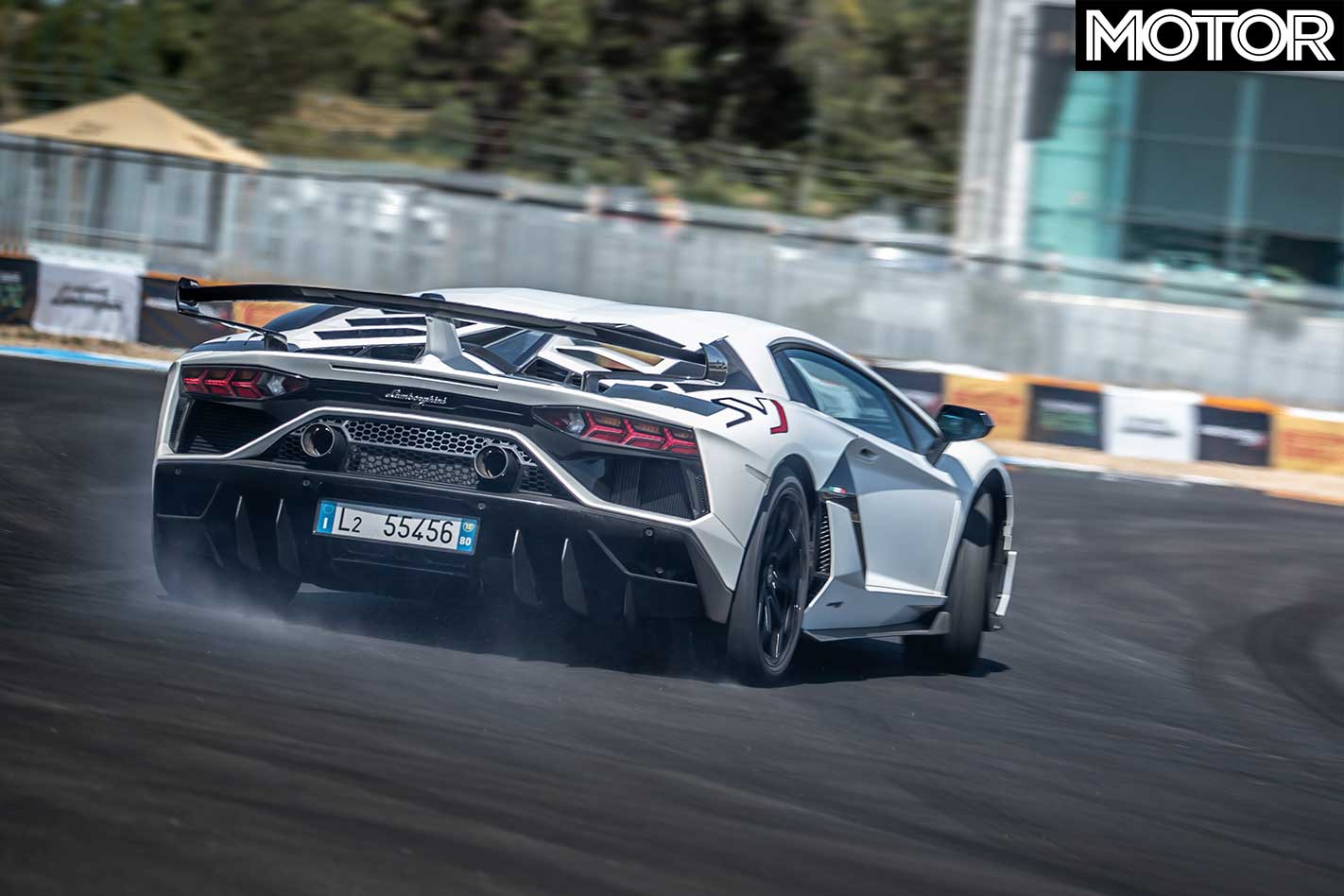
At nearly five metres long, the Aventador is a big car and Lamborghini figures you’ll want all the help you can get to make it feel agile. Job done, then, to that extent. It pays to brake only in a straight line, then turn delicately and let the rear-steer do the work.
That does mean there’s a slight dead spot on the way into a corner, a steady-throttle state before you line up the exit. Although given you’ll be going quite fast, it won’t last that long. And corner exit is, in ‘Corsa’ mode, pretty neutral, but leave the car in ‘Sport’ and it’s slower, and more rear-biased.
However, there’s a small caveat regarding these impressions. Estoril was resurfaced about a fortnight before this was written and therefore about 25 per cent more slippery than usual. Lamborghini says the handling balance would be largely unchanged, unless you tried to give it a ‘bung’ at low speeds, which would induce understeer here.
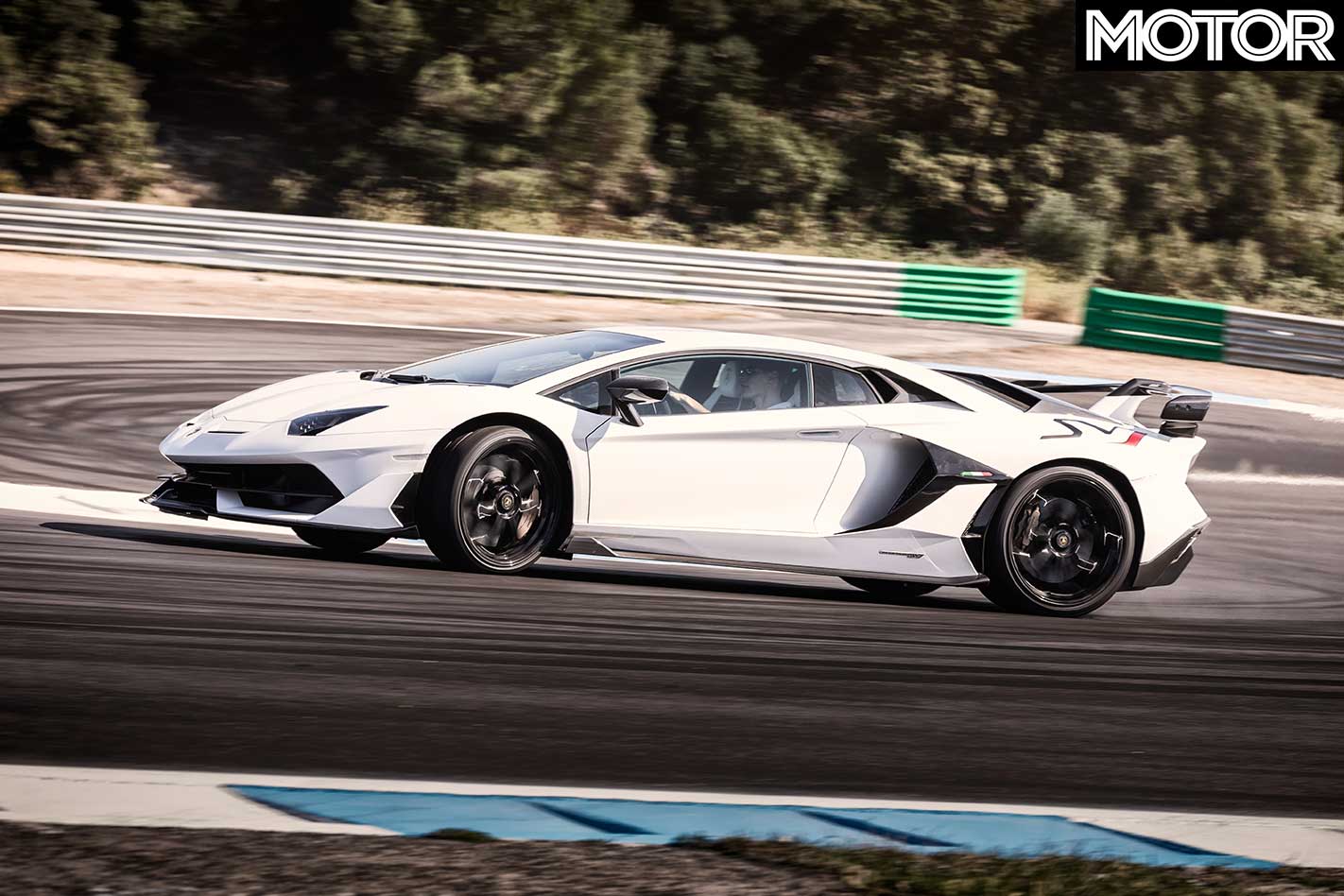
Our test car ran Corsa tyres too – because Lamborghini didn’t know the low-grip, low-degredation surface was going to be laid when it performed its recce, and brought 240 sets of Corsas for the launch, expecting to get through a day per car. As it is, they still looked new after 20 laps.
On a conventional circuit surface, then, and on Trofeo tyres, the SVJ’s corner speeds would be astonishing, rather than just merely impressive. This is, clearly, in all-round capability as well as straight-line speed, a top-league supercar/hypercar.
Given the interior is laden with carbon fibre, as is the construction – and given the level of aero and handling tech – it’s possibly no surprise that it arrives costing $949,640. Although this looks almost sensibly priced compared with some cars with similar power outputs.
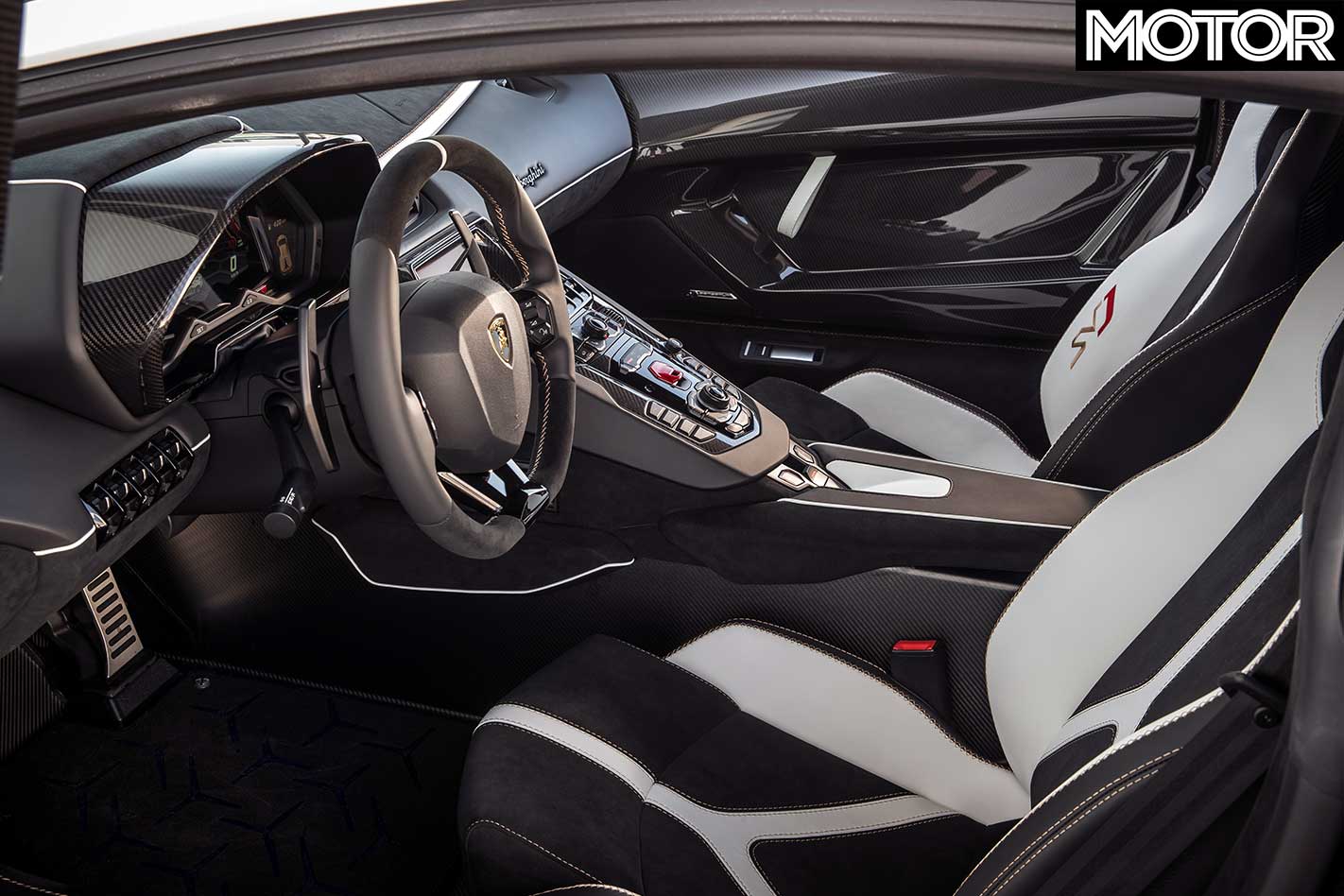
Sure, the interior is, in places, starting to feel its age (the Aventador is now seven years old), the transmission is an antique and the engine doesn’t have any of the fancy hybridisation the market is coming to expect, but the V12’s simplicity is almost worth a premium for that reason alone.
I’d prefer it if getting the best out of the Aventador SVJ’s handling was a bit more conventional, if it gave you more options to drive your way, rather than its way. However, that’s all part of the Pantomime. The SVJ has the ability to frustrate and delight within the same lap. It certainly never leaves you cold or feeling like you’re driving a sanitised version of a once raw experience.
There’s unmistakeable, unfiltered drama at play here. The SVJ needs to be tamed. However, the Aventador now has a dynamic capability that renders it something more than just a show piece – it isn’t a faux halo. The credentials meet the status.
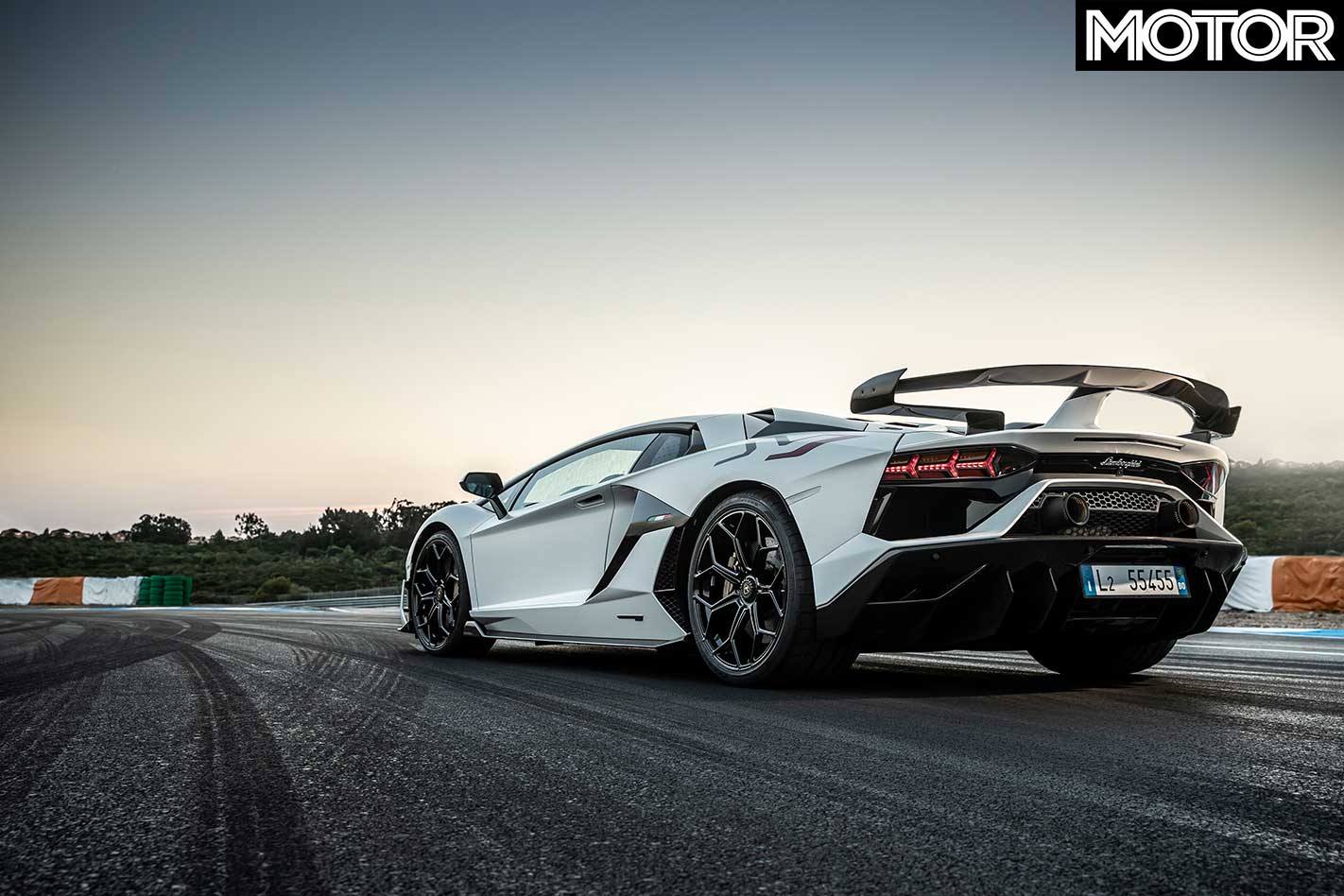
It’s hard not to end where we first started, pondering the fate of the engine that powers such an iconic Lamborghini silhouette. Just 900 SVJs will be made, and although it’s perfectly imperfect in many ways, it has a sound that will stick with you for life – one you simply won’t find anywhere else. And I can’t help but like that.
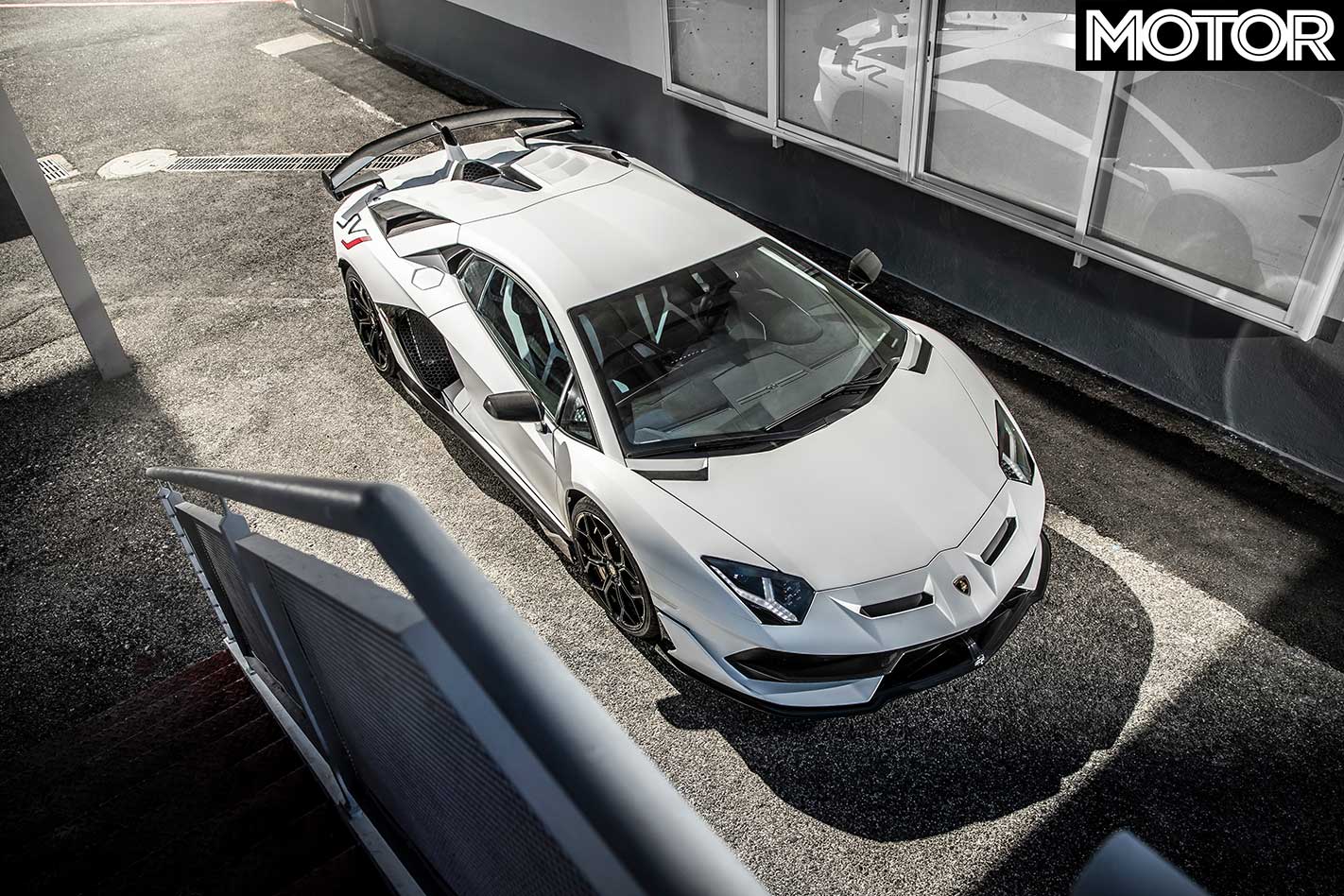
FAST FACTS 2018 Lamborghini Aventador SVJ
BODY: 2-door, 2-seat coupe DRIVE: all-wheel ENGINE: 6498cc V12, DOHC, 48v BORE/STROKE: 95.0mm x 76.4mm COMPRESSION: 11.8:1 POWER: 566kW @ 8500rpm TORQUE: 720Nm @ 6750rpm WEIGHT: 1525kg POWER-TO-WEIGHT: 371kW/tonne TRANSMISSION: 7-speed single-clutch SUSPENSION: double A-arms, pushrod inboard coilovers, adaptive dampers, anti-roll bar (f/r) L/W/h: 4943/2098/1136mm WHEELBASE: 2700mm TRACKS: 1720/1680mm (f/r) STEERING: electrically assisted rack-and-pinion BRAKES: 400mm carbon cermic discs, 6-piston calipers (f); 380mm carbon ceramic discs, 4-piston calipers (r) WHEELS: 20.0 x 9.0-inch (f), 21.0 x 13.0-inch (r) TYRES: Pirelli P Zero Corsa; 255/30 ZR20 (f), 355/25 ZR21 (r) PRICE: $949,640
PROS: Epic potency; amazing soundtrack; almost everything CONS: Silly price; hard to tame; gearbox; last atmo V12? RATING: 4.5 out of 5 stars
Putting the J in SVJ
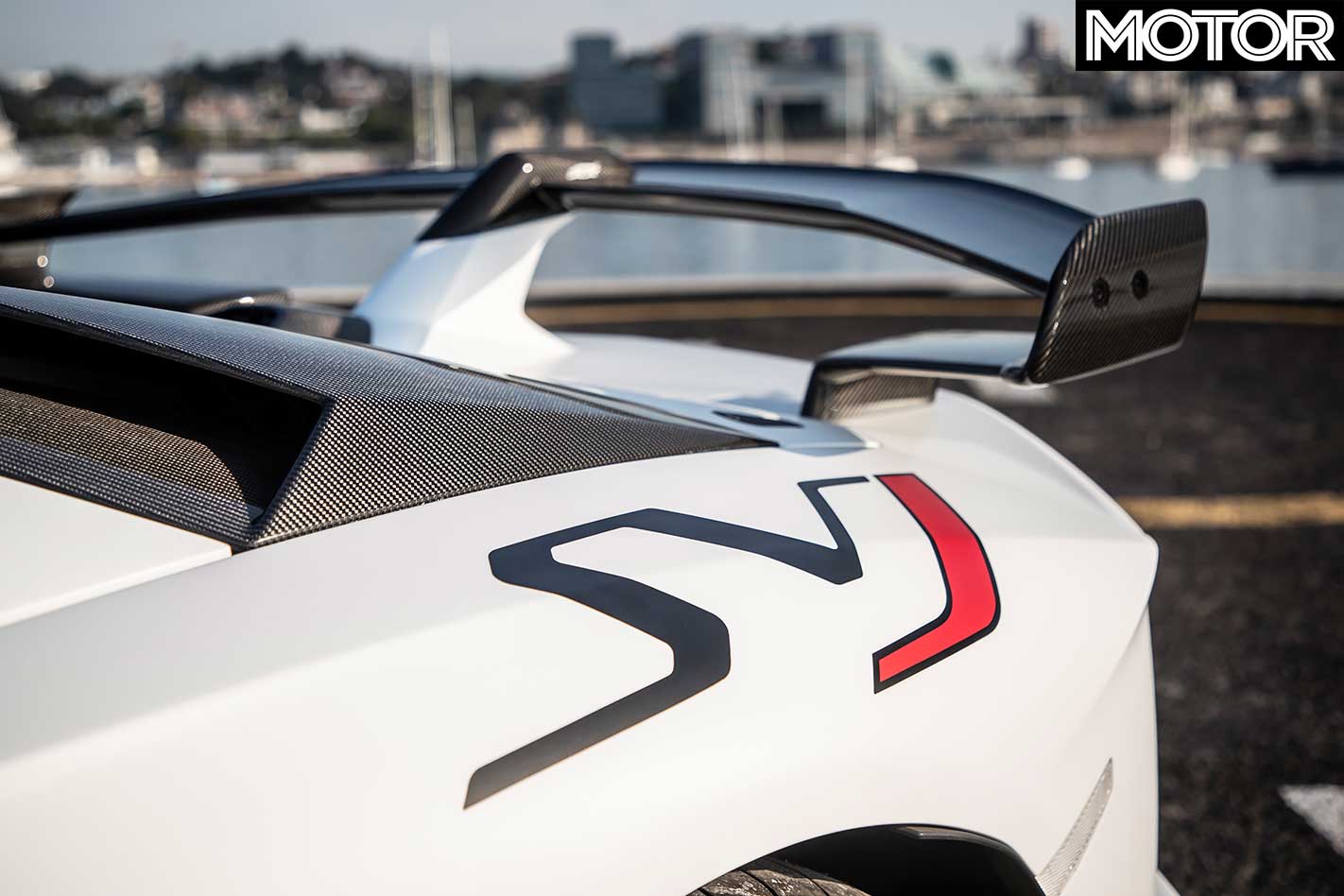
J STANDS for Jota, which was a car born from boredom at Lamborghini. In an interview with Hemmings, head test driver Bob Wallace says he had ample time on weekends to play with things around the factory. And in 1970, they were the Miura.
Its flawed performance inspired the SV, which he built upon with aluminium panels, a gutted interior, heavily reworked suspension, new aerodynamics and a dry-sump V12 making 300kW-plus. The single Jota was crashed by a customer, but its legend lived on in the 1971 Miura SVJ – a small run of cars customers requested be built in similar spec to the Jota.
Along with the manufacturer and product name, a tyre’s side wall contains codes that provide information such as its size, speed rating, maximum loads and pressures, and a tread-depth indicator.
It can look pretty confusing at first, so here’s a quick video that explains what to look for to help you choose the right tyre for your car or SUV.
For more detailed information about each code, read our guide to ‘All you need to read about tyres’.
Ford’s XR6 Turbo is a favourite in the MOTOR bunker. No surprises there, the blown six’s combination of power and torque, handling and general desire to wag its tail and lick your face is a winning set-up.
This feature was originally published in MOTOR’s December 2004 issue
The blown powerplant neatly sidesteps the major gripes we have with the latest generation of local V8s by producing real, low-rev urge and by not placing any unnecessary weight over the front axle. Our Aussie Rules test of 18 months ago (July 2003) proved the point; the XR6 Turbo shows the rest of the big-inch locals (even the bent-eight ones) the door.
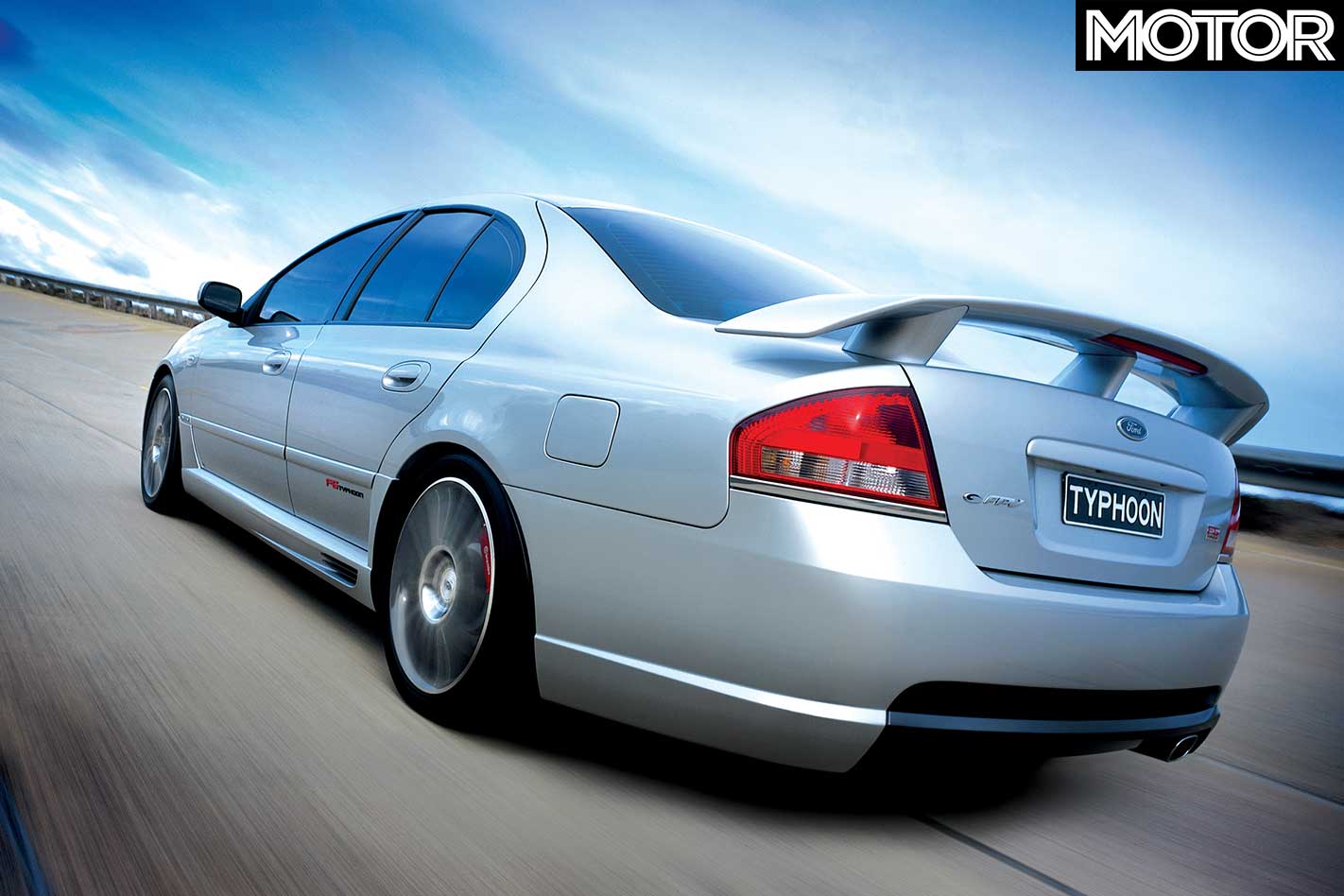
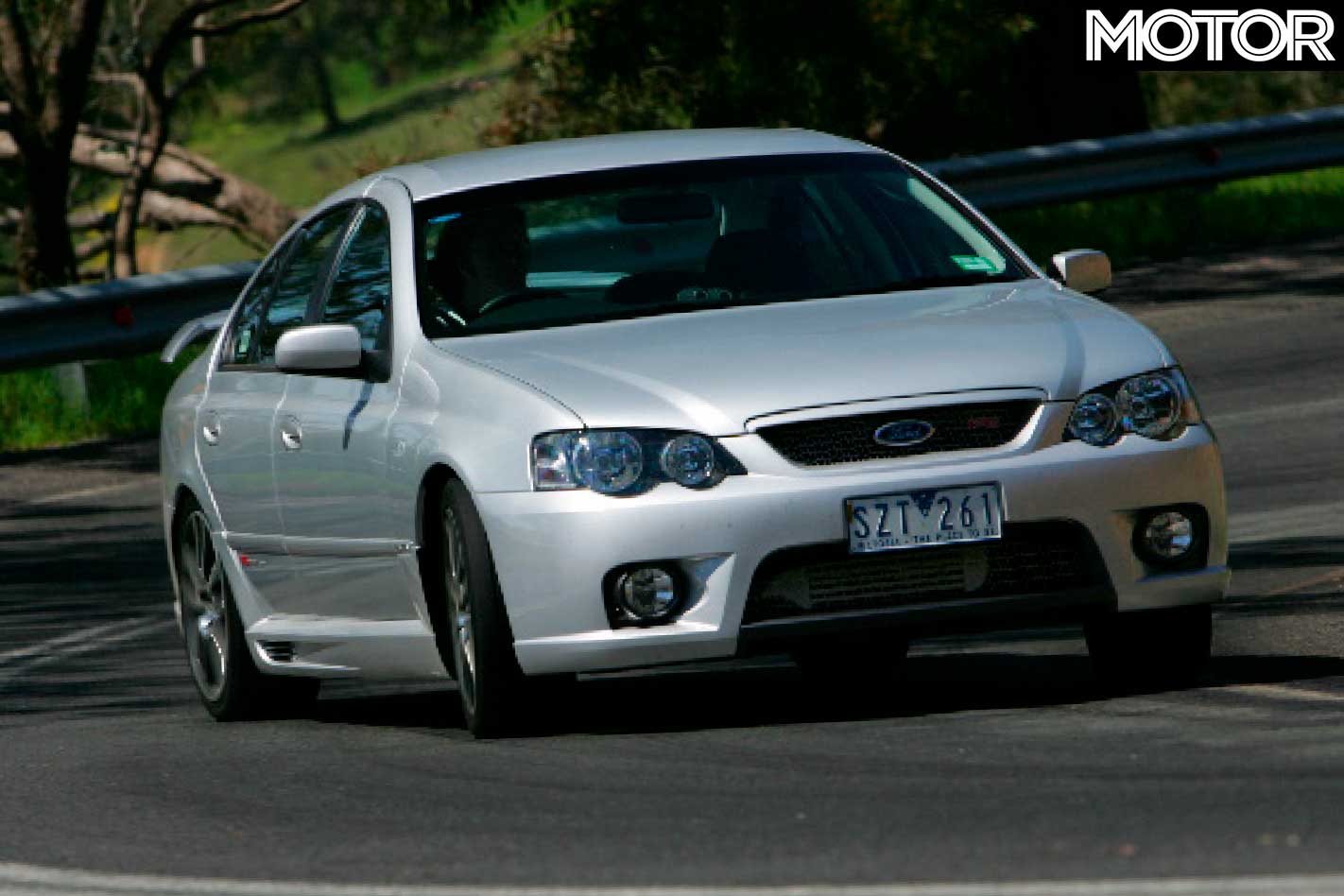
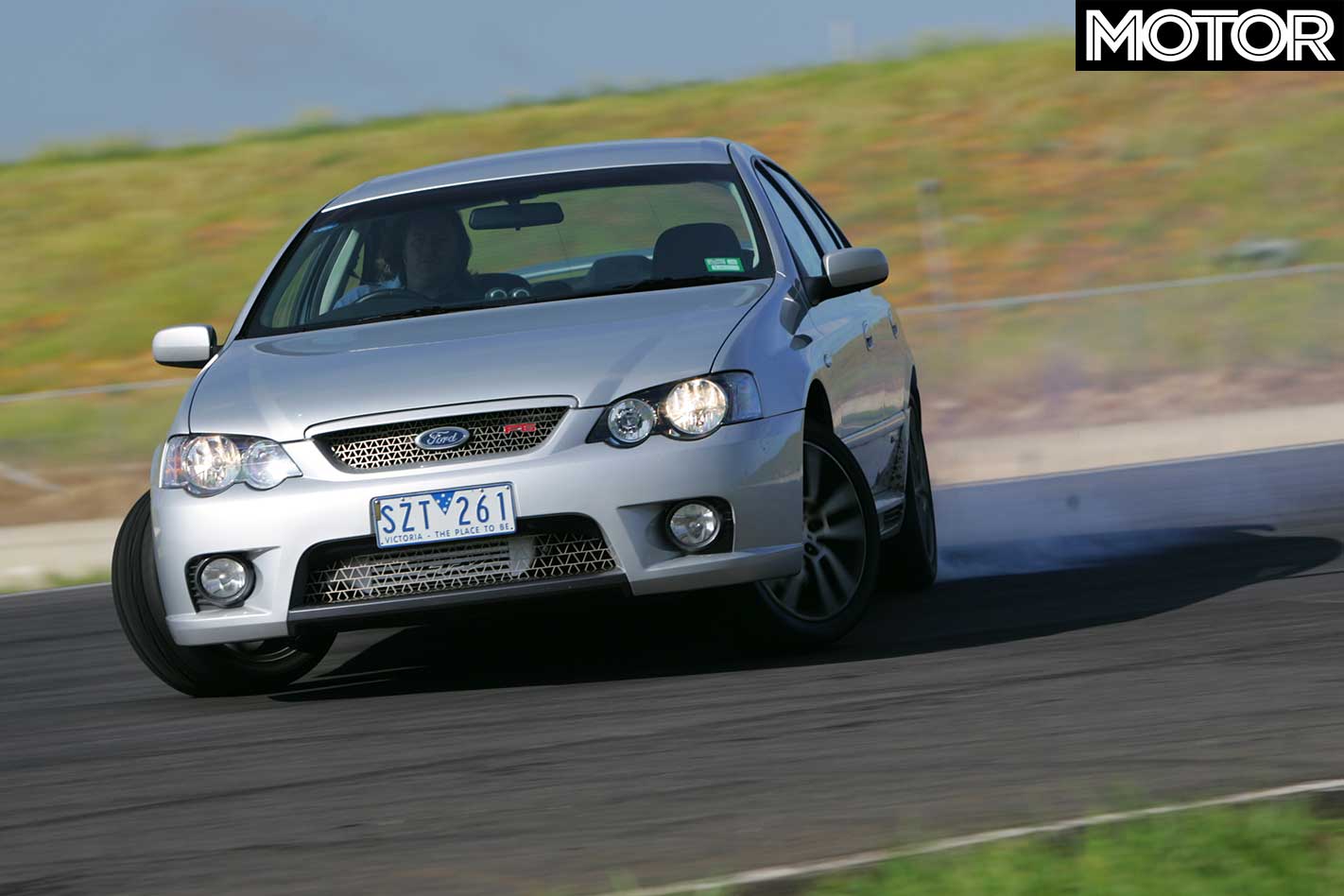
In case you thought the Typhoon was just a tweaked XR6T, think again; there was no way Ford’s hottie-shop was going to badge, as its own, something that wasn’t the full FPV experience. So, the F6 gets specific trim, body kit, wheels, suspension, clutch and engine spec.
Remember, too, the emphasis was always on making sure the car matched the expectations of the sort of buyer with the best part of 60 large to spend on a big, local four-door.
Improving the huffer-fed six would appear to be a bit tricky, given the fact that the basic, 240kW, 450Nm original is so flash to begin with. But according to FPV, screwing a bit more out of the four-litre mill wasn’t at all difficult, given the on-board ECU can control everything from boost pressure to camshaft timing, ignition curve to injector phasing.
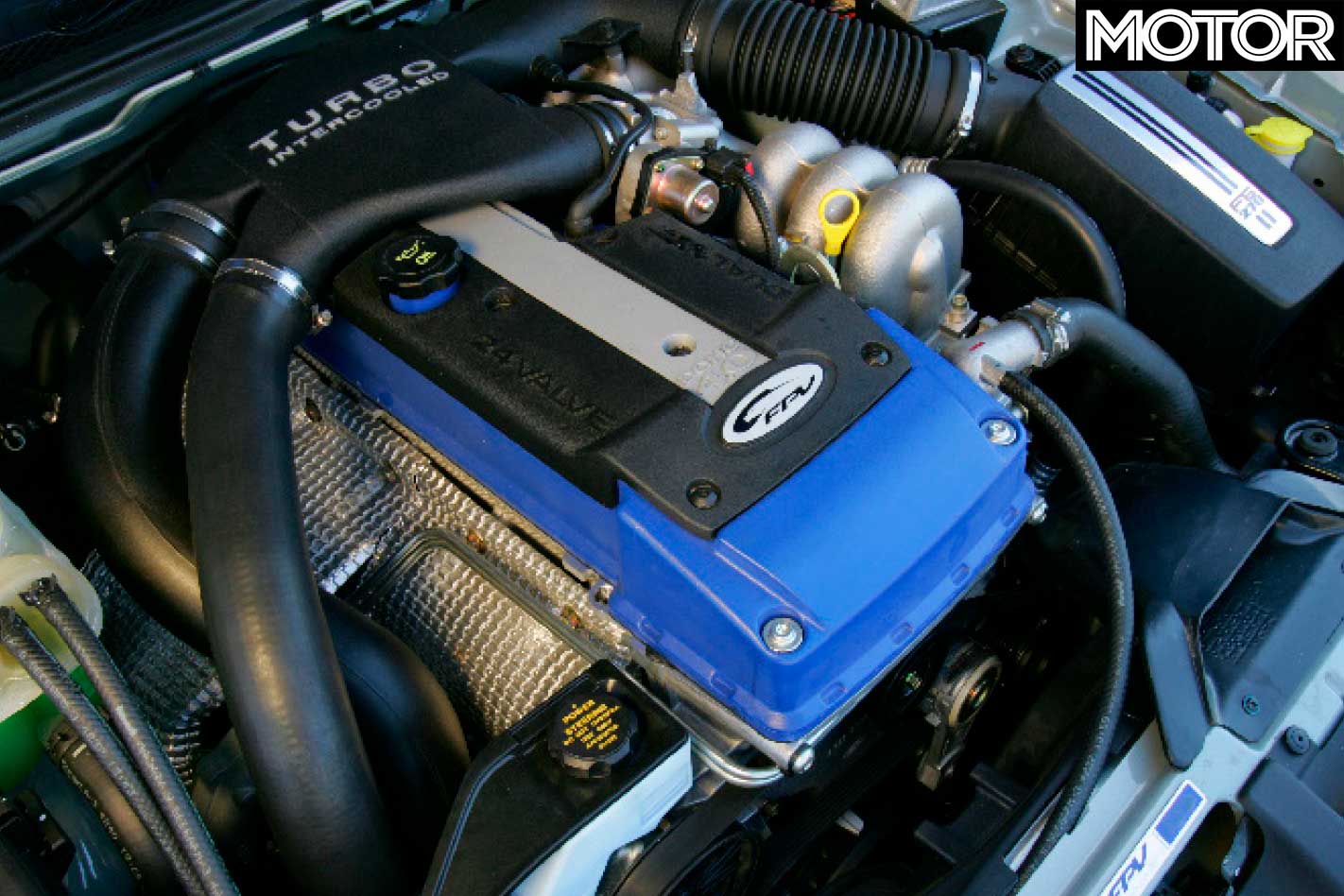
The variable cam timing element has been extensively reworked to pack out the torque curve down low and boost has been upped from around 6psi to 9psi. Getting more air in has also been a priority, so the air-box now has two entry points to reduce the pressure drop into the compressor. The intercooler has 50 percent more surface area and the engine has been recalibrated to run exclusively on PULP.
The cylinder head has been fitted with heavy-duty valve springs and the bottom end has been beefed up with tougher conrods, which feature a fully floating small-end, a la the LPG-specific Falcon six. An oil cooler keeps the lid on oil temp and good thing, too, because we’ve had a couple of Falcon turbos go into limp-home mode during high-ambient track tests.
Power has been booted up to 270kW at 5250rpm but the real winner has been torque, which has leapt a full 100Nm to 550 and is available from 2000 to about 4250rpm. The stock XR6T might want to lick your chops, but the F6 is more likely to hump your leg.
Bearing in mind that $58,950 price-tag, it’s no surprise to find that the interior is a bit swisher than an XR6. You get specific seats in a metallic-looking cloth trim (leather is still extra) and the bigger, colour screen for the info display. The steering wheel ought to be changed for something a bit racier, though, if only to get rid of the Ford badge (why no FPV ID?) and to prevent taxi flashbacks.
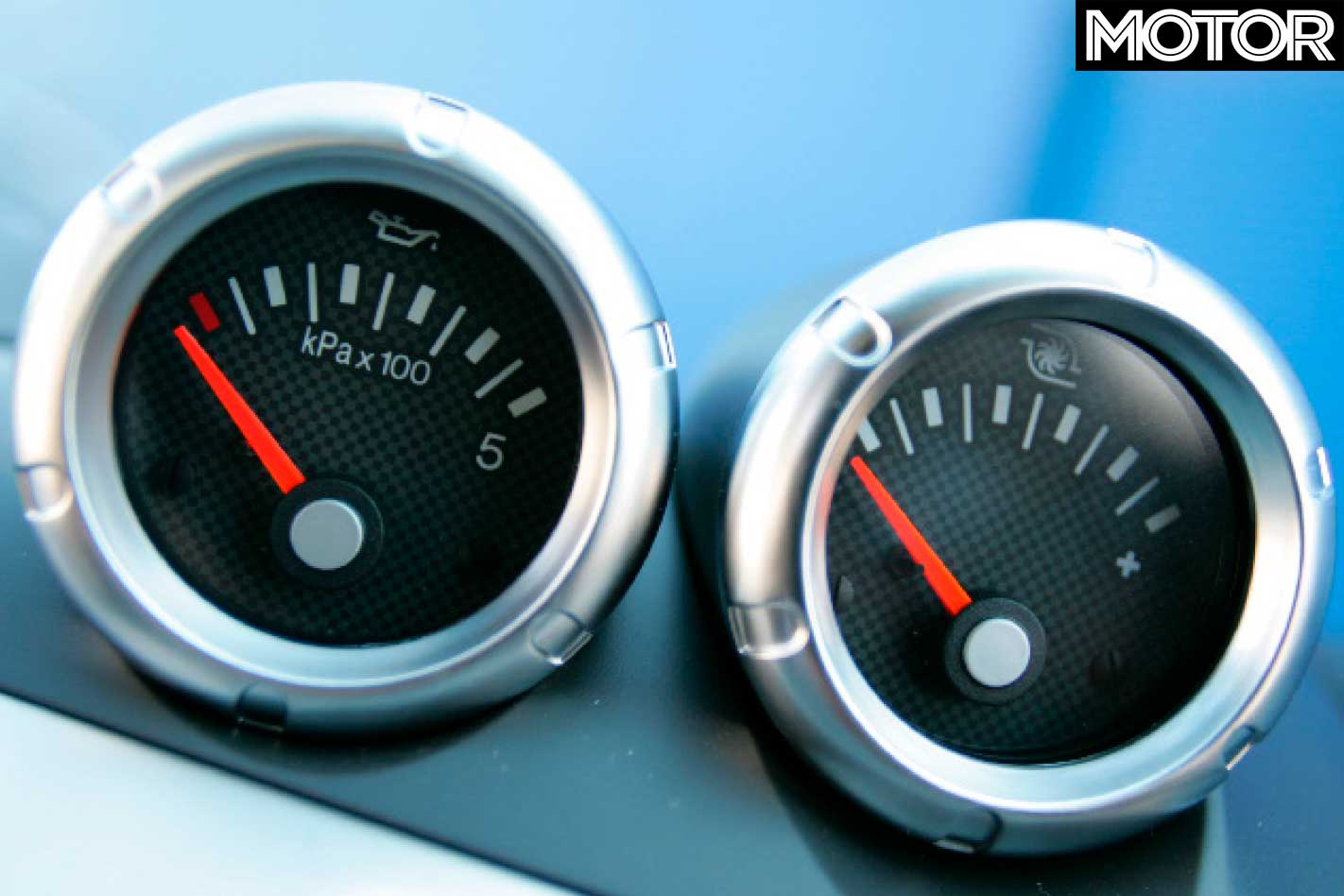
The F6 also picks up the dash-top pod gauges which monitor oil pressure and turbo boost – remarkably, the latter has no numbered scale! And both look a bit Fisher Price.
Oh, how my heart sank when I learned Ford was going to use the Tremec T56 six-speed in BA II. See, the Tremec is the same ’box Holden uses in V8 versions of its Commodore and, frankly, it’s a bag-o-spanners.
But since the old T5 just wouldn’t cope with the Typhoon’s torque mountain, a ’box with the requisite fortitude was required. Along the way, it also had to have better ratio options than before, physically fit the Falcon’s floorpan and carry an appropriate price-tag. So the Tremec it is, then.
The switch to the six-speed also gives Ford and FPV the chance to fit the same ’box to both the turbo-six and the V8, so there’s an economy of scale thing working, too. But none of that changes the gearbox’s shortcoming.
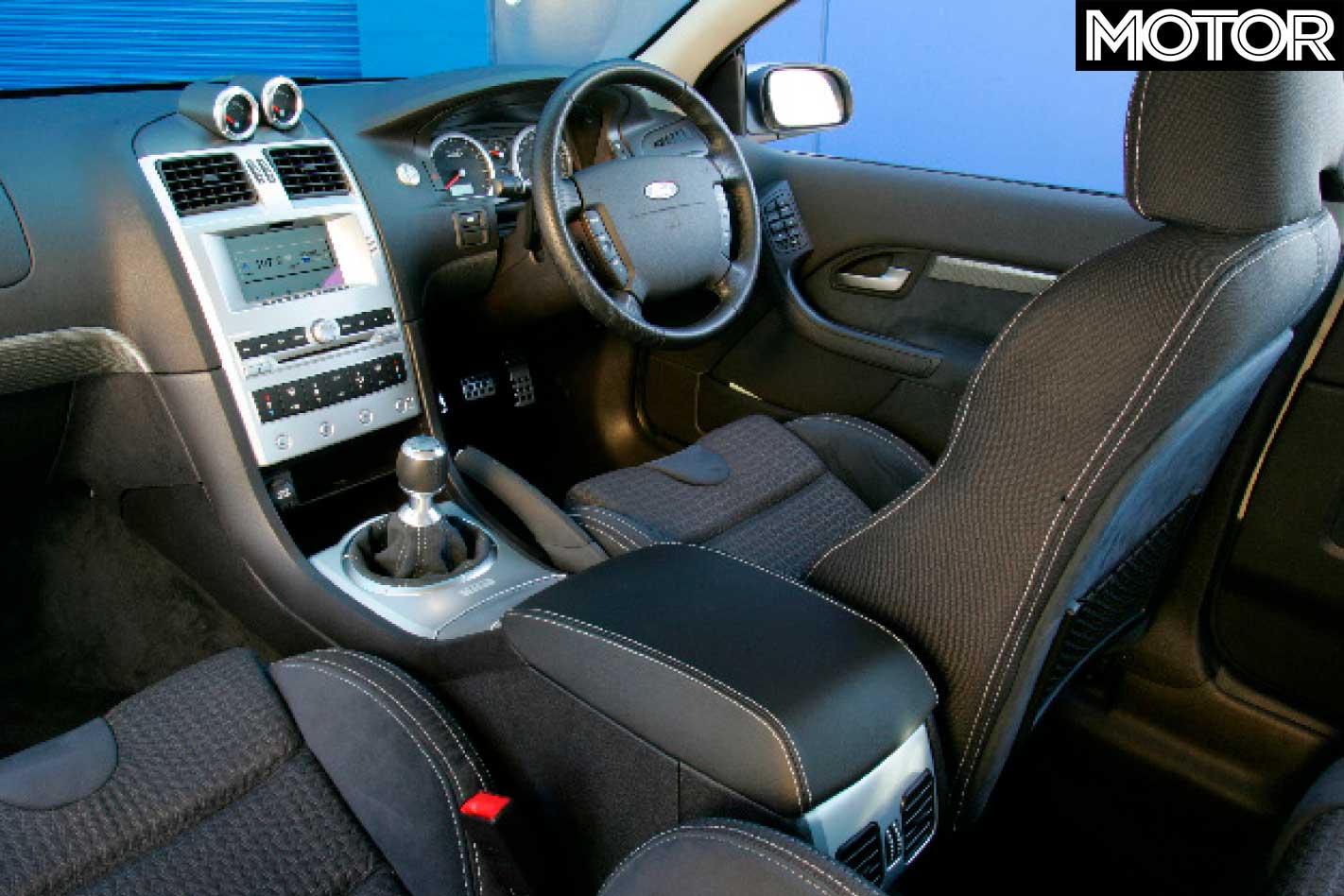
Nope, that job was left to FPV’s engineers, who specced the thing with linear bearings on the shift rail, a double synchro on all forward cogs (and even synchro on reverse) and a direct linkage for the shifter. All that was aimed at improving the shifting experience, which, if we’re going to be honest, is the main thing wrong with the bugger in the Commodore (that and the moonshot overdrive).
FPV even looked at triple synchros, but the re-specced ’box suddenly had all the ratios anybody would want and a shift feel and precision that leaves the Holden version for dead.
And bugger me, it works. The lower top-gear ratios mean both the F6 and revised GT are pulling realistic revs at sane speeds in sixth (a 0.63:1 sixth gear and 3.73:1 [for the F6] final-drive) and you can shift reasonably swiftly and accurately. Okay, there’s still a lot of planes and gates, but wrong-cogging is only a very remote possibility. I’ll draw the line at saying it’s a truly slick shifter, but it is acceptable.
Less happy is the Typhoon’s twin-plate clutch, which is obviously strong and takes up smoothly and predictably, but offers sod-all feel in the process. The friction-point is hard to judge in Blundstones, even through the metal pedal-pads.
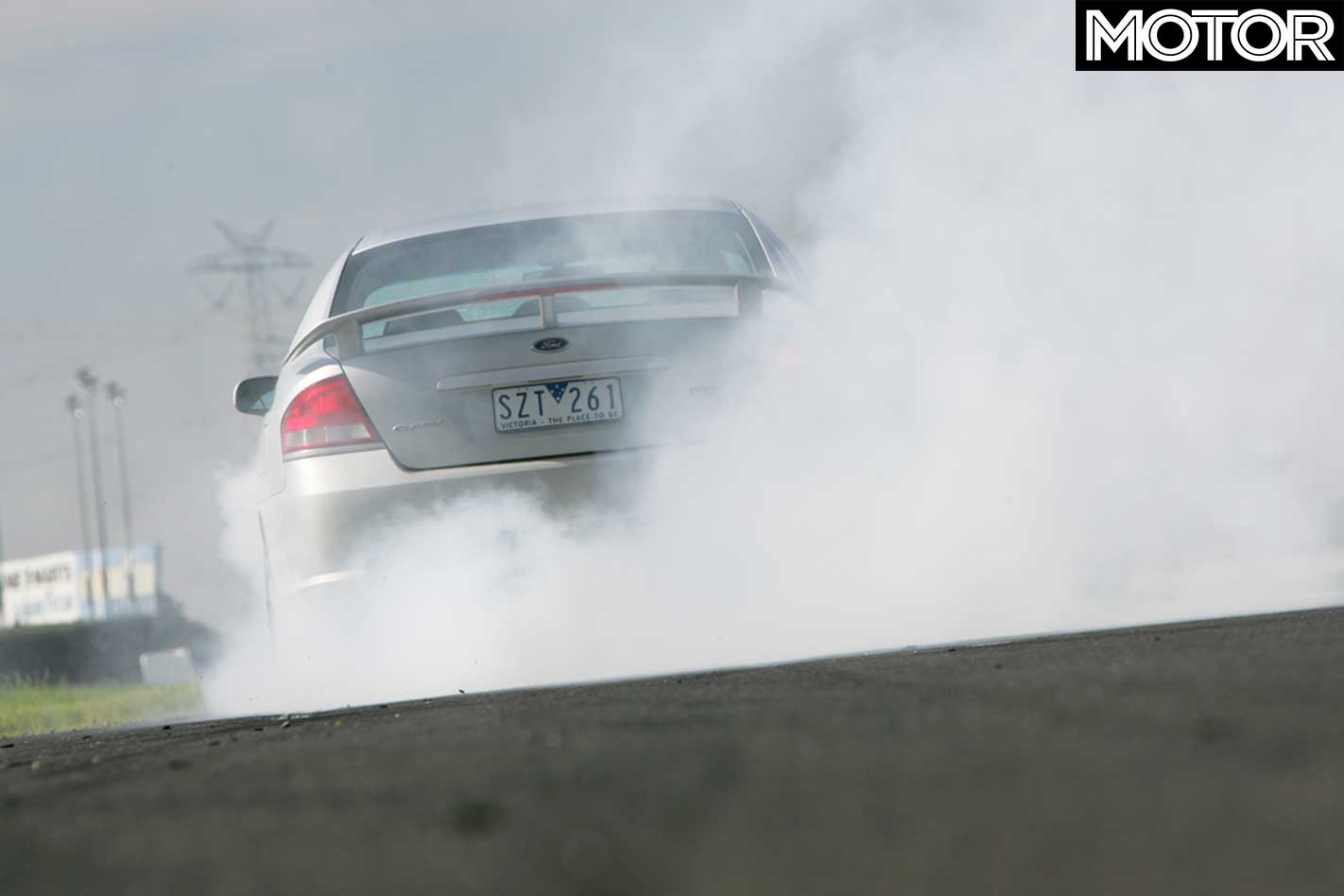
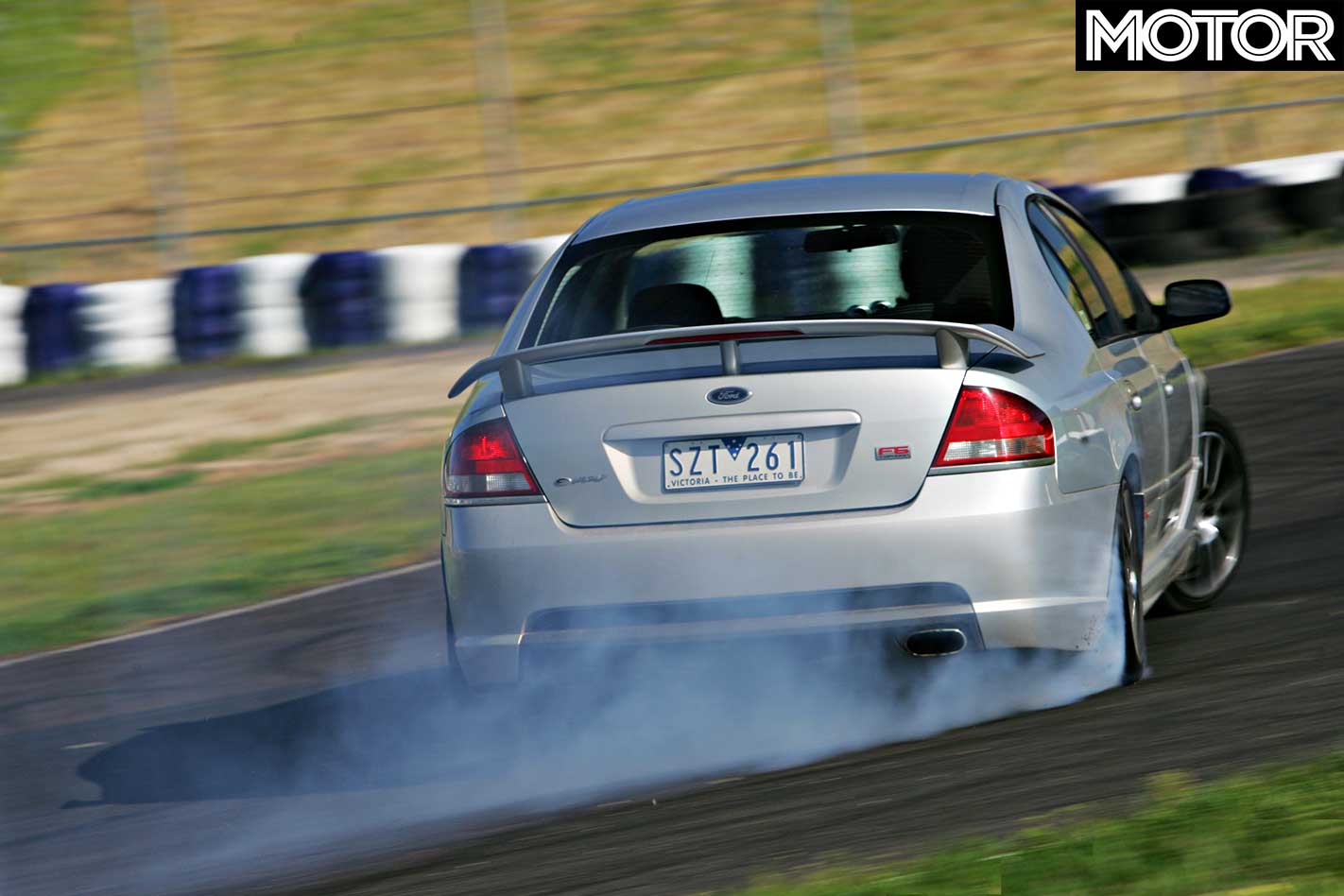
But there’s so much grunt, even at low revs, so stalling the thing isn’t really too likely. This was brought home during a photo session, which, in the time-honoured MOTOR tradition, required a burn-out.
Basically, I ballsed it up; stepping off the clutch with nowhere near enough revs on board. In just about anything else, the thing would have bogged and stalled, but the Typhoon’s clutch held and the motor hung on grimly, grunted me back from the abyss, built some boost and then flung the tacho needle into the limiter before I could even think about grabbing second.
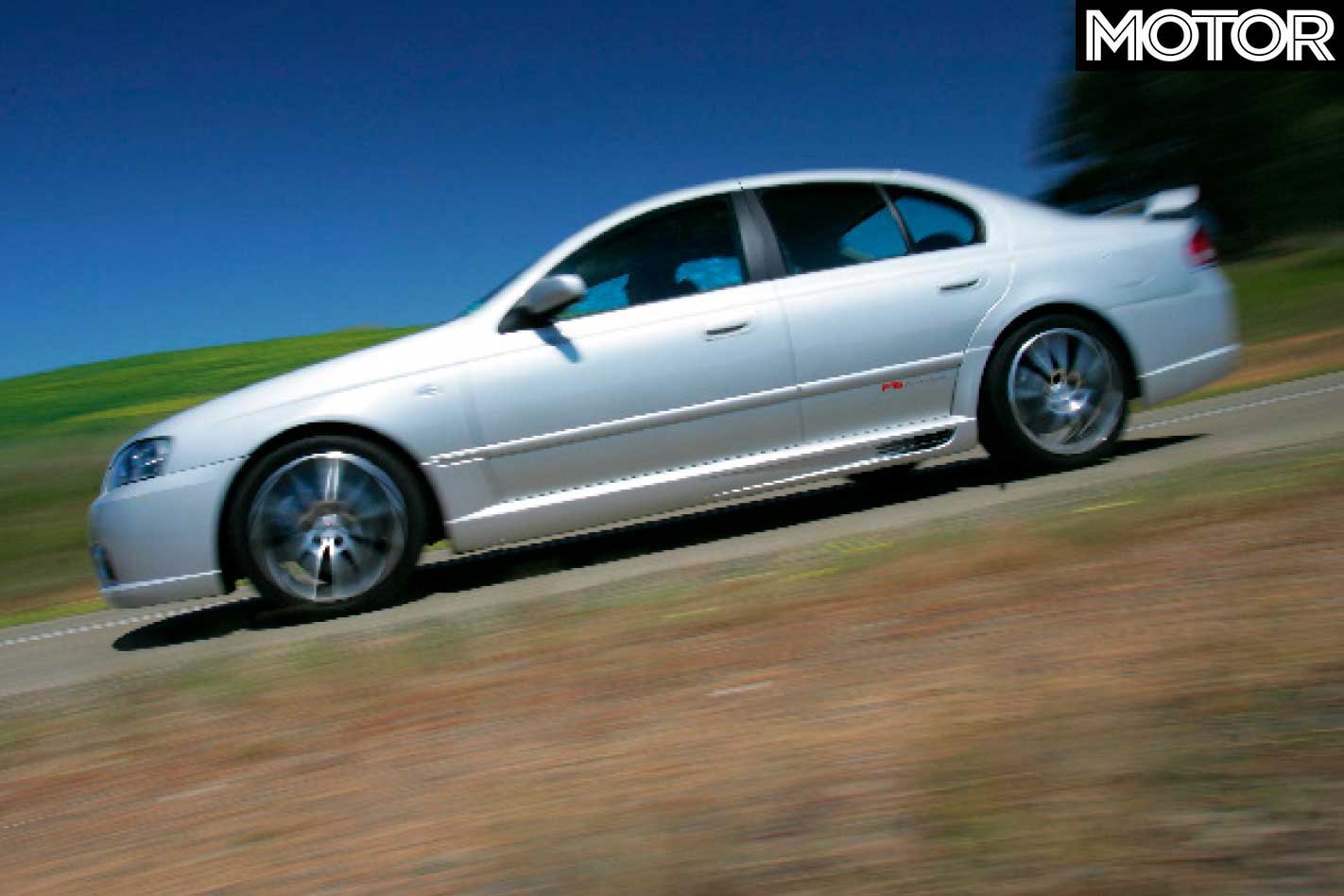
The turbo motor for the XR6T is a super-smoothie and far and away the most refined Aussie-designed engine ever, but now it’s got muscles on its muscles. From idle to about 4200rpm, it outgrunts even the Boss 290 engine in the GT (the previous local torque title holder) and the part-throttle response is so good, it simply wafts you along, ‘Hand-o-God’ style.
Whirring along through rolling countryside, you can easily leave her in top gear and just let the twist do the work, but drop it back to fifth, or even fourth, and it’ll demolish, point to point, anything else I can think of – assuming you also used only one gear.
Get firmly up it, and the whole mood changes. The blow-off valve is a bit rowdier than in an XR6T (it’s dumping 9psi instead of six, remember) but everything else is magnified by the same factor.
The one thing that strikes me, though, is that the filled-in torque curve down low and the sheer flatness of it means that the big six never feels as rushy as some turbo motors. Compared with an XR6, it’s faster yes, but perkier? No, not really.
Still, bawling it out for having too much torque is kinda harsh, so just take it as read that Australia’s new king of grunt no longer has eight pots.
There doesn’t seem to be as much holler from the zorst as an XR6, either, but that’s probably down to the FPV’s extra sound-proofing. What there is, however, is plenty of bearing rumble from the transmission under load in either third or fourth. At least I think it’s bearing rumble, but whatever it is, it isn’t pleasant.
The car I drove also had a weird, low-frequency resonance in sixth gear. It was almost a noise, almost a vibration and I’d be very surprised if it wasn’t a one-off glitch in this very early build example. It’d still send a mutt troppo, though.
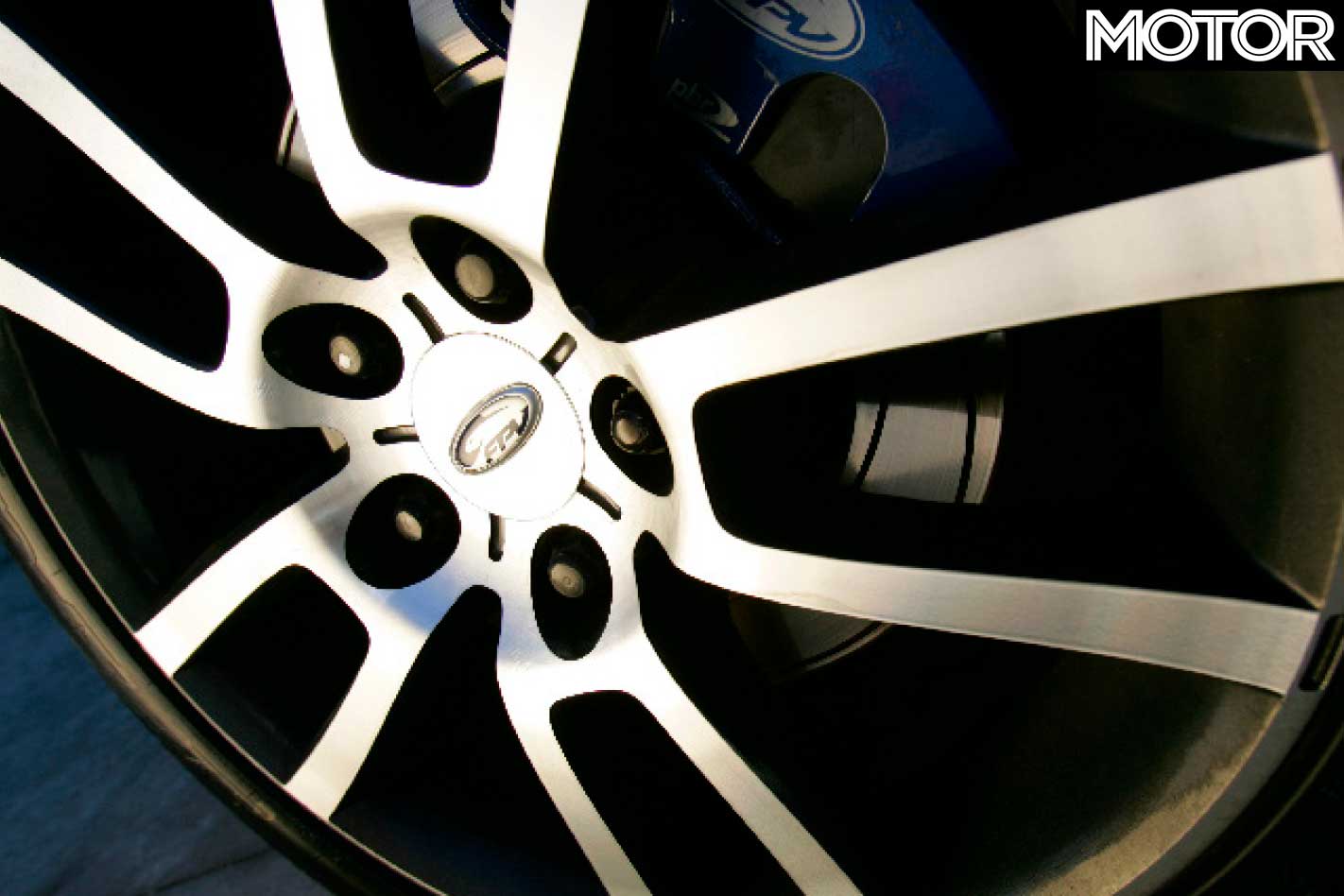
Handling is very similar to an XR6T, which figures, although the F6 does get the stiffer rear coils from the GT and 18-inch wheel-and-tyre package. Standard brakes for the Typhoon are provided by Ford’s Performance package and while the optional Brembos are truly mind-blowing, it’s also a $6000 ask to tick that box.
The biggest problem FPV is going to have with the Typhoon (aside from the fact that it gives the V8 a black eye over two-thirds of its rev range) is that there’s no auto tranny option. Officially, FPV is saying there are no plans for such an animal, but the smart money says a new six-speed auto, capable of taming the Newton-metres, is in the wings. I hope so, because the Typhoon would be an absolute weapon with a close-ratio auto.
The F6 is going to give the luxury-performance establishment a kick up the date. It’s torquier than most V8s, spins smoothly and freely and has flexibility that leaves about half of its six gears reading the paper with their feet up on the desk. That it’s under $60k is the killer punch for anything else with designs on the same buyer.
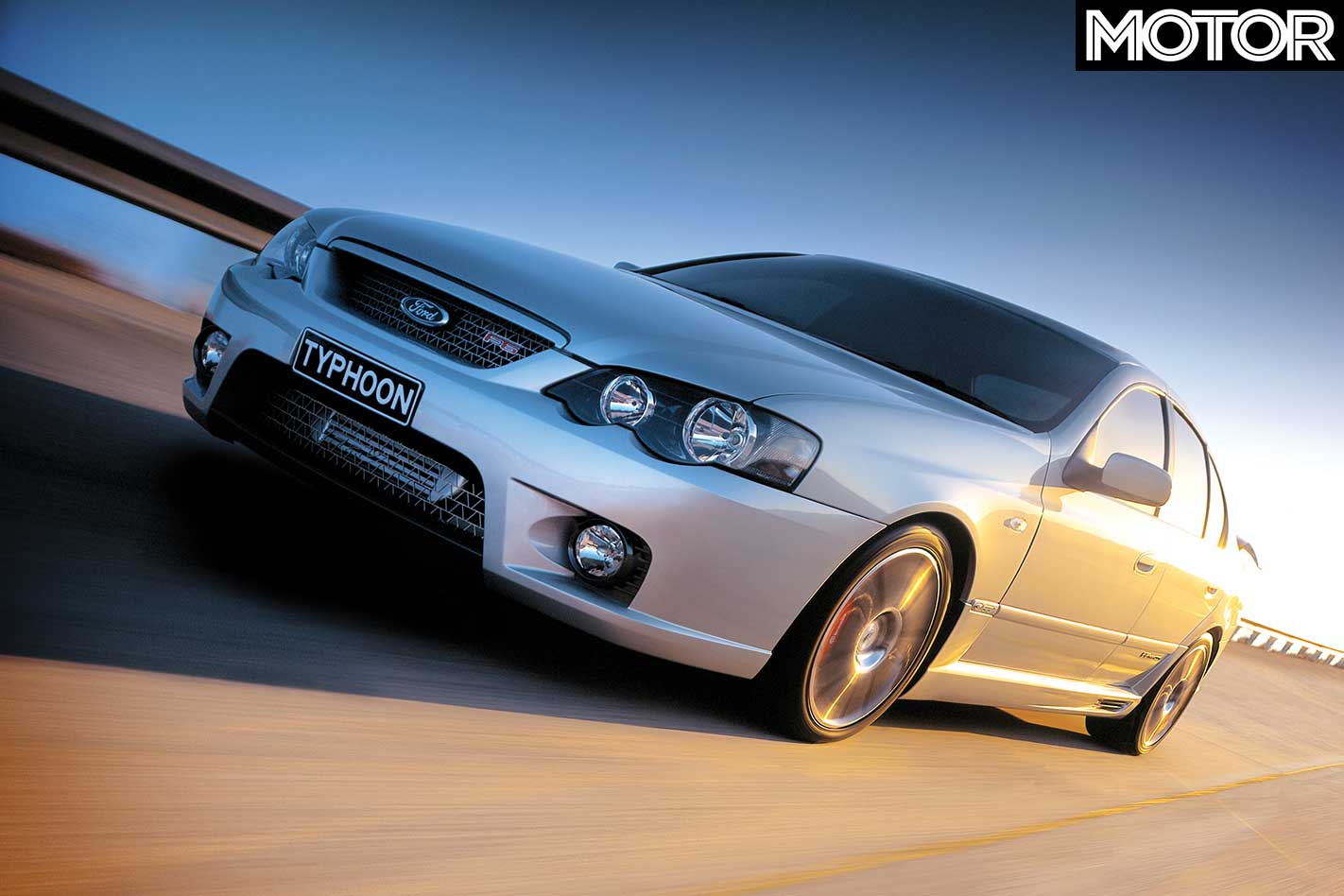
FAST FACTS 2004 FPV F6 Typhoon
BODY: 4-door sedan DRIVE: rear-wheel ENGINE: 4.0-litre inline-six, DOHC 24-valve turbo POWER: 270kW @ 5250rpm TORQUE: 550Nm @ 2000-4250rpm COMPRESSION: 8.7:1 BORE/STROKE: 92.3mm x 99.3mm WEIGHT: 1715kg POWER-TO-WEIGHT: 157kW/tonne TRANSMISSION: six-speed manual SUSPENSION: double wishbones, coil springs, anti-roll bar (f); Control Blade IRS, coil springs, anti-roll bar (r) L/W/h: 4944/1864/1435mm WHEELBASE: 2829mm TRACK: 1560mm (f); 1575mm (r) BRAKES: 325mm cross-drilled & ventilated discs, four-piston calipers (f); 303mm solid discs, single-piston calipers (r), ABS WHEELS: 18 x 8.0-inch (f & r), alloy TYRES: Dunlop SP Sport 9000, 235/40 ZR18 (f & r) FUEL: 68 litres, PULP PRICE: $58,950
PERFORMANCE: 0-100km/h: 5.73sec 0-400m: 14.02sec
5 Mega Twist Monsters
1 – Mercedes-Benz CL65 AMG – 1000Nm twin turbo V12 2 – Koenigsegg CCR – 919Nm supercharged V8 3 – Maybach 62 – 900Nm twin turbo V12 4 – Pagani Zonda C12 S – 750Nm 7.3-litre V12 5 – Dodge Viper SRT-10 – 712Nm 8.3-litre V10
FPV GT V8 – six-speeds and stickers!
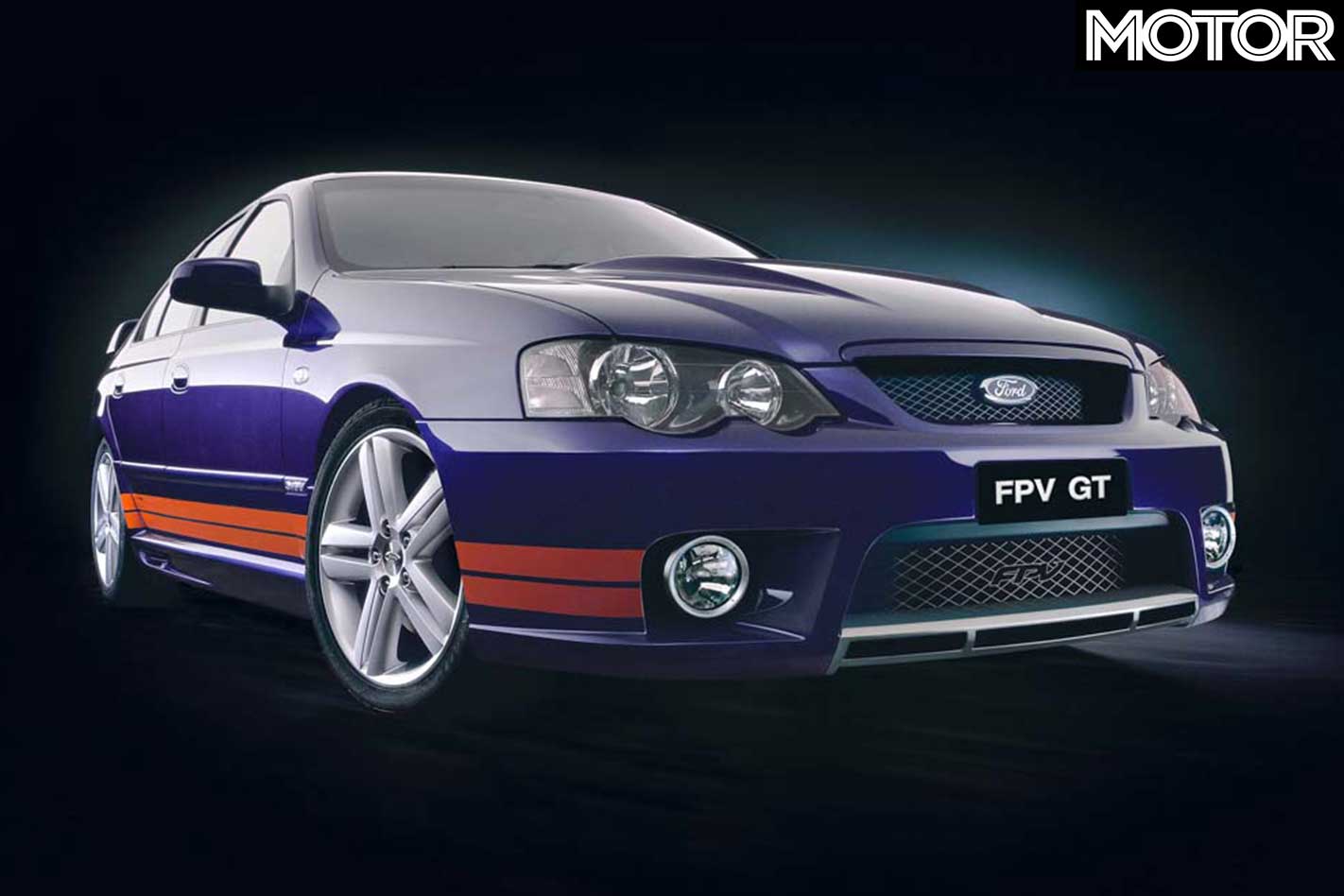
You could read too much into the fact FPV reckons the new decal option for its GT is a big deal. Too often, a red-herring like that is designed to draw attention away from the fact that, underneath the stickers, she’s the same old tart.
But this time, there have been some subtle, but very telling, changes to the GT (and GT-P) formula. You already know about the six-speed ’box and, the one I drove was actually slicker than the ’box in the Typhoon driven on the same day. Better accuracy, nicer feel, so maybe the unit in the F6 will smooth out a bit more with time and kays.
FPV has resisted the urge to bounce the peak power a bit higher, so the changes are mostly to do with the suspension.
It’s not a radical tweak in percentage terms, but slightly stiffer front and rear springs have sharpened up the GT’s act considerably, without stuffing the ride quality. She now points better, quicker and more accurately and there’s a more cohesive feel to the final, $61,350 product. The slightly lower top gear also works for me, even if the GT feels a bit pale after leaping straight out of the F6.
The best GT I’ve driven? Without a doubt. The decals? Yeah, the double flank stripe is now one thin and one thick strip, and there’s a Boss 290 flash for the side of the engine lump-hump. Expect a rush on the latter from Series one GT owners.
PERFORMANCE: 0-100km/h: 5.74sec 0-400m: 13.85sec
“DON’T come in here bullshitting.”
It’s a warning shot from Craig Baird, a man who doesn’t suffer fools, and isn’t someone who can be easily deceived.
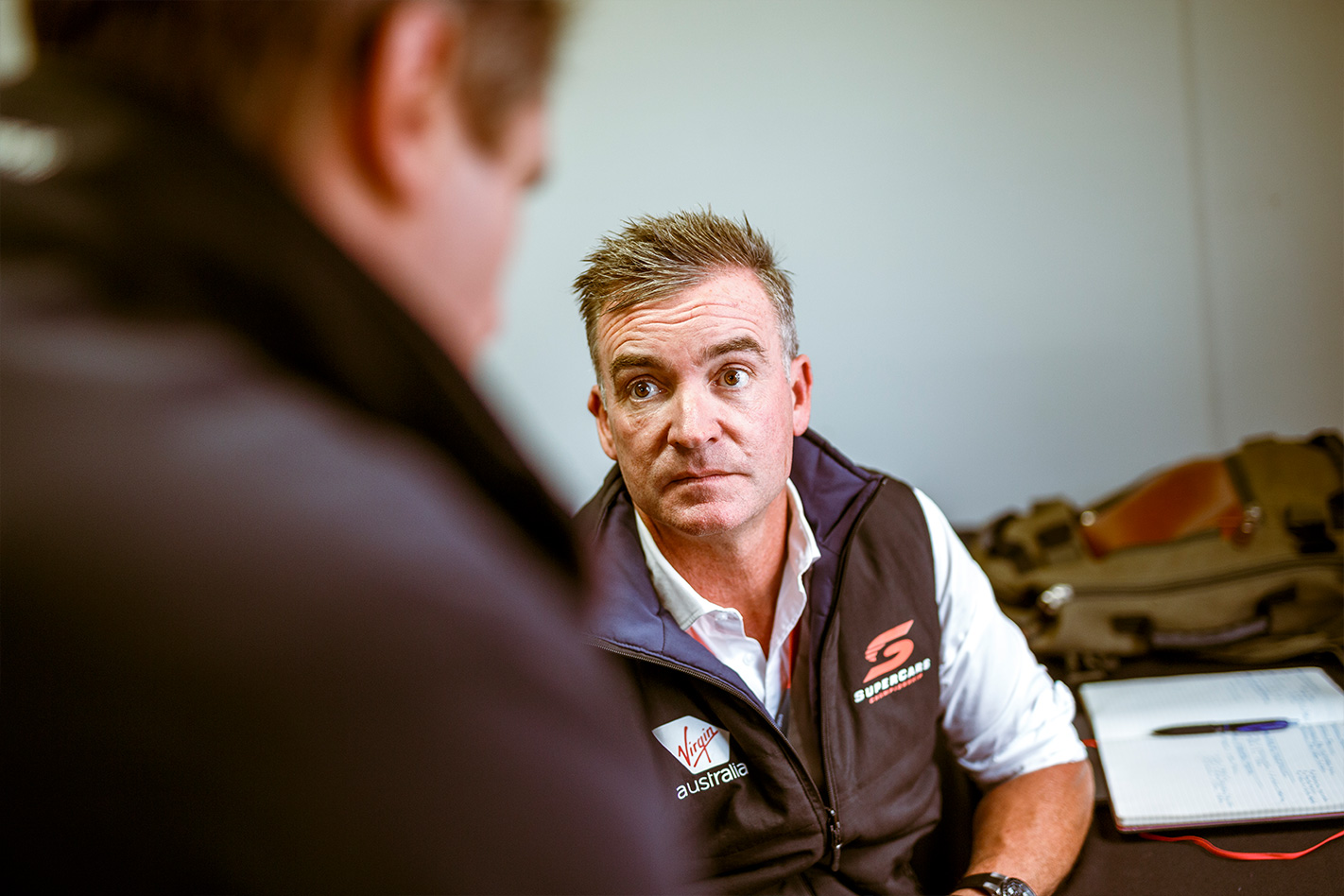
The 48-year-old New Zealander (and most successful one-make Porsche driver in the world) is the Driving Standards Observer (DSO) for the Supercars championship. His role is to ensure the most competitive touring car racers on the planet play fair.
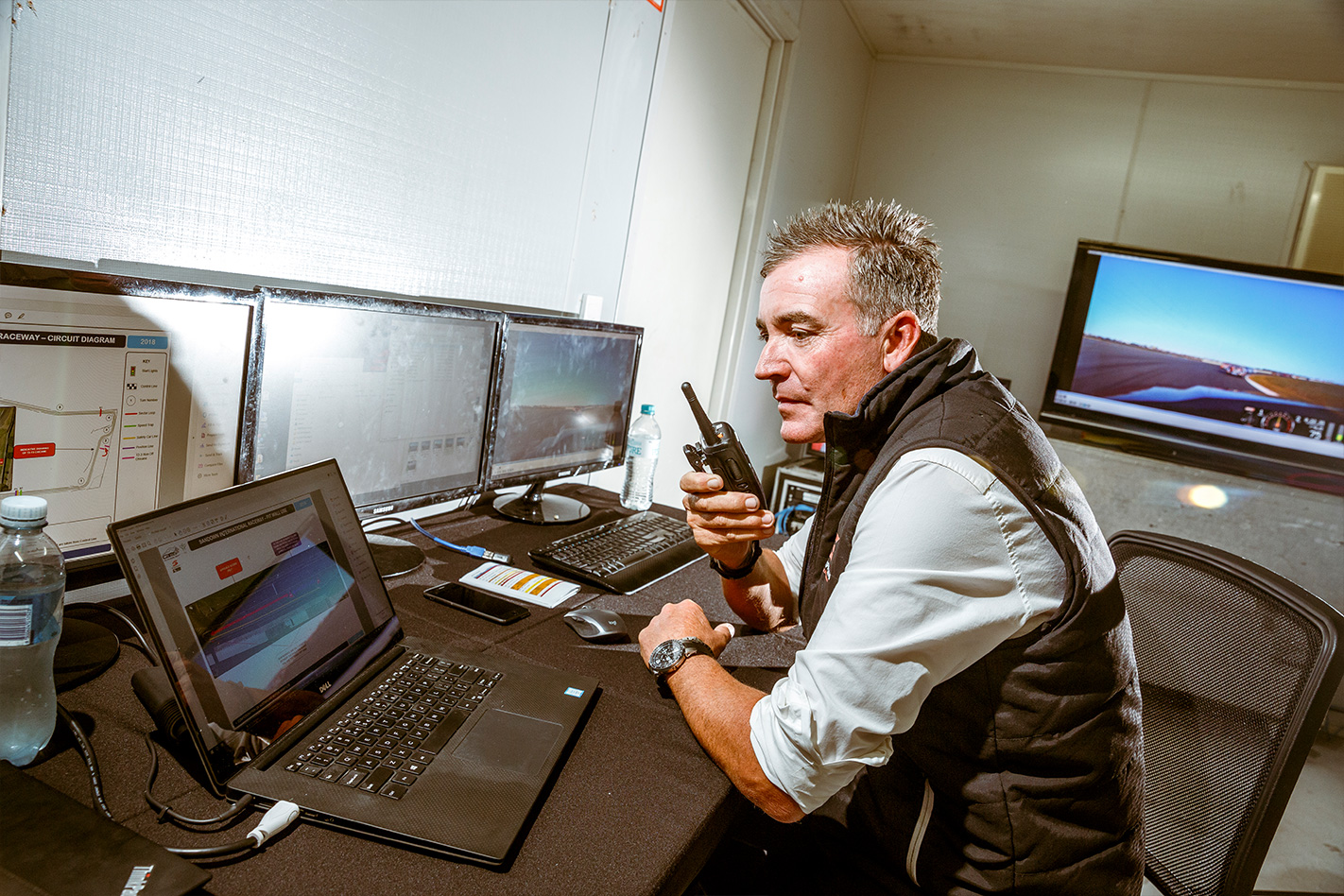
By ‘here’ Baird is referring to the unremarkable demountable he and I are currently sitting in. Nestled between team trailers in the paddock of the Sandown 500, it acts as his office for the weekend. I’m here to watch Baird for the day, and have been given unprecedented access to both race control and his meetings with drivers to better understand how he upholds law and order.
Baird is in the middle of describing how he approaches his interactions with racers who have been summoned to the office. Drivers aren’t brought in for the small stuff, like pit-lane speeding; it’s for illegal or unsporting driving behaviour that ends almost invariably with fellow racers punted off the track.
“They can come try and defend themselves to the best of their ability, but if they are going to sit there and absolutely bullshit, it’s not hard to pick it out, especially with the data and analysis we can do,” he adds.
Baird works alongside experienced race administrator and deputy race director Michael Masi, who leads investigations of potential rule breaches.
“How it works, essentially, is I’m the police prosecutor, and Craig is my expert witness,” Masi explains.
“I conduct and lead the investigation, and Craig is there to help inform my decision if a penalty should be applied.”
One of the first things that will be raised by fans or drivers who feel like Baird and Masi aren’t doing their job fairly is the issue of consistency.
It’s a topic which can prompt an impassioned response from Baird, who says perceptions are not always reality.
“We have the same set of rules and recommended penalties for everyone,” he states. “The only difference is that as we move deeper into the season, the penalty needs to have an effect. So, our recommended penalties; everyone starts with that, but someone who is 24th in the championship no longer cares to lose championship points, so then we move things around a little bit.
“People say we need to be consistent. Bollocks! You have to be inconsistent to be consistent. Because every corner is different, every incident is different.
“You can’t just sit there and say every time one driver hits another. it’s the same, and dish out a one- size-fits-all penalty.”
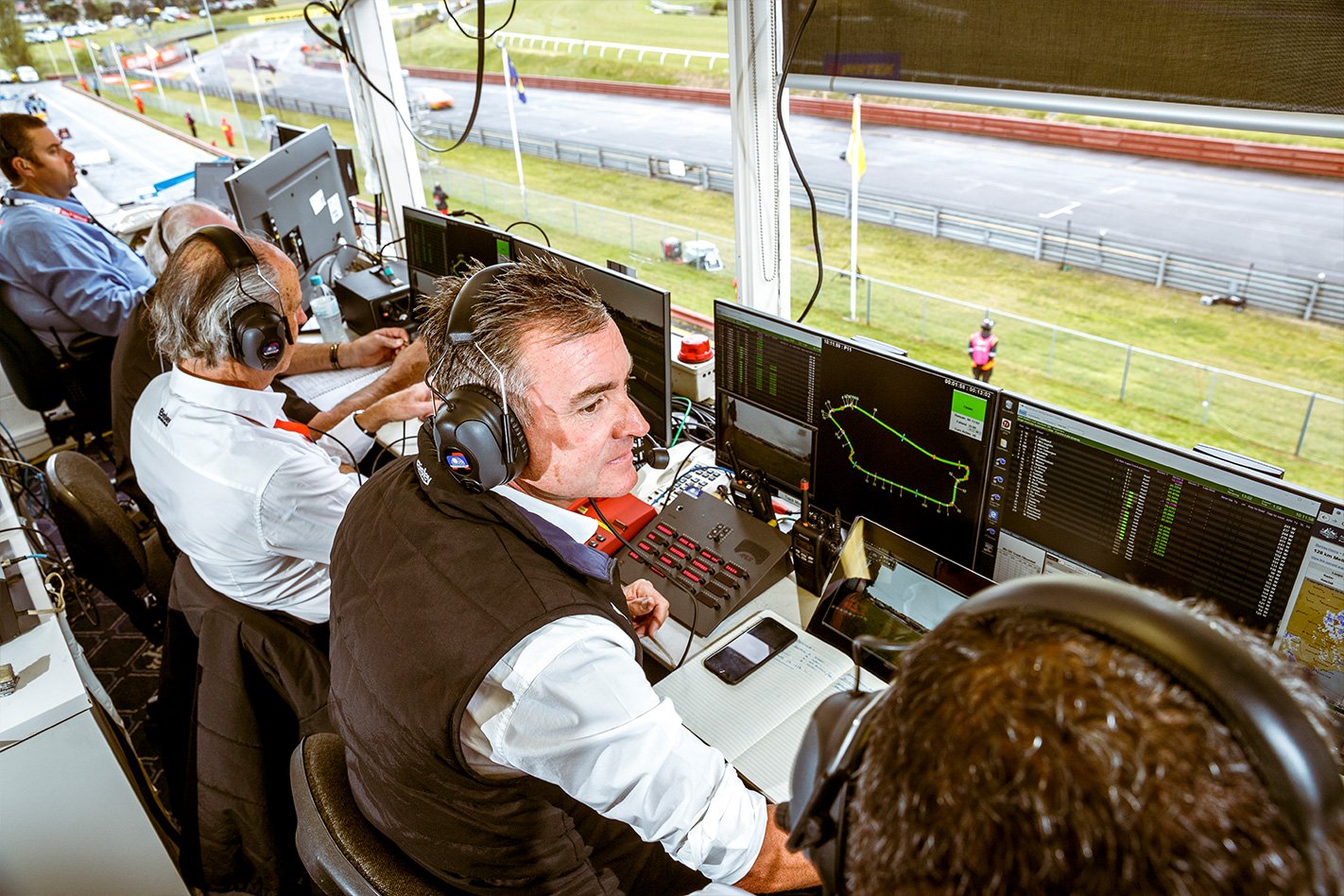
In race control Baird sits perched on a stool, able to look down on pitlane and the race track, and has a total of three screens placed directly in front of him. To his left is race director Tim Schenken, while Masi sits to his right. The trio communicate via headsets, which also allow them to listen in on team radios.
Race starts are a flurry of commands from Schenken and Masi as they co-ordinate with marshals, but Baird simply sits in waiting, like a sentry calmly readying for action. When the calamity does arrive, and it always arrives, Baird swiftly starts collating the evidence he will need to make a judgment.
Only the clearest-cut cases are dealt with during a race, with Baird hesitant not to pull the trigger on a penalty without 100 percent surety.
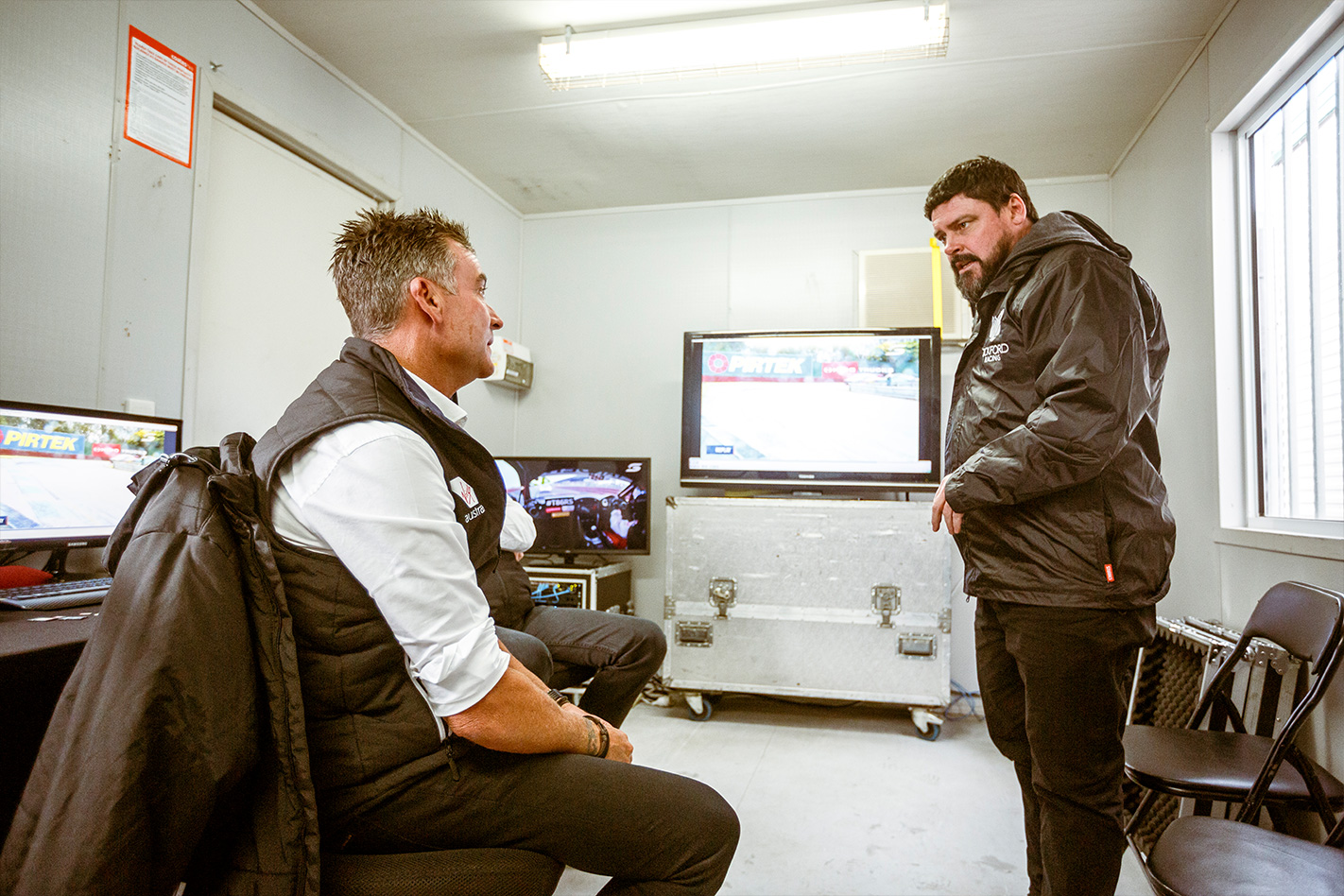
“If I make a decision in a race, I’m very confident that I’ve got the tools or vision in front of me that I needed to make the right decision,” Baird says. “And it might not be vision that went to TV. It’s not until you get all the angles that the full picture appears.”
“Make no bones about it, if I’m in any doubt [during a race], or I am wavering, then I will always make it a post-race investigation.”
Each car in the field is fitted with a judicial camera, and at the end of the session Baird sends an official to pull the memory cards from the cars he wants to investigate. There are heavy penalties for teams who supply corrupted footage, or can’t produce a memory card.
The onboard footage, along with multiple un-aired angles from the TV feed, is then pored over meticulously. Frame by frame, Baird dissects the incident. What he often finds is a hidden nugget of evidence – a locked wheel or extra few degrees of steering angle that wasn’t visible to the audience at home.
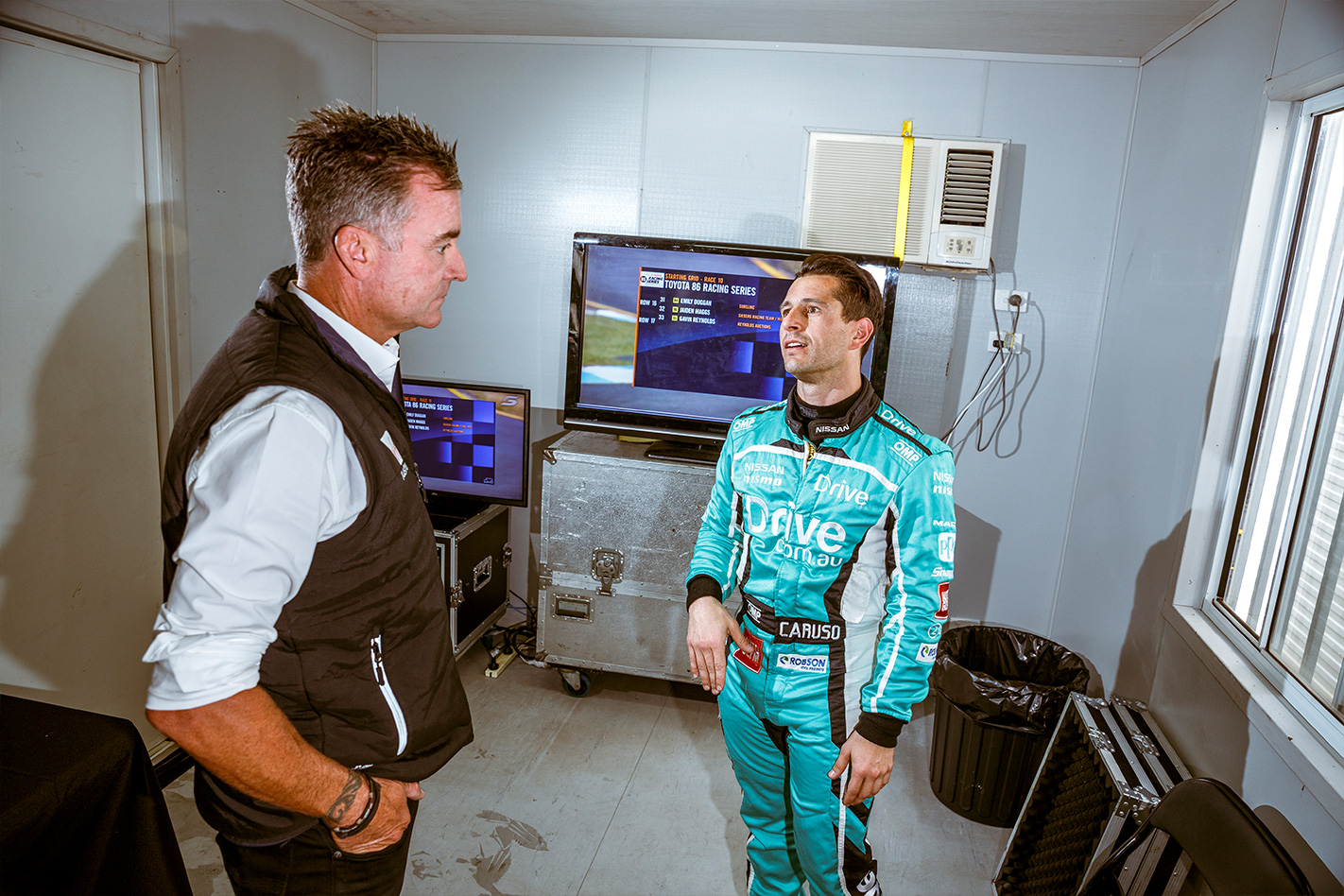
During an investigation involving Jason Bright and Warren Luff from Saturday’s qualifying race, Baird replayed a TV camera feed frame by frame, noticing one of the tyres on a car appeared flat. No sooner had he identified the issue, he was on the phone, requesting tyre pressures from before and after the crash from Supercars’ technical department. A few minutes later the data is being pulled up on screen. Not even the teams have access to this information. What appeared like a piece of foul driving on television, quickly revealed itself to be a complex racing incident.
And it’s not just the initial clashes themselves that come under the Baird and Masi microscope. When teams request an investigation, they are opening a Pandora’s box. On more than one occasion during our observations, a team made a request for an investigation into another driver’s conduct, only for the tables to be turned, and find themselves hauled in front of the pair to explain bad behaviour.
Sitting in front of Baird and Masi can be humbling for drivers, with the sheer quantity of information and knowledge giving them nowhere to hide. Baird says those “from the big end of town” won’t often give him trouble, and cop to their mistakes easily. It’s the younger, more hot-headed drivers who can prove argumentative. But Baird isn’t easily railroaded, and has no time for coddling a driver.
During our observations there was only a single exchange that became heated, with a team owner feeling his driver was unfairly punished. Baird and Masi didn’t back down, and methodically laid out the reasoning behind their judgment, while showing that if anything, the driver in question was let off lightly.
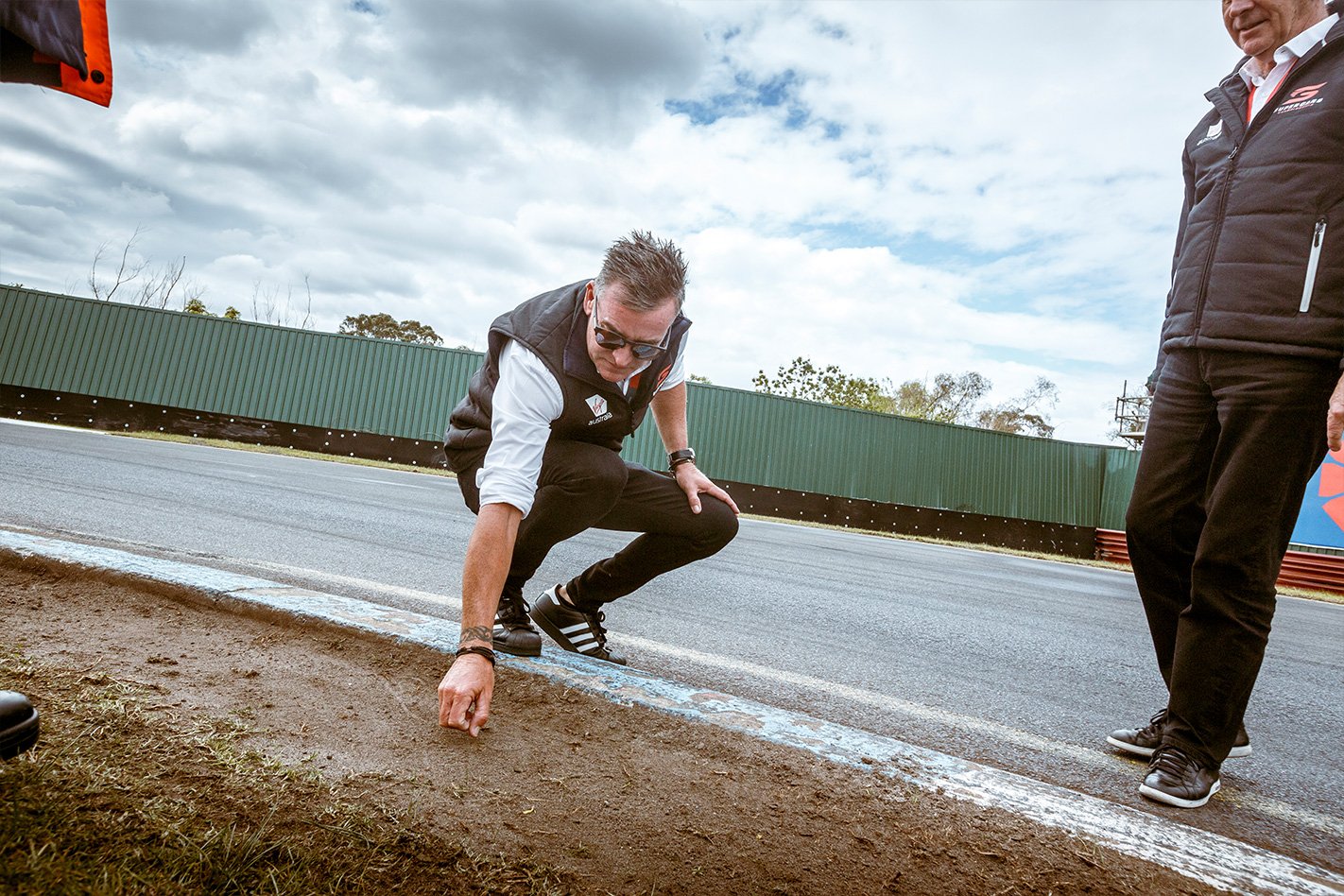
Baird’s job is a difficult one, but he approaches it methodically, always aware of the bigger picture. A literal interpretation and enforcement of the rulebook leaves no scope for context, and in his nearly two years as the DSO, Baird has earned the trust and respect of teams and drivers.
So next time you see him pass down a judgment while you’re watching a race, just know that it’s likely the right one.
Redressing the issue
When Jason Bargwanna stepped down from the DSO role at the end of 2016, a controversial rule went with him – the redress. However, despite its removal from the rulebook, Baird says that redress is still a concept that can have a place in the sport: “It’s not a rule, but we have an agreement that drivers can address something themselves, but only if it’s a one-on-one situation.” By limiting the scope of when a redress is implemented, Baird hopes it prevents repeats of incidents like the controversial end to the 2016 Bathurst 1000.
Problem children
As for repeat offenders, Baird says tensions are heightened in the lower-half of the field, where ultra-competitive drivers try every trick in the book not to be last. “My problem in this office, is from 20th position to the back – no one wants to be there,” he says. Adding to that is Simona DeSilvestro’s presence, who, as the only female on the grid, has suffered a trial by fire, flamed by fragile male egos. “No one wants to come back and say they got beaten by a girl. But I’m telling them, they’d better get used to it, because she can drive,” says Baird.
The all-seeing eye
When the 2019 Supercars championship starts in the searing heat of Adelaide in late February next year, Craig Baird will have a new tool at his disposal that makes his current information-gathering systems seem outdated. It’s called Hawkeye, and at the time of print it will have just undergone its second trial run at an event. The system will allow Baird to access every single camera at the track, including those onboard each car, and trackside for the broadcast, at any time, even if they aren’t recording. Hawkeye allows Baird to timestamp incidents during a race, and watch them back from multiple angles at the same time, frame-by-frame. Fibbing drivers beware.
Has there been a more frustrating launch of a new car than the fifth-gen Supra? If you’ve been hopelessly caught up in the hype of Toyota’s reborn hero, like I have, it’s likely that the first story you’ll read in this month’s mag is our international drive.
Be warned, however: further irritation may ensue. While we have indeed driven it (finally!), the review isn’t of the production-ready car, but a camouflaged testing mule still undergoing final engineering sign-off.
This has me genuinely worried.
Not because our early taste was underwhelming – Ryan Lewis’s review shows there’s plenty of goodness lurking beneath that bamboozling paintwork and felt-covered cabin – but because by the time it finally arrives next year, the risk is that the Supra could have successfully and spectacularly executed the automotive equivalent of jumping the shark.
We’ve seen this before, of course. Drawn-out and agonisingly protracted vehicle-reveal schedules are nothing new. But while manufacturers the world over are guilty of over-hyping new models (the BMW i8 springs to mind as an example of a sportscar that felt past its best-by date when it arrived in dealers), it’s a phenomenon embraced with particular panache by the Japanese.
Anyone who traced the gestations of the Lexus LFA, R35 Nissan GT-R and even the Toyota 86/Subaru BRZ twins will understand the frustration, but for me, the car that best embodies the risks of the ‘over tease’ is the Honda NSX. Here was a sportscar icon that, thanks to almost a decade of previews, powertrain unveilings, and design glimpses, sucked all of the oxygen out of its own reveal. When the covers finally came off at the 2015 Detroit show, it felt as though the entire motoring world simply shrugged its shoulders.
It’s a fate I fear for the Supra. Like the NSX, it’s mooted to appear in its totality at Detroit (pointing to the US market’s significance for its success), but come January 2019, the momentum may have been lost. In an age of evaporating attention spans and gluttonous instant gratification, timing is more important than ever.
I’m sure there are experts in Toyota’s international engineering and marketing departments who’ll argue everything is running according to plan, but as if in stark contrast, this month threw up an example of how to launch a car with zero forewarning. If you’re a subscriber, it’s the Martini-liveried stunner that graces your cover, and one that sent journalists, enthusiasts, racers and celebrities into a frenzy: Porsche’s reborn 935.
A modern day Moby Dick might be about as relevant as protecting a non-existent local industry by retaining the Luxury Car Tax, but there’s no denying the impact it made when it appeared, in full, on the German brand’s website and social channels. A feat achieved without a single ‘teaser image’.
Unlike the fantastical and unattainable Porsche, however, what the Supra has going for it is its accessibility. Sure, it will cost twice as much as an 86/BRZ, but even at circa-$75K (we think … like engine outputs and other technical details, Toyota is being frustratingly tight-lipped on pricing) Toyota’s fifth-gen icon is tantalisingly within reach, or at the very least, not totally unfeasible.
Then there’s the appeal of its fundamentals: rear-drive, 3.0-litre inline six, around 250kW and a kerb weight target of 1500kg. Little wonder it’s captured the imagination of enthusiasts, especially those of the console generation. Here’s hoping the buzz doesn’t evaporate by the time it arrives Down Under, finally, at the end of 2019.
Right now, seven Wheels and WhichCar journalists and their entourage are toiling away in an isolated warehouse somewhere in the badlands west of Port Phillip Bay. Their task is to sift through all the cars that launched in 2018 and decide which, if any, deserves the title of Wheels Car of the Year (COTY) –a highly coveted consumer award.
We won’t be able to tell you the result or even a short list until closer to the big announcement in January, but amassing every significantly new or updated vehicle launched over the last 12 months is a fantastic barometer into the evolution of the modern car – a riveting insight into emerging automotive trends.
Nearly 50 brand new machines rolled out to greet the judges at Wheels COTY, and D’Marge went along to unearth nine cool new features we reckon will hit the mainstream in the next year.
The future’s Electric
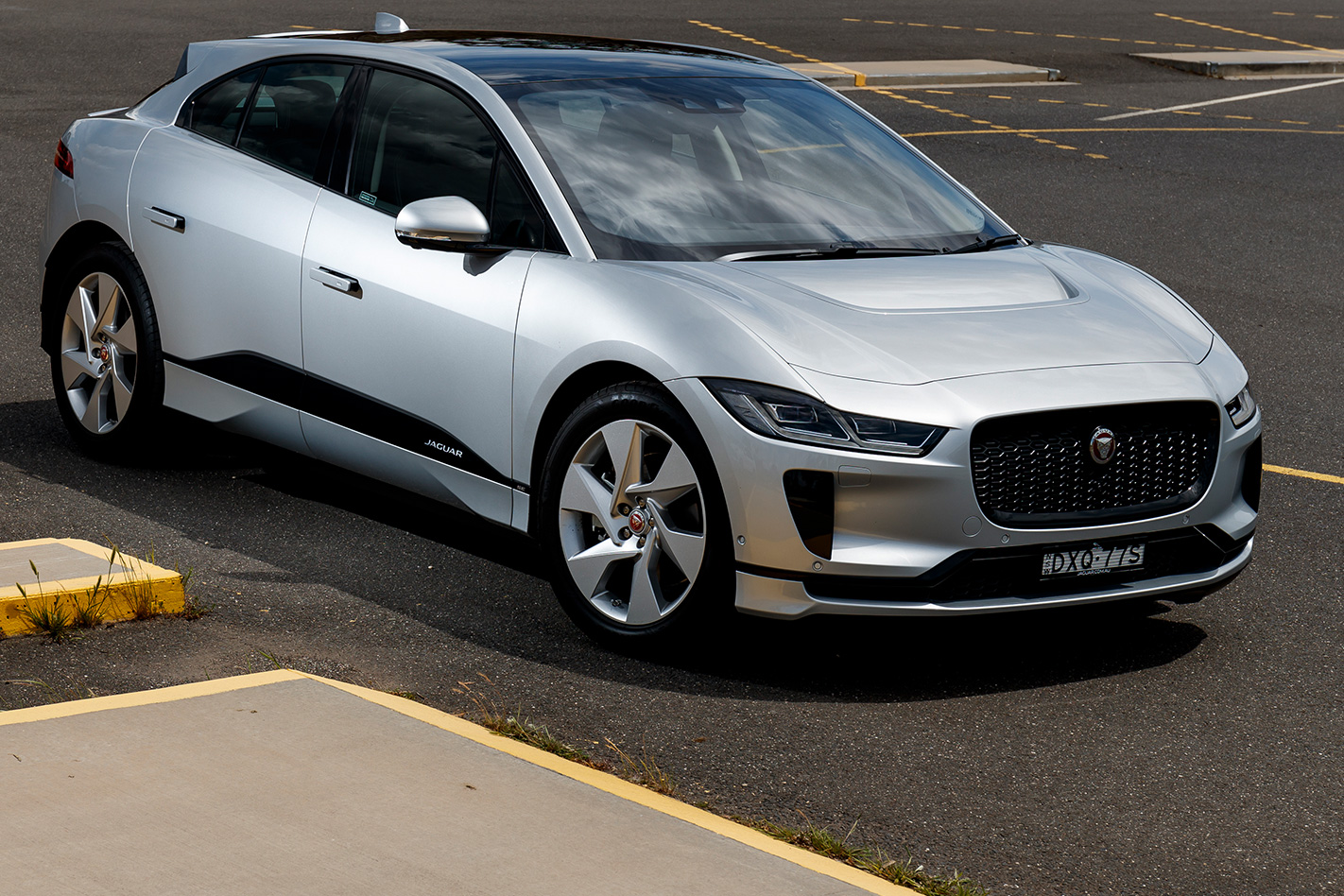
Here’s a real eye-opener to get us started. This year, five of the 24 Wheels COTY contenders are powered by either hybrid or fully electric powertrains. That’s 20 percent, and that product onslaught is only going to intensify with brands from Mercedes-Benz to Jeep all talking electric in the years ahead.
That said, only one percent of new car sales in Australia are electric or hybrid. So, while the rest of the world continues to ride the alternative energy bandwagon, spurred by government incentives and spiraling fuel prices, we Aussies are a bit reluctant to embrace our post-petrol future. Expect that to change in the next few years as the electric flood from overseas rises.
LED matrix lighting
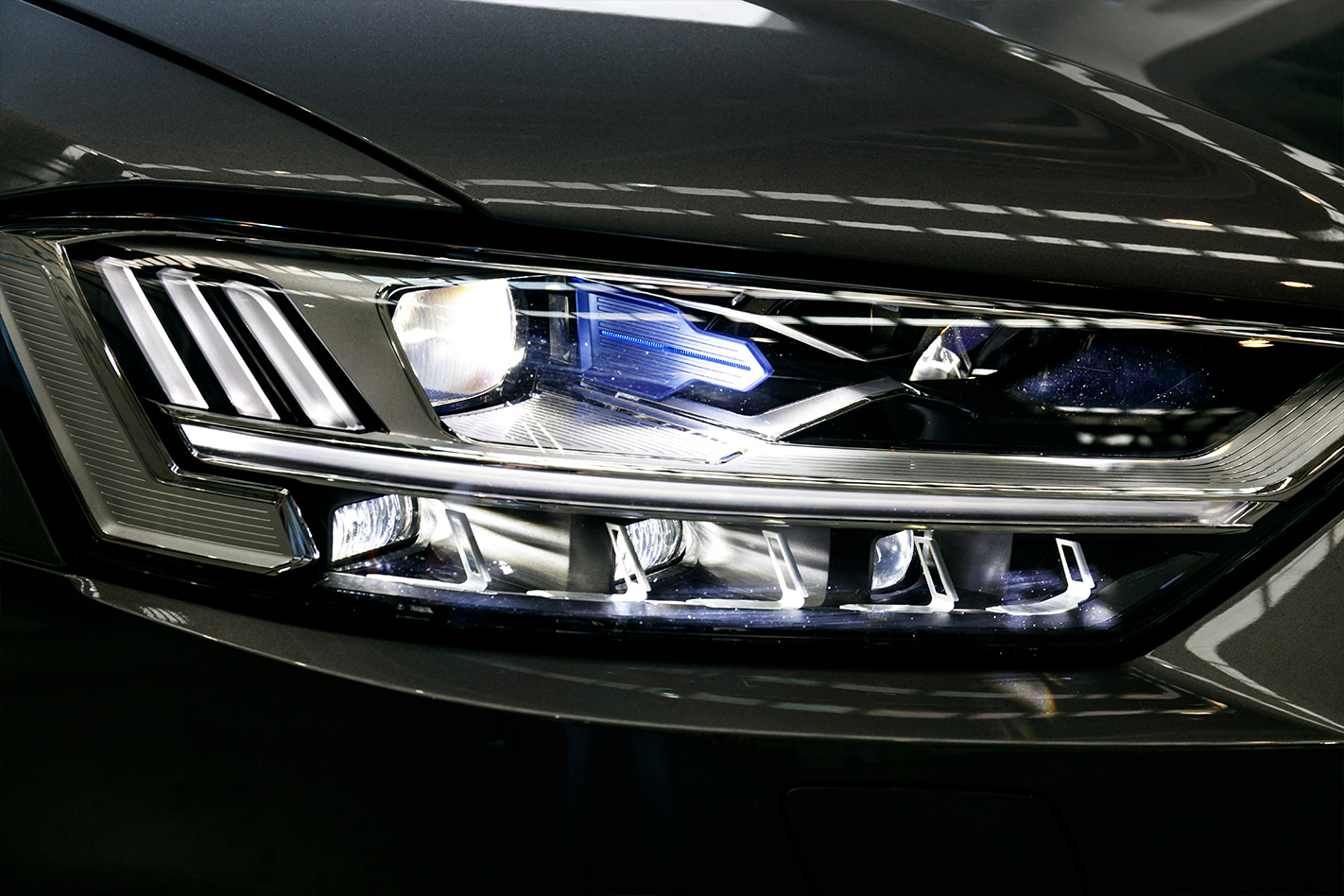
In 2014, a trio of Japanese scientists were awarded the Nobel Prize for Physics for inventing the blue LED. They were recognised and honoured not because it meant you could now have the coolest set of Christmas tree lights ever, but because blue light is essential for creating white light, and with the advent of super efficient white LEDs, the global power demand for lighting is plummeting.
It’s good news for cars too with wasteful incandescent lighting now all but extinct in the automotive landscape, but the other advantage is arguably the most beautiful car lights yet seen.
Audi’s A8 was proudly showing off its organic LED tail lights, but a majority of the cars parading this year have piercingly bright and pure white LED headlights as well. Here’s to professors Akasaki, Amano and Nakamura who, quite literally, made the world a brighter place.
Fully digital instrument clusters
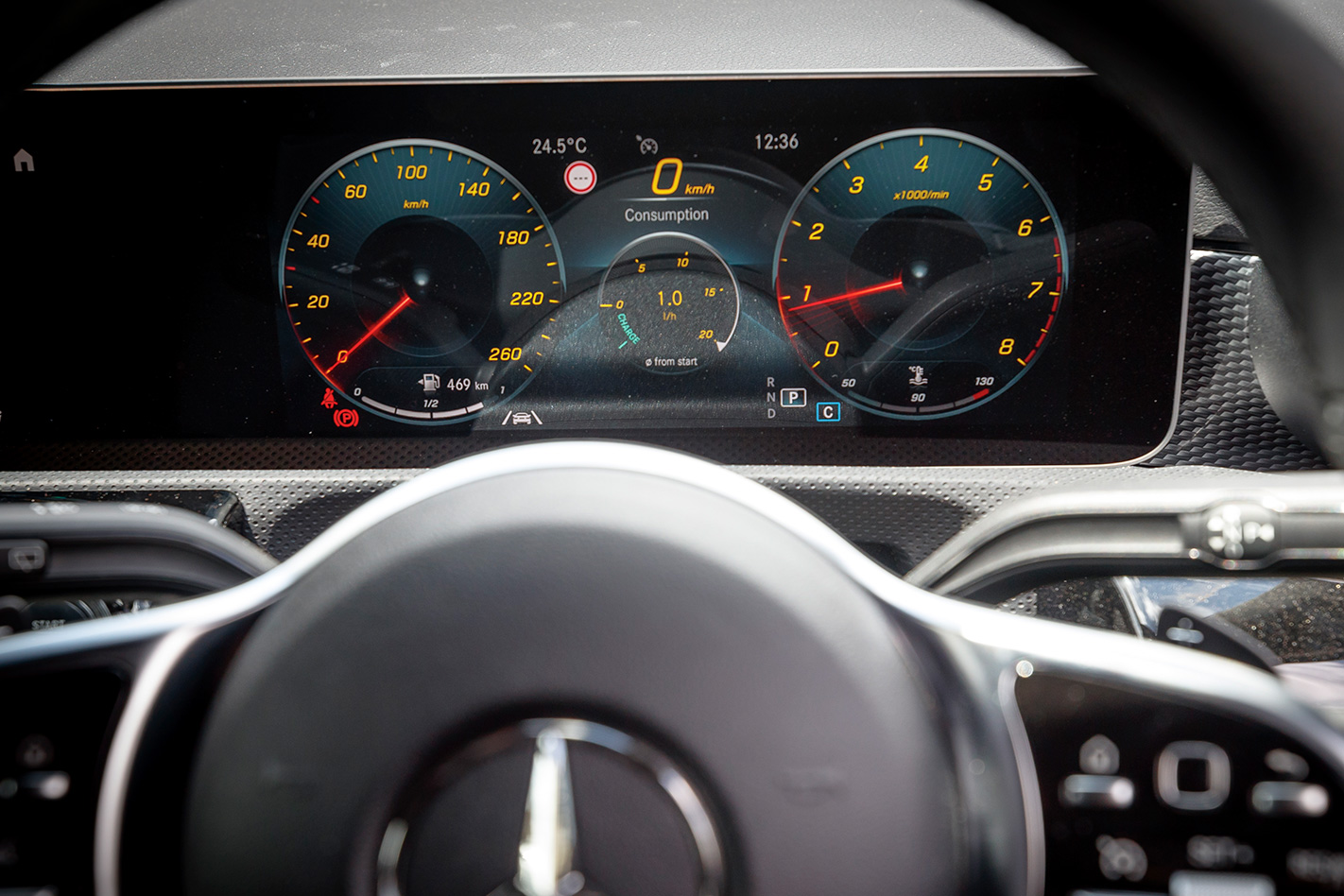
The days of the needle are dead. Conventional gauges are being replaced by virtual versions and sophisticated digital screens in place of traditional dials.
The advantages are obvious and beg the question: why has it taken so long? If you love the classic look of circular gauges with pointers sweeping elegantly around, you can still have that, but the versatility of a small LCD screen allows almost unlimited customisation options as well.
A number of different themes can be specified depending on your mood or the layout can be tailored to display the most important information according to the driver’s requirements. Audi’s Virtual Cockpit will even allow the entire display to be allocated to just the navigation map for maximum clarity and minimum distraction.
Of the 24 models at COTY this year, half have fully digital instruments.
Two tone paint schemes
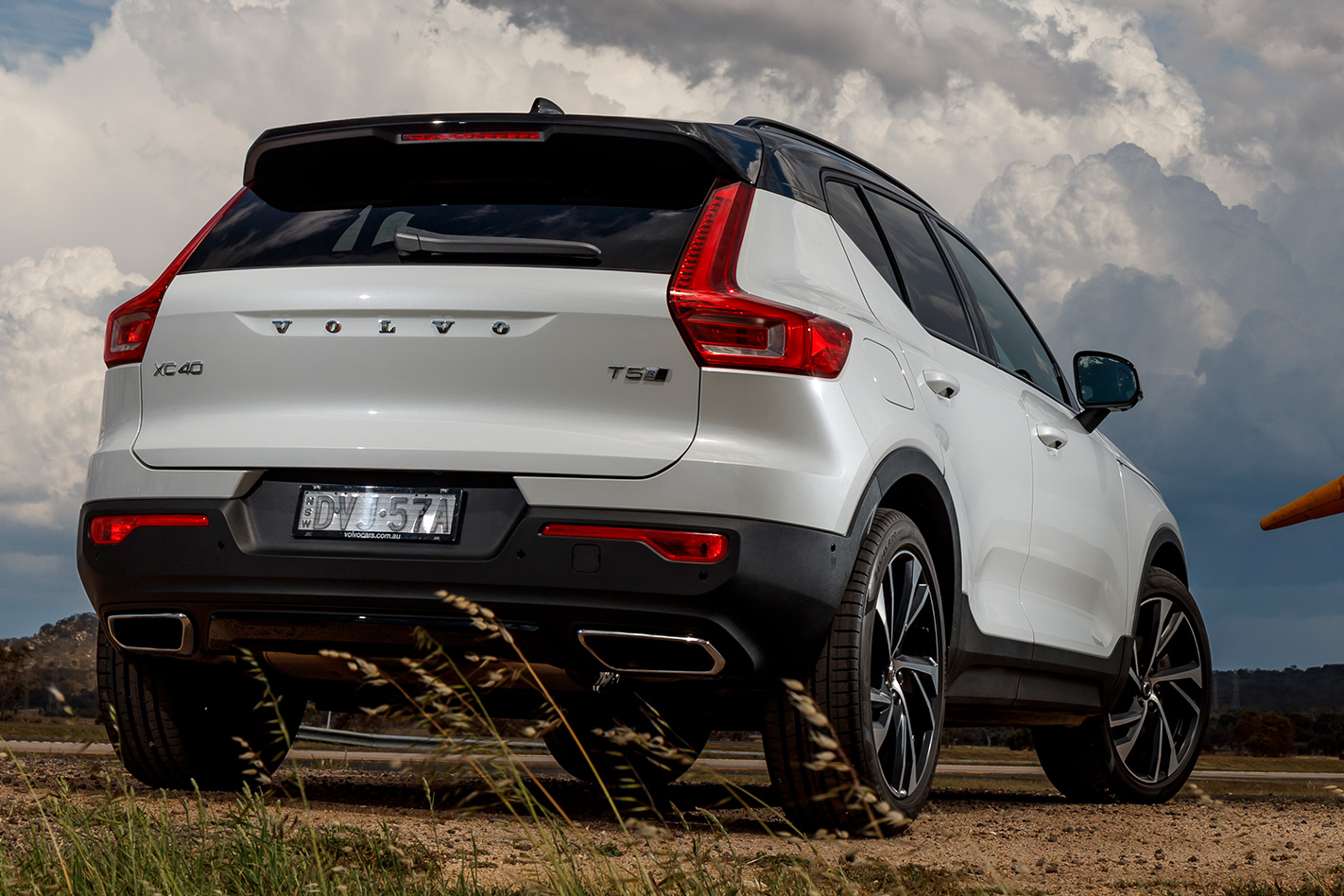
Once the preserve of conspicuous 1950’s muscle cars, two-tone paint jobs are making a return without looking gaudy.
Volvo offers its cool XC40 small SUV with a contrasting roof to match the plethora of other typically Swedish design touches. And it’s not alone. Many brands are now offering different roof colours and eye-catching panel matches. Peugeot will even sell you a hot hatch that has the entire rear end in matte black. In an age when safety and aerodynamic design constraints are funnelling cars into similar aesthetics, expect more car makers to offer unusual paint schemes in an effort to stand out.
Huge wheels
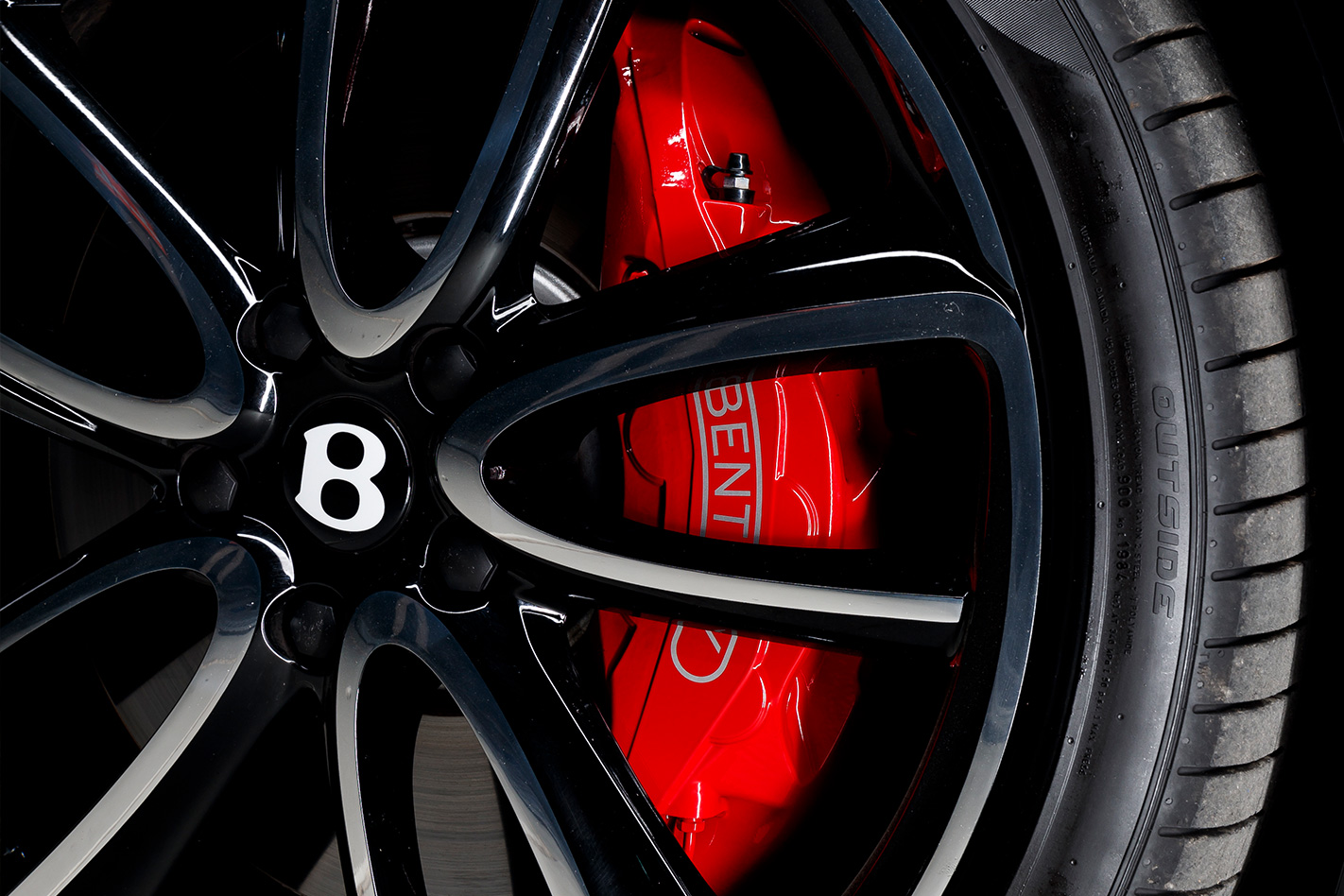
When the Mini was first sold, it had 10-inch wheels. Cute. Today though, the modern equivalent Mini has a rim that’s nudging almost double that, and the trend of super sized wheels is showing no signs of stopping.
Our diameter king this year was the Bentley Continental GT which turned up shod with 22-inch hoops, followed closely by the Porsche Cayenne rolling on 21-inch wheels. We started counting those with 20-inch hoops and quickly lost count.
It seems, when it comes to wheels, size really does matter and the handsome proportions of a massive tyre housed under a muscular wheel arch are resonating well with the discerning public so you’ll see more of that.
360-degree cameras
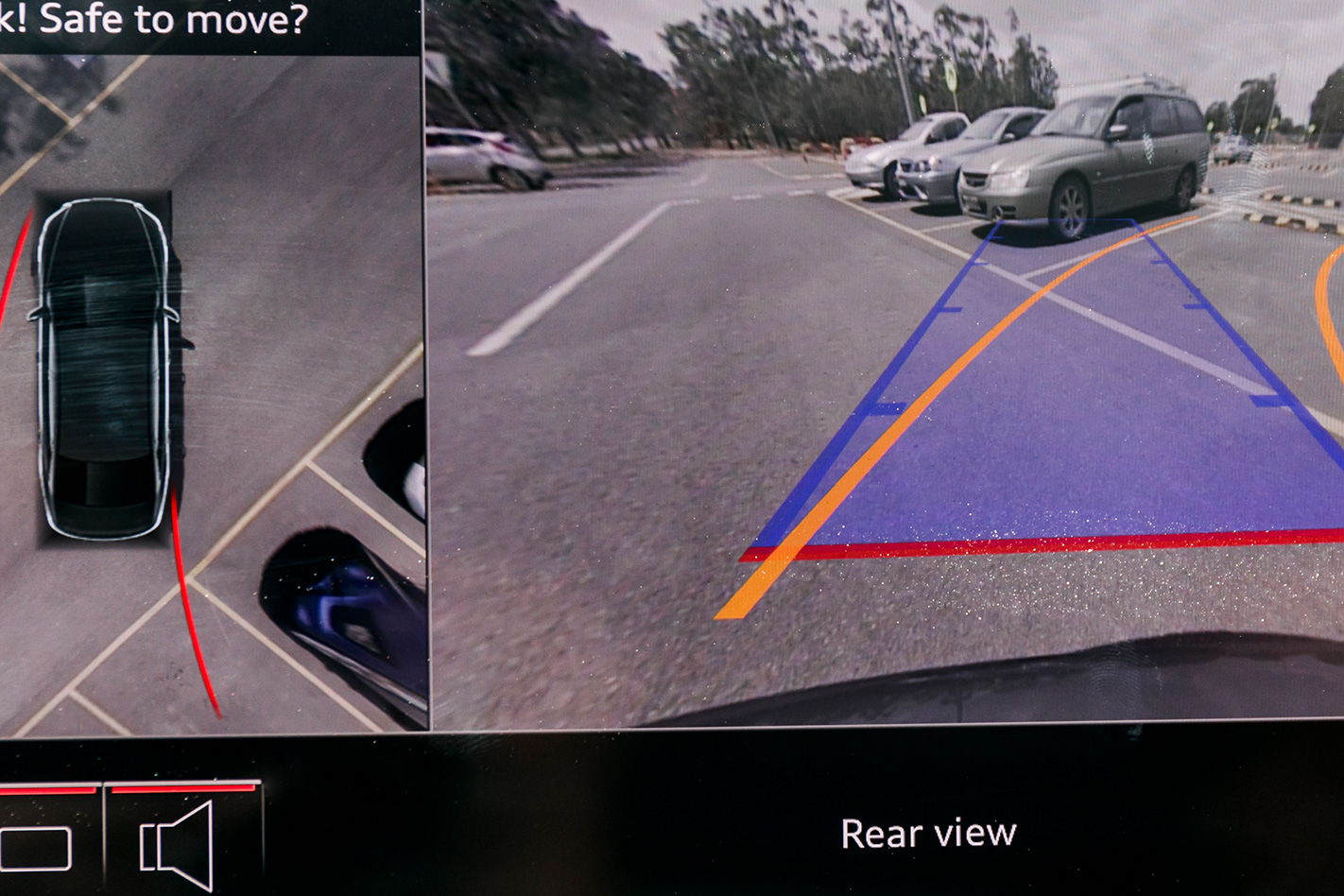
With all the parking assistance systems fitted to modern cars, it’s frankly staggering there are any vehicles on our roads with scuffed bumpers, but technology is making it even harder for you to glance a gatepost.
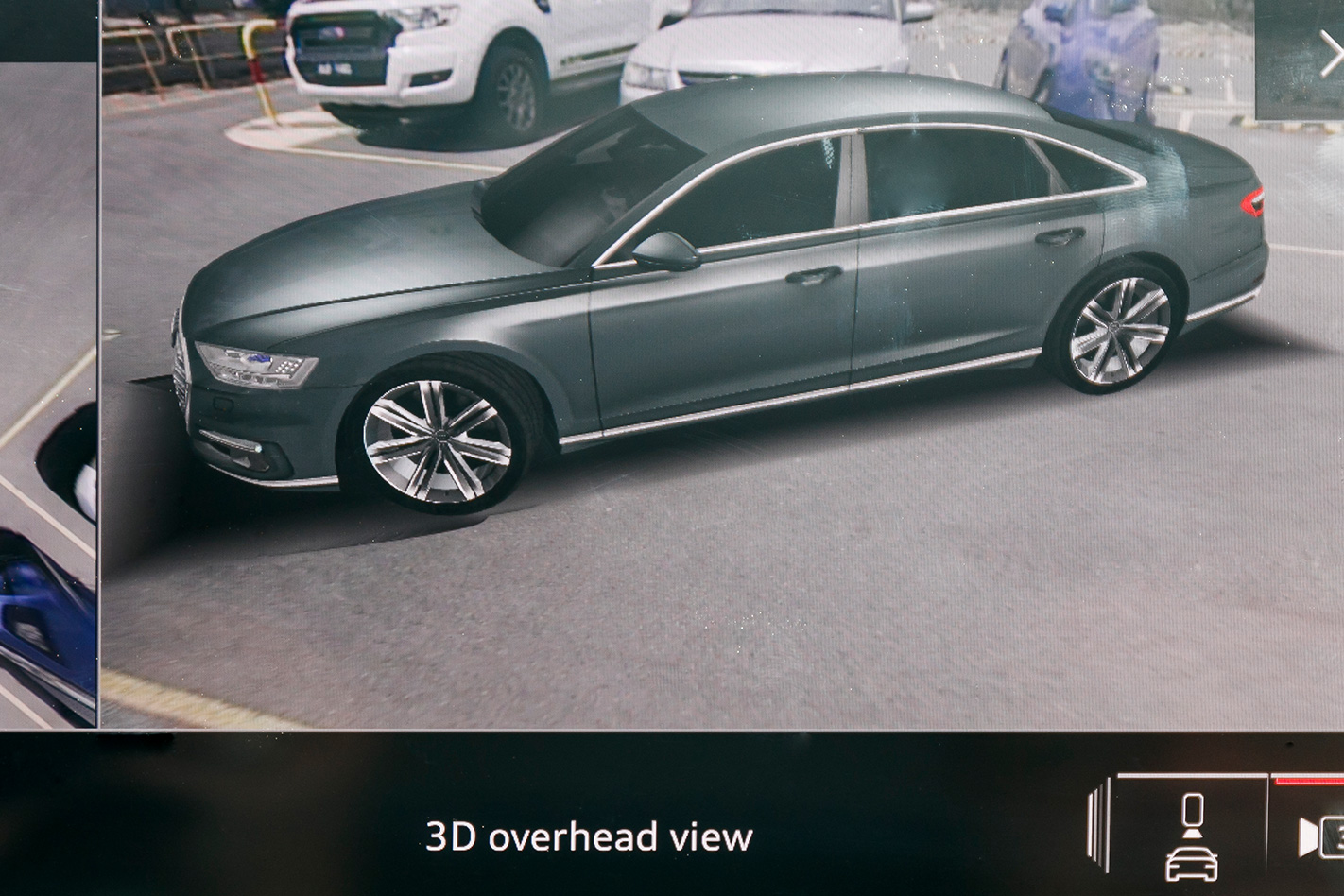
Dizzyingly clever algorithms allow the images from four separate cameras – one on each side of the car – to be combined into a single image that appears as though you have a drone hovering above you as you park.
The technology is getting even cleverer and now the electronics can create a 3D view of your car as you manoeuvre. With a pinch or swipe, you can steer that virtual drone around to another angle of the car and impossible parking spots really are looking like a thing of the past.
Tablet style infotainment screens
Banking, dating, gaming, organising your life, taking pictures and navigating – a massive part of our lives is now intrinsically woven into the tablet device, so it makes sense that car makers are adapting information and entertainment systems to feel similar.
At the centre of Mercedes-Benz’s new MBUX system, a 12-inch touchscreen forms the intuitive point of interaction for users, and is fused seamlessly to the equally sized dash cluster, but it’s not unique.
Virtually all brands now have some form of ‘floating’ infotainment screen that offers touchscreen operation similar to tablets and smartphones, and the technology housed within is getting exponentially smarter by the day.
Keyless operation
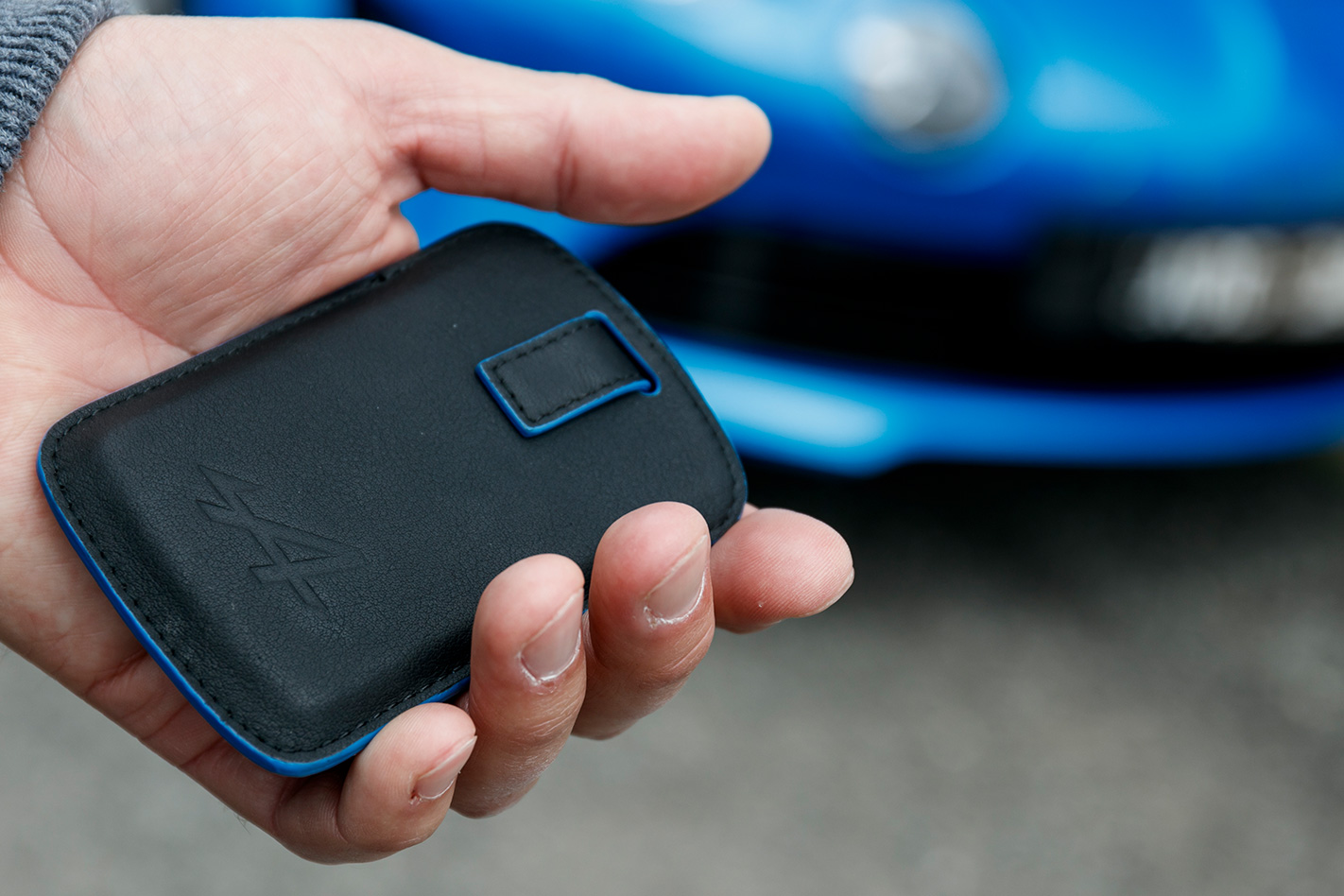
When it was first invented, remotely operated central locking set a new benchmark for car convenience, but that was a long time ago and the modern-day equivalent doesn’t even require you to remove the ‘key’ from your pocket.
Not only do increasing numbers of cars offer technology which senses the correct key in the cabin and allow the driver to start the engine by simply pressing a button, the technology also allows doors to be unlocked by simply touching a door handle.
Of the cars on test this year, the ultra-sexy Alpine A110 has arguably the coolest interpretation. The credit card-sized key has buttons for locking and unlocking, but leaving it in the beautifully made leather case and letting the car work it out is easily the smoothest way of boarding this bantamweight sports star.
Seven seaters
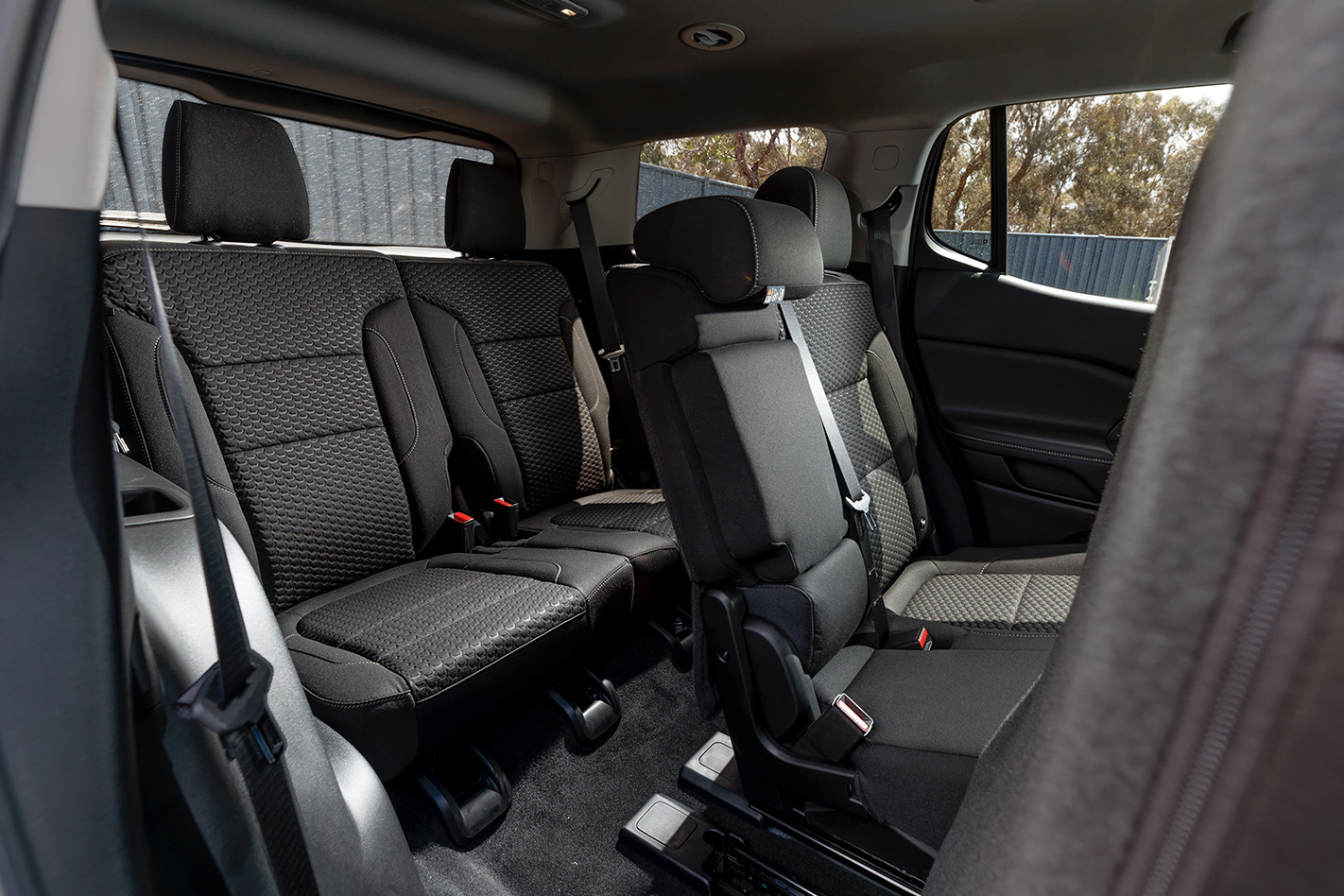
Hauling more than five passengers used to require the least sexy form of transport known to humankind: the people mover. But with the skyrocketing popularity of SUVs, many manufacturers are now incorporating a third row of seating at the larger end of the spectrum.
Holden’s freshly launched Acadia is one such example but it joins an already busy marketplace, with seven seaters emerging from all the key players in recent years. At the event this year, the Hyundai Santa Fe and Mazda CX-8 also weigh in with three-row SUVs that couldn’t further removed from a glorified van with windows. And they’re selling like hot cakes.
Kia has revealed a trio of special editions to celebrate its ongoing support of the Australian Open tennis tournament, headlined by a version of its Picanto baby hatch that has been administered a shot of SUV growth hormone.
Dubbed the Picanto X-Line AO, the special variant shares the major mechanical parts of the Picanto S including the 65kW 1.3-litre petrol engine and a choice of five-speed manual or four-speed auto, but is dressed up in a crossover’s clothes.
In place of more road-going suspension, the X-Line AO rides 15mm taller and on 16-inch alloy wheels for a more all-terrain ground clearance, while its unique bodykit adds fat bumpers with scratch guards, and more protective parts on the wheel arches and doors.
For your $16,990 (or $17,990 for the auto), you also get more premium seats, steering wheel and shift knob, electrically folding door mirrors, LED daytime running lights and tail-lights, and dual exhaust tips, capped off with AO branding.
The South Korean car maker is also rolling out AO celebratory versions of its Sportage small SUV and Sorento large SUV, and all of this cross-pollination fun has reminded us of some of the previous brand tie-ups between car makers and companies that don’t make cars.
Browse our gallery at the top of the page of the 11 best (and perhaps funniest) car company collaborations in the gallery above.
Volkswagen Polo Beats
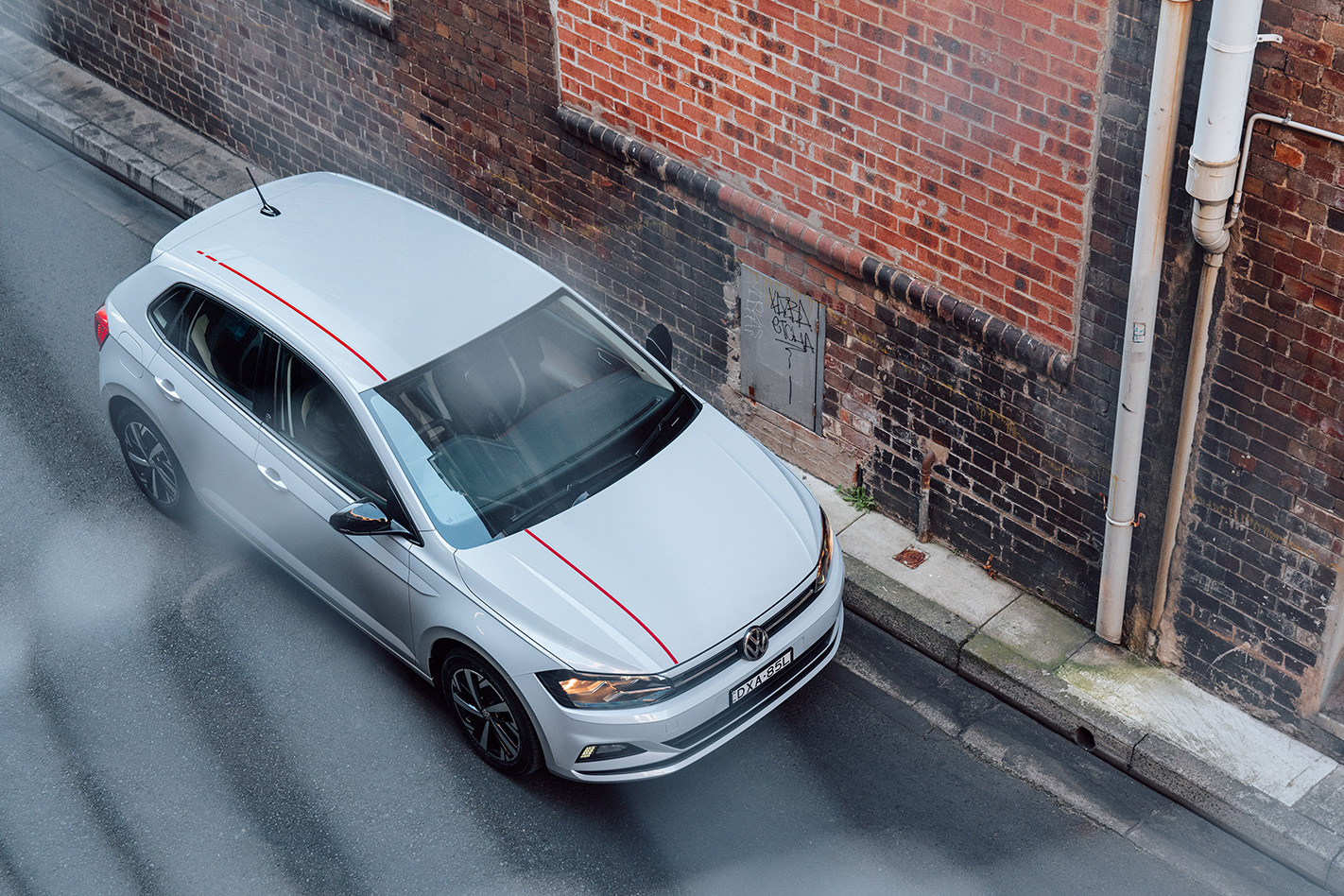
Most recently, Volkswagen introduced a version of its Polo small hatchback that leaned on the audio wizardry of Beats to install a 300-Watt sound system, as well as a flash of red on the outside to set it apart.
Bugatti Veyron Hermes
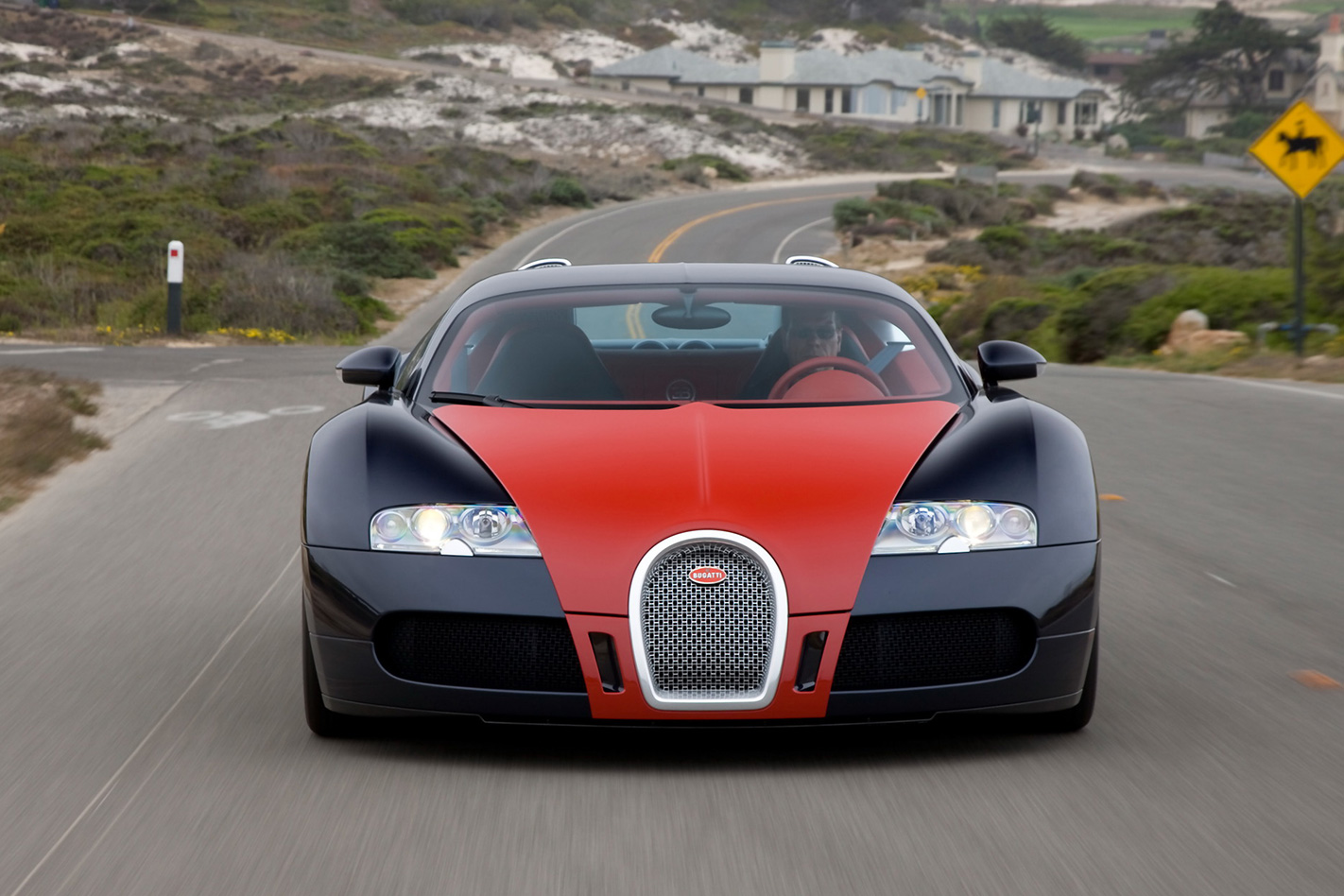
As if the mighty Bugatti Veyron wasn’t exclusive (or expensive) enough, the Italian car boutique released just four examples that had been ‘refined’ by the iconic fashion label Hermes.
Nissan Pulsar Reebok
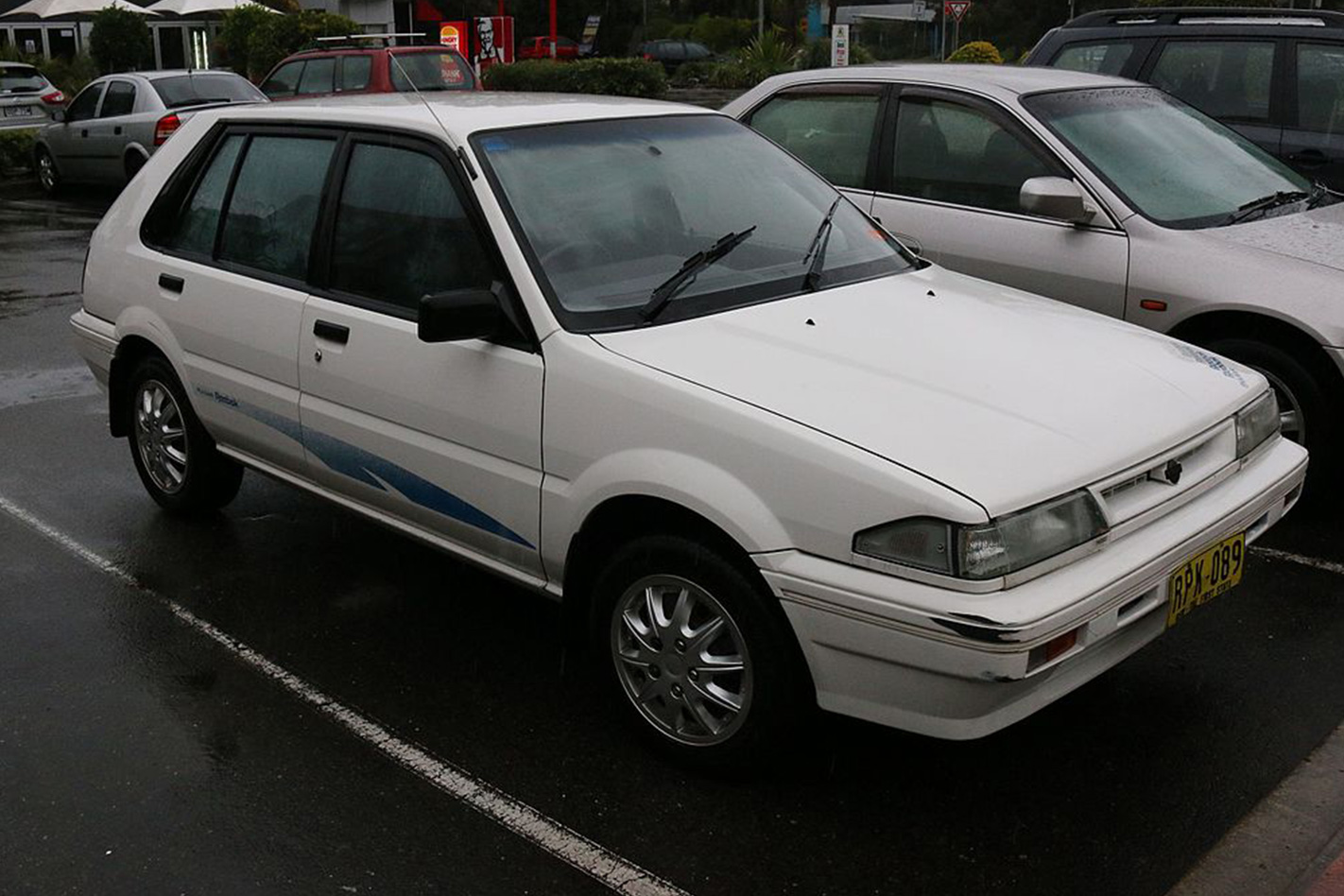
Snap up a 1990 Nissan Pulsar Reebok and you would have got this scorcher complete with side decals, but if you had hung on to the pair of Reebok Pump boots that were thrown in with the deal, it’s likely they would be worth more than the car these days.
Fiat 500 Gucci
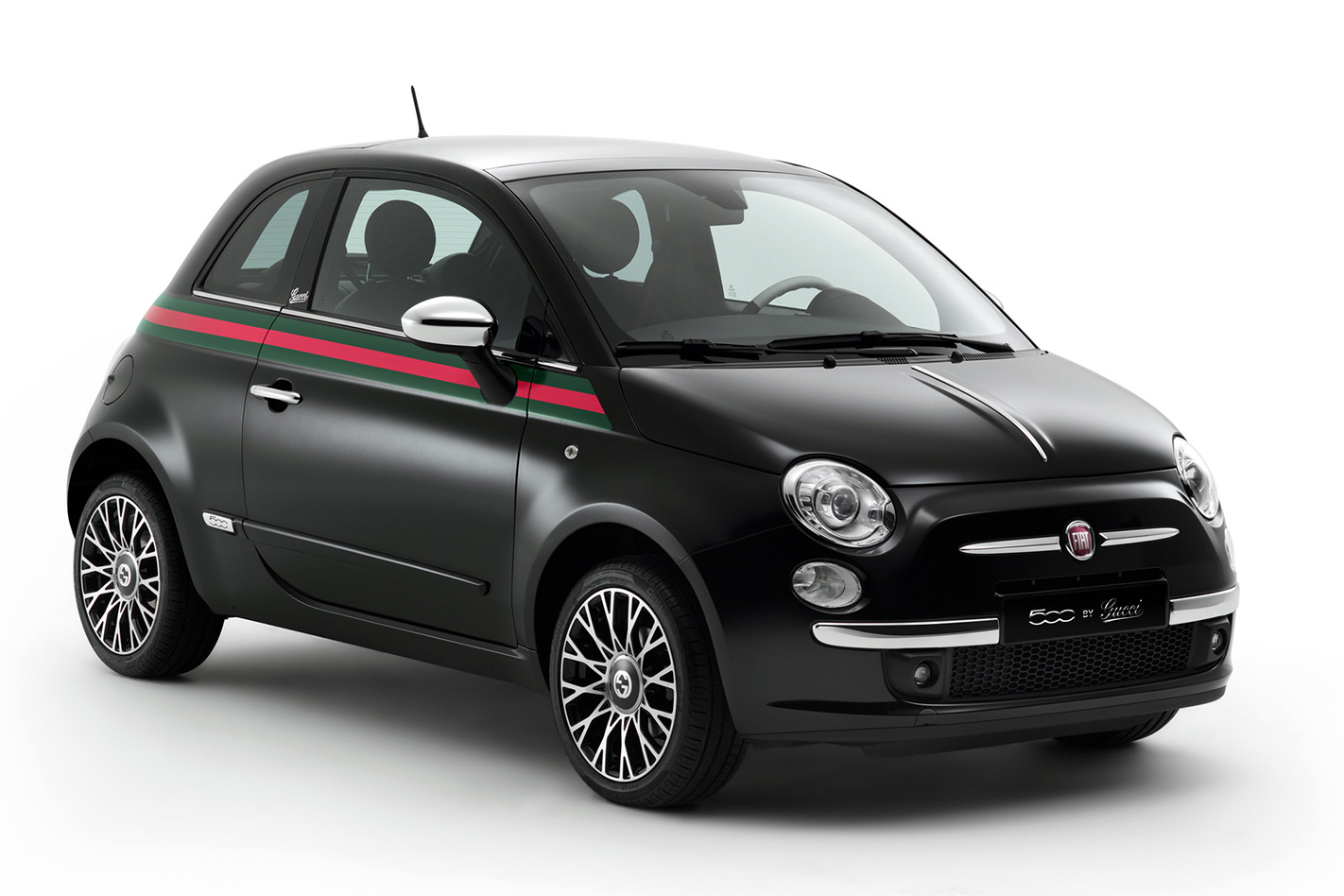
Just 101 examples of the Fiat 500 Gucci came to Australia, bringing the flair of creative director Frida Giannini’s style.
Holden Barina Sportsgirl
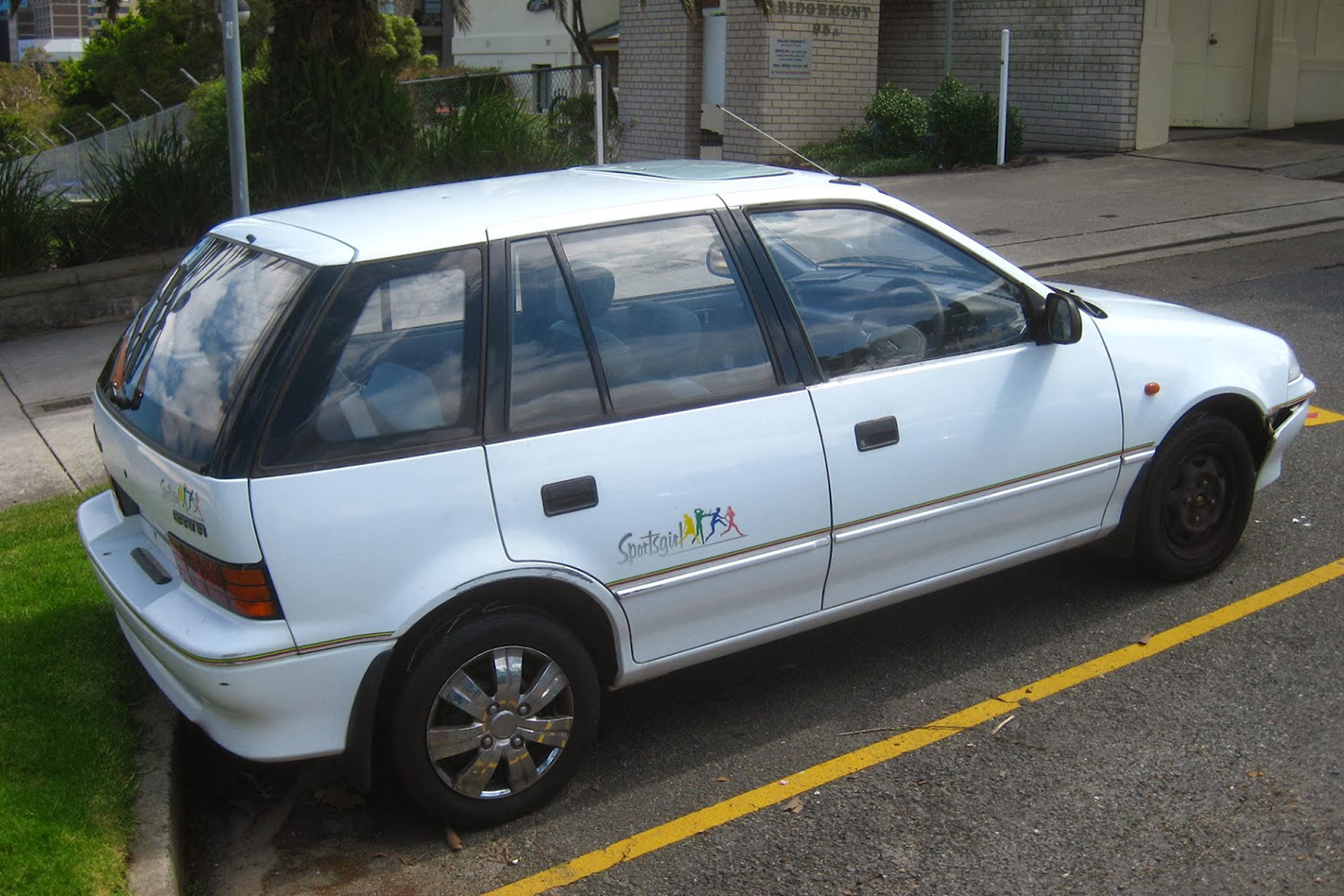
Perhaps the lightest dusting of ‘extras’ to create a special edition, the Holden Barina Sportsgirl had unique floor mats, hubcaps, snazzy badging and a sunroof. That’s it. Oh and a $50 Sportsgirl voucher, but that’s probably expired by now.
Daihatsu Charade Mizuno Sports
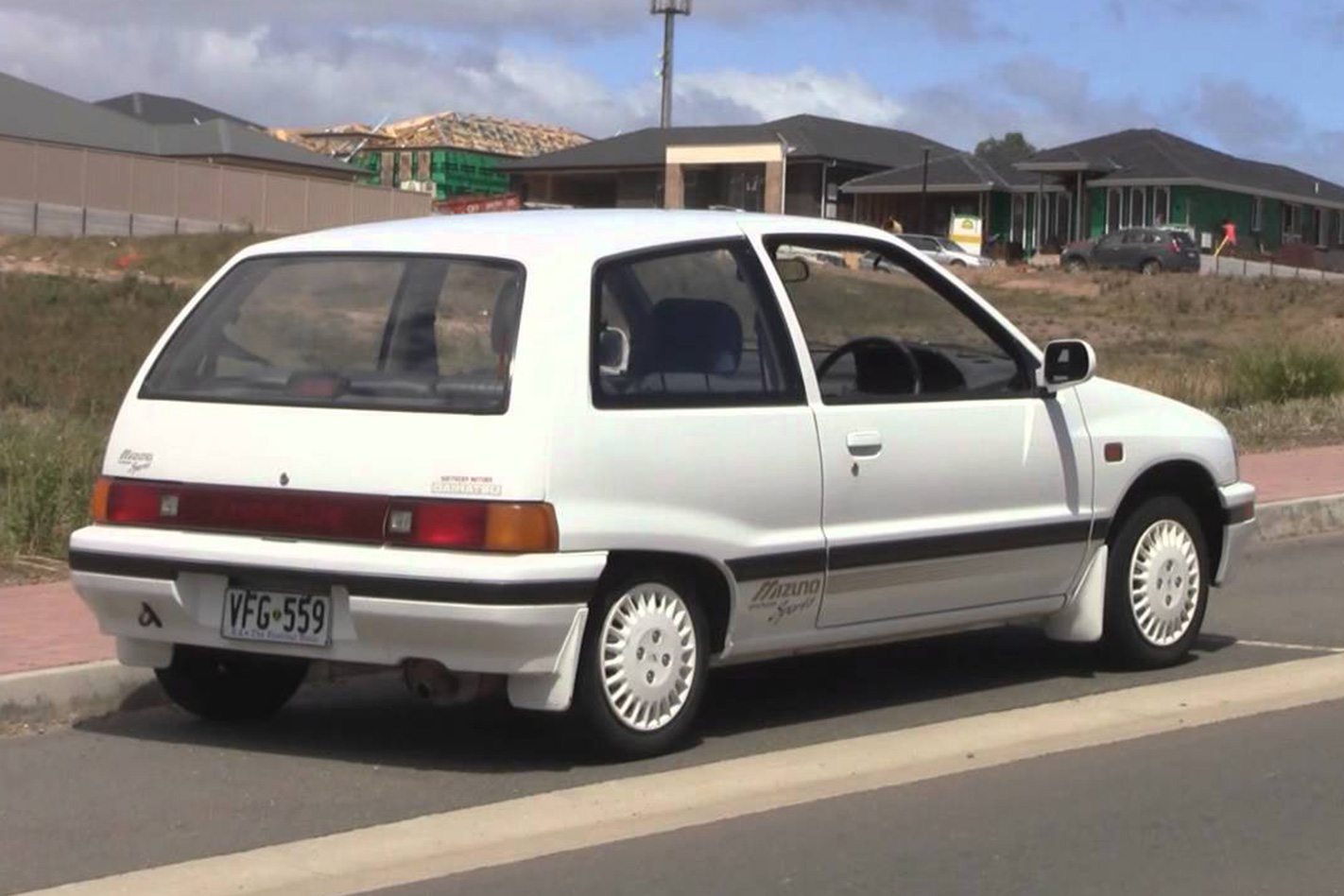
Like a giant tennis shoe, Daihatsu’s vision in white teamed up with Japanese sports equipment label to create this lightly enhanced Charade. Several owners parked their cars in the snow and never found them again.
Ford Laser and Meteor Carla Zampatti
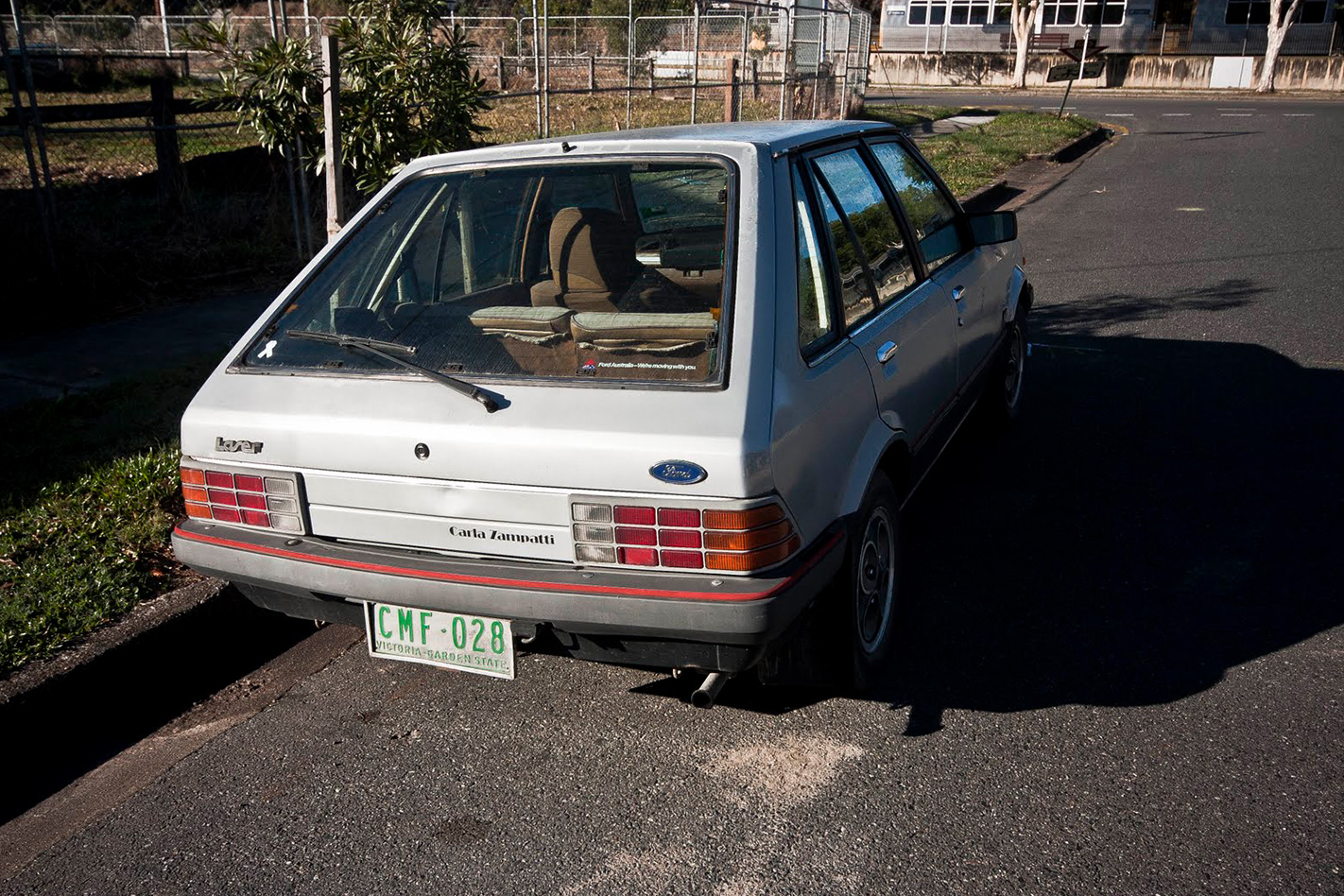
Italian-Australian fashion designer Carla Zampatti has contributed extensively to the Multicultural Foundation, Business Council, Sydney Dance Company and UTS Industry Advisory Board. But easily her greatest achievement was creating female-focused Laser and Meteor specials for Ford.
Ford LTD Cartier
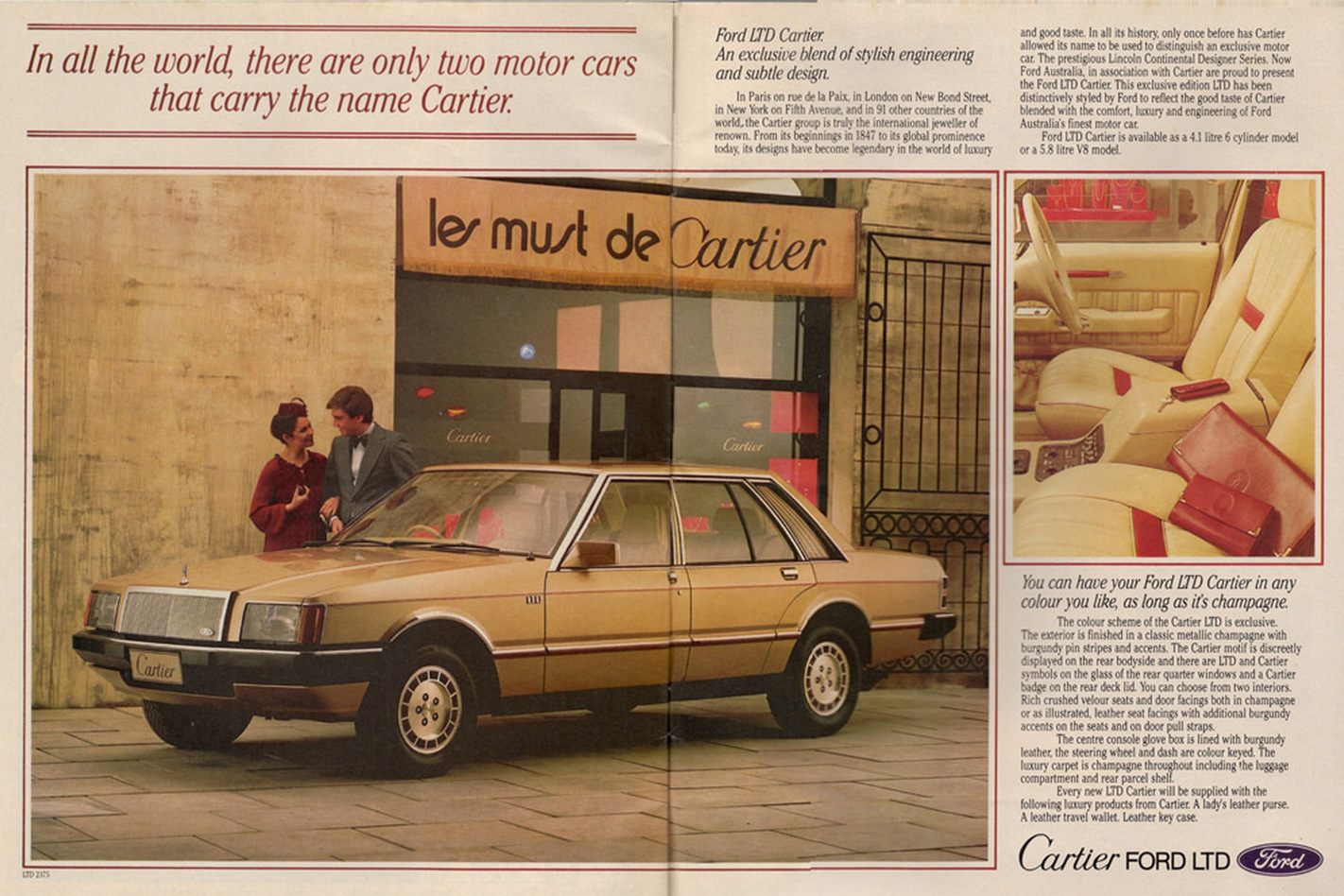
Monaco, Paris, Milan, the royal family, wealthy celebrities, lavish parties and the 1979 Ford LTD. These are just some of the images conjured when you think of iconic French luxury brand Cartier.
Citroen C4 Cactus Rip Curl
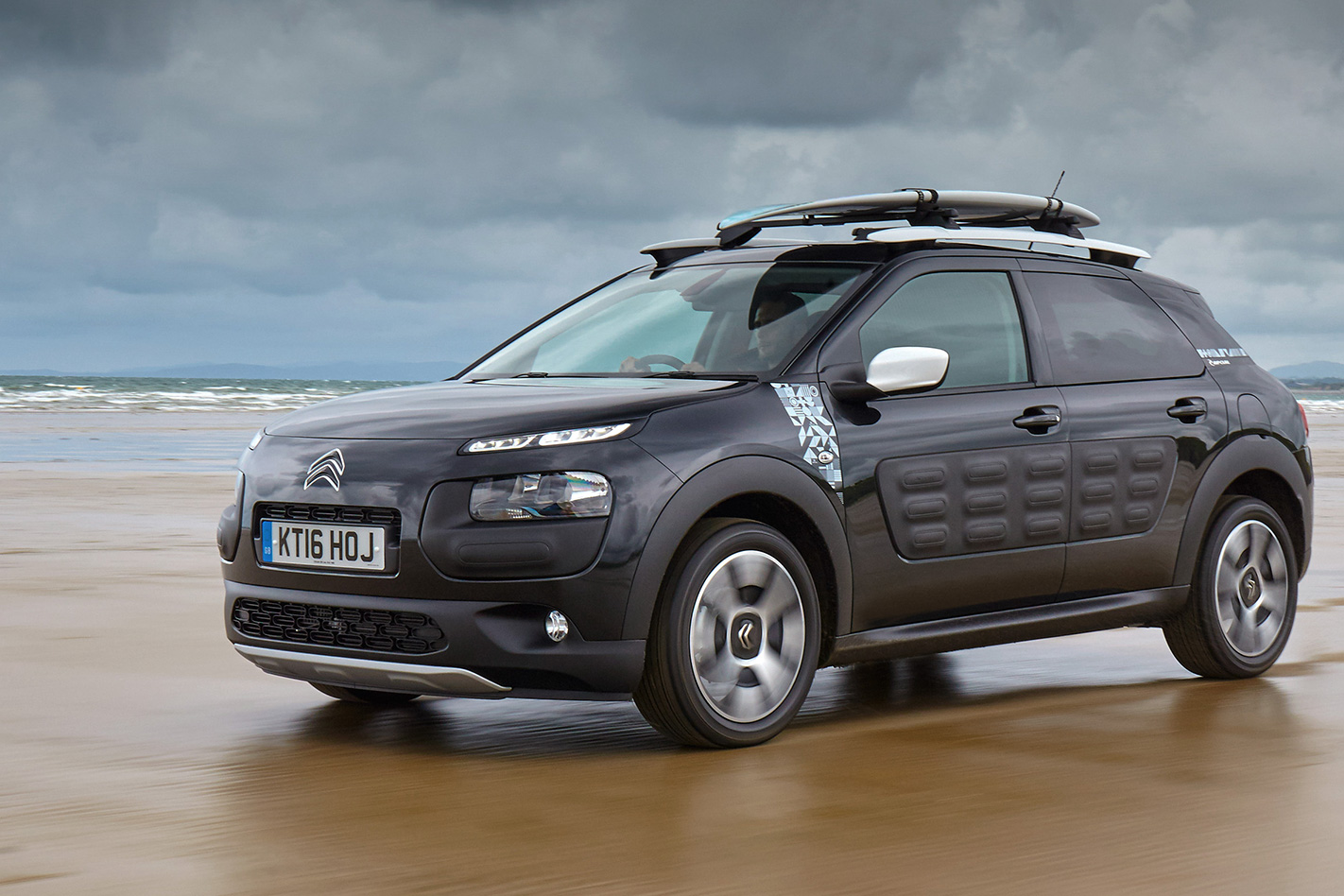
Like a good layer of wax on your board, this special Rip Curl edition of the Citroen C4 Cactus introduced Grip Control electronics for more traction, as well as a handful of bespoke surfy styling tweaks.
Maserati Quattroporte Zegna
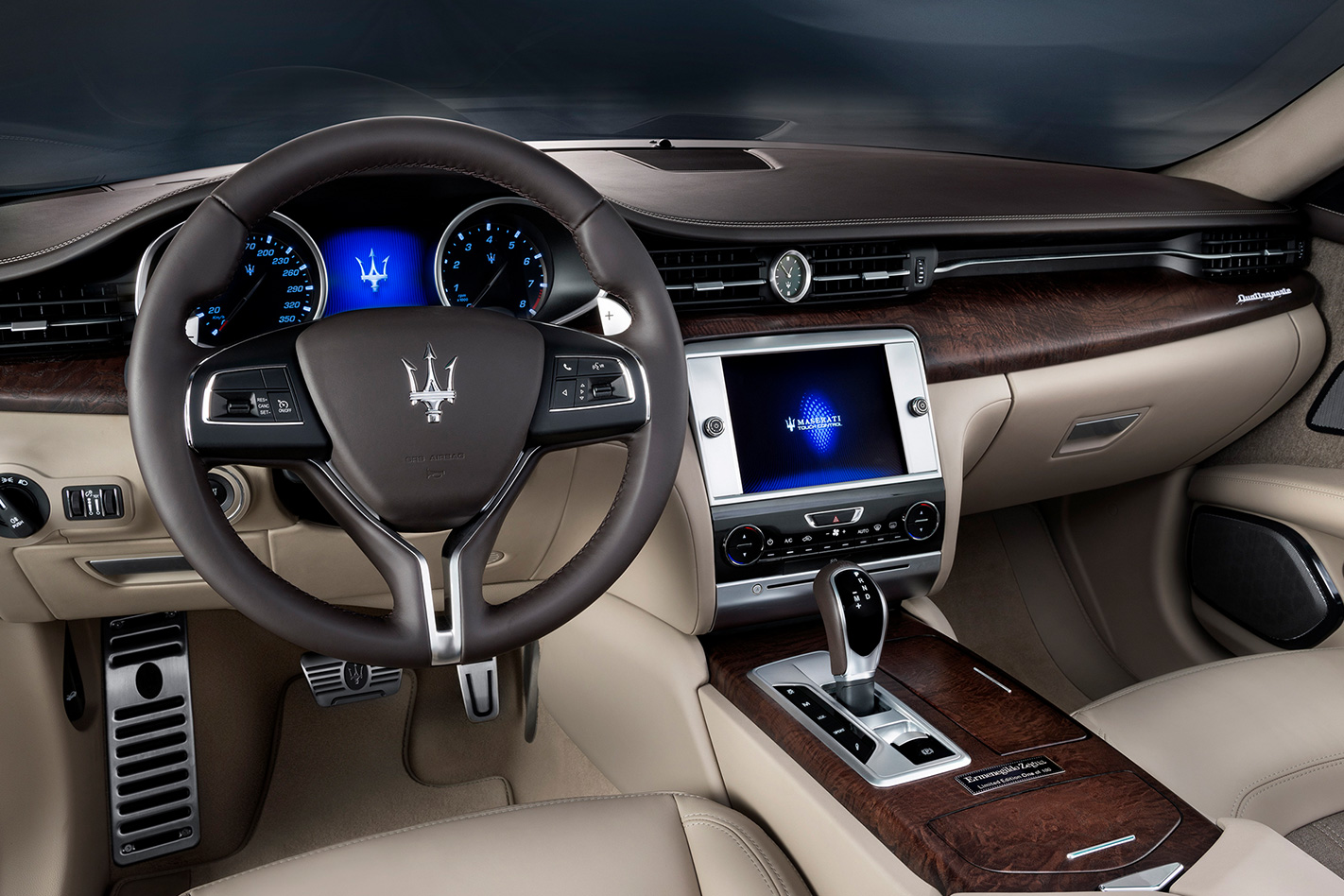
If American psycho Andrew Bateman drove a Quattroporte it would be this one. Enhanced by high-end Italian fashion brand Ermenegildo Zegna, the limited Maserati offered significantly more premium extras compared with some of the other sticker-pack specials here.
Volkswagen Golf GTI Adidas
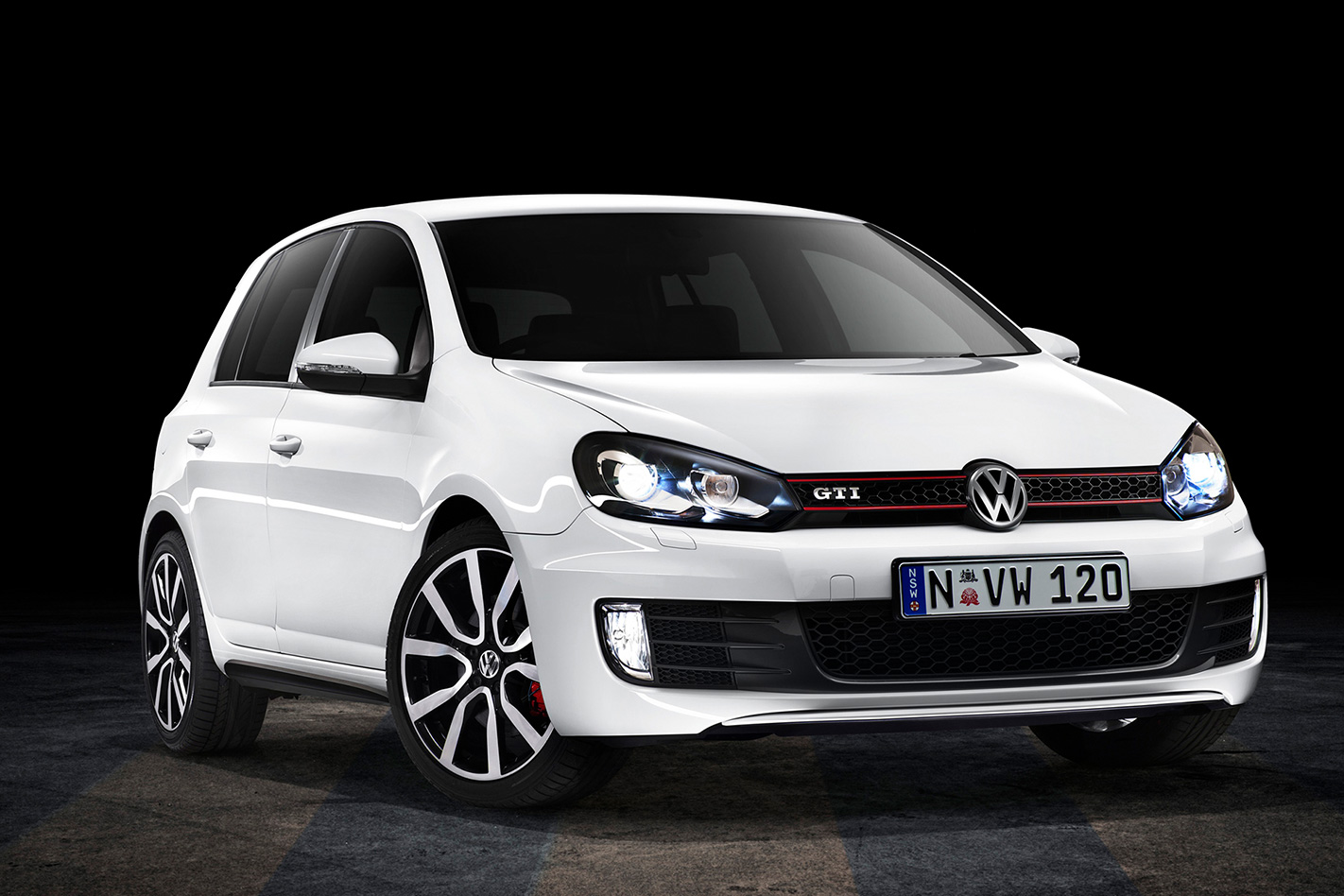
Completing the trio of hatchbacks here that are named after sports shoes, Volkswagen’s 2010 Golf GTI Adidas had the unmistakable stripes applied to its sports seats, unique 18-inch wheels and pinched the smoked rear light lenses from the Golf R.
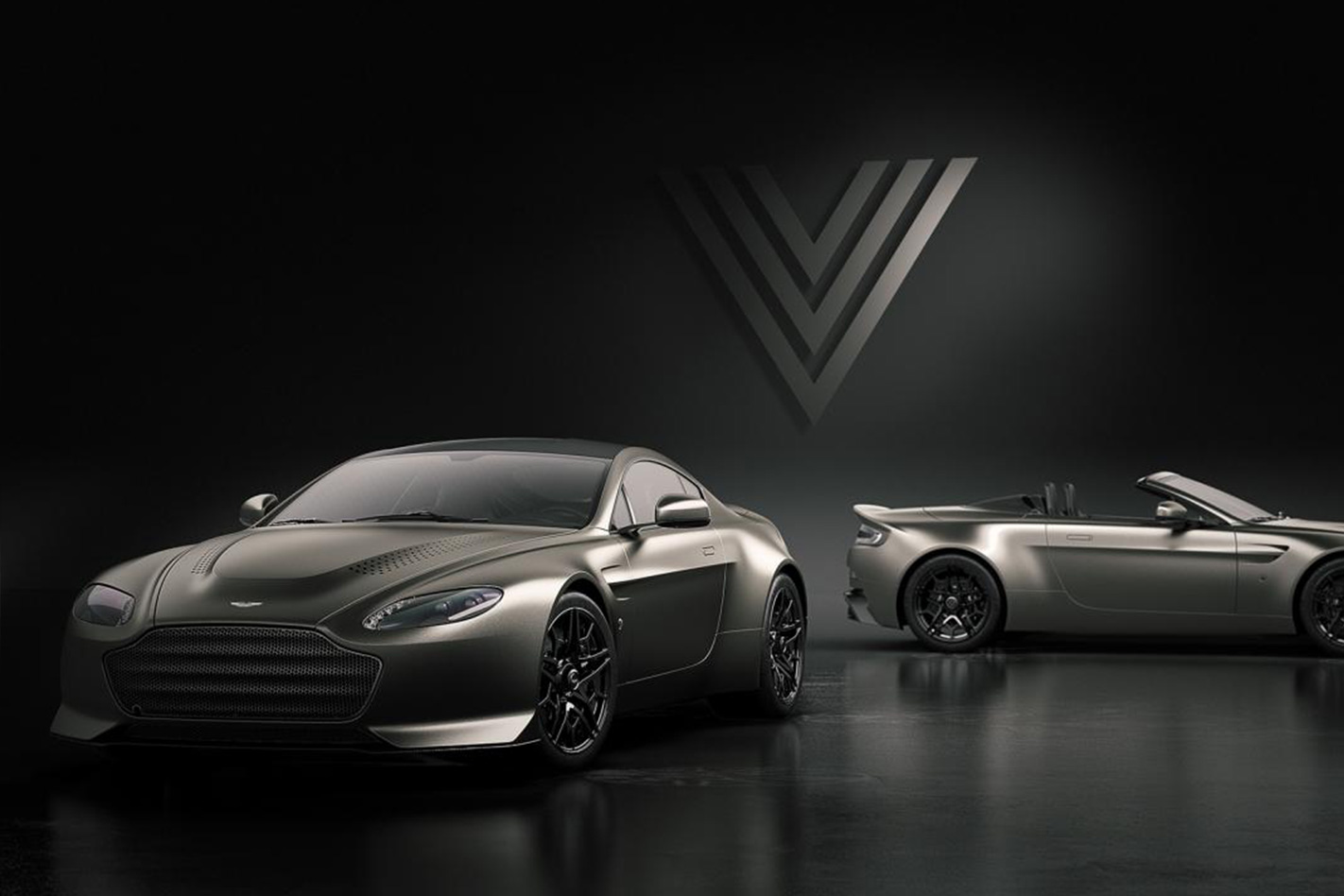
Aston Martin’s announcement that its outgoing Vantage is being sent off in style with the V600 edition could mark the last time we see the purist’s trinity of hydraulic steering, a manual gearbox and a 12-cylinder naturally aspirated engine together in one vehicle.Only 14 examples of this analogue stunner will ever be built, and the shape doesn’t seem to have garnered a wrinkle since Henrik Fisker’s concept was first unveiled at the 2003 Detroit Show. Fifteen years on, it’s still a stunner. Does it rank amongst the very best final editions though? We reckon it’ll have some stiff competition from five of our very favourite farewell models.
1. Ford Falcon Sprint (2016)
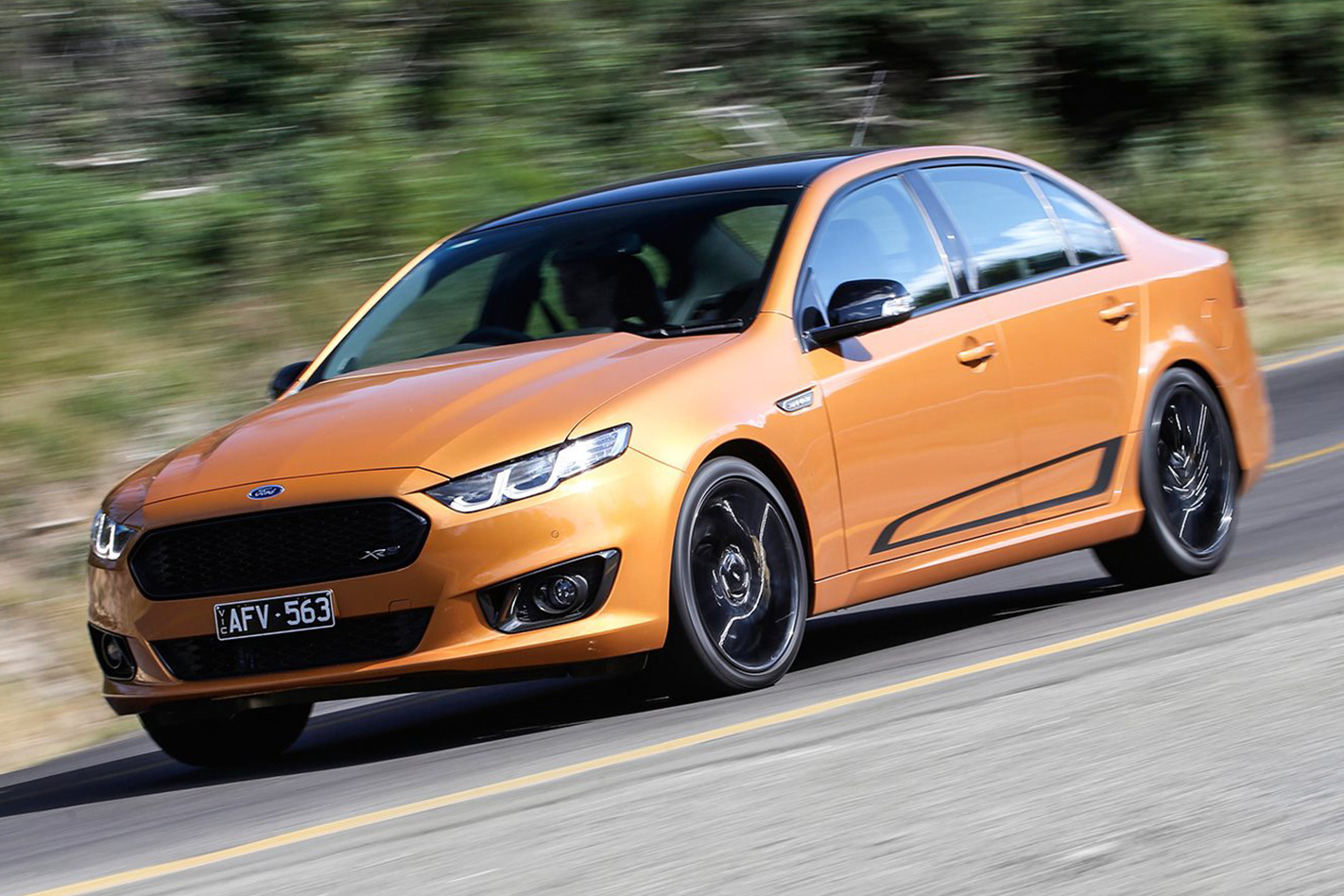
Argue all you want over whether the XR6 or the XR8 version of the Sprint was the better of the two, but there’s not any great debate on the fact that both of ‘em had the ability to plaster a huge smile on your dial. Never the last word in roadholding or handling delicacy, the Sprints instead brought out the hooligan in you. Prices haven’t stepped up quite as smartly as some speculators had hoped (we found XR6s from $48K and XR8s from $55K), but that’s still cheap motoring for two years in a great car. The 1400-car run of the 345kW XR8 and 325kW XR6 Sprint versions might still come good for those with delivery mileage examples in their garages, but for most of us, the lure of immolating a few rear tyres is a siren call that we wouldn’t be able to resist.
2. Dodge Viper ACR (2016)

The Dodge Viper didn’t just blink out, it went supernova with the 481kW ACR version of the VX I Viper. As if an 8.4-litre V10 engine wasn’t extreme enough, some customers went a step further and ordered it with the ACR Extreme Aero Package, the same option pack that helped the ACR claim 14 production car lap records including the one that matters; the Nurburgring Nordschleife. Upon launch, this pack gave the ACR up to 800kgs of downforce – then the most of any production vehicle. The thing we love that most is that when the Viper eventually relinquished the record to the Huracan Performante, Dodge went so banzai to reclaim it that they wrecked a car at the Ring. That’s commitment.
3. Nismo R34 GT-R Z-Tune (2003)
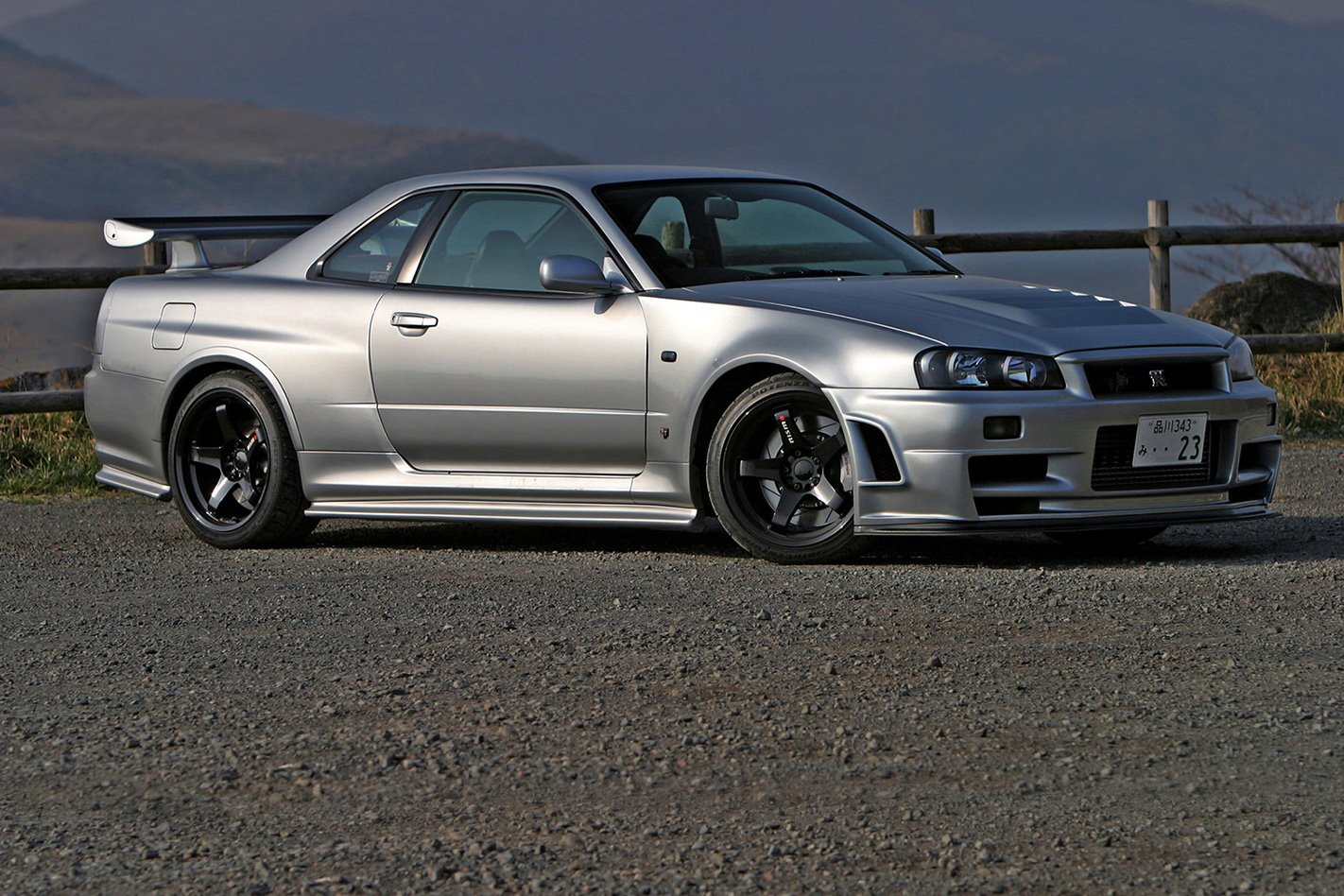
A Bayside Blue Nissan Skyline GT-R was always one of the poster cars for the Gran Turismo generation and when the R34 was winding down its production run – and, indeed, saying goodbye to the Skyline badge for the GT-R line – Nissan’s go-faster division, Nismo, decided to give the old girl one heck of a send-off. The Z-Tune wasn’t a production car in the normal sense of the term. Nismo acquired lightly used R34 GT-Rs, bored and strengthened the engine, upgraded the turbochargers, seam welded and then sold 19 of these 500kW 2.8-litre monsters, all but one in special Z-tune Silver. Nowadays we wouldn’t be surprised to see one of the 19 hit A$1m at auction.
4. Lamborghini Murcielago LP670-4 SuperVeloce (2009)
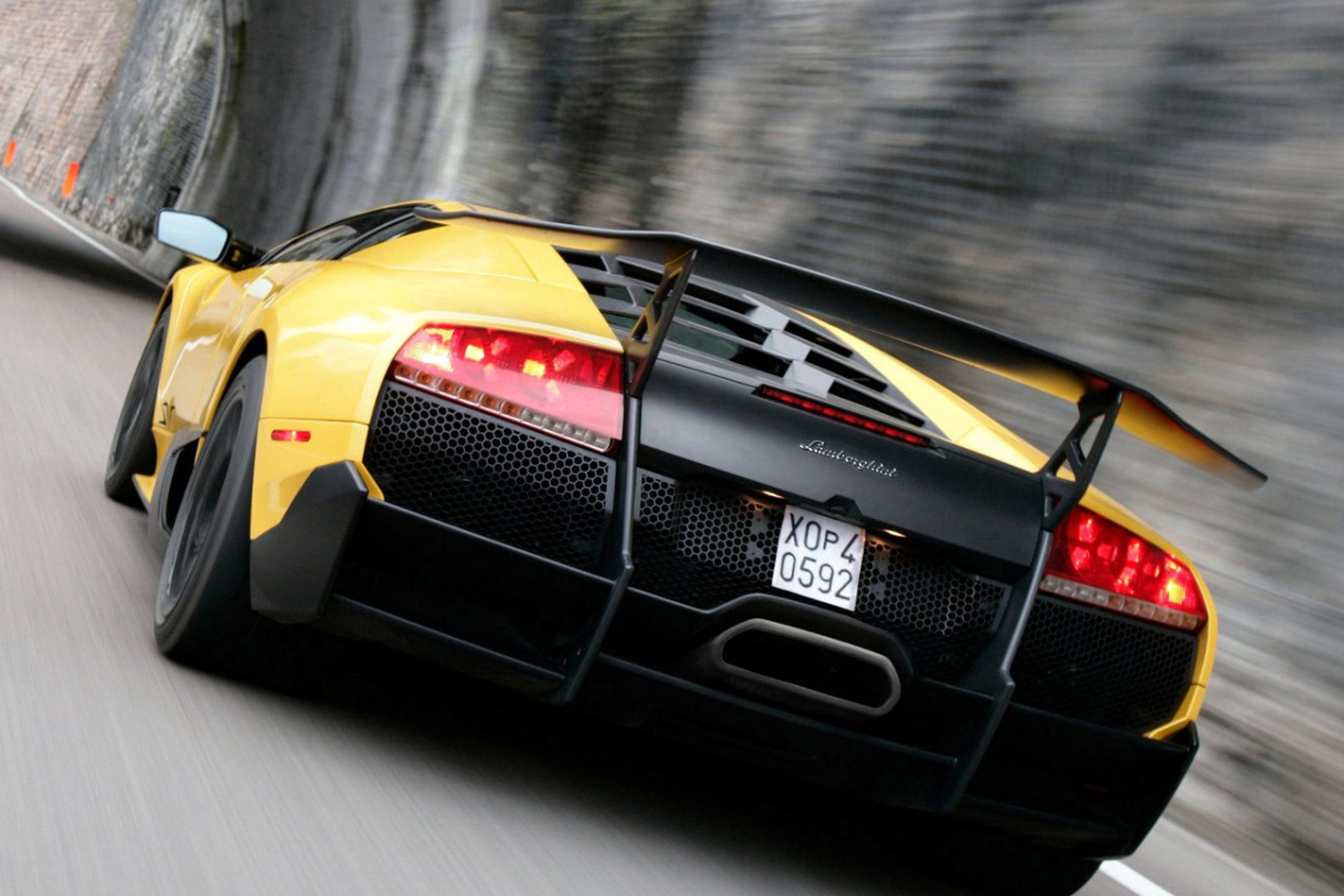
The Murcielago SV was not only a great driver’s car, but it was also the last of the line for a V12 that could be traced all the way back to Ferruccio Lamborghini’s commission to engine builder Giotto Bizzarrini back in 1963. In its first iteration, the sixty-degree V12 displaced 3465cc and made 276kW, Lamborghini furious that Bizzarrini had built him a race engine rather than a road car unit. In its final iteration in the Murcielago SV, it had nearly doubled in capacity to 6498cc, with power stepping up to 493kW. Along the way it got four valves per cylinder, dry sump lubrication and electronic fuel injection before being replaced by the L539 engine in the Aventador. The Aventador was a big step forwards for Lamborghini, but a little of Sant’Agata’s soul slipped away when the last Murci SV ran down the line.
5. HSV GTS-R W1 (2017)
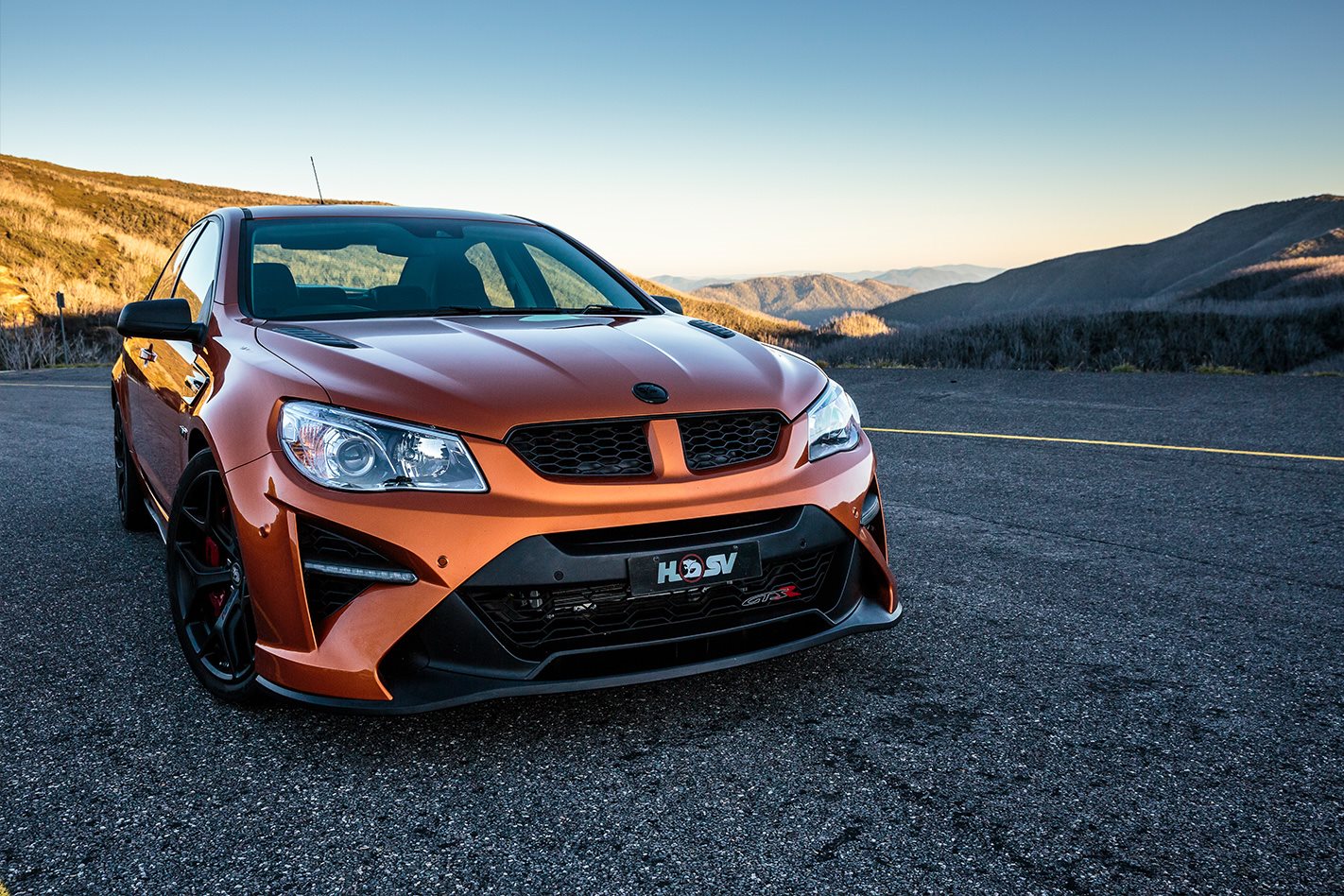
This might just be our favourite of the lot. How could we overlook the crazy HSV GTS-R W1, a car that showed the world everything that an Aussie muscle car could be? The final fling for the home-built hot VFII generation Commodore body, the 474kW supercharged LS9 was an absolute riot, loud, menacing and it could be a proper handful when the track-focused SupaShock suspension would inevitably run out of travel on bumpy rural roads. It was never boring though, and it asked questions of good drivers. Best of all, it had the grunt to give the European blue-bloods a good larruping and make them look a bit two-dimensional in the process. We’ll never see its like again.
In the lead up to PCOTY, Editor Dylan Campbell is usually on the phone putting out the call to the usual suspects to come along and help decide which car will be the next PCOTY.
Now that PCOTY time is here, we can reveal the five people on this year’s esteemed panel.
Dylan Campbell – Editor

As well as keeping things running smoothly during PCOTY week, he’s got the task of rounding up a racing driver, finding a track to utilise, and then driving each of the cars – 11 this year – to put his two cents in with his four judging peers.
Scott Newman – Associate Editor
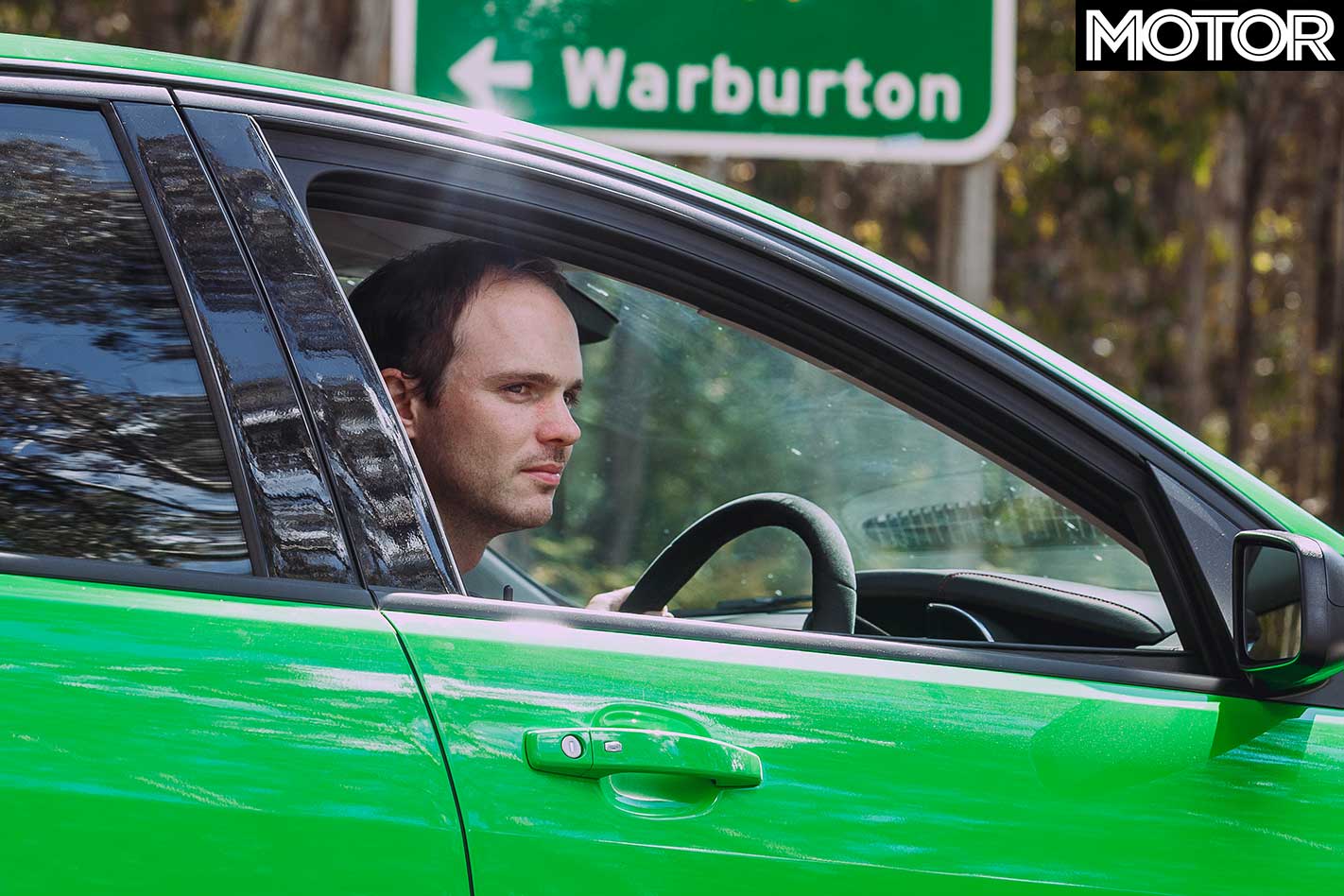
Scott’s usually the man behind the wheel for our action shots, and he’s regularly tasked with getting the best 0-100km/h run, quarter mile time, and braking distance for the PCOTY field.
His Instagram handle is @addictedtosliding, which says it all, really.
David Morley – Contributor and PCOTY veteran
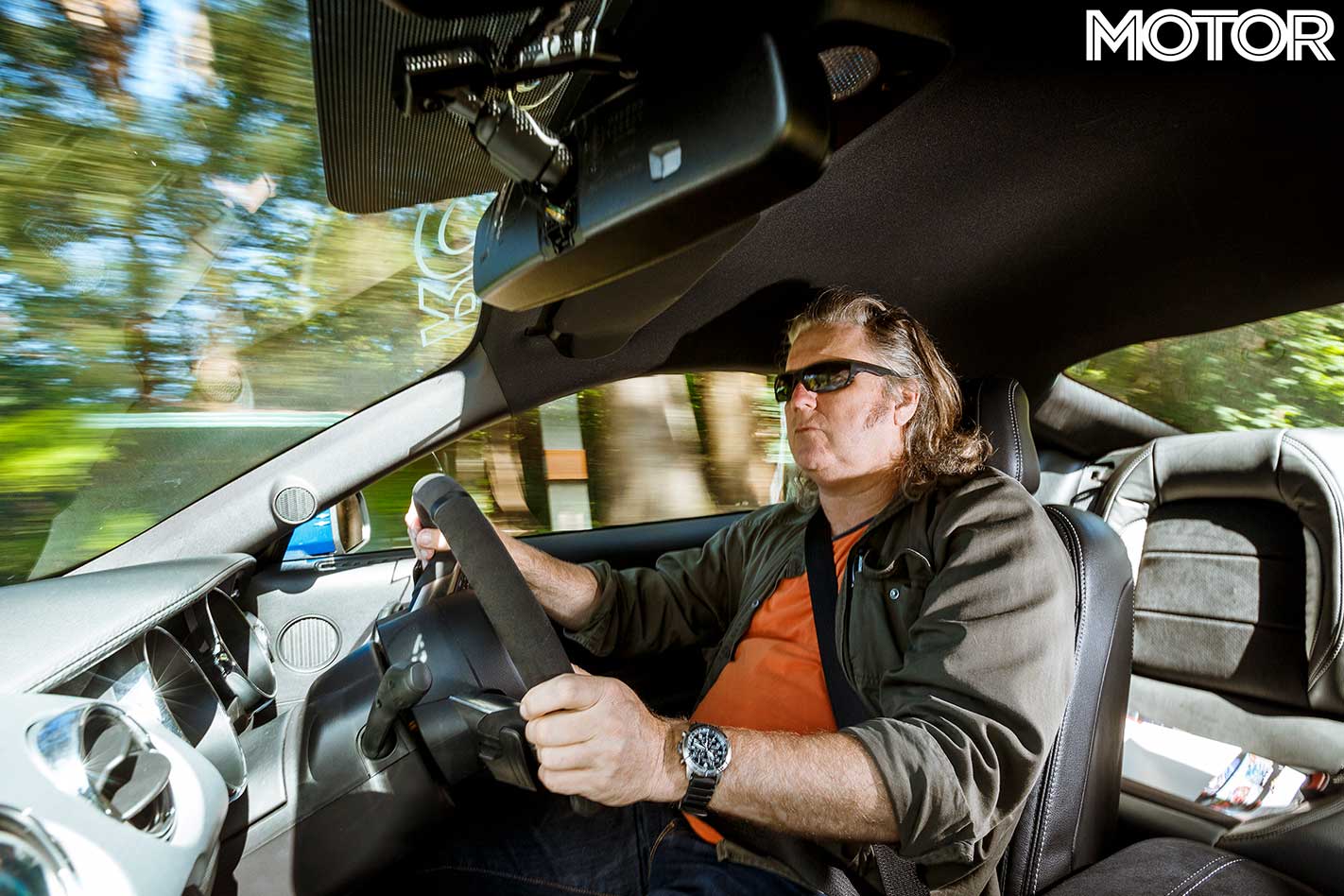
Morley’s been testing cars since before some of MOTOR’s journalists were born. That’s not a joke.
Decades of experience and an appreciation for how engineering has progressed makes Morley a perfect judge of a vehicle’s technical aspects, plus he can drive – he’s had a few years to get good at it.
Morley is often testing cars alongside Scott to get the best performance times possible.
Louis Cordony – Journalist
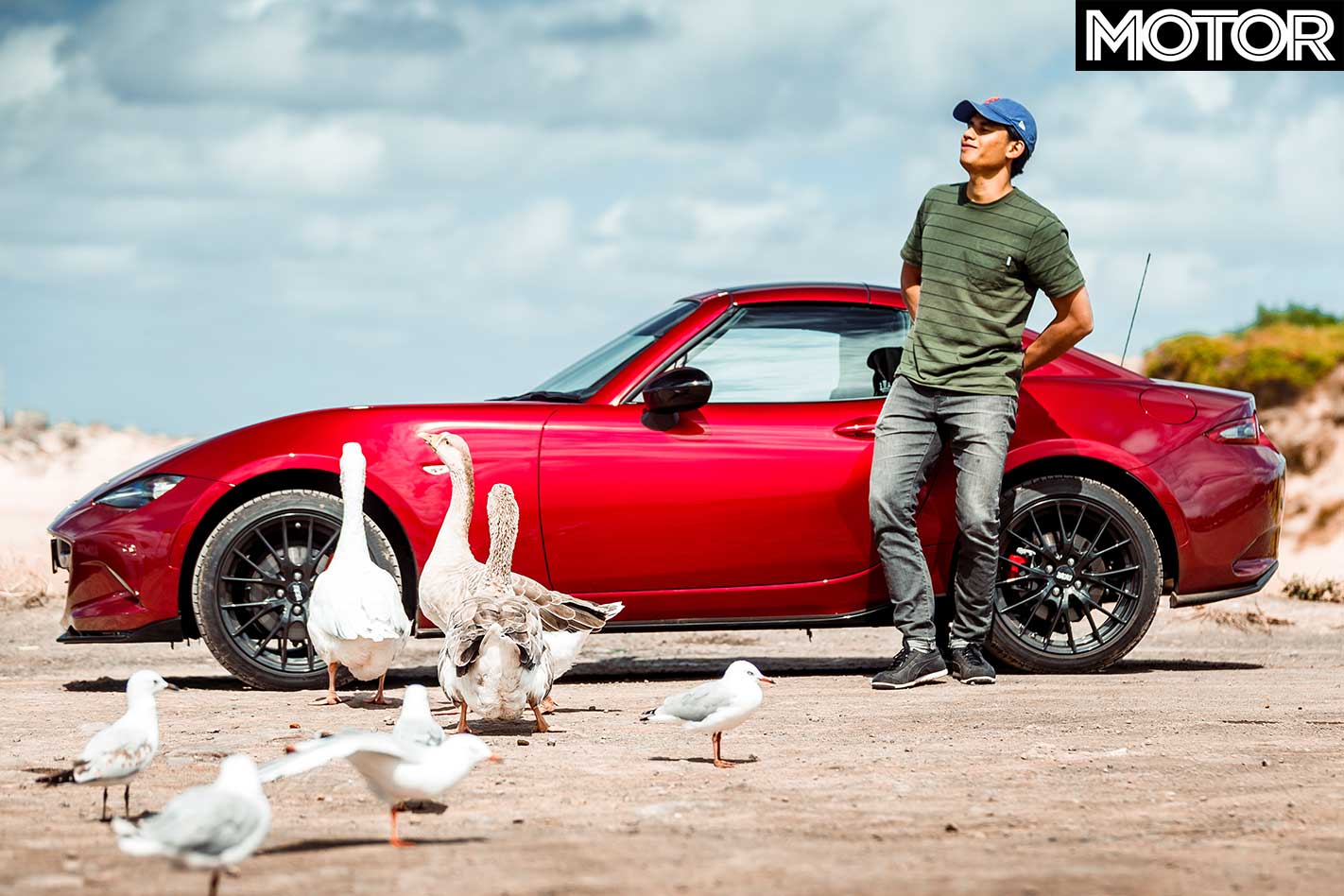
This is Louis’s first time as a PCOTY judge, but it’s certainly not his first time at PCOTY. Louis has been at MOTOR for a few years, plenty of time to drive everything that comes through the garage.
He also brings a new perspective to the panel, as well as bringing the average age of judges down a few notches.
The Driver: Rick Kelly
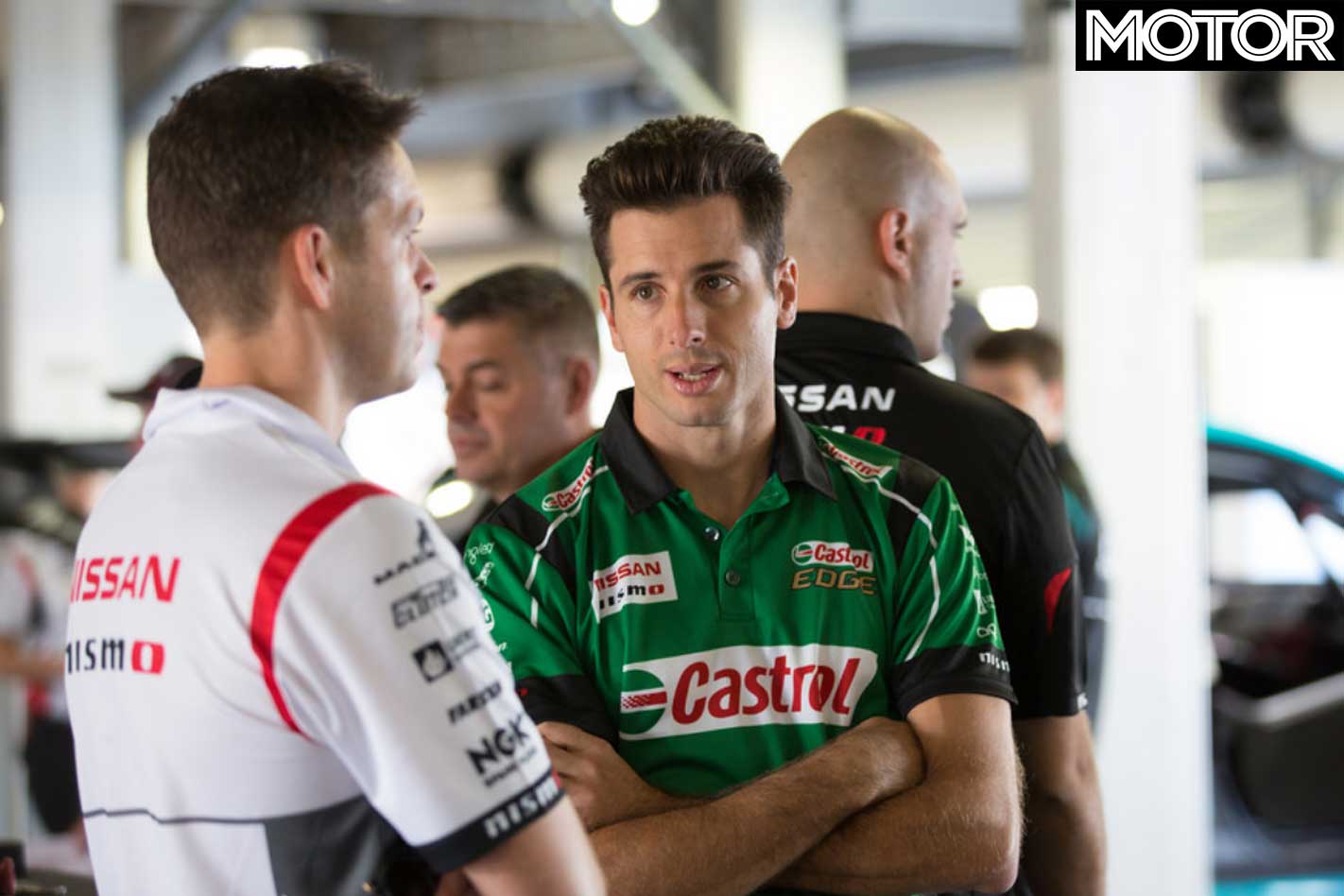
This year, MOTOR reached out to Supercars driver (since 2001!) Rick Kelly.
He’s had three Bathurst podiums, two of those on the top step in 2003 and ‘04, and took out the championship on 2006.
He’s more than qualified to be the man setting out lap times at The Bend, and his willingness to spend some time driving supercars in the Adelaide Hills was admirable too. Someone’s gotta do it.
