
Several well-known car models that have defined segments for decades are being retired as manufacturers pivot toward electrification and more sustainable platforms.
While many of these decisions are driven by global trends, they resonate strongly in Australia, where car culture and legacy models hold a special place. In the UK The Sun has paid tribute to some of the most notable vehicles being phased out in the UK and globally – with potential flow-on effects for Australian motorists.
Lexus LS: Luxury pioneer quietly retires
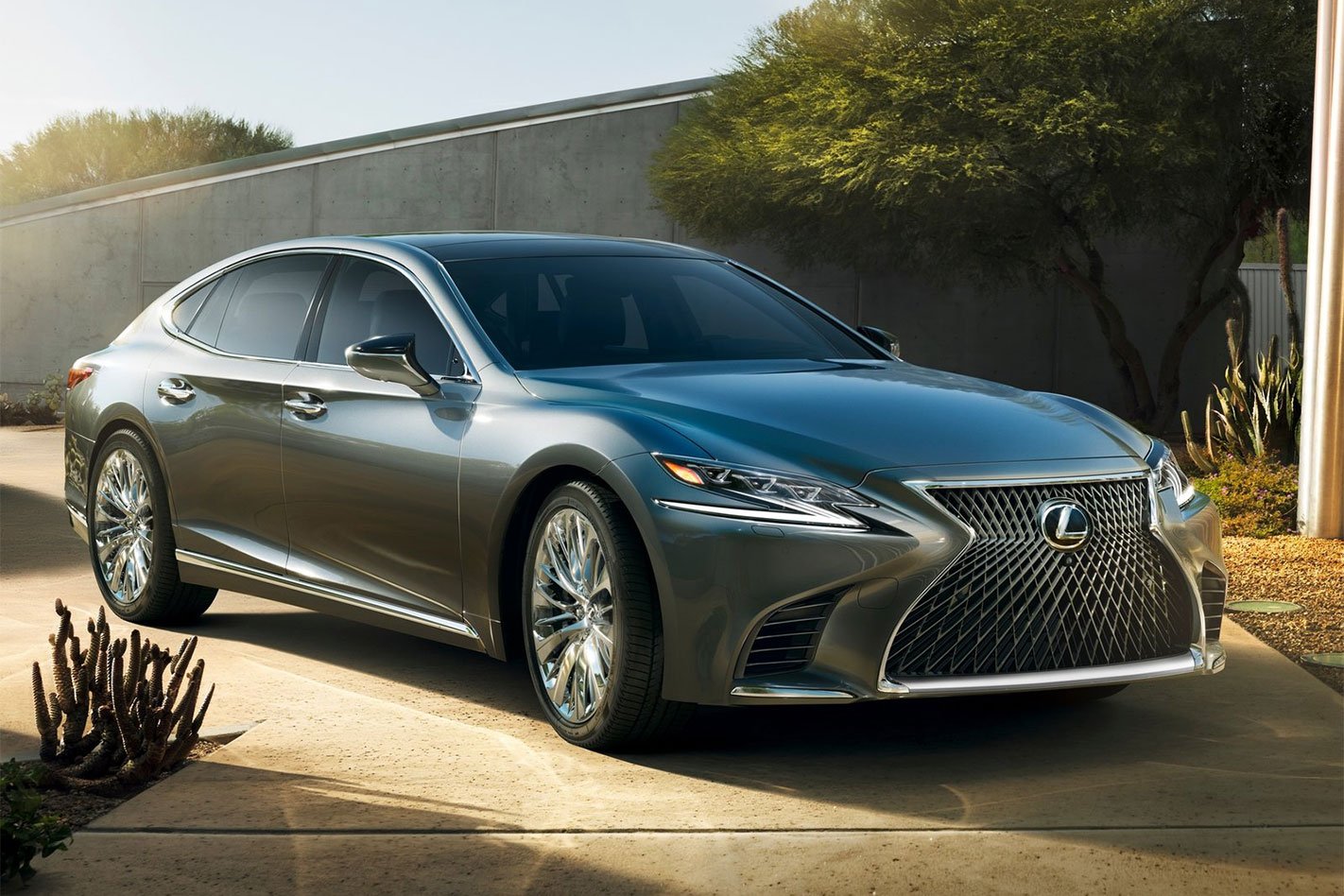
After 35 years of production, the Lexus LS saloon has been discontinued, marking the end of an era for Toyota’s luxury brand. First introduced in 1990, the LS played a pivotal role in establishing Lexus as a premium alternative to European giants.
Known for combining refinement and value, the LS evolved through five generations, with the final model – the LS 500 – launching in 2017 and updated in 2020. Priced from around A$194,000 to A$246,000, the luxury sedan struggled to remain relevant in a segment now dominated by SUVs. Just 39 units were sold in the UK since 2020 – only three of them in 2024 – signalling the end was inevitable.
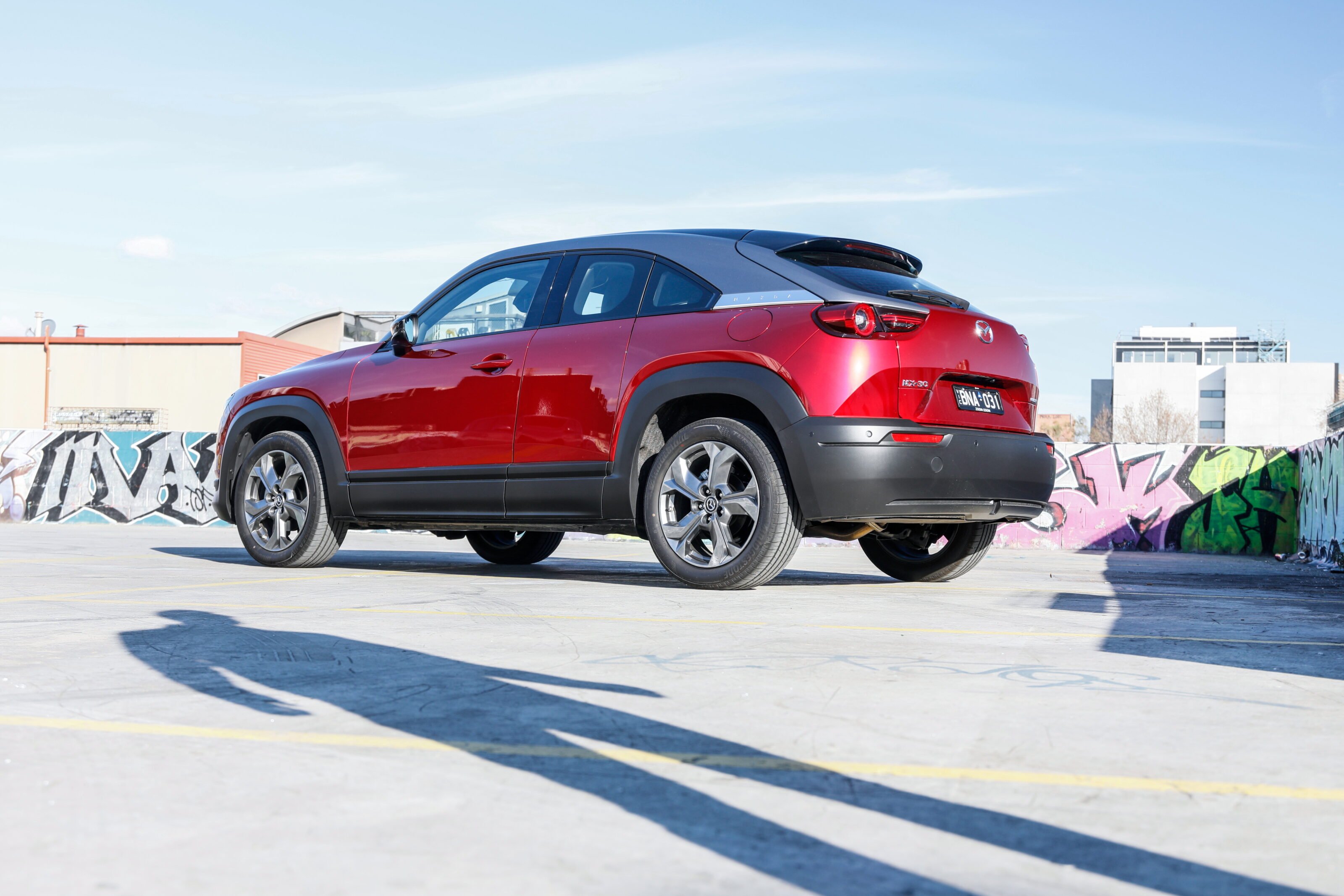
Mazda2 and MX-30: Compact farewells from Mazda
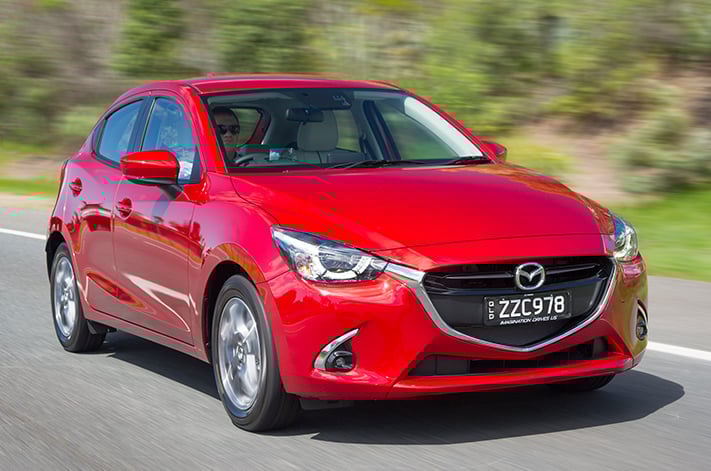
Mazda has confirmed the end of its Mazda2 supermini, which had a loyal following thanks to its fun handling and no-nonsense design. Although available for a decade, the petrol and mild-hybrid variants have been phased out in favour of the Mazda2 Hybrid – a rebadged Toyota Yaris currently not offered in Australia.
Mazda Australia ceased offering the fully electric MX-30 in 2023, the brand’s first EV, after sluggish global sales. With a driving range of just over 200 km and limited cabin space, the MX-30 never gained strong traction here either. However, the plug-in hybrid variant remains available in some international markets.
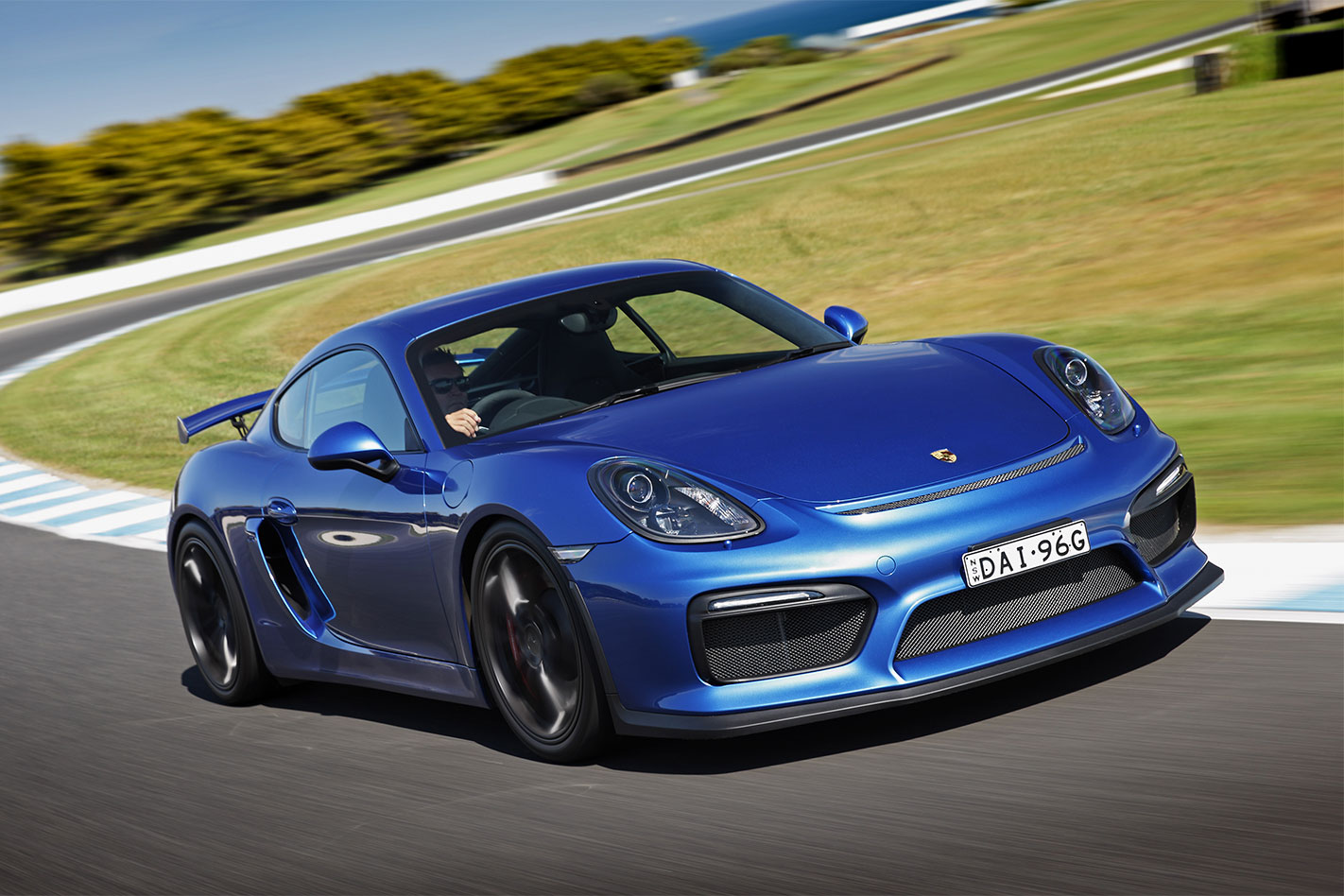
Porsche 718 Boxster and Cayman: Petrol era ending
Production of Porsche’s iconic 718 Boxster and Cayman will officially cease in October 2025, with no immediate successor announced. These mid-engine sports cars have long been a favourite in Australia for offering premium driving thrills at a relatively attainable price point.
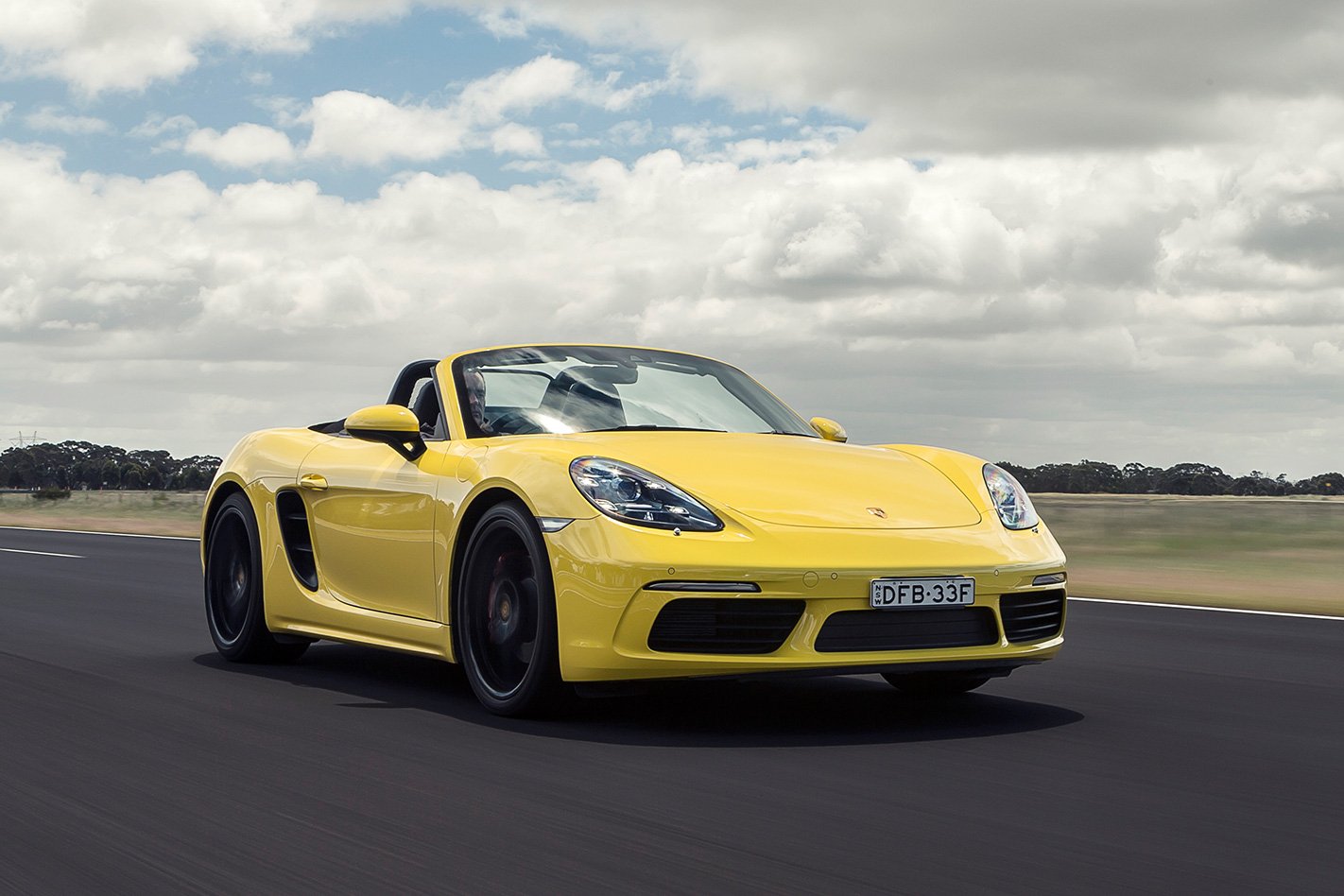
While new cybersecurity regulations forced an early exit in some European countries, Australia and the UK – unaffected by those rules – will continue to see availability until the global cutoff. A future electric version is expected but yet to be formally revealed.
Nissan GT-R: Aussie legend retires globally
The Nissan GT-R, affectionately known as “Godzilla” down under, is ending global production in 2025. While the R35 GT-R was pulled from Australian showrooms back in 2021 due to side-impact regulation changes, its recent retirement in Japan closes the final chapter of the 17-year-old performance icon.
Launched in 2007, the GT-R was a benchmark for bang-for-buck performance and held a cult status in Australia. While an electric replacement had been rumoured, Nissan’s financial constraints may delay those developments.

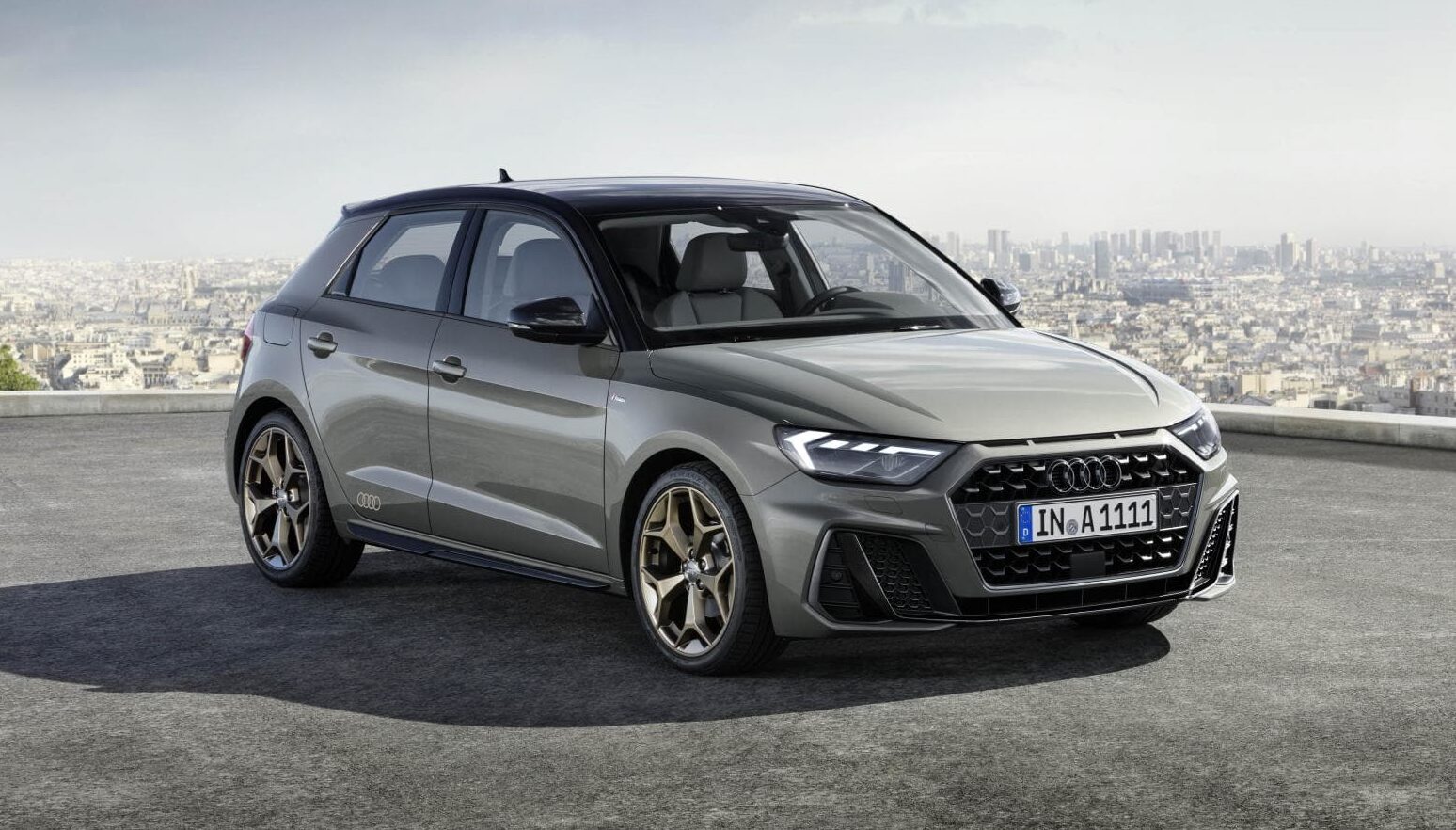
Audi A1 and Q2: Entry Audis being phased out
Audi has confirmed it will discontinue its smallest models – the A1 hatch and Q2 SUV – by 2026. Though not major volume sellers in Australia, they served as key entry points into the brand for younger buyers.
Audi says it will launch a new battery-electric vehicle to slot beneath the Q4 e-tron, targeting the compact segment with a focus on affordability and sustainability. Local availability will likely follow European production timelines, expected to begin in 2026.
Ford Focus ST: Hot hatch era winds down
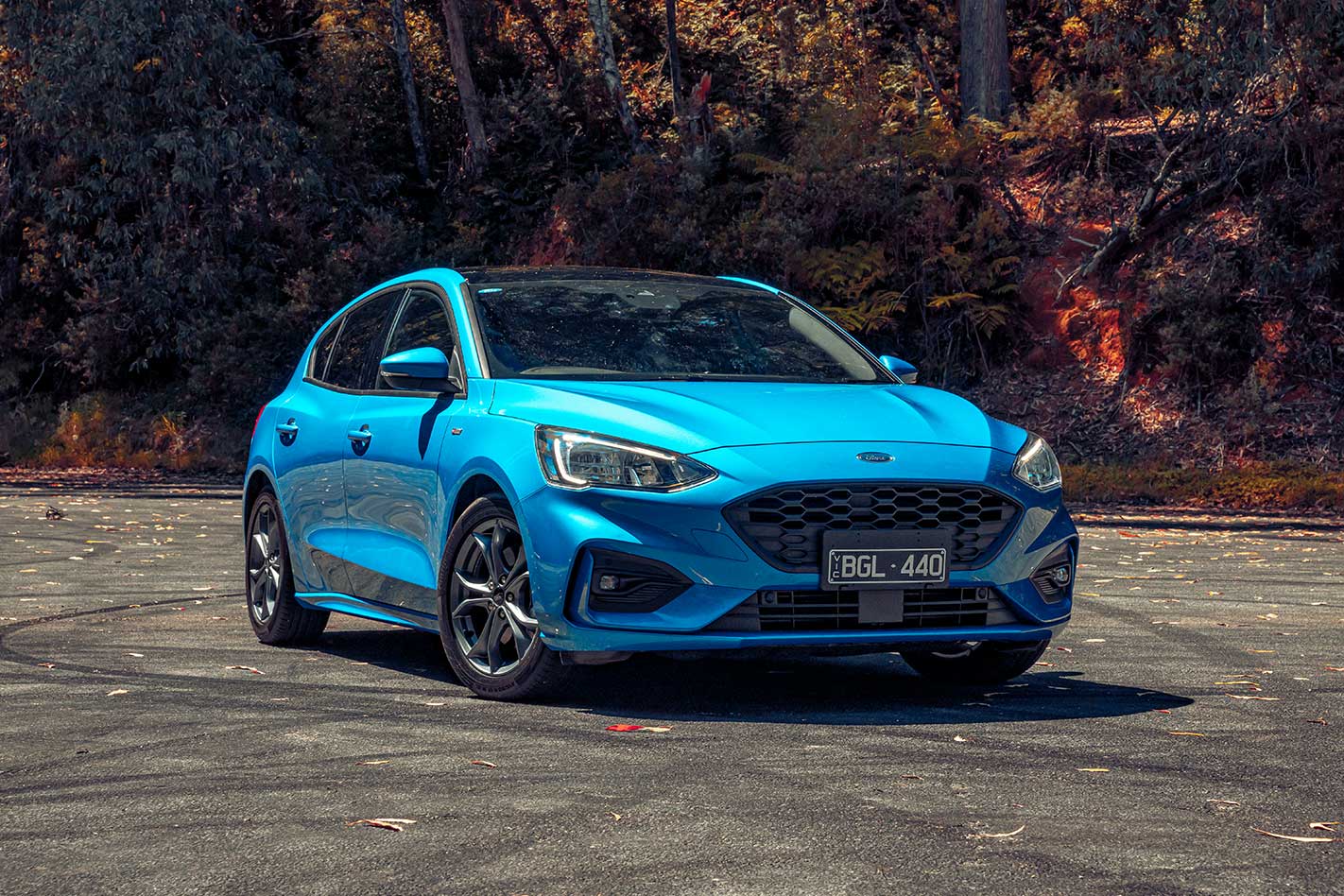
The Ford Focus ST, long revered by driving purists and performance hatchback fans, has been pulled from the UK market, with production ending in November 2025. Australian sales of the Focus ST were also wound down in recent years as Ford shifted focus to SUVs and commercial vehicles.
Though Ford still offers performance models like the Mustang and Ranger Raptor locally, the Focus ST’s departure signifies the broader decline of traditional hot hatches in favour of high-riding, electrified alternatives.
It has just 108kW. Hardly the numbers of a giant-killing legend. The Renault Clio Williams is something that can’t really be defined in numbers. Yes, we could point to the fact that its power-to-weight ratio of 110kW per tonne was similar to that of a Golf VR6 but that would be an irrelevance. The thing to know about the Clio Williams was that this was the car that finally moved the hot hatch game on beyond the Peugeot 205 GTI.
The 205 was a car that started its development in 1977, with the GTI first appearing in 1983. It was entirely apposite that, when it signed off in 1992, it would hand its mantle to another hot hatch. That car was supposed to be the 206 GTI, but that arrived late and proved to be an utterly dreadful contrivance that squandered any and all of the residual goodwill that Peugeot had worked so assiduously to construct.
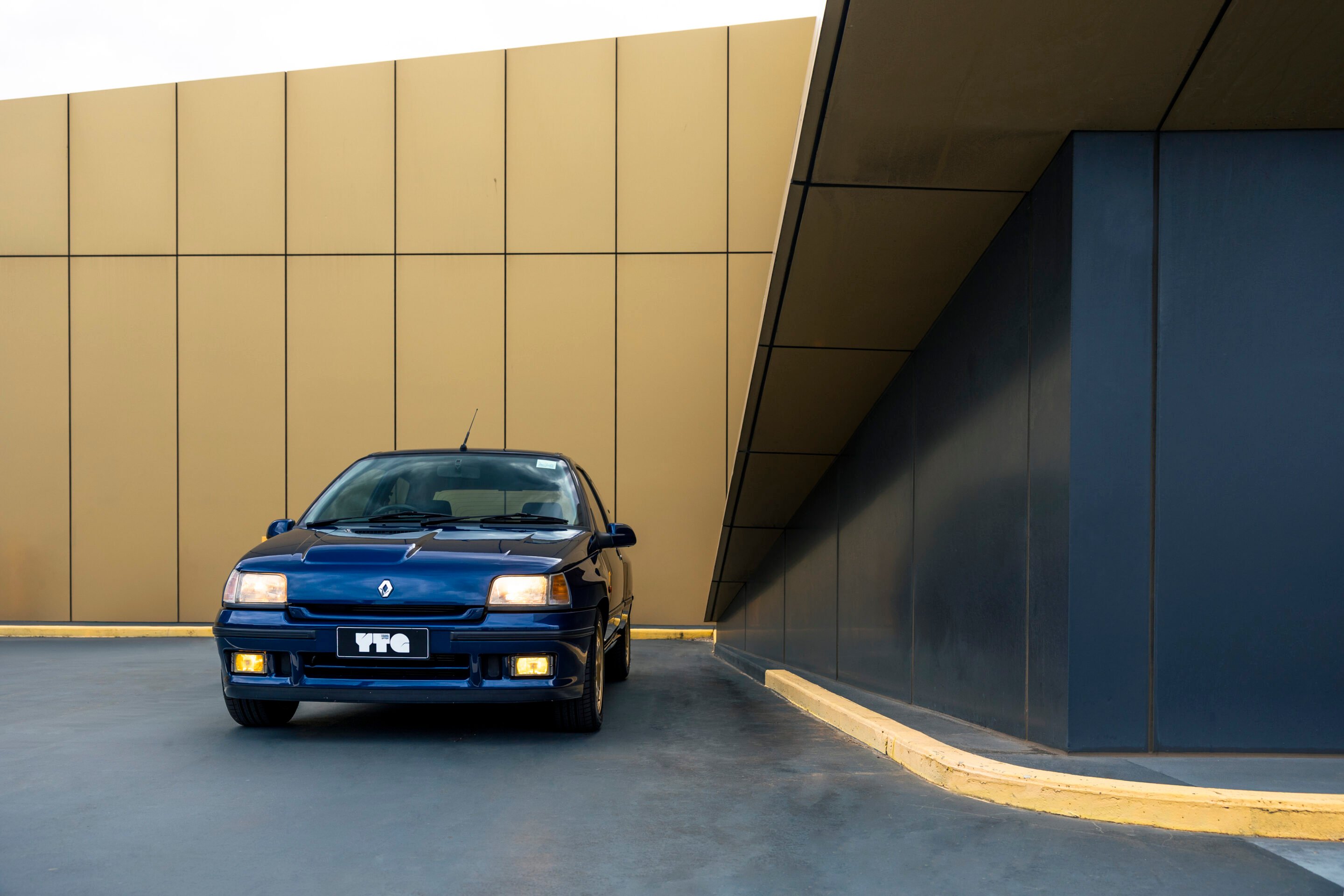
So there was a moment, back in the early ’90s when an opportunity existed for a special vehicle to drive straight into. The Golf GTI couldn’t step up – remember, this was malaise-era Mk3 Golf – and Renault had established its bona fides with a long bloodline that stretched from the Renault 5 Gordini, through the ripsnorting 5 GT Turbo and on to the subtler but no less talented Mk1 Clio 16v (or 16S in mainland Europe). It appeared that the Clio was the heir apparent. It just needed something that would seal the deal.
The justification came via rallying. The Clio was the obvious platform with which to do so, but the Group A and Group N3 regulations (the dominant categories before the World Rally Car formula was established in 1997) stipulated a maximum engine size of 2000cc. What’s more, in 1993, the homologation requirement went down from 5000 identical models built in a 12-month period to a mere 2500. If Renault could bring a 2.0-litre Clio to market for 1993, it would only need to build a limited run of them, and could charge a premium price. See? The script almost writes itself.
Meeting of worlds
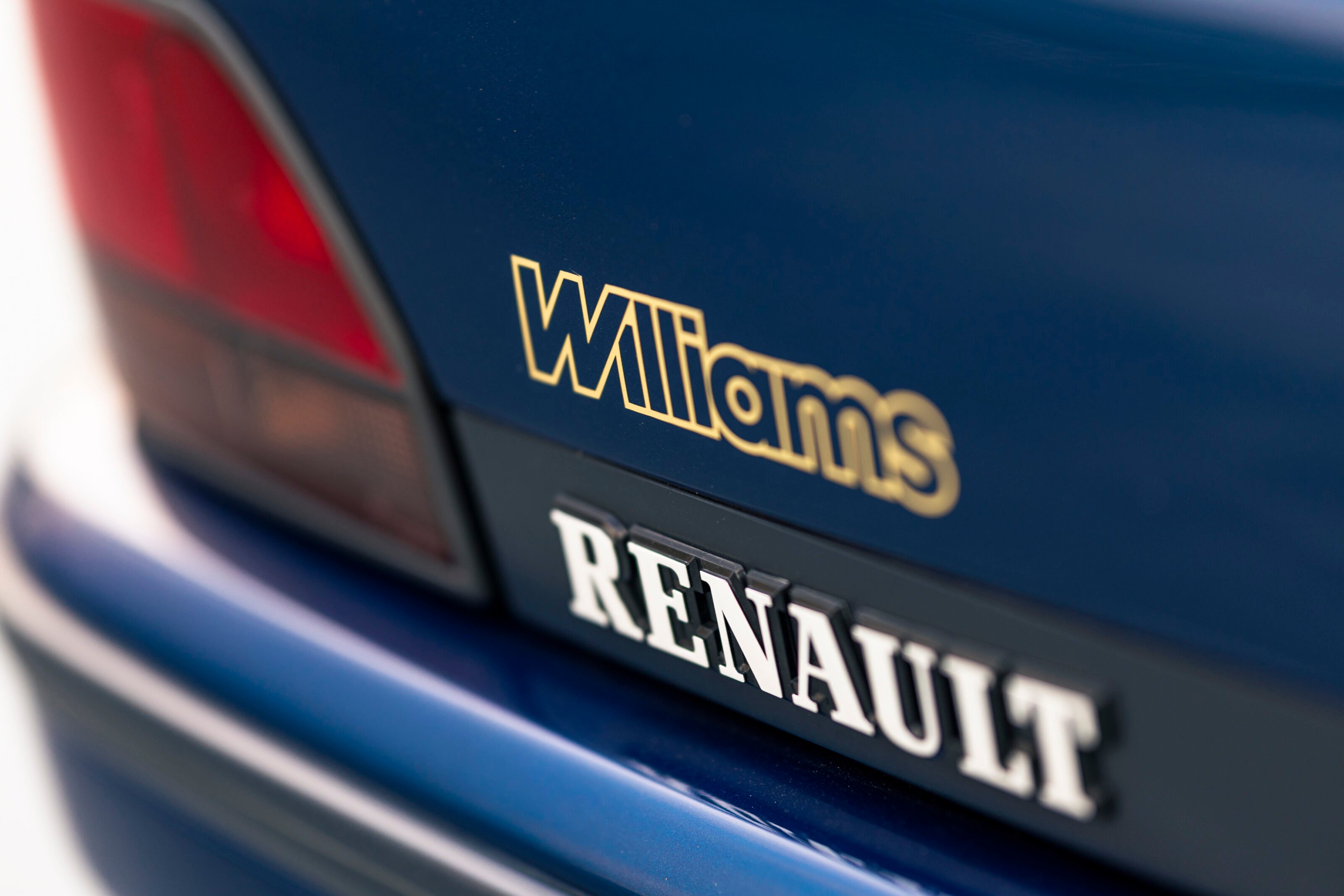
The result was the Renault Clio Williams, a car built as the bones of a rally car but which wore a name that was royalty in Formula One. It’s easy to forget quite what a nascent partnership that was at the time – Williams Racing signing with Renault for 1989, the same year that it brought on board a talented young designer called Adrian Newey to replace Frank Dernie.
The first two years – with the driver pairing of Riccardo Patrese and Thierry Boutsen – yielded a second and a fourth in the constructor’s championship, but the return of Nigel Mansell from Ferrari for the 1991 campaign gave the partnership the impetus it required. In 1992, Mansell claimed the driver’s world championship and the Renault-powered Williams was crowned Constructors Champion. Renault was canny enough to appreciate the equity in the partnership, and the Clio Williams badge was developed to cash in on that buzz.
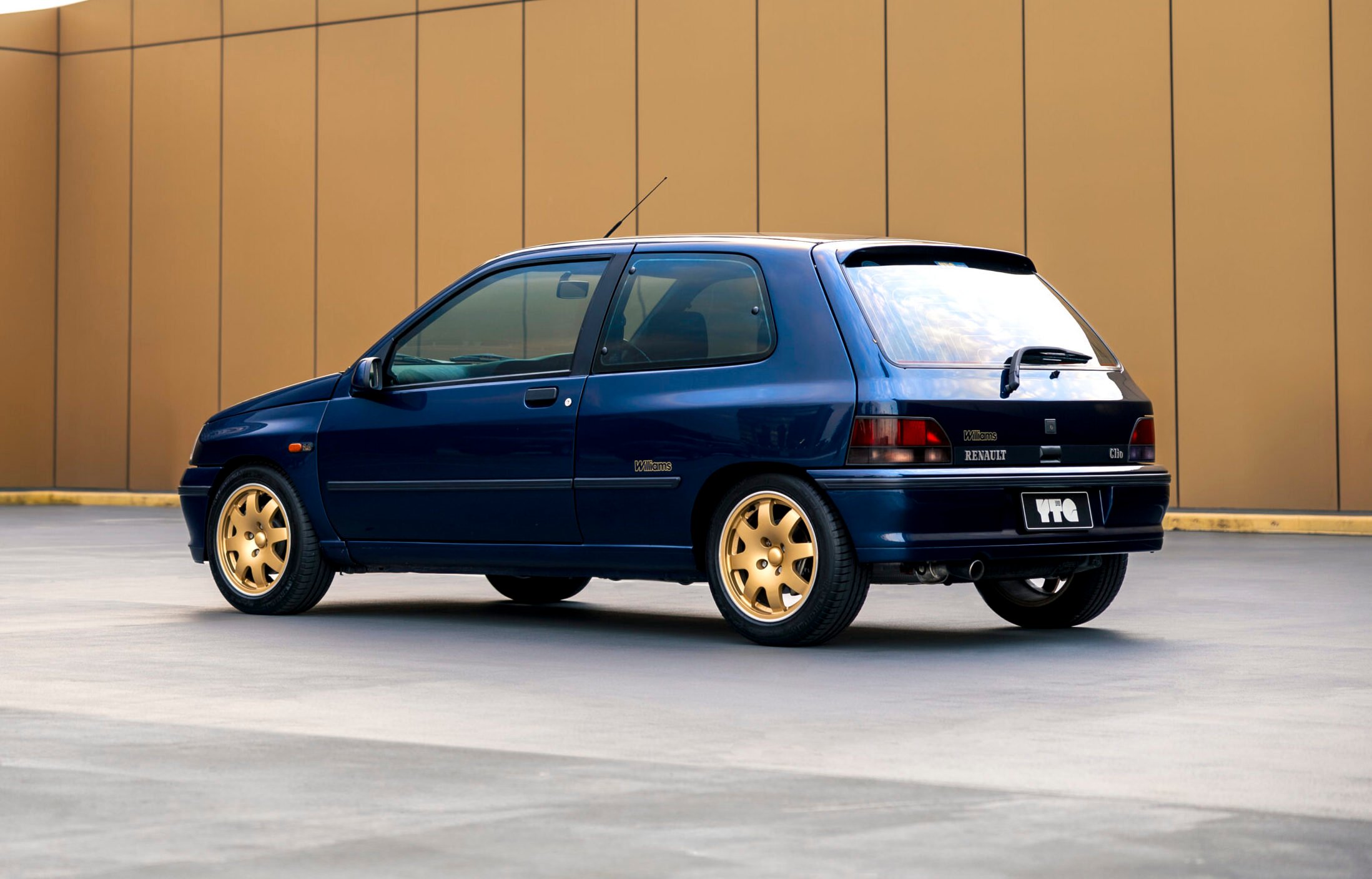
In truth, Williams had nothing to do with the engineering of this car. It was entirely an in-house endeavour by Renaultsport. Badge aside, the only tenuous link with Formula One was the fact that the Clio Williams was the sport’s safety car for the 1996 season. That’s not to say that Renault were entirely cynical about the engineering behind this car. A lot was changed from the 1.8-litre Clio 16v that preceded it.
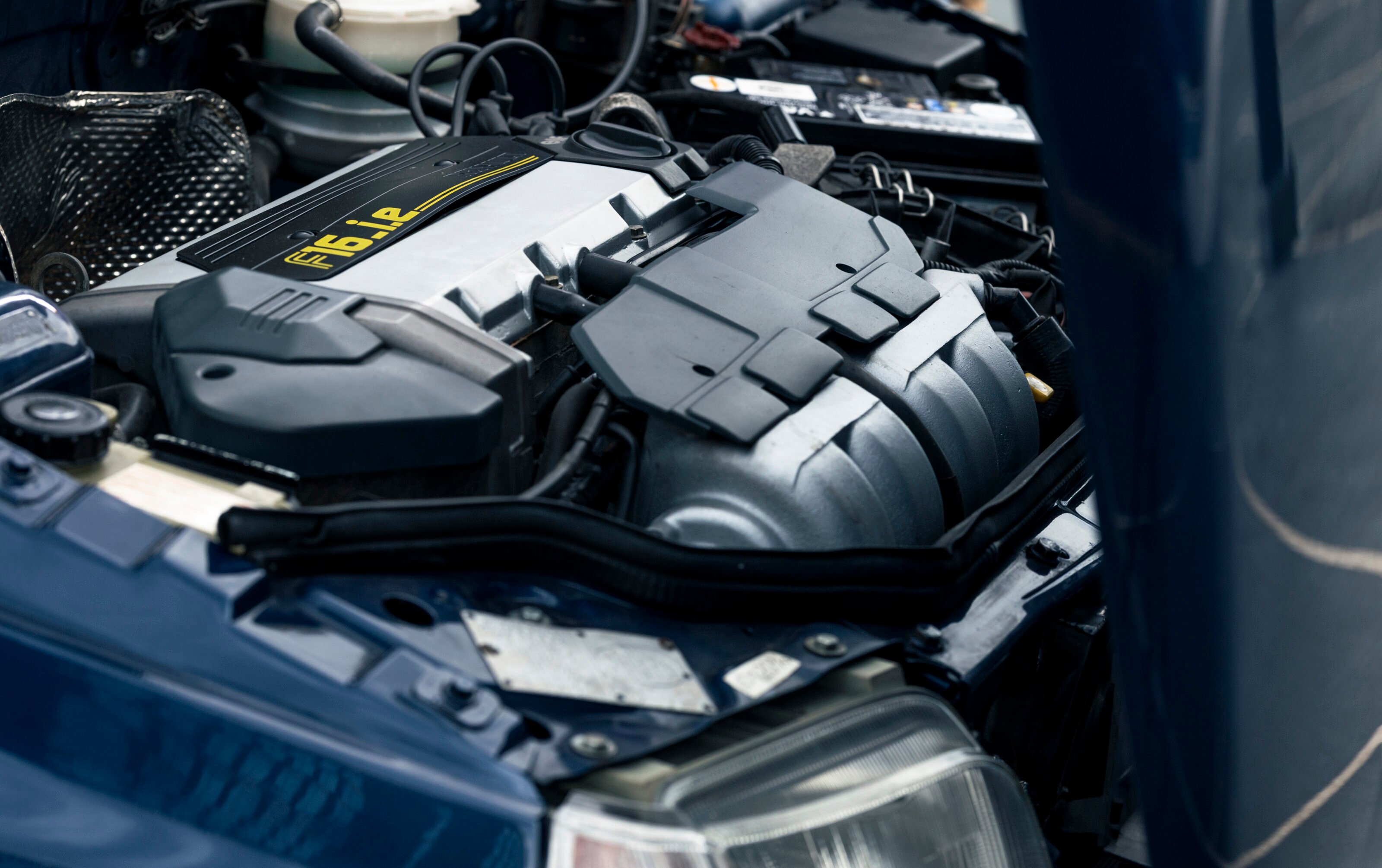
Take the engine. The easy way to meet the 2.0-litre capacity limit would have been a simple bore job on the existing F7P engine. But the Williams’ 2.0-litre F7R powerplant featured different valves, pistons, cams, a stronger crank (from the diesel Clio) and an uprated engine oil cooler. The exhaust breathed through an uprated four-to-one manifold, and power was deployed to the front treads via an uprated JC5 gearbox.
Naturally, the suspension also came in for some attention. Beefier wishbones that looked similar to those in the heavier Renault 19 16v were fitted, which widened the front track width by 34mm, helped by the car’s 12mm wider Speedline alloy wheels to give it a really planted, hunkered-down stance, with subtly bulging bodywork. A reinforced front subframe was purloined from the Clio Cup race car and the springs, dampers, torsion beam and rear anti-roll bar were uprated. Metallic Sports Blue (paint code 449) was your only option. Kerb weight? Just 981kg.
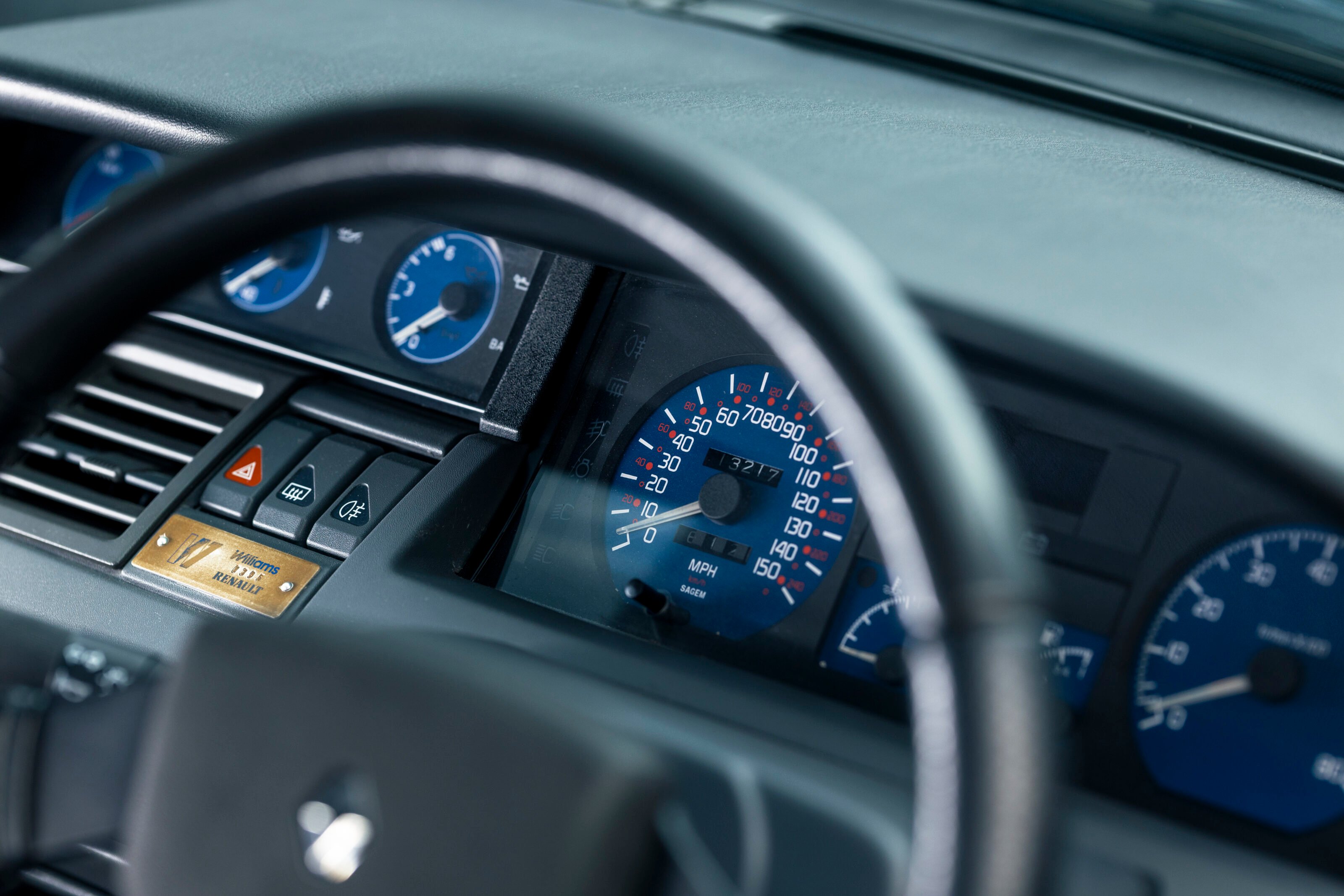
Renault fitted a numbered plaque to the dashboard of each car, giving the impression that this would be a very limited-run vehicle. A feeding frenzy ensued, helped by the fact that, in the UK, the price lifted from the Clio 16v’s £12,337 to £13,275 – a paltry 7.6 per cent impost for a car that was markedly more desirable.
Ah yes, the elephant in the room. The Clio Williams was never officially sold in Australia. No Clio Mk1s were. The car you see here is, however, for sale through Young Timers Garage in Melbourne and, given that this is one of the greatest hot hatches of all time and has never once been featured in the pages of this august publication, we thought it was well worth giving it its moment in the Aussie sun.
Down to detail
The car’s official launch was, aptly enough, in Corsica, on the same roads that Renault aimed to conquer with the competition version in the Tour de Corse tarmac rally. Initial press reports raved about the Williams’ poise, chuckability and added driveability brought about by a fatter and broader torque curve.
It’s exactly this torque that you notice when compared with its predecessor. With 175Nm on tap at 4500rpm, it has some guts, but 85 per cent of that figure arrives from just 2500rpm, giving it a feeling of real heft. It also defines the character of the Williams. Whereas many cars of its era were either turbocharged grunters or revvy screamers, the little Renault seems to combine the best of both worlds, with a deep well of low-down muscle and something to offer at the top end of the rev range.
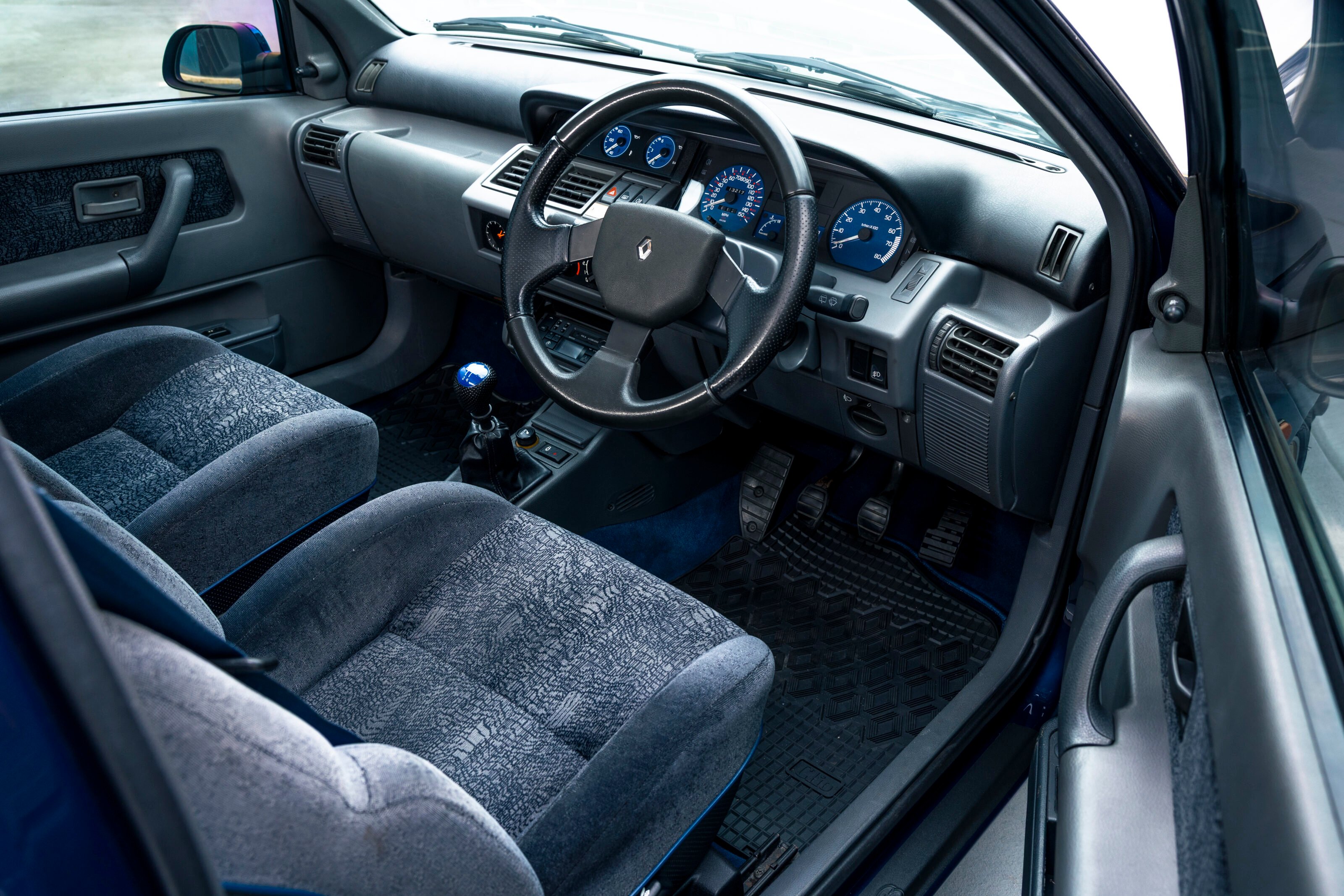
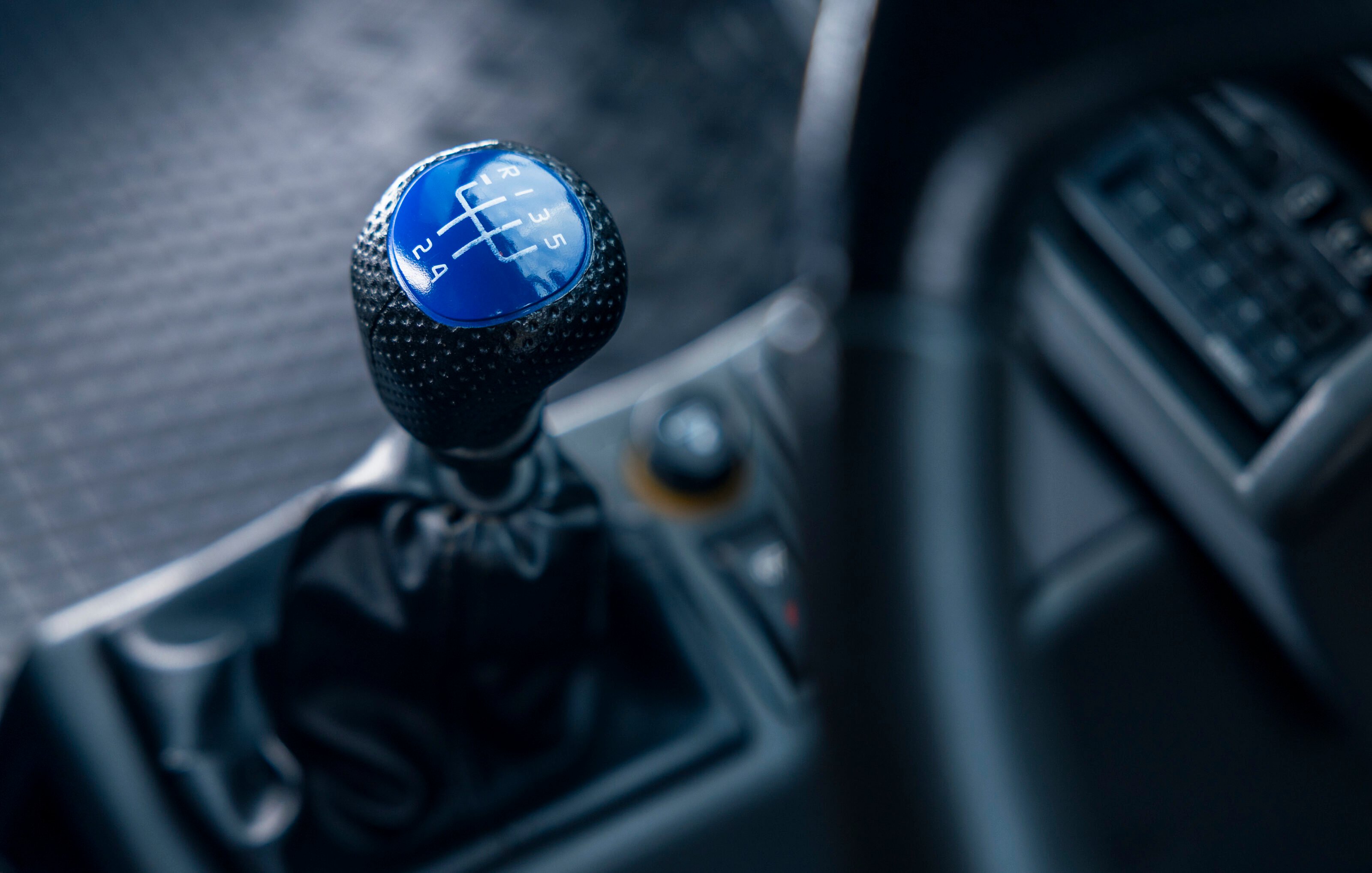
It feels tiny inside. At just 3712mm long, it’s within 12cm of a modern Kia Picanto from stem to stern and isn’t anything like as well packaged, having to house an engine that’s twice the cubic capacity. The cabin was designed in the late 1980s and it’s characteristically of the era, with hard grey plastics throughout, offset with a splash of colour from the blue-themed Sagem clocks, seat belts, seat piping and gear knob.
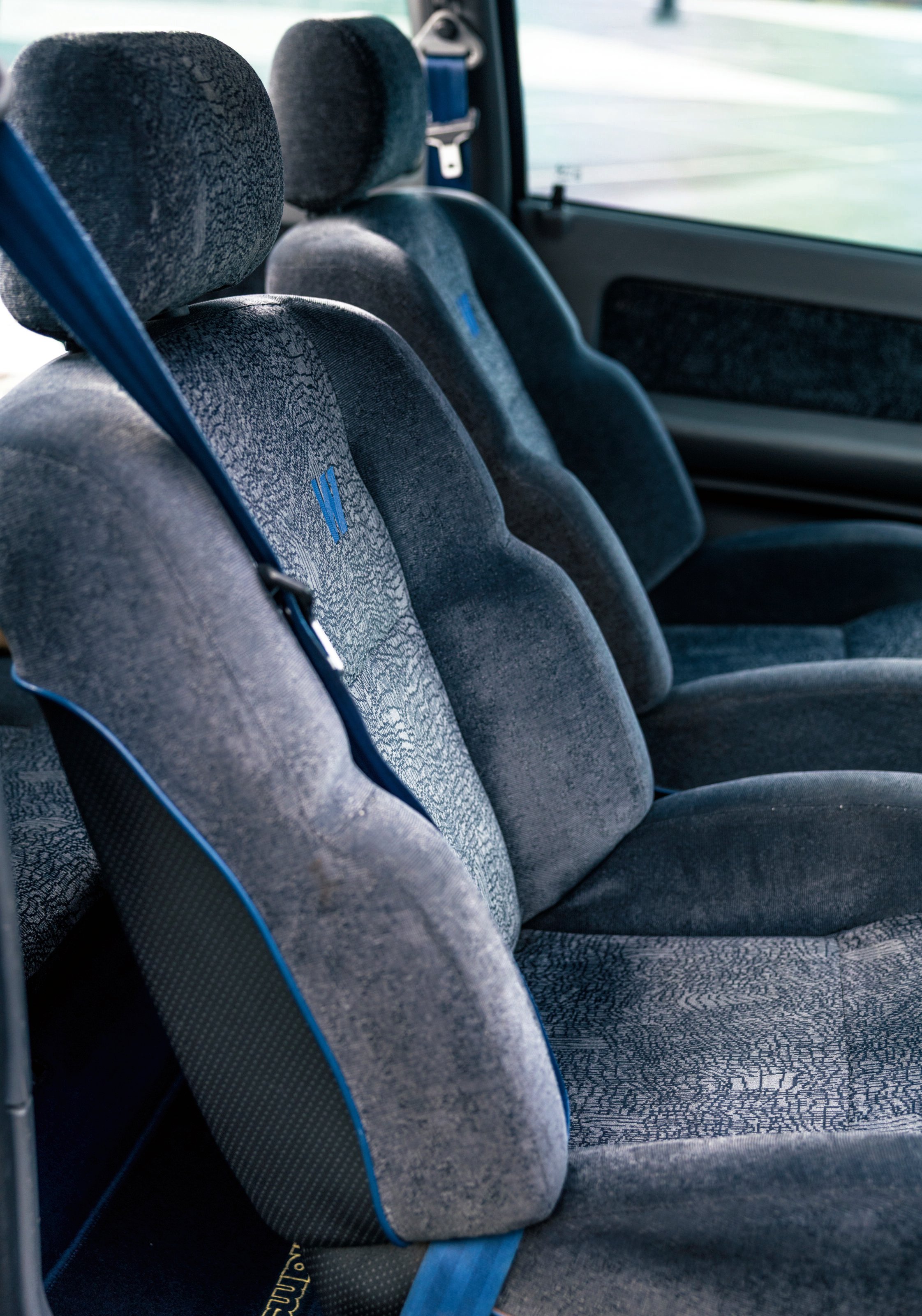
The seats are like nothing on sale today. The French always liked a seat with a reassuring measure of squish, but the Clio Williams blends that with a deeply-winged, monogrammed bucket featuring an upholstery material that I don’t think I’ve seen the like of since. It feels like suede and is printed with a random black pattern that is, amazingly, still offered by French fabric specialists Tissens. Apparently you need a four-metre reel of it if you want to entirely re-upholster your seats and door cards.
Fire up the engine and it has that instant, slightly lumpy thrum of a normally-aspirated Renaultsport engine that tacitly suggests that you’re not operating it in its happy window and that you need to rectify that forthwith. Anyone who has driven a Clio 182 here in Australia would instantly recognise its timbre.
Indeed, it’s possible to trace a bloodline of Renault engines with identical 82.7mm by 93mm bore and strokes from this F7R unit, all the way through to the F4RT powerplant (no sniggering at the back) that was used in the last of the 2017 Renaultsport Megane IIs. After that, the Renaultsport Megane was fitted with a less characterful rebranded Nissan MR18DDT 1.8-litre lump.
On the road, the Clio Williams still feels entertainingly brisk. The sprint to 100km/h from rest comes and goes in 7.7 seconds, and the chassis integrity feels a whole generation on from a Peugeot 205 GTI. Likewise, the power-assisted steering is a boon, providing welcome relief during low-speed manoeuvres, but bleeding back to almost nothing when you get travelling.
It feels an unambiguously organic driving experience. There’s no traction control or stability control and no anti-lock braking. This guides your inputs somewhat, but it provides a reassuringly direct feedback loop between what you’re doing and how the car responds. The gear lever vibrates, as do a few of the dash plastics, and you’ll feel the thrum of the engine through the thin-rimmed steering wheel. It feels alive. A big engine in a small car is a formula that’s never really gone beyond its sell-by date, and the Clio Williams revels in this quality.
Even without the benefit of variable valve timing, which would come later in the 1999 Clio II, there’s a very modern driveability about this powerplant. The five-speed shift could perhaps be a little shorter in its travel, and there’s noticeable driveline shunt if you’re not progressive with the clutch in slow-moving traffic. Likewise the steering isn’t as quick as contemporary hot hatches, where we’ve become spoiled by what an electrically-assisted rack can do. Nevertheless, it’s full of feel, a little torque-steer if you’re overly keen and features what we’d think of as an unsporting degree of rake.
What’s most surprising is the plushness of the ride. Despite featuring stiffer springs and dampers when compared with the Clio 16v, the Williams is by no means harsh. In fact, the amount of body roll and pitch encourages you to measure your inputs to give the car a chance to take a set on its springs, whereupon it’ll grip fiercely, even though it’s usually the case that only 75 per cent of the tyres are doing any work. The car communicates clearly what’s happening at its contact patches and there’s none of the spooky lift-off characteristic of a 205 GTI.
It also works well on Australian roads, largely because it has the ability to soak up the surface changes, lumps and bumps that typically afflict our most challenging cross-country routes. Indeed, this is where the Clio Williams gives its best, working with you in a way that’s reminiscent of a current Mazda MX-5, the skilled driver using its subtle weight shifts to nudge and cajole it with delicacy. Is it still fun? You bet.
The supply side
But what of the controversy that stalked this car? In short, Renault realised that demand was wildly outstripping its initial projections for supply and got a little greedy. A best-case scenario of 3800 cars was initially envisaged, but such was the hype surrounding this hot ticket that the Flins plant eventually built 4500 examples of the Clio Williams. That would be a transgression in the eyes of most who signed up on the basis of some guarantee of exclusivity, and remember, Renault only needed to build 2500 to satisfy homologation requirements.
But worse was to come. After the initial 4500 cars found owners, Renault unveiled the Clio Williams 2 in 1994, with the intention to build another 2500 units. Featuring updates to grille, side lettering and tail lights, the Clio Williams 2 had existing Williams’ owners up in arms, feeling that their residual values had been damaged by this dilution of the Williams pool. In fact, Renault had no problem finding 7100 buyers for the Clio Williams 2, with 500 additional vehicles as an end-of-run ‘Swiss Champion’ edition in 1995.
Then, to add insult to injury, Renault launched the Clio Williams 3 in 1995. This was painted a slightly brighter shade of blue (432 Monaco Blue) and came fitted with a sunroof as standard and the security blanket of anti-lock brakes. In all, 12,100 Clio Williams models were built, almost four times the initial promise, and the original owners attempted to organise themselves to launch a class action against Renault, which eventually came to nought. It was all a bit of a sorry end for a car that ought to have been remembered as a triumph.
In recent years, demand has firmed as the memory of Renault’s chicanery has faded and the reality of what the Clio Williams represents has solidified. More than any other, it set the foundation for years of front-drive excellence from Renaultsport. The highest values will always be commanded by the low numbered plaques of the original Clio Williams, but the Williams 2, like the car you see here, and the later Williams 3 are still in strong demand and there’s now not a great deal of price variance across the three generations.
They merit a bit of preventative maintenance, with oil changes recommended every 10,000km. Check wheel bearings and look for cracked front springs and noisy power steering pumps. All of the right-hook examples you’ll find in Australia will have hailed from the UK, so check for rust, especially around the rear arches, door frames and footwells. Electrics can be occasionally recalcitrant and ensure that any stereo fitment on a Williams or Williams 2 is professionally installed, as the standard cars came with no in-car audio. Thanks to soaring valuations, these cars tend to be looked after.
The Clio Williams remains the alpha and omega of early 1990s hot hatches. It’s a bona fide modern classic and one of the most significant small cars of its era. While it sits at the top table of iconic hot hatches, Group A rallying outgrew lightweight front-wheel drive competitors, even on tarmac events.
That said, the Williams absolutely deserves its place among the finest front-drivers of all time. Back in 2006, evo magazine set out to discover the greatest front drivers of all- time and the Clio Williams ended up on the podium alongside the Honda Integra Type R and the Clio 182 Trophy. Lightweight, efficient and fun, perhaps we’re missing a bit of their DNA today. Yes, the game has moved on but for the better?
Rallying To The Cause
The Clio Williams was a popular tarmac rally platform, especially in France, with drivers such as Jean Ragnotti, Philippe Bugalski and Alain Oreille all campaigning it. The basic Group N model made 121kW and featured a less restrictive exhaust, firmer suspension, different engine maps and a roll cage supplied by Matter France, with Sabelt bucket seats. The Group A car made up to 162kW from its more aggressive engine tune and larger extractors. 16-inch Speedline alloys were fitted and the front brakes were uprated to 323mm discs with four-pot Alcon calipers.

Specs
| Model | Renault Clio Williams 2 |
|---|---|
| Engine | 1988cc 4cyl, dohc, 16v |
| Max Power | 108kW @ 6100rpm |
| Max Torque | 175Nm @ 4500rpm |
| Transmission | 5-speed manual |
| Weight | 981kg |
| 0-100km/h | 7.7sec |
| Price (now) | c.$45k |
This article originally appeared in the June 2025 issue of Wheels magazine. Subscribe here.
Things we like
- Fantastic value for money
- Quite refined, even at speed
- Practical and good quality interior
Not so much
- Suspension is too soft
- Touchscreen requires a lot of familiarisation
- No faster-charging, longer or shorter-range versions
| Rating |
|---|
Wanting to sell more than just its sub brands such as Volvo, Polestar and Zeekr, huge Chinese company Geely has finally released its own product in Australia. Indeed, while there are tens of thousands of cars on our roads using Geely technology – mostly Volvos and also the second coming of the Smart brand – the brand itself was only very briefly sold in Western Australia in 2010, and is otherwise largely unfamiliar to us.
Its first proper Australian effort is spearheaded by the EX5 electric mid-size SUV. Competing against established models such as the Tesla Model Y, the EX5 is priced from just $40,990 plus on-road costs, clearly prioritising value as its unique selling point. But is the Geely EX5 more than just a value proposition?
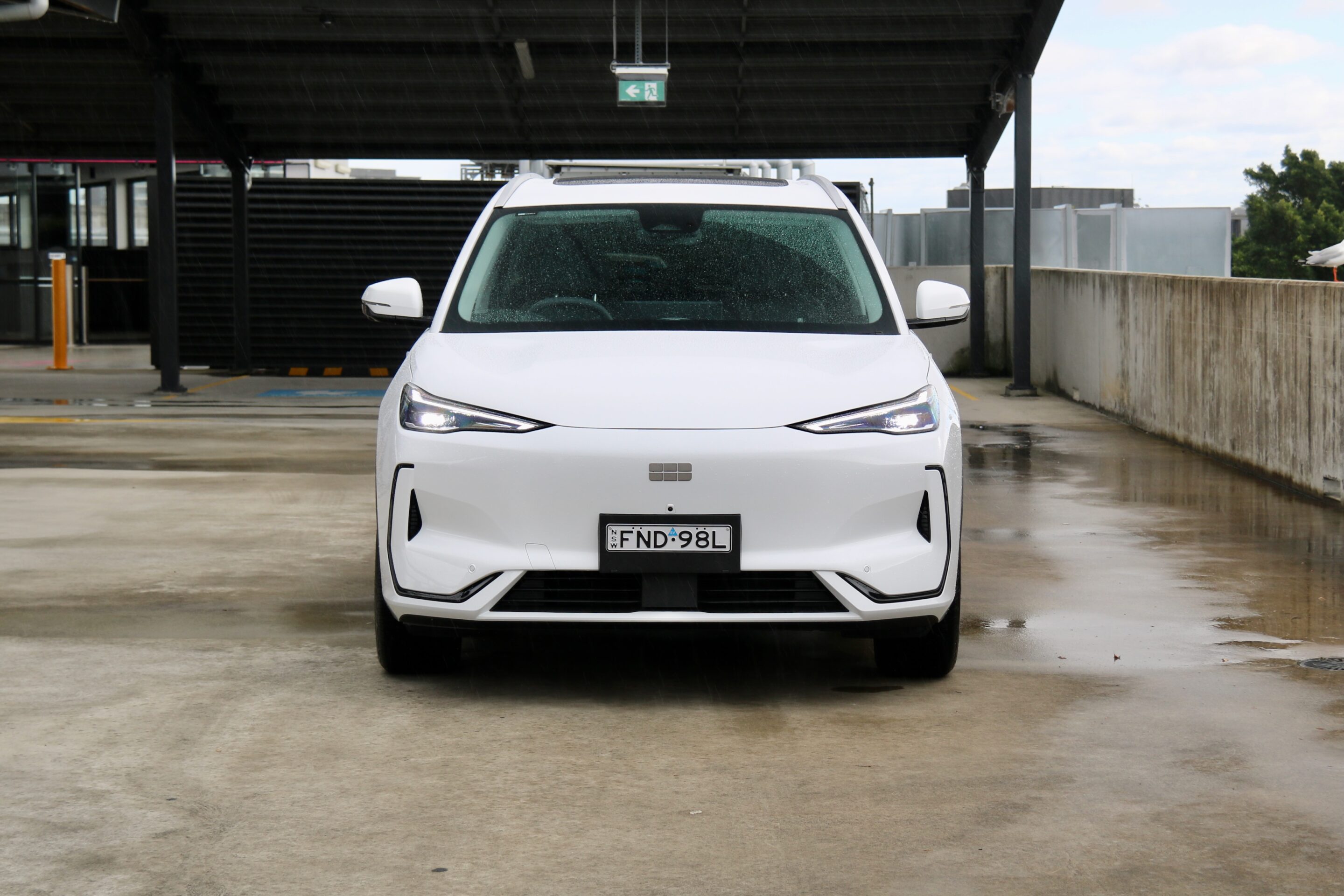
Price and equipment:
For now, Geely is keeping it simple with the EX5 and there are just two models available locally:
entry-level Complete and upper-spec Inspire. Both use the same mechanicals so it’s really just
standard equipment that warrants spending the extra $4000 to get to the Inspire – but regardless,
the EX5 is priced well under its main rivals.
2025 Geely EX5 pricing (plus on-road costs):
| Complete | $40,990 |
|---|---|
| Inspire | $44,990 |
Geely EX5 Complete standard features:
- 18-inch alloy wheels with a tyre repair kit
- Dusk-sensing automatic LED exterior lighting
- LED front and rear daytime running lights (DRL)
- Rain-sensing automatic wipers
- Roof rails
- Heated and power-folding mirrors
- Rear privacy glass
- Keyless entry and push button start
- Leather steering wheel with
- Synthetic leather upholstery
- 6-way driver/4-way passenger electric front seat adjustment
- Heated front seats
- Automatic climate control with rear air vents
- Heat pump
- Vehicle-to-load (V2L) capability
- 10.2-inch digital driver’s display
- 15.4-inch touchscreen with inbuilt connected services
- Six-speaker sound system
- 15W wireless phone charger
- FM/DAB+ digital radio
- Satellite navigation with live traffic
- 4x USB ports
EX5 Complete safety equipment:
- Seven airbags (including a front central unit)
- Autonomous emergency braking (AEB)
- Lane keeping assistance with lane departure warning
- Auto high beam
- Traffic sign recognition
- Blind-spot monitoring
- Front and rear cross-traffic alert (rear with braking)
- Evasive manoeuvre assist
- Driver attention monitoring
- Adaptive cruise control
- Low-speed front and rear auto braking
- Door open warning
- Rear parking sensors
- 360-degree camera
The EX5 range earned a five-star ANCAP safety rating with scores of 87 per cent in adult
protection, 83 per cent in child protection, 68 per cent in road user protection and 85 per cent for
safety assistance.
EX5 Inspire model adds:
- Larger 19-inch alloy wheels
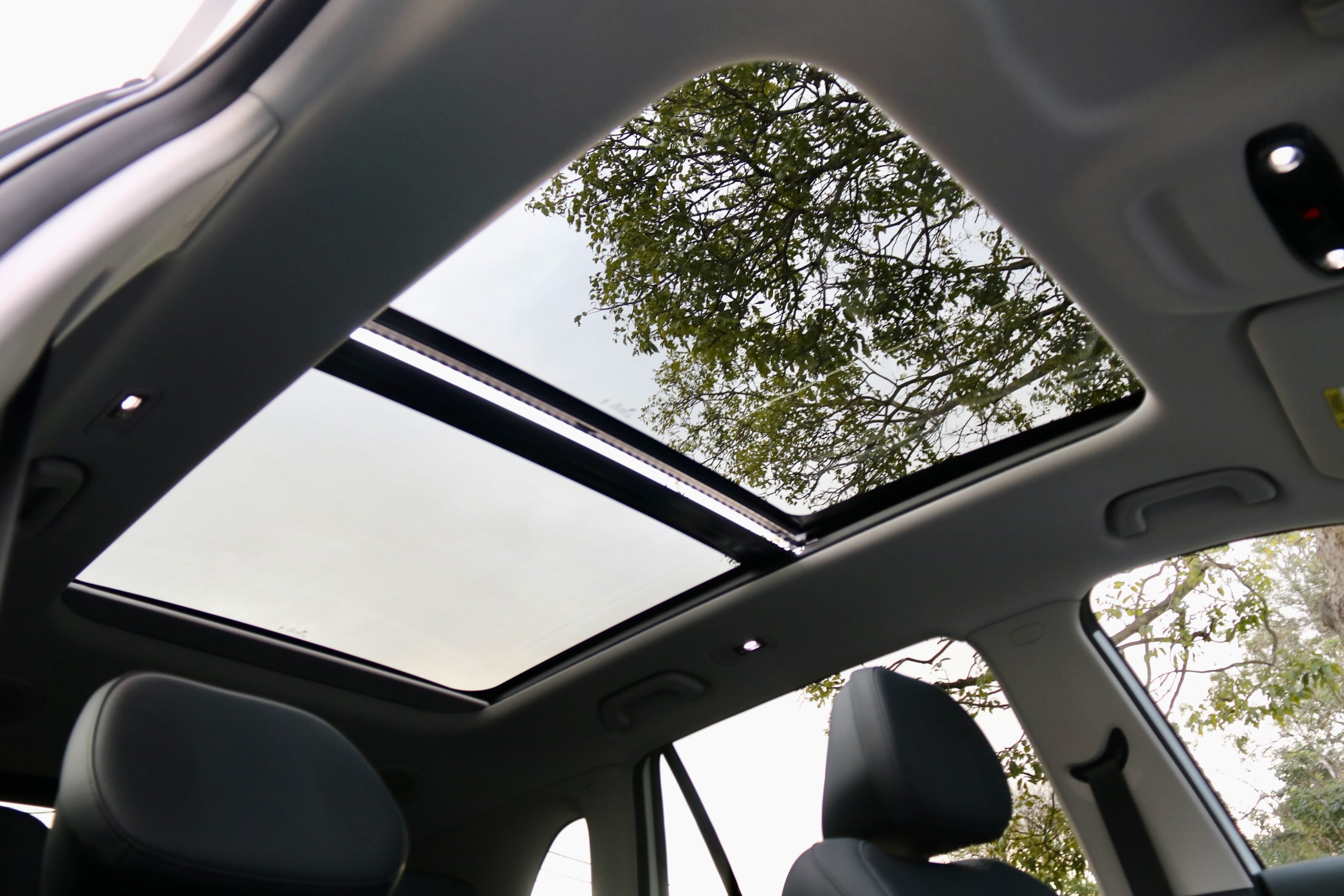
- Panoramic sunroof
- Ventilated and massaging front seats with driver’s memory and a front passenger electric foot
rest - Electric tailgate
- Front parking sensors
- Illuminated front vanity mirrors
- 256-colour ambient lighting
- 13.4-inch head-up display
- 1000-watt 16-speaker Flyme sound system
Interior comfort, practicality and bootspace
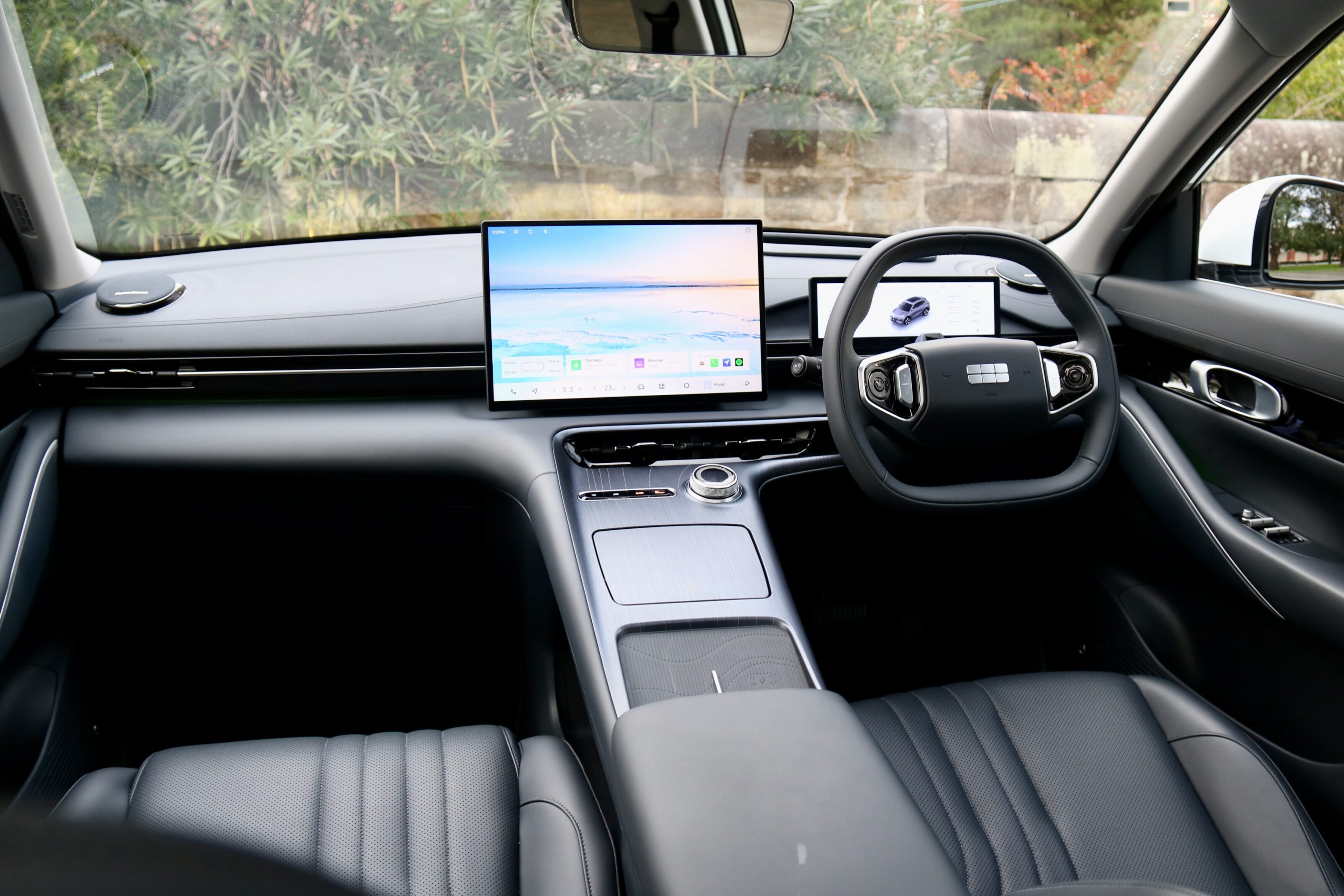
While we could wax lyrical about the design, put simply the interior of the Geely EX5 Inspire feels like it should cost significantly more than its $44,990 +ORC asking price. While the materials are generally solid quality and there’s a richness in its trims such as the wood-like trim on the centre console (which, thankfully, isn’t the sea of piano black that so many other cars use) the general ambience is one that feels like it should cost a lot more than it does. It makes the Kia EV5’s cabin feel austere by comparison.
The EX5’s cabin is nothing if not practical, with plenty of storage space – a huge rubberised under-centre console tray, a big bin underneath the central armrest, a tray with a wireless charger and big cup holders on the centre console.
Centre of the EX5’s cabin – and the controller of pretty much every one of its every functions – is a huge 15.4-inch touchscreen with features such as sat-nav and digital radio, as well as an inbuilt SIM card for live services such as app downloads and useage, as well as access to a smartphone app. The screen quality is crisp, as is sound quality from the 1000-watt 16-speaker Flyme audio system, but Apple CarPlay and Android Auto smartphone mirroring aren’t yet available – they’re coming via an over-the-air update later in 2025.
As we’ve seen with a lot of other modern cars, there’s just too much functionality reliant on the touchscreen. While the menu structure is easy to understand and there’s a smattering of physical buttons for the HVAC system, many functions – such as operating the sunroof – are controlled through the screen. Add in some undersized icons on the screen and it can be a difficult system to use while driving.
One curious feature of the EX5 is the physical volume knob, which can also be pressed to control functions such as the temperature and even, oddly, switching the background on the touchscreen. But where’s the hazard lights button? In the roof, which is where the sunroof control should be.
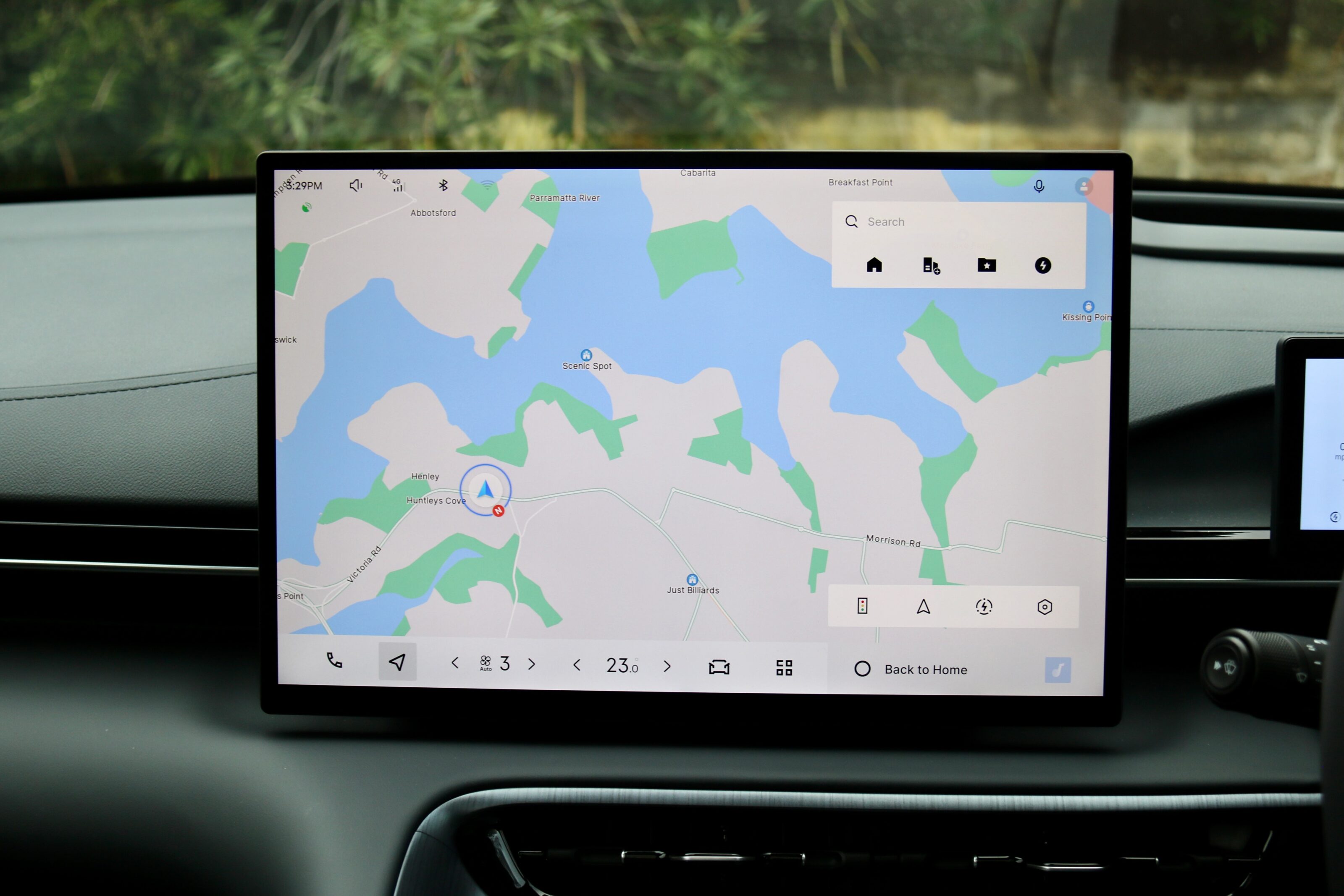
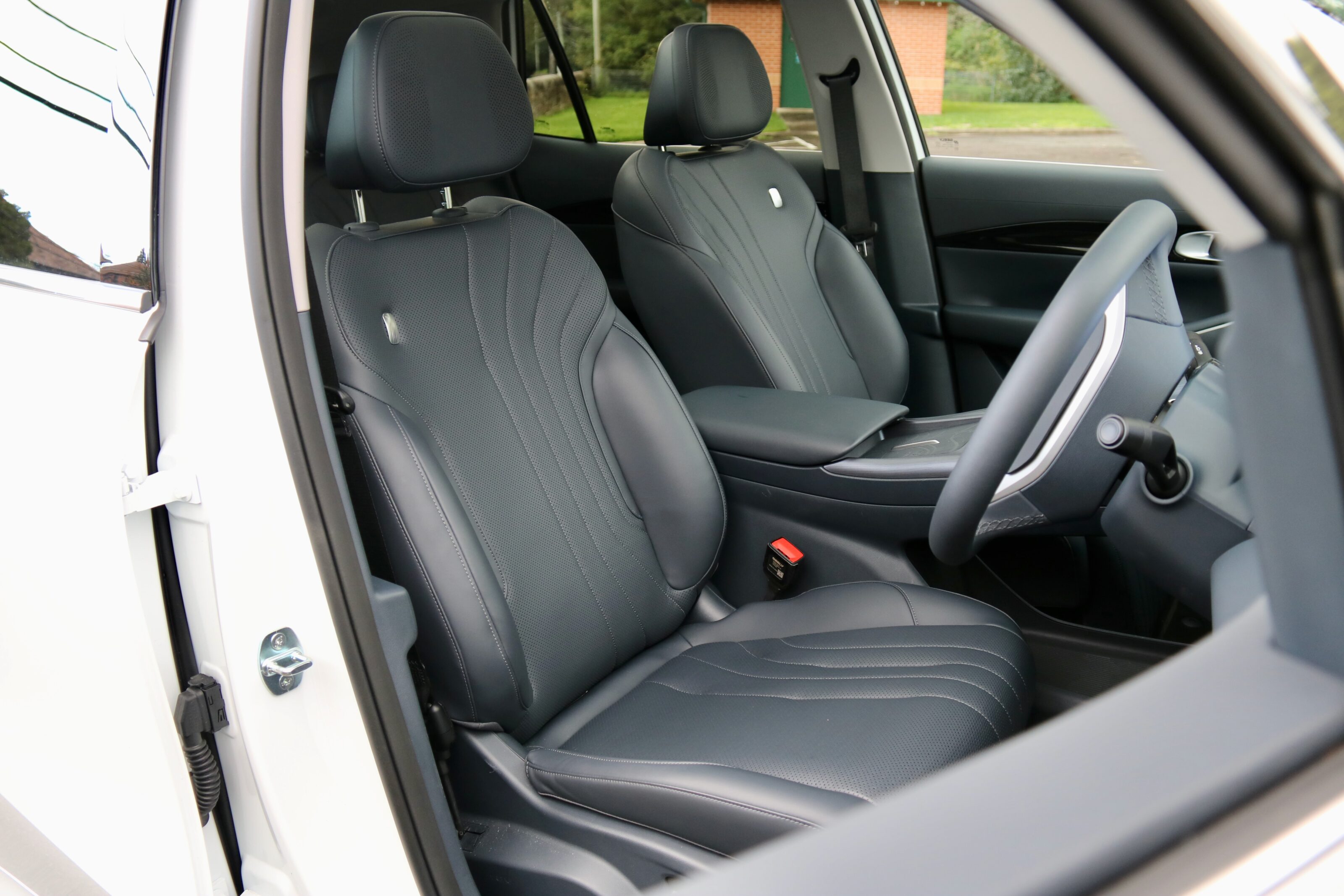
The front seats in the EX5 are comfortable, especially with the multi-stage massaging in the Inspire, though both under thigh and lumbar aren’t adjustable which reduces comfort and adjustability in the driving position. Visibility in the EX5, however, is excellent and it’s very quiet for road noise as well.
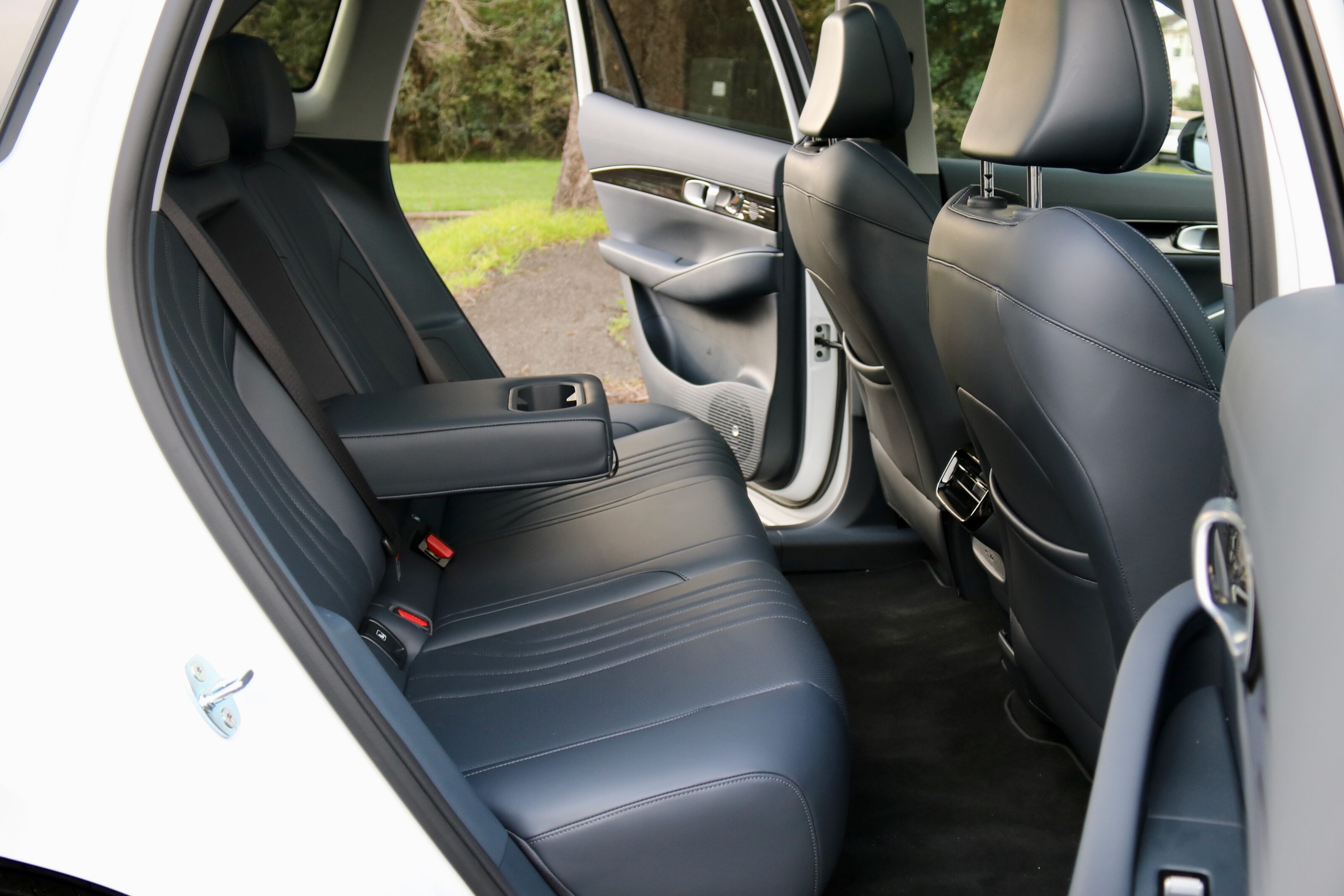
The rear seat of the EX5 is spacious thanks to ample space in all directions for taller adults, as well as a completely flat floor so that three adults will be able to fit. There are also some amenities such as door and map pockets, two USB charging ports, air vents and a central armrest with cup holders.
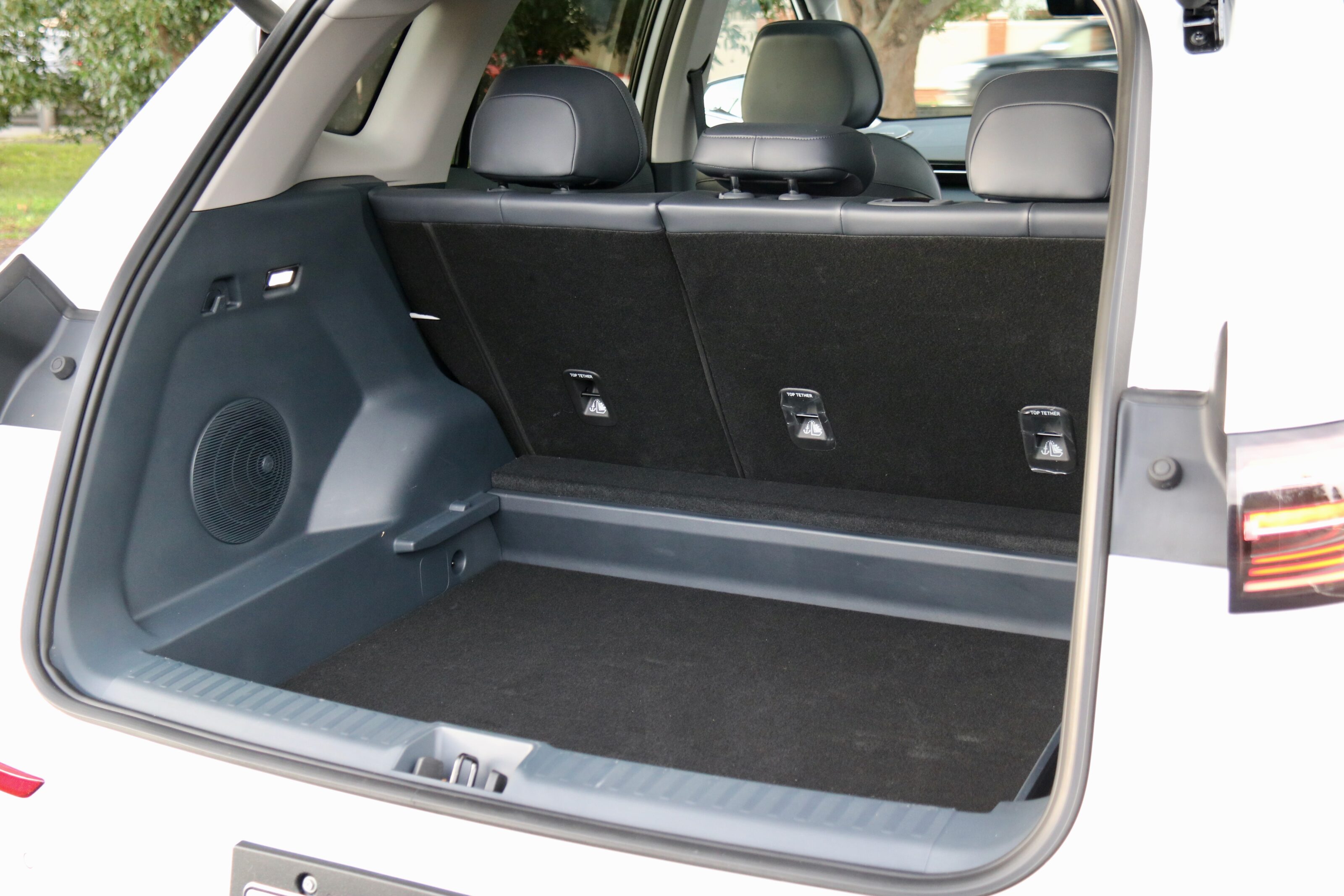
The boot of the EX5 measures a small 302 litres with the seats up, but it seems larger than that in real life. Practical touches include a dual-level floor, some hooks to hang bags and some side storage, plus a massive under-floor storage box that increases overall capacity to 410 litres, which is still behind the best but more than enough for everyday life. Fold the seats down an there’s a very healthy 1877 litres on offer – 163L more than a Kia EV5. Like a lot of EVs though, there’s no spare wheel in either EX5 model, nor is there a front boot.
Performance and range
Using Geely’s ‘GEA’ platform – that’s Geely Global Intelligent Electric Architecture – which is a cheaper version of the ‘SEA’ platform used in its sub brands, the EX5 features a 60.2kWh lithium ion phosphate (LFP) battery for up to 410km of claimed range (WLTP). A smaller 49.5kWh battery is also available in some markets with a range of around 300km, though no longer-range model exists yet.
Using a 400V architecture, the EX5 can be AC charged at up to 11kW and DC fast charged at up to 100kW for a 30 to 80 per cent charge in as little as 20 minutes. Geely claims energy consumption of 16.6kWh/100km for the heavier Inspire model, though we bettered that with a 14.9kWh/100km result.
On the road
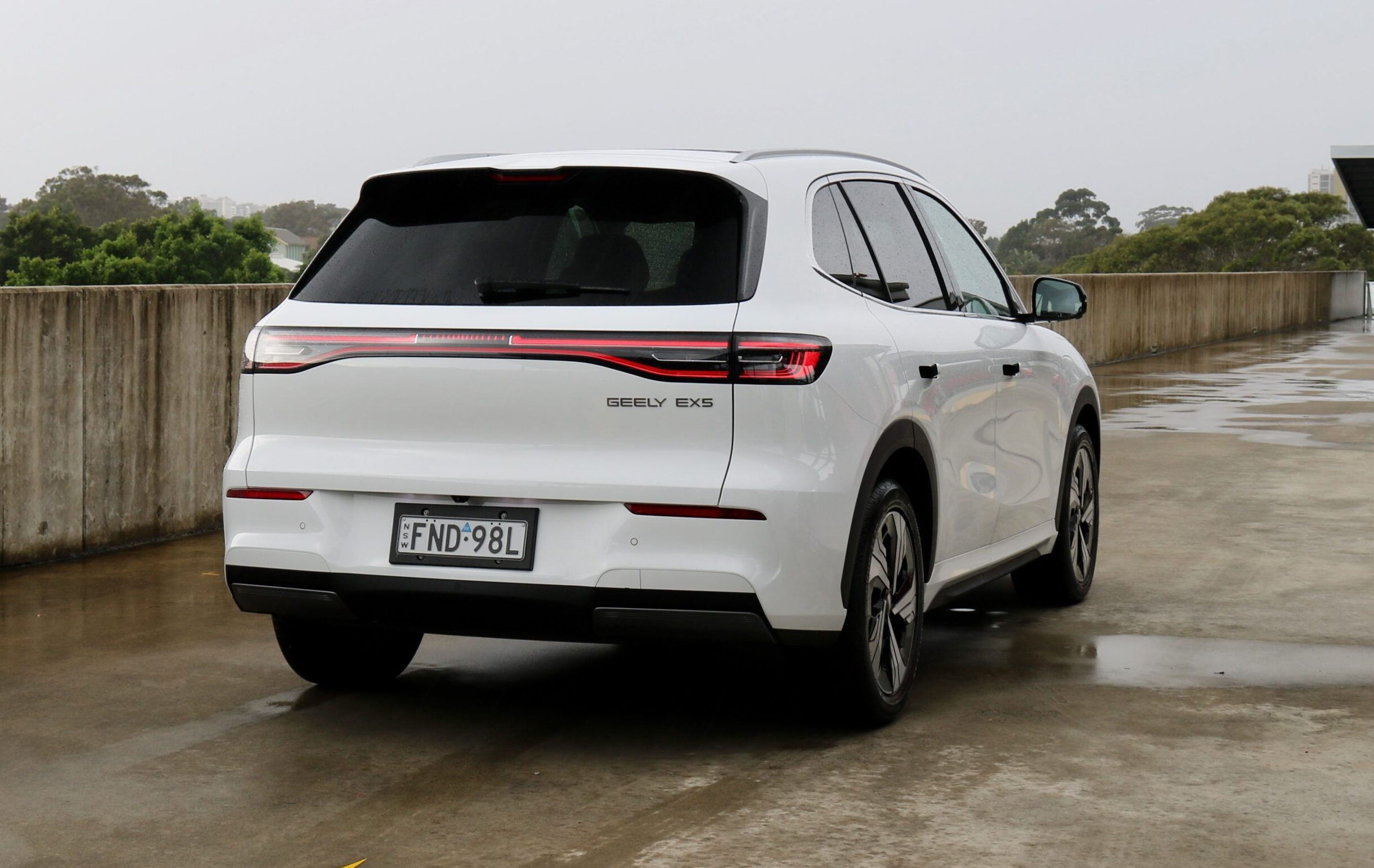
Before the EX5 was launched in Australia, its maker boasted about its 12-month pre-launch local tuning program to ensure that it handles the worst that our roads can throw at it. While we aren’t able to drive a Chinese-spec EX5 – or Galaxy 5 as it’s called there – the EX5 handles our atrocious roads well and is quite smooth and comfortable, even over bigger bumps.
Sometimes, however, the suspension is too soft and takes too long to settle after some bumps. A quick succession of bigger bumps has the EX5 struggling to settle and its occupants feeling a bit off from motion sickness. Firmer dampers would improve the EX5’s driving experience markedly. It’s the same story with the handling.
While the EX5 is no sports car, nor is it marketed that way, it’s not really a fun car to drive. It’s surprisingly punchy, with a claimed 0-100km/h time of 7.1 seconds for the Inspire, and is more than quick enough for most buyers. But drive it remotely hard and it really doesn’t like it, nor is there much feedback from the steering as to what the front wheels are doing.
The local tuning of the EX5 also extends to the active safety systems, where the company underwent a 12-month program to ensure that its features are there to help and not hinder the driving experience, like so many cars do. In reality, aside from the hyperactive driver monitoring camera, they’re all appreciably more refined than a lot of other systems from car makers – the lane keeping assistance is relaxed compared to the Deepal S07, for example.
What would make the systems easier to use would be properly marked buttons on the steering wheel. For example, the cruise control buttons on the steering wheel have no markings to indicate their function so they’re difficult to understand. But importantly, because they’re not as intrusive as a lot of rivals, most people won’t need them to be switched off.
Service and warranty
The EX5 is covered by a seven-year/unlimited km warranty with 12 months of roadside assistance that is service-activated up to seven years in total. The battery is covered for eight years with no distance limit.
The EX5 features 12-month/20,000km service intervals and five years/100,000km of servicing costs a reasonable $1487 ($298 per year), though buyers can pre-pay for servicing at the time of purchase with a five-year plan costing a cheap $1190 ($238 per year).
Verdict: Should I buy a Geely EX5?
There’s no doubting that the Geely EX5 has a lot going for it and in some departments, is worthy of consideration over rivals. The price is an absolute knockout and its obvious unique selling point in the market. We thought the entry-level Kia EV5 Air was good value at $56,770 drive away, but here is a rival that’s better finished inside and offers comparable range and charging speed for more than $10,000 less.
However, there is also a lot to improve with the EX5: its suspension is too soft and its central touchscreen has far too much functionality, yet no smartphone mirroring for now. Plus, rivals like the aforementioned EV5 offer longer-range models higher up their model range, which we’d like to see Geely offer too. But with such sharp value, many brands will have been put on notice by the Geely EX5’s local arrival, one that we expect to create even more waves in the ever-changing EV market.
EX5 rivals
Specifications
| Model | Geely EX5 Inspire |
|---|---|
| Price | $44,990 plus on-road costs |
| Battery | 60.2kWh lithium ion phosphate (LFP) |
| Claimed range (WLTP) | 410km |
| Claimed energy consumption | 15.8kWh/100km |
| Max AC/DC charge rate | 11kW/100kW |
| Peak power | 160kW |
| Peak torque | 320Nm |
| Transmission | Single-speed automatic |
| 0-100km/h | 7.1 seconds |
| Top speed | 175km/h |
| Length/width/width/wheelbase | 4615/1901/1670/2750 mm |
| Boot (seats up/down) | 410/1877 litres |
| Tare weight | 1765kg |
| Warranty | 7-year/unlimited km |
| 5-year service cost | $1487 |
| On sale | Now |
Things we like
- A fantastic all-rounder – fun to drive and very practical
- Extra performance and sound makes it even more fun to drive than before
- A far smarter choice than an SUV
Not so much
- No rear wiper in Australia
- Over $60k drive away isn’t cheap
- No manual transmission option globally
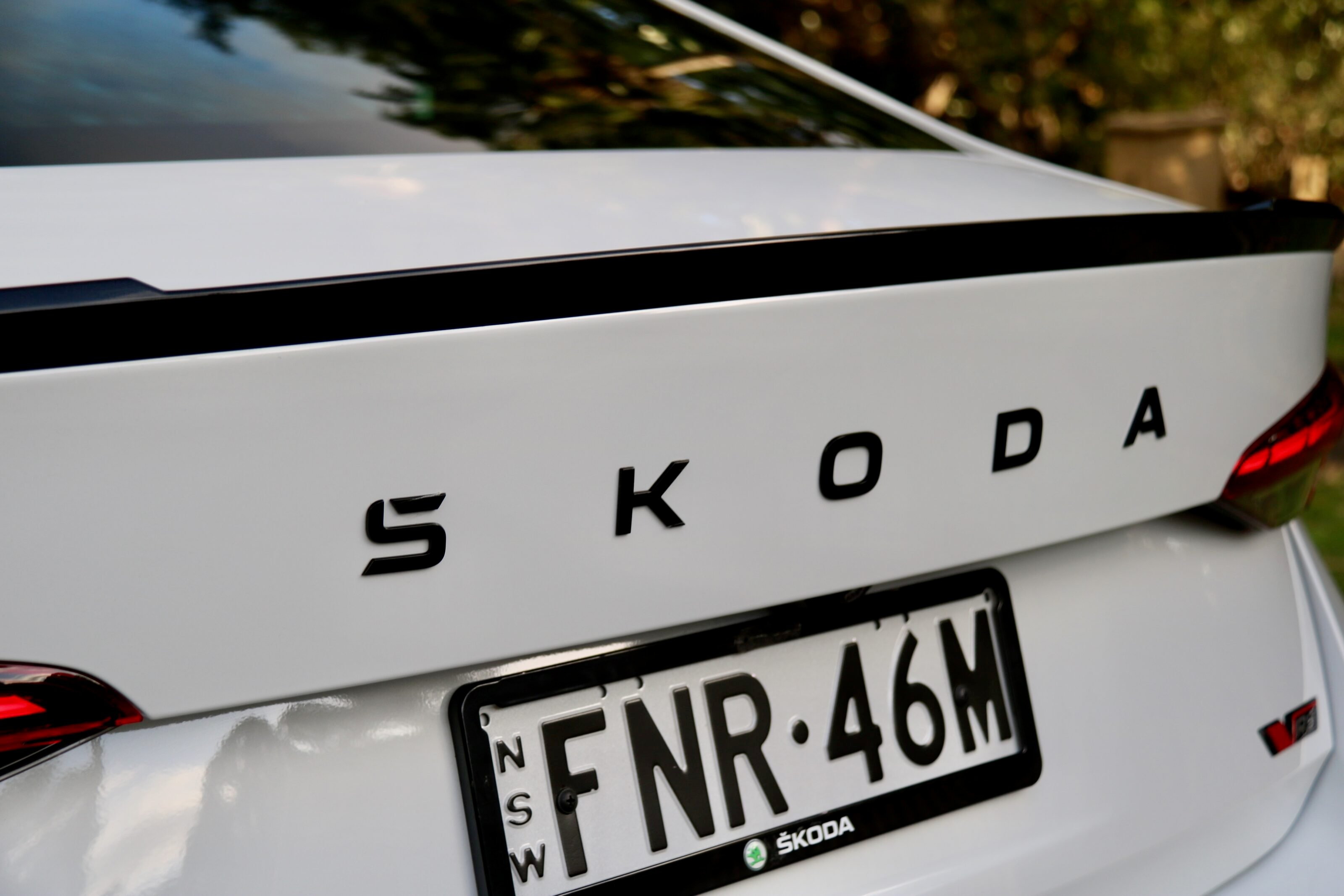
If you’re looking for a car that can do it all, there have been few options better than the Skoda Octavia RS. Originally the flagship of Skoda’s Australian launch offensive in 2007, the Octavia RS has won a very loyal fanbase thanks to its strong all-round ability: it’s a fast, very practical and safe car that proves that family cars don’t need to be boring. For the family person that’s had to say goodbye to sporty cars with the addition of children, it’s a great choice.
The latest version launched in Australia earlier this year armed with important upgrades such as more performance, more standard features and updated styling to keep it fresh. It’s also now more expensive than ever before and even for the cheaper liftback, it’s still an over-$60,000 purchase.
With all of that in mind, is it still an excellent mid-size sedan?
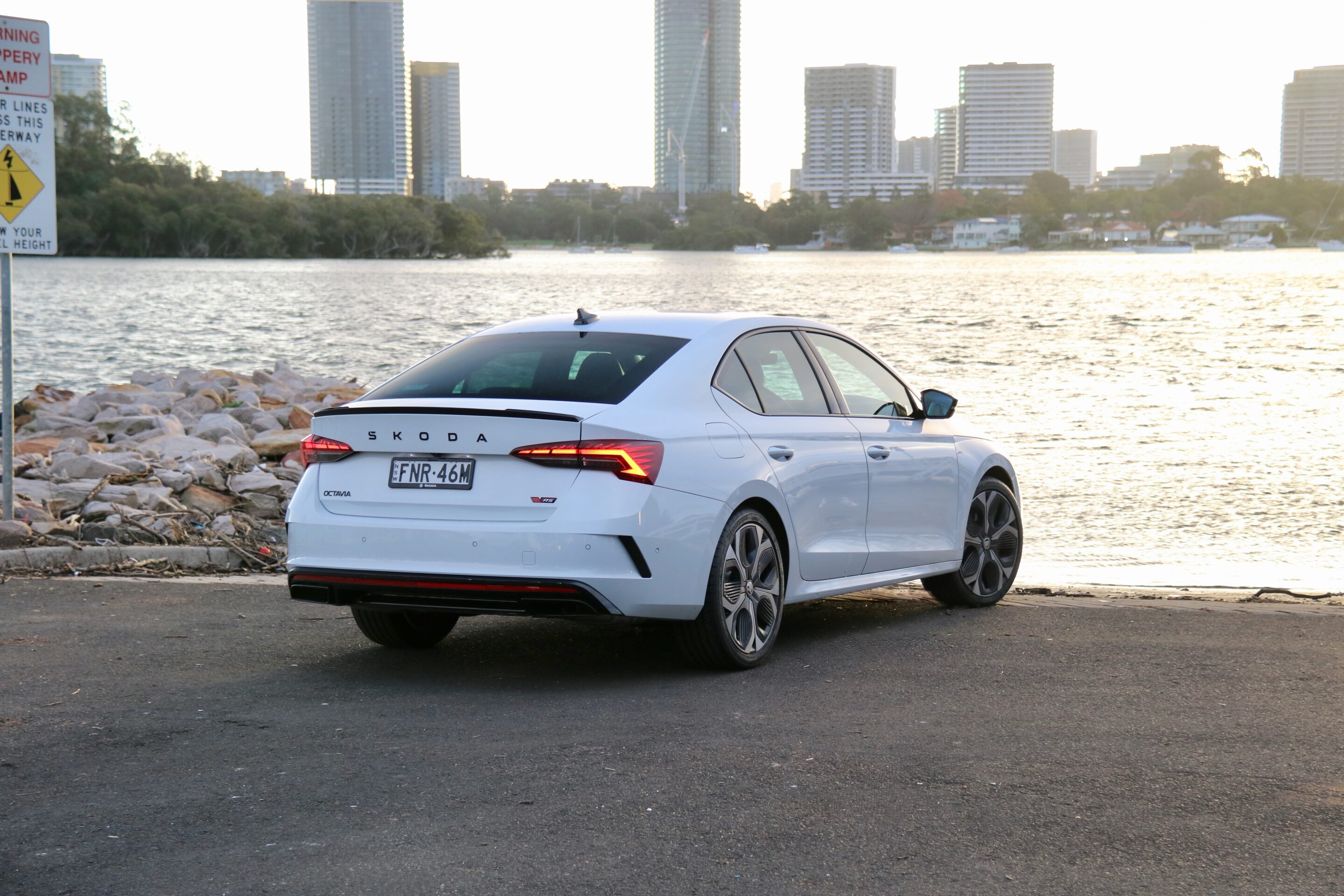
Price and equipment:
Pricing for the Octavia range starts at $41,490 drive away for the entry-level Select liftback and rises to more than $65,000 drive away for an optioned RS wagon.
Pricing for the RS rose by $6000 for the facelift, though the previously-optional $6600 Premium Package is now standard equipment, adding kit such as adaptive suspension, heated front and rear seats, a head-up display, tri-zone climate control and electric front seats with memory and massaging.
New features have also been added, including a larger 13-inch touchscreen, a ventilated wireless phone charger with more power, a 360-degree camera, heated windscreen and steering wheel and all paint options (bar the $770 Velvet Red). Overall, while it’s more expensive, it’s also absolutely loaded with standard features.
2025 Skoda Octavia pricing (drive away):
| 110TSI Select liftback | $41,490 |
| 110TSI Select wagon | $43,990 |
| 110TSI Sportline liftback | $46,490 |
| 110TSI Sportline wagon | $47,990 |
| 195TSI RS liftback | $62,990 |
| 195TSI RS wagon | $64,490 |
Skoda Octavia RS standard equipment:
- 19-inch alloy wheels with adaptive dampers
- Eco, comfort, normal, sport and individual driving modes
- Dusk- and rain-activated automatic LED exterior lighting
- Rain-sensing automatic wipers
- Rear privacy glass
- Acoustic front side windows
- Heated windshield
- Keyless entry and push button start
- Electric bootlid with kick-to-open functionality
- Heated and auto-folding mirrors with automatic passenger side dropping in reverse
- Tri-zone automatic climate control
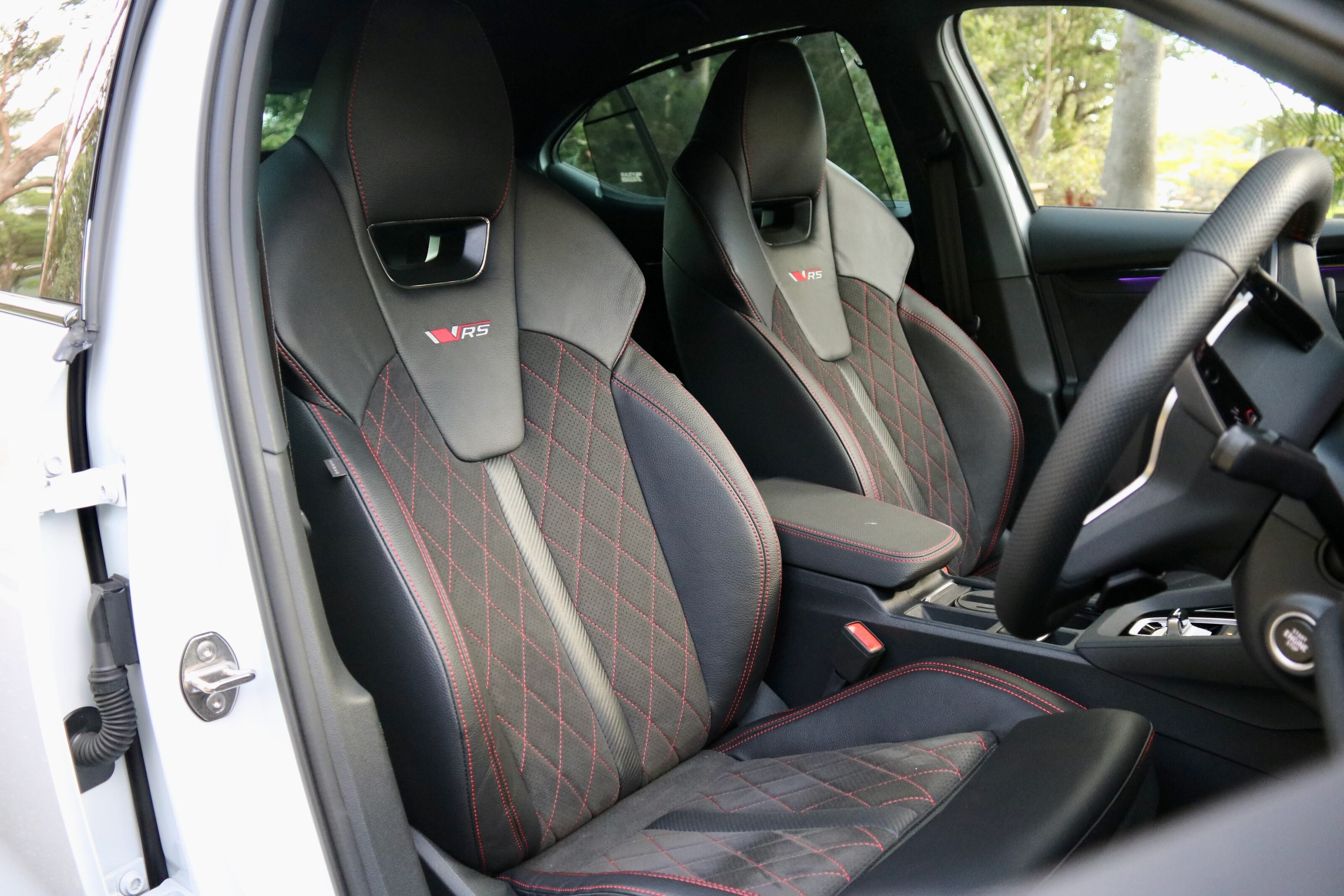
- Suede and synthetic leather upholstery
- Electric front seats with heating, memory and massaging
- Heated leather steering wheel with paddle shifters
- 10-inch digital driver’s display
- 13-inch touchscreen
- Wired and wireless Apple CarPlay and Android Auto
- Satellite navigation
- AM/FM/DAB+ digital radio
- 4x USB-C ports
- Wireless phone charger with ventilation
- 12-speaker Canton sound system
- Configurable LED ambient cabin lighting
- Head-up display
- Sun blinds in the rear side and rear windows
- ‘Simply clever’ features such as an umbrella and bin in the driver’s door, various boot nets, a double-sided boot mat and a two boot shelves
Octavia RS safety features:
- 10x airbags (including front centre and rear side units)
- Autonomous emergency braking (AEB) with pedestrian, cyclist and turning assistance
- Adaptive cruise control with stop and go functionality
- Lane keeping assistance with adaptive lane guidance
- Matrix adaptive high beam
- Blind-spot monitoring with rear cross-traffic alert
- Driver attention monitoring
- Emergency assist (the car automatically stops if the driver becomes unresponsive)
- Automatic low-speed front and rear braking
- 360-degree camera
- Automatic parking
- Front, side and rear parking sensors
- Tyre pressure monitoring
- Alarm
The Octavia range earned a five-star ANCAP safety rating with scores of 89 per cent in adult protection, 82 per cent in child protection, 68 per cent in road user protection and 81 per cent for safety assistance.
Interior comfort, practicality and bootspace
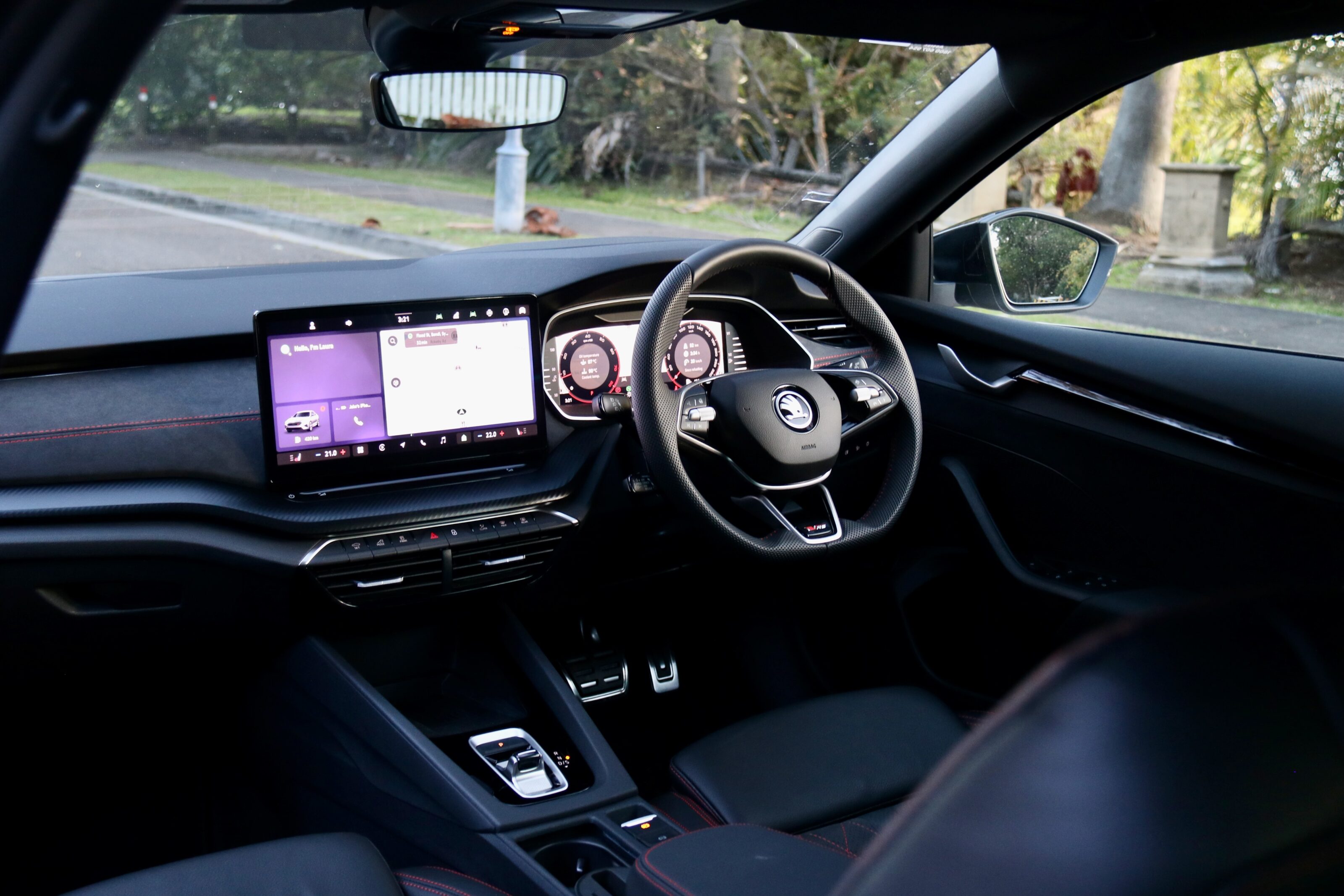
As we’ve seen from various other Skoda products, the interior of the Octavia RS is difficult to fault. The quality is great, it’s very comfortable despite being the firmer sporty model and it’s also insanely practical with many clever touches. The RS is also appropriately sporty with red stitching, carbon-like trim and lovely sports front seats.
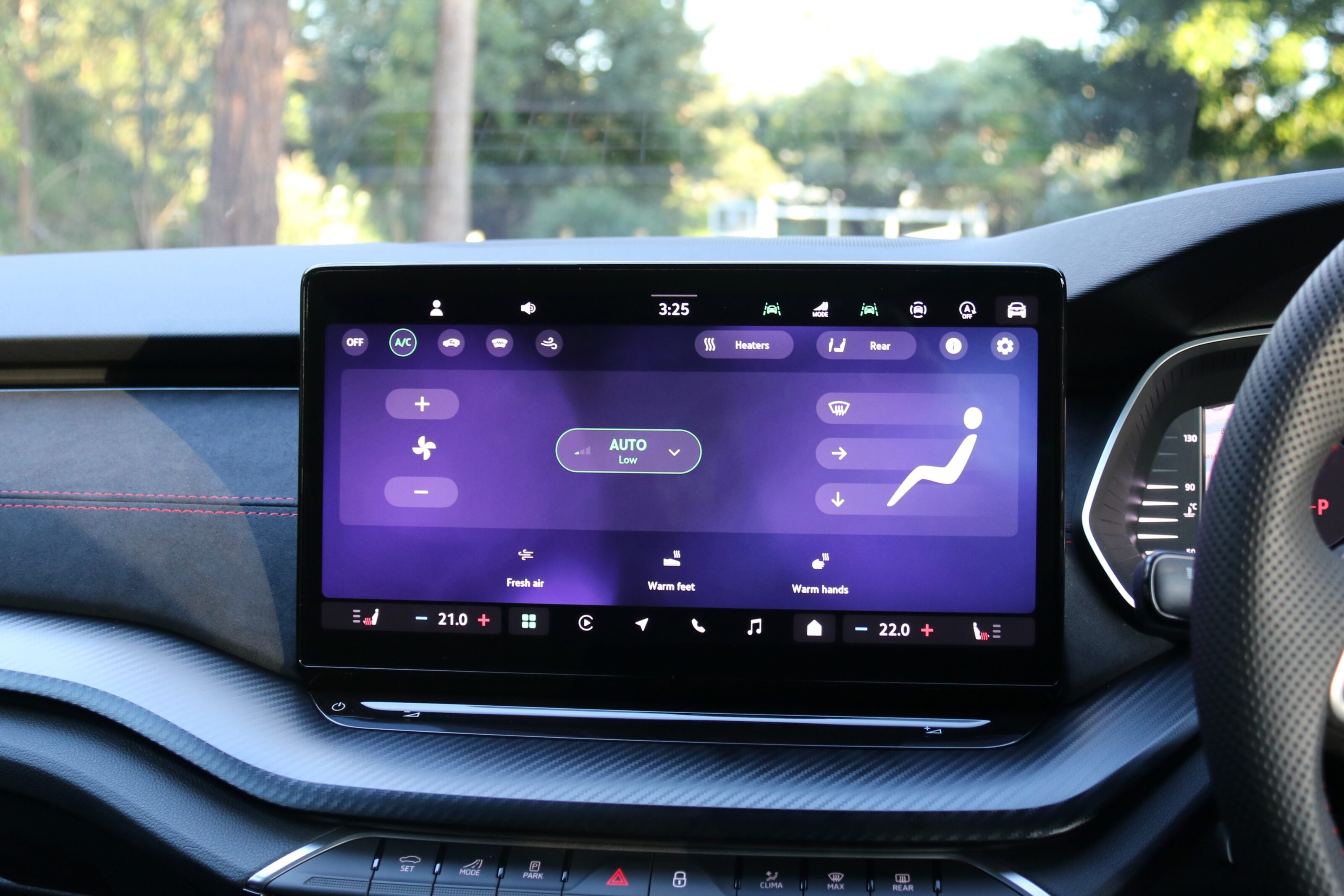
Centre of the Octavia’s cabin is a new 13-inch touchscreen with features such as sat-nav, wireless smartphone mirroring and DAB+ digital radio. While it doesn’t feature physical climate controls like the new Kodiaq, it’s still bright, quick and easy to use thanks to a row of shortcut physical buttons located below the screen to access menus to control the drive modes, climate and driving settings. The row of icons located permanently at the bottom of the screen for the temperature, heated seats and to access the navigation, smartphone mirroring, phone, media and home screen make the screen a doddle to use.
Similarly at the top of the screen are more icons for functions such as disabling the stop-start system and lane keeping assistance. Again, it’s quite easy to use and a big improvement on the pre-updated model – though we’d still like to see live services added for even more features.
Wireless Apple CarPlay worked faultless for our time with the Octavia, while the wireless phone charger was also quite effective. The 10-inch digital driver’s display is quite detailed with many views to choose from – including a map – though it could be easier to use. While we’re complaining, the 12-speaker Canton sound system could also be punchier.
Practicality is also reasonable in the Octavia’s cabin with big flock-lined door bins with a bin on the driver’s side, the tray underneath the dashboard with the wireless charger and two USB-C ports, shallow cupholders with ‘teeth’ to open bottles with one hand, a removable phone holder, a box underneath the armrest and a tray underneath the headlight switch.
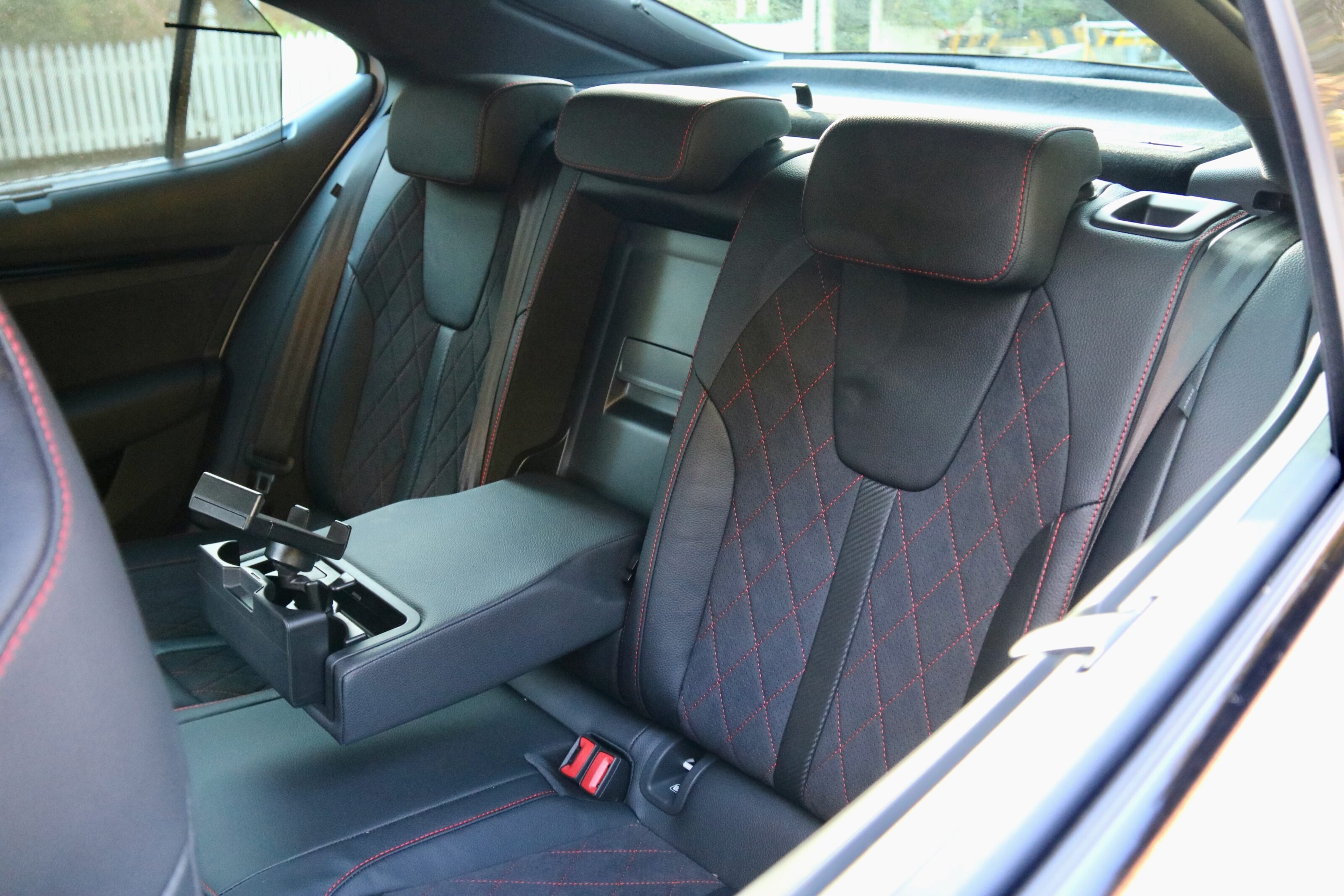
The rear seat is a great space with ample space even for two adults or three kids. Features include a central armrest with cupholders and a phone holder, a third climate zone, heated outboard seats, ample door pockets (again with flock lining to stop rattles), two USB-C charging ports, inbuilt window shades, map pockets with separate phone holders and a removable section that sits on top of the transmission tunnel with cup holders and more storage.
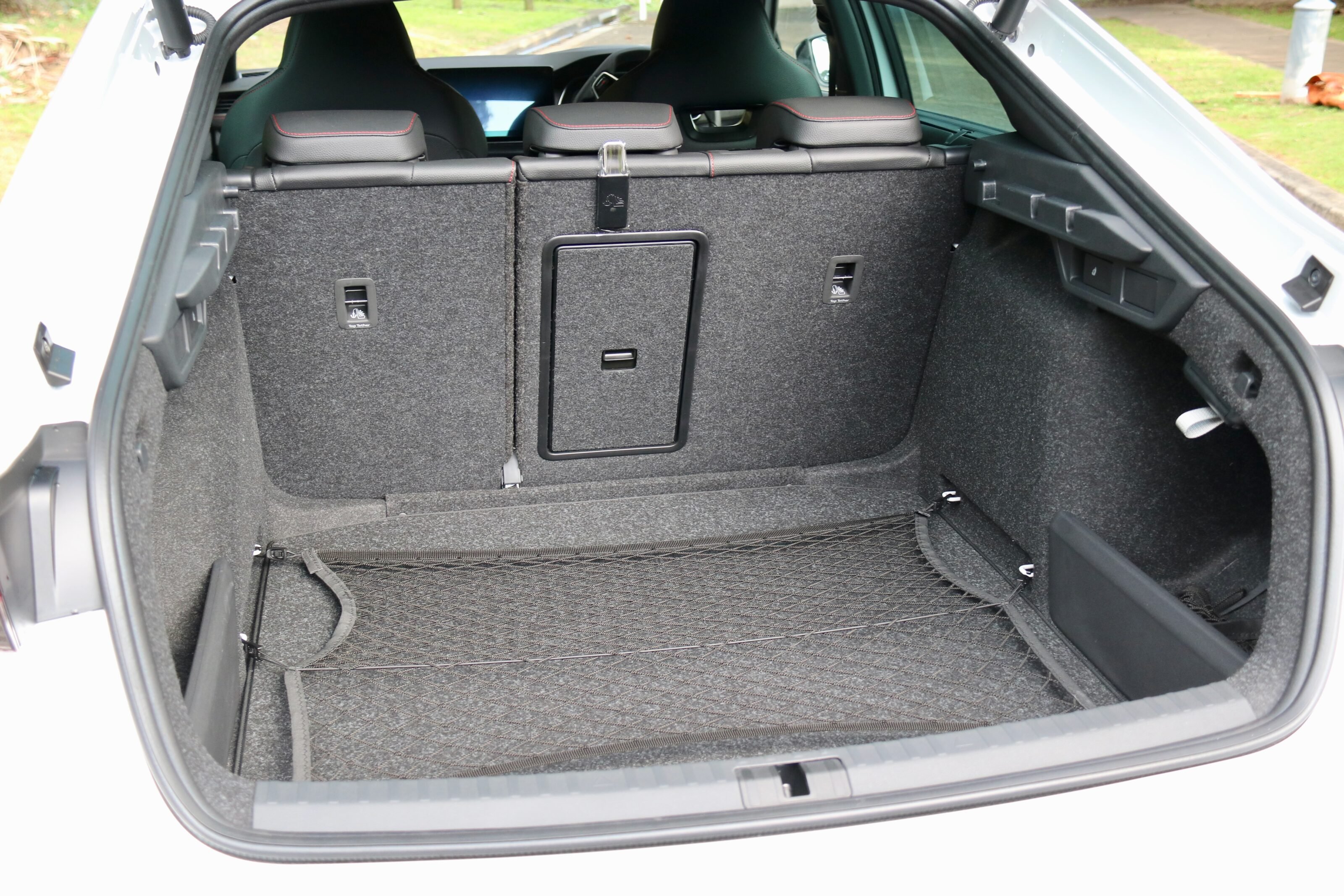
The boot of the Octavia liftback is humongous at 600 litres with the seats up and 1555 litres with them folded, which is comfortably more than some mid-size SUVs such as the Mazda CX-5 (438/1340L), let alone the i30 N Sedan (464L). Want even more space? The Octavia RS wagon with its 640L/1700L space is there if you need.
Alongside the electric tailgate with kick-to-open functionality, side storage and space-saver spare under the floor, the Octavia RS also features nets, dividers and hooks to secure cargo, remote releases to fold the seats, a ski pass, a double-sided boot mat (one side is carpet and the other is plastic to carry dirty cargo), a configurable tray that sits below the cargo shelf and even a sunshade that launches from the parcel shelf and connects to the tailgate.
Only a second level of boot floor would improve the Octavia’s boot, but its practicality is still very impressive. As you’d expect for a Skoda product, there’s been far more thought put into it – especially against the majority of mid-size SUVs.
Performance and economy
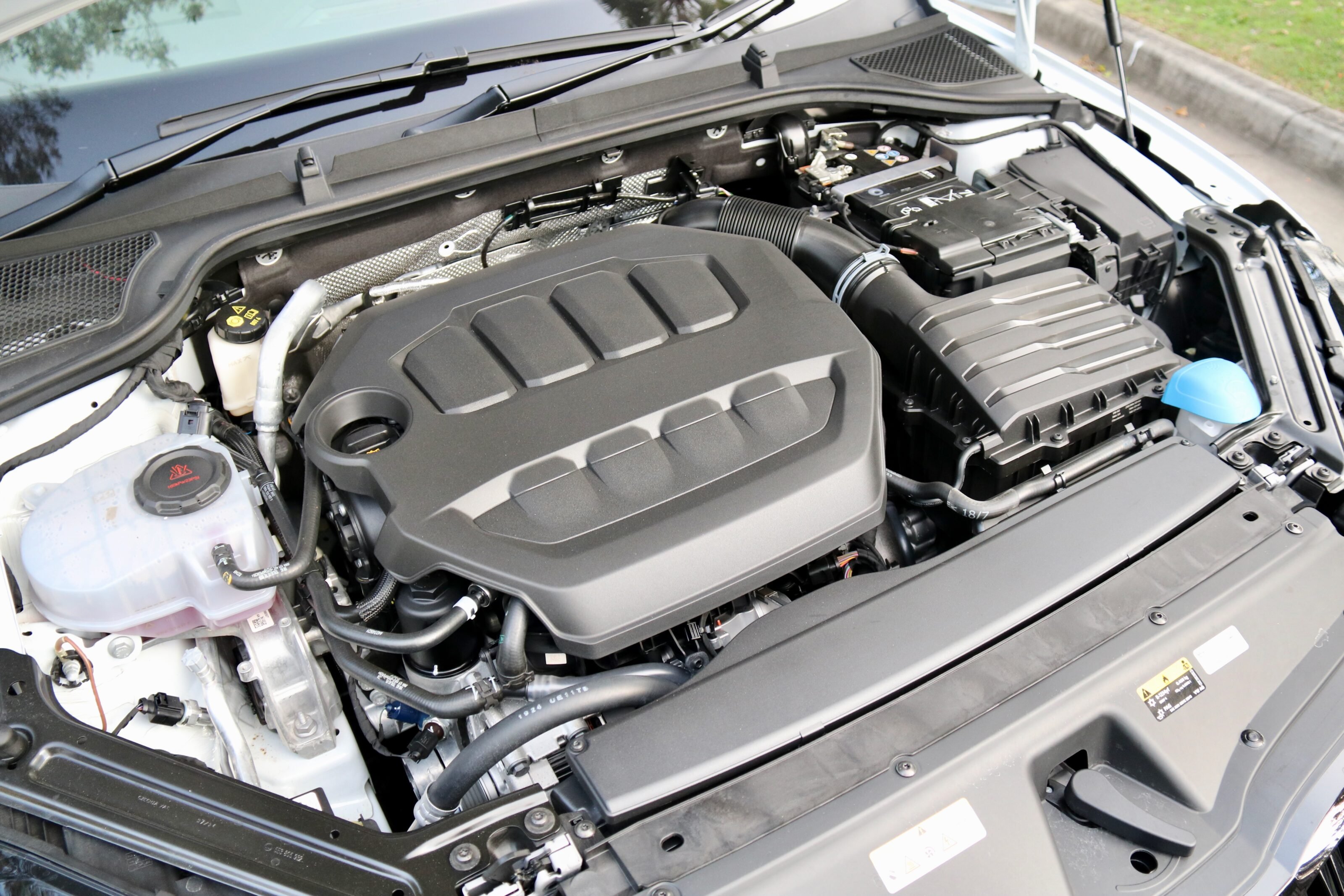
The Octavia RS uses the Volkswagen Group’s ‘EA888’ 2.0-litre turbocharged four-cylinder petrol engine, in this tune making 195kW of power and 370Nm of torque. Power is sent to the front wheels through a seven-speed ‘DSG’ dual-clutch transmission that features both sport and manual modes for more spirited driving. Skoda claims a 0-100km/h sprint of 6.4 seconds and a top speed of 250km/h.
Skoda claims that the Octavia RS will use 7.0L/100km of minimum 95RON premium unleaded with claimed CO2 emissions of 159g/km and it features a 50-litre fuel tank. In our mostly urban testing, we achieved 8.6L/100km, which is not bad considering how fun the Octavia RS is to drive.
On the road
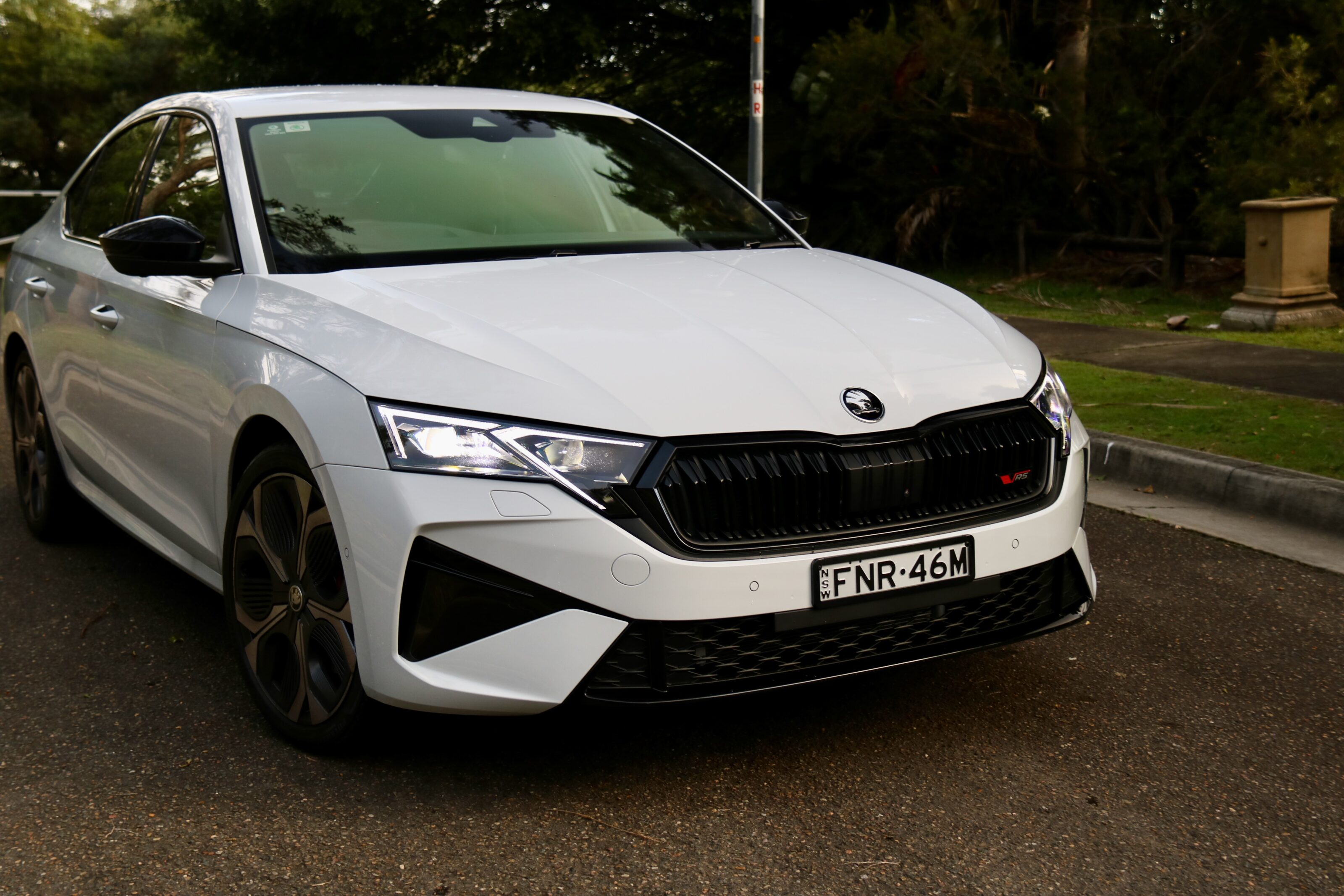
The Octavia RS has always provided a satisfying driving experience with fun dynamics and an excellent ride comfort for a sporty model. Using the same ‘MQB’ platform as many other Volkswagen Group products, it’s comfortable, refined and in this latest version, more dynamic than before as well. While a Hyundai i30 N Sedan gives more driver involvement and ultimately handles better, the Octavia RS is far more comfortable than the Hyundai and can also be adjusted in many ways to better suit more tastes.
One big change in the facelifted Octavia RS is that it now produces more power – 195kW versus the previous 180kW – and its soundtrack has been beefed up for a sportier sound. Skoda claims that it’ll hit 100km/h in 6.4 seconds but it feels quicker than that in real life with its punchy mid-range grunt. The seven-speed dual-clutch auto is also more refined than previous iterations, with very little low-speed hesitation and seemingly even quicker shifts.
Despite the louder exhaust system, the Octavia RS doesn’t do the loud pops and bangs as the i30 N, It’s classier and more grown up than that but still gives off a cheeky burble, and the EA888 still remains one of the best sounding four-cylinder engines around with a throaty roar throughout the rev range. It sounds far better than the Subaru WRX, that’s for sure.
The Octavia RS also features excellent active safety features that a lot of manufacturers could learn from. The active lane keep assist isn’t overbearing like some brands, the Matrix adaptive high beam is very effective and the adaptive cruise control is refined as well – though in the typical Volkswagen Group fashion, it annoyingly won’t undertake other vehicles on multi-lane highways.
Service and warranty
The Octavia is covered by a seven-year/unlimited km warranty with 12 months of roadside assistance that’s extended a further 12 months which each dealer service – more than Subaru and Hyundai’s five-year warranties.
The Octavia’s service intervals are once-yearly/every 15,000km, and a seven-year/90,000km pre- paid service pack costs $4200 ($600 per year), which is not much above the five-year service cost for the WRX.
Verdict: Should I buy a Skoda Octavia RS?
Overall, the Skoda Octavia RS continues to impress just as it has since it arrived locally in 2007 with its broad range of talents that continue to stamp it as one of the best daily drivers on the new car market. Aside from price, there’s not much to dislike about it: the Canton sound system could be better, there’s no rear wiper on the liftback and there’s no manual transmission for the RS globally.
For around the $65,000 mark, we can’t think of a more well-rounded car. Sure, a Camry would use a lot less fuel and is larger in the back seat, but is it as fun to drive or as practical? Not even close, and if you’re after a practical family car with some fun, the Octavia RS must be on your test drive list.
Octavia RS rivals
Subaru WRX
Hyundai i30 N Sedan
Toyota Camry SL
Things we like
- Stonking performance
- Lovely driving experience
- Modern and tech-filled interior
Not so much
- Some cheap-feeling interior parts
- Big price gap over lesser X3 models
- $12k-cheaper M340i sedan even faster
Recently we reviewed the new ‘G45’ BMW X3 20, which is the fourth generation of the brand’s most popular product globally, and found it to be a force to be reckoned with if you’re searching for a premium mid-size SUV. But with just 140kW of power, while it moves fine it’s never going to set your heart racing. If you’re after a fast X3, what do you do?
Enter the high-performance X3 M50 and its 293kW inline six, which is good for a claimed 4.6-second 0-100km/h run and a top whack of 250km/h. It costs a full $42,800 more than the entry-level X3 20 at $128,900 plus on-road costs, but makes more than twice the power and almost twice the torque, and adds a lot in the way of extra sportiness and features.
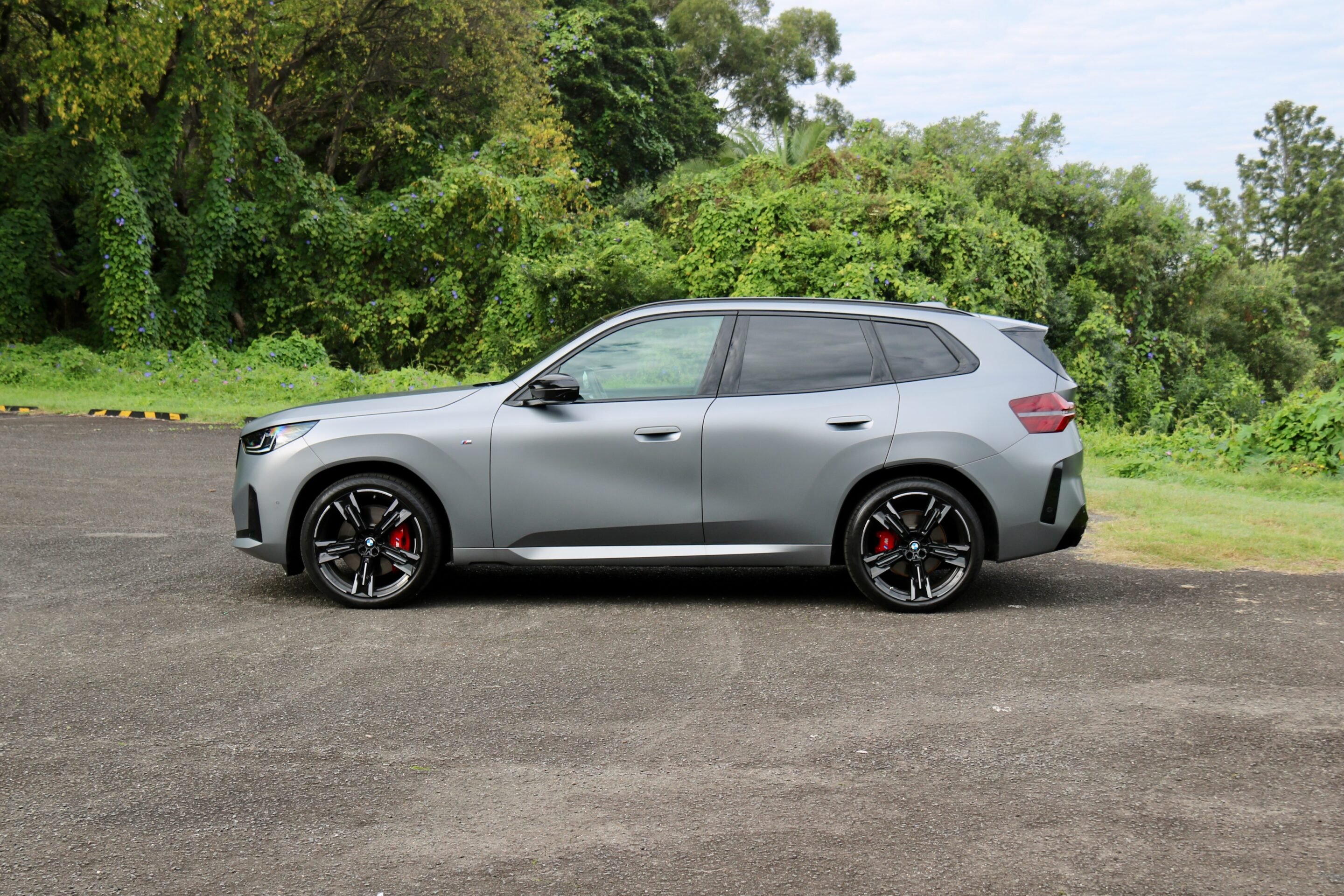
The X3 M50 is equipped with 21-inch alloy wheels, adaptive dampers, adaptive high beam, tri-zone automatic AC, a panoramic glass roof, suede and ‘Veganza’ synthetic leather trim, quad exhaust tips, a 14.9-inch touchscreen with an inbuilt eSIM for live features, ventilated and heated electric front seats, an electric tailgate and a full suite of active safety kit like AEB, adaptive cruise control and effective adaptive high beam for the headlights.
Options are limited to ‘frozen’ matte ($4000) or lovely ‘Tanzanite Blue’ ($2000) paintwork, $4000 ‘Merino’ leather trim, a knitted textile instrument panel ($1200) and a $2200 trailer tow hitch. Easy.
Competition? The $119,084 +ORC Audi SQ5 TFSI and the $136,900 +ORC Mercedes-AMG GLC 43, both of which are slower than the X3 M50 and not quite as dynamic to drive or as richly equipped.
Heart of the X3’s M50 transformation is BMW’s lovely turbocharged ‘B58’ 3.0-litre inline six-cylinder petrol engine that’s joined to a 48V mild-hybrid system and makes a total 293kW of power and 580Nm of torque, resulting in the punchiest X3 by far – the incoming diesel six 40d makes even more torque at 670Nm, but far less power at 210kW.
The M50’s 4.6-second 0-100km/h run is impressive, but the best part about it is its lovely noise that builds to a bellowing growl throughout the rev range. BMW has a history of making excellent-sounding engines, and although this one is a bit sound enhanced, it’s still wonderful to listen to. It’s also surprisingly fuel efficient – the claim is 8.2L/100km and with a mix of driving, we achieved 9.4L/100km, which is a lot better than our 12.6L/100km result in the less powerful GV70 3.5T.
While we found the X3 20 to be a great handler, the M50’s extra punch reveals even more dynamic talent. It comes alive on country roads, with a balance and tautness to the ride that reminds us of BMW’s best. While the steering could be more feelsome, the brakes are sharp and the handling is composed, and it even allows for a bit of rear-biased fun.
As we found with the 20, the new-generation X3’s interior is largely a step forward on the model it replaces with a more modern layout, a lot more tech and mostly improved materials – though the cheap door handles need revising.
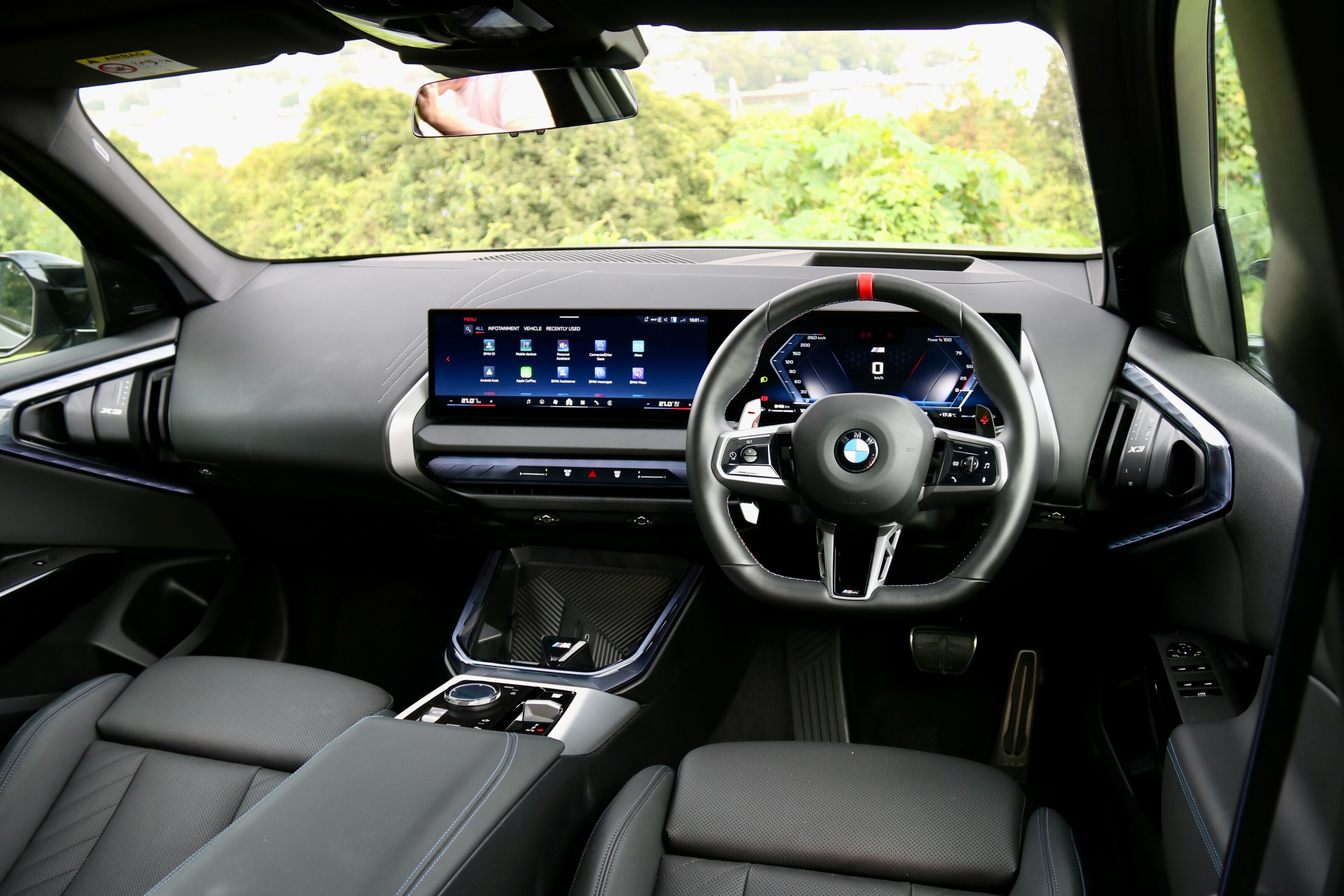
Look beyond those and there’s plenty to like, such as the synthetic leather trim on the dashboard, doors and very comfortable, supportive sports seats, thick-rimmed M steering wheel and massive 14.9-inch touchscreen. While some features – such as the trip computer – are buried in that screen, it’s generally quite easy to use and screen quality is great as well. The Harman Kardon sound system could be a bit punchier, but it’s otherwise quite good.
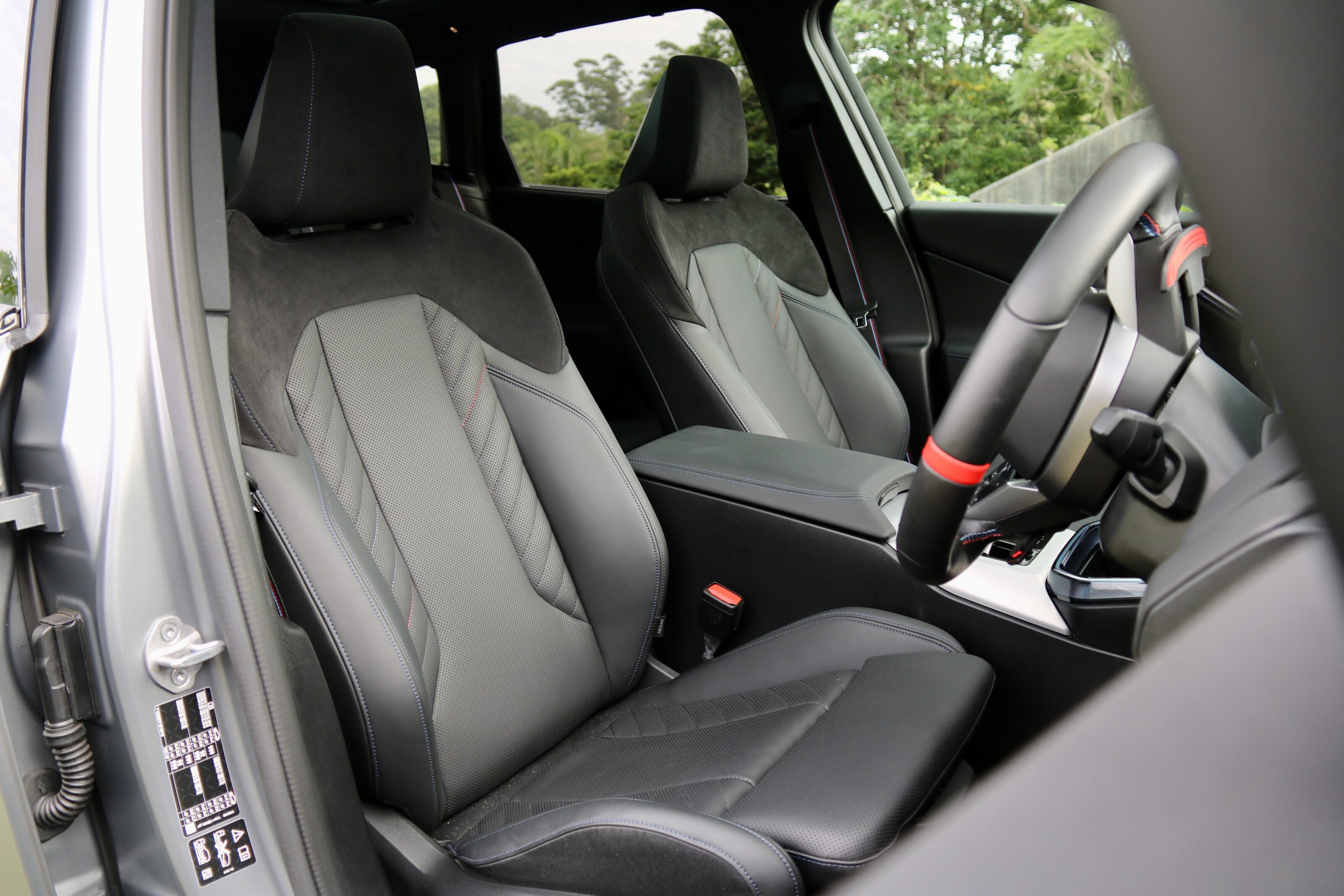
The X3’s cabin is practical too, with big door bins, a big tray incorporating a wireless charger, cup holders and two USB-C ports underneath the dashboard, along with a big box underneath the centre console. The rear seat is roomy for two adults, especially for headroom. It’s also well featured with charging ports, a separate climate zone, door- and map pockets, and heated seats. The X3’s boot measures 570L with the seats up and a huge 1700L with them folded, and includes hooks and extra storage.
As we saw with the entry-level 20, the new BMW X3 is best-in-class and the hi-po M50 variant only adds to that. For those who aren’t interested in performance, the 20 will be more than enough, but if you like driving and can afford it, the M50 is well worth the extra spend. Its excellent chassis is done justice with the extra grunt, and it’s just so fast and fun that it was very difficult to give back. If you’re after such a car, the BMW X3 M50 should be at the top of your list.
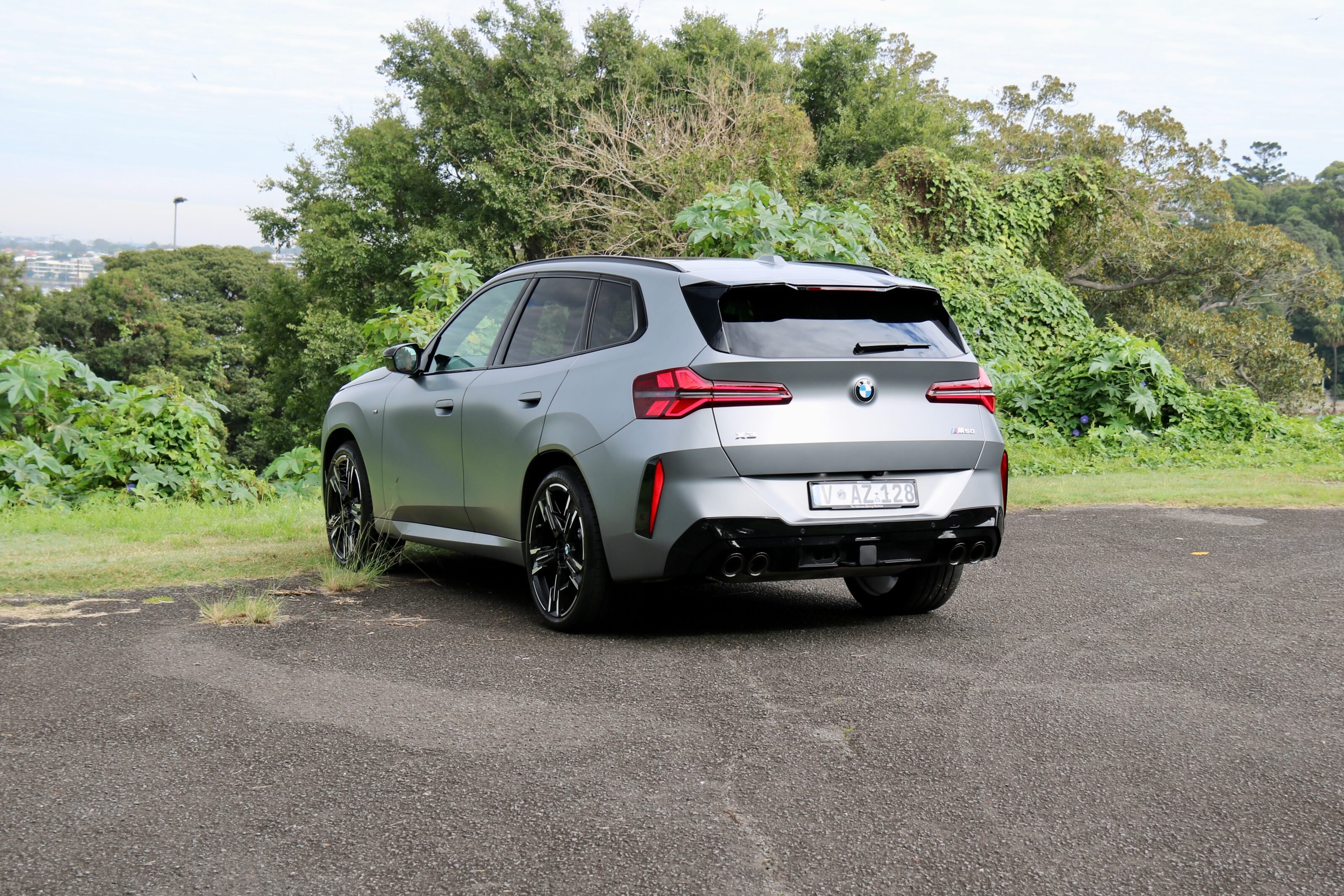
Specifications
| Price | $128,900 plus on-road costs |
|---|---|
| Drivetrain | 2998cc turbo inline 6-cylinder mild-hybrid petrol engine |
| Max outputs | 293kW (5200rpm-6250rpm) /580Nm (1900rpm-4800rpm) |
| Transmission | Eight-speed automatic, all-wheel drive |
| Fuel consumption (Claimed, as tested) | 8.2L/100km, 9.4L/100km |
| CO2 emissions | 187g/km |
| Dimensions | 4775mm long, 1920mm wide, 1660mm tall and 2865mm wheelbase |
| Tare weight | 1942kg |
| Boot | 570L (seats up)/1700L (seats folded) |
| 0-100km/h, top speed | 4.6 seconds, 250km/h |
| Warranty | 5-year/unlimited km 5-year/100,000km service cost $2475 ($495 per year) |
This article originally appeared in the June 2025 issue of Wheels magazine. Subscribe here.
Across the previous 59 instalments of Driven To Extinction, we have featured just one Mitsubishi – the Mirage back in March 2022. The reason?
Mitsubishi rarely kills its cars off. They just seem to soldier on in perpetuity until they run into the buffers of external forces.
Take the Mitsubishi ASX as a case in point. By any measure, this has been a hugely successful vehicle in Australia. It’s been on sale here for 15 years in its first generation GA guise, having enjoyed a number of minor cosmetic nips and tucks along the way.
It hasn’t been that way around the world. Over in Europe, the ASX became a rebadged Renault Captur in 2023, and that was spectacularly short-lived, being replaced by a version based on the Captur II just a year later. That version is now destined for the Aussie market as we bid farewell to the old ASX, hustled out of dealers because it can’t comply with ADR23 crash-avoidance regulations that came into force in March, 2025.
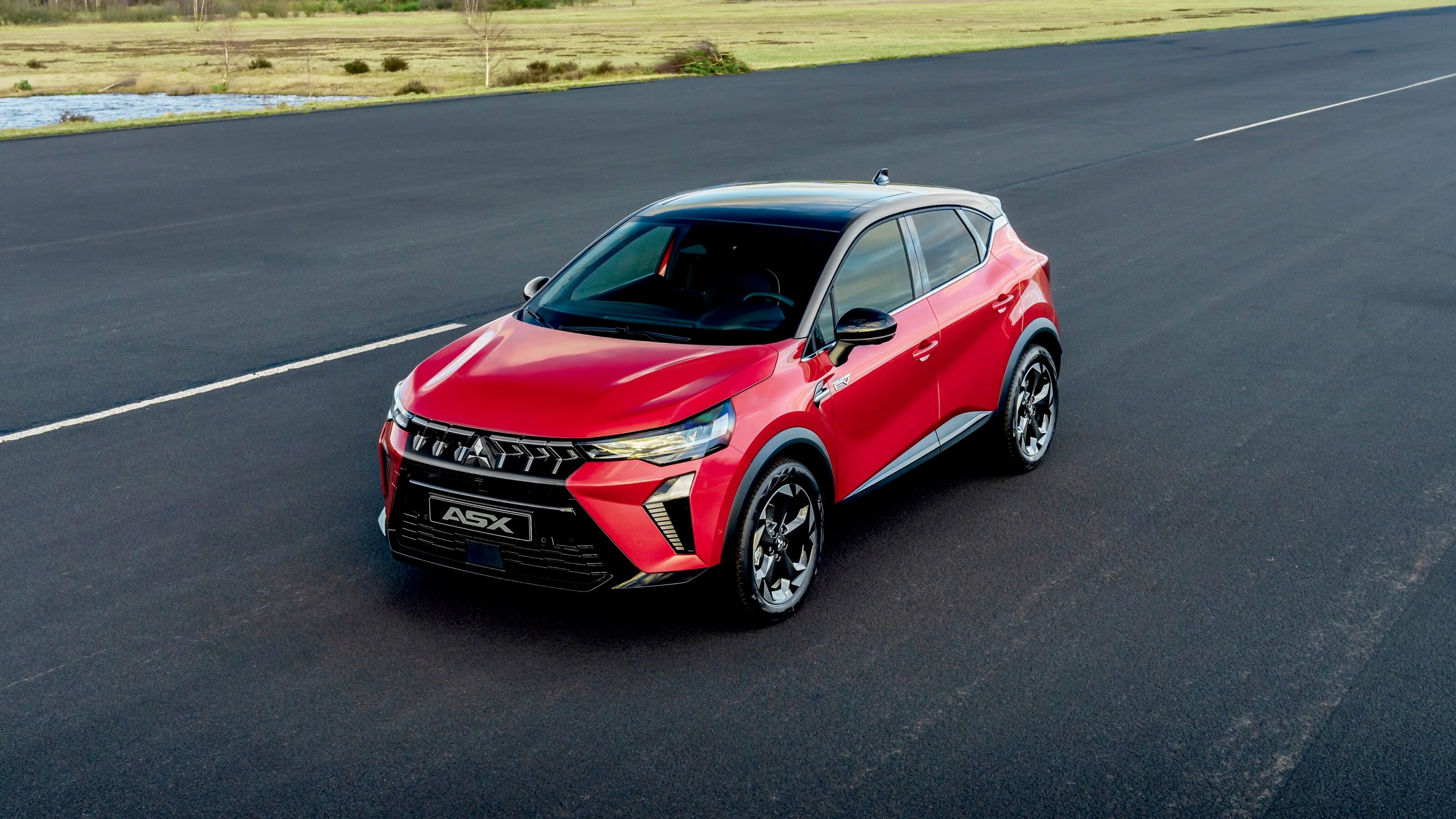
It’s been a bit of a slow burn for Mitsubishi in this country. Introduced in 2010, it scored its best sales year in 2019, when it shifted 20,806 units. Since then, sales tailed off down to 9176 units in 2023 before picking back up in 2024 with a very respectable 12,330 registrations.
To some the ASX seems like a vehicle that has long overstayed its welcome, which offers nothing progressive and which has – like Keith Richards – just refused to die. Look at it through a different lens, however, and there’s been a great deal to admire about it. It was tough, reliable, handsome, inexpensive, fairly spacious for its class and came with a great warranty. For an undemanding buyer who had yet to gain trust in Chinese challenger brands, it was an easy decision to make.
Things may not stay that way. Its successor might well have a tougher time establishing trust with the Aussie buyer. In July 2023, Mitsubishi global CEO Takao Kato acknowledged this fact when he told a roundtable of Australian media that “I’m not very sure if it can be a success or not. People know that is a vehicle from Renault and not a real Mitsubishi, and I’m not very sure if it will be very well accepted by the Australian market.”
Part of the challenge that Mitsubishi faces with the new ASX is that not only will it be a smaller vehicle than the outgoing car, but it also looks likely to be markedly more expensive. In part that’s because it contains more equipment but also because it’s built in Spain, meaning it’ll attract a 5 per cent import tariff. That was never the case with the Japanese-built ASX which avoided the impost because of a free trade agreement with Japan. Prices could rise from the outgoing car’s $25,000 base to a figure closer to $35,000. At that price, many more talented contenders suddenly coalesce into the compact SUV buyer’s focus.
It’ll have big boots to fill. There aren’t many cars that are a brand’s biggest seller after 15 years in market. Perhaps that says more about Mitsubishi in general but the unglamorous ASX, by an indefatigable process of attrition, more than earned our respect.
Origin story
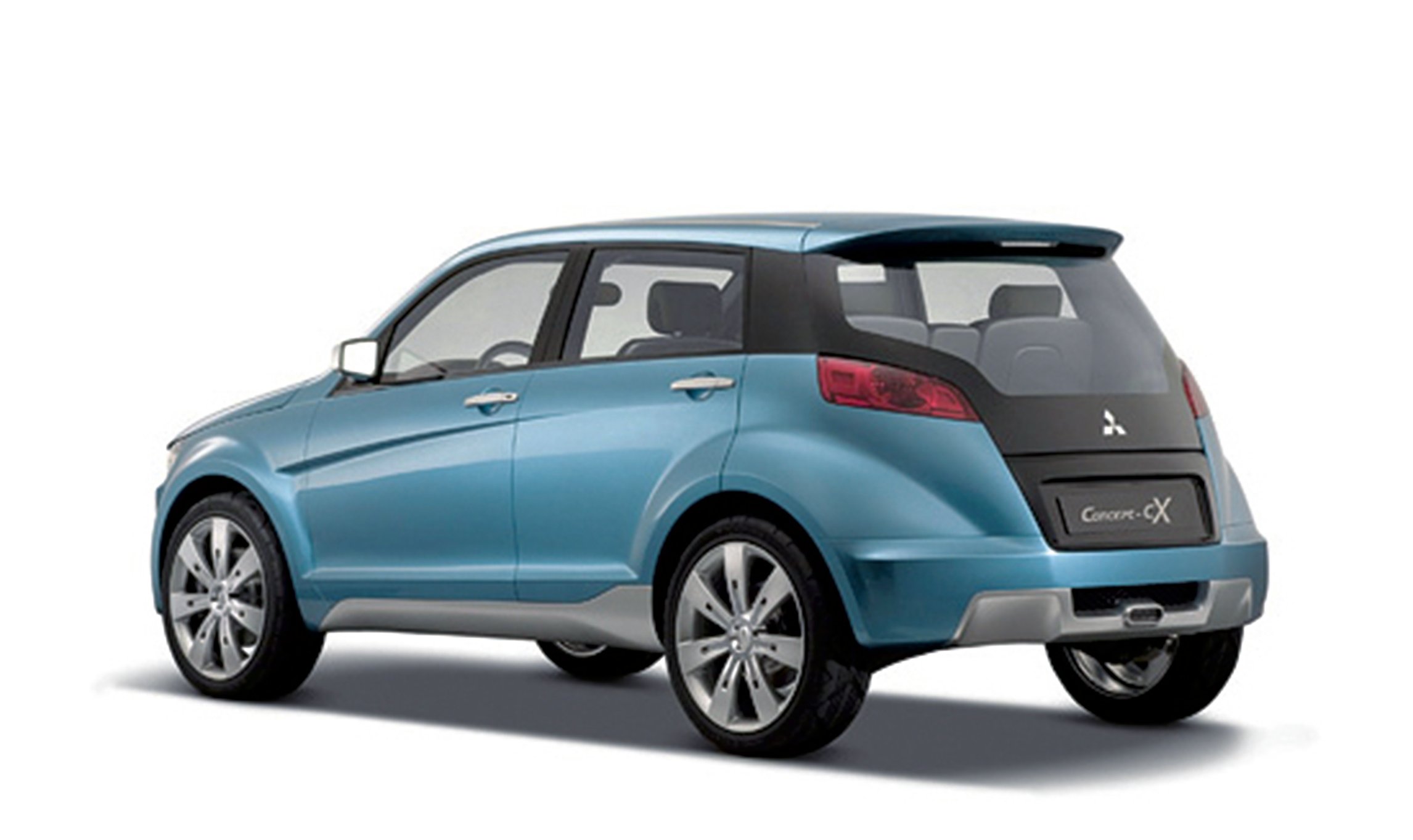
The design study for the original ASX (Active Sports Crossover) was the Concept-cX prototype, built on a cut-down version of the Outlander’s underpinnings. First shown at the 2007 Frankfurt Show, the eventual production version carried the RVR name in its domestic Japanese market, along with South Korea and Canada, whereas it’s known as the Outlander Sport in the US, Argentina, Brazil and Indonesia. Puerto Rico couldn’t decide which name they preferred and ended up with both Outlander Sport and ASX-badged models.
This article originally appeared in the June 2025 issue of Wheels magazine. Subscribe here.
Things we like
- A real rally car for the road
- Wonderful handling, even in the GT
- Bespoke feeling throughout
Not so much
- Expensive to buy and service
- Boot largely useless
- Short six-monthly service requirements
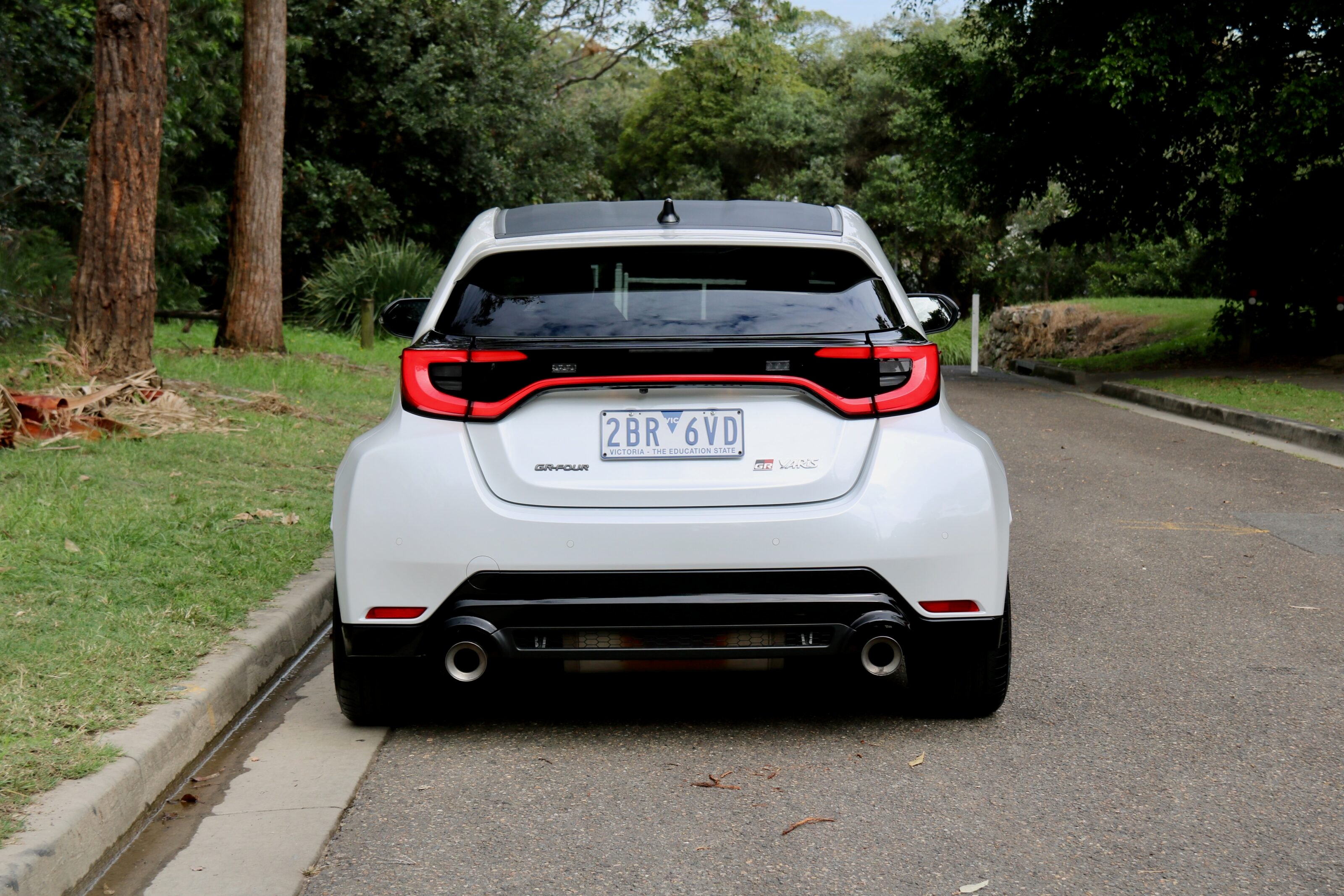
Can you believe that it’s been five years since the Toyota GR Yaris burst onto the scene?
Toyota’s rally-derived hot hatch was a big moment as it had not made a turbocharged four-wheel drive performance car for more than 20 years.
It also arrived with a bang: $39,950 drive away for the first 1000 units, a bespoke body and a new engine that was one of the most powerful three-cylinder units ever. Thanks to its talent, more than 40,000 have been sold globally.
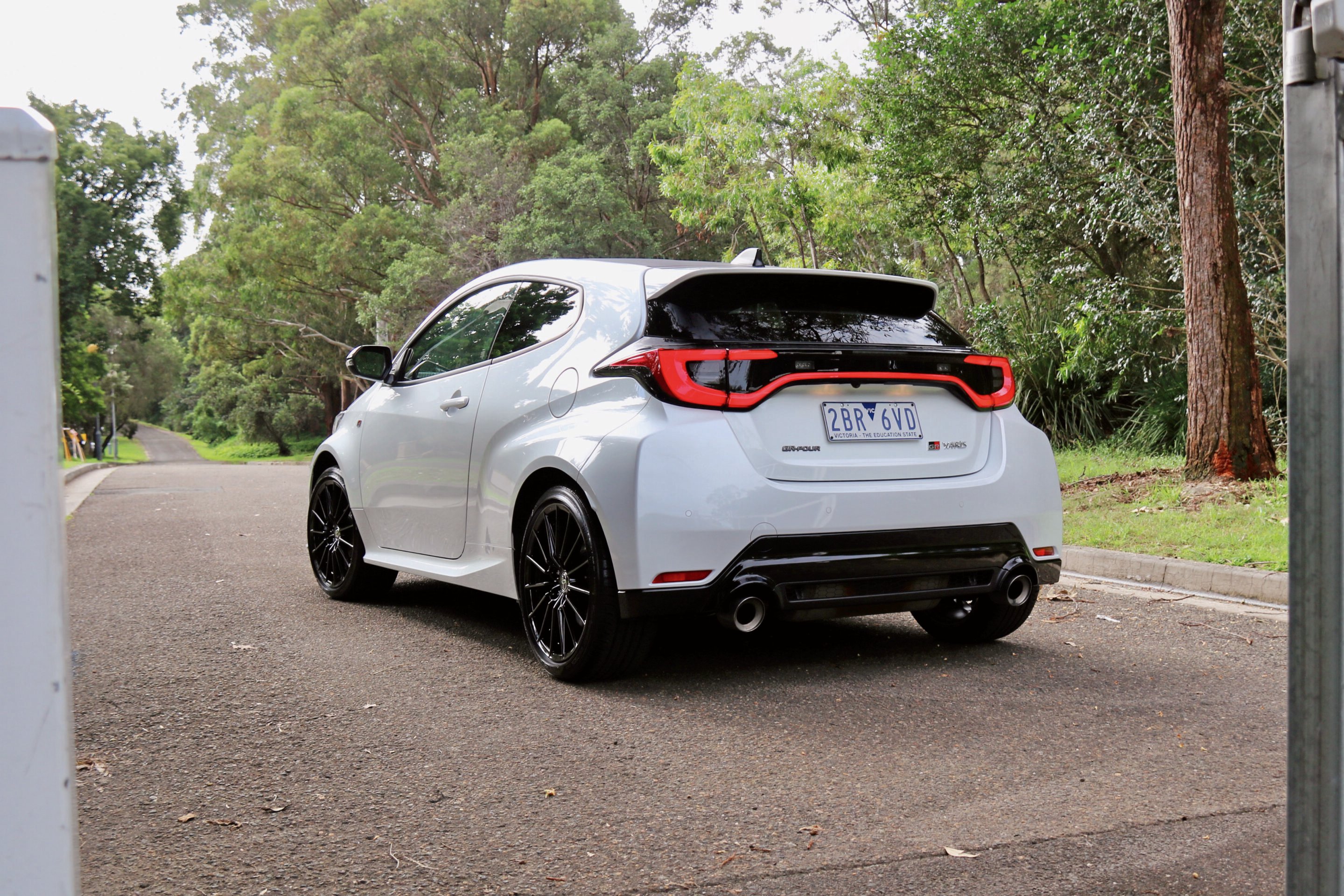
Now it’s time for an update, with the GR Yaris undergoing a thorough facelift to make it even sharper and more appealing. Has Toyota done enough to keep it relevant?
For starters, it costs more now: beginning at $55,490 plus on-road costs for the GT, with the upper-spec GTS with the new eight-speed automatic transmission hitting almost $70,000 drive away – or not far off double the cost of the first 1000 units in Australia.
Standard equipment on the GT includes 18-inch Enkei wheels, Dunlop tyres, a 12.3-inch digital driver’s display, an 8.0-inch touchscreen with wireless Apple CarPlay and Android Auto, heated sports front seats, an eight-speaker JBL sound system and active safety features like AEB, adaptive cruise control, lane keeping assistance and a reversing camera.
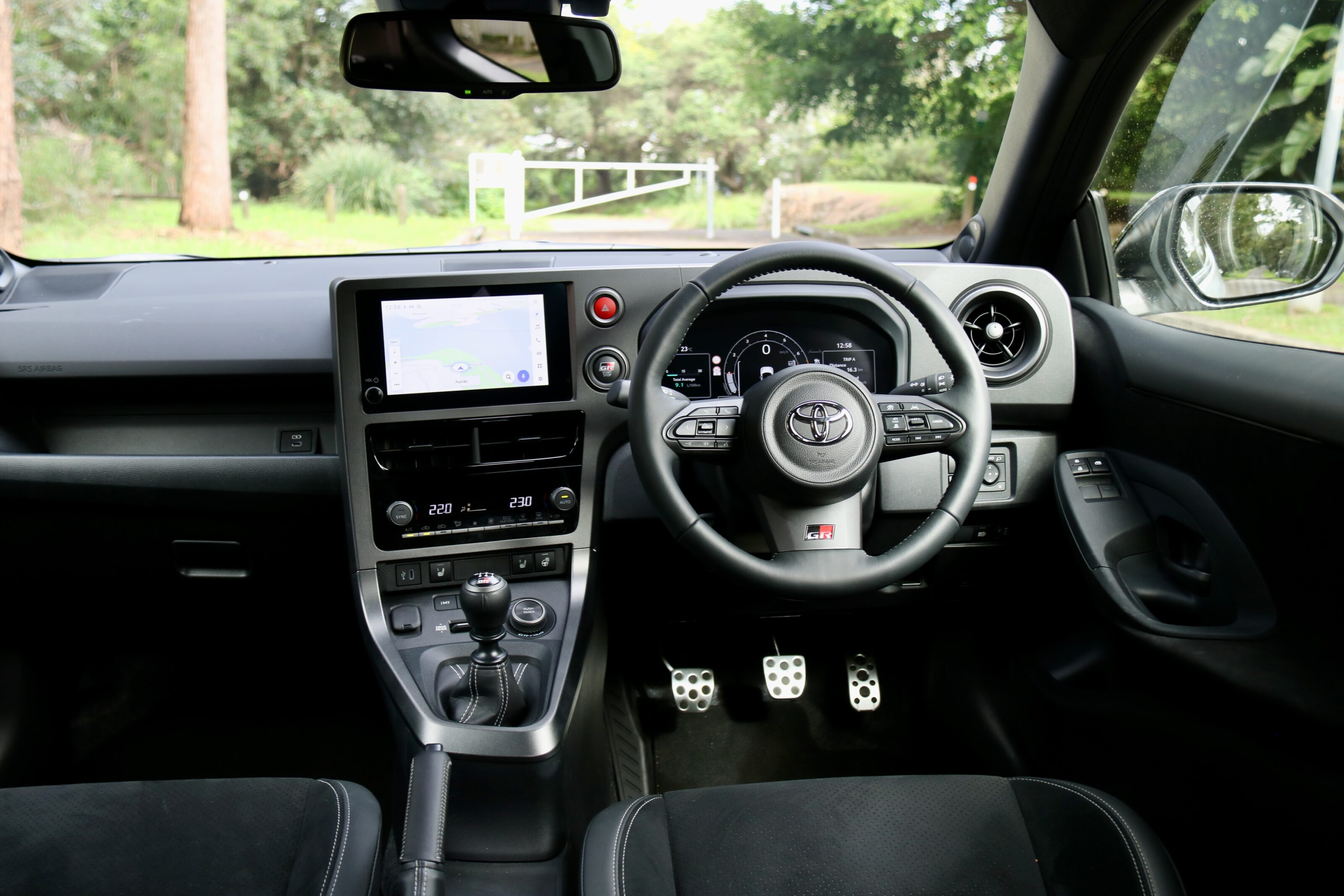
The $5000-more expensive GTS further adds 18-inch BBS wheels with Michelin tyres, front and rear Torsen limited-slip differentials, different suspension tuning, additional cooling, and an intercooler water spray function.
Changes to the pre-updated GR Yaris include higher outputs – 200kW/370Nm to 221kW/400Nm – a new clutch, a stiffer body, uprated suspension mounts and changes to the all-wheel drive system such as revised torque splitting so that it’s even sharper than before.
Toyota has fitted a new dashboard with a 50mm-lower dashboard panel, a 25mm-lower driver’s seat and a raised rear mirror for increased visibility. In this sense, the brand should be commended for not resting on its laurels and attempting to make one of the best hot hatches ever even better.
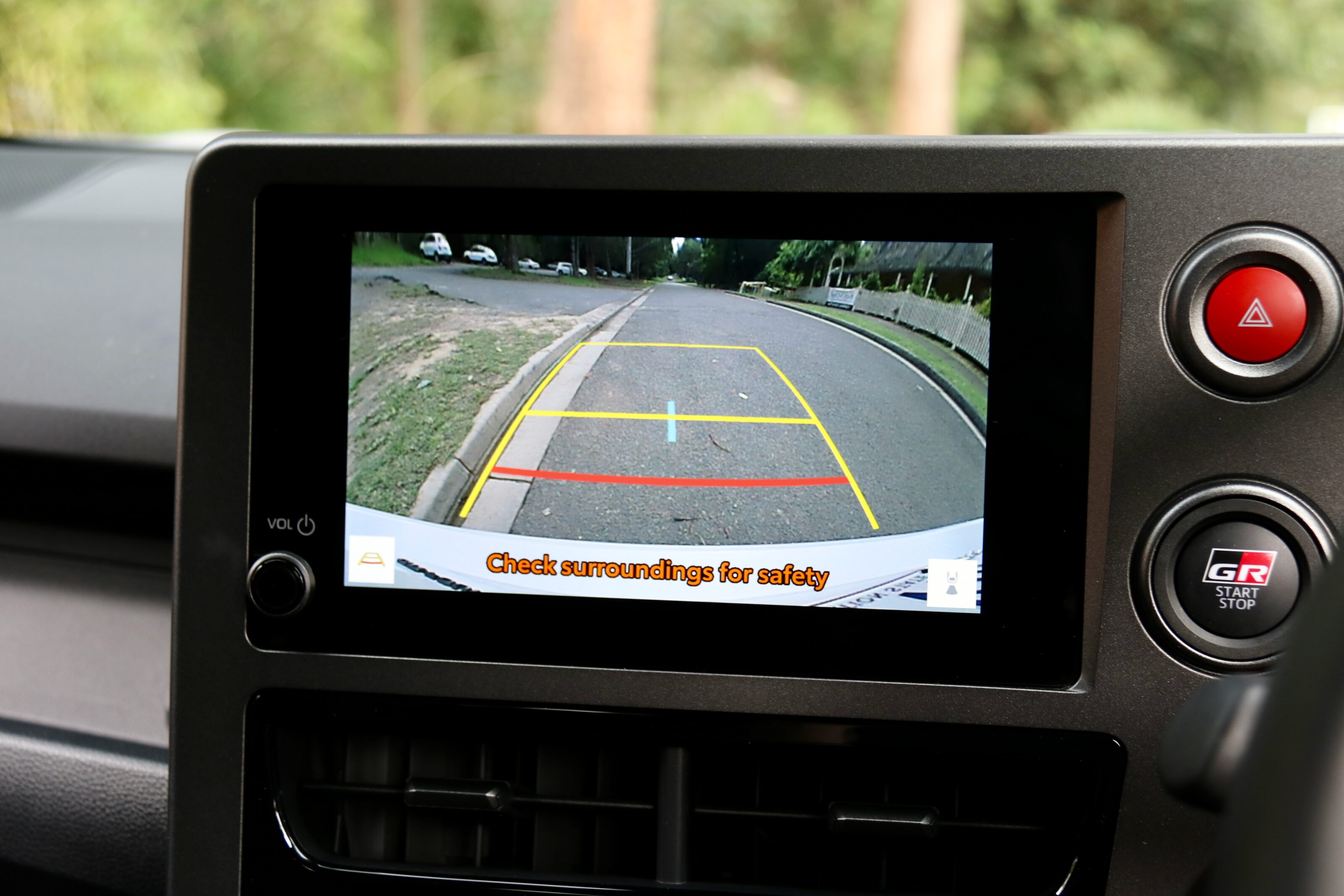
The new dashboard is made of mostly hard plastic but it is quite functional and even angled towards the driver. The new touchscreen is a big improvement on the previous 7.0-inch unit thanks to a brighter screen and new software. Plus the new 12.3-inch digital driver’s display is also much better versus the previous analogue set up. And while it’s a bit finicky to switch through the menus, the graphics are configurable and crisp.
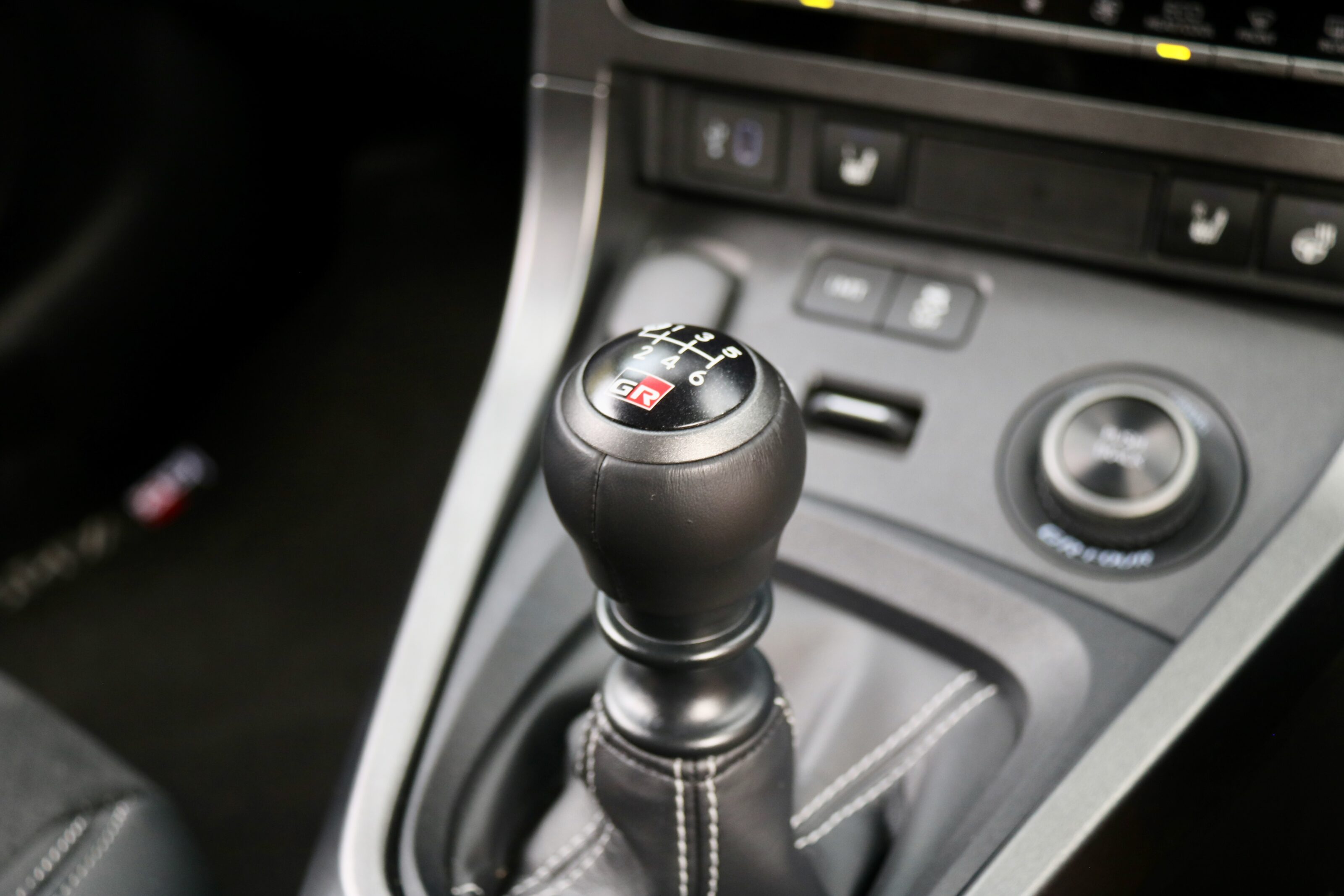
As before, the GR Yaris’ cabin is not that practical – there’s no centre armrest or closed storage, while the bottle holders in the doors and cup holders in the centre console are small. There is a tray with a USB-C port on the left-hand side of the dashboard, though it’s not rubberised. The back seat and the boot are also small, the latter with just 174L of space, though the seats fold flat if needed. The 12V battery is located underneath the boot floor, so there’s no spare wheel.
But it’s a rally car for the road, so who cares about the modest practicality when you’re testing its limits on a good piece of road, right? Even without the GTS’ trick LSDs, the GR Yaris is genuinely exciting to drive.
The improved clutch has made it easier to handle in traffic as well, though it still feels like a motorsports clutch with a largely on or off feeling. The gearbox is not Mazda sharp, but it’s effective, and the extra grunt may have only improved the 0-100km/h sprint by 0.1 seconds but you can feel it particularly in the mid-range.
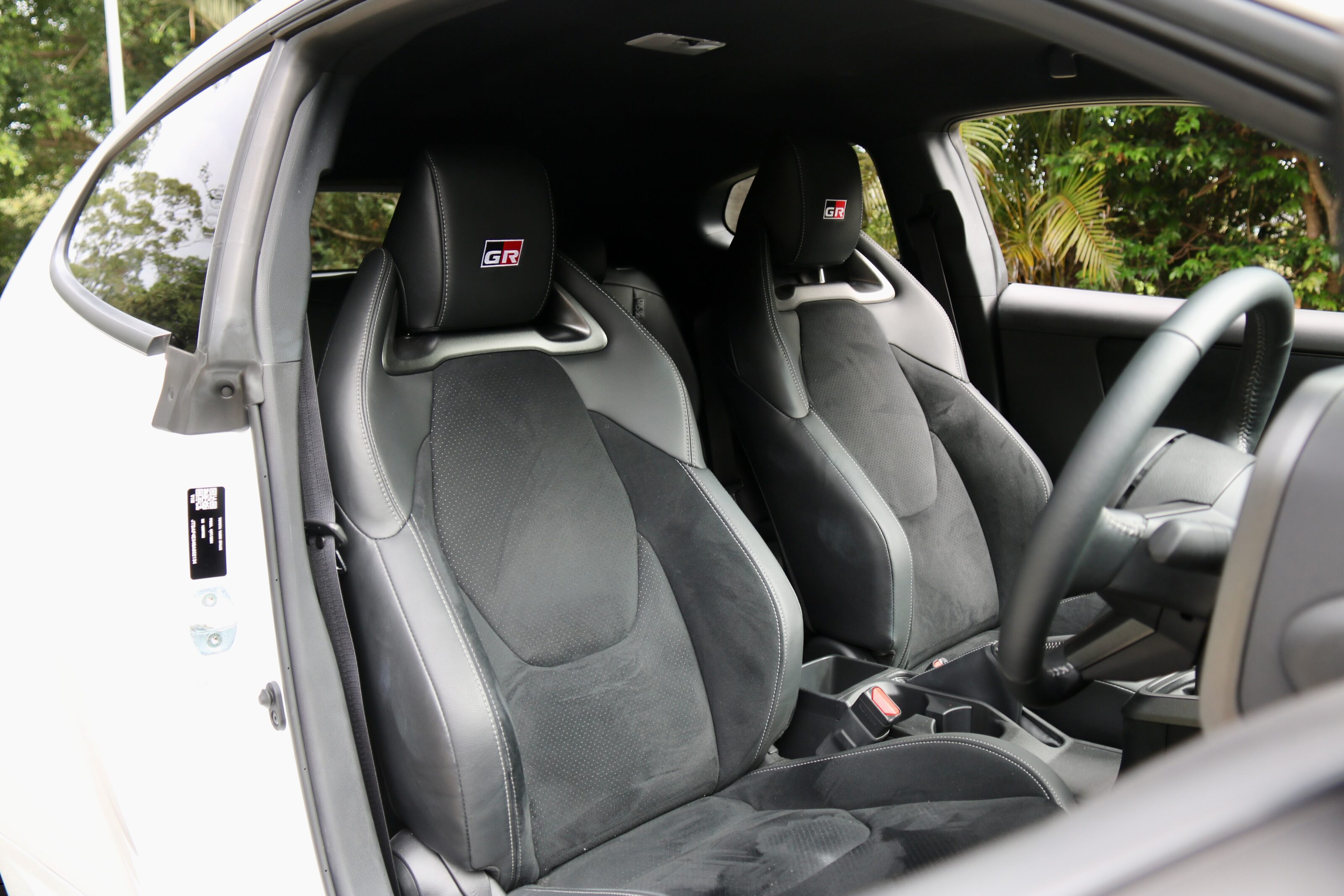
There’s plenty of induction noise and a lot of mechanical feel through the controls to remind you of its mission, while both steering and brake feel is sharp. The ride can also be sharp, but it’s still relatively comfortable for day-to-day use. The handling? Sublime – it just grips and grips, and if you want more tail out action, switch the mode to Track and the rear now handles 70 per cent of the torque. It’s a very impressive car to drive.
Trust Toyota to save the day for the performance car… again. As before, the GR Yaris remains one of the most fun and engaging cars on the market but has been further improved. The revised cabin has made it easier to see out of, the handling is even better and thanks to more grunt, it’s even faster as well.
It’s still not that practical and it’s expensive to run, but when you’re on a twisty bit of road, all is forgiven. That’s only the GT as well, with the more focused GTS likely even better. If you’re looking for a go-fast way to spend $70,000, the GR Yaris should be your first stop.
Specifications
| Price | $55,490 plus on-road costs |
|---|---|
| Drivetrain | 1618cc turbo 4-cylinder petrol engine |
| Max outputs | 221kW/400Nm |
| Transmission | Six-speed manual, all-wheel drive |
| Fuel consumption (Claimed, as tested) | 8.2L/100km, 4.8L/100km |
| CO2 emissions | 186g/km |
| Dimensions | 3995mm long, 1805mm wide, 1455mm tall and 2560 mm wheelbase |
| Tare weight | 1275kg |
| Boot | 174L |
| 0-100km/h, top speed | 5.1 seconds, 230km/h |
| Warranty | 5-year/unlimited km, 5-year/100,000km, service cost: $4240 ($848 per year) |
This article originally appeared in the June 2025 issue of Wheels magazine. Subscribe here.
Honda has announced that it will be launching 13 new hybrid models between 2027 and 2030 powered by a new range of hybrid drivetrains that it says will be joined to the world’s “most efficient” ICE engines. Lacklustre global EV sales are the reason behind the move, with the new hybrid drivetrains to aid the company in navigating the transitional period until EVs grow again in popularity.
Honda is yet to announce which will be the first products to receive its next generation of hybrid products, but has confirmed that new 1.5-litre and 2.0-litre petrol engines are in development to form part of the new drivetrains.
The 1.5-litre hybrid will provide peak torque over a 40 per cent broader rev range than currently to maximise efficiency without compromising grunt. According to Honda, both engines will deliver the best thermal performance of any combustion engine on the market.
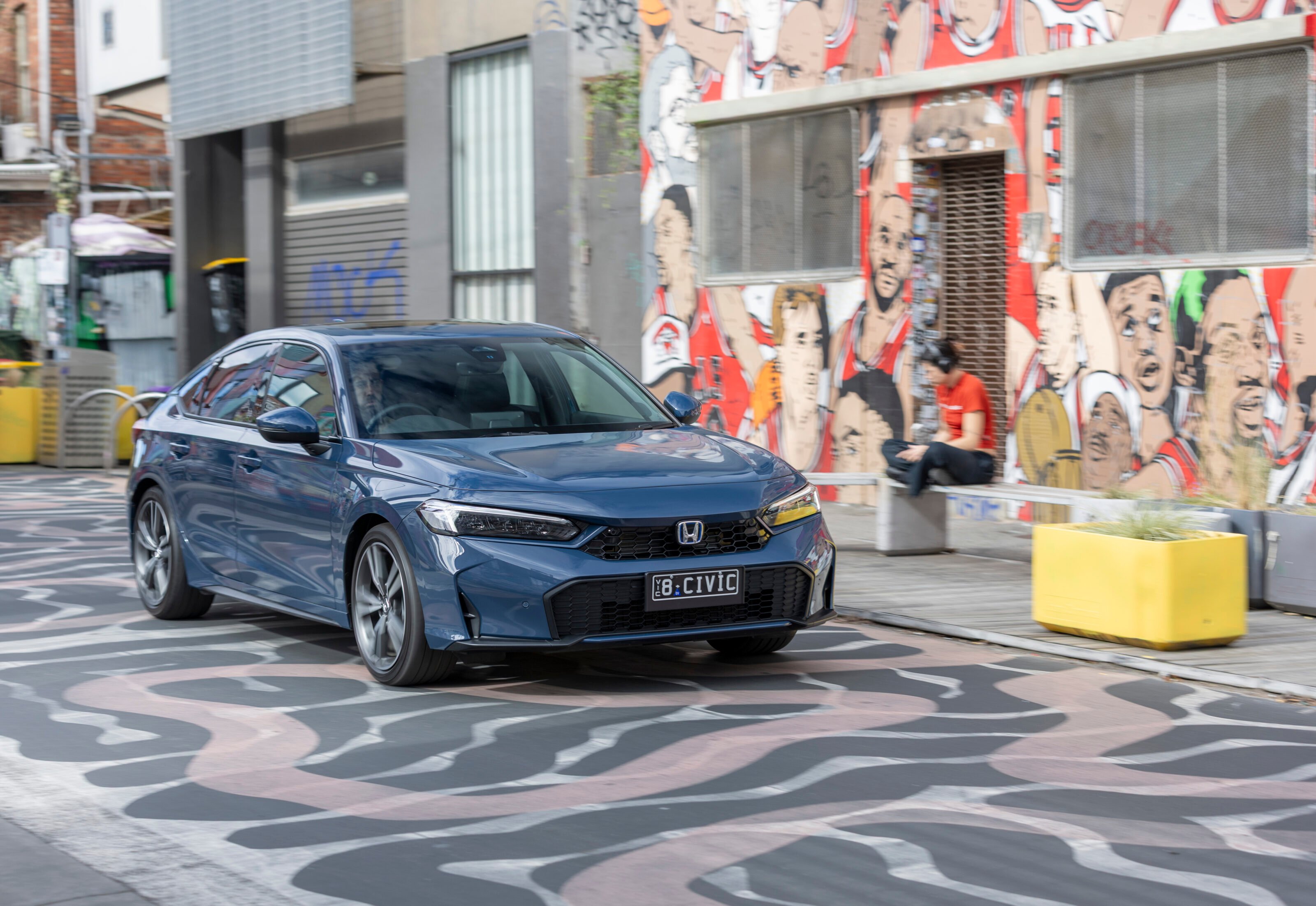
The company is targeting a 10 per cent increase in fuel economy over current models, pointing to sub-4.0L/100km combined consumption for the next generation of HR-V, Civic and Accord.
The next-generation of hybrid models will also sit on a new platform designed to improve driver engagement, comfort and safety improvements compared to the current platforms. A weight saving of up to 90kg will accompany the next-generation of medium cars from the brand, while it’s also targeting big increases in cost cutting compared to current models. For example, the new hybrid powertrains will be reportedly 30 per cent cheaper to produce than the current models.
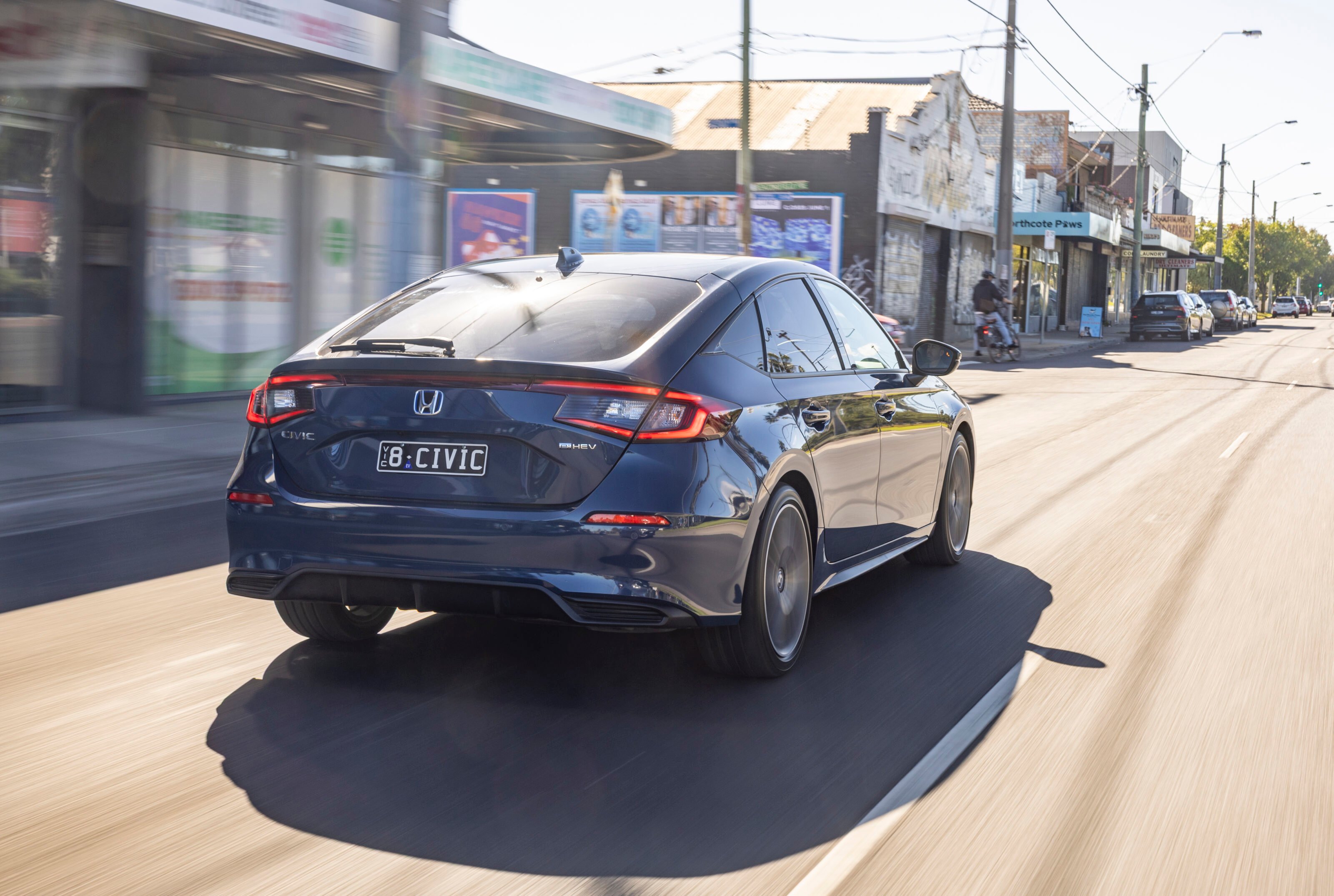
Currently, the company sells hybrid versions of the HR-V, ZR-V, CR-V, Accord and Civic in Australia, with hybrid cars such as the Jazz/Fit hatchback, Odyssey, Step Wgn and Freed MPVs also available overseas.
The first of the new range of Honda hybrid models will reportedly arrive in 2027, with Australian details yet to be announced.
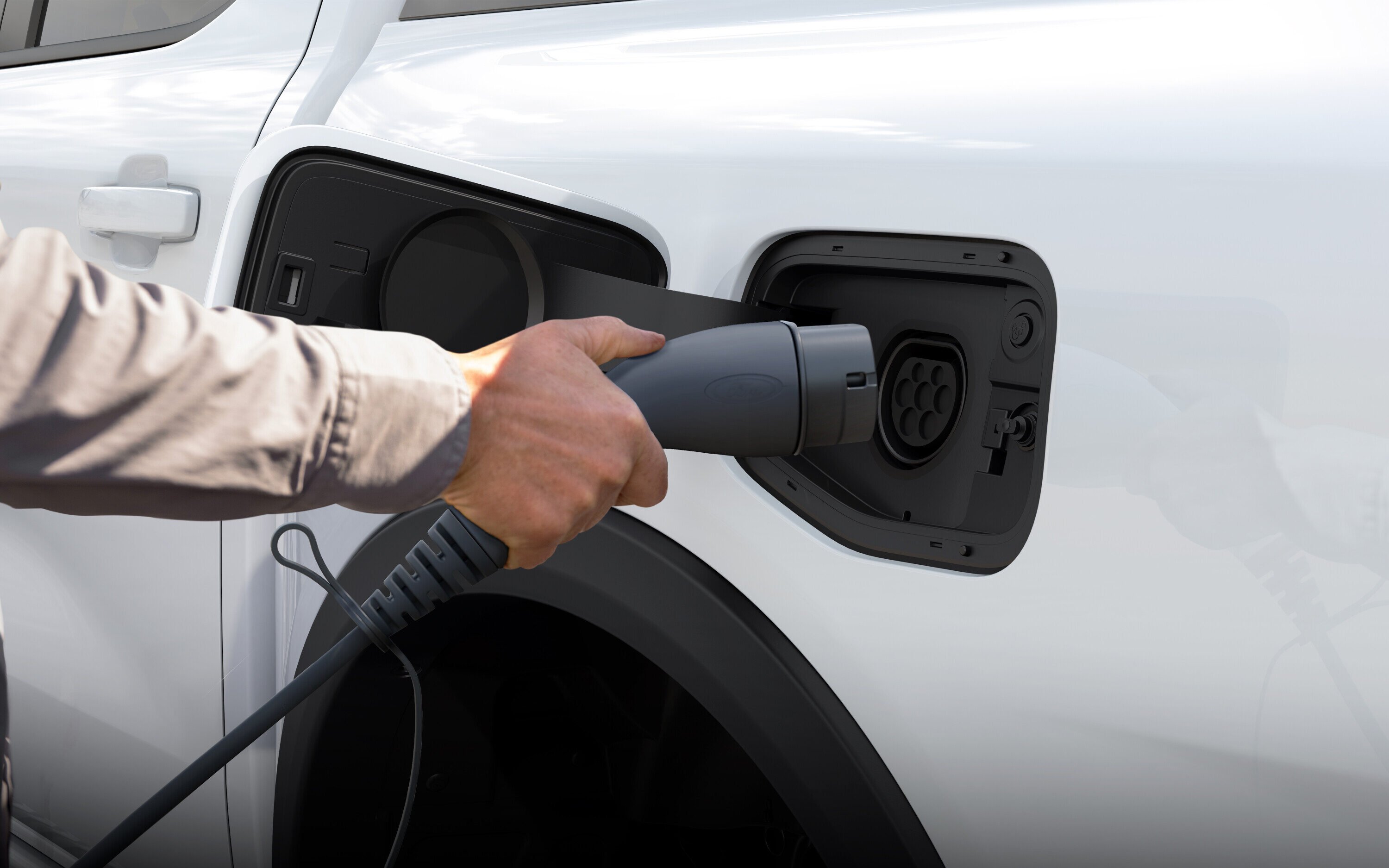
Australians insuring electric vehicles continue to be slugged with higher premiums according to new research by Compare the Market showing premiums for some popular models can be north of $3000.
Quoting comprehensive car insurance policies for 20 popular and notable hybrid and electric vehicles across 11 well-known insurance brands and six underwriters, a full EV was quoted to cost $2,134 on average to comprehensively insure, while hybrid and plug-in hybrid EVs were quoted to cost $1,649 on average.
A range of factors influence car insurance premiums, including the rising the cost of repairs due to pricier parts and labour – which account for around 60 per cent of claims expenses, according to the Insurance Council of Australia.
Average quoted BEV insurance premiums:
| Tesla Model Y RWD | $3,109.81 |
|---|---|
| Tesla Model 3 RWD | $3,334.04 |
| MG 4 Excite 51 | $1,645.74 |
| Kia EV5 Air Standard Range | $1,871.13 |
| BYD Sealion 7 Premium | $1,769.96 |
| BYD Dolphin Essential | $1,425.13 |
| Zeekr X RWD | $2,016.37 |
| Xpeng G6 Standard Range | $1,606.15 |
| Toyota bZ4X 2WD | $1,589.53 |
| BMW iX1 eDrive20 | $2,974.69 |
| All model average | $2,134.26 |
Average quoted HEV/PHEV insurance premiums:
| Toyota RAV4 GX 2WD Hybrid | $1,772.86 |
|---|---|
| Toyota Corolla Ascent Sport Hybrid | $1,587.40 |
| Toyota Corolla Cross GX Hybrid | $1,479.85 |
| Hyundai Kona Hybrid | $1,471.19 |
| Hyundai Tucson Hybrid | $1,560.53 |
| Toyota Camry Ascent Hybrid | $1,819.18 |
| BYD Shark 6 Premium | $2,071.36 |
| BYD Sealion 6 | $1,473.21 |
| GWM Haval H6 Lux Hybrid | $1,643.76 |
| MG ZS Excite Hybrid+ | $1,619.98 |
| All model average | $1,649.93 |
Compare the Market’s Economic Director David Koch said higher premiums could be prohibitive for aspiring EV owners but urged motorists not to be disheartened before running a comparison.
“What we found was a shocking difference between quote from different insurers that could mean some motorists end up paying hundreds – sometimes thousands – more,” Mr Koch said. “Hybrids were considerably cheaper to insure than a full EV on average, despite featuring both electric and combustion engine components.”
To find out more about the survey, head to the Compare the Market website .
Chinese EV maker XPeng has reminded buyers about its June 30 deadline for those wanting to secure a 10-year extended warranty with the purchase of a new XPeng.
Available for all XPeng orders placed by June 30, the five-year vehicle warranty extension is added to the standard five-year warranty for 10 years in total up to 220,000km. The vehicle warranty also covers the battery for 10 years, which is a two-year extension on the standard eight-year warranty.
According to XPeng, the warranty extension is valued at a total of $4980, while fleet, corporate and government customers are excluded from the promotion.
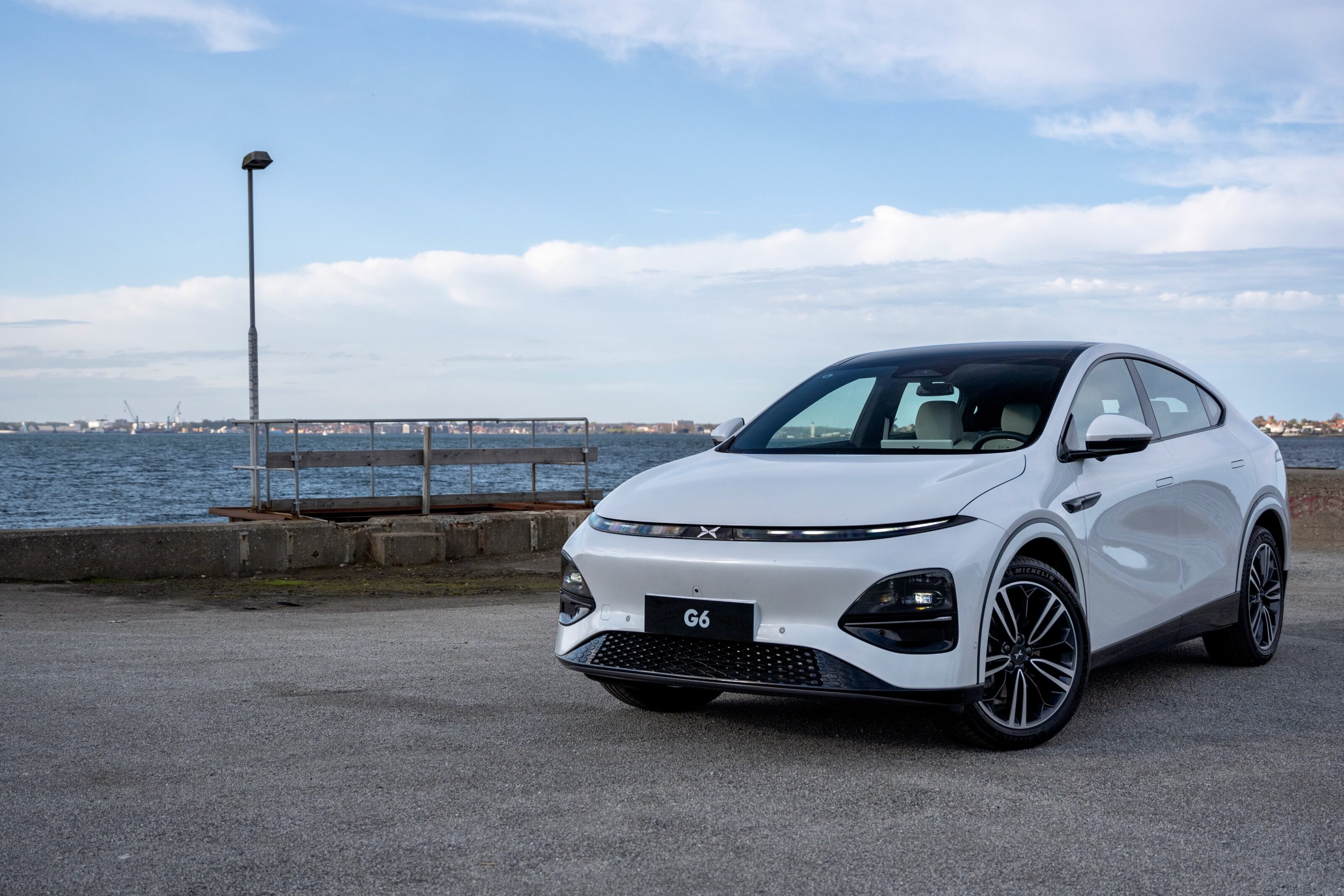
The sole product in local XPeng showrooms so far is the G6 electric mid-size SUV, which is priced from $54,800 plus on-road costs. It’s available in two forms: Standard Range and Extended Range, with up to 570km of WLTP-rated driving range for the Extended Range model and its 87.5kWh NMC battery.
The G6 Standard Range uses a 190kW/440Nm rear-mounted motor for a 6.6-second 0-100km/h sprint time, while the Extended Range adds 20kW more power for a quicker 6.2-second sprint.
Standard features on both XPeng G6 models include 20-inch wheels, a panoramic glass roof, heated and ventilated front seats, vehicle-to-load (V2L) functionality, a full suite of active safety features an an 800V architecture allowing for charging at up to 280kW.
XPeng G6 pricing (plus on-road costs):
| Standard Range | $54,800 |
|---|---|
| Extended Range | $59,800 |
The XPeng G6 is in local XPeng showrooms now and the 10-year warranty offer expires on June
30.
