
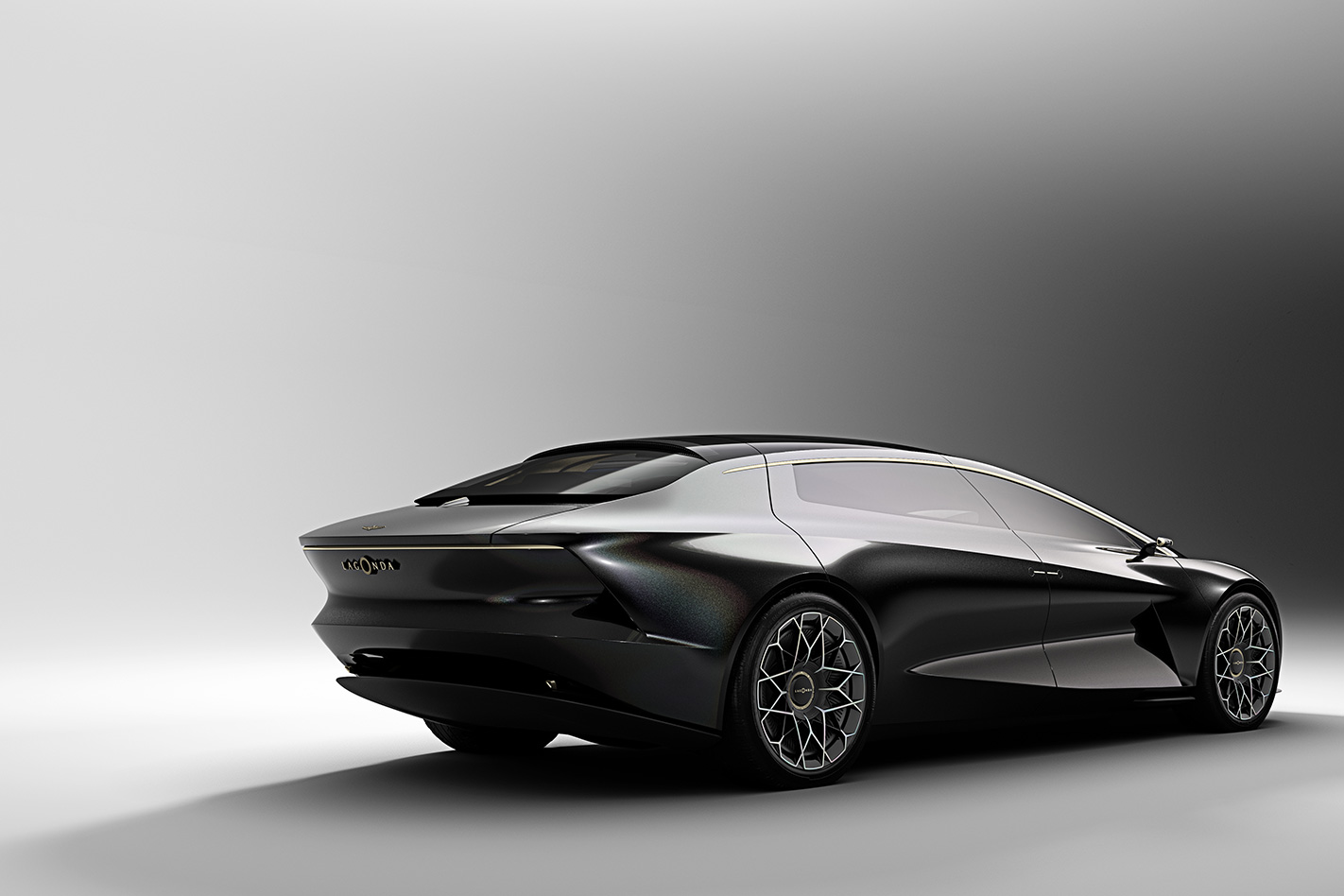
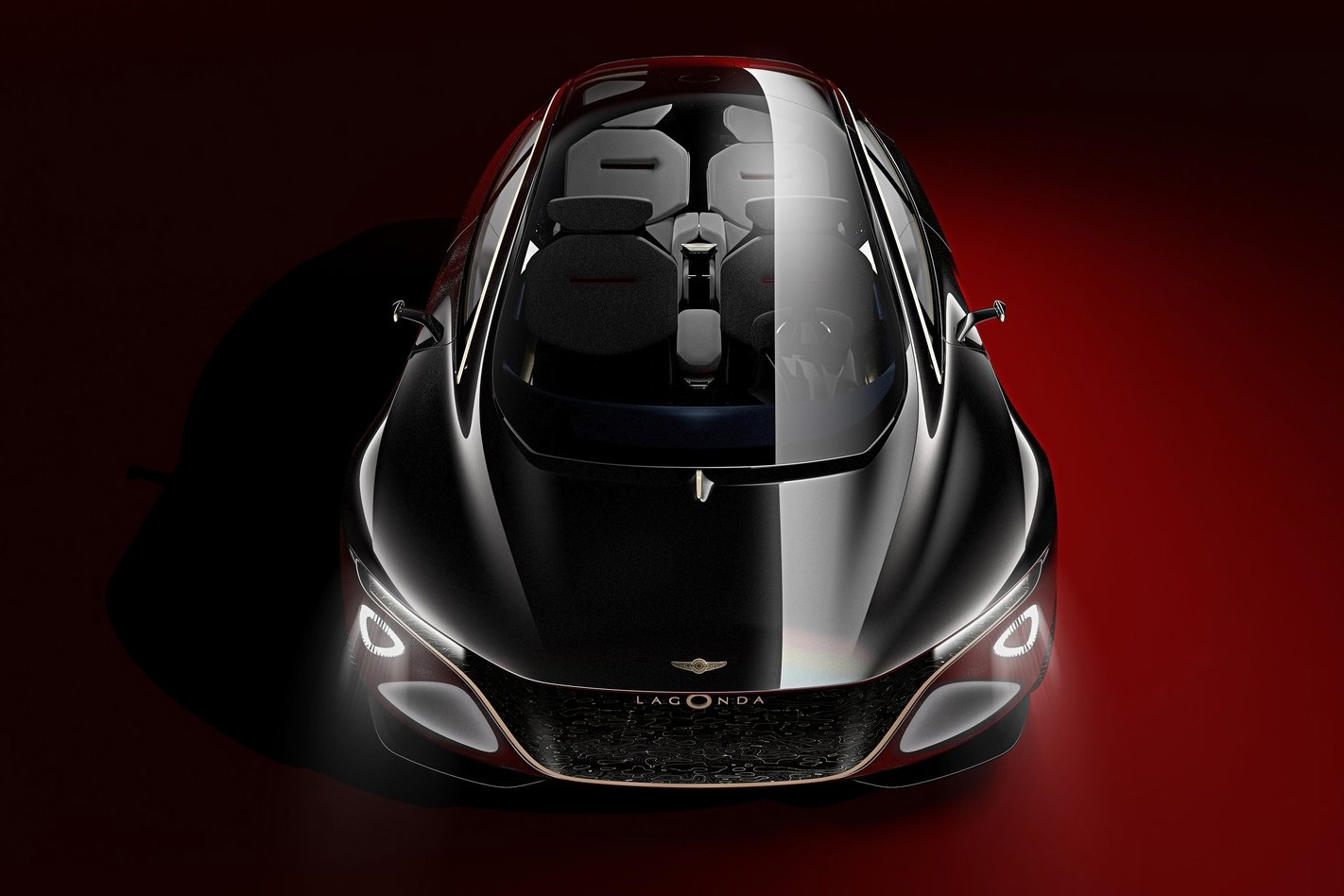
ASTON Martin has dumped what it calls “horse and carriage design”, revealing a Lagonda-badged, battery-powered electric saloon that will shape future products from as early as 2021.
The Lagonda Vision Concept, unveiled at Geneva overnight, is the start of what the British luxury marque says will be a “new range of state-of-the-art, emission-free luxury vehicles”.
“Lagonda aims to be the world’s first zero emission luxury brand. It will confound traditional thinking and take full advantage of the latest advances in electrification and autonomous driving technologies, which amount to the biggest revolution in land-bound transportation since the invention of the car,” it said.
Part of that design includes a rear-seat setup that looks a little like a therapist’s room, featuring a jump seat next to an extended banana lounge-like recliner surrounded by acres of space.
“Because the majority of the car’s structural strength comes through its floor, it has been possible to use apertures in the body far larger than would be wise in conventional cars,” Aston said.
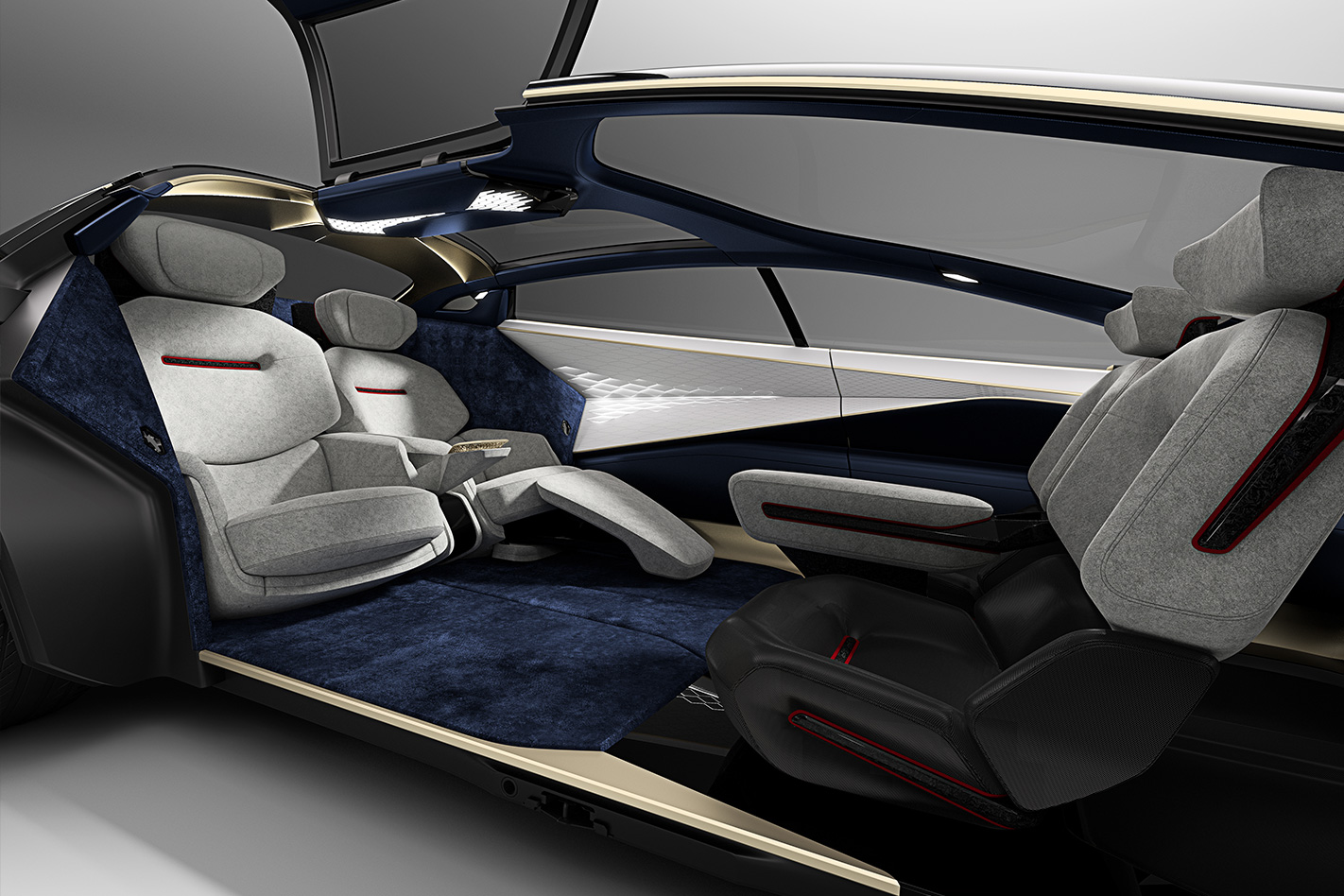
“Similarly, the front seats are not mounted on conventional runners which always interfere with where those in the back would like to place their feet, but instead sit on cantilevered arms extending from the floor outside the seat frame providing a completely uncluttered floor area. And the seats are more like armchairs, with heavily bolstered arms because, given the choice people always use arms to lower and raise themselves from chairs.”
The lack of a conventional powertrain has been a real positive for Aston Martin.
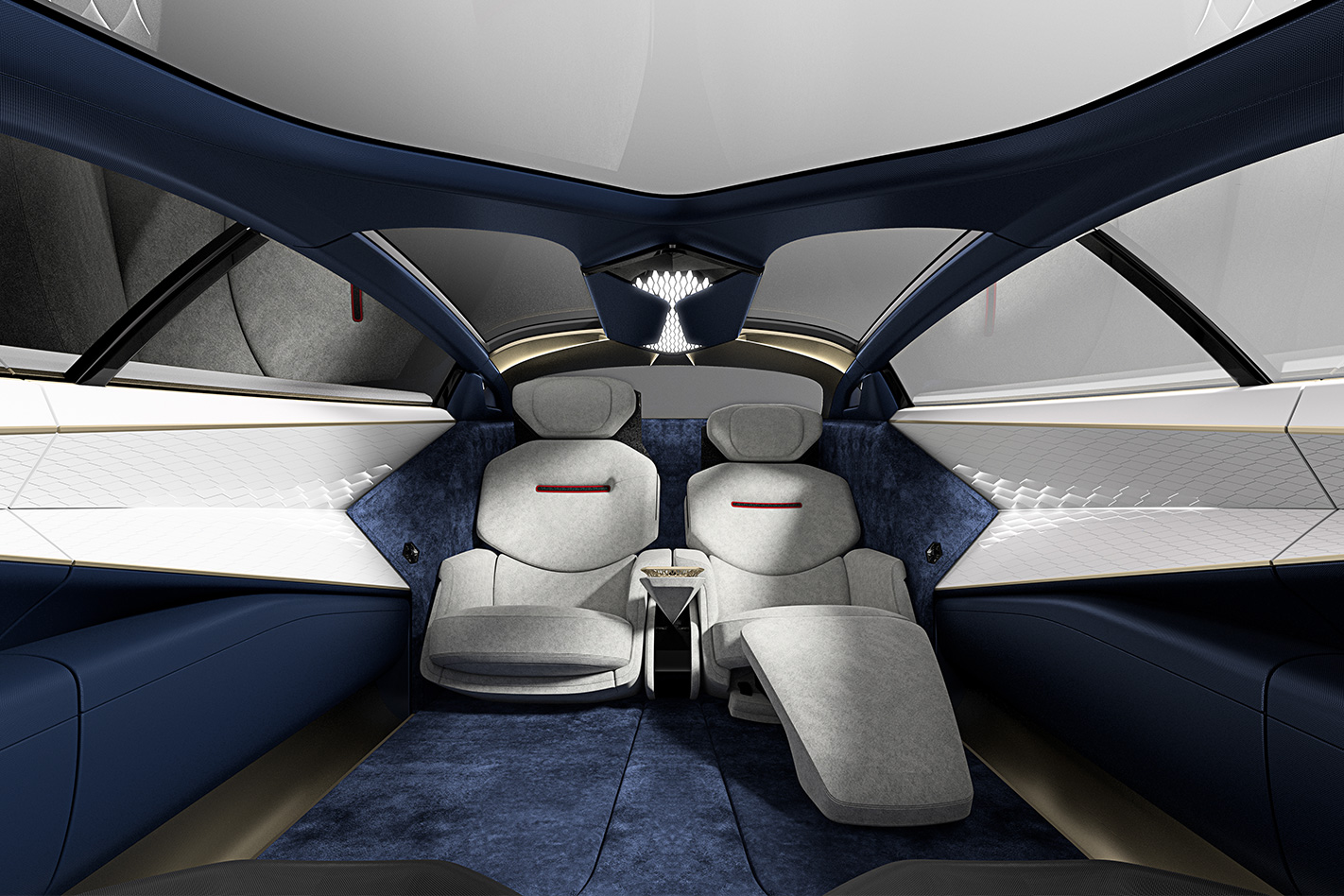
The concept is what Aston claims is a level four autonomous car, meaning that it is able to handle most of the driving itself. There’s still a traditional steering wheel for the driver, although it’s more of a hexagonal blob that looks a bit like a luxury version of a Formula 1 tiller. But if you’d prefer the Lagonda to take care of the daily commute, both front seats can swivel around to face the therapy session in the back. Oh, and if you’re driving from Britain to the Continent, the steering wheel can swap sides.
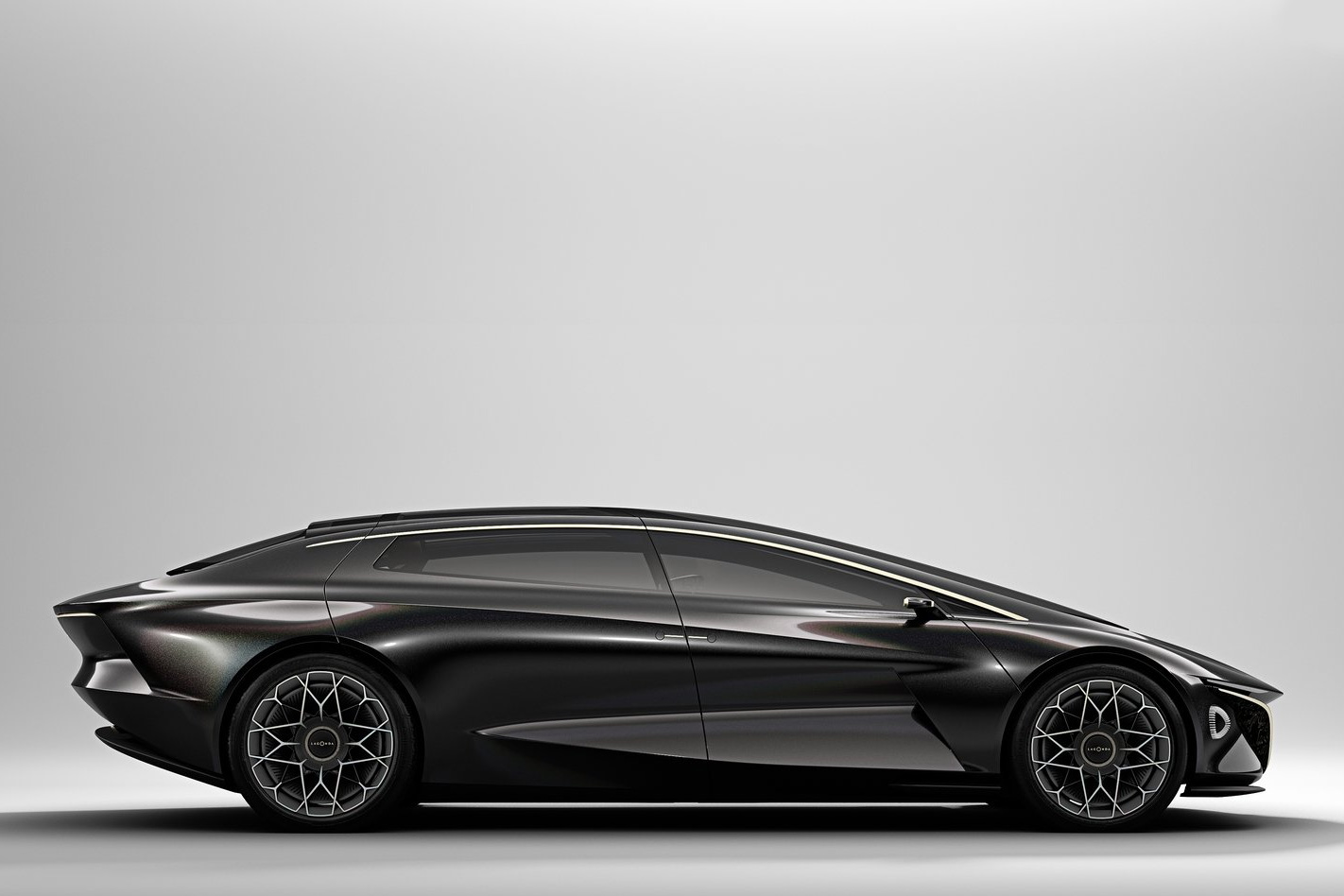
“The Lagonda Vision Concept provides the first clues to the Lagonda models of the future. It embodies the vision to be a standalone marque that will break through long-standing boundaries and transform the way people perceive luxury transport,” it said. “And as with the concept, this will be done through the use of cutting-edge design, creating technologically radical, visually spectacular, thoroughly modern and ultra-luxurious vehicles that will overturn conventional thinking.”
In other words, there’s much, much more yet to come out of Gaydon.
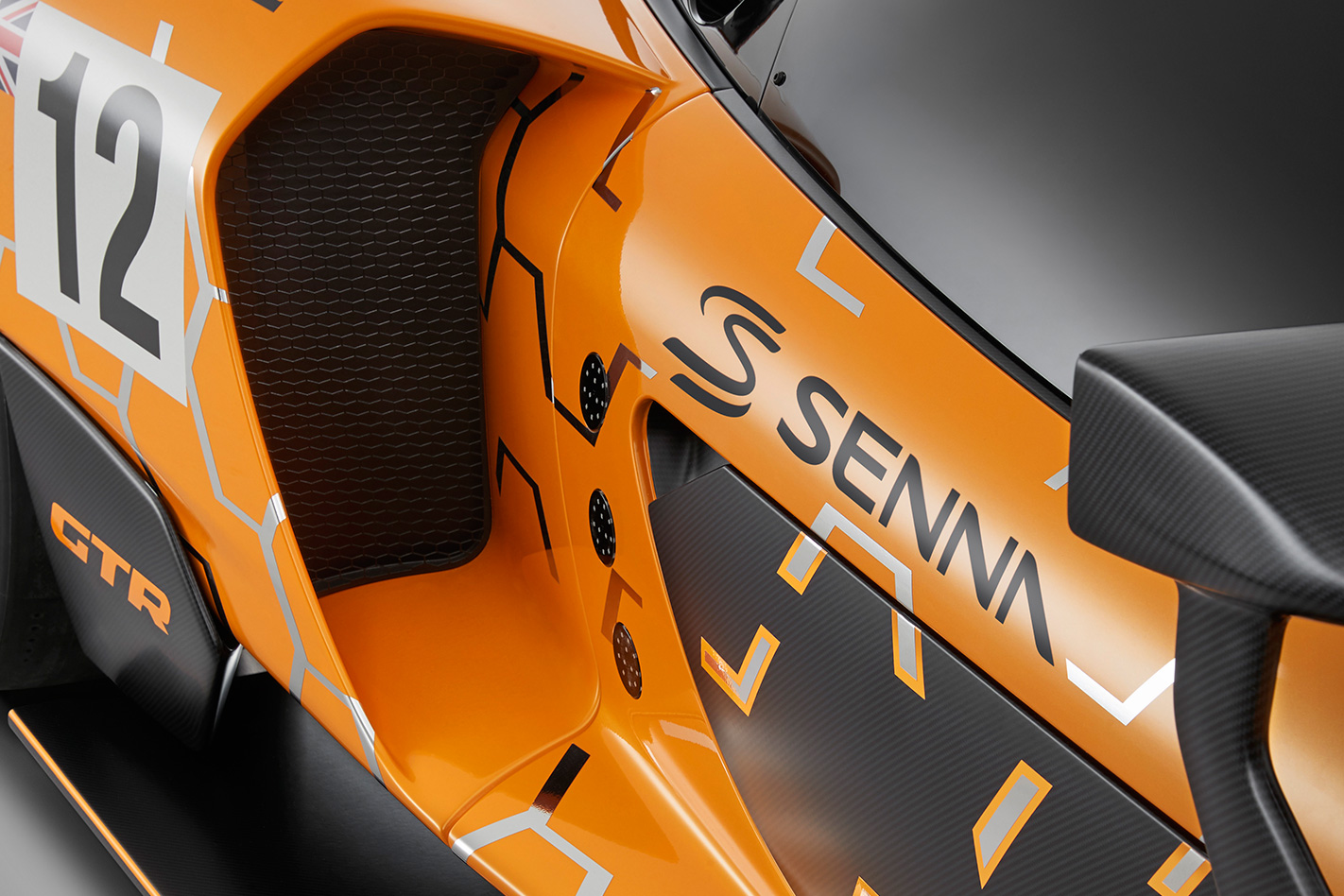
THE FASTEST thing with four wheels and a roof to roll out of Woking, the McLaren P1 GTR, has just been usurped. Say olá to the McLaren Senna GTR.
While the road-faring McLaren Senna could hypothetically attack Eau Rouge in the Belgian countryside as happily as it will ferry you to the shops, the Senna GTR will do no such thing.
It was built for one purpose – going fast – and it intends to achieve it with unrelenting, uncompromising efficiency and brutality.
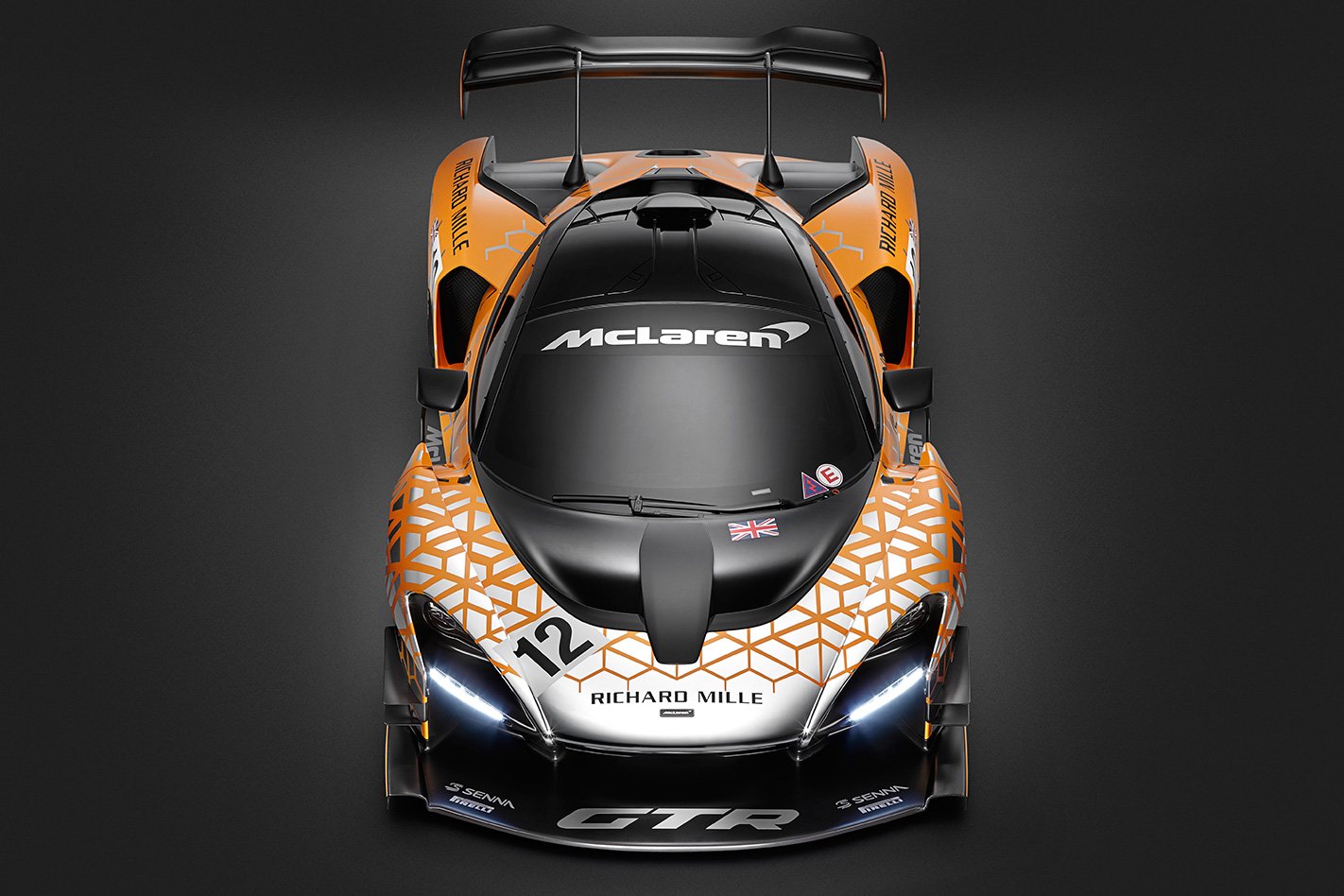
Power and torque have been lifted, with the 4.0-litre twin-turbo V8 tweaked to produce “at least” 606kW (previously 588kW) – no torque figure has been released.
But those numbers pale in comparison to the GTR’s bewinged party trick, an ability to post the fastest lap times of any McLaren that isn’t lining up for grands prix around the world, thanks to bodywork that can generate up to a tonne of downforce.
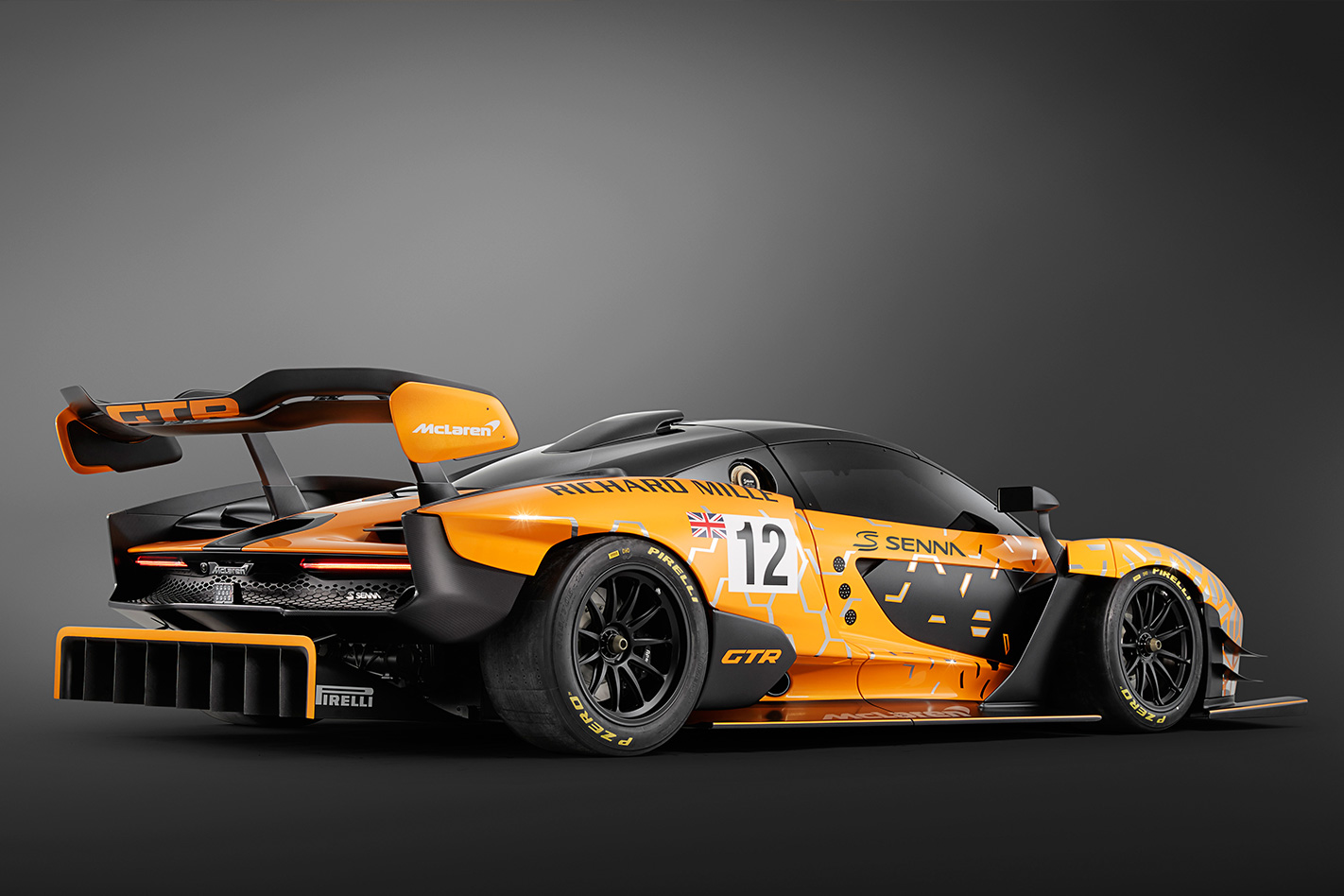
The Senna GTR has a wider track, as well as new fenders front and rear when compared to its road-going sibling.
Almost unbelievably, McLaren stated the car revealed at Geneva is not the final version of the Senna GTR, with more updates planned before going into production.
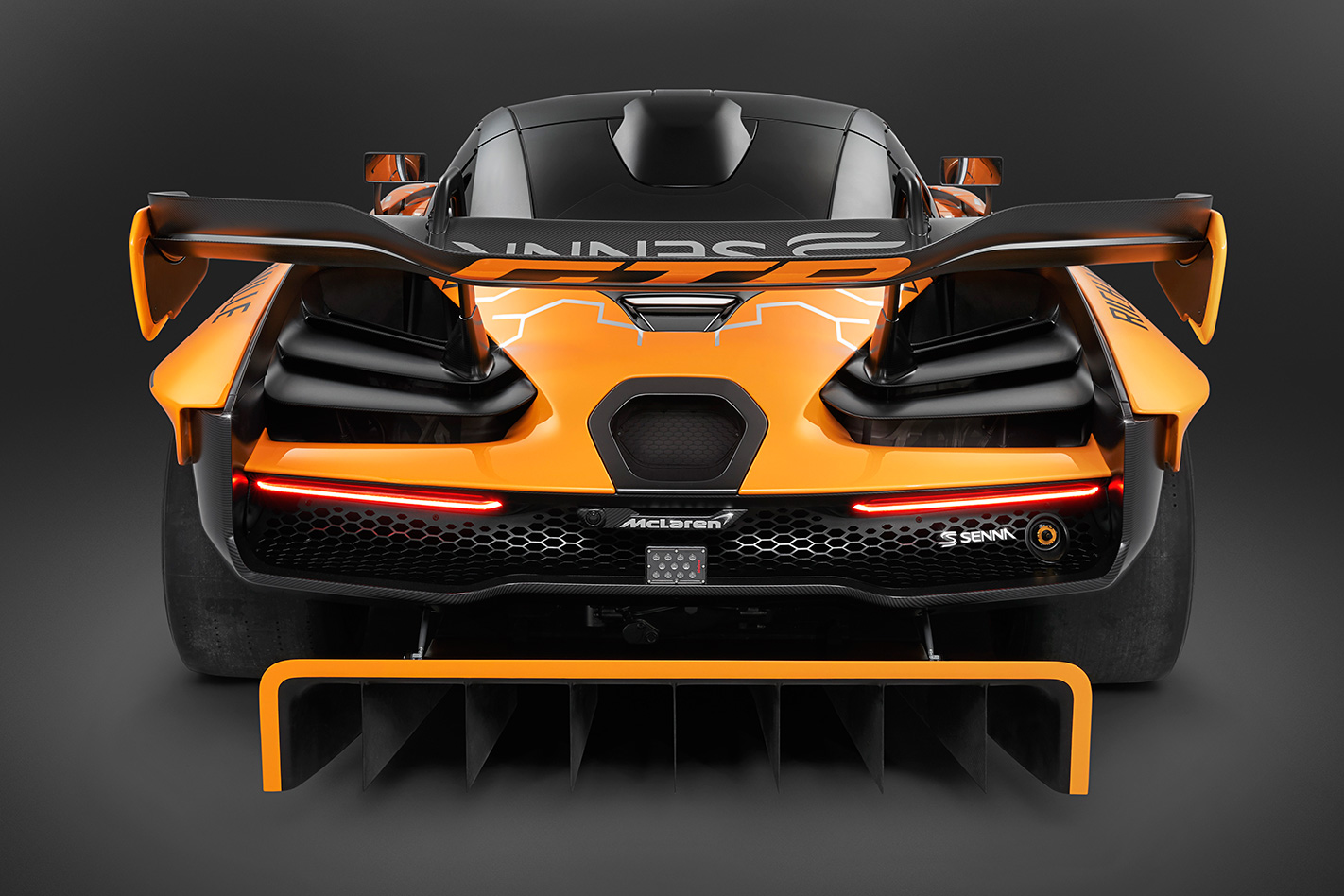
“The McLaren Senna GTR Concept unveiled in Geneva is not the finished article but it does give a clear indication of our thinking for the car, which promises to be the most extreme and exciting McLaren to drive for many years, if not ever.”
We’ve got a free biscuit for the first owner to take their Senna GTR to Lanzante and slap a number plate onto the bumper. Next stop, Nurburgring.
PUT it in your diaries. After years of drip-fed hints and rumours, AMG’s chief executive Tobias Moers has confirmed a 2020 date for its highly anticipated Mercedes-AMG GT Black Series model.
Moers dropped the news to Wheels and other Australian media following this week’s reveal of the AMG GT 4-Door Coupe at the Geneva Motor Show.
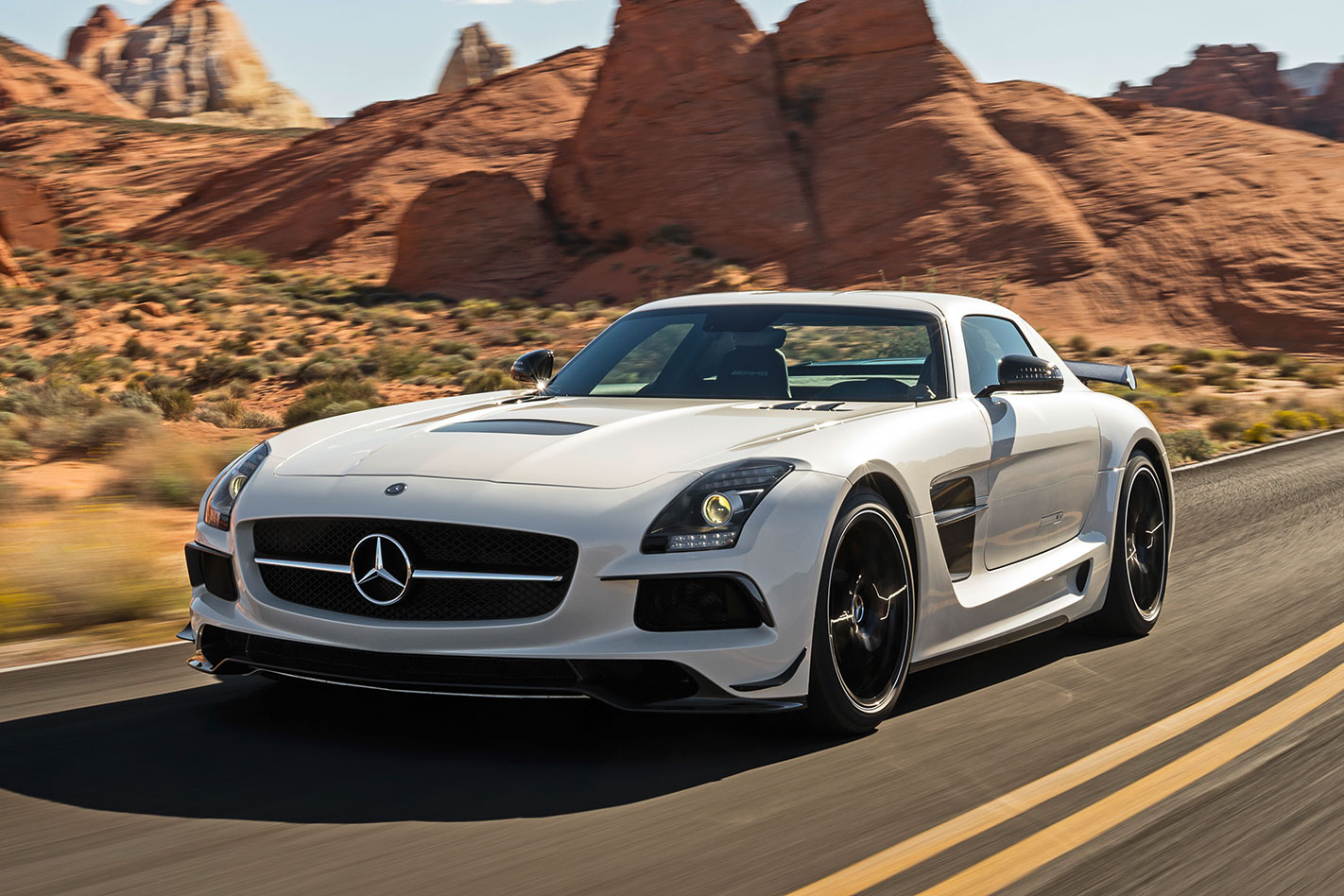
The sixth-ever Black Series model will be the swansong for the brand’s first-gen GT Coupe, which originally launched in 2014 and is expected to be replaced by a second-gen model in 2021.
No specific performance details were given, though in previous conversations about a potential GT Black Series, Moers has been keen to point out a need for a holistic approach to heightened dynamic performance, and not simply more power.
Moers himself has been spied testing camouflaged GT mules based on the existing GTR and featuring lightweight components including polycarbonate windows rather than conventional glass.
The current performance flagship of the two-door GT range is the GT R, which produces 430kW and 700Nm from AMG’s 4.0-litre twin-turbo V8. That same engine is available in various states of tune across other AMG models such as the 450kW/850Nm E63 S and the new GT63 S, which makes 470kW and 900Nm.
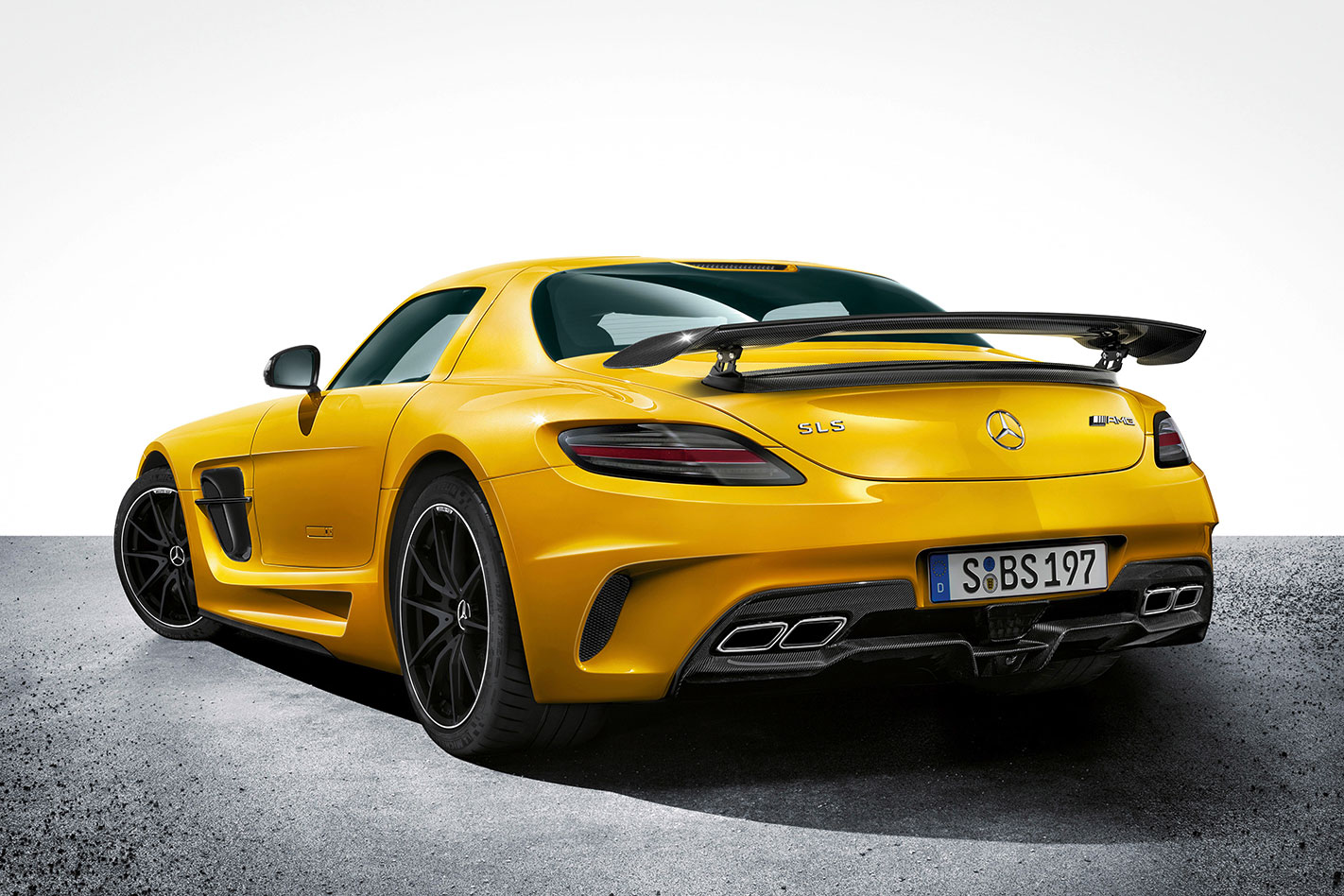
The 2020 Mercedes-AMG GT Black Series will join the SLK55, CLK63, SL65, C63 and SLS in the AMG Black Series family. All previous Black Series models have arrived at the end of their generation’s respective life-cycle, and all are two-door vehicles.
LAND ROVER has revealed a one-of-a-kind limited-edition Range Rover SV Coupe, which it hopes will “define a new genre” of SUV.
A joint venture between the Land Rover Design team and Special Vehicle Operations (the outfit responsible for all the customization on high-end vehicles), the SV Coupe is designed to bring together the allure of a two-door coupe design with a luxury full-size SUV.
While it looks to the future, the SV Coupe also harks back to the brand’s past, with the two-door frame harking back to the original 1970 Range Rover.
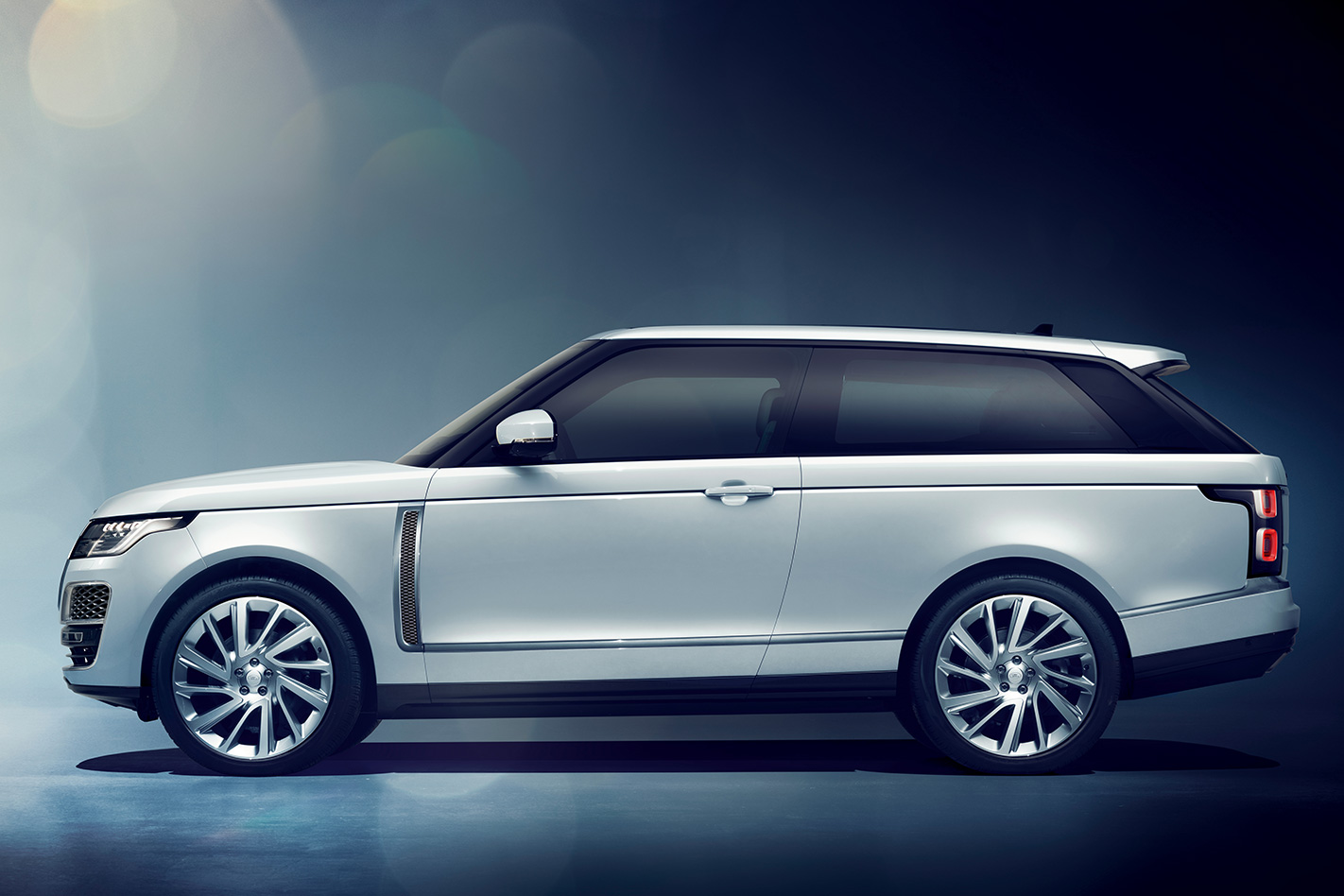
It’s also the first Range Rover to roll on 23-inch wheels housing huge 380mm and 365mm ventilated disks to help the two-door beast to a standstill.
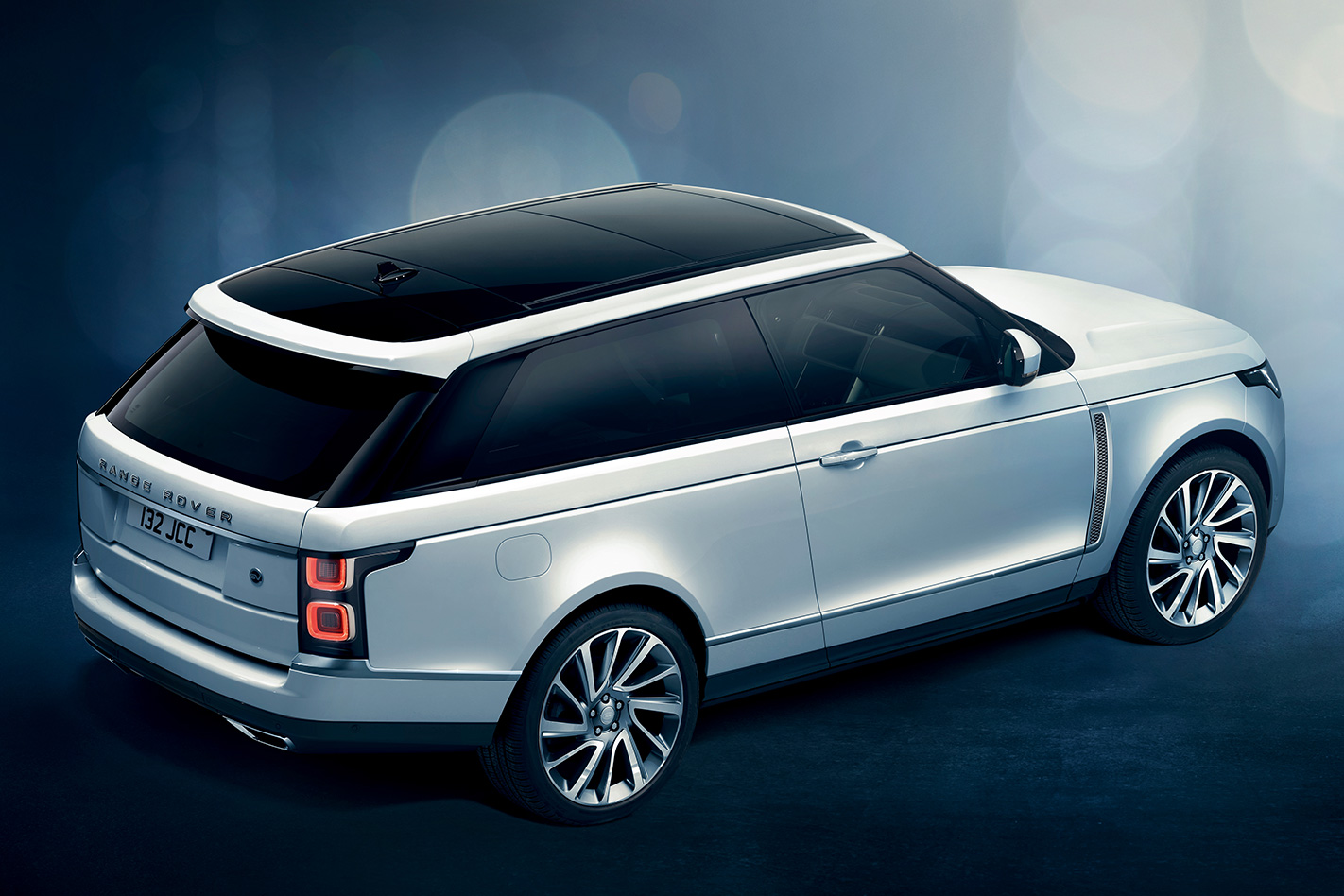
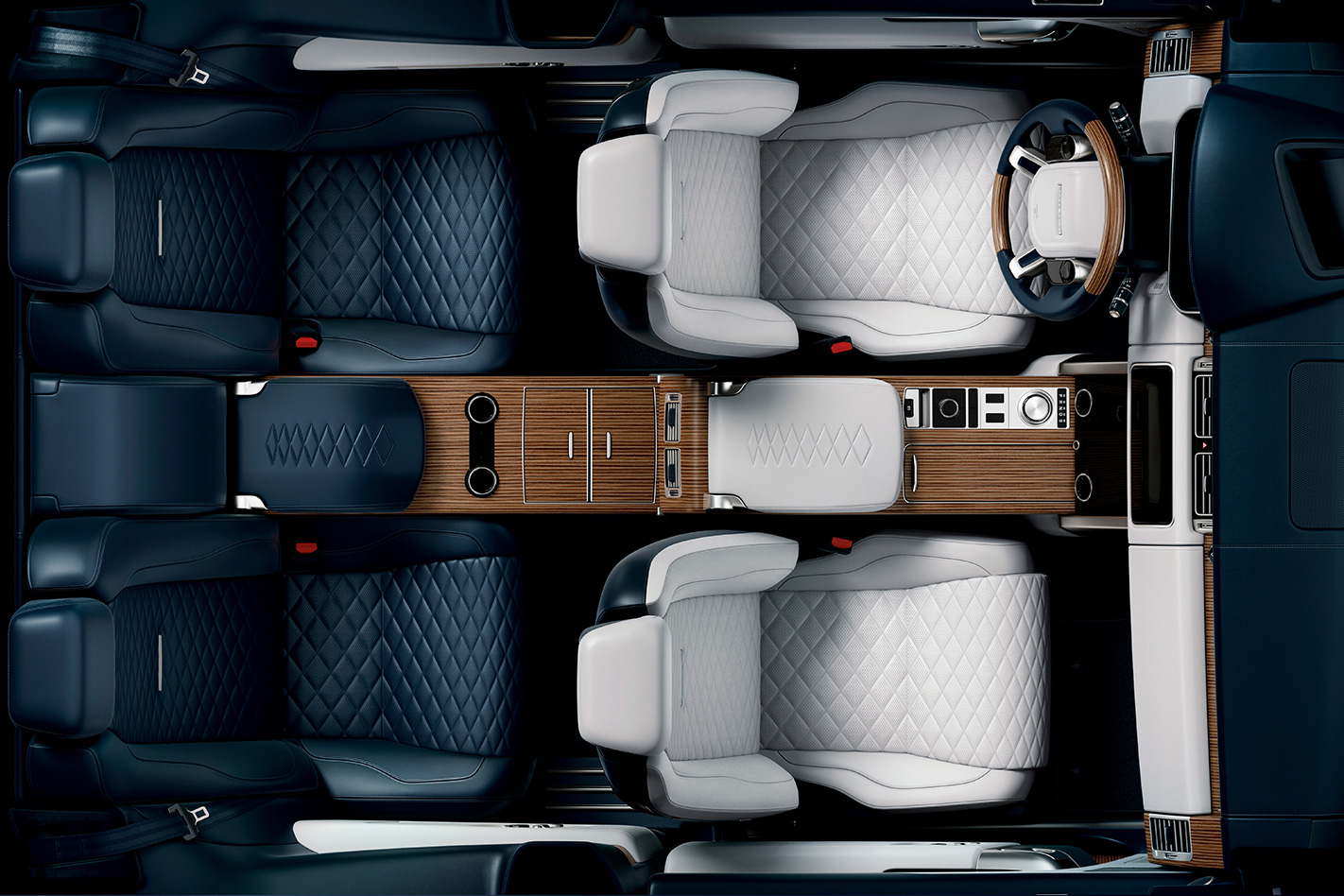
The interior features a plethora of finely crafted wood, leather and polished metal, which would be equally at home in Ron Burgundy’s apartment. Combinations of walnut and sycamore adorn the steering wheel, centre console and doors, while Range Rover assures us the seats utilise only the finest, semi-aniline leather from a single tannery established in 1905.
The limited run of 999 SV Coupe’s are anticipated to go on sale in Australia from the Q1, 2019 with pricing to be announced shortly.
Four doors on an AMG GT? That’s right, you’re not seeing things.
The newest addition to the AMG arsenal in the fight against the likes of the Panamera is this, the AMG GT 4-Door Coupe.
Starting with the GT53 and finishing with the GT63 S variant, the GT 4-Door’s outputs range from 320kW to 470kW, all employing 4Matic+ AWD.
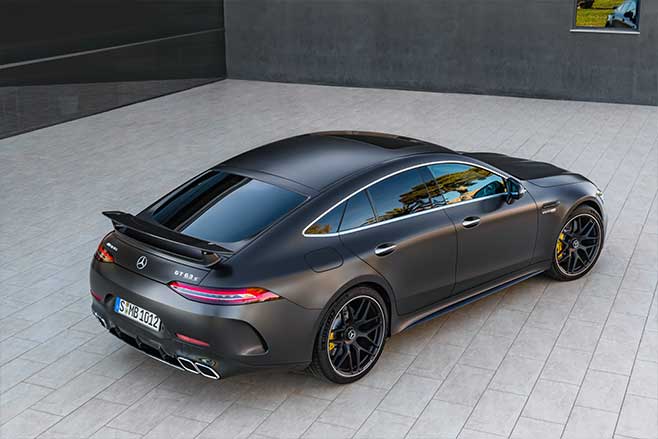
With AMG’s 4.0-litre twin-turbo V8 nestled in its snout, the GT63 S makes 470kW/900Nm, with the ability to sprint to 100km/h in 3.2 seconds. It weighs 2045kg.
The GT63 S is now also the housing for the most powerful tune of the 4.0-litre V8 AMG provides.
430kW and 800Nm make this still a formidable car, reeling off 100km/h in just 3.4 seconds – on par with the E63 S’s time at PCOTY 2018. It also weighs 20kg less than the GT63 S.
Both V8s are coupled to wet-clutch 9-speed gearboxes.
The inline six is mated to a 9-speed torque converter.
Rear wheel steering is optional for the ’53, while it’s standard on the V8 models. Up to 100km/h, the rear wheels point in the opposite direction to the front wheels so minimize turning circles, while over that they turn in the same direction for stabilisation.
Sales for the GT 4-Door will begin mid-2018 in Europe, but Australian availability is unconfirmed.
A supercharged V8, two doors, built by Jaguar Land Rover… but it’s not an F-Type.
The Range Rover SV Coupe is the ‘fastest-ever full-size Range Rover’, with only two doors and a stonking 416kW/700Nm blown V8 courtesy of SVO.
It’ll hit 100km/h in 5.3 seconds. Not a bad way to celebrate the 50th birthday of the Range Rover.
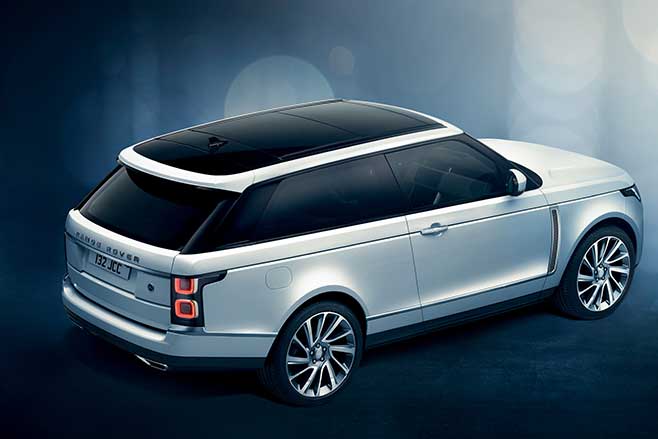
“The Range Rover SV Coupé is a celebration of the Range Rover bloodline,” McGovern says.
“With a dramatic two-door silhouette, this breath-taking four seat coupé alludes to its unique heritage whilst being thoroughly modern and contemporary.
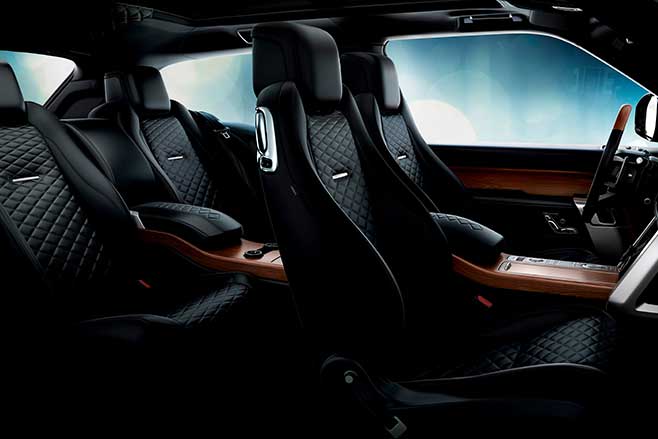
To further its unique nature, customisation options for the SV are seemingly endless.
SVO offers “100 more paint colours, unique ‘match to sample’ hues, with a range of finishes; duo-tone front and rear leather colours with a bespoke quilt pattern; contrast stitching; headrest embroidery; door handle and tread plate engraving and semi-precious metal badging.”
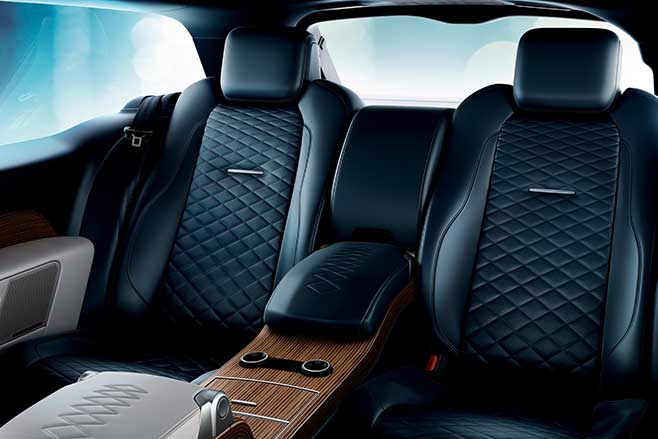
Inside, luxurious touches such as seats “wrapped in specially selected semi-aniline leather from a single tannery established in 1905” can be found, as well as more modern features like the Meridian 3D Signature sound system.
Only 999 units of SV Coupe will be built worldwide, with Australian allocation numbers yet to be confirmed.
Land Rover says it’ll be Down Under by Q1 2019, with local pricing to be announced soon.
MERCEDES-AMG has the Porsche Panamera in its crosshairs following the official reveal of its monstrous GT 4-door Coupe at the Geneva Motor Show today.
A range of three variants was announced, including an entry-level six-cylinder GT53 and two V8 versions, called the GT63 and GT63 S. The flagship GT63S boasts prodigious outputs of 470kW and 900Nm, making it the most powerful application of AMG’s venerated 4.0-litre twin-turbo V8 to date.
That bragging right was formerly held by the Mercedes-Benz S63 L, which produces 450kW and 900Nm. The fiercest AMG two-door, the GTR, makes 430kW and 700Nm, which the new AMG GT63 (minus the S) matches. The GT53 produces 320kW and 520Nm from AMG’s new 3.0-litre inline six.
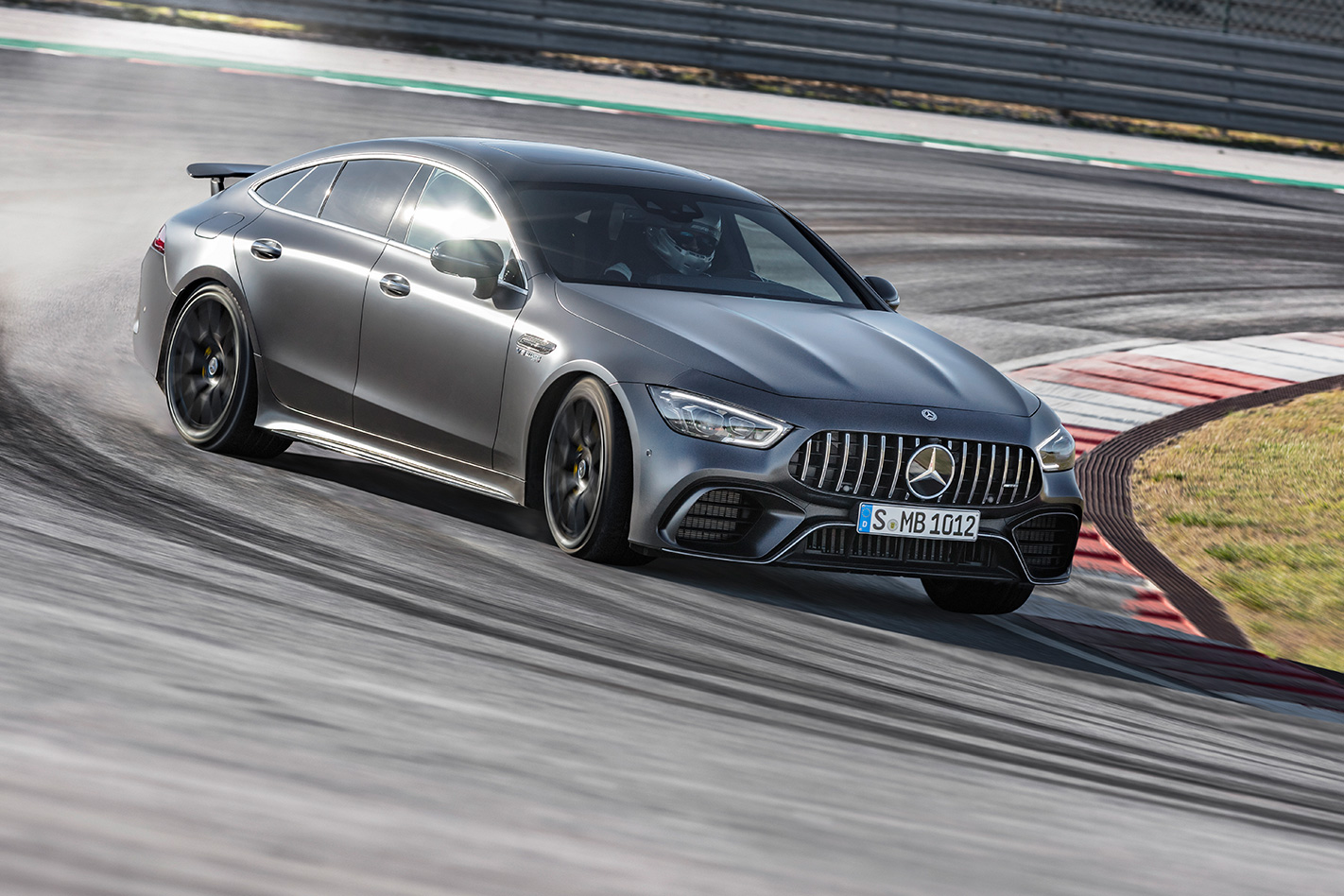
The new model is the first four-door vehicle developed by AMG in-house, and built on a heavily reworked and strengthened version of Mercedes-Benz’s MRA platform. The production car’s styling carries over much of the concept car’s dominant looks, but it’s the interior, unveiled today, that has raised the most eyebrows by introducing elements not before seen on any other Mercedes-Benz product, including an array of buttons with LCD screens built into them.
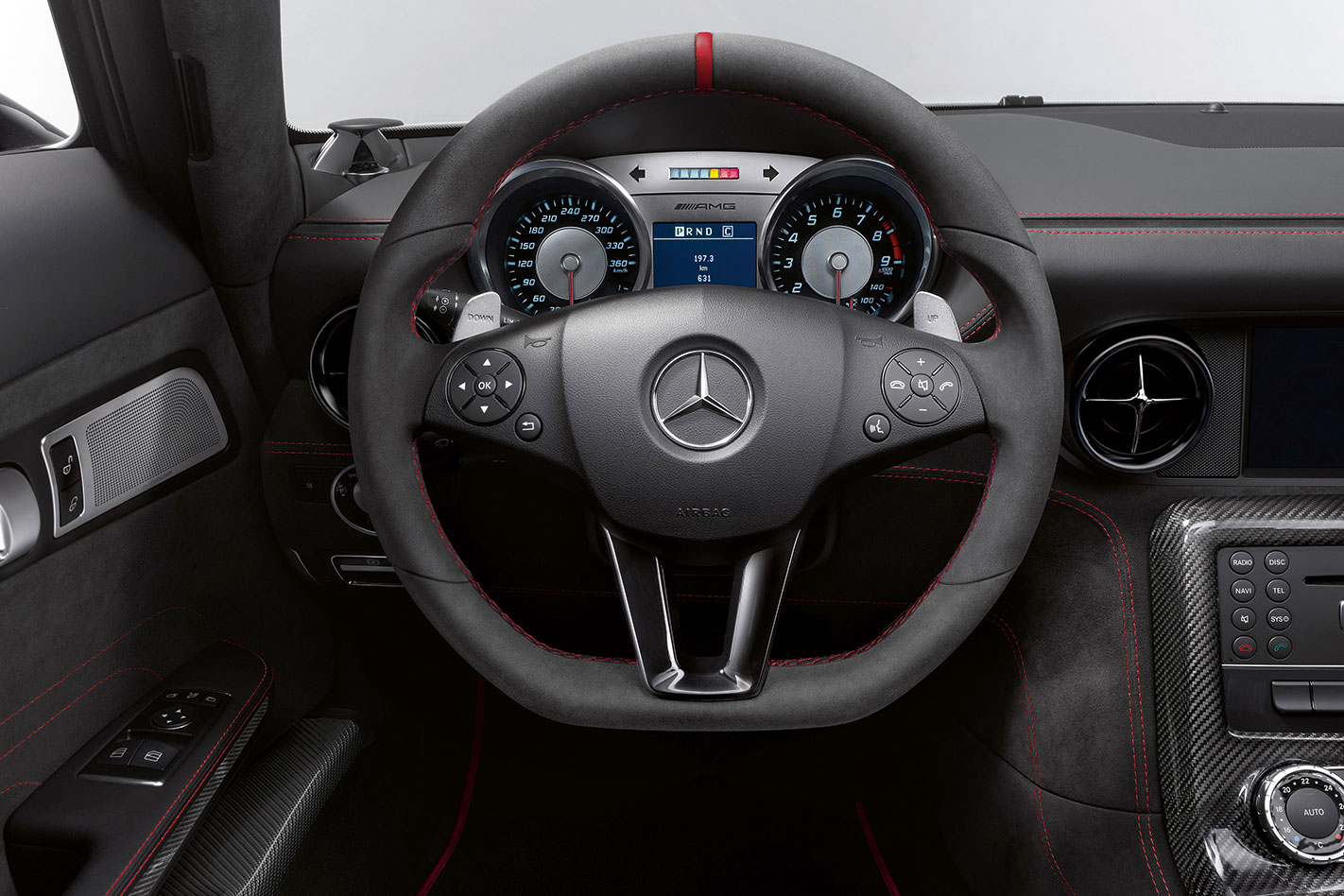
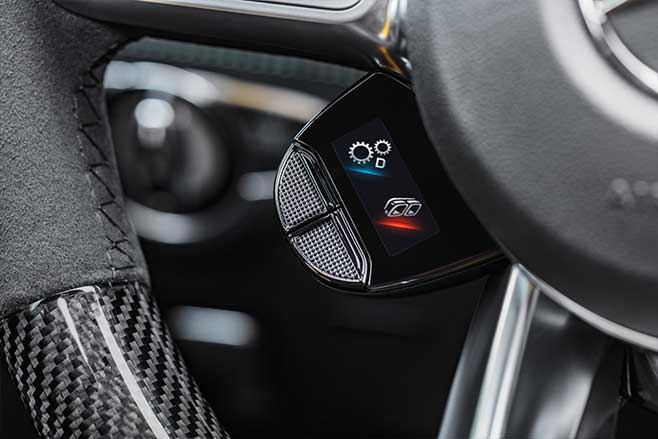
AMG’s new Performance steering wheel features here, with two extra programmable LCD buttons in the lower left sector, which can be set to give the driver instant access to custom functions such as the bimodal exhaust and ESP mode selector.
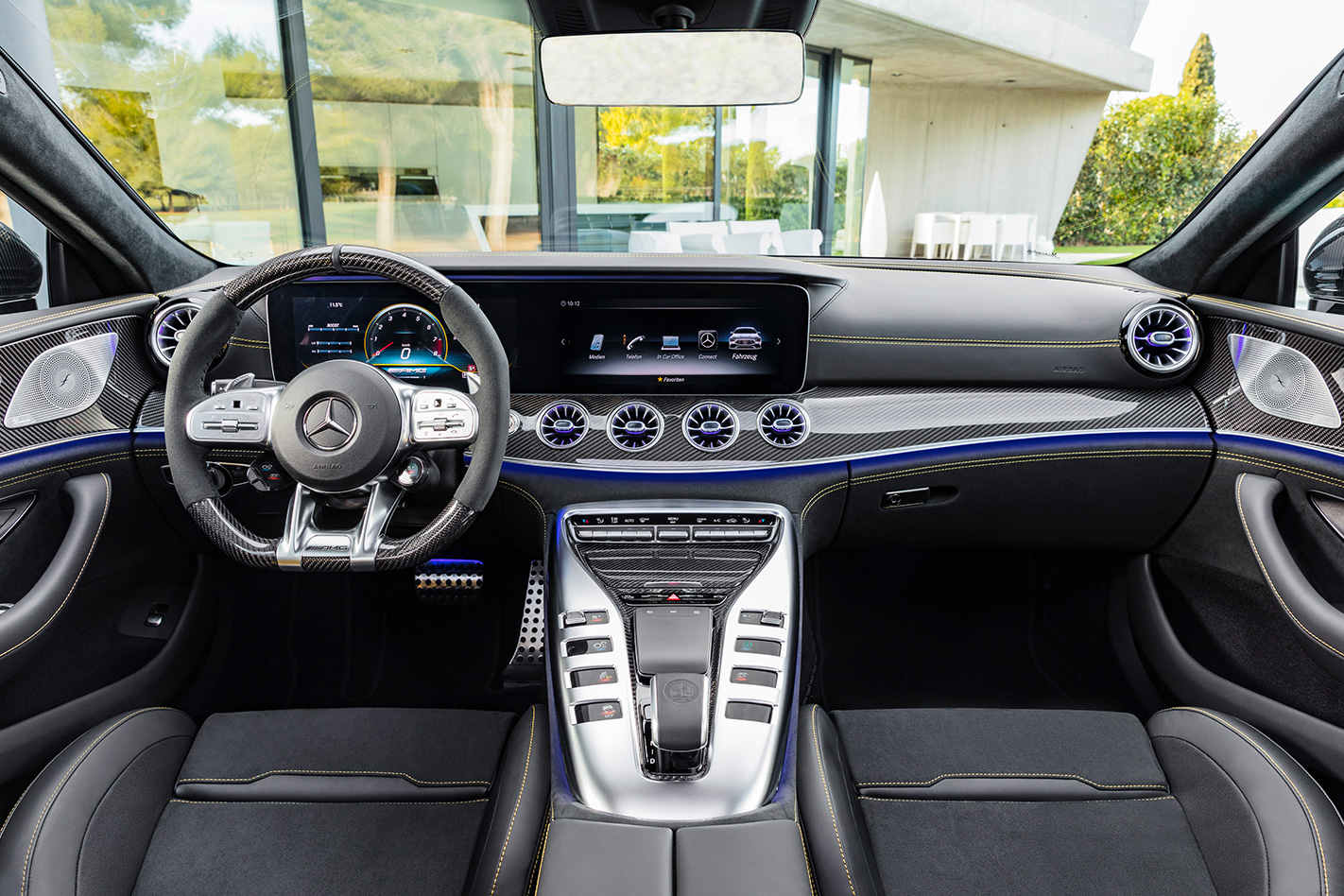
The dash is a digital widescreen affair as seen in other high-end Mercedes-Benz models, only here the GT gets a unique ‘Super Sport’ display that shows a central rev-counter and AMG-relevant information on either side that can include racetrack lap data, depending on the driver’s preferences.
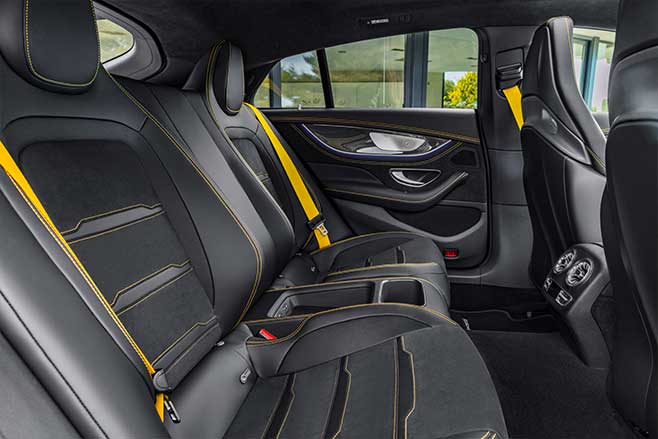
Rear-seat passengers in GTs fitted with the ‘Business Console with Touchscreen’ option get a divided rear bench with heated and cooled cupholders, wireless phone charging and their own display that can adjust climate control and media settings, and monitor the behaviour of driver and car in real-time, including steering angles and pedal inputs.
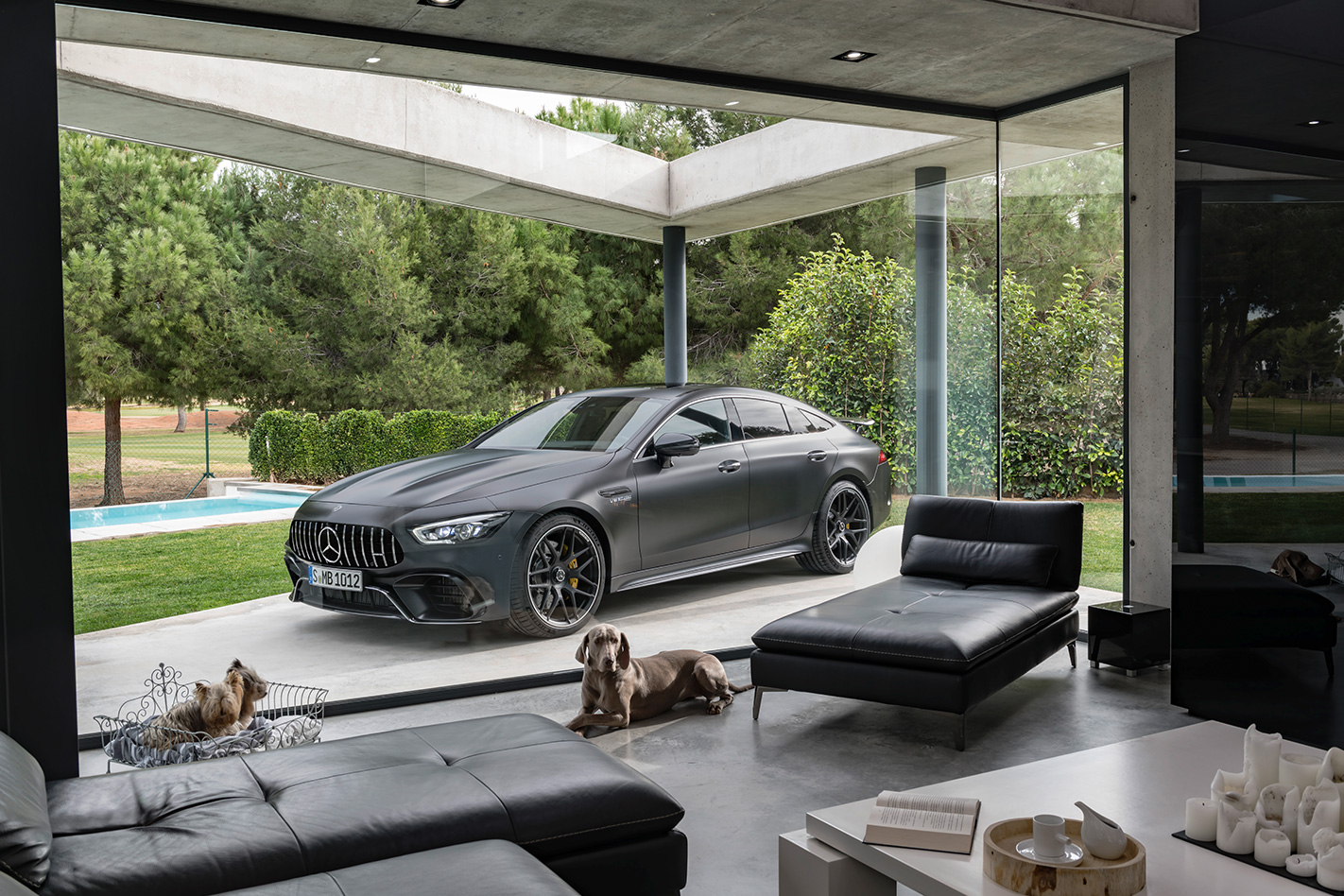
Though AMG refers to the new model range as the “GT 4-door Coupe”, a typical letter and number designation was chosen for each variant to avoid overlap with the GT coupes (GT, GT S, GT C and GT R) without having to include ‘4-door’ in the name of the new fastback sedans.
At least one plug-in hybrid version of the GT 4-door is expected to be added to the range with as much as 590kW on tap and a sub-3.0sec 0-100km/h sprint, however AMG representatives were tight-lipped on a high voltage version at the model’s launch.
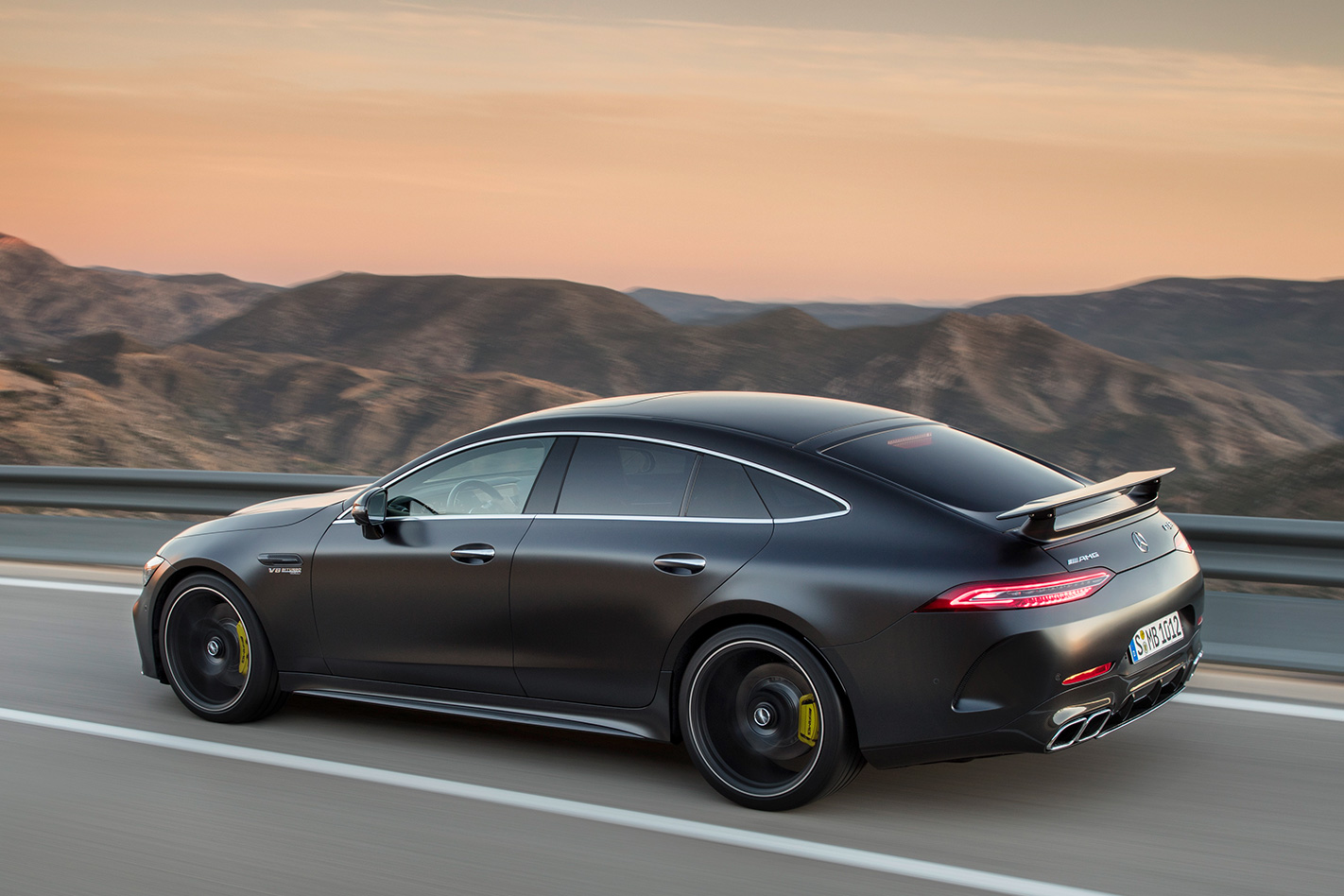
Mercedes-Benz Australia expects a March 2019 arrival for the first of its four-door GT Coupes, though at this stage pricing is unknown. Given the hierarchy, the GT63S will sit somewhere in the gulf between the E63 S ($239,611) and S63 L ($375,000).
From the cold war of the German automotive industry, the BMW M8 Gran Coupe Concept is Munich’s answer to the Porsche Panamera, and Mercedes-AMG’s soon-to-be-revealed GT-based sedan.
The four-door concept is one of three expected variants in the forthcoming 8-Series, alongside coupe and convertible models that are designed succeed BMW’s current 6-Series line-up and bring BMW into the realm of high-end, luxury performance coupes.
BMW says the M8 showcases an updated design language and paves the way for a new understanding of the luxury sports car.
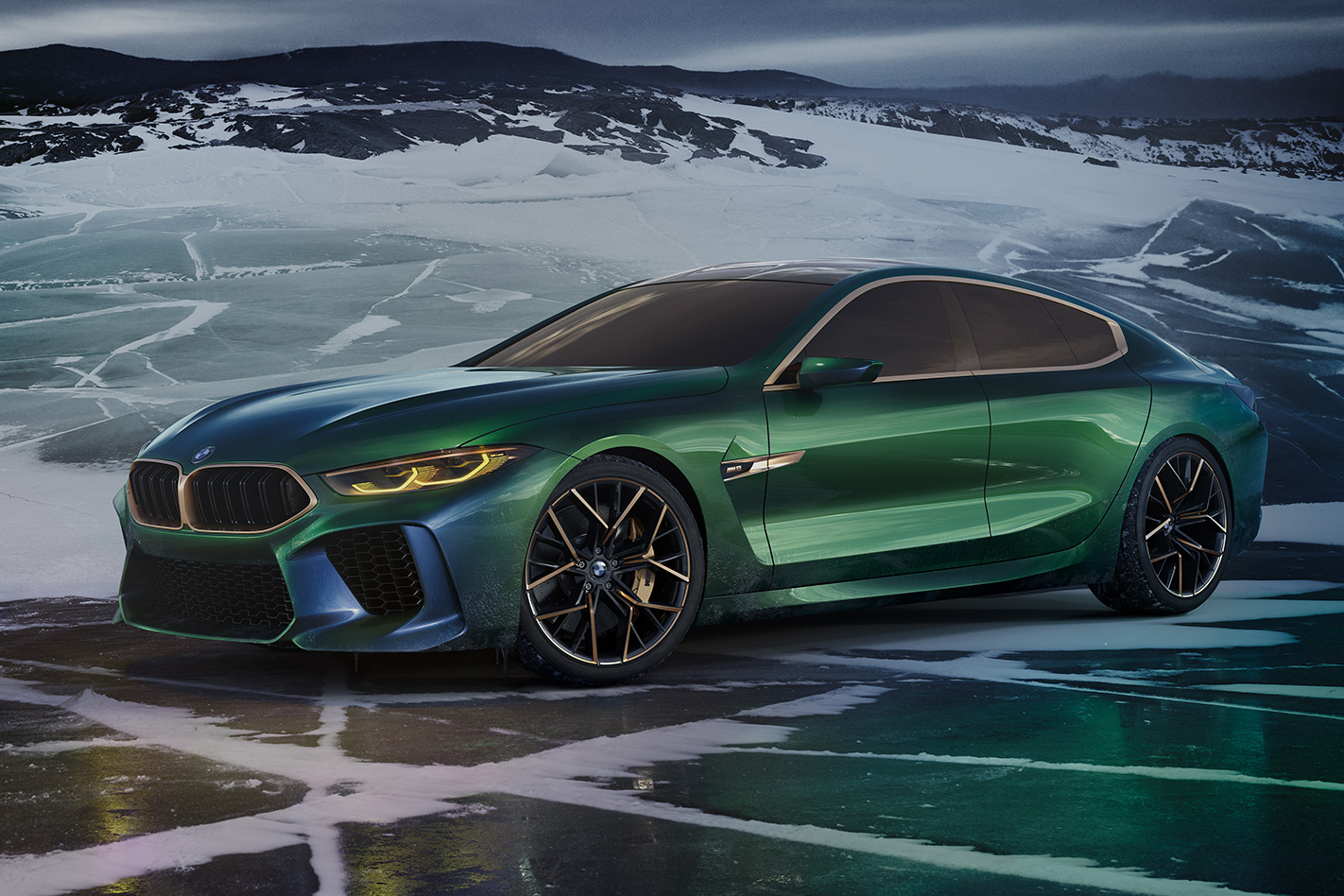
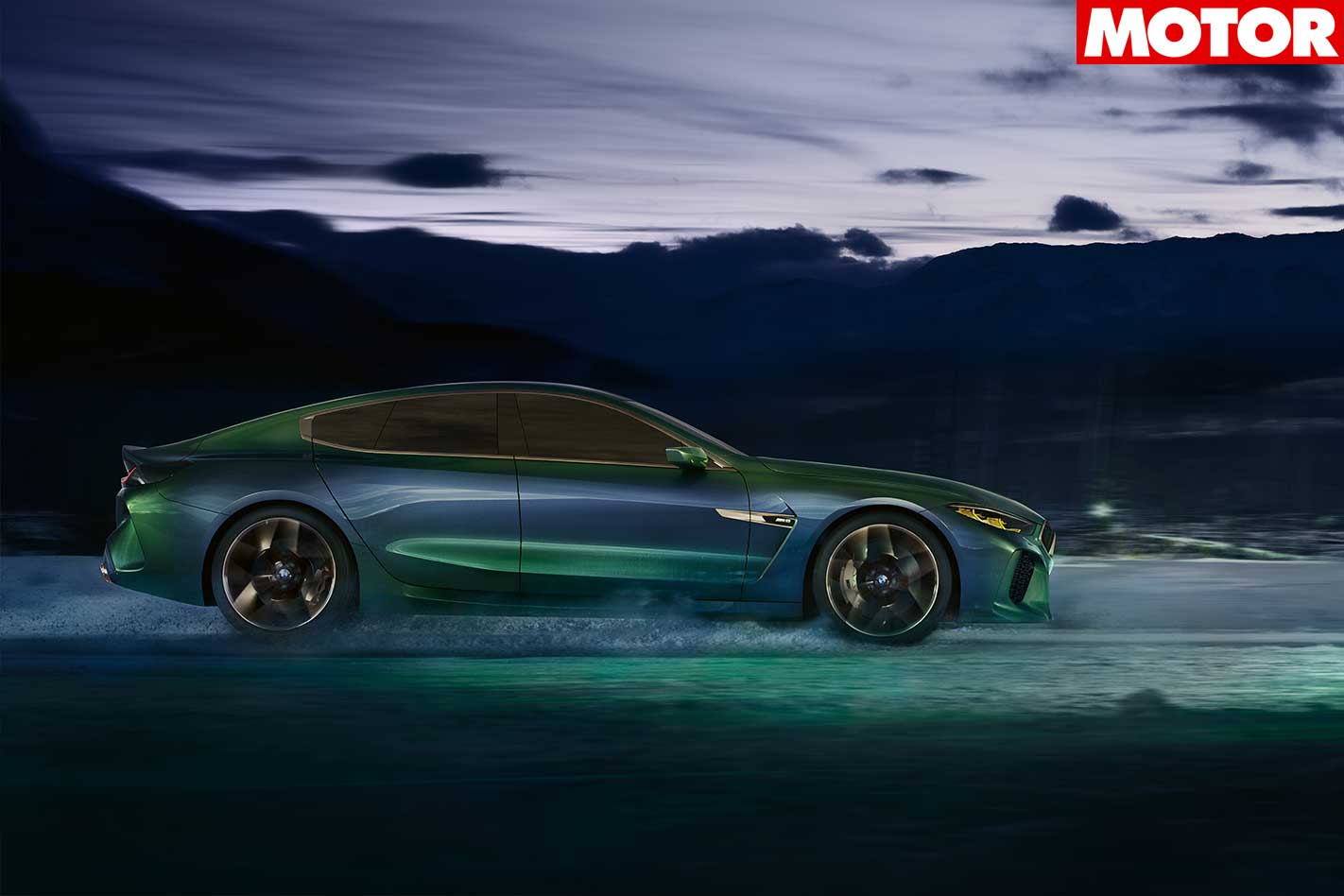
At first glance, the Concept M8 Gran Coupe bears some resemblance to the M2 released in 2013. The aggressively styled front end and bulging rear body lines accentuate the rear track width and, like that of the M2, hint at the cars performance capability.
The M8 stretches far longer than its smaller M counterpart. The aggressive front stance leads into the sweeping length and low slung roof profile, concluding in a lipped boot.

BMW’s four-eyed, hexagonal headlight design is present, sweeping outwards from the central kidney grills, giving the car a low presence and emphasising the focus on performance.

The Concept car is finished in a rich green paint that BMW calls Salève Vert, which colour shifts to greyish blue in changing light.
It’s likely the concept car will soon spawn a production model when the 8-Series is finally revealed.
BMW has given us another taste of 8 Series with the reveal of a Gran Coupe version of the BMW M8 at the Geneva Show.
The concept heralds a change in philosophy for BMW’s design, with BMW’s head designers calling it ‘exotic,’ ‘alluring,’ and even ‘polarising’.

Though this isn’t how the standard BMW M8 will look when it hits the road there are hints that the Gran Coupe will in fact become a reality, even in M8 guise.
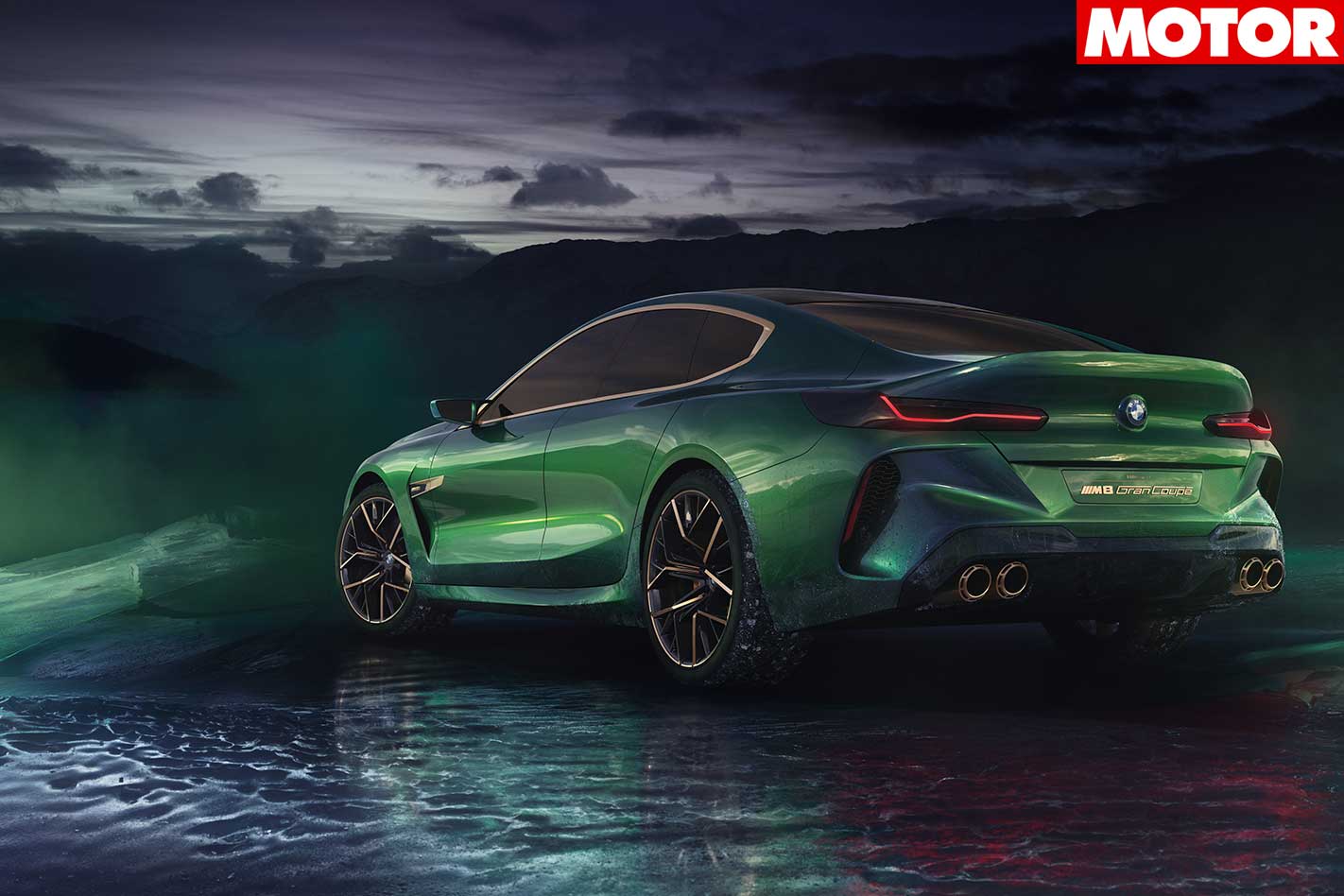
Senior vice president of BMW Design Adrian van Hooydonk says the M8 Gran Coupe heralds the shift of the 8 Series taking over as the ‘big boy’ among BMW’s lineup.

“The BMW Concept M8 Gran Coupe offers a look ahead to the most exotic and alluring variant of the new BMW 8 Series.”
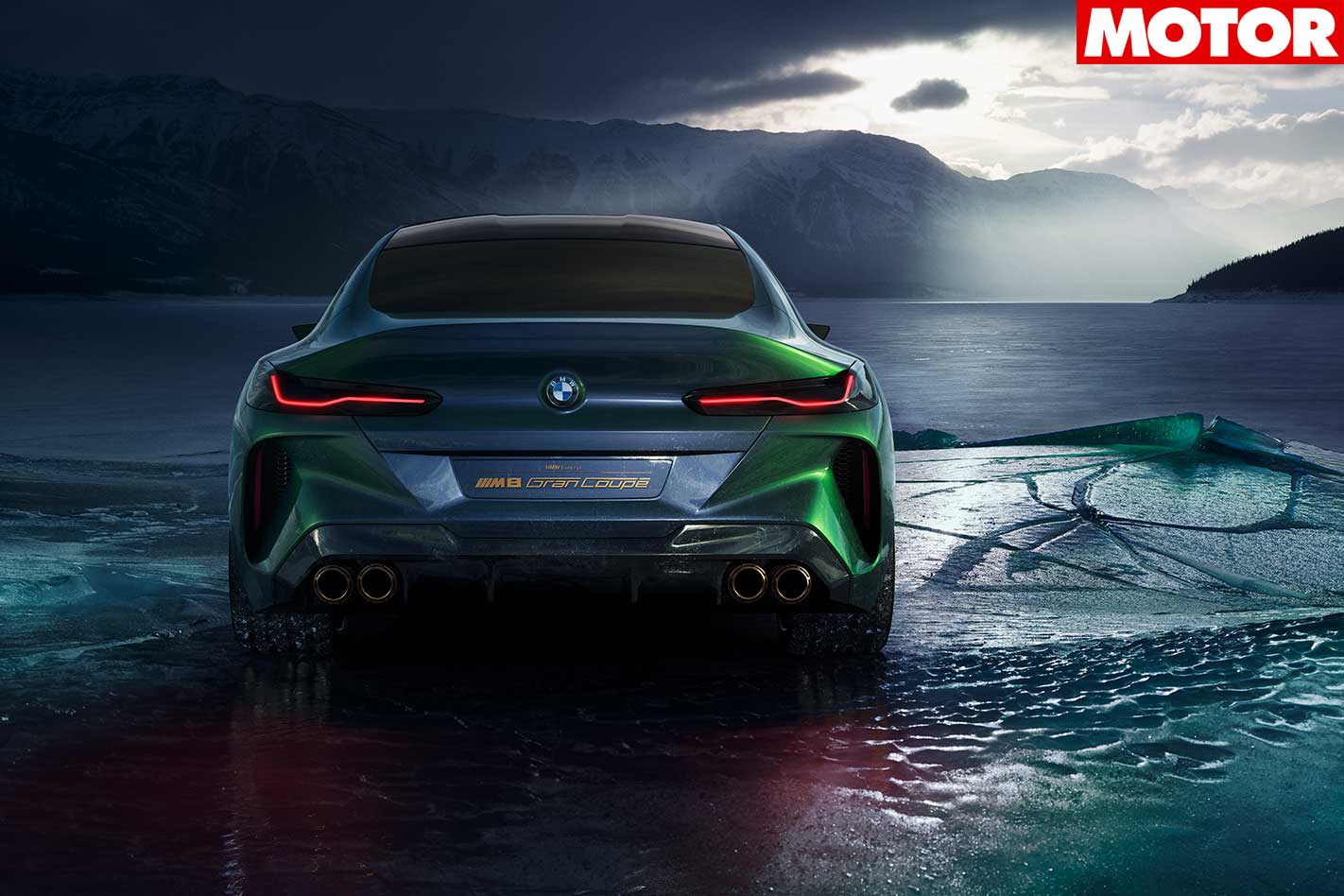
Vice president of design at BMW M and BMW i Domagoj Dukec says the concept isn’t meant to make everyone like it immediately, rather it represents a new direction for BMW.
“With this car we want to reach people who are looking for something special and who want to stand out from the crowd. Here, BMW M is unmistakably taking luxury out of its comfort zone.”
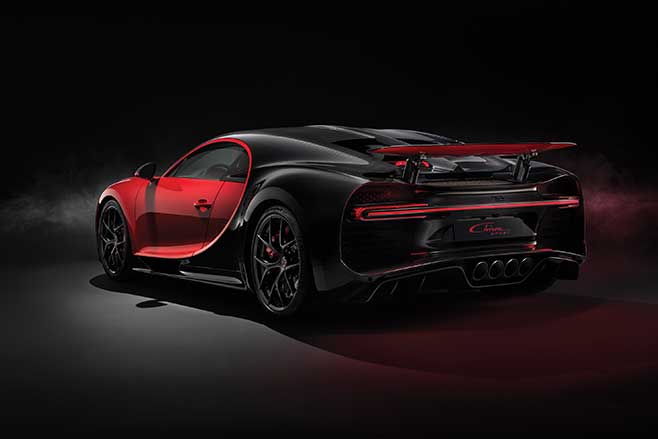
Bugatti has made its fastest car even faster. This is the Bugatti Chiron Sport.
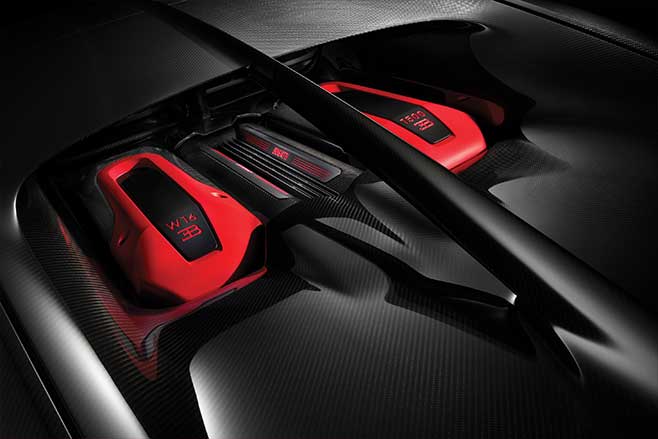
Okay, so it doesn’t have any more power than the regular – if you can call it that – Chiron, but it’s 18kg lighter, and has “significantly improved handling and even greater agility.”
With that, lap times at the Nardo test track improved by 5 seconds over the standard car.
Koenigsegg beats Bugatti’s 0-400-0km/h record
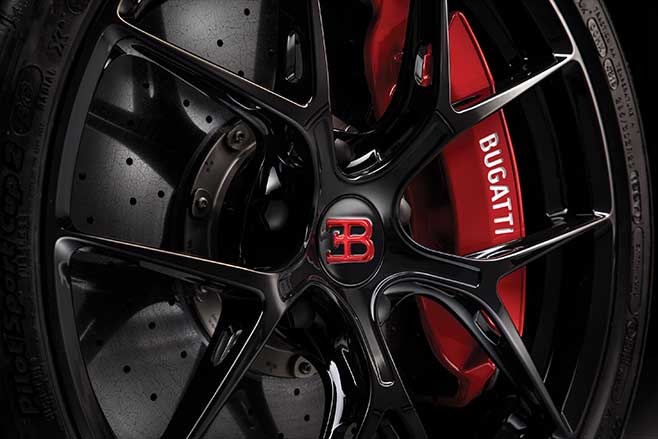
Even the windscreen wipers are carbon fibre, something Bugatti says it is the first top do on a production car.
New features like stiffer suspension, adjusted steering, an optimised rear diff, and dynamic torque vectoring also make the Chiron a more sporting drive.
“We have developed the Chiron Sport for customers wanting an even sportier driving experience with their Chiron, with improved lateral dynamics on winding roads,” says Winkelmann.
“What was important for us was to leave unchanged the unique character of the Chiron, its combination of ultimate performance, longitudinal acceleration and maximum speed with luxury, comfort and everyday usability.
Bugatti expects to make its first deliveries by the end of 2018, with a base price of €2.65 million in Europe, or USD$3.26 million in the States.
