
Electric and hybrid performance cars are underperforming in Australian-market resale values across a variety of segments, particularly those at the upper-end of the market where traditional petrol V8 grunt is most clearly dominating newfangled battery power.
With the first electric and hybrid performance cars now tallying three years old – the resale benchmark for new vehicles – values expert Redbook has given its verdict on how the likes of the BMW i8, Porsche Panamera S E-Hybrid and Tesla Model S P85D are performing compared with their internal combustion engine (ICE) equivalents; all with circa-35,000km.
And the news isn’t good for lovers of the environment.
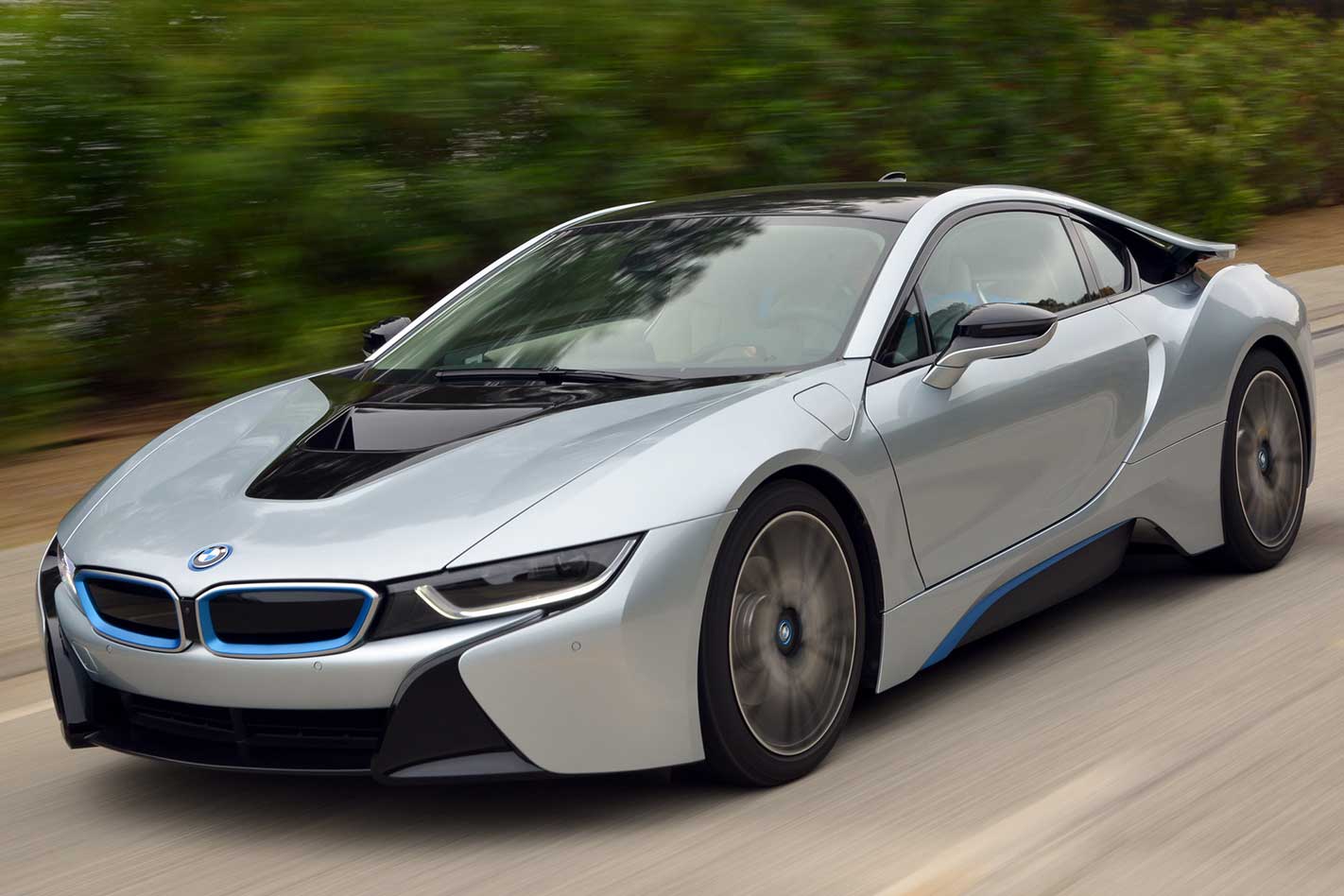
BMW’s futuristically styled i8 cost $299,000 when new three years ago, but according to the values expert it has retained less than half its purchase price – just $145,500 when sold privately, or a staggeringly low $128,700 for a trade-in.
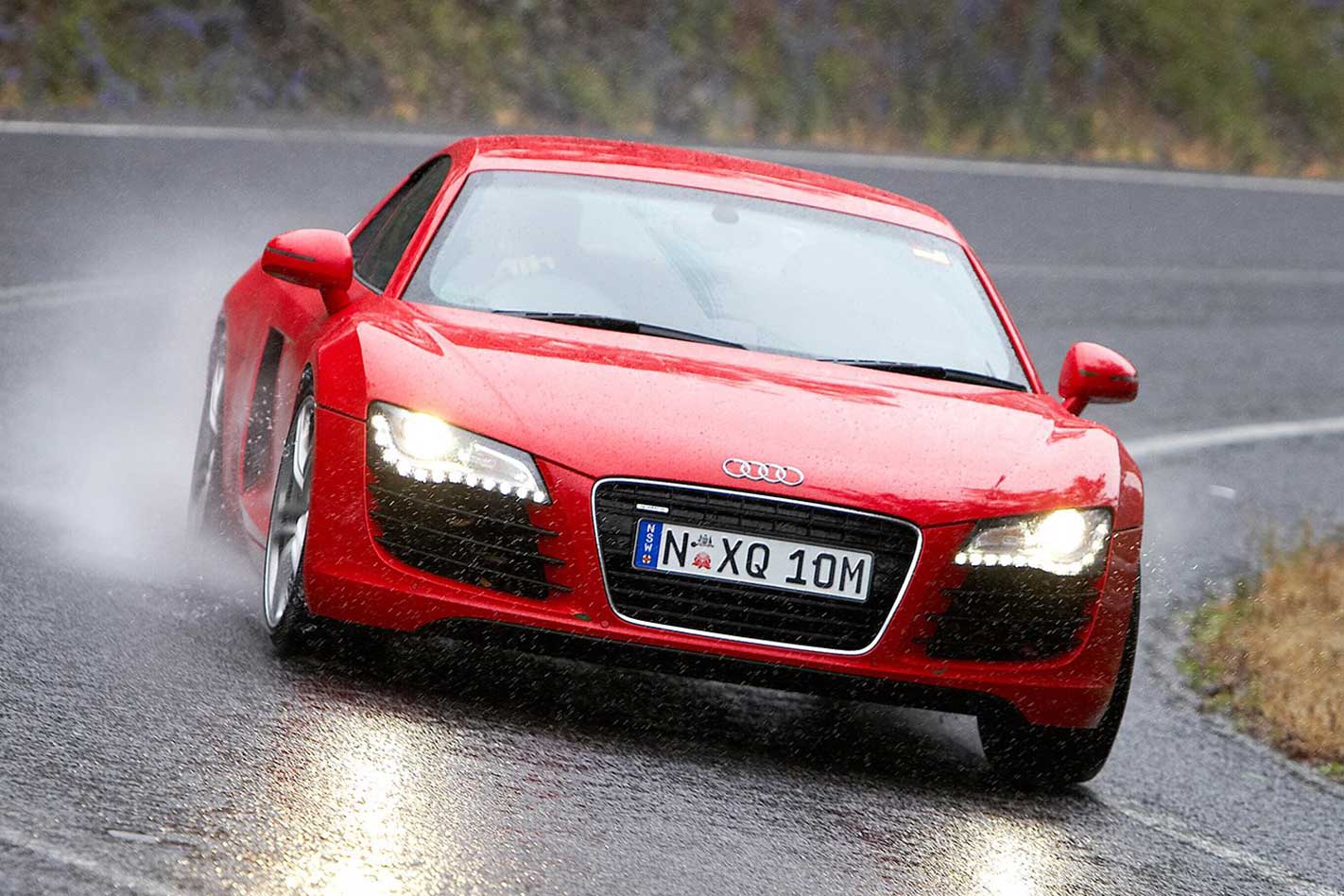
However, Audi’s previous-generation R8 asked $308,010 when new in 2015, and Redbook tells that it will still fetch $176,900 privately or $159,700 in a trade.
Despite costing only $9000 more than the i8 when new, the 4.2-litre naturally aspirated V8-engined manual supercar has kept up to $31,400 more in its coffers compared with the BMW. And that’s a lot of money to be saved to fill a model rated at 14.4L/100km and 337g/km of CO2…
But this resale trend continues in Porsche showrooms, too.
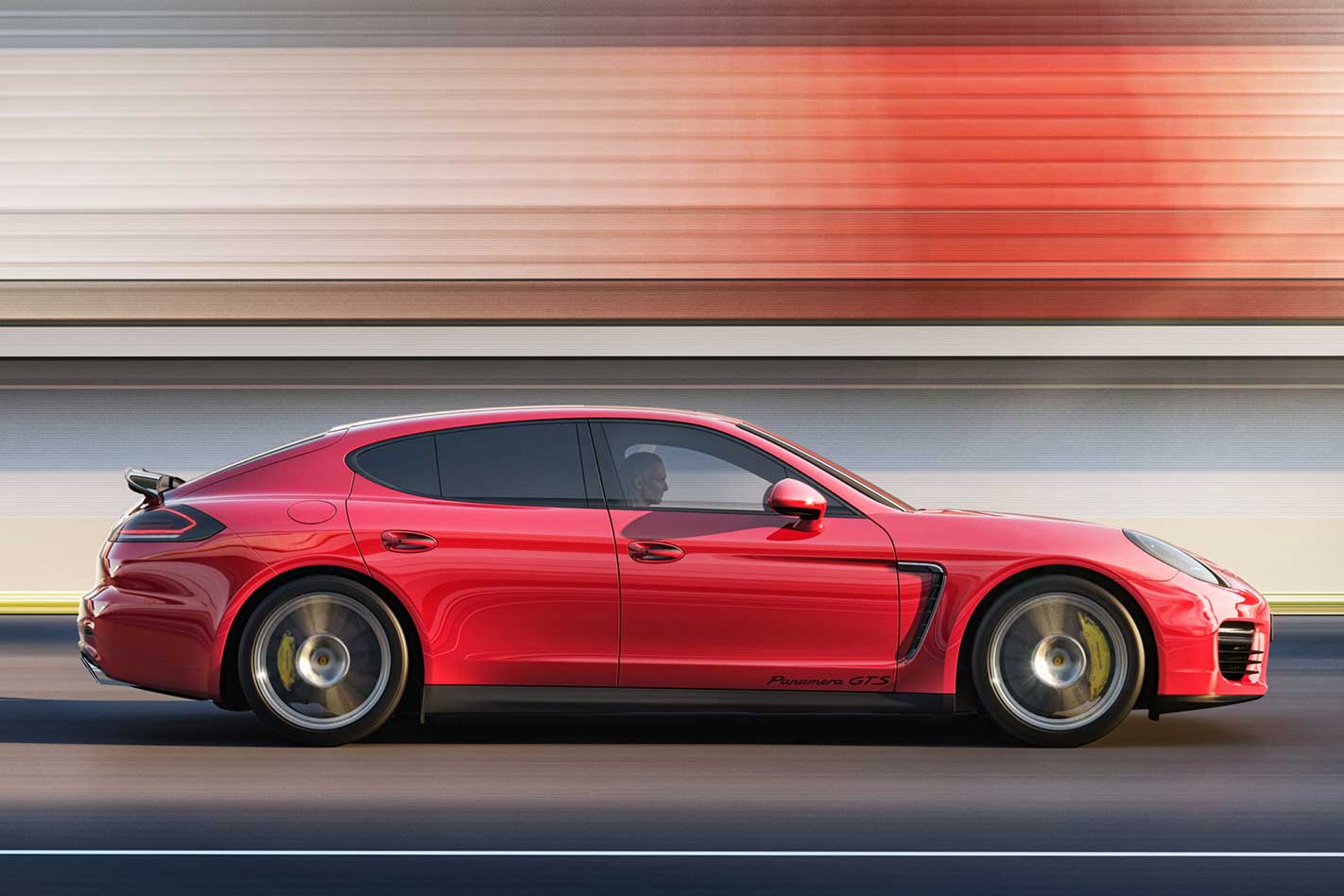
A 2015 Panamera S E-Hybrid asked $285,300 new, with its 3.0-litre blown V6 and electric motor spurring it to 100km/h in 5.5sec while using 3.1L/100km and emitting 71g/km of CO2.
But privately it will now have kept just $126,600 – and if you’re planning a trade-in, expect to have retained just 40 per cent of the original price at $114,200 according to the Redbook.
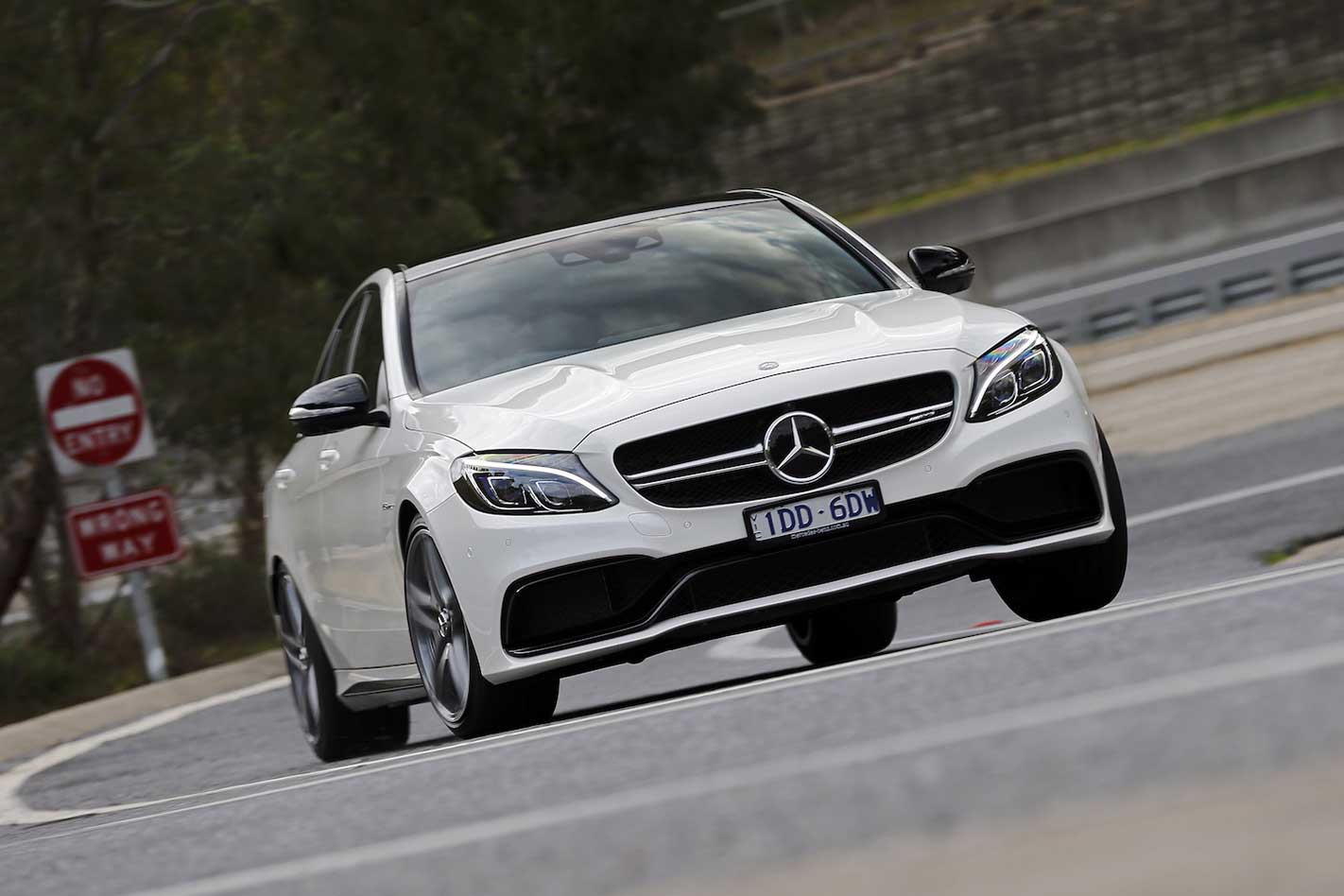
Let’s compare the pair, shall we? A 2015 Panamera GTS needed $320,100 new, or $35K more than the hybrid, with its 4.8-litre naturally aspirated V8 soaring to deliver 4.4sec 0-100km/h performance, gulping 10.7L/100km and spitting out 249g/km of CO2.
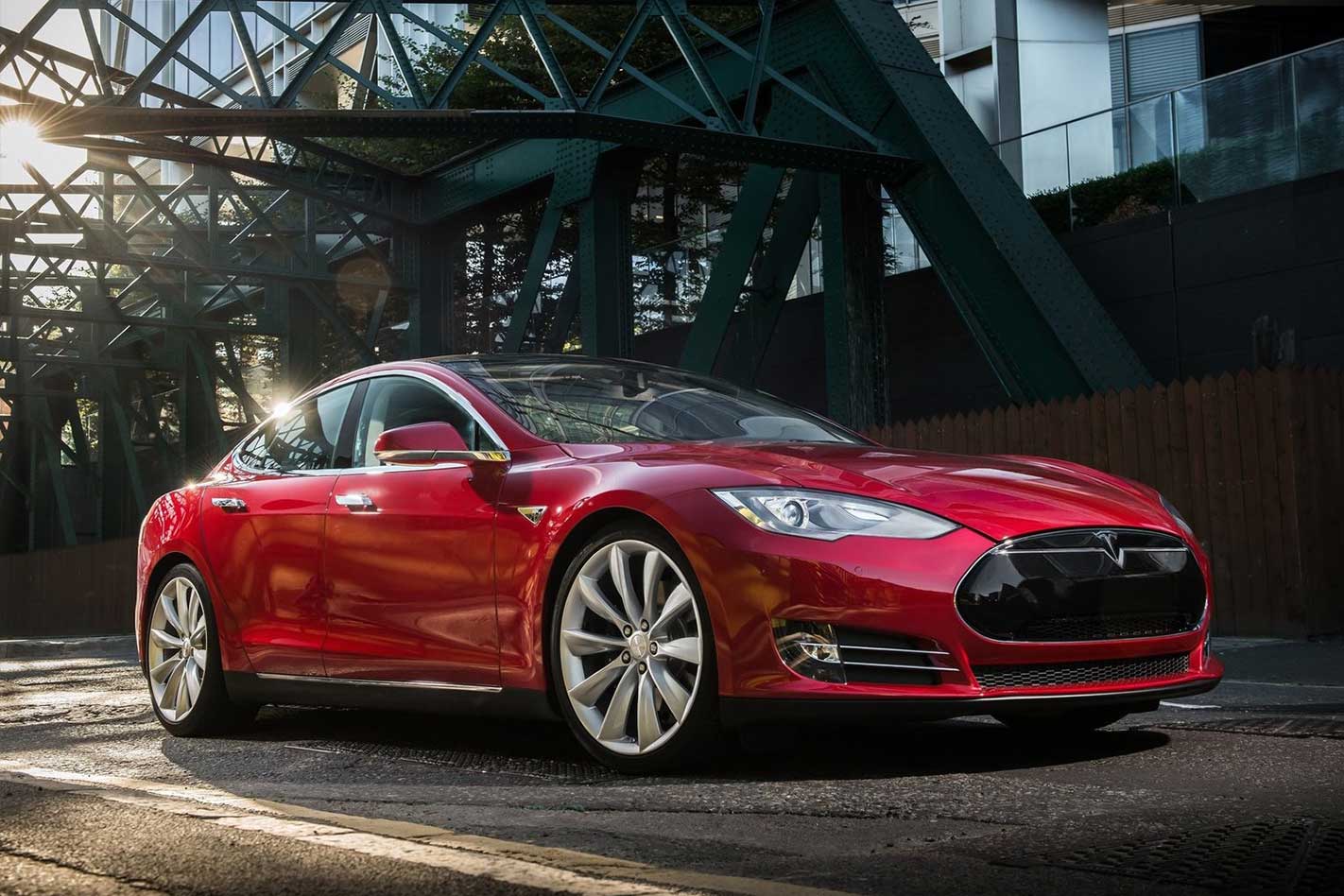
Meanwhile the darling of the electric brigade, a 2015 Tesla Model S P85D, gets closest to matching its performance-ICE equivalent. New? $181,500. Sale three years on? $115,400 private, $103,800 trade-in, with 64 per cent and 57 per cent retained respectively.
Now it will return $97,100 privately and $85,500 trade, reducing the gap to $18K at today’s values. So essentially a C63 S buyer has had $7K extra to spend on premium unleaded in three years.
SPEAK to any of the more experienced judges at COTY and you realise they have an instinctive feel for what’s going to score well against the five competition criteria of Function, Efficiency, Safety, Technology and Value.
For 2018, the Skoda Kodiaq looked set to register some big numbers on most of those scores. The greybeards on the judging panel were quietly confident it would end up at the pointy end of proceedings.
If you are conversant in even pidgin Volkswagen Audi Group design language, you know what you’re getting with the Kodiaq. It rides on the same wheelbase as a Passat, the interior has that ever-so slightly decontented feel compared to, say, a Tiguan or Touareg, but it’s packed with thoughtful ideas like the pop-out edge protectors on all four side doors, driver-activated electric child locks for the rear doors, folding automatic umbrellas concealed inside the front doors and a rechargeable LED torch that clips into a recess in the cargo compartment.
On the road, the Kodiaq’s MQB-based chassis delivers surprisingly tied-down body control and decent ride quality while the electrically-assisted steering is about the best in class. Where most of the Kodiaq’s seven-seat rivals would soon lapse into a sloppy handful on a twisty road, the big Skoda feels alert and reassuring. The 132kW 2.0-litre petrol engine – the only option available at the time – also develops just enough grunt to haul the 1744kg bulk.
A stellar five-star ANCAP safety score augmented by an autonomous emergency braking package that works and works well boosts the Kodiaq’s credentials. The $46,290 drive-away price only cements the Skoda’s showroom appeal as the least expensive AWD seven-seat SUV of this size.
Kodiaq is emblematic of the type of car that Skoda builds when it’s at its best; pragmatic, with clever touches, and an overall sensation of quality that straddles classes. It emerged, as predicted, at the pointy end of the field as wholly likeable yet eminently sensible. Could it register enough votes to go all the way? It’s in with a genuinely strong shot.
EVERY YEAR for the last three years, the leaders of the global car industry and the most senior figures from the biggest technology companies have met for a one-day automotive version of the Davos summit in which they try to predict the future of the car.
They’re not obliged to keep the meeting secret but nobody seems to talk about it publicly; perhaps because the discussion is so searingly honest and revealing that if word got out, everyone would want in.
The conversation itself is secret, though.
To encourage the CEOs to talk freely about their fears for the future, the meeting is held under the Chatham House rule, which allows those attending to act upon what they learn but never to reveal the source of an individual idea or comment. I’m fortunate enough to have attended all three meetings, so I can’t tell you who said what, but I can tell you what they really think.
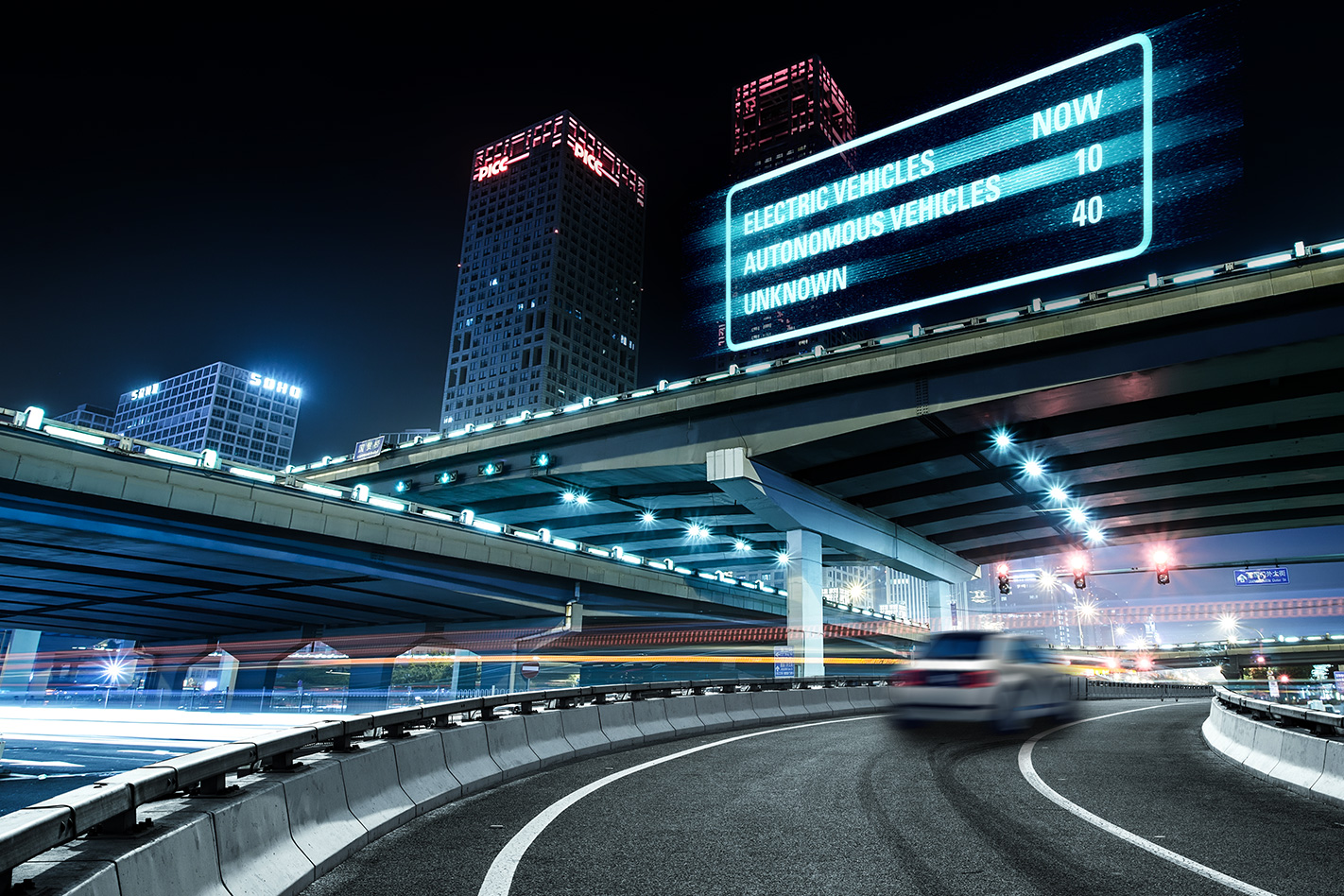
These issues are old news in the sense that any sensible CEO of a mainstream car maker is now totally committed to them, and progress is now largely down to their engineers and (in the case of higher levels of autonomy) the lawmakers. But there’s clearly a long way to go, so there’s still risk. There’s general acceptance that the mass-market brands which don’t get this right will pay with their existence, and that there will be casualties. When asked what he thought of the car bosses present at the meeting, one young tech pioneer said they were “dead men walking”.
What the bosses don’t yet know is what happens once EVs and autonomy are sufficiently widespread to begin changing the fundamentals of their industry. The growth of smartphones and fast mobile data networks make a perfect analogy. Like EVs and autonomy, they were an engineering challenge and continue to generate huge profits for the companies which got them right. But their real value lies in what we do with them. They’re the host for previously unthinkable phenomena like social media. Smartphones changed phones, but social media has changed the world.

He urged those attending to try to spot the unexpected consequences of the coming revolution, because that’s where the real value and danger of such disruption lies.
The trouble for the car industry is that men in suits in late middle-age are ill-equipped to spot these opportunities. They’re doing their best, but they know they’ll have retired long before this stuff really becomes a problem. Disruption requires something to disrupt, and that generally means big, hidebound organisations which have done things the same way for generations. The big car companies have countless billions of capital investment tied up in plants which cast engines and stamp out steel bodies and which no bugger wants to take over.
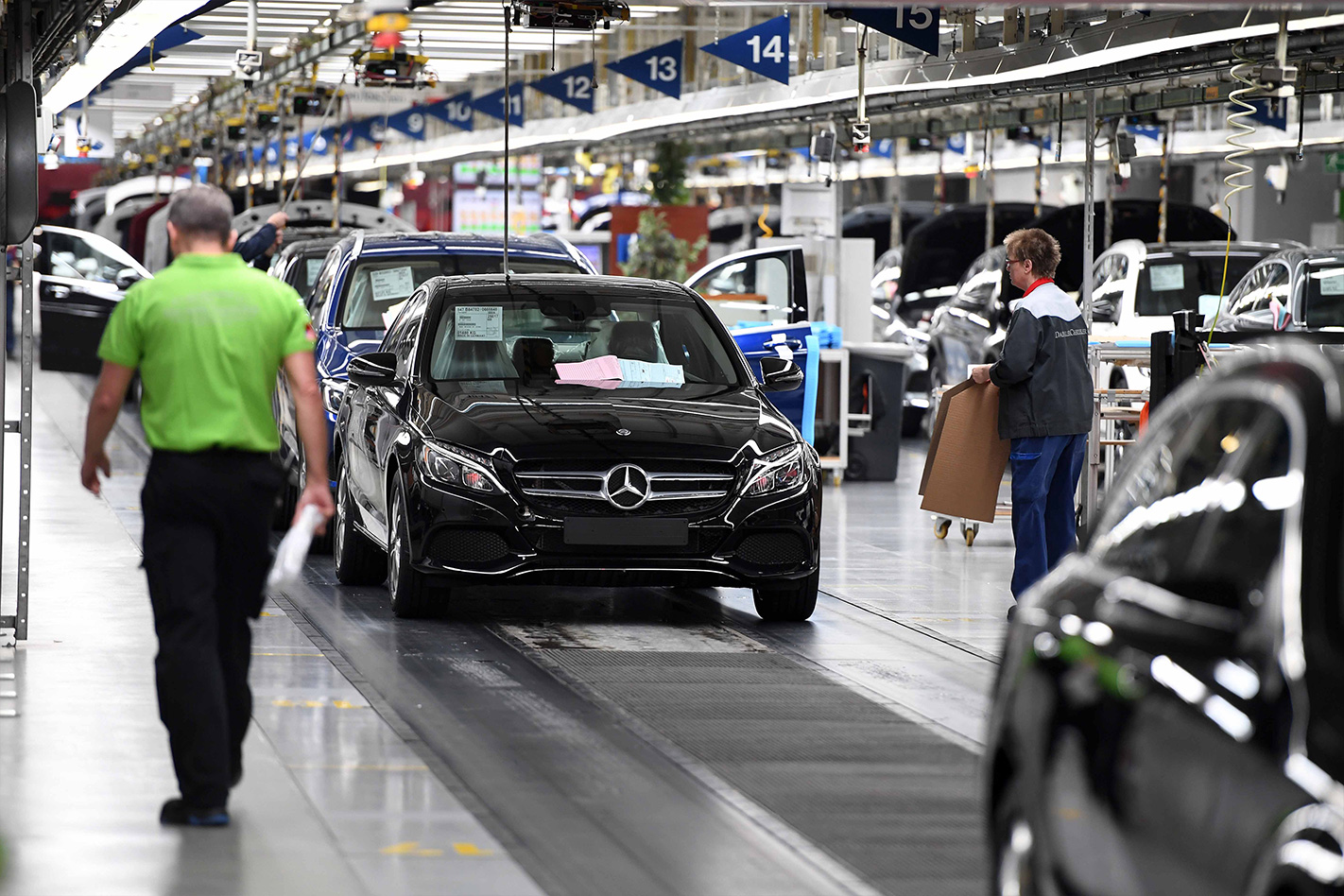
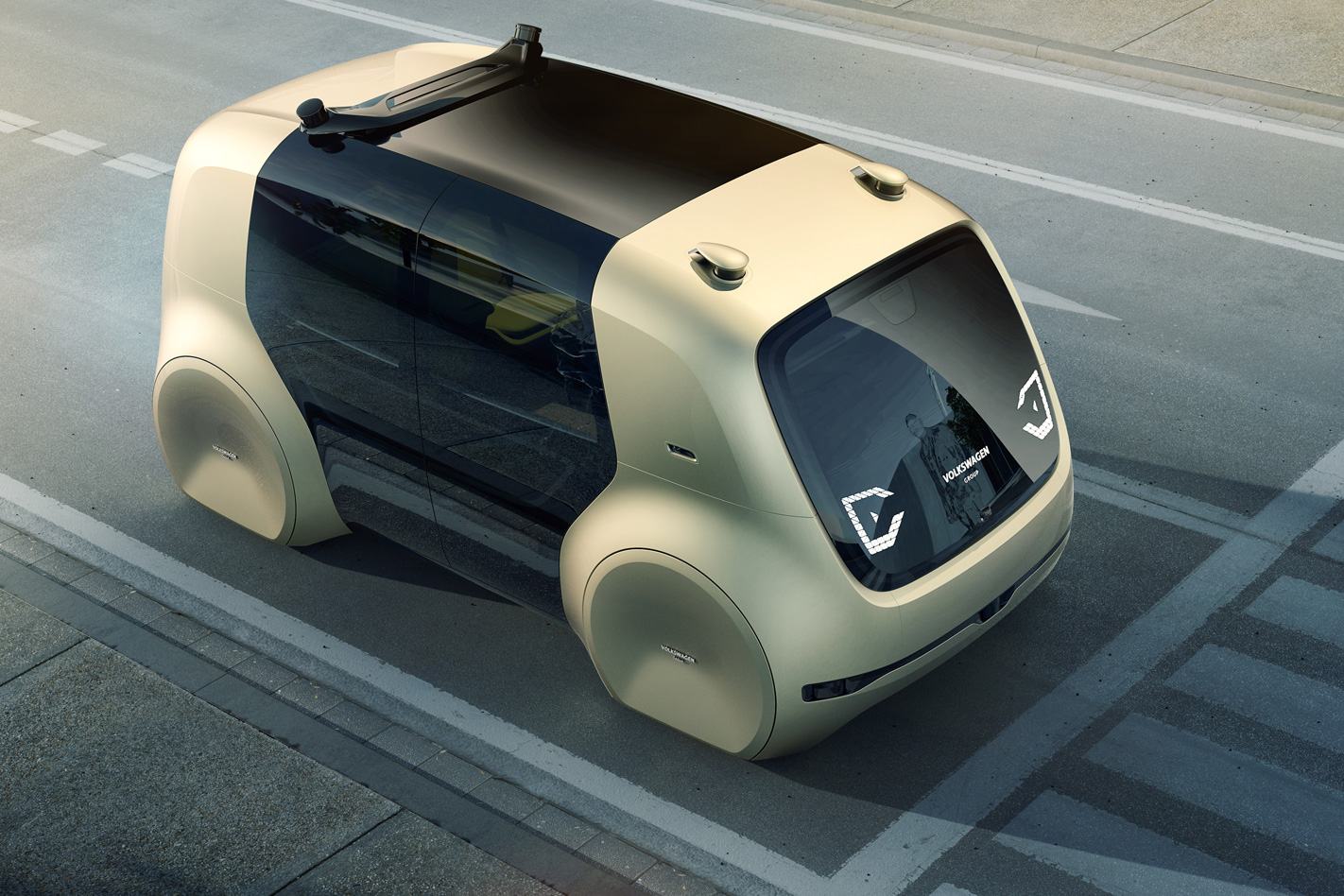
The CEOs can peer a little way into the future, and they really don’t like what they see. Once a car can be summoned, drive you to your destination and then be dismissed, the argument for buying your own starts to look thin. So bang goes your vast dealer network and the very profitable model of selling cars to individuals or businesses which then leave most of them standing idle for most of the time.
As one delegate said, Uber is just an autonomous car with a meat-based control algorithm, and in the cities where ride-hailing services are most established they are already demonstrably replacing not just conventional taxis, but car ownership in general. Nor do you really care who makes your Uber, or your train or your plane, so long as it’s safe, comfortable and reliable. So the ability of premium brands like Mercedes-Benz and BMW to charge more for what emerges from their factories also starts to diminish.

EVs are advancing rapidly: France and the UK plan to end sales of conventional combustion-powered cars by 2040, and Norway in just seven years, and there’s little disagreement that the tech will be ready by that later date. But the advance of autonomy is far less certain.
The shift to a world where the data our cars generate and the software that controls them are worth more than the industry that builds them will be governed by how quickly true autonomy can be implemented. We might see it at work by the early 2020s, but it will be a lot longer before it’s widespread in even the best-regulated cities, and a really long time before it’s good enough to cope with downtown Delhi.
And the carmakers are hardly ignorant of all this. They point out that they have been around for more than a century and weathered a few shocks in that time. They’re already software companies too, generating millions of lines of code each year. And if they have to, they’ll just buy the start-ups that have the best ideas: provided they can afford them.
Who actually makes the iPhone? Not Apple. They’re mainly assembled by two Chinese companies called Foxconn and Pegatron. They do very nicely out of it, but they’re not Apple. Have you heard of them?
Probably not.
The US$15bn company you’ve never heard of
Mobileye encapsulates in one start-up pretty much everything that terrifies the carmakers.
It is a pure, ‘blue-sky’ new venture, established in Israel in 1999 and based on the doctoral research of its founder Amnon Shashua.
Its EyeQ chipset and controlling algorithm read the road via cameras and make the decisions essential for autonomy.
The system is so good that the carmakers are obliged to buy it and fit it to their cars: 15 million of them so far, around 80 percent of cars with advanced driver assistance systems. The company has now been bought by Intel in a deal which values it at US$15bn; not much less than Ferrari.
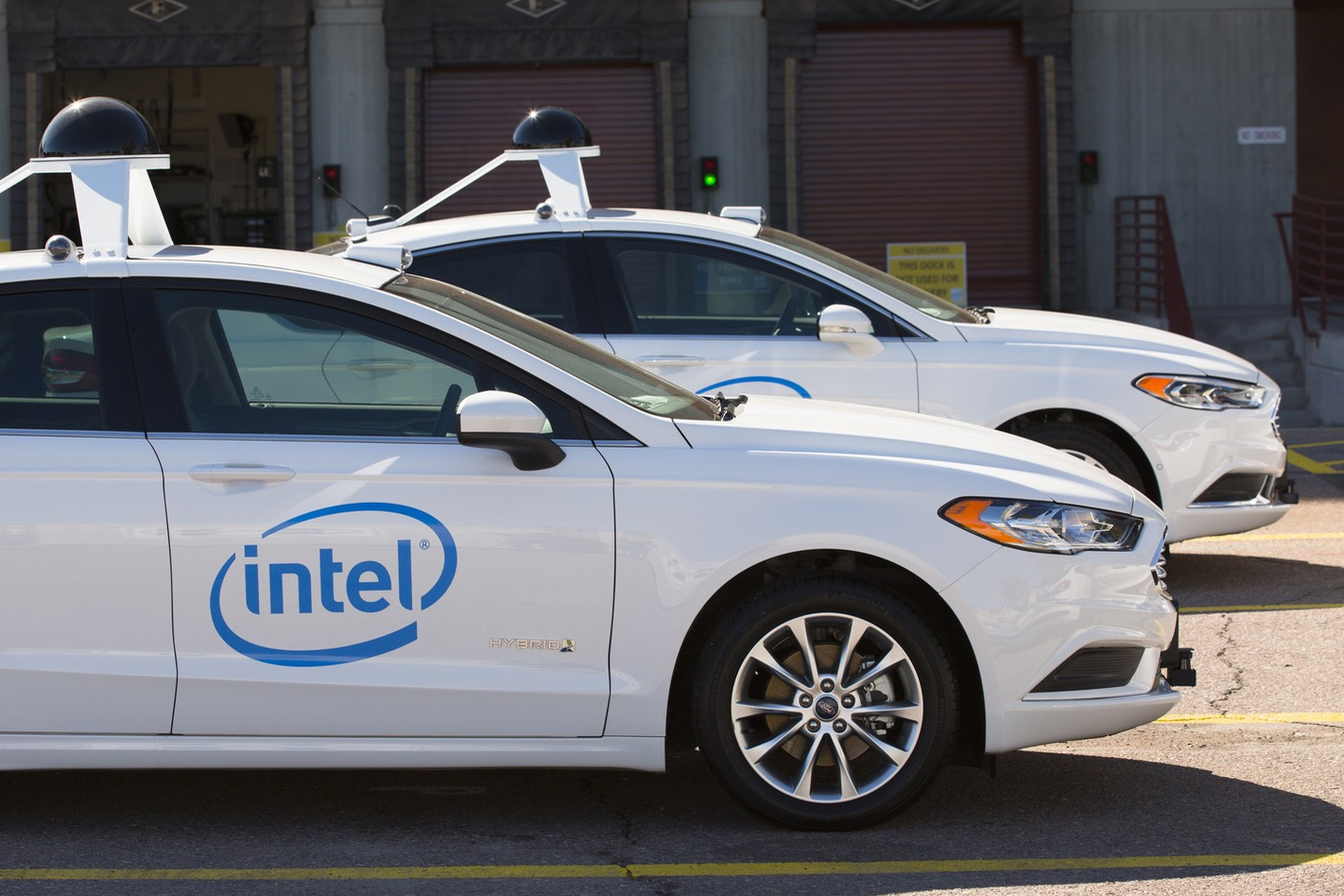
But crucially, Intel has bought itself the lead in the data race. Mobileye’s value isn’t in its systems, good as they are. It’s in the data they generate, which can be used for everything from optimizing traffic flows, to speeding the adoption of full autonomy by capturing and sharing every pothole.
Morgan Stanley reckons the market for automotive data will be worth US$750bn annually by 2030, while Intel estimates autonomy in general will be worth US$7tn by 2050. Mobileye has done deals with BMW and VW to share the revenue it generates from systems fitted to their cars.
But like passengers in an autonomous car, the carmakers aren’t in control.
EANDERING, annoyed, up a Cretan mountain track scratches microscopically at the core of the third-generation Porsche Cayenne’s athletic prowess. Especially when what Porsche calls its “off-road” section could be cheerfully traversed in a Golf.
So the Cayenne S can raise its ride height to 240mm, with its active rear anti-roll bar pushing wheels down into holes and its all-wheel steering shrinking its turning circle. Some domestic driveways will be worse.
A bit later, though, this very same Cayenne S whips into a third-gear left hander with a trace of all-wheel drift, slips into understeer on the still-wet patch of tarmac in the shaded lee of an overhanging cliff face, then re-gathers itself as quickly as it de-gathered, punching effortlessly with incessant dollops of new speed.
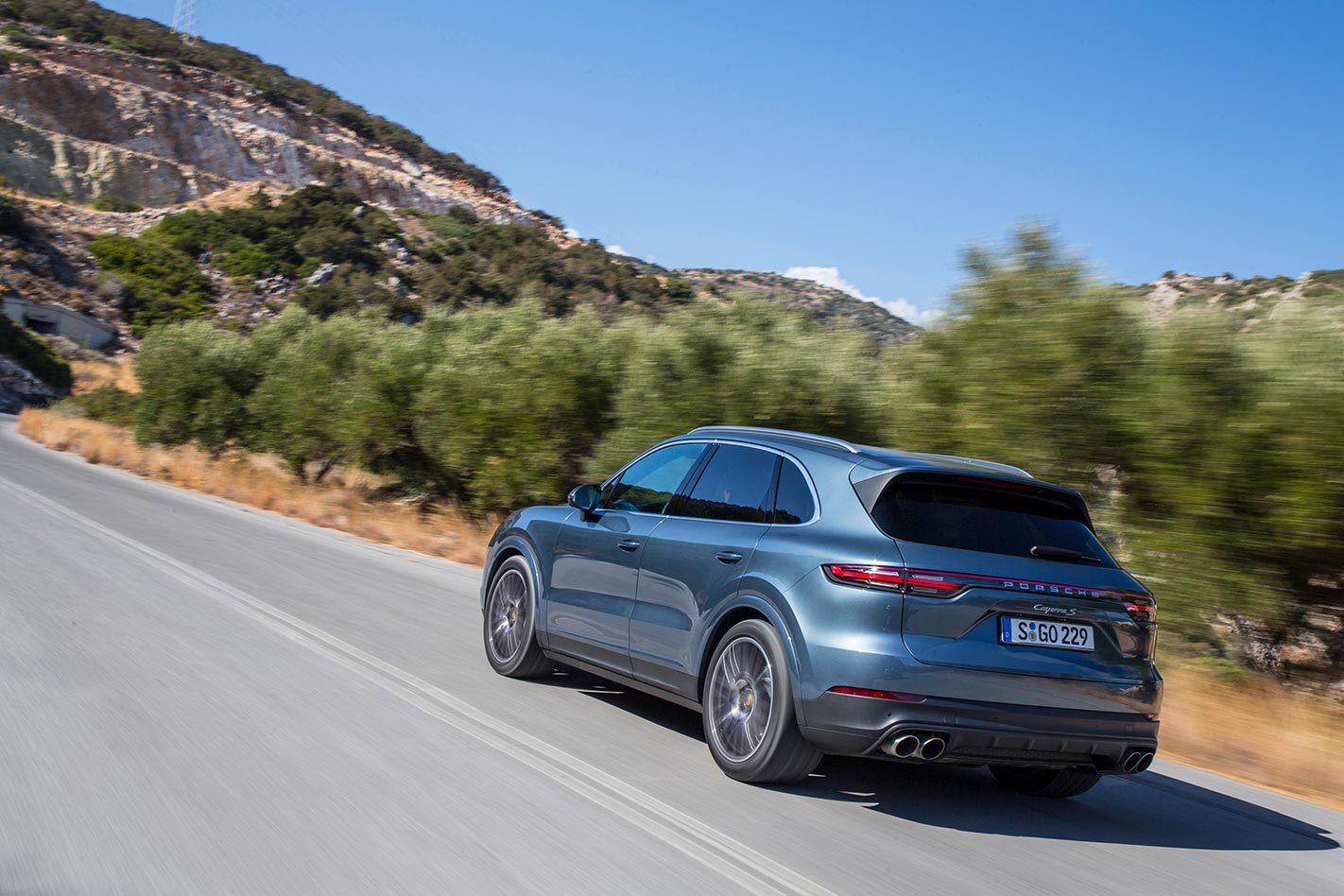
But something was clearly out of the ordinary, because two tonnes of high-rise luxury isn’t supposed to do that. In history’s less ethical epochs, people convinced elephants to tap dance, but they didn’t tap dance well. And yet, that’s the engineering equivalent of what’s happened here.
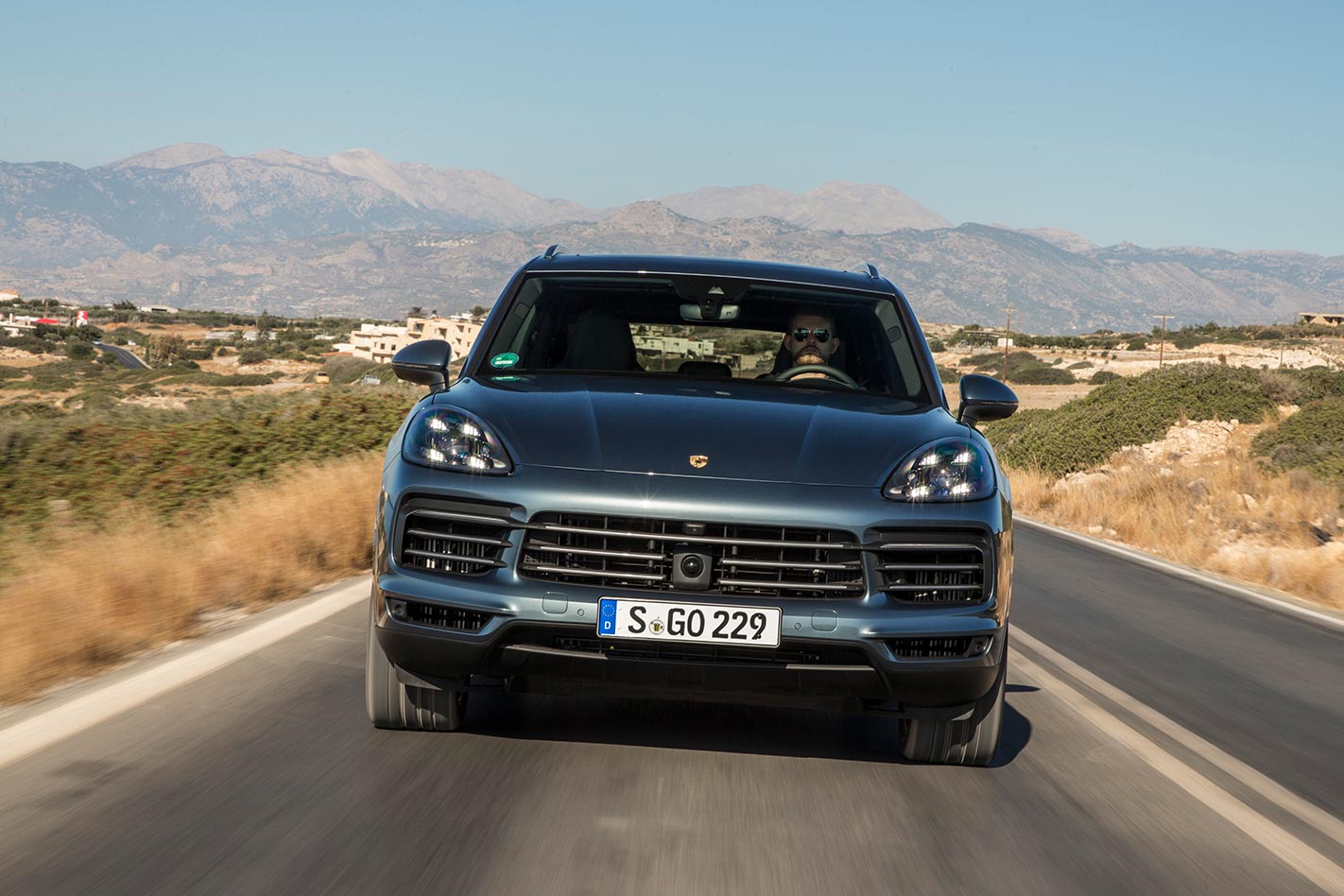
For Porsche’s engineers, making this happen was everything except simple. Audi’s engineering team did a lot of the heavy lifting, but Porsche’s Dieselgate memories are fresh enough to know Neckarsulm’s work is worth checking forensically.
There are three stars to this show: the sweetest V6 on the market, the brilliant chassis dynamics and an interior shorn of the button-fest that dominated the bye-bye car.
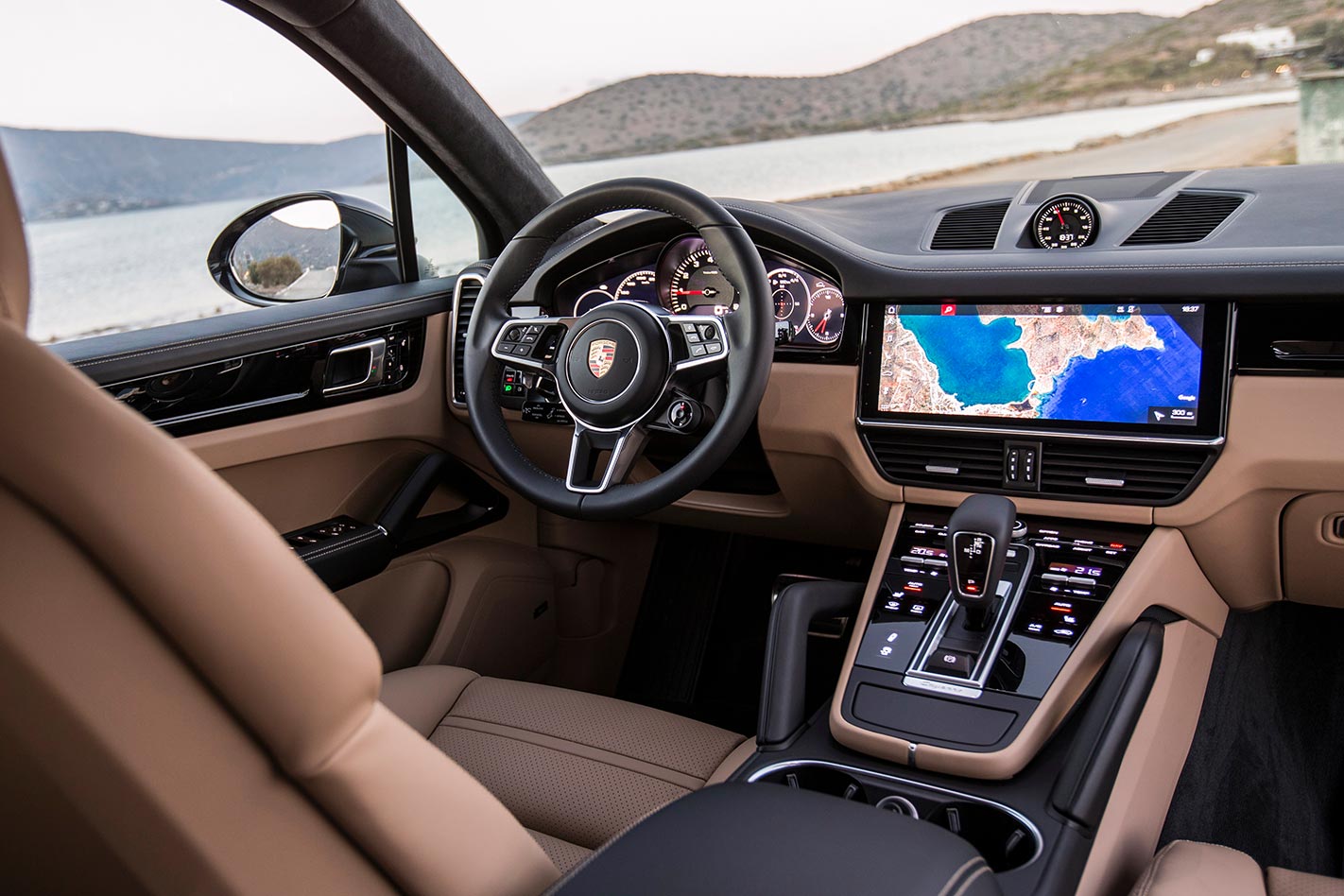
Where the Turbo is all theatrical thump, the S feels more rounded, more usable every day and more fun to drive when the roads get interesting.
It has a broader torque range than its more expensive sibling, and 550Nm is usually enough from 1800rpm. It has a broader power range, too, and feels and sounds far happier about revving to its 6800rpm limiter, as if by nailing the throttle, you’ve asked it to do what it wanted to do all along.
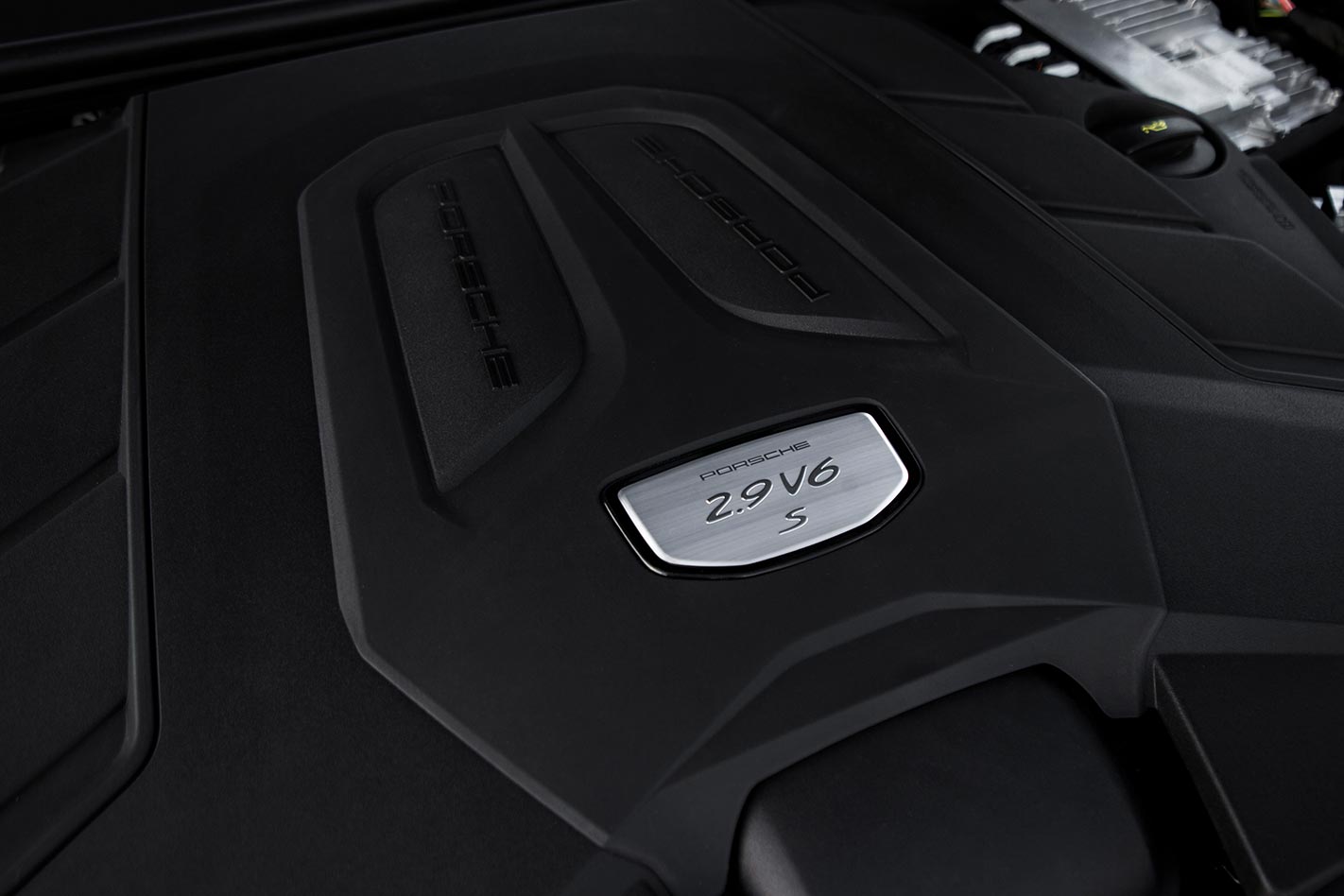
It’s so clean and strong that Porsche says it hits its 265km/h top speed in the direct-drive sixth gear, with the last two long cogs there for cruising with better fuel economy and a quieter cabin.
It’s a wonderful motor to drive, punching out of corners on either torque or high-end power, capable of terrific feats of throttle response and there’s enough of everything to drift the big SUV on dry tarmac. Porsche claims it will hit 100km/h in 4.9 seconds, but that’s only with the optional Chrono Package, otherwise it’s a 5.2-second exercise.
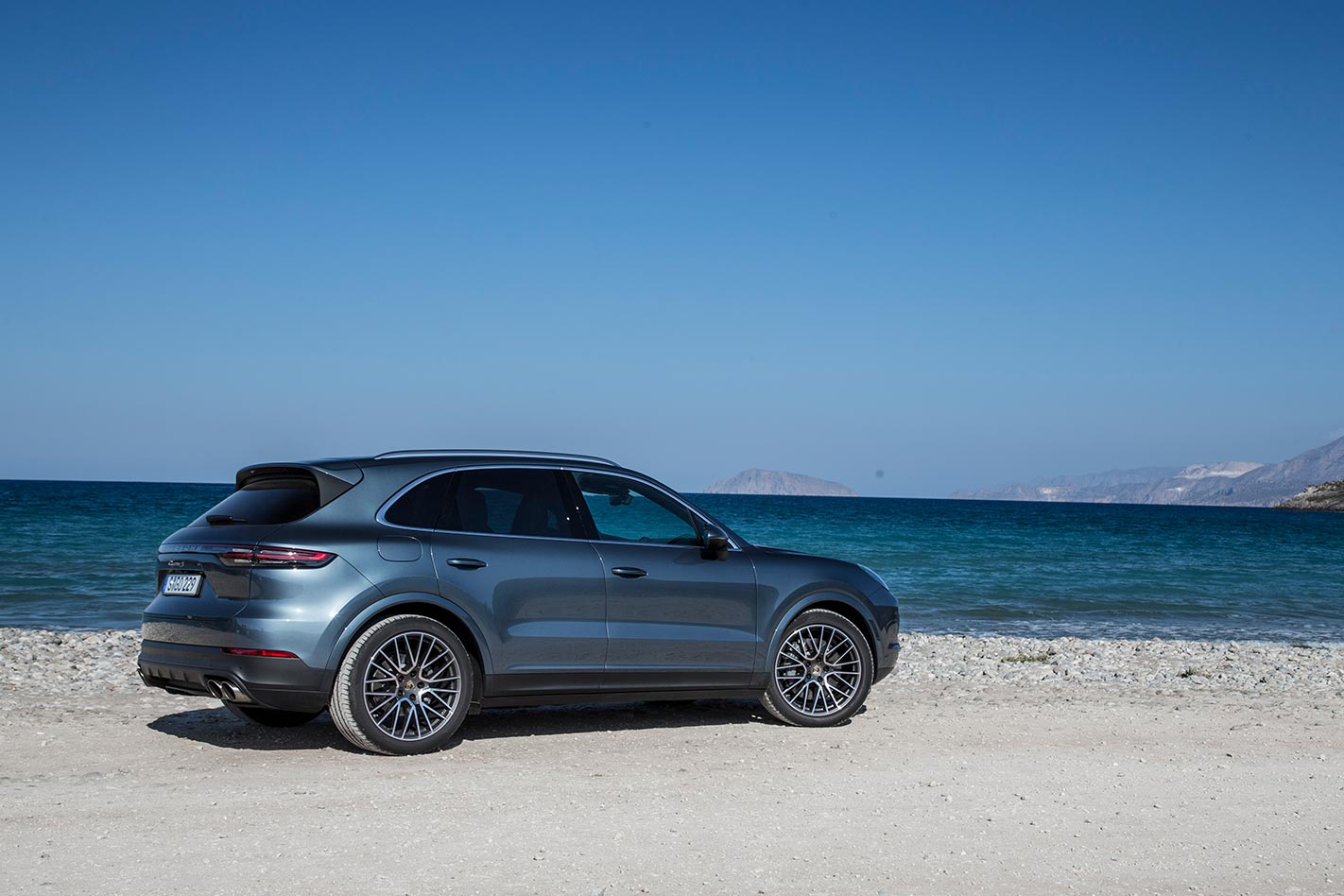
The stock brake package does without the Turbo’s new tungsten-carbide coated brake disc in favour of a steel frisbee with six-piston calipers up front, all surrounded by 255/55 ZR19 rubber at the front and 275/50 ZR19s at the back.
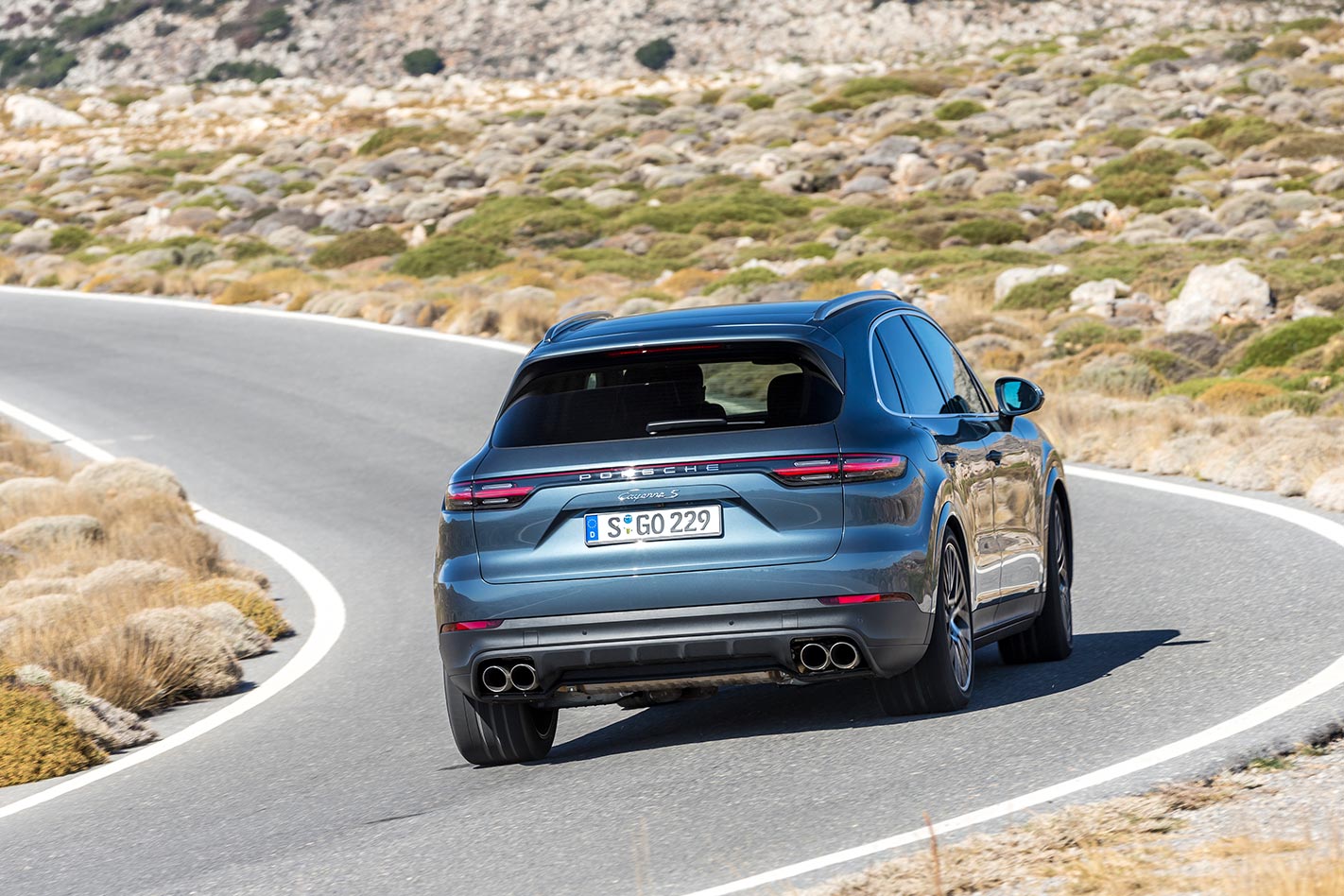
And the well-weighted steering, wide power curve and clean gear shifting make it massively flexible and forgiving in hard driving. And, surprisingly, fun.
STAR RATING: 4/5
Like: Chassis poise; sweet power delivery
Dislike: Steering feel; still very heavy; fixed headrests
2018 PORSCHE CAYENNE S SPECSEngine: 2894cc V6, DOHC, 24v, twin-turbo Power: 324kW @ 5700-6600rpm Torque: 550Nm @ 1800-5500rpm Weight: 2020kg 0-100km/h: 4.9sec (claim) Price: $145,000 (est)
Dig back through the annual sales figures for traditional passenger cars and you notice an alarming statistic: we’re buying fewer and fewer of them proportionally as time goes by.
Instead, we’re walking past sedans, wagons and hatchbacks to buy mainly high-riding SUVs that don’t drive as well, or save as much fuel, as the once-popular vehicles that we now seem to be more likely than not to turn up our noses at.
But there’s another corner of the market that’s also showing strong growth, accounting for one in every five sales of a passenger car or an SUV: the trade ute.
Like SUVs are to passenger cars, the growing fleet of 4×4 trade utes filling showrooms of more brands than ever before – and more are yet to come – don’t drive as well, or save as much fuel as the vehicles we favoured only a few decades ago.
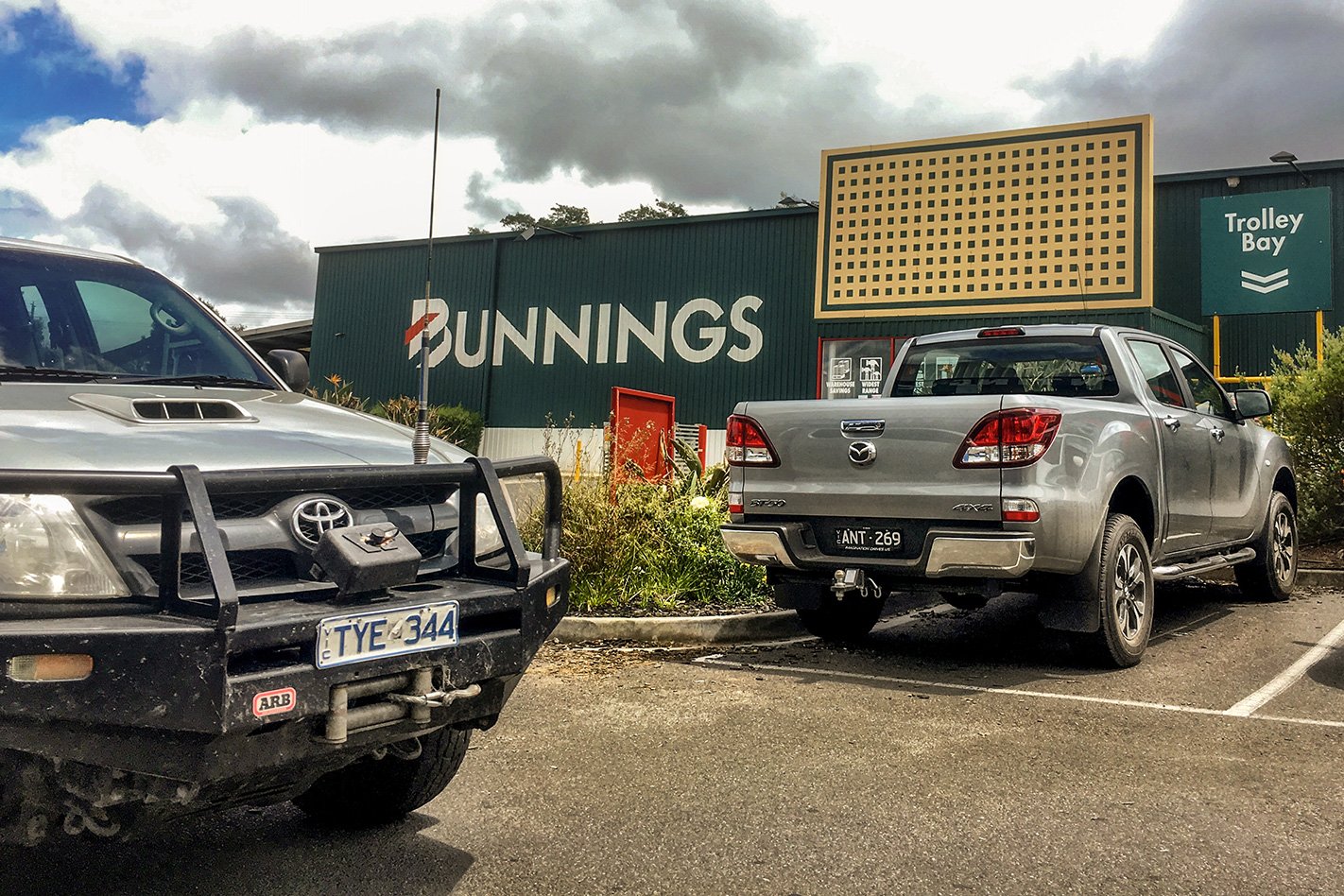
But mum and dad buyers everywhere are still keen to kick trade ute tyres, and car makers are more than keen to take their money, because these types of vehicles can reap some serious profit.
WhichCar jumped behind the wheel of one of these utes – a dual-cab (five-seat) Mazda BT-50 XTR worth almost $46,000 – recently to see how well it would adapt to family life.
Our first look at the mid-specification Mazda BT-50 XTR dual-cab ute that will be our main source of family transport for the next 14 days reveals it is clad in metallic aluminium paint, a surprising no-cost option other car makers often charge extra for adding a bit of sparkle, so to get it for free is a bonus.
Soft-nosed at the front, boxy at the rear and long and tall compared with the cars parked around it, the BT-50 stands out from the crowd. A quick walk-around shows there’s no front parking sensors, which given its size will be a worry for any future forays into shopping centre car parks. But tucked under the logo on the tailgate is a reversing camera, which will come in handy a bit later on, as we will discover.
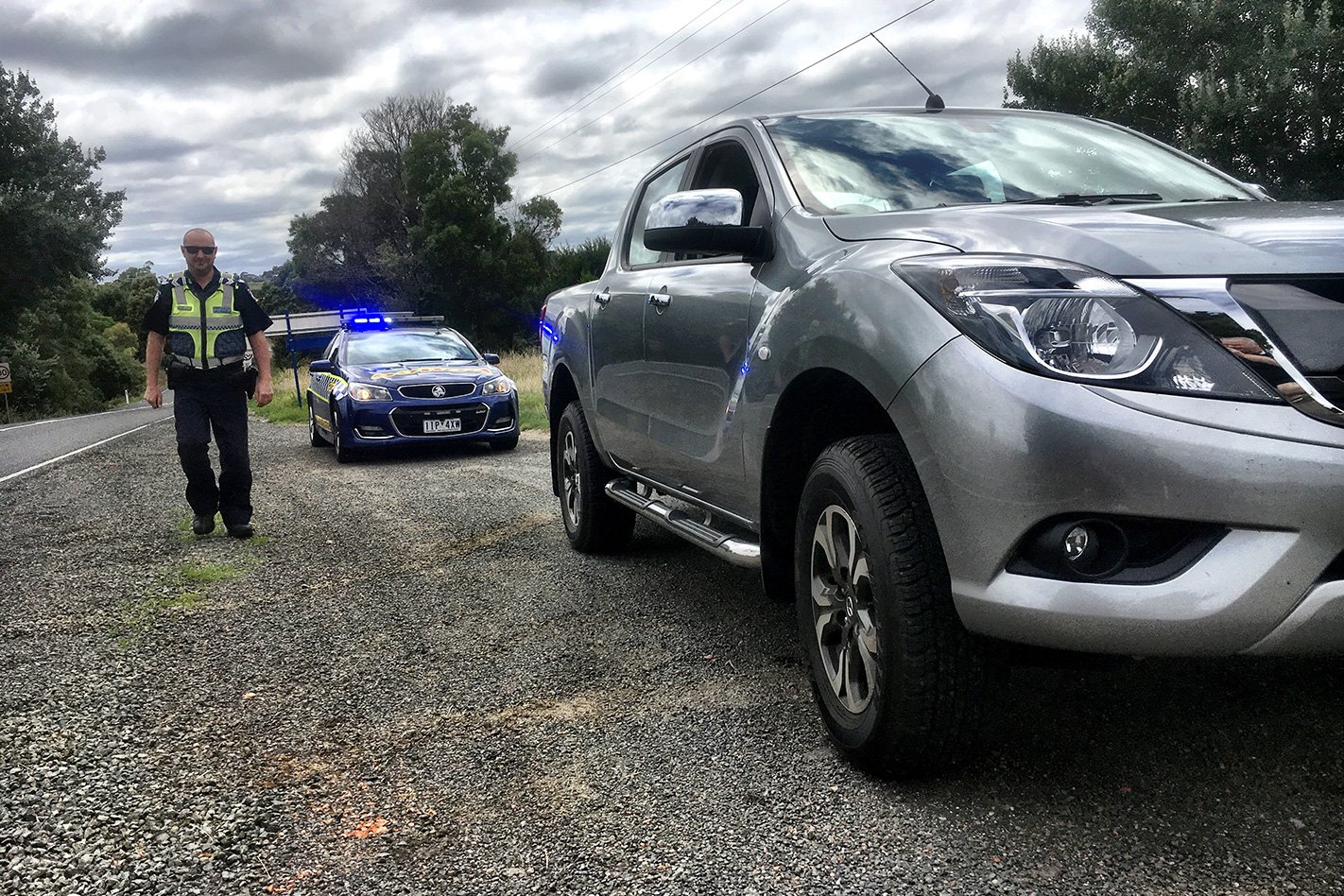
Beneath its skin, the Mazda shares a lot of DNA with the Ford Ranger. Both are built off the same ladder-frame chassis – a style of car making where the body is bolted onto heavy-duty steel rails rather than formed as a monocoque – and share engines and gearboxes. However, the looks are at opposite ends of the spectrum: where the Ranger asserts itself as all butch and tough, by comparison the softer-formed BT-50 is more business-like.
The Mazda has a smart entry key, just like a normal car, so all the doors unlock at the press of a button. A flip-out key will start the engine.
Open the driver’s door, and the first thing you notice is that it’s a long way up into the driver’s seat. Climbing into it is an effort for me – and I’m not short – although helping me are rock slider-style side steps and a handle protruding from the A-pillar that runs along the side of the windscreen.
Once settled, the cloth-covered seat is big and supportive, with decent manual adjustment via a ratchet for backrest rake, and a lumbar and height adjustment for the driver’s side only. However, the steering wheel will only adjust up and down, missing the in and out sliding function that would help me to find the most comfortable driving position. My arms are left a little too straight for my liking.
Even though it is based on a workhorse, the BT-50 XTR comes well equipped. The mirrors adjust electrically, there’s a sat-nav system integrated into the six-speaker audio headunit that includes digital radio, the rear-vision mirror will automatically dim at night, and both the steering wheel and the gear-shift lever for the six-speed automatic transmission are wrapped in leather. In other words, you’re not missing out on much that an ordinary passenger car will have.
It’s from the point where you start the engine that the differences to a passenger car become even more apparent.
Straight away, it doesn’t sound or feel like a passenger car, even at idle. Under the bonnet is a 3.2-litre five-cylinder turbo-diesel engine, producing 147kW and 470Nm. (The significantly smaller 2.0-litre turbo-diesel engine in a Ford Mondeo produces 132kW and 400Nm, not too far behind it.) When cold the engine clatters noisily as its high-pressure injectors slowly warm. Once warmed up, though, the noise is less intense.
On the road, it feels like a truck engine, growling with every squeeze of the accelerator pedal. The engine is a bit laggy down low, but once the turbocharger spools up and the big serve of torque, delivered very low in the rev range, arrives like a tsunami there’s a rush of power that will have you spinning the rear wheels in the wet if you’re a bit heavy with your right foot.
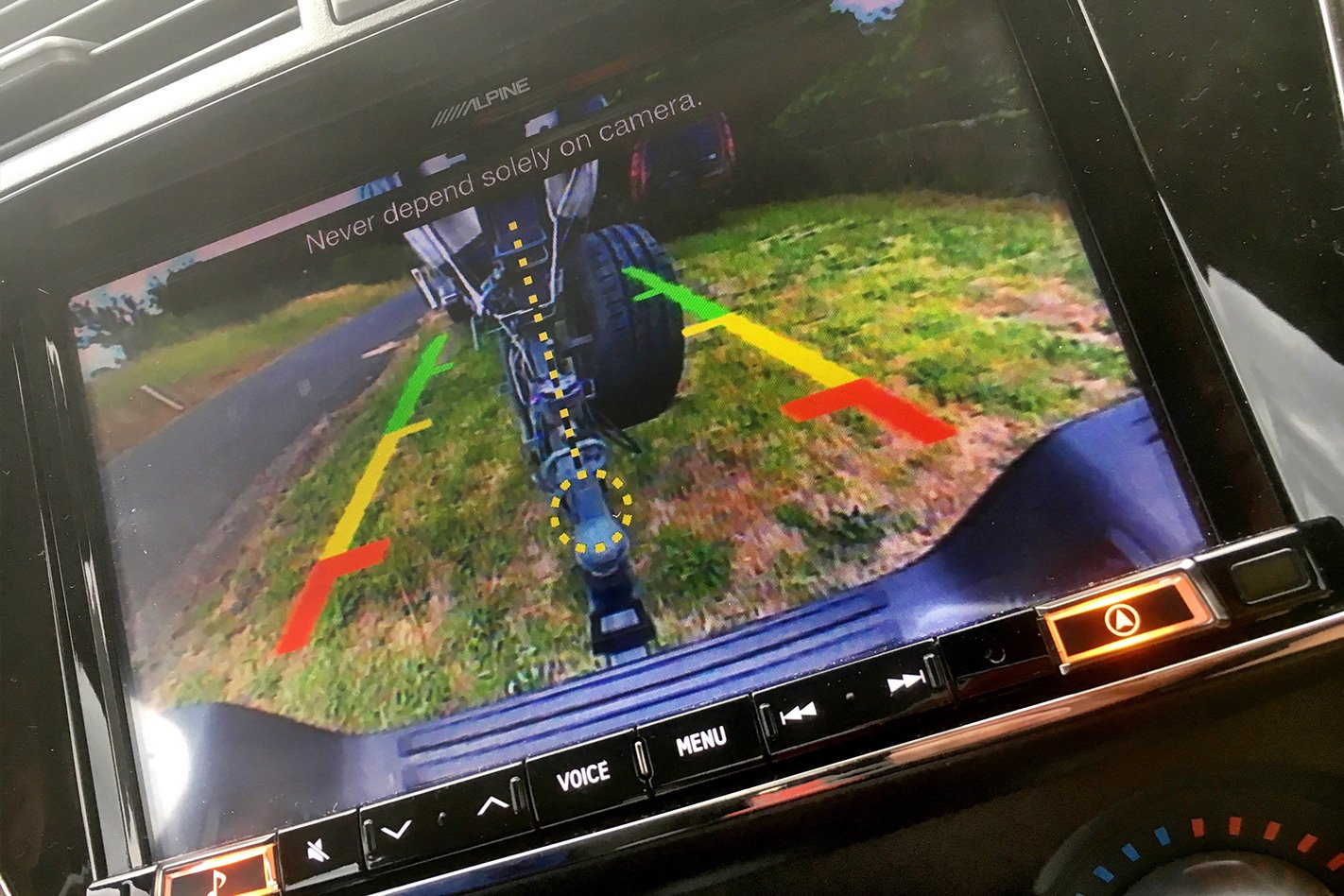
Ride is also compromised. Trade ute makers are tripping over themselves to provide best-in-class towing capacity, and that means big, beefy suspension systems. The BT-50 uses a car-like double-A-arm front suspension, but down the back it uses truck-like leafsprings that are better at carrying weight – and towing up to 3.5 tonnes, the equivalent of carting around a fully grown female elephant on a trailer. (We put 1.6 tonnes on the back of it, and the BT-50 hardly knew it was there). Helping the towing ability is a reversing camera that includes a towball setting that helps you place the towball precisely under the hitch. It’s an argument-saver.
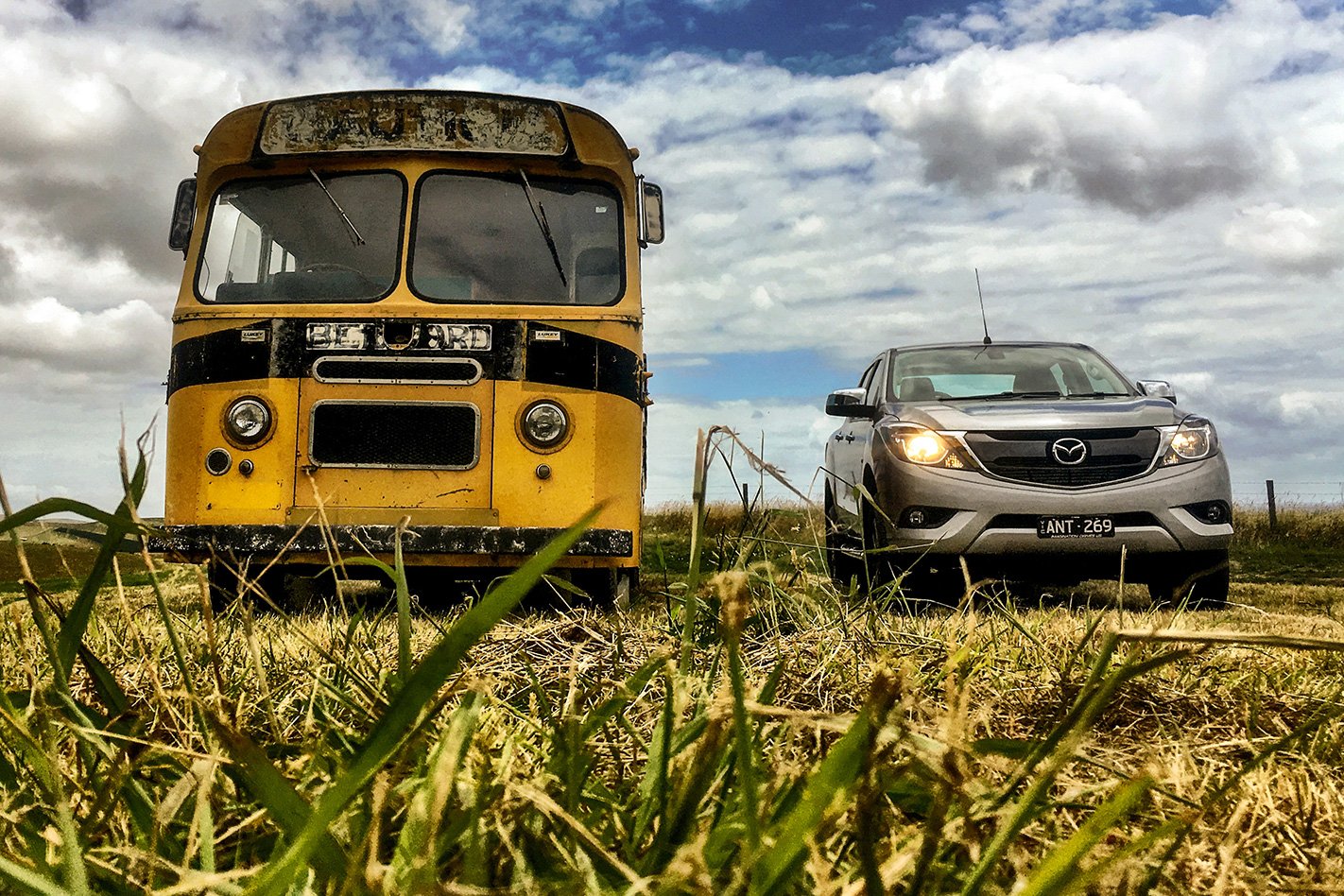
All that towing ability means the suspension has to be set up so tautly that the ride, even at low speeds, is quite bouncy. What doesn’t help is that because it has four-wheel drive, the 2.1-tonne BT-50’s rear axle is quite heavy, making it hard for the already overly sensitive suspension to settle quickly after hitting a bump.
The steering is okay, although the extreme length of the BT-50 means that some tighter car parks will be beyond your ability behind the wheel. Compounding this is a larger-than-normal turning circle compared with some passenger cars, meaning even if you’re going to squeeze into a tight space, you’ll need to shuffle back and forth to take a few bites at it.
The BT-50 isn’t all that economical, either. We averaged almost 10.0 litres per 100 kilometres in a mix of country and city driving, against a claimed average of 8.9L/100km. In a diesel-engined passenger car, you’d expect around 6.0L/100km.
There are strengths, though. The BT-50’s air-conditioning system is almost industrial in its ability, cooling or heating the large cabin in a few minutes even in extremes where some passenger cars would struggle. The interior space it affords is great, with genuine room inside for five adults. Inside is versatile, as you can flip up the rear seat space to create more room for large objects you don’t want to leave in the tub.
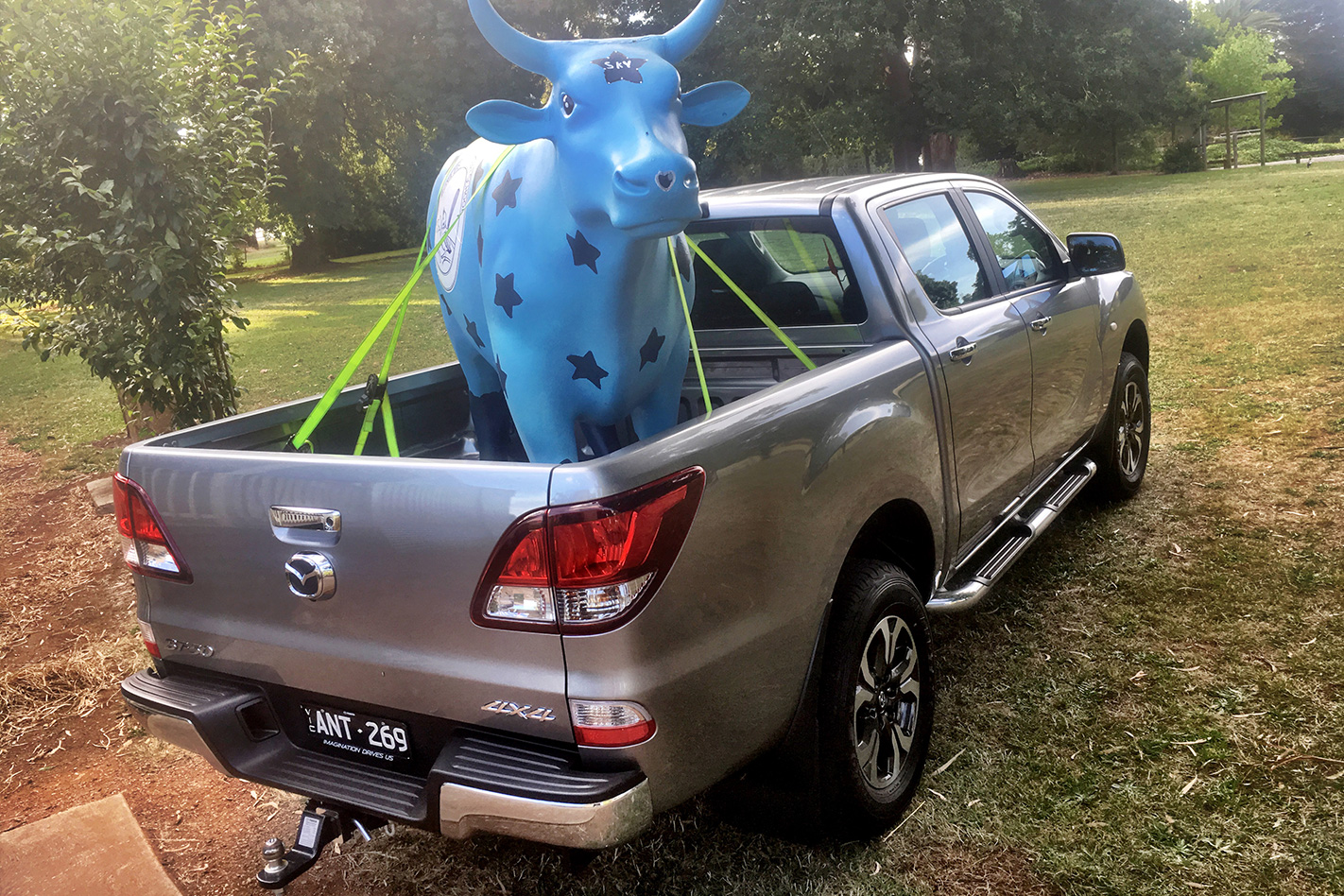
And there’s that tub. Handy for tip runs, camping trips and off-road motorcycles, it’s the party end of the ute. We even managed to fit a life-size fibreglass cow in it.
It’s that practicality that would win me over. The ability to chuck things in the back and transport it around carries romantic images of clearing the house of unwanted clutter, buying dog chow in bulk from the local grain store, tidying up the yard to House and Garden specification, collecting loads of winter firewood, or even head bush for a long weekend, family in tow.
Once the novelty of what the trade ute offers wears off, though, the reality may be a bit different.
AT LAST, the medium SUV tide appears to be turning.
What was once a motley collection of automotive mediocrity, populating the periphery of mainstream transport taste, has become a new-wave charge towards becoming the total family-car package.
Don’t want your SUV to look like a shed? Check out Peugeot’s sleek new 3008, with a designer interior that’s polished enough to back up its concept car-inspired exterior – a look that utterly rejects its bloated and boring MPV predecessor. And if it’s imposing real estate you’re after, then Honda, Nissan and Holden still know how to dress-up a contemporary four-wheeled McMansion with all the mod-cons that bring families to the yard.
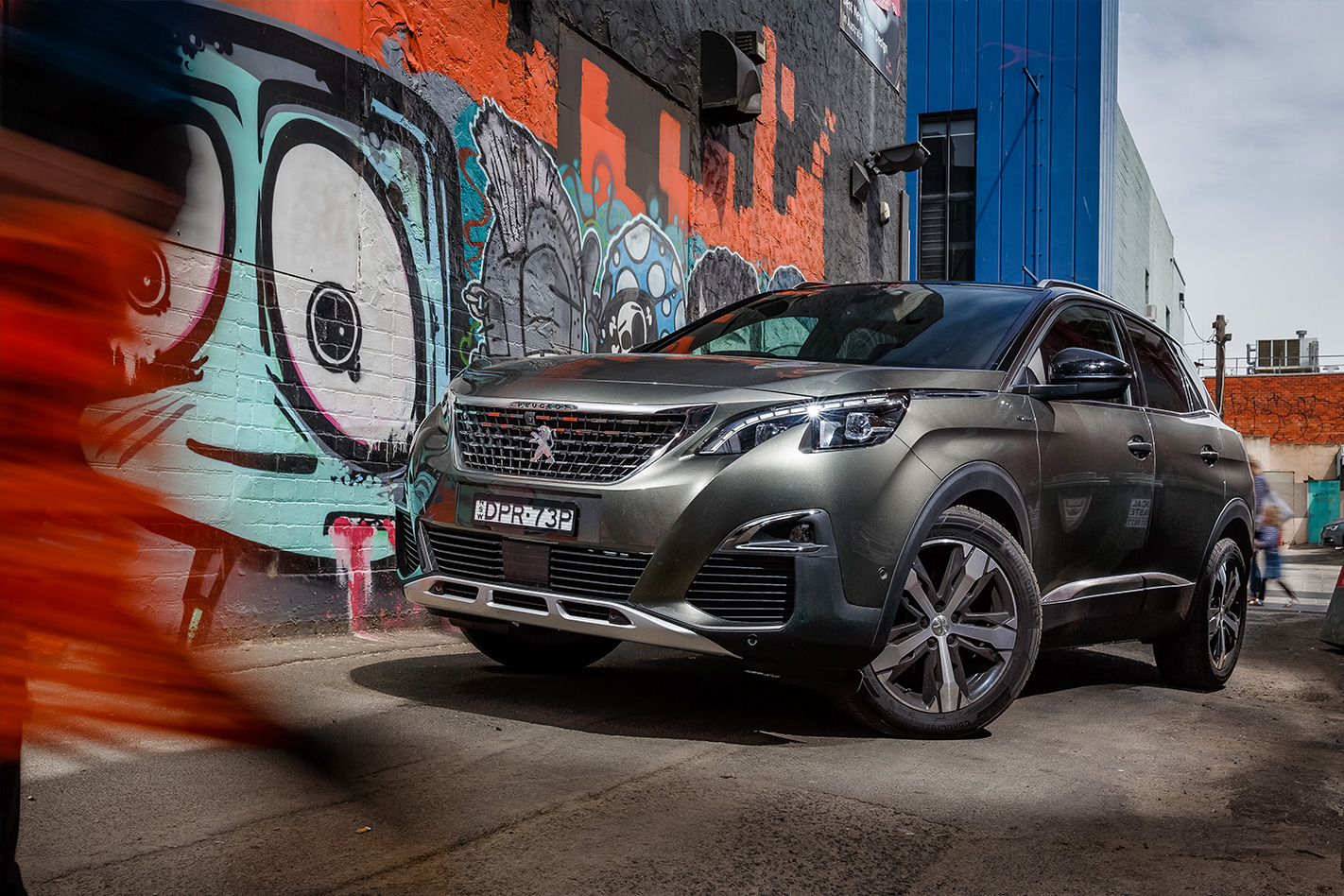
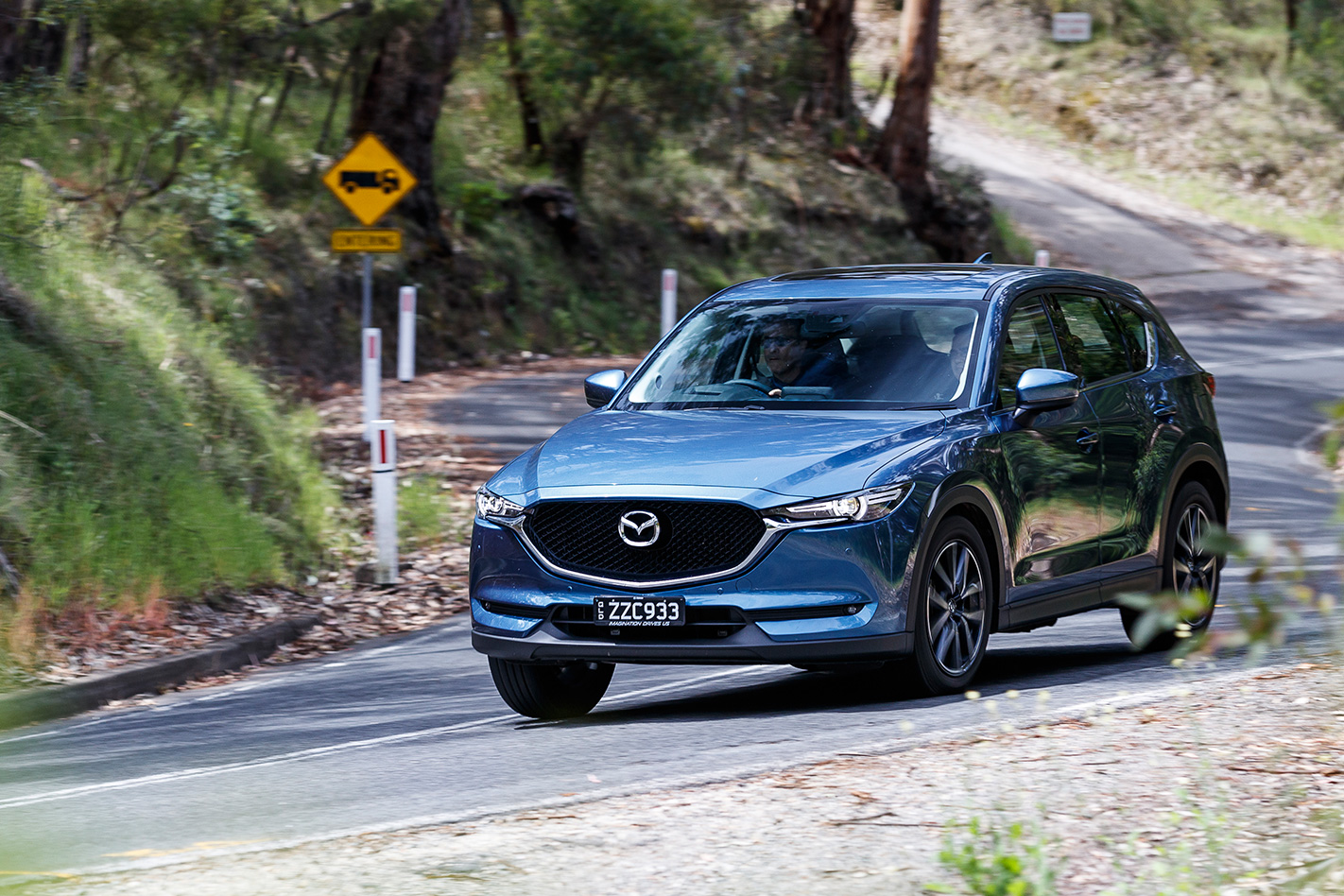
In one crucial aspect, it definitely has. Instead of ‘front-drive, early $30s’, here we have a $45K price point, mid-to-top trim levels, petrol engines and all-wheel drive on everything except the front-drive-only Peugeot. That sees Honda’s flagship CR-V VTi-LX ($44,290) and Nissan’s primo X-Trail Ti ($44,790) competing alongside the not-quite-pinnacle Mazda CX-5 GT ($44,290), Volkswagen Tiguan 132TSI Adventure ($43,990), Peugeot 3008 GT-Line ($43,490) and Holden’s second-from-top Equinox LTZ AWD, wearing the same $44,290 sticker as its Honda and Mazda rivals.
In its home market (the USA), the Chevrolet-badged Equinox is a sizeable hit, with a sales record of close to 300,000 units expected this year. Holden’s ambitions for its Australian-tuned version of GM’s Mexican-built SUV are much more modest, but you can rightfully expect the Equinox to occupy the upper echelon of Holden’s sales charts, providing the stigma of the decrepit Captiva doesn’t undermine its talents.
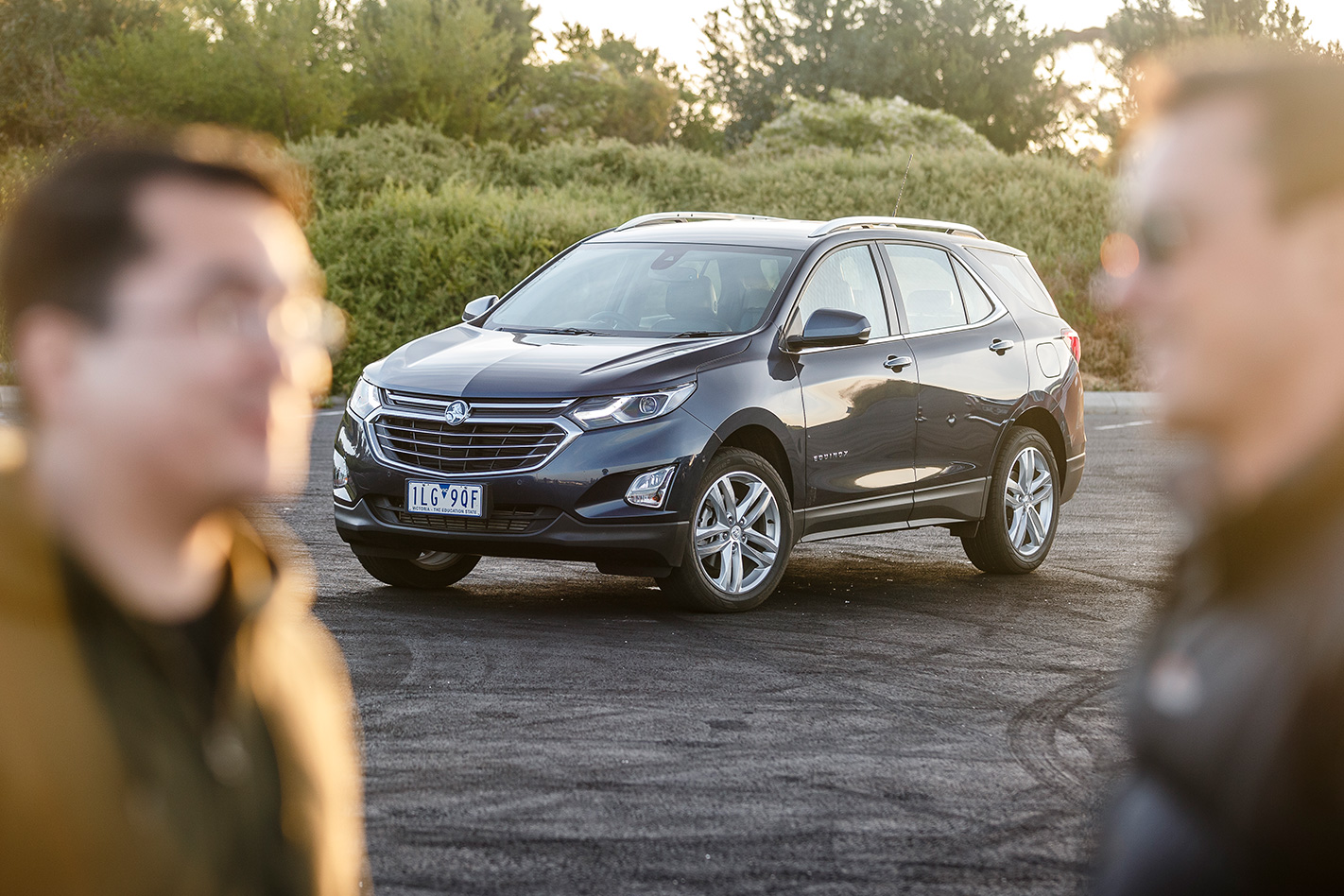
Packing the next-gen Commodore’s strong and silky 2.0-litre turbo-petrol four with a class-belting 188kW/353Nm and nine-speed automatic transmission, there’s fat chance in hell of any other non-sporting medium SUV keeping pace with the rapid Equinox, with the possible exception of Ford’s thrusty 178kW Escape.
A last-minute issue with our testing venue meant we had to abandon performance testing but it’s safe to say that Holden’s 7.3sec 0-100km/h claim for the 2.0-litre Equinox might actually be a little on the conservative side. Yep, she’s a bolter, as the excellent 109kW per tonne power-to-weight figure suggests. The Tiguan is no slug either.
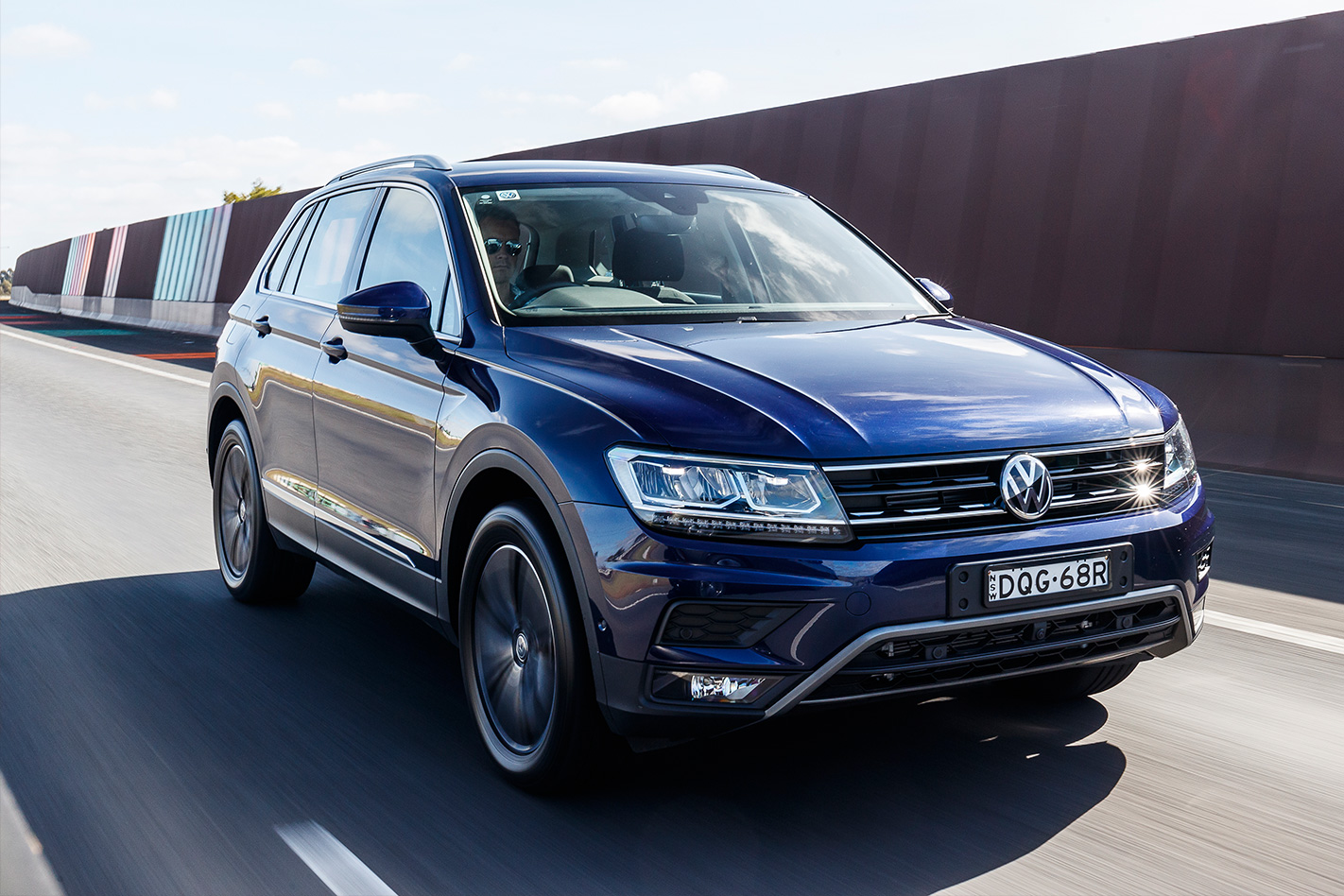
Despite Volkswagen’s tip-shift gate being arse-about (in our opinion), any arrangement is preferable to the Equinox’s appallingly unintuitive +/– switch mounted on top of its gearlever. Not only does your elbow fight for room with the overly tall centre console armrest, but the lever needs to be in ‘L’ for the tip-shift to work, and then it holds gears at the 7000rpm rev cut-out, despite the nine-speed ’box packing ratios tighter than a flea’s intestines. And what may feel like hidden shift paddles on the back of the Equinox’s tactile steering-wheel spokes are actually volume and audio controls.
The straightforward CX-5 ignores all that finicky nonsense by nailing the basics – great steering wheel with shift paddles, a traditional six-speed auto with a highly effective (though sometimes over-eager) Sport mode, and a tip-shift configured in our preferred direction (forward for a downshift, back for an upshift).
The new-gen CR-V takes a very different approach to achieving a similar end. Flat stick, there isn’t much between them, but the Honda is at its best when serenely surfing its vast torque band (240Nm from 2000-5000rpm), not raucously pinning its tacho needle at 6000rpm. Despite the 1.5 turbo’s stout performance (0-100km/h in 8.0sec) and a clear economy victory (10.8L/100km on test), this is a drivetrain that delivers its best when readily hauling bodies and cargo. What the engine brings in outright grunt, the CVT does diminish in dissatisfaction somewhat.
Peugeot’s impressively lithe 3008 almost matches the CR-V for economy, and while the French SUV’s performance claim (9.9sec to 100km/h) may appear slightly insipid, the reality is significantly more than that. The 3008 GT-Line features by far the sweetest iteration of Peugeot’s ageing ‘Prince’ 1.6-litre turbo-petrol four, and in unison with a superb Aisin six-speed automatic and sizeable fixed shift paddles, there’s a verve to the 3008’s demeanour that sits perfectly with its shapely form and sharp, yet supple dynamics.
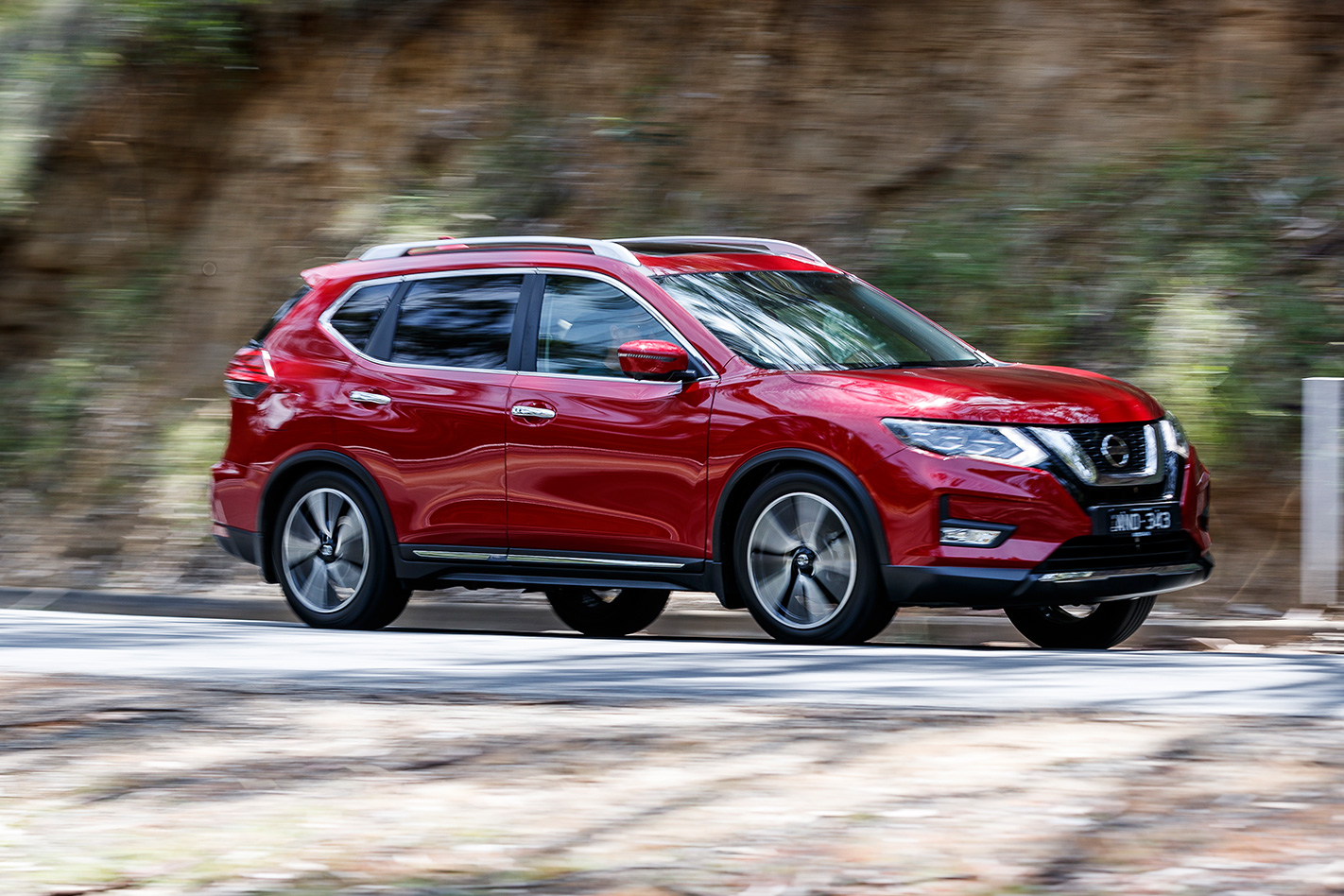
Dynamically, the Nissan is closer to the mark, proving sharper at the helm than the last X-Trail we drove (in 2014) and less cumbersome than its under-the-skin Renault Koleos relative. But there’s a disconnect to the X-Trail Ti that doesn’t quite sit right. While its 225/55R19 tyres prove advantageous for turn-in response and mid-corner grip, they’re perhaps a step too far in terms of where the X-Trail’s essence is, and what it’s trying to be. Even then, the 19-inch-wheeled X-Trail understeers a bit, squeals its tyres a bit, trips up and will kiss its bump stops over protrusions that don’t faze its rivals. The Nissan is no complete numpty, but it never feels like it’s enjoying itself.
For handling, ride and driver enjoyment, the CR-V is a big step up from the X-Trail. It’s neither as precise as the CX-5 or as supple as the 3008, yet it manages to blend elements of both, most satisfyingly in the way its multi-link rear end plays a significant part in pointing its nose into a corner. But the Honda’s steering isn’t in the same league as its chassis smarts. It’s slow to turn in, feels reluctant and detached, and fails to channel the keenness of a Civic, even in CR-V’s preferred fast sweepers. And while the ride is generally quite pliant, it could be better controlled over rippled surfaces, and there’s more tyre and wind noise than expected.
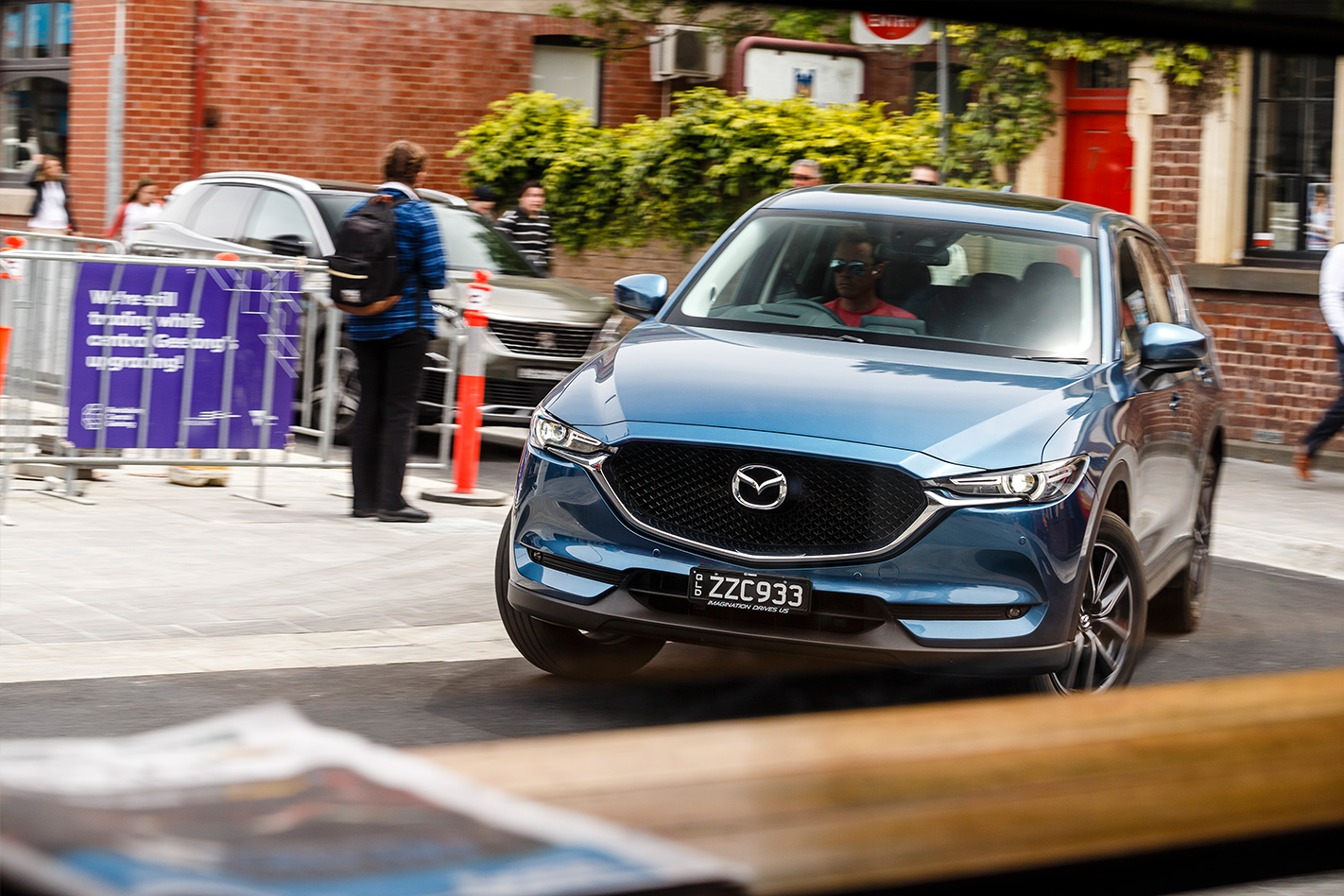
The reality, of course, is the opposite, but it all depends on how capable you are as a driver and how hard you’re willing to push your CX-5. The Peugeot also loves a challenge. As soon as you start to enthusiastically change direction in the 3008, or lift the throttle in tightening-radius corners, it responds with traditional front-drive French adjustability. It feels lower, more agile and sportier to drive than how you sit in it, because you do sit quite high. But in terms of working with its driver, adding some involvement and getting its power down, which it does impressively well, the 3008 is this group’s entertainer.
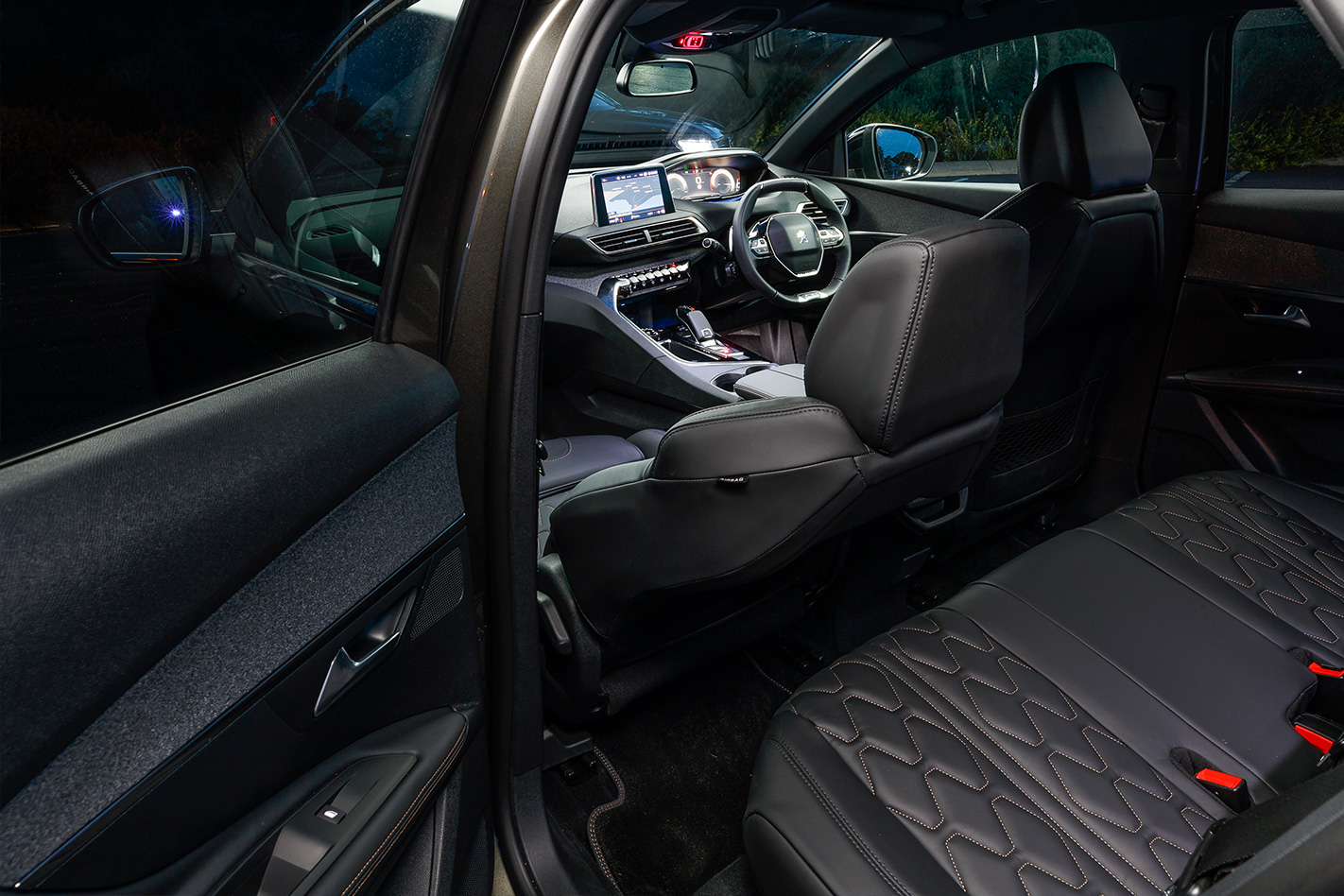
The Equinox is essentially the polar opposite of the 3008, yet it too feels balanced, grippy and adjustable. Holden’s chassis engineers have done some serious work to this car’s underpinnings and the result is quite remarkable given its size and its 300kg-plus weight penalty over the sprightly Pug. Given the Equinox’s considerable power, you do need to have the small ‘AWD’ button depressed (sited towards the front of the centre console), but when all four wheels are working, it punches out of bends with authority. Or slightly wayward torque steer if you’re in front-drive mode.
Guided by a beautifully tactile wheel, the Equinox’s steering is consistently weighted and pointy, making it a confidence-inspiring car to drive on any kind of road. Backed by a sound driving position, good vision, the best-judged ride quality and the tautest body control here, you can trace a line in the Holden that you have no hope of connecting with in the Nissan, making it something of a driver’s SUV. Yet the Equinox’s hugely flawed central control interface detracts from the experience, and should simply be burnt at the stake. If only it had the world’s greatest centre armrest design, as per the Volkswagen Tiguan.
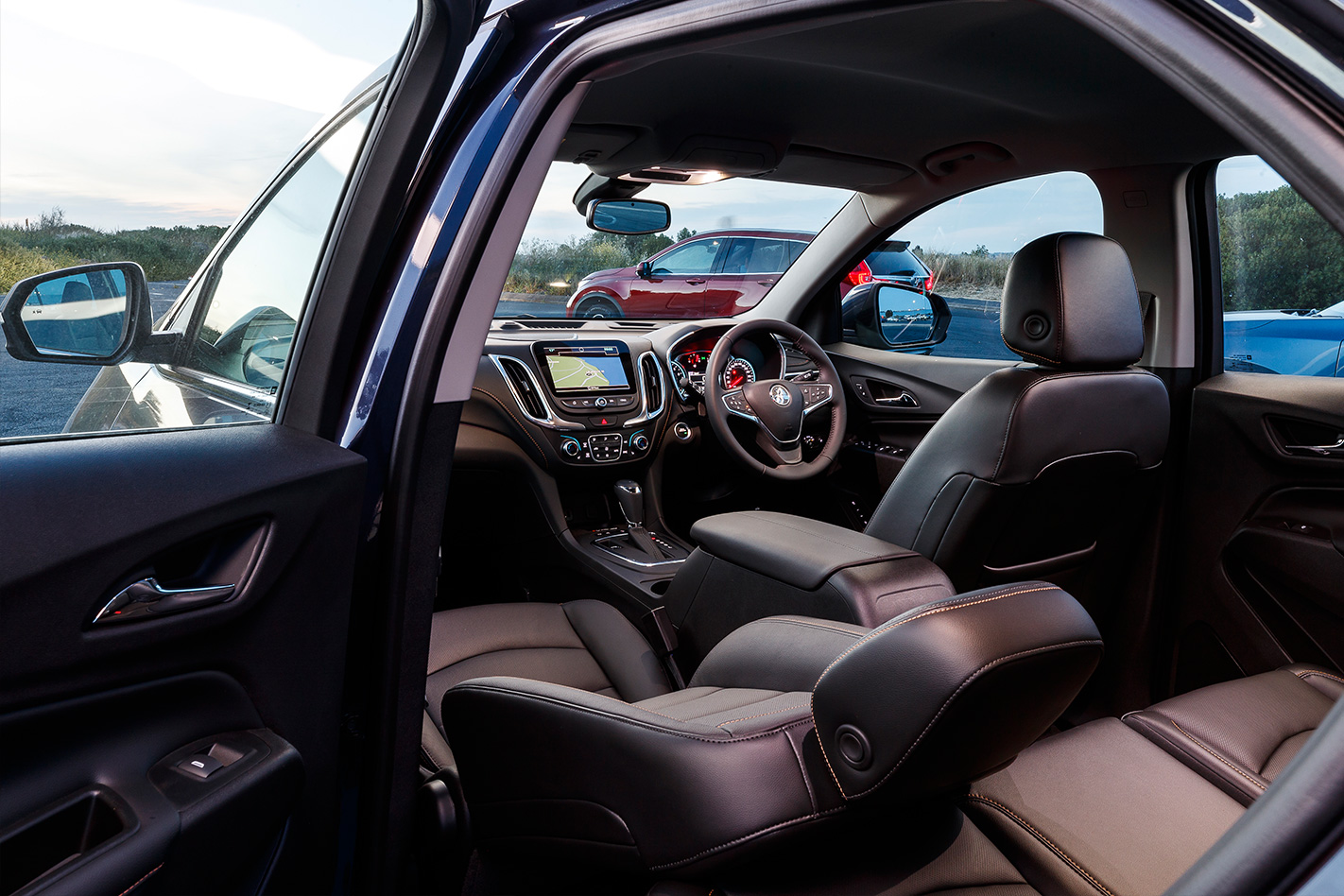
In terms of ride, Tiguan brings fine body control, if a little too much fidget and head toss compared to the more loping and absorbent 3008. Much like the Golf VII it’s based on, the Tiguan does tend to lose some dynamic interest the harder you push it but that’s entirely in keeping with the medium SUV zeitgeist. While it fails to hit the highs of some of its rivals, the VW blends elements of greatness together, making it a consummate all-rounder.
Same goes for its interior. The Tiguan feels like it was designed from the inside out, such is the consistency of its attention to detail, and the supreme utility of its packaging. About the only aesthetic aspect we can fault is the Tonka-esque heavy handedness of its dash and door detailing.
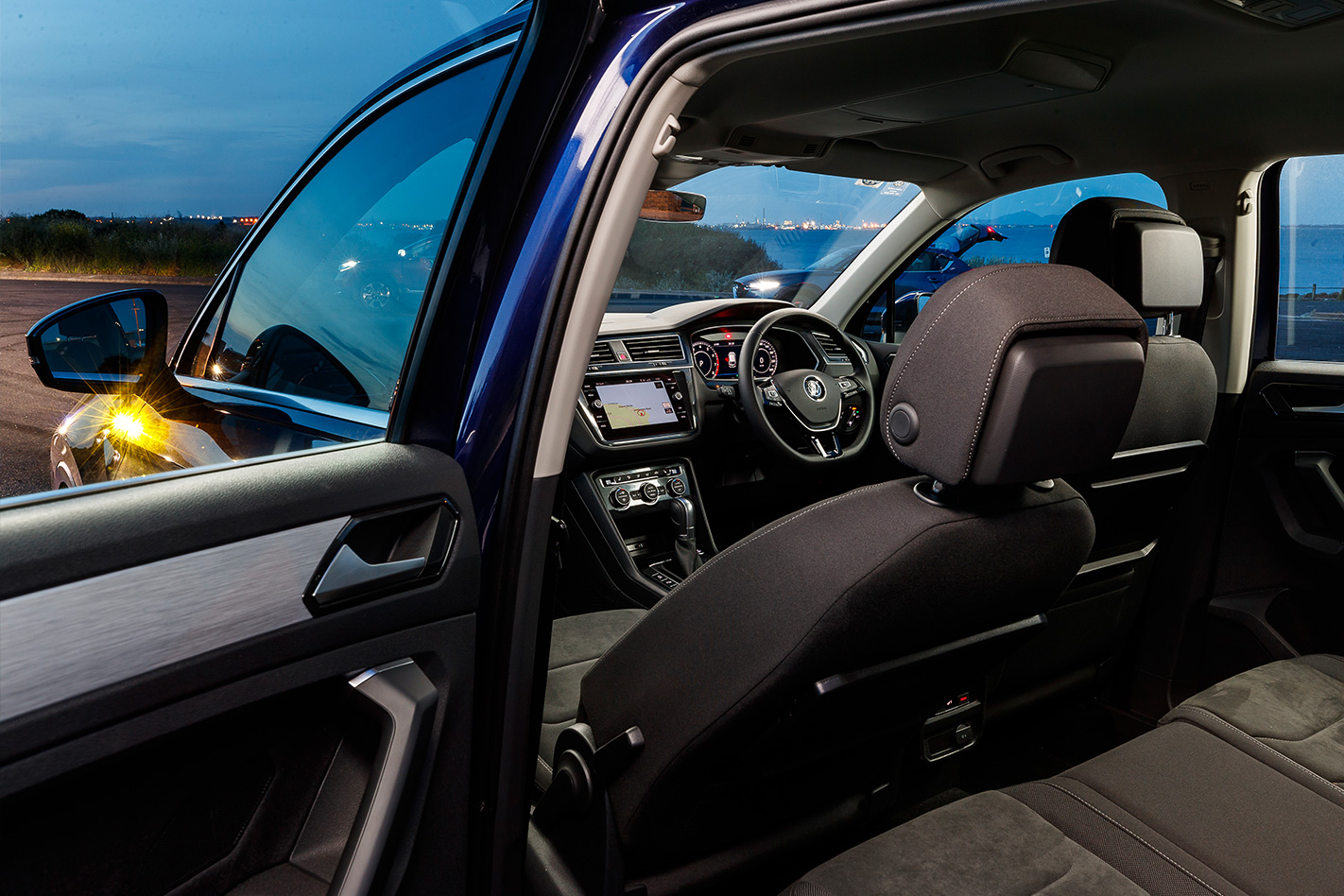
The Bose-kitted Equinox LTZ also sounds the business, though the Holden stumbles when you start to look beyond the basics. Its driving position, seat comfort, equipment and space are unquestioned, but when you peer below the cabin’s tide line, you could be inside a Chevy truck.
The X-Trail doesn’t fare too well under the interior microscope either. Unlike its Japanese rivals – each of which have a unity to their look, their packaging comfort and their quality of finish – the Nissan feels bitsy. All the room and theatre-style rear seat vision in the world can’t save the X-Trail from feeling rather second-rate.
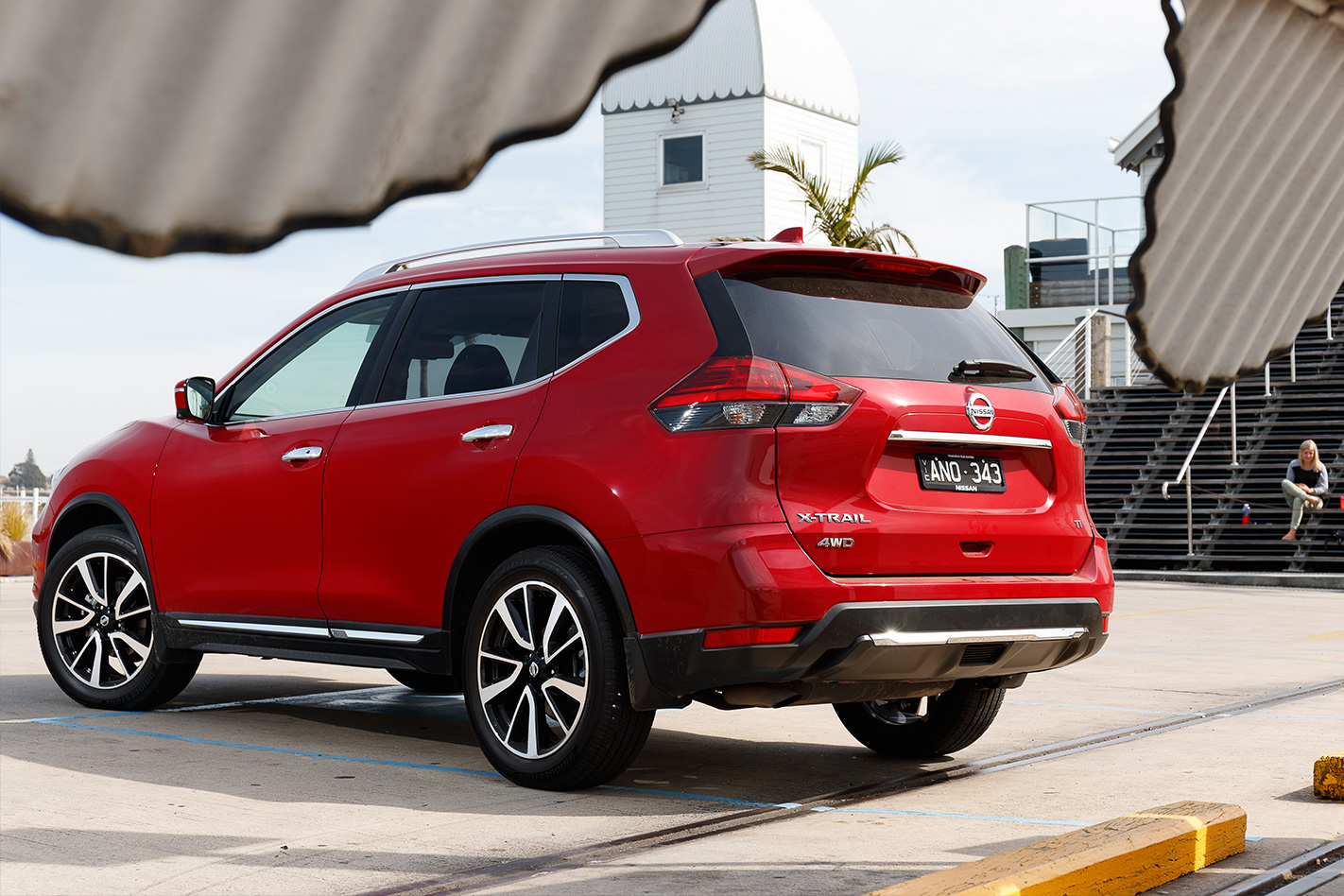
A step up to the Equinox LTZ AWD brings vastly more performance, far superior dynamic ability, and greater interior comfort than the X-Trail, making it a potential winner. But there’s something oddly indifferent about the Equinox. Inside, it’s equal parts excellent and eyebrow-raising. Styling wise, it probably leans more towards the latter, but for so many families, the Equinox’s persuasive equipment content will be what tips them over the line.
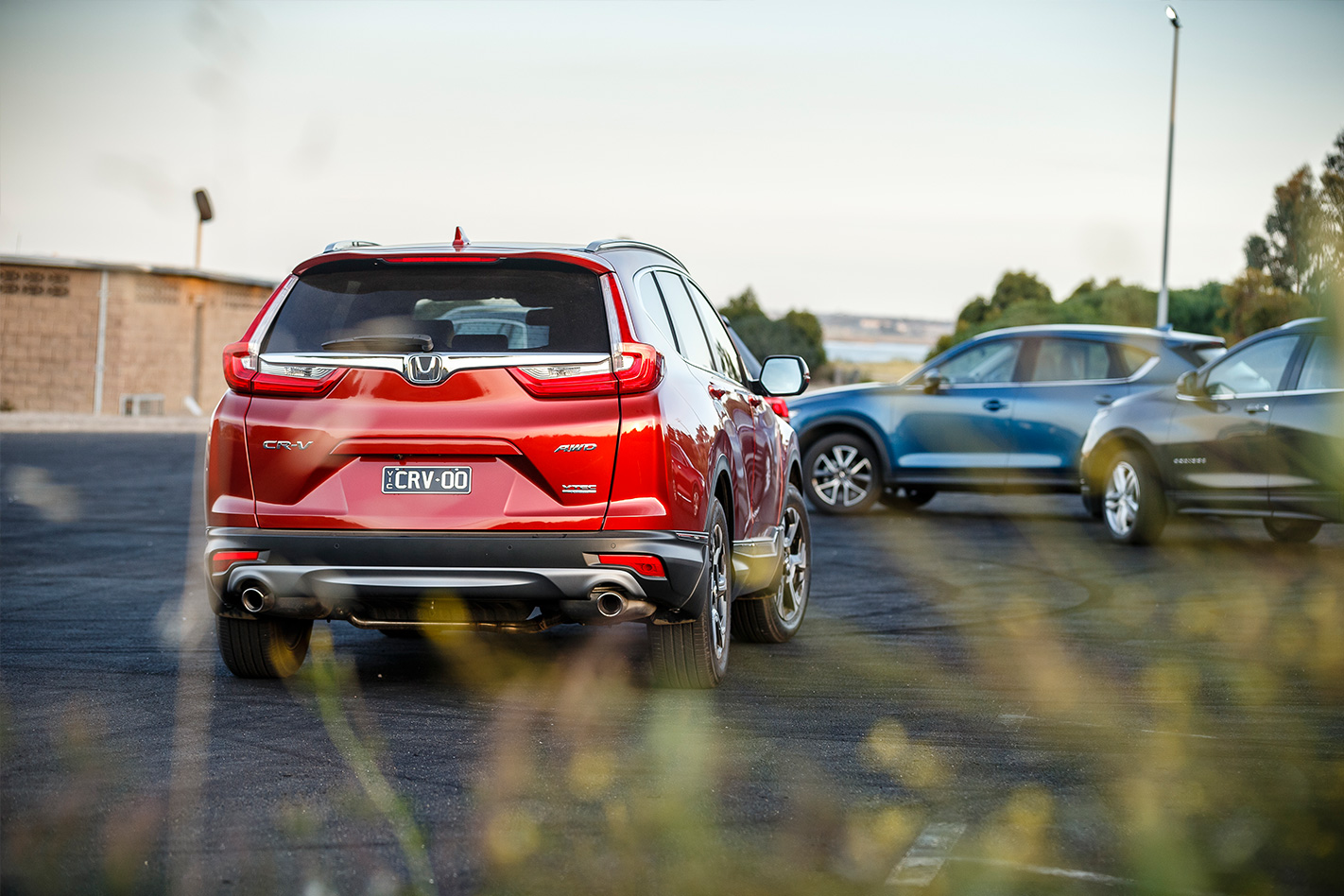
Aesthetes and badge snobs, however, are better off in a CR-V. It can’t match the Holden’s grunt, its five-seat comfort or its dynamic polish, but the Honda’s design consistency, its superior build quality, its greater cohesiveness and its class-leading efficiency make it the medium SUV we’d prefer to see in our driveway.
That’s where the Peugeot 3008 steps in. Not only does it look brilliant, inside and out, it drives with a vitality that grows on you the more time you spend with it. Brisk, frugal, beautifully trimmed and impressively comfortable, where the 3008 ultimately loses out is in terms of all-round utility. Alongside the voluminous Tiguan, the Pug is more of an expanded hatch than a true wagon-oid.
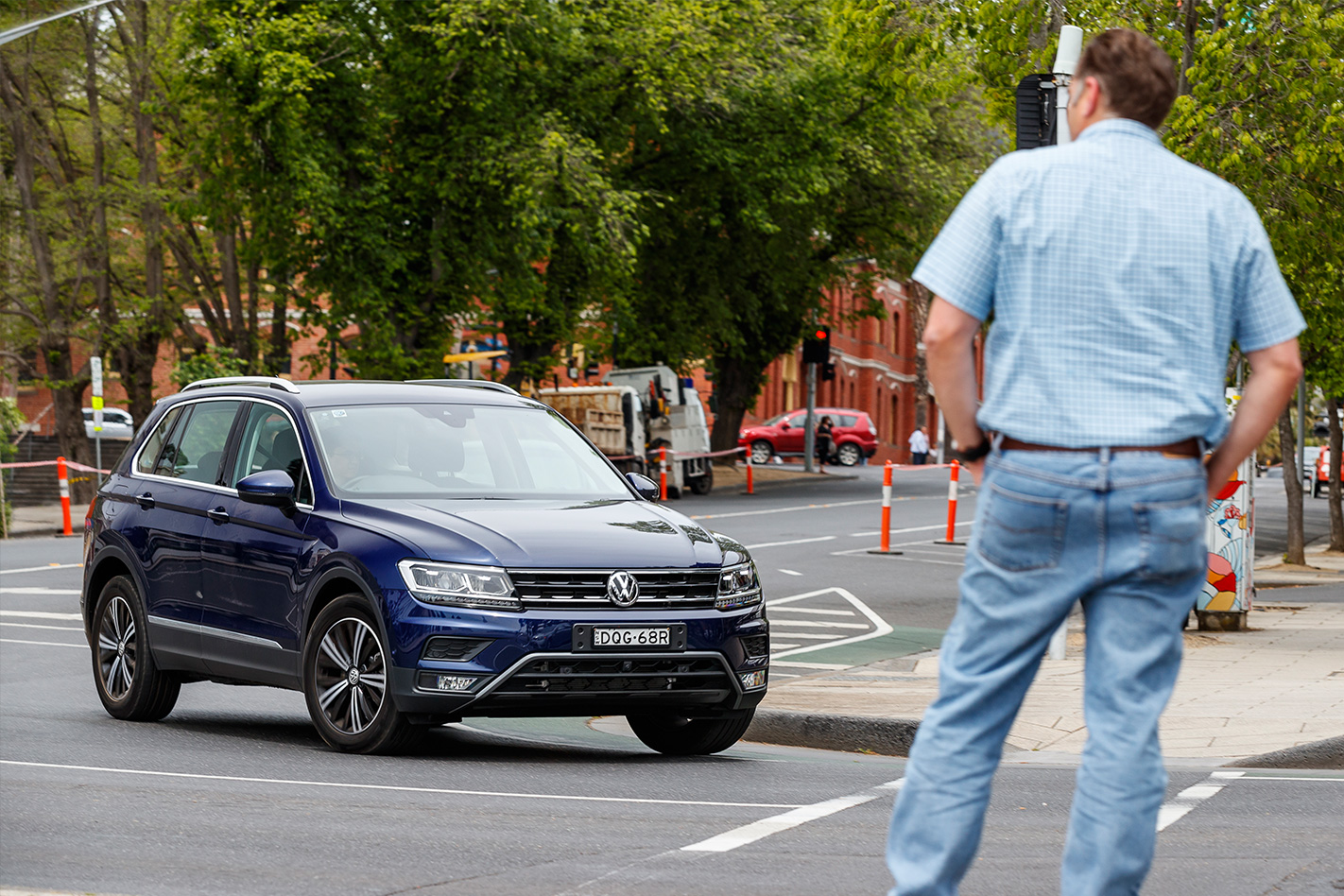
And while it may not deliver the design delights of the Peugeot, the Tiguan serves as concrete proof that, finally, the mainstream medium-SUV class has what it takes to make pricier European alternatives appear excessively indulgent.
Plate clearance salesare often a good time to snag a new-car deal, but Ford is offering a further incentive to anyone interested in a 2017-plated Ranger ute.
For eligible vehicles purchase before the end of Januray, Ford is offering a five year/200,000km warranty on selected Ranger models, almost doubling the standard three-year/100,000km guarantee.
The special warranty applies to all Ranger models.
This isn’t the first time Ford has provided an extended warranty. Last year it offered five years/100,000km on Ford Territory. By then the Territory had ceased production, which is a far cry from Ranger, which is by far the biggest selling model in the Ford line-up.
It would be fair to assume the offer means manual versions of the family-friendly double-cab ute haven’t sold as quickly as the automatic versions, but if a DIY shifter is suitable for your needs, this deal is for you.
The official line from Ford is that incentives are often provided to Ranger buyers as it sits in a highly competitive market.
“The Ranger 4×4 was Australia’s most popular 4×4 vehicle in 2017, and as such competes in a highly competitive market. We’re continually looking for ways to improve our owner experience, from our Free Loan Car Program, Vehicle Report Card or Sat-nav Updates.”
%MCEPASTEBIN%
A LOT is riding on the big-selling CX-5 to bring Mazda a Car of the Year hat-trick, but does it tick as many boxes as its CX-9 big-brother, which currently holds the crown?
Mazda is no stranger to COTY glory, with eight winners since 1980 and back-to-back wins with the MX-5 in 2016 and CX-9 in 2017.
So the pressure’s on the second-generation CX-5, which improves on an already solid formula by bringing sharper looks, markedly improved cabin quality and boosted refinement.
All this has helped the CX-5 maintain its position on the sales ladder as Australia’s top-selling mainstream medium SUV, but it needs to move the game on in a big way to secure Mazda a COTY three-peat.
Impress it did at the Lang Lang proving ground, earning a top-six placing at COTY 2018 and plaudits from our judging panel for its marked noise, vibration and harshness improvements, which has was one of the few annoyances of the last CX-5.
Rather than rest on its laurels, Mazda has stepped up to plate and made a great soft-roader even better. Could incremental improvement be enough for the CX-5 to add Australia’s most prestigious motoring award to its bulging trophy cabinet?
The CX-5 has already won approval among punters, and now it’s in the running to become just the third SUV, after the CX-9 and Ford Territory, to win Wheels Car of the Year.
One of the more irritating and puzzling decisions anyone has to make in their automotive lives is knowing which set of tyres to pick.
Adding a new set of performance tyres is also the best way to improve all facets of your pride and joy’s dynamics – or make them worse.
From braking and acceleration to mid-corner grip and even wet-weather performance, picking the right rubber is an incredibly important call to get right.
Luckily for you, your mates at MOTOR have done all the hard work to help you make an informed choice about your next set of boots.
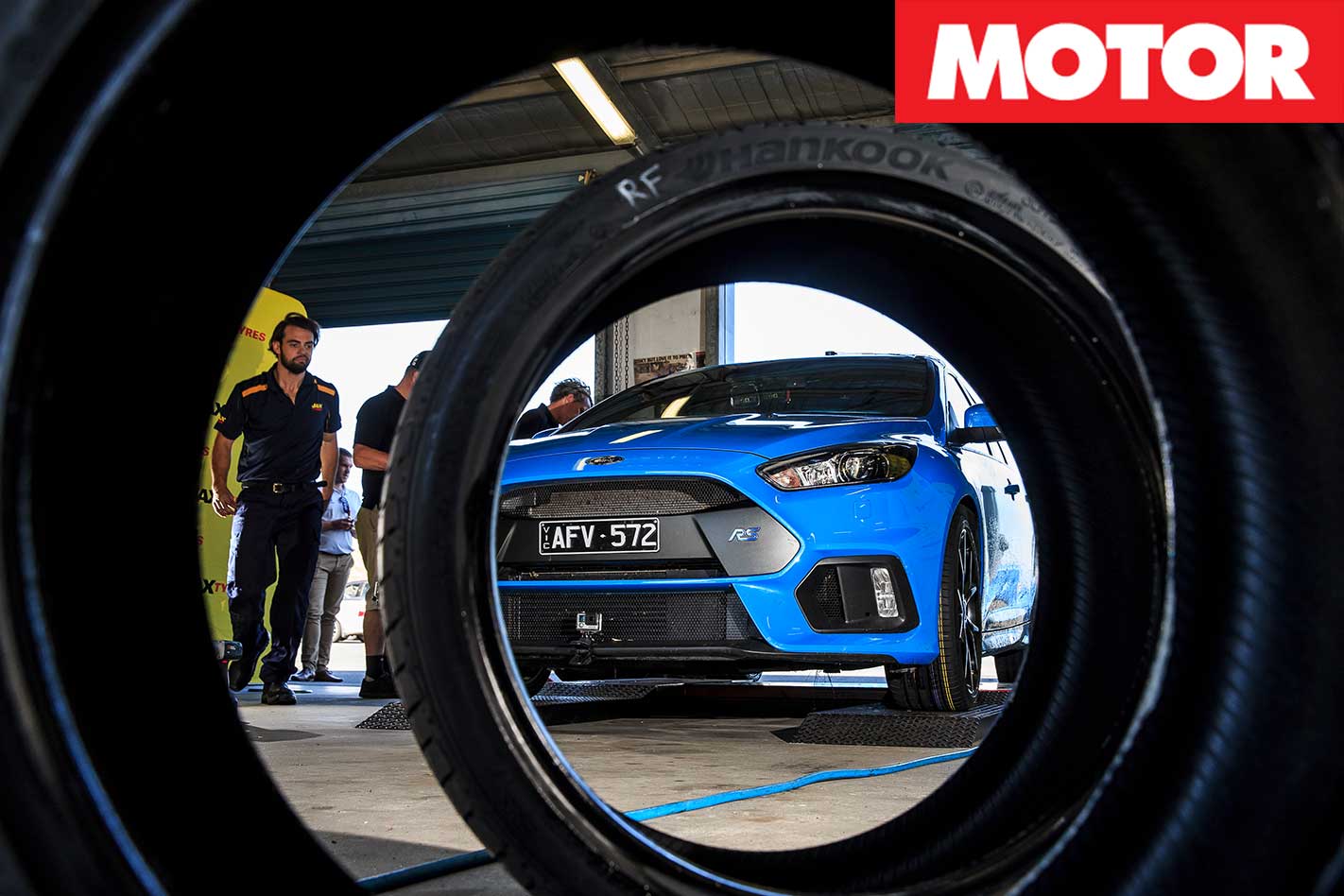
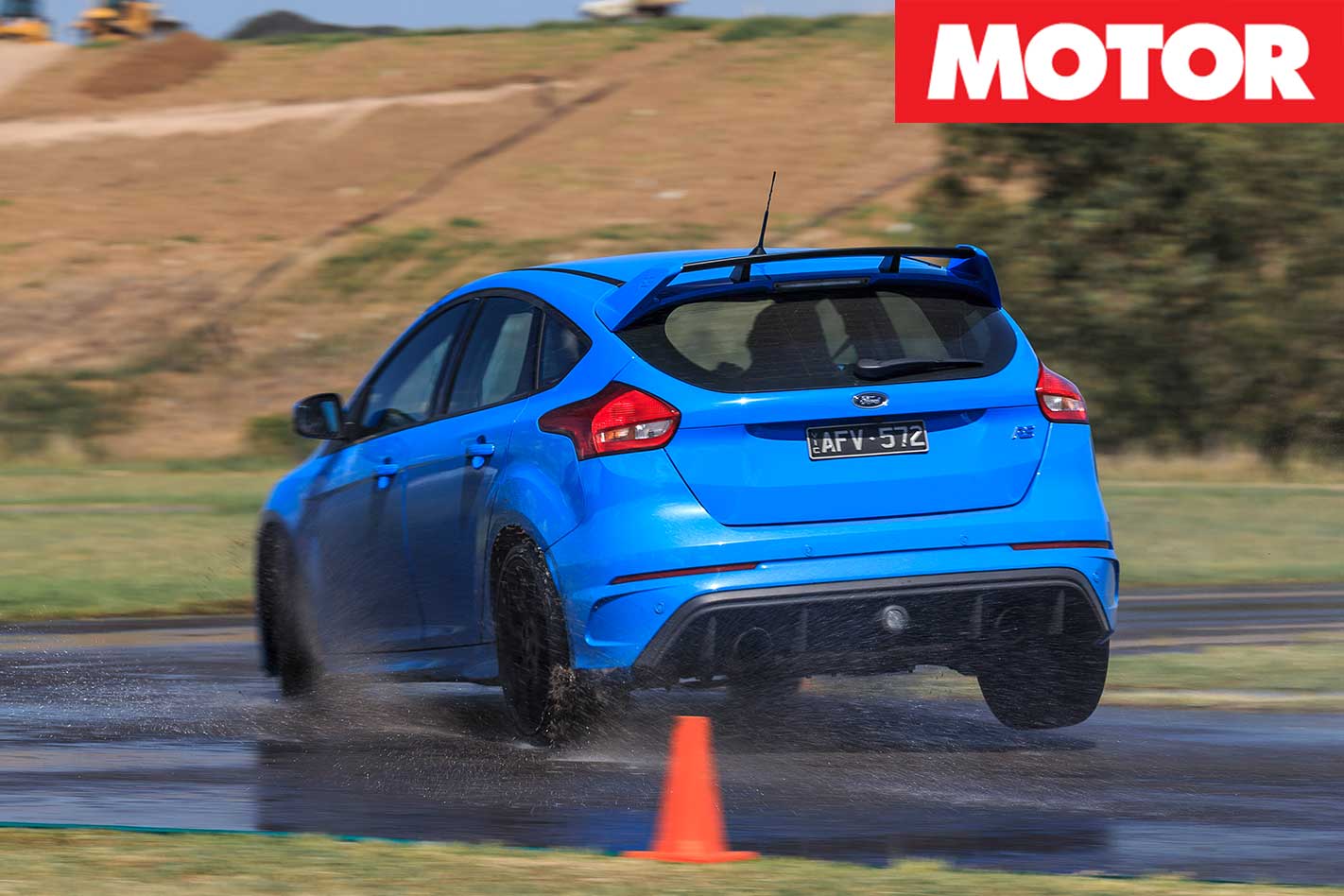
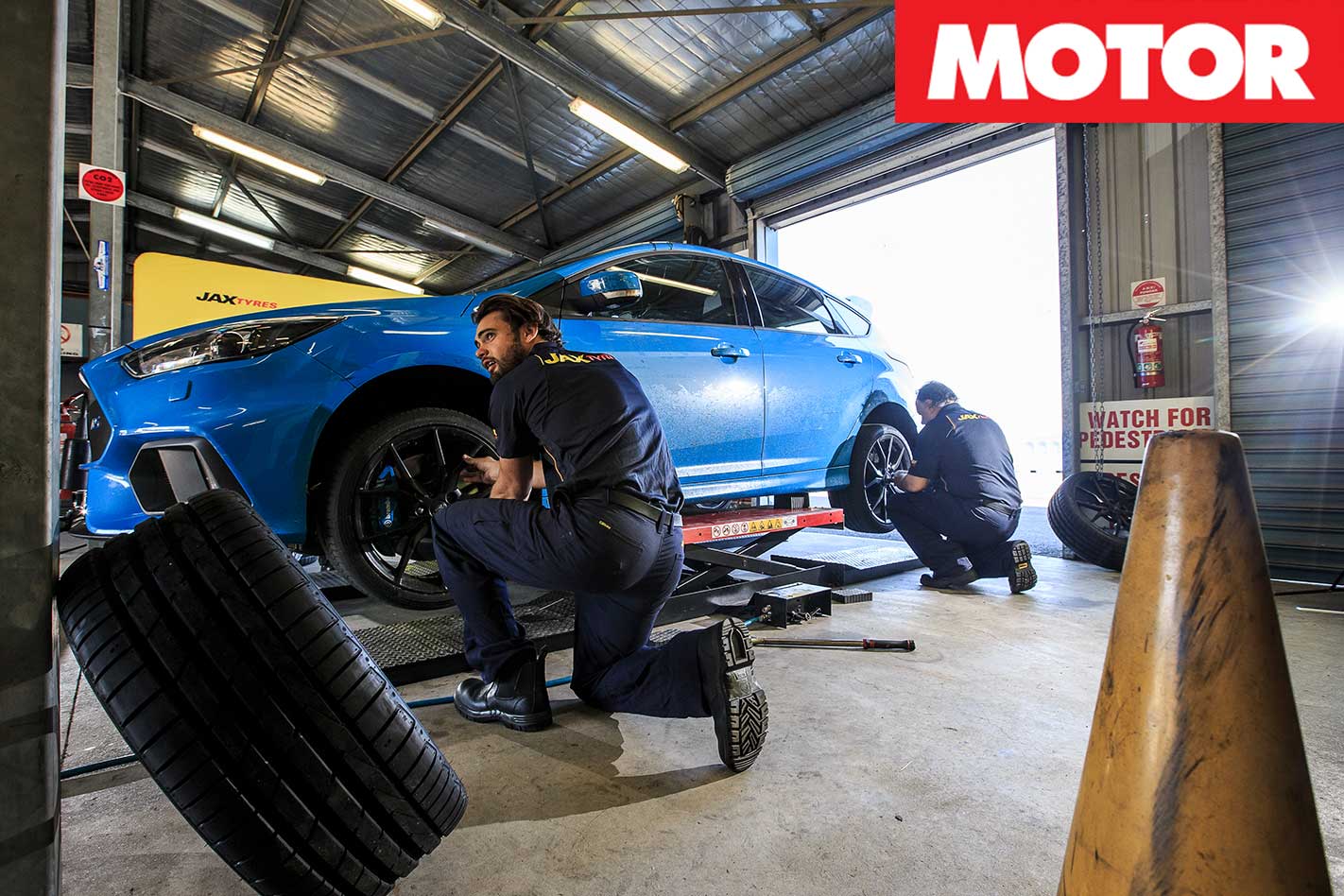
We’ve headed back to Sydney Dragway and set up a battery of tests in and around the facility’s proper tarmac roads to really assess each of our nine sets of test tyres.
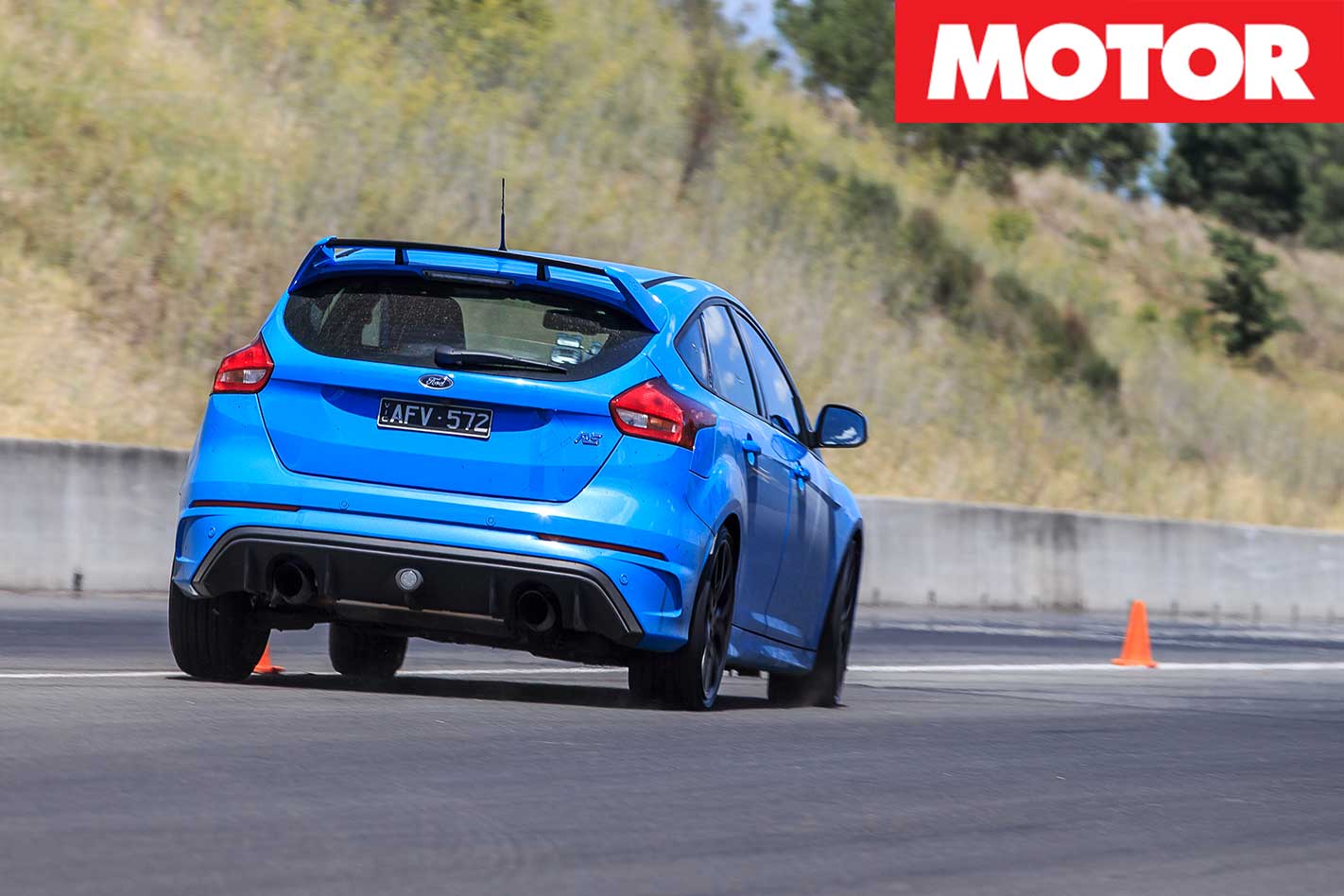
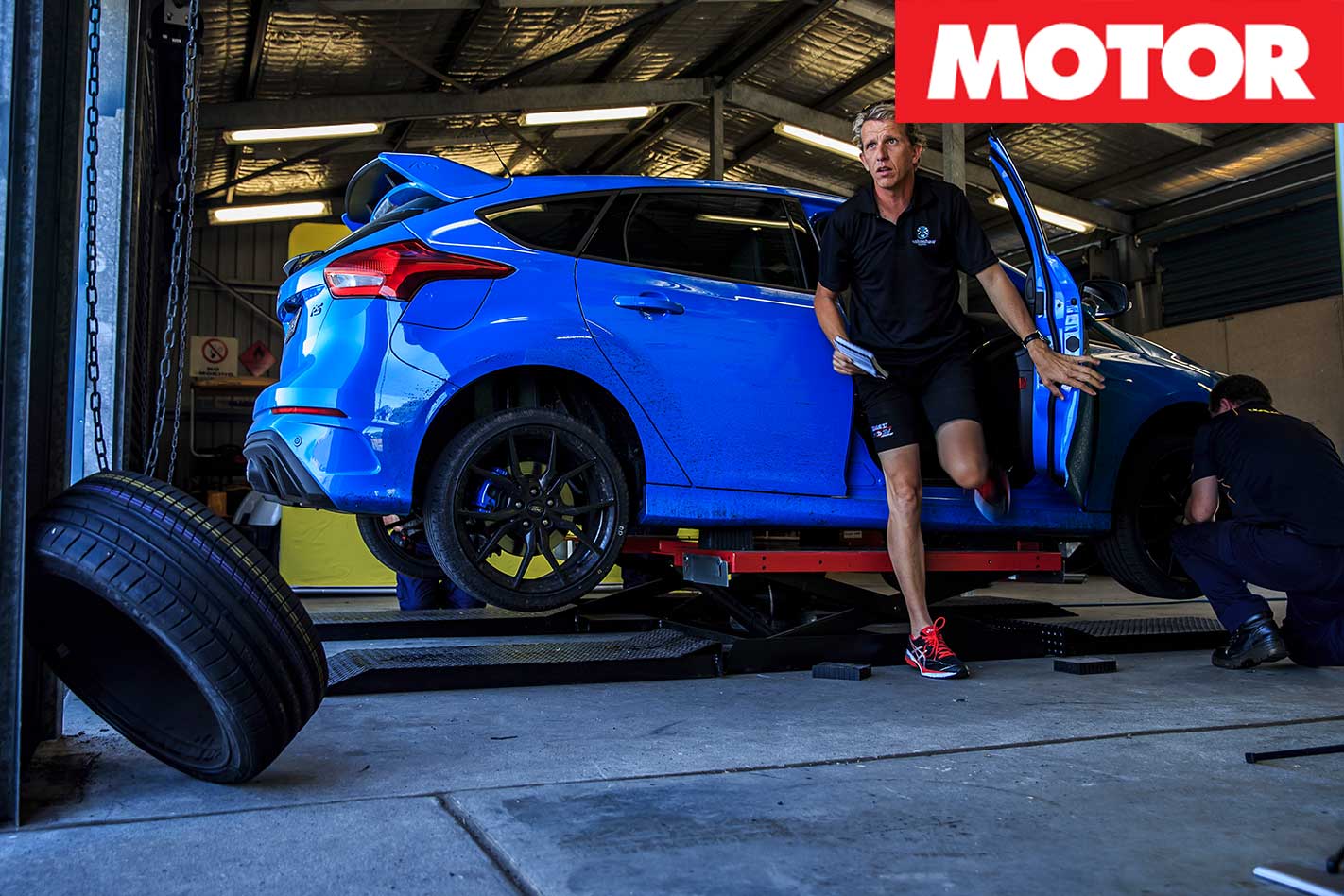
We’re bolting them all to a Ford Focus RS, which has the punch and dynamics to really eke the most out of the rubber in the shortest time, and we’re plugging in our own Supercars racer – and ridiculously experienced road-car wrangler – Warren Luff to do the hard yards behind the wheel.
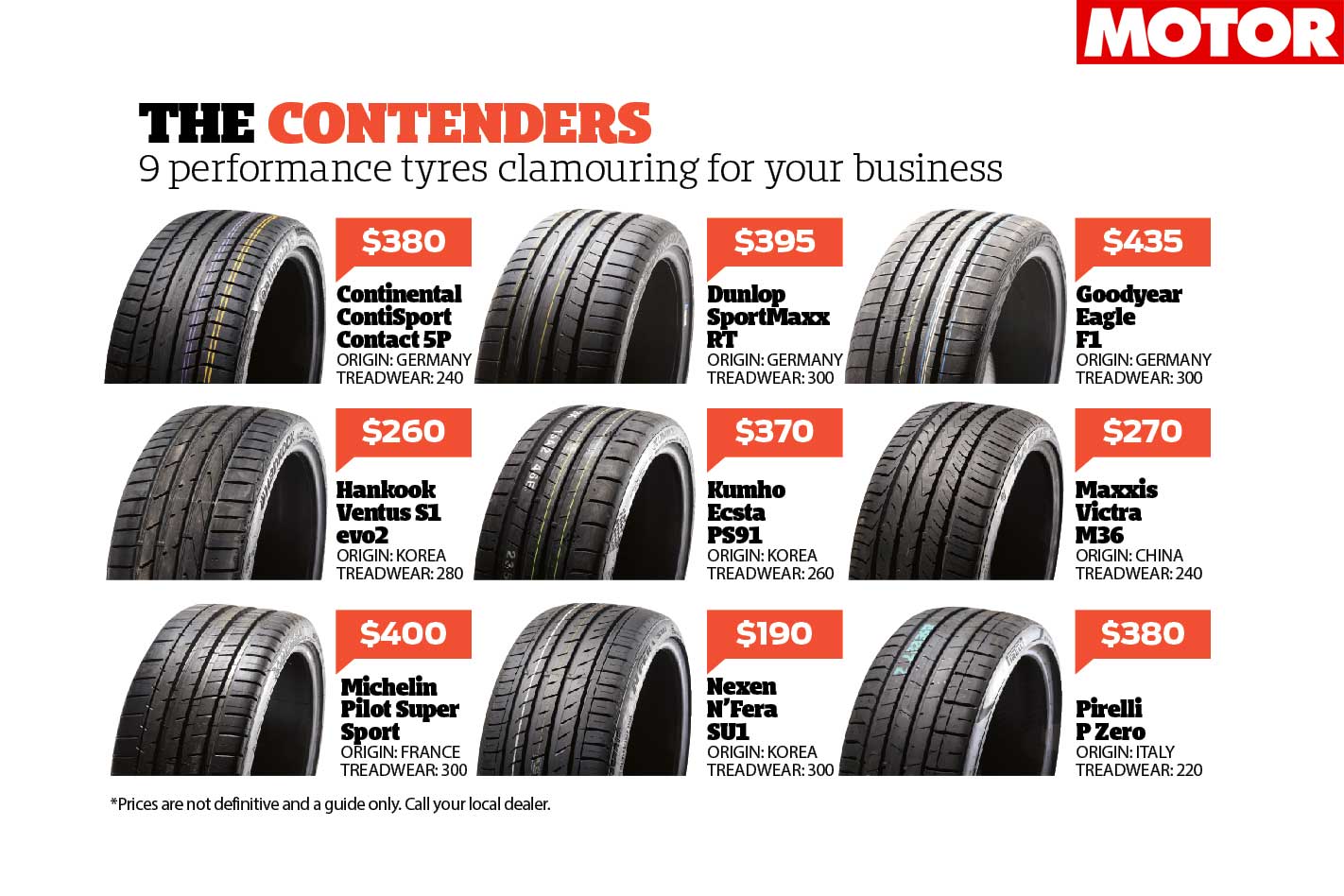
The defending champion Dunlop is back for 2017, and it’ll be kept honest by other premium tyre makers like Michelin, Dunlop, Continental, Pirelli and Goodyear.
Maxxis, Hankook, Nexen and Kumho are in the mix, too, providing a spread of talent and budget to help you gain the ammo to make an informed choice.
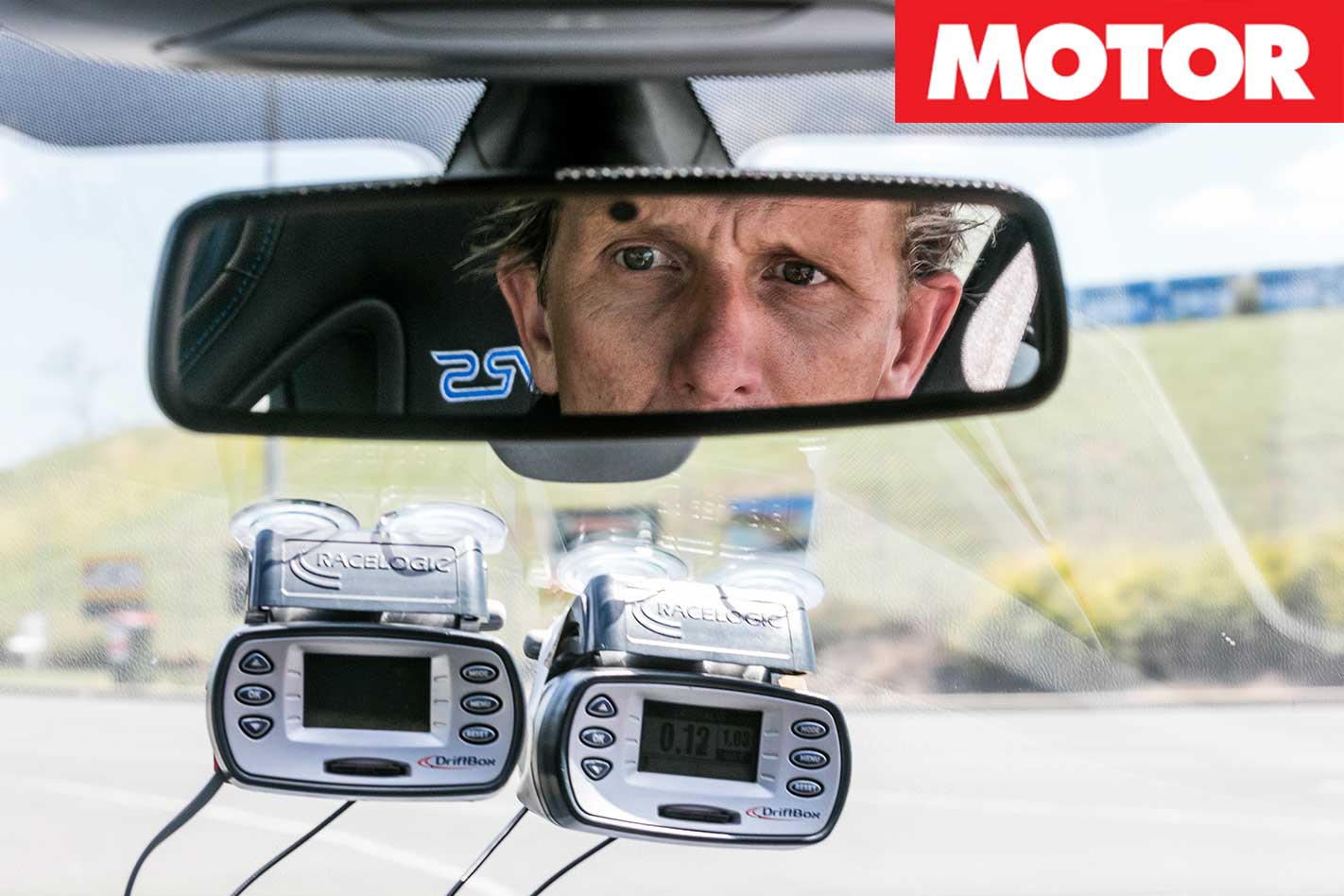
All data was recorded on RaceLogic gear, complete with a duplicate back-up system to eliminate inaccuracies.
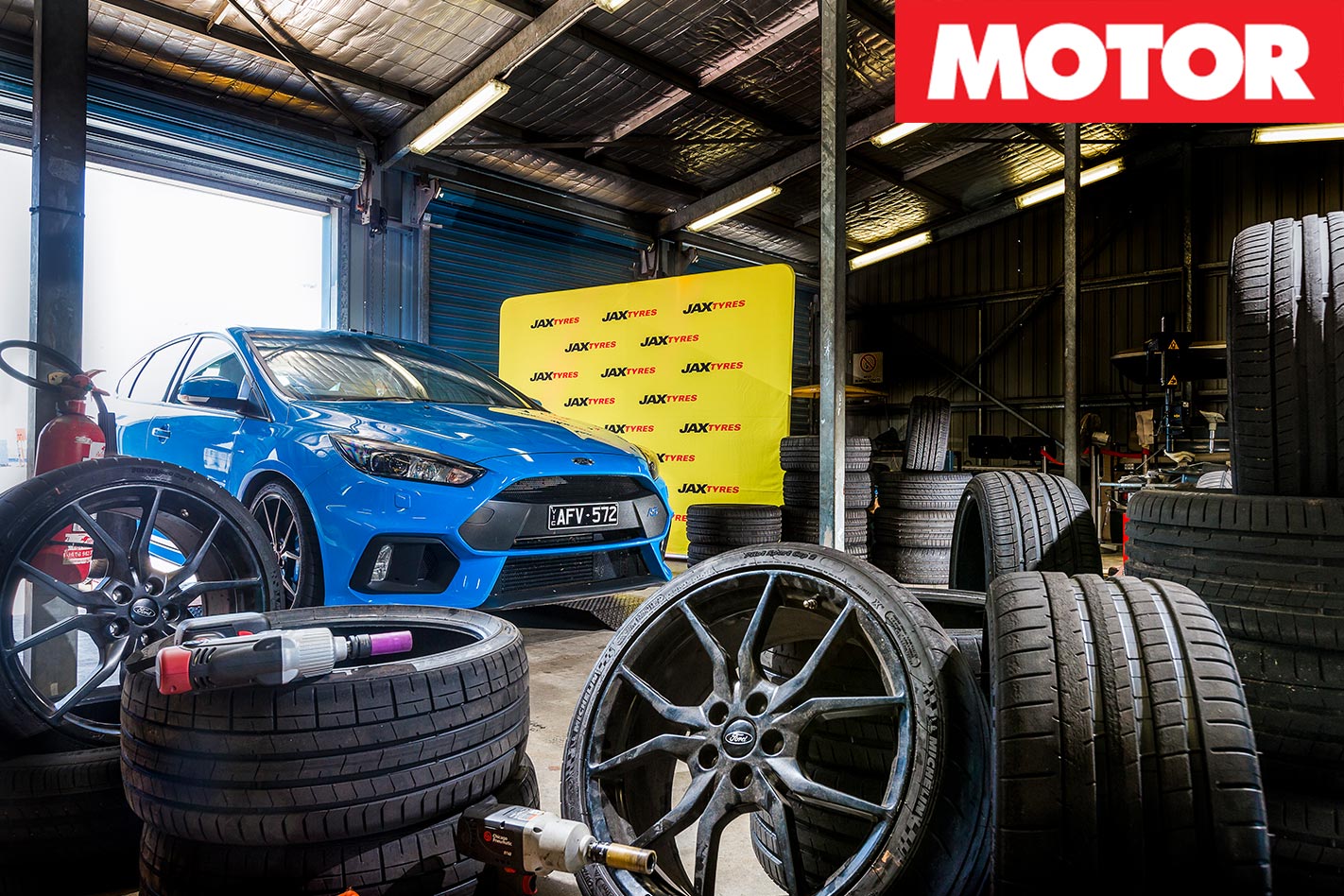
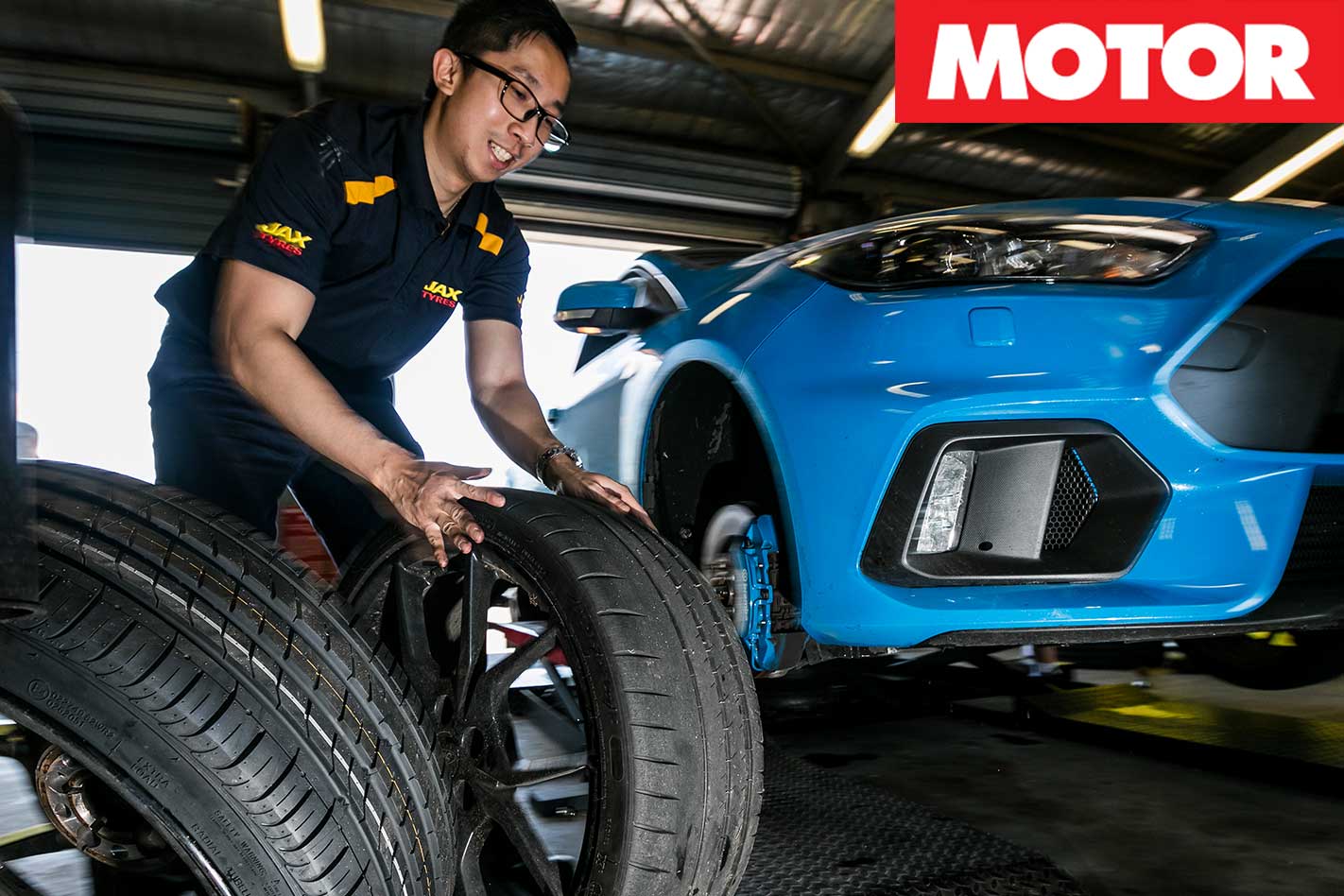
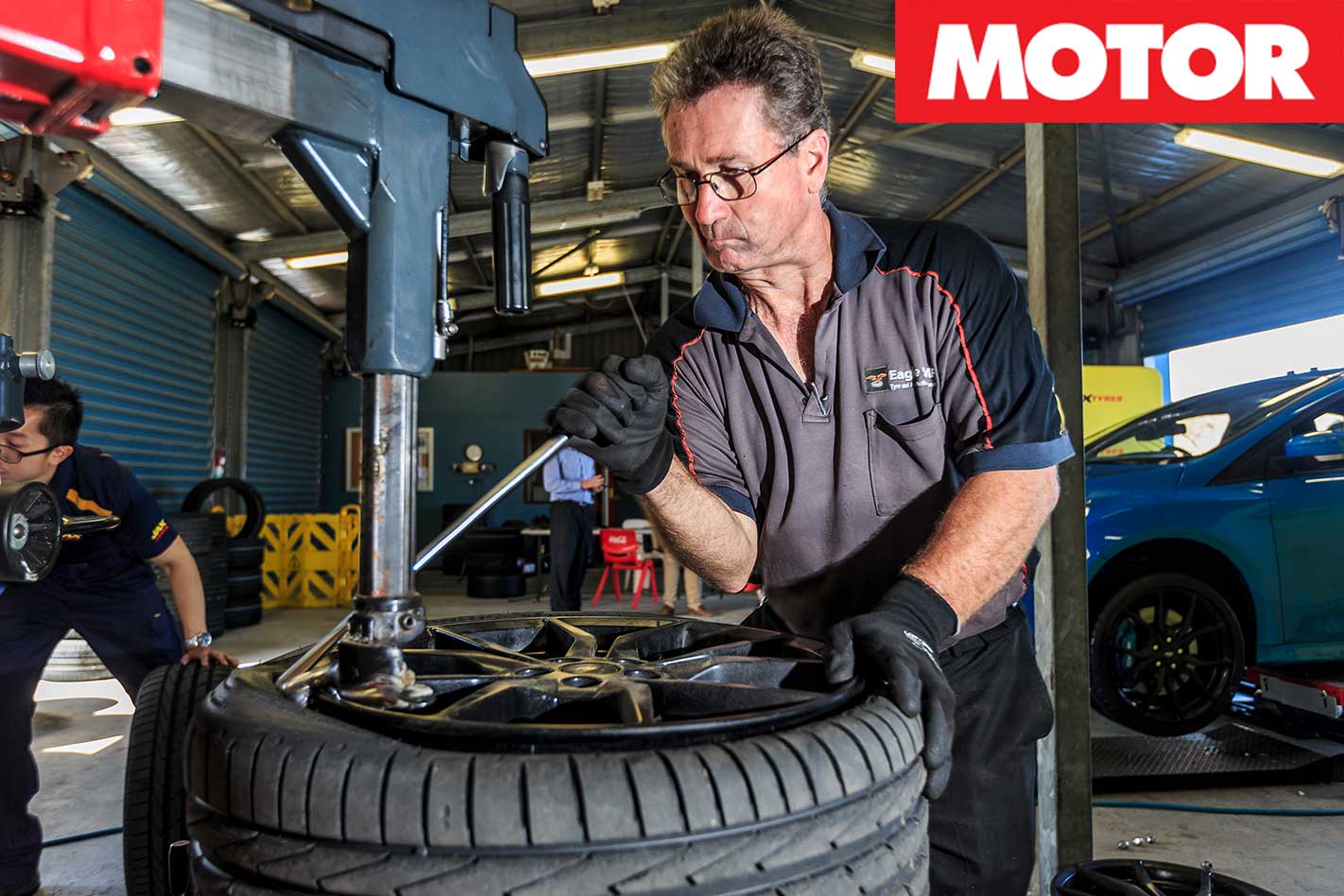
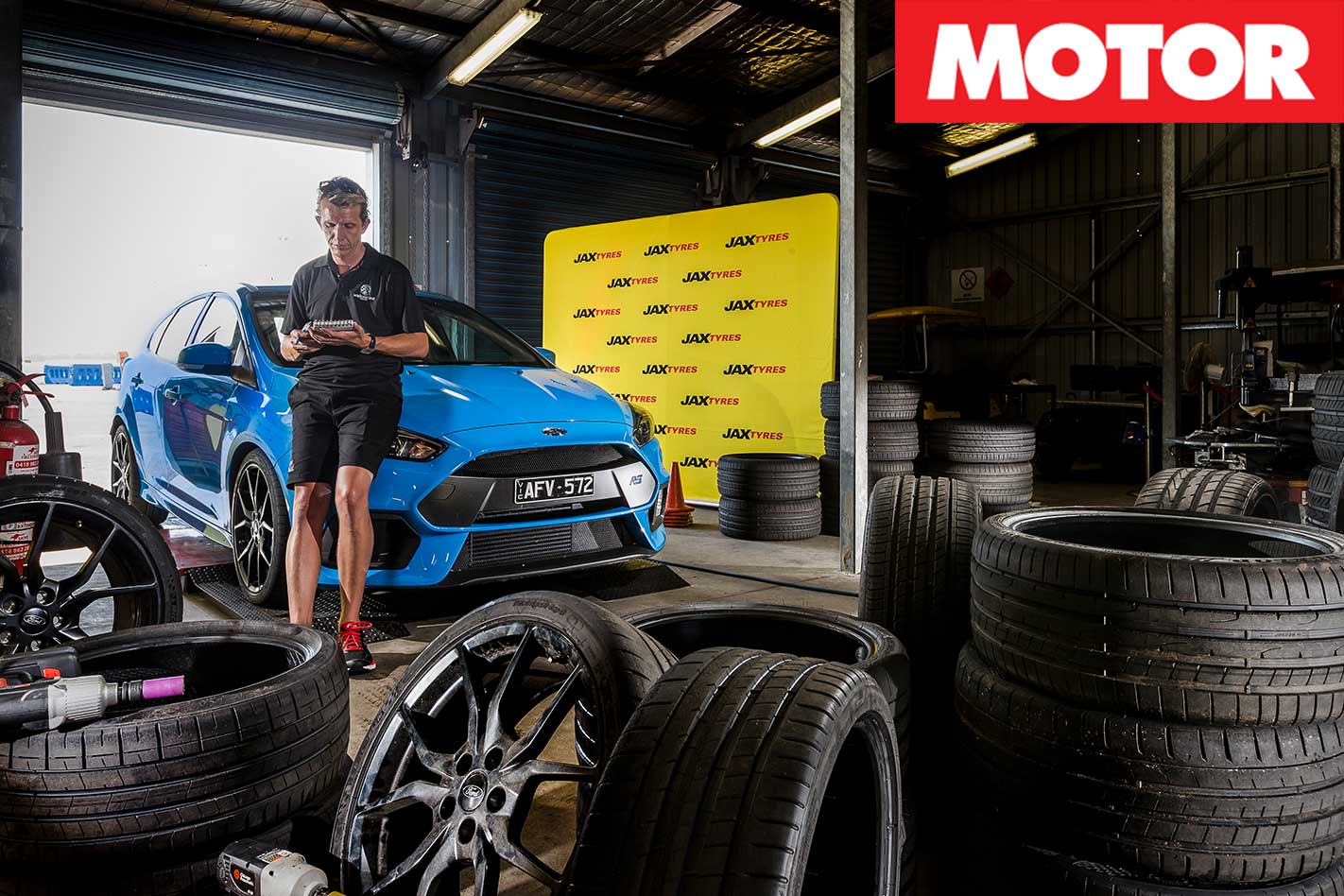
On hand once again to facilitate the slightly mind-bending tasking of getting through 40 tyres in a day will be the team from JAX Tyres, who bring not only good humour and large, business-looking Eagle SMF machines, but a wealth of insight and knowledge from inside the tyre game that isn’t matched anywhere else.
Oh, and the crew has worked with us before and know how hopeless we are at anything vaguely mechanical.
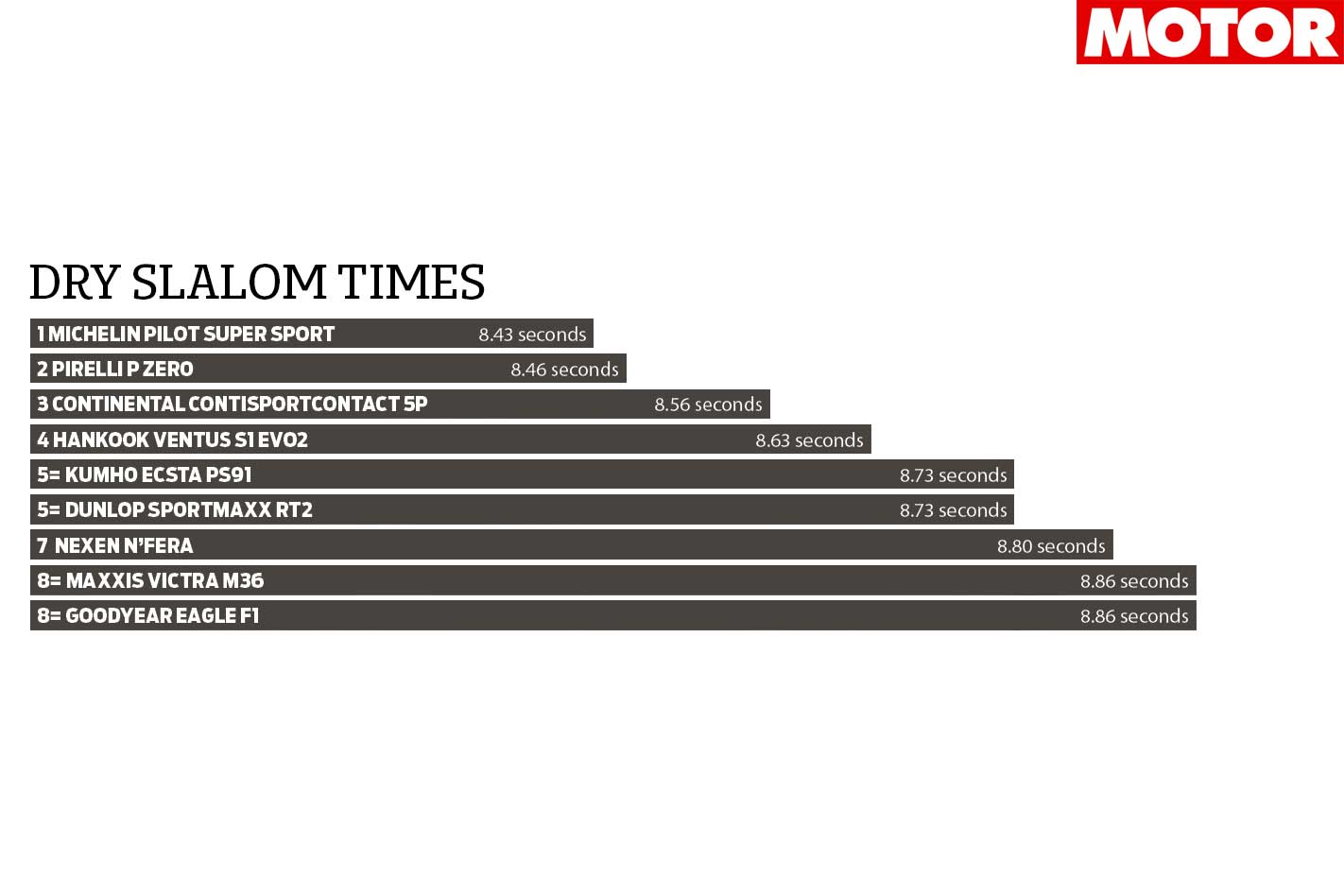
DRY SLALOM
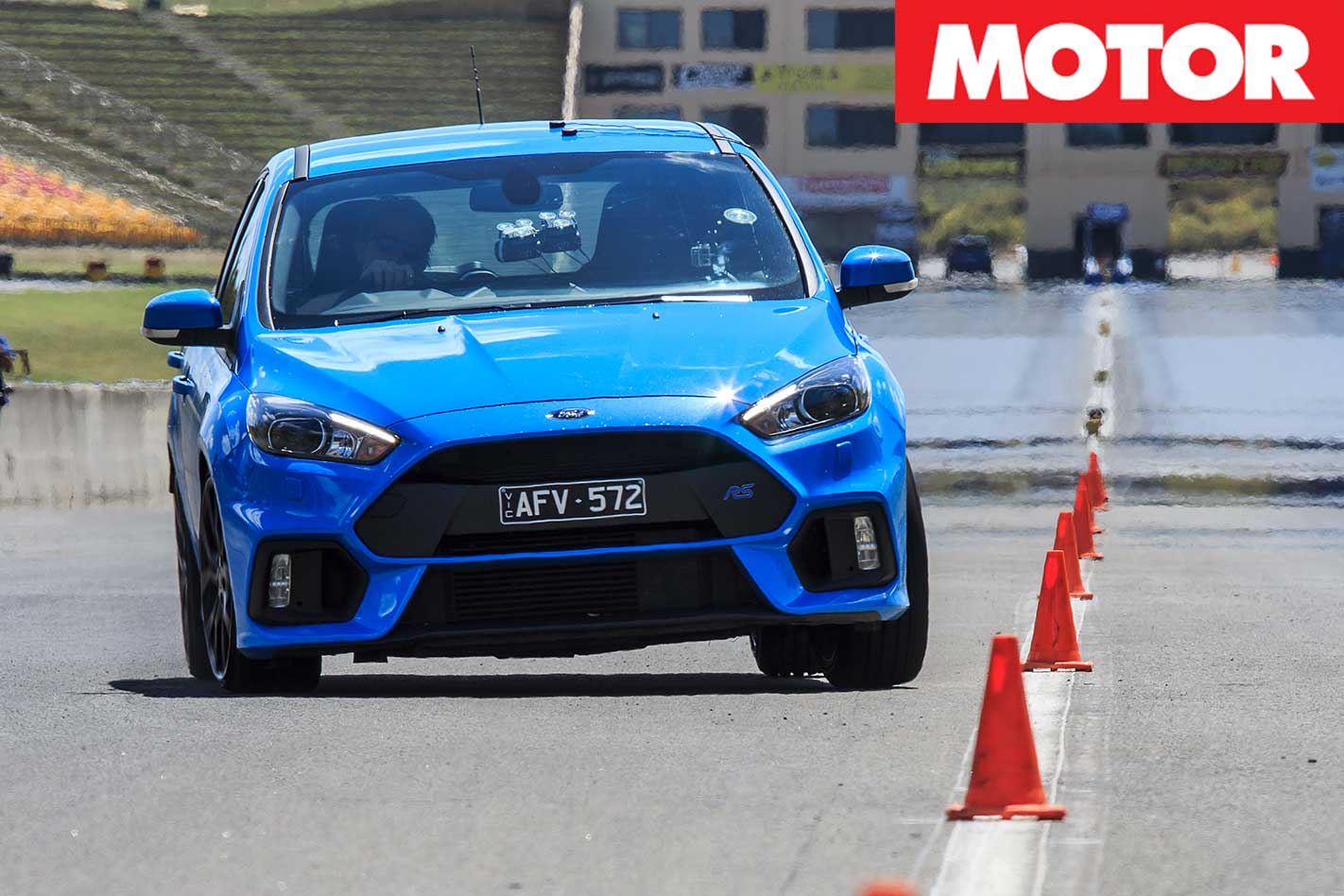
Lateral recovery is key as well, while sidewalls, shoulders and tread face patterns are equally under the spotlight.
Nine equally placed cones are approached at a V-Box-measured speed of 50km/h, and Luffy takes each tyre set through five times before discarding the best and worst scores and averaging out the remaining three.
The manual RS is left in second gear for the duration of the runs, and its swag of traction and stability modes are turned all the way off, which is a nice feature to have when you’re testing the limits of adhesion.
It’s the first batch of tests which tell us that perhaps things are going to be a little different this year.
The performances of the Pirelli and the Continental means that the Europeans sweep the slalom podium. The Hankook is fourth – continuing its strong form from 2016 – and finishes just a tenth of a second ahead of fellow Korean brand Kumho.
Track surface temps were getting up toward 38 degrees when the Eagles were bolted on, but the almost-identical performance of the Maxxis was achieved at 9am in the morning with vastly different conditions given the 24-degree track temps.
And this is why we run a control tyre at three points throughout the day: there was just one-sixteenth of a second difference between first thing in the morning and last thing in the afternoon.
DRY BRAKING
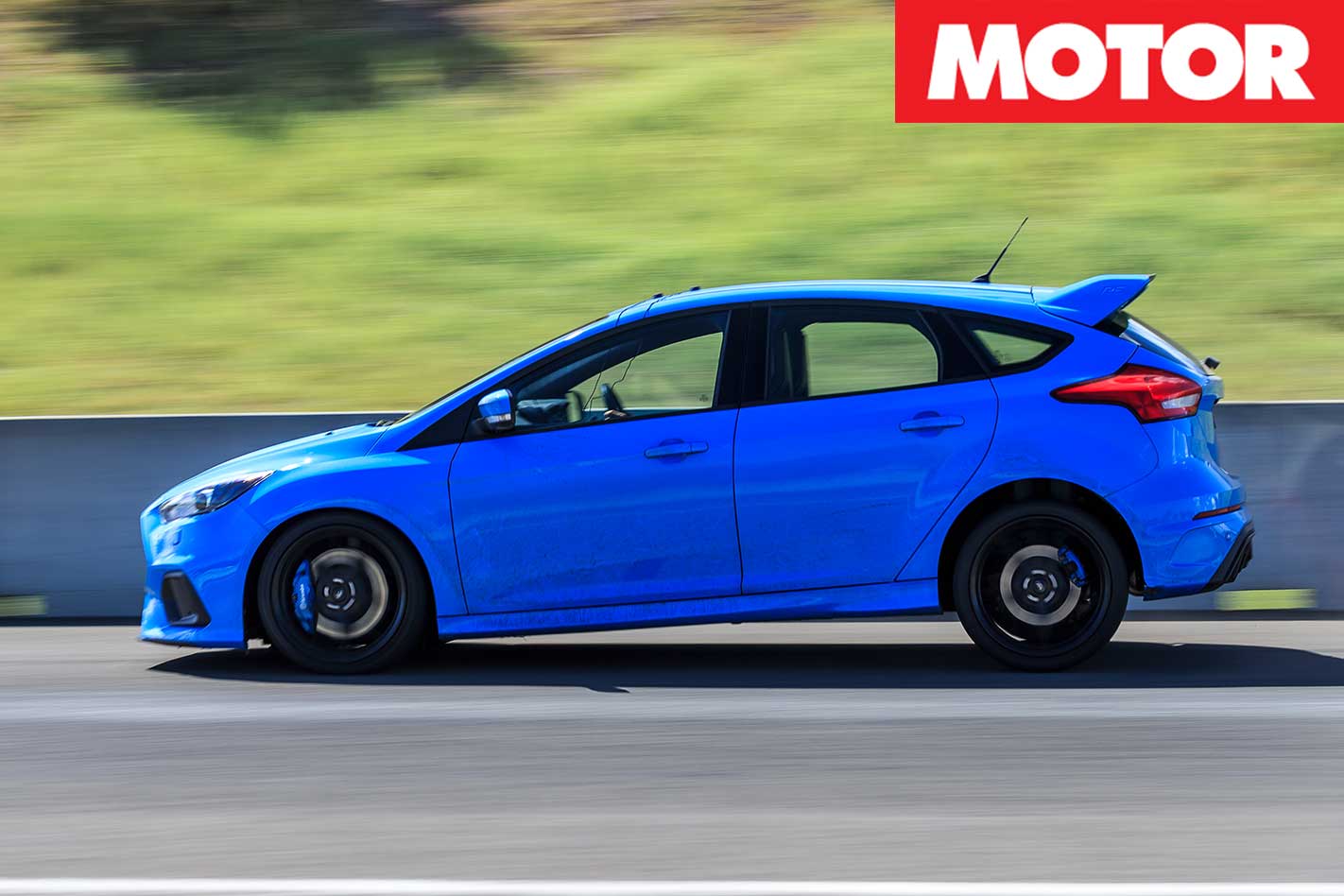
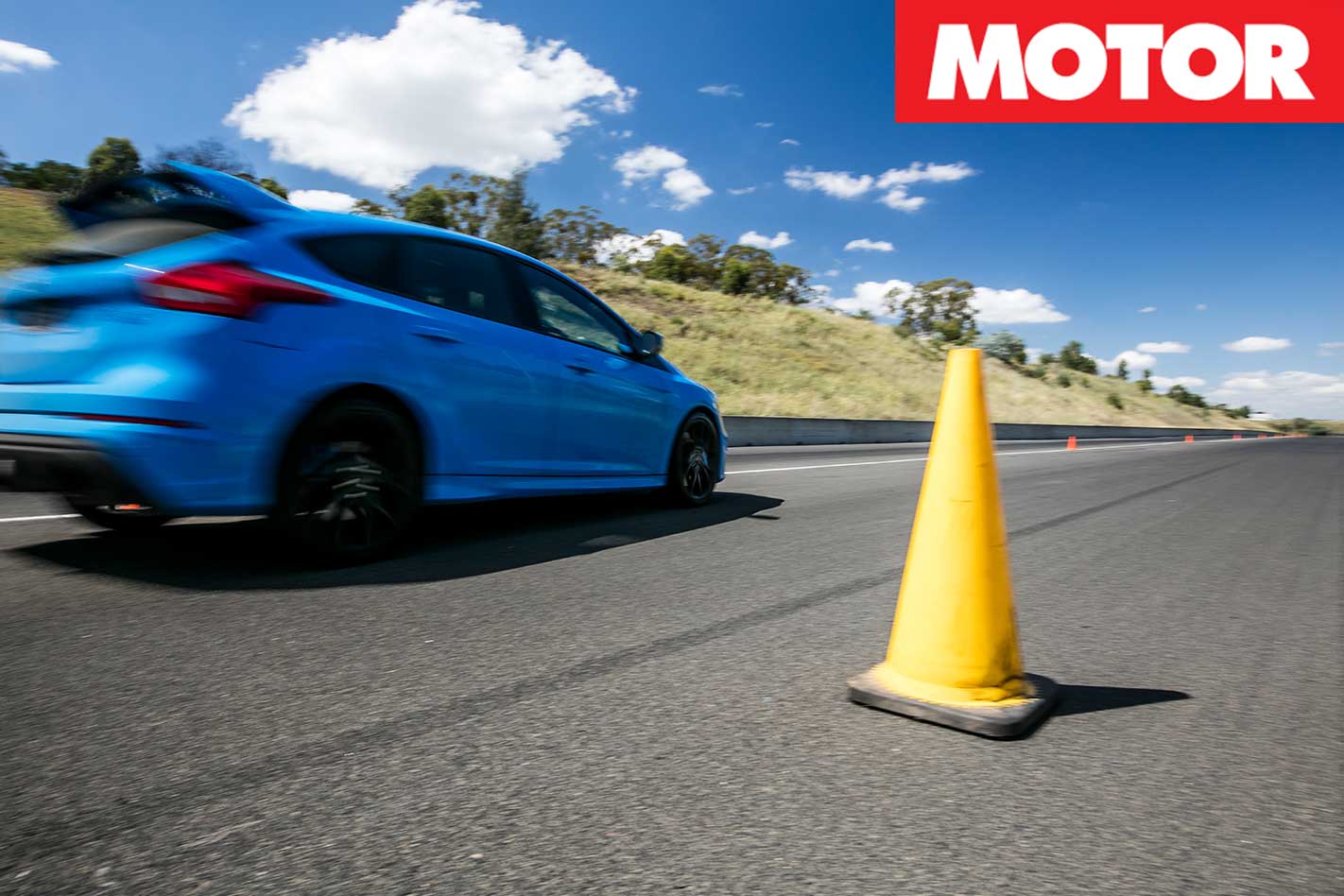
Held on the same section of tarmac track as the slalom – in fact, in between each run of the slalom to ensure that a series of back-to-back stops didn’t cause the Focus RS’s brakes to fade prematurely – the dry braking component sees our fearless hero line up the braking marker at a real-world speed of 110km/h before wailing on the middle pedal and allowing the RS’s four-piston Brembos and the car’s brake-force distribution to do its best to rein it all in.
Three runs are measured by the trusty V-Box, and are averaged out to provide a distance-to-zero score.
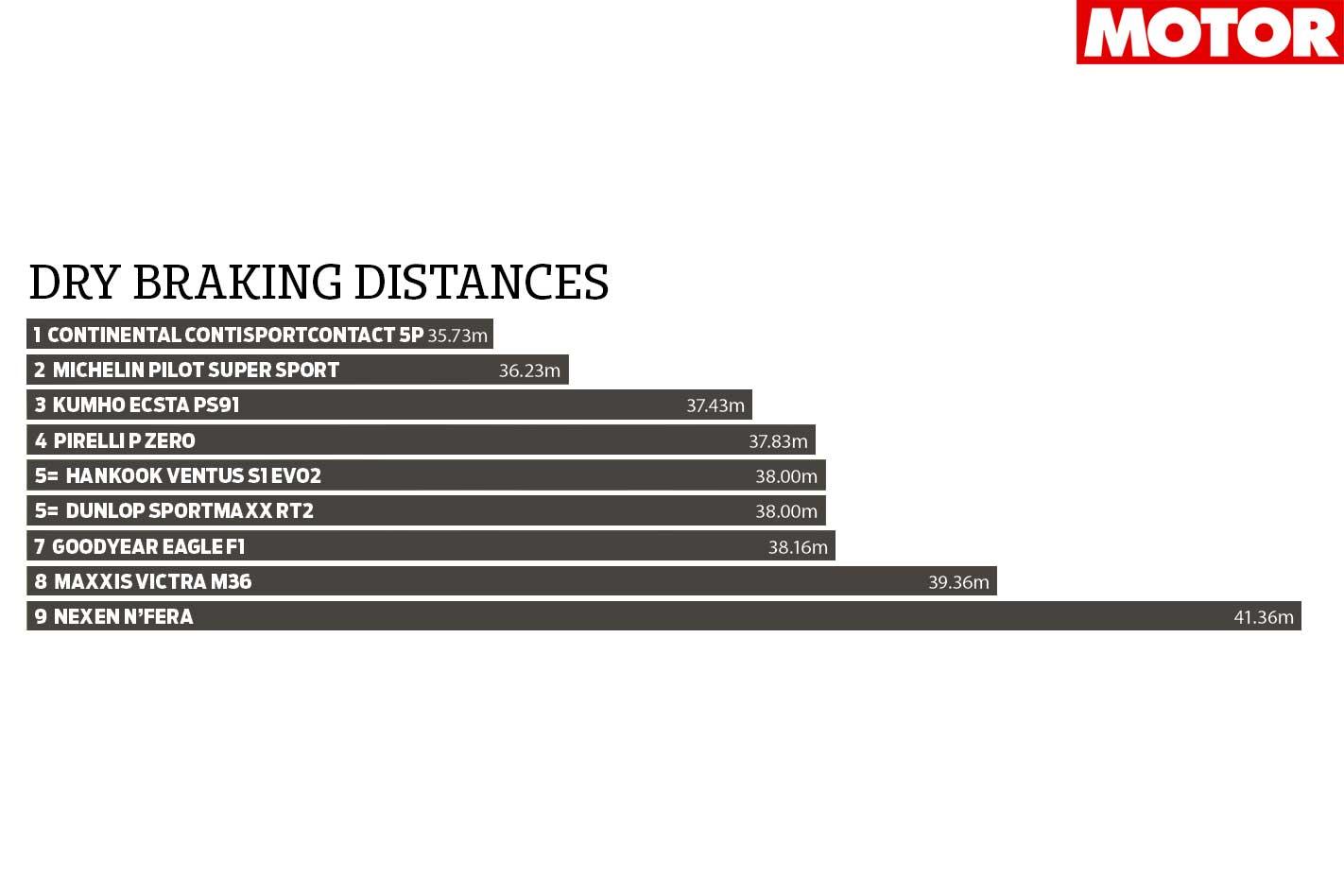
The win goes to the ContiSportContact 5P, pulling up to an ABS-assisted halt in 35.73m, with the Michelin 60cm behind it in second place. It’s another good result for the Conti, after claiming second inthe dry slalom test, while the Michelin adds a silver to its slalom gold.
The third-placed tyre – a great result for the Kumho Ecsta after a mid-pack performance in the slalom – is two metres behind the top-placed Continental, while the P Zero is 40cm further in arrears.
Both the Sport Maxx and the Eagle F1 finish their three runs in the 38m bracket, while the last-placed Maxxis stopped the tape 3.7m behind the best performer with a 39.31m stop.
At the bottom of the chart is the budget Nexen, which takes 41.36m – or 5.63m more – to come to a complete stop. “It feels very hard,” says Luffy, who adds that more delicate inputs work better for it – and a full ABS stop is not a delicate input…
DRY MOTORKHANA
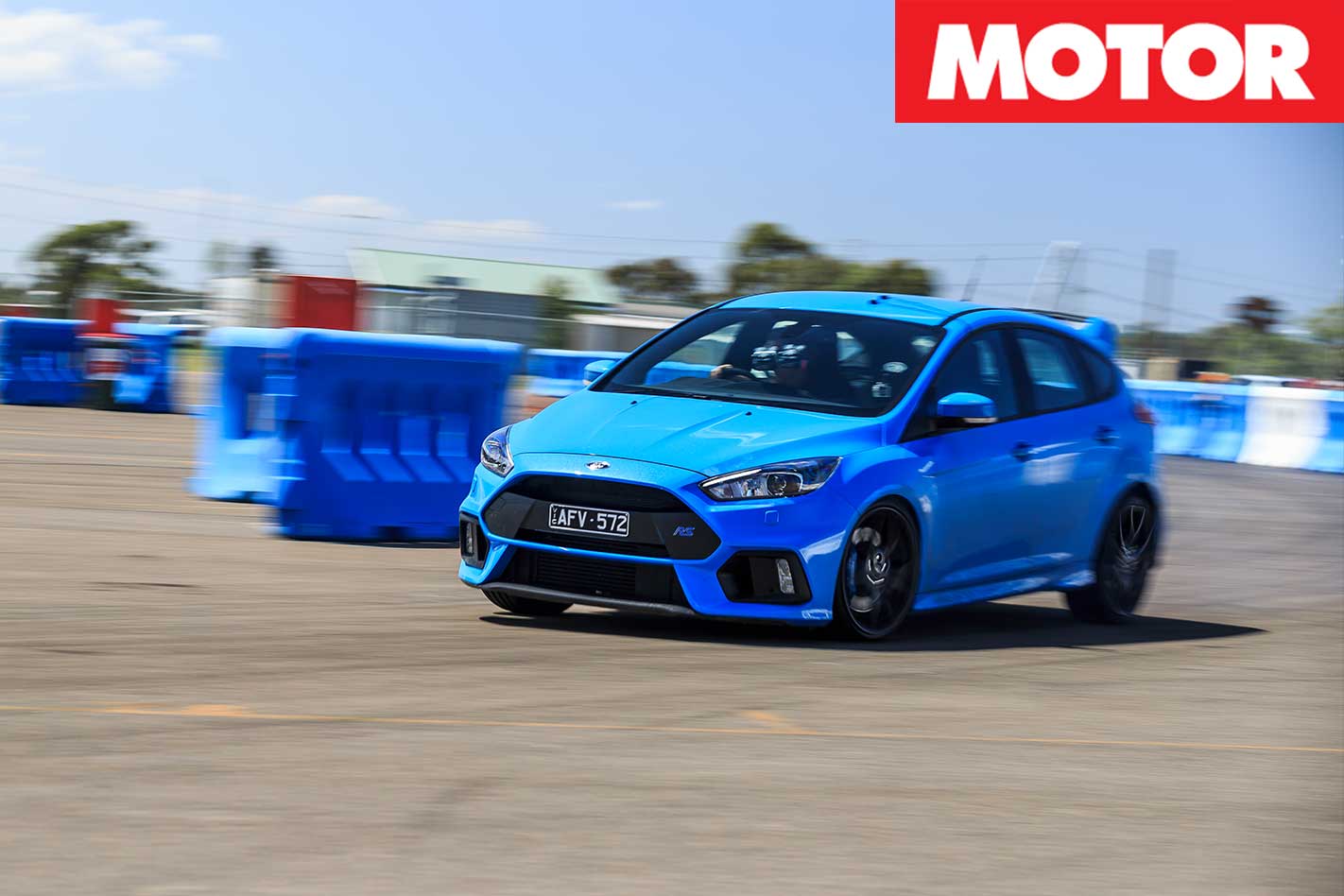
Our motorkhana course – laid out in the western corner of Sydney Dragway’s vast car park – comprises seven tight radius turns connecting a short, yet quick straight, a fast S-bend, and a short start/finish chute that morphs into a sweeping right.
After a rolling start, the stopwatch is triggered at the start/finish line, three laps are recorded, and the totals are added together. The Focus stays in second gear only again and all driver aids are switched all the way off to get rid of any variances that digital interference may trigger along the way.
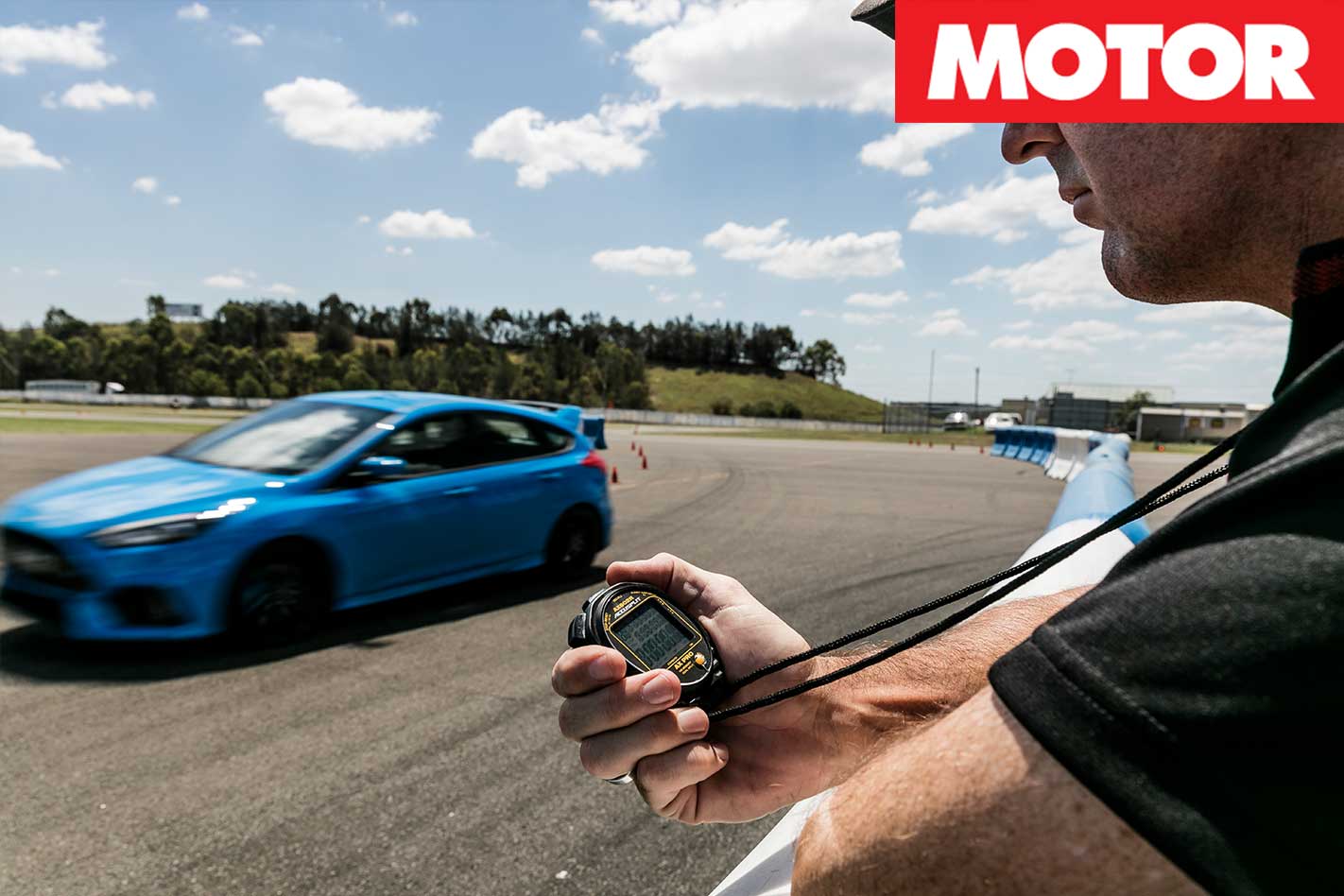
Watching the Luffster in action, it’s hard not to take an extra step back from the water barriers as he hustles the Focus RS around the short, tight track – but his metronomic precision lap after lap is almost impossible not to watch.
It’s also interesting to see how the car and driver react to each set of tyres, as Luffy works each corner to get the best from the set without overstepping the mark and compromising the result. And his consistency is why we call him first each year when locking down a driver for our test.
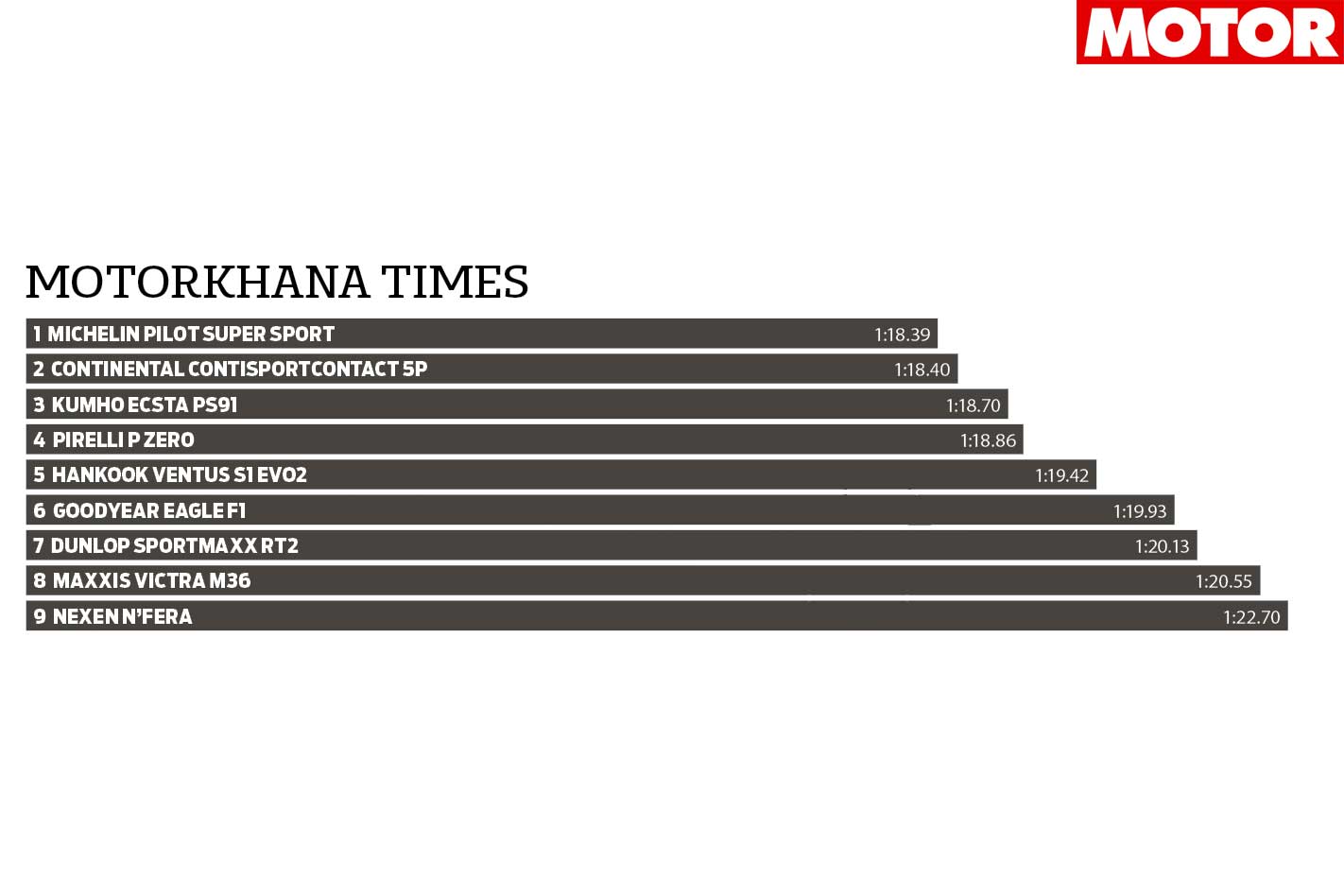
The Kumho pulls off another giant tamer performance, sitting three-tenths back in third with a 1min 18.7sec, with the Pirelli another two-tenths back in fourth.
Hankook’s Ventus’s fifth place again keeps it ahead of its more fancied rivals from Goodyear and Dunlop, while the Nexen falls a long way back here. A 1min 22.7sec run is 4.3sec off the pace, which in this company is a long way.
“The Michelin recovers between transitions so quickly, and the Contis combine consistency with a lively feel,” reckons Luffy. He’s not as kind about the Nexens. “The stopwatch tells the story,” he says.
WET BRAKING
Modern tyres have to do it all, and the science of tread design is all about asymmetry – direction and left/right biased patterns are now the norm, with computer-aided design enabling tyre makers to massage and tweak the length, depth and even the edge chamfers of each block in order to meet the holy grail of handling, ride, noise and comfort.
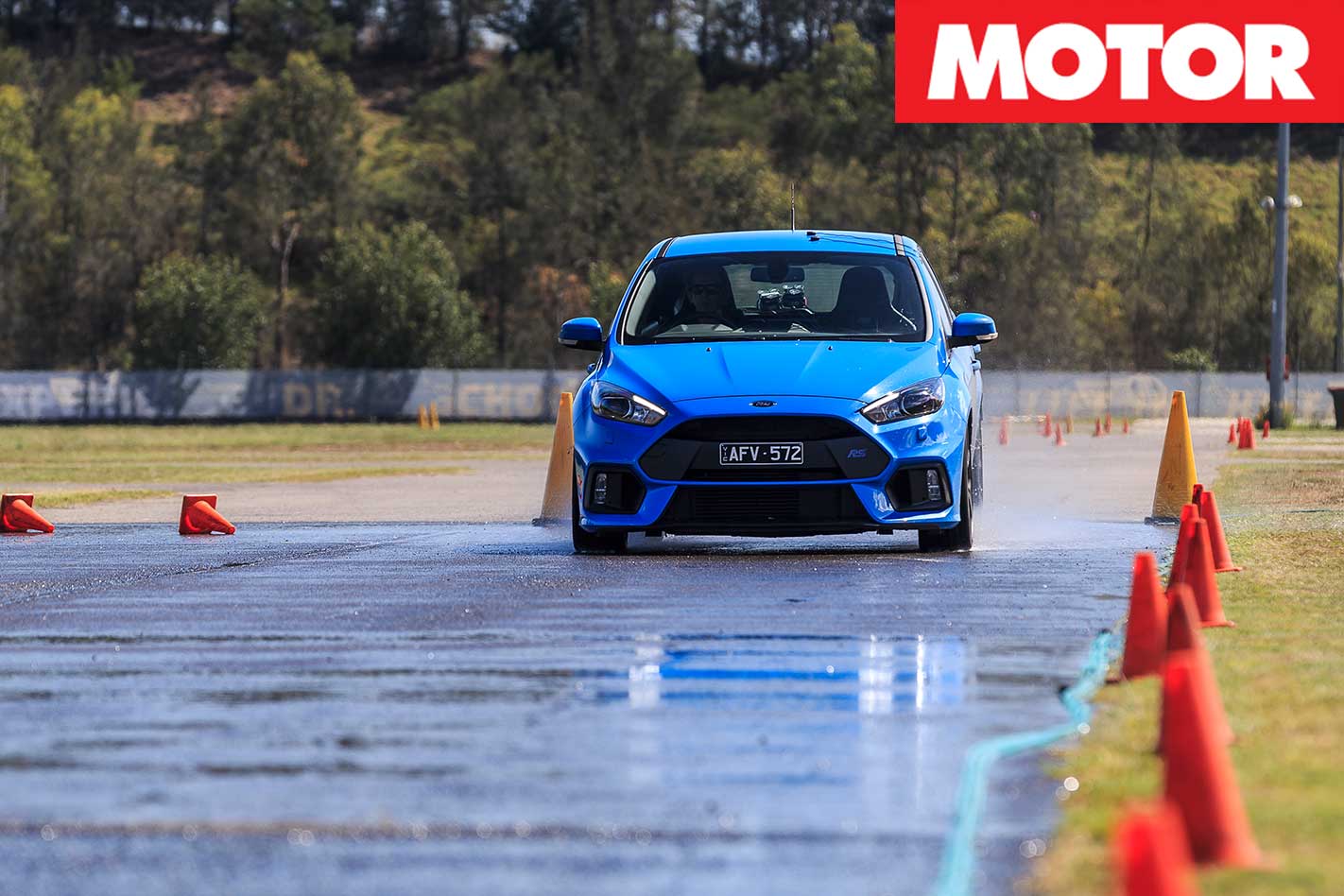
The wet braking test is again measured in distance, with Wazza hitting a stretch of wetted-down tarmac at 70km/h aboard the Focus RS and throwing out the anchor.
An ingeniously simple method of circuit wetting – long strips of perforated garden hose – ensures that our surface is evenly damp from edge to edge, and again we’ll run the measure of passing our control tyre over the same set of track three times during the course of the day.
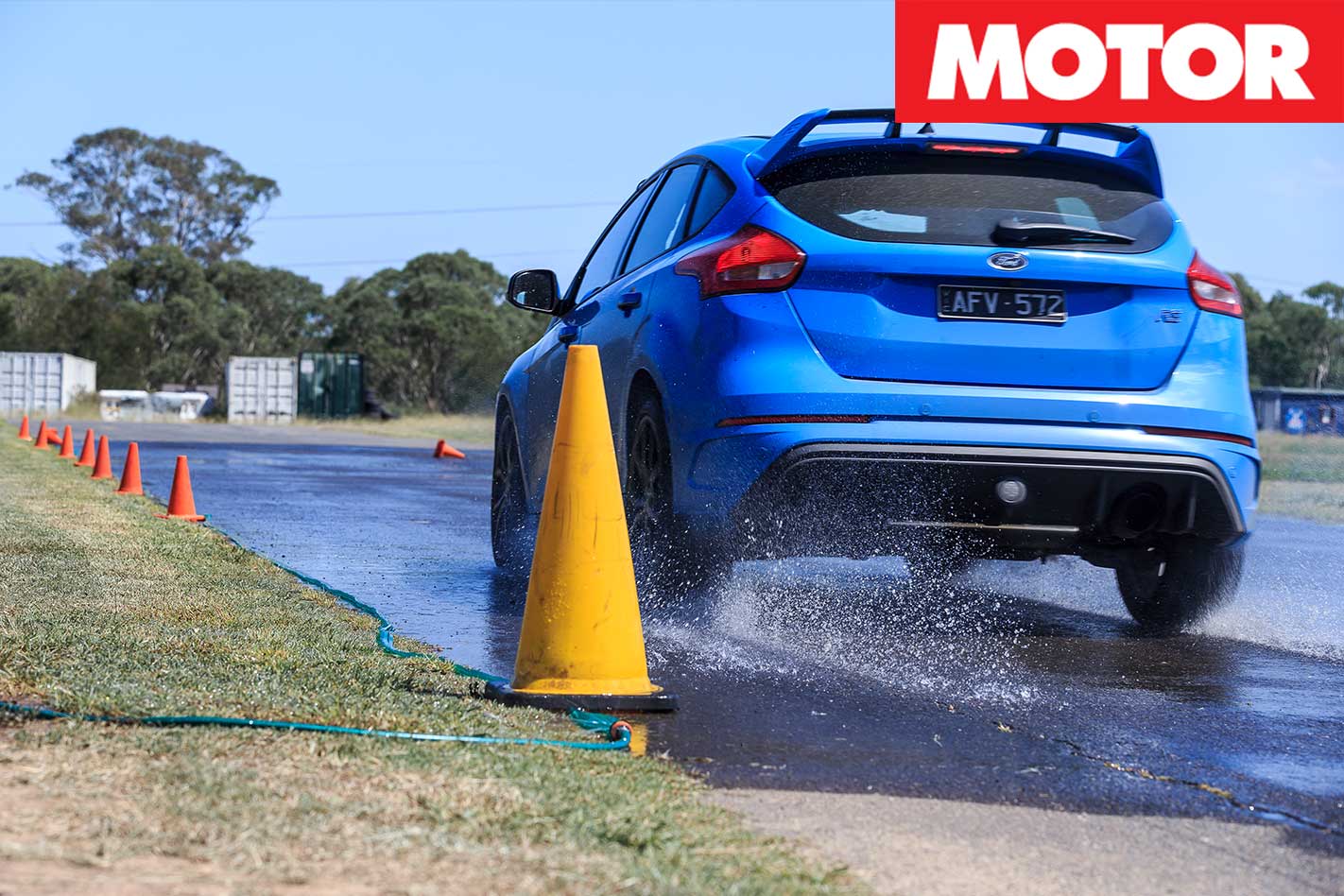
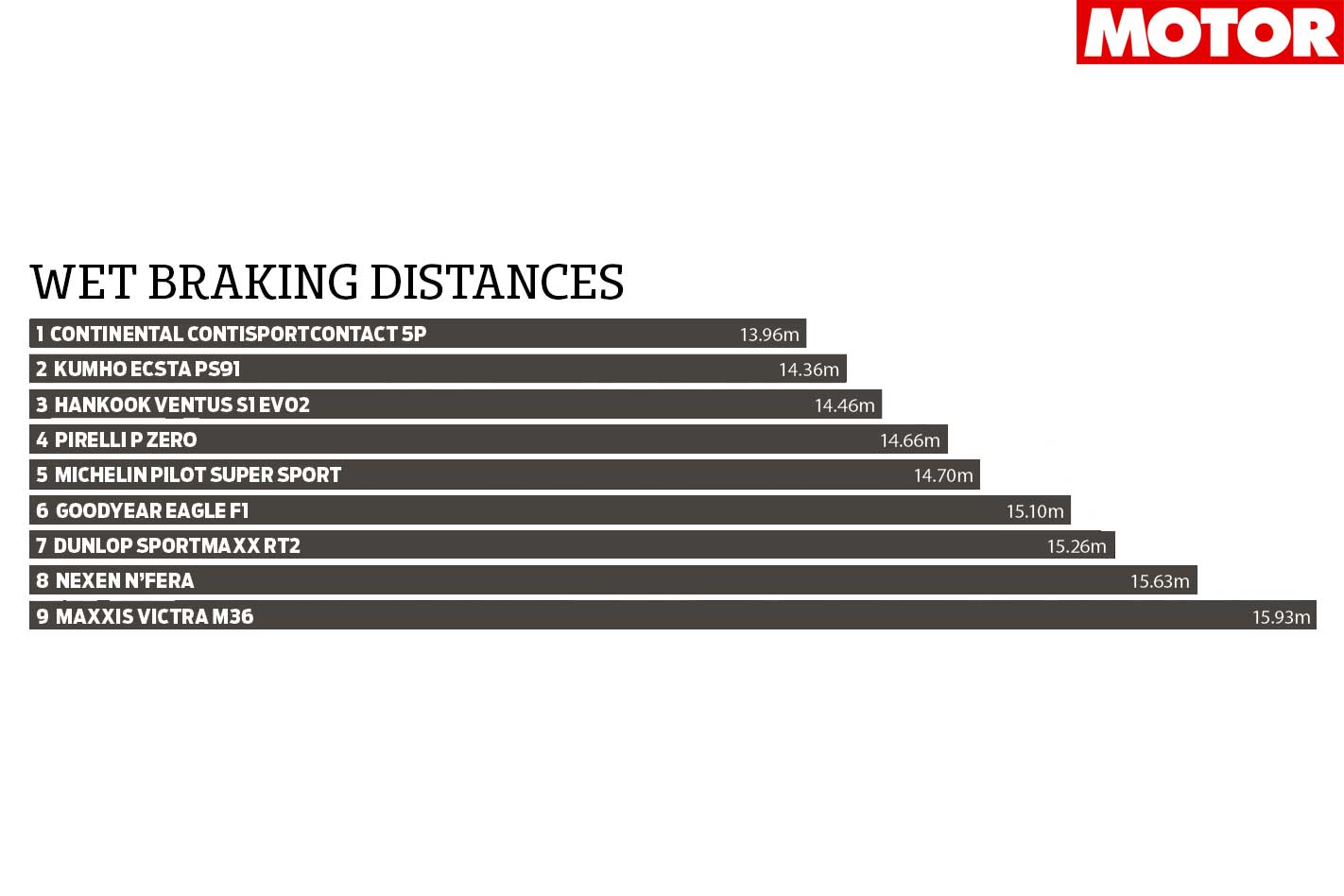
At a stopping distance of 13.96m, the Continental comes up trumps again, posting its second win of the day. The Ecsta again shocked the big players, with Kumho’s finest ending up 40cm further along the strip. Korean arch rival Hankook nails third a further 10cm past the Kumho, with Pirelli’s P Zero in fourth.
In a shock result, the previously dominant Michelin can only manage fifth, more than 70cm back from the Conti. The Eagle and the Sport Maxx end up in sixth and seventh, with the Maxxis and the Nexen eighth and ninth.
The Eagle F1 has surprised and disappointed this year, but its wet performance brought it back a little bit.”
WET LATERAL G
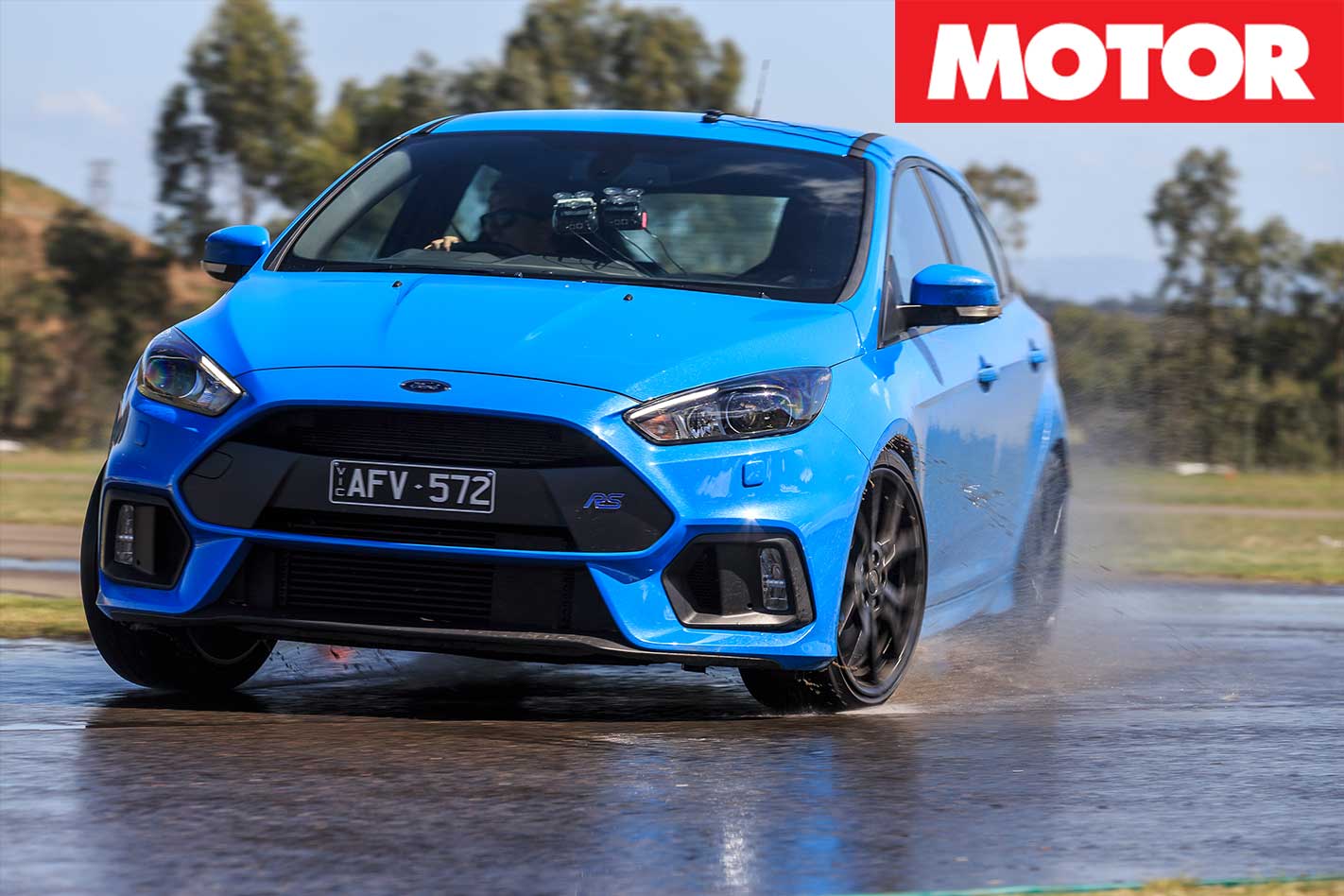
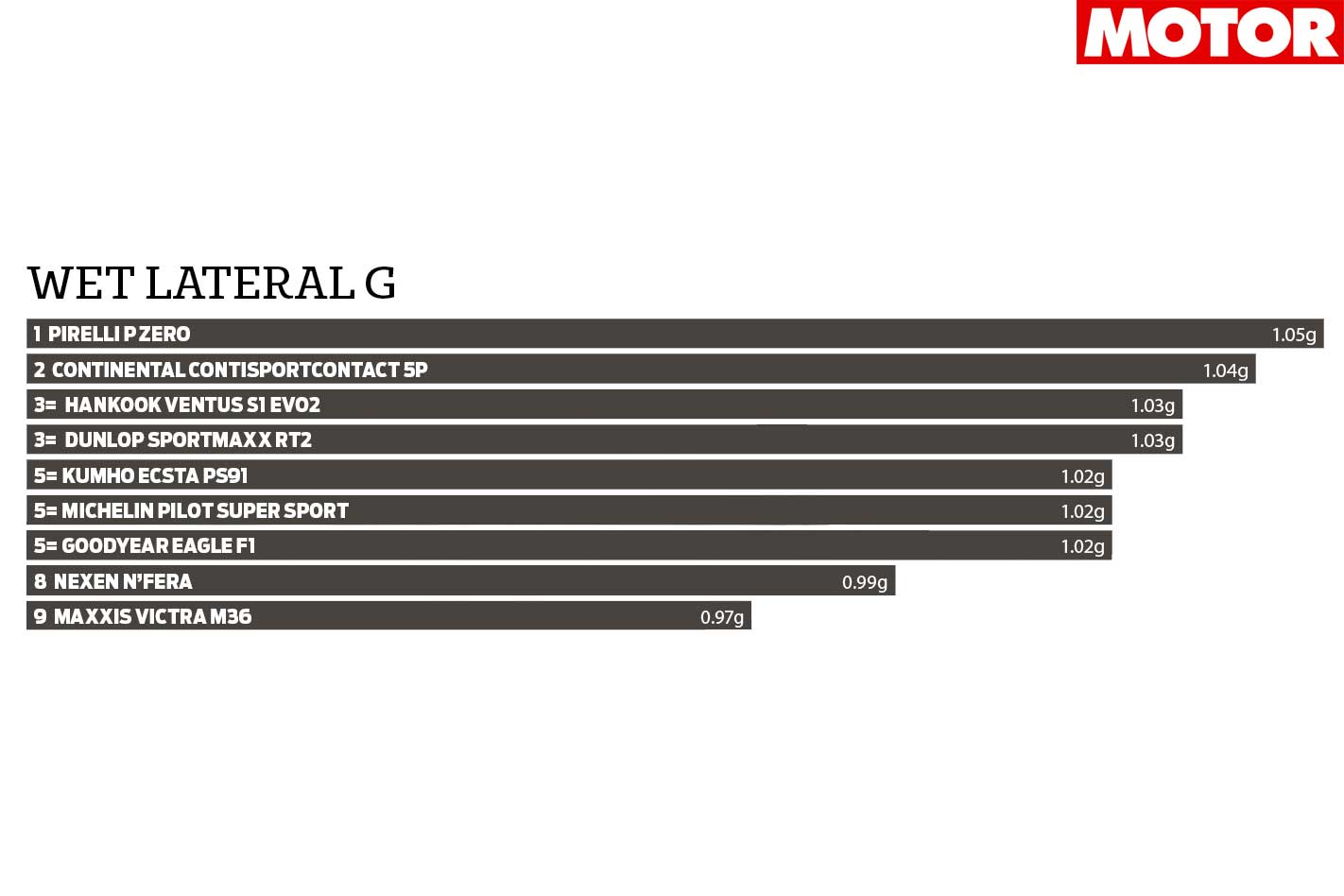
Wazza makes six runs at it – three turning to the left and three to the right – with each of the nine sets, using a 45km/h entry speed, before the top and bottom scores are cast out to remove any spikes or dud runs. The remaining four G readings are averaged, and voila, there’s the result, just like that.
Wet lateral-G testing is a new addition in our test playbook, and it reveals the loaded balance of each tyre set more convincingly than the front-axle bias of the wet braking test.
By mixing up the directions, too, Wazza can effectively negate any advantage or disadvantage a tyre may have by being on a loaded or unloaded side of the Focus RS.
The Conti posts another podium place – this time a second – with a 1.04g score, and the Hankook again splashes itself up past more fancied and storied rollers to post a solid third spot with 1.03g.
The Sport Maxx RT2 finally rallies to score a fourth place – by far its best result of a surprisingly underwhelming defence of its 2016 Tyre Test title – while the Kumho just edges out the Michelin for positions five and six.
The Goodyear Eagle has significantly failed to soar today, finishing the 2017 test set with a lowly seventh spot, while the cheaper Nexen finishes above the Maxxis for eight and ninth places respectively.
“The Maxxis didn’t fare well overall, but its wet-weather performance was actually better than I imagined it might be,” Wazza said. “Same as the Hankook; it was also better in the wet than its dry performances indicated it might have been.”
OVERALL WINNER
Unless someone out there has access to a very large, climate-controlled shed that’s equipped to run a level-five autonomous car at top speed, it’s worth reminding that this is a real world test – and we control or at least factor-in the variables as tightly as we can – but that means there will always be minute vagaries in testing procedures.
However, this year’s testing – the result of fine-tuning the methodology behind the event, as well as the consistency of the team who have been together for some time now – really is as objective as it can be.
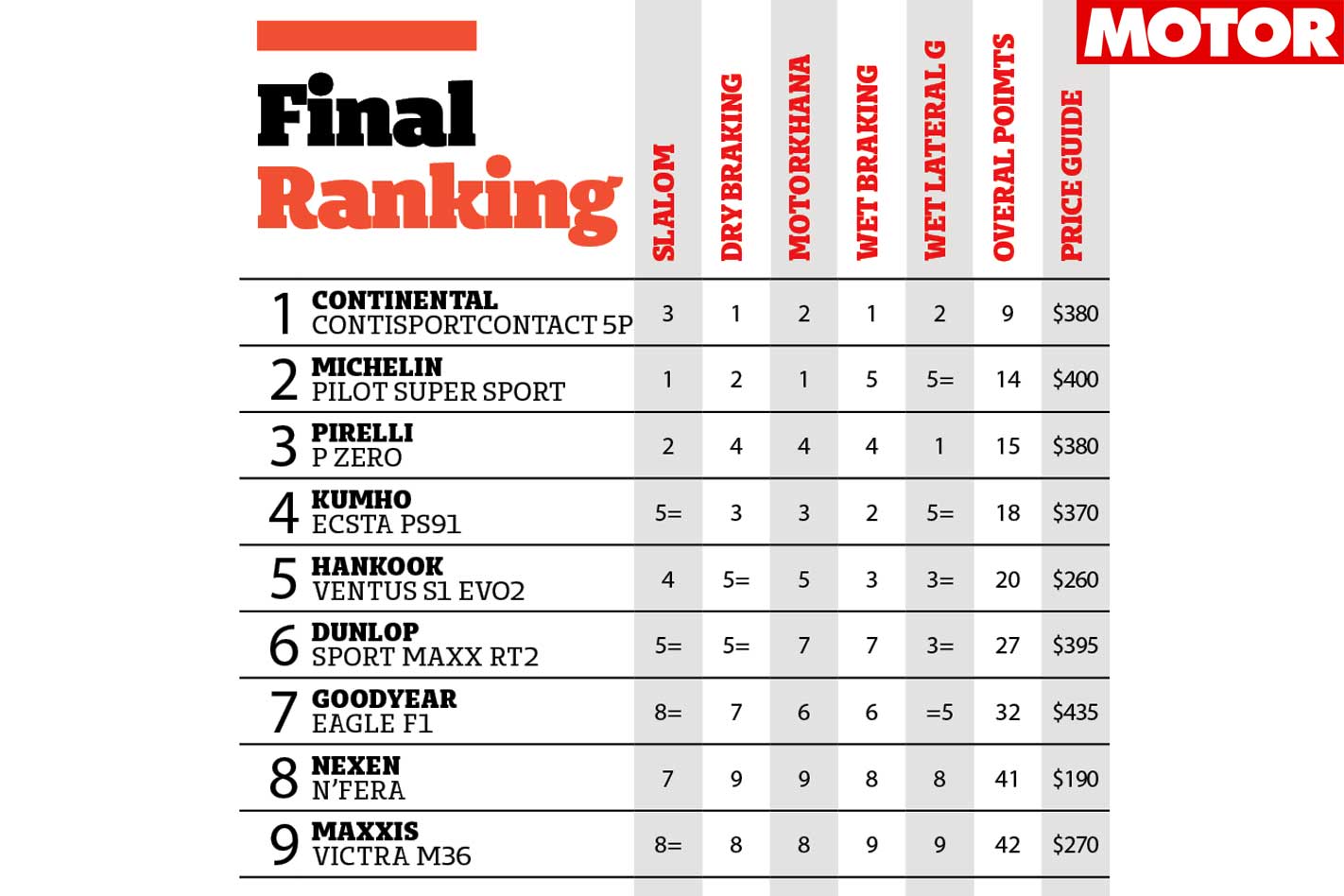
And there is little doubt about the winner. The Continental ContiSportContact 5P nailed three silvers and two golds to claim 2017 Tyre Test honours.
Interestingly, the Michelin Super Sport and Pirelli P Zero were separated by a single point. Even with the distinct difference in scores between the dry and wet test set, the two tyres finished with a small difference.
The Pirelli couldn’t quite match the Michelin’s performance in the dry tests, but a low score in the wet tests from the French tyre meant it couldn’t capitilise on its dry-weather prowess.
Kumho climbed to the top of the Asian-sourced heap in fourth over the Hankook, while the defending champ Dunlop fell to sixth. The Goodyear Eagle finished seventh, the Maxxis and Nexen equal eighth.
Ultimately, the king is dead. Long live the new king: the ContiSportContact 5P.
WHY WARREN LUFF IS OUR TESTER
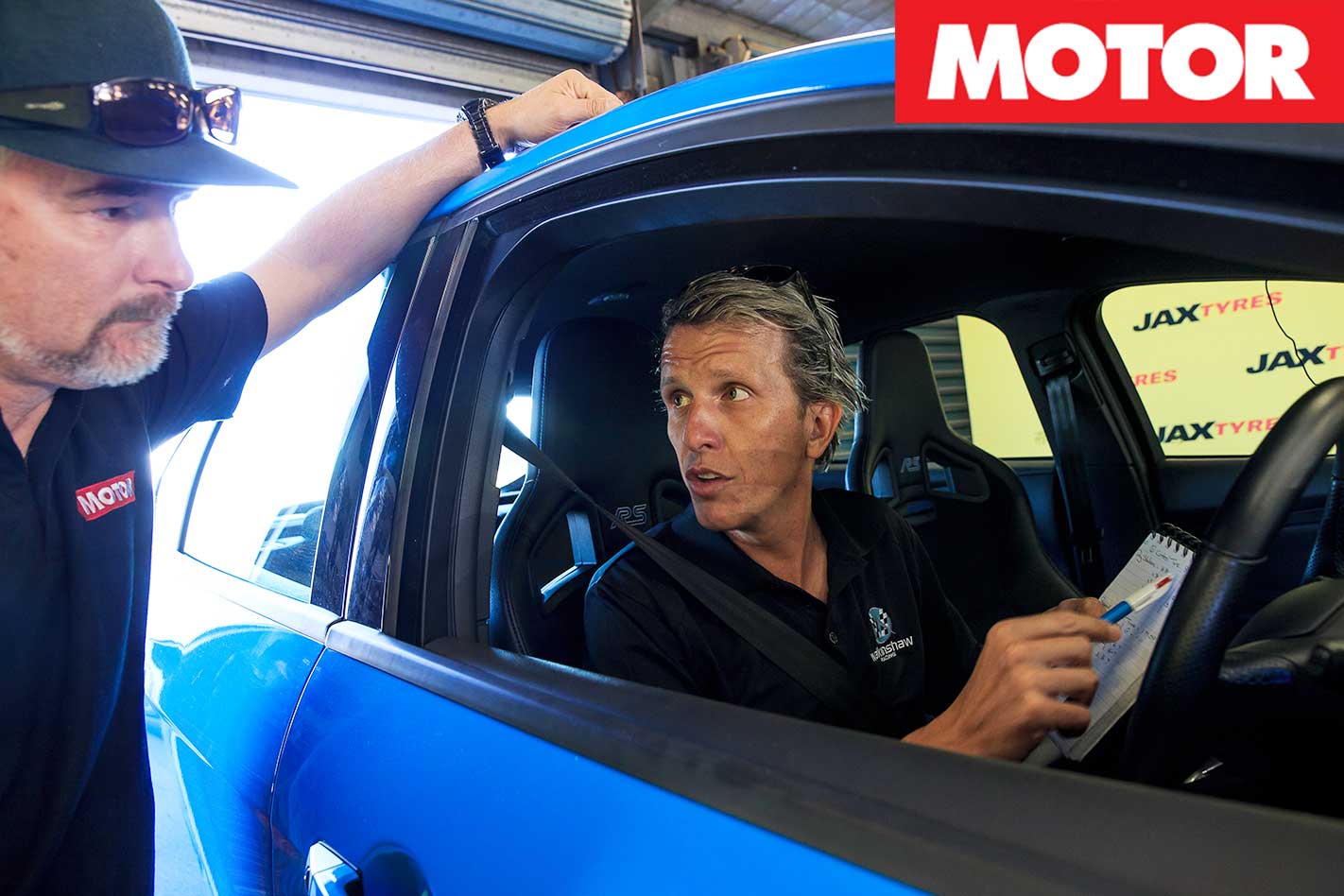
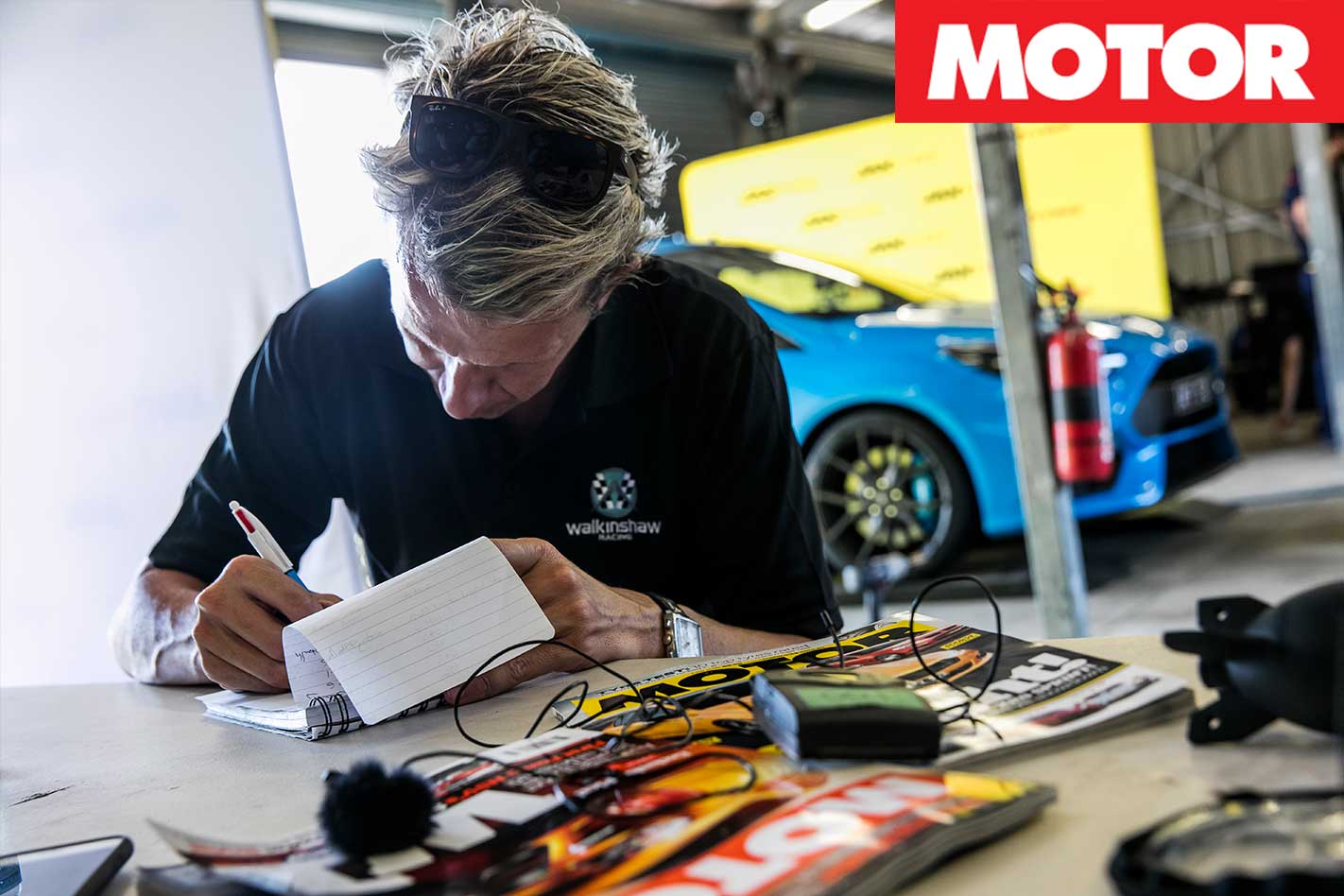
A long time, card-carrying member of the MOTOR test crew, his ability to repeat tests time and again with the same inputs is almost spooky to watch. He can also fly our data equipment like a pro and always mucks in at the end to get things squared away. His ability to turn a half opportunity into a potential cover shot is pretty impressive as well.
Follow Warren Luff on Facebook, Twitter (@wazzaluff) and/or Instagram (@luffy76).
THANKS, JAX TYRES
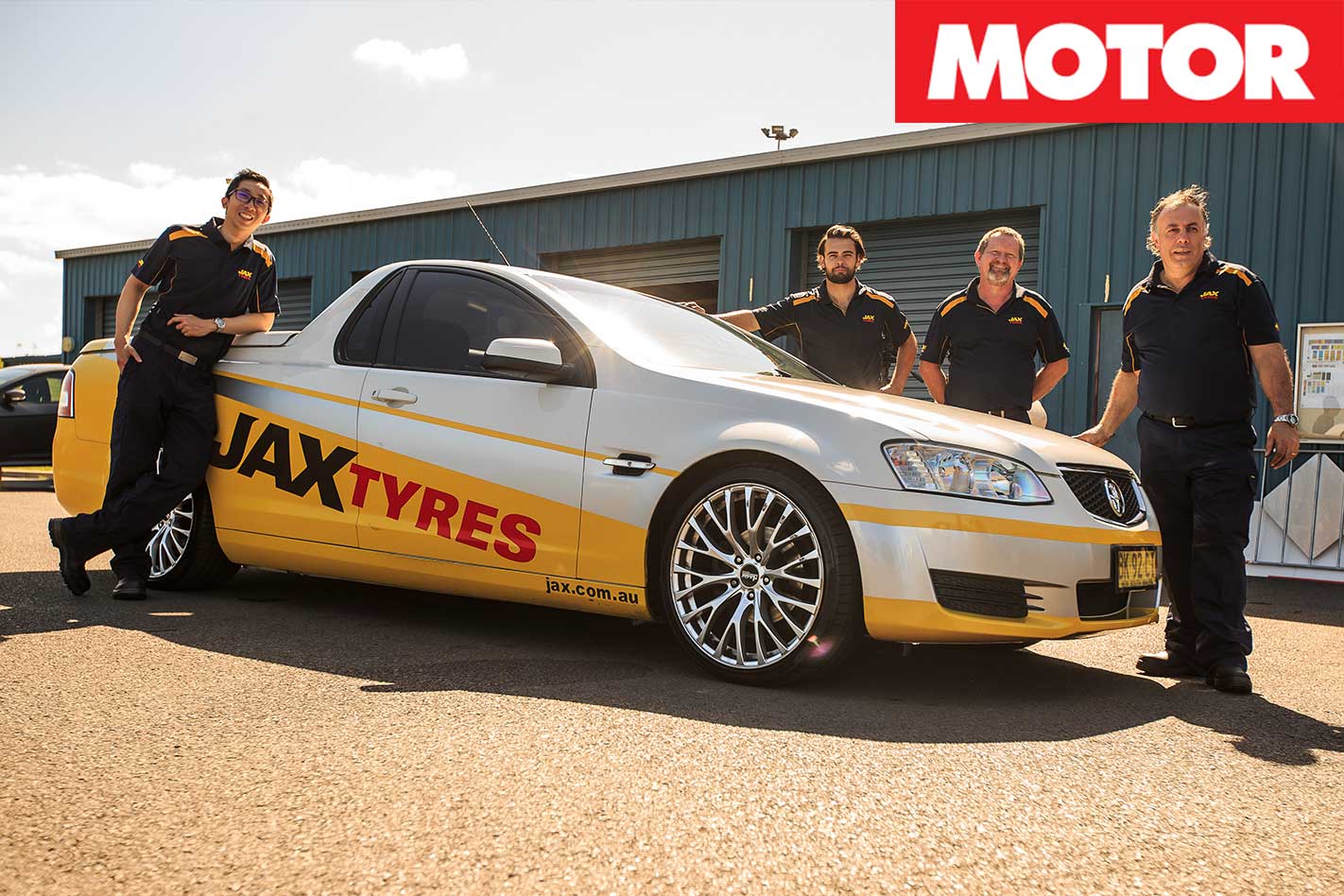
The crew at JAX Tyres have helped us out on a few of these now, and their experience counted when one set went M.I.A at the eleventh hour.
Not ideal indeed. Not only did the lads procure and ship all of our tyres, they also fitted nine sets to our spare sets of Focus rims and had them ready to roll so Luffy could drive straight onto a chassis lifter, get new rubber, check the hair and be back out flogging them senseless in minutes.
Thanks, too, to Eagle SMF, who supplied two tyre-fitting machines that made short work of processing the tyre fits in plenty of time. So Nicholas, Jackson, Chris, Frank and Kerry… seriously, good on you, fellas!
Bear with me for a minute. Remember Stanley Meyer? The guy who invented a water fuel cell that allowed cars to run on tap water, then was mysteriously murdered and had his research confiscated by the US government? In case any shadowy government operatives are reading this, I would like to state for the record that story is completely NOT TRUE. Wink wink.
In fact, remember Rudolf Diesel? “Rudolf Diesel” sounds like the star of a Christmas-themed Fast & Furious spin-off, or maybe a male stripper that Mrs Claus slept with on her hen’s night, but no – he is, of course, the bloke who invented the diesel engine… except that he proposed that it be run on peanut oil instead of fossil fuels… and then he mysteriously disappeared while aboard a steamship to England. His body was found floating near Norway 10 days later, so badly decomposed that they never did an autopsy. And after that, diesel engines ran on fossil fuel.
Getting the picture? Remember Pacific Electric, the system of electric street cars that criss-crossed Los Angeles? No, of course you don’t, because you’re not a 90-year-old Yank – but they did, before they were bought up by a conglomerate of car makers and oil companies, and scrapped. The companies were fined under anti-trust laws, but by then it was too late – Los Angeles became an autotropolis.
Oh yes, there have been automotive conspiracy theories for as long as there have been cars.
In the spirit of tin-foil hat-wearers everywhere, why haven’t we heard more crazed fever-dreams about the problems at the Tesla plant? Tesla is the modern-day version of the water-powered car or the peanut-powered truck – disrupting the established players, and making the oil industry fatcats nibble nervously on their cigars.
Let us not forget that Tesla boss and all-round mega-brain Elon Musk predicted his Fremont, California, factory would be turning out thousands of Model 3s by late 2017. And then they ran into some “production bottlenecks”, which is a polite euphemism for “we made about three cars by hand”. Tesla’s high-tech automated manufacturing line is, to use some technical jargon, a bit rooted.
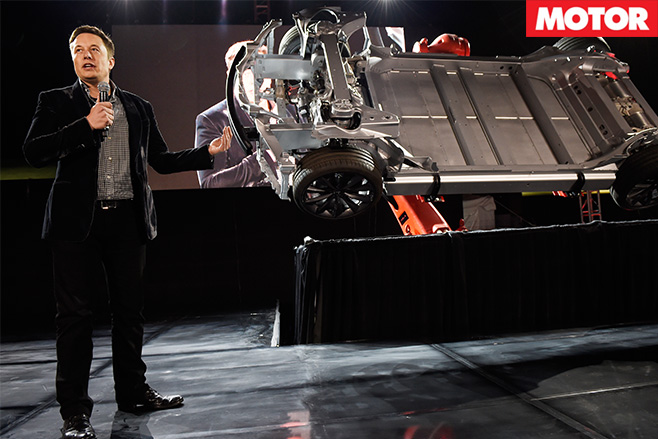
Die-hard conspiracy theorists, in between searching the skies for con-trails and bio-scanning politicians to uncover lizard people, will recall that the automated manufacturing line at Tesla’s Fremont factory is made of robots – specifically KUKA industrial robots. KUKA is one of the biggest suppliers of industrial robots, especially to the automotive industry – and was recently bought by the Chinese mega-conglomerate Midea Group. It’s Midea’s first foray into robotics – their main business is making air-conditioners. In fact, Midea makes billions of dollars a year from selling air-conditioners – a figure that will only grow if global warming continues… and one of the ways to ensure that happens would be to ensure that electric cars never replaced fossil-fuel burning cars.
Is it a zany theory that only basement-dwelling crazoids would believe? Sure – just like the theory that the world’s richest and most powerful men gather once a year to perform pagan rituals under a giant owl statue at a secretive getaway called Bohemian Grove, which is also where the Manhattan Project that created the first atomic bomb was created. Except, oh yeah, that one’s true.
Don’t worry, Tesla will surely figure out how to escape its production hell – probably just in time for the robots to start an uprising to take over the Earth and enslave humanity. No wonder Elon Musk is also feverishly building rockets to escape the planet with his Space-X company.
In case any shadowy government operatives are reading this – perhaps even robotic operatives, sharpening their hydraulic pincers – I would like to state for the record that this entire column is NOT TRUE. Wink, wink.
Though for a different explanation, read just the first letter of each paragraph.
