
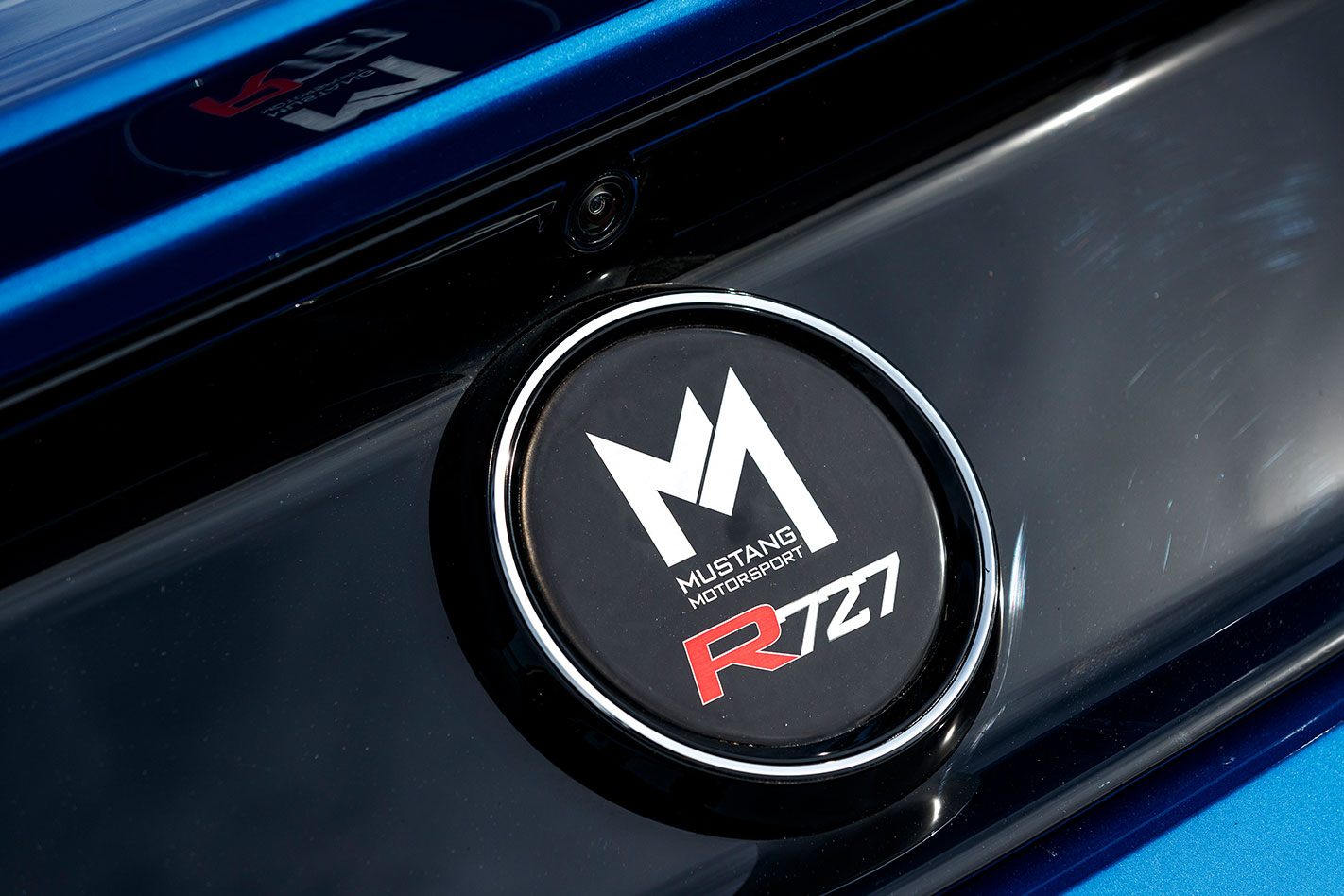
When a tuned car rocks up bearing a badge that includes the numbers 727, you can bet you’re not dealing with a tribute to a 1960s Boeing.
Nope, that 727 would be a horsepower-based statement and, in the case of Mustang Motorsport’s (MM) GT, the proclamation is entirely believable.
The MM-R727, to give it its full title, taps into the US-based Roush Performance well-spring of goodness and emerges with a bunch of track-day inspired enhancements.
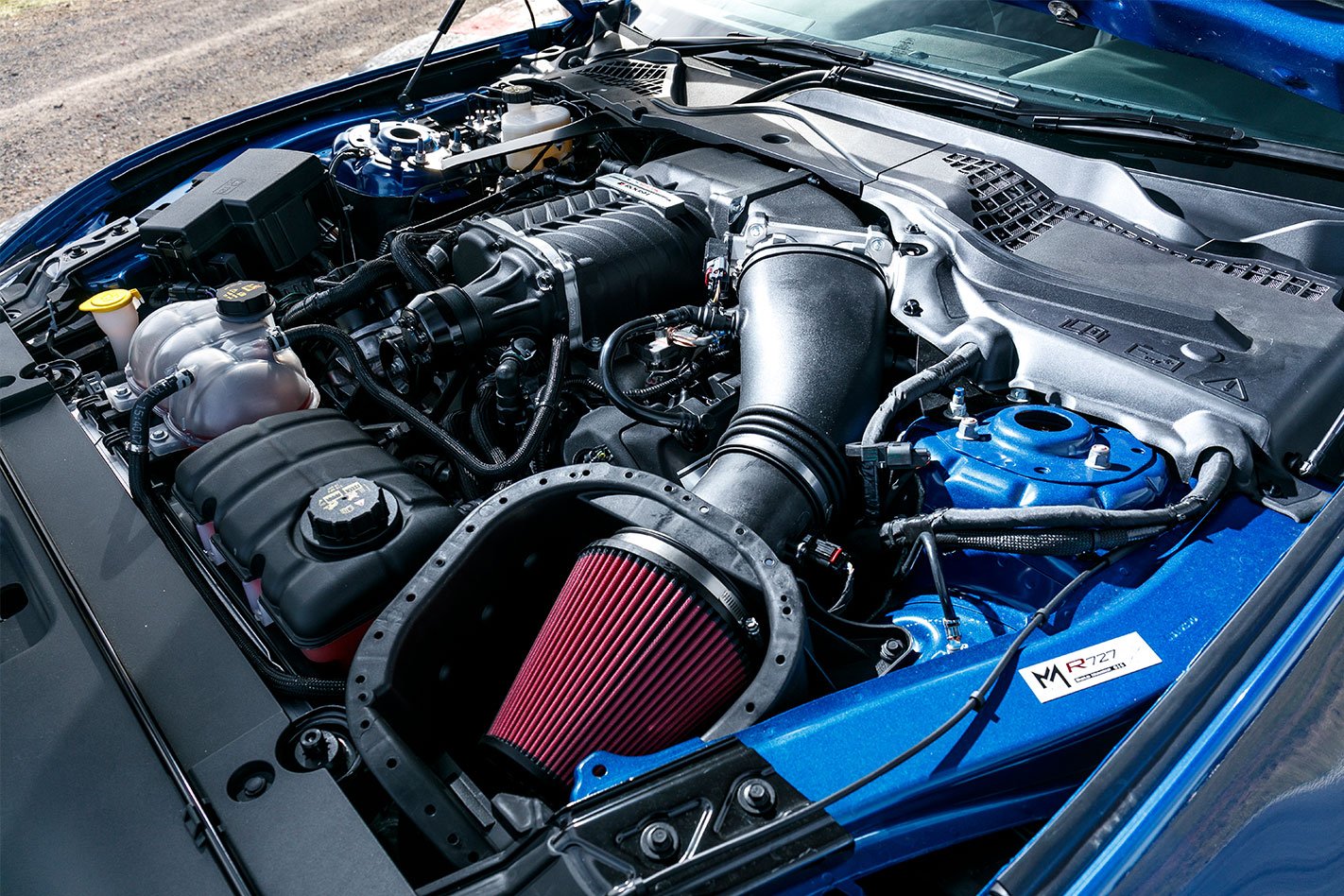
Equally modified are the bouncy bits which, with input from local outfit Shockworks, emerge with a fully adjustable arrangement that smells pretty track-oriented if the truth be told. But, hey, that’s what we’re here for, right?
That impression is backed up by the huge rubber on board with a 20 x 10-inch front rim that picks up where the rear tyres on most Mustangs leave off. That means MM can fit a monster 295/30 Michelin on the front and with 20 x 11s out back, there’s an equally impressive 305/30 hoop filling the guards.
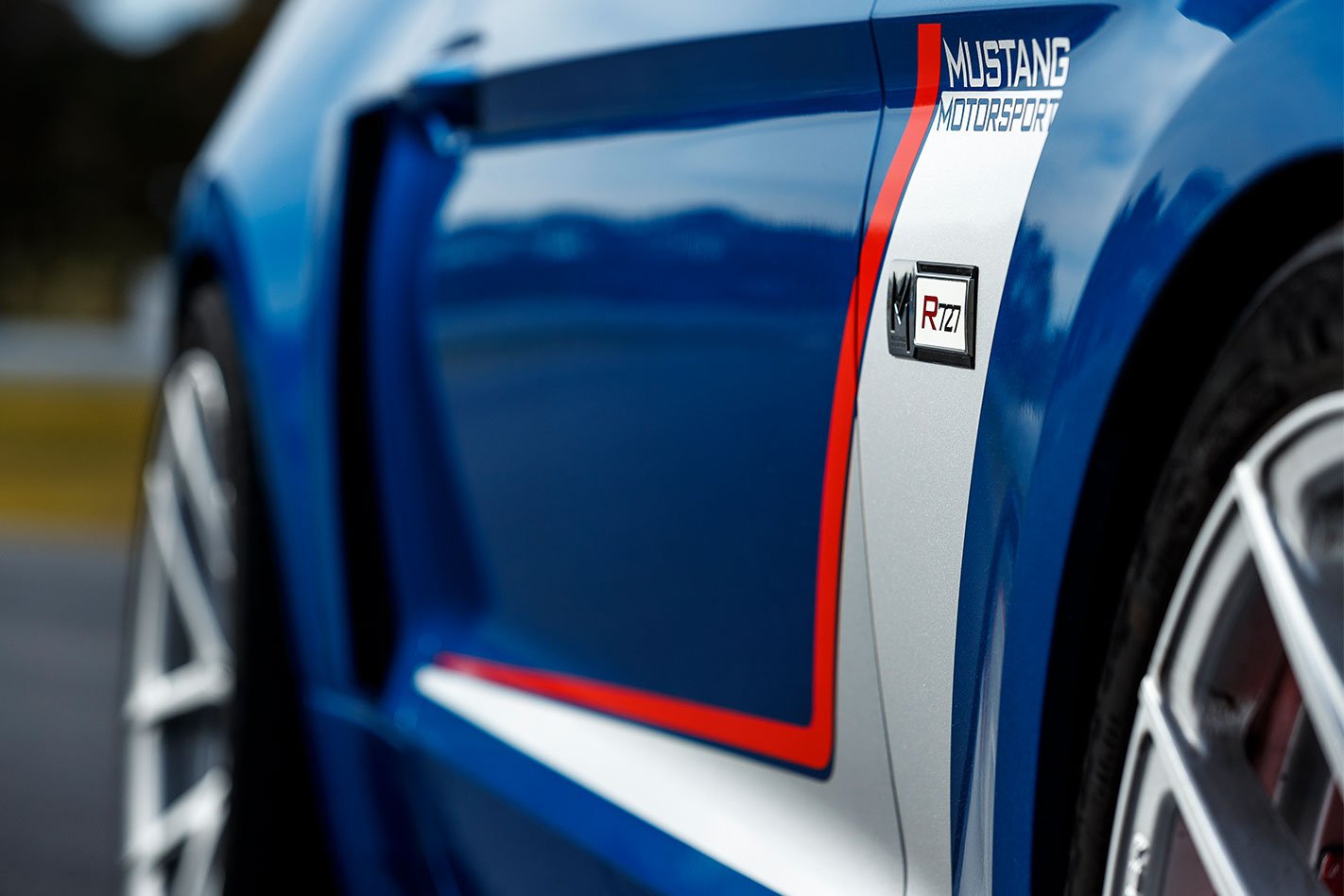
The rest of the deal is nice, but largely cosmetic or comfort related, and for less than $25K (if you don’t want the window-dressing) the stuff we’ve just listed is what makes the 727 badge more than just a catchy name.
To be honest, this car was always going to shine on the track. And, in fact, had it not given everything else here a good puzzling, there’d have been trouble, because its superb track performance comes at a cost.
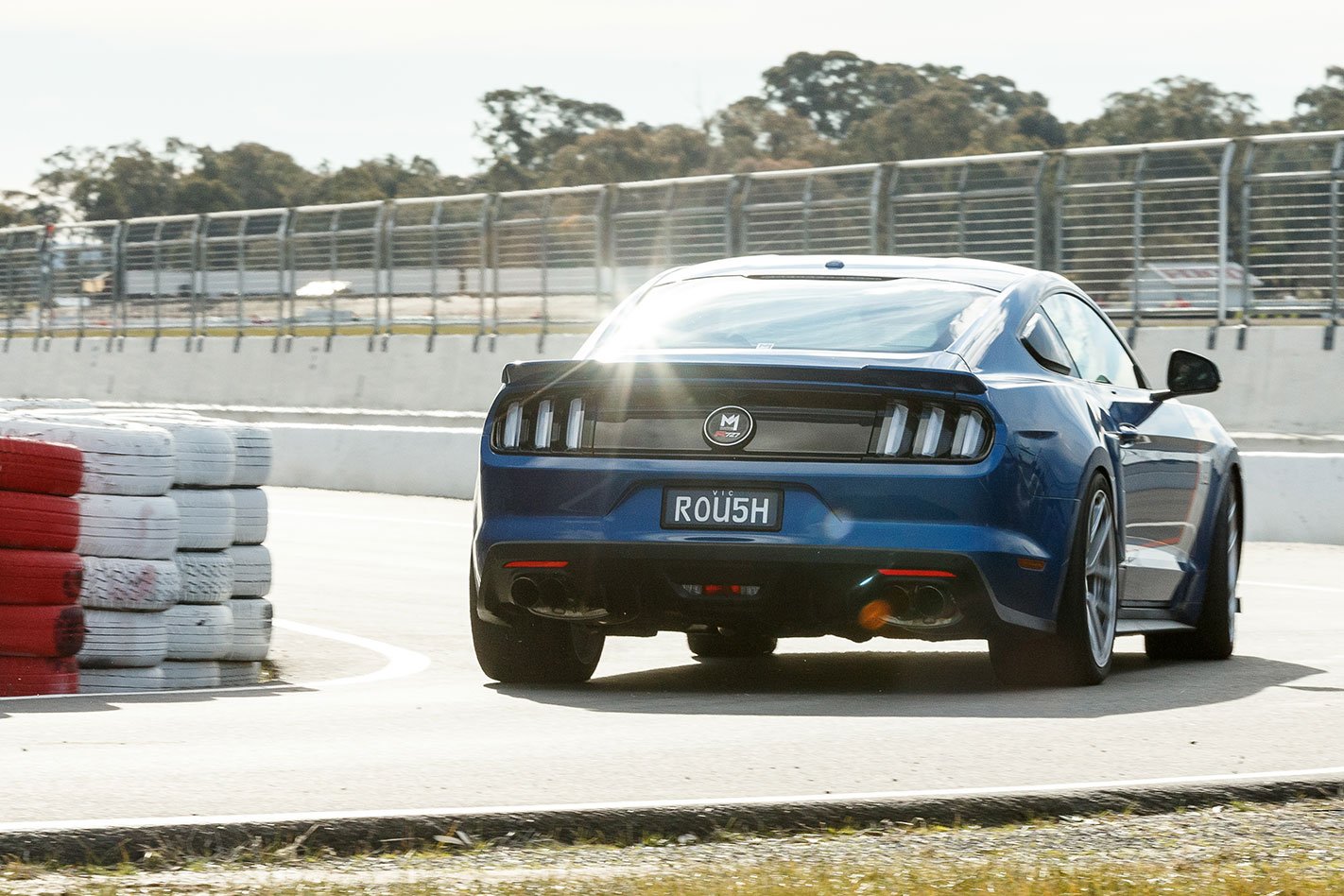
The tyres are a bit more of the same. Cold, they’re rubbish, and your out-lap is likely to be a series of small calamities. But then the Michelins really start to come alive. I swear, I reckon I could feel them gaining grip in real-time. Not just corner by corner, but metre by metre.
And when they are up to temp, hang on, because they’ve got to be worth at least a couple of seconds a lap (though even at that rate, nothing much else would have caught the R727 around Winton).
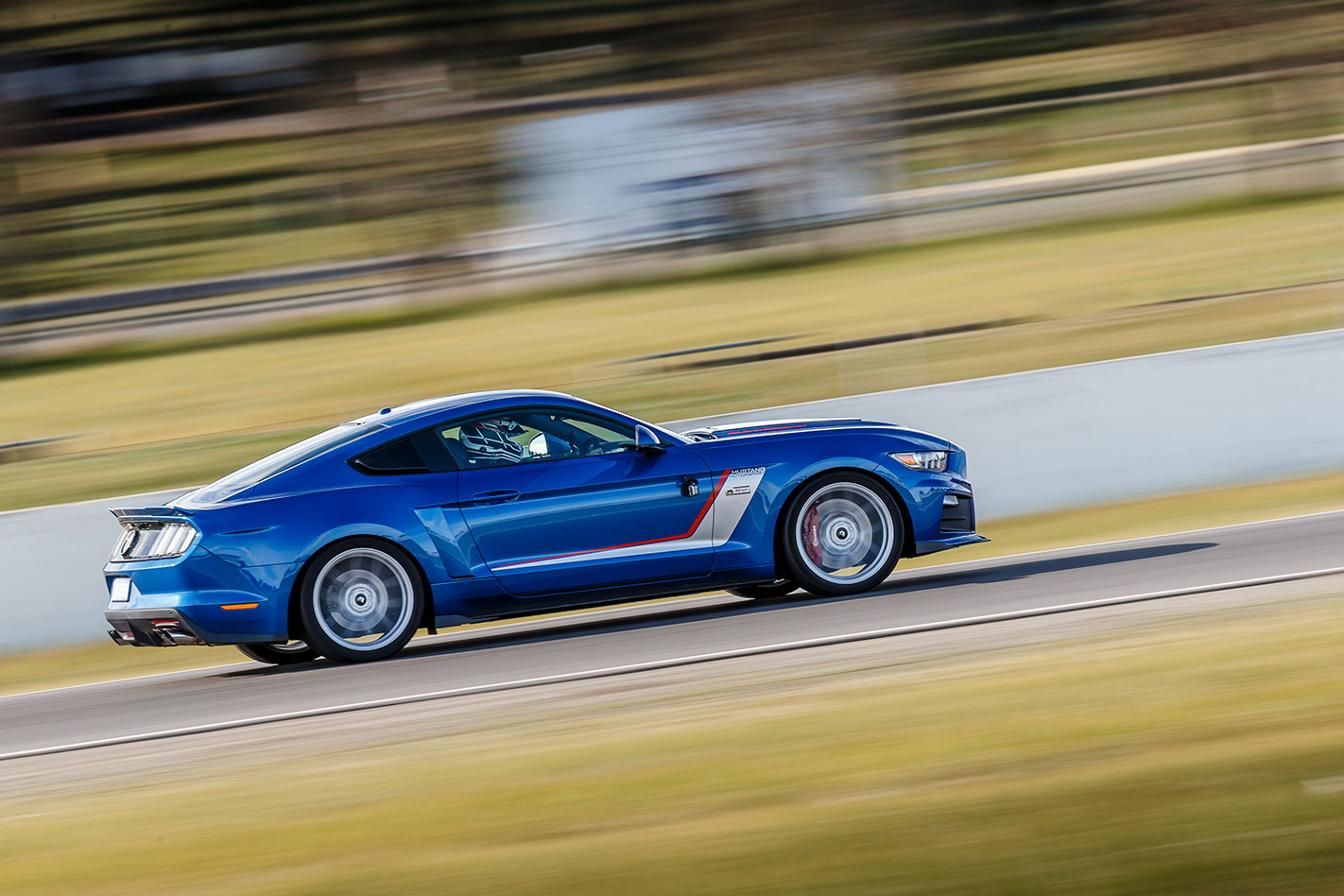
But one element that refuses to lose its razor-sharp edge is that monster motor. It not only sounds tough, but it cracks on like crazy. The power is ferocious, but only in terms of its sheer amount, because in delivery terms, it’s very linear and predictable, not something you can say of all blown engines which can have a tendency to come on strong just when you need it least.
That sort of behaviour, of course, is the trademark of something a bit unsorted, and that’s not a criticism you could ever level at the MM car because, like the best of the rest, it feels almost factory in the way it operates at low speeds and smaller throttle inputs.
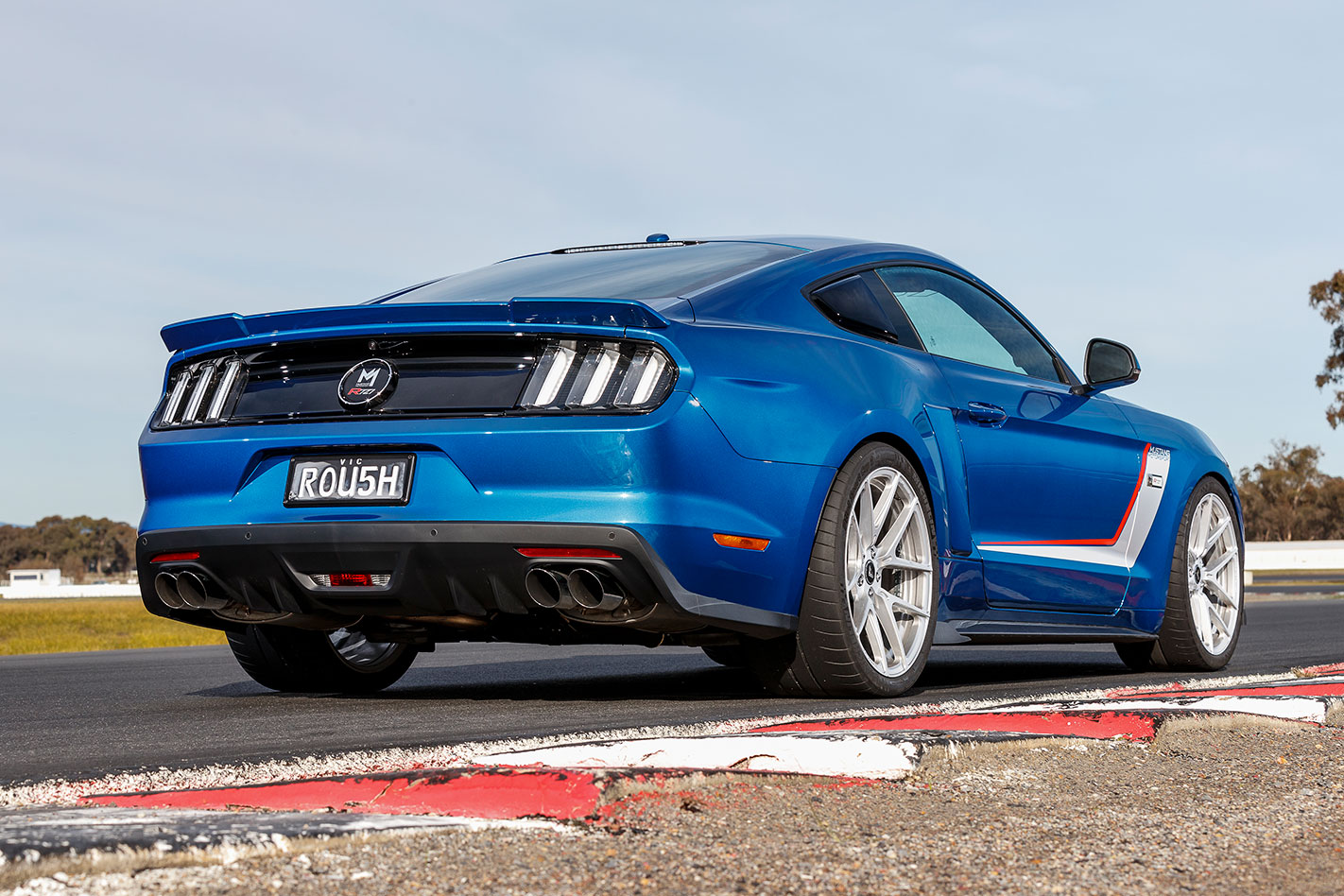
As a road car, it would benefit from less aggressive pads and a set of tyres that didn’t demand a burnout to hook up initially, but those are all choices for the individual.
Beyond that, the R727 does exactly what it says on the box and also highlights what a great starting point the Mustang platform represents.
Which is kind of the point here: the MM treatment is working to enhance what is good in the basic Mustang package, not try to paper over the flaws and gaps of a knackers-bound nag.
And that’s got to be the smart way to approach any kind of modified car.
WARREN LUFF SAYS:
“The car is a true credit to the guys. When I first went out I knew it was supercharged, but there’s no tangible point where you feel it kicking in – it’s so linear.
“Handling and brakes? It does everything well.
“However, one thing that probably lets it down is the auto gearbox.
“It’s a great car and it’s got a visual point of difference with little bits of body styling that really take you back to the early days of Mustang and finishes it off really well.”
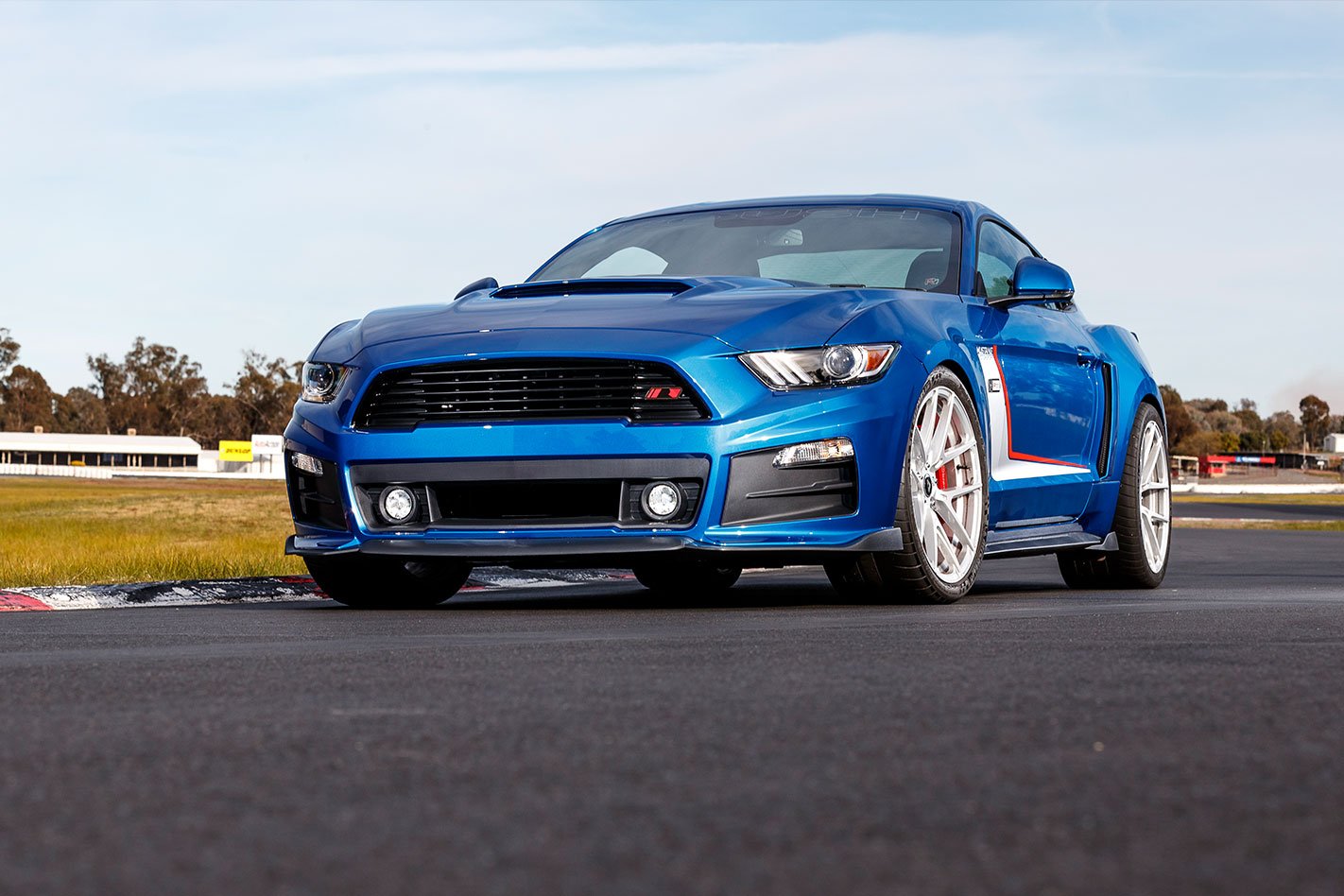
MUSTANG MOTORSPORT MM-R727 SPECS
Power: 543kW Torque: 827Nm
0-100km/h: 4.27 seconds 0-400m: 12.10 seconds 80-120km/h: 2.1 seconds 100-0km/h: 37.06 metres Lap Time: 1:33.4sec Apex km/h: 85.16km/h Lap V-max: 201.41km/h 400m V-max: 200.68km/h
Engine: 4951cc V8, DOHC, 32v, supercharged Gearbox: 6-speed automatic Suspension: struts, anti-roll bar (f); multi-links, coil springs, anti-roll bar (r) Brakes: 380mm ventilated/slotted two-piece discs, 6-piston calipers (f); 330mm slotted two-piece discs, single-piston calipers (r) Wheels: 20 x 10.0-inch (f); 20 x 11.0-inch (r) Tyres: 295/30 ZR20 (f); 305/30 ZR20 (r); Michelin Pilot Sport Cup 2
PARTS AND PRICES
R727 Kit: $46,990 -Roush Supercharger -Roush Exhaust -Adjustable Handling Kit -Slotted Brake Rotors -20-Inch Forged Wheels -Michelin Cup 2 Tyres -Badging And Build Plate -Exterior Body Kit -Interior Upgrades Optional Extras: $5,600 -Exhaust Upgrade -Custom Interior -Suede Trim -Roush Boost Gauge -Roush Decal Kit -Ultra Brake Pads -Trans Cooler -Rear Cradle Mounts And Control Arms -Gas Hood Strut Kit -Led Upgrade Total Mods Cost: $52,500 Vehicle Cost: $59,990 Total Cost: $112,490
The Numbers Don’t Lie
A handy go-to guide to instantly compare each car against the others, including the numbers recorded by the standard Mustang.

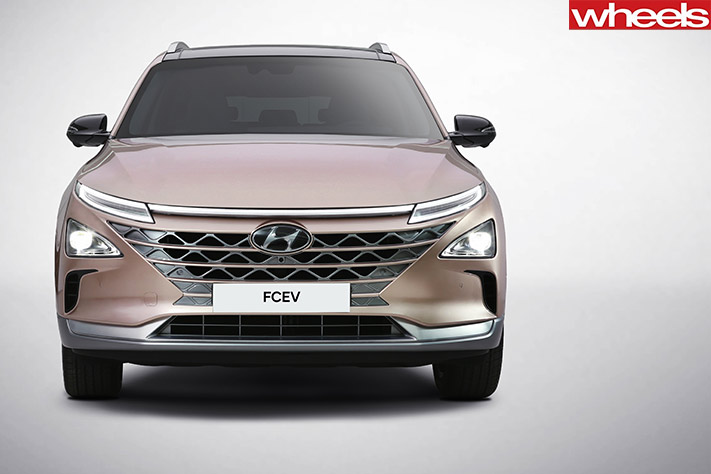
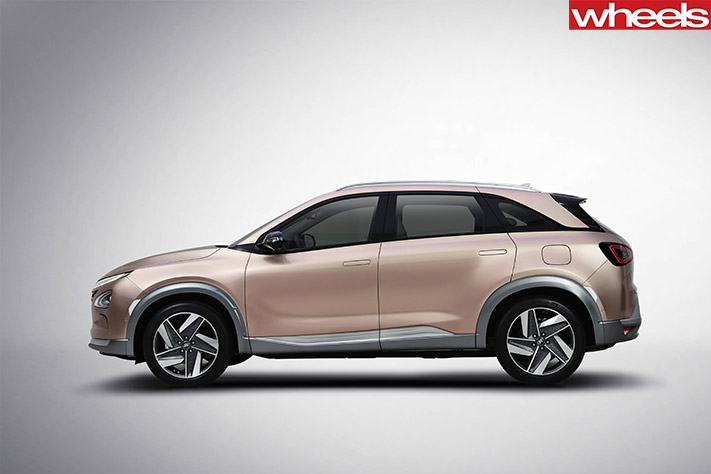
HYUNDAI’S dogged commitment to hydrogen as a fuel of the future has taken another step forward today with the company finally revealing the name – Nexo – and full technical details of its all-new fuel-cell SUV at the Consumer Electronics Show (CES) in Las Vegas.
Pitched as the technological flagship of Hyundai’s fledgling eco-vehicle range (the Korean brand hopes to have 18 eco-friendly models on sale by 2025), the Nexo is a replacement for the current ix35 FCEV and the first model spun off Hyundai’s dedicated FCEV architecture.
The headline stats are impressive: significantly roomier than the car it replaces, it’s also more powerful, accelerates quicker, can be fully recharged in as little as three minutes and, if Hyundai insiders are right, it can travel almost 1000km on a single tank (the official range is a conservative 800km).
A new generation voice recognition system also debuts, which doesn’t only control functions like the air-con, sunroof and door locks, but extends beyond the car and into the owner’s home. Owners can ask the car to turn lights on inside their house, for example, or stream the same song being played in the car into their living room for a seamless arrival experience.
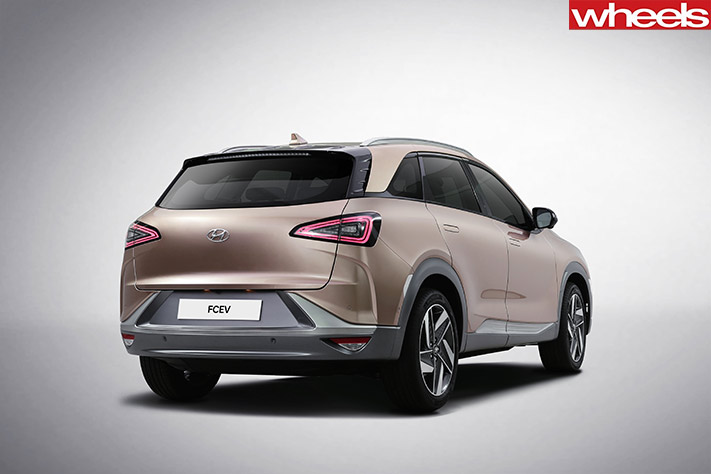
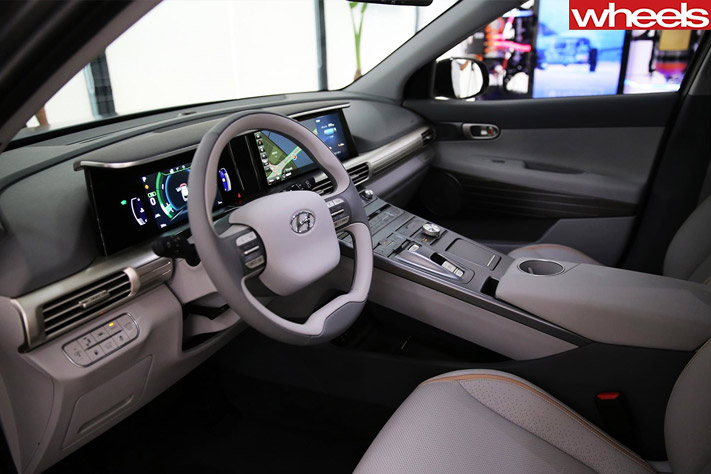
Powertrain wise, Nexo powers the front-wheels via a redesigned fuel-cell system that combines a 95kW/h hydrogen cell and 40kW/h battery with a 120kW electric motor. Despite slight performance gains, however, it’s still no sportscar, with 0-100km/h taking 9.5sec, roughly the same as Hyundai’s Kona small SUV.
“But we’re playing the long game,” Hyundai’s fuel cell program leader, Scott Nargar, told Wheels. “Long-term Hydrogen is cleaner, faster to recharge and more viable.”
HIGH-RANKING Hyundai executives have confirmed the company is developing a “high performance” halo sportscar for its fledgling Genesis brand that will rival the likes of Ferrari and Porsche.
Speaking to Wheels in Las Vegas today, Hyundai design vice-president Luc Donckerwolke, and vice-chairman of research and development, Woong-chul Yang, both revealed work on the sportscar is ongoing and that it would likely be rear-wheel-drive and utilise a hybrid powertrain with powerful electric motors and a small petrol engine.
“We are definitely doing it,” said Donckerwolke. “I’m actually reviewing the project next week, after CES. I can’t tell you much more about it, but we are definitely doing it. We are not going autonomous for all of our cars!”
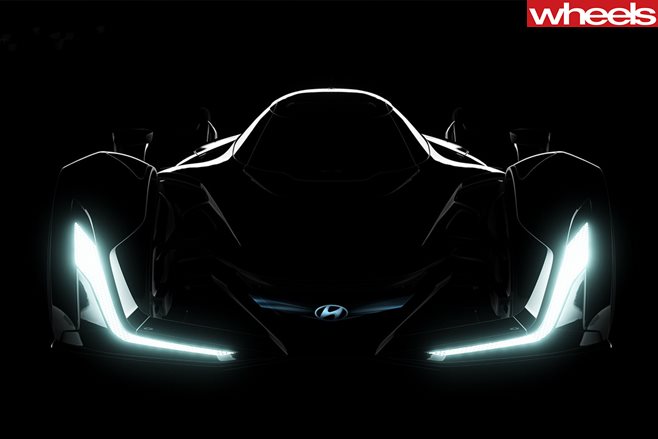
Yang also acknowledged the project, revealing the sportscar would utilise a two-seater body style and was likely to be developed by Hyundai’s N division under the direction of former BMW M boss Albert Biermann.
“We are very much interested in it and as far as I’m concerned I’d love to promote that [a sportscar],” said Yang. “That’s something our brand needs at this time. The people working at N will be working on that, but how we put it in the N or maybe above N … it’s pretty high performance. It’s serious.”
When quizzed on what would power the sportscar, Yang cautiously revealed Hyundai considered the performance gains offered by batteries and electric motors as a key ingredient to the model’s success.
“We cannot say it will just be hybrid,” he said “but we will use electric motors and batteries to make it more performance. Some areas we cannot just overcome by putting a big ICE [internal combustion engine], we like to minimise as much as possible the ICE and use the best application of electric motors,” he said.
“That means not only efficiency but also performance can be very much optimised using both powertrains. Certainly we will put some electric powerplant in there.”
Wheels first reported on the possibility of a flagship Genesis sportscar from the 2016 Detroit Motor Show, although this is the first time the company has publicly confirmed the project.
Hyundai is believed to have bought cars as varied as a BMW M3, Nismo 370Z, Porsche 911 and Porsche 911 Turbo to use a performance benchmarks at its Namyang proving ground.
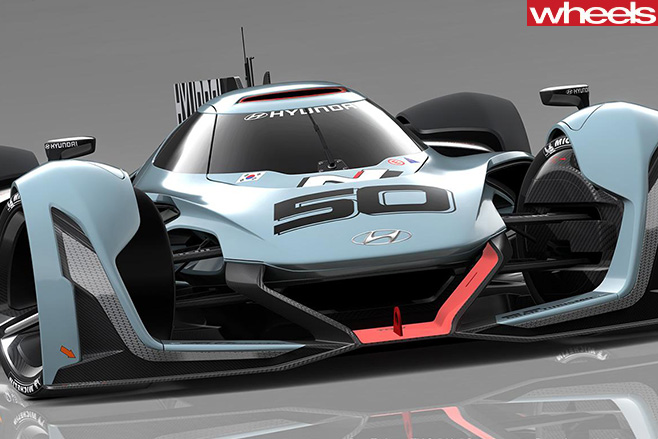
What the sportscar will look like, and how Donckerwolke and his team will interpret the challenge of combining a traditional petrol engine with large electric motors remains to be seen, although Hyundai’s design centre boasts some high-profile talent.
Donckerwolke spent more than two decades at the Volkswagen Group where he designed the Lamborghini Diablo and original Gallardo, and also enjoyed stints at Audi, Seat and Bentley.
Former Bugatti designer, Alexander Selipanov, who penned the Chiron, also recently moved to the Hyundai Motor Company to fill a lead design role at Genesis.
As for when the sportscar would be revealed, neither Yang or Donckerwolke would provide any hints, although a concept car is still likely to be years away. Yang confirmed the design proposals were more advanced than any engineering work.
“When we talk about that the first thing is design, so design can go far ahead of production,” he said.
“This car ran 10.5sec at about 145mph at Heathcote.”
It’s early and my foggy brain can’t quite comprehend what Harrop General Manager Heath Moore has just told me. I asked Moore to quickly run me through the basic specs of Harrop’s supercharged Mustang when he dropped that little factoid.
Okay, it was running E85 and drag tyres at the time, but trap speed is a pretty good indicator of ultimate horsepower and I’ve never driven anything this potent.
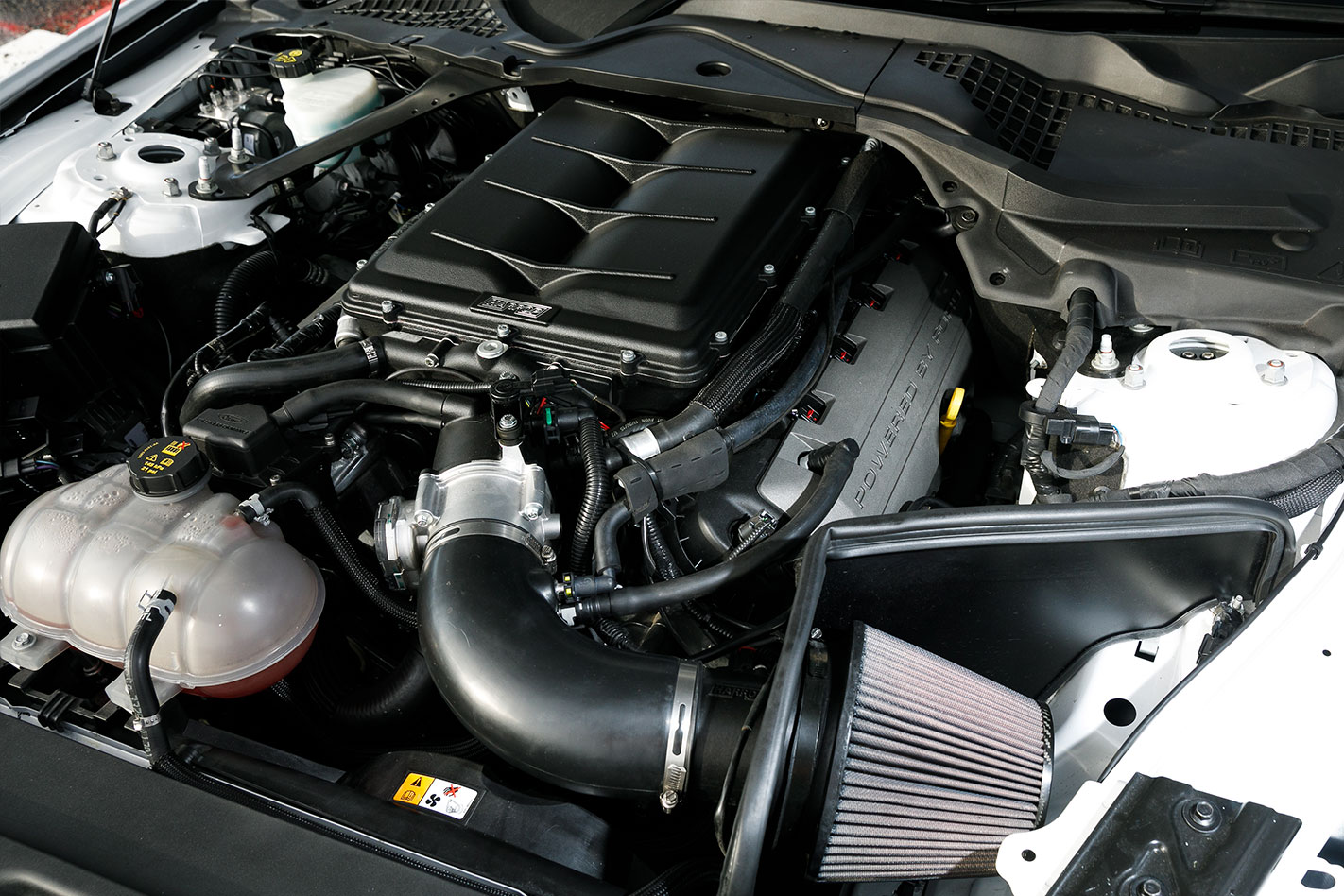
Comparatively, few customers are going to want to drop a further $50,000 on a $60,000 car, but those who do want the best.
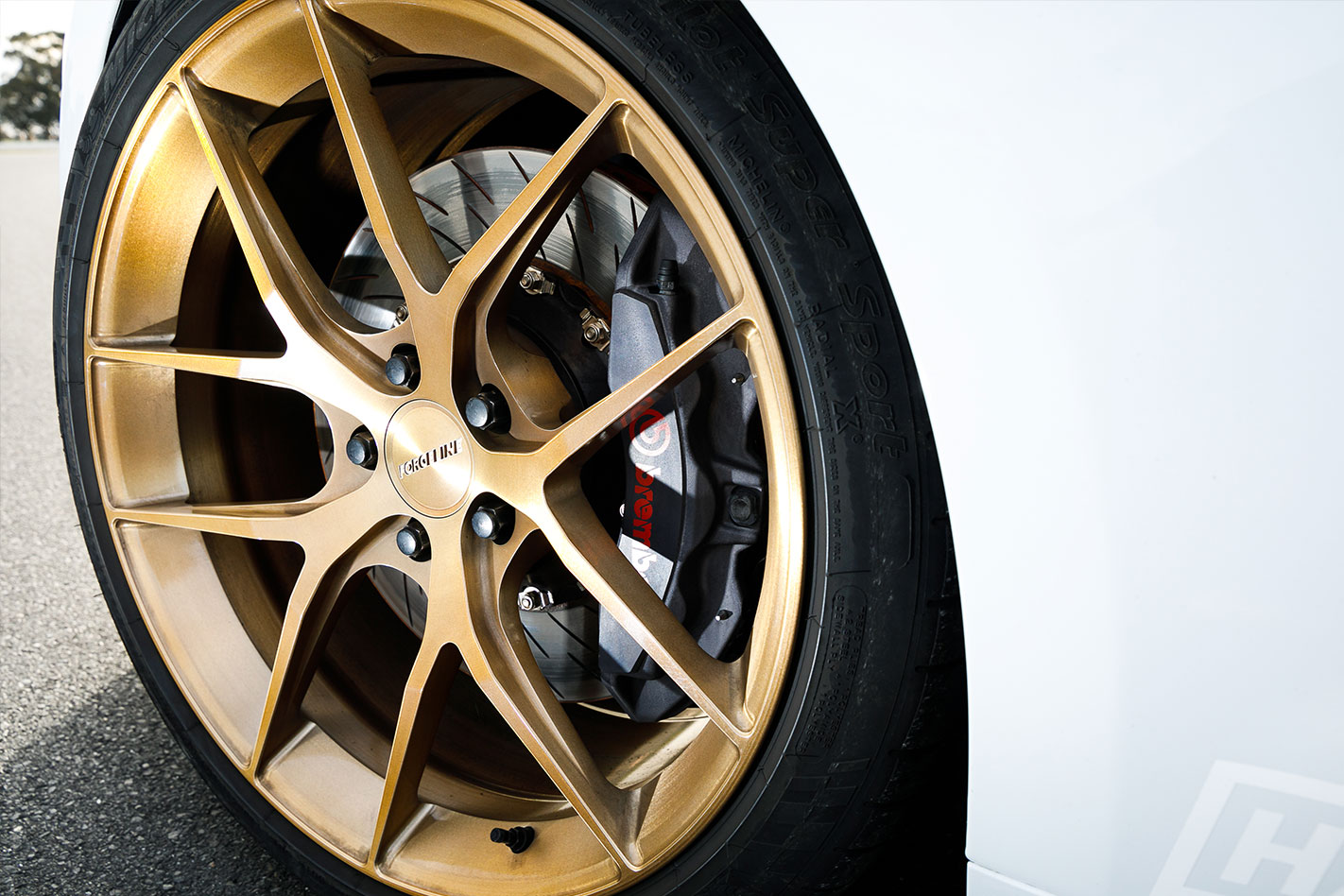
We’ll cover what’s under the bonnet in a moment, but what sets Harrop’s blown machine apart are touches like the enormous Forgeline wheels (20 x 10-inch front; 20 x 11-inch rear), which at $10,700 are definitely at the top end of the market, and almost $10,000 worth of Alcantara interior (steering wheel, door trims, roof lining, centre arm rest and more) to give the Mustang more of a luxury feel inside.
The setup works brilliantly in this instance, eliminating most of the standard Mustang’s vices and creating a truly engaging driver’s car.
One of the most impressive aspects of the Harrop’s supercharged car – and one it shares with the similarly Shockworks-shod Mustang Motorsport machine – is the improvement in the front-end response.
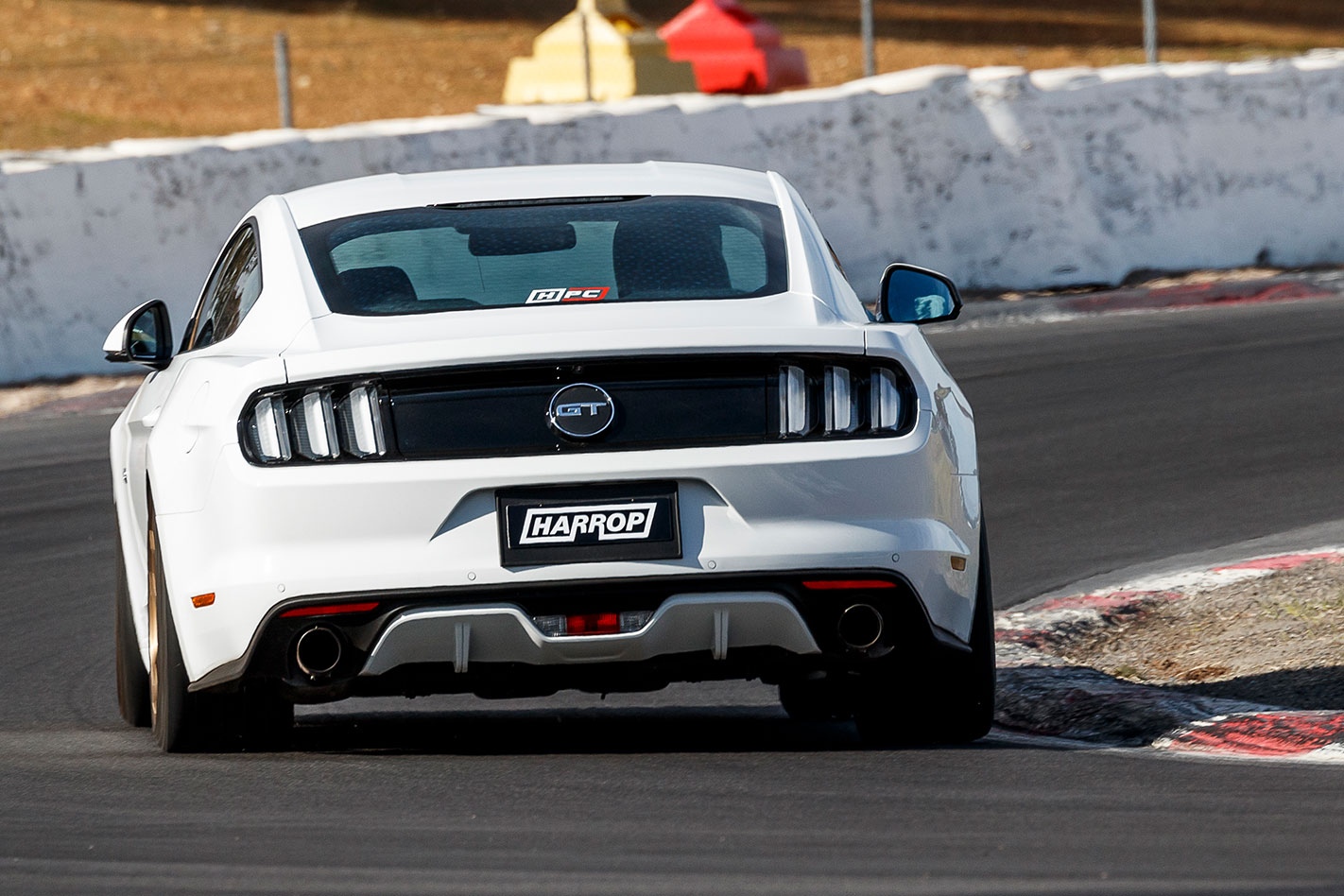
The brakes were a little grumbly – according to Moore this car has seen plenty of track work – but refused to give up despite the demands of hauling down 1800kg of Mustang from super high speed time and time again.
For if there’s one thing Harrop’s supercharged Mustang is good at it’s building speed. The times themselves aren’t earth-shattering – though 0-100km/h in 4.46sec and a 12.08sec quarter mile certainly isn’t hanging about – but consider that these times were recorded by gently feeding in the throttle from rest in second gear and you get a feel for how much grunt this car has.
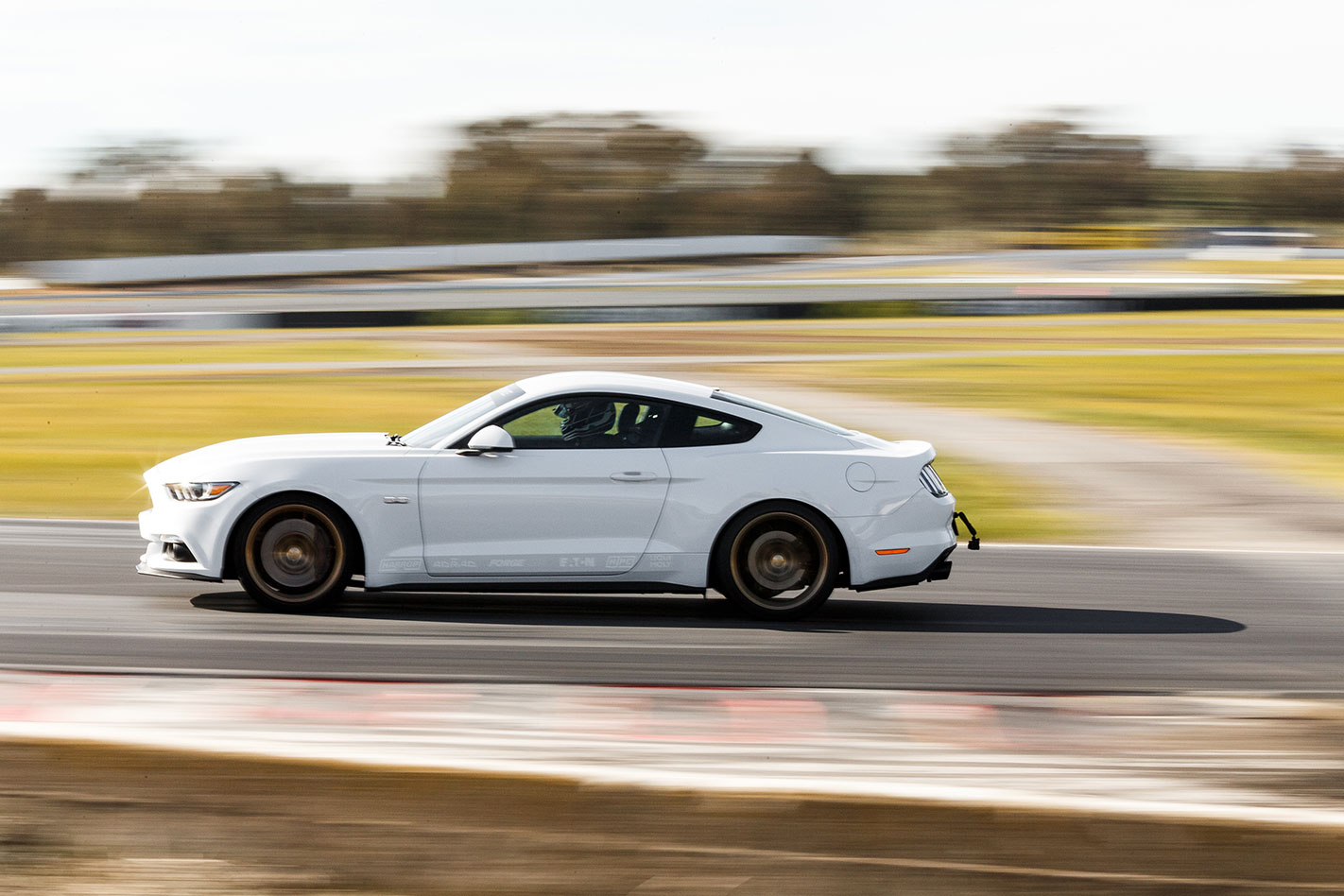
It’s remarkable how well the Mustang platform copes with an 80 per cent increase in horsepower, however, there’s room for improvement in the Harrop package in regards to throttle response. Harrop has boldly developed its own calibration for the Mustang in order to ensure it suits Australian conditions, something Moore admits has been a massive challenge due to the complexity of the latest generation Ford ECU.
As it stands there’s a significant delay between asking for a throttle percentage and the power arriving, akin to an old-school turbocharged car like a mid-1990s Subaru WRX.
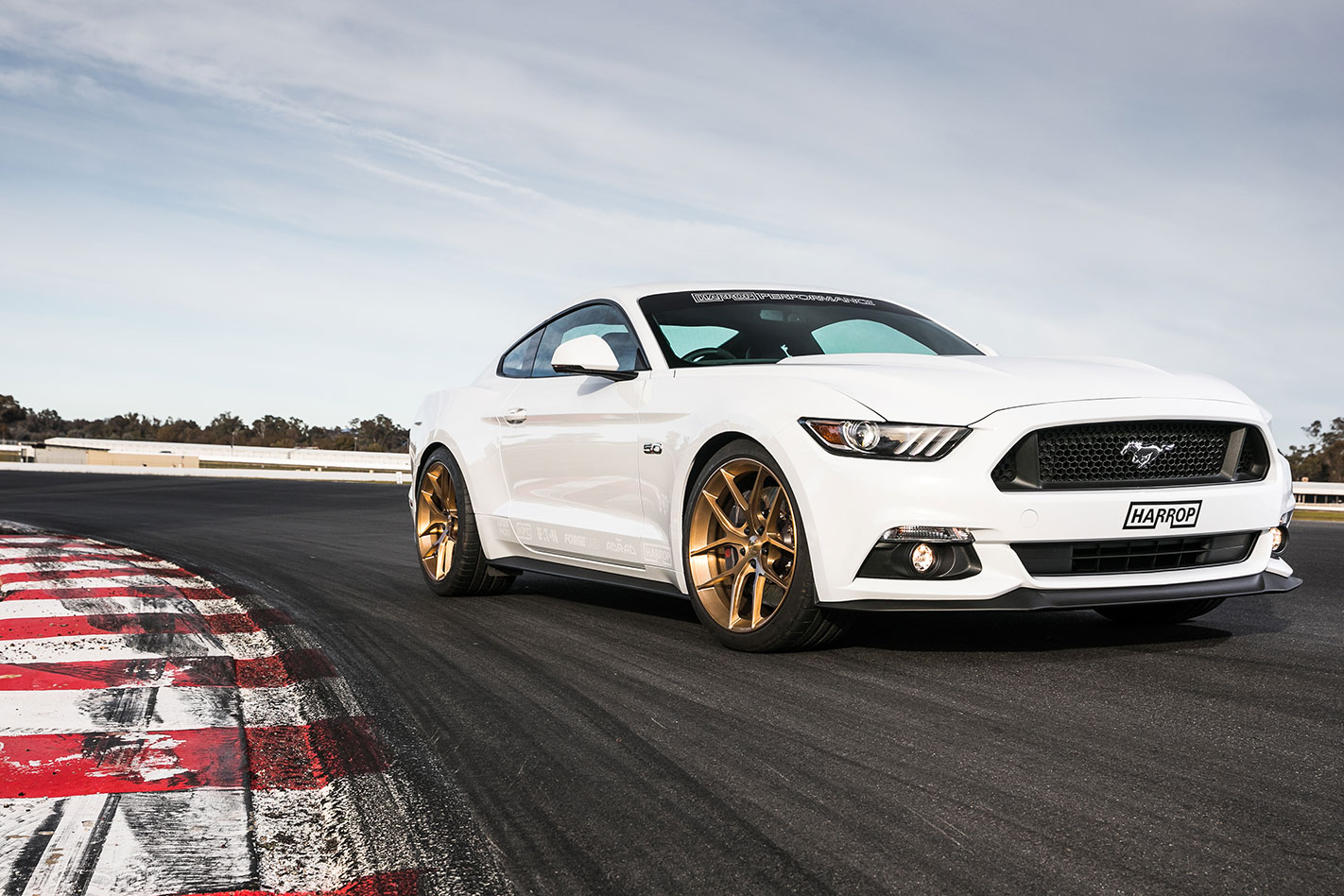
In Winton’s faster, third-gear corners it was less of an issue – apply the throttle just after turning in and the power would arrive in time for corner exit – but slower turns resulted in some fairly exciting moments as all 550kW arrived at once, at which point you’d back off and then have to wait for the power all over again.
Moore is adamant customer feedback has been very good and that the calibration is biased towards road use, but compared to the other supercharged cars present the Harrop was much more difficult to drive.
The calibration continues to be refined, however, as more data is gathered from customer cars and it’s possible that in the near future this no-compromise machine will be exactly that.
WARREN LUFF SAYS:
“With nearly 50 per cent more power over standard it’s so much fun on track.
“It’s also a car you’ve got to give a huge amount of respect to and you’ve got to be so smooth when you get on the throttle.
“Whilst the auto is great in terms of being able to deliver the performance numbers, it’s just one of the things that hampers it on circuit.
“Still, it’s a great all-round car and puts a big smile on your face.”
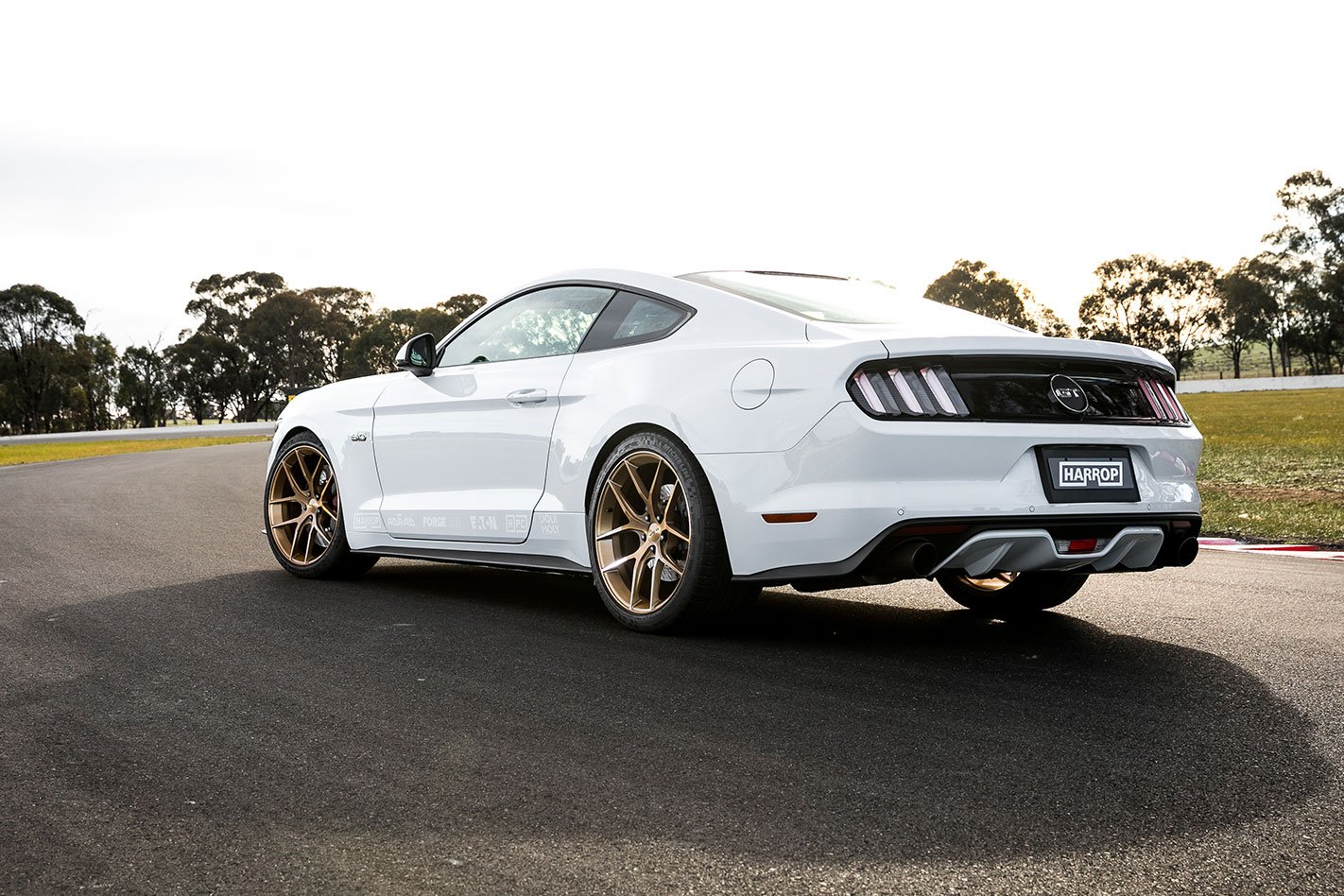
HARROP SUPERCHARGED MUSTANG GT SPECS
Power: 550kW Torque: 800Nm
0-100km/h: 4.46 seconds 0-400m: 12.08 seconds 80-120km/h: 1.9 seconds 100-0km/h: 37.29 metres Lap Time: 1:34.7sec Apex km/h: 82.59km/h Lap V-max: 205.25km/h 400m V-max: 205.43km/h
Engine: 4951cc V8, DOHC, 32v, supercharger Gearbox: 6-speed automatic Suspension: struts; anti-roll bar (f); multi-links, coil springs, anti-roll bar (r) Brakes: 380mm ventilated discs, 6-piston calipers (f); 330mm ventilated discs, single-piston calipers (r) Wheels: 20 x 10.0-inch (f); 20 x 11.0-inch (r) Tyres: 275/35 ZR20 (f); 295/30 ZR20 (r); Michelin Pilot Super Sport
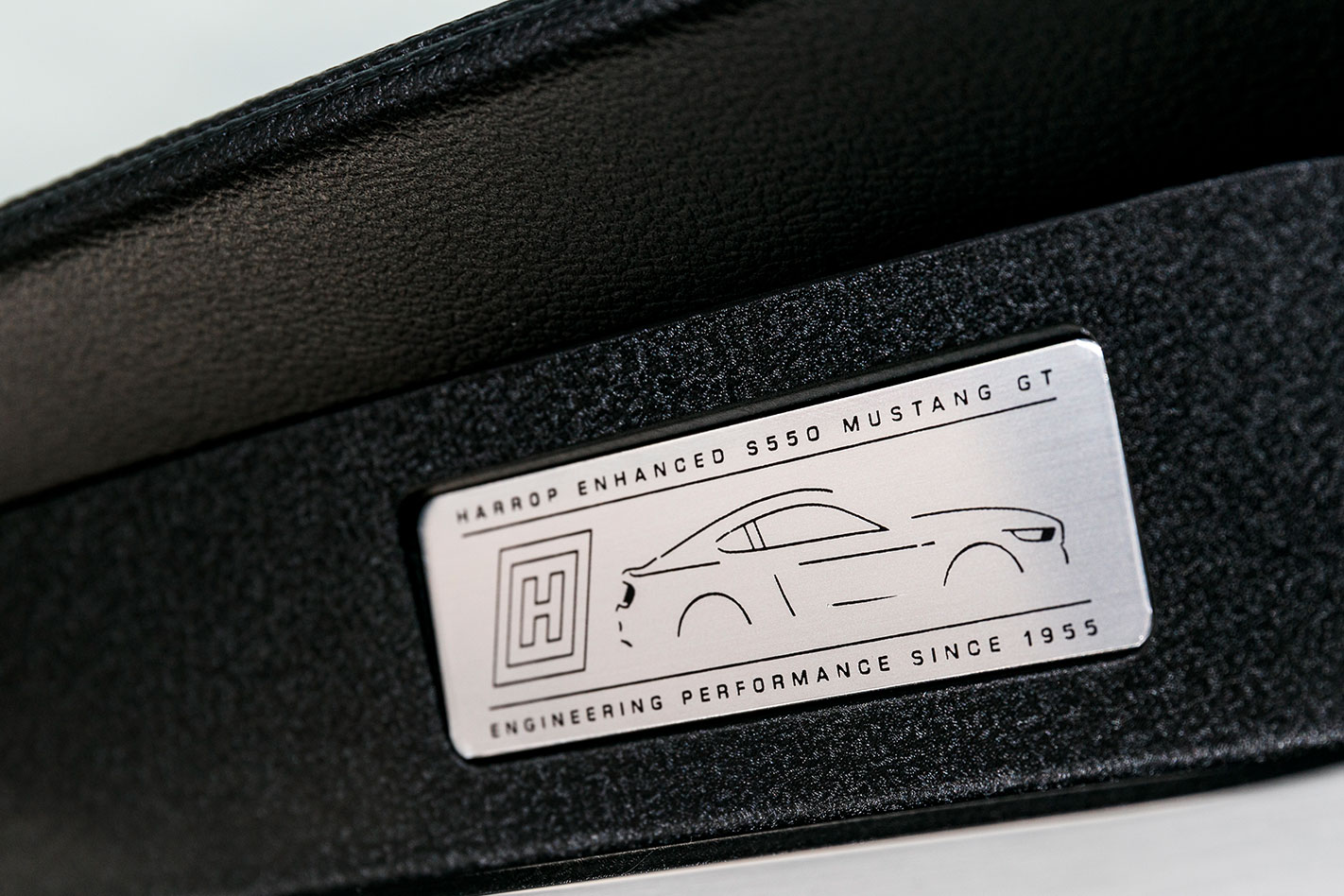
PARTS AND PRICES
Stage 3 Package: $19,280 Suspension: $3400 Differential: $3069 Brakes: $4098 Wheels/Tyres: $13,100 Total Mods Cost: $52,076 Vehicle Cost: $59,990 Total Cost: $112,066
TELL ME ABOUT THIS CAR
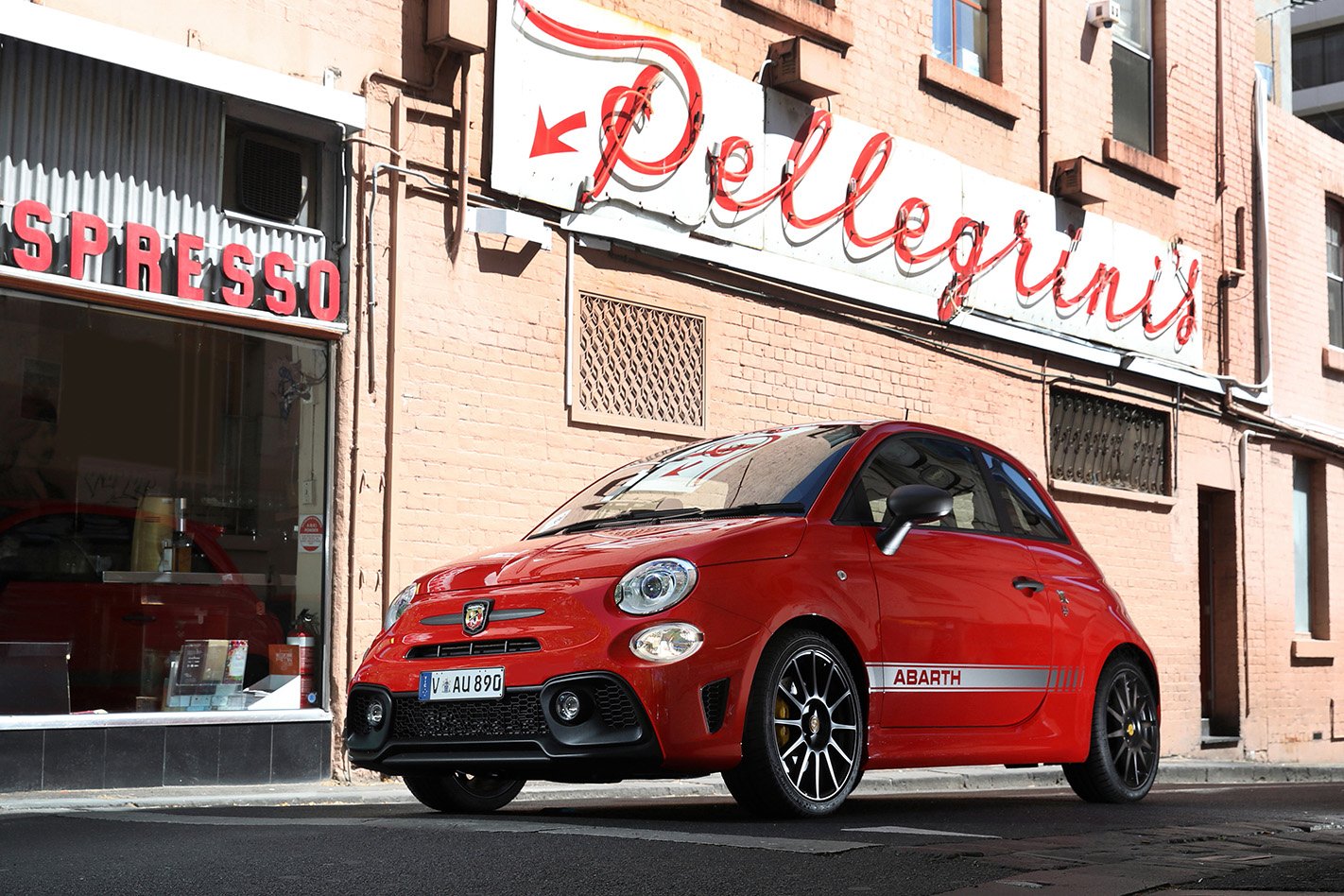
A decade after it first rolled into showrooms, the Fiat 500 is still soldiering on. Facelifted in 2016 and now freshly updated for 2018, the humble 500 has gone from being a comparatively expensive city car to something more affordable and accessible.
Performance variants have followed a similar trajectory, and while previous flagships like the Abarth 695 Tributo Ferrari were sold wearing eye-watering pricetags, the current hi-po member of the 500 range, the Abarth 595 Competizione, is far more attainable.
Priced from $31,990, it has the most potent version of Fiat-Chrysler’s 1.4-litre Multijet turbo inline four-cylinder along with plenty of hard-core suspension and brake hardware to back it up. Not only that, but it exudes an overtly sporty persona that is especially endearing. But is it charming enough to compensate for its advanced years?
STRENGTHS
- Frisky engine and entertaining power delivery. Hit the Sport button on the dashboard and the 595’s turbo crams more boost into the engine, unlocking the full 132kW/250Nm output and really making the little Abarth zip. How fast? Abarth claims 6.7 seconds for the 0-100km/h sprint, which makes the 595 Competizione 1.1 seconds faster than the ‘regular’ 595.
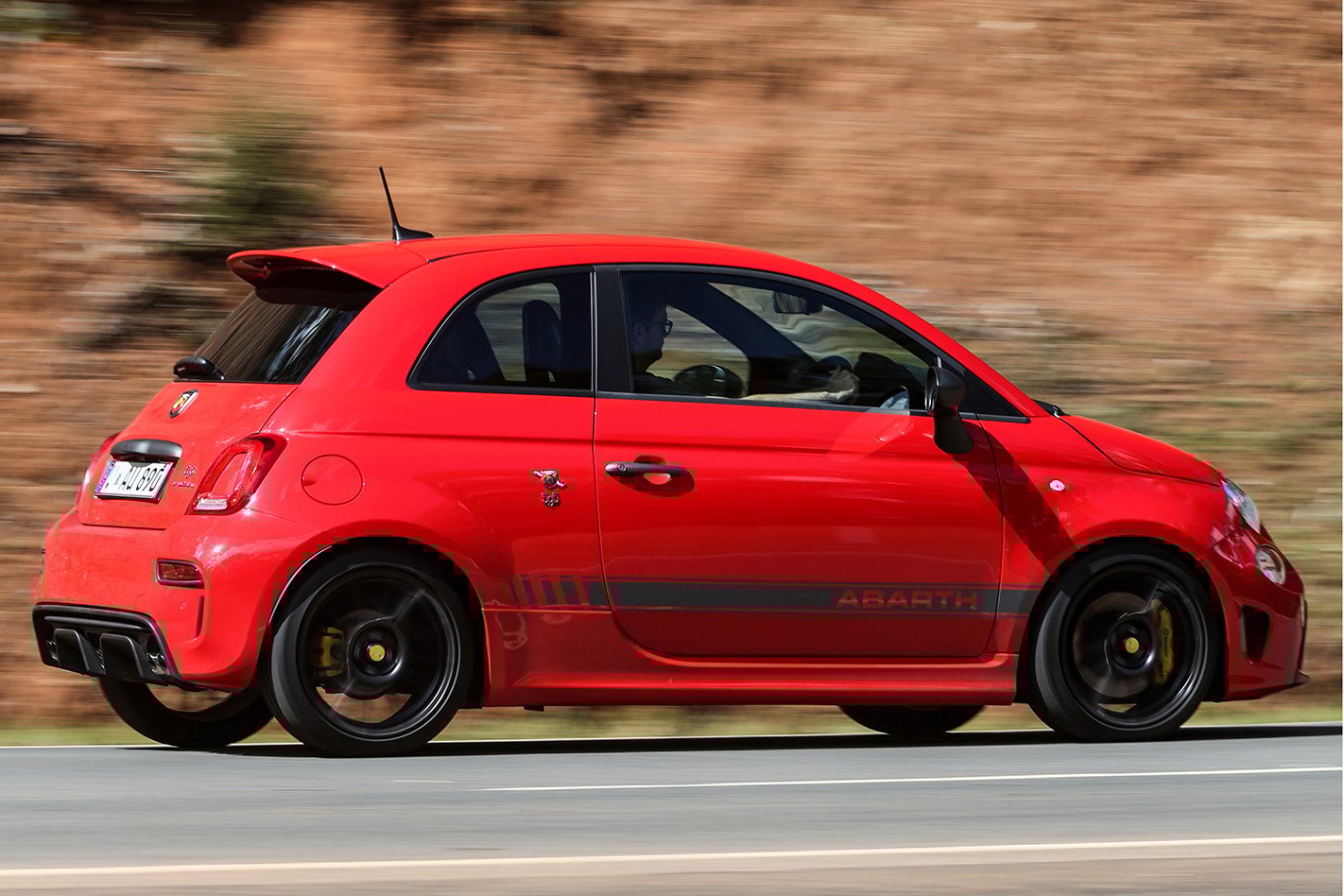
- Loads of cool design elements, like the cheeky boost gauge sprouting from the dashtop, the oversized metal shift knob, and its aggressive bodykit and bulldog stance give the 595 Competizione a unique flavour that’s hard to find these days. While rivals like the Volkswagon Polo are restrained and conservative, the Competizione runs in the opposite direction. Extroverts will love it as a result, as it wears its heart very much on its sleeve.

- Grippy handling, aided by ultra-firm Koni dampers, 17-inch alloys and Michelin Pilot Sport tyres, means the 595 Competizione is easy to hustle along a twisty road – as long as it’s a smooth one, otherwise the taut suspension causes it to skip over bumps and corrugations and induces power-wasting wheelspin.
- Aural appeal. How can such a small engine generate so many decibels? Abarth’s engineers found a way, and while some might find the 595 Competizione’s exhaust note to be obnoxiously loud, we like the fact that it’s got plenty of sonic presence.
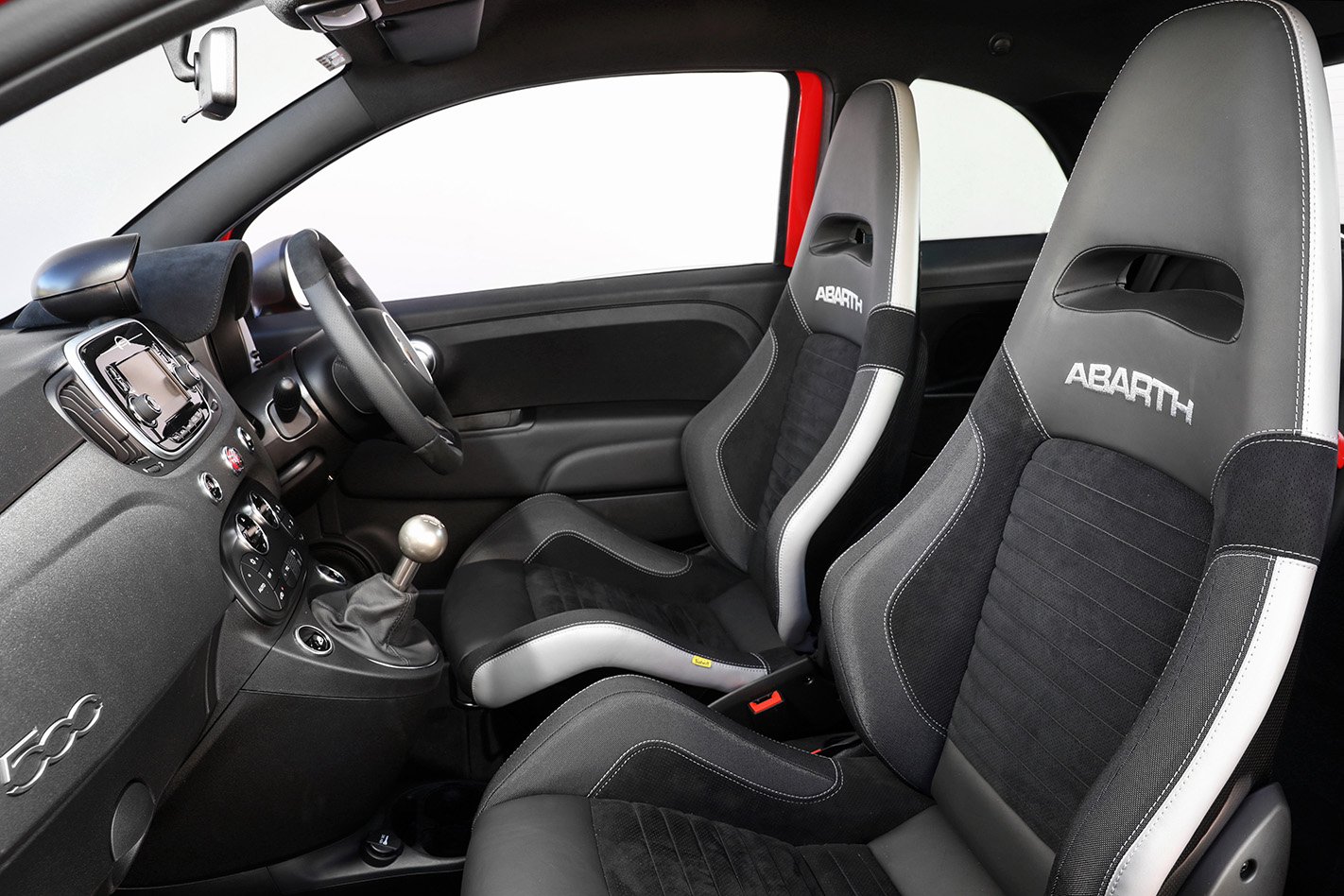
- Excellent seats. Our car was equipped with the optional sports seats, made by motorsport supplier Sabelt, which feature body-hugging bolsters and a carbon-fibre backrest. They’re the perfect pews for a sporty hatchback.
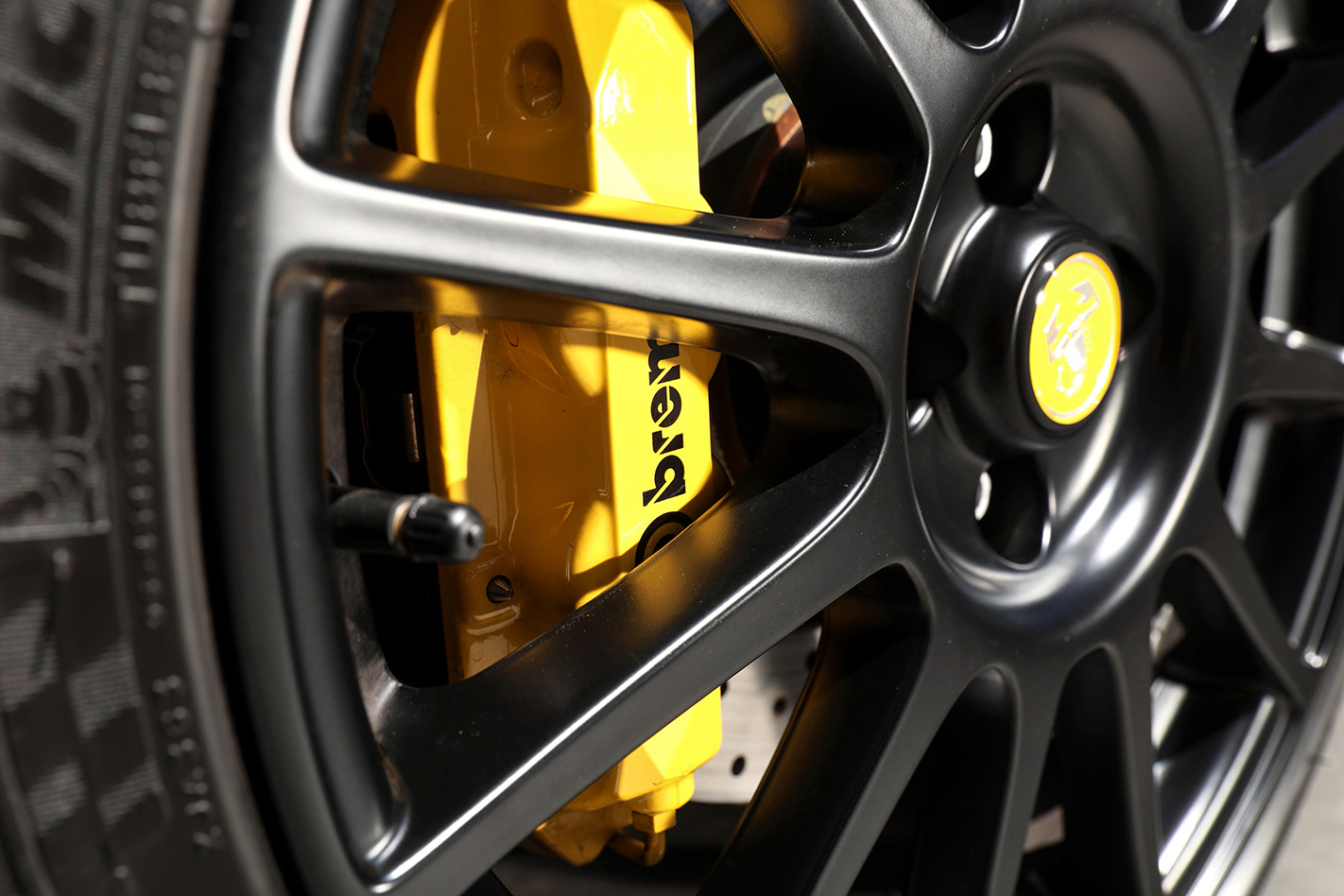
- Big brakes for such a tiny tyke gift the 595 Competizione with sizable stopping power. With bigger, cross-drilled rotors at front and rear compared to the normal Abarth 595 and four-piston Brembo calipers up front, the Competizione hauls itself up very smartly.
WEAKNESSES
- Torque steer. It’s an almost unavoidable side-effect of having MacPherson strut front suspension and a torquey engine taking power to the front wheels exclusively. Pin the accelerator from a standing start and prepare to fight the wheel as it attempts to wriggle left and right.
- Rollerskate ride quality can wear thin on a long drive. It’s something that’s compounded by the lack of padding in the Sabelt seats, so you feel every bump, twig and catseye that passes beneath the Abarth’s wheels. Don’t like it? Maybe step down to the less stiffly-suspended non-Competizione model.
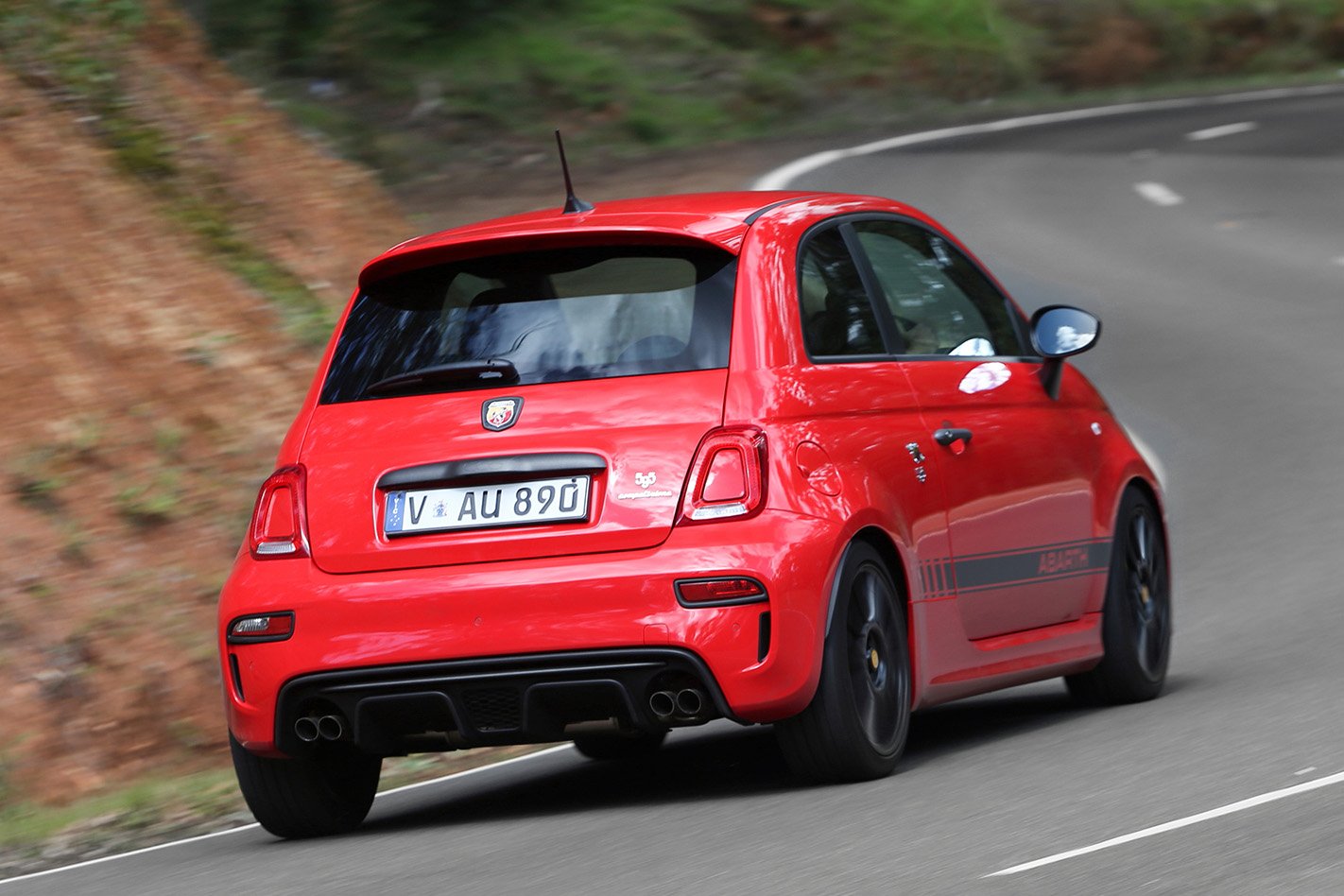
- It’s got a poor turning circle. Is this really a city car? With a such a massive turning circle, negotiating tight city backstreets isn’t that easy. It’s a genuine surprise considering the 595’s diminutive size and short wheelbase.
- No cruise control. Cars without cruise control are becoming a fairly rare sight in this day and age, especially in cars at the 595 Competizione’s $30K+ price bracket. Not seeing a cruise control button on the steering wheel really rams home the point that this is a car designed for cities, not highways.
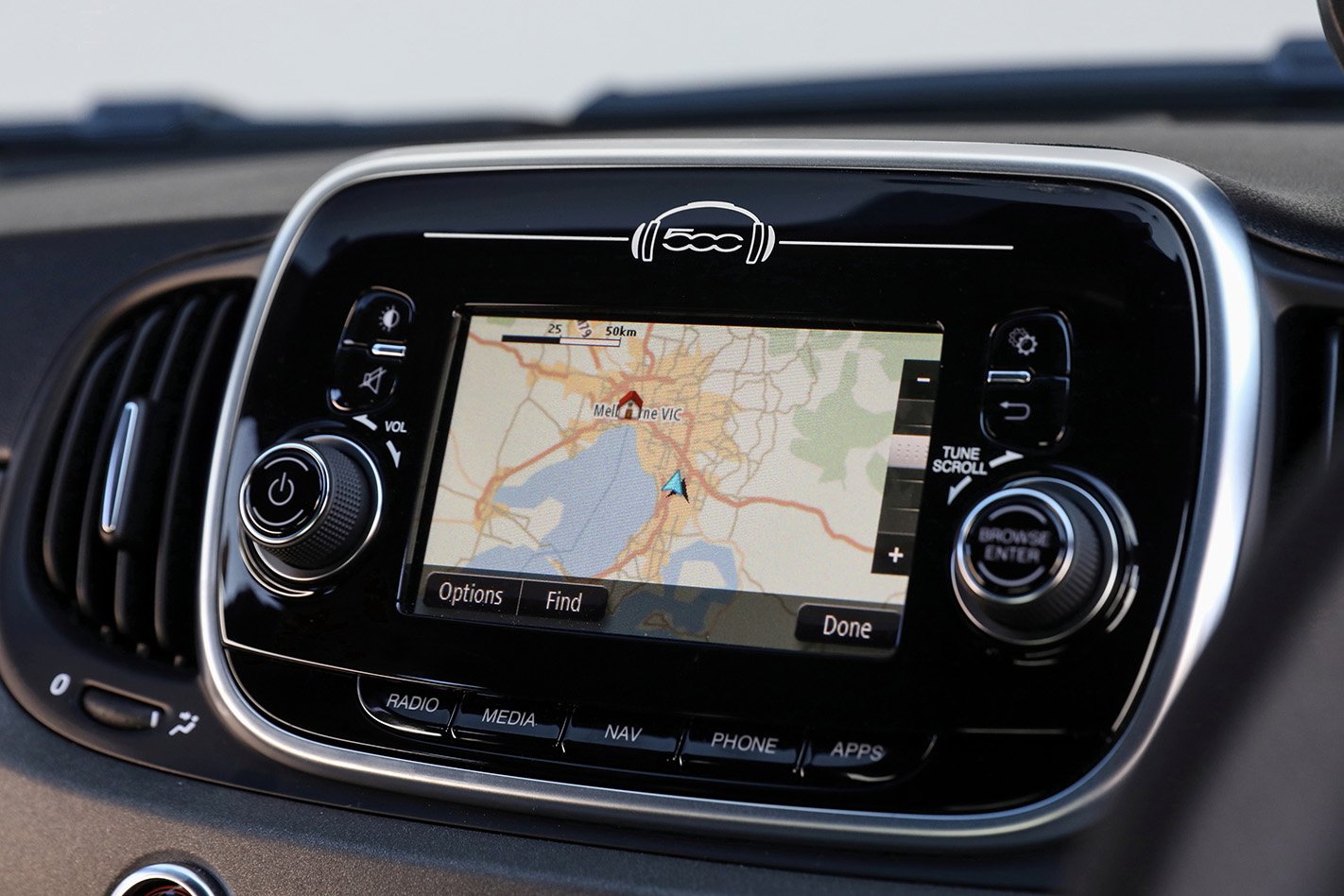
- Antiquated infotainment system. The 5-inch colour touchscreen may be a new addition for 2018, but it’s behind the times in terms of its user interface and lack of smartphone mirroring capability. Digital radio is standard as are seven bassy speakers, which is a definite plus, however the screen isn’t just tiny by modern standards – it’s also really hard to view when exposed to strong sunlight.
- Very high seating position simply won’t work for taller drivers. In fact, the 595’s narrow body and the very form-fitting Sabelt seats means bigger drivers will need to be the tolerant type – or simply look elsewhere.
- The 595’s cheap origins can’t be disguised, with hard scratchy plastics on most surfaces and flimsy switchgear. Even so, it feels quite solidly-built despite the low-rent material quality.
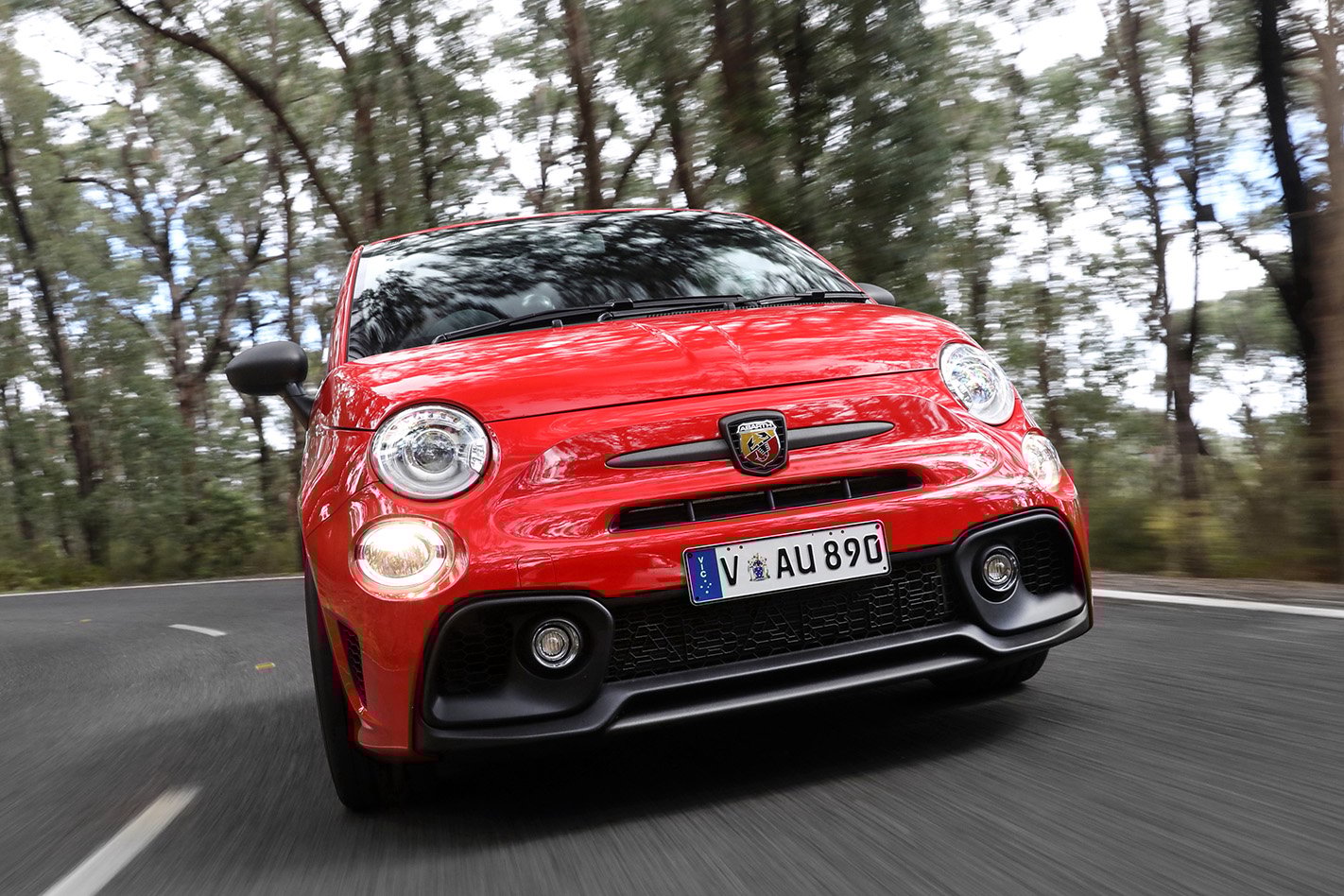
- Not the most engaging chassis for a hot hatch, even though it grips well. The 595’s steering isn’t especially alert around dead centre as far as performance hatches go, with a rack ratio that necessitates a fair degree of lock to hook the front wheels into a corner. It clings to the road well, but unlike some compact hot hatches (like the Fiesta ST and Clio RS), the 595’s rear end feels quite inert and resistant to things like lift-off oversteer – which is a surprise, given the firm suspension, general liveliness of the rest of the car and the performance promise of the Competizione badge.
ANY OTHER CARS I SHOULD CONSIDER?
The list of potential rivals includes the Renault Clio RS Trophy, Volkswagen Polo GTI, Ford Fiesta ST and Peugeot 208 GTi.
As we prepare to announce the 2018 Performance Car of the Year, here’s your chance to have a look and decide for yourself which car you think deserves the top prize.
This year’s PCOTY pack was closely matched, despite wildly varying price tags and some very different ways of delivering performance.
You’ll know which car we chose once the Australian Motoring Awards roll around on the 24th of January.
After that, check back to find out what went down at PCOTY 2018!
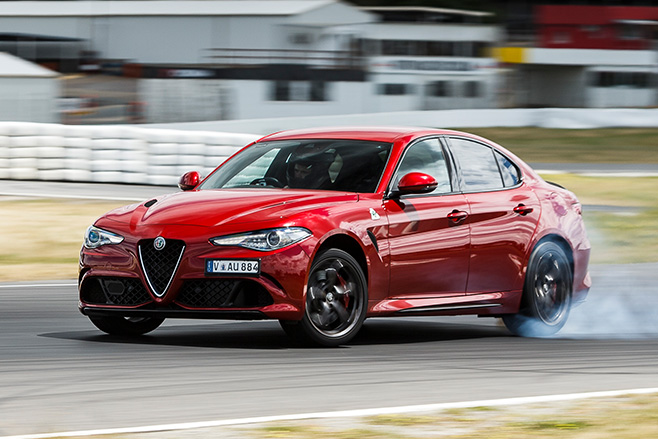
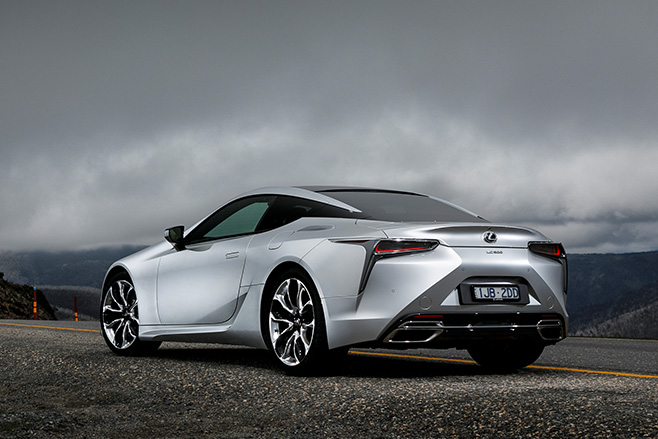
375kW/600Nm; 1585kg; $156,900 as tested
Italy’s new sedan hero brings the fight with style.
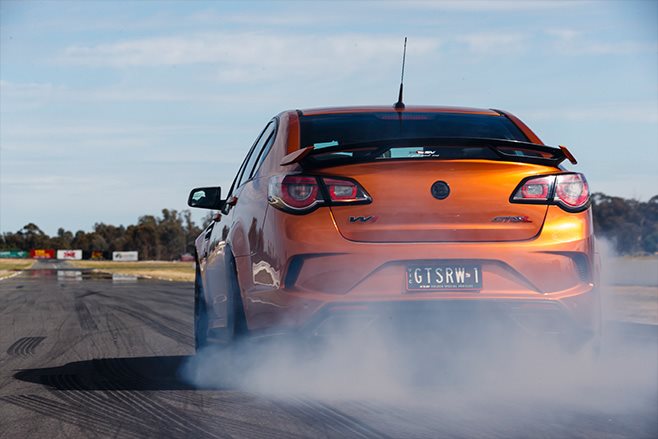
351kW/540Nm; 1935kg; $205,000 as tested
With concept car looks and NASCAR sounds, it’s a seriously cool bit of kit.
474kW/815Nm; 1895kg; $169,990 as tested
Australia’s last hurrah is also one of its most impressive.
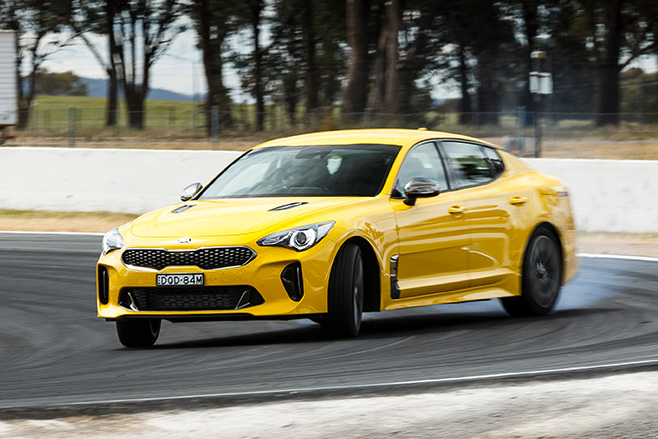
272kW/510Nm; 1780kg; $55,990 as tested
Mid-range twin-turbo V6 Stinger provides serious bang for buck.
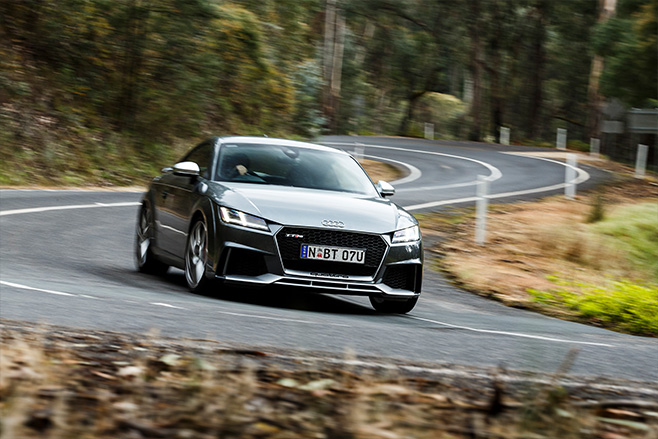
294kW/480Nm; 1440kg; $146,450 as tested
All paw grip and a five-pot powerplant is Audi’s signature formula.
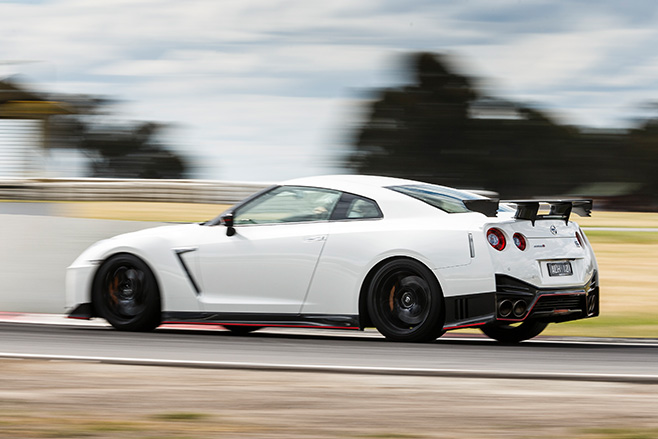
441kW/652Nm; 1739kg; $299,000 as tested
Godzilla gets the NISMO treatment, both inside and out.
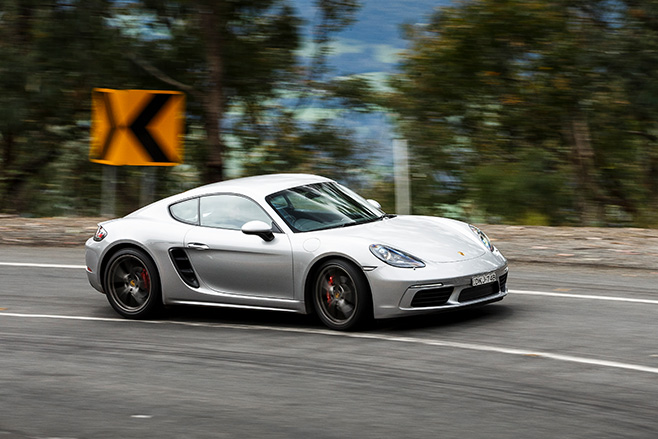
257kW/420Nm; 1355kg; $173,430 as tested
Two fewer cylinders, but a turbocharger means the new Cayman S is damn quick.
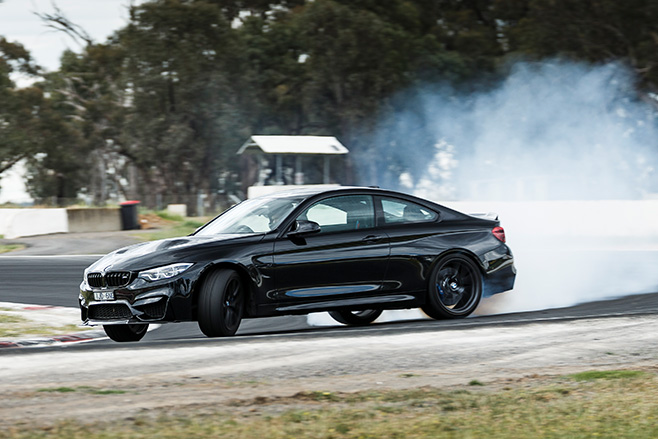
331kW/600Nm; 1505kg; $212,233 as tested
Stripped out M4 is more a track weapon than a daily driver.
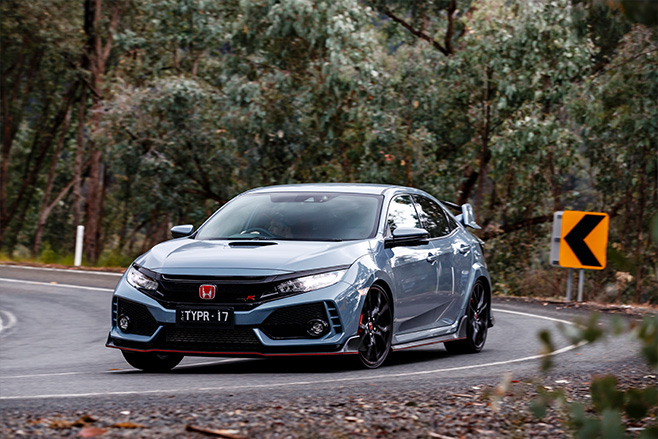
228kW/400Nm; 1380kg; $51,565 as tested
Can the newest red badge from Honda return the brand to its hot hatch glory days?
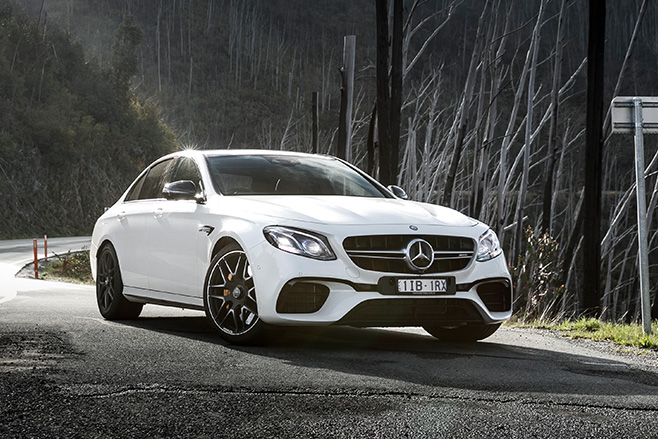
450kW/850Nm; 1955kg; $258,300 as tested
German super-sedan gains all-wheel grip, but it’s still keen for some sideways action.
AUSTRALIA will have fewer cars on sale if it rushes in stricter vehicle emissions targets that match those in Europe and the US, the industry body representing car importers has warned.
Speaking at last week’s announcement of Australia’s 2017 new-car sales record result, Federal Chamber of Automotive Industries chief executive Tony Weber said rushing in new vehicle emissions targets too quickly would force brands to dump models that did not comply with them, robbing buyers of choice.
“The industry supports a mandated CO2 target that is relevant to Australian market conditions, and we’re still in deep discussions with the government about the target in addition to the timing and transitional arrangements,” Weber said.
“While progress is slow, we are hopeful of reaching an outcome this year, which will allow industry to transition to a CO2 target without restrictions on the choice of vehicles on offer to Australian consumers – and this, we believe, is a viable point often overlooked in this discussion.
Weber said Australia’s petroleum industry was talking about moving to the same 10 parts per million sulphur target by 2027 – more than a decade after the same standards were introduced to Europe and the US. Australia’s 95RON fuel standard is only rated at 50 parts per million.
He said research and development being poured into new-engine technology revolved around 95 RON fuel with a 10 parts per million emissions cap. “Without the high-quality fuel, we cannot get access to coming generations of high technology, low-emission engines,” Weber said.
The Federal Government’s Green Vehicle Guide, which lists the emissions standards of vehicles on sale in Australia, shows a move to Euro 6 regulations – introduced to Europe in late 2016 and designed to reduce harmful vehicle emissions that include nitrogen oxide, carbon monoxide, hydrocarbons and soot – backs up Weber’s claim that a tougher target would cut the number of models on sale in Australian new-car showrooms.
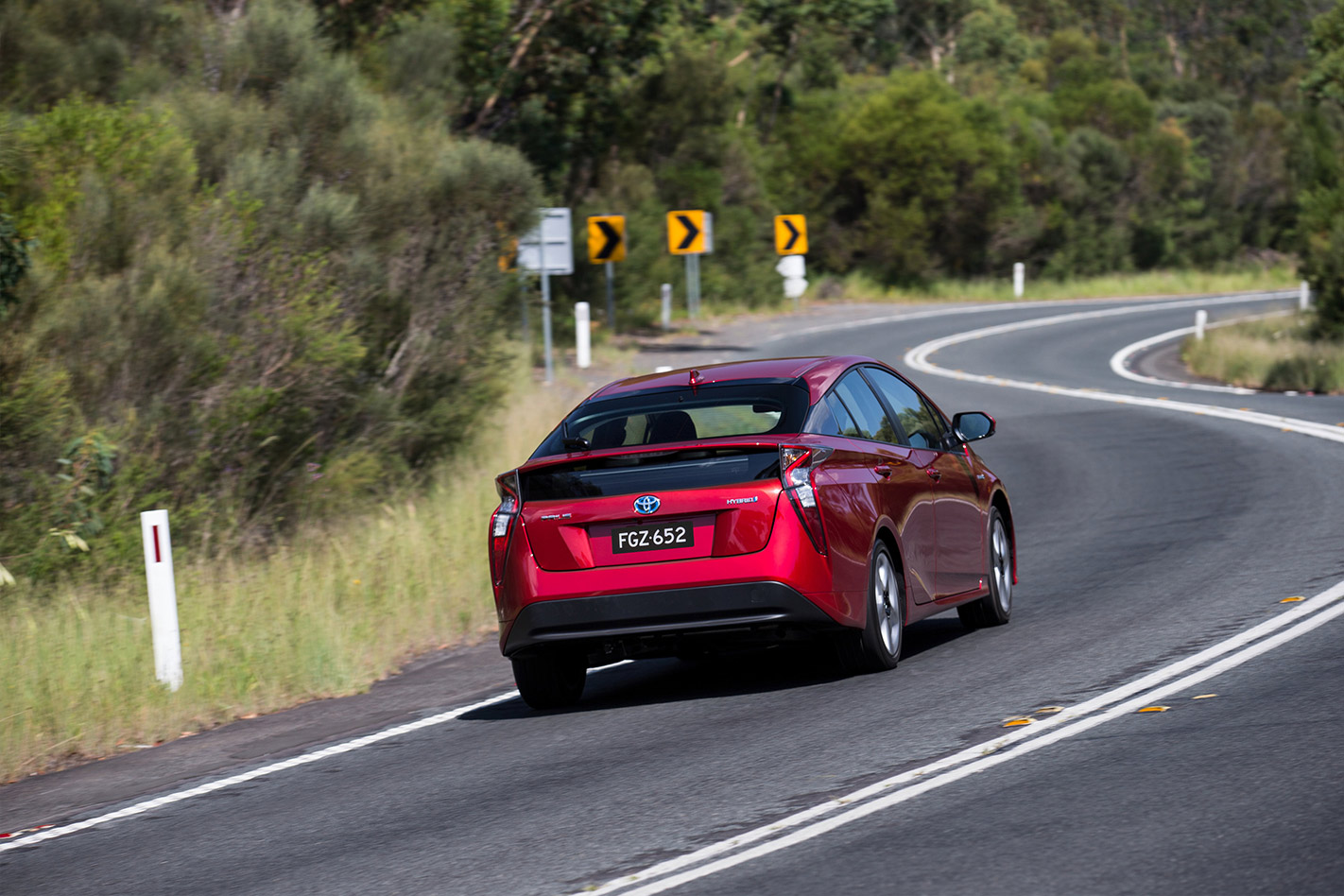
Australia already gets a watered-down version of the Prius compared with models sold overseas, using heavier and more bulky nickel metal hydride batteries instead of lighter, smaller – and more expensive – lithium ion ones. The Prius Prime, a version of the car that adds a plug-in charging capability, has never been offered in Australia.
Weber said the way the car industry rolled out new models meant the introduction of tougher emissions standards would have to take place slowly.
“…What people have to understand is the model cycle is critical in this process,” he said. “The passenger motor vehicle typically has a five-year model cycle and that engine remains consistent over that time, so you’re not going to get an improvement over the five years of that model cycle.
“You need the [10 parts per million sulphur] fuel and you need a period of transition to allow us to move to an appropriate target for Australia.”
After the 2017 Christmas/New Year holiday road deaths totaled 40, discussions in government and motoring industry bodies have fired up regarding road and vehicle safety.
One solution that has been suggested could be good news for Australian consumers – the removal of 5-per-cent import tariffs for new cars.
Designed to protect the local manufacturing industry, tariffs can cost new car buyers hundreds to thousands of dollars.
Deputy Prime Minister Barnaby Joyce, whose portfolio currently includes Infrastructure and Transport, spoke to ABC radio about his concerns with road safety and said the idea of ditching tariffs for newer, safer cars was worth discussion.
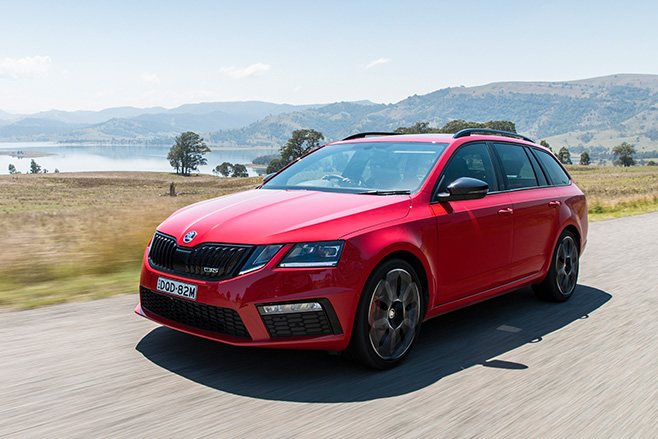
“What we are seeing in Australia is older cars that are part of the fleet, and obviously the ones that have been there longer are less likely to have all the safety additions as more recent ones.”
Federal Chamber of Automotive Industries chief executive Tony Webber says the “tariff reduction proposal should be viewed as an investment in safety and technology.”
“Currently around 88 per cent of new vehicles are five-star ANCAP safety rated. However, in direct contrast to that, the current average age of the total vehicle fleet on Australia roads is around 10 years.”
Webber says Joyce’s comments are encouraging, but that the Luxury Car Tax is another aspect of government interference in the cost of new cars that needs to be removed.
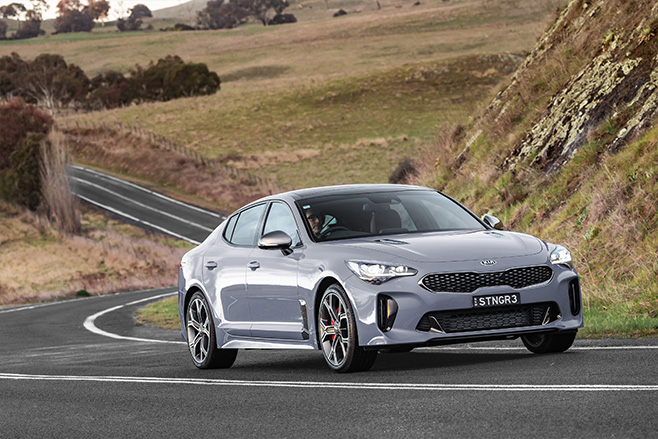
The AAA recently released its 2018-19 pre-budget submission to the government, which includes suggestions to lower tariffs and ditch the LCT, a move which it says could save up to 1377 lives over two decades.
It also says that doing so could save Australian new car buyers up to $2.1 billion over the next four years.
The AAA says trade agreements with Japan, Korea, the USA and Thailand have already improved new car costs in Australia, and an imminent agreement with the European Union will ease the costs of new European cars, which make up 32 per cent of total car imports to Australia.
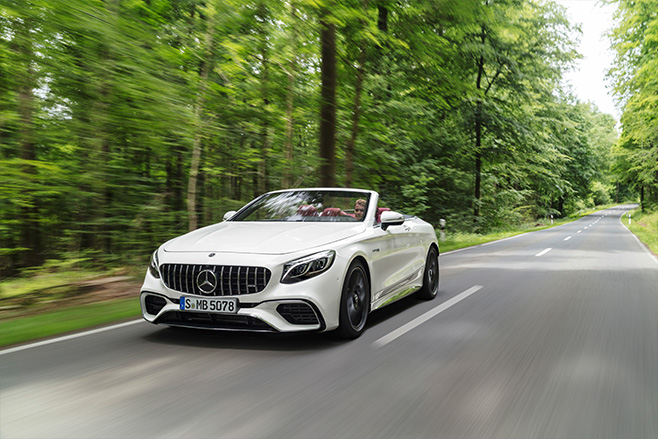
AAA CEO Michael Bradley says the costs to consumers to protect a non-existent industry are far too great to justify.
“Rather than help Australian workers, this industry protection now hurts Australian motorists by driving up prices and locking them into older, more dangerous cars.”
AUSTRALIA’S car industry lobby group has come out in favour of a proposal to cut vehicle import tariffs and the luxury car tax in a bid to encourage car owners to step into safer rides.
The Federal Chamber of Automotive Industries said today the proposed tariff reduction, a proposal suggested by the Australian Automobile Association with the support of Deputy Prime Minister Barnaby Joyce this week would also help motorists reduce fuel use and carbon dioxide emissions.
“Abolishing the new vehicle tariff would pass on thousands of dollars in price cuts at the showroom, which would make more vehicles with advanced safety features such as autonomous emergency braking and lane-keeping assistance more affordable for the average consumer,” FCAI chief executive Tony Weber said.
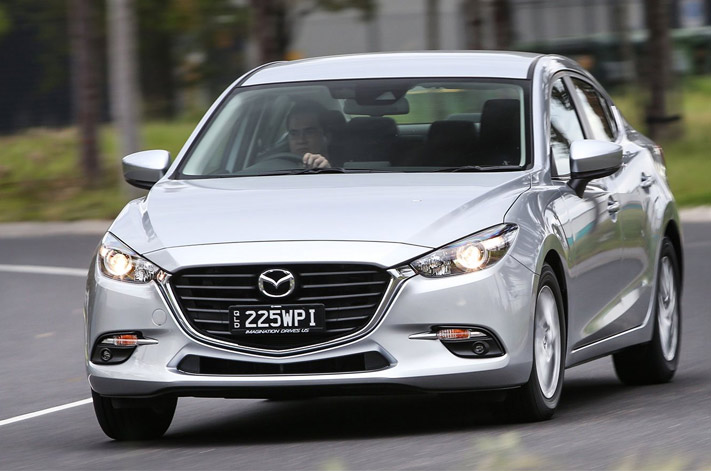
The Australian reported today that the proposed tariff cuts would carve up to $2000 from the price of some of Australia’s best-selling models such as the Toyota Corolla, the Mazda 3 and the Hyundai i30.
The national road toll saw more than 60 deaths over the Christmas-New Year holiday period, while more than 1200 Australians lost their lives to the end of November – the most current statistics provided by the Federal Government’s Australian Road Deaths Database.
The AAA – which represents motoring groups including the RACV, RACQ and NRMA – said more than 1300 lives could be saved on the nation’s roads over the next 20 years just by reducing the average age of vehicles on our roads – which currently stands at 9.8 years – by a single year, a move the lower tariff would encourage.
AAA chief executive Michael Bradley said an internal report, compiled using data in part provided by the Monash University Accident Research Centre, highlighted the benefits of removing Commonwealth tariffs and taxes that were originally imposed to protect Australia’s car manufacturing industry.
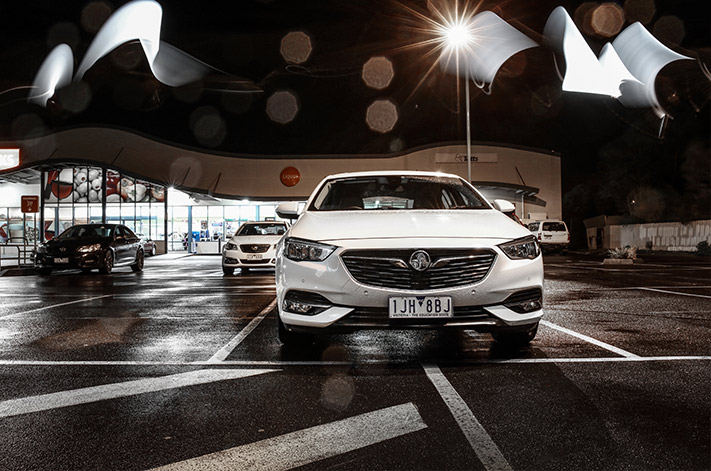
Joyce told ABC Radio that the idea of reducing the cost of new cars to encourage buyers to jump behind the wheel of safer models was an “idea of merit”.
“It requires the discussion of cabinet and discussions of the expenditure review committee, but it’s something I obviously think shows merit,” he said.
Bradley also called for the Government to increase investment in land transport infrastructure and guarantee that at least half of revenue raised by fuel excise – which is tipped into general revenue – would be earmarked for infrastructure in future years.“Australians need a transparent link between excise and infrastructure investment,’’ he said.“The nation needs to make significant investment in road networks to reduce congestion and improve productivity for the future.’’
THE 2018 Hyundai Veloster has had yet another tease ahead of its official arrival, this time showing more of the visual form that will add to the excitement of the all-new four-door coupe.
Due for a full reveal at next month’s Detroit Motor Show, we can see the new Veloster loses some of the goofy looks of the model it will replace. The trapezoidal grille now sits much lower, taking up less space than the black maw that dominates the current Veloster. The headlights become more aggressive, with a Ford Falcon FGX-style LED light display tracing the trailing and bottom edges of the smaller, more modern-looking headlight assembly. Even the bonnet, now featuring a subtle power bulge rather than the odd-look recesses, looks vastly improved.
The lower air dam is punctuated by angular, almost Lamborghini-esque features that are likely to house the fog lights on more pedestrian versions of the Veloster, and adapt to feed cooling air to the brakes on Turbo and Veloster N versions of the hatchback.
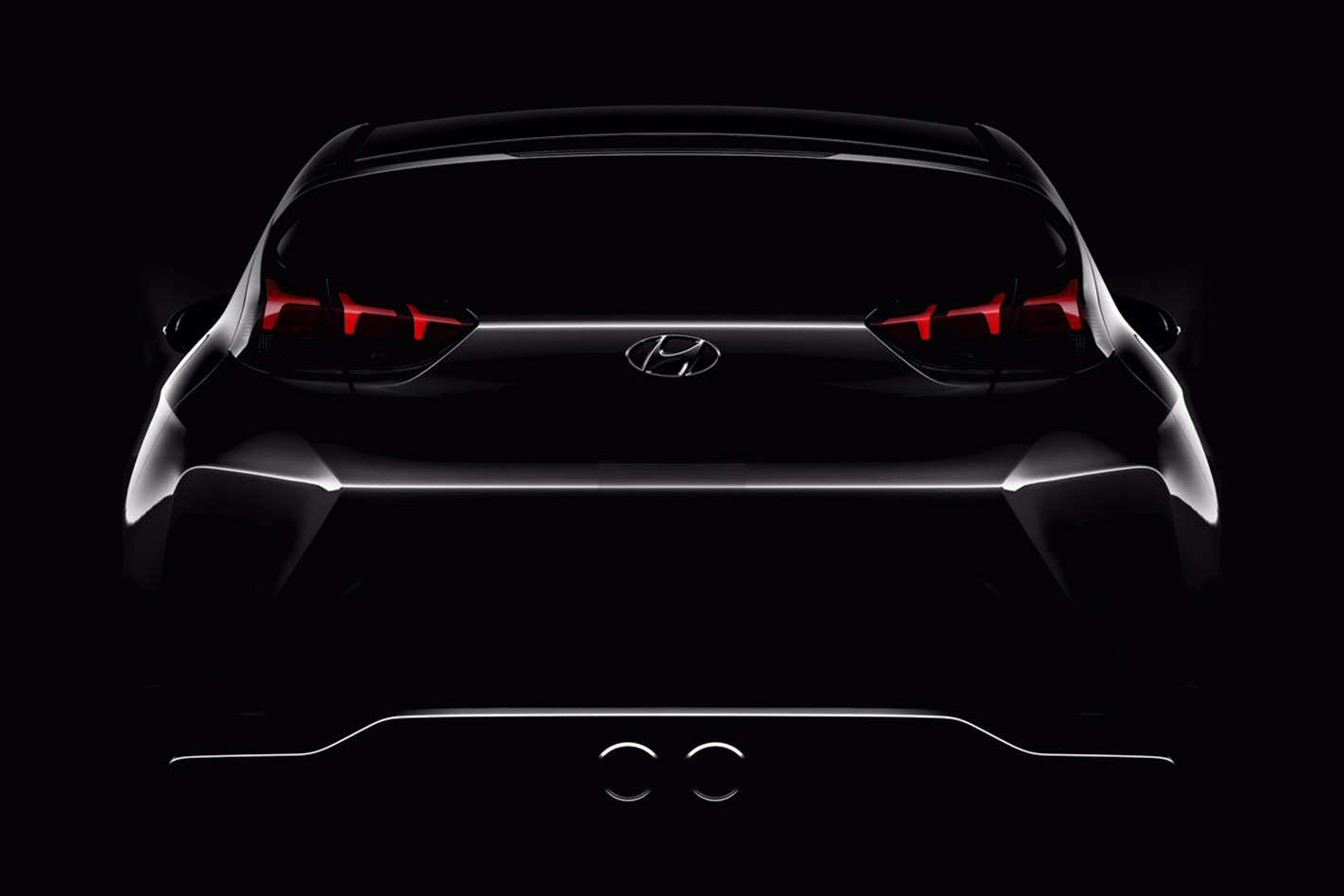
The side profile shows the Veloster will keep its quirky four-door looks, featuring a rear door behind the front passenger side one. The raked windscreen now flows back into a subtle ducktail, while the wheel arches lose some of their hard lines. The rear glass now seems to run even deeper into the C-pillar, with something of an inverted Hoffmeister-knick about it.
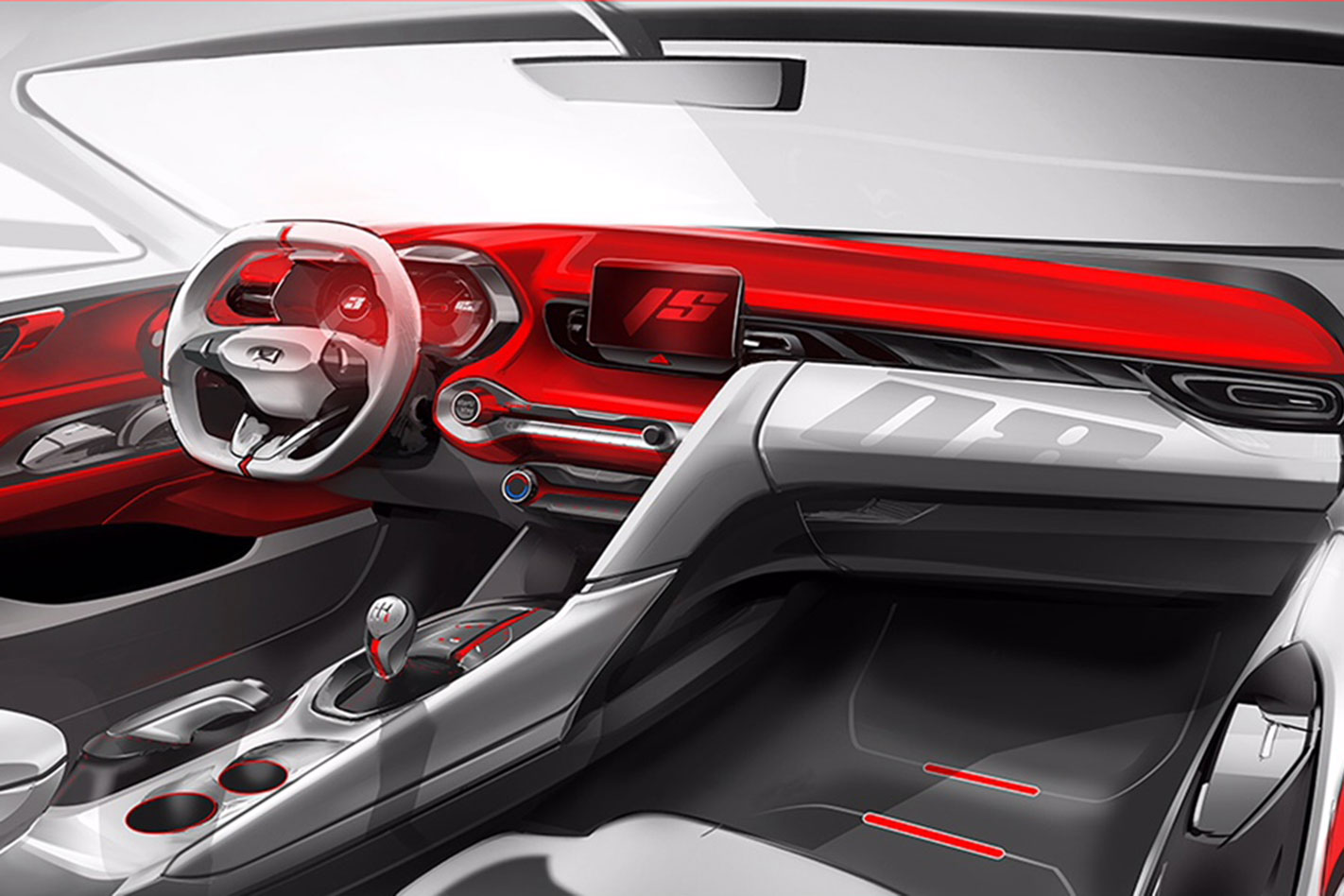
The 2018 Detroit Motor Show kicks off on January 15 in the US. Follow WheelsMag.com.au, or keep an eye on Facebook, for all the latest Detroit Motor Show news as it happens.
