
Maybe Subaru is hoping we won’t notice. Or maybe it’s scrounging around the back of the couch for a dollar or two.
Either way, the WRX STI won’t join the fifth-generation Impreza platform for at least another couple years. To keep the latter’s fangs sharp for now as its rivals evolve, the STI scores a facelift, larger wheels, bigger brakes, and had its mechanicals fine tuned.
At the same time, Subaru’s reshuffled its STI range, adding a Spec R to the existing base and Premium guises. It comes with Recaros and a rally-sized rear spoiler on top of the Premium’s sunroof, surround-view traffic cameras, and heated seats.
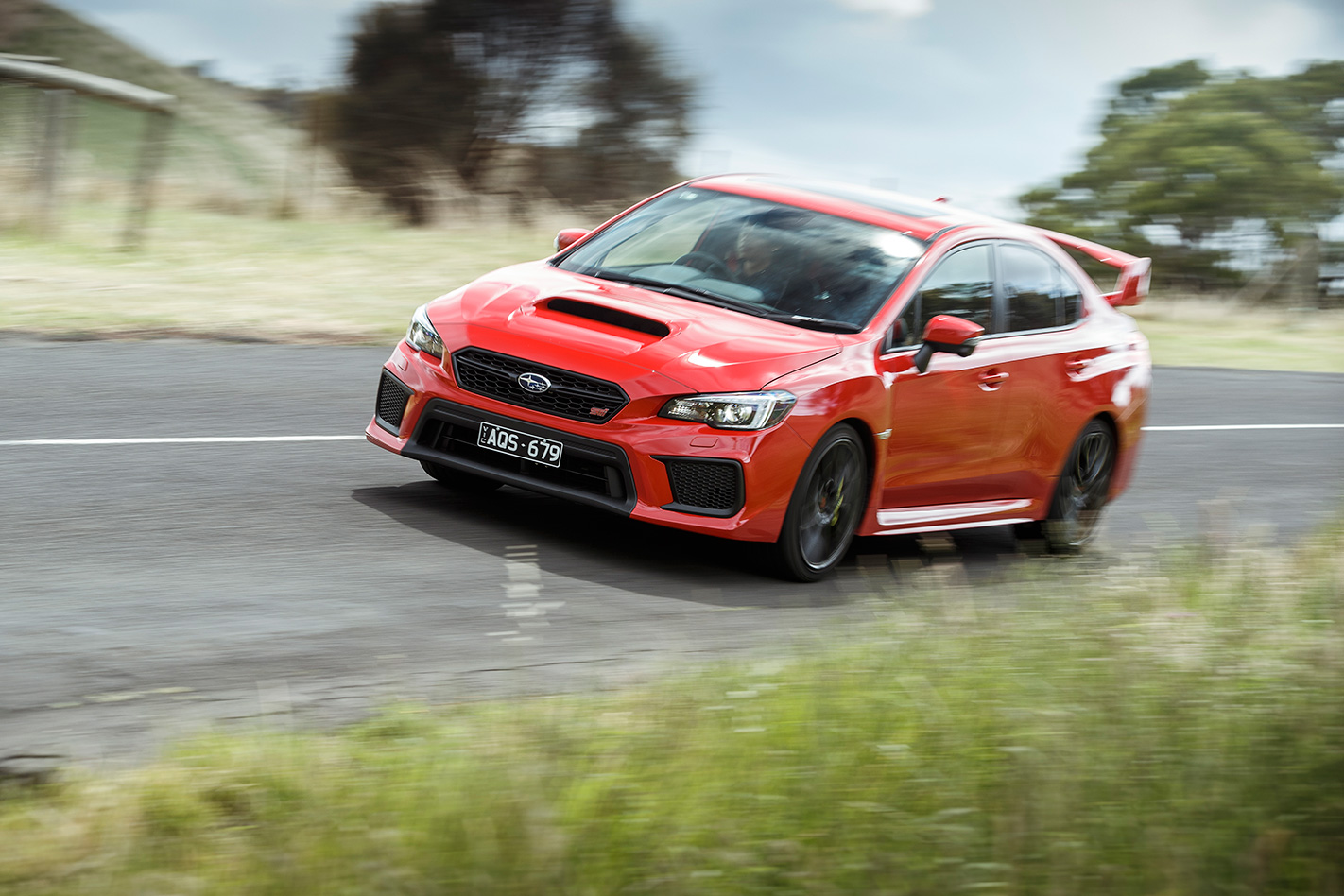
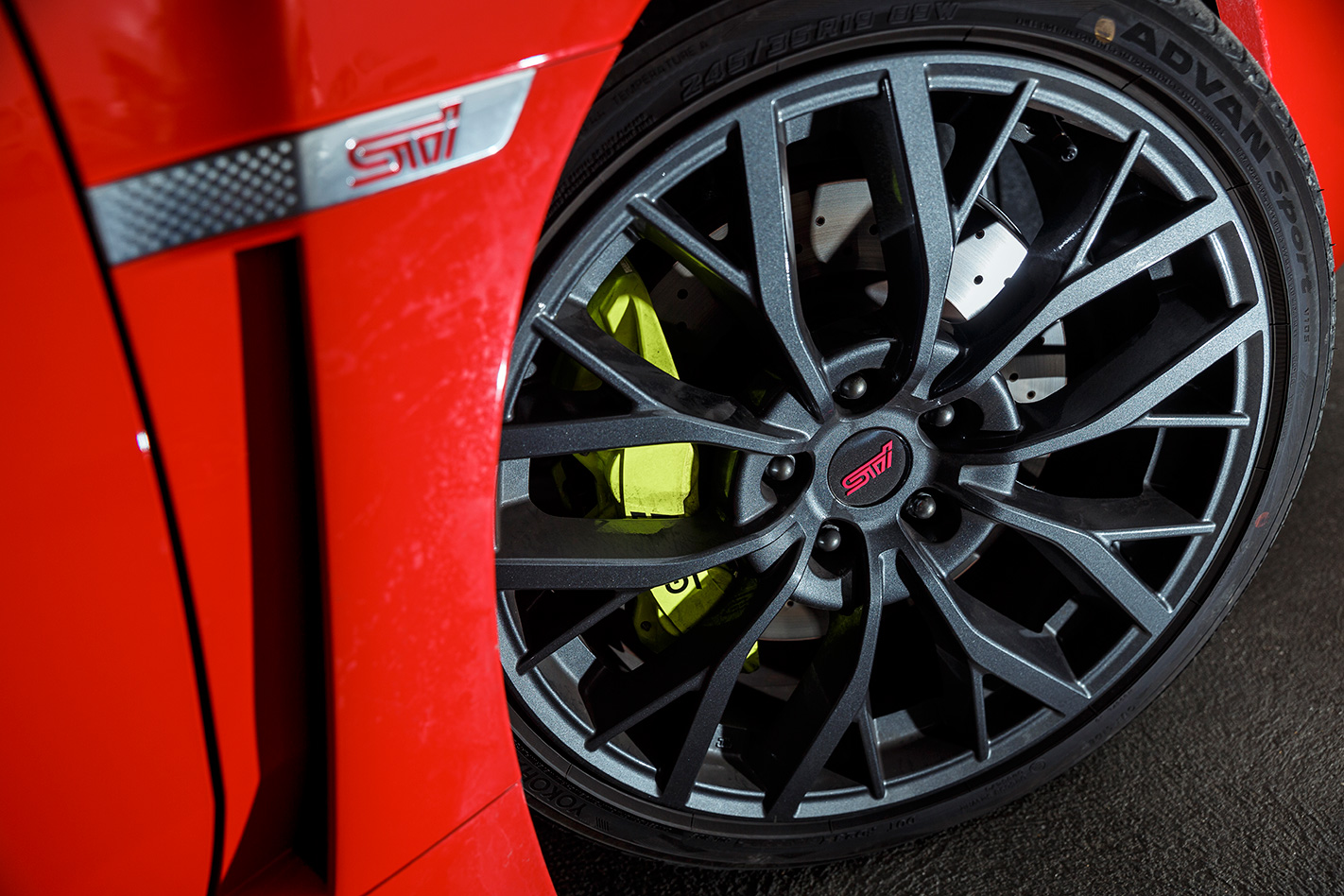
Riding on new, larger, 19-inch wheels that cage bright yellow six-piston Brembo front calipers, the new car will ping instantly on police radars. The upside is instant street cred, as the car never fails to generate a smirk, comment, or knowing glance.
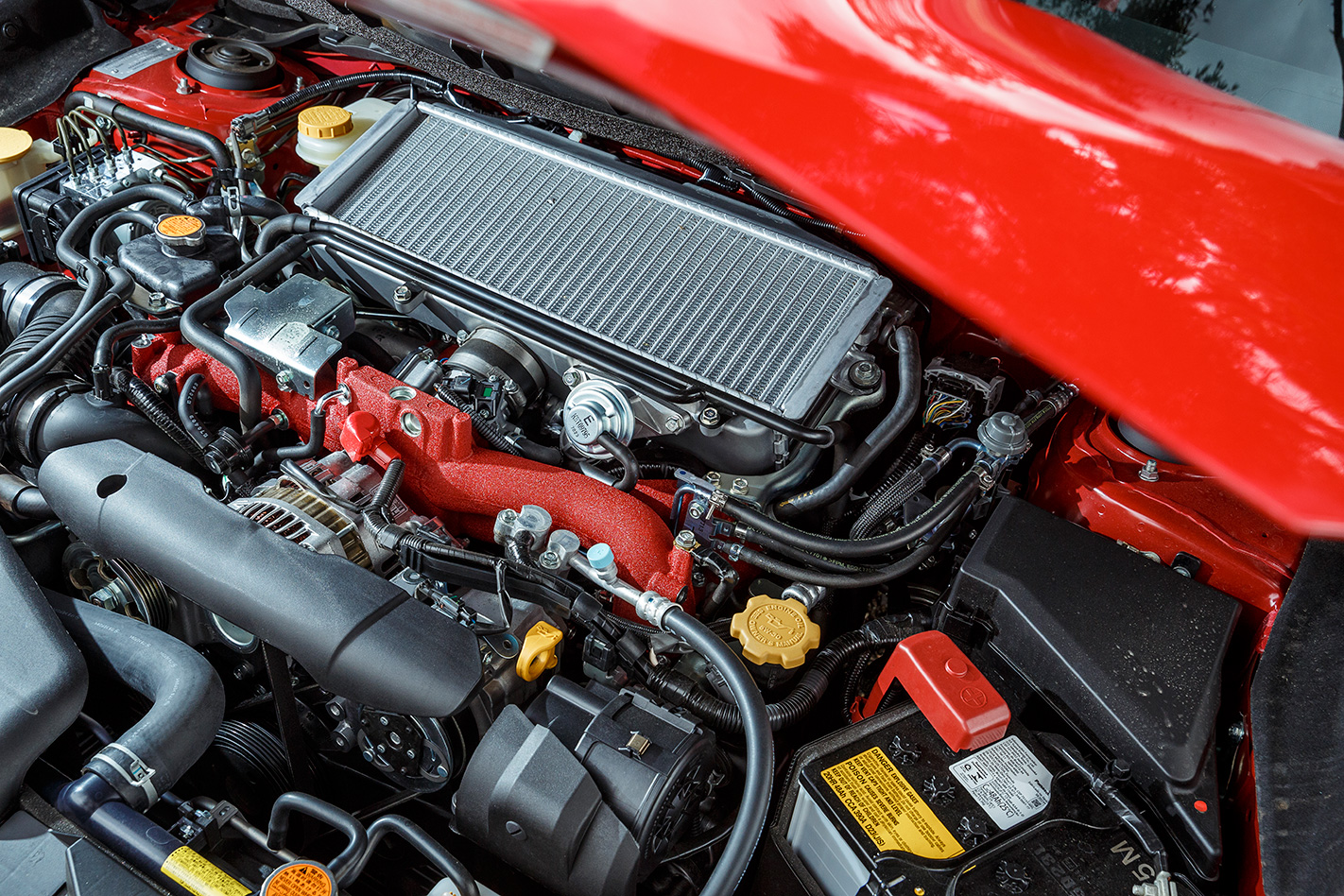
At its core breathes the same old 2.5-litre boxer four mated to a six-speed manual gearbox. Only the Driver Controlled Centre Differential has been tweaked. Subaru’s ditched the mechanical locking system within the centre LSD so it now relies on an electronically-controlled clutch.
Subaru’s rejigged the suspension to suit the larger diameter wheels, while superb chassis balance, excellent rear grip, and dialled-in damper tuning help it fire across patchy roads with the stability of a cruise missile. Playing with the centre differential affects handling in real time.
Full lock dulls out the front-end’s point, but the system works best when left to its own devices, distributing grunt to either end’s LSD as it sees fit. Huge new Brembos clamp drilled rotors with new pads. It takes a while to adjust to their power, however, they add feel at the end of the pedal travel, exactly where the old car’s four-pot fronts felt a bit numb.
Power delivery is old-school, to put it politely. Below 3000rpm there’s nothing, then, 500rpm later, it’s like a bullet train’s crashed into you from behind. We also wish the exhaust was a bit more vocal near its 6700rpm redline, rather than booming at low revs.
Perhaps what’s saddest about the 2018 WRX STI is it’s losing touch with what it is, a raw, rally-bred animal at its core that rewards effort. Few things can cover ground with the same sure-footedness as the STI.
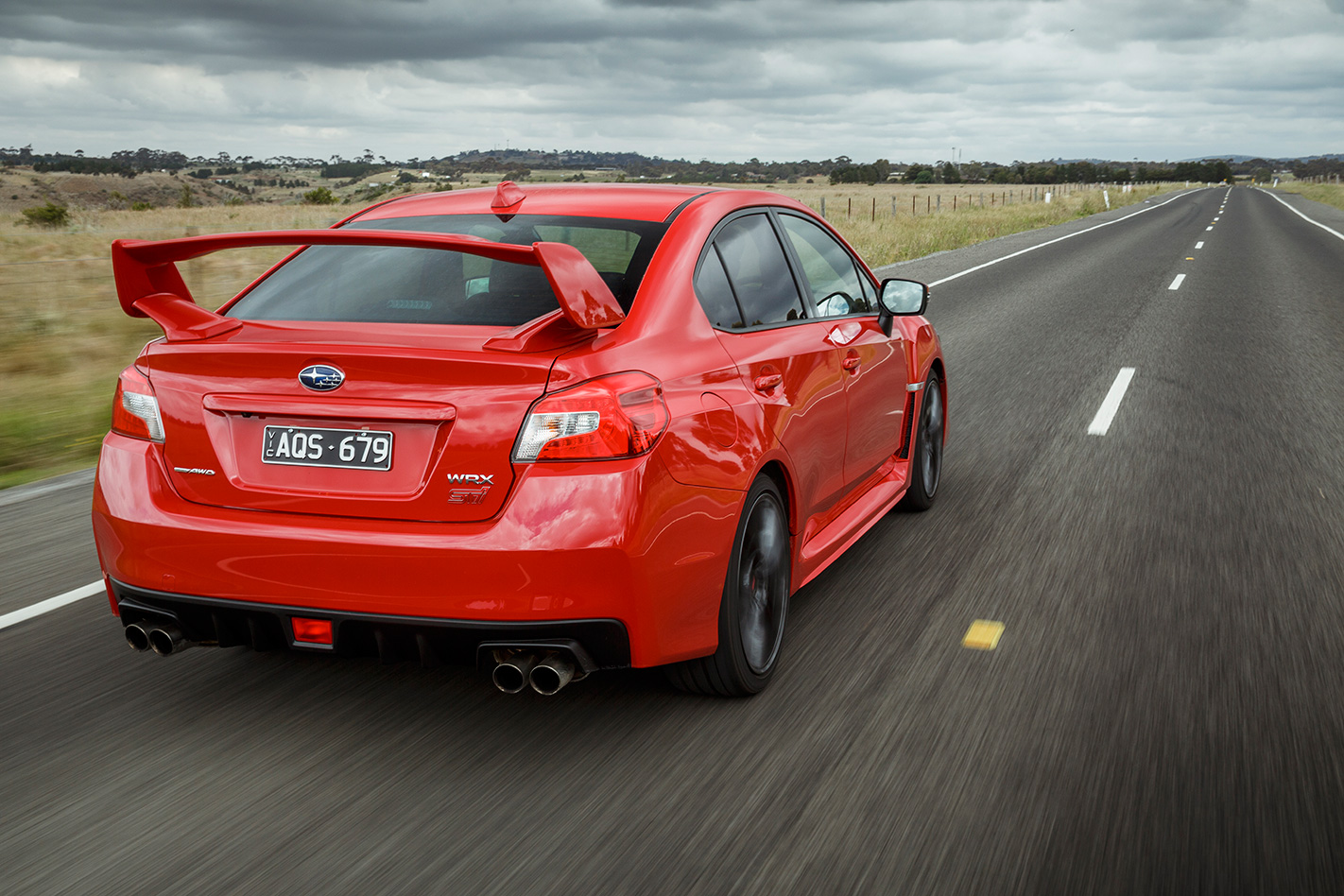
Meanwhile, moving that iconic rear wing to the options list (for $300) and deleting fog lights from the car’s front bumper is verging on sacrilege. The 2.5-litre engine’s sledgehammer power delivery, too, is hard to stomach when Japan has a rev-happy 2.0-litre unit with an 8000rpm redline.
Surely, that should be on the shopping list come update time. Of course, we should be grateful. Unlike Mitsubishi, this is evidence Subaru won’t let its legend die. Let’s just hope that by pushing out its renewal by a few years, it’s taking the time to get it right.
3.5 stars out of 5 Likes: Grip; directional stability; visibility Dislikes: Ride; refinement; steering kickback; turbo lag
2018 Subaru WRX STI Spec R specs: Engine: 2457cc boxer-4cyl, DOHC, 16v, turbo Power: 221kW @ 6000rpm Torque: 407Nm @ 4000rpm Weight: 1572kg 0-100km/h: 5.2sec (claimed) Price: $57,690
Good news if you want a Toyota 86 Limited Edition, but aren’t a fan of orange.
Toyota Australia has announced it will make available a kit of performance upgrade previously only available on its run of 86 ‘LE’ cars, of which only 60 were created.
Now, all four versions (GT and GTS in both transmissions) can be fitted with the combination of parts.
Though the kit doesn’t change the 2.0-litre flat four engine’s 152kW output, it does sharpen the 86’s driving characteristics.
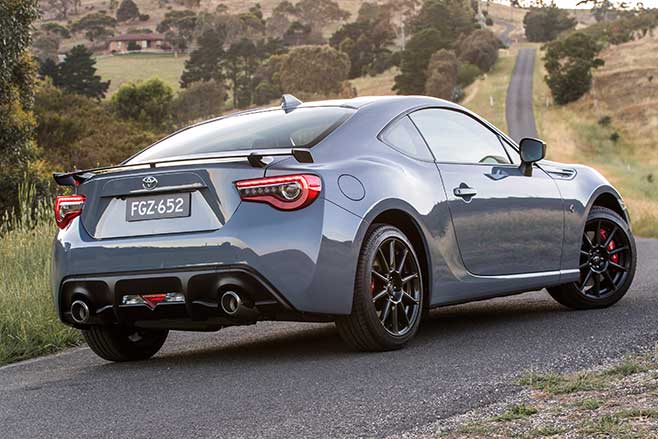
Recommended retail pricing for the kit has been set by Toyota at $2200 for the GTS and $2900 for the GT, which Toyota says “takes into account the kit’s inclusion of bigger wheels than the standard GT 16-inch alloys.
For buyers of a new GTS, the performance parts kit can be optioned with a choice of the new ‘Moon Slate’ exterior colour (pictured), which also includes red interior trim highlights, black wheels, exterior mirrors and rear spoiler.
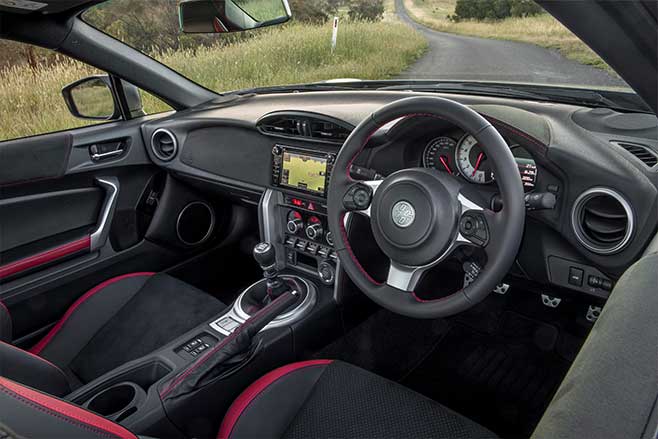
Also included in the kit, however, is an ‘infotainment’ upgrade which adds previously absent sat-nav to the GT and an updated multimedia system across all models.
Toyota Australia sales and marketing head Tony Cramb says he feels the kit will appeal to the enthusiast audience for an “already finely balanced and popular rear-drive sports car.”
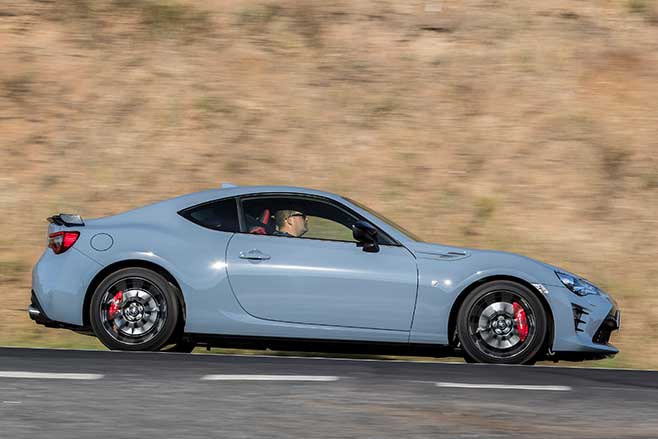
“These performance components will add to driver involvement and enjoyment, whether it is on the road or the track.”
Toyota Australia says it is approaching the ‘20,000-sold locally’ mark since the 86 was introduced here.
Nissan has updated the Qashqai for 2018, giving its small SUV a fresh look inside and out.
The model line-up has also been expanded, with ST-L and N-TEC variants joining the ST and Ti badges.

All Qashqais are powered by a 2.0-litre four-cylinder naturally-aspirated petrol engine, making 106kW and 200Nm, and send power to the front wheels. A 6-speed manual gearbox is available in the base ST, while all other variants come exclusively with a CVT automatic.
Prices start at $26,490 for the ST with a manual gearbox or $28,990 for the ST automatic. Both come equipped with 17-inch alloy wheels, a 5.0-inch LCD colour display infotainment unit, leather accented steering wheel, cloth seat trim, push-button start, AEB, and lane-departure warning,
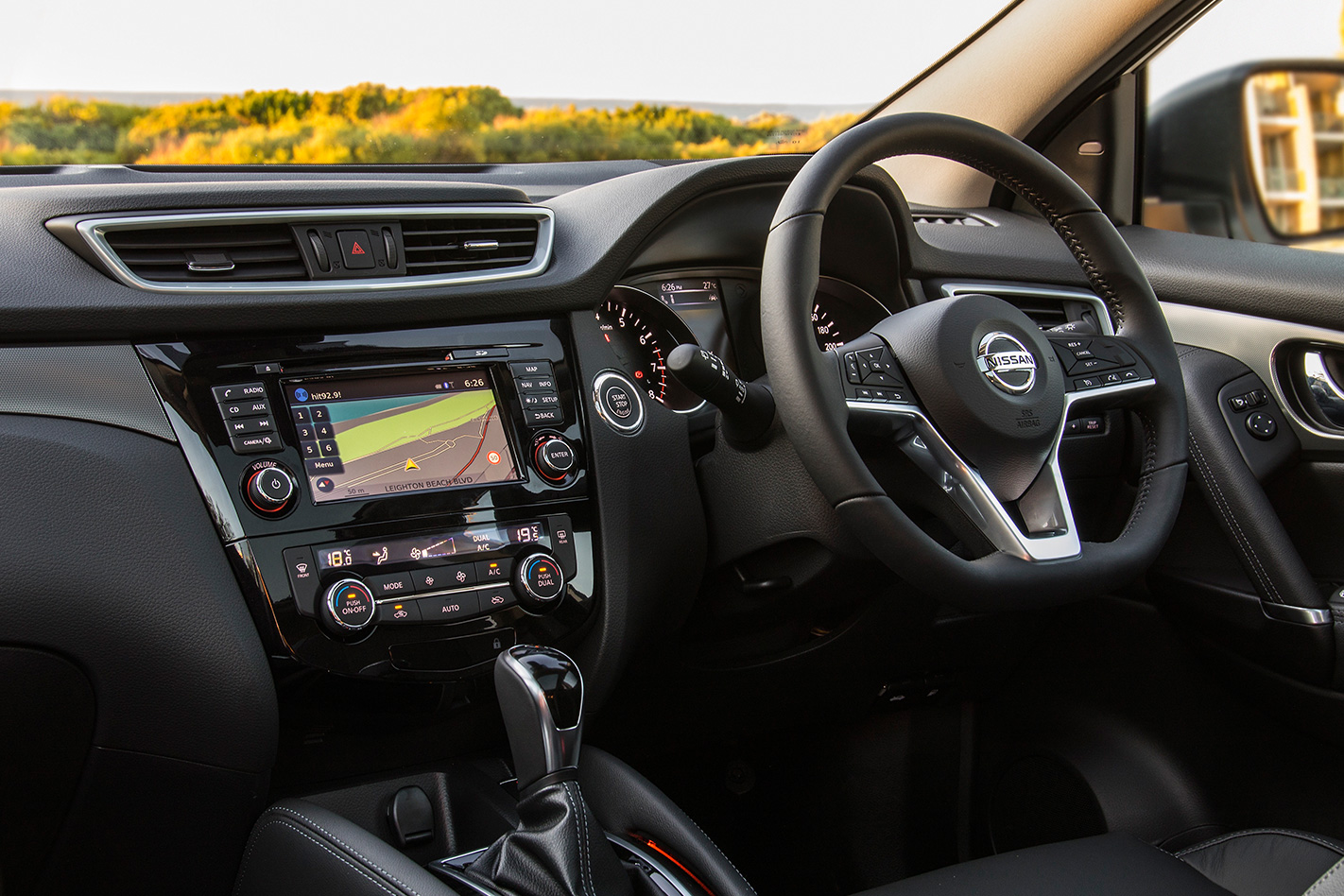
The ST-L costs $32,990 and adds 18-inch alloys, roof rails, fog lights, a 7.0-inch LCD touch-screen infotainment unit, digital radio, and heated front seats.
New for 2018 is the N-TEC variant that costs $36,490. It rolls on 19-inch alloy wheels, and has added equipment over the ST-L including a panoramic glass roof, rain sensing wipers, dual zone climate control, blind spot warning, intelligent park assist, intelligent driver alert, rear cross traffic alert, and high beam assist.
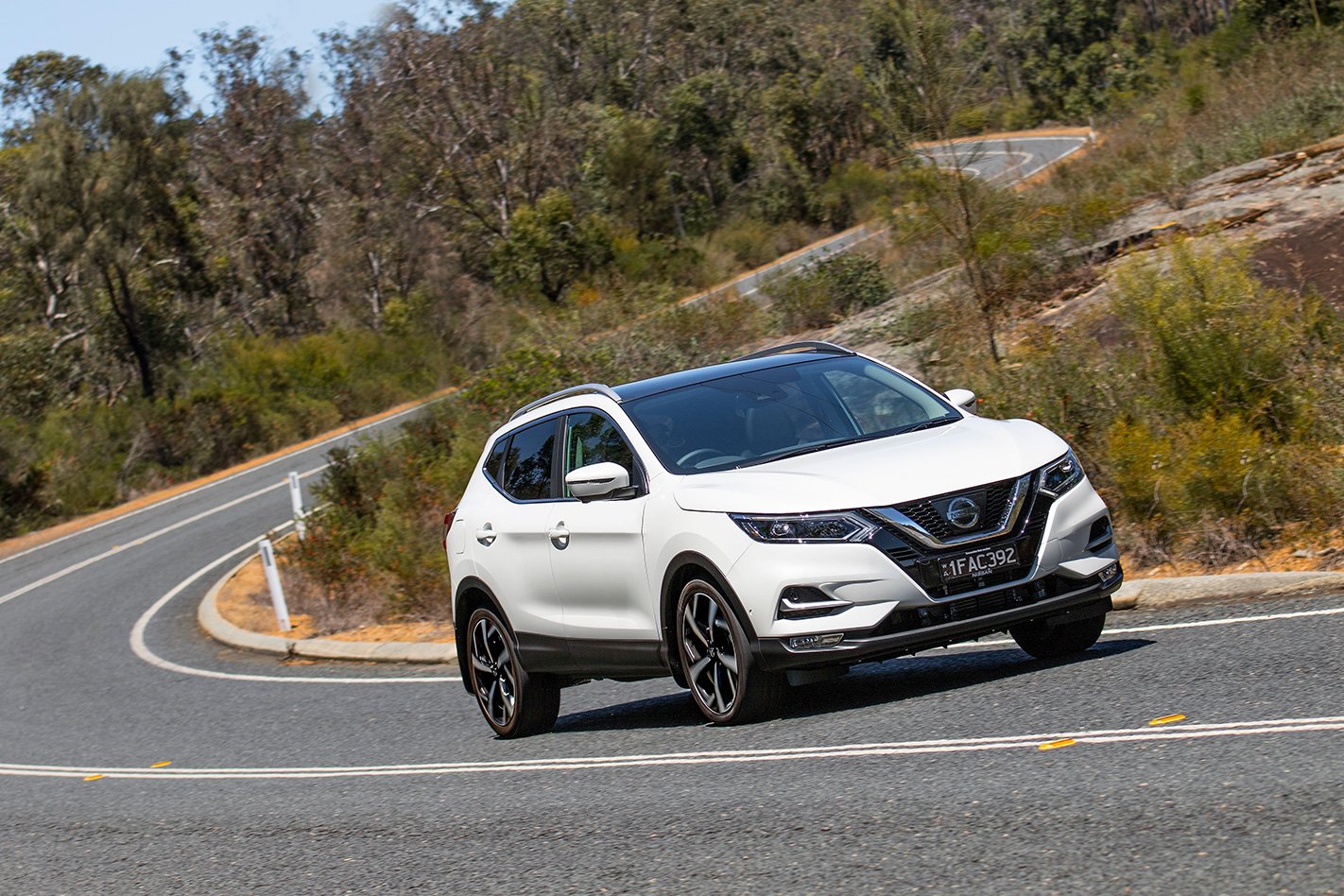
The flagship Ti variant costs $37,990, and adds nappa leather-accented seat trim, intelligent cruise control, and intelligent lane intervention over the N-TEC.
The Nissan Qashqai is available now in showrooms.
Mercedes-Benz is planning to correct the balance of its male and female customers with a renewed focus on addressing the needs of women. The brand currently has a buyer base predominantly represented by men.
Since it launched its She’s Mercedes campaign, the company has made a concerted effort to establish the most important factors women consider when buying a vehicle as well as creating an entirely new digital and print hub tailored specifically for a female audience.
Speaking at the Los Angeles motor show, Mercedes board of management member for marketing and sales Britta Seeger told Wheels that the strategy was working but there was still more work to be done.
| Ferrari to target female buyers
“This is exactly why we emphasise a lot of the direct contact with the female customers and we do special events, network and driving events for women because they are very interested in owning and driving a car and getting feedback and more technical details about a car,” she said.
With the She’s Mercedes initiative, the German car giant plans to capture a greater share of a market that has remained inexplicably neglected by many brands.
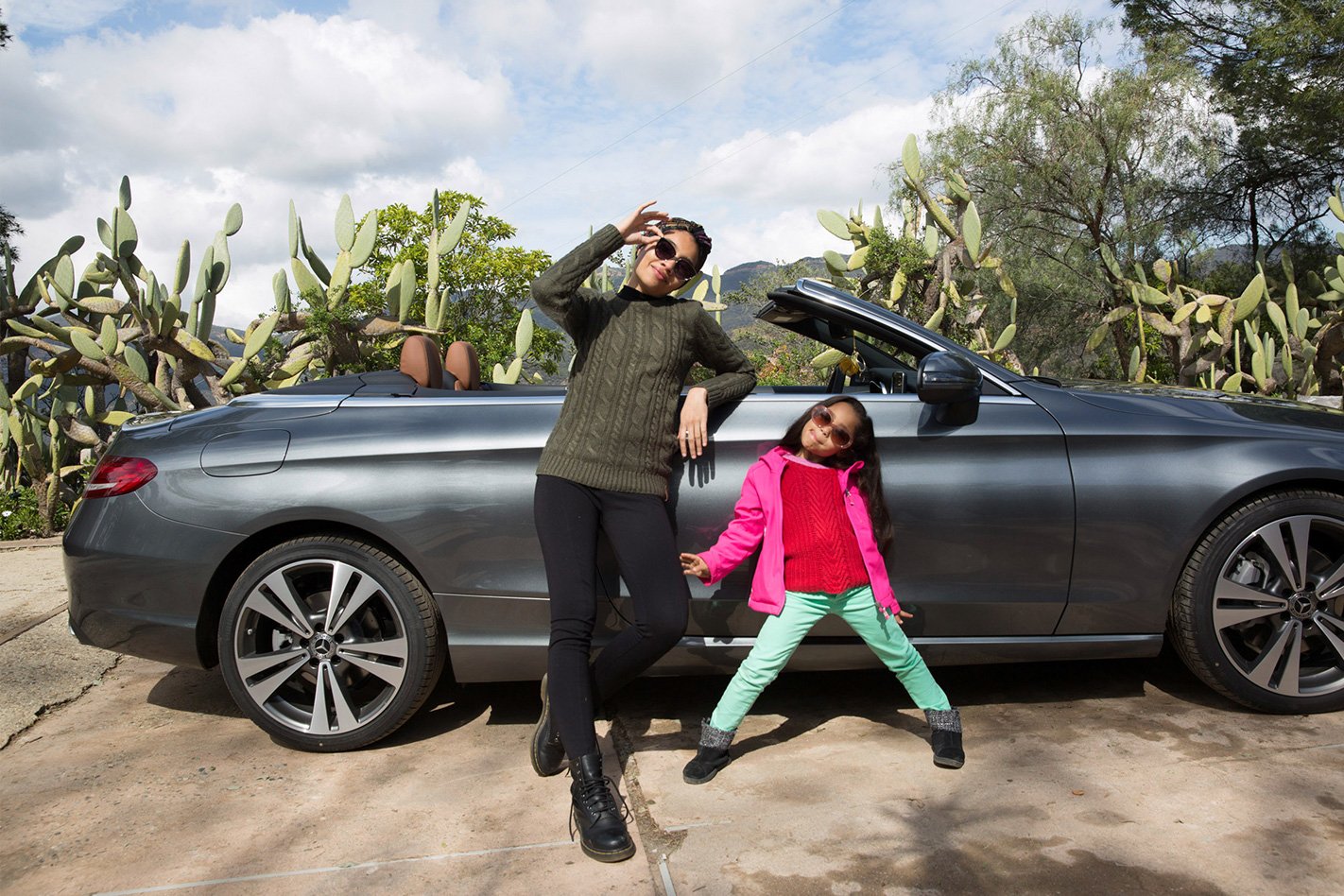
“In the coming years, our aim is to establish Mercedes-Benz as the most attractive premium car brand in the world for women and to significantly increase the proportion of female customers,” claimed the launch material.
| Five of the world’s most influential women in automotive
The initiative is a strategy that has begun to implement more specific training for female customers, the employment of more women within Daimler, and events and networking opportunities that the company hopes will attract more women to the three-pointed star.
The move goes hand-in-hand with other Mercedes more lifestyle-focused missions outside bricks and mortar dealerships and the basic target of selling cars, including the Mercedes Me venture.
This month, Australia’s first Mercedes Me location opened its doors in Melbourne, allowing fans of the brand to spend time in a cafe and meeting space away from a conventional retail environment.
A growing model line-up that will soon top 40 choices is not harming the plan to attract more female buyers, said Seeger.
“I think the tastes of men and women around the globe are different so with the 40 models in the future I think we have the perfect basis to address the whole globe.”
As a key ambassador for the She’s Mercedes strategy and the inspiration of women to go further, achieve more and aim higher, Seeger was happy to admit that she is always the one at the wheel when her husband and family hit the road.
“If you ask me, I think I am the better driver”.
Land Rover’s burgeoning portfolio of SUVs has seen some of its more established products become increasingly squeezed by new entrants such as the Discovery Sport and Velar.
In order to reassert its position in the hierarchy, the penultimate model in the line-up, the Range Rover Sport, has gained a serious do-over.
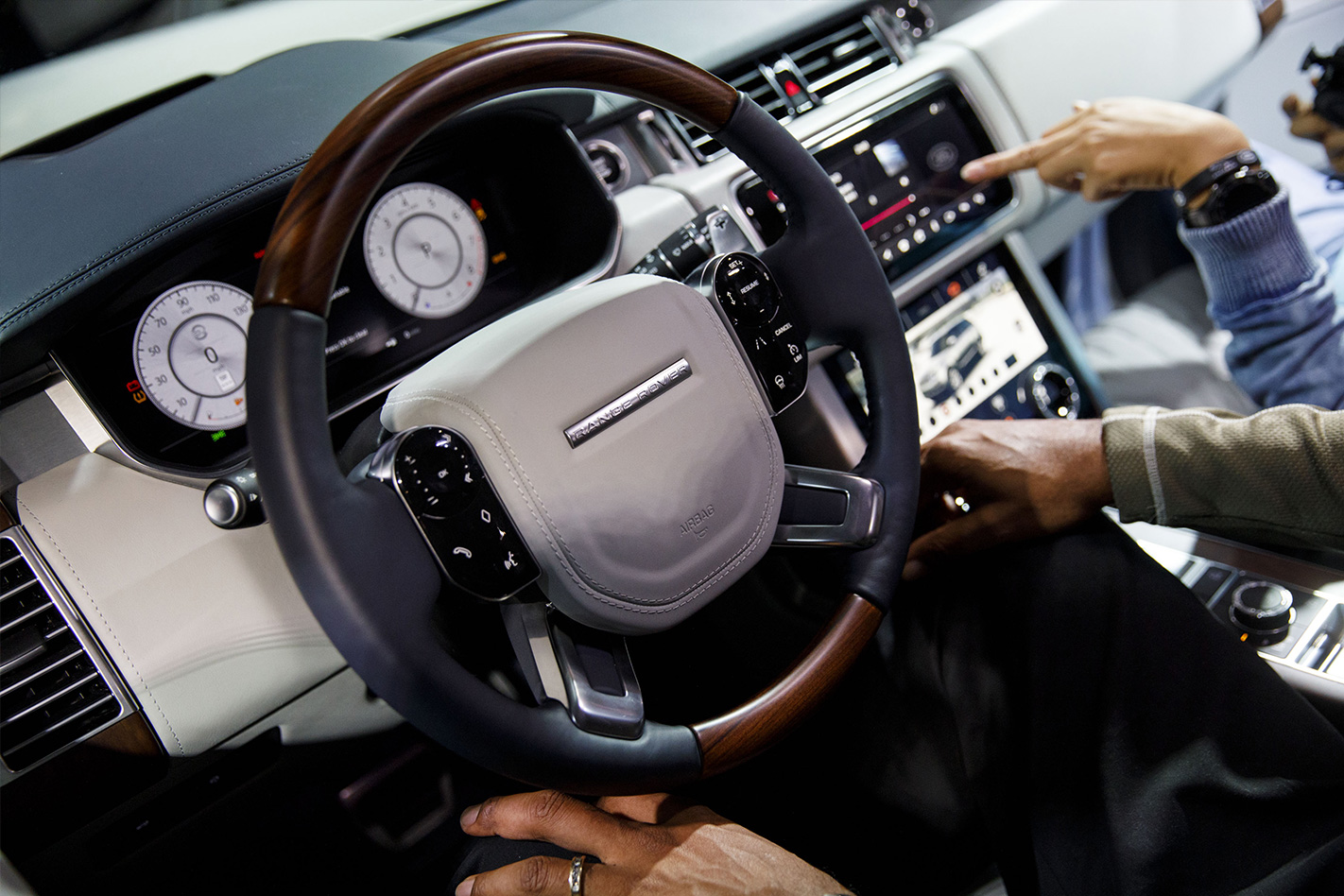
‘Officially’ unveiled at the 2017 Los Angeles Motor Show, the revised Sport had previously been shown in the more low-key environment of a London Design Museum event in October. The exterior changes comprise the usual facelift parts of lights and grille while the cabin adopts a number of design themes evident in the Velar. These include the adoption of the much-improved Touch Pro Duo infotainment system, which features a pair of 10-inch touchscreens.
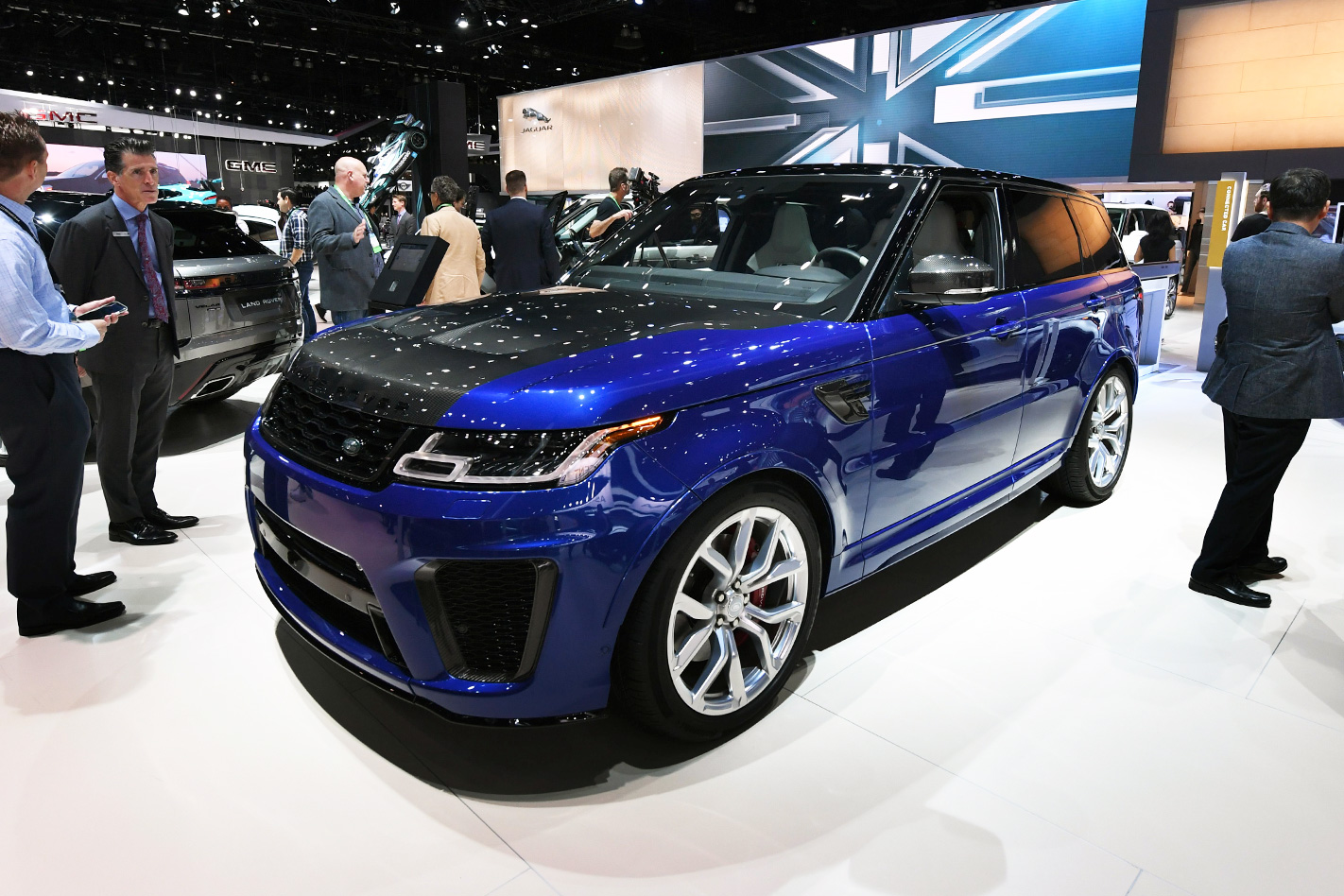
While the flagship car has us excited for obvious reasons, the Sport P400e plug-in hybrid has also piqued our interest. With JLR vowing to release an electrified version of every model line by 2020, the Sport was an obvious candidate for some volts come refresh time. Augmenting a 221kW 2.0-litre Ingenium four-pot petrol engine with an 85kW electric motor sees a total system output of 297kW available.
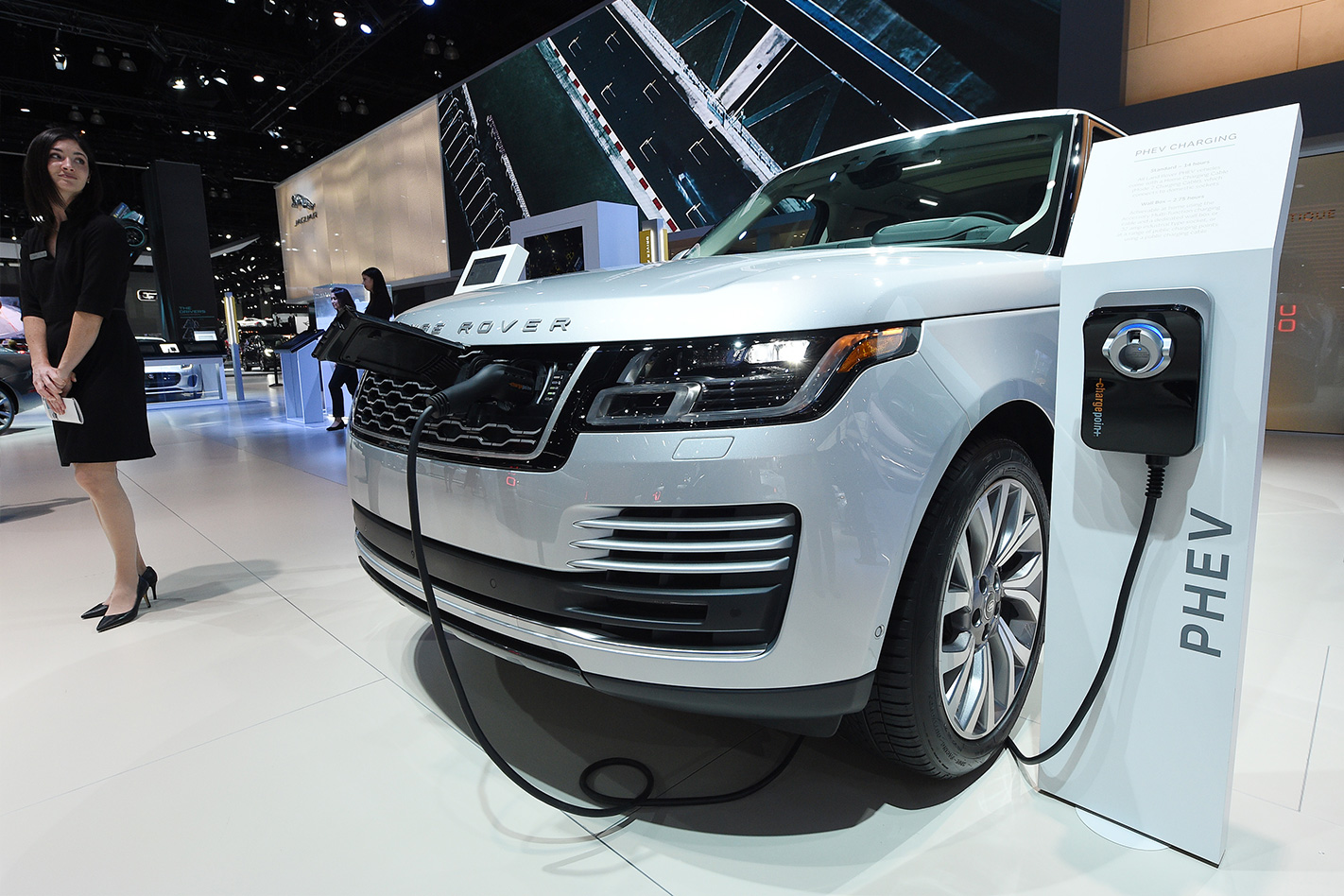
Utilising a 13.1kWh lithium-ion battery residing beneath the boot floor, luggage space takes a modest dive from 780 litres to 703, and a full charge from a wall box takes less than three hours. On a standard socket that’ll blow out to closer to eight hours.
If Land Rover’s current run of form is anything to go by, you’ll probably need to be very quick or very connected to get a place at the sharp end of the queue for either the $146,600 P400e or the $238,200 SVR. At the other end of the line-up, prices kick off at $95,100 for the S SD4 diesel, with the petrol models opening at $97,100 for an S Si4. Initial deliveries are slated for April 2018.
Real life is turning into a video game. And video games are turning into real life.
Except neither of them is real. And also, both of them is. Has that got you confused? Me too. At the recent SEMA show in Vegas, Hennessey unveiled their Venom F5… which was essentially a video game car made real. It was a giant plastic toy of a car – not only was it not a production car, it wasn’t even a semi-functional prototype.
It was an immobile plastic model. It had eye-popping specs designed to make the crowd ooh and aah, without being able to demonstrate in any way how they would ever become real. Hennessey is, for example, still trying to find a tyre supplier… because there is no rubber currently available able to glue down the sort of performance they’re touting.
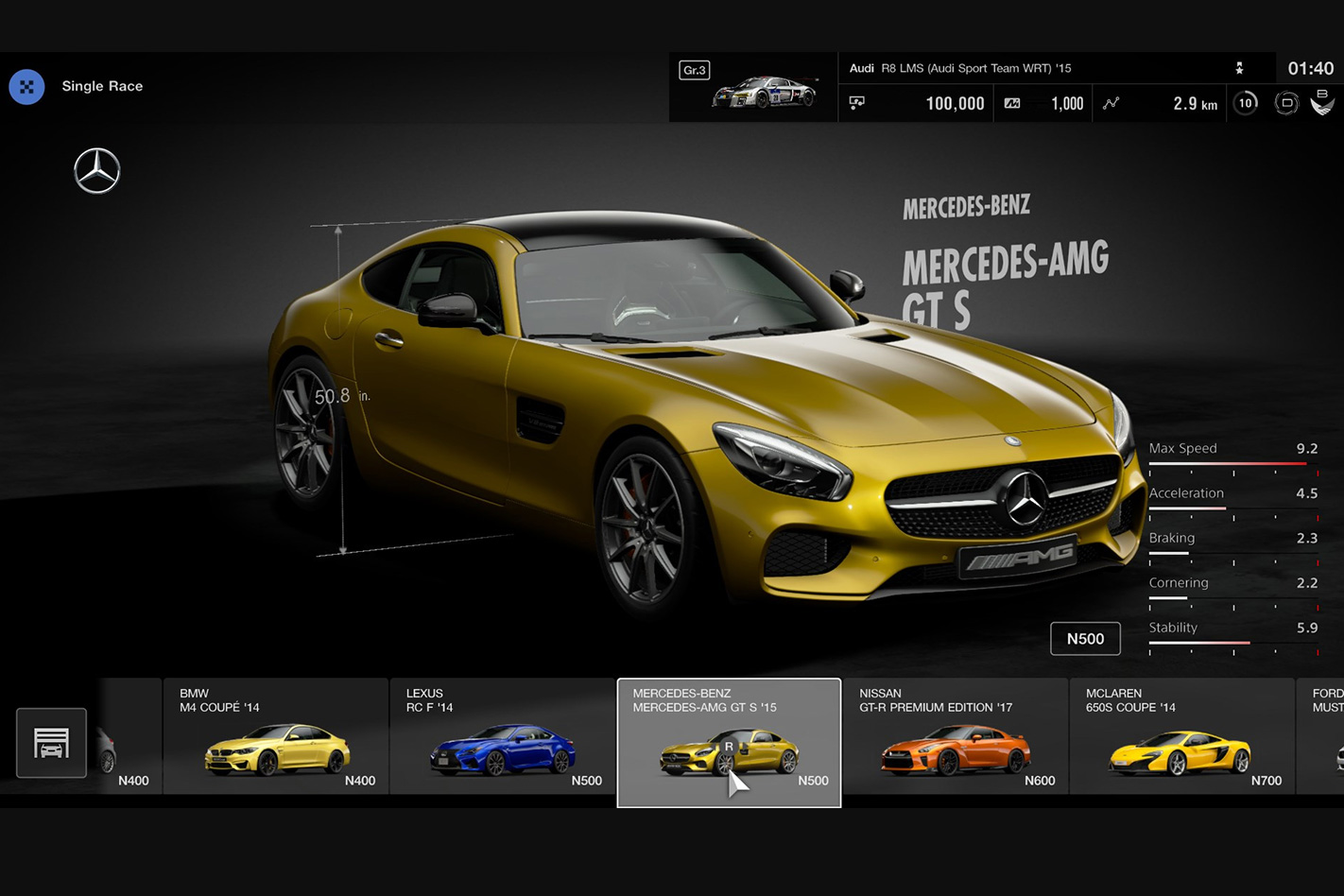
In other words, the car only exists on a computer. And that’s the real life car. Meanwhile, the latest incarnation of the Gran Turismo video game series looks the business, but the joy is somewhat hampered by having fewer cars in the garage than one might wish, and suffering other drivers behaving like idiots.
Who knew there would be so much blood in real life? Who knew that getting my car resprayed a different colour wouldn’t erase my criminal record? Yeah, thanks for nothing, GTA. Now I’m stuck in super-max with no one but the ghost of Carl Williams for company. Great.
Honestly, car makers know that paying for their ranges to feature in video games shifts units – it’s a new age of win online, sell on Monday. Is it really that much of a stretch to imagine that the cars themselves are tailored to the expectations of the players they’re courting?
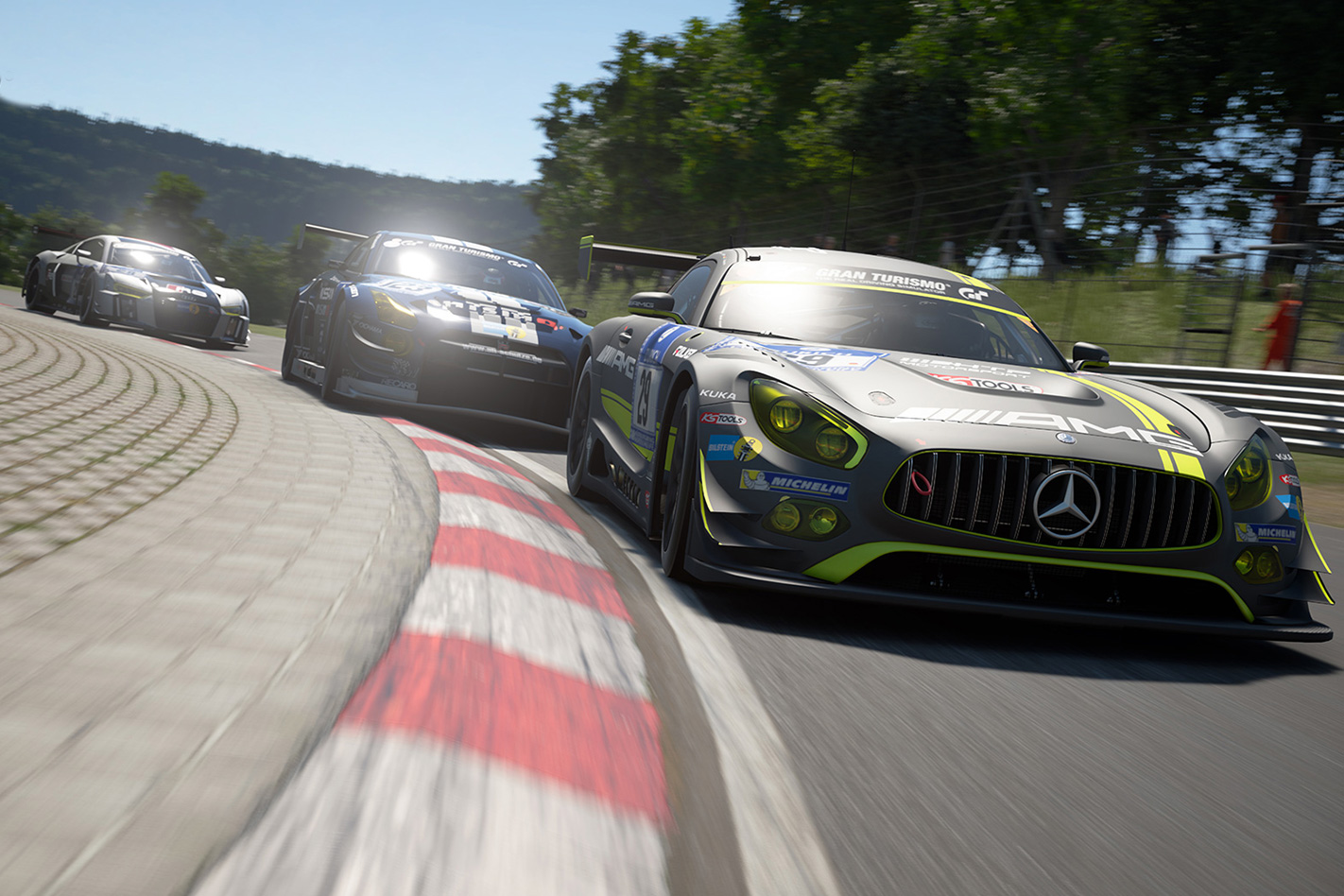
Games like Gran Turismo and Forza are the millennial equivalent of a Countach poster on the wall – instead of simply gazing at a still photo of Italian metal (and, ah, a bit of gazing at the leggy model in the high-cut neon-yellow swimsuit standing next to it) and imagining what it would be like to drive it, now you can fang it around the Green Hell or Dubai streets with “hyper-realism” or “sub-centimetre accuracy”, according to the game makers.
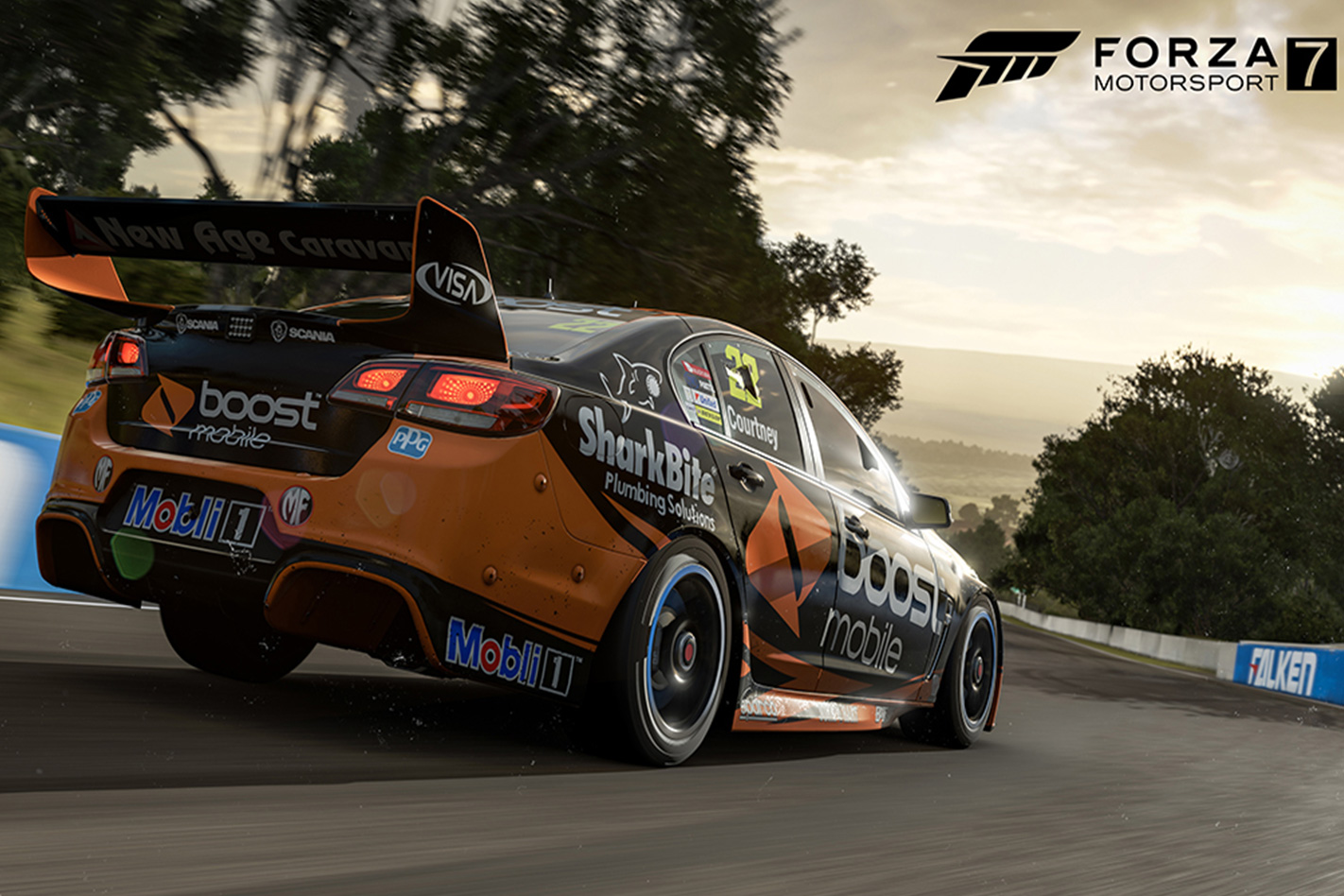
I want to play video games to escape from real life, not run head-on into it. I like being able to jump supercars without suffering spinal injuries on landing, or being able to drift further than a Hoonigan-sponsored hobo.
Hell, I still have loving memories of fanging a Testarossa across the Alps and Death Valley (not even the rules of geography intruded on the fun) in Out Run with the jaunty strains of Magical Sound Shower ringing in my ears. That may be the most unrealistic driving game ever created.
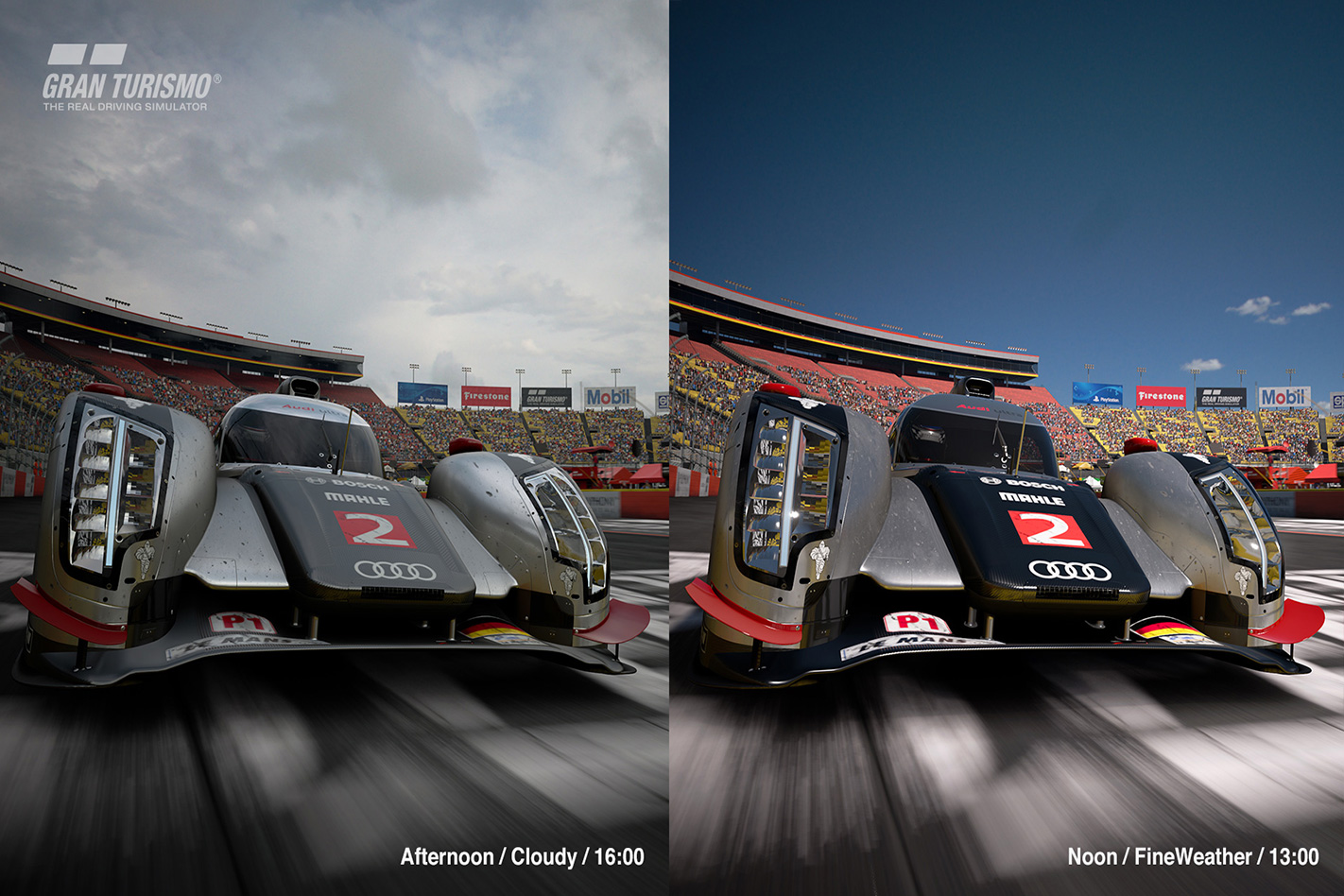
So I look forward to getting on the freeway tomorrow and to be stuck behind the same people I was stuck behind on Brands Hatch last night. And I look forward to driving the Hennessey Venom F5 around Willow Springs next year.
Both will be completely unreal.
MOTOR has been tracking prices of the final locally made performance sedans (and ute) to leave both Ford’s Broadmeadows plant and, recently, Holden’s Elizabeth manufacturing facility, and it seems supply is outstripping used car demand across all models.
The 20 currently advertised Commodore Motorsport Editions include prices ranging from $66,500 to $86,000 – while a single example is listed for a cheeky $100,000. The 1200 sedan-only were priced between $61,790 (manual) and $63,990 (automatic) plus on-roads.
However, few are moving, with two examples at one western Sydney auction house – now with a mid-$70,000 fixed price listing – sitting idle for weeks. Despite such outlets being a typical way for dealers to buy used cars, neither dealers or the buying public have yet banked on the green auto and white manual sedans, despite weekly auctions for other cars.
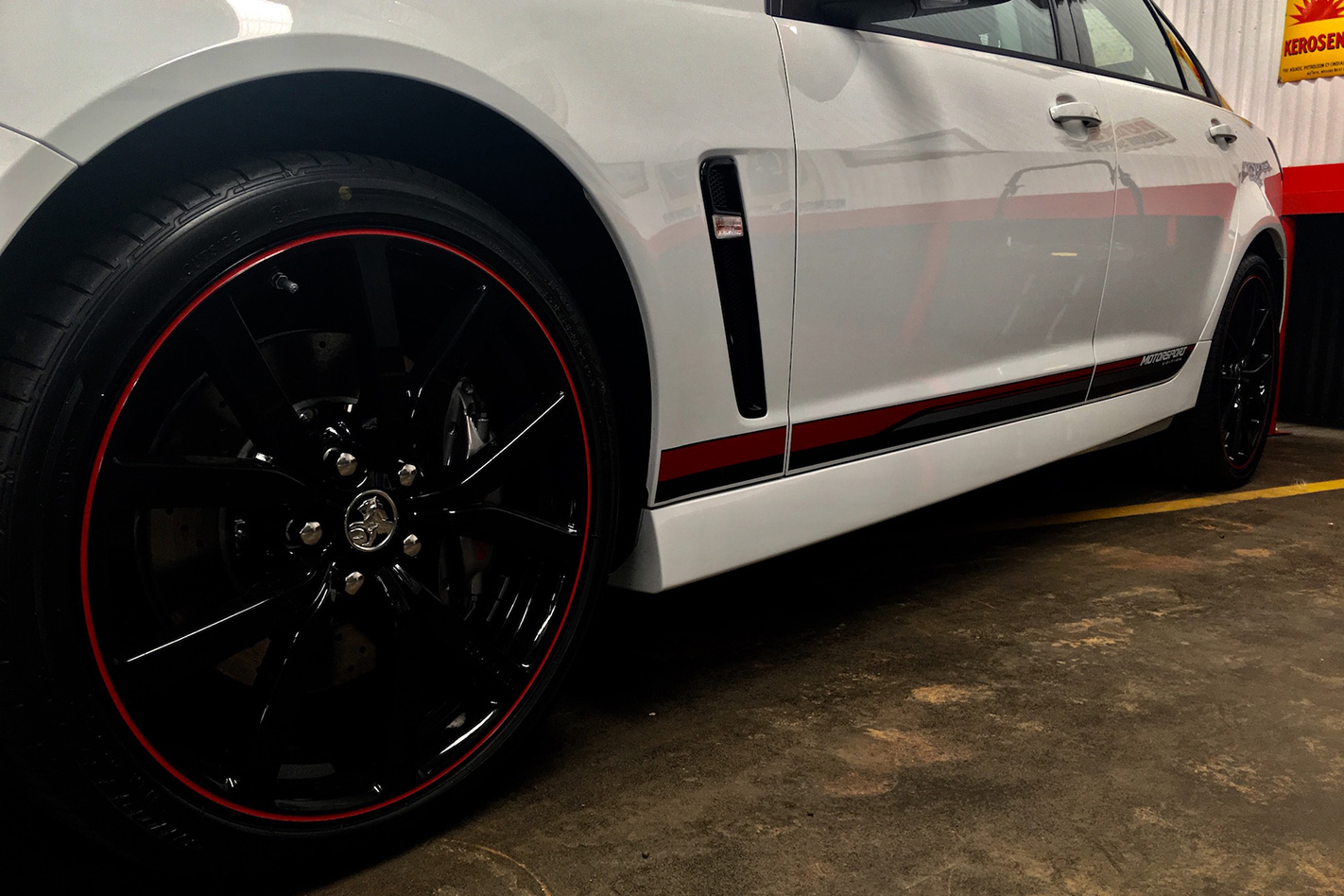
A total of 11 advertisements for a new Calais-based Director sedan, produced in 360 units for $63,990 with auto only, have failed to yet garner asking prices of $75,000 to $95,000.
Those looking to make a fast profit from the Holden limited editions will be hoping that they don’t follow the immediate trend of the Ford specials. Despite closing its plants over one year ago, 50 examples of the Falcon XR6 Sprint and Falcon XR8 Sprint remain out to tempt buyers on the used market, with over half (26) of them brand new.
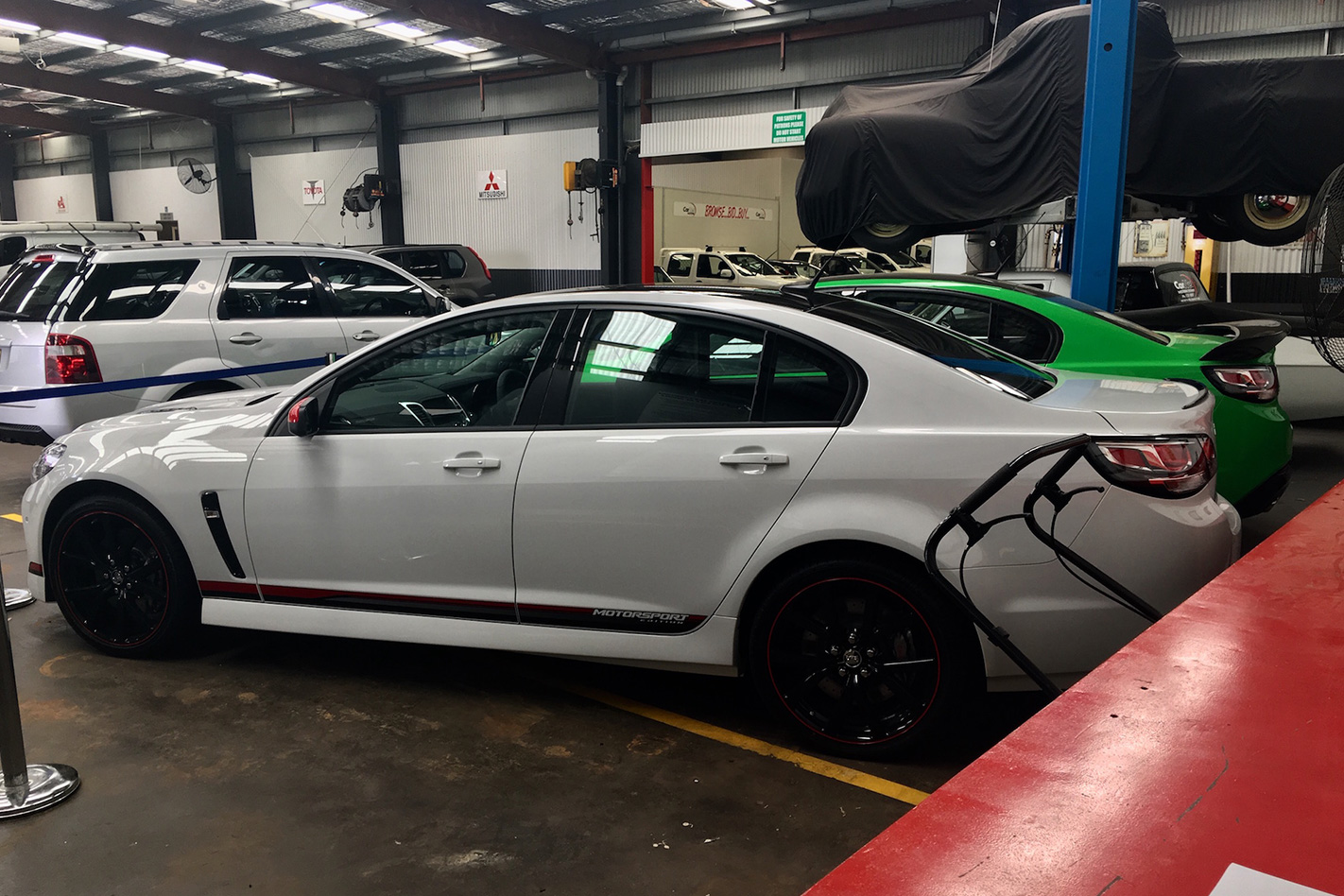
However, there are examples online for $5000 below those figures, with a few thousand kilometres on the clock. Some buyers are asking $70,000-plus for examples with a clean set of digits on the odometer, but these have not been going anywhere on the market.
The question now is, will the price of these final Commodore and Falcon limited editions really skyrocket? As it stands, it appears several ‘investors’ were overly optimistic about resale values soon after the purchase of these last Australian-built performance cars.
NEW looks and some changes under the skin keep the Nissan Qashqai looking fresh against younger competition.
WHAT IS IT?
Nissan’s small SUV was launched on the Australian market three years ago. This is its first significant update.
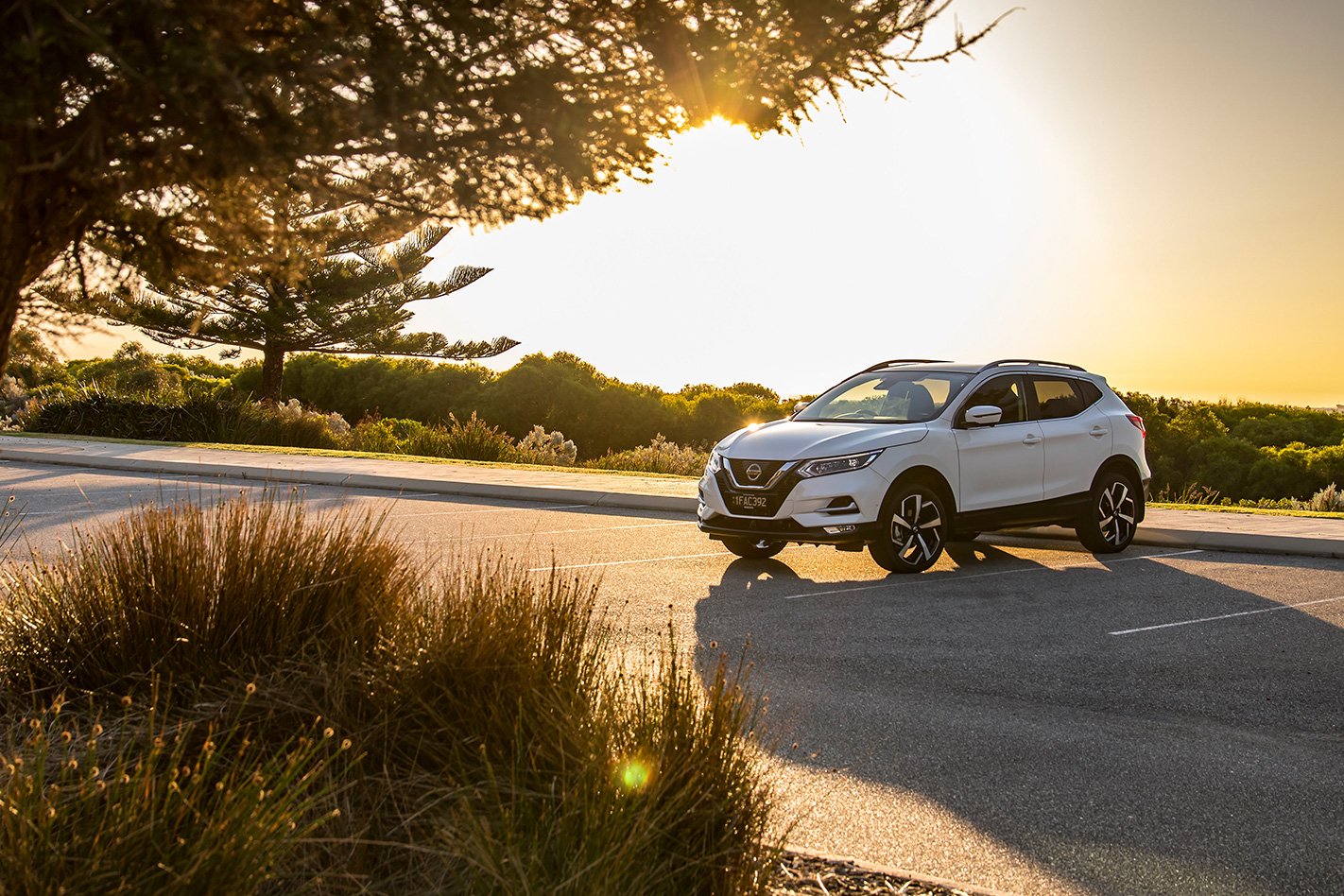
Small SUVs are becoming increasingly popular with Australian new car buyers, and Nissan wants a bigger slice of the pie. The updated Qashqai is its ticket to ride.
MAIN RIVALS
Mazda CX-3, Hyundai Kona, Peugeot 2008, Suzuki S-Cross, Toyota C-HR, Subaru XV, Holden Trax
THE WHEELS VERDICT
The Nissan Qashqai is a small SUV for people that don’t want to feel cramped. The updated Qashqai extends the model range, while simplifying the available powertrains. Nissan has done well to improve the ride and bring the cabin up to date with modern expectations, however an ageing drivetrain and infotainment omissions could play against it in a crowded and competitive market.
Minus: Tyre roar on 19-inch rims, numb steering, ageing drivetrain, price
THE WHEELS REVIEW
DID YOU realise that Nissan no longer sells a true passenger car in this country?
Putting the GT-R and 370Z coupes aside, the closest you’ll get to a spiritual successor to the Pulsars that populated our rose-tinted past is the high-riding, UK-built Qashqai SUV, of which more than 13,000 found homes here in 2017.
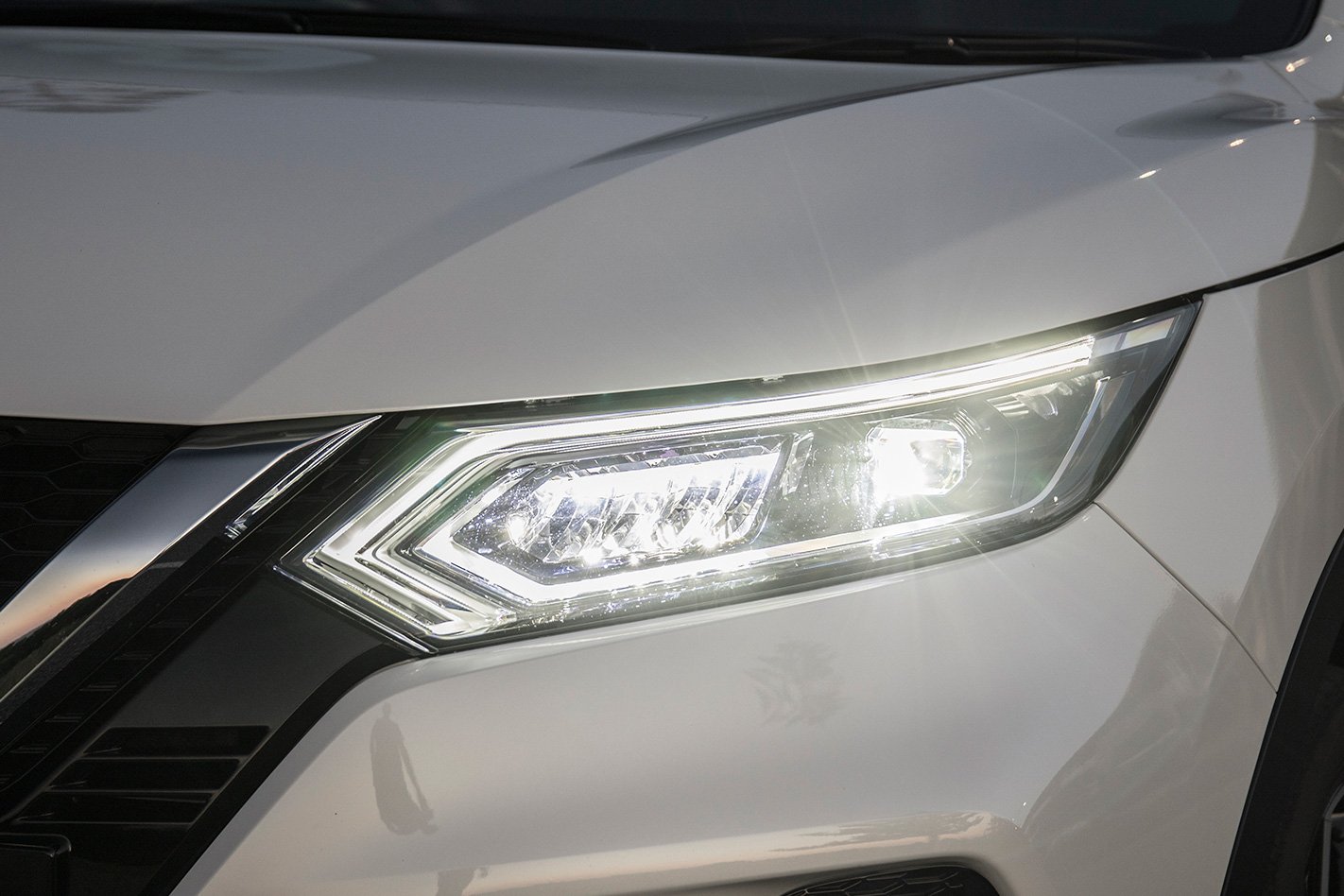
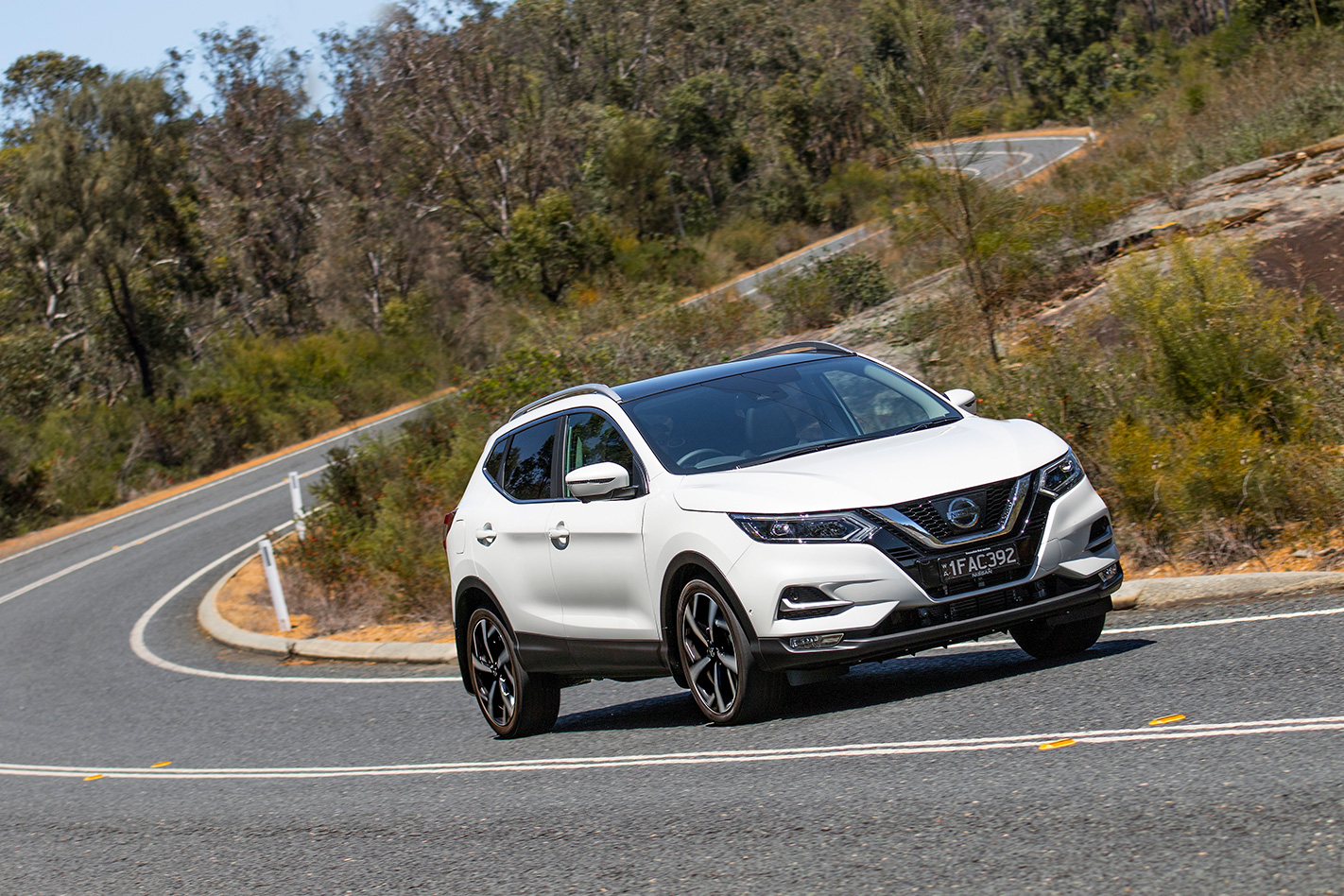
But Nissan’s new family look hasn’t been too kind to Qashqai. The old model’s elegant front end is now much fussier, sporting a more extreme version of Nissan’s ‘V-motion’ grille, though the black plastic centre badge hides a much-needed AEB system now standard on all models.
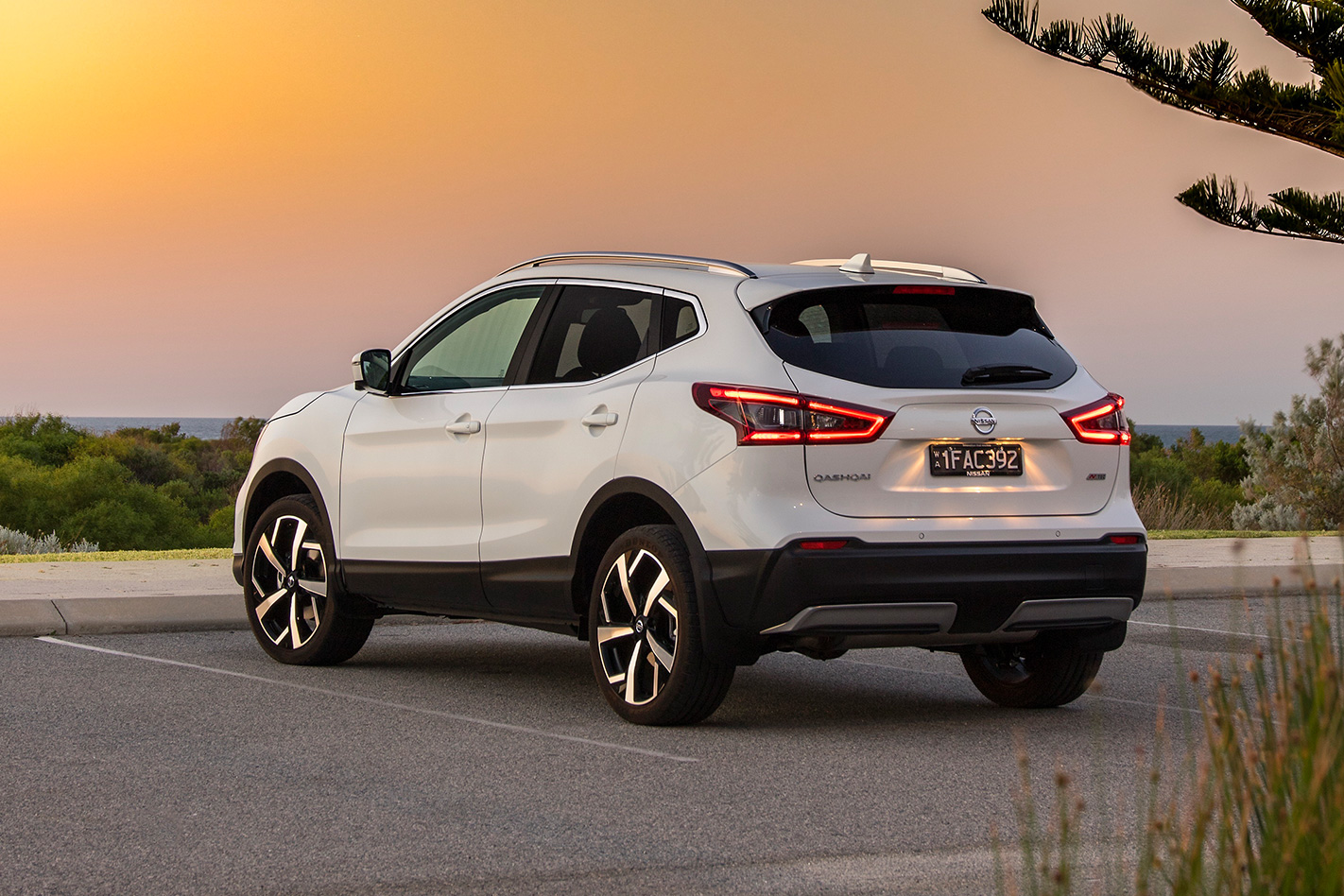
Along with fresh new alloys (17s on ST, 18s on ST-L, and 19s on special-edition N-TEC and forthcoming Ti), the facelifted Qashqai also gets new tail-lights and rear bumper, and several refinement-enhancing measures.
Among the few engineering changes made to the MY18 Qashqai are enhancements to its suspension set-up, honed in the UK. Retuned dampers, reduced spring rates, modified bushes and stiffer anti-roll bars aim to reduce Qashqai’s body motion over large bumps, but there’s still a lack of suppleness at urban speeds, even on the ST-L’s 18s.
And while the Qashqai handles keenly in spirited driving, its steering (via a superb new wheel) is too light and numb during general duties. We won’t see the 120kW/240Nm 1.6-litre turbo-petrol engine offered in Europe because it’s only paired with a six-speed manual, and the turbo-diesel is gone too, because almost no one bought it.
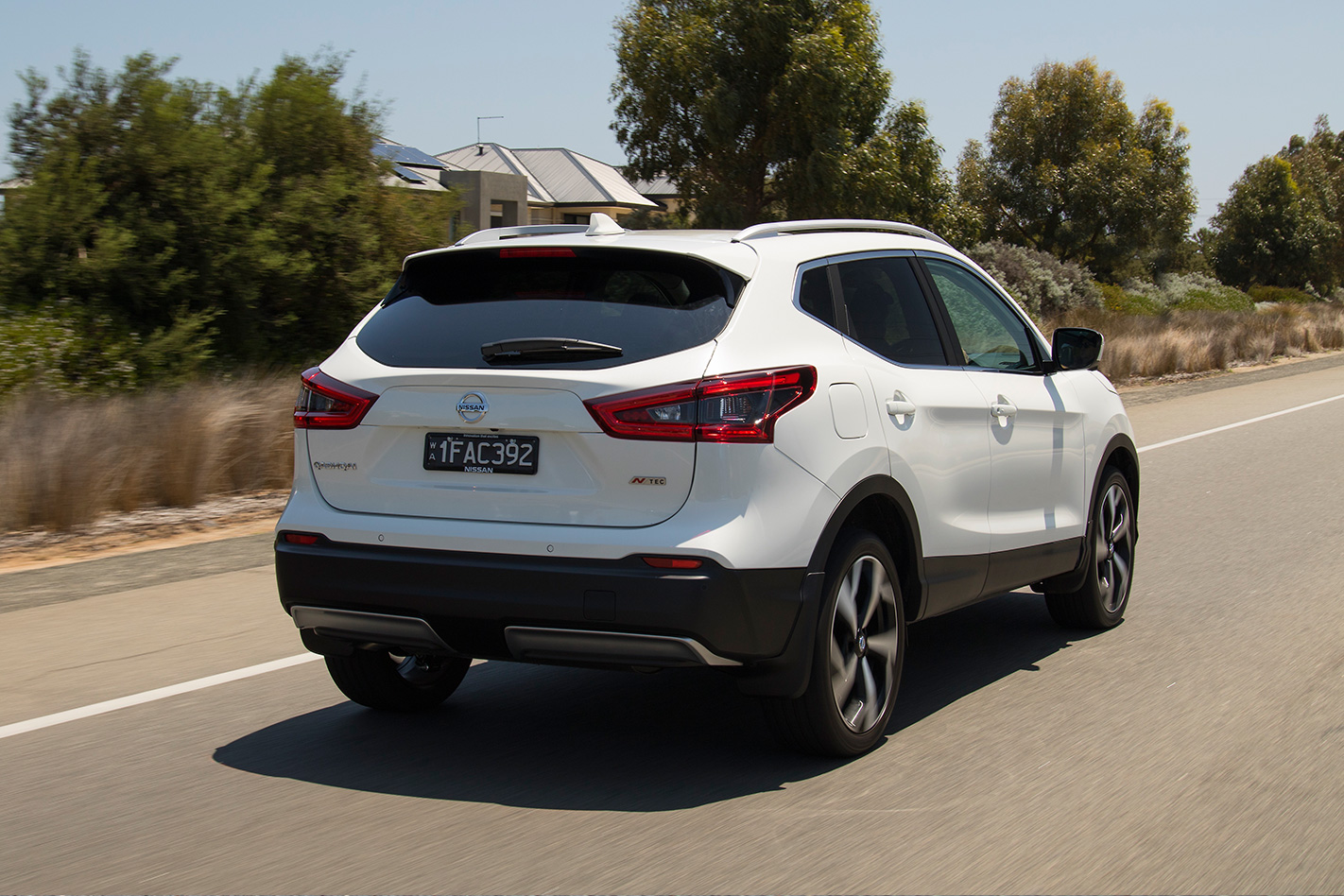
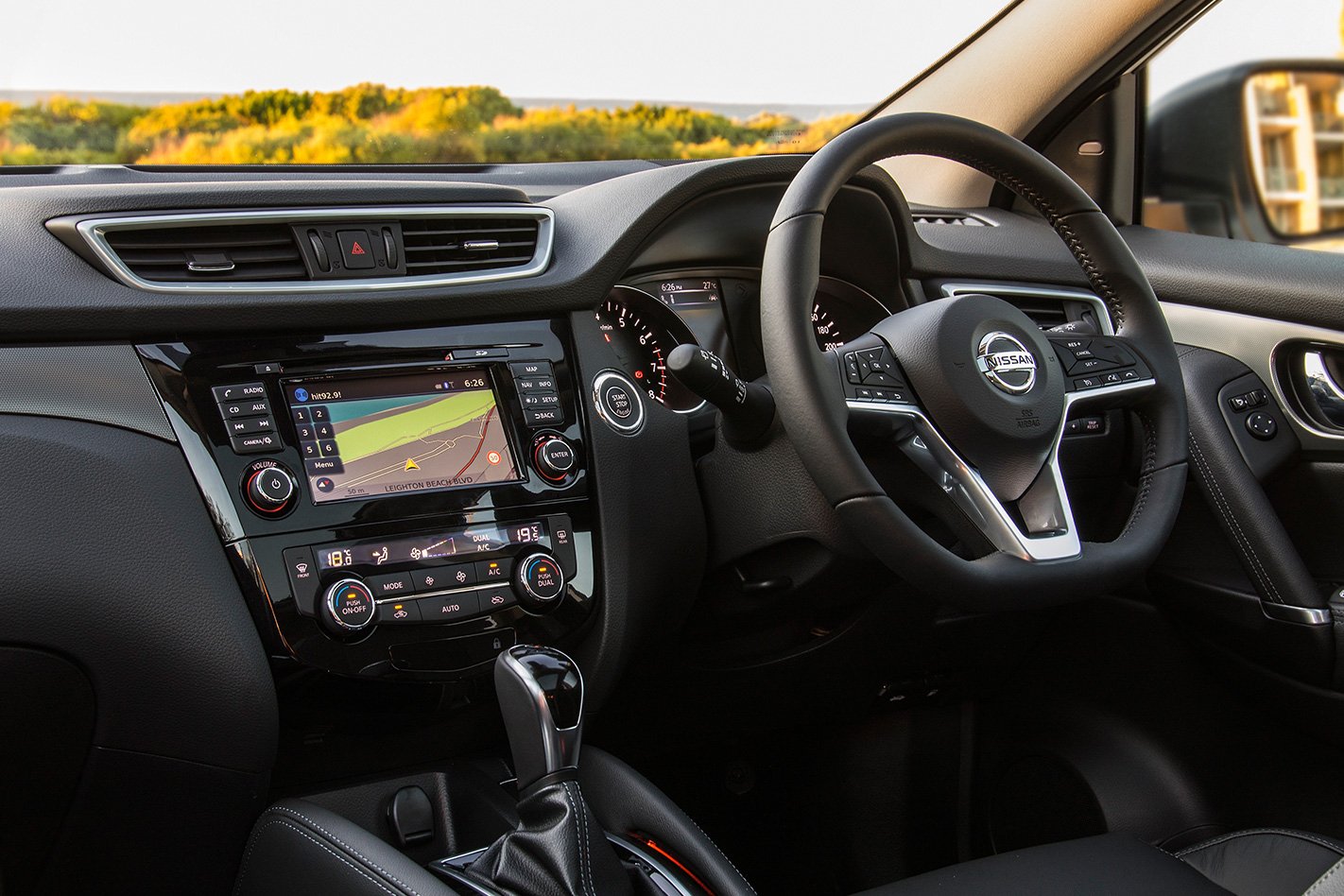
Improved materials around the centre console, higher quality upholstery and new front seats on ST-L models and above help arm the Qashqai against the inevitable onslaught of ever-fitter competitors. But what continues to set Nissan’s star SUV apart is its size. This in-betweener is far from perfect but it may be the best SUV your modern garage can take.
SPECS
Model: Nissan Qashqai N-TEC Engine: 1997CC 4cyl, dohc, 16v Max power: 106kW @ 6000rpm Max torque: 200Nm @ 4400rpm Transmission: CVT automatic Weight: 1429kg 0-100km/h: 11.0sec (estimated) Economy: 6.9L/100km (claimed) Price: $36,490 On sale: Now
THERE is no place for free hugs or touchy-feely nice guys in the world of SUVs in the USA. This is the country that invented road rage, so SUV styling needs to be ultra-macho; bluff, brutal, borderline military-spec. It needs to say: “Tough dude coming through; outta my way.”
And that’s just the women.
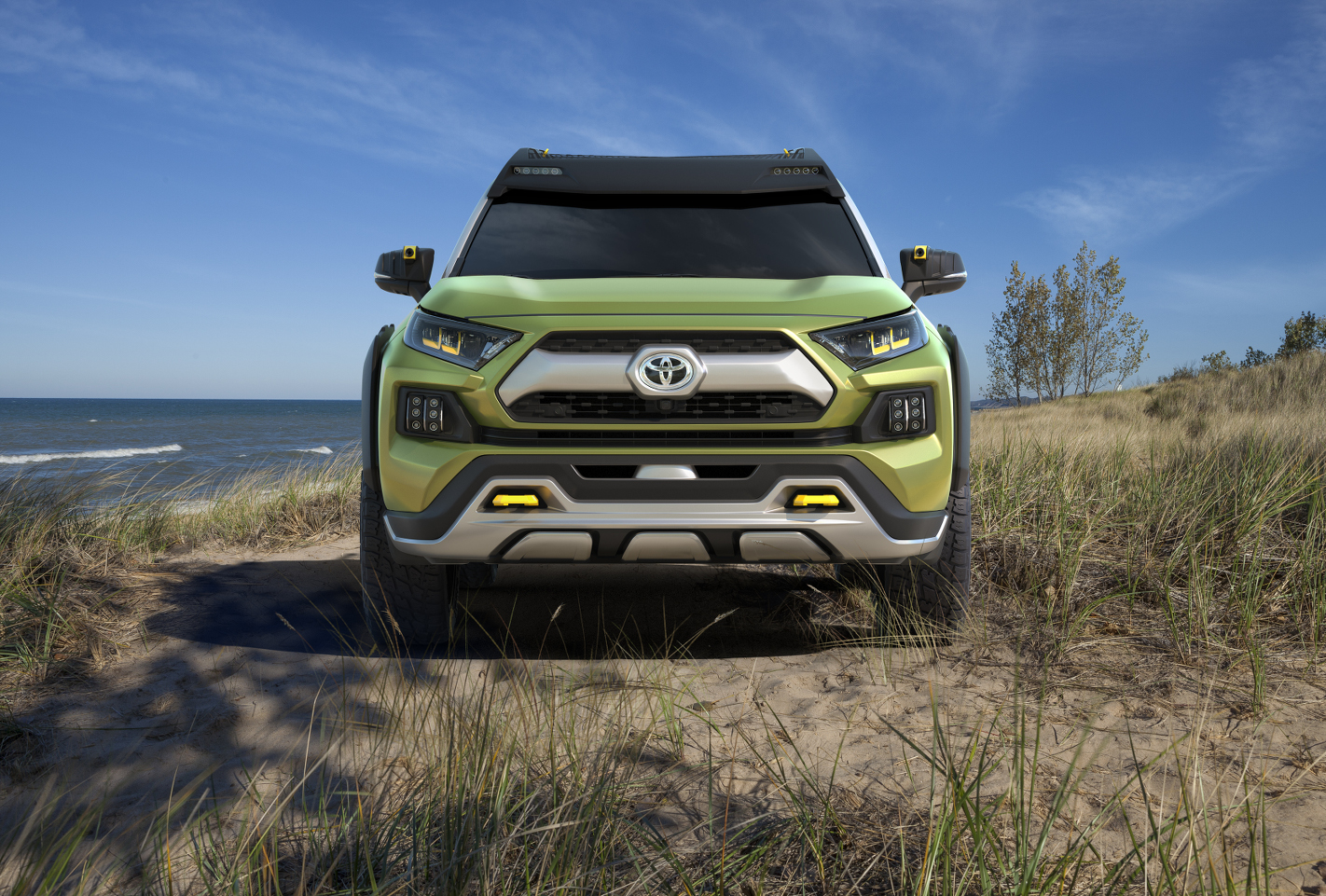
It’s the product of Toyota’s Calty design studio in Southern California, and according to Jack Hollis, vice-president and general manager of Toyota’s North American division, it’s sure as hell “not just a concept for concept’s sake”.
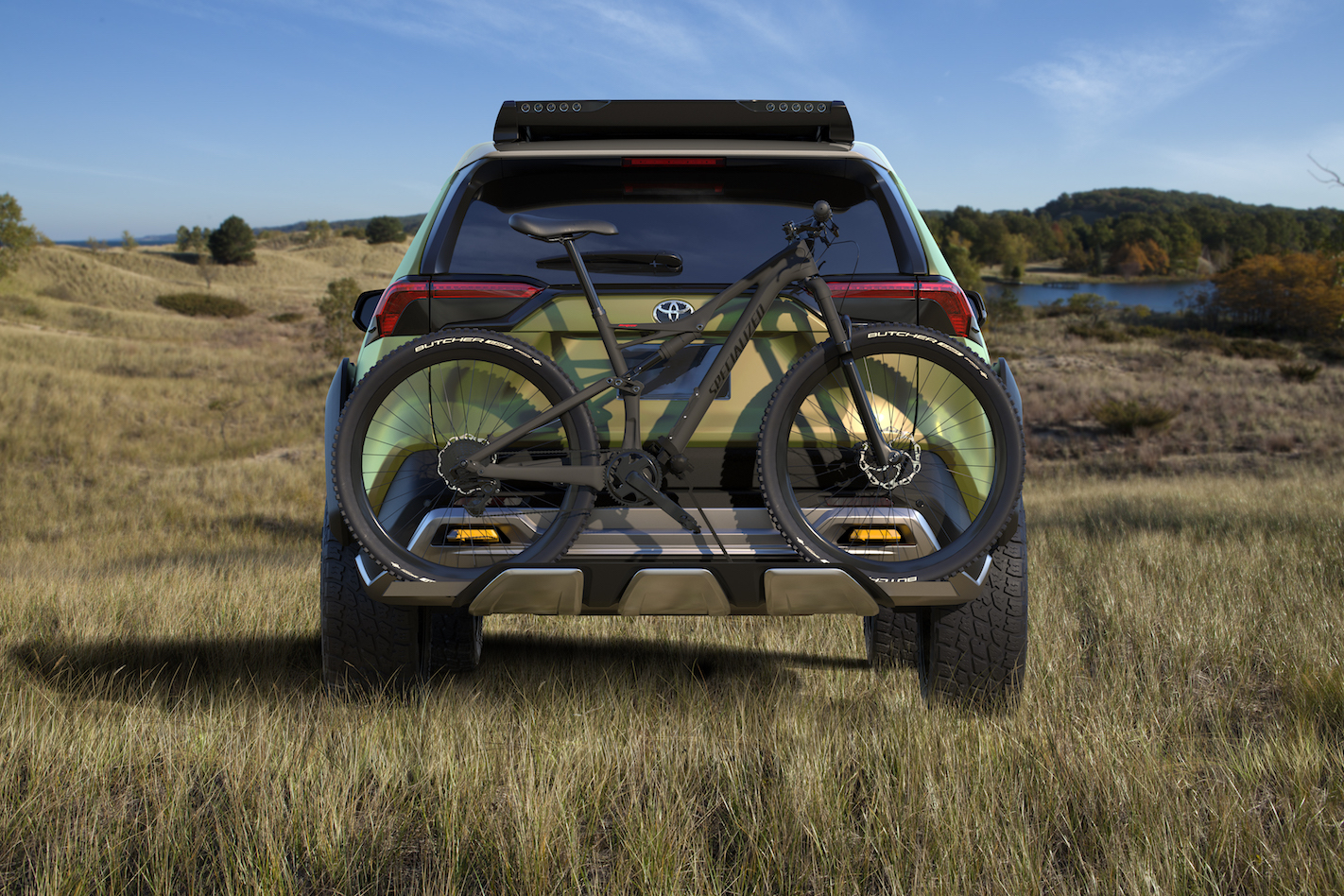
It would be built on Toyota’s TNGA platform that currently sits under the Prius hybrid hatch and CH-R compact SUV. Other cars to adopt the new hybrid and battery power-friendly platform include the now fully imported Toyota Camry. In terms of engines, think petrol V6 and a turbo-petrol four.
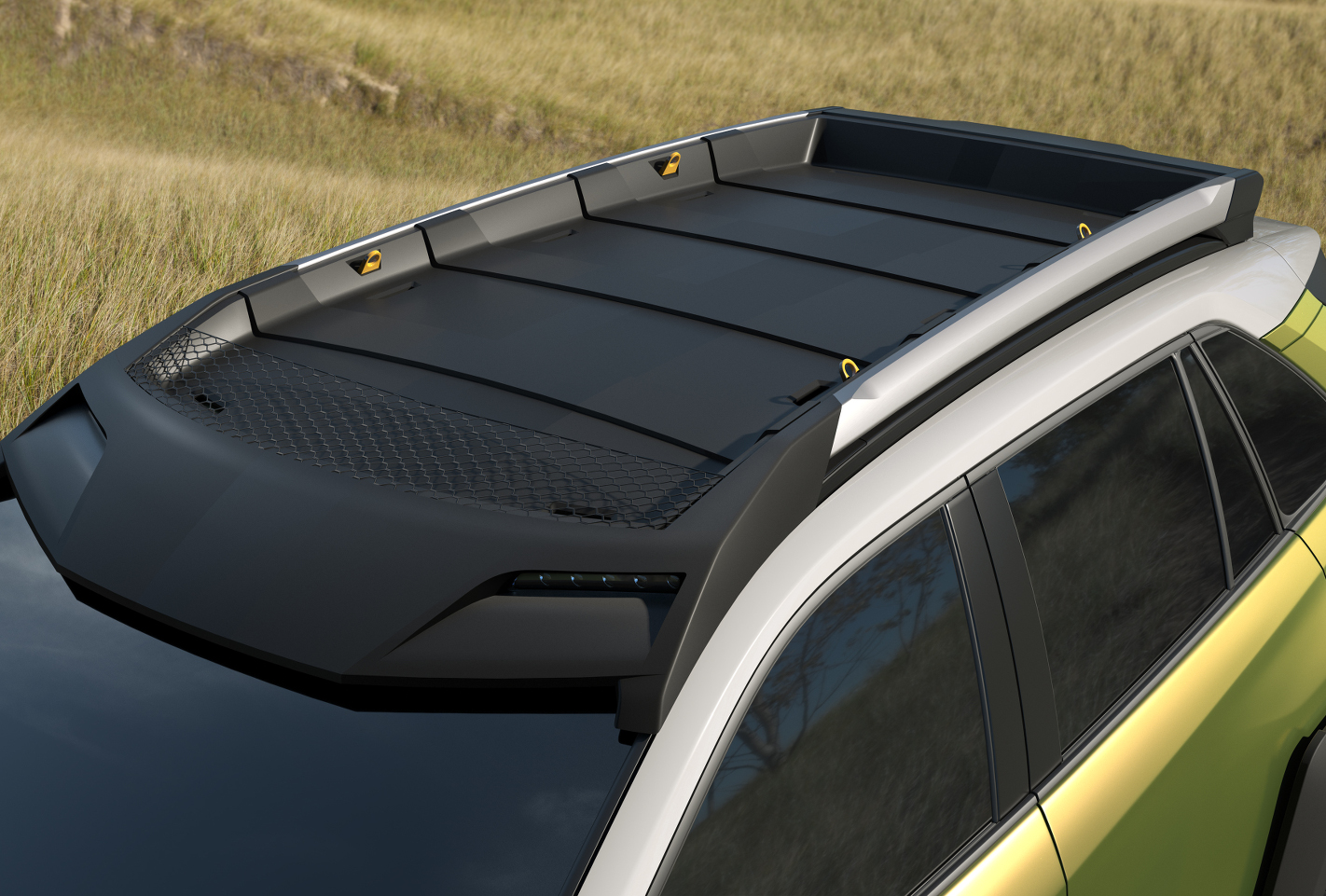
The exterior features an integrated roof rack system that looks, at first glance, like an extension of the turret, but actually neatly (and aerodynamically) conceals eye hooks and mounting points for bikes or a luggage pod. The rows of LEDs mounted in the forward-facing section of this can be illuminated separately to light up nocturnal park-up party times.
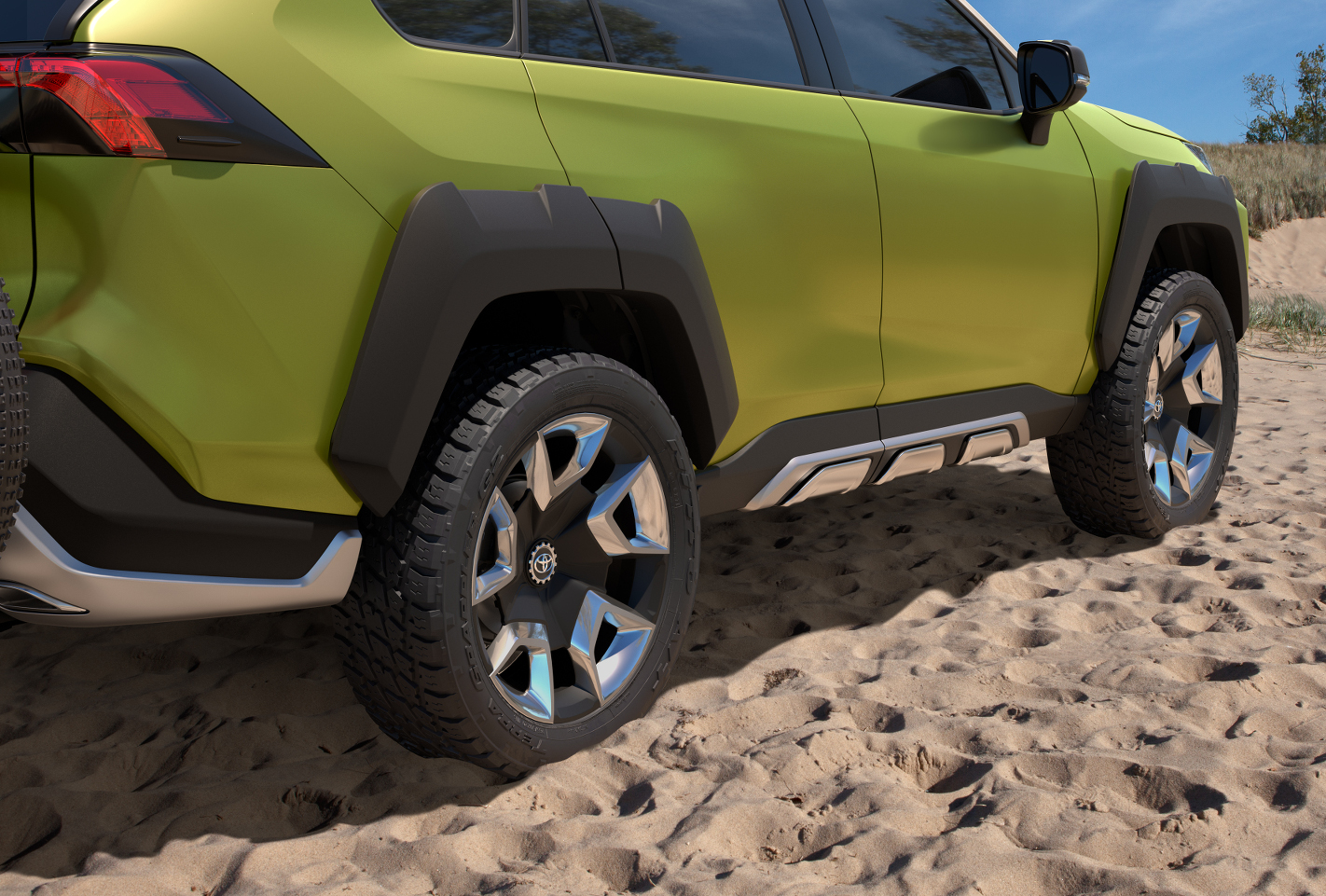
The question is where a production version would sit. Plenty of speculation centres around a RAV4 replacement, but we think it’s way more off-road ready, and Toyota’s own material talks of “a versatile torque-vectoring all-wheel-drive system with variable terrain-response settings, as well as four-wheel lock functionality.” Wheels asked Hollis if it could it fill the space left vacant by the the now defunct FJ Cruiser. “That was really a heritage-type vehicle, so I wouldn’t want to try and place this concept into that space.”
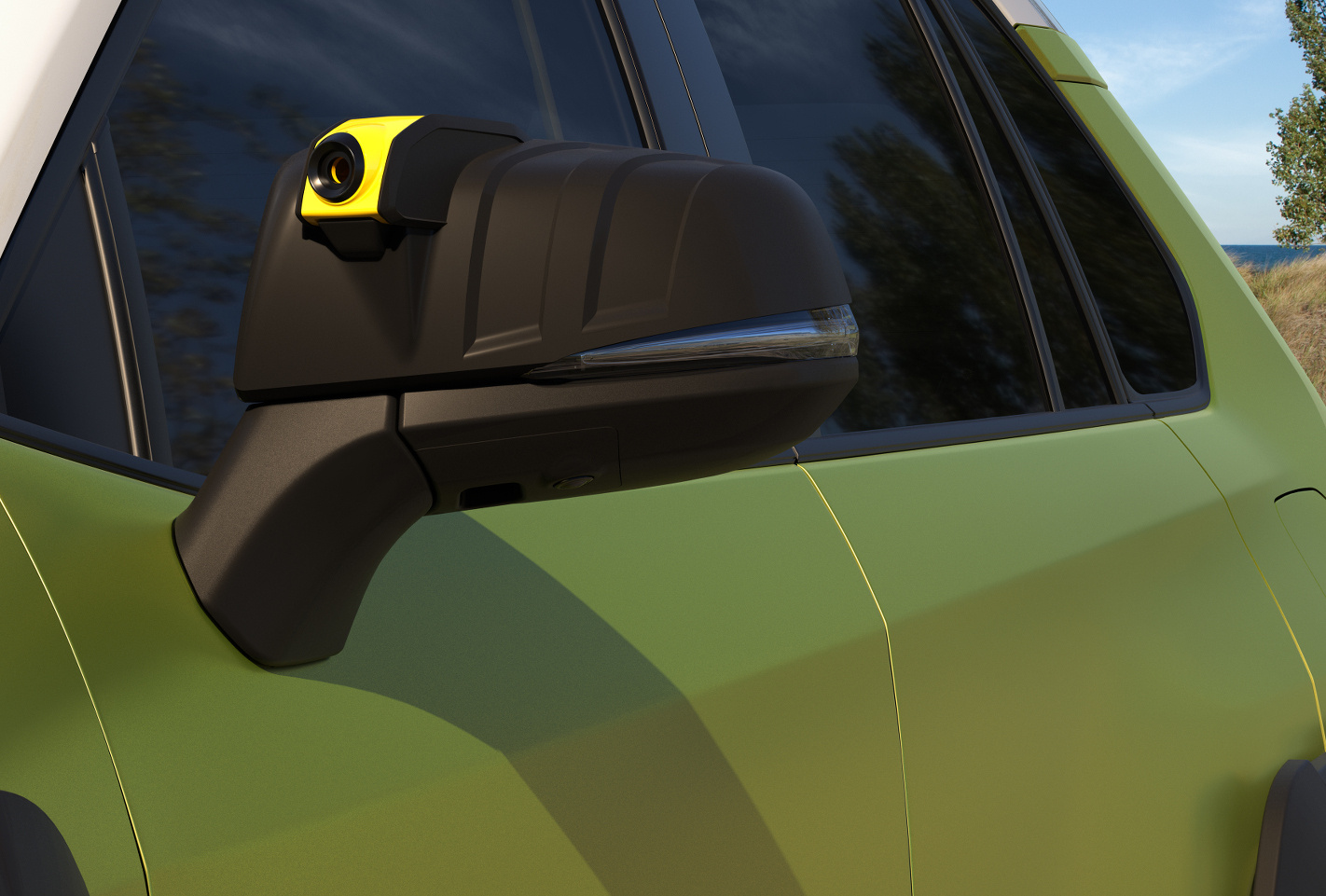
But if you really want to understand the target audience for the FT-AC, just take close look at the those cameras mounted in the exterior mirrors. They can detach so they can turn around and point at you-know-who. Teamed with the Wi-Fi hotspot, they allow you to stream your journey live, or capture footage for instant editing. And just because it’s pitch black outside doesn’t mean your vital social media updates need to stop. They also have an infra-red function for middle-of-the-night party times, all making the FT-AC a rolling selfie machine for the Instagram generation. Of course … was this ever in doubt?
Mitsubishi will add another weapon to its SUV arsenal and in the most lucrative small-to-mid sized segment, when the eagerly awaited Eclipse Cross goes on sale on the 22nd of December priced from $30,500.
It will join the line-up neatly slotted between the Mitsubishi ASX and Outlander SUV siblings but closest in size to the smallest model, measuring 50mm longer than the ASX, 28mm taller and the same width.
The initial line-up will offer the entry level LS (below), which gets two-wheel drive and a CVT automatic transmission as standard, while the other two variants wear the Exceed badge in a choice of either two- or four-wheel drive.
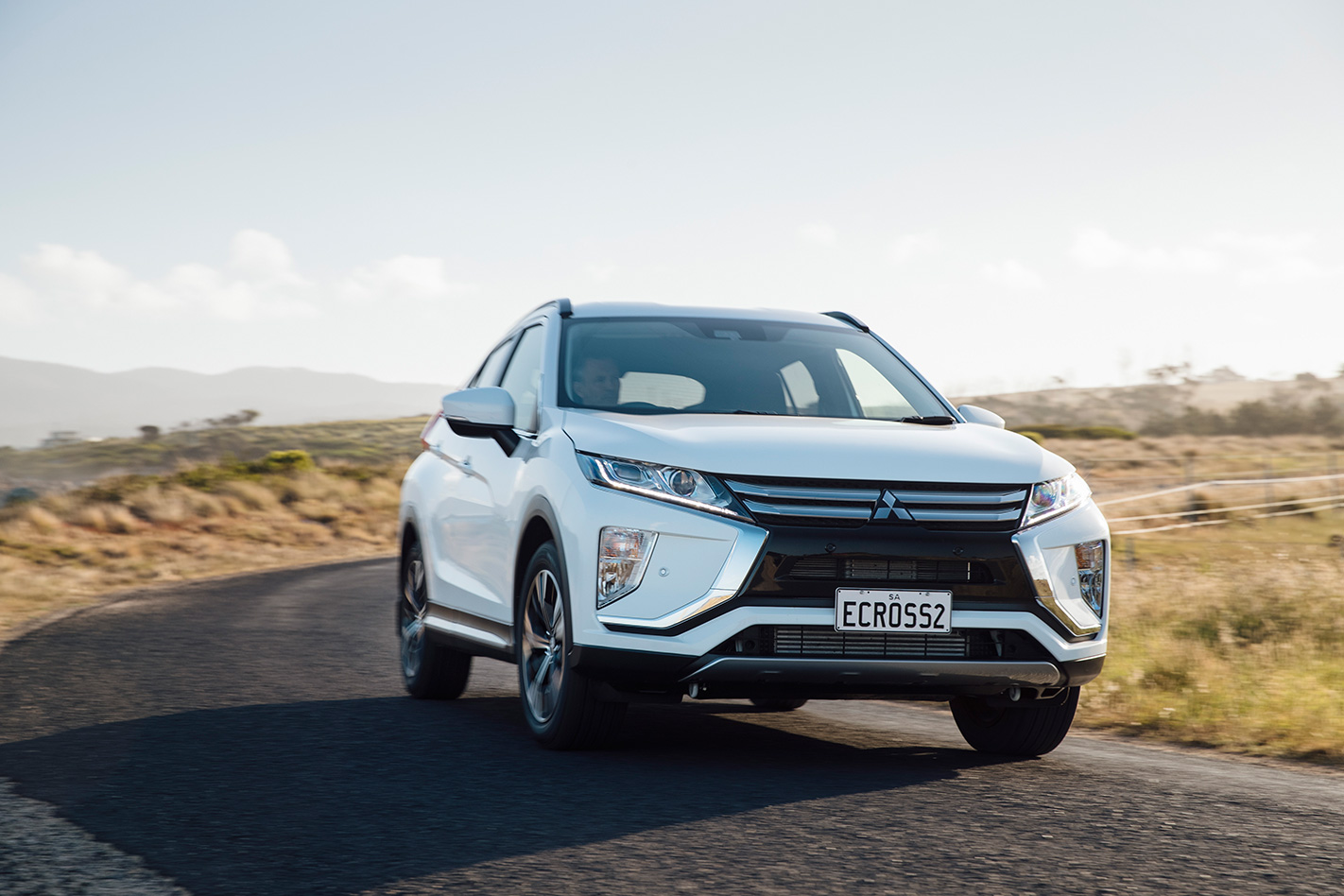
The Exceed front-driver takes care of the middle of the range priced from $36,000 while the top-of-the-line Exceed all-paw costs an extra $2500.
That pricing gives the ASX room to keep attracting a strong fan-club with a sharp $25,000 opening price, and an audience with a smaller budget.
Customers that can’t quite stretch to the current base price may not have to be disappointed, with a fourth variant on the way at a point to be confirmed, offering an even more affordable version badged ES. Exact pricing and equipment is yet be confirmed.
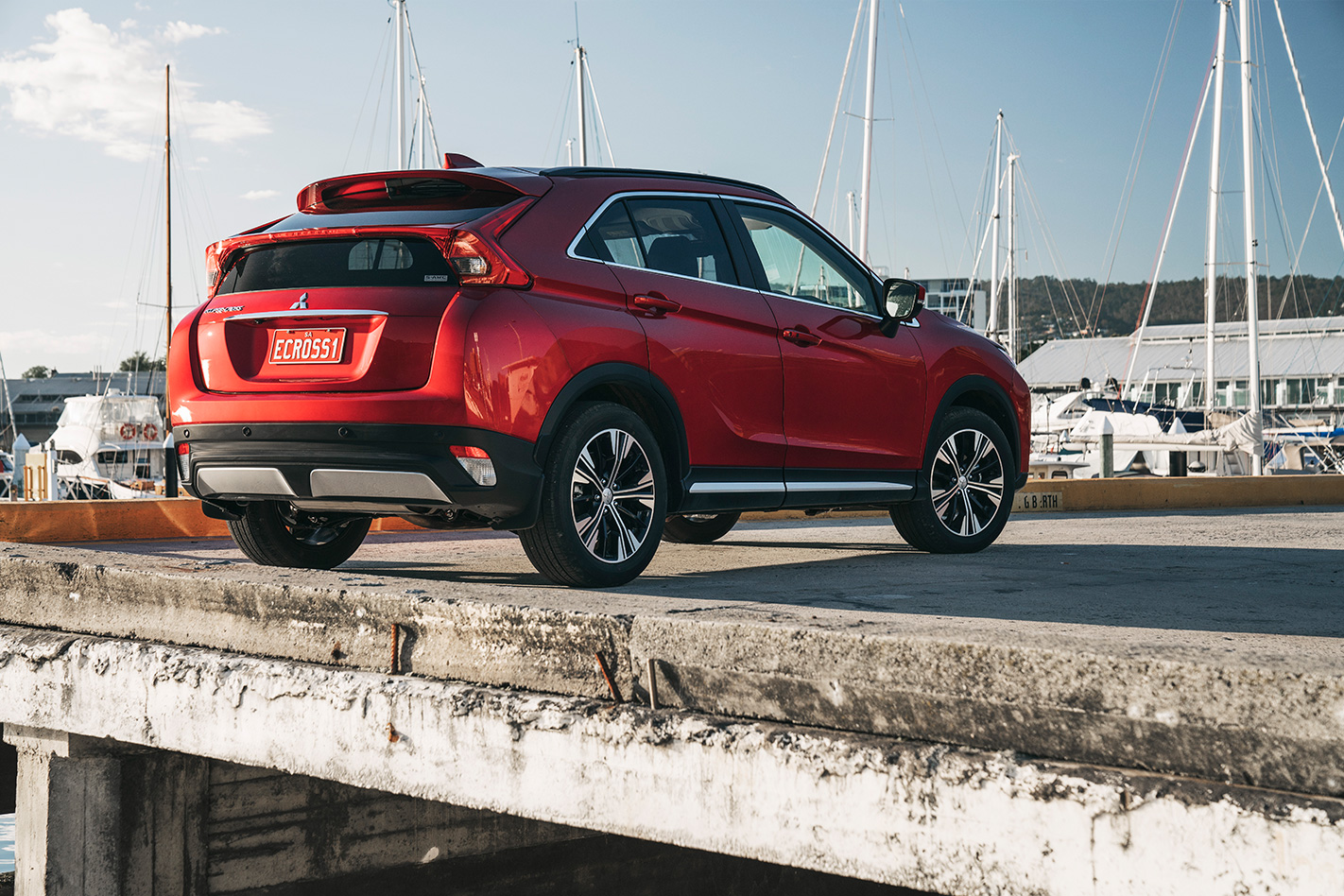
Mitsubishi made the decision to introduce the three more highly specced Eclipse Cross options in the name of expediency, rather than delay the model’s launch Down Under until the ES could join them.
According to the Japanese car maker, 15,000 potential customers have lodged expressions of interest in the Eclipse Cross and Mitsubishi is not making them wait a moment longer than necessary.
All versions are powered by a new 1.5-litre turbocharged four-cylinder petrol engine that produces 110kW and 250Nm of torque, and equipped with a CVT transmission, which has been programmed to simulate eight ratios when in paddle-shift manual mode. Two-wheel drive versions use 7.3 litres of fuel per 100km while the heavier four-wheel drive Eclipse Cross uses 7.7L/100km.
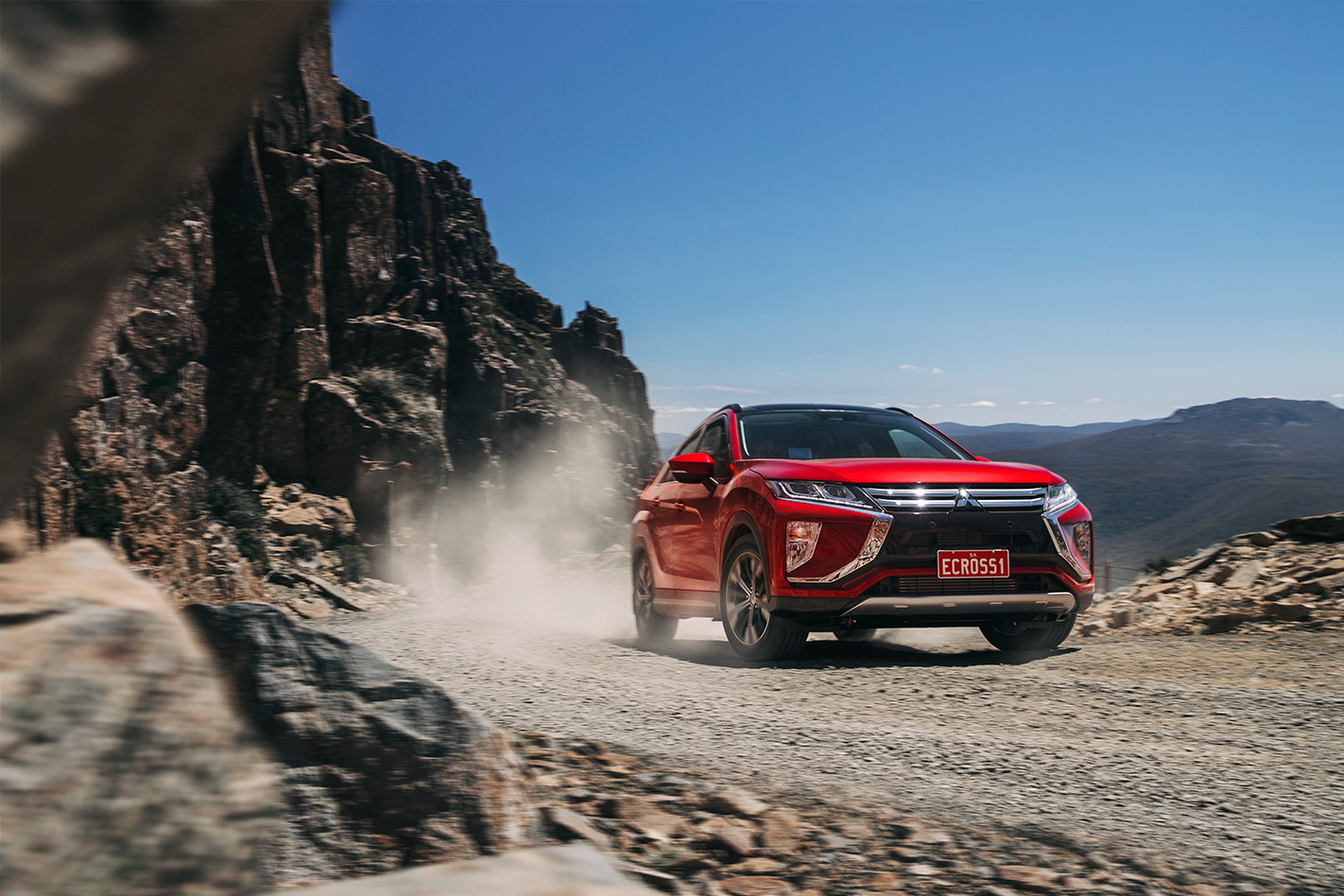
Hook up a braked trailer and the Eclipse Cross will tow up to 1600kg while maximum unbraked towing is rated at 750kg.
When ordered in top-shelf AWD variety, the Eclipse Cross is equipped with the latest version of Mitsubishi’s Super All-Wheel Control, which allows the more adventurous owner to go further with three driving modes: Auto, Snow and Gravel.
Despite its off-road promise, Mitsubishi says the new model has been designed to also deliver on-road enjoyment with its stiff and lightweight shell, large brakes, front MacPherson suspension and multi-link rear set-up all engineered for maximum driver enjoyment.
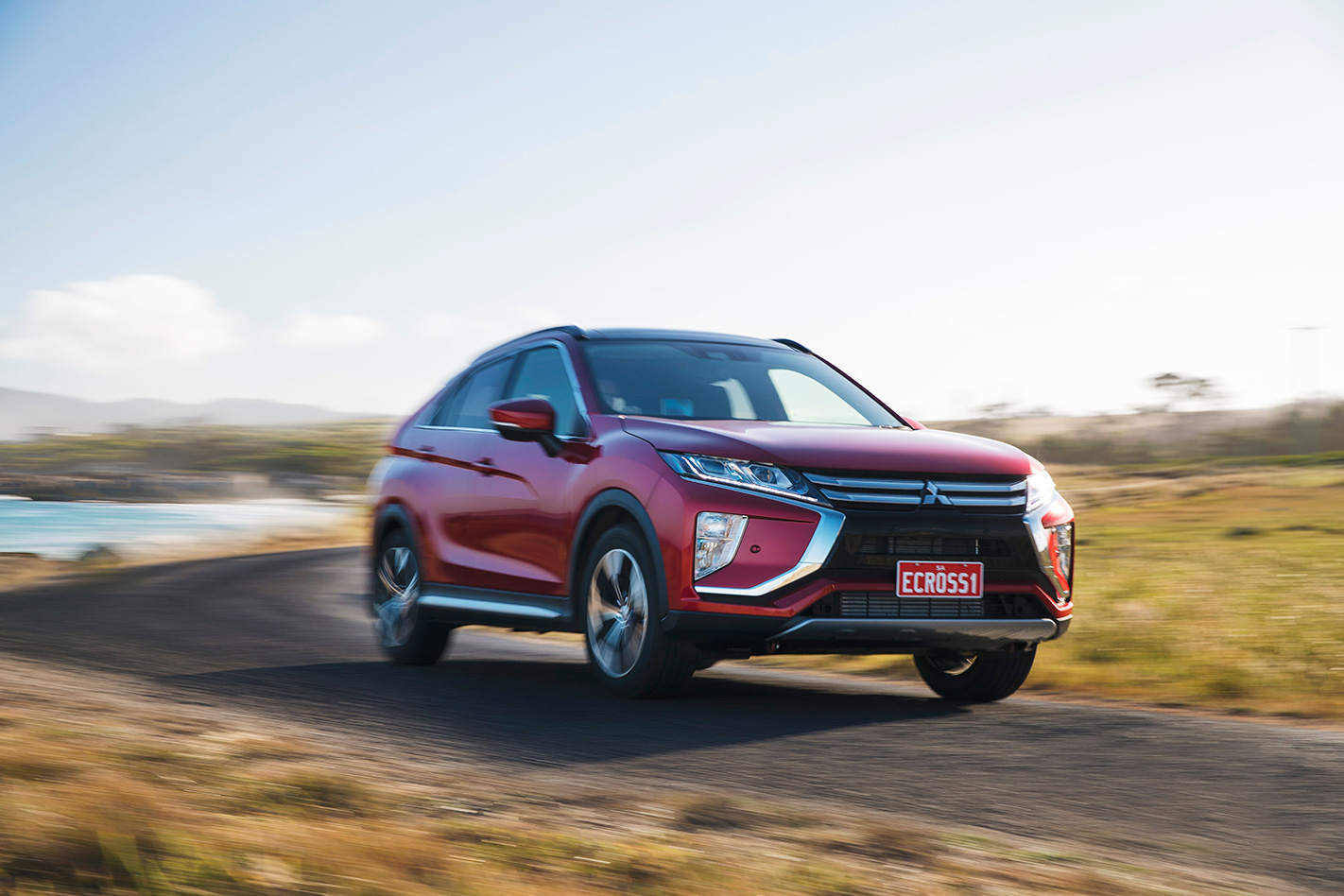
On the inside, the 341-litre boot can be expanded to 448L thanks to a sliding and reclining second row of seats, which can move 200mm for either maximum load capacity or rear-seat occupant comfort. For maximum cargo space of more than 1000 litres the 60:40-split seatback folds flat.
Rear doors open to 75-degrees to aid the loading of children and things, while all occupants will appreciate clever touches such as sill garnishes on the full height doors that prevent passengers getting muddy legs when exiting after an off-road adventure.
Full smartphone mirroring through the standard 7.0-inch touchscreen is available for both Android Auto and Apple CarPlay, although only Apple products can be navigated additionally through a separate Touchpad Controller in the centre console.
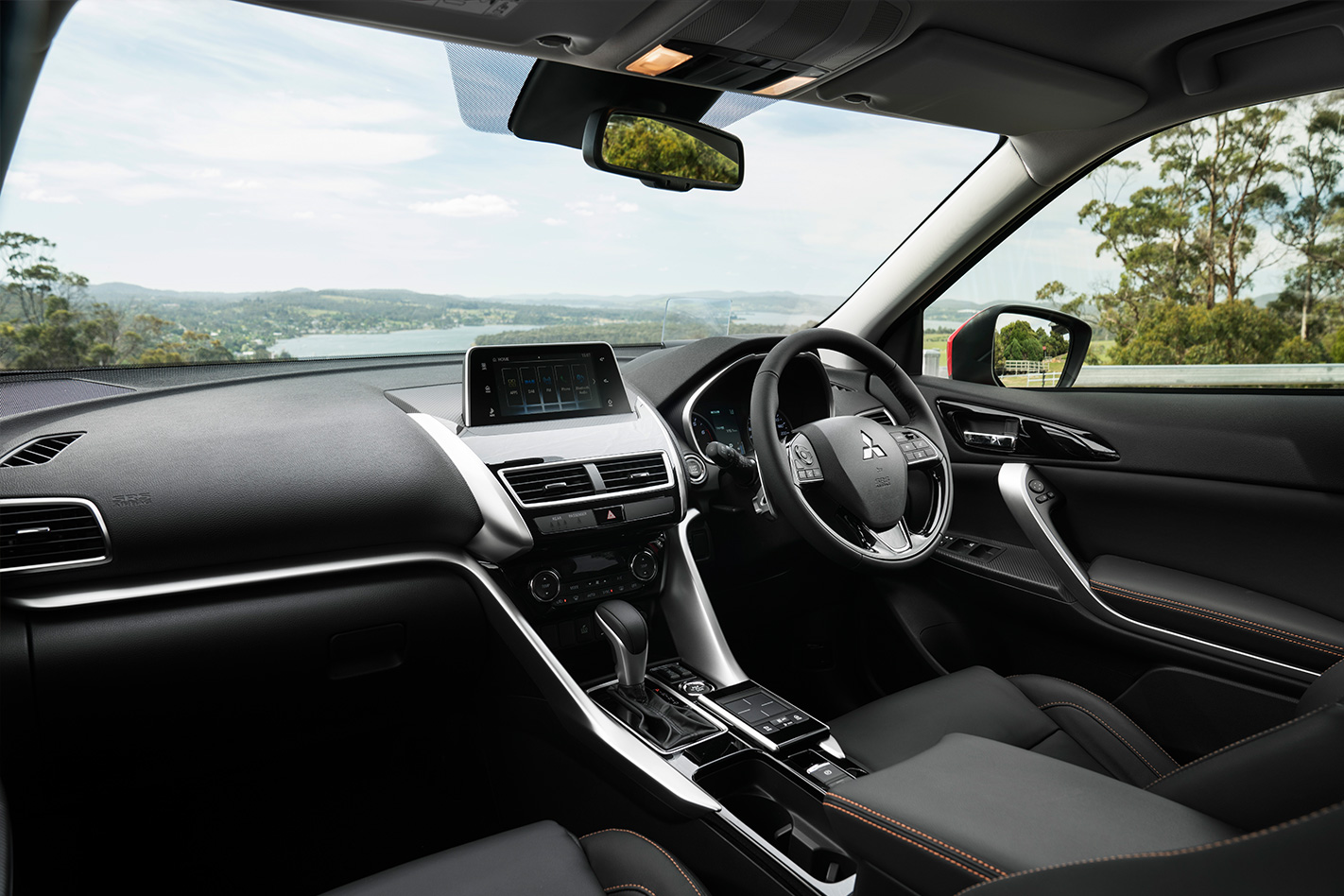
Digital Audio Broadcast plus (DAB+) radio is also standard for all, along with navigation, keyless entry, a digital central information display nestled between the analogue speedometer and tachometer gauges.
Step up to the Exceed and a head-up display is also included for displaying speed, gear, navigation and vehicle warning information to the driver without having to look away from the road.
Standard safety and driver assistance kit features heavily in the new Eclipse Cross. Seven airbags, forward collision mitigation, lane-departure warning, automatic high-beam headlights, active cruise control, hill-hold and reverse camera are included for all versions.
Stretch to the Exceed and Mitsubishi throws in blind-spot monitoring, 360-degree maneuvering camera, rear cross-traffic alert and a mis-acceleration mitigation function, which monitors nearby objects at low speed and can prevent a collision caused by the pressing of the accelerator instead of the brake.
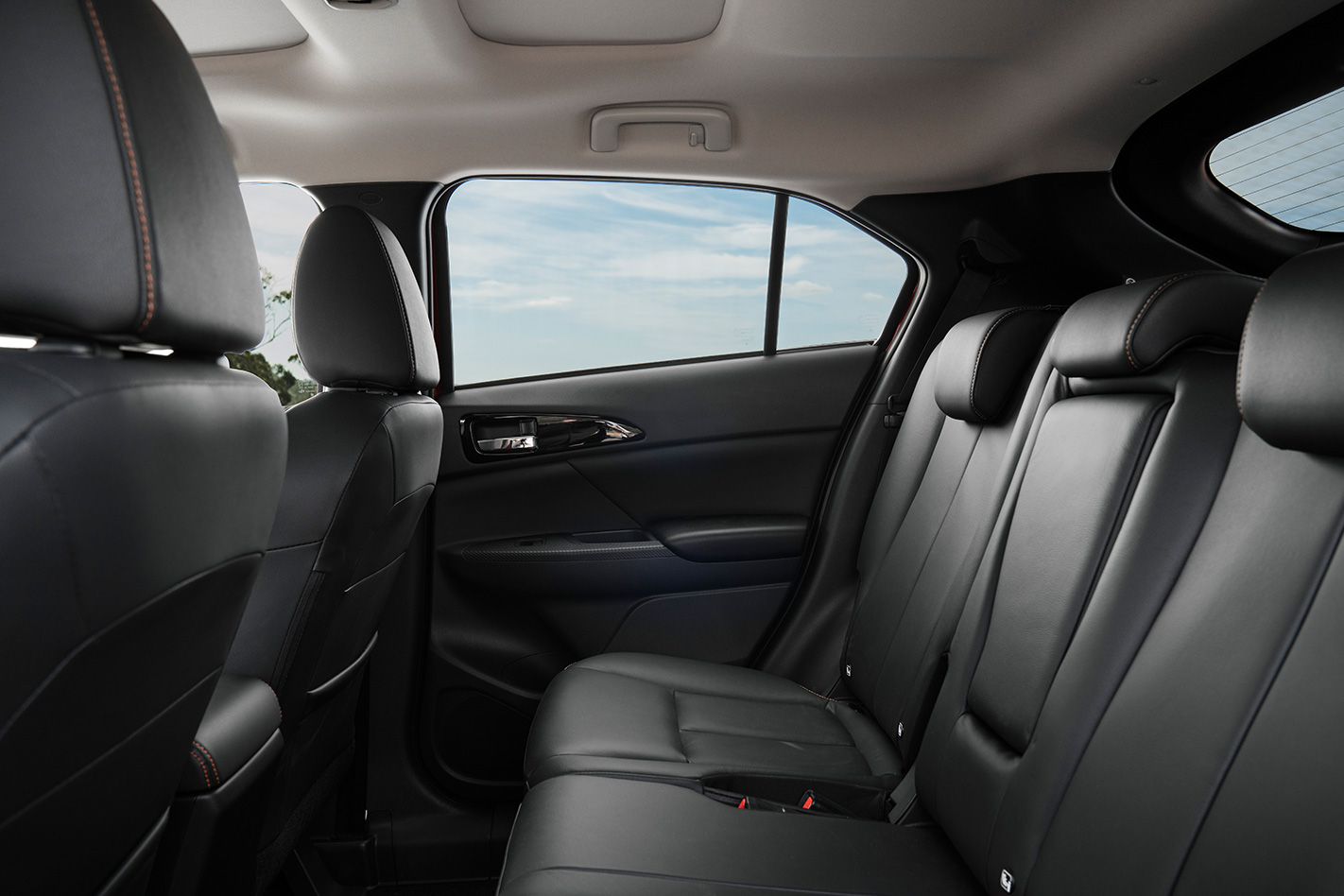
Other Exceed highlights include part leather seats with heating for the front row and electric adjustment for the driver, LED headlights, dual-zone air conditioning, separate sun-roofs for front and rear passengers and a self-dimming rear-view mirror.
A particular red paint colour that uses a special application technique is a new addition to the Mitsubishi line-up. While regular metallic paint consists of colour and metal flake suspended in the same coat, Brilliant Red uses a base layer of plain silver metallic covered by a first coat of clear, followed by a semi-transparent red coat and then finished with a final top coat of clear. The hero colour offers a deeper lustre and finer finish, says Mitsubishi.
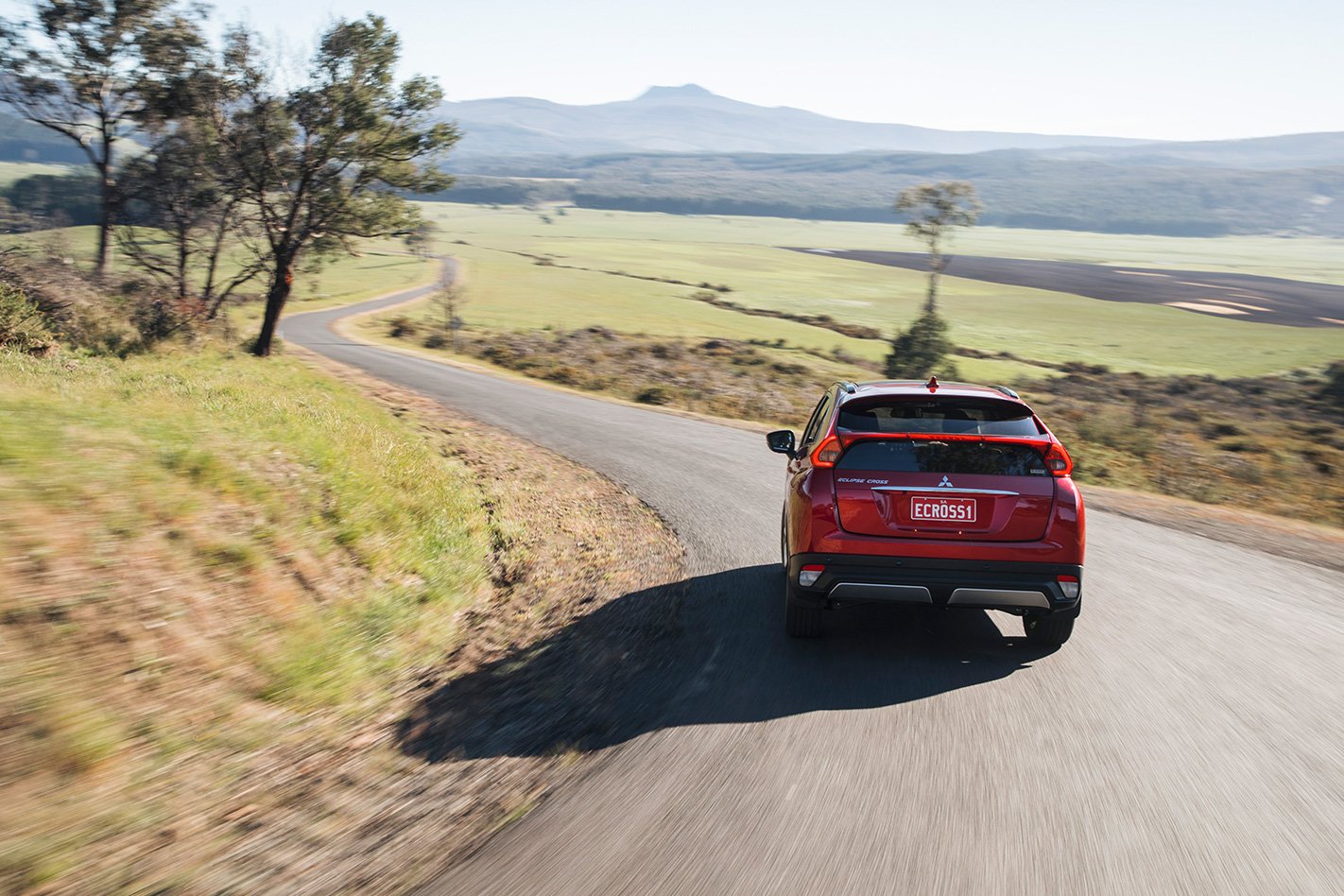
Evolving from the XR PHEV-II concept, the newest member of the Mitsubishi line-up brings a trendy new coupe-style roofline to an otherwise conventional-looking family of high-riders, and a number of new styling features including the split dual rear screens, rear lights that fall into the lower bumper area and wedge-shaped belt line.
Although there is still plenty of family resemblance derived from the Dynamic Shield design language to tie the new Eclipse Cross to its stablemates.
