Features

Gallery 1
Plenty of folks have done what they thought was the smart thing: they snapped up a VF Series 2 Commodore SS or SS-V and hid it away, figuring the last SS Commodore will have to be worth money in the not-too-distant.
Thing is, they might have jumped the gun. See, taking a leaf out of Ford’s book, Holden has saved a handful of special, final-edition models till the last gasp of local production. You can order them from early 2017, but you won’t take delivery until the middle of the year.
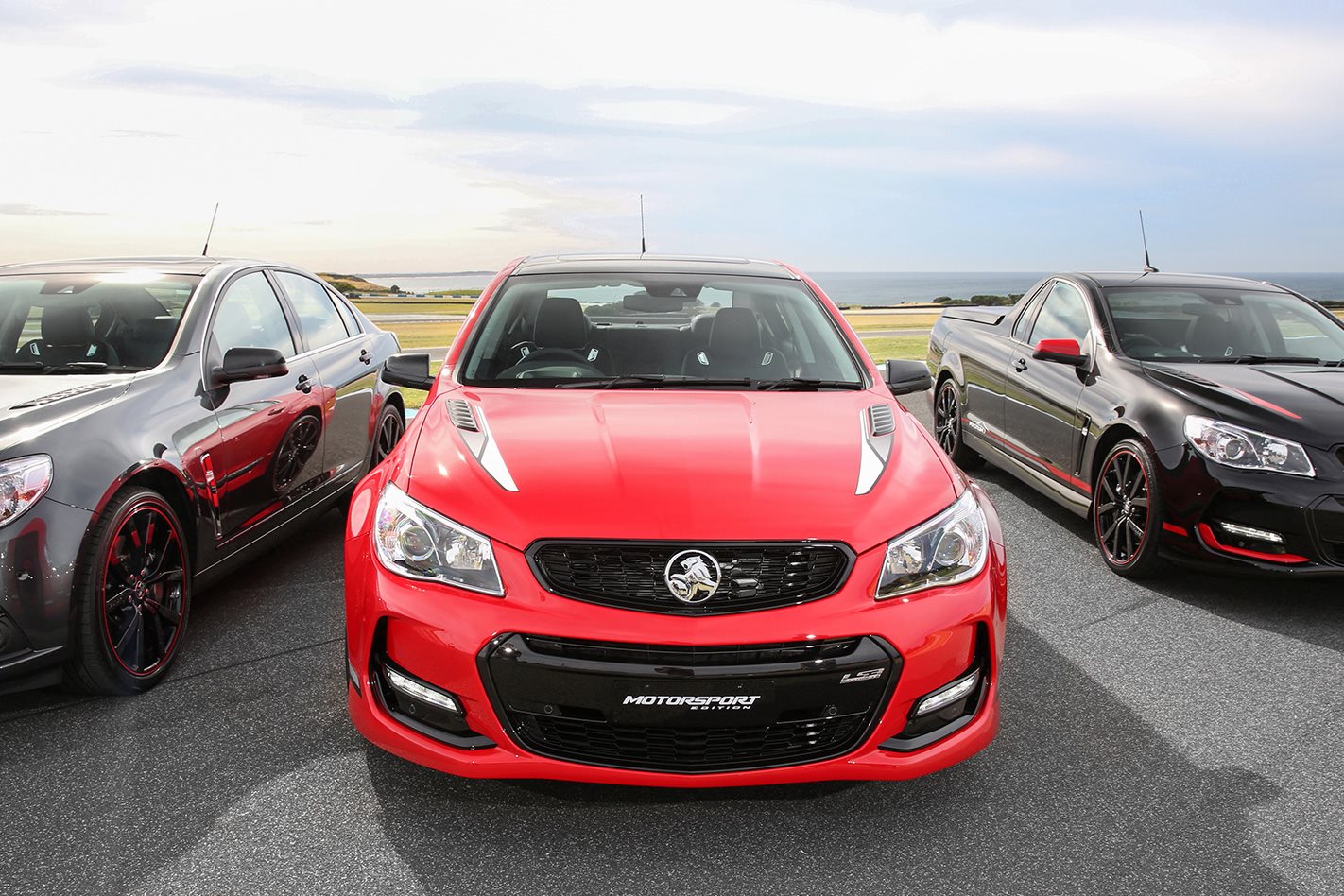
And, if anything, they’re going to be even more collectible than those last SS and SS-Vs. How come? Because – like the Falcon XR8 and XR6T Sprints – the last performance Commodore Special Editions (as Holden is calling them) will be just that – a bit special. Or a lot special. Depends on how you look at it.
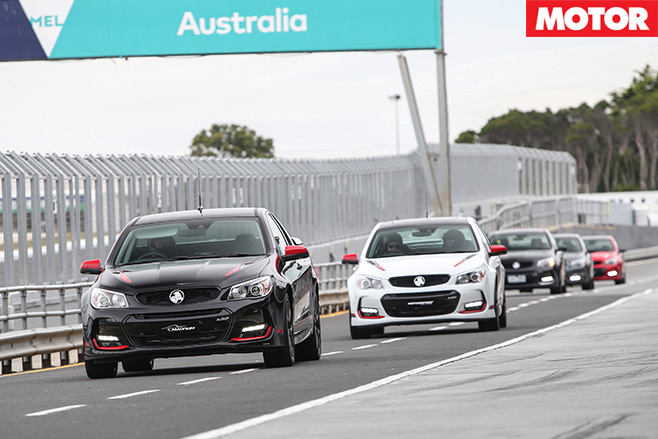
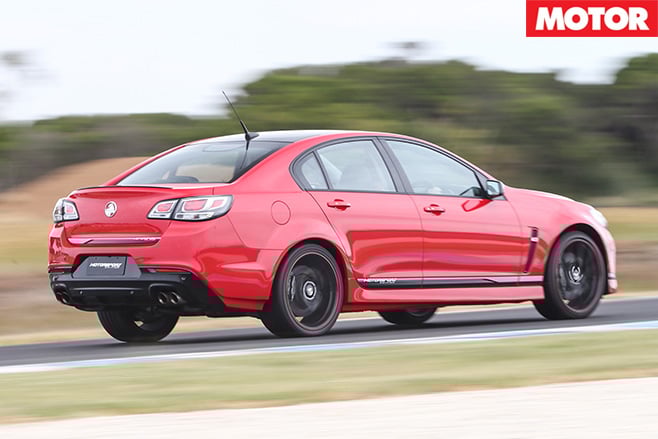
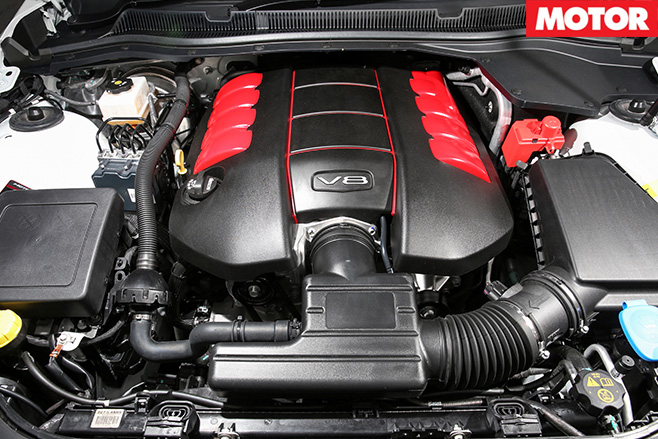
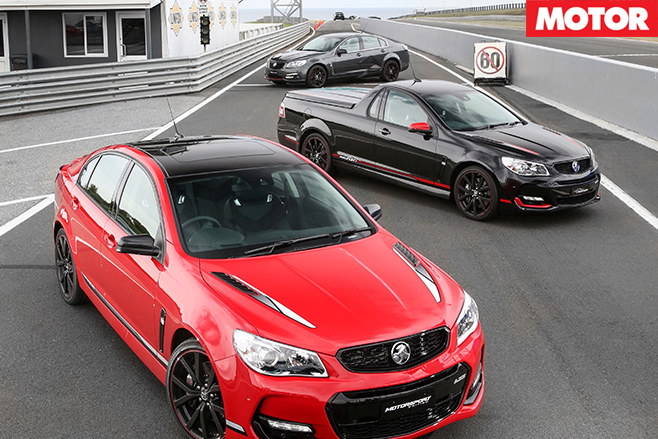
The first model is called the Motorsport Edition. It’s based on an SS-V Redline, which means it gets the big Brembos and the 304kW 6.2-litre engine that we’ve been raving about since we first drove it a year or so ago. On top of that, it gets Magnetic Ride Control from HSV with three distinct damper settings.
The Tour setting amounts to a damper consistent with the standard Commodore FE2 set-up, while flipping the switch to Sport gets you the equivalent of FE3. Turn the knob all the way to Performance and it’s tighter again while the Track setting is the Performance damper rate but with ESP disabled. The bi-modal exhaust valve, steering assistance and throttle sensitivity are also all linked to the driver-mode switch.
But probably the biggest news is the addition of a driveline cooling package that includes engine-oil and transmission-oil cooler units and it’s this fitment that takes the Holden to GM’s Level Three track-readiness rating.
They’re lifted from the Camaro ZL1, and if the external coolers can keep GM’s 11-second monster cool, they should work here, too. Other additions include a black roof, shift paddles with the auto and 20-inch lightweight alloys. A pair of specific (and heated) front seats are also part of the deal.
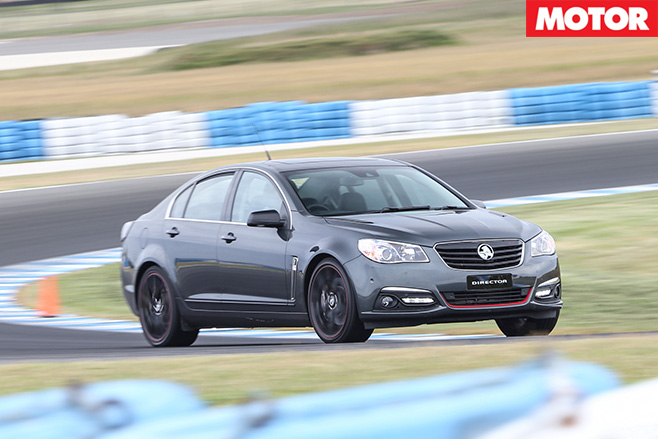
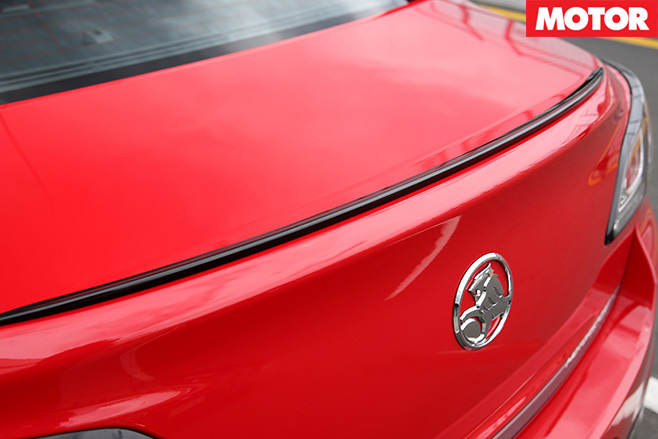
Both the Motorsport and Director come with a fairly subtle lip spoiler for the bootlid, but there’s a proper wing optional on the Motorsport. The Director also picks up the SS’s bonnet vents.
The third member of this unholy trinity is the Magnum (yet another nod to Brock’s famous models) Ute, based on the SS-V Redline Ute. Because of the architecture involved, the Magnum misses out on the Magnetic Ride gubbins, but it does pick up the equivalent of an FE3 tune for its rear-end.
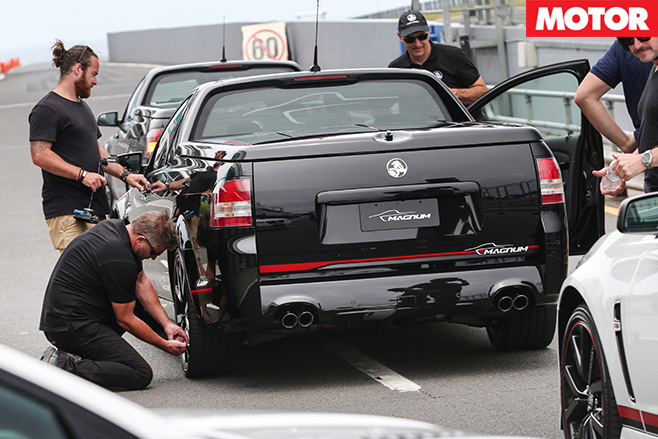
Meanwhile, the Magnum picks up the cross-drilled rotors, powertrain cooling kit, upgraded seats (from a Calais V) a hard tonneau, and those 20-inchers.
Now, you might be sitting there thinking that the changes Holden has carried out don’t amount to much considering Ford went to the trouble of actually turning up the wick on its own, XR8 Sprint, equivalent of saving-the-best-till-last. But that would be ignoring the fact that your basic Commodore SS-V Redline or Calais V was already so far ahead of the bread-and-butter XR6 and XR8. And let’s not forget that Holden had to resist the urge to go too crazy and trip over anything HSV might have had in the pipeline, too.
So I skipped Sport even (which at least opens the exhaust valve) and went straight for Performance. And from there, Track is but a couple of taps of the mode selector away with the added benefit that you’ve also disabled ESP. For once, my family can be proud of me.
To be honest, there’s not a whole lot of difference in the way the Motorsport and Director drive, provided your Motorsport is running the six-speed slushbox. True, the Director lacks that extra stiff rear-cradle bush, but Holden’s lead development engineer for this project, Dan Pinnuck, admits that you’d have to be “doing something fairly extreme to notice the difference”.
Our pick would be the Motorsport manual, purely because being able to pluck gears at redline is (a) totally satisfying and (b) gives you that little edge in outright control by not having to second-guess the tranny. That said, the auto does obey your commands via the paddles, but it’s not always quite as instantaneous as you might like. But whichever transmission you opt for, you’ll be amazed at how precise and tight such a big, heavy car can feel. The move to add the driveline coolers makes sense, too, because it’s now that you realise that these are actually decent track-day cars.
If anything, the Magnum Ute is even more of a surprise-and-delight deal. Not that it’s going to be any faster than the other two, but simply that it’s probably come further in terms of its track-readiness. The changes to the rear end to soften it have worked wonders and there’s now even more power-down and ability to launch itself out of a turn.
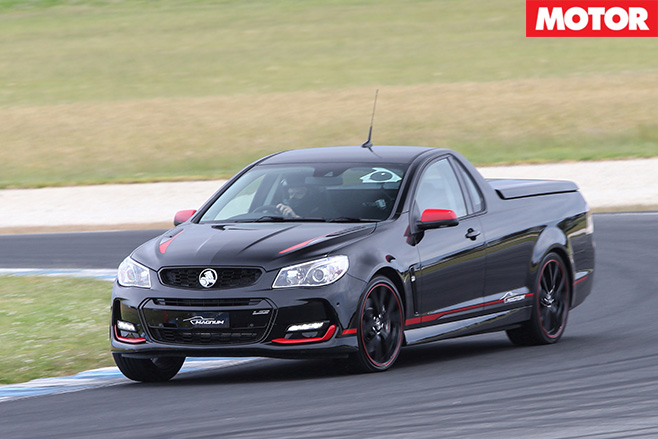
And here’s how you know the driveline cooling work has been worthwhile: we caned these cars around Phillip Island for about three hours in 30-something ambient and high humidity. And despite having no cool-down between stints, not a single car spat a drop of coolant, nor did a single tranny get hot enough to prompt the ECU into limp-home made.
So what’s the price of all this specialness? Well, both the Motorsport in automatic form and the Director (which is auto only) are $63,990, which represents a hike over the auto SS-V Redline and the Calais-V at $56,690 and $55,990 respectively. The Motorsport Edition with the manual saves you a couple of grand ($61,790). But you are getting a fair bit more hardware, including that US-spec cooling system that suddenly makes these cars track-realities, if that’s your thing.
Holden’s general manager for product marketing, Ben Lasry put it in simple terms: “Our goal was to build the best Commodore we’ve ever built. This is one for the enthusiasts.” The significance of these cars is not lost on Dan Pinnuck, either: “These are cars that show our appreciation of what [the Commodore] represents.” I’m not in a position to argue those points.
The other thing you can’t argue with is exclusivity. And with just 1200 examples of the Motorsport Edition (plus 151 for New Zealand) 360 Directors (51) and just 240 Magnums (51) these things won’t be common. The real danger, of course, is that they’ll be so utterly collectible, they’ll never be seen on the streets. Which would be a crying shame but, at the same time, some kind of mournful metaphor for the whole local car-making shebang.
1
SS-V REDLINE MOTORSPORT
Body: 4-door, 5-seat sedan drive: rear-wheel engine: 6162cc V8, OHC, 16v bore/stroke: 103.1 x 91.4mm compression: 10.7:1 power: 304kW @ 6000rpm torque: 570Nm @ 4400rpm power/weight: 169kW/tonne transmission: 6-speed manual weight: 1793kg Front suspension: struts, coil springs, anti-roll bar Rear suspension: multi-links, coil springs, anti-roll bar L/W/H: 4964/1898/1471mm Wheelbase: 2915mm Tracks: 1593/1590mm (f/r) Steering: electrically-assisted rack-and-pinion Front brakes: 355mm ventilated discs, 4-piston calipers Rear brakes: 360mm ventilated discs, single-piston calipers Wheels: 20 x 8.5-inch (f); 20 x 9.5-inch (r) Tyres: 255/35 ZR20 (f); 275/35 ZR20 (r) Bridgestone Potenza Price as tested: $61,790 Pros: Worthwhile upgrades; collectibility Cons: Bowing out when it’s better than ever Star Rating: 4.5
Follow WhichCar/Wheels on Google
Click the button below to make WhichCar by Wheels a preferred source for your news.