
What stands out?
The Volkswagen Passat is an impressively refined medium car that transcends its price bracket with luxury-brand levels of comfort, finish, appearance and features. It’s very roomy, in the cabin and in the boot, and yet it feels small and sporty to drive. Auto emergency braking is standard.
What might bug me?
Audiophiles might lament the absence of a high-end stereo system. While all the hardware is there, the sound quality is lacking.Drivers born and bred on traditional automatic gearboxes may need to approach the Passat’s DSG dual-clutch gearbox with an open mind. The DSG transmission is essentially an automated manual gearbox – albeit a highly sophisticated one – and sometimes it won’t match the smoothness of a conventional automatic when starting from rest.
What body styles are there?
A four-door sedan and a five-door wagon.(The Passat Alltrack, an all-wheel drive wagon that rides high on taller suspension, is not covered in this review.)The Volkswagen Passat is front-wheel drive and is classed as a medium-sized car, lower priced.
What features do all Passats have?
Cruise control, and a leather-rimmed steering wheel. Satellite navigation, which is displayed on a colour touchscreen (6.5-inch on the least costly Passat, the 132 TSI, and 8.0-inch on the others).Apple CarPlay, Android Auto and MirrorLink. (If you connect your Apple or Android phone via a USB plug in the centre console, many of its apps – including mapping and music – are mirrored on the touchscreen and can be controlled from there.)Bluetooth phone connectivity and audio streaming. A CD player, two SD card slots and eight speakers.A driver’s seat that’s power adjustable at least for backrest angle and lower-back support. (On the least costly Passat, the 132 TSI, the seat is manually adjustable for cushion tilt, depth and height).Three-zone climate control, which allows the driver, front-seat passenger and rear passengers to set temperatures independently. Dedicated vents for rear passengers. Windows tinted to reduce sun penetration. A chillable glovebox.Windscreen wipers that operate automatically when it rains, and washers with heated jets. Headlamps that switch on automatically when it’s dark. Daytime running lights, which help other drivers see you, and long-lasting LED tail-lights.A rear-view camera with multi-angle views, and parking sensors front and rear.Aluminium alloy wheels (17-inch diameter on the 132 TSI), with a full-size alloy spare wheel.Electronic stability control, which can help you maintain control on a slippery surface. All new cars must have this feature.Nine airbags. Automatic emergency braking in the form of Volkswagen’s Front Assist with City EB. A fatigue alert. (For the placement of airbags, and for more on the Passat’s safety systems, please open the Safety section below.)The Passat is covered by Volkswagen’s three-year, unlimited-distance warranty.
Which engine uses least fuel, and why wouldn’t I choose it?
The 2.0-litre turbo-diesel in the Passat 140TDI uses least fuel, consuming just 4.8 litres/100km in the official government economy test (city and country combined).There are two main reasons why you wouldn’t choose it. First, it’s offered only in Passats at the most expensive, Highline, trim level.Second, the diesel engine feels less refined than the alternative engine in a Passat, the 1.8-litre four-cylinder turbo petrol that powers the 132TSI models. The diesel sounds gravelly and brings a much less sporting flavour if you push it.Despite using a bit more fuel – 6.0 litres/100km on the official test – the petrol is a much sweeter engine. It’s quieter, and much more pleasant to listen to, and it accelerates almost as hard.Each engine has an idle-stop system that switches off and restarts the engine automatically when you are stopped in traffic, to save fuel.Both engines come only with dual-clutch (DSG) automatic transmissions. The diesel has a six-speed unit, and the petrol a seven-speed. DSG benefits, compared with conventional autos, include faster shift times and lower fuel use.
What key features do I get if I spend more?
Move from the least costly Passat, the 132TSI, and pay more for a 132TSI Comfortline and you get leather upholstery, and fully power-adjustable front seats that also hold you in place better around corners. The driver’s seat and exterior mirrors remember your settings (so that it is easy to restore them after a companion has driven the car). There is a bigger, 8.0-inch, touchscreen and a DVD drive. Wagon versions get a power-operated tailgate.The Comfortline also brings you Driver Profile Selection (with Eco, Normal, Sport and customisable Individual modes). This allows you to adjust, in concert, how several controls feel and operate. For example, switching from Normal to Sport makes the steering weightier, the accelerator pedal more sensitive, and the auto transmission more responsive, among other changes.And there is some more driver-assistance, namely Adaptive cruise control, Lane Assist, and a rear cross-traffic alert.Pay more again for a Passat 140TDI Highline and you gain in addition softer Nappa leather upholstery, piano-black and brushed aluminium highlights and trims, and voice control for the navigation and phone. Wheels are an inch bigger in diameter at 18-inches, and they carry tyres of a lower profile (which improves steering response marginally and looks sportier).You can add to the luxe effect on Comfortline and Highline models by coughing up for a Luxury Package or an R-Line Package.The Luxury Package includes a glass roof with sunroof, full LED headlights that shine into corners when you turn the wheel, and ambient cabin lighting (which generates a soft glow when driving at night).The R-Line Package has a sporting focus. There is sports suspension, which lowers the car and firms up the ride, reducing how much the body leans in a corner. And there is Progressive Steering, which speeds up response as you turn the wheel, making it easier to negotiate a series of tight turns (for example).R-Line brings bigger road wheels again, at 19-inches. Sports front seats are trimmed in Nappa leather with carbon-effect side bolsters, grey R-Line logos and decorative stitching. There is a flat-bottomed sports steering wheel with gearshift paddles. Cosmetically, R-Line adds a unique front grille, a sports front bumper with bigger air intakes, and side skirts – among other styling tweaks.
Does any upgrade have a down side?
While the 18-inch wheels (on the 140TDI Highline) and 19-inch wheels (in the R-Line package, and dealer-fit on other models) may look cool, they introduce ride harshness that isn’t there in the Passat 132TSI and Comfortline, which have 17-inch wheels.Any Passat wearing 19-inch wheels will be expensive to re-tyre when the time comes.Passats with the R-Line Package sometimes feel uncomfortable on poorly surfaced country roads, which undermines the model’s ability as a supreme cross-country car. And while the R-Line definitely feels sportier, neither engine is powerful enough to complement its dynamic improvement. You’re much better off sticking with the standard suspension because every Passat handles and steers with aplomb.
How comfortable is the Passat?
Since the B5-generation Passat of 1996, Volkswagen has been renowned for the quality of its interiors. The latest B8 Passat is no different. Soft-touch plastics, conservative but beautifully cohesive design, pleasantly tactile buttons and switchgear – all contribute to the well-oiled feel of a modern Volkswagen cabin.No matter what the trim level, a Passat’s seats are comfortable and supportive enough for hours of ache-free motoring. The cloth trim in the base car is serviceable and high-quality, while the pleated leather in the Comfortline and the soft-feel Nappa pleated leather in the Highline provide palpable steps up. The Nappa and carbon-fibre effect leather in the R-Line is particularly eye-catching and lovely to touch.Adjustment of the front passenger seat on the 132TSI is manual: fore-aft via a convenient handle near the centre console, with plenty of fine steps between positions, and backrest rake via a rubberised, knurled dial beside the seat. There’s also crank-handle adjustment for height. The driver’s seat matches the passenger’s manual cushion adjustment but adds a small crank handle to the front right that adjusts cushion tilt. Unusually, it combines this with power adjustment for backrest rake and lower-back (lumbar) support.Front seats in the more expensive Passats are power-adjustable in 14 dimensions, and the driver’s seat remembers your settings.The ride quality of the Passat and Passat Comfortline on 17-inch wheels is very good, and quiet too. The surface can be raging below, yet the Passat maintains an aura of serenity, while still feeding back information to its driver.Climbing up the range exemplifies the law of diminishing returns. The bigger the wheels and the sportier the suspension, the less refined and luxurious the Passat feels. And, in the case of the diesel, sounds. That trend is particularly evident in the handsome, firmly disciplined R-Line.
What about safety in a Volkswagen Passat?
All Passats rate at least Excellent for safety on the WhichCar scale. Even the least costly model, the Passat 132 TSI, has stability control, nine airbags, a reversing camera, front and rear parking sensors, daytime running lights, auto-on headlamps, a driver fatigue alert, a forward collision warning, and city-speed auto emergency braking.Two of the airbags are placed directly ahead of the front-seat occupants, and a third protects the driver’s knees. Four protect the upper bodies of front and rear occupants from side impacts. A curtain airbag down each side of the car protects at head-level from side impacts.The multi-view rear camera makes reversing and parking much safer, and you get audible indications of how close you are to obstacles front and rear.The fatigue alert monitors your steering and warns if you are showing signs that you may fall asleep.The forward collision warning and low-speed auto braking are called Front Assist and City EB. The radar-based collision warning works at city and highway speeds. It alerts you audibly and visually if it thinks you are closing too fast on an obstacle in front (typically another car). The auto braking works only at speeds up to 65km/h. It can apply full emergency braking, automatically, if it concludes a collision is imminent.On the more expensive Passats you also get Adaptive cruise control, which slows you automatically to the speed of a car in front. Lane Assist helps you avoid drifting into oncoming traffic, and a rear cross-traffic alert helps you avoid carpark bingles when reversing.The Australasian New Car Assessment Program (ANCAP) awarded the Passat its maximum five stars for crash safety, in October 2015.
I like driving – will I enjoy this car?
Don’t be fooled by the Passat’s family-car size and appearance – it can be a very entertaining car to drive.When you’re simply cruising and wafting about, the personality of the Passat 132TSI sinks unobtrusively into the background, and the car pampers you with its quietness and smoothness. But if you choose the twisty way home, its balance makes it a very easy car to drive quickly, with much greater reserves of handling than you would have assumed.The 132TSI Passat wagon is a stunning mile-eater and one of the great family cars of our time. It’s quick, quiet, confident and unflappable.With the optional R-Line Package, the Passat feels firmer, sharper, and sportier – which is exactly how many people like their cars. But it loses the smoothness and easy-going ride of the standard Passat.R-Line works better when optioned on the 132TSI Comfortline than on the 140TDI diesel, because the turbo-petrol engine is better-suited to its sporting flavour. When pushed hard, the 1.8-litre turbo petrol relishes the challenge and sounds sweetly muscular, while remaining surprisingly economical.
How is life in the rear seats?
Expansive. With vast amounts of leg room and toe room, respectable headroom and impressive vision out, the Passat sedan feels like a true luxury car – especially with a glass roof. The wagon has even more headroom.While Passat is significantly wider than the Golf it is based on, a standard Golf is better equipped for seating three moderately sized teenagers or adults abreast at the rear. The Passat’s cushion and backrest are shaped for two, meaning excellent comfort if you’re in an outboard position but not so much if you’re plonked in the centre.
How is it for carrying stuff?
Best in class. Volkswagen claims an enormous 586 litres of boot capacity for the sedan, which is better than just about any similar car.The wagon elevates Passat’s cargo-carrying ability to another level, with 650 litres below the luggage cover – and an enormous 1780 litres with the rear seat folded flat. The wagon has a double-fold rear seat, where the base flips forward and then the backrest slots in behind. This gives you not only a flatter floor, but also a small barrier between the cargo and those sitting up front. The wagon’s tailgate raises electrically.The rear-seat backrest in both body styles is split 60:40, so it’s quite adaptable for all sorts of longer loads while still carrying three or four people. Each load area offers shopping-bag hooks, load restraint hooks and a 12-volt outlet.
Where does Volkswagen make the Passat?
All Australian delivered Passats are made at Volkswagen’s Emden plant in Germany.
What might I miss that similar cars have?
Perhaps a manual gearbox. Anyone who enjoys changing gears has been alienated by the Passat for a decade now – it’s dual-clutch automatic (DSG in Volkswagen parlance) or nothing. That said, very few medium-sized cars still have manuals. One that does is BMW’s more expensive 3 Series.Perhaps a more powerful engine. That is available from Volkswagen in the Passat 206TSI R-Line, which arrived in October 2016 with all-wheel drive and about half as much thrust again as a Passat 132.And for some, a prestigious badge. Capable as it is, the Volkswagen Passat doesn’t quite have the driveway credibility, or snob value, of a BMW, Audi or Mercedes-Benz.Among other medium cars worth considering are the Mazda 6, Subaru Liberty, Toyota Camry, Holden Malibu, Honda Accord, Nissan Altima, Peugeot 508, and Skoda Superb.
I like this car, but I can’t choose which version. Can you help?
Our pick would be a Passat 132TSI Comfortline, sedan or wagon, with optional Luxury Package. It’s an incredibly complete car, and also looks much more expensive than it is. Its turbo-petrol engine is spritely and tuneful, as well as smooth and efficient. And its vast amounts of superbly packaged space make the mid-sized SUVs it is priced against look like poor value.Choose the wagon body and you’ll never go back to an SUV.While the 140TDI Highline gains a more fuel-efficient turbo-diesel engine, unless you travel big motorway or country distances its value over the excellent turbo-petrol 132TSI is questionable.
Are there plans to update the Passat soon?
The Volkswagen Passat range went through a complete generational change in October 2015, so don’t expect to see an all-new Passat over the rest of this decade.Auto emergency braking was made standard on even the least costly Passat from September 2016, for the 2017 model year. The powerful all-wheel-drive Passat 206TSI R-Line arrived about October 2016 in sedan and wagon styles.
What stands out?
The Lexus IS is a sports sedan from Japan that brings you more luxury for the money than alternatives from Europe. It is beautifully put together, rides and drives very well, and offers a hybrid drivetrain among three engine options. Standard auto braking operates at city and highway speeds.
What might bug me?
The foot-operated park brake: it can dig into your shin when driving.Finding somewhere in the cabin to rest your phone. There is nowhere convenient to put it, except in one of the cupholders.Dealing with flat tyres. All IS300 and IS350 models come with a space-saver spare, which is limited to 80km/h when fitted. The IS300h has run-flat tyres: in the event of a puncture you can drive on them for short distances. But generally they can’t be repaired (so you will need a new tyre), and there is no spare at all.
What body styles are there?
Four-door, five-seat sedan only.The Lexus IS is rear-wheel drive and is classed as a medium car, higher priced.
What features do all versions have?
A 10.3-inch colour touchscreen and inbuilt satellite navigation. A sound system with CD/DVD player, digital radio reception, Bluetooth connectivity for audio streaming, and at least eight speakers.Smart key entry, which lets you unlock the doors and drive away without removing the key from your bag or pocket.Dual-zone climate control, which allows different temperatures to be set for each side of the cabin.Active cruise control, which can slow you automatically to the speed of a vehicle in front on the highway.Powered height and reach adjustment for the steering wheel, which carries buttons for operating the cruise control, the sound system and your phone.Leather upholstery, with both front seats power-adjustable and heated.Headlights that use long-lived LEDs, come on automatically in low light, and dip automatically at night for oncoming drivers. LED taillights and daytime running lights. Windscreen wipers that operate automatically when it rains.A reversing camera, and front and rear parking sensors. A tyre pressure monitor, which alerts you if a tyre is going flat (it can give you time to get a slow puncture seen to before it ruins your day).Ten airbags. Automatic emergency braking that works at city and highway speeds, and lane-departure warning. (For the placement of airbags, and for more on Lexus IS safety systems, please open the Safety section below.)Electronic stability control, which can help you control a skid. All new cars must have this feature.The Lexus IS is available with different colours and finishes inside the cabin: buyers of the Luxury and Sports Luxury get the choice of four interior colours, while buyers of the F-Sport can choose from three colours.The IS is covered by a four-year, 100,000km warranty.
Which engine uses least fuel, and why wouldn’t I choose it?
The 2.5-litre four-cylinder petrol-electric hybrid drivetrain in the IS300h is the most fuel efficient, consuming 4.9 litres/100km on the official test (city and country combined). That’s less than many small city cars.The petrol engine teams with electric motors and batteries, which boost acceleration and capture energy normally lost during braking.One reason you might not buy the hybrid is that it does not have a spare tyre. As well, its boot is slightly smaller (450 litres versus 480 litres), because the boot floor is raised to accommodate the batteries.Another is that the fuel saving (compared with the other engines) is much greater in city driving than on long runs in the country. And the hybrid cars cost more than equivalent IS200t models.The IS300 uses a very nice 2.0-litre four-cylinder turbo petrol engine that is arguably the most balanced and satisfying of the three powerplants available. On the official test, it uses about 50 per cent more fuel than the hybrid. (And it requires more expensive premium unleaded petrol.)The third engine option is the 3.5-litre V6 petrol that comes in IS350 models. It has a pleasant character and can offer much more power when worked hard than even the quite strong 2.0-litre turbo, but it also drinks a lot more fuel.Every Lexus IS comes only with an automatic transmission. In the IS300 and IS350 it is a traditional eight-speed unit. The IS300h uses a CVT (or continuously variable transmission): rather than a set number of gear ratios it has an infinite number. The idea is to give the driver better access to the engine’s best power.
What key features do I get if I spend more?
The least costly Lexus IS is the IS300 Luxury, which has the 2.0-litre, turbocharged petrol engine and 17-inch wheels. You can spend more on a different engine, more equipment, or both.On the engine side, you can pay more for an IS300h, which has the petrol-electric hybrid engine, or more again for an IS350, which has the 3.5-litre petrol V6.On the equipment side, each engine comes in three equipment levels. The least costly is Luxury (perhaps Lexus is trying to convince you that Luxury is standard on its cars). You can spend more for F-Sport, and more again for Sports Luxury.The F-Sport brings an adaptive suspension that adjusts the car’s ride automatically to the road conditions and to the way you are driving. You can also adjust it manually from the driver’s seat (to make it firmer, so that the car rolls less in corners). Wheels are bigger, at 18-inches, and the tyres have a lower profile, which makes the steering feel slightly more direct (and for many people looks nicer). The rear tyres are wider, too, for more grip. Front seats in the F-Sport have more substantial side bolsters, and the driver’s seat remembers adjustments for up to three people. There is blind spot monitoring, and a rear cross-traffic alert.F-Sport visual touches include bare aluminium alloy pedals and a unique front bumper and grille. The instrument cluster swaps the two traditional dials for a customisable tacho, which encloses a large digital speedo. (The tacho tells you how fast the engine is spinning, which is information keen drivers will value.)The Sports Luxury does without those F-Sport aesthetic changes but gets all of the F-Sport’s extra equipment. As well, it has a sunroof, and an electric blind for the back window. Audiophiles will appreciate the premium Mark Levinson sound system.Lexus also offers enhancement packs for Luxury and F Sport models that allow you add the sunroof and premium sound system, among other Sports Luxury features.
Does any upgrade have a down side?
All hybrid models have a smaller boot and no spare tyre.All F-Sport and Sports Luxury models ride a little less comfortably than the Luxury models, especially at low speeds around town, because they have slightly firmer suspension and lower profile tyres (which leave less cushioning air between the wheel and the road).Two colours are available standard; the other seven add about $1100 to the price of the car.
How comfortable is it?
Power adjustment for the steering and seats in every Lexus IS makes getting comfortable easy. The driver’s seat on F-Sport and Sports Luxury models also remembers your adjustments, so that if you share the car with a companion you can quickly restore your preferred settings. The seats have good bolstering and support, which makes for excellent long distance comfort.The presentation throughout the cabin is very good, too, with great attention to detail and quality materials. Stitching highlights on some leather surfaces, for example, look elegant, and the leather is supple.A Lexus Remote Touch controller – it’s like a stumpy joystick with a flat top – controls the colour screen and takes some getting used to. While it gives feedback through subtle movements and vibrations of the controller, it is also easy to overshoot the virtual button you’re aiming at.The Mark Levinson sound system – optional on F-Sport models and standard on Sports Luxury – has excellent clarity and can be turned up very loud for those who appreciate their tunes.Performance from all engines is strong and effortless. And the IS is very quiet and smooth, which makes for relaxed long-distance touring.Steering is light and direct. The IS is more about sport than plush luxury, so it doesn’t smother bumps like a limousine might. But nor does it jar you.
What about safety?
The Lexus IS has excellent safety credentials, and nearly all of the available passive and active safety features come with every version.Every IS has 10 airbags: frontal and knee airbags for those in the front seats; body-protecting side airbags for front and rear outer occupants; and a curtain airbag down each side to protect heads in a side crash.A reversing camera, front and rear parking sensors, LED daytime running lamps, auto-on and auto-dip headlamps, and auto windscreen wipers, are also standard, as are seatbelt reminders for all five seats.Active safety features on the IS were enhanced and extended simultaneously with an exterior facelift in November 2016. A camera was added to the radar-based Pre-Collision Safety system that is standard on all IS models, with the aim of increasing the precision with which it recognises risk. The system can apply the brakes automatically to help avoid a crash – typically with car ahead that has slowed suddenly – at speeds between 15km/h and 180km/h. The system was updated in late 2017 to detect and avoid hitting pedestrians.The camera also allowed the extension of an improved Lane departure warning to every IS, and Lexus says this can operate effectively even when only one side of the road has a lane marking. If you begin to drift out of your lane on the highway, it triggers an alarm and a visual warning. If the car drifts further (perhaps because you are falling asleep or distracted), it will apply a light steering correction automatically. The system can be switched off from the steering wheel.F-Sport and Sports Luxury versions gain blind-spot monitoring (which alerts you to adjacent traffic that might not be visible in your mirrors), and a rear cross-traffic alert (which warns if you are about to reverse into the path of someone crossing behind you). The Australasian New Car Assessment Program (ANCAP) awarded the Lexus IS five stars for safety, its maximum, in August 2014.
I like driving – will I enjoy this car?
Yes. The IS has always been a fun car to drive, and improvements to the suspension from November 2016 have made it even better.The 2.0-litre turbocharged engine in the IS300 delivers good performance in all situations, and it is especially nice in gentle driving around town. Its eight-speed automatic gearbox is quick to respond to your inputs.The hybrid in the IS300h uses its electric motors for extra low-speed oomph. It’s ultimately not as brisk at highway speeds as the IS300, but there is enough punch even there and it rewards with low fuel use.We’re not convinced about the synthesised exhaust sound of the IS300h, though. It’s designed to simulate a sports exhaust by pumping sound through the car’s speakers. You can adjust its intensity to the point where it lets out a less-than-pleasant knock when you lift off the accelerator – in an attempt to simulate the cracking and popping of some sports cars.If you are chasing performance, the IS350 with its 3.5-litre V6 is the quickest of the IS range. While the turbocharged IS300 will feel nearly as responsive when you first press the accelerator, an IS350 develops about 30 per cent more power if you hold your foot down – and almost 50 per cent more than the IS300h. The V6 also has the most character, emitting a satisfying snarl when driven harder. The IS is also very agile through corners. Accurate and well weighted steering points the car nicely and it has high levels of grip and good balance. The bigger tyres on the F Sport and Sports Luxury models increase grip slightly again.The adjustable suspension on the F Sport and Sports Luxury brings more control in its Sport setting, with less tendency for the body to lean through bends. In Sport, the steering also gets a meatier feel, and you will like the more sensitive response to throttle inputs. At more than 1.6 tonnes, however, the IS is heavier than most alternatives, which becomes more obvious the harder you drive it.
How is life in the rear seats?
The IS is the smallest sedan Lexus builds and the space has been cut from the rear, so that legroom is tight. Head room, too, won’t suit people over 185cm tall.Leg room is less of an issue for children – three at a pinch. For two or three large adults it would be testing over long distances.Indeed three adults across the rear is a squeeze. Apart from the shortage of seat space in the centre position, that third passenger has to deal with the large transmission tunnel that splits the rear seat floor.At least there are air vents for those in the rear.The low-slung nature of the IS’s body means you need to bend down to strap kids into baby seats.
How is it for carrying stuff?
With a 480 litre boot, the IS has plenty of space for luggage. However, the boot has gooseneck hinges that can foul on gear in a fully packed boot.The rear seats fold in a 60/40 configuration, so that long items can protrude into the cabin.
Where is it made?
All Lexus IS models are made in Japan.
What might I miss that similar cars have?
If you plan to do a lot of highway driving, perhaps lower open-road fuel consumption from a diesel engine. Lexus has never sold a diesel in Australia and it does not plan to do so soon. The Audi A4, BMW 3 Series, Mercedes-Benz C-Class, Jaguar XE, Volkswagen Passat and Volvo S60 all have diesel options.Voice-operated audio and phone functionality, as available (for example) on the BMW 3 Series and Mercedes-Benz C-Class.A rear seat that split folds in a 40/20/40 configuration. The C-Class, 3 Series and Audi A4 have this, for example.All-wheel drive, as available on the Audi A4.The availability of more sophisticated active driver aids. For example, the Audi A4 offers an option that can hold your place in stop-start traffic, automatically accelerating and braking the car.You might also consider the Infiniti Q50.
I like this car, but I can’t choose which version. Can you help?
Our reviewers like the IS300 F-Sport, for its sweet turbo engine, adaptive suspension and excellent ride-handling balance. While the hybrid engine is also a great pick, the 2.0-litre turbo is more enjoyable and costs less.
Are there plans to update this model soon?
The current Lexus IS went on sale in 2013. It received a minor update late in 2015 that brought the 2.0-litre turbocharged engine among other revisions.A facelift in November 2016 for the 2017 model year brought styling changes inside and out, the 10.3-inch central screen (up from 7.0 inches), better suspension, all-LED lighting, enhanced auto-braking, and the extension of Lane departure warning from Sports Luxury to all versions.In November 2017, Lexus changed the name of its 2.0-litre IS200t to IS300.Expect an all-new model about 2019.
BMW has revealed its facelifted i8 Coupe at the LA Motor Show, as well as debuting a new model, the BMW i8 Roadster.
BMW says it has improved its technology surrounding the drivetrain of the i8, which now has more power from its electric motor and a longer range.
Total output is up from 266kW to 275kW, with the i8’s three-cylinder petrol engine remaining at 170kW. However, BMW says the engine now sounds better.
The new BMW i8 makes a run to 100km/h in 4.4 seconds, though BMW admits the Roadster is two tenths slower. BMW says the extra weight in the Roadster hasn’t affected its ability to hit its top speed of 250km/h.

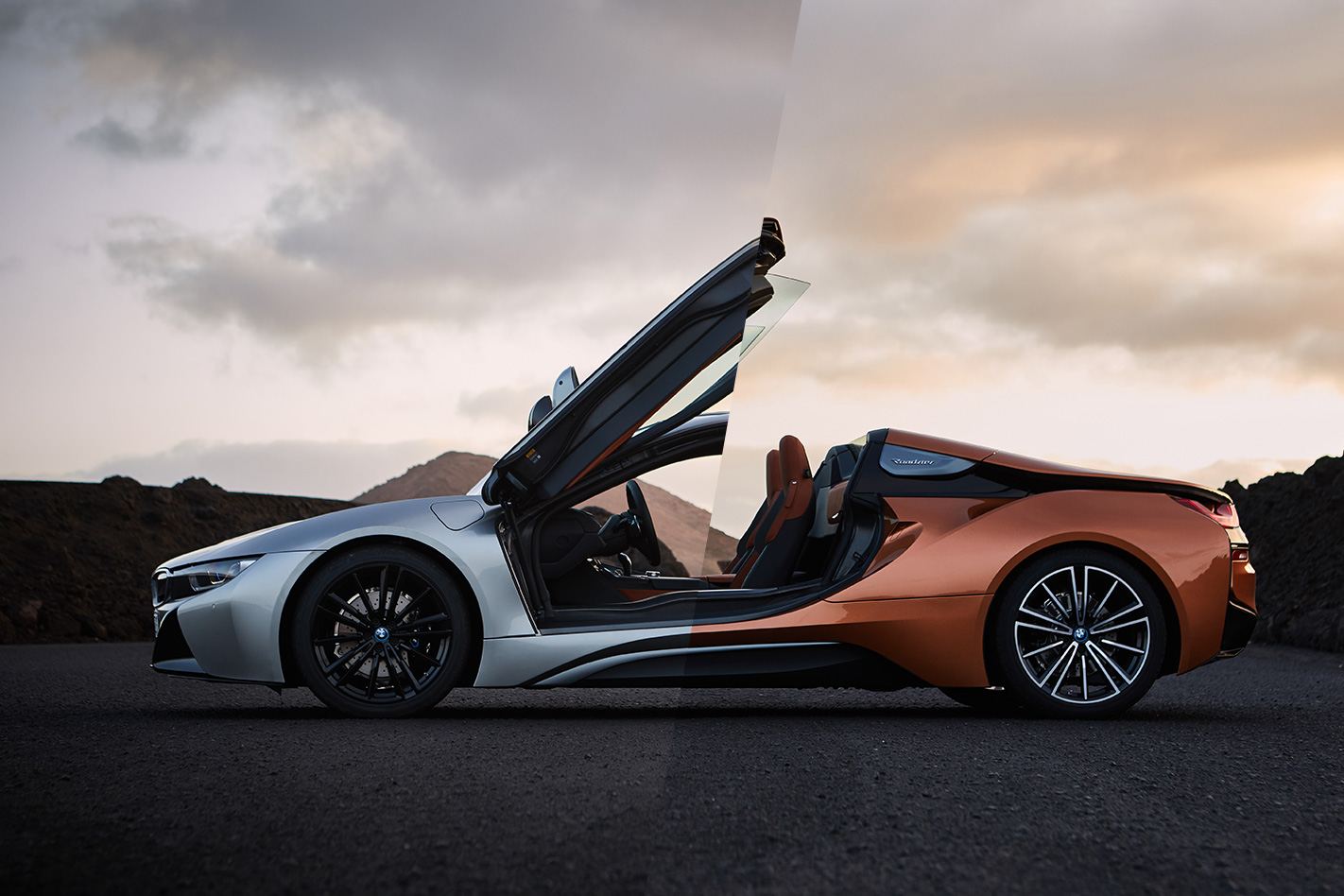
To keep the Roadster as dynamically close to the Coupe as possible, BMW has implemented body-specific strengthening elements and gullwing doors which have been built to be as light as possible.
In addition, BMW used carbon-fibre-reinforced plastic (CFRP) to build the windscreen frame.
All up, BMW says the Roadster is 60kg heavier than the Coupe.
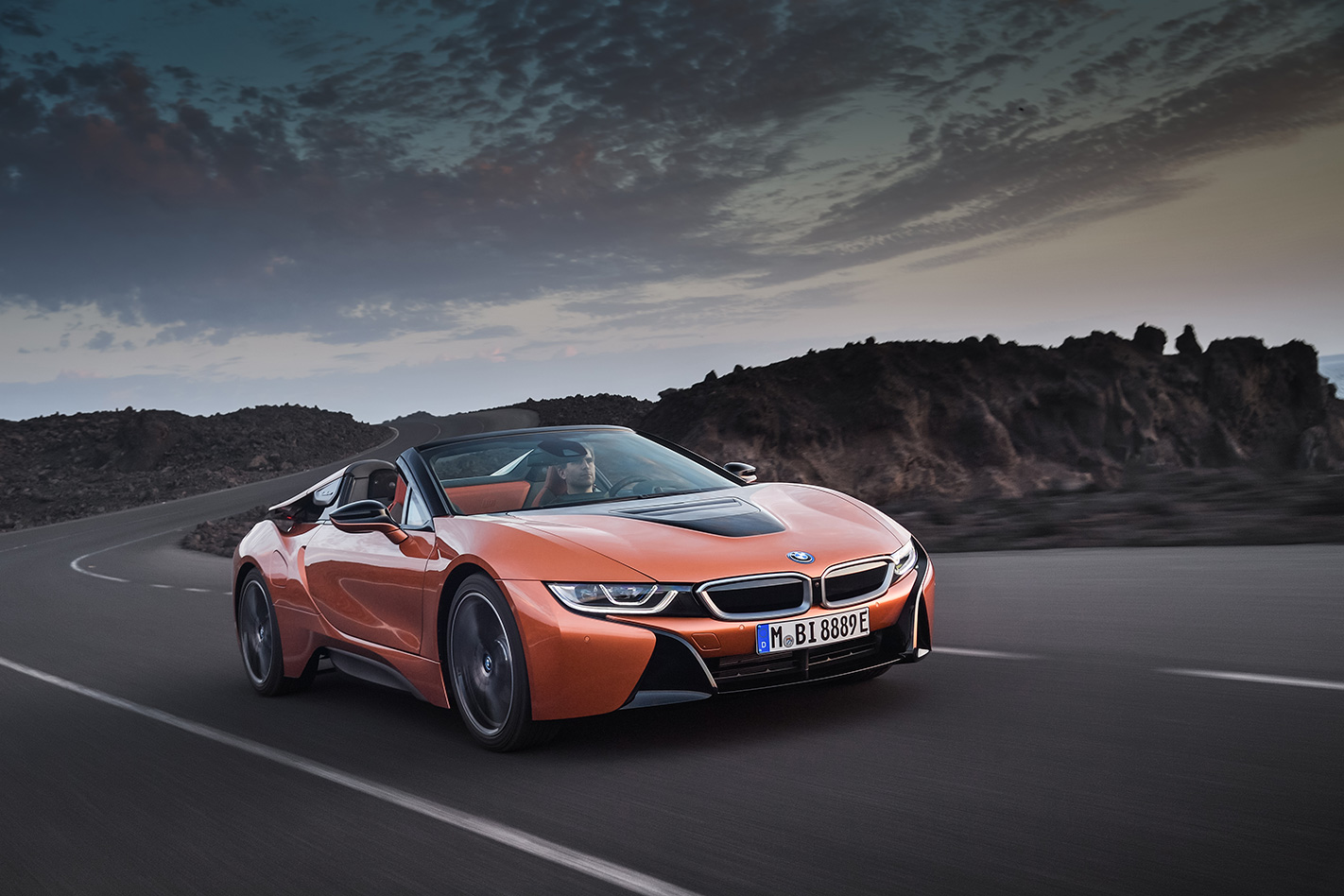
It comes with new 20-inch light-alloy wheels which BMW says are all 1kg lighter than the wheels previously available.
BMW has also released two new paint finishes, E-Copper metallic and Donington Grey metallic.
MOTOR will report BMW i8 Coupe and Roadster Australian availability and pricing when it is confirmed by BMW Australia.
Welcome to the latest episode of the Performance Car Podcast.
In this episode Associate Editor Scott Newman is joined by a familiar face, Australian motor racing legend John Bowe, in the BMW M760iL xDrive.
JB was gracious enough to donate so much of his time we’ve actually split this episode into two parts. In the first part JB discusses his early days in single seaters, graduating to F5000 and the differences between that and F1, Allan Grice’s Bathurst lessons and his bad boy image, older drivers and the competitiveness of Supercars and the decision to call time on his professional racing career.
In part 2, which you can find below, JB goes on to discuss his long relationship with Dick Johnson, approaches from other high-profile teams, his battles with mental illness, what he loves about driving, his toughest racing rivals and the one car and track list combination on his bucket list.
You can find the audio versions of these podcasts on Podbean or iTunes, please rate and subscribe and as ever, if there are any topics, people or cars you’d like us to cover, let us know in the comments on Facebook, YouTube or drop us a line at [email protected]. Enjoy the episode, we’ll be back with a new one in a fortnight’s time.
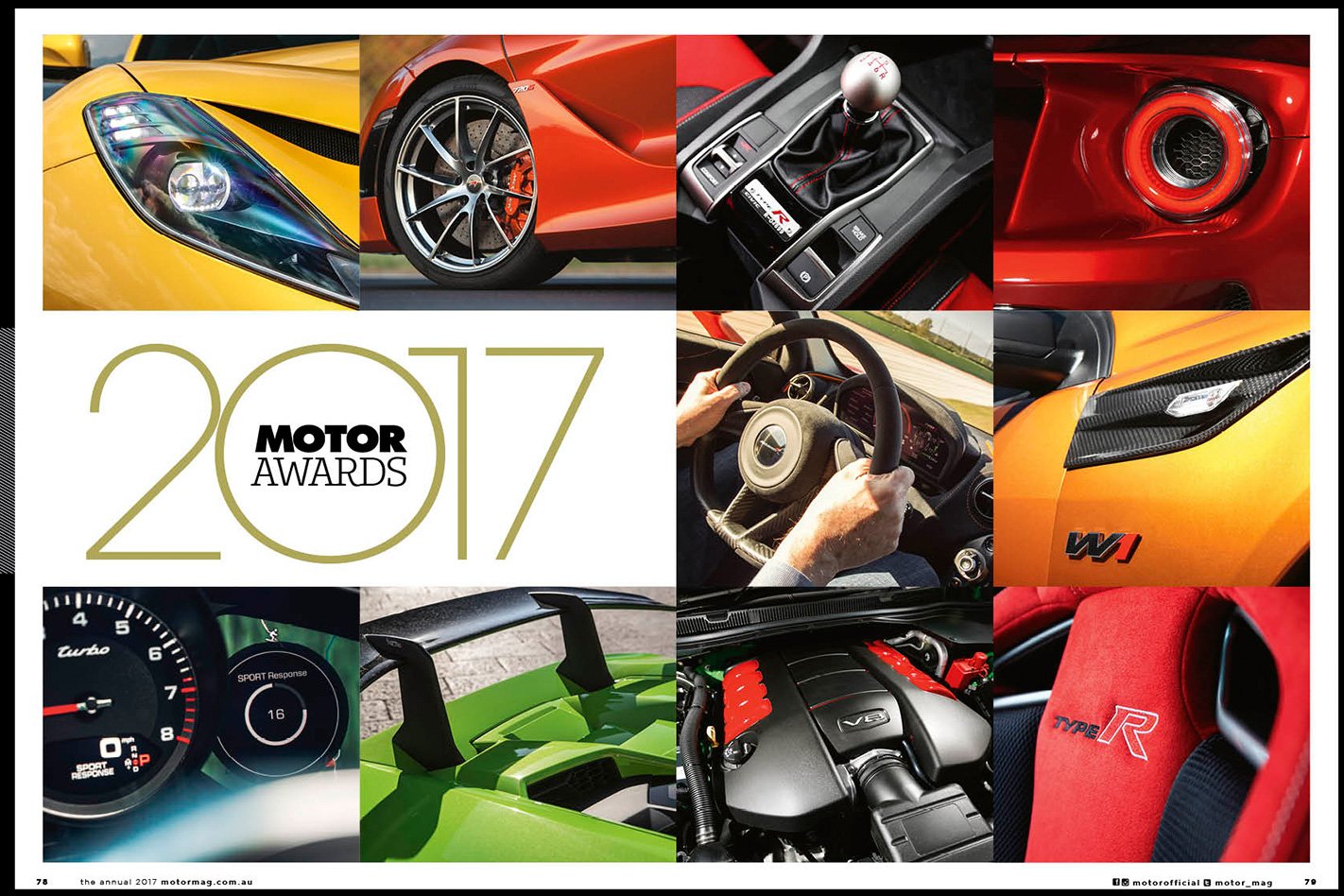
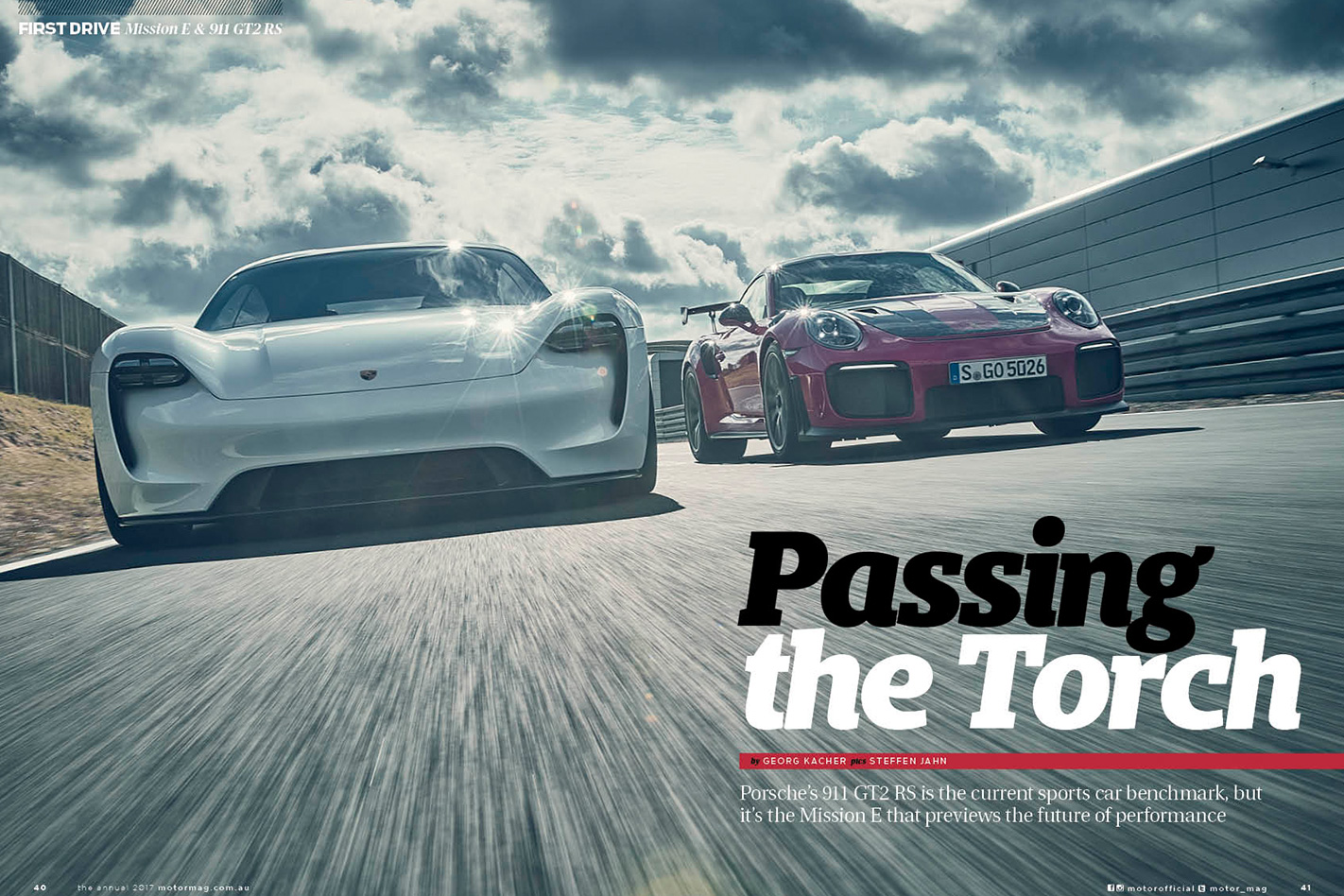
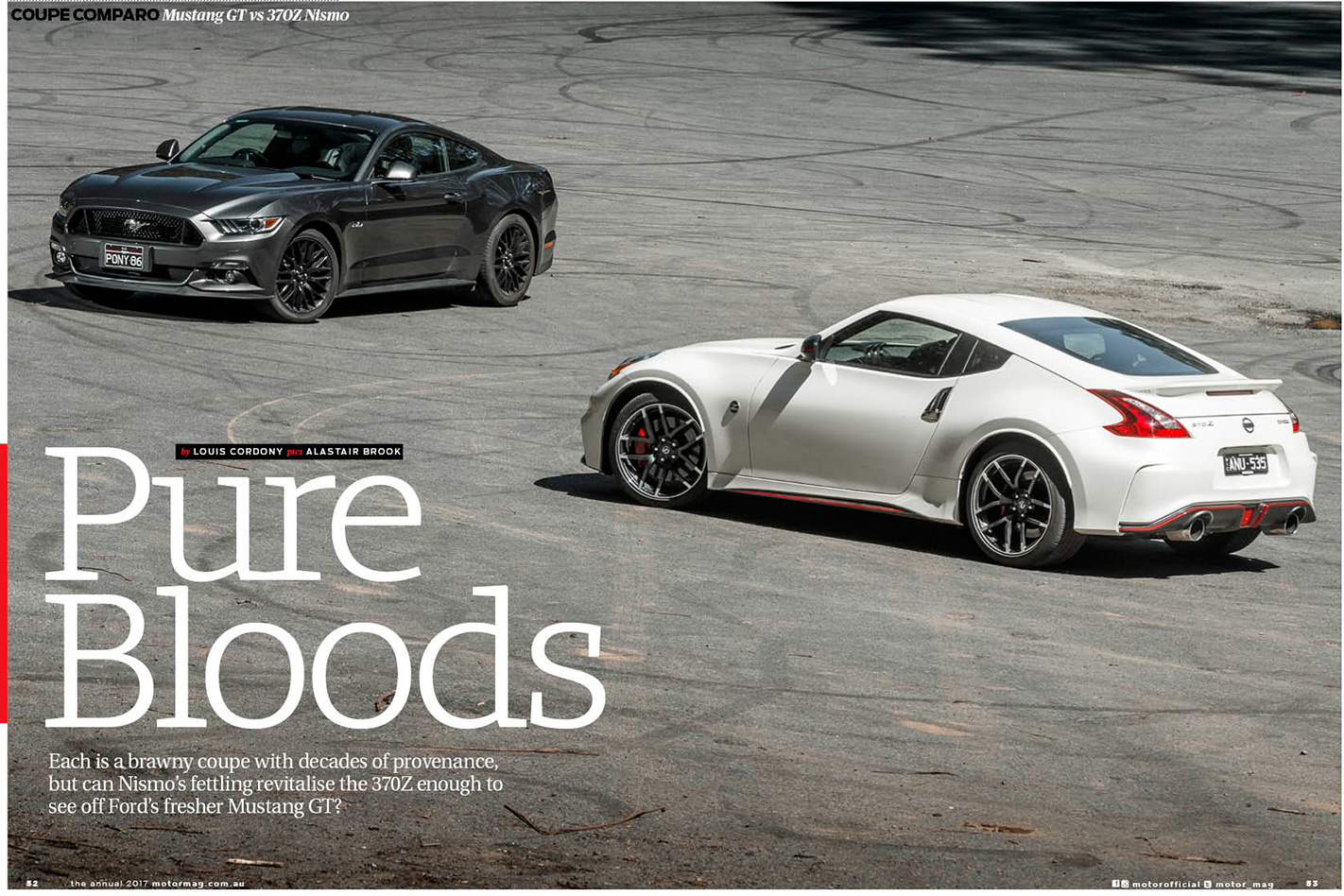
MOTOR’s new issue ‘The Annual 2017’, is on sale now in newsagents, supermarkets, or you can grab a digital subscription.
But before you lay down your hard-earned to hear what we have to say about the newest fast metal, have a look through what The Annual 2017 has to offer.
We worked hard on it, promise.
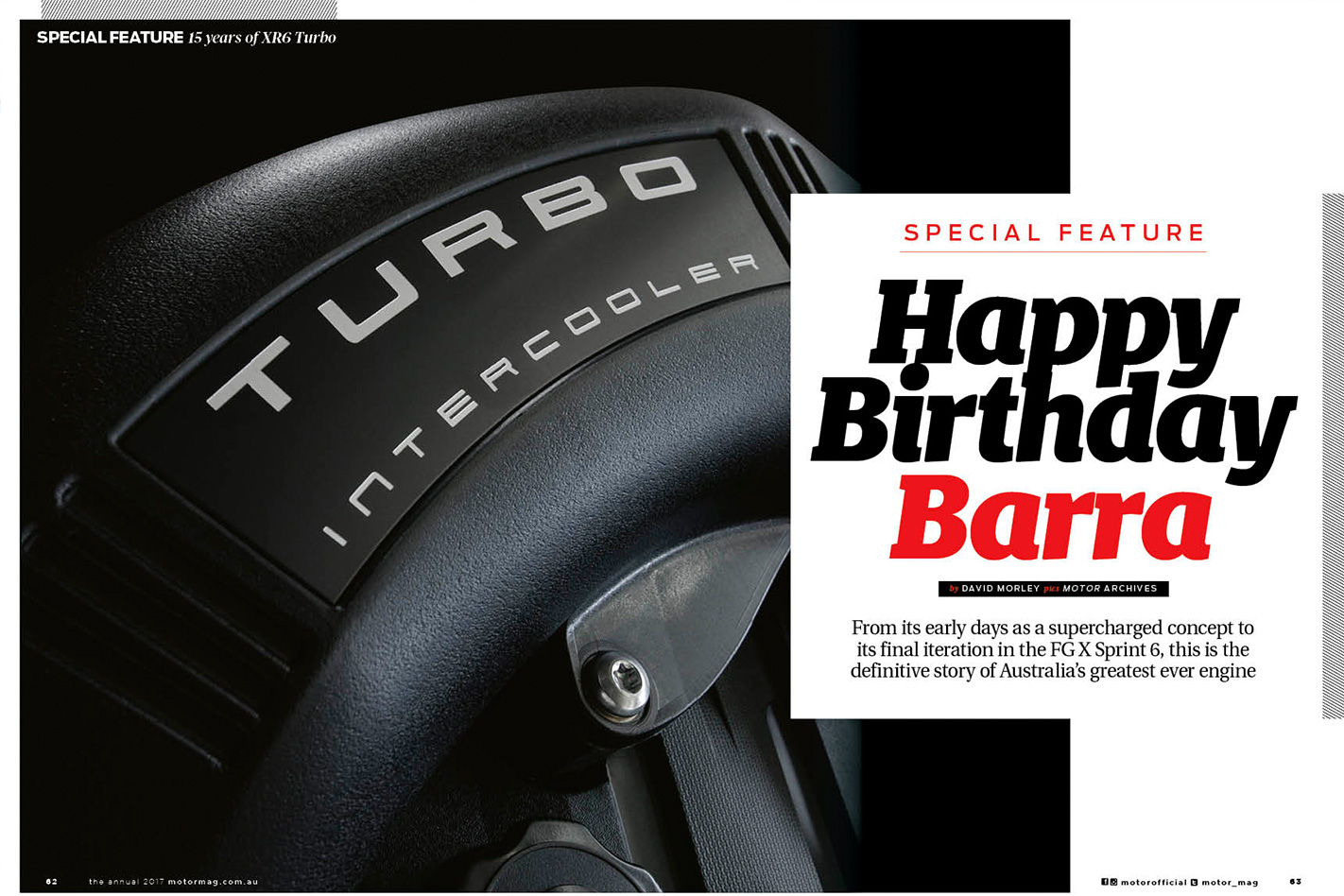
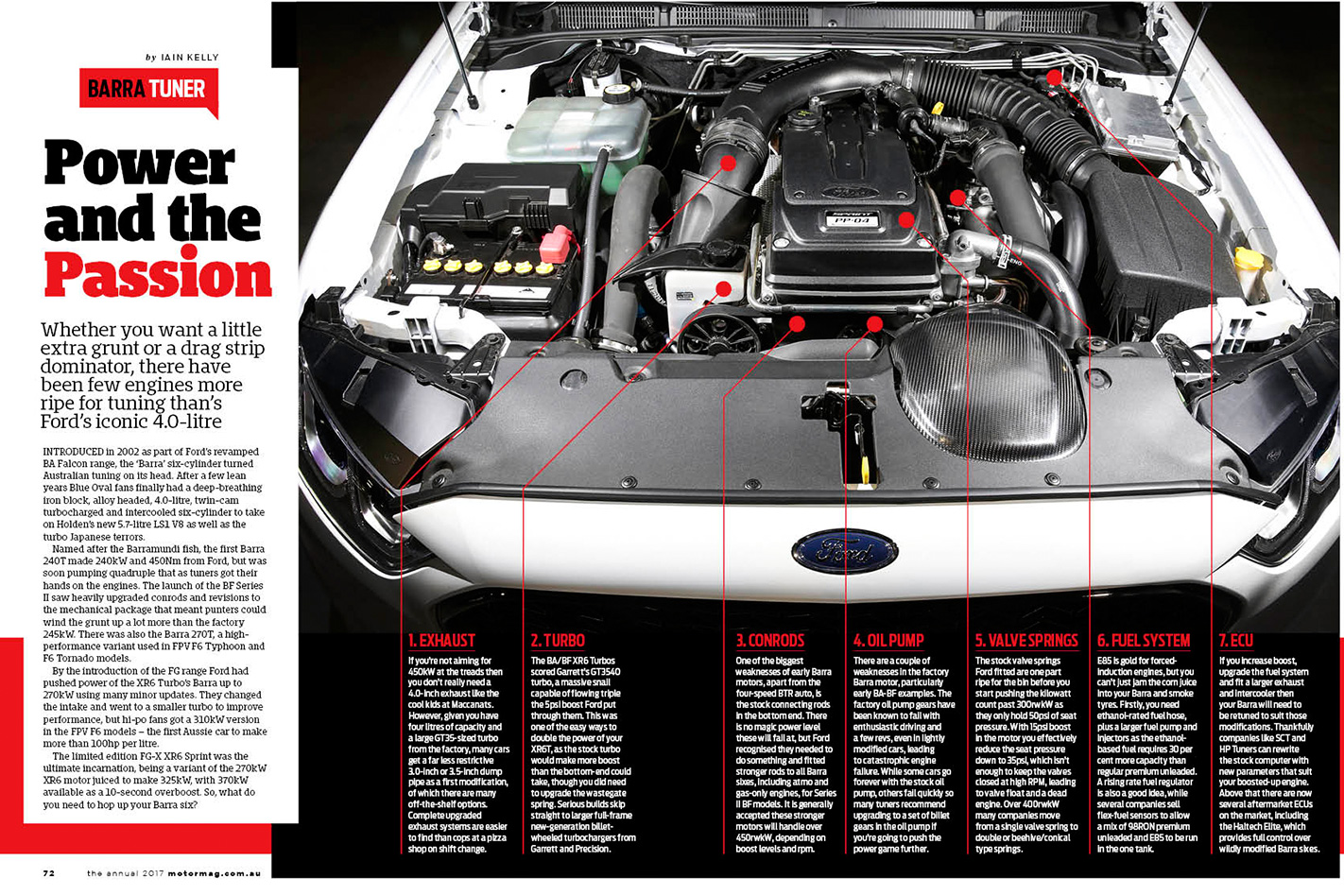
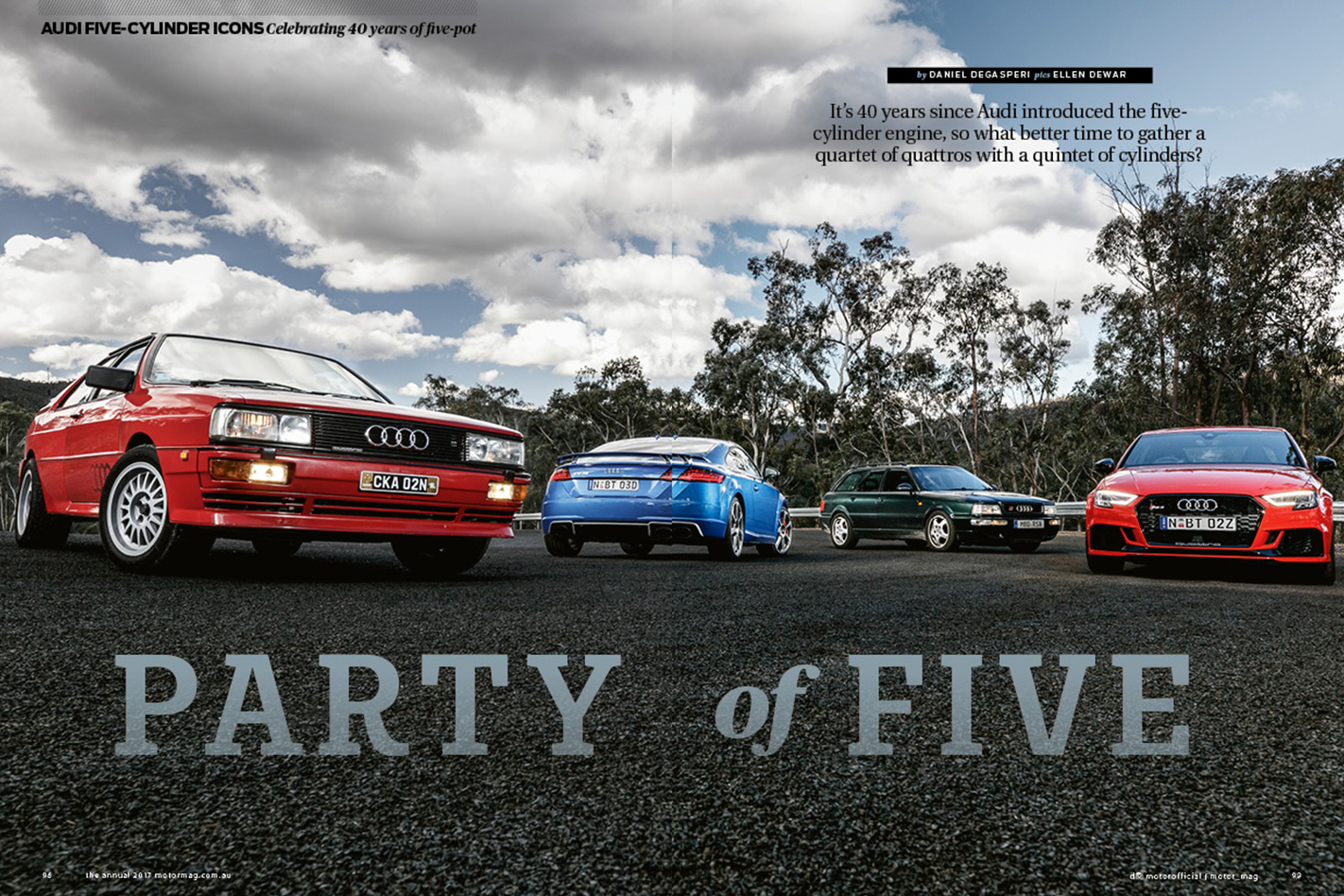
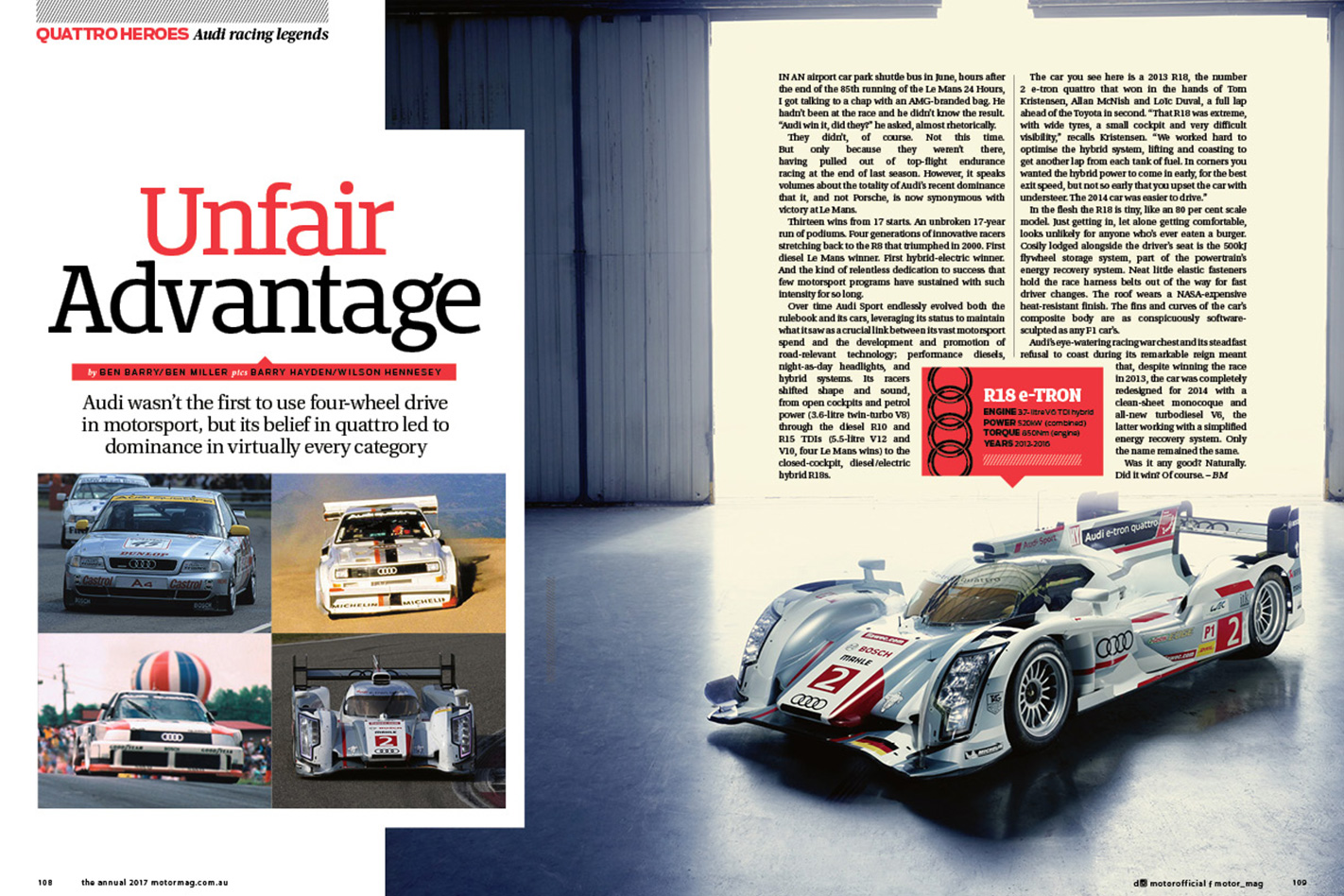
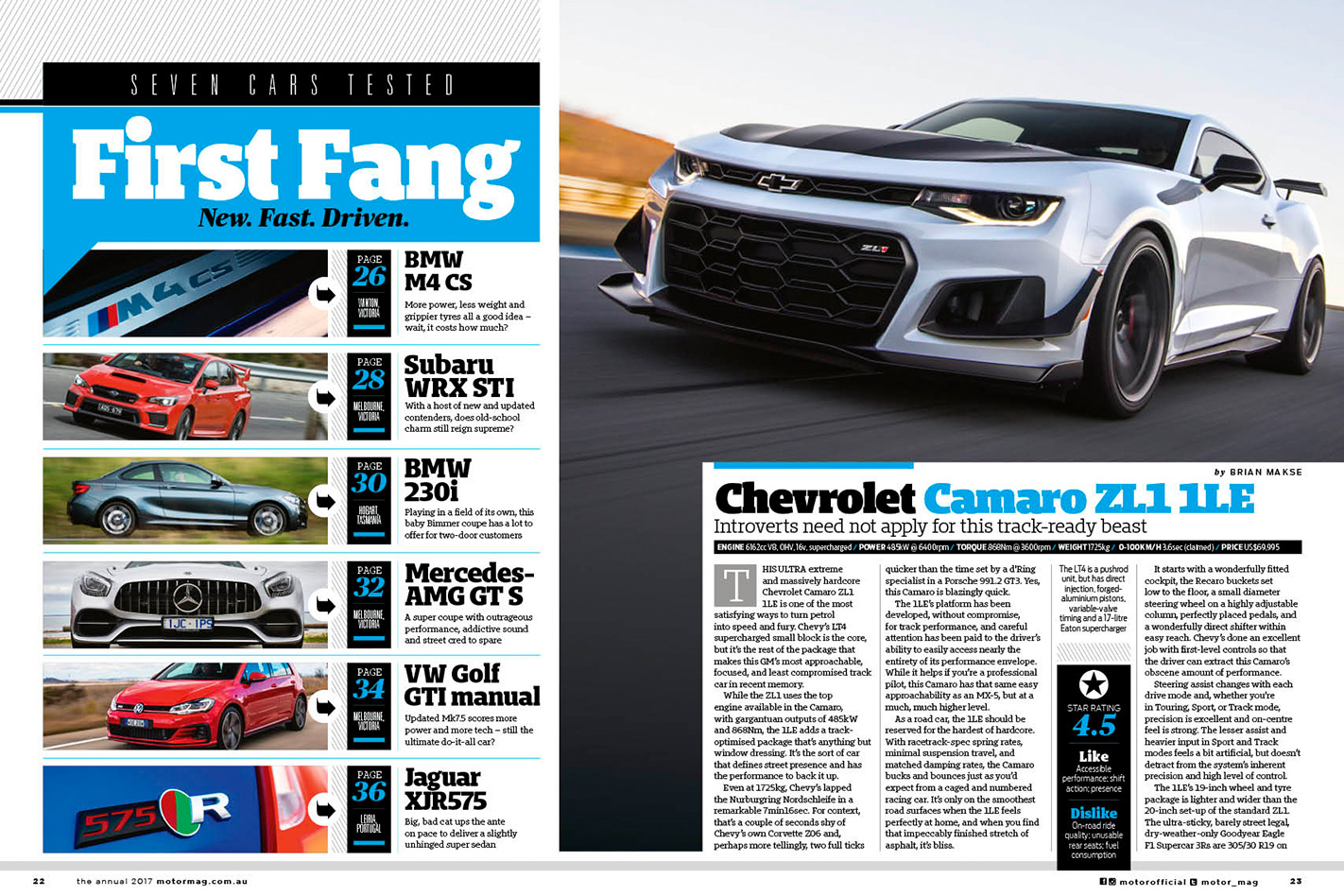
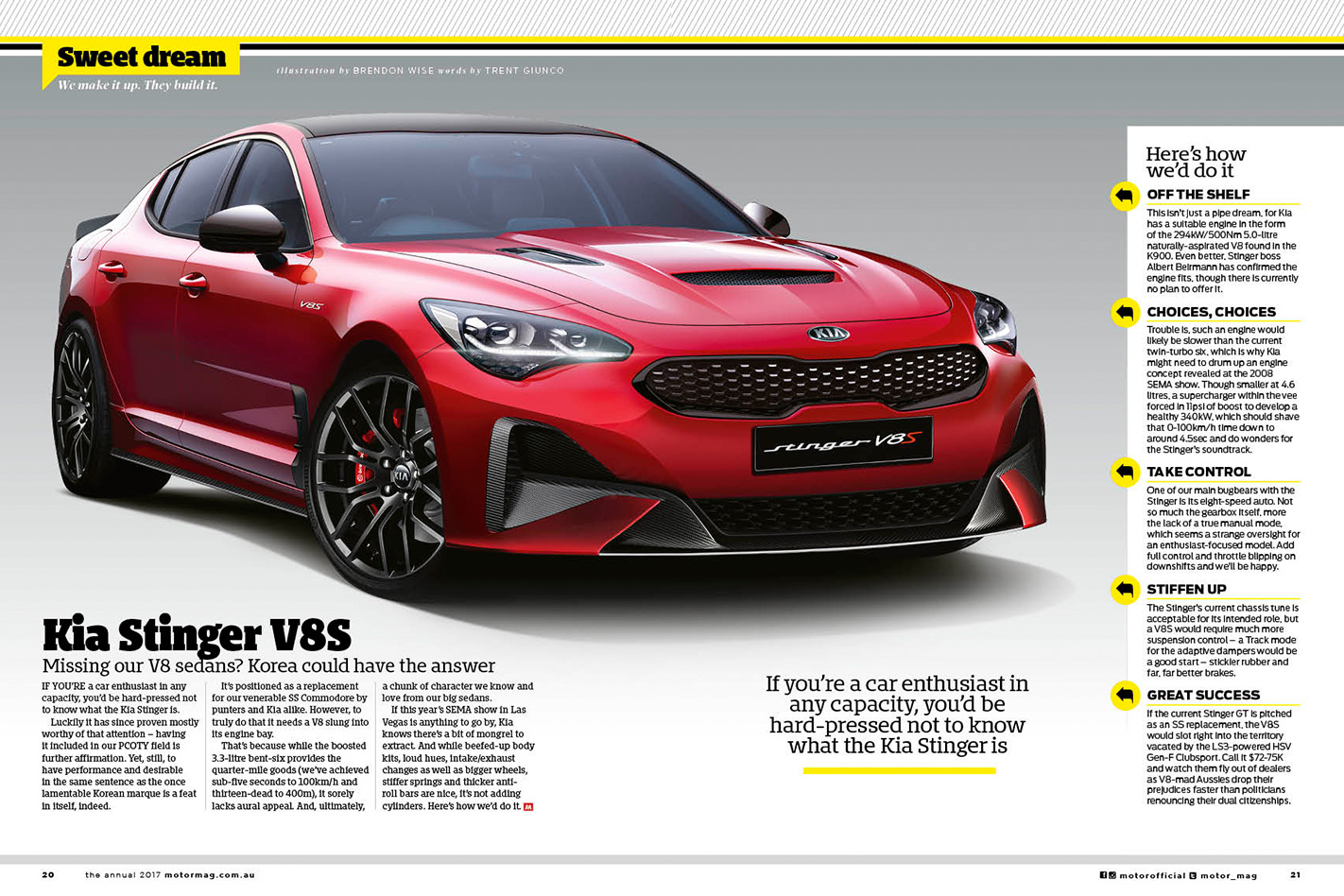
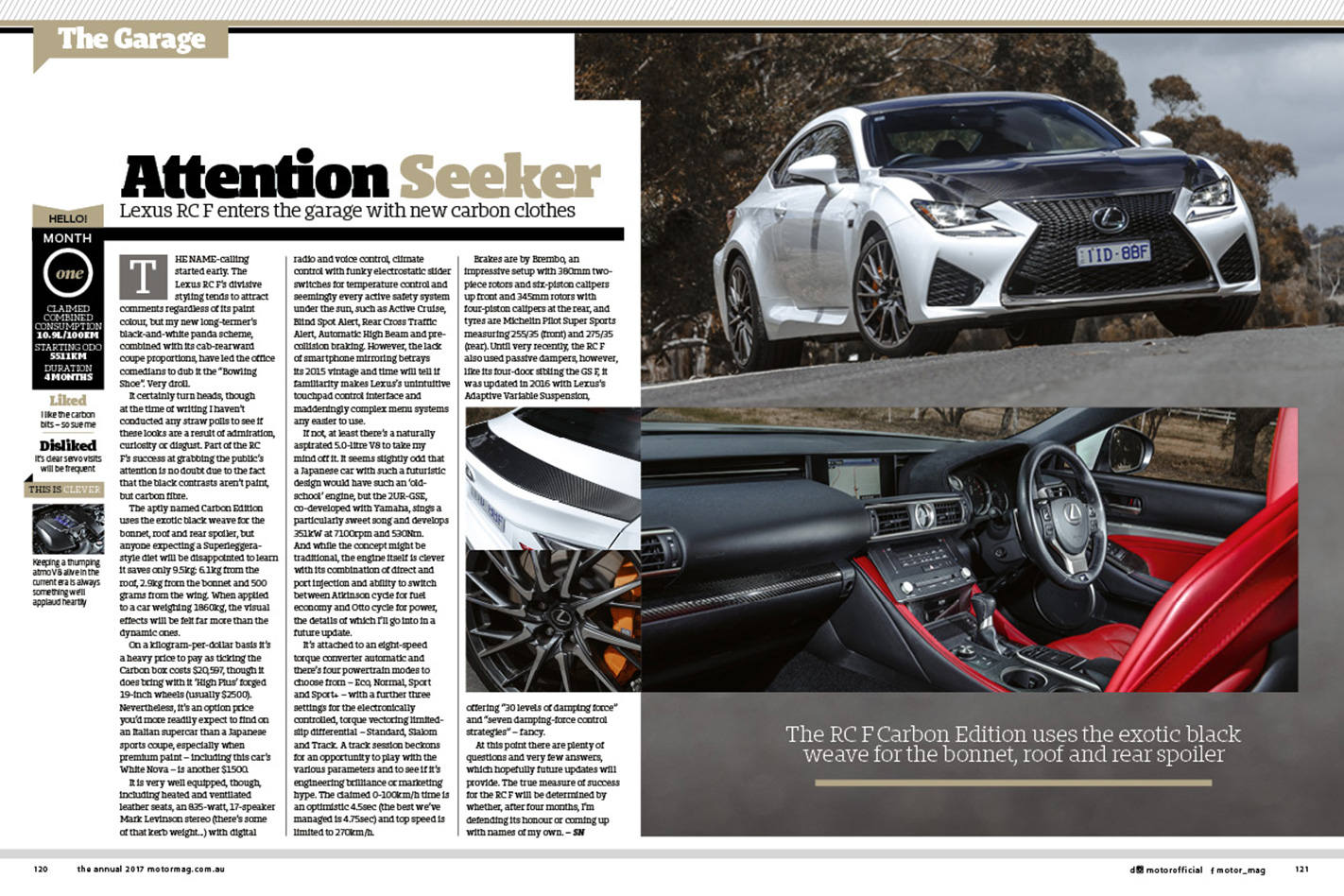
AND MORE: As ever, we bring you news, market updates, and features – as well as keeping you up to date with what we’re driving day-to-day.
This month, we say hi to our new 351kW Lexus RC F, which is managing to keep an atmo V8 alive in the era of turbos and downsizing.
We also explain how Mercedes Guard keeps VIPs safe from attackers, and give you some ideas to kick start your Christmas shopping. An office chair made from a Porsche 911 seat, anyone?
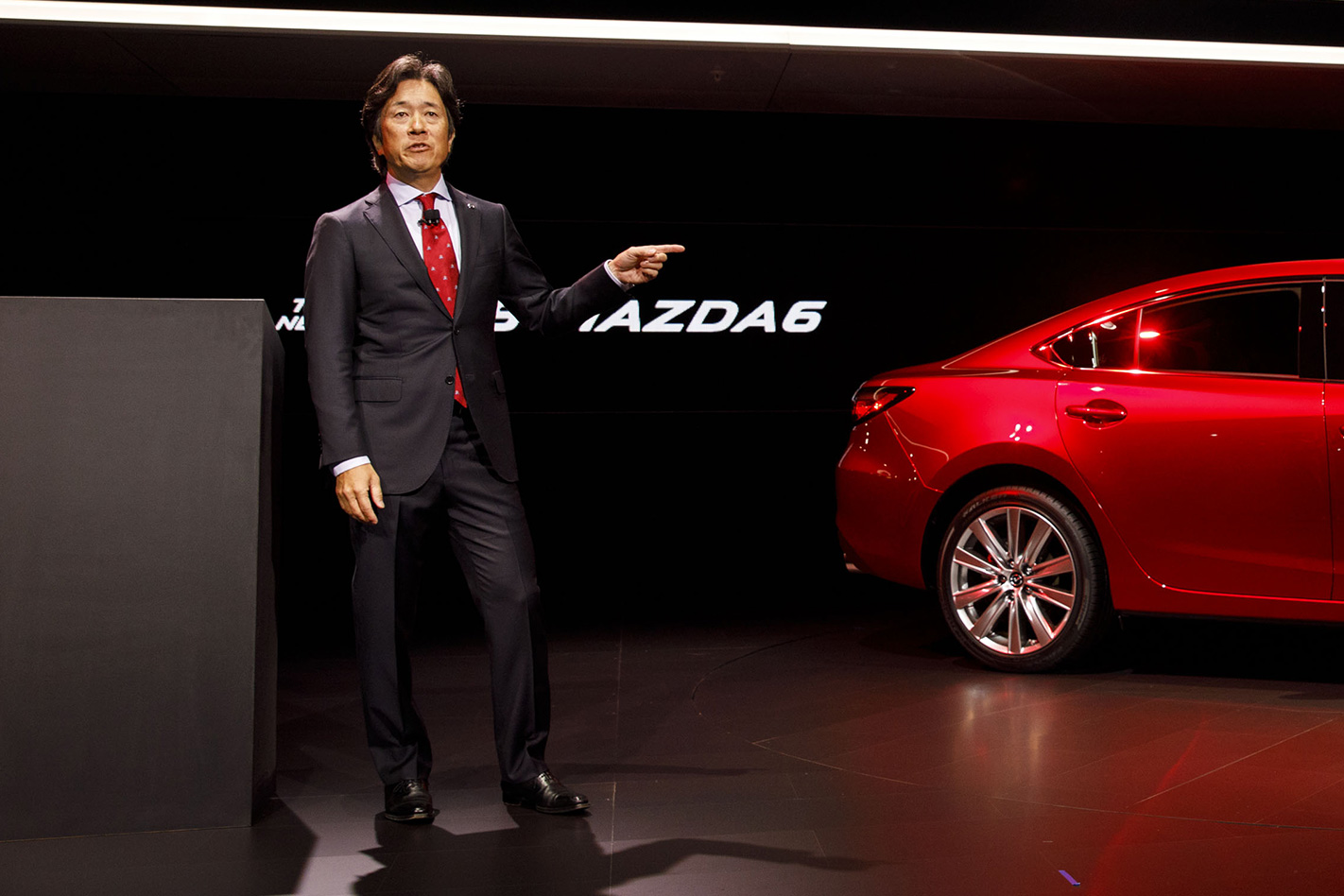
Driving enthusiasts rejoice — Mazda isn’t buying into a highly autonomous future; not for now, at least. Nor is Mazda betting the farm on pure EVs.
This is what Wheels has learnt from a candid interview with the company’s Japanese-born CEO of its North America operation, a man who clearly has the ear of the heavyweight strategists on the board back in Hiroshima.
“We believe there will always be a bond between drivers and cars,” says Masahiro Moro, who took over the top US job at the end of 2015.
He sees a future where cars still make noise, still need a driver, and where people want to own one, not just ride in one. Yes, he’s running contrary to plenty of other heavyweight car companies, but his words carry clout.
“No steering wheel is not an option for us,” he says flatly. “Any autonomous feature should be there to help the driver, but not have total control. And the car should not be a mere commodity; it needs to enrich a customer’s life.”
According to research to which Mazda subscribes, the internal combustion engine will be the dominant power source – to the tune of 85 percent – to at least 2035. Mazda sees its SkyActiv-X technology, which effectively deletes the spark plug to bring compression-ignition to petrol engines, as an important part of prolonging ICE.
The tie-up with Toyota could also help Mazda navigate the hugely complex and costly world of at least partial autonomy. “We are a small company, so it makes sense for us to work with Toyota to develop a co-piloting system; maybe around 2025. But we’re watching closely at the legislation,” he says.
There’s plenty of talk at Mazda about stretching the brand further upmarket, which begs the obvious question: will Mazda revive the MPS sub-brand and cash in on the lucrative high-performance segment? Sadly, Moro is quick to shut this down: “We are not going to follow established premium brands in that space. “The Mazda brand has grown up; look at the Vision concept. What we need are even more sophisticated powertrains and even better refinement, not necessarily more powerful ones. So it’s not a priority for us right now.”
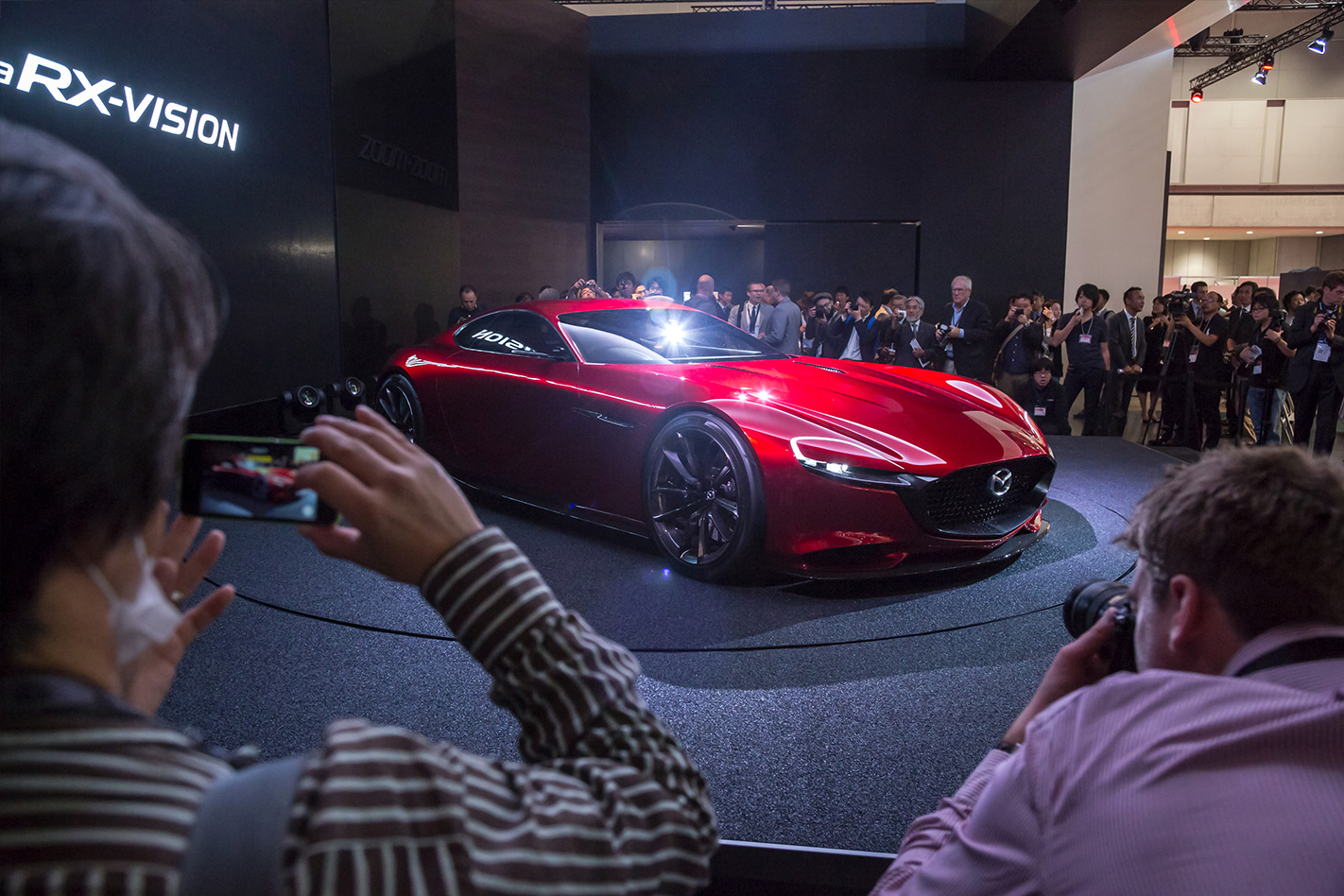
“We have a huge rotary fanbase, and it presents an interesting opportunity. We have resources committed, to continue to develop the rotary; a small team of dedicated engineers. But it’s not on the official company roadmap at this point.”
As for the option of following Abarth down the turbo-charging path for the MX-5, as the Italians have done with the 124, his response sticks to the Mazda playbook: “I prefer normal aspiration for MX-5. I want our engineers to fully exploit the atmo engine for purity in that car.”
If you want a good seat for the show put on by the new Chevrolet Corvette ZR1, you’re in luck. There’s now a convertible version.
Just two weeks after the new 2019 ZR1’s reveal, Chevrolet has already unveiled a drop-top version at the 2017 LA Motor Show.
The C7 Corvette ZR1 Convertible will have the same 563kW and 969Nm that the Coupe puts out, supplied by the same supercharged 6.2-litre supercharged LT5 V8.
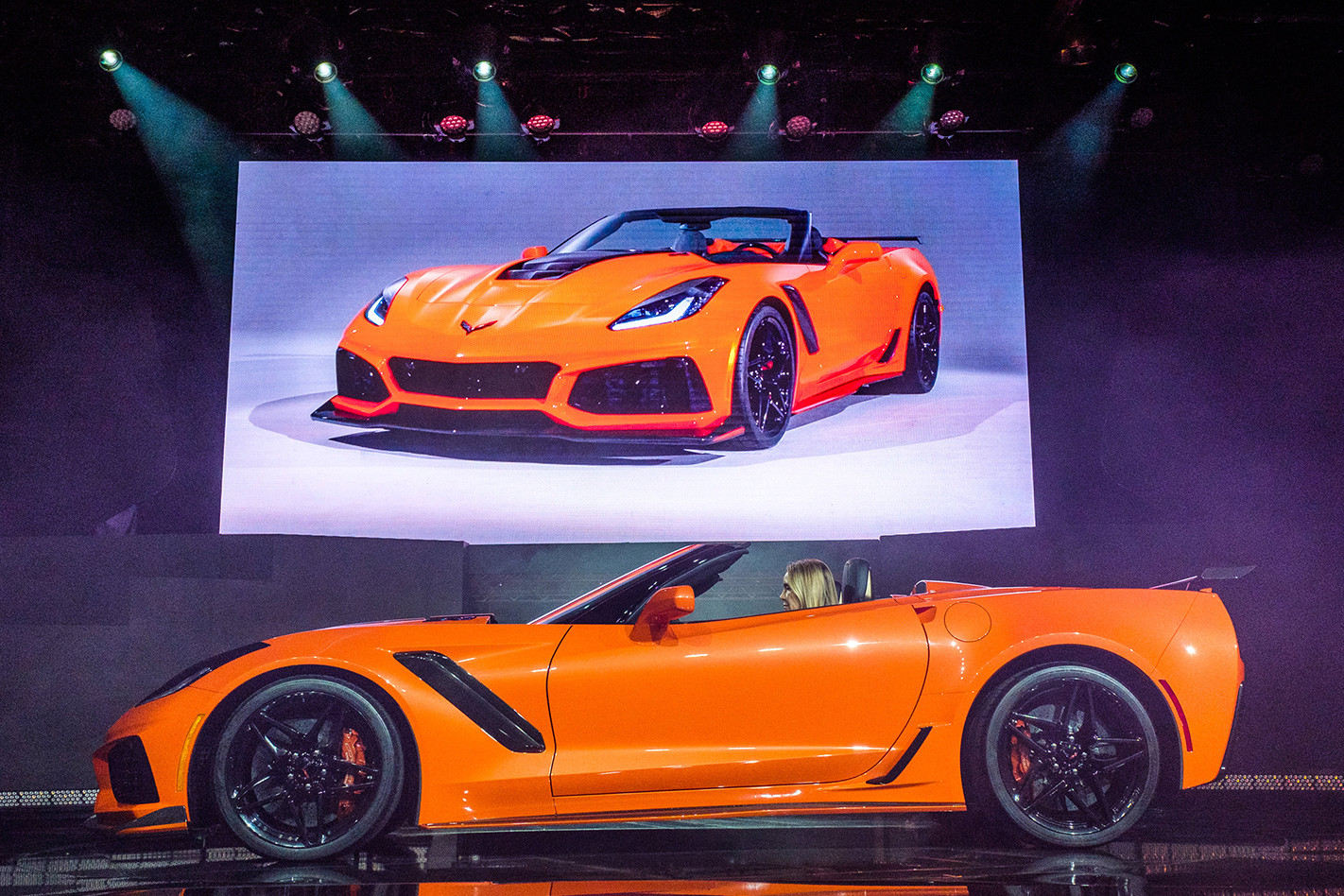
Corvette executive chief engineer Tadge Juechter says the ZR1 Convertible doesn’t lose much in the way of performance, either, claiming it can still run a 0-60mph (0-97km/h) in under three seconds if optioned with the auto ‘box.
“The ZR1 convertible is a no-compromise supercar,” says Juechter.
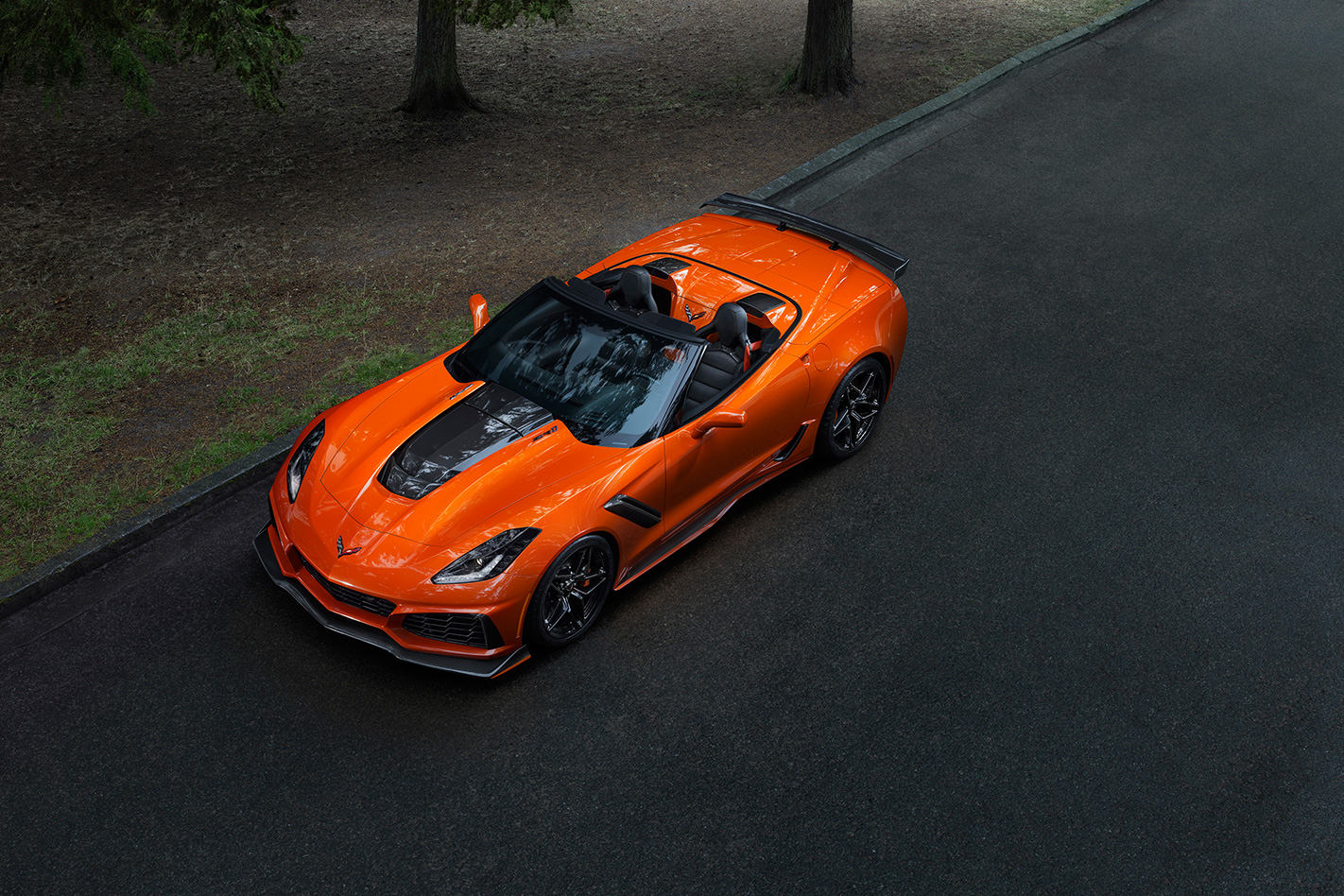
The ZTK Performance Package, which is also available on the Coupe, adds an adjustable rear wing, a front splitter with carbon-fibre end caps, Michelin Pilot Sport Cup 2 tyres, plus chassis and suspension tuning.
In addition to the ‘Vette Convertible’s debut, Chevrolet has announced a new exhaust system which Chevrolet says give the ZR1 “the most aggressive sound ever for a production Corvette.”
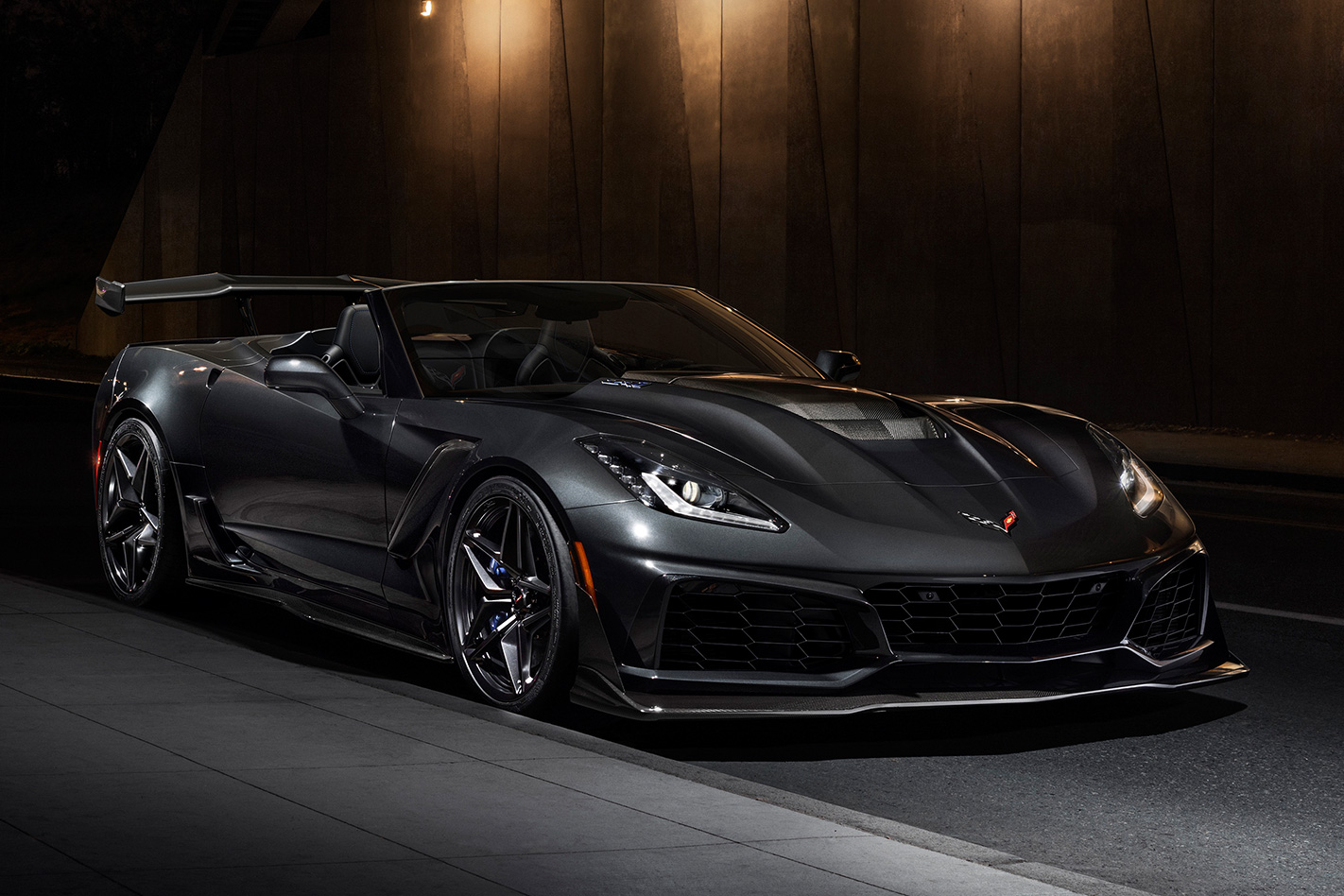
With no roof, you’ll certainly be able to tell the difference.
HERE’S a simple fact known throughout the publishing business: there’s only so much you can learn from a press release.
We recently delivered details on the revised Mazda 6 based purely on information provided by the company; now we’ve had a chance to see the car in the metal, sit in it and talk to key design and engineering personnel, it’s become clear: this is much more than a light refresh.
Yes, of course there are the usual exterior changes: lights, fascias at each end, new boot lid, new wheel designs.
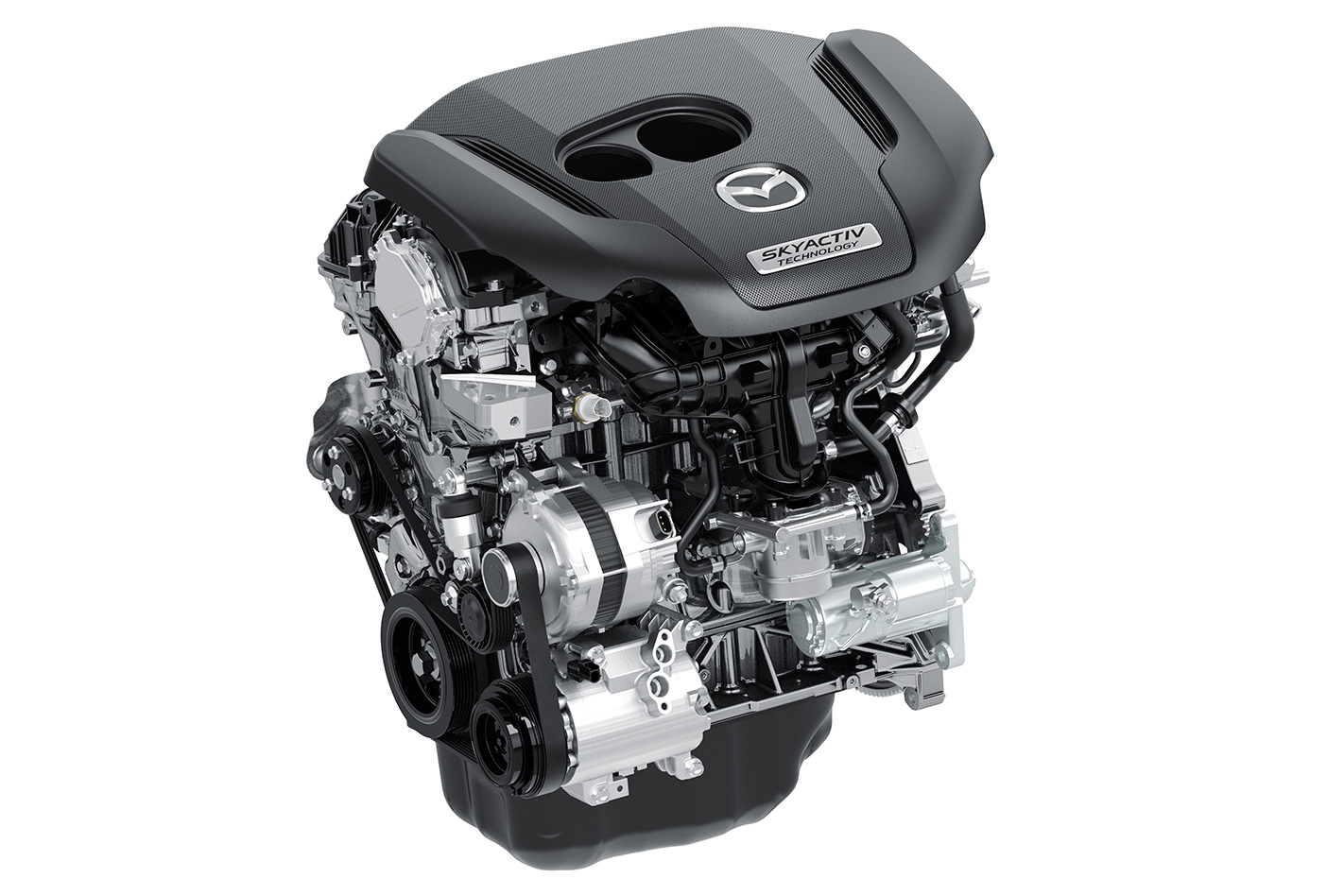
The turbo engine features what Mazda terms Dynamic Pressure Turbo to build boost nearly instantaneously by using a small inlet port to force air into the turbocharger. A secondary valve opens at higher revs for increased airflow and maximum power. A pulse-scavenging 4-3-1 manifold reduces exhaust back-pressure and contributes to efficiency.
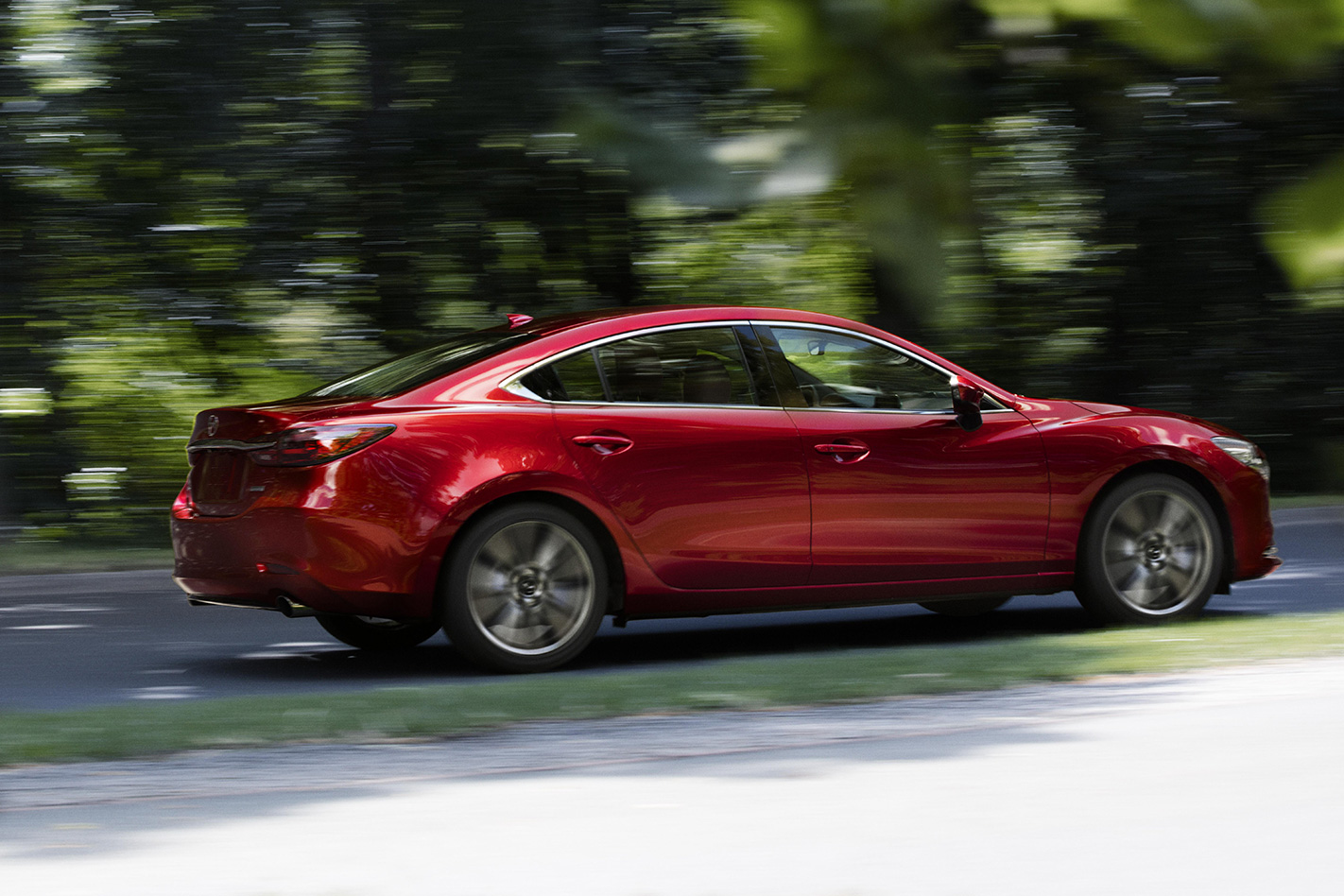
The additional grunt of the 2.5 turbo stands to transform the driving characteristics of the updated 6, but buyers should also expect a noticeable gain in cabin quietness and ride comfort.
The former should come from the upgrades to the construction of the floorpan section, and extra sound deadening that has been applied. According to Jacob Brown, product communications manager for Mazda North America, “The Skyactiv philosophy has been all about reducing weight, but we acknowledge that to move the 6 to the next level and compete in the more premium space, we need to improve the NVH, even if that does add a little more weight.”
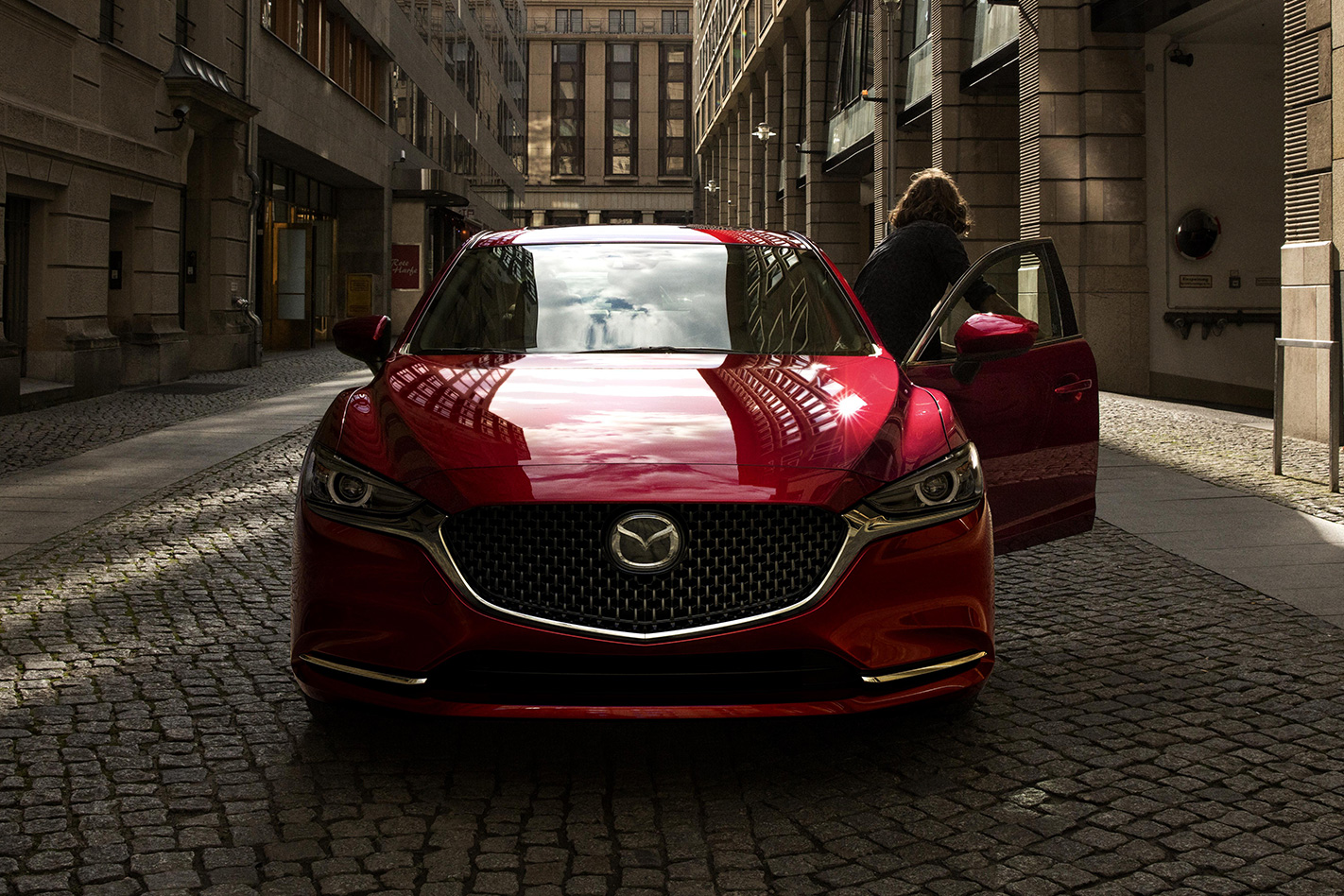
According to Brown, the program of improving stiffness has allowed chassis engineers to retune the suspension settings for improved ride comfort, with claims that there has been no loss of handling precision. In fact, engineers insist the revised 6 handles better, thanks to revision of roll centres and a rigid-mounting of the steering rack to the chassis, to offer more direct steering response.
It’s the all-new interior that stands to have the likes of Lexus, Infiniti and Genesis feeling nervous. Virtually nothing from the outgoing car is carried over inside. The dash, instruments, console, door trims and seats are all changed, and the overwhelming impression from sitting in the car is that this is a quietly stylish cabin crafted from quality materials.

We’ll know how all this translates to an on-road experience when we hopefully drive the 6 around Q2, while Australian sales are expected to begin sometime in Q3.
THE BMW i8 has torn off its roof, and added a bit more under-bonnet spark, in the first significant makeover of the plug-in electric hybrid sports car since its launch in Australia in 2014.
The so-called “sustainable sports car” will add a Roadster version that can drop its fabric roof to let in the sunshine in 15 seconds at speeds of up to 50km/h, while the battery pack that powers both it and the i8 Coupe will add more punch, increasing the performance sent to the front wheels by 9kW to 105kW. It will also allow the i8 to accelerate from rest to 105km/h tapping just the batteries alone – well up on the current model’s 70km/h, and to drive more than 50km on the batteries alone, double what the current one will do.
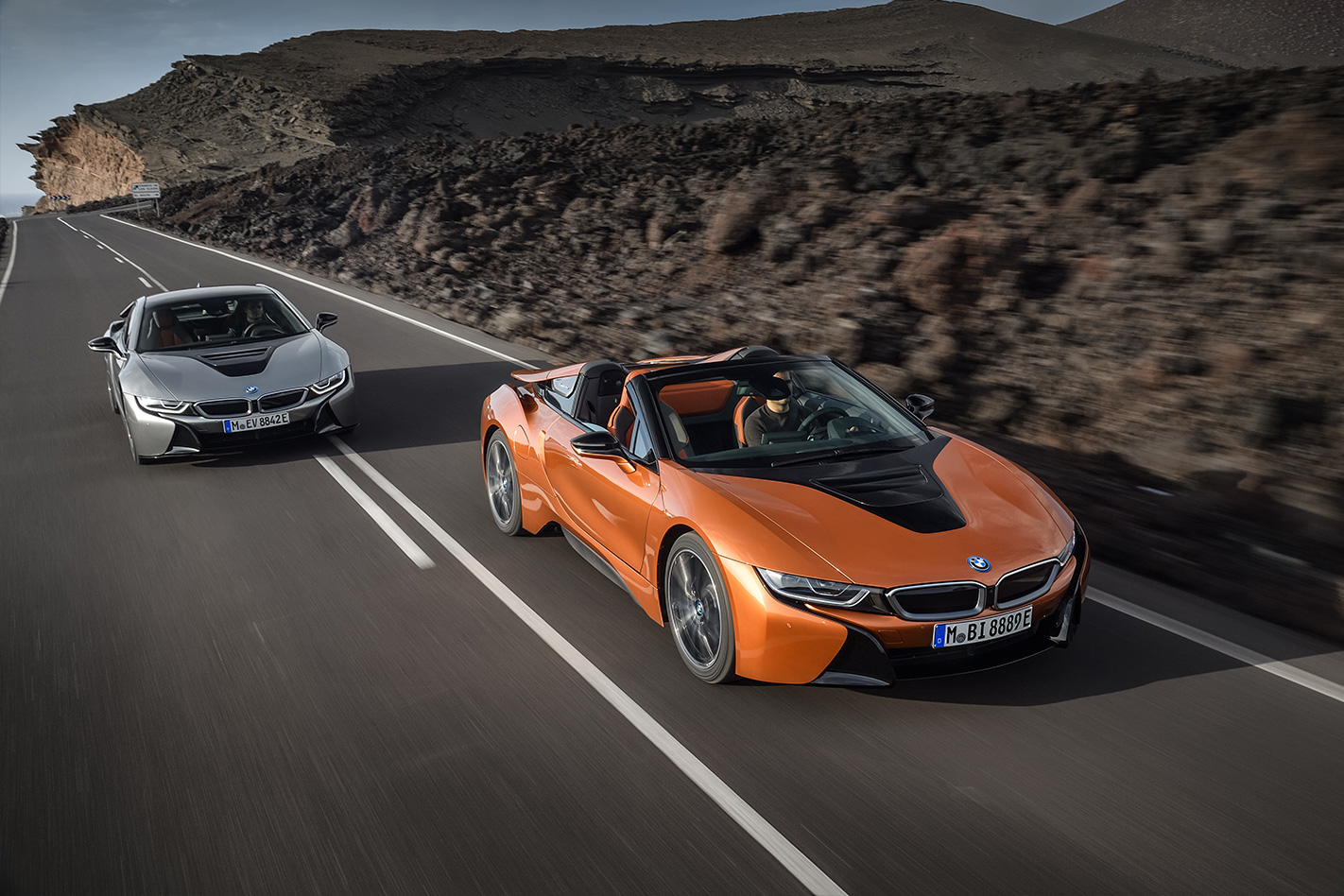
The 170kW/320Nm 1.5-litre three-cylinder turbocharged petrol engine that drives the rear wheels appears unchanged. However, BMW has given it a fruitier note, while a particulate filter – traditionally the domain of diesel drivetrains – filters its exhaust gases.
Combined, the petrol engine and electric motor increase their combined power to 275kW.
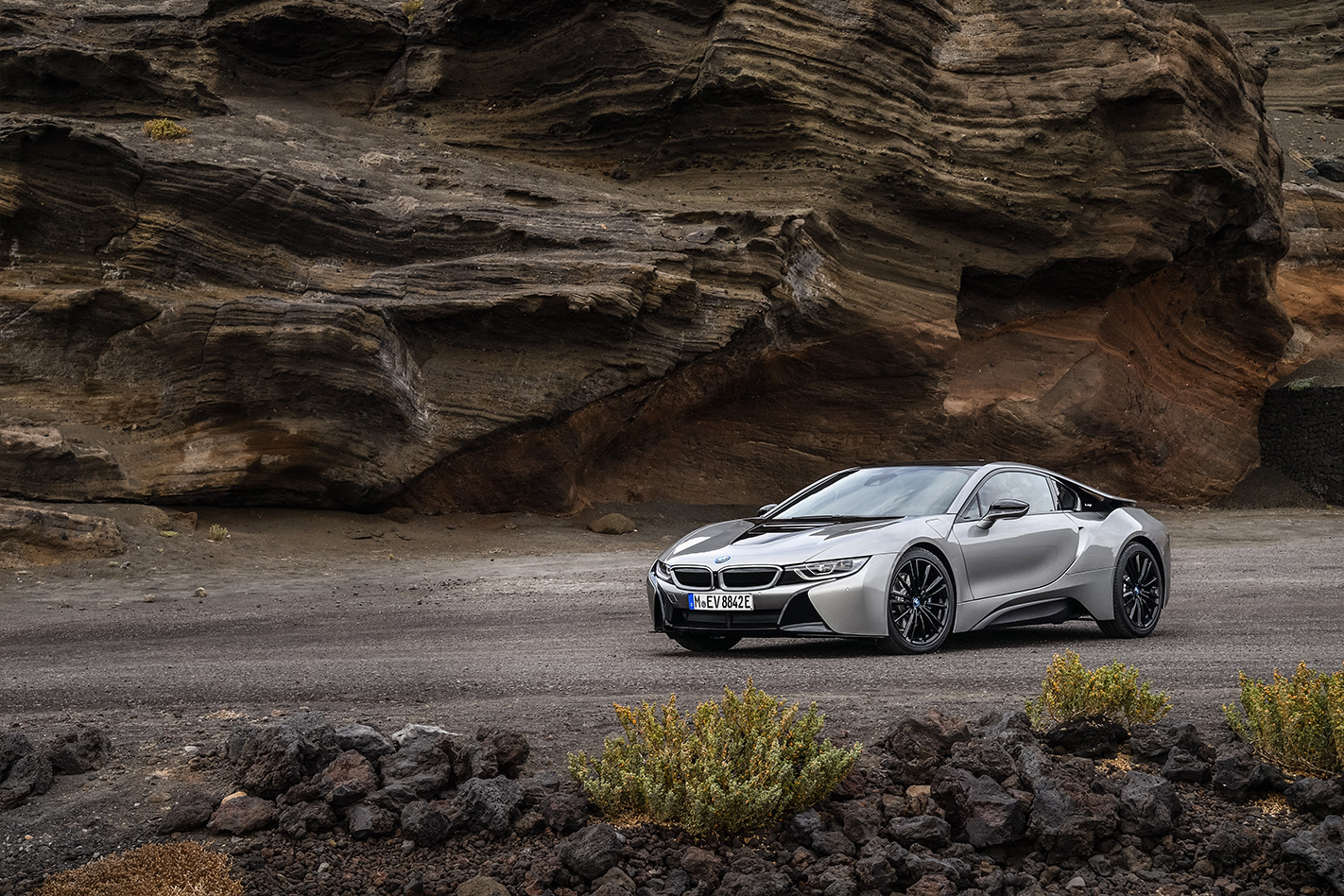
If you can’t pick the rag-topped version, the Coupe will wear a “Coupe” badge on its C-pillar, while the Roadster will wear a “Roadster” one. You may just be able to pick the difference at the traffic lights, too, with the Coupe sprinting from rest to 100km/h in 4.4sec, the same as the current one, and the Roadster in 4.6sec.
They’re expected to join BMW’s Australian showrooms sometime in the middle of next year. The Coupe is likely to arrive first, followed closely by the Roadster. BMW Australia said it was still too early to talk about how the new and facelifted cars would vary from the current i8’s $299,000 price tag.
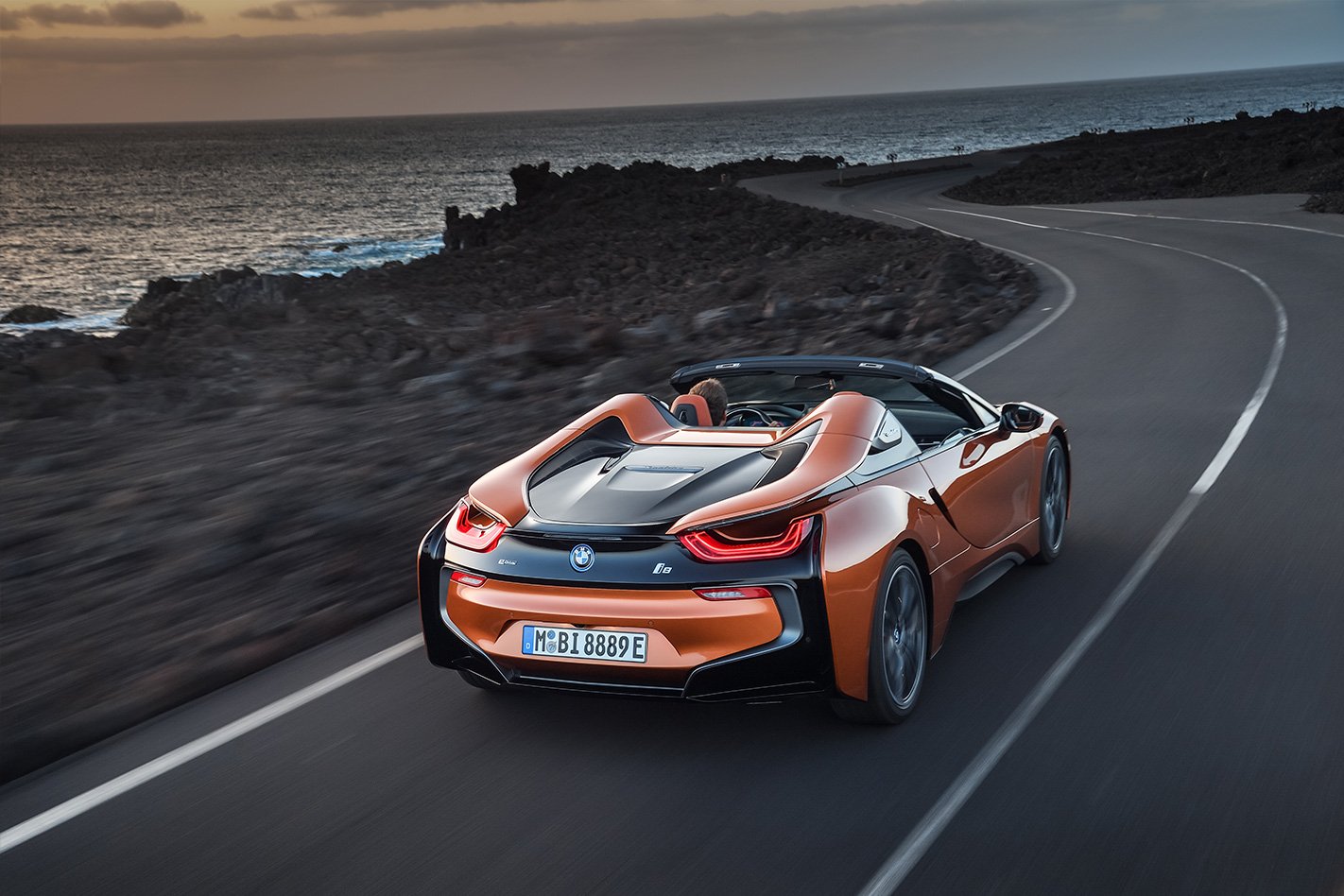
The extra battery range has had an impact on official fuel use, falling from the current model’s 2.1L/100km to just 1.9L/100km. Emissions for the Coupe fall to just 42g/km – making it cleaner than a plug-in hybrid engined Volvo XC60 T8.
BMW says the soft-top roof of the roadster stows “perpendicular”, meaning it minimises the space it robs from the boot while the cabin is open to the air. The Roadster retains the dihedral doors of the concept, but features a carbonfibre-reinforced plastic windscreen frame and more under-body strengthening over the Coupe.
The Roadster also features unique 20-inch alloy wheels that weigh about 1kg less than the lightest rim currently available for the Coupe.
THE Alpine A110 will produce a rorty engine note at idle almost as loud as the HSV GTSR W1, Wheels can reveal.
The Federal Government’s Green Vehicle Guide has this week published fuel use figures for the A110, which is due in Australia midway through next year. “Yeah, interesting,” you say, but scan a bit deeper through the data and there’s a juicy little nugget of information we learn: aside from the A110’s 185kW/320Nm turbocharged, fuel-injected 1.8-litre four-cylinder engine – mounted transversally behind the seats – sipping an official 6.2L/100km on the combined cycle, at idle it will emit 94dBA of noise.
How’s that compare? HSV’s hero sedan, the supercharged 6.2-litre GTSR W1, is rated at 98dBA, which is around the same level of noise as a lawn mower makes. A Maserati Granturismo S’s 4.7-litre V8, meanwhile, is rated at 113dBA.
The A110’s lower figure still sits it in esteemed, aurally appealing territory. According to the Green Vehicle Guide, other vehicles to make the same amount of noise at idle include the Aston Martin DBS, the Bentley Continental GT Speed, the Lotus Elise, the 6.2-litre V8-engined versions of the Mercedes-Benz C63 AMG, and older versions of the Porsche 911.
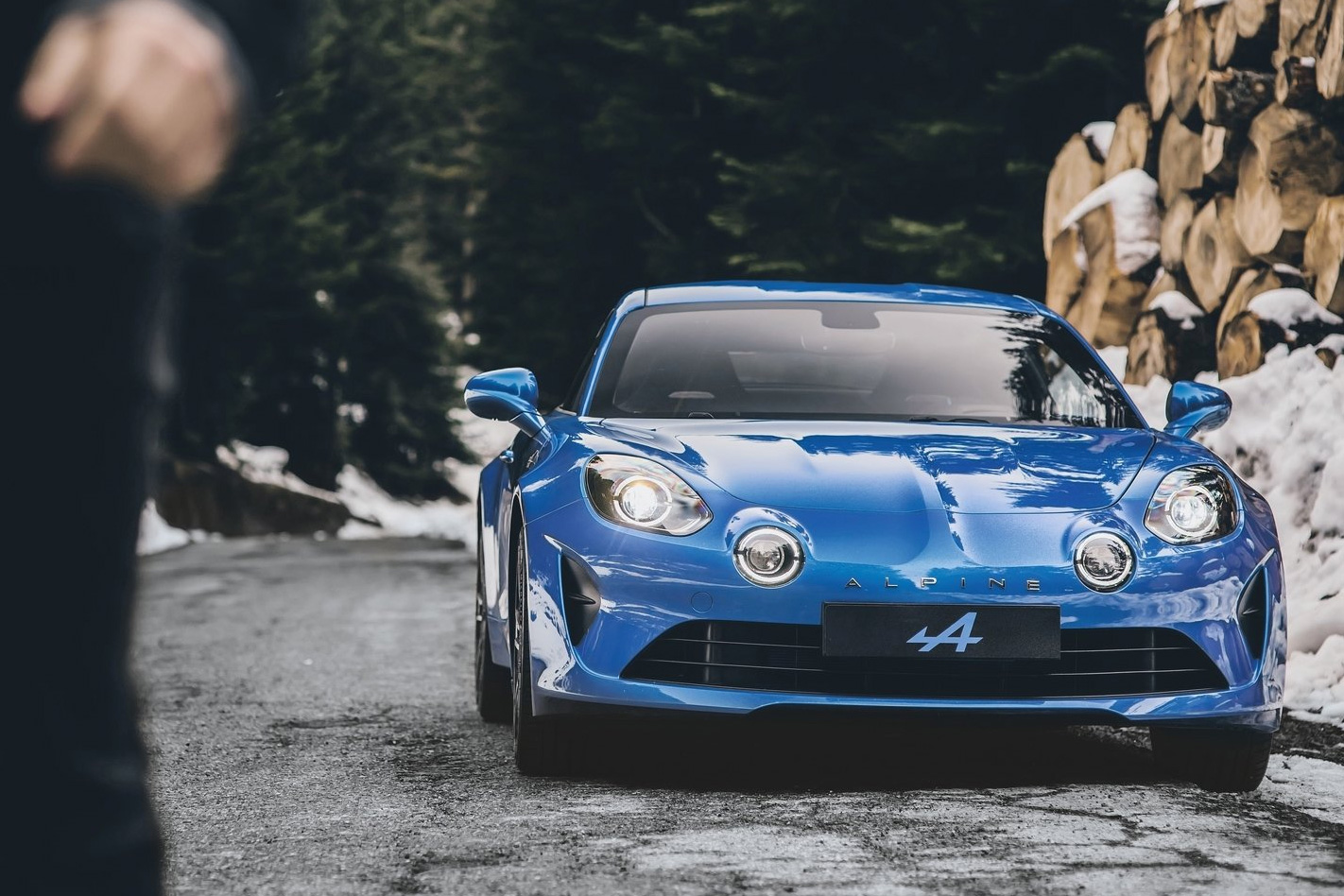
Australian versions of the A110 will feature what Renault describes as an “active lightweight sports exhaust”, meaning it will potentially be able to provide one engine note for pussy-catting around town, and another for tom-catting on a twisty section of road. Other bits of kit in store for Australian buyers include 18-inch forged alloy wheels, fixed-back Sabelt sports seats, a Brembo brake package with two-piece rotors, alloy pedals, carbon interior trim and high-end audio system.
The A110s will send its drive to the rear wheels via a seven-speed dual-clutch automatic transmission.
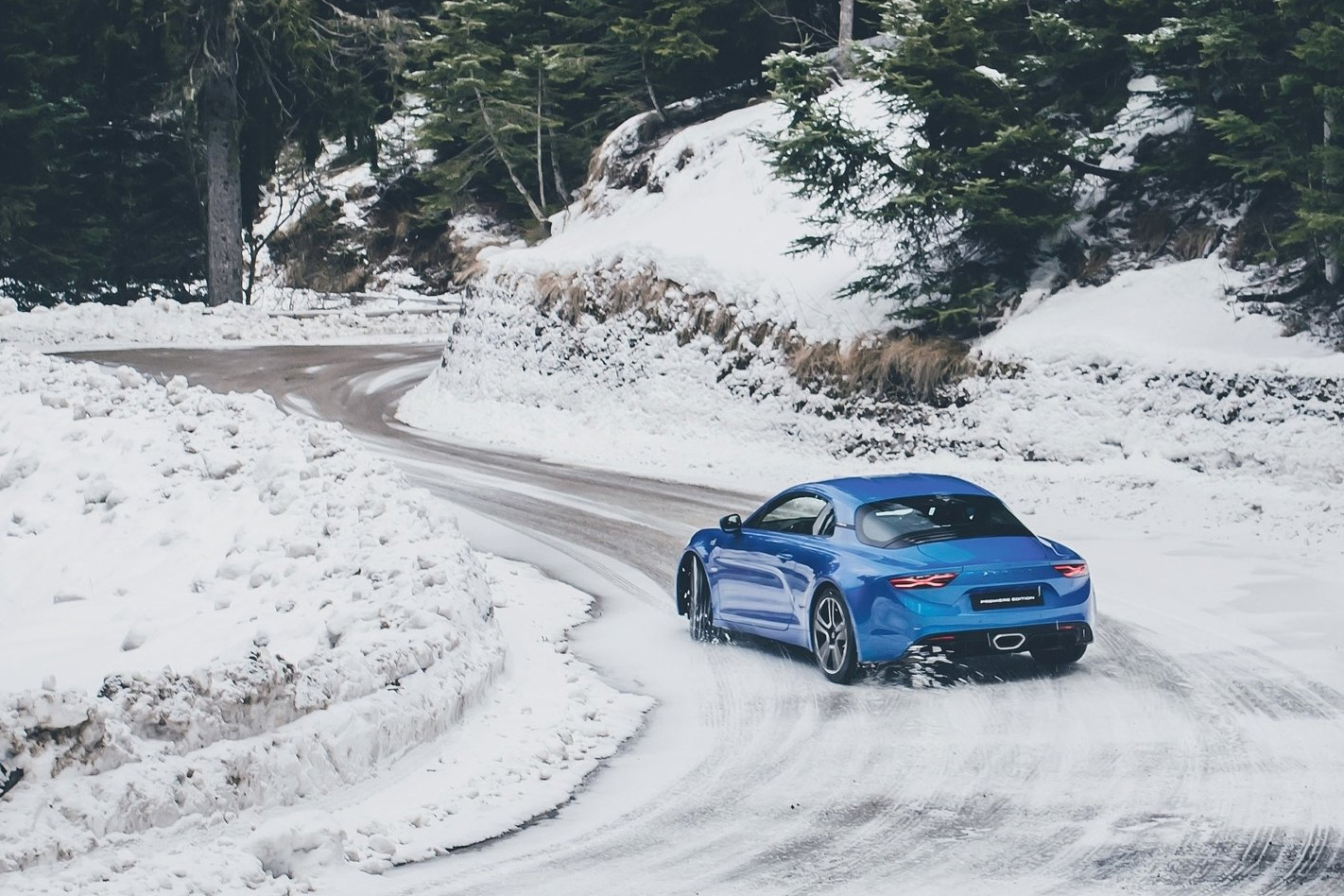
Alpine claims a weight distribution of 44:56 front-to-rear, which, in combination with its double-wishbone front and rear suspension, bodes well for cornering capability.
Renault Australia has not yet set a price for the A110, but has indicated that it expects it to fall somewhere between $90,000 and $110,000 – which would put it in competition with the $97,990 Lotus Elise Sprint 220 and the $89,000 Alfa Romeo 4C.
