
Mount Panorama and its enduro played the frontline to Holden and Ford’s rivalry in the 1960s.
Production-spec rules that allowed any showroom car to reach the podium gifted the winner an advertisement better than any billboard. With this in mind Holden didn’t give Australians a roomier LC-series Torana in 1969 like expected, but a couple more pots instead.
The coupe now had a six. As a result the Torana would end the Ford Falcon GT-HO’s dominating grip on The Mountain and pour Peter Brock his first glass of winner’s champagne. The Toranas found a natural foe in Ford’s Capri GT, but its destiny meant inevitable comparisons to Holden’s HT Monaro GTS 350, Bathurst’s 1969 winner.
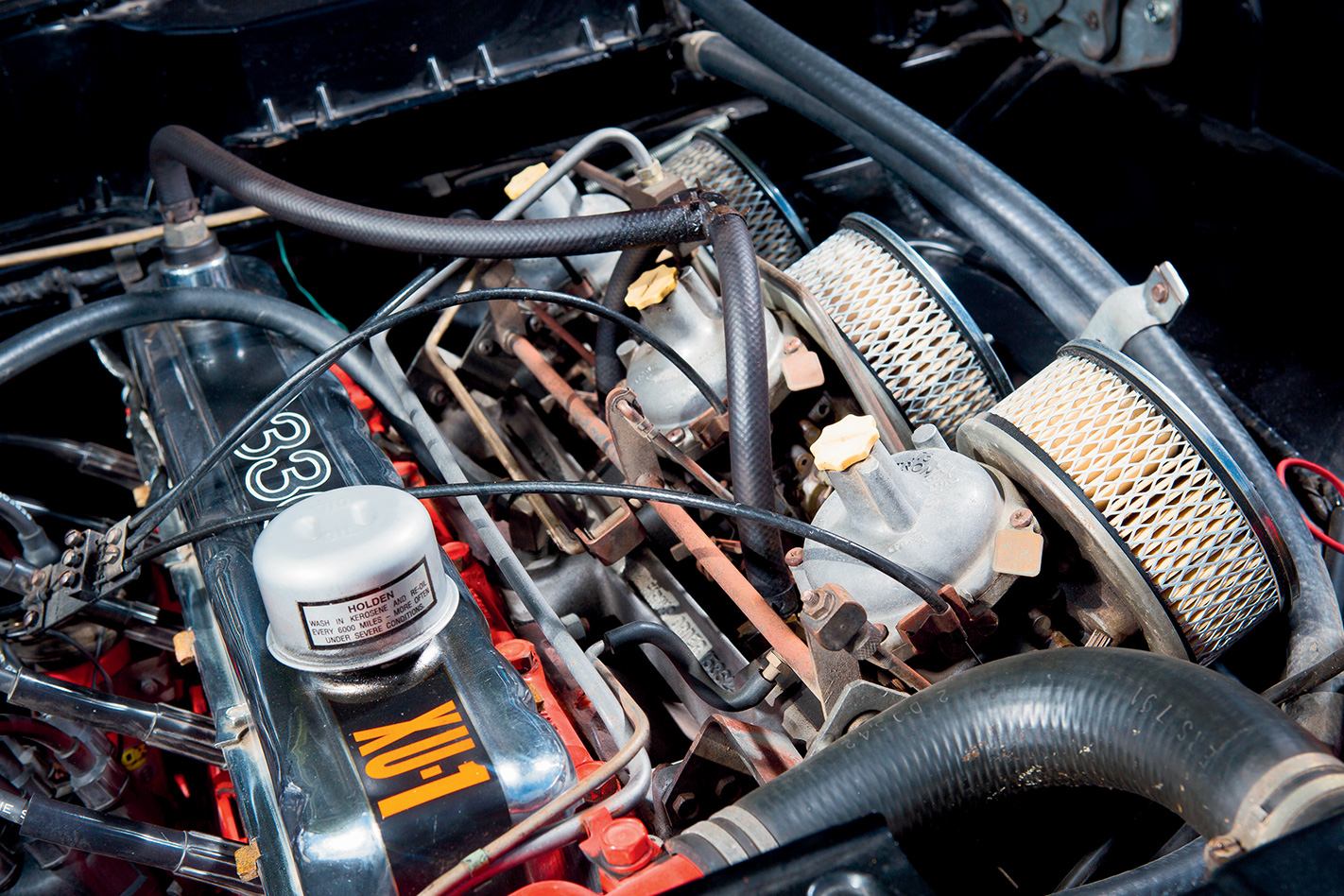
This inspired Harry Firth, the Holden Dealer Team’s boss, to put the GTR into development early on and try to extract something special in time for 1970’s race. So Holden dropped in a 3.1-litre straight six, the Monaro 350’s brake discs, stiffer suspension, and a larger 64-litre fuel tank.
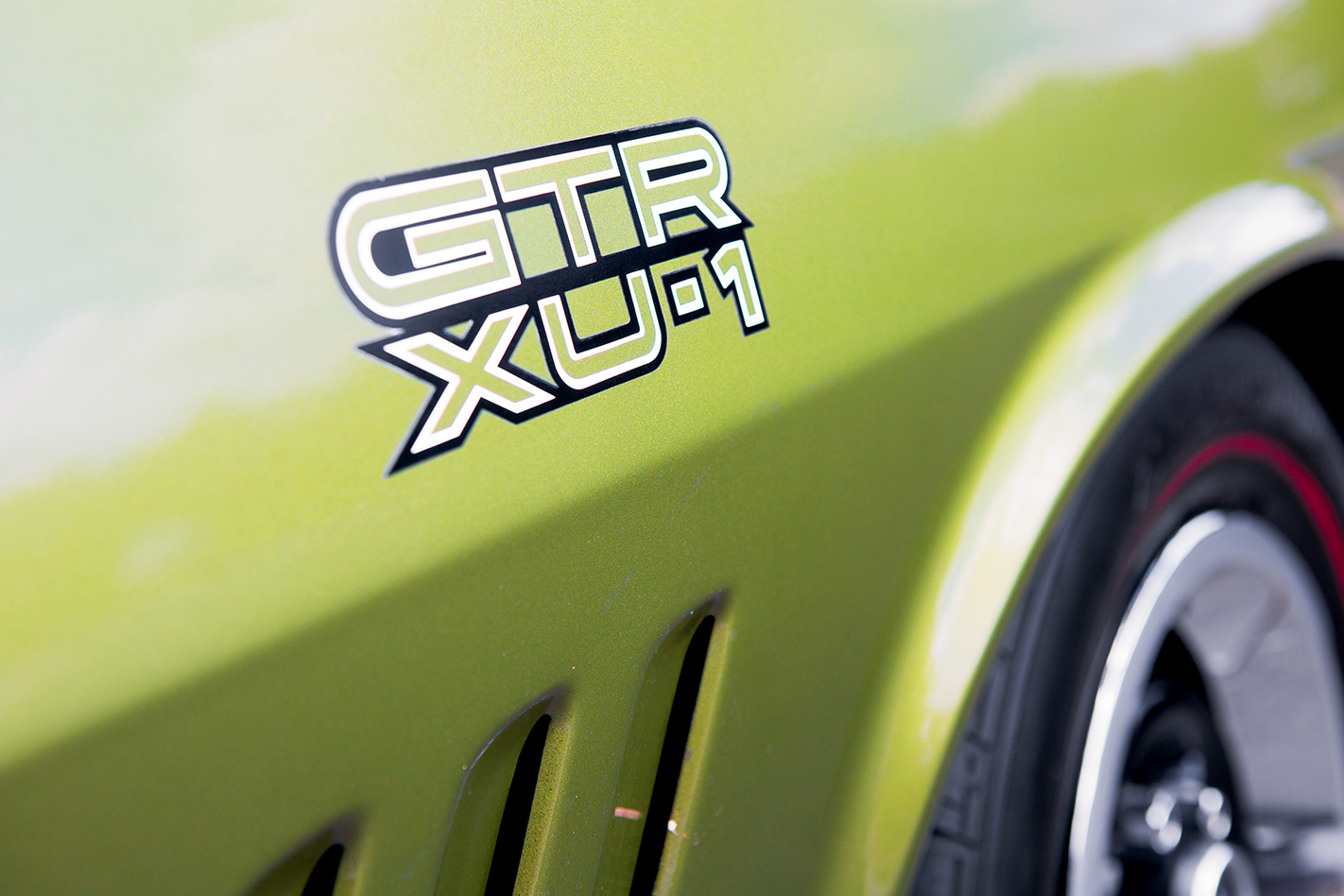
A new front-dam aided cooling and a tiny rear spoiler helped aerodynamics. Revealed as the XU-1 performance and handling package, the newcomer debuted with 118kW and 258Nm. Nowhere near the Monaro’s grunt, but its weight meant faster corner exits than the Monaro.
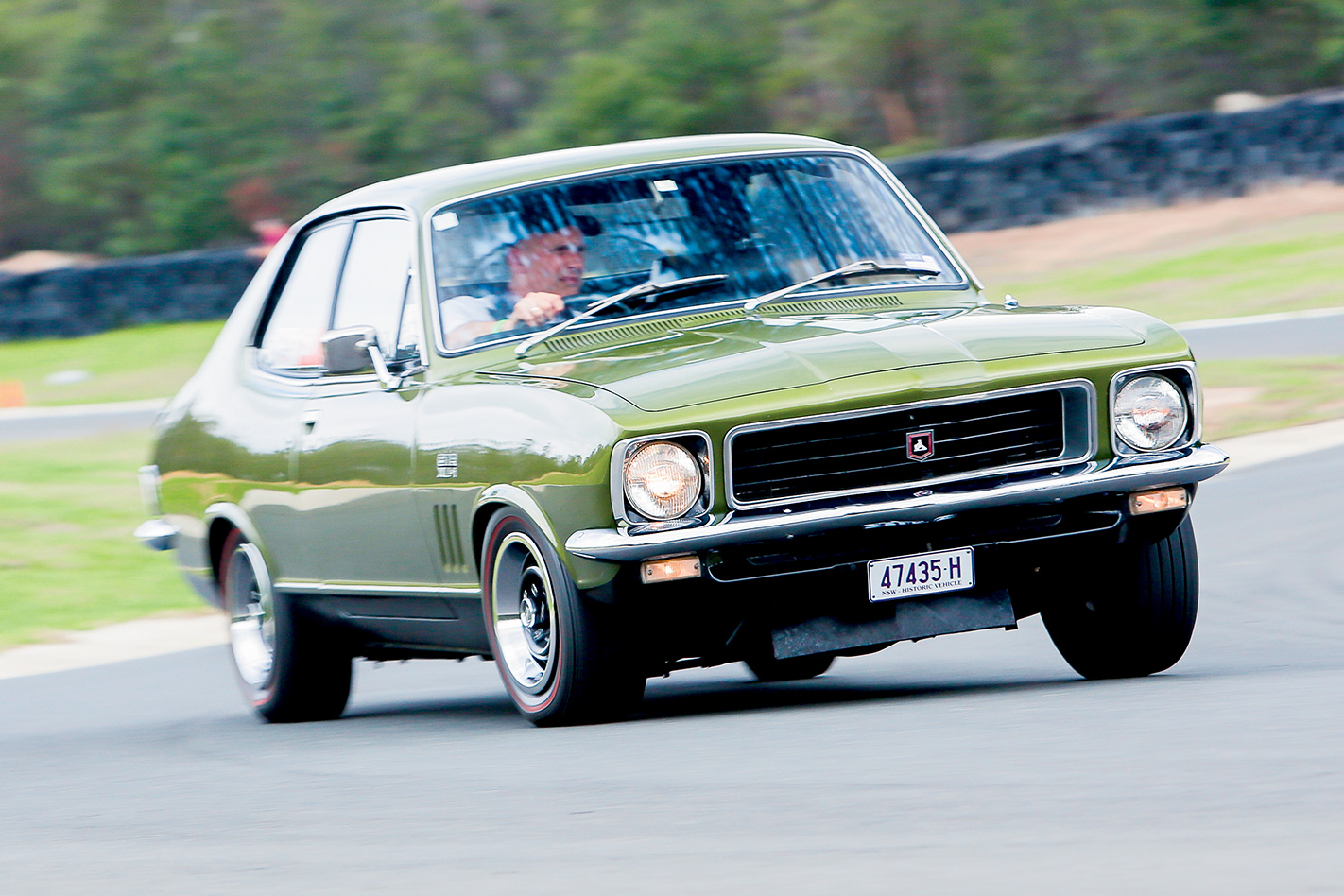
Vindication for Holden’s decision to swap out the Monaro at Bathurst came at Warwick Farm in September, 1970, when Colin Bond, in an XU-1 dusted off Bob Jane’s Monaro 350 at the Gold Star series production race. If HDT had made the wrong decision for Mount Panorama, it planned to dodge embarrassment by publicly gunning for a class win.
Come October, though, an all Torana XU-1 line-up with star drivers Norm Beech, Colin Bond, and an emerging Peter Brock, said otherwise. The Torana proved itself to take their class victory. Yet while it circulated Bathurst at great pace, the Falcon GT-HOs slaughtered them for outright speed.
More capacity, bigger carbies, higher compression, and new cam timing netted an extra 22kW and 13Nm. Permitted blueprinting may have yielded more power in race spec.
Qualifying for 1972’s race revealed the Torana 3.3-litre still lacked the Falcon’s dry pace, despite 212km/h on Conrod Straight, but rainy conditions rewarded its nimbler package and Peter Brock’s wizardry in the wet. He finished first by eight minutes to steal the winner’s ribbon from Ford’s hands and cement the Torana into this hall of fame.
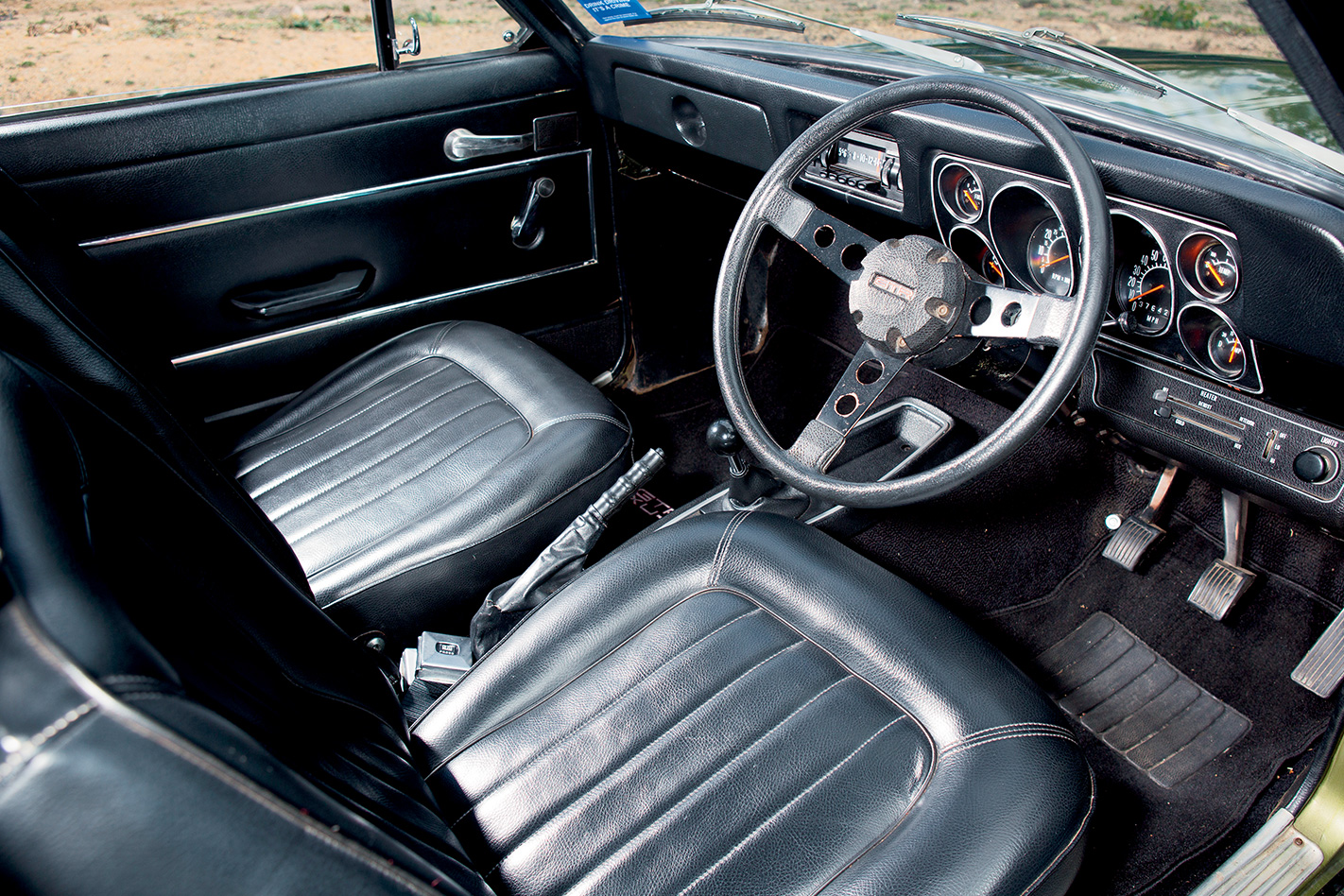
Holden used this to close the speed difference to Ford, however, its racecars and road cars were now a separate species. Leaving the LJ Torana GTR XU-1 as the last race-winning Holden you could buy new.
LJ Torana GTR XU-1 Specs: On sale: 1970-72 Engine: 3310cc 16, OHV, 12 valve Power: 140kW @ 5600rpm Torque: 271Nm @ 4000rpm 0-97 time: 8.4 seconds (claimed) Weight: 1098kg Price new: $3455
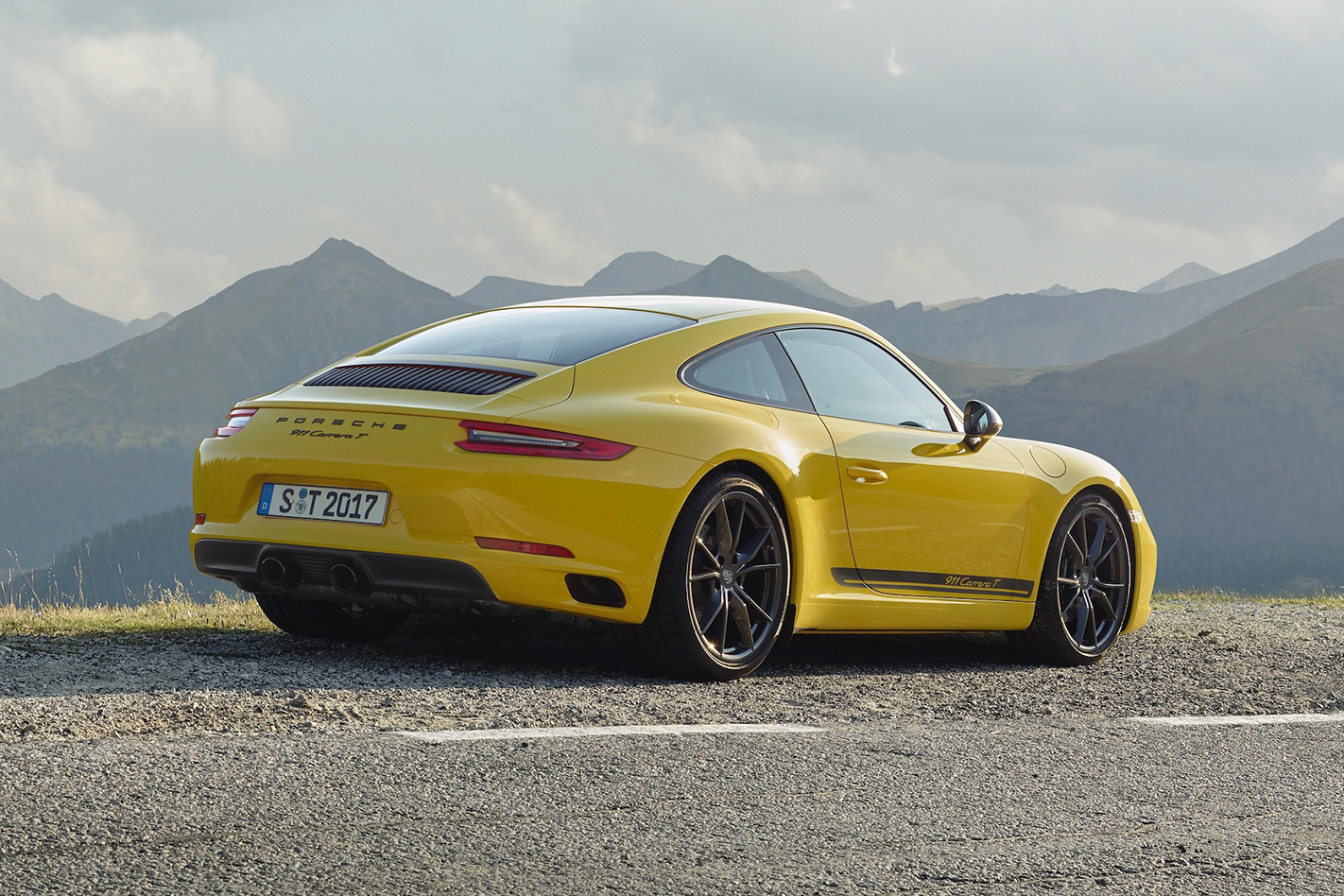
The next Porsche Carrera T has been announced with a manual gearbox and the addition of rear-wheel steering.
Porsche says the new Carrera T was inspired by the 911 T of 1968, so it weighs less than the Carrera. But only by 20kg.
It also has shorter gearing and a shorter rear axle ratio, and it now has rear-axle steering as an option, something the standard Carrera doesn’t get.
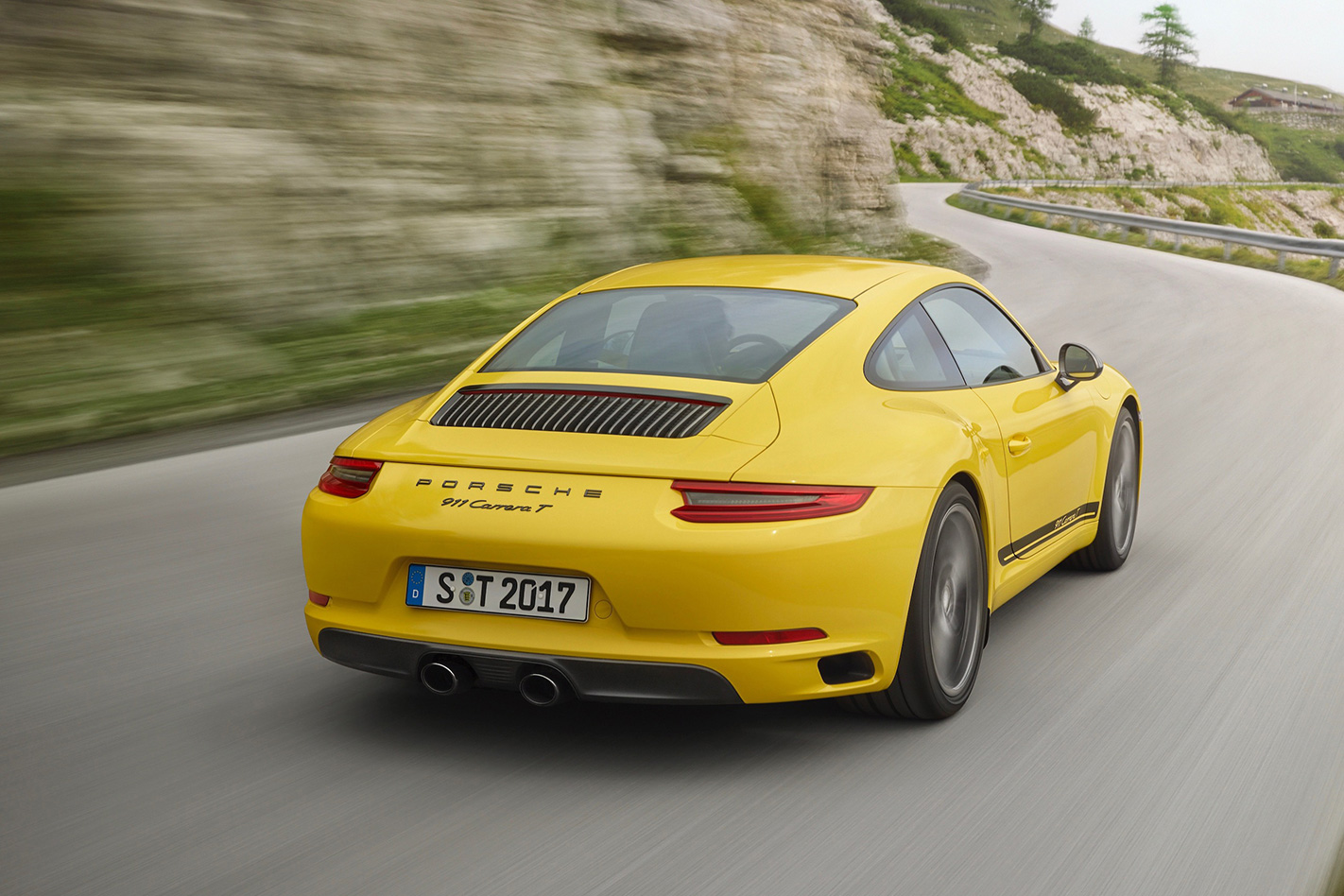
Both transmissions will get the car to a top speed of “over 290km/h.”
The Carrera T also scores Porsche’s PASM sports chassis as standard, as well as its Sport Chrono Package.
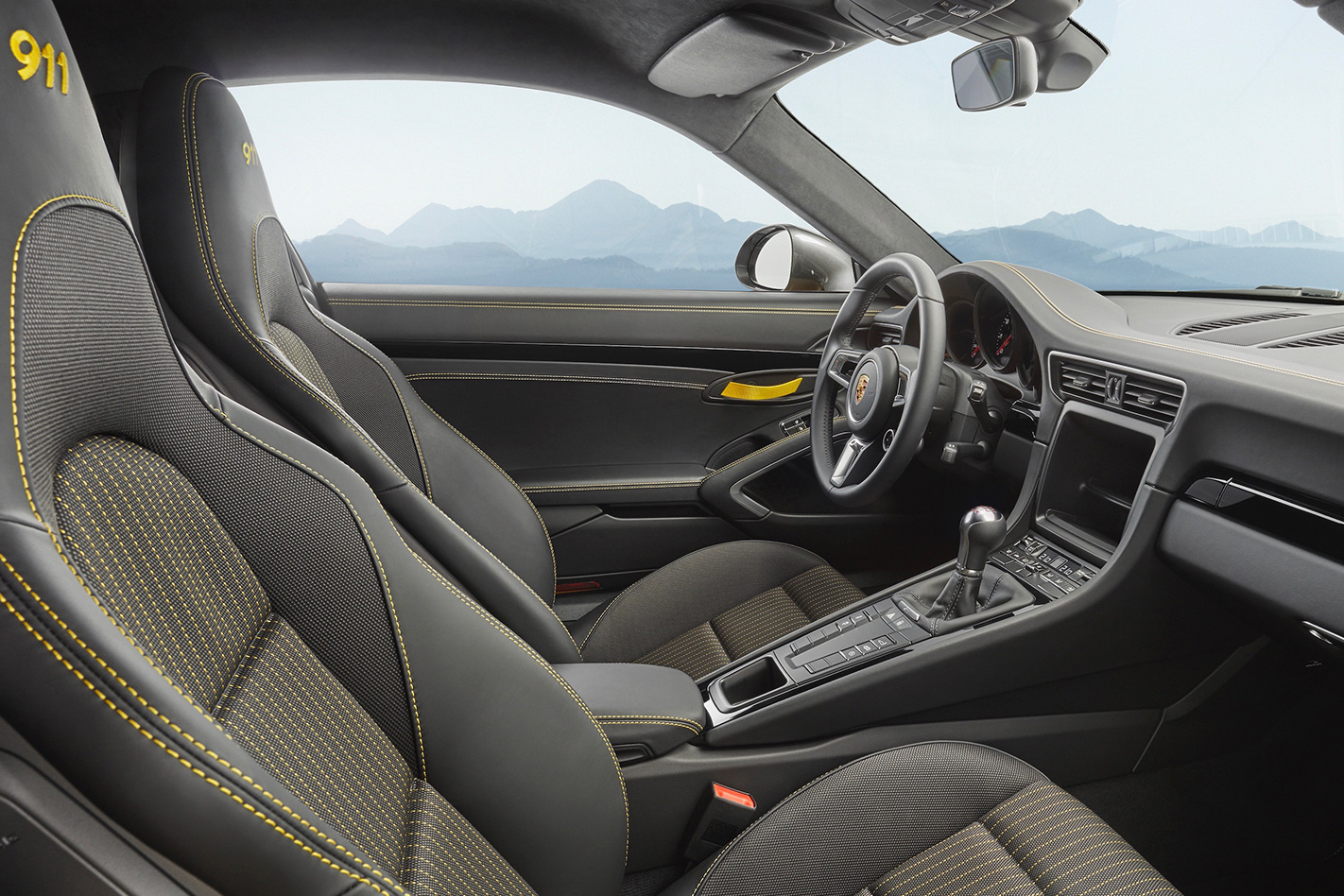
“The sound absorption has been largely reduced. The rear seats have been omitted along with the Porsche Communication Management (PCM), though both are still available on request at no additional cost.”
In Europe and the US, the Porsche Carrera T can be ordered immediately, though won’t be ready until January 2018. Australia’s timing for delivery is yet to be confirmed.
WHEN it comes to gaming controllers, they don’t get much more outlandish than this, a full-size Lamborghini Aventador.
If you use a regular ol’ gaming controller, or even a proper simulator rig to play racing games, you have nothing on YouTuber POG.
The social media star decided to celebrate the release of Forza Motorsport 7 by transforming his Lamborghini Aventador into the coolest gaming controller in the world.
His ultimate gaming set up is displayed in a new video, which also includes a high-speed blast to and from the game store to pick up an Ultimate Edition copy of the game.
With his Xbox hooked up to the Aventador, POG successfully turns his Lamborghini into a controller for the game.
POG can be seen steering, and changing gears along with the projected display on his garage wall.
The final set up isn’t exactly neat and pretty, with multiple wires draped across the Aventador, and a projector perched atop the roof. But no one else has a gaming controller with a naturally-aspirated V12 heart in their garage, do they?
One of the best parts of the video is the fact POG has to climb into his car Dukes of Hazard style, as opening the scissor doors would snare and tug on the cords running over the roof.
To really bring out that shiny shade of green jealousy, the other cars in POG’s garage include a Ferrari 458 Speciale Aperta and a McLaren 675LT.
WHAT IS IT?
This is BMW’s smallest performance car; a five-door hot hatch with a six-cylinder heart of gold and a unique point of platform difference.
WHY WE’RE DRIVING IT
A fair question, especially as BMW has made no mechanical changes to the M140i for its 2018 update. But this is a special car – the only rear-wheel drive hatchback on the market, and probably the last – so we’ll take any chance we get to have a steer while we still can.
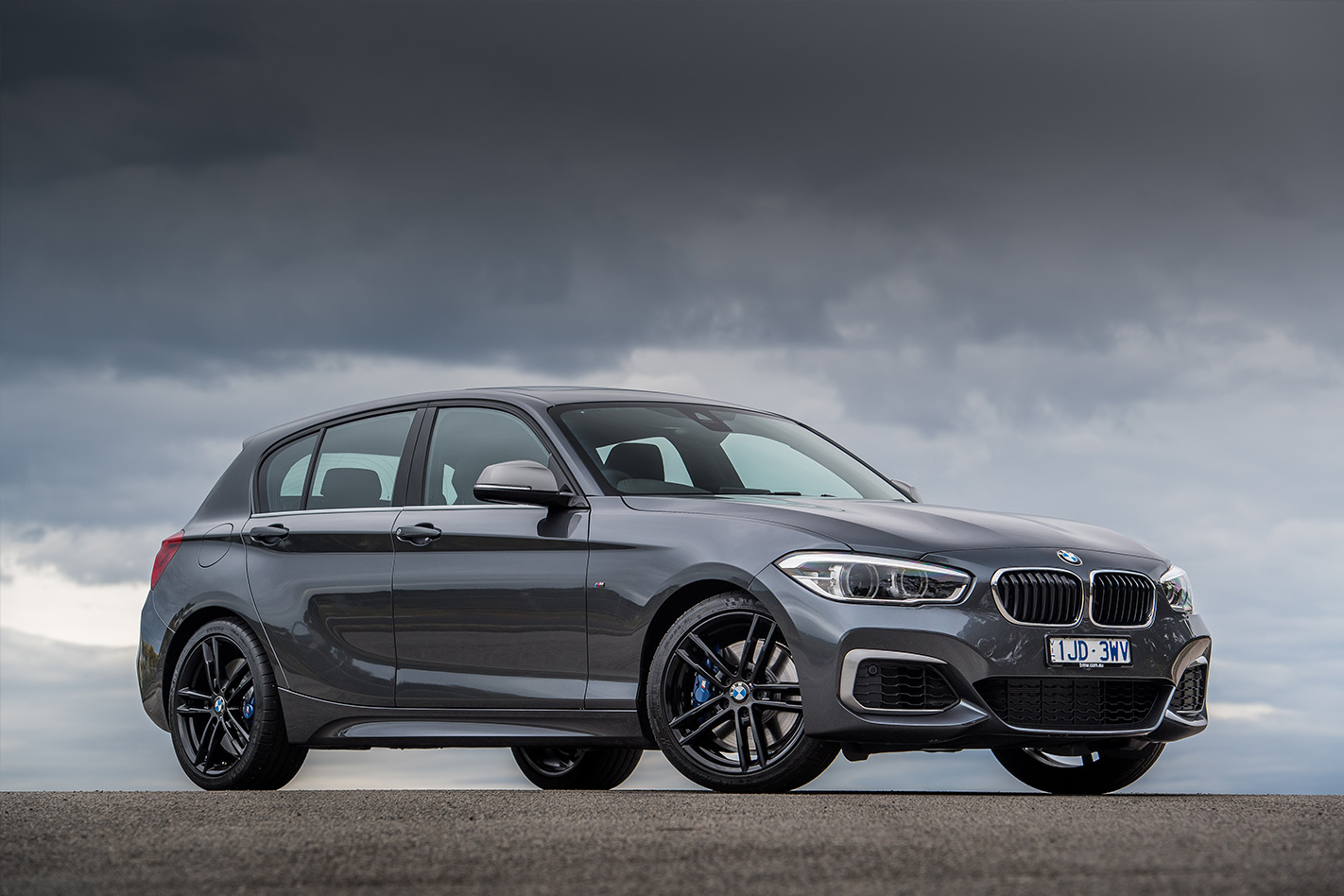
The M140i has no direct rival on spec, but the Audi S3 Sportback ($62,900) comes closest in terms of performance, prestige and price.
THE WHEELS VERDICT
The BMW M140i generates smiles in ways other hot hatches can’t. After almost six years on the market (developing from the M135i of 2012) even its facelifted styling is looking long in the tooth, but delve beyond the superficial and this practical five-door balances daily driveable comfort and strong dynamic aptitude with a powertrain that deserves to be savoured in this scaled down package.
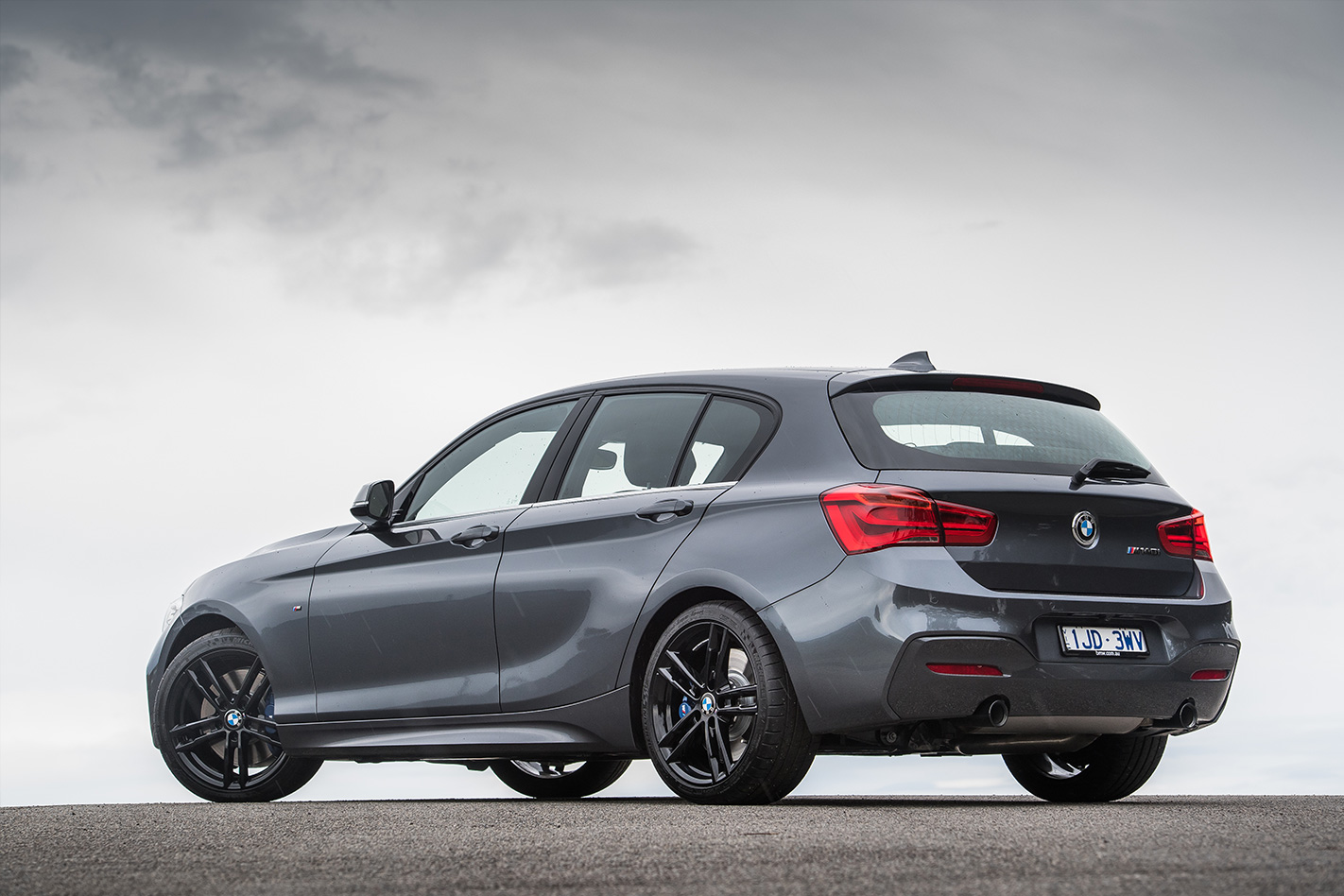
MINUS: Awkward long-nose proportions, tyre roar, ageing interior
THE WHEELS REVIEW
HIGH five to you, BMW, for sticking with the M140i and giving us a little longer to enjoy the only turbocharged six-cylinder and rear-wheel drive hot hatch in a segment dominated by front- and all-wheel drive five-doors with boosted four-pots.
For 2018, the second-gen 1 Series has copped a minor update that will likely be its last hurrah. Scuttlebutt suggests the next-gen (arriving 2019) will fall into line with its contemporaries by sharing transverse UKL underpinnings with the BMW X1 and 2 Series Active Tourer.
What does that mean? Rear-drive is on its way out. So now is the time to relish this petite performer’s platform purity.
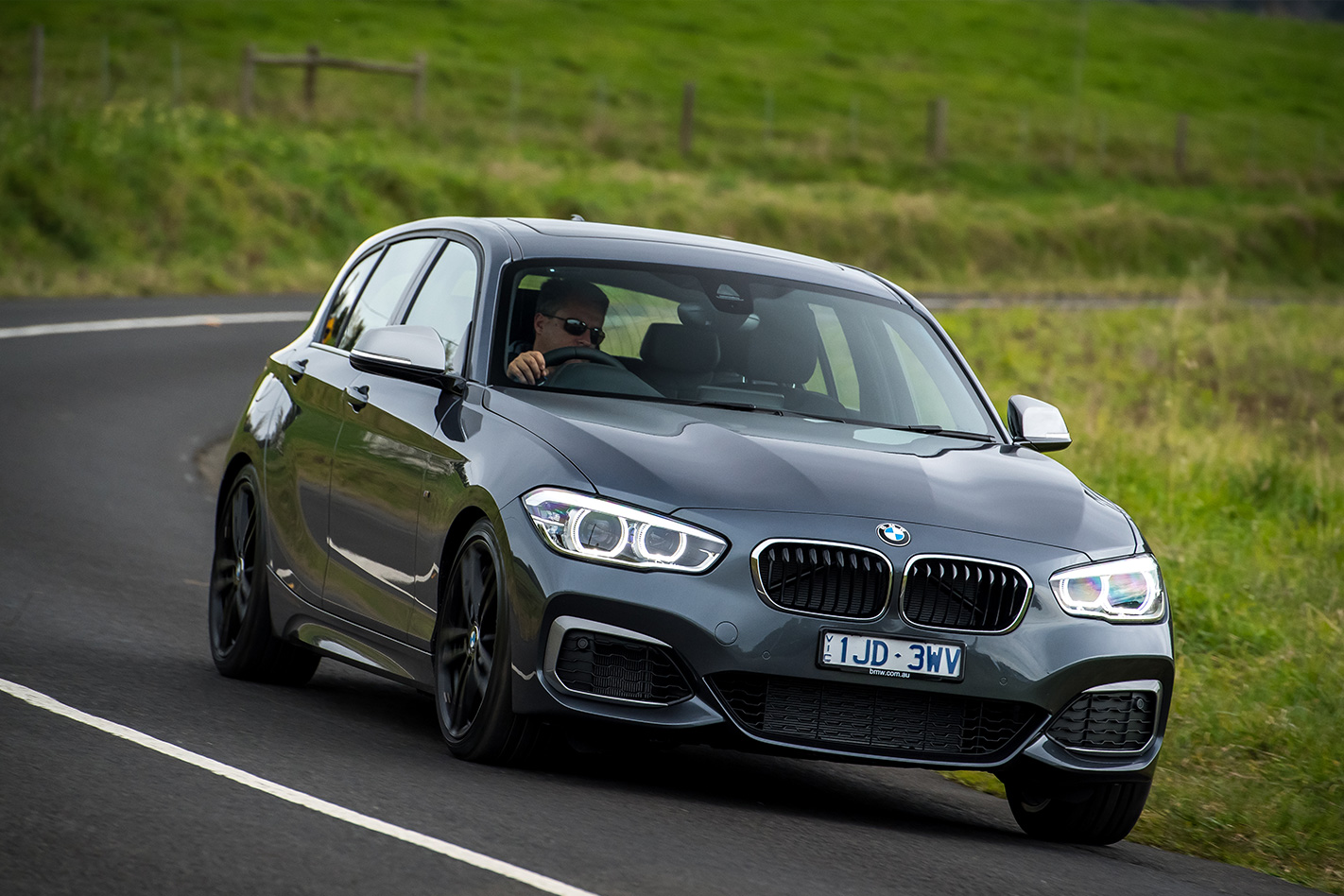
Recent revisions introduce BMW’s slicker iDrive6 app-style infotainment interface and a reworked styling package for all 1 and 2 Series variants. Mechanically, the M140i is unchanged, but that’s not cause for concern.
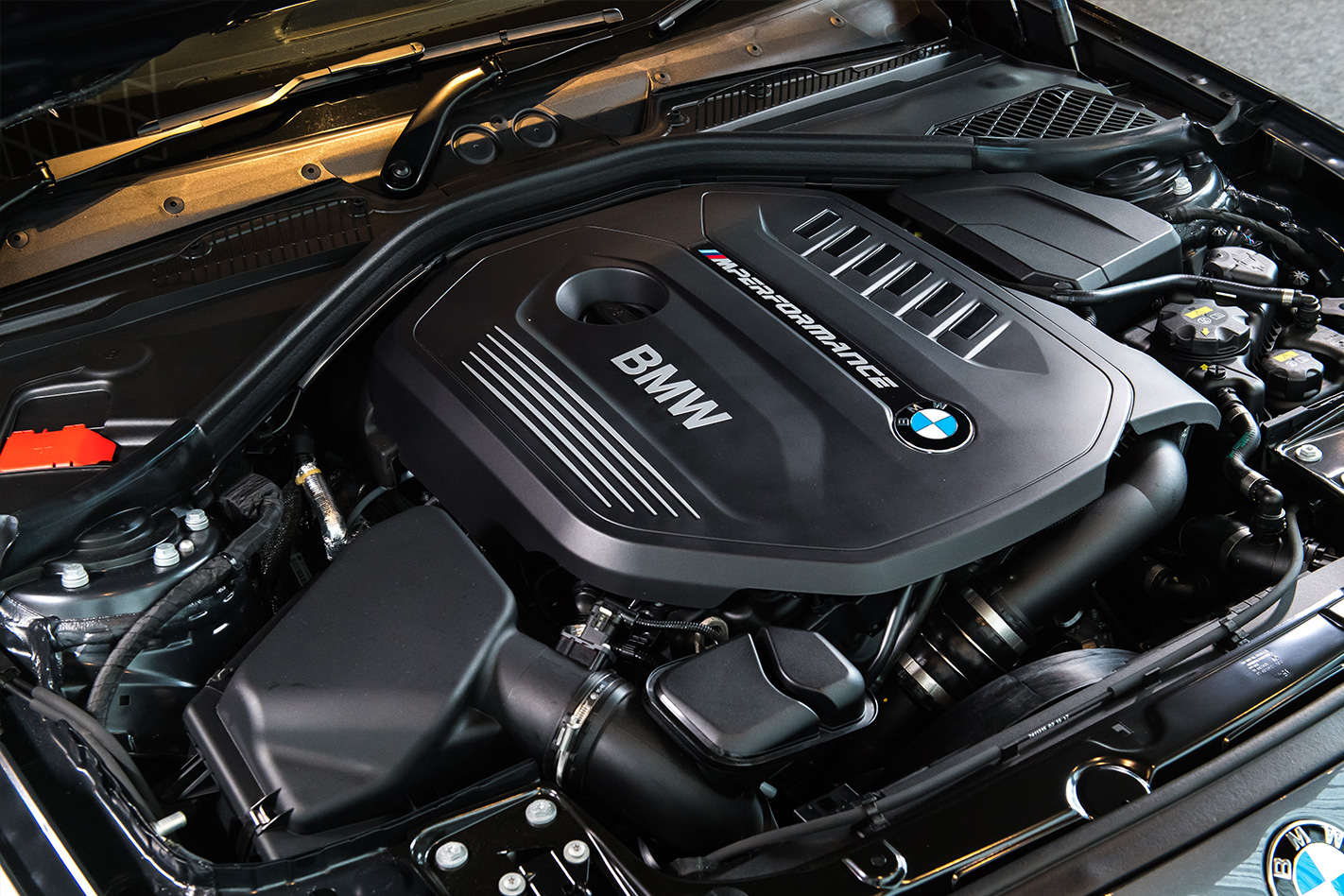
Up front the staggeringly good B58 3.0-litre inline six remains, generating 250kW and 500Nm – more torque than the pedigree BMW M2. It pairs seamlessly with an eight-speed torque converter auto (or six-speed manual) and it’s this purring powertrain that takes centre stage in the M140i. Burly acceleration and a vast power band launch it to 100km/h in 4.6sec, crooning a velvety note right up to redline.
Standard adaptive dampers cope well in most conditions, though the suspension would benefit from a greater range of movement overall. As it is, with limited travel, the back-end gets skittish over rising and falling road imperfections as the rear wheels struggle for grip under heavy throttle.
That rear-driven characteristic means there’s more to manage at the limit in the M140i. It’s an extra degree of difficulty for fans of point-and-click hot hatches like the VW Golf R, but the ultimate thrills offered by the M140i are unique to it. It’s an entertaining performer with a liveable, docile side. Enjoy its point of difference while you still can.
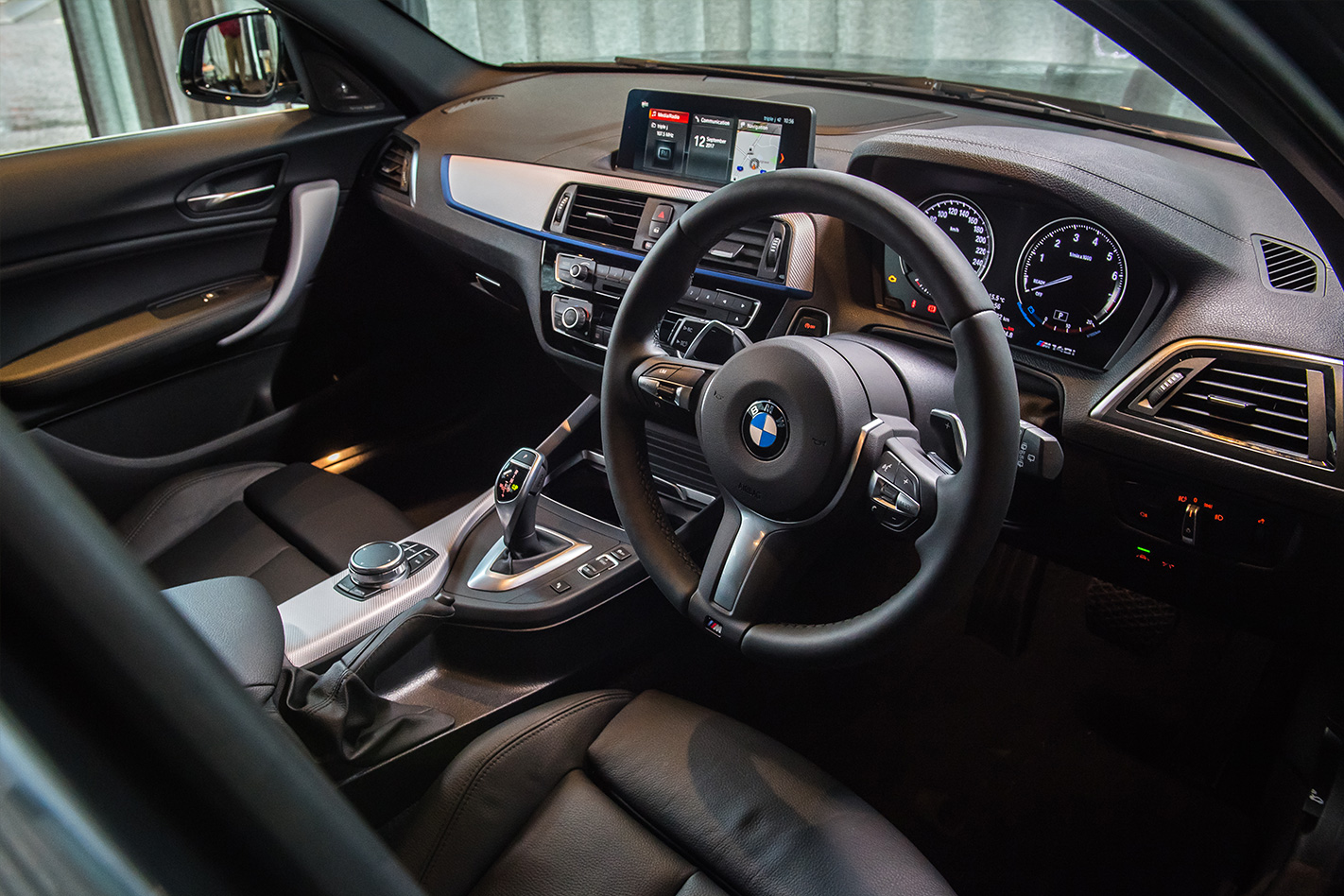
Model: BMW M140i Engine: 2998cc 6-cyl, dohc, 24v, turbo Max power: 250kW @ 5500rpm Max torque: 500Nm @ 1520-4500rpm Transmission: 8-speed automatic Weight: 1475kg 0-100km/h: 4.6sec (claimed) Economy: 7.1L/100km Price: $59,990 On sale: Now
After more than a generation of Audis being genetically linked by the now-ubiquitous single-frame grille (dubbed ‘koala nose’ in the Wheels office), the Ingolstadt brand’s design language is set to forge ahead with greater differentiation between model lines.
Cue the world premiere of the second-generation Audi A7 Sportback.
Hot on the heels of the fourth-generation Audi A8, the new A7 represents a less conservative, more progressive take on Audi’s new “upper class” design DNA, previewed by the Prologue concept at the LA show in 2014. But unlike the more conservative A8, the edgy A7 pushes Audi’s new design language into far more dynamic territory – defined by its even more pronounced proportions.
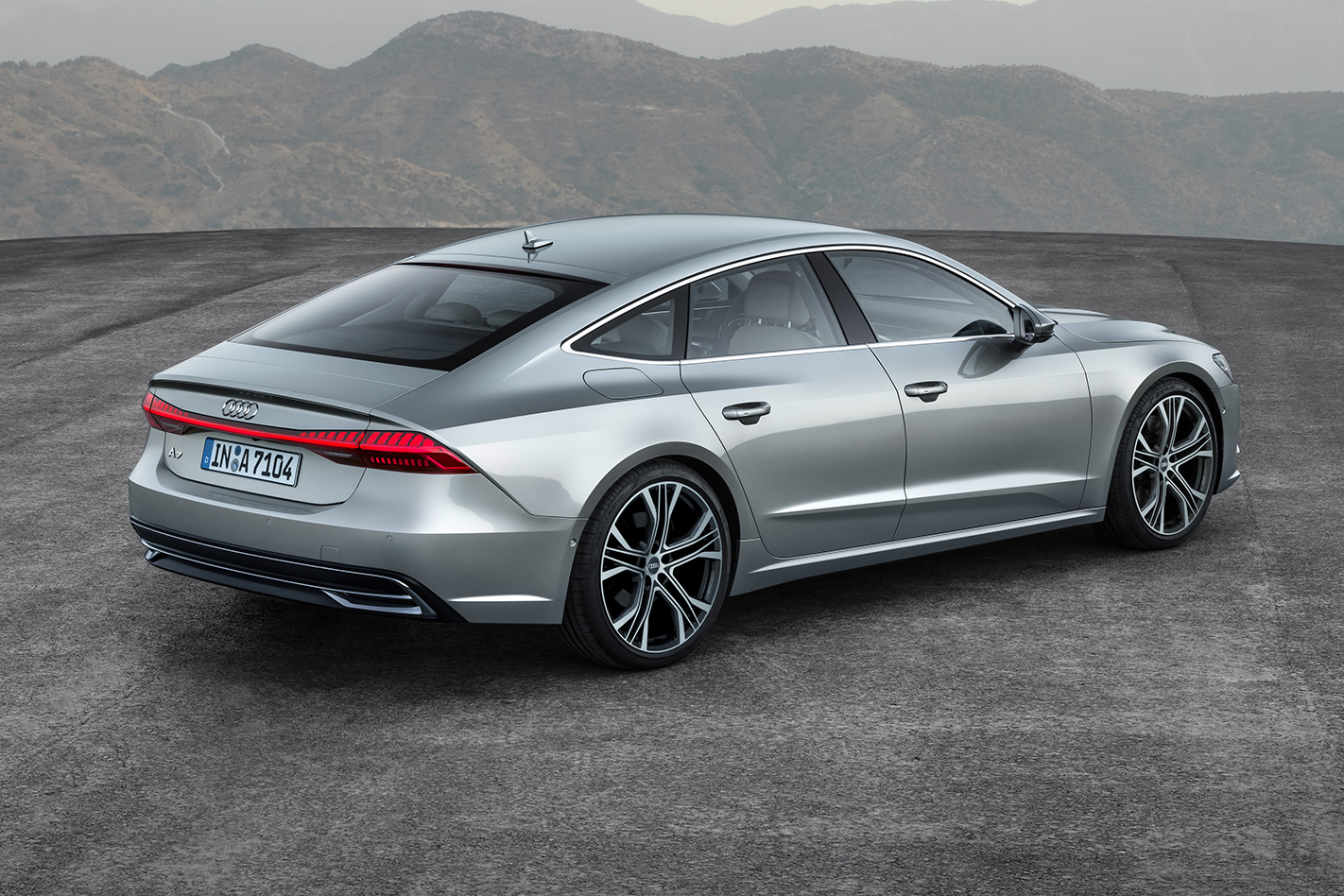
Going forward, Audi intends to create far more differentiation between its A, Q, and R model series. Indeed, according to Audi’s flamboyant Design Director, Marc Lichte, the Prologue concept’s styling will be split into “three different characters” for its full-size models, culminating in the all-new Audi A6 set to debut next year.
Now that the unifying cue of the single-frame grille has visually established the Audi brand in the world’s largest car market – China – the Ingolstadt design team feels energised by a freedom that “doesn’t happen very often” in fragmenting what defines the look of an Audi.
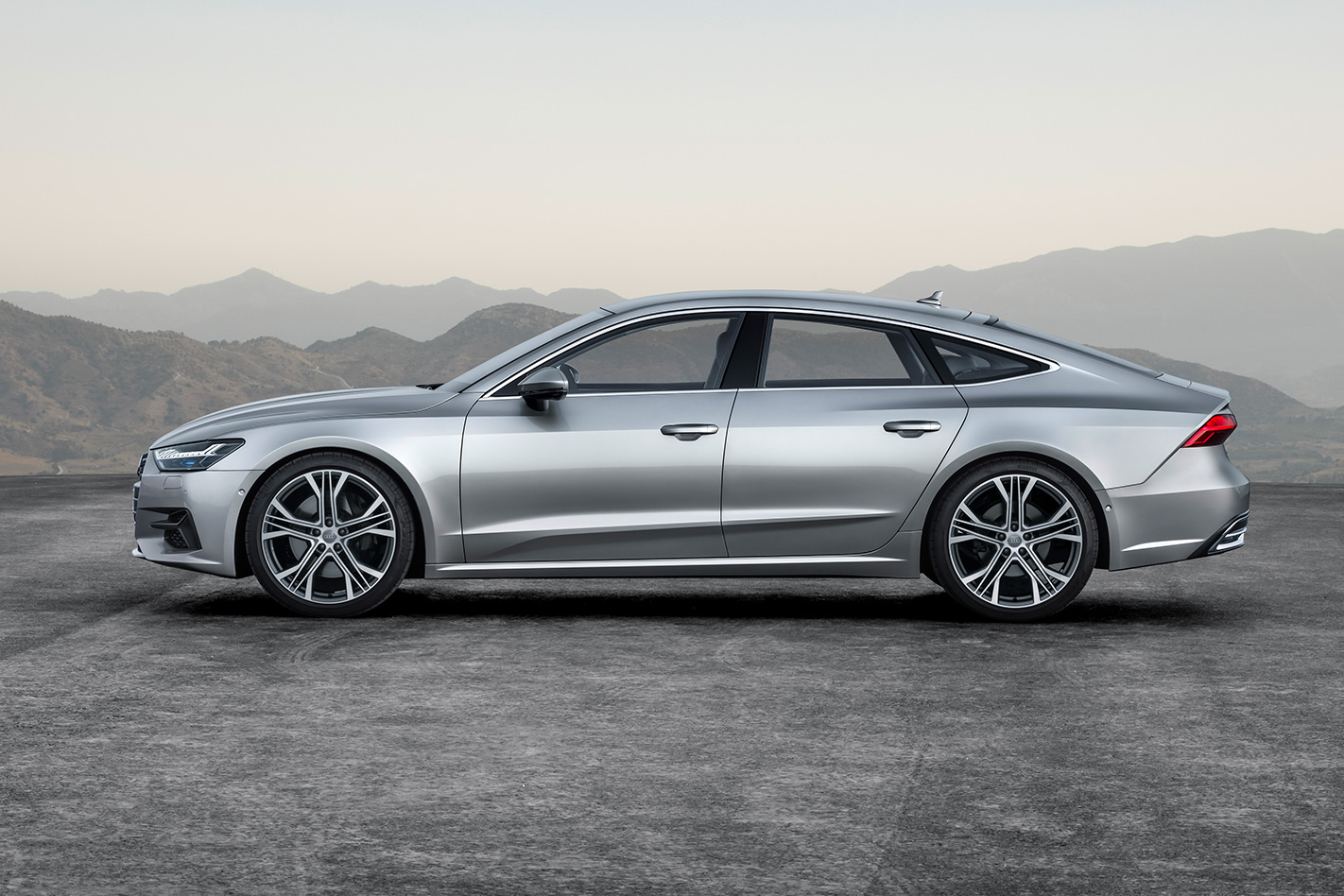
Chatting to Audi exterior designer Sebastiano Russo at the A7’s world premiere in Ingolstadt, Russo was adamant that this “sculptural” look really defines the new-gen A7, including subtle “quattro blisters” over each wheelarch.
“For us, the really low shoulder [line] was important for the car because with that you can really bring the point of gravity down … [And] with the rocker [along the lower door edges], the bottom line is starting really dynamic in the front, then raising and gradually growing to the rear. [This attaches] to the strong graphic of the new ‘boat-tail’ A7 design theme, [creating] the same 3D-effect we tried to achieve [with] the tail-lights.”
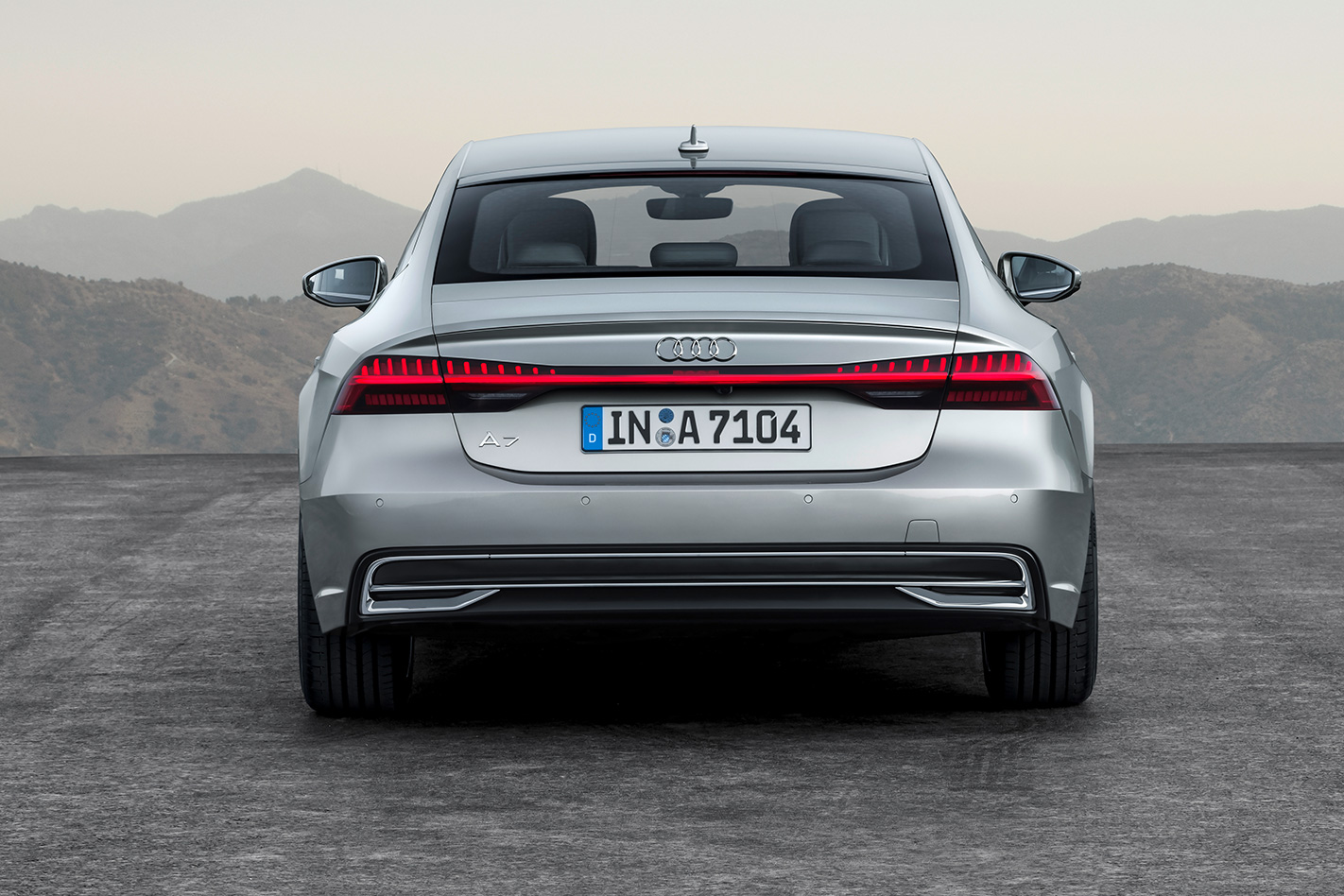
“Underneath the lights you have one third shadow, two-thirds light, and if you take a look together the proportions, [it] creates this lightness. And together with the width of the car and this integrated UFO light, for me that’s [the] outstanding feature of the A7 which you’ll really recognise from far away.”
More familiar is the new-gen A7’s silhouette – a “really low back with this really iconic shape to it”, inspired by the rakish roofline of the 1970 Audi 100S Coupe.
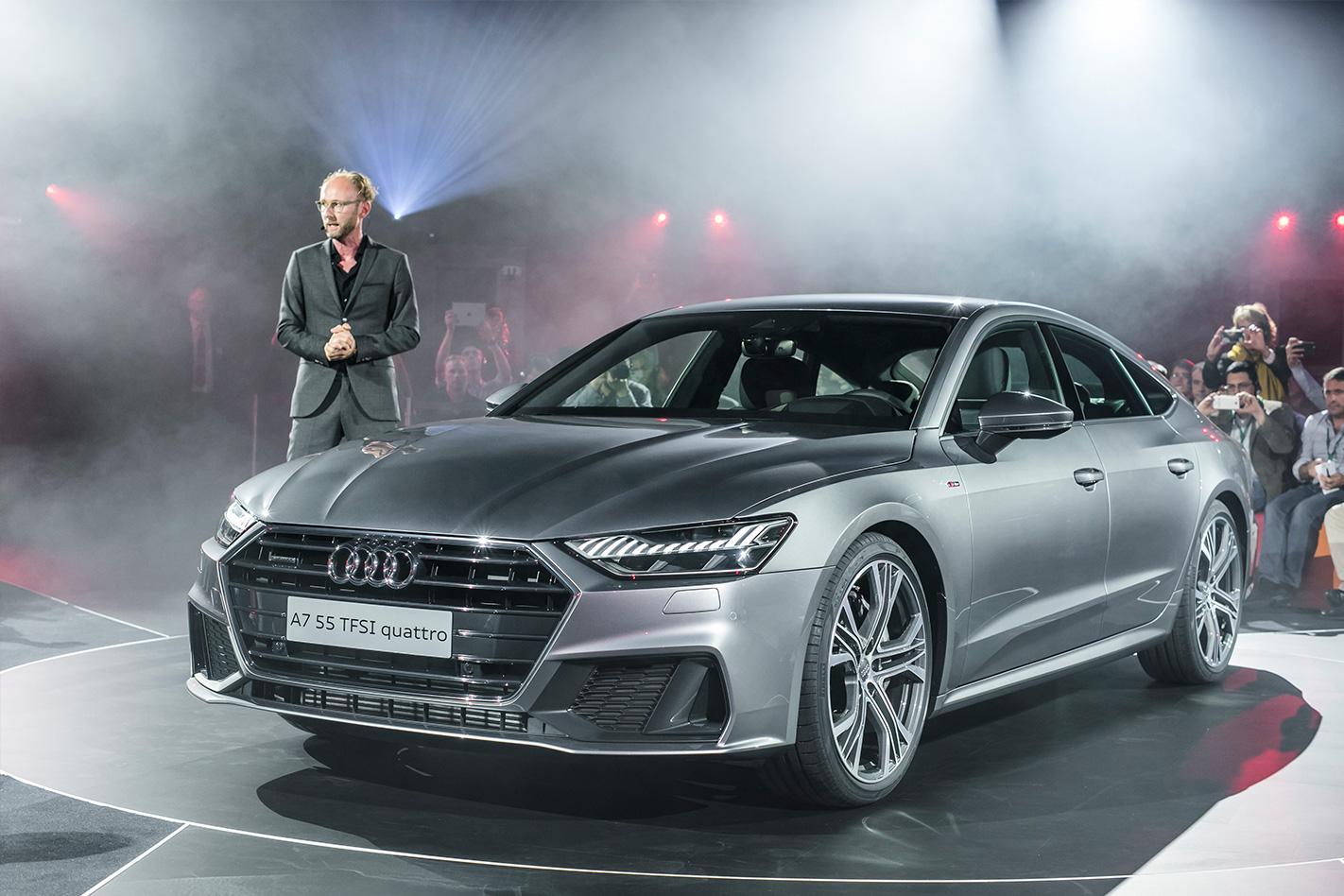
“We raised the [new A7’s] silhouette by 30mm to make it much more sporty, much more progressive … plus we achieved more headroom.”
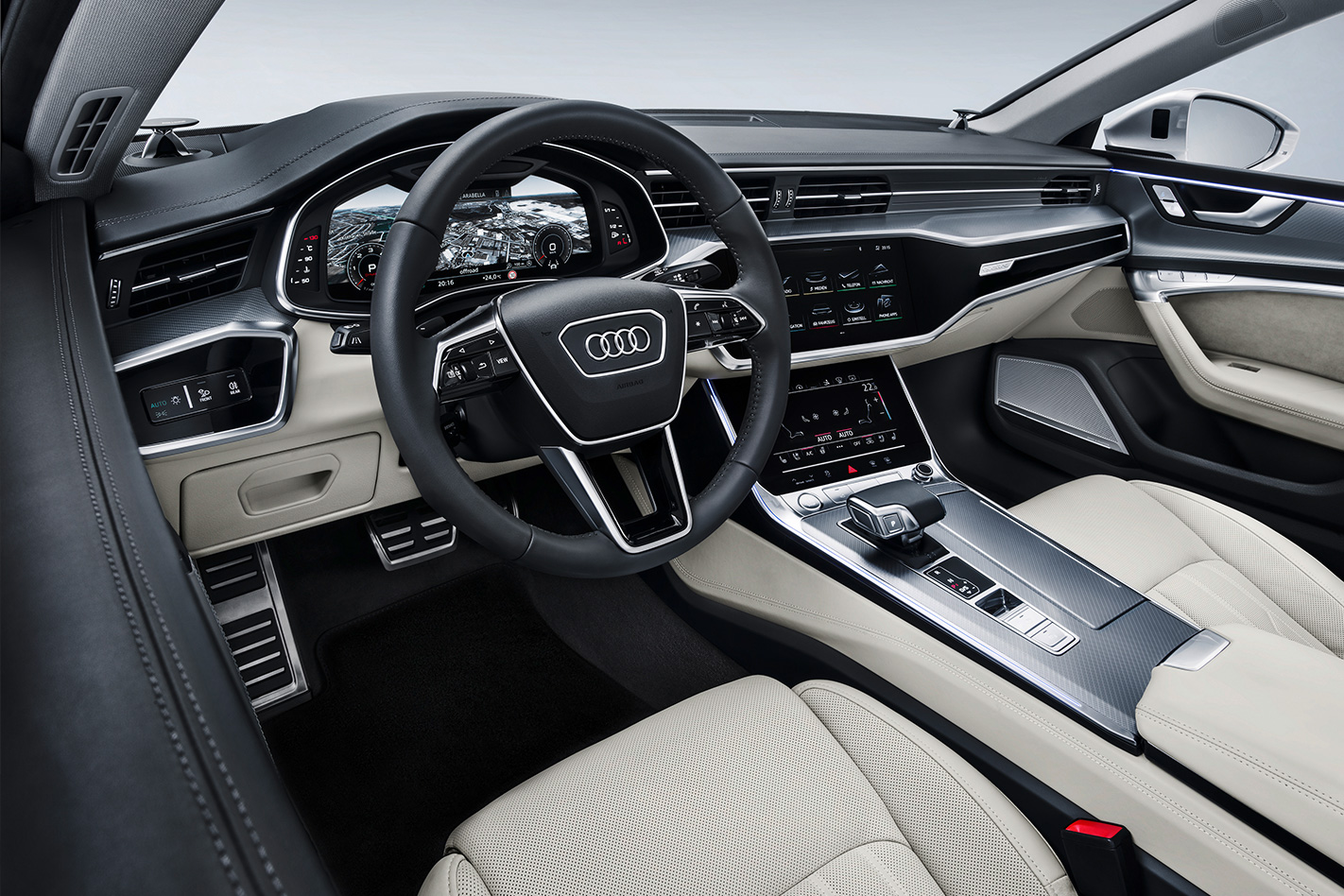
Set to go on sale in Germany in February, the new-gen A7 is unlikely to appear in Australia until late 2018. At present, just the one drivetrain has been revealed – a 250kW/500Nm 3.0-litre turbo-petrol V6 in the A7 55 TFSI quattro.
Once you get past the epic saga that is the six-minute-long intro movie (you should watch it once, it’s cool), you’ll find Gran Turismo Sport is a very different GT to the ones you’re used to.
The main menu is simplified, with no immediately obvious main career mode or primary gameplay option. And that’s because there’s not really a single player career mode anymore.
There’s no GT Mode, no modifications for your cars – in fact you barely even look at your own garage.
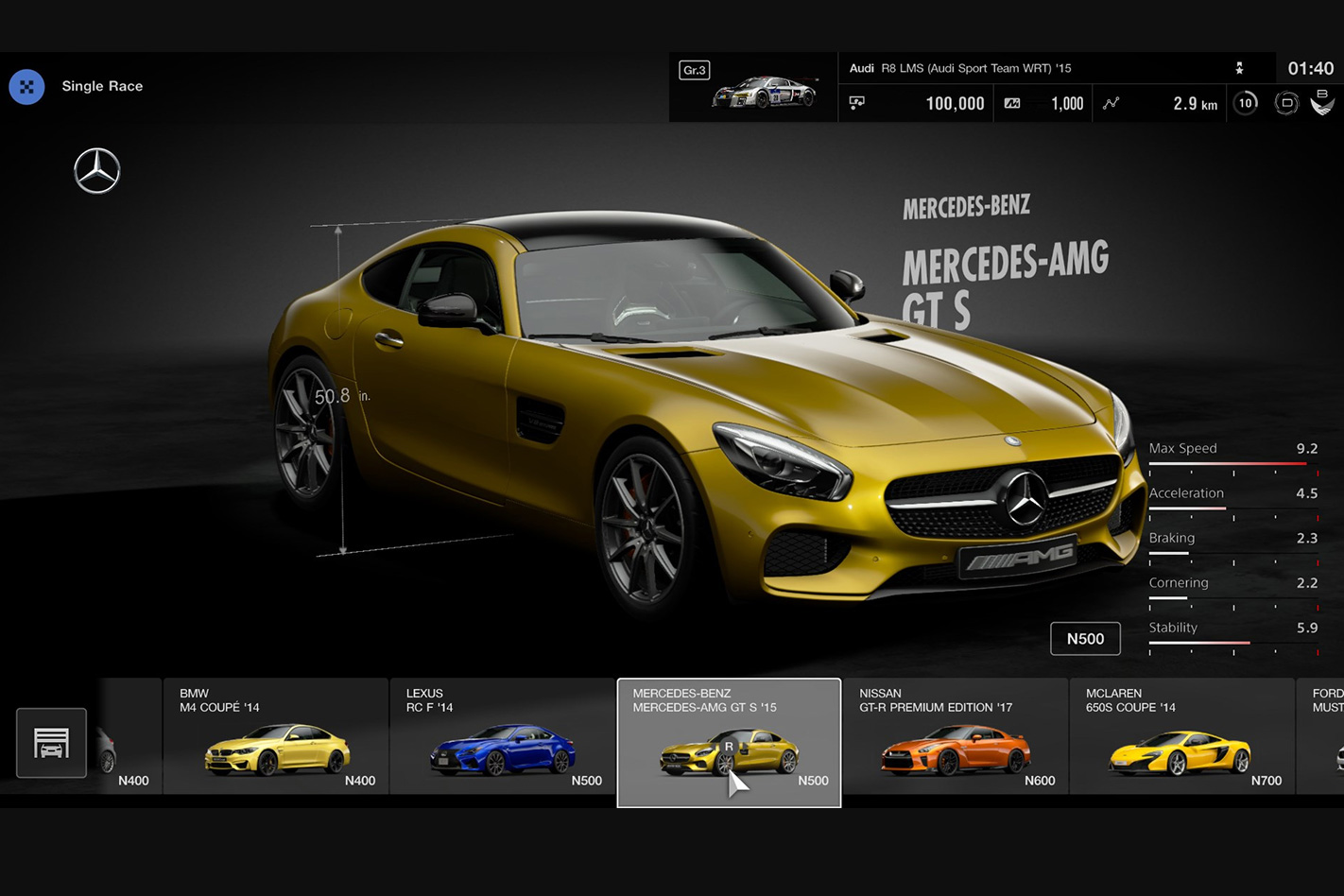
This also means there’s not a lot you can do if the servers are down. You’re limited to playing single-race arcade-style challenges, and none of your progress will be saved without a connection.
Now, at this point it’s worth noting we’ve only been looking at GT Sport over the weekend, and haven’t had a chance to dive deep and see how the game holds up further into its gameplay, but we’ve dabbled with each of its features and so far, despite a lack of traditional Gran Turismo features, we’re impressed.
Online, a mostly realistic pre-race qualifying system means competitors are placed into races with other drivers whose best times most evenly match their own.
This doesn’t necessarily mean the driver’s you’re placed with will be of a particular skill level, though. That one good qualifying lap might have been a fluke, and they could be more keen for an demolition rumble-on-the-‘Ring than a proper race.
For this, a sportsmanship rating was introduced, but we’ll be able to judge that system more accurately when we’ve had enough time to fully review the game.
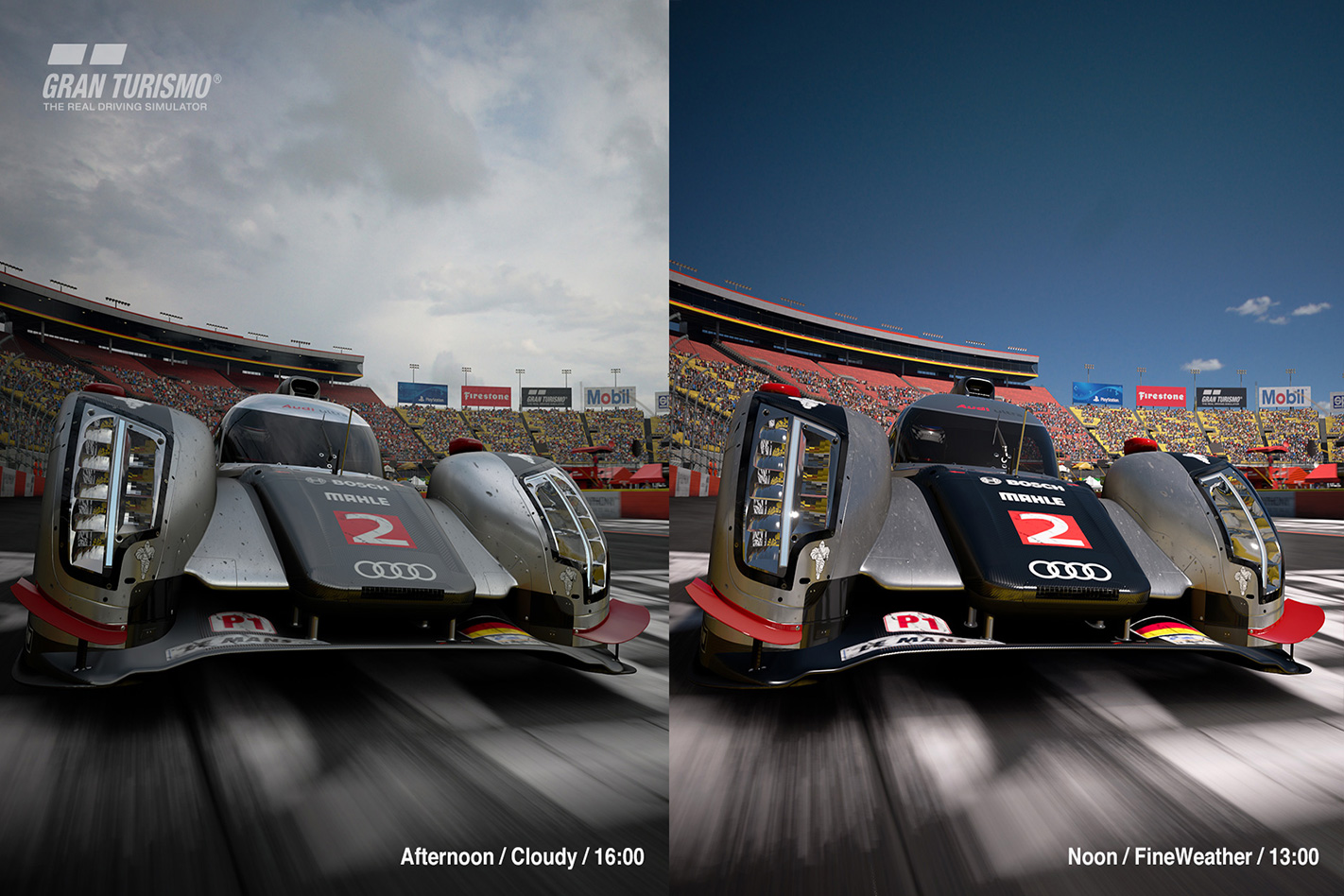
As usual with a GT game, there are a lot – a lot – of repetitive drive training exercises that will make completionists both initially frustrated and eventually satisfied.
A new feature is drift racing, which is quite challenging to get used to if you’re expecting the game mode to make sliding the car any easier than it is in a regular race mode. This ain’t Need For Speed, and you won’t look like a driving god. Same goes for rallying.
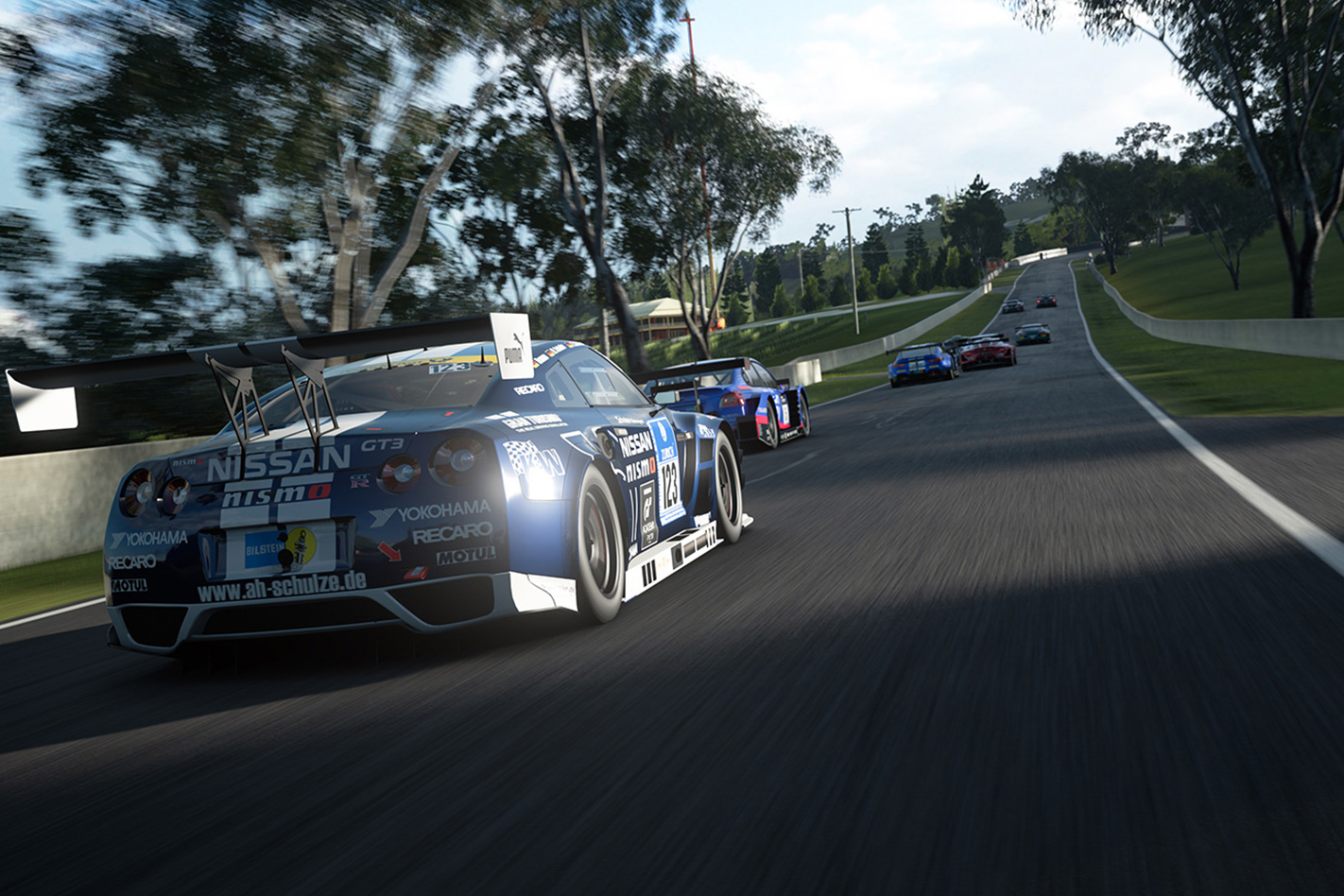
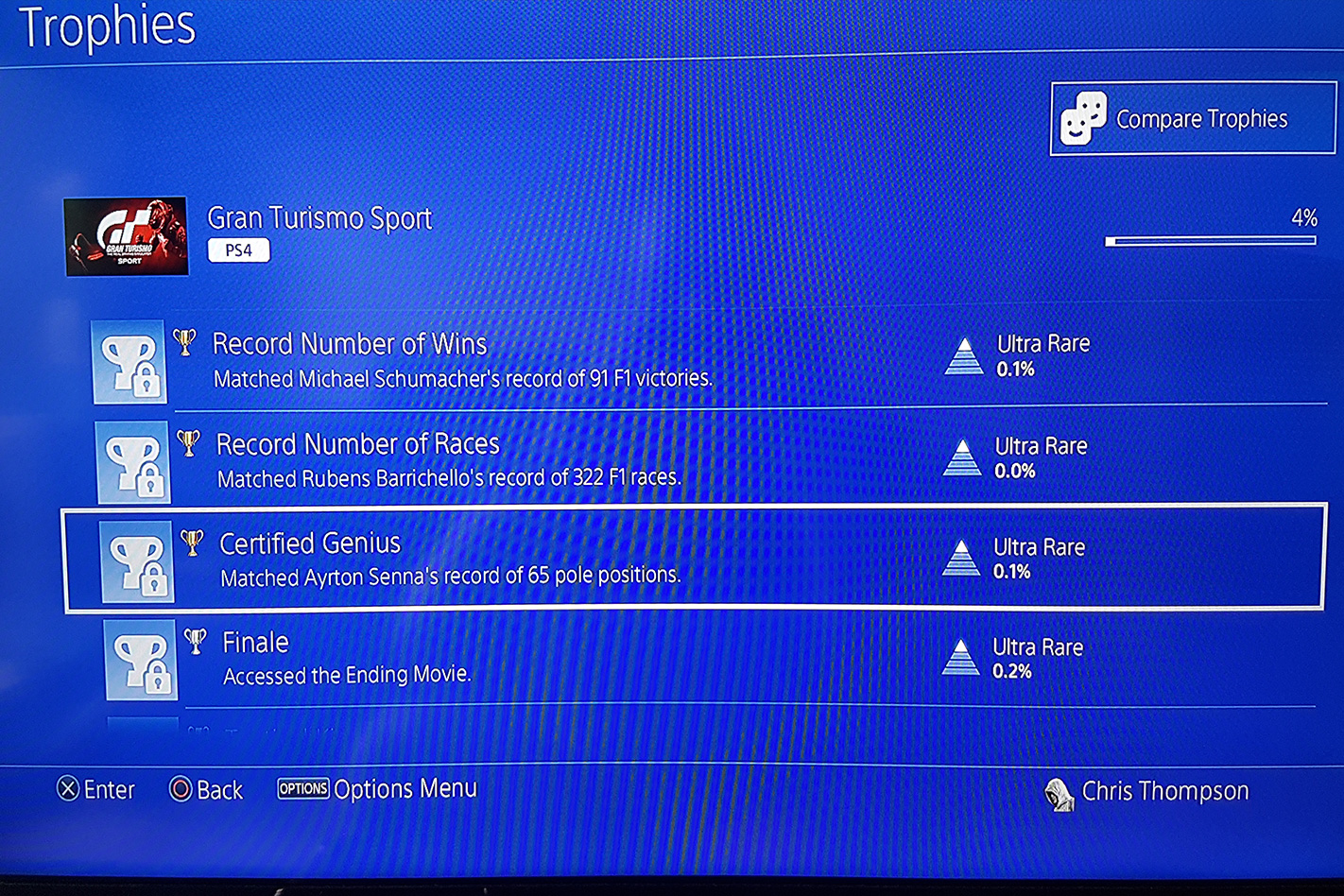
Just three days into playing, some gamers had already gotten trophies for beating Senna’s pole position count, topping Schumacher’s win numbers, and even ‘completing’ the game.
MOTOR will release a full review of Gran Turismo Sport soon, stay tuned.
AFTER all the oohs and ahhs, the fingerpointing and bonnet-openings subside, and once the entire 14-car field for this year’s Performance Car Cup had gathered together for the first time, there was a general consensus that we’d be in for a few surprises over the event’s three-day running.
This Performance Car Of The Year article was first published in MOTOR Magazine January 2013.
And most of them would come from this bunch; the underdogs. Y’see, never in the 17-year history of this competition had we had a group of cut-priced contenders with as much potential to punch above their weight as this; a motley bunch from all corners of the globe attempting to converge on the same destination by offering just as many thrills as our heavyweight contenders for a fraction of the price.
But then there was a whole bunch of ways you could dice them up: a pair of sub-$40K fun machines; a head-to-head between two of the hottest hatches; two rear-drivers versus two front-drivers; or even working class against premium… the list could go on, and on.
While what matters most here is performance, and the thrill factors they deliver, it’s hard not to put this quartet into perspective when it comes down to dollars.

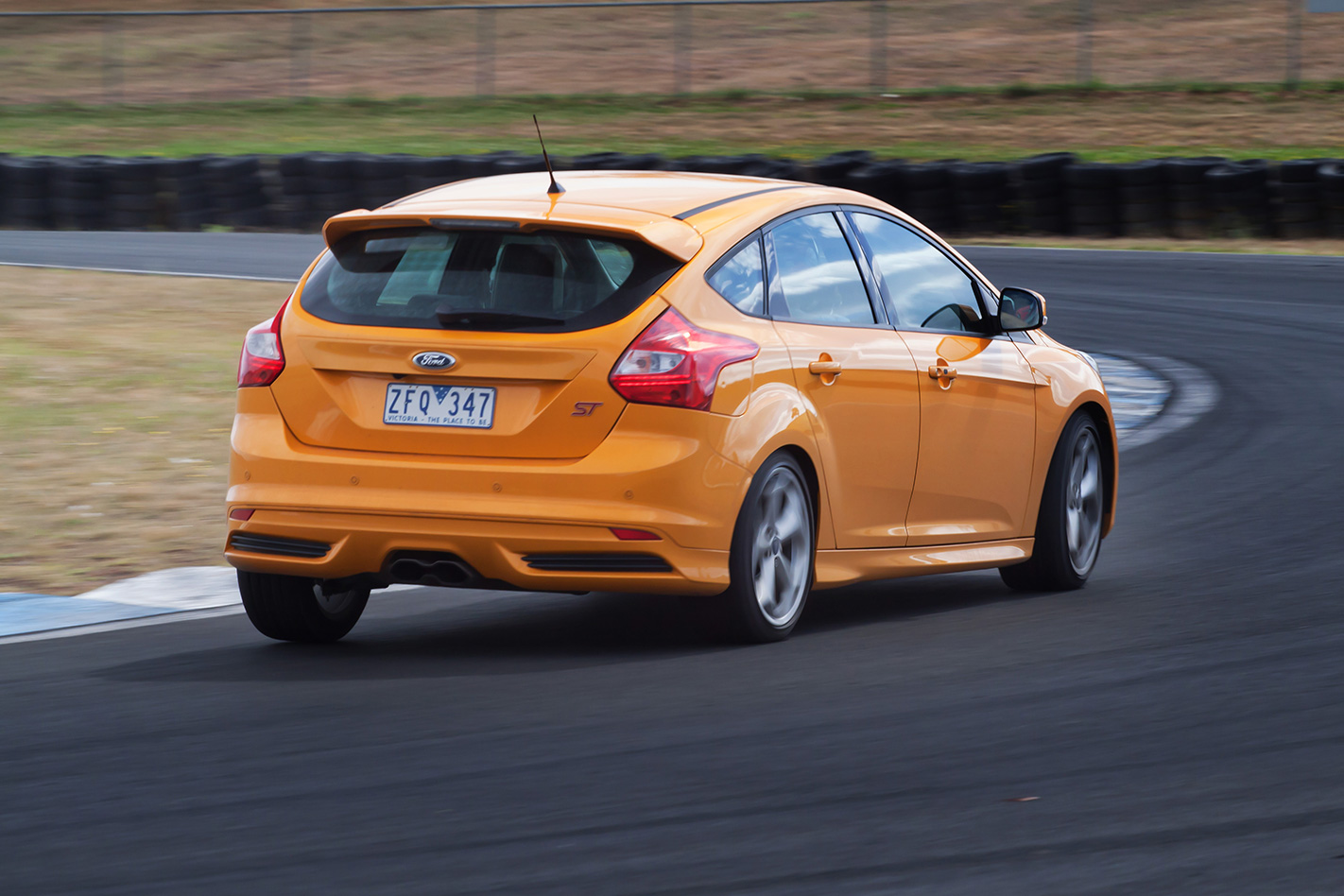
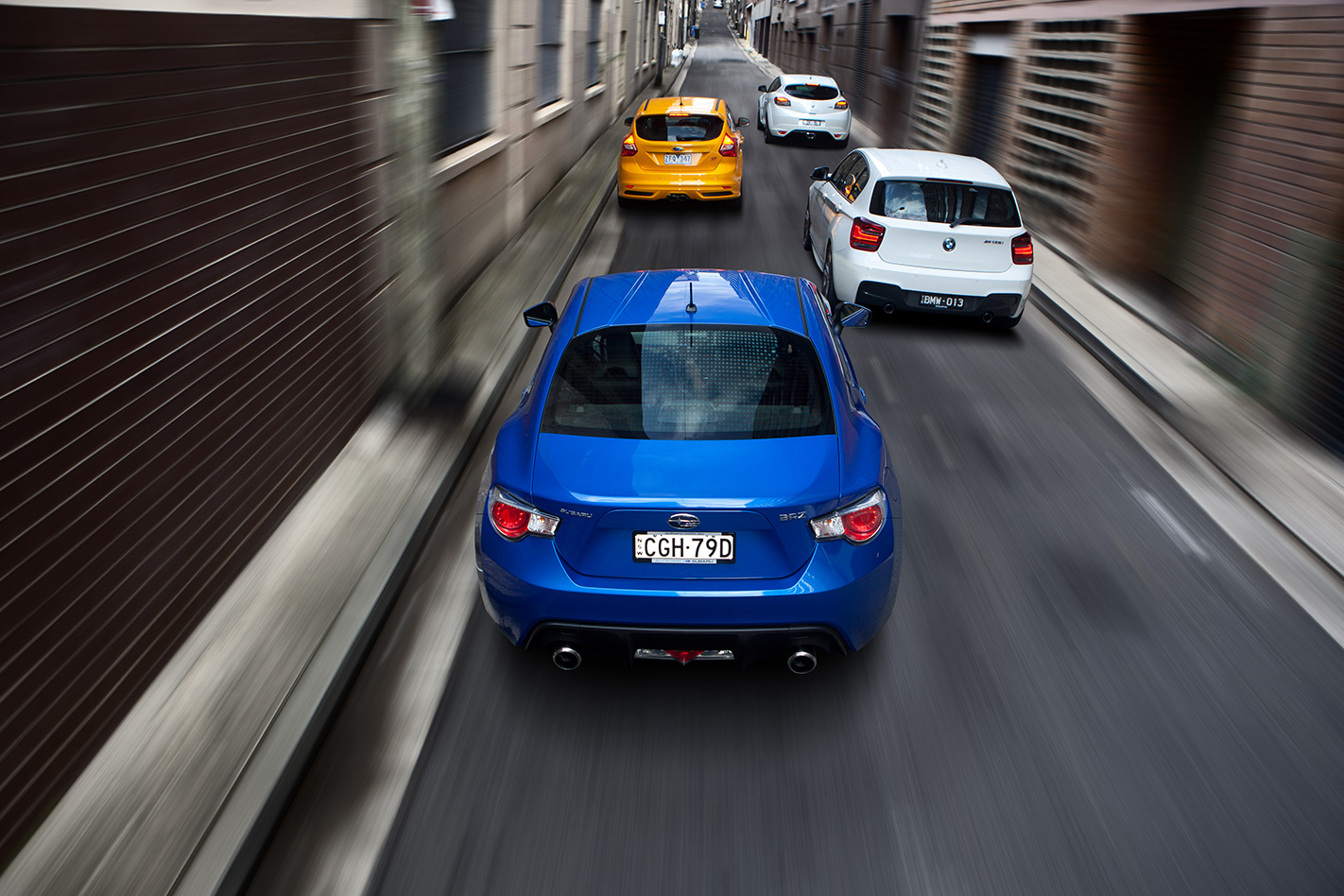
The Focus ST kicks things off at $38,515 (including its premium – and very yellow – paint), but it only takes an extra pineapple to get into the $38,650 BRZ (here with its optional leather/Alcantara and heated front seats but, unlike anything else, includes all on-road costs).

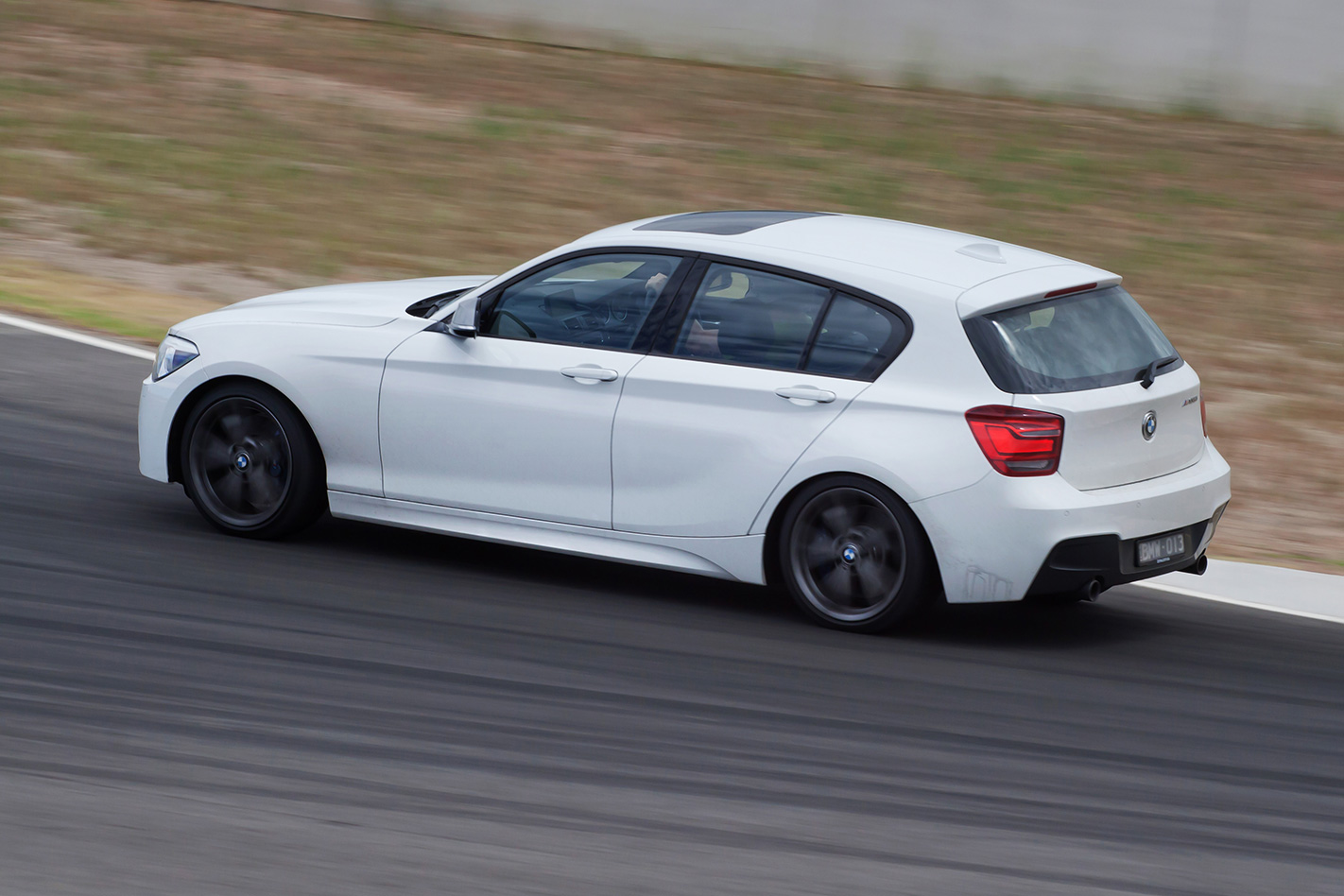
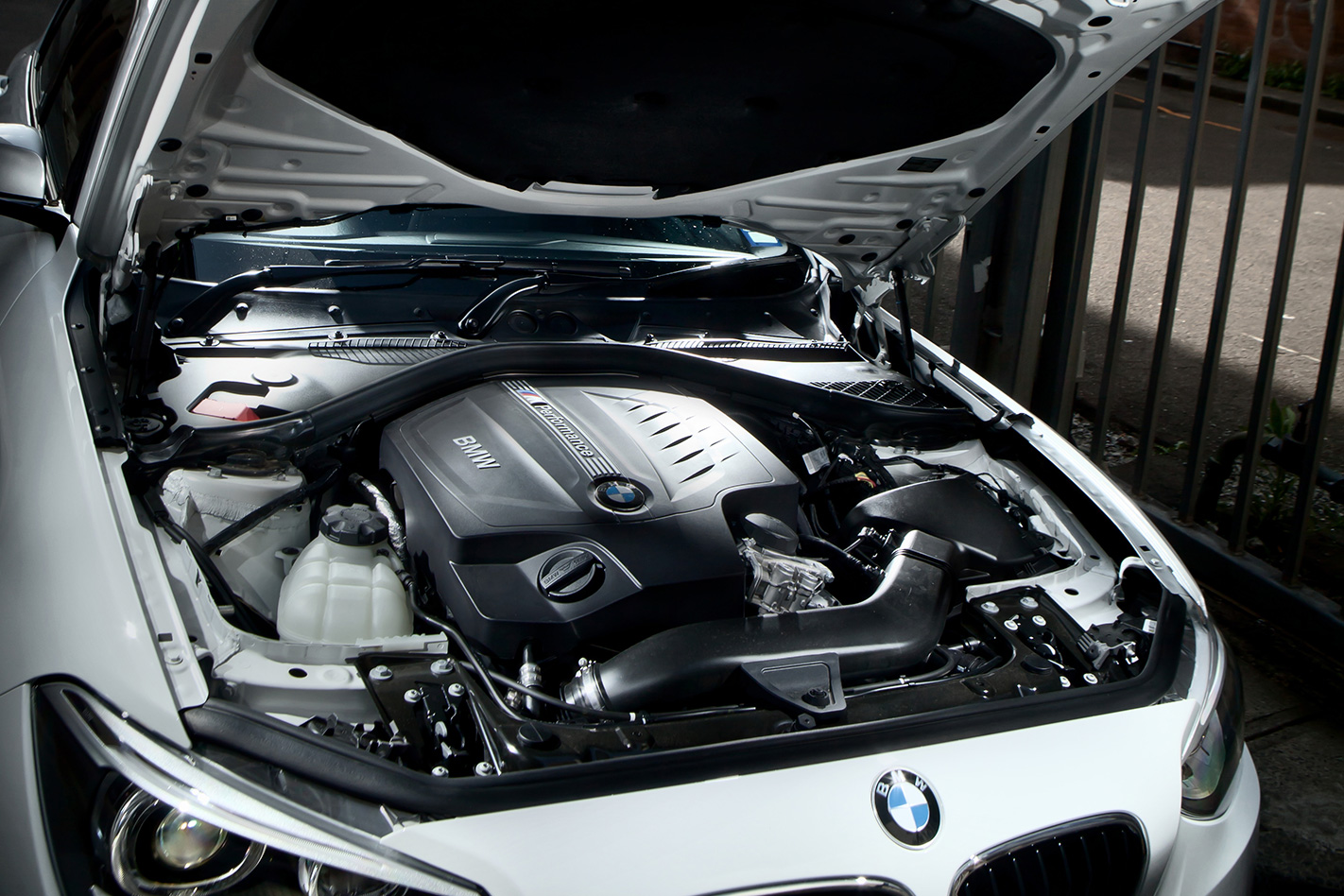
While an $80K hatch may seem pretty hefty, the inconspicuous little BMW packed a solid punch down Sydney Dragway’s blacktop. Jaw dropping, even. Its mildly tweaked 3.0-litre single-turbo six might only produce 235kW, nearly half of its sledgehammer sibling the M5, but its brilliant eight-speed auto helps to harness all the power and a fat-as torque curve (with 450Nm on tap from 1250rpm) with such devastating effect.
The BMW M135i’s glorious six howled its way to the fourth-quickest time to 60km/h (behind the Audi S7 and both Porsches), clocked triple figures in 4.84sec and tripped the 400m marker at 13.04 with a terminal speed of 175km/h.
And, if you didn’t realise, that’s M3 territory for a third of the price. Not impressive enough? Well, amongst a field full of big dick-swinging machinery, it was only 0.4sec slower than the likes of the M5 and SLS, and faster than we ever managed to get out of the manic 1M Coupe.
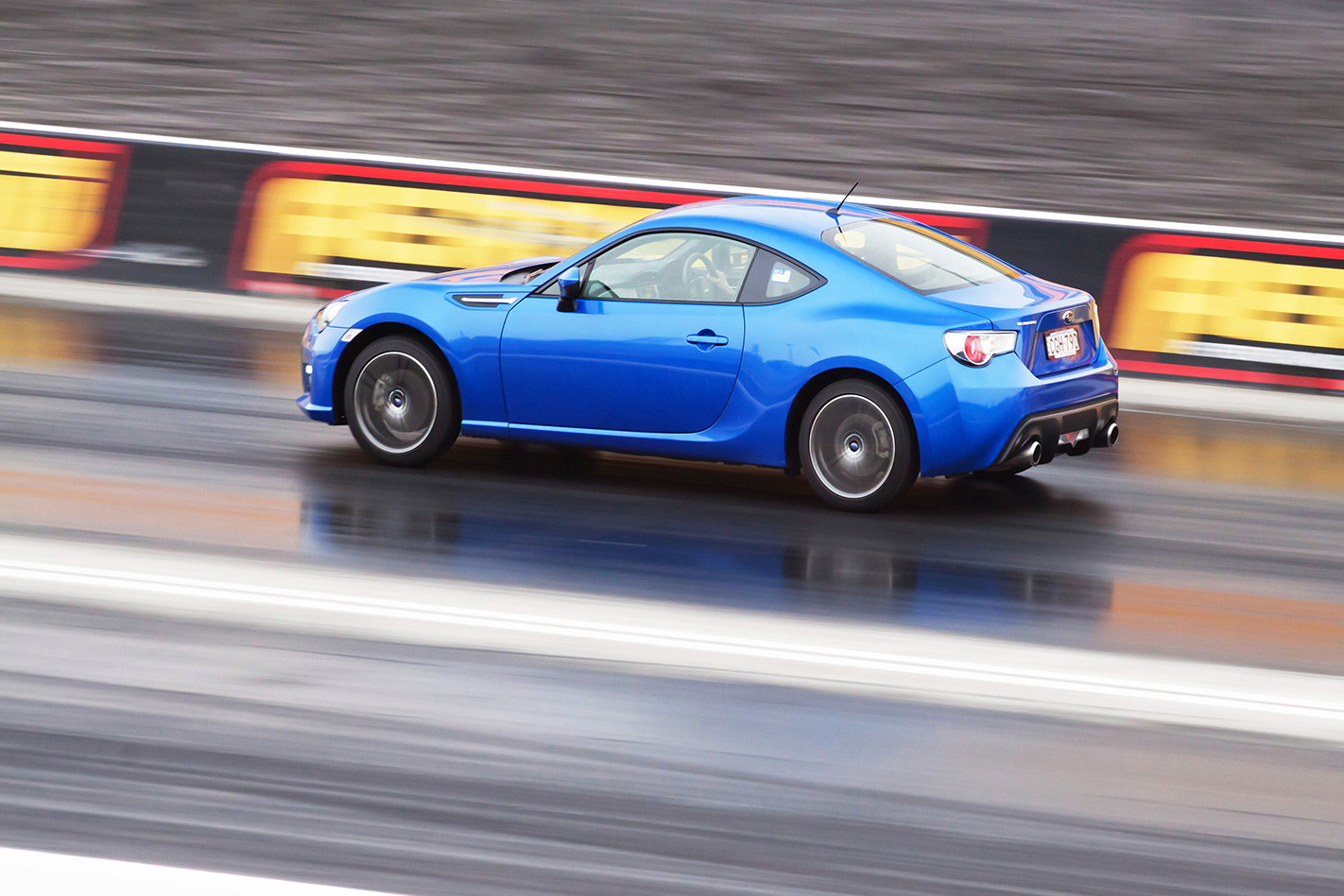
No surprises then that it was head-and-shoulders quicker than the other small cars. And no surprise that the BRZ, the least-powerful car in the field with only 147kW and 205Nm, was the slowest.
But not by as much as we expected, because it was literally a head-to-head shootout with the Focus ST for the straight-line wooden spoon; the BRZ using its light weight and better rear-drive traction to clock 100km/h fractionally faster (7.19sec versus 7.21sec).
It’s probably enough for each to claim a victory (or a dead heat at least), but ultimately it’s a disappointing start for the Focus which most of the crew expected to perform better. But then, the thickness of the humid morning air may have hampered it a little… Or so some thought.
That was until the Megane RS265 clocked 6.54sec to 100km/h and powered across the 400m marker in 14.39sec at 162.72km/h, the fastest times we’ve ever recorded in the French hyper hatch. And it kept on pulling hard too, a full 1.5sec quicker to 180km/h than the Focus.
Whereas, at the other end of the spectrum, the Focus’s sliding caliper set-up might look ordinary, but it helped pull up the five-door hatch with the fifth-shortest distance of 36.24m.
Out in the real world, the number crunching meant nought as the form guide was thrown out the window.
The BMW is no less impressive on the road, though not quite as exciting as it was on the drag strip as it just doesn’t have the edginess of its rivals.
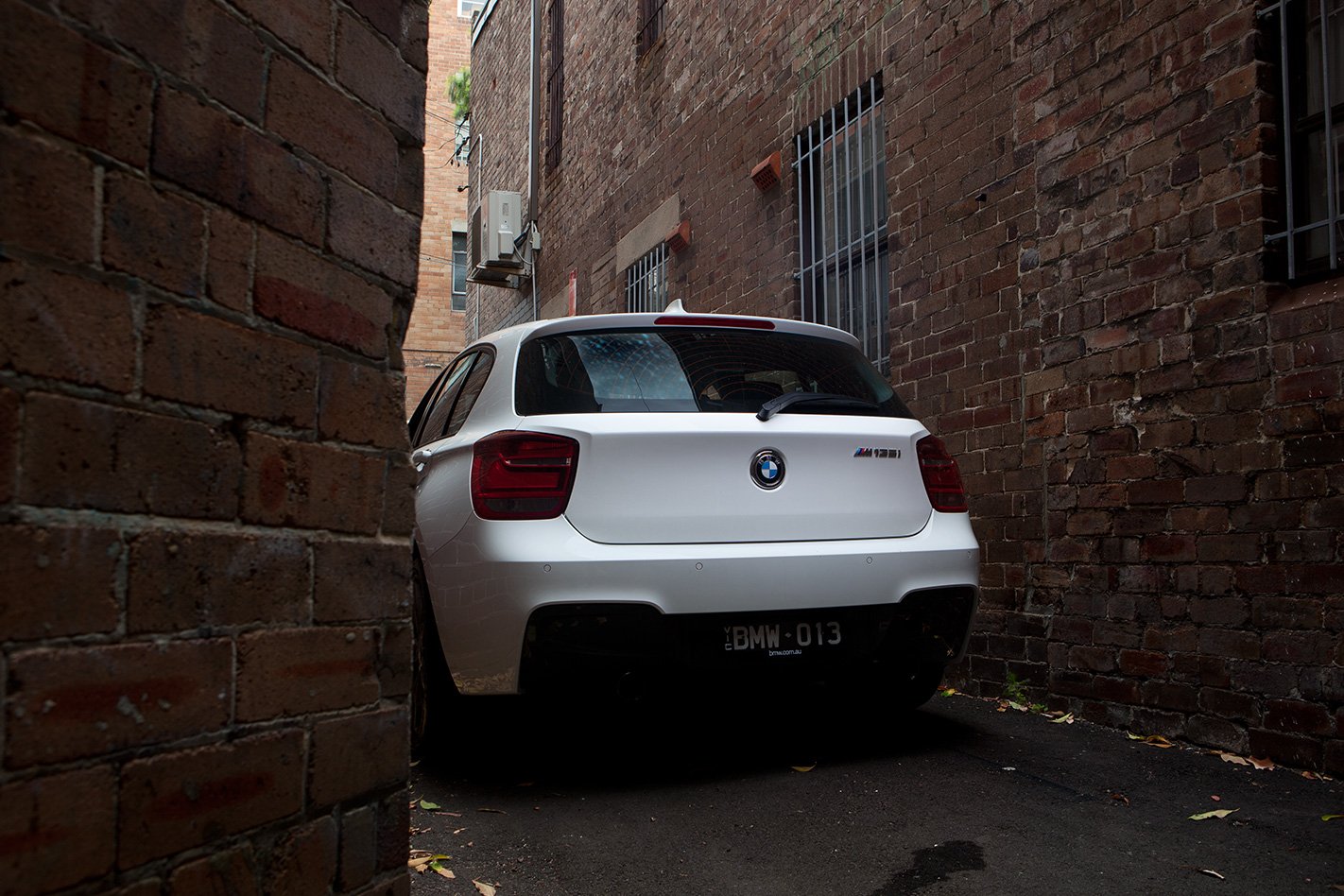
We don’t think a BMW blown straight six has ever sounded so good either, with a liberal dose of its howling exhaust note filtering through to the cabin. But, while there’s always an underlying degree of rear-drive balance in the 1-Series’ chassis set-up, it likes to hang its tail out more on a trailing throttle into the corner than it does on the way out and the M-fettled suspension, even in its Sport+ setting, is more biased towards comfort than corner carving.
The Variable Sports Steering provides little in the way of intimate feedback and the seats lack bona-fide lateral support compared with a lot of the PCC field. It kinda felt like it was going to be a bit underwhelming when it hit the track… Yet it blew them all away; its 2:15.50 easily the fastest of the tiny tots and up there in the top half of the field.
There’s no hiding the fact that it’s fast and amazingly efficient, and the pick of the small cars to cover long-distances in, but, apart from inducing that straight-six exhaust note, it’s never really felt all that exciting… Especially in white. But if Workplace Health and Safety is your thing then the Focus stands out like a hi-viz vest.
Like the BMW, its five-door body means it’s more practical to live with everyday than either the Megane or BRZ and, while it’s nowhere near as fat (or is that Phat?) as the sold-out Focus RS, there’s enough boy racer in its bodywork to separate it from the garden variety model.
Get out of town, though, and the Focus doesn’t mind a good back road bollocking. The ride/handling balance is closer to the Megane than the BMW, but it never feels hyperactive or too stiff over pock-marked country roads. The electric steering is somewhere in between too, providing enough, though hardly intimate levels of, feedback.
And while it’s not too hard to outsmart the electronic front diff and induce wheelspin on the unloaded wheel – which, in turn, sends a faint tug of torque steer through the wheel – the Focus has masses of grip and its overall balance is fairly neutral.
In the end it didn’t set any benchmarks, its lap time of 2:20.70 was the second slowest of the day and it didn’t win over any of the judges either. Which is something you can’t say about the remaining pair.
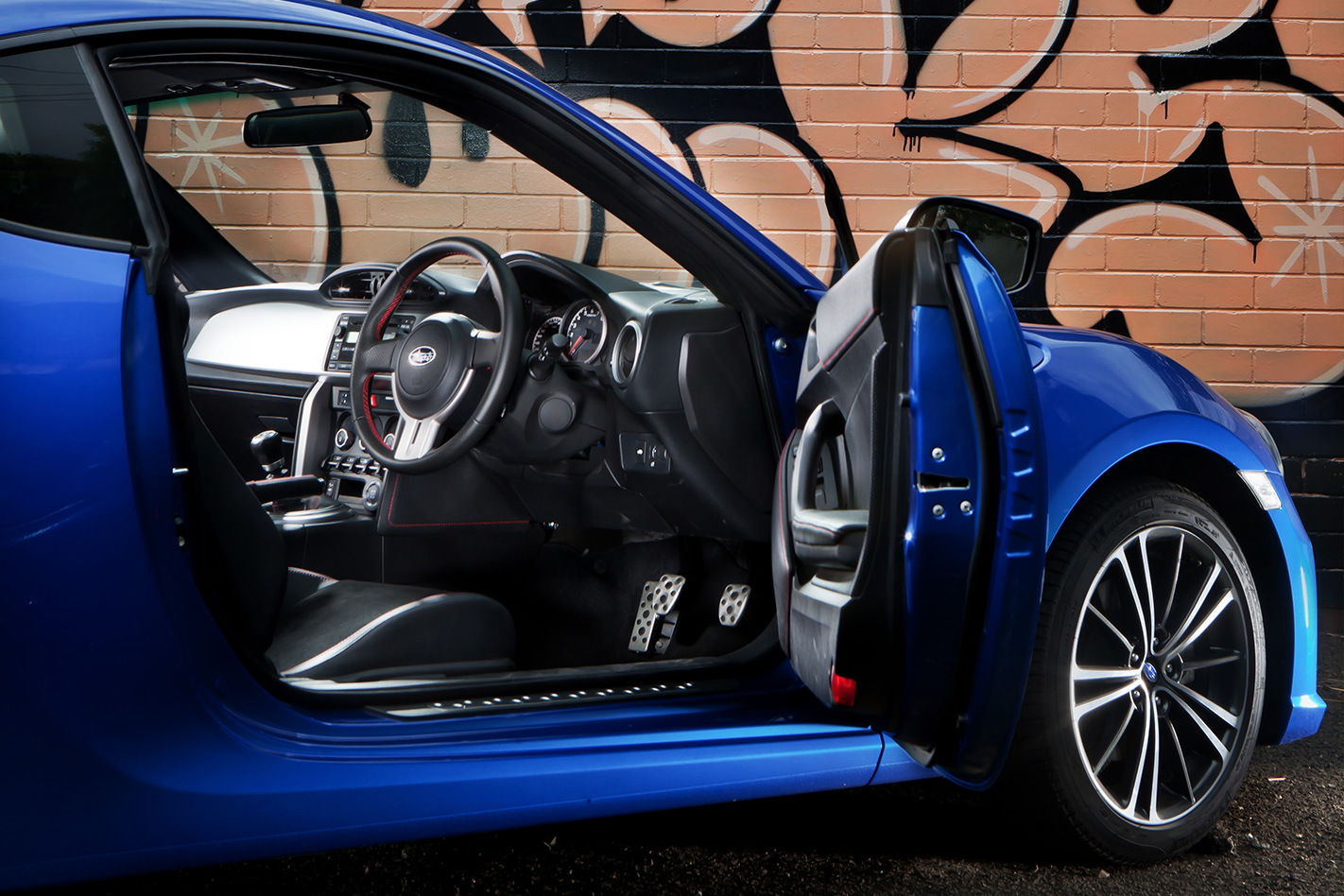
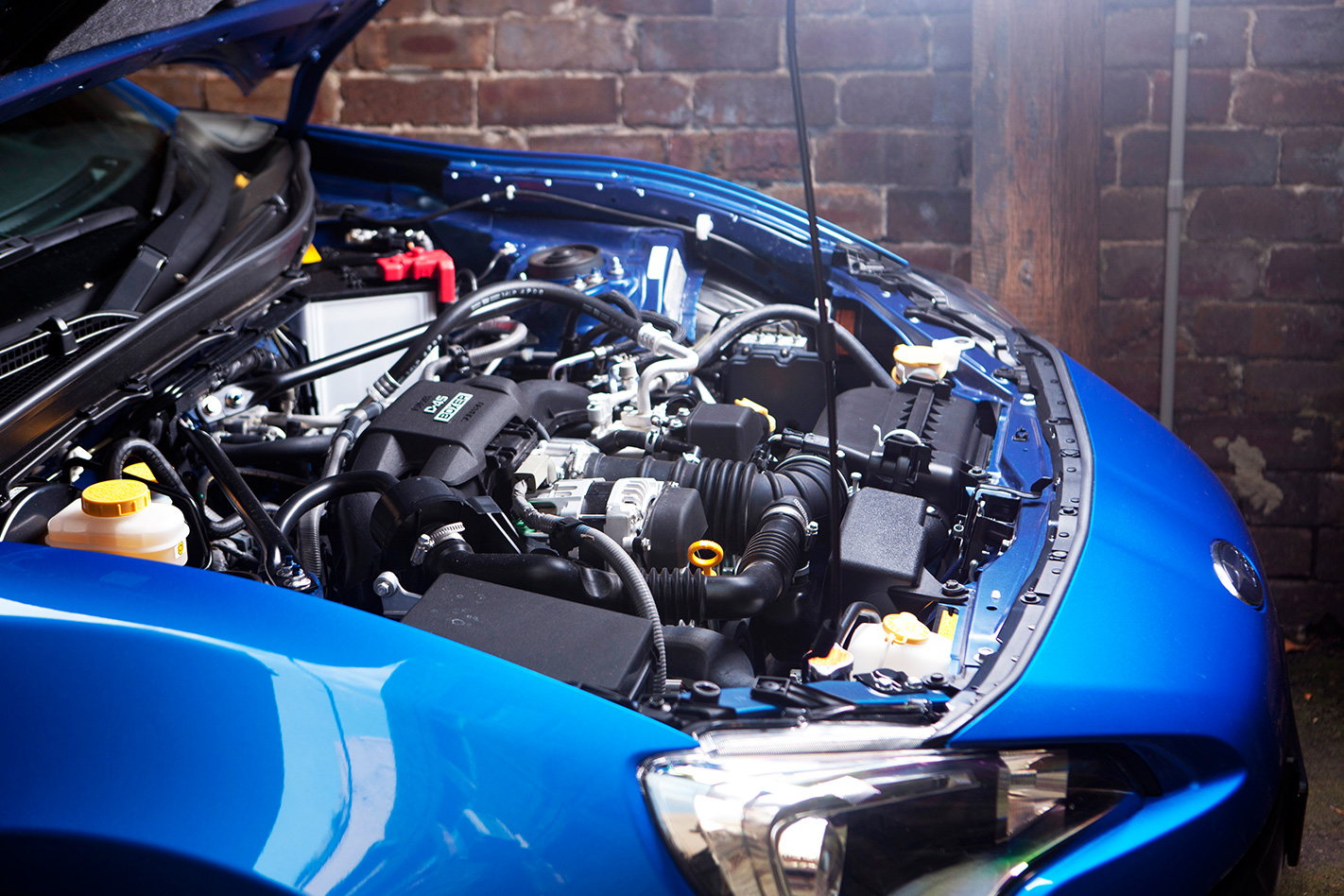
The BRZ doesn’t have the bling or the luxury, and certainly not the convenience of useable rear seats and a boot, like the Focus and BMW, but jeez it makes you feel like you’re driving something fun, even when you’re not hammering it.
The low-set driving position and generously, but not overly, bolstered seats are perfect no matter whether you’re tootling around town or thrashing around the track.
And the electric steering really is on par with Porsche’s for feedback and natural feel.
It’s not the most refined powerplant, and you really have to be right up the top of its powerband to get the best out of it, which means, in this prestigious company in particular, you have to work hard to keep up with anything else.
It kinda doesn’t matter in a way, because the BRZ’s precise steering, its playful lack of grip from the low rolling resistance tyres and its ability to drift like a demon more than compensate for its lack of outright performance.
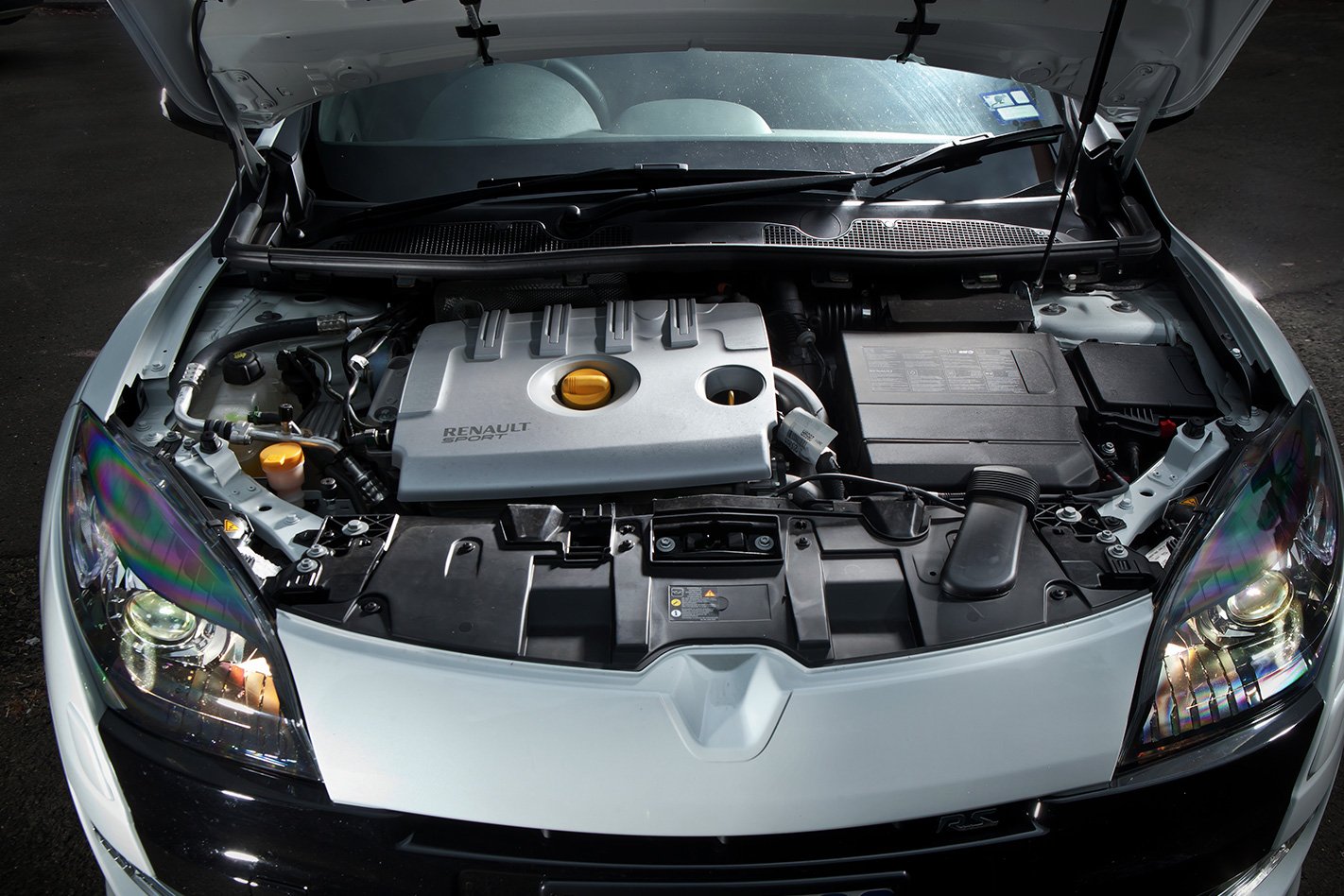
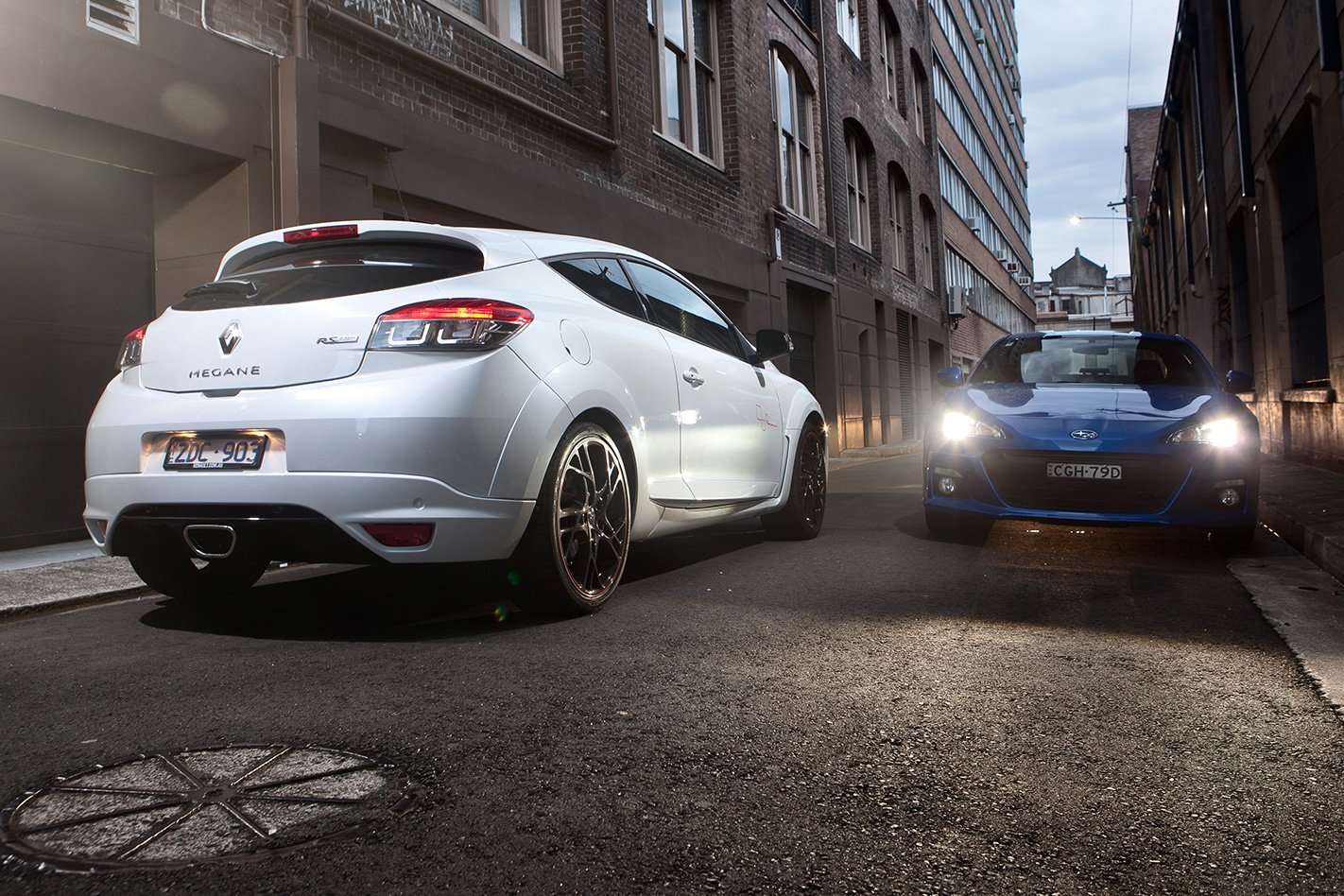
Conversely, despite a fatal end to our long-term custodianship of the Trophy 8:08 RS265 when it threw a piston through the front of the engine block (just after Luffy had finished its hot lap, meaning no other judge drove it on the circuit), we clearly overlooked the Megane’s many faults.
Its ergonomics are not great, its vision terrible and reliability clearly questionable, but what the Megane does that the Focus can’t is make you feel like you’re driving a supercar.
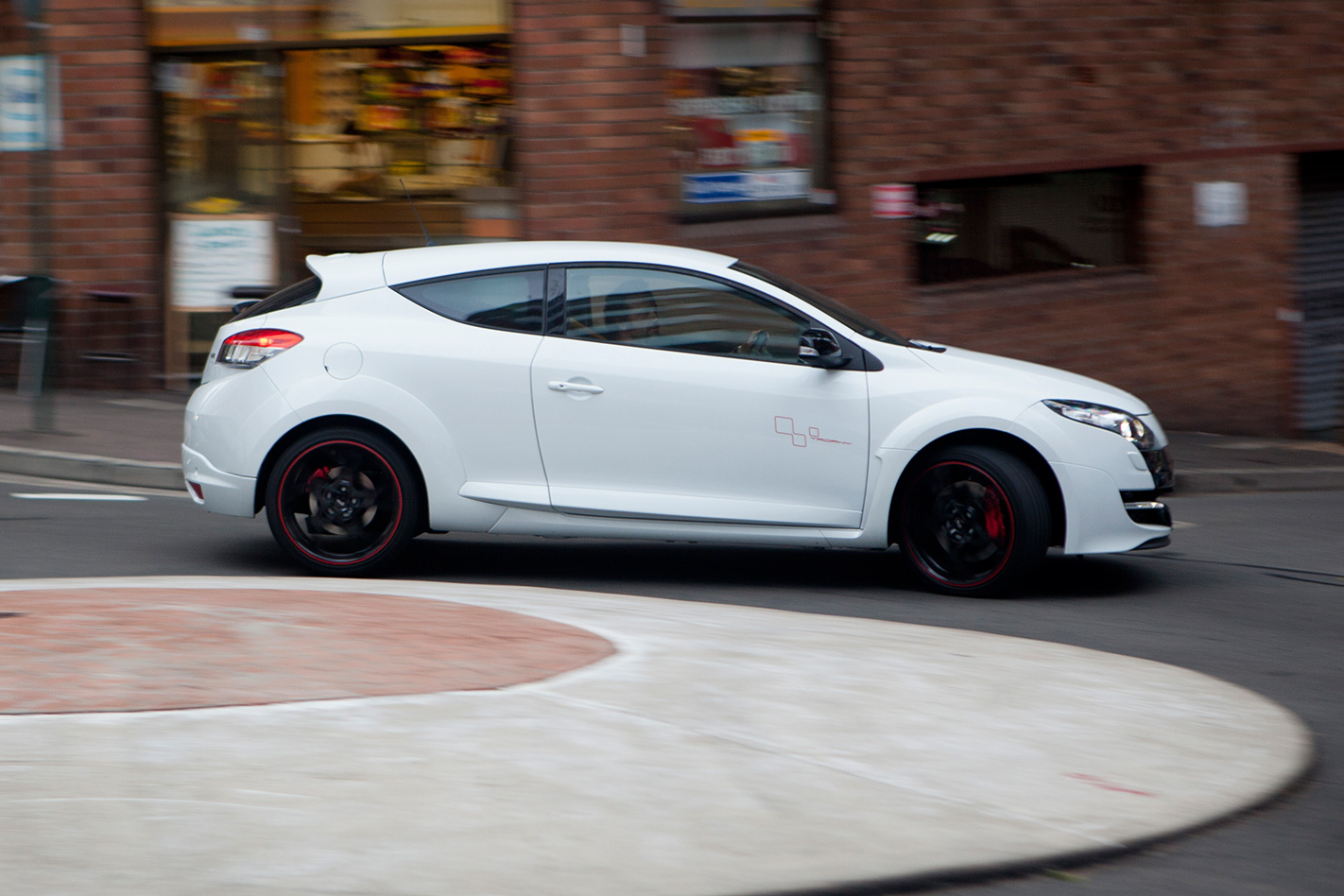
Then there are things like its wafer-thin Recaro seats, red seat belts, Brembo brakes and its androgynous style that elevates the Megane beyond just being merely a hot hatch. It’s more than all that, though; the Megane is deceptively quick on a back country blast.
And although its lap time of 2:18.50 is almost 10sec off the best of this bunch – it was, after all, 40km/h down on the M5 on the main straight – it was the fastest car bar none through the daunting high-speed Turn One as well as the tight, downhill Turn 11 hairpin, thus proving its no one-trick pony.
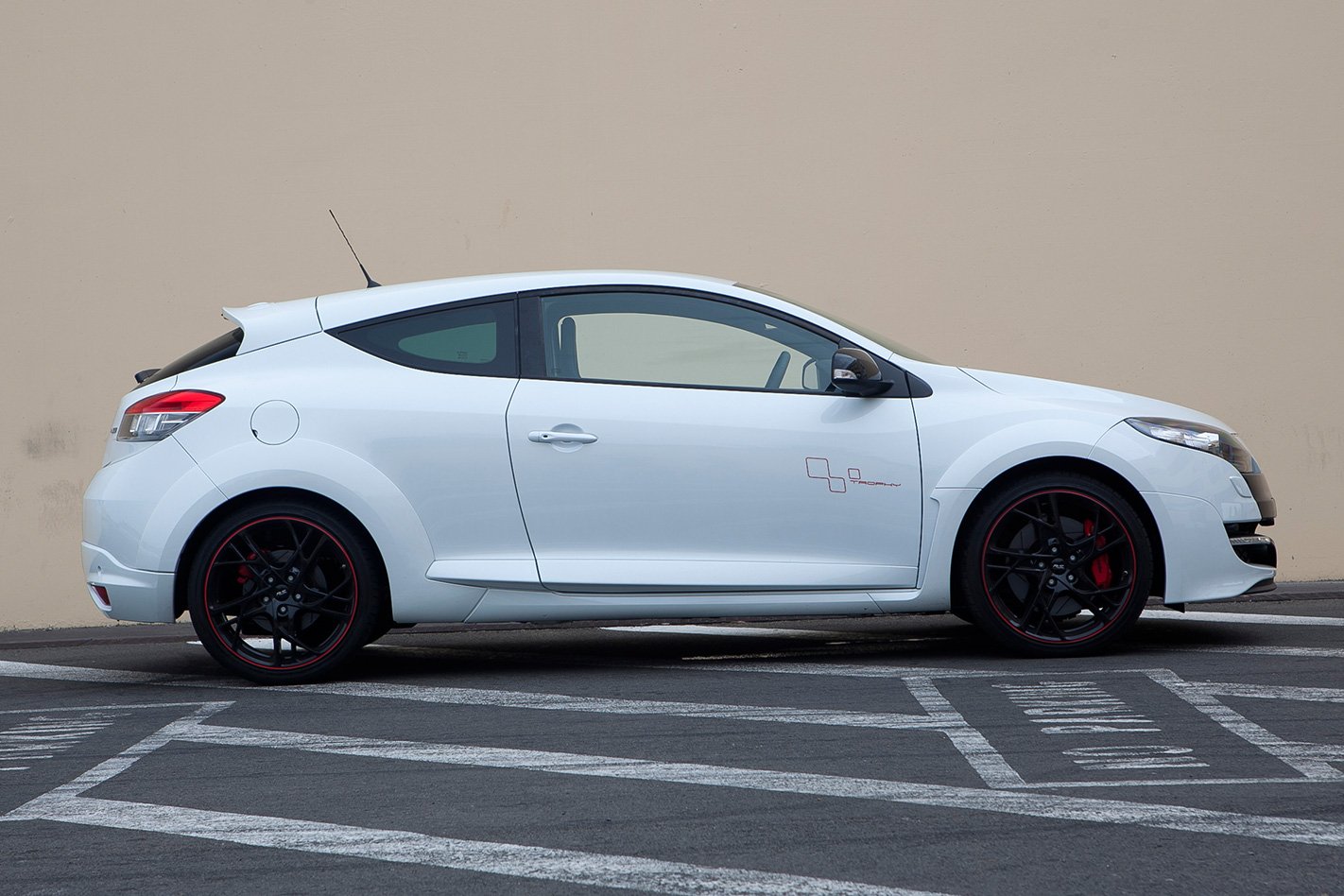
What that all equates to is that the input between man and machine feels raw, natural and well balanced. More importantly, it’s not artificially synthesised, or dumbed down to cater for the lowest common dominator. We applaud, and clearly admire, that. More of it, in fact…
FORD FOCUS ST Overall Rank: 14 JUDGES NOTES Andrew Maclean – 12th: “Fun, feisty and practical, but not as playful as the Megane” Curt Dupreiz – 13th: “Agile little bugger, but feels less than the sum of its parts” James Cleary – 14th: “Goes hard, and sounds growly. Gearbox’s shift is an Achilles Heel” Nathan Ponchard – 13th: “Brimming with fast-Ford DNA. Turns in well, but it’s not that quick”
WARREN LUFF SAYS “Such a great engine in this car, so torquey, so driveable, it really is the strength and basis of this car. The chassis is probably a bit too soft, the engine’s a lot better than what the chassis allows it to be. You’d like to see it a little bit more agile like the Megane and then it would be a fantastic package”
BMW M135i Overall Rank: 8 JUDGES NOTES Andrew Maclean – 8th: “Wow! Not that much slower than a M5 for a quarter of the price” Curt Dupriez – 8th: “Probably a better all-round prospect than the nail-hard 1M Coupe” James Cleary – 9th: “Firecracker on road that gets softer on the circuit. Better than the 1M” Nathan Ponchard – 8th: “Great engine note and great fun. Dare I say it, more of an M-car than M5”
WARREN LUFF SAYS “It’s a surprisingly fast car. It doesn’t feel that quick in the corners, it’s got too much understeer on the way into the corner and you’re forever fighting with that understeer, but the engine more than makes up for what the chassis can’t do in the corners and that’s where the speed comes from in this car”
SUBARU BRZ Overall rank: 7 JUDGES NOTES Andrew Maclean – 5th: “Who cares if it’s slow, the fun factor is so accessible. And it’s cheap!” Curt Dupriez – 6th: “Still love it. But far too slow here. Time for grip, brakes and turbocharging” James Cleary – 7th: “Huge fun. Balanced and responsive on road and track” Nathan Ponchard – 7th: “Underwhelming around the Creek, but is an exquisite driver’s car”
WARREN LUFF SAYS “Lacks a little bit of power down the straight but it’s a good, fun car. Very oversteery through the tighter sections. Surprisingly the brakes went away quite early, which is disappointing. The pedal was almost all the way to the floor at the end of the first lap, which doesn’t inspire a lot of confidence”
RENAULT MEGANE RS265 Overall rank: 6 JUDGES NOTES Andrew Maclean – 6th: “The best bum dragger just got better… But would I own one?” Curt Dupriez – 4th: “Achieves its aims better than many PPC rivals. Sorry we hurt you” James Cleary – 6th: “Mini-supercar for hot hatch money. Renaultsport knows what it’s doing” Nathan Ponchard – 5th: “Heaps of Gallic attitude matched to a sweet chassis and brilliant balance”
WARREN LUFF SAYS “Such a fun little hot-hatch on the limit. It does everything you want. Probably a bit too much understeer when you start pushing really hard but up to nine-tenths it’s a good fun car, you can throw it around, it’s got good brakes, great chassis dynamics, the engine’s fantastic and it does everything that you want”
Ford may have given Australia the Falcon XR GT in 1967. But you could argue Australia’s first true muscle car didn’t sprout until a year later.
Before you burn your MOTOR collection, Ford fans, we’re not rallying the eviction of the ’67 Bathurst trophy. But if you lined up the XR against everything considered ‘muscly’ over in the States during the 60s, it’d look like a cougar trying to blend in with lions.
Ford’s Mustang, Pontiac’s GTO, Dodge’s Challenger, AMC’s Machine were the pin-ups and while these car’s weren’t defined by specifics, things like a big American V8, sloping roof, and two doors were the main markers. The latter criteria’s lost on the XR.
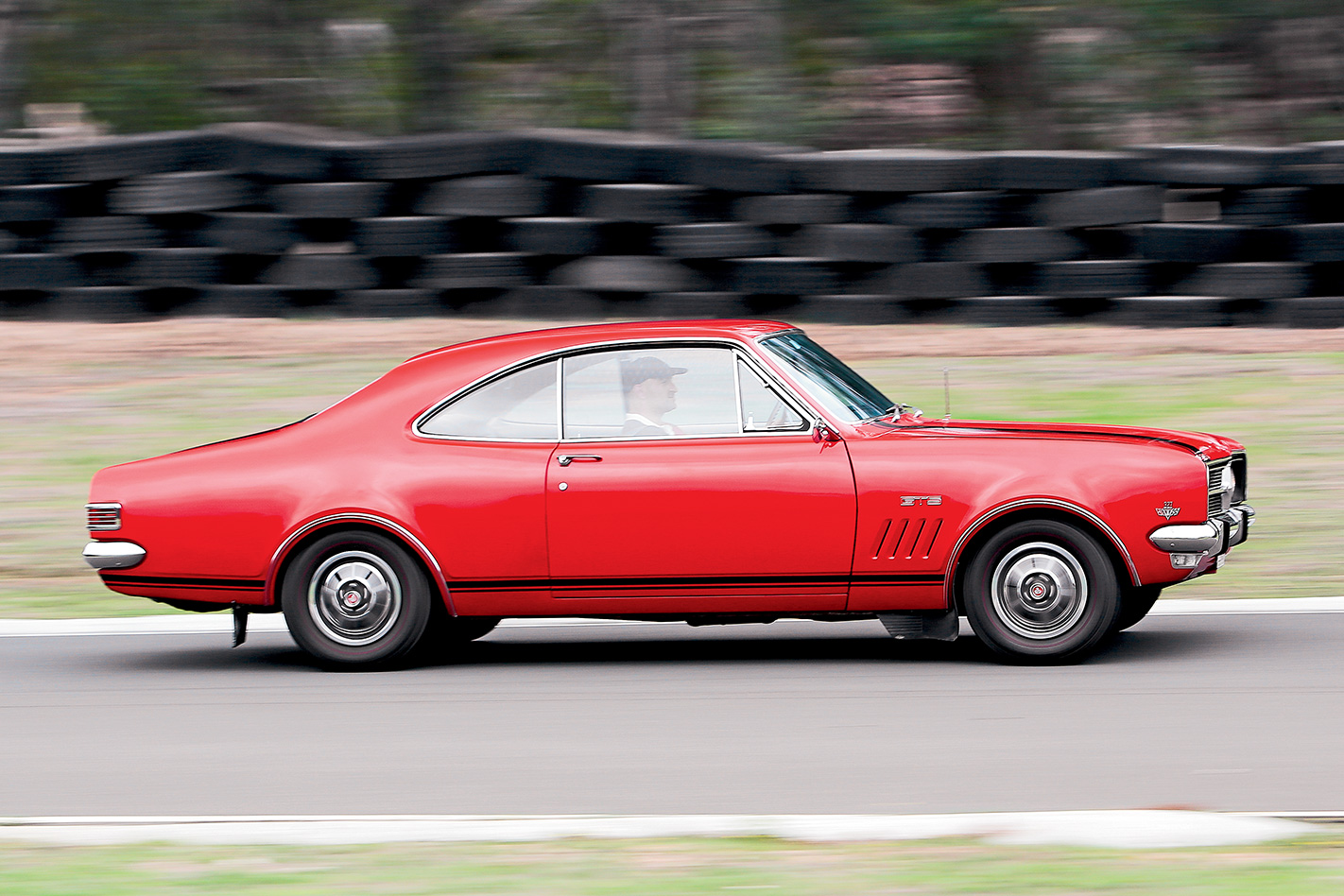
Holden’s answer to the Falcon XR GT wasn’t something ‘Mustang-bred’. It was a thoroughbred, applying the muscle maxim to its looks, performance, and spirit. Its pillar-less body was just as stiff as the sedan’s, a littler broader too, while its lines were softer and timeless compared to American counterparts.
The fact it was revealed months before the race that stops a nation was not at all a coincidence. Both Ford and Holden were very well established in Australia by then and while they knew building Aussie cars, in Australia, for Aussie people, was good for business, they also realised winning races was, too.
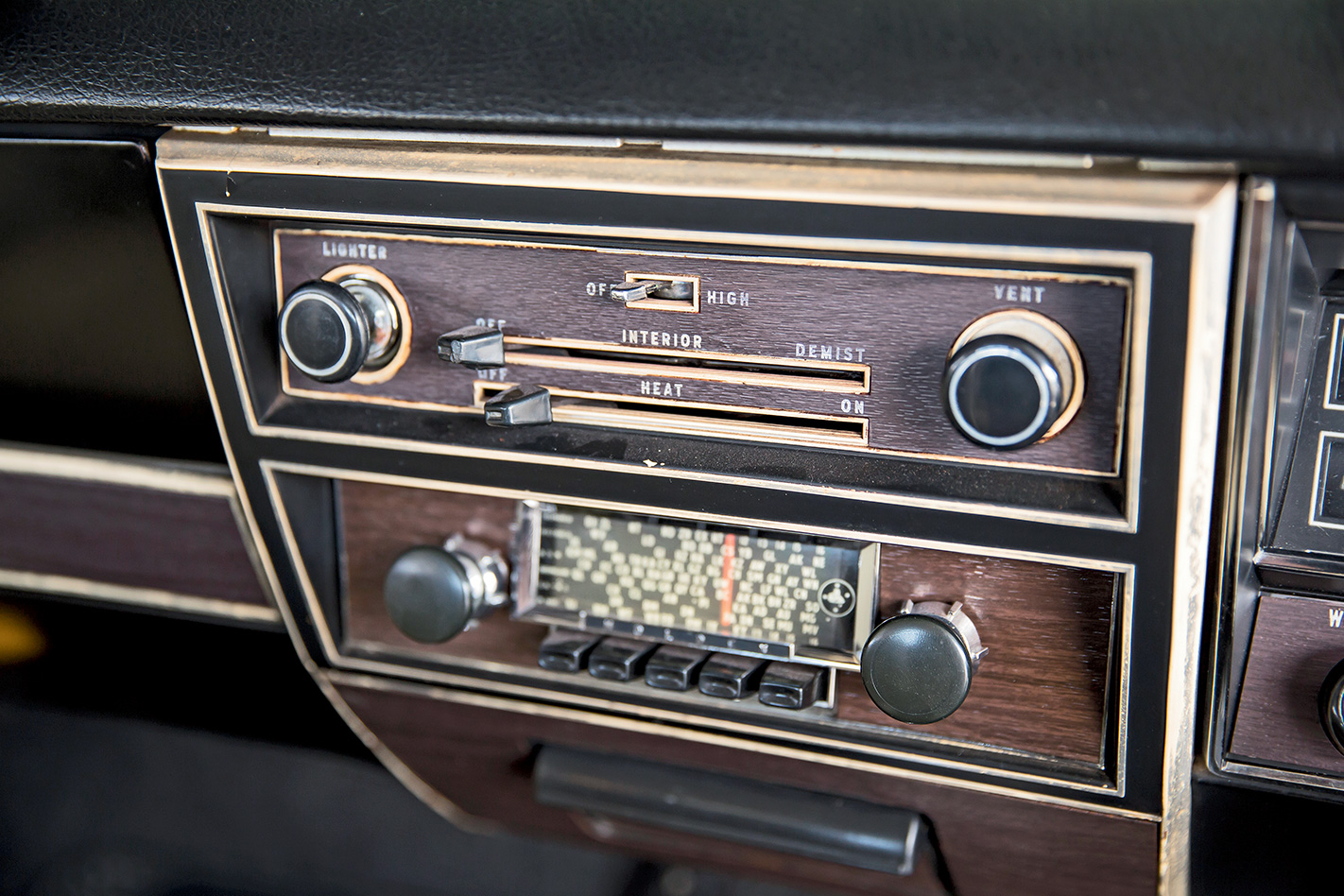
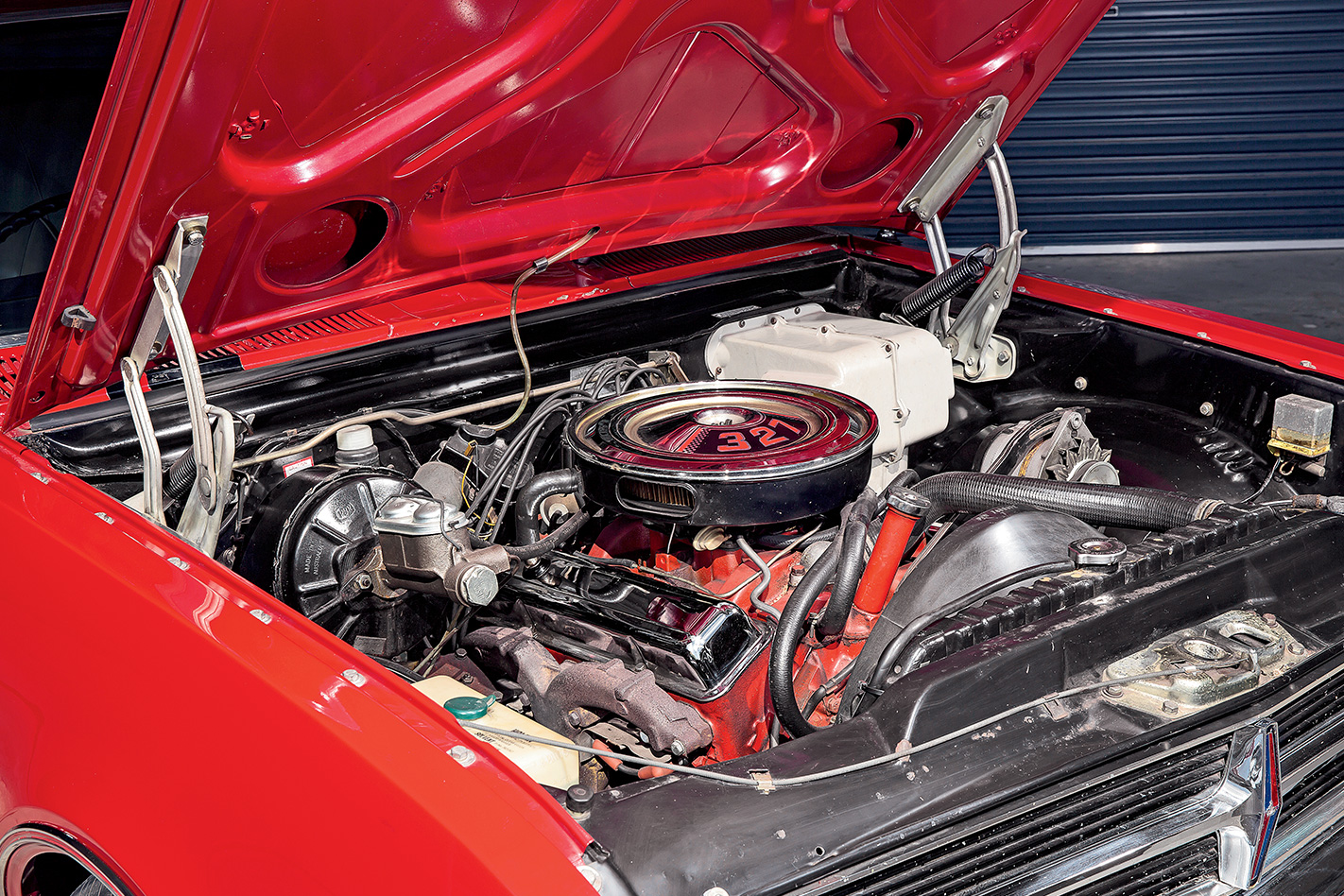
That didn’t matter because sucking through a Rorchester covered four-barrel carbie, and blowing out a freer exhaust, it made a still-respectable-today 184kW at 4800rpm and 443Nm at 3200rpm. Holden could have dropped in the 327 and dusted its hands on a job well done, but Bathurst beckoned.
So a standard Opel-sourced four-speed was ditched for a Corvette unit, complete with close-ratio gears and short-shift throw. The floating rear-end was pinched from Camaro-Chevelle, which housed an LSD which could be specified with a wide-range of final drives. All the way from 3.08 to 4.88.
Priced $3790 in ’68, it would cost circa $50K in today’s money after inflation. Unleashed at Mount Panorama, it caught Ford with its pants down, taking first, second, third, and fifth outright. At one point it bettered the XR GT’s best laptime from the year before by 5.7 seconds – and at the race’s end left the highest-placed Ford Falcon in seventh place.
It was a crushing defeat and a defiant way to step into the ring. Australia had its first ‘muscle’ car. And Holden had its first Bathurst victory. As we’ll see with our next three legends, these milestones would change the brand and local motorsport forever.
HK Monaro GTS 327 Specs: On sale: 1968-69 Engine: 5359cc V8, OHV, 16 valve Power: 184kW @ 4800rpm Torque: 443Nm @ 3200rpm 0-97 time: 7.6 seconds (claimed) Weight: 1676kg Price: $3790
McLaren Asia/Pacific managing director George Biggs wants the brand’s forthcoming, three-seat BP23 hypercar to arrive in Australia and hopefully be driven on local roads.
Although joining the likes of the Aston Martin Valkyrie, Bugatti Veyron and Mercedes-AMG Project One as part of circa-2020 next-generation of hypercars, the BP23 is tagged as a ‘hyper GT’ and will follow the iconic F1 with a central driving position and seat either side.
All 106 examples – the same number of McLaren F1s produced between 1992 and 1998 – have already been sold, but Biggs hints that some buyers could be from Down Under.
“We’re in conversation with clients,” he tells MOTOR at the local reveal of the 570S Spider in Sydney last week.

There is also a chance the hypercar can be driven on public roads, given an Australian Government proposal to change import regulations that would allow exotic vehicles produced in numbers fewer than 1000 to legally remain in left-hand drive configuration – although further state or territory registration permission will be required.
Of that possibility, Biggs says: “Understanding the various regulations and rules for the market, whether it’ll be appropriate regulation or not for that particular market, it’s an ongoing conversation.”
“From our perspective, we operate obviously in (many) countries now,” he continues.

But does Biggs believe a central-seat McLaren could get past regulations here? “We’ll have to wait and see how it goes,” he responds.
Not that the BP23 will be ready anytime soon. McLaren has confirmed it will be a hybrid, like the P1, with more power than that predecessor’s 672kW/900Nm. No doubt the British brand will be looking to trump Germany, given AMG’s Project One will produce 740kW-plus.
According to McLaren global head of product Alex Long, the BP23 is still very much in a prototype stage. Final design needs to be signed off, hybrid systems need to become lighter, even an official production name must be chosen.
“We haven’t settled on that side of things yet,” Long says of the naming discussion.

“The sense of using hybrid to enhance performance is absolutely where we want to go, but we also want to do it in a way true to our DNA, which is ‘lightly’. So at the moment, a lot of electric and hybrid solutions are very heavy in their execution, which doesn’t help handling and doesn’t help supercar credentials.
“But I drove the three-seat mule quite a lot in recent times. I can say already, sitting in the middle seat of a McLaren … it’s absolutely brilliant.”
The McLaren BP23 is tipped to be revealed in 2019, and the rumour mill points to a combination of the 770Nm 4.0-litre twin-turbocharged V8 petrol engine from the 720S – up from 3.8-litre unit used in P1 – with electric motors as the probable production powertrain.
CONTRASTING mixed weather conditions contributed to two unpredictable days of tough street racing on the streets of Surfers Paradise, leaving five drivers in with a shot at winning a hard-fought 2017 Supercars Championship.
A perfect pit stop strategy by his Shell V-Power Racing Team allowed Scott McLaughlin and co-driver Alex Premat to sensationally win the second part of a dramatic Gold Coast 600 yesterday, putting the young Kiwi right back in the fight for this year’s crown.
McLaughlin and Premat started from 13th position on the grid, which is now the furthest back any driver has ever started from to win a race at the GC600.
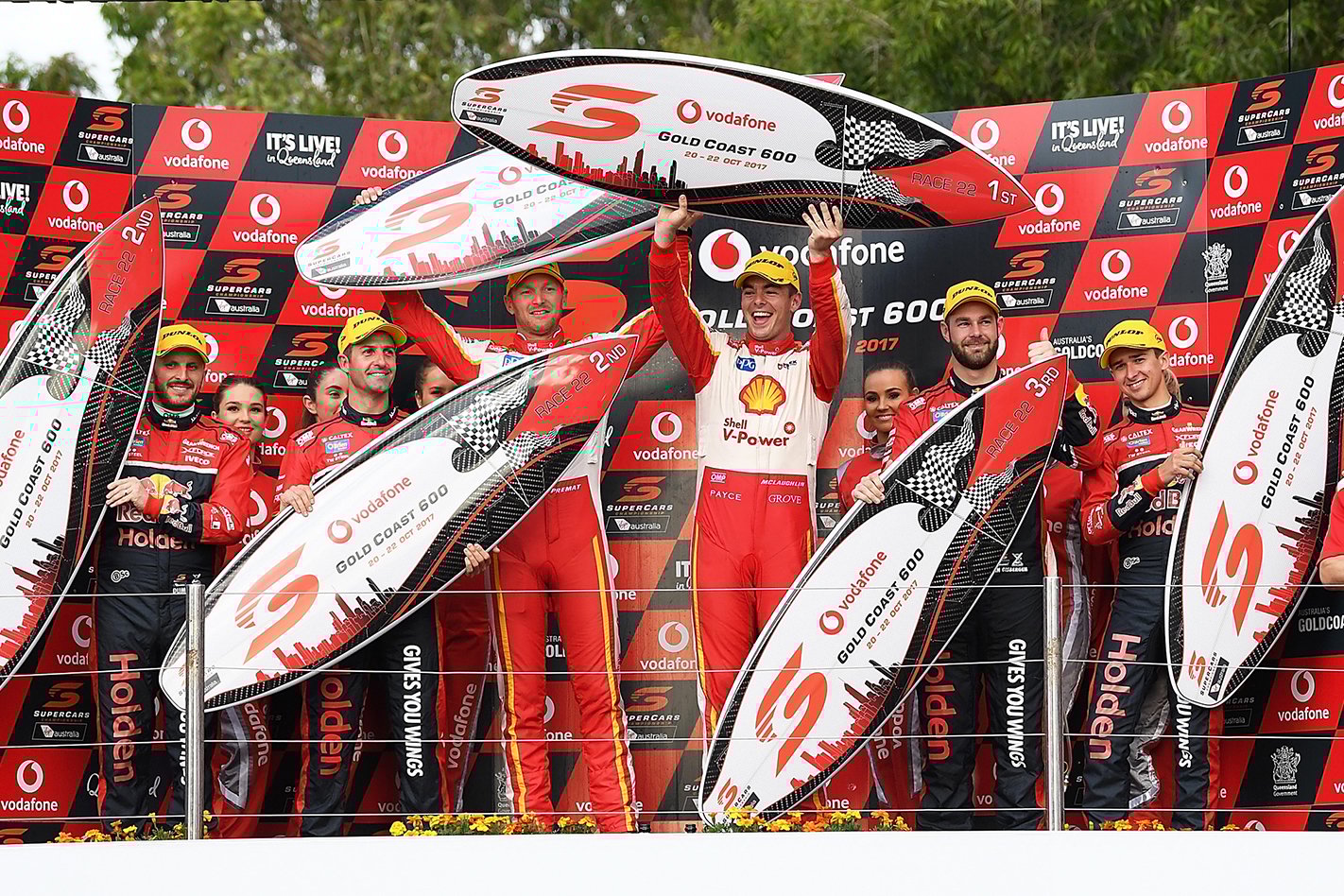
Six-time champion Jamie Whincup was left frustrated that he and Paul Dumbrell were forced to accept second after leading until the second round of pit stops.
A shock move by the Shell camp to call in McLaughlin a few laps early paid handsome dividends when the #17 Ford jumped from fourth to first for the run home.
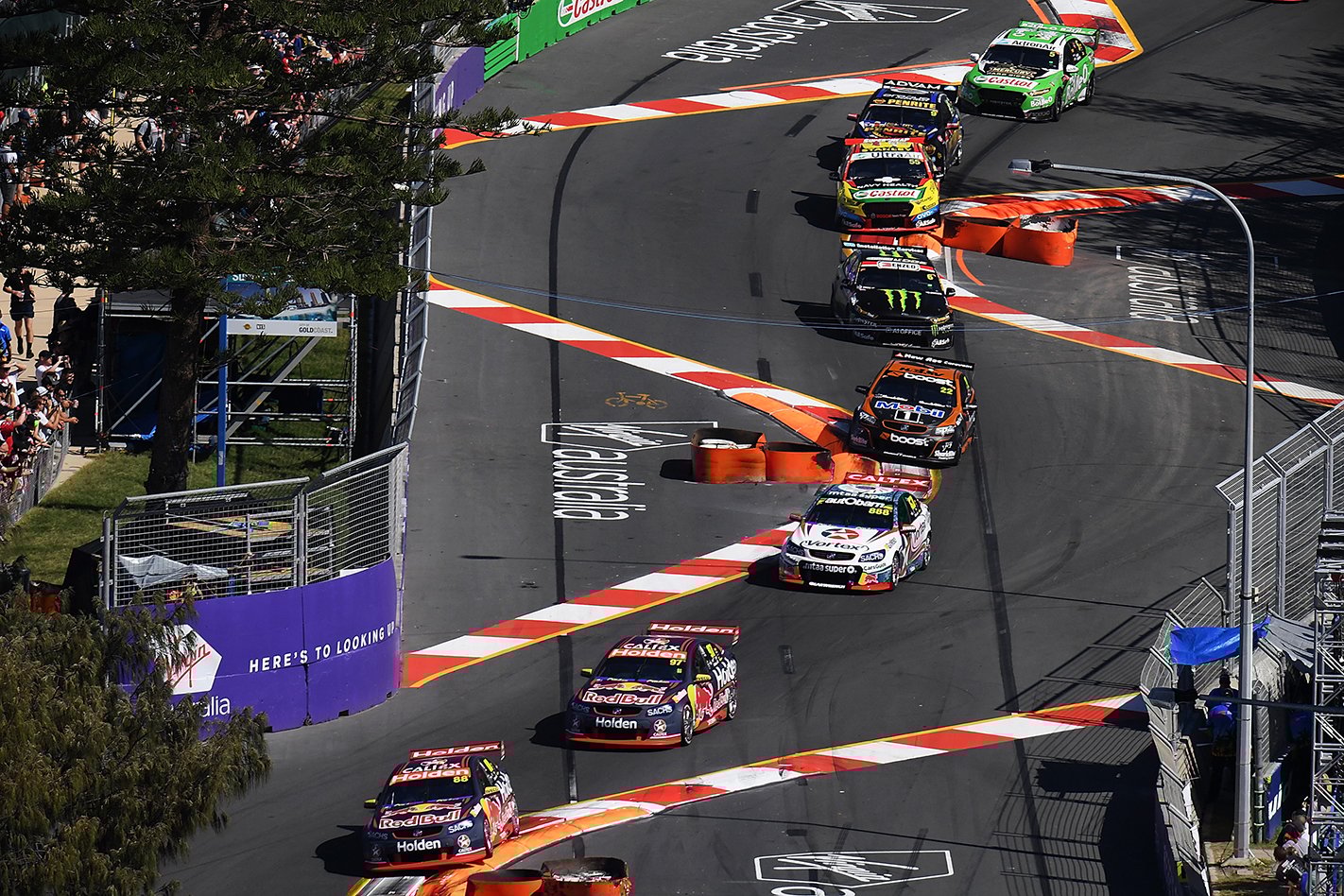
Whincup tried to sound positive as he assumed the championship lead for the first time this year.
“It’s all good. Happy with the result, but, hey, pace and being a bit more aggressive on strategy…yeah they deserve the win,” Whincup said after beating his Triple Eight teammates Shane van Gisbergen and Craig Lowndes to the chequer.
The mixed-up Gold Coast results have set up an intense five-driver fight with four races remaining. The tenacious Whincup has a hardly comfortable 17-point margin ahead of McLaughlin’s Shell V-Power teammate Fabian Coulthard, who fought back from a poor qualifying performance to finish ninth.
McLaughlin is just 27 points behind Whincup. Chaz Mostert, who brilliantly won in the rain on Saturday and took seventh on Sunday, is also in the hunt for his first championship along with Van Gisbergen. Just 189 points separates the top five.
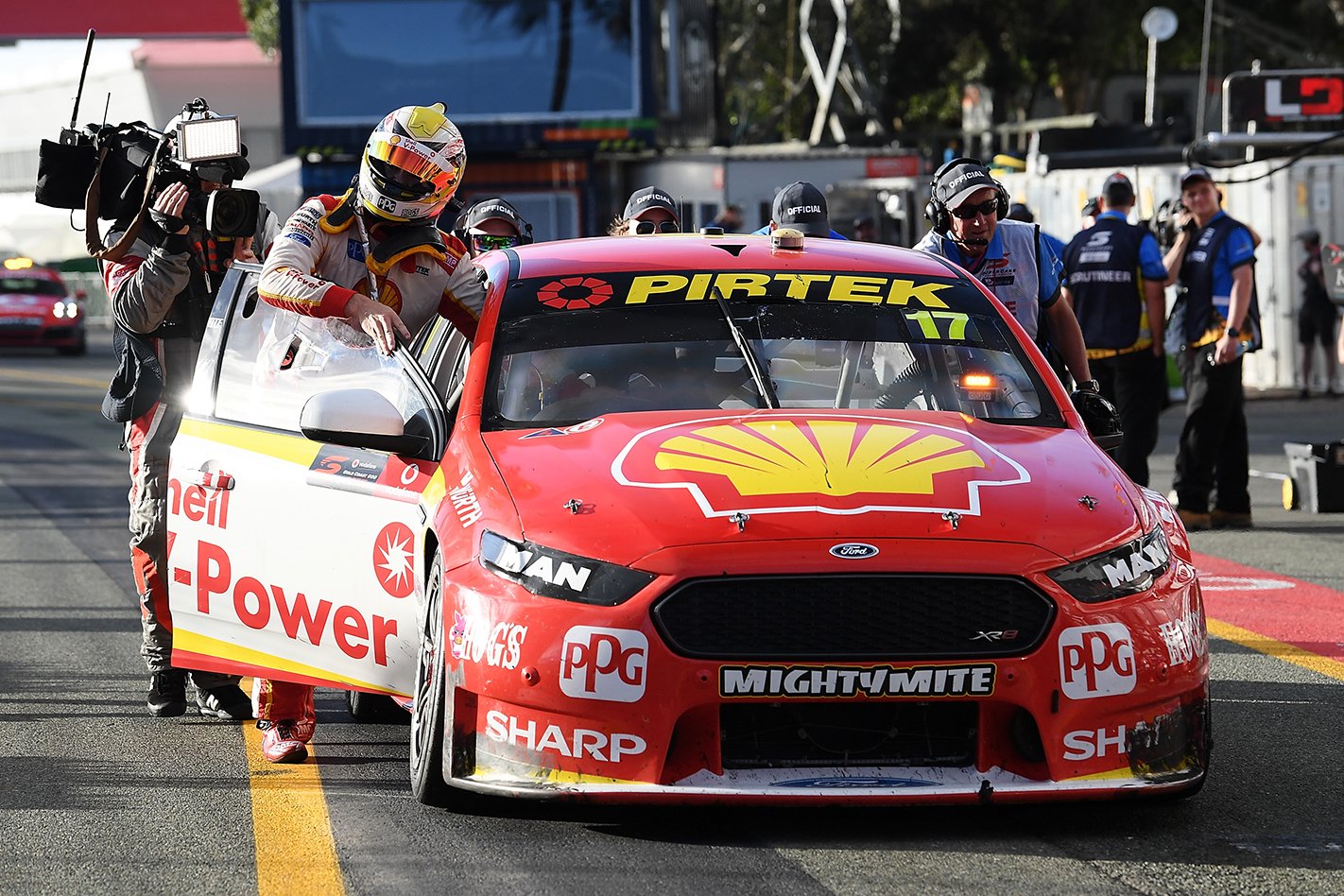
“I don’t mind pushing my car if it’s pushing it into victory lane,” McLaughlin said, before complimenting his co-driver. “Alex Premat drove an unbelievable drive in the first stint. He set us up.”
Mostert and co-driver Steve Owen claimed the Enduro Cup for 2017.
It was a tale of two very different days, weatherwise.
On Saturday, Mostert put his Falcon on pole and along with Owen, mastered the dreadful track conditions to win the opening 300km race of the weekend in a performance that put the Queenslander right back into championship contention.
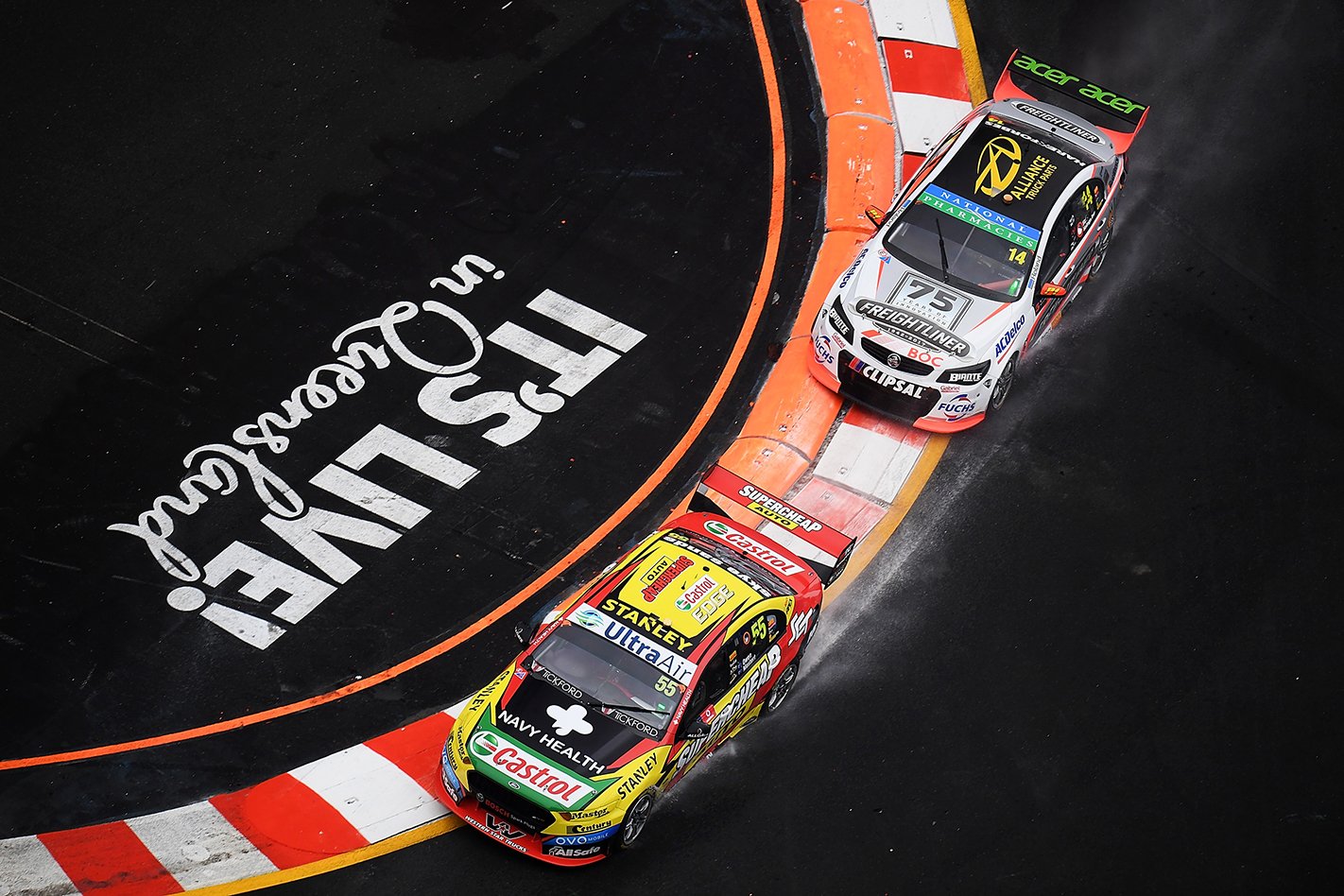
His Prodrive Racing teammate, Cam Waters, steered his Monster Energy Falcon to second place alongside co-driver Richie Stanaway.
Tim Slade secured his first podium finish of the year by claiming third after his co-driver Andre Heimgartner set up a strong result for Freightliner Holden by pushing through the spray to the lead in the first stint. Heimgartner, a late replacement for the injured Ash Walsh at the Bathurst 1000, has done his future prospects no harm at all.
Slade and Heimgartner should have finished higher in the results but for a piece of misfortune in the pits when the car’s in-built jack dropped into a hole on the pit apron, costing the team precious seconds.
Whincup started from second but finished sixth on Saturday after Dumbrell incurred a 15-second time penalty for bunting Owen into a spin.
Both Shell team Fords struggled in the wet and finished well back. Sunday’s sunshine brought them back into contention.
The next event on the calendar is the ITM Auckland SuperSprint to be held from November 3-5 at Pukekohe Park Raceway near Auckland.
MotoGP: Marquez extends championship lead after winning stunner at Phillip Island
Marc Marquez’s flighty romance with Phillip Island Raceway firmed into a rosy love affair yesterday when the Spanish daredevil saw off his rivals to win a breathtaking 2017 Australian Grand Prix, taking victory after a lengthy battle involving a tight-knit pack of eight riders.
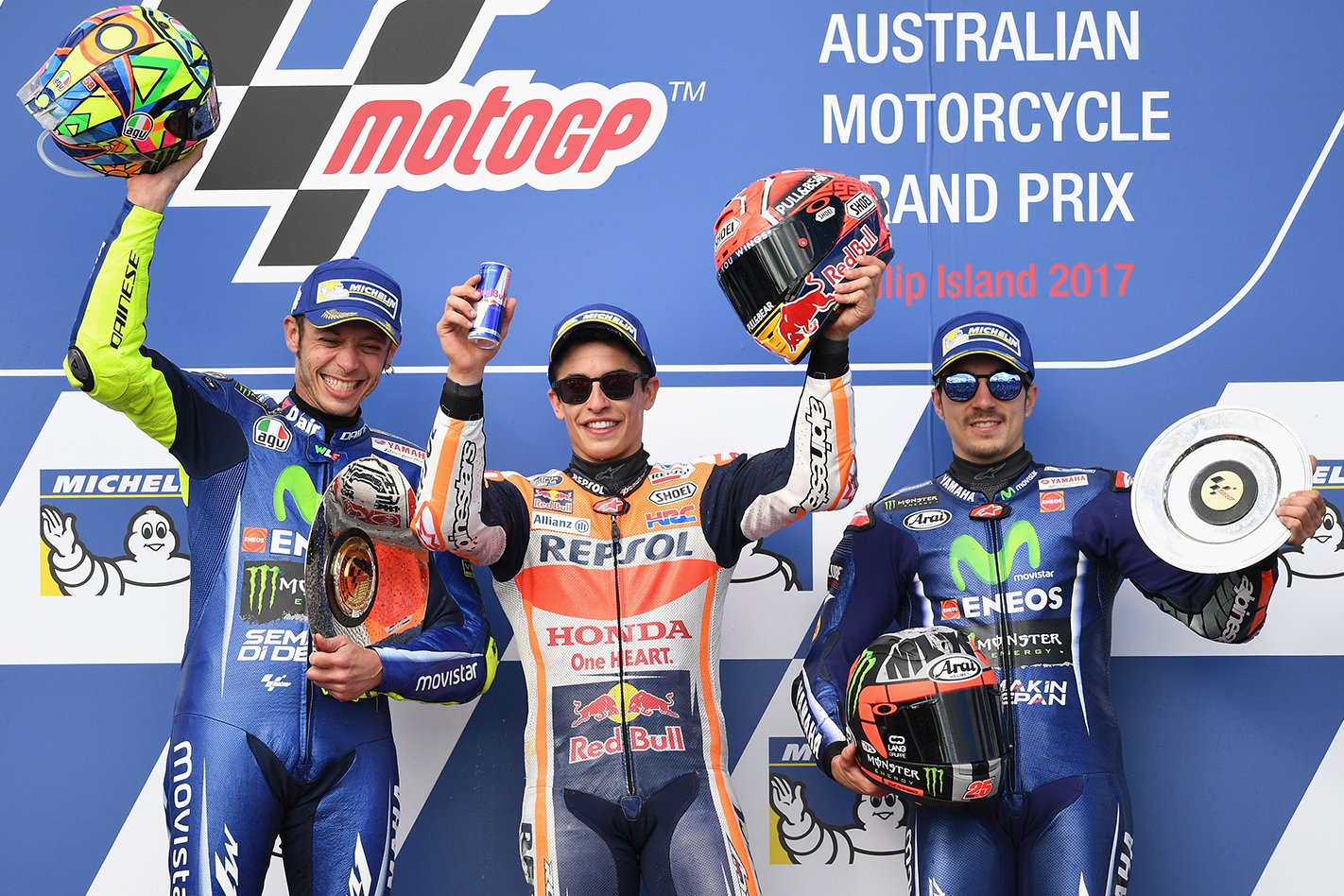
He can wrap it up next weekend in Malaysia after his main title rival, Ducati’s Andrea Dovizioso, battled to 13th place at the Island, his worst result of the year.
What was a tight 11-point advantage going to Phillip Island has blown out to 33 points with only Sepang and Valencia left to fight for.
Marquez certainly didn’t have an easy afternoon on his Honda, a manic eight-rider scrap developing for the podium slots, until only five laps from the end, when the Honda man was able to edge away.
The pole-winning Spaniard was mugged heading into into the first corner by fast-starting Australian Jack Miller, chasing glory at his home grand prix. Returning to racing just three weeks after breaking his right tibia in a training oopsy, Miller got the fans excited when he led for the opening laps until overtaken by Valentino Rossi (Movistar Yamaha MotoGP) on lap five.
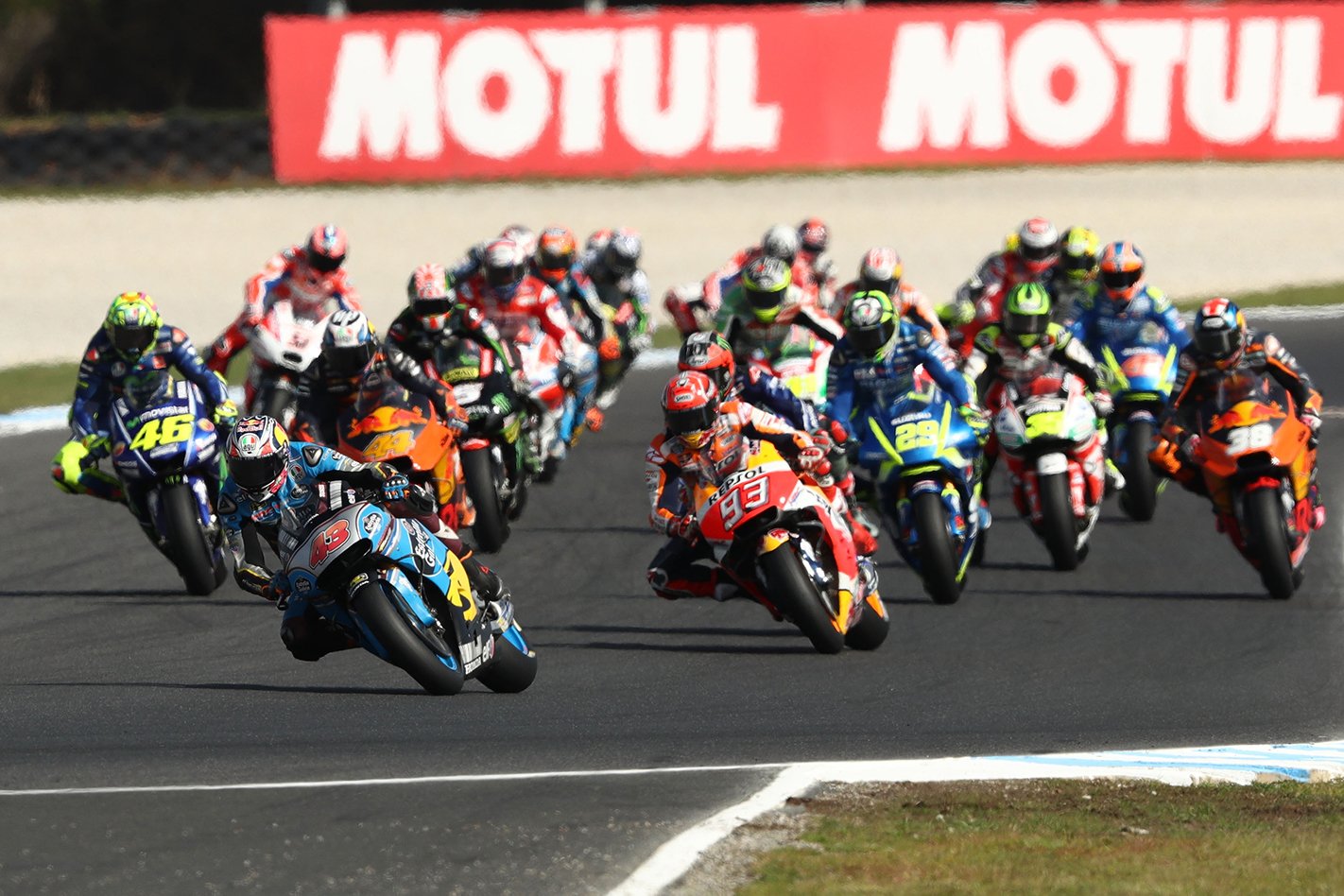
Miller finished an impressive seventh, less than five seconds back from Marquez.
Marquez crossed the line 1.7 seconds ahead of Yamaha’s venerable superstar Valentino Rossi, who charged from seventh on the grid to pinch second from teammate Maverick Vinales.
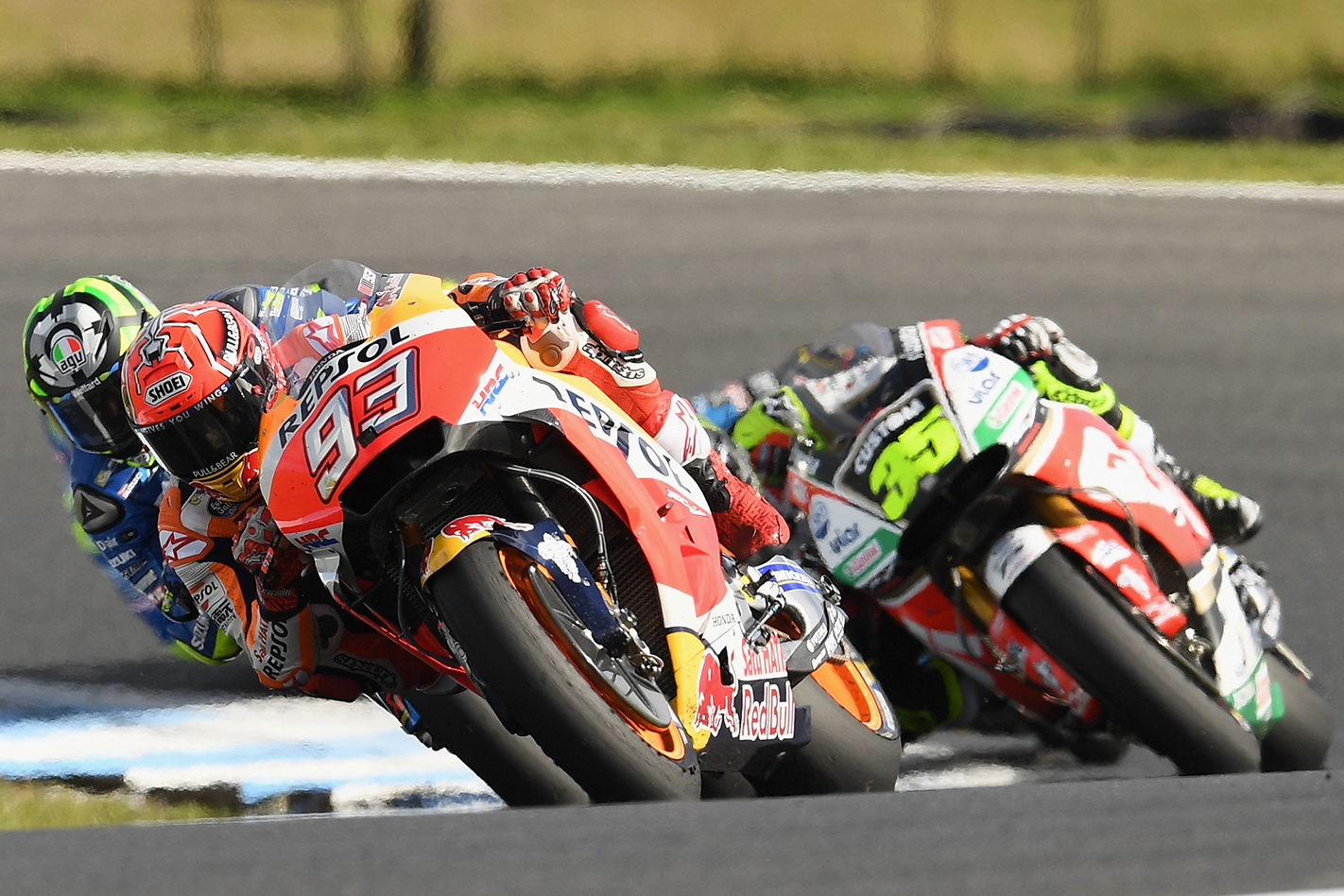
KTM had a history-making day in Moto2 to take its first ever win in the category with Miguel Oliveira (Red Bull KTM Ajo) crossing the line three seconds ahead of his closest rival, teammate Brad Binder, who also took his first ever podium in the intermediate class.
Joan Gold Coast 600Mir (Leopard Racing) clinched the 2017 Moto3 World Champion after another victory – his ninth from 16 races.
