
Toyota has registered a trademark application on the name “TJ Cruiser” in the United States, a firm clue that the Japanese carmaker intends to follow on from the successful FJ Cruiser with an all-new lifestyle off-roader.
It’s not entirely unexpected. Toyota wheeled out the FT-4X concept at the New York Auto Show earlier this year, a boxy take on a 4×4 wagon that many expected would spawn a production-ready version to capitalise on the world’s ever-increasing appetite for SUVS.
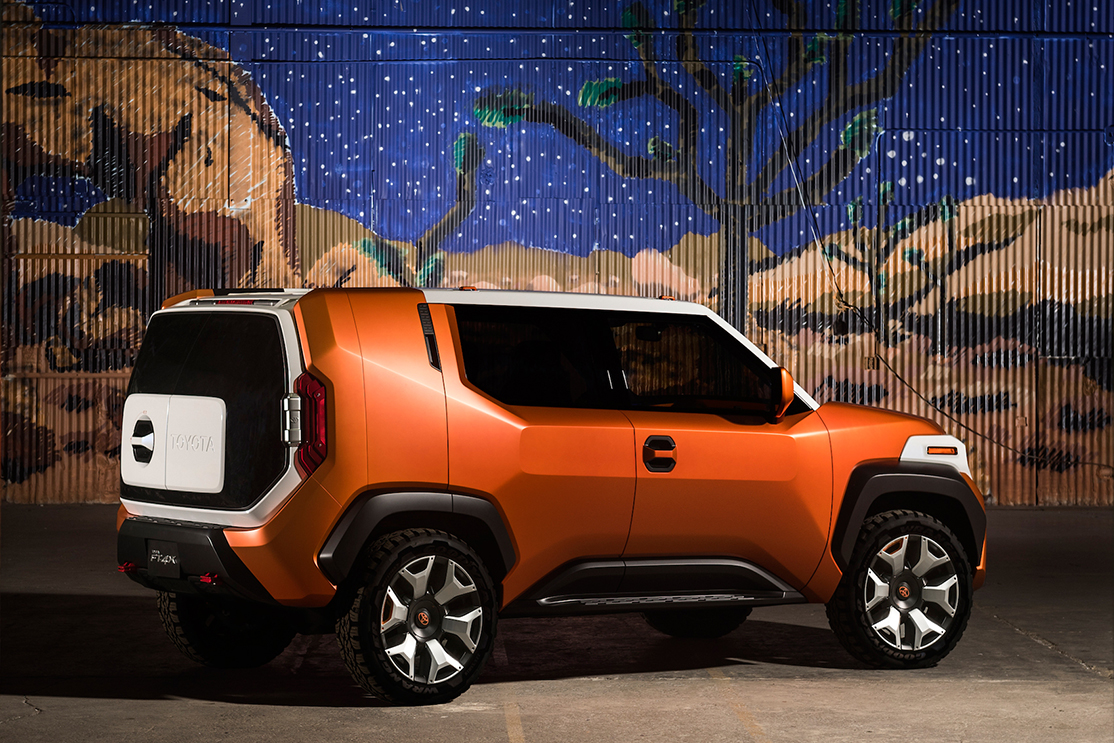
Its chunky, utilitarian styling was also seen as a futuristic take on the now-departed FJ Cruiser, a retro-styled homage to Toyota’s original FJ-series LandCruiser and a car that enjoys a cult following in the USA – as well as more than a few sales in Australia.
However, if the TJ Cruiser is indeed based in any way on the FT-4X, don’t count on it being quite the rugged go-anywhere device that the Prado-based FJ Cruiser was. With the concept using a MacPherson strut front suspension, double-wishbone rear end and four-cylinder turbo petrol engine, its mechanical layout resembled a road-biased C-HR more than it did the highly capable FJ Cruiser.
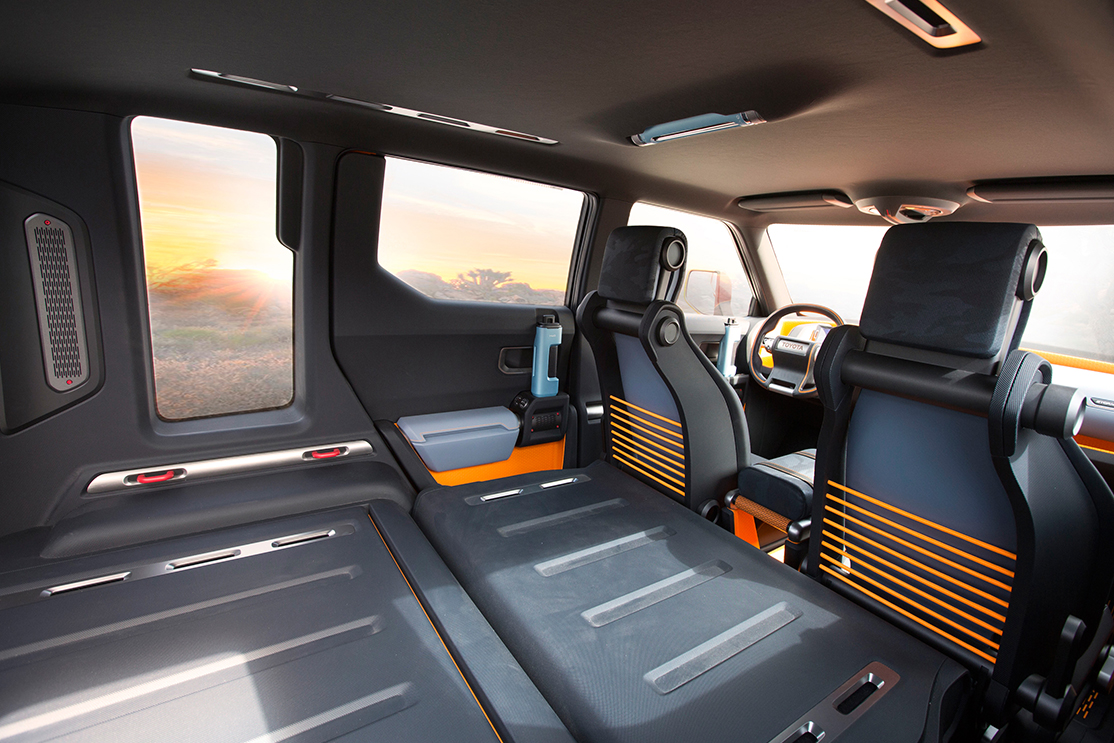
And that’s no surprise. Toyota pointed out at the FT-4X’s New York debut that the design was targeted squarely at millenials, and boasted features more attuned to facilitating social media updates from a bush campsite instead of genuine rock-hopping.
“We think it can do a lot and there’s a great spot for this in the market,” said Hunter. “We identified these millennials as casual users; they’re not interested in doing that [off-road] crazy stuff. This is perfect for them,” said the head of Toyota’s Calty design studio, Kevin Hunter, at the New York Auto Show.
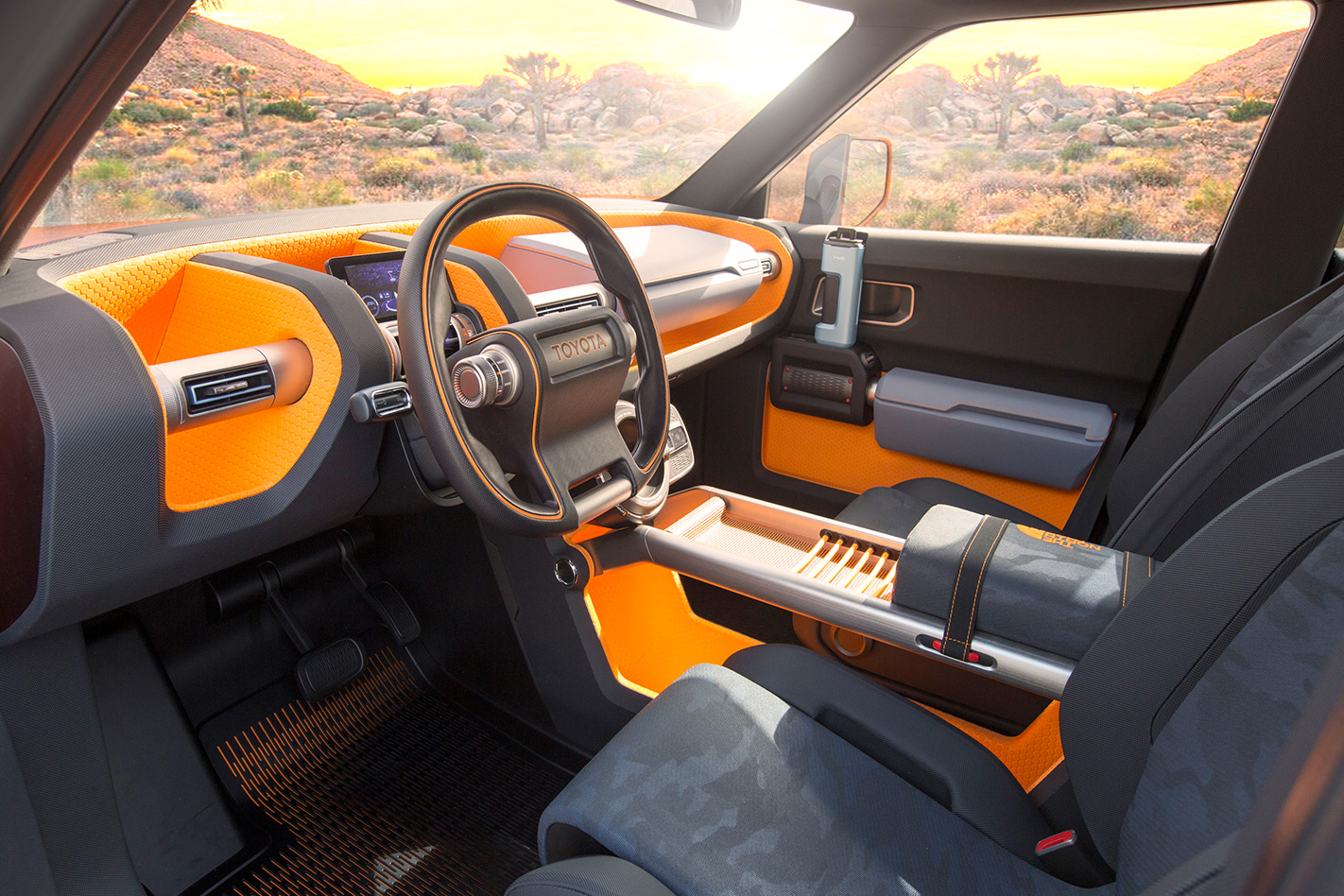
“They [millennials] share the same desire to get away and explore, but their needs and appetites are less hard core and more of what we like to call casual core.
“In generations past, base camp symbolised the beginning of a journey but today for many millennials base camp has become the destination.”
Will the soft-roading FT-4X morph into the FJ Cruiser’s successor, or is the TJ Cruiser instead being reserved for something that boasts the same off-road chops as the dearly departed FJ? We’ll have to wait and see – right now, Toyota has yet to announce its intentions.
If you thought the Shelby Super Snake F-150 wasn’t ‘Murican enough, you’re in luck.
“Take a Ford F-250 with brute diesel power and a strong straight axle up front. It’s a solid truck, but simply doesn’t have the sport look people want, nor any off-road capability.”
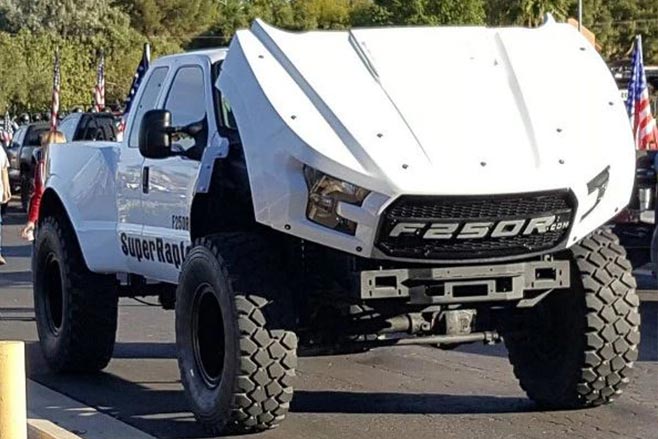
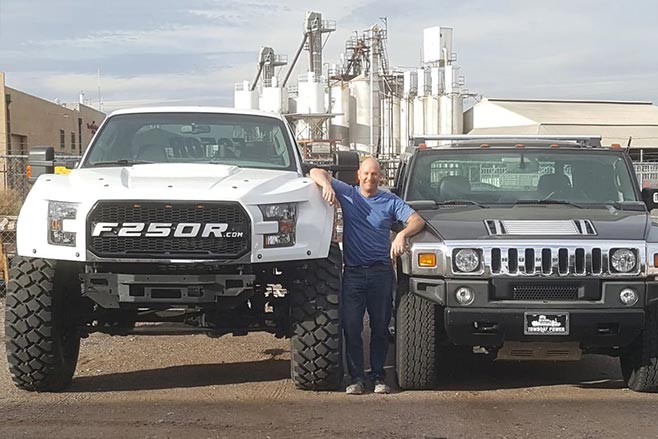
That’s the starting point for Jeremy Dixon’s idea to strip down F-250s and make them into insane-looking 4X4 beasts.
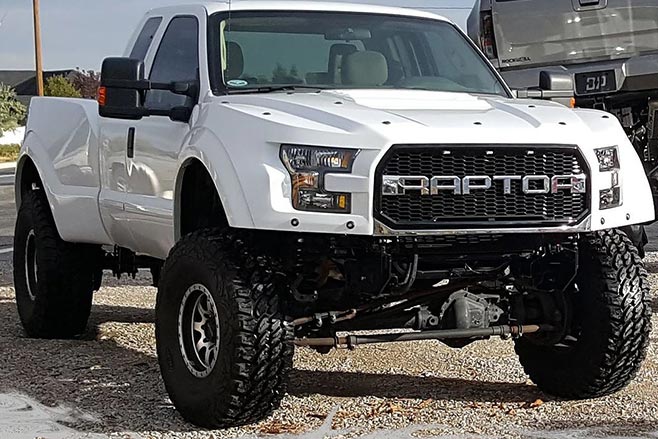
Bigger and wider tyres, larger fenders, less bodywork and a longer wheelbase are on the checklist, as well as a lift – obviously – plus the new body parts are made of “super strong fiberglass.”
“We have been building and selling Ford Superduty trucks for over 20 years.
“Lifted Ford trucks are a specialty we mastered long ago, and were one of the first off road shops in the business.”
Mention diesel around some performance die-hards and they switch off. Sure 328kW is less than Cherokee SRT power, but 1254Nm should be enough to get them listening again.
“The MegaRaptors need the power and torque of the diesel to deal with the larger military wheels and tyres.”
Why does America get all the fun toys?
Renault has expanded its Megane small-car range with new sedan and wagon variants joining the existing hatchback.
This is the first time all three Magane body shapes will be sold concurrently in Australia, with the previous-generation sedan making its first appearance here back in 2010 but being discontinued before the arrival of the wagon.
The all-new Megane wagon and sedan broadly echo the specification levels of the hatch, whose price remains unchanged despite a slight upgrade.

The wagon comes in two model grades, the entry-level Zen, GT-Line and GT, with the sedan arriving in Zen and a new mid-spec Intens variant.
Zen standard features include R-LINK 2 multimedia system with satellite navigation and a 7-inch touchscreen, reversing camera, rear parking sensors, Hill Start Assist, electronic park brake, Arkamys audio with eight speakers, automatic dusk-sensing headlights and rain-sensing windscreen wipers.
The Intens, GT-Line and GT variants gain an 8.7-inch portrait screen and an advanced driver assistance system (ADAS) pack which includes blind spot warning, adaptive cruise control (ACC), distance warning and side parking sensors – the ADAS pack is a $700 option in the Zen and entry-level Life hatch variants.

The three upper-spec variants also come with bigger alloy wheels, park assist, bigger alloy wheels, rear privacy glass, electric panoramic sunroof, dark charcoal cloth upholstery, Multi-Sense driving modes, LED daytime running lights and LED headlights.
In addition the GT gains launch control and multi downshift, all-wheel steering combined with Renault Sport-tuned suspension, premium sports interior trim, black honeycomb grille, Renault Sport GT front bumper and 18-inch Magny Cours alloy wheels.
The Megane hatch has been upgraded to receive the ADAS packs which are optional in the Life and Zen variants and included with GT-Line and GT.
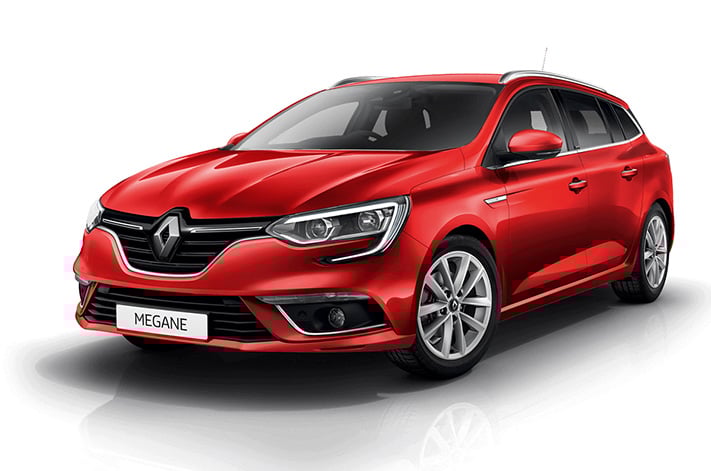
The GT-Line and GT hatch variants are also now equipped with the 8.7 inch portrait touchscreen, Multi-Sense driving modes and ambient lighting throughout the cabin.
All Megane variants are powered by the torquey 97kW/205Nm 1.2-litre four-cylinder turbo except the range topping GT wagon and hatch, which share the 151kW/280Nm 1.6-litre turbo four.
Both engines are mated to a seven-speed dual clutch automatic transmission in all variants except for the entry-level Life hatch.
Renault Megane manufacturer list pricing
- Megane Life hatch manual – $22,490
- Megane Life auto – $24,990
- Megane Zen hatch auto – $27,490
- Megane Zen sedan auto – $27,490
- Megane Zen wagon auto – $28,490
- Intens sedan auto – $31,990
- GT-Line hatch auto – $32,490
- GT-Line wagon auto – $33,490
- GT hatch auto – $38,490
- GT wagon auto – $39,490
Subaru has let slip a telling teaser image of what it says will be “a better way to get your daily dose of fibre” – carbonfibre, to be precise.
A teaser image of an unpainted carbon fibre roof on a WRX sedan delivers a fairly unambiguous message – a lightweight version of Subaru’s rally-bred sports sedan is just around the corner.
That image has since been followed by a close-up of the car’s boot, revealing not only a track-spec carbonfibre wing, but the car’s badge – STI Type RA.
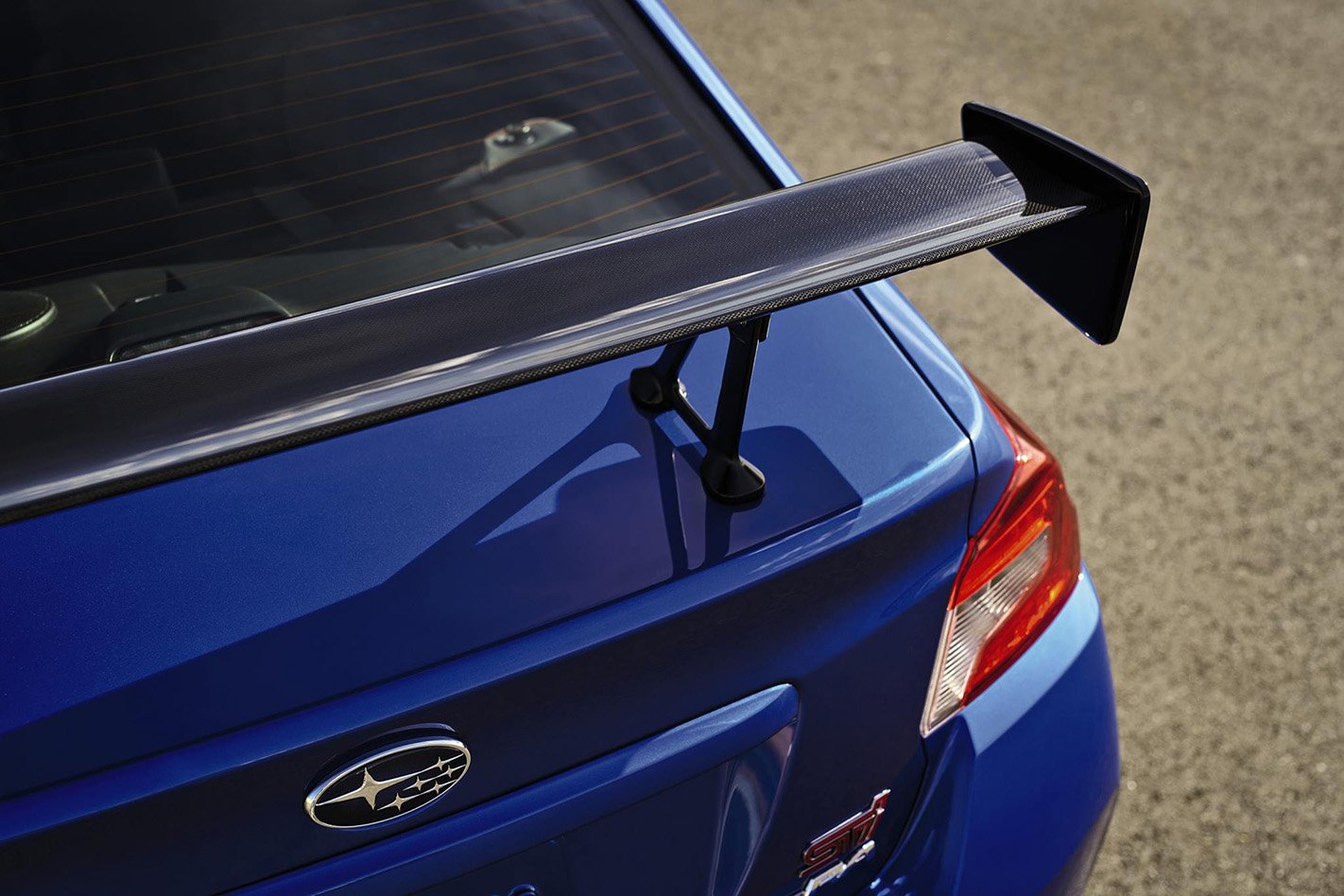
For one, the lairy vents and bonnet pins of the NBR Special don’t appear to be present, and the neat finish off the carbon roof indicates the Type RA is something showroom-spec, not the bespoke stripped-out race car that Subaru is throwing at the Nurburgring.
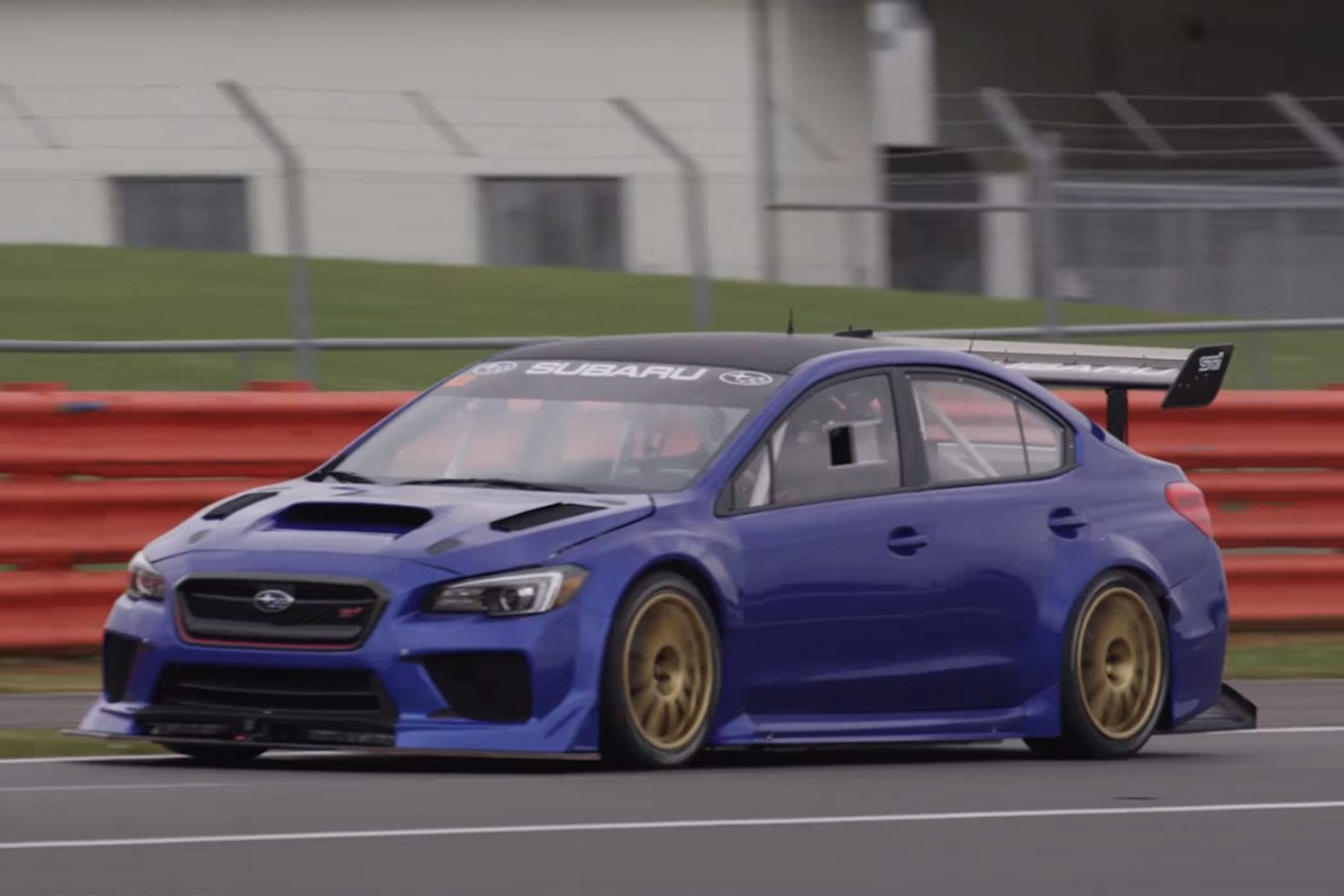
The road-ready WRX STI Type RA will be revealed in its entirety on July 8, with a more performance-focused configuration than the regular WRX STI that will couple lightweight body bits with various chassis enhancements to sharpen the base car’s already dynamic offering.
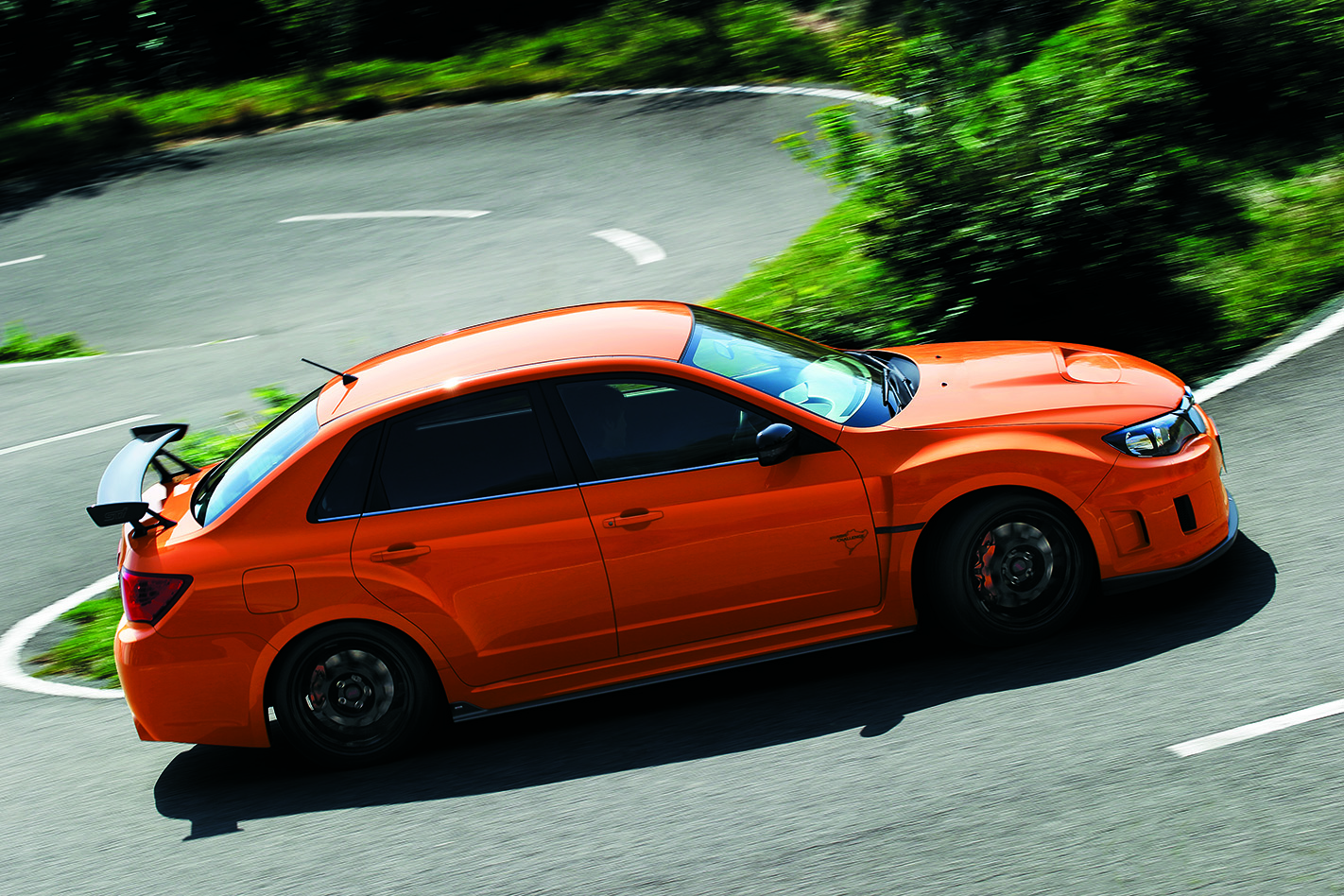
Full details are just around the corner, but if it follows the same pattern established by previous-generation STI Type RAs – which were only ever sold in the Japanese market – we can expect bigger brakes, enhanced aero, stiffer suspension settings, less weight and a track-oriented wheel and tyre package.
The Type RA is virtually a certainty for the US market given Subaru North America is behind the teasing (as it was for the BRZ STI teaser seen earlier in the week), but its potential for our market is unclear at this stage.
YOU’RE a tough audience but we wouldn’t have it any other way.
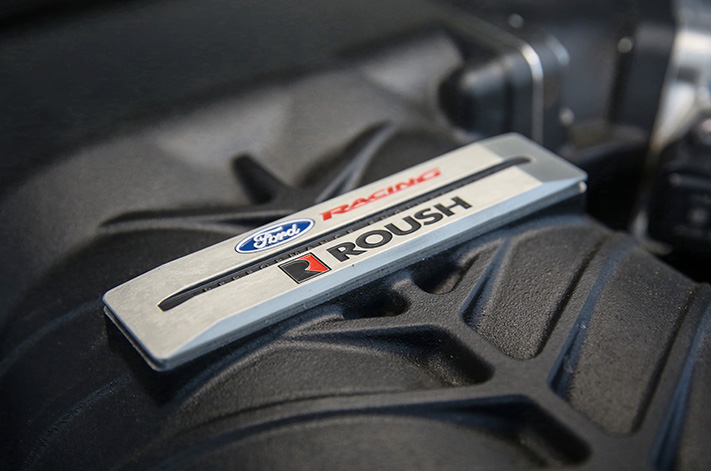
We ran a story this week on the Mustang factory approved performance packs from Ford Performance and the online response was, frankly, a bit scathing. It largely hinged around the fact that, rather unsurprisingly, muscle car fans appreciate a bit more mumbo and the exhaust, suspension kit, short throw gear shift and shiny Ford Racing gear knob wasn’t bringing much in the way of additional tyre-cremating stomp.
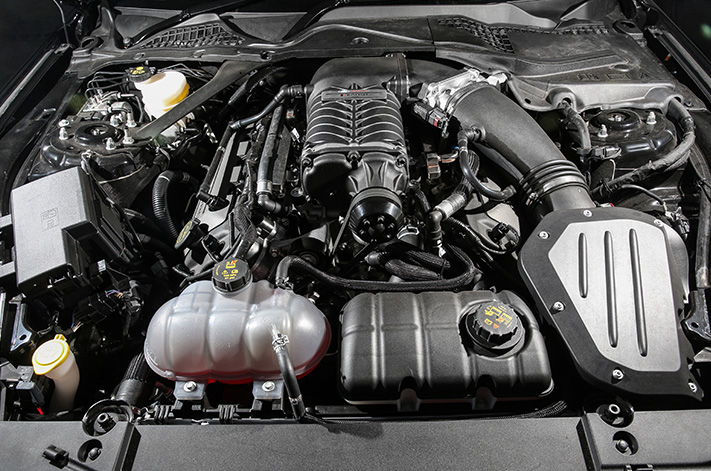
Anyway, you unruly lot on Facebook will doubtless take us to task because it’s not a Falcon XR6 Turbo, but we kind of like that. So grab a copy of the latest magazine, see how this new-look Ford vs Holden rivalry squares up and don’t hold back.
We’ll be honest. We’re excited to see how the M8 turns out.
We recently dug into the history of the badge for a MOTOR exclusive original BMW M8 feature, and then were treated to the news that BMW would finally build one for production.
Now, we get to hear it.
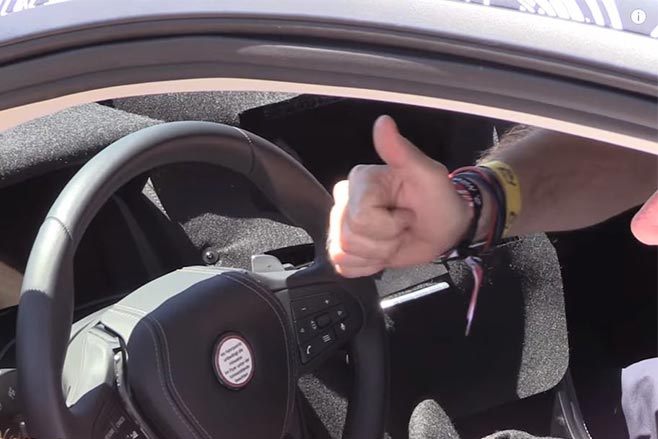
They were treated to an audio preview of the M8’s engine, though we still don’t know exactly what it is. Speculators are saying a twin-turbo V8 will be the power plant of choice for the M8, though the bonkers V12 from the M60Li could provide ample power.
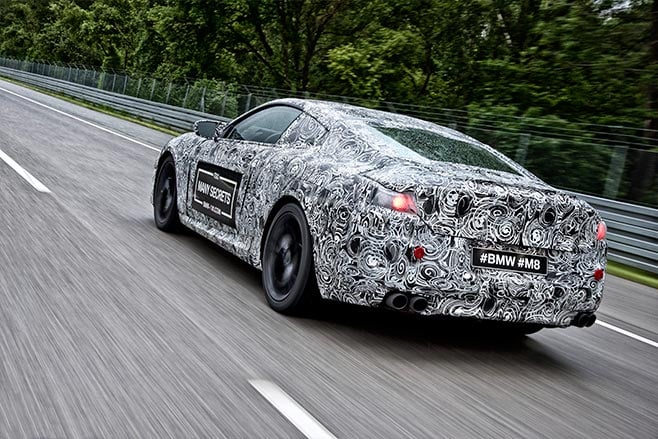
A few burbles in we were optimistic, though once the driver started toying with the pedals, we were pleasantly surprised.
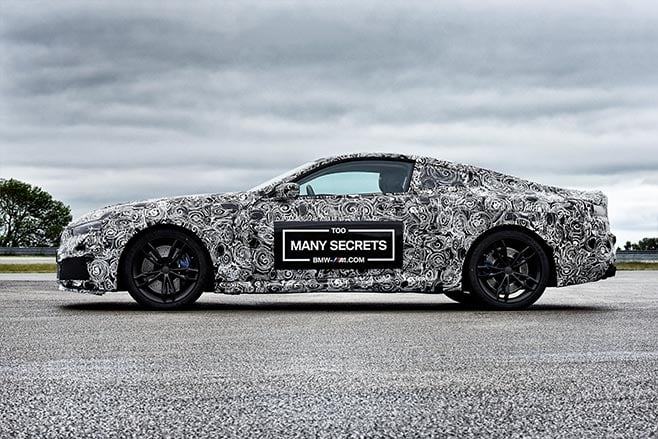
The next thing we want to know is how fast it is, obviously.
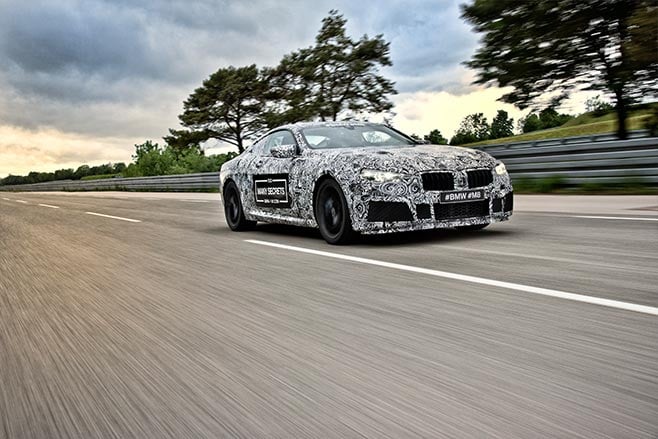
It may not have the visual character of the original M8 (yet), or even the 8 Series of the 1990s, but it’s an exciting step for BMW. We just hope it’s a good one.
JEEP is hoping to slow its dramatic sales slide within months – but there’s more pain to come as the brand undergoes a long road to regain the trust and attention of new-car buyers.
Speaking at the launch of the updated Grand Cherokee, Fiat Chrysler Automobiles Australia chief Steve Zanlunghi told Wheels he expected to finally report sales growth late in 2017.
“Probably either at the very end of this year or first quarter next year [sales will start increasing] when we have the Compass back in our line-up,” he said.
Zanlunghi highlighted the Compass small SUV as crucial to kicking sales in the right direction, however that car doesn’t arrive until December.
“It’s a key piece that’s missing,” said Zanlunghi of the car that will compete with the likes of the Toyota C-HR, Honda HR-V and Mazda CX-3.
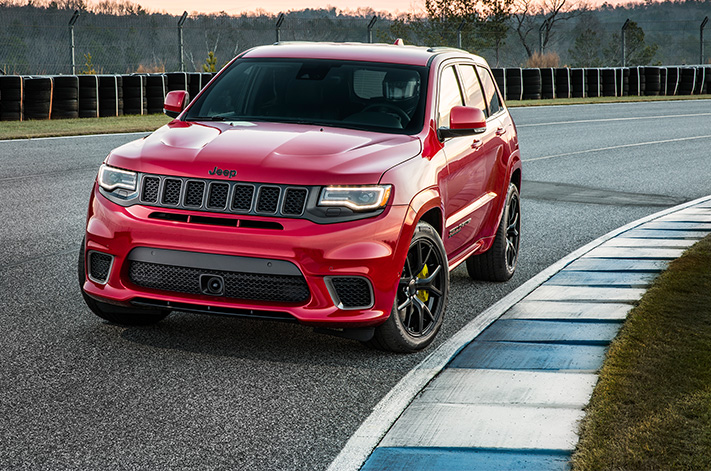
Late 2017 is also the time the brand’s fastest ever hero car – the 527kW Grand Cherokee Trackhawk – lands in Australia, providing a crucial image machine.
“Public interest in the Trackhawk has been incredible – barely a day goes by when I’m not asked if it’s coming,” said Zanlunghi of a car he claims will “shatter performance SUV benchmarks”.
But Zanlunghi admits the Jeep turnaround won’t happen overnight.
“It’s difficult to change customer perception, that takes time, for sure, but I think we’ve taken a lot of the right steps to put us on a really good path.”
Key to the new Jeep message is a five-year “There & Back Guarantee”, which includes factory warranty protection, capped price servicing and roadside assistance.
However, that’s only one component of a plan that involves improving overall customer service and refreshing the model range.
“We never under any circumstance thought that this was going to be some type of silver bullet,” Zanlunghi says of the five-year warranty, adding that it is designed to demonstrate faith in the product.
“It’s a long term play, where it’s a fundamental part of the Jeep business in Australia.”
New product is also key.
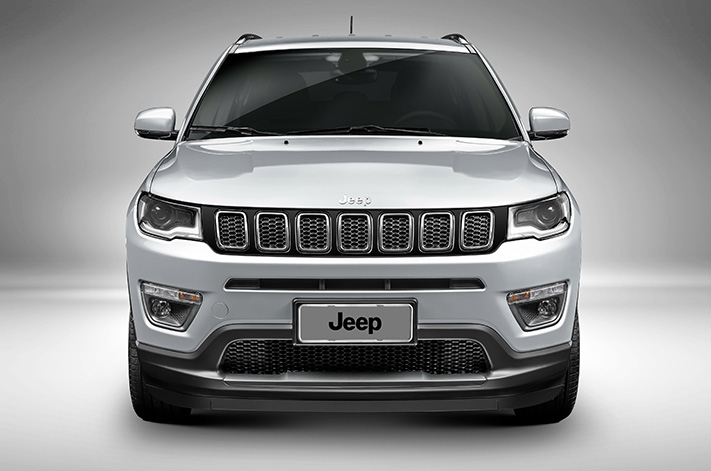
As well as the Compass and Grand Cherokee Trackhawk, Jeep is readying an all-new Wrangler, the car that is at the core of the Jeep brand.
Due in 2018, the new Wrangler will boast an aluminium-intensive structure and an evolution of the iconic styling that has defined the model.
The delayed new generation Grand Cherokee is also due around 2019.
Arguably the most important new models are the Wagoneer and Grand Wagoneer, at least one of which will offer a seven-seat layout and Range Rover-rivalling luxury.
While the Wagoneer hasn’t been confirmed for Australia yet – Jeep is still working on a business case for right-hand drive production – it’s odds-on to flesh out the expanding line-up from about 2019.
In our Fast Facts series, Whichcar delves deep into the history of automotive brands to bring you fascinating facts and intriguing information.
Here we focus on Maserati, the Italian brand that started life producing spark plugs before producing iconic race cars such as the 250F and Tipo 61 ‘Birdcage’, and desirable GTs and sports cars from the 1947 A6 1500 to the upcoming Alfieri.
BRIGHT SPARK
Societa Anomina Officine Alfieri Maserati was opened officially in 1914 in Bologna as a workshop focusing on spark-plug production. Alfieri Maserati was aided by two of his brothers, Ettore and Ernesto, as he took the family lead after eldest brother and promising engineer Carlo had died prematurely in 1910 from lung illness. Maserati spark plugs were used by Italian airplanes during World War I.
TRIDENT BADGE
Another brother, Mario, was obsessed with art more than cars, and in 1920 he was asked to create the company logo. The now-famous trident badge was influenced by the Fountain of Neptune statue in Piazza Maggiore of Maserati’s then hometown, Bologna. The red and white of the city’s banner were also adopted for the design.
THE TYPE IS CAST
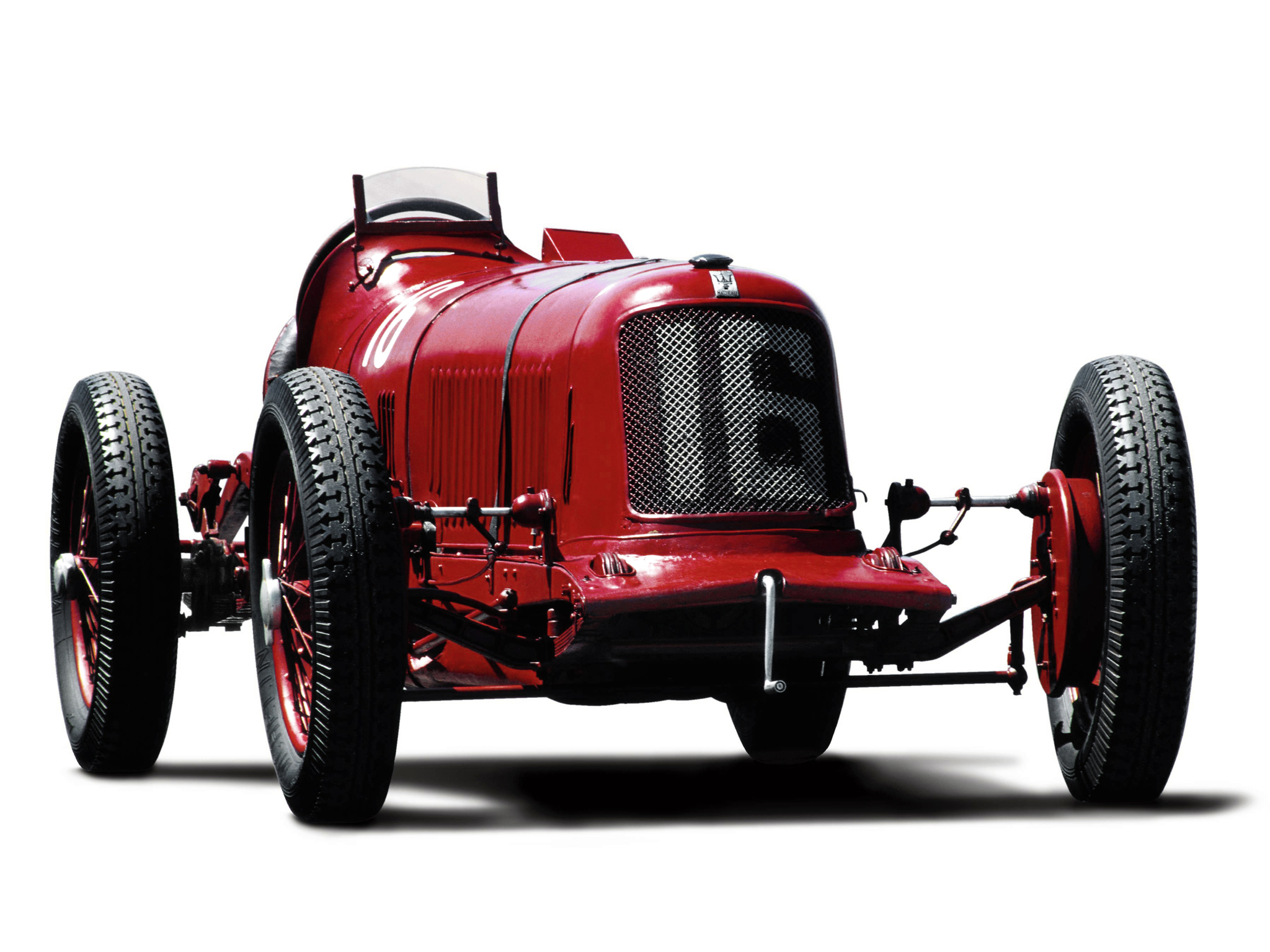
Avid racer Alfieri drove for several manufacturers before he and his brothers created the first Maserati race car in 1926 – the Tipo (Type) 26, which Alfieri drove to the Grand Prix class win in the Targa Florio the same year. He lost a kidney in an accident in 1927, and Bologna was left in mourning five years later when an operation failed to fix his last, ailing kidney.
INDEPENDENCE LOST; INDY WINS GAINED
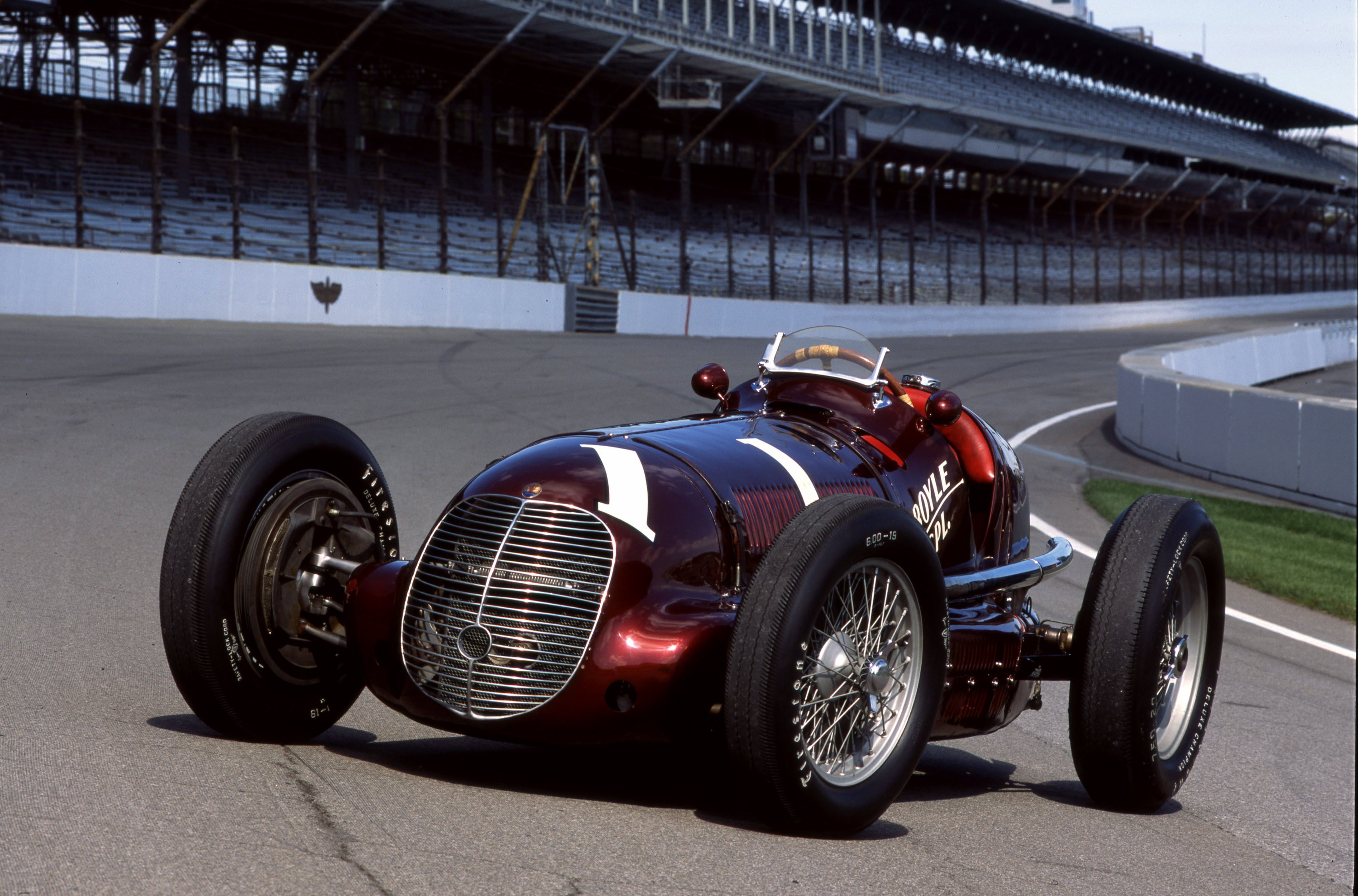
Maserati continued to build grand prix cars into the 1930s, including the 8CM driven to various successes in 1933 and 1934 by legendary Italian driver Tazio Nuvolari – who had joined after a disagreement with Enzo Ferrari. Nuvolari eventually became a privateer, while intense competition from the Third Reich-backed German teams encouraged the Maserati brothers to hand ownership to the Orsi family in 1937. The 1938 8CTF would prove especially successful in America, winning the famous Indianapolis 500 in both 1939 and 1940.
ONTO THE ROAD
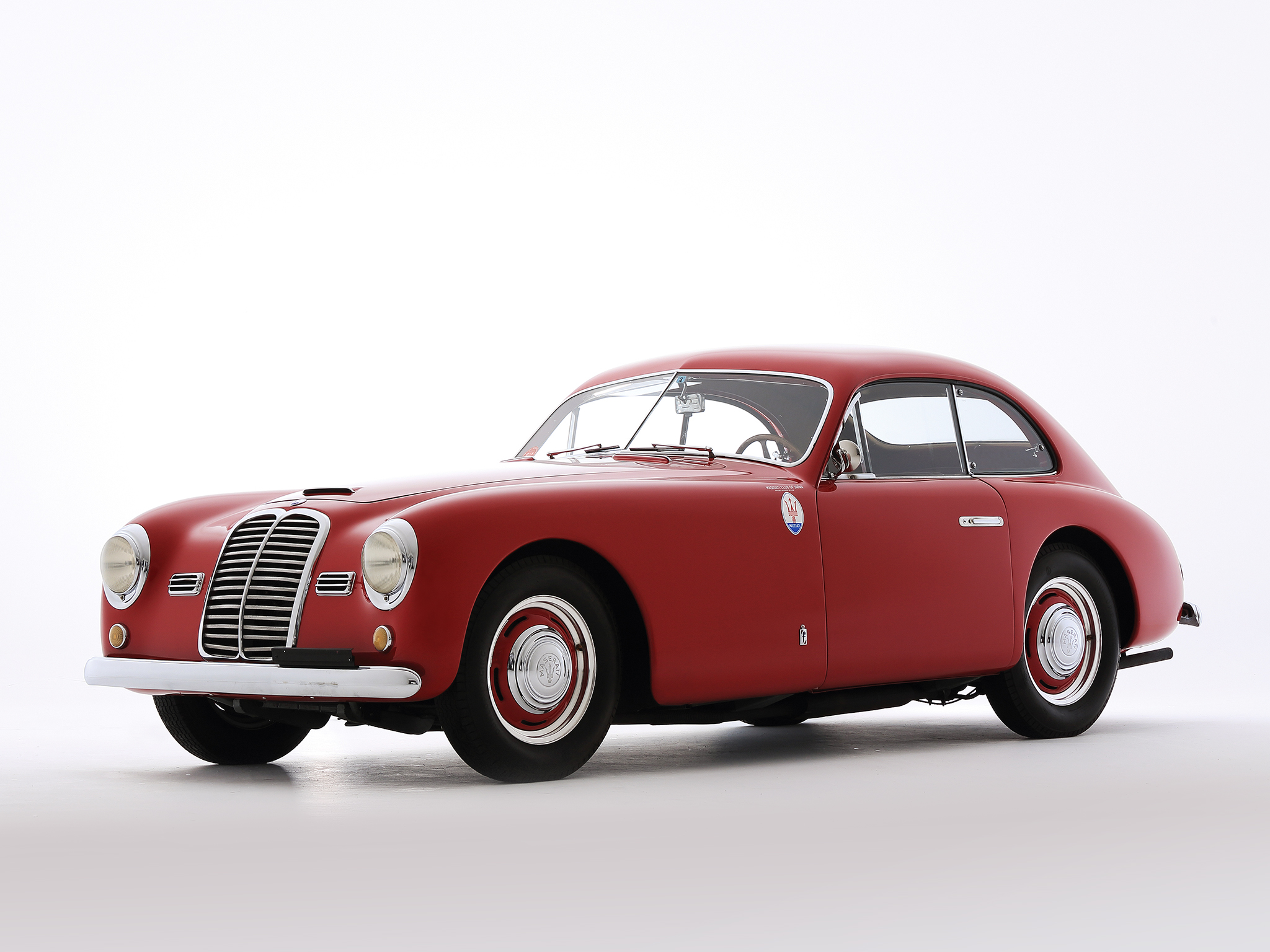
Maserati’s first serious foray into road cars was unveiled at the 1946 Geneva motor show – the A6 that took its letter from Alfieri and its number for the engine’s cylinder count. It went into production a year later as the A6 1500, with the coupe’s bodywork created by Pininfarina. It was followed a decade later by the even sexier 3500GT, produced in both coupe and convertible forms.
TWO Fs EQUAL ONE FAMOUS TITLE
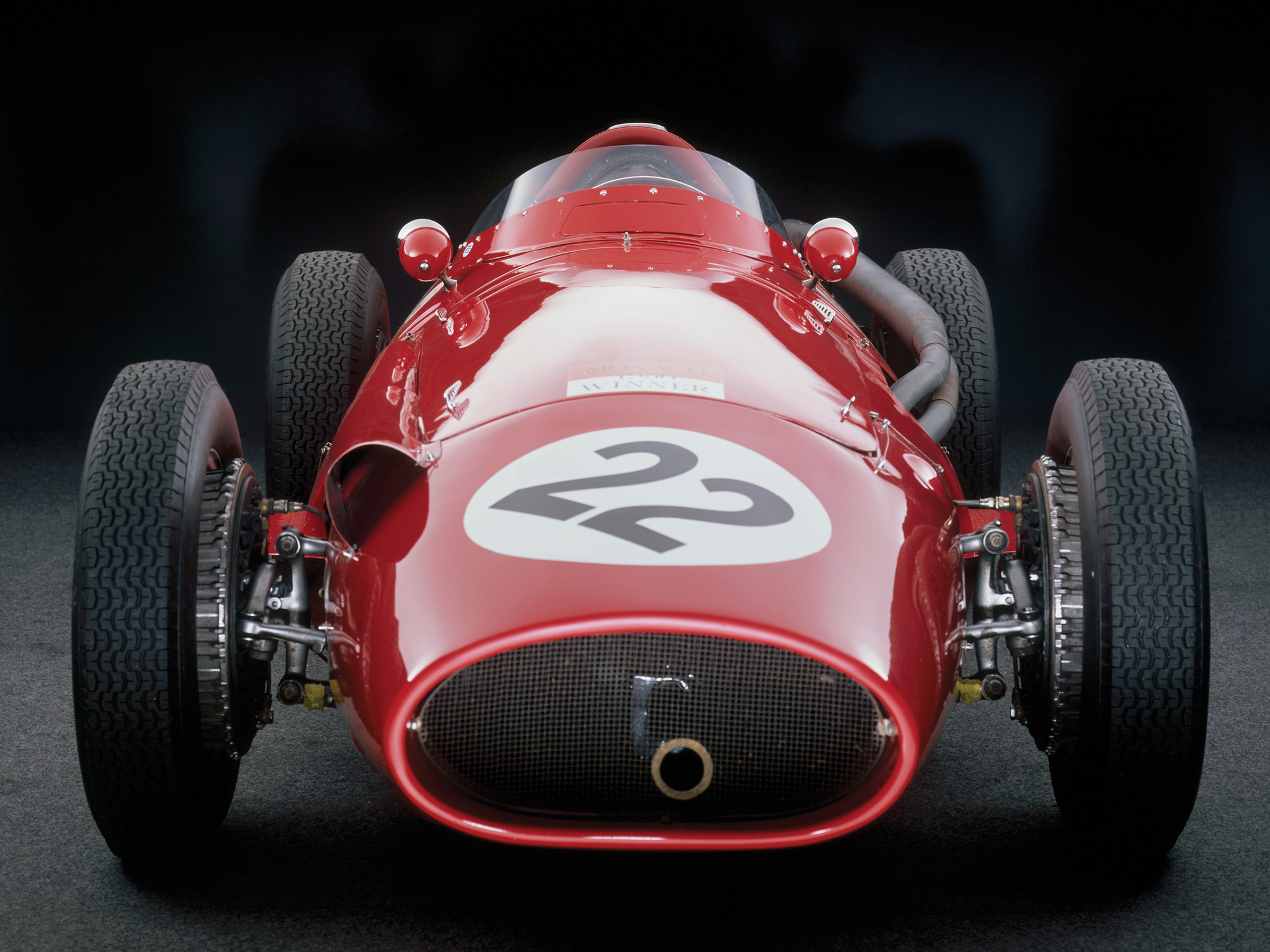
Maserati’s elegant, streamlined 250F achieved eight grand prix wins in the 1950s, and culminated in renowned Argentinian driver Juan Manuel Fangio taking the 1957 championship – the last of his five titles.
HIGH FLYER
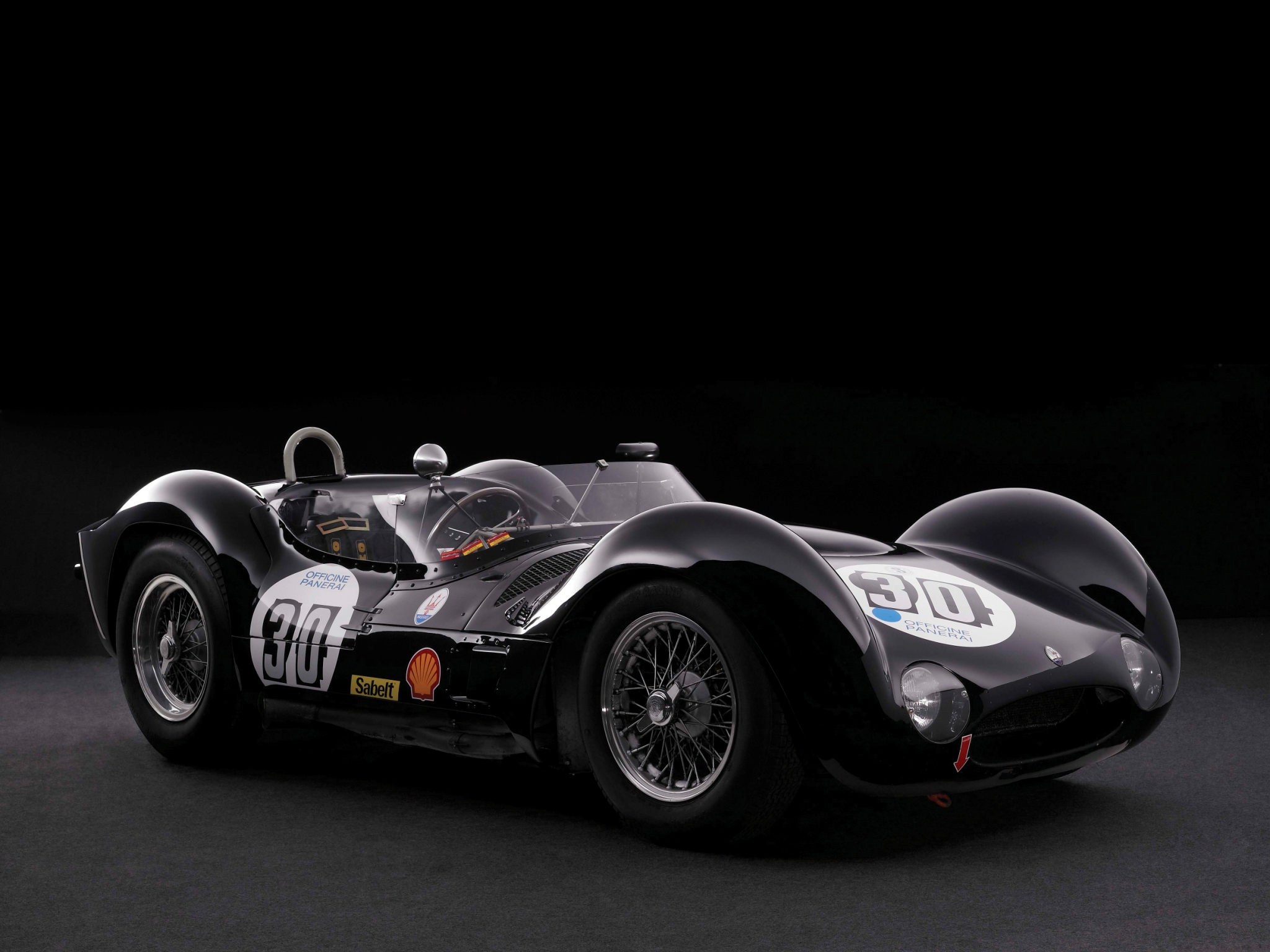
Another iconic Maserati race car emerges in 1959. The Tipo 61 that competed at Le Mans and various other endurance races was nicknamed the ‘Birdcage’ – after its intricate, welded tubular chassis. Reliability issues limited success for a car that wasn’t officially called a Maserati in events in which it competed.
EXTRA DOORS
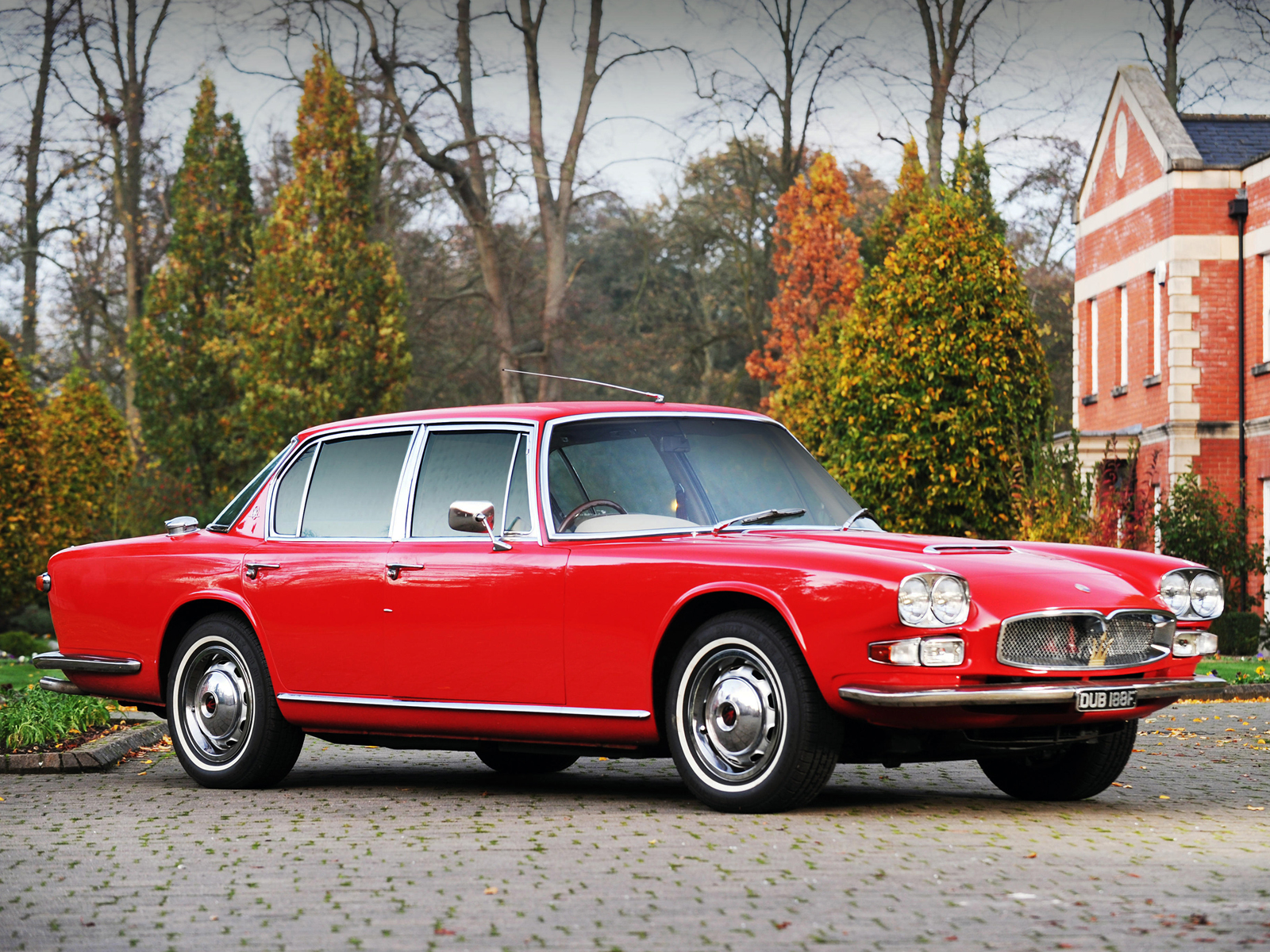
Maserati ventured into sedans in 1963 with the Quattroporte – which simply means “four doors” in Italian. Not only did the first generation bring handsome looks to the ‘limousine’ segment but it was then the fastest four-door in the world.
BLOW-INS
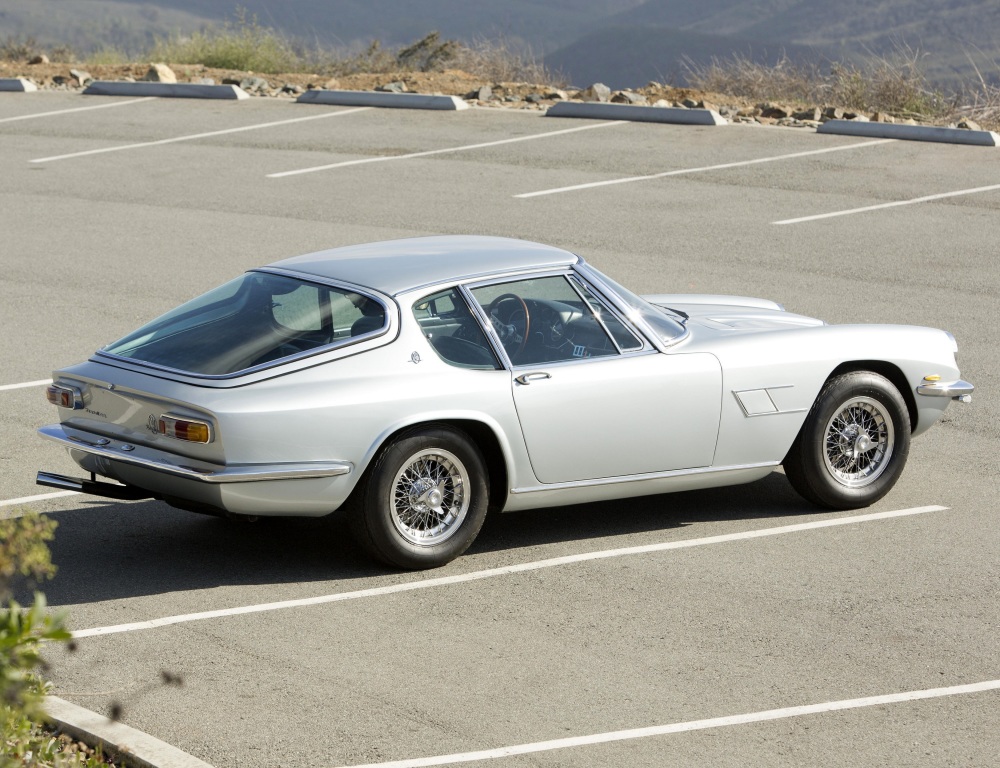
The 1963 Mistral coupe and spyder became the first of a handful of Maseratis to be named after a specific wind. These also included the 1967 Ghibli (its successor), 1971 Bora, and 1974 Khamsin.
GHIBLI RETURNS
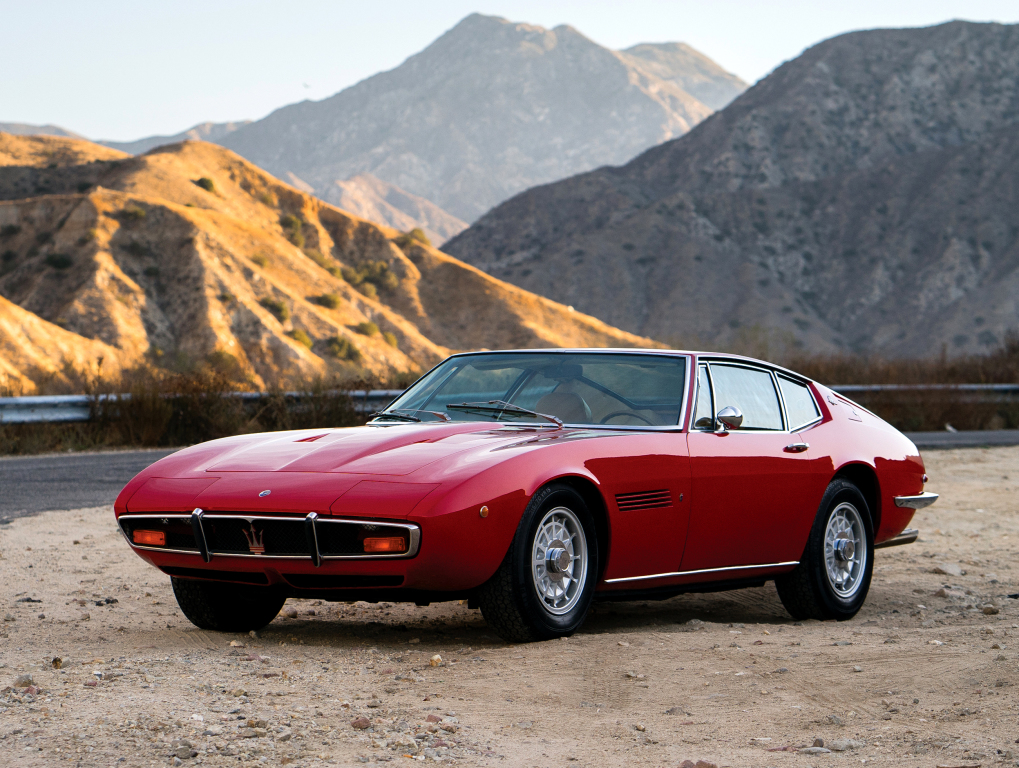
The striking Ghibli luxury V8 coupe – also produced in spyder form – was designed by the renowned Giorgetto Giugiaro, and worthy of visual comparison with the Ferrari 275 GTB and Lamborghini 400GT (though both powered by V12s). It featured a boot lid rather than tailgate despite the deceptive fastback styling. The Ghibli name was revived in 2014 for a large sedan sitting below the Quattroporte, though it lacked the beautifully proportioned styling of the original.
PETITE FRENCH INFLUENCE
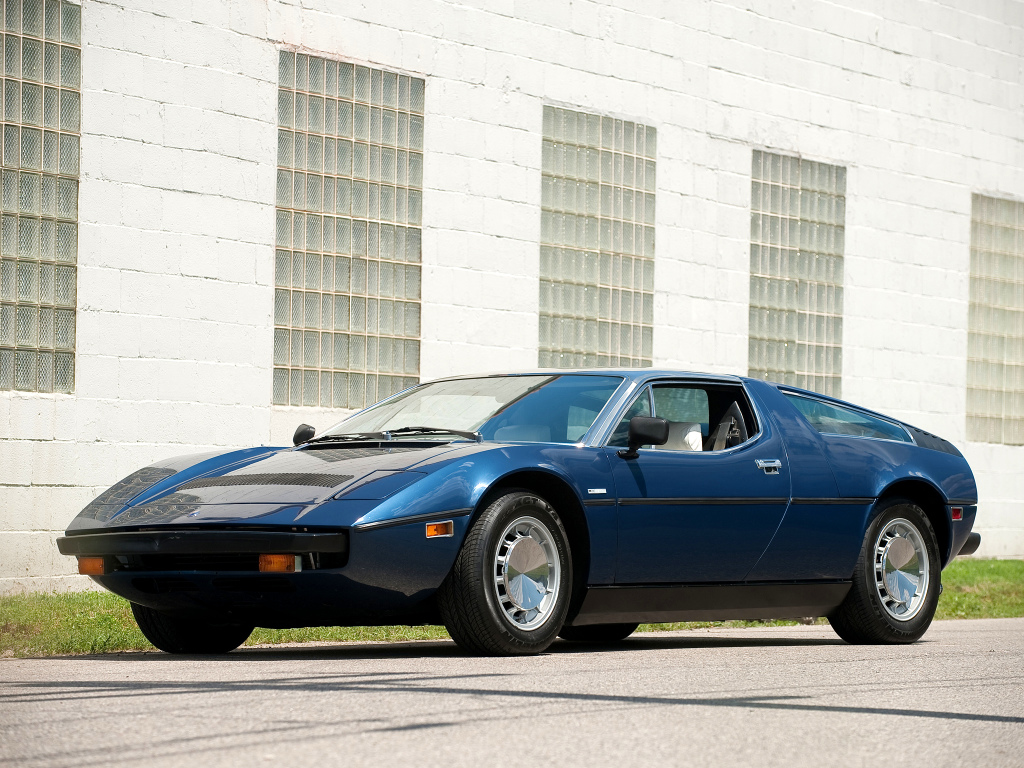
Citroen was brought in as a partner in the late-1960s, helping to bring greater organisation and structure to Maserati – while models were also influenced. Citroen’s hydraulics expertise, for example, was applied to the braking system, front-seat adjustment, and retractable headlights of the 1971 mid-engined Bora. And the second-generation Quattroporte was even based on the chassis of the Citroen SM, complete with hydro-pneumatic suspension (though the 1973 oil crisis would prove disastrous for the high-end sedan, resulting in just 13 units being built).
THE MASERATI THAT INSPIRED THE VW GOLF MK1 AND LOTUS ESPRIT
The conceptual precursor to the Bora was the futuristic Boomerang, also designed by Giorgetto Giugiaro. Its sharp lines and wedge shape would influence other designs from Giugiaro’s ItalDesign studio, ranging from the first Volkswagen Golf in 1974 and the iconic 1976 Lotus Esprit.
ONE OF THE WORST CARS OF ALL TIME
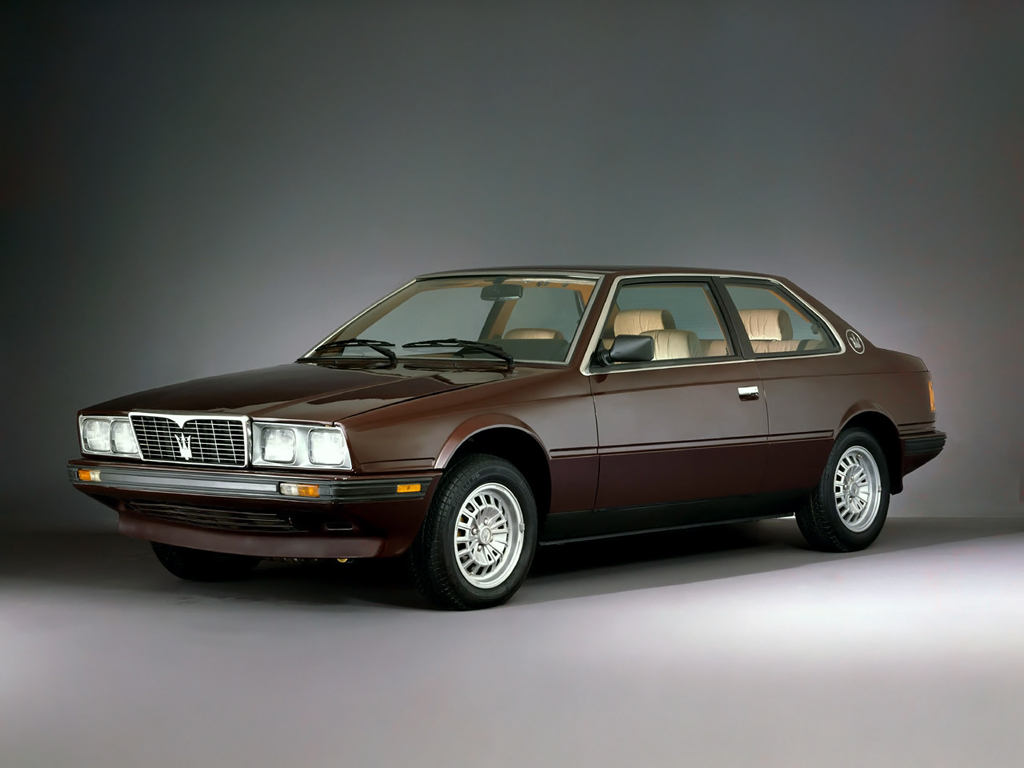
The 1976 Kyalami and 1981 Biturbo were two of the models produced during the tenure of entrepreneur Alejandro De Tomaso. The former was derived from De Tomaso’s own Longchamp model, using a Maserati V8. The Biturbo was particularly successful in the US, though it didn’t help Maserati’s struggling reputation around the time – the model’s poor reliability contributed to a place in Time magazine’s list of the 50 worst cars.
A TRIDENT-BADGED CHRYSLER
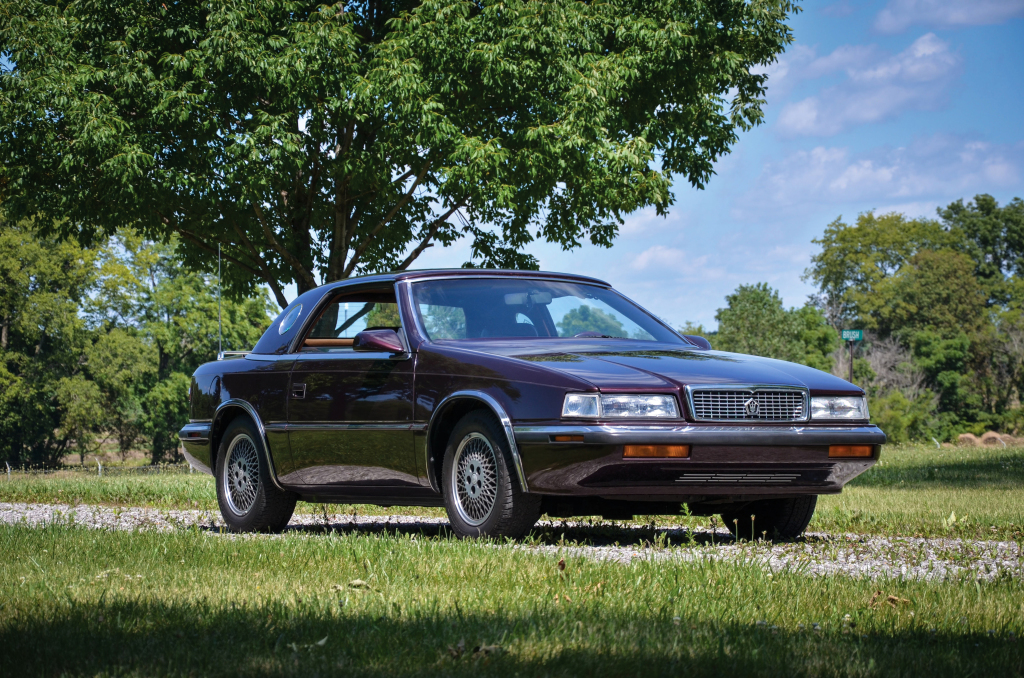
1989’s Chrysler TC by Maserati bookended an inglorious decade for the Italian brand. The idea, hatched by Chrysler chairman Lee Iacocca and Maserati president Alejandro De Tomaso, was a convertible featuring a Chrysler platform, US styling and initially a Chrysler (Maserati-enhanced) turbo engine but built by Maserati in Milan … for sale in the US. It was poorly received, perhaps unsurprisingly – and US car magazine Car and Driver in 2009 rated the TC among its Top 25 automotive ‘flops’.
RIVALS BECOME STABLEMATES
In 1993, Fiat bought Maserati – and placed it under the guidance of Ferrari chief executive and president Luca di Montezemelo, essentially ending the decades-long rivalry between the two Modena-based brands. Chrysler also came back into the equation when the Fiat Chrysler alliance was formed in 2014.
BACK ON TRACK
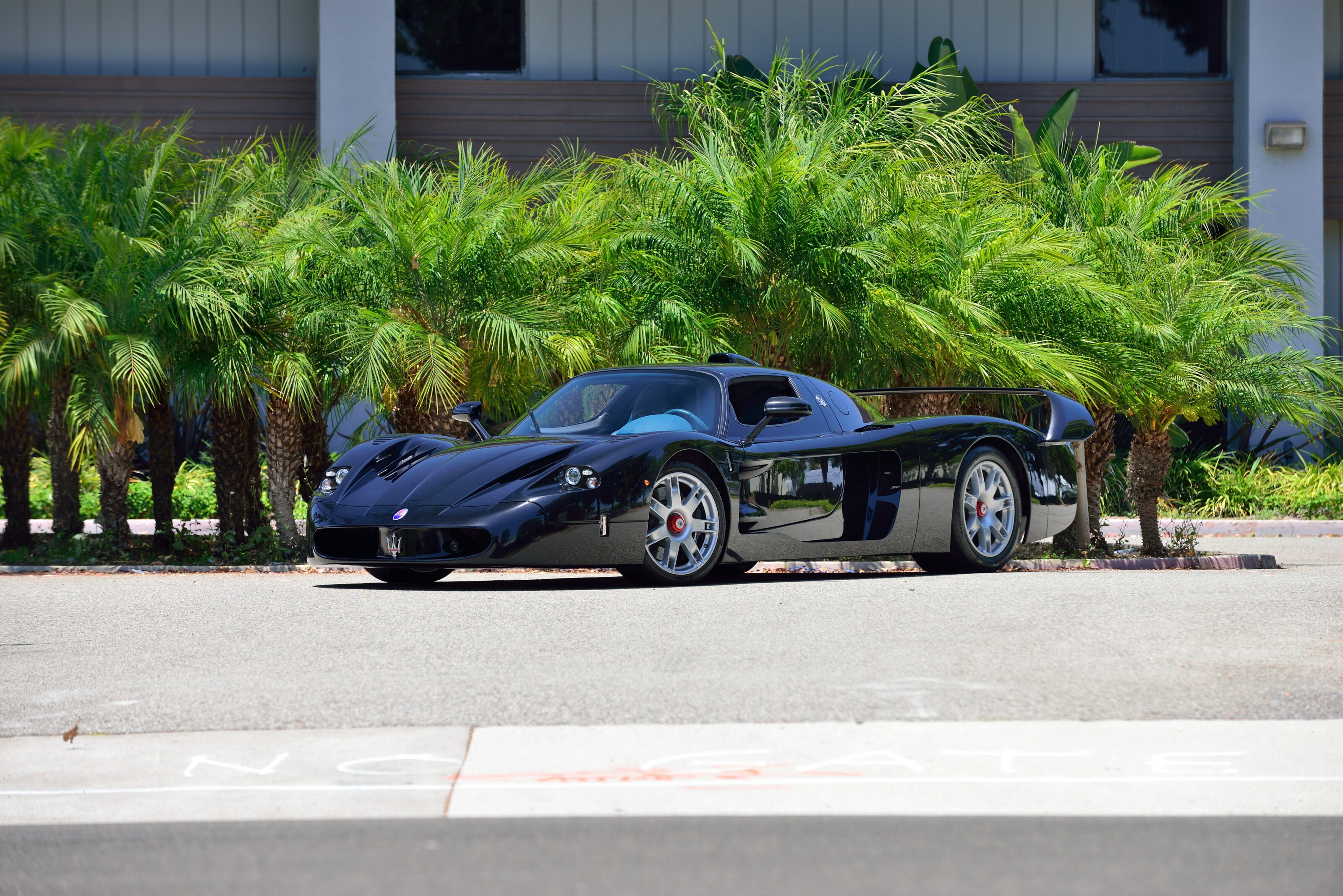
Ferrari and Maserati have since shared some componentry and technologies, and in 2004 the Ferrari Enzo supercar created two years prior was the basis for Maserati’s own version – called the MC12. A GT1 version marked Maserati’s return to motor racing after almost 40 years away from the track.
BETTER LATE THAN NEVER
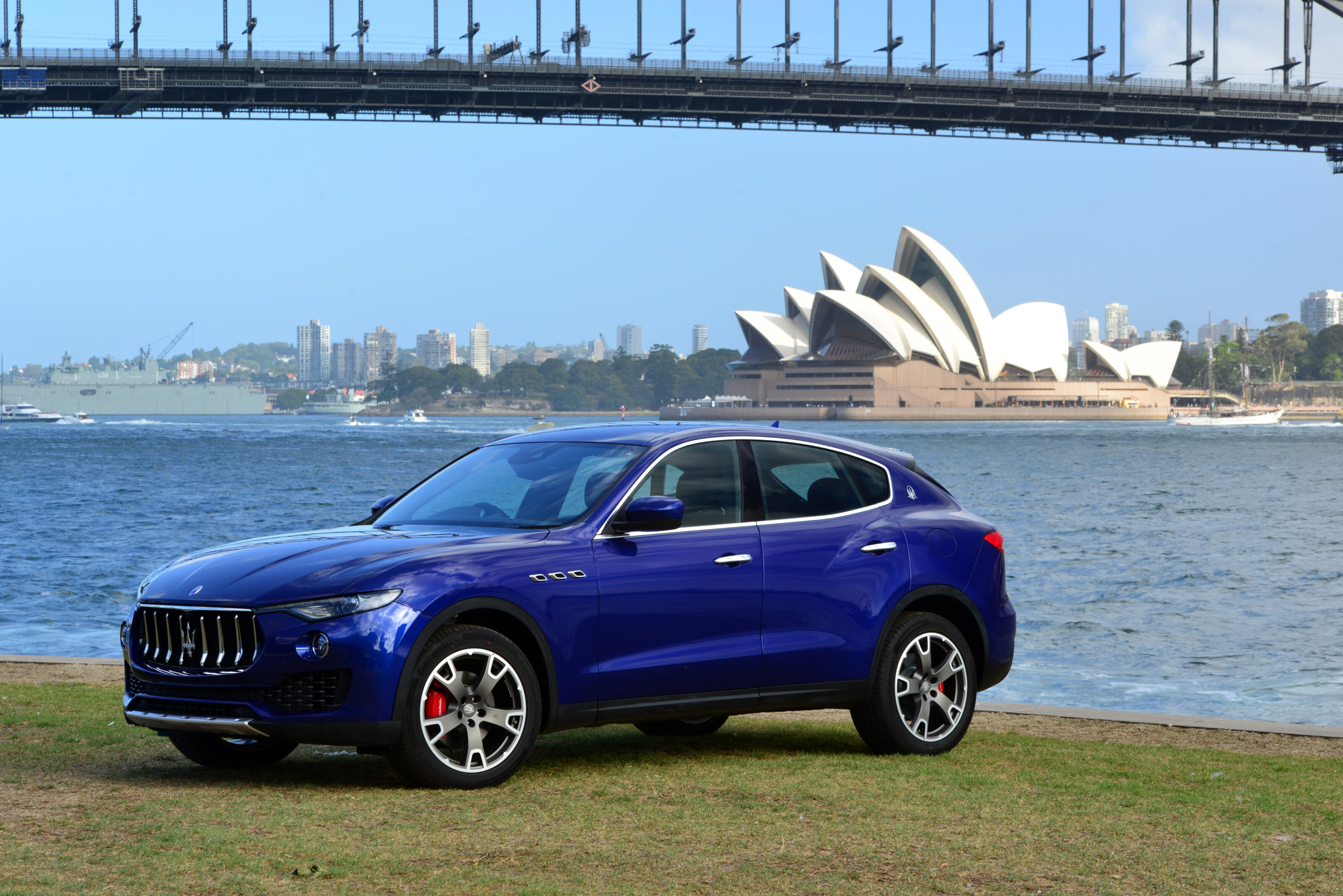
Ferrari vociferously claims it will never build an SUV, though Maserati believed a high-riding vehicle wouldn’t undermine its brand. It took its time producing one, though. After presenting the Kubang SUV concept in 2003 (and a revised but identically named show car in 2011), a production off-roader called the Levante didn’t appear until 2016.
HOMAGE TO ALFIERI
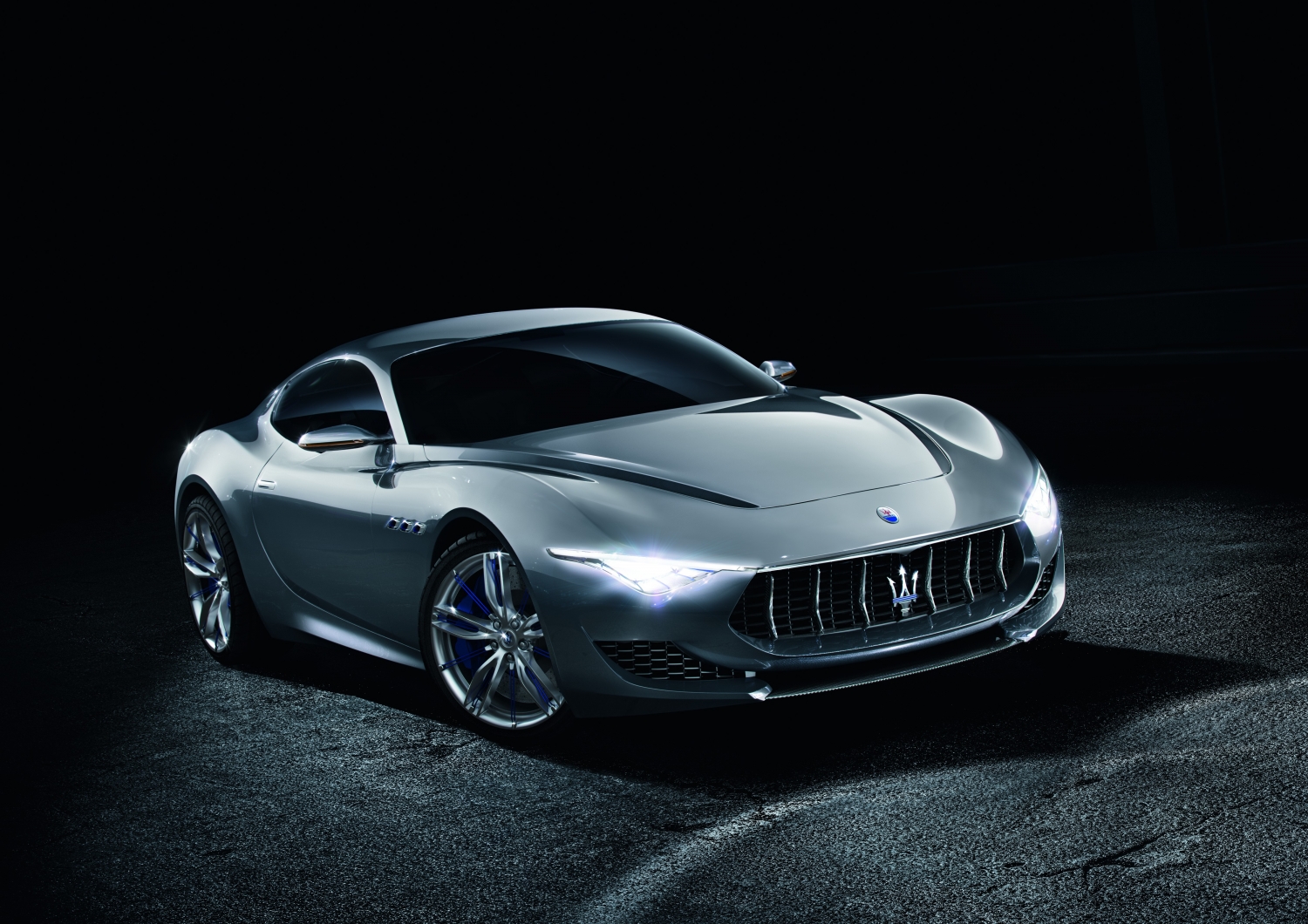
In 2014, Maserati marked its 100th anniversary with a two-plus-two-seater sports car called the Alfieri – an homage to its founder. Maserati has delayed production for various reasons, though the model is set to join the range in about 2019 or 2020, and could feature hybrid power.
AS BMW prepares to grow its family of M3 and M4 power players into even more niche variants including Pure, Competition, CS and Club Sport cars, it is easy to forget where the impressive line-up of modern day M models finds its roots.
Like tracing the mighty Amazon back to a tiny and seemingly insignificant trickle high up in the Rio Mantaro drainage, the car that fathered the vicious 368kW M4 GTS was a 147kW, four-cylinder 3 Series that debuted in 1987.
Since the E30 M3 blasted into the history books 30 years ago, the German car maker has punctuated the journey with rare and desirable special editions that mark the way to today’s M-power empire. Here are our ten favourites.
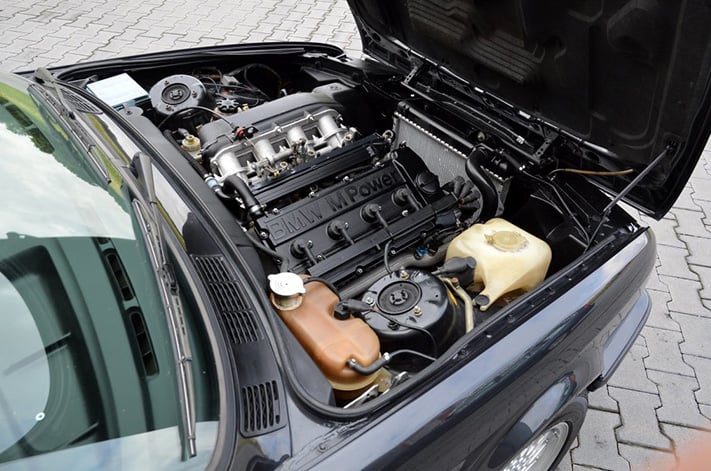
E30 320is It might not have been sold as an M-car, but lift the bonnet of the 320is and its engine sends a very different message. To sneak in under Italian and Portuguese road tax thresholds, BMW stroked down the 2.3-litre S14 of the original E30 M3 to just under 2.0-litres.
The result was one of history’s greatest sleepers. Its body had none of the 2.3-litre M3 calling cards but its M-Power engine pumped out just 4kW fewer than the 147kW M-badged car.
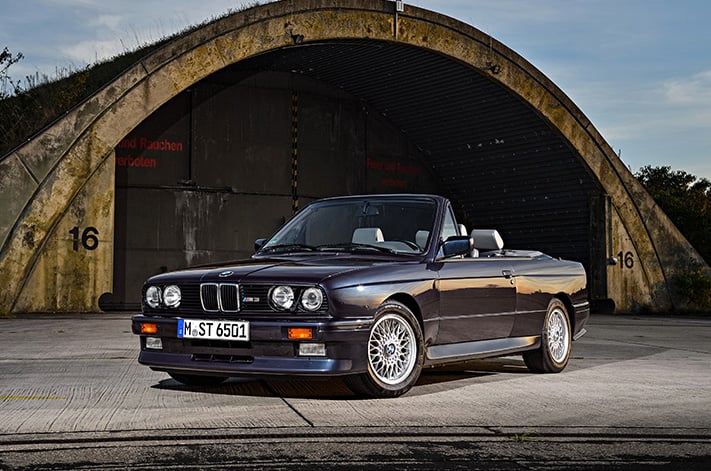
The limited edition was also given more track promise in the form of thinner and lighter rear window glass, chrome tail pipes, black wheel spokes and deleted front brake ducts for a cleaner look. Lift the bonnet and the rocker cover and plenum chamber was also colour coordinated with the body.
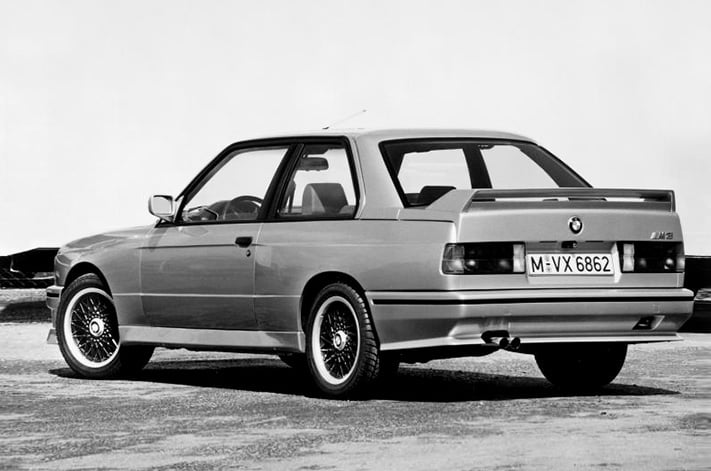
Inside, the Sport Evo had more supportive bucket seats and its exterior was treated to even fatter wheel arches, an adjustable front and rear wing. Even the bonnet shut-lines were filled in with rubber strips to improve aerodynamics, and you could have it as a convertible.
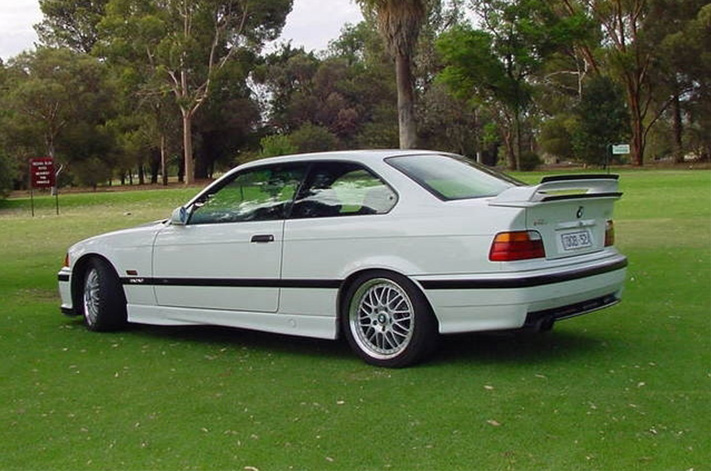
Australia, however got a special treat in the form of the M3R courtesy of Frank Gardner Racing, which had an engine work-over to push power from the standard 210kW to 239kW, as well as a reduced weight by 100kg thanks to the removal of comfort items including air conditioning, fog lights and rear seats.
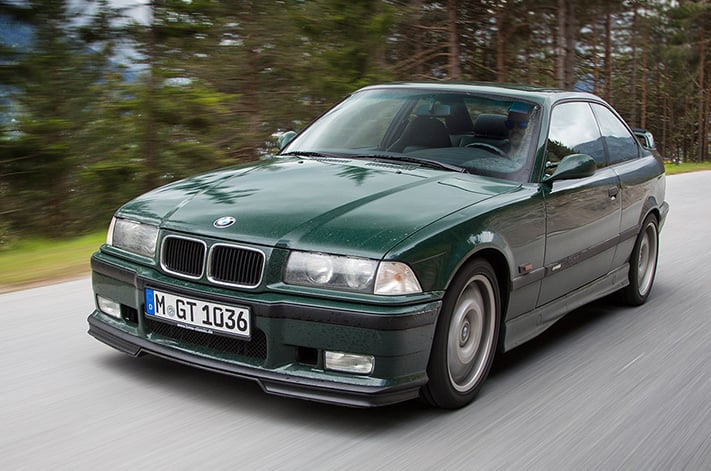
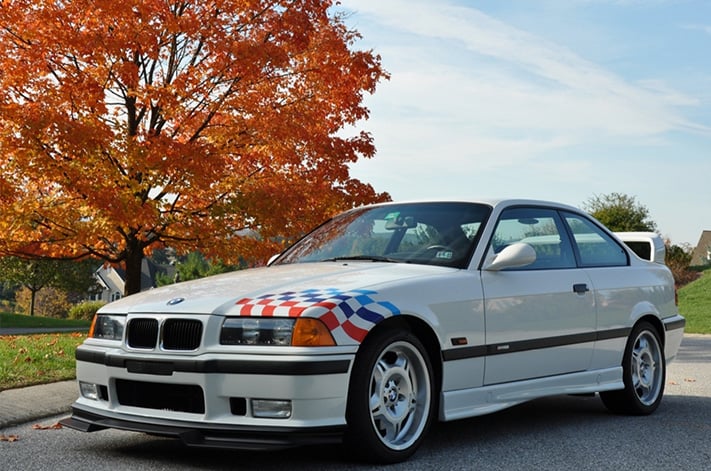
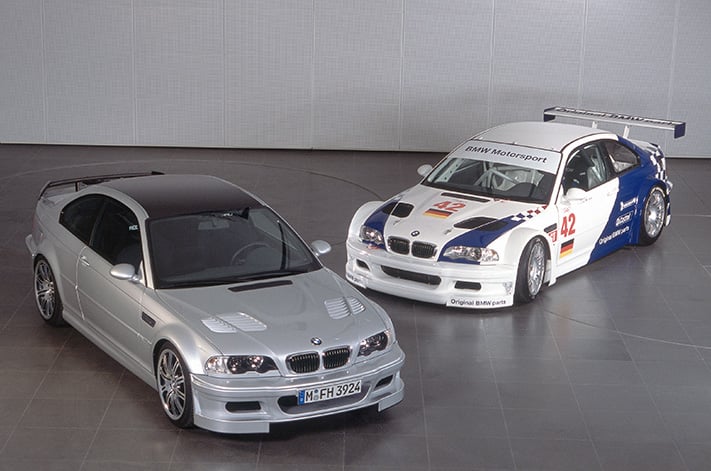
It also shed air conditioning and gained a carbonfibre roof, airbox and interior trim in the name of saving 70kg, as did the rigid and deeply bucketed sports seats.
You could only have the CSL with a SMG gearbox which received criticism but most managed to see past that when they fell in love with the unique styling and massive wheels that were wrapped in hardcore Michelin Pilot Sport Cup rubber – strictly a dry weather proposition.
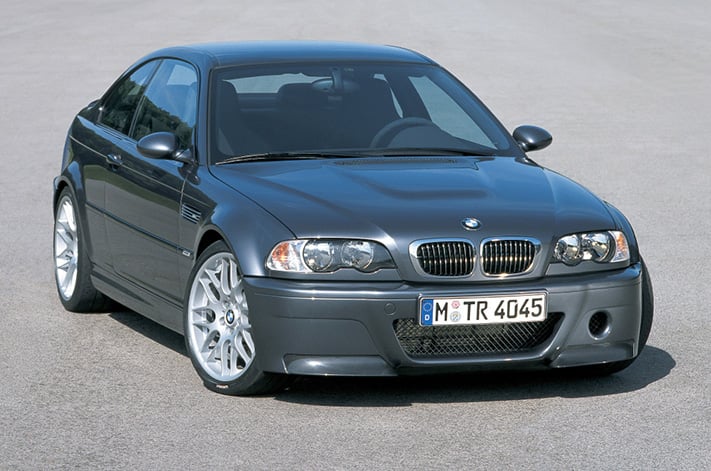
Just 135 examples of the original M3 GTS were sold.
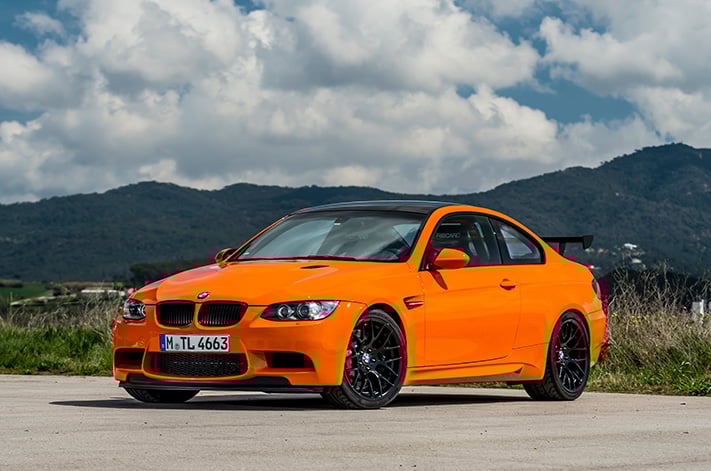
It used the same engine as the GTS but pioneered advanced carbon fibre construction that allowed the car to save 45kg, despite adding back in a number of comfort features such as a top-shelf sound system, navigation and plush interior. It also packed a roll cage and harnesses for a balance of road and track fun.
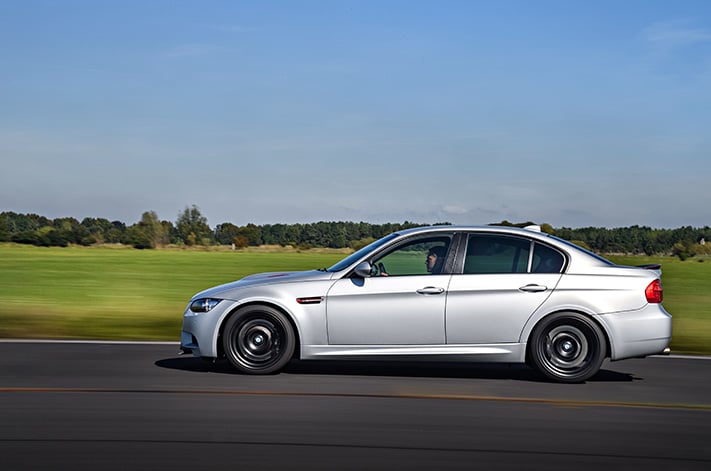
In the wake of the GTS, Pure, Performance, CS and DTM variant onslaught, we can’t wait to see what BMW wheels out for the M3 and M4 next.
STRAP IN, as Tickford’s 500kW supercharged Mustang, and its naturally-aspirated brother face off against the best Holden and HSV can offer in the June edition of Wheels magazine.
It’s a forced induction vs naturally aspirated, Blue vs Red showdown.
Also in this issue, we get nine of the most popular mid-size SUVs together for our decisive megatest.
Mike Horn, the world’s greatest living explorer, takes us for an off-piste adventure in a pair of Mercedes-Benz G-Wagens, and we drive the bonkers McLaren 720S and Porsche GT3.
Editor Inwood keeps up the pace MX-5 Cup racer at a soaking Winton, and we go behind the doors of Lambo’s Sant’Agata factory.
All that plus all the best news, reviews, and long-term tests around.
Pick up your issue now!
