
A mid-life refresh of the Mercedes-Benz GLA-Class small SUV range features a series of exterior and interior upgrades and enhancements.
The A-Class-based compact crossover now has bolder looks via a more aggressive front frill and bumper treatment, and a revised rear end.
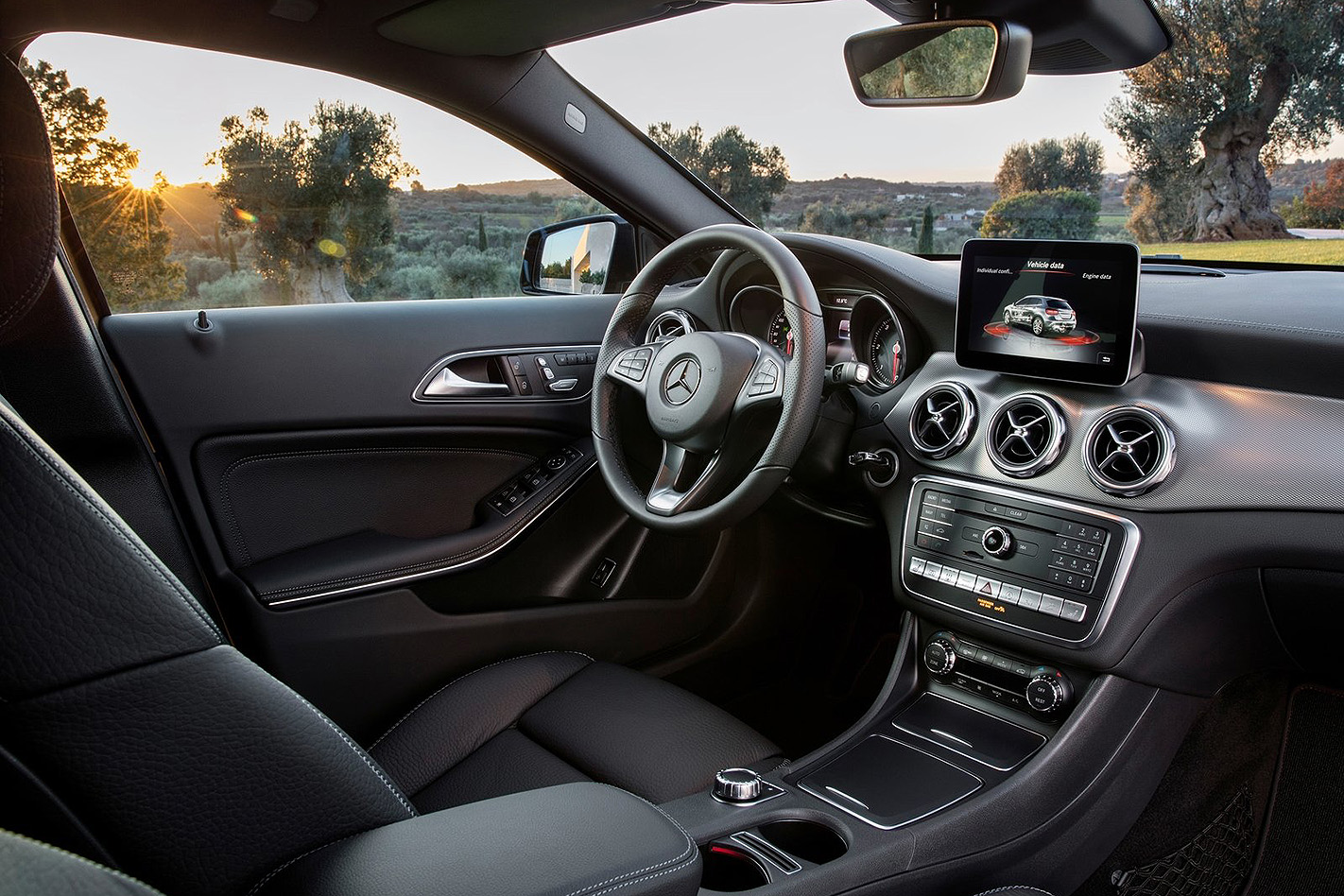
The interior has a more premium air about it with chrome controls and switches, and upgraded instrument cluster. The SUV-styled hatchback also gains extra standard equipment including LED headlamps and keyless entry.
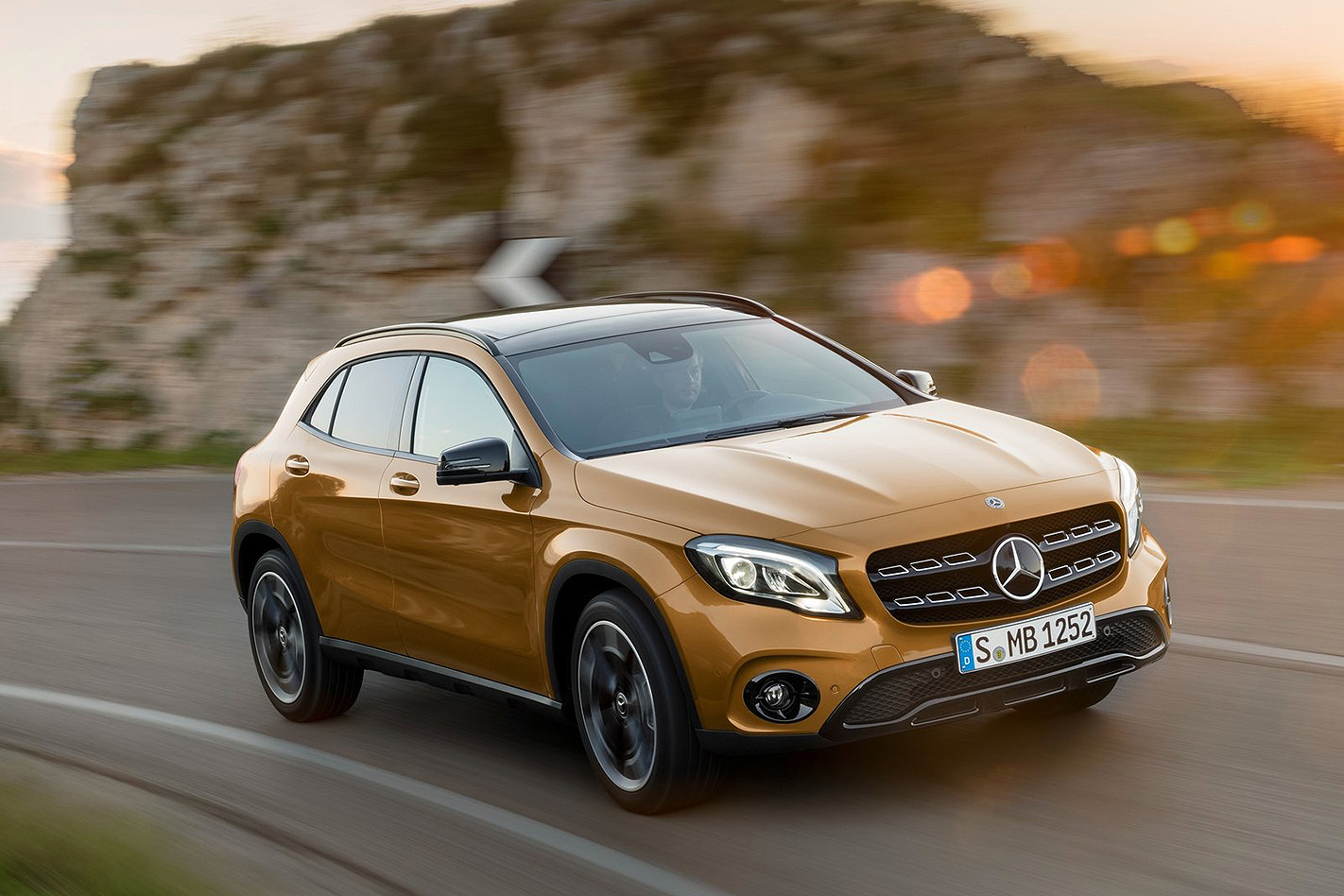
There’s only a $300 increase to entry-level pricing, with the front-drive 1.6-litre turbo petrol GLA180 coming in at $43,490.
Other models in the carryover range, including the mid-spec 2.1-litre turbo diesel-powered GLA220d FWD and 2.0-litre turbo petrol GLA250 “4matic” AWD gain an electric tailgate with foot-swipe opening.
The diesel steps up in price by $800 to $50,400 while the GLA250’s price remains unchanged at $60,700.
One option available is a 360-degree camera that provides a birds-eye view of the car – it helps when parking in tight spots or near hidden obstacles.
There’s also a special White Art edition for the above three models, costing an extra $3780 for the GLA180 and 220d models and $320 for the GLA250. For that you get a black interior with white air vent surrounds, Artico synthetic leather seat trim and Dinamica fabric across trims, and a sports steering wheel. The exterior gains 19-inch multi-spoke black bi-colour alloy wheels, body striping and five paintwork options with a contrasting or complementary exterior foil.
Performance remains unchanged across the range, including the Mercedes-AMG GLA45 that receives a sharper front bumper featuring a new front splitter insert and aerodynamic side strakes to improve airflow through newly shaped air-intake grilles.
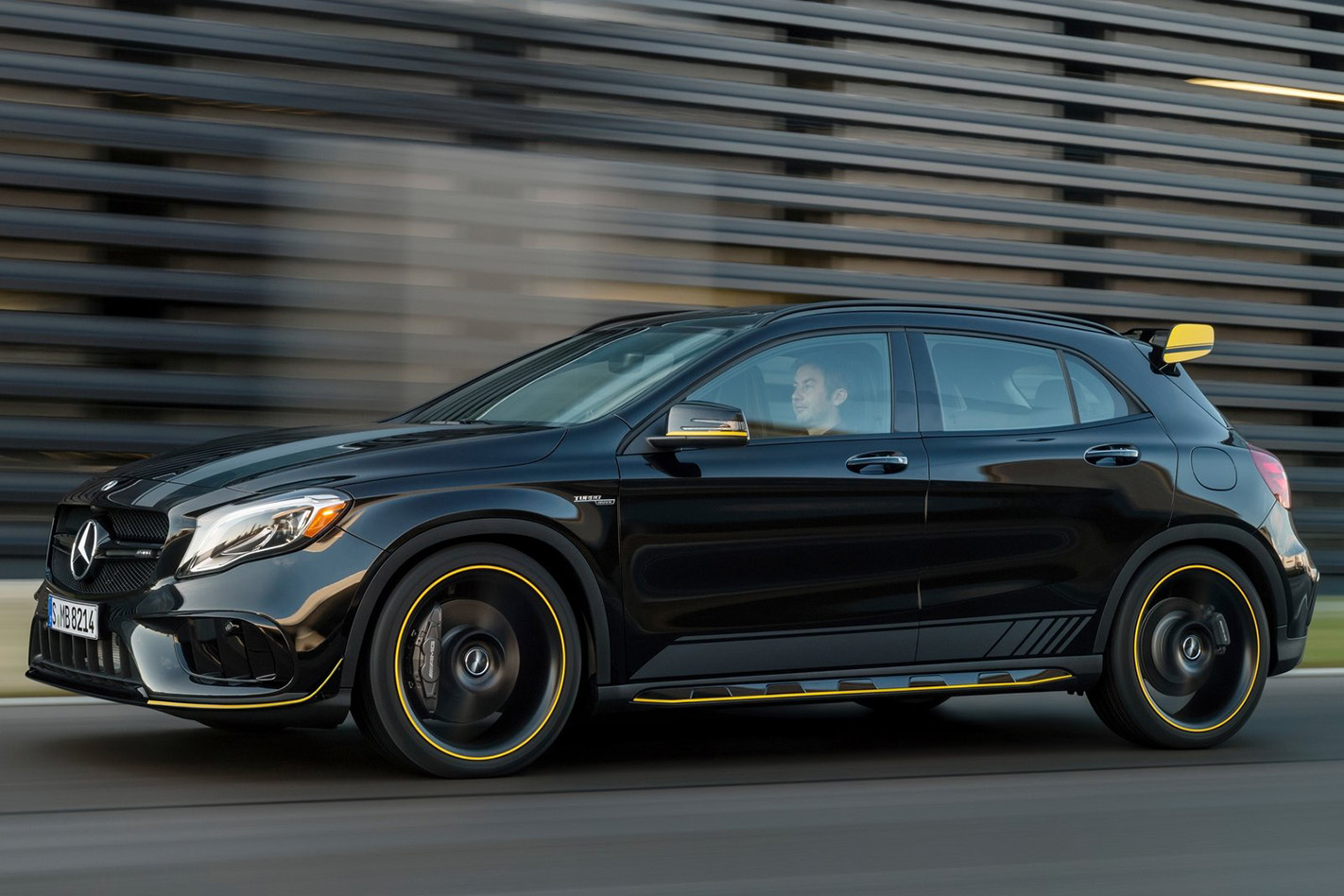
The AMG’s rear end also receives an aerodynamic tweak, with a new diffuser and roof spoiler and different 20-inch AMG multi-spoke alloy wheel in Himalayas grey with a high-sheen rim flange.
The Aufrecht special wears the biggest price hike of the four variants, up $1585 to $89,500.
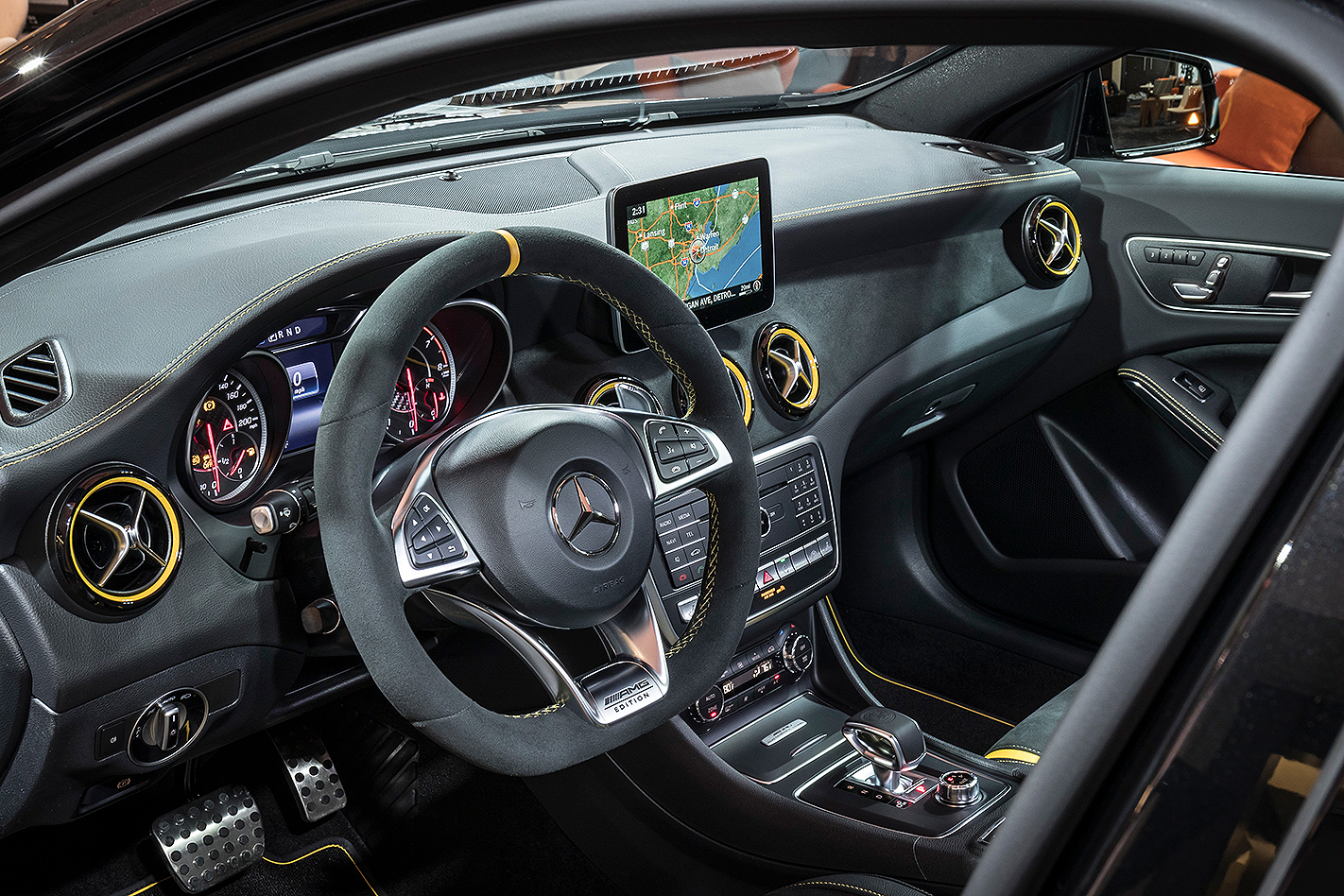
For an extra $3990 you can get the statement-making Yellow Night Edition, which includes an AMG aerodynamics package, AMG Performance seats upholstered in Artico and Dinamica, yellow stitching on the steering wheel and other yellow highlights including the air vent surrounds. The yellow trim spills outside to highlight the apron, mirror housing, rear diffuser, wing endplates and around the matte-black 20-inch, 10-spoke AMG alloy wheels.
Mercedes-Benz GLA manufacturer list pricing.
- GLA 180 – $43,900
- GLA 220d – $51,200
- GLA 250 4MATIC – $60,700
- Mercedes-AMG GLA45 4MATIC – $89,500
The HSV GTSR is heading to the UK.
Just 15 of the 435kW/740Nm monsters are set to make the trip to Blighty with the car to be revealed at the Goodwood Festival of Speed (June 29-July 2).
Rebranded the Vauxhall VXR8 GTSR, it will be the final chapter in the VXR8 story, which began in 2007 with the introduction of HSV’s E-Series range. Prior to this, HSVs had been imported into the UK under Vauxhall’s VXR banner, most significantly the GTO Coupe.
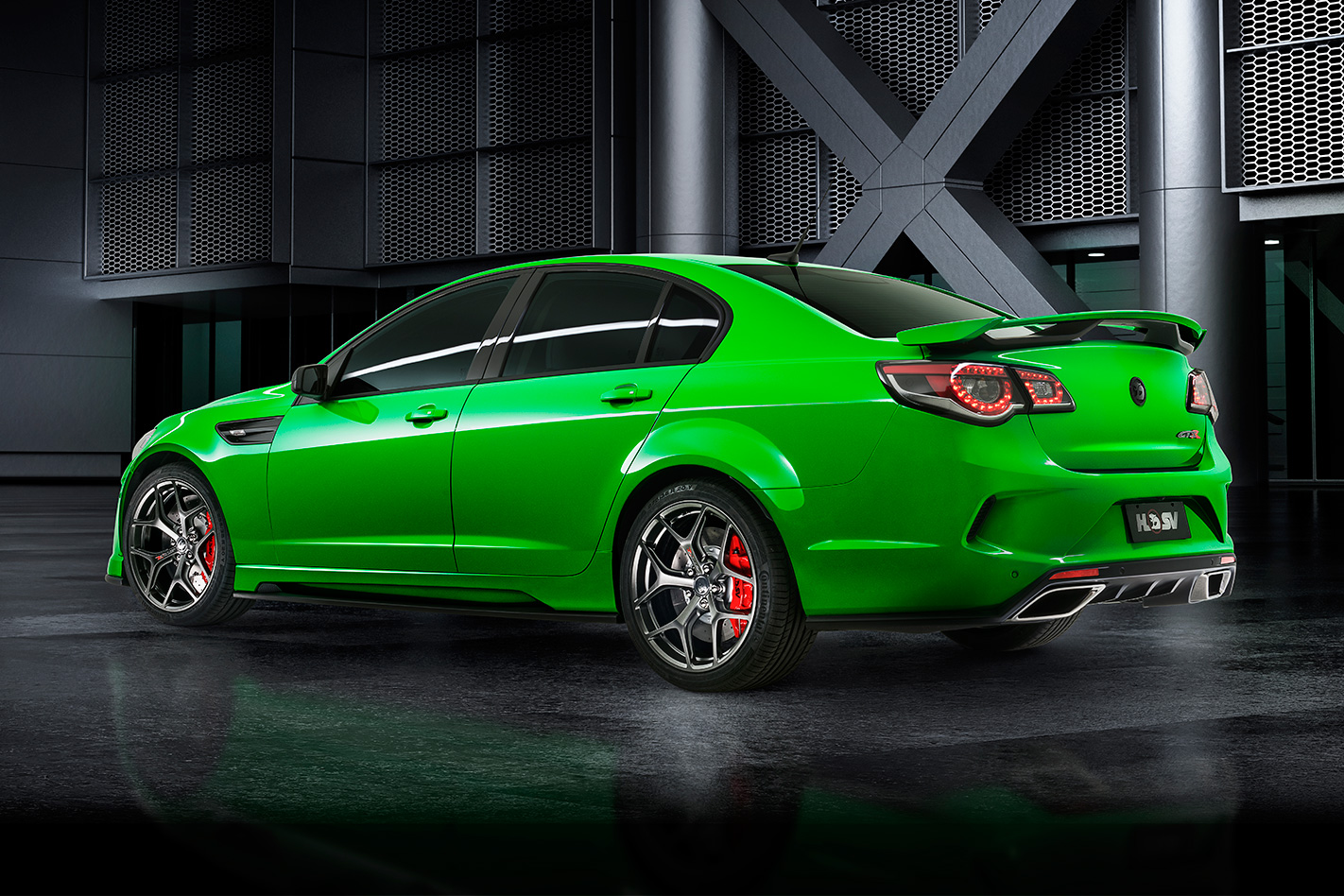
What will be different is the price. Whereas the HSV GTSR retails for $109,490 as a manual and $111,990 as an automatic before on-road costs, the Vauxhall GTSR will set buyers back £74,500 on-road, roughly equivalent to the UK price of a fully-loaded Mercedes-AMG C63 S.
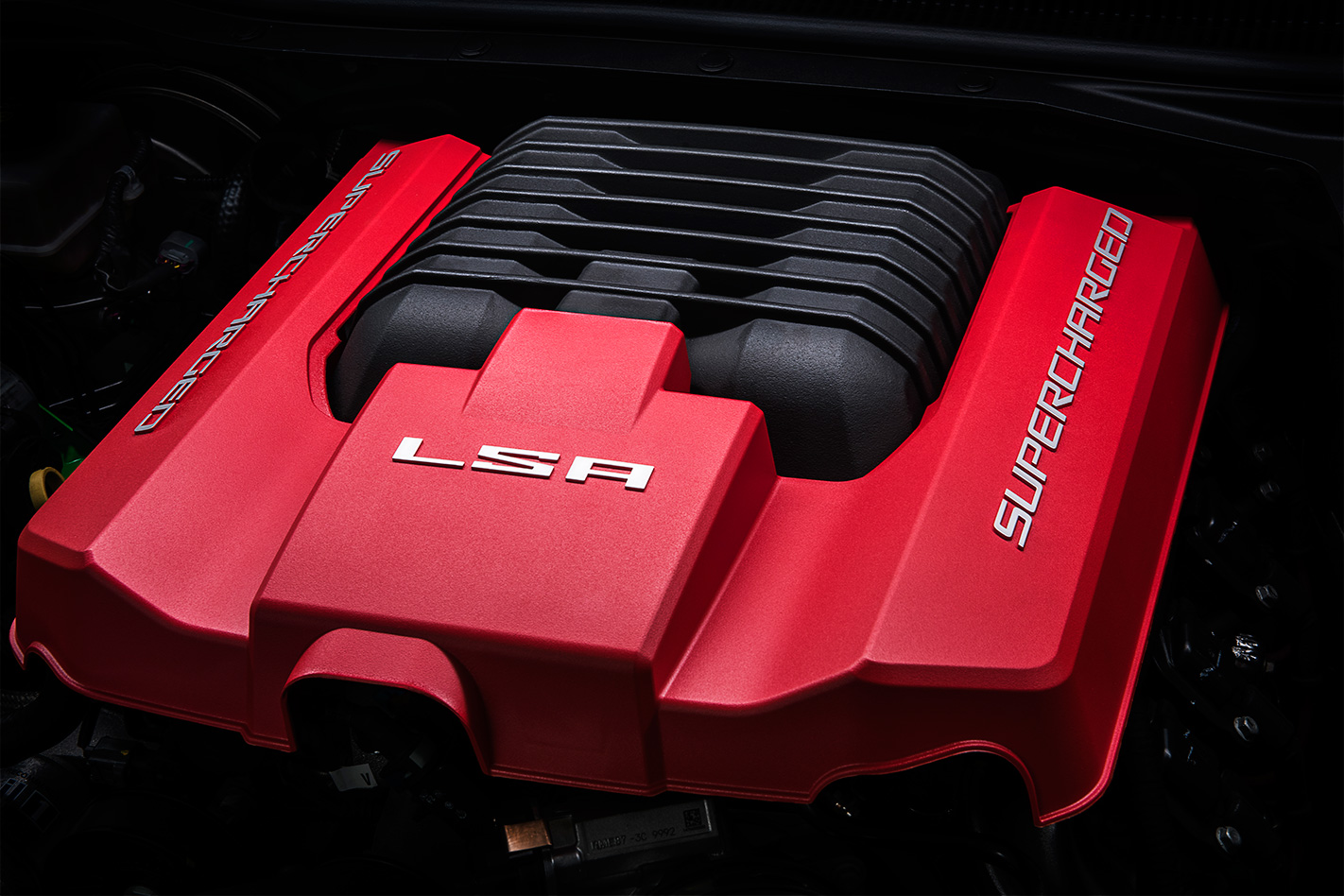
Until recently, Vauxhall and Holden were sister brands in the GM family, however Vauxhall is now part of the PSA Group which also controls Peugeot and Citroen. Local Holden Commodore production ceases on October 20, 2017.
The all-new Holden Astra sedan will arrive in showrooms on July 1 with a $20,490 entry level price tag that’s $1000 cheaper than its hatchback sibling.
The Korean-built Chevrolet Cruze-based sedan comes in three main variants; LS, LT and LTZ that generally line up in terms of equipment levels with the Euro-built hatch’s R, RS and RS-V grades.
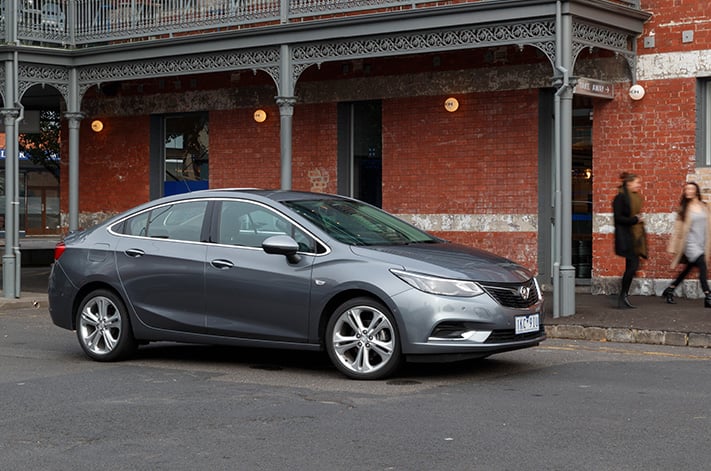
The sedan will also lack the hatch’s auto emergency braking and 147kW 1.6-litre turbo engine option, with the less-powerful but capable 110kW 1.4-litre turbo powering the entire range.
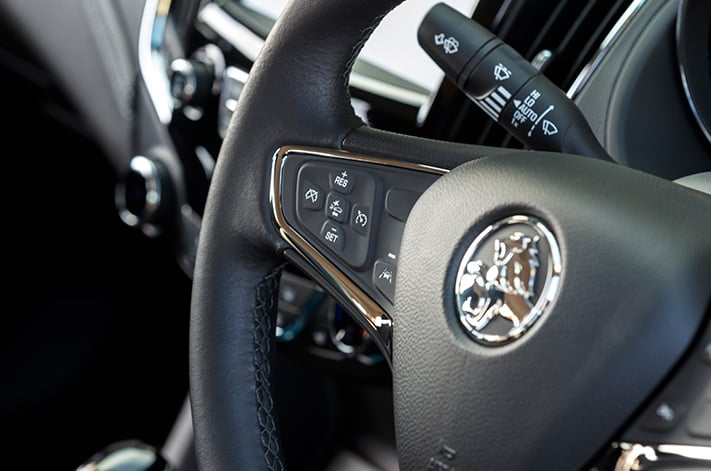
Where the sedan has an apparent edge over the five door is further development by Holden’s engineering group which saw steering, suspension and chassis control tuned to local conditions at the Lang Lang proving ground.
The entry level LS sedan comes with a six-speed manual transmission as standard or a six-speed auto for an extra $1000, with a reversing camera, rear parking sensors, auto headlights, 7-inch touchscreen with Apple CarPlay and Android Auto, 16-inch alloy wheels and cruise control rounding out the rest of the standard equipment list.
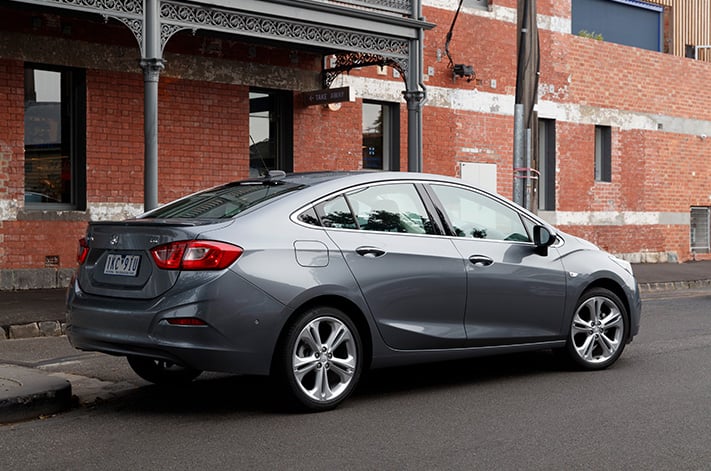
The auto-only LS+ [$22,740] includes a driver assistance pack with ‘Holden Eye’ camera-based active safety features including lane keep assist, forward distance indicator and forward collision alert
Unlike the mid-range RS hatch, the LT doesn’t come with a manual option, but brings plenty of additional features over the LS+ for its $25,790 price tag including blind-spot alert, auto parking, rain-sensing wipers, 8-inch touchscreen, satellite navigation, digital radio, push button start and remote start.
For $29,790, the Astra LTZ adds an electric sunroof, heated leather appointed seats, climate control and 18-inch alloys, making it generously equipped for the sub-$30,000 retail price.
2017 Holden Astra Sedan manufacturer list pricing
- LS manual – $20,490
- LS auto – $21,490
- LS+ auto – $22,740
- LT auto – $25,790
- LTZ auto – $29,790
FORD Mustang owners and buyers looking to flex more muscle can now order factory approved performance packs through authorised Ford dealerships.
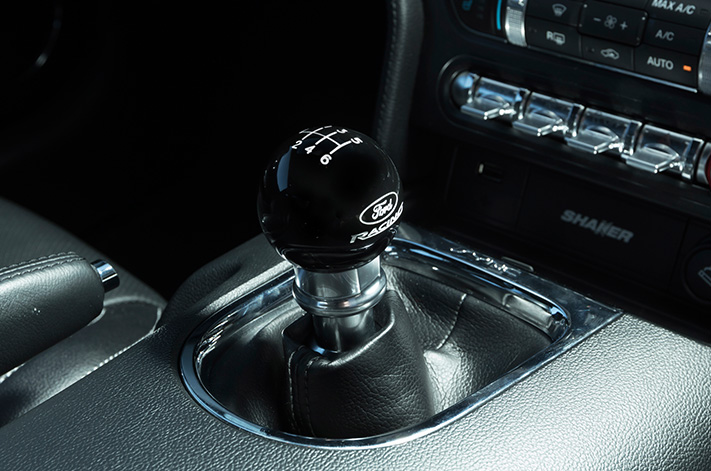
Ford Australia’s entry into the Mustang aftermarket means you can now roll a manual V8 GT Fastback straight out of the showroom complete with track-ready handling, lower ride, shorter shifting gearbox and performance exhaust system for a brassier soundtrack.
The FR3-M9 Track Handling Pack was developed by Ford Performance to take advantage of the fastback Mustang’s performance-focussed underpinnings using all-new bespoke parts to create a more formidable track-day performer without compromising daily drivability. The $4130 setup includes lower coil-springs, assembled front struts, upper strut mounts, rear shocks, sway bars, rear toe links and toe-to-knuckle bearings.
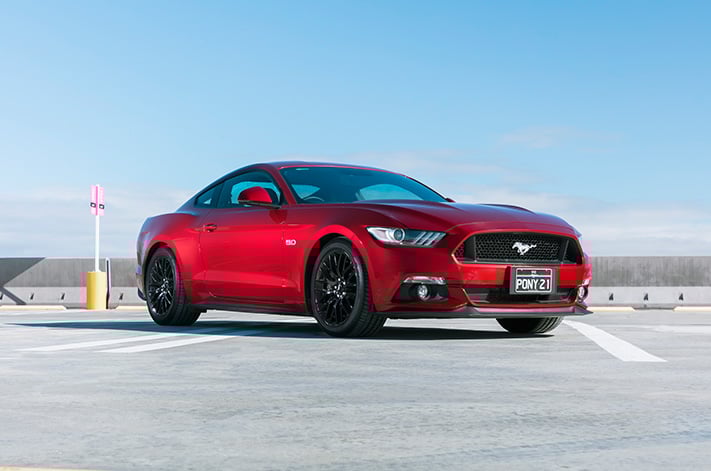
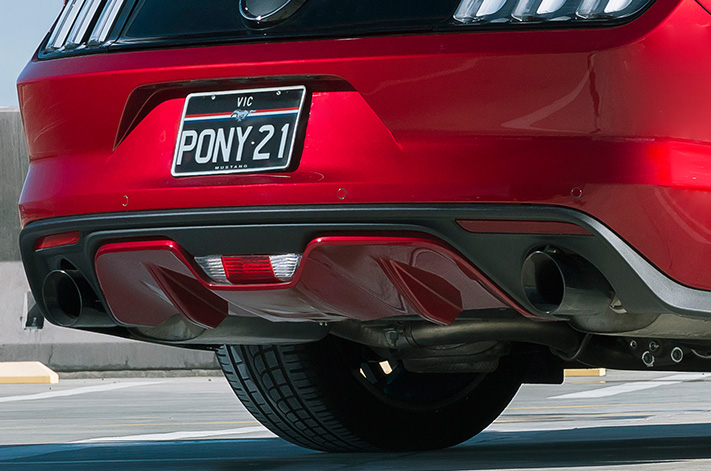
Exclusive to the 5.0-litre V8 GT models, the ‘Cat-Back’ performance exhaust pack costs $3854 and features a mandrel-bent stainless steel 2.5-inch pipe integrated to the factory exhaust from the catalytic-converter back to add decibels to the 5.0-litre Coyote V8 bark. It’s also a treat for the eyes with a 4.0-inch exhaust tips finished in a choice of chrome, or ‘sinister black’ to match the Pony’s rear diffuser.
When fitted to a new vehicle at an authorised Ford dealership, the packs and parts are covered by the Mustang’s three-year/100,000km warranty along with the car itself, while mods to existing cars are covered for 12-months/20,000km.
“This is the first time in Mustang’s five-decade history that an Australian consumer can take delivery of this iconic performance car with a full suite of upgrades straight off the showroom floor,” said Whickman.
“Even better, the benefit of these upgrades not only gives new Mustang buyers a chance to customize their own vehicle, but also extends to existing owners, who can have their local dealer fit any or all of these components to their own taste and desires.”
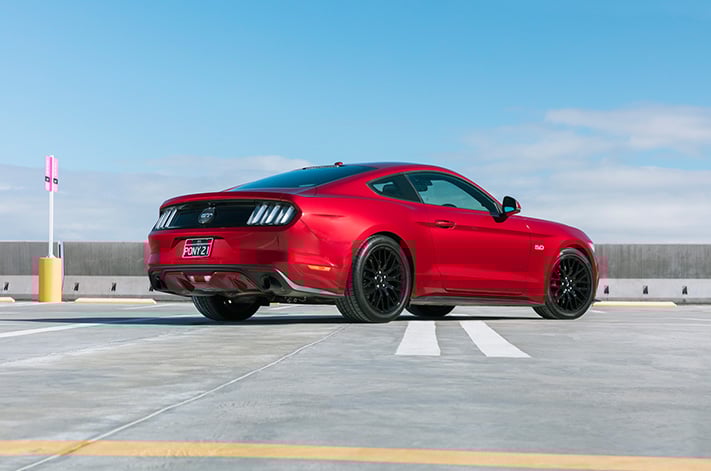
New Ford Mustang owners in Australia will now have access to a range of performance parts for their Pony, with handling, exhaust, and visual flair on the list of options.
Options include a Track Handling Pack, a lowered ‘Street’ pack, cat-back exhausts, and a short throw shifter.
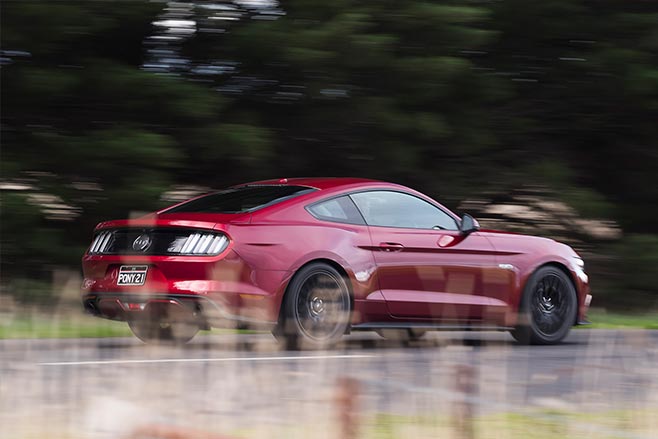
Ford Performance testing engineer Andy Vrenko says the kit is “unique, none of the parts are available anywhere else”.
It is, however, the most expensive of Ford’s new options for the Mustang at $4130.
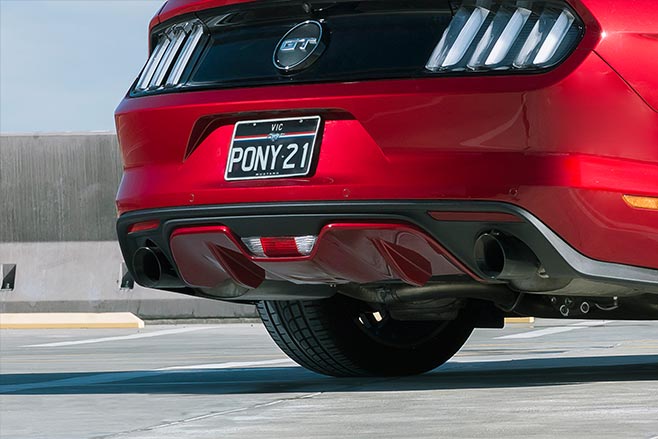
The cat-back exhaust kits come with a fairly hefty price tag at $3584, with either chrome or black tipped pipes and the option of a 4-inch exit as opposed to the regular 2.5-inch.
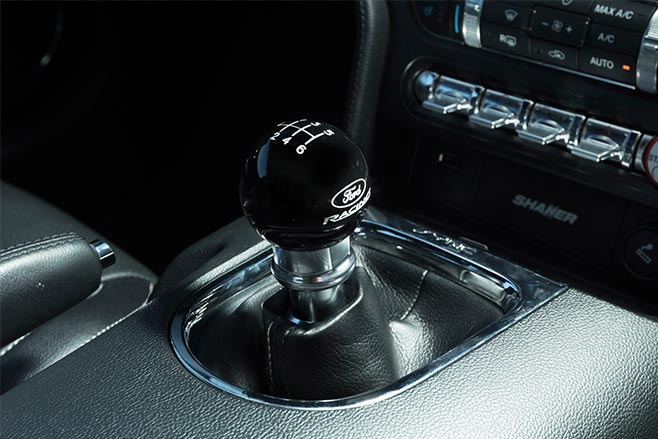
Lastly, for a meagre $805, the distance on gear shifts can be reduced by 19 per cent with a short throw shifter.
“The benefit of these upgrades not only gives new Mustang buyers a chance to customize their own vehicle, but also extends to existing owners, who can have their local dealer fit any or all of these components to their own taste and desires.”
Anything fitted at the vehicle’s purchase comes with a three-year 100,000km warranty, while existing owners upgrading their ‘Stangs get a 12-month 20,000km warranty.
THANKS, Infiniti. For years you teased us with a hardcore version of the Q50 sedan tentatively called the Eau Rouge. Racy looks, and an engine borrowed from the Nissan GT-R, the concept promised much.
Unfortunately, Infiniti never delivered.
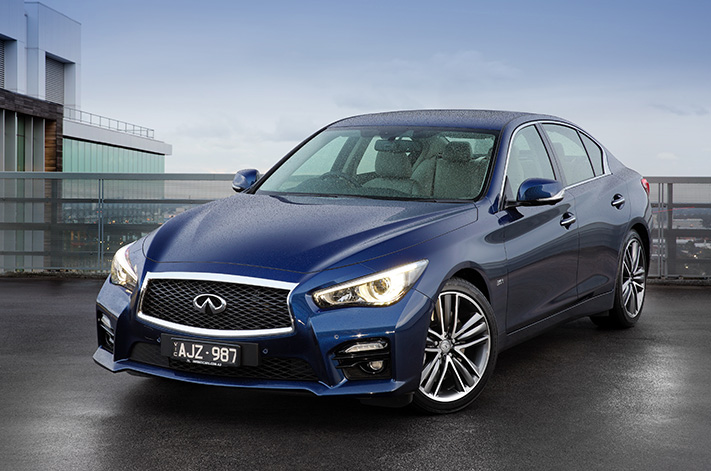
TELL ME ABOUT THIS CAR Not to worry, though, because we now have a watered-down version of the Eau Rouge that, from the outside, looks like the perfect performance-car sleeper. Called the Infiniti Q50 Red Sport – a nod, at best, to the stillborn Eau Rouge concept – it offers V8-rivalling rear-drive performance, and just like Godzilla, a twin-turbo V6. At $79,990, it’s also the flagship of the Infiniti Q50 line-up.
STRENGTHS
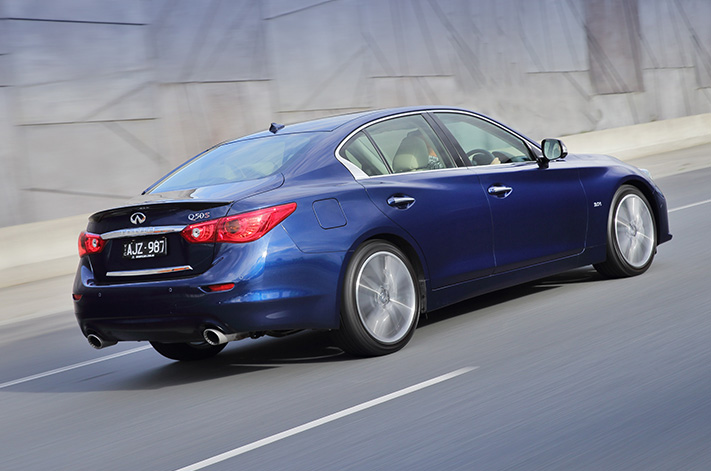
- The performance of that engine, which wipes the floor with its competitors. It makes a class-leading 298kW and 475Nm from its twin-turbocharged 3.0-litre V6, delivered in a rush from low in the rev range. It’s a bit like driving an old-school V8; wait for the rear to squat to let you know the grip is there and then unleash all its potential.
- It drives really well. The Q50 Red Sport has a classic front engine, rear-drive layout that even these days is a race car staple. Ride is nicely sorted at low speeds, and yet the chassis doesn’t dissolve into mush when pushed, wagging its tail as more throttle calls in a playful amount of oversteer. If anything, it probably rides a bit hard at speed, but you’d live with it.
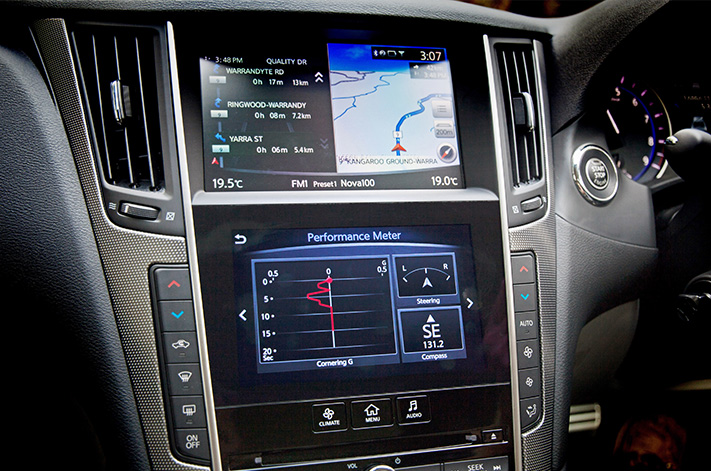
- It’s very well equipped. The leather driver’s seat has 10-way adjustment including adjustable side supports that hug you in, the console uses two colour LED screens, the back seat is classy and roomy with a decent centre armrest, a tiny-by-today’s-standards sunroof, 14-speaker audio … the list goes on.
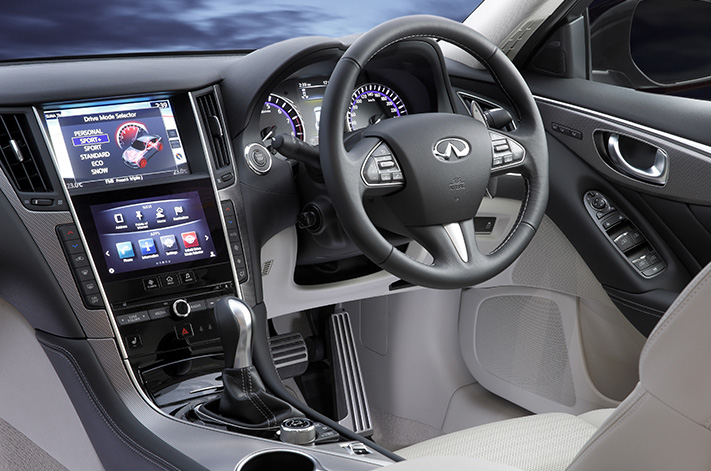
- The Infiniti Q50 Red Sport comes with six electronic maps for the engine and gearbox; Snow, Eco, Standard, Sport and Sport+, and Personal. They’re selected via a switch mounted behind the gearshift lever or via a menu on one of the touchscreens, and all change the way the Q50 feels underneath you, including the steering, suspension, engine mapping and the seven-speed automatic transmission’s shift points.
- The centre console has two colour screens that don’t match, one for the sat-nav and the other for all the multimedia functions. It gives the impression the interior was designed in parts rather than as a whole.
- There’s no digital speedo. The dash’s analogue gauges are okay for reading speed quickly, but given it’s a car that will leap from 10-100km/h in around 5.0 seconds you’re going to need a bit of help to tap that performance and keep your licence.
- The steering system is drive-by-wire. It means the Q50 Red Sport uses its electronics to read the road and provide feedback to the driver, with a mechanical connection only stepping in if the electronics fail. It’s all a bit Ghost in the Shell, but it can make the steering delightfully quick, needing less input from the driver to turn a corner.
- Make sure you warm up those Dunlop SP Sport Maxx tyres wrapped around the Infiniti’s classy-looking 19-inch alloys before you start to tap the engine’s potential. They grip up better with use.
- The brake calipers are silver, but the car is called the Red Sport. Come on, Infiniti, surely red calipers would work better?
- The bootlid is heavy. A push of the key fob or a dash-mounted button will pop the bootlid, but raising it requires more effort than you’d think. On the flip side, it closes with a solid “thunk”.
- There’s an AWD version of the Red Sport available in other markets, but not here.
- The reversing camera is terrible. In the dark, it’s as good as useless. The cameras that look to either side of the car, though, are good.
- The Infiniti badge still doesn’t have the pull of the other premium marques. One person came up to me and asked if it was a Mazda.
That depends. The Infiniti Q50 Red Sport stacks up as a compelling package, but that badge doesn’t have the same pull as rivals.
You might also want to kick tyres on the brilliant inline six turbo-equipped BMW 340i with the Sport option tagged, the “low-fat” twin-turbo V6 Mercedes-AMG C43, the now single-turbo V6 Audi S4, and the non-turbo Lexus IS350 Sports Luxury.
A short drive west of Las Vegas, Nevada, lies a small town called Pahrump. But that’s not the wirdest thing going on here.
One Pahrumpian (Pahrumpite? Pah… eh) has something for sale so weird that there’s only one place it could possibly be advertised. Craigslist.
In amongst the probably-stolen phones, old CDs, and “Spiritual Religious Jesus Paintings” (that one’s real), is a vehicle that probably shouldn’t exist.
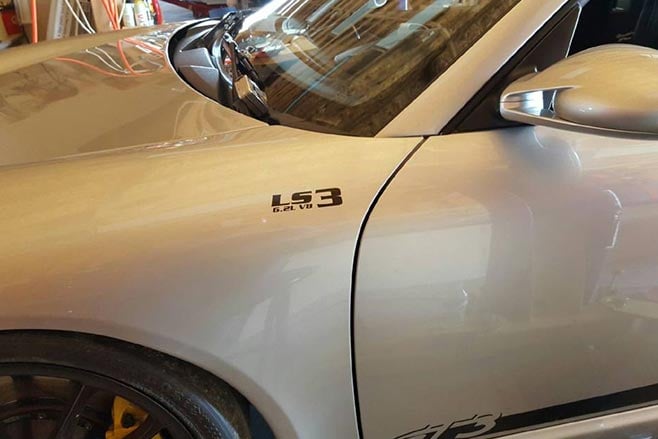
To find the answer we look to the description, written in all-caps as is tradition.
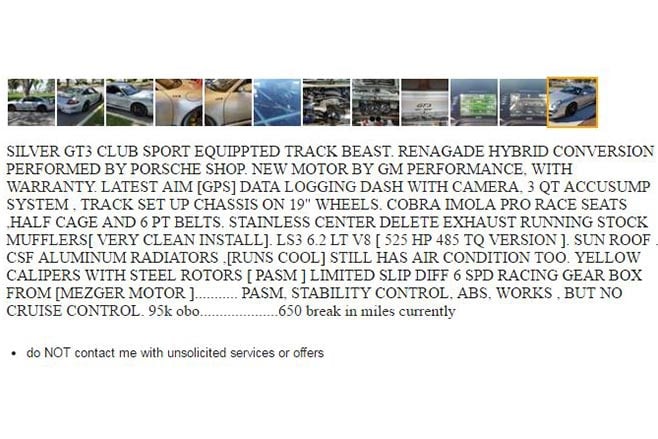
At least that warranty is good for peace-of-mind.
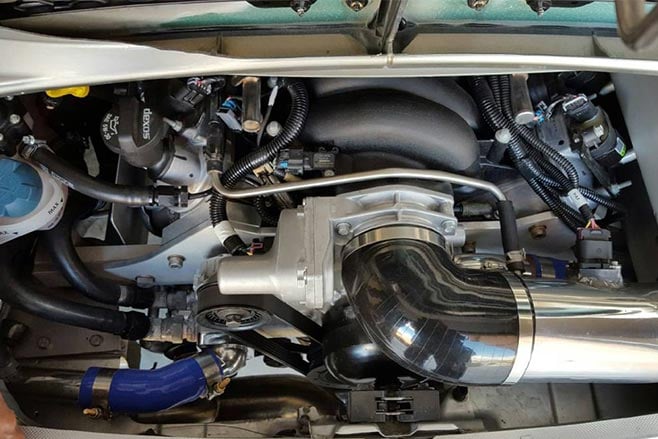
The owner claims it’s good for 390kW and 657Nm, though we’d probably take that with a grain of salt. There’s too much going on here to trust anything.
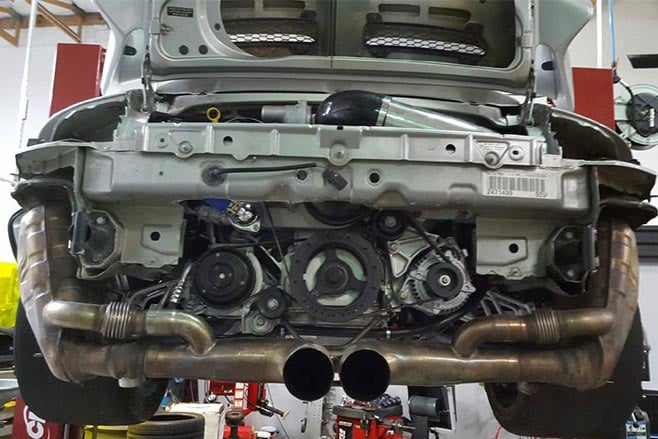
It’s tough to imagine how this thing would drive, given all the time Porsche spent balancing the car heads out the window when you plonk a V8 in it.
We’re sure whoever ends up owning this will have almost no concern about a lack of cruise control.
From the early days of Mazda’s rotary love affair comes Wheels mag’s August 1969 review of the R100 coupe – the first two-door rotary-engined car to be sold in Australia, with a price of $32,195 in today’s money.
With a glacial 0-96km/h time of 13.5 seconds and a quarter mile stat of 17.6, it’s incredibly slow by today’s standards. Back in the day, however, we thought it was a nifty piece of technology that showed plenty of promise. Here’s how we rated it back in 1969:

The R100 is a technical adventure. It breaks new ground in automotive technology but for those game enough to try a pioneer’s boots, the adventure will have little hardship.
In three days and a thousand miles we tried the R100 in every situation. Commuting, inter-city tripping, bush track pounding and test track revving. It ran faultlessly, smoothly, quickly and quietly; it used some oil and was quite heavy on petrol in conditions of no let-up; we were sorry to hand it back to Westco Motors, the Australian concessionaires.

We think the R100 will prove endearing personal transport with little kick-back or trouble from an engine which, let’s face it, nobody knows anything about out here, yet. It could be another Mini or it could die hard like two-stroke Goggomobils, only time will tell.
Both engine and car have their separate problems but as a unit it offers for the price as much in performance, comfort and handling as any of its competitors.
The R100 is basically a Mazda 1200 Coupe with blackened grille, round tail-lamps, bonnet louvres and appropriate badges. Inside there is a new aircraft-look dash console while underneath springs rates have been upped and bigger 14 inch wheels shod with radials fitted.

Simply, the rotary is an Otto-cycle, four stroke principle of converting heat energy into mechanical energy by induction, compression, ignition and exhaustion of gas in an enclosed chamber. This is achieved by a three lobe rotor that revolves eccentrically in a figure-of-eight chamber (the epitrochoid). Seals on the rotor’s three apexes form separate chambers as they contact the walls and a variation in chamber size as the rotor revolves gives the compression necessary for ignition.
Without delving further into the Wankel engine’s technicality, a reference to diagrams of the four stages will present a clearer picture.
The Wankel engine has taken over 20 years to develop. Conceived in the 1920s by Dr. Felix Wankel the principle was not further studied by Wankel until 1950. The advantages of a Wankel engine are simple. There is less internal power loss because there is no reciprocating motion and hence it follows there is less vibration. With only one major moving part the structure is simpler and easier to overhaul because there are less parts to wear.
There is no power-draining valve train gear. The final outcome is there can be greater power output for smaller overall engine size with greater smoothness and lower noise level thrown in.
With the support of NSU, Wankel developed the engine to the point where it was a practical power proposition. In 1958 the aircraft corporation Curtiss-Wright received a manufacturing licence followed by Toyo Kogyo of Hiroshima in 1960. NSU had themselves pioneered the rotary engine in production sports coupes, but it is Toyo Kogyo who has backed the dream engine to the stage where it can be produced for international markets at a competitive price and with competitive performance.

The RX87 (now R130) is based on the Mazda 1500 Luce body, with every conceivable luxury. Power output of the R100 is upped to 128bhp for the R130. The R130 should be seen in Australia before the end of 1969.
Seals and rotor bearing have been the main source of concern in development of the rotary. Obviously positive gas sealing in a chamber of only 52cc is imperative. At the same time the wear rate on a lobe seal rotating at 7000rpm in constant contact with an immobile wall is considerable. Toyo put in considerable research and came up with a carbon based seal that showed less than a few tenths of a millimetre wear after 1000 hours’ continuous running.
Because the rotor runs eccentrically, the centre bearing loads at constant high rpm are heavy. Again Toyo has achieved 6000rpm – unlimited time as the standard for the Mazda rotary.
How does all this go in practice? Smoothly, is the operative word. As a baby GT car, the Mazda rotary is without peer for producting effortless touring power. After putting away some very reasonable averages over a give-and-take highway, we are convinced of the R100’s potential as a distance easter, a true virtue for Australian travel.
In city work and away from the lights, the R100 has little real, hard-hitting torque of say the Morris Cooper S. Higher in the rpm range (4000 to 5000rpm) at 80mph touring speeds, there is sufficient torque to stride even steep highway pinches without losing speed.

Large wheels, radial tyres and astriding suspension maintain the image of a baby GT for top end touring is compfortable and quiet despite the short 89 inch wheelbase.
A wider rim would be helpful to better handling as the power can produce unwieldy understeer attitudes where the direction of the front wheels has very little bearing on the car’s direction. In power-off attitudes, the R100 will track better.
Retro: 1989 Mazda NA MX-5 – Roofless for the people
Handling is definitely sacrificed for ride but over rough terrain it is extremely good allowing the big wheels to put all the rotary’s power to ground.
The R100’s brakes still have that certain Japanese heaviness about them but with a hefty push they really work. From near top speed the little car will stop surely with no ominous disc rumbles or un-evenness. Provoked to the point of lock-up, the R100 still remains stable.
Inside the R100 is little different to the 1200 coupe in seats and trim. The centre console is an eye-catching feature with an impressive array of dials and switches.

The heater provides abundant warmth while to dash extremity vents pour in fresh air. These create considerable turbulence around the rear quarter through-flow vent sections, though the through-flow effect is not sufficient to demist the rear window which fogs up easily.
Control for the two speed wipers and washers is by a column stalk. We are not convinced by this idea as the driver must take his hands off the wheel to twist the switch. Low-high beam is by a pull-pull again action of the same lever and pushing toward the column brings in washers.

The lights are excellent with good spread and brilliant penetration. The round style tail lights also give those behind penetrating warning of the driver’s braking-turning intentions.
We think the R100 is a technical experiment that will work. It is well integrated and takes the rotary engine power well to put it among the top desirability stakes in personal transport.
THE world’s greatest living explorer needs a better agent. I’m guessing you probably haven’t heard of Mike Horn.
I hadn’t before I was asked if I’d like to drive his Mercedes-Benz G-Class around the wilder bits of New Zealand’s South Island.
He’s much like Bear Grylls, if Bear spent less time schmoozing celebs and more time drilling holes in his toenails, losing fingers, swimming solo down the Amazon, climbing 8000m peaks without supplemental oxygen, circumnavigating the globe at the Arctic Circle line under his own steam, doing the same at the Equator, taking his kids for a walk to the North Pole and actually serving in the real special forces rather than the Mr Grylls’ Saturdays And Sundays version of the SAS. Also Mike seemed to have missed out on a gold loyalty card at Travelodge.
Mike had just set a record for the fastest solo crossing of the Antarctic ice cap before sailing his yacht to Dunedin and meeting a man who couldn’t erect his own tent.
You can read more about Mike Horn and his G-Class adventures in the latest edition of Wheels, due on the shelves from today, June 1. In the meantime, here’s a gallery of images from New Zealand to get you primed.
BMW’s ambition is simple. The Bavarian brand wants to be the leader in autonomous driving. And they’ve just shown us how they aim to do it, revealing the company’s development plan for self-driving tech that’s still years from road-readiness.
The car BMW currently labels the ‘iNext’ will launch in 2021. It will be an electric vehicle with a 500km driving range, but these are unimportant details. “The special thing about it,” says BMW research and development chief Klaus Frölich, “will be that it’s our first car with fully autonomous driving capabilities”.
“Our iNext project will make the breakthrough to safe, fully autonomous driving… a field in which we want to the leader.” Turning that ambition into reality is going to be expensive. “There’s a lot of development cost, initially,” admits Frölich, who doesn’t expect to see a quick return on investment. “The first autonomously driving car is not going to make us any money, that’s for sure.”
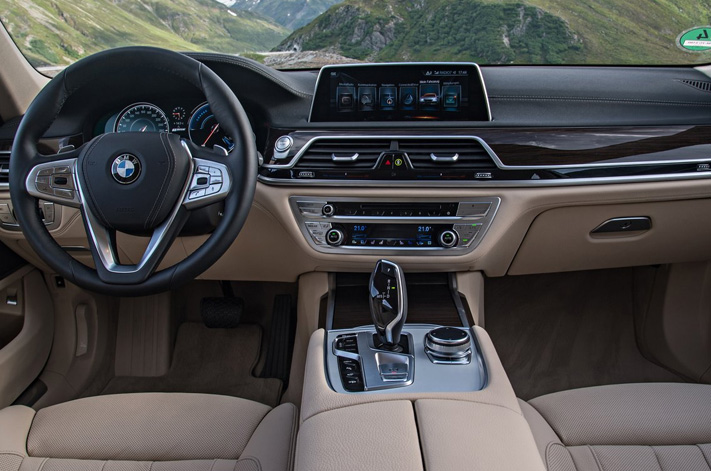
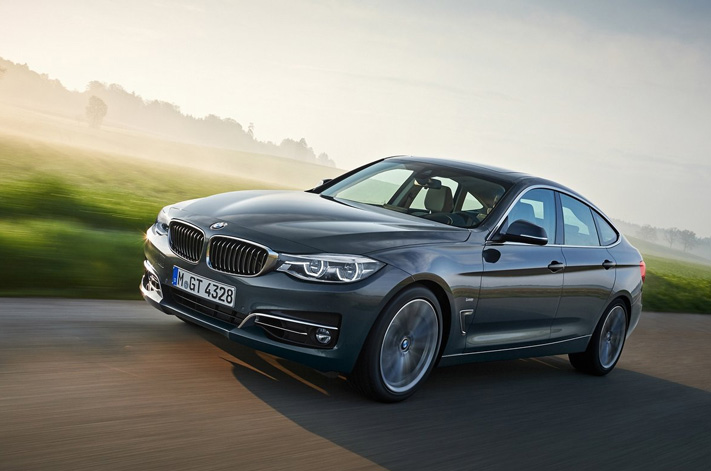
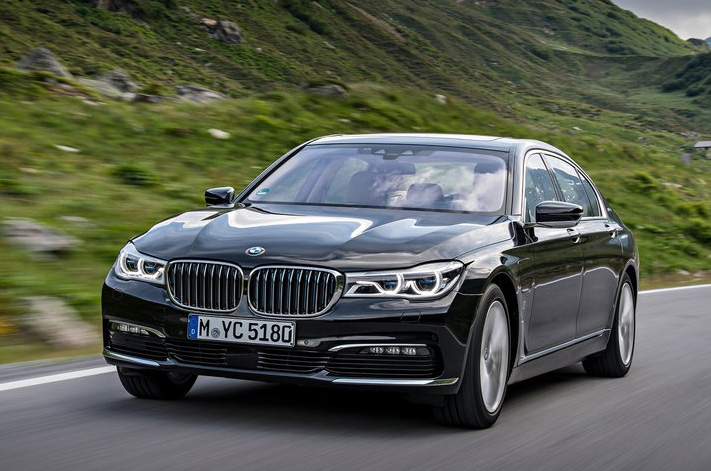
The company brought a fully autonomous prototype 3 Series GT to the event. On a course that duplicated intersections, roundabouts and other normal road features inside Maisach, this Level 5-capable car was able to drive itself and react to other cars around it. My 45-minute ride back to Munich airport was aboard a highly autonomous 7 Series. It was equipped with a prototype Level 3 system. The car was able to drive itself nearly all the way; from autobahn entrance to exit, including the junctions.
The company is also about to vastly increase the number of people it has working on autonomous driving. The number stood at around 600 at the end of 2016, but BMW is aiming to quickly increase this to 2000. It’s building a new campus for them to work in just outside Munich. But this is one of the easiest parts of the program…
Speaking with engineers who’ll eventually move into the new Unterschleissheim facility you begin to grasp the enormity of what BMW is taking on. BMW has a lot of experience with autonomous driving. The new 5 and 7 Series take Level 2 capability into showrooms right now. And the company has shown a number of even more capable autonomous prototypes over the past decade. But these, as one engineer explained, were research projects. To make a one-off car capable of driving itself around Hockenheim, which BMW did back in 2006, or the Nurburgring, is relatively easy, according to R&D chief Frölich.
Taking fully autonomous driving tech mainstream on an industrial scale will involve huge investments in a number of fields. BMW will share the load, and no doubt the risk, with a number of key partners. Intel is on board, along with the Israeli camera sensor specialist Mobileye recently bought by the American computing giant. BMW already owns a share in Here, a leader in high-definition digital mapping it bought in partnership with Audi and Daimler, the owner of Mercedes-Benz and Smart.
At Maisach BMW showed a prototype of the single circuit board that will replace the electronics that currently fill the boot of their 7 Series development cars. On it are chips with “Intel Confidential” stamped on them. An engineer estimates the computing power of the prototype board is equivalent to around 50 high-powered PCs. And R&D chief Frölich believes a tenfold increase in the capacity of BMW’s data centres is needed for autonomous driving. The company already has more digitally connected cars on the road than any other maker; 9 million.
There’s still work to be done on the autonomous car steering wheel, but the fact the Bavarians are working to develop one should be some small comfort to those who dread the arrival of autonomous cars.
AUTONOMOUS DRIVING LEVELS
HUMAN
Level 0: No assistance No driver aid tech (hands on, eyes on)
TRANSITION
Level 1: Assisted Active cruise or lateral guidance (hands on, eyes on)
Level 2: Partially automated Active cruise and lateral guidance (temporary hands off, eyes off)
Level 3: Highly automated Car MAY request driver to take control (hands off, eyes off)
Level 4: Fully automated Car will not request driver to take control (hands off, mind off)
MACHINE
Level 5: Autonomous Car can drive. No driver needed (driver off!)
