
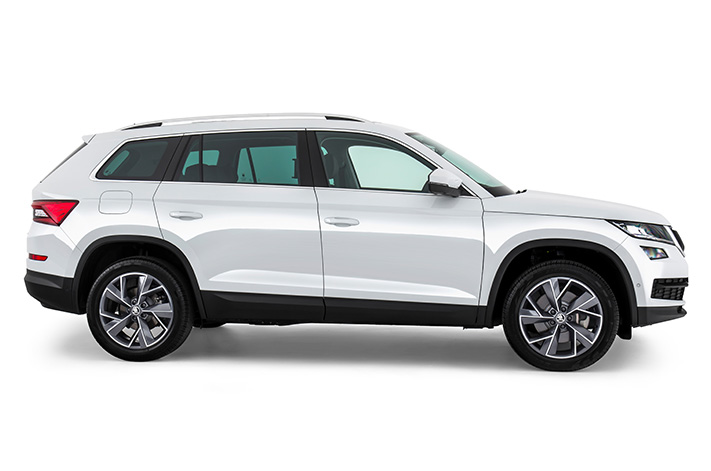
The Skoda Kodiaq will roll into Australian showrooms from the end of this month, with the big Czech SUV to be the first seven-seat vehicle offered by the carmaker in this country.
And with a starting price of $42,990, the Kodiaq is sharply positioned to compete with other AWD petrol seven-seaters in the large SUV segment, like the Toyota Kluger, Nissan Pathfinder and Mazda CX-9.
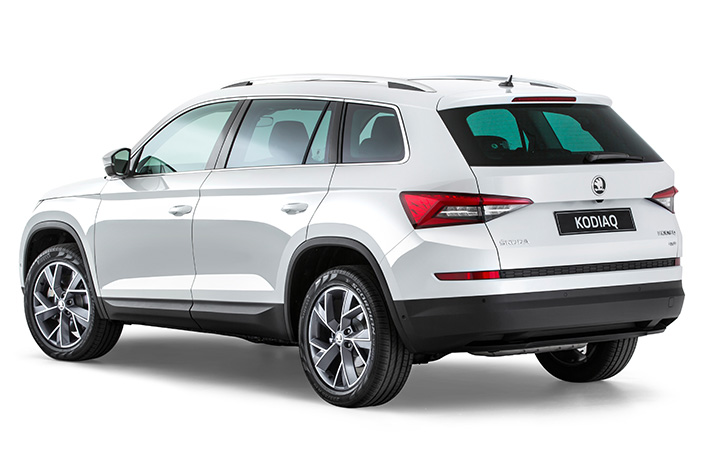
The Kodiaq will be offered in a single grade with a 132kW 2.0-litre turbo powertrain, dual-clutch automatic and all-wheel drive system being the sole mechanical configuration on offer. Three option packages will be available (more on those later), but the standard specification level is intended to provide all of the necessities:
Standard features:
- Active cruise control
- Keyless entry and ignition
- Dual-zone climate control
- LED headlamps
- Fog lamps
- Powered tailgate
- Electric parking brake
- Sliding second row
- Integrated sun blinds for rear doors
- Removable LED torch in boot
- 8-inch infotainment screen
- Apple CarPlay and Android Auto smartphone mirroring
- USB, Bluetooth DVD, CD, AM/FM audio
- Satellite navigation
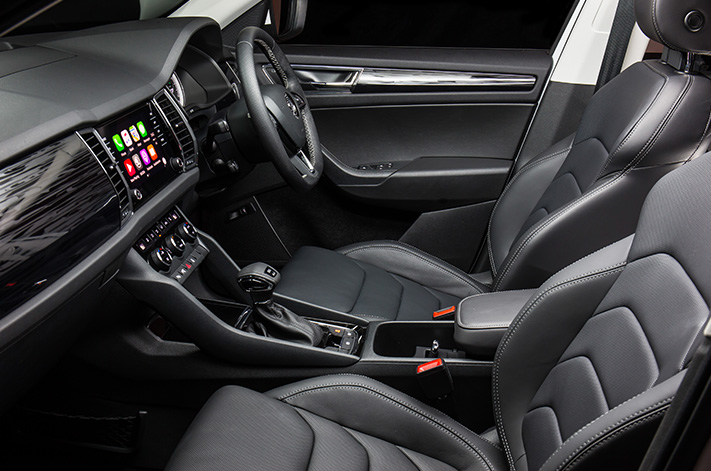
- Leather/Alcantara upholstery
- Autonomous emergency braking
- Nine airbags
- Fatigue monitoring
- Integrated door ding protection
A 140kW turbo diesel variant will join the range later in 2017, however pricing and specifications have yet to be announced for that variant.
Three packages will be offered from launch: a Tech pack, Luxury pack and a limited-edition Special Launch pack.
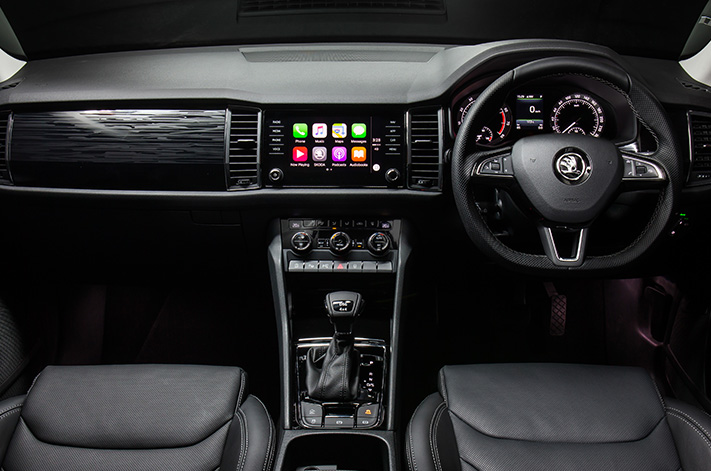
The Tech pack includes electronically-adjustable dampers with multiple driving modes, a hands-free function for the powered tailgate, a premium 10-speaker stereo, parking assist and an offroad mode.
Ticking the box for the Luxury pack brings electrically-adjustable and ventilated front seats, front and rear heated seats, perforated leather upholstery in black or beige, lane-keep assist, blind spot monitoring, a top-down camera view, three-zone climate control, rear traffic alert and self-dimming wing mirrors.
Thos opting for the Special Launch pack bundles all of the features of the Tech Pack with 19-inch black alloys, plus lane keep assist, blind spot monitoring, the top-down camera view, and rear traffic alert.
PRICING:
Skoda Kodiaq 4×4 132TSI – $42,990
Tech pack – $2500 Luxury pack – $4900 Special Launch pack – $5900 Metallic/pearlescent paint – $700 Panoramic roof – $1900 19-inch anthracite ‘Triglav’ alloys – $1650
Opportunities to own the very limited edition 745kW Trans Am 455 Super Duty are poised to disappear very quickly, as ordering for the 50 examples is lined up to start on May 1.
It’s a car we’d like to see go head to head with the new Dodge Challenger Demon and the Hennessey Camaro Exorcist, though a run this small means we probably won’t see any of them live up to their full potential.
They’re also unlikely to reach Australian shores for various reasons, the least of which is the cost.
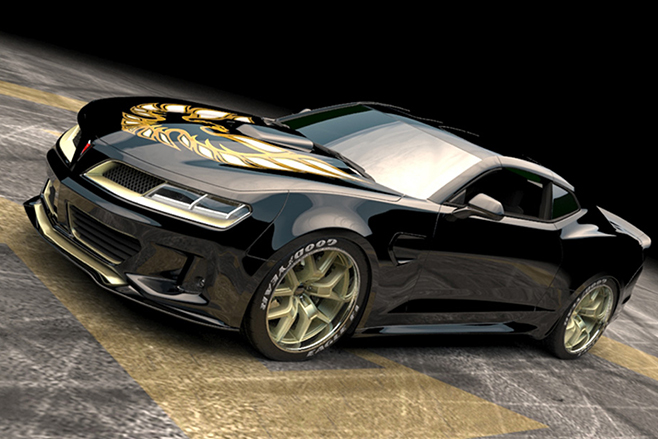
But it’s not just an exercise in marketing, as the 455 Super Duty carries some impressive numbers with it.
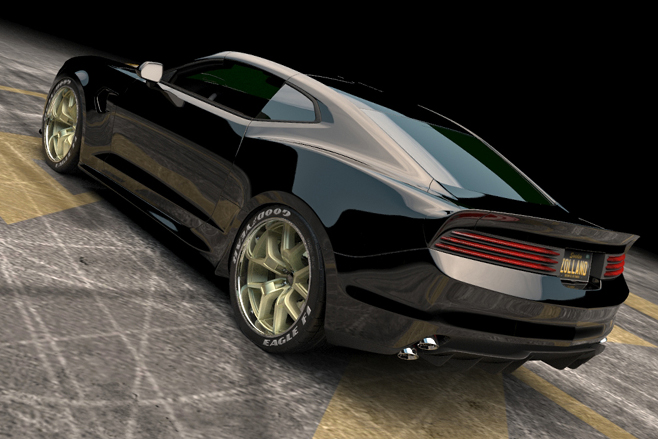
Trans Am Worldwide co-founder Tod Warmack says the Super Duty was re-designed and built from the ground up (or from a Camaro chassis at least).
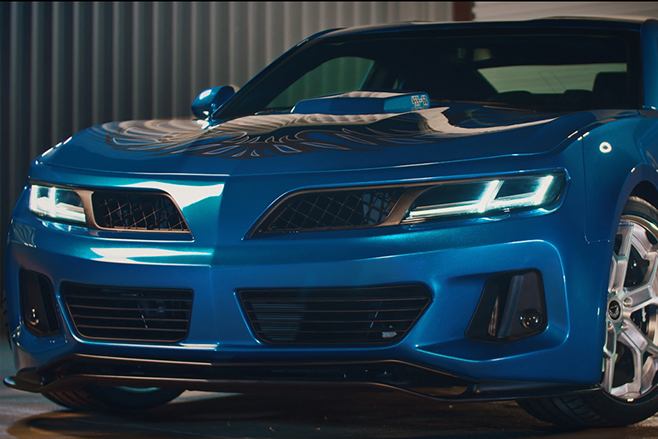
“Perhaps the most notable of this historical accomplishment is that we now join the ranks of only an exclusive few who offer a 1,000hp performance package in a production vehicle.”
Though customers will get a crack at choosing their build number, the company says “build and delivery will be first-in, first-out with shipping expected to begin in September 2017”.
QUESTION – CAROLINE (question asked on 3/3/2017):
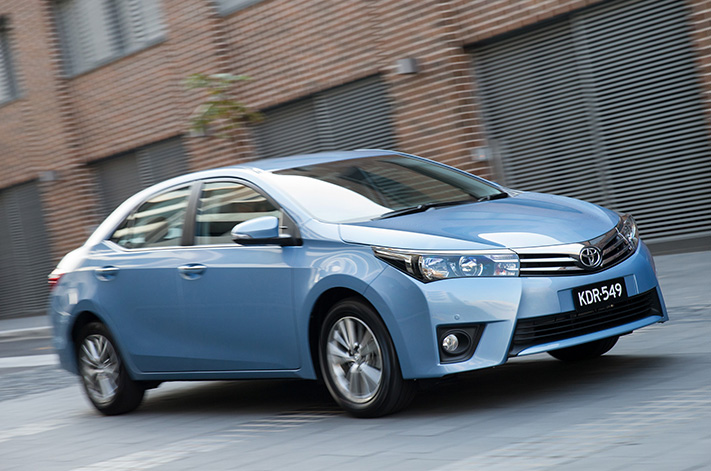
I’m looking at the Honda HR-V base model because I really like the boot size and practicality. Other options include the Mazda3 or Subaru Impreza, both as hatchbacks and base models, or Toyota Corolla sedan.
The main use of the car will be to drive from home to work on Sydney roads, and the occasional long trips to the beach. We will never need to take it off-road. Fuel economy is another focus and as I’m a slow driver and it’ll only be me driving, fun in driving is not necessary. I occasionally drive friends, so leg space in the back seats is kind of important but it’s not a must, and in the future I may have kids which is why I’m considering a car the size of the HR-V. Also, can I trust cars that are made in Thailand?
BUDGET:
$25,000
ANSWER – SAMANTHA STEVENS:
Let’s go through your list. For $24,990 the Honda HR-V VTi is equipped with an economical 1.8-litre petrol engine and CVT auto, where most other base models have a manual, and at 437L the boot is one of the largest in this class. Honda’s are typically super-reliable, and the HR-V has excellent safety features as standard, but we like the higher-end models which add blind-spot monitoring and City-Brake, which automatically applies the brakes if there is a risk of collision (at low speeds).
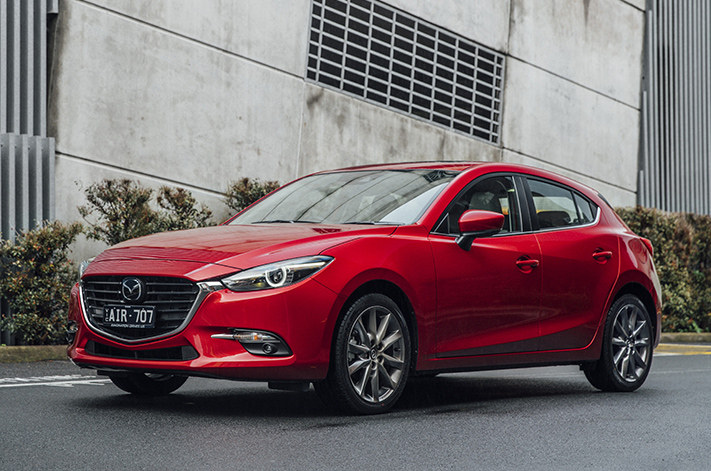
The top-shelf VTi-L at for $34,340 has a lovely interior with heated front seats and a sunroof, sat-nav, dual-zone air-con, front and rear parking sensors, among other goodies – if used vehicles are in your sphere, you may want to explore this spec. At 437L, the boot is one of the largest in this class, and has a wide opening to get everything in.Remember, SUVs carry a little more financial commitment; you may pay more for registration, insurance, tyres, and running costs in general. If you don’t want or need the SUV advantages of a higher ride height, soft-road ability, and load carrying, you may be better off with a hatch.The Mazda3 Neo base spec is $22,490 for the automatic, though we would recommend the mid-spec Maxx specification at $24,390 for sedan or hatch, which adds decent features such as sat-nav. The Mazda3 rates highly in the areas of safety, fuel economy, and handling dynamics. The model is far quieter than it used to be, and we find it a pleasant place to spend many hours in the front row. The second row is a bit underdone, but roomy enough. On the downside, Mazda’s servicing intervals are shorter at 10,000km, and may be something to consider if you do high kilometres.
Subaru’s Impreza hatch is also a great all-rounder. Its AWD system means it offers more traction in trying weather conditions; however its fuel consumption is a little higher. Its cabin is greatly improved over the previous generation, and second row passengers are catered for particularly well, plus the hatch is more practical in its use of boot space – though if its cargo space you want, the boot in the sedan is huge.
The Impreza starts with an auto base model at $22,600, but yet again the step from base model 2.0i to 2.0L is well worth the spend, with lots of convenient features, better trimmings, and some extra safety features such as lane departure warning and emergency braking thrown in for just $24,690.

Yes, I know. I’m a very lucky boy: I got to sample a HSV W1 on the road, albeit only briefly. So briefly, in fact, that we didn’t even have time to get photography. That’ll come soon.
Normally, to get a crack at something as rare and exclusive, you’d need to buy your own. Except you can’t; they’re all sold. And though it depresses me to say it, many punters who do buy their own W1 won’t ever drive them.
Because this car is so special, such a unicorn of a thing, that many of them will simply be trucked home, stuck in a shed under the optional, tailored HSV car-cover and guarded jealously.
And even if they do get driven enough to scrape the little rubber teats off the R-Specs and actually bed the engine in, I’m tipping they won’t be driven in q-u-i-t-e the same way as I got to while running acceleration times on this one. In fact, not even nearly. So yes, lucky me.
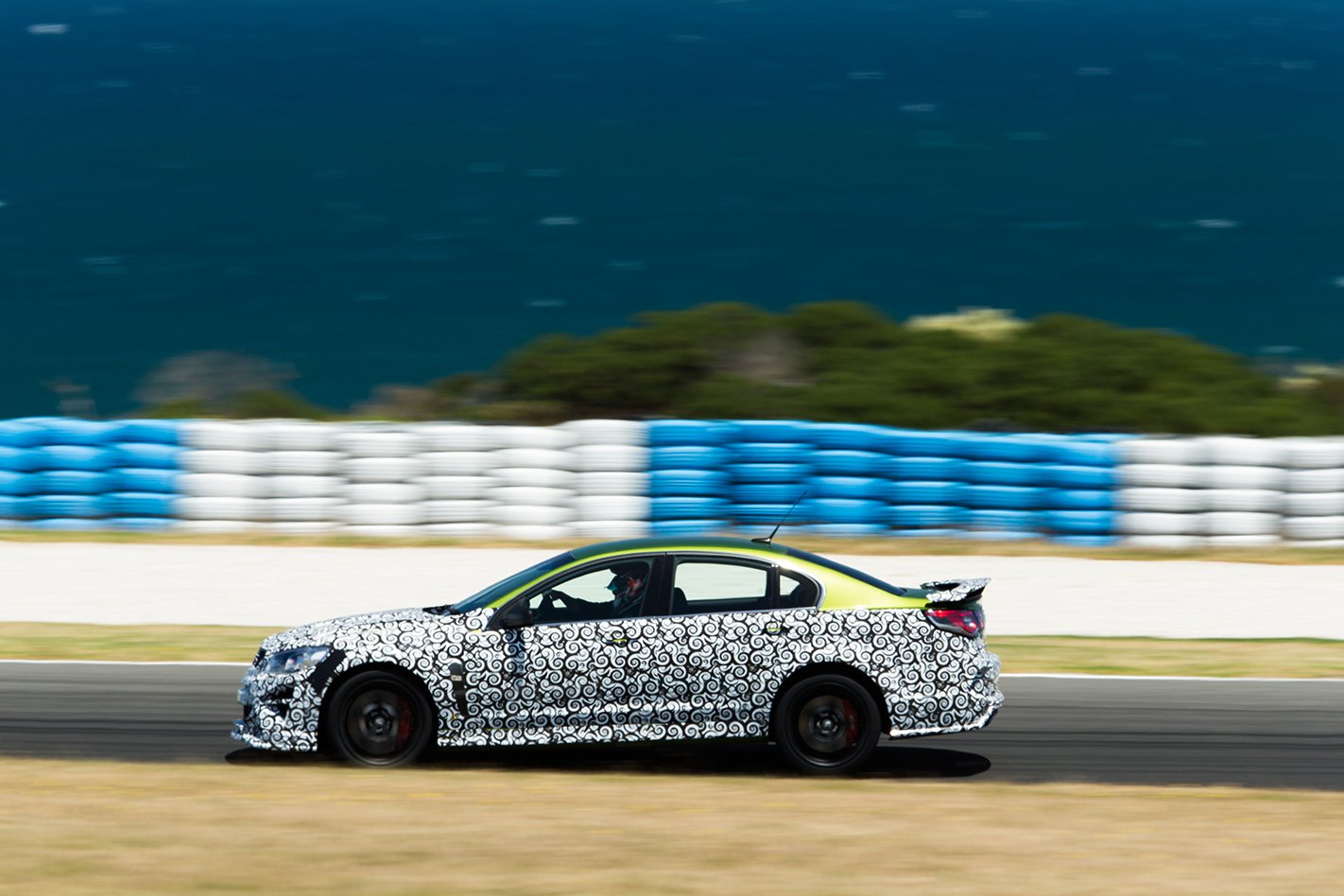
One of the biggest compromises as I see it is that the R-Spec tyres, while quite brilliant in the dry are very likely to be a total pain in the whatsit in the wet.
I didn’t get to try them in the damp, but based on what I know about such things (not to mention that HSV freely admits they’ll be under-performers in the rain) I’d be leaving my W1 at home if the weather-girl is tipping anything other than brilliant sunshine.
The solution, of course, is a second set of wheels and `normal’ tyres, saving the factory R-Specs to maintain the car’s originality by sitting in the corner and going hard.
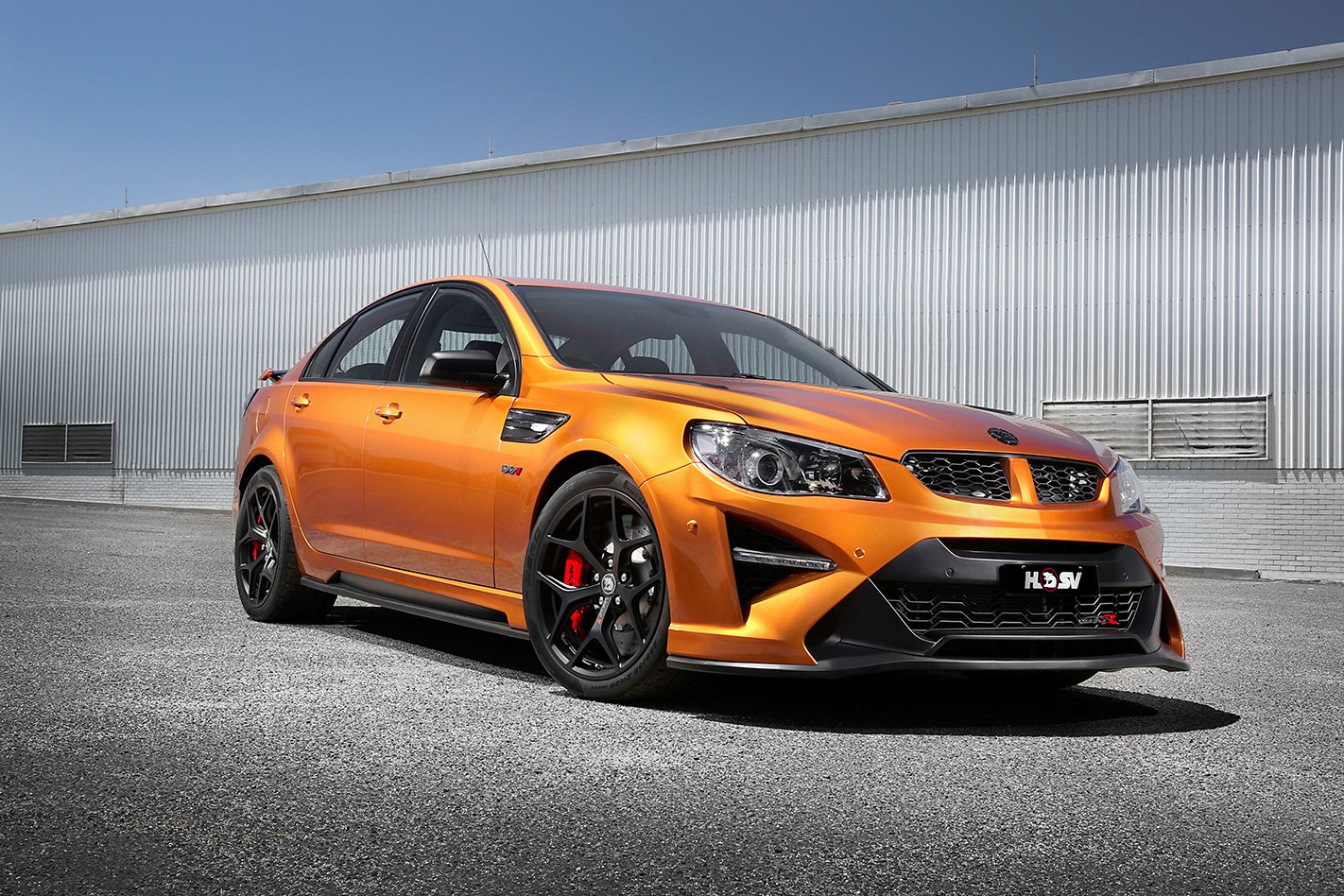
Okay, a street circuit demands a softer set-up than a smooth, manhole-cover-free dedicated circuit, and a W1 weighs a fair bit more than the carbon-and-helium silhouette-formula cars that are our V8s, but you get the drift.
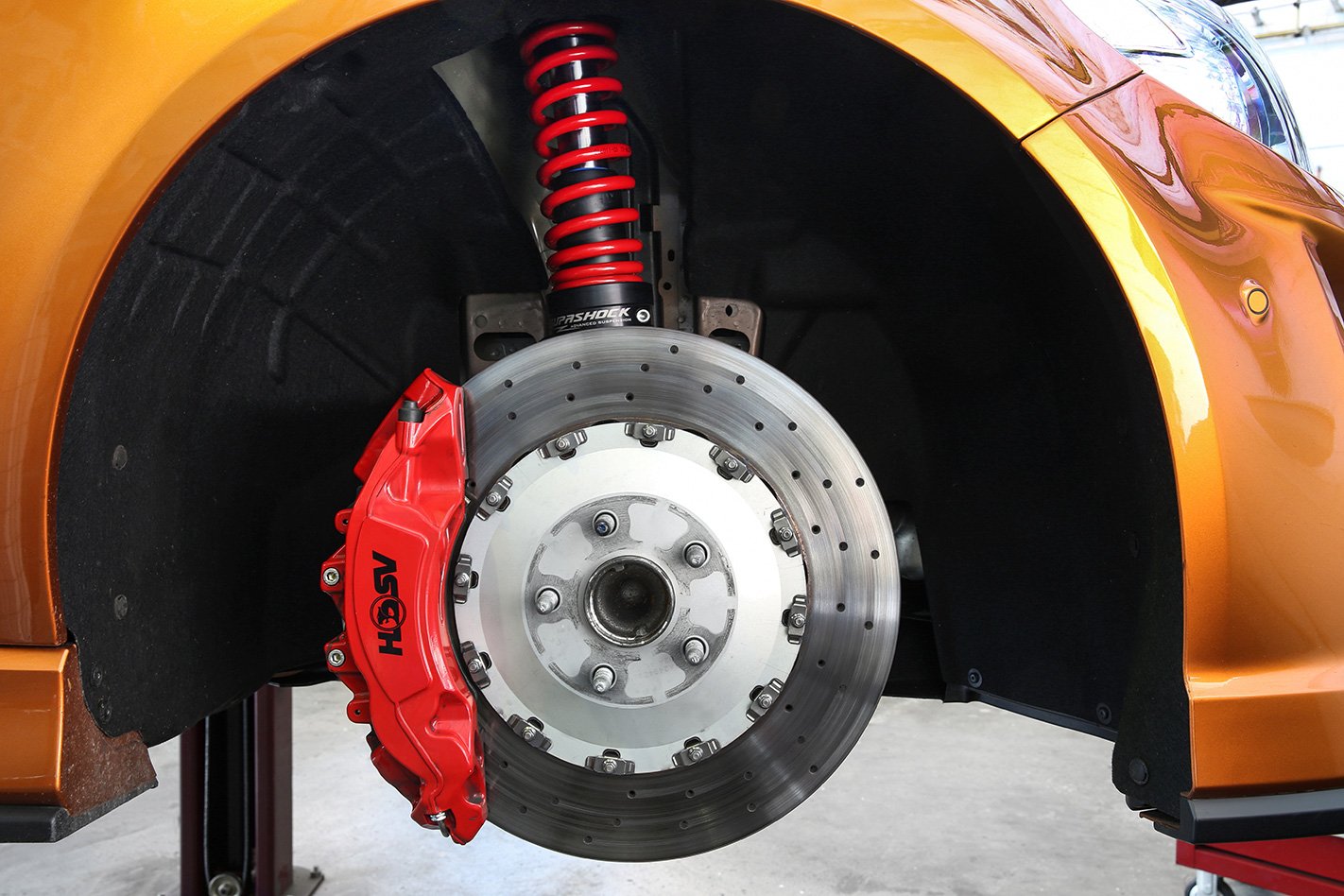
Of course, with the V8 Supercar-spec SupaShock dampers, you also lose the ability to tailor the damper settings as you can with the alternative MRC set-up. There’s no `Tour’ mode in the W1, it’s set to `Kill’ twenty-four-seven.
Strangely, this is probably the real yin-yang component of the W1’s make-up. If an AFL match is a game of four quarters, then the W1 is most definitely a car of two halves.
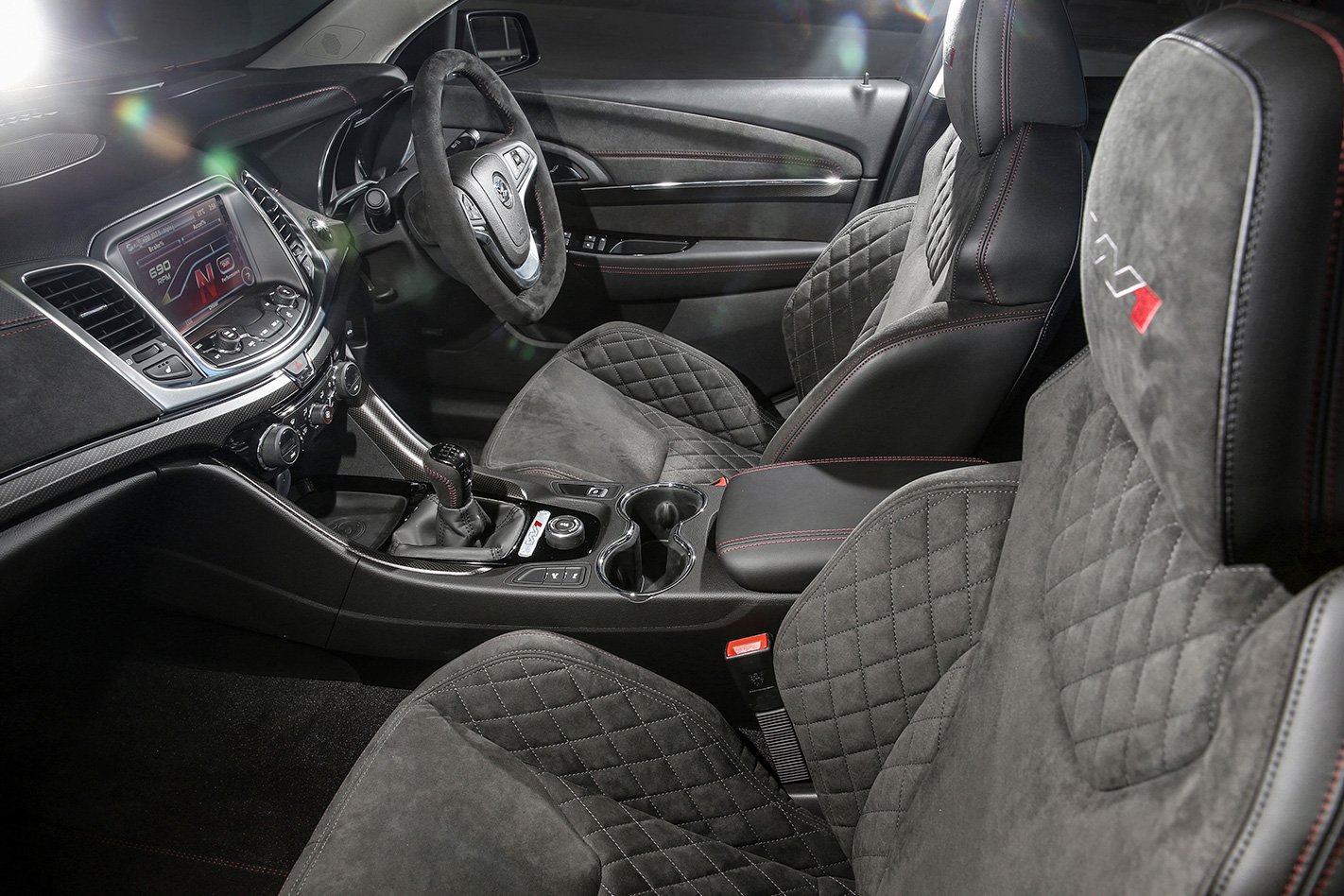
The steering still has that initial degree of artificiality as you knock it off centre and the electric-assistance motor wakes up, but the flat attitude and superb grip of the R-specs means that the W1 is both pointy and accurate through the helm. Feels great, actually.
But it’s the ride quality that is probably the biggest surprise. Fundamentally, the W1 takes a country back-road in its stride. Until you swap drivers and pull up a chair in the rear seat, And, suddenly, here endeth Column A.
I honestly cannot recall a car in recent history where the rear seat ride is so violently unpleasant. The ride is choppy beyond belief and the racket, both tyre and exhaust, is heinous.
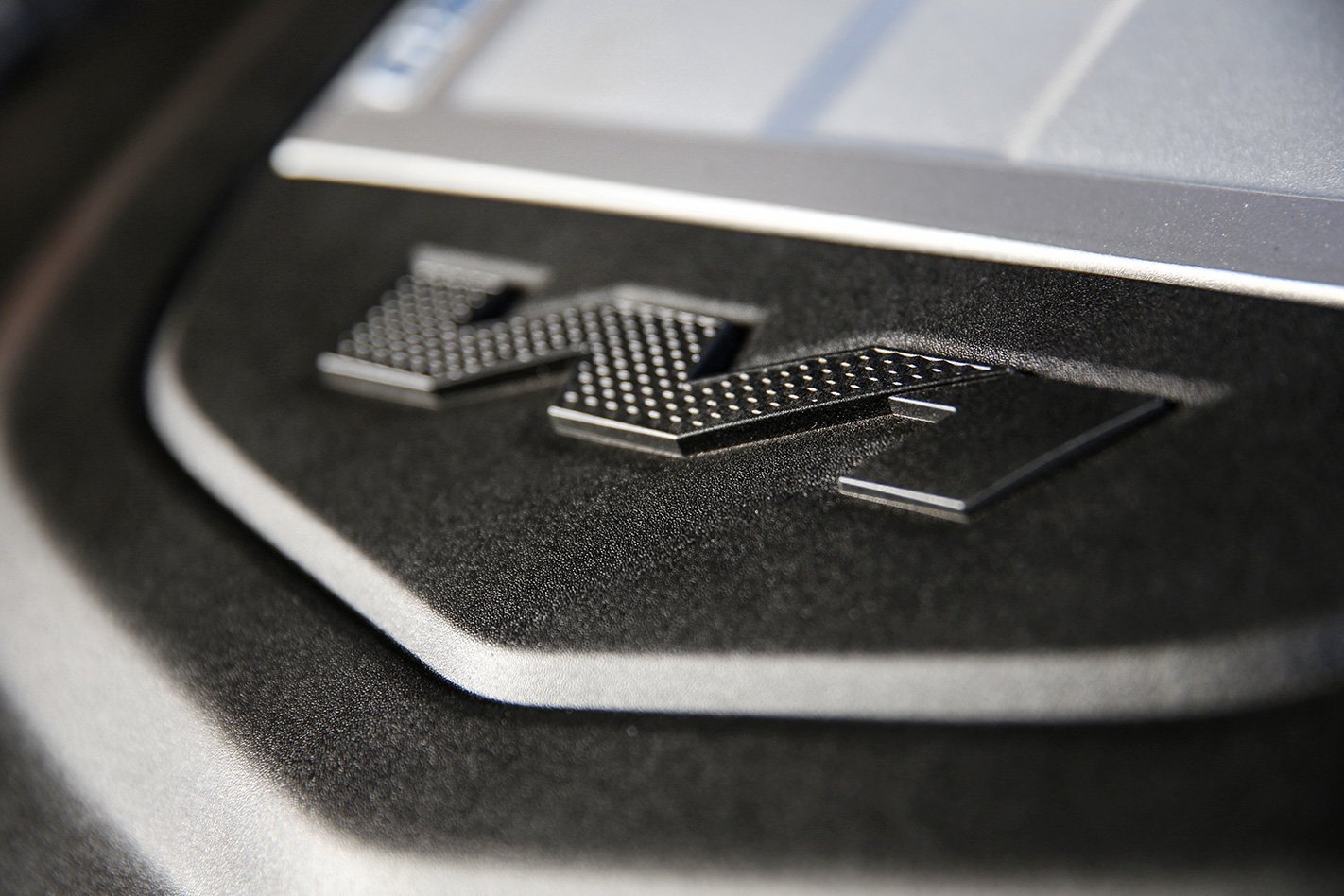
The other observation is that the longer you spend at the wheel, the less impressive that front-seat ride becomes, too. What starts out as complex and detailed info about what the front end is doing, eventually becomes a bit of an assault as the W1 struggles to cope with lumpier bits of the planet.
See, while the dampers are good enough to iron out the pattery, small amplitude stuff, they can’t do squat about those mighty spring rates and their consequences when it comes to bigger deflective forces. And the longer you drive the W1, the more obvious this becomes.
Here, I suspect, is a great example of familiarity breeding contempt. It also suggests that the non-W1 version of the GTSR is likely to be the better road car, especially as it comes with $60,000 worth of petrol.
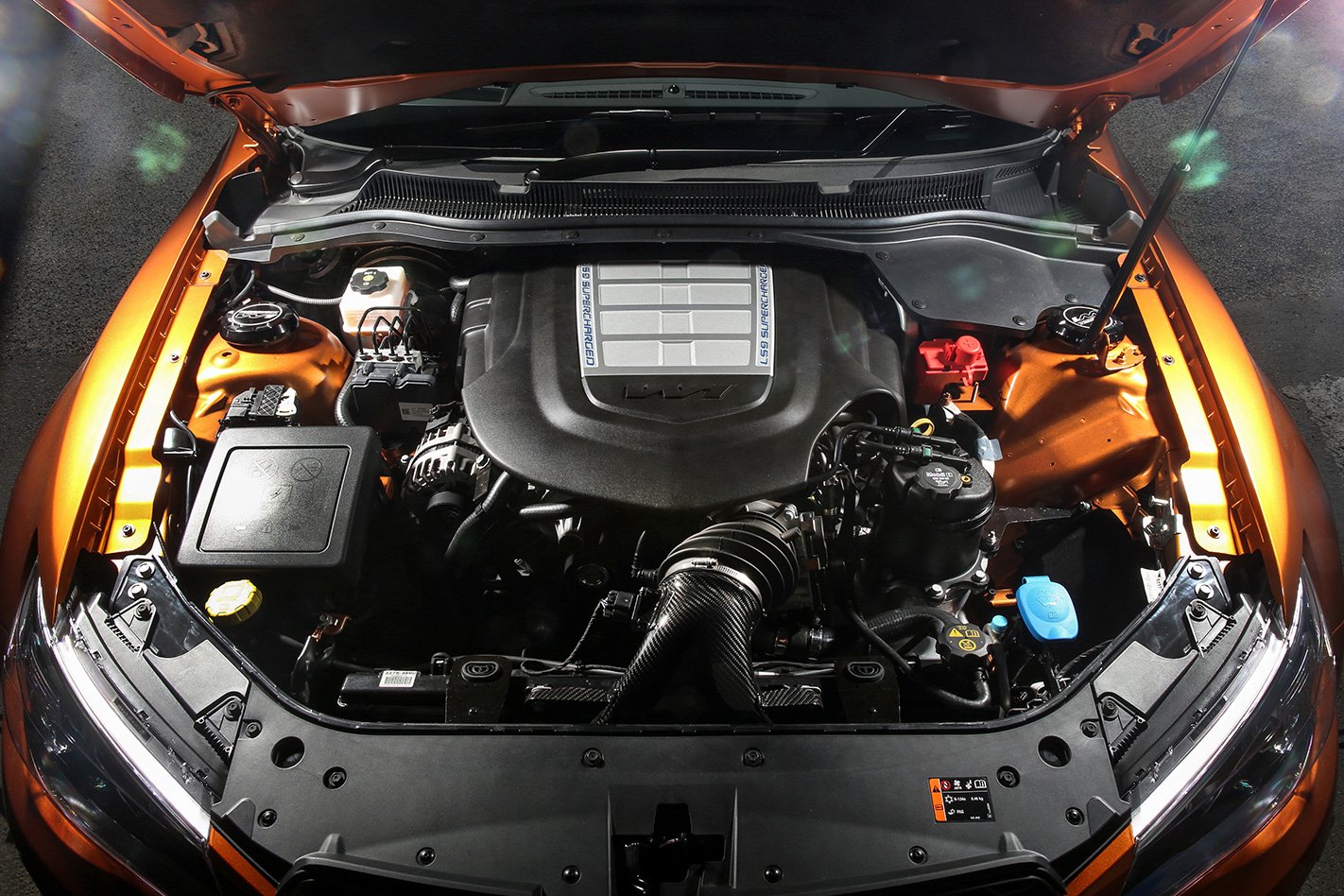
And it just gets better from there. It hollers, it spits and it generally feels pretty dangerous, and when you do spank it back, it gets even angrier and more intent on hurling you into the next postcode.
The top-end rush has to be felt to be believed and, where some LSA-powered cars can feel like they’re all over and done with by 6000rpm, the LS9 in the W1 is still cracking on like a good `un at that point.
In fact, to get it to go as fast as it can, you need to uses every one of the 6600rpm on offer, because the extra poke is stacked up in that part of the tacho.
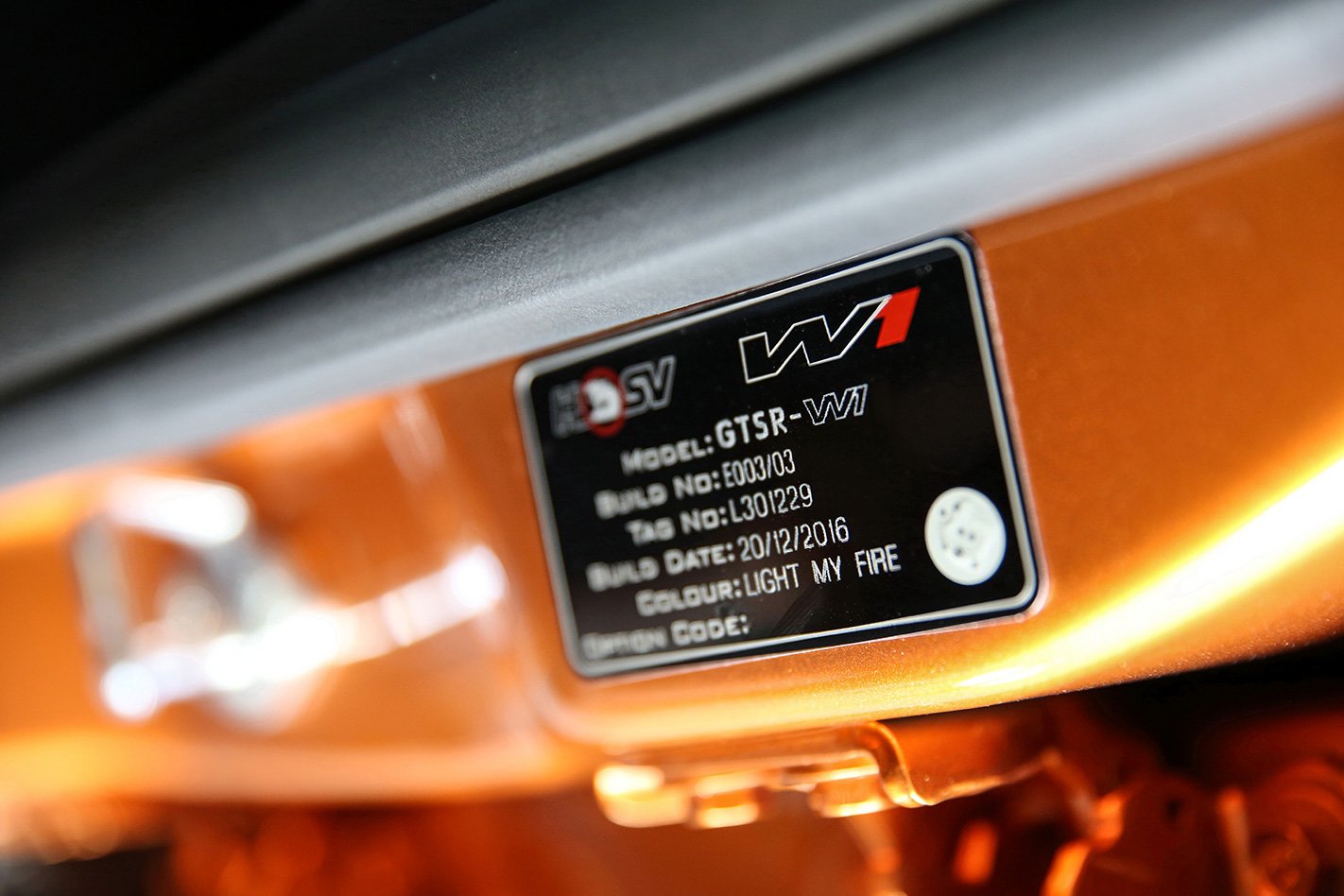
That said, the 400m time of 12.3 is a fair bit quicker and, again, suggests that the extra grunt is way up on the top shelf where it can propel to thing to a stonking 196-plus kliks through the traps.
A couple of other things to consider in all this: The R-Specs certainly helped in the take-off department, but ultimately, you’re at the mercy of the inertia-versus-grip-versus-torque thing.
Also, even though the W1 is fitted with launch control, the nice people at HSV asked us not to use it. So we didn’t. And there’s more to think about. Like, the first three gears in the W1 are taller than those in the normal GTSR. And while there’s an extra 39kW on tap over a GTSR, in percentage terms that’s a fairly nominal (stay with us) hike of just nine per cent or so…significant but not earth-shattering.
I could tell you what you want to hear, which is that the W1 is the best Aussie made road-car ever. And while it’s certainly up there, it isn’t perfect. But as a thank-you note from HSV to the V8, rear-drive cars that we are about to lose, then the W1 is some kind of masterpiece.
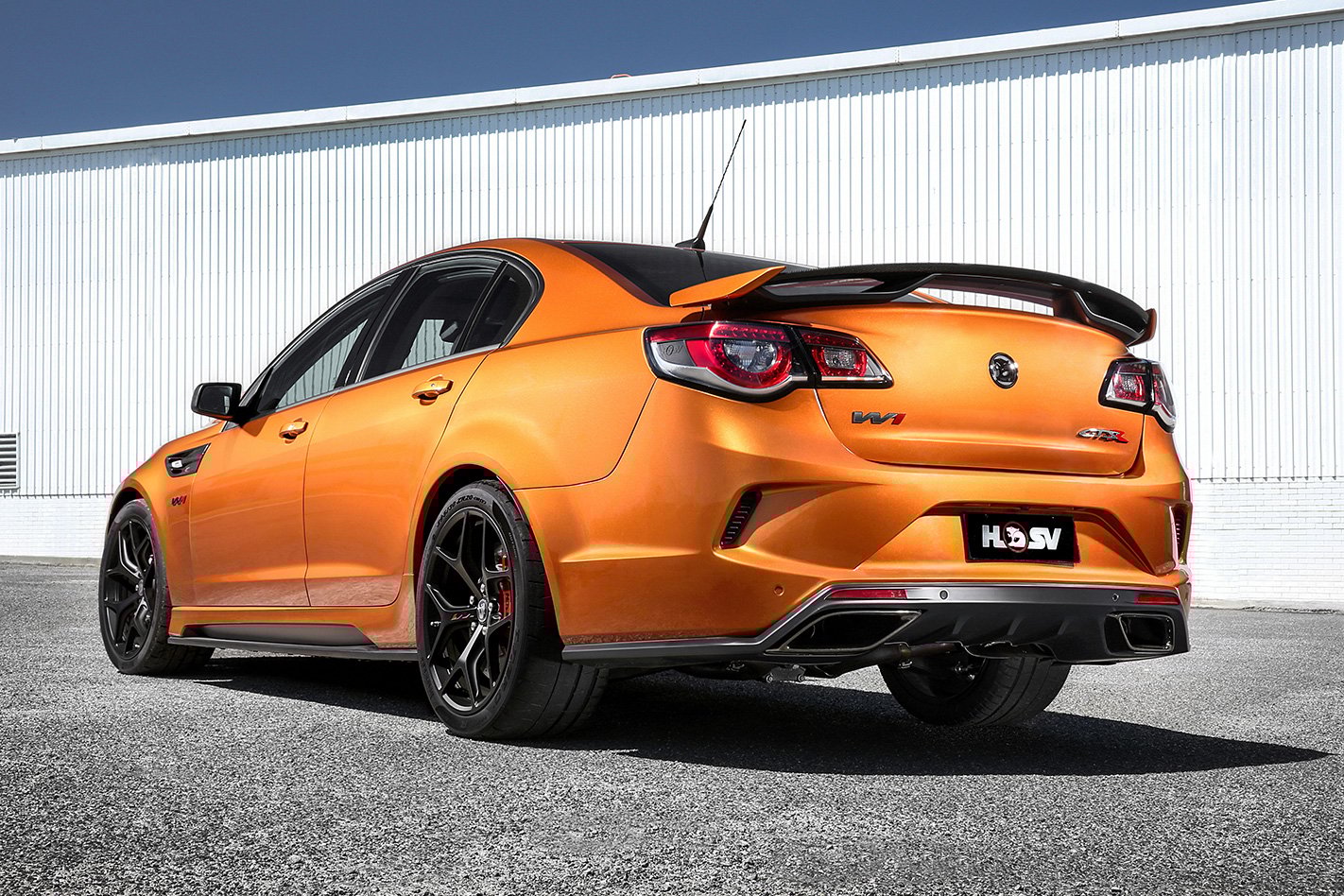
SPECS
Engine: 6162cc V8, OHV, 16v, supercharger Power: 474kW @ 6500rpm Torque: 815Nm @ 3900rpm Weight: 1895kg 0-100km/h: 4.5sec (tested) Price: $169,990
HOLDEN has started recruiting engineers and drivetrain calibration specialists to work at its Lang Lang proving ground on future Cadillac and Buick-badged products.
It’s the next step in the expansion of General Motors’ engineering and development foothold in Australia, and following the announcement in October last year that the proving ground would receive an extra $8.7 million from its US parent to upgrade its emissions labs.
Holden spokesman Sean Poppitt said this was largely due to Australia’s expertise as a rear-wheel-drive development hub – a role that will ironically start to fade from October when the carmaker pulls the pin on almost seven decades of local manufacturing.
“Our powertrain calibrators are obviously very expert at rear-wheel-drive applications, so they do a lot of that work for GM,” he said. “It’s why you’ll see a lot of Buicks and Cadillacs on our roads as our guys do lots of calibration work.”
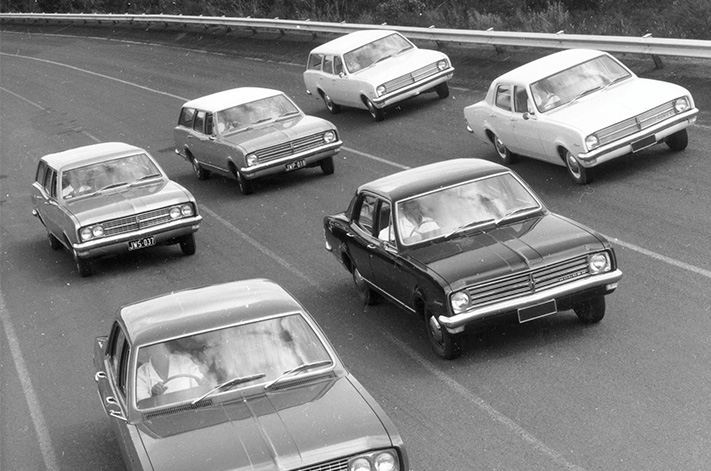
The Singapore-based GM International Operations that oversees Holden’s business in Australia had originally planned to sell off the proving ground as part of the planned shutdown of the Australian manufacturing operations, but a change of heart saw that decision reversed.
That decision is rumoured to have come directly from GM North America chief Mark Reuss, who served time heading up Holden before taking the top job in one of GM’s most important markets globally.
Holden announced in October the extra funding would sink into adding another 11 staff to the proving ground, taking the total number of workers at Lang Lang to 106.
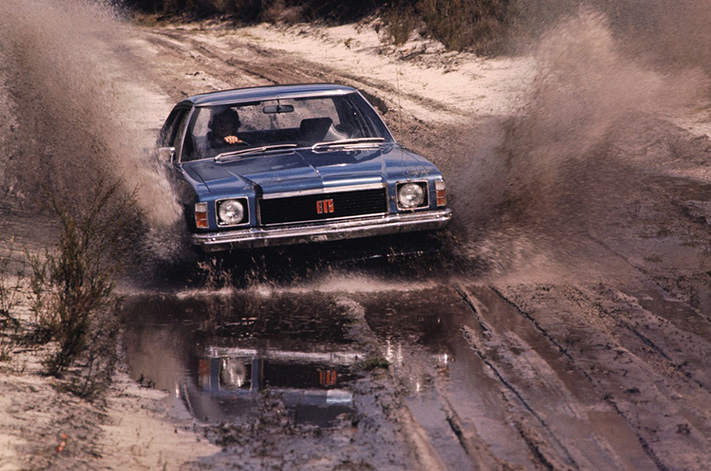
The team is expected to run up to 7000 tests a year spread across 100 models from GM’s 10 global brands, taking some of the pressure off GM’s already stretched emissions testing teams in the US and Europe.
Australia’s expansion is a much-needed one for GM as carmakers globally struggle with a growing divide in emissions laws that are splitting drivetrains between those that are suited to meeting North American legal and market requirements, those that comply with generally more strict European emissions targets, and fast-changing Chinese regulations.
The Lang Lang research and development centre was opened in 1957 as a means for the carmaker to secretly develop and test vehicles suited to Australian conditions.
The site’s powertrain calibration role dates back to the 1980s and the local development of the Family 2 four-cylinder engine production and export program.
BMW’s 4 Series update is due to arrive in showrooms in June this year with more gear and higher price tag.
At entry level, the new 4 Series LCI (Life Cycle Impulse) 420i Coupe and Gran Coupe sees a $1000 increase, now starting at $69,900 before on-road costs.
While prices for majority of the range remain unchanged, the 420i Coupe, Gran Coupe and 430i Convertible each receive a $1000 price hike, while the 420i Convertible is upped by $2000.
Aesthetically, minor updates have been made to the range, with all specs – 420i, 430i and 440i – receive new bi-LED headlights, LED fog lights and LED tail lights. While Adaptive LED headlights are optional on the 420i and 430i, they come as standard on the 440i.
Two new metallic paint options have been added to the line-up in Sunset Orange and Snapper Rocks Blue, while buyers will also have the option of paying extra for Frozen Silver and Aventurine Red – BMW-specific colours also found in the 7 Series range.
Inside, the infotainment system is updated to BMW’s iDrive6 operating system. The sports steering wheel is covered with ‘Nora’ leather, while the 440i gets a higher quality leather finish. Other updates include re-designed wiper and indicator stalks and high-beam assist and auto rain-sensing wiper controls.
Three new upholstery options are added – Midnight Blue, Cognac and Ivory White – and Carbon Aluminium, Fine-Wood ‘Fineline’ Light and High-Gloss Black with Pearly Chrome are accent options.
In the Coupe and Gran Coupe models, the suspension has been upgraded and the ride height dropped to meet the 3 Series M Sport. Suspension on the convertible models remains the same.
The Adaptive M Suspension system remains but gets stiffer springs and improved damper response for a sportier handling.
BMW says the 4 Series also gets improved straight line stability, reduced body roll, and better power-steering. Variable Sport Steering is optional at all levels.
Engine wise, the 420d diesel option is removed from the range. The 420i will be powered by a turbocharged 2.0-litre petrol engine, upgraded to a more powerful version in the 430i. The top spec 440i Coupe, Gran Coupe and Convertible manages the fastest 0-100km/h figures of the group at 5.0s, 5.1s and 5.4 seconds respectively, pushed by a 3.0-litre turbocharged six-cylinder petrol. All driving the rear-wheels.
BMW 4 Series LCI price:
BMW 420i Coupe – $69,900 BMW 420i Gran Coupe – $69,900 BMW 420i Convertible – $87,900 BMW 430i Coupe – $79,900 BMW 430i Gran Coupe – $79,900 BMW 430i Convertible – $97,900 BMW 440i Coupe – $99,900 BMW 440i Gran Coupe – $99,900 BMW 440i Convertible – $117,900
UNTIL now, if you wanted to drive something out of the showroom that has four turbochargers under its hood, your choices were limited exclusively to vehicles wearing a Bugatti badge, but now BMW has an offering.
For the latest iteration of its M550d luxury sedan and wagon, the German carmaker has added yet another turbo to its triple-blower 3.0-litre six-cylinder diesel taking the total to four, and the results are spectacular.
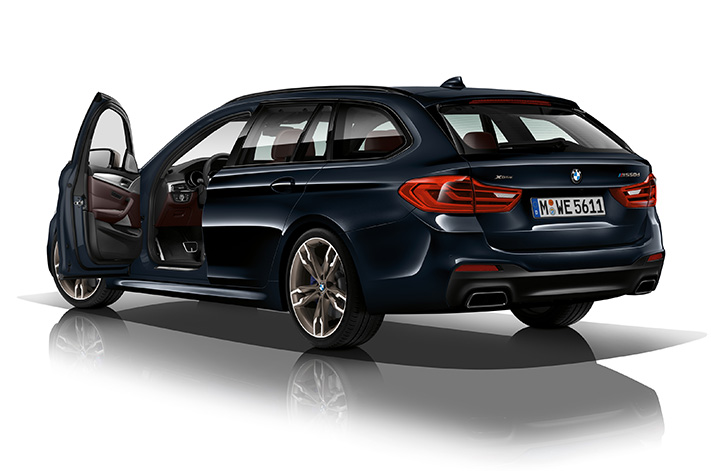
For comparison, BMW’s torque champion of the range – the M760Li – is powered by a twin-turbo V12 petrol that displaces 6.6 litres but only manages a 40Nm torque advantage over the 3.0-litre, but what do you expect from a measly two turbos?
At full chat the mightiest 7 Series produces 121Nm and 68kW per litre of engine capacity, while the M550d engine makes the V12 appear sedentary by comparison, producing a staggering 253Nm and 98kW per litre.
In the previous three-snail iteration, the M550d was not offered in Australia and this new version may also fail to make it down under, but the triple turbo engine is on offer under the bonnet of the current stump-pulling X5 M50d, which leaves the door open for its successor, which is likely to get four turbos.
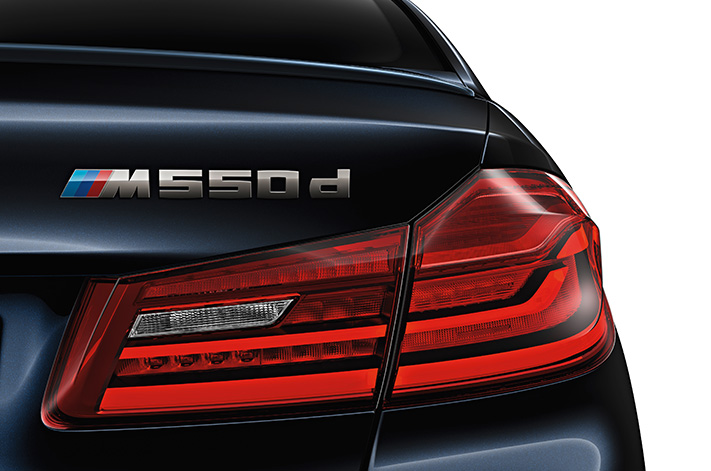
The new arrangement allows the 3.0-litre to generate a significant 450Nm at a barely-off-idle 1000rpm, while the full fat 760Nm is available between 2000rpm and 3000rpm. Clever variable exhaust channelling directs the flow of hot gasses depending on throttle position and load, and the second of the two high-pressure turbos remains idle at engine speeds below 2500 rpm.
As you might imagine, getting that grunt to the road would be tricky via just two tyres, so the M550d is available only in traction-boosted xDrive four-wheel drive. With a foot-flat blast off the line, BMW says its torquiest 5 Series can crack 100km/h in 4.4 seconds (4.6s for the Touring).
In a drag race to 100km/h the M550d would cross the line in a dead heat with the i8 hybrid sports car.
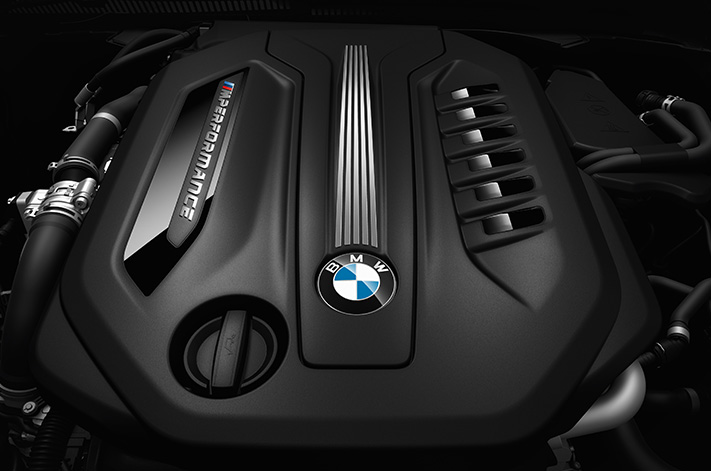
The impressive credentials are hinted at with a sportier body kit, 10mm-lowered suspension and 19-inch wheels.
Power is sent to all four wheels via an eight-speed automatic transmission, which is programmed with selectable driving modes including an M Performance setting or the driver can hand pick the gears using steering wheel paddles.
BMW claims its new M550d xDrive houses “the world’s most powerful six-cylinder diesel engine in the automotive area”.
It will be no surprise to many that a company with a strong history of performance in-line sixes could extract 294kW from one. The four turbochargers found attached to it could go some way to explaining how BMW achieved this feat.
The M550d also boasts more 80 more Newton metres of torque than the current M5 at 760Nm. With these figures, BMW claims the M550d’s 0-100km/h time is just 0.2 seconds slower than the current (but ageing) M5.
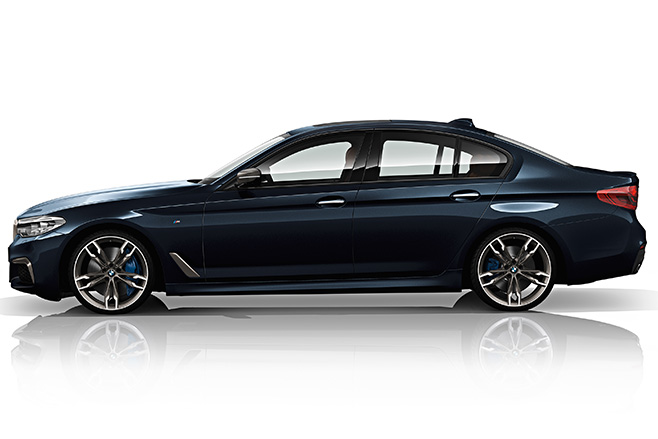
Instead of one large low-pressure turbo, two smaller (and more responsive) turbos take its place.
“This means torque is available early on and increases rapidly. A torque of more than 450Nm goes on stream at just 1000rpm,” the company says.
“The second high-pressure turbocharger is only added at engine speeds of over 2500rpm.”
To give the M550d a bit of bark to match its bite, BMW added an M aerodynamic package, M-sports suspension lowered by 10mm, and 19-inch M light-alloy wheels with mixed tyres.
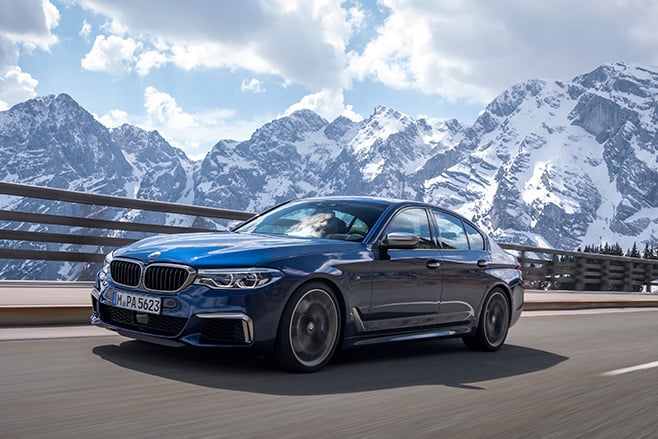
Initial word from Munich is that there are no plans to send them here, but BMW Australia says it will try to bring some in if it becomes available.
CAR industries can be successful. Just ask the Germans, Japanese, Americans, South Koreans and, more recently, the British.
Figures released from the UK Society of Motor Manufacturers and Traders show the UK is on track to produce about 1.8 million cars this year, almost double what it produced in 2009 following the GFC. And not bad for a market that registers about 2.7 million cars annually.
It’s a return to form for an industry that has been through ups and (many) downs.
And it’s proof that first-world countries with relatively high labour costs can have a viable car industry.
Not that it’s as simple as that.
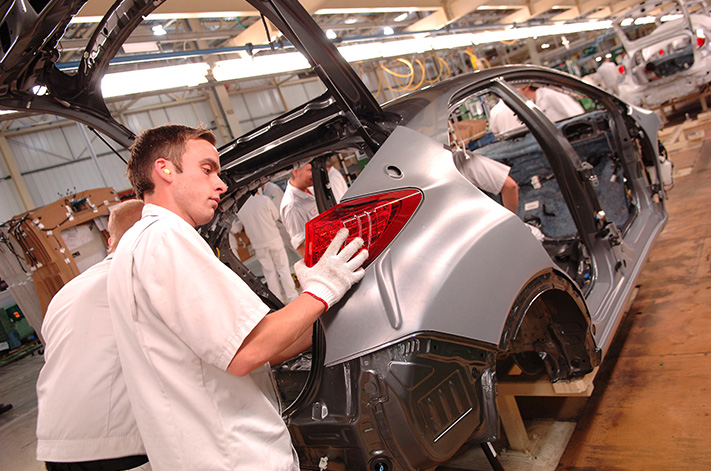
Perhaps the strength of the brands doesn’t hurt, either. England has created some of the most iconic brands in automotive history: Rolls-Royce, Bentley, Range Rover, Mini and Aston Martin. Even though each is owned by others these days, the thought of losing some of the biggest brands in the world could not sit well with some.
Toyota to close Australian manufacturing on October 3
But the cars giving the UK its manufacturing might these days are Nissan, Toyota, Opel (through Vauxhall), Honda and BMW (through Mini). A manufacturing environment established over decades has proved appealing enough for some of the world’s biggest manufacturers to invest in, weathering the storms when things aren’t so good.
So, ironically, the saviour of the British car industry has been car makers from other parts of the world, in turn contributing to a thriving components industry and an appetite for vehicle manufacturing that has no doubt helped British brands.
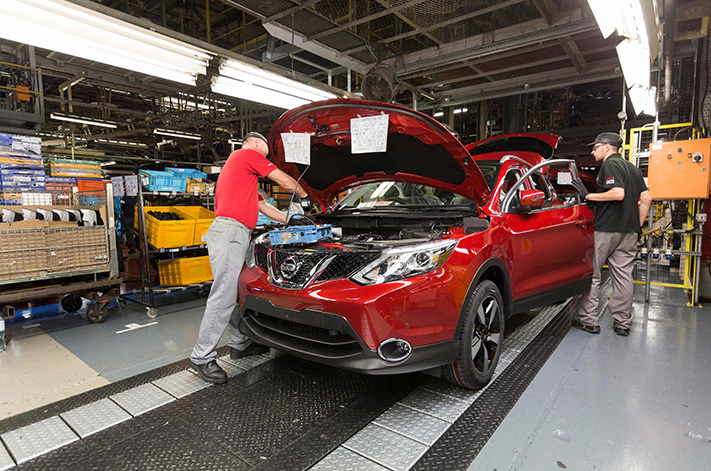
And, again, it’s international money that has helped the British industry survive. Even Jaguar and Land Rover live on money and direction from Indian giant Tata, a company that has, cleverly, created an environment that allows the English to produce better cars for the world.
It’s tempting, then, to make parallels with the Australian manufacturing industry, which shuts down on October 20 this year when Holden closes its Elizabeth plant.
But that would be ignoring the enormous scale and diversity in the UK industry. In its depths it was producing 1 million cars, and they still covered a broad range, from low volume sports and luxury cars to mainstream models across multiple brands.
Boats can easily transport cars elsewhere, but Australia is further from its prime export markets than the UK is from its.
And Australia’s closest markets were even closer to a steady stream of vehicles from factories with lower costs than ours.
Little wonder that in 2014 the Productivity Commission recommended Australians stop supporting the automotive industry, as difficult as it was for many to swallow.
Falcon ute bows out two months ahead of Ford manufacturing shut-down
Of course, the Australian industry is not entirely a victim of circumstance.
In researching a book on Holden, former Holden boss Peter Hanenberger told me of an early-2000s agreement between the car makers (then Holden, Ford, Toyota and Mitsubishi) to receive $2.5 billion in assistance with the view to being off support entirely by 2015.
“[John] Howard had a clear understanding of what the auto industry should be in Australia,” said Hanenberger back in 2015. “It was under the Howard government with [Ian] MacFarlane that we negotiated a deal … that we committed to have no more support by the Australian government.”
Since then a major shift in the market occurred whereby large car sales dived and SUVs boomed, in turn fragmenting the market and reducing that scale that is crucial to a manufacturing industry.
Tariffs were also being wound back on imported cars, although that was something the industry was aware of and working to combat.
So, while that early-2000s plan may well have been achievable, history will show it wasn’t.
There’s a seemingly never-ending Formula 1 debate raging in the Wheels office, discussing the pros and cons of changes and results from race weekend to race weekend. Up for argument is everything from aerodynamics to the sound of the cars, and there’s always someone defending a point.
Imagine our fascination, then, when this GIF from PartCatalog.com appeared on our screens, illustrating the transformation and evolution of McLaren Formula 1 cars from the 1960s right through to the current day.
The animation incorporates cars from key points in McLaren’s racing heritage including the McLaren M7A, which drove to the team’s first F1 race victory in 1968 and a further two wins that season, to the 1976 M23 driven by James Hunt, which beat Niki Lauda to championship victory that year.
Also in the mix is the MP4/2B car that Lauda would drive a few years later in 1985, taking his final F1 victory at the Dutch Grand Prix before retiring from the sport.
Other recognisable favourites include the legendary Honda-powered MP4/4 driven by Ayrton Senna in 1988, the year he won his first world championship, and the 2008 MP4-23 that took Lewis Hamilton to his first championship victory.
The 2012 MP4-27 driven by British teammates Jenson Button and Lewis Hamilton makes an appearance and plenty others besides, until the current black and orange McLaren MCL32 appears at the end, as driven by Fernando Alonso.
It’s a unique way to see the elements of F1 design and layout that have changed, and what has stayed the same since McLaren entered the sport.
