
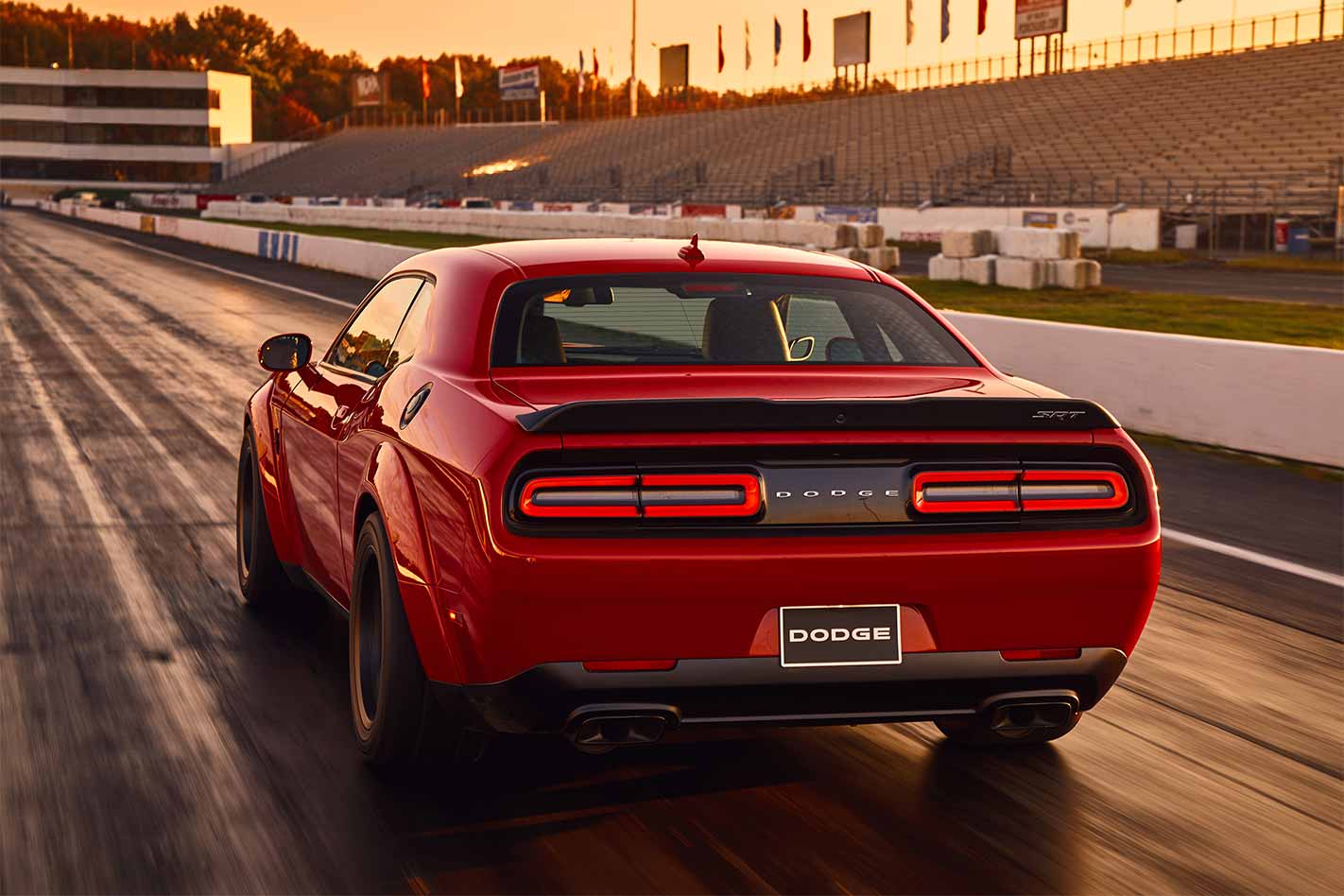
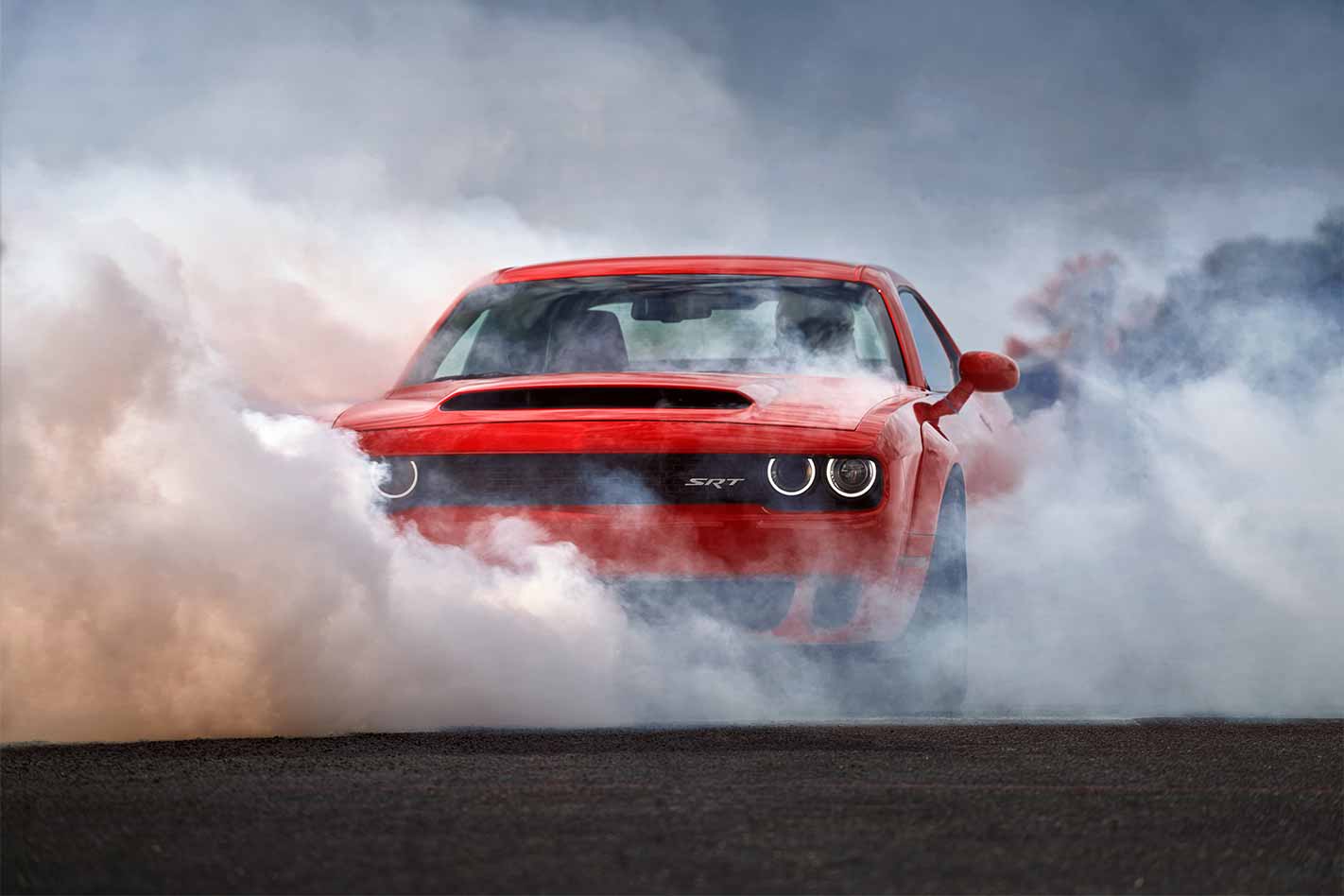
NO more teasers or leaks, here it is in all of its drag strip demolishing insanity. Behold, the Dodge Challenger SRT Demon.
We won’t bore you with any of the press guff: here are some of the more ridiculous facts about Dodge’s fastest-ever road car.
Hennessey reveals 745kW Demon-fighting Camaro Exorcist
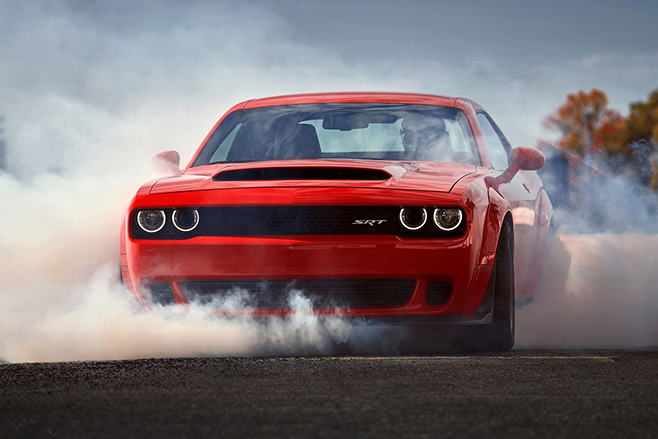
But what a Tesla Model S P100D won’t do on its way to 100km/h is lift its front wheels clean off the ground. The Demon is certified by Guinness World Records as the first-ever production car to lift the front wheels on launch, doing so for a distance of almost a metre (89cm).
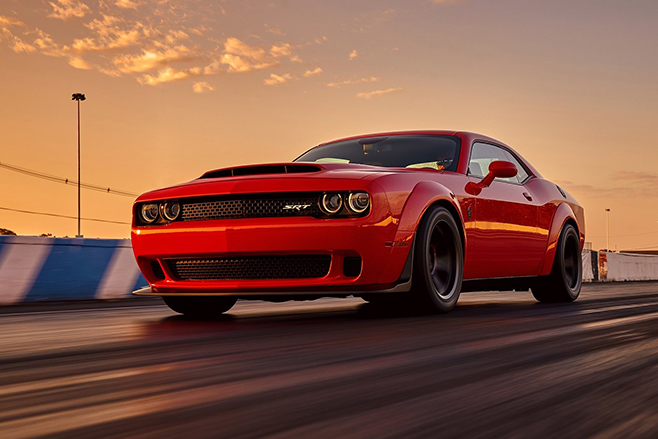
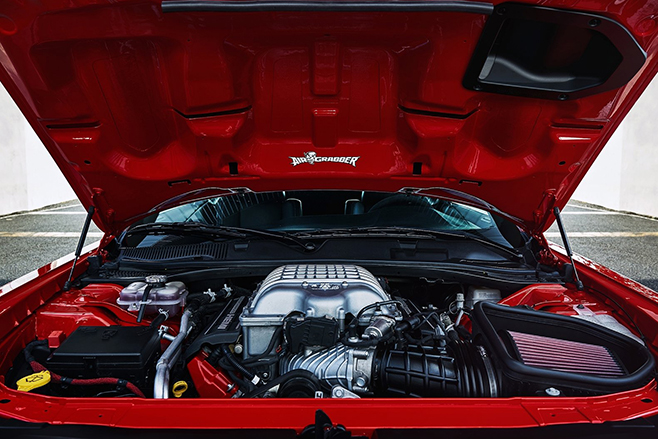
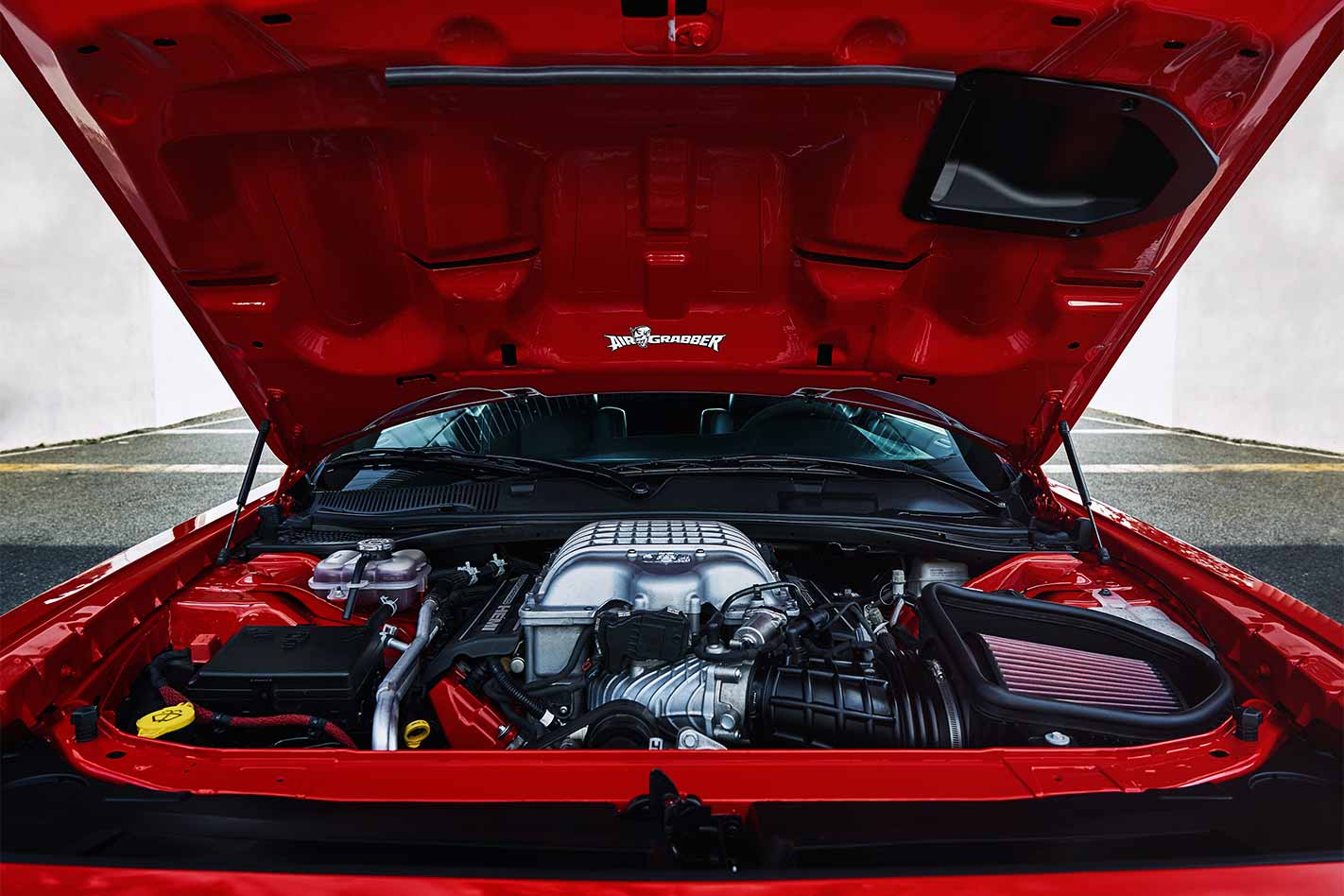
Based on the already muscle-bound supercharged 6.2 of the Charger and Challenger Hellcat, the Demon’s extra oomph comes courtesy of a larger supercharger, increased boost, a higher redline, a liquid-to-air intercooler, and extra cooling systems to ensure it doesn’t blow up.
Launching the Demon will see you reach 48km/h in one second flat, with the highest lateral acceleration of any production car at 1.8g.
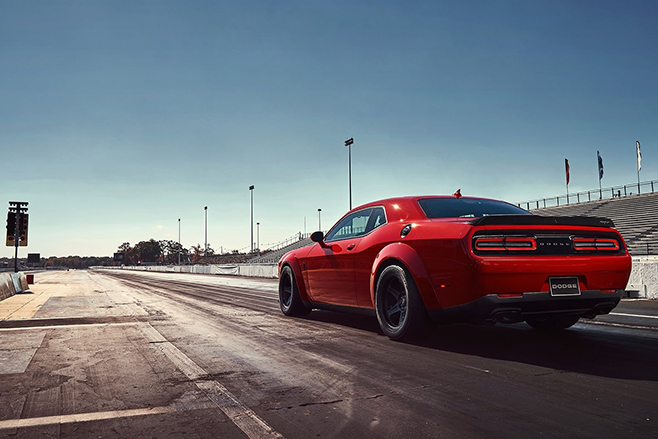
The car comes from the factory with ultra-sticky Nitto drag radial tyres on all four corners, identically sized so owners can replace the front pair with a pair of skinny ‘front runners’, and then have an extra set of boots to cycle through at the drag strip.
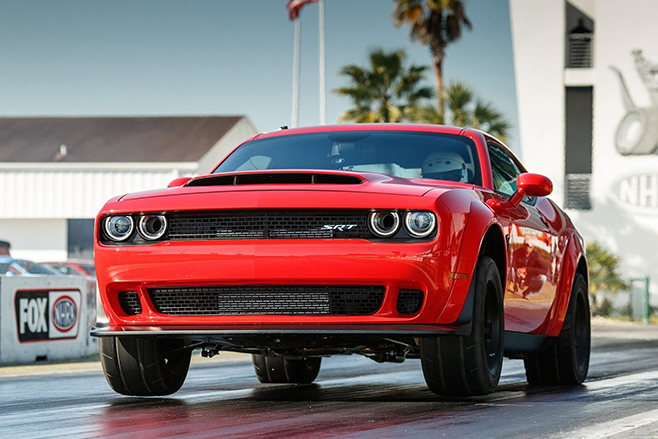
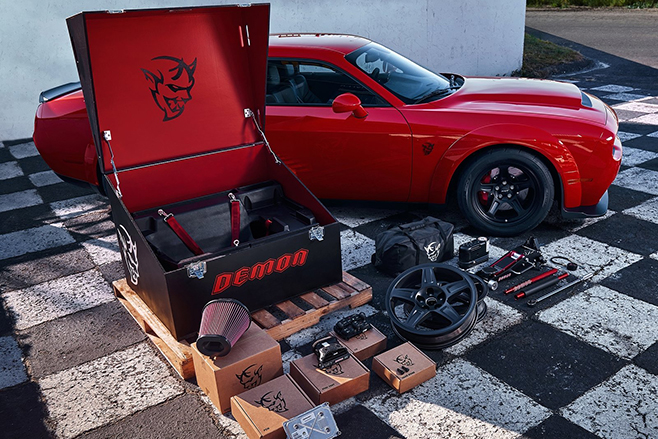
You won’t be able to share any of this with your mates, as the Demon only has one seat – the driver’s – as standard. Buyers do have the option to reinstall the front passenger and rear seats, and carpeting in the boot space, for a not-unreasonable $US1 each.
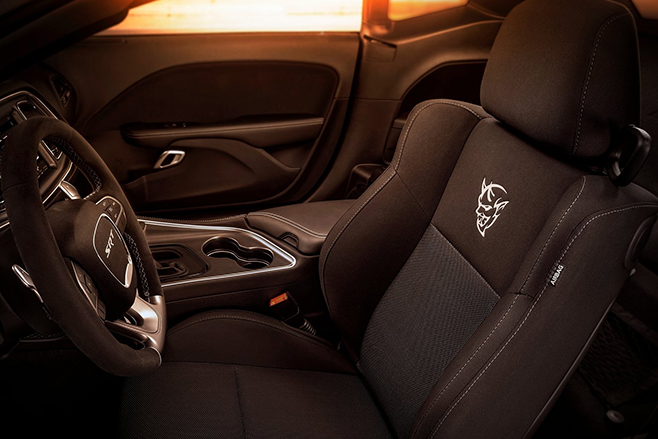
All this, and the car still comes with a three-year warranty including five years of powertrain coverage. There are no plans for right-hand drive production.
Ford Australia has chopped Everest pricing and added new variants, with an entry-level two-wheel-drive version now bringing the base price for Ford’s high-riding wagon below $50,000.
There’s a trade-off, however, with the new $47,990 Everest Ambiente RWD toting five seats instead of the seven that’s standard on other Everest variants. Add $1000 if you want your rear-driven Ambiente in the more versatile seven-seat configuration.
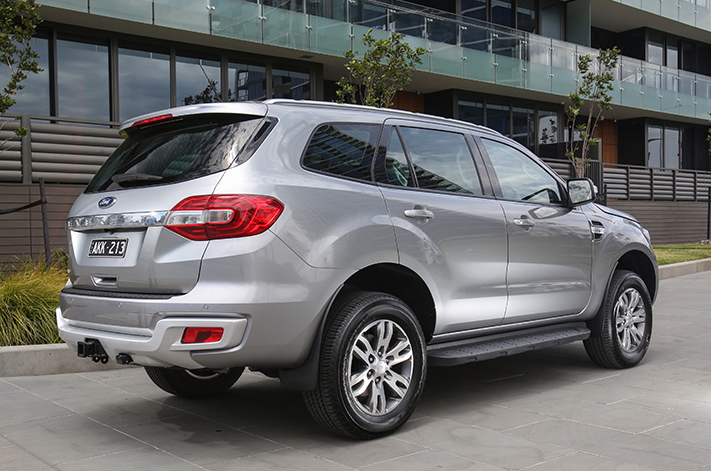
By introducing a two-wheel drivetrain at the bottom of the range, Ford has effectively shaved $7000 off the price of entry and provided more options for those attracted to the big SUV’s form factor but don’t require its full off-road capability. The RWD Everest boasts the same 3000kg tow rating as its 4WD brother.
All Ambiente models gain new standard features that have up until now only been available in the Trend and Titanium models, including SYNC 3 infotainment with Apple CarPlay and Android Auto, an 8.0-inch colour touchscreen with reversing camera, dual zone climate control, upgraded 10-speaker audio system, an instrument cluster with dual 4.2-inch LCD displays, and integrated side steps.
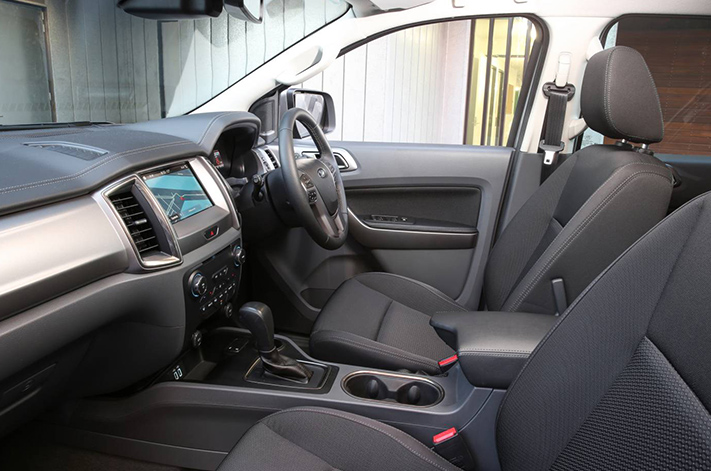
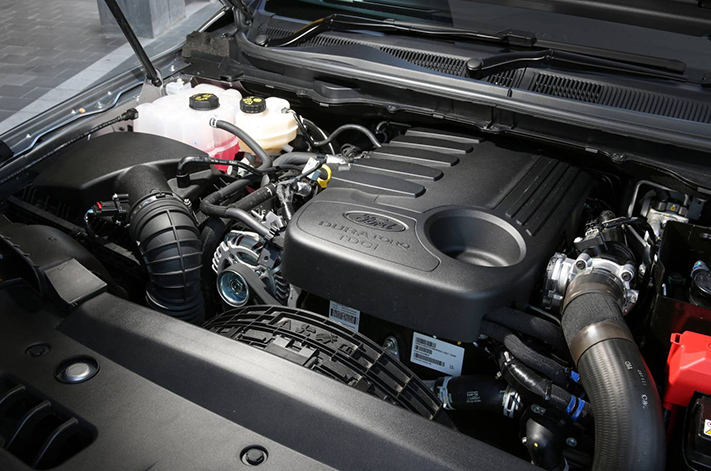
All RWD Everest models look identical to their 4WD counterparts and share the same all-terrain tyres, Australian-engineered chassis, 225mm ground clearance and generous departure angles to handle reasonably rough conditions.
The Ambiente RWD joins the mid-spec Trend RWD, which was introduced late last year. The Trend models are now equipped with embedded SYNC 3 sat-nav as standard.
Prices across existing models have been trimmed – the Ambiente 4WD is $1000 cheaper despite all the new standard features, the Trend is $2000 cheaper while the range-topping Titanium price comes down by $1715.
2017 FORD EVEREST PRICING
2017 Ford Everest Ambiente 3.2L RWD 6-speed automatic five-seat $47,990 3.2L RWD 6-speed automatic seven-seat $48,990 3.2L 4WD 6-speed automatic five-seat $52,990 3.2L 4WD 6-speed automatic seven-seat $53,990
2017 Ford Everest Trend 3.2L RWD 6-speed automatic seven-seat $53,990 3.2L 4WD 6-speed automatic seven- seat $58,990 2017 Ford Everest Titanium 3.2L 4WD 6-speed automatic seven-seat $74,990
A SINGLE road safety camera in Melbourne’s eastern suburbs has racked up more than $13 million in revenue last financial year.
The speed and red light camera, at the intersection of Warrigal Road and Batesford Road in the south-eastern suburb of Chadstone, covers three lanes of traffic.
Last financial year, the camera issued 56,550 infringement notices, reeling in $13,239,627 in revenue, figures from the Victorian Government show. And if you don’t think the safety camera’s $13 million earn is excessive, New South Wales raked in $19,729,115 – just a third more – from its entire network of fixed cameras in the previous financial year.
Strict speed limits ‘can be detrimental to road safety’
The Victorian camera was the top earner across the state’s entire safety camera network, and enough for it to claim the title as the most lucrative unit in Australia. To achieve that, the camera dished out an average of 154 fines a day, equivalent to a motorist being booked for either running a red light or speeding every 10 minutes.
Each time the camera nabbed an unsuspecting motorists, it netted an average of $234.
Victoria leads the country in safety camera revenue, with 1,458,109 infringement notices handed out across the state, generating more than $356 million for the state.
Hume Highway 130km/h speed limit increase push by Victorian MP
That equates to a driver being nabbed about every 20 seconds, filling the state’s coffers at a rate of $1 million a day.
The lucrative Chadstone camera is located at an intersection adjoining a 40km/h school zone where the speed limit drops from 70km/h to 40km/h, catching out motorists who fail to observe the 30km/h reduction in the speed limit.
The highest earner in NSW from the 2014-15 financial year was located on the on the Eastern Distributor, Northbound, at Darlinghurst, fining drivers to the tune of $3,867,598.
Archive: We drove the Hume Highway at 130km/h and didn’t get booked
While Victoria and NSW both favour fixed cameras, South Australia relies heavily on mobile speed cameras. A single unit placed at Waverley Ridge Road in Crafers West earned $659,153 for the state’s piggy bank in 2015.
The Legacy Way Tunnel camera in Queensland infamously fined 100 motorists on its first day of operation, and was Queensland’s most prolific snapper, generating 36,092 fines in the 2014-15 financial year.
For those enthusiasts that live their life a quarter mile at a time, Dodge wants to set you free with the Challenger SRT Demon.
The Hellcat-based muscle car flagship has been built with one goal in mind: to demolish the quarter mile as quickly as possible. How quick? Dodge claims the Demon completes the quarter mile in just 9.65sec at 225km/h, verified with a letter from the NHRA (National Hot Rod Association).
The Demon achieves this speed using a modified version of the Hellcat’s 6.2-litre supercharged Hellcat V8, producing up to 626kW/1043Nm in its most aggressive mode. The extra power comes courtesy of a larger 2.7-litre supercharger developing 14.5psi (1bar) boost, while the engine is strengthened with a new crank, con-rods and pistons.
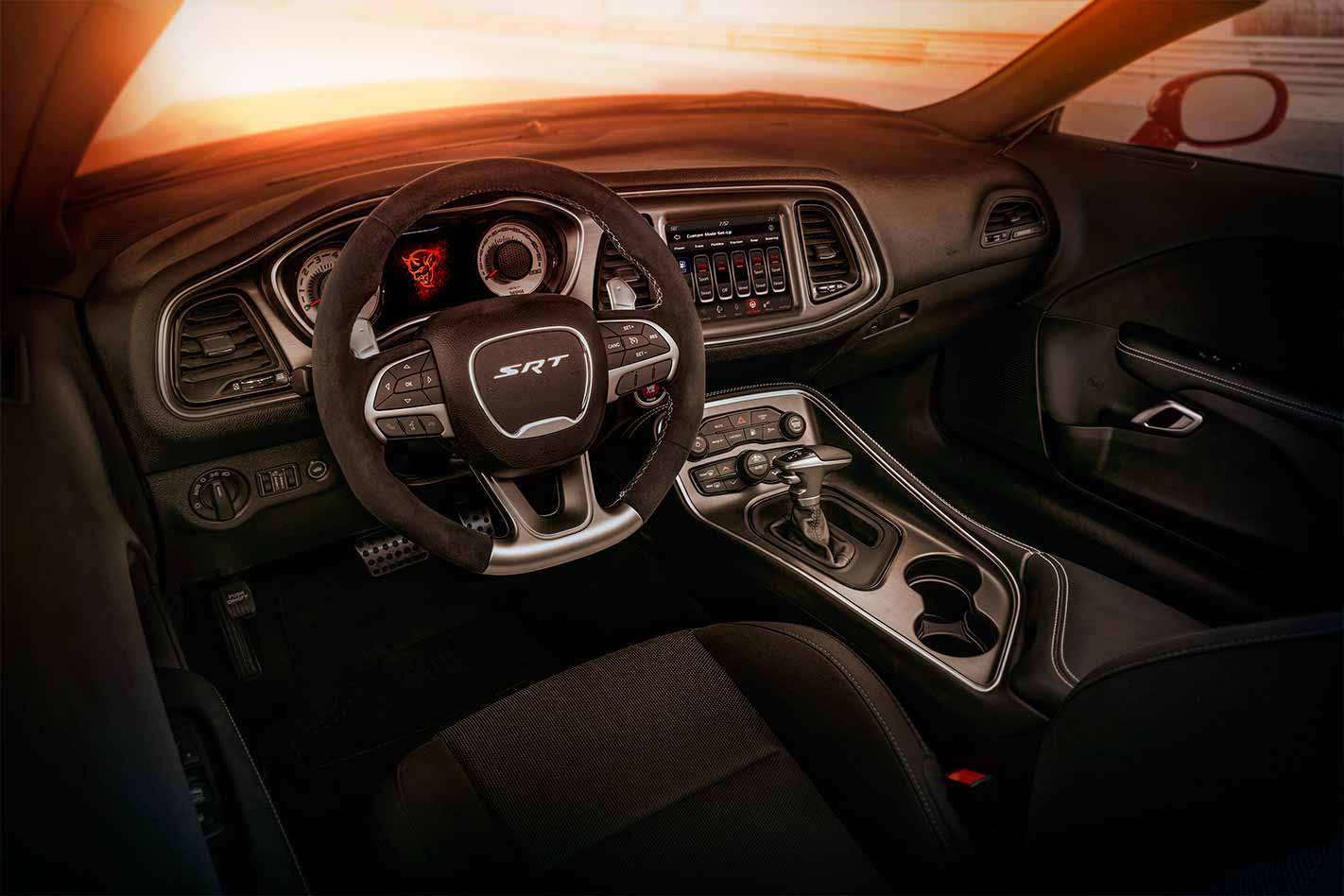
Dodge has gone to unprecedented lengths in getting the Demon to launch properly, with a line locker to allow the rear tyres to be warmed properly, a TransBrake to allow engine speed to be built up to 2350rpm and a new Torque Reserve launch control system that allows the car to build 8psi of boost on the line and hit full boost within two metres of the start.
A higher-speed stall converter and shorter 3.09:1 diff ratio makes the most of the power, which is boosted by an air chiller system that cools the intake charge using the air conditioning refrigerant.
A radical diet shaves 90kg, however given this includes the front passenger seat, rear seats and complete audio system, all of which can be added back in, it’s reasonable to assume most customer cars will be closer to standard weight.
Just 3300 Demons will be built, with 3000 available in the United States and an extra 300 for Canada.
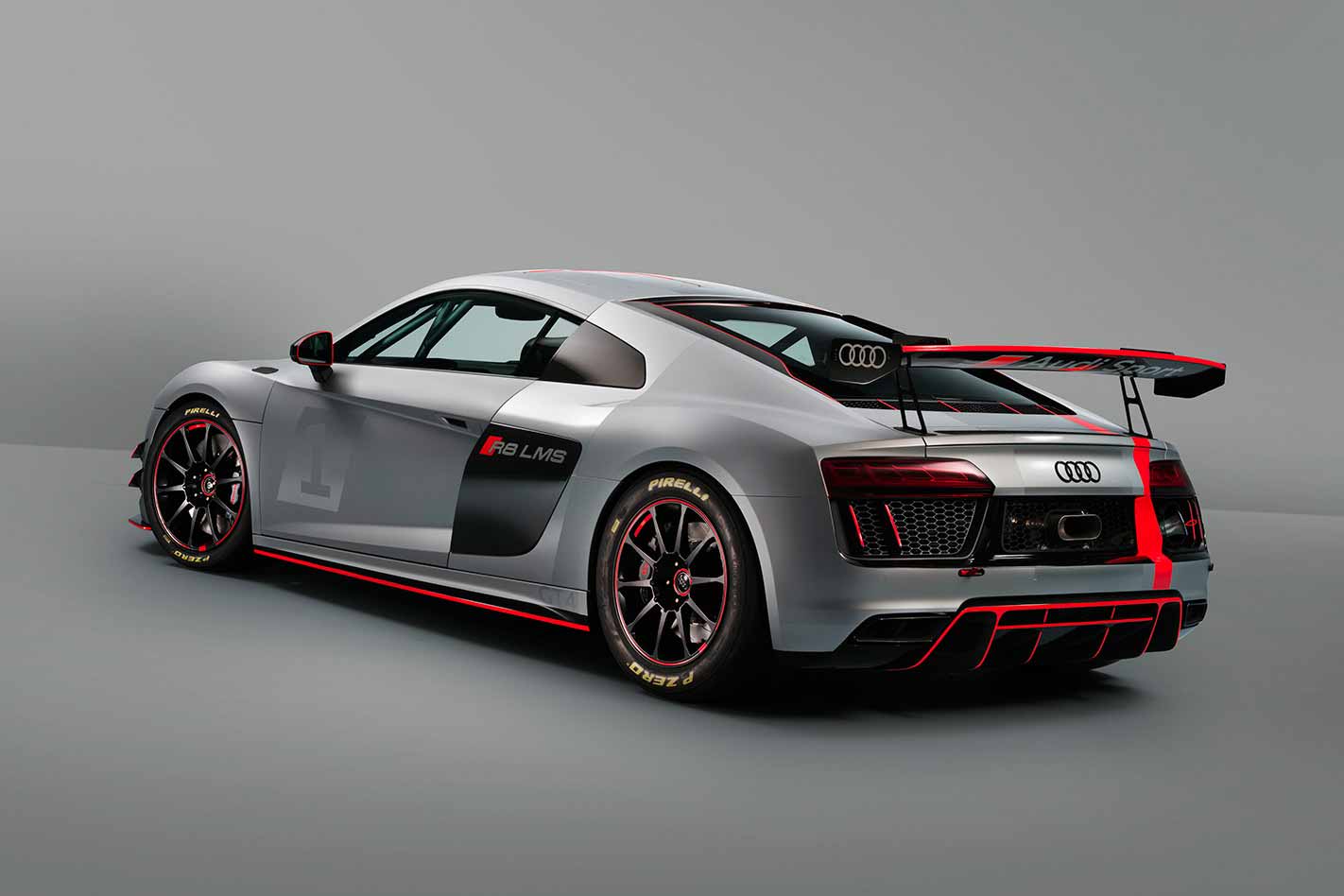
Derived directly from the road-going R8 Coupé V10, Audi is heralding its new R8 LMS GT4 as “the ideal race car for amateur campaigners”.
Its 5.2-litre tenner will put out a formidable 364kW and over 550Nm, which will take it to 100km/h in “under four seconds”.
While that may seem comparatively unimpressive next to other race cars, it does fit in well with Audi’s ‘ideal-for-amateurs’ message.
It says production of the car will be prepared during the second half of 2017.
“Consequently, the first customers will be able to receive the new Audi R8 LMS GT4 before the end of the year.”
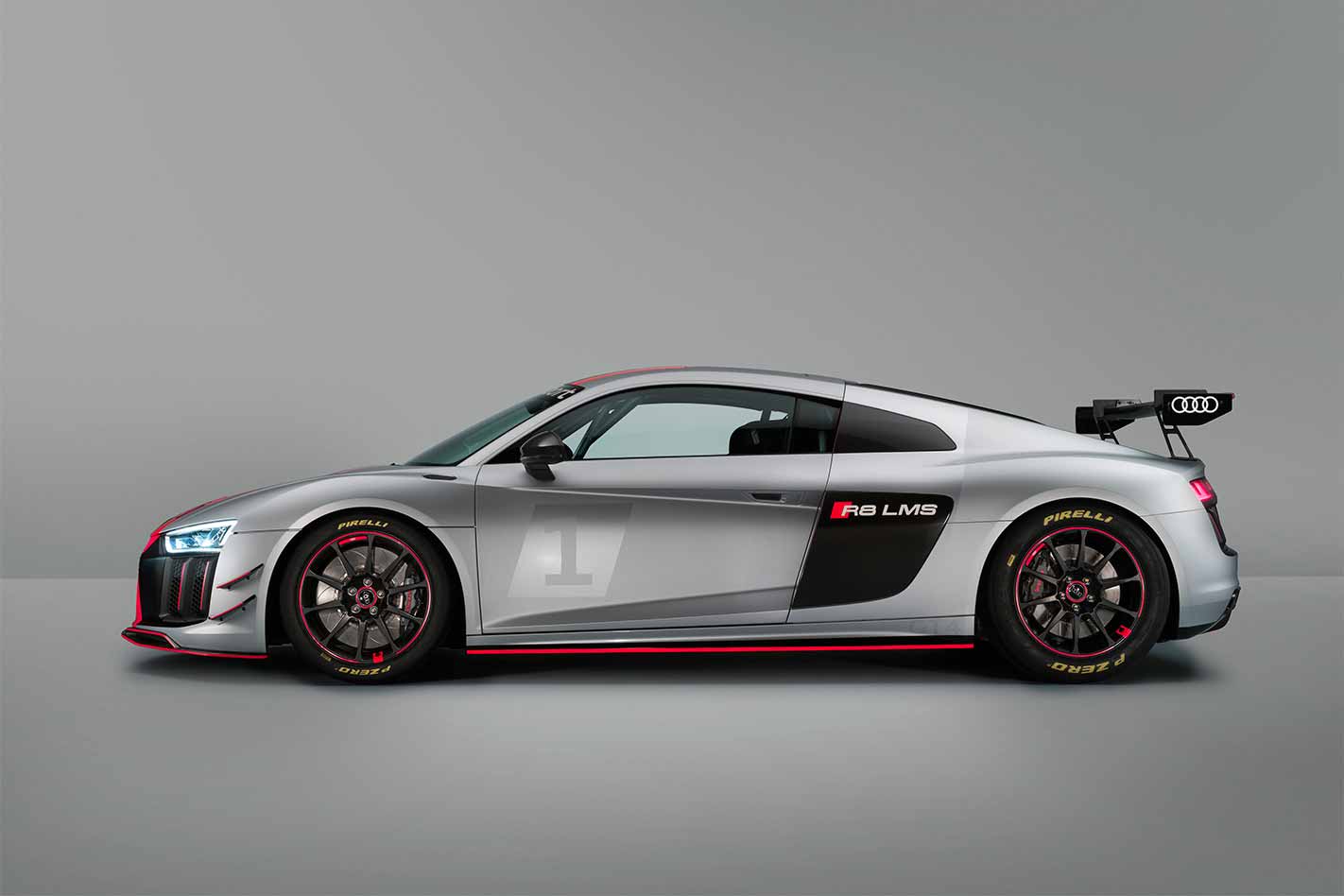
Audi says this has allowed it to make the GT4 easier to purchase and own, as production costs have not been excessive.
Audi Sport managing director Stephan Winkelmann says it will be eligible to compete in over a dozen already established series.
“13 racing series in which GT4 models can compete worldwide already exist today,” he says.
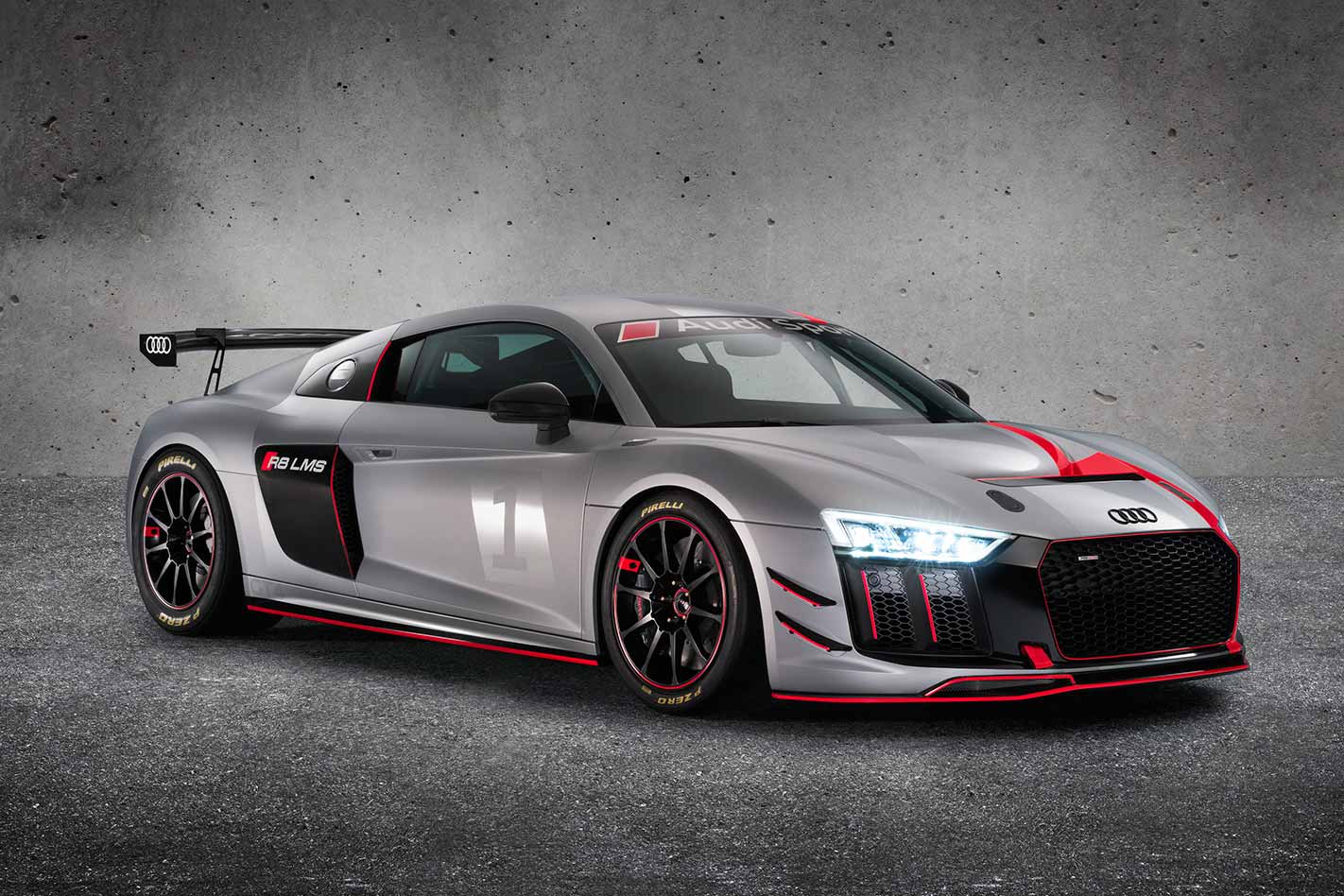
“Now we’re targeting the GT4 class at exactly the right time. These fast-growing business segments and the DNA shared by our race cars and production vehicles underscore our ambition to become a true global player in the high-performance league.”
QUESTION – CATHY:
I have a Kia Sportage Platinum diesel 2011 that I’ll be trading in. I have loved the car and its torque, but I’ve changed jobs and need a more comfortable, plush looking SUV with front passenger adjustable seats. I don’t really like the new Sportage’s front grille look and would love a more luxurious feel.
My son is almost in his teens and I need a car with room for growth, but it only needs five seats not 7. I also won’t be going off-road, other than dirt tracks. I have looked at the Range Rover Evoque, Kia Sportage, Jeep, Mazda, Audi Q3 and Q5, BMW X3, Mercedes GL250, Nissan Qashqai, and a few others. I have about three months to buy a car and I can’t seem to find the perfect car without going way over budget. I have searched comparisons and reviews online but I’m very confused. Hope you can help me.
BUDGET:
$60,000
ANSWER – BYRON MATHIOUDAKIS:
This year is proving to be a bumper year for fast-improving SUVs, though the two we recommend you test-drive over the next three months are not directly comparable to each other.
The first is the Mazda CX-9. While it is a large SUV with seven seats, and so a little longer and wider than you are used to in your 2011 Sportage, it has the lightness, agility, and confident control of a medium-sized SUV like your Kia. Additionally, it is far quieter and refined than the smaller CX-5, with a substantially upgraded dashboard that is both easy to use and easy on the eye. And you can keep the rear-most seats folded down permanently, to give you a spacious and practical wagon area. Note this is petrol only, and with a light-pressure turbo, it does perform strongly, but without using too much (standard 91 RON unleaded) petrol. And the Touring AWD version from under $53,000 offers a lot of equipment for the money.
The second is the VW Tiguan, but the new second-generation model that will be released in late September. It is quite a bit larger than the older one, which we feel might be too small for you. The Tiguan II is gaining very positive reviews out of Europe, and seems to tick all your comfort, refinement, accommodation, and seating requirements, while still offering a diesel option if that’s what you prefer.
Both the Mazda and VW have an engine cut-out device, but these can easily be switched off permanently via a press of a button, so don’t let that put you off. We’d encourage you to keep it on, especially in the CX-9, because the system is quick and seamless, and saves a significant amount of fuel and emissions.
Another medium-sized SUV that might fit your needs is the new BMW X1, though it is getting quite high up in the dollar stakes, so a fair amount of haggling on your behalf might be in order if this turns out to be the vehicle that suits you best. We do recommend that the adaptive dampers option is fitted, as this will improve the ride comfort of the X1 substantially.
Of the other SUVs you mention, we feel that they none quite offer the broad attributes and value for money combination of the Mazda, VW, and BMW, considering your $60,000 budget. Please also keep in mind that these the manufacturers’ recommended retail prices are not set in stone, and that many do advertise lower priced specials on a regular basis.
And we do recommend that you drive each car as to find out which one you prefer, as each does offer a different experience from behind the wheel.
MANUFACTURERS love to trot out the line that a car’s facelift is an “evolution, not a revolution”.
Sometimes this may be an excuse for a half-baked effort at improving a model through minimal investment. But in the case of the facelifted second-generation Mazda 2, it is a succinct explanation of how the brand has improved its smallest and cheapest offering by adding more equipment and fixing niggles, and all without changing its core or entry price.
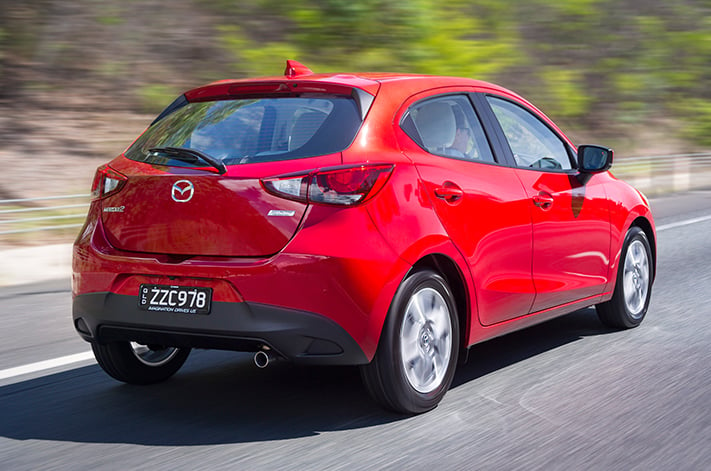
WHY WE’RE TESTING IT Despite the rise and rise of SUVs, city cars remain a popular choice with consumers. The Mazda 2 is battling for segment leadership in sales with the Hyundai Accent, and it only narrowly missed out on winning our light car megatest to the Volkswagen Polo. Does this MY17 facelift go far enough to shake the runner-up reputation?
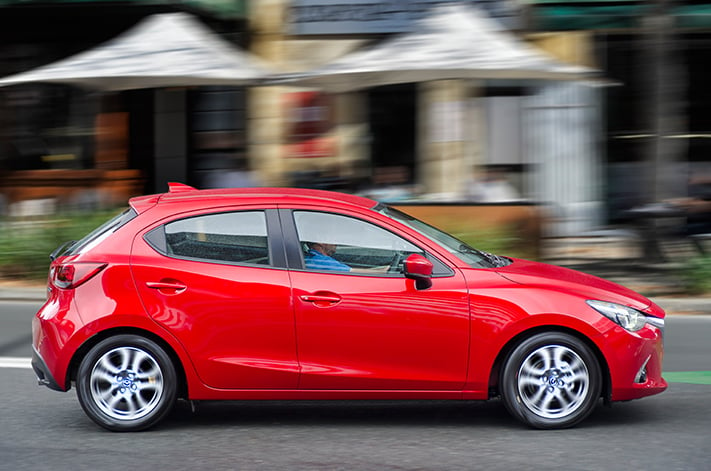
THE WHEELS VERDICT Having AEB as standard is a massive deal in the price-sensitive light car segment, and Mazda should be congratulated for moving the game forward. In addition, its G-Vectoring Control technology partners well with the Mazda 2’s revised suspension tune and already accomplished chassis. Improved NVH suppression also means road noise is no longer a deal-breaker, and gives the Mazda 2 a serious chance at being best-in-class.
Plus: AEB as standard on all specs; fun manual gearbox; improved NVH; cohesive chassis, suspension and steering Minus: Truncated rear vision in sedan; still no reversing camera on base Neo
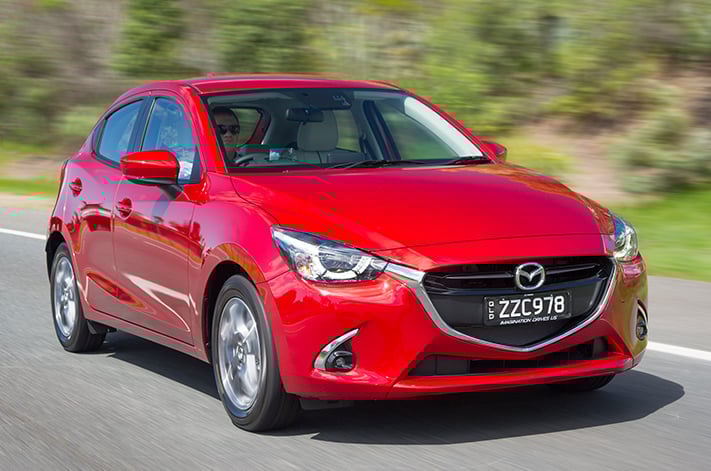
But the most important addition in this facelift is AEB. The Skoda Fabia was the first to bring the technology to the segment, but Mazda sells significantly more units that its Czech counterpart and its customers will benefit from the bingle-avoiding gear.
There’s more buyer choice in the showroom, too. Joining the three existing variants – Neo, Maxx, and Genki – is a new flagship $23,680 GT spec. Apart from the newcomer, prices remain unchanged, starting from $16,990 for entry-level Neo fitted with a six-speed manual gearbox. Want an auto? Add $2000.
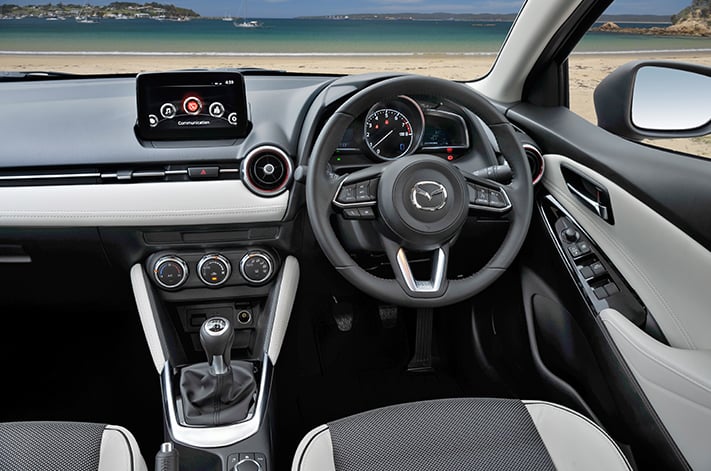
Mazda has made big strides in quelling NVH. Excessive road and tyre noise – the former Mazda 2’s Archilles heel – are now much less intrusive, hushed to acceptable levels via extra sound deadening. It’s a welcome improvement.
All Mazda 2 variants use the same 1.5-litre four-cylinder petrol engine in one of two stares of tune; 79kW/139Nm for the Neo, and 81kW/141Nm for all other variants. In both iterations it is a perky unit, with plenty of mid-range bite and a revvy yet tractable personality.
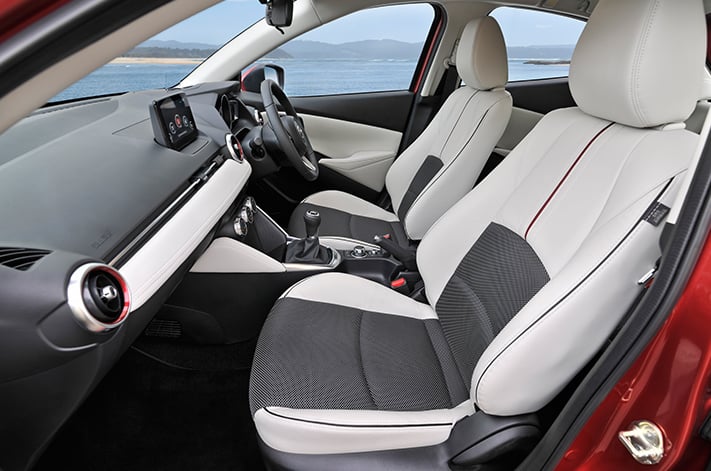
The Maxx is probably the sweet spot in the range. Its $3000 premium over the Neo nets the more powerful engine with a fuel-saving stop-start function, a larger touchscreen with an intuitive controller dial, a reversing camera, a leather-wrapped steering wheel and 15-inch alloys that replace plastic-capped steelies.
SPECS Model: Mazda 2 Neo sedan Engine: 1496cc in-line 4cyl, dohc, 16v, petrol Max power: 79kW @ 6000rpm Max torque: 139Nm @ 4000rpm Transmission: 6-speed manual Weight: 1043kg 0-100km/h: N/A Price: $14,990 On sale: Now
Kia has expanded its Cerato small car and Sportage medium SUV ranges with the addition of two new models, both designed to add equipment at the existing lower-grade models while maintaining a sharp price point.
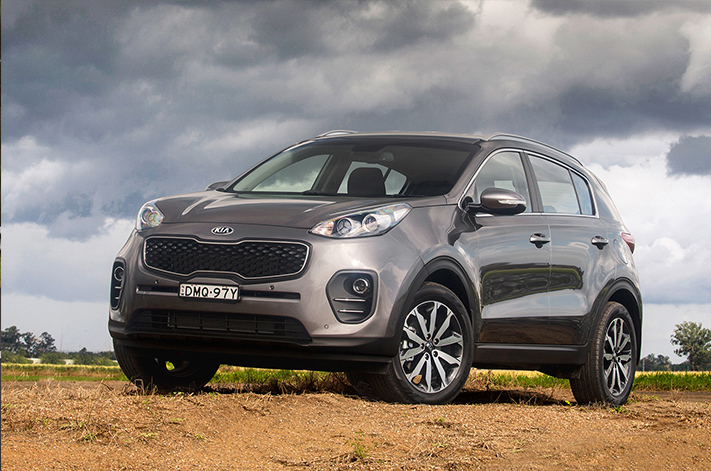
The Sportage range grows with the Si Premium grade, which is based on the existing Si 2WD petrol model and adds 18-inch alloys, climate control, LED daytime running lamps, front parking sensors, rain-sensing wipers, self-dimming rear vision mirror and a seven-inch touchscreen display with integrated sat-nav.
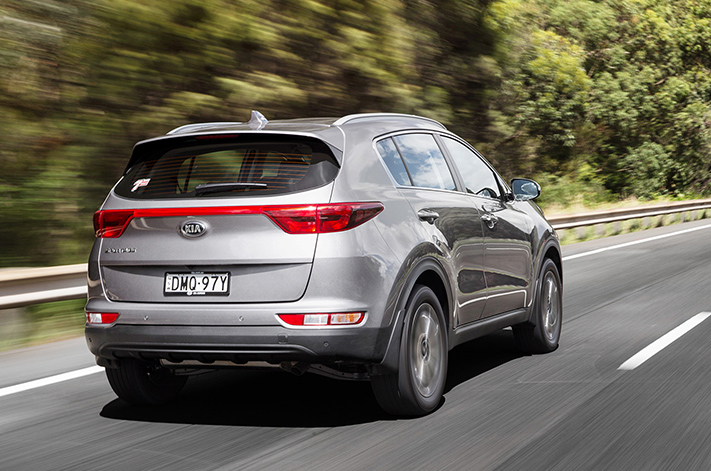
As with all other existing Sportage models, Android Auto and Apple CarPlay smartphone mirroring is also standard on the Si Premium.
There are no mechanical changes, with the Si Premium utilising the same 2.0-litre naturally aspirated petrol inline four as the existing petrol base model. Power peaks at 114kW while torque tops out at 192Nm, with all of it going to the front wheels exclusively via a six-speed automatic. Retailing at $30,990, the Sportage Si Premium rests squarely between the existing Si and SLi 2WD petrol variants.
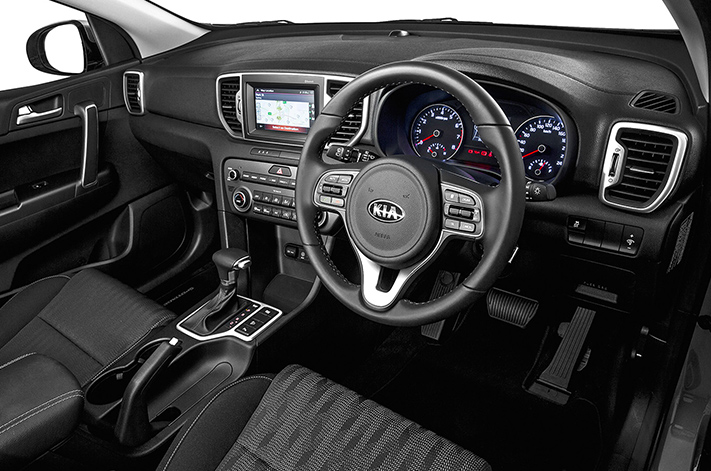
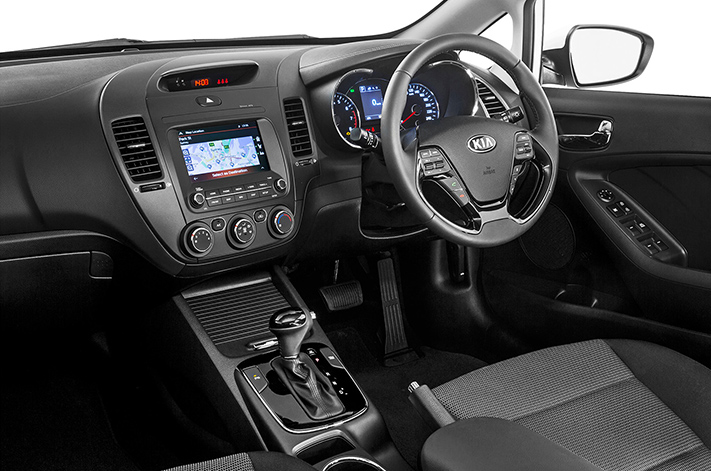
The Cerato Sport, meanwhile, is specced to sit above the current Cerato S automatic with AV pack and the mid-grade Cerato Si auto. Effectively superseding the Cerato S Premium and available as a hatch or sedan, it adds 17-inch alloys, faux leather steering wheel upholstery, chrome interior door handles, more soft-touch plastics on the upper door cards, ‘aero blade’ windscreen wipers and a rear spoiler for the sedan.
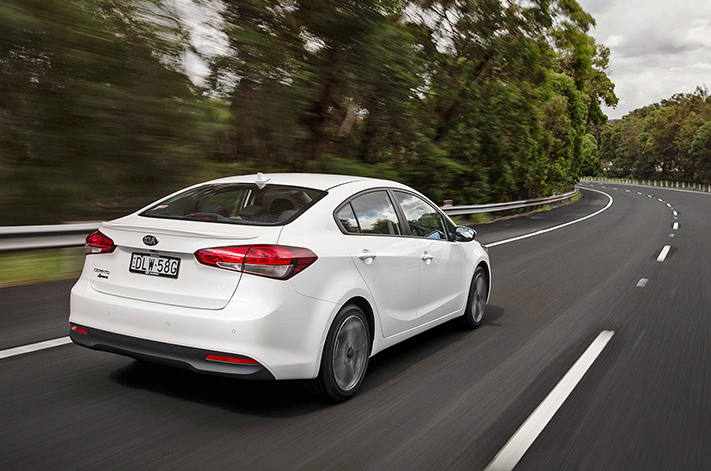
Like the Sportage Si Premium, the Cerato Sport also boasts a seven-inch colour sat nav display with integrated Android Auto and Apple CarPlay.
But though it may wear ‘Sport’ badges, don’t expect anything different to the 112kW/192Nm 2.0-litre petrol four-cylinder that already powers the Cerato family. An automatic is standard, and average fuel economy is a claimed 7.2L/100km – the same as that of every other Cerato model.
At $22,450, drive-away, the Cerato Sport has slightly more equipment than the outgoing Cerato S Premium for $2540 less outlay.
Kia Australia has yet to make any decision regarding participation in the Supercars series, Chief Operating Officer Damien Meredith told MOTOR today.
While confirming discussions with a number of teams and Supercars itself have taken place and are ongoing, Meredith said “they’ve all come to us [and] we say the same thing to all of them: ‘We haven’t made a decision yet’.”
Kia’s new Stinger GT, rendered here in Supercar form by SS Media, is powered by a 3.3-litre twin-turbo V6, making it eligible for Supercar’s new Gen2 regulations, due to be introduced in 2018.
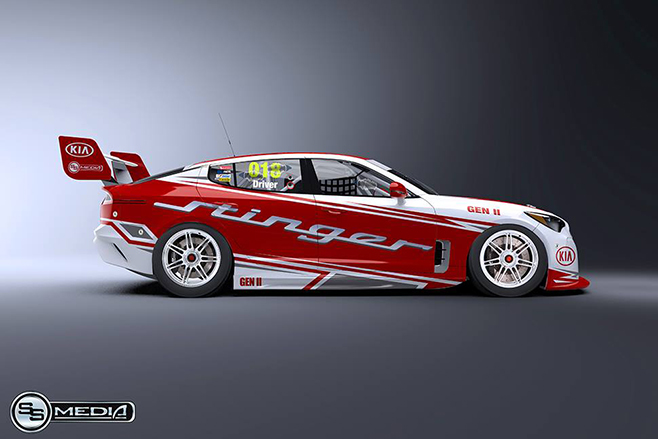
This is not to say a Kia couldn’t appear on the grid earlier than this, however, as Meredith says Kia “wouldn’t care” if a team wished to run a Stinger of its own accord, in a similar manner to the way Erebus campaigned privately-funded Mercedes-AMG E63s between 2013-2015.
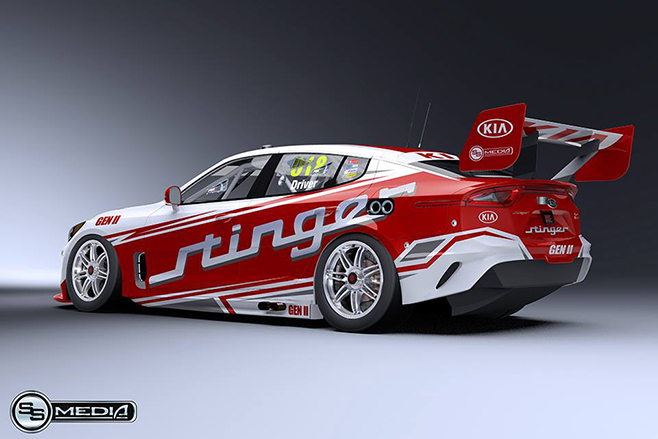
Nissan has also committed to the 2018 season, however whether it will continue with the Altima remains to be seen as the model was recently withdrawn from the Australian market.
AFTER a short hiatus from Australian showrooms, a fresher-looking Mitsubishi Outlander PHEV has returned, and looking a little classier on the outside and more tech-laden within.
Apart from the fancy new nose, the plug-in hybrid Outlander looks the same as before. However, under the skin there are some significant improvements to how it saves petrol and burns electricity that make it more than just a battery-powered alternative to a petrol or diesel engine.
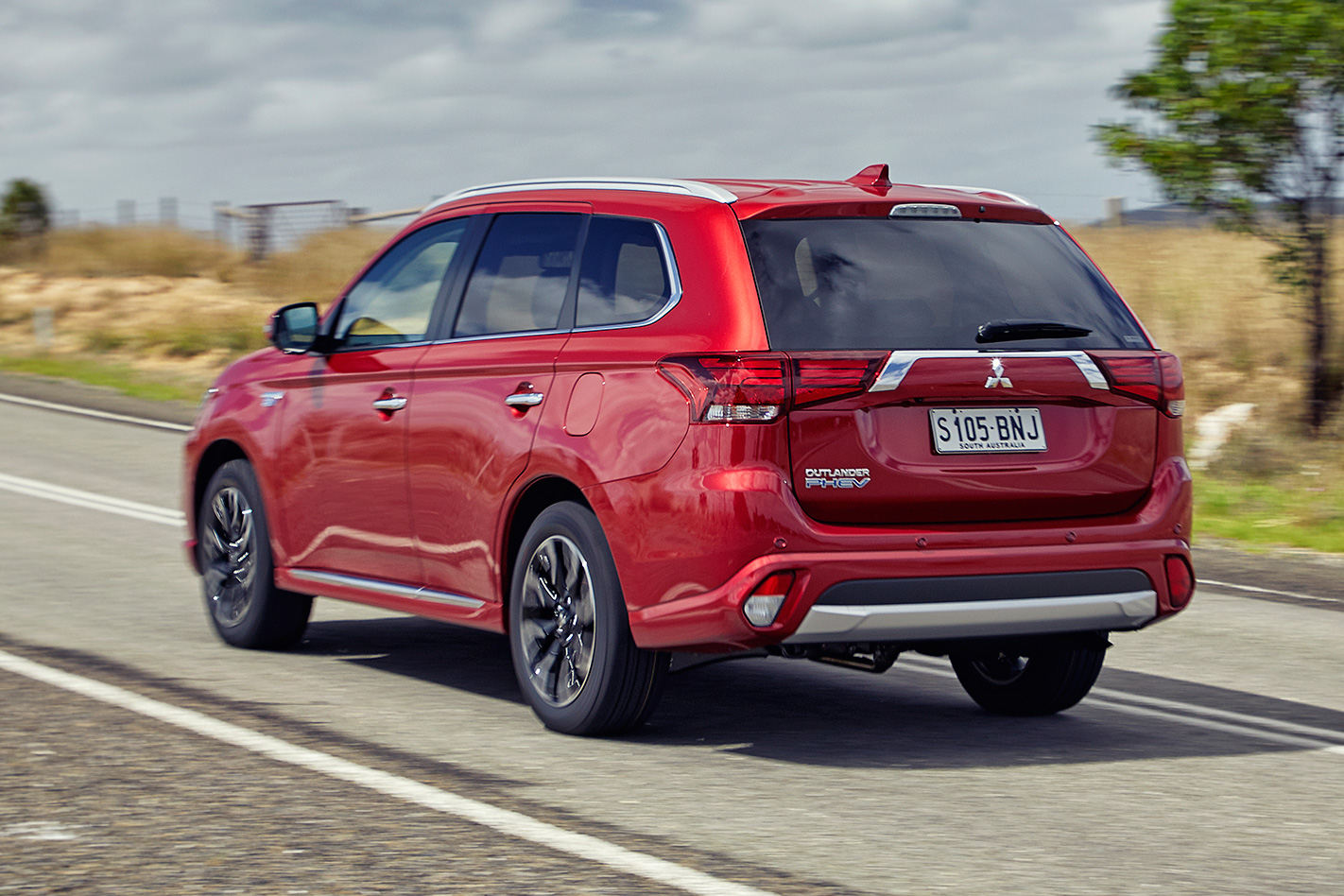
Here are nine things you probably didn’t know about the Mitsubishi Outlander PHEV.
- The Outlander PHEV is made in Mitsubishi’s SUV plant in Okazaki, Japan, on a special, separate line that travels along the floor, and not overhead like with conventional cars. It is mainly built using robots.
- The battery the Outlander PHEV uses to power the two electric motors – one for the front wheels, and another for the rear ones – is hidden under the boot floor. That means there’s no room for a spare tyre; instead you have to use a tyre repair kit.
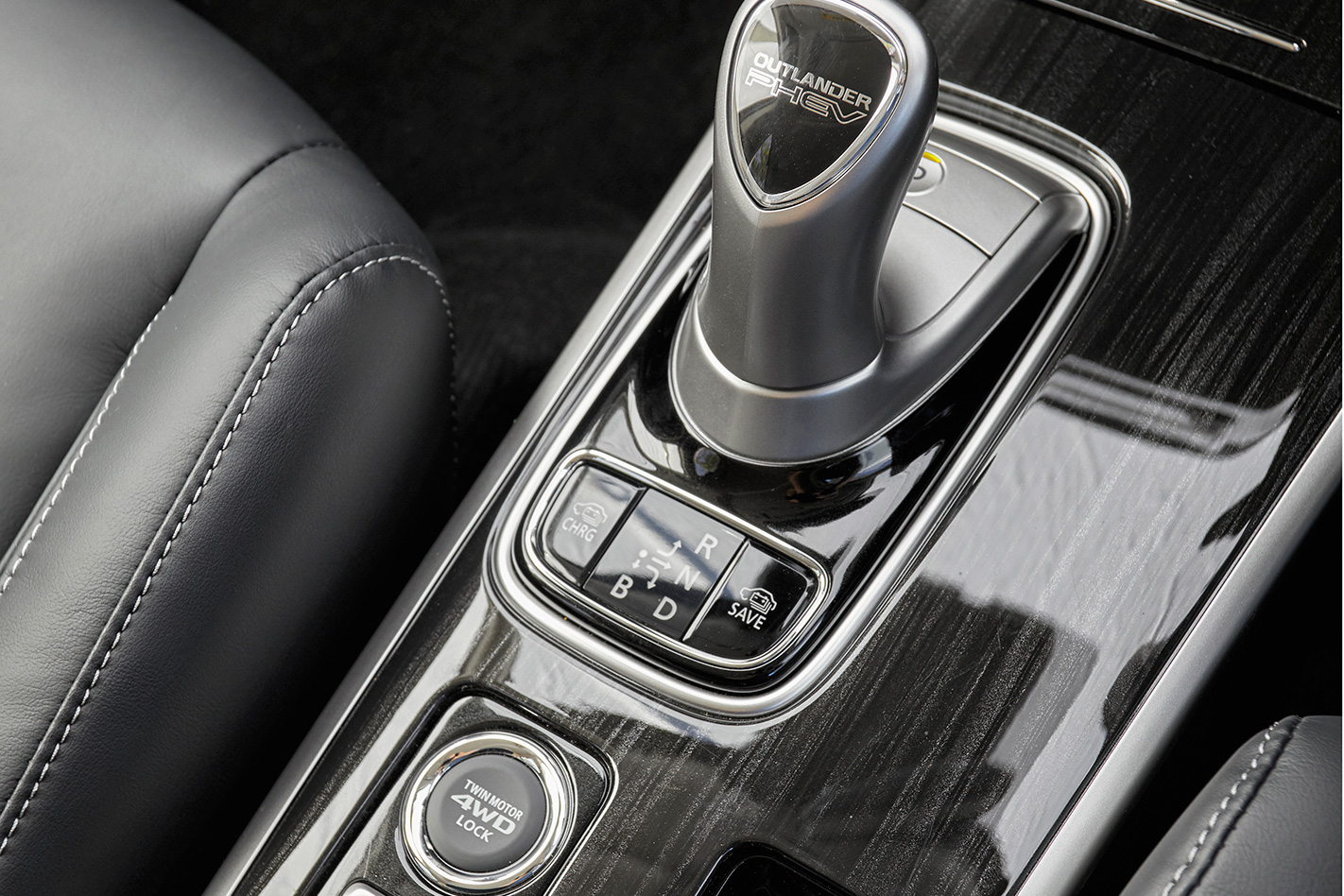
- The Mitsubishi Outlander PHEV now has four driving modes. In Normal mode, the SUV makes up its own mind up over the right mix of petrol engine and electric motor to use. In Charge mode, the petrol engine will run constantly to top up the battery. In Save mode, the Outlander PHEV will keep the battery at a constant level of charge. And in EV mode, it creeps along almost silently on battery power alone.
- Notice how we said “almost silently”? Mitsubishi has built what it calls an audible alarm system – we’d call it an electronic whisper – to alert pedestrians that it is nearby. The whisper makes a noise from 3km/h until the SUV is travelling at about 36km/h, and when slowing down it kicks in from about 33km/h.
- In a second act of kindness to pedestrians, the Outlander PHEV has added them to the SUV’s city-friendly auto-braking function. If someone should unexpectedly step out in front of the plug-in hybrid, it will automatically jump on the brakes to avoid a crash.
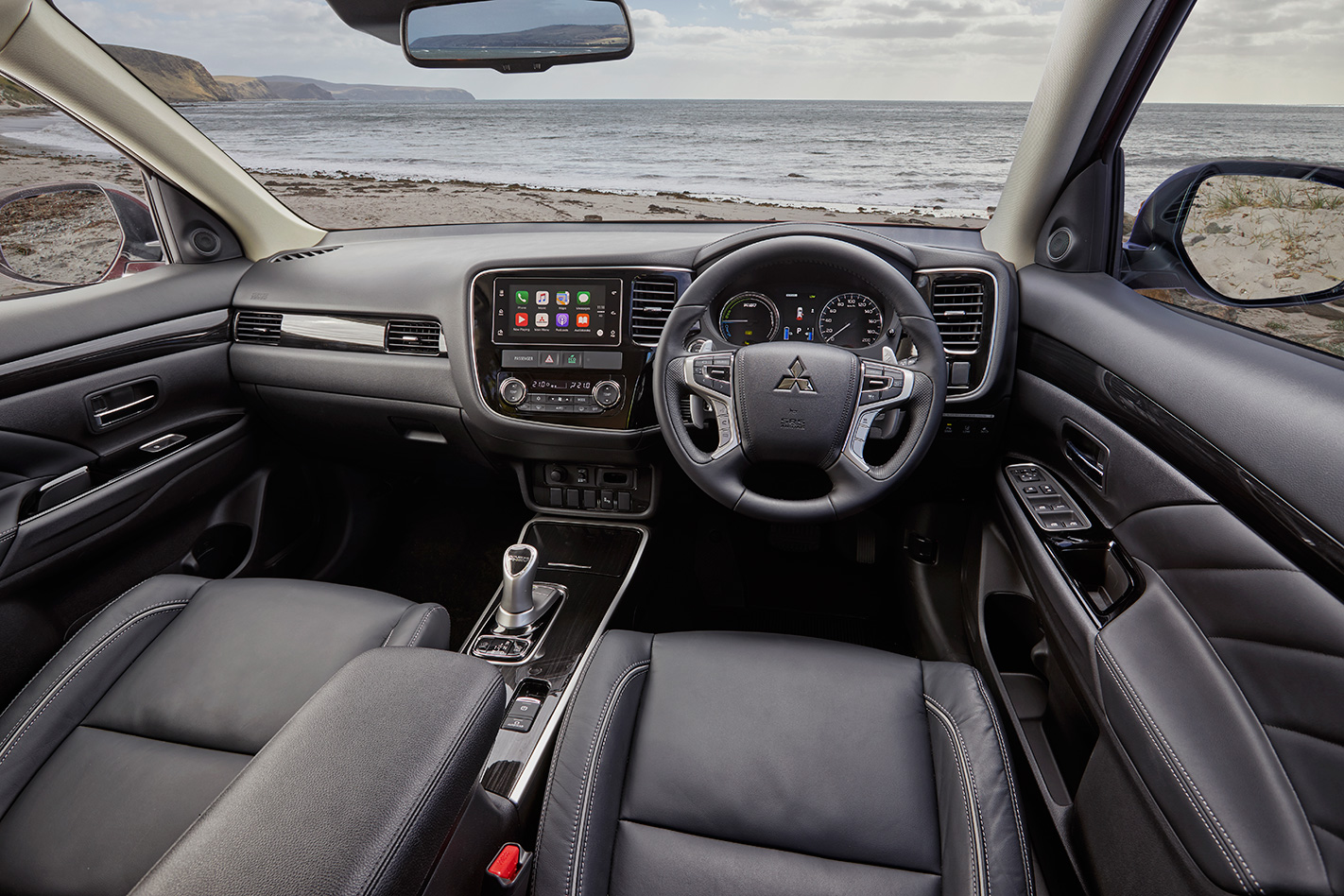
- The Outlander PHEV has a smartphone app that can let you play with some of the functions in the car such as the air-conditioning, and even check the level of charge in the battery.
- Mitsubishi is looking at how it can add a bullbar to the Outlander PHEV – an add-on buyers are asking for. Whatever it comes up with, it can’t interfere with bumper-mounted sensors for the automatic emergency braking function or airbags. Watch this space.
- It can’t tow as much as a conventional car. The Outlander PHEV is only rated at 1500kg for a braked trailer. Petrol models can pull 1600kg and diesel ones 2000kg.
- Mitsubishi’s longstanding ambassador in China is kung fu legend Jackie Chan.
