
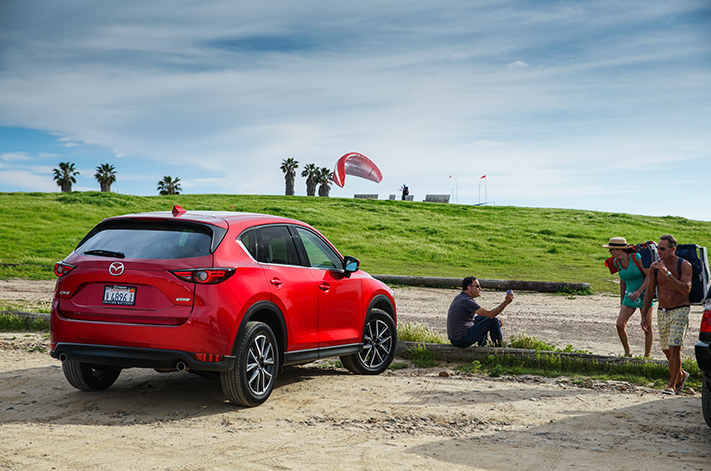
An interesting mix of new cars are due in Australia in the next couple of months including the all-new Mazda CX-5, which provides evolutionary improvement over the current model which is Australia’s top-selling SUV. The second generation CX-5 has sharper styling, an improved cabin and an even longer list of standard equipment and is quieter to drive.
It’s joined by a couple of high-profile hatchbacks including the European-designed third-generation Hyundai i30, which is expected to boost popularity of the big-selling Korean car and is headlined by the a gutsy 1.6-litre turbo SR range topper.
The i30 will do battle with the Toyota Corolla, Mazda 3 and the all-new Honda Civic hatch, which is on its way from Thailand to complement the 2016 sedan from late May. This will be followed later in the year by the highly anticipated Honda Civic Type R hot hatch.
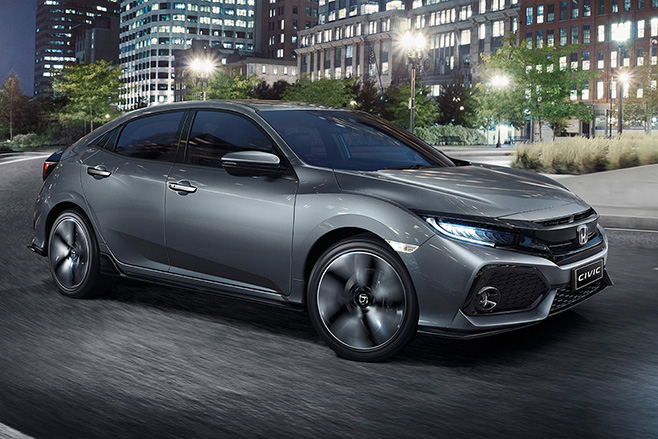
Prestige buyers will also have new options including the Mercedes-Benz E-Class Coupe and All Terrain wagon, while other premium-market launches include the new Porsche 911 Carrera 2/4 GTS Coupe and Cabriolet, and an update for the Macan SUV that brings a new four-cylinder variant.
New models on sale April-May 2017
- Abarth 500 Series 4
- Honda Civic hatch
- Hyundai i30
- Kia Picanto
- Lexus LC
- Mazda CX-5
- Mercedes-Benz E-Class All Terrain and Coupe
- Mercedes-Benz GLA facelift
- Nissan X-Trail update
- Porsche 911 Carerra 2/4 Coupe and Cabriolet
- Porsche Macan four-cylinder
- Peugeot 3008
- Renault Megan sedan and wagon
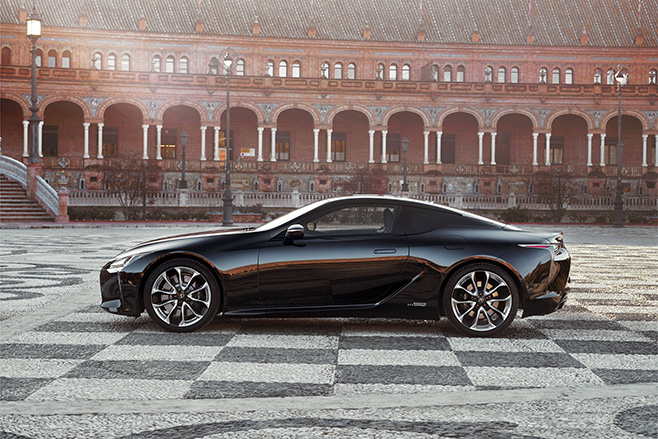
Lexus’ new performance flagship is a daring, bold-looking coupe with two powertrain options including a 5.0-litre naturally aspirated V8 engine that provides plenty of power and an incredible soundtrack. The other choice is a 3.5-litre V6 hybrid for the LC500h that produces 264kW with both electric motor and petrol engine working in concert, with maximum torque of 348Nm. Its zero-to-hundred time clocks in at five seconds flat – slower than its conventionally-powered V8 sibling, but not by much. It’s expected in showrooms from May.
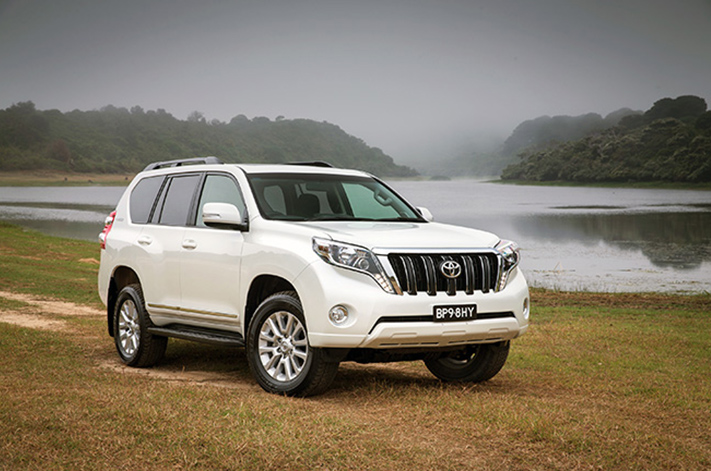
Toyota has reintroduced its special edition Prado Altitude variant with its popular ‘out of sight’ spare wheel and split tailgate.
Bridging the gap between the Prado GXL and VX models, the Altitude retains the 87-litre primary fuel tank but ditches the 63-litre auxiliary tank to make room for the spare tyre underneath the vehicle rather than at the rear.
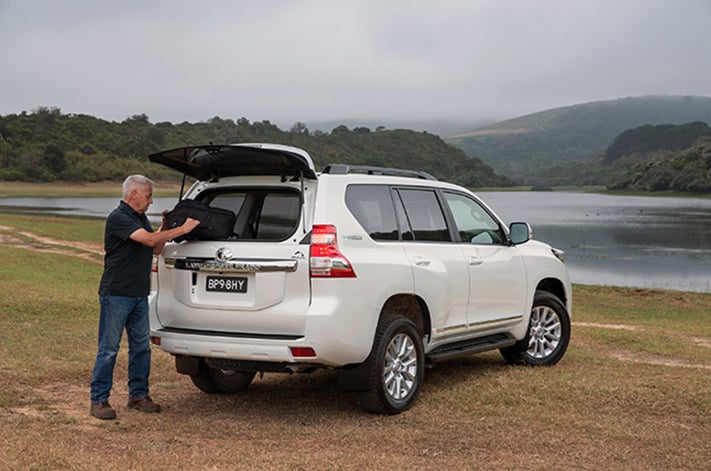
Priced at $68,230, the seven-seat Prado Altitude is based on the 2.8-litre turbo diesel GXL with six-speed automatic transmission ($63,230) and, according to Toyota, comes with more than $10,000 worth of extras for just $5000.
These include new 18-inch alloy wheels, a tilt-and-slide moonroof, auto-levelling LED headlamps and chrome side mouldings.
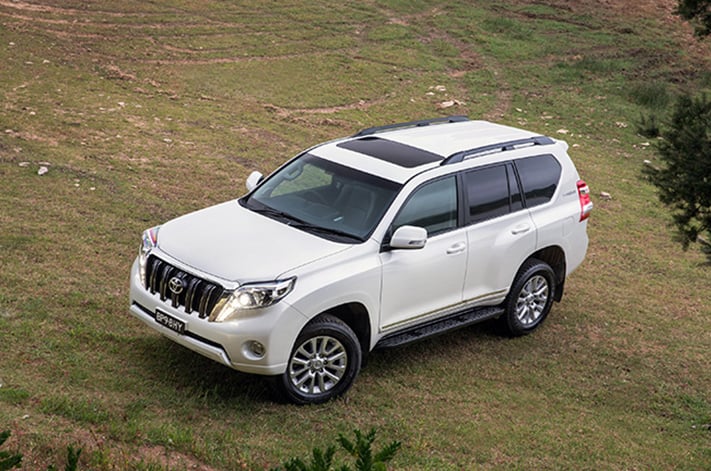
| 2017 Toyota LandCruiser Prado Review
The Altitude also comes with standard GLX features including foldaway third-row seats, reversing camera, satellite navigation, cruise control, three-zone climate-controlled air-conditioning, rear parking sensors and keyless smart entry.
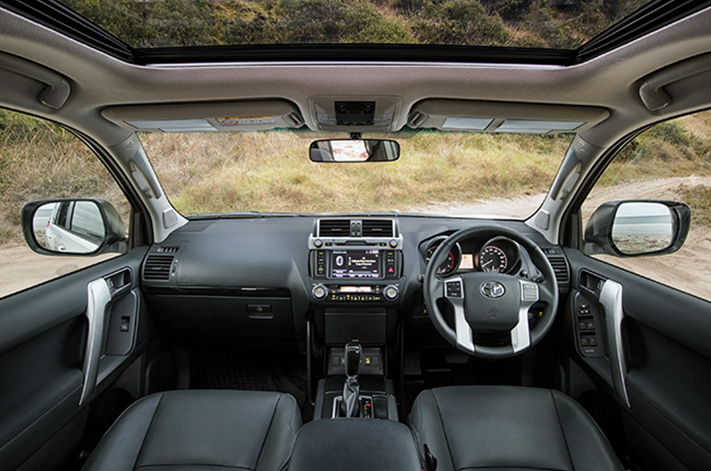
The Toyota Prado Altitude will be limited to 1200 vehicles and is available in four colours – black and the $550 option of silver peal, crystal pearl and graphite.2017 Toyota Prado pricing
- GX 2.8-litre, turbo diesel, manual – $54,050
- GX 2.8-litre, turbo diesel, auto – $56,090
- GXL 2.8-litre, turbo diesel, manual – $61,190
- GXL 4.0-litre V6 petrol, auto – $62,210
- GXL 2.8-litre, turbo diesel, auto – $63,230
- Altitude 2.8-litre, turbo diesel, auto – $68,320
- VX 4.0-litre V6 petrol, auto – $74,170
- VX 2.8-litre, turbo diesel, auto – $75,190
- Kakadu 4.0-litre V6 petrol, auto – $84,880
- Kakadu 2.8-litre, turbo diesel, auto – $85,900
“WE GET crazy requests every day. People watch James Bond films and then come to us.”
That’s how Uday Senapati sums up his role as head of technical operations at Bentley’s in-house coachbuilding division, Mulliner. There, a team of 85 craftspeople build one-off, money-no-object Bentleys commissioned by individual customers to satisfy their every urge and impulse.
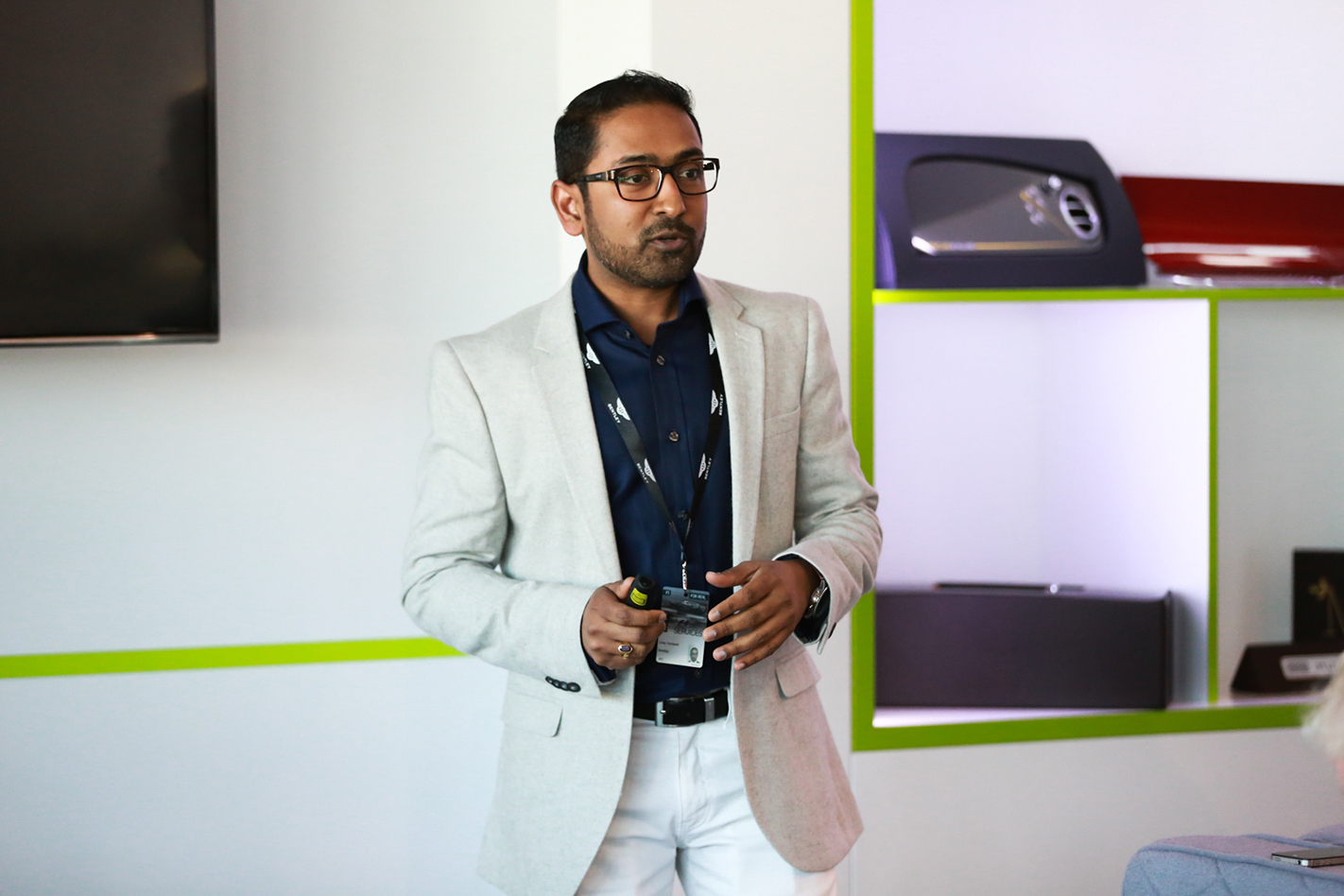
Senapati is sharply dressed, softly spoken and quite a lot younger than one might expect. He’s a man totally absorbed by his job, and it only takes a minute speaking with him to understand why.
“We’ve done ejector seats, swivel seats, all sorts of seats. In the old days before the legals became the legals they are now, we’d done all sorts of crazy things.
“Probably the craziest was an anti-theft thing in a place where crime was high. I can’t tell you where, but it worked at the press of the button.
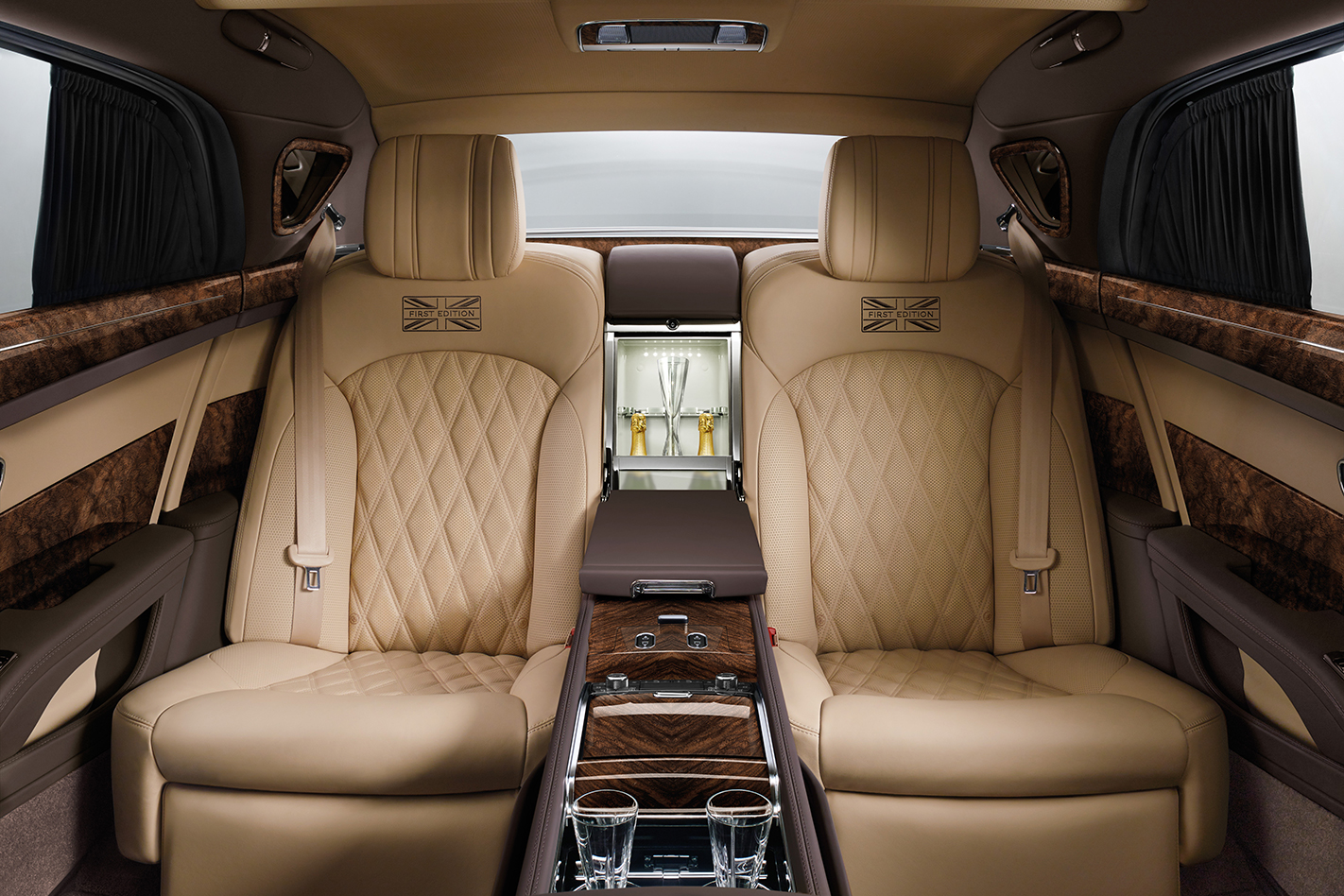
“These people get inspired by watching James Bond films and the right kind of people know that James Bond used to drive a Bentley. So they want a Bentley that’s got some special capabilities, too.”
Of the 11,000 vehicles sold by Bentley in 2016, about 1800 of them went through a customisation process at Mulliner, from basic ‘feature packages’ through to the completely custom-made.
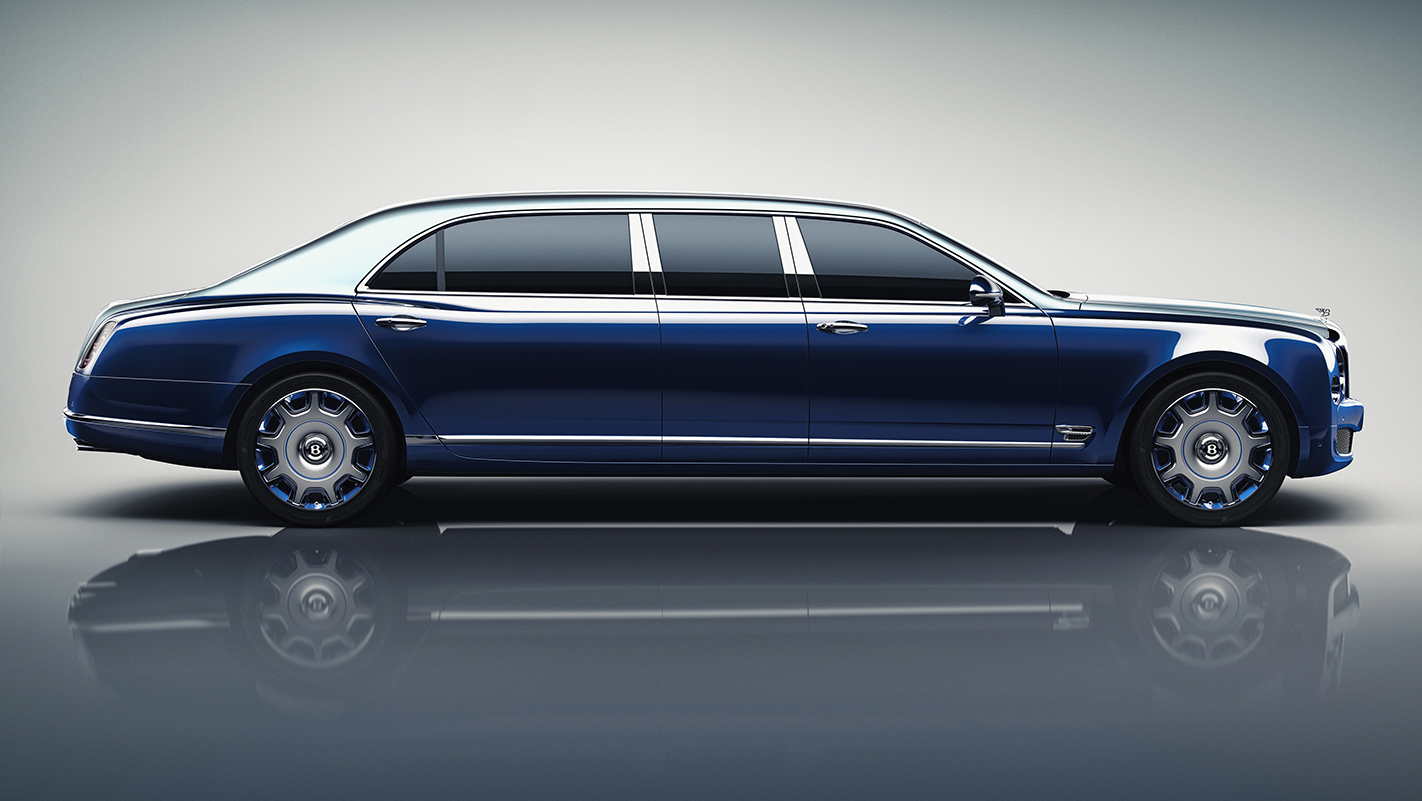
Bentley’s ‘regular’ car configurator offers more than 1.3 million combinations of paint colour, interior trim and optional extras for any given model at a base level. That’s before entering the virtually limitless world of Mulliner.
“Customers normally come to us saying they want to put their mark on their car, but don’t know how. Then it’s our job to start to learn about their lifestyle; what are they into, what does their house look like, what are the other cars they drive, have they got a yacht… and based on all those interests we commission a car based on them.”
It’s not all luxurious elegance, either. Senapati has become an unassuming expert in battle-ready Bentleys built to protect his customers who live in war-torn countries.
“Armoury is a big part of the business. There are 14 levels of vehicle armouring, called Vehicle Resistance levels. VR1 is very basic protection against hand guns or air guns – light level bulletproof glass and things like that – up to VR14, which means an almost ballistic vehicle. Above VR8 are vehicles that will go into combat zones.
“The most popular ones are VR4, which is urban protection against most reasonable weaponry, and VR6 or 7, which protects against AK47s and AK56s. Those are the two which are most popular and we’ve done all sorts of things within those levels.”
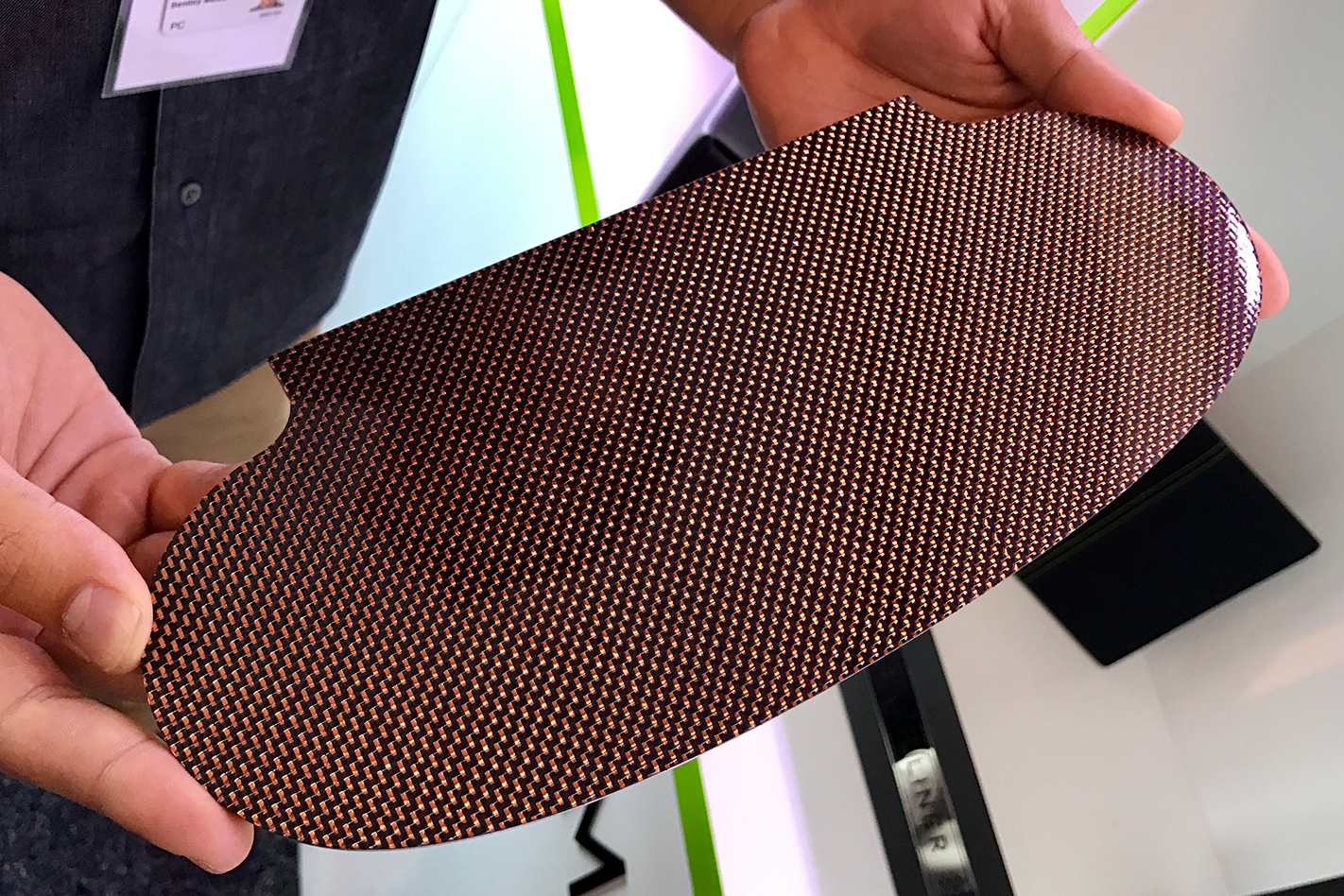
For other clients of Mulliner the attraction of a personalised vehicle comes from owning something nobody else can match. Senapati and his team invest huge amounts of time experimenting with alternative materials to create truly bespoke finishes.
Examples include dashboard inlays made from copper- or platinum-infused carbonfibre. Because regular carbon weave simply isn’t special enough, of course.
Then there’s sedimentary rock sourced from India that’s shipped to Germany and ‘peeled’ into layers less than a millimetre thick, before being sent to England and made into stone inserts that look like fine kitchen benchtops.
At the end of this year, Senapati says Mulliner will even launch the first vegan car – a car where every material used is sourced or produced by methods that eliminate animal products entirely. The upholstery, for example, will use processed cork instead of leather.
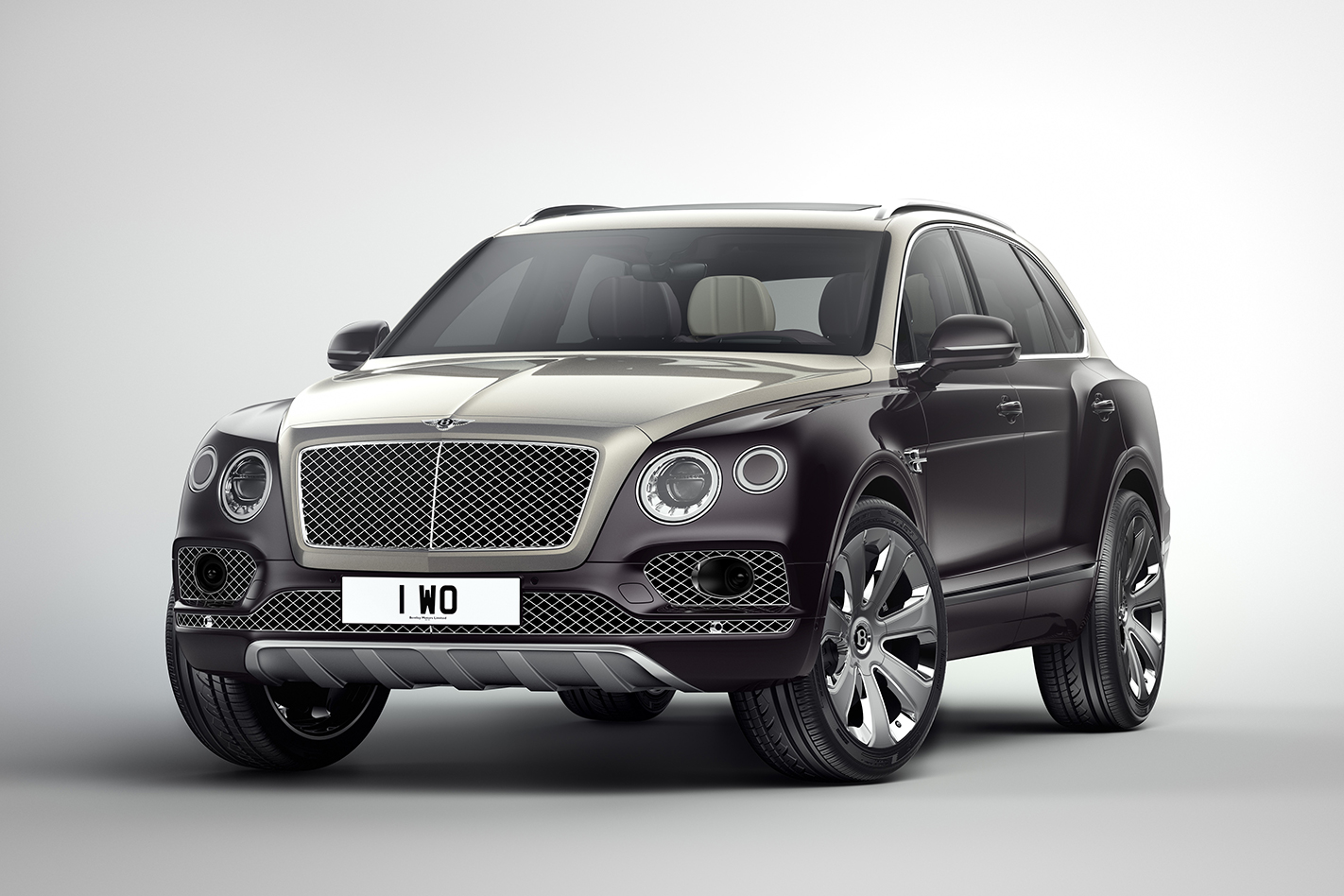
For the Bentayga, Mulliner crafted its own unique wheel design. Each wheel takes nine hours to be machined from a billet of solid aluminium. A floating centre cap with the Bentley ‘B’ insignia uses a counterweight and high-speed bearings to stay upright in the middle of the wheel even while it is spinning at speeds of up to 270km/h. Two and a half years were spent developing that centre cap alone.
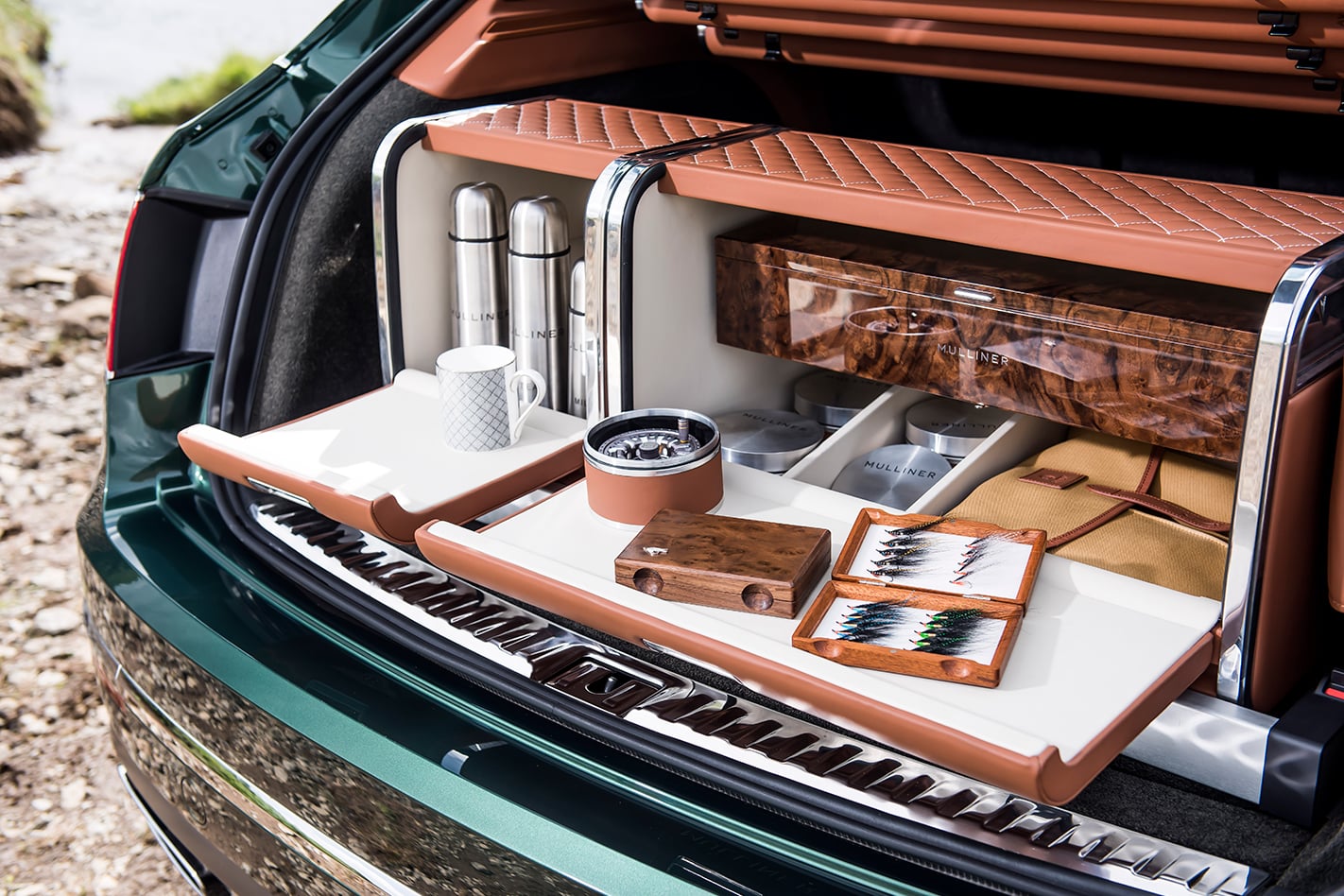
There are relatively restrained options within the Mulliner portfolio, including a fly-fishing kit and a Linley picnic hamper, but Senapati says most customers start small and then take it to another level.
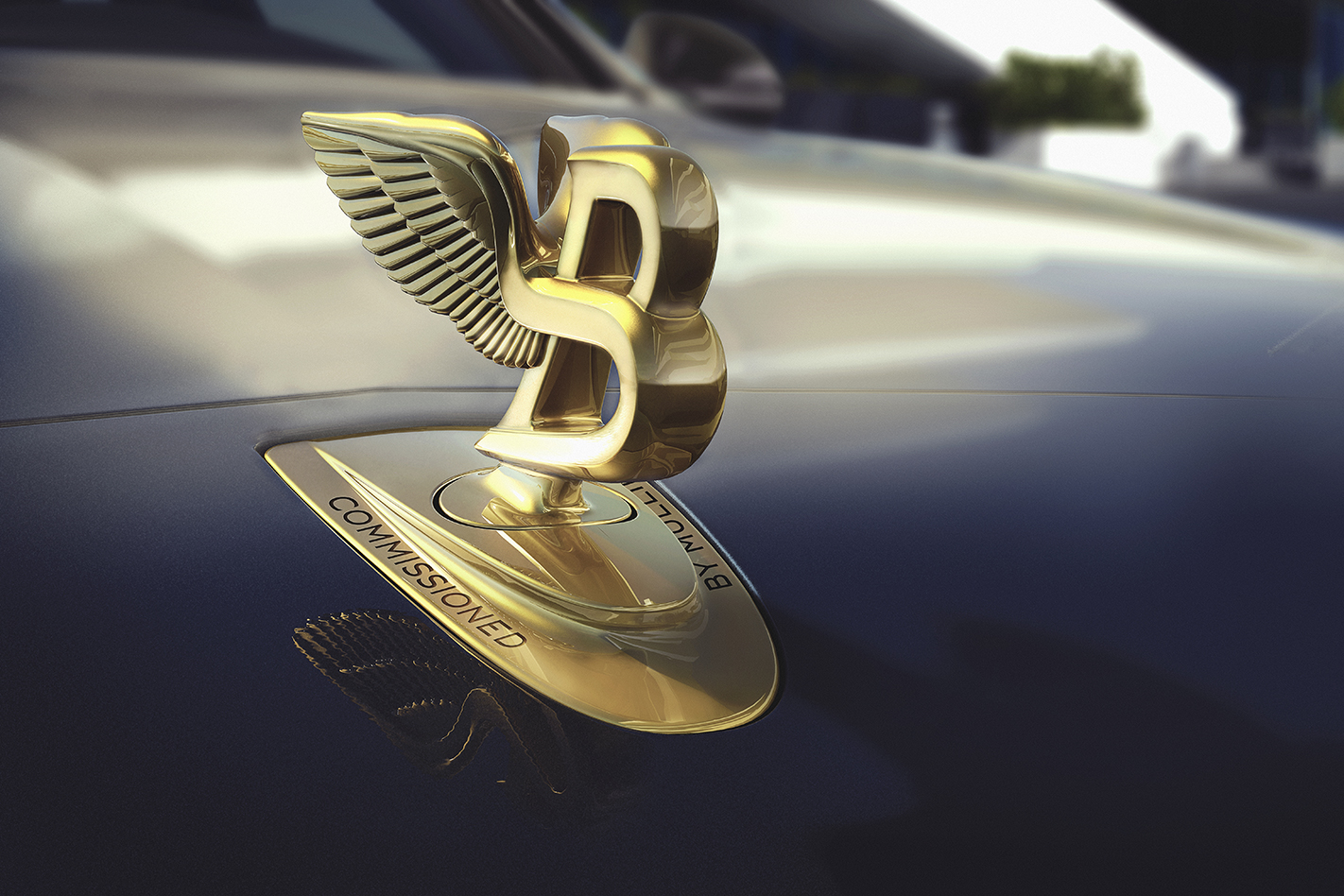
“More than certainly they never stop. Once they’re into it they keep going and keep coming back. These guys don’t care. Money is no object.”
Mulliner can trace its heritage back almost 500 years to a saddlemaker of the same name. Coachbuilding began for Bentley in the 1920s, and Mulliner became a wholly owned subsidiary of the marque in 1959.
“I see my job as a privilege. Along with my colleagues in England we are the custodians of a phenomenal brand.”
THE reborn, SAIC Motor-owned MG brand is less than a year old in Australia, but is already preparing to position itself as a tech leader.
Danny Lenartic, Senior Marketing and Communications Manager for MG Motor Australia, says the manufacturing giant is already developing cars for the internet age, and MG will soon adopt this tech.
“There is going to be a subset of products that will be derived from connectivity in cars,” he told Wheels.
“That entire ecosystem will be a part of SAIC’s future, and the car will be just one portion of that.
“The in-car net in Thailand already exists, you are using apps to open moon roofs, open windows, and even start cars.
“I think it is only a matter of time when we will know when our garage doors will have opened up, the cars will sense the temperature, turn the car and air conditioning on so that when you sit inside it is already at a pre-determined temperature and the car is running warm.
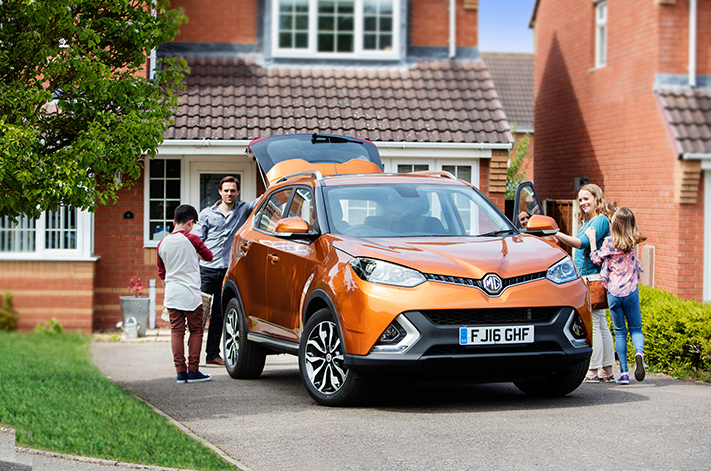
“I really believe this is years away. Five is too far, closer than that.”
While current MG models being offered in Australia lack this connectivity, Lenartic is confident future models, such as the upcoming ZS, will give MG its first opportunity to execute its high-tech aspirations in Australia.
“Indications from SAIC and MG suggest that is the path we are heading in,” he added.
“The Roewe RX5 that is in China now is the first internet-ready car globally, so [is MG going to attempt to be a leader in the tech segment] I’d say definitely.”
But before it can lead the tech war, Lenartic says MG will focus on becoming a volume seller down under.
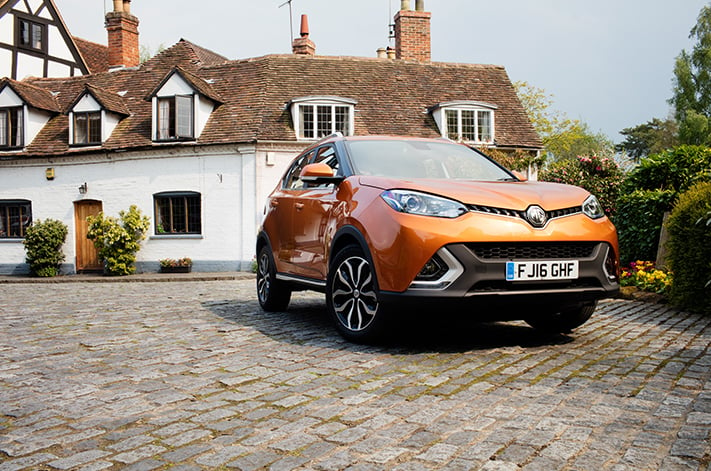
“The goals are to chip away with products we think can stand up in this environment, and I think we have got one here that can absolutely [in the MG GS],” he said.
“We will continue to deliver good product to hopefully become a volume player. It has been done wonderfully by the Koreans and the Japanese before that, so why not the Chinese?”
Opinion: End of the road for the autonomous car
While MG Australia remains coy on what will feature in the brand’s line-up into the future, Lenartic commented it would be safe to say electric vehicles and hybrids could soon be part of the showroom.
“I can’t see how they won’t be,” he added. “You can only look at what is happening globally to say that [EVs and hybrids] make sense. I can’t see why a company like SAIC wouldn’t follow suit.”
Ford Australia desperately wanted to offer a warranty-backed 500kW Mustang Roush locally, but Australian Design Rules (ADRs) have now killed off any chance of the supercharged V8 Pony galloping into its dealerships.
Government red tape comes as a second blow for the manufacturer and its dealers still reeling from the loss of the turbocharged six-cylinder and supercharged V8 Falcon models. A third upper-cut comes in the form of local outfits Herrod Motorsport and Mustang Motorsport, who are able to offer ADR-compliant kits of a similar specification due to slightly different testing procedures for OEM and aftermarket.
The Roush Performance Stage 3 supercharger kit was already tested by Ford Australia at its You Yangs proving ground in Victoria more than one year ago, with approval from its Dearborn headquarters to provide a full driveline warranty and allow dealers to fit the $54,990 Mustang GT with what would be known as a ‘performance package’.
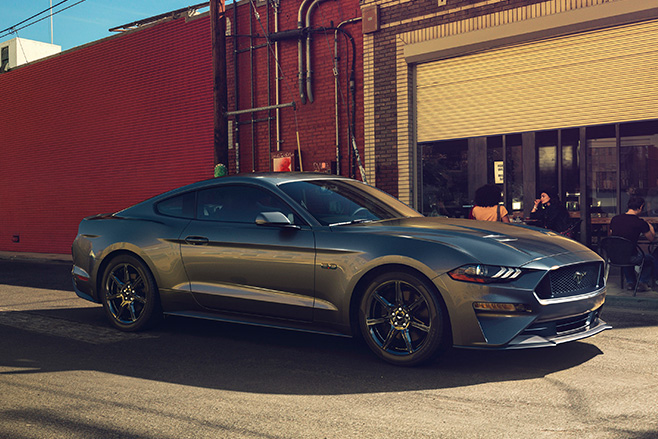
In March 2016, Ford Australia president and CEO Graeme Whickman told Australian media: “I think it’s a fair bet to say that we’re looking pretty hard at that [Mustang Roush] and we’re pretty excited. We’re working on it and I feel confident that we might have something to talk about in the coming months.”
But months ticked by and Ford Australia would only, bluntly, say that ADRs were holding up the process. The company has now revealed that Australia’s drive-by noise regulations shot the Mustang Roush point-blank before it was let out of the stable.
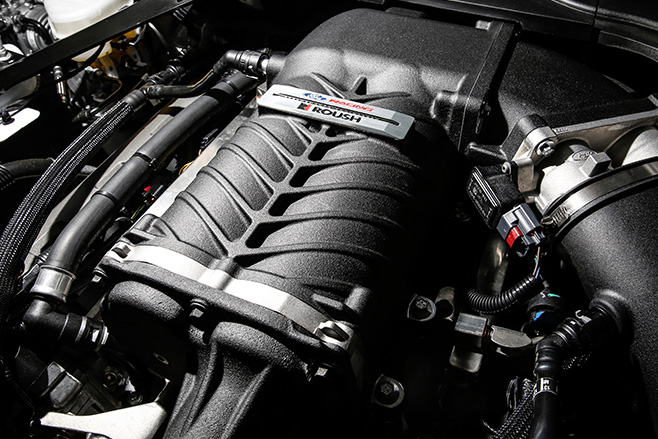
“We have to ensure that any additional parts available to fit Mustang through a Ford dealer integrate properly with the rest of the vehicle in an effective way, and that they meet the stringent standards that are set for OEMs [Original Equipment Manufacturers].”
Notch up the last part of that quote as a cheeky stab at ADRs, which must meet a harsher set of rules than third-party importers adding separate tuning kits to an already purchased vehicle. The spokesperson confirmed that noise regulations were the only problem.
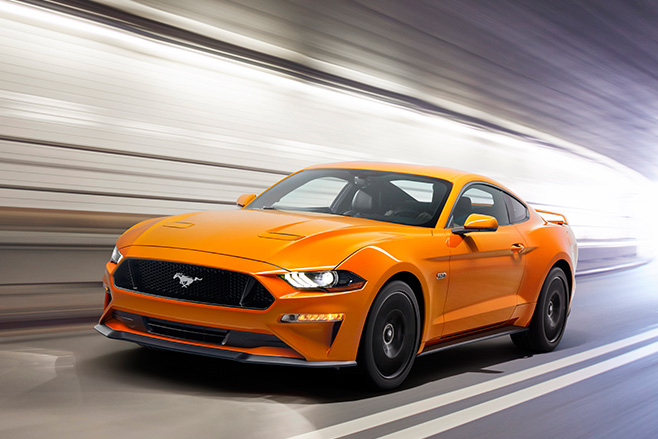
So while the supercharger kits are warranty-backed and ready for Ford’s local dealers to fit, ADRs are forcing buyers towards Herrod Motorsport and Mustang Motorsport to fit the parts for the same result. Go figure.
Let’s address the small, mid-engined elephant in the room.
When it comes to two-seat roadsters under $200K, Porsche’s Boxster is the benchmark. Mercedes-Benz’s SLK55 AMG put up a good defence, relying on brutish charm to stand out on its own.
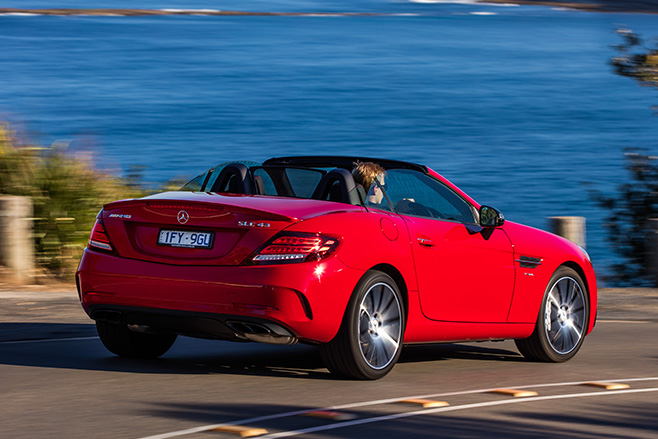
While the SLC is a significant update of the SLK, it’s more evolutionary than the name change suggests. The front-end’s been stiffened and the suspension’s been overhauled, but it hasn’t banished its aggressive ride and doesn’t sparkle with fine balance or bite.
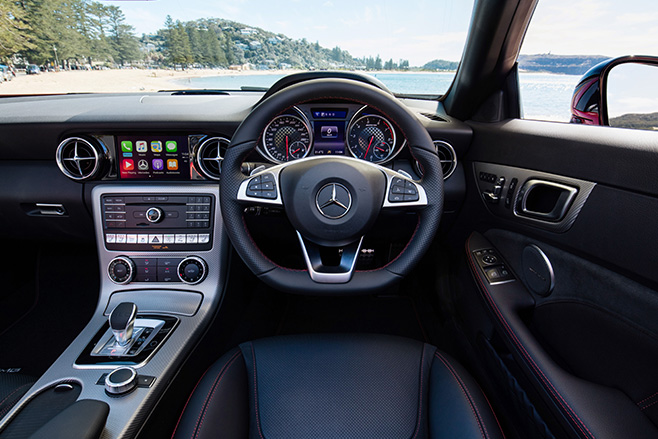
You’ll find the same 3.0-litre twin-turbo V6 in C43 and E43 variants, but it sounds best here, unfiltered by sound deadening and tickling your ears with its raucous wail. It pulls hard from 3000rpm all the way until its redline, and would walk past a Boxster on the run (it should, at 50kW and 100Nm healthier).
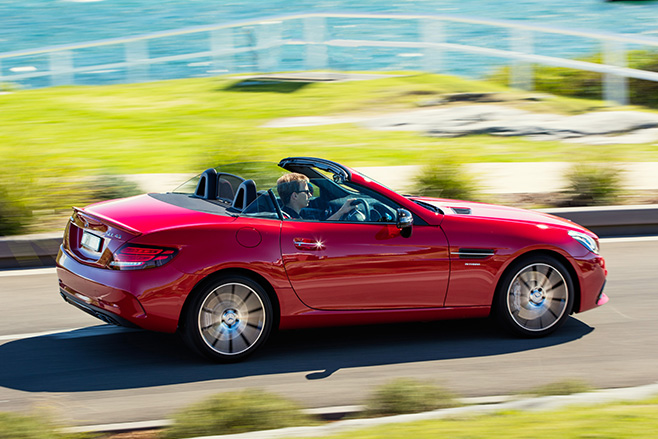
The SLC43 is enjoyable on the right road and day. But to match a long-time benchmark, that might not be often enough.
SPECS Engine: 3.0L V6 twin-turbo Power: 270kW Torque: 520Nm Weight: 1520kg 0-100km/h: 4.7sec Price: $134,615
“WILL this damned drought ever break?”
It’s the water cooler topic de jour as we mill about the second-gen Mazda CX-5 at its North American media preview in pretty, if parched, San Diego. Such talk isn’t only about the prevailing conditions.
Parallels exist between the lack of rain falling on the Southern Californian plains for much of this decade and the Japanese medium-sized SUV’s intermittent North American fortunes, making this southern California launch venue an interesting coincidence. Or is it?
Sales globally have flooded in for the CX-5 since launching in late 2011, almost singlehandedly saving Mazda’s bacon. But not in the US.
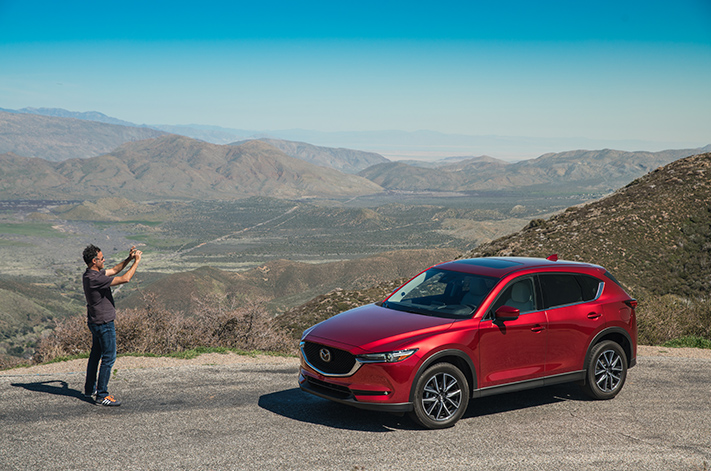
The latter fact is telling, and ultimately instructive as to understanding why the not-so all-new KF-series Mazda CX-5 looks, feels and behaves like it does. If the first couldn’t crack the big time against mainstream dross in the world’s second-largest car market, offering a palpably better and slightly more upmarket alternative might turn the trickle into a stream.
The CX-5’s Australian track record clearly served as inspiration. As the SUV to rule them all for the last four years, Aussies couldn’t get enough of the CX-5, and happily paid the premium for money-spinning luxo grades. Only one in four buyers picked the povvo Maxx, so the Japanese-built midsizer swum in a richer-than-usual model mix pool for its class.
Yet we at Wheels weren’t quite as sold on the old CX-5.
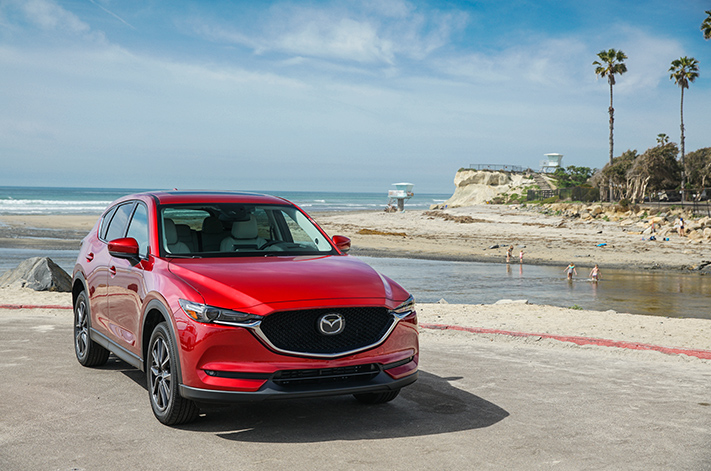
In theory, then, refining the breed should only enhance the newcomer’s popularity on both sides of the Pacific. That’s what has totally informed the CX-5’s evolutionary design.
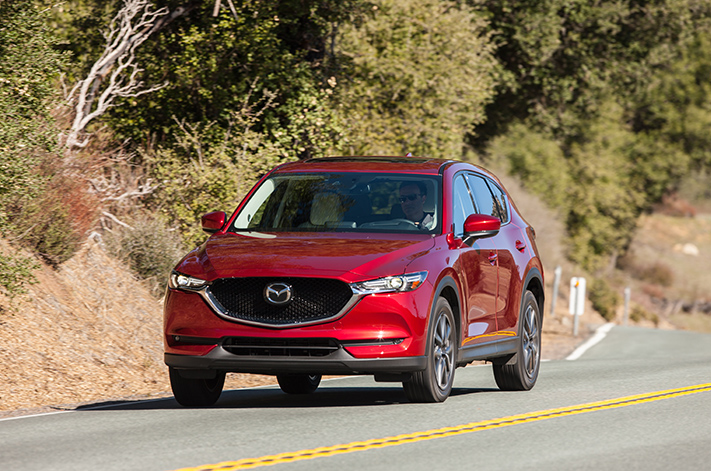
The new-gen KF’s deliberately more sober styling is either blandly amorphous after the angular playfulness of the foxy KE, or way more sophisticated. Whatever your pick, there is a maturity to the detailing that only really manifests in the metal.
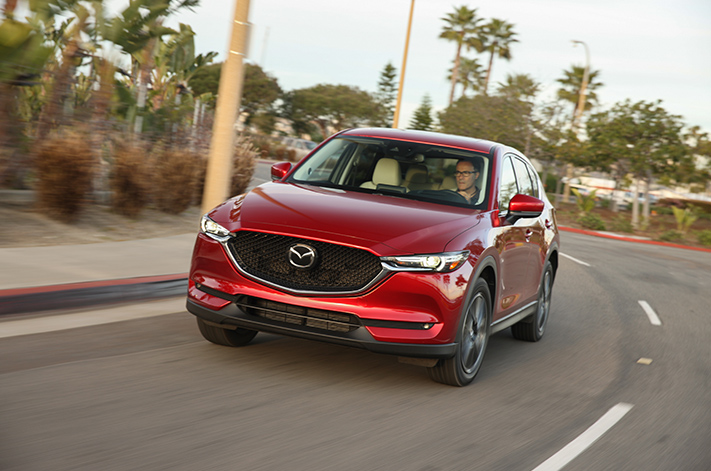
The influence of Mazda’s 2017 Wheels Car of the Year-winning seven-seat SUV is also pretty much evident inside the CX-5’s tear-it-up-and-start-again cabin, and not just because of the shared dashboard theme of low horizontal lines and an Audi-like centre console, now higher and wider.
Along with the expected lift in quality and an abundance of more tactile trim, there’s nice attention to detail. Metallic-like matte surfaces resist grubby fingerprints; posh French stitching processes have been introduced; and the hard plastics that most Asian carmakers don’t bother hiding are now either carpeted or covered in softer materials.
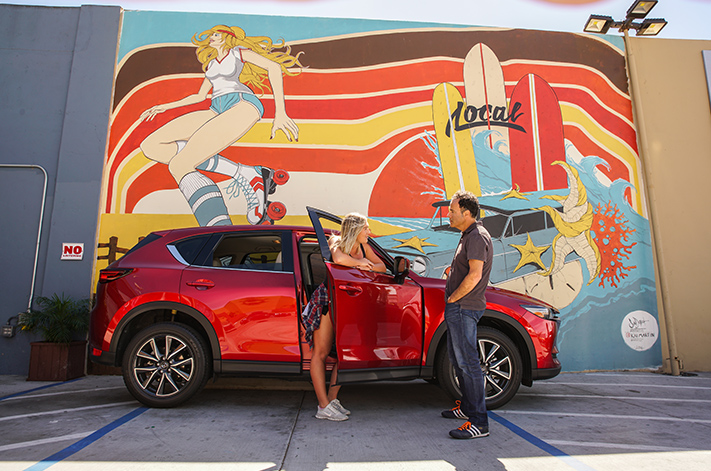
They may be small steps perhaps, but they’re effective in boosting ambience and desirability. It’s also handy when you’re cross-shopping against, say, a Volkswagen Tiguan in a dealership in Delaware or Dandenong.
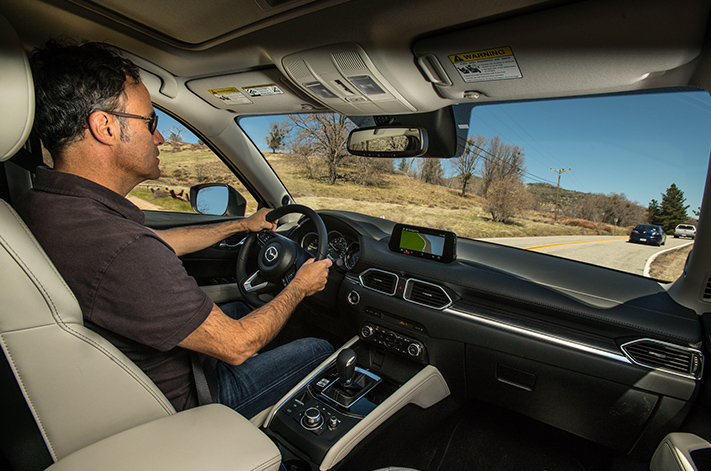
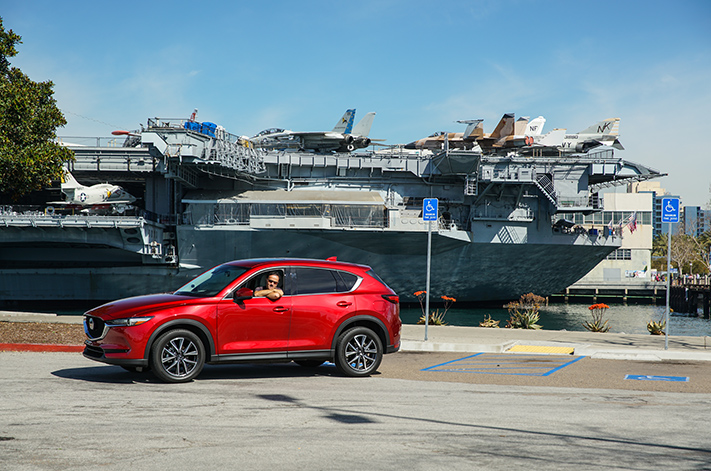
The Golden State might rank as the world’s sixth largest economy, but the greater San Diego county and beyond certainly throw up a disparate selection of roads for us to traverse. The dead-straight freeways are infamous in the US, as are the super-smooth concreted slabs bisecting endless rows of palm tree-lined middle class suburbs. But the sweeping, flowing mountain byways are a pleasant surprise heading north along Highway 79, while the narrow crumbling bitumen mountain roads with huge potholes and deceptive cambers pepper the south as if waiting to punish inferior suspension systems.
Core parts of the CX-5 haven’t changed, either, with the fundamental SkyActiv-branded four-cylinder and six-speed transmissions, available all-wheel-drive system, MacPherson strut-style front and multi-link rear suspension layout, and other major platform parts carrying over with really only minor changes.
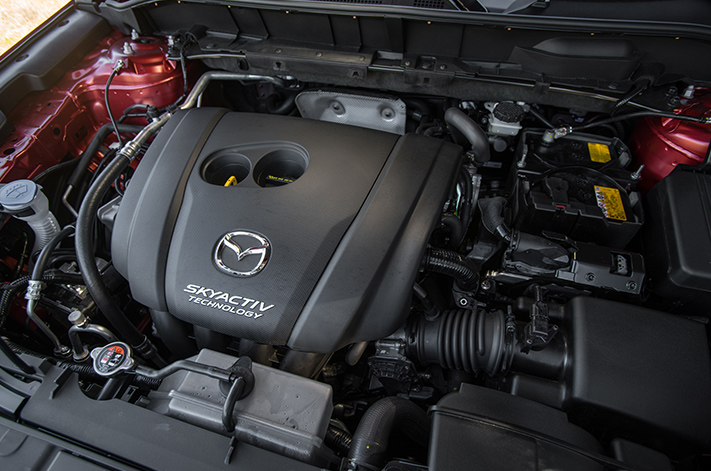
Back in San Diego, the only combo at launch was the 140kW/251Nm 2.5-litre petrol, driving all four wheels via a six-speed torque converter automatic. That’s the most popular combo in Oz, by the way. More efficient combustion processes and reduced airflow resistance due to less drag result in better real-world responses and fuel economy, though the former’s meagre 2kW/1Nm gain and latter’s 1.0L/100km rise respectively aren’t worth crowing about. Those extra kilos can’t help…
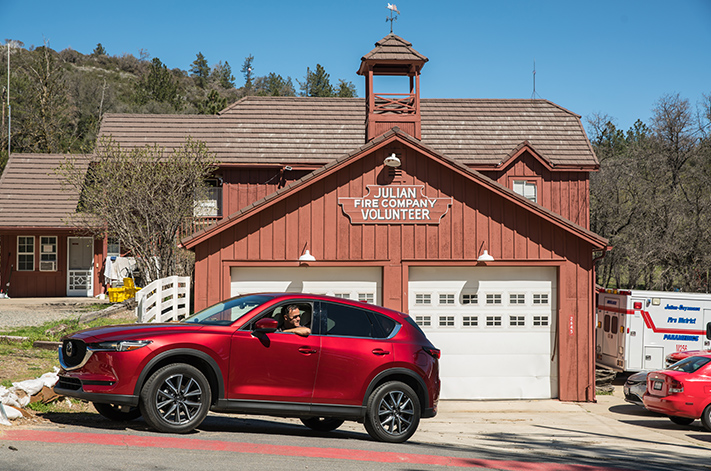
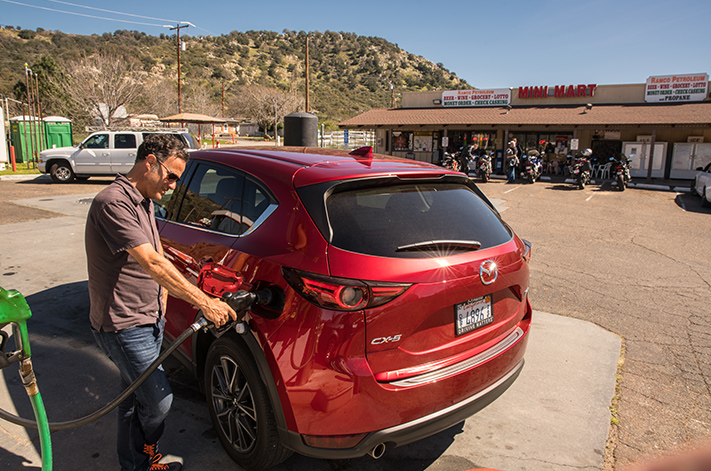
Whatever, the fact is the larger of the two petrol engines (the base 114kW/200Nm 2.0L continues) doesn’t seem at all disadvantaged by the inferior power-to-weight ratio. Though tipping the scales at 1670kg or thereabouts, the GT 2.5 AWD scoots off the line quickly, keenly and cleanly, aided by a torquey mid-range and an eagerness to rev to the 6000rpm limit. That now-familiar direct injection atmo induction noise adds a sporty spirit to the CX-5’s urge, backed up by the receptive yet refined transmission. Even on the poor American 91RON unleaded – it’s all we could find out in the National Park near Julian – the bigger-engined Mazda’s trademark muscle flexed itself nicely.
So the medium SUV’s inherent driveability remains much the same as before. However, the edges in every sense of the word have smoothed out, if not softened. If you’re familiar with the outgoing model, that pleasing sporty tactility translates through, but in a noticeably more civilised manner.
According to Mazda North America vehicle development engineer Dave Coleman: “Our biggest goal was not to screw anything up.”
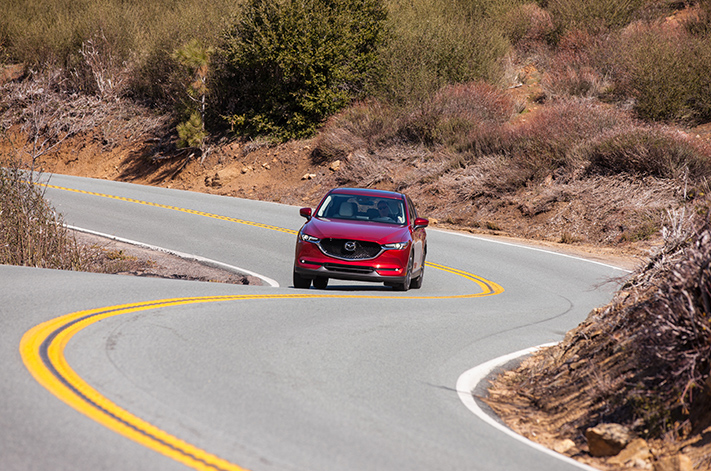
Our GT flagship obviously boasted the sharper US component set (including 225/55R19 all-weather tyres) for more adroit low-speed steering response. Yet considering the wide variety of road surfaces encountered, this CX-5’s consistently high-grade uniformity and linearity sure left its mark on us.
Flowing, connected, and natural steering feel, assisted by planted roadholding, feels close to class best in terms of dynamic personality. The suspension soaks up bumps with quiet aplomb, to the point where we rechecked our tyre sizes. Yesiree; 19s.
That inevitably leads to the core of the latest Mazda CX-5’s progress – its victory over road and tyre noise. Intensive sound deadening treatments, combined with an almost obsessive purge of noise/vibration/harshness pathways (see below), fix the previous model’s biggest ills in a single fell swoop. Welcome to CX-9 junior.
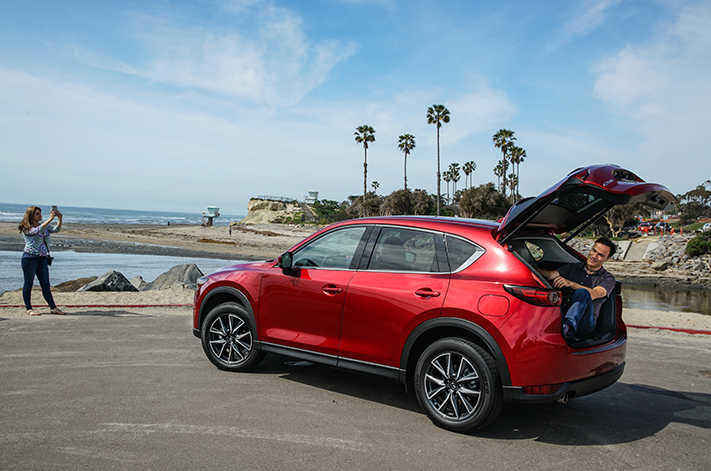
“We’ve knocked down the sound level difference between front and back by about half,” Coleman declared. The company reckons the new car is quieter at 100km/h than the old one at 80.
Driving back towards LAX, first along the Interstate 15 and then up on the I105, terrible traffic delays force a long detour that pushed our mileage well beyond 1000km. They force us to skip planned coffee and lunch breaks to catch our flight.
Mazda CX-5 v Hyundai Tucson v Ford Kuga v Subaru Forester comparison review
RACK AND ROLL STAR
The Mazda CX-5’s steering rack is now mounted on a solid subframe instead of rubber bushings “for way more rigidity at higher G forces,” according to Mazda engineer Dave Coleman. Then there’s the fresh traction-enhancing G-Vectoring Control tech first seen in the updated 3 and 6 last year that varies the amount of torque loading on the front wheels for smoother cornering. Lower-friction front struts allow for increased controlled movement without having to reduce damping forces. New fluid-filled control arm bushings better quell vibrations. And unique left- and right-hand springs better resist side loads over bumps.
CAT’S EYES
Chief designer Shinichi Isayama started work on the second-gen CX-5 in Hiroshima in 2014, with input from Mazda’s US studio. Influences included the 2013 Jaguar F-Pace concept, seen in the nose and concave mesh insert in the newly widened grille.
A 10mm increase in length, combined with a 30mm fall in height, slightly more cab-backward silhouette (the less acutely angled and thinner A-pillars move 35mm rearwards) and lowered stance help improve proportions, while a straighter beltline and more rounded wheelarches aim to infuse more sophistication to the original’s overt playfulness. Circular LED tail-light elements are meant to evoke the 1989 MX-5.
SEALS OF APPROVAL
Mazda made the new CX-5 quieter through reprofiled windscreen wipers, using three instead of two seals where possible, adding seals where there were none (such as between the roof and tailgate), devising lids for the cargo floor storage cubbies, carpeting the wheel arches and centre tunnel, fitting acoustic front side glass and a thicker windscreen, reshaping the A-pillars and door mirrors, going for tighter-fitting panels, closing off extractor vent noise pathways, filling B- and C-pillars as well as door panel and hatch blanks with insulation, adding tighter fitting window channels, using a more aero-efficient and felt-lined under-tray, creating quieter suspension components, putting dynamic dampers on the rear subframe, and employing more sound-absorbent headlining.
Nothing to it, really.
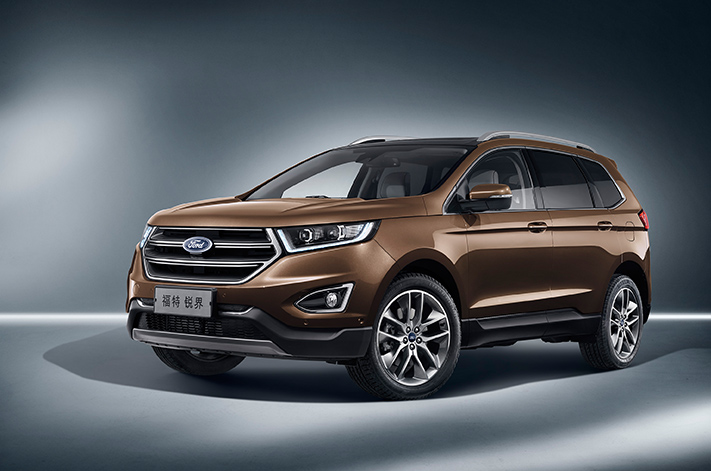
It’s been a long fight, but Ford confirms its fully imported large SUV won’t wear its globally recognised badge.
FORD’S months-long bid to use the Edge name for its large-size Territory SUV replacement has failed, with the carmaker admitting to Wheels last week that it has given up the fight.
“There’s no more updates [about securing the Edge name],” Ford Australia president Graeme Whickman said at a forum outlining the carmaker’s technology-driven future. “Our conversations have concluded with Toyota. That will not yield that name.”
Ford Australia was keen to introduce the Edge name for its Territory replacement as part of the carmaker’s One Ford philosophy, which encourages a global roll-out of names where it suits the market.
According to Whickman, Ford will continue to “work with other vehicle names” ahead of the Edge’s arrival early in 2018.
“That’s an innovative process, because we want to make sure we live up to One Ford globally, so it’s a process that takes some time.”
Toyota Australia owns the trademark to the Edge name after applying it to a number of limited-run Corolla and Hilux models – a pair of vehicles currently ranked as two of the nation’s best-sellers.
Toyota confirmed it had declined Ford’s request to use the Edge name in Australia. “Toyota owns the trademark rights for ‘Edge’ in relation to motor vehicles, parts and accessories in Australia and New Zealand,” spokesman Beck Angel told Wheels.
“After careful consideration, we declined Ford’s request to use the ‘Edge’ trademark in these countries.”
She said the Japanese carmaker would not reveal plans it had to roll out the Edge name on future Toyota-badged products.
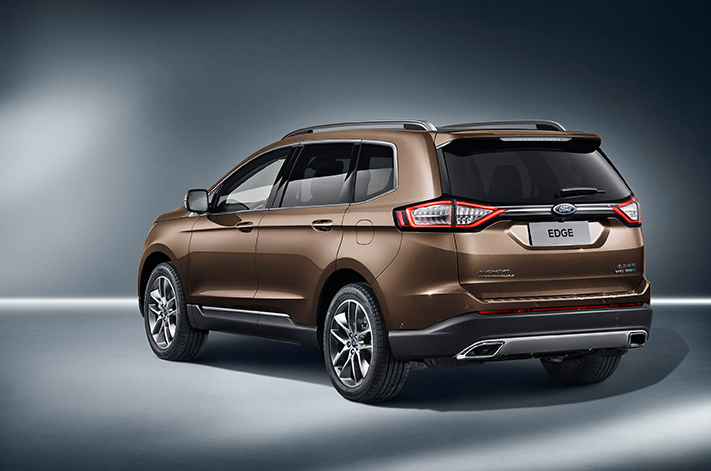
Ford has played down the introduction of the Explorer large SUV to Australia – it would cut across sales of the locally designed and engineered, but Thai-built rear-drive Everest – potentially leaving the door open to the Edge wearing that name here. It has also left the door open to the Edge wearing a Territory badge.
However, the carmaker faces the quandary of buyers who are likely to be split between those thinking Ford should have retired the Territory nameplate with the end of Australian manufacturing, or – like Holden will do with the Commodore badge adoring the German-built Opel Insignia due next year – those happy to whack the local badge on a fully imported product.
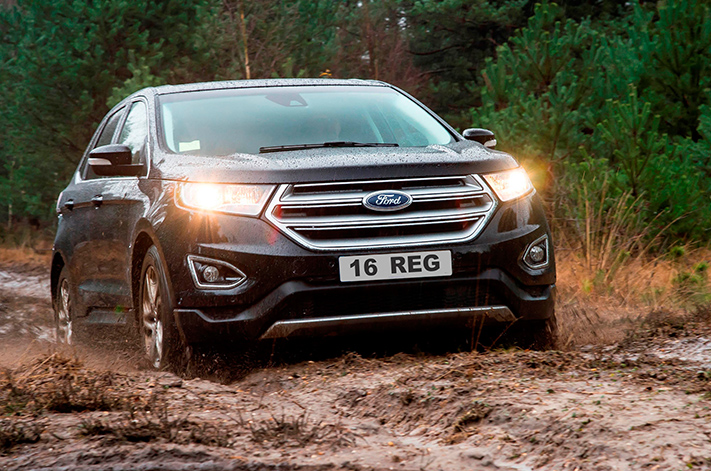
This is to potentially give Ford room to develop a seven-seat version of the SUV, which is currently only built in left-hand-drive for China.
%MCEPASTEBIN%
While air conditioning has been a standard car feature for several decades, the refrigerant gases used to power these systems have traditionally been environmentally problematic, taking years to break down and causing damage to the ozone layer in the process.
This is advertiser content
These refrigerants are graded on their Global Warming Potential (GWP), which uses carbon dioxide as a baseline to determine how much heat a greenhouse gas traps in the atmosphere, and in turn contributes to global warming.
Currently, most cars in Australia operate R134a air-conditioning systems. While HFCs were originally introduced as a more environmentally-friendly alternative to the notorious CFCs, they are not a sustainable solution, with R134a having a GWP of 1430. As a result, legislation has been put in place to gradually phase out their use in Australia, and to introduce the next generation Hydrofluoroolefins (HFOs) as the new industry standard with a GWP of <1. Maracoonda Automotive has been helping Australians get their hands on the look, feel and hauling power of large
American cars since 1980, providing on-site services to convert American vehicles to right-hand drive. As one of Australia’s longest-serving businesses in the field, Maracoonda have seen multiple technology trends in air-conditioning refrigerant gas over the years.
“In the late 1980s, we realised there was a gap in the market for American pick-up trucks, and that’s been our bread and butter ever since,” says Managing Director and Research & Development Manager, Ross Anderson.
American and European car manufacturers are considerably ahead of Australia in the move to lower GWP refrigerants, with an increasing number of vehicles arriving from the US with HFO-compatible air-conditioning systems installed. After seeing an increasing number of imported vehicles with this new technology, Ross approached BOC to seek additional information.
Other resellers in the industry have sometimes resorted to altering the air conditioning system on import cars, with the aim of cost-cutting – installing older systems that use the soon-to-be phased-down HFC refrigerant gas (R134a). However, legislation from the Australian Government is currently pending that will see this practice banned, and combined with the gradual phase down of HFC imports in coming years, it is not best practice.
Instead, Ross and his team decided to work with BOC to embrace the new HFO refrigerant Solstice yf® R1234yf and rapidly implement the technology in its workshop.
“We purchased the first fully automatic recovery and charge station in Australia to handle R1234yf and are now using the new gas to service many of our cars,” explains Ross.
Nissan hones in on autonomous driving and hybrid technology
Solstice yf® R1234yf has been developed specifically for Mobile Air Conditioning (MAC) systems, part of a wider family of HFO gases. Developed by Honeywell as a lower-impact alternative to HFCs, it has been widely adopted as an industry standard.
“It has a similar cooling capacity and energy efficiency to HFC gases, but is better for the environment – with a significantly lower GWP of less than 1 – four times lower than carbon dioxide,” adds Ross.
Adopting the new industry standard early has yielded a number of benefits for Maracoonda. It has given them an edge over competitors, while also reinforcing the company’s commitments to best practices in the auto industry and leading the industry in the use of environmentally-friendly solutions.
Electric Concept One destroys LaFerrari
“I’ve been working in the auto industry since the 1970s,” explains Ross. “As you might imagine, there’s been plenty of changes to technology in that time! I’ve learned that it’s always a good idea to get ahead of the curve when it comes to technology and legislation. It’s a good way to future-proof your business – and in this case, the shift to HFO R1234yf is a step in the right direction for the environment too.”
For more information on Solstice yf® (R1234yf) visit www.boc.com.au or ring 131 262.
While we understand that looks are subjective, that beauty is in the eye of the beholder and that one should never judge a book by its cover, let’s face it: the Infiniti QX80 is catastrophically uggo.
Infiniti, to their credit, appear to have come to the same realisation about their supersized SUV. Changes are afoot, if the company’s most recent pre-New York Auto Show teaser pic is any indication.
As always, detail is scant. Just a single shadowy image and a brief caption that simply states, “Huge unveil” is all Infiniti has released for now, but the clues are there that this will be the next generation of Infiniti’s Patrol-based large luxury off-roader.
| 2017 Geneva Motor Show: Infiniti Q60 Project Black S revealed
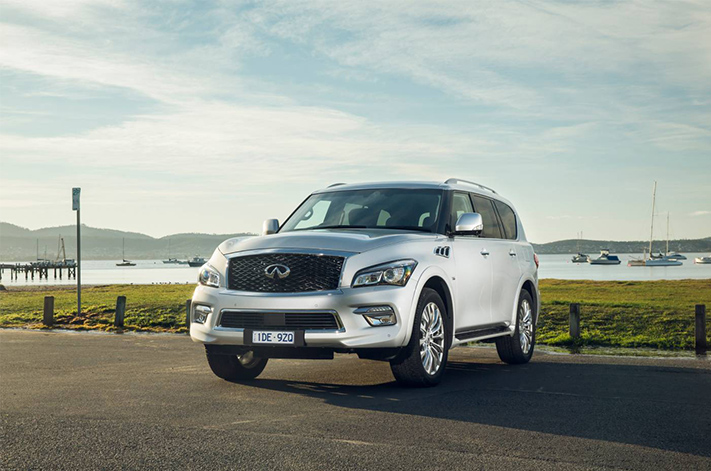
The front end is markedly different, however. Gone is the current car’s droopy-eyed visage, with high-set headlamps now sitting level with the top of the grille. The grille cutout is also reshaped to bring it into alignment with Infiniti’s newer products like the Q60 (as well as more recent show cars like the QX50 Concept, below), though the bonnet cutline is relocated further inboard.
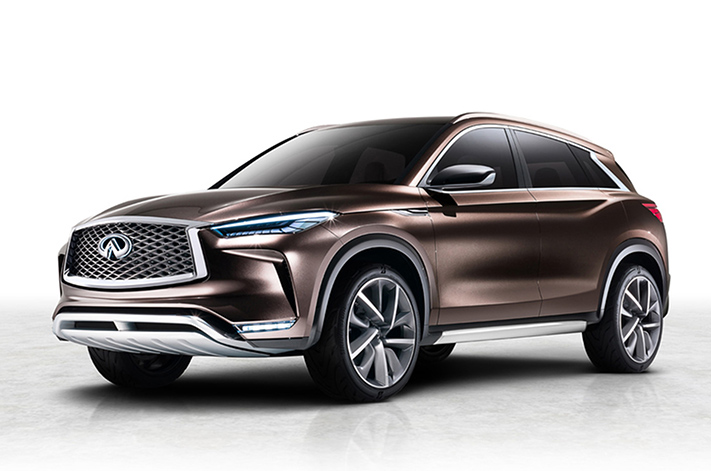
We’ll see Infiniti’s big new concept in its entirety on April 11, but as yet there are no rumblings from Infiniti’s corporate parent Nissan about what this means for the next-generation Patrol. Stay tuned.
