
It will go down in history as the quickest and more powerful car ever produced in Australia.
With a 6.2-litre supercharged V8 the $169,990 HSV GTSR W1 produces 474kW and 815Nm, enough to propel the Commodore-based sedan to 100km/h in 4.2 seconds.
But two and half years of challenges and hurdles meant the W1 program almost didn’t make it to showrooms.
From polypropylene guards and carbon fibre components to a new engine and gearbox, the GTSR W1 was a circa-$8 million project that required significant engineering investment, the assistance of Holden and its Detroit-based parent, General Motors, as well as suppliers across the globe.
Work on HSV’s top secret GTSR W1 began in June 2014 and designers and engineers were challenged from the start.
While the block and many basics are the same as the LSA used in the GTS since 2013 it has many unique features – an Eaton four-lobe supercharger, forged titanium conrods, titanium inlet valves, hollow-stemmed sodium-filled steel exhaust valves, oil jets spraying the underside of the piston – and was developed for the sixth-generation Corvette ZR1.
It’s an engine no longer produced, which sent engineering director Joel Stoddart and HSV managing director Tim Jackson on a mission to locate engines.
“We decided LS9 was the engine, it worked in [Holden Commodore’s] Zeta platform … but we actually had to secure the engines because they’d gone out of production,” said Stoddart.
“We had to make a few phone calls, spend a bit of time over in the US meeting people, got into the warehouse and we found the Holy Grail, we found these engines that they’d sort of stockpiled for the next 10 years that we convinced them to give us enough to make this program viable.”
“Calibration certification programs can take years but with this one, we didn’t get a second swing at it, we had to get it done now because we couldn’t wait,” said Stoddart, adding that it relied on the cooperation and assistance of Holden and General Motors.
“Working with Holden and GM engineering teams to try and compress that calibration program and then certifying it for Australia.”
Then there was the issue of the substantial noise the engine produces.
“Noise drive-by was another big challenge,” said Stoddart. “It’s not only exhaust noise, you’ve got a pretty big supercharger chopping up air there, so it’s actually approaching the noise trap was a bit of a challenge as well and we’ve had to put some technology under the bonnet, some covers around the air induction system to help us there.
“Exhaust was a real challenge; we had to put some fairly decent muffling in the back-end to get it past. When it gets into those upper rev ranges it’s a great sound, we love it!”
“I said a year ago ‘this could really kill the program’,” said Stoddart, reflecting on what was a turning point for the W1 project.
The obvious choice was the six-speed manual used in the Corvette, except that the Chevrolet Corvette uses a transaxle, which requires a different method to connect it to the engine.
“We got the engine and thought we’d got this program over the line and then we figured out we needed a transmission that needed over 800Nm of torque [capacity] and there was none available for the [Tremec] TR6060 in our Zeta platform.
“So we knew that the gearset was around for the Corvette but we couldn’t actually apply it on our vehicle. Corvette is a transaxle so there is no input shaft.”
GM and Holden helped out, as did the transmission manufacturer Tremec, which produced a bespoke input shaft rated at 850Nm.
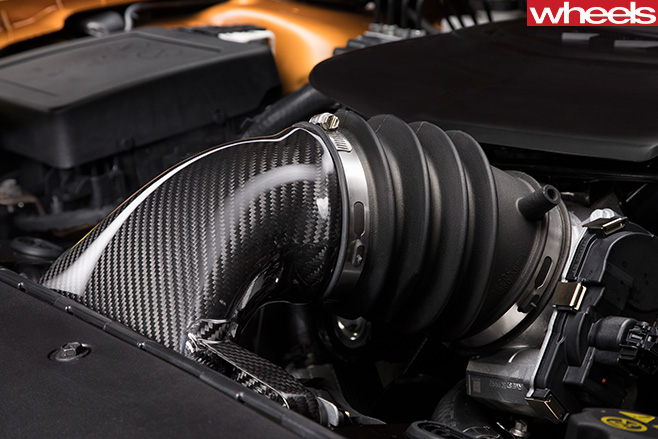
The airbox also added to the engineering challenges; it needed to have a large volume but fit within the confines of the engine bay.
“Some of the wall sections [of the airbox] needed to be 2.5mm thick, carbon fibre is the only material that’s going to survive in that environment,” said Stoddart. “We had no choice but to go with carbon fibre.”
Fitting that airbox in then required angling the radiator back six degrees to allow the airbox to run over the radiator, the only space that was spare.
Fitting the Corvette’s 9.93-litre dry sump system also meant a unique design to the connector.
There was also a new exhaust system, a bigger catalytic converter (up from 2.25 inches to 2.5 inches) a larger charge air intercooler (with a 50 percent bigger core) along with its dedicated water pump with a higher flow.
Fitting in the wider wheels and ensuring suitably high quality exterior finishes proved a further challenge.
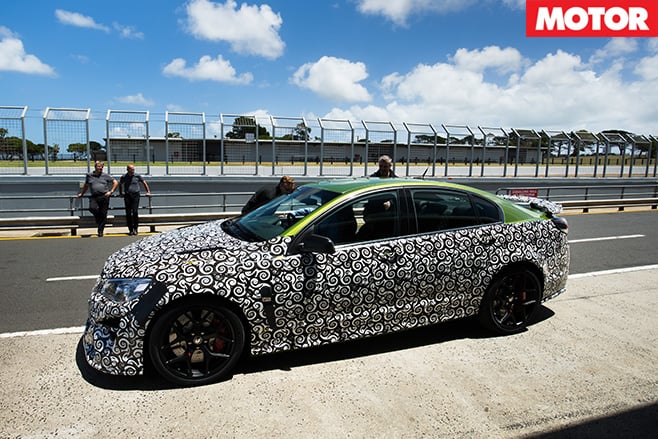
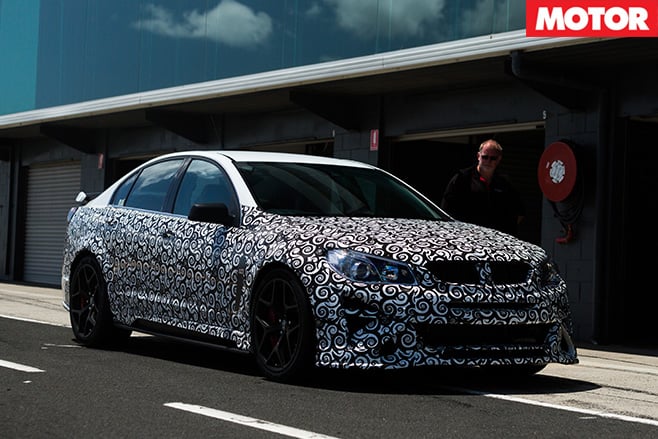
Early prototypes had a poor finish, something HSV was confident will be fixed by the time the first car rolls down the Clayton production line on April 10, 2017.
Arguably the biggest hurdle was completing the program within the timeframe.
HSV knew there was a deadline for the Commodore donor car, with plans to close the plant in late 2017 (the date has since been confirmed as October 20).
If the car wasn’t designed and engineered by then there would no longer be cars to work on.
“The end of Commodore approaching meant we didn’t have a lot of time to pull it all together, we didn’t have a second chance … we couldn’t put it back 12 months because you don’t have a car,” said Stoddart.
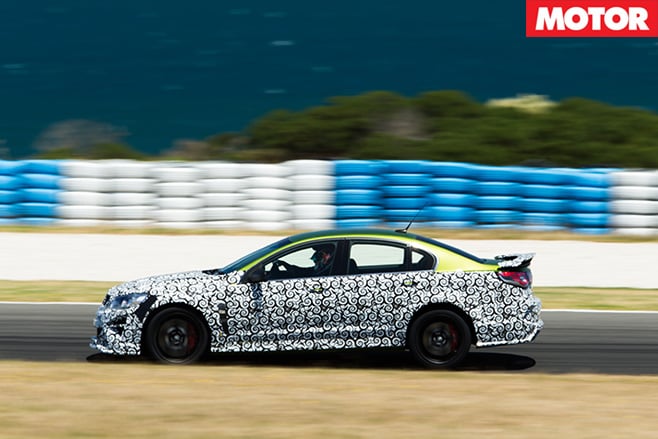
Ideally, we’d have driven the W1 on the road. But, given production doesn’t start until April and HSV isn’t even sure that there’ll be a press-test car (although there’s certainly a desire for a test-car to be made available) a handful of laps around Philip Island might be the best we’ll ever manage.
And, hey, that’s a pretty good second prize, innit? Exactly. Thing is, in any other car, a few hot laps might be less than relevant, but the W1 is so damn track-focussed to start with that any assessment without a track component would be incomplete. So, yeah, we’ll cop it sweet.
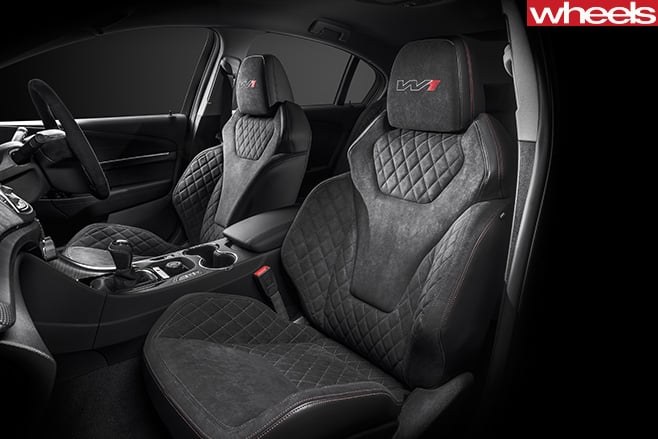
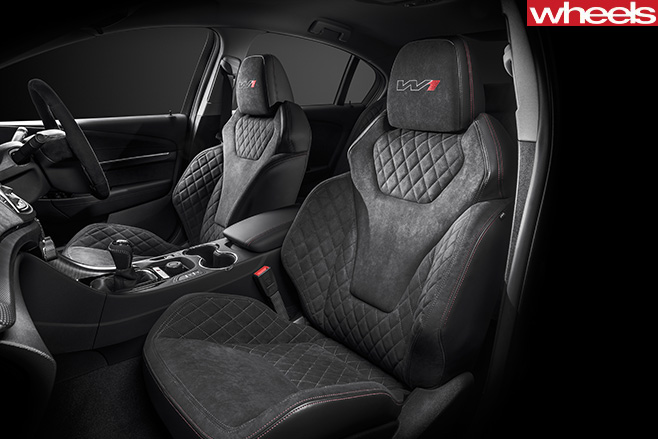
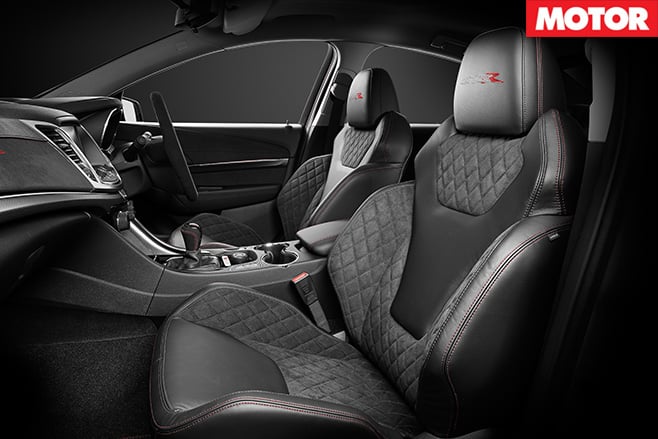
Just jumping inside the W1 is enough to let you know this is special. That diamond-stitched alcantara is el plusho and while the same stuff on a steering wheel and gear-shift knob is often asking for trouble, we don’t reckon too many greasy paws will be allowed inside a W1.
And, man, it’s loud! Yeah, you can shut it up by about 80 per cent by selecting Tour on the drive-mode dial, but why the hell would you? Because it’s not just decibels, it’s fair dinkum brilliant.
There seems to be a bit of camminess at idle, too, although other times, you’re inclined to think that it sounds more like a fattened-up LS3 rather than an LSA with more. Either way, for a blower motor, there seems to be evidence of a fair bit of overlap and, clearly, that cam is a big part of how this thing manages to shovel out those 474kW.
So you’d be forgiven for thinking that it might be a tad soft off the bottom. Bzzt. Okay, the taller first gear is going to make matching HSV’s sub-five 0-100km/h time difficult to say the least, but the 12.1 second quarter-mile claim seems definitely achievable.
Okay, so the twin-plate design should make it lighter, but this thing is the complete opposite to the light-switch stuff you often wind up with in really big-power applications. And the gearshift via that stumpy little lever is way, way smoother and slick than a gearbox capable of this sort of punishment has any right to be. If ever a driveline belied its industrial-strength capacity, this is it.
The VF Commodore base-car has always been a good steerer with an intuitive feel to the way it tips in, and that hasn’t altered here. If anything, though, it’s even sharper and that altered offset geometry must be playing a part there.
Then again, the R-Spec Pirellis would be having an effect and HSV admits that the tyres are probably the bulk of that difference, helping to justify such a radical fitment for what is ostensibly a road-going car.
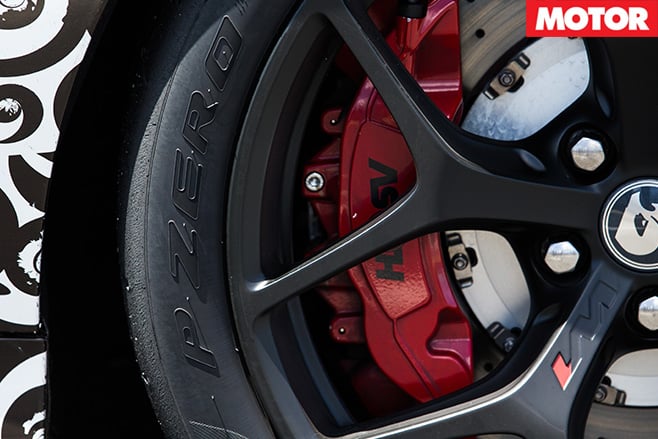
But in the dry, they’re a bleedin’ revelation. Combined with the monster anchors, you can go rushing deep into corners only to find you should have waited another 50 metres before bailing. You really need to recalibrate your brain to account for the fact that the grip is now a match for the braking hardware and the middle pedal is now controlling a beautiful relationship.
Same goes for cornering. The mid-corner speed of which the W1 is capable is going to leave you speechless. As you get some heat into the Trofeos, you can actually start to feel a tiny teensy bit of oversteer as you get into the apex. And it’s not just the absolute grip they provide; the feel and feedback is phenomenal, too.
Like all R-pecs, these ones need a bit of heat in them to really start working, but with a big heavy car like this one, that won’t take but a few corners. And that’s when you’ll go from slipping a bit wide of the apex if you’re not patient enough, to sometimes being too tight when you’ve underestimated the grip.
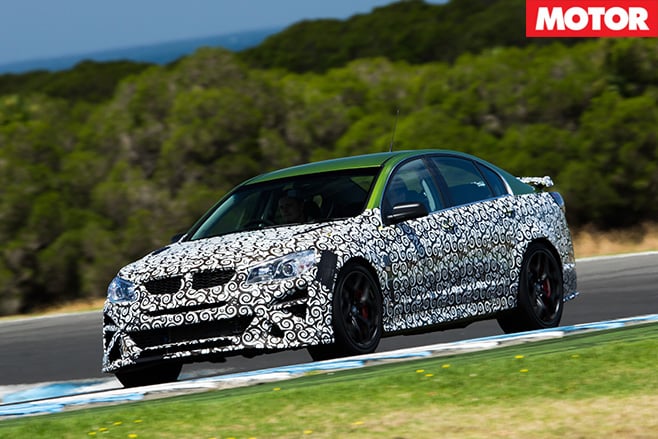
Then there’s that engine. There’s enormous flexibility here, partly because of the raw numbers, but also because the shorter fifth and sixth gears (100km/h in top is now a 1900rpm proposition) keep her on the boil.
And once it’s up and making boost in first, changing gears is like tossing T-bones one after another at a Great White. Give it second. Gone. Into third. Gone. Into fourth… You get the picture.
And you will almost certainly be driving the best thing with four wheels this country ever produced. A-hundred-and-seventy-grand is starting to sound cheap.
SPECS Engine: 6162cc V8, OHV, 16v, supercharger Power: 474kW @ 6500rpm Torque: 815Nm @ 3900rpm Weight: 1895kg 0-100km/h: 4.0sec (estimated) Price: $169,990
HSV’s 474kW GTSR W1 was sold out before it was even announced.
Just 300 of the supercharged LS9 V8-powered sedans will be produced as a last hurrah to the locally-made Holden Commodore, a car that rolls off a Holden production line for the last time on October 20, 2017.
Despite strong demand the number of vehicles being produced is constrained by supply of the 6.2-litre supercharged V8 engine, which is no longer produced. HSV also wanted to ensure the car was produced in limited numbers to increase its exclusivity and, therefore, its appeal.
VIDEO: Watch as we hit the race track in the 2017 HSV GTSR W1
That means more than 500 cashed-up V8 lovers and Holden fans will be disappointed – some angry – at the prospect of missing out on the quickest, more powerful and most expensive car ever produced in Australia.
He said there had been in excess of 800 orders across the Australian and New Zealand dealer networks.
Jackson also said maintaining exclusivity was key to the project, something the brand has learned in almost 30 years of producing Australian V8 muscle cars. The original VL Walkinshaw was planned for 500 units but demand meant another 250 were added to the program. Those extras were a struggle to sell to the point where some were converted back to regular Holdens. More recently Holden committed to building up to 427 of the 7.0-litre V8-powered W427 but just 137 were produced.
“There comes a point … where part of the appeal is exclusivity and if you then run it out to whatever volume might be applicable then you lose some of that exclusivity and you sort of fall over the cliff in terms of desire and demand and interest from the customer base,” said Jackson. “So that’s why we’ve gone more with a range style of strategy [with the regular GTSR models and 30th anniversary models].”
“We sell to a dealer network. We can’t dictate who they sell to,” he said. “Ultimately our customer first and foremost has been our dealer network.”
HSV is also expecting some dealers – there are 56 in Australia and six in New Zealand – to hold on to a car for themselves, further limiting the number of what is set to be one of Australia’s most desirable cars that go to private buyers.
However, some dealers only got one W1, something that has started a bidding war with some potential customers.
“Even in the short term you’ll get people buying them and reselling them immediately at a profit,” said Glass’s managing director Santo Amoddio.
“That’s what happened with the last of the GT Falcons. Even the dealers were selling them above retail.”
In decades to come Amoddio believes the significance of the GTSR W1 means it could be highly sought after, pushing prices up further.
“In the short term people that are going to flip them immediately – you could probably get a 20 or 30 percent premium. Over time they could potentially double in value.”
As for HSV’s loyal buyers, many of whom may miss out on an initial W1 allocation, there is one consolation.
HSV said it will hold on to “three or four” W1s as part of a second chance raffle, whereby buyers of multiple HSVs would be selected from a draw to buy the car at the regular $169,990 price, plus dealer and on-road costs.
“Were going to hold some cars for frequent buyers,” said Jackson. “The best mechanism we feel we can put in place to at least give them a second chance is to hold a few cars back and we can actually raffle those cars. It’s a mechanism we’d like to put in place to support those who’ve supported us.”
Jackson also said the regular GTSR – with 435kW from the lesser LSA 6.2-litre supercharged V8 – would be available for those wanting one of the last Australian HSVs.
The regular HSV GTSR gets the same brakes and body – including wider front guards made from plastic – as the GTSR W1 but without the monster engine.
All this talk of LS9s and bulked out guards risks overshadowing the HSV bread-and-butter (if that’s an appropriate term) range.
But tucked in below the W1 and the rest of the GTSR gang lies the volume-selling HSV stuff which, as well as celebrating the 30th year of HSV also stand as markers of the end of the Zeta platform and the end of locally-made HSVs.
The point is that the HSV range we’ve come to know still represents the high-water mark in volume-selling local hot-rods and even though they don’t bear the GTSR badge, they still stand to be considered pretty damn collectible.

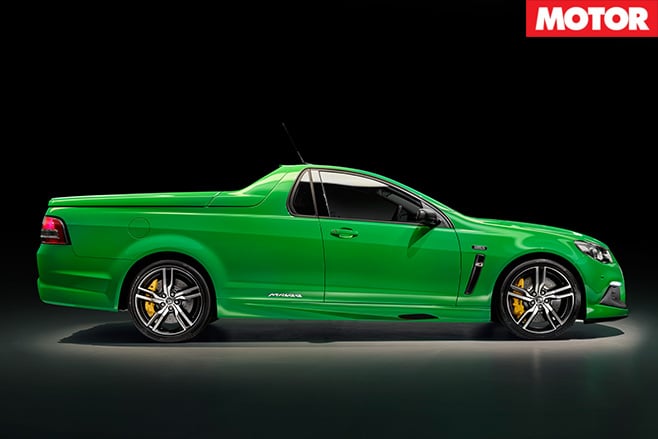
Nope, there’s a new tune that hikes power on Clubsports and Maloos by 10kW (to 410) and boosts torque by 20Nm (now 691). The bi-modal exhaust valve has also been recalibrated to open earlier than before, purely in the interests of more bark.
A tricky little slalom exercise proves the worth of torque vectoring, although it pays to remember that it doesn’t do squat if you aren’t inputting some percentage of throttle application at the time. Back right out of it, and you’re on your own, and that means losing your bottle completely allows physics to take over and she’ll lay down some pretty lairy sideways stripes.
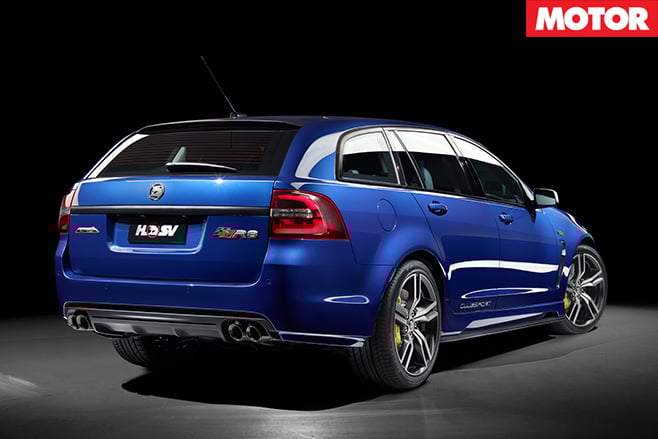
The other big thing in the 30 Years line-up’s favour is, relatively speaking, value for money. The range kicks off with the Maloo R8 at $79,990, moves up to the Clubsport R8 at $82,990, the Clubsport R8 Tourer (wagon) at $88,990, the Senator Signature at $95,990 and tops out with the GTS at $98,990.
To read more on HSV’s 2017 range click here.
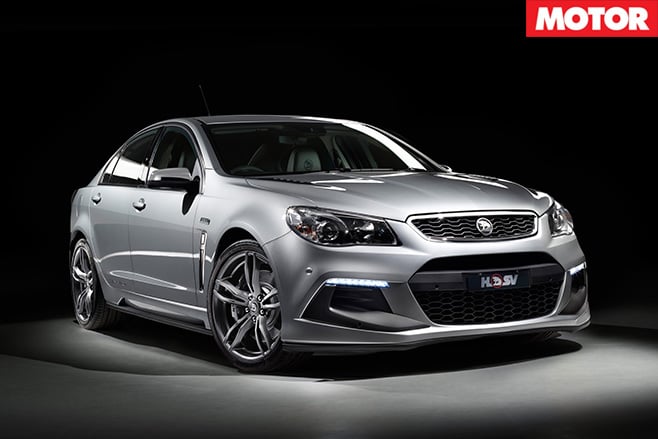
THE born-again HSV GTSR gives clues to future models from the Holden performance sub-brand, all of which will be imported from 2018.
Plastic (or polypropelene) panels and carbonfibre components used on the GTSR W1 have given HSV the confidence to continue using the technologies that will allow further freedoms for design and engineering.
HSV chief designer Julian Quincey said the W1 had been a learning experience and one that would be translated to future models.
“Plastic front guard is the perfect example of just by trying something that little bit differently you can then apply that learning on to the next product, and it’s pretty much applicable across the board,” said Quincey.
“It was a technology that allowed us to get a unique shape without having to invest in unique pressing. It allowed us the freedom to come up with the shape we wanted.”
Quincey says such technology could possibly be used for other panels on future HSVs, which will include the Colorado ute and, likely, one of Holden’s upcoming SUVs.
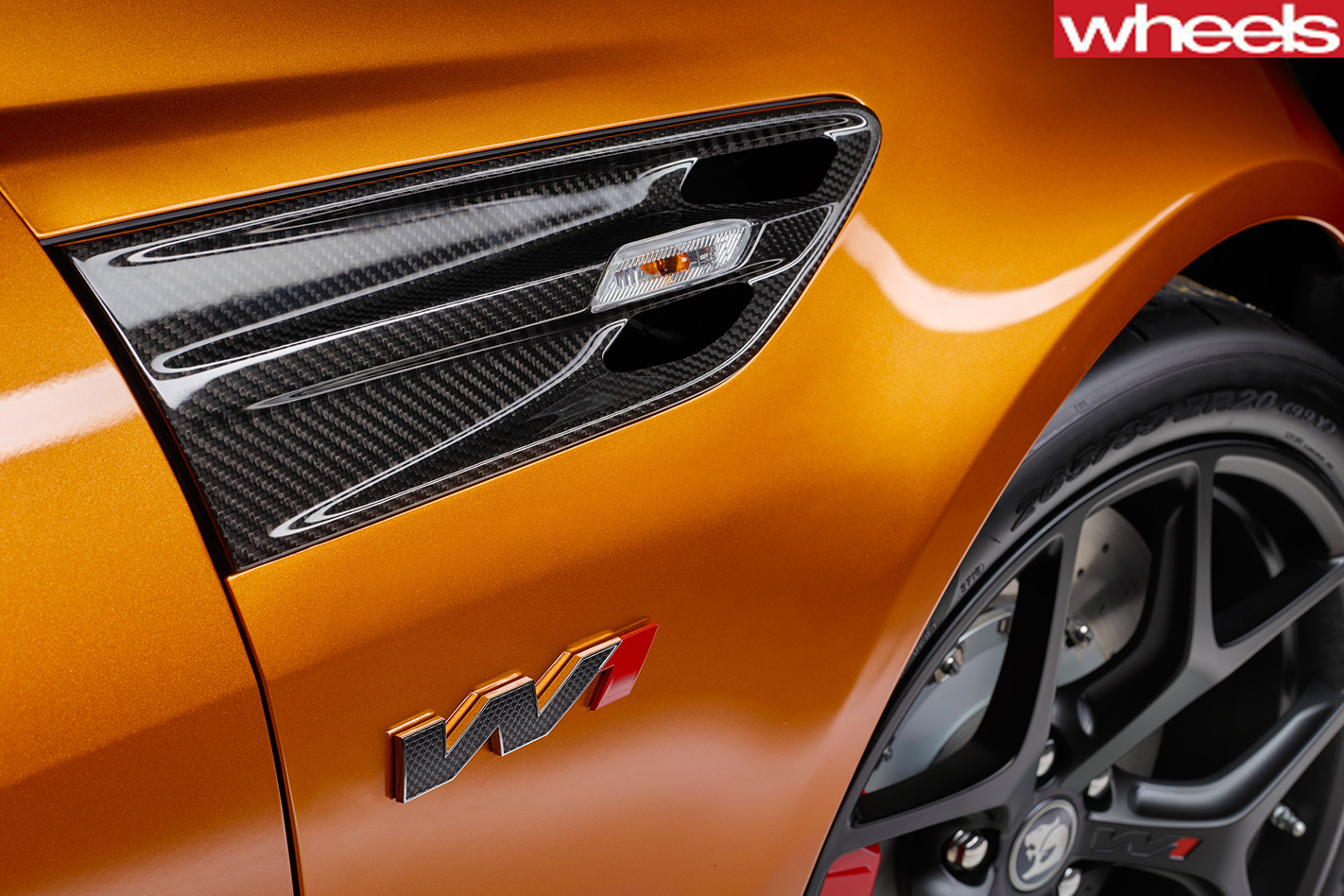
Quincey also said the track-ready tyres, in this case produced by Pirelli, were another area HSV could look to up the performance and dynamics of future Holdens.
“Perhaps the tyre technology is something that might be applicable to other products as well.”
Now that HSV has learnt more about carbonfibre and found a quality supplier it’s likely the material used extensively in Formula One cars, road-going supercars and modern jetliners will be used on future HSVs.
As for the future, HSV managing director Tim Jackson is tight-lipped for now, only saying the company is working on new models.
“We are in the process of figuring out what the next car looks like,” said Jackson. “We know it needs to deliver on all the things that people have expected from HSV in terms of performance and styling.
“That’s for our creative engineers to figure out how we’re going to do that and deliver the next product that’s going to excite our customer base.”
As for whether HSV will better the 474kW/815Nm or the 0-100km/h in 4.2 seconds performance of the W1, Jackson was predictably coy.
“It’s the most powerful for now.”
HSV is determined that its locally-made range isn’t going to go out without a proper bang.
Over and above its LSA models (which also get an upgrade for the last fling) there’s a new range that recalls a famous HSV tag, the GTSR line-up.
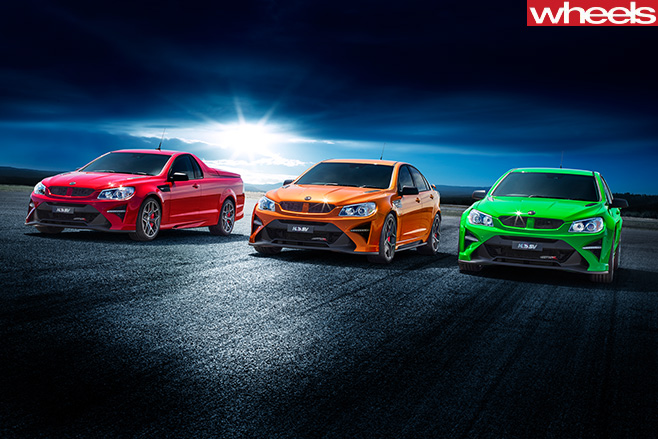
Based on the 430kW GTS, the reborn GTSR family includes a sedan and a Maloo ute as well as the headlining W1 which deserves a separate discussion on its own.
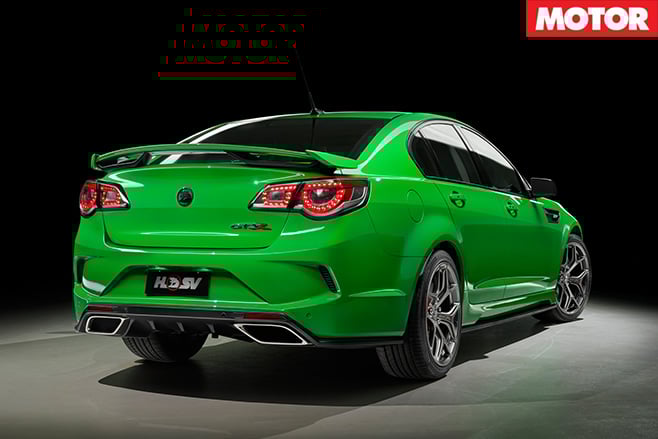
Well, over and above the GTS, the GTSR gains an extra five kiloWatts thanks to a new air-filter assembly that bumps grunt to 435kW while torque stays the same 740Nm.
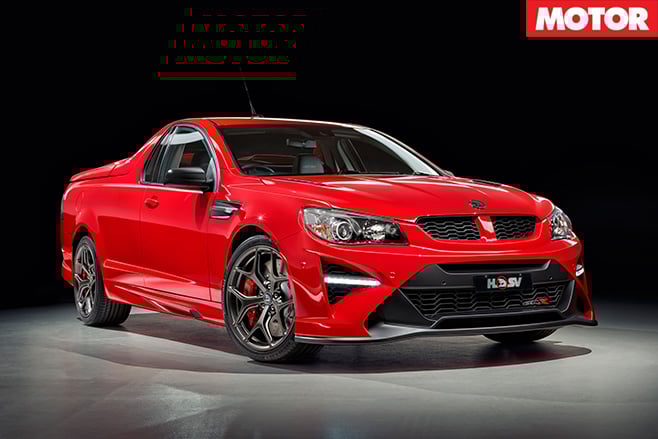
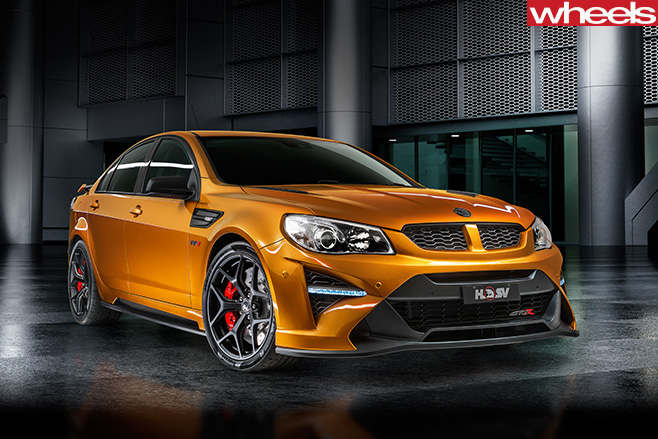
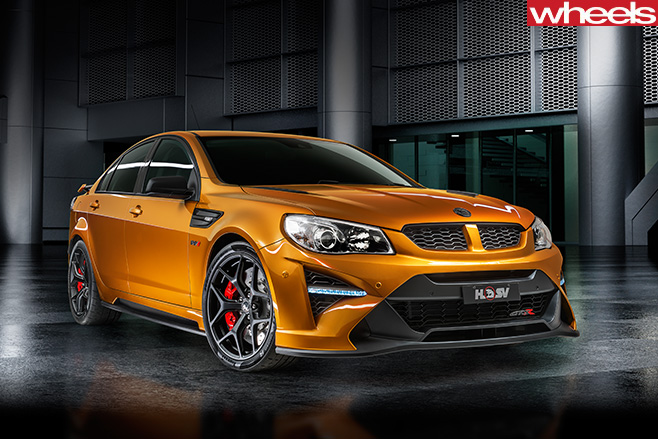
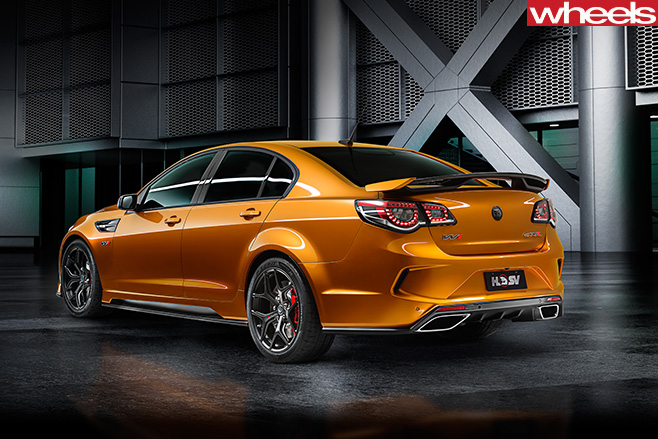
But the fronts now have a different offset; a move that’s been made possible by a wider front guard. That’s also forced a new front apron so HSV gave the whole body kit a once over, winding up with bonnet vents, fender vents, a new rear fascia, rear spoiler and a diffuser.
To read more on HSV’s 2017 range click here.
THE 2017 HSV GTSR W1 has a little bit of Ferrari technology within its 474kW V8-powered body.
The fastest, most powerful and most expensive car to ever be produced in Australia will use carbonfibre parts from the same supplier that delivers components to Ferrari.
Based in Bologna, the carbon department of BMC Air Filters was chosen because of its high quality material and experience in producing carbonfibre components.
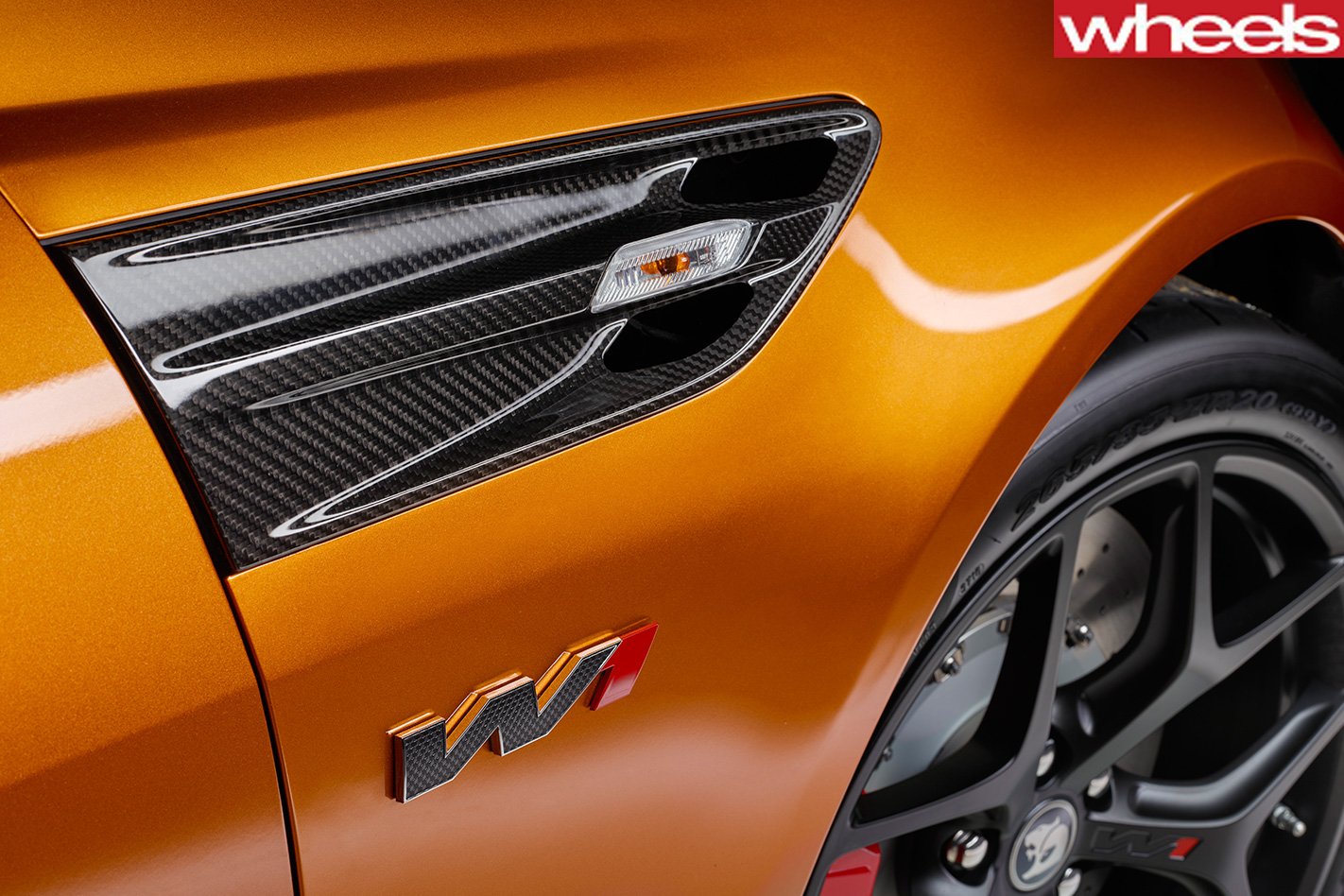
While the exterior applications are purely aesthetic, the air intake required something more exotic given the engineering requirements. Space was limited, but engineers needed a certain amount of strength and heat resistance, but with material that was only 2.5mm thick.
Design chief Julian Quincey said using carbon had its challenges to ensure it met the strict heat and UV requirements.
“Carbonfibre is one of those frustrating bits of technologies that you see just about anywhere … but the reality of actually trying to deliver something that will maintain its shape, remain colourfast under the UV conditions we have here in Australia is extremely difficult,” he said.
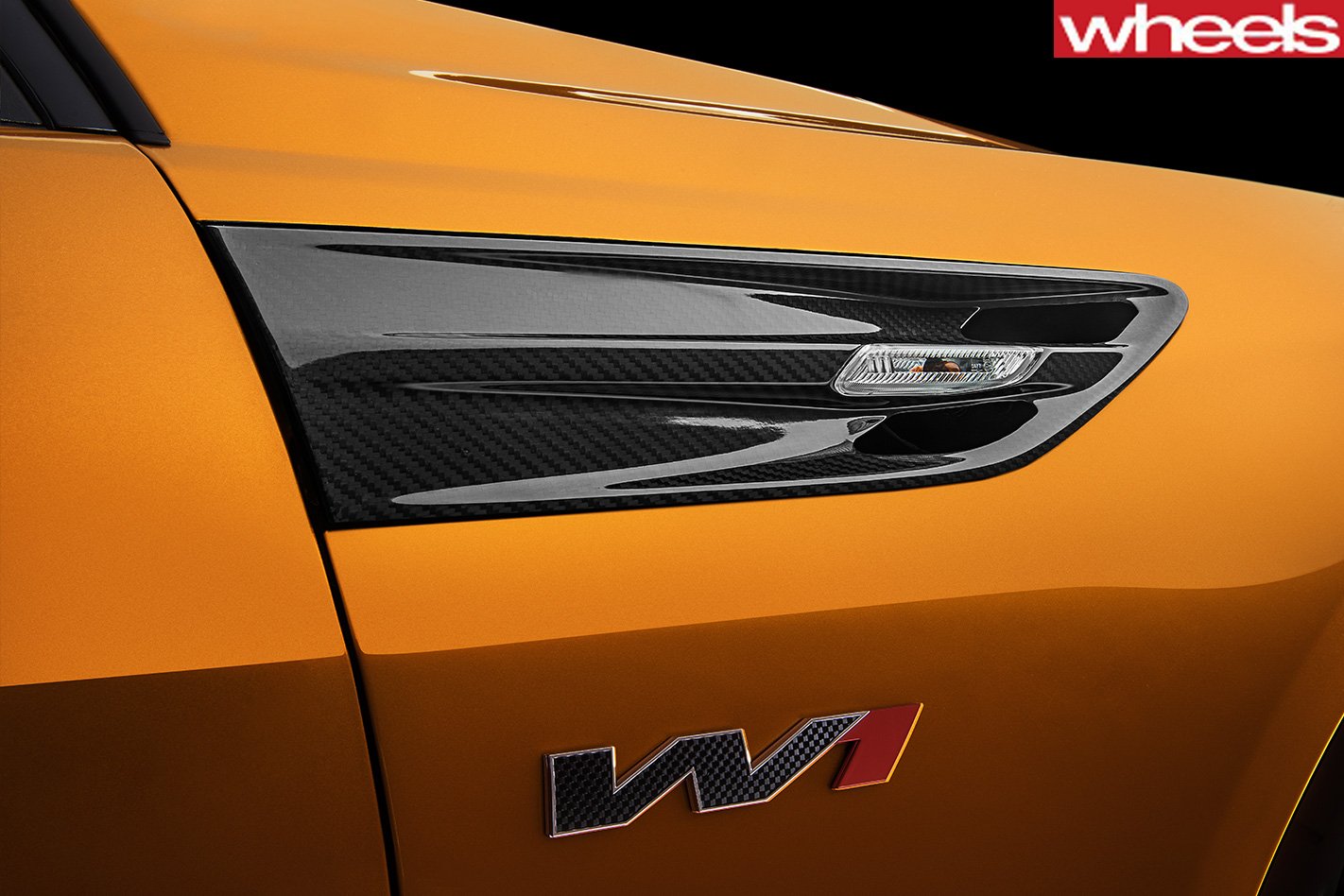
“We eventually ended up with the company that supply Ferrari,” he said. “We’ve tested the product but we also know that Ferrari are not going to be selecting second-rate suppliers.”
He admitted it was “not cheap”, but that paying extra for a higher quality products would alleviate warranty issues down the track.
“We wanted to do it properly … we believe we’ve got a product that will stand up to sustained use.”
There were other supercars that provided inspiration for the HSV GTSR W1.
The quilted seats, for example, were inspired by those available in the Lamborghini Aventador and Aston Martin Vanquish.
And the plastic front guards came about when HSV managing director Tim Jackson noticed plastic guards on his wife’s BMW, something that “started the conversation” with engineers and designers.
“The guys have found a really good solution,” said Jackson.
Quincey designed a scale model with the wider, more sculpted guards and admitted he “thought it’d get knocked back” due to the cost of producing the parts.
He rates them as one of the best bits on the GTSR.
“They’re not actually that much wider … but there’s a beautiful Coke bottle shape … it looks incredibly muscular, aggressive.”
AUSTRALIA’S last-ever homegrown super-sedan range will bid farewell with a torrent of piping-hot V8s.
HSV’s 2017 line-up will not only see the revival of the long-rumoured GTSR badge – last seen on the ‘be-winged banana’ VS GTS-R in 1996 – but there will be a limited-run mega-sedan sitting above and beyond even the ‘regular’ HSV GTSR, called GTSR W1.
VIDEO: We hit the race track in the GTS-R W1
Packing the Chevrolet Corvette ZR1’s epic dry-sumped 6.2-litre LS9 supercharged bent-eight instead of the regular GTSR’s tweaked LSA unit, the W1 will justifiably sit right at the top of Australia’s balls-out, muscle-car hierarchy. And it won’t be just numbers on a dyno sheet either. While 474kW and 815Nm are worthy of their own cult worship, the W1 will back up this beef injection with a raft of upgrades to gearbox, suspension, wheels and tyres intended to ensure that it’ll be the closest thing we’ll ever see to a V8 Supercar for the road.
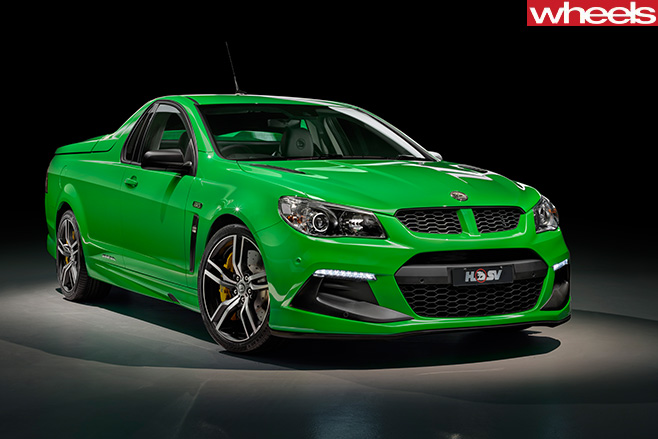
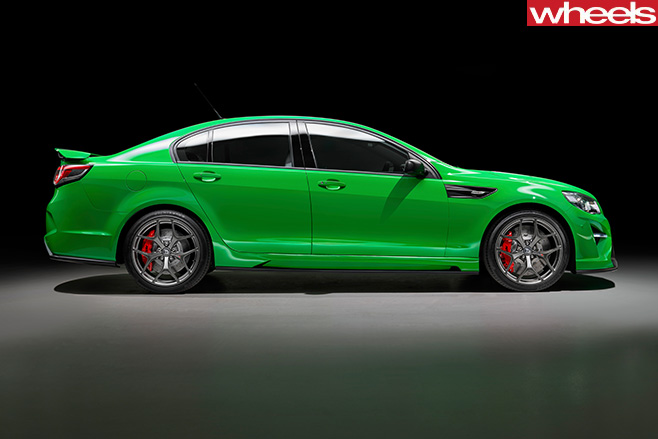
Inside GTSR sedan and Maloo GTSR, HSV’s excellent seats receive Alcantara inserts with diamond-quilted stitching and leather outer bolsters, in conjunction with a new start-up screen for the ‘Driver Interface’ set-up, also fitted to MY17 GTS.
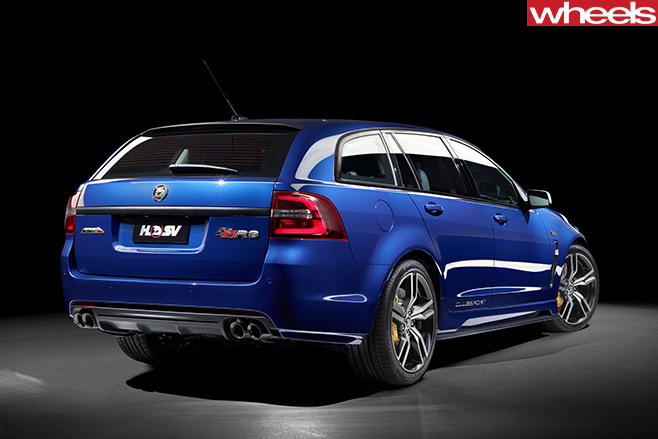
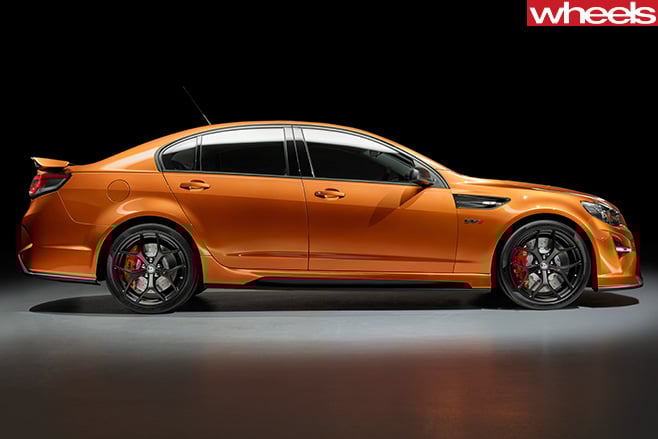
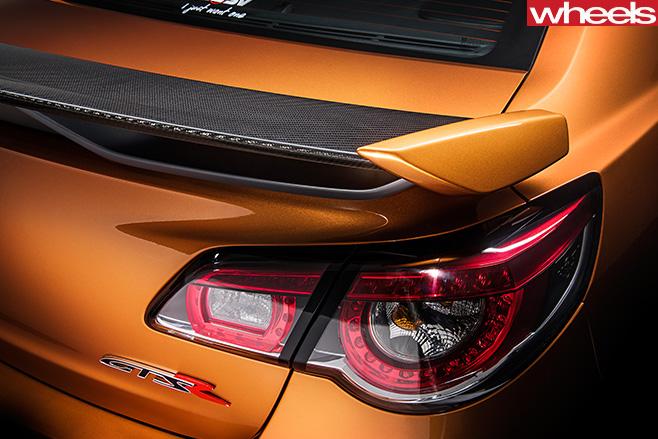
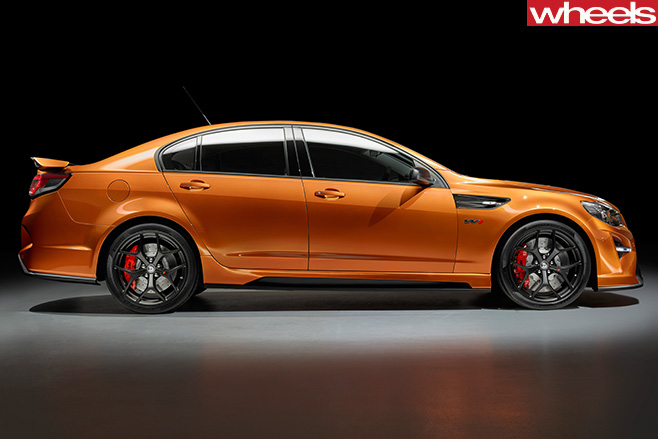
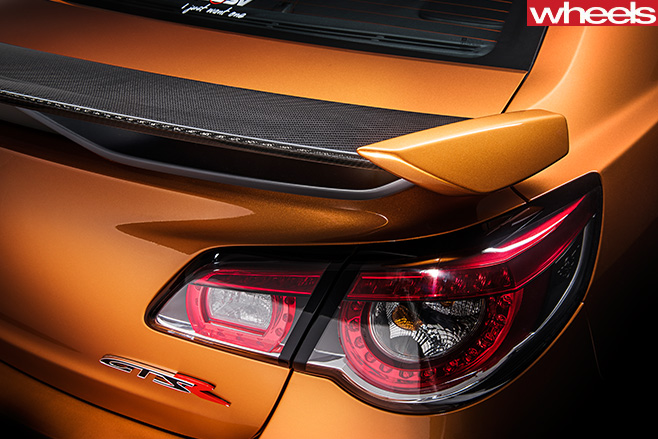
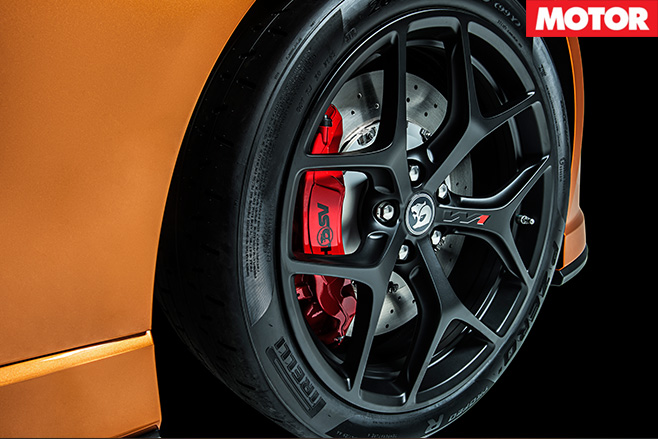
Visually, the W1 builds on the already-smokin’ GTSR with a few subtle but worthwhile extras. Additional ‘W1’ front guard and bootlid badges, a unique “carbonfibre-upper” rear spoiler, matte-black for the scalloped section of the side skirts, and unique tyres for the 20-inch forged wheels shared with GTSR – Pirelli P Zero Trofeo R rubber measuring 265/35R20 up front, 295/30R20 at the back (instead of 255/35 front and 275/35 rear).
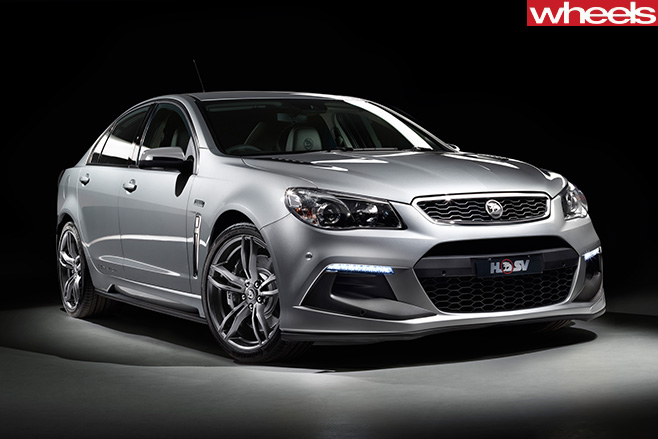
With a retail sticker of $169,990, the W1 is even more expensive than the exxy 7.0-litre W427 from 2008. But no matter the cost, this LS9 beast will fly out the door. Sales begin February 1 with production starting early April. As one of the most hardcore four-doors ever produced by a GM brand, it’s a fitting send-off to Australia’s fastest-ever car.
Pick an adjective, any adjective. Because the GTSR W1 will fit the description.
It’s the fastest, dearest, most powerful and most track-focussed locally made car we’ve ever seen. It’s probably, after the Falcon GT-HO Phase III, the most collectible production car ever made here, too.
See, the W1 is HSV’s final local battle cry. It’s the car that HSV wants us to think of when we recall its cars of the past; the ones that were made right here in Australia.
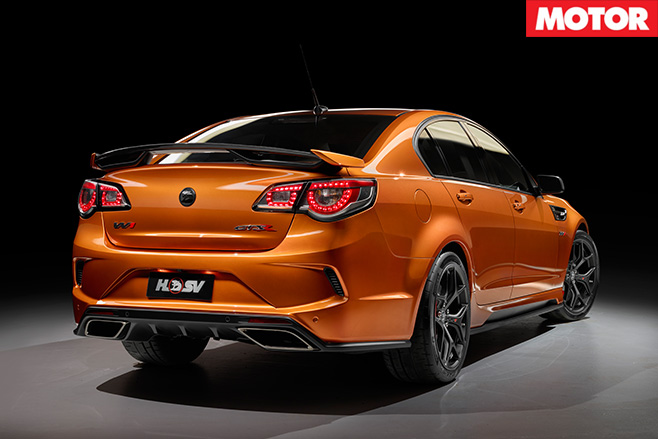
Tyres are a risky choice, with R-Spec Pirelli Trofeos promising lots of grip in the dry, lots of puckering (yours, not theirs) in the wet. You also get lots and lots of alcantara inside (including the tiller and gear knob). But it’s what’s under the skin that really makes the W1 one for the record books.
The LSA has been diced and in its place goes an LS9, still 6.2 litres but with a bigger, 2.3-litre blower and 474kW and 815Nm. The power hike is partly to do with the internal changes and partly by being able to rev it to 6600rpm.
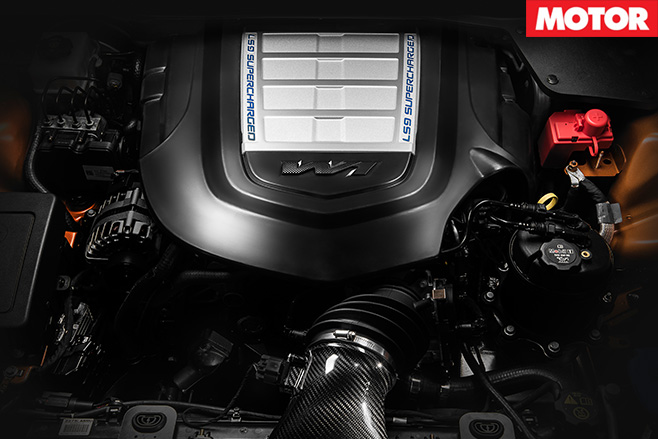
There’s a 47 per cent bigger (over the LSA) intercooler which uses a front-mounted heat-exchanger and gets its own, dedicated cooling system rather than tapping into the engine’s coolant path.
The W1 also gets an OTR air intake and a set of ceramic-coated headers and two-and-a-half inch stainless exhaust system with a recalibrated bi-modal valve.
Only 300 W1s will ever be built and they’ll carry a price-tag of $169,990. And, yes, you’re probably already too late.
To read more on HSV’s 2017 range click here.
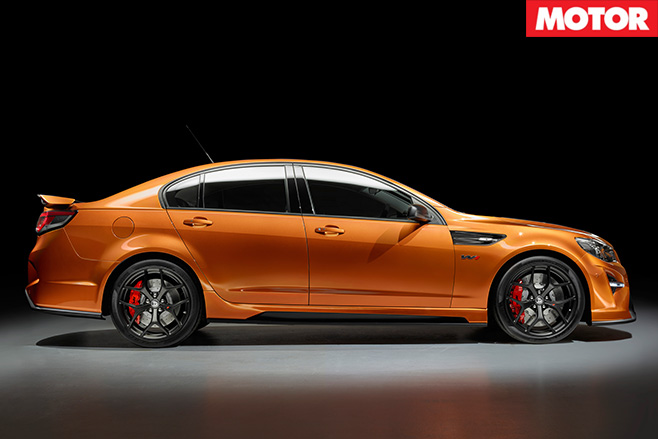
LONG before the W213 Mercedes-Benz E-Class went into production, Mercedes-Benz set out to convince the world a technology superstar was about to be born.
There was, this strategy implied, a brain-swelling amount of innovative excellence packed into the new E-Class. More, even, than in the still-youthful and higher ranking Mercedes-Benz S-Class.
Inevitably, many of the new E-Class’s advances rely on digital technology. There are programs, processors and sensors behind so much that this car can do, and Mercedes-Benz clearly has invested immense effort in engineering and developing them.
The E-Class’s handling is confident and capable, though this isn’t a car that does exciting intimacy. But behind its haughty remoteness from the driver, there’s a lot of fundamentally sound and nicely polished engineering. The effectiveness of its ESC and ABS, for example, point to expert and painstaking calibration work.
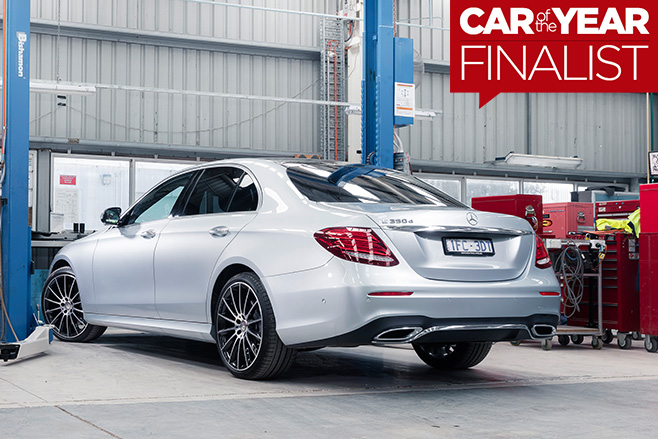
Among them, the twin-turbo 3.0-litre V6 of the E400 stood out for its sometimes eerie silence. The new-generation 2.0-litre turbo-diesel in the 220d is also remarkable, and not only for the 7.4L/100km consumption we recorded. As well as seeming to reset the refinement benchmark for its class a notch higher, this diesel also equals or bests the new E-Class’s turbo 2.0-litre petrol fours.
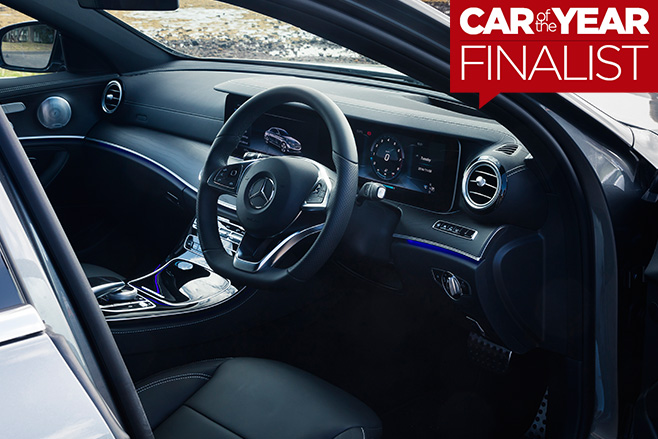
There’s very little else to dislike inside the new E-Class. Even better than the S-Class, thought some. Mercedes-Benz Australia’s decision to equip every model with the luscious Widescreen Cockpit display certainly lifts the techno-tone, but this car also gets so many of the mundane things right.
