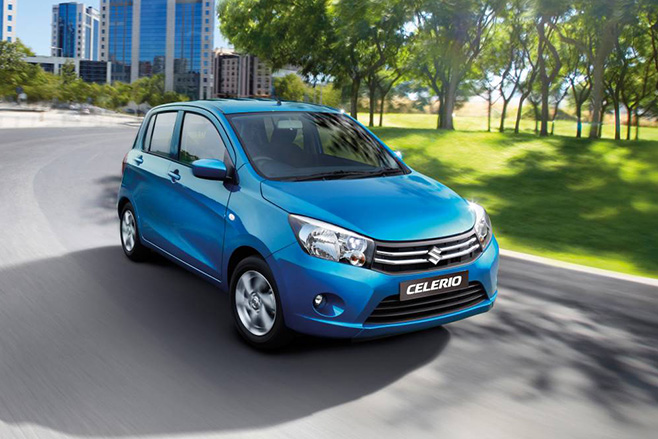
SUZUKI CELERIO Power: 50kW
Tiny 1.0-litre three-cylinder engine makes some nice noises for an econobox, but it needs plenty of revs to make its best. Fortunately the lightweight Celerio body makes for respectable if not scintillating fun.
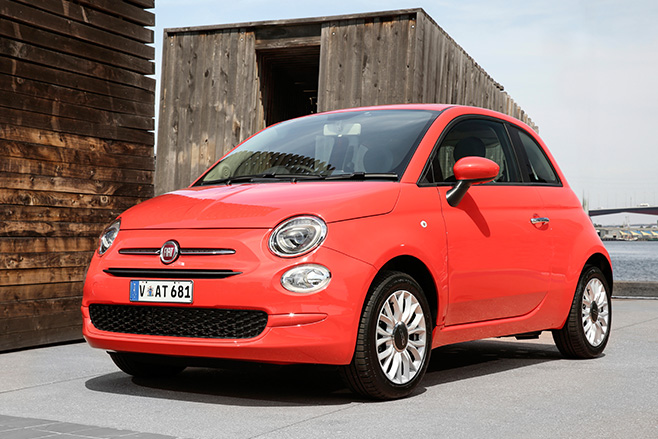
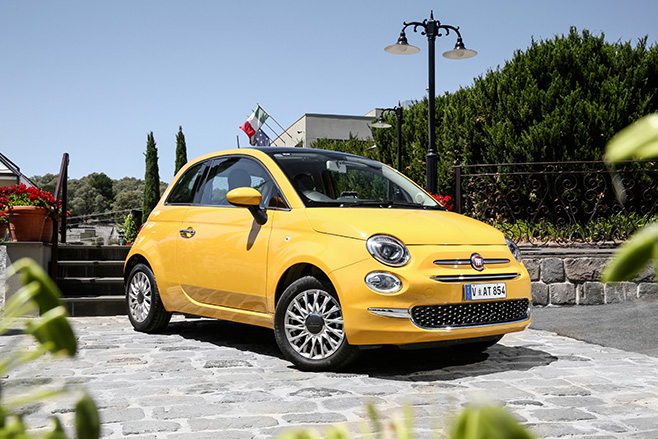
FIAT 500 POP Power: 51kW
Ancient 1.2-litre naturally aspirated four-cylinder has decent torque and well-matched gear ratios. But it could do with more pizazz and spark, especially at the top of its rev range.
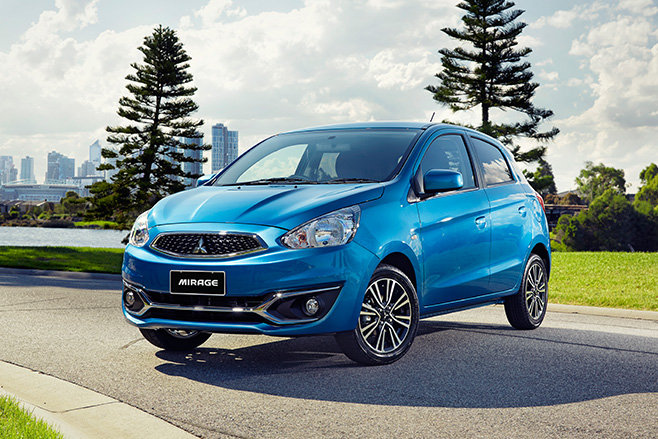
MITSUBISHI MIRAGE Power: 57kW
It’s more about the value and price than driving excitement. The throbby three-pot 1.2 atmo makes the right noises, but there’s not much in the way of punch associated with it.
PEUGEOT 2008 ACTIVE Power: 60kW
Efficient and loaded with character, but the atmo triple is lacking when you want to get up it. Fortunately the 2008 is clever and spacious inside, making for a good-value small SUV.

FIAT 500 LOUNGE Power: 62kW
Just two cylinders work hard to produce 62kW, but it’s the stout 145Nm that defines the Fiat 500’s 0.9-litre turbo. Economy looks good on paper but doesn’t translate to the real world.
The following two months will see a number of new cars either make their Aussie debuts or receive a major update, with the bulk of that activity focused on the ever-swelling SUV market.
There will be SUVs of all sizes going on sale between now and the end of February, kicking off with the pint-sized Suzuki Ignis that launches here next week. Suzuki’s chunky-styled compact crossover will also go up against the updated Holden trax in the small SUV segment, while Audi Q2, launching late Feb, will be a more premium offering than those two.
Joining the Q2 in Audi dealers will be the Q7 e-tron plug-in hybrid, which will compete against the Mercedes-Benz GLE plug-in that’s also arriving over these two months.
Peugeot’s all-new 3008 promises to deliver sales success for the French brand, which has struggled in recent times for compelling SUV product. Ford’s Kuga, meanwhile, will receive a modest update which will see it change name from Kuga to Escape.
Volkswagen’s recently-launched Tiguan mid-size SUV will also gain a high-performing 162TSI variant in late January.
As far as non-SUV arrivals are concerned, the Mazda MX-5 RF will add a retractable hard-top option to the fun-to-drive convertible’s model line-up. The Audi S4 launches at the start of February too as the sports-oriented version of Audi’s medium-sized luxury sedan.
New car variants on sale January – February 2017
- Audi Q2 and Q7 e-tron
- Ford Kuga facelift/rebrand
- Holden Trax facelift
- Honda Civic hatch
- Kia Rio
- Maserati Levante and Quattroporte facelift
- Mazda MX-5 RF
- Mercedes-AMG C63 S Cabriolet
- Mercedes-Benz E300, E400 4matic, E350e and GLE-Class plug-in hybrid
- Peugeot 3008
- Volkswagen Passat Alltrack Wolfsburg
This is the first time there’s been a ragtop version of the AMG-badged C-Class, offering a four-seat open-roof theatre to drink in that sonorous 375kW/700Nm 4.0-litre twin-turbo V8. With a 0-100km/h time of about 4.1 seconds, the roof-up to roof-down sprint takes less than five times longer and at speeds of up to 50km/h. If your budget won’t stretch to the expected $170,000 price tag, there’s a milder, cheaper C43 version on the way.
The Hollywood icon-cum-racing driver was still racing Ford Mustangs in anger at 70.
First published in the July 1995 issue of Wheels magazine, Australia’s best car mag since 1953.
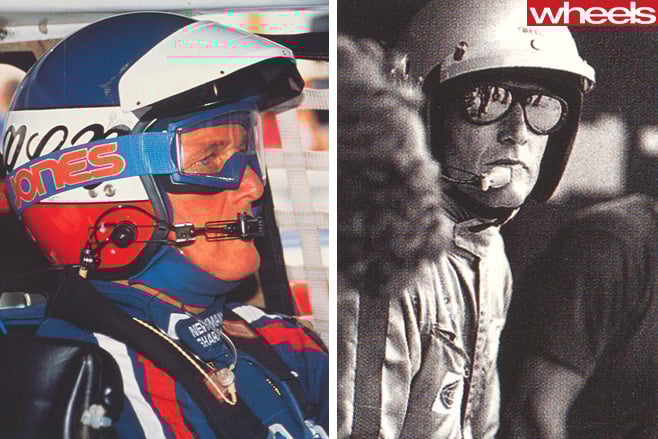
The eyes are still blue, the hands still cool, and Paul Newman is winning at Daytona in a 300 km/h Mustang-on his 70th birthday.
The eyes, ocean blue, are as piercing as laser beams. Even behind the racing facials, there’s no mistaking their owner. Paul Newman is doing what he loves best – driving a race car. At age 70.
The date is February 4, 1995, and he’s at the Daytona International Speedway, wrestling with a 485 kW Ford Mustang. Not in some private, closed-track session or some tame, bumper-car celebrity event. No, he’s racing for real. Charging hard in the Daytona 24-hour classic against works Ferraris and Kremer Porsches. Up against drivers such as Michele Alboreto and Stefan Johansson. And leading his class.
 Victor, Mature – July 1995
View this article in its original format in the archive.
“Forget that he’s Paul Newman. For any 70-year-old guy to come here and compete at a world-class level, against these kind of drivers, and hold his end up like this, is phenomenal,” says Newman’s 28-year-old team-mate Tommy Kendall.
“Most other 70-year-olds I know would expect you to give them a hand getting into a car, not watch them drive it at 300 km/h.”
But racing is in Newman’s blood. It’s part of his soul. He got hooked back in 1968 while preparing for the film Winning. At age 44,he signed up for Bob Bondurant’s Phoenix race school – ostensibly to ready himself for the role – fell in love with the sport, started racing professionally three years later and has been winning ever since.
He has racked up more than 60 wins in his career, taken two major US national championships, finished second outright at Le Mans and driven everything from a Datsun 510 1.6 tin-top to a 560 kW Group 5 Porsche.
A monster of a car, it has nervous, flick-switch power steering and a tendency to switch ends if you’re anything less than super-sensitive on the throttle. Definitely not what you need when you’re travelling at more than three miles a minute.
Newman’s other co-drivers are NASCAR stocker Mark Martin and close ‘buddy and a one-time stunt driver Mike Brockman.
“This car holds your attention,” says Brockman. “On the Daytona banking we’re doing around 300 km/h. The steering is too light, it’s almost impossible to get comfortable and it oversteers when the fuel load gets light.”
Brockman and Newman hatched the Daytona plan together. Hollywood soap actor Craig T Nelson had already entered the 24-hour race with his Lexus-powered World Sports Car racer. Nelson offered Brockman a test drive just before Christmas and suggested he bring Newman along for the ride.
“So we went to Daytona to drive the car, and actually went pretty quick in it, so Craig T invited us to run in the 24 hours. On the flight home, Paul kept telling me how he’d love to do the race. He couldn’t do it in an open car because if Joanne (Woodward, Newman’s wife) got wind of him racing a convertible, as he calls them, she’d kill him! I said, ‘Don’t worry, there are plenty of other options’.”
Newman pondered on these options over Christmas. Three days into the New Year, he called Jack Roush and asked whether a winning team could be put together in time for the race, just 34 days away. Roush told Newman it could be done.
As things turned out, Newman sat in the finished car for the first time just two days before race day at a shakedown session in Savannah, Georgia. He had time for just 20 laps and a quick tour of the switchgear. Then the car was taken to Daytona.
Sitting on the Daytona grid, there’s no mistaking who is the driving force behind the Roush Mustang. The car’s number – 70 – marks the birthday of its star driver, the Nobody’s Fool logos on the flanks advertise Newman’s latest film (Paramount having provided the bulk of the sponsorship).
Roush is keen for Newman to start the race, but he declines. It’s left to the young hotshoe, Kendall, to put some early miles under the Mustang’s tyres. Two-and-a-half hours later, it’s Newman’s tum. The light is fading. It’s the twilight shift. And he has done only enough laps to find out which way the turns go.
“Paul started his drive during the toughest time,” says Kendall. “It’s never as tricky as when the sun is going down. Coming off the Turn Four banking, you can’t see the track, it’s just glare, and that’s the fastest part of the track. You’re doing around 190mph.”
Newman takes it in his stride. The team’s race-plan calls for 1min 58 sec laps, and he’s bang-on, straight away, like clockwork. Keeps right on the pace, stays out of trouble. Lap after lap, he powers the brutish Mustang round, brisk but consistent. He drives for two hours, then sleeps.
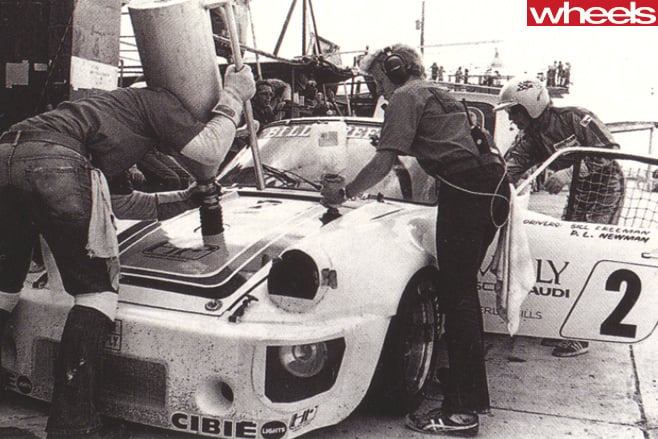
The excitement builds 50 minutes before the end. It looks like the Mustang is going to win the GTS class and finish third overall. Martin is in the hot seat, and things are going just fine. Half an hour passes without drama.
Martin brings the Mustang in for its final pit stop. Twenty minutes to the flag. The last laps belong to Newman. He squeezes in through the open window, tightens the harness and powers the big Ford back onto the track. There’s uproar in the Roush pits when Newman takes the chequered flag. As he steers the car into the victory lane, the crowd starts singing Happy Birthday.
“I’m pretty sure Paul was glad he was wearing his sunglasses when they started that,” says Brockman. Jack Roush finds it difficult to express his admiration for Newman.
“He’s that prototype for all us middle-aged guys who want to keep doing the things we want to do forever. He’s living the impossible dream. He’s … ageless.”
Also watching is one-time F1 driver Derek Daly: “I was in the Roush pits as Newman climbed aboard to drive to victory, and I had goose-pimples all over. Here was the oldest man ever to win at Daytona. If I even get close to emulating what he has done here today when I’m 70, I’ll be absolutely delighted.”
A fortnight later, at the Indy car series opener in Miami, I get to talk to him. Newman-Haas is without Nigel Mansell for the first time in two years, his place taken by Michael Andretti. Newman doesn’t like interviews. Not that he dislikes talking to the media, he just dislikes talking about himself.
And he hates being treated as a movie star. He’s hard on his fans, too. He stopped giving autographs years ago after a man accosted him, pen and paper in hand, while he was taking a leak at Sardi’s, the posh LA restaurant. The warm, happy-snap photo-opportunities with fans also came to an abrupt halt after a palpitating woman thrust her pet poodle into his hands and demanded Newman pose for a picture. “Enough, enough,” he said at the time.
I don’t recognise him at first. He’s in the Newman-Haas pit, chatting to the crew. Faded jeans, scruffy tennis shoes, old sweat-shirt, tufts of thinning white hair sprouting out at each side of his baseball cap.
He’s taller than I’d imagined. Wiry-thin, but muscular. It’s only when he smiles that he becomes unmistakably Newman. The same wide-open smile of Cool Hand Luke or Butch Cassidy. Warm, inviting, magical.
I’ve been warned that he’s a tough interviewee. Prone to long, distant blue stares and silences you could grow old in. And when the answer comes, it’s often monosyllabic, usually unfinished. As one of the team’s sponsors quips: “Ask him the time and he needs to call in the scriptwriters.”
The meeting is unscheduled. “Paul Newman doesn’t come to race meetings to do interviews,” says the team’s ferocious PR man. Yet when I put my hand on Newman’s shoulder, he looks round and flashes me one of those killer smiles. Can we talk? No problem.
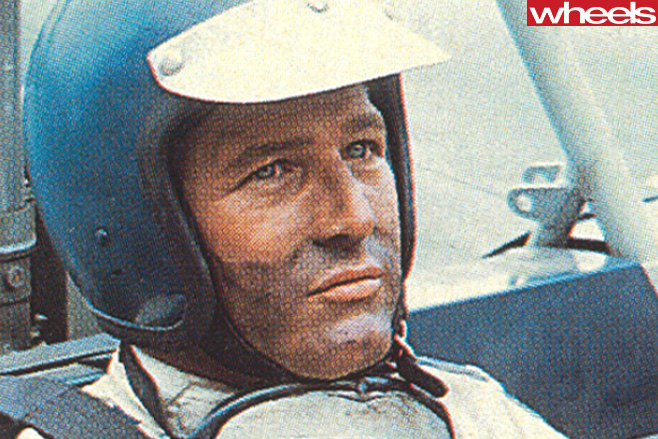
Finally he answers. Slowly. “It’s got to be close to the top. Or the closest thing I can think of.”
How did Daytona compare with Le Mans?
Again, a distant stare, a long pause. “Le Mans was great for me, but winning is winning and I’ll take that any time.”
What was the most exciting part of the Daytona race?
Again, a long, long pause: “I reckon the best part was not hitting anything or anybody.”
There’s that big smile again. It’s as if he uses the long pauses to try to con-jure up some off-beat one-liner.
I press on. So, when he went to Jack Roush with the idea of doing Daytona, did he honestly think he’d end up winning?
“No, but Jack said if we did win, would he get a part in my next film? I’m kidding. Bad joke.”
Away from the public glare, Newman’s humour and practical joking are legendary. There was the time he had Robert Redford’s Porsche crushed and the metal block wrapped in a bow and left in the hallway of Redford’s house. And the time he dynamited Robert Altman’s golf cart. He once paid a studio hand to take a cutting torch to director George Roy Hill’s new sports car, just to see his expression.
He doesn’t really want to talk about his own road cars. But Mike Brockman tells me he wouldn’t be seen dead driving some ego-boosting Ferrari or Roller.
“He drives a Volvo Estate. A 960. Grey with dull grey wheels. It looks bone stock … apart from the 300hp Buick GNC turbo motor under the hood. Boy, is it quick!
“We’re trying to figure out what the next one will be. He’s thinking about another Volvo. But this time with a Ford modular V8. The 4.6, supercharged with a nice six-speeder.”
I suggest to Newman that after his success at Daytona, per-haps he should be driving in the Miami Indycar opener, too.
“Are you kidding? The first lap I’d put it in the drink.”
But he admits that he has tried out his race cars from time to time. “Yeah, I’ve driven them. But I was way over my head. To drive those cars fast, to drive them on the edge, takes a whole different kind of skill.”
Had he not become an actor, would he have liked to have been profession-al racing driver?
Again, the distant stare.
“I think I got into racing at exactly the right time. I work at a job that I have a lot of fun at. This is just an extraordinary bonus that I came upon late in life. And I’ve had a wonderful time pursuing it.
“I love racing, because it’s very different from Hollywood. It’s the competition I enjoy. In acting it’s hard to say that someone is better than someone else. But racing is much more clear-cut.”
Could he have become a major-league driver, perhaps an Indycar champ, had he started earlier?
“No way. I don’t think I could have been quick enough to be really competitive. Even if I had started at 18.”
Veteran racer and close friend Sam Posey thinks differently.
“The reason I think he could have been great is his commitment. And I can only assume that if he brought the same level of commitment to racing as he brought to acting, you would have seen a similar kind of career. He’s so consistent. He reads the car so well and sets it up well, too. That and his concentration.
“Actors, particularly actors with stage experience, can concentrate with-out an extraneous thought for long periods of time. That’s the key to racing, too. That’s why he became so good so quickly.”
So when does Newman next plan to get into a racing car? Perhaps Daytona ’96? At age 71?
“I don’t think so. They say you should leave the party when it’s at its best, so I don’t think I’ll go back. Now is a good time to leave. A very comfortable time for me to get out.”
He pauses again. Looks down at his feet. Nods his head gently, then breaks into a big smile. There they are again, those big, beaming blue eyes.
“You know, I’ve been giving serious thought to taking up football … “
Want to read more classic tales? Visit the Wheels Archive – simply log in here using your existing MagShop account or create a FREE account and select this article from the homepage.
Don’t have a MagShop account?

Have a MagShop account?

THIS year marks half a century since Donald Campbell died in the jet-powered hydroplane Bluebird K7. He was attempting to break the water speed record he’d set in Australia three years earlier.
Campbell had followed in his father Malcolm’s footsteps, making land- and water-speed attempts in record-breakers all named Bluebird. His road cars were painted the same pastel blue – a Jaguar XK and E-Type, a Bentley 4 1/4 Standard, and even a Land Rover support car.
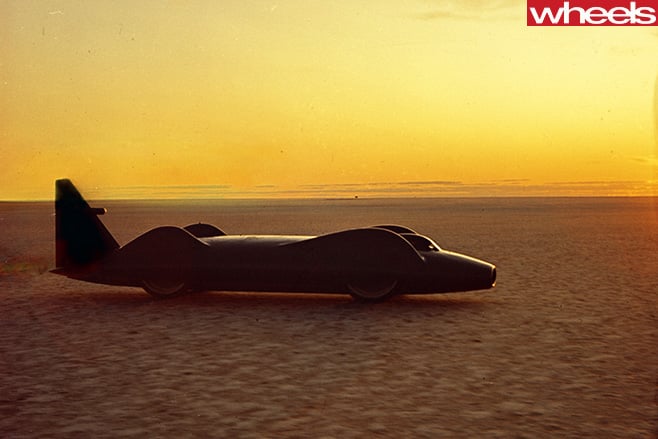
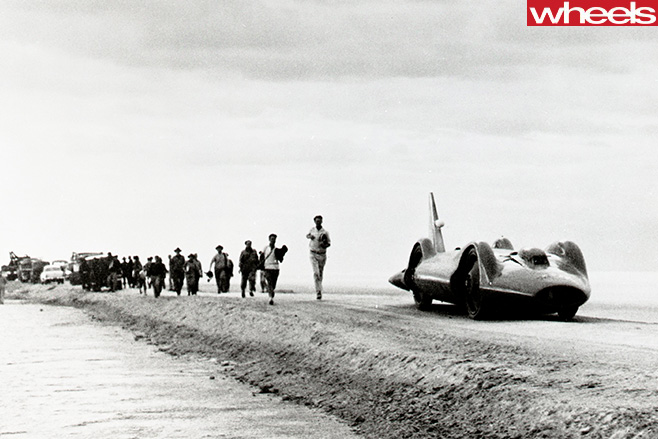
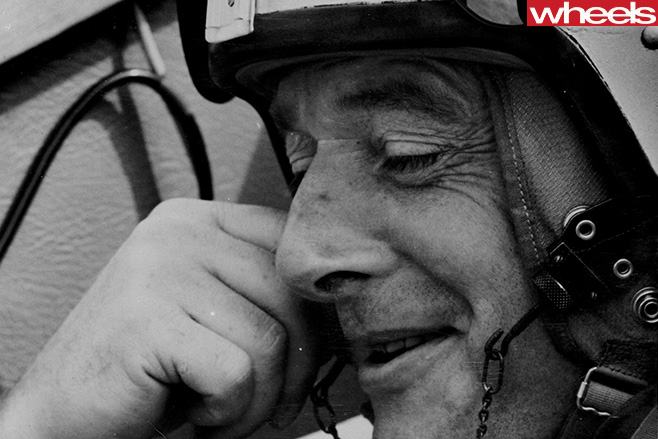
The 50th anniversary of Campbell’s death was marked with a series of events in Coniston, attended by Campbell’s daughter Gina, herself a water-speed champion.
Fans hoped Bluebird K7 would be restored in time for the occasion, but the project continues to edge towards completion. One day, it’s planned that Bluebird will again power across the lake that claimed Campbell’s life 50 years ago.
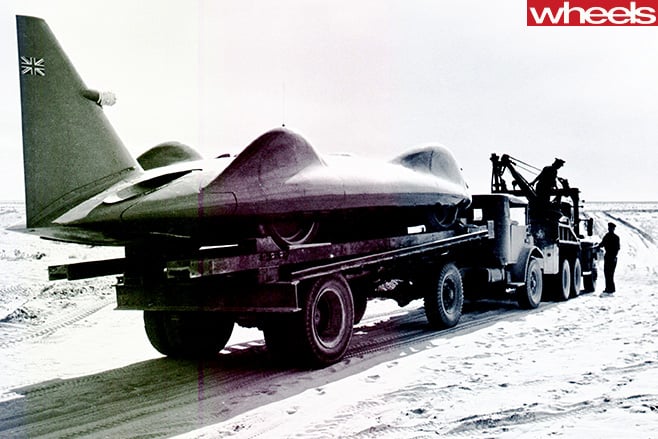
Deeply superstitious and with a hatred of the colour green, Campbell never referred to Evan by his surname, instead calling him “Mr Blue”.
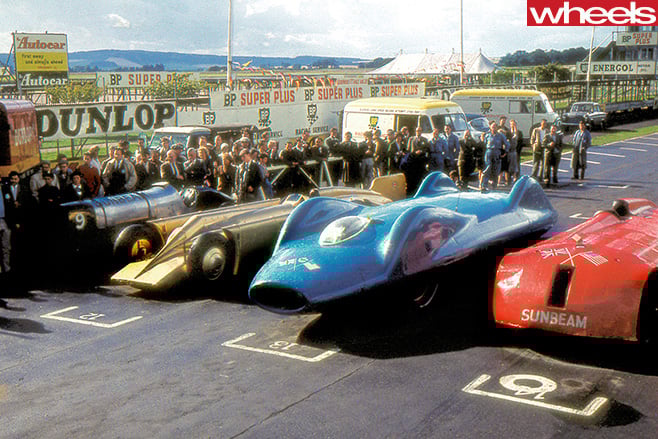
The water speed record Campbell had set on Lake Dumbleyung was broken the same year he died, by American Lee Taylor. It was subsequently twice bettered by Australian Ken Warby; Spirit of Australia’s 1978 record of 511.12km/h stands to this day.
Toyota’s just-announced Yaris update may not be the most adventurous revision of the brand’s compact city hatch, but in amongst the news of tweaked body plastics and enhanced safety spec was one tantalising nugget: confirmation of an impending performance-oriented variant.
Slated to make its first public appearance at the Geneva auto show in March, the as-yet unnamed Toyota Yaris hot hatch will produce a stout 157kW of power. That, plus the images shown here, is all of the information that’s been released on the car to date.
We’ll find out more at Geneva, but with a power output in the mid-100kW region it’s almost guaranteed that there’s a turbocharged four-pot lurking under the Yaris’ bonnet – a first for Toyota’s city-sized hatch.
That power output would put it in competition with sport-tuned light hatch heroes like the Volkswagen Polo GTI, Renualt Clio RS, Ford Fiesta ST and Peugeot 208 GTi. As with those models, we can expect a bespoke suspension tune for the turbo Yaris as well. The unique wheels, more aggressive bodykit (scope that central exhaust exit) and large tailgate spoiler will add some visual flair too.
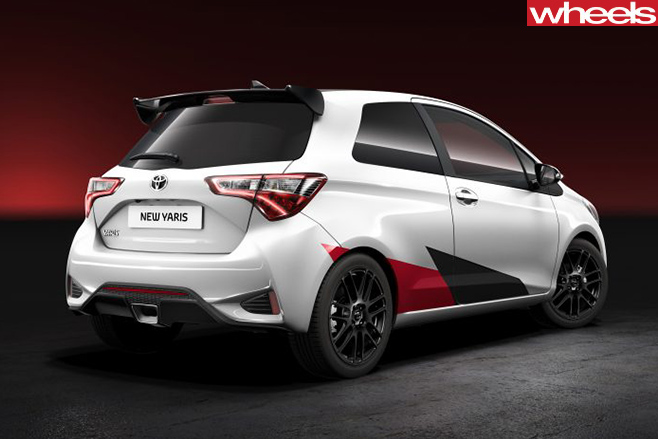
It would also be the first compact Toyota to sport a turbo since the Starlet GT of the 1990s, which toted a turbocharged 1.3-litre making 99kW, but never went on sale in Australia.
Like the Japan-only Starlet GT, a local release for Toyota’s latest hot hatch isn’t assured either.
Expected to go on sale in Europe following its Geneva debut, the souped-up Yaris will leverage the motorsports profile of its WRC-bound counterpart to rev up Toyota fans.
Continental Europeans may be the only ones who get to enjoy its delights, however. Not only is the car depicted a three-door – a bodystyle that was chopped from the local Yaris range in 2014 – but its left-hand drive configuration means a right-hook version isn’t guaranteed.
Wheels is investigating whether Toyota’s local operation can find a way to bring the hotter Yaris to our shores, but with the only other moderately exciting car in Toyota’s local line-up being the decidedly less practical 86 coupe, our fingers are crossed for a turbo Yaris.
ALMOST two million cars on Australian roads have been affected by the biggest automotive recall in history, according to the Department of Infrastructure and Regional Development.
The Takata recall has impacted an estimated 100 million vehicles globally, after the Japanese company’s airbag inflators were linked to at least 16 deaths worldwide, including 11 in the U.S. where the firm is facing federal charges.
Specifically, 1,989,104 cars across eight manufactures in Australia have been listed in recall notices.
The fault can result in plastic becoming shrapnel as the airbag inflates in the case of a crash, potentially killing the vehicle’s occupants.
Most of those that have died from the faulty airbags were involved in slow-speed crashes they may otherwise have survived.
“As at 13 January 2017, a little under 2 million Australian vehicles have been recalled across eight manufacturers due to potentially faulty Takata airbags,” a spokesperson for the Department of Infrastructure and Regional Development told WHEELS.
“The Takata airbag recall is of an unprecedented size with around 100 million vehicle affected worldwide.
“For this reason, the Department is working cooperatively with manufacturers to ensure that affected vehicles are rectified as quickly as possible.”
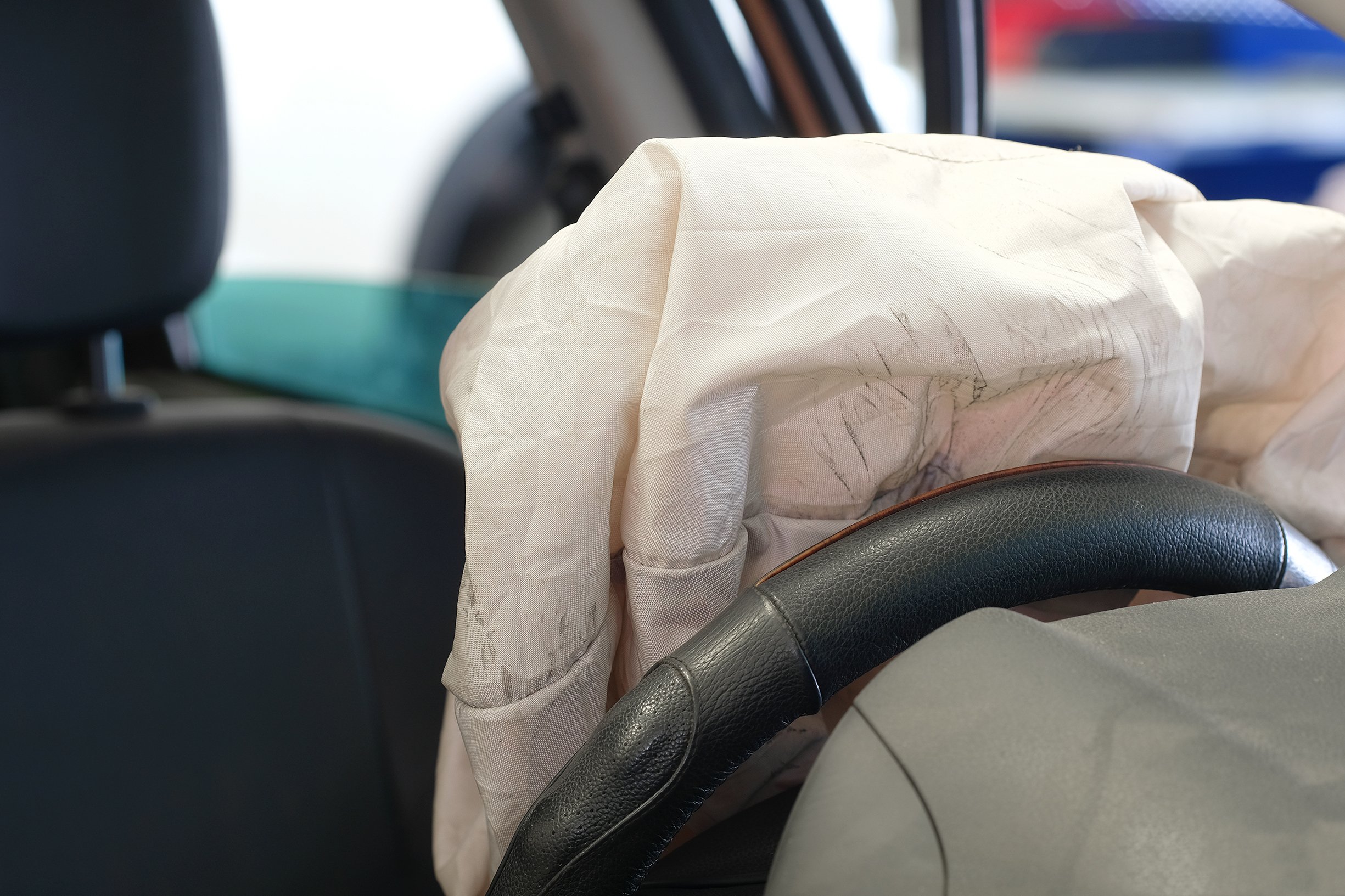
WHEELS requested a breakdown of numbers across all the affected manufacturers, but the Department was unable to provide specifics, “as this information may be commercially sensitive”.
The eight manufacturers who have issued recall notices are BMW, Ferrari, Honda, Mazda, Mitsubishi, Nissan, Subaru and Toyota.
A report by the Wall Street Journal claims Takata is poised to plead guilty to charges laid by the US Justice Department as part of a $1.3 billion (US$1bn) settlement.
The settlement will allegedly be separated into a criminal fine, victim compensation and reimbursement to manufacturers who have suffered commercial losses from the unprecedented recall.
Almost 2 million cars sold in Australia have been recalled across eight manufacturers due to a potentially fatal fault with safety airbags.
The Takata airbags are subject to an unprecedented global recall affecting more than 100 million vehicles, including 1,989,104 cars in Australia from eight manufacturers including BMW, Ferrari, Honda, Mazda, Mitsubishi, Nissan, Subaru and Toyota.
The federal Department of Infrastructure and Regional Development says it is working with affected manufacturers to ensure that vehicles are rectified as quickly as possible.
WhichCar requested a specific list of vehicles from the Department, but a spokesman said it was unable provide a breakdown of specific models “as this information may be commercially sensitive”.
The recall affects cars up to 20 years old, so owners of vehicles from the eight manufacturers should get in touch with their local dealer or the manufacturer to see if their car is affected.
Cars do not have to be under warranty to have the problem fixed without cost.
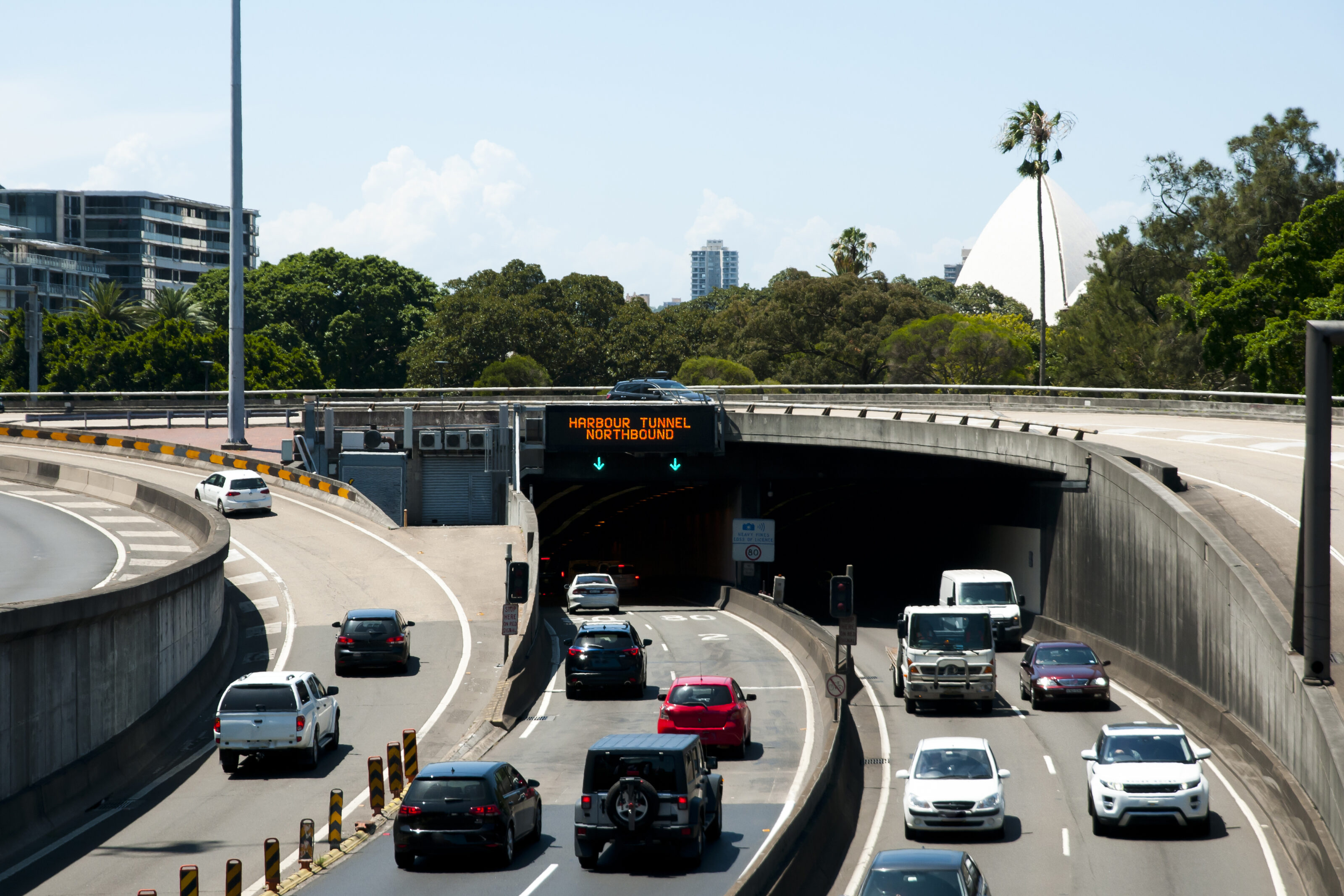
Takata airbags have been subject to a number of recalls around the world, including a significant one affecting dozens of models in Australia in August last year, after they were linked to 16 deaths.
Eleven of these were in the US where the Japanese company is facing federal charges.
The fault can result in plastic becoming shrapnel as the airbag suddenly inflates in a crash, potentially killing the vehicle’s occupants.
Most of the victims of the faulty airbags were involved in slow-speed crashes they may otherwise have survived.
A Wall Street Journal report claims Takata is poised to plead guilty to charges laid by the US Justice Department as part of a $1.3 billion (US$1bn) settlement.
The settlement will allegedly be separated into a criminal fine, victim compensation and reimbursement to manufacturers who have suffered commercial losses from the unprecedented recall.
You would assume when diving hard on the picks at highway speed – with AMG’s ABS smarts dispensing maximum retardation from multiple tyres of identical dimensions – that braking distances and characteristics would be nigh on identical regardless of the rubber fitted, right? Not so.
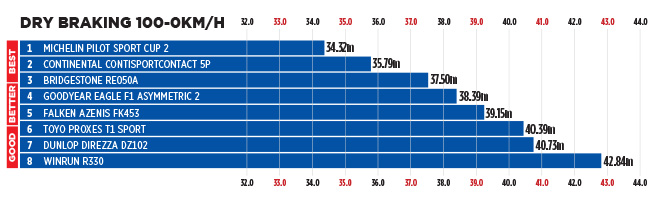
The spread of braking distances, across this field of eight competing tyre models, spans a whopping 8.52 metres! That’s an astonishing margin given it was the same car, same braking technique, same road surface and identical conditions.
In other words, the best tyre here might allow you to brake two car lengths later on circuit than the worst (presuming corner-entry speeds are identical). Or, hypothetically, if the Michelin’s 34.32m stop narrowly avoided collision with something solid, the Winrun’s 42.84m would see you ploughing through at a fair velocity.
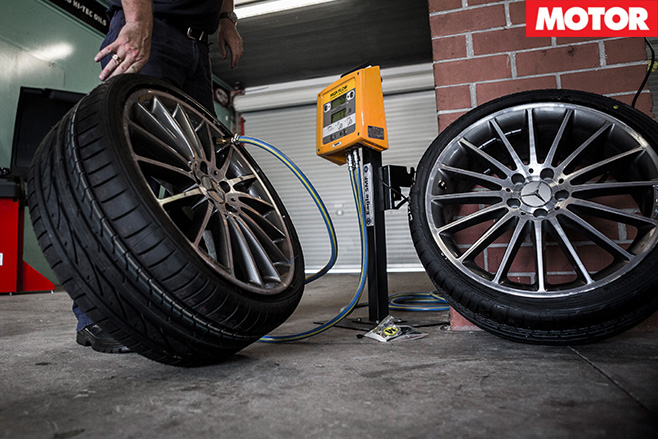
Of course, the initial higher-speed retardation is crucial to effective stopping distance, but tyre facets such as tread design, compound and, particularly, sidewall-design attributes play significant parts in lower-velocity ‘second-phase’ braking, particularly in respect to a tyre’s ability to help maximise ABS intervention.
The Michelin? “Just awesome,” Luff says. “Particularly in the second half of the stop.”
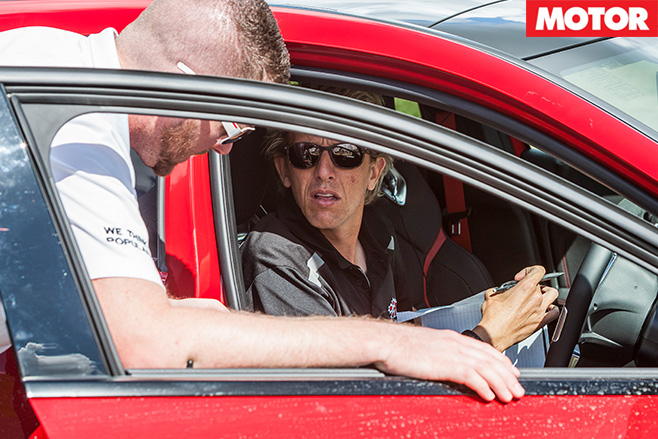
You have to add almost another two metres in distance to allow the Bridgestone, with its 37.50m stop, to arrest. That said, the Bridgestone was hardly a slouch given that the field average for 100-0km/h braking was, in general motoring terms, quite a handy 38.62 metres.
Marking the middle order, then, was the Goodyear, with an average of 38.39m, with the Falken’s 39.15m best not very far behind (or, to be technically correct in the case of emergency braking, further up the road ahead).
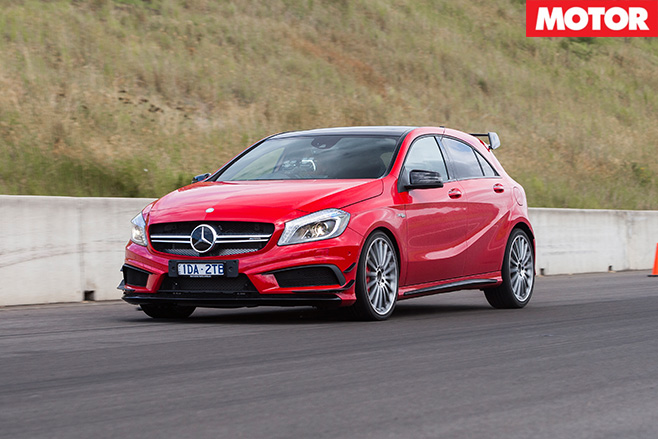
“The Dunlop leaves ‘chatters’ when the ABS is working overtime,” Luff says. You could see the broken rubber streak marks etched into the asphalt.
And how about the Winrun? Add an extra two metres to the Dunlop’s number, and then some.
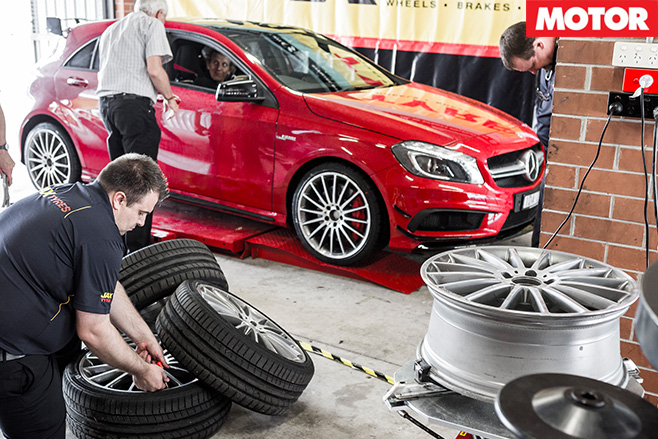
LINEAR REGRESSION: EXPLAINED While we strive to keep all variables under control during the Tyre Test, reality is we can’t. Things like surface temperature are out of our control, and in some cases, gift some tyres with an advantage. That’s why we run a control tyre throughout the day to gauge how much the changing conditions affect performance. We then use this information, combined with something called linear regression, to reveal how each tyre would perform if gifted the best conditions of the day. This puts all tyres on a theoretical level-playing field. And, after carefully going through due process this year, the only change to the finishing order was the Toyo jumped a place from fifth to fourth, swapping with the Goodyear.
MORE MOTOR TYRE TEST 2015
 SLALOM
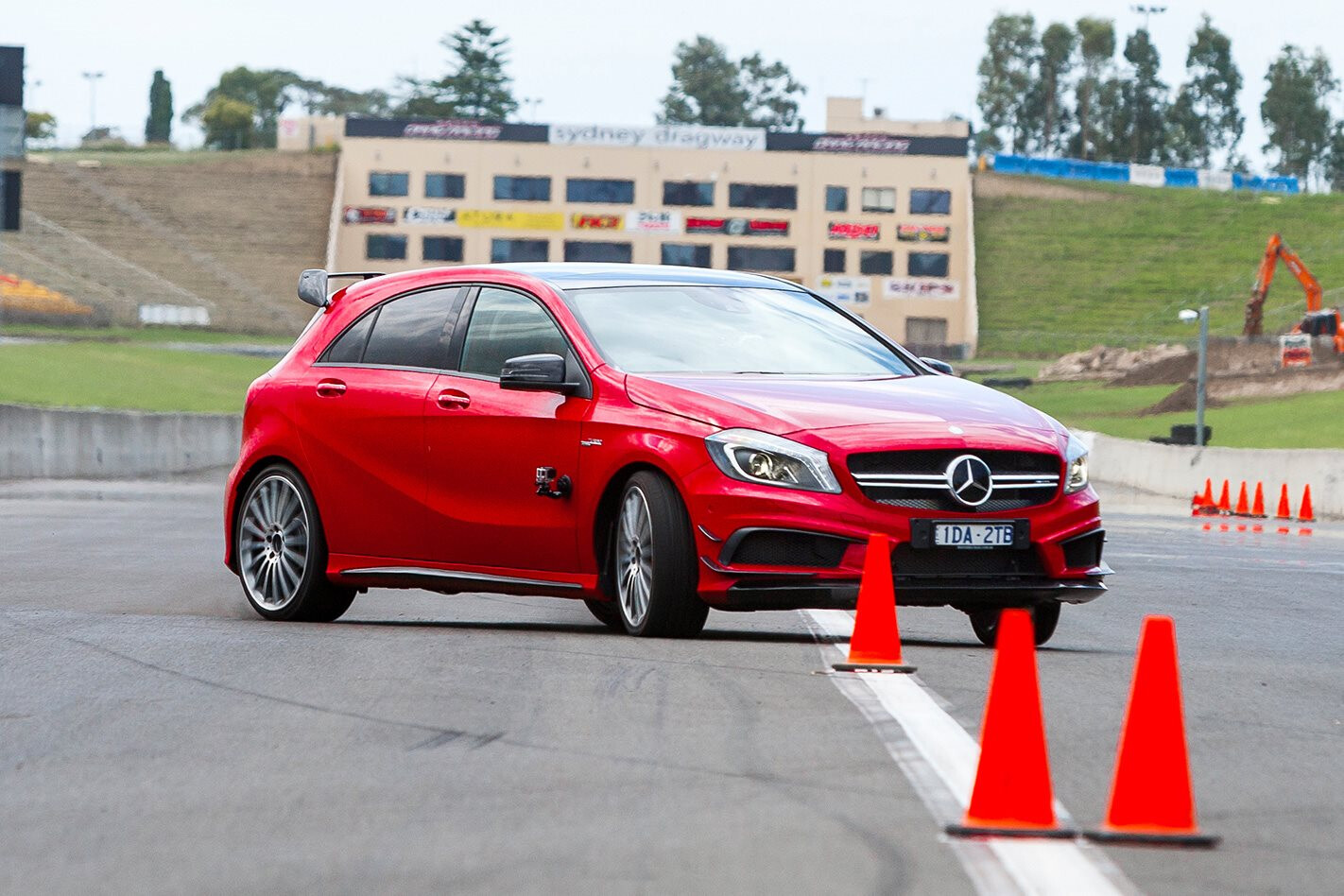
Beyond the 400m timing point, at the top end of Sydney Dragway’s strip, lays asphalt free of sticky surface prep. It’s the perfect venue for our first discipline.
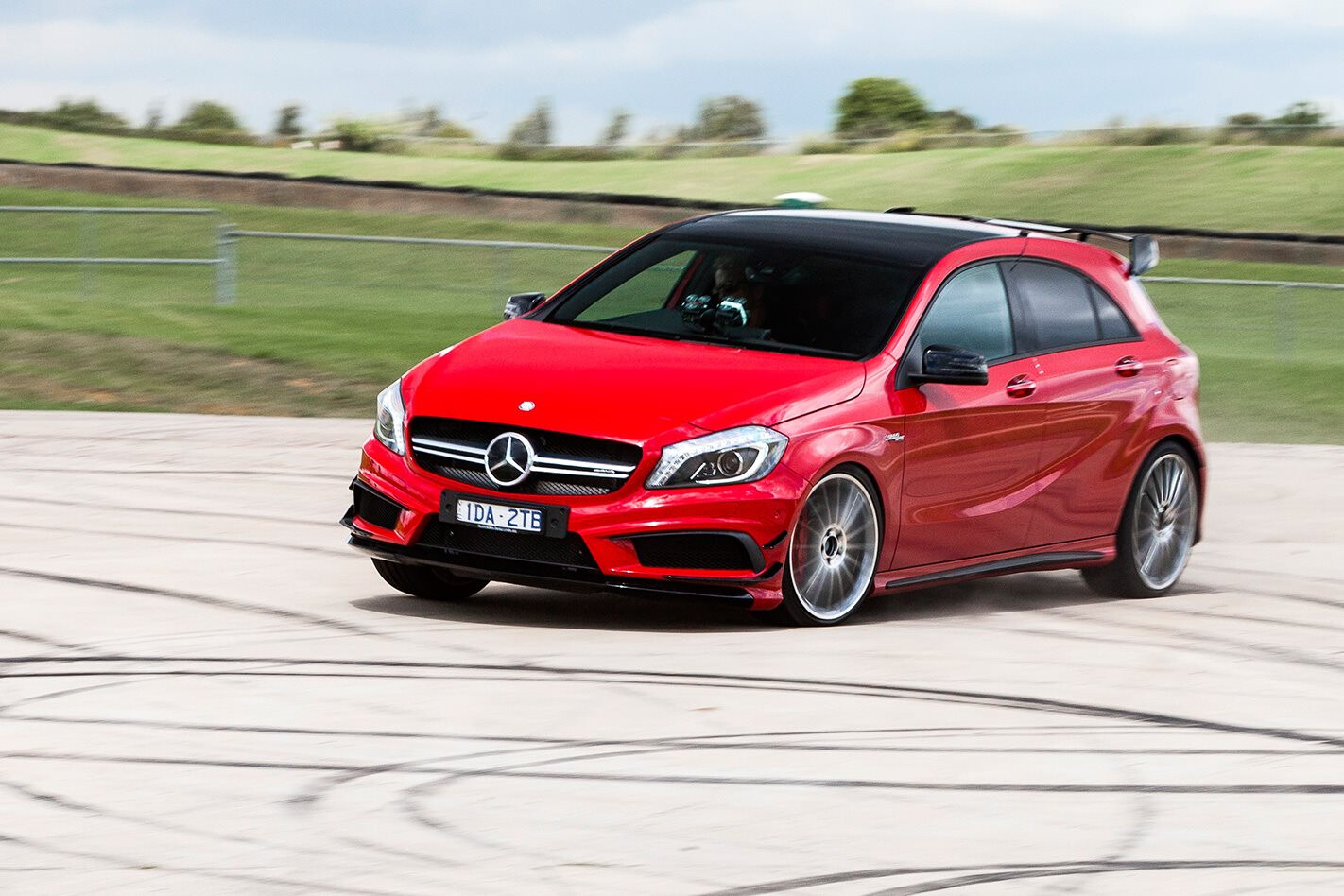 FIGURE EIGHT
With the Michelin and Continental showing class-leading form on dry high-friction asphalt, it was interesting to see if the same dominance would continue on the Figure Eight.
 MOTOR TYRE TEST 2015
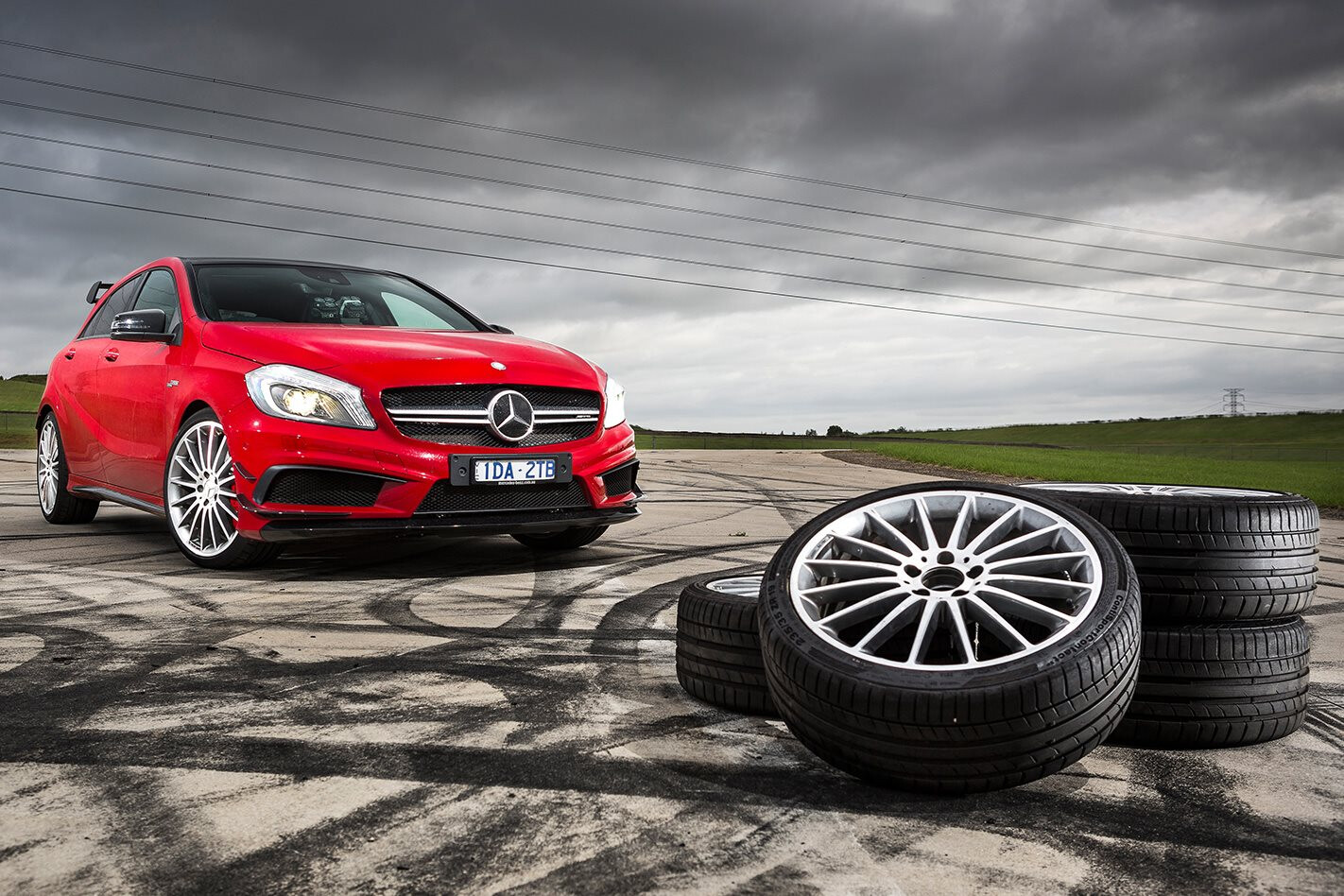
Our ultimate grip test again proves that while they may look the same, the levels at which these rings of sticky stuff perform are vastly different.
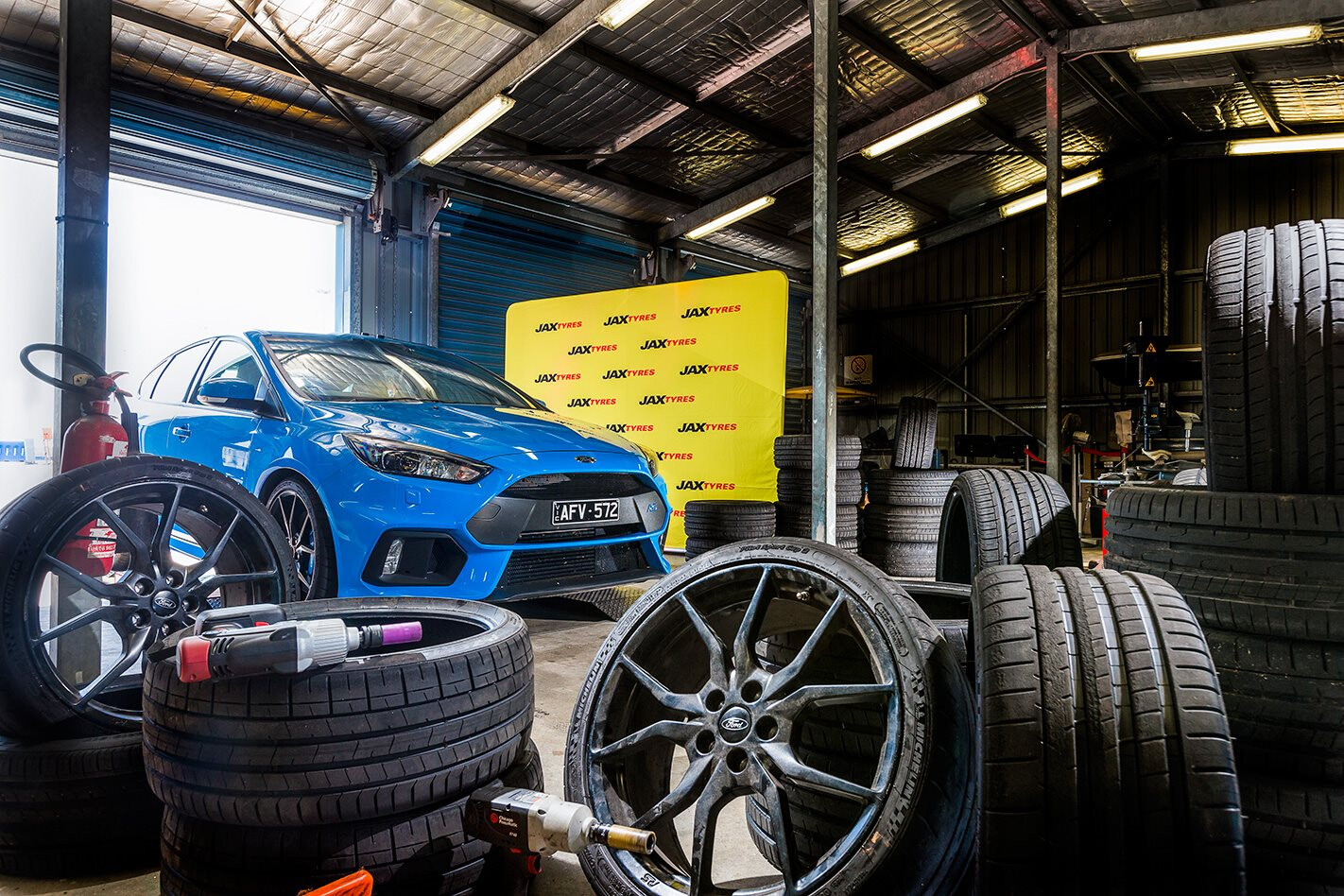 MOTOR TYRE TESTS
The quest to find the best high performance tyres in Australia.
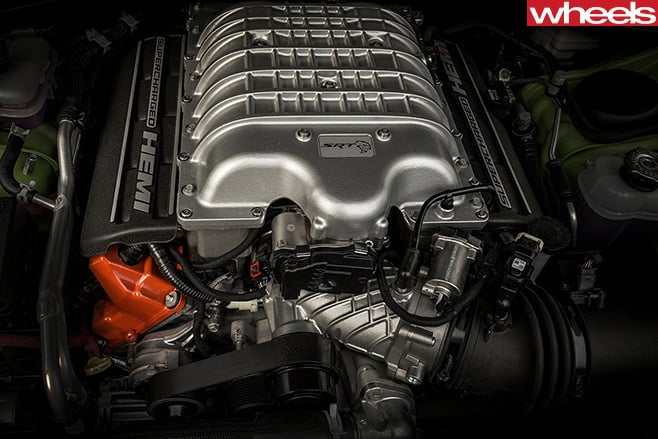
The Dodge Hellcat badge has become synonymous in recent years with ridiculous, tyre-frying, unbridled fun and mega horsepower. Presently, both the Challenger two-door and Charger sedan receive Hellcat variants that produce a bonkers 527kW (707-horsepower) power output thanks to a hefty supercharger strapped atop a 6.2-litre bent-eight.
Well, Dodge is about to take the Hellcat’s muscle metrics right off the scale with the announcement of the return of the Demon badge.
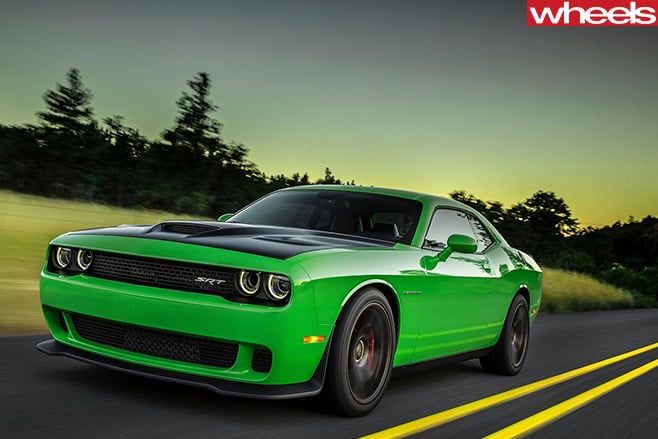
It appears the Demon badge will debut on the Challenger alone, with no hints thus far of a Demon-badged Charger sedan.
The first, entitled ‘Cage’, is out now, and well, it is very….weird. We have linked it below to let you make up your own thoughts.
FCA have stated the car will be more ‘focused’, and hinted at tenths of a second being crucial: a possible signal the Demon cars will be more about straight-line, quarter-mile performance.
“The Dodge Challenger SRT Demon is conceived, designed and engineered for a subculture of enthusiasts who know that a tenth is a car and a half second is your reputation,” FCA passenger car chief Tim Kuniskis said cryptically.
If you have a burning desire to add a Challenger Demon to your garage, prepare to be disappointed as Wheels understands there is no chance the current generation Demon will be arriving Down Under.
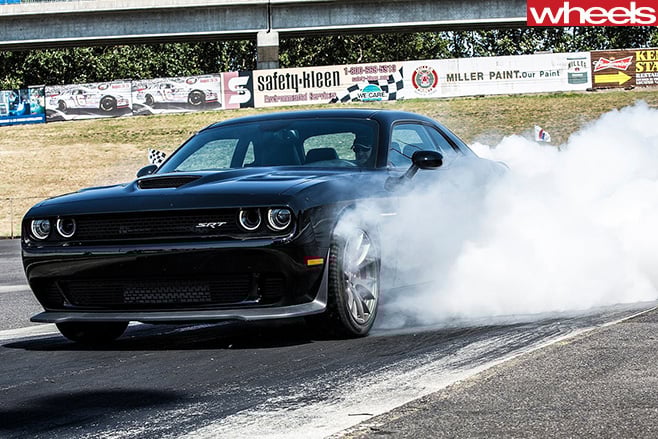
An all-new Challenger will be on the market by then (due near the end of 2018), and FCA is currently examining the business case for right-hand drive iterations of Chrysler’s rear-drive performance cars.
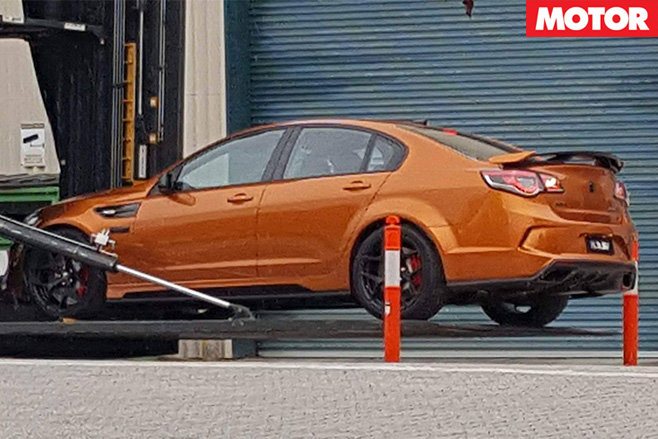
This is it, folks. Photos of HSV’s last ever Commodore-based range undisguised.
Thanks to the sleuth work of one reader we’ve been treated to a peek at HSV’s 2017 range ahead of its official reveal this year.
Steve Mitres spotted the cars today at about 1:30pm being unloaded from a transporter into HSV’s headquarters in Clayton, Victoria.
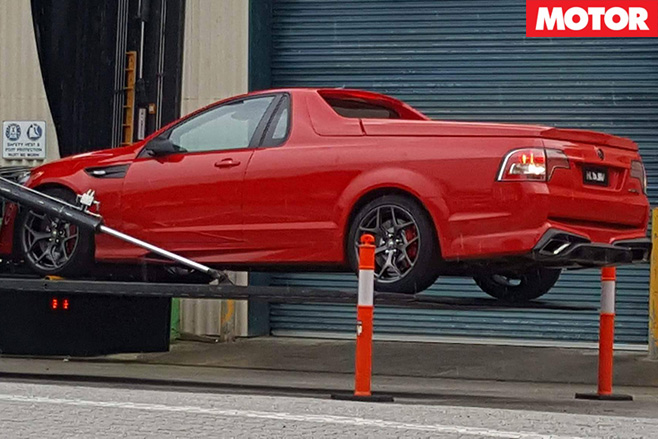
Finished in gunmetal grey, a brand new Y-spoke wheel design draws heavily on, and may even be shared with, the items worn by the previous generation Chevrolet Camaro Z/28.
HSV also has tweaked the cars’ rear bumpers. The old quad-style exhaust tips now swapped for a dual-diamond setup.
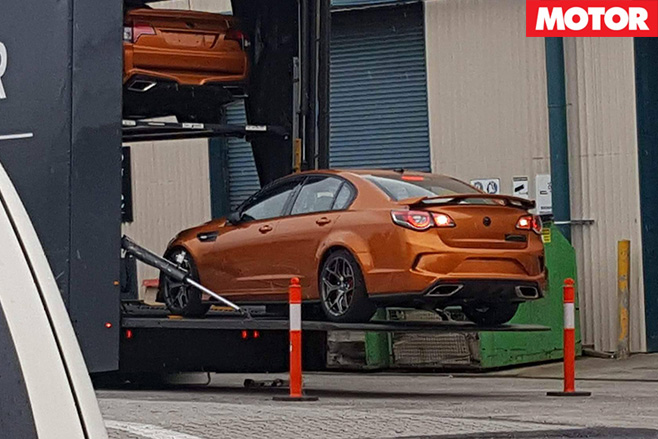
Moving down the car, it’s clear the Gen F2’s side skirts have been carried over, but those front fenders now sport a horizontal vent design.
They’ll also flank a newly designed front bar which can’t be seen in the spy pics.
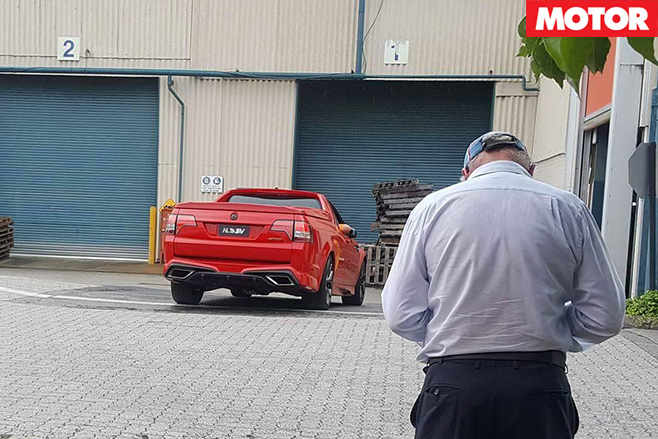
MOTOR reached out to HSV for comment but had not been able to get through to a spokesperson at time of press.
Further details on these incoming HSVs are scarce, but we can confidently say they’ll be powered by a GM supercharged engine with the LS3 bowing out with the Gen F2.