
One less question mark now hangs over the 375kW four-door rear-drive M3 and C63 S rival that is the Alfa Romeo Giulia QV – it will officially cost $143,900 plus on-road costs.
Alfa Romeo’s comeback kid squeezes between the BMW M3 ($139,615) and M3 Competition ($144,615), but its 3.9sec 0-100km/h claim even beats the latter by a tenth. The Giulia QV more substantially undercuts the Mercedes-AMG C63 S ($155,615) and it will take buying the coupe version of that model ($162,115) to match its performance claim.
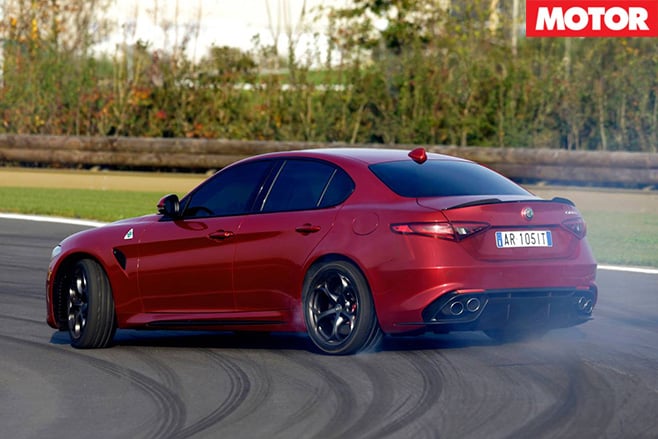
The eight-speed auto-only Italian isn’t barren, either, with 19-inch forged alloys, bi-xenon adaptive headlights with auto high-beam, active cruise control, leather/Alcantara electrically adjustable front seats and 14-speaker Harman Kardon audio with 8.8-inch sat-nav and infotainment screen.
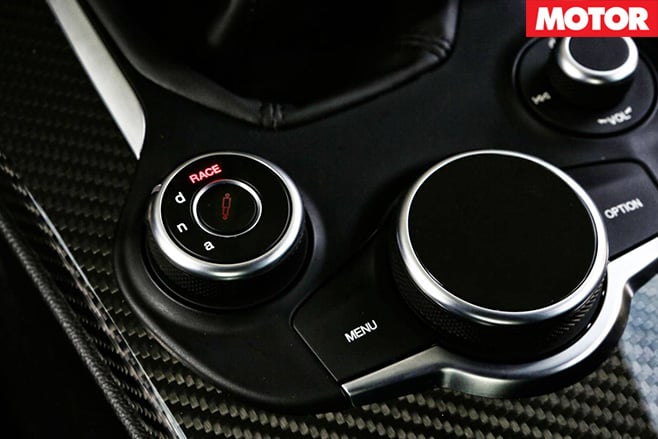
A DNA Pro toggle also acts on the class-first active aerodynamics with adjustable front splitter, torque vectoring system, electronic stability control (ESC), steering weight, engine and gearbox response and multi-mode suspension.
While thereabouts pricing to The Establishment could be a plucky move for a ‘challenger’ brand that has been in the wilderness – particularly one that will need to win a reputation for reliability and resale – 100 customers have already signed up to buy a Giulia QV.
Considering Alfa Romeo only sold 711 cars last year, it’s a healthy head start.
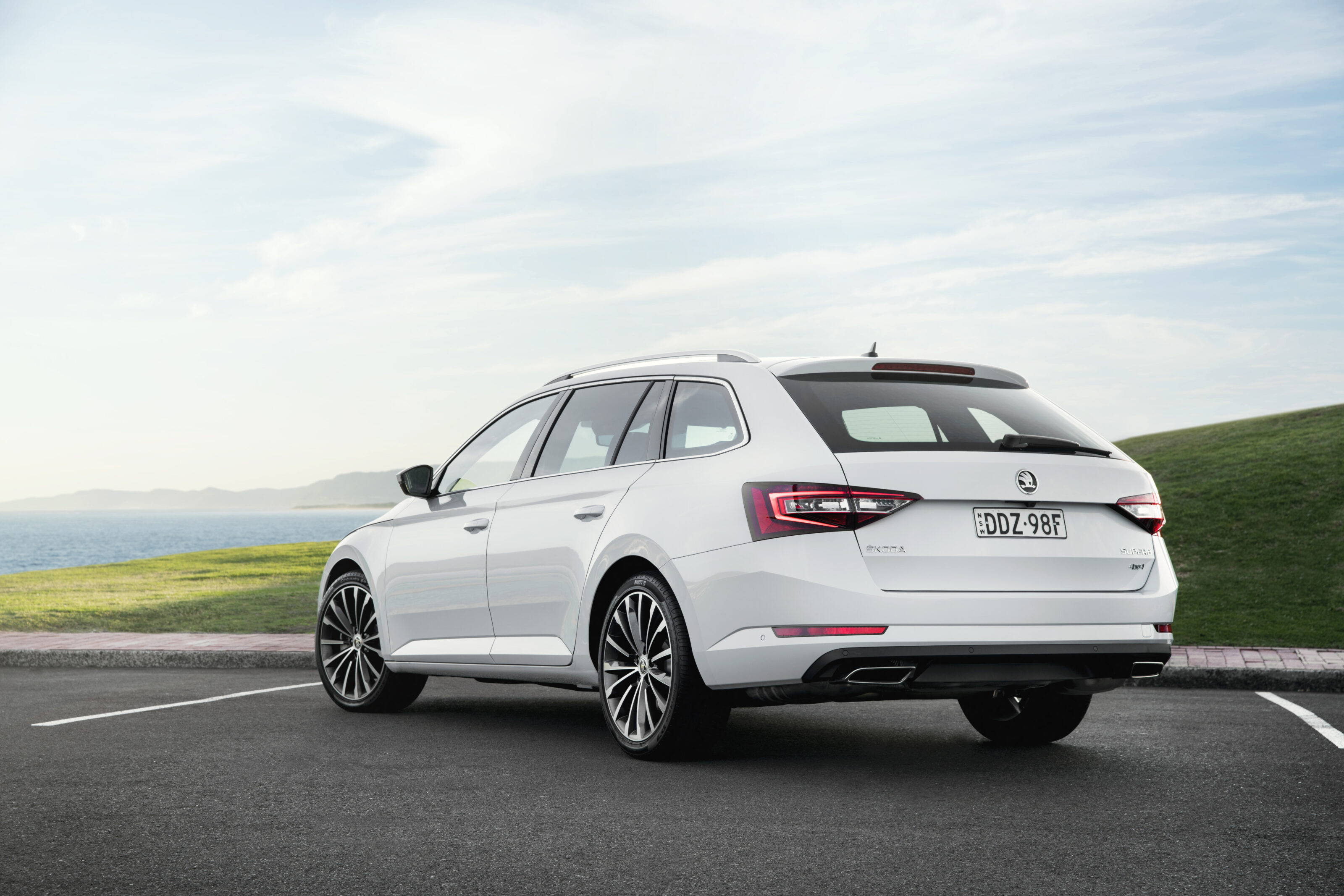
Skoda has bumped up the warranty period for its new car range from three years to a more generous five years, with no kilometre limitation.
That gives the Czech brand a key advantage in the showroom, as the majority of its mainstream rivals continue to offer just three-year/100,000km warranty terms. The new warranty applies to all private, general fleet and government sales, and essentially replaces the previously optional two-year warranty extension.
Kia, Citroen and Hyundai are the primary exceptions, providing seven-, six- and five-year warranties respectively, and all under unlimited-kilometre terms. Mazda only offers a three-year warranty period, but is slightly better than the norm by not applying a kilometre limit as well.
There’s one catch to Skoda’s new warranty terms however: if the car is being purchased for commercial purposes, then the warranty only applies for five years or 150,000km, whichever occurs first.
“Given that some 50 per cent of our customers were going for the optional extended warranty, it was logical that we add it to all models as standard,” said Skoda Australia Managing Director Michael Irmer.
“A Skoda is not only more economical to run and service than some rival Japanese vehicles, its warranty now exceeds their standard by two years.
The extension of Skoda’s warranty from three to five years follows Skoda’s move to introduce a guaranteed future value scheme, which sees dealerships buying back cars at the end of the finance period for an agreed price, giving consumers peace of mind about residuals.
The guaranteed future value scheme also gives owners the option of paying the same amount for the car, should they decide to keep it beyond the lease period. Refinancing is also an option, as is using the agreed value amount as a credit on the purchase of another new Skoda vehicle.
With all new Skodas now boasting a five-year warranty as standard, three-year residual values should rise accordingly.
Australian racer Toby Price has been forced to retire from Dakar 2017 on just the fourth stage of the rally after a nasty crash.
The fall came late in the 416-kilometre timed stage which traversed the Bolivian border from Jujuy to Tupiza.
Price was leading the fourth stage by the second waypoint, recovering from a poor start to the third stage which saw him drop down the order.
However, at the 371-kilometre mark, the Aussie crashed, fracturing his left femur. Price was evacuated by helicopter shortly after the crash, and will be unable to take any further part in the 2017 rally.
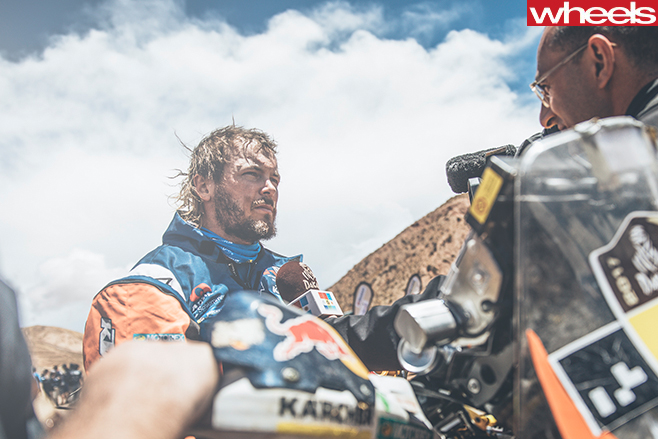
Price was a red-hot favourite to win the bikes category this year as the defending champ. The five-time Finke Desert Race winner finished third overall in his Dakar debut in 2015.
It just goes to show that when Dakar bites, it bites hard!
Slovakian rider Ivan Jakes was having a very different kind of trouble on the third stage of the rally after he was struck by lightning.
Yes. Lightning.
Not to let something as biblical as that get in his way, Jakes still finished the stage.
Jakes was 300-kilomtres from the end of the days running when he was struck by a bolt of lightning after being caught in a storm. But the Slovakian picked his bike back up, and managed to finish the stage in 15th place.
The Dakar doctors credited Jakes’ survival to his KTM motorcycle, which conducted the electricity to the ground. If he had stepped off the bike and grounded the electricity himself, this may not be as cheerful a story.
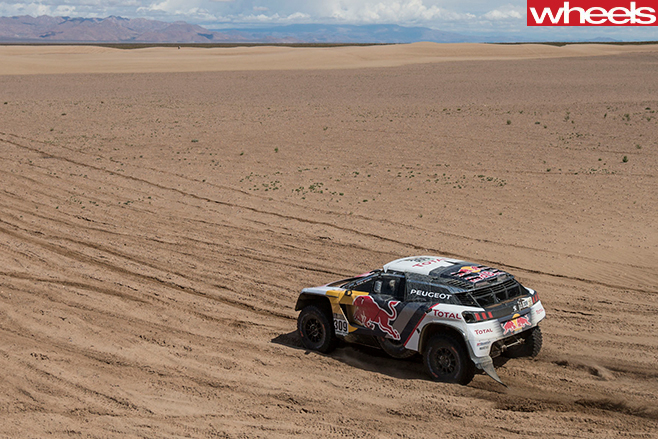
It is yet another example of what makes the Dakar Rally the most hostile and dangerous motorsport competition in the world.
Meanwhile in the cars category, Peugeot’s factory team are running one-two, with Cyril Despres leading from “Mr Dakar” himself, Stephane Peterhansel. Former WRC stars Mikko Hirvonen and Sebastien Loeb are third and fourth in a Mini and Peugeot respectively, with Nani Roma rounding out the top five for Toyota
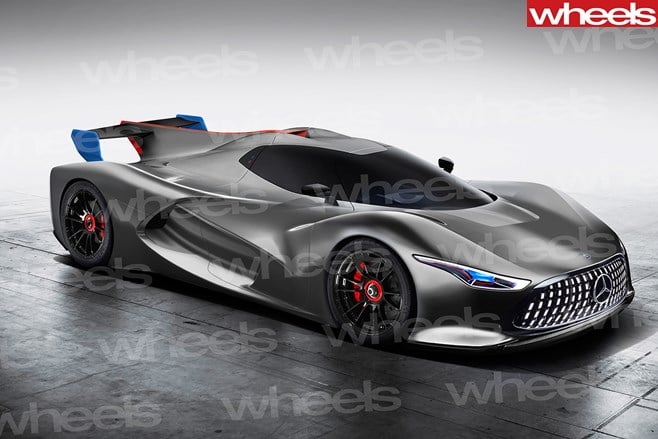
THIS is it, our best glimpse yet at AMG’s F1-infused hypercar which will take the fight to the AM-RB 001 when it is officially revealed later this year.
While the AMG R50 won’t be show in full until the Frankfurt motor show in November, where it will be the centrepiece of AMG’s 50th anniversary celebrations, this new silhouette provides some tasty details. Like a prominent roof-mounted air scoop.
Shown to journalists at CES in Las Vegas by Mercedes board member Ola Kallenius, the image also shows the car’s LMP1-inspired, shark-fin spine in greater detail, which is flanked by a series of cooling ducts positioned above highly complex, mid-mounted F1 drivetrain.
It also seems there’s no rear window, which could make parking at your local Coles a little tricky. Not that you’ll see the hypercar on Aussie roads of course. While a handful of R50s have already been ordered by Australian customers, it’ll only be built in left-hand drive.
As for other details, AMG boss Tobias Moers is remaining tight lipped, though he did confirm to Wheels that the 1.6-litre V6 hybrid drivetrain will be lifted straight from the company’s dominant F1 car, except with an even more potent hybrid system with bigger, AMG-designed batteries.
If F1 power outputs are any guide, the R50 could produce as much as 700kW, though channelling all that grunt to the wheels via a bespoke four-wheel drive system with variable torque split is proving the biggest hurdle, according to Moers.
“Man the gearbox is an issue yeah,” he said. “It’s a pretty big challenge. Using the Formula 1 engine which revs more than a five digit number gives some headaches to us regarding the gearbox. It’ll be a bespoke unit created by us, there is no other chance.”

Moers wouldn’t be drawn on how many ratios the R50 will have, but did reveal that despite its extreme performance bent, AMG’s first hypercar won’t forsake comfort.
“It’ll have air conditioning, this is mandatory,” he said. “It’s still a three-pointed-star car. Is it being a compromise between everyday usability and track driving? No I don’t think so. I think it’s going to be a fascinating car because no other manufacturer is trying to use a formula 1 engine, a 1.6-litre V6 with all the electronic components, no body tries to do this. It’s the pinnacle of technology for what you can do in street legal cars.”
In the market for the newest, most state of the art sports cars available? These newly minted and updated machines will hit the showrooms in the upcoming year.
AUDI R8 SPYDER A convertible version of the R8 supercar will make it a brace of super-quick Audis in 2017. The Spyder is due mid-year, twinned with the Lamborghini Huracan Spyder and using the same 5.2-litre V10. Body stiffness is said to be 55 per cent greater than the previous R8 Spyder, making it closer to its coupe sibling in rigidity. The fabric roof takes 20 seconds to operate, and can be raised or lowered at up to 50km/h. Standard features include adaptive suspension and a Bang & Olufsen audio complete with headrest speakers.
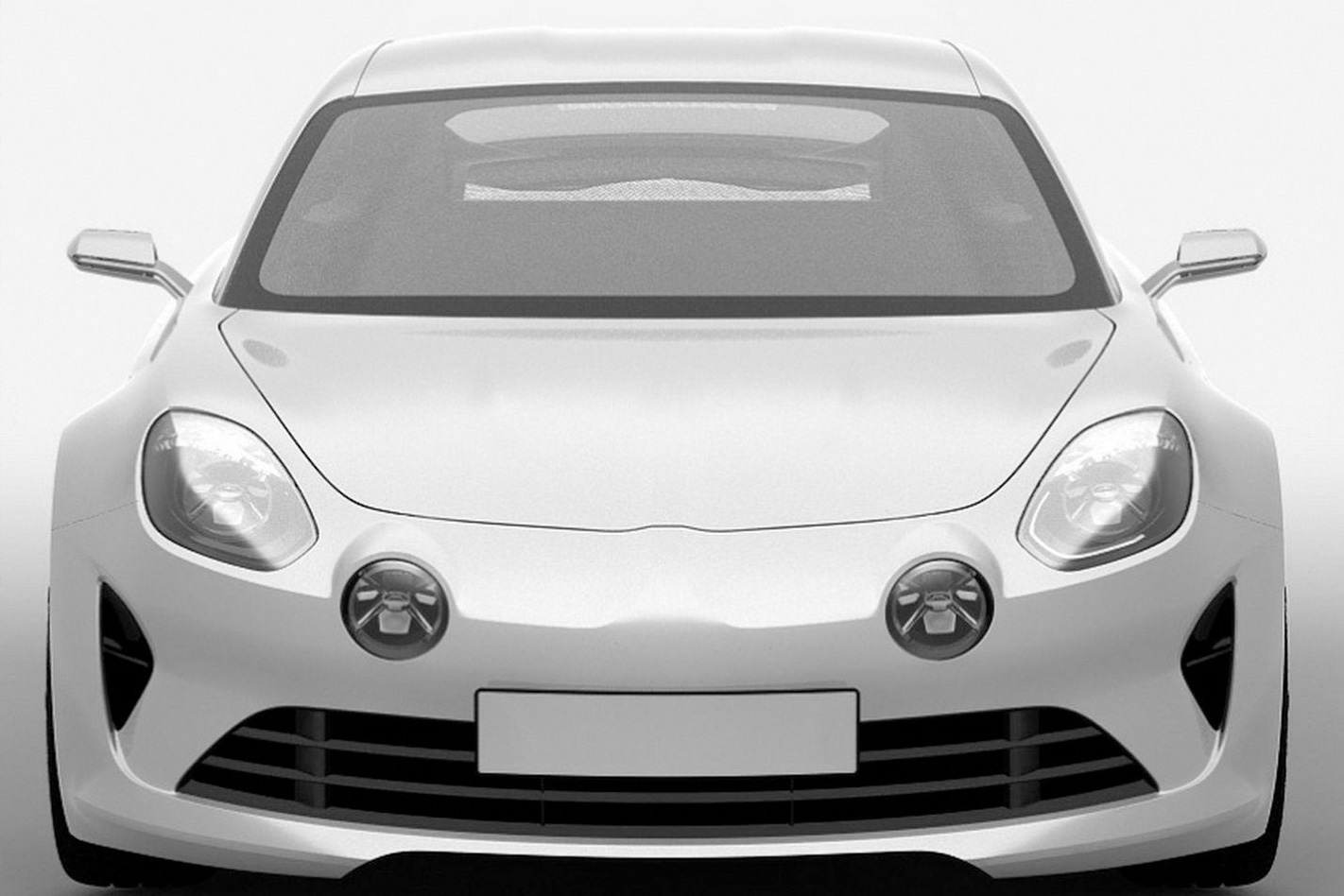
Not content with building some of the world’s fastest hatches, Renault is resurrecting its old sports-car brand Alpine in 2017. There’s already been a couple of concept cars, including this year’s Vision that pointed to the first model being a mid-engined two-seater coupe powered by a 200kW-plus turbocharged four-cylinder engine. The model tipped to be called the A120 – following the A110 of the 1960s – will take on the likes of the Alfa Romeo 4C, Lotus Exige and Porsche Cayman, and could be priced between $75,000 and $90,000.
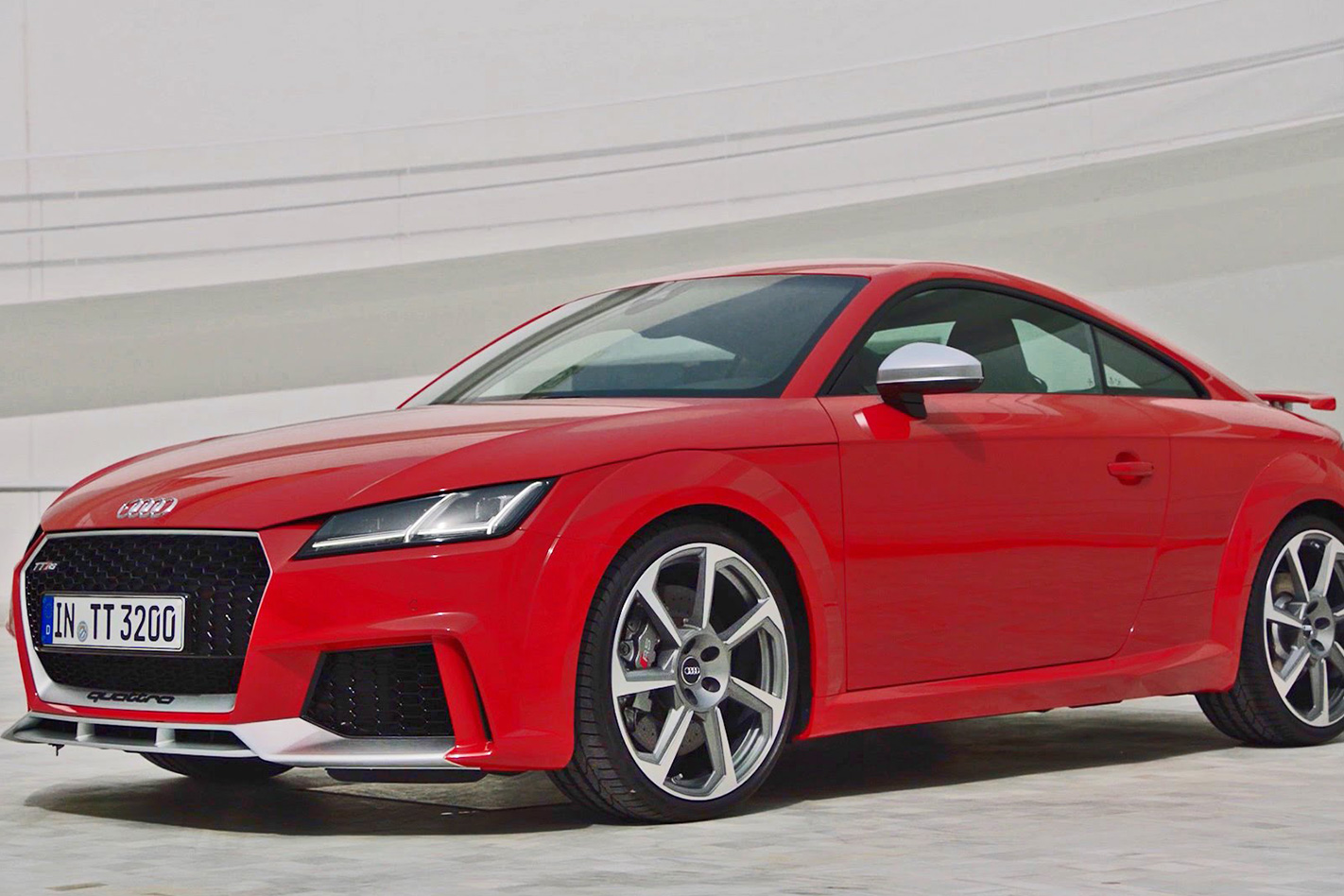
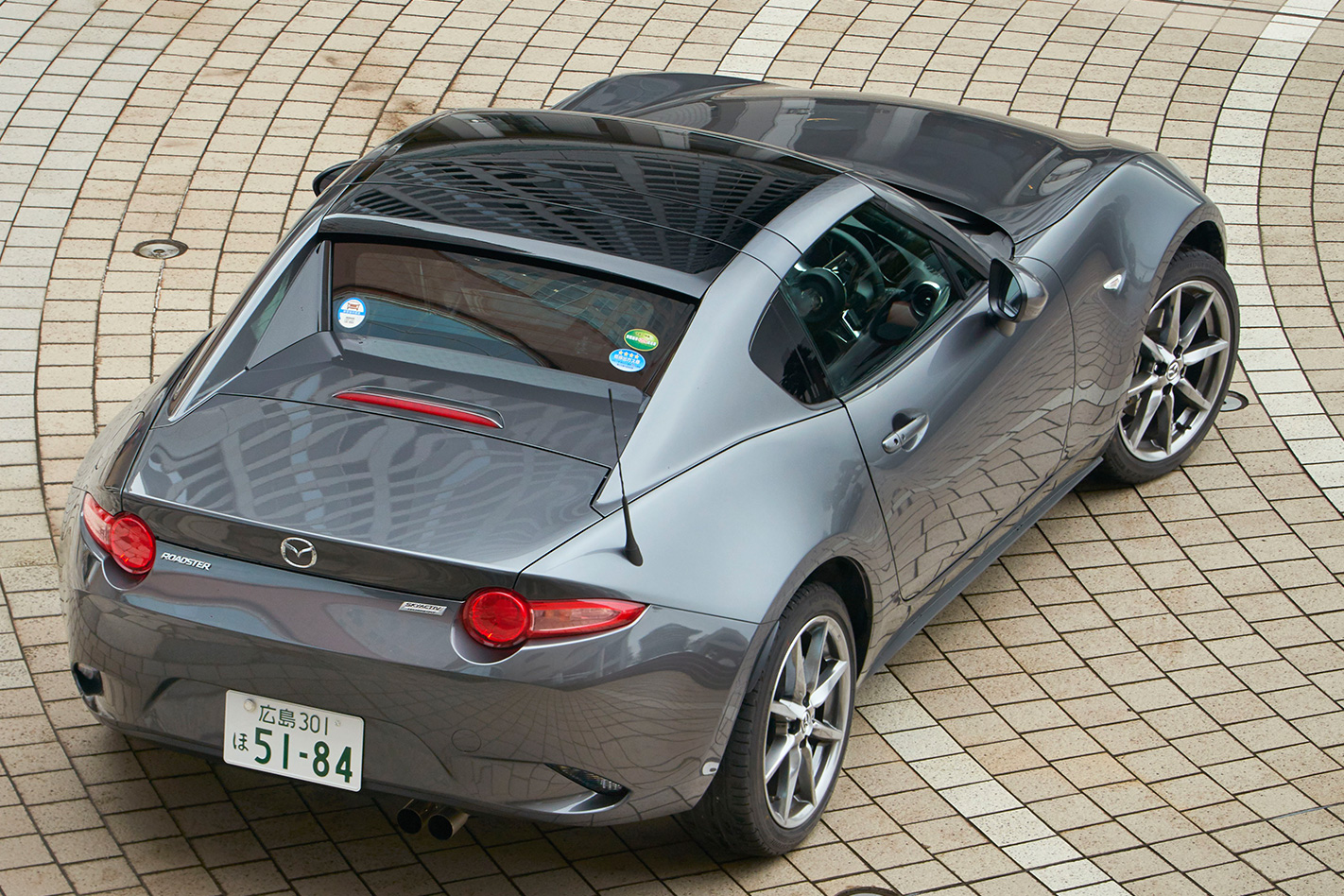
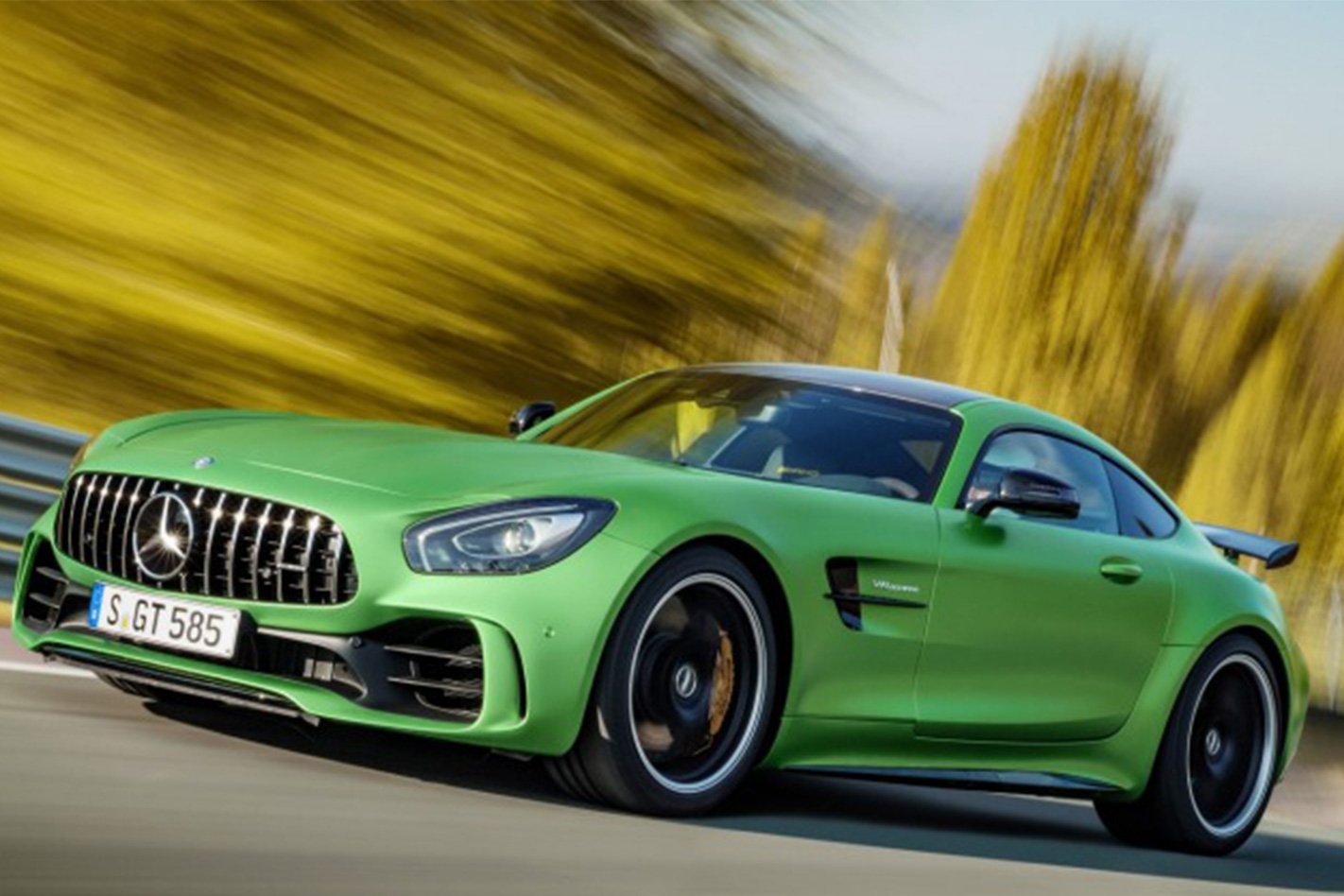
2017 Top 5 sports cars
| Audi R8 Spyder | $308,400+ |
| Alpine A120 | Price TBC |
| Audi TT RS | $140,000 approx. |
| Mazda MX-5 RF | $31,990+ |
| Mercedes-AMG GT R | Price TBC |
For 90 per cent of people out there – let’s just call them the moron collective – autonomous cars are likely to be a Good Thing.
Those same people will then be free to apply their make-up, message their cat, update their Nerdbook status and eat their breakfast; basically, all the things they currently do at the wheel, just a bit more safely. And, yes, this would be good. Possibly for all of us.
Which just leaves 10 per cent of us to suffer the indignity of having our cars do the driving for us. Indignity? Yeah, because operating a motor vehicle still appeals to me (and I’ll include you, because you’re reading this) on the basis of taking matters into our own hands. For a bloke like me, this equals pride and a sense of personal worth. Dignity, in other words. It’s why I try to drive well; it’s something I’m proud to be able to do.
I get the same feeling when I’m dodging trees on my mountain bike. I get it when I’m fixing something in the shed. I get it when I’m operating power tools. I don’t get it when doing mundane tasks like riding in an elevator or watching TV.
Two things are making me feel this way when I’m biking, fixing or dimming the lights in the rest of the street by powering up a 10-inch angle-grinder. The first is that feeling of taking control I mentioned earlier. The second is that there’s an element of risk to all this. Now, that same 10-inch grinder in my paws is probably skewed towards risk rather than control so, at some point, I have to make the decision about how I tackle it. That’s where being the master of your own destiny comes into it.

The good news is that I can’t see autonomous cars becoming the rule rather than the exception in my lifetime. I can’t conceive of a government anywhere with the requisite stones to green-light the deal (and if one does, I’m buying shares in one of those ambulance-chasing legal firms) nor can I see on the horizon a government with the will to tackle what would be a massive infrastructure project. These days, if it doesn’t happen in time for the next election, it doesn’t happen.
Nation building? What the hell’s that? It’s this clear level of democratic neglect that has seen us go from a country that started two car manufacturers from scratch over 12 years, to one that is in the process of closing up shop on three car manufacturers in 12 months. Let that wash over you.
The other problem is that some car-makers are pretty smug about their talents in this autonomous-driving department. But let me assure you, five decades on this planet has taught me one very important thing: the minute they make something idiot-proof, somebody else comes up with a better idiot. I recall a car launch in the early days of ESP technology where the PR muppet proudly told me I wouldn’t be able to make his car oversteer. At about 25 degrees of yaw, he admitted he may have been wrong. Physics, gravity, laws of nature – those old chestnuts.
ESP, ABS, traction-control, lane-departure, blind-spot monitoring, active cruise control – none of these inventions have made cars uncrashable. Neither will autonomous operation. It will simply be different factors that lead to the inevitable shunt. Won’t affect me, though: they’ll be building a ski-run in hell before I sign up for an autonomous car. If anybody needs me, I’ll be out in the shed with my angle-grinder.
Two themes dominate this issue of MOTOR: rain and racetracks. Unfortunately for our first Aussie drive of the new Ferrari 488 Spider we had far too much of the first and far too little of the second.
To properly enjoy, experience and access the performance available from Ferrari’s new turbocharged, toupee-tearing droptop, you need to be in the dry and on a bit of private bitumen that loops back in on itself. With preferably lots of run-off, and lots of time to peel back the Spider’s many layers.
For a start, 492kW and 760Nm (from a twin-turbo 3.9-litre V8) is always going to be a big ask of even 305-wide tyres if there’s only two doing the work. Ferrari ‘steps’ the torque delivery, each gear getting more torque than the last simply to give the rear bags some hope of transmitting the enormous grunt.
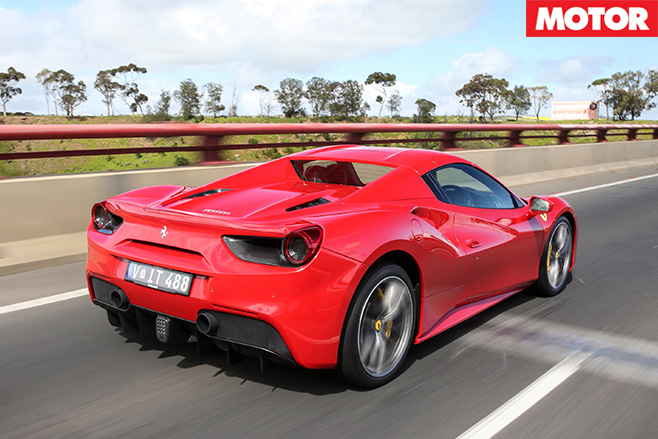
It makes quite the noise in the process, though, a distinctive Ferrari V8 bawl, even if it’s a little quieter than you might first expect, to the point it almost feels like there’s an exhaust button somewhere to press (there isn’t). Ask a bit of the engine in a taller gear with lower revs and the 488 summons its tremendous torque while the turbos brood and hiss loudly behind your head. It sounds great.
Throttle response is great even if not as hyper-sensitive as we remember of the 458 Speciale but you’d cheerfully exchange some of that for the new, torquey flexibility.
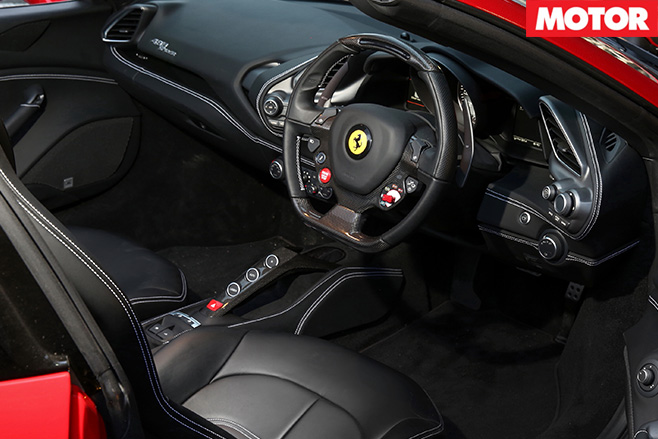
At more relaxed speeds the 488 rides surprisingly excellently even on 35/30 profile tyres (F/R). The clever folding hardtop roof takes 14 seconds to origami away up to speeds of 45km/h. The whole shebang adds 50kg to the 488’s head-turning figure and all that fresh air will cost you $57K more than the hardtop.
That’ll get you one truly paradigm-redefining performance convertible, though, with more performance than you’ll ever tire of. You’ll just need a track. And some decent weather.
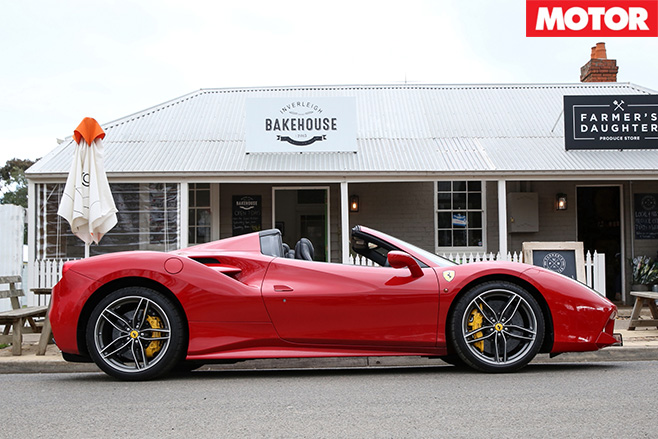
LIKE: Mind-bending acceleration; sublime handing DISLIKE:Tyres can be noisy; it’s not cheap; waiting list
SPECS Engine: 3902cc V8, DOHC, 32v, twin-turbo Power: 492kW @ 8000rpm Torque: 760Nm @ 6750rpm (7th) Weight: 1525kg 0-100km/h: 3.0sec (claimed) Price: $526,888
We take pride in the fact our readers are often insightful, straight-shooting, and with a penchant for good humour.
Sometimes you heap us with praise, but you also scold us with equal measure, and for that we give our thanks – honesty is after all what Wheels is all about.
So as our tribute, enjoy some of our favourite letters of the big year in motoring that was 2016. If you have anything you want to vent your spleen about, make sure to send your musings to [email protected] or comment on our stories at the Wheels Facebook page.
***
Out of focus
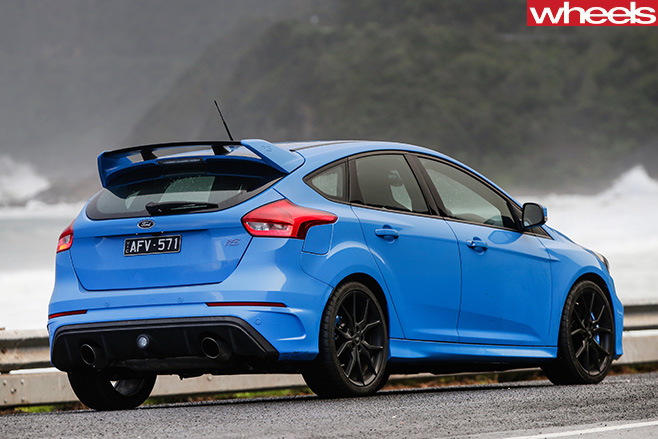
Newsflash: Any moderately powerful rear-wheel-drive car with traction control disabled is a potential drifting machine.
A decade ago my six-cylinder Ford XF Falcon was more than able to hang out its tail.
While we’re banning drift mode on the RS, let’s also ban all launch control if fitted, because obviously people will drag race.
Let’s also ban active dampers and exhausts because they will entice people to race. Don’t get me started on Ludicrous mode on a Tesla, or the skinny standard wheels on the Toyota 86 that let it slide.
Who are these experts? Other car companies that cannot compete, or insurance companies ready to double premiums? This car has been all over the internet for 12 months but only now safety experts realise it has a drift button?
I am sure this will end like the Mustang, which had its burnout mode disabled for Australia.
At least we don’t have to think for ourselves and can enjoy the cottonwool protection supplied by our nanny state.
Mark Brass, via email, September.
***
Kissed by a frog
I’ve read every issue of Wheels since the early 1960s and my links to the magazine sprang into sharp focus on reading Robbo’s Bourke and Back in a Day (Classic Wheels, April).
I was the next owner of the HQ in question, bought from a New South Wales North Coast Holden dealer as an “as new” Holden special that had arrived direct from the factory in the previous fortnight and only driven by the local sales manager. It was sold as a demonstrator and I received a small discount off new price.
My girlfriend (now wife) named it the Green Frog. Its first big trip was to the 1972 Hardie Ferodo 500 at Bathurst.
I loved the sports wheels, white upholstery, all the extras and the bright green colour, but the rattles and floaty suspension were annoying. Frustrated, I remembered reading the April 1972 article, dug it out and was struck by the resemblance to my HQ. The number plate was different, but the dealer had failed to change the windscreen registration sticker that clearly showed it was DBQ-714 – the subject of your article.
It was clear from the article that the odometer had received some major surgery because the few miles on the clock were in stark contrast to a trip to Bourke and back!
Some legal letters followed and, to cut a long story short, the dealer took the car back and I ended up with a brand new LJ Torana XU-1. I never saw the Green Frog again.
Ian Crowther, via email, May
***
Wheels for life
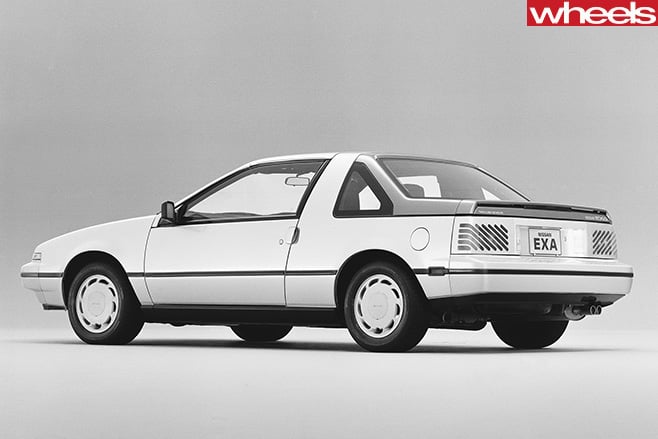
Today, finally, with a Porsche Boxster GTS snug in our garage, I say thank you for blessing me with a somewhat corrupt ideology of happiness.
With the top down, the sun out and a flat-six belting the exhausts, Putty Road has never felt so alive and sensual. And neither has the road to Cottage Point, Bells Line Of Road, the ’Gong via the Royal National Park and Sea Cliff Bridge – or, come to think of it, just about any tunnel in Sydney.
So now my wife and I truly live the joy of motoring.
Yet I would never have known such a sublime state had I not starved through lunch for two weeks to save up those three dollars back in primary school…
Muchos Gracias.
Shookie Basu Roy, Strathfield, NSW, August
***
Circle work
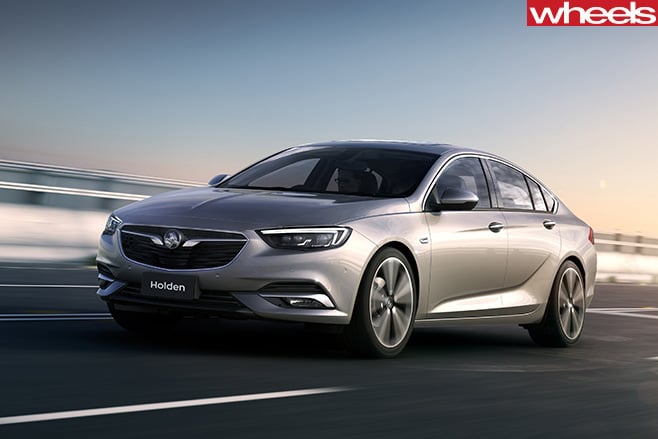
Then Holden spends $1 billion to design its own car, only to do a full circle back to Opel cars after 2017. I never thought that would happen. I’m a Ford man, but it sucks to see both makes going out like this.
Beau Jansen, via Facebook, June
Ford Falcon decimates Lamborghini in drag race
It seems like such a simple equation. A $400,000 V10-powered Italian supercar, and a four-door Australian family car in a head-to-head drag race on the quarter mile – who wins?
We have become accustomed to electric cars, like the Tesla Model S, surprising high-horsepower monsters at the strip, but this is perhaps the most shocking pair-up on Australian soil we have seen.
OK, we already told you in the headline, but it’s still worth watching – just don’t blink, or you’ll miss it.
LaFerrari vs Motorcycle in tyre-frying tug of war
We’re not sure why these crazy Italian guys have done this, we just know they’ve done it.
Not only did they affix a tow bar to a Ferrari LaFerrari but they hooked it up to one of the most powerful motorcycles available currently, a KTM 1290 Super Duke.
There is a twisted enjoyment gained from watching one of the most exclusive, powerful, and expensive cars in the history of the automobile being strapped to a 180-horsepower, $23,500 motorcycle for the sole purpose of burning some rubber and generating some light entertainment.
BMW M4 DTM racecar laps Nurburgring in stonking 6:14
It’s not often a fully-fledged DTM racecar gets to attack the full Nurburgring Nordscheife, so it was a pretty special day when Augusto Farfus Jr was allowed to take a current-spec BMW M4 DTM car around the fearsome circuit.
The Nurburgring 24 Hour winner cut a number of laps of the Green Hell as part of a promotion for Shell Helix, taking several lucky passengers for hot laps.
And although it looks like Farfus Jr isn’t pushing the car to the limit, the ‘Bridge to Gantry’ time was a scorching 6:14. For reference, the bonkers Pagani Zonda R recorded a 6:47 on the full circuit, while the Ferrari 599XX’s best effort was a 6:58.
Shane van Gisbergen in a V8 Supercar turned drift car
We can never get enough drifting or V8 Supercars, so when the Gis drifted a Triple Eight Racing Commodore around Sydney Motorsport Park at night we were suitably chuffed along with 190,000 other viewers.
With van Gisbergen behind the wheel, the V8 Superdrifter is a serious smoke weapon and allows the 27-year-old to chuck the car into corners at obscene angles. And it looks well naughty at night.
Ford Mustang pulls off epic 975m drift
The Catalunya Grand Prix circuit is a state-of-the-art racetrack with a butter-smooth surface and sweeping curves for the best Formula One, MotoGP, and GT3 drivers and riders in the world to attack at full speed.
But the Spanish track is more renowned for grands prix than the tyre-frying antics of drifters so Formula D (Drift) champion Vaughn Gitten Jr decided it was time to challenge the stereotype by drifting his Mustang RTR drift car almost a solid kilometre through the first four sweeping turns.
BONUS VIDEO – Rounding up four cars in a single corner = epic
In the world of motorsport, nothing puts your competitor in their place like passing them around the outside of the corner.
With this in mind, Kevin Eriksson shamed four of his competitors so badly, someone might need to go and check if they are doing okay.
Watch how the Swedish driver pulls off the most impressive overtake in motorsport this year, and one of the best of the decade, at the World Rallycross Championship finale in Germany.
Watch more videos at Wheels TV.
Flipping the switch in the city of light usually means turning on the illumination of the Eiffel Tower. But at the biennial paris motor show the spotlights shone instead on the electric car.
The 2016 Mondial de l’Automobile was where a pair of heavyweights revealed plans to begin in earnest the transition from oil to electricity. We heard some very serious senior car company executives outlining equally serious plans to take battery power mainstream.
“We are convinced; now is the time to flip the switch,” said Daimler chief Dieter Zetsche, before presenting the Mercedes-Benz Generation EQ concept. This battery-powered SUV will be ready for launch “within three years”, the first of at least seven Mercedes-Benz EVs based on a purpose-designed platform.
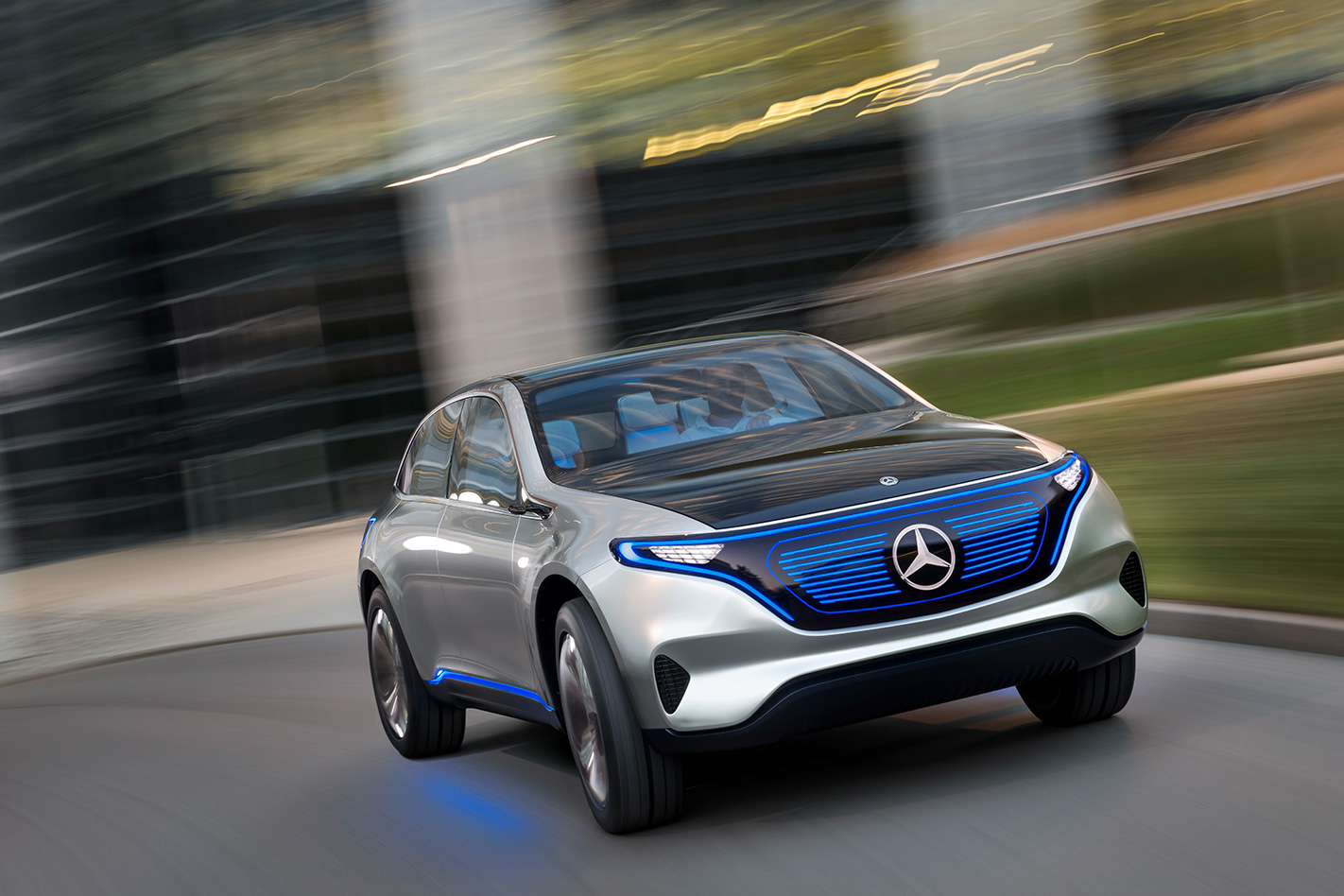
Volkswagen, one of the world’s Big Three (along with Toyota and GM), revealed the I.D. concept, Golf-size on the outside, but Passat-spacious inside. Brand boss Herbert Diess said the production version, due in 2020, will be the first of a family of cars to utilise its new MEB electric car platform. VW aims to be selling a million EVs a year by 2025, Diess said.
Other Paris announcements gave clues to why the two big Germans think the time is right for EVs. Opel showed the 2017 Ampera-e, the European version of the Chevrolet Bolt, boasting of its 500km range. Renault revealed an updated version of its small electric Zoe hatchback, on sale in Europe since 2013, with an upgraded battery pack boosting its official range to 400km.
With Mercedes talking of a 500km range for its electric SUV and VW saying the I.D. will do “up to 600km” between recharges, range anxiety is headed for extinction.

And the price of batteries is falling even faster than range is rising. Diess promised the production I.D. would cost the same as a conventional Golf with similar power. Zetsche said Mercedes’ electric SUV will cost as much as “a reasonably equipped Mercedes GLC”.
Analysts estimate the cost of a kilowatt-hour of lithium-ion battery was $US1000 ($A1320) in 2010. Five years later it was one-third that amount. And there’s much further to fall.
The investments made by governments around the world – in Europe, America and Asia – to encourage the switch to EVs are yielding dividends. Economies of scale are driving down prices, and competition between battery manufacturers for a slice of a growing market is stimulating innovation.
But as other well-off nations participate actively in this rEVolution, Australia remains utterly uninterested in electric cars. Sales of plug-in vehicles in our incentive-free market this year are on track to fall to less than a quarter of the paltry 1108 total posted in 2015.
“The (Australian) market really needs some serious incentives,” Renault Australia boss Justin Hocevar told me in Paris. I’ve heard similar laments from BMW, Mercedes-Benz and Mitsubishi.
Hocevar said the Zoe – Europe’s most popular EV in 2015 with more than 18,000 sales – is constantly under evaluation for Australia. But it’s not a cheap car, despite the falling cost of batteries, and our low fuel prices mean the inherent energy efficiency of an EV saves little on running costs.
There’s little reason to think that this situation will change. As the rest of the world flips the switch, Australia prefers darkness.
World record
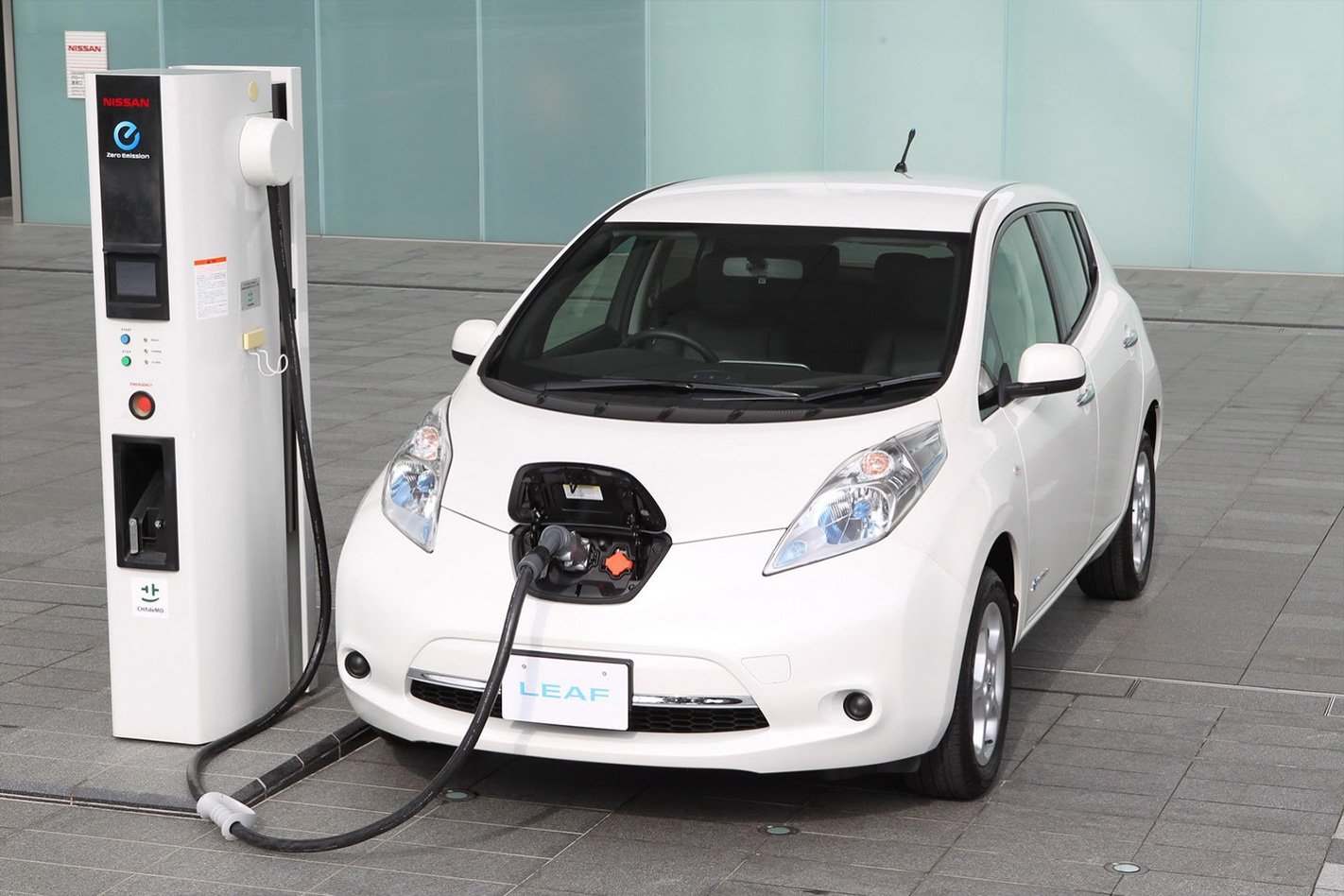
The global total of plug-in vehicles on the road passed through the magic million mark sometime late in 2015. It was the year when electric car sales boomed; more than 500,000 were sold globally. The United States, China, Japan, the Netherlands and Norway are the five biggest markets. The Nissan Leaf (above) has more than once topped the overall monthly sales charts in Norway.
