Lamborghini’s Aventador S supercar has broken cover, with more power, more technology and a tweaked exterior to take the V12-powered Italian performer to new heights.
Bucking the turbocharging trend, the Aventador S continues to utilise Lamborghini’s trademark naturally-aspirated 6.5 litre V12 engine. Power, however, gets a sizable 29kW bump to 544kW while valve timing changes see a fatter torque curve, though peak torque stays at 690Nm.
That’s not too far off the Lamborghini Aventador Super Veloce’s savage 552kW output. The Aventador S’s 0-100km/h time of 2.9 seconds is also near parity with the SV, while top speed is a claimed 350 km/h.
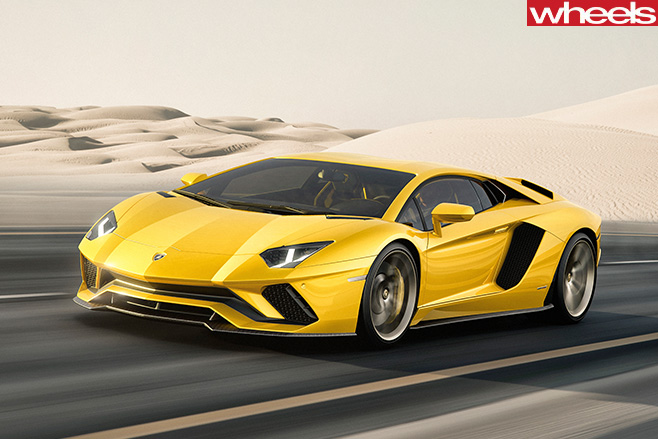
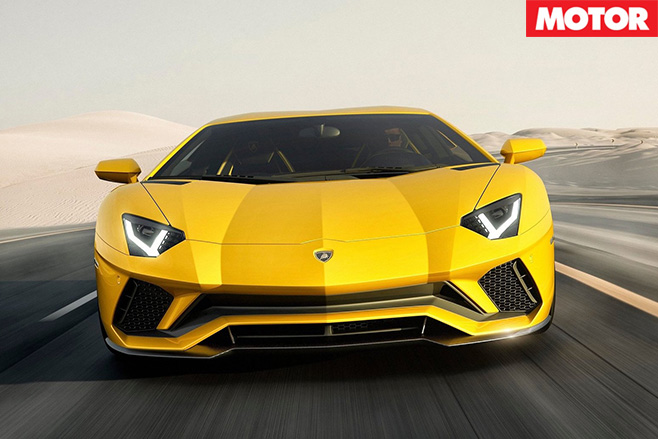
Cosmetic alterations are limited, but most apparent at the front end splitter made to aid downforce. The nose has been designed to make the car appear even more aggressive through being longer, while also aiding cooling.
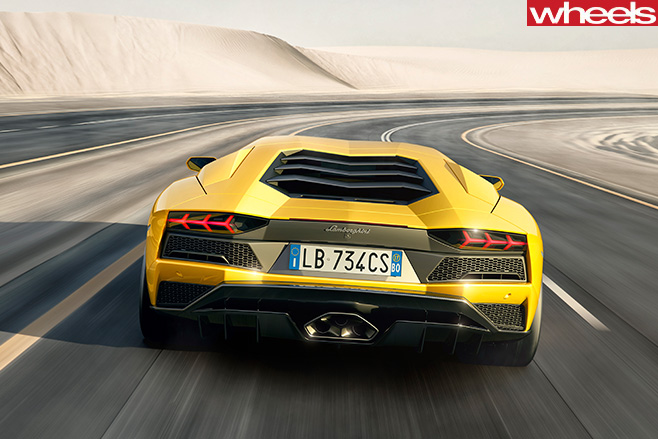
The rear end has been tweaked for similar improvements, via a black diffuser characterised by a number of vertical fins to reduce drag and increase downforce. Three single exhaust outlets exit through a hexagonal centrally located surround.
Chief among the chassis changes are a new-to-Lamborghini four-wheel steering system which changes the angle of the rear wheels depending on the driving situation.
The system is focused on drivability and performance, with the front two wheels automatically facing in slightly opposite directions to that of the steering angle at low speed to reduce the cars turning circle. A more agile feel is the result.
On the other hand, when at high speed all four wheels are turned the same direction to effectively increase the wheelbase and optimise stability and responsiveness.
New rear springs and clever adaptive magneto-rheological suspension also bolster body control, balance and stiffness.
This is all aimed at providing a superior drive, ride and performance, for enhanced control and ‘driving emotion’.
The S sits on a new set of specifically developed Pirelli P Zero tyres, with a compound designed to deliver maximum response.
Ventilated and perforated carbon ceramic brakes have been included as standard, with a quoted 100km/h-to-standstill distance of 31 metres.
Transmission-wise the Aventador S continues to come standard with all-wheel-drive, as well as a seven-speed automated manual.
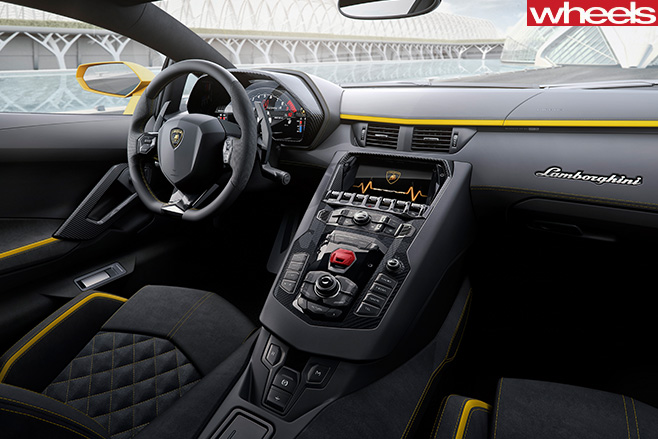
Interior customised is said to be virtually limitless, courtesy of Lamborghini’s Ad Personam customisation program.
As well as the four driving modes, the Aventador’s digital instrument display can be customised according to driver preference.
Apple CarPlay also now comes standard, while a Lamborghini telemetry system with the ability to record lap times and track performance as well as trip data will be an optional extra.
Australian deliveries for the new car will begin in the second quarter of 2017.
VOLKSWAGEN has agreed to pay disgruntled Canadian owners more than $2 billion in Dieselgate compensation as it attempts to settle a class action before the courts.
If approved, the $2.2 billion Canadian settlement means VW will pay 105,000 owners of EA189 2.0-litre diesel-engined cars with in-built emissions cheats between $5000 to $8000 each, and agree to buy back their vehicles if asked.
The carmaker will also have to pay the Canadian government an extra $15 million over claims that it misled buyers in advertisements that talked up the “clean” diesel technology used in the vehicles.
Volkswagen faces a number of Federal Court class actions in Australia from owners unhappy that the German premium carmaker has sold vehicles here that have included emissions cheat software that can recognise when a car is being emissions-tested, and switch into a clean-burn mode.
It is also facing similar claims here from Australia’s consumer watchdog of “false, misleading or deceptive conduct”.
Volkswagen Australia is disputing all the claims, saying the Dieselgate revelations have not broken any Australian laws and that the Australian Competition and Consumer Commission claims won’t “provide any practical benefit to consumers because software updates for cars affected by the voluntary recall are or soon will be available”.
Canada’s Competition Bureau said the class action brought against Volkswagen Canada and Audi Canada related to claims that the diesel engines used under the bonnet of the cars was cleaner than the equivalent petrol ones. The settlement does not relate to VW’s 3.0-litre V6 diesel engine, which was also scooped up in the Dieselgate scandal.
“The vehicles passed applicable emissions tests because software was installed that altered the operation of the vehicle during testing which appeared to have the effect of reducing emissions in testing,” the Competition Bureau said.
“Consumers expect and deserve truth in advertising, particularly when it relates to such a significant investment,” bureau competition commissioner John Pecman said.
“We are pleased that Canadians will now begin to receive compensation and that Volkswagen Canada and Audi Canada will address the impact this matter has had on the marketplace.”
Volkswagen Australia recently widened its recall beyond an initial fix announced for 9000 Amarok trade utes to add another 70,000 vehicles, including 2.0-litre versions of the Volkswagen Golf, Passat, Jetta, Tiguan and Caddy models, and the Skoda Superb, Octavia and Yeti models.
Audi, meanwhile, has widened its Dieselgate-related recall to include “certain Audi A4, A5, A6, Q3 and Q5 models”, with fixes for A1, A3 and TT models “ available shortly”. Volkswagen Australia has said it will not be buying back cars, as the emissions cheats related to much stricter US emissions laws and vehicles sold here complied with all emissions standards.
“In addition, we hold the view that there is no legal basis for compensation or customer actions in this connection [to the US compensation pay-outs] in other parts of the world,” it said. “All vehicles affected are technically safe.”
Spy photographers have snapped pics of AMG snapping pics of its latest GT model, the Mercedes-AMG GT C Coupe.
GT C is the “more luxurious version” in a diversified AMG GT line-up, according to company boss Tobias Moers.
This means the GT model range now has four variants, with the GT C slotting in under the flagship AMG GT R, and above the second-tier GT S and base model GT.
Like the folding roof GT C Roadster, shown ahead of the Paris motor show earlier this year, the GT C Coupe will feature a 410kW/680Nm version of the 4.0-litre twin-turbo V8 engine used in the GT range. Acceleration is likely to be the same as the GT C Roadster, at 3.7 seconds from zero to 100km/h.
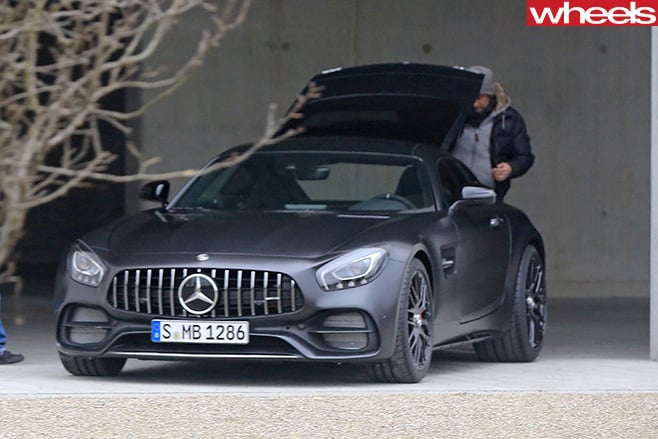
GT C gets the same sophisticated rear axle as the GT R – which has rear-wheel steering and torque vectoring – and the GT R’s revised electronic power steering.
Moers said that the much-improved variable ratio steering will eventually filter through to all GT models.
AMG has also added its Ride Control suspension to GT C, which includes adaptive adjustable damping for increased compliance.
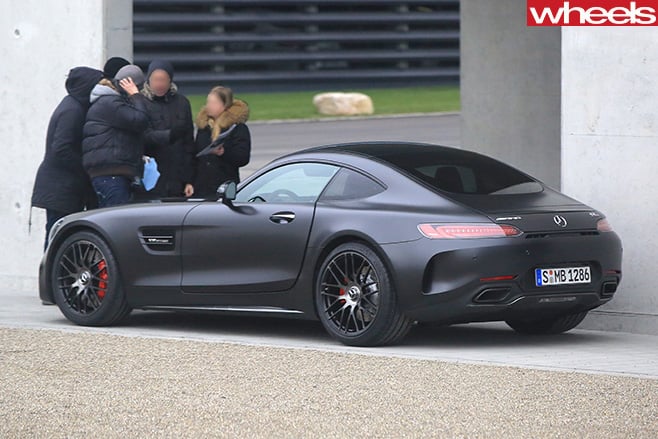
Quad tail pipes exit at the back, rather than the GT R’s central exhaust outlet.
The Panamericana front grille fitted to GT C is also shared with the GT R, and modelled off the Mercedes-Benz W194 300SL that won the 1952 Carrera Panamericana in Mexico.
The GT C Coupe spotted in these photos features matte black paintwork, and our spy snappers made mention of a unique ‘Edition 50’ badge on the boot lid, suggesting a special edition to coincide with AMG’s 50th birthday in 2017.
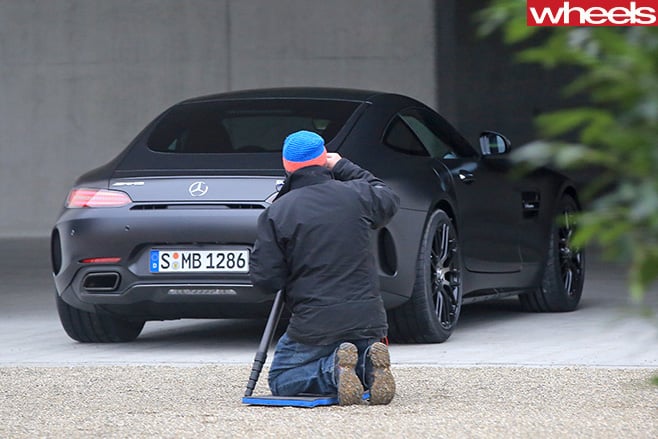
Both GT C Coupe and GT C Roadster are expected to arrive in local showrooms late in 2017. The rumoured Mercedes-AMG GT Black Series is expected to follow sometime in 2018.
In our Fast Facts series, WhichCar delves deep into the history of automotive brands to bring you fascinating facts and intriguing information.
Here we focus on Bentley, the British brand that started life dominating the world-famous Le Mans race, became umbilically linked with rival Rolls-Royce for decades, and is currently prospering under German (Volkswagen) ownership.
1. BENTLEY MEN
Brothers WO (Walter Owen) and HM (Horace Millner) Bentley had started Bentley and Bentley a few years prior to forming Bentley Motors Limited after World War 1. The first Bentley chassis – number EXP 1 – was produced in 1919 but didn’t go on sale as a full car until 1921, when it was simply called the 3-litre (after its 2996cc engine). It was offered with a five-year chassis warranty.
2. BENTLEY BOYS
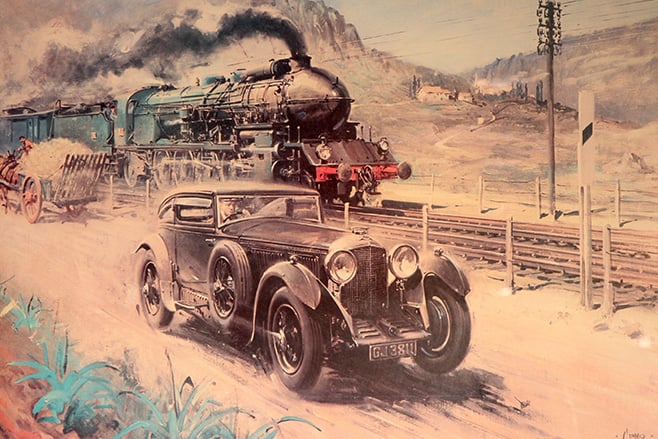
A group of rich, mostly British motorists who raced Bentleys at the Le Mans 24 Hour endurance race in the 1920s and promoted the brand among the social elite became known as the Bentley Boys. Bentley won its first Le Mans at its second attempt, in 1924, before dominating between 1927 and 1930. Race cars included the six-cylinder Speed Six that was also regarded as a fine road car, and the four-cylinder 4½ Litre.
3. OVER-BLOWN RACER?
A supercharged version of the 4½ Litre designed to ward off increasing competition became known as the Bentley Blower, though reliability issues meant results didn’t match its image. A famous runners-up place, however, came at the 1930 French Grand Prix, when the two-tonne Bentley came second in a field of far lighter Type 35 Bugattis. Etorre Bugatti would refer to the Bentley derogatively as the “world’s fastest lorry”.
4. ROLLED
WO Bentley became an employee after one of the Bentley Boys, millionaire (Joe) Woolf Bernato – a winning driver from 1928 to 1930 – was approached to help finance the company. When Bernato decided against continuing his investment in 1931 amid the European recession, struggling Bentley went into receivership – to be purchased by rivals Rolls-Royce.
5. ATTACK OF THE CLONES
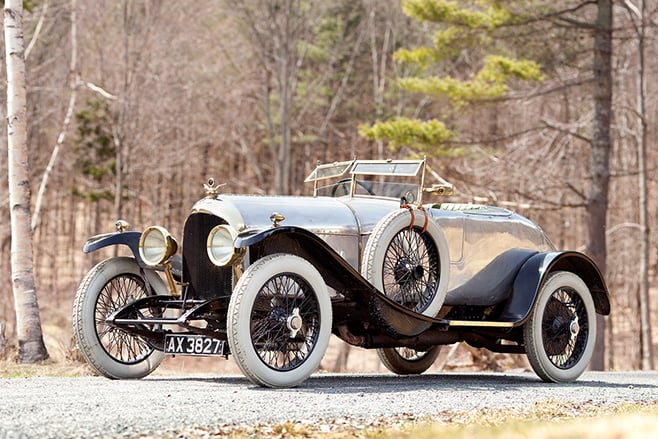
For six decades, Bentleys were based on Rolls-Royce models. The ‘Derby Bentleys’ of the 1930s – named after the location of the Rolls factory where they were built – combined a Rolls-Royce chassis and a Bentley engine. After the Second World War, Bentleys were essentially a Rolls-Royce with a specific Bentley grille.
6. FASTEST FOUR-SEATER IN THE WORLD
The 1952 Continental was a ‘super coupe’ based on the Rolls-Royce Silver Dawn sedan but featured aerodynamics honed in a Rolls aircraft wind tunnel and alloy bodywork by the coachbuilder that has become synonymous with Bentley: Mulliner. With longer gearing than the Silver Dawn, the Continental could stretch out to 199km/h in top gear – making it at the time the world’s fastest genuine four-seater vehicle.
7. MULSANNE
With Bentleys accounting for just five per cent of total Rolls-Royce group sales in the 1970s, a model based on the Rolls’ Silver Spirit and named after the Le Mans circuit’s famous Mulsanne Straight aimed to revive interest in the brand. People certainly took note of the 1982 Mulsanne Turbo that employed a Garrett turbocharger to boost power by 50 per cent. The nameplate ended in 1992 but was revived in 2009 for the brand’s big limousine.
8. A UNIQUE BENTLEY AT LAST
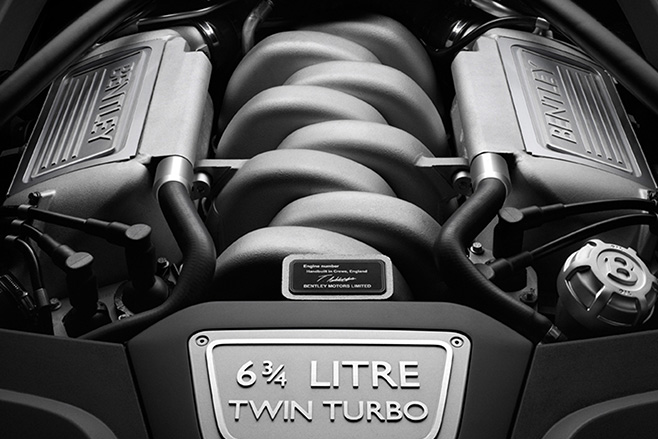
The 1991 Continental became the first Bentley in decades not to be shared with a Rolls. Featuring the famous Rolls-Bentley 6.75-litre V8, the R version – for Roadholding – of the British luxury coupe was at the time the most expensive British car ever made. It was followed by a 300kW S, Azure convertible, and a T with 800Nm of torque. The T featured a shorter wheelbase, flared wheel-arches, a milled-aluminium interior, and a novel-for-the-time red engine-starter button (on the centre console).
9. VW ACQUIRES BENTLEY AND (BRIEFLY) ROLLS-ROYCE
In 1998, Volkswagen paid UK engineering company Vickers £430m for Bentley and Rolls-Royce – though ended up with only the former after BMW managed to acquire the Rolls and Spirit of Ecstasy logos/rights owned by the separate, aero-focused company Rolls-Royce PLC.
10. CREWE’S (HEAD)QUARTERS
Bentleys continue to be built in Crewe, where production started in 1946 (manufacturing originally started in Cricklewood). The facilities, of course, have been continually upgraded since, and all key departments are integrated into the site.
11. LE MANS GLORY DAYS REVISITED
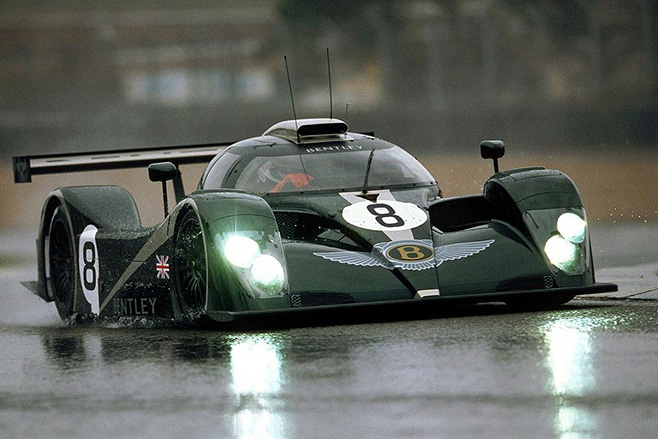
Bentley returned to Le Mans in 2001 – 68 years after it last raced at the famous French endurance race. It took another two years before it would add a sixth outright victory to its impressive CV. There was more than a little help from sister brand Audi, though, which took a break in 2003 after three successive wins (a domination that would resume in 2004 and for years onwards), and the Speed Eight racing car’s engine was a modified version of the triple-title Audi R8’s 4.0-litre V8.
12. LABOUR OF LOVE
It takes Bentley employees 399 hours to build the company’s flagship model, the Mulsanne. It takes nearly a quarter of that time – 104 hours – to build the ‘entry level’ Bentley Continental GT.
13. NOT 100 PER CENT BRITISH
18,000 parts are supplied to Crewe by more than 700 businesses from 32 countries spread across six continents.
14. MOVE OVER FREEDOM
You don’t have to buy a car to sit in a Bentley. The company teamed up with Club House Italia in 2013 to create the Bentley Home Collection – a range of furniture inspired by the luxury car maker’s handcrafting techniques and high-quality materials. You can order Bentley sofas, armchairs, coffee tables, cabinets, and beds. Not quite IKEA prices, though. One particular Bentley side cabinet costs about $22,000.
15. AMPED UP
The Bentley Bentayga SUV was not only the brand’s first SUV in 2016, it also debuted the world’s first 48-volt electrical sub system featuring seven different yet integrated multi-speed, multi-purpose networks. It helps to control everything from the fridge to the electro-mechanical Dynamic Ride system that can vary the torsional resistance of the vehicle’s anti-roll bars for either greater wheel articulation on rough terrain (softer) or enthusiastic cornering (firmer).
16. TIME IS MONEY
The Breitling clock that can be optionally integrated to the Bentayga’s dash costs $300,000.
IS THIS the toughest CEO gig in the automotive world?
Stefano Domenicali, for seven years the team principal of Scuderia Ferrari, and more recently poached by Audi to formulate its stillborn F1 aspirations, has taken over the reins at Lamborghini from Stephan Winkelmann.
Domenicali’s directive from parent company Audi AG might simply have been “don’t stuff it up”. Since taking over a bruised and battered Raging Bull in 1998, Audi’s governance – and Winkelmann’s leadership since 2005 – has seen sales increase 15-fold from just 209 units in 1997.
Lamborghini’s turnover increased 39 percent to 872 million ($A1283m) in 2015 on the back of a record 3245 sales, up 28 percent on the previous record of 2530 in 2014.
No matter how you measure it, Winkelmann left Lamborghini in rude health, with the company expecting to deliver more than 3500 Lamborghini Aventadors and Huracans in 2016. The 2018 arrival of Lamborghini’s first SUV in 30 years is projected to double that figure to more than 7000 cars annually.
Domenicali’s job is clear: “I need to prepare us for that growth; to make sure we grow in the right way.”
Speaking exclusively to Wheels in Japan in September, Domenicali said the Porsche Cayenne-based Urus SUV would spark a significant evolution for the Lamborghini brand.
“For us it is a big challenge, because we are not used to thinking so big [in terms of sales]. I need to make sure we grow in the right way … in terms of management style, in terms of dealers, the people, customer service, all of that.”
Domenicali said Lamborghini’s dealer network would increase from 130 to 160 over the next three years, some of it in countries where a high-performance SUV is more suitable than Lamborghini’s current low-riding sports cars.
“India, for example. We are entering this new market, but the [roads] infrastructure puts a natural limit on our appeal.
With the Urus, it’s a different situation, so I’m expecting big growth there … and all countries where SUVs are popular.”
The Urus will launch with a twin-turbo V8 petrol plucked from the VW Group (it’s used in some Audis), and a hybrid will follow soon after, confirmed Domenicali.
“For sure that is already in the plan. Not at launch, but immediately after. In certain markets it’s important.”
Domenicali acknowledged that borrowing major components from mainstream brands within the Group created new challenges: “We need to give the personality to our product so that customers recognise the product as Lamborghini.”
He also said hybridisation, maybe even full electrification, would one day come to the brand’s supercar portfolio.
“In the short term, we need to keep our values with Aventador and Huracan [but] we need to monitor the evolution of electrification in our supersport segment to know when it becomes available, at the right cost, with the performance we need… then we need to be ready to do it.”
Behind the lightly facelifted front of the Lamborghini Aventador S lies a significantly changed supercar than the one that rolled from the bullfighting arena four years ago.
The word ‘new’ crops up several times with the Aventador S, and this time it may not be a case of arms-flailing Italian exaggeration. Surprisingly the 6.5-litre naturally aspirated V12 appears least-changed, with a carry-over 690Nm, 515kW moving to 544kW – although still behind the Superveloce’s 552kW – and the rev ceiling raised from 8350rpm to 8500rpm.
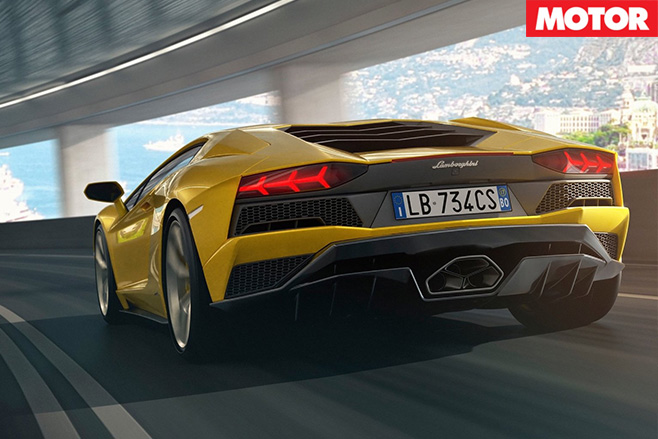
However, new to the Aventador S is Lamborghini Rear Steering (LRS) that within five milliseconds can twist the back boots in the opposite direction to the fronts to ‘virtually’ shorten the wheelbase at low speed for increased agility; and at higher speeds twist the same way as the fronts to magically lengthen the wheelbase and enhance stability.
Beneath the carry-over carbonfibre monocoque chassis with aluminium frames, there is new suspension geometry including upper and lower control arms, new springs and new variable dampers as part of a new Lamborghini Magneto-rheological Suspension (LMS).
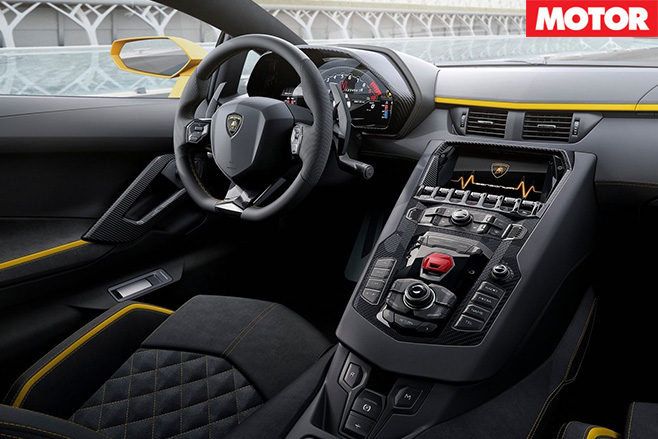
In Sport mode, 90 per cent of drive goes to the rear, but in addition to the carry-over Strada and Corsa modes comes a new – appropriately for a Lambo driver – Ego mode that allows a mix-and-match of traction, steering and suspension settings.
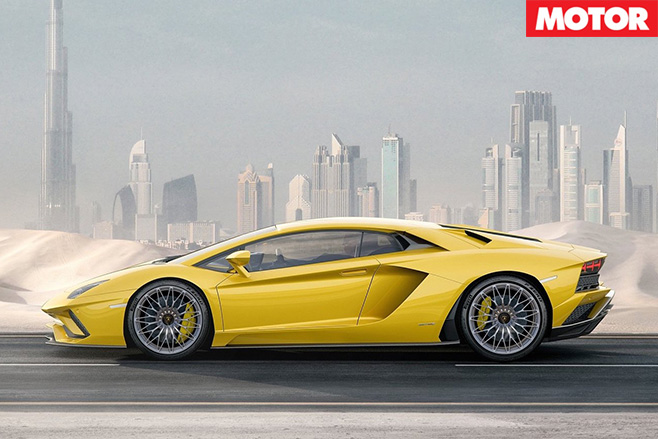
Behind the lightly revised nose including a longer lower splitter, front downforce is increased by 130 per cent compared with the LP700-4. An active wing teams with a new rear diffuser and redesigned vertical fins that reduce drag, while maximum downforce improves by over 50 per cent. Inside there is a new colour screen ahead of the driver, borrowed from Audi.
The options have also been increasing since the original hot-hatch, the Volkswagen Golf GTI, returned to form with the Mark V model of 2005. Here, WhichCar offers a guide to three stand-out members of the breed, ranging between $38,990 and $49,990.
FORD FOCUS ST Priced from $38,990The all-wheel-drive Focus RS has been hogging much of the hot-hatch limelight in 2016, yet for those with smaller budgets the ST is more than a mere consolation performance five-door.
After a 2012 release for the current generation, there was a 2015 update that brought changes such as tweaked chassis and, perhaps more noticeable for more buyers, a revised interior.
The improved dash design was not only smarter to look at but also smarter to use thanks to the more intuitive Sync 2 infotainment system and 8.0-inch touchscreen. And if desired, a $2000 Technology Pack offers a bunch of driver aids – including blind spot monitoring, autonomous low-speed braking, lane departure warning and auto high beam.
The Focus ST responds faithfully to the driver’s inputs to provide confident fun on winding roads, with the intimate Recaro sports seats holding occupants in place. The 184kW/345Nm 2.0-litre turbocharged four-cylinder is a brilliantly flexible performer for all types of driving, even if the power can occasionally overwhelm the front wheels – resulting in some steering-wheel-tugging torque steer. The steering is otherwise enjoyably quick and well weighted.
There’s disappointment if you’re after an automatic gearbox as the ST comes with a six-speed manual only, but if you don’t mind a stick-shift this Focus provides a thrill for a relatively small bill.
VOLKSWAGEN GOLF GTI Priced from $41,340For more than a decade now, the Golf GTI has been the benchmark hot-hatch in terms of perfecting the balance between ownership and driving satisfaction. It’s still reasonably priced in base form, is superbly refined, and is great to steer. While you need the more expensive and more powerful Performance variant to get closer to the Focus ST’s 184kW, the 162kW GTI is still capable of matching the Ford’s 6.5-second 0-100km/h sprint.
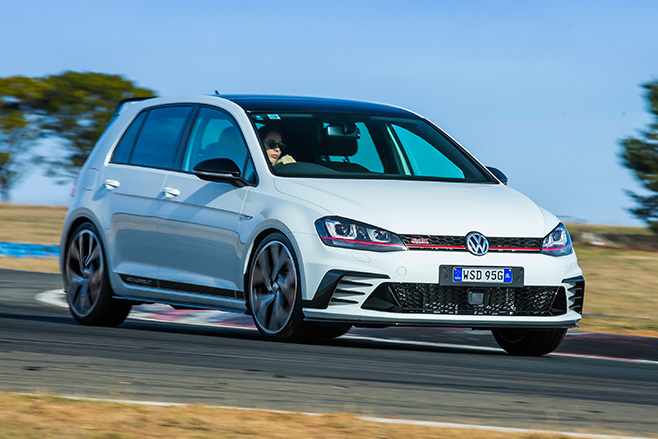
The VW’s 2.0-litre turbo engine also boasts good driveability and some delightful exhaust noises to match – emphasised most when paired with the six-speed DSG auto rather than six-speed manual.
The steering isn’t quite as deeply involving as the Ford’s but it’s more direct than a regular Golf’s and nothing but smooth.
If you’re (understandably) tempted by a GTI, however, we’d recommend holding off until mid 2017. That’s when a major update for the whole Golf range arrives in Australia. GTI models not only gain more power – up to 169kW for the standard model, up from 169 to 180kW for the Performance – there’s a new seven-speed DSG and a cabin shake-up that will make the Golf’s classy interior even classier. (Read WhichCar’s Quick Guide to the 2017 VW Golf.)
PEUGEOT 308 GTi 270 Priced from $49,990A rival GTi – albeit with a lower-case i – arrived in late 2015 from Peugeot, though a year later the French brand axed the most accessible variant, the $44,990 250.
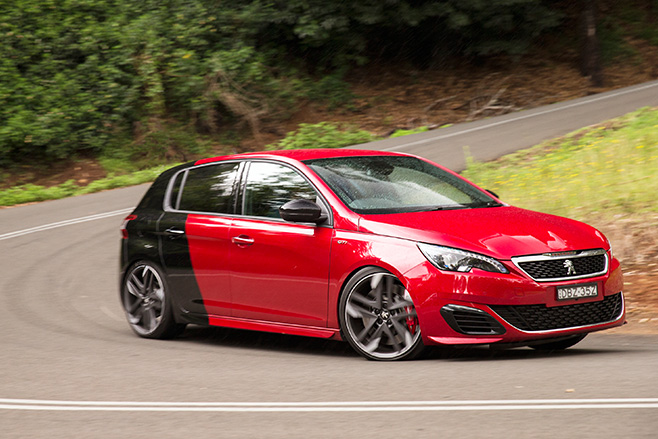
That leaves the somewhat expensive $49,990 270, though there are some equipment/feature highlights such as LED lights front and rear, navigation and 9.7-inch colour touchscreen, digital G-force monitoring, Peugeot Sport bucket seats with massage function, 19-inch alloy wheels with performance-focused Michelin tyres, large brakes, and a Torsen limited-slip differential that helps get the GTi’s 200kW of power to the ground via the front wheels.
Hard to believe, but the highest output here comes from the smallest engine of the group – a turbocharged four-cylinder just 1.6 litres in size. Combined with a kerb weight of just 1205kg, the punchy Peugeot is half-a-second quicker to 100km/h from standstill: 6.0 seconds. That helps it to feel nimble on the road, too, while the tyres provide high levels of grip.
Downsides include some mild torque steer, an engine that could sound racier (despite an audio-amplification feature), and the lack of an auto alternative to the six-speed manual. Yet this is another entertaining Peugeot – to follow the smaller 208 GTi – and the package is completed by the stylishly minimalistic cabin.
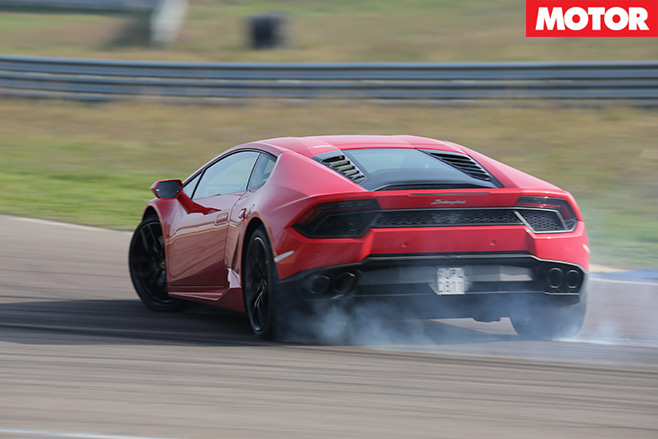
All arguments in favour of turbocharged supercar engines are settled after just five furious minutes in the Lamborghini Huracan LP580-2.
Boy, does this thing sound the goods – its 5.2-litre V10 makes a noise both exotic and menacing in true old-school supercar fashion. It’s also so loud only those with permanent hearing damage would ever consider an aftermarket exhaust. You’ll know every tunnel and rock-face in a 20km radius. (And it’s true it doesn’t sound that different to an LP580-4 but the rear-drive baby Lambo is the new one for this year.)
Compared to the 6.0-litre VF the LS3 SS has proper balls. As well as a proper induction noise, it burbles at idle, crackles on the overrun and just sounds tough.
Best Drivetrain of 2016: Ford Focus RS
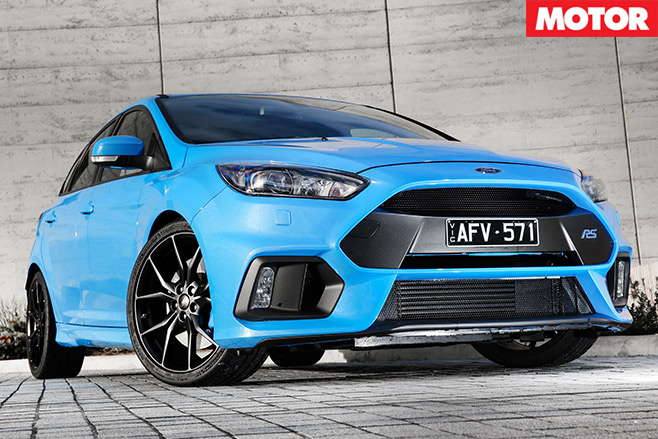
Its clever ‘Twinster’ system, adapted from the Range Rover Evoque of all places, can send the majority of the engine’s torque to the rear wheels, giving the car a rear-biased feel on corner exit that has so far eluded the hot hatch segment. Drift Mode is a gimmick (we explain why here), but the drivetrain is brilliant.
If cars could be compared to humans, then the engine would definitely be the heart. For many of us, this is where our love affair with cars started.
Purists may preach about precise handling and feelsome steering, but nothing stirs the emotions like a barking exhaust and the feeling of acceleration forcing you into your seat, and on these two sensations our ‘Best Engine of 2016’, the 4.0-litre flat-six from Porsche’s 911 GT3 RS, delivers in spades.

The regular 3.8-litre GT3 quickly proved our fears unfounded. With a sky-high 9000rpm redline and searing Le Mans soundtrack, not to mention unbelievable pace, it left us wondering where Porsche could possibly go with the GT3 RS. Bigger was the answer. An extra 200cc revived the ‘4.0’ badge, but it takes much more than a slight increase in displacement to liberate 18kW/20Nm from what is already a very highly-strung atmo engine.
Almost all of the internal parts were changed, including the conrods, camshafts, cam springs, pistons and oil system. The crankshaft is made of special hardened steel, identical to that found in Porsche’s 919 LMP1 Le Mans cars. Using the wider Turbo bodyshell allowed the use of side air vents in the rear guards, increasing air flow through a new intake system.

What the numbers don’t convey is how different the on-road experience is between the 3.8 and 4.0. Whereas the former thrives on revs, exploding across the last 2000rpm, the latter feels much more muscular in the mid-range. It still revs to 8800rpm, yet while it also still has a killer top-end rush, it doesn’t feel as spectacular as by the time 4500rpm hits the tacho, you’re seriously moving.
There are a couple of new-age turbo contenders worthy of consideration, most notably the latest V8s from Ferrari and AMG, but neither quite offer the same thrill of climbing a seemingly never-ending naturally-aspirated hill. In the end, it’s the atmo heart of the GT3 RS that makes our own beat faster.
HONOURABLE MENTION FERRARI 488 GTB
A 450kW-plus supercar will be tough to fit in a stocking, but the Ford GT has commenced production before Christmas to be delivered to owners two years after it was revealed.
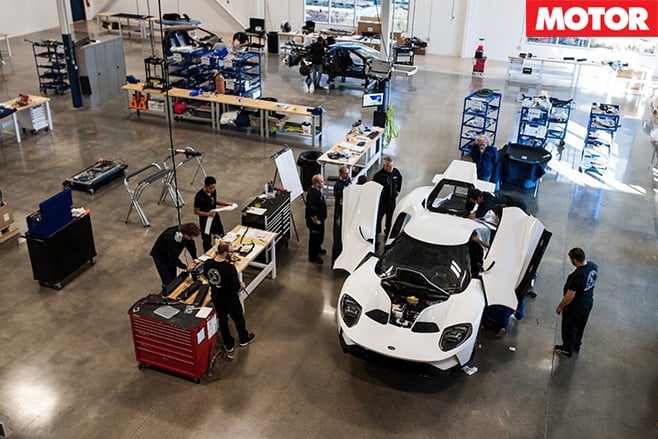
Ford executive vice president Raj Nair this week steered the first GT off the company’s new “low volume” production facility in Ontario, Canada, and Ford’s PR team provided a first glimpse at how the much-hyped supercar will be produced.
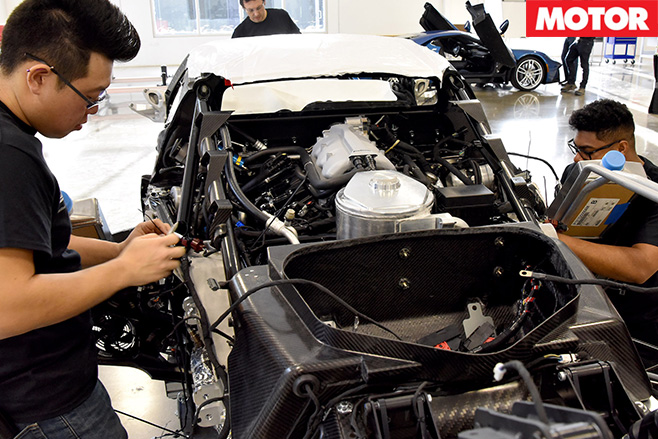
Photographs show the installation for the mid-mounted 3.5-litre twin-turbocharged V6 engine and seven-speed dual-clutch transmission around naked and exposed carbonfibre bodywork and the web of ultra-stiff and light tentacles that form the chassis.
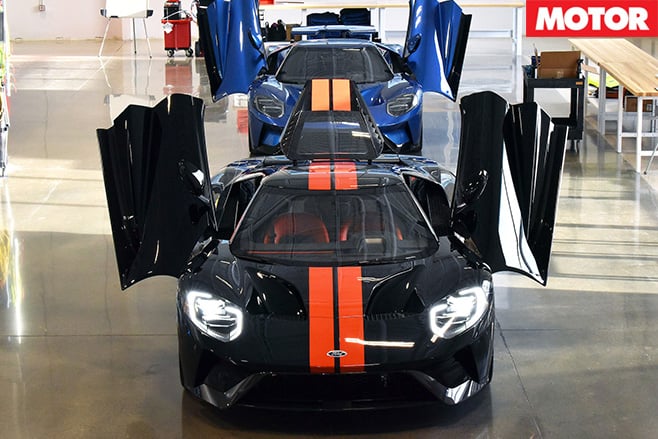
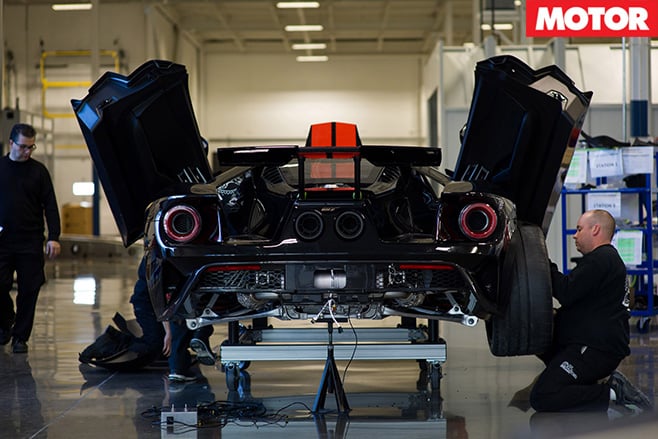
The first example to roll down the line was painted Shadow Black with Race Red stripes (officially tagged Ford GT Job 1) followed by the Liquid Blue hero colour and then a Liquid Red example with Frozen White stripes.
In total eight colours – white, silver, grey, yellow, matte black, in addition to the above – are available with stripe hues that mirror the above selection except for yellow, which is replaced by Competition Orange. Matte or gloss carbonfibre, meanwhile, is the selection for the front, side and rear garnish finish.
“When we kicked off 2016, we had two primary objectives for our Ford GT supercar – to excel at Le Mans, and to start deliveries before year-end,” says Nair in a statement.
“We’ve achieved both. For everyone involved in designing and developing this car, including all of our employees and suppliers, this is a moment to celebrate.”
While 6500 applications were received by Ford to purchase its US $450K pricetag – or $600K in our money – supercar, only 500 (or two years’ production equivalent) were accepted. The company has now pushed production to four years, giving some of the other 6000 teary applicants a chance at buying one of the most anticipated (and expensive) vehicles of 2017.