
Toyota, long the champion of petrol-electric hybrids and fuel-cell hybrids, is reportedly preparing to dive into the world of pure-electric vehicles instead, with the market debut of its first entirely battery-powered mass-market passenger car expected in 2020.
A report in Japan’s Nikkei newspaper says plans for a Toyota EV are already moving ahead, and the automaker – the world’s second-largest behind Volkswagen – is aiming to develop a car with a single-charge range of more than 300km.
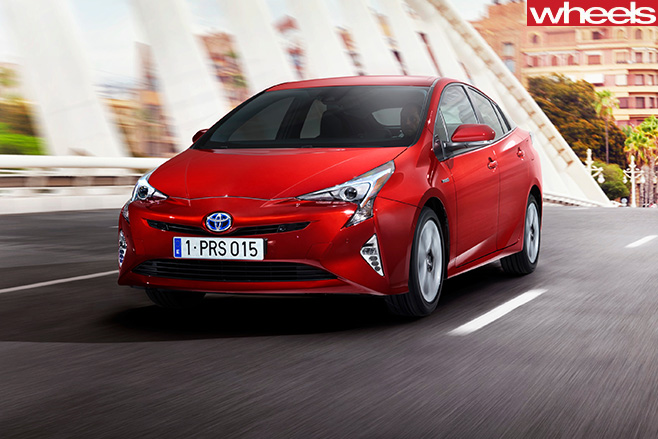
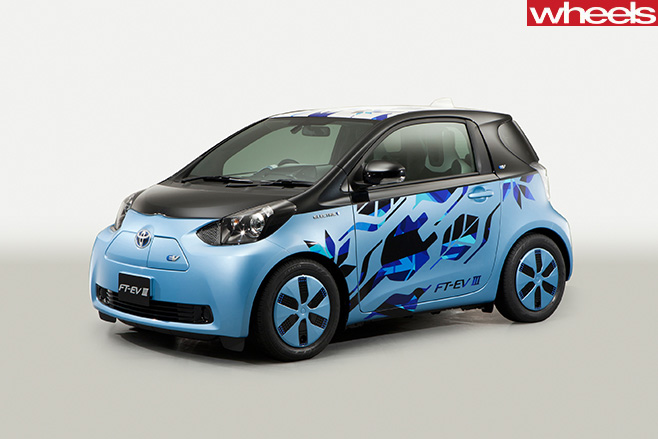
Toyota has only briefly flirted with production-capable electrics, with the i-Road single-seater and the diminutive Toyota iQ EV being built in very low numbers and missing out on a global release. Toyota recently built a limited number of electrified RAV4s in collaboration with Tesla for the US market, but primarily for the Californian market.
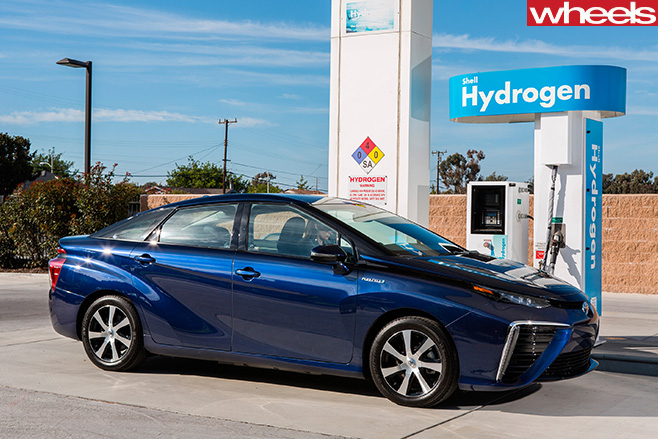
Meanwhile Nissan currently holds the title for the world’s highest-selling EV with its Leaf small hatch, and, through its alliance with French manufacturer Renault is planning more electric cars for the future. With the wider car industry increasingly gravitating towards EVs, Toyota cannot afford to sit on its hands.
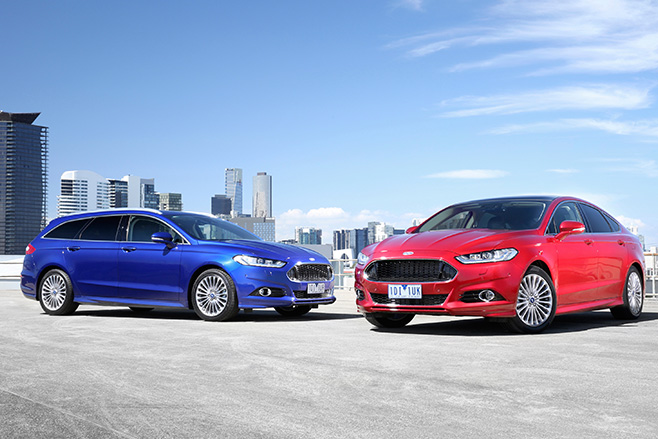
With the last Falcons rolling off the production line last month, its ready replacement, the Mondeo, is already making headway albeit in a different segment. While the Ford dominated the top end of the Large Car segment, the Mondeo resides in Medium Cars, currently dominated by the Aussie-built Camry.
Ford has sold 2507 Mondeos so far this year, compared to 1674 by this time in 2015. It’s the fourth biggest selling medium car with 6.4 percent market share, behind Camry (47.5 percent), Mazda 6 (9.2 per cent) and Subaru Liberty (7.5 percent) but it’s the only one in positive sales territory for the month (+20.6 percent) and year to date (+49.8 percent) and will probably grow as Ford pushes it more as a family car.
Compare the top 5 selling medium cars.
The 2016 Hyundai Tucson has been a steady mover up the medium-SUV chart and asserted its authority last month with a 118 percent boost in sales that saw it enter the overall top-10. It also pipped the CX-5 to top spot of its segment in October, though the popular Mazda soft-roader still leads on annual sales, with 20,202 sales compared to the Tucson’s 16,814,and should hang on to the crown come the end of the year.
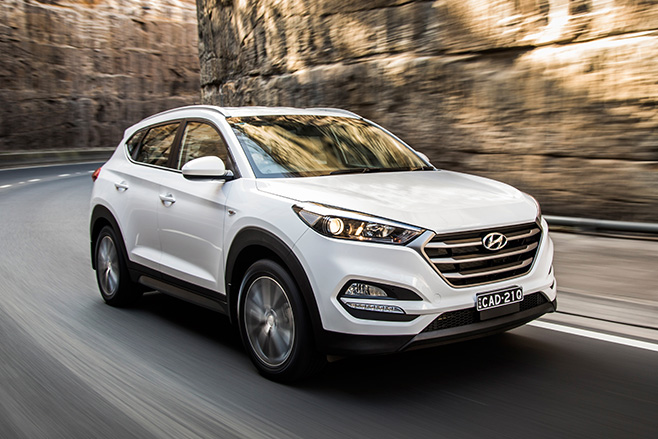
Compare the top 5 selling medium SUVs
The small-SUV segment is one of the fastest growing and while there are new fancy models being added every month, one of the oldest cars in the segment has enjoyed one hell of a revival this year. Mitsubishi ASX [LINK ] sales have grown by a steady 45 percent this year, and an above average October (+51.7 percent) saw it overtake the Mazda CX-3 as the best-selling small-SUV for the month. At the moment the CX-3 leads yearly sales 15,493 to 15,112 but the current trend should mean the ASX will be an unlikely winner for 2016.
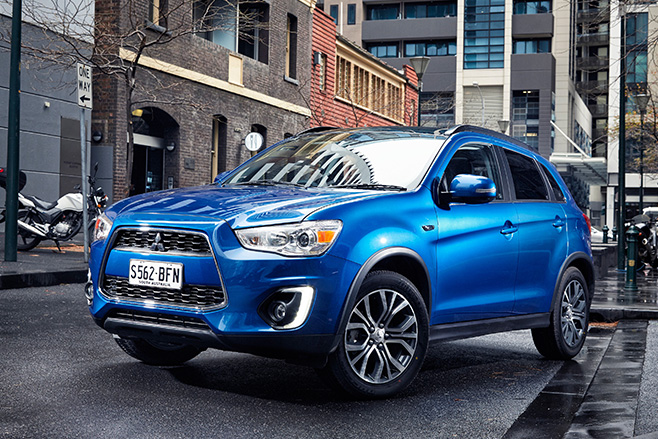
Compare the top 5 selling small SUVs
The days of the large car market being topped by the Australian-built Holden Commodore, Ford Falcon and Toyota Aurion are almost over. The Falcon managed to hold on to second spot in the month it ceased production, but a sign of what’s to come in the segment could be seen with a sudden jump in the fortunes of the Skoda Superb.
The new model enjoyed a big October, with sales increasing from 18 in September to 104. This pushes its market share from 0.8 percent to a still modest 1.6 percent for the year so far, in a segment dominated by the Holden Commodore (73 percent). However, going by the current trend this is set to rise rapidly as Falcon fades away, with the Superb set to be in a good position once the locally-built Commodore and Aurion cease production next year – the Opel-built Commodore will have to pretty good to beat this.
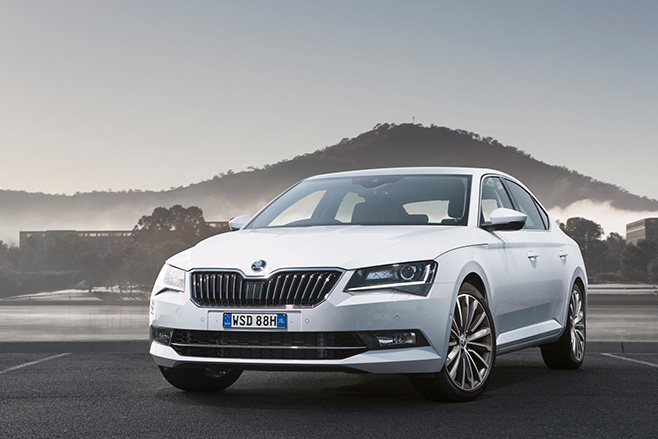
Compare the top 5 large cars <$70k.
This month’s Los Angeles Motor Show will be an automotive debutante ball where several new models will be under the public gaze for the first time. Here are five that will be making their way into Australian showrooms following their global unveilings in California.
Mercedes AMG E63
There’s been no shortage of new AMG models lately, but one of the most anticipated will finally be revealed at LA. The Mercedes-AMG E-Class flagship, an all-wheel-drive, drift-mode-equipped monster will be powered by a modified version of AMG’s new 4.0-litre twin turbo V8 producing a planet-shaking 450kW of power and 850Nm of torque in its most powerful form. 0-100km/h is a claimed 3.4 seconds.
The German super saloon is expected to arrive here early next year, with a pricetag in the region of a cool quarter-million.
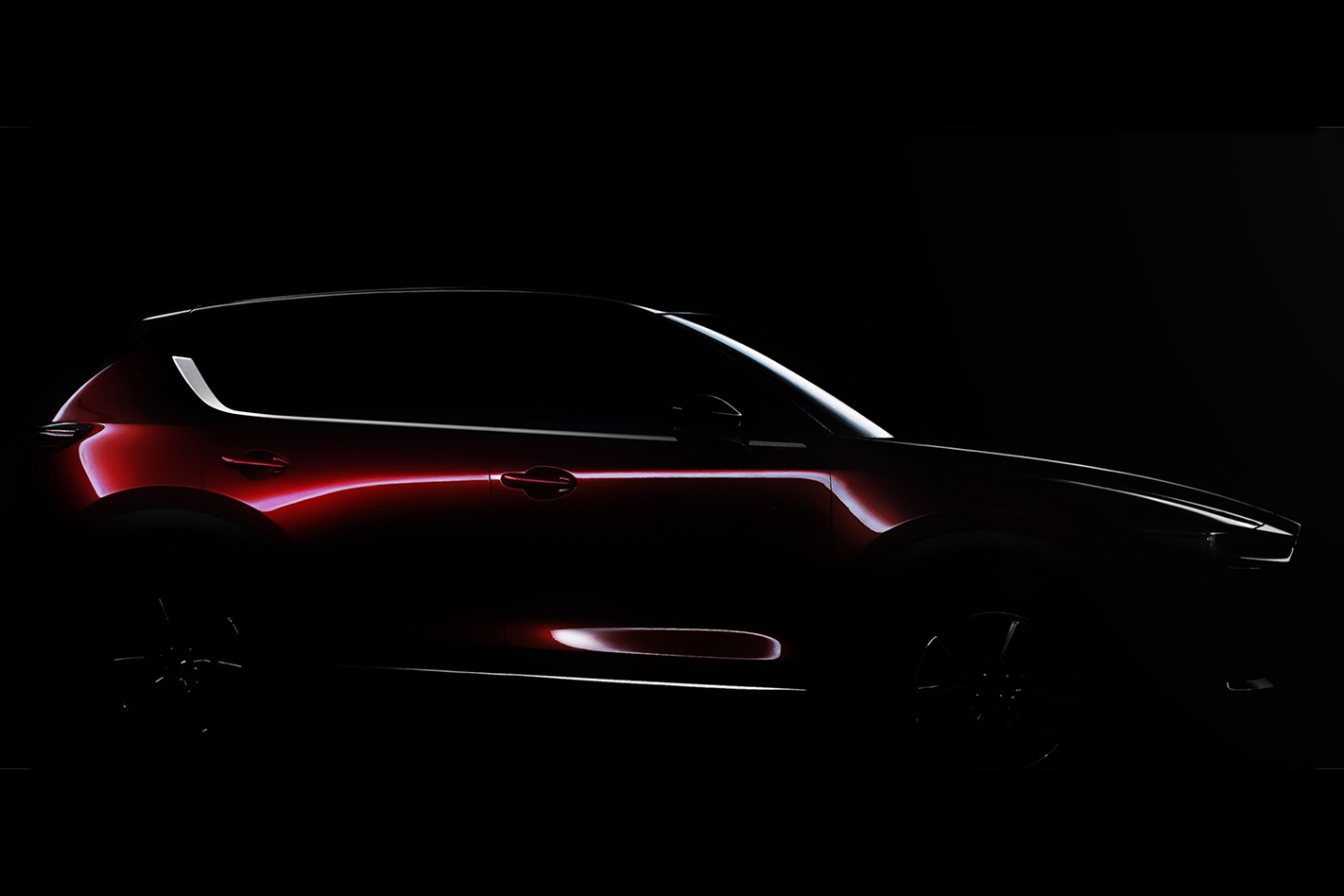
Mazda CX-5
Audi A5 and S5 Cabriolet
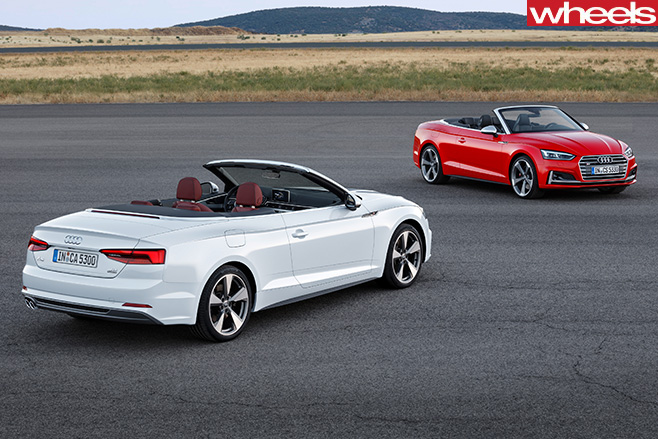
Audi just revealed the topless versions of the all-new Audi A5 but will show them in the flesh for the first time in LA. Both variants are expected reach Australia in late 2017. Audi claims the A5 rag top will have the stiffest body in its class, with its construction, reinforced sills and extra struts in the body increasing rigidity by 40 per cent over the previous Cabriolet, which should make it a decent ride.
Alfa Romeo Stelvio
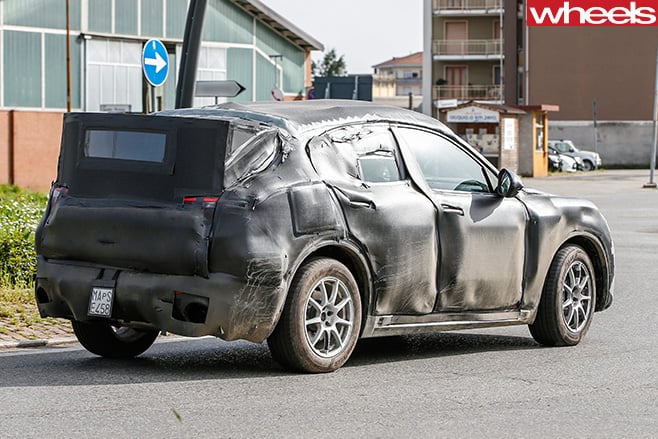
Alfa will reveal its first ever SUV which promises to have a curvaceous shape worthy of the marque, despite the hideous body covering seen in testing that looked more Ssangyong than Alfa Romeo Stelvio. Named after the famous Italian mountain road, the Audi Q5-sized medium SUV is set to help spearhead the brand the brand’s return to the US market after 30 years – hence the LA launch.
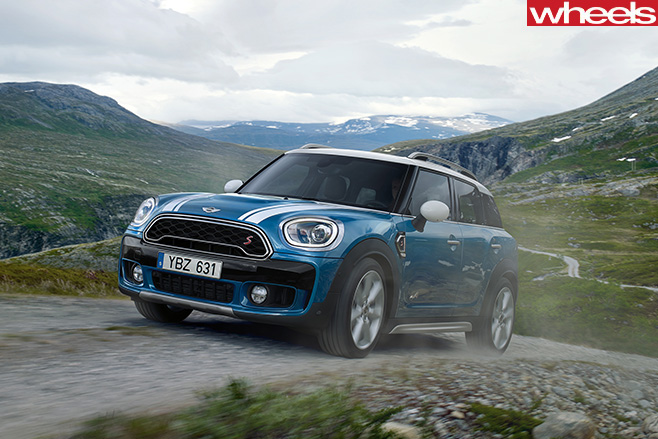
Mini Countryman
One fan’s incredible effort in recreating the Mk I VW Golf GTI in brick form could result in LEGO offering the kit to customers.
Although there’s still a ways to go until you see this kit on shelves, the almost 6000-strong support base that’s fast growing may just push it through.
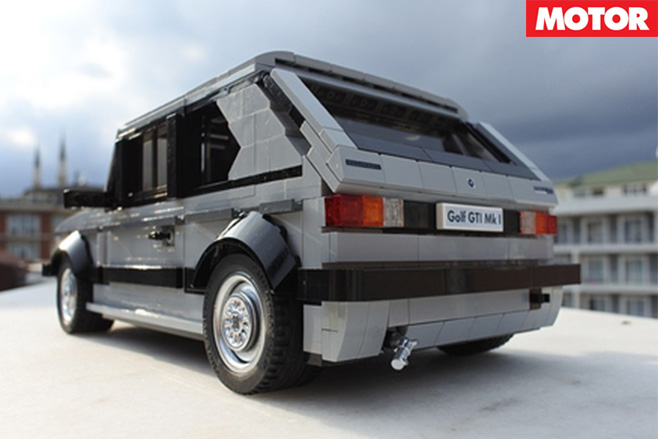
Even the interior is surprisingly detailed, utilizing stickers and unconventional blocks to nail the wheel, cockpit and handbrake just to name a few.
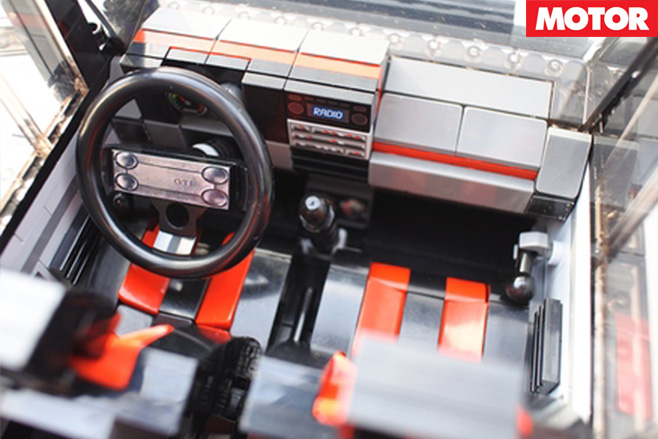
According to the creator, the GTI uses 1278 parts and pictures show the Volkswagen is on a similar scale to the existing 1167-piece VW Beetle.
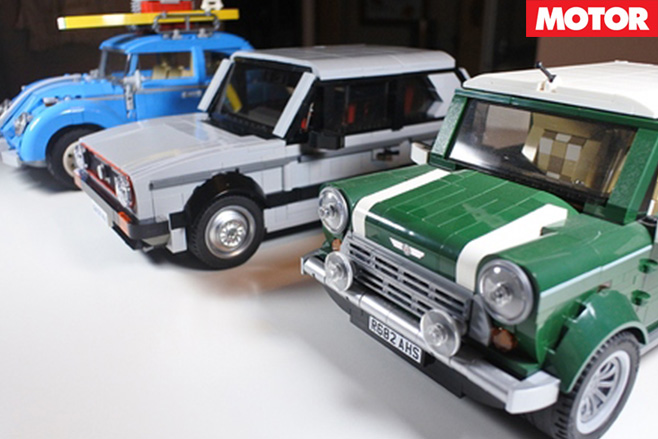
Starting with submission, supporter gathering, and culminating in a review and eventual release, this process has put out many successful fan made kits and supported the creators with nice royalty fees.
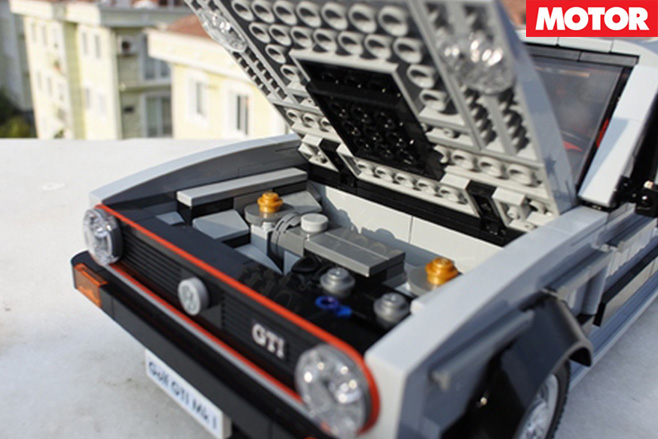
With votes pouring in every day, it’s looking like this definitive hot hatch may yet have its day in LEGO history.
TELL ME ABOUT THIS CAR
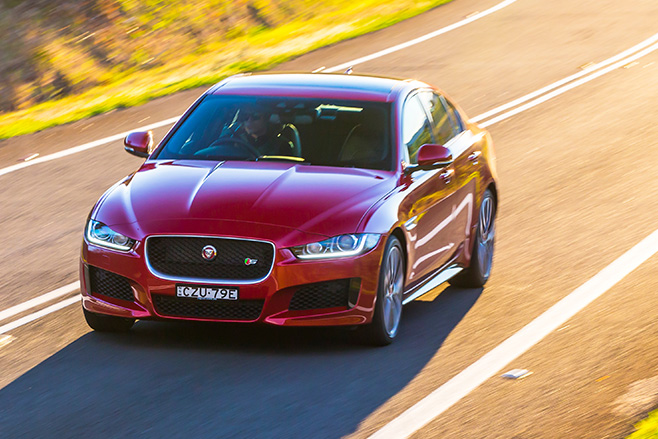
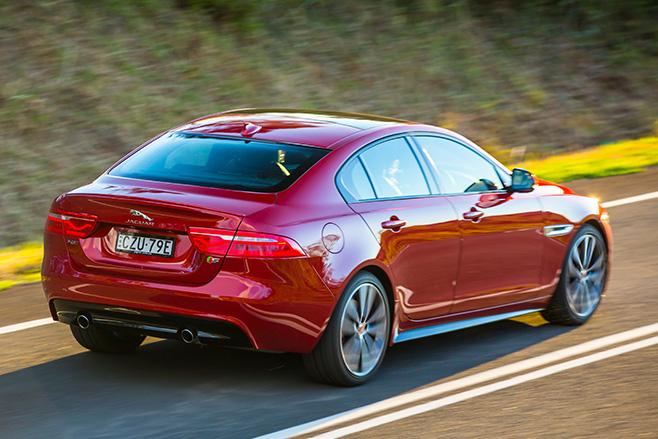
Jaguar’s XE is a welcome replacement for the dismal 2000s-era, Ford-inspired S-Type. Pitched as a true BMW 3 Series, Audi A4, Lexus GS, Mercedes C-Class and Infiniti Q50 competitor, it’s a sharp, stylish and wonderfully made small luxury sedan.
The XE S is the cat’s whiskers of the Jaguar XE range. Under the bonnet is a 250kW, 450Nm supercharged 3.0-litre V6 engine that makes this model the most agile yet to wear the leaper’s badge. It is priced from $105,066, or about $5000 more than its BMW-badged equivalent, the technically brilliant BMW 340i.
STRENGTHS
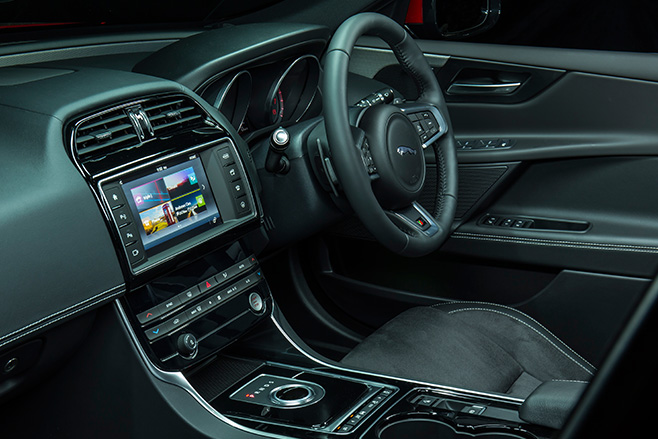
- It has a finish line flag mode. You can flick the XE S between economy, normal and dynamic modes – the latter signified by a chequered flag. Flick across to it, and all of a sudden the throttle becomes more responsive and the steering weights up. Flick the gear-shift dial into “S” mode, and the gears hold for longer, too.
- Litheness. The Jaguar XE’s body is made from lightweight aluminium, and you can feel that in the way the car rolls into corners, sitting flat rather than leaning out of them. That low weight helps knock the 0-100km/h sprint down to a quick 5.1 seconds.
- Our test car was sitting on big 20-inch, 20-spoke alloys replacing the default 18s for $1850. Usually stepping up to a lower-profile tyre ruins a car’s ride, but the XE S didn’t seem to suffer. The wheels also looked the business with the contrasting red-painted brake calipers inside them.
- Real-world fuel economy is pretty close to the official figure of 8.1L/100km. Even driving it like a sports car, our numbers didn’t rise past the low teens.
- It’s genuinely fun to drive. A powerful front-engined, rear-drive car weighing 1600-odd kilograms reads like a good combination, and it is. The XE S will happily wag its tail if you push it a bit too hard around a corner in the wet. In a straight line from a standing start it will struggle to lay all its traction on the ground. All the while, the car’s electronic brain is stepping in to keep things safely in check.
WEAKNESSES
- There’s no manual transmission option. You could argue a true driver’s car is one where you shift gears yourself, but the eight-speed automatic gearbox transmission available.
- The sound of the engine doesn’t quite live up to the theatre. Tap the engine’s performance, and there’s a little bit of bark from the exhaust, but not much. Its bigger brother, the XF, has a cracking exhaust system in its S equivalent that’s as quiet as a churchmouse when it needs to be, and at the press of a button turns into a snarling, popping, crackling monster. The XE S misses out on it.
- The big, wide, centrally mounted multimedia screen is too low on the dash. Jump into other cars, and rivals are trying to place their interfaces as high on the dash as possible to minimise the amount of time drivers have their eyes off the road. A head-up display that can show turn-by-turn navigation instructions goes some way to fixing this.
- There’s no Apple CarPLay or Android Auto interface.
- There are plenty of optional extras swaying our judgement of this car. The list price for the XE S is $105,350, but the price as tested blew out to $127,880 by the time the bigger wheels, more sporty front seats, a better sound system, adaptive cruise control, an electrically operated boot lid, a few driver assist systems, interior and exterior bling and even deeper-pile floor mats – and more – were factored in.
ANY RIVALS I SHOULD CONSIDER?
We’ve already mentioned the BMW 340i. Its 3.0-litre in-line six-cylinder engine, like the Jaguar’s, is mated to an eight-speed automatic, produces 240kW/450Nm, and at 5.0 seconds is 0.1 seconds faster than the XE S from 0-100km/h. It has everything the XE S has, but importantly, something that the XE S lacks – an alluring exhaust rasp when you tap the engine’s performance. It also gets some of the gear you pay for in the Jag for free, such as heated front seats and adaptive cruise control. Be aware, though, that it has a similarly long, and expensive, options list.
Lexus, meanwhile, has the V8-engined GS-F. However, that V8 burble will cost you in the area of an extra $50,000.
WHEN you look at the very first Falcon and hold it up against the FB Holden, alongside which it sold brand-new, you can see straight away that the Ford product was a lot racier.
While the Holden looked like a seven-eighths scale model of a ’57 Chevy, complete with tailfins and a dripping-with-chrome front end, the XK Falcon looked like it had just landed from the Planet Blatt.
Line the pair up in a drag-race: the Holden’s old grey six with its 138 cubic inches and gasping 56kW was absolutely no match for the Ford’s optional 170-cube mill complete with 75kW. In fact, even the basic 144 cubic-inch Falcon six had enough urge (67kW) to see off the frumpy old FB.
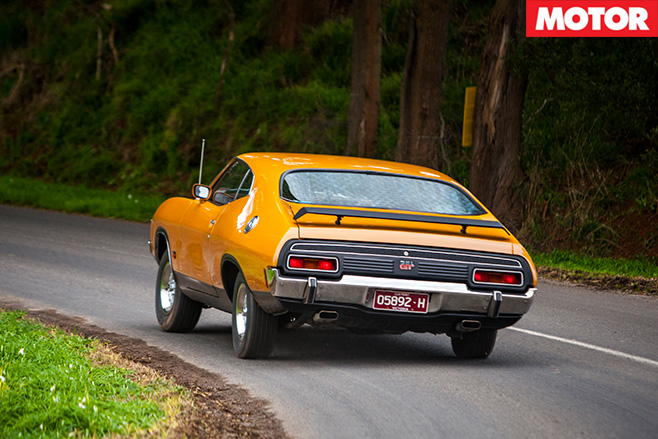
Arguably, the first proper performance Falcon was the XM Falcon Deluxe, which could be had with the new 200-cube Super Pursuit complete with 90kW of rippling gristle. The XM was also the first Falcon to be available in a hardtop coupe format, beating Holden to the two-door punch by a good four years. So, yeah, the Blue Oval has a few runs on the board in this department.
It wasn’t too long before we, as a nation, were in the grip of the whole Bathurst phenomenon. It was a time when the cars that won at Mount Panorama were, more or less, the same cars you could waltz into a showroom and buy. Just like that. This was arguably the true golden age of motoring in this country; where a reasonable approach to open-road speed limits met cheap petrol and big Falcons came with big engines and lairy stripes.
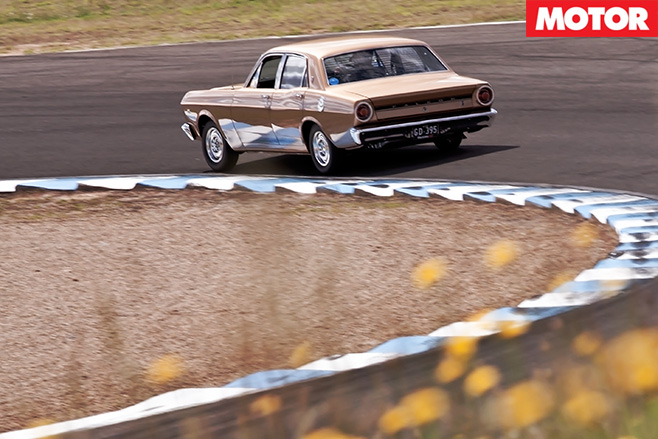
Again, Bathurst sang her siren’s song and the Falcon saluted. International Group A rules put a new twist on the whole homologation thing, but that allowed car makers like Ford to design road cars that were more civilised and refined, yet could still get the hell out of Dodge should that need arise.
The turn of the century approached and everything from the millennium bug to dollar-a-litre-unleaded loomed, but demand for Aussie sedans with big hearts didn’t falter. Why would it have? Improvements in engine management, engine design and even metallurgy ensured that even something like a Falcon XR8 with 5.4 litres of quad-cam V8 under its snout could get from one capital city to the next on about 10 litres per 100km.
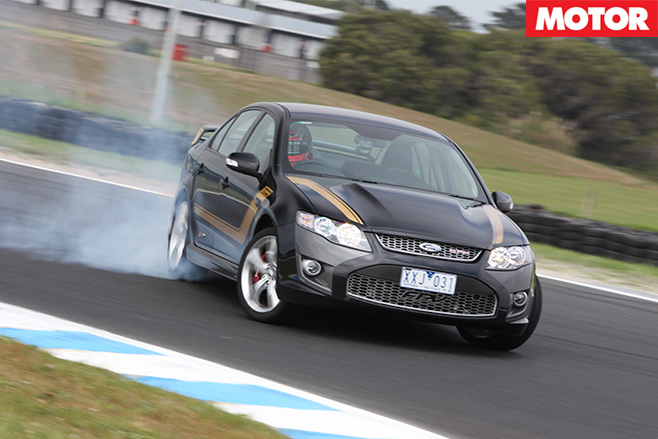
But the rich history of performance Falcons is coming to an end. Some have been race winners; some have been superb high-speed interstaters; others have wiped the floor with the competition; and many have combined all those traits. Every one of them is precious to us, never more so than in our darkest hour of locally produced performance cars.
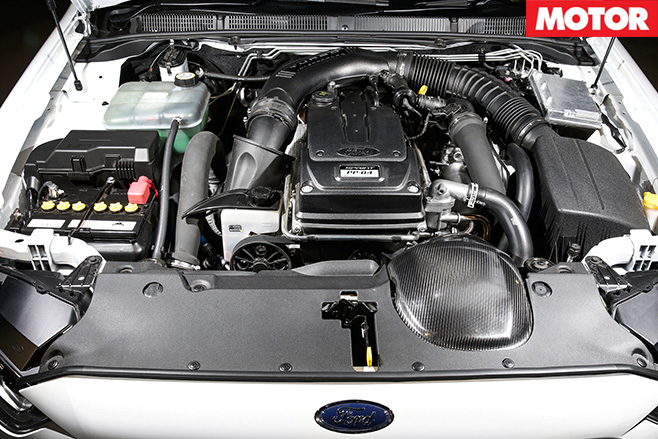
We don’t expect everybody to agree with our order, but we’re pretty certain that there’s not a single car on this list that won’t elicit at least a silent nod of recognition from those that have ever redlined a Falcon of any sort through the first three gears.
Click here to view our top 10 Fast Ford Falcons.
AUSTRALIAN Tesla owners will soon only be eligible for a single free return trip from Sydney to Melbourne once the Californian carmaker does the unthinkable – charging owners for top-ups that once cost nothing.
Tesla announced overnight that it was changing the model used for its Superchargers – a rapid-recharge station that can add 200km of range to a Tesla’s battery in about half an hour– to introduce fees for repeated use.
A regular single-phase wall charger, by comparison, only adds around 20km of range in the same time.
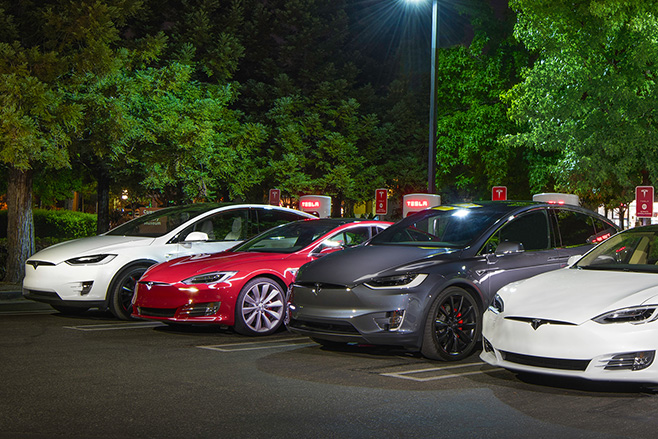
The chargers are unique to the Tesla Model S liftback and the gullwing-doored (Tesla calls them Falcon doors) Model X people mover, meaning if Tesla owners want a fast charge, they need to visit a Supercharger station.
However, Aussie buyers still have a chance to tap into the current free juice deal offered to existing owners – as long as they order a car before the end of this year and take delivery before April, they will still be able to top up as much as they want.
After that date, owners will get the first 1600km of charging for free, and then have to pay “a small fee [that will] cost less than the price of filling up a comparable gas car” for every other visit to a Supercharger. The fee will increase incrementally, it said.
Australia’s Supercharger network includes a string of the units stretching from Sydney to Melbourne – a so-called electric Hume – that allows owners to drive between the state capitals via Canberra with minimal disruption.
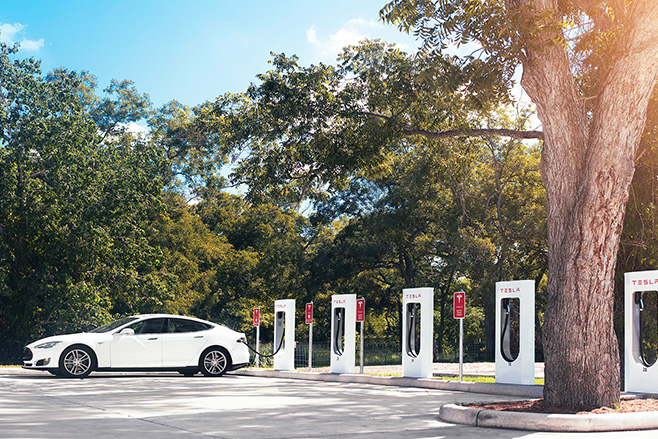
The Supercharger network will allow Tesla owners to top their battery up to 100 percent, but tipping in the extra 20 percent of capacity doubles the charge time to about an hour, as the amount of current used has to drop dramatically to avoid overheating the batteries.
Charging for electricity to top up an electric car or plug-in hybrid is seen as a barrier among carmakers to buyer acceptance of the technology – made necessary because cars that can run on battery power alone can avoid steep congestion fees in heavily populated cities such as Paris and London.
In contrast, offering it for free is viewed as a marketing tool to attract the high net worth owners that are prepared to pay the more premium price that electric and plug-in hybrid cars attract – a factor not lost on some recharging networks that encourage carmakers to bundle free public charging station access with their vehicles.
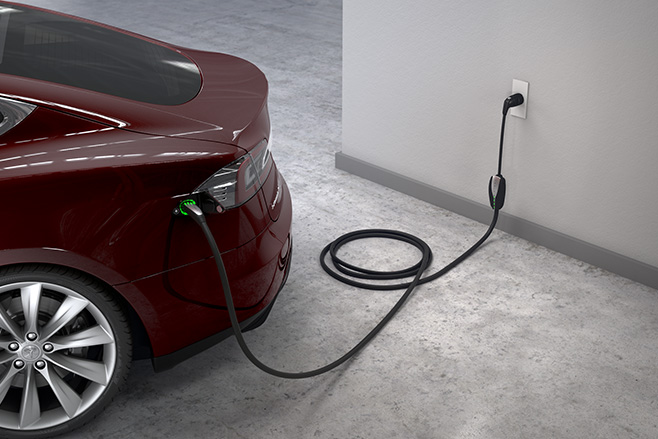
An industry insider told Wheels that a free public recharger in the right location was likely to more than make up for the cost of the electricity used.
“If you have a free charging station at a shopping centre, and someone uses $5 in electricity but spends $200 in the hour that the car is recharging, that’s where the benefit is,” she said.
Tesla said it still expected owners of its cars to do most of their recharging either at home or work, while the Supercharger was of more use to long-distance travellers.
“For travelers, the Supercharger network has become a powerful, unique benefit of Tesla ownership,” it said.
Tesla said it did not make a profit from its Supercharger network.
NSW Police have a new supercar dressed up in blue to use as a promo vehicle.
The Rose Bay Police Squad has announced it has added a BMW i8 – on loan from BMW Sydney – to its fleet as part of a public relations effort.
Don’t expect the German hybrid sportscar to be hauling away crims or issuing traffic tickets though. The plug-in hybrid sports car, though dressed in the full police livery, will be used to raise public engagement in Sydney’s northern suburbs.
Rose Bay Police Commander Superintendent Hodder said the new addition to the NSW cop fleet will start work immediately.
“This BMW is the latest in a number of different vehicles that we have utilised at Rose Bay Local Area Command to raise awareness and engage with the community,” he said.
“It is a great community engagement tool that will be used at a number of police events to showcase the role police play in the community.
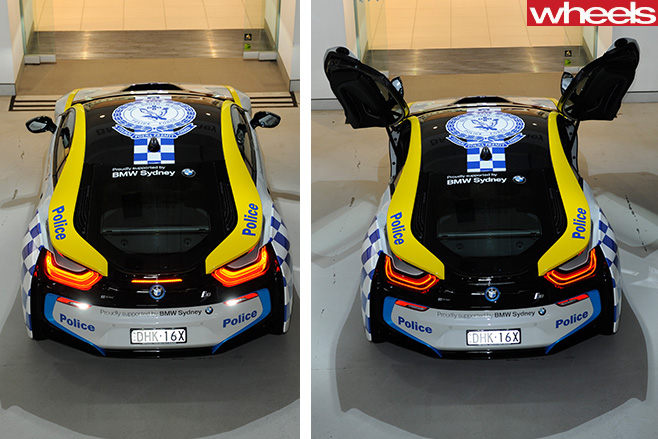
BMW Sydney is covering the costs of the ‘police’ i8, with dealer principal Simon Macedone saying it is part of an ongoing relationship.
“BMW Sydney has a long history in the Eastern Suburbs, which has been our home for the past 22 years and we’re extending that citizenship with the redevelopment of the BMW Sydney site,” he said.
“Our partnership with Rose Bay Police is the perfect way to demonstrate our commitment to the community, while raising awareness and engagement for the station.
“And to top it off we’re delighted to cement our place in the community with the handover of this incredible machine to the Rose Bay Police.
“The BMW i8 fits the bill perfectly with its high performance, athletic aesthetics and sensational efficiency,” he said.
It’s an unusual situation, but the all-new Holden Astra has been given a 5-star ANCAP safety rating for only two of its three Australian variants.
The upper-spec RS and RS-V models get five stars, however the entry-level R remains unrated.
This is because the ANCAP ratings for Holden’s new small hatch are based on testing conducted by the Euro-NCAP programme, using Europe-market cars with active-safety features, such as autonomous emergency braking , that isn’t available in the base model R.
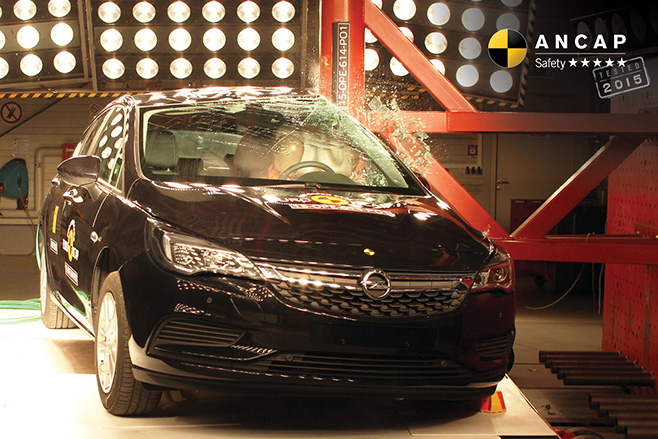
Both the Astra RS and RS-V received the ANCAP rating by virtue of passing the Euro-NCAP tests, but those scores can’t apply to the R due to fundamental differences in its active safety suite.
However, the R is structurally identical to the RS and RS-V and features the same level of passive safety equipment rated in the crash test, meaning it should still get a five-star ANCAP rating if tested separately – something Holden doesn’t want to do as crashing cars isn’t a cheap exercise.
According to ANCAP the Astra performed well across a range of structural tests, with pedestrian protection receiving a top-rating ‘Good’.
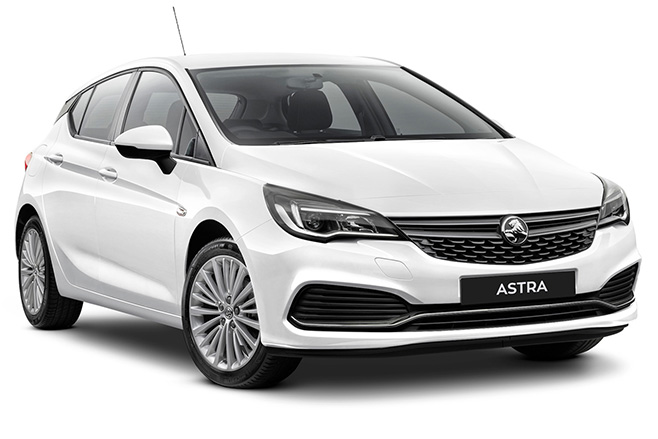
The bumper test area scored maximum points for its protection of pedestrians’ legs with good results seen at all test points, while occupant safety was ranged from ‘Acceptable’ to ‘Good’ depending on the type of impact.
These results would most likely apply to the Astra R, but ANCAP chief executive James Goodwin urged buyers to opt for the more expensive RS and RS-V anyway because of the active safety features which help prevent crashes.
“Real world safety benefits are being achieved by these important safety technologies and we encourage consumers to choose a model with these technologies fitted,” Goodwin said.
SUVs didn’t exist in Sir William Lyons’ day and you have to wonder what he’d have made of a Jaguar steeped more in height than history.
We’re simply surprised Land Rover’s blood brother hasn’t done one sooner. Especially when Jaguar admits the F-Pace will achieve what the Wrong-Type – sorry, X-Type – failed to do and push the brand past 100,000 annual sales.
The name still seems a bit weird – S-Pace might have been simultaneously logical and comical – but there’s no denying Jaguar has designed a fine-looking member of the high-rider breed.
With both side glass and bonnet more elongated than those of your typical SUV, the F-Pace looks at once graceful and athletic – even if its roofline is higher than that of the C-X17 concept that previewed it.
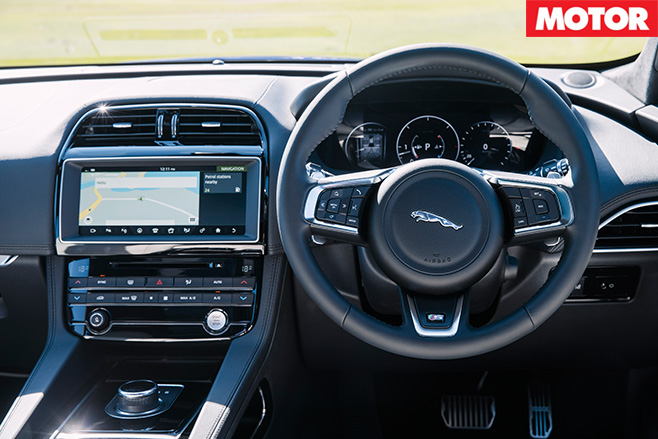
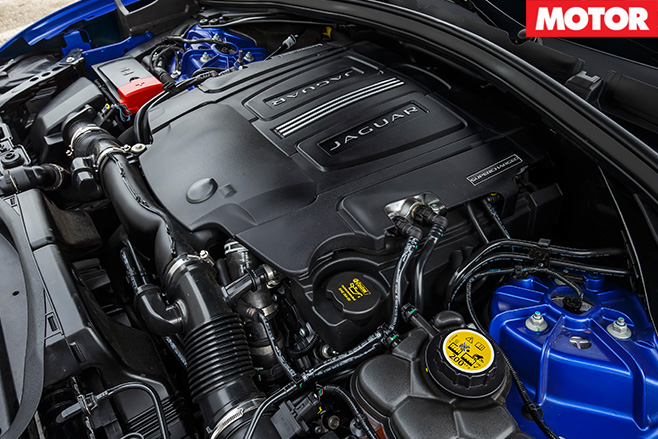
A comparison is even easier with a shared engine – the 3.0-litre supercharged V6 featured in the $103,135 F-Pace S 35t, which is the sportiest variant for now. In this spec, on brilliant roads, the F-Pace does not behave like a big cat on a hot tin roof.
Of course, there’s more body roll than you experience in its sibling F-Type sports car, even if you have the S’s standard adaptive dampers in Dynamic rather than Normal.
The same can be said about the rival Porsche Macan’s relationship with the Cayman and, notwithstanding its 1861kg mass and higher centre of gravity, the F-Pace can dance without losing its balance.
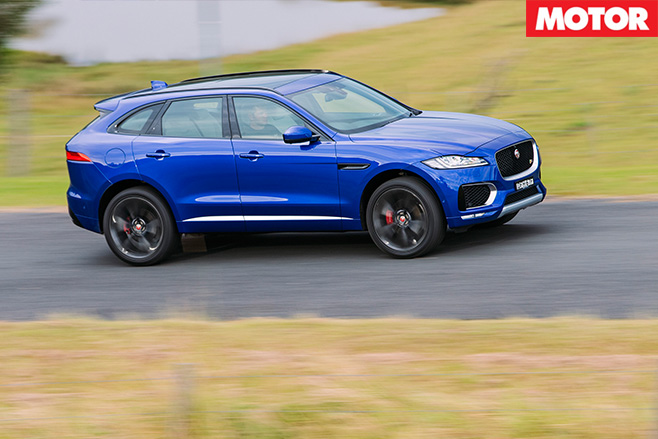
That supports Jaguar’s claim that its on-demand all-wheel drive system is back-axle-biased. We’re grateful as the company doesn’t currently have any plans to bring the pure rear-driver to Oz.
The F-Pace turns in briskly, though the steering’s impressive directness and accuracy is offset by a shortage of heft and feedback.
Despite a firm ride that confirms Jaguar’s suspension priorities, it offers enough compliance on country roads to avoid becoming tiresome.
You buy an F-Pace rather than an F-Type because of lifestyle demands, and families will be served well by a wide and spacious boot, 40-20-40 split-fold rear seats and generous back-seat space.
4.0 OUT OF 5 STARS
LIKE: Looks; grunty engine; polished dynamics DISLIKE: Not overly communicative; pricey with options
SPECS Engine: 2995cc V6, DOHC, 24v, supercharged Power: 280kW @ 6500rpm Torque: 450Nm @ 4500rpm Weight: 1861kg 0-100km/h: 5.5sec (claimed) Price: $103,135
