
Engine oil is one of the fundamental products needed to run your car, as it lubricates the engine to prevent the pistons seizing or exploding.
But as the old Castrol ad used to say “oils ain’t oils”, so it pays to know which is right for your car whenever the dipstick shows a low oil level and you have to top up on the run.
TYPES OF ENGINE OIL
First it’s handy to understand that there are different kinds of oils suited to specific types of vehicle engines. These include:
- Conventional oil: Also known as mineral motor oils, this is the stuff that comes out the ground and has been refined to a range of viscosity grades (see below) and quality levels. This is recommended for common engine designs and regular driving styles.
- Synthetic Oil: Synthetic motor oil starts off as mineral oil but has gone through a chemically engineered process to give the oil molecules a more uniform shape with fewer impurities and better properties. It has better extreme high temperature and low temperature performance making it more suitable for modern high-performance cars.
- Synthetic Blend Oil: This is a mixture of synthetic and conventional base oils. It resists engine oxidation better than conventional oil and also performs better at low and high temperatures and under heavy loads, which makes it a good choice for large vehicles such as 4WDs.
- High Mileage Oil: This is specially formulated for vehicles with more than 120,000kms on the clock and has additives that help reduce oil burn-off and prevent leaks.
Viscosity is the thickness of the oil, or more specifically, it’s resistance to flow. Engine oil viscosity is part of the oil grading, along with the oil type. The lower the viscosity the thinner, or less resistant it is to flow, meaning it will flow into the engine sooner in lower temperatures.
VISCOSITY RATING
You can tell a particular oil’s viscosity by its rating, which is marked on the container. It looks something like 10W-30.
This is the SAE (Society of Automotive Engineers) viscosity rating which specifies multi-grade oils that are thinner when cold to circulate quicker when the engine starts up while maintaining a suitable viscosity when hot for engine protection.
The numbers are the viscosity when cold and hot. More specifically, the figure before the W represents the oil’s flow at -17.8 degrees Celsius and the number after the W shows how it flows at 100 degrees Celsius.
The numbers range from 0-50, so the 5W-30 is excellent for colder temperatures while providing good protection when things heat up. Of course, the cold rating isn’t as important here as it is in the northern hemisphere.
Sometimes you’ll see oil just rated as, for example, SAE30, which is a mono-grading based on viscosity at 100C. These are designed for older engines with oil specifications reached before multi-grade oils were available. Such cars can use multi-grade oils although it’s a good idea to confirm which of these is best with the car maker, lubricant manufacturer or someone familiar with the model.
KNOWING WHICH OIL IS BEST FOR YOUR CAR
These numbers, along with the type of oil (conventional or synthetic) go a long way to helping you select what oil you need based on factors such as engine type, the type of driving you do, distance travelled, and the average temperature range in which your car operates.
To make things easier, your car’s manufacturer specifies the correct oil for its engine in the handbook. If that isn’t handy you can find that information at lubricant manufacturer websites or suppliers.
Washing your car is like cleaning the bathroom. It has to be done but you put it off until it’s so far gone you decide to pay someone to do it for you.
Keeping your car clean is vital to protect its paint from swirls and scratches which could affect its resale value. But if you don’t wash it properly, you could still be putting your car at risk.
But if you follow these simple steps, you’ll never have to worry again.
DOs
- If you’re taking it to a car wash, take your own sponge, unless you know it’s a reliable business that won’t reuse the same cloths over and over again.
- Pick the right time to clean your car. Early in the morning is best, or when the weather is slightly overcast. The harsh sun in Australia can do more harm than good.
- Always keep a rag handy to clean off any bird poop as quickly as possible after it lands. The chemical make-up of bird poo can eat away at your paint, causing it to fade.
- Make sure the sponge you use is free of dirt, grime and stones. Even fine dirt particles can scratch paint.
- Read the labels on cleaning products and make sure you’re using the proper cleaning products for your car – any old household cleaning soap won’t do.
- Clean your car with a proper, absorbent towel. Chamois are a decent, soft option.
- Wear clothing with zips or buttons, they can scratch your car if you lean against it. And don’t forget to take off your jewellery before washing. Aside from protecting your car, it’ll protect the jewels.
- Avoid sidewalk car washes, especially if they’re run by kids – they care more about the pink or blue note you’re going to give them than the paint on your car. Unless you’re certain of what’s in their buckets and sponges, you could risk damaging your car.
- Use any drive-through car wash that isn’t ‘laser’. Car washes that use brushes have a tendency to scratch paint, so it’s best to stick to automatic car washes that use water pressure to clean your car.
- Wash your engine. If you are really worried about having a dirty engine, ask your mechanic or dealer to take care of it for you. Paying them is better than causing water damage to electrical components car which will cost you a lot more in the long run.
These are the craziest concepts and one-off specials from this year’s SEMA show.
THE WEIRD and wonderful world of aftermarket customisation is never more present than when the annual Specialty Equipment Market Association, or SEMA, Show rolls around.
Held in Las Vegas, SEMA is known for showcasing the wildest from the aftermarket scene.
Recently however, manufacturers have been getting in on the fun with their own examples.

Dodge arrived with what it calls a ‘Shakedown Challenger’. The result is the love-child of a classic 1971 Challenger and its modern equivalent. Along with the mashed-up styling, a 6.4-litre HEMI sits under the bonnet. Hell yea!
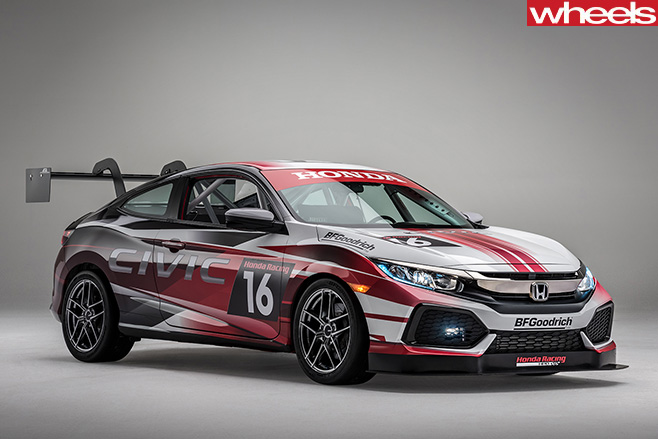
There were also a number of different takes on the American Honda Ridgeline pick-up truck. However, much to our disappointment, the Ridgeline is unlikely to ever make its way Down Under.

But the granddaddy of them all goes to Toyota, which built a 1491kW, 300km/h+ Land Cruiser.
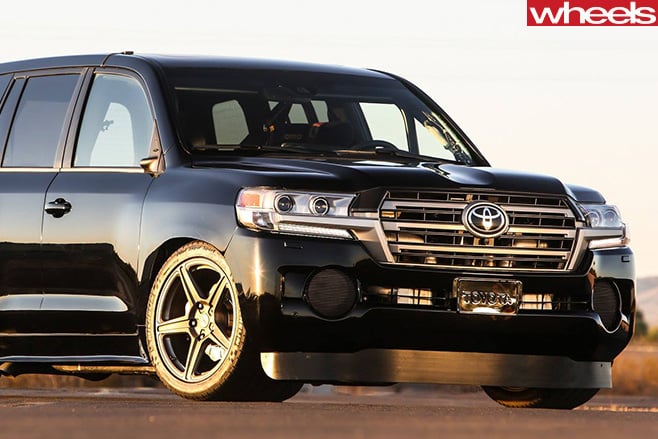
Sorry Bentley, but your Bentayga just got beat!
Oh, and they also built a performance Prius – yes, you read that right – that is capable of pulling nearly 1G in the bends.
Only at SEMA!
The new Land Rover Defender, due in 2019, is set to be the most technologically-advanced car in the brand’s history and likely to be offered in traditional go-anywhere rugged specification and a ‘softer’ more city-focused version.
An expanded Defender model range could be due to the fact that Land Rover will need to sell a lot more Defenders than it has previously to make the new model more financially viable.
The Defender model name has been typified by a utilitarian, go anywhere nature. The new car won’t be as light-on for mod cons, though its technological upgrades should focus on increasing the Defender’s off-road skill set.

The old, much-loved Defender went out of production in 2015 after 67 years as a rough-terrain icon. During that time Land Rover pioneered off-road technologies like Hill Descent Control and Terrain Response and the new model is believed to have even more electronic chassis control systems currently being tested, including off-road cruise control.
Concept car technology like the innovative ‘see-through’ bonnet could find its way into production as part of the next generation Defender.
First seen on the 2014 Land Rover Discovery Vision concept, ‘Transparent Hood’ virtual imaging technology uses images from cameras to show what is underneath and directly in front of the car, perfect for crawling up steep inclines.
Styling wise, the new Defender is likely to retain the proportions of the original, while losing some of its boxy bush-basher look and gaining smoother edges, which will definitely broaden its appeal to buyers. The DC100 concept (pictured above) hints at the direction Land Rover may take.

The new Defender’s chassis will be based on the aluminium architecture of the Range Rover, Range Rover Sport and Discovery and is likely to be manufactured in Land Rover’s new factory in Slovakia to keep costs down.
Reports indicate it will probably be built in long- and short-wheelbase versions, with shorter overhangs for even greater off-road performance, and will be powered by four-cylinder versions of Jaguar Land Rover’s modular Ingenium engines, driving a separate transfer case with high- and low-ratio gearing and manual and automatic transmissions.
The big news is the new Defender is set to get petrol as well as diesel engines (previous Defenders only came with oil-burners) an indication that Land Rover is concerned about the future of diesel in Europe.
All-independent suspension is expected to be based on the Discovery and Range Rover’s but the Defender will get traditional steel springs instead of the more posh air suspension.
With mosquitos loving the wet conditions down south and continuing to thrive up north, there aren’t too many places in Australia where even a short drive won’t turn your car’s front end into a bug killing field.
Most drivers are quick to clean their windscreen when it’s smeared with insect remnants, but it’s also important to clear bugs from paintwork as soon as possible. The longer you leave them the harder they will be to remove and their decomposing bodies release acidic enzymes to break down the tiny carcasses which also breaks down paint.
HOW TO CLEAN DEAD BUGS OFF YOUR CAR
- If the bugs are fresh, an old-fashioned driveway wash with soapy water and a sponge should do the trick – you may need to use a little elbow grease but be sure not to damage the paint. Also use detergent specially made for washing cars as household soaps may not be as kind to your car’s paint. Once you’ve done that, run a chamois or microfibre cloth over the area.
- If the bugs are baked on and stubborn to remove, use insect removal ‘bug and tar’ spray which is readily available at auto accessory stores. Make sure the product is designed for use on car duco and follow the instructions.
- Pressure washers should only be used when the bugs are fresh because if you persist on trying to blast off baked-on bugs you may damage paintwork
- Alternatively you can use an oil spray such as WD-40 on paintwork and fiddly areas such as the grille. Just spray it on the affected area and wait a few minutes before wiping off. This is good stuff for removing bird droppings too. Just don’t use it on glass or you’ll go mad wiping it clean.
- For glass areas such as windscreens and headlights it’s also best to get in early. The mesh sponge on petrol station squeegees usually does the trick if used early. If the grime is more stubborn, wash with soap and water and try adding some baking or washing soda to help lift the stains.
- Cola also works because the chemicals and carbonation in it really help get under the grit. Just be sure to wash the cola off the car, especially from paint as it will stick and be even more harmful than the bugs. And to think we drink this stuff!
- Once your car is rid of bugs, give it a full clean and wax to create a barrier between the next batch of insect hit-run victims and your car’s now shiny paint.
A SHARP-EYED Wheels reader has spied a pair of top-secret V6 Cadillacs that are so undercover that have been slipped into Australia via air. And under the bonnet, they could be V8s.
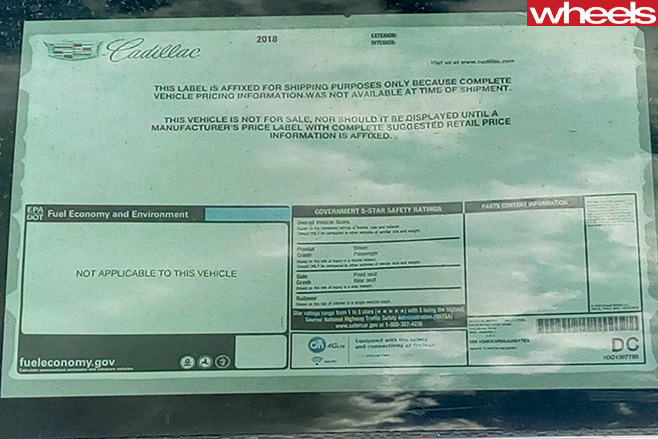
The two cars – marked as model year 2018 and sporting quad exhausts – were air-freighted into Melbourne under the cover of darkness yesterday. Like the development mule that was spirited into Australia a few months ago via the same flight path, these cars are destined for GM’s Holden-owned Lang Lang proving ground.
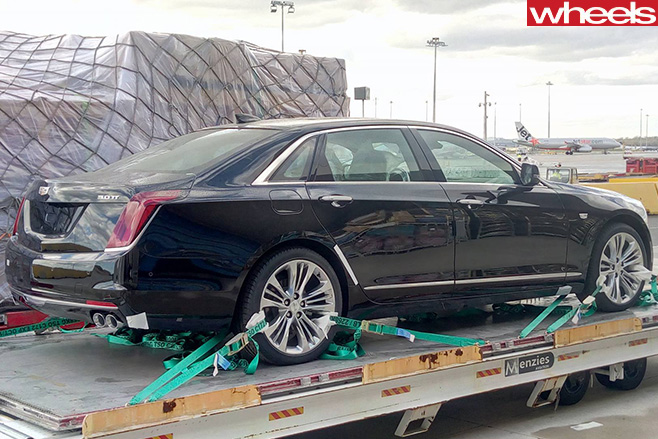
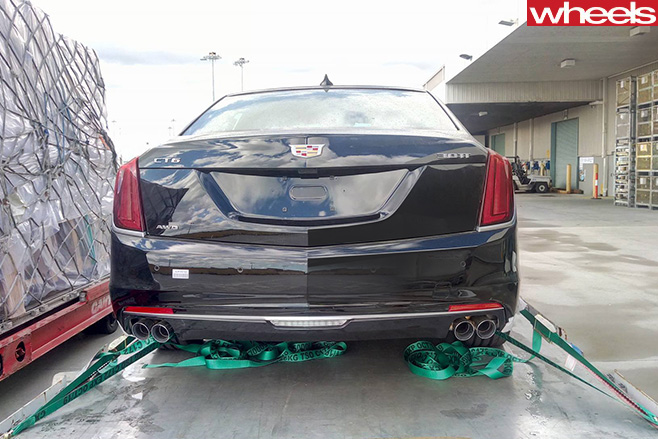
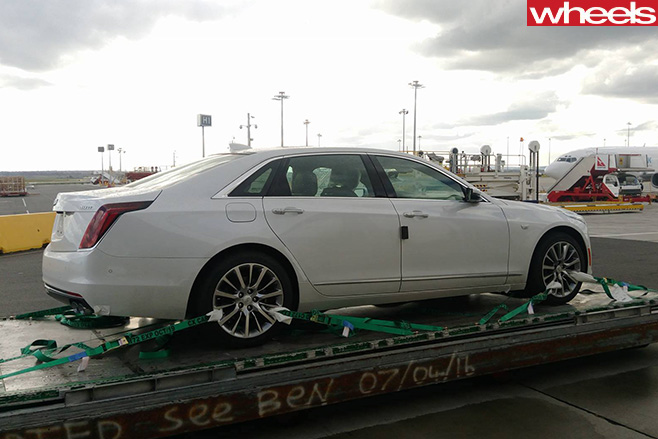
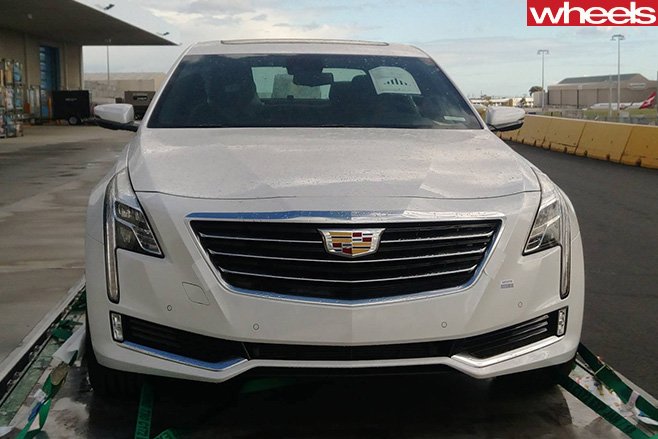
The fresh-look CT6 is an important model for Cadillac. The latest US data shows sales for the brand slumped almost eight percent in September, but grew globally with the CT6 up by almost 20 percent.

A crash test designed to highlight the difference between North and South American car markets has highlighted a wide gap in standards.
NISSAN will drop a decades-old Pulsar-based small car from showrooms in Mexico next year after a disturbing high-speed crash test that has highlighted the difference between the company’s entry-level sedans sold in South and North America.
While the Japanese carmaker sells the Versa light car (sold in Australia as the Almera until 2014) in North America with six airbags for a “good” crash-test rating , the South American equivalent, known as the Tsuru, is derived from a cheaper, 26-year-old design fitted with less safety equipment. As a result, the Tsuru wears the lowest-possible crash safety ranking possible – a “zero”. Adding insult to injury, both vehicles are made in the same factory in Mexico.
Global NCAP organised for both cars to be crashed into each other this week to highlight the massive differences in safety.
The footage is chilling.
“After the test which involved a 50 percent overlap and a combined closing speed of 80mph (129 km/h), the results graphically highlighted the urgent need for the Nissan Tsuru to be taken out of production,” Global NCAP said.
“A driver in the Tsuru would have had high probability of suffering life-threatening injuries, it is likely that the crash would have been fatal, there were no airbags, and the main structures all failed, fatally compromising the survival space.”
Nissan responded to the crash test by announcing shortly before the cars were slammed into each other than it would pull the zero-star version of the car off the Mexican market by May next year. According to Global NCAP, Nissan’s decision to halt production of the Tsuru was “long overdue”.
“Three years ago our partner Latin NCAP crash tested the car and revealed its zero star rating,” it said.

Mexico is yet to introduce minimum crash test regulations. Global NCAP claims the Tsuru alone has accounted for 4000 road deaths between 2007-12.
In Australia, Toyota is the latest carmaker to come under fire after it increased the safety of the Toyota 70 Series Landcruiser cab chassis ute, but failed to roll out the same potentially lifesaving features to other 70 Series models, including the family-focussed dual-cab version.
The bare-boned ute gains a larger, stiffer ladder-frame chassis, extra airbags, revised body panels, new front seats and “a raft of other changes that improve its safety performance”.
While the 70 Series cab chassis ute has earned a five-star crash safety rating – an important factor in keeping the ute on mine sites and in fleets – the other models including the dual-cab, wagon and troop carrier, remain unrated.
TELL ME ABOUT THIS CAR
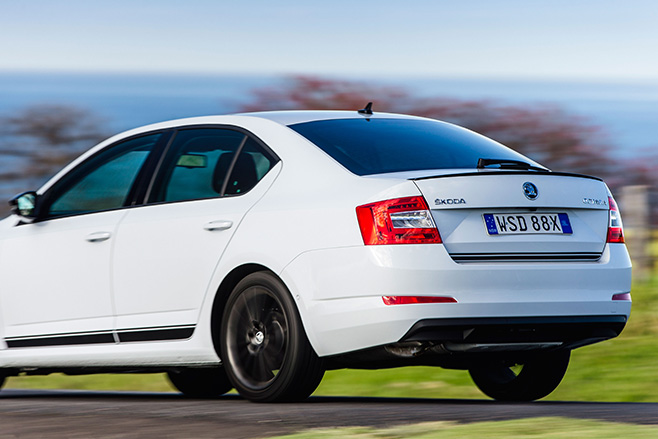
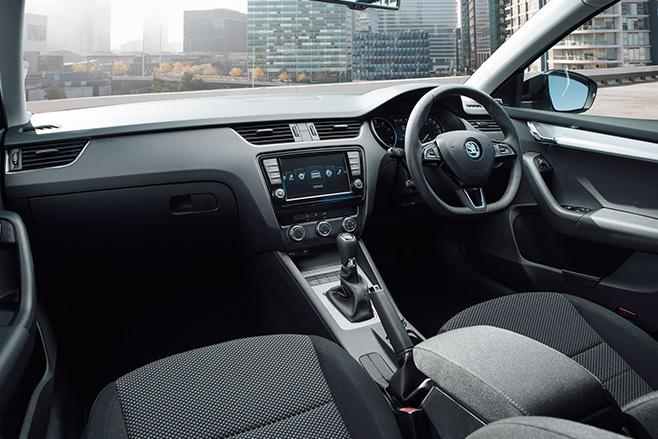
The Skoda Octavia is a medium car available either as a liftback sedan or wagon. It is based on the same platform as the Volkswagen Golf, and shares some of its engines and gearboxes. The 110TSI Ambition sedan is the base model Octavia, priced from $24,490 with a 1.4-litre turbocharged petrol engine producing 110kW and 250Nm.
STRENGTHS
- Practicality. Skoda has a clever way of packaging its cars to offer maximum space inside. The Octavia sedan has a large rear seat and an excellent boot. One of the smartest features is the liftback hatch, Unlike a normal sedan, the liftback hinges from the roofline and not from the bottom of the rear glass. What that does is open up a huge aperture for loading and unloading, and removes the parcel shelf that normally gets in the way of the boot area in typical sedans.
- Value. More metal for the money could be Skoda’s slogan. The Octavia has a meaty heft to its controls in a way that feels solid and expertly screwed together. It’s not fancy by any stretch of the imagination, but the essentials are all there and executed to a high standard. It’s also fairly well equipped with decent safety gear including radar cruise control and auto emergency braking, as well as Apple CarPlay and Android Auto, and a few surprise and delight features such as a driver’s side garbage bin, and a chilled glovebox.
- Economy. Skoda claims fuel consumption of 5.2L/100km, which is impressive. Our real world testing of this model has found it to be higher, but still remarkable at around 6.8L/100km after a mixture of highway and city driving. Those figures make the Octavia 110 TSI one of the most economical mid-size cars in its class.
- Design. Okay, so the Octavia’s design doesn’t exactly push the boundaries, but fundamentally it is a good looking car. The sharp lines and handsome proportions should attract buyers.
WEAKNESSES
- Blandness. In entry level Ambition guise, the Octavia is quite plain. This is especially noticeable inside where expanses of plastic abound. In some ways the Octavia feels deliberately sparse to separate it from the Golf on which it is based. More expensive Octavia models don’t suffer from this as much.
- Lag. Most people will buy the 110TSI model with a DSG dual-clutch gearbox, and that introduces some delay to the drivetrain when taking off, reversing or in stop-start traffic. There’s a gap where nothing happens between stepping on the accelerator and moving off, and it can get frustrating when making low-speed manoeuvres or when slipping into a tight gap in traffic. It’s the sort of thing you will get used to, but conventional automatics don’t suffer from this and are more relaxing to drive as a result.
The obvious one is the Volkswagen Golf. The Golf hatch doesn’t have the same cargo carrying ability as the Octavia, but it does have an elevated sense of luxury inside, even in the base model. Another option is the new Honda Civic sedan, which does have a large boot and is great to drive, though at this price point it doesn’t have the turbocharged grunt of the Octavia.
Hyundai Elantra, Kia Cerato and Mazda 3 all come in sedan form for similar money, but they can’t match the Octavia’s rear seat space. Most things that can are significantly more expensive.
IT’S A bronze medal for Mercedes-AMG’s heavy-hitting hot hatch, but what the A45’s third place outright proves is that, even at $80K, it’s got the bang to back up its not-inconsiderable-buck.
As we touched upon when chronicling the A45’s crushing of the $50K-$100K class, it’s achieved all these things despite being penalised for having standard equipment that is otherwise optional overseas. A standard sunroof? If stuff like this was optional – gear that contributes nothing to the A45’s performance – and we were working with a lower starting price, we can only imagine just how the Bang 2016 result might have looked.
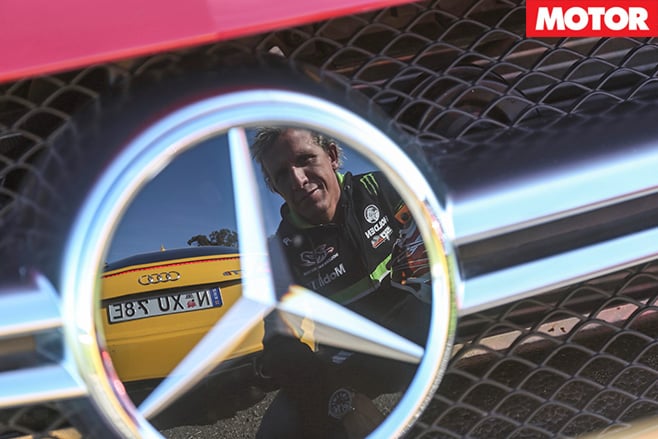
But for now though, we will celebrate an outstanding performance car which is dishing up great value from Merc’s mad scientists at AMG. We love its dummy-proof launch control. We love how it feels like a fish in water on track. And we love how the new adaptive dampers, on road, turn the A45 into a weekend-only proposition into something you could drive daily.

But, given its debut performance at Bang, we can no longer confidently include price on that list of criticisms. It might be the third step of the podium outright today, but the Mercedes-AMG A45 is absolutely built of the stuff that makes a Bang For Your Bucks winner.
Want more? Check out the rest of 2016 Bang For Your Bucks.
First published in the January 2011 issue of Wheels magazine, Australia’s best car mag since 1953.
Is a good sports diesel a good sport, full stop? Golf and 3 Series oilers take on their petrol siblings to see which really provides the spark.
THE TERM ‘sports diesel’ is oxymoronic no longer. Back in the dark days, oiler power was reserved for load-lugging tractors which demanded torque. Then, some boffins came along and took the compression-ignition engine to finishing school. High-pressure ‘common’ rails that inject fuel directly into each cylinder increased efficiency; finely-tuned piezo injectors which vary fuel-spray loads reduced combustion noise; and particulate filters cut down exhaust soot.
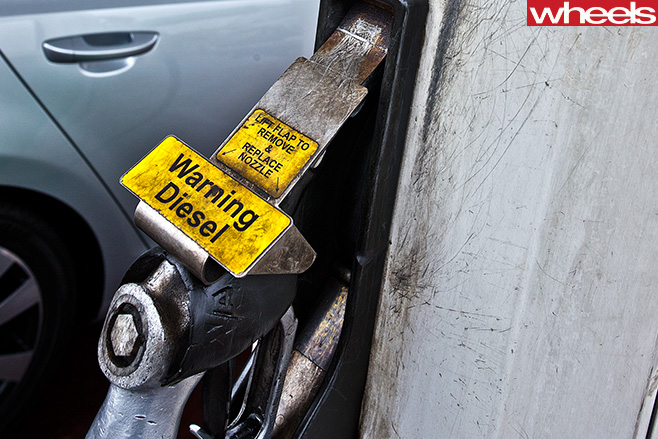
Enter the BMW 330d and Volkswagen Golf GTD – the first sports oilers that right most diesel wrongs. But can they stare down two of the best petrol-fuelled sports cars in the business, their very own 335i and GTI siblings? We’ll assess the real-world elements of price, economy, emissions, servicing costs and resale, then apply the blowtorch on the strip and in the twisties to see if diesel, finally, can fuel our fire…
BMW 335i vs 330d
Sports coupe twins fuelled by different flames; split by a cigarette paper.
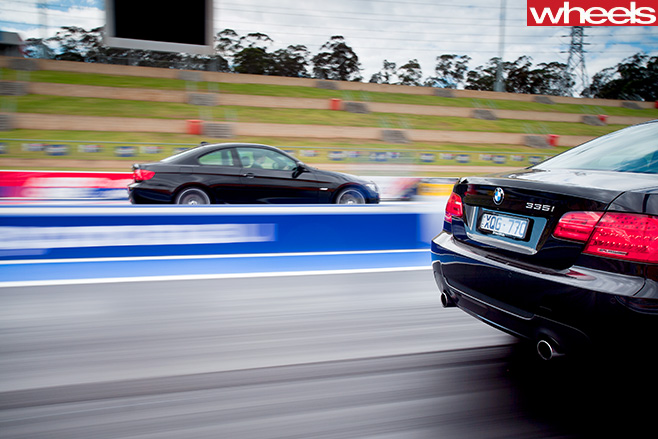
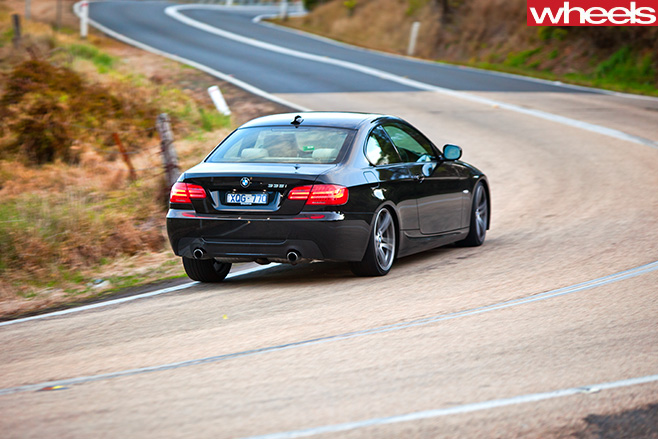
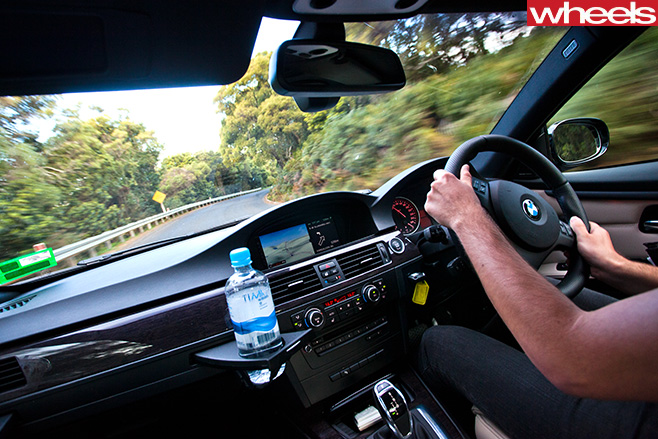
Still, there isn’t much in it, especially considering the $120,200 335i M Sport costs $21K more than a 330d M Sport. Both models have condition-based servicing, and BMW claims they’ll each require six services and will cost around $5800 over 100,000km. The 335i will retain more of its (higher) purchase price after three years – 59 percent versus 55 – but loses more ground in the economy stakes.
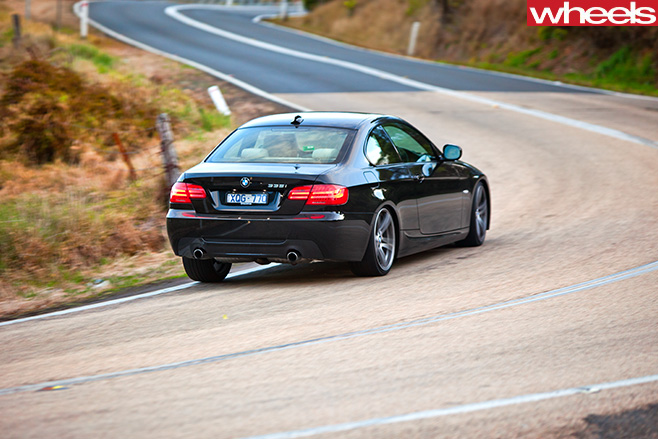
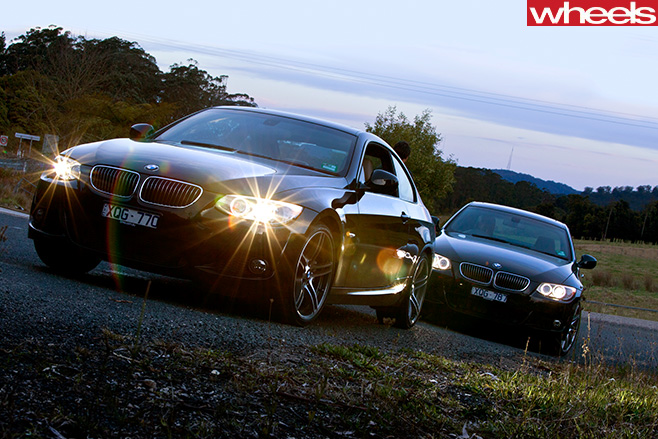
All of which means the 330d matches the more expensive 335i for performance and handling, and hammers it for economy. Only your ears will miss the wail of the petrol six. Consider it a (qualified) win to the sports oiler. Rudolf Diesel would be stoked.
Volkswagen Golf GTI vs GTD
Oil’s well in a hot hatch? Not when a petrol all-star is on your tail.
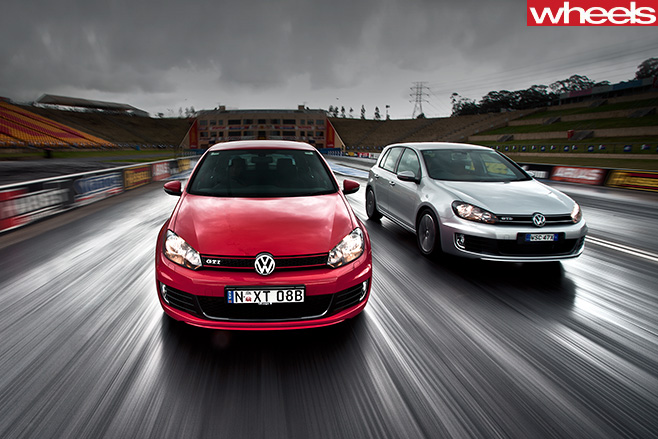
Both are a litre and two pots down on the BMW coupes. GTD’s 2.0-litre turbo-diesel four gets all the latest gear like common-rail direct injection, with nozzles that spray varied fuel quantities depending on load.
Typically for a diesel, the GTD is a big torquer, with 350Nm on tap from 1750-2500rpm. However, the same-capacity DI turbo petrol GTI’s lesser 280Nm is offered over a wider 1700-5200rpm plateau, until the full 155kW takes charge from 5300-6200rpm. GTD will happily rev to 5200rpm, but its max 125kW peaks at 4200rpm. A full second separates the siblings at 100km/h and 400m: 7.0sec and 14.9sec GTI; 8.0/15.9 GTD.
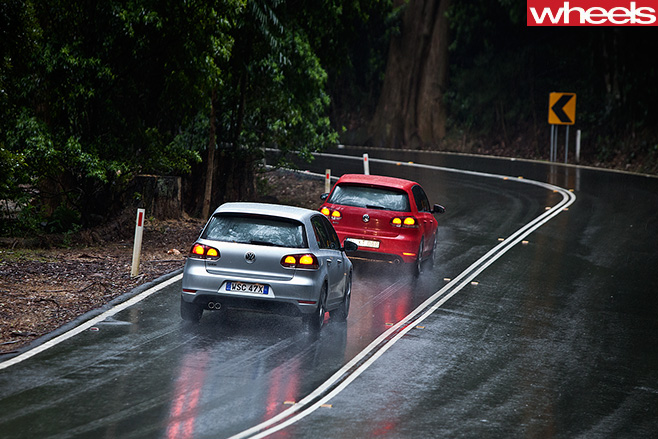
Slip each car’s Brylcreem-slick manual into sixth on the freeway and both are quiet. The GTI’s low-rpm torque means there’s no need to chase revs on hills, easing boost and therefore consumption. It returned an excellent 6.5L/100km, one-third more than the GTD’s 4.9L/100km, at an extra cost of $2.60 per 100km.
Regularly spin the GTI’s crank to 7000 revs, however, and consumption soars to 15.5L/100km. In parallel with the 3 Series, on the same ‘dynamic’ test route, the petrol GTI slurped 50 percent more fuel than the diesel GTD, meaning an extra $8 per 100km. Also like the BMWs, the diesel emitted less CO2 on test, but the GTD’s (near-equal to 330d) 131mg/km NOx output is far worse than GTI’s (five times higher than 335i) 49mg/km.
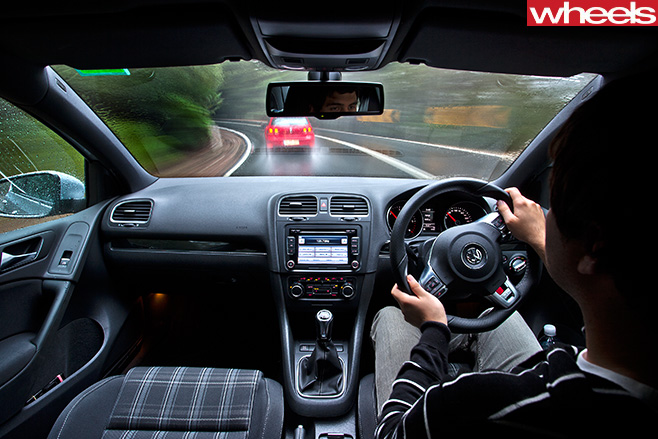
Consider the GTD’s $1200 saving up front in addition to its $340-cheaper servicing costs over 100,000km and 30-to-50 percent fuel saving, and the oiler makes good financial sense. But it isn’t as quick or sharp as a GTI, and for true enthusiasts, that still makes petrol power worth the premium.
