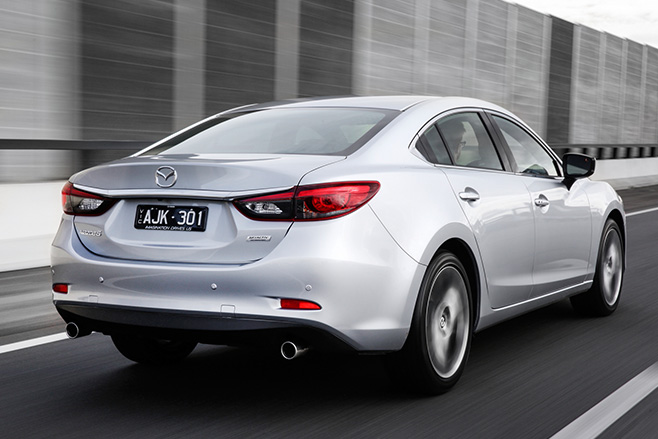
Don’t dismiss the traditional four-door family sedan as daggy and dated. Sure, family-focused drivers are flocking to SUVs and hatchbacks. But the impressive new Mazda 6 aims to woo car buyers back to mid-sized sedans.
TELL ME ABOUT THIS CAR
- The Mazda 6 comes in four models – Sport, Touring, GT and top of the range Atenza. While the Sport comes in petrol only, the Touring, GT and Atenza can also be had with diesel powerplants. All models come in either sedan or wagon body styles.
- The Atenza diesel six-speed automatic sedan tested here, costs from $48,240 (plus onroads). It has a 2.2-litre inline four-cylinder turbo diesel engine delivering 129kW and 420Nm.
STRENGTHS
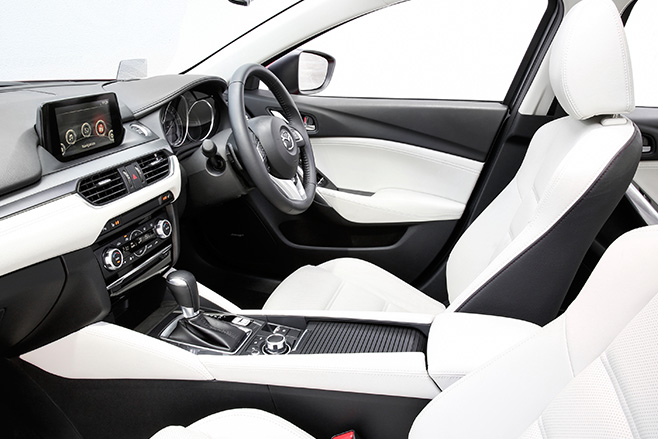
- My six-year-old daughter best summed up the Atenza’s luxurious interior; observing the (optional) pure white Nappa leather finishes and using the six-way power adjustment to manoeuvre her passenger seat into an almost horizontal position she exclaimed: “This is the life!” In white the interior feels very schmick.
- Black leather is standard on all Atenza models. And for families, black is what I’d recommend. While the white looks luxe, with kids onboard it won’t stay pristine for long.
- Second row passengers are not treated as an afterthought. Ample leg room and rear air-vents ensure it never gets stuffy in the back. Front and rear seats are heated in Atenza models.
- The boot is a capacious 474 litres with the seats up. It’s deep and will accommodate even the trickiest of prams. Curiously, Mazda told me it does not have a figure for boot capacity in the sedan with seats folded down. For families wanting even more space the wagon offers 506L with the rear seats up.
- It’s quiet. Thanks to Mazda’s new sealing and noise absorption improvements there’s not too much diesel chatter felt or heard in the cabin. The Atenza’s interior was surprisingly free from wind noise even when driving on a day buffeted by 120km/h gales.
- Auto-folding wing mirrors tuck away nicely after parking; no excuse for cyclists to swipe them.
- Mazda has endowed the 6 with plenty of active safety gear, including blind spot monitoring, which alerts drivers to unseen obstacles via a beep and light on the driver’s side mirror; front and rear parking sensors; and a reversing camera.
- There’s a head-up display mounted on a small plastic screen on the dash (as opposed to projected onto the windscreen as in some vehicles). This not only tells you what speed you are travelling at, but how fast you should be driving, by reading speed limit signs.
- The infotainment system’s 7-inch full colour touchscreen display is easy to use. It’s a cinch to hook up an iPhone via Bluetooth and digital radio is also available.
WEAKNESSES
- The Atenza’s 19-inch alloys with low profile tyres err on the side of looks and performance. This means road imperfections are transmitted into the cabin more than in lower-spec models with smaller wheels and taller rubber.
- The fuel-saving stop-start function provides the customary lag away from the lights.
- As you’d expect from a diesel, fuel consumption is a reported low 5.4L/100km. The reality over a 100km inner city driving trip was 9.5L/100km. Over 635km of combined city and freeway driving this dropped to 7.0L/100km.
- A power sliding and tilting sunroof is standard, although on the small side compared to optional panoramic types found in some competitors.
- Mazda offers neither Apple CarPlay nor Android Auto connectivity. This omission, along with the sedan shape, could deter younger buyers. Not that the Mazda6 is aimed at them in the first place.
Melbourne local the Toyota Camry. Ford Mondeo, Volkswagen Passat, Subaru Liberty, Hyundai Sonata, Kia Optima, Skoda Superb.
HSV’s tighter and tauter Clubsport special edition is limited to just 156 units (150 for Australia, 6 for New Zealand), and is meant to be the most track focussed HSV yet. But does it hit the mark?
STRENGTHS
- The bigger brakes on the Track Edition are excellent. Plucked from the flagship GTS model, the big six-piston AP Racing units stop the car swiftly, but are very progressive. There’s an absence of grabbiness that allows you to drive smoothly and easily in city traffic, but pushing the pedal further unlocks substantial stopping power that pulls the big sedan up without breaking a sweat.
- The suspension on the Track Edition has been tweaked, with a stiffer set-up meaning there is less bodyroll in the corners. The car holds the road fantastically, and can be pushed easily. There is good feedback through the steering wheel, making the Track Edition confidence-inspiring under pressure.
- Although the Track Edition misses out on the supercharged LSA engine, the less powerful LS3 is still a fantastic unit. Producing 340kW and 570Nm, the 6.2-litre naturally aspirated V8 propels the Track Edition to 100km/h from standstill in less than 5 seconds. HSV chose the LS3 for its more linear and responsive nature, which is fantastic for attacking curves with confidence. Oh, and don’t think losing the supercharger has hurt the sound. The Track Edition still makes a glorious note from its bi-modal exhaust.
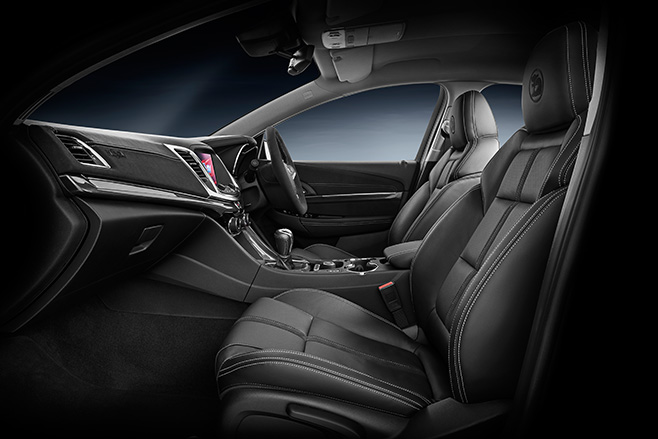
- The cabin of the Track Edition is a good place to spend time on the road. The alacantra wheel is a great touch, and imparts a sportier feel to the rest of the cabin. Leather electrically adjustable seats are comfy, but hold you well during hard cornering. Passengers aren’t neglected either, with plenty of room across the back seat and the top-notch sound system.
- A heads-up display makes highway travelling stress free, and means you can cover longer distances without becoming tired. Bonus: it makes keeping an eye on your corner entry speeds a hell of a lot easier when out on a racetrack.
WEAKNESSES
- The whole Track Edition treatment feels a bit half cooked. It is a good idea, and one I hope HSV does more of in its import-only future. However, it feels like some opportunities were left on the table. If you want a track-focussed car, maybe there could have been more serious aero, or weight reduction, or proper bucket seats. It’s certainly a happier track day whip than a regular HSV Clubsport R8, but is it enough to deserve the ‘Track Edition’ badges? Maybe not.
- The ride in the Track Edition, although fantastic when on smooth bitumen, becomes arduous on roads that aren’t as smooth as James Bond sipping a Martini. Those inside the cabin are jostled constantly. But comfort isn’t really what this car is built for is it?
- The Track Edition is also very subtle. There are no badges to give away its limited production run other than on the door sills and below the gear shifter. Blacked-out badges and a lack of LSA badge are the only external indication that you are driving a special edition HSV. This may be a positive for some, but it makes the car hard to distinguish from a regular R8 Clubbie.
- The infotainment system in the car is good when working, but is difficult to operate and inconsistent. Connecting an iPhone by Bluetooth requires jumping through numerous menus, and the car will not connect automatically upon startup even if your phone has been linked previously. It was impossible to delete previously paired phones on our test vehicle, limiting the number of phones that could be connected.
The standard Clubsport R8 needs to be considered. It lacks the stiffer suspension and bigger brakes, but packs more punch with its supercharged LSA V8. You could also consider the similarly-quick BMW M3 and Mercedes-AMG C63 – but only if you’ve got the extra coin to pursue them.
Driverless Mercedes-Benz vehicles will be programmed to prioritise their passenger rather than a pedestrian if faced with the dilemma of being able to save only one or the other in an accident.
Mercedes is believed to be the first car manufacturer to confirm its approach to the growing moral debate about autonomous vehicles after an executive told a UK car magazine that systems should choose the person it is more guaranteed to protect.
“If you know you can save at least one person, at least save that one. Save the one in the car,” Christoph von Hugo, Mercedes’ manager of driver assistance systems, active safety and ratings, told AutoExpress at the recent Paris motor show.
“If all you know for sure is that one thing, one death, can be prevented then that’s your first priority. You could sacrifice the car, but then the people you’ve saved, you don’t know what happens to them after that in situations that are often very complex, so you save the ones you know you can save.”
Mercedes’ position should make it popular with potential buyers of autonomous vehicles (AVs), based on recent research into the social dilemma of autonomous vehicles.
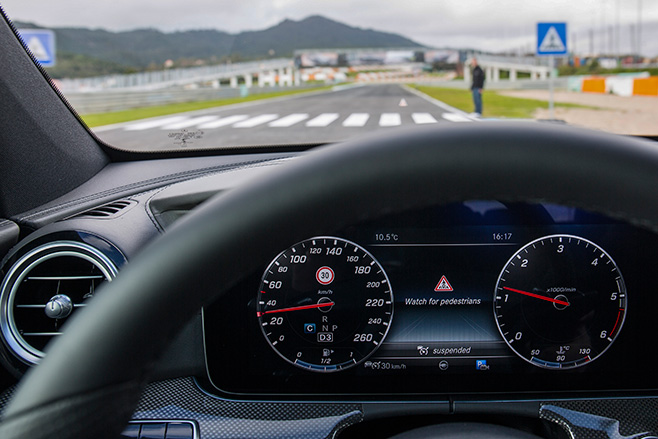
The majority were also opposed to government regulations that would require AVs to be programmed to favour pedestrians in the event of an accident.
Von Hugo, however, added that he believed situations will be rare where an autonomous vehicle is forced to make such a life-or-death decision.
“We believe this ethical question won’t be as relevant as people believe today. It will occur much less often,” he said. “This moral question of who to save: 99 percent of our engineering work is to prevent these situations from happening at all.
“We are working so our cars don’t drive into situations where that could happen and drive away from potential situations where those decisions have to be made at all.”
Mercedes-Benz is among several car makers continuing development of fully autonomous vehicles, as well as internet giant Google. Along with Tesla, Mercedes currently offers a semi-autonomous driving mode that will steer the car automatically for a limited period of time.
Swedish car maker Volvo is also currently conducting AV trials in South Australia after the state introduced legislation allowing the use of driverless cars on its roads.
THE final road-registrable Ford Falcon has sold at auction for $81,500 – a relative bargain for what will live on as a significant slice of Australian history.
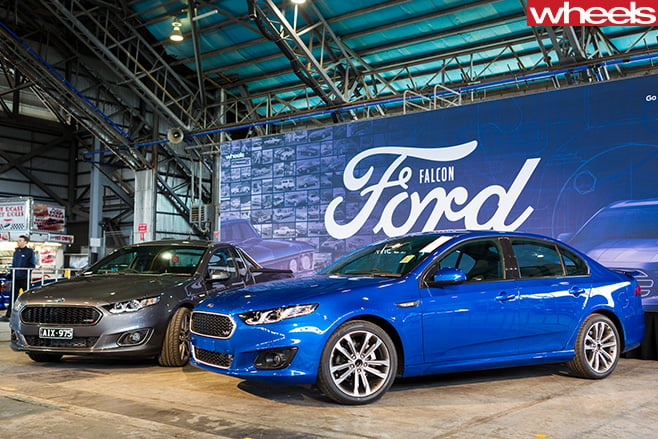
The Ford FGX Falcon XR6 sedan sold on Saturday isn’t actually the final car to roll off the Broadmeadows production line – the true last car doesn’t have a Vehicle Identification Number and therefore can never be registered. However, both wear the same Kinetic blue hue.
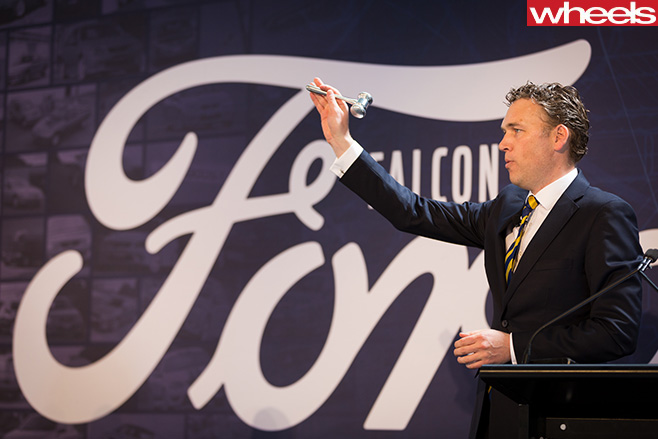
Instead, within half an hour, two real-world bidders had shown they had deeper pockets than rivals online to shell out a collective $353,000 for the cars, with Ford donating the proceeds to Broadmeadows- and Geelong-based community projects, including a robotics program for schools.
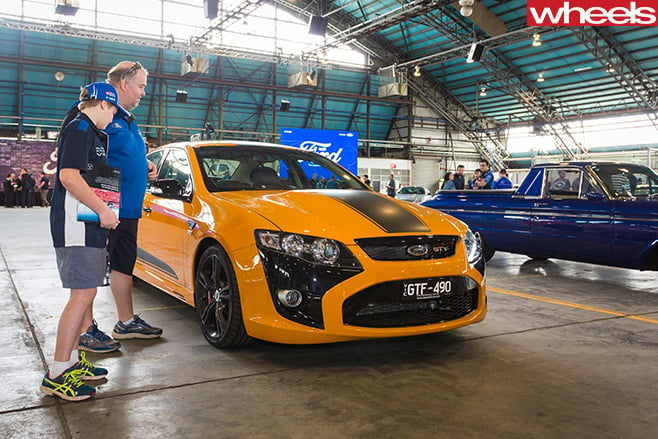
GT-F build number 001 sold for $157,600, while GT-F build number 500 – the final one, sold for $236,100, with a combined total of $393,700
The XR6 Sprint that sold for $122,000, along with a Winter White XR6 Turbo Ute that sold for $81,000, both went to Sunbury Ford dealer John Bradbury.

Ford offered 2000 tickets to the invitation-only event that included a static display of significant Falcon models. Attendees could also have a photo taken with some of the last 10 cars to roll off the Broadmeadows production line on October 7.
It’s very rare for an Australian to live out their Formula One dream. There’s only one Daniel Ricciardo after all. But now, thanks to the Infiniti Engineering Academy, 21-year-old Jaden Partridge from Brisbane, Queensland, will get to follow his dream to F1 in Britain.
Picked against nine other Asia-Oceania finalists at the Infiniti Global Headquarters in Hong Kong, Partridge is the first ever Australian beneficiary and will join winners from six other countries: USA, Canada, Mexico, Europe, United Arab Emirates and China.
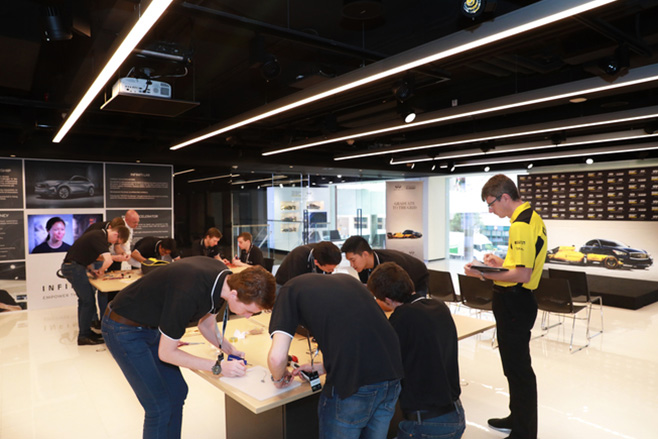
During his 12 month placement in the UK, Partridge will spend six months working at the Renault Sport Formula One team’s headquarters in Enstone and the second half at the Infiniti European Technical Centre (Cranfield) where he will play a key role in the ongoing transfer of technical knowledge and expertise between Renault Sport Formula One Team and Infiniti.
“Winning the Infiniti Engineering Academy is completely mind-blowing,” Jaden said.
“Competing here against nine other very capable candidates and then being the one selected is incredible and genuinely a massive surprise for me.”
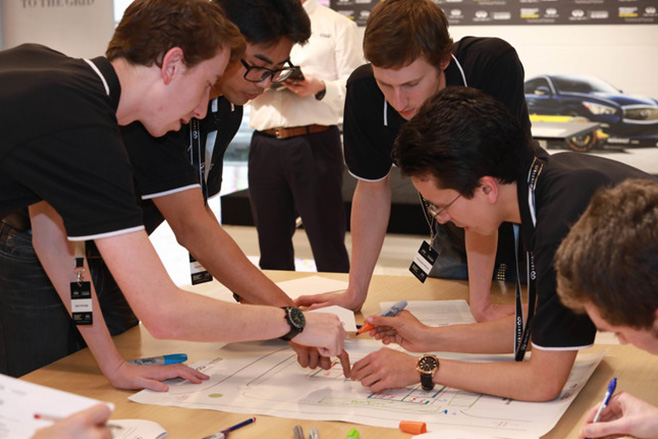
The academy is in its third year as a one-of-a-kind global search for the world’s best up-and-coming engineers, and this year received a record number of registrations with 4108 people entering for a chance at achieving their F1 dream. Applicants had to run through a series of interviews, where ten finalists were put through an intense assessment over two days. The panel of judges consisted of Infiniti and Renault Sport racing head honchos.
“The extraordinary level of interest in this year’s Infiniti Engineering Academy has been absolutely fantastic,” said Infiniti Motorsport Global Director Tommaso Volpe.

“Students have seen the accomplishments of our academy’s graduates, who have gone on to forge successful careers in the automotive industry. This has meant that more students than ever want to use the academy to gain vital engineering experience and launch their own careers.
“With F1 becoming more and more relevant to the automotive industry and an increased focus of the placements this year being on the road car development, we are training a new generation of engineers who will play a key role in the crossover between the two industries.”
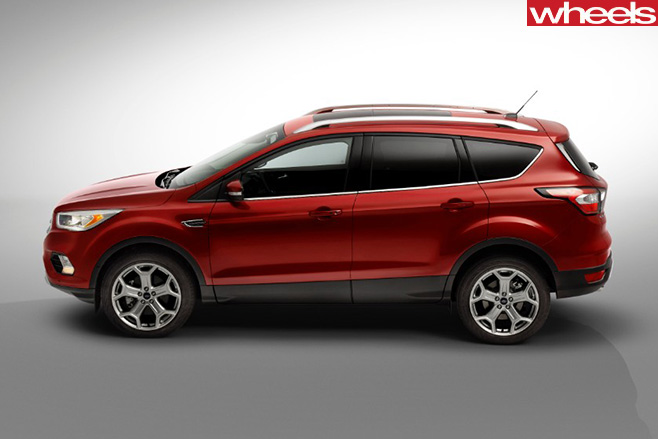
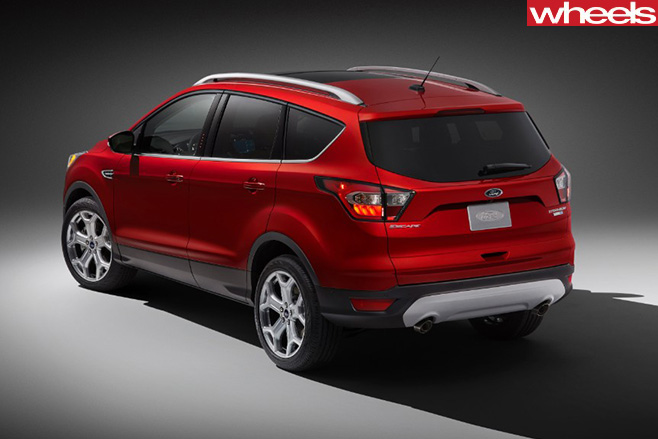
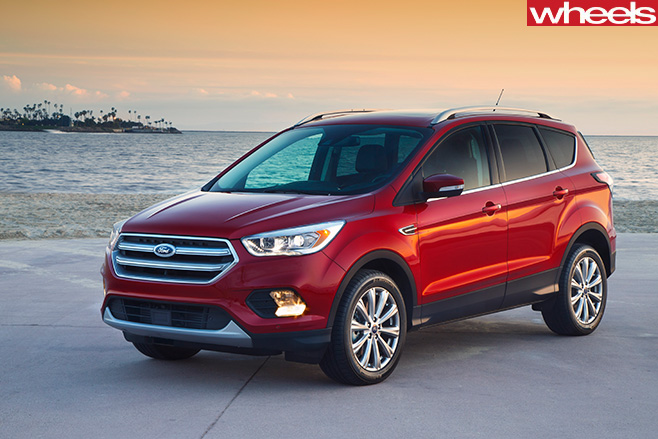
Ford Australia is resurrecting an old name to its SUV line-up with the 2017 Ford Kuga to be renamed the Escape.
The name change is part of a “revitalising” of Ford’s SUV line up and to better link the company’s mid-sized SUV offering to the bigger and more adventurously named Ford Everest.
The Kuga name was widely panned when it was released in 2012 though Ford says it “wasn’t a substantial hindrance” to sales of what was otherwise a widely acclaimed Spanish-built soft-roader.
However, the company is intent on boosting sales by reducing the list price of the base-model, manual, front-wheel-drive (FWD) Ambiente variant, powered by the 1.5-litre four-cylinder EcoBoost petrol engine, by $760 to $28,490.
It is also introducing a cheaper 1.5-litre EcoBoost, FWD option to its mid-spec Trend variant for $32,990; which is $3900 less to gain features such as privacy glass, automatic headlights, auto rain-sensing wipers, silver finish roof rails and 18-inch allow wheels.
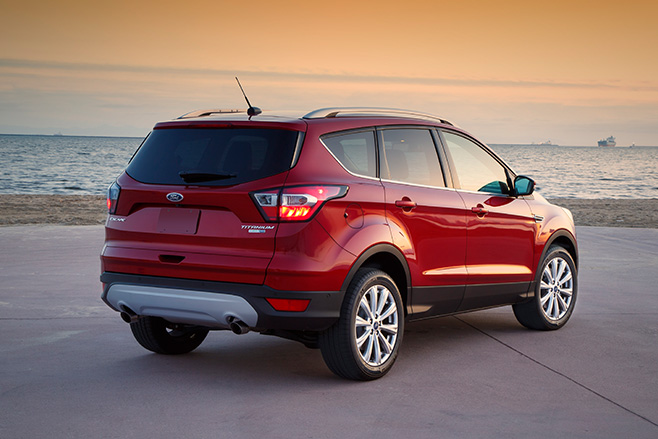
As before, other engine options include the 2.0-litre four-cylinder Ecoboost petrol and 2.0-litre four-cylinder diesel options in the Trend and Titanium models, which are mated to a six-speed automatic transmission.
Ambiente and Trend variants come with a choice of FWD and AWD, while the top-spec Titanium only comes with the AWD option.
Ford points out the new model is more than an exercise in rebadging, with significant changes in terms of interior and exterior design, a more ergonomic, intuitive console, paddle shifters in all automatic models, electric park brake and automatic start-stop to 2.0-litre Ecoboost models to improve efficiency.
External changes include bolder looks such as a large upper trapezoidal two-bar grille and smaller lower grille with sleeker headlights incorporating V-shaped daytime running lights and redesigned taillights.
The bonnet features a wider, raised centre that gives it a sportier look and incorporates a structural design that flexes to better protect pedestrians in an accident.
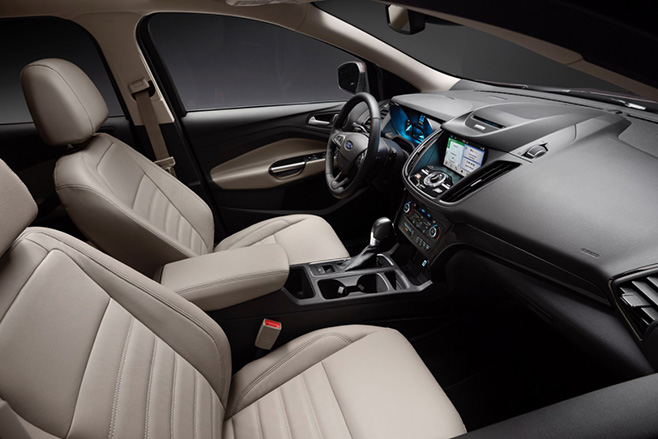
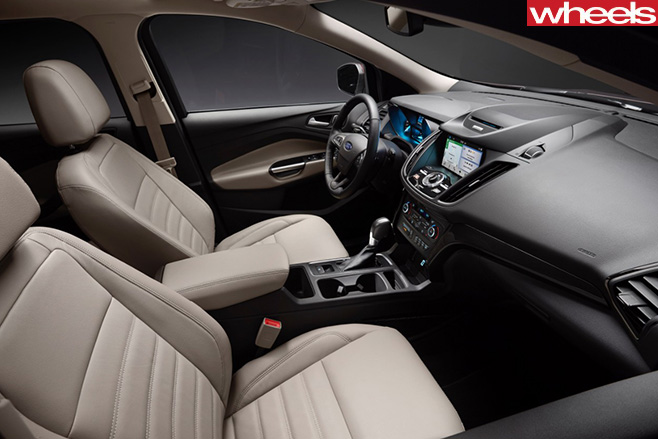
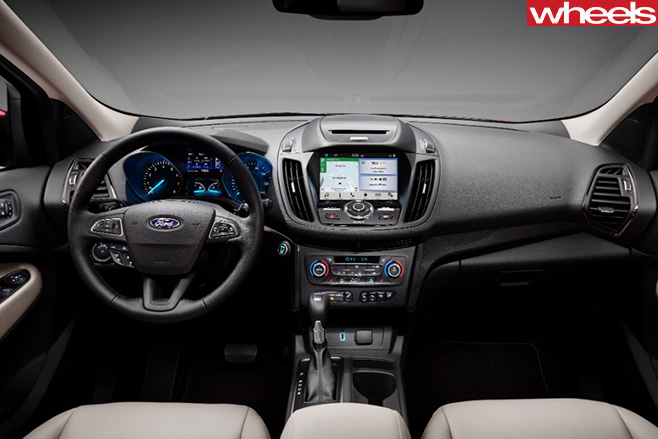
Ford says interior fit and finish will be less cluttered to provide “a more ergonomic, stylish and comfortable experience for occupants”, with more user-friendly air-conditioning and steering wheel controls .
The new Ford Escape will feature the new-generation SYNC 3 connectivity system which includes a more intuitive voice search function that better recognises conversational phrases and general names for destinations – such as Sydney Airport instead of Sir Charles Kingsford Smith International Airport.
An 8.0-inch screen with reverse camera, digital radio and Apple CarPlay/Android Auto connectivity is standard across the range.
The 2017 Ford Escape will be available in showrooms at the start of next year.
2017 FORD ESCAPE PRICING
Ford Escape Ambiente
- 1.5L FWD 6-speed manual MLP $28,490
- 1.5L FWD 6-speed automatic MLP $29,990
- 1.5L AWD 6-speed automatic MLP $32,990
- 1.5L EcoBoost FWD 6-speed automatic MLP $32,990
- 2.0L EcoBoost AWD 6-speed automatic MLP $35,990
- 2.0L TDCi AWD 6-speed automatic MLP $38,490
- 2.0L EcoBoost AWD 6-speed automatic MLP $44,990
- 2.0L TDCi AWD 6-speed automatic MLP $47,490
IN SIMPLER times, economy was what economy cars were for. Supercars, well, they were garage ornaments for the wealthy, built for boulevard posing. Collectively, they probably used less petrol than the world’s Corollas.
Regardless, conspicuous consumption (of fuel, not money) in fast wedge-shaped machines has long been on the nose – and in the crosshairs of environmental regulators. The 40-plus-million Corollas on the roads continue to get away with it.
This means that sometime in the past decade or so, the supercar and the economy car became one.
Audi, for example, was able to cut the R8 V10’s thirst by 13 per cent in the update to the current model, which uses 11.4L/100km on the combined cycle. (In its defence, Corolla consumption dropped by 25 per cent in a similar timeframe).
If we’re sounding a bit cynical about saving fuel in supercars, we’re actually all for road-going efficiency enhancements (don’t get us started on F1).
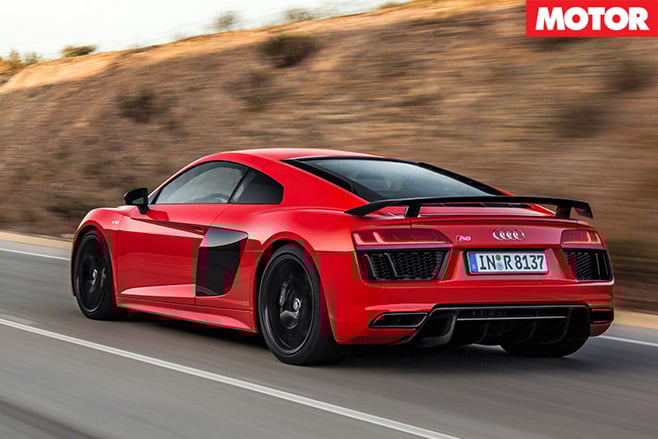
Let’s start with weight – that’s where Ingolstadt started when they sketched up the second-gen Audi Space Frame supercar.
A monocoque made of aluminium front and rear sections, tied by a largely carbonfibre-reinforced-plastic occupant cell, wrapped in aluminium panels and underpinned by aluminium suspension control arms and forged wheels, keeps the weight of the R8 about the same as an S3.
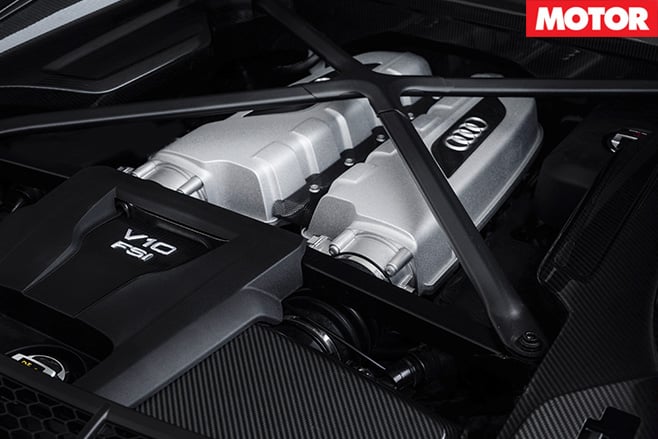
The engine’s die-cast aluminium block contributes too, but the real cleverness lies inside the ECU.
A combination of direct injection into the cylinders and port injection in the intake manifold lift thermodynamic efficiency, by ensuring cool cylinder walls and a high charge concentration.
Under low and intermediate loads, the big V-engine reverts to a slant-five, seamlessly shutting off one cylinder bank and then the other, by cutting fuel and spark.
Go to pose and the automatic stop-start system is way ahead of you, shutting off the engine quicker than you can double-park.
But there’s one area in which an R8 remains off the pace of the average eco-car: aerodynamic drag (Prius Cd 0.26; R8 0.36).
It’s not that Audi hasn’t given the R8’s aero due attention. For all the greenery, it’s still a supercar and has to balance slipperiness with delivering 140kg of downforce at 330km/h.
Every little bit
5 tricks saving 0.6L/100km
1. INJECTION STRATEGIES At low load the V10 is port fuel-injected (MPI). A mix of MPI and direct injection into the cylinders (FSI) takes place under moderate load. The FSI transitions to 85 per cent at max load, which cools the cylinder walls while the MPI contributes to charge-density.
2. PART-TIME FIVE-POT At low and intermediate load in fourth through seventh gears, the cylinder deactivation system shuts down a bank of five cylinders at a time. If the deactivation phase is longer than 30 to 60 sec, the COD imperceptibly alternates cylinder banks in three tenths of a second, to keep the catalytic converter in each header pipe at operating temp
3. COASTING MODE In comfort mode in the R8’s Audi Drive Select system, at speeds under 55km/h, the seven-speed dual-clutch decouples both its clutches to switch to freewheeling operation whenever the driver’s foot comes off the accelerator. The engine keeps burning fuel rather than going into deceleration cut-off, but the R8 keeps its hard burnt momentum.
4. NAP MODE While stop-start didn’t contribute to the official economy figure – the test doesn’t include a traffic-jam element – it’ll save more than a slurp in the modern supercar’s natural environment of urban rush-hour.
5. SLIPPERY SHAPE The R8’s double-bubble rear window calms airflow over the car, while a smooth underbody cover and diffusers in the front wheel arches and underneath at the back reduce turbulence. A powered rear wing on the R8 V10 Plus cuts low-speed drag before being deployed above 120km/h for 40kg front/100kg rear downforce at its 330km/h Vmax.
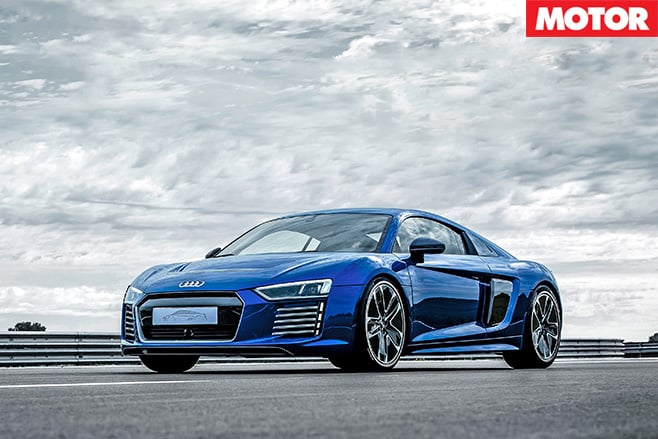
Keen on 0.0L/100km?
If you’re thinking some of the R8’s efficiency-enhancing measures could be those of a dedicated green machine rather than a supercar, so was Audi, delivering both in its R8 e-tron. Not that the idea of a hybrid or electric supercar is new. It’s today more difficult to find exotica without an AC motor than with. Twinned electric motors with a combined 340kW and 920Nm fire the e-tron from 0-100 km/h in 3.9sec and on to a top speed of 250km/h, with a max range of 450km thanks to high-power, high-energy-density batteries.
How would a four-cylinder Ford Mustang fare at its first ever Bang For Your Bucks?
It was tricky to get a sense prior to the event. Down on power, but down on price, and with 73 fewer kilograms between the front wheels, it was going to be interesting to say the least. And interesting might be the most appropriate word to describe its dragstrip performance.
Pipped by three front-drivers for trap speed, the neutered ponycar even had the Polo GTI yapping at its hoofs across the quarter mile. Odd for something with 233kW and 432Nm – even in a car weighing 1629kg, not what you’d call gutless, on paper at least. But the reality is, it’s not particularly fast in a straight line. Which just seems odd for a Mustang.
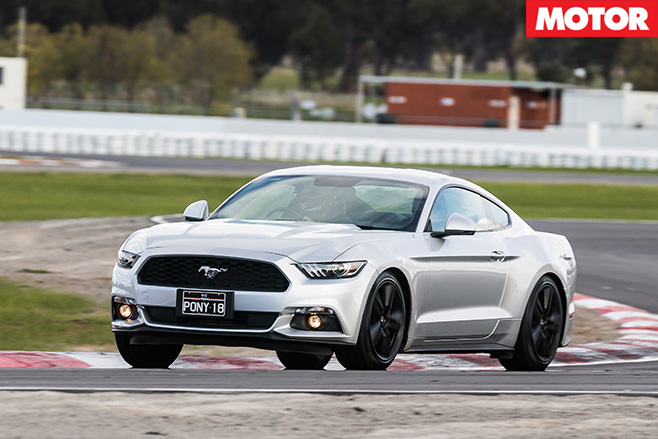
Not the Mustang Ecoboost. In fact, it’s quite the sorted thing in the cornering department. It tore around Winton third fastest for the $0-$50K class, beaten only by a sticky-tyred Peugeot and muscled-up ute – proving the Ecoboost is, in some ways, more than the sum of its parts.
The bum-o-meter confirms what the stopwatch says, all the judges having very nice things to say about the Ecoboost’s chassis. The steering is keen and direct, if lacking feel, and the rear-end stable, with a sniff of understeer if you ham it up – but otherwise it does everything you’d hope it to. And then some.
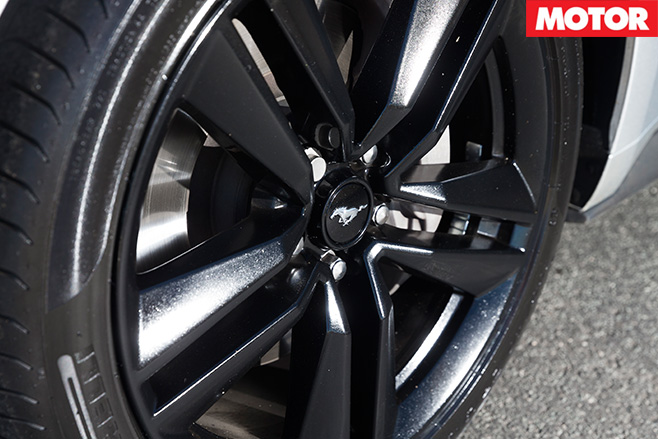
Gripes? Aside from the unsettling philosophical implications of a four-cylinder Mustang, the brakes are too bitey in the initial few centimetres of pedal travel, the interior is low rent and the engine note splits opinion. It struggles price-wise, too, being Monaco-money in this company. So: a bit expensive, a bit odd, and a bit slow – that’ll be eighth, then.
But on track the Ecoboost was hardly out of its depth. It surprised us. With a tune and more power, it could be quite the thing. Or you could just buy the one with twice as many cylinders. Hold your horses for next month, in other words.
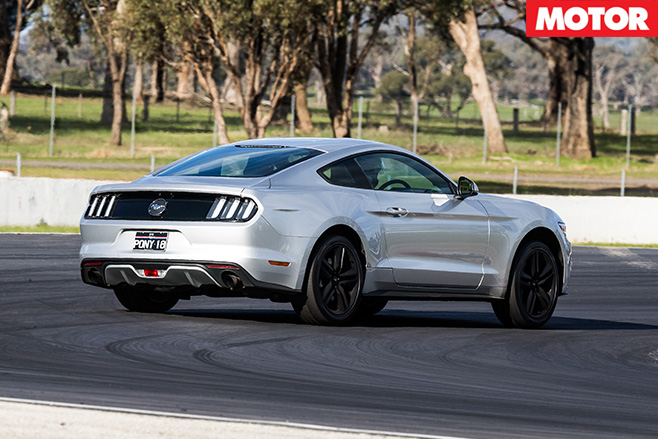
JUDGES’ COMMENTS 07. David Morley “Sounds like a portable generator. Goes a lot faster than one, though.”
07. Dylan Campbell “Drives way better than you’d expect it to. But, but, the V8…”
06. Louis Cordony “Like a sausage roll without sauce. Good, but missing something.”
05. Scott Newman “Torquey engine, great chassis, but don’t ever drive the V8.”
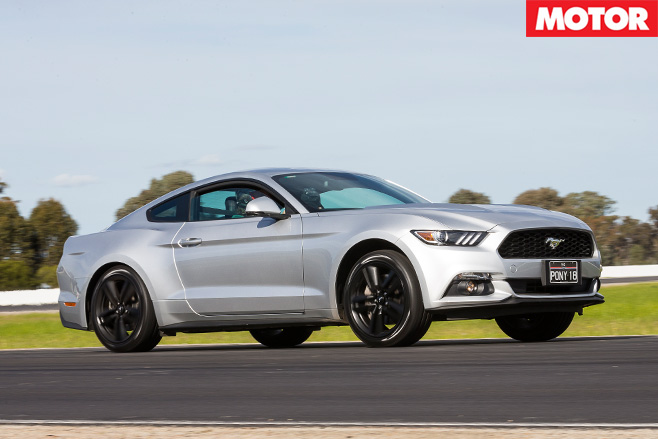
SCORES Price: $45,990 Bang Index: 89.7 Bucks Index: 85.3 BFYB Index: 131.4
WARREN LUFF SAYS 08. “It has great handling and braking, but it sounds awful”
“There’s something very wrong about a Mustang having a four-cylinder engine. In saying that, it has great mid-corner dynamics; its handling is surprisingly good, particularly for such a big car.
“That said the steering really lacks feel – it’s very light and the feedback doesn’t give you the confidence to unleash the true potential of the car.
“It also has great brakes, but its engine is its weak point. Obviously it’s there for a price-point, but they could have done something better with the sound of it.”
Want more? Check out the rest of 2016 Bang For Your Bucks.
Ford Australia will axe the Kuga name in favour of Escape, as it lowers the cost of entry to its mid-sized SUV.
The Kuga name will disappear from Ford showrooms in January when the 2017 Ford Escape arrives, though, despite the new name, Ford’s ‘new’ midsize SUV is a facelift rather than an all-new model.
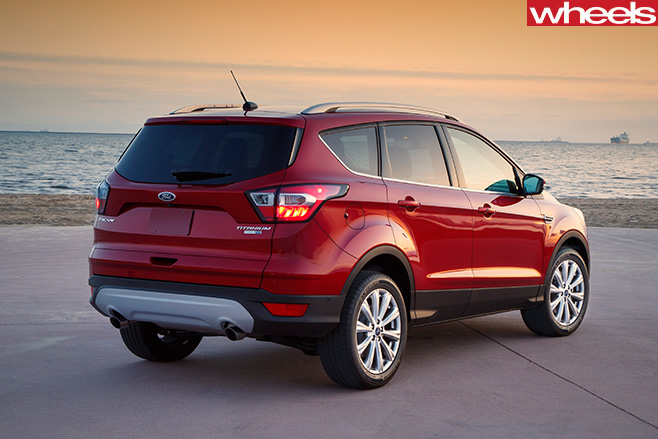
Changes compared to the Ford Kuga aren’t wholesale – the most notable are new front and rear plastics, a reprofiled bonnet, revised tailgate, new headlamps and tail lamp designs, a new set of 18- and 19-inch alloy wheel designs and a slightly remodelled interior with higher-quality materials.
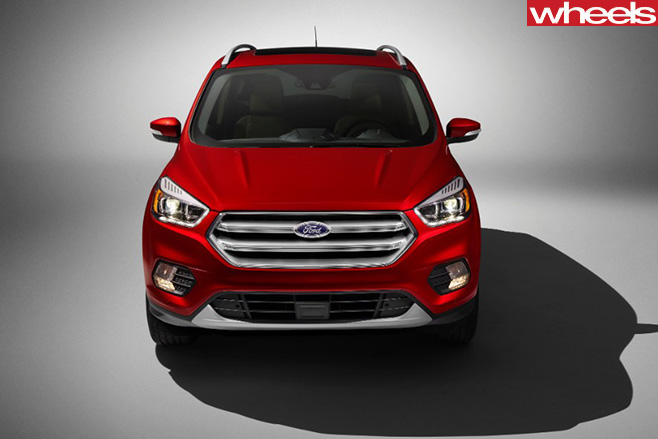
Meanwhile, infotainment fit-out gets a boost from Ford’s latest Sync 3 system, which replaces the current Sync 2 software and features intuitive voice commands, an 8.0-inch colour touchscreen, integrated sat-nav and Apple CarPlay/Android Auto smartphone mirroring on all Escape variants.
Auto-equipped models gain a set of steering wheel-mounted paddle shifters, and engine start-stop will become standard.
With most Kuga shoppers gravitating toward the Trend, the addition of a more affordable 2WD variant in the Escape line-up is expected to garner more customers for Ford.
“We’re revitalising our SUV line-up, leveraging our global heritage and expertise, to bring the Escape into the family,” said Ford Australia spokesman Damion Smy.
“The Kuga name has been criticised in the media, but it wasn’t a substantial hindrance to the success of Kuga – which was increasing in sales in 2016 until we announced this new model back in August.”
That segment continues to grow as SUV sales snare greater and greater chunks of the new car market, with medium SUV sales so far this year registering nearly 19 percent growth against 2015’s figures.
The Territory will be replaced by the slightly smaller Edge in early 2018, though those looking for a seven-seat Ford SUV will need to aim for the Ranger-based Everest instead – a seven-seat option exists for the Chinese market, but Ford Australia has confirmed Australia-bound cars won’t be sourced from that country.
Pricing
Escape Ambiente 2WD 1.5 manual – $28,490 Escape Ambiente 2WD 1.5 auto – $29,990 Escape Ambiente AWD 1.5 auto – $32,990
Escape Trend 2WD 1.5 auto – $32,990 Escape Trend AWD 2.0 auto – $35,990 Escape Trend AWD 2.0 diesel auto – $38,490
Escape Titanium AWD 2.0 auto – $44,990 Escape Titanium AWD 2.0 diesel auto – $47,490
Done are the days of the minuscule interior.
Compact hot-hatches have changed and for the better. Not only do they pack more punch in terms of performance, but they have plenty of front-space, legroom and neat gadgetry on the dash.
We take a look inside the pilot’s seat on four new hot-hatches, to find out what we like and dislike about these cockpits.
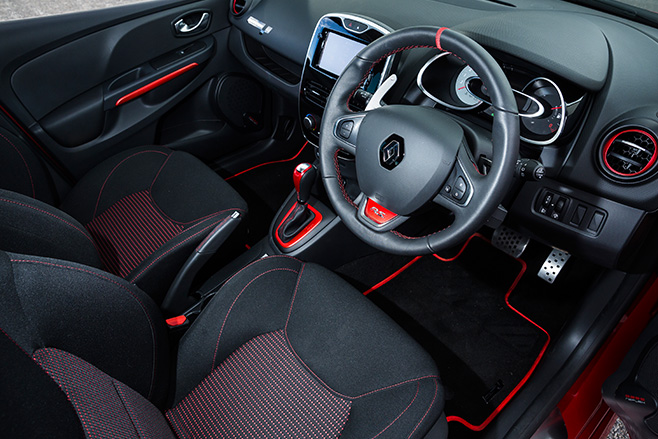
Pluses? The Clio’s seats in its nicely designed cabin aren’t too firmly padded and the infotainment system has an RS Monitor with functionality including a telemetry-feed, which is very cool. But we can’t grasp why the cruise control’s buttons are on the wheel, yet its switch is next to the handbrake! The prettiest ain’t always the smartest.
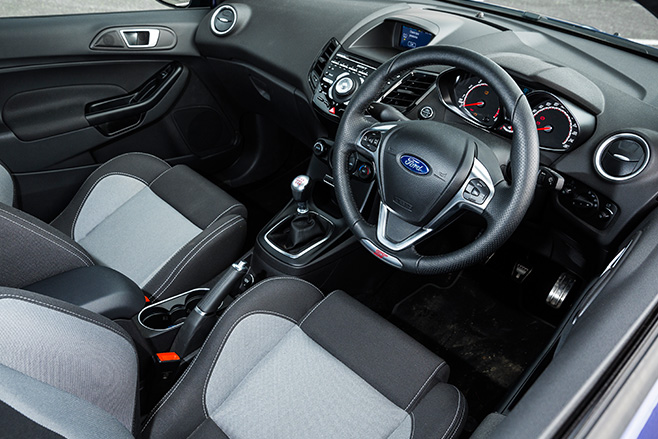
The button-heavy centre stack’s controls are confusing, its aft-placed seatbelts are awkward to grab, and it ain’t as cheerful as the others, but the standard Recaros are the nicest seats of the bunch. Since September 2016 there’s a rear-view camera and sat-nav thrown in too, which has slapped another $1500 on its price tag but the car is better for it.
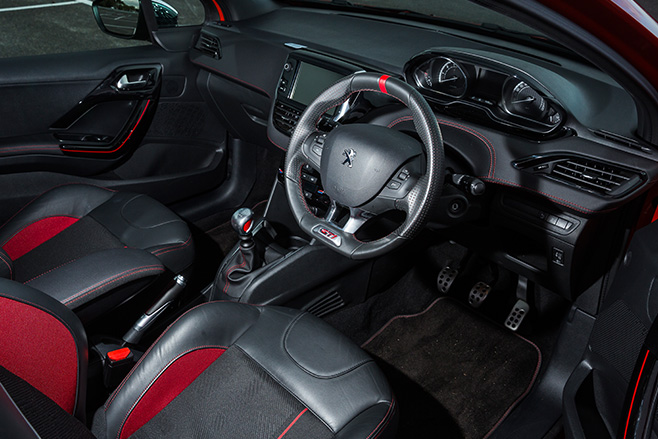
With a leather padded dash and contrast red stitching, the Pug’s the most expensive here but its interior is the most luxurious. Crucially, it’s let down by that ‘head up’ driving position, which puts the steering wheel in the way of reading the top-mounted dials. Alloy gearknob and pedals win back points.
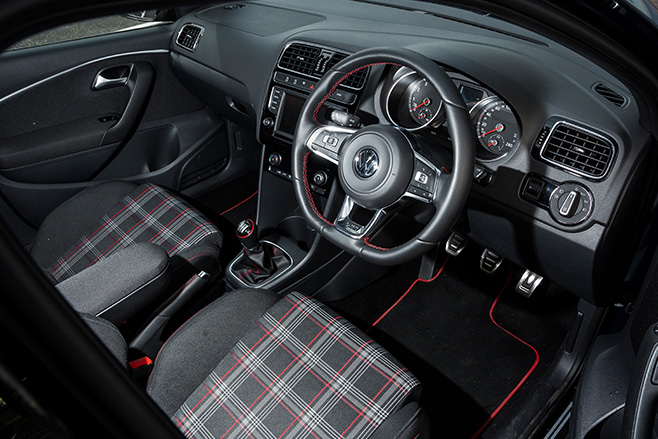
Typically Germanic, the Polo’s interior is the easiest to use and feels solidly built. It’s the only car with two-mode dampers, activated via a ‘Sport’ button, and the steering wheel is top notch. However, the tartan-style seats are predictable and some might find its decor a little boring overall.