
Volvo believes its upcoming V90 could lead a sales resurgence in large, luxury wagons.
Due in 2017, the Volvo V90 and its higher riding, SUV-inspired sibling, the V90 Cross Country, share the front-end design of the recently arrived S90 but team it with a sleek wagon body.
While the S90 is tipped to be a low volume vehicle – selling 20-25 per month as a Swedish alternative to German luxury sedans such as the BMW 5-Series, Audi A6 and Mercedes-Benz E-Class – Volvo Car Australia managing director Kevin McCann says the wagon could have the potential to revitalise the brand’s wagon appeal.
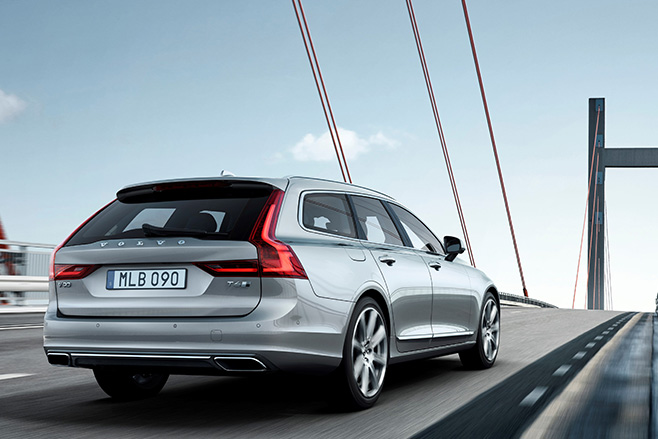
“The [luxury] wagon sector is miniscule,” admits McCann. “However, because of the history of Volvo in wagons and the attractiveness of the V90 and V90 Cross Country we think we might lead a resurgence in that segment.”
McCann points to the unprecedented shift to SUVs and how there is an opportunity to tempt people back into a car with similar interior space and flexibility but without the higher ride height that can compromise dynamics and comfort.
He says Volvo’s heritage in wagons positions the brand perfectly to capitalise on demand for wagons.
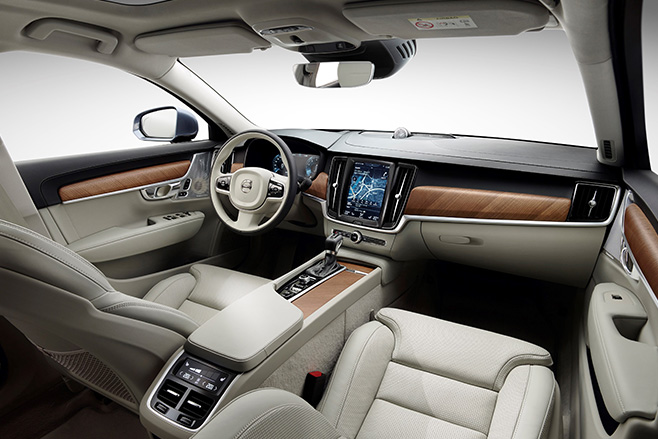
“We’ve got such a strong brand presence … around Volvo wagons and it’s a really beautiful looking car.”
In the late 1990s and early 2000s the Volvo V70 wagon outsold the sedan three-to-one, at times registering as the best seller in the Volvo range. It was later overtaken by the V70 Cross Country, which used the same wagon body but had design add-ons and higher suspension to give it an SUV look.
McCann says it will be a slow road tempting people away from the feast of luxury SUVs, but he believes there is scope to build a loyal and unique following.
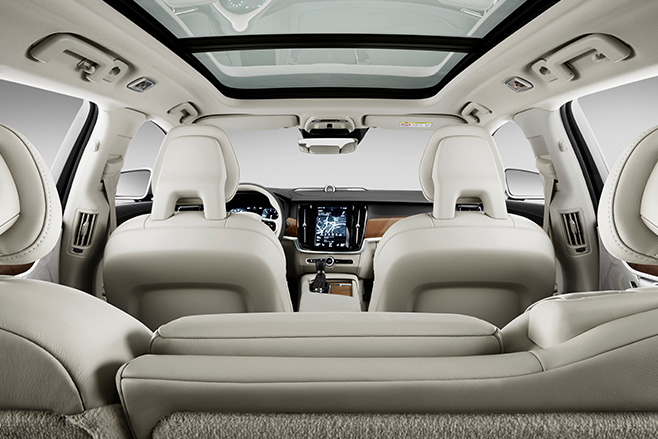
“The reality is a lot of those buyers have migrated to SUVs … the challenge for us now is to bring them back,” says McCann.
“As we’ve seen with the launch of XC90 a lot of our customers who we lost because we took so long to change the model are coming back to us because they loved it so much.
“If that same trend happens … we’re quietly confident that we’ll make an impact [with V90 and V90 Cross Country].”
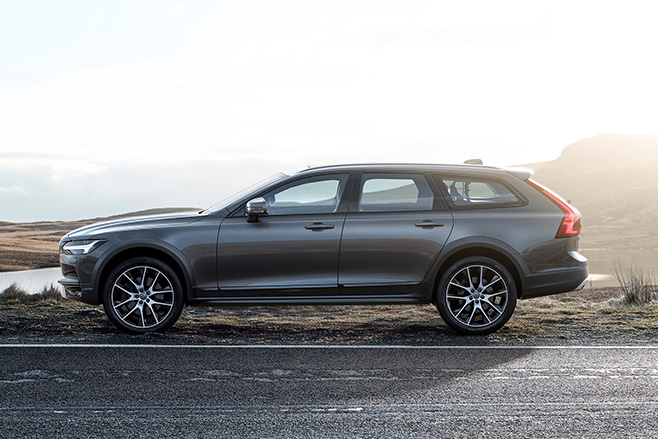
McCann hints the V90 and V90 Cross Country (pictured below) could comfortably outsell the S90 in Australia but that “it’ll take time to get the word around”.
Volvo will also have more competition than ever.
Audi’s Allroad models – particularly the A6 Allroad that will most directly compete with the V90 Cross Country – also have a loyal buyer base.
And Mercedes-Benz will soon enter the low-riding SUV-style wagon market with its upcoming E-Class All Terrain.
Even Holden will have a more affordable off-road-style wagon based on the first imported Holden Commodore from 2018, although that car is likely to compete more closely with the Subaru Outback that is one of the pioneers of the breed.
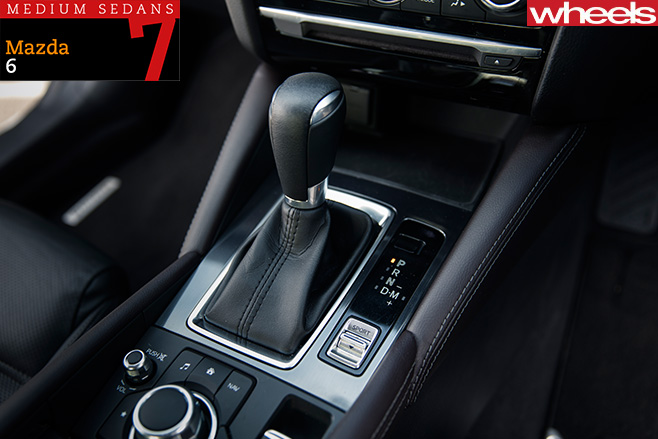
Wheels pitches 10 of the biggest sellers in the medium-to-large car segment to see which is the best of the current crop. Here’s number 7, the Mazda 6.
Can’t wait to see the final score? Jump to the verdict now.
In the three-and-a-half years since the third-generation model arrived, it’s become clear that how highly we rate the Mazda 6 depends very much on which 6 it is that we’re talking about.
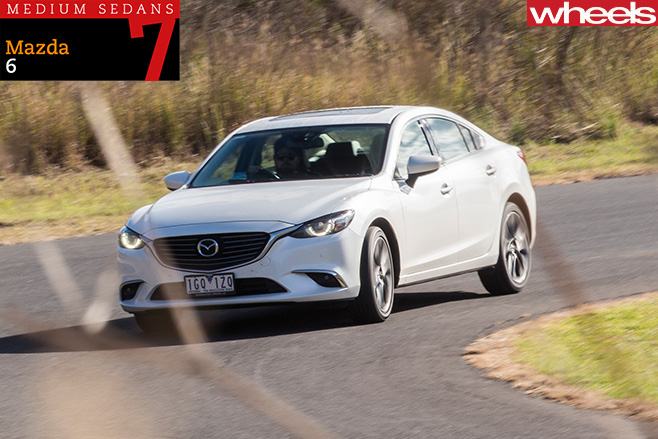
From the outset, then, our GT petrol four-door on 19-inch wheels is seemingly the Mazda 6 in its least-convincing spec. But, given a price-point in the high-$30K/low-$40K region and a requirement for petrol sedans, this was the default choice for our Megatest.
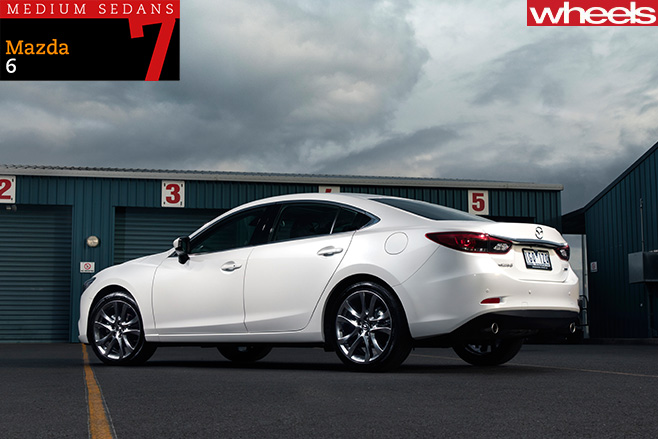
The 6 pulls heartily from low revs and develops a lovely rich note as revs rise into the mid-range, to the point you could almost be forgiven for thinking you’re in an old-school hot hatch. A bit gruntier than the Subaru, and a bit lighter, the result is more than noticeable on the road – at 7.7sec 0-100km/h and 5.1sec for the 80-120km/h bracket, the Mazda is pretty much on par with the sprightly turbocharged Passat.
The SkyActiv-G engine does a lot with what it’s got, then, while delivering slightly disappointing mid-field economy to just pip the Subaru Liberty at 9.6L/100km.
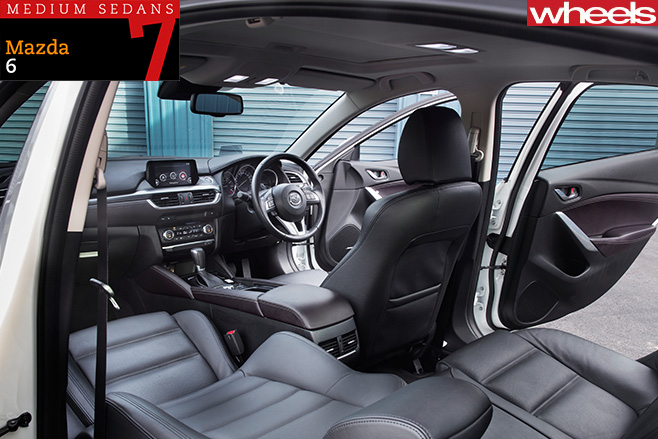
On a bad back road, however, the 6’s chassis composure begins to unravel. Its ride becomes brittle (though extra occupants help calm it) and the long-standing Mazda bugbear of coarse-chip tyre drone and vibration quickly introduce themselves, along with wind rustle around the door frames, which make it tiring for longer runs. Throw bumpy corners into the equation and steering kickback corrupts feel.
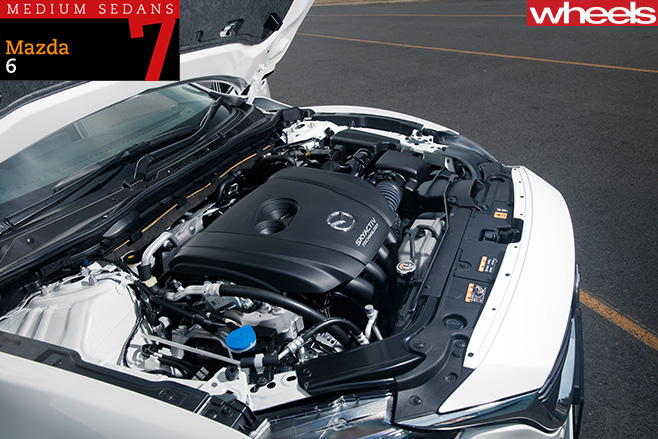
Open roads reveal a lack of turbo-boosted flexibility and shove, but the atmo 2.5 still performs well, worked via responsive wheel paddles on twisty sections. In fact, using the paddles is the only way to make consistently brisk progress because the six-speed auto is tiresomely fixated on maintaining upper ratios in Normal mode, yet is too rev-happy in Sport. A single, well-calibrated setting in between these extremes would be a major improvement.
The G-Vector spot
A system called ‘G-Vectoring Control’ is set to give the Mazda 6 heightened on-centre steering connection and turn-in response. It uses software to mimic the corner entry technique of a pro driver by trimming engine power (in just 50 milliseconds) to transfer weight to the nose on turn-in. Our first taste of the system (Wheels, August) suggested subtly improved connection, precision and driver satisfaction. A right-specced 6 with the vectoring chassis tickle might be the car to challenge our Megatest podium-getters. We’ll see GVC first on the Mazda 3 facelift in August before it’s progressively rolled out across the range.
Want to compare the field? Check out all the Family sedan finalists.
 SPECS
SPECS
Price: $42,690
Engine: 2488cc 4cyl, dohc, 16v
Power: 138kW @ 5700rpm
Torque: 250Nm @ 3250rpm
Transmission: 6-speed automatic
Dimensions (L/W/H/W-B): 4865/1840/1450/2830mm
Weight:1498kg
Cargo capacity: 474 litres
Tyres: Bridgestone Turanza T001 225/45R19 92W
Test fuel cons: 9.6L/100km
0-100km/h: 7.7sec
0-400m: 15.5sec @ 145.9km/h
80-120km/h: 5.1sec
3yr resale: 55%
Plus: Smooth-road handling; slick interior quality; driver appeal
Minus: Gearbox calibration; pattery ride; road rumble
Verdict: 6.0/10

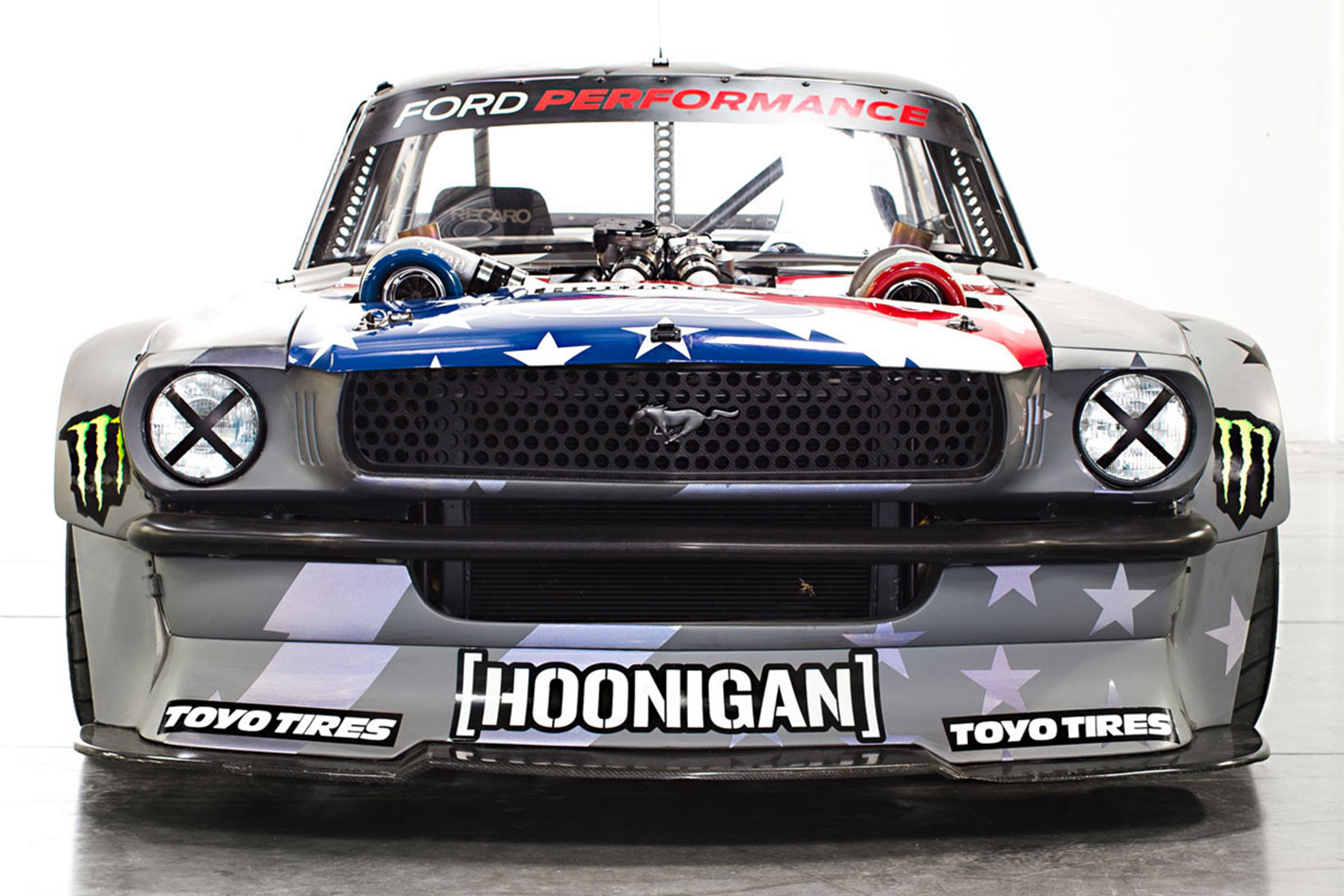
Remember Hoonicorn, Ken Block’s custom all-wheel drive Mustang built for his wild gymkhana antics?
To be honest, there wasn’t a lot of Mustang left in it, with a bespoke tubular chassis, one-off six-speed gearbox and all-wheel drive system the work of ASD Motorsport.
Its only real problem was that it was seriously underpowered, having to rely on a measly 630kW/970Nm 6.7-litre Roush V8 to get going.
Thankfully, Ken Block and the Hoonigan crew have now rectified this, converting the V8 to run on methanol and adding 21 pounds of boost courtesy of two turbochargers.
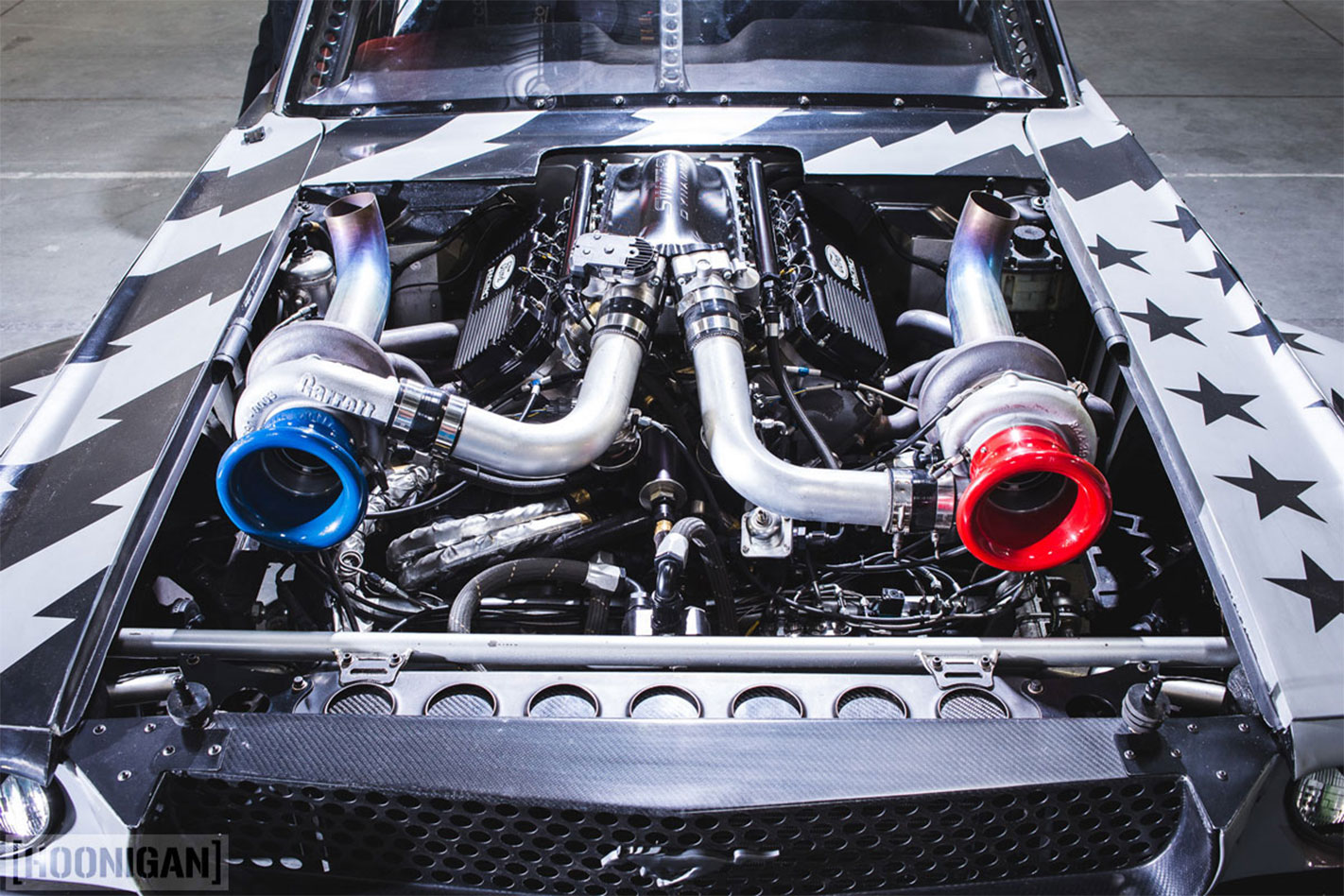
“The motor revs and spins my Toyo tyres to destruction so quickly that I can’t change the gears fast enough. It’s genuinely a mind-numbing crazy experience to try to drive this thing.”
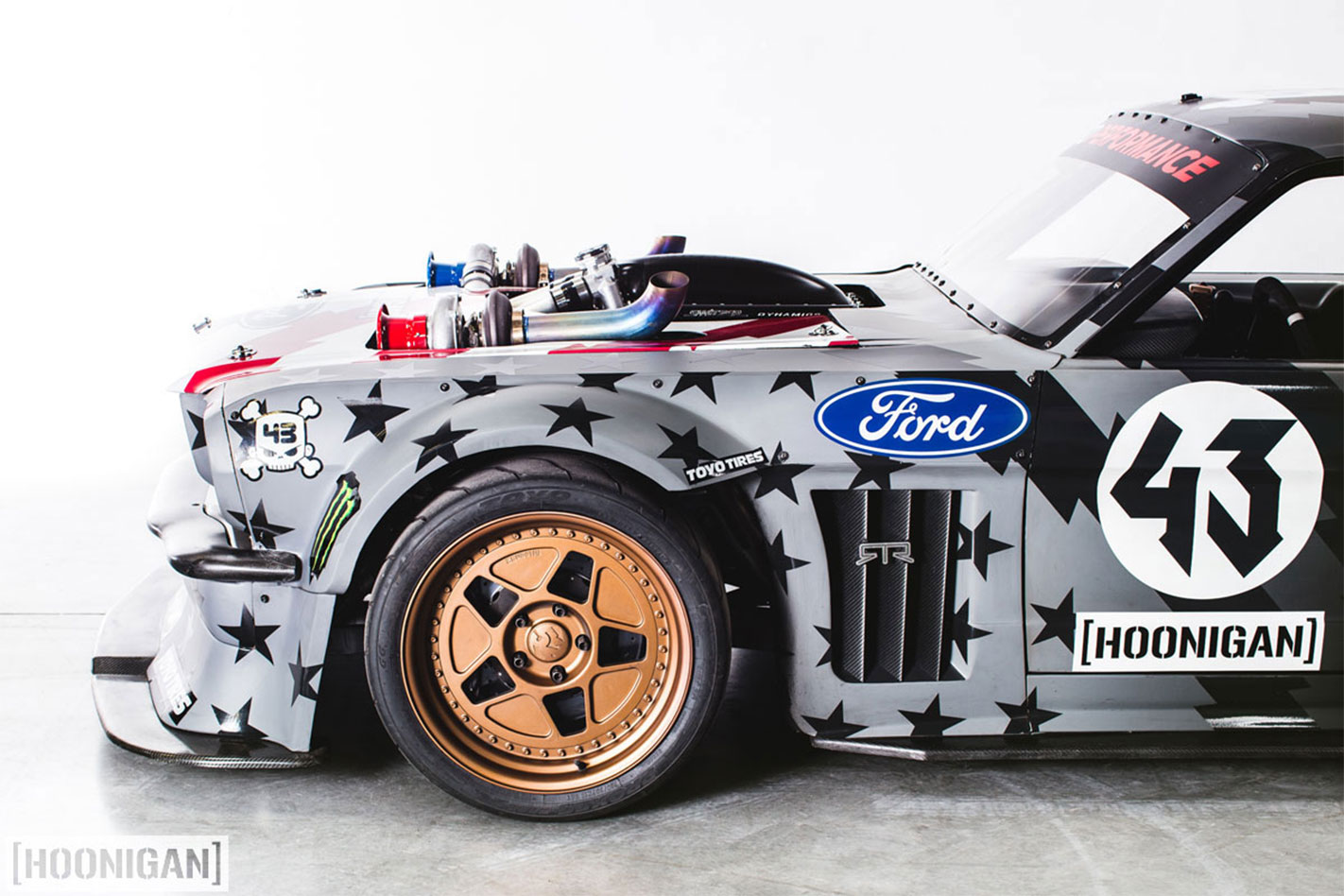
Block says the power upgraded was required for an upcoming video project: “We got approval for a new video concept using the Hoonicorn, but I needed more power for what I needed it to do.
“I developed the concept of what I wanted – two turbos sticking out the hood – and handedthat over to my team. We ended up with 1400hp. They may have over-delivered a bit – and I’m happy about that!”
Kia has reduced the Rondo range to two models, including a cheaper five-seat variant, in an effort to lift sales of its compact people mover in Australia.
The new five-seat Rondo S has been introduced as a new entrypoint to the Rondo family, while the previous top-spec Platinum variant has been cut from the lineup.
The S replaces the seven-seat Si as the entry-level model and will retail at $26,990, making it more than $3250 cheaper to get into a brand-new Rondo than before.
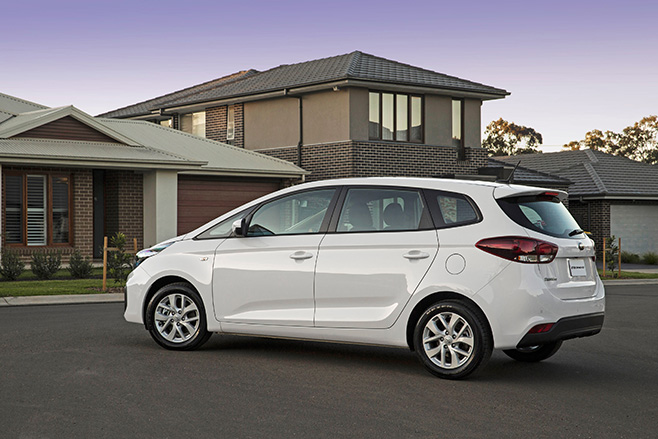
With the Platinum grade gone, the Kia Rondo Si moves into top spot and gains satellite navigation as standard – plus a $1250 price bump to $31,490.
There will no longer be a diesel option either, with both variants powered by a 2.0-litre GDi four-cylinder petrol engine mated to a six-speed automatic transmission. Both the Rondo S and Si come with 16-inch wheels (steel and alloy on the S and Si respectively), cruise control and reverse camera.
Luggage capacity in the five-seat S is a decent 536 litres, stretching to 1694 litres with the seats down. Meanwhile the seven-seat Si has a 492-litre capacity with the two rearmost seats folded away and 1694 litres with the second and third rows stowed.
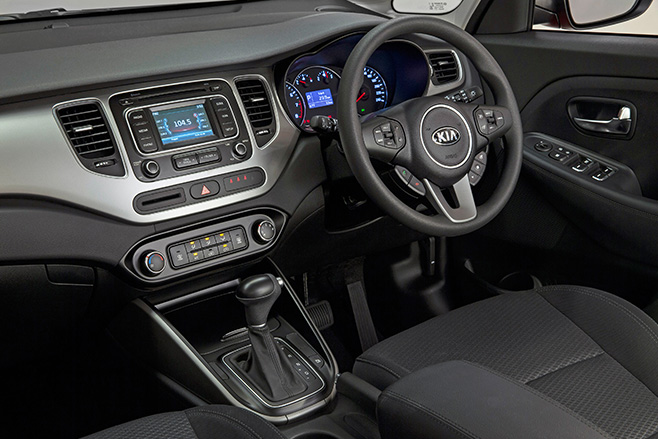
The loss of the Platinum variant means leather seats are no longer an option, which is in line with Kia’s push to rejuvenate Rondo sales by pitching it to families and fleet buyers.“I think it is fair to say that Rondo has never enjoyed the positive market attention that it deserves,” said Kia Australia Chief Operating Officer Damien Meredith.
“With the addition of the five-seat variant, some fresh styling and a specification realignment we are confident Rondo will feature on a much greater number of consideration lists.”
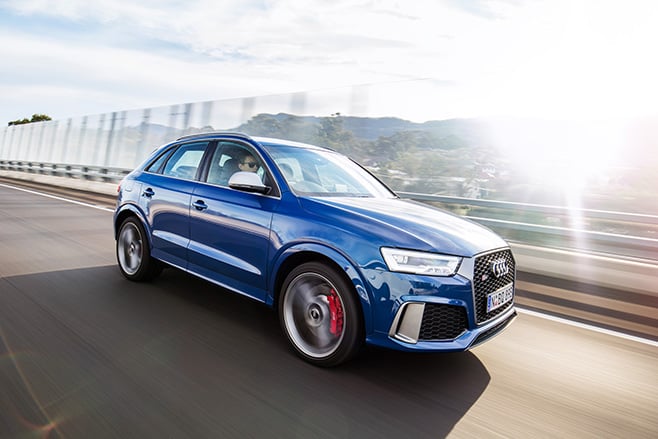
Initially regarded as somewhat lukewarm for a model bearing the iconic ‘RS’ badge, Audi Sport has been progressively turning up the heat on the RS Q3 since the first model arrived in 2014. But does more power and more equipment finally make the Audi RS Q3 a deserving member of Audi’s exclusive RennSport clan?
TELL ME ABOUT THIS CAR
The RS Q3 has headlined the Audi Q3 range for nearly three years now, occupying the sparsely populated niche of compact performance SUVs alongside the Mercedes-AMG GLA45.
Priced at $84,216, the RS Q3 performance replaces the outgoing RS Q3, and is available in just one specification – turbo petrol, all-wheel-drive, with a seven-speed automatic. Several option packages are available, with style (interior and exterior trim), performance (electronically adjustable dampers) and safety (active driving aids) all upgradeable at extra cost. Compared to its predecessor, the 2017 Audi RS Q3 performance costs $2016 more.
Power gets bumped up to 270kW while torque rises to 465Nm – a big increase on the original RS Q3’s outputs of 228kW and 420Nm. Those numbers now match the figures of the RS3 Sportback, Audi’s excellent hot hatch, and Audi Sport claims it’s all thanks to a beefier cooling package that allows the full potential of the 2.5-litre inline five-cylinder engine to be extracted.
STRENGTHS
- That engine. With a glorious off-beat five-cylinder soundtrack and excellent turbo response, the RS Q3’s powerplant is a big heart for a small SUV. Older RS Q3 models may have been hobbled by lacklustre power and torque outputs, but with 270kW of power now surging from its motor, the RS Q3 no longer suffers in that department. At 4.2 seconds to 100km/h from rest, the RS Q3 is now faster than the first-gen Audi R8 4.2 FSI supercar.
- Equipment levels. The RS Q3 performance may be expensive for a small SUV, but it compensates with healthy standard equipment levels. Among the usual luxury features like power-adjustable seats and dual-zone climate control, you’ll find LED headlamps, a power tailgate, digital radio tuner, heated front seats and a 20GB onboard music drive.
- Grip. The RS Q3 performance has loads of it, and its quattro AWD system can even shuffle 100 percent of torque to the rear axle if there’s a complete loss of grip at the front – a rare feature for most AWD SUVs. The AMG GLA 45 doesn’t have the same level of flexibility.
- Comfort. The RS Q3-specific front seats are deeply bolstered and trimmed in high-quality leather, while the rear bench is roomy and comfortable enough for two adults. Vision outside is excellent too.
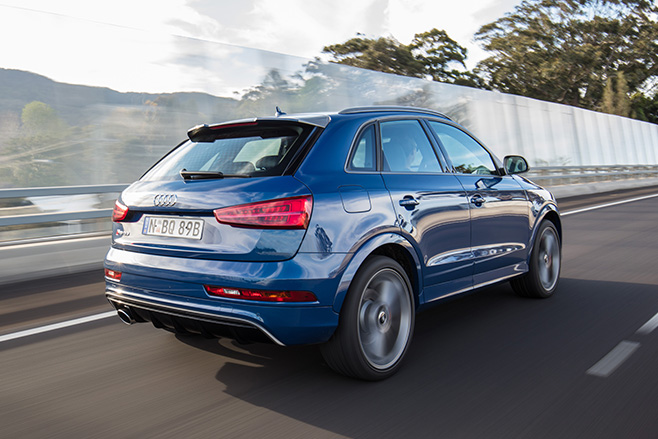
WEAKNESSES
- Dated interior. Line the RS Q3 up next to some of Audi’s more recent models, and its age becomes apparent through its old-school cabin. The dinky rotary knobs for the dual-zone climate control also take a bit of the high-end gloss off this cabin.
- The MMI infotainment system is not as up-to-date compared to what Audi uses in the A3, A4, Q7 and TT. It’s also fiddly to use, with the primary dial and its ancillary buttons mounted mid-way up the centre stack – just try using it on a bumpy road.
- Ride quality. It’s not bad considering the standard wheels are a huge 20-inches across, but on rougher roads it can get brittle. Optioning adaptive dampers helps iron that out, but they come at extra cost.
- No spare tyre. The RS Q3’s exhaust box and rear-mounted battery mean a spare wheel can’t be accommodated – either a full-size or space-saver. An inflator kit with a can of goo is your only back-up in the event of a flat.
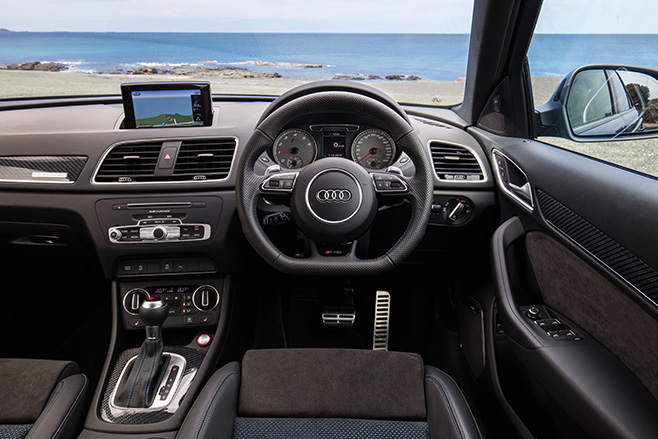
ANYTHING RIVALS I SHOULD CONSIDER?
The Mercedes-AMG GLA 45 is the only true challenger to the Audi RS Q3 performance.
The GLA 45 has a slightly tighter cabin when it comes to back seat accommodation, but it’s also a newer design. The Benz’s AWD hardware might not be as flexible as the Audi’s, but by the same token it’s no dynamic dud.
Speed wise, the RS Q3’s 2017 update and extra power means the straight-line performance of both is now line-ball.
Choosing between the two may simply come down to brand allegiance.
Brother of Peter Brock says Will Davison and Jonathan Webb were the more deserving victors.
Phil Brock has said a Jamie Whincup victory at last Sunday’s Bathurst 1000 would not have been in the spirit of the trophy named for his brother, Peter Brock.
Phil Brock, younger brother to nine-time Bathurst 1000 winner Peter, told the AAP that a Whincup victory wouldn’t have sat well with him or his brother, despite the Red Bull driver crossing the line first.
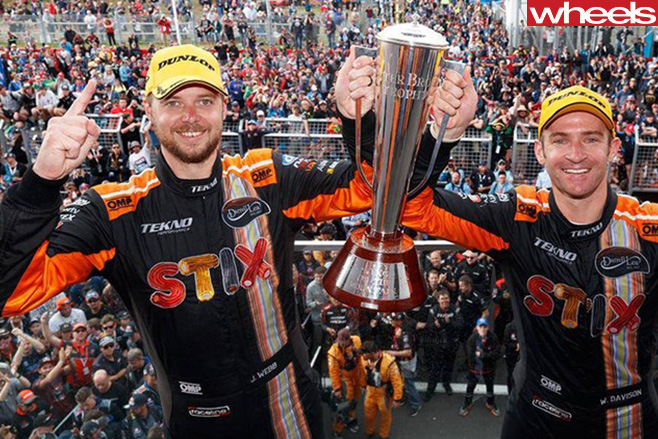
Phil handed the Peter Brock trophy to Davison and Webb on the podium.
“I think it is fitting a small, hardworking team like that won the Peter Brock Trophy,” he told AAP.
“Sure Will came from the blue a bit but he had worked so hard. Peter would have been going ‘you bloody deserve this’.”
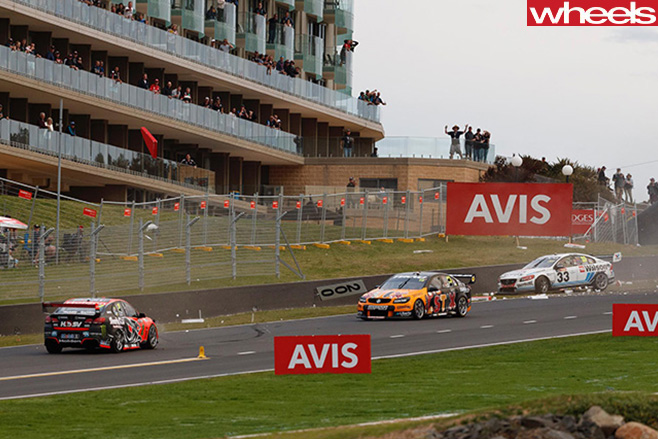
“When it looked like Whincup was going to win I was thinking ‘this is not what the trophy is about’,” he said.
“Peter was about racing and giving it your best shot.”
Whincup’s Red Bull Racing team is protesting the 15-second penalty which dropped the six-time champion and four-time Bathurst 1000 winner to 11th in the standings.
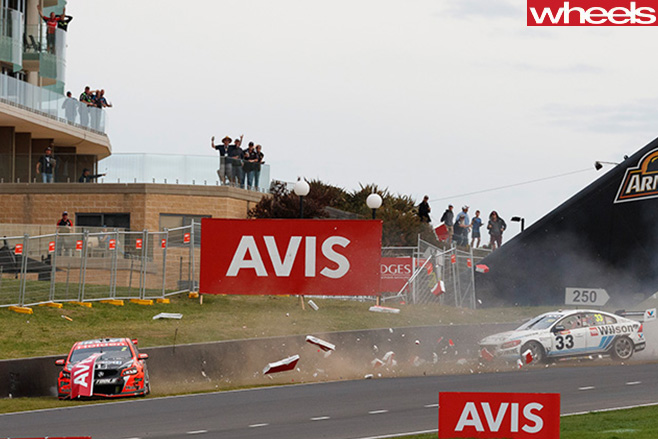
The pair dominated the weekend, leading nearly every pre-race session, topping qualifying and the Top 10 Shootout, and leading the majority of the first half of the race.
However, while battling for what would eventually become the lead of the race, Whincup made contact with McLaughlin’s Volvo. While attempting to readdress the move, he held up Tander, who then made contact with McLaughlin as the Kiwi re-joined the track. Whincup was able to continue on, while McLaughlin and Tander both suffered damage.
THERE is no feeling quite like finding a nice twisting piece of bitumen, and then discovering there isn’t a single car ahead of you.
It is a moment that is rare to find, but something worth cherishing when it happens.
Well, Kiwi drift master ‘Mad’ Mike Whiddett has taken that moment, and amplified it by ten.
The rotary-loving tyre slayer has just dropped a new video, which involved him drifting his triple-rotor turbo Mazda RX-8 Drift Car down South Africa’s fabled Fransheok pass.
Located 75-kilometres outside of Cape Town, the winding route includes sheer cliffs and hairpin bends, and Whiddett tackles it all at full throttle.
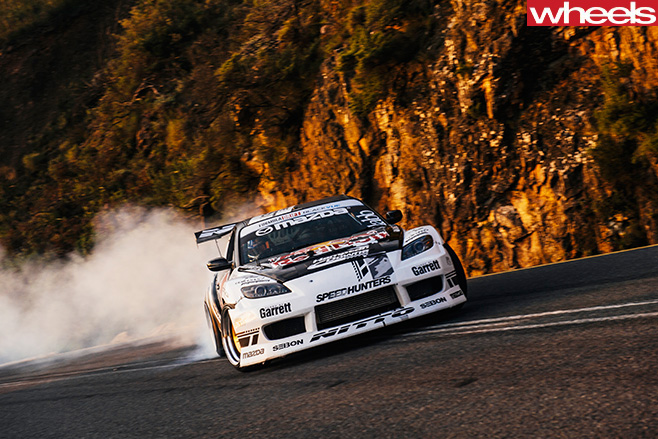
Crazy is a bit of an understatement, with the Kiwi hitting speeds of up to 248km/h during his runs and its custom-built triple-rotor engine wailing to 8,800rpm.
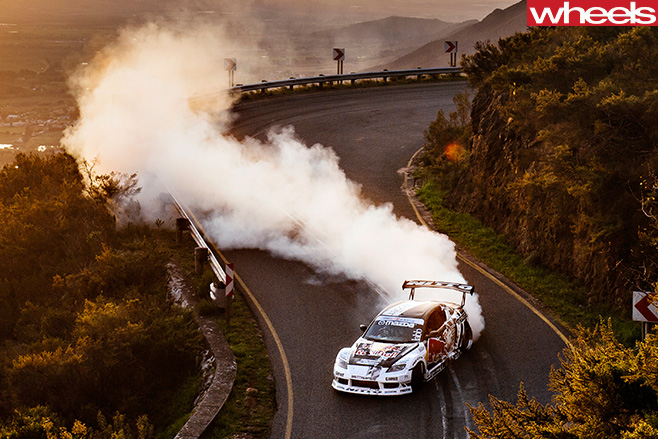
Impressive, when you consider Whiddett created a drift competition on the Auckland foreshore which included drifting under an elevated semi-trailer, and has previously attacked the imposing Crown Range in New Zealand.
The Red Bull driver didn’t hold back during his run either, dragging the rear-bumper of his RX-8 against the Armco with nothing but a few shrubs and a sheer drop on the other side.
Whiddett will be in Australia for this weekend’s World Time Attack Challenge at Sydney, taking part in the drifting competition against the likes of three-time Formula D champion Chris Forsberg and D1GP Champion Diago Siato.
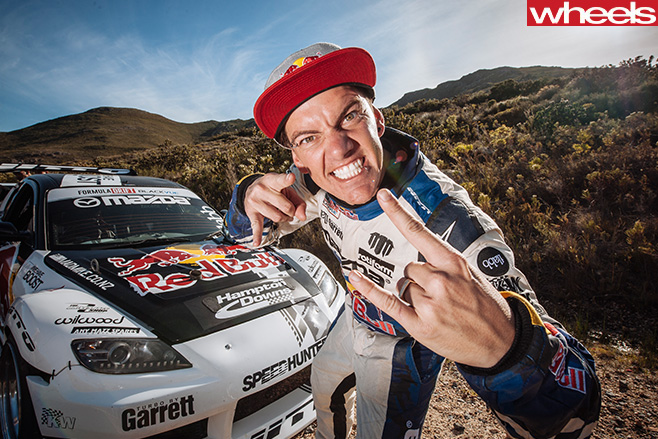
Thank god for those crazy Kiwis.
US sales slump prompts Blue Oval to stall Mustang factory, leaving other markets in the lurch.
Ford has idled production of Ford Mustang in the United States following a downturn in sales last month, meanwhile Aussie buyers are waiting months to take delivery of cars ordered here.
Demand for Mustang in the USA fell 32 percent from August to September, prompting the Blue Oval to stall production lines at its factory this week. Manufacturing will begin again on October 17.
A statement issued by Ford Motor Company says the shutdown is necessary in order to “match production with demand”.
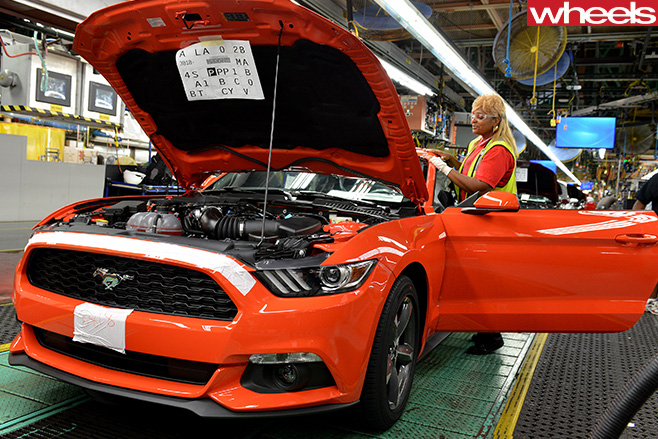
Speaking to Wheels, Ford Australia spokesperson Damion Smy confirmed that a significant waiting list still exists for Mustangs ordered locally.
“Absolutely. It depends on what you order, but you wouldn’t get one before Q2 2017. It’s about seven to eight months for a GT, and four months for an EcoBoost, though it is constantly changing.”
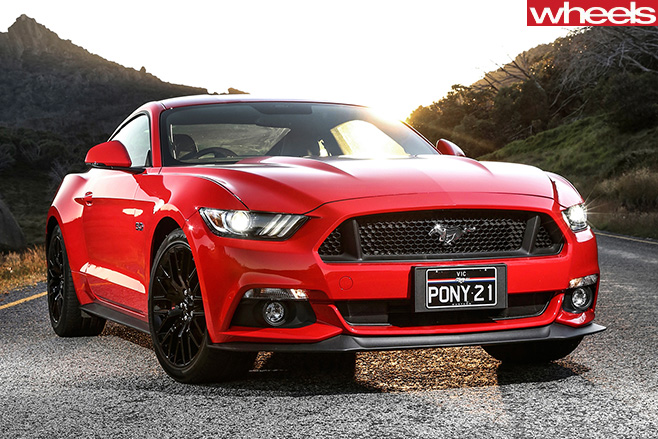
A lack of demand in the US could open the door for increased right-hand drive production in the long term, something Ford Australia says it is working towards in order to address local supply issues.
“We’re trying to shorten the waiting lists,” Smy said. “We’re constantly working to get more Mustangs to Australia, but we haven’t confirmed any extra supply.”
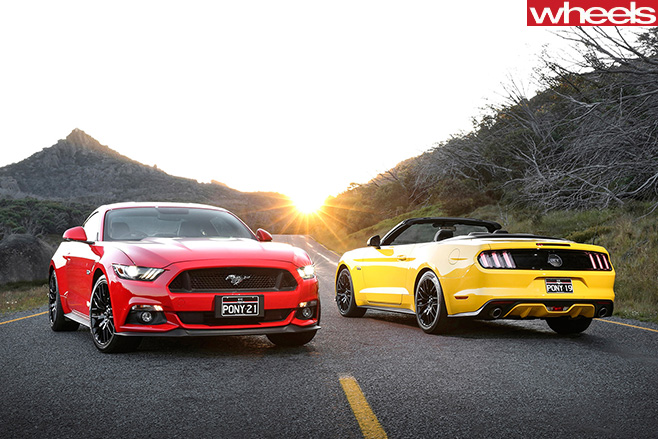
Australia is not the only market where demand exceeds supply. It is understood Mustang orders are waiting to be filled elsewhere around the world, particularly in Europe.
A statement from Ford in the US confirmed the 3702 factory workers who crew the Mustang production line would be paid during the shutdown.
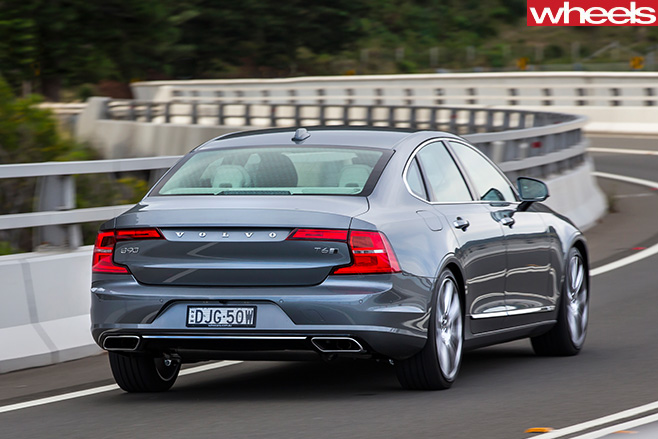
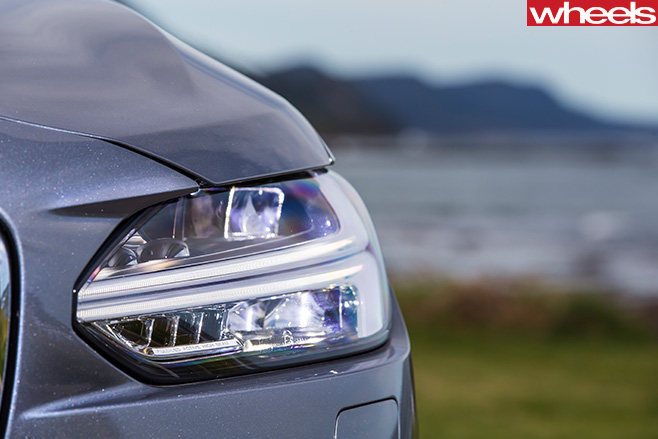
Don’t expect to see many on the roads, but the S90 is a huge step forward for Volvo’s large luxury sedan.
WHAT IS IT? The replacement for the Volvo S80. It’s the largest, most luxurious Volvo sedan on sale and sits on an all-new platform and brings new active safety technology.
WHY WE’RE TESTING IT To see if the Volvo S90 is up to the fast-moving pace of the large luxury-car market. It’s just gone on sale in Australia and arrives with big expectations as a flag-waver for the growing Swedish brand.
MAIN RIVALS Mercedes-Benz E-Class, BMW 5 Series, Audi A6, Lexus GS.
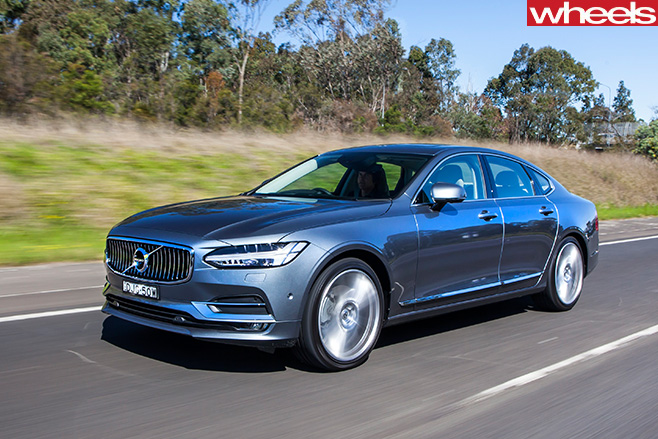
PLUS: Elegant and functional interior; safety credentials; flexible four-cylinder engines MINUS: Technology pack should be standard; initial suspension sharpness; higher price
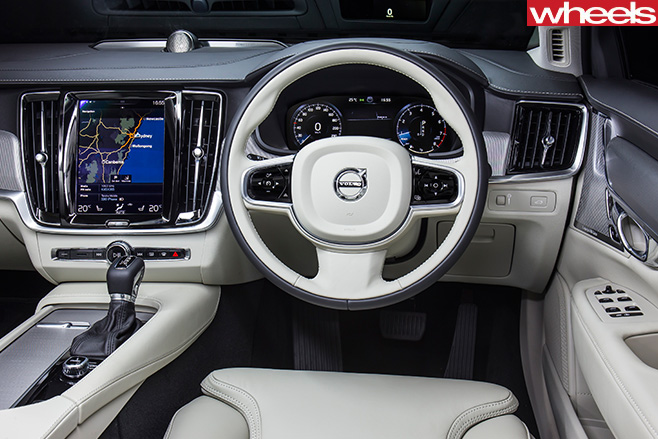
THE WHEELS REVIEW FROM the driver’s seat it would be easy to dismiss Volvo’s latest flagship as undernourished.
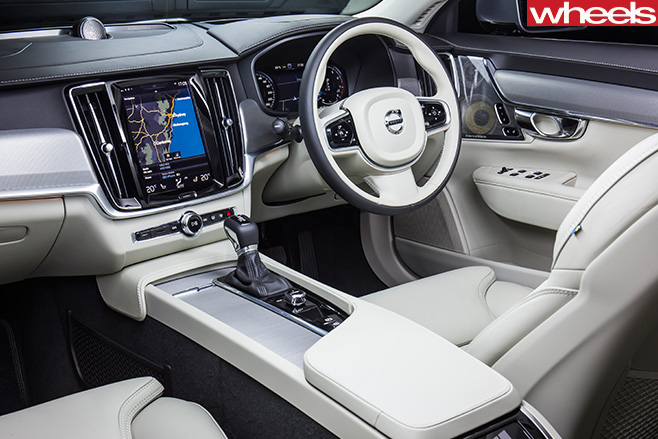
Aside from the 9.0-inch pinch-and-squeeze touchscreen and the 12.3-inch digital instrument cluster, the dashboard is somewhat sparse. Yet it’s sparse in an elegant way, with wood and metal in abundance and a small cluster of buttons and knobs easy to hand.
There are some classy touches such as a louvered sliding door that covers the cupholders (in matte wood, if you like) and a twisting start button with a dimpled metallic finish.
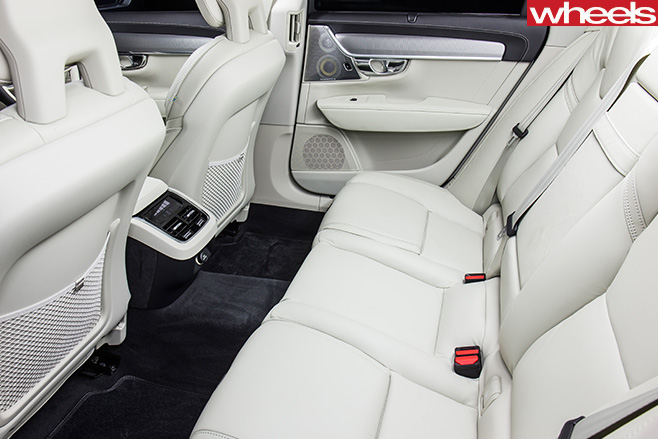
The elegance continues in the rear with well-positioned air vents controlled by a smaller monochrome touchscreen. The back seat is configured to make two comfy but will deal with three, albeit with the centre occupant perched higher and dealing with a sizeable transmission tunnel; otherwise there’s plenty of space for feet and legs.
There are four 2.0-litre units to choose from for now; D4 and D5 turbo-diesels (the latter with PowerPulse to reduce lag), and T5 and T6 petrols (both use turbochargers, the latter also has a supercharger). The D5 is also available with a Polestar tune that ups outputs from 173kW/480Nm to 177kW/500Nm.
In 2017 there will be a T8 (combining the T6 engine with a hybrid system).
The diesel’s PowerPulse technology delivers impressive low-rev muscle that translates to great throttle response, adding predictability to take-offs. And it’s a muscular unit, with 480Nm coming on strong from 1750rpm.
The T6’s supercharged and turbocharged 2.0-litre petrol is the sweeter engine, though, revving freely and with ample (400Nm) mid-rev meat. Spin it out and it occasionally tickles beyond 6000rpm – having punched out its 235kW peak – before slinking into the next gear. The auto is also a happy pairing, although it shuffles between gears more than the diesel while chasing power.
Dynamically the S90 is a massive step up on previous big Volvos (the S80 in particular), albeit one cruelled slightly by initial firmness over sharp edges, something not helped by the 20-inch low-profile tyres on our cars. Thankfully the Pirelli P Zeros grip well and provide accurate turn-in. There’s also satisfying weight to the steering and good control when settling off larger bumps, adding to the dynamic nous.
On a country road it’s far less useful, struggling to determine broken road edges and reacting late or with not enough steering to round a bend. The run-off-road function eventually kicks in, grabbing brakes and counter-steering, but it’s not something you would want to rely on.
Yet the safety suite is generally brilliant, encompassing everything from blind-spot warning and auto braking to City Safety that now responds to horses and cows (Volvo is still refining its kangaroo-detection tech).
It’s a shame Apple CarPlay (and, soon, Android Auto) is only part of a $3000 tech pack that also includes digital radio and head-up display.
The S90 is a huge leap forward, with plenty of impressive credentials, but it doesn’t reset the benchmark. Rather, it merely ensures Volvo has a seat at the table so long dominated by the Germans.
SPECS Model: Volvo S90 T6 Inscription Engine: 1969cc 4cyl, dohc, 16v, turbo + supercharger Max power: 235kW @ 5700rpm Max torque: 400Nm @ 2200-5400rpm Transmission: 8-speed auto Weight: 1915kg 0-100km/h: 5.8sec Fuel economy: 7.2L /100km Price: $98,900 On sale: November 2016
Wheels pitches 10 of the biggest sellers in the medium-to-large car segment to see which is the best of the current crop. Here’s number 8, the Hyundai Sonata.
Can’t wait to see the final score? Jump to the verdict now.
LET’S not mince words. The ‘LF’ in Hyundai’s LF-series Sonata could easily stand for ‘Leap Forward’ because, compared to the dynamically lousy i45 that preceded it, this seventh-generation Korean mid-sizer is leagues ahead.
Reflecting its progress is the styling, transitioning from the Hyundai i45’s interesting, if intense, ‘Fluidic Sculpture’ theme to a rather sober fastback silhouette, underlining a newfound maturity that permeates throughout this freshly focused four-door.
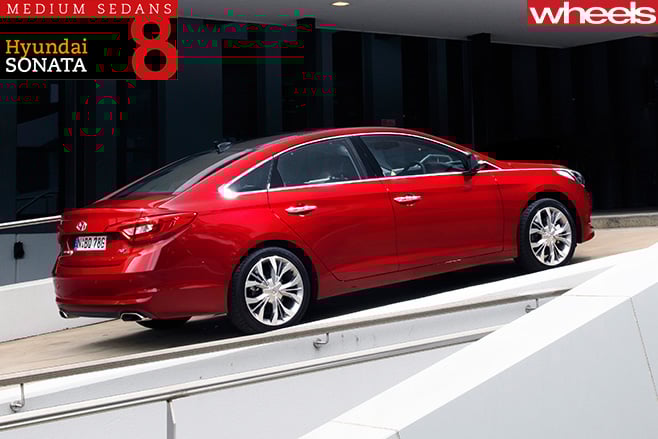
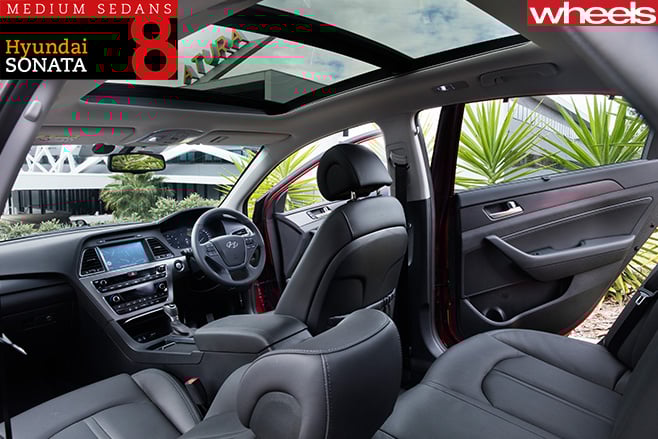
Few rivals are as practical or generously spacious, the Sonata offering abundant room for feet, legs, knees and shoulders – though the Premium’s panoramic sunroof does eat into rear headroom – backed up by well-padded seating and an expansive view.
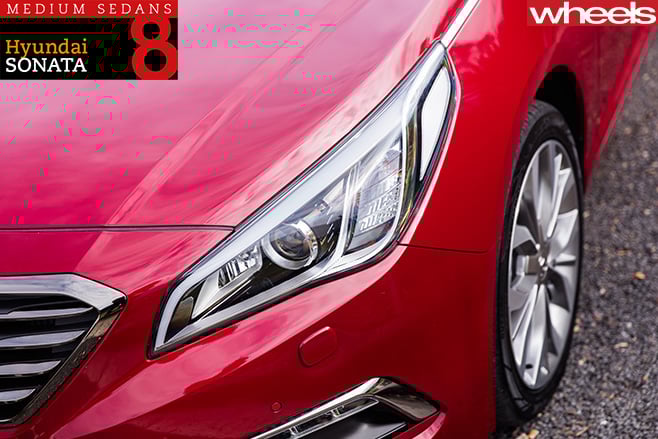
The sunroof is standard, along with bi-xenon headlights, parking sensors at both ends, eight-way electrically adjustable and heated/ventilated front seats, rear-door sunblinds, electric folding mirrors, touchscreen sat-nav, rear-view camera, keyless entry/start, leather, dual-zone climate, and 18-inch alloys. Sonata Premium heaves with kit.
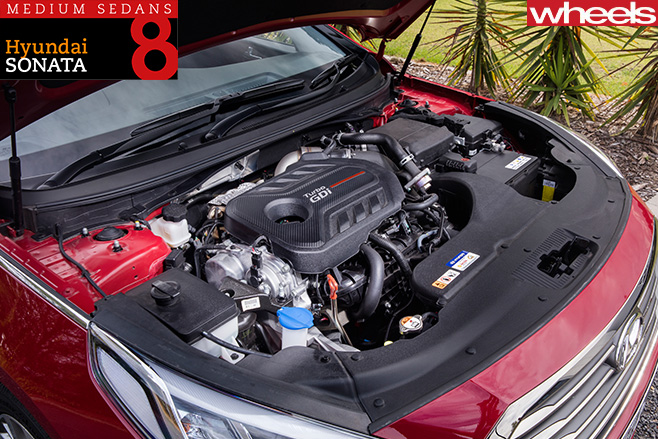
Be sure to check the speed limits first, though, because the oomph from Sonata’s 180kW/350Nm 2.0-litre turbo is startling, and prone to front axle tramp and torque-steer in the wet owing to Hankook Ventus tyres unsuited to its level of performance.
Sonata has greater dynamic finesse than Kia’s Optima, too. Strong suits are a keener turn-in, a sweeter transition between steering input and body reaction, more consistent balance, a firmer brake pedal with less travel, and a more effective Sport mode delivering less overly sensitive throttle response and crisper, less muddy steering.
But much of that refinement ebbs away once the surface deteriorates. Its steering rack rattles and its ride is consistently busy, and occasionally too bumpy over rougher stuff. Like the Kia, its brake pedal is prone to momentary hesitation during panic stops, but its inferior tyres are reflected in the second-longest braking distance in our 100km/h-0 test.
While Hyundai’s mid-sizer is seriously better than any preceding version, it’s no Passat-beater. But as a work-in-progress, Sonata is on the right track.
Less than Stellar career
Believe it or not, Sonata shares some heritage with Ford’s Mondeo, since Hyundai started out building the Mk2 Ford Cortina under licence in 1967. That eventually became the pretty Giugiaro-penned Stellar (1983; above) based on the TE/TF Cortina (as the latter morphed into the European Sierra), with the Sonata badge initially used only on upmarket versions from 1985. Australia saw the Y2 Sonata, which ditched the Stellar prefix and switched to front-drive Mitsubishi Galant mechanicals in 1989, while in Europe the front-drive Mondeo replaced the rear-drive Sierra in ’93.
Want to compare the field? Check out all the Family sedan finalists.
 SPECS
SPECS
Price: $42,850
Engine: 1998cc 4cyl, dohc, 16v turbo
Power: 180kW @ 6000rpm
Torque: 350Nm @ 1400-4000rpm
Transmission: 6-speed automatic
Dimensions (L/W/H/W-B): 4855/1865/1475/2805mm
Weight:1645kg
Cargo capacity: 510 litres
Tyres: Hankook Ventus S1 Noble 2 225/45ZR18 95W
Test fuel cons: 10.9L/100km
0-100km/h: 7.0sec
0-400m: 15.0sec @ 155.2km/h
80-120km/h: 4.3sec
3yr resale: 45%
Plus: Solid; swift; spacious; sensible; generously equipped
Minus: Unruly wet-road behaviour; busy ride
Verdict: 6.0/10
