
First published in the July 2014 issue of Wheels magazine, Australia’s best car mag since 1953.
With a nod to Ford’s glorious past, FPV has kept its best for last.
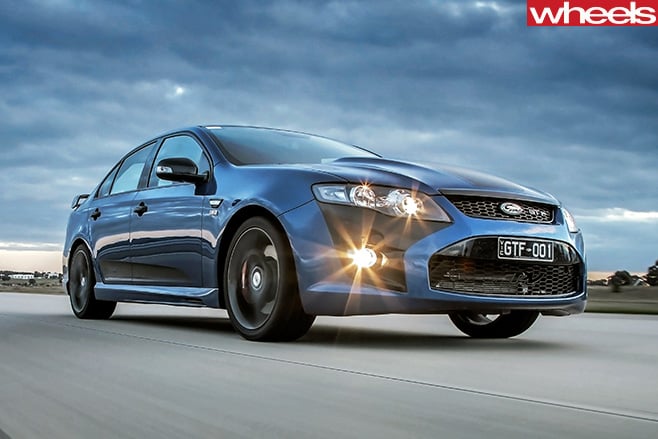
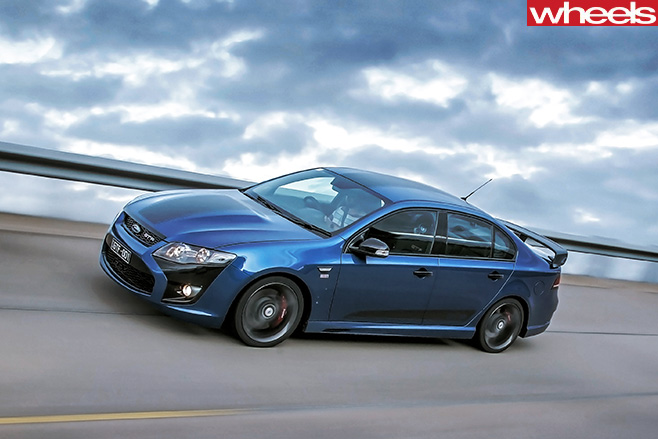
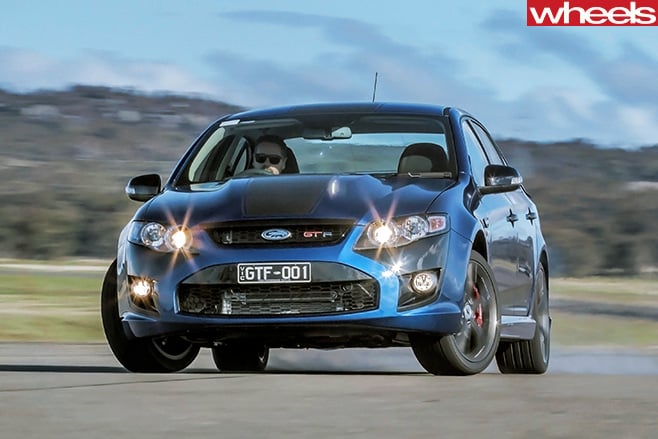
F IS A LETTER no one wants to see on their report card. And it’s definitely something Blue Oval fans didn’t want to see on a Ford Falcon. Especially when F stands for Final – the last-ever high-performance Australian Ford, and the final car to wear a Ford Performance Vehicles logo. So it’s with mixed emotions that we introduce to you the last car, and the best, ever produced by FPV – the GT-F 351.
On the surface, it seems like no coincidence that those three iconic digits – 351 – have reappeared on the farewell FPV. The Falcon nameplate was at its zenith when Ford’s flagship V8 grew to 351 cubic inches (5.8 litres) in 1969, before reaching legend status a couple of years later in the homologation-special Ford XY Falcon GT-HO Phase III. But, four decades of metrification later, 351 now stands for kilowatts, which, for those who still mentally measure an engine’s muscle in ponies, is 471 horsepower.
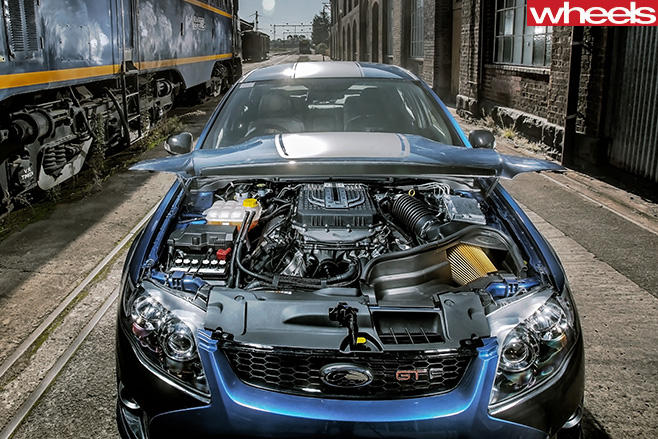
What seems like an ‘engineered’ power figure, though, is actually the first number the GT-F’s supercharged 5.0-litre V8 showed on Ford’s dyno.
“This engine has a whole bunch of headroom”, says Bernie Quinn, engineering director of Prodrive, referring to the blown ‘Miami’ V8 he played a large part in developing in 2010. Quinn knows the Australian-fettled, Geelong-assembled 5.0-litre quad-cam V8 as well as anybody, and has achieved the GT-F’s iconic power figure without any hardware alterations whatsoever. It’s all in the new ECU.
At its core, the 5.0-litre V8 is an extremely efficient engine, with low intake losses and very low exhaust back pressure, but Quinn says that, with the software technology available to FPV back in 2010, its conservative 335kW was “as much as we could put into it without tearing the car apart”.
Measured according to the most stringent power/torque certification in the world – the ECE system – the GT-F’s supercharged 5.0-litre puts out 351kW at 6000rpm and 570Nm from 2500-5500rpm, whether at sea level in the Northern Territory or at the top of Mt Kosciuszko. But there’s a degree of overboost lurking in the background that, when prevailing conditions are favourable, can bolster both those outputs by “about 15 percent”. No one at Ford or Prodrive was willing to name an exact number, but do the maths and you’re looking at more than 400kW and 650Nm!
Extracting performance times from a standard 335kW FPV was something we looked forward to about as much as a digital prostate check. Didn’t matter how prepared or relaxed you were, it was gonna be painful, or messy, or both. But not the GT-F. Its fat 275/30R19 Dunlop SP Sport Maxx rear boots – part of its R-Spec suspension package – add a big boost to off-the-line and cornering grip. Launch control plays its part, too.
How quick? In 17-degree weather on a concrete surface at Ford’s proving ground, the GT-F auto snatched triple digits in 4.68sec, backed by a subtle blurting from its exhaust pipes as the ZF auto upshifted with rapid-fire slickness.
But it’s the thrust from 150-200km/h that shows just how robust the blown V8’s grunt is. A standing 400m time of 12.68sec (at 186.7km/h) is nothing to be sneezed at, and the GT-F’s pace to 200km/h (14.61sec) makes for an interesting comparison against the world’s fastest sports sedans. We recently clocked 13.9sec to 200km/h in an HSV GTS auto, and the same 2.4sec from 80-120km/h as we did in the GT-F. Make no mistake, FPV’s farewell vessel is a veritable missile.
While the auto remains the drag-strip maestro, the manual’s no slouch. The best of three quick runs produced 4.94sec to 100km/h and a 13.09sec standing 400m at 185.4km/h. Given familiarity with the Tremec’s gearshift, you could easily pick up a tenth or two.
Ford’s product planners were caught off-guard by the 351kW GT-F’s enthusiast focus, with far more buyers expressing interest in the manual than anyone anticipated. Impressive as the ZF auto is, the manual would be our choice, too. It’s a great match to the GT-F’s muscular personality.
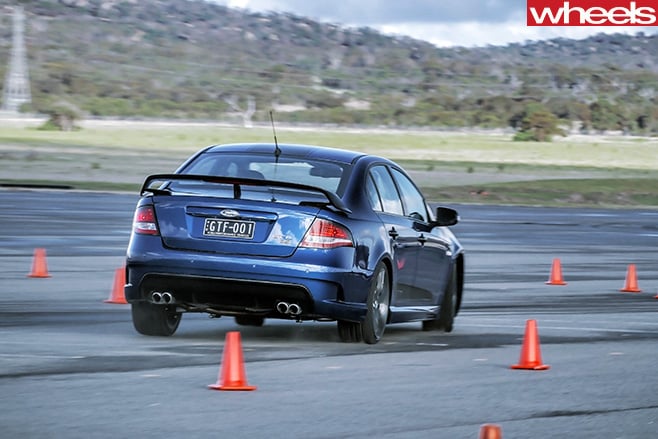
It follows the same format as 2012’s GT R-Spec, featuring its mixed-width wheel and tyre package (including 19 x 9.0-inch rear alloys wearing 275/30R19 Dunlops) and the now-discontinued GT-P’s premium brakes – 355mm cross-drilled front discs with six-piston Brembo calipers, and 330mm cross-drilled rears with four-piston Brembo calipers.
GT-F’s suspension tune also mirrors the R-Spec – higher spring rates, retuned Sachs monotube dampers, stiffer front upper control arm bushes, stiffer upper suspension mounts, a larger 19mm rear anti-roll bar, reinforced rear lower control arms and a revised toe setting on the rear wheel alignment to improve turn-in, plus stiffer transmission mounts to “reduce powertrain and driveline movement under load”.
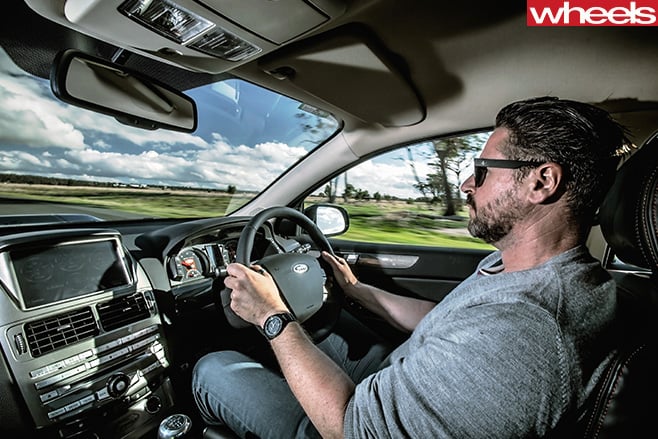
Thanks to the nuances of the new Bosch 9.0 ECU in adjusting power and torque parameters, the GT-F can use more of the available grunt when the car is capable of using it. Combined with the R-Spec suspension package, which moves the chassis’ roll centre from roughly where the driver sits to down near the rear suspension, the GT-F feels far more stable, progressive and comfortably controllable than any non-R-Spec supercharged FG.
Turn-in is as quick as it’s ever been in an FG FPV, and the GT-F has the tyre grip and the chassis poise to maintain the directional change promised by its front end. Leaning on its outside rear Dunlop, the GT-F enables progressive balance adjustments via the throttle, yet its dynamic threshold is far beyond the constant oversteer minimisation that was the first supercharged FPV.
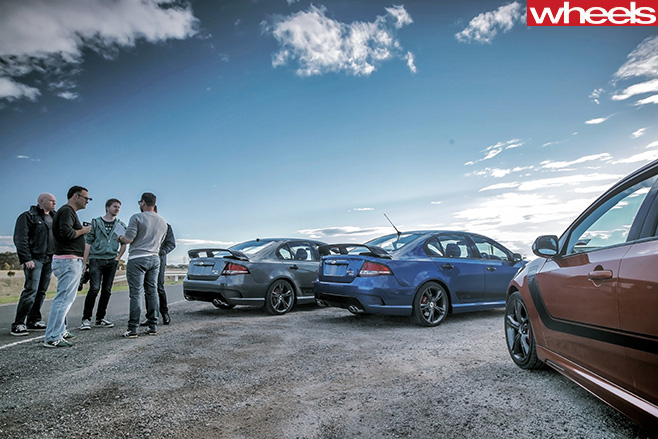
Yet for all the GT-F’s cornering and drifting bravado, it still manages to ride well. Over a 20km loop outside Ford’s You Yangs proving ground, I was surprised at how composed and cohesive the GT-F felt over broken tarmac. It wasn’t the over-stiff sled I expected.
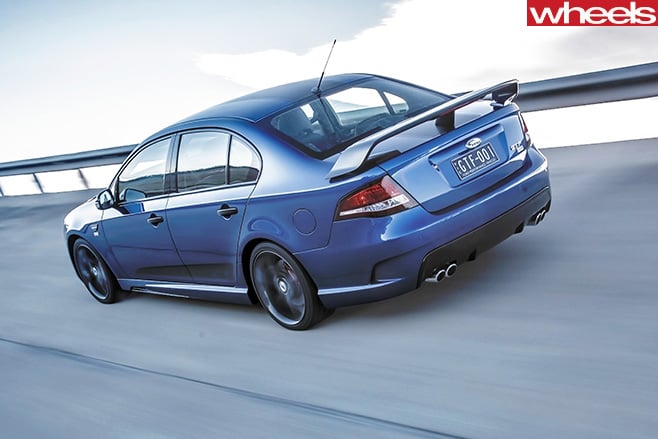
The final and probably most important surprise, though, is the GT-F’s styling. At its core, this circa-2008 Falcon offered little scope for a wholesale refresh, yet design manager Nick Eterovic and his team have done a brilliant job making the most of what they had to work with.
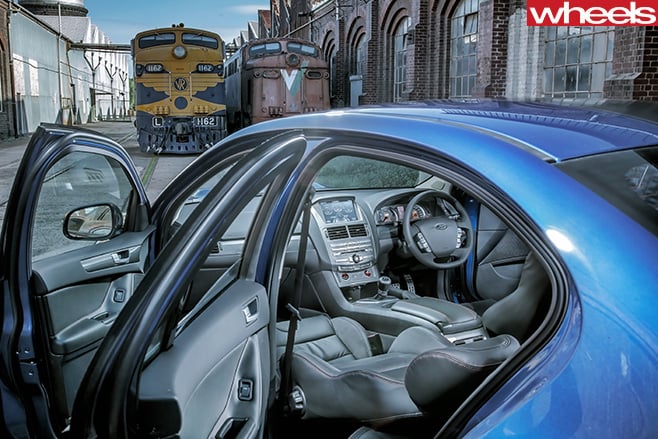
So the GT-F gets a wide, matte-black over-body stripe – reminiscent of the anti-reflective matte-black bonnets of 1960s and ’70s race cars – flanked by a thinner pair of stripes, and matte-black inserts into the scallops in the lower doors. Familiar as the Falcon shape may be, the GT-F’s look is tough and recognisably different.
Still, if it wasn’t for the passion of the engineers, designers and program managers championing the GT-F, it would never have turned out the way it did. They really wanted to do the nameplate justice.
It was a labour of love, born out of the enormous affection for performance Fords in this country, and behind the scenes at Broadmeadows. As GT-F project manager Justin Capicchiano points out, it’s an emotional car for Blue Oval fans and also the guys working on it. “People would come up to you in the hallways at work and say ‘you’ve got to do a good one, you’ve got to make it special’.” And they have.
SUZUKI BALENO GL | 72/100
Price & Equipment | 18/20
Both cars offer maximum space for minimum bucks – they’re roomier than many small hatches and SUVs, for example – as well as a remarkably good level of kit in base spec. But the Suzuki trumps the Honda with a leather wheel, speed-limiter cruise control, auto headlights and LED DRLs. Colours other than white cost $500 extra.
Interior & Versatility | 15/20
Baleno is just 1mm shorter than Jazz, on a 10mm-shorter wheelbase. The Indian-built Suzuki is nicely presented but the materials and finish aren’t up to the Thai-built Honda’s. The 60/40 rear seat folds to take cargo capacity from 355 litres (more than a Mazda 3) to 1085, though a small aperture and high lip hamper its loading ease. 15/20
Performance & Economy | 17/20
A 1373cc petrol four with 68kW and 130Nm pulls the sub-tonne Suzuki via a five-speed manual and front-drive. It’s a willing worker, though performance doesn’t match the lively Honda’s, and neither has a soundtrack to excite. However, 5.1L/100km economy should ensure Baleno will go further from fill to fill despite its smaller 37-litre tank.
Ride & Refinement | 14/20
Identical-size hoops of just 175/65R15 come wrapped around plastic hub-capped steel wheels on both hatches. Baleno works with this respectable sidewall height and a relatively soft suspension set-up to deliver a bit more urban calm – and all-round quietness – but not the body control to remain comfortable in undulating country.
Steering & Handling | 12/20
Softer suspension makes the Baleno messier in the turns, while gluggy and inconsistent steering keeps the driver at arm’s length. Meanwhile, lower-quality rubber detracts from Baleno’s enthusiastically driven poise and grip to further undermine its overall capability. Rear drums the norm in this realm (though Jazz once had discs).
HONDA JAZZ VTI | 76/100
Price & Equipment | 17/20
Jazz matches Baleno with air-con, cruise, rear-view camera, 7.0-inch touchscreen, Bluetooth, six airbags and hill-start assist. But the Honda doesn’t have sat-nav (instead relying on a connected iPhone) and has an over-speed alarm in lieu of a speed limiter. Colours other than red cost about $500. Both come with space-saver spare wheels. 17/20
Interior & Versatility | 13/20
Jazz has a superior, lower driving position and steering reach adjustment. They’re both impressively roomy in the back, the taller Honda offering more headroom, though neither gets rear vents. Similar boot size, but with the various folding configurations of the Jazz’s ‘Magic Seats’, plus large door and tailgate openings, it offers greater load versatility.
Performance & Economy | 15/20
Larger 1497cc single-cam 16-valve four endows Jazz with an extra 20kW and 15Nm, so it has a healthier power-to-weight ratio despite carrying a few more kilos. But Jazz drains its 40-litre tank more quickly with consumption of 6.2L/100km. Base VTi the only Jazz to offer a five-speed manual, and it’s more fun than the CVT versions. 15/20
Ride & Refinement | 13/20
Featuring the same strut front and torsion-beam rear suspension layout, Jazz is a bit more firmly suspended, which makes the ride less forgiving around town, though it comes back with slightly better control during highway driving. Far from being great, though, the Honda succeeds by being average where the Suzuki is sub-par.
Steering & Handling | 13/20
There are more driver-oriented light hatches available, but in this company the Jazz is a cut above. A more consistently weighted power-steering calibration makes it a better tool for urban dicing, as well as more fun for a spirited run. The better-controlled chassis (at least when the road’s not too lumpy) makes it wieldier and more involving.
VERDICT
Jazz and Baleno rival some bigger cars for cabin and cargo space through smart packaging rather than by being bigger than their light classmates. But the Honda wins out because it’s taller, with a clever rear seat and easier loading access. Standard gear in the $14,990 Jazz and $15,990 Baleno is impressive – they were both available for $16,990 driveaway as five-speed manuals at the time of writing – but the Honda is nicer inside. The pair will undoubtedly be cheap to own, with reasonably low capped-price service schemes, though their three-year/100,000km warranties trail best-in-biz Hyundai and Kia, and six-month service intervals are less convenient than 12. They’re difficult to split in value terms, then, and neither is near the pointy end dynamically, but we’d go the Jazz.
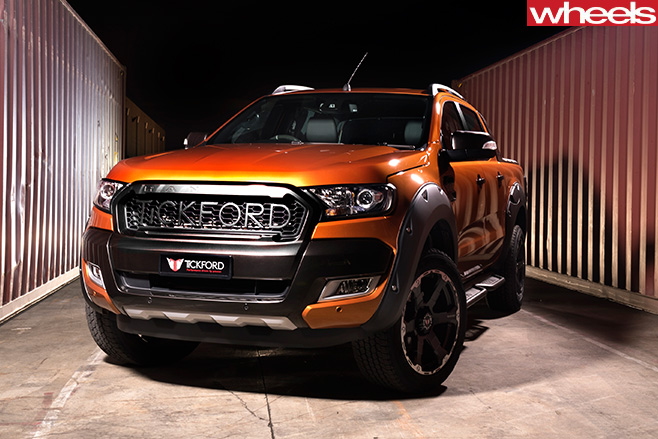
The Tickford badge will return this year to adorn fast Fords once more, as reported in the October 2016 issue of Wheels.
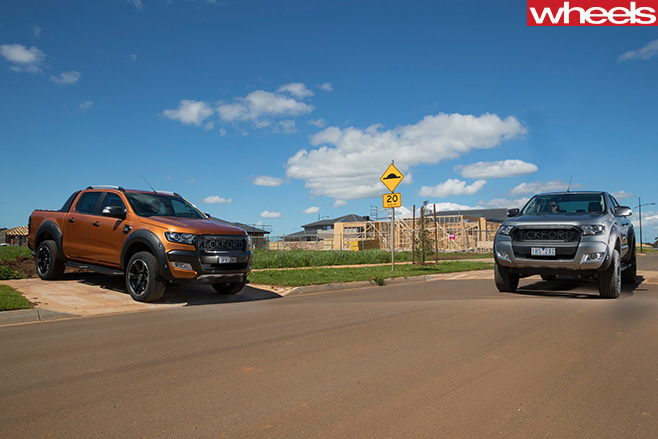
Supercars team Prodrive Racing Australia is behind the return, with customised Ford Rangers and Mustangs the first products to be made available.
Customers will be able to come to the ‘new’ Tickford for personalisation options on their current 2016 Rangers. These modifications include powertrain and ride and handling tuning, plus exterior and interior styling upgrades.
Instead of buying hotted up cars outright, Tickford customers can come to the group with their cars, and pick from a number of different packages to enhance their vehicle.
“Everyone at Tickford is excited to be providing Australian automotive enthusiasts with a new option for vehicle personalisation, while ensuring we maintain the strong engineering roots of the brand’s previous incarnations,” he said.
“We’ve been working for nearly two years, away from the public eye, to ensure we developed a strong business model with a set of guiding principles which allows us to develop and deliver premium products.
“We’re lucky to have class-leading product in Ranger and Mustang to start our personalisation program.
“This has allowed us to focus strongly on component development and testing so we come to market with components tested to manufacturers’ standard and backed by our own warranty.
Edwards is confident Prodrive will be able to do justice to the Tickford name, which last operated in Australia in 2001.
“Tickford has been a much-heralded automotive brand since its inception and has delivered performance programs for a wide variety of models and we intend to continue that tradition,” he added.
“We are direct descendants of Tickford’s last incarnation and think delivering personalisation packages for the iconic Mustang halo car and class-leading Ranger is both in keeping with Tickford’s history, while also a clear nod to the future.
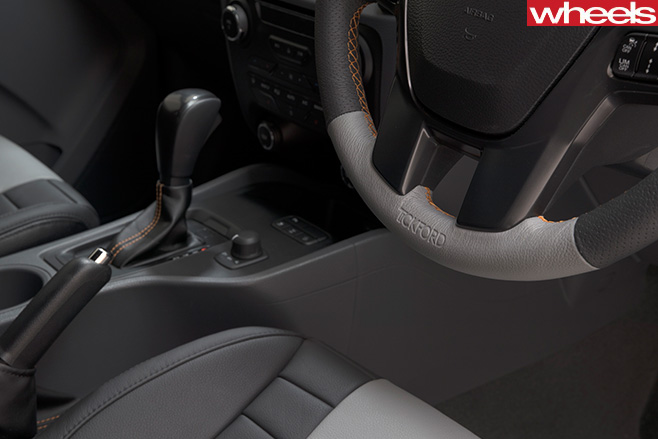
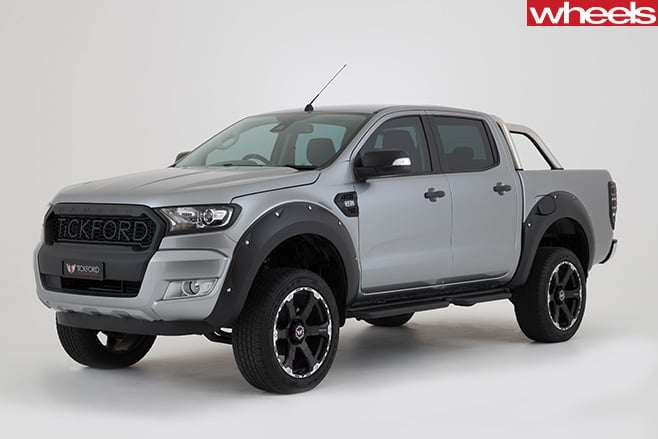
Tickford’s available tweaks for the Ranger are separated out into the Powertrain Upgrade, Suspension, Wheel/Tyre Upgrade, plus Interior and Exterior styling options.
The Powertrain Upgrade will cost $7,995 fitted, and includes an upgraded intercooler and exhaust, with a custom diesel tune. Tickford claims this will result in a 15-percent boost in power, and 20-percent boost in torque. It is all covered under warranty, and you even get a tailgate decal thrown in.
Tickford says the upgrade packages for Mustang are set to arrive by late this year.
Neglecting to take your car in for a service can have costly consequences later down the track when something goes wrong.
Leaving your car at a service centre for a day may not be very convenient, but neither is breaking down on the side of a busy road or expensive repairs.
According to the RACQ, 48 per cent of Queenslanders don’t get their cars serviced regularly, which can lead to expensive defects.
Servicing your car will extend your engine life, reduce fuel consumption, increase the safety of your vehicle, prevent wearing of moving parts, maintains road worthiness and improves resale value.
Every manufacturer’s service recommendation differs, so how often should you actually be servicing your car?
Your logbook will outline the carmaker’s recommendation for your service schedule, including how often you need to get your car services, maintenance you can do yourself and when parts should be replaced.
As a rule of thumb, your car should be checked by a professional at least once or twice a year, or every 10,000kms or 15,000kms.
If you don’t know what to expect from a service, it’s easy to feel like you’re being ripped off and wonder if those service costs were really worth it.
Unfortunately, there’s no ‘one-size fits all’ when it comes to car servicing. Cost and regularity depends on your vehicle with variables including fuel type (petrol, diesel, electric) and drive type (AWD, FWD, RWD).
There are two types of services: a minor service or major service.
MINOR SERVICE
Which generally includes:
- Engine oil check and top-up
- Air and oil filter check
- Total car inspection (fluids, filters, belts, hoses and brakes)
- Tyre check and rotation
- Battery test
Which generally includes:
- All minor service inspections
- Engine check
- Lights check
- Spark plug replacement
- Air-conditioning filters check
- Brake fluid and brakes check
- Coolant flush
- Transmission service
- Wheel alignment
- Windscreen wiper replacement
- Suspension check
- Repack wheel bearings
- Full-vehicle inspection and correction of any issues
- Tuning if necessary
Inspection of newer cars will vary based on the logbook, so become familiar with the manufacturer’s recommendations and ask the service centre or mechanic for clear guidance on what they’ll be doing and why at your next service.
Electric and hybrid drivetrains have been familiar themes of motor shows for the best part of a decade.
No surprises, then, that there was a healthy array of electrically-propelled machinery at the 2016 Paris Motor Show.
But the difference with Paris 2016 was that it’s all getting a lot more real.
Whereas the electric cars of previous shows have typically been dream machines that haven’t gone far (or real cars that have missed their mark) there was a feeling that some of the stars of Paris will soon arrive in showrooms.
Indeed, Volkswagen’s ID concept is planned to go on sale in 2020, complete with a 600km driving range and a 125kW electric motor. Even better is that VW is estimating it will be about the same price as a Golf diesel, so about $35,000.
Sure, that still ensures the ID will sit at the premium end of the small car market, but it’s close enough to the sweet spot of the broader new car market to garner some serious attention, especially considering the obvious benefits of never having to refuel.
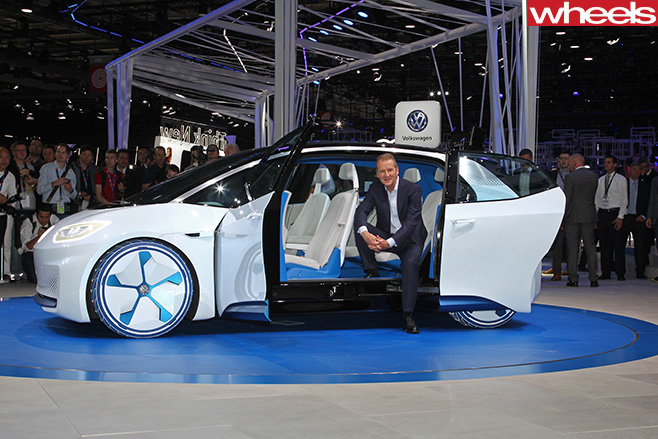
Another big difference with the electric cars from the Paris Show is that they’re no longer compromises. Typically carmakers dabbling in electric have used existing architectures (the expensive bit of making cars) and replaced the engines, fuel tanks and gearboxes with batteries and electric motors. It works, but is far from perfect.
Both the Merc and Volkswagen Paris Show cars used a new platform that houses the batteries in the floor (keeping weight down low) and maximises interior space as a result of not having to fit in an engine and its associated componentry.
Helping the charge (sorry…) towards electric is fast improving battery technology, with carmakers utilising more efficient and lighter batteries that make the whole thing a lot more appealing.
The big unknown, though, is how fast we’ll rush to buy electric cars. Ultimately, that will come down to price. As Tesla has proven, if you get the rest of the package right people will buy it.
But to get real volume, the price of electric cars needs to be commensurate with the cars we buy today.
BUYING a new car can be daunting and there are plenty of decisions to be made, ranging from what car you’re going to buy to which colour it comes in and the mod-cons you want included.
So when it comes time to closing the deal, you want to sign the papers and be on the way with your new car, right?
Well before you sign away on that little dotted line, make sure you’ve asked the car dealer (and yourself) these questions:
CAN YOU DO ANY BETTER?
Don’t settle for any price. Negotiate and if the dealer isn’t willing to budge, be willing to go and see what other dealerships are offering.
WILL YOU THROW IN A FEW ACCESSORIES?
If the dealership won’t budge on the price, and you still think it’s the best you’re going to get, ask them to throw in a few accessories such as a set of floor mats or mudflaps, and so on.

CAN I TAKE IT FOR A TEST DRIVE?
This is one of the most important steps to buying a car. Before you can fully know if the car is right for you, you first have to experience it in its entirety. Drive it at highway speeds, and in stop-start city traffic to test it properly.
DO I LOVE IT?
On paper, the car might tick all the boxes and suite your practical needs, but if you don’t love driving it, it’s going to be a long and tedious relationship. Buy something that covers your priorities, but make it something that you also love to drive.
WHO ELSE HAS DRIVEN THE CAR?
Sometimes, especially if you’re buying a demonstrator model, the car may have been driven by other people. Make sure you know about it and inspect the vehicle accordingly. You don’t want to drive out with a new car that’s already done a few handbreak turns and sideways skids.
WHAT’S THE DAMAGE?
This isn’t referring to the cost of the car. It’s worth finding out if the car has had any damage to it during the transit process. Has it been repainted, any parts replaced, and so on. If nothing else, it might chop a few numbers off the price tag.
WHERE’S THE CLOSEST SERVICE CENTRE TO MY HOUSE?
If you have to drive to the other side of town a couple of times a year just to get the car serviced, it’s going to become a real hassle, really quickly.
HOW LONG IS YOUR WARRANTY, AND WHAT DOES IT COVER?
Make sure you know exactly what you’re paying for and what your car is covered for in the warranty to save any surprise costs down the track.
WHAT’S THE TOTAL PRICE FOR THE CAR?
The dealer may tell you the cost of the car is $20,000, but that doesn’t mean that’s what you’ll be paying at the end of the day. By the time you add on interest, commission and any hidden costs, you could be paying a few thousand dollars more than you had expected. If repayments are broken down into monthly amounts, keep your eye on the big picture and make sure you know exactly what you’ll be paying at the end of the payment period, particularly if you want to pay the car off early. Also ask for the invoice so you can see what you’re paying for and avoid getting stumped for any hidden costs.
IS THE CAR IN THE DEALERSHIP?
Last but not least, know where your car is coming from. Is it already sitting in the dealership’s yard, or is it coming to you straight off the boat? This way you can make sure you’re only buying a car that’s guaranteed to arrive by the date you want to make it yours and drive it home.
It started with the showing of a Nismo-fettled 350Z at the 2006 Sydney motor show, and now finally Nissan Australia has confirmed that the brand will be officially represented here from next year.
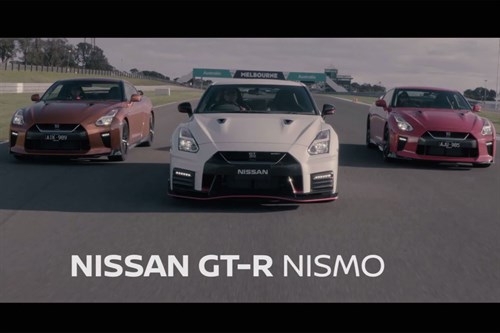
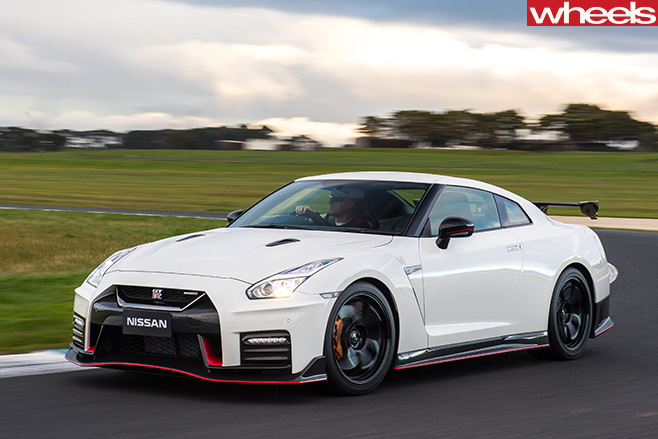
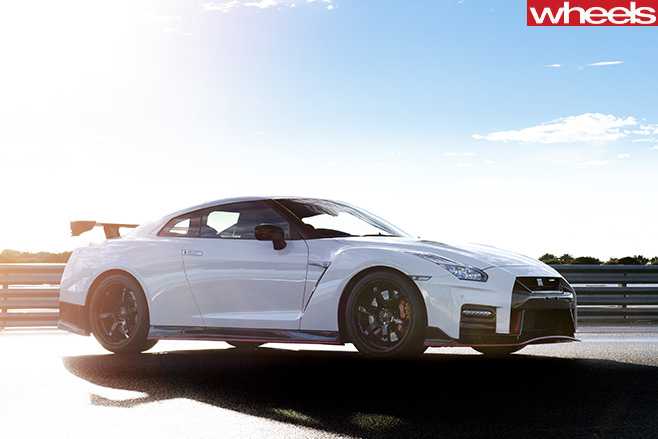
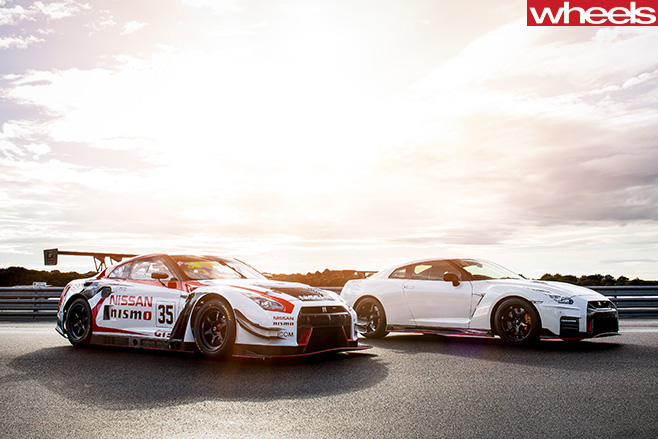
The fearsome GT-R NISMO will kick off proceedings for the Nissan sub-brand in February, with an unconfirmed second model to be released within 12 months.
The 441kW/652Nm GT-R NISMO – complete with its GT3-spec turbos, Bilstein dampers and wingier wings – will retail at a slightly eye-popping $299,000 before on-roads, and looks to be sold out already until 2018.
He also says that he would have liked to get the brand up earlier here. “I would have liked it to happen faster, but NISMO has been doing its homework on launching the Nismo brand on a global scale in terms of production capacity and R&D, to make sure that they can continue to broaden availability, making sure the timing was right, and not having a long gap between product offerings,” he said today.
“It’ll add an emotional connection to the Nissan brand, which has been missing for the last four or five years, and it’s a brand that’s well known to the PlayStation generation.
“The products that will bring in with the Nismo brand will be genuine Nismo products. Nismo can’t be around spoilers, alloy wheels and a stripe; it needs to be bedded in real performance offerings with the Nismo badge.”
Emery couldn’t confirm the identity of the next Nismo model to be launched here. “We’re not just doing this off the back of one car,” he said. “There will be follow-up models with the Nismo branding available in Australia in the near future.”
It’s unlikely that we’ll see a flood of Nismo oil caps and windscreen decals in local dealerships, according to Emery, who points out that the Autech brand sells parts and accessories for Nissan locally.
Would you fork out $299,000 for a Nissan-badged NISMO GT-R? The carmaker thinks so.
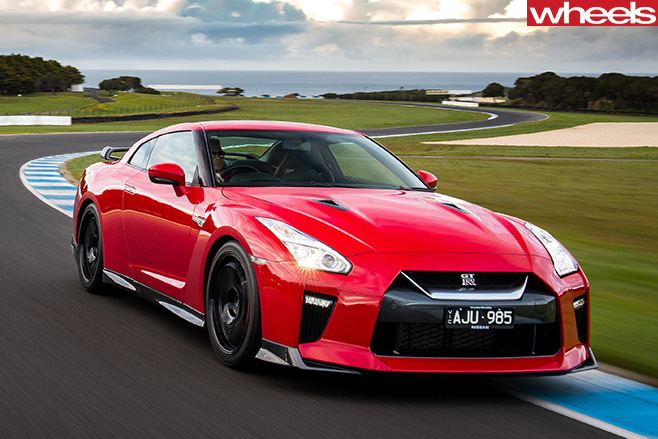
NISMO, Nissan’s performance sub-brand, is finally coming to Australia. The Japanese carmaker says the 441kW version of Godzilla will be the first NISMO model to arrive early next year, wearing a stratospheric $299,000 price-tag.
However, before you go scratching for coins down the back of the couch, take a deep breath: Unless you’ve already bought a GT-R, it’s likely to be 2018 at the earliest before the line of existing owners jumping to the head of the queue clears.
Nissan Australia is launching the NISMO brand here to coincide with its decision to enter two factory-backed GT-R NISMO GT3 race cars in the Bathurst 12 Hour next February.
“NISMO is an exciting addition to our Australian business,” Emery said. “The NISMO brand is already well known in Australia through its heritage and motorsport success. It is great news that Australia will now have access to NISMO products, starting with the mighty GT-R NISMO,” he said.
However, just how few of the race-bred R35 will be brought here remains a mystery. Emery said it knew early on in negotiations with NISMO – short for Nissan Motorsports International – that it would have tight access to the GT-Rs.
“In the end it wasn’t really about how many we asked for. We obviously put a case for as much production capacity as we thought was necessary with the market inquiry we think we will get,” he said.
“Is it going to be enough in the initial year and a half, two years in terms of inquiry and customer orders? Probably not. But I don’t think it will be far off the numbers we need to keep our loyal customers happy.”
Emery said Nissan Australia believed the Nissan GT-R had significant opportunity to provide an emotional connection to our brand “that perhaps has been missing from our showroom.”
“NISMO is a brand that’s well-known in some young generations, particularly, let’s call it the PlayStation generation,” he said.
However, it will still be a long wait for a more affordable NISMO-badged Nissan, with Emery confirming the second “existing” model that will wear the motorsport badge – potentially the Nissan Juke compact SUV – would join the range about a year later.
“That secondary car obviously would offer more volume and therefore more exposure to the brand than GT-R would, because GT-R is obviously a very specialist product,” he said.
“But there would be more of a mainstream product as the secondary offering, and that’s when it starts to become more of a mainstream marketing and exposure proposition.”
Modifications include aero kits, brakes, stickers, gauges, shifter knobs, oils, exhausts, engine parts, cooling, clutch and transmissions, differentials, suspension components, linkages and bushes, brakes and wheels.
Nissan Australia has also brought in the “Nissan GT-R Track Edition engineered by NISMO”, a version of the two-door coupe.
It takes the bonded chassis and suspension components from the NISMO GT-R, but lacks the poke of the racetrack-proven turbochargers that help to give the NISMO GT-R its 441kW/652Nm serve. It is priced from $227,000.
Let’s cut straight to the chase: the 30th Anniversary Falcon GT is the best handling and road holding Falcon ever built, easily the most convincing GT to wear a Ford badge and, arguably, the finest live axle car in the world today.
This article was originally published in the March 1997 issue of MOTOR.
We don’t offer that endorsement lightly. But 1000 often hard-driven kays across back roads, main roads, freeways and urban streets convinced us Tickford Vehicle Engineering and Ford have successfully developed a major league Grand Tourer.
More powerful, more refined and, ultimately, more of a true V8 touring car than the last (EB) GT, this 1997 incarnation takes the big, fast, sports-luxury Australian car to its next, logical step. Its exterior styling may take some getting used to, but the GT’s balance and all-round performance package creeps beyond the envelope Ford, and lately Tickford, drew for themselves. Ford Australia has spent its $2 million wisely.
The EB GT broke-in diehards to the fact Ford was no longer into bare-boned muscle cars. For the 30th anniversary of the 1967 XR GT, Ford has refined the EB philosophy, rather than mimic a late-’60s mood. Ford and Tickford want you to know this. Both went to great lengths at the launch of the EB GT to cast in stone the message that GT meant GT, and GT-HO meant much more than Handling Option.

This time, Tickford’s chassis and engine tune are more closely matched. No-one’s saying, but you’re left with the very strong impression that criticism of the EB GT’s straight-line performance weighed on the production planners’ minds.
Why, Howard Marsden’s development team even investigated returning to the magic 351 cubic-inch capacity to kick owners in the pants and recalcitrant motoring journos in the teeth. They couldn’t, because a packaged 351 block doesn’t fit in the Falcon’s engine bay. And the 5.0-litre Windsor engine won’t accept a crank of long enough stroke to make the magic 35lci mark.
Engines are basically big air pumps, so it’s no great surprise that Tickford’s engine team, led by former Bosch boffin Rolf Glenk, concentrated on improving airflow from intake to exhaust. The aim here was to improve intake speed, to better feed the free-flowing GT40 heads (as used on Mustang GT in the US), cram as much intake charge as possible into the cylinder, before giving it an even bigger, 9.0: l squeeze and banging the gasses out through a four-into-one dual system. The result is 200kW at 4700rpm and 420Nm at 3700rpm, but how does it drive?

The standard V8 gets to a point where it simply can’t gulp down enough air to keep the rate of increase in engine speed happening. The GT keeps going and going and it’s only once you have close to six grand on the tacho the thing starts to show any sign of oxygen deprivation.
This is a responsive, well behaved, high performance engine. With 300Nm available at 1000rpm, you’re in good shape to get that 1674kg mass moving quickly from rest. And it does. At Calder the GT turned a near 15sec-neat 400 metre time and raced to the 100km/h mark in 7.03sec. That’s 0.62sec quicker than we managed with the EB GT and almost identical to Ford’s claims.
Getting those numbers requires a very delicate dialling-in of wheelspin: a fraction too much and you’re slow; too little and the engine comes off its mid-range… and you’re slow again. With more time and practice, there’s a 14.9 in this car, no risk.
But like the EB GT, the chassis remains the car’s most impressive feature – and also the single most expensive area to develop.
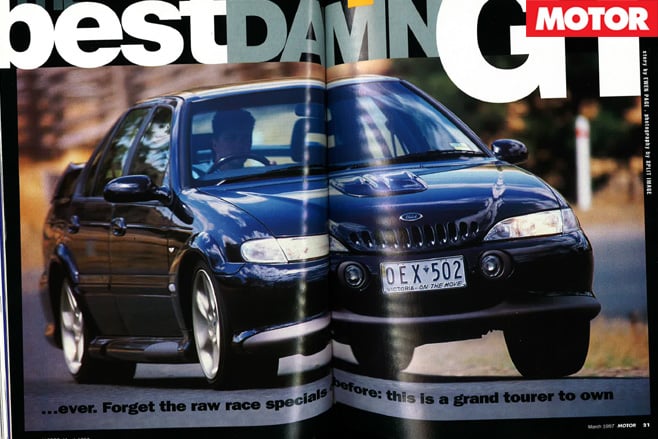
The GT benefits from Hoinville knowing relatively early in the programme which tyre would be fitted to the car. The Yokohama A510’s ultimate grip is quite stunning, but the consistency of its stickiness impresses equally.
Part of this comes from the fact that under cornering loads, the outside tread blocks are forced together, presenting the road with a section of quasi-slick tyre. The A510 also features double wrapped steel and nylon belts, giving tremendous strength on the ‘road face’, which allowed the introduction of relatively straight sidewalls.
Because feathering of the tyre’s edge was now less likely, Hoinville was able to run with less negative C’Jmber (down to half a degree only), and wind on four degrees of castor, giving progressive loading of the steering with cornering forces.
The use of urethane bushings in the upper and lower front arms and the tie bars (in combination with painstakingly developed shock and damper rates) bring a sweet consistency to the GT’s responses. The blind obedience gives the driver confidence to press-on.
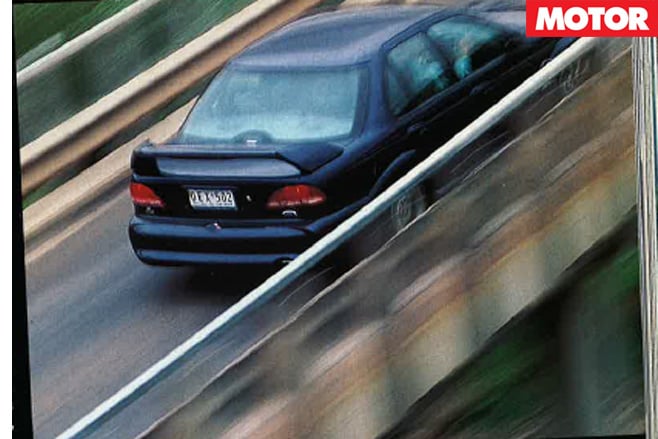
Tramlining is vastly reduced and there’s a sense of security about the front end that has you consistently .underestimating just how much cornering power is on offer. Very, very few owners will get their GT to the point of understeer, in the dry at least.
The rear end benefits from a fatter (24mm) anti-roll bar, stiffer springs and urethane bushings. Hoinville and Co. have done a great job of controlling that whacking great live axle, but impressive as the GT’s behaviour is – and on smooth roads, that’s absolutely vice-free – even the smartest engineers can’t overcome completely the problems associated with a big heavy axle and diff banging up and down in the back end.
Push hard – really hard – on our normal, broken and bumpy bitumen, and the GT will hop and twitch in the back end. Now there’s never been an Australian performance car that didn’t get lively in the tail when the going got tough, and the GT’s arguably the best behaved of any we’ve driven, but it would be untrue to say it was blemish-free. Not unsettling or outputting, but present all the same.
That aside, this GT is one of very few Australian performance cars that allow the driver to easily balance both the front and rear ends. Most big-engined, rear drivers tend to work the fronts pretty hard, but the GT will get on the outside back tyre on more open corners and does respond to throttle position.
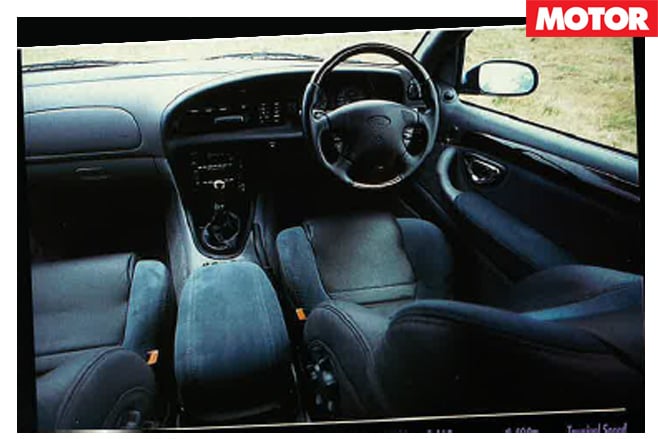
Needless to say, anyone accustomed to manual V8s will find the clutch effort no effort at all. Combined with a shortish first gear it asks for no great expertise when trying to get away quietly. If evidence was needed of the Australian component industry’s competitiveness, the GT’s BTR five- speed is it. In the EB, Tickford sourced special gear sets from the US to cope with the car’s torque loadings. This time, the standard-in-XR8 box and dice was just fine, thanks to improvements in BTR’s methods and materials.
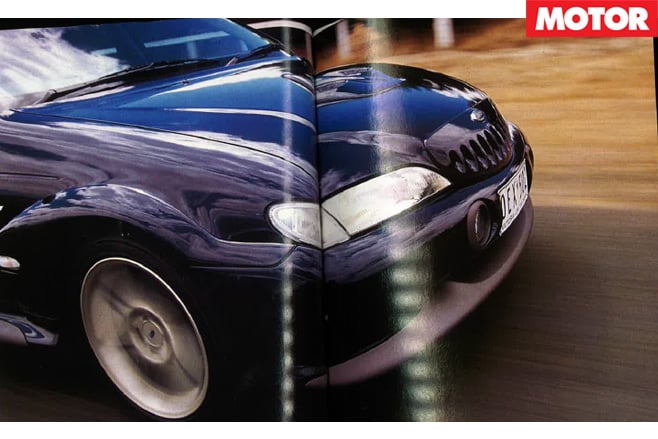
And then there’s the GT aesthetic. Thought we’d leave that to last, even though it’s probably the only element of the car even committed Fordisi might have trouble with. Ford’s chief penman Steve Park knew this when he sat down to give the car “the most aggressive feel we could”.
He understood not everyone would go for the left-field grille and barn-door rear wing, which reduces lift at the rear by 70 percent. Park’s view is that cars should pass the “50 metre test”; that is, to catch your eye from 50 metres away.
The interior exemplifies a mature, well executed design. Using leather and Escaine, its dark greys and blacks are classy, yet still functional, while the Momo part-woodrimmed wheel and shifter knob will appeal to the intended 40-somethings market.
Each front door trim carries a GT logo with build number. The re-cushioned and trimmed buckets are comfortably firm and multi-adjustable, but their position within the car remains standard. Personally, that’s a disappointment, because it has always seemed the hip-point (how far your hip is above the floor) is too high on bread and butter Falcons. It just feels out of place in a car with sporting qualities.
Tough criticisms? Not really. This is an impressive piece of work, and testament to the ingenuity and hard work to be found in the Australian car industry. People like the Tickford start with a base car developed on a (by world standards) tiny budget, throw in a tiny bit more and out pops a thoroughly engineered, credible and exciting grand tourer. A GT truly worth its name.
SPECS Body: Four door sedan Layout: Front engine, rear-wheel drive Engine: 4942cc V8, OHV, 16v Induction: electronic multi-point fuel injection Power: 200 kW at 4700rpm Torque: 420 Nm at 3700rpm Compression ratio: 9.0:1 Bore x stroke: 101.6mm x 76.2mm kerb weight: 1674kg Weight/Power: 8.37kg/kW Specific pwer: 40.8kW/litre Transmission: five-speed manual Ratios: 1st 2.95; 2nd 1.94; 3rd 1.34; 4th 1.00; 5th 0.73 Suspension: Independent by short arm/long spindle with coil springs; dampers and anti-roll bar(front); live axle located by Watts linkage with coil spring, dampers and anti-roll bar(rear) L/W/H: 4931/1888/1394 mm Wheelbase: 2791mm Steering: Power assisted rack and pinion Turning circle: 10.9m Turns lock-to-lock: 2.8 Brakes: 329mm(front), 299mm(rear), ABS Wheels: Aluminium, 17 x 8.5-inch Tyres: Yokohama A510 245/ 40 VR17 Fue/tank capacity: PULP/68 litres Fuel economy: 14.64 litres/100km Price: $69,500 (manual and auto)
When the world’s biggest hoon meets a supercharged Aussie muscle car, tyre destruction is inevitable.
The date was 2011 and the location was Calder Park. Ken Block was in Australia to compete in the Australian round of the World Rally Championship in Coffs Harbour, however took the opportunity to add Oz to his Gymkhana World Tour.
MOTOR was lucky enough to score a ride in Block’s incredible 480kW Ford Fiesta HFHV (Hybrid Function Hoon Vehicle), but our former sister mag Top Gear Australia took it a step further by bringing a different Ford product along for Ken to try, an FPV GT-P.
Despite claiming “rear-wheel drive really isn’t my game” Ken had no trouble lighting it up for the cameras, quickly demolishing a set of rear tyres – all in the name of photography of course – before performing a series of donuts around the FPV in his Fiesta.
The event also allowed Block and V8 Supercar drivers Will Davison and Mark Winterbottom the opportunity to do a car swap, the Aussies sampling the HFHV while Block got familiar with an FG Supercar.
It’s fair to say that all three were well out of their comfort zone, Block spinning on the first corner in the Supercar while Davison and Winterbottom struggled to adapt to the unique techniques required to drift an all-wheel drive, techniques that Block makes look all too easy.
