
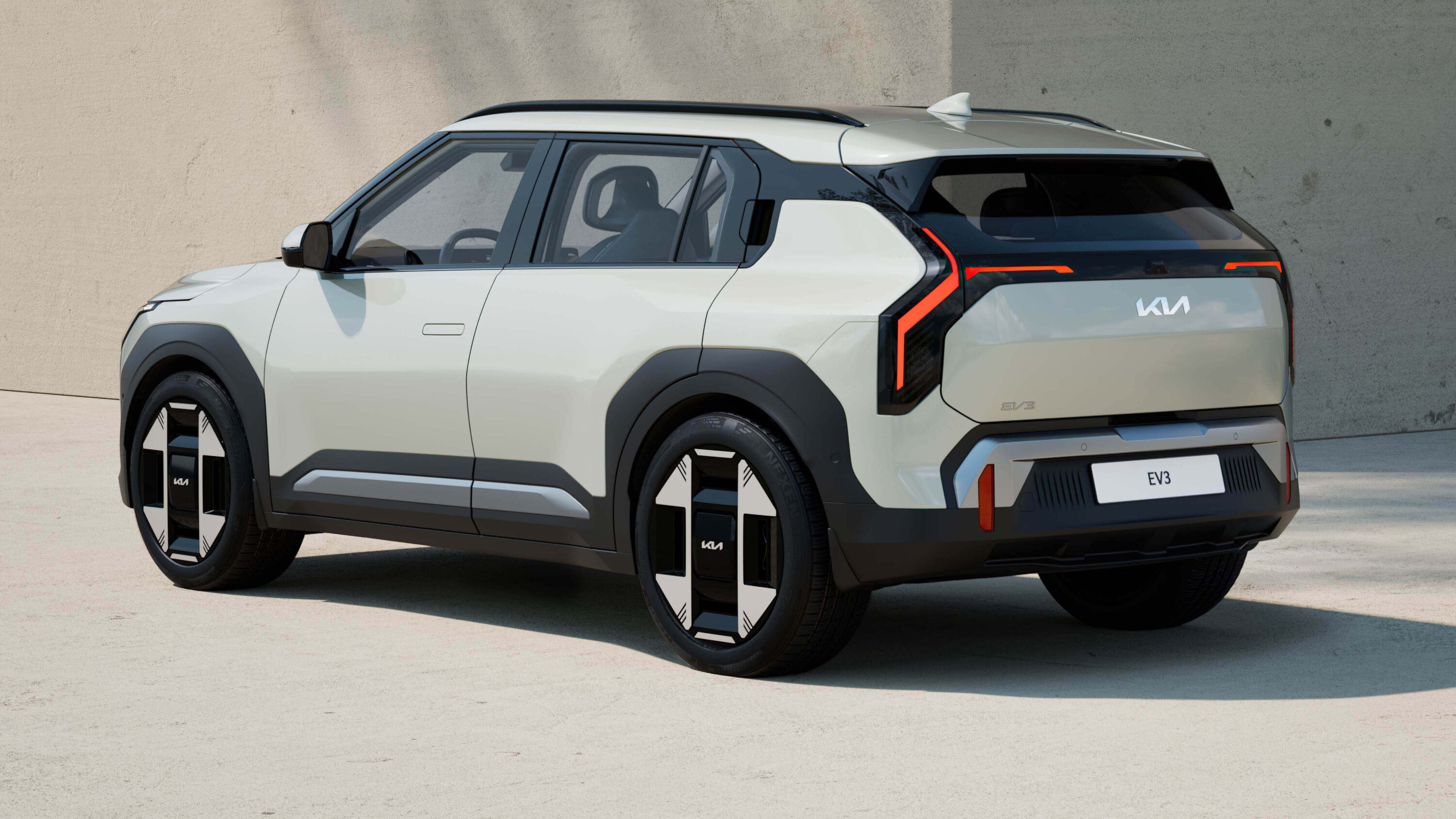
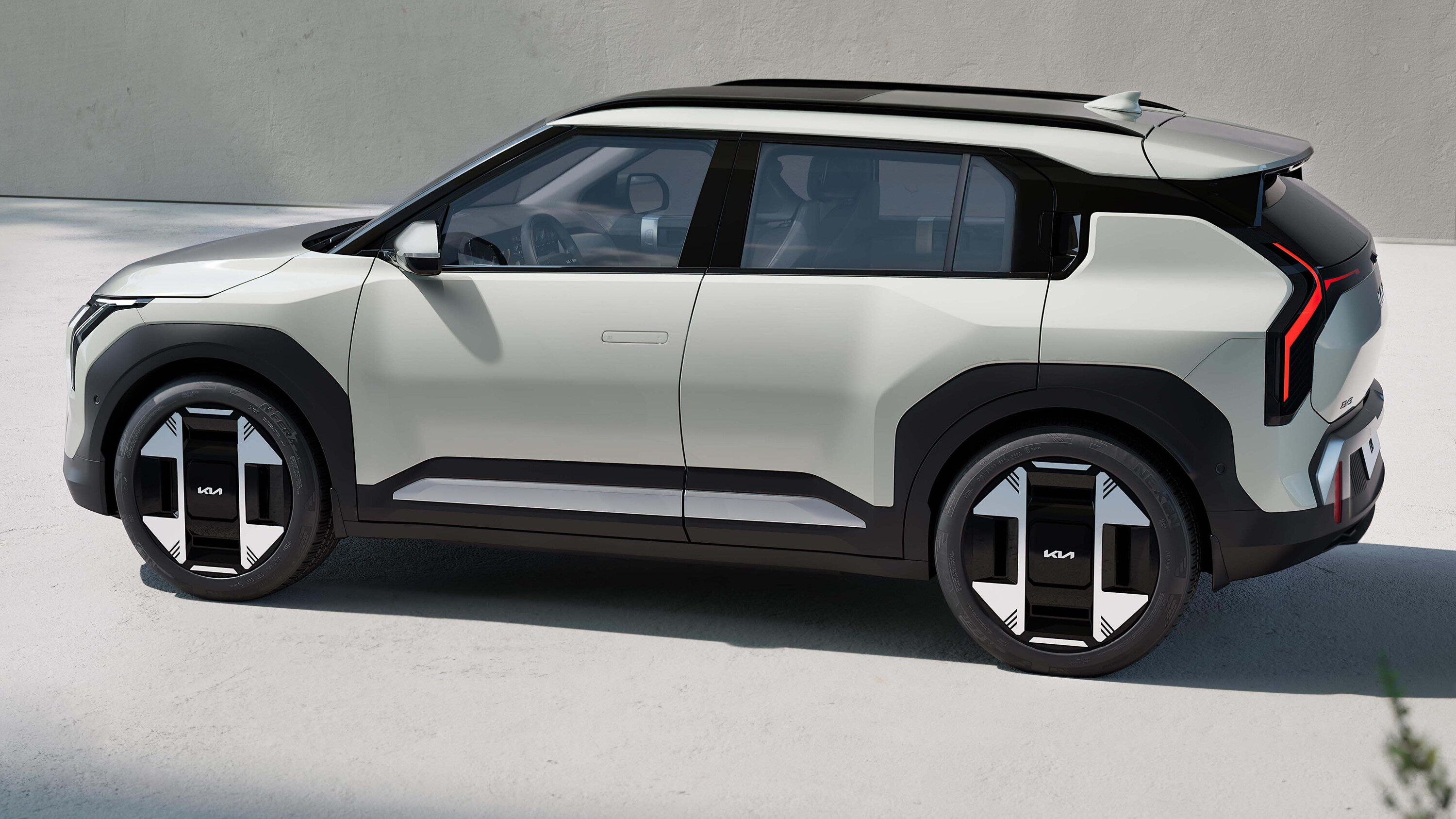
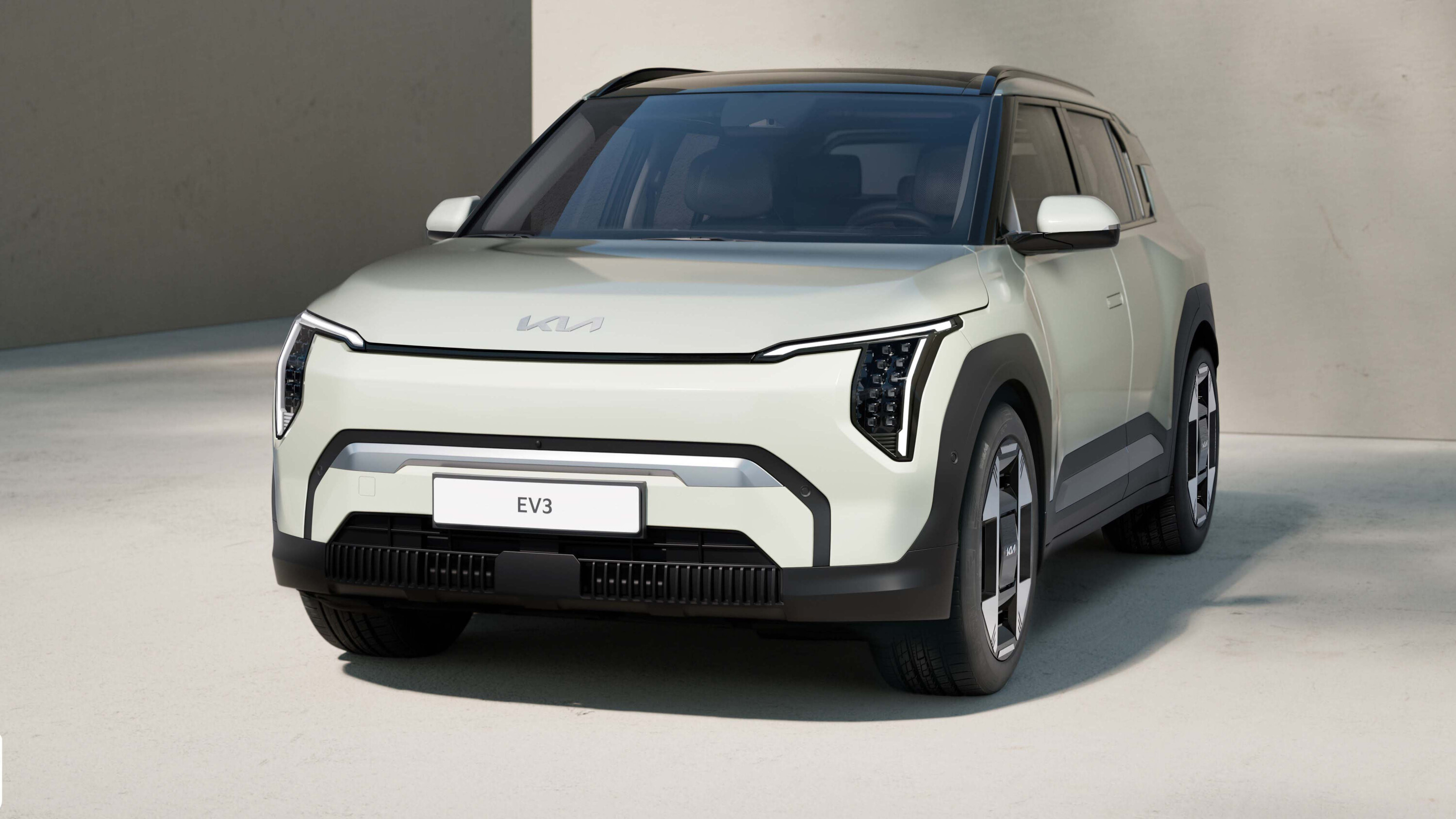
The 2025 Kia EV3 electric small SUV – a rival to the Hyundai Kona, Volvo EX30, BYD Atto 3 and MG ZS EV – has debuted ahead of its Australian launch.
Kia Australia has confirmed the EV3 will arrive in local showrooms sometime in 2025 – joining other dedicated EVs like the EV5, EV6 and EV9 – with exact timing to be confirmed closer to its launch.
The EV3 is based on the Hyundai–Kia Group’s E-GMP modular electric vehicle platform – but, like the EV5, it has a front-wheel-drive bias and a lower 400-volt charging architecture.
1
Larger E-GMP electric vehicles like the EV6 and EV9 are based on a rear-biased version of the platform with an 800-volt architecture supporting ultra-rapid 350-kilowatt direct-current public charging stations.
Production of the EV3 is due to commence in South Korea soon, with a global pricing target between US$35,000 and US$50,000 (AU$52,000 to AU$75,000) – positioning it closer to Hyundai Kona Electric and Volvo EX30 than the BYD Atto 3, MG ZS EV and Chery Omoda E5.
The brand was unable to confirm where Australian-market versions will be manufactured. It could follow the EV5 in being sourced from China, allowing for better price parity with its Chinese rivals.
Kia claims it did not benchmark other compact electric vehicles like the Kona or EX30 while developing the EV3 – though it bears a similar shape to its boxy, upright Volvo competitor.
1
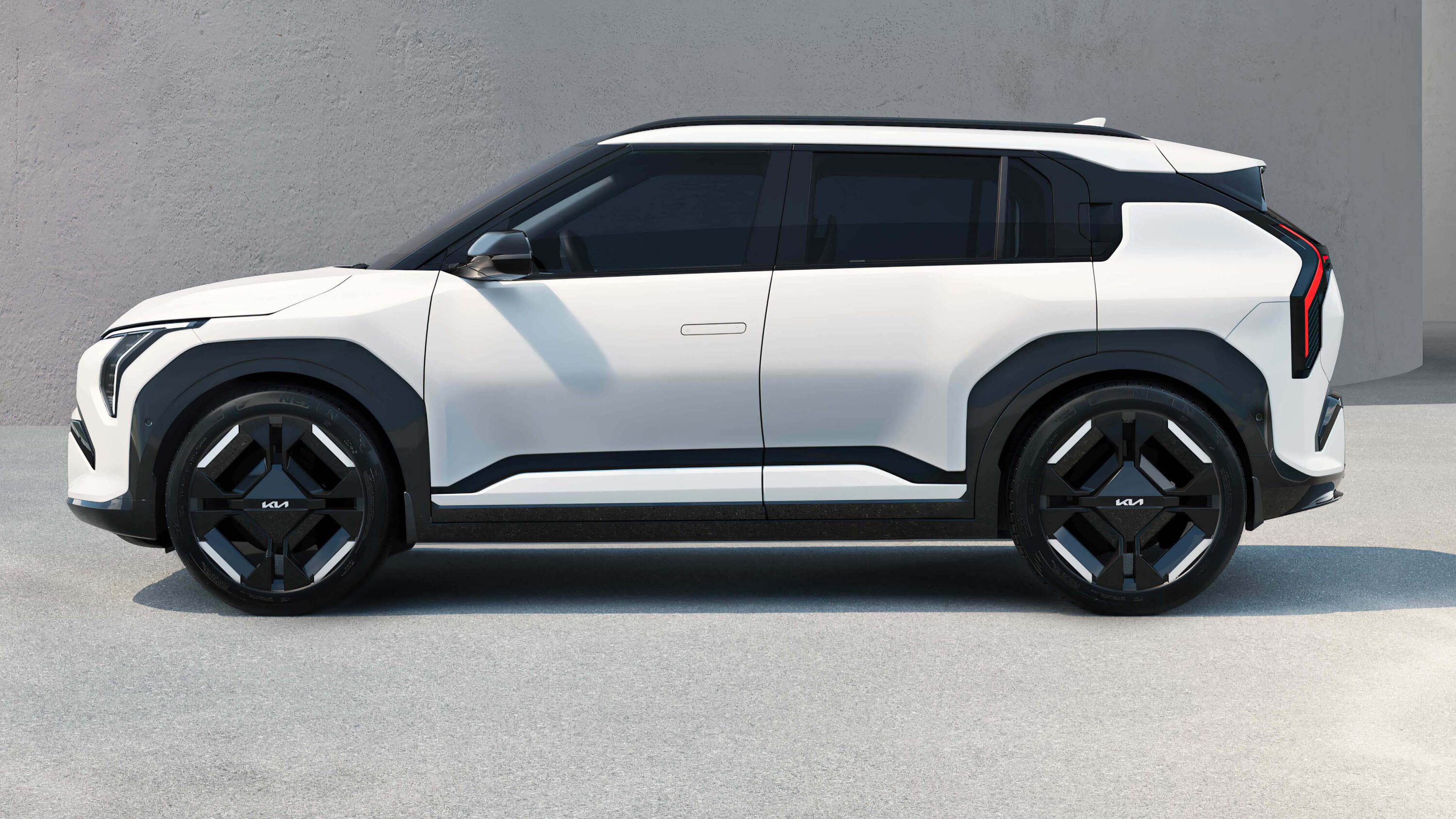
The EV3 measures 4300 millimetres long, 1850mm wide and 1560mm tall, with a 2680mm wheelbase.
It has a 430-litre boot capacity – with a two-tier storage board allowing for 140 millimetres of load height flexibility – and a 25-litre front storage compartment, which is said to be the “largest luggage space in its class” when combined.
Mini matchup: Kia EV3 v Hyundai Kona v Volvo EX30 v BYD Atto 3 v Kia Seltos
Note: List scrolls horizontally.
| Model | Kia EV3 | Hyundai Kona Electric | Volvo EX30 | BYD Atto 3 | Kia Seltos |
|---|---|---|---|---|---|
| Length | 4300mm | 4355mm | 4233mm | 4455mm | 4385mm |
| Width | 1850mm | 1825mm | 1836mm | 1875mm | 1800mm |
| Height | 1560mm | 1580mm | 1549mm | 1615mm | 1635mm |
| Wheelbase | 2680mm | 2660mm | 2650mm | 2720mm | 2630mm |
| Boot space | 460L | 434L | 318L | 440L | 433L |
| Front storage compartment (frunk) | 25L | u2013 | 7L | u2013 | u2013 |
The EV3 will be available in standard or extended-range variants at launch, with the latter offering a WLTP-rated 600-kilometre driving range.
Standard range versions have a 58.3kWh battery pack, while the extended range steps up to an 81.4kWh unit with a claimed 10 to 80 per cent charge time in around 31 minutes.
All versions have a 150kW/283Nm electric motor mounted to the front axle, allowing for a best 0-100km/h time of 7.5 seconds and a 170km/h top speed.
According to Kia, the EV3 has a low drag coefficient of 0.263 Cd – compared to 0.27 for a Kona Electric, 0.28 Cd for an EX30 or 0.33 for a Seltos – with a full three-dimensional undercover.
1
It also has an energy-efficient battery management unit and cell monitoring unit to maximise driving range.
The EV3 follows Kia’s ‘opposite united’ design language with an overall look reminiscent of the larger EV5 and EV9.
A “little sportier [and] dynamic” EV3 GT-Line will be available at launch with body-coloured trim, different bumpers and unique alloy wheels, while a dual-motor EV3 GT will follow later.
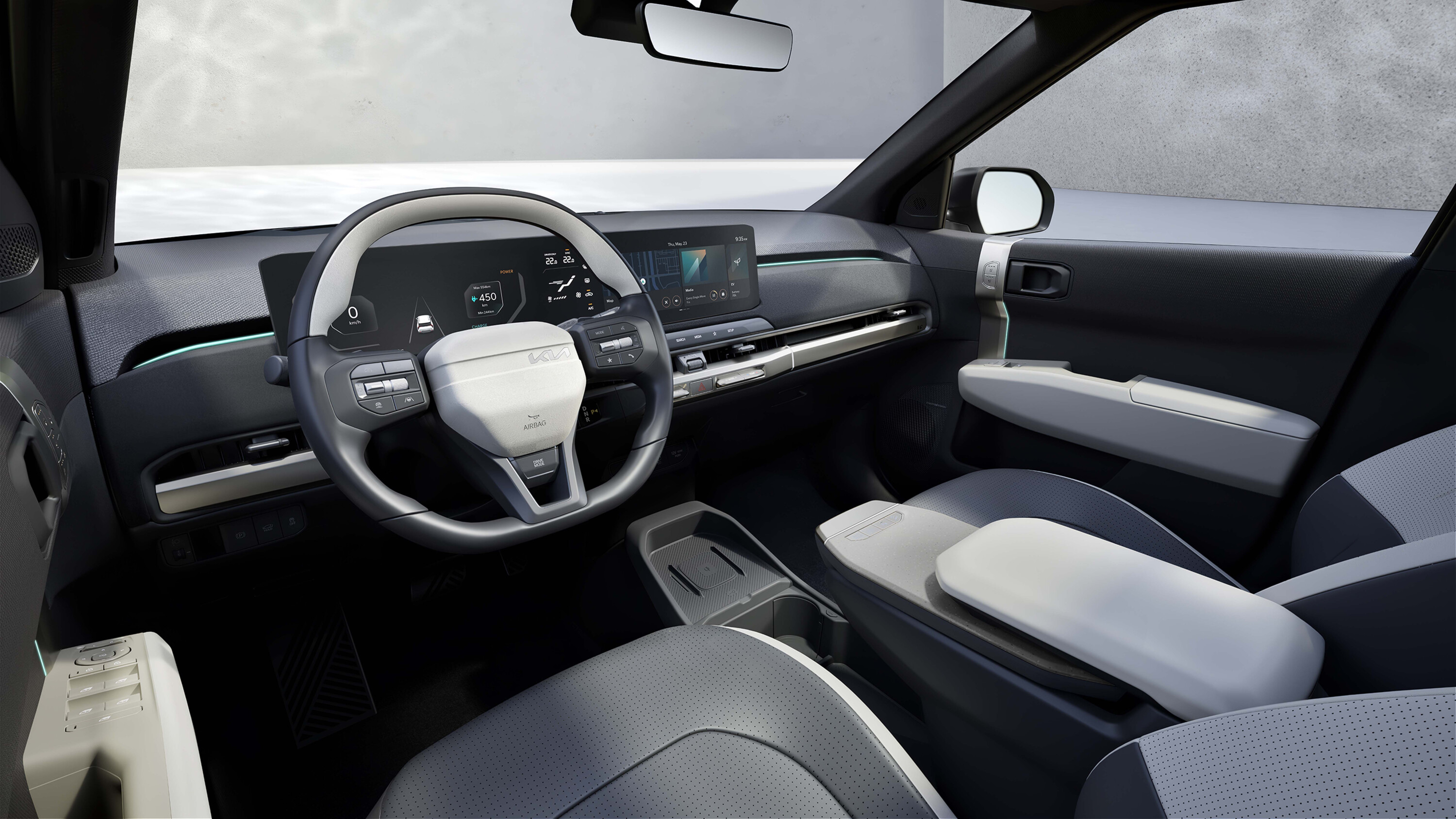
Inside, there is a panoramic display with a 12.3-inch digital instrument cluster, a five-inch climate control display, and a 12.3-inch CNNC infotainment system – matching other new Kia models like the EV5, EV9 and K4.
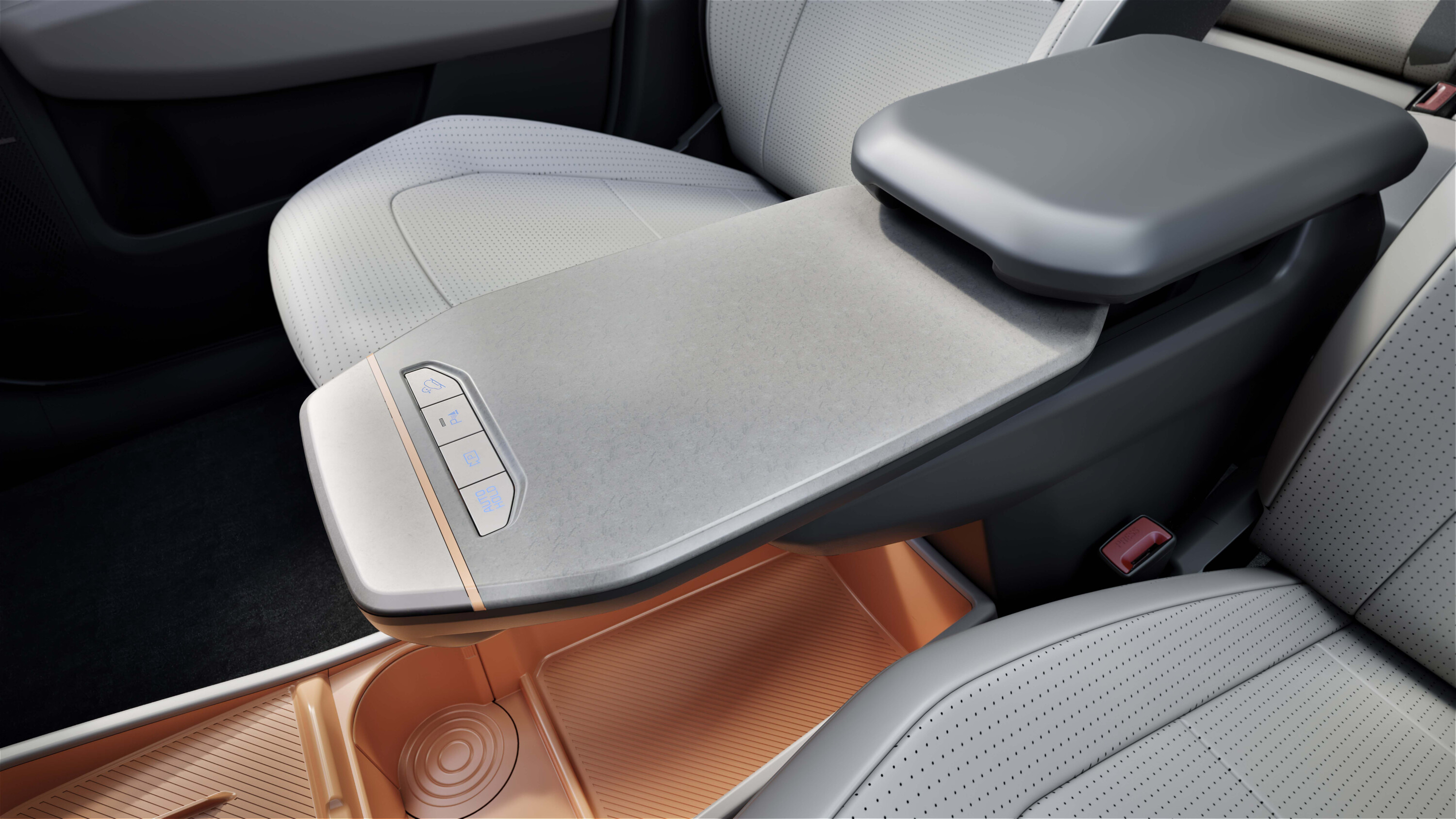
Unlike other electric vehicles from brands such as Tesla and Volvo, Kia has retained physical controls for key functions like cruise control, entertainment, navigation and drive mode – plus traditional stalks and a column-mounted gear selector.
Other interior highlights include configurable ambient lighting, a fold-back relaxation mode for the front seats, an available 12-inch head-up display, and a Harman Kardon audio system.
1
There’s also support for a digital key and in-vehicle or outdoor vehicle-to-load, while owners waiting for their EV3 to charge can watch videos from streaming services like Netflix and YouTube via LG’s WebOS Automotive Content Platform.
Kia has used recycled materials for the dashboard and door trims, as well as polyethylene terephthalate – said to be “among the most easily recycled plastics in the world” – for the seats, headliner, floor mats and luggage board.
First seen in the Cerato-replacing K4 small car, the EV3 is the next Kia model to sport a built-in generative artificial intelligence voice assistant based on a “heavily modified” version of OpenAI’s ChatGPT.
1
Electric dynamic torque vectoring control and updated ‘I-Pedal 3.0’ with selectable regenerative braking levels for one-pedal driving in the strongest setting have been introduced for the EV3.
Active safety features include autonomous emergency braking lane-keep assist, semi-autonomous Highway Driving Assist, and Remote Smart Parking Assist.
Kia said that the Niro EV – based on the same combustion-first platform as the Hyundai Kona and the new Kia K4 – will continue to be sold alongside the EV3 in some markets, but there will be more focus on the Niro Hybrid.
1
“We will continue to sell Niro EV together with EV3 in the market,” said Kia president Ho-Sung Song.
“Each market has different tastes or customer preferences – that’s why some markets prefer the Niro EV, but maybe some markets are going for more weight for EV3.
“The Niro has a hybrid motor and we expect there will be more weight for the Niro Hybrid model rather than the EV model when we are launching the EV3. We have focused for the EV3 more on EV-dedicated customers, and Niro will be more weighted for hybrid customers.”
Kia said it expects to sell 200,000 EV3s annually.
More details about the 2025 Kia EV3 will be confirmed when it launches in its Korean domestic market in July.
MORE
Everything Kia
MORE
Electric SUVs
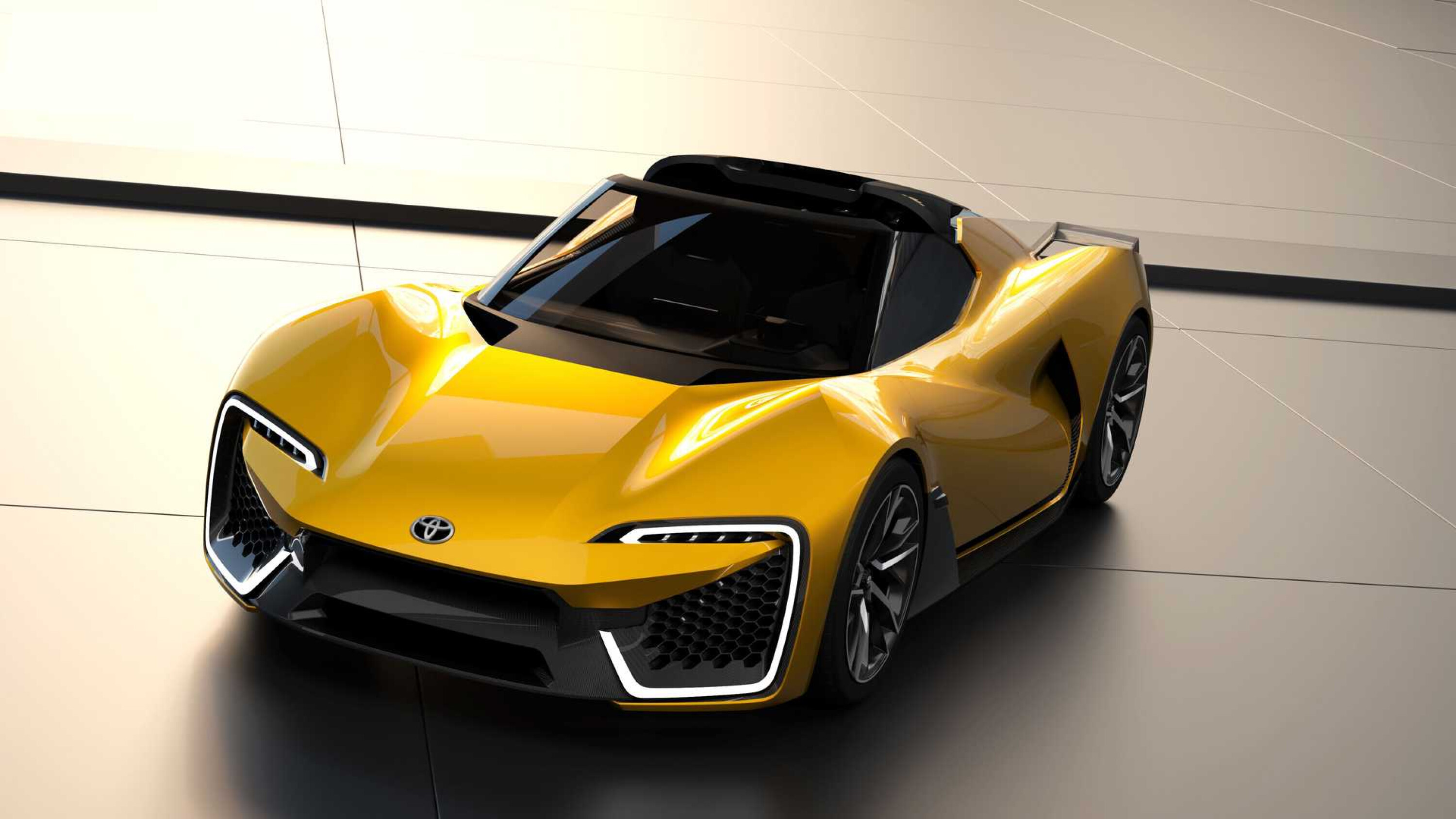
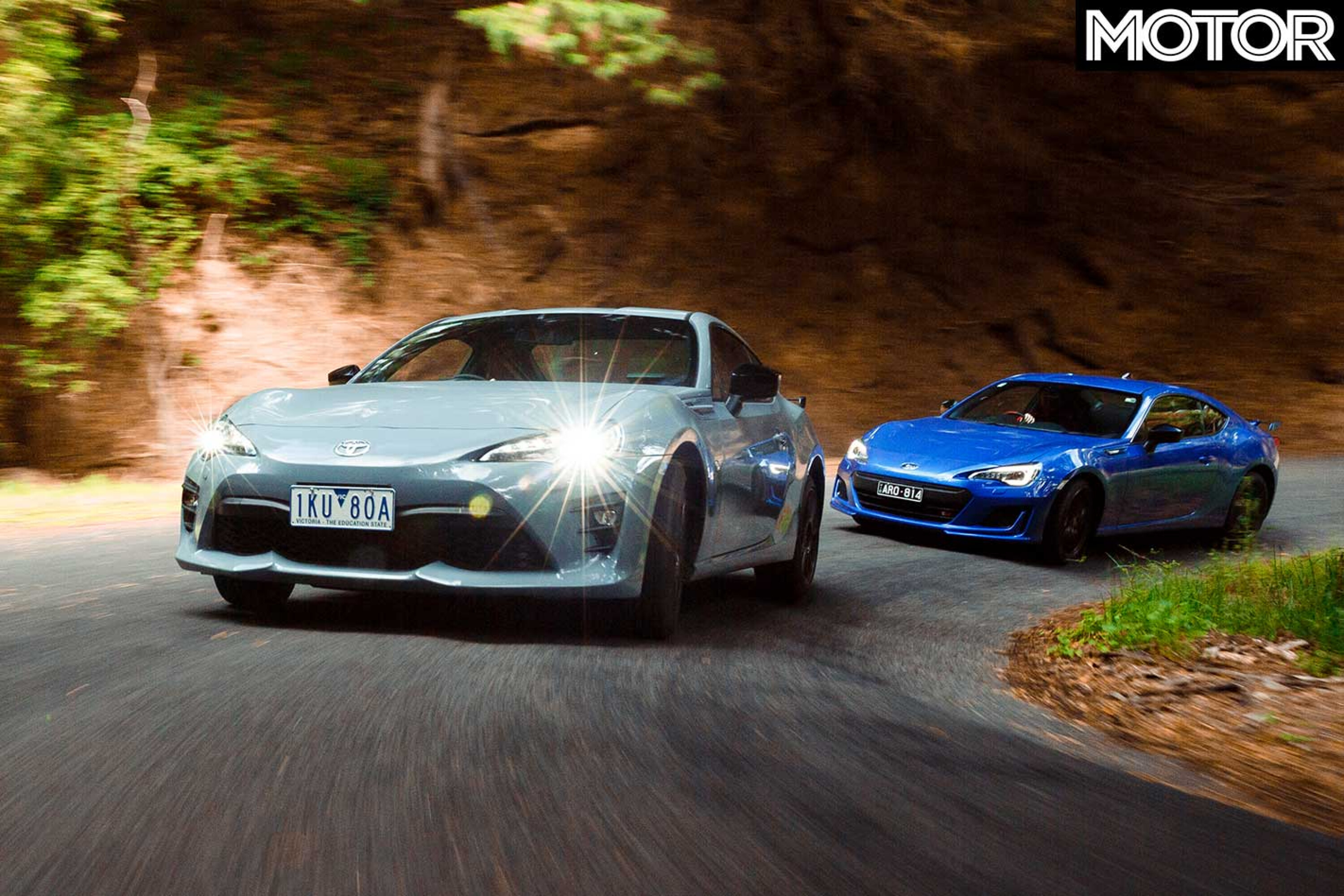
Brace yourselves for more joint ventures like the Toyota Supra/BMW Z4 and GR 86/Subaru BRZ, with the head of Toyota’s GR performance brand predicting manufacturers will need to collaborate more if they want to keep making sports cars.
Tomoya Takahashi, the company president of Toyota GR, emphasised the necessity of collaboration in an interview with Wheels during a recent visit to Australia.
“The cooperation with other companies is very difficult,” Takahashi said. “The sports car market is shrinking in the future so we cannot maintain the sports car as one brand.
“Cooperation between brands will increase in the future, but it’s not for one manufacturer to survive, but to protect the car enthusiast. Our mission is to make car guys make smile.”
1
Takahashi emphasised that to maintain the joy of driving for enthusiasts, collaboration is crucial. “To make car guys smile, we need to collaborate,” he said.
Toyota has been at the forefront of advocating for collaboration in the sports car industry. This commitment was demonstrated through its joint venture with Subaru, resulting in the creation of the acclaimed affordable sports car twins: the Toyota 86 and Subaru BRZ. These vehicles garnered widespread acclaim and also won the Wheels Car of the Year award in 2012.
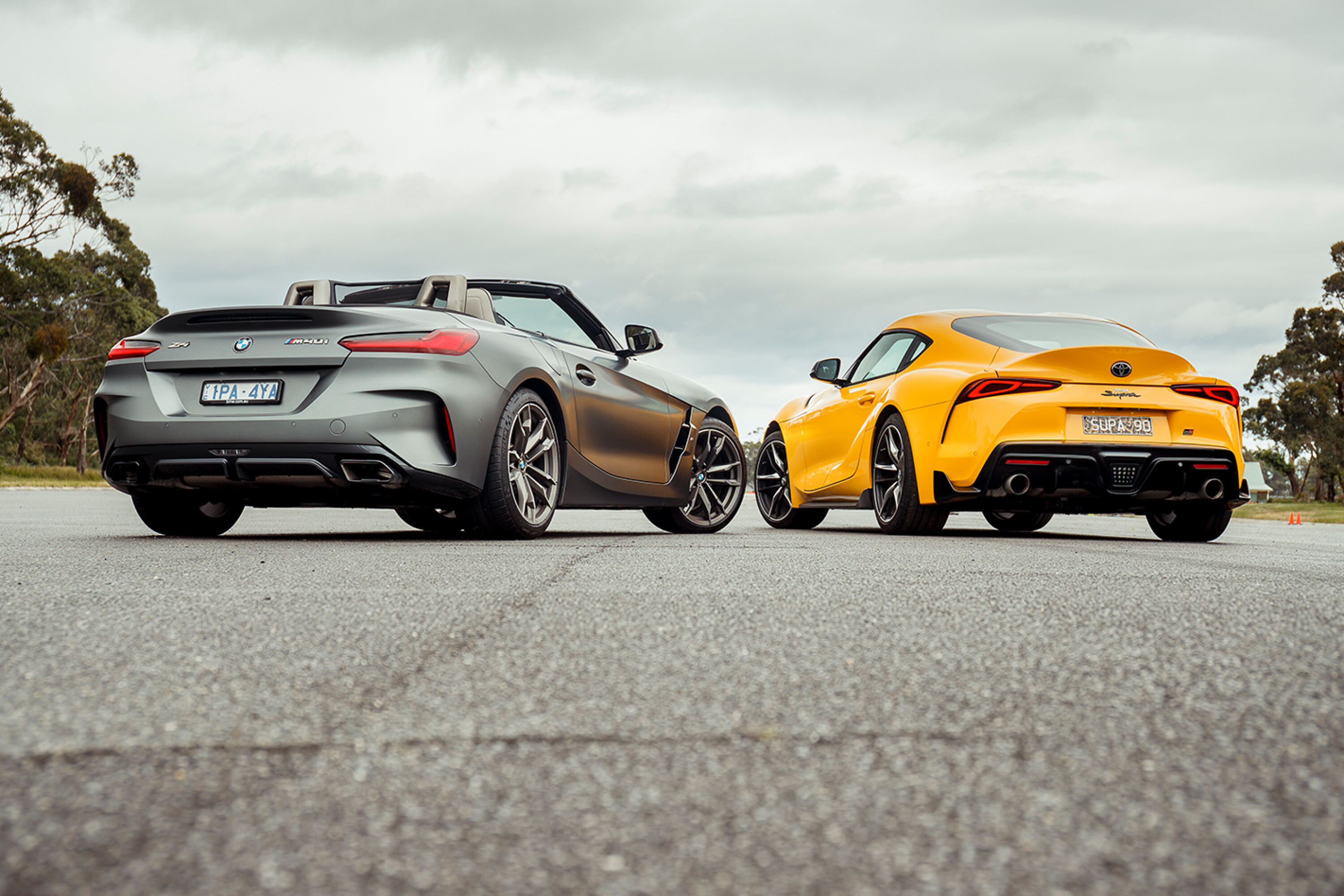
Further highlighting Toyota’s collaborative efforts, another partnership with BMW led to the development of the fifth-generation Toyota Supra, which shares significant components with the BMW Z4. This collaboration enabled Toyota to revive an iconic nameplate, delivering a high-performance sports car that resonated with enthusiasts worldwide.
1
While Toyota has been a pioneer in this approach, it is not alone in recognising the benefits of collaboration. Joint venture partnerships have become increasingly prevalent in the automotive industry. Examples include McLaren and BMW, as well as Alpine and Lotus, which recently agreed to team up to develop a sports car. However, not all collaborations come to fruition, as evidenced by the recently abandoned partnership between Alpine and Lotus.
1
Sharing development costs is a key motivation behind joint ventures. In the competitive automotive landscape, the financial burden of designing and engineering new models can be substantial. By pooling resources and expertise, manufacturers can mitigate these costs and deliver innovative vehicles to market more efficiently.
This strategy is not unique to the sports car segment, of course. Across various automotive sectors, collaboration is becoming a common practice. For instance, Ford and Volkswagen jointly developed the Ranger and Amarok pickups, while the Isuzu D-Max and Mazda BT-50 also share underpinnings.
MORE
Everything Toyota
Volkswagen Australia says it has no interest in a race to the bottom on EV pricing following news of the latest Tesla price cuts.
The most popular EV in the country has just seen a further reduction to its entry price point – now $55,900 plus on-roads for the Model Y RWD – and it seems logical that a brand like VW, which is soon to launch its first EV in this market, would be keeping an eye on such developments.
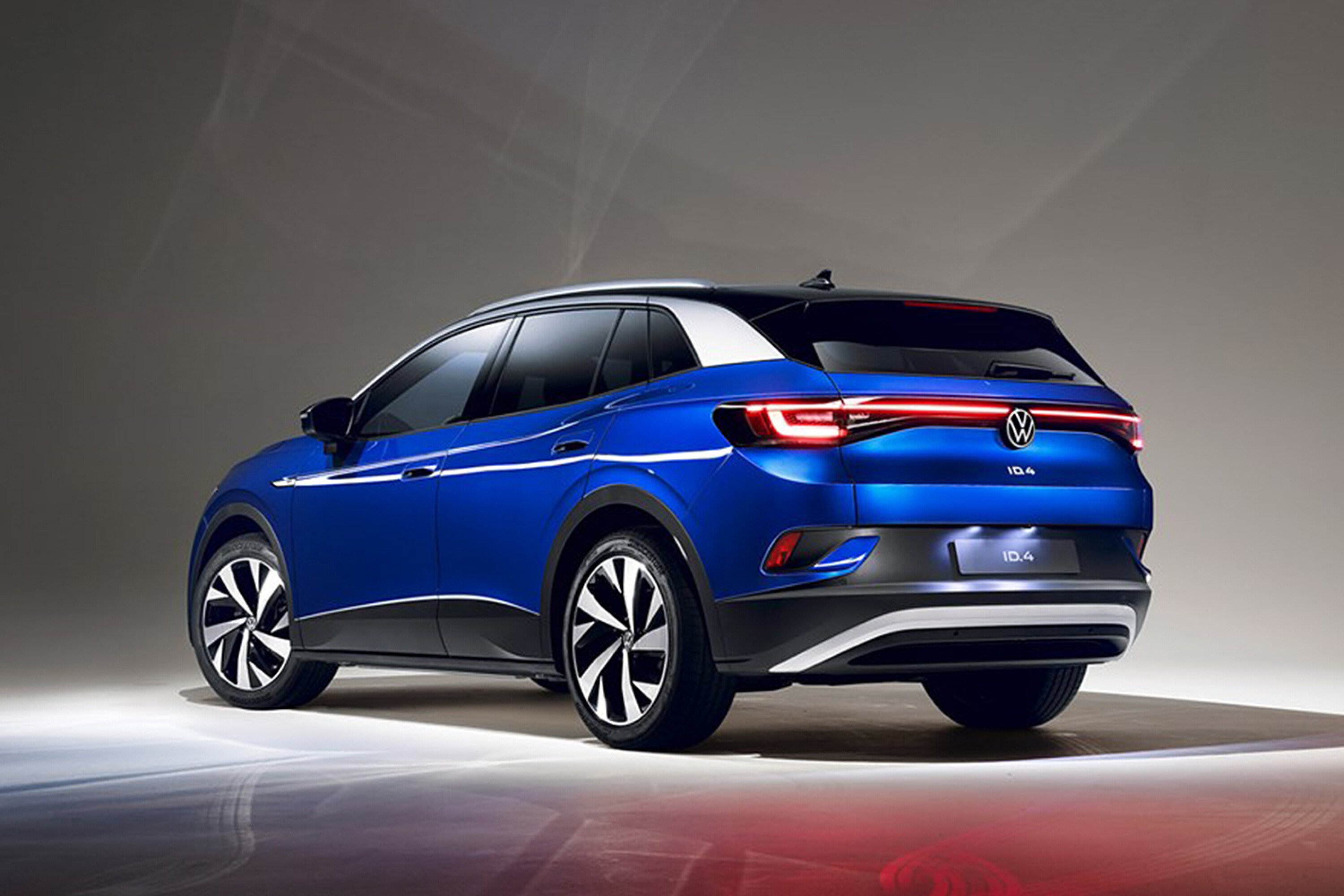
It’s just a few months before the roll-out of pre-orders for the ID.4, and it’s the burning question for anyone who has paid attention to the delay-upon-delayed launch of VW’s first EV in Australia.
1
Ralph Beckmann, general manager of marketing and product for VW Australia’s passenger vehicles, said the company will not engage in a battle of discounts when the first fully-electric ID model launches.
“We’re not going to get into a price war,” said Mr Beckmann. “The brand never has, it never has competed on price, it’s a competition on value.
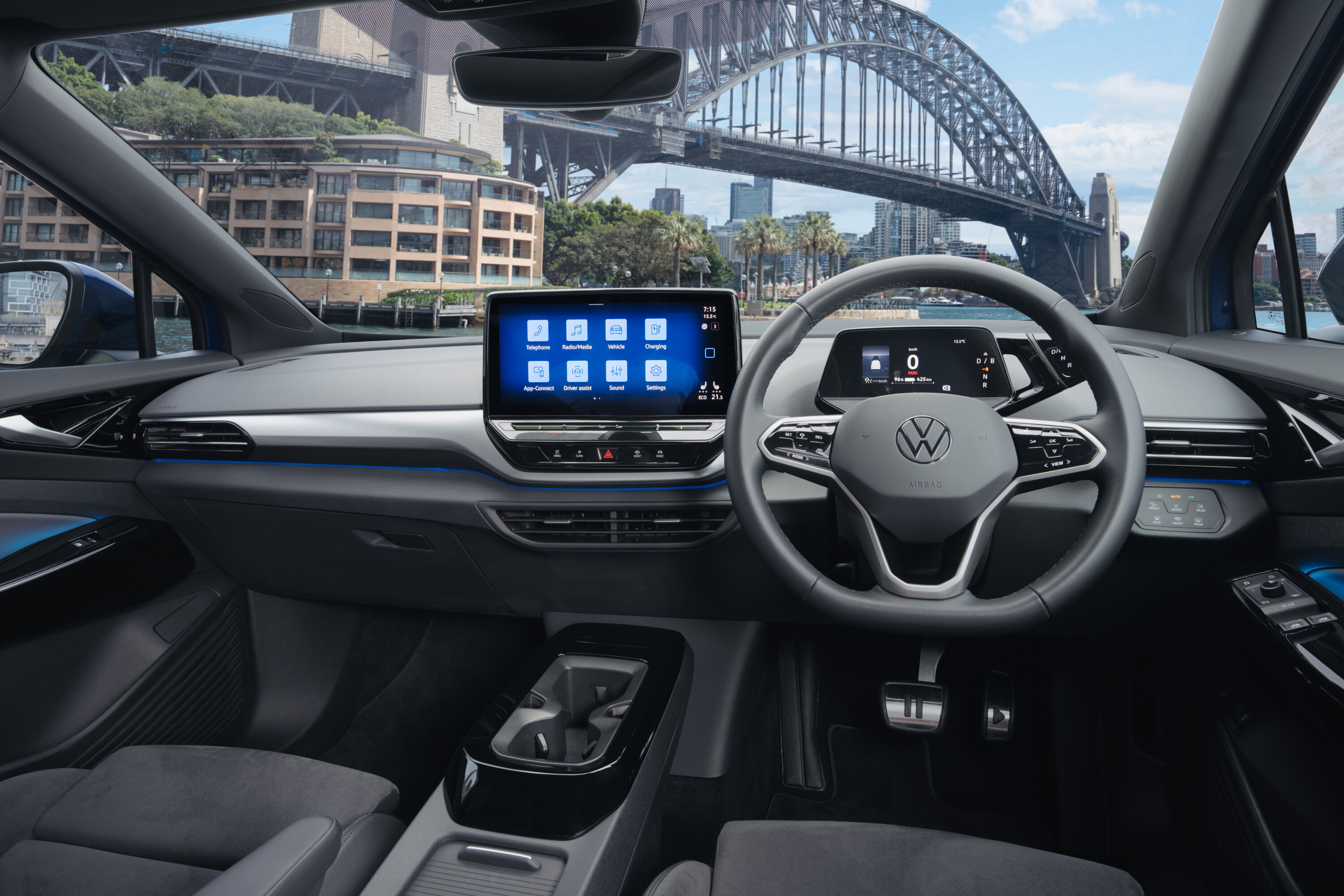
“What we’re bringing with ID – and you will see when we announce the pre-sale in a bit more detail, is [we’re launching] with a far more comprehensive package than just the product,” Mr Beckmann said, referring to the brand’s announcement that it will offer discounted fast-charging at Ampol Ampcharge facilities, as well as tailored home-charging solutions for single- and three-phase households.
1
“There’ll be some other kinds of solutions that we will be offering, so it’s a value proposition rather than entering a price war,” Mr Beckman said.
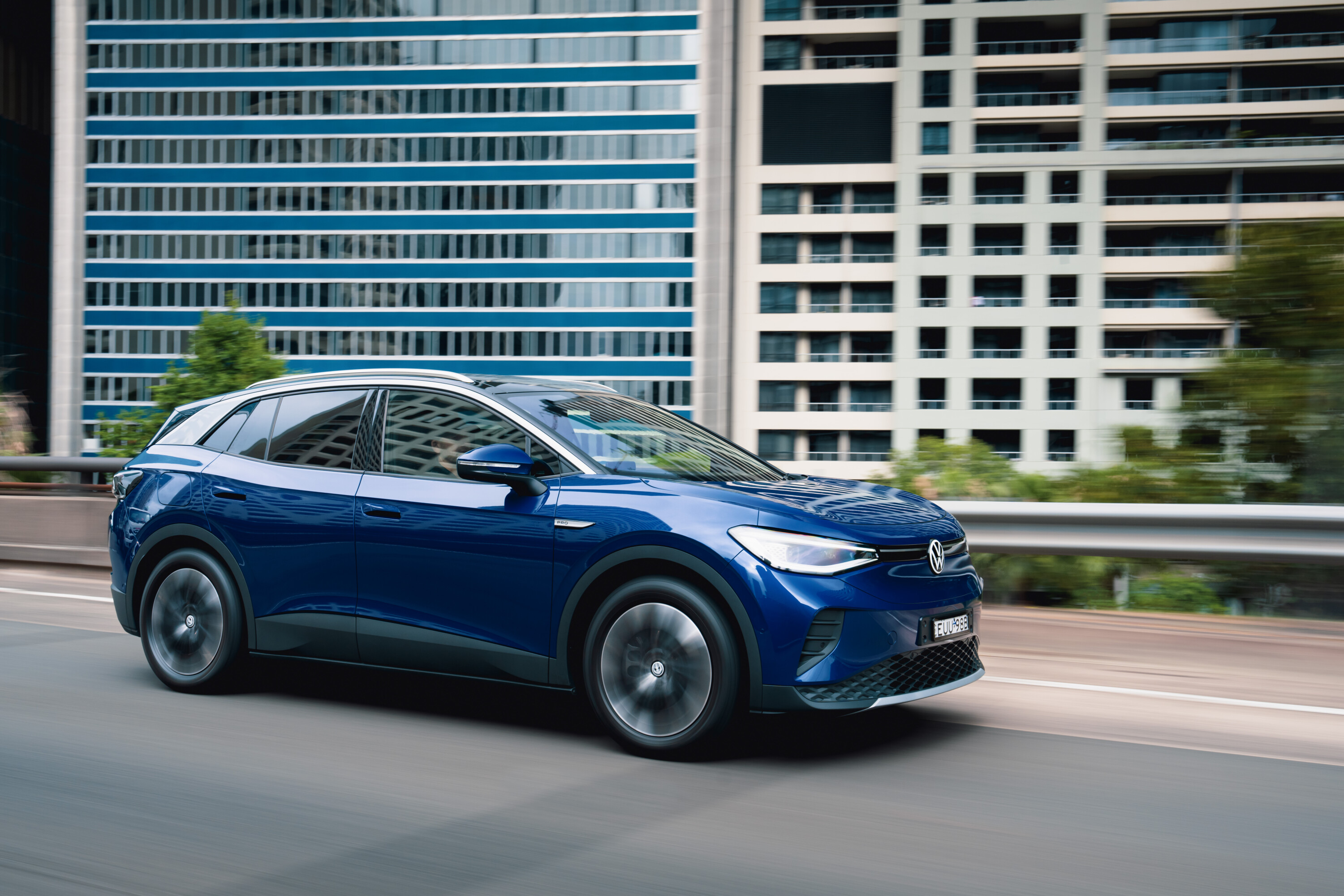
For context, the Model Y and ID.4 align pretty closely in terms of the part of the market they are targeting.
The Model Y is slightly larger in all directions at 4750mm long, 1921mm wide and 1624mm tall, whereas the ID.4 is 4600mm long, 1852mm wide and 1613mm long. The Tesla also has more cargo capacity with a claimed 854L available (ID.4: 549L). And the Tesla is available with a choice of rear-wheel drive or all-wheel drive, and the ID.4 is expected to be offered with the same.
1
Daniel DeGasperi, VW Australia product and PR communications manager, said that the rush to cut prices in light of highly competitive forces can bode badly for an important stakeholder of a car business – its consumers.
“When manufacturers discount, you often hurt your most loyal buyers, and you really slash resale values significantly,” he said.
“So you’ve got to – as far as possible – future proof your business by putting in really good price points,” Mr DeGasperi said. “And that’s why we’re not here today telling you ID.4 pricing, because there is always opportunity to do better with the pricing, and that’s what we want to do before we announce it.”
Mr DeGasperi said “July is when people can buy it”, and it is expected that the brand will continue to hold its cards close to its chest until then.
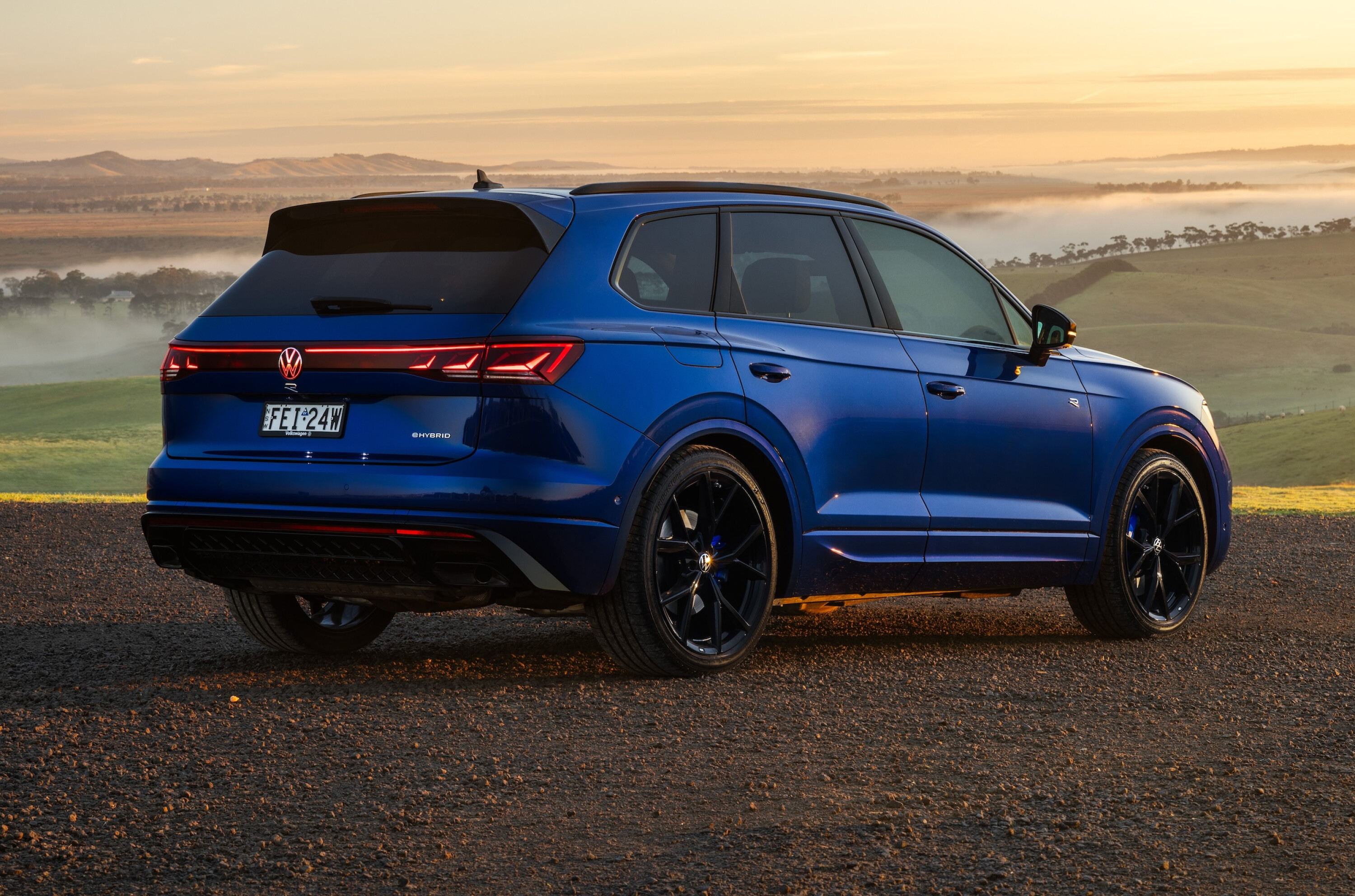
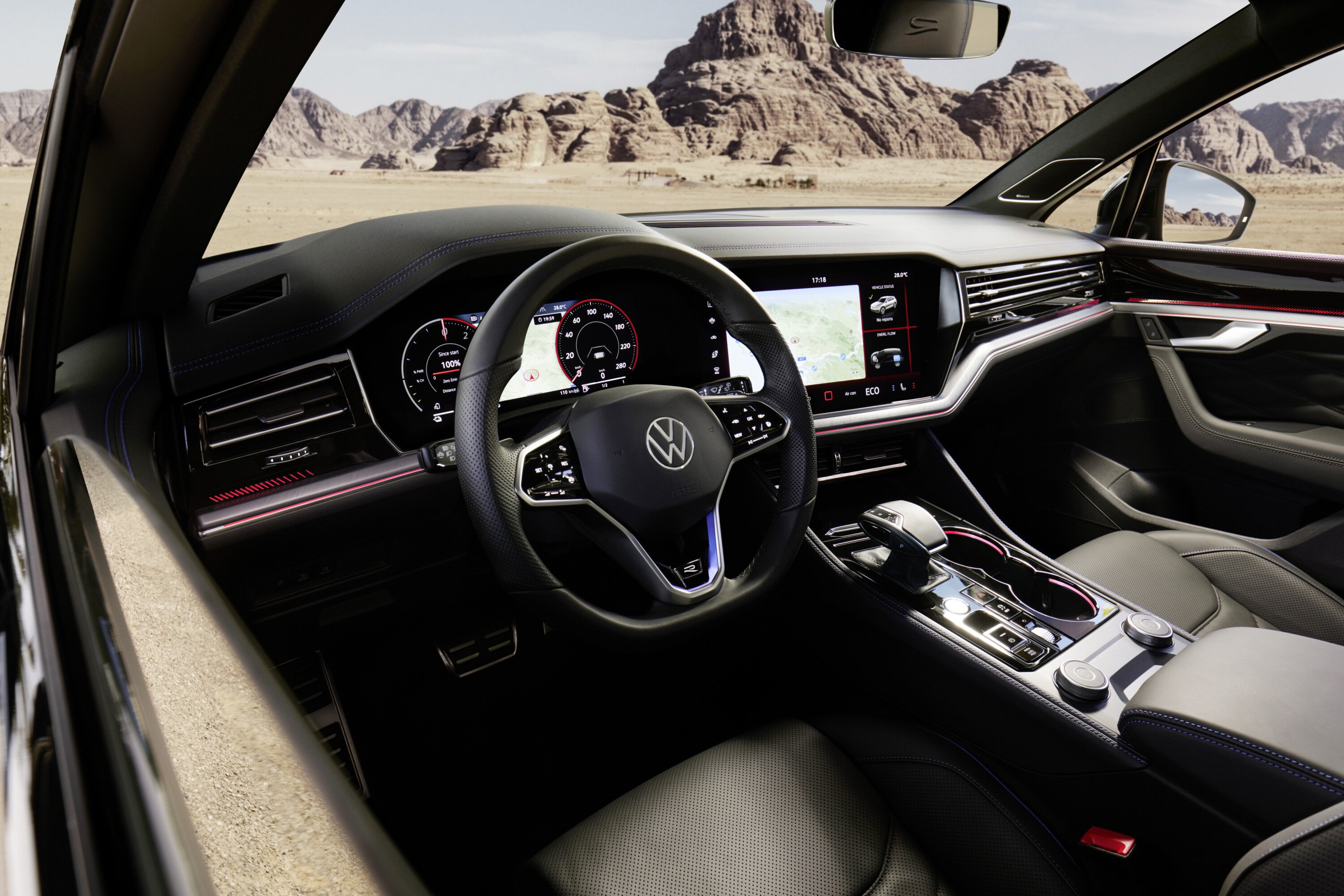
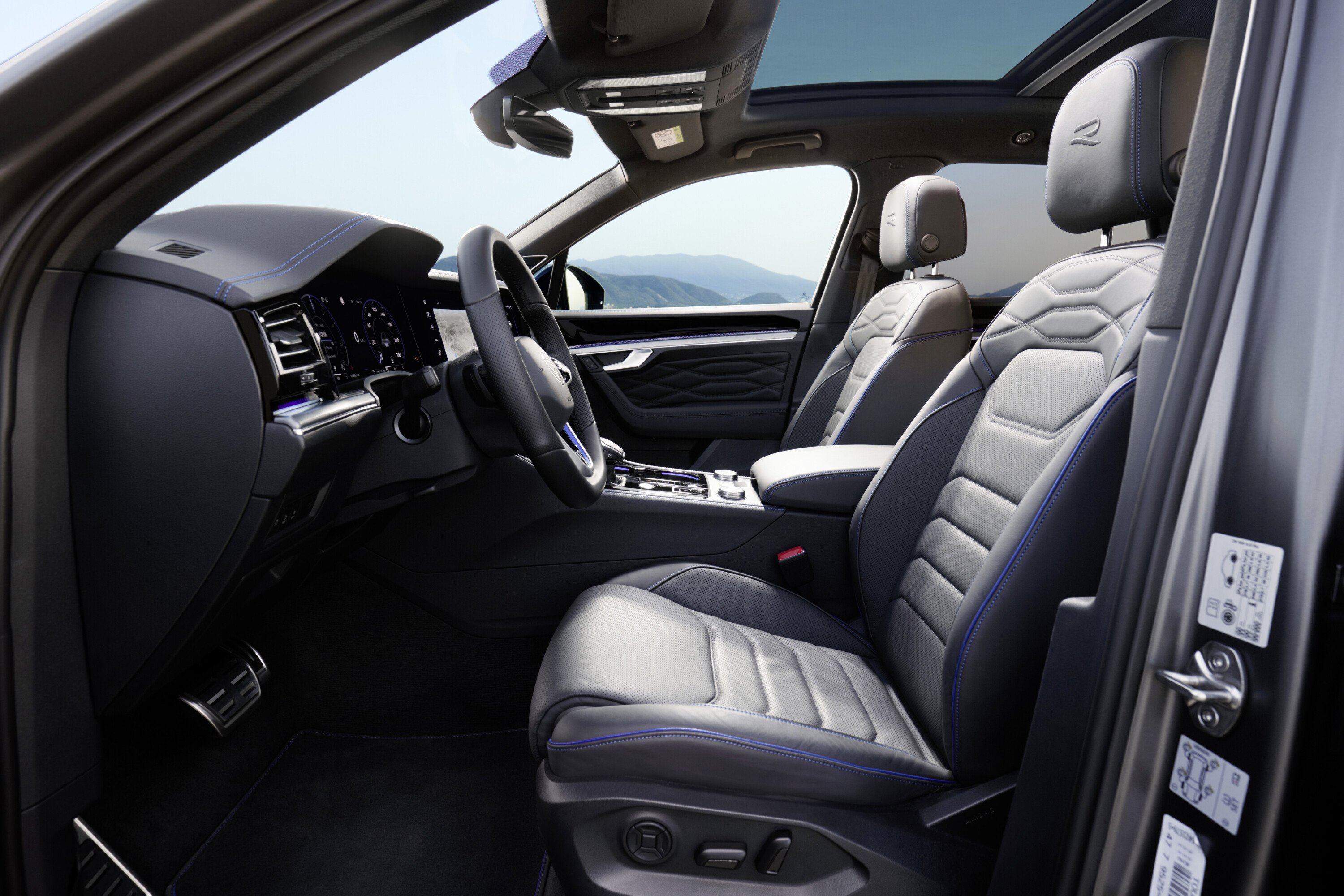
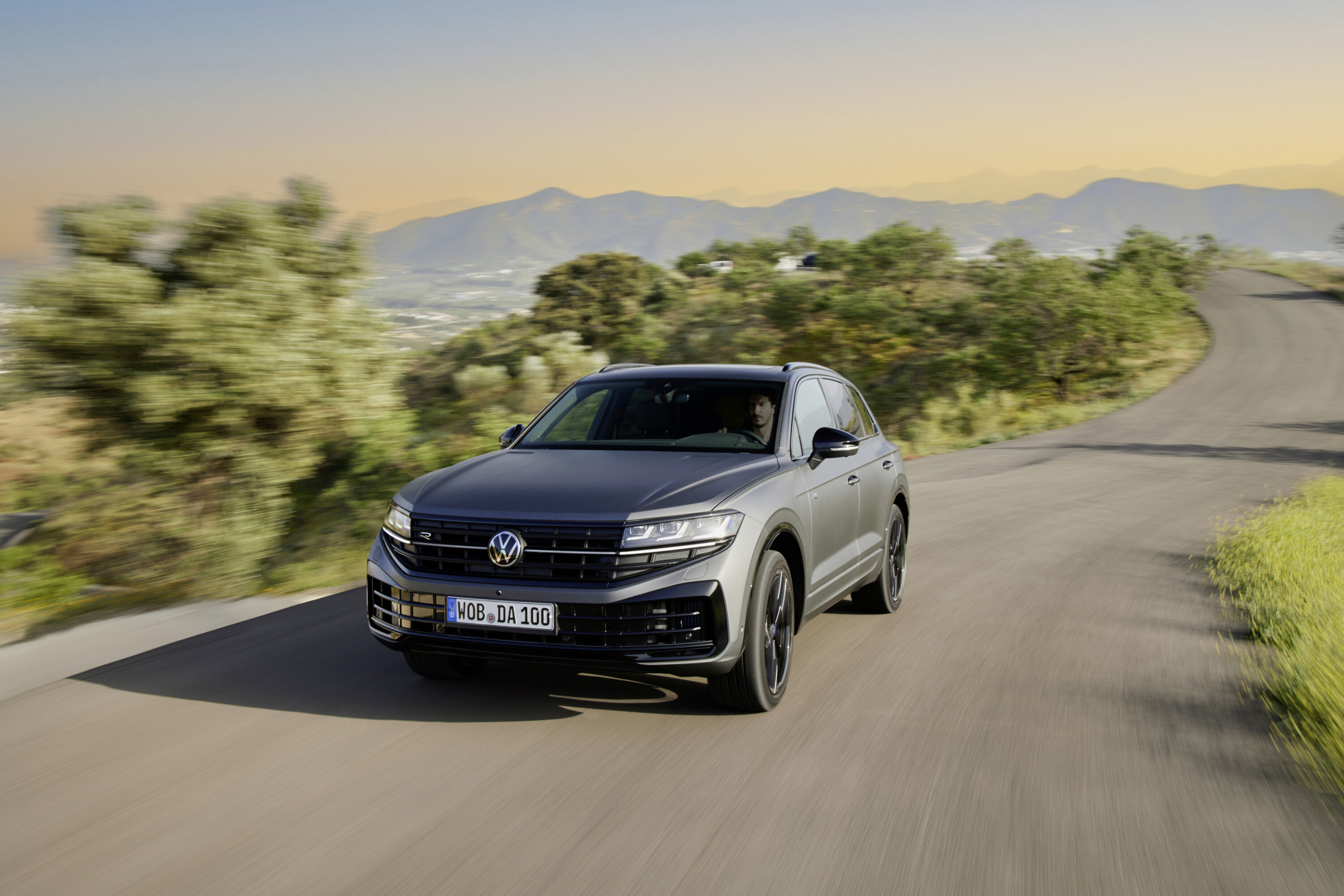
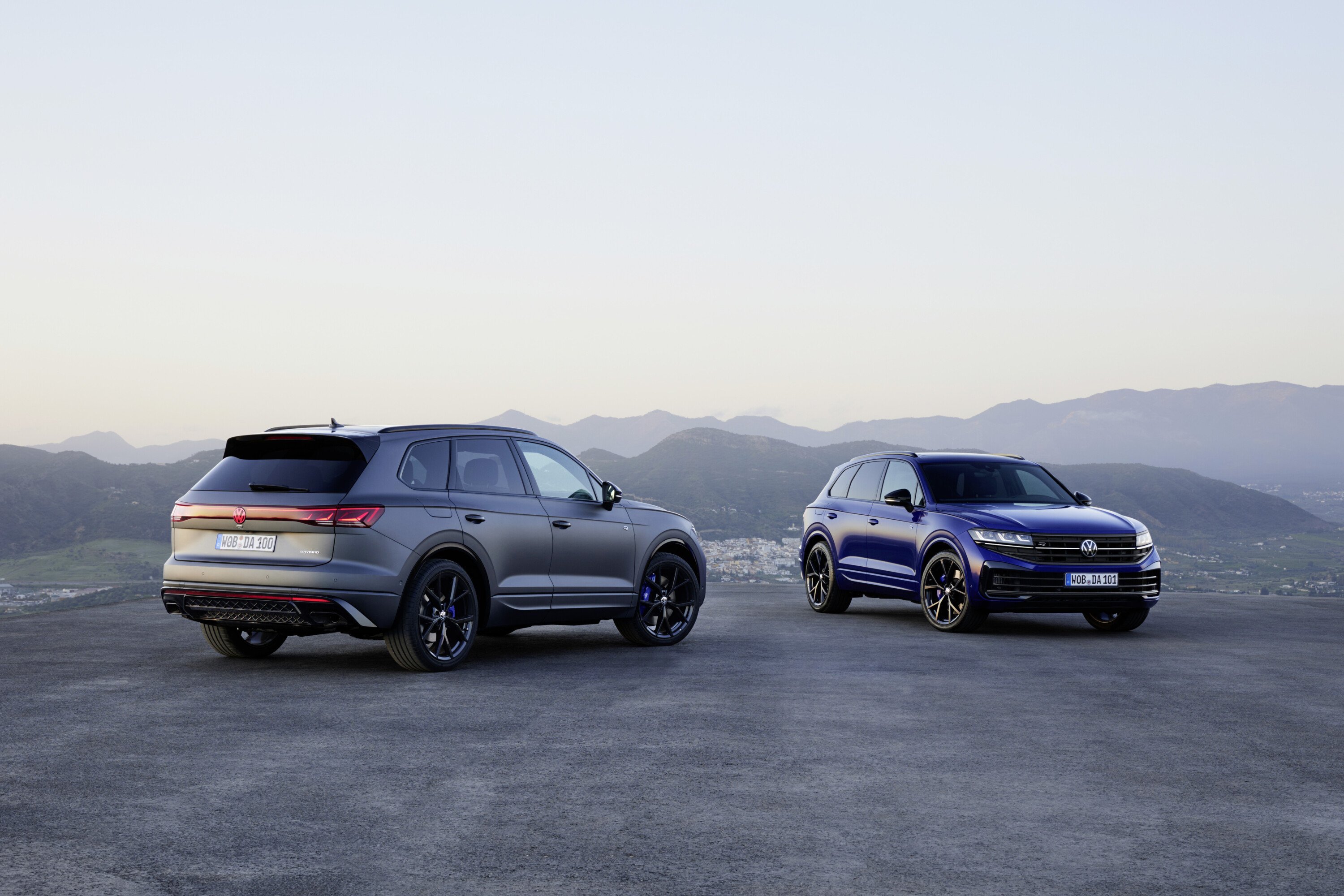
Volkswagen is readying more plug-in hybrid vehicles for Australia, having just launched its first PHEV locally with the Touareg R.
A confluence of forces have enabled VW Australia to bring a stronger case to the table for electrified powertrains, with the Federal Government’s New Vehicle Efficiency Standard (NVES) given the local arm more reach when it comes to offering a mix of EV and PHEV models.
“It’s probably no surprise that it could be Golf and Tiguan [as next PHEV variants], and then potentially another player who is coming into the family that we’re not going to be talking about today,” said Ralph Beckmann, general manager of marketing and product for VW Australia’s passenger vehicles, at the launch of the VW Touareg R.
1
“It’s an opportunity now to open these conversations again,” said Mr Beckmann.
“I think there is definitely room for it in the market. We saw it in the ‘Register Your Interest’ numbers as well [for Touareg R],” he said, referring to the 2000 customer inquiries on the range-topping PHEV, which is a $129,990 plus on-roads proposition.
“The plug-in hybrid seems to have an important role to play in the market as well. So we’d love to offer it beyond the pure electric product in the other ranges, as well.”
1
There’s a question of a sweet-spot for timing when it comes to plug-in hybrids, with current Fringe Benefits Tax (FBT) exemptions meaning that PHEV customers could save tens of thousands of dollars in tax on a novated lease for such a car.
But that program under the national Electric Car Discount scheme is due to end on 30th March 2025, meaning the brand would need to push hard to get stock into market to meet the deadline.
Sister brand Cupra is doing exactly that with the VZe plug-in hybrid versions of the Formentor SUV and Leon hatchback.
However, Mr Beckmann suggested that won’t be doable for the future PHEVs the brand plans to roll out, leaving an open question for whether that demand will continue, as many buyers are arguably choosing a PHEV simply because it makes a strong financial case under that legislation.
1
“From a timing point of view, I don’t think so,” said Mr Beckmann. “To be honest, you wouldn’t be bringing it in ‘on the fly’, it would make sense with a new model change.
“So for the outgoing model Tiguan, we wouldn’t be able to get a PHEV anymore. So it would be a potential addition for the Tiguan 3 [third generation] range,” he said, and that new-gen Tiguan isn’t due here until around March 2025.
Daniel DeGasperi, VW Australia product and PR communications manager, said the business has more potential to secure a range of new-energy options now because of NVES.
“There are a lot of calculations going on at the moment, and this is one of the benefits of being part of the Volkswagen Group – and this goes for Skoda and Cupra as well – is that we have access to such a diverse range of products,” he said.
1
“[We’re] moving out of quite a limited volume pool [of production for markets that don’t have an emissions scheme] of EV or PHEV products; the NVES unlocks potential extra production, not just for ID.4 [an electric SUV arriving later this year], but it moves us into a different conversation.
“That’s consistent with what Volkswagen has been saying for many years, we need an emissions regulation system to compel our factories to put as into that consideration set and that will hopefully unlock a lot of those production and product opportunities.”
One of the candidates that is under assessment for introduction include the Golf GTE hatchback, which may arrive when the Mark 8.5 facelift touches down later this year or early in 2025.
1
DeGasperi said there has “definitely been no decision on Golf GTE yet”.
The Touareg R is not necessarily your typical fuel-sipping plug-in hybrid, despite the fact it has an official combined cycle fuel consumption figure of just 3.3 litres per 100km (remember, that’s the number with a full battery and only covers the first 100km, not beyond that when you’re calling on the ICE more).
It is more of a performance hybrid, with a 250kW/450Nm petrol V6 engine teaming to a 100kW/400Nm electric motor, allowing a maximum combined output of 340kW and 700Nm – enough to propel the 2433kg family SUV from 0-100km/h in just 5.1 seconds.
Stay tuned for our review on the Touareg R on Thursday May 30.
MORE
PHEV and Hybrid Cars
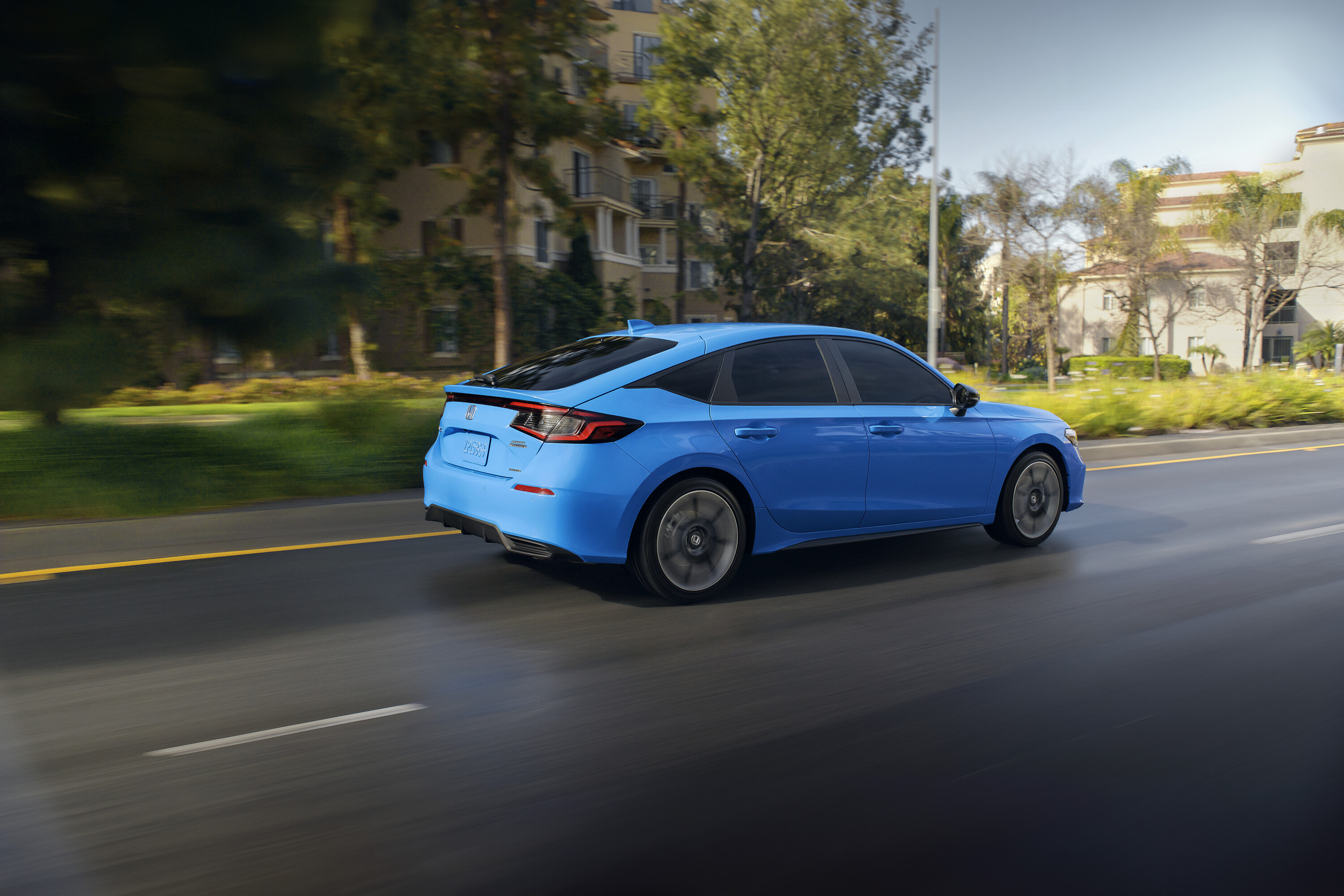
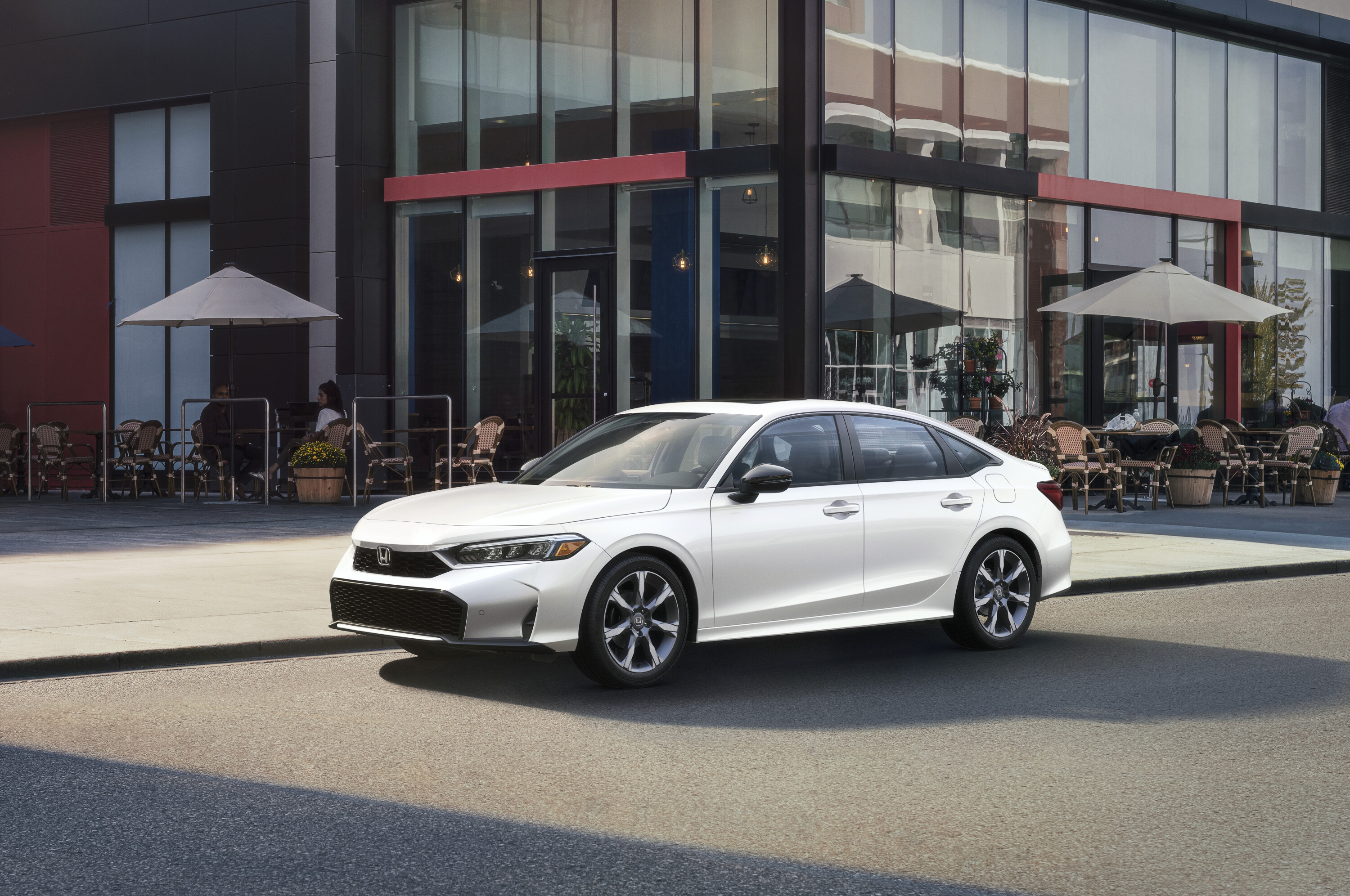
A facelift for the 2025 Honda Civic has been unveiled in the United States with a revised look and Google Built-In technology.
Available in hatch or sedan form, the updated Civic receives a “more aggressive” front bumper, while the new-to-America Civic Hybrid – sold in Australia in E:HEV LX form since 2022 – adds a body-coloured headlight garnish and a lower front spoiler.
North American versions of the Civic are built in the United States for the hatchback and Canada for the sedan, while Australian models are sourced from the brand’s factory in Japan.
1
Based on previous Honda release timings, a facelifted Civic for markets outside North America will likely be some months away – along with a facelift for the Japanese-made Civic Type R hot hatch.
“We’re unable to confirm [the] arrival of the updated Civic at this time,” said a Honda Australia spokesperson.
Other exterior design revisions include a new machine-finished 18-inch alloy wheel design for flagship variants and three fresh colours for the hatchback: ‘solar silver metallic’, ‘urban grey pearl’ and ‘sand dune pearl’. The Civic sedan – which isn’t sold in Australia – also receives a new ‘blue lagoon pearl’ finish.
1
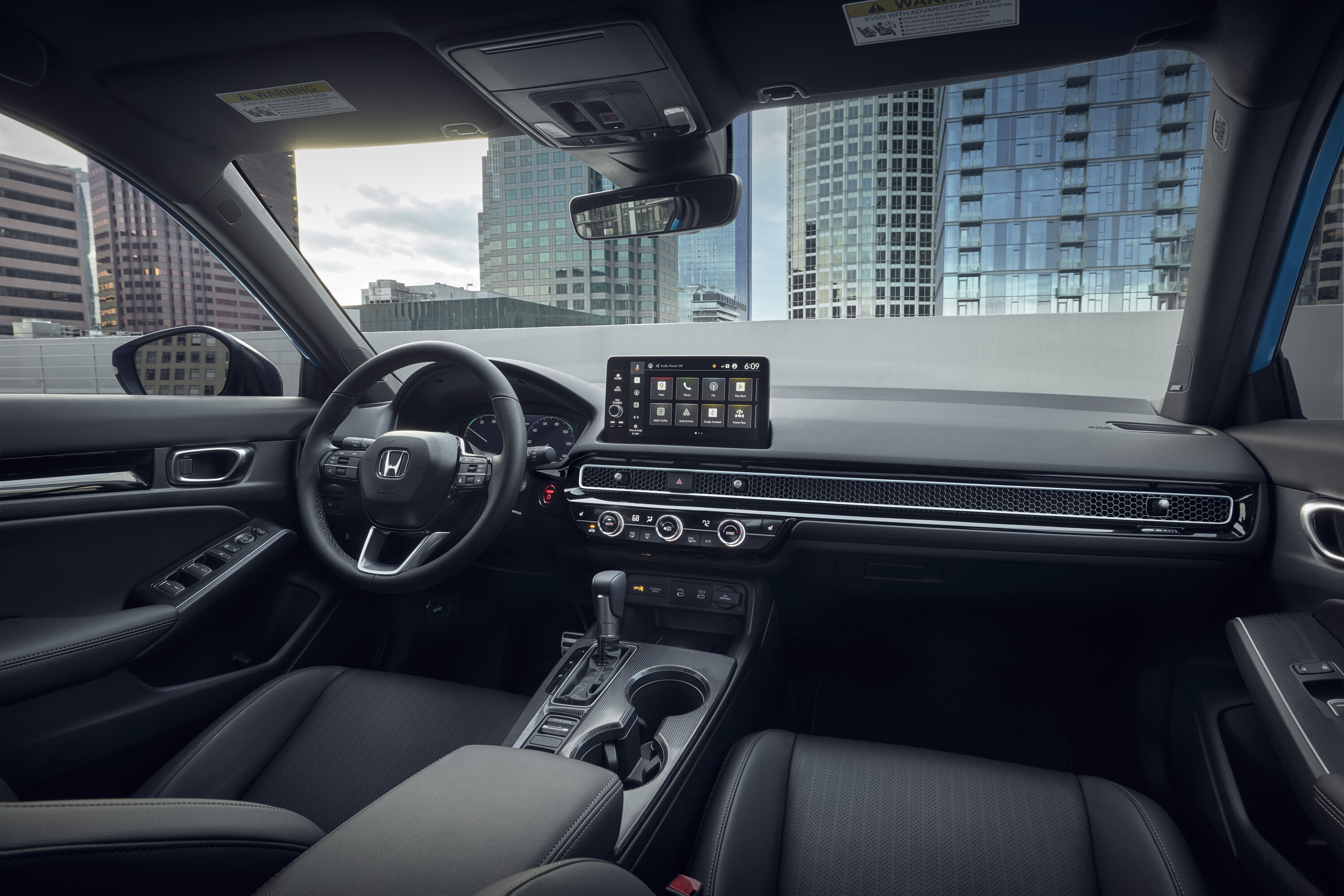
Inside, top-of-the-range versions receive an Android Automotive-based infotainment system – first seen in the Accord sedan – with Google Built-In technology for apps like Assistant, Maps and the Play Store.
It operates on an unchanged 9-inch floating-look touchscreen with physical controls, compared to the larger 12.3-inch widescreen available in the new Accord, which launched in Australia this month. There’s also new USB-C charge ports, replacing USB-A.
The Honda Civic is one of the best-selling passenger vehicles in the United States with 200,381 examples delivered in 2023, behind the Toyota Camry (290,649) and Toyota Corolla (232,370).
In Australia, VFACTS new-car sales data reveals 1318 Civics were sold in 2023, making it one of the slowest-selling small cars behind rivals like the Toyota Corolla, Hyundai i30, Mazda 3, Kia Cerato, and even premium alternatives like the Audi A3, Mercedes-Benz A-Class and BMW 1 Series.
1
First launched in Australia in November 2021, the 11th-generation Civic hatchback is available in a sole ‘LX’ variant from $47,200 drive-away for the petrol or $55,000 drive-away for the hybrid, as well as the $73,600 drive-away Civic Type R.
While a Thai-built right-hand drive version is available, Honda Australia decided not to import the sedan version of the latest Civic.
There are also no local plans for more-affordable hatch variants or the warmer, manual-only Japanese-market Civic RS hatch unveiled at the Tokyo Auto Salon in January.
MORE
Everything Honda
Snapshot
- S E Performance variants to sit at the top of the GLC family
- Turbocharged AMG-developed hybrid 2.0-litre engine produces 500kW and 1020Nm
- 0-100 km/h in 3.5 seconds, 275km/h v-max, 14km emission-free electric range
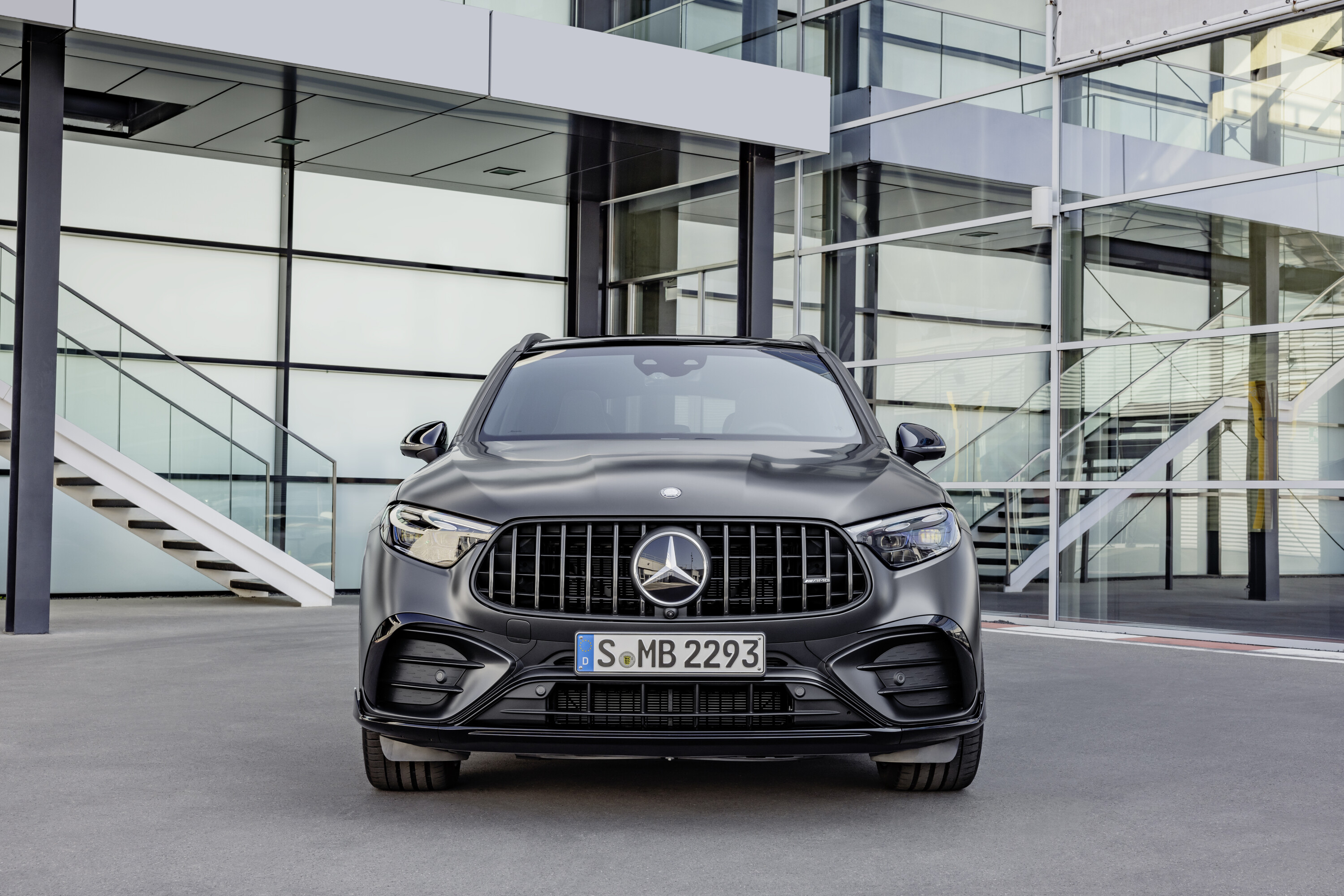
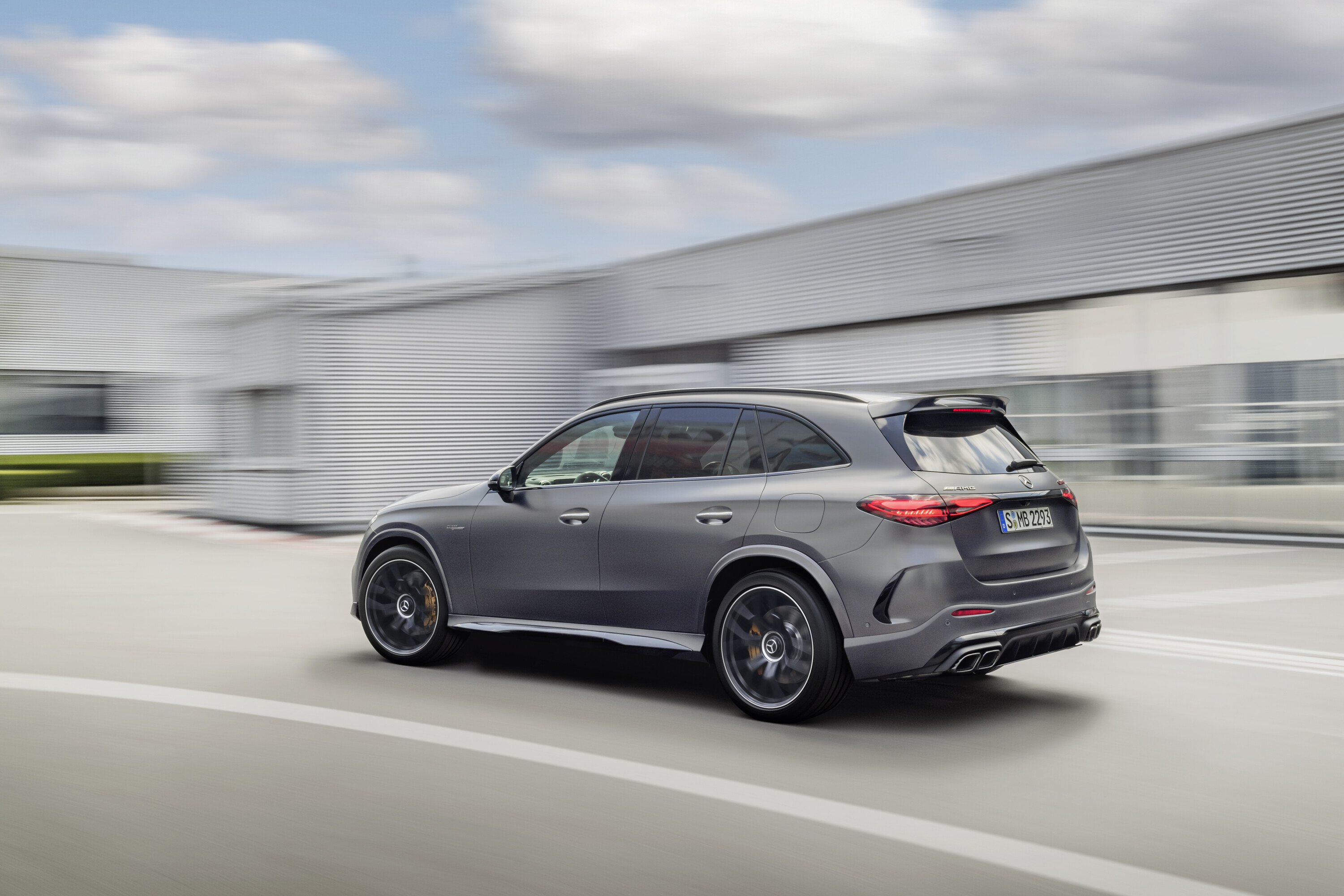
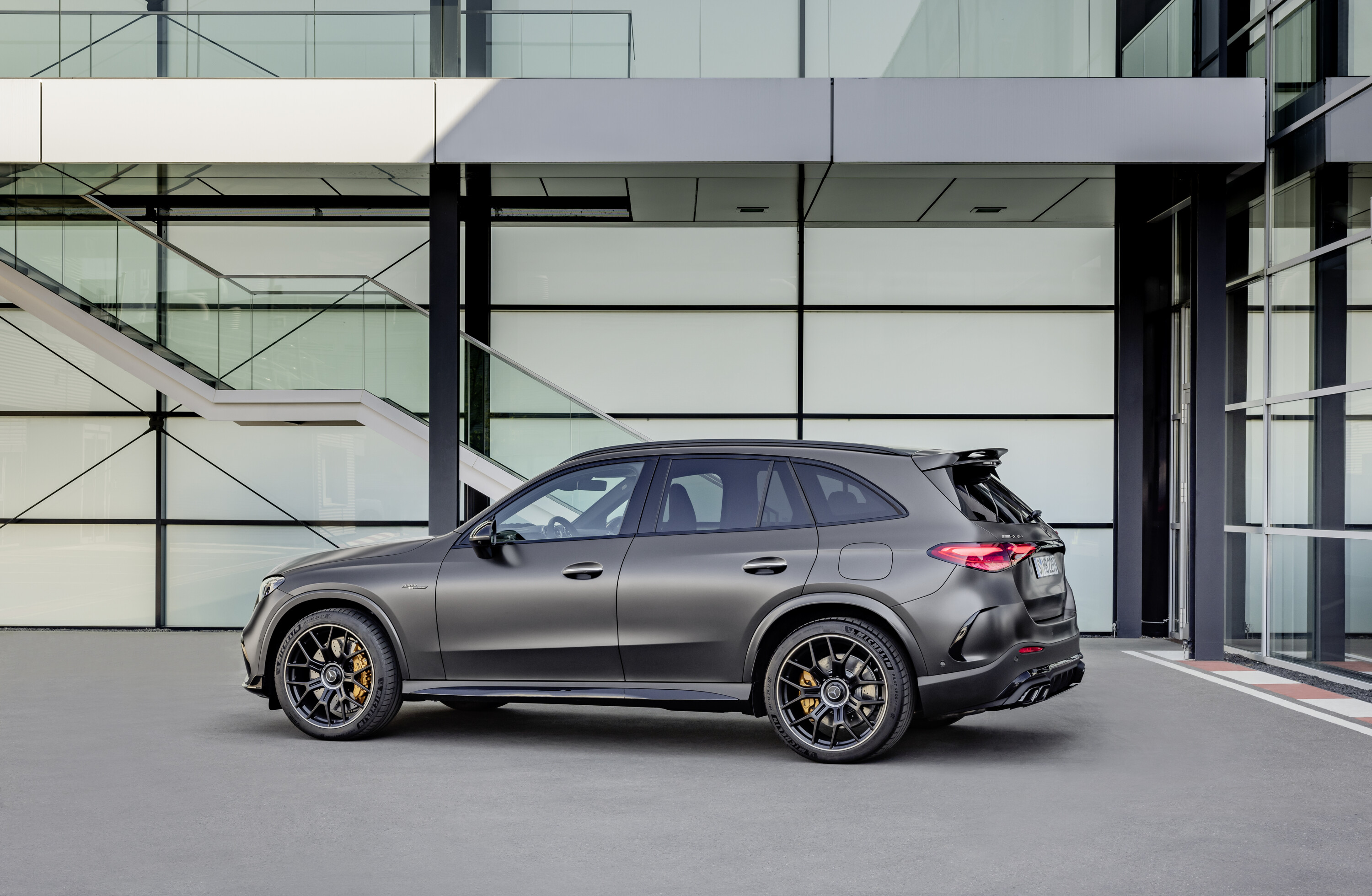
Pricing and features for the new 2024 Mercedes-AMG GLC 63 S E Performance wagon and coupe SUVs has been announced.Claimed by Mercedes-AMG to collectively be the “first performance hybrid SUV”, the GLC 63 S features a 500kW/1020Nm plug-in hybrid four-cylinder shared with the related C 63 S.
Performance and handling enhancements include AMG Active Ride Control suspension, rear-axle steering, an electronically controlled limited-slip rear differential, and AMG Performance 4MATIC+ all-wheel drive.
1
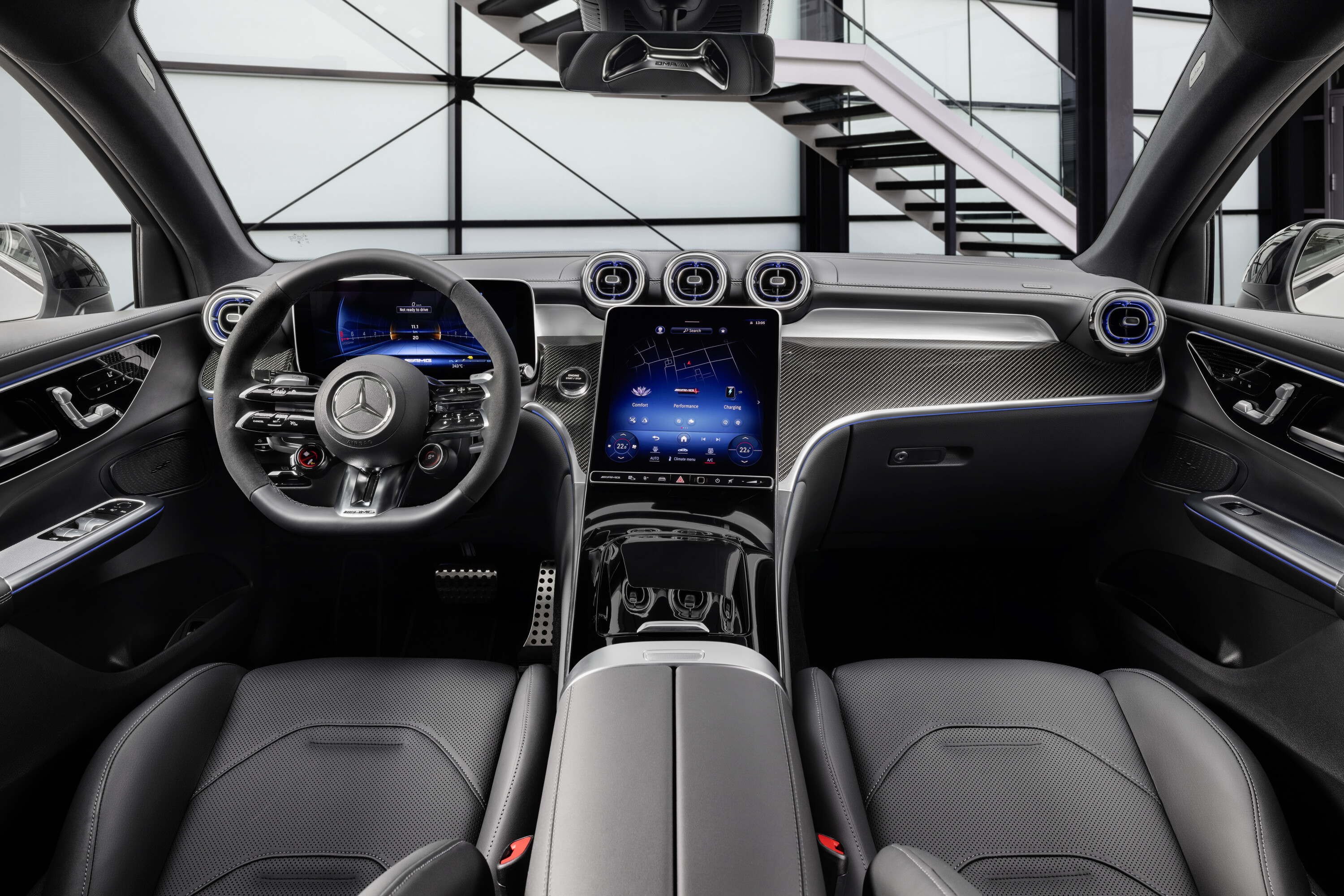
Inside, there is data-logging capability for its MBUX infotainment, AMG Performance front seats with Nappa leather upholstery, and a Nappa leather and microfibre steering wheel.
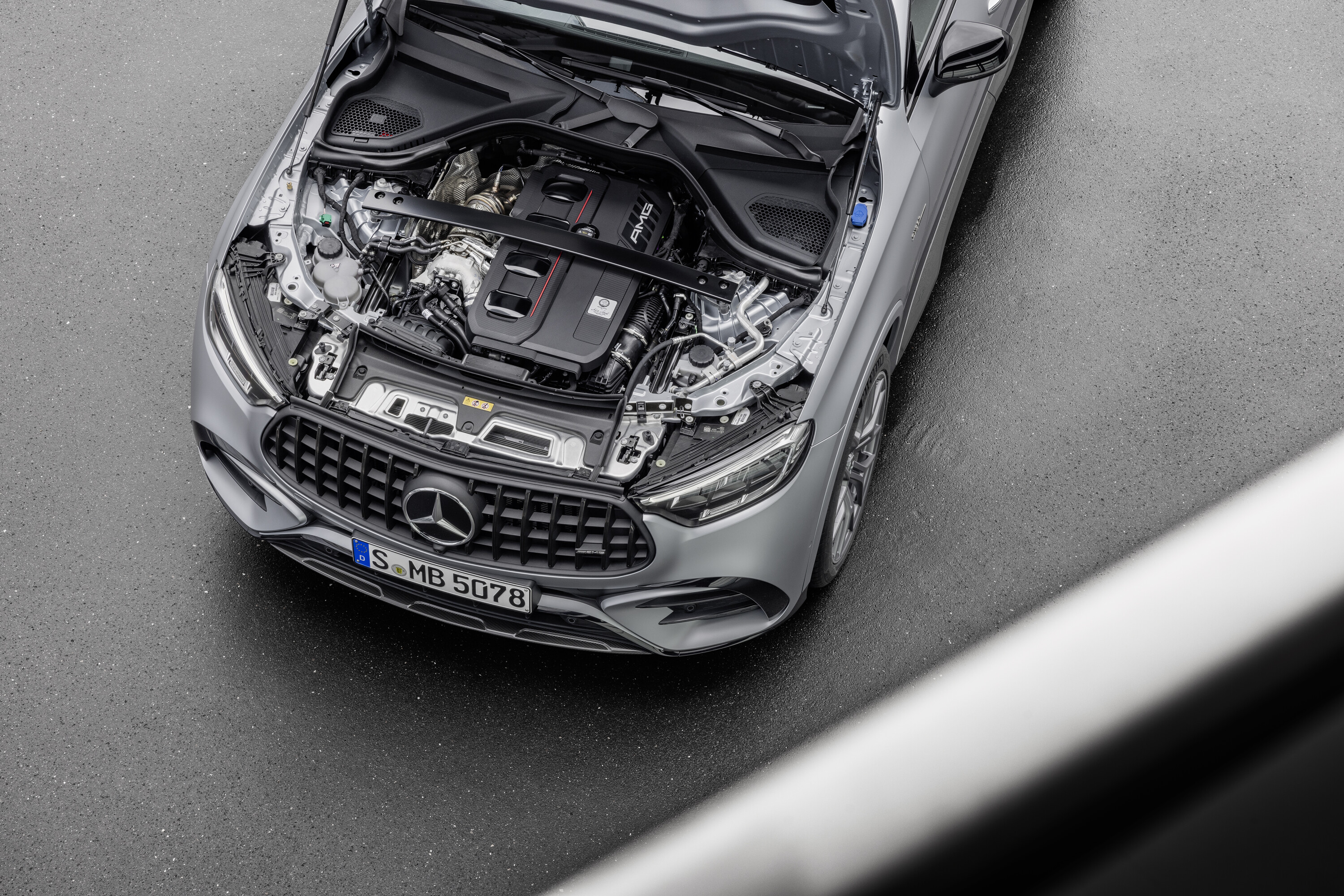
The 2.0-litre 350kW/545Nm unit is the most powerful series-produced four-cylinder engine in the world.
When combined with the output from a permanently excited synchronous electric motor, total output is 500kW and 1020Nm.
Acceleration to 100km/h takes 3.5 seconds and top speed is 275km/h.
1
The EDU is positioned on the rear axle, for improved weight distribution. 4MATIC+ all-wheel drive provides a mechanical connection between the front and rear axles, meaning power from the electric motor can be transferred to the front wheels if required.
A 400-volt 6.1kWh battery provides up to 80kW of continuous power and 150kW of peak power for up to 10 seconds.
It can be charged by regenerative braking or plugged in. The battery pack features direct cooling; a non-conductive liquid flows around all 560 cells.
1
Power is delivered via a nine-speed automatic transmission with a wet clutch instead of a torque converter. Torque can be split from 50/50 front/rear to 100 per cent sent to the rear.
The 63 S E comes standard with a composite braking system, with six-piston fixed calipers at the front and single-piston floating calipers at the rear. An AMG high-performance ceramic composite braking system is optional.
Adaptive damping varies between sporty driving dynamics and softer comfort. It continuously adapts each individual wheel taking into account the preselected setting, driving style, and condition of the road surface.
1
AMG Active Ride Control is unique to the GLC 63 S E Performance within the GLC range.
Instead of using rigid anti-roll bars, it compensates for body movements electromechanically.
Active rear-axle steering is standard on GLC 63 S E-Performance variants, operating with a maximum steering angle of 2.5 degrees. The rear wheels can turn in the opposite direction to the front wheels at speeds of up to 100 km/h, then turn in parallel to the front wheels, above 100km/h, up to a maximum of 0.7 degrees.
1
Pricing
The Mercedes-AMG GLC 63 S E-Performance SUV is priced at $192,900 before on-road costs and the GLC 63 S E-Performance Coupé is $199,500 before on-roads.
Both models are available to order from 22 May 2024.
On the face of it, the Mini Cooper ought to be a prime beneficiary of the switch to electrification. Small, punchy, cheeky and ideally suited to the cut and thrust of city driving, an electric motor would certainly seem preferable to an internal combustion engine.
As we’ve seen in some electric city cars, however, the compromises that come with a necessarily modest battery can severely hobble all-round practicality. So is the new Cooper SE a case of all show and very little go? That’s what we needed to establish.
Those of you with longer memories will know that this isn’t Mini’s first stab at a hatch with a battery pack. You can be forgiven for letting any recall of the old Mini Cooper SE from 2020 slip from your temporal lobe because it was a fundamentally forgettable thing: overpriced and underwhelming would be a fair summation.
Its main problem was its tiny BMW i3-derived 33kWh battery, which while keeping weight down to just 1365kg, offered up only 230km of range. What’s more, BMW demanded $54,800 for the privilege.
1
JUMP AHEAD
- How much is it and what do you get?
- How do rivals compare on value?
- What’s it like to drive?
- Interior comfort, space and storage
- How much fuel does the Mini Cooper SE use?
- How safe is the Mini Cooper SE?
- VERDICT
How much is it and what do you get?
This time round Mini offers way more for your money. The Cooper SE now sells for $58,990 but packs a far bigger battery, the 54kWh pack being fully 64 percent larger than its predecessor.
There’s also the less powerful Mini Cooper E available, a vehicle which we did not get to drive, retailing at $53,990 with a 41kWh battery pack. It seems worth the five grand outlay to get a quicker and more rangy vehicle.
It certainly seems to offer a good deal more for the money than an Abarth 500e in terms of physical size and capability. The Cooper SE is built in Mini’s Zhangjiagang plant in China and sits on a chassis that’s related to the GWM Ora 03, courtesy of a joint venture between Mini and GWM called Spotlight Automotive.
1
From 2026, it’ll also be built in the UK and will therefore be able to sidestep any putative tariffs on Chinese-built vehicles. It’ll also be sold alongside ICE-engined Cooper variants, which run on a very different floorpan, so there’s something for everyone.
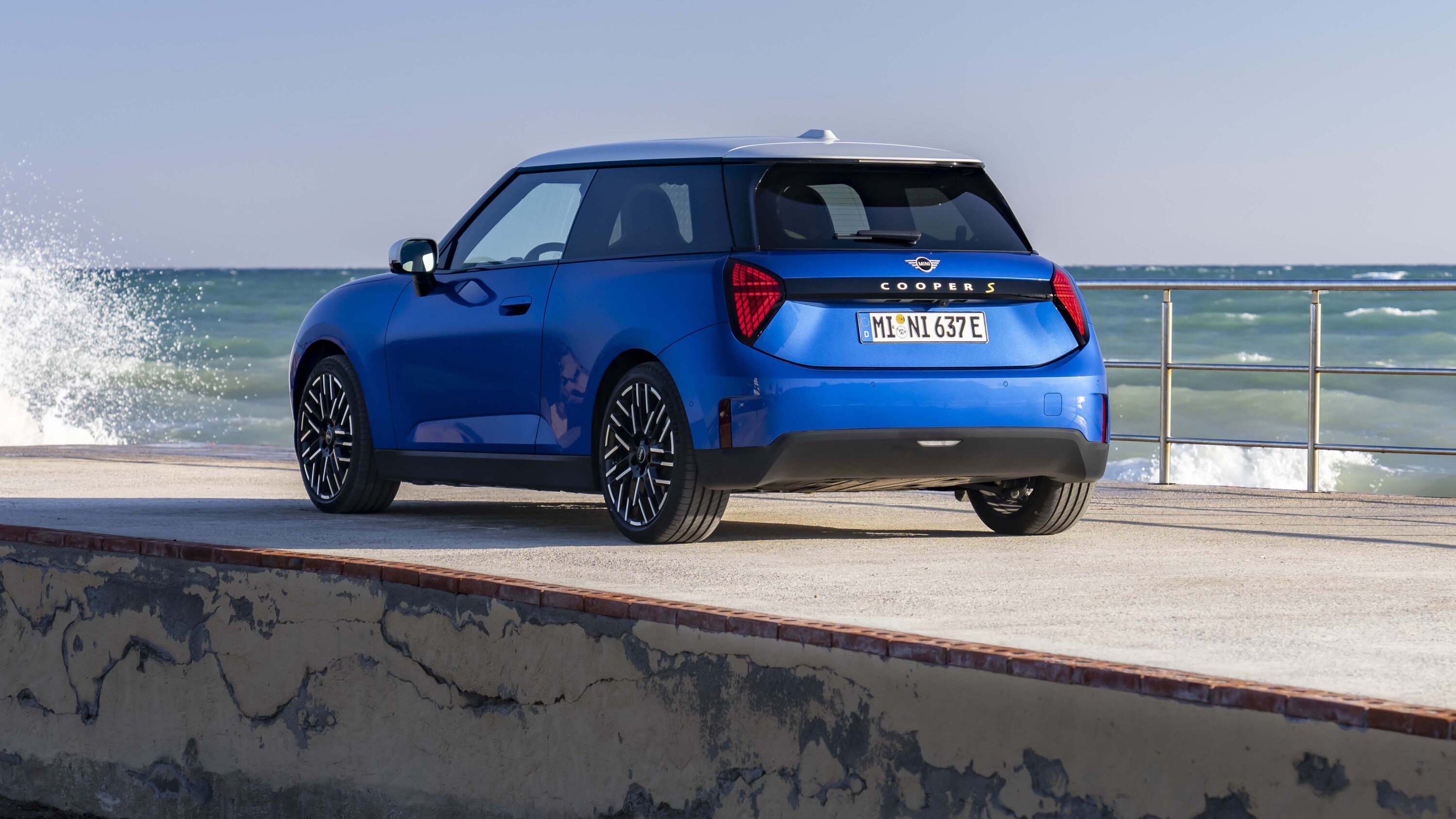
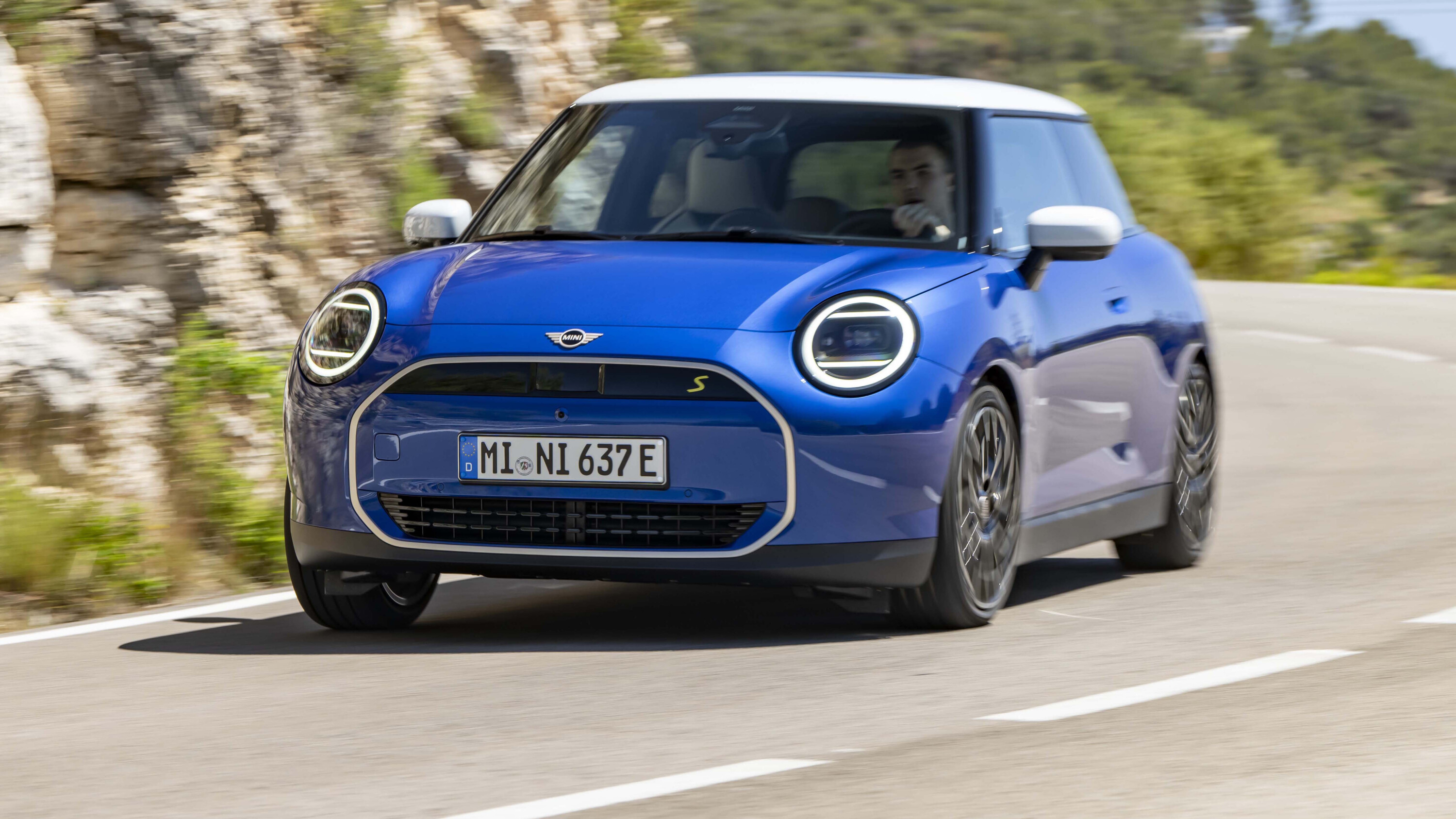
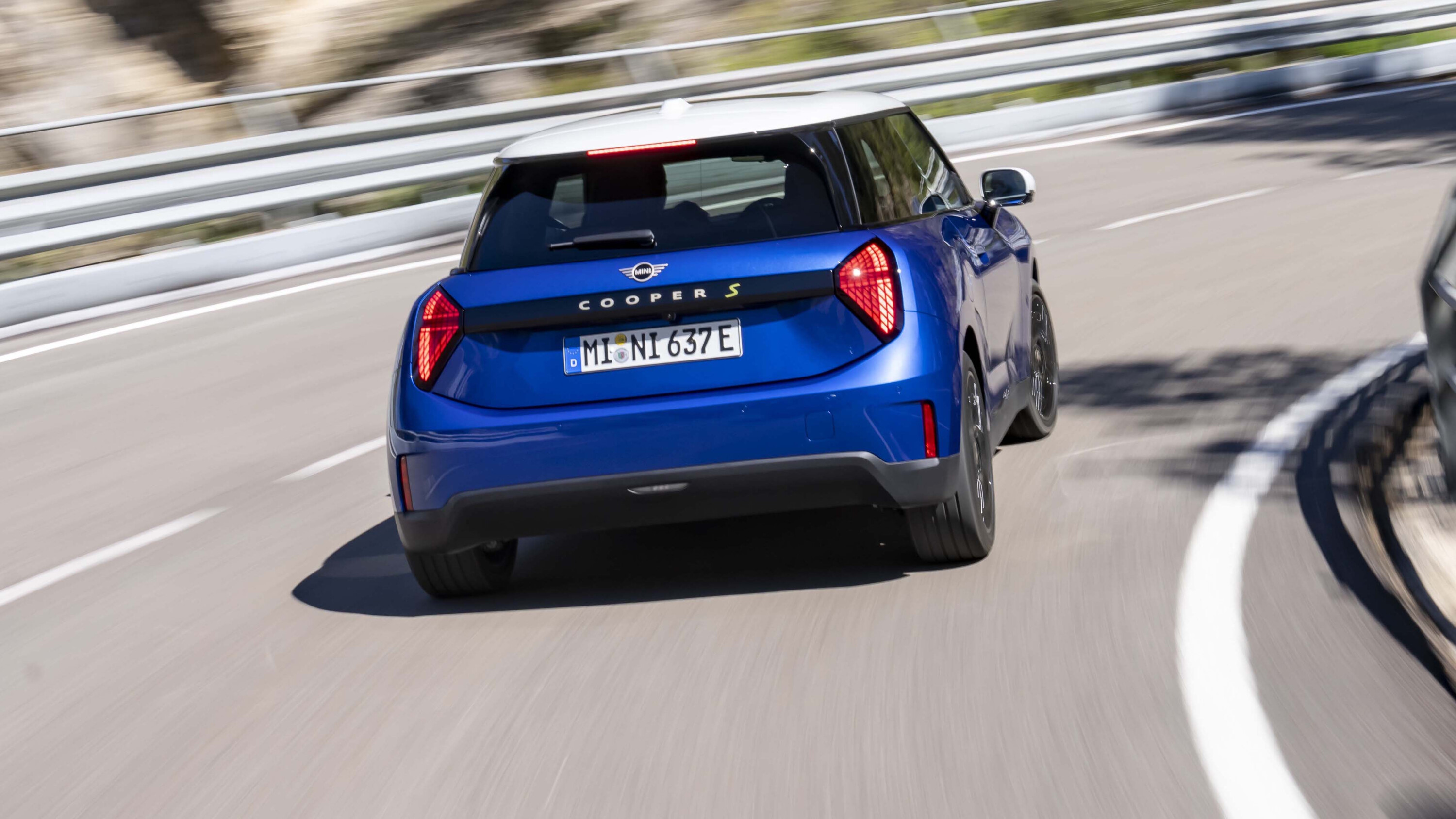
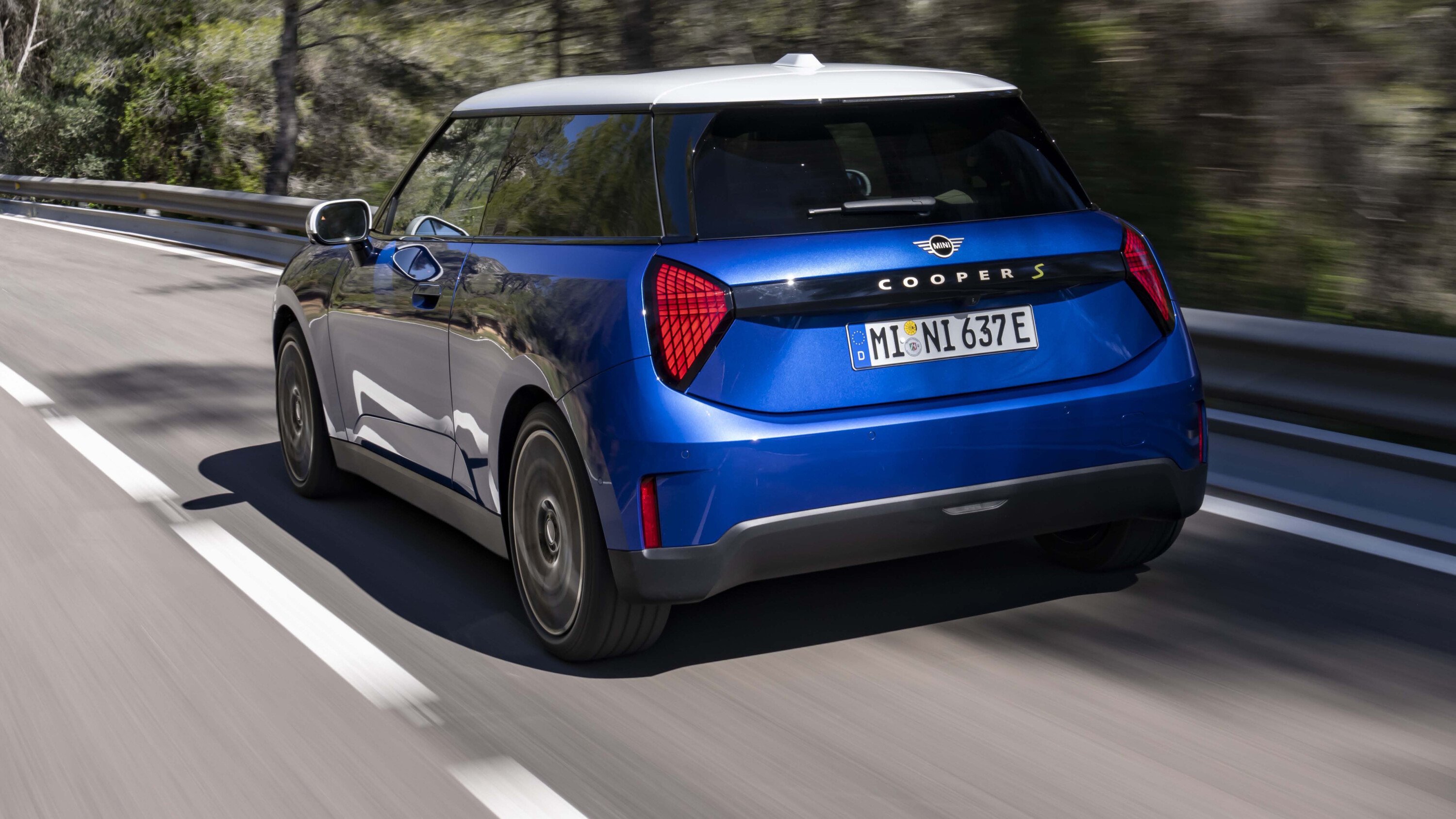
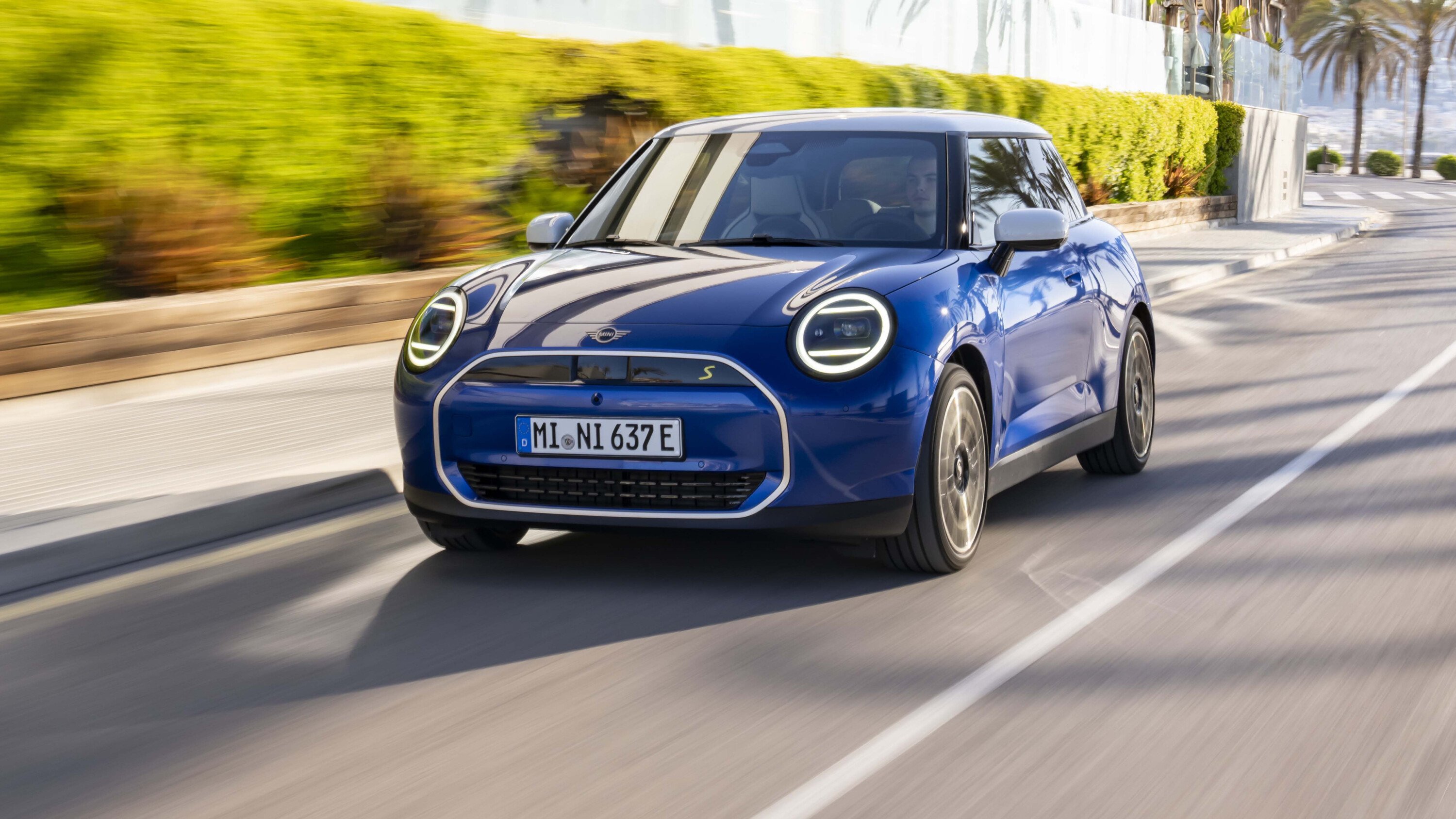
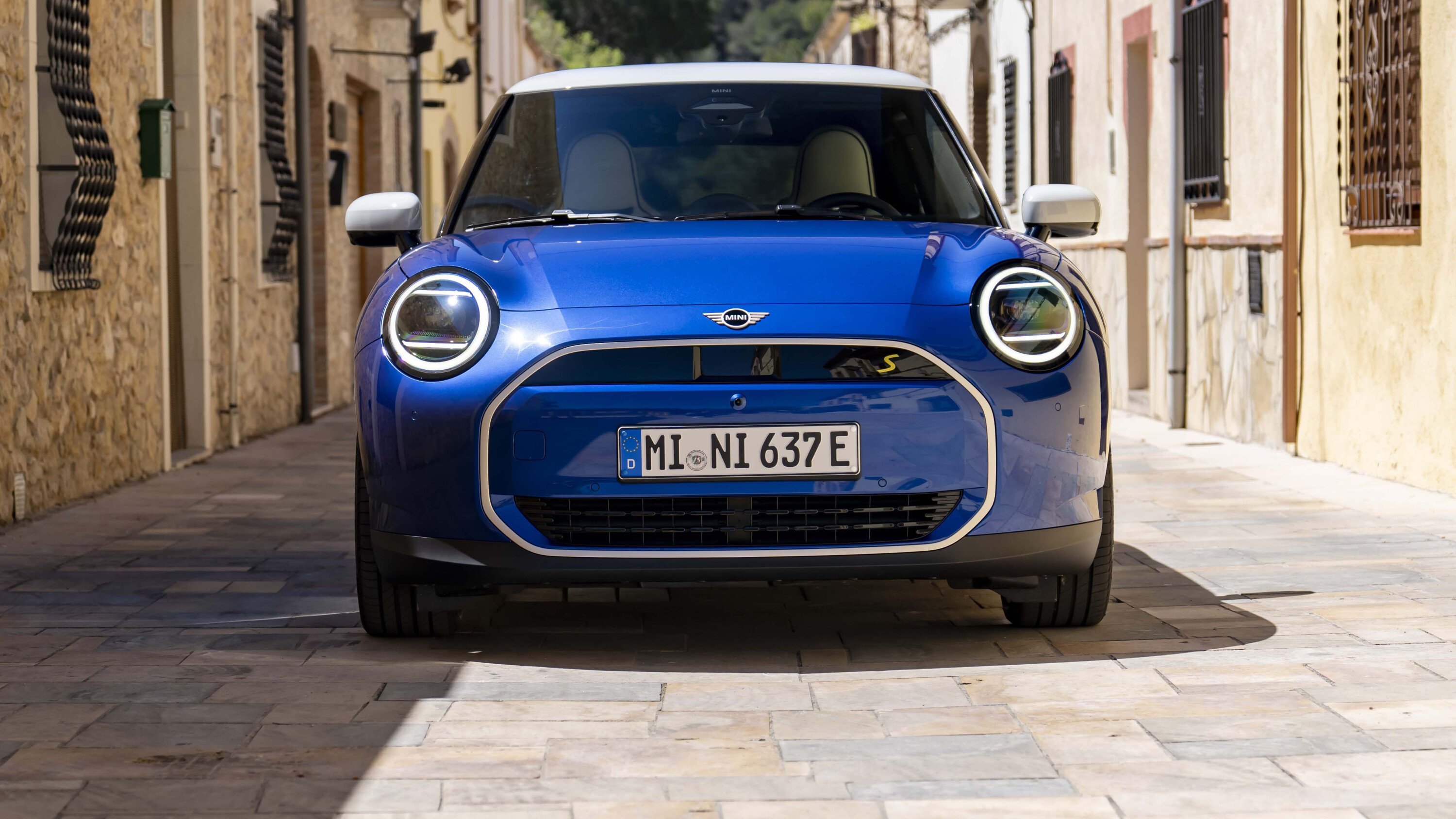
First impressions from walking around the new car are mixed. The way it’s packaged is excellent, with real aggression in the way the wheels are pushed to each corner with minimal overhangs. That pays dividends in terms of interior space, more on which later.
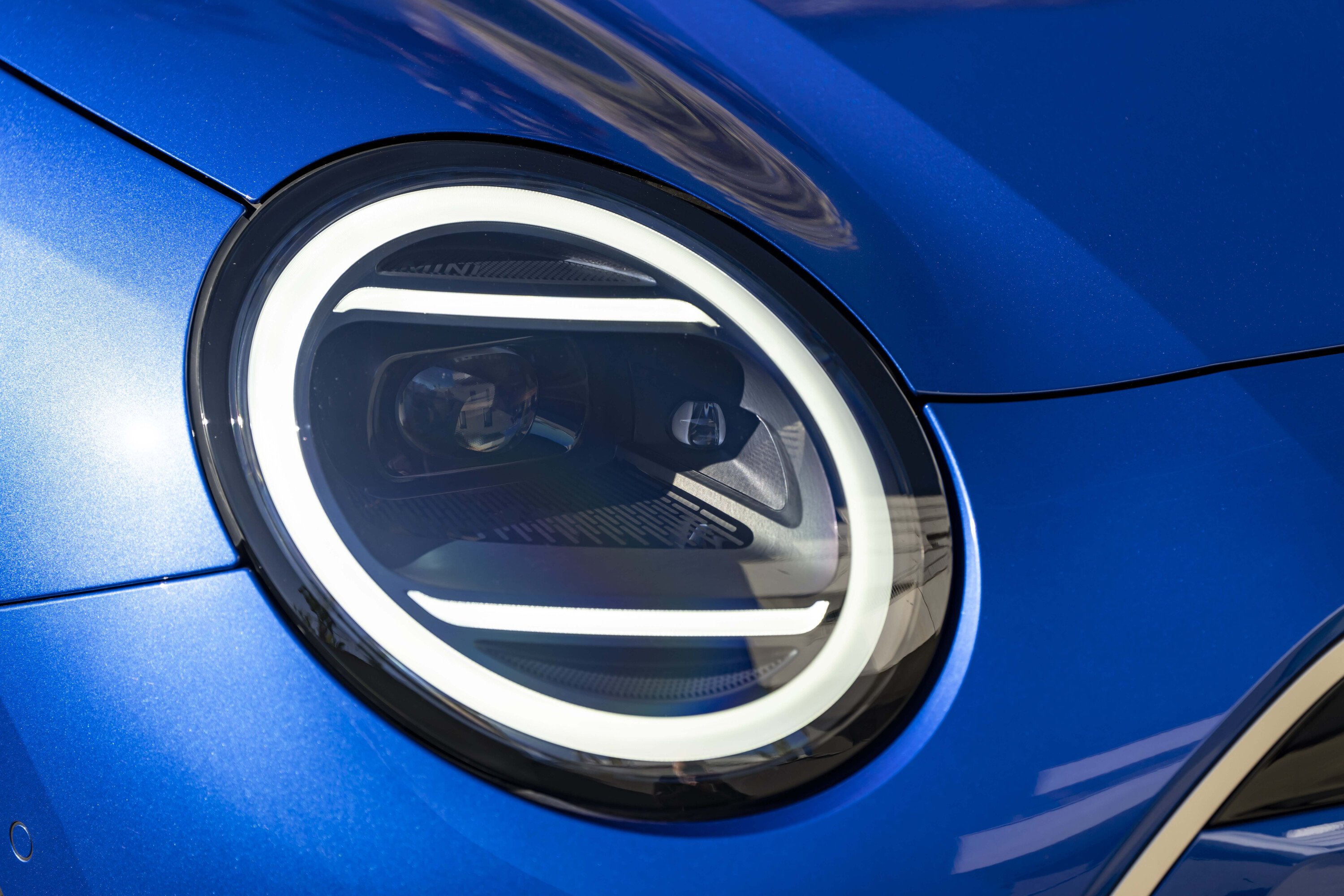
Design director Oliver Heilmer is happy to invoke the philosophies of Sir Alec Issigonis when discussing this vehicle, claiming that its pared-back exterior detailing is a tribute to the minimalist approach of the original.
1
Decluttering exterior designs is something that appeals to a certain strand of designer vanity, but I’m not sure that buyers of this car ever draw particular parallels with the original Mini.
Rather they’ve come to expect a degree of design adornment with these retro-themed reissues and there are elements of the new Cooper SE that look a little plain, especially in darker colours where the shape and tension in the flanks isn’t so obvious.
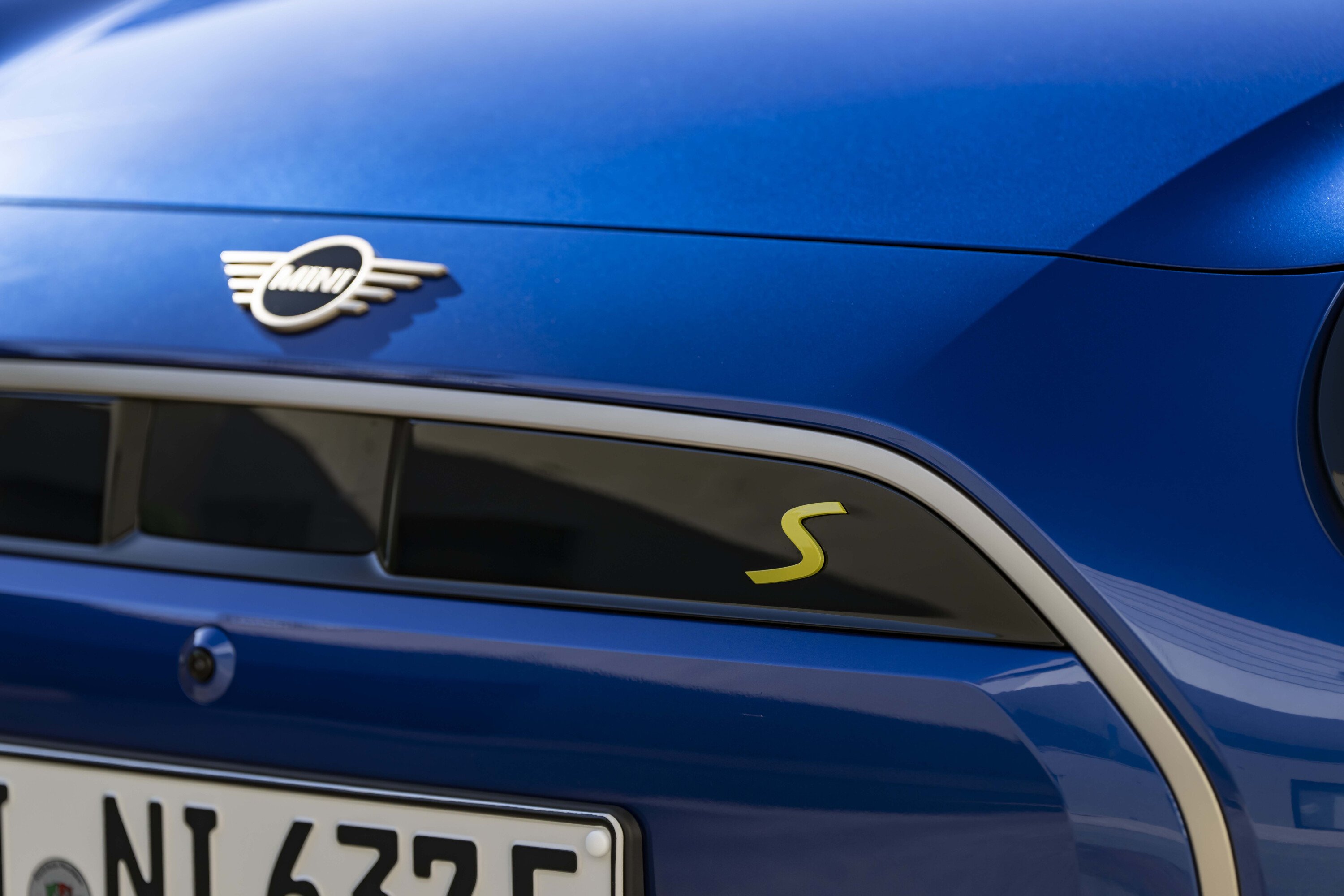
Curiously, while Mini had also excised a lot of the chromework from the exterior, it had then somewhat ruined the effect by fitting some of the fussiest alloy wheels imaginable to the SE.
1
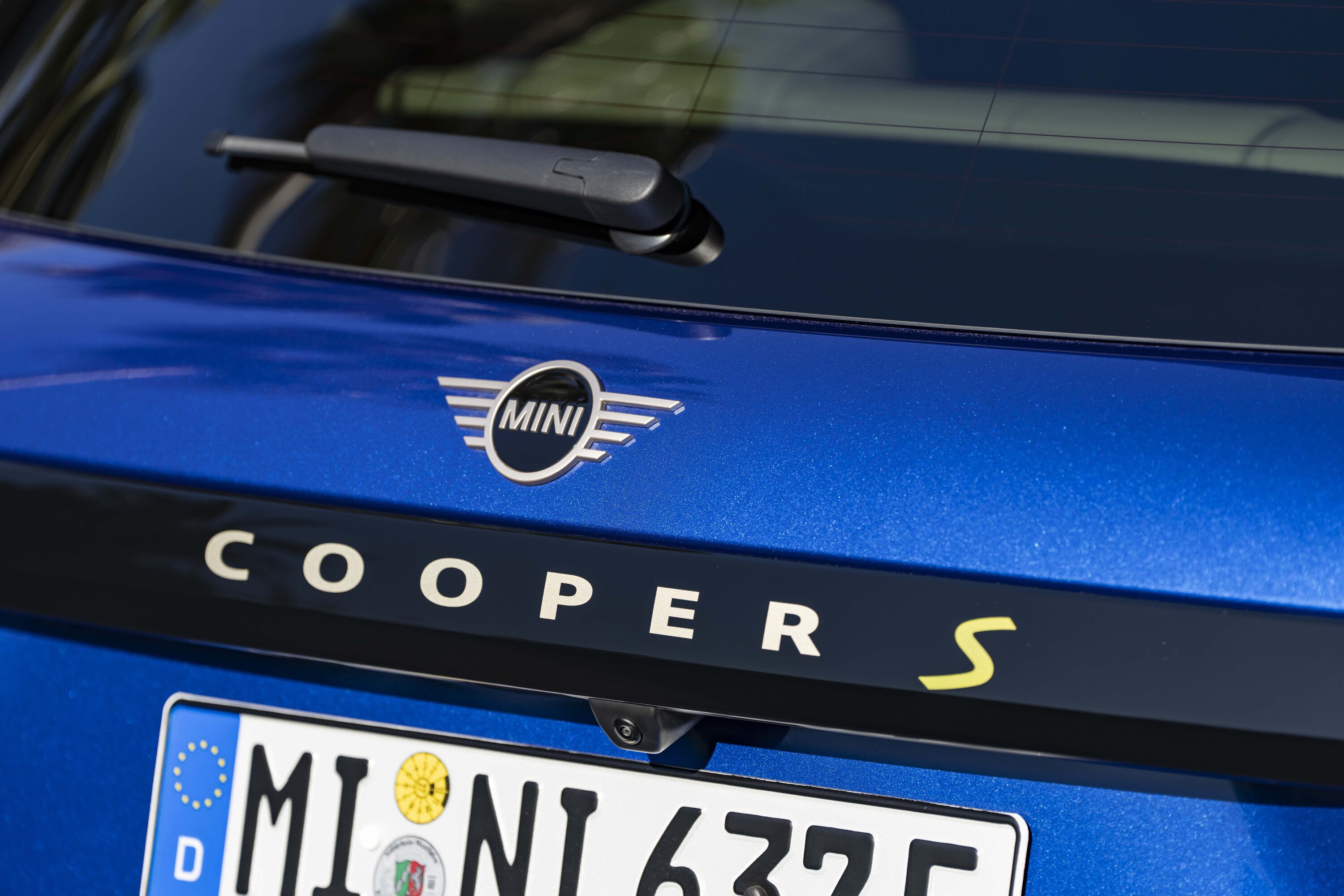
The two-tone 18-inch ‘Night Flash Spoke’ wheels also look a nightmare to keep clean and there’s no other option on offer. The Union Jack rear lights carry over, although we’ve heard whispers that there’s a way of switching them out if you so desire.
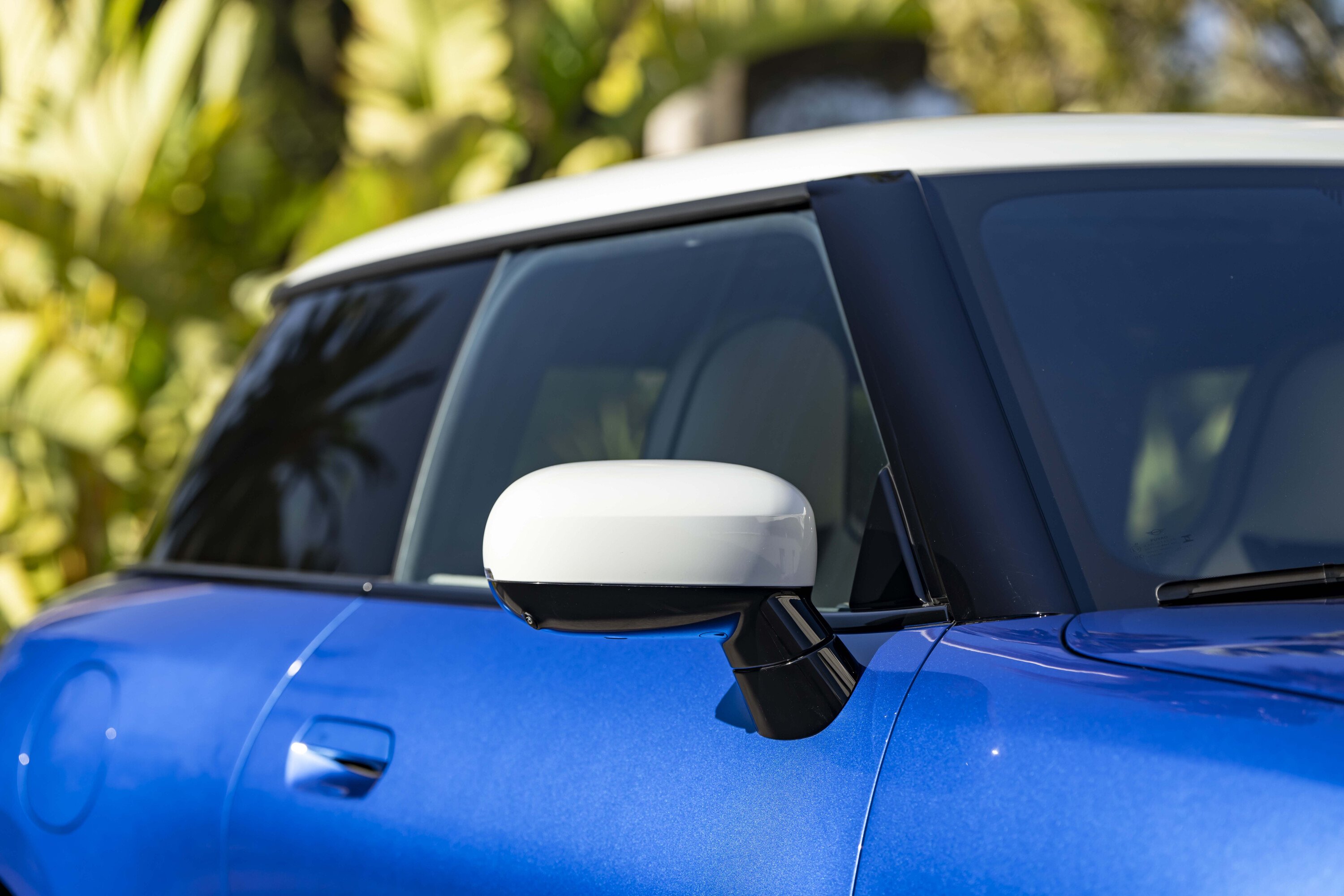
Buyers can choose from five colour combinations: Nanuq White with a Jet Black roof, Midnight Black II with a body coloured-roof; Chili Red II with a glazed white roof, British Racing Green IV with the white roof and the spec that we drove, Blazing Blue with white roof.
As we were driving European-market vehicles, not all of the specs matched up exactly with the ‘Classic’ trim level we’ll see in Australia, but it was enough to get a representative feel for what’s coming in quarter three of 2024.
1
How do rivals compare on value?
The Abarth 500e clearly can’t hold a candle to the Mini Cooper S’s blend of qualities.
The key rival will likely be the excellent $59K Cupra Born, which delivers more battery and therefore more range, but is correspondingly heavier and slower off the mark than the Mini. Beyond that, what else is on offer at this price point for the design-driven EV buyer? We can’t see Cooper SE prospects cross-shopping an MG4, as good as the Long Range 77 model is.
The problem with this price point is that it nudges at the event horizon of the Tesla Model 3 RWD, which has just had another haircut on its sticker price. Agreed, it’s not apples for apples, but if buyers start to become swayed by more practical factors, it’s hard to ignore the Model 3’s attractions. All Mini really needs to do, however, is get prospects to test drive the two cars and it’ll have an unanswerable case in its favour.
1
What’s it like to drive?
The Mini Cooper SE is probably the most fun electric car to drive this side of a Hyundai Ioniq 5 N.
Like the all-conquering Korean, there’s a sense that its designers have thought long and hard about how to engage the EV driver in a way that many of its rivals simply haven’t. Bottom line? It’s one of those rare EVs that you’d take for a spirited zip just for the hell of it.
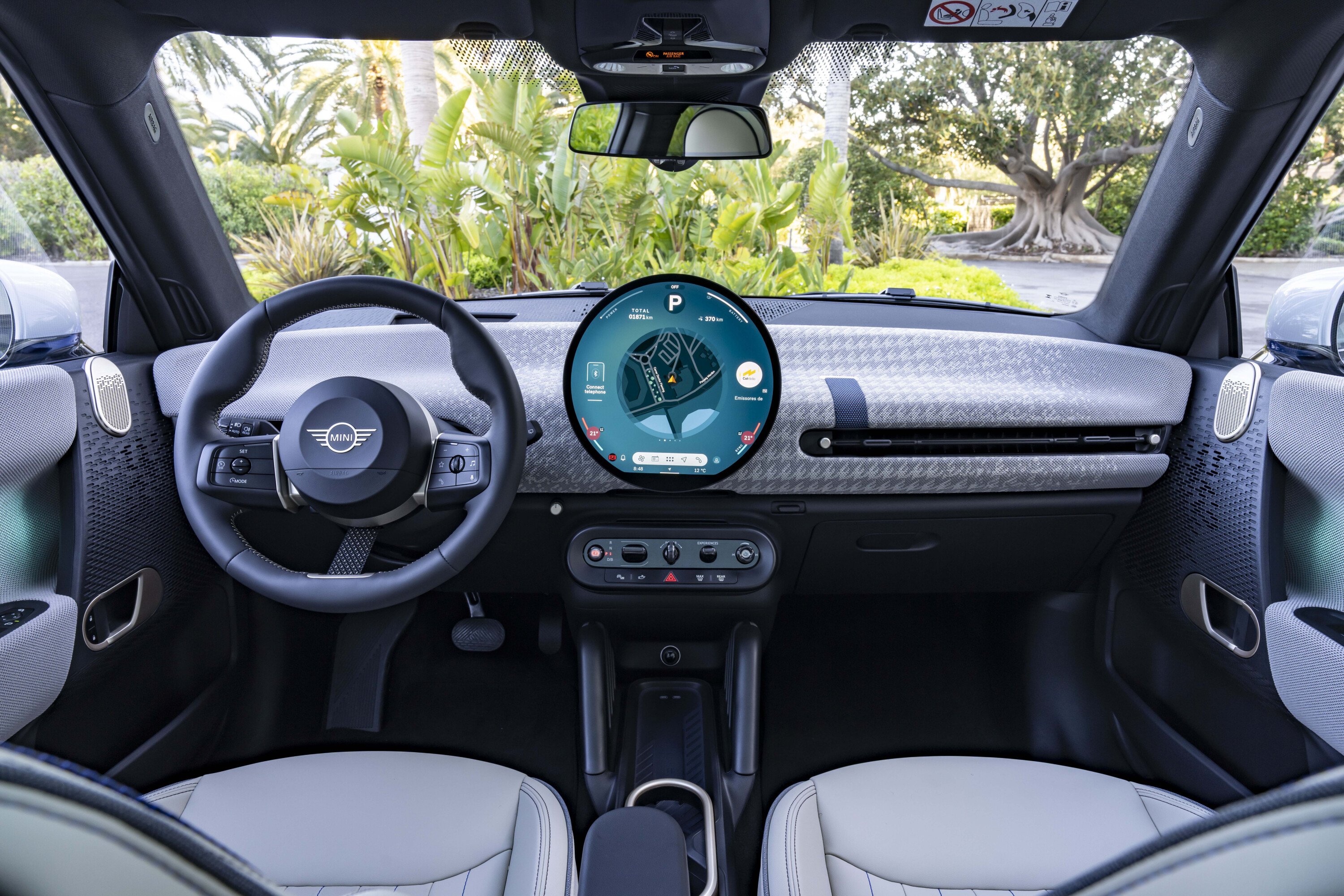
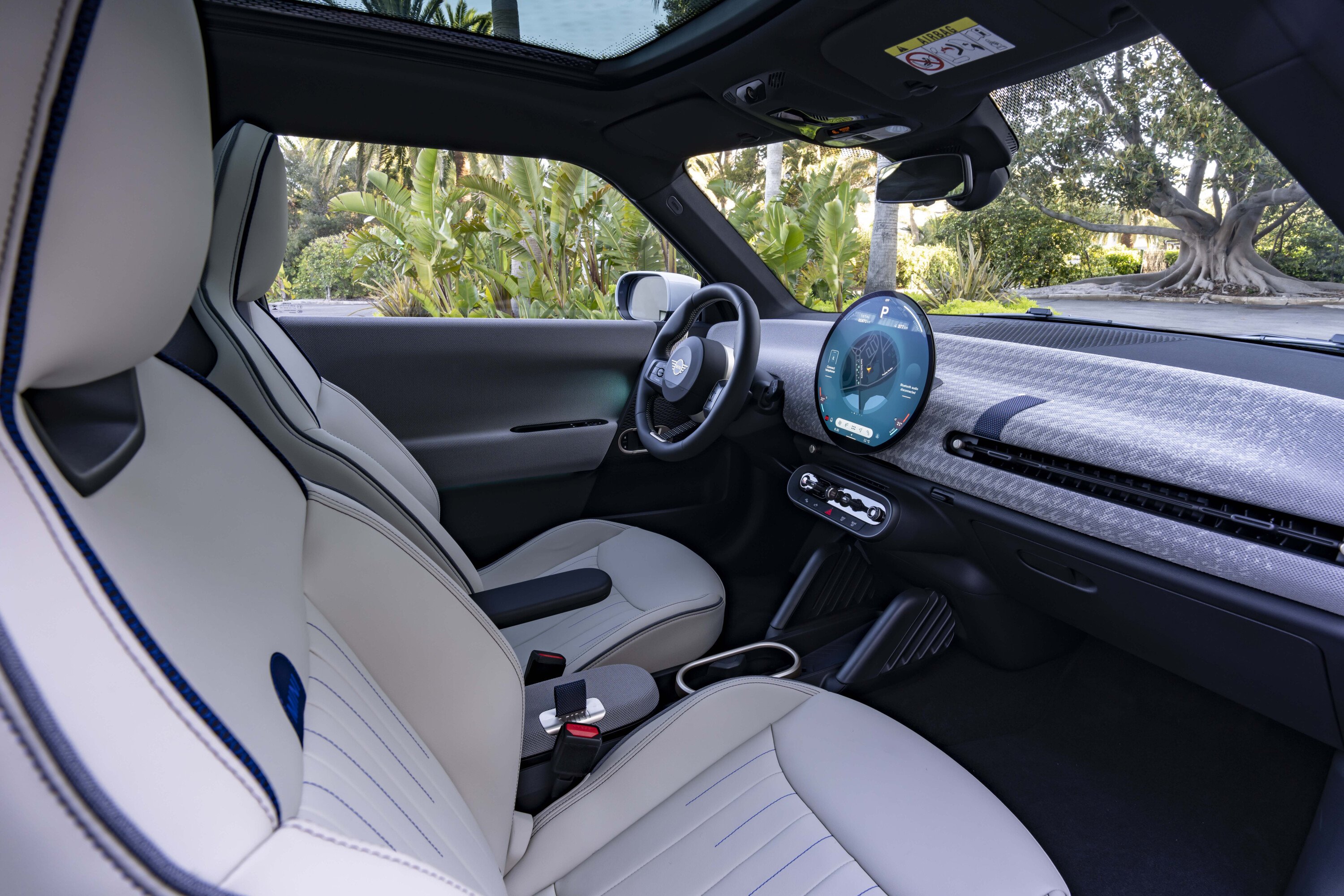
Drop into the cabin and the driving environment will put a smile on your face. There’s something reminiscent of a BMW i3 (albeit built down to a price) about the interior fabrics that run across the dash top.
There’s a concept car boldness to the knitted recycled polyester swatches of fabrics, the decorative watch-strap motif that you see on the dash, the steering wheel and the storage bin lids and, of course, the frisbee-sized circular centre display.
1
There’s only a modest amount of rake and reach adjustment on the steering wheel, but the driver’s seat can be adjusted low at its cushion, and the low scuttle height affords decent visibility. The mirrors, both internal and external, are pretty small though.
Prod the car into life and you’ll be aware that Mini has spent a lot of time on how this car sounds. It’s equipped with seven intriguing drive modes or, in Mini-speak ‘Experiences’, that can be cycled through via a physical switch. Some examples?
Core delivers a futuristic Jetsons-style swoosh under acceleration, where Balance has a curious cicada-like chirrup as you tip into the throttle. Vivid silences the car and prioritises your choice in music, a feature that is certain to be widely copied.
1
There’s a muted Green setting and an unusual Timeless setting that aims to replicate the sound of the original Mini at idle and low speeds, building to a more modern sound as you accelerate.
Then there’s Go-Kart mode which has a bassily intense top end timbre and a cute overrun burble as you throttle off in the upper registers.
The car sits on passive dampers, so there’s no adjusting the ride quality which is firmish. Mini’s test route sent us out on onyx-smooth roads, but we were able to deviate and find some scabbier and lumpier stretches of bitumen and it’s… busy.

1
Not harsh, but certainly something that’d probably get your attention on a typical Aussie B-road. We’ll reserve full judgement for when we get hold of one locally.
The corollary of that is that body control is extremely good. The kerb weight of this model is just a sniff over 1600kg, so it’s no featherweight, but it controls its masses very adeptly. Mini points out that it has kept a lid on that figure, but also points out that ride comfort has been helped by the ratio of sprung mass to unsprung mass.
Click out the stability control and lift-off oversteer is easily controlled by the crisp (2.2 turns lock to lock, fixed ratio) steering. In Go+Kart mode, the ESC can be switched between a default Sports mode into a playful Sports Plus (think BMW’s M Dynamic mode) or all the way off.
1
All of the basics for the forthcoming hot JCW version look extremely promising.
That car will doubtless run on a more focused tyre than the somewhat milquetoast Michelin e-Primacy 225/40 R18 rubber that the Cooper SE is supplied with. These tend to chirp with wheelspin out of tighter corners and remind you that the handling limits would doubtless be a good deal higher with more focused rubber.
I questioned Mini’s dynamics engineer Patrick Haussler on the choice of this tyre and he shrugged and said “It’s a Label A, it’s a rolling resistance tyre. It’s a must-have, we have to deal with it.” If Mini fitted a Label C (such as a Michelin Pilot Sport) or a Label D tyre, Haussler reckoned that this would knock “something like 20 to 30 kilometres” from the overall range.
1
“The tyre producers have learned a lot. I remember five or six years ago when we had the first generation of Label A tyres, it was hard to find a tyre that was good for our car. This time we have had a lot of tyre testing, but in the end, I’m pretty happy about the tyres.”
Mini also worked hard at finessing the feel of the brake pedal, smoothing the handover between regen and friction braking. The Cooper SE does without re-gen paddles, and the various drive modes offer different levels of re-gen.
Users can also select different levels of recuperation or leave the car in adaptive mode, which utilises the car’s camera system to gauge the level of re-gen for any given situation. The single-piston front brakes look a bit puny but work well enough in road usage, although a spell on a race track would probably find their limits in fairly short order.
1
Power is rated at 160kW, with torque at 330Nm. Mini quotes a 0-100km/h time of 6.7s, but pick-up off the line feels initially quite soft.
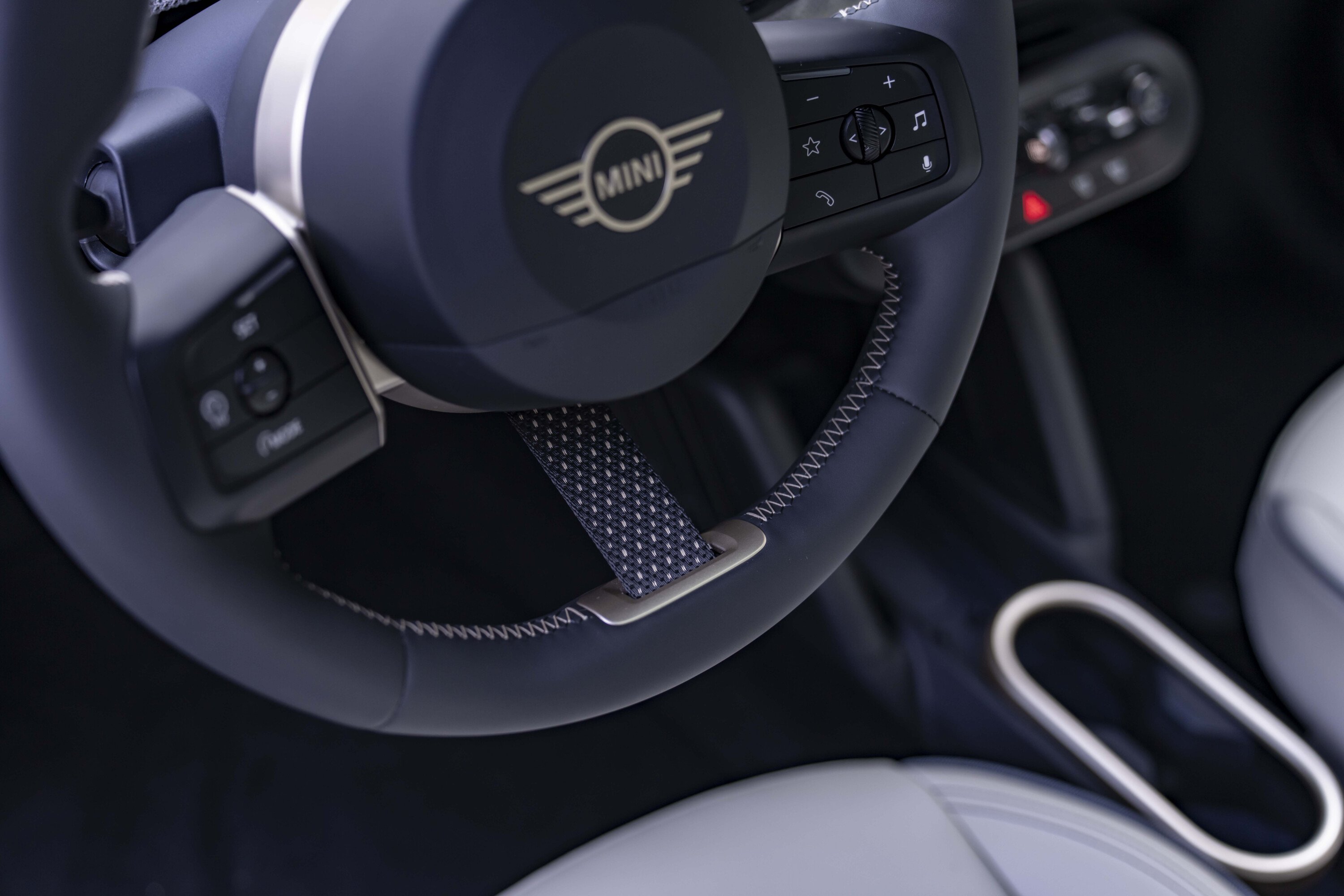
In the Sport drivetrain setting, it’s possible to lean against the brakes in order to build some tension in the drivetrain. The steering wheel is obnoxiously fat-rimmed but, like the rest of the cabin, does a good job of packaging some physical controls so that you’re not always diving into the touchscreen on the move.
The infotainment system contains the ubiquitous voice assistant, an interesting augmented reality element to the satellite navigation (in jaw-dropping resolution from the front camera), wireless Android and Apple integration, and myriad different skins corresponding to the different drive modes.
Refreshingly, the physical and the virtual are well integrated. You can swipe up to bring up a ‘toolbelt’ of favourite functions, or assign a favourites button on the steering wheel to do likewise. A button on the lower dash also displays the ADAS systems, so lane assist and speed limit warnings can be killed fairly painlessly.
1
- What is a Powertrain or Drivetrain?
- Power vs torque
- Car suspension explained
- Automatic transmissions (‘gearboxes’) explained
- Chassis control systems explained
- Car vs Ute vs SUV: How the vehicle you buy should guide the way you drive
- What is the WLTP emissions and range test?
The cabin really is what will sell this generation Mini. Put simply, it’s a lovely place to spend time.
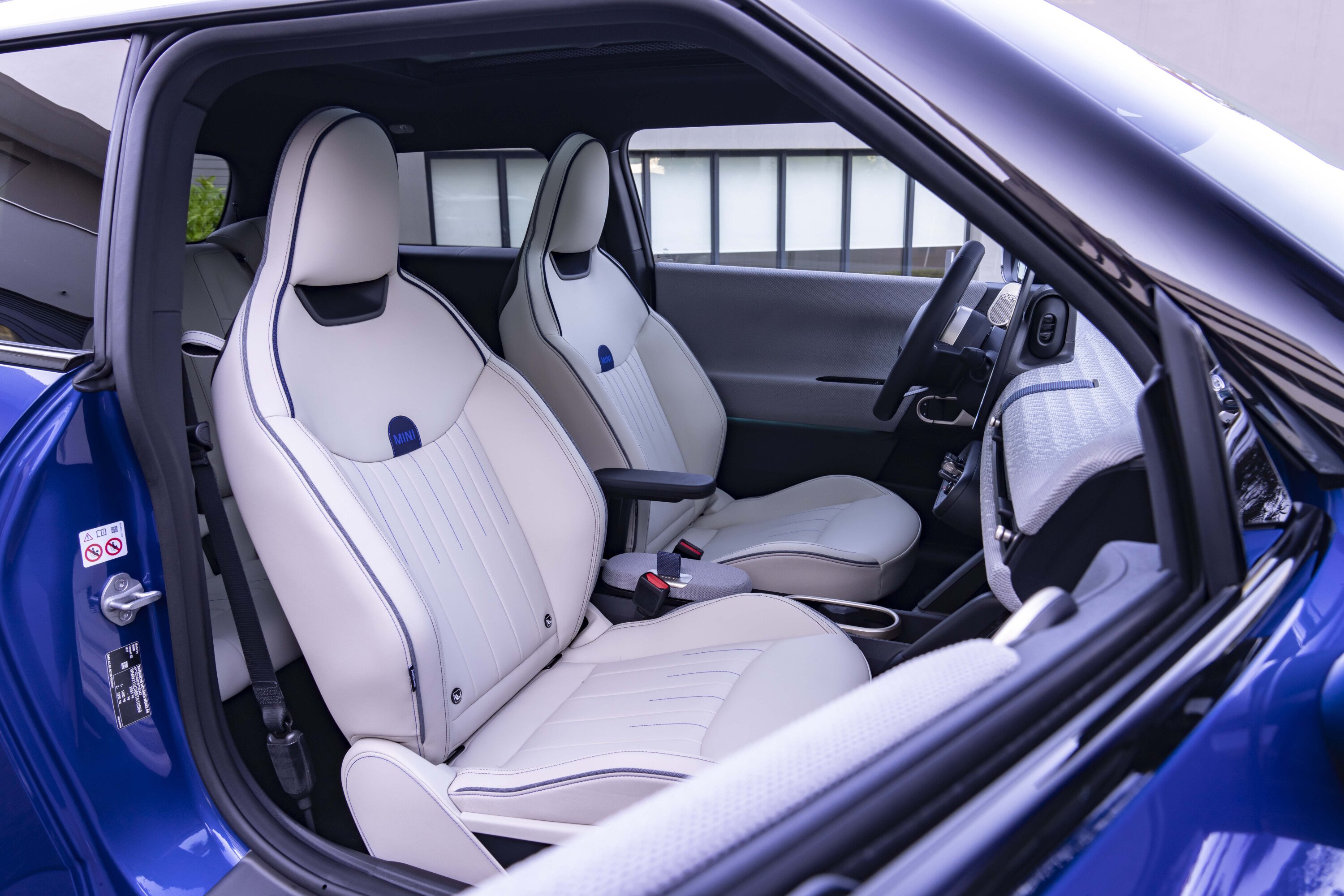
Even for a lanky bloke like me, there;s never a problem with headroom; amazing given that this car features a full-pane glass roof that also robs a couple of centimetres of overhead real estate. The JCW-spec vegan leather sports seats offer decent levels of support and get a heating function to complement the memory settings.
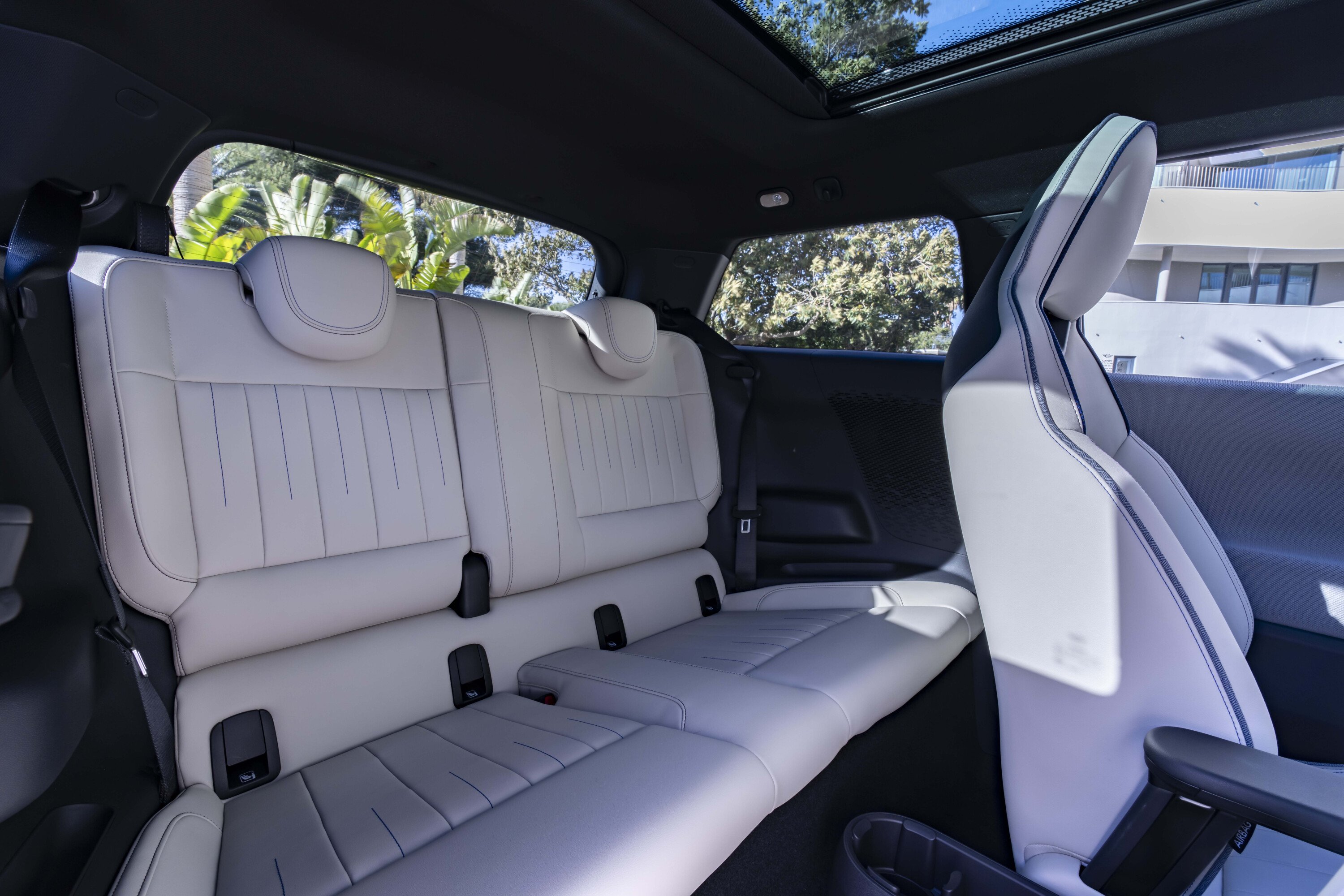
Indeed, the spec sheet shows that the wheelbase of the electric versions of the Cooper and fully 31mm longer than that of the ICE variants. You’ll feel that inside, with reasonable rear legroom for small adults and kids.
1
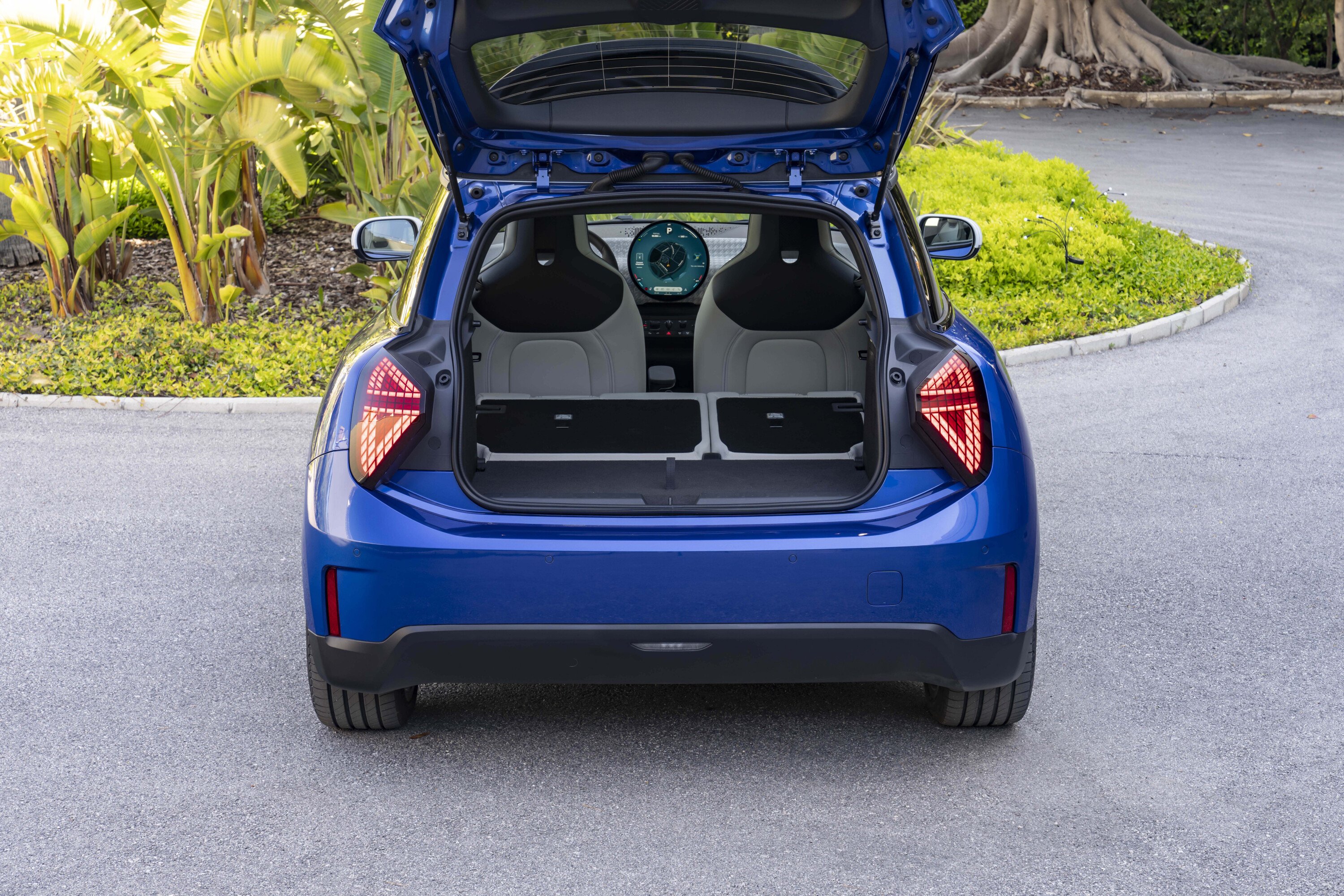
Given that this is a three-door car (step up to the Aceman or Countryman if you want five doors), rear seat space wasn’t a key design priority. Neither was luggage space which, at 210 litres, isn’t stellar.
Flip the rear seats down and that grows to 800 litres, but there’s no electrical assistance for the tailgate. Mini’s weight-saving quest saw to that. You’ll also search in vain for a spare wheel, Mini instead providing a mobility foam kit if you catch a flat.
The detailing of the interior is worth poring over. The rose gold finish for the harman kardon speakers and the interior door pulls is a lovely bit of visual sleight of hand that distracts you from the hard plastics that surround them. The low-key integration of the air vents is also very slickly done, and there’s even a decent amount of interior stowage space.
There’s a deepish central bin, reasonable door pockets, and grippy central wireless charging pad for your phone. The centre armrest moves with the driver’s seat which may cause an interloping passenger a little angst.
1
How much fuel does the Mini Cooper SE use?
Mini quotes a WLTP range figure of 403km for the Cooper SE, a hefty step up from the 305km showing of the lesser Cooper E model.
Of course, given that this was a press launch on some fairly tasty hill routes, we endeavoured to find some sort of worst case energy consumption figure and returned a 23.2kWh/100km figure, which means that even if you drive as if your trousers are on fire, you’ll still get over 200km from a charge. Drive in a more measured fashion and over 300km is easily attainable, Mini quoting a 14.7kWh/100km energy consumption figure.
Both Cooper E and SE models come equipped with DC fast charging capabilities enabling them to reach 0-80 percent charge in 28 minutes and 30 minutes, respectively. The peak DC charging rate of 95kW is so-so. When using a standard 11kW AC charger, the Cooper E achieves that same state of charge in 4.5 hours and the Cooper SE in 5 hours and 15 minutes.
1
How safe is the Mini Cooper SE?
We don’t have an ANCAP rating yet for the Mini Cooper SE,but it’d be a genuine surprise if it doesn’t score a five-star rating.
It’s packed with gear to make driving that little bit safer, The Driving Assistant Plus package is fitted as standard and includes radar-based driver assistance systems such as cruise control, lane change warning with blind spot detection and rear crossing traffic warning with brake intervention. It backs this up with camera and ultrasonic assistance to enable functions like Active Cruise Control with Stop&Go functionality, Collision Prevention, Surround View and
Remote 3D View, as well as a Parking Assistant. There’s also a standard and delightfully crisp and configurable Head-Up Display.
Tyre pressure monitoring is a standard feature as are driver and passenger front and side airbags, and side airbags for rear passengers.
2
VERDICT
Overall, it’s hard not to love what Mini has done with the Cooper SE. It’s a vehicle overflowing with personality, it’s fun to drive, it’s great just to sit in and there’s clearly been a great deal of measured consideration that’s gone into figuring out who will buy this car and how it’ll be used.
Spending $60K on a Mini might grate with some, but when you look at what else is offered at this price point, it’s possible to make a convincing case for the Cooper SE.
Clearly we’ll reserve full judgement until we’ve assessed its ride quality on Australian roads, but there’s a lot to like about this package. If you’re not sold on the benefits of its electric drivetrain, Mini also offers an ICE version of the Cooper S with a 150kW/300Nm two-litre turbo four that’s lineball in terms of pace.
Why not try both? That has the makings of a fascinating exercise but I’m willing to bet that the Cooper SE would make its piston-engined sibling feel a long way behind the curve.
MORE
Everything Mini
Snapshot
- Facelifted Touareg range arrives with boosted value for torquey diesel variants
- New R halo priced from $129,900 – VW’s first PHEV locally
- Richly specified 170TDI entry grade directly targets Mazda CX-90, Jeep Grand Cherokee
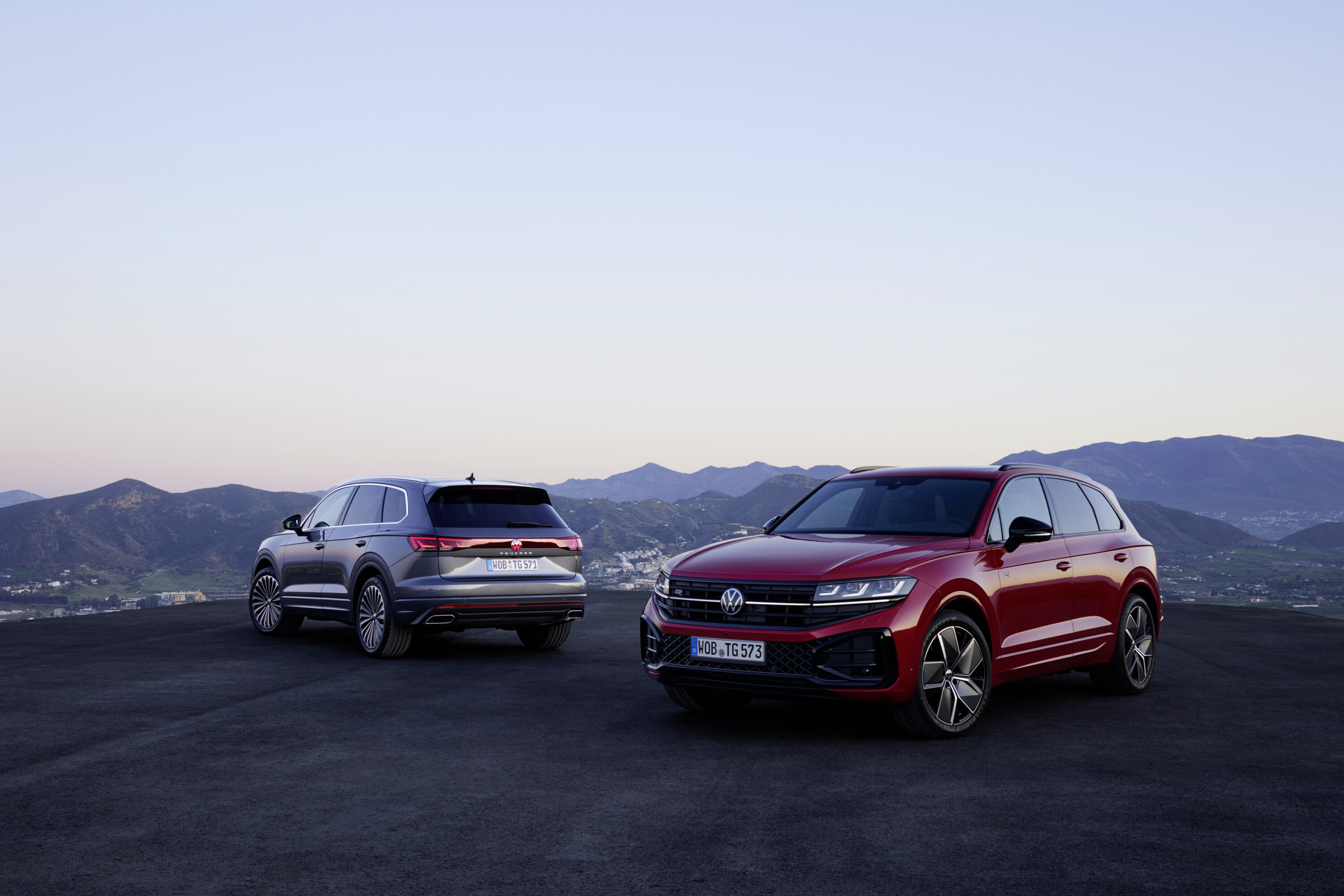
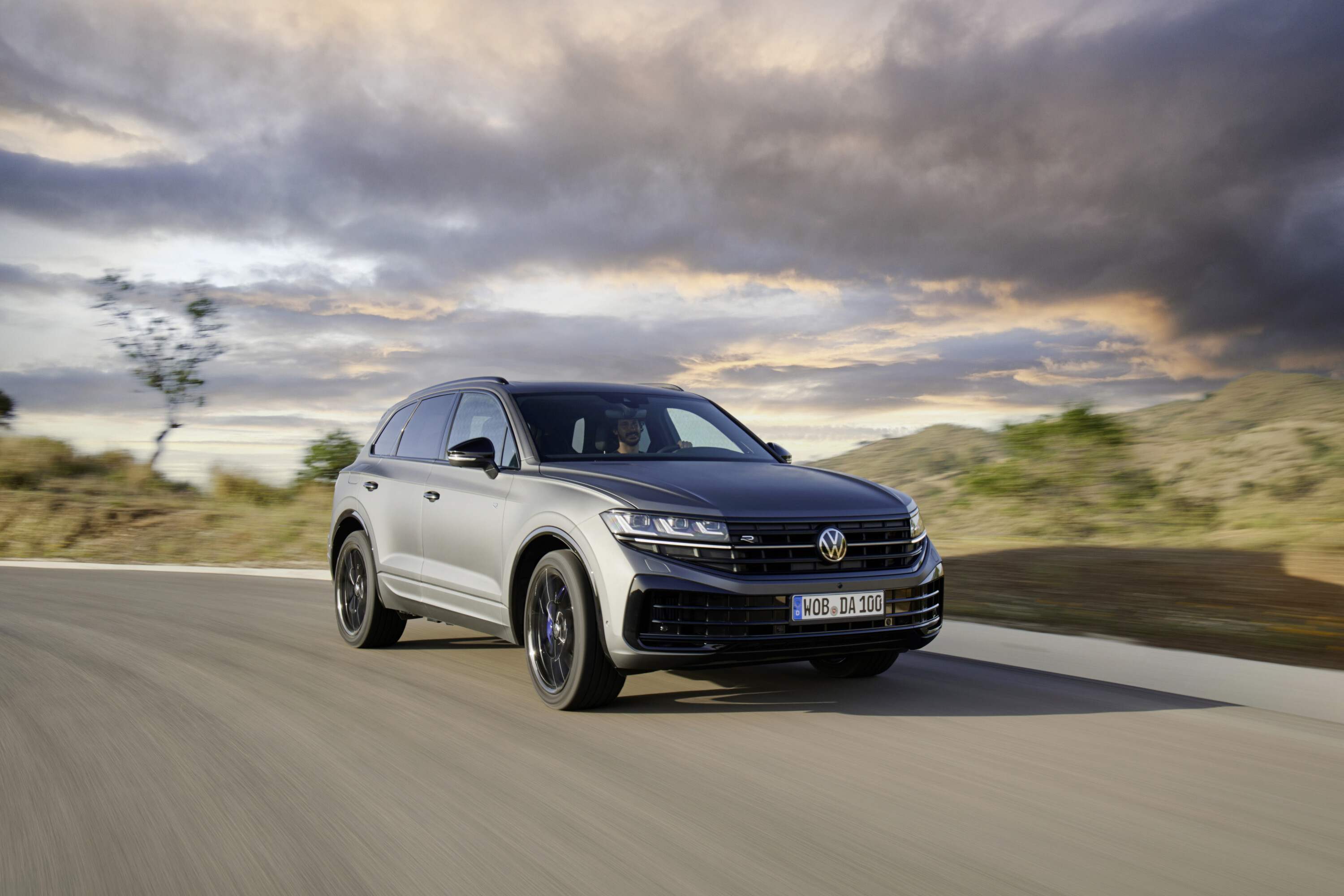
The updated Volkswagen Touareg large SUV has arrived with a revamped range – headlined by both a plug-in hybrid R and sharpened value for diesel variants.
VW Australia’s first ever plug-in hybrid (PHEV) costs $129,900 before on-road costs and arrives as the German brand’s most powerful production vehicle yet.
The Volkswagen Touareg R features a 3.0-litre turbo petrol V6 plug-in hybrid powertrain with 340kW and 700Nm. That’s enough to rocket the big SUV 0-100km/h in a claimed 5.1 seconds yet still achieve 3.1L/100km in the ADR combined efficiency cycle.
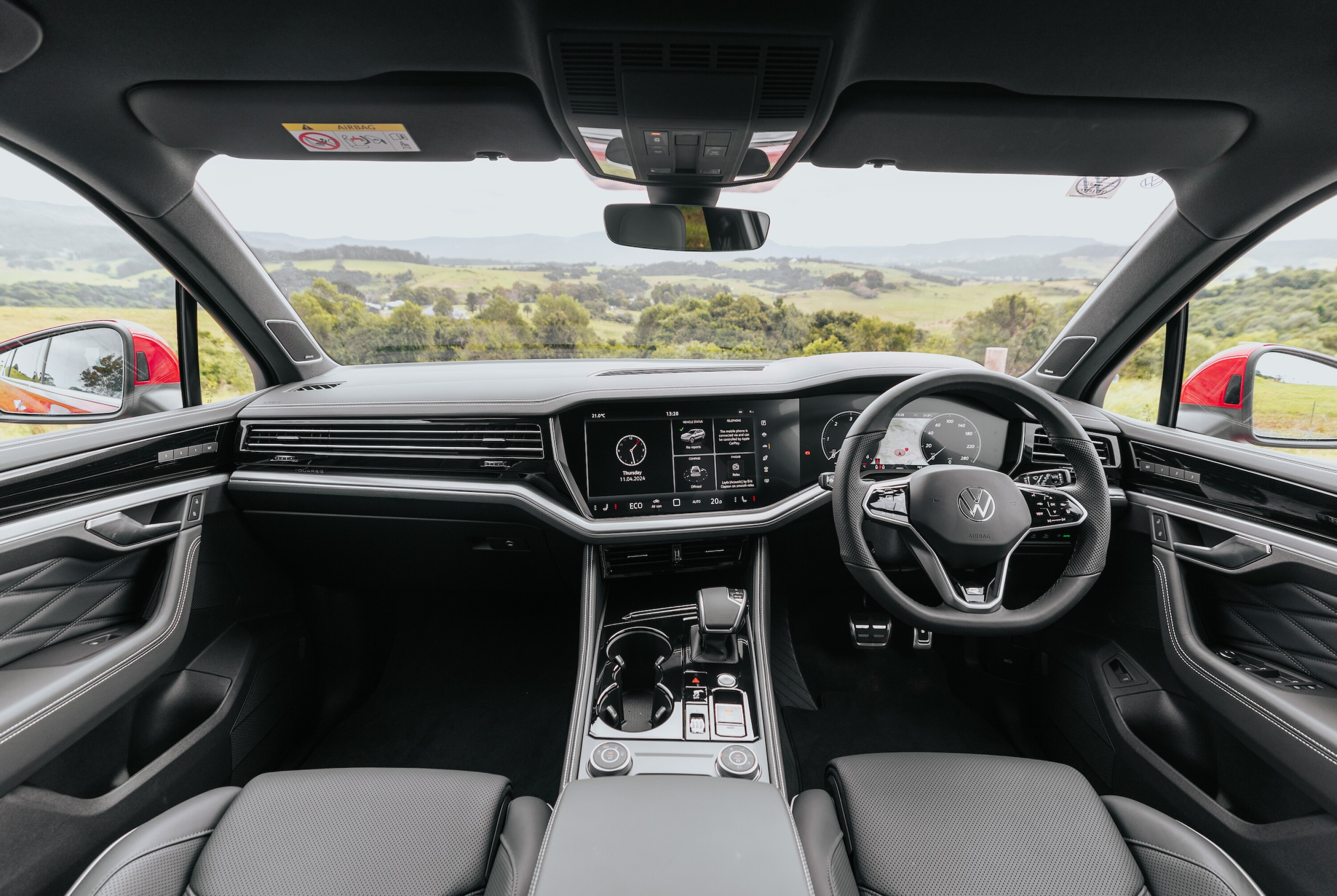
At the other end of proceedings, the German brand has focused on adding value to the entry-level 170TDI with clever new headlights that feature 19,200 LEDs, a 15-inch ‘Innovision’ touchscreen as standard, and more. VW says the additions are worth $10,000 while the base Touareg’s RRP drops from $89,240 to $86,790.
1
Two mid-range 210TDI variants, featuring an uprated turbo diesel, also bring improved value. The Elegance is pared from $108,240 to sit a fraction under $100K while the higher-specced R-Line falls by a similar amount to $109,990.
Volkswagen’s largest SUV remains a five-seater only, leaving seven-seater duties to the Tiguan Allspace – which in 2025 will be replaced by the Tayron.
Touareg’s rivals include the Mazda CX-90, Jeep Grand Cherokee, and the Volvo XC90, though the current-generation model has proved worthy of comparison with luxury-brand large SUVs such as the Audi Q7, BMW X5 and Lexus RX.
The VW is well set up for recreational use, with all powertrains bestowing the SUV with a 3500kg braked towing capacity. The max towball download varies between models. The 170TDI has the highest at 280kg, followed by the R (220kg) and then 210TDI (215kg).
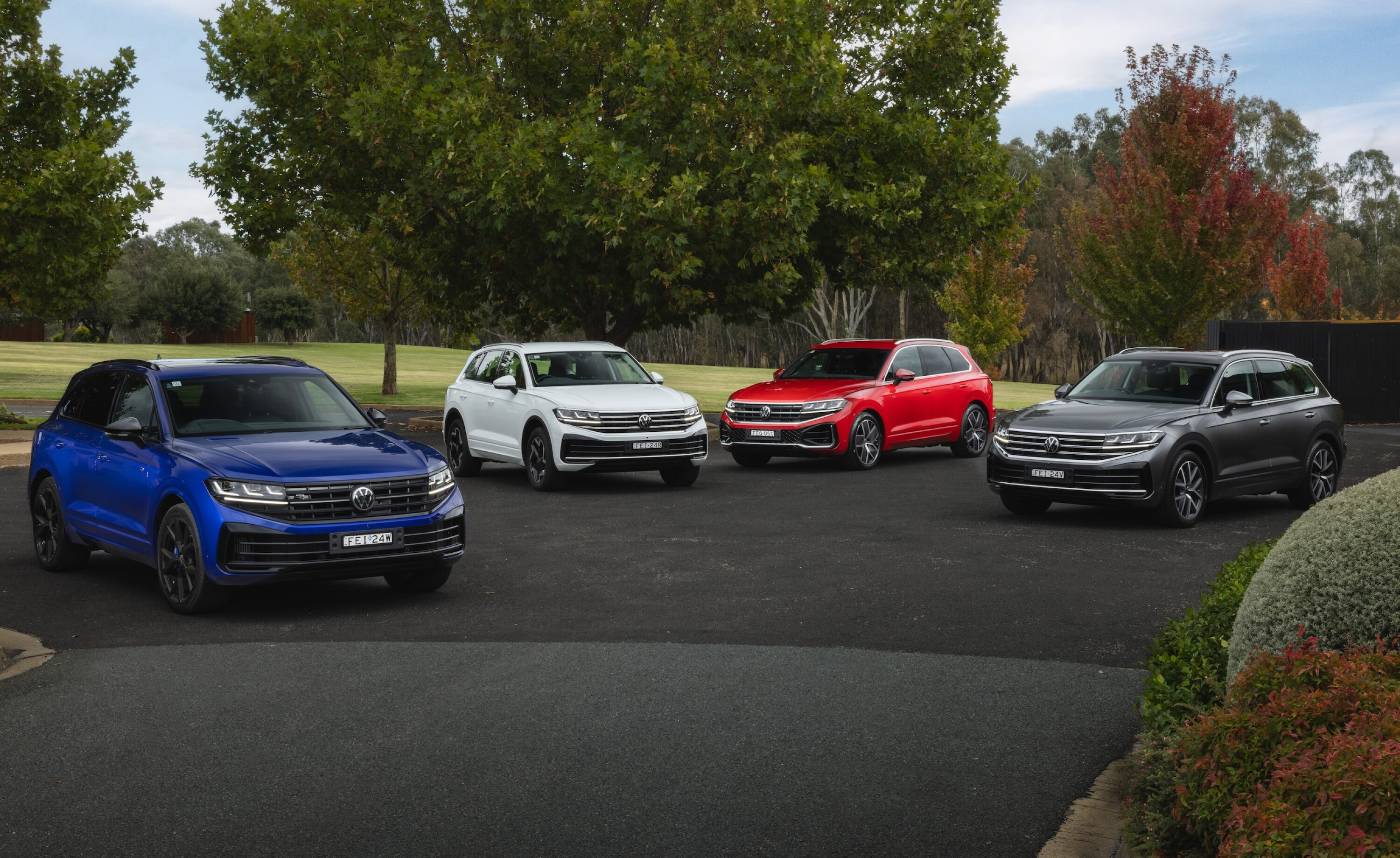
2025 Volkswagen Touareg Pricing
| Model | Price (before on-road costs) |
|---|---|
| VW Touareg 170TDI | $86,790 |
| VW Touareg 210TDI Elegance | $99,990 |
| VW Touareg 210TDI R-Line | $109,990 |
| VW Touareg R | $129,990 |
1
2025 Volkswagen Touareg: Model by model features guide
| Volkswagen Touareg 170TDI features (price TBC) | |
|---|---|
| 19u201c Coventry alloys (black diamond turned) | IQ.LIGHT Matrix LED headlights with Dynamic Light Assist |
| Illuminated rear logo & logo projection from mirrors | Steel spring suspension |
| Soul black Vienna leather upholstery | 30-colour ambient lighting |
| Power-adjust front seats with heating and driver memory position | Dual-zone climate control |
| 3x USB-C front, 2x USB-C rear | Wireless charging pad |
| Innovision Cockpit (incorporating 15u201d Discover Premium & 12u201d Digital Cockpit Pro) | Wireless Apple CarPlay and Android Auto (full screen) |
| Adaptive cruise control with stop & go; lane-trace assist | Area view (360 degree camera) |
| Park Assist Plus with manoeuvre braking | Dynamic Speed Sign Display |
| Power tailgate | Cargo management system |
MORE
Large SUVs
1
Beyond the 170TDI, the 210TDI is also available packaging 40 more kilowatts from the same basic 3.0-litre turbo-diesel V6 and air suspension as standard.
The 210TDI will be offered in luxo Elegance and sporty R-Line trim, with spec differences outlined below.
| Touareg 210TDI Elegance features (in addition to 170TDI) | |
|---|---|
| 20-inch Dark Graphite Braga alloys, diamond-turned | +40kW & +100Nm |
| Soul Black Varenna leather seat upholstery (Mistral grey available) | Front ventilated seats with eight massage programs |
| Air suspension, auto self-leveling and height control | |
| Touareg 210TDI R-Line features (in addition to Elegance) | |
|---|---|
| 21-inch Leeds alloys in black, diamond-turned | R-Line interior and exterior styling |
| Pantera Black Puglia R-Line leather seat upholstery | Brushed stainless steel pedals |
| Stainless steel scuff plates with illuminated R-Line logo in front doors | Brushed aluminium decorative inserts in dashboard and doors |
| Sports steering wheel, heated | Tinted rear side and rear windows |
| Black headliner | Rear-wheel steer and electromechanical active roll stabilisation |
1
As for the flagship Touareg R, it’s the brand’s most powerful production vehicle ever, producing 9kW more than the Phaeton W12 (2004–2011) despite half the cylinder count.
It also boasts 51km of electric-only driving range and ships with both mode 2 (home) and mode 3 (public/wallbox) charging cables. And again, it’s more affordable than the old V8 R-Line it effectively replaces.
Inside, there’s blue contrast stitching on the Puglia leather upholstery and the same screen set-up as the rest of the Touareg range including the fresh digital driver’s display.
| Touareg R feature (in addition to R-Line) | |
|---|---|
| 22-inch Estoril alloys in glossy black | Direct tyre pressure monitoring |
| Electronic engine sound | Power latching doors |
| 4-Zone climate control | Night Vision |
| Panoramic sunroof with electric blind | Windshield projected head-up display |
| 19-inch front and 18-inch rear disc brakes with blue callipers and R logo | Exterior black pack (roof rails, mirrors, grille) |
| Power adjustable steering column with memory | 15-speaker Dynaudio sound system |
| Heated rear seats | |
Options
A panoramic roof costs $3300 extra for diesel models while standard on the R. Same applies to a Sound & Comfort Package ($8000 R-Line, $8500 170TDI and 210TDI Elegance), which adds several goodies including Dynaudio 730-watt audio, electrically adjustable steering wheel, 18-way electric front seats with heating, heated outer rear seats, tyre pressure monitoring, and a head-up display.
VW also charges $2200 for metallic paint, or $2700 for premium metallic paint.
1
The 2024 Tesla Model 3 sedan has become one of Australia’s best-selling cars, displacing the Toyota Camry for ultimate four-door honours and taking second place in the EV sales race.
Yet with such regular pricing changes, it’s tricky to keep track of how much the Model 3 costs. This is no longer unique to Tesla, with other marques (including BYD, MG and GWM) all engaging in EV price battles.
Current Tesla Model 3 pricing
At May 21, 2024
It seems like the ‘ink’ has barely dried on our price update last month as Tesla has again lowered the cost of entry to its popular EVs.
This time the Model 3 sedan (as well as the related Model Y SUV) has dropped to its most affordable price yet – from just $54,900.
You can find more details for the full Model 3 price range (and Model Y) in the article below.
April 23, 2024
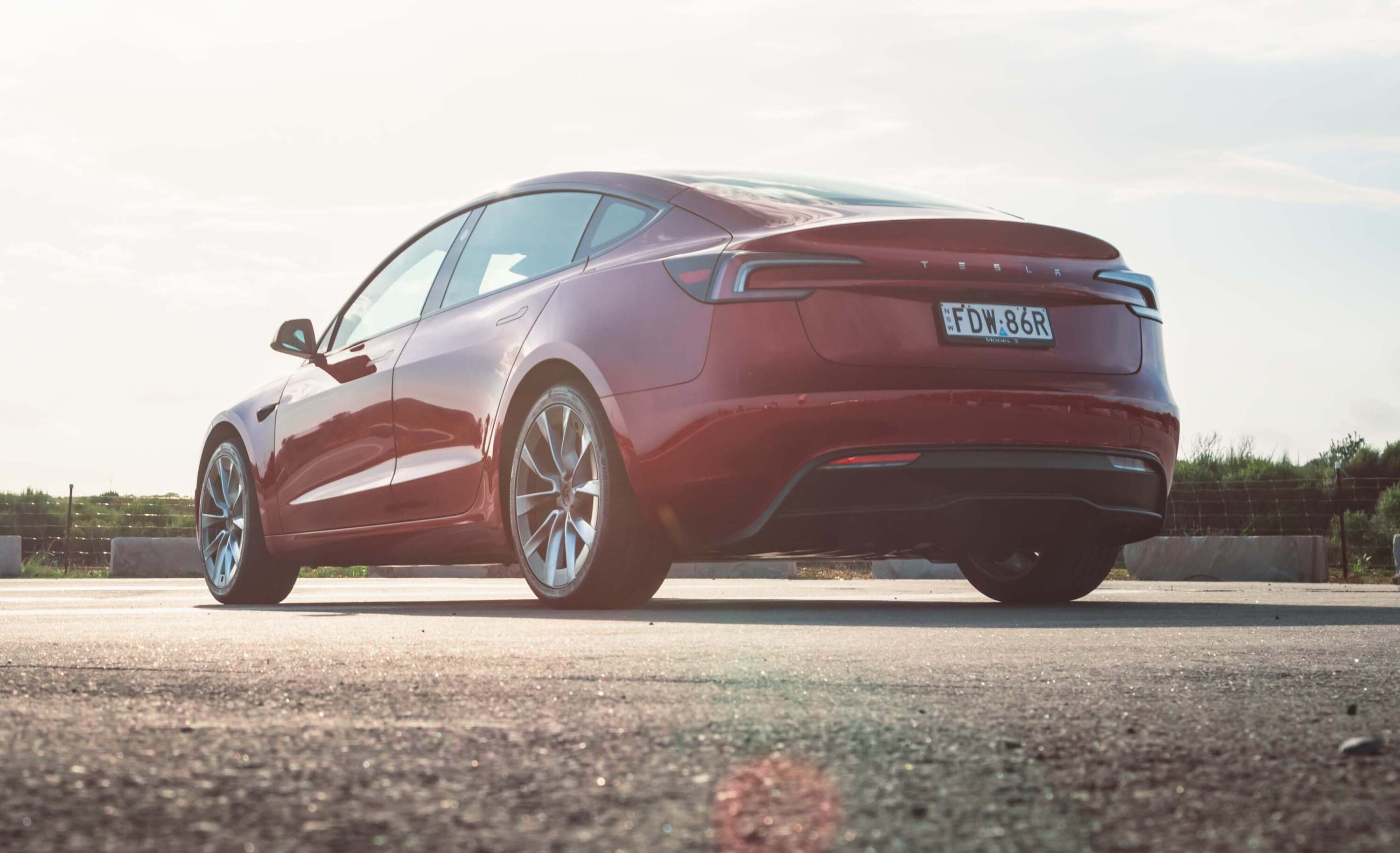
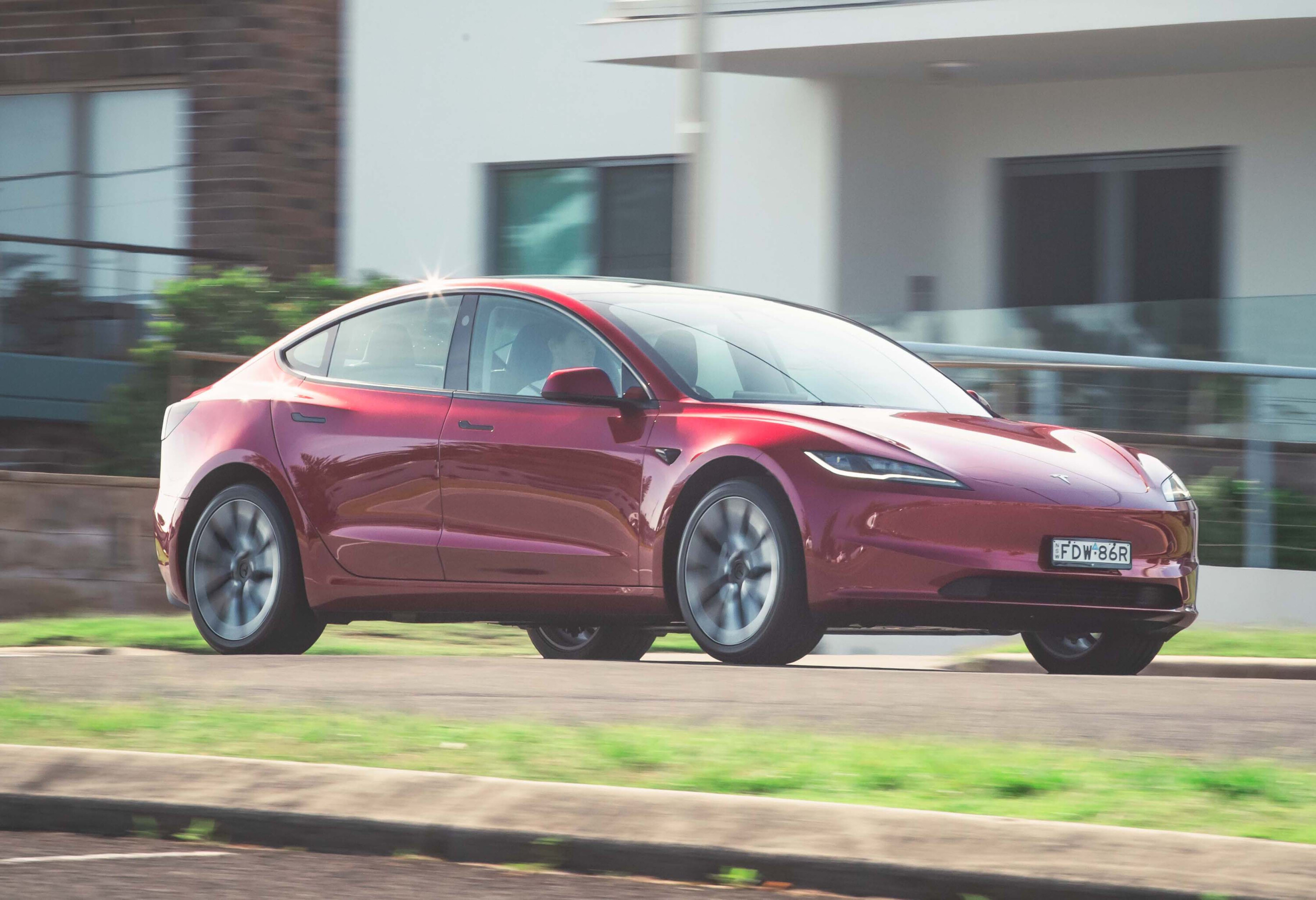
Prices for the 2024 Tesla Model 3 electric sedan have fallen – again.
Tesla Australia has slashed $3000 from the Model 3 Rear-Wheel Drive and Long Range AWD variants ahead of the imminent launch of the updated Performance AWD flagship.
It follows a $1000 price cut applied to the Long Range AWD earlier this month, announced at the same time as reductions of up to $8500 for the related Model Y midsize SUV.
1
The Model 3 now starts from $58,900 before on-road costs, which is $1500 more than its lowest-ever price of $57,400 in pre-facelift form in July 2023.
It has been a chaotic month for the American electric vehicle brand, which has cut prices globally – including in Europe and China – as it faces increased competition and less demand than usual.
Last week, Tesla cut 10 per cent of its global workforce and announced a safety recall for the Cybertruck after owners reported a loose accelerator pedal cover could cause their vehicle to drive at full speed.
Tesla CEO Elon Musk also denied reports that it had cancelled its US$25,000 (AU$40,000) ‘Model 2’ project.
1
April 4, 2024
The Tesla Model 3 Long Range variant has been given a $1000 price cut, just five months after the local launch of the facelifted line-up.
It’s not likely to be a dealmaking change for most buyers, and realistically it’s more of a realignment with earlier pricing – in January, the Model 3 Long Range variant’s price increased by $1500 when compared to its July 2023 sticker.
The Long Range is now priced from $70,900 before on-road costs. That’s $76,592 drive-away in NSW and $76,799 drive-away in Victoria – or as Tesla quotes on its own website, by its own calculations, $72,299 after you factor in five years of fuel savings.
If the price change results in a boost for Tesla, it’ll likely be a welcome one. In the first quarter of 2024, Tesla posted its biggest drop in quarterly deliveries.
January 2024
| Model | Pricing | Change (vs. July 2023) |
|---|---|---|
| Rear-Wheel Drive | $61,900 | up $4500 |
| Long Range AWD | $71,900 | up $1500 |
| Performance AWD | TBC | TBC |
From a high watermark in April 2020 (when the Model 3 Performance cost over $100K), Tesla prices have been fluctuating in a downward trend.
With the latest update bringing enhancements to ride, handling, and interior equipment (including standard seat ventilation and rear-seat infotainment, but ditching indicator stalks) it’s little wonder prices have lifted.
However, compared to January 2023, both variants currently on sale are more affordable demonstrating how Tesla has managed to streamline production and delivery processes.
Tesla Model 3 pricing charted
For the visual learners, here’s an illustration of how Model 3 pricing has fluctuated since its September 2019 launch.
2023 Tesla Model 3 features
| 2024 Tesla Model 3 RWD features | |
|---|---|
| 18-inch u2018Photonu2019 aero covered alloy wheels | Fixed tinted panoramic glass roof |
| Animal hide-free black interior | Acoustic glass (front, side and rear) |
| 15.4-inch touchscreen with over-the-air (OTA) software update capability | Ambient lighting dashboard and door strips (200+ colour combinations) |
| 8.0-inch rear passenger climate and entertainment touchscreen | u2018Tesla Visionu2019 camera-only u2018Basic Autopilotu2019 active safety assistance features |
| Built-in Google Maps with automatic Supercharging stop planning | Reversing camera with blind-spot view side cameras |
| Music and video streaming apps, arcade games, Bluetooth, and voice control | Heated and ventilated front seats |
| Tesla mobile app connectivity with ultra-wideband (UWB) support for phone key | Heated rear seats |
| Standard Connectivity for up to eight years, Premium Connectivity trial for first 30 days | Heated steering wheel |
| Built-in Dashcam and Sentry Mode recording (128GB USB stick included) | Electrically adjustable driver and front passenger seat |
| Nine-speakers with amplifier | Full LED headlights with auto high beam and integrated fog lights |
| Dual Qi wireless charging pads | Full LED tail-lights with rear fog lights |
| 65-watt USB-C charging ports | Auto power folding, dimming, heated wing mirrors |
| Dual-zone climate control with hidden front and rear air vents, Keep Climate On, camp mode and dog mode | Power tailgate |
| Pedestrian warning u2018Boomboxu2019 external speaker | Camera-based automatic wipers |
| Flush exterior door handles with matte black exterior trim | 6.1 second 0-100km/h time |
| 2023 Tesla Model 3 Long Range features (in addition to RWD) | |
|---|---|
| LED front fog lights | 629km WLTP driving range |
| 17-speakers with dual subwoofers and amplifiers | Black artificial suede interior door material |
| 0-100km/h in 4.4 seconds | |
MORE
Everything Tesla
The successor to the Lamborghini Huracan will be powered by a clean-sheet V8 twin-turbo petrol engine revving to 10,000rpm alongside three electric motors.
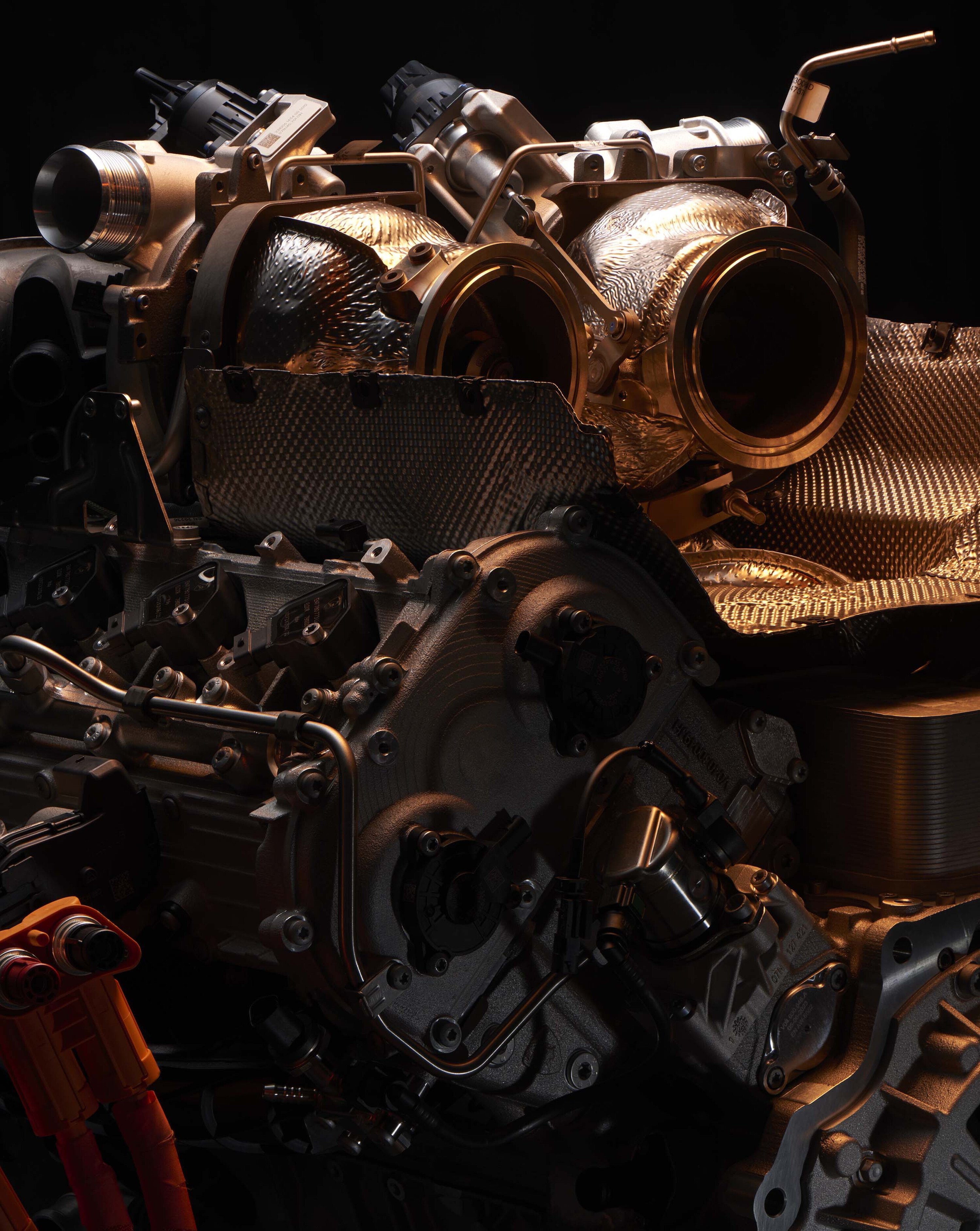
Lamborghini announced the all-new engine will be fitted to the replacement for the 5.2-litre V10-powered Huracan – codenamed ‘634’ – and due for a late 2024 launch.
The new 4.0-litre twin-turbo V8 will produce a peak power output of 588kW between a shrieking 9000 and 9750rpm – a significant jump over the outgoing Huracan Evo’s 449kW – and revs to 10,000rpm.
There’s also a massive gain in torque, with 730Nm between 4000 and 7000rpm compared with the naturally aspirated V10’s 560Nm in the Huracan.
1
The electric components are position between the V8 and the eight-speed dual-clutch transmission – introduced on the all-wheel-drive Lamborghini Revuelto, the successor to the V12 Aventador – delivering 110kW and 300Nm on its own to ensure standing-start capability.
Lamborghini says it has worked hard on ensuring the powertrain delivers a salivating engine note, with the engine running a flat-plane crankshaft.
“The characteristics of the new V8 intensify in a crescendo that at high revs reaches its peak in terms of volume and frequency content and this, in harmony with the vibrations transmitted to the chassis by the flat-plane crankshaft, creates an all-encompassing sensory experience,” said Lamborghini.
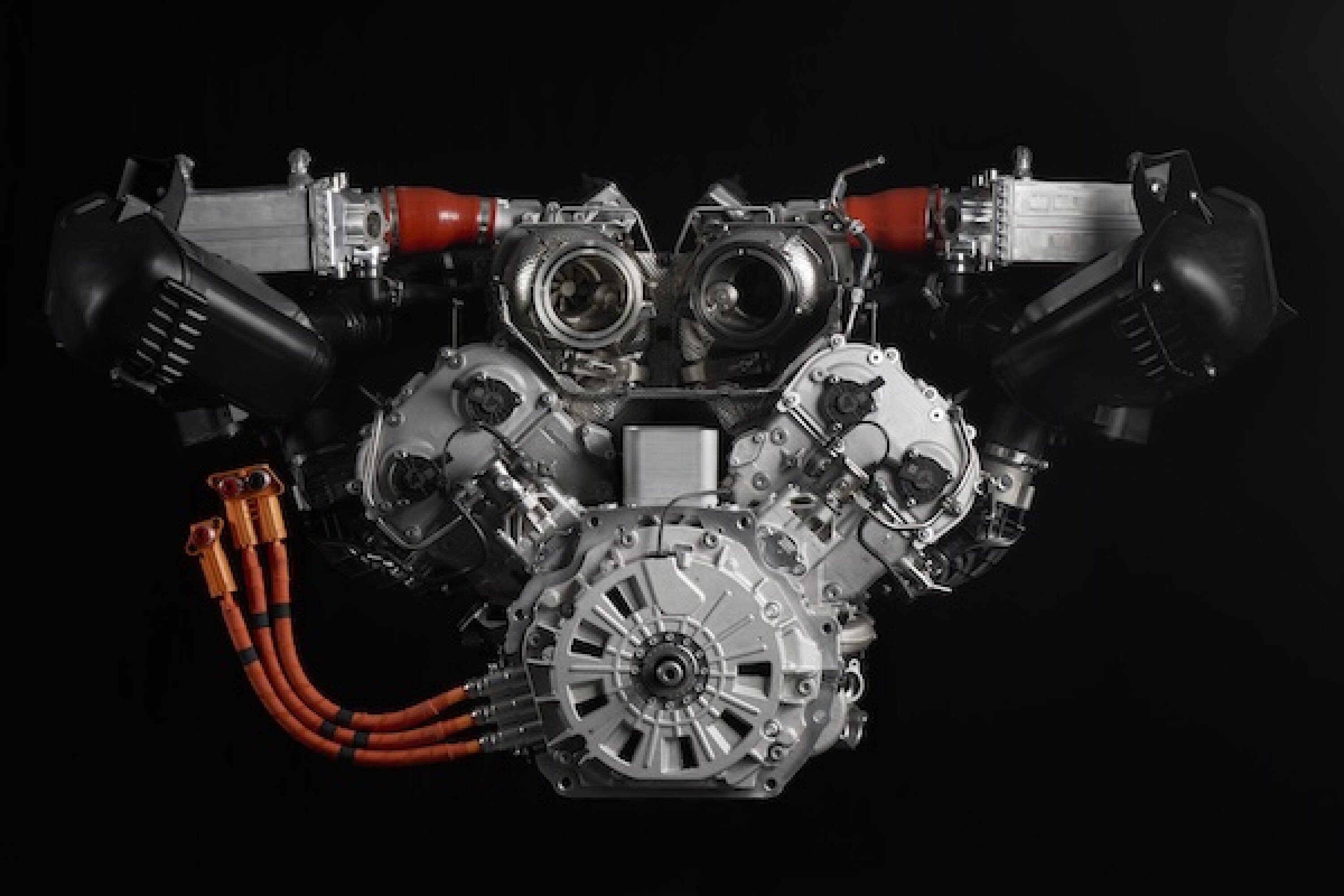
1
The yet-to-be named 634 is part of the Italian car maker’s High Performance Electrified Vehicle (HPEV) line-up kicked off by the hybrid Revuelto.
It’s due in Australian showrooms in 2024 with the Urus SE plug-in hybrid SUV due in 2025.
Lamborghini announced its ‘Direzione Cor Tauri’ road map to electrification in 2021, targeting an all-electrified line-up by the end of 2024.
The strategy also included a plan to introduce the first fully electric Lamborghini by the end of the decade.
