
TELL ME ABOUT THIS CAR
The Golf GTI 40 Years edition is a quicker, more exclusive version of Volkswagen’s evergreen hot hatch, which sits in between the GTI Performance and the all-wheel-drive Golf R. It’s possessed of a musclier power-to-weight ratio than any factory standard Golf (ever!), gets many of the best bits from the Performance and R-spec, as well as some unique extras, and comes as a manual.
STRENGTHS
- Performance. The normal Golf GTI’s turbocharged 2.0-litre four-cylinder is a flexible, powerful cracker of an engine, and in the 40 Years edition, it’s powered up thanks to a larger turbo and an overboost feature.
- You can get a manual. Unlike the excellent Golf GTI Performance – which is dual-clutch auto only – the 40 years edition is offered as a six-speed manual, too. Manuals are becoming an automotive rarity, even in a high-performance car, and the Golf’s DIY gearbox is a delightfully slick unit that brings an extra dimension to the fun of driving it.
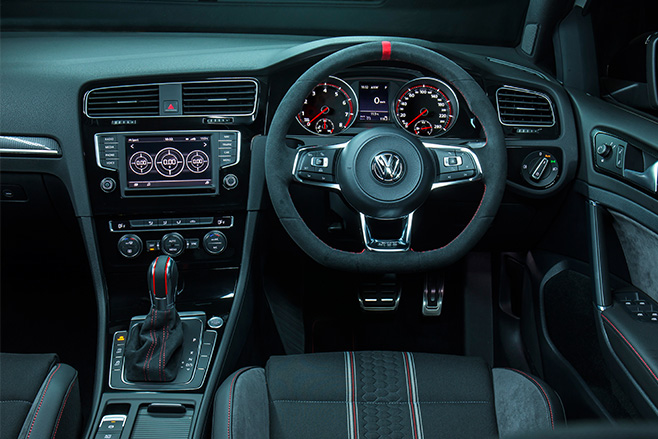
- Interior tactility and comfort. The seventh-gen Golf’s interior is a neatly styled, quiet and beautifully finished place in which to drive and ride, and the 40 Years edition addresses our only minor criticism – that it’s a bit bland. The steering wheel, trimmed in suede-like Alcantara material, the unique fabric of the sports seats and other touches inject sportiness and tactility to bring the GTI’s classy cabin alive.
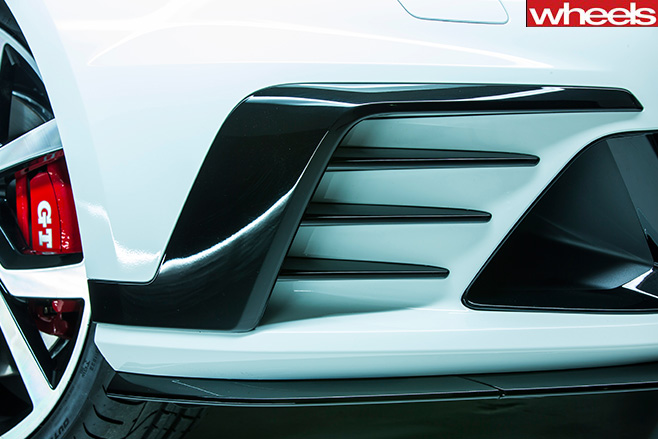
- The dynamics. The Golf GTI already had the chassis poise and grip, and to this the 40 Years adds an electronically controlled multi-plate limited-slip differential, 19-inch wheels and tyres, and extra cooling for the bigger front brakes via a unique front bumper, all of which make it willing and ready for a hard drive.
- Practicality. The Golf’s relatively compact proportions, easy urban driving manners, hatched back and decent 380-litre boot make it a terrific all-rounder. If you’re looking for a quick, fun car that can handle both the day-to-day and the odd track-day, the Golf GTI 40 Years could well be it.
- The price. While the GTI 40 Years represents great value for the extras it brings – and the boost in speed and handling capability – it costs about 15 percent more than the regular GTI, and maximising bang-for-buck is at the core of the appeal of any hot hatchback.
- The manuals are sold out. If you’re reading about the availability of a manual 40 Years edition for the first time, it’s probably too late to get one of the 100 available, so you may have to settle for one of the excellent paddle-shifter, six-speed dual-clutch versions.
ANY RIVALS I SHOULD CONSIDER?
The Renault Megane RS is a sharper track tool, but trades some of the GTI’s all-round usability for heightened performance. For example, rear-seat passengers will have to climb into the three-door Renault via a front door and a flipped front seat. You won’t be treated to quite the GTI’s classy presentation, ride comfort or quietness, either. The Ford Focus RS is an option if you want a more flamboyant, all-wheel-drive package. But again, it doesn’t have the GTI’s well-balanced blend of abilities. Failing these, one of the GTI 40 Years edition’s siblings – such as a less costly regular GTI, or an R, with all-wheel-drive traction – will suit.
Almost every hypercar is turning hybrid these days but Lamborghini is determined to protect and even power-up its famous V12 petrol engine in its Aventador flagship.
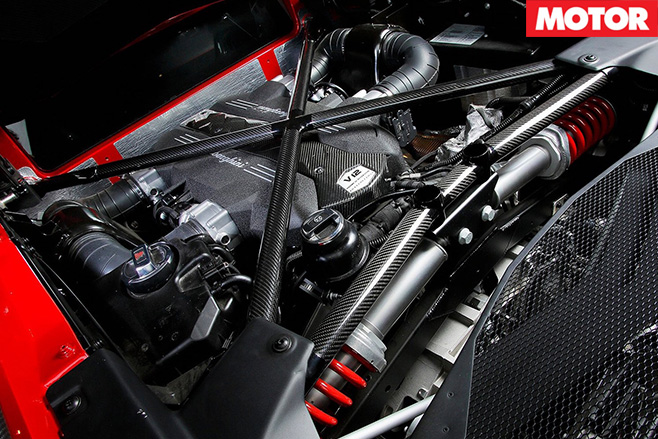
Speaking with UK media outlet Autocar, Lamborghini CEO Stefano Domencali explained that the company’s V12 engine still has more to give, with customers demanding that a dozen cylinders continues under Raging Bull bonnets regardless of emissions regulations.
“In the short term, there is still a lot of development potential in the V12,” Domenicali said in the interview.
“We will continue to work in that direction.”
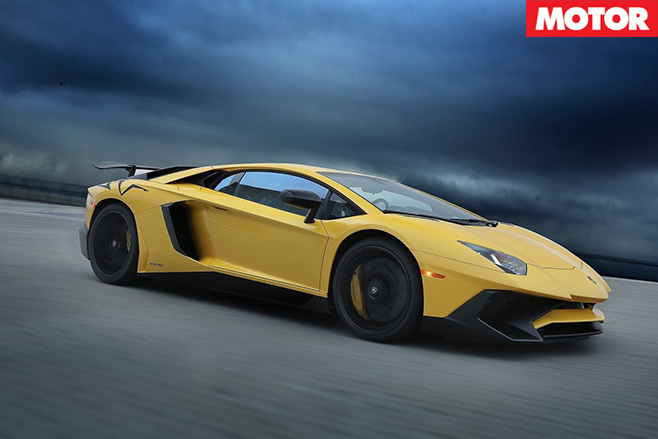
The current Aventador’s 6.5-litre V12 makes 552kW and 690Nm in flagship form, but indications from Domencali are that the engine can push on further independent of electrification – but potentially not turbochargers. Even fellow atmo V12 stalwart Aston Martin has used a pair of huffers for its DB11.
“We cannot be disconnected to the world of the future but we want to be balanced,” he continued.
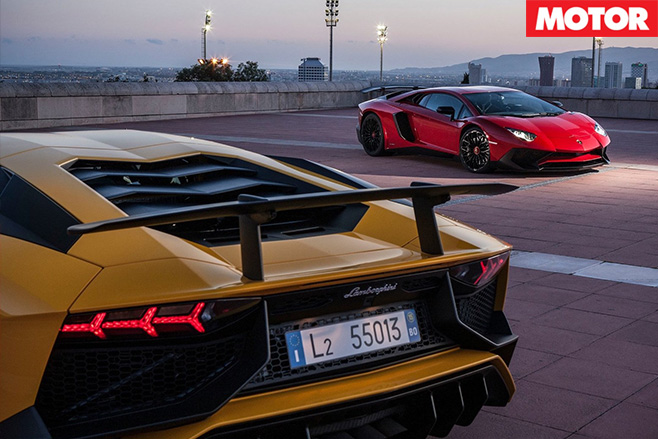
And of the push towards autonomous driving cars? For Lambo, thankfully, forget it. “If you own a Lamborghini, you want to have the passion of driving it and we need to keep that,” Domenicali added.
Why do car manufacturers put so much effort in to designing cars, only to give them awful names via a creative process that appears to involve the random musings of a bowl of alphabet soup?
Names are meant to reflect a car’s style and purpose so you have to wonder what other options where on the table when names like Getz, Captiva and Pro_cee’d received a majority show of hands.
Thankfully other cars have received great names that made them immortal regardless of how they actually performed. In an increasingly packed and competitive global market it wouldn’t hurt some car manufacturers to go back to the future when it comes to christening their new creations. Here’s a few names we’d like to see in showrooms again.
Alfa Romeo Disco Volante
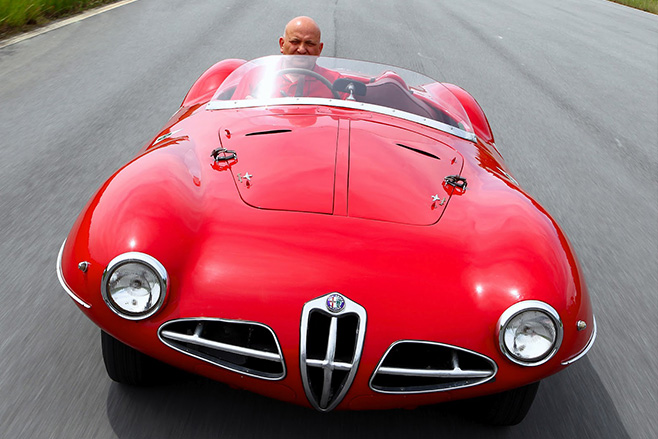
It’s difficult to have a bad sounding Italian car name when their word for emotional torment is struggimento. Alfa Romeo has come close with the MiTo which, putting its jumbled syntax aside is an abbreviation for Mitochondrial disease. The hot little hatch would probably be on a six-month back order if it were called the Disco Volante.
Italian for ‘flying saucer’, Disco Volante wonderfully reflects the original’s revolutionary 1950s design and also suggests a massive party on wheels for those of us not quite versed in the language of love.
Jenson Interceptor
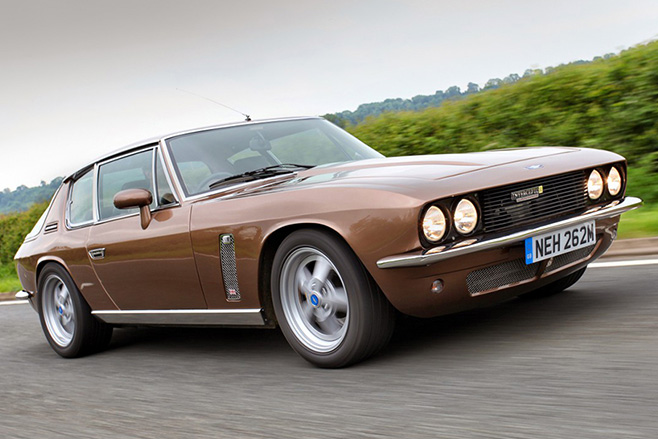
This name was so cool the company used it twice: First for its elegant Austin based coupe in 1950 and then for its better known audacious two door tourer built during the ’60s and ’70s. One wonders how the latter was never a Bond car. Sure, it was no Aston Martin DB-5 and its Chrysler V8 engine made it about as sophisticated as a shovel. And like most boutique British sports cars of its era it had its fair share of issues including melting wiring harnesses, leaky power steering and significant body rust. But the big coupe from Birmingham looked rather smashing and its name alone would have had Blofeld running to his mumma.
Holden Monaro/Torana
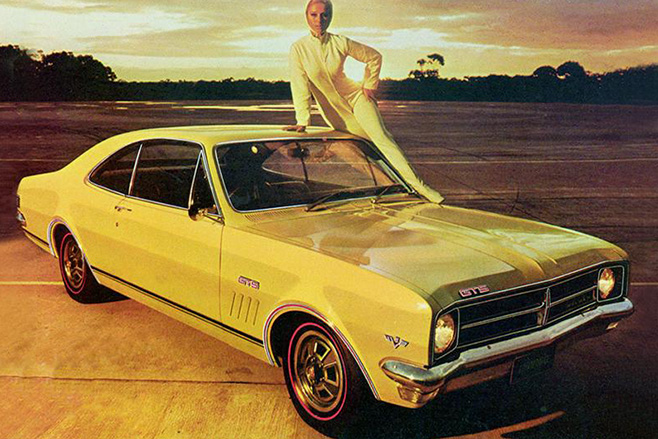
When Holden started giving its locally produced cars identities beyond their production initials it mostly settled on names that reflected nobility. The exceptions were its use of Aboriginal words given to the Monaro and the equally cool sounding Torana. Monaro means high-plane, and indeed the big coupe raised Holden’s muscle car reputation to new levels in the face of Ford’s all-conquering GT. Torana aptly means ‘to fly’, which Brocky repeatedly demonstrated to great effect.
Pontiac Parisienne
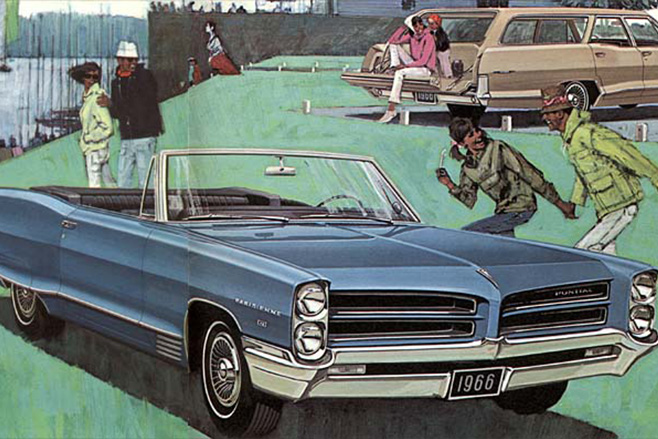
This Euro-sounding name seems like a departure from Pontiac which had previously used more home-grown names such as Bonneville and Chieftain. But the Parisienne was actually a Canadian nameplate for the big sport sedan, which GM Canada also built as a two-door coupe and convertible. Parisiennes were also built in Australia alongside Holdens during the 1960s, along with other ‘Yank tanks’ including its very close cousin the Chevy Impala.
Lamborghini Diablo

While only a Lamborghini could channel the devil in a positive light, the name actually comes from the Italian supercar maker’s habit of naming its cars after fighting bulls. That said the satanic motif was apt for a car that in 1990 had a 5.7-litre V12 engine that did 0-100km/h in 4.5 seconds before reaching a top speed of 325km/h. The Diablo was the successor to the company’s revolutionary Countach, which means ‘heavenly’ and one could also surmise they were trying to fully differentiate between the two.
Dodge Conquest
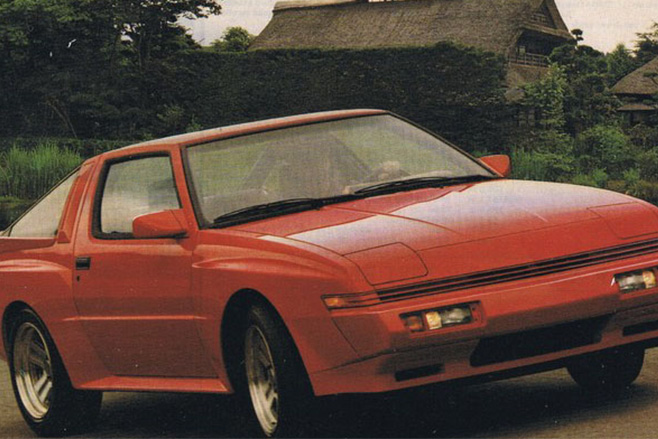
Dodge knows how to name cars. Take your pick from Viper; Daytona; Rampage; Ram; Charger; and even Ramcharger! What’s great about the Dodge Conquest name is that it was the company’s stubborn but wise insistence of rebadging the awfully – and supposedly errantly – named Mitsubishi Starion. Legend has it the turbocharged sports coupe was to be given a horsey name like its Colt and Eclipse stable mates (Eclipse was a champion racehorse) and was called Starion because of the Japanese suits’ inability to pronounce stallion. Mitsubishi insists the name is derived from “Star of Orion” and refers to both a star and a mythical horse called Arion. Either way Conquest sounds way better.
Mercury Marauder
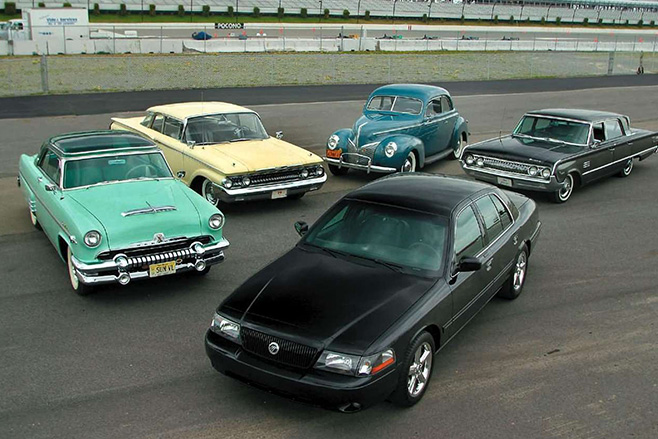
Mercury knew it was on a good thing with this name, but wasted it three times on cars that proved less than successful. The first was the Ford Galaxie-like four door sedan and two door hardtop from 1963-65 which was followed by a stylish two-door hardtop produced in 1969-70. While these are now classics, not even time will make the 2003-04 revival Maruader any more desirable. The bland looking sedan was based on the sleep-inducing Ford Crown Victoria.
Isuzu Mysterious Utility Wizard
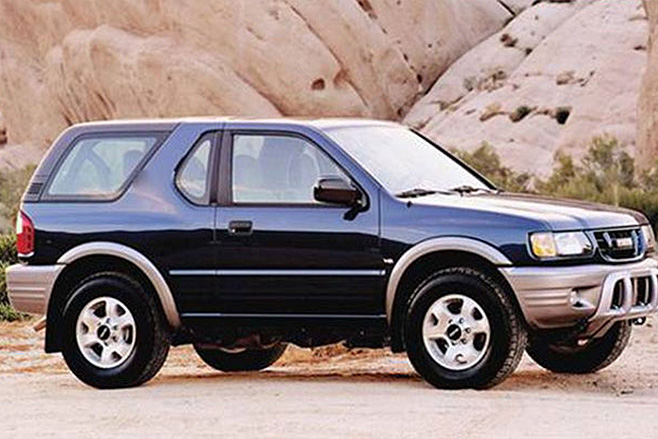
This is a case of a Japanese name translating poorly to English, but still being way more delightful than the rebadged Holden Rodeo, Vauxhall Frontera or the – wait for it – Honda Passport! The Mystery Utility Wizard wasn’t a success in its native Japan but it’s boringly named international variants sold well in Australia, Europe and the Americas.
Want more? Check out the coolest police cars of all time.
The Nurburgring Nordschleife is arguably the world’s most fearsome racetrack.
It’s extremely high speed, half the corners are blind, it’s extremely bumpy and there’s absolutely no room for error. Tackling it at full speed in a full-blown racing car is a test of nerves, let alone going flat-out in a convertible with no safety gear.
There’s no such worries for Motoharu Kurosawa, a legendary Japanese racing driver, who filmed this high-speed adventure in a Honda S2000 prototype for the classic Best Motoring series.
Despite it being a regular tourist day, Kurosawa, better known as Gan-san, goes full throttle, recording a bridge-to-gantry time – which is around 35 seconds slower than a full lap – of roughly 8min15sec.
The Volkswagen Golf GTI 40 Years is a limited edition version of the Golf GTI celebrating 40 years since the arrival of the genre-defining 1976 Golf GTI.
Similar to the Golf GTI Performance, the 40 Years edition has more power and torque, unique interior and exterior styling and additions, and will be offered as a six-speed manual as well as a dual-clutch auto.
WHAT IS IT? The 2016 Volkswagen Golf GTI 40 Years is the ultimate, 500-only limited edition version of the evergreen GTI hot hatch.
With 195kW and 350Nm, and an overboost function that gives it 213kW and 380Nm for short periods, it is the most powerful Golf GTI ever, with a superior power-to-weight ratio to the current Golf R.
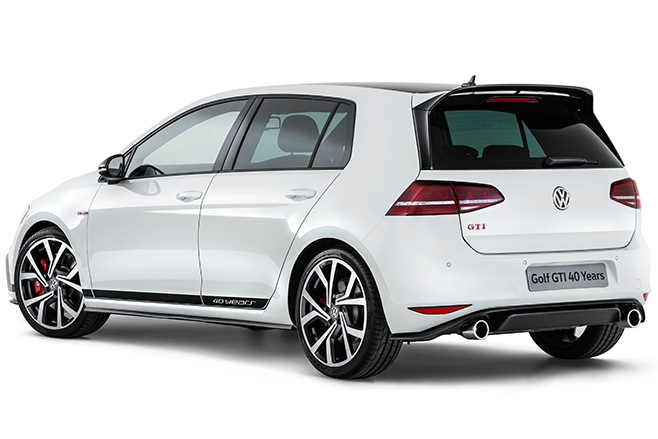
The GTI 40 Years brings high-performance features from the Golf R and GTI Performance, such as bigger brakes and an electronically controlled LSD, as well as exterior and interior elements not found on its siblings, including a unique front bumper that incorporates brake cooling ducts, 19-inch ‘Ruby’ alloy wheels and a two-piece rear roof spoiler.
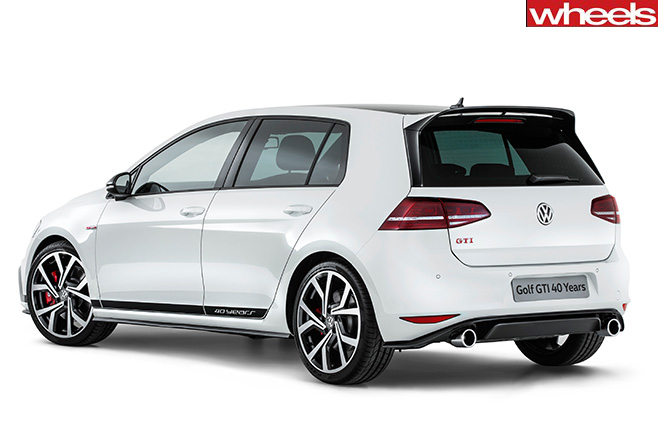
WHY WE’RE TESTING IT Wheels was given a drive of the 2016 Golf GTI 40 Years edition in the Brisbane hinterland and on the track at Lakeside Park as the model went on sale to the public.
MAIN RIVALS Renault Megane RS, Ford Focus RS
THE WHEELS VERDICT The 2016 Golf GTI 40 Years – as a six-speed manual – might just be the pick of the MkVII line-up.
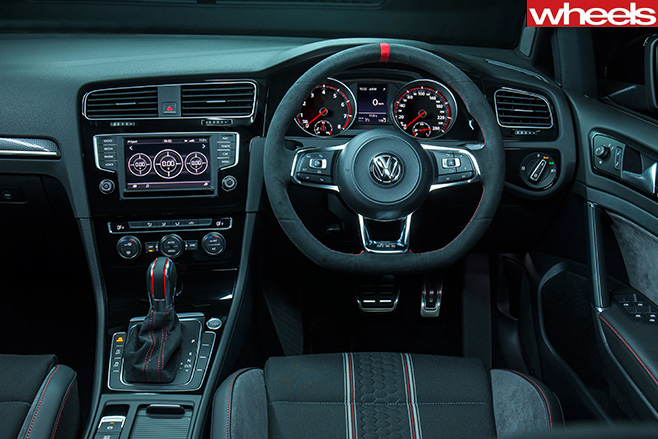
THE WHEELS REVIEW SINCE it hit its straps in 2004 with the arrival of the MkV, the Volkswagen Golf GTI hasn’t looked back – going on to become to the past decade, what the Subaru WRX was to the ’90s.
And if this leaves the value-packed, quick, fun, comfortable, practical GTI with the same problem the Subie once had – that it’s too common for the individualistic enthusiast – the GTI 40 Years edition might just provide the answer.
The fact alone that 100 manual gearbox versions, due in September, will come as part of the 500-only limited edition run might make it the pick over the $2500-cheaper GTI Performance, though you’ll have to be quick. Like, if your order isn’t already in, you might’ve missed out.
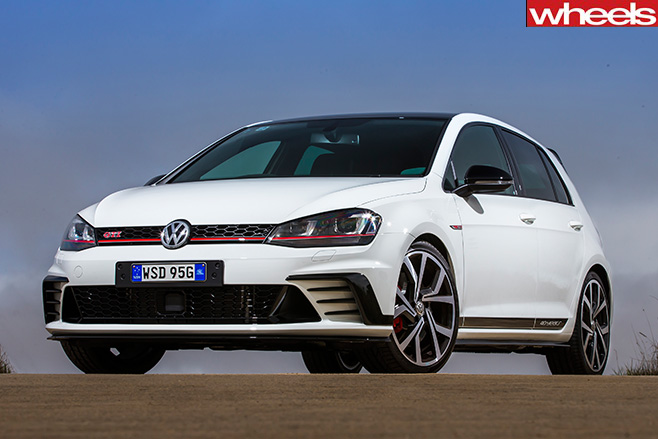
The GTI’s EA888 twin-cam turbo 2.0-litre four cylinder is treated to a larger ’charger, still with an electronic wastegate that lets the ECU manipulate the boost curve for hard-hitting low-rev response and a sweetly linear top end.
With a boost increase, tuning changes, and an overboost that sees peak power and torque crest 213kW (and 380Nm) for 10sec when flat-footed in third through sixth gears, it out-does a Golf R in the power-to-weight stakes, though without AWD, it isn’t officially as quick, at 6.3sec 0-100km/h.
The rest of the time the 40 Years has 195kW, 350Nm and a more urgent fruitier delivery than any other GTI – even the upchange farts, delivered via bigger twin tailpipes, are fuller.

But for those fond of quiet country roads or track-days, the best bits include big brakes; a mechanically variable steering rack which quickens with lock to let you handle switchbacks with your hands fixed on the wheel’s thumb-grips; the electronically controlled multi-plate LSD which keeps torque steer and wheel-spin to a minimum, while bringing a delicious nose pointing vectoring of torque; and adaptive dampers that provide an adept balance of ride, wheel and body control and a choice of modes.
SPECS Model: Volkswagen Golf GTI 40 Years Engine: 1984cc 4cyl, dohc, 16v turbo Max power: 195kW @ 5350-6600rpm (213kW overboost) Max torque: 350Nm @ 1700-5600rpm (380Nm overboost) Transmission: 6-speed dual-clutch Weight: 1357kg 0-100km/h: 6.3sec (claimed) Fuel economy: 7.1L/100km Price: $48,990
FEDERAL Government plans to open Australia’s borders to a flood of cheaper imported cars “will not see the light of day”, one of the fiercest opponents to the proposed reforms says.
Warren Entsch, a long-serving Queensland-based Liberal Party parliamentarian, was vocal in the lead-up to last month’s federal election in his opposition to proposed laws that will allow buyers to bypass new-car dealerships.
Speaking with Wheels this week following a shake-up of the Turnbull ministry and the expectation that former Major Projects Minister Paul Fletcher – now in charge of urban infrastructure – will keep responsibility for pushing the planned grey import changes through parliament, Entsch said he still believed the changes would not go ahead.
“As far as I’m concerned, it [changes to grey import laws] is still dead. I haven’t changed on that,” Entsch said. “It will not see the light of day.”
“When we get to the party room, this will come up, and I’m looking forward with anticipation to talking about it.”
Other Turnbull government backbenchers including South Australia’s Tony Pasin and NSW Nationals Senator John Williams, have railed against the changes, recommended as part of sweeping reforms to the Motor Vehicle Standards Act.
Under the proposed changes, private buyers will be able to step past new-car dealerships and bring in vehicles less than 12 months old from select right-hand drive markets, and with fewer than 500km on the odometer.
Entsch said he had already raised his concerns about the changes – mainly over their impact on the financial viability of new-car dealerships – with both Fletcher and the Prime Minister.
“Many of them [new-car dealerships] are already doing it bloody tough, and all this does is add another level of complexity to what they already have to do,” he said.
“Buyers can already access enthusiast cars under the current framework, and all this proposed legislation is doing is establishing another internet business for someone overseas.
“Unlike a dealership, that internet business won’t employ anybody, and there are things we just can’t be sure about, such as the availability of spare parts, there’s no warranty, and how are they going to get it serviced?”
He added that as soon as a private importer ran into problems and went running to a current affairs program to complain, the blame would instantly swing to those who created the framework – the government.
“Why [after grey import laws are relaxed] would anyone need to set up a new-car business here when they can set up a used-car business in London and cut out all the dealers who supply full warranties,” Entsch said.
“Sometimes it is necessary to protect consumers from themselves.”
The Federal Chamber of Commerce and Industry, which represents various car brands in Australia, said it believed the government would expose private importers to “high-risk” situations as it adopted a buyer beware sentiment as part of the planned legislation.
It has also attacked the consumer watchdog, the Australian Competition and Consumer Commission, after it came out in support of the grey import plans. The ACCC said it believed buyers would benefit from more open competitiveness, and the freed-up trade would “create new business opportunities in a changing industry”.
UPDATE: Five days after it was revealed that the Ford Falcon FGX XR8 and HSV GTS would have a starring role in the next instalment of the popular Forza Horizon racing game, developer Turn 10 Studios has announced Ford and HSV’s V8 heroes will be joined by a full cast of other Aussie automotive icons.
Set in a massive open-world map that mashes together some of Australia’s most notable driving environments like the Great Ocean Road on Victoria’s Southern coastline, the Gold Coast hinterland and the red centre, computer game Forza Horizon 3 will feature plenty of legendary Australian cars from past and present.
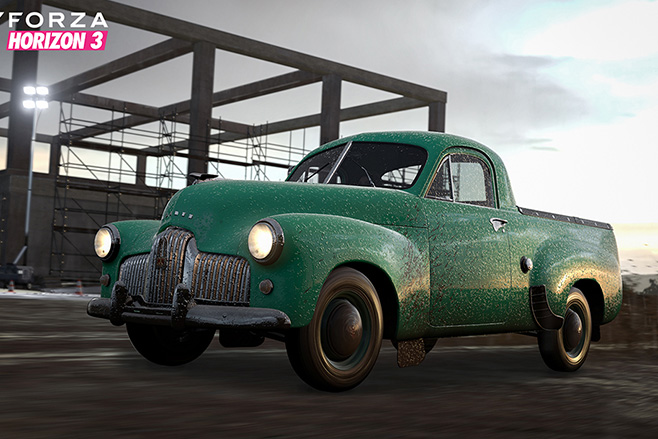
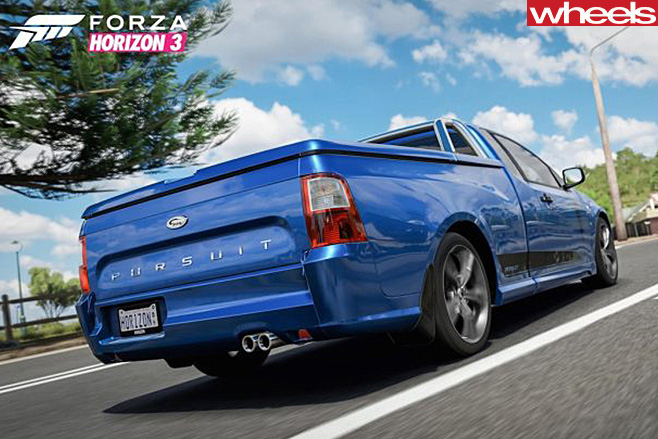
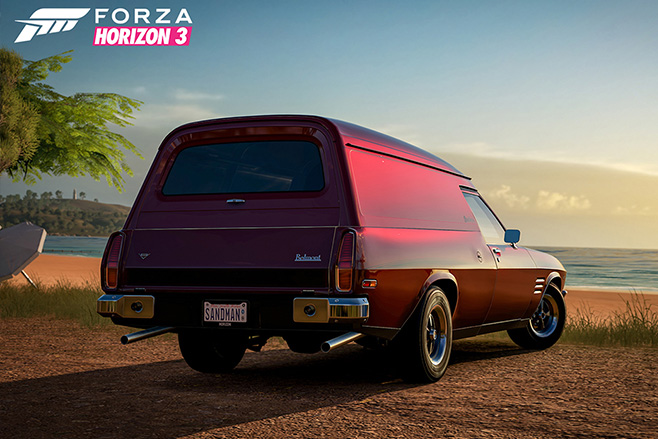
Besides the XR8 and GTS, previously-announced cars for Forza Horizon 3 included the Holden Torana A9X, Ford XB Falcon GT, FPV Pursuit ute and the FPV GT F 351. If Holden fans feel there’s too much ‘Blue’ in that list, they’ll no doubt be comforted by the news that the 2016 HSV GTS Maloo, 1951 Holden FX ute and 1974 Holden HQ ‘Sandman’ panel van will be joining them.
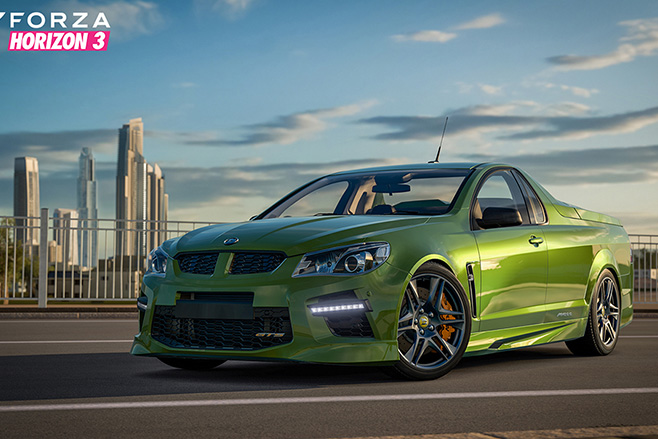
It’s unknown whether Turn 10 has elected to render a well-worn mattress in the Sandman’s 3D model, though as with previous games in the Forza Horizon series you can expect a rich menu of engine, suspension and cosmetic modifications to be available – custom graphics perhaps being of the most interest for virtual Sandman fiends.
Other performance icons announced for the game this week include the 1981 BMW M1, 1997 Lamborghini Diablo SV, Mercedes-Benz 190E 2.5-16 Evo II, Nissan S15 Silvia Spec R, Bugatti EB110 Super Sport and the Jaguar XF R-S, plus American classics like the AMC Rebel “Machine”, 1970 Corvette ZR-1, 1966 Chevy Nova Super Sport, 2008 Dodge Viper SRT10 ACR and GMC Syclone.
—————————————–
THE FORD Falcon is destined for the big car yard in the sky, but you may yet be able to own a new one after local manufacturing winds up on October 7.
The only catch is your new Falcon will be made up of pixels and data instead of steel and eight thundering cylinders.
The third iteration of computer game Forza’s Horizons racing series will be set in Australia, and hit shelves in September. Knowing full well you couldn’t have an open-world racing game in Australia without having some true-blue Aussie cars, the games designers – Turn 10 Studios – have dropped some fair dinkum flavour into the garage.
The first 150 of the game’s 350 available cars have been released, with the Ford Falcon FG X XR8 at the top of the available cars.
Other Australian cars available include the FPV GT F, FPV Pursuit Ute and FG X V8 Supercar. Holden fans haven’t been left out in the cold, with the iconic Torana A9X making the cut, alongside the HSV GTS.
If European cars are more your thing, Forza has you covered with a mouth-watering array of classic supercars to choose from: a 1957 Ferrari 250 California; a 1964 Aston Martin DB5; a 1964 Chevrolet Impala Super Sport 409; a 1973 Ford Capri RS3100 and a 1983 Audi Sport Quattro through to more contemporary favourites including the 1993 McLaren F1; a 2012 Pagani Huayra; the 2015 Mercedes-Benz GT S and the 2015 Lamborghini #63 Squadra Corse Huracán LP620-2 Super Trofeo.
Likewise, there’s no shortage of classic American muscle cars to select, including a 1969 Ford Mustang Boss 302; a 1969 Pontiac GTO Judge; a 1970 Dodge Challenger R/T and a 1973 Pontiac Firebird Trans Am SD-455.
Honda has been left somewhat red-faced after the Porsche 911 GT3 it purchased to benchmark the handling of its NSX hybrid supercar let slip the Japanese firm’s rogue intentions to Stuttgart.
With the Porsche 911 GT3 acknowledged as one of the best-steering supercars available, Acura (Honda’s American arm) vehicle dynamics project leader Nick Robinson told Automotive News the firm acquired one of its competitors to assess the steering set-up as part of the NSX’s development process.
It’s not unusual for a firm to purchase a fleet of rivals in order to gauge development of a future model, but one of those cars inadvertently notifying the rival company what it’s being used for, is.
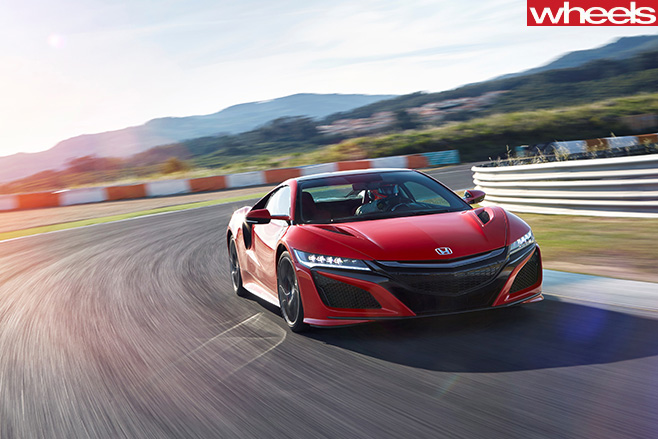
It was a safety recall issued to address a glitch with the steering connecting rods which, when data from the car’s black box was downloaded, led Porsche to the realisation of the Honda development team’s ownership.
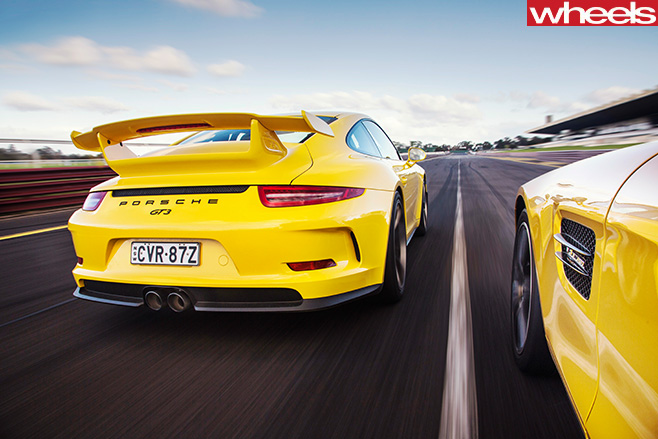
“Good luck, Honda, from Porsche. See you on the other side,” it read.
Robinson also revealed a similar scenario almost occurred with a McLaren 12C acquired for the same benchmarking reasons as the Porsche.
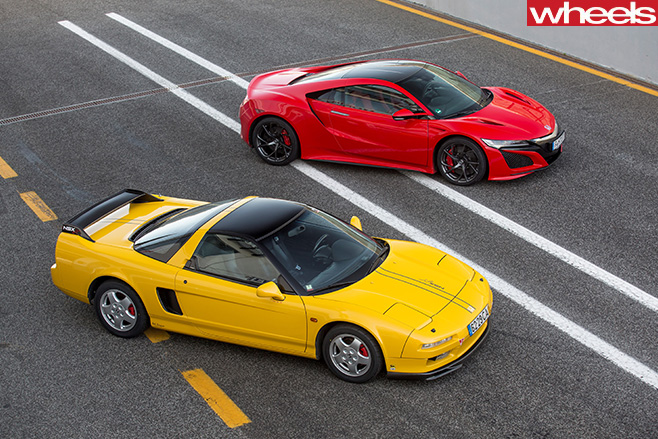
The McLaren boffins, unlike Porsche however, didn’t connect the dots. As Robinson told Automotive News: “They wanted to know, where did you go 205mph [330km/h], what track?”
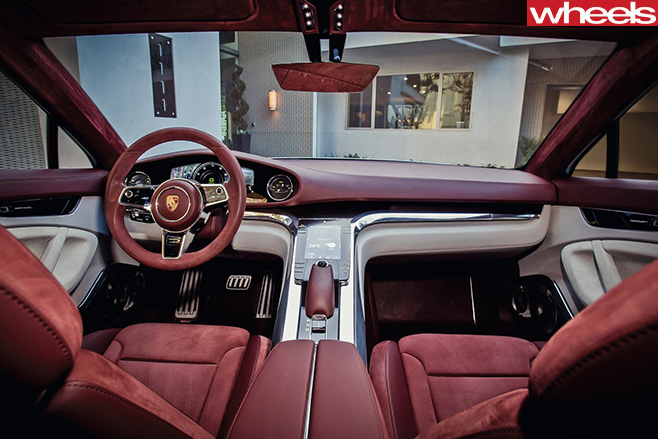
Second-gen Panamera billed as the world’s fastest luxury ‘sedan’.
PORSCHE has confirmed that its second-generation Panamera – due to launch internationally next month – will soon become a family of three bodystyles, including an extended-wheelbase ‘sedan’ and “an innovation in the segment”; a Sport Turismo wagon.
Of course, ‘sedan’ in Panamera-speak means ‘five-door liftback’, so the long-wheelbase model – aimed primarily at the Chinese market – will become the world’s largest hatchback. And, depending on which engine sits up front, it will also be one of the fastest.
The forthcoming Sport Turismo wagon will inject some genuine sex appeal into Porsche’s flagship line. Hinted at by the Panamera Sport Turismo Concept unveiled at the Frankfurt show in 2012, it was more than just positive customer feedback that nudged the sportwagon Porsche Panamera over the line for production. Porsche wanted to offer something different among Panamera’s competitor set.
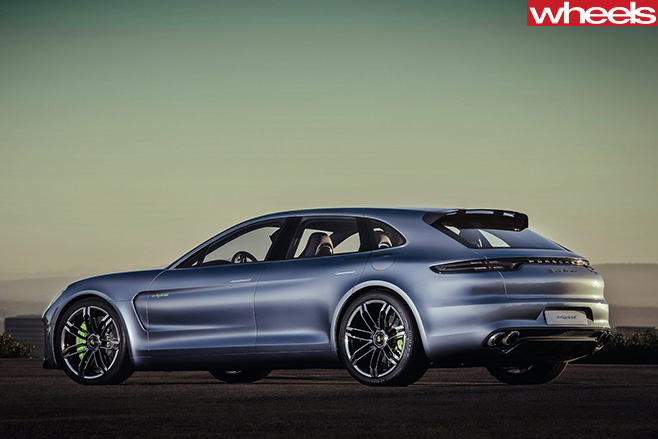
Then, there’s the rest of the Panamera story. It’s a brand-new car, riding on an all-new platform (dubbed MSB), featuring all-new engines and an all-new eight-speed PDK dual-clutch transmission. Its high-tech, mixed-material bodies will be built in an all-new factory in Leipzig, constructed right next to the main Panamera manufacturing plant (instead of transporting bodies built in Hanover, as with the previous model) and Porsche is making some big claims about its abilities.
Besides “best-in-class comfort”, “best-in-class driver-assist”, and a “very unique, very precise, very lean” interior, Porsche says the new Panamera will be the world’s fastest luxury sedan.
The new Panamera Turbo, for example, with a freshly minted 404kW/770Nm twin-turbo 4.0-litre V8, all-wheel-drive and four-wheel steering, can lap Germany’s Nurburgring circuit in just 7min 38sec. That’s two seconds quicker than a 997 911 GT3! Meanwhile, the Panamera 4S Diesel, punching out 310kW/850Nm from its 4.0-litre twin-turbo-diesel V8, will be the world’s fastest-accelerating diesel, with a claimed 0-100km/h time of 4.3sec, not to mention a top speed of 285km/h.
While extensively re-engineered by Porsche, the petrol V6 belongs to the same engine family as the 3.0-litre single-turbo V6 in the new Audi S4, so if rumours of the next-generation RS4/5 going six-cylinder are true, there’s a chance it’ll be a development of the base Panamera’s 2.9-litre twin-turbo version.
The new-gen Panamera officially went on sale in Australia on June 29, with local deliveries of the 4S ($304,200) and Turbo ($376,900) expected during the first quarter of 2017. The Panamera 4S Diesel will follow shortly thereafter, with the Sport Turismo further down the track.
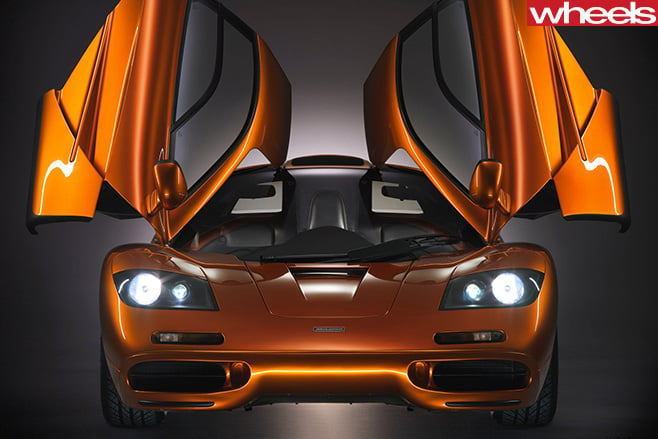
McLaren CEO Mike Flewitt quashes speculation of a new F1 supercar interation, but as Mike Duff notes, it what Flewitt didn’t say that’s keeping everyone crossing their fingers.
Remember those rumours that McLaren was working on a new F1 that set the internet on fire? Well we’ve dug a bit deeper and found that things are more complicated than initial reports suggested.
McLaren’s financial results press conference last week gave the perfect opportunity to brace company CEO Mike Flewitt about reports that the company was going to recreate its most iconic model.
“I’m really not going to comment on that article,” was Flewitt’s opening gambit, although when pressed, he conceded that there’s still plenty of pressure from potential owners.
“I regularly get asked for three seats and a V-12 and a manual gearbox,” he admitted. “I just don’t think there’s a real business case to do one of those.”
“People often hark back to things that they’ve loved, but it doesn’t necessarily mean it’s the right thing to do now.
We loved the F1, but we’re not going to make another one.”
The thing is, however, that that’s not what the original Autocar article suggested that McLaren was going to do.
Initial reports instead said that the company was planning to create a modern homage to the three-seater megacar, “the fastest GT car yet built, as opposed to a super sports car chasing outright performance” – something that Flewitt conspicuously didn’t deny might happen.
In other words, this might be a case of everybody being right.
For its part, Autocar is sticking fast to its scoop. “I’m entirely confident in the story. It’s well sourced and verified,” Jim Holder, the author of the original piece told Wheels. “There are customers and potential customers out there openly discussing the car as described.”
We look forward to seeing who is right on this one.
