
Rarely does a vehicle nameplate double as its dynamic assessment but with the Ferrari California T Handling Speciale package the $15,750 addition of the ‘HS’ tag does so emphatically.
Swapping out 4.3-litre atmo V8 for 3.9-litre turbo V8 last year – as shared with the mid-engined 488 GTB – traded some revability for a gobful of extra speed with the Ferrari California T. That isn’t a one-dimensional replacement, though, because nobody does turbocharged throttle response quite like Ferrari.
Thanks to ‘torque staging’ that keeps the 755Nm torque figure under wraps until 4750rpm in seventh gear, there is a combination of linearity and surging response that is unmatched. It feels as quick as its 3.6sec 0-100km/h claim, and yet the $425,638 HS is friendly to drive fast.

That HS package includes firmer suspension but, despite spring rates rising 16 per cent front and 19 per cent rear, the T’s flat-pointing front end staggers most. It also offers the same creamy steering as every other modern Fazz only with a fraction lost motion just off centre.
The standard carbon ceramic brakes pull the roadster up with conviction, and the HS-retuned stability control is liberal to a reasonable point.

Less convincing is the HS pack’s unique exhaust that drones too much with the top down. Throw the roof up and more of the V8’s sweet growl starts to come through the firewall.
Yet for all its special handling, this Ferrari manages to be that California cruiser as well. In Bumpy Road mode – yes, its real name – its adaptive suspension is silken. It is easy to get into, luxuriously padded and kids can even sit in the back.
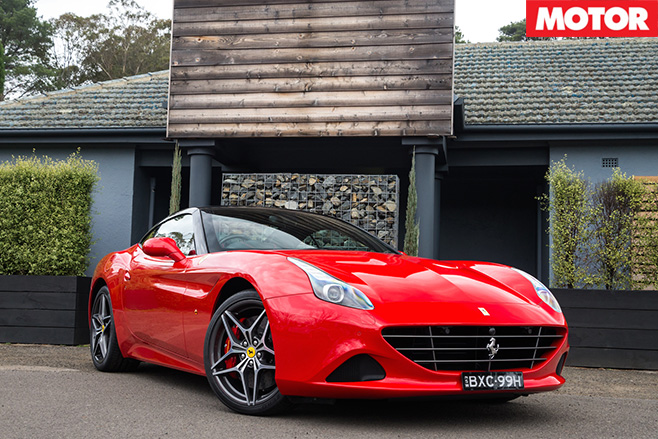
4.5 OUT OF 5 STARS
LIKE: Excellent steering, ride and handling, epic engine DISLIKE: Exhaust drone dominates roof down
SPECS Engine: 3902cc V8, dohc, 32v, turbo Power: 412kW @ 7500rpm Torque: 755Nm @ 4750rpm Weight: 1726kg 0-100km/h: 3.6sec (claimed) Price: $425,638
AHH, 1987. The dulcet tones of Whitney Houston and Kylie Minogue, Bob Hawke as PM… sweet times.
It was a sweet year for BMW, too, as the local distributor decided to get into the Australian Touring Car Championship. And in a BIG way. Six E30 BMW M3s, no less, all built by the late – and truly great – Aussie racing legend Sir Frank Gardner.
The black and gold JPS cars swept the ATCC in 1987 – including posting the M3’s first ever pole position anywhere in the world at Oran Park in February that year.
It also beat home all of the visiting Euro M3s that came down to Bathurst that October – many of which, it was subsequently found, were found to be cheating harder than Lance Armstrong.
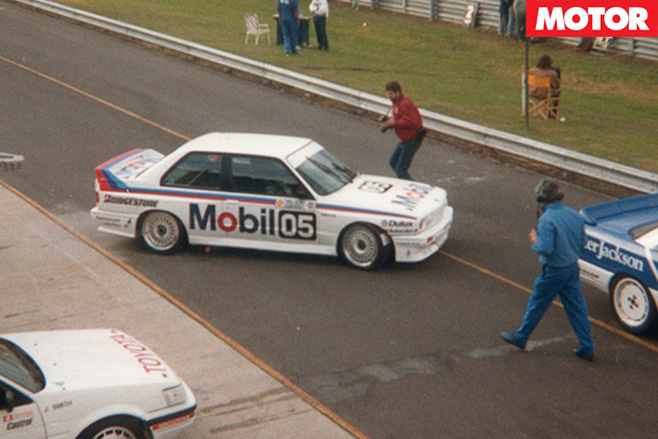
Jim Richards eventually prevailed, though, taking the 1987 crown in a thriller.
Around the same time, one Peter Brock Esq was having some trouble with his own sponsors. It was the beginning of the end of a long and prosperous relationship between Brocky and Holden, who refused to believe a box of crystals under the bonnet might be a good thing for its new cars…
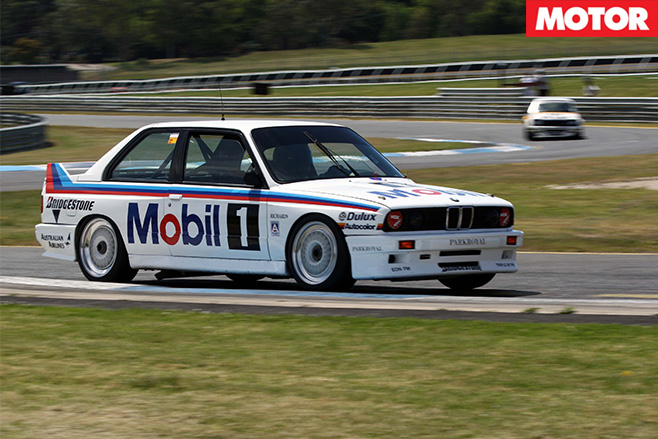
The only win for the year came for Brock at the Australian Grand Prix meet in November. Fun fact; he would jump between all three cars in the team to find the best package for a particular event.
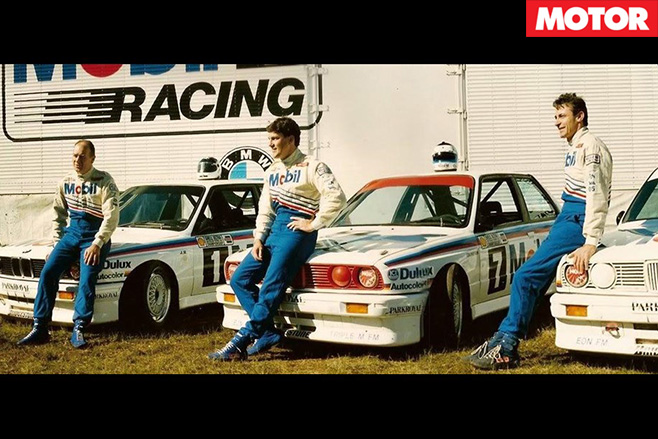
You can find the ’87 BMW M3 E30 for sale on tradeuniquecars.com.au.
And it’s ready to rumble, too, by the looks, with a shedload of spares and eligibility in a couple of classes. It ran at last year’s Phillip Island Historic meeting – here’s the in-car video.
Jeep has launched the Jeep Grand Cherokee SRT Night limited edition into Australian showrooms. Just 128 examples of this large, dark, luxury V8 SUV will be sold in Australia, priced at $97,000. If your tastes turn towards SUVs that think they’re sports cars, this American import is the most affordable drag star in the country right now. And while it ain’t cheap, it doesn’t exactly scrimp on the good life either!
- The Jeep Grand Cherokee SRT Night edition is a large luxury SUV that can cover 400m from a standing start in just 13.1 seconds. That’s faster than a Porsche 911 of just a decade ago! We know this because Jeep gave us the chance to drag race this muscle-bound V8 SUV down the quarter mile at Eastern Creek. At night, of course!
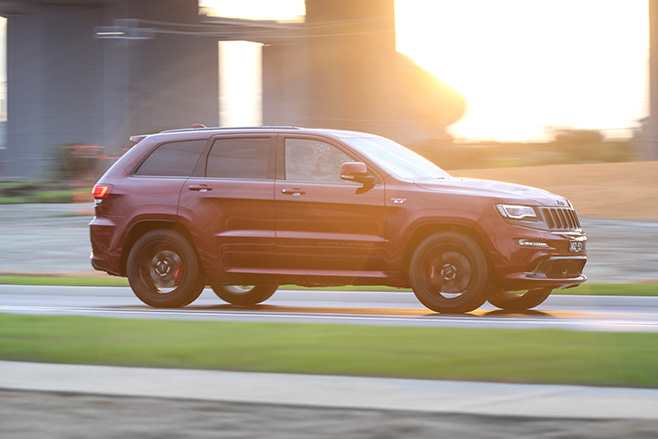
- Our 13.1 second quarter mile time is actually four tenths of a second faster than Jeep’s own claim, which apparently came from internal testing. Which means their testers must drive like my grandma.
- The SRT Night edition is based on a ‘standard Jeep Grand Cherokee SRT, which means a really powerful V8 engine and a firm, sporty ride intended to make the big SUV as quick and stable as possible through the corners.
- It’s called ‘Night’ edition because there are lots of dark bits, like satin black alloy wheels, darkened windows, blackened seven-slot front grille and black badges.
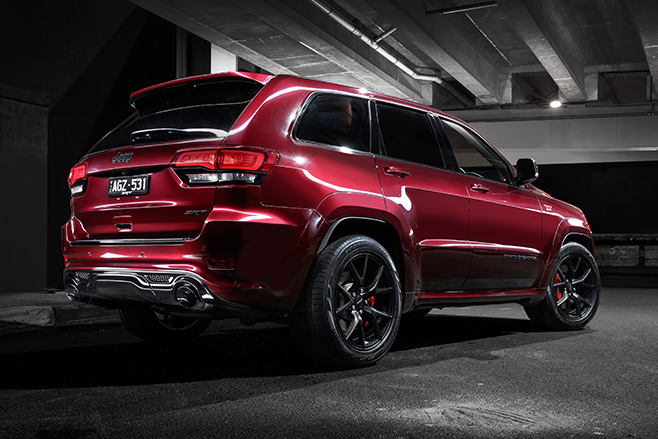
- The Night edition is not cheap. At $97,000, it’s between $3K-$7K more than the next dearest Jeep Grand Cherokee, but does get additional creature comforts like the 19-speaker Harmon Kardon sound system, black leather interior treatment with silver stitching and big panoramic sunroof.
- The Night edition actually gets some mechanical modifications, too. The electric steering assistance has been increased, the suspension settings have been tweaked to ride the bumps a little better, and there’s even a fancy ‘Launch Control’ dial to help you blast away from the traffic lights as fast as possible
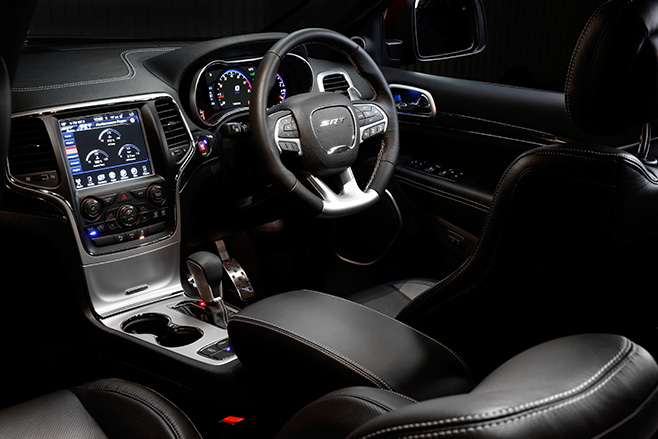
- The Grand Cherokee SRT Night edition’s Launch Control lets the driver dial up the desired launch revs, anywhere from 2000rpm to 3250rpm. This may shave valuable hundredths off your drag strip time. Or not.
- Jeep’s gone to the trouble to swap out some heavier suspension components for lighter ones. Unfortunately, all the extra equipment negates any weight saving, so the Night edition weighs the same 2336kg as the normal SRT.
Most of us agree with the saying that you don’t fix what isn’t broken, right? But in the automotive world, that maxim has no place. For every electric window mechanism, or run-flat tyre concept that’s made it from drawing board to production line, many have tried (and plenty have failed) to reinvent the most conventional parts of a car. From doors to wheels, here are a few of the wackiest inventions ever put into production.
DISAPPEARING DOORS
Cars doors have often been a point of reinvention for many carmakers. From butterfly doors to gullwing doors and even the odd door with a seat fitted to it, there’s no shortage of cars that have taken the unconventional openings.
But we’re focusing on the ultra-rare disappearing doors feature on the BMW Z1 and 1993 Lincoln Mark VIII. The doors drop down to fold underneath the car in something we’d expect on a submarine as opposed to an automobile.
THE CRAB WHEEL
Like doors, many have developed concepts for different types of tyres and wheels that make driving easier. Goodyear unveiled a spherical tyre concept at Geneva Motor Show this year, and more recently a Canadian man has actually developed a multi-directional wheel that can move the car forwards and back, as well as sideways. We think this invention is bound to make parallel parking a whole lot easier, but boy do they look ugly!
PILOT STEERING WHEELS
The steering wheel has changed a lot over the years. From the thinner but bigger circumference steering wheels in cars of old, to the smaller, button-heavy steering wheels in modern cars, they may have changed in size but fundamentally, they’ve stayed the same. As we head into an autonomous driving future, the steering wheel is once again under the spotlight with some manufacturers releasing concepts that involve tablets or fighter-jet like controls.
Then there was the Saab’s joystick steering… wheel (?). The company does have a history in building jets, after all, so we weren’t overly surprised by this reinvention which they used in a re-design of a Saab 9000 which they called Prometheus. Check it out here at around the 20-second mark.
ELECTROMAGNETIC SUSPENSION
Suspension – it’s one of those things most people buying cars wouldn’t even consider the details of, and yet, we can’t live without it. Our cars already feature an array of suspension types. From leaf springs, coil springs and McPherson strut, there are plenty of different variations available. Suspension is important, and it’s for that reason Bose developed a smooth, non-bumpy, engineering-successful electromagnetic car suspension. Unfortunately, it was an absolute flop commercially thanks to its weight and cost to produce.
What stands out?
The third-generation Mercedes-Benz A-Class is a good looking, premium small hatchback, with a nicely finished cabin and great luxury and safety equipment. The A-Class offers a car for most buyers, from the modestly powered yet responsive A180 to the wildly potent Mercedes-AMG A45.
What might bug me?
On long trips, wishing you had a spare wheel and tyre. If you puncture a tyre on most A-Class cars, you just keep driving: their tyres will still work when they’re flat. That’s great, provided you can get a new tyre fitted soon. Once it has lost air, a run-flat tyre will last for about 80km.If you puncture a tyre on the A250 Sport or Mercedes-AMG A45, you must get to grips with the tyre-repair kit. It has neither run-flat tyres nor a spare.(You can order a space-saver spare wheel for any but the A45 as a dealer-fit accessory.)On cars sold prior to January 2016 you may have been bugged by the bumpy ride. However, Mercedes resolved this with the Series 2 A-Class released for the 2016 model year, by adding adaptive suspension. The adaptive dampers are more compliant, so that bumps feel less sharp – particularly on the less sporty versions.
What body styles are there?
Five-door hatchback only.The Mercedes-Benz A-Class drives its front wheels, and the Mercedes-AMG A45 drives all four wheels. Both are classed as small cars, higher priced.
What features does every Mercedes A-Class have?
Climate control air-conditioning, which can maintain a set temperature. Cruise control with an adjustable speed limiter function. Windscreen wipers that operate automatically when it rains, and headlights that switch on automatically when it’s getting dark. Nappa leather trim on the steering wheel.A multimedia system with a CD player, AM/FM and digital radio, USB input, an 8.0-inch colour display, and at least six speakers. Satellite navigation. Bluetooth connectivity for phone calls and audio streaming, and integration for iPod and iPhone. Apple CarPlay and MirrorLink (which can put your iPhone screen on the car’s display).A reversing camera, and parking sensors front and rear (which help you judge how far the bumpers are from obstacles). Active parking assist, which can steer the car into a parking spot.Hill start assist, which operates the brakes automatically to make take-offs on hills easier.Aluminium alloy wheels. A tyre pressure warning system, which tells you if a tyre is going flat.Dynamic Select, which allows you to choose a comfortable ride from the suspension most of the time but switch to a firmer ride if you want to explore the handling of your A-Class. The Comfort, Sport, and Eco settings also affect how eagerly the auto transmission changes gears, how heavy the steering feels, and how fiercely the airconditioning cools. A fourth mode – Individual – is a pick ’n mix of each, so that you can tailor your settings. (On the most sporty A-Class, the Mercedes-AMG A45, a Sport+ mode replaces Eco.)A suite of driver aids that includes Autonomous braking, a fatigue monitor, and a blind-spot alert.Nine airbags. Electronic stability control, which can help you control a skidding car. (For the placement of airbags, and more on A-Class safety features, please open the Safety section below.)Every Mercedes-Benz A-Class carries a three-year, unlimited kilometre warranty.
Which engine uses least fuel, and why wouldn’t I choose it?
The 2.1-litre, four-cylinder turbo-diesel in the A200 d uses the least fuel, consuming just 4.6 litres/100km on the official test (city and country combined). This engine accelerates the car effortlessly from low speeds.The main reason you might not choose the A200 diesel is that all of the other A-Class cars feel smoother, and even the least costly of them is nearly as powerful. They use turbocharged petrol engines, and these don’t use much fuel either.The least costly A-Class, the A180, is most economical of the petrol cars. Its 1.6-litre engine uses 5.8 litres/100km on the official test.A more powerful version of that engine comes with the A200 and uses marginally more fuel, while delivering 25 per cent more urge.The A250 Sport and the very high-powered A45 AMG offer enthusiast drivers a lot more acceleration. Both have 2.0-litre petrol engines.The A250 Sport has about 75 percent more power than the A180 and consumes 6.7 litres/100km on the official test.The Mercedes-AMG A45 has more than three times the power of the A180. This makes its fuel consumption of 7.3 litres/100km look very reasonable, although fuel use can increase significantly if you’re heavy on the accelerator.All engines have an automatic stop-start system, which saves fuel. It shuts down the engine when you stop, and starts it again when you press the accelerator to drive away.Every Mercedes-Benz A-Class has a seven-speed automatic gearbox.
What key features do I get if I spend more?
Step past the A180 and spend more for an A-Class Mercedes and you get the more powerful engines described above and more features.The A200 and A200 d add power-adjustable lumbar support, power-folding exterior mirrors, and cosmetic tweaks that include diamond pattern interior trim. They also have 18-inch wheels (an inch bigger than those on the A180) with lower profile tyres, which sharpen the steering response slightly.Spend more again for an A250 Sport and you get the much more powerful, 2.0 litre engine, and all-wheel drive. A firmer, sports suspension tune brings more precise steering on smooth roads. Brakes use perforated discs for more consistency. A racing-style flat-bottomed steering wheel matches race-themed interior trim, and there are styling additions externally also.You also get keyless entry, which allows you to unlock the car with the key safe in a pocket or bag, and a sunroof. There are very bright and long-lasting LED headlights, and the taillights and daytime running lights also use LEDs.The Mercedes-AMG A45 is the quickest A-Class model. It too has all-wheel drive, delivered through 19-inch wheels with tyres of a lower profile again. Brakes are stronger. A mechanical front differential lock, introduced with the Series 2 facelift about January 2016, lets you use more of the car’s prodigious power when accelerating from corners.Inside, there are leather-trimmed seats with more side-support for fast cornering. The front seats are heated and power-adjustable, and they remember your adjustments. There is dual-zone air-conditioning (which lets you set different temperatures for each side of the cabin), and a different instrument cluster (with a lap-timer for use on the racetrack). Cosmetic changes include Illuminated AMG lettering in the door sills.There is also a better sound system from Harman Kardon. Headlamps dip automatically for oncoming traffic, and the foglights shine into corners when you turn the wheel.The A45 has a bigger suite of active safety aids too. Lane Keeping Assist alerts you if you’re straying from your lane, and adaptive cruise control reduces your speed automatically for slower traffic – to a full stop if necessary.A no-cost option on the A45 is the substitution of 18-inch wheels for the standard 19s (AMG A45 ‘Fuel Efficient’). This reduces fuel consumption slightly on the official test, allowing the car to slip under the higher Luxury Car Tax threshold applied to fuel-efficient vehicles.An extra-cost option on any A-Class but the A45 is a Driving Assistance Package that adds the active safety aids standard on the A45: Active Cruise Control, and Lane Keeping Assist.
Does any upgrade have a down side?
Unlike the seats on the less costly cars, the power-adjustable sports seats in the Mercedes-AMG A45 don’t have under-seat storage. And the bigger side bolsters make them harder to get in and out of.The more expensive A-Class cars ride less comfortably than the A180. That’s partly due to their firmer, sports suspension tune. And it’s partly because their lower profile tyres have less rubber and air cushioning the wheels from the road.Choosing an A250 Sport or A45 means you no longer have run-flat tyres, and nor do you have a spare tyre. Instead, you must rely on a tyre repair kit.The sunroof reduces head room for rear passengers.Of nine colours available, three of them – Jupiter Red, Cirrus White and Night Black – are non-metallic and come at no extra cost. Other colours cost about $1200 extra on all A-class cars except for the A45, which offers any colour as standard.
How comfortable is the Mercedes A-Class?
The Mercedes-Benz A180, A200 and A200 d ride quite comfortably if you set their Dynamic Select systems to Comfort. Their adaptive suspension (added with the Series 2 facelift about January 2016) takes the edge of sharp bumps, for a ride that is on par with, say, parallel versions of the Audi A3.In the A250 Sport and AMG A45 you may still feel the occasional sharp jolt, but this is easier to accept in a performance oriented car. Nevertheless even the A250 Sport, with its sports suspension and 18-inch wheels and tyres, rides more firmly than many small car buyers will expect, and the A45, on 19s, is just as uncompromising.The cabins of all A-Class cars are stylishly designed and beautifully built from high-quality materials. The real leather trim, not surprisingly, is nicer than the synthetic Artico.The position of the driver in an A-Class is easily tailored, especially in versions with powered seat adjustment. However, tyre-drone on some bitumen surfaces can be tiring on long highway drives.
What about safety in a Mercedes A-Class?
Every A-Class has anti-lock brakes, stability control, nine airbags, a reversing camera, front and rear parking sensors, autonomous braking, a blind-spot alert, and driver fatigue detection. In addition, if the car detects signs of an impending collision it will pre-tighten seatbelts and close windows.Run-flat tyres on the A180 and A200s help you maintain control of the car if a tyre deflates suddenly.Like many Mercedes-Benz models, the A-Class has nine airbags rather than the much more common six or seven. The two additional bags are placed on the outside of rear passengers at chest level, giving people travelling in the rear seat extra side-impact protection that is usually reserved for those in front.The remaining seven airbags are in the usual places: two directly in front of the driver and front passenger; a knee protection bag for the driver; airbags outside each front seat to protect the pelvis and chest from side impacts; and curtain airbags extending down each side of the cabin to protect the heads of passengers front and rear from side impacts.The Automatic braking on an A-Class works at city and highway speeds: it warns of an obstacle in front of the car – typically a slower vehicle – and will apply the brakes if you do not react. It will not initiate a full emergency stop, however.The driver fatigue alert, which Mercedes calls Attention Assist, monitors your steering and warns you if you show signs of falling asleep at the wheel.Blind-spot Assist warns you of cars travelling near your rear corners that you can’t see (this was added about January 2016).The Mercedes-AMG A45 has in addition Active cruise control and Lane Keeping Assist. The latter monitors road markings, and can recognise signs you have begun to drift into an adjacent lane on the highway – perhaps from distraction. It alerts you by pulsing the steering wheel.You can add active cruise and lane assistance to any A-Class with the Driving Assistance Package.The Australasian New Car Assessment Program (ANCAP) awarded the Mercedes-Benz A-Class its maximum five stars for safety, in April 2013.
I like driving – will I enjoy this car?
You will enjoy driving the Mercedes-Benz A-Class. It feels substantial and sporty, in ways that most lower priced (and some higher priced) small cars do not.The BMW 1 Series may be a bit more involving for keen drivers because it is rear-wheel-drive, and the (mainly) front-drive Audi A3 is also a close rival.However, the Mercedes has a distinctly different flavour – its steering is weightier and the car changes direction enthusiastically.The A180, A200 and A200 CDI are modest performers, but the A250 Sport is quick – on a similar level to the Volkswagen Golf GTI. The Mercedes-AMG A45 is fearsomely quick, with an invigorating engine soundtrack.There is no manual gearbox option in the A-Class, but paddle shifters give you manual control over gear selection for sporty driving.
How is life in the rear seats?
A-Class rear seat bases are short on under-thigh support. The backrest angle is comfortable and lateral support is quite good, as are leg and foot room.Rear head room, which is at a premium in all versions, is compromised in panoramic sunroof versions.Forward vision is good thanks to seats set high in relation to the front seats, and slim front headrests. There’s a fold-down centre rear armrest, and rear aircon vents in the A250 Sport and Mercedes-AMG A45.
How is it for carrying stuff?
The A-Class boot is about average by small-hatch standards, at 341 litres. It is significantly smaller than the boot in the previous generation A-Class.The cargo bay aperture is relatively small, with a high loading lip. Inside, there are useful tie-down points, mesh pouches for securing loose articles, and a ski-port to allow you to carry long items.With the 60/40 rear seatbacks folded, the total carrying capacity expands to 1157 litres.
Where does Mercedes make the A-Class?
The Mercedes-Benz A-Class is made in Germany.
What might I miss that similar cars have?
Possibly some more help when reversing out of a parking space, from sensors that trigger a warning if a vehicle is about to cross behind you. This is available on the Audi A3, for example.Perhaps a longer warranty. The Lexus CT200h hatch has a four-year warranty.Among other cars worth considering is the BMW 1 Series, which is rear-wheel-drive and a bit sportier.
I like this car, but I can’t choose which version. Can you help?
Our reviewers recommend the A200. The more powerful 1.6-litre petrol engine in this version makes it more enjoyable to drive than the A180, without significantly increasing fuel consumption. And it comes with some nice extra features.
Are there plans to update the A-Class soon?
The current W176 Mercedes-Benz A-Class arrived in March 2013. An updated, Series 2 version went on sale about January 2016. It brought a more comfortable ride from driver-adjustable suspension, minor styling revisions, and bigger central screens with better connectivity (among other equipment upgrades). The A250 Sport and Mercedes-AMG A45 also gained a bit more engine performance, at the price of using a bit more fuel.An all-new A-Class is expected in 2018. It is likely to bring new engines and a more extensive suite of driver aids, among other changes.
With the announcement of an Australian distributor for Alpina coming today, Wheels looks at BMW’s association with the luxury performance brand, together with the tuning company’s history, heritage and the models now destined for our roads.
The name Alpina has always encompassed a mystical sense of allure for most Australian enthusiasts, due to not only their scarcity down under, but their perceived individuality. Melbourne’s The In Motion Group has now been appointed by Alpina HQ – Burkard Bovensiepen GmbH & Co. KG – as the exclusive importer and distributor for Australia.
Only eight examples of the B4 Bi-Turbo Coupe (which has already undergone ADR compliance and homologation for sale in Australia) will initially arrive in November this year and all are destined to be used as demonstrators for the Group’s first dealerships in Doncaster and Bundoora.
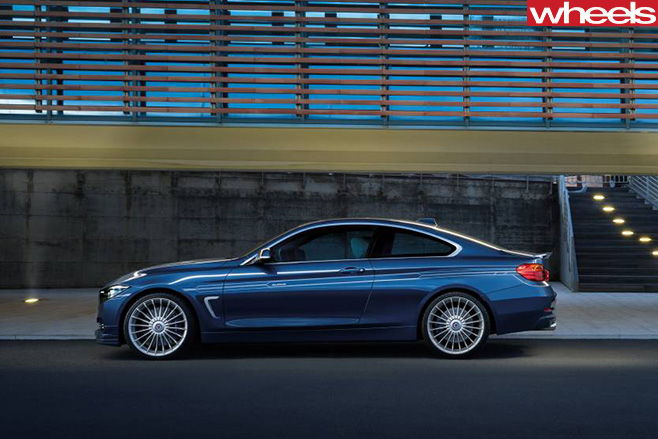
The In Motion Group will also have the BMW Alpina B4 Bi-Turbo Convertible and B3 Bi-Turbo Sedan (including Touring models) available for test in November. Customer cars however, will be built to order, due to the array of trim options available.
According to BMW, scheduled servicing for all models will be carried out by Alpina’s Australian dealer network, which the In Motion Group has plans to introduce into selected major metropolitan areas later in the year.
So, what is Alpina?
If you’re a motoring enthusiast, you’ll know the Alpina name. If you’ve just discovered a love of all-things cars and are a bit out of the loop, here’s a quick guide to bring you up to speed:
- Alpina is a low-volume German automobile manufacturer that produces a range of bespoke cars based on current BMW models, and has a long association with BMW that started in 1965.
- Each Alpina undergoes significant modifications to the exterior, interior, drivetrain, chassis, suspension and exhaust.
- From its manufacturing plant in Buchloe – near Munich, Germany – Alpina designs, engineers and manufactures its components, which are then fitted to its cars on the assembly line at BMW manufacturing plants in Bavaria.
- The finishing touches are then applied in the Alpina factory.
- As an officially registered German automobile manufacturer, every BMW Alpina is fitted with an individual production plaque along with a specific Alpina VIN number.
BMW and ALPINA – a quick history and heritage
- Alpina was founded by Burkard Bovensiepen in 1965, who, together with sons Andreas and Florian, still heads the family-run German business.
- The company produces up to 1700 cars a year based on current BMW models that are sold in markets across the globe.
- Bovensiepen’s association with the BMW Group began in 1962 when the young engineering student developed a dual Weber carburettor system for the then new BMW 1500. Impressed with the quality of the system, the BMW Group gave Bovensiepen approval to continue.
- Through the late 1960s and early 1970s, Bovensiepen continued to develop BMW cars largely for motorsport, with drivers of his creations including Derek Bell, James Hunt, Jacky Ickx and Niki Lauda.
- Alpina’s development of BMW cars extended well beyond simply modifying engines. In 1983 it was officially registered as an automobile manufacturer by the German Ministry of Transport, and continued to develop new models based on BMW cars.
- Since then, Alpina has produced its own unique grand tourers based on BMW 3 Series, 5 Series and BMW 7 Series sedans, 6 and 8 Series coupes and Z Series roadsters.
- Such is the strength of the relationship between Alpina and the BMW Group that Alpina engineers receive CAD designs for new models well in advance of their BMW launch to enable it to develop its own products to complement the BMW models.
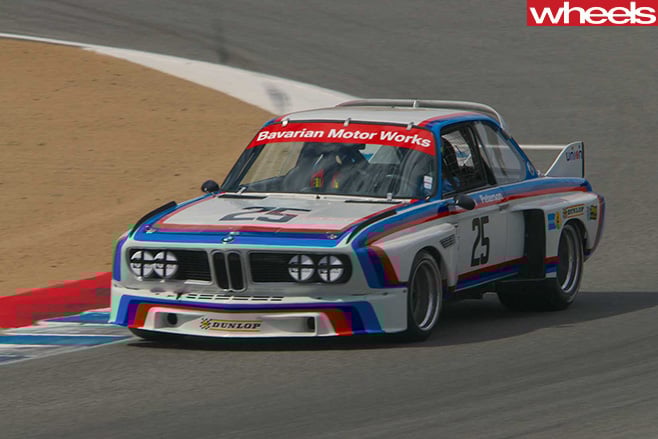
1. BMW 3.0 CSL coupe (aka The Batmobile)
In 1970, Alpina won the European Touring Car Championship, the 24-Hours of Spa-Francorchamps and all three major German championships: Road Course, Hill-Climb and Rallye. Following this success, in 1971, the BMW Group tasked Alpina with the project leadership to develop the lightweight BMW 3.0 CSL Coupe (pictured above) that went on to win the 1973 European Touring Car Championship.
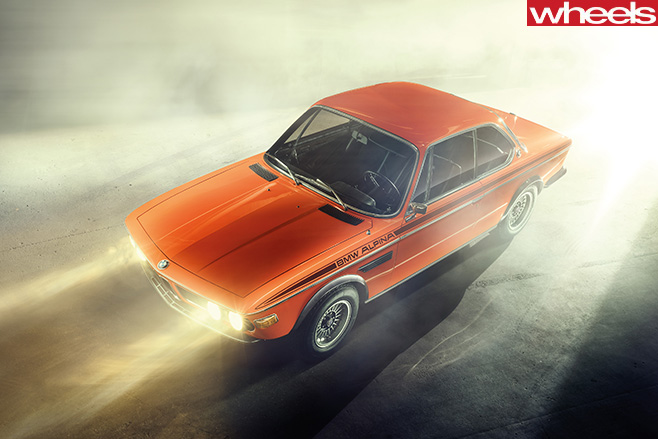
Based on the E21 series two-door 323i, the Alpina B6 2.8 was the first 3 Series based car to feature a six-cylinder engine, and, with peak outputs of 125kW and 180Nm, was able to cover 0-100km/h in 7.9 seconds before hitting a top speed of 208km/h.
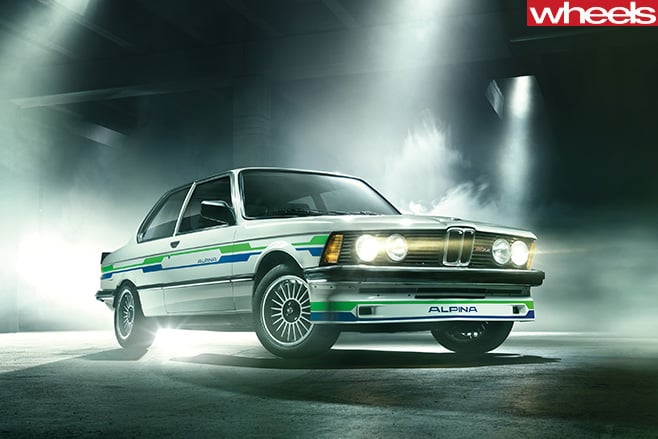
3. Alpina B7 Turbo
Alpina showcased the B7 Turbo based on the E12 BMW 528i and the B7 Turbo Coupe derived from the E24 series 630CSi. With its 3.0-litre straight six turbo engine producing 221kW and 462Nm, the B7 Turbo was the world’s fastest four-door sedan of its time with a top speed in excess of 250km/h and 0-100km/h time of 6.5 seconds.
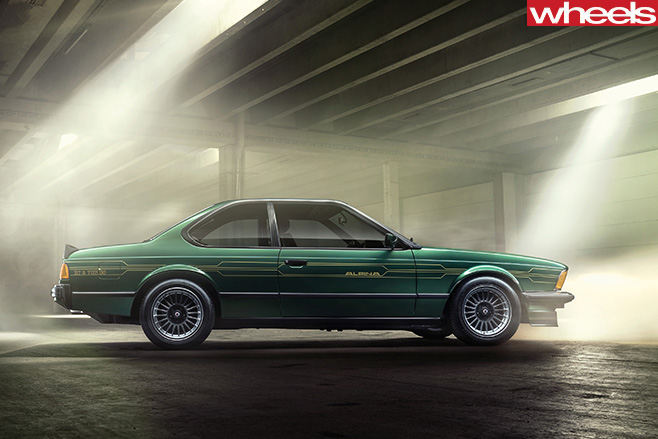
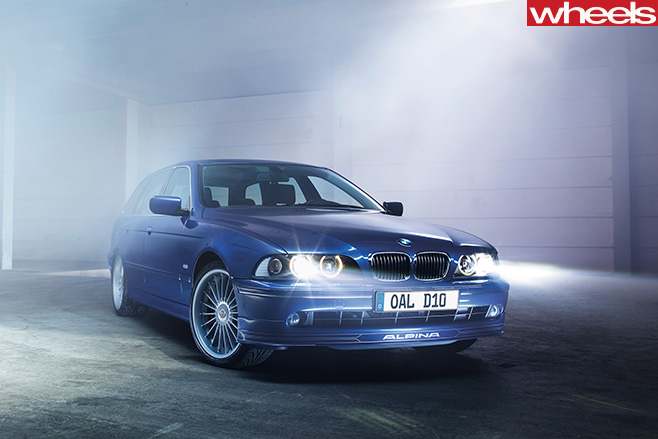
In 1999, in collaboration with the BMW Group, Alpina ventured into the diesel market for the first time, producing the 5 Series based 180kW/500Nm D10 Biturbo, the world’s most powerful diesel sedan of its time, and by 2013, it had developed its first SUV: the 257kW/700Nm BMW Alpina XD3 Bi-Turbo.
Renault’s new Clio RS gets advanced headlights and an optional Akrapovic exhaust system for 2016. But where is the knee-weakening 205kW Megane RS engine of the RS 16 concept?
If you’ve never visited the Goodwood Festival of Speed or the Monaco Grand Prix for that matter, do yourself a favour and add them to your bucket list (in bold) under the title ‘Petrol head nirvana.’ It’s at these motorsport events that performance car fans are treated to a sensory overload of automotive sights and smells; old, new, big and small.
This year’s Monaco Grand Prix saw the global debut of Renault’s Clio RS 16 concept car; a model the French automaker claims was developed to showcase Renault Sport’s expertise.
The RS 16 highlighted what Renault Sport can achieve when given a blank canvas. The end result was a mouth-watering product, as engineers successfully shoehorned a 205kW Mégane RS 275 Trophy-R engine, transmission and cooling system into the more compact and nimble Clio chassis. Win.
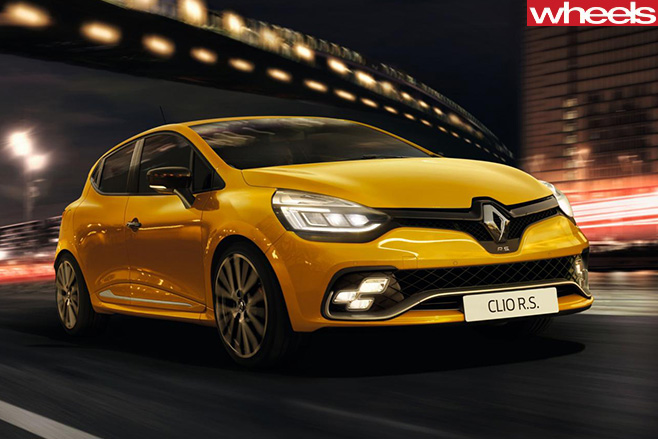
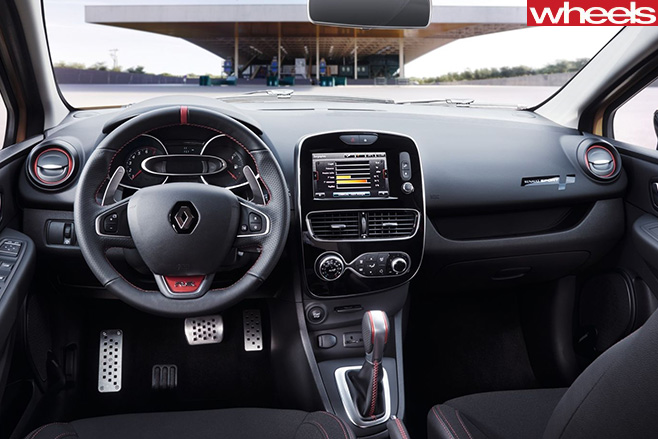
That aside, the new Clio looks to carry over many of the features of the concept including: a six-speed EDC dual-clutch automatic transmission, steering wheel-mounted paddle shifts, a broader front bumper and a new LED multi-faceted lighting in the form of a chequered flag. Renault has dubbed the new front lighting system the RS Vision; incorporating the vehicle’s fog lights, cornering lights, side lights and dipped and main beams to enhance night-time visibility.
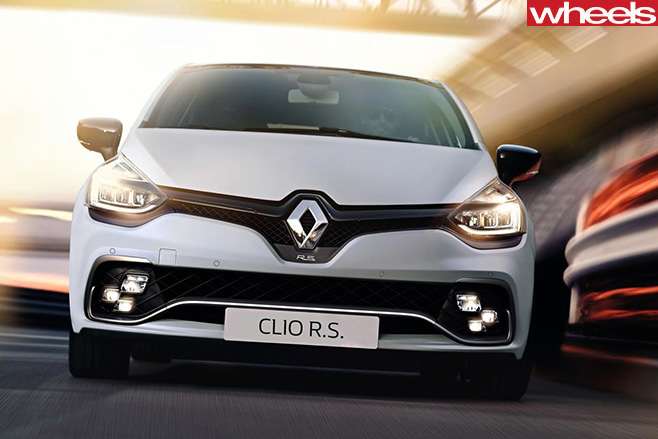
The 149kW powerplant will be available with the Sport and Cup chassis, while the 164 kW unit can be selected for the Trophy variants, the latter claiming an impressive 0-100 km/h in 6.6 seconds. If you then factor in features such as Launch Control, the RS’s Drive modes (Normal, Sport and Race), the inclusion of the RS Monitor app and hydraulic compression bump stops, we feel there is no reason the new Clio RS shouldn’t uphold the model’s strong performance reputation when it eventually arrives in Australia in 2017, and continue to challenge the pecking order in the hot-hatch market.
We’ll know for sure once we drive production version later this year.
YOU know what would make the epic LaFerrari even better? Less roof, apparently.
Maranello has announced overnight it will produce an open-top version of its hybrid hyper car that looks fit for Bruce Wayne.
The name and technical specifications of the new car will be announced at the Paris International Motor Show in October this year.
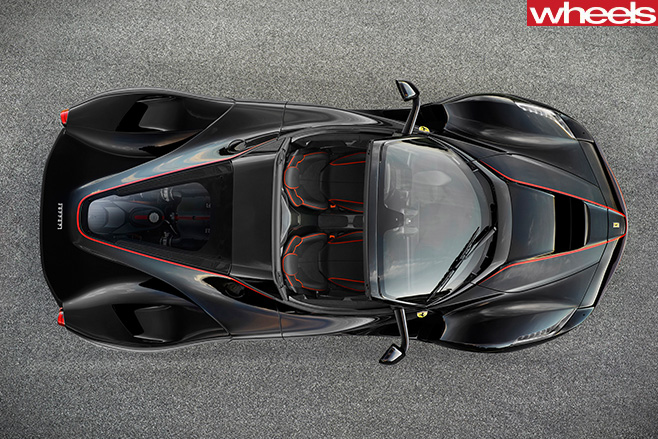
I’m sure we are not alone in wanting one of these batmobile-esque beauties in our garage! Well if you do too, it is likely you never will, since Ferrari has already sold its yet to be announced allocation.
One person who already has a key for his drop-top LaFerrari is British chef Gordon Ramsey, who showed off the fob for his new wheels while appearing on the latest season of Top Gear.
The limited-edition Fezza will come equipped with a removable carbon-fibre hard top, as well as a removable soft-top. Because, when you spend this amount of money you get some options!
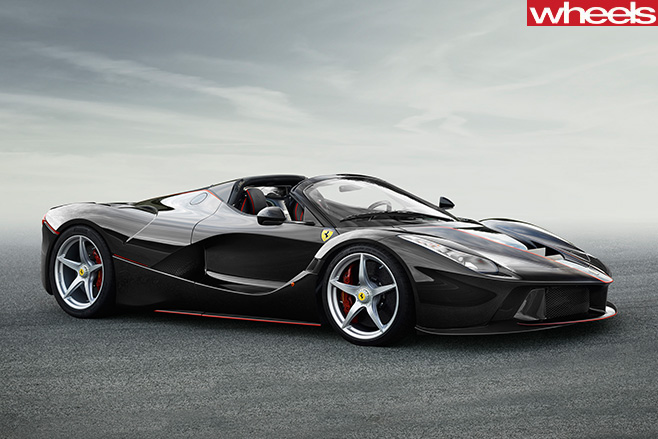
The al fresco prancing horse has the same running gear and performance figures as the original LaFerrari, with a 6.3-litre, 588kW V12, combined with an electric motor to produce a total of 708kW.
Ferrari claims the convertible LaFerrari will have the same torsional rigidity and beam stiffness as the coupe, as well as have the same drag coefficient when blasting along with the top down.
But in the end, does any of that really matter? When you have a naturally-aspirated V12 singing you a high-revving opera, will torsional rigidity really be what you are thinking about? Nah, us either.
Toyota has given its popular 86 sports car its first major makeover since its 2012 launch, though modifications focus more on dynamics than performance.
The Japanese coupe follows recently announced changes for its near-identical twin, the Subaru BRZ, and will bring revised styling, a tweaked chassis and a minor engine upgrade towards the end of the year.
Despite many 86 enthusiasts calling for a turbocharger to boost performance, the 2.0-litre four-cylinder ‘boxer’ engine remains a natural breather – though improved airflow from revised intake and exhaust manifolds has liberated an extra 5kW and 7Nm for 152kW and 212Nm outputs.
Engineers have also aimed to address the tractability weakness of the engine by improving the torque curve at lower revs. Torque peaks across a 200rpm-wider range, though still kicks in at a high point: 6400-6800rpm.
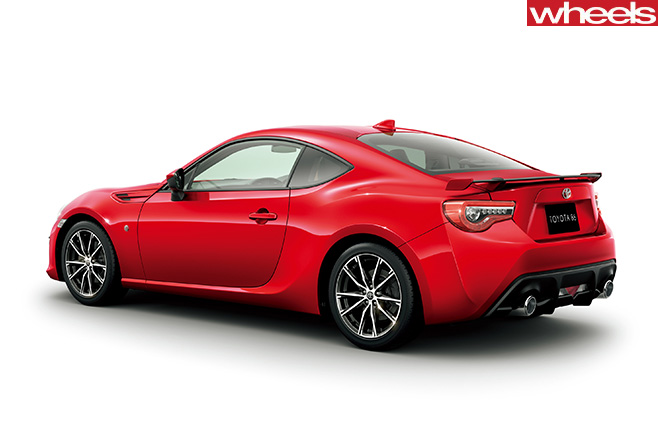
A lesser-powered six-speed auto version – with paddleshift – will be offered again.
The 86’s brilliant steering has been further sharpened, and Toyota says the new lowered, more aggressive-looking front-end and available rear-wing also benefit handling through improved aerodynamics.
Ride comfort is said to benefit from reworked damper valves and increased body rigidity that stems from extra spot welds for the coupe’s rear pillars.
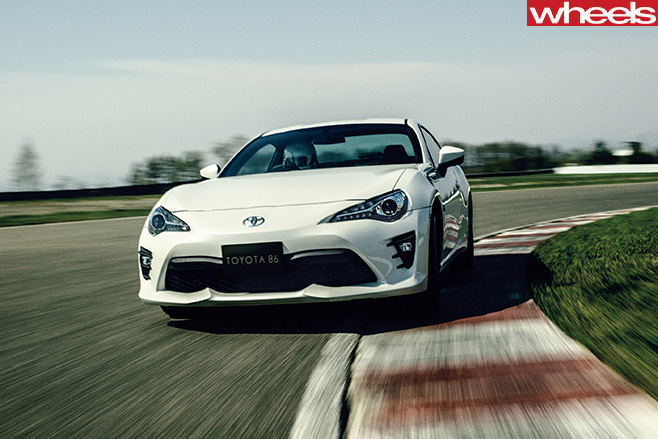
“We overhauled everything – primarily as a result of technological feedback from the 86’s participation in the 24 Hours of Nürburgring – and repeatedly tested the vehicle on roads all over the world as we manufactured every single part,” said Tada.“The new 86 has been perfected to such an extent that, from the moment the steering wheel is gripped and the vehicle accelerates away, every driver will be able to recognise its evolution.”
Toyota and 86 badges aside, the new front end and 17-inch alloy wheels create the biggest visual differences to the BRZ.
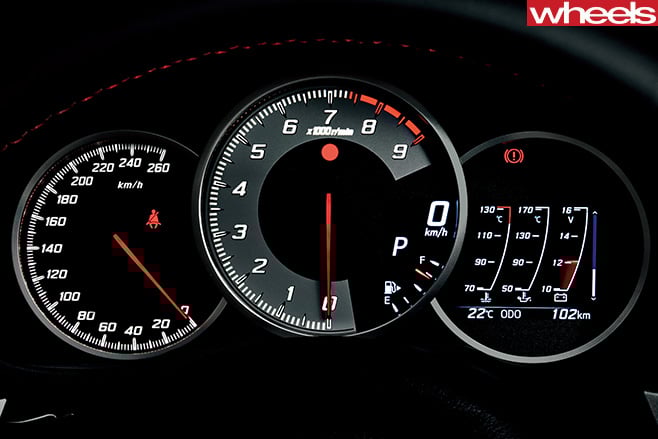
The oft-criticised 86 interior gets another update. A new 357mm-diameter steering wheel is the smallest in the Toyota world; there’s a new optional suede-like trim called Grand Luxe for the instrument panel and doors; and a 4.2-inch TFT display featuring G-force meter, power and torque curves, and stopwatch is introduced.
This display is expected to be offered on the higher-spec GTS, along with the same 6.2-inch colour touchscreen announced for the BRZ.
Toyota doesn’t make reference to the touchscreen and has provided only a full dash shot of the base car that looks very much a basic model – including a large blank panel on the centre of the dash where the infotainment display would be expected to be positioned on the GTS.
The Toyota 86 has been Australia’s best-selling sports car for the past three years.
BMWs authorised luxury off-shoot, Alpina is set to begin selling cars in Australia.
The land Down Under has missed out on the customised machines from Bavaria, until now.
Melbourne-based The In Motion Group has been appointed as the official importer and distributor for BMW Alpina cars in Oz, and will start selling one of three models in November under the Alpina Automobiles – Australia name.
So what is Alpina? Well, it is officially called Alpina Burkard Bovensiepen GmbH & Co. KG, and is the luxurious answer to the M Division’s track-focused cars. It is a low-volume car company focusing on bespoke cars.
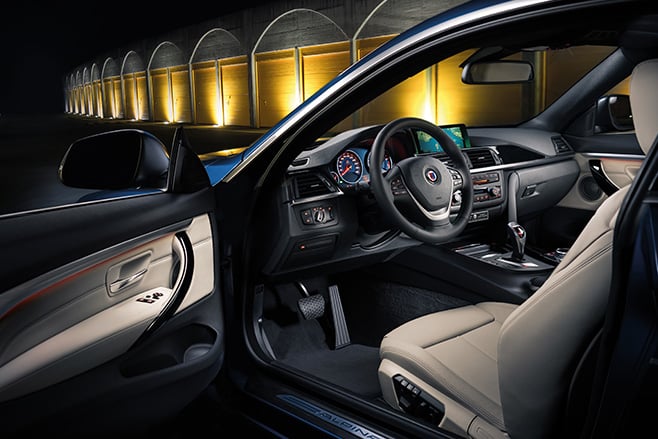
Alpina Australia intends to make the luxury Beemers available nation-wide through a network of car dealers it will announce later in the year.
The first Alpina model to be homologated for Australia will be the BMW Alpina B4 Bi-Turbo Coupe, and will arrive in November. This will be joined by the B4 Bi-Turbo Convertible, and B3 Bi-Turbo Sedan and Touring models once they complete homologation.
Chief Executive Officer of BMW Group Australia, Marc Werner, said he is glad to see the bespoke manufacturer finally hit Aussie shores.
“Alpina has a long history of producing tailored cars based on BMW models and we welcome their presence in the Australian market,” he explained.
With Alpina offering a massive array of interior options and designs, every car sold will be built to order in Germany, before being delivered to Australia.
