
Toyota has granted a first look at the interior of the C-HR, its new baby SUV, and confirmed details of the Australian model which is set to arrive early next year.
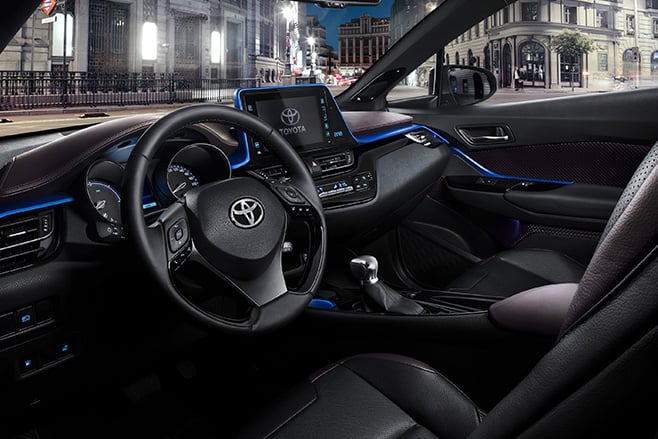
An interior with more emotive styling is what Toyota president Akio Toyoda requested of his designers, and they’ve delivered. The new cabin is far more adventurous than we’ve come to expect from Toyota, similar to the C-HR’s outward appearance that barely strays from the concepts that previewed it.

The ribbon of blue running across the dashboard of the European model will be replaced with grey inserts for Australia. The piano black panel will remain the same; highlighting the centrally-mounted, 6.1-inch touchscreen display. Blue LEDs light up storage compartments and dashboard buttons.
An angled console has a cockpit-like effect on the driving position, facing all controls towards the driver’s seat. A new diamond texture features on the door inserts and roof lining, as well as the instrument needles. Toyota says this reflects the shape of the switches and the “motif of the exterior body shell”.
Local models will feature lots of standard safety equipment including auto emergency braking, pre-collision warning, radar cruise control, lane departure alert, auto high-beam headlights, and a reversing camera.
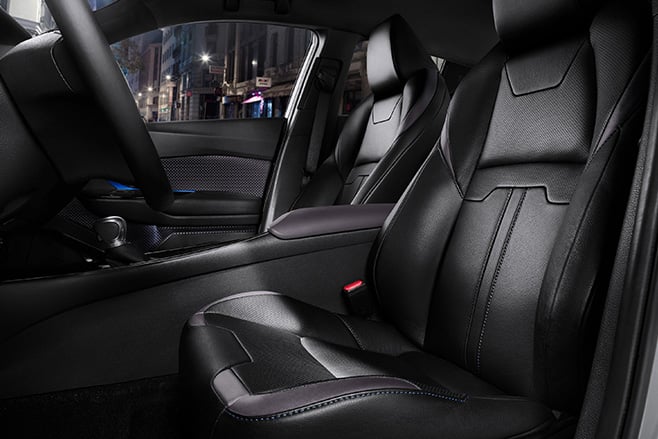
Perforated leather seats and two-tone leather dash trim – as shown in this overseas model – will likely be reserved for top-spec C-HR variants in Australia. An optional heating system for the new front seats will be available, as will keyless entry and start, tinted windows, 18-inch alloy wheels and two-tone paintwork.
As previously reported, the C-HR will introduce a new 1.2-litre turbocharged four-cylinder engine, producing 85kW and 185Nm. Front-wheel drive and all-wheel drive versions will be offered, with the choice of a six-speed manual or CVT auto transmission.
The C-HR is larger in size than the current Corolla hatch and smaller than the RAV4, and will go up against the formidable Mazda CX-3 and other competitors like the Honda HR-V when it hits showrooms in 2017.
Stop-start technology is a recent addition to cars; all in the name of making them use less fuel and emit fewer tailpipe nasties. And while the concept is simple, there’s a bit to making it work in the real world.
Essentially, stop-start works by stopping the car’s engine whenever the car isn’t moving. So, if you’re stopped at a red light or stuck in a typical gridlock, the stop-start will shut down the engine so you’re using no fuel and emitting nothing from the exhaust. When you’re ready to go again, the engine restarts. Sounds simple, right? Well, there are some complications.
The first of these is that the car has to be ready to leap out of the way of anything threatening to run into it or even if you’re simply timing your run to scuttle across a busy intersection. So a car with stop-start needs a bigger-than-average starter motor to make sure it can crank the engine into life pronto. It also needs a battery that can cope with the extra stress.
Then there are the sensors required to give the system a degree of logic. If the engine is not at operating temperature, stop-start needs to be over-ridden. And if the battery is a bit low on charge, ditto. If the air-conditioning needs to keep running, the system has to deal with that and even if the car is creeping forward every few seconds in traffic, stop-start needs to understand that and modify its behaviour to suit.
Then there’s the annoyance factor. A lot of drivers find the constant stopping and starting a nuisance and immediately manually disable the system when they get in the car. Diesel cars tend to be the worst and the gruff, relatively vibey feel of a diesel engine is worst when it’s starting up.
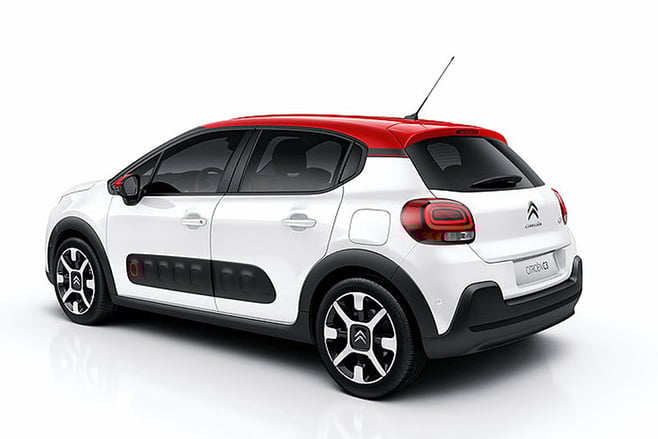
These are the first unofficial images of Citroen’s soon-to-be-launched C3 which have been leaked by a French website ahead of the car’s official unveiling – slated for midnight tonight Australian time.
Whichcar understands the heavily updated Citroen C3 will be available in three options; a 1.0-litre and 1.2-litre petrol engine as well as a 1.6-litre diesel engine with the larger of the petrol versions likely to be offered in a couple of different specifications.
Judging by the images, the latest generation is inspired by its larger C4 Catcus counterpart, boasting robust side-mounted Airbump panels and an almost-SUV stance. The colour-contrasted roof, side mirrors and bumper-mounted spotlights are in line with the firm’s strategy of wanting to be slightly left-of-centre in the increasingly crowded small-car marketplace.
Citroen’s Australian operations are taking a somewhat cautious approach to the new C3. Although the present model sold out in Australia more than 12 months ago, Tyson Bowen – Citroen Australia’s Communications Manager, says that negotiations with France following tonight’s launch will determine whether it will hit showrooms down under.
“Once the new model is released we’ll go into negotiations with Paris regarding local pricing and specification, and if it meets the needs of the Australian marketplace then we’ll push to secure the vehicle.”
While Bowen wouldn’t be drawn on the new C3’s pricing structure, he said that if the negotiations were successful, he’d expect to see delivery in Australian markets within six to nine months after its European launch.
The reveal will mark the compact hatch’s third major upgrade since its 2002 release, and tonight’s unveiling kickstarting a long line of heavily updated products expected by 2021. 12 new vehicles expected within the next five years; seven of which due as early as 2018.
Maserati Australia has been forced to take diesel only for its upcoming Levante premium SUV, with the high-performance 320kW twin-turbo V6 petrol flagship denied for our market.
The Levante will join the ever-growing cohort of premium SUV models in January priced from $139,990 plus on-road costs or $159,990 (plus orc) for the Luxury and Sport versions.
All three will utilise a 202kW/600Nm 3.0-litre turbo-diesel V6 and eight-speed automatic, together claiming a 6.9-second 0-100km/h for the 2205kg high rider. It is some distance off the 5.2sec 0-100km/h claim of the petrol 3.0-litre flagship currently reserved for left-hand-drive markets.
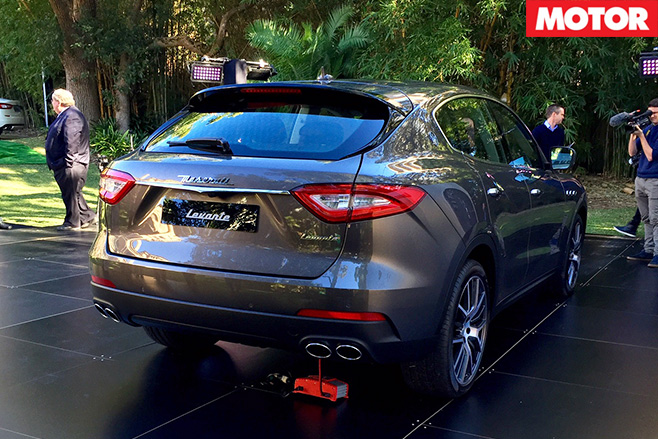
Speaking at the local reveal of the Levante in Sydney, Maserati Australia chief operating officer Glen Sealey claimed that 90 per cent of premium SUV buyers choose diesel and he argued that it was the right pick for its newest model.
“We’ve got our hand up for every variant I can get [and] I’d like to be playing in that other 10 per cent of the market [with a petrol model] … but if I was sitting here and saying we had a petrol and no diesel, I’d be very upset,” he said.
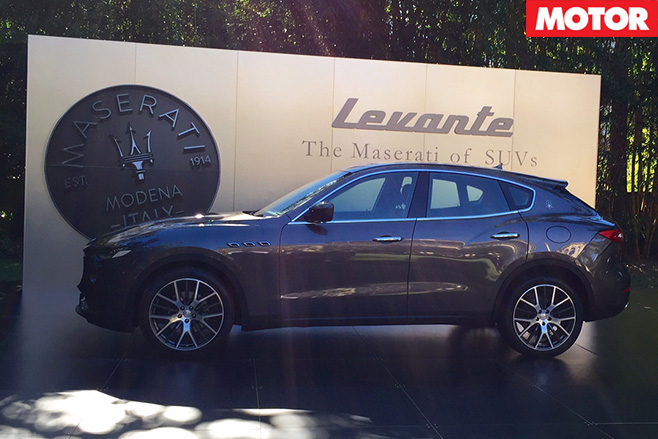
Despite diesel power only, Maserati still claims the Levante mixes the dynamism of a Cayenne with the comfort of a Range Rover Sport.
It points to 50:50 weight distribution, the lowest centre of gravity and slipperiest aerodynamic performance in the class, and an all-wheel-drive system that prioritises torque to the rear wheels and utilises a torque vectoring system as major dynamic strongsuits.
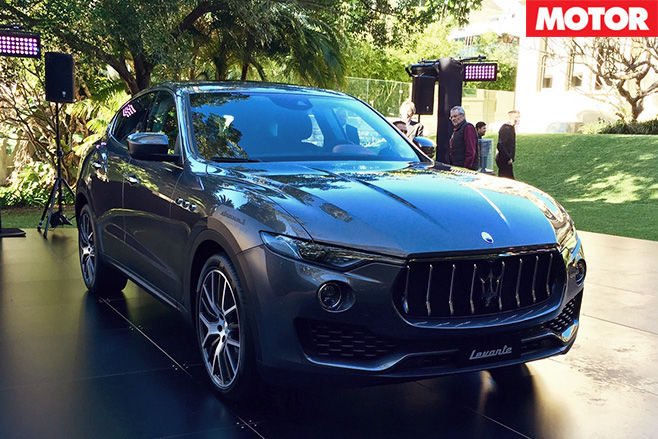
The Levante – which already has a pre-order bank into the hundreds – is also expected to help almost double Maserati sales in Australia from last year’s 519-unit tally to almost 1000 next year when its newest model goes on-sale in this SUV-adoring market.
The Ford Ranger has been given a swathe of updates for 2017 as the Australian-developed ute eyes off Toyota’s Hilux’s position as the country’s most popular vehicle in the competitive pick-up segment.
More technology as standard fitment is the name of Ford’s Hilux-toppling game, starting with a rear-view camera and reverse-parking sensors standard across all models in the 2017 Ranger line-up – except the XL Plus. Front parking sensors for the XLT and an optional automatic transmission for the 4X4 XL Super Cab Chassis 3.2L are also among the updates, while the range’s two most popular models; the XLT and the Wildtrak, will now come adorned with Ford’s new communication and entertainment system: Sync 3.
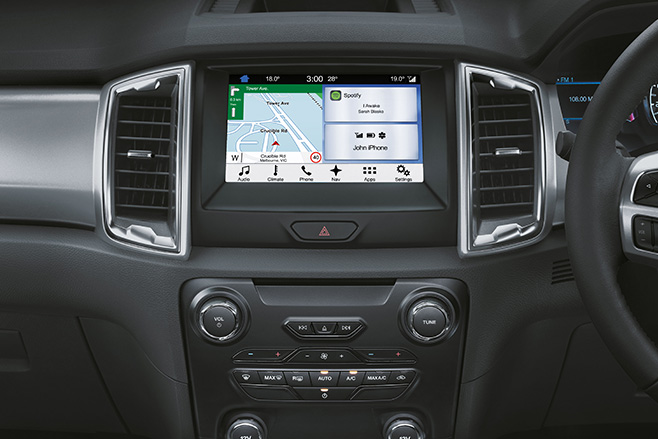
Sync 3 sees improved voice recognition over the outgoing Sync 2 system. It features more intuitive touchscreen functionality; better graphics; improved customisation and also includes Apple’s CarPlay and Android’s AutoTM integration.
As well as the new comms system, the top-of-the-line Wildtrak model also gains a host of additional electronic driver aids from 2017 onwards. Adaptive cruise control, automatic high beam, Lane Keep Assist and Lane Departure Warning, as well as the firm’s Driver Impairment Warning, will all come fitted as standard.
For the 12-month period to 31 December 2015, the Ranger trailed the Toyota Hilux by almost 6000 units in terms of new car sales, but 38 percent growth (to date) has seen the Ranger pull within 310 units for the first six months of 2016, which the Australian subsidiary is attributing to a shift in the Australian consumer’s behaviours and appreciation scales.
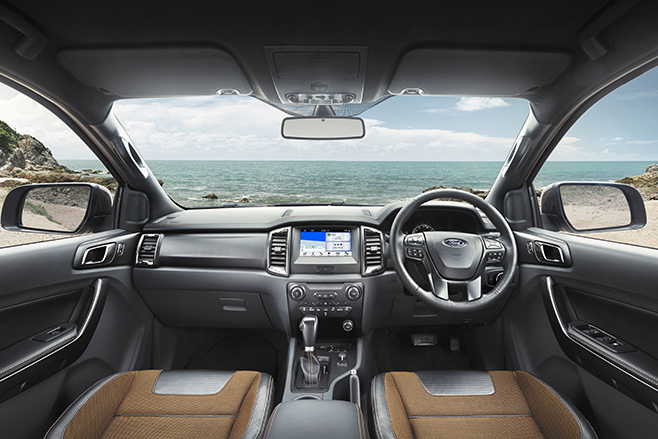
“Customers have fallen in love with the Ranger’s technology features and capabilities and they really appreciate the fact that it’s Australian designed,” Ford’s Jasmine Mobarek told WhichCar “And there’s also been a shift in consumer behaviour in that a vehicle like the Ranger is no longer just a work horse, it’s a different lifestyle.”
The firm hopes these latest upgrades will be enough to tip the scales in favour of Ford for the first time since its 2011 release which will mean far more to it than bragging rights over the long-standing Toyota model.
“Hilux hasn’t really had any competition until now,” Mobarek continued. “But it’s less about us toppling the Hilux and more about the satisfaction that comes with Australian consumers choosing what we believe to be the best product.”
FUEL prices are down, and profits for retailers may be starting to feel the pinch.
In a statement released to the ASX on Wednesday, Caltex predicted an unaudited half-year Historic Cost Profit after tax (HCOP) of between $310 and $330 million; a fall from last year’s corresponding figure of $375 million. Fuel companies have taken a hit in recent years, with prices falling amid slowing growth in China and worries regarding oversupply.
Despite its conservative profit outlook, Caltex – which supplies a third of Australia’s transport fuel – also announced that it predicted net earnings for the first half of the year to mimic the record numbers of 2015, falling within a $245 to $260 million margin.
While sales of unleaded petrol and ethanol-based E10 dropped for Caltex, overall transport fuels for the first half of 2016 increased to 7.7 billion litres. Caltex also claimed sales of premium fuels and jet fuel had increased, helping even out the decline in unleaded and E10.
“We continue to successfully grow sales of premium fuels in retail across both petrol and diesel, offsetting the decline in unleaded petrol and E10, together with increased jet fuel sales,” Caltex said in a statement.
The retailer said the average margin per barrel had shrunk to $US9.80 for the first six months of 2016, down from a first half average of $US16.00 per barrel for the same period last year.
While crude oil prices have plunged internationally, lower fuel prices have plumped demand, and allowed retailers to increase margins and sales, particularly with premium fuels.
Meanwhile, BP in New Zealand said it had recorded a decade-high profit of almost $130 million, despite sales dropping 16 percent.
Ah, the world car. The brass ring of the automotive design world: the one car to rule all global markets, one car to bring them all and in the showroom bind them.
Only no-one has really worked out what that car is. Name any contender and I’ll show you half the world where it’s never been big. Too old. Too thirsty. Too unsafe. Too expensive. Too doesn’t-drive-offroad-across-a-desert.
All world cars are too something, because all cars are from somewhere that’s not really like the rest of the world. So where is this mythical beast supposed to come from?

And that environment shapes the cars that come out of it. You look at the BMW i3, which on paper could be the perfect inner-city car. You don’t even need the range extender, because inner-city types rarely drive more than 150km a day. Except, I don’t have a power outlet in my garage and my apartment building is a decaying wreck from the 1960s, whereas every German city has been designed by the hivemind and looks like Tomorrowland.
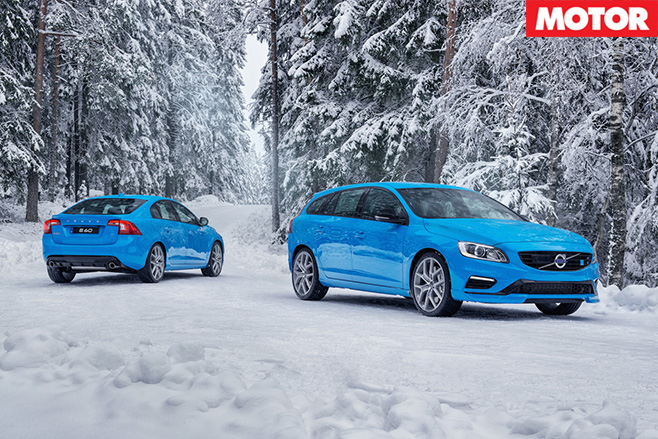
Japan makes excellent city cars because the entire country looks like Blade Runner, and if you’re after a car roughly the size of a shoe then look no further. They’re also great at making motorised shades of beige like the Camry, which sell in great numbers to car hire companies and government fleet managers. That these cars have the excitement of tap water is alright when you’re a fleet manager, but plain depressing when it’s your own money.
It’s not that all these places aren’t turning out some excellent cars, it’s just that they are cars honed to the place they’re from. And if you live anywhere else in the world, at some point, they demand that you to adapt to them, rather than them adapting to you. No, what most of the world needs are cars imagined and engineered by people who live in the kind of place where most of the car-buying world lives. Or, more to the point, where most of China lives. In the suburbs.
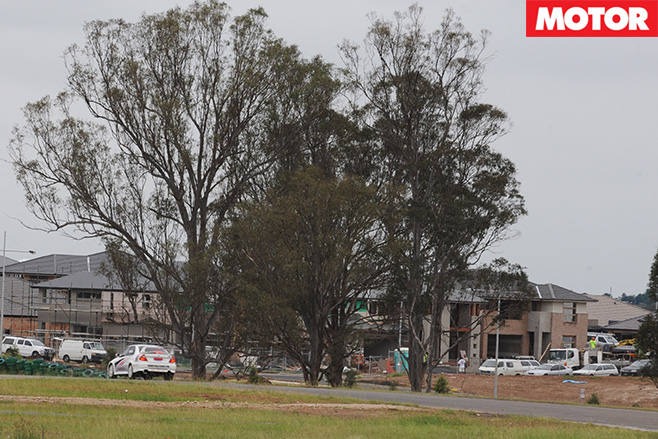
What the world needs more than anything is a group of auto engineers who live in typical suburbia and slog to work through the peak-hour sludge on scarred and neglected bitumen. Somewhere that’s cold and damp for half the year, like half the world, and uncomfortably hot for the other half, like the other half.
Somewhere multicultural, somewhere not oil-sheikh rich, but not poor either. Somewhere like, oh, say, Melbourne.
The Aussie design studios, sadly freed up from local engineering tasks, are wowing global bosses. Melbourne could be the auto world’s Bruce Willis, saving the earth from the impending impact of homogenised mediocrity.
Go get ’em, lads.
FINALLY, Porsche have given the Panamera a much-needed facelift, and we at Wheels HQ are fans!
Unveiled overnight in Germany, the 2017 Porsche Panamera rocks a new roofline, as well as redesigned front and rear lights. The subtle changes make a huge difference to overall styling, with the four-door porker now looking like a proper sibling to the Porsche 911.
With that being said though, while the 911 still seems gawdy at certain angles, and has a rear-end to rival Kim Kardashian’s, the 2017- look Panamera is a massive improvement over previous iterations.

The Panamera will arrive in Australia in three different versions – The 4S, 4S Diesel, and Turbo.
These will all have twin-turbo engines, with a V6 petrol, V8 diesel, and V8 petrol respectively.
The 4S produces 324kW (440hp), the 4S Diesel 310kW (422hp) – but gets a whopping 850Nm of torque – while the Turbo pumps out 404kW (550hp)

All cars get permanent all-wheel drive and a new eight-speed Porsche dual-clutch transmission (PDK) for the first time ever.
One of the coolest things on the new Panamera is the electronic rear-wing on the Turbo. Not only does it raise and lower automatically, but it extends like some sort of Transformer off-shoot. We think it looks awesome in action, and cannot wait to see it in the flesh.

All Australian Panameras will come with adaptive air suspension, and Porsche Active Suspension Management electronic damper control.
Pricing starts at $304,200 for the 4S, up from $300,700 for the previous equivalent, while the 4S Diesel and Turbo will set you back $312,100 and $376,900 respectively.
Sales begin today, with deliveries of the 4S and Turbo expected first quarter of 2017, and the 4S Diesel shortly after.
Check the car out in action in the video below.
The new Porsche Panamera has finally been unveiled overnight in Germany.
Sales of the car in Australia start today, with delivery expected in the first quarter of 2017.
Three models of the Panamera will be available: the 4S at $304,200; the 4S Diesel at $312,100 and the Turbo at $376,900.
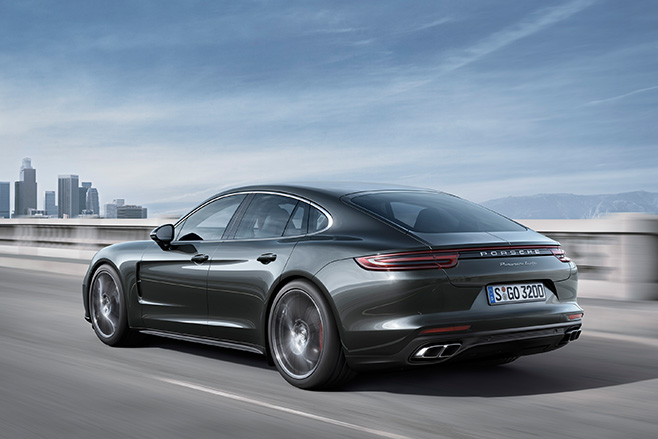
The big talking point of the Panamera is its refreshed styling, with a new swooping roofline and new rear lights, visually linking the car with the Porsche 911.
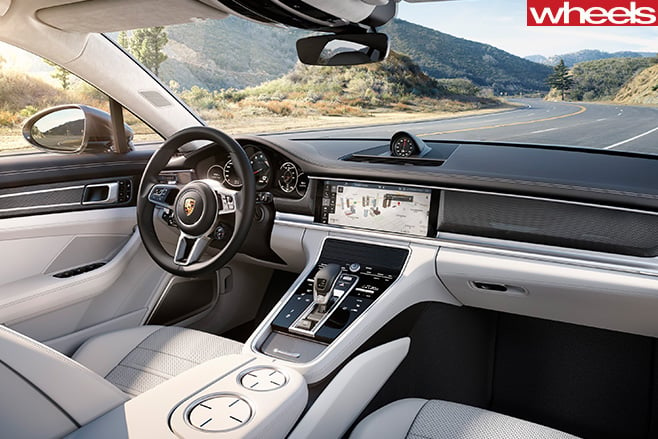
There is also a redesigned interior, with touch screen displays replacing a number of physical buttons in the cabin. Porsche’s aim is to add functionality but improve ease of use.
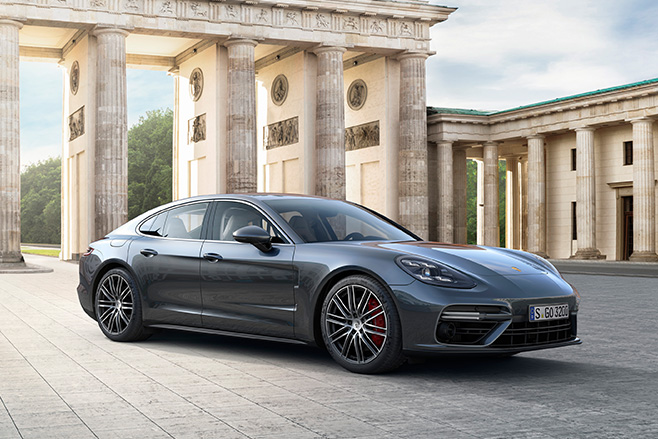
Power will come in a number of different forms. The 4S will come with a twin-turbo V6 petrol engine, producing 324kW (440hp). Meanwhile, the 4S Diesel receives an extra pair of cylinders, with a twin-turbo V8 pumping out just 310kW (422hp) – less than the petrol V6 – but a stonking maximum torque of 850Nm.
The top of the line Panamera Turbo puts those to shame, with the all-new bi-turbo V8 unleashing 404kW (550hp).
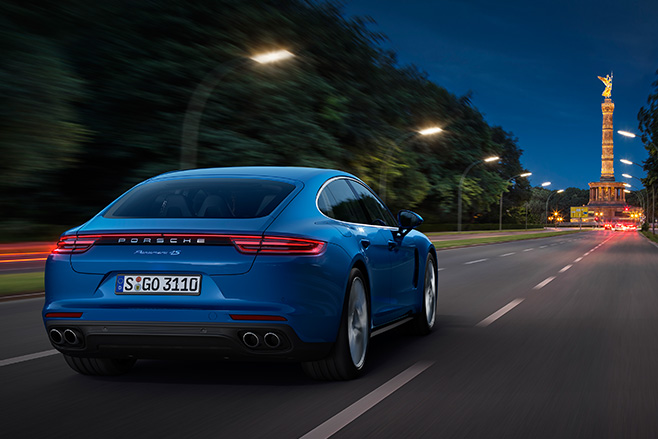
For the first time ever, all models – including the diesel – will have permanent all-wheel drive and a new eight-speed Porsche dual-clutch transmission (PDK).
To ensure comfort and sportiness, all Australian models will come equipped with adaptive air suspension with new three-chamber technology, and Porsche Active Suspension Management (PASM) electronic damper control.
Capping off the sporting styling is a new electronic rear-wing which automatically rises and lowers, and extends to allow for more surface area and added downforce.
A SPY shot has leaked online claiming to show the Renault Alaskan trade ute that will take on the likes of the Ford Ranger and Toyota Hilux when it launches in Australia sometime next year.
This single image, published on a Russian website this week, is believed to show a production-ready version of the Alaskan – Renault’s unique spin on the Nissan Navara ute launched in Australia last year.
The Alaskan will also share its underpinnings with the upcoming Mercedes-Benz GLT, which will bring a Benz level of luxury and car-like ride and handling to a class of vehicle more closely associated with hose-out interiors and bags of cement in the load space.
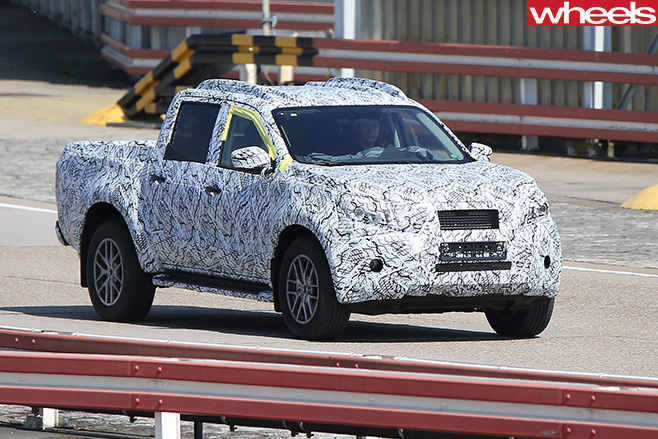
The Renault-badged ute – which we’ve officially only seen in concept form so far – is expected to closely mirror the range of Navara bodystyles, including one-tonne pick-ups, 4×2 and 4×4 single-cab chassis, as well as range-topping dual-cab versions.
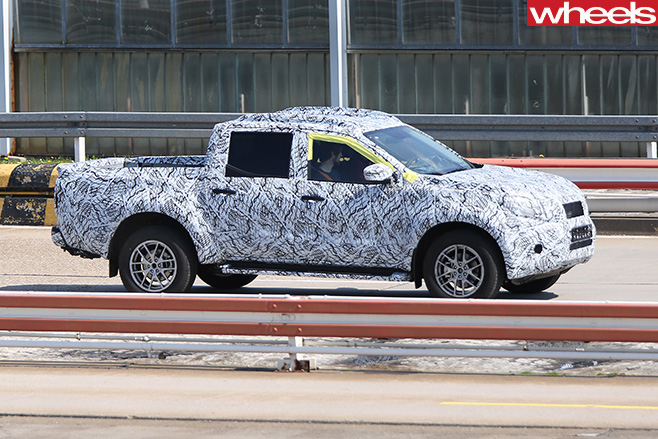
While Mercedes-Benz has hinted the Mercedes-Benz GLT (pictured above) will attract the attention of its AMG tuning arm, there’s no word yet on whether Renault Sport is also interested in rolling out its own performance-honed spin on the Alaskan.
