
That whole routine of pushing the youngster out of the nest and into the big wide world to make their own mark must take on an extra dimension when you’re in the same domain.
Imagine then a Japanese father raised during the war and brought up with discipline and austerity, a son the product of the 1960s and a free-thinking artist. That they had disagreements is not such a surprise, but they have something quite wonderful in common – they are both influential car designers, and the son is on the verge of continuing the legacy of an often disapproving father.
Matasaburo Maeda is the long-retired designer of the original Mazda RX-7, the now classic rotary-engined sports car that holds mythical status in the world of Mazda. His son is Ikuo Maeda, who has risen to be the company’s head of design and who has long harboured a dream to revive the RX-7. Not because of his father, but because he is a car enthusiast.
It says much as the father-son relationship that Ikuo went off to design college and bought as his first car an RX-7 – without even realising his father had created it while the young man was still living at home. He bought it simply because he liked the shape and it was fast. It’s no coincidence that Ikuo’s nickname is Speedy.
Similarly, when Ikuo was chosen to design the so-called ‘successor’ to the RX-7, his father only found out three months before the four-door RX-8 went on sale in 2003.
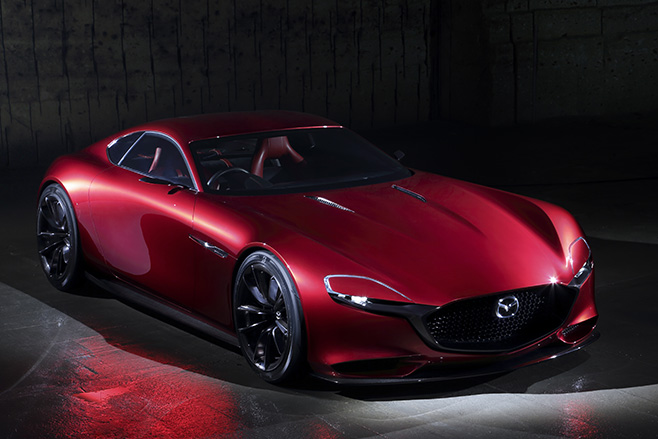
I had the pleasure of sharing dinner with Ikuo during the launch of his Mazda 2 in 2007 and he revealed that he and his famous father had opposite views on car styling and often argued. “We decided early on not to talk about styling, otherwise there would be arguments,” he explained sadly. “We still don’t talk about it.”
Ikuo describes his father’s design philosophy as “quiet and sleek” while his is “dynamic and full of movement; he pursues forms that are stable, whereas mine are all about instability and fluidity”. The young man – I can’t believe he’s now 56 – is a bit of a rebel still, a racer at heart, though now a senior executive of a highly respected car company.
Although Ikuo professed eight years ago to be unconcerned about the lack of parental approval, in a more reflective moment he revealed a desire to design a new-generation RX-7, with two seats and a rotary engine. He said he hoped his father would like it. If he didn’t have a tear in his eye, I certainly did.
I didn’t see Ikuo again until a few years ago in a quiet corner of the Paris motor show, where he charmingly pretended to remember me. I reminded him of our conversation and he said of the RX-7: “It is still my dream. When we make the money, I will be able to spend the money.”
So it was with considerable delight that I saw the RX-Vision revealed at the Tokyo motor show in November. Ikuo stood alongside it on the stand, looking deservedly pleased with what will surely be the realisation of his long-held dream.
I hope his father is proud.
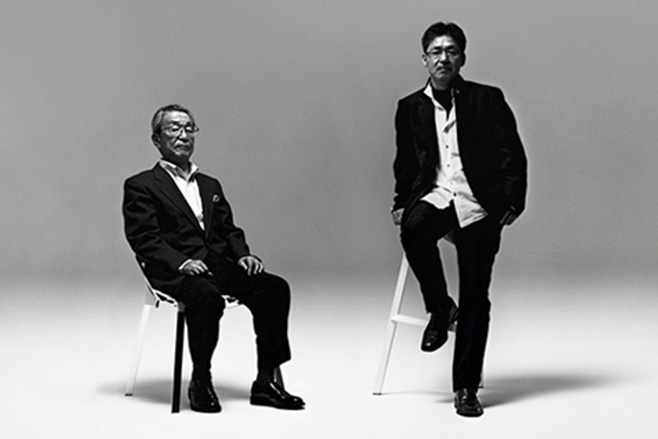
WORLDS APART
MATASABURO Maeda looks like any other retired Japanese businessman headed for the golf course, but in the world of Mazda the former design chief is revered.
Now 82, Matasaburo recalls that his work was arduous, and that he never took it home with him. That would explain how little his son knew of his work, even though he recalls people named Giugiaro and Bertone visiting the house. But as a youngster Ikuo had little interest in cars; he was more interested in architecture.
Ikuo has made Mazda a style-driven brand. His design philosophy is opposed to his father’s, which is rooted in engineering, but he’s impressed his dad became a car designer when this job description didn’t exist in Japan. “He was ahead of his time,” Ikuo concedes.
David Hassall is a veteran motoring writer and is sub-editor of Wheels.
This article was originally published in Wheels March 2016.
Last year Callum Colquhoun was fettling Sebastien Ogier’s Polo. This year he’s building Jamie Whincup’s Holden V8.
AFTER several years in the pressure-cooker glamour of the World Rally Championship, young Aussie engineer Callum Colquhoun is back home for 2016.
He is working for Triple Eight Race Engineering in the very different, though still frantic, environment the V8 Supercars Series.
Colquhoun is a number two mechanic on Jamie Whincup’s car, meaning he builds and services the familiar #88 Red Bull Holden and plays a role in pit stops when needed.
It’s quite a switch from his previous life in Europe.
Last year, when triple world rally champion Sebastien Ogier chased fastest special stage times on WRC events held across several continents, he was relying on the competency and speed of Colquhoun, one of two number-one mechanics on the Frenchman’s Volkwagen Polo.
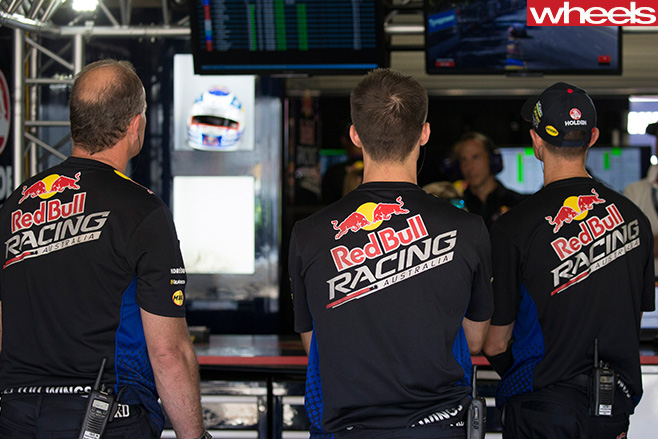
But the time was right to make a move home.
“Triple Eight was expanding to three cars this year and there was some uncertainty at VW after the emissions scandal,” he told Wheels.
So he swapped one Red Bull team for another half a world away.
“I always intended returning to Australia so it was just good timing. I know Supercars are moving to turbo engines soon and that interests me too,” Colquhoun said.
“And of course the Aussie lifestyle is so much better!”
The 26-year-old now has his own place in Brisbane, although he is rarely there.
Colquhoun says that while Triple Eight is tiny compared to VW (though large by Australian motor sports team standards), the Supercars outfit still manages to run the same number of cars (three).
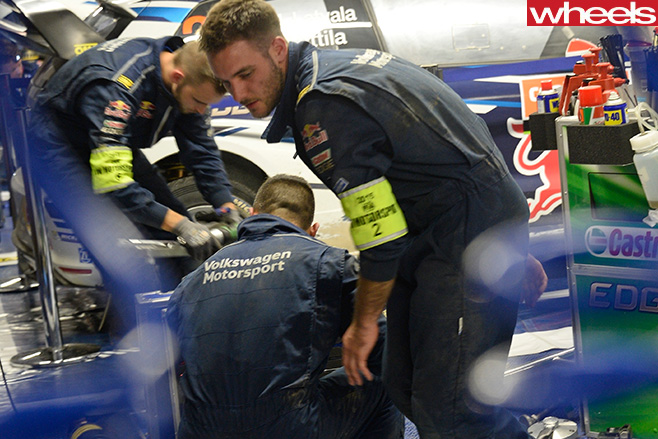
Working on Supercars had been a big change after the WRC machines.
“The rally cars are designed to be serviceable so are naturally awesome to work on; the V8 Supercars are bigger and everything is heavier and come with their own challenges for us mechanics.
“Both the VW WRC and Triple Eight are very professional teams and I’m glad to have been part of both. “
Any ambitions to work in Formula One?
“Nup…a bit too showy for me.
“I’m very happy with my choice to move here.”
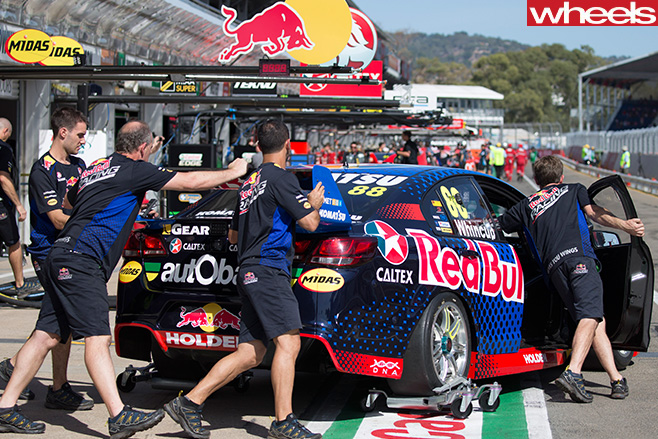
To give a taste of his previous work in the WRC, Colquhoun was among the band of well-drilled VW mechanics who during every WRC event have just 44 minutes every evening to bring a battered and occasionally ailing VW Polo back to competitive readiness.
To watch the lads fly into action with the clock ticking is rather special. There’s no sign of panic, no yelling. They can swap a gearbox in nine or 10 minutes, replace a set of dampers in two or three minutes, discs and callipers in one or two. “Everything is designed to allow lightning fast work,” explained Colquhoun.
During the service time, the crew replace any busted panels and spoilers, and if there’s time give the Polo a bath. The priority is to restore the car mechanically and then, if there’s still time, to get it looking okay visually. In 44 minutes, remember.
While Colquhoun was assigned to Ogier’s car, when required he also swung across to the car of Finn Jari-Matti Latvala.
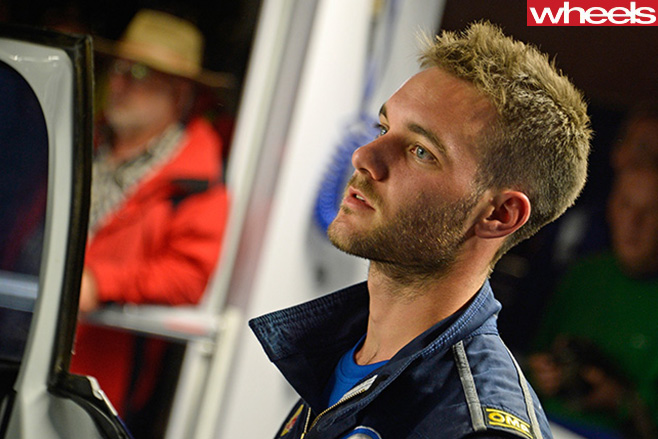
“Jari is! There’s a big difference in driving styles and this is sometimes reflected in the way the cars come back.
“Seb is very smooth and usually kinder. He drives much like a [tarmac] race driver and uses the front of the car more. He keeps it more in line… straighter.
“Jari-Matti looks more spectacular and likes to slide the car more.”
The young Victorian worked at nine WRC events last year. Each places their own specific demands on cars and crew. Colquhoun’s favourite round, Finland, for example, requires a car capable of coping with huge impacts on the suspension after flying over the countless high-speed crests.
Rally Australia puts a premium on dust sealing. That figures.
Working with Triple Eight is no cruisier for Colquhoun, but a little cleaner.
He is proud to be an integral part of a buzzy occupation working with successful motor sporting outfits.
“I tried uni for a little while,” he says. “Didn’t like it.”
The worst thing about his gig? “Spending so much time at airports and on planes.”
What stands out?
Kia’s Rio is an attractive light hatch that offers the choice of three or five doors. It is quite fun to drive, and even the least expensive version is well equipped. The Korean brand’s seven-year, unlimited kilometre warranty is the best in the business.This review covers Kia Rios on sale new prior to February 2017.
What might bug me?
The lethargic performance of your automatic Rio, if you have bought one of the less costly versions: the Rio S, or S Premium. A friend’s new Mazda2 or Volkswagen Polo, for example, will feel much more lively than these.
What body styles are there?
Three-door hatchback and five-door hatchback.The Rio drives its front wheels, and it is classed as a light car, lower priced.
What features do all versions have?
Power windows and air-conditioning, and a CD/radio audio system with iPod connectivity and an MP3 storage facility.Bluetooth phone connectivity, and audio system controls on the steering wheel.A hill-assist system, which operates the brakes automatically to make take-offs on hills easier.A full-size spare wheel.Six airbags: two directly in front of the driver and front passenger; one alongside each front occupant to protect the upper body; and a curtain airbag on each side to protect the heads of front and rear occupants.Electronic stability control, which can help the driver to control a skidding car. All new cars must have this feature.Every Kia Rio carries a seven-year, unlimited kilometre warranty.
Which engine uses least fuel, and why wouldn’t I choose it?
The 1.4-litre petrol four-cylinder found in the less costly Rios, the Rio S and S Premium models, is the most economical engine, provided that you want one with a manual gearbox. These use 5.7 litres/100km on the official test (urban and country combined).However, Rios with this 1.4-litre engine feel less responsive and slower than most new light cars. And that is especially true of the 1.4 automatics.If you want an automatic Rio, then the 1.6-litre petrol four cylinder fitted to the more expensive models – the Si, Sport and SLi – is just as easy on fuel as the cheaper alternative, consuming 6.1 litres/100km. These Rios accelerate much more strongly, as well.The 1.6 is a more modern engine that has direct petrol injection, a technology that helps it save fuel while producing more power.The Rio S and S Premium come with six-speed manual or four-speed automatic gearboxes. The Si, Sport and Sli come only as six-speed automatics.
What key features do I get if I spend more?
Spending more money on a Rio initially buys you a pair of rear doors. The Rio S five-door has the same features and equipment as the least costly model, the Rio S three-door, and costs about $1000 more.Spending more again for the S Premium gets you cruise control, adjusted from buttons on the steering wheel. Wheels are the same 15-inch size but of a more attractive design in lightweight aluminium alloy (including the spare wheel). There is a premium steering wheel, which is nicer to hold, and front foglights.Stepping further to the Rio Si gets you the more powerful, 1.6-litre direct-injection engine, as well as 16-inch aluminium alloy wheels with slightly wider and lower-profile tyres, and a more appealing interior with soft-touch dashboard and door trims.The two remaining Rios, the Rio Sport and the Rio SLi, offer you alternative ways to dress up the 1.6 litre engine.The Sport, as its name suggests, takes the sportier route, and has only three doors. It gets you another step up in wheel size, to 17 inches, and has fake-leather seats, and bare-metal control pedals. Headlamps switch on automatically when it gets dark. There are long-lasting LED daytime running lamps. And there are static cornering lamps on each side at the front: as you turn the steering wheel to enter a corner at night, these light up and illuminate your path.The Rio SLi is a better equipped version of the five-door Rio Si. Like the Sport, it has the bigger wheels, auto headlamps, LED running lamps and cornering lamps. However, its seats are cloth but with leather accents. It also has rear parking sensors, which indicate how close you are to objects behind when reversing, and windscreen wipers that operate automatically when it rains. And its air-conditioning has climate control, which maintains a set temperature.
Does any upgrade have a down side?
The lower profile tyres found on Si versions, and the even lower profile tyres on the Sport and SLi, reduce ride comfort slightly, because there is less air between the wheel and the road.Only white is a standard colour, on all but one Rio. The other eight shades available carry an additional premium paint charge. The exception is the Rio Sport, on which Digital Yellow is standard and the other two shades cost extra.
How comfortable is it?
It is easy to get comfortable in the driver’s seat of the Rio, which offers six-way adjustment, including height adjustment. The steering wheel’s angle and distance from the driver are also adjustable.The Rio cabin is roomy and the instruments and controls are neatly and logically laid out. The fit and finish of the interior is of a good standard.The suspension is taut yet comfortable: the Rio is right at home on patchy urban and city streets – if slightly less absorbent in Si, Sli and Sport form.The Rio is quite well insulated inside: levels of tyre, suspension and wind noise in the cabin are moderate.
What about safety?
Every Kia Rio attains a safety rating of at least Very Good.The Rio has light-car staple safety features such as side and curtain airbags, and items that are now found in all new cars such as electronic stability control.In addition, it has a standard seatbelt reminder system. This is a simple but valuable safety feature for those with children old enough to fasten and unfasten their own seatbelts.The Australasian New Car Assessment Program (ANCAP) awarded the Kia Rio its maximum five-star rating for safety.
I like driving – will I enjoy this car?
All Kia Rios offer some driving enjoyment, and the more expensive versions offer more than the others. However, there are far better light-car choices if great steering and handling are important to you.The Rio’s electrically assisted power steering is just right in its weighting, and lends the hatch a feeling of agility. The Rio feels secure on the road. Its firm-ish suspension contains body roll and pitch, and helps make the handling responsive.The 1.4-litre engine lets the car down, for driving fun. The 1.6 in the Si, SLi and Sport offers about 30 per cent better acceleration, and with its superior gearbox spends more time in its happiest working range.
How is life in the rear seats?
The Rio has plenty of room in the front and the back, thanks to a generous 2570mm wheelbase and good interior packaging.Good vision, ergonomics and noise suppression make the Rio a relaxing prospect for longer drives of up to two hours at a time.The rear seat is among the best in a light car for the leg and head room available, and for the comfort of the seat cushion. The standard cloth trim feels hardy and is comfortable.The back seat can carry three passengers, with lap and sash belts for all.
How is it for carrying stuff?
The Kio also has one of the biggest cargo bays in a light car. It swallows 288 litres with the 60/40 rear seatbacks upright.With the seatbacks lowered, cargo volume increases to 923 litres loaded to the roof – which is as good as most.
Where is it made?
The Kia Rio is manufactured in South Korea.
What might I miss that similar cars have?
The effortless low-speed accelerator pedal response of turbocharged light cars such as the Renault Clio and Volkswagen Polo, if you’ve ever test-driven them.The latest active safety features, such as automatic emergency braking, are not available on the Rio. The Mazda2 offers low-speed auto braking as an extra-cost option, for example.The ability to use and view apps from your smartphone on the car’s dashboard-mounted touchscreen, via Apple CarPlay or Android Auto. The smaller Holden Spark offers this feature, for example.Other light cars worth considering include the Honda Jazz and Suzuki Swift.If you would be happy with something a bit smaller, you could also look at the Kia Picanto, on sale as an all-new model about May 2016.
I like this car, but I can’t choose which version. Can you help?
Certainly. The Rio Si is our choice. Its direct-injected 1.6-litre engine and six-speed automatic gearbox transforms the Rio from an okay car into a good one. However, the Si is a relatively expensive light car. There are excellent alternatives available from other makers at this price or below it.
Are there plans to update this model soon?
The Kia Rio arrived in 2011 and was updated in early 2015. The Rio Sport and Sli versions arrived in July 2015.A mostly-new Rio arrived about January 2017. It brought more room inside, improved handling and better smartphone integration. However it carried over the 1.4-litre four-cylinder as the only engine available at launch, dropping the direct-injected 1.6-litre.
Rolls-Royce Dawn goes straight to the top of the ultra-luxury, four-seater convertible class.
WHAT IS IT? A Rolls-Royce Wraith without the fastback roof or engine performance tweaks. Picture the twin-turbocharged, V12-powered, hand-crafted four-seat convertible you’d be driving on the Cote d’Azur, or in Santa Barbara, or on the shore of Lac Leman. Now transpose that to pollution-choked Beijing or Dubai. The Dawn is that car.
WHY WE’RE TESTING IT The Dawn fills the convertible role of the Phantom drophead coupe, which will vanish (along with the current-generation sedans) later this year. Dawn masterfully marries traditional Rolls-Royce grace with unexpected colours and materials and some of the up-for-it-ness of its naughty sister, the Wraith.
MAIN RIVALS Bentley Continental GTC, Aston Martin DB9 Volante, Ferrari California T, Maserati Gran Cabrio, BMW M6 Convertible. Okay, none really.
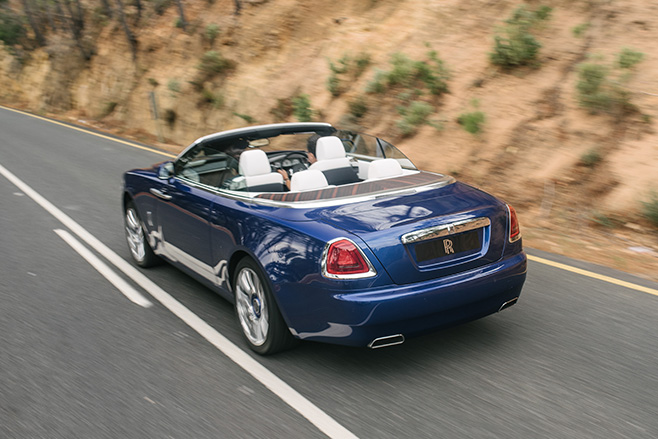
PLUS: unique ambience, majestic power, effortless but resolute handling MINUS: unwieldy in town, blustery rear cabin, average roof-up vision, a touch pricey
THE WHEELS REVIEW “IN THE case of the new Rolls-Royce Dawn, 2+2 does not equal 4.” Thus quipped Rolls-Royce design director Giles Taylor of the convertible that shares many of its underpinnings with the brand-bending Wraith coupe.
He meant that “four-seater” convertibles usually aren’t. Having driven the Dawn at its launch in South Africa, we tend to agree that it’s one of only two cars deserving of the description – the other being the outbound Phantom Drophead Coupe, which the Dawn effectively replaces.
So here’s another catchphrase: “5.4 metres plus 2.56 tonnes plus $749,000 equals four.”
To those who can afford it, the Dawn will be worth every renminbi, riyal or dirham. It not only changes the game for Rolls-Royce’s interior and exterior design, but delivers a unique experience that transcends normal motoring.
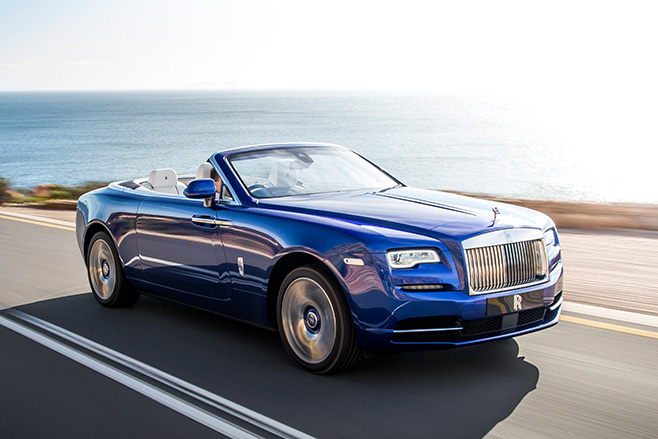
Dawn eschews the more powerful Wraith version of the 6.6-litre, twin-turbo V12 for the Ghost II’s standard outputs of 420kW/780Nm. No complaints there: Dawn silently teleports itself to 100 km/h quicker than a new Mustang GT auto.
Anyway, if a Dawn owner wants to get somewhere faster – or slower – there’s almost certainly a Ferrari or Phantom in their typical seven-car collection.
No-one should be quick to dismiss it. Progress is majestic and spookily silent, helped by the GPS-linked eight-speed auto that anticipates hills and corners. Despite the light steering and controls, the sensation is more heavyweight sports-sedan than hi-po SUV, with a truly well-controlled body, masses of grip and a fast highway-hauling confidence bordering on arrogance.
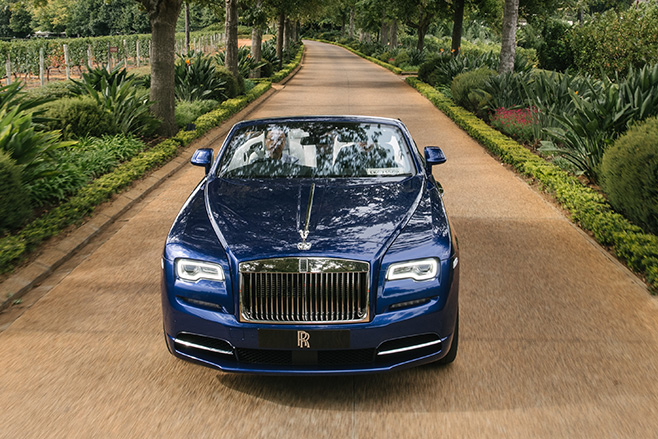
In the spacious rear seat, which lacks any compromise in terms of backrest angle and legroom, the ‘high-collared’ seating position can’t diminish the buffeting that gets tiresome beyond about 80km/h.
For all its delights on the open road, you’d still prefer to pay someone to pilot it through inner-city streets and double-park in loading zones.
A much appreciated, if mysteriously unseen, feature of the cars on the launch was an ‘auto-180’ parking function. None of the dozen-odd Rolls-Royce staff standing sheepishly around after each restaurant stop was able to explain it.
There again, nor can anyone adequately explain the unique ambience when riding roof-down in the Dawn. The effortless ride, the bright leathers and the open-pore timber panelling make it feel like a recreational outing in a wooden speedboat, or a vintage aeroplane. Yet this is a hugely competent and comfortable motor car. Somehow, it doesn’t add up.
SPECS Model: Rolls-Royce Dawn Engine: 6592cc V12, dohc, 48v, twin turbo Max power: 420kW @ 5250rpm Max torque: 780Nm @ 1500rpm Transmission: 8-speed automatic Weight: 2560kg 0-100km/h: 4.9sec Fuel economy: 14.2 l/100km Price: $749,000
A simple message marked the passing of a world record last week. The Tweet, sent from the hands of Tesla chief executive and product architect, Elon Musk, simply stated: “276k Model 3 orders by end of Sat.”
The words relate to the battery-powered Tesla Model 3, revealed globally on April 1 (no joke). In a way, it also relates to a recharged electric future that many had dismissed as flash-in-the-pan, and a paradigm shift in the minds, and wallets, of car owners worldwide.
Orders for the car opened up shortly before its US reveal, and the highly anticipated electric five-seat hatchback has since changed the motoring landscape, quite literally, overnight.
On the back of a social media build-up that pushed hype to epic levels, within two days Tesla had banked 250,000 deposits at $1500 a pop, netting an estimated $375 million for the Californian carmaker, and making its order book worth $17 billion.
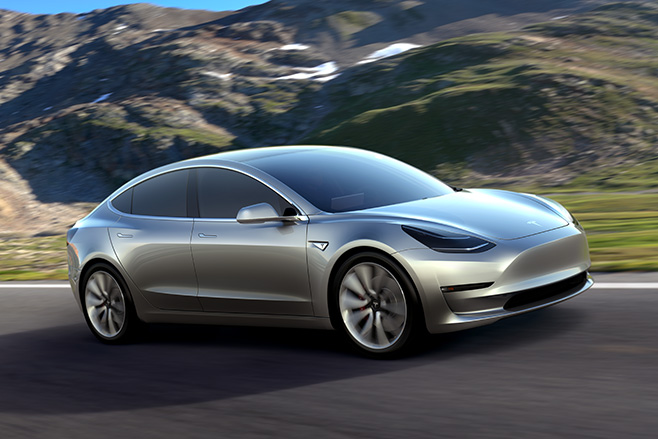
The success of Tesla’s Model 3 pre-orders is bangs for bucks, largely due to the electric car’s $US35,000 price tag (which will translate to about $55,000 when Australian taxes and charges are factored in). That price comes close to that of the plug-in hybrid Chevrolet Volt, but other battery-fed cars are nowhere near as sharp as the Tesla’s. Musk let slip that the average sales price of each car currently sits at $US42,000 once potential owners have stopped ticking the options boxes.
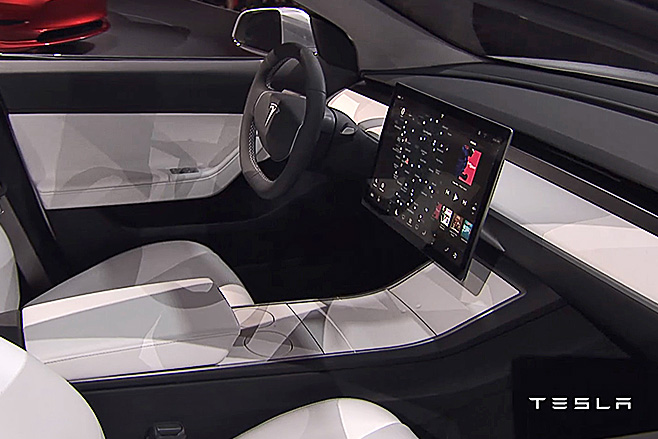
Tesla claims the Model 3 has a range of 346 kilometres, can run the 100km/h sprint in less than six seconds, and features a mix of awesome tech, autonomous tricks, and a mega-LED screen that makes the interior look like a movie theatre on wheels.
Tesla also has its own network of Superchargers that can top up a Tesla’s batteries in a matter of seconds in an electric world where recharging times are more often talked about in hours. It has even built an electric highway in Australia, with a string of Superchargers running in a line between Melbourne and Sydney (a seventh is in Port Macquarie) so that owners of the larger, more expensive seven-seat Tesla Model S sold here can drive between capitals rather than fly.
For the thousands of Australians who have already paid a deposit for their Model 3, there will be a long cooling-off period. The earliest orders in the US will not be filled for at least 18 months, and Australian buyers have until at least 2018 to save up for the car (assuming that, unlike the other two models that came before it, the Model 3 is not hit with a long string of delays) . Okay, so environmentally conscious types typically have a more far-sighted view of the world, but the wait is already stretching into years – and time is the death knell for emerging technology that is quickly superseded and outdated.
There is no telling if Tesla can even meet its pent-up demand for the Model 3 in the current decade. Musk has conceded, via another Tweet, that Tesla “may need to rethink production planning”, predicting sales will most likely be at a quarter to a half of their current, predicted number.
The company has already struggled to get enough parts for its gullwing-doored Model X SUV released earlier this year after months of delays. That in turn has held up production and orders in the first quarter of this year, with deliveries totalling 14,820 (Tesla had said it expected to build and deliver 16,000 Model S hatchbacks alone in the first three months of this year and fell well short). Filling 20 times that order will be an immense challenge.
Regardless, the response to the Model 3’s reveal is the automotive industry’s equivalent of that of the first iPod or iPhone that similarly wowed consumers worldwide. It is likely to have long-ranging ramifications to an industry so heavily influenced by consumer attitude, emerging technology and future planning. In the wake of Dieselgate, and with hydrogen cars at the mercy of non-existent infrastructure to fuel them, electric cars have again taken centre stage as the trendy alternative fuel option, with the Tesla 3 leading the charge. Pun intended.
Welcome to the May 2016 issue of MOTOR.
Available for purchase in digital form for Apple or Zinio.
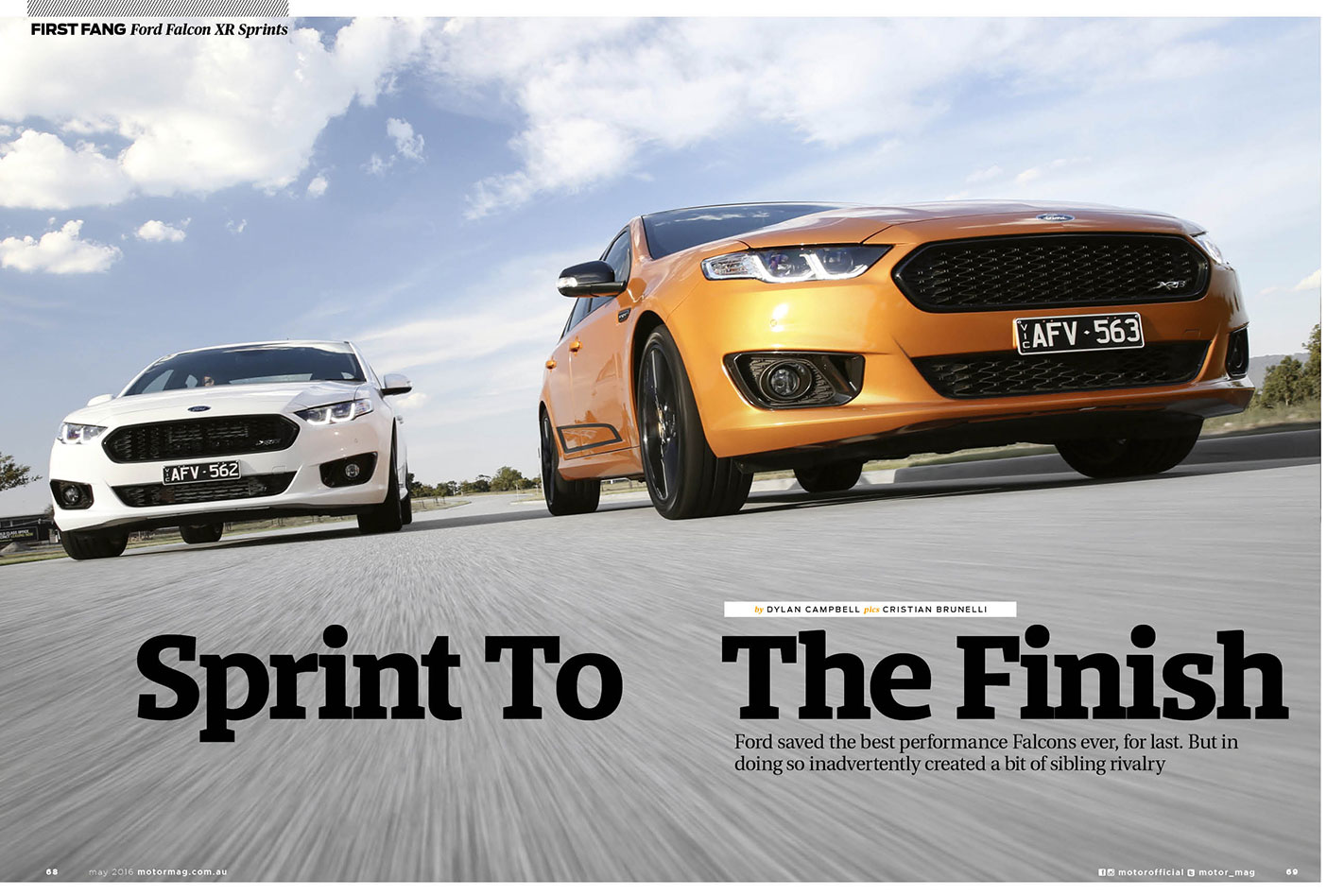
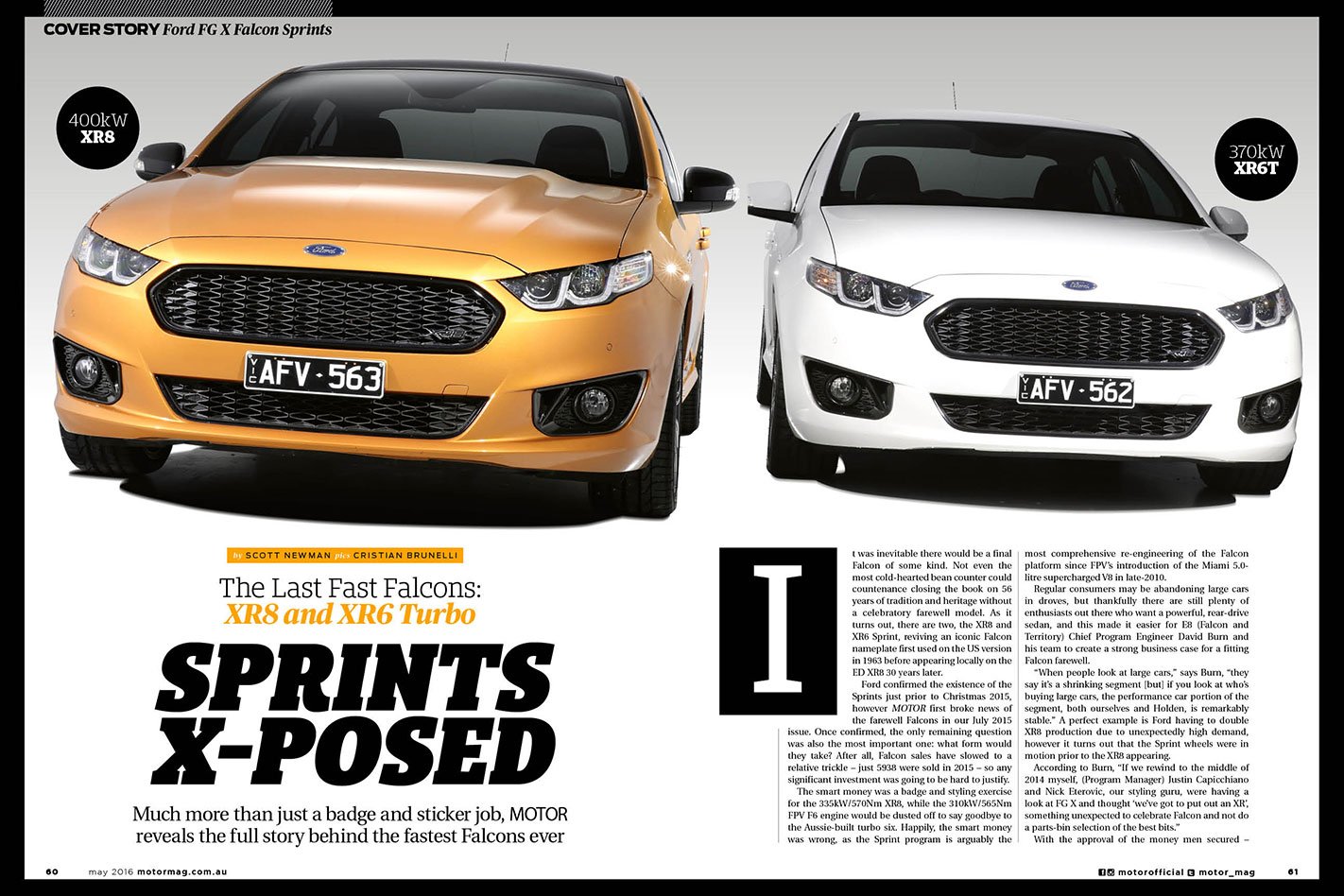
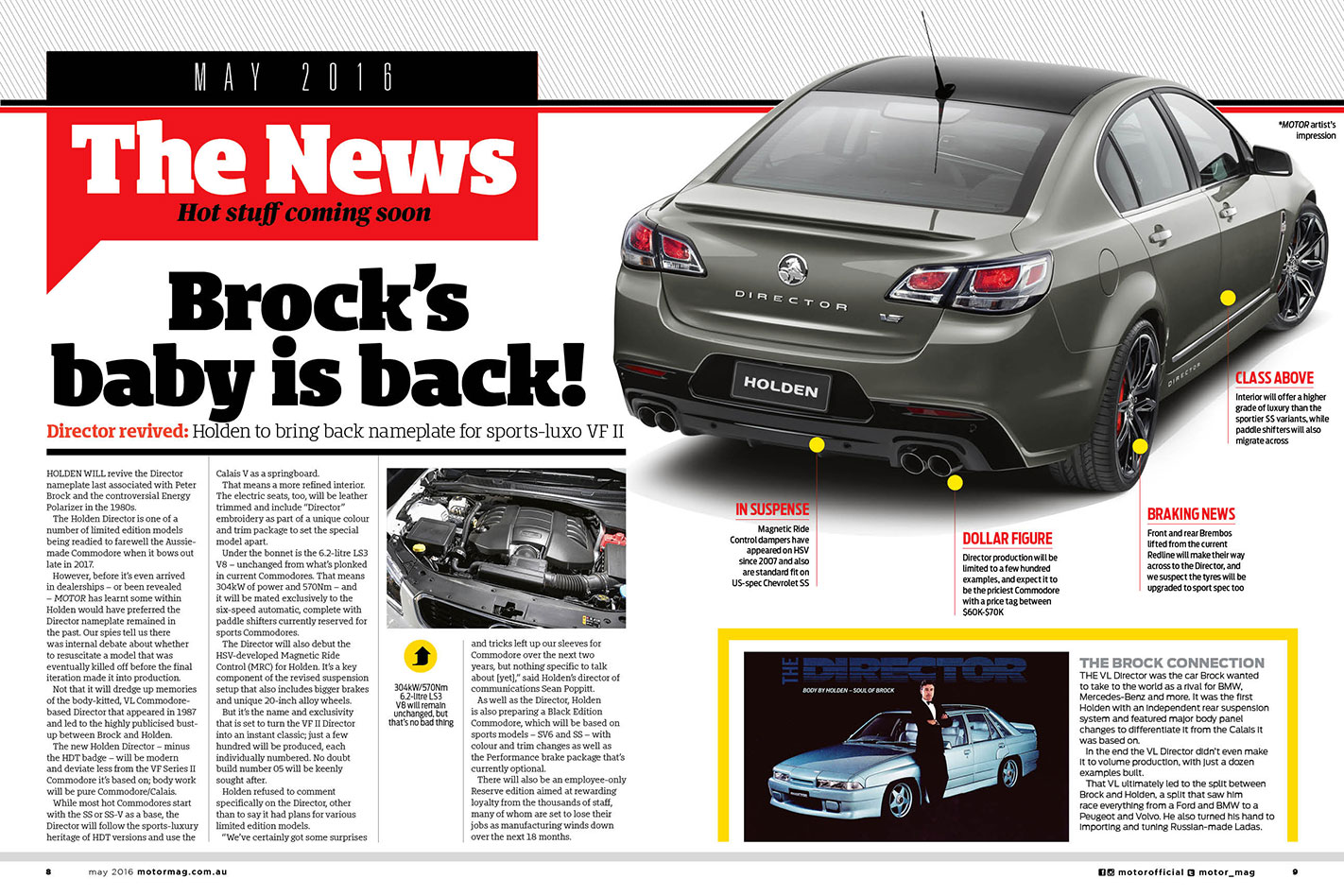
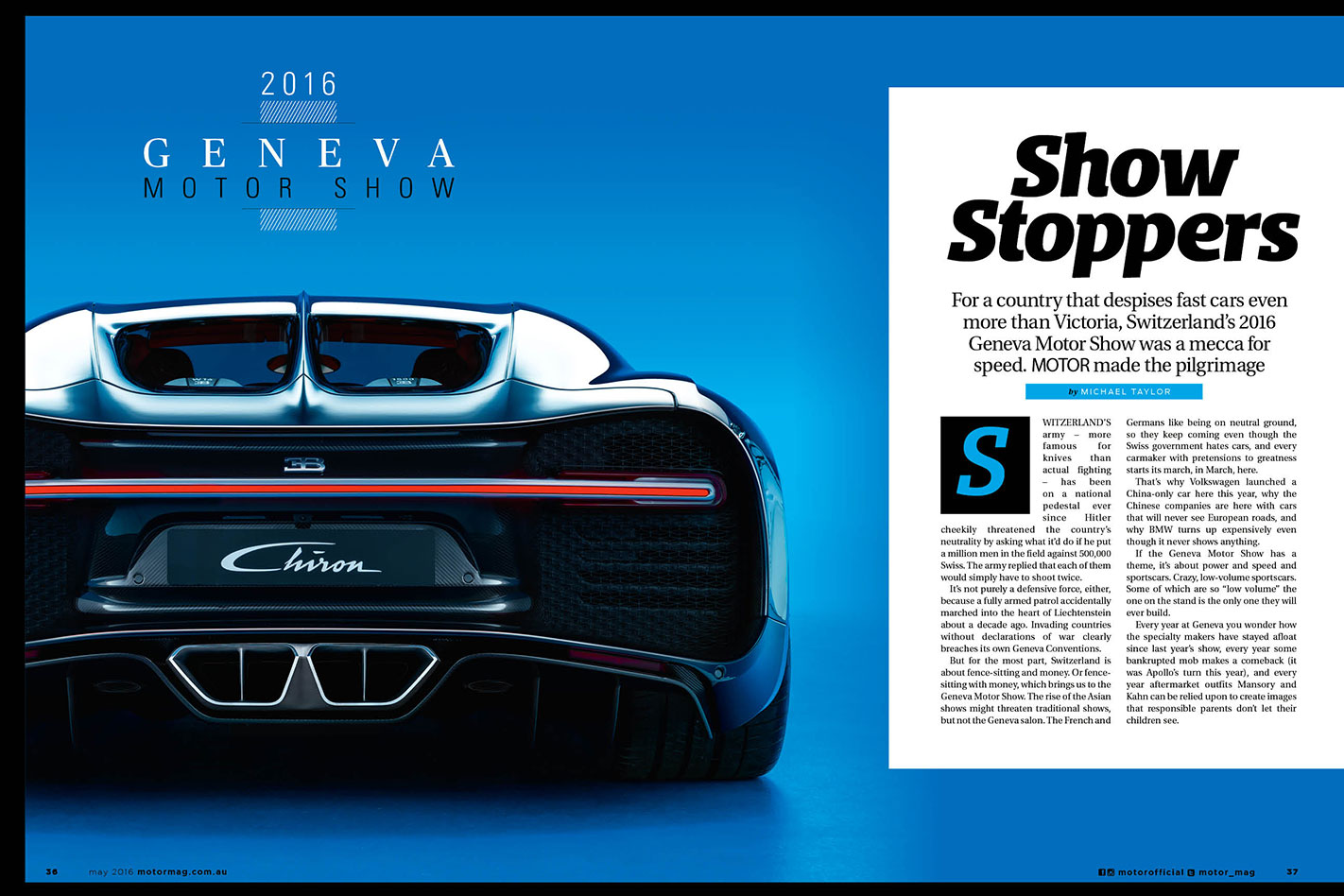
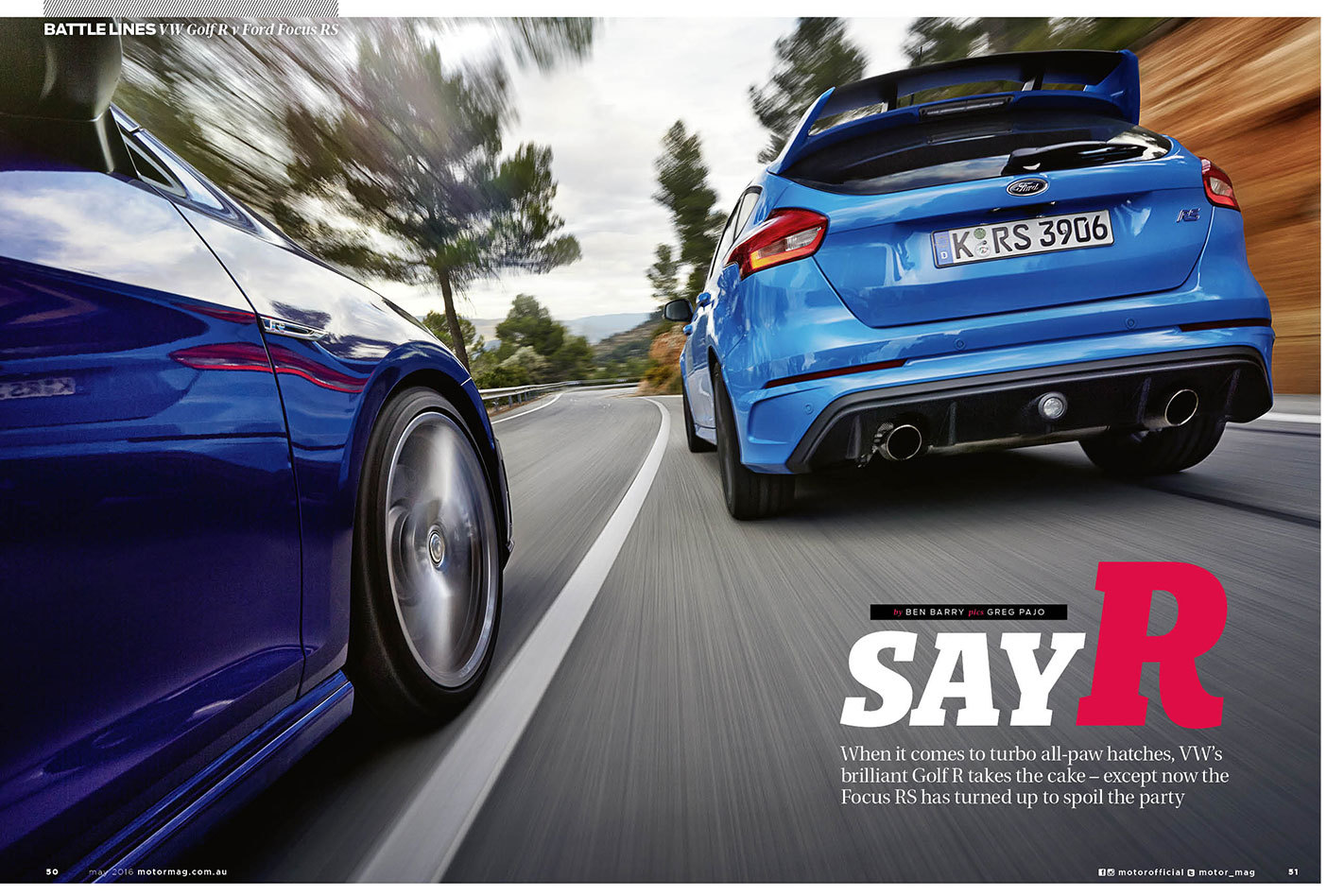
Unsurprisingly, headline news this month is the arrival of the Ford Falcon Sprints and have a full drive report on both the XR6 and XR8 from the Tasmanian launch.
The facelifted Audi S3 will introduce a ‘virtual cockpit’ inside and add an extra 20Nm of torque under its bonnet.
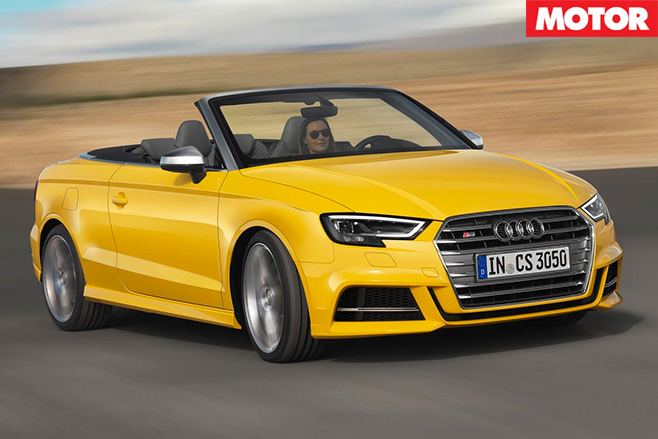
First introduced locally in 2013, the 2.0-litre turbocharged four-cylinder S3 Sportback, sedan and cabriolet trio now produce 228kW of power, up from 221kW, and 400Nm of torque, though manual versions retain 380Nm.
Maximum torque is now available in a wider 2000rpm to 5400rpm band compared with between 1850rpm and 5100rpm previously, though no performance figures have yet been detailed.
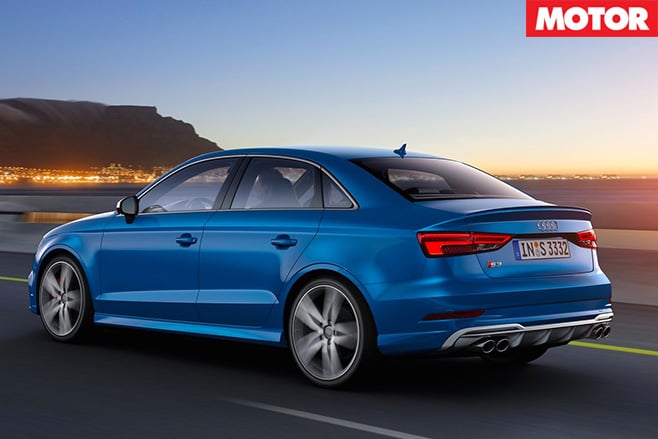
Audi claims the stability control and the multi-plate clutch for the all-wheel drive system have been altered to deliver, “even greater driving dynamics, driving pleasure and safety”. Suspension remains unchanged, however, meaning a choice of standard fixed dampers or optional adaptive units.
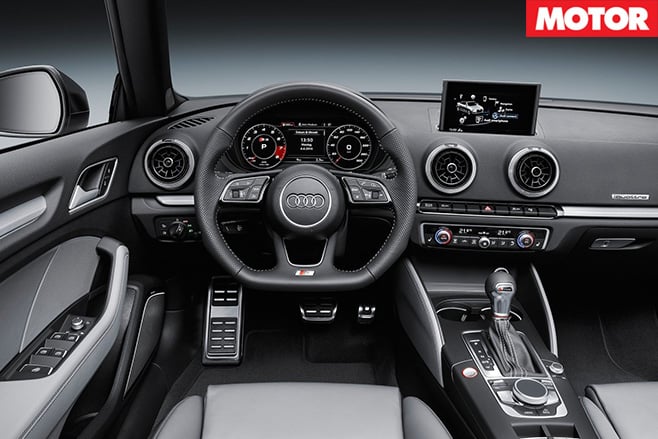
Inside, the S3 replaces its standard speedometer and tachometer cluster with a 12.3-inch TFT screen tagged ‘virtual cockpit’ by its maker. Poached from the TT, A4 and Q7, the screen can now display nav, fuel consumption, journey time and other information in greater detail, working off the buttons on the new three-spoke leather-wrapped steering wheel.
Expect pricing to remain similar to the existing range of $61,100 S3 Sportback and $63,400 S3 sedan in six-speed manual or seven-speed S tronic guise, and $70,110 S3 cabriolet with the latter transmission only.
Car manufacturers haven’t disappointed in the final months of autumn, bringing us 15 new model variants including the hotly anticipated, last-of-its-kind Ford Falcon XR6 Turbo Sprint and XR8 Sprint. Porsche bring us the go-faster Macan GTS to slot in-between the existing Macan S and Macan Turbo and Lamborghini ready their drop-top Huracan.
NEW VARIANTS ON SALE APRIL-MAY
- Audi SQ5 Plus and SQ5 TDI Plus Holden Spark
- Kia Cerato
- Mercedes-Benz GLS
- Porsche Macan GTS
- BMW X5 xDrive40e and 330e
- Ford Falcon XR6 Turbo Sprint and XR8 Sprint
- Honda Civic sedan; Infiniti Q30
- Lamborghini Huracan Spider
- Suzuki Vitara Turbo
- Volkswagen Passat Alltrack
Suzuki’s new compact SUV was a bit of a surprise when it landed late last year, showing promising pose and handling, albeit with a 1.6-litre mill that did little to stretch the Vitara’s neatly tuned chassis. Never fear, a new 100kW-plus 1.4-litre turbo will soon join the range, replacing one of the more richly equipped models in the Suzuki Vitara line-up.
This article was originally published in Wheels April 2016.
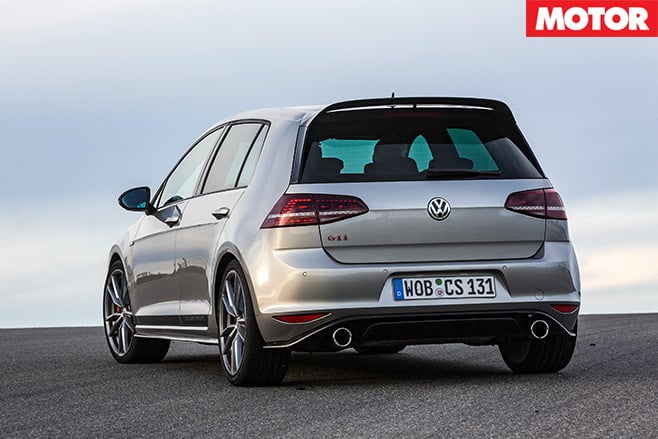
Volkswagen has confirmed local cost and specification for its fastest-ever Golf GTI.
The Golf GTI 40 Years edition, as it will be known here after its original ‘Clubsport’ tag was ditched to avoid stepping on HSV’s toes, will be priced at $48,990 when it arrives this June.
At that price the 40 Years firmly nestles itself between the Golf GTI Performance ($46,490) and range-topping Golf R ($52,740) not only on price, but performance as well.
Volkswagen Australia has confirmed our 40 Years will not brandish smaller berries than its global counterparts and pack the full 195kW and 350Nm EA888 engine it was revealed with.
VW’s labelled the car as a limited edition but can’t reveal how many will land here in total until closer to its launch, Kurt McGuinness, VW Public Relations Manager, told MOTOR.
In that same time customers do have the opportunity to place an order for the 40 Years, which is currently offered only with a six-speed dual clutch transmission.
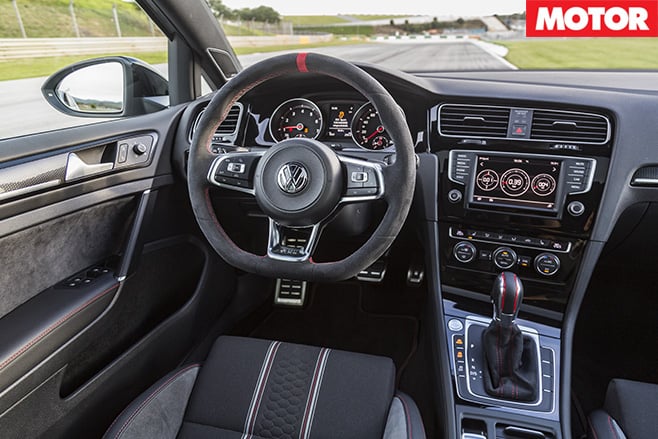
Offered in red or white hues, Australia’s five-door 40 Years will be fully equipped, besides a $1850 sunroof, and feature much of what was seen on the car when it was confirmed for production. That includes its full aero-package, full styling options, alcantara draped seats and steering wheel, and 19-inch wheels.
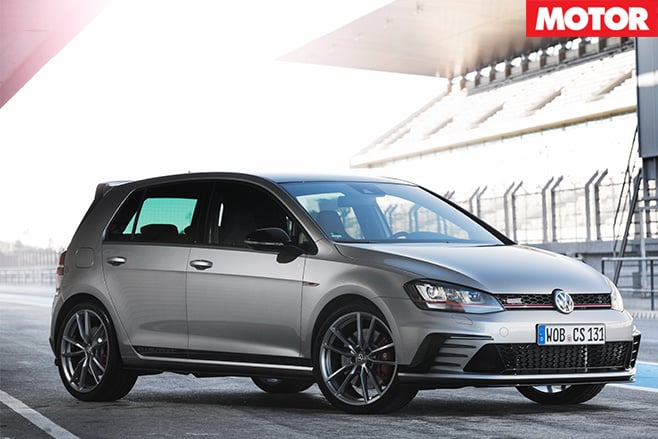
We certainly will be for what may be the most involving Golf GTI ever.
Audi’s best-selling model is expected here in revised form in the latter part of 2016, when available extras will include Matrix laser headlights, semi-autonomous driving in traffic jam situations, a traffic warning system for reversing out of perpendicular parking spots, plus the company’s clever Virtual Cockpit that can switch the main driver display priority between instruments and infotainment.
The A3’s multimedia menu system has also been redesigned to more closely mimic an intuitive smartphone interface.
The new 1.0 TFSI variant is likely to become the range’s base model. Its turbocharged 1.0-litre three-cylinder produces 85kW of power, with 200Nm of torque developed between 2000 and 3500rpm.
With double the engine capacity, Audi’s also-new 2.0-litre turbo four-cylinder sits in the 2.0 TFSI model with outputs of 140kW and 320Nm. This variant is also offered with quattro all-wheel drive as an alternative to the default front-wheel-drive arrangement of other A3s.
Carry-over engines include the 110kW 1.4-litre petrol with cylinder deactivation, 81kW 1.6-litre TDI turbo diesel, and 110kW 2.0 TDI turbo diesel. The latter will be upgraded in the near future to produce 135kW and 380Nm.
Six-speed manual gearboxes are available with most engines, though the majority of drivetrains chosen for Australia are again likely to be linked with seven-speed dual-clutch automatics – due to the popularity of automatic transmissions in this market.
There are no mechanical changes for the e-tron plug-in hybrid variant (pictured below), though the sportier S3 gains 7kW and – in seven-speed dual-clutch form – 20Nm, for revised outputs of 228kW and 400Nm.
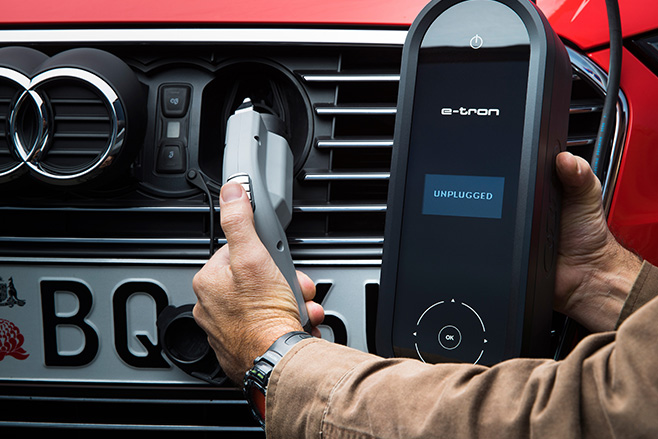
Changes to the Audi A3’s exterior are subtle, in keeping with the model’s cleanly conservative design.
The hexagonal shape of the grille is more pronounced, the lower bumper is redesigned, and the headlights have been straightened and now incorporate C-shaped, rather than arrow-shaped, LED daytime running lights.
At the rear, lengthened tail-lights (with new lenses) and a reprofiled lower bumper aim to make the A3 look wider when viewed from behind.
The Audi A3 body style line-up comprises hatchback (Sportback), sedan and cabriolet.
Pricing for the updated Audi A3 won’t be forthcoming until closer to its local launch. The model is currently priced from $35,900.
Click here to read the full review on the Audi A3 and S3 range.
