
MERCEDES-AMG’s desire to add a second ‘AMG-only’ car to its model range alongside the GT performance coupe is closer to becoming a reality, AMG boss Tobias Moers told Wheels at the New York Motor Show.
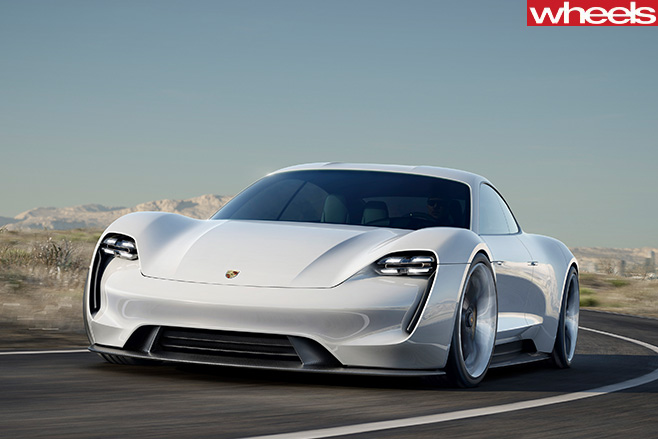
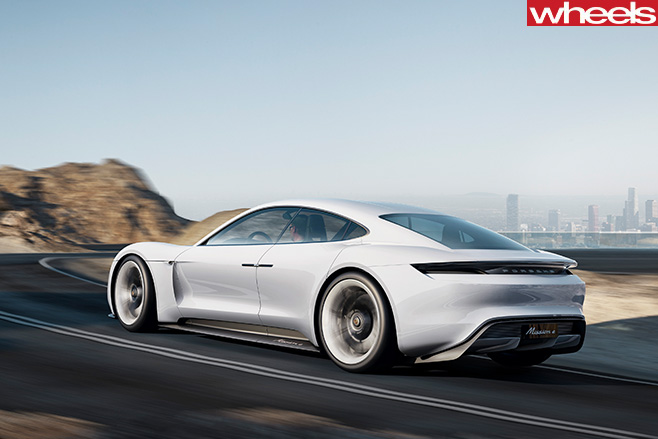
And where early reports suggested a stretched four-door version of the AMG GT, Wheels now understands the second AMG-only car will wear a purpose-designed four-door coupe body to rival the Porsche Panamera, and is likely to share only front and rear graphics with the GT coupe.
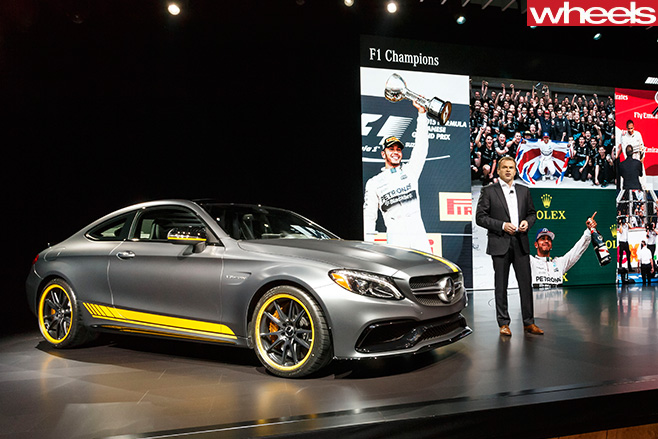
“So now it makes sense to take it more into consideration, having the idea of another variant dedicated to AMG… another car. Let me put it this way: Not every rumour you saw last year is totally wrong,” he said.
In 2015, Mercedes board member Thomas Weber responded to media questions about a four-seat variant of the AMG GT (pictured below) with “Why not, huh … We are always looking [at] opportunities there. The success of the GT is huge, and now let’s see what the future will bring.”
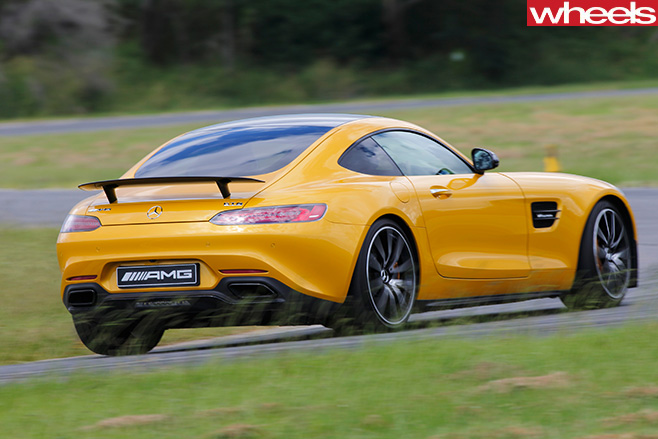
“For AMG… there is a clear mission,” Moers told Wheels. “Even [Mercedes boss] Dr [Dieter] Zetsche stated that AMG could be a more interesting rival for Porsche.”
Where AMG’s current coupe hero makes use of one engine in two tunes, the AMG GT4 is being developed with multiple petrol engines in mind, from a turbocharged six-cylinder to the GT’s 4.0-litre twin-turbo V8. A high-output six-cylinder diesel is also on the cards.
Wheels has previously reported on the more hardcore AMG GT R (pictured top), which AMG is positioning to rival the 911 GT3 RS for performance, and which Tobias confirms “is faster on a race track than the SLS Black”. He said it will have more power, a higher top speed and “a little bit lighter” than the 1495kg GT S. “A little bit lighter, sure … we’ve add some weight and we lose some weight. [Overall] we can reduce it a little bit compared to the GT S, but not that far.”
Moers also confirmed the existence of the GT Black, describing the ultimate iteration of the AMG GT scheduled for late 2018 as “something you never would expect from [AMG]. We’ve put some ideas together … and have something unexpected.”
“Growing to 48 variants [this year] there’s not enough space for a dealer to show every model. So we will have a dedicated AMG look and feel in a shop concept – we’re pushing the throttle in every perspective. We [have] standalone showrooms [already] in Brisbane and are rolling them out in other states. Just as we move forward with our models and performance, we are also bringing the AMG brand to life from the point of sale.
“[But] AMG will never stand separate to Mercedes. It is the performance brand of the three-pointed star.”
Mercedes-AMG will launch ‘43’-badged versions of a number of its models – including the C-Class sedan, Coupe and Cabriolet, and Mercedes-Benz GLC coupe and wagon – in Australia this year. Moers assured Wheels that while they would not have the engine power of their respective ‘63’-baged models, dynamically they would be bona fide AMG models.
“It would be easy to throw a badge on the front and do a little bit of retuning, but no, that’s the wrong way. All the ‘43’ cars we are going to present today have their own kinematic, their own axles, they do have their own steering as well – regarding ratio, rack, everything. Regarding driving dynamics … they have the same targets as the 63s.
“They have their own identity for sure.”
When asked why Mercedes-AMG chose the ‘43’ nomenclature, Moers responded: “You know, somebody didn’t write a doctorate about [it]. We thought it’s a nice number to position the cars. It’s a good interpretation of the performance level.”
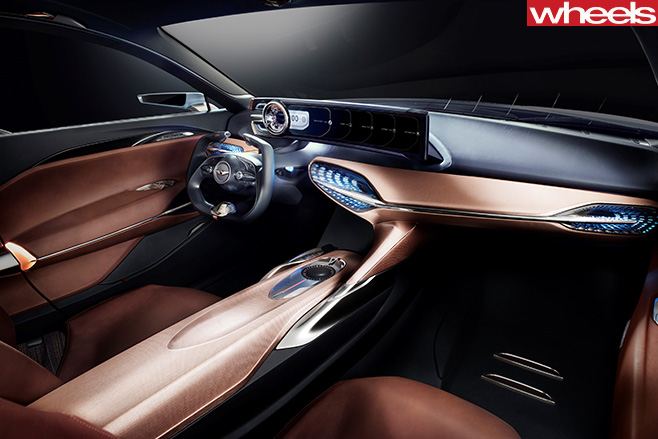
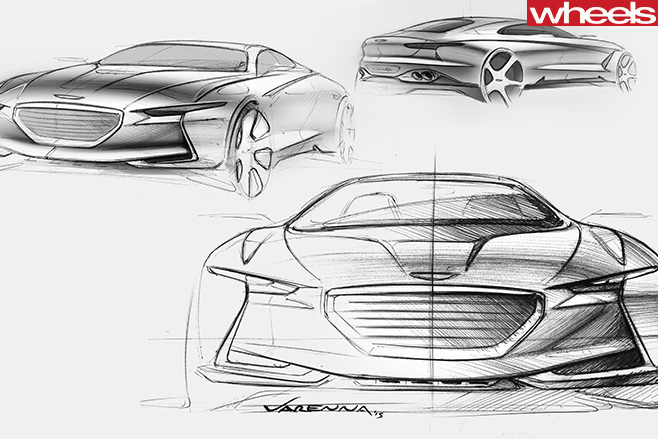
THE Genesis New York Concept is a blatant shot at the BMW 3 Series. The sedan was rolled out for the first time at the 2016 New York Motor Show with a bold look and the announcement that it will team a 2.0-litre petrol-hybrid drivetrain with rear-wheel drive – but Hyundai Australia wants even more power.
Hyundai says its Genesis brand will use the New York Concept as the platform for the upcoming G70, which is what the 3 Series rival will be badged when it goes into production sometime in 2017. That means it’s likely to arrive in Australia anywhere from early 2018. And despite the claims of this as a design study, the G70 will look barely different from the New York Concept when it hits showrooms.
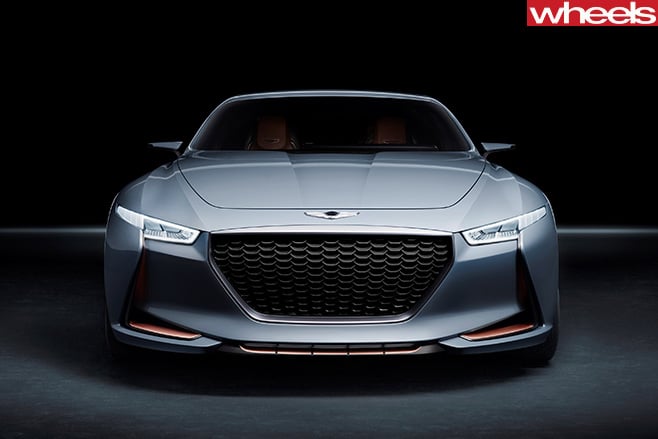
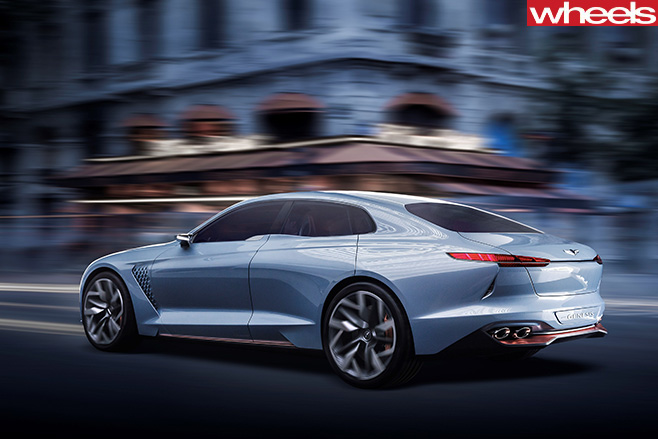
Yet Hyundai Australia told Wheels it was gunning for an even more powerful 3.3-litre twin-turbo V6 to fit to local models. Still under development, this engine could make as much as 314kW, with rumours that it may power the N performance version of the forthcoming Genesis coupe and get even more grunt – more on that later.
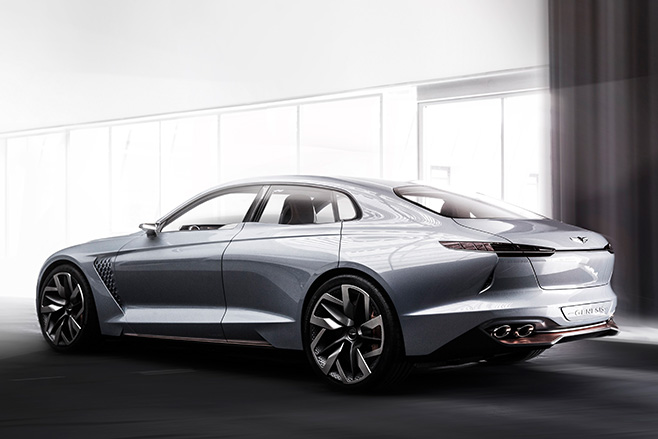
While exact measurements are yet to be revealed, the NYC and subsequent G70 should be around 4.6m long, 1.8m wide and 1.4m high. It will have a similar wheelbase to the BMW 3 Series, which is 2810mm.
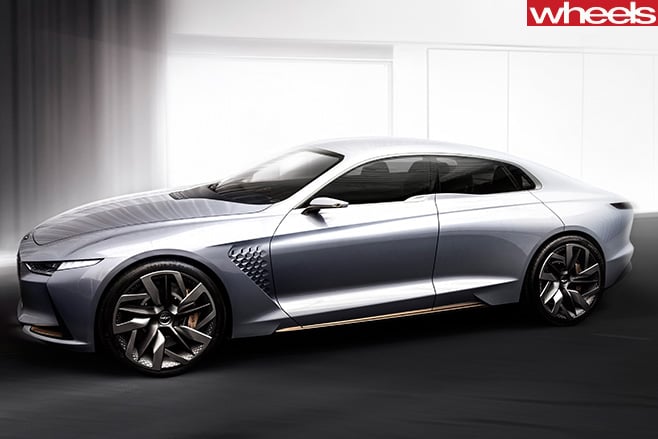
The Korean maker’s Genesis brand is chasing the most successful BMW, and it has a number of things in its favour. After splitting the Genesis brand from Hyundai as an official sub-brand last November, like Toyota’s arrangement with Lexus, Nissan to Infiniti and more recently Citroen to DS, Genesis has poached some top brass from German rivals and announced a bold six-model line-up by 2020.
Hyundai is also looking to streamline its Genesis dealer network here, too. While the Genesis is currently offered in all 155 dealerships, it’s looking to create specialist stockists to sell the new brand, and limit this to around 50 Australian locations.
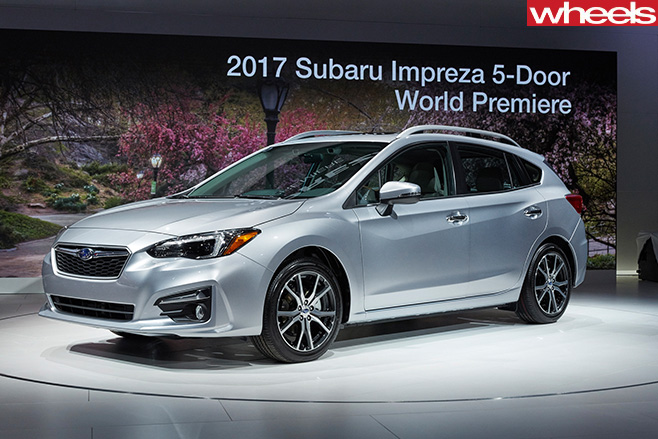
THE 2017 Subaru Impreza will go into production later this year and will ride on the company’s all-new platform, with the North American arm of the company telling New York showgoers that there’s more to the market than SUVs.
“Millennials are buying compacts,” said Subaru North America boss Tom Doll, adding: “There will be 80 million of them in the United States by 2020.” Doll confirmed the US-built Impreza shown in New York is the same (apart from spec/trim levels) as the car that will go on sale here late this year. “That’s my understanding – yes … [but] the Australian market [Impreza] will be from Japan.”
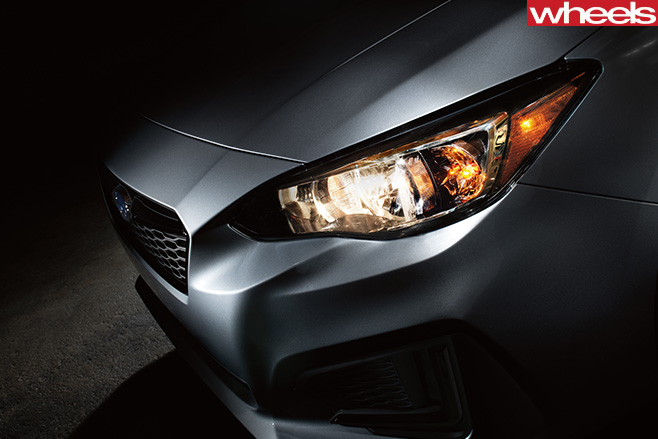
At 4625mm, the well-proportioned production version is a substantial 40mm longer than the current Impreza sedan, and is 38mm wider but sits 10mm lower. It’s also 5mm longer, 2mm wider and 5mm lower than the current Thai-built Toyota Corolla sedan, but not as long or wide as a Mazda 3 sedan (4580mm and 1795mm respectively).
A 1995cc 2.0-litre boxer four-cylinder engine making 113kW will power US market models, and now features direct fuel injection. That compares with the current US model’s 110kW, identical to the current Australian-market Impreza 2.0-litre. Fuel economy figures are yet to be disclosed.
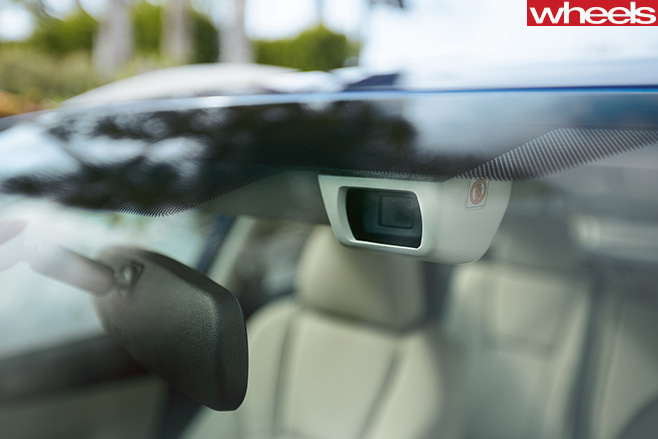
When Wheels suggested that the lack of a dual-clutch transmission may catch out Subaru given the Impreza is all-new, Subaru North America’s Michael McHale responded: “Maybe, but the market is where it is.”
For Australia, the Impreza will not come from the Indiana factory that shifts manufacturing of the C-segment Subaru outside of Japan for the first time. It allows Subaru North America to produce more cars, which was the only thing that prevented it surpassing 600,000 sales in the US in 2015. In 2016, the company expects to sell more than one million vehicles globally for the first time in its seven decades of history.
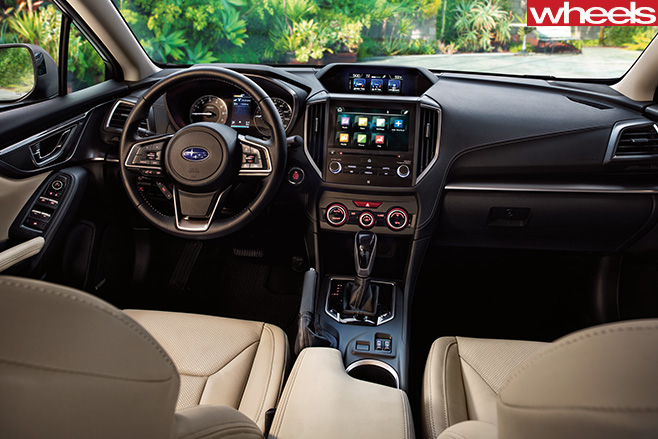
Subaru Australia sold a record 43,600 cars in Australia in 2015. Although the Impreza was officially its fourth-best selling nameplate, the Impreza-based Subaru XV sold strongly enough that – if added to Impreza’s sales – the model would have outsold the most popular car in the range, the Forester.
They want the best gear, but have less of an idea.
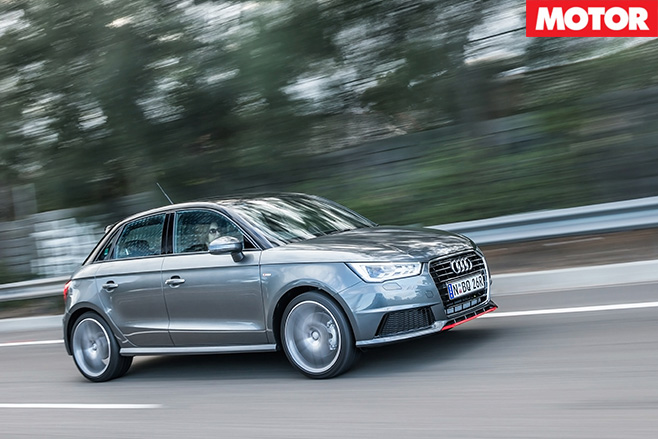
These are the kind of folks that, when shopping for a shrunken sport hatch, would shoot straight for Audi’s updated A1 1.8 TFSI Sportback.
Like a weight-lifting dwarf in a Calvin Klein suit, the A1 Sportback is small, classy, a little aggro, and quite subtle in dark grey – as if Audi’s thrown a cloak over its barrel-chested S1.
It uses the range topper’s front bumper that has larger gapes flanking the centre grille. The S1’s sexed-up Xenon headlights have also been swapped in, which bear new LEDs, while Audi has opted for a bit of red lipstick on the front lip spoiler to replace the aluminium look on the range topper.
It even smuggles into its nose the same series engine as the S1, but with a smaller displacement: a 1.8-litre EA888 producing 141kW and 250Nm in place of the old twin-charged unit from the 1.4 TFSI Sport variant it has replaced.
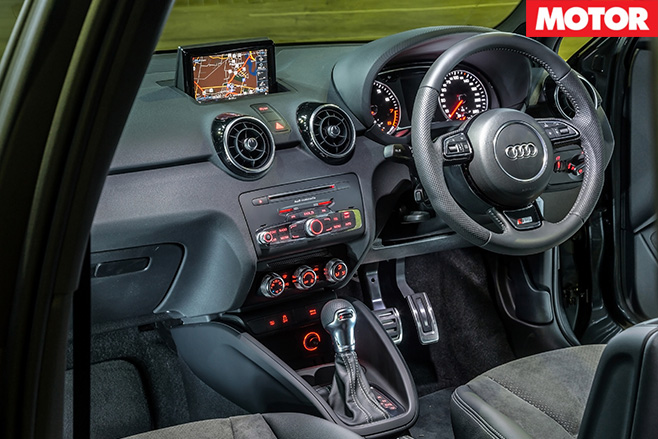
Leaving Brisbane’s inner-city exposes the first chink in the drivetrain’s armour: the transmission fails to smooth out start/stop system engagement and early throttle tip-in. As roads start to flow and velocities increase, however, it’s largely faultless. It’ll accept third-to-second downshifts while coasting and upshifts are almost instant – though it does grab a cog earlier than its 6500rpm redline.
Not that it needs to go there. While the 1.8-litre’s linearity and smoothness delights, the party’s over by 6000rpm, just where the old twin-charged 1.4-litre felt most frenetic and alive. The engine also fails when going uphill to make urgent progress in tall gears, despite dropping 10kg in its updated dress. It still hustles pretty quickly, though.
It carries decent mid-corner grip and the inside-wheel braking system works stealthier than a ninja, while at up to seven-tenths the 1.8-litre’s sports suspension does an admirable job of soaking up impressions, even on optional 225/35 R18s.
Its new electro-mechanical steering system feels sweet, accurate and well weighted, but it can lag when bleeding off large amounts of lock.
In saying that, there’s still a lot going for the A1 1.8 TFSI. Many will have it for its polish and handsome looks alone. But at $40,000 it summons some serious rivals. Them, and even some cheaper hot shots in this segment, would easily hold this chic urbanite’s head under water.
For a hatch that prioritises sauce over style, there are other places to look.
3.5 out of 5 stars
Specs Engine: 1798cc inline-4, DOHC, 16v, turbocharger Power: 141kW @ 5400rpm Torque: 250Nm @ 1250-5300rpm Weight: 1205kg 0-100km/h: 6.9sec (claimed) Price: $39,990
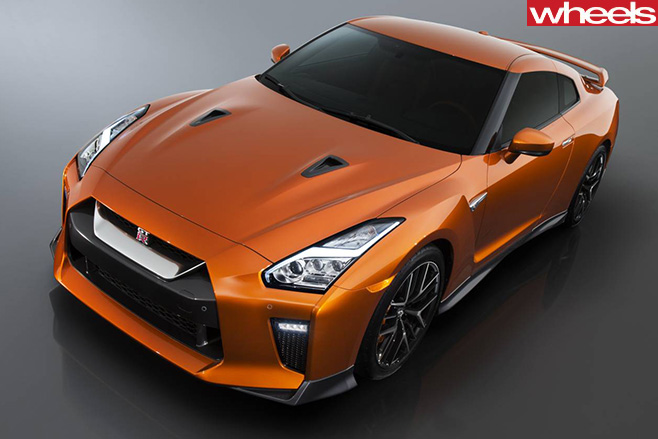
THE 2016 Nissan GT-R is even faster, better equipped and more brutal than ever – and Australian customers won’t miss out with a “Track Edition” engineered by Nismo offered here for the first time.
That’s not all that’s new for the latest Godzilla, which Nissan calls its best GT-R yet – in a nod to the legendary R32 Godzilla Skyline GT-R and its 1969 predecessor, Nissan filled its New York show stand with historic GT-Rs.
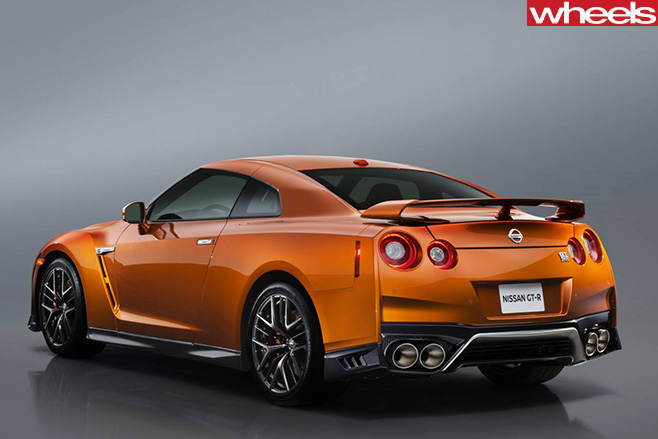
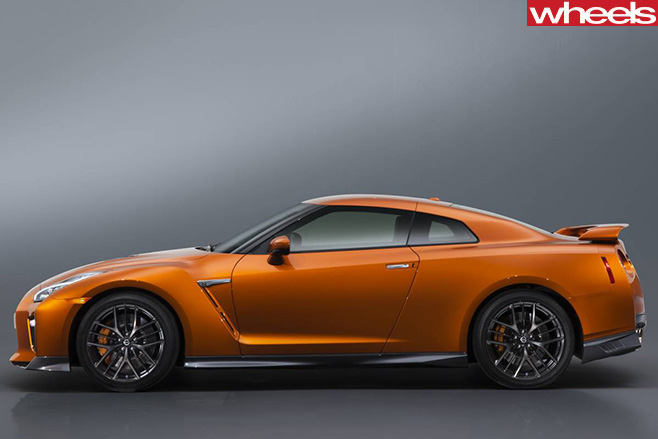
Nissan says that the R35’s body is now more rigid, and that it has fettled the suspension tune so that the 20-inch Pirelli-shod forged aluminium alloys not only offer a better ride, but can be pushed even harder around corners. A new “active sound enhancement” and titanium exhaust set-up will let you know if your mind is not yet blown away by the Nissan’s physics-defying pace.
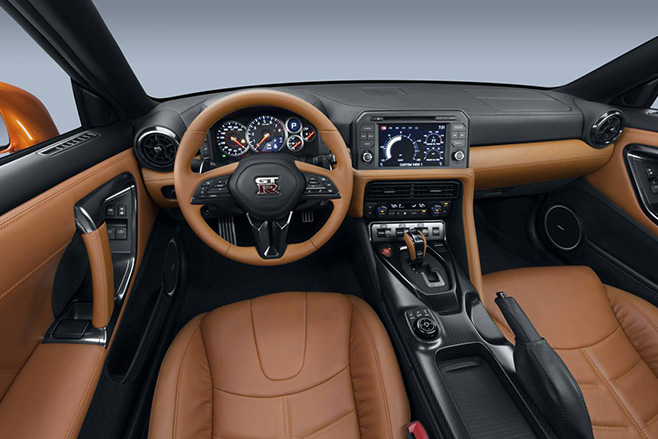
The most obvious changes are an instrument panel and dash that are now covered in hand-stitched leather. Integrated controls for the sat-nav and stereo have lowered the button count from 27 to 11, but – finally – the previously column-mounted paddle-shifters are now mounted directly on the steering wheel. That means you’ll be able to more easily exploit the GT-R’s stupendous traction out of corners for an even faster point-to-point experience.
Mercedes-Benz will rip the roof off its most potent C-Class just in time for Christmas.
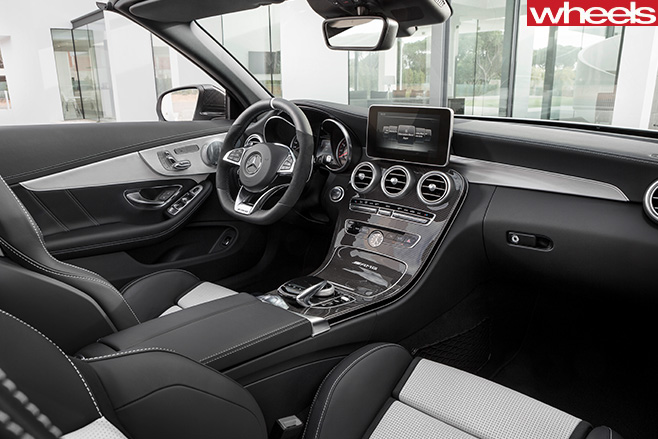
MERCEDES-Benz’s relentless and predictable model proliferation plan for global domination continues with the unveiling of the AMG-badged C63 version of the new Mercedes-Benz C-Class Cabriolet at the New York Motor Show this week.
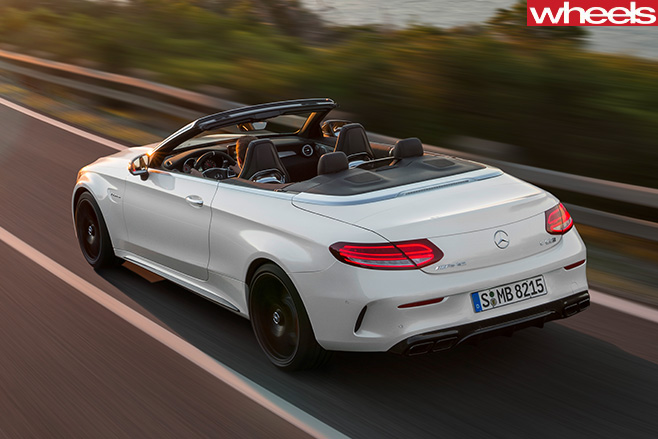
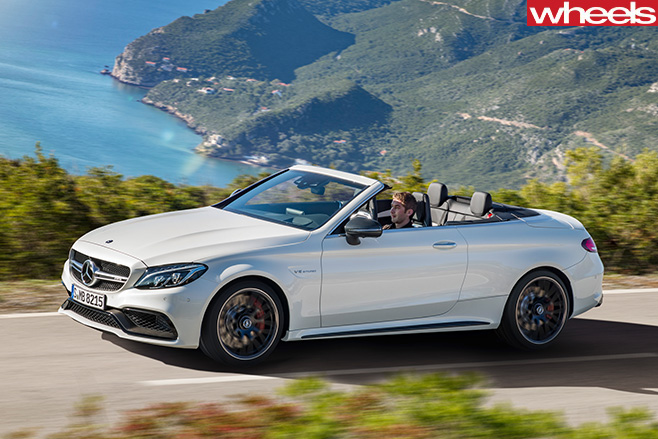
In contrast with lesser C-Class Cabriolets, the C63 S drop-top rides on a wider track and sports suspension. Its potent twin-turbo V8 teams with a single-clutch seven-speed automatic transmission and drives the rear wheels through the same wider, tougher, AMG-developed rear axle as the C63 S Coupe.
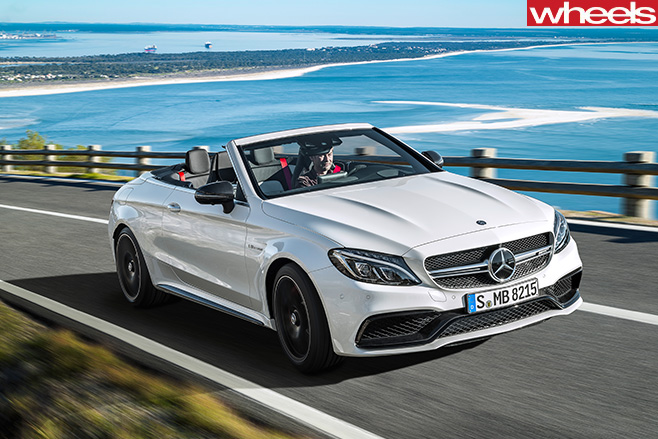
The C63 S comes with an electrically operated, three-layer fabric soft-top that – if initiated at a speed below 5km/h – can continue to close or open at up to 50km/h. When stowed in the boot, luggage capacity drops from 355 to 260 litres.
Nissan has lifted the covers of the 2016 model year GT-R at the New York Motor Show.
It claims the updates to this year’s model are the most significant since the R35’s introduction in 2007, however in reality there’s been a series of minor tweaks to keep the GT-R fresh until the arrival of the R36 GT-R, expected some time between 2018 and 2020.
Visually the MY16 GT-R receives a number of updates that Nissan claims makes it slipperier through the air without hurting its downforce figures. There’s a reinforced bonnet, redesigned front bumper and lip spoiler, new side sills and new vents at the rear to improve airflow.
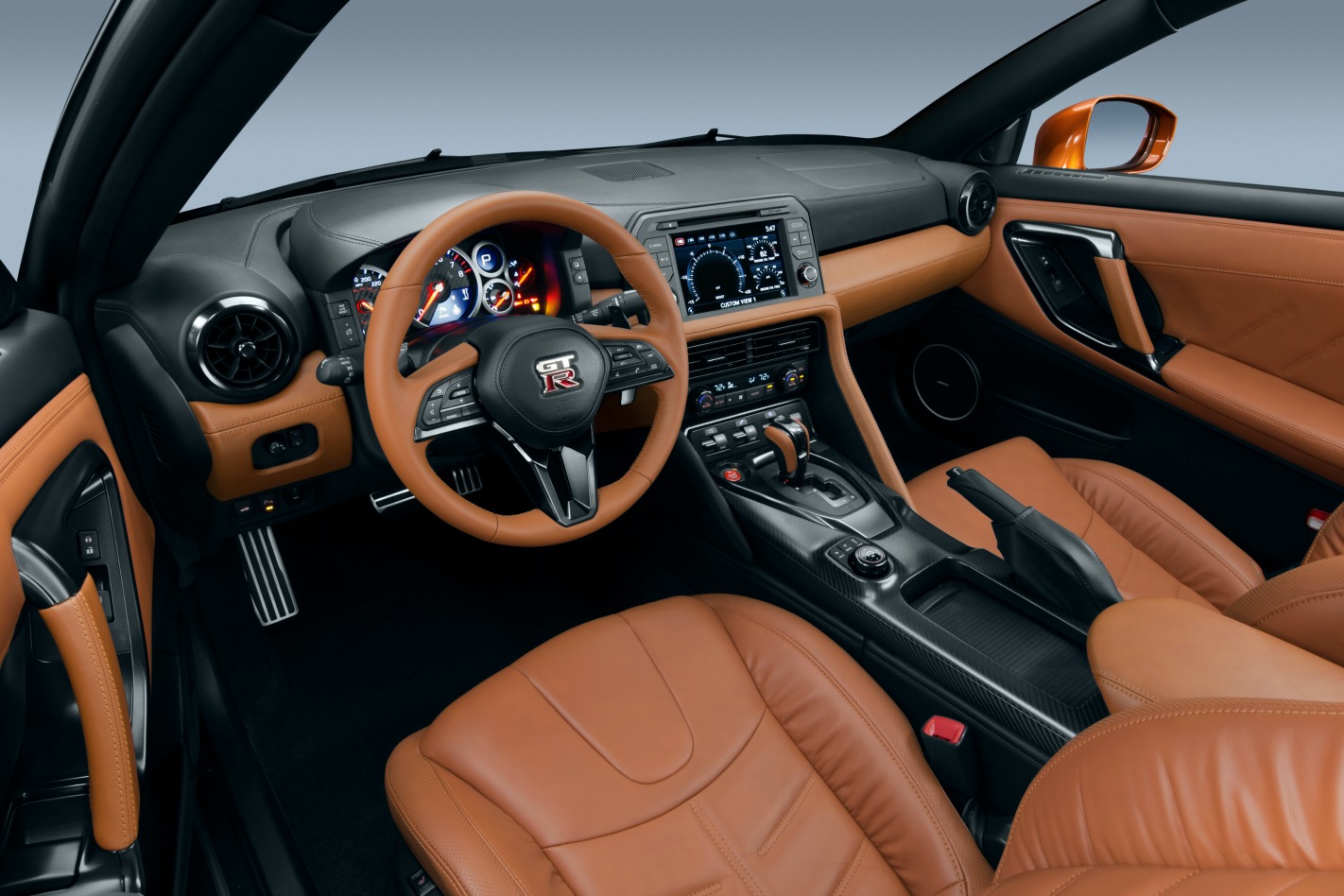
Mechanically, there is an extra 15kW/6Nm, the 3.8-litre twin-turbo six now producing 419kW/632Nm, with new titanium mufflers and “Active Sound Enhancement” improving the soundtrack.
However, despite Nissan claiming “superior acceleration” there’s no word of any improvement on the current GT-R’s 2.7-second 0-100km/h claim. Mind you, that’s probably not something that needed improving.
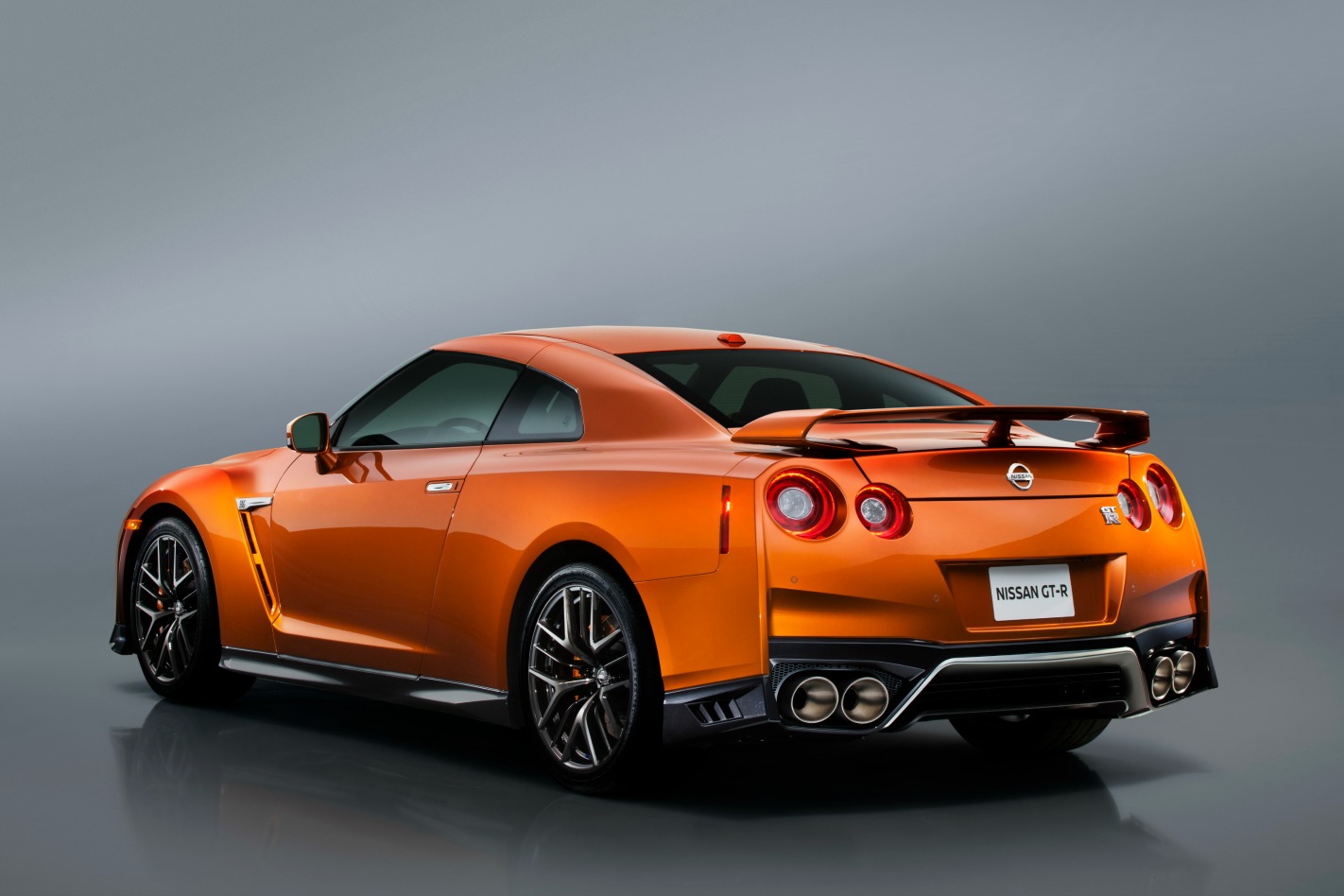
The R35 celebrates its 10th birthday next year, but still offers an unparalleled amount of performance for the price. The MY16 model will arrive in Australia about mid-year and we’ll bring you local pricing closer to its release.
Updates to the Mirage include exterior styling comprising a new front grille, bonnet, bumper bars and wheel designs. Two new paint colours have been added; Sunrise Orange and Wine Red.
Mitsubishi has improved interior trim by switching to higher-grade material for the seats and adding cushioning to the rear bench.
Enhancements extend to the Mirage’s driving experience via “extensive rework of suspension tune and electric power steering calibration,” according to Mitsubishi. The result is more intuitive steering response, better balanced handling and increased ride comfort.
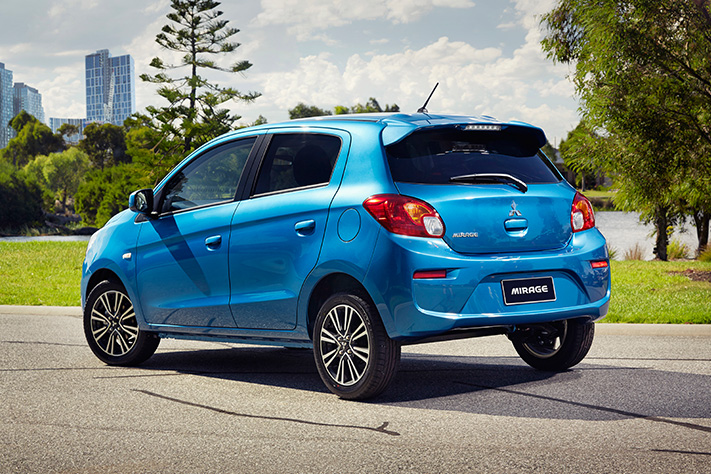
Low running costs are a big part of the Mirage’s buyer appeal, something Mitsubishi has recognised and made even cheaper by reducing the price of its capped price servicing. Its 1.2L four-cylinder engine has fuel usage of a meagre 4.6L/100km which also keeps the cost of ownership down.
The starting price of $12,250 gets you a Mirage ES hatch with a manual gearbox. Add $2000 for an automatic.
Standard features of the ES include six airbags (front, side and curtain), stability control, 14-inch wheels, hill start assist, ABS, emergency brake assist, Bluetooth, air conditioning, power windows and two ISOFIX points for child seats.
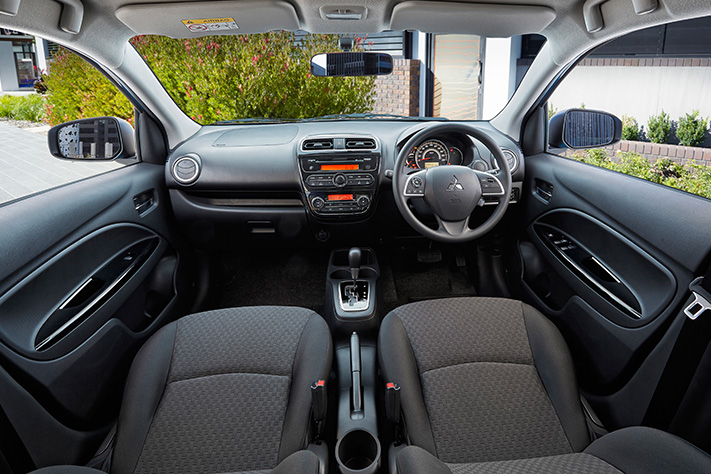
A higher-spec LS model is available from $15,250 with only an automatic gearbox. It has all the standard features of the ES plus 15-inch alloy wheels, fog lights, cruise control, window tinting and interior enhancements including piano black and chrome trim and a leather gear shifter.
“Mirage is already packed with great standard features, so for 2016 we’ve made meaningful improvements,” said Tony Principe, Mitsubishi’s Executive Director of Marketing. “Easy to drive and easy to live with, the Mirage offers an unbeatable mix of style, practicality and value.”
Performance Car of the Year in January made me reflect on past PCOTYs, progress, and how we’re all the more lucky for it.
BMW has twice won PCOTY – in 1997 with the E36 M3, and in 2002 with the E46. And, as is normally the case flicking through old mags and revisiting performance figures, they’re often worth a laugh. The E36 did 0-100km/h in 5.79sec and a 13.93sec quarter – quite respectable, when you consider they can be had for less than $15K these days (see p126). In some ways, 210kW and 320Nm is nothing to sneeze at in 2016, let alone 1997.
Yet progress back then wasn’t especially kind to all performance Bimmers, at least in a drag racing sense. In 2002, when it won PCOTY, despite the passage of five years and an extra 42kW/45Nm, the E46 M3 could only manage 5.78sec to 100km/h and a 13.77sec quarter. Still not a slug, but nothing like the leap to where we find ourselves now.

To an extent, so it should – it’s been 14 years since the E46 M3 won PCOTY. Yet it’s no less impressive to consider the M135i – not even a ‘proper’ M car – does 0-100 in 4.84sec and 0-400m in 12.98sec (our times).
Lap times are just as revealing. Cameron McConville wrung a 1:41.56 from the E46 M3 at Winton in 2002; Luffy did a 1:39.8 in the M135i at Bang For Your Bucks last year. But the price is where progress is most apparent. In 2002, the E46 cost $141,500. The M135i, before options, today costs $62,900.

But the M135i is the better car, that much is certain. As a daily, in this day and age, I know which one I’d prefer. Even in isolation our M135i is shaping up as a great long termer. I’ve no major grievances to list. And trust me, I’m easily annoyed.
I only have a list of little things: the dual-zone air-con apparently doesn’t sync driver and passenger temperatures (a serious grate for anyone with OCD) ; brakes that are just a little too grabby right as you come to a stop; and the variable steering can still feel a little hyperactive around town, even after you’re used to it.

One of my best drives last year was up Lake Mountain, in alpine Victoria, with the M135i. Suddenly the alert steering made sense, gifting the little Bimmer’s front-end with an addictive keenness. The grunt was great, and those tightly-stacked eight gears meant there was a ratio for every corner.
I’m starting to wonder if the M135i is the best performance BMW I’ve driven. Yes, ever – better than an M4 or M5, and obviously not faster, but more friendly, more engaging and more fun. If only it had the optional limited slip diff. More on that next month.
Month: Two Liked: Feels a poofteenth under-tyred – in a good way, it’s so friendly at the limit. Very fun. Disliked: Lack of a digital speedo. Favourite moment: Halfway up Lake Mountain in Sport Plus. Has a gear for every corner.
Fuel This Month: 12.8L/100km Average: 12.1L/100km Distance this month: 1497km Total: 7020km
Want to see more of our BMW-M135i-long-termer? Check out the below:
THE Mercedes-Benz GLC ‘four-door coupe’ SUV is about to join the BMW X4 in the fight for fashion-focused compact SUV buyers.
Revealed at an exclusive media function the night before the 2016 New York International Auto Show, the GLC follows a trend established by the bigger Mercedes-Benz GLE Coupe and wagon in prioritising sporty looks and driving at the cost of practicality and price.
The GLC Coupe – first shown in concept form at the 2015 Shanghai motor show – is built on the same Mercedes-Benz C-Class derived platform as the GLC wagon. Both GLC body styles sit on a 2870mm wheelbase, but Benz’s designers have worked to give the four-door Coupe a longer, lower side profile. Benz says the Coupe’s 4.73m body is 80mm longer, and the 1.6m roofline is 40mm lower – partly due to a lower, sportier suspension tune. As a result of this pursuit of the swoopy coupe silhouette, occupants can expect less headroom inside, and less luggage space.
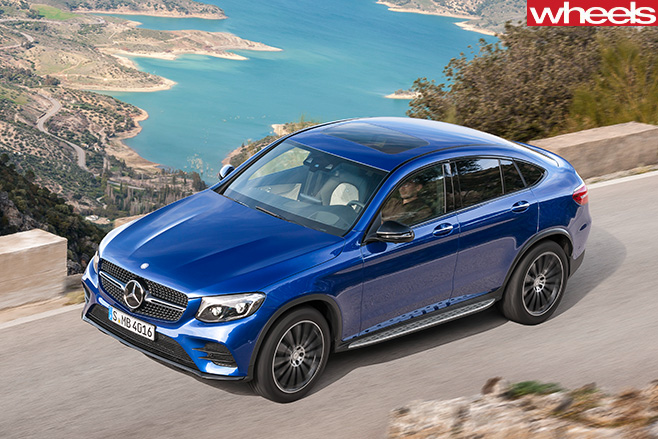
Initially, the GLC Coupe will be available with either a 155kW 2.0-litre petrol (GLC250) or 2.2-litre turbodiesel engine, the latter in 125kW tune in the GLC220d and stronger 150kW tune in the GLC250d.

Later, Mercedes Benz Australia is likely to add a more potent 180kW version of the 2.0-litre turbo petrol to a GLC300, and possibly add a more powerful diesel variant.
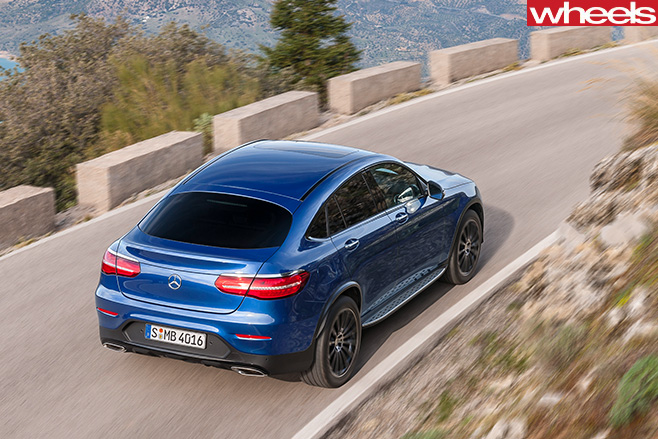
All GLC Coupe models will be fitted with Mercedes-Benz’s 4Matic all-wheel drive, and come standard with sports suspension, including Benz’s Dynamic Select drivetrain customisation system. Adjustable dampers will be optional on entry-level models.
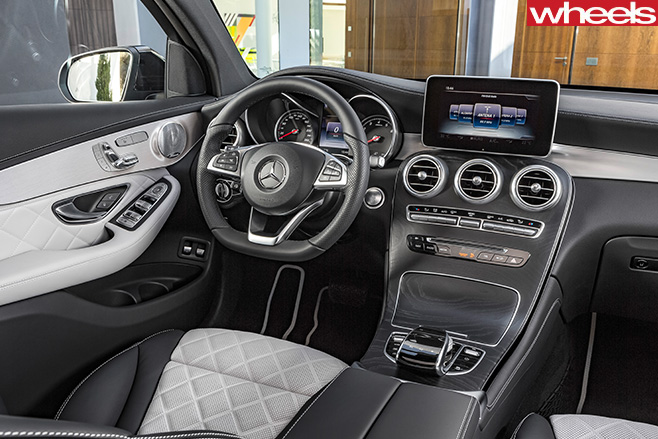
“This car will be a true member of our dream car family,” he said. “It has unparalleled dynamics and is highly capable off-road … It is cosy and sporty and has a powerful stance.”
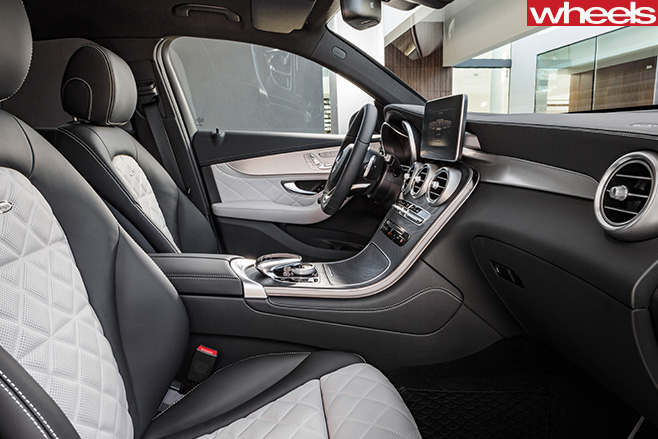
“Sensual purity is the name of the design philosophy. The whole car is very round, full of tension. We do not do pronounced edges; we design surfaces between those edges. It is important that every surface is full and sensual.”
