
Remember the time before the modern Mini burst onto the scene 15 years ago, when the notion of a premium baby hatch seemed as absurd as a $30K Toyota Yaris would today? In pre-Millennium Australia, petite always meant cheap.
But BMW’s resurrected British brand has subsequently converted urbanites and confounded Doubting Thomases, building an almost evangelical following globally. Like people willing to pay $50 for a Gold Class movie ticket, it’s all about the experience.
Some have tried to emulate the Mini’s winning formula with hits (Fiat 500), what-evs (Citroen DS3) and misses (Alfa Mito), but only arch-enemy Audi’s VW Polo-based A1 has truly menaced the Mini. Together, they control some 80 percent of the booming $25K-plus Light class in Australia, which – driven by lots of fresh metal – was up 20 percent last year.
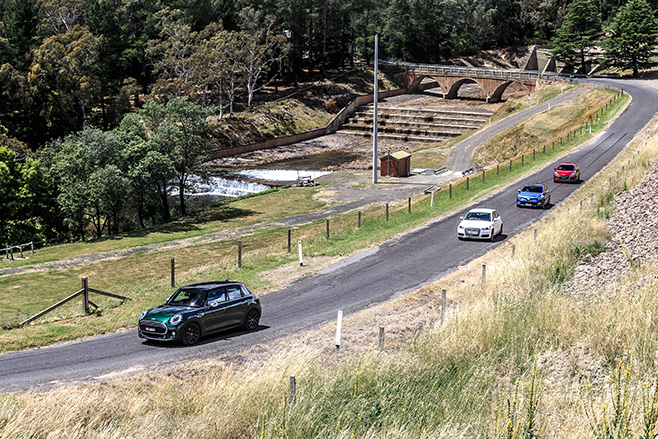
Happily, all that rivalry has forced Munich to firstly slash prices (today’s third-gen Mini, released in 2014, starts from $24,950 compared to $32,650 for a base Cooper in 2001 – which is $46,500 in today’s money). And, secondly, to present the first Mini-based five-door since BMC’s Morris Nomad of 1969 to take on that pesky Audi A1. Naturally enough, Ingolstadt responded last winter with a minor makeover headlined by broadly similar ‘repositioning’.
However, it was a pair of promising French upstarts that prompted this shootout. In our nine-car supermini Megatest (Wheels, March 2015), Peugeot’s under-rated 208 managed a respectable fourth thanks to excellent packaging, a classy cabin, sassy styling, sparkling dynamics and a comfy ride – which had us thinking that the upcoming Series II version (subsequently released last October) might be improved enough to joust with the Germans.
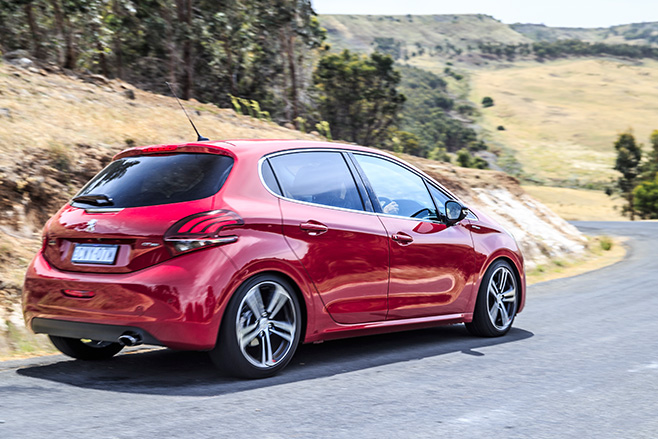
As the newest model here, the GT-Line (from $27,490) is the sportiest non-GTi hot-hatch expression of the revamped Peugeot 208 range, which sports a near invisible facelift (basically the front bumper has changed), substantially lower entry pricing (now from $15,990) and a new 81kW/205Nm 1.2-litre turbo triple, mated solely to a Toyota-supplied six-speed torque-converter auto, in place of the previous 88kW/160Nm 1.6-litre atmo four and old-school four-speed.
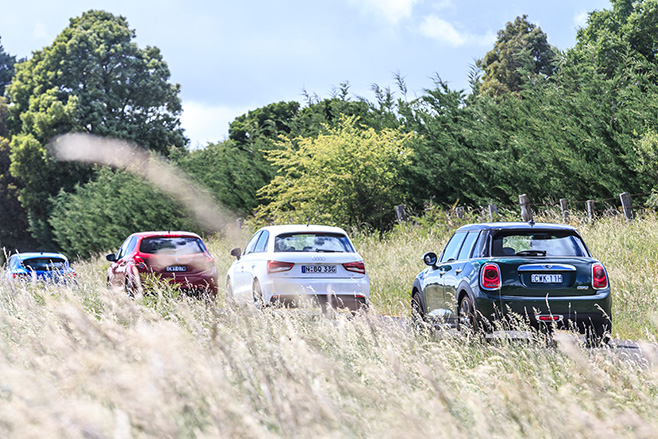
Though boasting sat-nav, self-parking, touchscreen connectivity, climate control, and auto lights and wipers, you pay extra for niceties such as metallic paint (pricey at $990) and reversing camera ($300 – or $500 with Autonomous Emergency Braking). That said, the GT-Line looks appealingly GTi-like, brandishing cool 17-inch alloys, front cornering lamps, LED daytime-running lights, bolstered sports seats and racy pinstripe/gloss trim inserts.
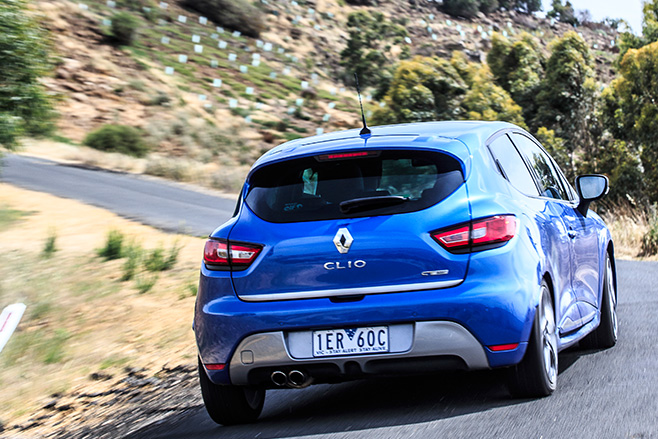
Our second contender from France (via Turkey), the Renault Clio GT costs $28,990 in as-tested Premium guise (just $500 short of a base Renaultsport 200) and comes with a fixed glass roof, heated front seats, camera, spoilers and an endlessly entertaining ‘R-Sound Effect’ app that mimics a bunch of Renaults, Alpines and even a Nissan GT-R.
On the other hand, you’ll save $3500 by going with the non-Premium GT and still score the semi-fat Renaultsport-tuned chassis (slightly firmer springs and dampers), RS Drive Sport mode (larger throttle openings, faster gearchanges, heavier steering, a tuned diff), paddle shifters, unique bumpers, huggy seats, rear sensors, keyless entry/start, sat-nav, climate control, LED DRLs, 17-inch alloys and the group’s only five-year warranty. But no AEB. Nor, controversially, rear-seat curtain airbags, though Renault reckons beefing up the surrounding panels makes them redundant…
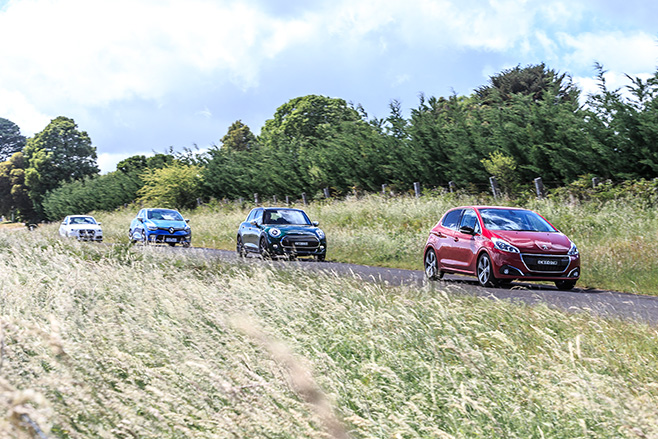
Whatever, the Clio’s here because of stellar recent form: a $20K Expression with the same 88kW/190Nm 1.2 turbo and six-speed dual-clutch (the only gearbox available in four-cylinder models) managed a bronze in that supermini Megatest, while a 0.9-litre three-pot turbo manual topped Fiesta Sport and Alfa Mito TwinAir (Wheels July 2014). The Clio IV range was also a podium finisher in 2013’s COTY. Will its luck hold?
France versus Germany, then. Not for the first time.
Representing the Fatherland, though built in England (is this what the automotive world would be like if the war went the other way?), the F55-series Cooper five-door from $27,750, or $30,100 with a six-speed torque-converter auto, riding on a 72mm-longer wheelbase for extra rear-seat space over the three-door Mini Cooper. For $1700 more than the entry-level five-door, the Cooper gets a friskier 100kW/220Nm 1.5-litre triple (instead of a 75kW/180Nm 1.2) and gains a leather wheel, cruise control with brake function, rear sensors, auto lights and wipers, and 15-inch alloys.
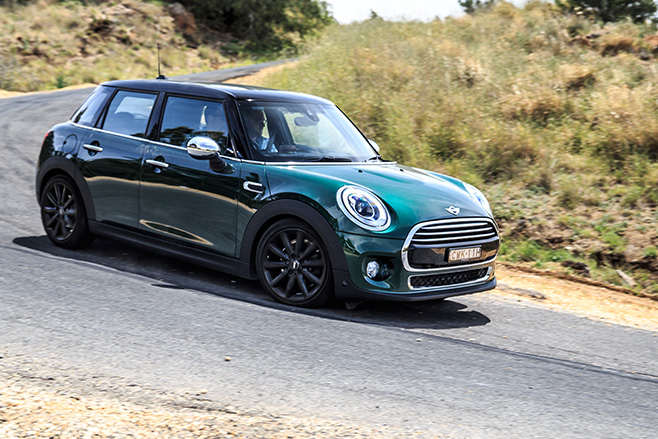
However, our test car arrived with options totalling $15K, including Pepper Pack (essentially climate control, fog lights, front armrest and uprated audio for $3K), fancy ‘cross punch’ leather ($2500), 17-inch alloys and a double sunroof ($2K apiece), AEB ($1350), a head-up display ($850), front radar ($700), metallic paint ($800) and Harman Kardon sound ($1200). Little wonder ours felt like a baby British Bimmer inside.
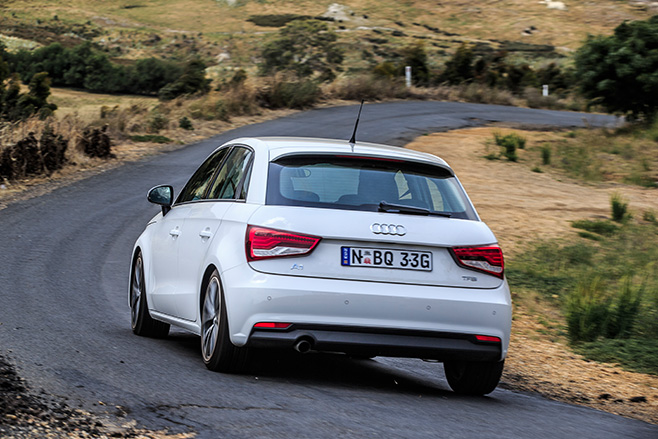
Audi’s A1 Sportback Series II comes from Belgium, wearing a wider grille, bigger bumpers, revised headlights and wavy tail-light lenses. More importantly, an oh-so-sweet 70kW/160Nm 1.0-litre three-cylinder turbo debuts at entry level, priced from $26,900 with a five-speed manual or $28,250 with an S-tronic seven-speed dual-clutch.
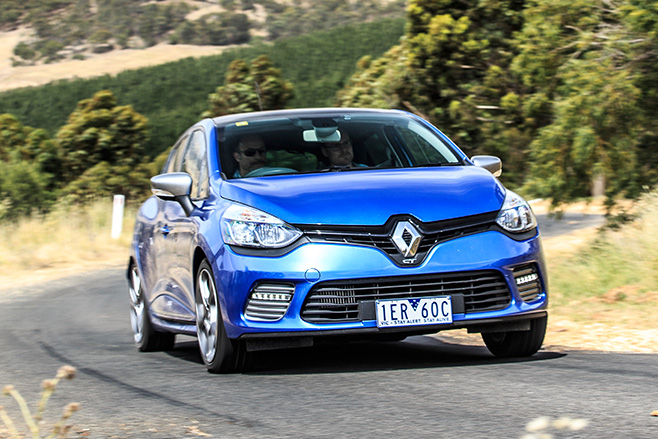
Equipment levels aren’t lavish – cruise, auto lights and wipers, paddle shifters, manual air-con, rear radar, Bluetooth and 15-inch alloys – though ours runs out to $32,730 with the $2K Style (xenon headlights, LED DRLs, 17-inch wheels) and $2500 Technik packs (sat-nav and better audio). Underlining the fact the A1 is this group’s veteran, it has no auto-brake safety tech.
Turning to the road, we start with the Pug, the freshest of the Frenchies. Despite the extra performance, extra gears and 55kg lighter nose that downsizing delivers, the Pug’s Pure Tech heart transplant isn’t the anticipated silver bullet here, though real-world acceleration and responses – particularly in an urban environment – are now much livelier. Yet there isn’t the sizzle of the 80kg-heavier 308 equivalent with its stronger 96kW/230Nm punch. So the GT-Line feels a bit flat, like something is holding it back. For instance, there’s a momentary hesitation when moving away from standstill, like old-school turbo lag. It’s only beyond that where the Pure Tech pulls away energetically, aided by a quick-witted shifter. We were expecting more fizz, frankly.
That the 208 is generally the most economical – all contestants here are equipped with fast-acting idle-stop systems for effective emissions relief – reflects the Peugeot’s drivetrain efficiency.
Around town, the dual-clutch Clio’s long-moaned-about lag remains a point of frustration. Forget about point-and-shoot take-offs; it seems to take an eternity for turbo and transmission to spool up before there’s any consensus for momentum, with a bit of initial drivetrain grumble thrown in.
Once moving, however, Renault’s 1.2 turbo four provides robust yet refined performance, particularly in the 80-120km/h bracket where it leaves the smaller-capacity triples trailing. Also, even forgoing the gimmicky RS sound effects, there’s a satisfying sensation of speed – certainly more so than the mere 0.1sec gap to 100km/h between it and the 208 suggests.
At face value, the Clio’s fuel consumption might appear alarming, but that’s because we chose to engage the RS Drive’s addictive Sport mode, taking full advantage of the wider throttle openings and faster gearshifts. Egged on by a sexy baritone exhaust, it was simply driven harder for longer than the others. Just to be fair, though, one tankful in snooze mode returned the best result of the test – 6.5L/100km. But could you restrain yourself?
Audi’s terrific 1.0 TFSI was the slowest in all categories against the clock, but in everyday driving its energetic power delivery, combined with seven cleverly spaced ratios, makes for a spry point-to-point runabout, squirting well above its meagre engine capacity. This thing begs to be thrashed, and rewards doing so. Indeed, the A1 feels as fiery as the fastest here (the Cooper). Only when loaded, or climbing hills, does the lack of cubic inches hurt. That it returned near-best economy numbers while being driven flat-out highlights the brilliant engineering behind this perky little powertrain.
No rival can match the sheer power and flexibility of the 100kW Cooper, however. Thrummy yet cultured, it is the only car here with no discernible lag off the line, the best for prompt throttle responses, the least affected by cargo or inclines, and fast enough to eclipse 160km/h before we ran out of track during performance testing. Lower-spec Mini engines have long lacked balls, but this charmer belts along while remaining impressively frugal. The 1.5 Cooper’s $1700 premium over the 1.2 One is money well spent.
It’s therefore mildly frustrating that BMW’s engineers have dialled back much of the Mini’s one-time steering sharpness. Some of the low-speed bite has given way to a consistent, measured and predictable helm that you might expect in a Golf, making a mockery of the brand’s ‘go-kart’ claims. Yes, the handling is flat, planted and controlled, and the five-door’s dynamics gel nicely at higher velocities, but where’s the intimate feedback gone? Mr J Cooper would be puzzled. At 57, Mini appears to be having a mid-life crisis.
Exacerbating our grievance is the suspension’s inability to properly soak up bumps with the optional 17-inch wheels. Only on the slickest surfaces is the ride quality acceptable. Words like “unsettled”, “bumpy” and even “terse” abound, undermining the Cooper’s newfound maturity elsewhere. Best you shell out $700 for adaptive dampers, which make a big difference.
Almost the opposite is true for the 208. At low speeds, its steering is really reactive – maybe too much for the uninitiated – with crisp turn-in backed up by heaps of feedback. It’s how Mini ought to be. But where the British-branded runabout seems magnetised to the road when belted through tight corners, the Pug’s back end lightens up playfully for controllable rear-steer fun, underwritten by a relaxingly supple (if at times noisy) ride. Nice one, Peugeot.
However, when you’re really on it, there’s too much suspension travel and body movement, and not enough control, to match the GT-Line’s athletic visage. Driven like a 208 GTi (which only costs another couple of grand), you’re likely to feel queasy after a while.
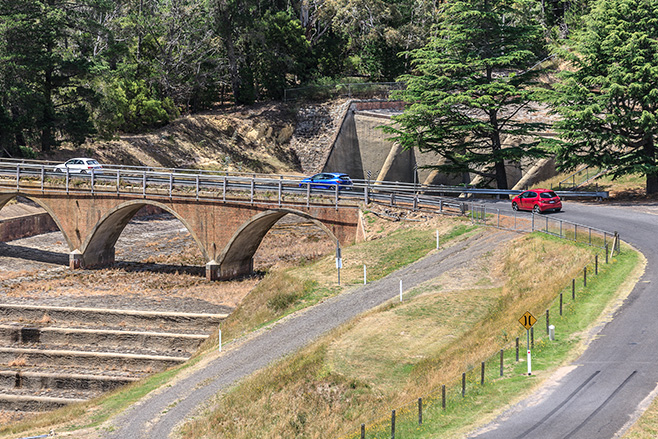
In contrast, the A1 rarely puts a foot wrong, combining quick and communicative steering, capable and predictable handling, reliable roadholding and pleasing chassis absorbency. In many ways it’s just like a scaled-down Golf. And when you step on it more, it all coalesces into a safe, controllable and ultimately vice-free dynamic performer. However, there isn’t the same level of interaction or liveliness as in the rest, while rougher roads reveal some suspension clunkiness, along with insufficient wheel travel. As with most VW Group products, you come away with colossal admiration rather than any emotional connection.
The converse applies to the Renault. In most situations it is the most exciting, involving, composed, controlled and connected hatch here. In RS Drive Sport mode, car and driver mesh, resulting in real steering capability, though it’s a little heavy at parking speeds. But there’s a naturally calm and measured rhythm to the handling that is unique in this company. No rival puts a smile on your face stringing together a set of corners like the Clio can.
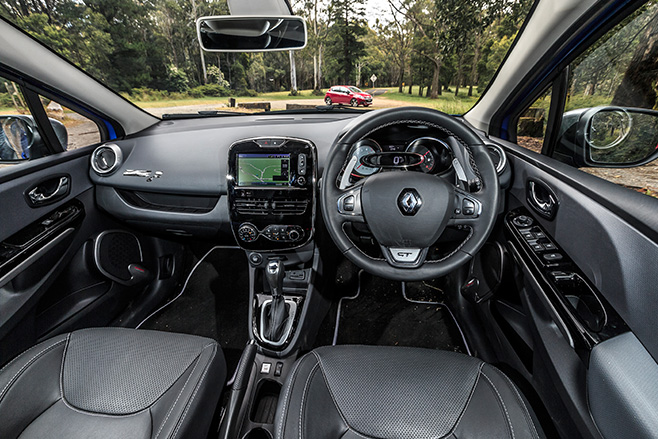
That the Clio’s ride is also the best overall reflects Renaultsport’s remarkable tuning prowess. Even if it isn’t as cushy as the comparatively spongy 208’s, nothing is as pliant over bumps and potholes as the Clio GT, despite it being essentially a warm hatch.
Fascinatingly, while alone in this group in persisting with rear drums, the Clio finished mid-field for braking.
Similarly disparate levels of character differentiation also exist inside each of the assembled quartet, though all can accommodate five occupants, with the ability to carry two adults in the back seat in reasonable room and comfort.
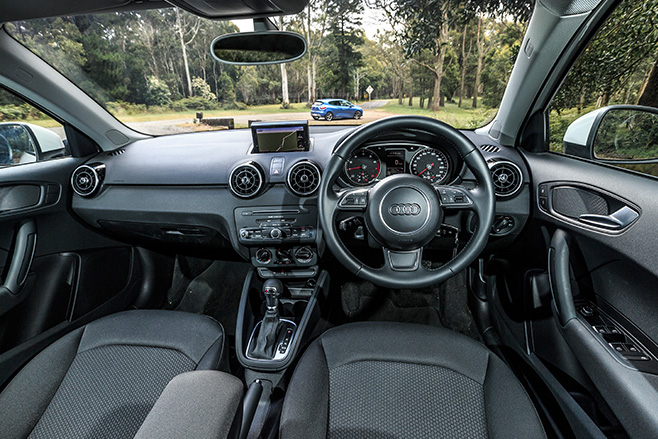
Shockingly, least impressive inside is the A1 Sportback, despite its elegant, solid and quality dashboard, which still looks contemporary six years on, supported by an excellent driving position and fine ergonomics. But the Audi is a car of two halves; the tight rear quarters’ spartan and monochrome presentation is only just acceptable in a Polo Trendline costing half as much, and the lack of map pockets reflects unfortunate penny-pinching.
The Clio is also not great in the back. The sports front seats block forward vision, the backrest’s headrests are all but useless, and the rear cushion errs on the firm side. The lack of a rear-seat courtesy light is also a mean omission. Up front, the centre console’s shape tends to foul passenger knees, and the glovebox is frustratingly small, but otherwise the Renault scores for superb instruments, alluringly comfy front seats and sound placement of most switches and controls.
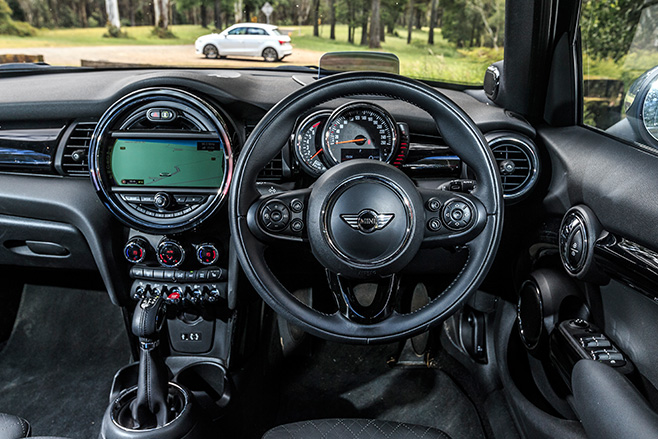
Keeping in mind that our test Cooper heaved with extra gear, the overall interior presentation is defined by a solid, quality look and feel, even if the car’s signature styling cues – rounded centre screen, toggle switches and circular themes – are wearing thin.
Speaking of thin, the Mini’s stunted rear doors look a little odd (in a 1950s Austin A30 sort of way) and restrict entry/egress. Also, thick pillars and a high shoulder line impact vision, the optional sunroof reduces head room (with a mesh ‘blockout’ that doesn’t), the glovebox is meagre, and an infernal rattle undermined the otherwise premium aura. Yet the optional sports front seats shine, the driving position is first class, there are rear-seat cupholders and grab handles, and the ergonomics are good.
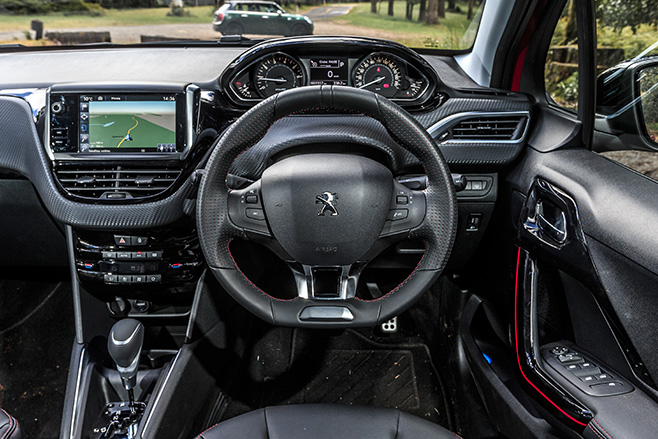
All the same, the 208 takes the cake for packaging and comfort, scoring for space, practicality, useability and, above all, interior style. Despite lacking a rear-seat area light, grab handles and adequate glovebox, the Pug’s ambience matches the exterior’s aggressiveness. Further bonuses include body-hugging front seats, a classy fascia featuring the brand’s controversial (but effective) low-wheel/high-binnacle positioning, elegant instrument markings, ventilation aplenty and appreciably deep windows. But we were irked by loose-trim noises and fat A-pillars that obscure traffic.
Every car here has pros and cons, but they’re all really capable and likeable urban runabouts, so each deserves a podium finish. There isn’t a dog among them, and we’d happily recommend all four seeing just half a star separates last from first.
That said, the A1 Sportback 1.0 TFSI is showing its age, despite possessing a soaring new drivetrain. While hardly putting a foot wrong (rear-seat accommodation aside), it is a tad vanilla. For the money that affords this cool crew, a bit more pizzazz would be appreciated. It finishes equal third with the Peugeot.
The 208 radiates with the best packaging, equipment levels and value, while being the prettiest inside and out. But more va-va-voom from both the engine and chassis would be nice because neither quite manage to complement the GT-Line’s GTi-esque styling. Tauter suspension and uprated engine tuning (like the 308’s 96kW gem) might have done the trick.
The fight for top spot is a contest between the best all-round package (Mini) and the most exhilarating yet comfortable drive (Clio GT). The Cooper’s commanding performance lead, without any sacrifice to economy, underscores BMW’s sound engineering, while the Renault hits back hard with affordability, ownership and overall dynamic satisfaction.
In the end, the Cooper gets the guernsey, though buyers should stump up for adaptive dampers. Yet even without them the Mini scores a slim but deserved victory – a big result given how appealing all four of these premium baby hatches are.
This article was originally published in Wheels March 2016.
Aston Martin will put its own spin on an engine from the masters of the V8.
IT’S all about the sound and performance feel with the upcoming Mercedes-AMG-sourced engine to be used in future Aston Martins, including the just-revealed Aston Martin DB11.
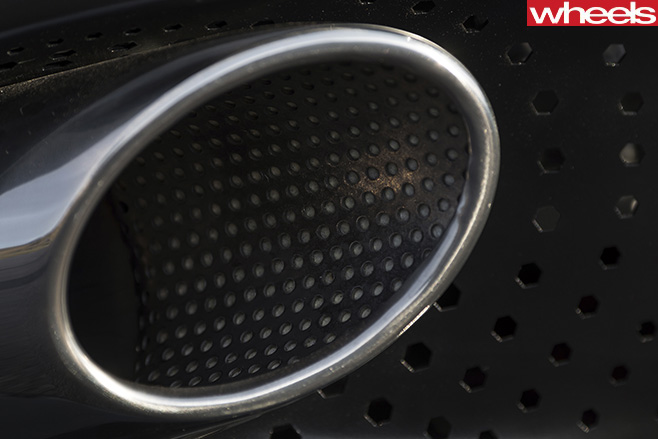
The 4.0-litre twin turbocharged V8 revealed under the DB11’s skin at the Geneva Motor Show, which also used in the Mercedes-AMG C63 and Mercedes-AMG GT, will gain extensive changes to the intake and exhaust systems as well as calibration tweaks to tailor it to the Aston Martin family.
“If you were going to take the V8 from anybody on the planet it’d be AMG because they are the masters of the V8.
“We’re going to install that engine in our cars and it’s going to sound like as Aston V8. We’ll work on the exhaust system and bypass valves, the tuning of that exhaust system and the intake system to make that car right. The calibration and the way that engine is matched to our transmission strategy.”
In the Mercedes-AMG models the 4.0-litre V8 is available in different tunes and power outlets, making up to 375kW and 700Nm.
Assuming Aston Martin’s outputs are the same – or, at least, similar – to AMG’s it’s less than the 448kW from the new 5.2-litre V12 twin turbo initially shown in the DB11, although the 700Nm torque peak is identical.
Minards was guarded on where the new Mercedes-AMG-sourced V8 would be used, although it’s widely expected to be used in the DB11, providing a more affordable antidote to the V12.
“For us, V12 and V8 works really well; there’s a lot of technology [to be used] yet to get the best out of those powertrains.
“We want to concentrate our efforts on the V12 … the V12 is synonymous with Aston Martin.”
He said there were no plans to halve the V12 to create a six-cylinder, suggesting it would be a major engineering effort.
A rally version of the Fiat 124 Spider Abarth has upstaged the reveal of the production version at the Geneva motor show.
Sporting quad LED driving lights, white alloys, sticky Michelin rubber and a 224kW 1.8-litre turbocharged engine with sequential six-speed transmission, the 124 Rally Abarth celebrates 40 years since the previous model’s last race – the 1976 Monte Carlo Rally.
It is more than a concept, too, having been engineered to FIA R-GT category homologation rules, in which a Lotus Exige R-GT competes among others. Being an MX-5 at its core, the 124 Rally Abarth is therefore the most hardcore version of the Fiat and Mazda roadster twins we’ve yet seen.
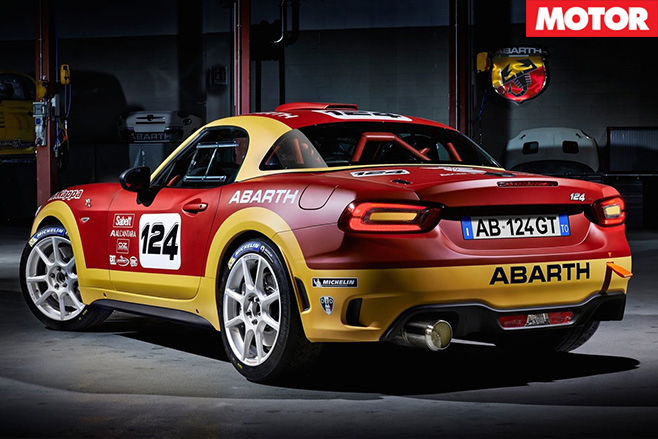
The Abarth version boasts outputs only 23kW and 10Nm higher than the regular 124 Spider. It weighs 1060kg and claims a 6.8-second 0-100km/h, making it 27kg heavier and a half-second faster than a 2.0-litre MX-5.
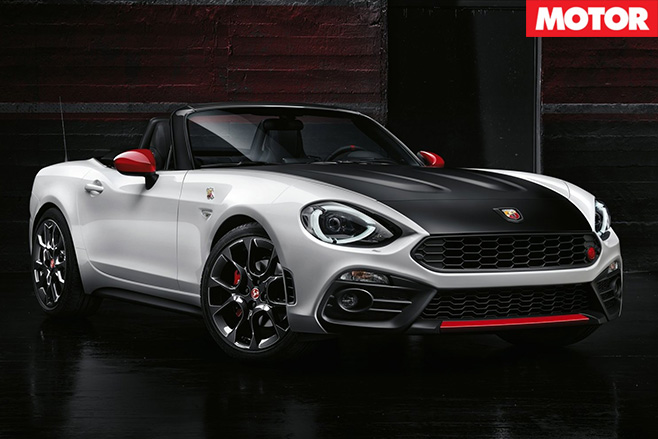
Bilstein dampers, stiffer anti-roll bars and Brembo brakes amp up the dynamic aggression with the 124 Spider, though standard 17-inch alloy wheels remain and likewise choice of six-speed manual or automatic.
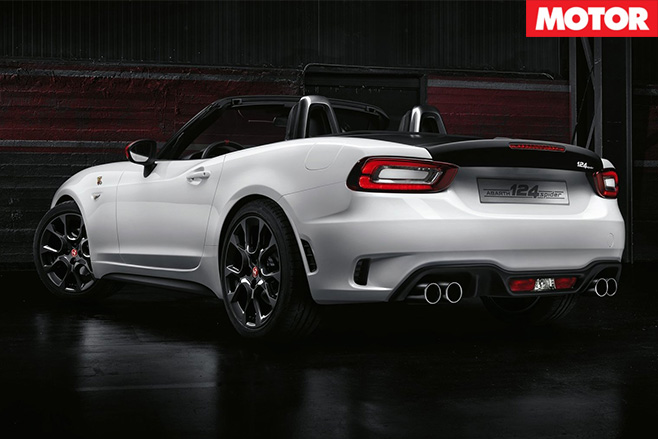
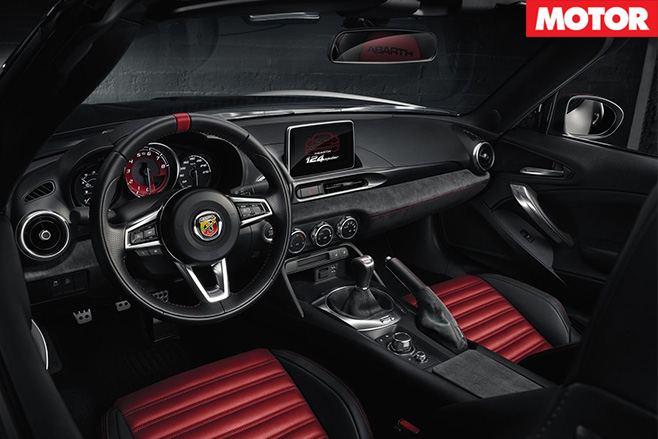
In Australia we may only get the 124 Abarth Spider. Fiat Australia has previously told MOTOR it is assessing whether to bring the standard version or just the Abarth. Read more here.
1. DANIEL RICCIARDO – TEAM RED BULL
Daniel Ricciardo (or DRiccy as he is commonly known in our office) is very much adored by many F1 enthusiasts, but there’s no shortage of Australians who love him for simply being Australian. In 2014 he took Mark Webber’s place on the Red Bull team where he finished third in the championship. And while 2015 was a quiet year for the 26-year-old, eyes are eagerly watching him at the 2016 Australian Grand Prix. The Italian stud was born in Perth and is also affectionately known as The Honey Badger.

2. SERGIO PÉREZ – TEAM FORCE INDIA
Sergio ‘Checo’ Pérez, 26, started with the Force India team in 2014 after a year with McLaren in 2013 and two years at Sauber in 2011-2012. During his Formula One career, the Mexican born Pérez has had five podium finishes with 2015 his best season finishing 9th overall.

3. NICO ROSBERG – TEAM MERCEDES
One of the most successful F1 drivers in recent seasons, Rosberg has been competing at Formula One level since 2006. Since 2010, Rosberg, 30, has won 14 Grands Prix, and has won the Monaco Grand Prix three times in a row, an achievement only three other drivers have managed. Rosberg competes under the German flag and is the son of Finnish Formula One champion Keke Rosberg. He is married to his long-time sweetheart Vivian Sibold.

4. JENSON BUTTON – TEAM MCLAREN-HONDA
This British born 36-year-old often has ladies weak at the knees. Another very successful driver, over 15 seasons of F1, Button has 284 races to his name of which he has won 15 and finished on the podium 50 times. If good looks and success aren’t enough, Button also created The Jenson Button Trust which distributes funds to various charitable beneficiaries. However, he’s also married to the stunning model Jessica Michibata. Sorry ladies.

5. LEWIS HAMILTON – TEAM MERCEDES
Button’s fellow Brit, Lewis Hamilton, is one of the most recognisable F1 drivers to those outside the racing world. Hamilton made his F1 debut at age 22, and has seen an extremely successful career ever since. He was the youngest Formula One world champion in history in 2008 (before Sebastian Vettel broke the record in 2010), the only F1 driver to have won at least one race in every season he’s competed in, has more victories than any other British driver, was named BBC Sports Personality of the Year in 2014 and has collated 43 wins which puts him third on the all-time wins list. He’s also had many connections to other celebrities such as Nicole Scherzinger from the Pussycat Dolls, has a wax replica of him at Madame Tussauds and was also spotted last year with the likes of Kendall Jenner and Pharrell Williams.

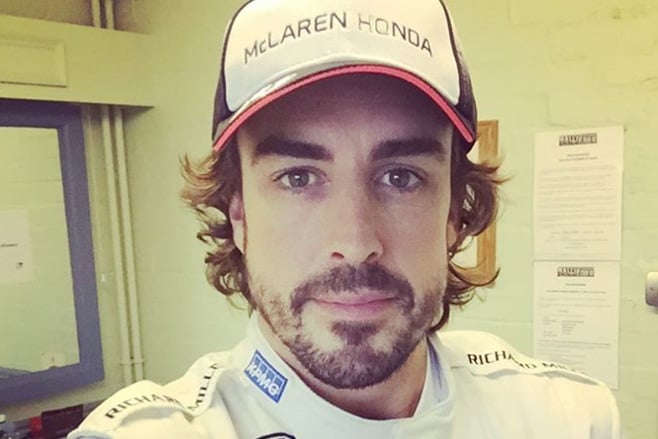
6. FERNANDO ALONSO – TEAM MCLAREN-HONDA
Team mates with Jenson Button, Alonso is a two-time World Champion. The Spaniard made his F1 debut in 2001, and his long career has been riddled with controversy. Throughout his 14 years of racing, Alonso has graced the podium 107 times, under various teams, including Minardi, Renault, McLaren and Ferrari. His career puts him at number six for the highest number of GP wins (32). Add to that he’s an ambassador for UNICEF and you’ve got our heart-strings pulled.
7. KIMI RAIKKONEN – TEAM FERRARI
Kimi Raikkonen is a name that seems to pop up regularly in F1 news, having raced against names like Michael Schumacher and now Daniel Ricciardo. In 2007, when Raikkonen left McLaren for Ferrari, it was estimated he earnt $51 million per year, and was named the highest-paid driver in motorsport, and second highest paid athlete in the world in 2009 according to Forbes. He’s had 13 years in Formula One, excluding 2010 and 2011, in which he has amassed 80 podium placements and a championship in 2007 in his first year with Ferrari.

8. BRUNO SENNA
Even if you don’t know anything about F1, you should recognise this surname. Bruno is the nephew of the late Ayrton Senna. Bruno, 32, raced in Formula 1 for HRT (2010), Renault (2011) and Williams (2012). While he is not currently an F1 driver, and instead races in the FIA World Endurance Championship, we felt he was an important name to include.

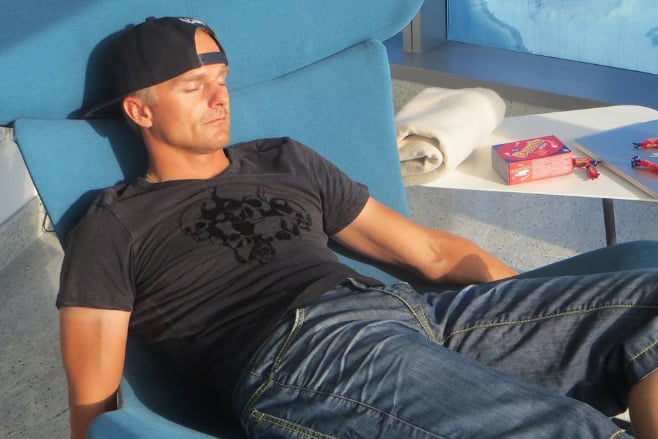
9. HEIKKE KOVALAINEN
Retiring in 2013 after seven years in Formula 1, the Finnish racing driver has raced for Renault, McLaren, Team Lotus and Lotus F1. In his career, he managed four podium finishes with his best years in 2007 and 2008 finishing 7th overall. While he spent 2015 racing in Super GT, we won’t see this blonde-haired blue-eyed stud back at the Grand Prix this year.
10. MARK WEBBER
Everyone loved the Australian Webber, and we’re not talking about the BBQ variety. Mark Webber is a legend when it comes to motorsport and his straight talking nice-guy persona only intensifies Australia’s love for him. While Webber hasn’t raced in the F1 since 2012, he continues to take on the motorsport world with Porsche in the FIA World Endurance Championship. In 2010 and 2011, he finished in the top three on 10 occasions, with 42 podiums overall. In his entire career, he never finished below 16, and finished 3rd overall in 2010, 2011 and 2013. Webber is currently with long-time partner and manager Ann Neal. The duo have featured heavily in the media over the years.

11. GIANCARLO FISICHELLA
The Italian Stallion of F1, Fisichella, otherwise known as Fisico or Fisi, won three races in his 13 year career in which he raced for Minardi, Jordan, Benetton, Sauber, Renault, Force India and Ferrari. One of those wins was the controversial 2003 Brazilian Grand Prix in which the race was abandoned before the final 15 laps.

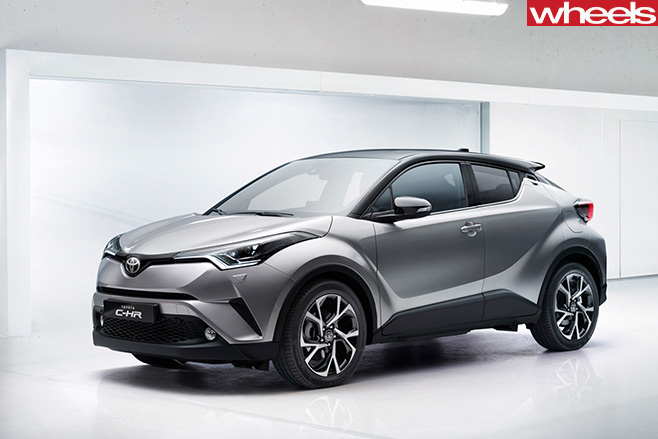
BETTER late than never to the hottest party in town, the 2017 Toyota C-HR finally gives the Japanese SUV specialist an entry-level crossover.
Aimed squarely at the big-selling Mazda CX-3 and Honda HR-V, the small SUV has surprised observers by keeping true to the preceding two concepts’ daring design language, revealing the brand’s desire to lure a new or younger audience.
To that end, the C-HR will also usher in the era of downsized forced-induction powertrains for Australia’s number one selling carmaker, when sales commence in early 2017.
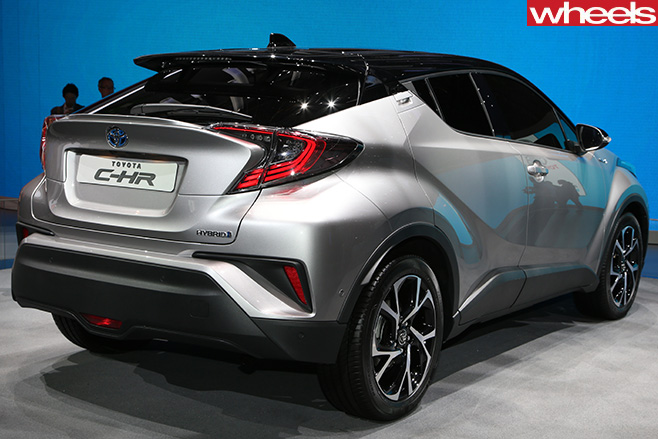
The only engine confirmed is Toyota’s all-new 1196cc four-cylinder turbo petrol unit. In European spec, this 8NR-FS engine pumps out 85kW between 5200 and 5600rpm, and 185Nm between 1500 and 4000rpm, making the direct-injection unit eligible for substantial tax benefits due to a claimed 90 gram per kilometre carbon dioxide emissions rating.
European reports suggest that an as-yet unconfirmed 2.0-litre atmo petrol engine may also be in the pipeline, making that a more logical competitor to the CX-3’s 109kW/192Nm powerplant.
Pricing, of course, is still a long way off, but a low-$20,000 start is almost a certainty if Toyota intends to make inroads against the CX-3. Among the standard features confirmed are autonomous emergency braking and a reverse camera.
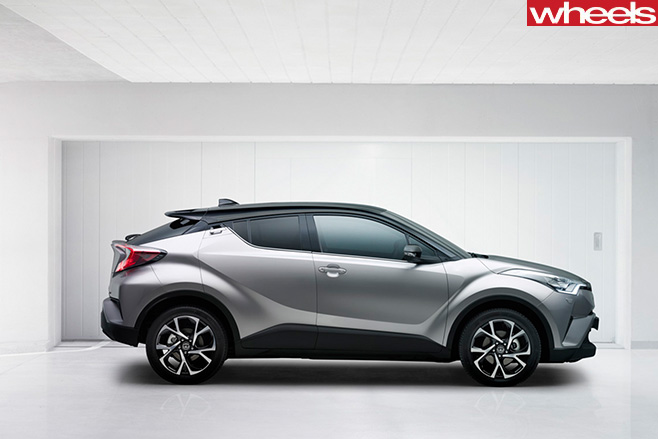
Toyota has big hopes for the C-HR in Australia, as it will enter a market that has grown by almost 30 percent annually since 2011, from 40,000 to over 110,000 registrations last year.
SPECIALIST sports car brands Ferrari and McLaren have shunned the idea of producing an SUV, instead remaining focused on building dedicated supercars.
Speaking at the 2016 Geneva Motor Show, executives from both brands dismissed the chances of an SUV wearing either of the badges that also have a rich heritage in Formula One racing.
“You’d have to shoot me first,” said Ferrari’s senior vice-president of design, Flavio Manzoni. “Ferrari is not a follower; Ferrari does not follow the standard trends. What is this, the SUV? It is a marketing trend because the companies know that it is a kind of volume opportunity, but this is not our spirit.”
Despite rivals such as Porsche producing an SUV – and Lamborghini currently developing one – Manzoni said a Ferrari SUV would not adhere to the brand’s principals and expectations.
“Can you imagine the best performance with a very high centre of gravity or very high h-point [hip point]? It’s absurd. So we work every day to reduce the weight, to lower the engine, to lower the h-point, to improve the performance to make it more efficient. The SUV is the negation of this.”
Arch-rival McLaren also dismissed the idea of jumping aboard the SUV bandwagon, despite global growth that has many carmakers fumbling to produce more. In Australia, SUV sales have more than doubled in six years to the point where they now account for more than one in three sales.
“We’re very focused on sports cars, supercars, performance cars,” said Jolyon Nash, McLaren executive director of global sales and marketing. “I think we’ve got a fairly clear view and a clear understanding of what McLaren represents, what its DNA is all about and for us that’s sports cars, supercars. We don’t see an SUV fitting into that.”
Nash said that while other brands used SUVs to increase sales and amortise investments in engines and components, McLaren was a niche manufacturer working profitably on low volumes.
“We’ve got a robust enough business model that we can be profitable building 1500-1600 cars, so we don’t need to build a new pillar of vehicle like an SUV to ensure our long-term viability.”
Another brand determined not to produce an SUV is Aston Martin – and that’s despite revealing the DBX concept car in 2015.
But it comes down to the definition.
Aston Martin director of product development, Ian Minards, said the DBX was a crossover, not a traditional SUV (if there is such a thing).
“It is a crossover car,” said Minards. “SUVs are regarded by the public as big, high-riding cars … our concept … was a crossover.”
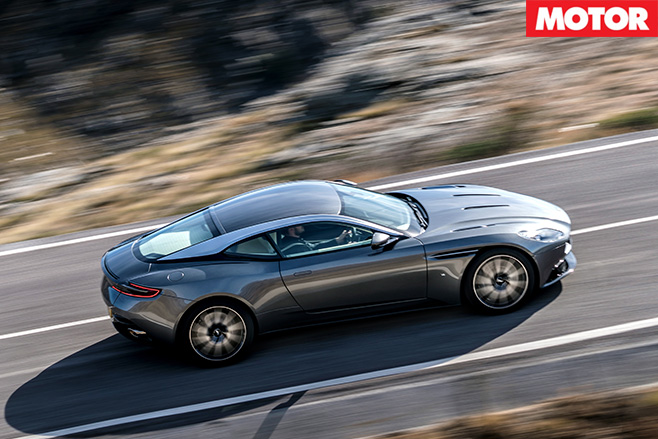
With 447kW and 700Nm from a 5.2-litre twin-turbocharged V12 engine, the Aston Martin DB11 arrives claiming a 3.9-second 0-100km/h.
For its first full-size coupe in thirteen years, the DB9 replacement matches the time to the ton of the Porsche 911 Carrera S and comes within a tenth of the Mercedes-AMG GT it will be priced just above. It is seven-tenths faster than the 5.9-litre naturally aspirated V12 it replaces.
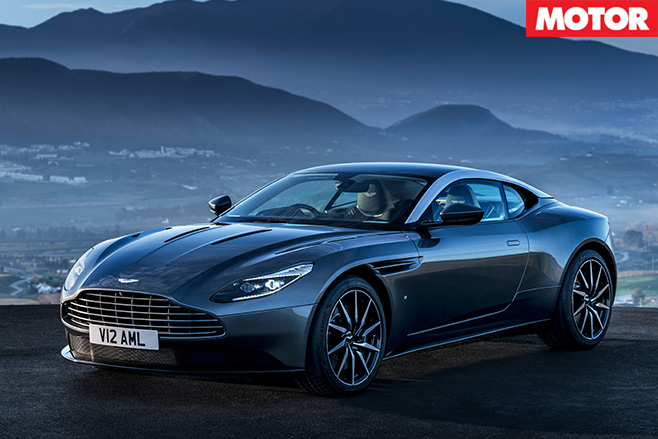
Bonded aluminium construction for the new body includes a clamshell bonnet, roof and doors made of pressed aluminium, rear haunches, front wings and rear spoiler constructed of composite material; plus bumpers, sills, front splitter and rear diffuser engineered from injection-molded plastic.
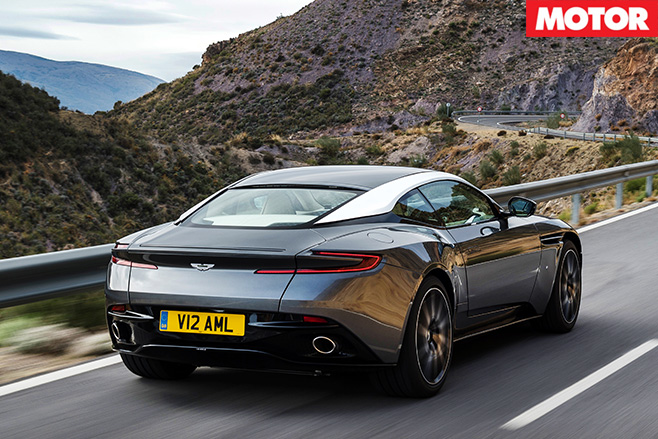
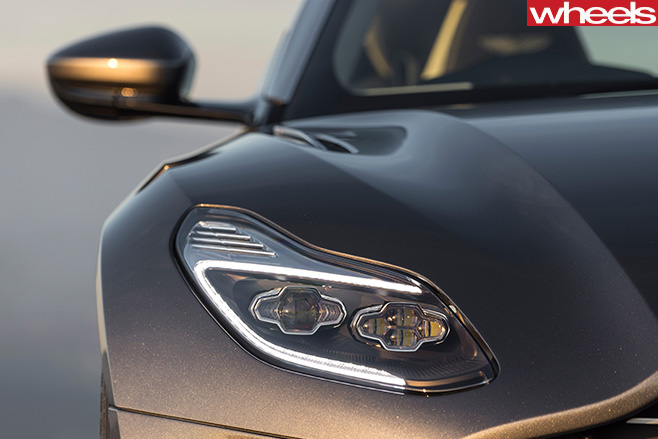
No less than eight heavily contoured bonnet lines slice from front windscreen to front bumper, from fender to fender, a contrast to both the smoother DB9 and the rounded headlight and grille shape of the DB11.
Above the beefy rear haunches is a noticeable black character crease underscoring the rear window line and sweeping silver roof pillar. The C-shaped LED rear tail-lights encircle a rear decklid that is more concave and angular than before.
Compared with its predecessor the exclusively rear-wheel drive DB11 boasts a 65mm wheelbase increase over a 50mm-longer body. Front overhang slips down by 16mm, with the V12 now pushed further behind the front axle line, while rear overhang increases by 11mm. Width increases by just 28mm, though the tracks swell by 75mm front/43mm rear.
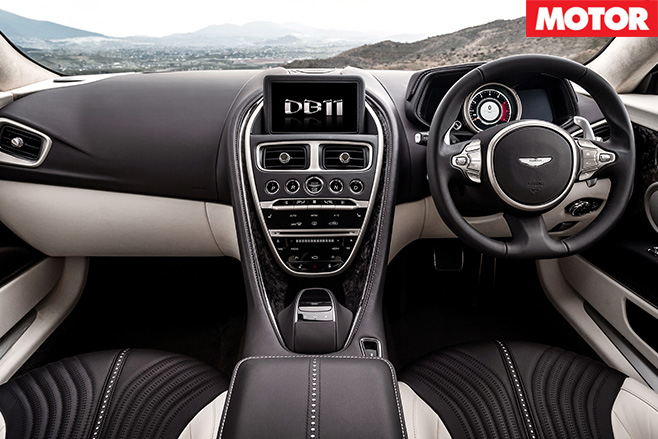
A cockpit focused on a slim, upright centre stack includes an 8.0-inch colour TFT display connected to a Mercedes-Benz-derived infotainment system – even the controller is shared with C-Class and others. A 12.0-inch TFT also sits in front of the driver.
Of its new in-house-designed engine, Aston Martin claims it “is not just a collection of impressive numbers … it also has impressive character thanks to its tremendous breadth of performance, exceptional response and authentic V12 soundtrack.”
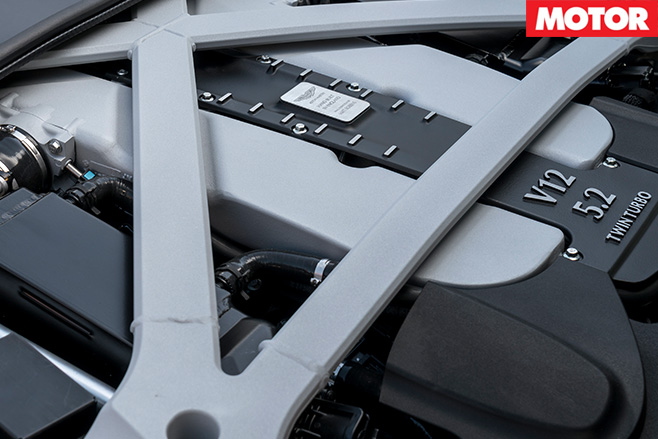
The DB11 boasts “a magnificently right and potent soundtrack that can switch from mellow to malevolent with a squeeze of the throttle.”
The DB11 also features sound adjustments made via a three-mode driving selector, however, with GT, Sport and Sport+ modes increasingly making the exhaust, in addition to the transmission and engine response, suspension and new electro-mechanical steering set-up more aggressive.
Adjustable suspension by Bilstein means that GT mode provides “exemplary ride quality and maturity of character”; selecting Sport mode “adds a touch more firmness, control and response to the damping” and choosing Sport+ “truly awaken the sports car within.”
The DB11 rolls on 255mm 45-aspect front/295mm 35-aspect rear 20-inch Bridgestone S007 tyres with six-piston 400mm front/four-piston 380mm rear brakes behind them. Aerodynamic performance is said to be a focus of the DB11 program.
Sales of the Aston Martin DB11 will begin during the fourth quarter of 2016 and it will ask £154,900 in the UK, €204,900 in Germany and $211,995 in the US. Expect a 2017 launch in Australia with a circa-$350k sticker price locally.
FIAT has unveiled a more hardcore version of its upcoming 124 Spider, adding the half-century-old Abarth sportscar nameplate to the Italian designed and branded two-door convertible.
Based of course on the Mazda ND MX-5 roadster, the Abarth 124 Spider has yet to be confirmed for Australia, but it will most likely be the only version to arrive when it lobs sometime next year.
Using the European pricing as a guide, it is expected to kick off well north of $60,000 before on-road costs.
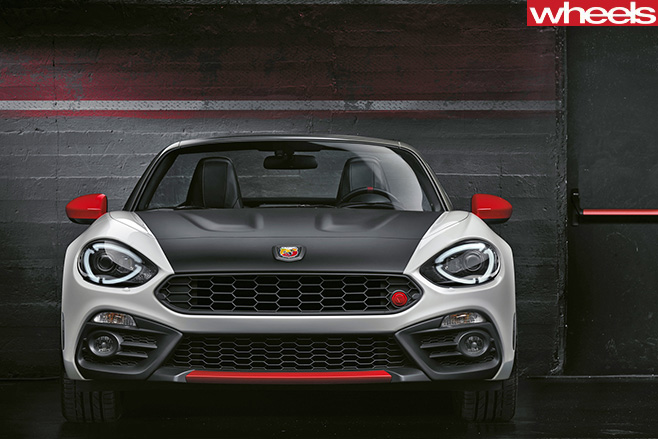
It delivers about 125kW of power (up around 6kW) and (an identical) 250Nm of torque to the rear wheels, via a six-speed manual or a specially retuned six-speed automatic transmission dubbed Sequenziale Sportivo by its Torinese overlords.
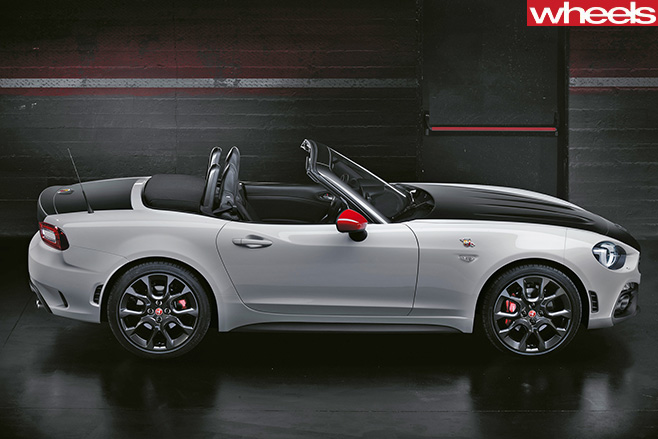
Other Abarth goodies include Bilstein dampers and stiffer anti-roll bars for the double wishbone front/multi-link rear suspension system, while the company’s branded Record Monza exhaust system ups the octave rating by a few decibels.
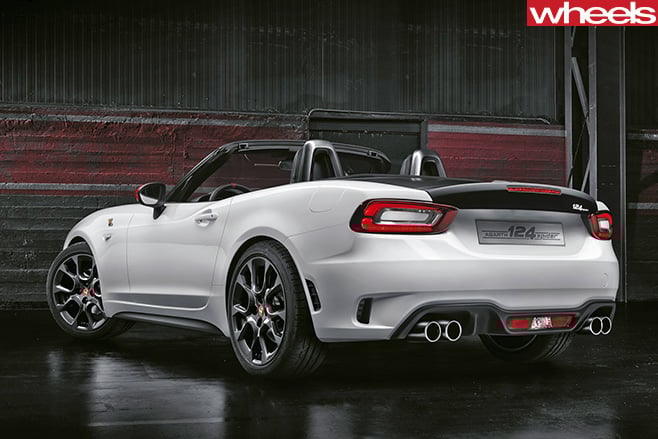
Along with a fresh set of 17-inch Forgiato Grey alloy wheel designs, the Abarth 124 Spider gains Alcantara cabin upholstery, as well as an individual numbered plaque to emphasise the model’s relative rarity.
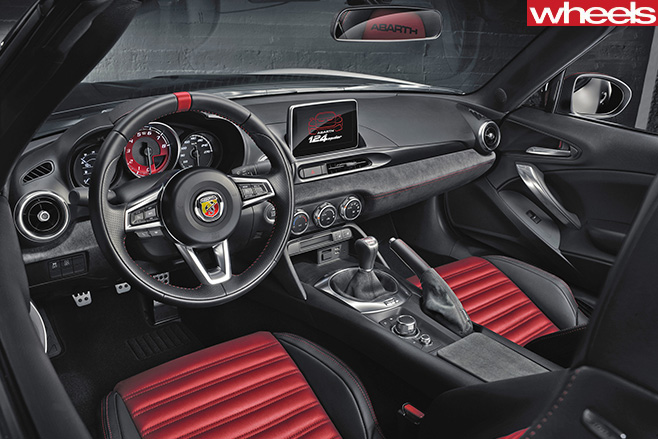
As with the Fiat-badged version, the Abarth 124 Spider differs from its MX-5 donor with a uniquely designed nose and tail treatment, as well as the fitment of the 1.4-litre MultiAir engine in various states of tune.
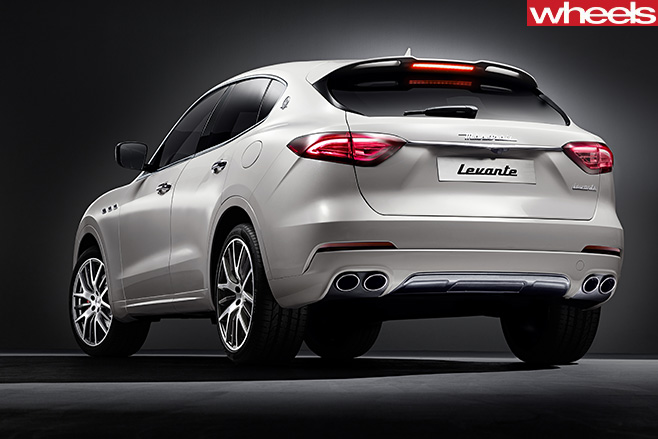
MASERATI’S first SUV will double the brand’s sales in Australia when it arrives early next year, despite a price tag starting at more than $150,000.
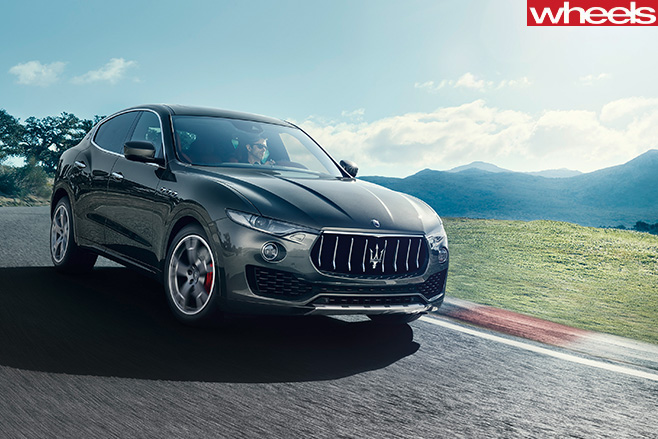
Pitched as a rival for the Porsche Cayenne, BMW X5 and Jaguar F-Pace, the Levante adds a welcome dash of Italian flair to the premium SUV market, and initially will be offered with the choice of a six-cylinder diesel producing 205kW/600Nm or Maserati’s 3.0-litre twin-turbo petrol V6 in two trims: 261kW and 321kW.
Expect to see the Italian brand’s 3.8-litre twin-turbo V8 squeezed under the bonnet in the near future, too.
“Oh yes, obviously that is something Maserati is going to provide,” said Maserati boss Harald Wester. “And we will start with the Levante.”
Every Levante has all-wheel drive and shuffles its power through an eight-speed automatic transmission. It also rides on air suspension with electrically controlled dampers and boasts 50:50 weight distribution, the lowest centre of gravity in its class and, according to Maserati, genuine off-road credibility.
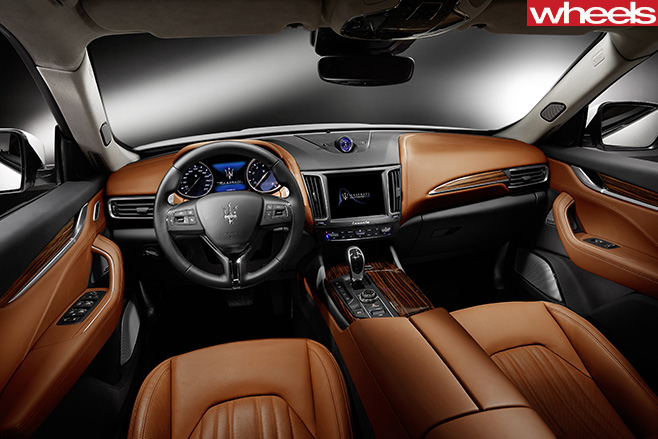
It’s a combination that promises to be something of a sales boon for Maserati, not only locally but worldwide.
“It’s obviously a huge opportunity,” said Wester. “Last year our global registrations were around 22,500, and I expect this number to grow significantly with full availability of the Levante.
“I’m confident that with full production and with all variants in all markets, that in 2017 we will sell 50,000 cars for sure.”
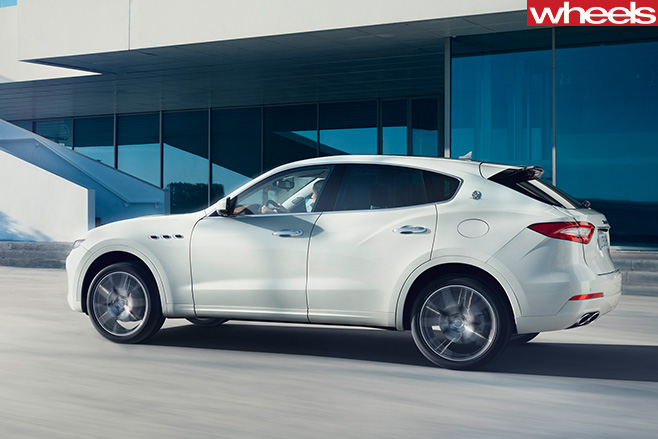
“It will double our sales volume,” said Glen Sealey, who heads up Maserati in Australasia and South Africa. “The diesel engine will be our most popular variant and for us it’s the most important engine.”
Sealey added it was too early to give an accurate indication of local pricing, but did reveal the Levante would command a premium price tag.
“We’re going to be well above a BMW X5,” he said. “It’s still a Maserati so exclusivity is one of our attributes. Ghibli starts at $140,000 and Levante will be above that.”
“This is going to be presented, I would say, in one of the important auto shows, a more compact SUV for Alfa Romeo,” he said. “If you’re a group and you have 10 brands like we have, not every brand can do everything. So for the time being this [small SUV market] is a segment we do not enter for Maserati. We said this very clear from the beginning. There are no plans to extend our range downwards.”
THE long-awaited, next-gen Honda Civic Hatch has finally surfaced in Geneva, wearing massive wheels, fancy lights, and a trick paintjob to signify that this is just a concept car for now.
Australia-bound versions, including the as-yet unseen Type R hot hatch, are still at least a full year away, according to Honda Australia boss Stephen Collins, who told Wheels a few weeks ago that for the first time we’ll be getting the striking five-door hatch from Thailand.
“We’ll be getting the hatch from the same plant as the new sedan,” Collins revealed. “That will certainly help with making the car more competitive.”
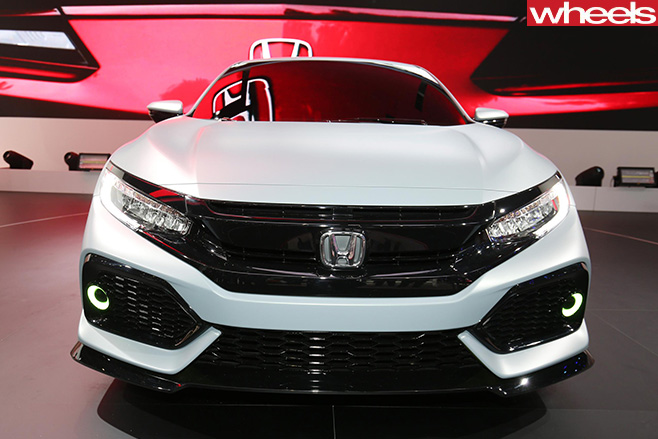
Collins has also confirmed that Australia will take the Golf GTI-bothering Honda Civic Type R after that model launches in Europe, sometime after April 2017.
“We have a three-phase launch plan in Australia that will put Civic back on the shopping list of small car buyers,” he said.
“The all-new sedan will arrive mid this year and then Hatch will follow, and then Type R. We aren’t able to confirm exact timing for the Hatch or Type R as yet, but these variants will play an important role in the success of this model.”
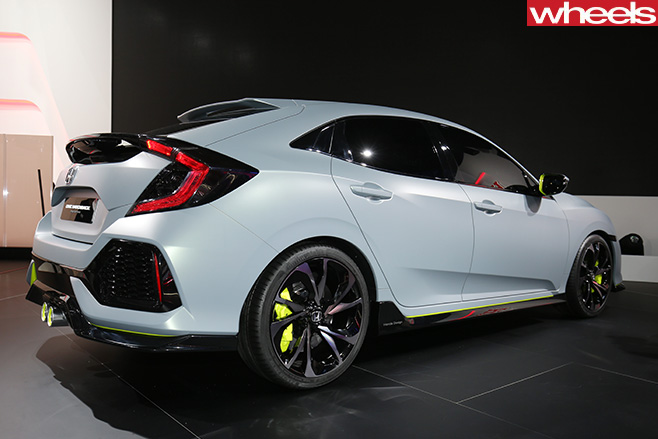
Growing in most dimensions, the Japanese small-car stalwart abandons its immediate predecessors’ Jazz-based platform for Honda’s all-new Earth Dreams small-car architecture, bringing benefits in space and packaging, as well as lightness, strength, and stance.
In Euro concept car spec, the 2017 Civic Hatch is a sizeable 130mm longer than the existing version, as well as 30mm wider and 20mm lower, improving the proportions dramatically.
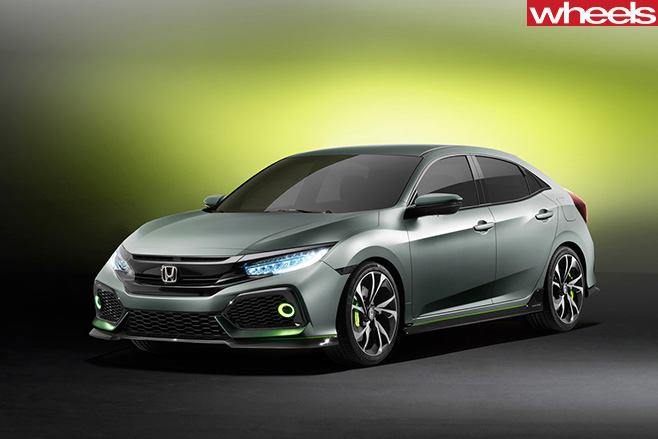
Note that their distinctive hidden rear door handles make way for more conventional items. Along with a longer boot area and larger back window that at last addresses the rear vision issues afflicting the existing versions, it highlights a newfound maturity for the 44 year-old nameplate.
In Euro format, the engine choices are likely to be 1.0-litre three-cylinder and 1.5-litre four-cylinder turbo petrol units, with the Type R of course gaining a 2.0-litre powerplant. A 1.6-litre turbo-diesel also in the mix. Suspension is likely to mirror the sedan’s MacPherson strut front/multi-link rear arrangement.
Project leader Daisuke Tsutamori calls it “a marriage of distinctive and sporty design, rewarding driving dynamics and versatile practicality.”
