
LET’S face it, the old Mini Clubman was an oddball. A cool one, yes, but it was cramped inside and had a questionable extra side door that opened into traffic.
The all-new Clubman is much more conventional. Longer, wider and better packaged, it now boasts six doors – four conventional openings and two spring-loaded portals at the rear.
Riding on the same architecture (and 2670mm wheelbase) as BMW’s 2 Series Active Tourer, the new Clubman measures 270mm longer and 90mm wider than a five-door Mini hatch.
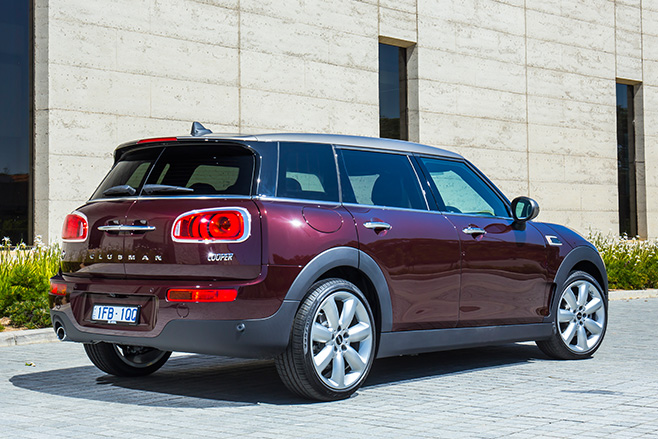
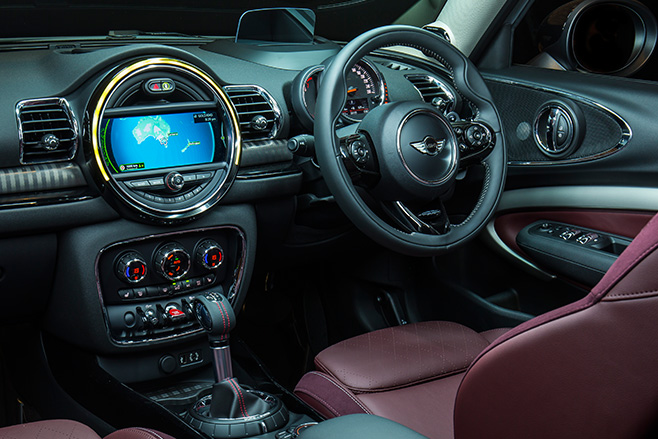
Outside there’s Mini’s puffy new family face and striking horizontal taillights, while the typically Mini-funky interior has a few dashes of Clubman uniqueness. As ever, a large dial-like central screen dominates, but there are new square air vents, plenty of standard equipment (reverse camera, rear parking sensors, cruise control and Bluetooth) and a different wrap-around dash design. There’s also an armoury of safety systems – some optional – like forward collision warning, radar cruise and high-beam assist.
But Mini’s penchant for outlandish design remains, as does its use of hard plastics, meaning Clubman’s cabin still lacks a genuinely premium feel.
Engine-wise, the $34,900 Cooper uses Mini’s lovely 100kW/220Nm three-pot turbo paired to a six-speed auto as standard. A six-speed manual is a no-cost option.
A more sporting 141kW/280Nm 2.0-litre turbo four powers the $42,900 Cooper S, which, when mated to the standard eight-speed automatic, barks its way from 0-100km/h two seconds quicker than the base Mini Cooper (7.1sec).
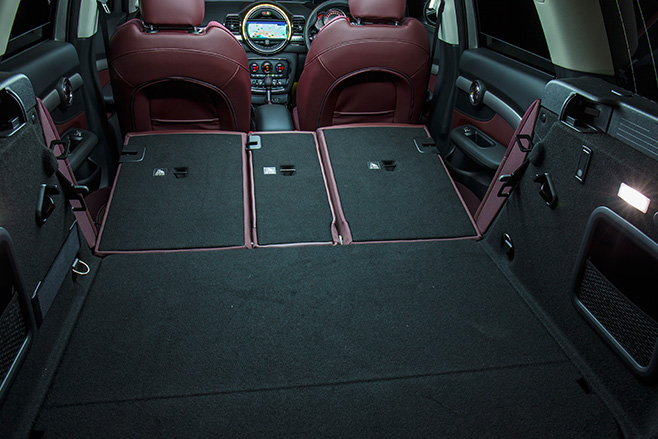
But is the Clubman, as Mini claims, practical enough for a young family? Well, kind of. The rear seats are high and lack under-thigh support, and while the 360-litre boot is decent, it’s on the small side for this class. But Mini hasn’t wasted the Clubman’s extra space; it really is roomy inside. Two six-foot adults are easily accommodated in the rear pews.
And don’t fret that Mini has compromised the Clubman’s handling. All of the usual Mini character traits are there. The steering is sharp and the front axle is quick to turn in. While the Clubman isn’t as responsive as a Mini hatch, its longer wheelbase gives it a more planted feel when driven hard. Downsides are the steering, which is artificial and springy off-centre, and an overly firm and unsettled ride that puts adaptive dampers ($910) at the top of the must-have options list.
Still, there’s no denying the new Clubman’s appeal. It feels more grown up, like the regular Mini’s older, more mature sibling, and now has the space, packaging and handling to steal a swag of sales.
WORKIN’ IT
A hardcore JCW version of the Clubman is being developed to rival the likes of the Ford Focus RS and Volkswagen Golf R, tipped from within Mini Oz to arrive late 2016. Power is likely to come from an upgraded version of the Mini Cooper S’s 2.0-litre donk that could produce as much as 220kW. Mini is also toying with the idea of all-wheel drive to match the Clubman’s competition. JCW versions of the Paceman and Countryman both utilise Mini’s ‘ALL4’ AWD system.
This article was originally published in Wheels February 2016.
Click here to read the full range review of the Mini Cooper Clubman.
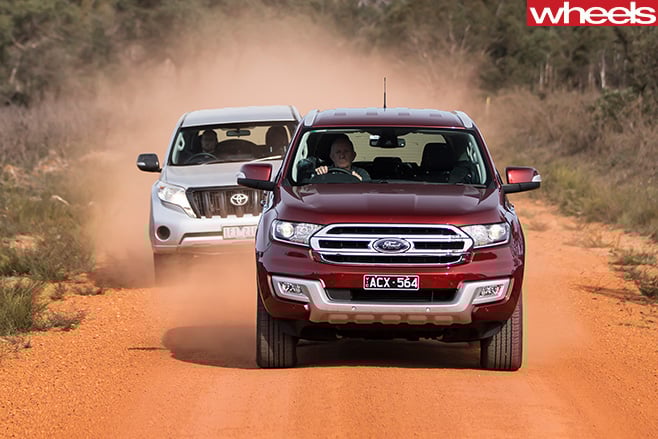
Ford’s new seven-seat Everest sets out to scale uncharted territory for the Blue Oval, but standing in its path is the current king of the hill, the freshly updated Toyota Prado.
Can’t wait to see the final scores? Jump to the verdict now.
EVEREST is an appropriate name for something wearing a Ford badge right now. The brand has a mountain to climb as it ends local car-making, and this new SUV can literally do that as a ladder-chassis, seven-seat, proper family off-roader. It’s part of the onslaught of new products for Ford Australia, and is the new kid in town chasing the likes of the market-leading Toyota Prado, its sparring partner here, which has been treated to a new, downsized diesel engine.
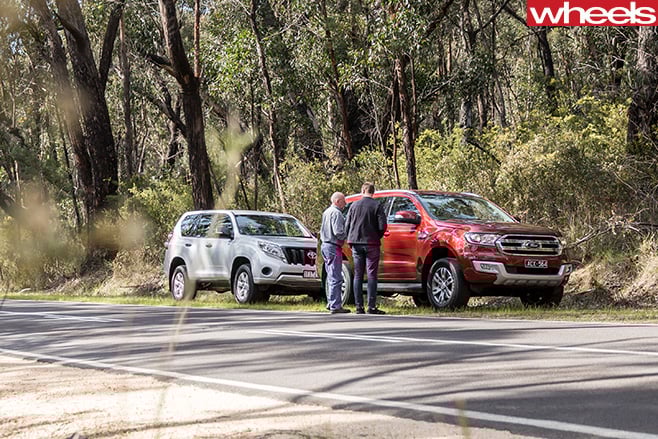
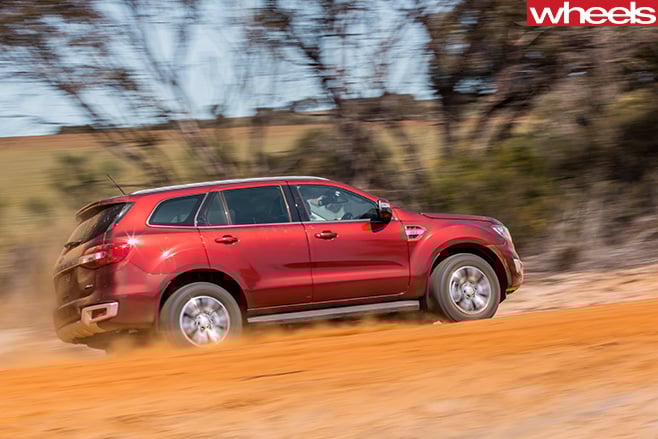
The Thai-built Ford Everest is all-new as an SUV, but it’s based on the successful yet rough and ready Ford Ranger. That means it has genuine off-road capabilities, sturdiness and roominess. It comes as standard with seven seats, and this model here is the mid-spec Trend, expected to be the most popular showroom choice.

For that ask, Everest rides on 18-inch alloy wheels to go with the handsome exterior. That solid look sees a successful translation of traditional Ford truck-like nose with a definite Tonka feel up front, but the more contemporary rump seems oddly proportioned, as if the front and rear were designed for two different vehicles. So too the Everest’s awkward stance: the spaces between the Bridgestones and the wheelarches are huge, and it looks tall and narrow at some angles.
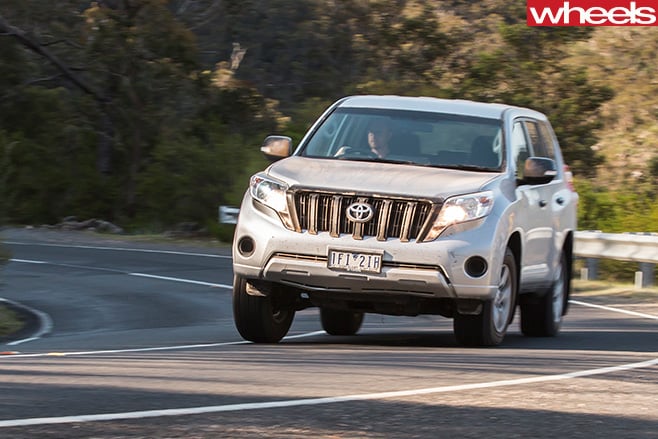
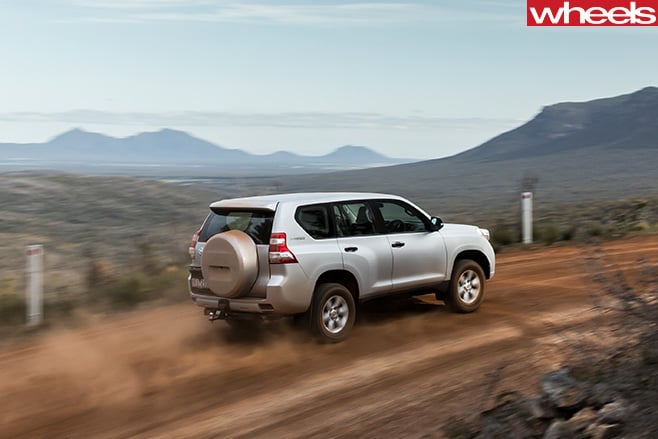
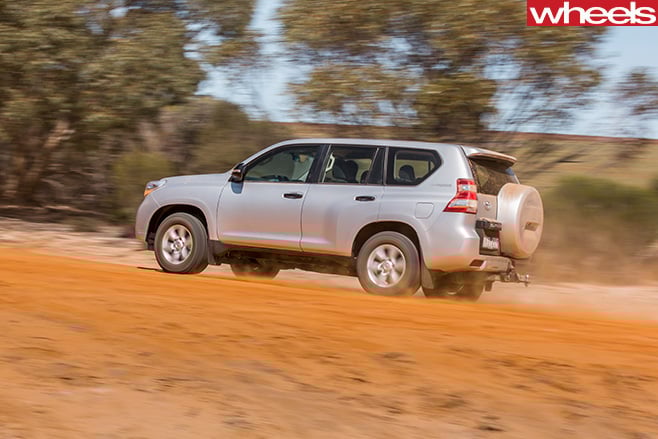
The biggest single ace for Everest is its interior. It’s light years ahead of Prado’s, which looks like a parts-bin special from the ’80s. The velour seat trim on our GX mimics Gran’s Cressida and the centre stack above the 7.0-inch display looks moulded from an off-the-shelf generic HVAC kit. It’s fifty shades of grey, with basic white-on-black square buttons and plain dials. Its hard plastics are utilitarian and scream functional, as opposed to the Ford’s fashionable.
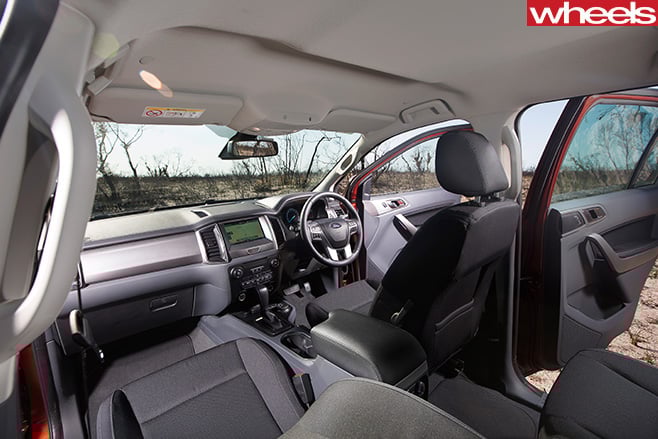
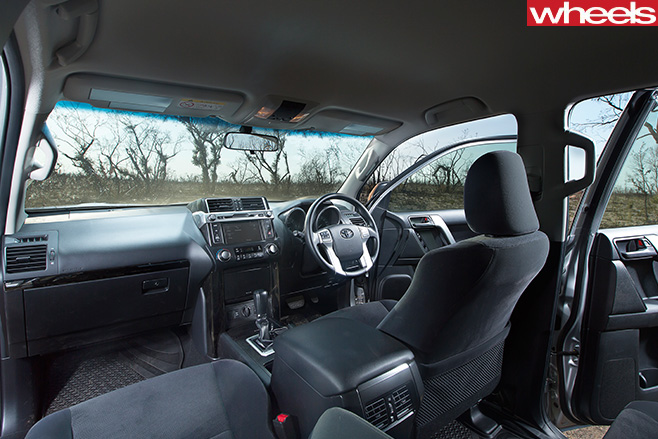
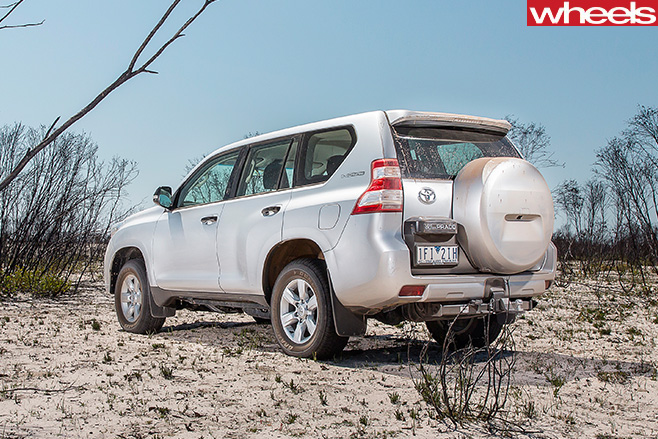
In the driver’s seat of the Prado you’ll notice the spare wheel impinging on rear visibility. And its heavy tailgate opens into traffic. While off-roaders may prefer the easier access when compared with the Everest’s full-size alloy located under its boot floor, you don’t need huge biceps to operate the upward-opening hatch on the Ford because it opens electronically via the key fob.
The instant you sit in the Everest’s sculpted driver’s seat, it feels more agile, responsive and energetic. Even if the driving position is hampered by a lack of steering-column reach adjustment, its poise, roadholding and more elastic diesel leave the Prado behind on a winding mountain road. The Toyota rolls much more and can’t deal with its weight as it shifts around during braking, under acceleration and with every driver input.
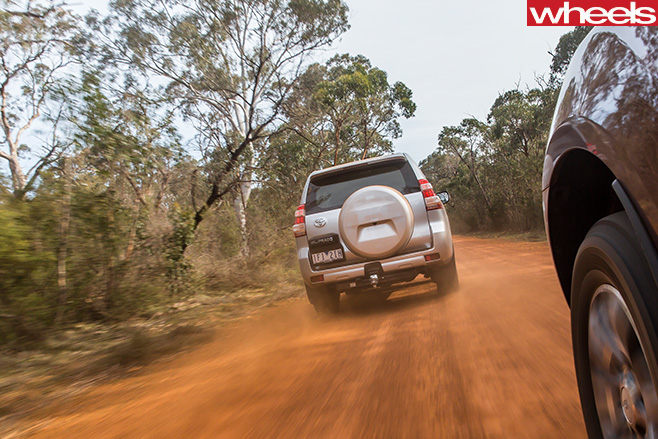
Knocking off the Prado on a twisty section is one thing, but the Toyota still has some distinct advantages. Softer suspension and smaller wheels enable a more supple ride over pock-marked and bumpy roads, with the firm Everest suffering head-toss and movement that makes it a much less cossetting cabin to be in.
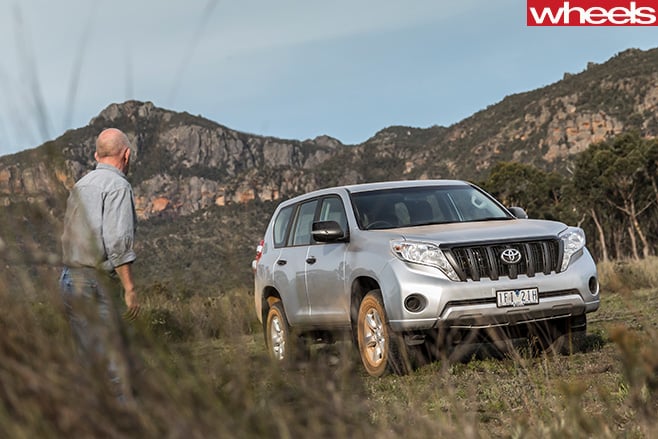
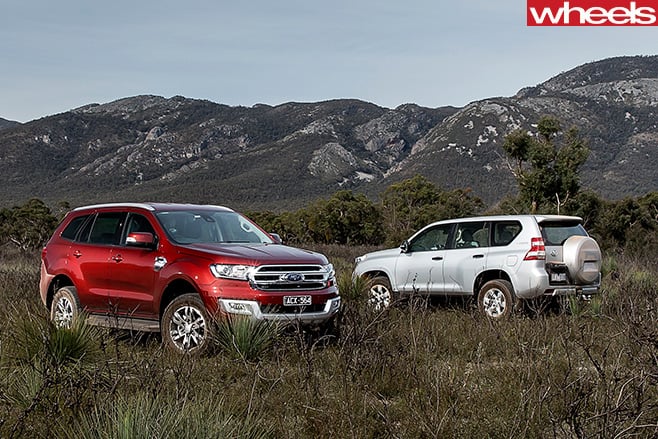
Bringing a new nameplate to this competition will be tough, but the Everest is a better all-round vehicle than the popular Prado. So while the Ford has a mountain to climb, it’s hardly starting from the bottom.
Why Everest is not a Territory
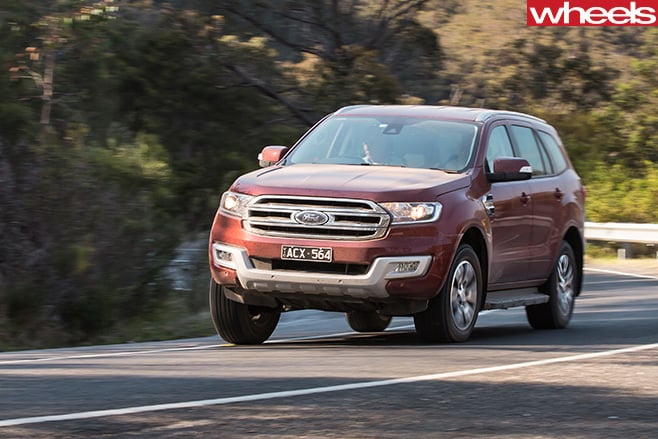
Indeed, Ford Oz will have a two-pronged attack, with the Canadian-built Edge to sit below Everest. Edge uses the same CD4 platform as Mondeo, with Aussie-spec versions expected to get the 154kW/450Nm 2.0-litre turbo-petrol engine. Pricing will kick off from around $45K. Given the success of Territory, Ford may keep the name.
Technology
The Everest wins in terms of connectivity with a pair of 12V plugs up front, another in the rear for second-row passengers and another within the boot’s cargo area. It also has a 230V/150W plug, as well as a pair of USBs and one auxiliary connection.
Prado has only a single USB up front – yet it’s covered, unlike Everest’s, so it is protected against dust – along with a 12V plug, with a second 12V in the rear of the console along with a 220V socket. There’s also another 220V plug in the boot area.
Both come with CD players.
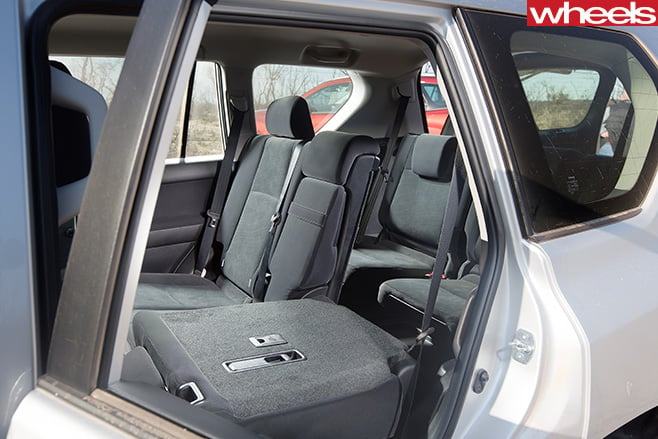
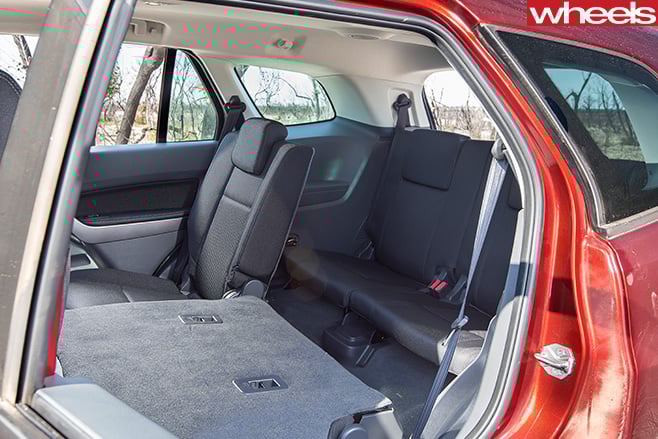
The Ford’s second row doesn’t offer a large enough aperture for access, perhaps a sign that it can only fit smaller occupants. Prado is much better packaged here; if you’re an adult and have to be stuck in the third row, make it Prado’s, as your legs will fit too.
Verdict
FORD EVEREST TREND
Price as tested: $62,090 ** Includes metallic paint ($550) and sat-nav with voice activation ($600).
NCAP rating: 5 stars (Aus)
Fuel economy: 10.4L/100km (test average)
Acceleration: 0-100km/h: 11.6sec
Plus: Excellent dynamics for its type; value for money; safety and tech features
Minus: Awkward stance; build quality; firm ride; engine refinement
Verdict: 6.5/10
TOYOTA PRADO GX
Price as tested: $58,978 ** Includes seven seats ($2500), metallic paint ($550), tow bar ($688), tow ball ($27.35) and trailer wiring harness ($223).
NCAP rating: 5 stars (Aus)
Fuel economy: 10.4L/100km (test average)
Acceleration: 0-100km/h: 13.5sec
Plus: Build quality; ride; spaciousness; off-road and long-distance touring ability
Minus: Dated, plasticky cabin; sloppy handling; lethargic performance
Verdict: 6.0/10
AUSTRALIA may miss out on the next Volkswagen CC, as the company concentrates on improving the closely related Passat midsizer.
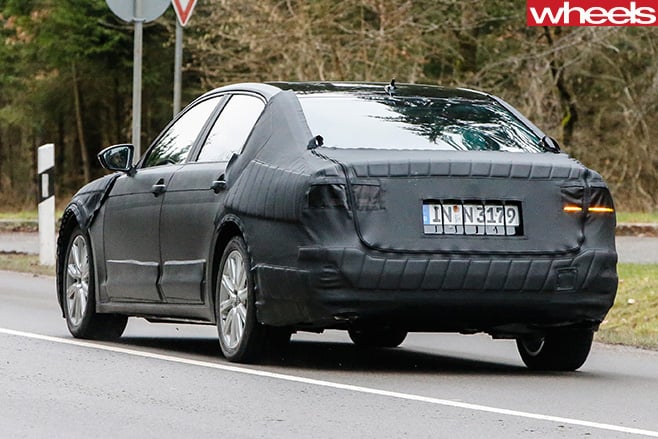
Caught in near-production prototype guise undergoing final testing near Audi’s Ingolstadt base in Germany, the low-slung four-door coupe is set to surface this year.


Along with a greater emphasis on stronger individuality, to better take on the Mercedes-Benz C-Class, BMW 3 Series, and Audi A4, the new look is reportedly vital in distancing today’s Volkswagens from models tainted by the emissions cheating scandal.
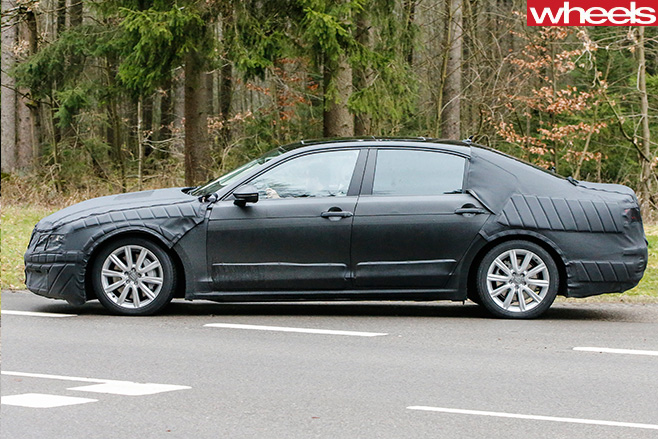
Even the move to drop the Passat prefix when the range was facelifted in 2012 has not really helped the CC, with just 161 units sold last year, reflecting a 44 percent decline. Its best years were 2012 (848), 2010 (891), and the model’s first full year of availability in Australia, 2009 (902).

Who would’ve thought Lexus would turn out to be the black sheep of the premium family?
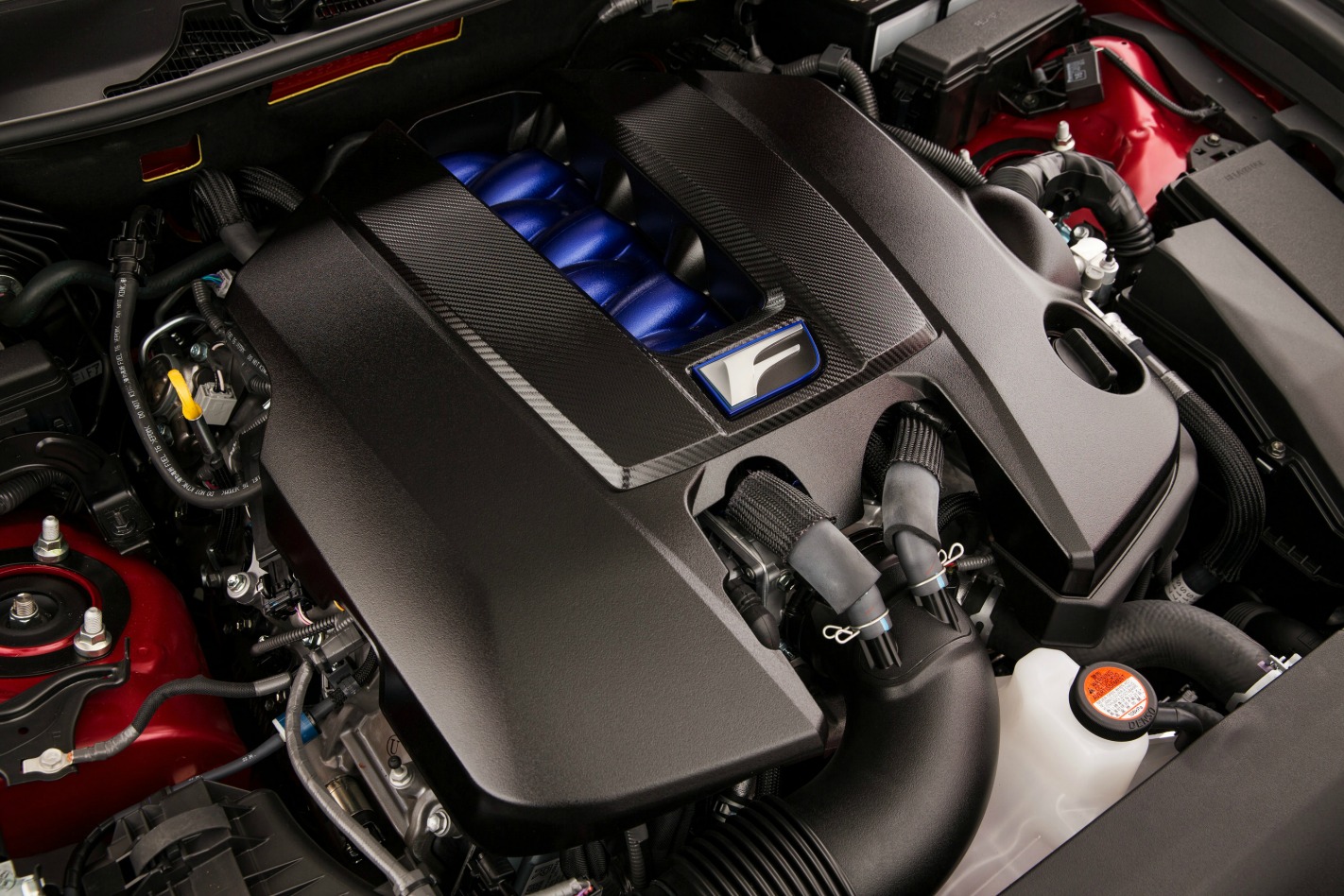
As rivals downsize and turbocharge, Lexus is sticking to its naturally-aspirated guns, which means that under the bonnet of its new GS performance flagship you’ll find a stonking 5.0-litre atmo V8.
It produces a healthy 351kW/530Nm and sings its way to a 7300rpm redline, however lacking any form of forced induction its trump card is throttle response as sharp as the GS F’s polarising front-end styling – with Sport+ drive mode selected at least.
Lexus claims it’ll shift 1825kg of sedan to 100km/h in just 4.6sec, which feels a little optimistic, however it’s still plenty rapid, particularly if kept on song above 4000rpm.
Lacking as it does the huge off-idle punch of its turbocharged rivals, traction is rarely an issue, as 530Nm isn’t enough to overcome grippy 275/35 Michelin Pilot Super Sports without some severe provocation.
More often than not it’s the front that gently pushes wide at the limit, but grip levels are strong and the balance is essentially pretty neutral. There are four drive modes to choose from, but for spirited driving you’ll want to stick everything – including the trick torque vectoring differential – into its most aggressive setting.
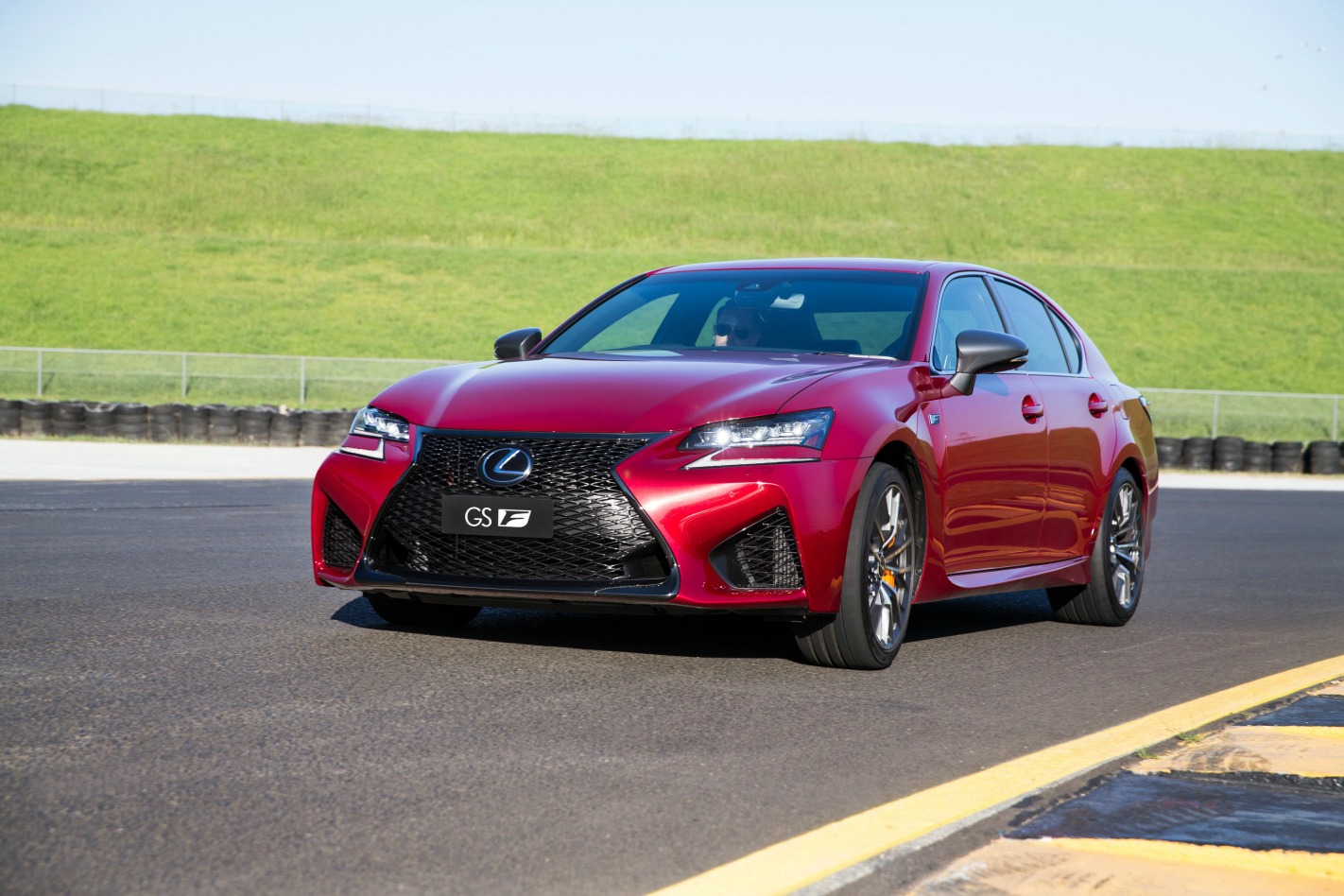
Sure, push to 10-10ths and it’ll come apart a bit, but it’s an easy car to drive quickly and laps up track work – if you’ll pardon the pun – thanks in no small part to that Michelin rubber and its excellent brakes, with 380mm discs and six-piston calipers up front and 345mm discs and four-piston rears.
On the road it’s also impressive, easily placed thanks to very accurate – if not particularly talkative – steering, which thankfully forgoes the GS350 F Sport’s hyper-sensitive variable-ratio system.
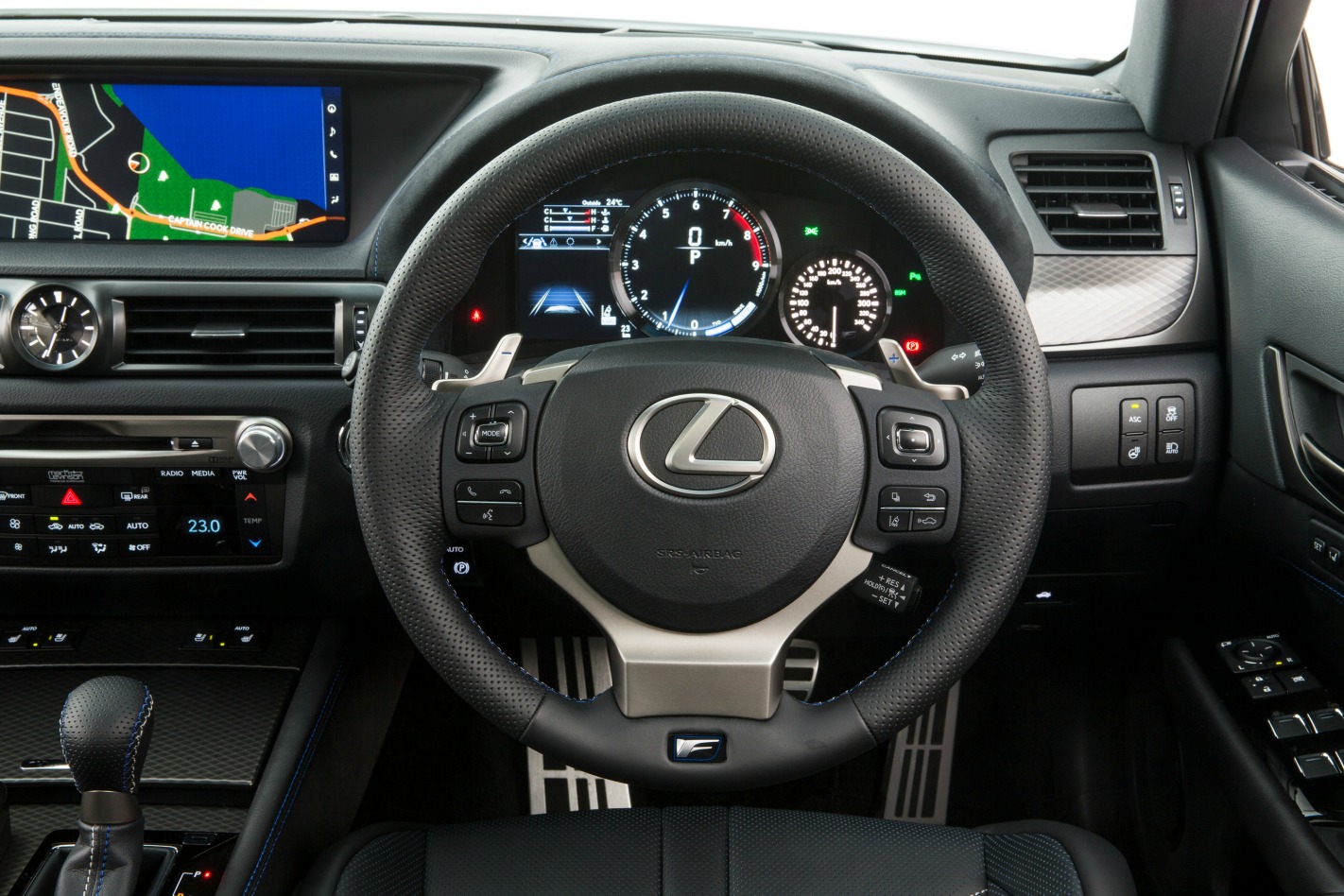
Otherwise there’s little to fault; it’s refined, roomy and packed with equipment, including a 17-speaker stereo, heated front and rear seats (ventilated fronts optional), three-zone climate control, 10 airbags and every active safety feature under the sun.
A final verdict on the GS F is tough, however, as it is difficult to know what to compare it to; in that sense, it’s a bit of a black sheep in the performance car world.
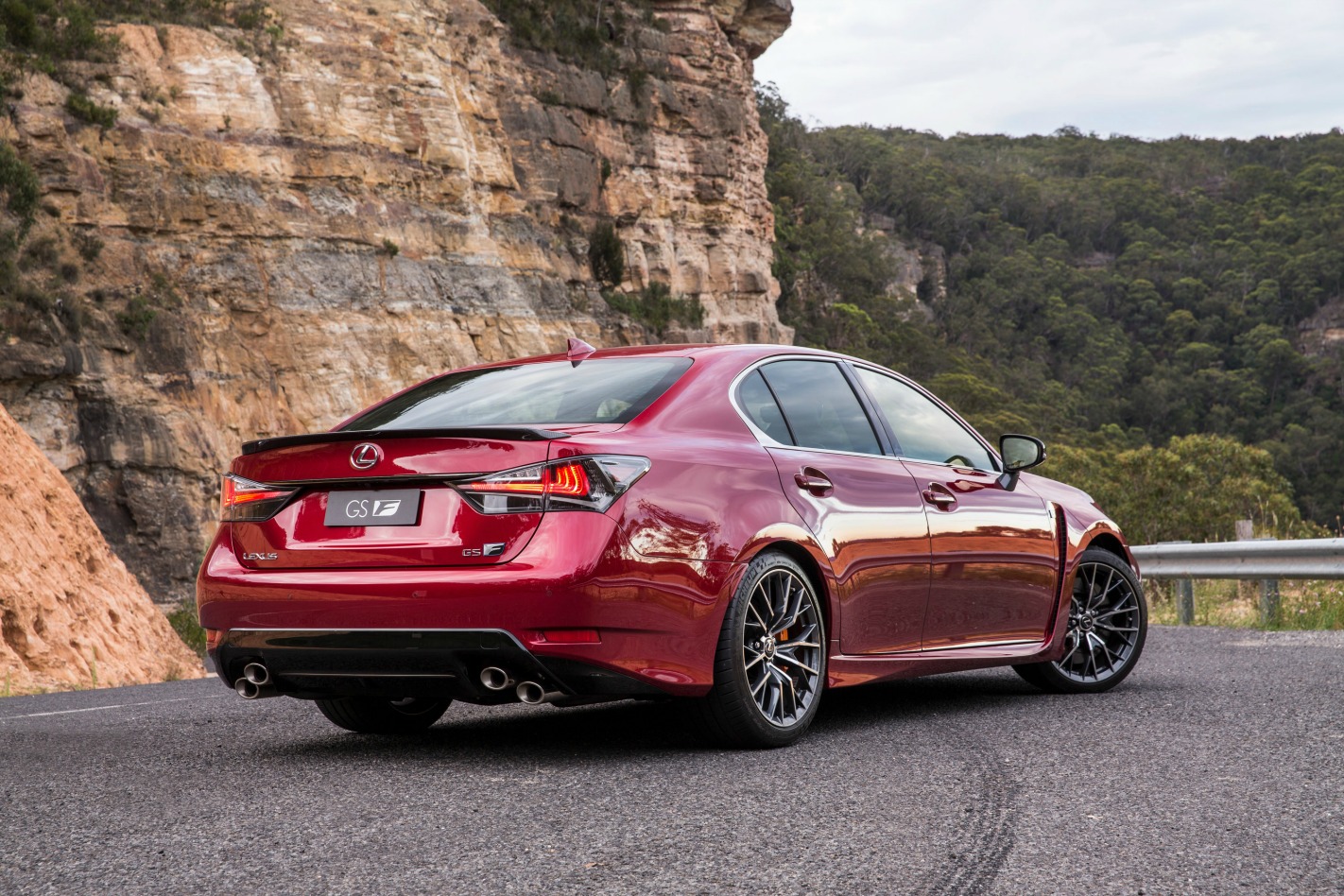
Lexus probably won’t like the comparison, but with its crisp V8, agile handling and love of a good thrash, what the GS F feels like most is a faster, more premium version of a Holden Commodore SS V Redline, which sounds damning but isn’t meant to be.
Exactly how well the GS F stacks up we’ll find out in a coming comparison, but for the time being it’s a welcome addition to the fast four-door segment.
4/5
Specifications
Engine: 4969cc V8, DOHC, 32v Power: 351kW @ 7100rpm Torque: 530Nm @ 4800-5600rpm Weight: 1825kg 0-100km/h: 4.6sec (claimed) Price: $148,800
Burt Munro was immortalised by Hollywood, but we found the real essence of the man in the wilds of NZ with a cast of loonies.
IN AN age where old ideas are so readily discarded for new, there’s a peculiar dignity in settling on something authentic and constantly refining it. Very often, these are the cars, clothes, watches – whatever – that hold our affection.
Living alone in a breeze-block shed with his bikes (the Indian later joined by a 1936 Velocette 500cc single), the gruff, eccentric Munro was a tireless tinkerer who cast his own pistons, carved conrods from truck axles, made his own overhead valvetrain and created steel alloys from scrounged pipes.
Naturally, the hard salt and speed-seeking society of Bonneville in the United States beckoned. Munro paid a bikeless visit to Utah in 1957. Or at least the paying was done by his patron, Invercargill hardware store owner Irving Hayes, father of Munro’s friend and fellow racer, Norman Hayes.
At Bonneville in 1962 Munro and his ancient Indian, now running 883cc and aero bodywork, set a world record for the class S/A (streamlined/altered) at 288km/h. Over five annual trips he eventually raised it to 295.4km/h – the 68-year-old along the way surviving a high-speed crash in 1967. Bizarrely, only a year ago that record was revised to 296.2km/h, acknowledging a miscalculation by the original timekeepers.

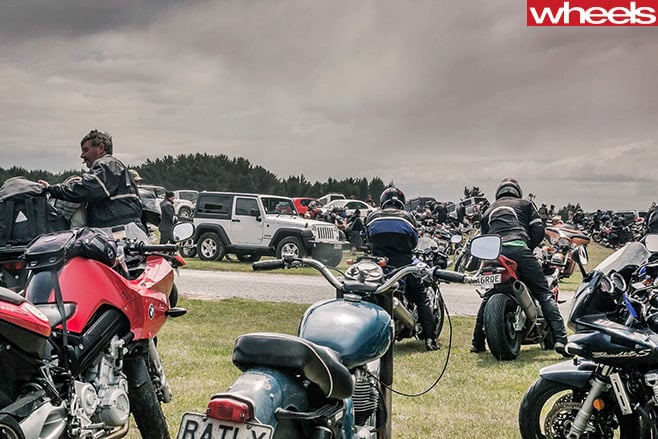
In 2006 the Southland Motorcycle Club, on whose books Munro is still a member, established the Burt Munro Challenge. It is now one of New Zealand’s most popular classic bike events. Over five days in late-November, around 2500 bike enthusiasts and 600 classic and modern bikes congregate in Invercargill for a Munro-esque program of races on speedway, circuit, street and sand. The Munro Family Trophy is awarded to the competitor who most reflects Burt’s tradition of cobbling and fettling their own bikes and basically having a go at everything.
Photographer Wielecki and I both own classic bikes. But only he would be insane enough to take a punt on freezing gale-force winds and strafing Antarctic rain. I wanted a car that could cruise on a coastal highway, tackle any trail or beach, and do it with the freedom of a motorcycle – and a spiritual connection to a certain constantly evolving Indian Scout.
So we Burt a Jeep.
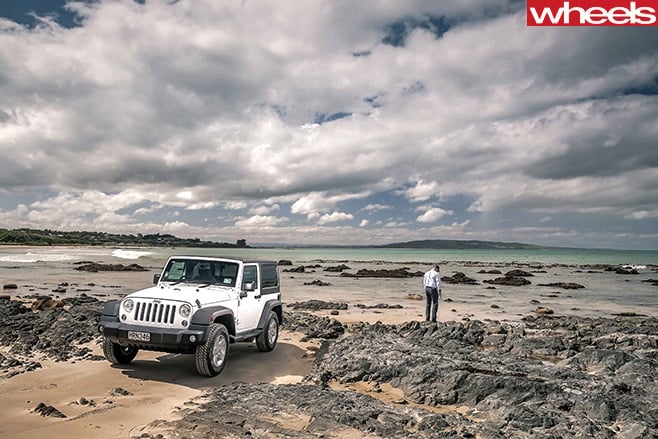
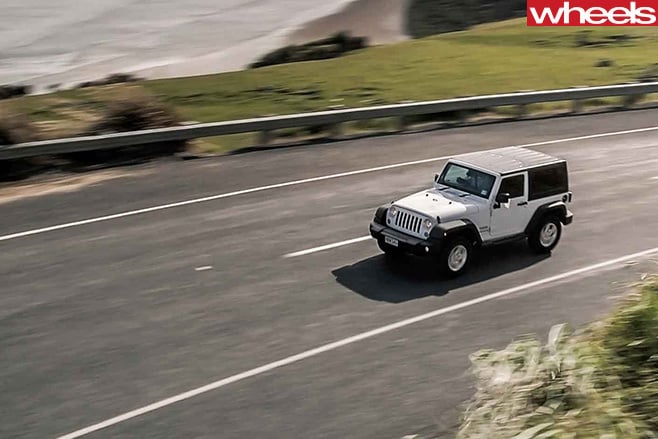
The new driveline – mated to either a six-speed manual or, in ours, a five-speed auto – has helped work miracles for not only the Jeep’s performance, but also NVH refinement. Though not aerodynamic efficiency. There was a distinct charm in feeling the Jeep ploughing into the strong wind gusts on the national highway south-west of Dunedin.
Anyway, this isn’t countryside you’d want to slither through on a superbike. You want a classic, or a cruiser; both of which describe the Wrangler.
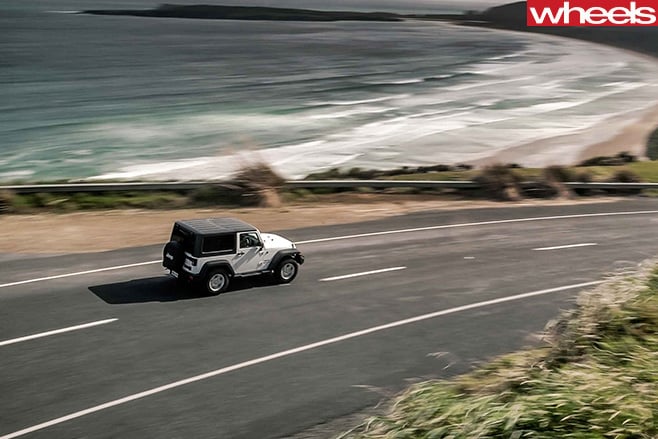
We drive through sleepy townships of clapboard houses, pausing at Kaka Point to admire someone’s handiwork in stringing together a pretty pathway of paua (abalone) shells.
Regaining the highway, we pass through Owaka and its surreal Teapot Land. After skirting the gorgeous Catlins Lake, we hit the coast again at Papatowai and meet Blair Sommerville, the self-proclaimed “organic mechanic”. Nine years ago Sommerville brought his beloved 1951 Leyland Comet bus here from Dunedin. From it grew the Lost Gypsy Gallery, a hillside wonderland of mechanised objets d’art. It’s like Heath Robinson’s drawings and Willy Wonka’s chocolate factory brought to life, in a hand-cranked and alkaline battery-powered junkyard.
Invercargill is buoyed by the region’s pastoral wealth, but its main drag, Dee St, is dotted with empty shops. On Gala St stands a life-size bronze statue of Munro in his Indian streamliner.
A couple of blocks west, one of Dee St’s best established landmarks is E. Hayes & Sons Hardware, a cluster of single-storey premises taking up one end of a city block. The sign could have read “& Great Grandson”. Neville Hayes, son of Norman and great-grandson of the founder, was only 24 when his father’s friend Burt Munro died, but Neville had known him well.
What did Hayes think of the movie? “The film was good. There were lots of things that happened in different years; it was all lumped into 1962 for the sake of clarity … My father saw the film just before he died. So that was cool.”
“In ’77 Burt had a stroke and spent five weeks in hospital,” Neville Hayes recalls. “When he got out, he knew he wouldn’t ride the bikes again. He wanted to keep them in Invercargill. So Dad and I bought them, and all the parts from his shed, and the trailer.”
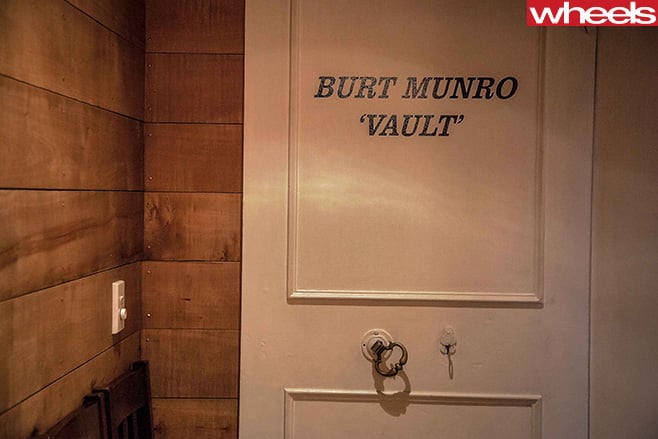
“I met him in his shed,” Anderson smiles. “I’d been told about this old bloke I should see, he’s got an old Velocette that does 120mph and an old Indian that does 150mph. I thought, I’ve heard all these things before…
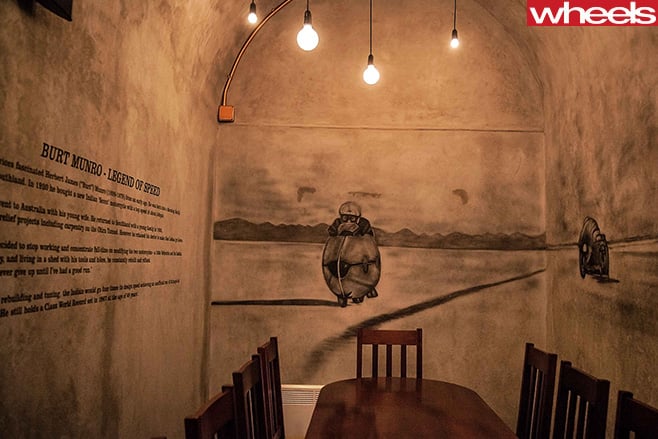
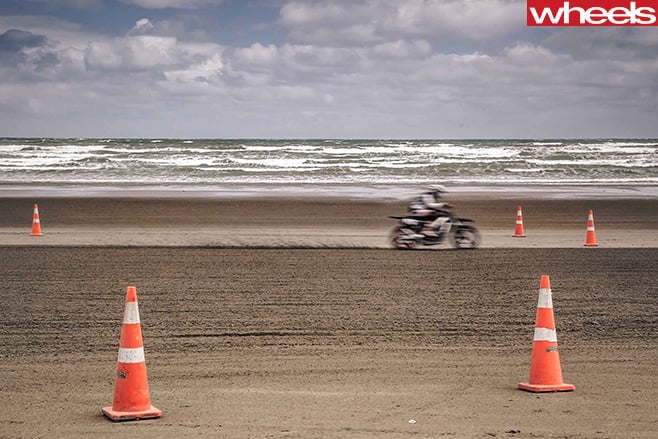
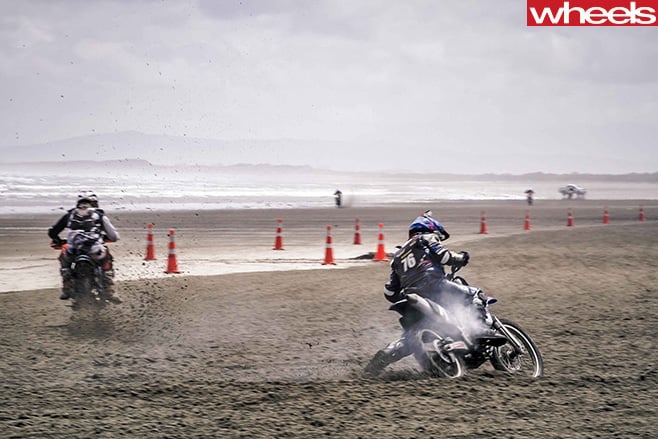
Oreti Beach is 10km from Invercargill. Occasionally significant is that it’s also only 2500km north of Antarctica. Car and motorcycle racing on its fine, silty sand date back to at least the 1920s; the annual beach racing championship became a cornerstone of the Burt Munro Challenge.
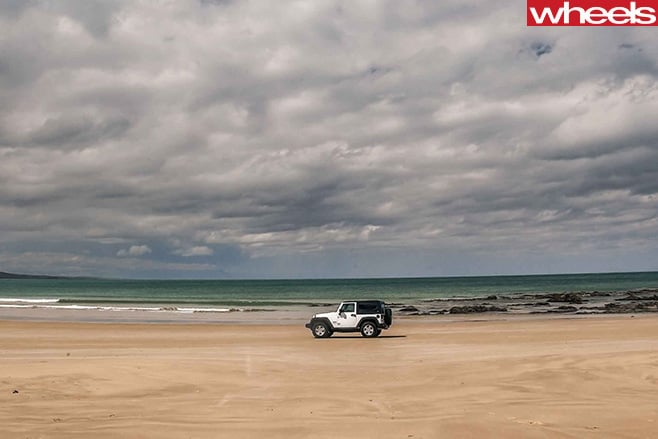
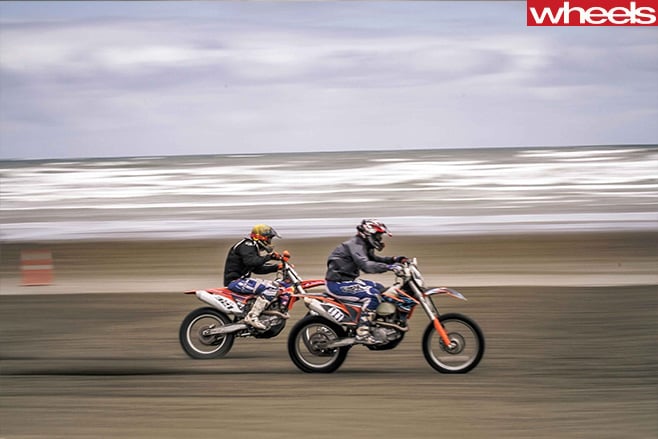
The course is defined simply by two poles 800 metres apart, making a one-mile lap for the two dozen screaming, rasping, farting assortment of machines.
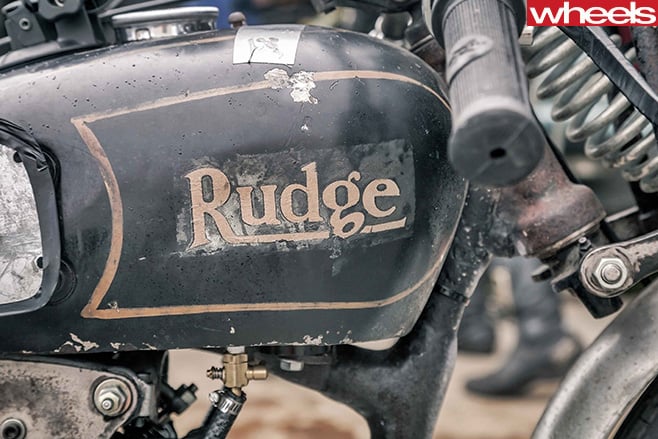
We find local concrete contractor Rhys Wilson grinning over his 1937 Rudge Ulster. The lovely black 500cc single competes in a closely matched class spanning ancient girder-fork machines, pre-1972 classics and modern 250cc dirt bikes. “Near the sandhills it’s rutty, but near the water you can really open the tap,” Wilson explains.
Frankenbikes have been a constant in the Southland. Christchurch’s Jason Feaver had just won the 2014 Open Class beach racing championship. His paddle-tyred 525cc Honda CRF450 four-stroke motocross bike has an extra fuel tank mounted above the front wheel to help keep it down. And that was his “little” bike.
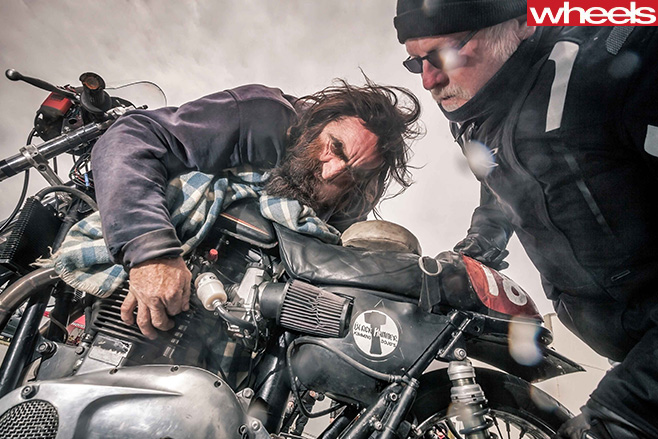
“All the stuff I’ve done to my engines, at the end of the day, that’s what Munro did, isn’t it? That thing’s just blown up, unfortunately, but that’s part of building hot engines, mate. You don’t try, you don’t know.”
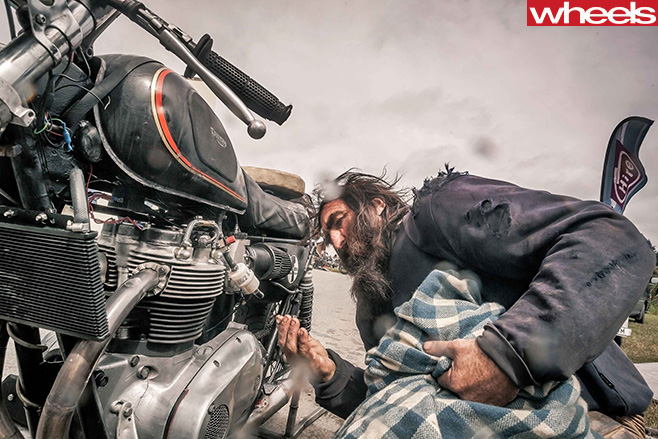
At the most recent event, Francie raced one bike or another in every discipline, including swinging (and falling) from the sidecar of Wilson’s Rudge in the Wyndham road races. She was awarded the Munro Family Trophy.
But we were left completely awestruck by Kevin Ryan, a miner from Barrytown on New Zealand’s west coast. Ryan spends much of his year travelling and living in an old school bus, converted to carry his 1970s-era
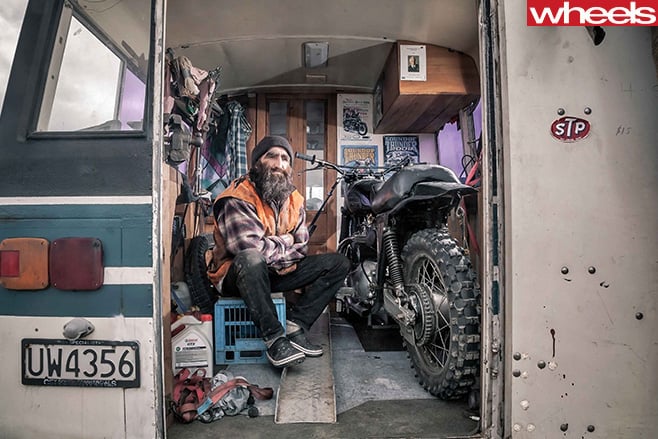
Formidably hirsute and imposingly eyebrowed, Ryan cuts a figure in his home-made leathers and tattered pullover. His bikes look very much the same: an aero-bubble made from a welding mask; exhaust headers and an aluminium swing-arm made by him at home.
But Ryan rides everything like a demon, pushing the Bonneville to unimagined angles on the fast, flowing Teretonga circuit, merging even more with the machine when the stinging rain and bitter cold comes. He finishes second in that race, with a new goal of modifying his exhaust for more ground clearance.
Iconic Wrangler
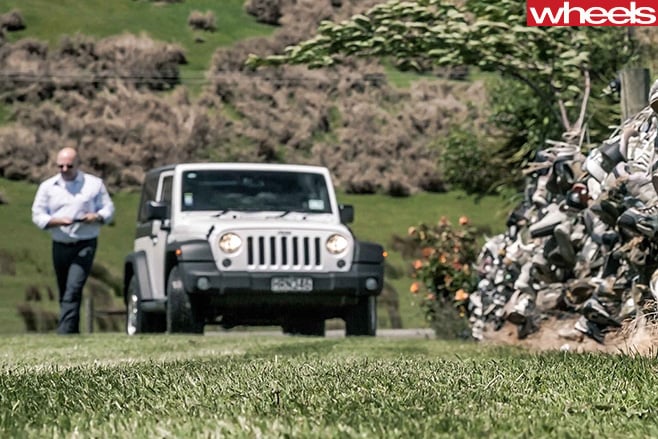
While all-new from 2007, the Jeep retains more of the ingredients that wrote its forebears’ legend, namely a separate chassis, live-axle suspension front and rear, and a removable roof and doors.
Those core ingredients also include a Command Trac 4WD system comprising a basic transfer case. It still lacks a centre differential, so the Wrangler’s off-roading prowess comes at the expense of being able to run 4WD only on unsealed surfaces. Meanwhile, brake-locking differentials do much of the work of full locking differentials when off-road.
Biggest news with the current JK-series model was the introduction of the Pentastar 3.6-litre V6, an engine shared across many of Chrysler’s passenger car range, bringing 33 percent more power and better economy than its 3.7-litre V6 predecessor.
As US carmakers race to shed weight from SUVs and trucks to meet emissions legislation, the next-gen Wrangler, due in 2017, will adopt aluminium body panels, but retain the separate steel chassis considered vital to its off-road capability.
The real Indian
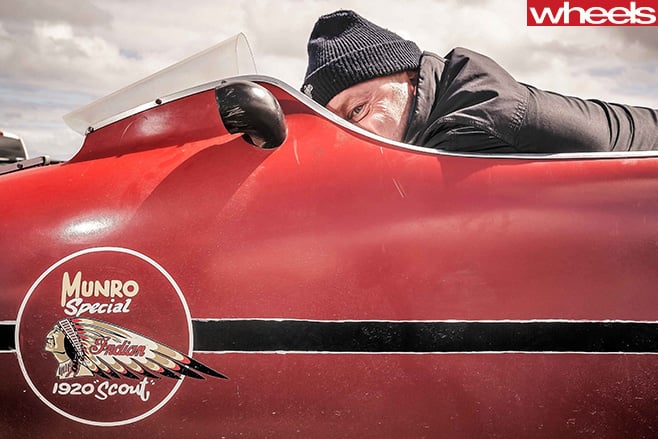
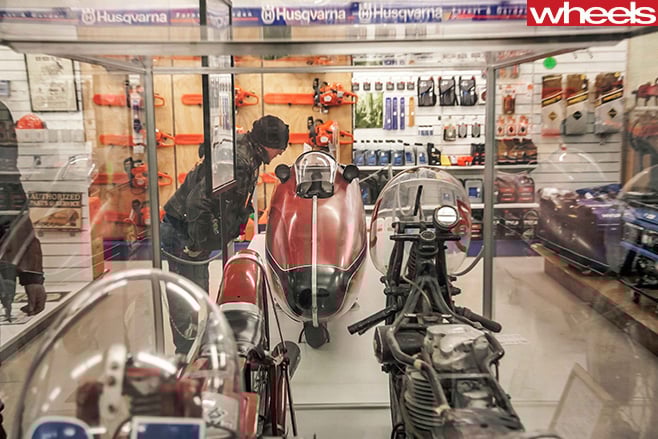
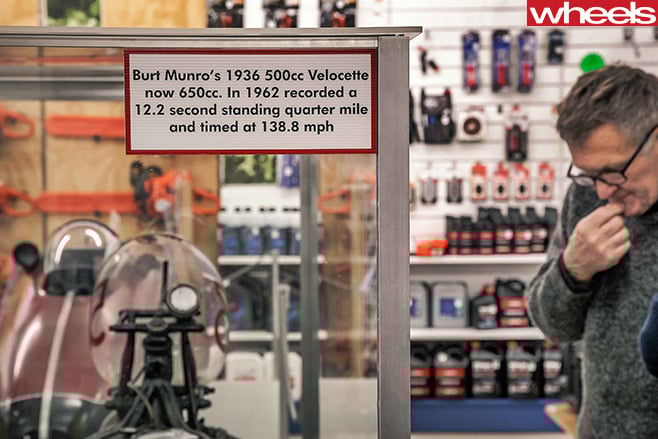
In September 1977, Norman and Neville Hayes purchased Munro’s Indian, his Velocette and most of his other motorcycling paraphernalia. Today, two “Munro Indians” are displayed at the E. Hayes hardware store – one of them clearly identified as the replica built for the 2005 film. The other, which has no bodywork, is sometimes identified as the genuine Munro Special Indian.
However, the famous streamliner bike that Munro raced at Bonneville actually resides in California. On Munro’s 1962 trip he befriended the Pierce family, owners of an Indian motorcycle dealership in Los Angeles. Rather than ship his streamliner back and forth, Munro left the bike in LA, bringing home only the engine and other parts he wanted to modify.
At home in New Zealand, he had another modified Indian Scout frame, devoid of bodywork or much subtlety, which he used for testing. That bike and its hero engine is the one owned by Hayes.
Munro had sold the US-domiciled, “real” streamliner in 1975 to Sam Pierce in LA, having built for it an engine from spare parts. That bike, fully restored by a new owner in the mid-1980s, is acknowledged as the real Bonneville machine, and won best pre-war motorcycle at Pebble Beach in 2010.
Honda is on a mission to inject some sportiness back into its brand.
There’s the new NSX and Civic Type R (sadly not for Oz), its F1 comeback is underway with the legendary McLaren team (though probably best we gloss over that) and now it’s added a third, somewhat smaller, performance car to its range. First shown in concept form at the 2013 Tokyo show, the S660 is a spiritual successor to the Beat, sold in some export markets in the early-90s.
Like the Beat, it features a mid-engined layout, with a diminutive 660cc, three-cylinder turbocharged engine producing 47kW and designed to meet tax laws in its home market of Japan. “Err, 47kW?” we hear you say. Sounds like a Japanese domestic market-only kei-car (mini-car), right? Nope. You see, there’s a twist.

Now for a coupe that weighs only a little more than 830kg, that’s some serious poke; enough to give the upcoming Mazda MX-5 a real run for its money in power-to-weight terms.
But for now, it’s the S660 that holds our attention. As we arrive at Sodegaura Forest Raceway, 90 minutes southwest of Tokyo, there’s three S660s sat in the paddock, looking almost identical to the 2013 concept car that spawned them; a rare treat these days.

As the victorious engineer who put the winning design in, the 26-year-old Mukumoto has been given a rare honour within the company – he was appointed to the rank of S660 chief engineer, making him the youngest new model head honcho in Honda’s history. “We wanted to make something special, something unique, an entry-level car for driving and motorsport enthusiasts,” he says of the S660.
He said it all there, because it’s the car’s unique chassis and gearbox that make it a game-changer. The mid-engine, rear-wheel drive chassis is constructed out of an aluminium and steel sub-frame that’s stiffer than the old S2000 sports car. The Japan-spec S660 might only be fitted with a 47kW engine, but the engineering behind this chassis promises to be capable of handling more than twice that power.

To lift the overall performance of the engine, the redline is raised from 7000rpm to 7700rpm, while a deeper oil pan helps maintain engine lubrication even during higher G-force manoeuvres, such as hard cornering or heavy braking.
From behind the diminutive 350mm steering wheel, the S660 is like no kei-car we’ve ever driven before. Even with its seemingly uninspiring 47kW engine, the S660 is an absolute blast to drive.

You accelerate hard, pushing towards 6000rpm as the engine screams wildly, suggesting a lightning fast gear change is due. But then you realise there’s another 1700rpm to go…
Following in the footsteps of the S2000’s legendary gearbox and shifter, the S660 incorporates a notchy transmission with delightfully short throws and tight, precise gates. It has well-positioned pedals, a light clutch and the gear ratios are superbly matched to the engine.
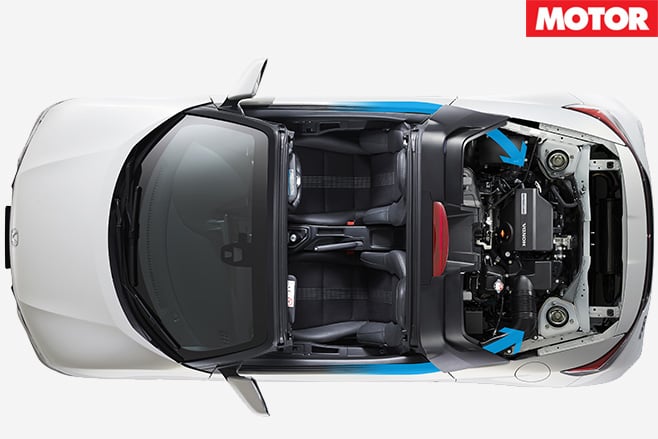
The downside is the fact that the traction control can’t be switched off, so there’s no oversteer to play around with. But there’s no understeer either; just solid, pinpoint balance. There’s just enough weight in the steering, sufficient feedback and a crisp turn-in.
While it is tightish in the cockpit, this writer was able to fit his 189cm frame into the car and operate the pedals without smashing his knees on the steering wheel. Only just, mind you.
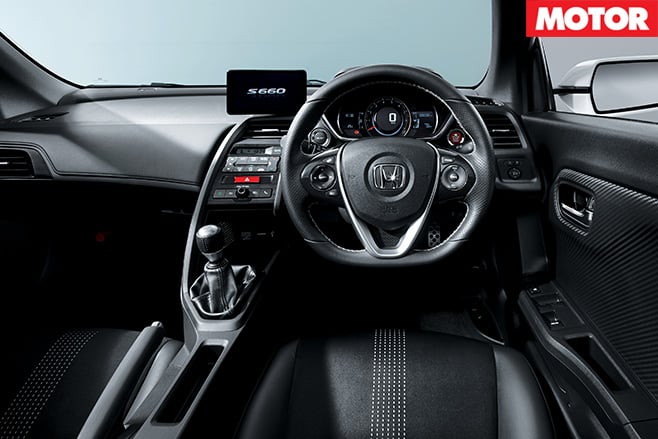
An optional dash-mounted digital display offers game-like G-meter readings that provide real-time, potentially distracting, readings on cornering and braking for the driver.
Perhaps our only question marks are centred around the lack of raw power (in this Japan-spec model) and its fiddly soft-top roof, which must be manually folded away and placed in the tiny boot in contrast to the automated roof motion of its spiritual S2000 predecessor.
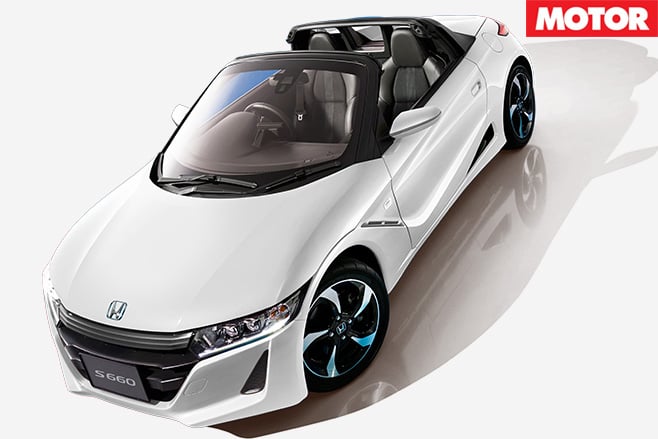
The S660 tempts you to push to the limits and then asks for more. It fits like a glove and handles like an extension of your body. The chassis, suspension setup, engine and gearbox respond – like an Iron Man suit – to every minute input and make you feel like a better driver.
In one fell swoop, the S660 has totally redefined kei-cars. You can really push it to max revs and the tiny Honda will just keep demanding more.
As a 14-year-old kid clutching the latest piece of Holden racing memorabilia, I would have killed for this; a chance to walk around and drive on Holden’s Lang Lang Proving Ground.
For me, it’s hallowed turf – and bitumen, dirt and water splashes.
I breathe in the air, stand on the banking and consider that this steep bitumen has seen the first Holden Dealer Team HT Monaros storm over it before Harry Firth, defecting from Ford, led Colin Bond and Tony Roberts to victory at Bathurst in 1969, with a young bloke named Peter Brock in the second HDT entry.
I can recall images of EH Holden sedans and wagons circling the bowl; of a ‘Strike Me Pink’ LJ Torana XU-1 sideways around here; and the VE range in ‘V-Car formation’.
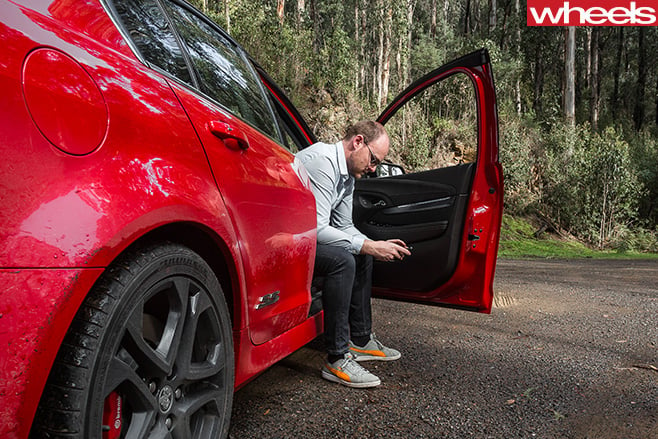
It’s an eerie feeling being among the wallabies and roos as the sun goes down on Lang Lang. I’ve been a motoring journalist for 15 years, and I thought my time had passed on doing a proper Holden launch. A proper Holden means an Aussie-engineered and built one.
To me, Holden without an Aussie-built Commodore is like Ferrari without red paint or an airport without overpriced parking. So to be at the reveal of the final, Aussie-made and engineered Commodore, at Lang Lang, was one of the greatest experiences I could ever have.
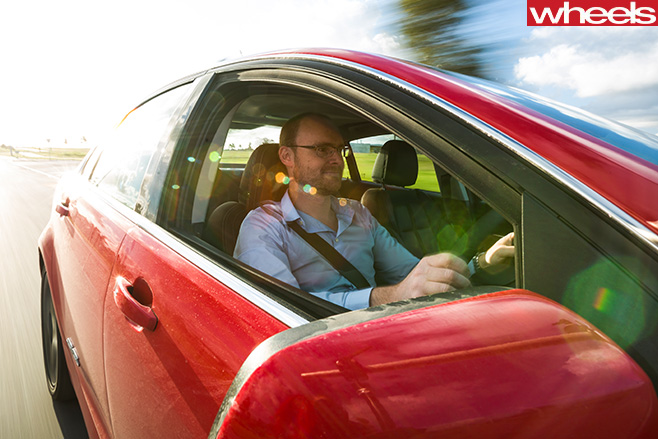
I am in absolute awe of the team at Holden that developed the VF Series II – the engineers, the designers – and the passion and genuine heavy hearts of the marketing people. And of course their countless predecessors over generations of not just Commodore, but Torana, Kingswood, Statesman, Monaro and such back to 1948.
That pride clearly washes over the company, too. Stand outside the Salmon St, Port Melbourne, headquarters and a large portion of the staff walking in wear their Holden shirts, caps or jackets with genuine pride.
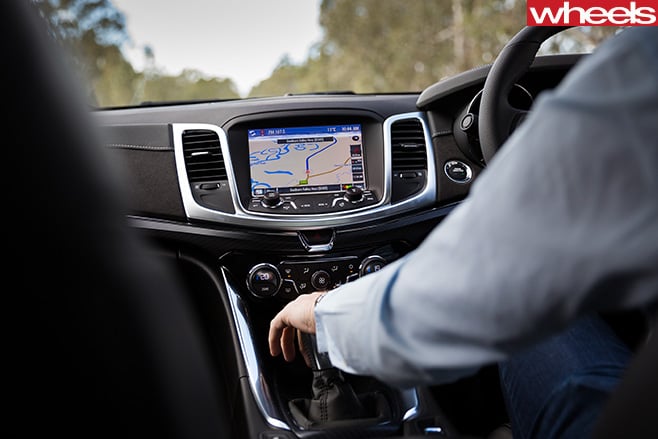
Now, with the final VF Series II, it’s the end of an era. At least the proving ground won’t be sold off and made into houses once Holden’s factories are closed. The company is keeping it, giving local talent a platform on which to shine.
Lang Lang genuinely is ‘Australia’s Own.
True at last
“The XD Falcon was the last true all-Australian car and, make no mistake, there will never be another.” So said David Robertson in our July 1981 issue – the month and year I was born – in a piece called The End of Australia’s Own. With job cuts at Ford and Holden, the latter closing its Pagewood, NSW, plant after suffering the biggest loss in Australian corporate history the year before, Robertson wrote that Holden boss Chuck Chapman “accepted that his company ‘won’t be designing a vehicle from the ground up in the future’.” The article was spot on – just three decades ahead of its time.
I’m not one to shy away from the spotlight – it’s in my blood, being a Leo – so when I got the keys to a Holden Cascada, I had my sights set on Hollywood.
The only problem was we weren’t in Hollywood. I was stuck in Australia with an empty bottle of MAC foundation, and I was looking less glamorous than a Kardashian at the gym.
So instead of spending a day pretending to be Grace Kelly, I chose to do something more practical: I decided to see what it would be like living with kids and a convertible.
As a roofless car with two seats in the second row, the Cascada fit the profile for this experiment. So, I called my friend Amanda and told her to tell her daughter Katie to get the car seat ready, I was on my way for a day of fun in a really, really cool car.
I didn’t expect the Cascada to take home any awards as the best family car, but nor was I comparing it to say, a Holden Captiva. This road test wasn’t about comparing apples and oranges; I just wanted to see what it would be like as a family of one living with a convertible.
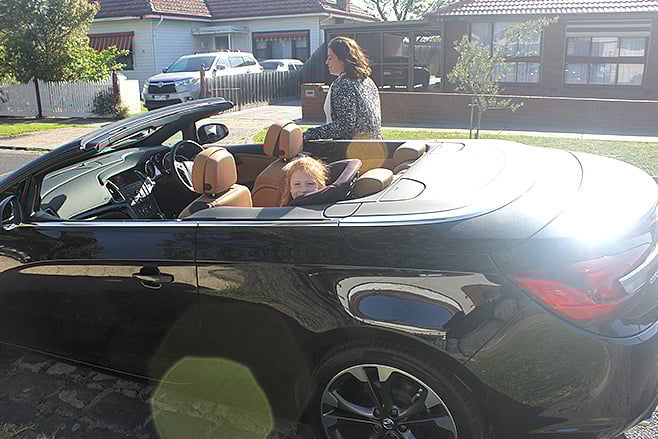
At the very least, I thought it would be a lot of fun for a six-year-old. Turns out, my expectations were wildly off-centre.
When I arrived to pick up the little miss, she was already waiting outside with her booster seat and a great big smile. She looked adorable in her trendy blue high-waisted shorts and a red-stripe top. Thankfully, the weather was on our side for a roof-down drive to the beach for a fish-and-chip lunch.
With Katie’s car seat securely strapped into theback, Amanda and I loaded into the front and got the show on the road.
First thing you notice about the Cascada, before the engine is even turning, is the button-busy dash. It’s messy and is one of the car’s biggest letdowns. But through the eyes of a child, it’s a very different story. To Katie, the Cascada was a car out of one of those kids’ spy shows. I couldn’t break it to her that the dash wasn’t, in fact, that exciting at all – the buttons couldn’t make the car fly, float or eject a passenger.
But there was one button that could do something pretty cool – it takes just 17 seconds at road speeds up to 50km/h to fold the roof away. As we slowed to a halt at a set of traffic lights, we triggered the roof function and the roof folded away behind us. Katie’s eyes widened. Now things were getting exciting.
That was until we started driving. The first few seconds were comfortable, but as we built up speed, it became more frightening for Katie than the boogie man. Katie’s hand was firmly pressed to the top of her head to make sure her wide-brimmed hat stayed firmly in place. Her eyes were squinting from the sun and the wind and she suddenly had more of her beautiful red hair in her face than she did cascading behind her like it usually was. She looked uncomfortable, but hats off to her (pun intended), she didn’t complain once!
Strike one to my name.
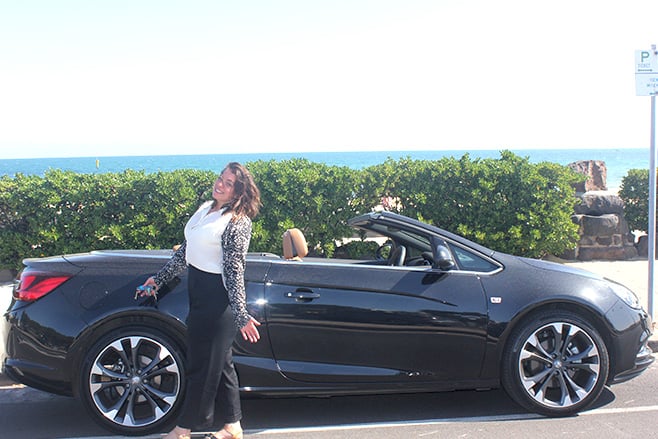
Eventually we arrived at a playground right near the beach. I was back in the good books, for now. A quick bite to eat, a toe-dipping visit to the beach and the whole ‘nearly got blown away by the wind’ saga was a thing of the past. And, as promised, Katie got her ice-cream. But the looming clouds looked set to spoil our otherwise perfect day, so it was time to get back in the car.
It was at this point I noticed another feature of the Cascada. Once Katie was bucked in to the back row, I pushed the seat upright and it automatically moved in to my driver’s position.
For those of us in the front, this feature stops you fiddling around with annoying controls to get a seat into place; but for those in the back, it’s a different story.
In what can only be likened to an Indiana Jones movie, the chair slowly closed in on Katie’s legs. Her face was that of a person who thought she was going to be squished, and her hands were out in front trying to stop the chair from crushing her knees. Thankfully, no one was injured, except for poor Katie’s nerves.
Strike two (maybe I should have bought her a second ice-cream).
With that, it was time to go home. As the Cascada pushed the seatbelt latch forward, I turned and asked Katie if we should put the roof down? With her best puppy-dog eyes, she begged me, no.
So obviously, I did it anyway. “How often do you get to drive around in a convertible, Katie?” was my rationale. Amanda was also on team no-roof: “Hold on to your hat, Katie!”

Granted, it was more fun up front for us adults with the windscreen acting as our guard and the option of seat warmers. So to make up for the obvious disconnect in comfort, I let Katie choose the music – Peanut Butter Jelly by Galantis was on repeat the entire 45-minute drive home. That means it played approximately 12 times. That counteracts strike three. We were definitely even.
When we got home, I asked Katie what she thought of the car. Her response was simple: “It’s pretty cool, and I can’t wait to show my friends the photos at show-and-tell, but I don’t think I want to buy one with my money, I’d rather go to Hawaii.”
That’s a fair assessment from a primary schooler.
Amanda and I on the other hand had a very different experience. I liked the Cascada. Not only because I felt much cooler, but also because it’s stylish, it has more room than your average soft-top, and it’s comfortable inside. And, although it’s not winning any refinement awards, it’s an affordable, good-looking car.
Would I recommend this as a family car? I could have told you the answer to that before I started this story. But it’s still a convertible with the option of fitting a booster seat, so there’s hope for families yet, as long as you’re willing to listen to: “It’s too windy … the sun’s in my eyes … the truck is too close.”
As for my Hollywood moment – well, the only problem with pretending to be Grace Kelly is that my trousers were Country Road sale, the shirt wasn’t real silk and the headscarf didn’t look half as good on me as it did on her. At least my superstar little co-reviewer Katie had the fashion in check.
The Estate GT is based on the same platform as the Megane hatch but adds vast cargo space with its wagon body. The Estate GT brings Renault’s 4CONTROL all-wheel drive system to the Megane line-up.
“Specifically tailored to the new Megane Estate, 4CONTROL endows the car with precise, dynamic handling on twisty roads and generates genuine driving pleasure,” the company says.
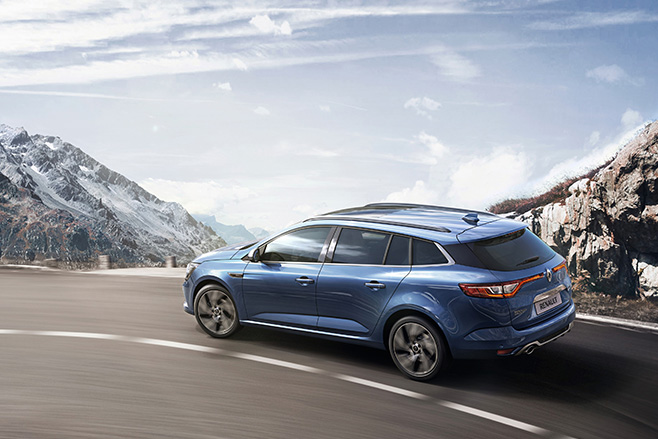
Styling of the Estate GT carries Renault’s signature sporty character with a model specific honeycomb grille at the front and a diffuser moulded into the rear bumper bar.
Other variants of the Megane Estate will be offered along with the GT, all with the same modular interior and choice of seat/boot arrangements. Carrying capability is further bolstered by built-in aluminium roof bars.
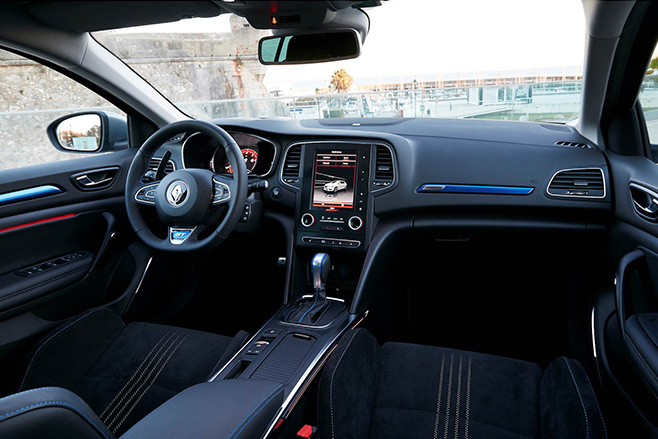
More information about the Megane Estate will be available next week when the Geneva Motor Show gets underway. Expect it to reach Australian showrooms in 2017.
BMW Oz will lock horns with Mercedes-Benz and Audi in the go-fast limo segment with news it will land its M badged 7 Series down under.
After speaking to BMW Oz’s product planning department, MOTOR understands the firm is planning to land a small batch of its recently revealed M760Li xDrive to reintroduce a V12 offering and bolster the new 7-Series range with a halo model.
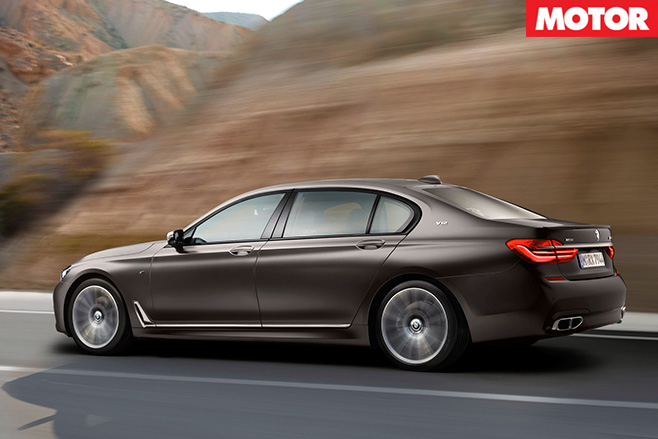
Plus, extra grip seems only logical with how much power the M760Li’s 6.6-litre V12 will produce. With two turbochargers the powerplant will spin up 441kW and 800Nm, more than anything in BMW’s range.
While it’s called an M ‘Performance’ model, which implies it’s a sort of M-lite, the resulting acceleration figures suggest otherwise. Flicking through an eight-speed automatic gearbox the M760Li is said to crush 100km/h in 3.9sec before storming to 305km/h with a raised limiter.

BMW Oz’s expecting to land only a double-digit allocation of the M760Li xDrive after the car first goes on sale in Europe early 2017.
Pricing is yet to be determined, but expect it to lurk around the $400K mark.
