
Holden says 22 new models will arrive before 2020. The brand has promised a V8 coupe replacement for the locally built Commodore, but fresh hot hatchbacks and a just-teased sports GT are possibly on the way too.
This is our best look yet at Holden’s post-2017 performance options:
1. Opel GT Coupe
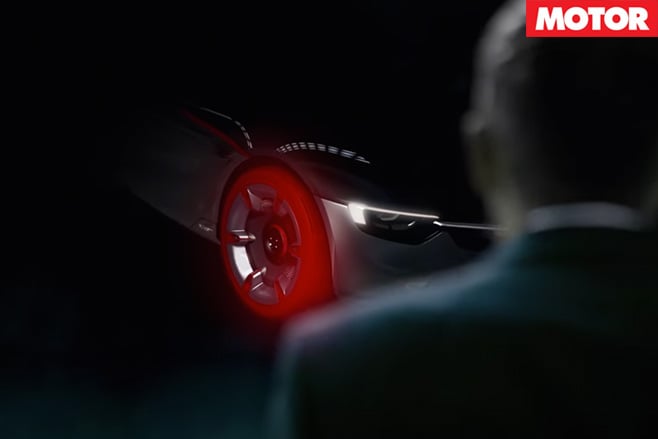
Opel is desperate to “reinvent itself” as a more premium, sportier offering overseas, so the GT coupe will make production, likely with 2.0-litre turbocharged power driving the front wheels.
Holden has said it will take more offerings from Opel and the GT will almost certainly be made in right-hand drive for the UK market. This sexy coupe would be priced from $50,000-plus.
2. Opel Corsa VXR
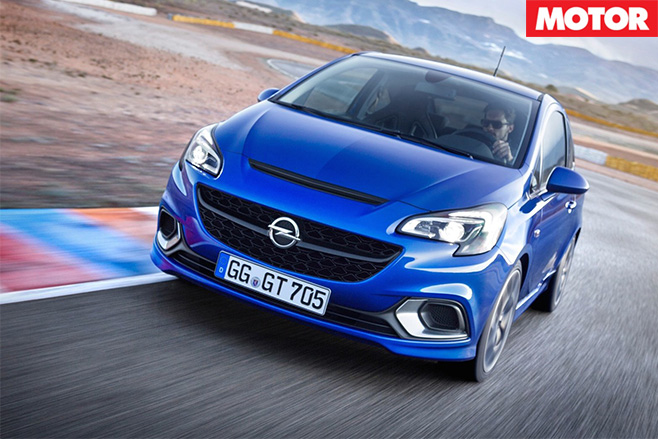
Among that next-generation of fast Opel-based models, the Corsa VXR light hot-hatch will also wear the Lion badge.
Holden will likely continue to reserve the Barina nameplate for its Korean-built budget hatch, while the Euro-spec Corsa will take the $30k fight to the Ford Fiesta ST and Volkswagen Polo GTI.
The current Corsa VXR has the numbers to do so – it makes 152kW and 280Nm, driving through a six-speed manual transmission to the front axle that also scores a Drexler mechanical limited-slip differential.
3. Chevrolet Camaro
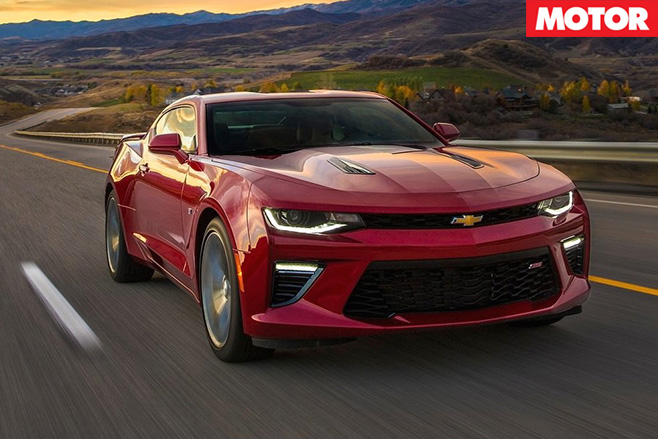
However the recent Buick Avista Concept (top image) shown in Detroit shows that GM is becoming smarter about platform utilisation. The Avista is basically a Camaro under the skin, built off the same Alpha architecture and with an identical wheelbase but utilising a 3.0-litre twin-turbo V6 engine.
Opel shares its products with Buick, and vice-versa, while Opel likewise trades with Holden. If a production Avista gets the green light, this big rear-drive coupe could be a candidate for a Holden badge.
4. Chevrolet Corvette
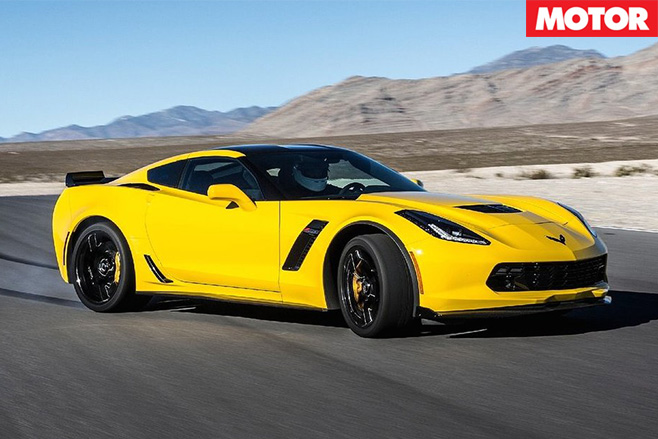
Holden has promised a V8 rear-drive coupe for 2017, and rumours point to the Corvette soon being approved for right-hand drive production.
The downside would be pricing – the 6.2-litre supercharged V8 version, with 485kW and 881Nm, would have to sell for well over $100k. That makes it a potential replacement for the HSV GTS, but not the regular Commodore SS that mere mortals can afford.
5. Cadillac ATS-V and CTS-V
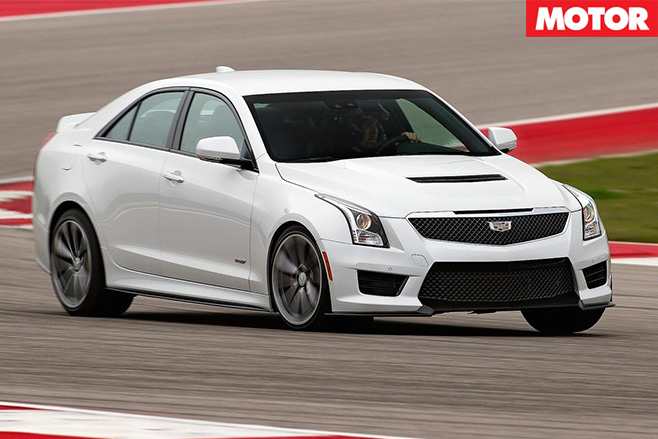
Australian-born Andrew Smith, who helped pen the VE Commodore, now runs Cadillac design. He is outspoken about wanting Cadillac in Australia, and other GM executives have joined the chorus, citing the proposition as a matter of when, not if. All bets point to before 2020.
The Cadillac ATS-V (above) is a rear-wheel drive sedan competitor to the M3 and C63, with a 3.6-litre twin-turbo V6 producing 339kW and 603Nm.
The Cadillac CTS-V challenges the M5 and E63 as a full-size rear-drive sedan with a 6.2-litre supercharged V8 producing 477kW and 855Nm. When do we want them? Now!
Take a seat at the Australian Motoring Awards as the 2016 Wheels Car of the Year is revealed to industry figures and other guests.
MORE than 200 of the Australian car industry’s elite watched as the Mazda MX-5 roadster was crowned the 2016 Wheels Car of the Year on Wednesday.
The gala Crown Casino event, which attracted chief executives, marketing managers and even senior engineers from a number of the nation’s leading car brands, also incorporated presentations for Motor Performance Car of the Year (Porsche 911 GT3), 4X4 Australia 4×4 of the Year (Ford Everest Trend), and the WhichCar Style Awards (Alfa Romeo 4C).
It capped off months of planning, testing and analysis that made up the inaugural Australian Motoring Awards.
The event was hosted by TV personality and sports presenter Mark Beretta, and included an appearance from Porsche factory driver and reigning World Endurance Championship title-holder Mark Webber.
Mazda’s win in the 2016 Wheels Car of the Year was the third time the iconic MX-5 sportscar had earned Australia’s top motoring award for excellence.
The Mazda finished ahead of the new-generation Audi Q7 and the car described as Jaguar’s best effort yet, the BMW 3-Series fighting Jaguar XE, to snare the title.
Hit play on the video to see how it all unfolded.
They say self-possession comes with age, and it certainly seems to be coming to the Nissan 370Z.
Last year, as a toe-dipping exercise before really establishing its Nismo performance sub-brand, Nissan gave its now five-year-old V6-engined rear-drive coupe an official motorsport makeover.
The result could best be described as a momentary identity crisis. It involved some serious body and chassis stiffening and some crass aftermarket-catalogue body addenda, and frankly gave this simple muscle coupe a bit too much performance attitude for its own good.
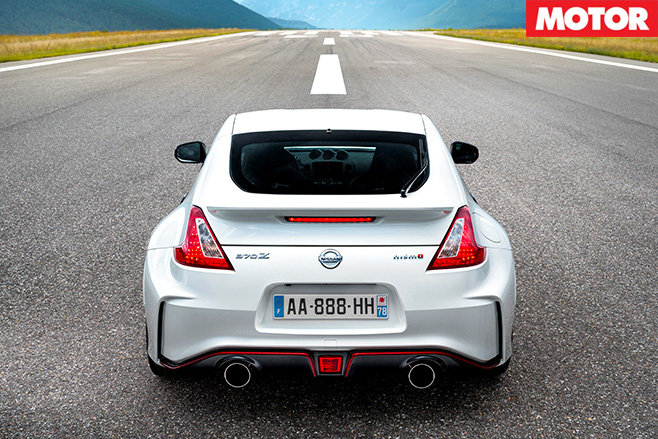
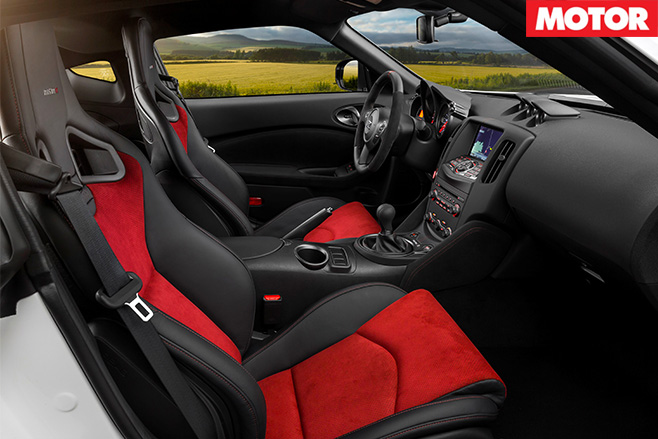
It also gets new Recaro bucket seats and a more subtle but no less purposeful-looking bodykit, with unique front and rear bumpers and side sills – plus a much less aggressive rear wing – replacing the apparently do-it-yourself styling mods of before.
Under the skin, the body braces and upgrades to the braking system and powertrain applied to the last Nismo are carried over, but both spring and damper rates have been reduced.
Show the Nissan a bumpy, twisting lane, however, and you’ll quickly become aware that this isn’t a true sports car. The wheel control isn’t dexterous enough, and the damping is still too digital. Never are you more aware of the Zed’s weight than when the chassis attempts to pummel the road flat rather than flow over it.
On faster, well-sighted A-roads the Nismo finds its niche. That tremulous V6 conjures real pace where you can let it rev, and the chassis and steering take to smoother, gentler curves more naturally.
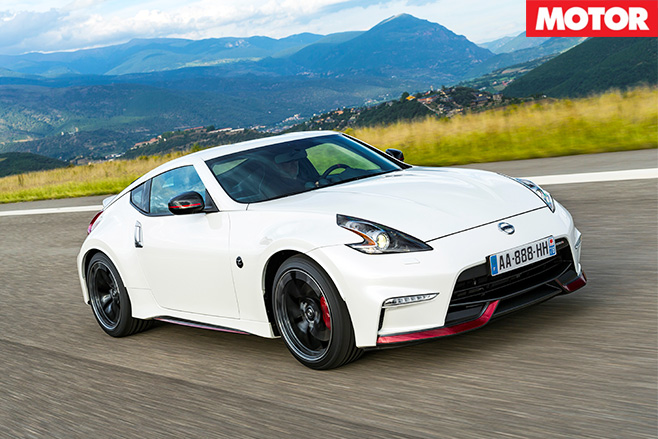
Nissan Australia is planning to bring all three cars in the current Nismo line-up – including the 447kW GT-R and less exciting Juke – to Oz, but has been unable say exactly when, citing delays caused by overseas demand.
It’s believed that Nissan Australia wants Japan to sign off on a Nismo-stamped Pulsar, which would provide a higher-volume-based Nismo vehicle, before securing a line-up for local showrooms.
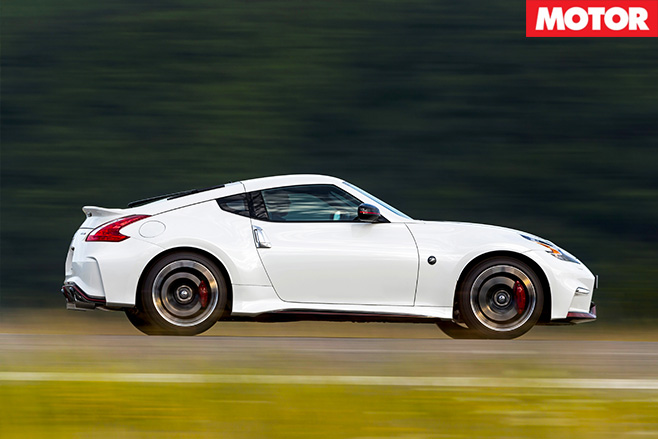
When this flagship Zed finally does land here, it’s clear that what we’ll get is not an out-and-out sports car, more an effusive, big-hearted, sporting GT. And in recognising that, Nissan has finally allowed the 370Z the freedom simply to do what it does. And it does that as well as any of its forebears.
3 out of 5 stars
Specs
Engine: 3696cc V6, DOHC, 24v Power: 253kW @ 7400rpm Torque: 371Nm @ 5200rpm Weight: 1460kg 0-100km/h: 5.2sec Price: TBA
Aussie F1 ace Mark Webber spills the beans on his former rivals.
MARK Webber has labelled his former Red Bull teammate, and bitter rival, Sebastian Vettel as the best driver on the current Formula 1 grid.
And in his typical, no-nonsense approach, he says Venezuelan driver Pastor Maldonado is easily the worst.
Speaking at Wednesday night’s Australian Motoring Awards, which culminated in the Mazda MX-5 winning the Wheels Car of the Year, Webber revealed that he considered Vettel, Fernando Alonso and reigning world champion Lewis Hamilton the most talented drivers of the current F1 crop.
“If you’re talking Formula 1, the good boys always find themselves at the front and the good guys always find themselves in the best cars,” Webber said.
“Lewis [Hamilton] has always been an incredibly fast, naturally gifted guy in all conditions and he’s very, very insensitive to tracks and to light rain and drizzle. It’s these sorts of things that makes the calibre of a very, very fast and phenomenal driver.
“Someone like Seb [Vettel], he’s very good at the resources, at pulling the whole team together and getting everything around him and filling in his weaknesses. He’s exceptional on that front.”
Webber said he still rated two-time world champ Fernando Alonso, despite the fact the Spaniard endured a horrific 2015 season in a McLaren that struggled with a new and unreliable Honda engine.
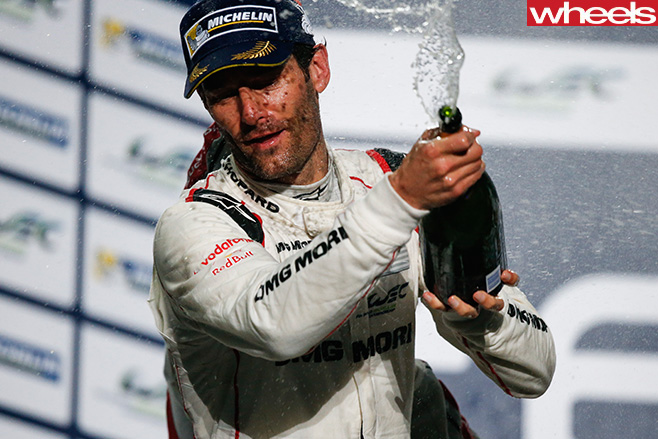
Webber also named 18-year-old excitement machine Max Verstappen as a driver with incredible raw talent.
“But those three [Vettel, Hamilton and Alonso] are on a very, very, high level. And if I had to pick one, I’d probably pick Sebastian, in terms of pulling the whole juggernaut together and getting the whole team going, which I think he will do at Ferrari shortly.
“He’s notoriously consistent and unfortunately I was on the receiving end of a lot of that, but he’s pretty handy. Lewis has a little bit more of that mind-management challenge, whereas Sebastian is true to form in the Germanic fashion of that delivery.”
Quizzed about who was the worst driver he’d ever shared a track with, Webber didn’t hesitate.
“Probably Maldonado,” he said. “He’s out of his depth and just shouldn’t be there. He’s making up the numbers basically.”
Maldonado, who drove last year for Lotus, has earned an unfavourable reputation as an on-track pest after a spate of crashes. He’s even sparked the creation of websites such as ‘Has Maldonado Crashed Today?’, which tells visitors how long it’s been since the Venezualan was involved in a prang.
Despite his reputation, Maldonado has an F1 win to his name, having won the 2012 Spanish Grand Prix driving a Williams.
I’ve just finished judging Wheels Car Of The Year (known as COTY in-house) and what an exhilarating buzz this year’s competition was! When I started judging COTY 10 years ago there were more than a few cars that were downright scary on road and gravel in the pouring rain. The progress manufacturers have made in stability control and handling technologies is huge, and this year even the tiny $12,000 three-cylinder pup was a thrill to drive in the torrential tornado-driven downpour that hit the Holden Proving Grounds.
We drove for seven days, testing on and off-road handling, wet and dry braking, driver aids, seat comfort and general safety kit. Some cars are a joy to throw around the track for a day or two but a nightmare on bumpy public roads. Others really come good when climbing a winding country road or swerving to avoid an echidna – I counted nine roadside echidnas during testing! From a field of really competent cars, I’ve picked the five I would love to keep.
AUDI Q7
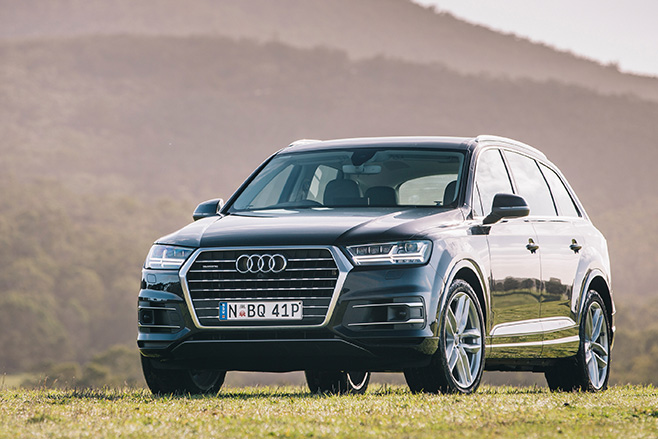
The Audi Q7 was a huge surprise to me. When this behemoth first hatched it looked and drove like a giant boulder. Now, with engine tweaks and silence in the cabin, it’s a first-class experience for the passengers, with stalwart power for the driver. From its impeccably thought-out detailing, with headlining fabric matched to speaker perforations, and controls housed within the a/c vents for function and visual economy, the Q7 was a space I didn’t want to leave. Three levels of recline and front/back movement in the second row and press-button folding for the third row are guaranteed to impress passengers but it’s the drive that was the quantum leap improvement. This is my dream family road-trip car and it has a huge towing capacity.
BMW i8
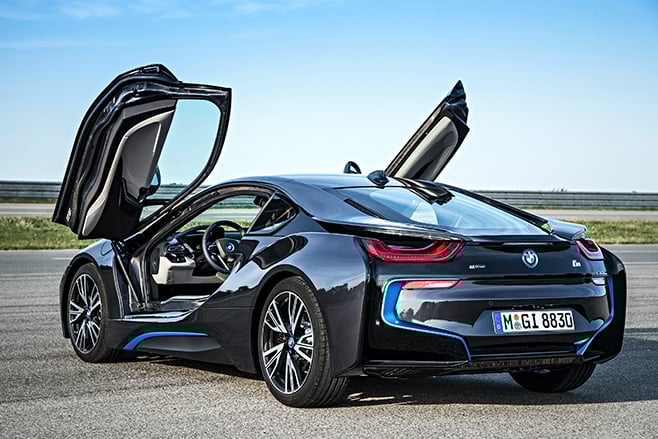
The true wonder of the i8 is not its drivetrain technology; it’s the fact BMW has made a fantasy concept car come to life with no compromise on its extreme lines and finishes. Sure, it’s a hybrid petrol-electric with ripper performance and crazy-good fuel economy, but that view in the side mirror back to a boot fishtailing apart in two sections, the effortless scissor doors and the fact that this beauty has four seats – those are the details we don’t normally get in an everyday extreme-bodied supercar. The Tesla Model S is faster, roomier and boasts pure electric brilliance but nothing says ‘future’ more than an i8 hurling down the highway with a kid seat in the back.
MAZDA CX-3
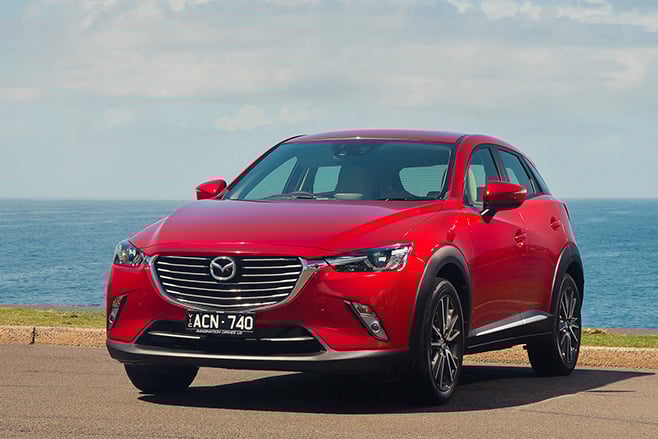
I am a huge fan of the sweet engine and designer dash lines of the Mazda2 and was intrigued to see those bits housed in a chunkier all-wheel-drive version. Of all the cars I drove around the streets of rural Victoria, the CX3 garnered the most compliments. Seriously. Those flowing sill lines from the 2 look even better when wrapping around the back of the car on the jacked-up body of the CX3, and the new roof floats on top with a joyous little kick to the rear. The manual gearbox is a beautiful thing with – for me – the perfect throw and general ergonomics. If you love the Mazda2 driving experience but want a higher seating position, a bigger boot or an all-wheel drive with signature Mazda fuel economy, the CX3 is a winner.
MERCEDES S CLASS COUPE
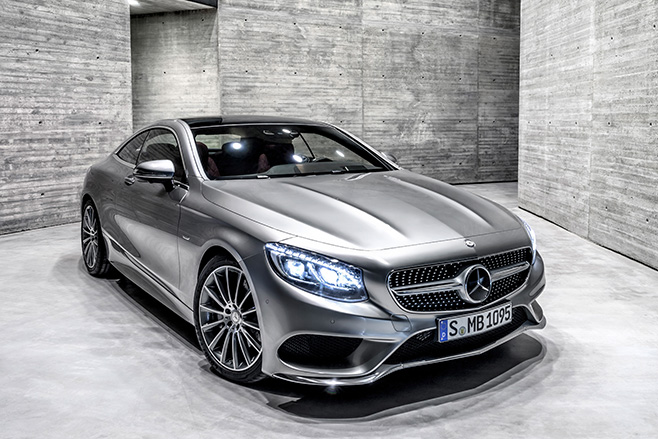
Where the Q7 is first class in a commercial airliner, the S Class is an exclusive private jet. In the past few years I’ve found Mercedes visually a little blingy but the S Class, in its full cream leather glory, is a design dream come true, and it has the driver credentials to match. It cossets the passengers, and provides the driver with formidable power and handling. Titans of business take note – this vehicle could be your spa between appointments and the salve to a long deal-ridden day. Then help trounce your peers on the track. It has effortless power, Hollywood comfort, stellar safety credentials and, as one of the boys commented: “It makes you look classy.” Thanks Mercedes – just what we all need!
MAZDA MX-5
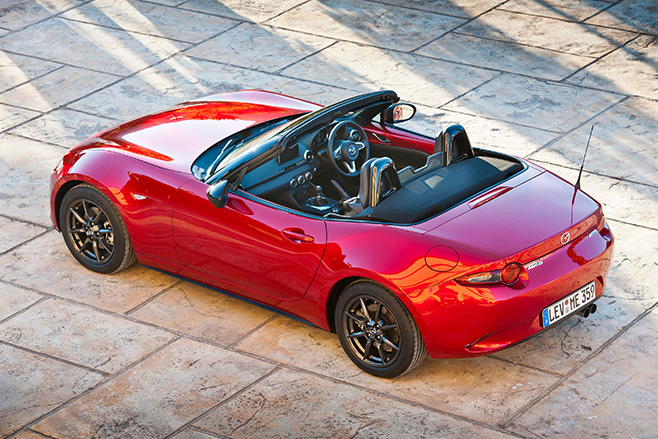
If it’s just you, and you love an energising and involving drive with the wind in your hair, the MX-5 is the ultimate machine. Honed to perfection, there’s a little of Jessica Rabbit in the new body – the MX-5 isn’t the fastest, the loudest or the most powerful car; it’s just drawn that way. Whether you opt for the peppy 1.4-litre or the chunkier 2.0-litre engine, be sure to spec the GT option with piano interior detailing and headrest speakers. Top down, music blaring, steering this perfectly balanced toy into a curvy pass, the road is truly your friend. This is not a car I love to be a passenger in, but I’d own it in a heartbeat and never give it up.
Looking for more great cars? We give you the low-down on top five best-selling SUVs and top five selling sports cars.
If you thought Koenigsegg’s fastest model was its One:1, you’d be wrong. Well, if we’re measuring time in the showroom.
That honour would go to the Agera RS, which Koenigsegg announced it has now sold all 25 units.
That we first saw its Agera RS at the 2015 Geneva Motor Show means it’s taken the Swedish manufacturer 10 months to exhaust the world’s supply of Agera RS. Making the model the fastest selling Koenigsegg, the firm claims.
And while 2.5 sales per month isn’t a hot average by large-scale manufacturer standards, it is in the world of US$1.5m supercars.
Of course, driving demand for the supercar is its outrageous performance, which evolves the from the previous nutty Agera S and R models with a little know-how from the fearsome One:1.
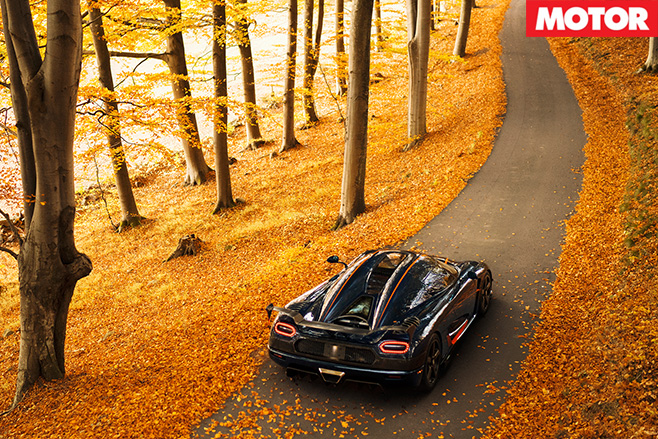
Suitably, the Agera RS makes 865kW and 1000Nm, and only needs to nudge 1395kg.
By the time the final car is delivered in 2017 (it takes a while to hand-build each one) the Agera RS will grace Canada, Japan, China, Taiwan, Singapore, Malaysia, the Middle East, and the United States.
However, there is no mention of a sale in Australia. And if you want to change that, we’re afraid you’ve missed your chance.
What is it?
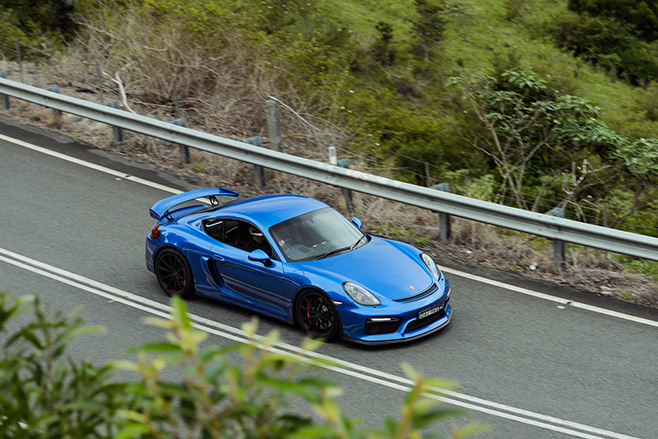
It’s the hottest incarnation of the Cayman, fast and laser-focussed enough to give big brother 911 a fair fight around almost any track in the world. Many of us had assumed that was what had held Porsche back from doing the hot Cayman sooner: the little one couldn’t be seen to be treading on the 911’s toes. Andreas Preuninger, boss of Porsche’s GT cars division, is emphatic on this point: it’s just not true.
The reason Porsche hasn’t built a GT Cayman before has nothing to do with potential overlap or concern about it being better than a 911 GT3, but a whole lot to do with the limited manpower and resources of the Porsche Motorsport squad. “But let me tell you we have wanted to do this car for a long time, and now I think the little brother should be allowed to show what he can do.”
What’s new about it?
It’s taken just 22 months from pitch to the board of directors to arrival on sale – the fastest-ever development of a GT car, which probably means they had a good idea of what they were going to do before they got the go-ahead. The 3.8-litre flat-six is borrowed from the Carrera S, but turned through 180 degrees so the motor sits directly behind the seats with the gearbox trailing behind.
There are a few tweaks to help with fitting and breathing, but power and torque remain the same at 283kW and 420Nm. Despite the extra capacity over the 3.4-litre Caymans, this engine is only about 7kg heavier, contributing to an all-up weight of 1,340kg, the same as the Cayman GTS. Not bad at all, considering the extra strengthening that’s gone in. And yes, your only choice is a six-speed manual gearbox. No PDK on the options list here.
Plenty of other stuff is, though. Like the Club Sport pack (half cage, harness, fire extinguisher), one-piece carbon seats from the 918 Spyder or a nifty lap-timing app for your phone. But the addenda don’t define the product – it’s what you get as standard which does that.
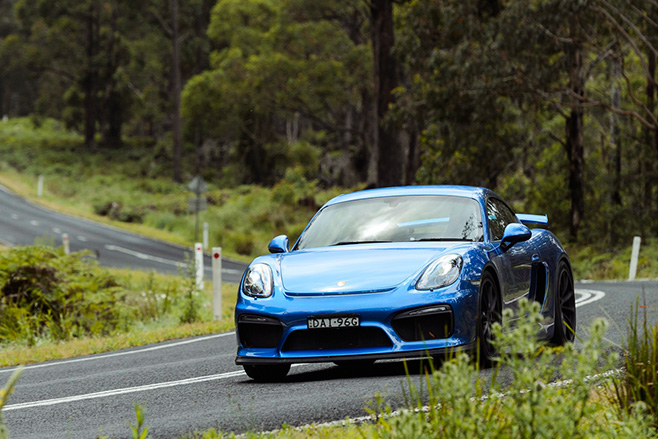
The front suspension is largely carried over straight from the 911 GT3, while at the back the standard Cayman set-up has been reinforced, plus there’s PASM active damping and, given a trolley jack and half an hour, a wide range of suspension-adjustment options. The front and rear anti-roll bars have soft, medium and hard positions, and you can fiddle with the spring/damper units and even the aero. Remove a couple of trim pieces that cover the front-axle diffuser channels, tilt the rear wing another three degrees to balance it out, and there’s your extra downforce.
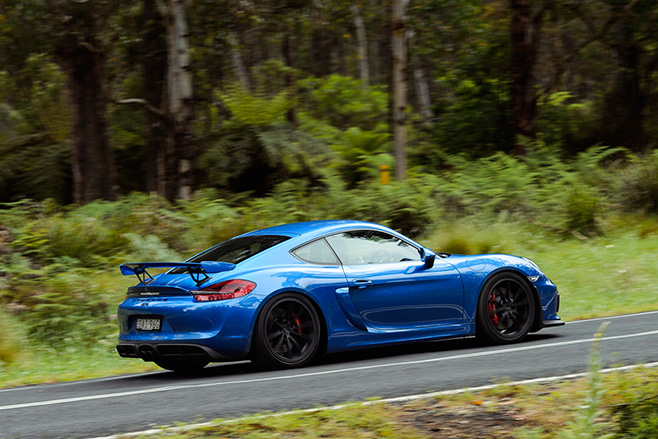
The GT4 rides 30mm lower than standard, front track width is up 13mm, and with its new front bumper, 20-inch GT3-alike wheels, various cooling slats and the rear wing sat up on those aluminium supports, it looks the absolute business.
The message is clear: this is a motorsport division car, every bit as focused as big brother GT3.
What’s it like to drive fast?
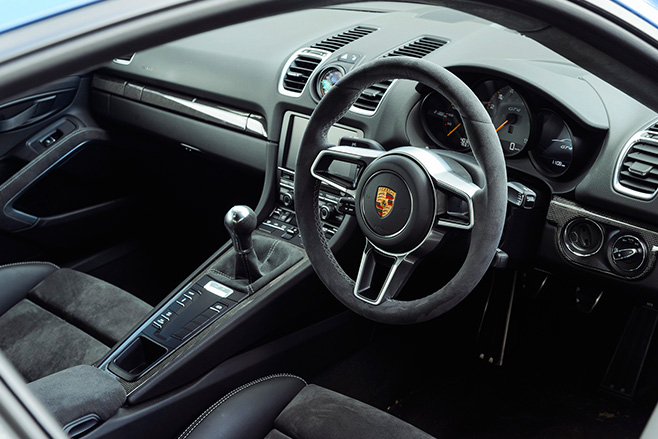
You’re aware of the GT4’s serious credentials from the moment you set off, having dropped a long way down to the 918 seat, and discovered that its padding has been adjusted so that you sit deeper into it and seem to be a little less upright. Still no chance of slouching, but you won’t want to once you get a grip on the new, smaller, slender-rimmed wheel and stubby little gear lever – 20mm shorter than in a standard Cayman.
The clutch is weighty, but first engages smoothly and you realise the positioning of the pedals, the ergonomics and the layout of the switchgear is all so intuitive. You’re low to the ground, and the movements are ultra-positive. There’s no slack in the suspension at all – it’s all control, control, control. The damping is abrupt, those big tyres (245/35 front and 295/30 rear) roar, it’s not fidgety at all, but you can’t really relax, can’t fiddle with your phone. Or the satnav, or the stereo, because it’s not there. Unless you spec it.
The front end is rock-solid. There is always more grip. Always. I caught myself out on a bend that tightened dramatically and dropped away. I knew the Cayman couldn’t cope with it, couldn’t possibly grip with the panicky extra steering demands I’d just placed on it without succumbing to understeer. It did, though. And with an air of authority, and that gave me total confidence in what it was capable of. I felt the forces build through the steering and chassis, knew which bits were having to work hardest, what I should do next. It allows you to think ahead of the car, to know what it’ll do in any situation before you get to it.
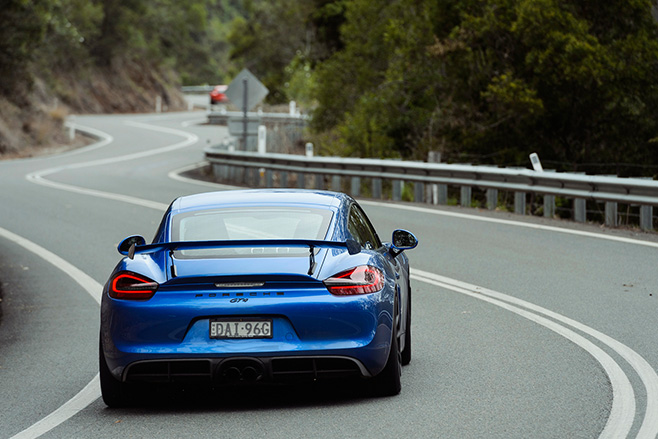
It’s both incredibly agile and beautifully balanced, the centred weight distribution allowing you to take liberties with it that you can’t with the 911 GT3. Because you have to give that car more respect, work around its foibles, ultimately the GT4 isn’t quite as beguiling and richly rewarding as the GT3. But it’s damn close. And $100,000 cheaper, which looks something of a bargain.
What the GT4 lacks is the GT3’s engine pedigree. You can tell the Carrera S’s 3.8 isn’t a pure-bred Porsche Motorsport unit. It doesn’t operate with the same frenzy, snarl and snap, and is all done at 7,800rpm, rather than 9,000rpm. Deficiencies are masked by the noise – it’s loud and angry – and the strong mid-range pull which, when the Variocam system gives it both barrels above 5,500rpm, develops into GT3-threatening pace.
The gearshift is a honey, too. Same basic transmission as a Cayman GTS, but the shorter lever means punchy shifts. You just jab the lever around the gate, and if you have the Sport button pressed, it does the rev-matching for you. In fact, that is the only thing the Sport button does.
What about driving it around town?
It’ll sit happily enough on a motorway, a more willing companion than say, a Lotus Exige or Alfa 4C, but less accommodating than the current 911 GT3. I remember driving that car and thinking I could happily live with it every day. The Cayman GT4 is less forgiving than the 911 GT3, but if you’re buying one and are worried about motorway manners, boy, are you buying it for the wrong reasons. Have a Cayman GTS, have a base one – they’ll do a much more acceptable, pleasurable job for you on the daily commute.
Is there anything bad about it?
One minor drawback to the gearbox – those Cayman GTS ratios are too long for the GT4. Porsche explains it away by saying that it doesn’t want people to have to change up during overtaking opportunities, but more sprint-oriented gearing would suit the car better. Don’t bother firming up the standard PASM dampers, either – the Nürburgring lap time was achieved with them in Normal.
Incidentally, it deals with the Green Hell in 7:40. That’s only eight seconds slower than the PDK-equipped GT3.
What’s it cost, and is it worth the coin?
At $190,300, it’s not cheap – it’s $60k more than the Cayman GTS, and not too far from double the price of an entry-level Cayman. On the other hand, if you’re looking for a serious performance Porsche, it’s abot $100k less than a 911 GT3 – and it gives you the full Porsche GT experience for a lot less money.
Click here to find out more about the Porsche Cayman GT4.
The 2016 WRC season kicks off this weekend in Monte Carlo, here’s the MOTOR verdict on the teams and drivers to watch over the next 14 rounds.
Volkswagen
2015 position – 1st
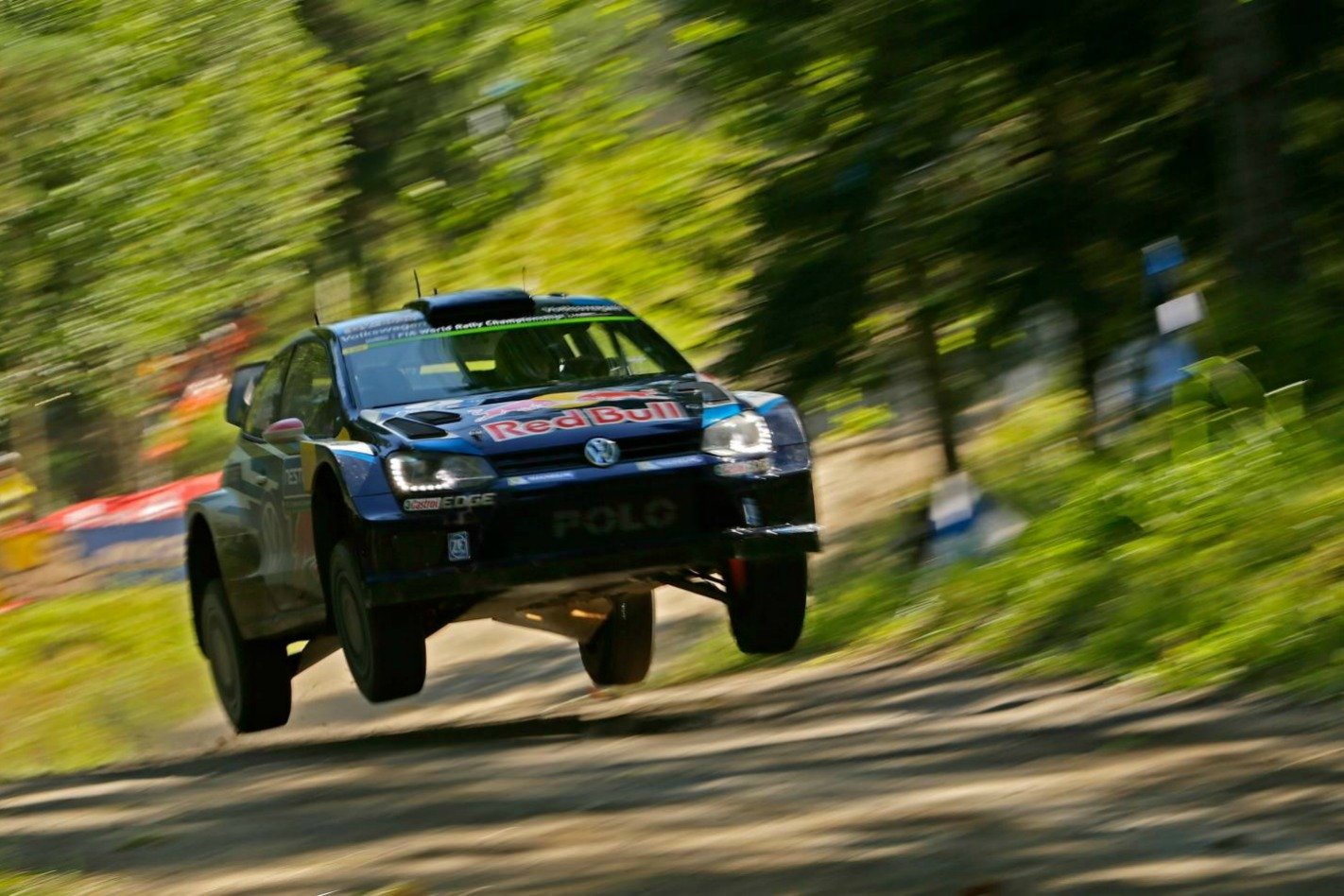
Sebastien Ogier
2015 position – 1st
Ogier’s 2015 season was one of the greatest efforts in motorsport history. The running order rules were essentially changed to stop him winning, yet he absolutely dominated. He’s operating on a completely different level to every other rally driver at the moment so is a virtual shoe-in for a fourth straight driver’s title.
Jari-Matti Latvala
2015 position – 2nd
At his best he’s brilliant, but those days were much too few and far between in 2015. The likeable and over-analytical Finn is promising greater maturity and newfound consistency in 2016, but we can’t help but feel he’d be better off playing to his strengths and driving every stage like his hair is on fire. Will win rallies, but the championship?
Andreas Mikkelsen
2015 position – 3rd
The monkey came off Mikkelsen’s back in 2015 when he won his first WRC rally, albeit thanks to Ogier’s last-stage crash in Spain. Improved his pace, but still needs to find a little extra to run consistently at the front. Will the change from long-time co-driver Ola Floene have an effect?
Hyundai
2015 position – 3rd
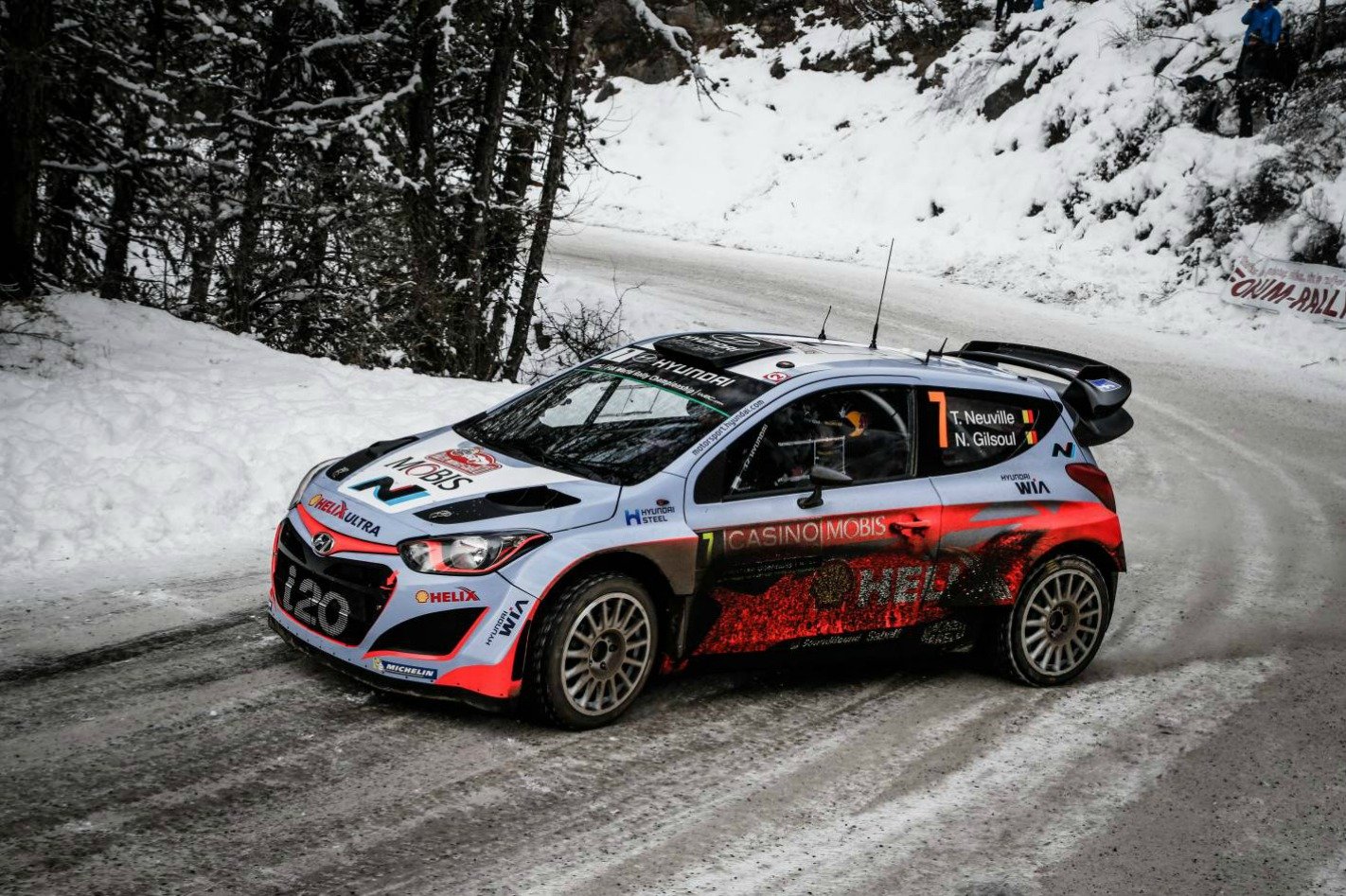
Thierry Neuville
2015 position – 6th
Had a torrid second half of 2015, though still led the Hyundai team on the points table. Lost motivation when Hyundai delayed the new car, so has no excuses now. If the Neuville of 2014 is back, he’ll be Ogier’s closest challenger.
Hayden Paddon
2015 position – 9th
The sensation of 2015, can the flying Kiwi continue his meteoric rise? All the signs are there: Paddon has a three-year Hyundai contract in his pocket, tireless work ethic and a fierce desire to be the best. Still lacks the experience of his Hyundai team mates, so will have to rein in the urge to be fastest on every rally. No reason he can’t win a rally or two in 2016.
Dani Sordo
2015 position – 8th
Don’t underestimate the Spaniard. Brilliant on tarmac and capable of blinding speed on gravel when the mood takes him (Day 1 in Australia, for example), the experienced Sordo will score plenty of reliable points and could make the podium, especially on the black stuff. A win is an outside possibility.
M-Sport
2015 position – 4th
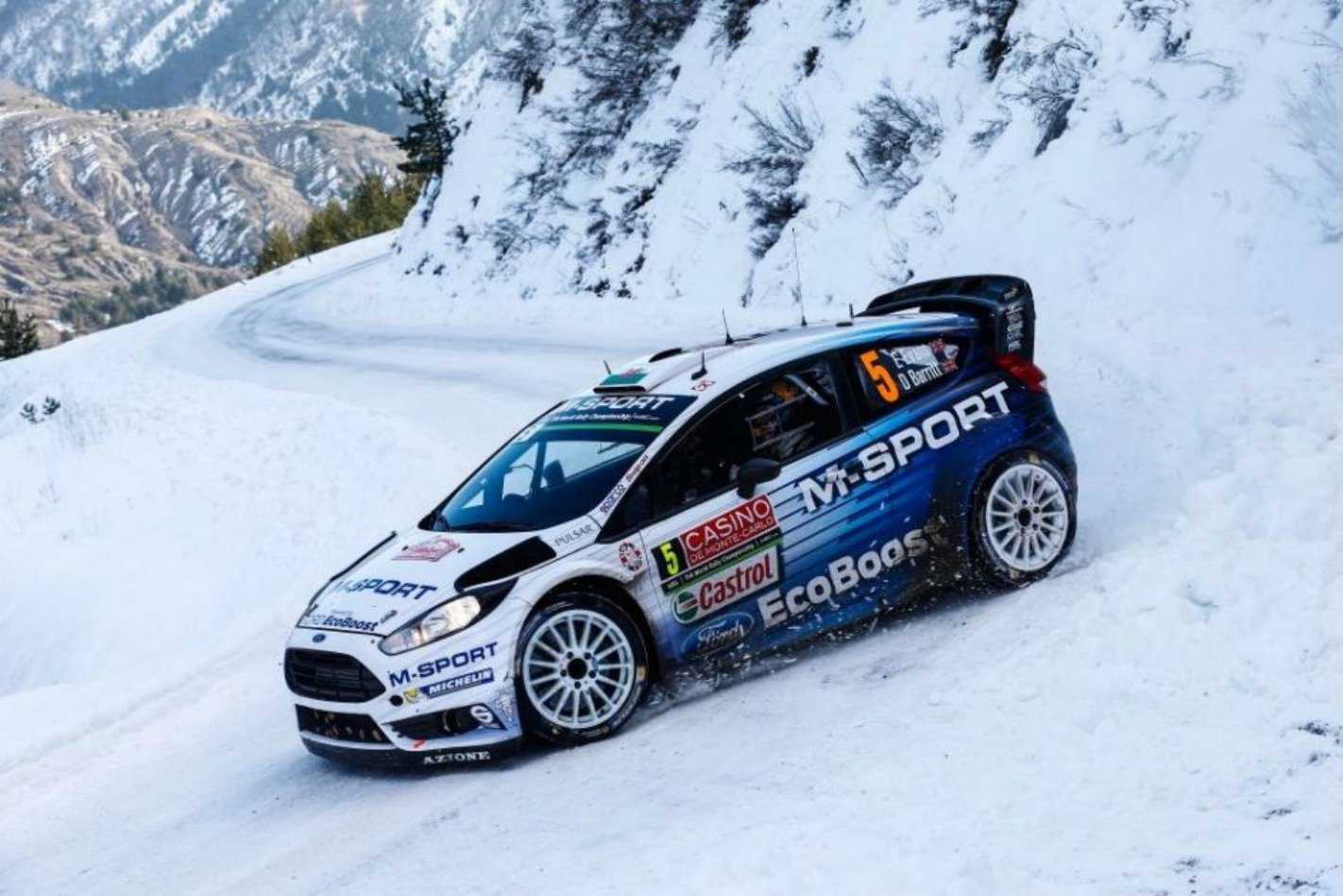
Bereft of manufacturer money, M-Sport is unlikely to compete at all 14 rounds. Last year was a disappointment and Malcolm Wilson wasted no time in making sweeping changes, luring back former Ford man Mads Ostberg and promoting French newcomer Eric Camilli. Still the angriest-sounding car in the championship.
Mads Ostberg
2015 position – 4th
Best of the non-VWs in 2015 but it was a position achieved through consistency rather than outright speed. Now freed of the need to score championship points, Ostberg is promising a maximum attack approach in 2016. The Norwegian is now a very experienced campaigner and the Fiesta has shown flashes of speed, so look for him at the front in Sweden.
Eric Camilli
2015 position – N/A
The great unknown. Camilli is a relative newcomer to the world of rallying but Malcolm Wilson is adamant he’s a potential future champion. Has looked incredibly impressive in pre-Monte testing, however has virtually no knowledge of any of the rallies and the step up to WRC pace is a big one. A couple of top five finishes and no big accidents will be a successful year.
Ott Tanak
2015 position – 10th
Has landed on his feet after being demoted from the main M-Sport squad thanks to tyre manufacturer DMACK offering the mercurial Estonian a full 14-round program. The rubber isn’t a match for the Michelins of the main teams which will slow him a little, but there’s no-one more committed in the WRC.
Robert Kubica
2015 position – 12th
Except, perhaps, for former F1 star Robert Kubica. As a result of the horrific injuries he sustained in his 2011 rallying accident Kubica essentially drives one-handed, which explains his fairly frequent off-road excursions. Sadly, Kubica only currently has the funding in place to compete in Monte Carlo and is likely to return to circuit racing.
Lorenzo Bertelli
2015 position – 29th
The Prada heir mostly made headlines in 2015 for complaining about various rally organisers (not always without justification), but money talks and the F#$&matie (our censorship) team is back for every rally bar China in 2016. Will spend the year a few minutes off the ultimate pace on the fringes of the top 10.
Citroen
2015 position – 2nd
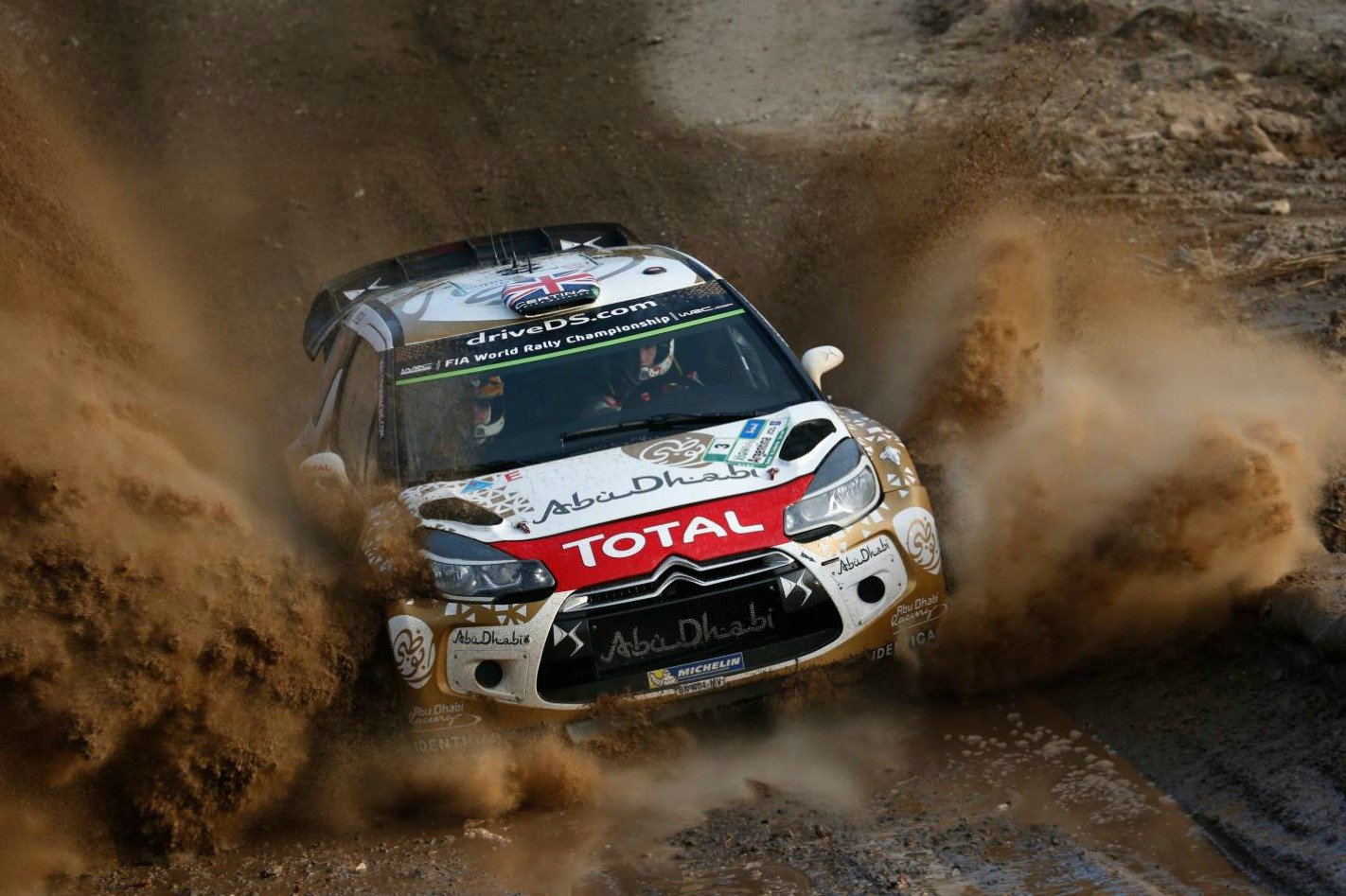
A gap year for the French team, with a part program run by PH-Sport to allow the drivers to keep their eye in while the factory outfit (including all the formerly distracted WTCC engineers) concentrate on creating another dominant Citroen for the new regulations in 2017. The last time Citroen took a sabbatical, it won the next six world titles straight.
Kris Meeke
2015 position – 6th
Finally, some career certainty for the Irishman. Newfound consistency to go with his undoubted speed in the last quarter of 2015 convinced Citroen he was the man to lead them into the new era. It’s a clever choice; Meeke isn’t just fast, he’s a qualified engineer who’s handled Citroen development work for much of the last decade. Will be spotted on the podium in 2016, too.
Stephane Lefebvre
2015 position – 19th
Citroen’s latest flying Frenchman was thrown into the deep end towards the end of 2015 and swam more than he sank. The learning curve will continue in 2016 with a limited program but as long as he doesn’t throw it off the road will probably end up in the second C3 come 2017.
Craig Breen
2015 position – N/A
An unexpected choice, but a deserved opportunity for the gutsy Irishman. Breen has won at every level, including WRC Academy, WRC2 and ERC, so WRC is the next logical step. Experience at this level is quite limited, but like Lefebvre, if he keeps his nose clean further opportunities are likely to arise in 2017.
Khalid Al-Qassimi
2015 position – 13th
The man with the money behind Citroen’s 2016 campaign. Only scheduled to appear on a handful of rallies, picking and choosing his favourites, but deserves credit for keeping the WRC entry lists looking healthy. Quite a spectacular driver, though is likely to struggle to crack the top 10, outpaced by not only the WRC field but also the front-running WRC2 cars.
When Nissan announced the GT-R’s engine contained ‘Plasma infused bores’ in 2008, it sounded like reality had caught up with science fiction.
What this referred to, though, was a process of coating the cylinder bores of an engine block with a special material melted within a gas made from an electric spark. High-tech, yes, but why was it a performance tool for the GT-R?
Well, when weight-saving measures were in their infancy cylinder blocks were made from iron, a material praised for its sturdiness. But as engineers became increasingly desperate to find areas where weight could be zapped, the iron block was shown the door.
Then entered cast aluminium blocks. Aluminium achieved the weight savings needed, but also presented a problem – aluminium pistons couldn’t run in an aluminium bore as the friction would be too high. The solution figured was to fit thin iron liners pushed into the aluminium block.

Originally developed for motorcycle engines, Porsche trialled it in its 917 racers before applying it to road car power plants. It involved spraying a Nickel-Silicon Carbide plating on to engine cylinder bores.
This eliminated the liner, allowing the block to remain strong (it didn’t need to have as much parent material cut out of it), and allowed Porsche to bore out the cylinders, increasing displacement.
Nissan shone the lime-light back on similar technology when it announced the ‘Plasma Infused Bore’ (or ‘Plasma transferred wire arc thermal spraying’) process used in its R35 GT-R, which sprays the VR38’s aluminium bores with a thin (0.15mm, compared to traditional cast liners of 2.6mm) coating of iron that is super tough. It also shaved 3kg from the 3.8-litre twin-turbo V6’s weight.
Furthermore, not only can ‘wire-arc’ spraying save weight, it permits the use of a ‘closed deck’ design. This means there are no open channels in the top of the block to accommodate iron liners, which increases strength dramatically.
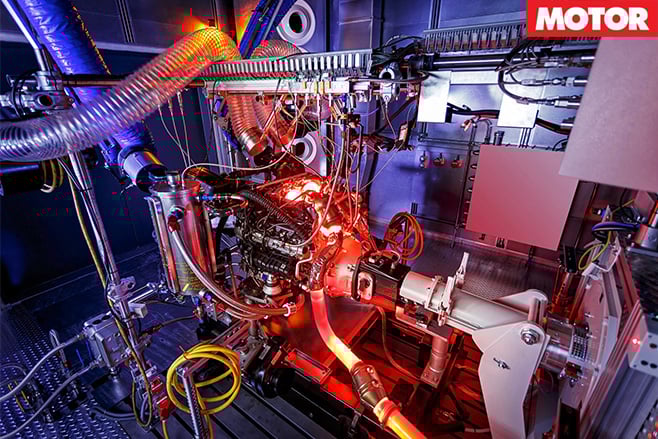
With the M156 Mercedes debuted ‘twin-wire arc’ spray coating, a process which it considers superior to other wire-arc systems and neatly dubbed ‘Nanoslide’ technology. It’s also made its way into the firm’s F1 engines.
But is this just the stuff of supercars? While ‘wire-arc’ coating is complicated and expensive, it’s actually more cost-effective overall. And if we also consider that it improves cylinder sealing and friction loss – a win for efficiency – we should hope to see it more widespread in future.
BORED YET? In Mercedes-Benz’s case, ‘Twin wire-arc’ technology melts a mixture of iron/carbon wires in an electric arc that creates a mist. It then literally sprays this onto the cylinder walls.
CALM & CONTROLLED It might sound relatively simple but the spraying requires tight control of current, voltage, wire feed and gas flow to achieve an ‘ultra-fine nano-crystalline coating’.
NICE & POLISHED Once the coating is applied, a whole lot of time is taken honing the surface to achieve what looks like a mirror finish to the naked eye.
OILED UP Yet, while it may look like a mirror finish, there are tiny microscopic pores exposed by the honing. These pores trap lubricating oil and keep the piston cushioned in the bore.
BIG LOSER Mercedes claims that, compared to grey cast-iron cylinder liners, its Nanoslide technology reduces ‘mechanical friction losses’ by up to 50 per cent.
ARCING UP
The Alfa Romeo 4C was named the winner of the WhichCar Style Award at the Australian Motoring Awards 2016.
The Australian Motoring Awards 2016 was held on Wednesday, 20 January at the Crown Casino Palladium in Melbourne.
Previously held under the title of Wheels Car Of The Year, this year the awards night also included the announcement of 4X4 Of The Year, Motor Performance Car Of The Year and the very first WhichCar Style Award. The awards were presented in front of the automotive industry’s most influential people.
The Alfa Romeo 4C was crowned WhichCar’s most stylish car for 2016 and the award was presented to Fiat Chrysler Australia’s manager of PR and Communications, Rachel Reed.
“We are very pleased with the outcome of the WhichCar Style Award and the response we had both through the online poll voting system and our judging panel. While all four finalists were very stylish and received acclaims from our judges, it was the Alfa Romeo 4C that stole the spotlight.
“At the end of the day, its lovely detailing, X factor appeal and innovative design made it a worthy winner,” WhichCar’s Lifestyle Editor, Anna Kantilaftas, said.
FCA Australia President and CEO, Pat Dougherty, said: “We are incredibly proud of the Alfa Romeo 4C and the many awards it has won both in Australia and around the world. It’s a hugely exciting time for the Alfa Romeo brand, and even more so because the stunning 4C and 4C Spider are just the beginning of that story. Watch this space, as there’s a lot more to come from this iconic and storied brand.”
The Ford Everest received the award for 4X4 Of The Year while Motor presented its gong for Performance Car Of The Year to the Porsche 911 GT3.
For the main event, Mazda walked home with smiling faces after Wheels editor Glenn Butler announced the Mazda MX-5 the winner of Wheels Car Of The Year. It’s the third win for the popular sports car after also receiving the award in 1989 and 2005.
For more photos from the event, click on the gallery above.
