Tables scroll horizontally to reveal more columns.
Half a decade ago when it launched, the Kia Picanto GT wasn’t anything particularly special. Australia’s car market is a much more complex place than it was in 2017, though, with SUVs growing their market share by a whopping 15 per cent in that time.
Sure, adding efficient hybrid powertrains to big seven-seat SUVs (that rarely have more than two passengers on board) and electrifying utes (using 229kWh batteries) helps, but in a world in desperate need of help, the ‘bigger is better’ attitude feels out of step. The real solution is downsizing and simplifying.
The Picanto is a case in point, built to a tried-and-true city car recipe: five doors, a decent boot, enough cabin space and torsion beam rear suspension, squeezed into a compact 3.6-metre length. The tested GT spices things up with a turbo-petrol engine and firmer chassis while retaining an efficient 5.2L/100km ADR combined economy rating.
In 2023, the Picanto GT’s points of difference are what made it so normal at launch: compact size and space efficiency. And yet, when the micro hatch is updated next year the GT will be dropped – was that a good planning move?

JUMP AHEAD
- How much is it, and what do you get?
- How do rivals compare on value?
- Interior comfort, space and storage
- What is it like to drive?
- How much fuel does it use?
- How safe is it?
- Warranty and running costs
- VERDICT
- Specifications
How much is it, and what do you get?
For its nationally recognised $22,890 drive-away price, the Picanto GT represents sharp value in today’s market full of expensive crossovers.
It’s equipped with an 8.0-inch touchscreen featuring DAB+ digital radio, wireless Apple CarPlay and Android Auto connectivity, with LED daytime running lights, halogen headlights and 16-inch alloy wheels as well as a sporty GT body kit to let the world know you bought the expensive Picanto.
One snag: it’s manual only. This is a shame because the five-speed stick shift will rule the peppy GT out for some buyers.

| 2023 Kia Picanto GT features | |
|---|---|
| Halogen headlights | 16-inch alloy wheels |
| GT body kit | Vinyl upholstery |
| Air conditioning | 4.2-inch TFT information display |
| 8.0-inch touchscreen | DAB+ digital radio |
| Wireless Apple CarPlay/Android Auto | Leather-appointed steering wheel |
| 4-speaker sound system | LED DRLs |

How do rivals compare on value?
Officially classified as a ‘micro’ car in Australia, the Picanto owns its segment with an 80+ per cent share month-on-month. Its only remaining rival is the 15-year-old Fiat 500.
As the Picanto is a relatively spacious five-door hatch, you could also consider a Hyundai Venue, Kia Rio, Mazda 2, MG 3, or Suzuki Swift. All are available in a similar price sphere, and if space and low price are what you crave, then these are better options – though none has the Picanto GT’s sporty spice.

Interior comfort, space and storage
The leather-appointed steering wheel, racy red accents, and aluminium pedals give the Picanto GT a sporty edge inside.
It’s not the height of taste but with a large glasshouse, the Picanto’s cabin is airy and – for the price – of respectable material quality.
Although not cutting edge, the Picanto’s white-on-black analogue dials are legible, and the 4.2-inch TFT screen provides helpful information including fuel economy, vehicle information and digital speed read-out.
The central 8.0-inch touchscreen is the highlight, offering sophisticated wireless smartphone mirroring for both Apple and Android products – something not even Kia’s most expensive EV6 GT matches. It worked faultlessly on our test, so it seems Kia has ironed out earlier gremlins.

It lacks satellite navigation, so you have to rely on your phone’s applications for wayfinding. The four-speaker sound system is weak, but the inclusion of digital radio is welcome, and the Picanto’s HVAC controls are pleasingly conventional.
If the Picanto GT struggles in any particular area, it’s the flat and unsupportive seats. The driving position is typically compromised, and the manual adjustment rudimentary. The black vinyl upholstery gets hot in the sun, too – we’d prefer cloth.
That compromised driving position does equate to a usable back seat. The rear quarters are still not great with no air vents, charging ports, armrest or space for six-foot-plus riders, but for most people, they’re more than adequate for short trips. In fact, the back of a Picanto GT is a comfier place than a physically larger Hyundai Venue.

Storage in the Kia Picanto
Below the control stack, the Picanto has great incidental storage. There’s a tray for odds and ends with a mezzanine section above – perfect for smartphones – within easy reach of the included USB-A and 12-volt sockets. A central armrest provides a modest amount of covered storage, while the Picanto also features two cup holders and door bins that fit a 700ml bottle.
On paper, a 255L boot capacity appears rather small, but given the Picanto’s compact dimensions it’s very usable – bigger than a Toyota Corolla hatch (217L), and Kia has managed to squeeze a space-saver spare under the boot floor, too.
Don’t delude yourself that a family of four and luggage could do a week away in a Picanto, but for a couple, or trio, the space is adequate. With the rear seats folded, longer items including bicycles or flat-pack furniture can be stored in the little Picanto.

What is it like to drive?
It’s almost refreshing to pull a physical key fob from your pocket, press the little unlock symbol, get in, depress the clutch and brake then turn a key to start the Picanto GT.
The Picanto GT jumps into life and its 998cc turbo-petrol three-cylinder settles into an off-beat idle. It’s not a smooth or refined engine below 2500rpm but you don’t expect that from a three-banger.
Once you have some revs on the dial the motor’s operation is smoother, but it’s no peach. Although paltry on paper, the Picanto’s 172Nm is available between 1500-4000rpm so – assisted by a lithe 1012kg kerb weight – the GT feels plenty nippy around town in second and third gears. Not much point in taking the needle to redline, though, as the mighty 74kW peak comes at just 4500rpm.

The Picanto GT’s five-speed manual has a long and light throw with an easy (if numb) clutch pedal, so it’s an easy ’box around town, but there’s no automatic to broaden appeal. And that’s a shame because the asthmatic 62kW/122Nm 1.2-litre petrol four-banger and four-speed slushbox pairing in the GT-Line automatic is not inspiring.
Driving the Picanto GT on the freeway using cruise control, its flexible three-pot means you can leave the shifter in fifth as you tango with tempo changes in traffic. Above 100km/h, though, the tyre roar and engine noise crescendo to a level that the four-speaker sound system can’t overcome.
With narrow tracks, a short wheelbase and tall stature, the Picanto GT can be a tiring partner on the freeway as it bobbles over bumps and you’re forced to bicker with crosswinds. It’s very at home in town though; visibility is an underrated trait in cars (with blind-spot monitoring and reverse cameras it’s almost been forgotten), and the Picanto’s fishbowl glasshouse makes it wieldy and supremely easy to park.

The GT’s ride can be choppy over speed humps and expansion joints, especially the rear end (I wouldn’t want to travel in the back seat for too long).
Above 50km/h the Picanto’s bobbing calms down and, for such a small car, there’s little noise from the front struts or rear torsion beam, though there were persistent rattles from the passenger’s A-Pillar trim and dash in our test vehicle.
Along testing twisty roads, the Picanto doesn’t roll as much as you might expect and the front end is pretty pointy initially, with encouraging off-throttle adjustability available. The average 195/45R16 Nexen NBlue tyres don’t have anywhere near enough bite to lean on the front end properly. A grippier set of boots would help address the front-end-limited handling.
The Picanto GT’s chassis is not as talented or nuanced as a true hot hatch, like the Renault Clio Sport (2001-2006). That said, with the Picanto’s petite proportions and eager handling it’s plenty more rewarding to drive than an equivalently priced SUV.

How much fuel does it use?
The Kia Picanto GT uses 5.2L/100km on the combined ADR fuel efficiency cycle.
In a rare occurrence, we managed to match that figure exactly, on our three-hour test loop.
Continuing over a week of testing with more urban and suburban driving, that number climbed to 6.1L/100km, which is still very reasonable for an engaging hatchback.
The Picanto GT will accept regular 91 RON unleaded petrol or an E10 blend at the bowser and features a rather dinky 35-litre fuel tank.

How safe is it?
The Kia Picanto was awarded four stars in 2017 ANCAP safety testing.
The Picanto is equipped with autonomous emergency braking and forward collision warning, but the camera-based system is unable to accurately detect pedestrians, cyclists, or crossing traffic.
A reversing camera, rear parking sensors, stability control, and six airbags round out the Picanto’s list of safety features. It scored 87 per cent in adult occupant protection, 64 per cent in child occupant protection, 54 per cent in pedestrian protection and 47 per cent for safety assist systems.

Warranty and running costs
Kia’s seven-year, unlimited-kilometre warranty is still one of the most complete new-car guarantees in Australia, and it covers the Picanto GT.
Maintenance is due every 12 months or 10,000km, and Kia caps service costs for seven years or 70,000km. Five years will cost you $1957, and seven years $3158.

VERDICT
While it’s no Peugeot 205 GTi, Renault Clio Sport, or Volkswagen Golf GTI, the Picanto GT is a bucket load more fun than other cars in its price range.
That peppy three-cylinder is brisk and alert, and the gruff sound adds more personality than terseness (just). It’s fun, and eggs you on to drive the snot out of the Picanto everywhere you can.
A few question marks remain, such as its four-star ANCAP rating, lack of adaptive cruise control, and the fact it’s manual only.
But the Picanto GT is cheap, well-packaged, and a lot more efficient in the real world than an equivalent SUV and driving one again makes us question why Kia’s dropped it for the 2024 update.
If you’re looking at a Hyundai Venue or Kia Stonic, do yourself a favour and sample the Picanto. It might not look as cool, but it’s a better car.

| 2023 Kia Picanto GT specifications | |
|---|---|
| Price | $22,890 drive-away |
| DRIVETRAIN | |
| Engine | inline 3 cyl, DOHC, direct-injected, CVVT, 12v, 998cc turbo-petrol |
| Layout | front engine, transverse, FWD |
| Power | 74kW @ 4500rpm |
| Torque | 172Nm @ 1500-4000rpm |
| Gearbox | 5-speed manual |
| CHASSIS | |
| L/W/H/Wu2013B | 3595/1595/1485/2400mm |
| Weight (claimed) | 1012kg |
| Boot | 255L |
| Fuel/tank | E10 or 91 RON / 35L |
| Economy (tested) | 5.2L/100km |
| Suspension | Front: struts, stabiliser bar. Rear: coupled torsion beam |
| Steering | rack-assisted electric power steering |
| Front brakes | 256mm ventilated rotors, single-piston floating caliper |
| Rear brakes | 234mm colid rotors, single-piston floating calliper |
| Tyres | Nexen N Blue |
| Tyre size | 195/45R16 |
| SAFETY | |
| ANCAP rating | 4 stars (2017) |
| 0-100km/h | 10.5 seconds (estimated) |
Are electric cars expensive to maintain?
Electric vehicles have fewer parts than a conventional petrol or diesel car, so they should cost a lot less to service and maintain, right? Here’s a guide to just what that really means.
Snapshot
- EVs donu2019t need to contend with oil changes, spark plugs, belts, etc.
- EVs still need routine maintenance for a range of u2018consumablesu2019
- Some car brands require similar servicing intervals and costs to ICE
According to Forbes [↗], an EV drivetrain contains around 20 moving parts, in contrast to traditional internal combustion engine (ICE) vehicles that typically have more than 2000.
As vehicles move further towards ‘computers on wheels’, which parts of our cars will still need physical servicing? What’s required with servicing an EV and is it cheaper than maintaining an ICE or hybrid car?
JUMP AHEAD
- ?️ Is EV servicing really better than ICE?
- ? How long do batteries last?
- ? Time to make the electric switch?

?️ What does EV servicing include?
The good
- EVs have significantly fewer parts required to maintain, theoretically more reliable
- Dedicated EV-designed tyres reduce the load with more durable materials
- Regenerative braking limits brake pad wear on all EVs
- Some parts, such as transmission fluid and brake pads, have a longer lifespan depending on usage
The not so good
- EVs still need servicing since they share many u2018consumablesu2019 with ICE that need routine attention
- Heavier weight and rapid torque can wear out tyres faster, when driven harder
- Minimal use of physical brakes can cause disc corrosion, potentially requiring a replacement
Similar to petrol and diesel vehicles, electric cars require routine maintenance on a number of electronics and consumable parts.
| Shared EV and ICE maintenance parts | |
|---|---|
| Electronics systems, software and sensors (including infotainment, lighting, passive and active safety systems, etc.) | Transmission gear fluid and parking brake |
| 12-volt auxiliary electronics battery | Power steering fluid and rack |
| Rotating tyres, checking tyre pressures, tread depth and alignment | Windscreen glass, wiper arms and blades, washer fluid |
| Brake fluid, pads, discs and callipers | HVAC system and air cabin filter |
| Suspension components (including joints, shock absorbers, springs, etc.) | Door hinges, latches, nuts and bolts |

While the above focuses on the shared consumables with ICE vehicles, electric vehicles’ critical drive unit systems also need attention from time-to-time.
| EV-only maintenance parts | |
|---|---|
| High-voltage battery pack coolant (replacement may not be required depending on the manufacturer) | Cooling fans and fluids |
| Battery pack health diagnostic | Charge port condition |
| Battery management system (BMS) software | Exterior pedestrian warning sound system (if equipped) |

? Is EV servicing cheaper?
The good
- EVs are generally cheaper to service
- Year/distance intervals sometimes longer than ICE
- Tesla doesn’t require frequent servicing, costs reportedly minimal
The not so good
- For some, the savings are not as significant u2013 despite longer intervals
- Some car brands set similar EV servicing prices compared to ICE
If electric cars have fewer parts to service, does that mean checkups are less frequent and cheaper than ICE vehicles?
Theoretically, it should – but it depends on the car manufacturer.
A growing number of brands, such as MG, Hyundai and Polestar, employ longer servicing intervals at every two years with farther distance caps, while BYD, Peugeot and Fiat still need logbook checkups every one year but set longer distances.
Meanwhile, Tesla, BMW and Mini use a ‘condition-based’ servicing scheme that only alerts the driver when specific routine maintenance tasks are needed, based on the vehicle’s sensors and driving usage.
Others such as Kia, GWM and Cupra require similar one-year and distance-travelled requirements as ICE models, but are slightly cheaper.
Some premium brands, including Genesis, Audi and Lexus, offer free servicing for a limited period to sweeten the EV transition.
It’s often a little cheaper to service electric cars, but some EV models are priced on par with their ICE equivalent overall – even with longer intervals in place.

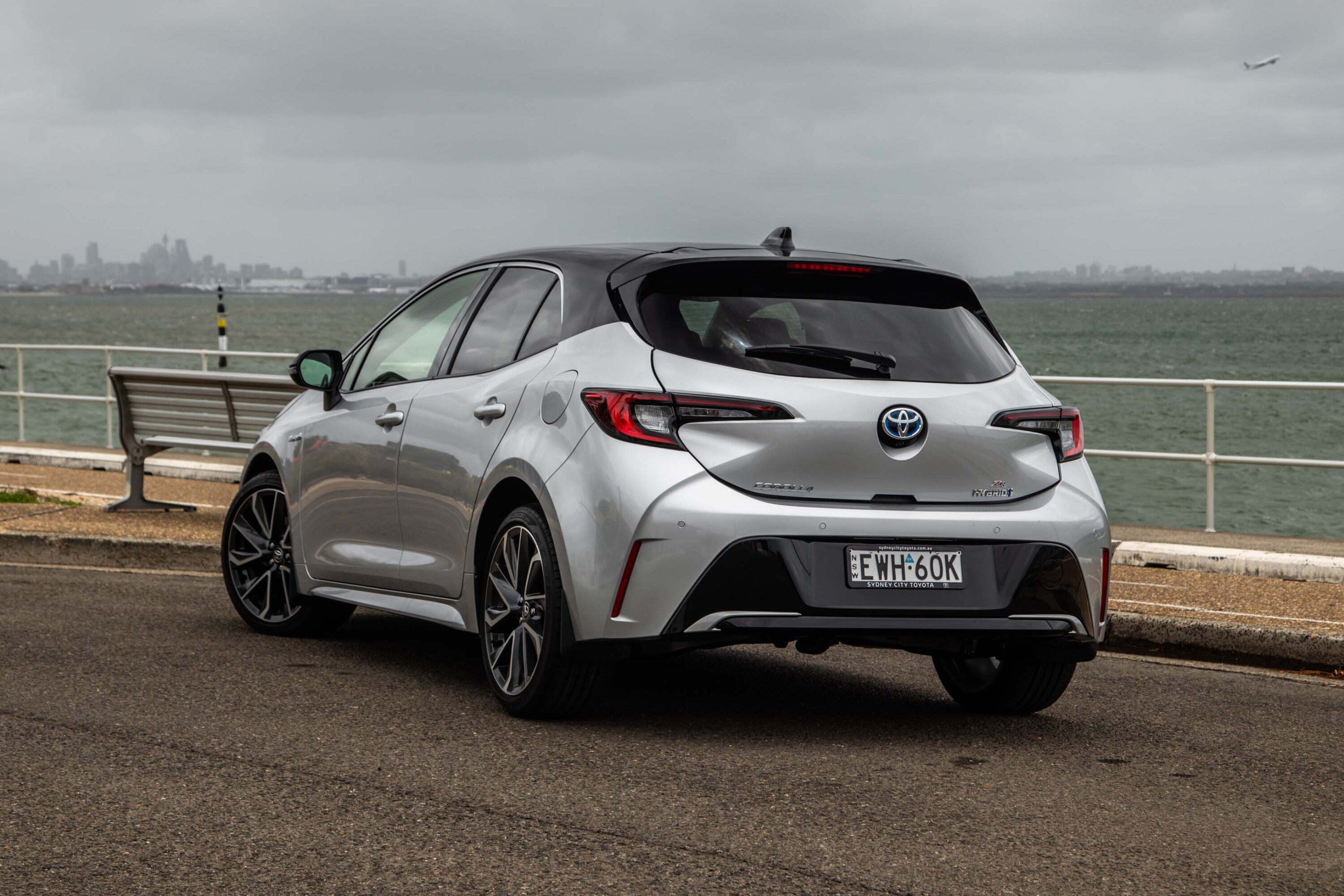
MG 4 vs Toyota Corolla Hybrid
| Servicing interval (whichever occurs first) | 2 years/40,000km | 4 years/80,000km | 6 years/120,000km | Totals |
|---|---|---|---|---|
| MG 4 Excite 51 | $296 | $907 | $296 | $1499 |
| Servicing interval (whichever occurs first) | 1 year/15,000km | 2 years/30,000km | 3 years/45,000km | 4 years/60,000km | 5 years/75,000km | 6 years/100,000km | Totals |
|---|---|---|---|---|---|---|---|
| Toyota Corolla ZR Hybrid hatch | $245 | $245 | $245 | $245 | $245 | $380 | $1605 |
Despite the Toyota Corolla’s lower-than-typical capped-price servicing, the MG 4 electric hatch is $106 cheaper to maintain overall after six years/100,000 kilometres of driving.
The MG 4 benefits from longer servicing interval requirements and averages $500 per checkup for the first three visits.
Meanwhile, the petrol-electric Toyota Corolla Hybrid has cheaper capped prices each service, averaging $268 per service for the first six visits.
In the end, the electric car is nearly seven per cent cheaper to maintain – which isn’t a significant saving.

BYD Atto 3 vs Mazda CX-30
| Servicing interval (whichever occurs first) | 1 year/20,000km | 2 years/40,000km | 3 years/60,000km | 4 years/80,000km | 5 years/100,000km | Totals |
|---|---|---|---|---|---|---|
| BYD Atto 3 Standard Range | $189* | $370* | $189* | $447* | $189* | $1384* |
| *Standard servicing plan tier. An initial free-of-charge three month/5000km service is required. | ||||||
| Servicing interval (whichever occurs first) | 1 year/10,000km | 2 years/20,000km | 3 years/30,000km | 4 years/40,000km | 5 years/50,000km | Totals |
|---|---|---|---|---|---|---|
| Mazda CX-30 G25 Astina FWD | $341 | $388 | $341 | $388 | $341 | $1799 |
Tables scroll horizontally to reveal more columns.
The popular BYD Atto 3 small electric SUV is $415 cheaper to service overall after six years/100,000km than the Mazda CX-30 in G25 engine guise.
The Atto 3 has longer distance intervals than the CX-30 and averages to $277 per checkup after the first five visits. A cheaper one-year/12,000km light service plan is optional for shorter-distance drivers.
The Mazda CX-30 small SUV averages $360 per service after the first five visits.
Overall, the similarly-priced BYD electric SUV is 23 per cent cheaper to maintain. It’s worth noting that the more affordable BYD Dolphin electric hatch has identical capped-price servicing prices, but can’t be optioned with the light plan.

Tesla Model 3 vs BMW 3 Series
| Servicing interval (whichever occurs first) | 5 years/80,000km |
|---|---|
| Tesla Model 3 RWD | N/A u2013 Condition-based |
| BMW 320i | $2150* |
| *Service Inclusive Basic pre-paid package, condition-based servicing otherwise | |
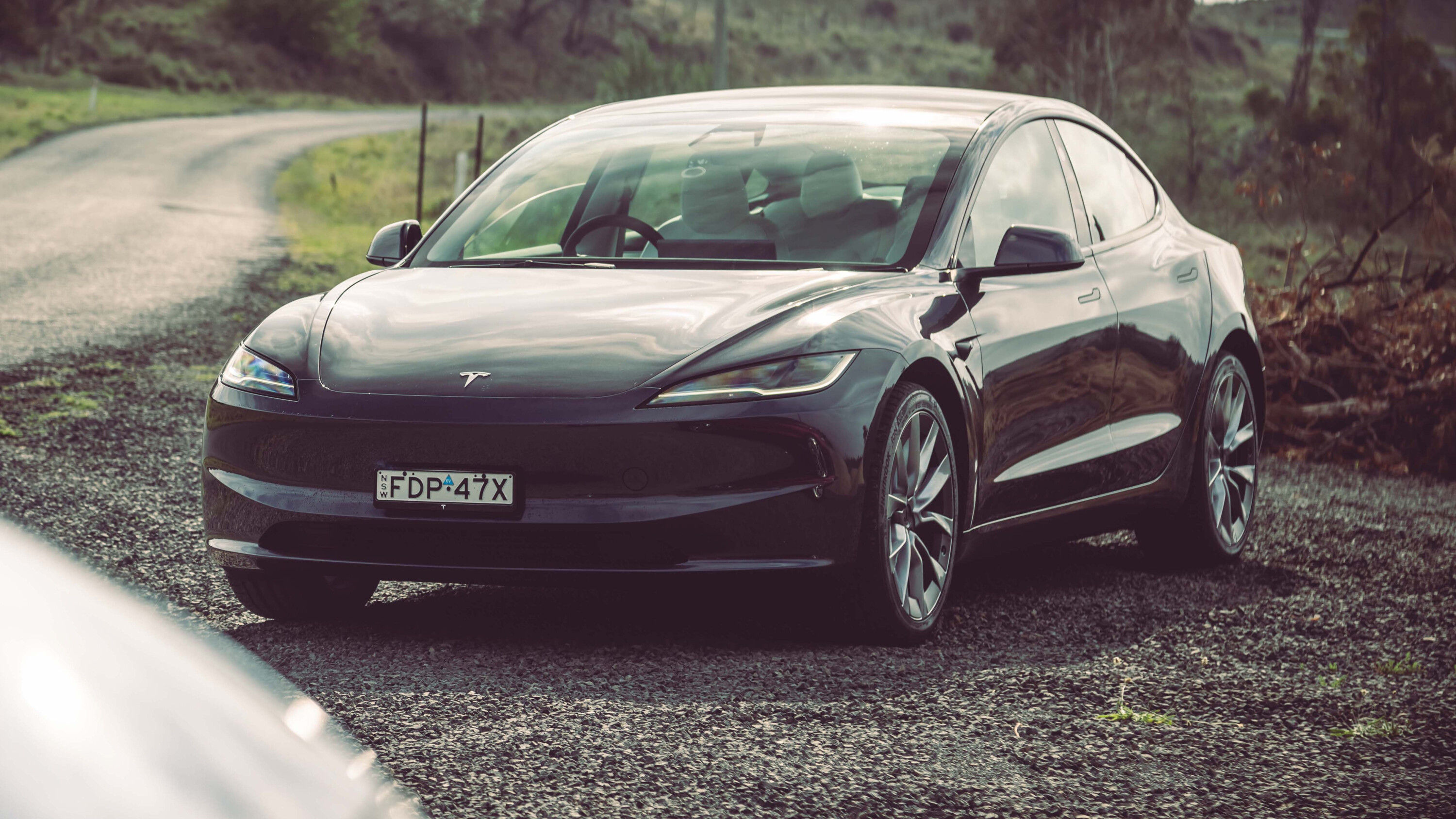
Both the Tesla Model 3 and BMW 3 Series small premium sedans uniquely adopt a condition-based servicing program.
This means the vehicle alerts the driver when specific routine maintenance tasks are required, depending on usage.
Tesla recommends a range of routine maintenance tasks here [↗], while BMW offers the option of a pre-paid servicing package.
The former has reportedly been relatively affordable to maintain and replace parts via Tesla.

Hyundai Ioniq 5 vs Tucson diesel
| Servicing interval (whichever occurs first) | 2 years/30,000km | 4 years/60,000km | 6 years/90,000km | Totals |
|---|---|---|---|---|
| Hyundai Ioniq 5 Techniq AWD | $570 | $1090 | $570 | $2230 |
| *An initial free-of-charge 1.2 month/1500km service is required. | ||||
| Servicing interval (whichever occurs first) | 1 year/15,000km | 2 years/30,000km | 3 years/45,000km | 4 years/60,000km | 5 years/75,000km | 6 years/90,000km | Totals |
|---|---|---|---|---|---|---|---|
| Hyundai Tucson Highlander 2.0D AWD | $395 | $395 | $450 | $550 | $395 | $665 | $2850 |
| *An initial free-of-charge 1.2 month/1500km service is required. | |||||||
Tables scroll horizontally to reveal more columns.
Despite higher-than-typical costs, the Hyundai Ioniq 5 EV is still $620 cheaper to service than the diesel-powered Tucson medium SUV after six years/90,000km.
While the 2023 Ioniq 5 now features longer servicing intervals, it is now more expensive than the 2022 model, which required conventional one-year/15,000km visits. After the first three checkups, it averages a pricey $743 to service the electric SUV.
In comparison, the Tucson with its optional diesel engine averages $475 per service after the first six visits.
Despite lower average maintenance costs per checkup, the Ioniq 5’s servicing demands are less frequent and is nearly 22 per cent cheaper to maintain after six years/90,000km.

Mercedes-Benz EQB vs GLB
| Servicing interval (whichever occurs first) | 3 years/75,000km | 4 years/100,000km | 5 years/125,000km |
|---|---|---|---|
| Mercedes-Benz EQB 250 | $1910* | $2625* | $3200* |
| Mercedes-Benz GLB 250 | $3170* | $4150* | $5200* |
| *Pre-paid service plan pricing. Intervals are set every 1 year/25,000km for both models. | |||
Mercedes-Benz doesn’t detail capped-price servicing costs, but the midsize electric EQB is between $1260 to $2000 cheaper than the petrol-engined GLB based on optional pre-paid plans.
This equates to around $637 to $657 per visit on average for the EQB, depending on which pre-paid service plan owners choose.
In contrast, it typically costs $1038 to $1057 per service on average for the GLB.
The EV version of these closely related models highlights a clear advantage by being between 36 to 40 per cent cheaper to maintain overall than the petrol-powered equivalent.
Expect maintenance costs to theoretically be slightly higher if not using pre-paid servicing packages.

?️ Is EV servicing really better than ICE?
Electric cars still need servicing, although it’s not as laborious, generally not required as frequently, and typically cheaper than ICE vehicles.
Unfortunately, for some brands and models, EV servicing intervals are identical and the savings are negligible.
However, a growing number of independent technicians are being qualified to work on EVs, with dedicated certificate and apprenticeship courses already on offer. New ‘right to repair’ laws have also promoted greater transparency from car manufacturers for third-party workshops.
Ultimately, this will provide owners with more choice and increase competition to reduce maintenance costs.
And, since EVs host significantly fewer moving parts, they should theoretically be more reliable in the long run.

? How long do batteries last?
While EVs may be easier to service, battery longevity and degradation remains a key perceived concern. For more, check out our comprehensive guide below.
? Is it time to make the electric switch?
EVs are not for everyone (for now), but it is more than sufficient for the majority of Australians. The initial price hurdle, driving range, depreciation, sustainability, and battery safety remain key perceived and valid issues. For more, check out the links below.
Is it time to switch to an electric car?
Snapshot
- EVs are significantly cheaper to own than ICE over time
- Depreciation and insurance arenu2019t so EV-friendly
- There are valid concerns, but EVs are more than sufficient for most
It’s a hot-topic question.
Indeed, the growing interest in electric vehicles is being demonstrated by increasing sales – mainly led by the strong supply and value equation Tesla and BYD models – alongside new EV options reaching the Australian market that are driving down prices.
With more models to choose from and expanding national charging infrastructure, should your next car be all-electric?
Finally, for many buyers, the answer is probably “yes”… with some caveats.
JUMP AHEAD
- ?? Current state of EVs
- ? Purchase price & depreciation
- ? Running costs
- ? Insurance
- ? Cost of ownership
- ? Other EV concerns

?? The current state of EVs in Australia
So far in 2023, a total of 56,922 electric vehicles have been sold in Australia to the end of August.
That’s almost quadrupled compared to the same period last year – and is now the third best-selling powertrain behind petrol and diesel.
Yet, it’s still small bikkies in a total annual new car market of a million-plus – despite ongoing supply shortages and shipping delays.
Even with Tesla’s volume success with the Model 3 sedan and Model Y SUV, the market share of new electric car sales is still minuscule at around seven per cent.
None of this is especially surprising given, depending on your circumstances, there’s not too many ‘cheap’ EVs.
Times are changing though, with Chinese-made electric models, such as the MG 4, BYD Dolphin and GWM Ora electric hatches starting from below $40K, and MG ZS EV and BYD Atto 3 SUVs from around $50K.
It’s worth pointing out that traditional internal combustion engine (ICE) vehicles have crept up their starting prices in today’s inflated and supply-constrained market, alongside more standard features and safety equipment.
Therefore, the gap is narrowing or, in the case of the aforementioned models, on par with comparable petrol-powered models.
Even with increasing electricity and fuel prices, EVs still have the critical advantage of lower running costs.
Sourcing power from a household outlet is just more convenient if you adopt a charge-overnight regimen; it’s substantially cheaper on a per-kilometre basis than petrol and diesel.
Servicing is simpler, mostly more affordable and sometimes less frequent, too.

But which one makes more sense in the long term – petrol or electric? We’ve crunched the numbers in an attempt to settle this argument.
One of the most affordable electric SUVs on sale in Australia is the popular BYD Atto 3 Standard Range, which is priced from $48,011 before on-road costs and incentives. It’s in line with the high-spec Mazda CX-30 G25 Astina in front-wheel drive guise, which costs from $43,710 before on-roads as at the time of publication.
Both are five-door small SUV-styled crossovers, both are well-specified, and both aim to capture buyers who want practicality without choosing a medium SUV.

? Purchase price and depreciation
Snapshot
- The petrol SUV is cheaper to buy than the electric model (but not in all cases)
- EVs are currently harder hit by depreciation
- Depreciation tables could soon turn, fuel-powered cars to be seen as outdated
| 2023 Mazda CX-30 G25 Astina FWDu00a0 | 2023 BYD Atto 3 Standard Range | |
|---|---|---|
| Purchase price | $43,710 | $48,011 |
| Estimated trade-in resale value after five years | ~$29,000* | ~$25,000* |
| Estimated depreciation | ~34%* | ~48%* |
| *Minimum dealer trade-in value estimated and extrapolated from Redbook data. Assumes 15,000km to 25,000km driven per year. The figures in this story serve as a rough guide only since residual values fluctuate. | ||
From the outset, the petrol-engined small SUV has the advantage of $4301 saved (excluding on-road costs) before it’s even rolled into your driveway.
Why the discrepancy? All of those raw materials in its battery pack are quite expensive.
With its modest 49.92kWh usable pack, the BYD still needs lots of them – despite using the more affordable and less contentious lithium-iron-phosphate (LFP) cathode.

However, based on current Redbook data, while both SUVs have a similar resale value today, the BYD does take a harder depreciation hit than the popular Mazda.
That’s mainly because EV technology and the repairs market is still developing. BYD – including local distributor EVDirect – doesn’t have a long track record for reliability, and its perceived brand reputation is relatively nascent in Australia, too.
Over time, the depreciation tables could turn, with EVs becoming more mainstream and ICE cars seen as ‘outdated’ in the next five years – backed by government public policies.
It’s important to note that these are only rough guideline figures of how car dealerships assess reasonable values on traded-in vehicles.
Evaluations are based on the brand’s historical performance and demand in the new and used market. If you’re selling privately, the resale price may fare better.

? Running costs
Snapshot
- EVs are much cheaper to run, especially at home
- The more you drive, the more money you save u2013 despite rising electricity and fuel costs
- Servicing cost savings (or lack thereof) vary brand-by-brand
| Fuel/electricity running costs | 2023 Mazda CX-30 G25 Astina FWDu00a0 | 2023 BYD Atto 3 Standard Range |
|---|---|---|
| Per 100km | $13.20* | $4.35** |
| Per year (12,100km) | $1597* | $526** |
| After five years (60,500km) | $7985* | $2630** |
| *Assumes 94 E10 unleaded petrol at $2.00 per litre | ||
| **Assumes overnight home electricity rate at $0.30 per kWh (excludes charging losses, using solar energy, or any dedicated ultra-low charging tariff) | ||
According to the Australian Bureau of Statistics [↗], the average Australian drives 12,100km per year.
The Mazda CX-30 G25 Astina FWD has a claimed average combined fuel consumption of 6.6L/100km, while the electric BYD Atto 3 has a claimed energy consumption of 14.5kWh/100km.
Fuel and electricity prices vary from state-to-state and constantly fluctuate, but with the assumptions above, going electric could theoretically save $5355 in running expenses after driving 60,500km.

If you can take advantage of a solar panel system, recharging your electric car can be free during the day or even at night when paired with a home battery storage system. After all, Australia has one of the highest solar installations and sun exposures globally – which further reduces lifetime emissions.
However, if you can’t conveniently charge at home, plugging-in a standard 50kW public DC fast charger that costs $0.50 per kWh means the Atto 3 costs $4386 to travel 60,500km – which is still cheaper than putting in petrol.
To Victorians…
Victorian-registered EV owners also need to pay a mandatory road user charge based on distance travelled per year.
This means, a BYD Atto 3 owner driving 12,100km in a year will need to pay the state government $339 under the latest 2023-24 rate. The EV tax is indexed based on inflation per financial year, so it’ll likely increase further.
However, the Mazda CX-30 is not immune. All fuel-powered vehicles in Australia are subject to an excise tax imposed by the federal government, which is included in every fuel payment.
Driving the same distance at the current August 2023 rate means it’ll cost around $390. The tariff is also indexed, but twice every year in February and August.
| Capped-price servicing costs | 2023 Mazda CX-30 G25 Astina FWDu00a0 | 2023 BYD Atto 3 Standard Range | |
|---|---|---|---|
| 1 year/10,000km | $341 | 1 year/20,000km | $189 |
| 2 years/20,000km | $388 | 2 years/40,000km | $370 |
| 3 years/30,000km | $341 | 3 years/60,000km | $189 |
| 4 years/40,000km | $388 | 4 years/80,000km | $447 |
| 5 years/50,000km | $341 | 5 years/100,000km | $189 |
| Totals | $1799 | $1384 |
But, there’s maintenance to factor in running costs, too.
The petrol-powered CX-30 needs servicing every 12 months/10,000km – averaging to $360 per visit for the first five services.
Meanwhile, the electric Atto 3 needs maintenance every 12 months/20,000km – averaging to $277 per visit for the first five services.
In this comparison, the EV option has the benefit of longer distance servicing intervals and benefits from a $415 saving after five years, if you don’t travel beyond 10,000 kilometres annually.
Servicing interval requirements and capped prices vary depending on the car brand. In some cases, the EV may have similar costs and intervals to a comparable ICE model.

? Insurance
Snapshot
- EVs are generally more expensive to insure
- Emerging tech, higher price tag means higher premium
- Lower electric running costs help offset it
| 2023 Mazda CX-30 G25 Astina FWDu00a0 | 2023 BYD Atto 3 Standard Range | |
|---|---|---|
| NRMA | $1458* | $2060* |
| Budget Direct | $1715* | $2307* |
| Bingle | $1028** | $1125** |
| *Annual comprehensive car insurance based on $850 excess, no extras and market value coverage (quoted on 15 September 2023). Assumes a 30 year-old female in Sydney, with a garaged address, clean driving record, and drives up to 15,000km per year. | ||
| **Excess is $895, as the closest option available | ||
After finance and fuel, insuring your car is another big impost – and one that’s ignored at your peril.
With the assumptions above, we’ve listed three insurance providers – the state motoring club, a more popular insurer, and a budget-orientated offering.
On average, the petrol-engined top-spec CX-30 has a $1401 annual premium, whereas the electric Atto 3 costs $1831 to fully insure.

? Overall ownership cost breakdown
Snapshot
- EVs are much cheaper to own, but should ideally be charged at home
- The more you drive, the more money you save
- ‘Break even’ point could be earlier depending on the model, how you drive and charge
ICE vs EV: Five-year total cost-of-ownership comparison
| 2023 Mazda CX-30 G25 Astina FWD | 2023 BYD Atto 3 Standard Range | |
|---|---|---|
| Purchase price when new (excludes on-road costs) | $43,710 | $48,011 |
| Running costs (fuel/electricity + servicing + insurance) after five years | + $16,789* | + $13,169* |
| Estimated trade-in resale value after five years | – ~$29,000 | – ~$25,000 |
| Estimated total cost of ownership after five years | = $31,499 | = $36,180 |
| *Refer above for assumptions | ||
For the first five years of ownership, the BYD Atto 3 saves owners around 22 per cent in running costs alone compared to the Mazda CX-30.
If you don’t intend to sell after five years, just based on running costs alone, it’ll take about five years to recoup the $4301 price premium for choosing the electric SUV.
For some, it might be easy enough to stomach owning a quiet electric car, getting rid of one less pollutant on our roads and having the thrills of instant torque anytime.

Importantly, the more you drive and the longer you hang onto it, the more financial sense the electric car makes. It’s especially beneficial for company fleets and long-distance drivers.
Similarly, if you can utilise free solar energy generation, then the sums will favour the EV even more.
The silver lining is, as the cost of EVs come down (and they quickly are), the economics of ownership tips further in their favour. Are we at the tipping point where EVs are more financially feasible than combustion-powered cars yet?
Almost. But, it’s not as far away as you’d think with more affordable models already landing – such as the BYD Dolphin, MG 4 and GWM Ora – which match the price of a top-spec Toyota Corolla, Hyundai i30 and Mazda 3. Landmark government policy is also on the horizon to further boost supply and choice.

? Other EV concerns
We’ve focused on the financial rationale behind whether an electric car makes sense, but there are other ancillary issues that will dictate whether an EV is the right choice for you.
These things will largely depend on your personal situation – for some they won’t be a problem, but for others they may be a deal-breaker. Click on the featured article links below to find out more.
? Battery longevity
EV batteries are designed to last more than a decade and for the life of the vehicle. Degradation is inevitable, but it won’t become a major impediment for most Australians’ daily driving needs, as long as owners follow best-practice charging recommendations.
? Not enough public chargers
Yes, there aren’t enough that are also always reliable. However, the best charger is at home and public infrastructure is rarely needed, unless on a long-distance road trip, as highlighted by an EV rideshare driver.
⚡️ Can’t plug in at home
If living in an apartment or don’t have private off-street parking, it could be the key dealbreaker for buying an EV (for now). It’s best to discuss with your apartment’s body corporate, owners and other stakeholders to at least install and/or access a standard domestic socket.
⏱️ Charging time
It usually takes several nights to completely recharge an EV from an ordinary home plug, which isn’t an issue when it’s filling up overnight. As for public charging, it typically takes 30 minutes, which is a needed rest break from a long drive.
?️ Less driving range
How far do you really need to drive every day? All new EVs are capable of far more than the average daily Australian commute on a single charge. If you’re a regular long-distance driver, a traditional hybrid or plug-in hybrid would suit better as an alternative to diesel power.
? Sustainability concerns
EVs currently have a higher carbon footprint from the factory due to battery raw materials, but are ultimately still more eco-friendly than traditional combustion-engined vehicles overall, even when charged off coal-fired electricity.
? Model choice
There’s fewer electric car options and many with unfamiliar nameplates, but more models from different brands are consistently landing in Australia.
? Taxes are inevitable
Victoria has already imposed an EV tax and some other states plan to follow, in order to compensate for lost tax income through reduced consumption of fuels.

? Is it time to make the electric switch?
As we’ve highlighted above, making the electric switch isn’t yet as simple as it should be.
Yes, it’s cheaper to run and own an EV – but you’ll also need to consider whether you can charge at home (the ideal method), how much range you really need, and whether you can afford to buy an electric car (or be prepared to make vehicle size compromises).
Importantly, do electric models today suit your needs and wants from a design, practicality, technology, and capability perspective?
For some, it’s a no-brainer switch to immediately cut ties with the fuel pump; for others, a traditional hybrid or plug-in hybrid vehicle might be the more sensible stopgap alternative to a pure petrol or diesel car.
After all, a car is just to get from A to B. Why not avoid emitting harmful exhaust fumes, owning a simply easier-to-drive car, and save money in the process – if you can?
Wheels Media thanks Tony O’Kane for the original version of this story.
Crest the rise at Darnum and you’ll see it. At first it looks like a feathering of morning mist, but drive into the Latrobe Valley frequently enough and you’ll know better.
Trapped by the Baw Baw ranges to the north and the Strzelecki Ranges to the south, the air quality at the Morwell East monitoring station today contains four times as much carbon monoxide and nearly eight times as much sulphur dioxide as the air at Geelong South. There are more than four times as many smoke particulates of 2.5 micrometres or smaller. We’re on our way to Australia’s dirtiest power station at Yallourn.
It’s easy to feel slightly smug behind the wheel of the Mercedes-AMG EQS 53 AMG. Progress is serene, and there are no tailpipes to emit anything that would trouble the lungs of the good folk of Moe as we give it an early morning juice up at the local 350kW ultra-fast charger.

Yet Yallourn W power station generates 13 per cent of Victoria’s electricity, so a decent proportion of the power humming into the sleek Mercedes is coming from a plant that, according to Climate Victoria, can chug 15 million tonnes of carbon dioxide a year into the skies over the Latrobe Valley.
We’re on our way to Australia’s dirtiest power station at Yallourn
It’s a huge number. Let’s put it into perspective. According to the Australian Bureau of Statistics, we travelled 163 million kilometres in passenger vehicles last year, averaging around 150g/km, which equals 24.45 million tonnes. So this one building appears to be emitting more than half the CO2 of every car in Australia per year.
A 350MW battery is being built in 2026 for the Latrobe Valley and Yallourn will be decommissioned in 2028. That’s the good news. The bad news is that the second and third most polluting power stations in Australia, Loy Yang 1 and 2, are within eyesight and, if they are counted together, emit even more carbon dioxide than Yallourn.

Still, none can hold a candle to the nearby Hazelwood plant. In 2005, it was the filthiest power plant in the world according to a WWF Australia report and was closed in 2017. The reason these plants have such a lamentable emissions record has little to do with their technology.
It’s more a case of garbage in, garbage out. The local coal seams are of exceedingly low-grade lignite, or brown coal, of which Australia has the second highest reserves in the world after Russia.
Created from peat in the period after the Chicxulub asteroid eradicated dinosauring as a viable career option, lignite is the lowest rank of coal and the Latrobe Valley’s lignite is of an especially problematic grade.
Because of its younger age and shallow depth of burial, the Yallourn seam averages a very high 65 to 67 per cent moisture content where it’s mined at Yallourn open-cut. It can’t be exported as a result but it is cheap to extract, with little overburden making the seams of up to 230m deep easily accessible.

Fully charged with a lignite amuse-bouche, the AMG raises few eyebrows as we tool about Yallourn. The Solenite Blue paint finish is low key and while the numbers generated by this power plant are hard to digest, the EQS is also something that takes time to understand.
Take the badge literally and expect an electric S-Class and you might well wonder what happened. AMG branding notwithstanding, it rides more firmly, the form factor is completely different with five doors rather than four, and there’s none of that beautifully considered blend of conservatism and progression that distinguishes the S-Class.
Instead the EQS clobbers you with its modernity. Perhaps that’s no bad thing. Mercedes has already played its hand with conservative stepping-stone electric vehicles like the EQC. Its EVA 1 platform was an adaptation that could be built on legacy production lines. EVA 1.5, which underpinned vehicles like the GLA plug-in hybrid was the next step.

The EVA 2 platform that sits beneath the sleek lines of this EQS will never see an internal combustion engine.
This EQS 53 version features a huge 107.8kWh battery pack and a pair of electric motors good for 484kW and 950Nm. Pay another $7690 and you can buy the AMG Dynamic Plus package which ups that to 560kW and 1020Nm, throwing in launch control and track pace app functionality. I have to question the point of paying extra.
Keep the faith and the Yokohamas hold their line, the driveline accepting an early and hard throttle application
Any electric car which can accelerate to 100km/h in comfortably less than four seconds probably falls into the category of fast enough. You also need to ask yourself whether you really intend to immolate your tyres by throwing a 2.65-tonne luxury sedan around a circuit.

Right now we’re using zero kilowatts as we stand slack-jawed, gazing at the enormity of the largest open-cut mine in Australia. Some is beneath water, some is actively mined by a mechanised division of dredgers, travelling stackers and mobile slewing conveyors.
Other parts are being returned to nature, bushland gradually healing the scars. The sheer scale of the industrial process as Yallourn’s three Toshiba reheat turbines hum in the background is hard to comprehend.
Drive south from Yallourn and it’s similarly dystopian. At one point, the horizons open up to reveal a landscape of logging clear cuts as far as the eye can see. The Strzelecki highway picks its way through a splintered world beneath a grey fly ash stratus.

Here and there the dead fingers of a remnant tree point skywards like something from the battlefields of Ypres. We pass the historical marker for the community of Driffield, which became a ghost town when the SEC started acquiring local properties in 1980, hoping to build a mine and two power stations.
My Four ‘N Twenty Traveller is threatening an encore after half an hour on the bends
The plans never went ahead, but the extension to the Morwell mine, and the accompanying diversion of both the Morwell River and the road we’re driving on effectively sealed Driffield’s fate.
The scenery improves as we glide silently into the hills of the Strzelecki ranges. This EQS might be Australia’s most powerful EV with a quoted range of 587km, but from my calculations of what we’ve consumed so far, 400km from a full charge looks a more realistic aspiration.

Helpfully, the EQS displays its range estimation in best case, worst case and likely case scenarios on the 141cm hyperscreen that stretches wall-to-wall across the cabin. That measurement needs a little qualification as it’s the glass panel that measures 141cm, with three separate OLED screens behind.
The passenger screen is only activated when the car detects someone in the left-hand seat. It’s a gorgeous piece of tech; easy to use and well integrated.
The displays also tell me we’re currently using 28kW per 100km. Using the EPA’s calculation that one US gallon of gasoline is equal to 33.705 kilowatt-hours, that equates to 3.14 litres per 100km in a traditional ICE measure. Not bad for a vehicle that’s Porsche 911 quick yet weighs more than a modest tectonic plate.

After some servo fare at Mirboo North, we dip off the gently sinuous Strzelecki Highway and aim south. The roads here are twistier, more battered and patched. Even with the AMG ride control set into its softest suspension setting, the EQS 53 feels a little terse, the front pattering on mid-corner road repairs.
With both air springs and adaptive dampers I’d hoped that its bandwidth would be wider in this regard. Driving for photographer Alastair Brook, I’m thankful for the nine degrees of rear steer which makes a vehicle with a wheelbase longer than a LandCruiser perform an about-face in a diameter that would confound a Civic.
Before joining the open vistas of Gippsland cow country, we drop off the scarp at Loves Lane, a challenging series of well-surfaced bends. Tip the EQS in hard and at first the front end seems a little hesitant, the 22-inch Yokohama Advan Sports threatening to lapse into the sort of sledge understeer you’d expect of a vehicle with this sort of kinetic input.

Keep the faith and they’ll hold their line, the driveline accepting an early and hard throttle application. Brook puts his camera down to sit and watch the AMG perform a pass. “It’s incredible,” he says. “Something that quick, making almost no noise at all. You could get up to all sorts of no good in it.”
My Four ‘N Twenty Traveller is threatening an encore after half an hour on the bends, so we wind things back and head south. I’m wondering whether the softer-edged EQS 450 that’s just arrived might work out as a better car than the more focused 53.
Of the 102.41kW we used, 58 per cent was generated by some of the filthiest power stations on Earth
Although the batteries will be the same, the AMG product features different bushings and suspension mounts, with motors with more windings, higher currents, upgraded inverters, more cooling and AMG-specific software to manage it all.

The i-Booster is also AMG-developed. This blends electric motor recuperation and friction brakes and, for the most part, feels agreeably organic, hardly bothering the six-piston composite front discs for mild deceleration.
When available range dips below 100km, the EQS switches into a higher recuperation mode, which can make smooth driving in traffic a little trickier. Out here on these lightly-trafficked roads, the big Mercedes lopes across country effortlessly.
We track towards the beaches and largely deserted holiday homes of Inverloch, a rain squall interrupting photography duties before the skies clear en route to Wonthaggi. Finally, we catch a glimpse of our destination. The Wonthaggi wind farm features six wind turbines, each generating 2MW of clean electricity per hour, as long as the wind blows between 15 and 22m/s (54 to 79km/h), which it does on a fairly frequent basis on this coast.

Do the maths and it’s clear that in order to put a dent in the hole in the generating budget that the closure of Yallourn will leave, a few more turbines are needed. After all, the filthy old Yallourn plant has the capacity to do the work of 725 of these windmills, assuming that they ran at full efficiency 24 hours a day, a patently unreasonable expectation. The conveyor belt of nasty lignite never sleeps.
Like the EQS 53 AMG, there’s a lot to wrap your head around now that we’ve reached journey’s end. None of the solutions are easy, and require a nuanced viewpoint.
Yet that age old chestnut spouted by fossil-fuel proponents that, in Victoria at least, an EV user is just moving the problem from tailpipe to the even more egregiously belching cooling towers of places like Yallourn can be put to bed with numbers.

Yallourn’s emissions will stop dead in 2028 when it’s finally decommissioned but the 14.4m tonnes combined from Loy Yang A and B contribute to 50 per cent of the state’s base load and also acts as the hub for the undersea link to the George Town substation in Tasmania. Decommissioning this is an altogether thornier proposition.
According to the Clean Energy Council [PDF ↗], Victoria’s renewable power sources comprise a third of its generating capacity in 2022 (36.8%), which is still better than Western Australia (35.2%), New South Wales (30.7%) and Queensland (22.6%). Only South Australia at 71.5 per cent renewable and Tasmania at 99.1 per cent allow EV owners a largely clear conscience.
Yet, as ever, the devil is in the detail, with Victoria being the only state to rely on lignite for its fossil-fuel power generation. Fully 58 per cent of Victoria’s power comes courtesy of brown coal; an utterly unsustainable statistic.

Plugged back into its AC socket at the office, the EQS53 had covered 384km on a charge, with an estimated 20km remaining range. Of the 102.41kW we used, 58 per cent, or 59.4kW, was generated by some of the filthiest power stations on Earth.
But here’s where the figures get interesting. For the sake of argument, let’s say all that power came from Yallourn. That station generates a nameplate capacity of 1480MW, and given that it responds to demand, we can factor in an industry-typical 52 per cent capacity factor for a power plant of this type.
Generating the 59.4kW used by the EQS 53 AMG over 384km would take the power plant 0.291 seconds, if we also add a five per cent grid transmission loss.

So what sort of carbon dioxide emission does that equate to? If we factor in that 52 per cent capacity, the Yallourn plant would typically emit 7.8 million tonnes per year, which equates to 72,111 grams of carbon dioxide in 0.291 of a second.
Given that this 72kg power-station emission will power an EQS 53 for 384km, it equates to a real-world driving figure of 188g/km. A petrol-powered Mercedes-Benz S580 emits 239g/km on the combined cycle and around 345g/km on the urban cycle which more closely represents the driving undertaken on our test route.
So even with your Mercedes being powered by the lowest grade fuel from the dirtiest power station in Australia, it’s still almost twice as virtuous as emitting it yourself from the tailpipes of an internal combustion engine. To hammer home the point, if, instead of just 58 per cent, but all of your electricity was generated from lignite and all of that came from Yallourn, an EQS 53 would still emit less carbon dioxide than its petrol equivalent.

Granted, CO2 isn’t the only gas emanating from Yallourn’s smoke stack, but it certainly makes you feel a little less guilty about the Mercedes-AMG EQS 53. It’s no electric S-Class, rather something with its own personality and blend of qualities that takes a little time to key into.
It certainly has a unique sense of occasion. But as much as it is intriguing and impressive, it’s hard to shake the feeling that Mercedes probably has an even better electric luxury car in it.
Of course, it will take some time to arrive, but the signs are that when it does make landfall here, Australia’s electric infrastructure will have markedly changed for the better. Whatever your politics, that’s change worth believing in.

Wie schnell bin ich?
Just how fast can the Mercedes-AMG EQS 53 charge? With charging times increasingly becoming a key differentiator, it’s worth noting that the peak charging rate we were able to see on a 350kW fast charger was around 205kW at around a 30 per cent state of charge, slightly better than the claimed 200kW.
Charging from 20 per cent to 80 per cent would typically take around 27 minutes, after which rate of charge drops off rapidly. As it approaches 90 per cent state of charge, the EQS’ charging rate decreases to around 40kW.
That’s about in line with AMG’s claim of 10-80 per cent in 31 minutes. In other words, it’s quick but it’s not the last word in speed at the charger.
This feature first appeared in the October 2022 issue of Wheels magazine.
| Model | Mercedes-AMG EQS 53 4MATIC+ |
|---|---|
| Motors | Dual (front+rear) |
| Battery | 107.8kWh (usable) |
| Max power | 484kW |
| Max torque | 950Nmu00a0 |
| Transmission | Single-speed reduction gear |
| L/W/H/W-B | 5223/1926/1520/3210mm |
| Weight | 2721kg |
| 0-100km/h | 3.8sec (claimed) |
| Range | 404km (tested) 511km (WLTP claim) |
| Price | $327,075 (before on-road costs) |
| On sale | Now |
Snapshot
- First electric Abarth launching in late 2023
- Limited-edition Scorpionissima only offered initially
- $6400 premium compared to regular Fiat 500e
The 2024 Abarth 500e electric hot hatchback will arrive in Australia late this year priced from $58,900 before on-road costs.
Fiat will launch the limited edition Abarth 500e Scorpionissima variant first, which will be restricted to 219 units (out of 1949 globally).
It will be followed by the standard series production Turismo trim sometime in 2024. The Abarth 500e commands a $6400 premium compared to its regular Fiat 500e twin.
JUMP AHEAD

2024 Abarth 500e pricing
| Variant | Pricing |
|---|---|
| Turismo* | $58,900 |
| Scorpionissima* | $60,500 |
| *Limited-edition Scorpionissima will launch first in late 2023, but will be replaced by the Turismo in 2024. | |
Prices exclude mandatory on-road costs and dealer delivery fees.

2024 Abarth 500e features
The Abarth 500e features a single front-mounted electric motor and 37.8kWh usable lithium-ion battery, offering up to 252 kilometres claimed WLTP driving range.
| 2024 Abarth 500e Turismo standard features | |
|---|---|
| 18-inch titanium grey alloy wheels | Alcantara/leatherette sports bucket seats with Acid Green and Poison Blue double stitching |
| 10.25-inch touchscreen with UConnect operating system and performance pages | Heated front seats |
| Wireless Apple CarPlay and wireless Android Auto | Alcantara dashboard trim |
| 7.0-inch driver instrument display | Leather/Alcantara steering wheel |
| Six-speaker JBL branded audio | Alloy pedals and side plate |
| Abarth Sound Generator (artificial engine noises) | Abarth drive modes (Turismo, Scorpion Street and Scorpion Track) |
| Qi wireless charging pad | Full LED head- and tail-lights |
| USB-A and USB-C charging ports | Front auto emergency braking with vehicle/pedestrian/cyclist detection |
| Auto climate control | Blind-spot monitoring |
| Type 2 to Type 2 (Mode 3) portable AC charging cable | Lane-keep assist |
| Auto-dimming rear view mirror | Adaptive cruise control with lane-centring assist |
| Auto wipers | Road sign recognition |
| Fixed panoramic glass roof | Reversing camera |
| Tinted rear privacy glass | Front, side and rear parking sensors |
| Driver attention alert | |

The Abarth 500e Scorpionissima features the same drivetrain and battery.
| 2024 Abarth 500e Scorpionissima features (in addition to Turismo) | |
|---|---|
| Abarth exterior decals (black on Acid Green or white on Poison Blue paint) |

Colours
The 2024 Abarth 500e is available in five exterior colour options, with pricing still to be confirmed.
The Scorpionissima launch edition is only available in Acid Green or Poison Blue.
| 2024 Abarth 500e exterior colours | |
|---|---|
| Acid Green* | Venom Black |
| Poison Blue* | Adrenaline Red |
| Antidote White | |
| *Scorpionissima only available in two colour options | |

Key specifications
The Abarth 500e electric hot hatch features a single battery and drivetrain configuration, with the motor producing 113.7kW and 235Nm.
| 2024 Abarth 500e key specs | Turismo/Scorpionissima |
|---|---|
| Usable battery size and type | 37.8kWh Li-ion |
| Claimed driving range (WLTP) | 252km |
| Claimed energy consumption (WLTP) | 15.0kWh/100km |
| Max AC / DC charging speed | 11kW / 85kW |
| Recommended charge limit | 80% |
| Power / torque | 113.7kW / 235Nm |
| Claimed 0-100km/h | 7.0 seconds |
| Drive type | FWD |
| Wheelbase | 2322mm |
| Boot volume (min / rear seats folded) | 185 / 550-litres |
The Italian carmaker claims going from 20 to 40km/h, from 40 to 60km/h, and from 60 to 100km/h are all one second faster than the petrol-powered Abarth 695, thanks to the instant electric torque.
Compared to its tamer Fiat 500e sibling, it produces an additional 26kW and 15Nm, with a two-second faster 0-100km/h time.
For context, the slightly larger Cupra Born produces 170kW/310Nm for an identical 7.0-second 0-100km/h claimed sprint, while the upcoming all-new Mini Cooper Electric in base guise outputs 135kW/290Nm to go from 0-100km/h in 7.3 seconds.
The Italian carmaker claims five minutes on a compatible 85kW or higher public DC fast charging station can replenish enough range to meet daily circa-40km driving requirements.
A charge from 10 to 80 per cent takes around 35 minutes.
Unique to the Abarth 500e is a sound generator, which emits artificial driving noises in the interior and via the external pedestrian warning speakers.
The company claims it mimics the iconic roar of a traditional Abarth petrol engine. It can be disabled when parked, though.
A one-pedal regenerative braking setup is also standard.

Availability
The city-sized 2024 Abarth 500e electric hot hatch will arrive in Australia in late 2023.
Initially, it will launch in Scorpionissima form only, limited to 219 units.
The $1600 cheaper Turismo variant will substitute it as a permanent model sometime in 2024.
Micro electric hatches are a rarity in Australia, but it is priced to rival the larger Cupra Born, forthcoming MG 4 X-Power, and new-generation Mini Cooper Electric.
Snapshot
- All-wheel-drive VW Tiguans back in stock
- Updated 2024 models announced
- All-new Tiguan due in late 2024 or early 2025
The 2023 Volkswagen Tiguan mid-size SUV is in stock for all-wheel drive grades following previous delays earlier this year.
Volkswagen Australia said 1400 five-seat, standard-wheelbase Tiguans are arriving now at dealerships, split between 300 132TSIs, 450 162TSIs, and 650 Tiguan R models.
According to the brand, the entry-level, front-drive Tiguan and Tiguan Allspace 110TSI Life variants remain in “strong supply”.

Volkswagen said almost 60 per cent of current Tiguan demand is for the flagship 162TSI and R.
“Several months of Tiguan Allspace production has been built for Australia” said Volkswagen, but these vehicles are awaiting shipment out of Mexico, which is currently slower than usual.
Production of the limited-edition, five-seat Tiguan Allspace 162TSI Adventure has concluded and is now sold-out.

Later this year, the 2024 Volkswagen Tiguan will commence production for Australia – but it won’t be the all-new, third-generation model unveiled in Europe this week.
Blind-spot and rear cross-traffic alerts will return to the Tiguan 162TSI Elegance and R-Line for MY24, after the technology was temporarily deleted from select Volkswagen vehicles in late 2022 to avoid extended wait times caused by the industry-wide semiconductor chip shortage.
These variants will also receive an electric tailgate and proactive occupant protection. The Harman Kardon audio system will return as standard for the Tiguan R.
As announced, the 147TDI diesel powertrain will be deleted for the 2024 Tiguan and Tiguan Allspace line-up – and diesel power won’t return in new-generation form.

The 2024 Volkswagen Tiguan and Tiguan Allspace will arrive in Australia later this year or early next year. Pricing will be announced closer to the date.
The all-new five-seat Volkswagen Tiguan is due in Australia “in late 2024 or early 2025”, likely as a model-year 2025 vehicle.
Volkswagen has confirmed the Tayron, a new seven-seat large SUV due to be unveiled in 2024, will replace the current Tiguan Allspace.
The Motorclassica car show, held annually in Melbourne, has been cancelled for 2023.
It was due to run in two weeks’ time – from Friday, October 6 to Sunday, October 8, 2023 – in line with previous tradition for the classic car show, located at Melbourne’s Royal Exhibition Building.
“We’d like to confirm that the 2023 edition of the event will not be taking place this year,” said a statement posted to social media.
While the show ran in 2022 – with manufacturer support including BMW – the editions due to be held in 2020 and 2021 were cancelled due to the COVID-19 pandemic.

Motorclassica organisers have not provided a reason for the cancellation of the 2023 show.
The event, which hosts the Australian International Concours d’Elegance, is billed as a “three-day celebration of classic motoring” with a number of show classes vying for the coveted ‘best in show’ award.
Motorclassica 2022 returned for the first time since 2019 with more cars than ever. Highlights included a broad Ferrari line-up celebrating 75 years of the marque, the Icons of Speed section featuring exotics such as Pagani, Bugatti and Koenigsegg, and sneak previews of the latest BMW M2, XM and i4 M50.
The 2024 Mazda 2 and 2024 Mazda CX-3 have debuted in Japan – just as updated 2023 examples arrive in local showrooms.
Due in Japan in December for the Mazda 2 light hatch and February 2024 for the CX-3 light SUV, the revisions are centred around a new 8.8-inch Mazda Connect infotainment system for both vehicles.
Replacing the current seven or eight-inch MZD Connect units, the larger 8.8-inch unit features “improved sound and picture quality… and digitally transmitted audio and video”.

It also provides support for Mazda’s connected-vehicle service, a feature in Japan similar to Toyota Connected Services, Hyundai Bluelink and Kia Connect that allows for SOS emergency calls, ‘advice’ calls, and a smartphone application for vehicle locating and remote control.
Mazda Australia said it is unable to comment on future model plans. Mazda’s connected services are not available in Australia at present.
The second-generation Mazda Connect system, which first appeared in the current Mazda 3 almost five years ago at the 2018 Los Angeles auto show, is now available in most Mazda passenger vehicles sold in Australia.

However, the Mazda 2, 6, CX-3 and MX-5 retain older MZD Connect software in Australia, while the BT-50 ute has unique software identical to its Isuzu D-Max twin.
Japanese publication Best Car [↗] reports that the facelifted MX-5 sports car, expected to debut this year, could feature an 8.8-inch Mazda Connect system, exterior design tweaks, and a modified rear-view camera.
It is unclear whether the Mazda 6 sedan and wagon will receive the new system.
Other revisions for the Mazda 2 hatch include a new ‘sci-fi’ accessory package with lime green accents. The CX-3 also has new colours, wheel designs, and minor spec revisions identical to the latest Australian-spec model.

A previous update for the Mazda 2 in Japan in 2021 also introduced wireless Apple CarPlay and a wireless phone charger, but these changes are yet to be applied to our Thai-built version.
The 2023 Mazda 2 hatch and sedan, launched in Australia this week, features an updated design, new colours, improved fuel efficiency for auto variants, and price rises of up to $1200.
Meanwhile, the 2023 Mazda CX-3 is arriving now with a reworked line-up including no manual or AWD options, wireless Apple CarPlay, more standard equipment and a blacked-out Touring SP variant – with price rises of up to $2790.
The 2024 Mazda 2 will launch in Japan in December, while the 2024 Mazda CX-3 will arrive in its home market in February 2024. Stay tuned to Wheels as further details emerge for Australia.
UPDATE January 2024: Honda confirms Accord hybrid for Australia!
Our original story, below, continues unchanged.
September 2023: The 2024 Honda Accord has debuted in right-hand drive form in Japan, but Honda’s local arm cannot confirm if it’ll sell the 11th-generation medium sedan here.
Snapshot
- Honda Accord sedan returns to Japanese market
- RHD availability of 11th-gen model opens door for Australia
- Honda Australia no closer to confirming a local launch
First unveiled in the United States in November 2022, the latest Accord – the 11th version since 1976, excluding the smaller Accord Euro sold in the 2000s – remains unclear for Australia due to a different product cycle.
“Honda Australia cannot confirm the arrival of the new model Accord to the Australian market at this time,” a spokesperson for the brand said this week.

The current 10th-generation Accord, sourced from Thailand, launched in late 2019, around 18 months after the North American version. It remains in production for Australia despite slow sales, with 105 units sold year-to-date – less than the Ferrari range.
In addition to low demand, another issue that could affect the all-new Accord’s local prospects is that it could be built in China.
Honda Japan has yet to confirm where the right-hand-drive Accord is built. Japan’s Odyssey people mover and the latest ZR-V and CR-V SUVs sold in the United Kingdom are all produced in China – and this Accord appears identical to the Chinese-market version.

“We also do not currently source any vehicles from Honda factories in China and have no plans for this to change in the near future,” said the Honda Australia spokesperson.
The ZR-V sold in Australia is made in Japan, while the latest CR-V due imminently continues to be sourced from Thailand.
Due to launch in Japan between March and May 2024, with pre-orders commencing this December, the hybrid-only Accord returns to its home market after Thai imports of the current model ceased in mid-2022.

As detailed here, the latest Accord rides on an updated version of Honda’s Global Architecture with a new fourth-generation E:HEV hybrid system, and a longer body at 4971mm (+70mm) with an unchanged 2830mm wheelbase.
Inside, it features a 12.3-inch infotainment system with Google built-in, a 10.2-inch digital instrument cluster, an 11.5-inch head-up display and, similar to the new Skoda Superb, an ‘experience selection dial’ to operate multiple vehicle functions with a single control.
Under the bonnet, the Japanese-market Accord has a 2.0-litre Atkinson Cycle petrol-electric hybrid system from the current model, the Civic, ZR-V and CR-V.

Power details are unclear, but the American model has a 152kW and 335Nm total system output – up 20Nm over the current Accord VTi LX Hybrid available in Australia at $61,900 drive-away.
The 2024 Honda Accord will arrive in Japan in the first half of next year, competing against the Toyota Crown Crossover, Mazda 6 and Lexus ES.
The Accord’s arch-rival, the Toyota Camry, has been axed in Japan after a 43-year run due to low sales, but production will continue for export markets – including Australia.

In October 2022, a Honda Australia spokesperson said the Thai-built Accord for Asia-Pacific markets “operates on a separate model lifecycle to the [North American] version”.
“Accord remains an important global nameplate for Honda, with a very loyal and valued customer base here in Australia, but it is too early for us to confirm any details about plans for the next generation model.
“The current model will continue in Australia for some time yet and it continues to perform strongly as a supporting model in the line-up.”
Below: The current 2023 Honda Accord VTi LX Hybrid

The sales battle between the Ford Ranger and Toyota HiLux has been ongoing for a few years now.
They’re not only the best-selling 4x4s on the market; they’re Australia’s best-selling vehicles. Full stop. That the HiLux is essentially more than a decade old in its current generation speaks volumes for the vehicle.
And although Volkswagen doesn’t sell anywhere near as many Amaroks, it’s now based on the Ranger and so it must be part of the conversation.
The best part is: if your pockets are brimming with up to $80K of hard-earned, then you have the option to buy the best models within these respective marques.
A special mention must go to the D-MAX (X-Terrain) and BT-50 (Thunder), which didn’t make the final cut in our assessment, but are both worth consideration at this price point.
Best Utes: Read the full series
Wheels Best Utes 2023 is your ultimate guide to the top picks in this vast and varied segment.
- Best Overall Ute
- Best 4×4 Ute Under $50k
- Best 4×4 Ute Under $60k
- Best 4×4 Ute Under $80k
- Best Family Ute
- Best Work Ute
- Best Ute for Towing
- Best Value 4×4 Ute
- Best Performance Ute

Ford Ranger V6 Sport
$68,990 plus on-road costsNew-generation Ranger sets a new level of refinement in the dual-cab segment.
What we liked
- Off-road nous
- On-road refinement
- Interior fit-out and equipment
Not so much…
- Misses out on some off-road drive modes seen in Wildtrak Xt
- Fiddly gear selector
- Wildtrak might suit off-road-focused buyers
Since the new-gen Ranger launched in 2022, it has been been lauded in the industry for the way it has redefined how a dual-cab ute should perform. A dual-cab can be a capable tourer and comfortable daily runabout in equal measure and without compromise.
Practical yet loaded with modern niceties, the all-new Ranger is available with either a 2.0-litre bi-turbo or V6 powertrain, and it comes equipped with a swag of creature comforts including an SUV-like interior and a huge 10-inch centre touchscreen – which grows to 12 inches for top-end models.
While it was an easy decision to include the Ranger in this sub-$80K category, deciding which Ranger variant to put forward was a bit trickier.

We settled on the V6 Sport, as it hits a sweet spot and includes a few features missing at the lower levels including leather seats and wireless charging.
Its V6 engine delivers power effortlessly for both on- and off-road pursuits, its suspension and steering are both well dialled-in, it has permanent 4×4, and its electronic traction control system is brilliant in operation. It also has a rear diff-lock as standard.
Still, the off-road-focused Wildtrak X starts at $75,990 and also sits below the $80K cut-off.

It’s only available with the 150kW/500Nm 2.0-litre bi-turbo four-cylinder powertrain, which runs through a 10-speed auto, but it has off-road-focused tyres and suspension and makes an equally impressive argument for your hard-earned if mud-bashing is higher on the agenda.
Also worth considering is the 3.0-litre V6-powered Wildtrak ($71,190) and 2.0-litre bi-turbo Wildtrak ($67,990) if you intend to spend marginally more than the Sport’s asking price.
More again is the Platinum, which asks for $76,990 but gets you 20-inch alloy wheels, a chrome grille and chrome exterior trim, a damped tailgate, and Ford’s new flexible rack system (also seen on the Wildtrak X).

| 2023 Ford Ranger V6 Sport standard features | |
|---|---|
| 18-inch alloy wheels | Carpet floor mats (front) |
| LED headlights and fog lamps | Wireless charging |
| Six drive modes | Off-road camera function |
| Two front tow hooks | Hill descent control |
| 2023 Ford Ranger V6 Sport safety features | |
|---|---|
| Nine airbags, including driver and passenger knee bag | Lane keep assist and Lane departure warning |
| Collision mitigation | Front and rear parking sensors |
| Reverse brake assist | Blind-spot information system (BLIS) with rear cross-traffic alert |
| Post impact braking | ABS, EBD, roll stability control, hill start assist |
| 2023 Ford Ranger V6 Sport ownership | |
|---|---|
| Warranty | Five-year/unlimited kilometre |
| Service interval | 15,000km/12 months |
| Servicing cost | Five years at a cost of $1700 (approx.) |

Volkswagen Amarok Aventura
$79,990 plus on-road costs‘Ranger with Volkswagen class’ makes the Amarok a worthy consideration.
What we liked
- On- and off-road performance
- VW styling class
- V6 power delivery
Not so much…
- A bit pricier than Ranger
- 21-inch alloys
- Perhaps consider PanAmericana
That the Amarok is essentially a Ranger twin under the skin makes it an automatic starter in this segment. To this end, it’s treated with the same chassis and powertrains as seen in the Ranger, but VW has finished it off with the style and class the German brand is known for.
In Aventura guise, its RRP just sneaks under the $80K cut-off, at $79,990 plus on-road costs. After all is said and done, though, you’ll be parting with more than $80,000 to put the range-topping Aventura in your driveway.

The flagship model is available with either a V6 diesel or an exclusive 2.3-litre twin-turbo petrol four-cylinder, both at the same price point.
Drop down a level to the PanAmericana and you’re looking at $75,990 – bang-on with the Ranger Wildtrak X, and more realistically in the sub-80K category.
Both the PanAmericana and Aventura get a full-time 4×4 system and are extremely competent on both bitumen and dirt, utilising VW’s Dynamic suspension configuration (adding monotube dampers to the double wishbone IFS and leaf-sprung live-axle rear).
The Aventura in particular, despite riding on 21-inch alloys, conveys supreme body control rarely seen in this segment.
Drop down another peg in the Amarok line-up and you’ll get the Amarok Style 3.0 TDI600 for a fraction over $70K at $70,990. It’s more on par but it’s still tagged with a higher price than the Ranger V6 Sport, but you do get those LED-Matrix headlights (only standard with Ranger Platinum and Raptor), ‘ArtVelour’ seat upholstery and a 12-inch touchscreen.

The PanAmericana and Aventura do differ in a few areas
Tthe PanAm comes with a conventional tonneau cover, while the Aventura steps it up with an electronic roller cover; 18- versus 21-inch alloys; and the Aventura gets a lot more chrome on the outside and premium leather on the inside.
| 2023 Volkswagen Amarok Aventura standard features | |
|---|---|
| 21-inch alloys | Chrome sailplane and steps |
| X-Design front bumper (chrome) | Electronic roller cover |
| Chrome side mirrors, door handles and rear bumper | Roof rails |
| 2023 Volkswagen Amarok Aventura safety features | |
|---|---|
| Nine airbags (dual frontal, side chest, side head, curtain, driver and passenger knee, and front-centre) | Traffic sign recognition |
| Autonomous emergency braking (vehicle, pedestrian, cyclist, junction-turning) | Adaptive cruise control |
| Lane-keep assist and lane departure warning | Multi-collision braking |
| Rear parking sensors | Blind-spot and rear cross-traffic alerts |
| 2023 Volkswagen Amarok Aventura ownership | |
|---|---|
| Warranty | 5 years/unlimited km |
| Service interval | 15,000km/12-month |
| Servicing cost | Five at a total cost of $1800 (approx.) |
Toyota HiLux GR Sport
$73,990 plus on-road costsIt may not be all-new like the Ranger and Amarok, but key changes make the HiLux GR Sport a competent all-road performer.
What we liked
- Off-road ability
- Suspension changes
- Power increase
Not so much…
- A V6 would be nice
- Interior feels dated
- Needs bigger tyres as standard
The HiLux in its current generation is a bit long-in-the-tooth – clearly, when compared to the new Ranger and Amarok above – but the GR Sport is far more than a mere a sticker pack aimed at keeping the Japanese brand relevant until the new-gen arrives.
For this new flagship variant, Toyota went to work transforming the HiLux into a vehicle worthy of the GR Sport badge. Bred from racing stock, the GR Sport is based on the 2019 Dakar-winning HiLux, which means Toyota has fettled the suspension, adding KYB monotube shock absorbers tuned specifically for this variant and removing the rear stabiliser bar.
The 2.8-litre turbo-diesel engine also received a tune, with its outputs increasing by 10 per cent across the board, now producing 165kW and 550Nm – more than Ford’s 2.0-litre bi-turbo, but significantly less than the Blue Oval’s 184kW/600Nm 3.0-litre V6.
This increase in output might sound insignificant on paper, but it is noticeable on- and off-road.
Also noticeable is the wider (135mm at the front; 155mm at the rear) and taller (15mm higher) stance when compared to the rest of the HiLux range, excluding the Rogue. Combined with the increase in performance and retuned suspension, the GR Sport remains composed on pot-holed backroads and bitumen – the best of any other HiLux in the line-up.

The GR Sport comes with 17-inch alloy wheels inside 265/65R17 Bridgestone Dueler all-terrain tyres. Looking at it from behind, though, and it’s obvious the HiLux needs bigger tyres to fill those massive wheel arches.
It also shows its age on the inside, lacking the class and comfort of both the Ranger and Amarok. This is where it most feels like a previous-gen model.
Despite this, the GR Sport claims the throne as the best HiLux in the Toyota showroom.
| 2023 Toyota HiLux GR Sport standard features | |
|---|---|
| GR Sport front bumper and fascia | Five-piece moulded tub-liner with GR branded headboard and anti-slip floor |
| GR sport mesh grille with TOYOTA badge | Suede and leather-accented sports seats with GR-logo |
| Gloss black exterior treatment | Aluminium sports pedals |
| 17-inch gloss black alloy wheels with 265/65R17 Bridgestone Dueler AT tyres | Red seatbelts on all seats |
| Front underbody skid plate | Unique trim on dashboard and doors u2013 u201cTechnical meshu201d |
| Red rear recovery points | All-weather floor mats with GR logo for driver and front passenger |
| Heavy-duty steel rock rails | Leather-accented steering wheel with paddle shifters and GR logo |
| 2023 Toyota HiLux GR Sport safety features | |
|---|---|
| Pre-collision system with day and night pedestrian and daytime cyclist detection | Rear cross traffic alert |
| High-speed active cruise control | Panoramic view monitor |
| Lane departure alert with steering assist (brakes) | Two front and four rear parking sensors |
| Road-sign assist (speed signs only) | Seven airbags |
| Blind spot monitor | |
| 2023 Toyota HiLux GR Sport ownership | |
|---|---|
| Warranty | Five year/unlimited kilometre |
| Service interval | 6 months/10,000km |
| Servicing cost | Three years at a cost of $1560 (approx.) |

? THE WINNER
Ford Ranger Sport V6
The result is not necessarily a surprise for anyone who has followed our coverage of the next-gen Ranger since it debuted in 2022.
Its SUV sibling, the Ford Everest, even won the Wheels Car of the Year award in 2022, proving how far the large SUV and dual-cab segments have come in recent years.
As a package, it’s hard to find real weaknesses within the Ranger’s arsenal. It’s markedly more modern than every other dual-cab in the segment – though of course it is matched in many ways by Volkswagen’s new Amarok.
Considering they’re so closely related, it’s naturally a close call between the two, with the Ranger getting the final nod based on some smaller, though not necessarily insignificant, details.
There’s the ergonomic advantages of easier-to-use HVAC controls and a clever mould tray-access step, the more compliant suspension spec-for-spec, while we prefer the Ranger’s steering that makes it the slightly more satisfying ute to drive (always an important factor in Wheels tests).
The Ranger Sport hits a sweet spot in the line-up, striking a compelling balance between on- and off-road ability. It’s slightly cheaper than the Wildtrak (losing out on a few extras as a result), though, in truth, either variant is deserving of this title.
The Ranger Sport will also save a couple of grand over the equivalent Amarok Style, though this VW variant does counter on the value front.
While its leather-edged microfibre upholstery doesn’t match the Sport’s leather-accented seats, and the Ford has standard integrated trailer brake controller, and slightly cheaper optional metallic paint, the Style has features found on more expensive Rangers – including Matrix LED headlights, 360-degree camera, ambient interior lighting, heated front seats, and larger versions of the infotainment and driver displays.
As we said, it’s fine margins here.
Visit our Best Utes page to find the right ute for you.
| Amarok Aventura TDI 600 | Ranger Sport V6 specs | HiLux GR Sport | |
|---|---|---|---|
| Body | 4-door, 5-seat dual-cab ute | 4-door ute, 5-seat dual cab on ladder chassis | 4-door ute, 5-seat dual cab |
| Drive | four-wheel (automatic) | Full-time 4×4 | 4×4 dual range |
| Engine | 3.0-litre V6 turbo-diesel | 3.0-litre V6 diesel | 2.8-litre 16-valve DOHC inline 4-cylinder diesel |
| Transmission | 10-speed automatic | 10-speed automatic | 6-speed automatic |
| Power | 184kW @ 3250rpm | 184kW at 3250rpm | 165kW @ 3000rpm |
| Torque | 600Nm @ 1750-2250rpm | 600Nm from 1750 to 2250rpm | 550Nm @ 1600-2800rpm |
| Fuel consumption | 8.4L/100km (combined) | 8.4L/100km | 8.1L/100km |
| Weight | 2332kg | 2264kg | 2270kg |
| Suspension | front: MacPherson strut front, rear: leaf spring rear | front: Independent via wishbones and coils, rear: live axle on leaf springs | front: double wishbone, stabiliser bar, monotube dampers, rear: leaf springs monotube dampers |
| L/W/H | 5350/1910/1886mm | 5370/1918/1884mm | 5320/2020/1880mm |
| Wheelbase | 3270mm | 3270mm | 3085mm |
| Fuel tank | 80 litres | 80 litres | 80 litres |
| Brakes | 340mm ventilated discs, two-piston calipers (f) 330mm ventilated discs, single-piston caliper (r) | Ventilated disc brakes all round | front: 338mm ventilated discs with 4-pot caliper, rear: 312mm ventilated discs with single-pot caliper |
| Tyres | 275/45 R21 Goodyear Wrangler Territory HT | 255/65R18 | Bridgestone Dueler AT 265/65R17 |
| Wheels | 21-inch alloy (full-size spare) | 18-inch alloys | 17-inch alloys |
| GVM | 3190kg | 3280kg | 3050kg |
| Payload | 872kg | 934kg | 780kg |
| Towing Capacity | 3500kg | 3500kg | 3500kg |
| GCM | 6300kg | 6400kg | TBA |
| Departure Angle | 25.6u00b0 | 25.6u00b0 | 23u00b0 |
| Approach Angle | 30u00b0 | 30u00b0 | 30u00b0 |
| Wading Depth | 800mm | 800mm | TBA |
| Departure Angle | 25.6u00b0 | 25.6u00b0 | 23u00b0 |
| Price | $79,990 | $68,990 | $73,990 |
| Prices exclude on-road costs | |||