
Q: HOW DID THE TWO COMPANIES GET TOGETHER IN THE BEGINNING?
Wester: Maserati were always looking for a list of top partners for activities to add even more luxury to our brand than what the car itself stands for. And Zegna was always in the top position. But, there was never really the opportunity.
Both companies are family-owned and the families obviously know each other. There was a meeting between the two presidents – John Elkann and Gildo (Zegna) – and they sat together and concluded that the time was mature to start. So I personally met Gildo for the first time, I think it was, in March 2013.
Q: WHOSE IDEA WAS IT TO USE SILK IN THE CAR INTERIORS?
Wester: We sat down together and had all these brainstorming sessions. And Gildo said: “You know what the latest evolution in luxury menswear is; silk.” Honestly, no. I had no idea.
The engineer in me always said “oh, it will never ever work”. And then I said, “We may try it. Give me a piece of silk”.
We wrapped it over some seats, and we got it into our standard testing. To be honest, after not even 10 per cent of the duty cycle of wear getting in and out of a car and sitting in the seat, it looked like a Swiss cheese. It did not work.
Q: SO HOW LONG WAS IT BEFORE YOU COULD GET IT TO WORK?
Wester: Altogether it took us over a year before we had the first application of a limited edition.
I want to underline, it is not a blend. It is 100 per cent silk; the finest and the most expensive raw material you can buy. It costs a fortune and it fulfills 100 per cent of automotive standards; mechanical, thermal, UV resistance, humidity. Every requirement!
Q: WHAT DOES THE CUSTOMER GET FROM CHOOSING A CAR WITH THE SILK INTERIOR? WHAT DIFFERENCE DOES IT MAKE?
Wester: From our perspective we are a luxury car company [and] we have grown significantly over the last few years. We sold slightly over 6000 cars in 2012, over 15,500 in 2013 and 36,500 last year and our customers are special.
When you come to customers [who] are buying these types of cars, you believe you [are doing] something special [by] providing a limited edition of 100 cars. But, then a typical response I got was: “You know what? One of 100, okay, but real luxury is one of a kind… mine”.
Whether this is made up of the finest wool, or made of silk, you can’t really see it, but you know it. And it adds something to your well-being.
As we are more and more moving in this direction, of luxury, of customisation, to me it was clear that this was the right thing.
Burrello: It’s to give the customer something that not everyone can have. This is really an extra dimension for us. We are menswear, men love cars, so the feeling of getting into the car is really important for us.
Q: CAN YOU TELL US HOW IT WILL BE IMPLEMENTED ACROSS THE RANGE?
Wester: We will start now with the Ghibli and Quattroporte, the latest cars in our new range [and] next year we will have the Levante (the first ever Maserati SUV, due to go into production early next year). The Zegna Interior Pack will be able to be ordered in the future, or something similar, on all of our products.
All our cars come with standard equipment leather, but many of our customers, up to 60 per cent, today buy premium leather for a significant plus in price. And tomorrow, for a similar amount of money, you can buy this silk option.
Maserati will become one of the biggest customers of Zegna.
Burrello: As far as silk metres, for sure!
Q: WILL THE SILK INTERIOR BE TAILORED TO DIFFERENT MARKETS IN DIFFERENT PARTS OF THE WORLD?
Wester: The taste of customers is totally different, as are the demographics. The typical Maserati customer in Western Europe, in the more mature markets, and in the North American region, is male, 55, very distinctive. Asia-Pacific, in particular China, is totally different. 40 per cent of our customers are female, very young, below 40. And obviously they have a totally different taste. They buy totally different colours.
So what we decided, for the first roll-out of this plan, was to choose a relatively neutral mid-grey for the silk fabric and the customers can combine it with different leather colours and different exterior colours. The colour of the silk, for the time being, stays the same. For sure we’re going to modify this over time.
Q: CAN YOU GIVE US AN IDEA OF HOW MUCH SILK YOU NEED FOR A SUIT AND HOW MUCH SILK YOU NEED FOR A CAR, ROUGHLY?
Burrello: A suit is roughly 3.10 metres in fabric. I think the car is, what, 12?
Q: DO YOU HAVE TO TEST THE FABRIC FOR PEOPLE SPILLING HOT DRINKS ON IT, BECAUSE YOU HAVE CUP HOLDERS IN THE CAR?
Wester: I mean, a bottle of red wine is a bottle of red wine, and when you spill it into a car it looks like shit afterwards. It doesn’t matter which fabric; on polyester or on silk.
Q: WHY DO YOU THINK THE ZEGNA INTERIOR PACK HAS BEEN AND WILL CONTINUE TO BE SUCCESSFUL?
Wester: You know what? The more I am doing this with Maserati, the more I understand what the people are really looking for. I mean, all these cold, technocratic premium cars. They are quasi-perfect pieces of engineering, but there is no soul, there is no life.
Nobody really wants to be embedded in a sea of sameness. But what the people really want, in particular the Maserati people, is an exterior [that has] timeless, classic [and] elegant styling.
Therefore I’m totally convinced this Zegna Edition Silk Interior Pack will be a success. They see this as an extension of their personal and their private living environment.
GREAT-LOOKING C-Class-based Mercedes-Benz GLC shows exactly what premium means to its mid-size SUV rivals, the Audi Q5 and BMW X3
WHAT IS IT? The long-awaited successor to Mercedes-Benz’s GLK, which was launched somewhat misguidedly in 2008 in left-hand drive only, preventing it from competing against Audi’s hugely popular Q5 and BMW’s well-established X3 in right-hook markets including the UK, Japan and Australia. But what a turn-around!
WHY WE’RE TESTING IT The enormous success of the W205 C-Class in Australia – averaging 810 sales a month so far in 2015, making it the second-biggest selling medium-size car behind the Toyota Camry – means its SUV spin-off is hugely important for Mercedes-Benz. Given that the Q5 is Audi’s biggest-selling model in Australia, there’s a strong chance the GLC is going to be the sales darling of 2016 for the three-pointed star brand.
MAIN RIVALS Audi Q5, BMW X3, Land Rover Discovery Sport, Lexus NX, Porsche Macan and Volvo XC60.
THE WHEELS VERDICT PLUS: Striking styling; outstanding interior; class-leading passenger and luggage space; surprising off-road ability MINUS: 250d not quite as sweet as the lazier 220d; handling and steering not as crisp as a C-Class; ride quality may be an issue on the 19- and 20-inch wheels standard in Oz
A potential game-changer in a class where no rival truly stands out, certainly in terms of its premium look and feel, and the sophistication of the its chassis. Only Porsche’s pricey Macan can match the GLC’s on-road and off-road ability, though the Porsche is more sporty to drive. That said, this is just the beginning for the dapper GLC, with twin-turbo V6 and V8 AMG variants on the way, as well as entry-level rear-drive models. BMW must be quaking in its boots right about now.
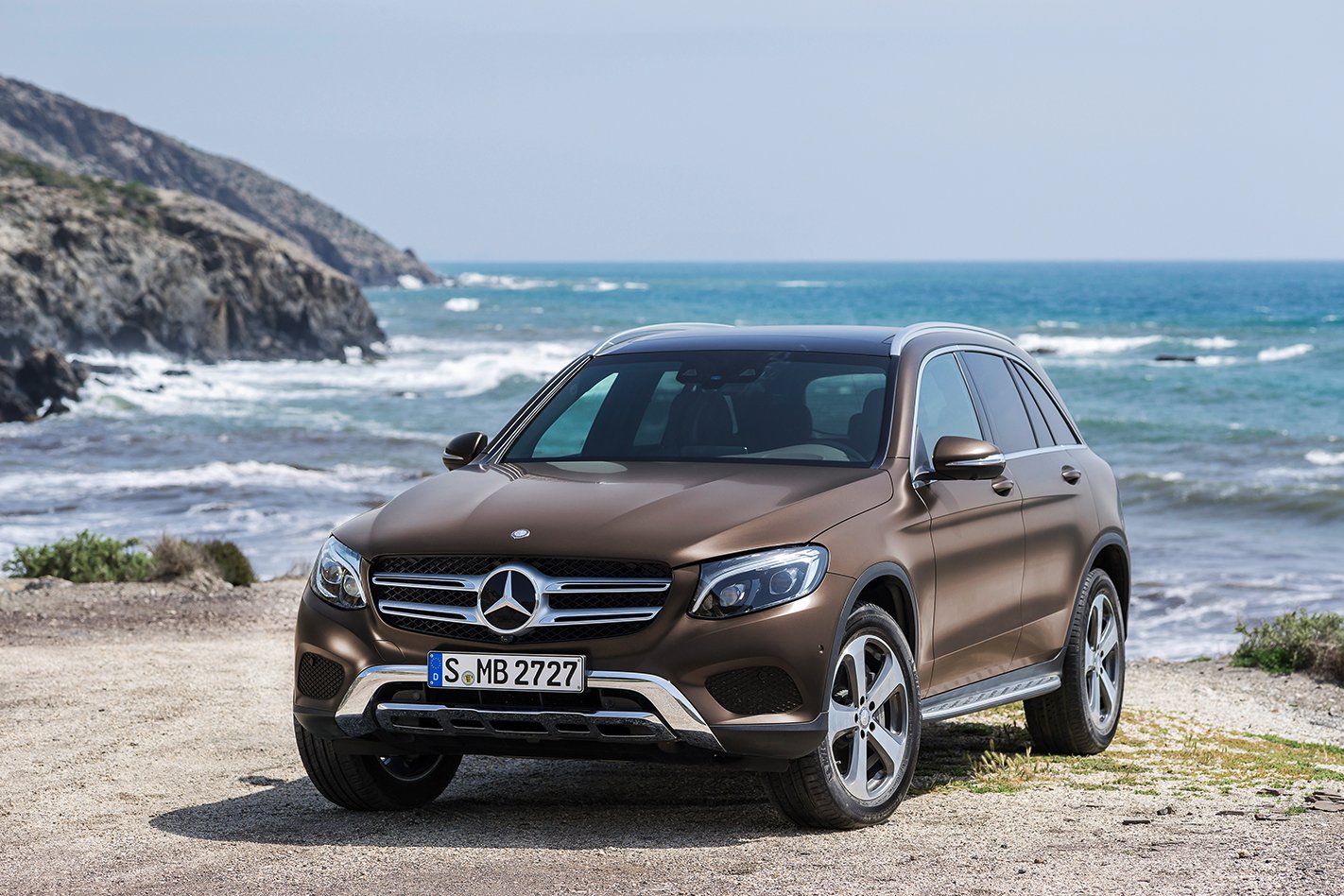
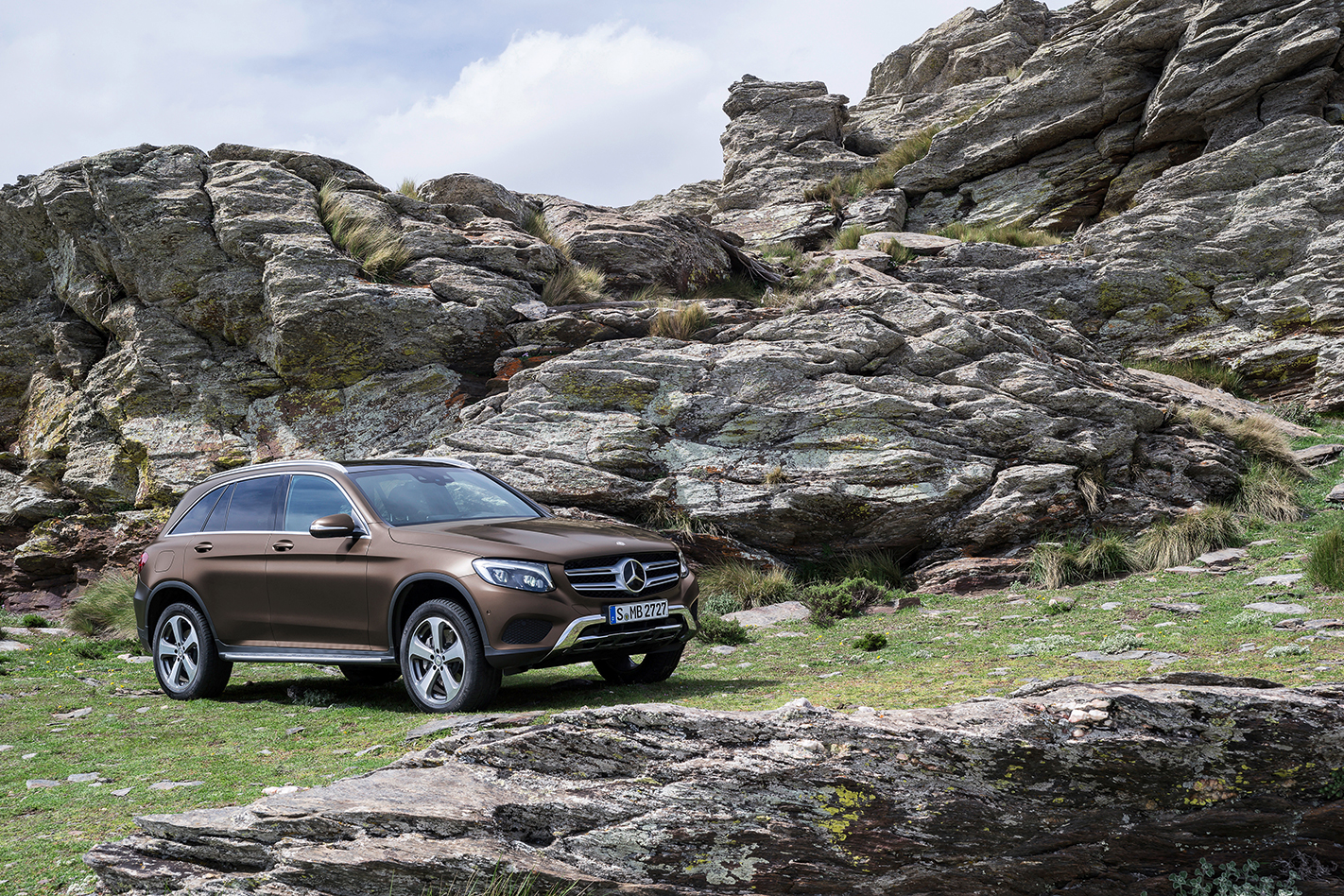
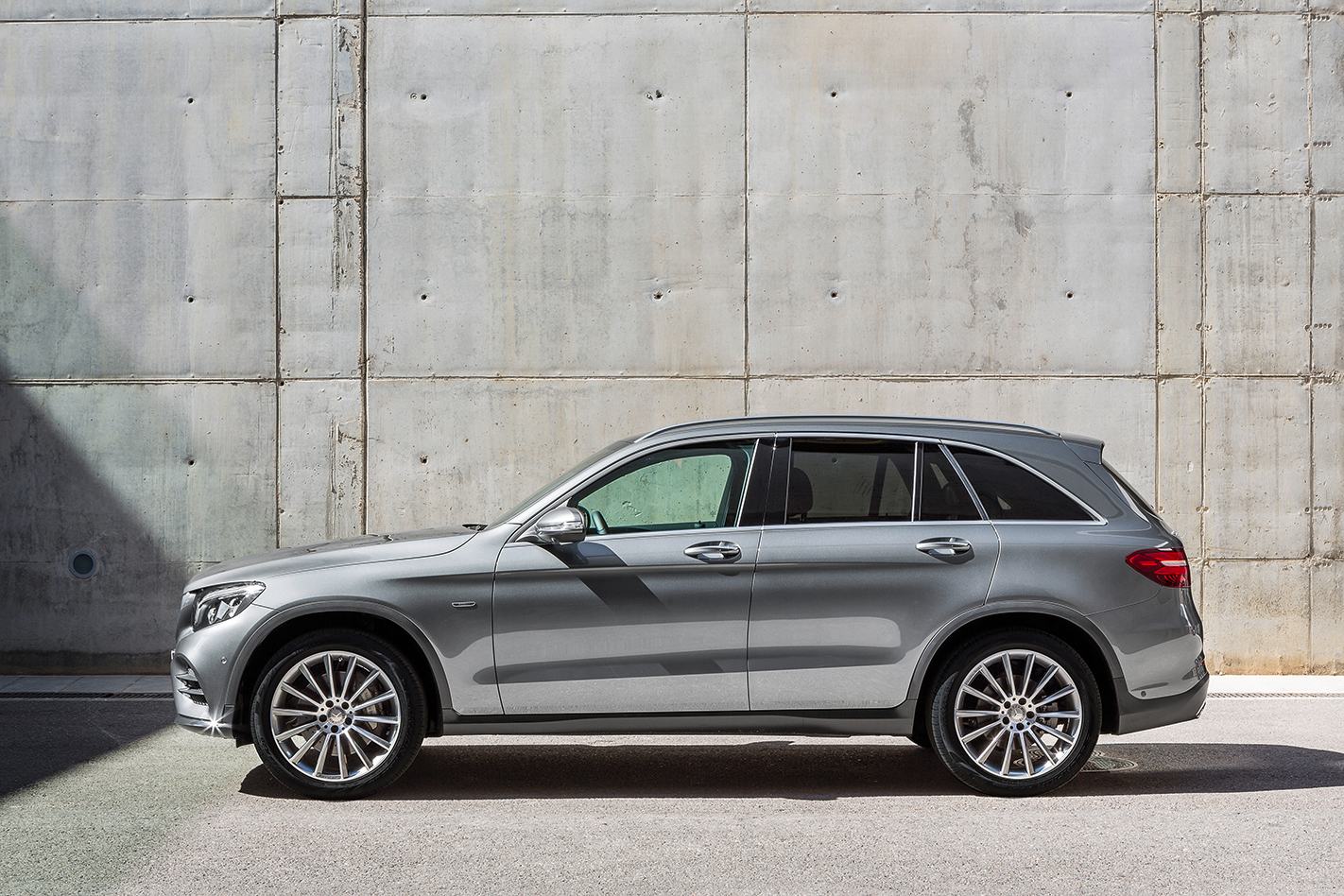
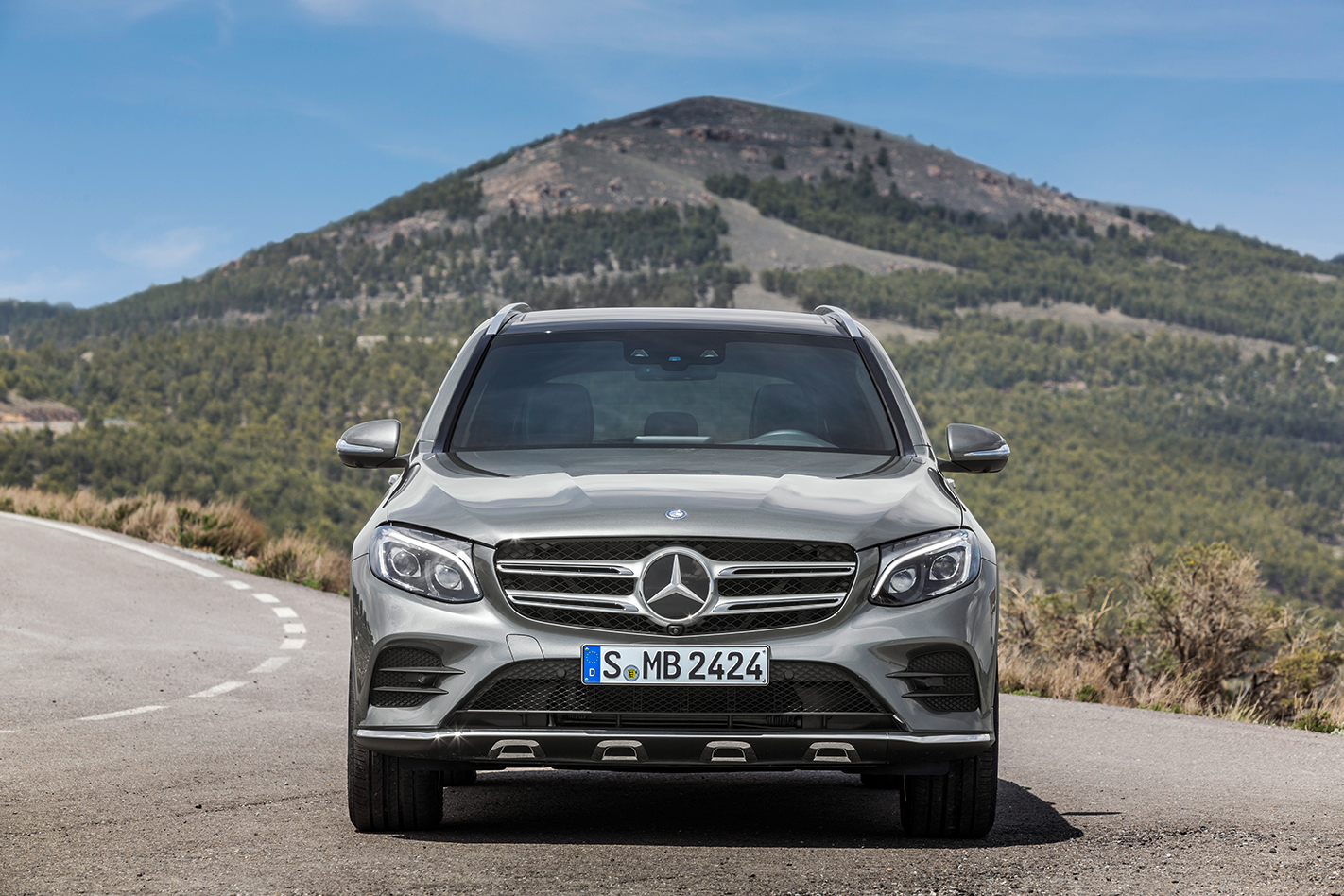
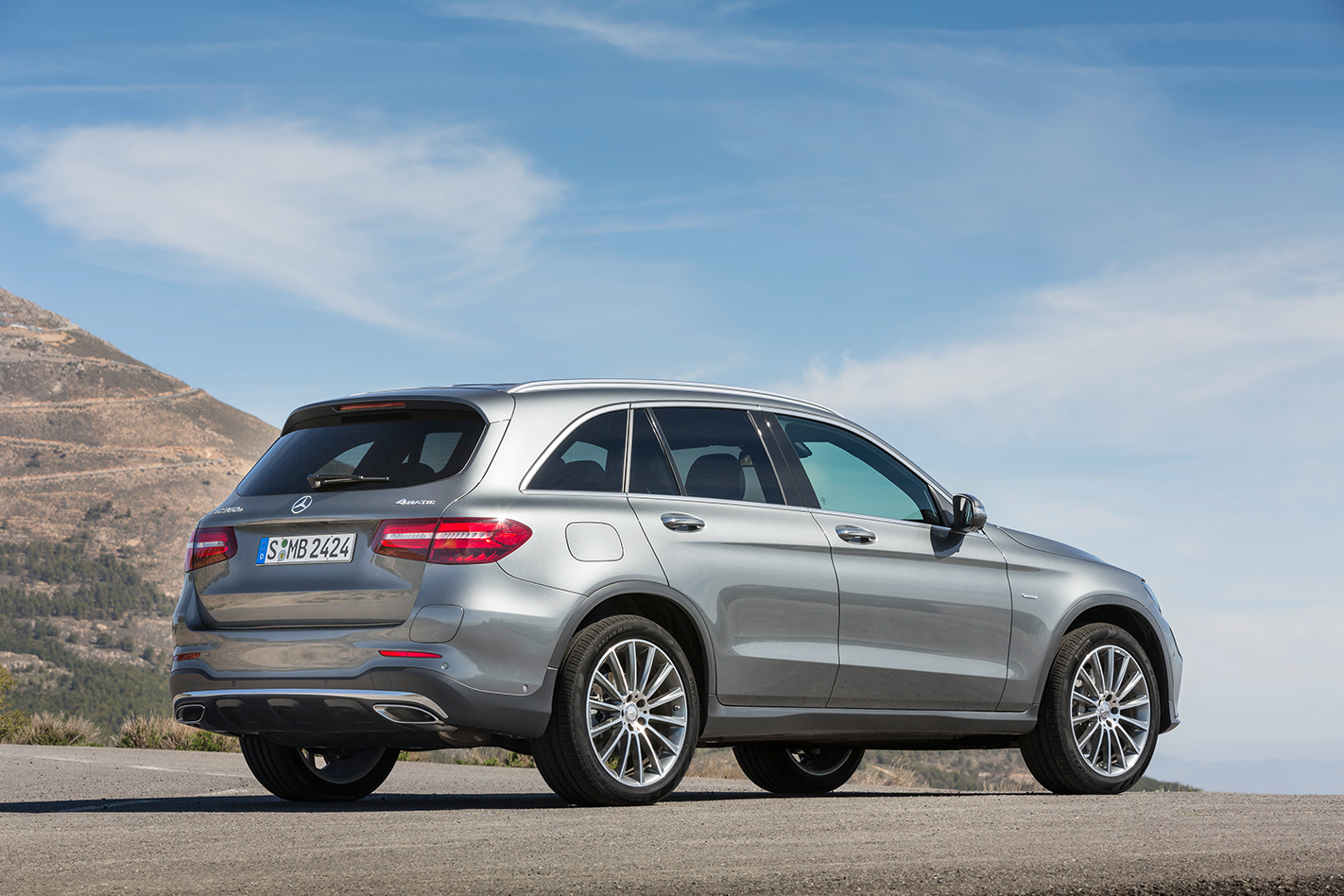
In the case of the Mercedes-Benz GLC, that warmth of appreciation begins the moment you see it. Almost coupe-like in the shape of its glasshouse, with its wheels pushed out to each corner, the GLC is an exceedingly handsome SUV.
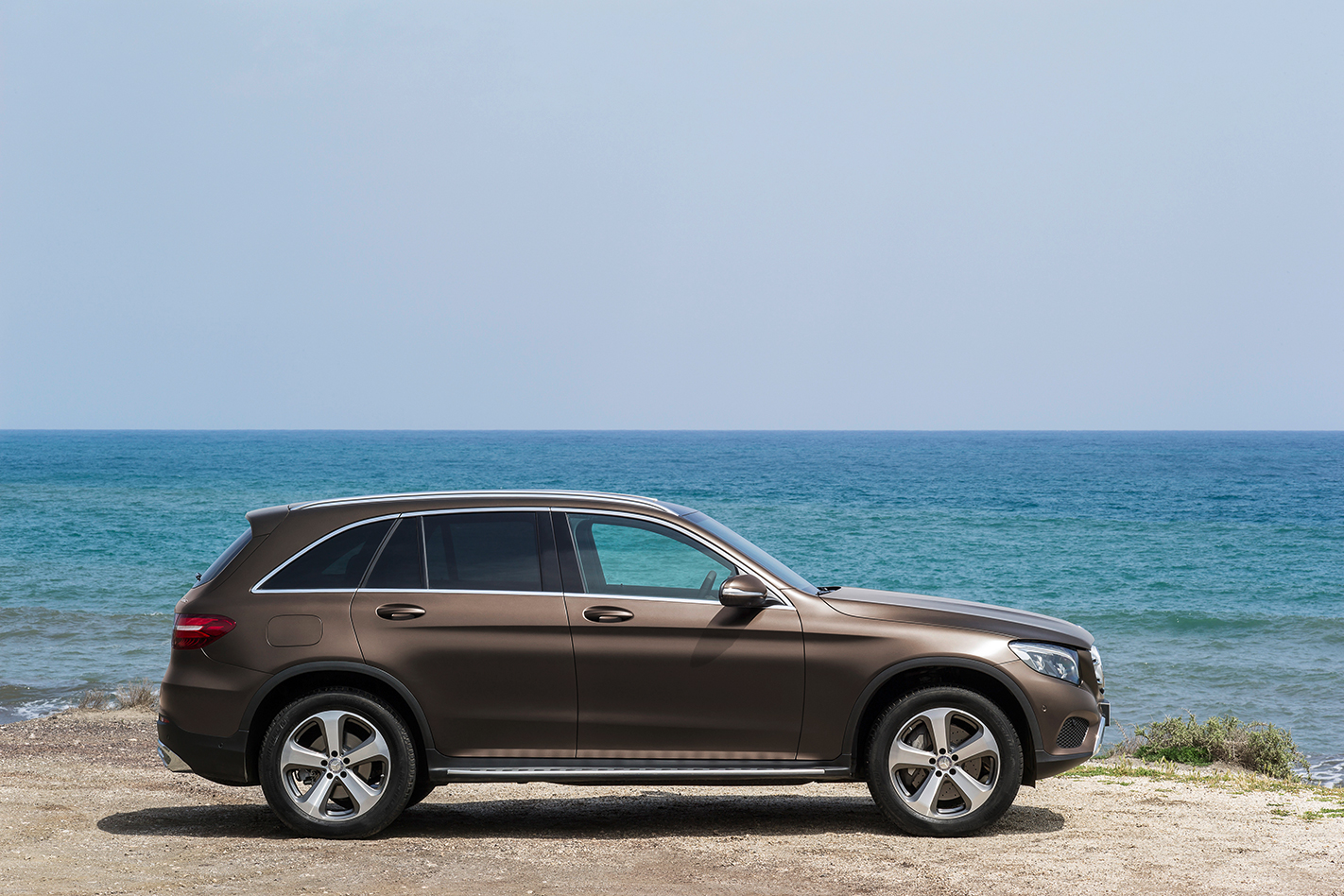
It’s the stance that does it. Riding on easily the longest wheelbase in its class – 2873mm – the GLC only just manages to out-size its rivals in length, yet it sits lower than almost all of them, while boasting a class-best drag coefficient of 0.31.
It’s the GLC’s sheetmetal, however, that’s the cherry on the cake. AMG GT aside, this is Mercedes-Benz’s best-looking car, and it’s all in those sculptural shoulders, tapering to a delicately proportioned rear that still manages to house the equal-largest boot in its class (550-1600 litres).
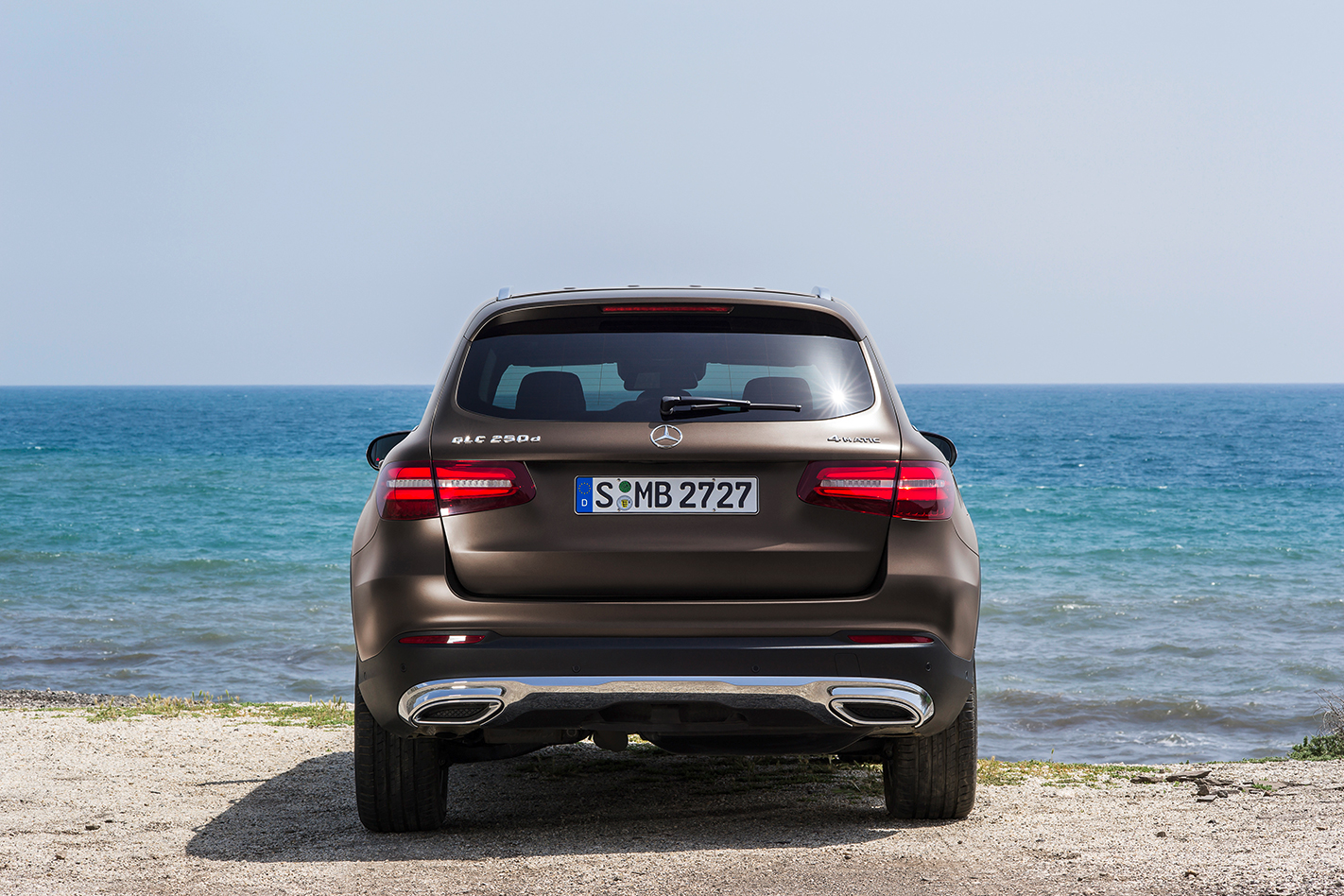
So, the GLC’s undoubtedly a looker, especially on the 20-inch wheels worn by all the launch cars.
There’s plenty of aluminium in its structure, dropping overall weight by 80kg compared to its smaller GLK predecessor. The front guards, bonnet and roof are all aluminium, and so are the rear cross-members and longitudinal members, while pretty much the entire front and rear suspension arrangements are forged aluminium.
Uniquely, even the base GLC features adaptive dampers for its steel coil springs, but (as with the C-Class) you can go one step further by selecting ‘Air Body Control’ with its multi-chamber air springs and electronically controlled, continuously adjustable dampers. And it’s this set-up, matched to massive 255/45R20 Pirelli Scorpion Verde tyres that adorned all the GLCs we drove.
Lesser-powered rear-drive variants will come later, but the bulk of GLC volume will be these three, kicking off at a super-competitive $64,500 in Australia.
First thing you notice about the GLC 220d is how refined the 125kW/400Nm 2.1-litre twin-turbo diesel is. You wouldn’t call it velvety, but there’s been a definite improvement in NVH over the same engine in the C-Class and it seems better suited the GLC’s station in life.
Acceleration is respectable (0-100km/h in 8.3sec), as is claimed fuel economy (5.0L/100km), and there’s something about the 220d’s effortlessly laid-back feel that we prefer over its gruntier, noisier 150kW/500Nm 250d alternative.
In our test car, the high-boost diesel and nine-speed auto weren’t quite on the same page. The odd thump from the transmission when crawling in traffic, combined with a similar result when asking for all 500Nm worth at full throttle, made the 250d the least persuasive of the three engine variants, even though it matches the 220d’s economy while stripping the 0-100km/h time down to 7.6sec.
The sweetest of the three GLC models is undoubtedly the 250 petrol. With about 60kg less weight over the nose, it has a greater resistance to understeer, though no GLC is what you’d call inspiring to drive.
It’s competent, particularly in Sport+ mode that lowers the air suspension a further 15mm, with reasonably quick steering boasting just 2.3 turns lock-to-lock, though not the desired on-centre feel.
For much of the time on twisty roads, the best dynamic combination is selecting ‘Individual’ and choosing the settings yourself – Comfort steering with Sport damping – yet even then the GLC never goads you to drive it harder.
We can’t comment about the steel-sprung, adaptive-damper suspension on the 19-inch wheels that will be standard in Australia because there weren’t any available to test.
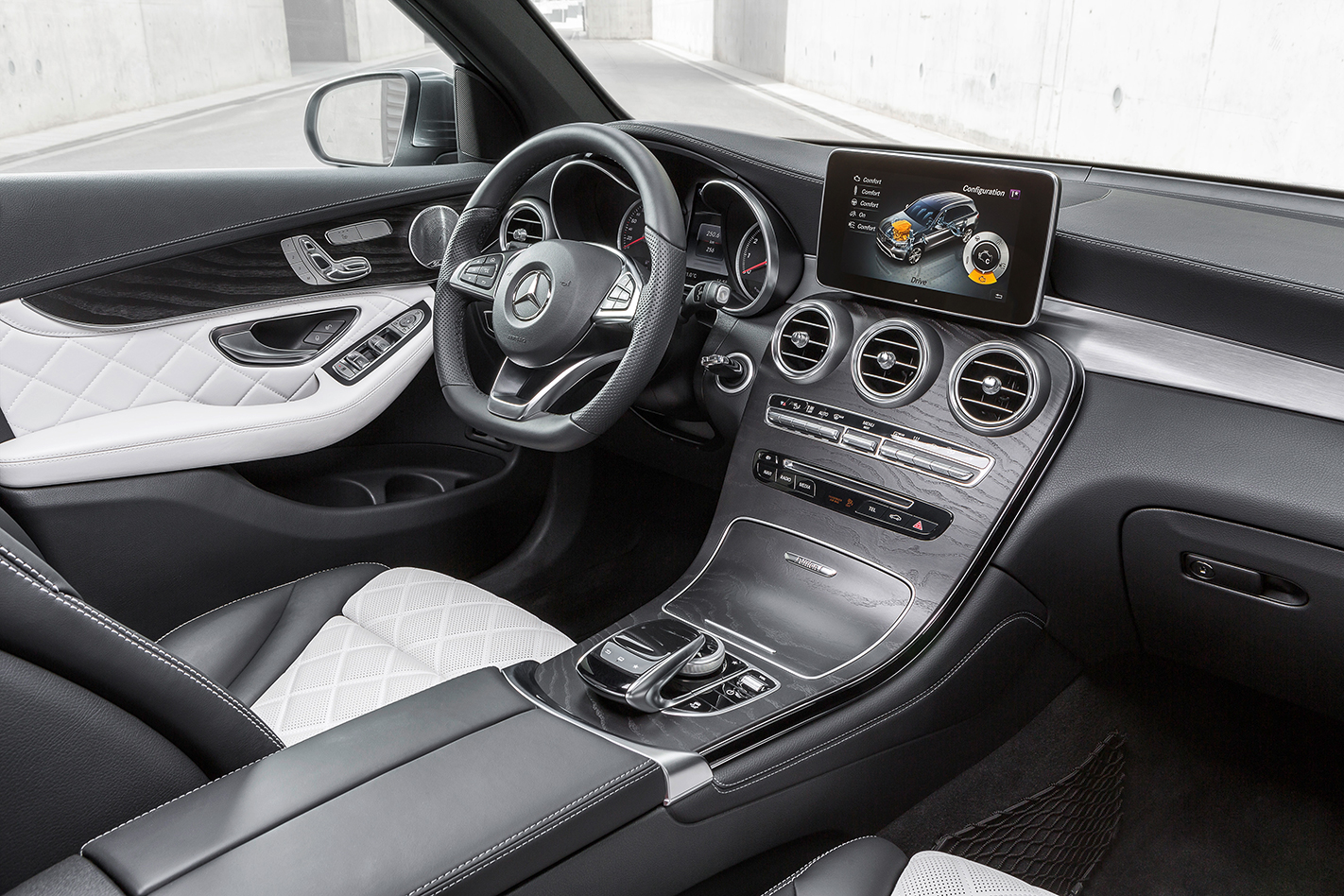
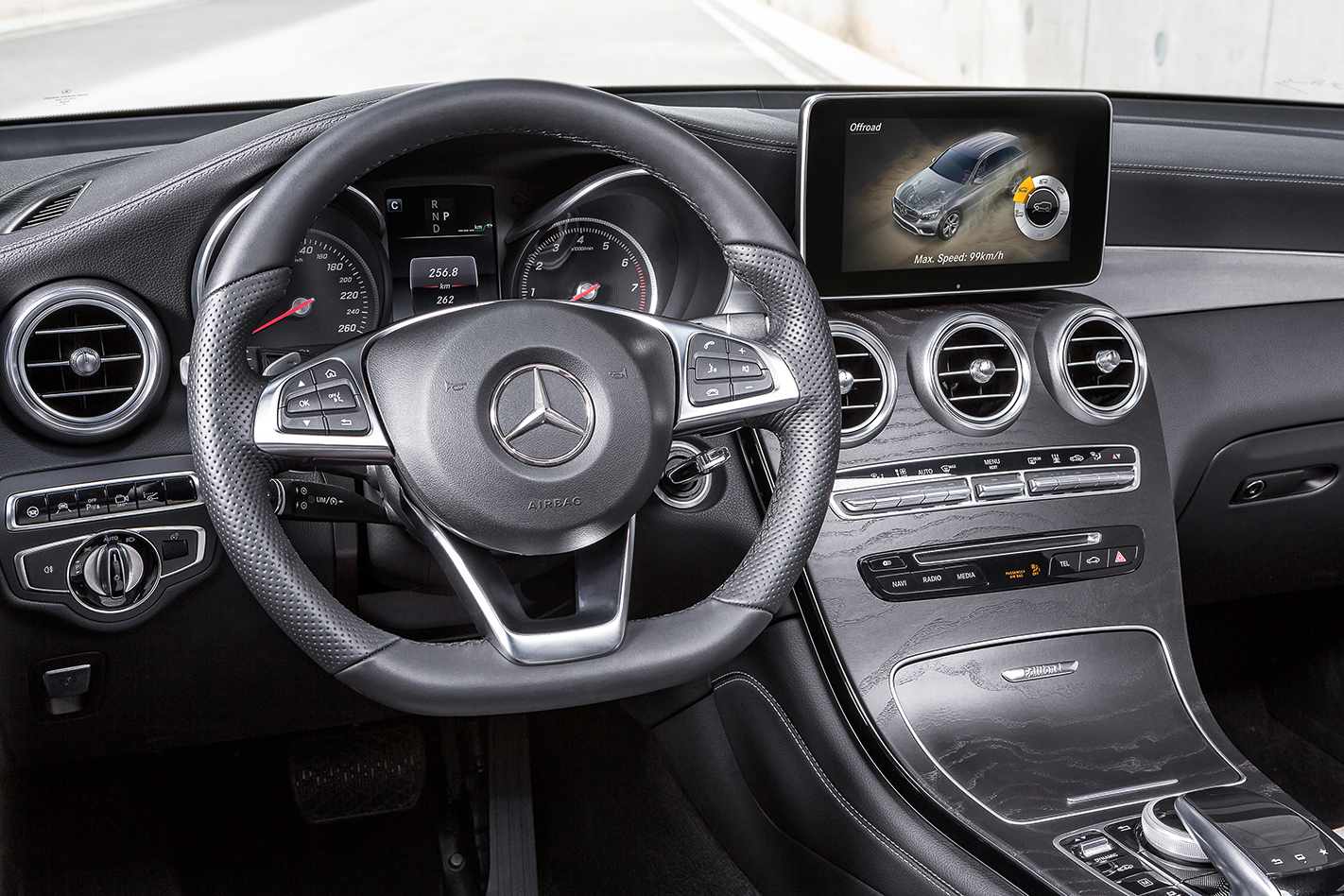
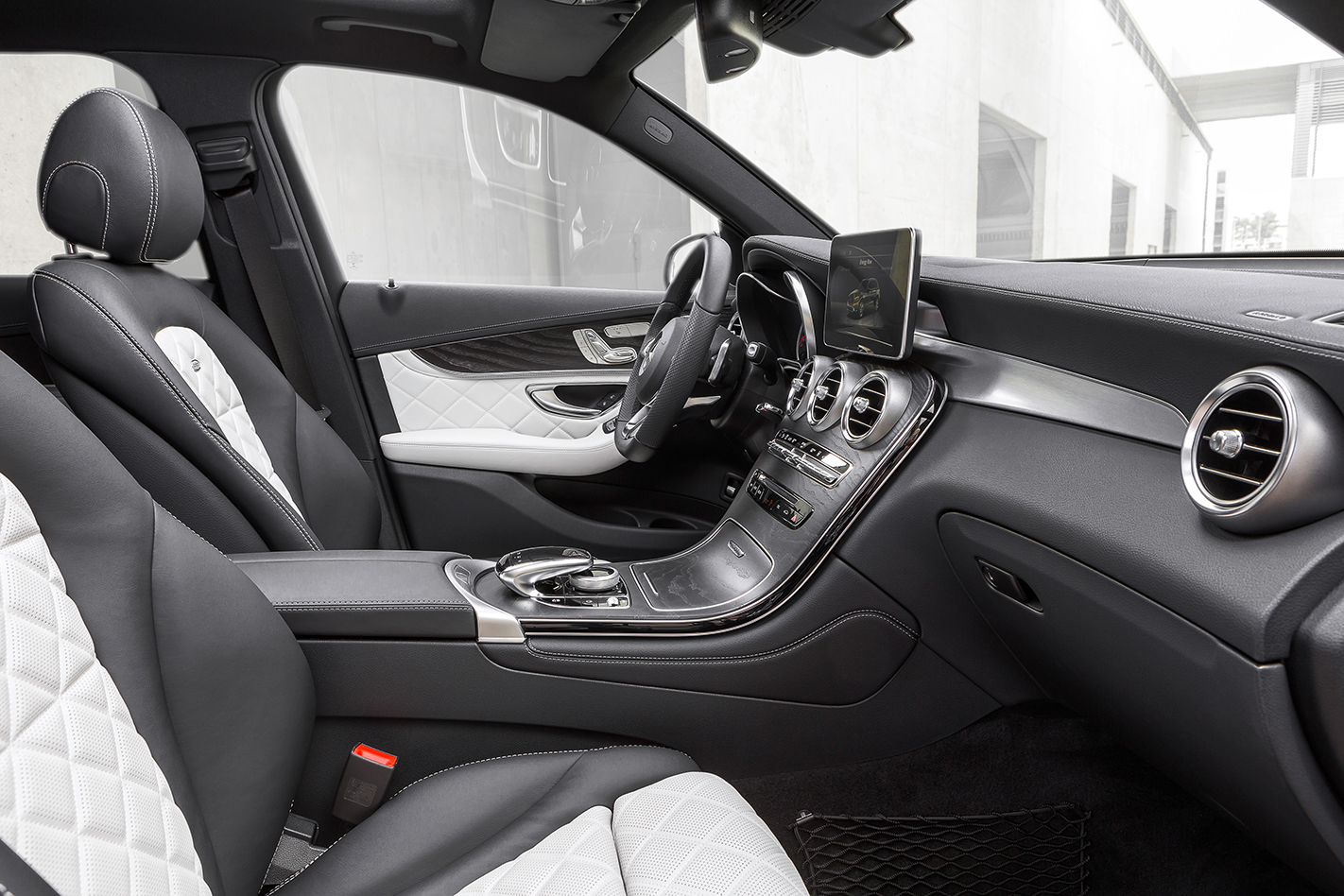
What ultimately elevates the GLC far beyond its classmates, though, is its interior. It has a rock-star factor that none of its rivals come even remotely close to, particularly BMW’s low-rent X3 and Land Rover’s relatively dour Discovery Sport.
Despite the GLC’s raised driving position, you always feel like you’re part of the car, not sitting on top of it, and it’s easy to forget you’re actually driving an SUV.
Vision is excellent, particularly straight ahead, and while the GLC shares its entire dashboard with the C-Class, its larger, airier cabin gives you an even greater appreciation for its high-quality look and feel. Indeed, the GLC’s interior feels so far beyond its ‘premium’ competition, it makes some of them now appear bad value.
Attention to detail abounds everywhere.
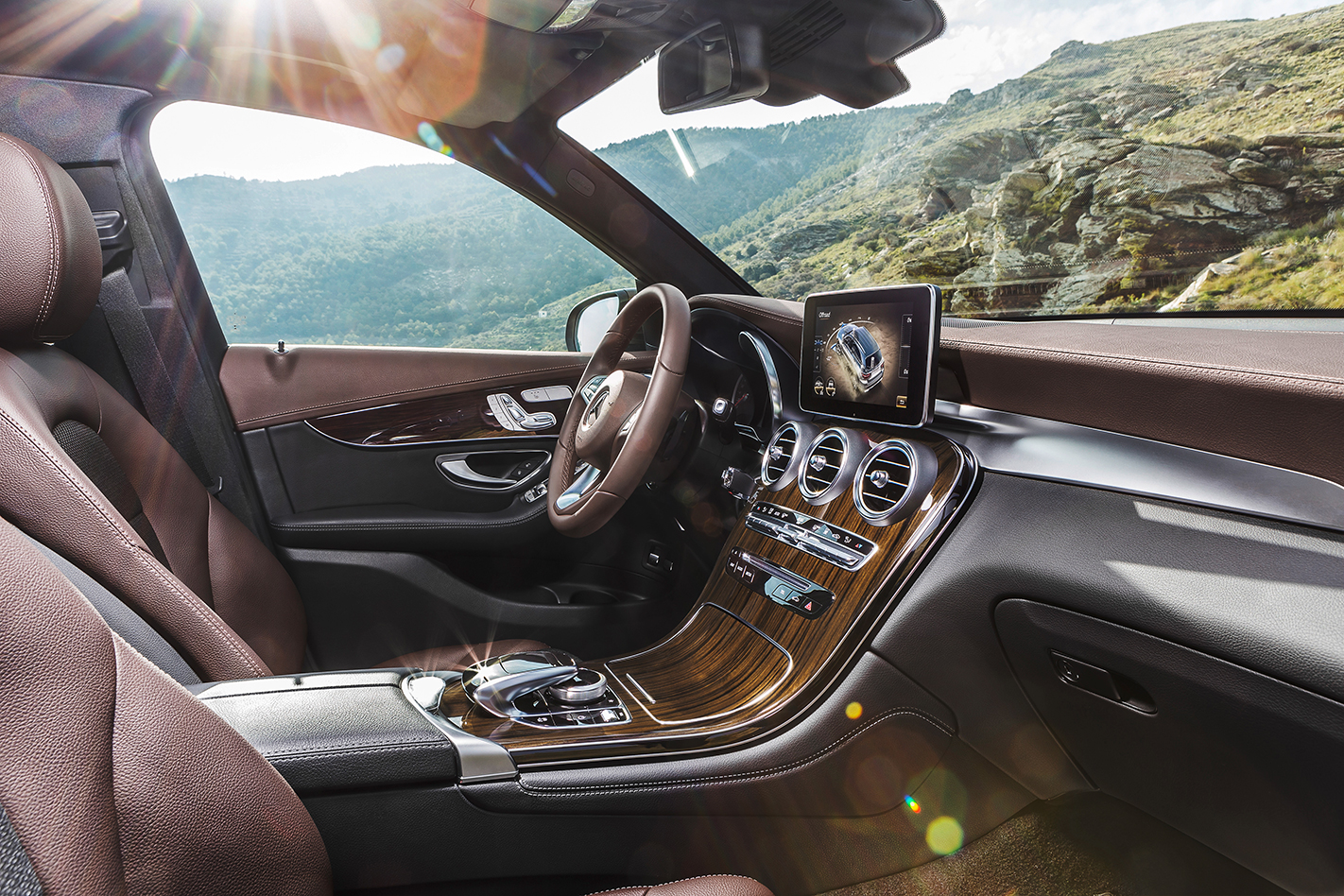
Individual rear-seat air temperature control with a seven-speed fan, plus one-touch, fold-flat backrests (achievable from both the cabin and the boot) underline the GLC’s class-leading practicality, but it’s little things like the expensive, felt-lined glovebox with air-freshener dispenser and pen holder that make the experience.
About the only cabin detail we didn’t like was the italicised slant of the speedo reading in the head-up display. In an interior bursting with expense, the font seemed like it was pinched from a Mazda 3.
While the GLC isn’t the driver’s SUV a Porsche Macan is, and its turbo-petrol and turbo-diesel engines may not be as sweet as those from its Munich rival, in every other department the GLC kicks goal after goal.
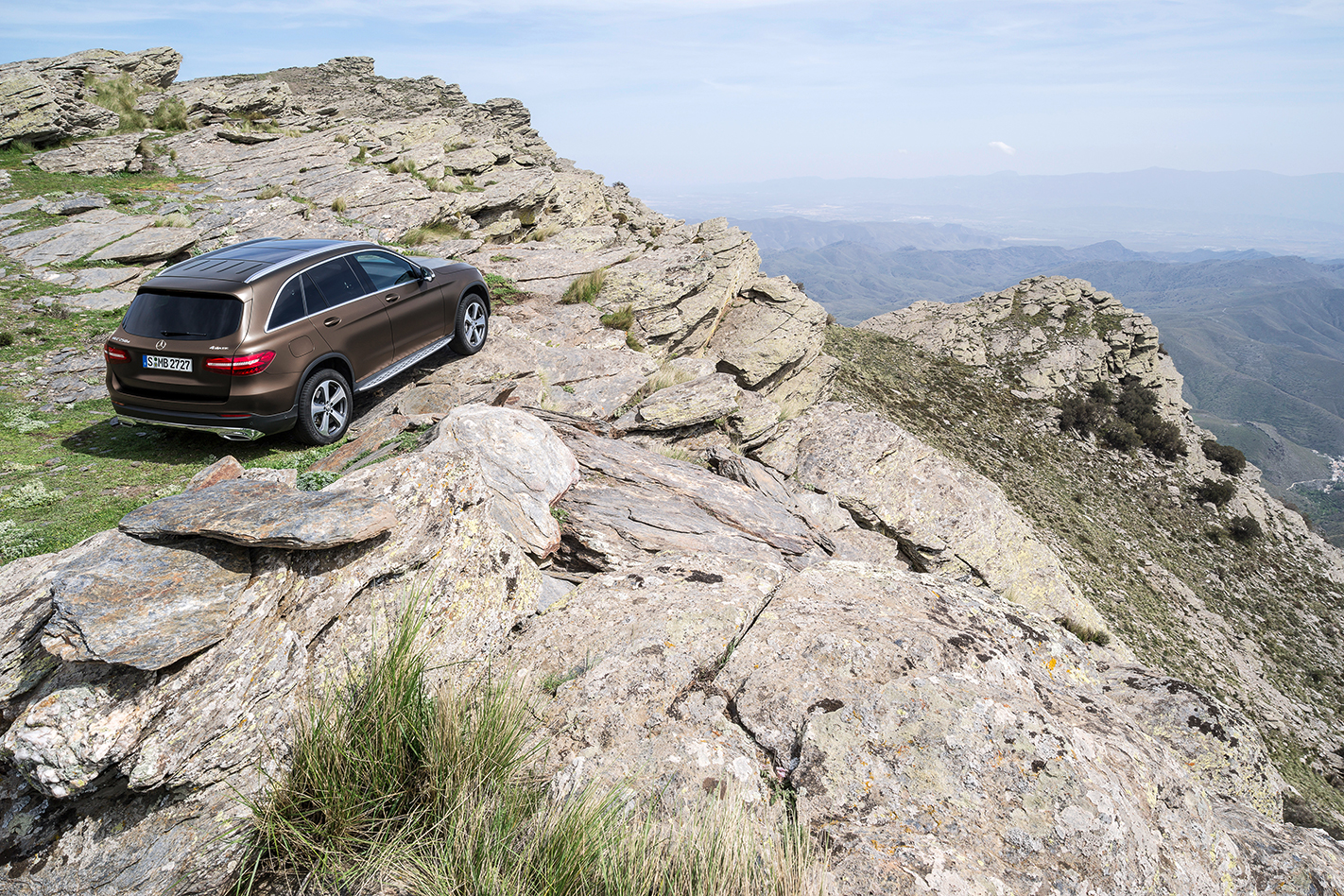
And we haven’t even mentioned its page-long list of safety kit, which rivals an S-Class for its breadth of coverage. Or its off-roading prowess and up to 227mm of ground clearance.
What really sets the GLC apart isn’t its equipment list, or how many airbags it has, or even the Mercedes-Benz dealer experience; it’s the look and feel of this premium offering.
When you’re paying $60K-plus for a handsome wedge of deliciously tasteful SUV, you expect a quality experience and that’s something the GLC serves up on a silver platter.
SPECS Model: Mercedes-Benz GLC 250 4matic Engine: 1991cc 4cyl, dohc, 16v, turbo Max power: 155kW @ 5500rpm Max torque: 350Nm @ 1200-4000rpm Transmission: 9-speed automatic Weight: 1735kg 0-100km/h: 7.3sec (claimed) Economy: 6.5L/100 (EU) Price: $67,900 On sale: December
The Porsche 911 Carrera will ditch natural aspiration later this year when the 991 Series II is unveiled at the Frankfurt motor show.
Long rumoured, the 911 Carrera will according to information obtained by Autocar score a 3.0-litre turbo flat six-cylinder engine producing 272kW at 6500rpm.
A boostier version of the same engine is set for the 911 Carrera S, claimed to make 309kW and 500Nm from just 1700rpm. Apparently a Porsche Exclusive tuning kit will also be available with 331kW – just 52kW shy of a 911 Turbo (which itself may come in for a re-name).
The 0-100km/h sprint is said to drop four-tenths to 4.2 seconds for C2 and by a half-second to just 4.0sec for C2S, both with the PDK seven-speed dual-clutch automatic.
Efficiency is key to the turbo charge, however, as well as improving low-down response thanks to the thick wad of torque from off idle that a snail can provide. Hopefully throttle response comes closer to that of the Mercedes-AMG C63 rather than the light-switch BMW M3, each recent turbo-turners with varied results.
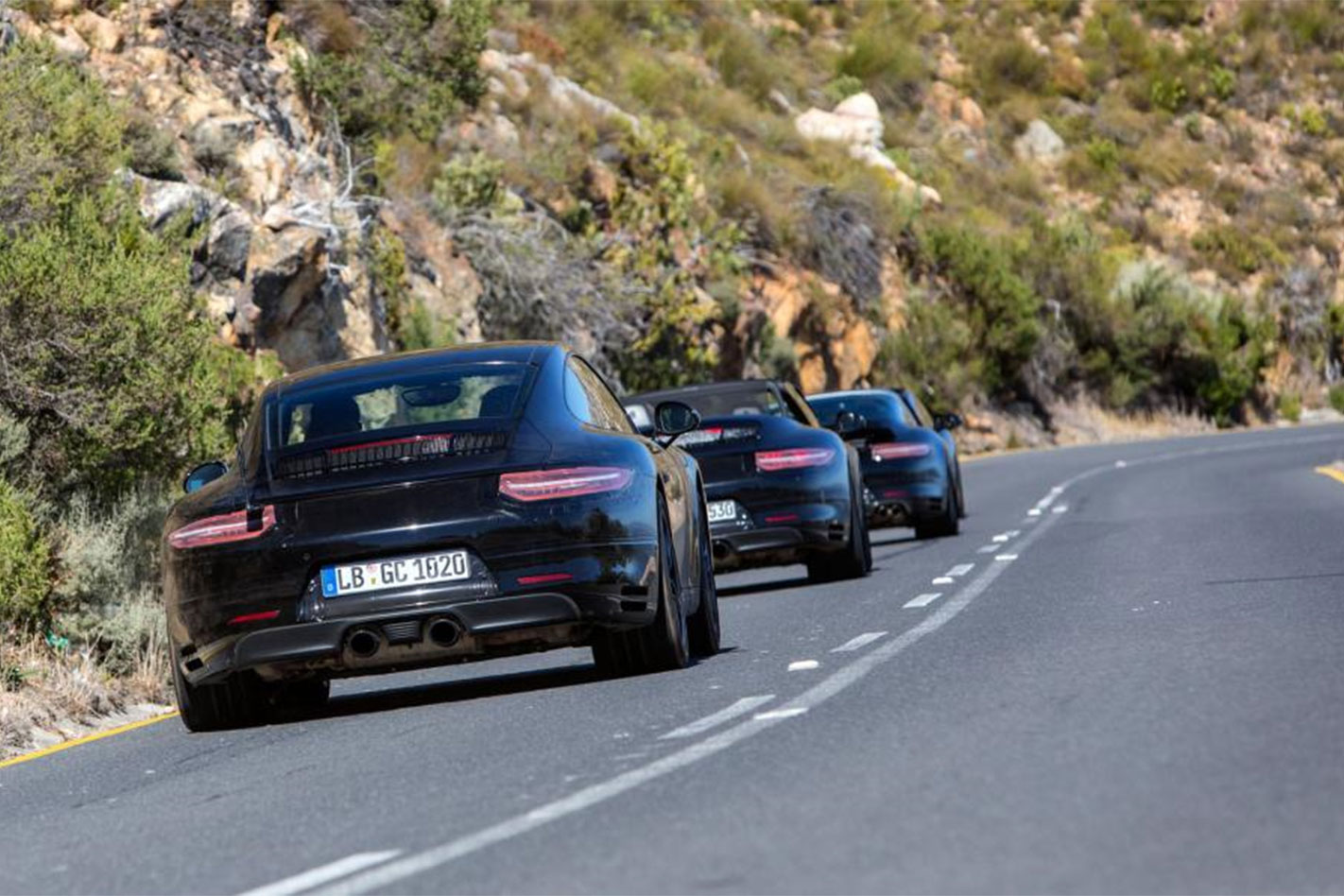
Meanwhile Porsche has released ‘official spy shots’ of the 991 Series II undergoing testing around Cape Town, South Africa.
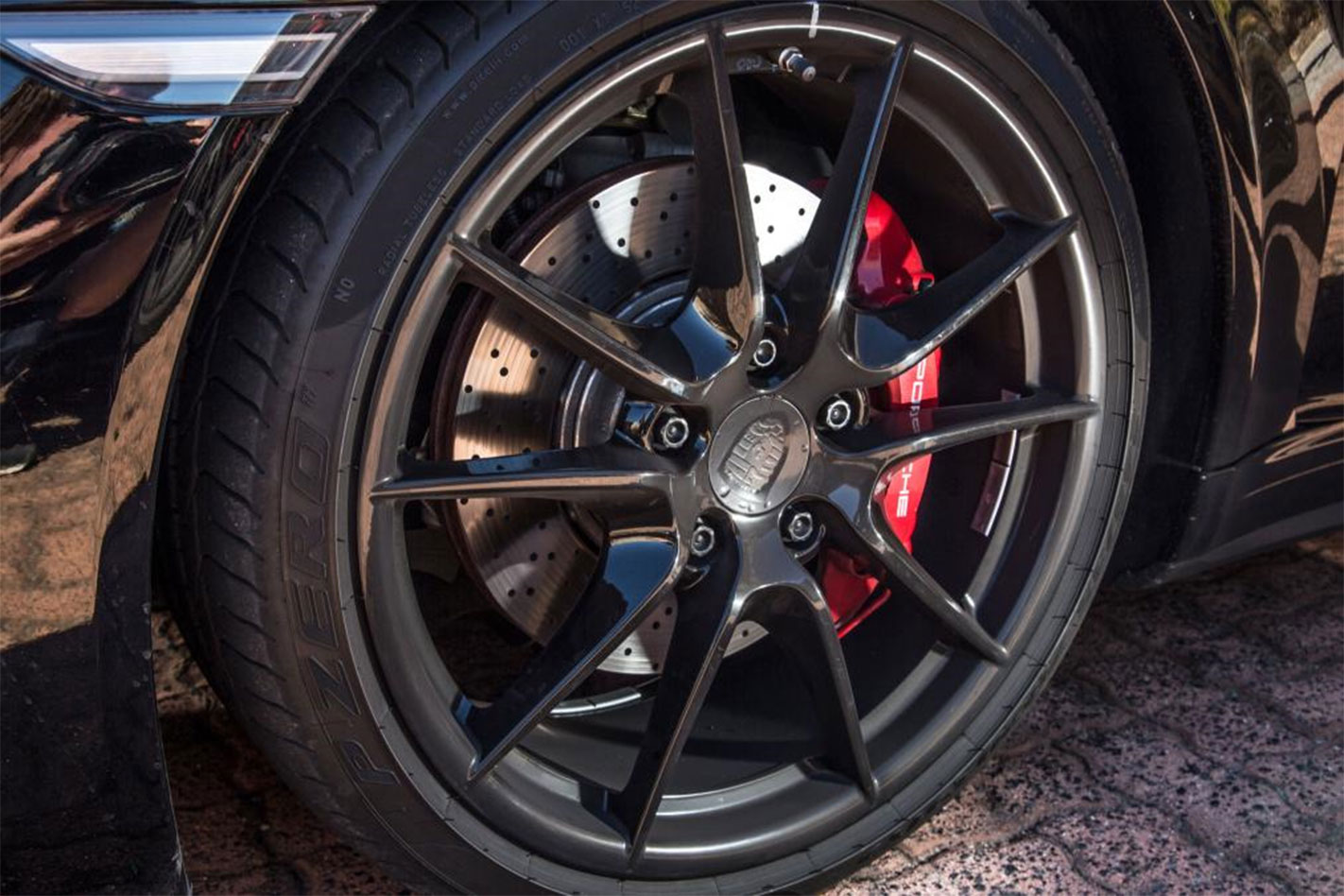
Changes to the appearance of the car seem minimal – new LED headlight and tail-light graphics, door mirror-mounted LED blinkers and new air vents on the rear bar to help keep those turbo engines nice and cool back there.
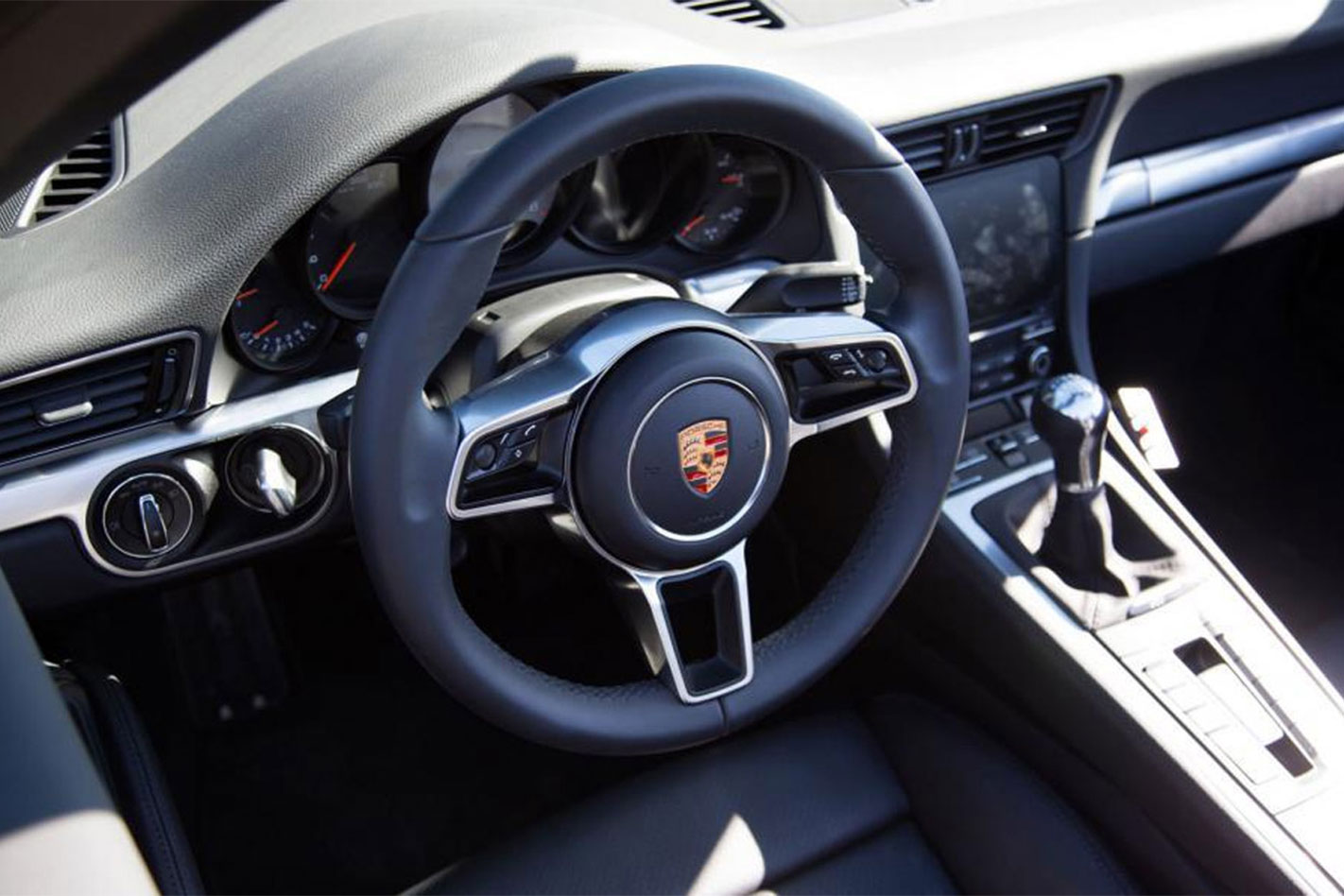
The 991 Series II version of the Porsche 911 will make its international debut at the Frankfurt motor show in September before heading Down Under before March next year.
GENERAL Motors is locked in a drawn-out battle with Australia’s intellectual property police as it struggles to fit its latest Corvette badge to a right-hand-drive version of the low-slung two-door muscle car.
A Wheels investigation has revealed that GM needs to obtain permission from Australia’s defence minister, Kevin Andrews, to sell the Corvette here.
The problem lies in a 2014 redesign of the Corvette badge, and decades-old laws designed to protect one of the most iconic symbols of the nation’s wartime history – the Red Cross.
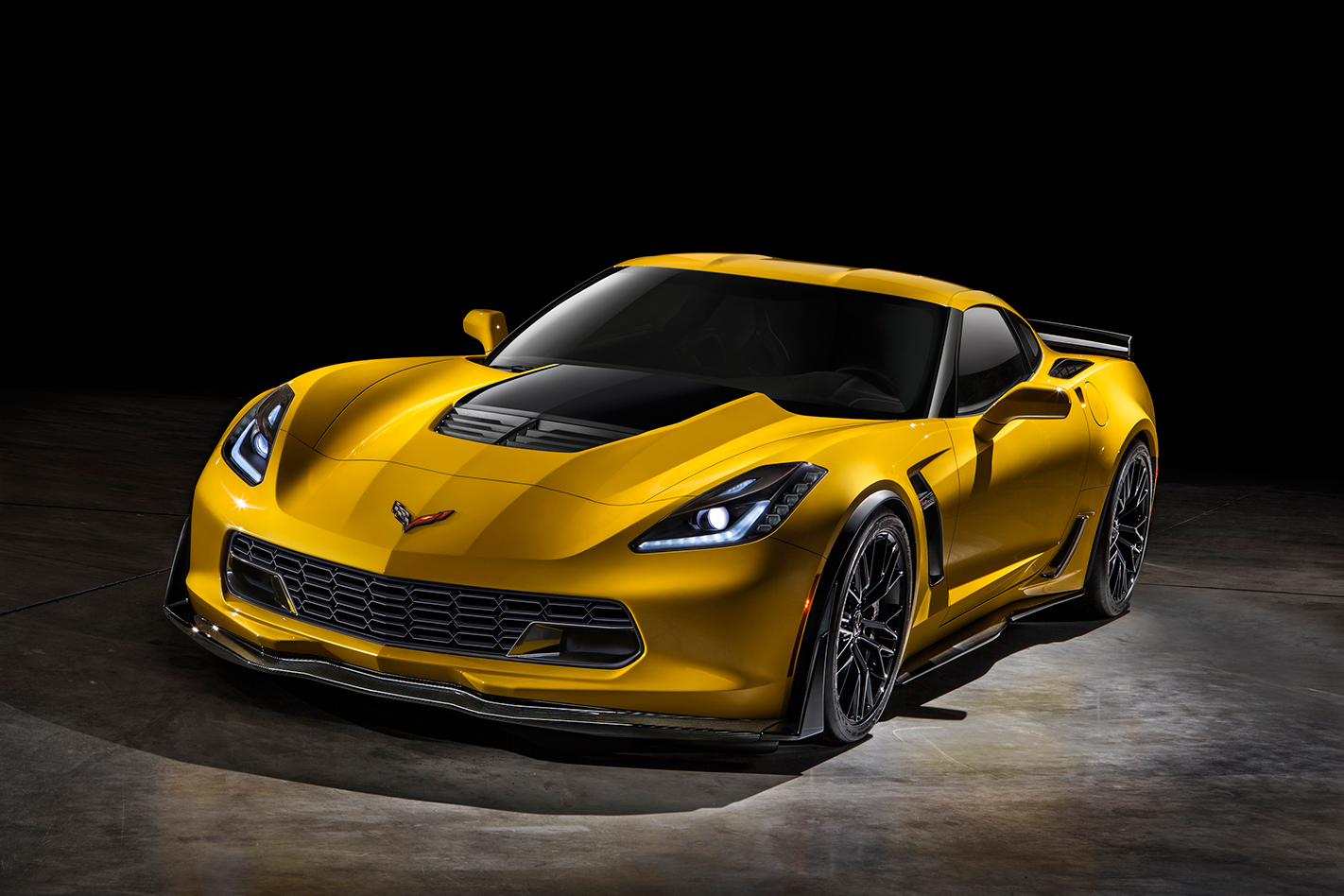
Documents obtained by Wheels show GM has been trying to trademark a new, highly stylised version of the Corvette badge that sits on the seventh-generation muscle car, featuring a chequered flag on one side and the Chevrolet bowtie (and a fleur-de-lis) on the other.
However, GM’s application has been rejected on four separate occasions because the trademark watchdog believes the slanted Chevrolet bowtie looks too much like the Red Cross symbol, which is protected in Australia under the Geneva Conventions Act 1957.

According to the legislation, GM will need the defence minister’s permission to use the badge on the $150K-plus Corvette or face heavy fines.
The badge features throughout the car – the front, rear, steering wheel, kickplates, wheels, gearshift, even the touchscreen – so replacing them for Australia would likely be out of the question.
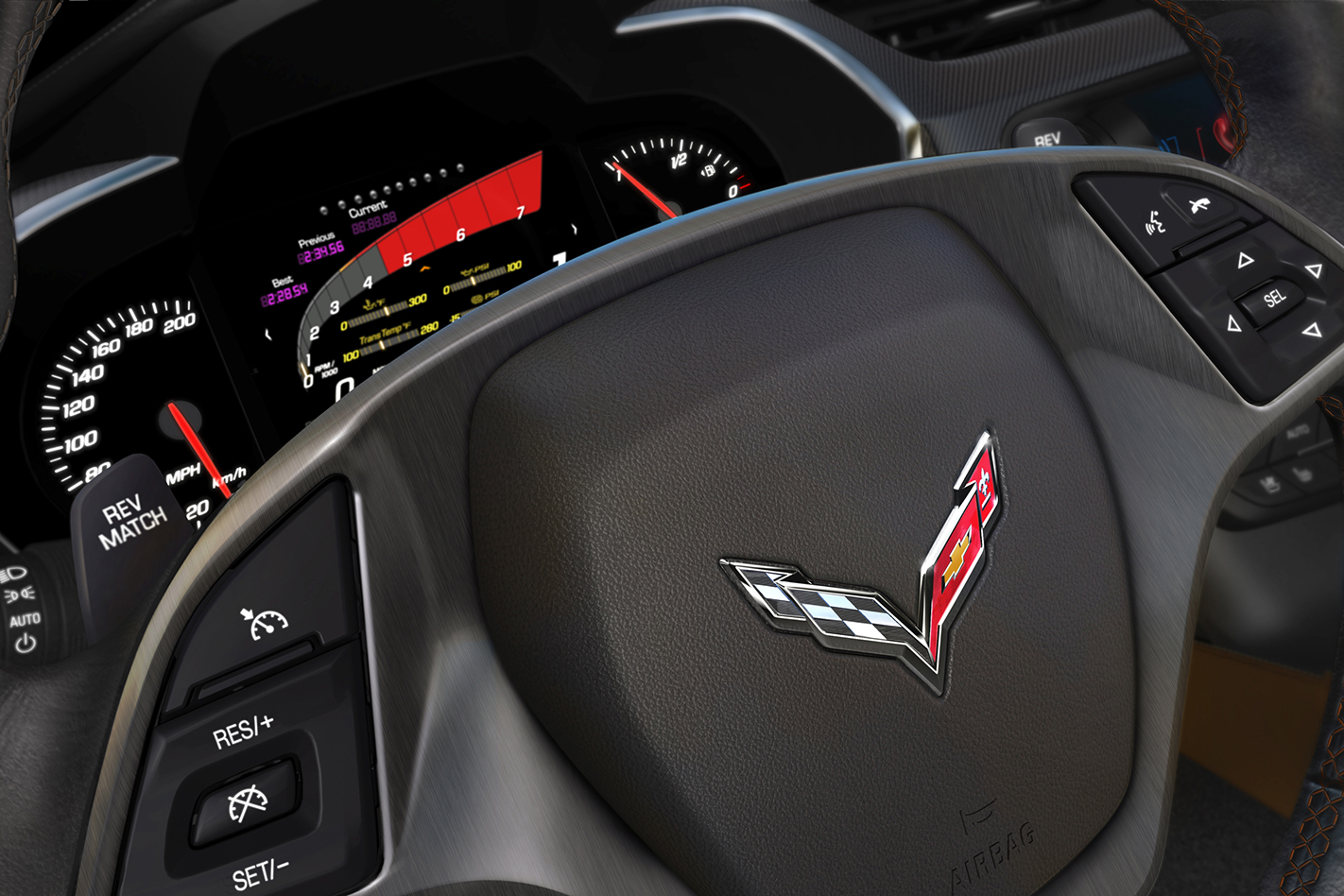
Chevrolet’s performance hero is due on sale here in 2018, rounding out a fleet of models set to replace the locally made HSV range once Australian manufacturing winds down in 2017.
According to IP Australia, GM’s fight to have the Corvette badge trademarked in Australia is “at an impasse”, with the US carmaker fast running out of time before its application is officially refused. The application is scheduled for a hearing before the trademarks watchdog.
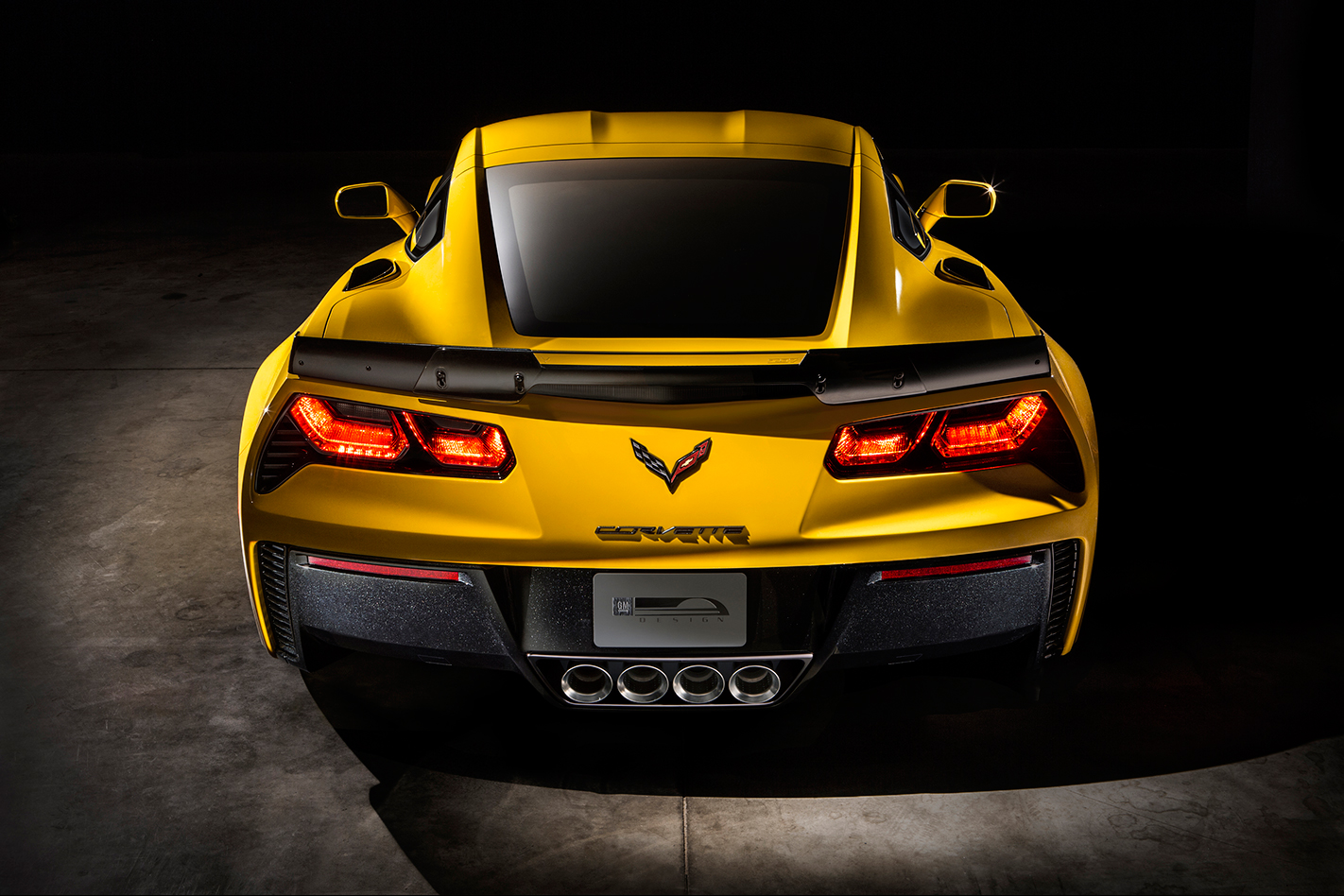
Holden declined to comment, saying only that “names and logos are constantly trademarked by General Motors in markets around the world for a variety of reasons”. Chevrolet did not return emails.
Meanwhile, an Australian Defence Force spokesman said it was unable to disclose if it had been approached by GM seeking an exemption for the Corvette logo.
PLUS
- It’s big and spacious. Even the two extra seats in the third-row, when folded down, don’t take much away from the cargo area.
- The ability to move the second row backwards and forwards adds to the flexibility of the storage area.
- It’s a capable 4WD, enhanced by technologies such as Wade Sensoring to gauge water crossings, and a Surround Camera System that gives you 360-degree visibility. For those who love adventure, these features will come in handy.
- The Disco Sport also features seven USB ports. Yes, seven. That’s one for each seat.
- At base level it offers satellite navigation, reverse camera and automatic braking. Its price is competitive compared to others in its league, starting at just $53,300.
- Compared to other off-roaders, it lacks the hardware.
- The interiors probably aren’t as luxurious as we would hope and feel cheap.
- As with most SUVs, it’s got a fairly large turning circle. You’d come to expect that in a car this size, but you might find it challenging, especially if you’re upgrading from a smaller car.
- It comes with a whole bunch of extra options, but these comes at a price.
Click here to read the full review on the Land Rover Discovery.
Despite arriving very late to the medium-size premium SUV party, Mercedes-Benz will make one hell of an entrance with its C-Class-based 2016 Mercedes-Benz GLC SUV. And the four-pot turbo-petrol and turbo-diesel AWD variants available from launch will be just the beginning.
Built in Mercedes-Benz’s massively expanded factory in Bremen, Germany, but also destined for production in China (for domestic consumption only), the GLC line-up will eventually include a GLC63 AMG variant boasting the C63’s 4.0-litre twin-turbo V8 producing up to 375kW.
The Mercedes-AMG GLC63 will be the most powerful car in its class, and thanks to its 4matic all-wheel drive system should be capable of obliterating the 0-100km/h sprint in around four seconds.
The only other sporting variant in the GLC’s class is Audi’s 230kW/650Nm twin-turbo-diesel SQ5, while BMW’s X3 has no hope of challenging the GLC63 – due to launch in 2017 – or even the lesser-powered GLC450 AMG destined to arrive in Australia (with its C450 AMG relative) mid-next year.
Unlike Audi’s diesel-engined performance SUVs, Mercedes-Benz will stick to petrol power. The GLC450 AMG will feature a twin-turbo 3.0-litre petrol V6 producing around 270kW and 500Nm. Given a likely kerb weight of less than 1850kg – 70kg lighter than the SQ5 – the GLC450 should be capable of 0-100km/h in the high fours.
At the other end of the spectrum, the GLC line-up will eventually be fleshed out with entry-level rear-drive versions, including a GLC200 with a 2.0-litre turbo-petrol four, though as pointed out by the head of Mercedes-Benz’s R&D department, Dr Thomas Weber, “the volume is small”.
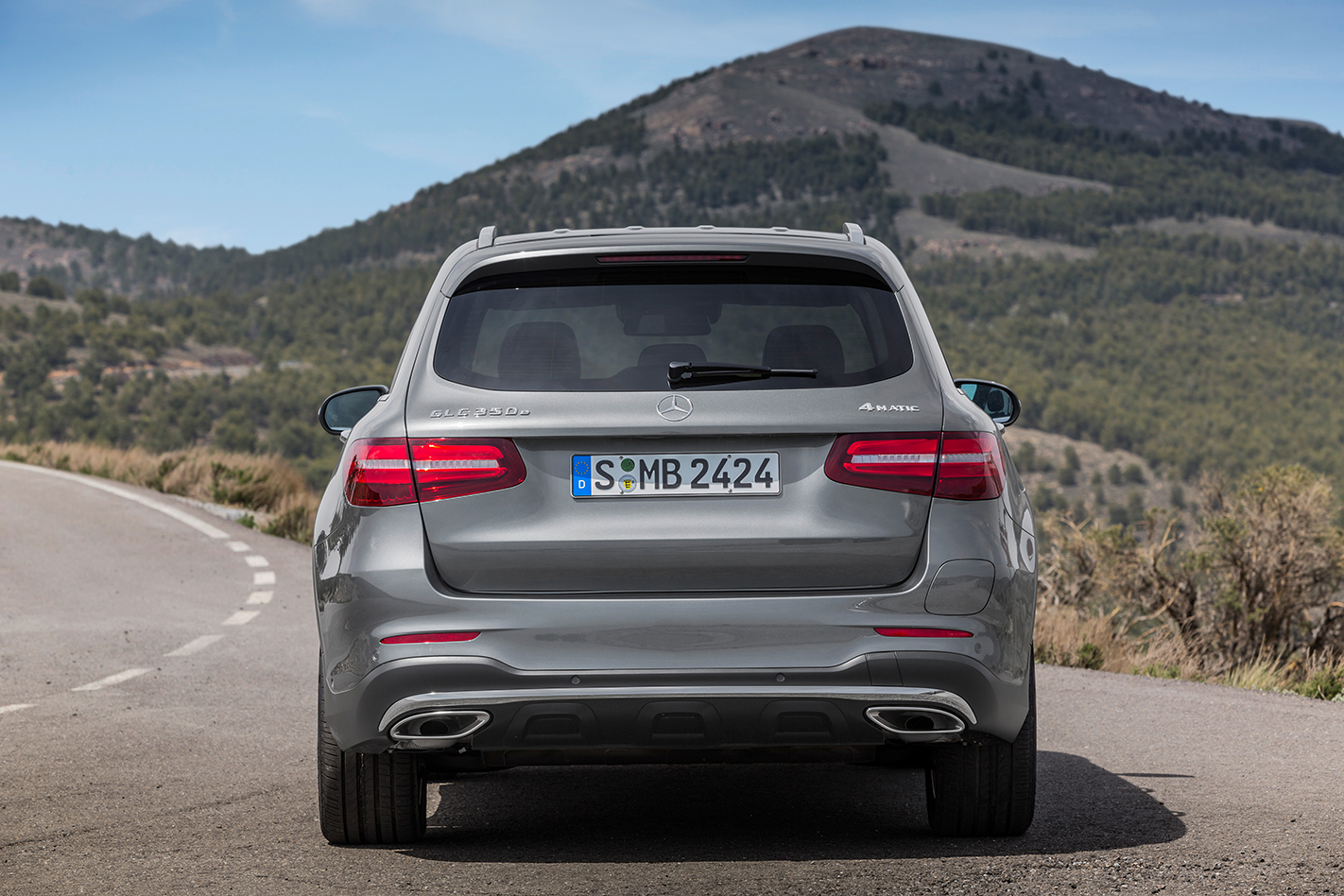
Also joining the right-hand-drive GLC line-up at mid-cycle update time (around 2018) will be the GLC350e, a plug-in hybrid sharing the same petrol/electric drivetrain as the C350e sedan.
At launch, the GLC350e will be left-hand-drive only – an unusual decision given the steep learning curve handed to Mercedes-Benz after building the GLC’s predecessor, the 2008-2015 GLK, solely in left-hook during a global boom in SUV demand. Thomas Weber wearily admitted the defeat, saying “with the success of the SUVs, it was a mistake”.
Thanks to sharp pricing, surprisingly comprehensive spec, and arguably the most handsome shape in the Mercedes-Benz passenger-car line-up, the GLC has the right ingredients to succeed in Australia when it goes on sale here December 1.
The base GLC 220d 4matic, with a 125kW/400Nm 2.1-litre turbo-diesel four and nine-speed automatic transmission, aims for the jugular with a $64,500 sticker and a wealth of standard equipment. Cue 19-inch wheels, keyless start, an electric tailgate, LED intelligent lighting system (with variable light distribution, active light function, country and motorway modes, cornering lights, extended fog light function, dynamic headlamp range control and blue welcome light), electric front seats and a 360-degree parking camera, not to mention the same standard-setting dashboard and in-cabin luxury as a W205 C-Class.
All GLCs will also feature ‘Agility Control’ suspension with adjustable damping as standard but, unique to its class ‘Airmatic’ suspension with adaptive air springs will be optional.
The GLC 220d’s chief competition includes the Audi Q5 2.0TDI quattro ($62,600), BMW X3 20d xDrive ($64,700), Land Rover Discovery Sport SD4 SE ($59,000), Lexus NX 300h Luxury AWD ($59,500) and the front-drive-only Volvo XC60 D4 Luxury ($64,890).
Step up to the 155kW/350Nm 2.0-litre turbo-petrol GLC 250 4matic and the price jumps to $67,900, and brings 20-inch wheels, keyless entry, leather trim, privacy glass and Driver Assistance Package Plus (adaptive cruise control with steering assist and ‘stop & go’ pilot, pre-safe braking with pedestrian protection, brake-assist plus, cross-traffic assist, active blind-spot assist, lane-keeping assist and pre-safe plus).
The GLC 250d 4matic, with an uprated 150kW/500Nm 2.1-litre turbo-diesel four, shares the same equipment as the GLC 250 petrol, but asks two grand more at $69,900. A little tardier to 100km/h than its petrol namesake (7.6sec v 7.3), the 250d’s ace is its combined fuel-economy number of 5.0L/100km, identical to the 220d’s but 1.5L/100km thriftier than the GLC 250 petrol’s.
Sign up here to receive the latest round-up of Wheels news, reviews and video highlights straight to your inbox each week.
This proper Citroen hot-hatch, tuned by its Racing division and brimming with World Rally DNA, has a chance of making it to Oz
WHAT IS IT? The ultimate version of Citroen’s likeable DS3, in much the same vein as a GTi 30 is to a Peugeot 208. It shares the Pug’s drivetrain, but thanks to Citroen’s own styling and tuning, has a character of its own.
WHY WE’RE TESTING IT? An opportunity to drive it alongside the re-engineered 1.2-litre turbo-triple DS3 proved just how much potential this funky little French hatch has. With real personality and genuine performance, the DS3 Racing is begging for a berth in Australia, to compete with the Mini Cooper S.
MAIN RIVALS Alfa Romeo Mito QV, Audi A1 1.8TFSI S-Line, Fiat 500 Abarth Competizione, Mini Cooper S, Peugeot 208 GTi 30, Renaultsport Clio 200 Cup Premium.
THE WHEELS VERDICT PLUS: Obvious rally breeding reinforces DS3’s driving appeal MINUS: Not yet confirmed for Oz; needs sharper pricing
Another fine example of France’s ability to create an inspired driver’s hot hatch, with great styling and uniqueness to boot. But the DS3 Racing is a ballsy Clio and 208 rival, not a Golf GTI competitor, and needs to be priced accordingly. Given the quality of its driving experience, the DS3 Racing deserves half a chance.
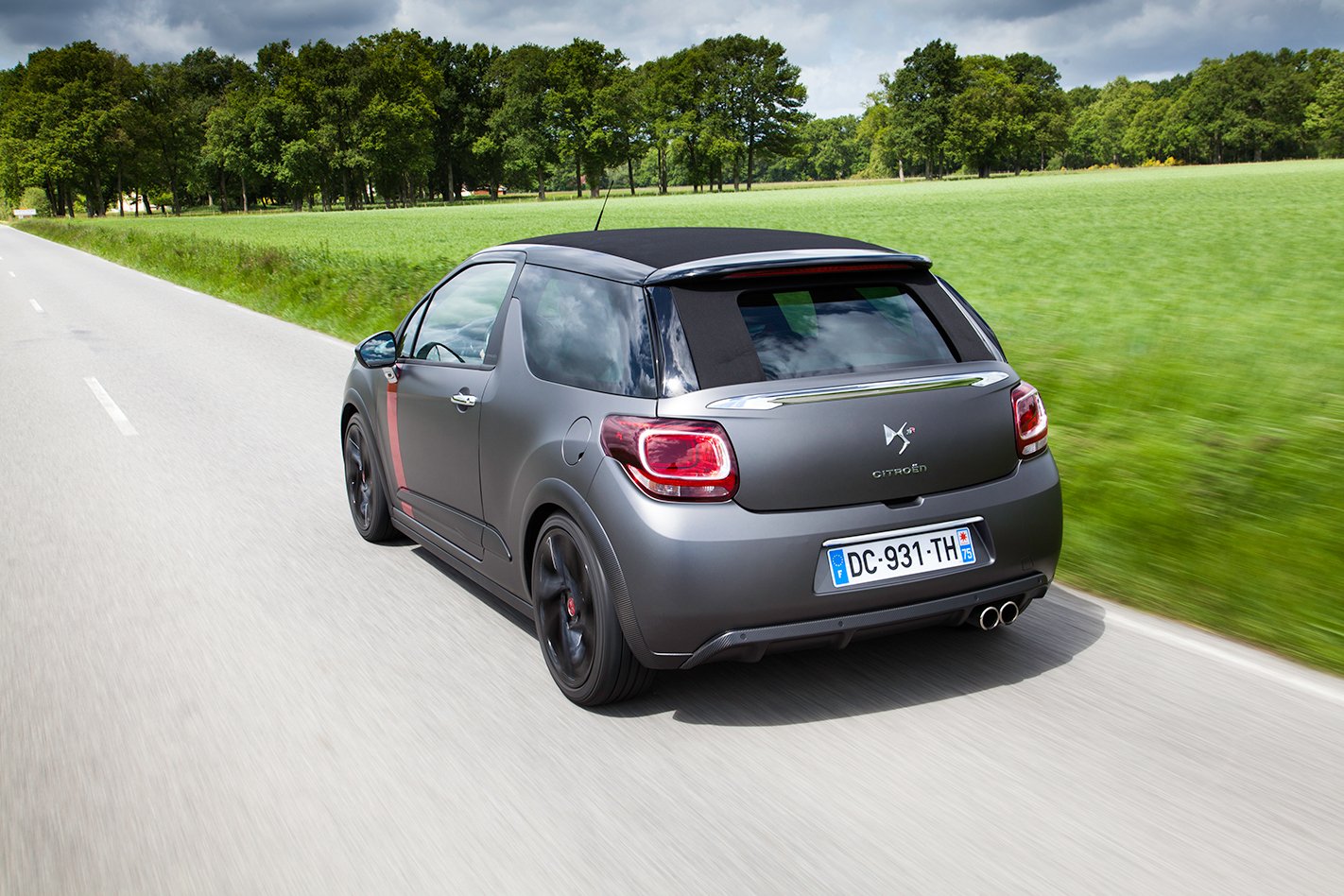
THE WHEELS REVIEW To the long list of great road cars developed from World Rally Championship winners – Subaru Impreza WRX, Mitsubishi Lancer Evo, Lancia Delta Integrale, Audi Quattro et al – please add Citroen’s DS3 Racing. Drive the regular 121kW DS3 DSport and the potential is immediately obvious, nothing that a serious power boost wouldn’t enhance.
Citroen Racing, which takes the DS3 from the assembly line to add its magic tweaks, adds the 149kW/275Nm version of the 1.6-litre direct-injection turbo engine common to the Peugeot 208 GTi. The suspension is 20mm lower than standard, stiffened and re-damped, the power-steering re-mapped, the front brakes are larger and get four-piston Brembo calipers, and gorgeous 18-inch alloys wearing 215/40R18 Bridgestone Potenza RE050 tyres, push the tracks 30mm wider. The Racing also gets a unique stability-control tune that sets out to keep intervention off for as long as possible.
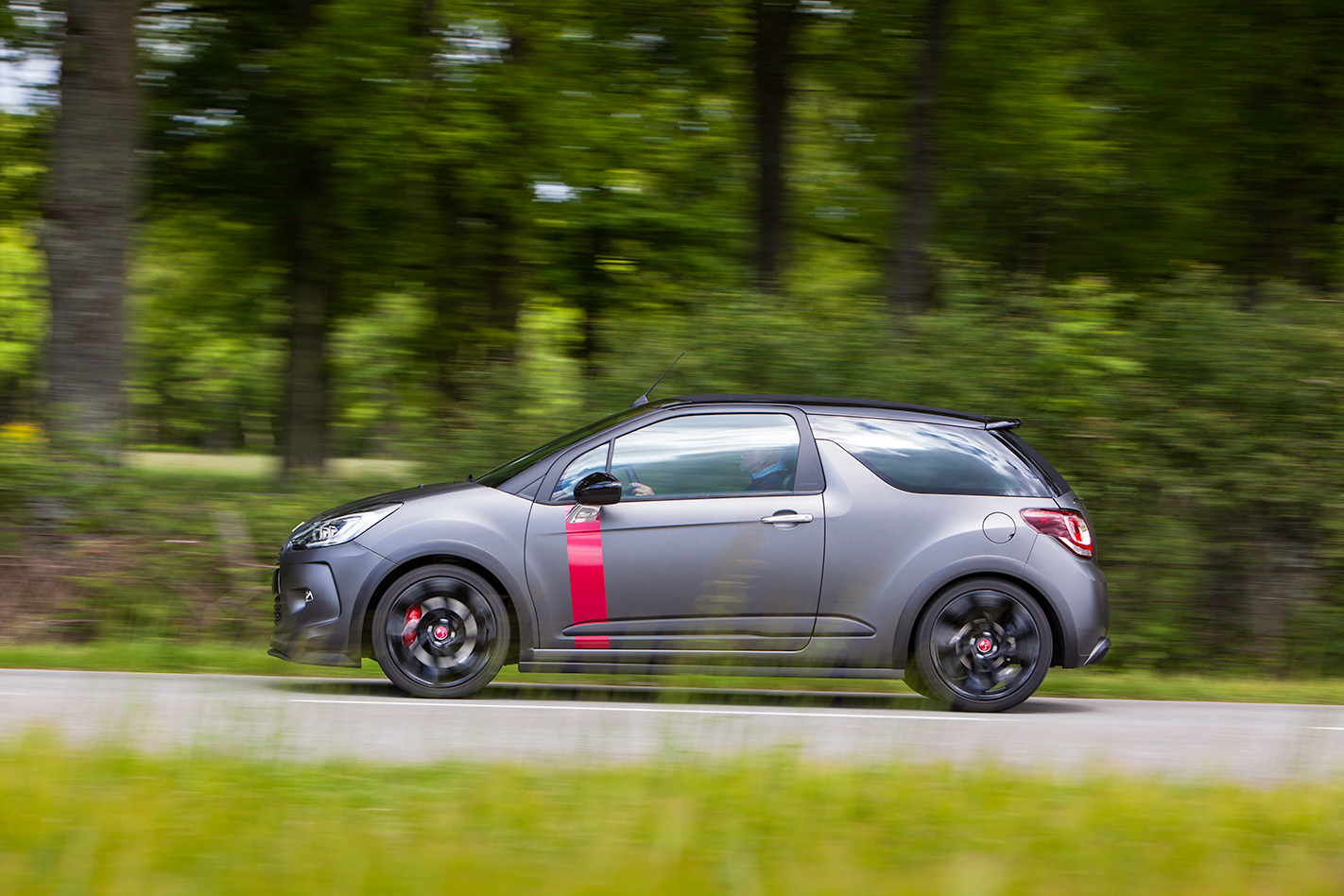
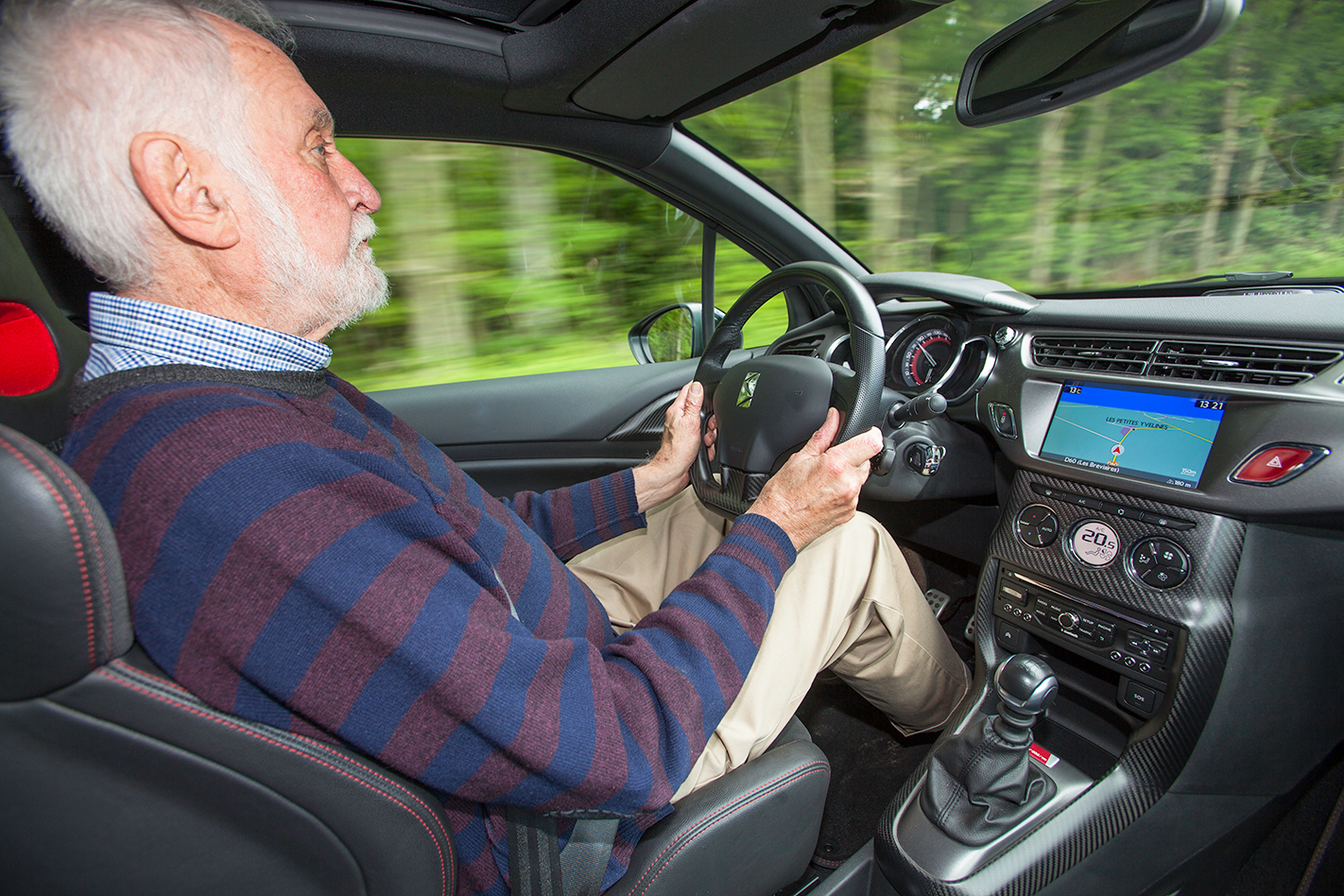
Exotic looks help. To the DS3’s chunky body the Racing adds real carbonfibre wheelarch extensions, front splitter and rear diffuser, while the interior feels special with deep, supportive buckets and more carbonfibre. Only the cheap add-on red stripe on the dash (and bodysides) and some hard plastics let it down.
Two distinctive exterior colour combinations are offered: black with an orange roof, and white with a grey roof, plus plenty of Citroën Racing branding.
One hundred metres at the wheel is all you need to know that the DS3 Racing is the real thing. Firm, controlled damping that still manages to knock the edges off the worst bumps; an intense hit of torque and swift rush to the 6500rpm cut-out; sharp steering with just a hint of torque steer; and instantly positive brakes without any dead travel.
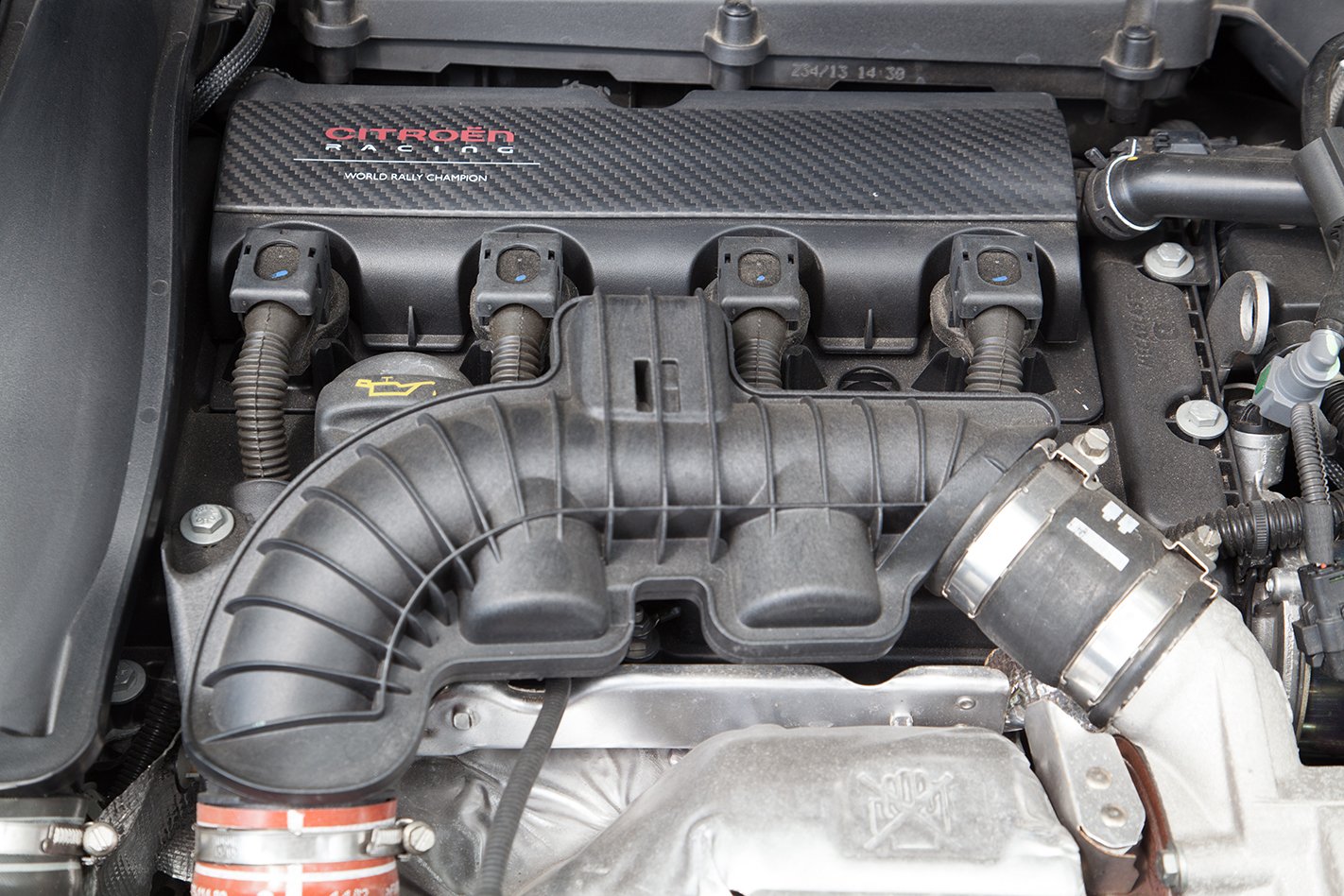
Its 6.5sec 0-100km/h claim is in Golf GTI territory though a mechanical limited-slip diff would help in wet conditions, yet it has masses of easy to access performance, especially at the top end, and the way all the controls work in unison tells you Citroen Racing understands.
The gearshift is lightweight and a little loose, yet works brilliantly the faster you shift. Turn, lift and the DS3 Racing sticks; go in too fast, hit the brakes and it still sticks. Simple and effective. A hint of understeer is there as a sign that you’re closing in on maximum grip. Try harder, really hard, in second or third and you can provoke a neat and controllable Sebastien Loeb slide.
The DS3 Racing is another marvellous and exhilarating French hot hatch. Perhaps, to help justify a price that is probably in the region of $43K, Citroen should sell a limited number (say 50) badged in honour of nine-time world rally champion Sebastien Loeb.
Model: Citroen DS3 Racing Engine: 1598cc 4cyl, dohc, 16v, turbo Max power: 149kW @ 6000rpm Max torque: 275Nm @ 4500rpm Transmission: 6-speed manual Weight: 1165kg 0-100km/h: 6.5sec (claimed) Economy: 6.4L/100 (EU combined) Price: $43,000 (estimated) On sale: Not confirmed for Oz
So, will it come to Australia?
Whenever Citroen Australia asked Paris about the DS3 Racing, it was told “No Chance”. The reasons are vague: the French blamed our poor-quality petrol and high ambient temperatures. Except essentially the same drivetrain is sold here in the Peugeot 208 GTi 30 and 308 GT, plus the previous-gen Mini Cooper S. Pushed, the Racing’s project leader told Wheels: “There is no problem for Australia to get this car.” The question now is when? The sooner the better, please!
Say hello to the fastest motorcycle on the planet. Well, at least that’s what Triumph is hoping it’ll become later this year.
It’s called the Triumph Rocket III Streamliner, which as well as looking like something stolen from Batman’s garage, is powered by two 2.3-litre three-cylinder engines producing… wait for it… 746kW at 9000rpm. That’s 1000hp in old money. To put that into perspective, a MotoGP bike chucks out about 194kW (260hp).
Triumph is taking the bike to the Bonneville Salt Flats in late August during the iconic Speed Week event where it hopes to shatter the current land speed record of 605.697km/h held by the Ack Attack Suzuki team.
And who, we hear you ask, is crazy enough to strap themselves inside for the record run? That’ll be Isle of Man TT regular Guy Martin, who clearly thinks risking his life each year on a cold Island in the Irish Sea isn’t enough of an adrenalin kick.
To carve all that insanity through the air the Triumph has an aerodynamically honed carbon Kevlar body that is 7.77m long. Triumph has a long history of land speed record success, having held the title of ‘World’s Fastest Motorcycle’ from 1956 to 1970.
Sign up here to receive the latest round-up of Wheels news, reviews and video highlights straight to your inbox each week.
Convertibles can be like a Hollywood sequel. They cost more to make, they lose the plot in terms of structure and too often rely on flash visuals rather than an engaging experience.
But the new third-gen Audi TT Roadster is like Mad Max: Fury Road, a polished product every bit as entertaining as the original.
All TT Roadsters are loaded with a 2.0-litre turbo four, a double-clutch ’box housing six cogs, and a centre differential that gifts it all-wheel drive. That’s matched to a new body that shrinks in size (it’s 10mm shorter and skinnier) but also fattens the chassis’s spread of grip (its wheelbase is 37mm longer, track 10mm wider).
You can sense the Roadster’s spaciousness inside, but the highlight is what surrounds you. From the vents that house clever push-or-twirl HVAC buttons to the clean centre console, the TT’s high-tech design fest feels like an actual jet cockpit, only more suave.
Ten seconds is all it takes to drop the roof, bathing the interior in sunshine and gifting your ears access to the turbo four that when hustling through Lorne’s hinterland, reinforces the TT isn’t all about design; it also wants to unstitch toupees.
With 169kW/370Nm, the TT Roadster doesn’t feel rocket fast, and flicking through the flawless dual-clutch S-tronic fills the surrounding air with an all too familiar four-cylinder rort, however the aural experience is salvaged by the gruff belches during upshifts that are very addictive, like its engine is throwing rocks of flash powder down its exhaust.
Then there’s its tactile steering wheel. It isn’t only gorgeous to look at, it controls a reactive front end that turns in eagerly, even if its variable-speed rack feels muddy for the first few degrees of lock. It’s also matched to a taut, adjustable chassis that will pivot mid-corner on a lifted throttle.
Combined with inside-wheel braking on both axles, grip loss feels brilliantly managed by the Gen V quattro system. The system reads steering angle and yaw rate values to decide when to fire power backwards, which seems to be at corner exit as you sink the throttle.
Comfort is plentiful despite the loss of roof, too; wind doesn’t muffle conversation, even at highway speeds, and the car’s short-travel dampers generally manage broken roads well.
It’s just a shame that trim level selection dictates the ride quality. S-line models score 19s, an S-line bodykit, LED lights front/rear, brilliant adjustable bolster seats and a digital radio over the Sport model, for a total of $89,000.
But for $7500 less, the Sport’s smaller 18s wrapped in 245/40 Continental rubber are markedly better over rude road surfaces, of course at the cost of the the S-line’s stance and slightly sharper turn-in.
Either way, both confirm Audi’s TT Roadster as a compelling sports drop-top with high-tech design, a girder-rigid chassis and accessible performance.
And with the TTS launching later this year, we can’t wait for the three-quel.
4/5
Engine: 1984cc inline-4, DOHC, 16v, turbo Power: 169kW @ 4500-6200rpm Torque: 370Nm @ 1600-4300rpm Weight: 1425kg 0-100km/h: 5.6sec (claimed) Price: $81,500
Get your free weekly report from the world of fast cars – subscribe to the MOTOR newsletter!
Jaguar Australia has managed to secure a small allocation of the limited-edition Project 7, the first product from its new Special Vehicles Operation (SVO) division.
Just 10 of the 250-unit build run will be making their way down under, priced at $339,610, a hefty $112,640 more than the F-Type Coupe R on which it is based.
Unfortunately for any prospective buyers, the price is now immaterial, as all 10 cars have been spoken for before they’ve even been built.
Inspired by Jaguar’s Le Mans-winning D-Type, and named in honour of the British marque’s seven victories at the French classic, Project 7 is comprehensively modified by JLR’s new SVO division.
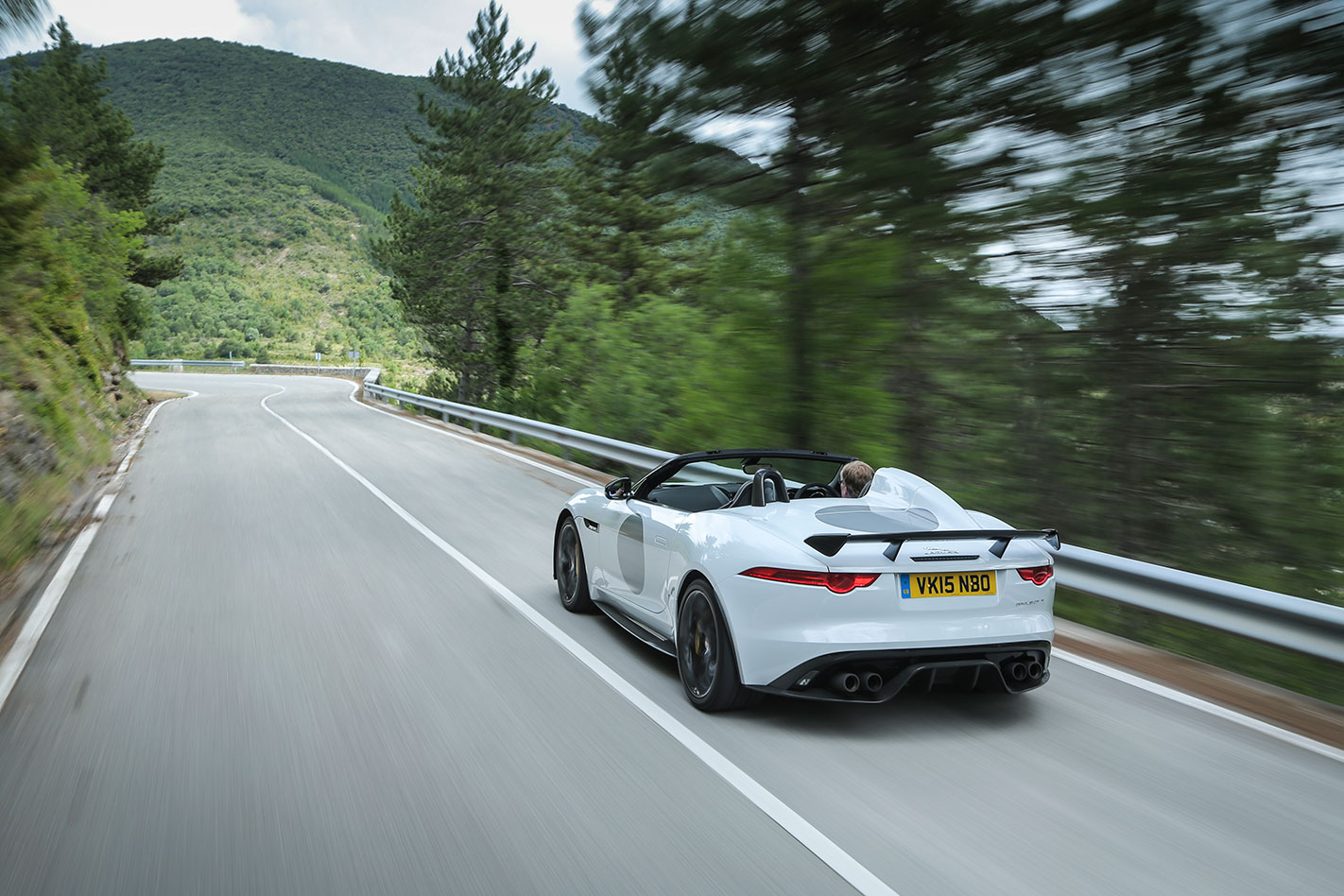
Outputs from the 5.0-litre supercharged V8 increase to 423kW/700Nm and the electronics for the engine and gearbox are recalibrated to be more aggressive.
Carbon ceramic brakes are standard, and the suspension is much stiffer to improve performance on-track. Top speed is electronically limited to 300km/h, but the 0-100km/h time improves to just 3.9sec.
Unfortunately, the strong local demand means there will be no press car, so therefore no local review, however you’ll be able to read our verdict from the overseas launch in the next issue of MOTOR, on-sale August 3.
