
November: New Santa Fe driven ahead of Australian launch
We’ve finally driven the new-generation Hyundai Santa Fe!
Catch our review here to see if this is the family SUV you should wait for.
2023 Hyundai Santa Fe full range review
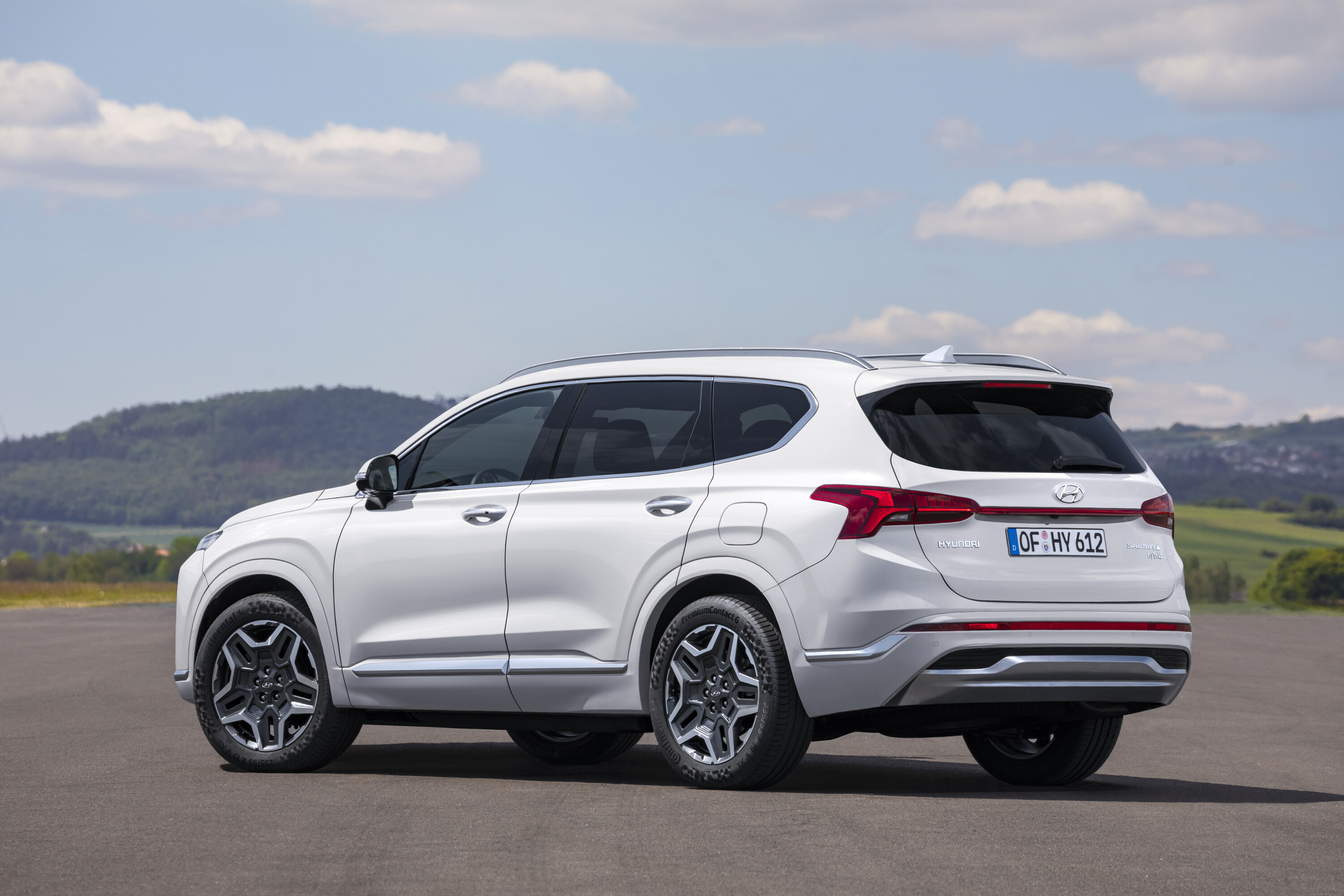
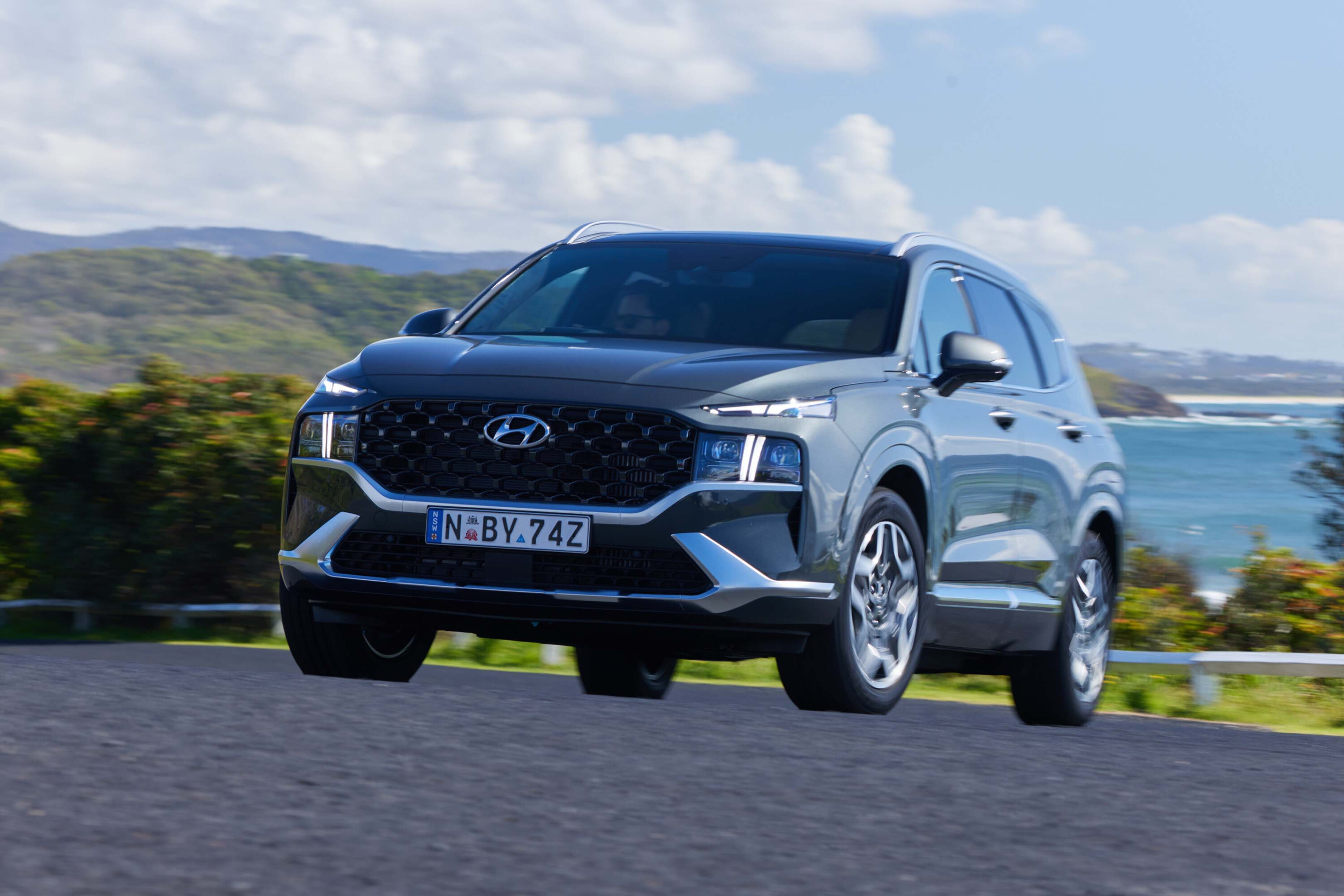
At under 4.8 meters long, the Hyundai Santa Fe is a welterweight among large SUVs – yet canny packaging and attention to detail make this six- or seven-seater an excellent family bus.
With a mid-life facelift in December 2020 and a hybrid powertrain added to the mix in November 2022, the Hyundai Santa Fe remains fresh and relevant in a remarkably competitive market segment.
It’s a smooth and soothing SUV to drive, with the ability to get a reasonably complete specification for under $50K, up to a near-luxury Highlander that pushes the $70K envelope. Read on to find out if the Santa Fe will suit your needs.
1
JUMP AHEAD
- Pricing
- What body styles are available for the Santa Fe?
- What features are standard in every Santa Fe?
- What key features do I get if I spend more?
- How safe is the Santa Fe?
- How comfortable & practical is the Hyundai Santa Fe?
- How much boot space does the Santa Fe offer?
- I like driving, will I enjoy this car?
- Which Santa Fe engine uses the least fuel?
- What is the Santa Fe’s towing capacity?
- How long is the warranty & what are the Santa Fe’s servicing costs?
- Which version of the Santa Fe does Wheels recommend?
- What are the Santa Fe’s key rivals?
- What might annoy me?
- What’s the infotainment system like?
- Where does Hyundai make the Santa Fe?
- Are there plans to update the Santa Fe soon?
Pricing
| Model | Pricing |
|---|---|
| Santa Fe 3.5 petrol FWD | $46,050 |
| Santa Fe 2.2 diesel AWD | $49,550 |
| Santa Fe Active 3.5 petrol FWD | $50,290 |
| Santa Fe Active 2.2 diesel AWD | $53,750 |
| Santa Fe Elite 3.5 petrol FWD | $56,500 |
| Santa Fe Elite 2.2 diesel AWD | $60,000 |
| Santa Fe Hybrid Elite | $63,000 |
| Santa Fe Highlander 3.5 petrol FWD | $63,050 |
| Santa Fe Highlander 2.2 diesel AWD | $66,550 |
| Santa Fe Hybrid Highlander | $69,550 |
| Prices listed are before on-road costs |
Premium paint costs an extra $695 across the Santa Fe range.
The Elite can be had with Cognac Brown leather upholstery for $295, and the Highlander Camel Tan Nappa leather trim for the same price.
1
What body styles are available for the Hyundai Santa Fe?
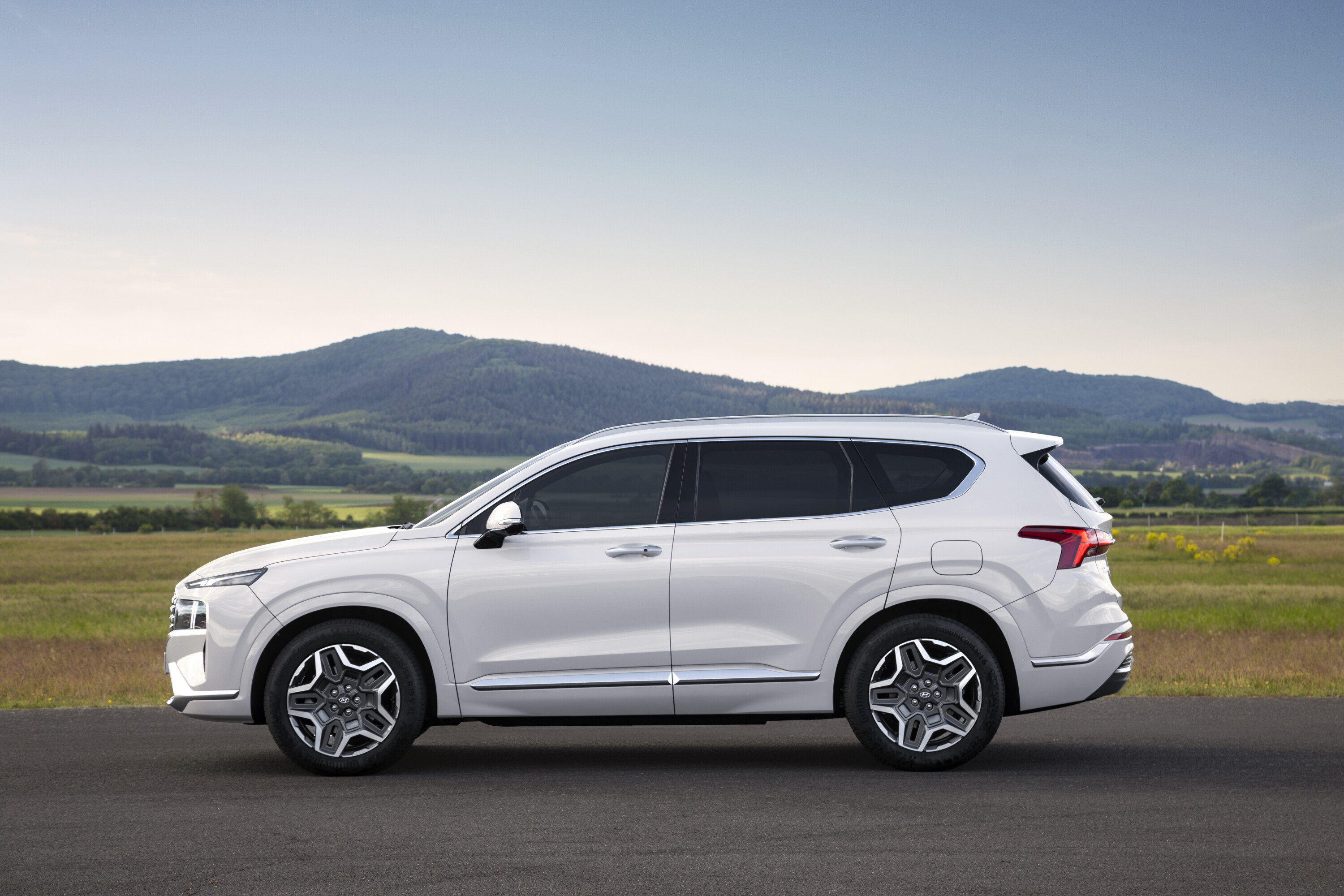
The Hyundai Santa Fe is a five-door large SUV with seating for up to seven occupants, depending on specification.
What features are standard in every Hyundai Santa Fe?
The features listed below are standard in the entry-level model and will appear in higher-grade models unless replaced by more premium equivalent features.
| 2023 Hyundai Santa Fe standard features | |
|---|---|
| 17-inch alloy wheels | 4.2-inch instrument cluster display |
| Black grille inserts | 6-speaker sound system |
| Wireless Apple CarPlay and Android Auto | Leather-appointed steering wheel and gear selector |
| Reversing camera | Electronic parking brake |
| LED headlights | Third-row USB charge ports |
| Rear parking sensors | Black vinyl upholstery |
| LED daytime running lights | Manual-adjust front seats with 2-way power lumbar for driver |
| Wireless phone charger | Manual air-conditioning |
| 8.0-inch infotainment touchscreen | Heated rear windscreen |
1
What key features do I get if I spend more?
Cruising up through the Santa Fe range makes for a much more premium experience.
The two lower grades are more than serviceable, but not particularly special. A larger price jump to the Elite and Highlander is worth it for the extra luxury. Plus, the upper-spec cars are also available with an efficient petrol-electric hybrid powertrain.
The Hyundai Santa Fe Active adds:
| 2023 Hyundai Santa Fe Active features | |
|---|---|
| 18-inch alloy wheels | Chrome exterior trim |
| Black leather upholstery | Power-folding exterior mirrors with puddle lamps |
| Dual-zone climate control | Rain-sensing wipers |
| Rear privacy glass | Keyless entry and start |
| Safe exit assist | Push-button gear selector |
1
Stepping into the Santa Fe’s upper echelon, the Santa Fe Elite brings:
| 2023 Hyundai Santa Fe Elite features | |
|---|---|
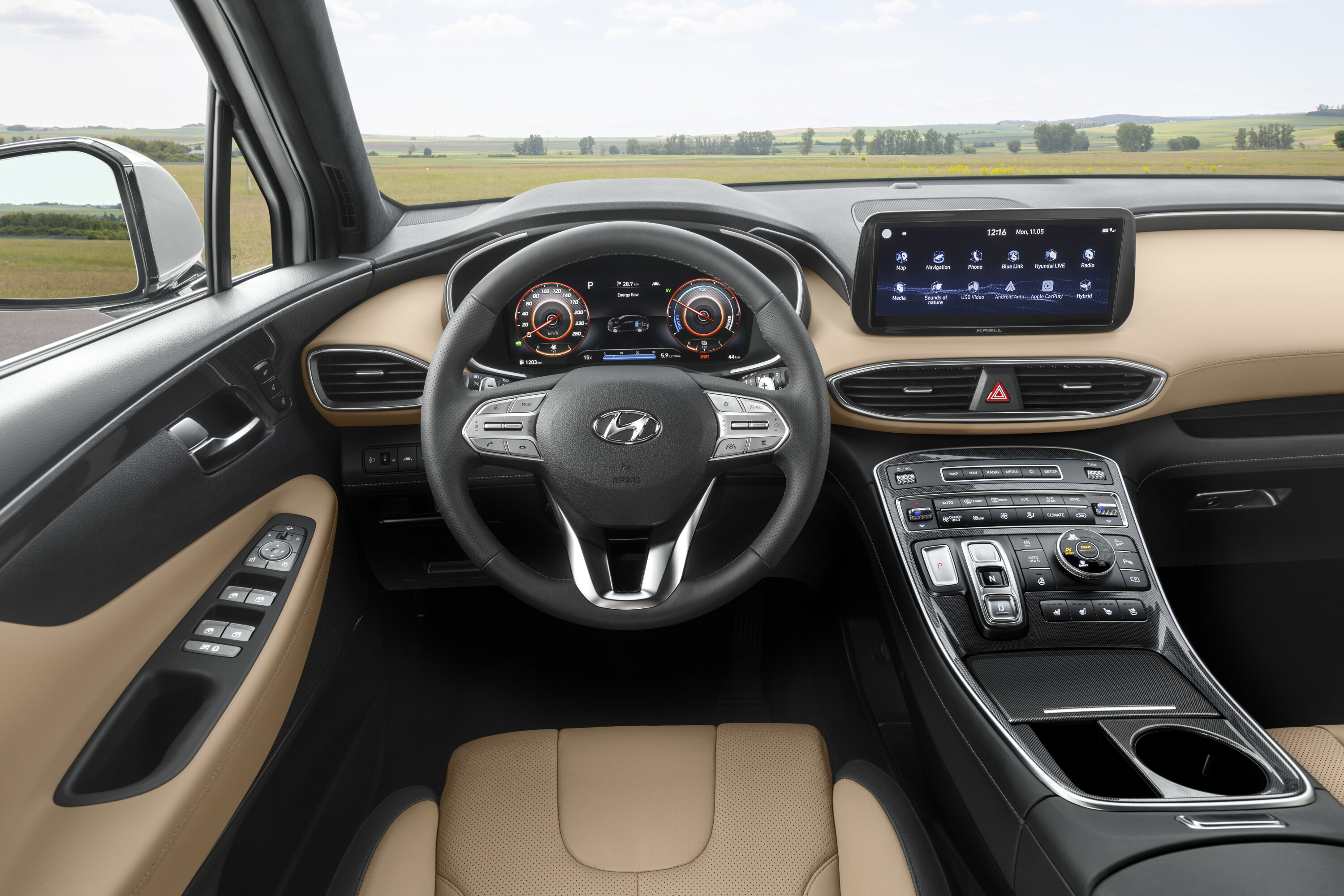
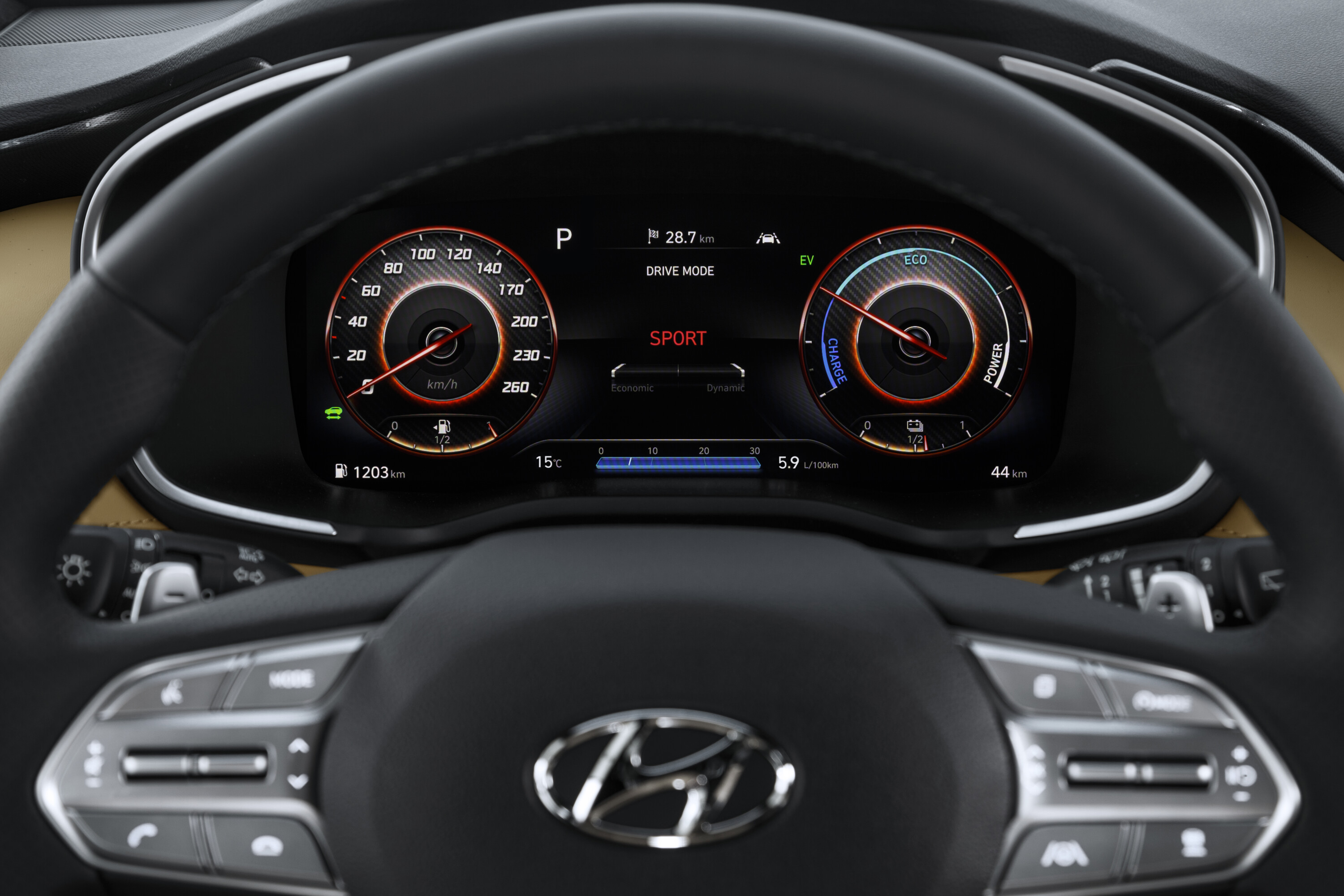
| 20-inch alloy wheels | 12.3-inch digital instrument cluster |
| Black or Cognac Brown leather upholstery | Heated front seats |
| 10-way power driveru2019s seat | 10.25-inch touchscreen infotainment system |
| Eight-way power passengeru2019s seat | Wired Apple CarPlay and wired Android Auto |
| Satellite navigation | 10-speaker Harman Kardon audio system |
| Digital radio | Power tailgate |
| Auto-dimming rear-view mirror | Rear occupant alert u2013 advanced |
Rounding out the range is the leather-lined Santa Fe Highlander, scoring:
| 2023 Hyundai Santa Fe Highlander features | |
|---|---|
| Panoramic glass sunroof | Head-up display |
| 14-way powered front seats | Heated front seats |
| Black or Camel Tan Nappa leather upholstery | Heated and ventilated front seats |
| Heated second-row seats | Heated, perforated leather-appointed steering wheel |
| Reverse autonomous emergency braking | Customisable ambient lighting |
1
How safe is the Hyundai Santa Fe?
As is often the case with mid-life updates, the current Santa Fe is probably safer than its 2018 five-star rating suggests, having received improved auto emergency braking (AEB) with junction capability and a centre airbag in a December 2020 update that has not been evaluated by ANCAP.
Still, the Santa Fe diesel and petrol are both rated ANCAP five stars. As the hybrid models have a significant difference in drivetrain, they need to be tested separately. Hybrids, therefore, fall into ANCAP’s unrated category.
| 2023 Hyundai Santa Fe standard safety features | |
|---|---|
| Seven airbags | Driver attention monitoring |
| Lane trace assist | Lane departure warning |
| AEB with day/night pedestrian, day cyclist detection and junction AEB | Traffic sign recognition with intelligent speed limit assist |
| Auto high beam | Adaptive cruise control with stop and go |
The Active adds safe exit assist tech that detects approaching vehicles and sounds a warning chime if the door is about to open into a hazard.
Going up to the range-topping Highlander means you get low-speed reverse AEB as well as remote parking and a 360-degree surround-view monitor.
1
How comfortable and practical is the Hyundai Santa Fe?
The 4785mm long Hyundai Santa Fe is a relative minnow in the large SUV space, yet thanks to some neat packaging, the space on offer is greater than a Mazda CX-8 and feels competitive with a Toyota Kluger.
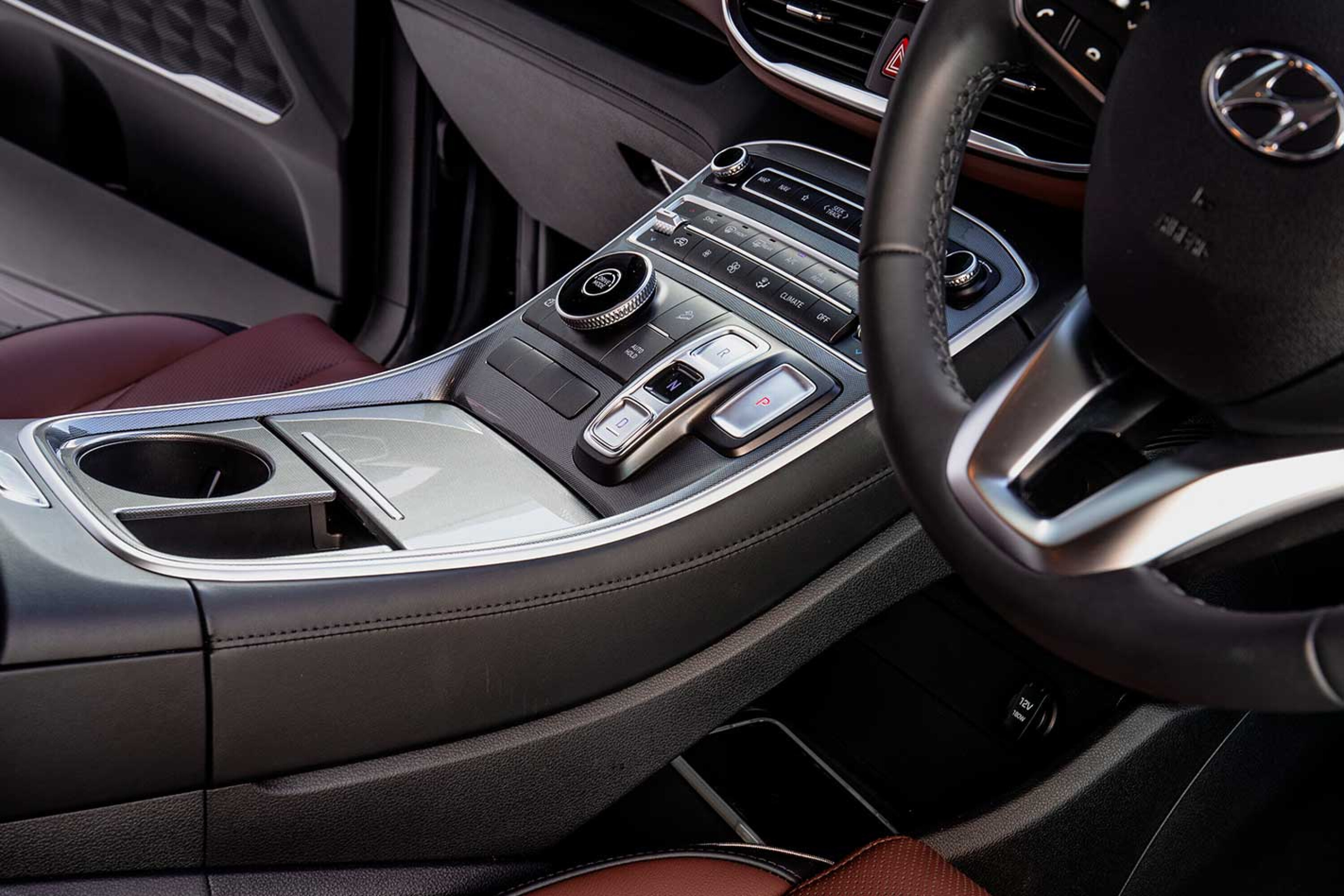
It was only improved mid-life with the addition of a push-button gear shift and floating centre console from Elite trim up (very similar to that in the Palisade) that liberates useful incidental storage below, with a tray big enough for a small backpack, shoulder bag, or tissue box.
Further storage includes two cup holders, a covered centre bin beneath a plush armrest and a vertical wireless charging slot that means your phone never slides out of its slot. A 12-volt socket, USB-C fast-charger and regular USB-A port (for multimedia connection) feature for additional charging.
1
In stark contrast to its Kia Sorento relation, the Santa Fe relies on a battery of buttons for its cabin controls. A little confusing at first, the logically laid-out switches are all easy to access in practice and it makes a nice change from touchscreen-heavy interaction.
That said, Hyundai’s touchscreens are nice and responsive. The 8.0-inch unit in the lower-grade cars does look a little small in the Santa Fe, though. The higher-resolution 10.25-inch screen with in-built navigation in the upper trims is a more appropriate size.
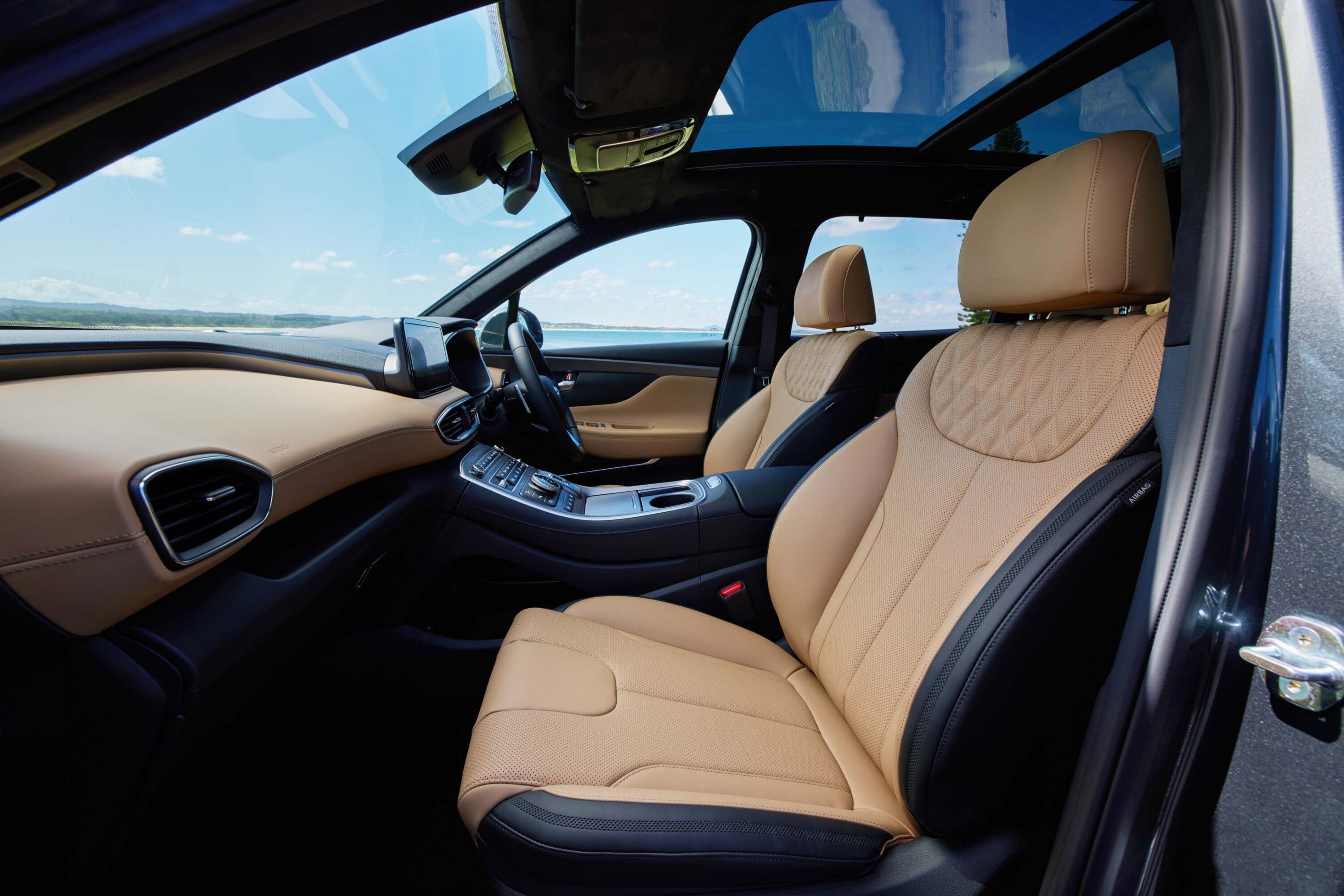
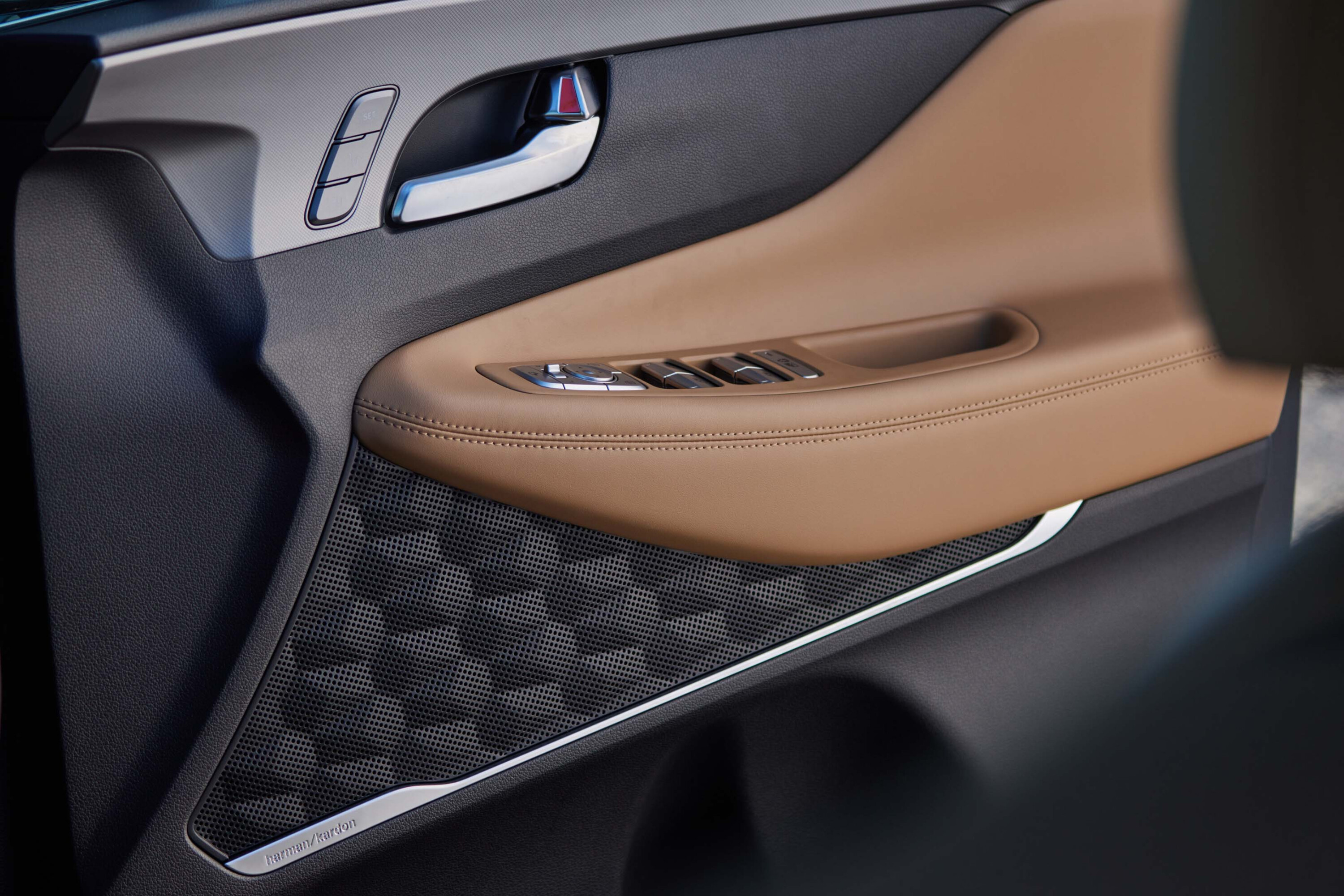
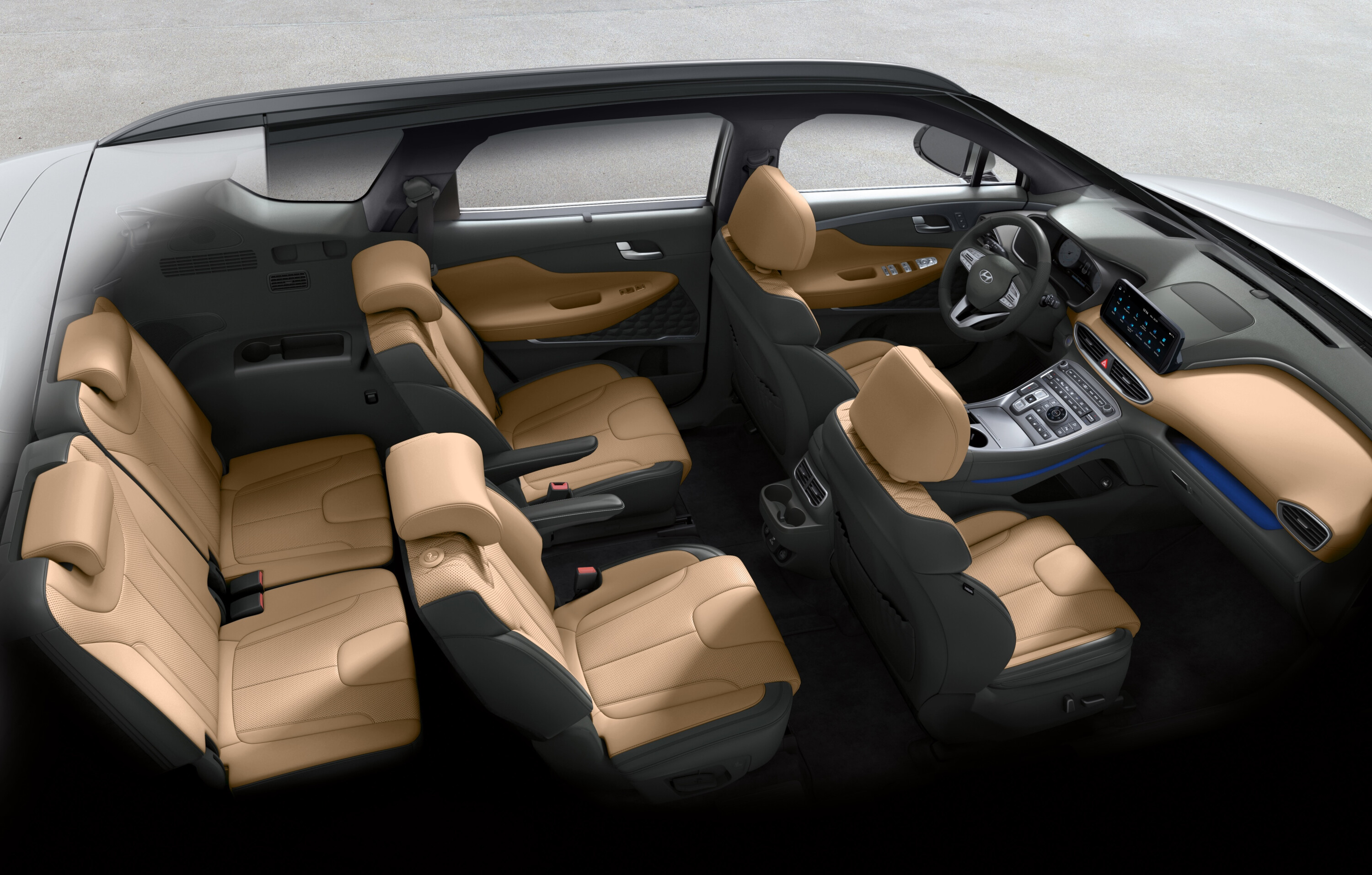
Hyundai offers a number of colour and trim options in Elite and Highlander specs with the two-tone Camel Tan Nappa leather appointments the gem in the crown.
1
The leather even makes it onto the dashboard, where you can run your hands over it and revel in the astounding levels of plushness that Hyundai’s managed to cram into a sub-$70K seven-seater.
Even the Highlander’s real aluminium trim embellishments look classy.
The base Santa Fe’s seats are comfortable and serviceable and manual adjustment is acceptable for a car this size that starts under $50K. For private buyers, though, the Elite’s leather-appointed, heated and power-adjustable seats up the comfort levels significantly. The Highlander’s seat position memory and ventilation make it a perfect choice for Australia’s warm climate.
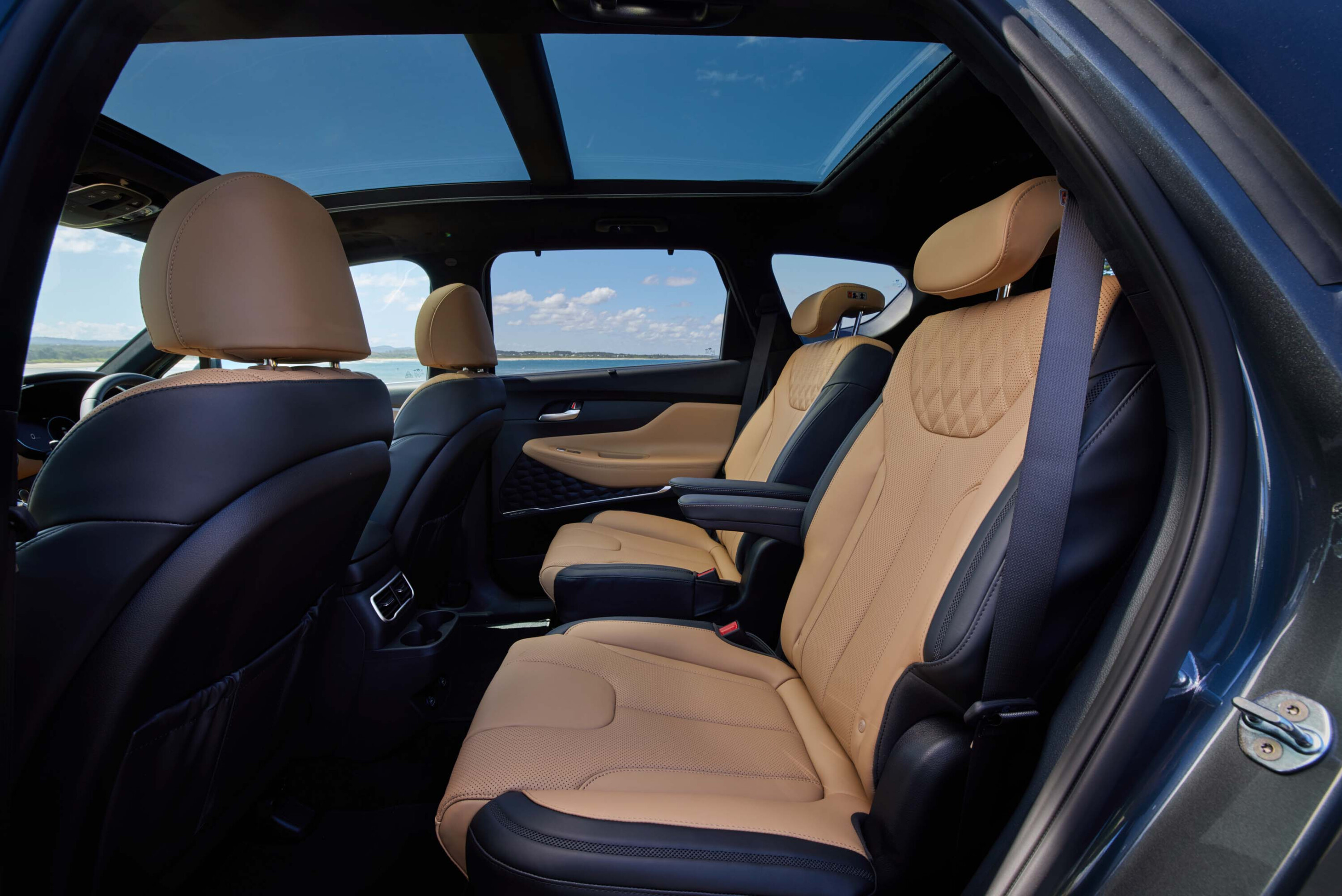
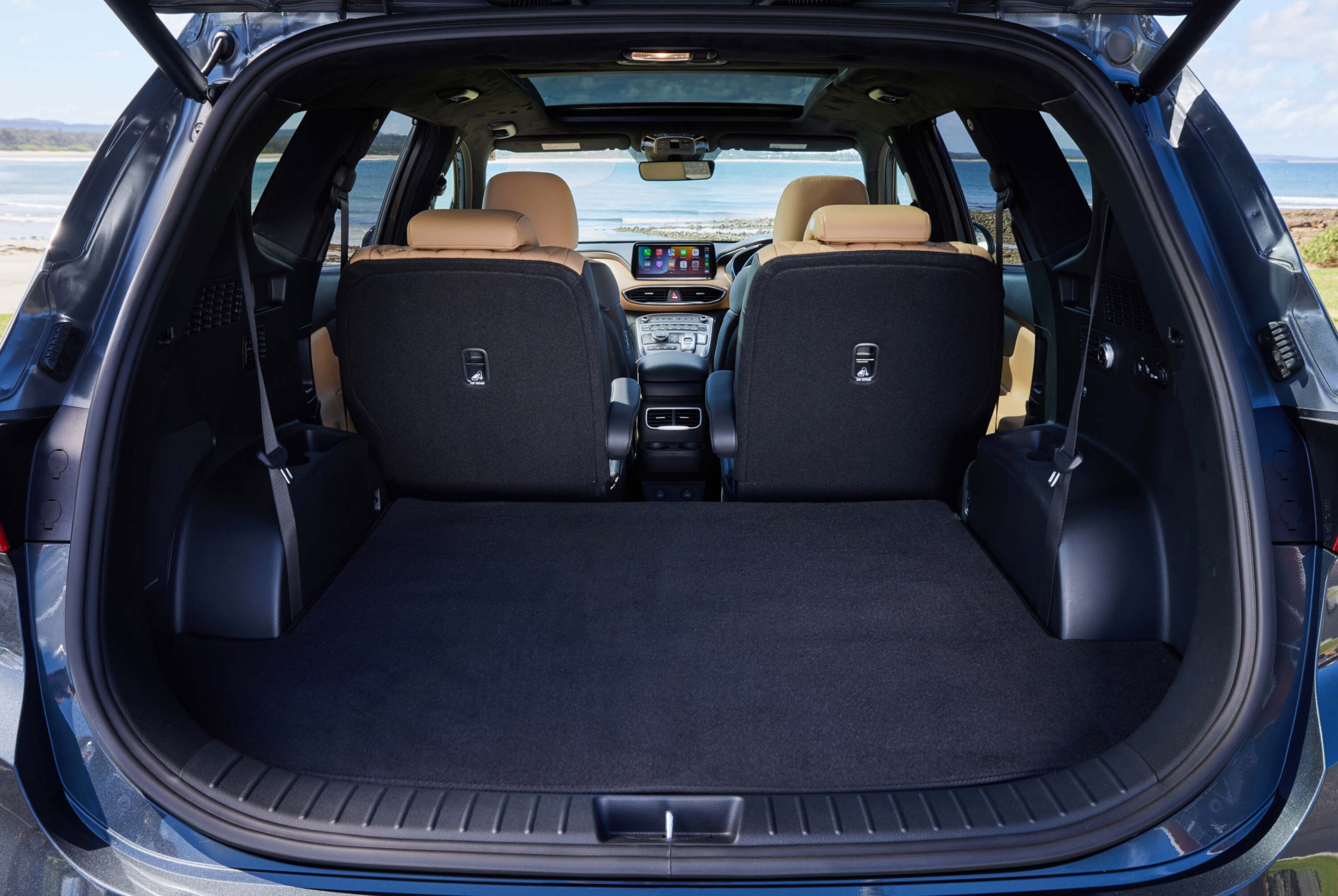
Front seat riders are well catered for, but Hyundai hasn’t forgotten those in second or third rows. The second-row bench is shapely and supportive with acres of legroom even for six-foot-plus occupants.
1
It’s also on rails with a tilting backrest, so you can balance legroom and boot space depending on your needs.
In the Highlander, rear passengers get their own climate zone, integrated sunshades (which are simply awesome), and heating for the outboard positions.
Hyundai thoughtfully includes a fold-out armrest in the 60:40 split backrest, two lots of ISOFIX anchors, three top-tether points, and two charging ports in the back of the centre console.
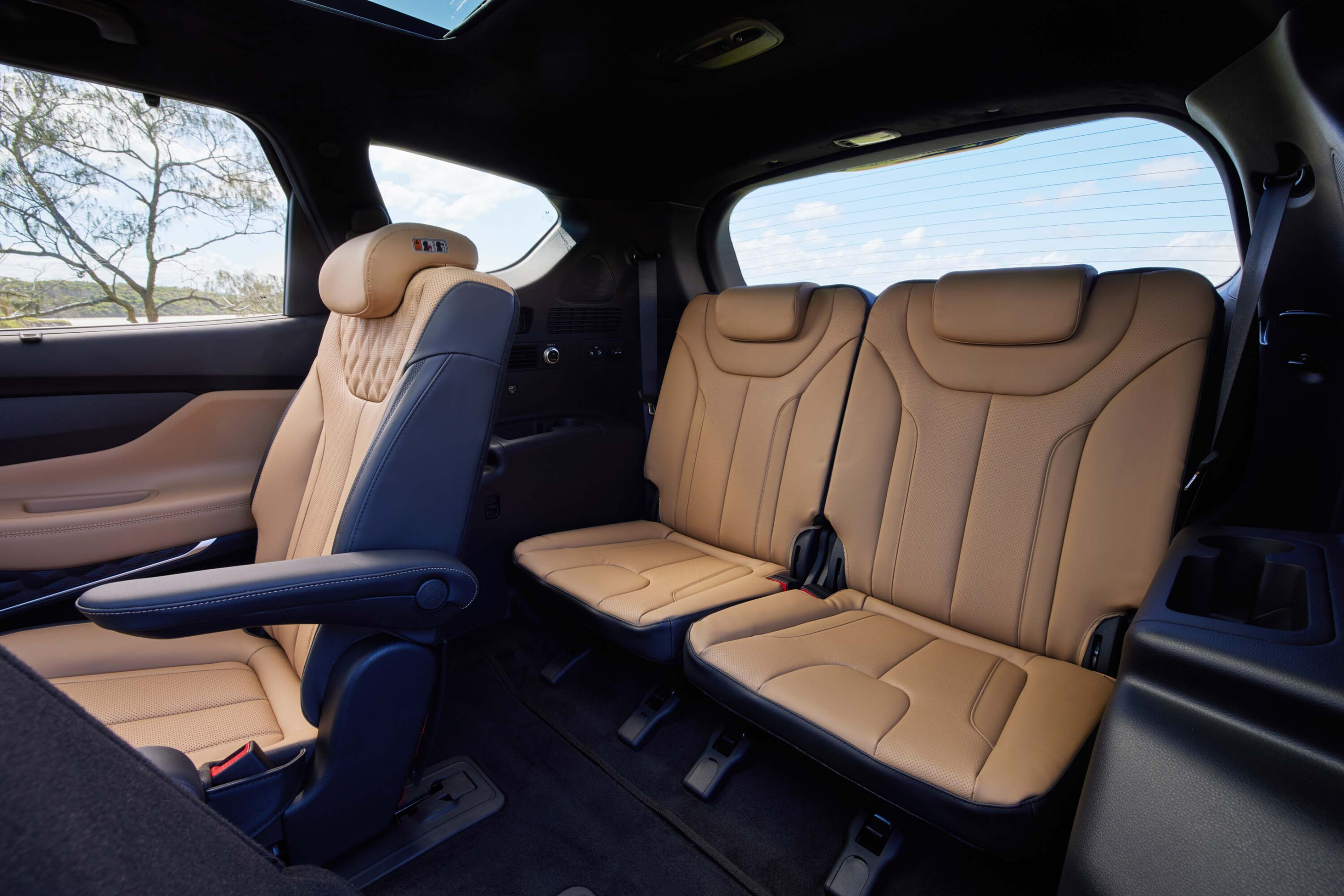
Accessing the Santa Fe’s third row is a simple affair thanks to electronic buttons that actuate the second row’s tilt-and-slide function. The seat is also light enough to get back into position. While the third row is intimate for adults, the Santa Fe doesn’t sacrifice much space to larger vehicles – in fact, headroom is marginally better than a Mazda CX-9.
1
How much boot space does the Hyundai Santa Fe offer?
The Santa Fe’s boot space is not class-leading when you have all three rows raised, offering just 130L.
It’s enough for school bags but little else. With five onboard, cargo space fluctuates between a respectable 571L and a capacious 782L, depending on the bench’s position.
Thoughtful touches include underfloor storage that’s perfectly sized for the removable cargo blind and the Highlander’s accessory carpet. A power tailgate is standard from Santa Fe Elite upwards.
Hybrid Santa Fe models do suffer slightly, with some of the electrical gubbins taking up space under the boot floor (though not the battery, which lives under the driver’s seat), but it retains the same above-floor capacity and a full-size spare wheel slung beneath the Santa Fe’s body.
1
I like driving, will I enjoy this car?
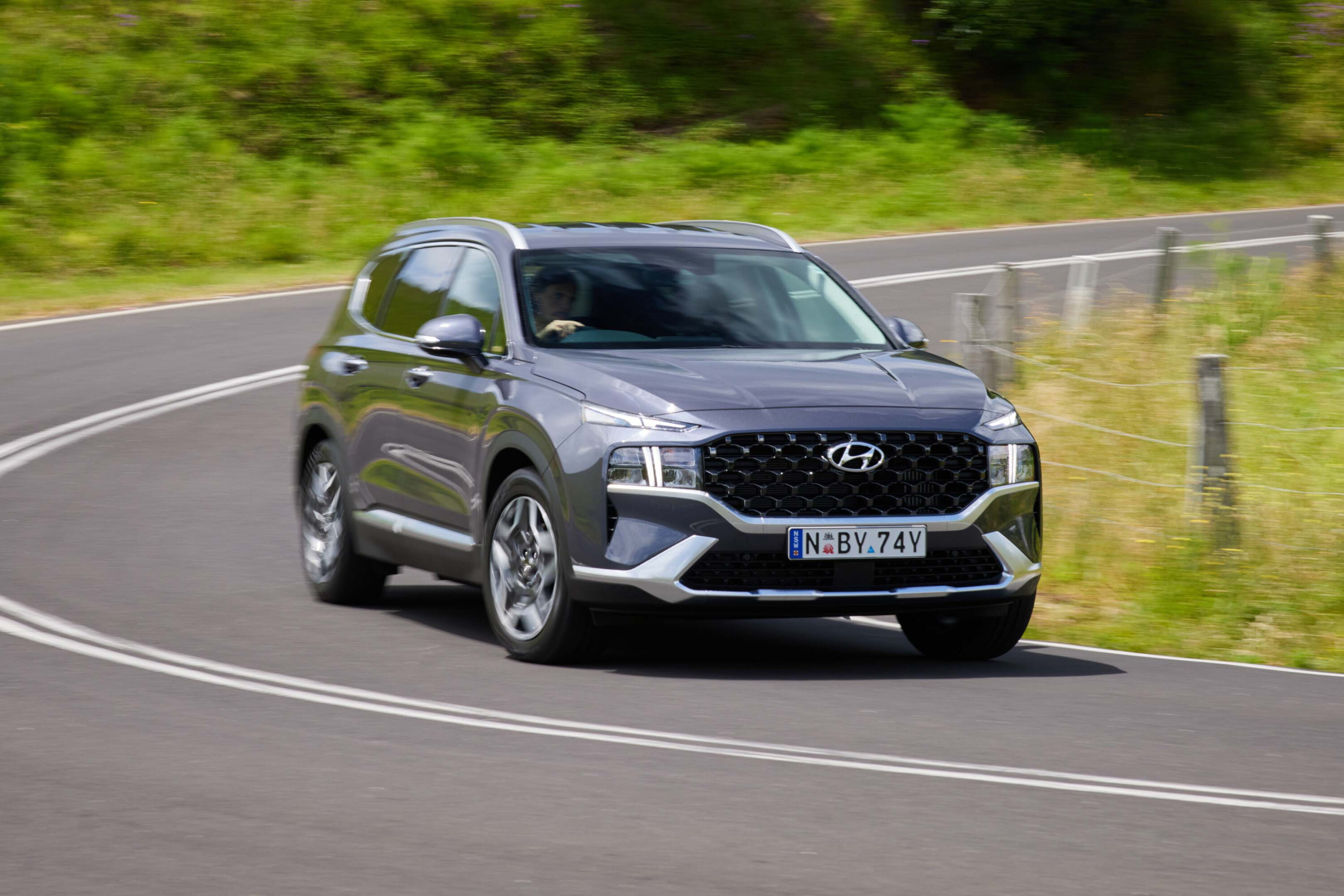
Striking a middle ground in the segment, the Santa Fe isn’t as sporty as a Sorento or plush as a Kluger but that’s what makes it such a well-rounded SUV.
With the update in 2020, Hyundai Australia decided to accept one of the Santa Fe’s several off-the-shelf suspension tunes across the range, rather than complete a localisation program.
The latest Santa Fe is softer in rebound and feels smoother through its stroke. Approaching the Santa Fe’s limits is a little more intimidating than before with more body roll and heave, but who in their right mind is pushing a Santa Fe hard anyway?
1
The result is that facelifted cars trade off some road-holding ability for a more relaxed ride, meaning the Santa Fe flows languidly down a road, effortlessly absorbing potholes and road imperfections in the process.
Despite a tall bonnet, forward visibility is relatively clear. Rear three-quarter vision is more compromised, so opting for a variant with a 360-degree camera is recommended if the car’s going to spend time around children.
Of its segment, the Santa Fe is the only vehicle with steering that weights up at speed to accurately reflect its heft, encouraging deference to this seven-seater’s mass. Around town, the Santa Fe’s electric power steering defaults to a lighter weight, making it easy to manouevre.
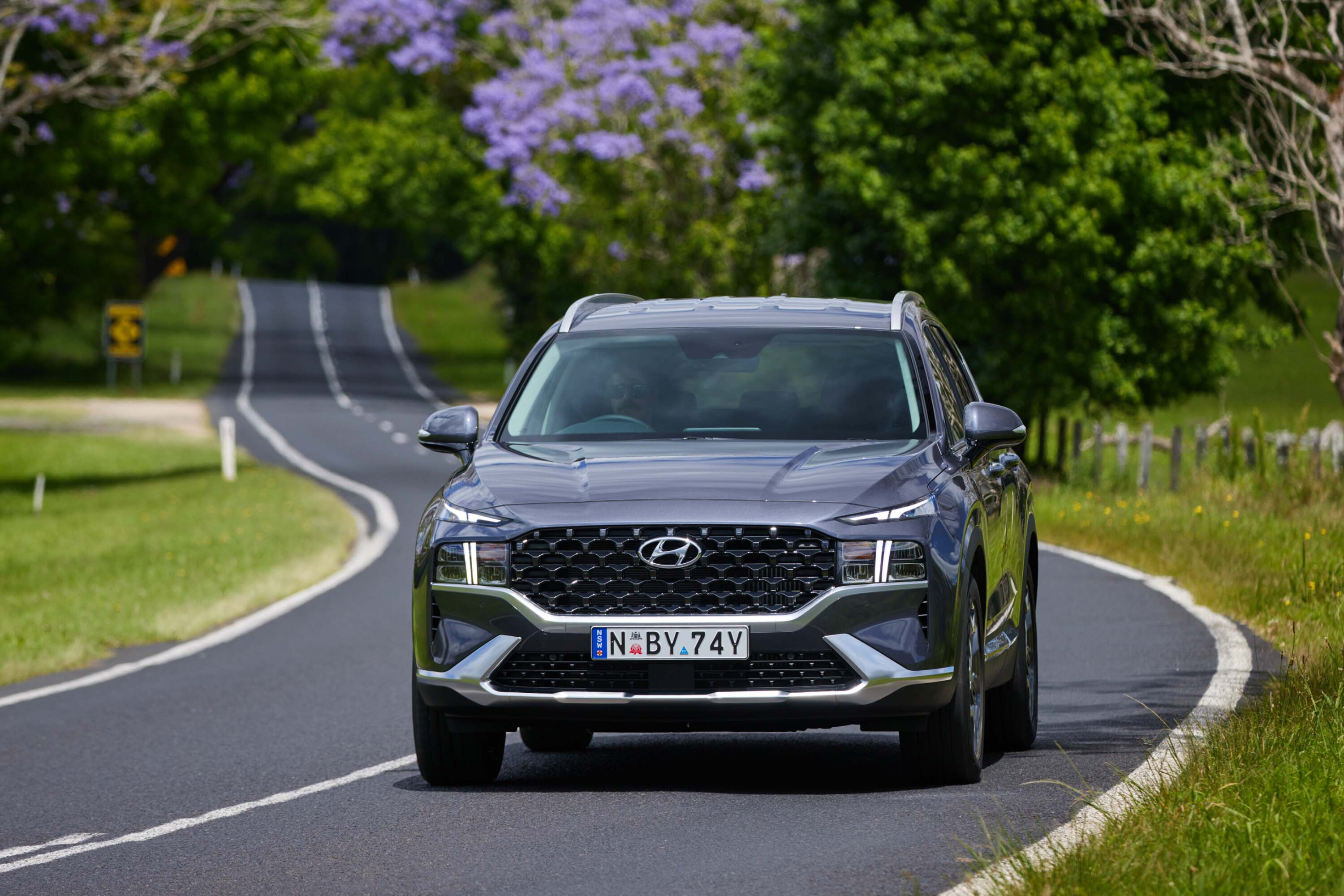
1
The motor is a little smoother at idle but isn’t a whole lot more hushed than the Palisade’s iron block.
As for engines, it’s a similar on-paper equation to the bigger Palisade, though the Santa Fe features an aluminium block for its 148kW/440Nm 2.2-litre turbo-diesel four-cylinder (and one extra kilowatt), hooked up to a quick and decisive eight-speed dual-clutch transmission and all four wheels.
It isn’t a whole lot more hushed than the Palisade’s iron block but the Santa Fe’s diesel is a little smoother at idle.
The other range-wide option is a 200kW/331Nm 3.5-litre petrol V6 that drives the front wheels, which can make for scrabbly getaways in wet conditions. It just erodes confidence, not to mention the V6’s thirst for petrol.
1
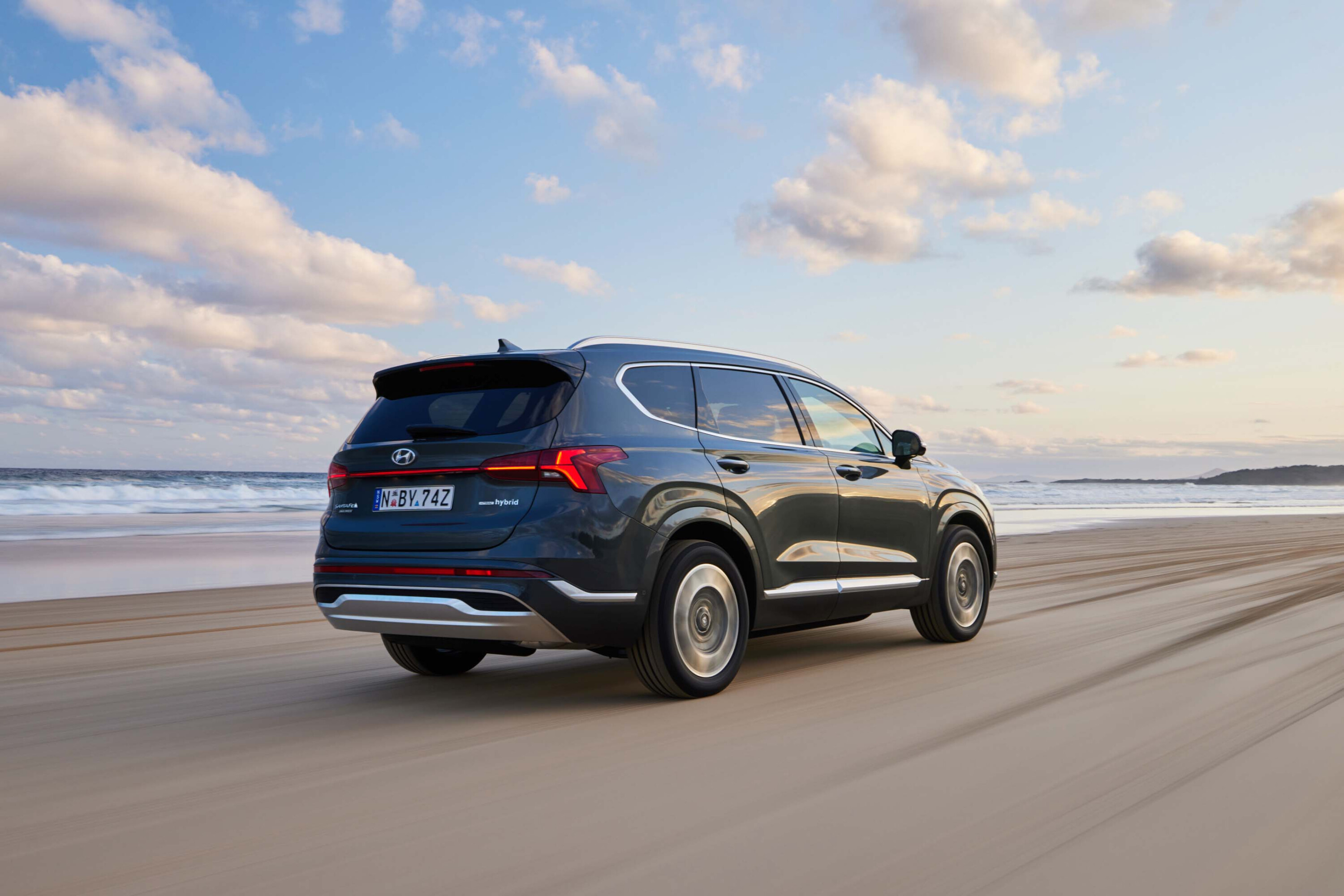
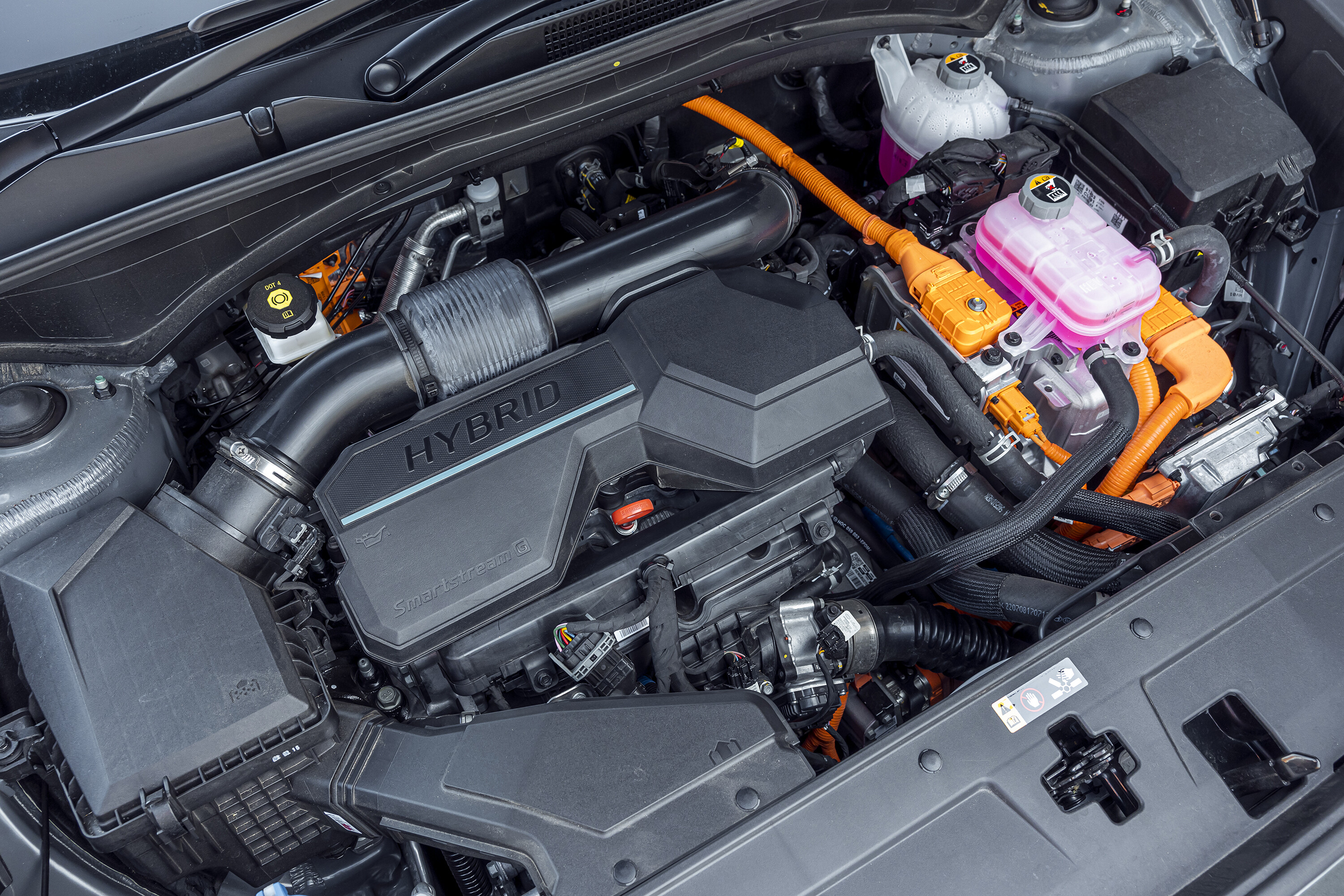
If you want an all-wheel drive petrol then the only option is the newly-added (November 2022) hybrid available in Elite and Highlander trims.
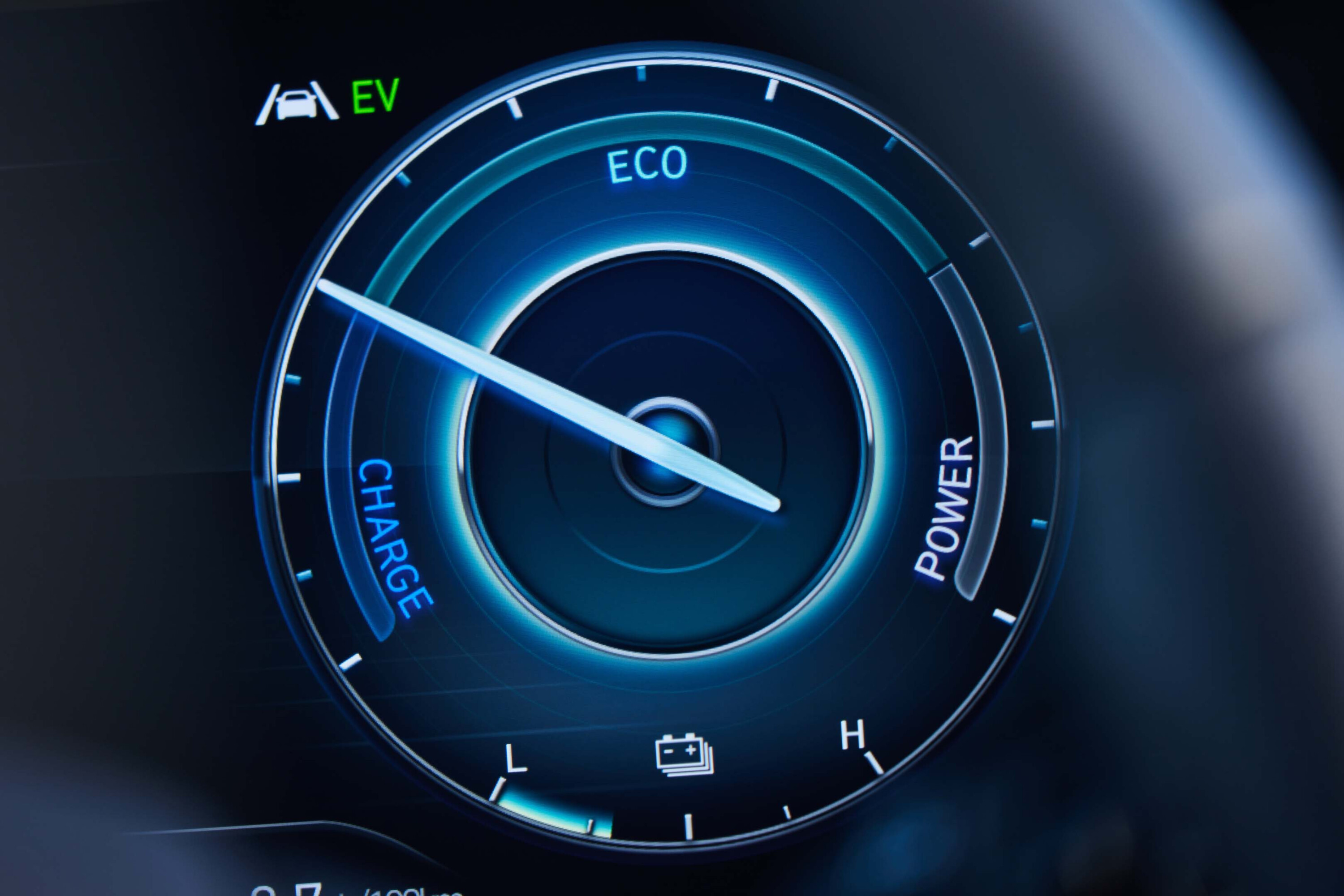
This puts out 169kW and 350Nm with a 1.6-litre turbo-petrol four-cylinder hooked up to a six-speed automatic with a 44kW electric motor sandwiched in between.
Although not as smooth or powerful as Toyota’s hybrid powertrains, the Santa Fe’s petrol-electric option is worth considering if you intend to use your SUV mainly in the suburbs.
We’ve found it to deliver efficiency and refinement in town, but its lack of mid-range torque compared to the diesel makes it a less effortless country cruiser.
1
- What is a Powertrain or Drivetrain?
- Power vs torque
- Car suspension explained
- Automatic transmissions (‘gearboxes’) explained
- Chassis control systems explained
- Car vs Ute vs SUV: How the vehicle you buy should guide the way you drive
If you want to save at the bowser, don’t buy the multi-point injected V6 as it consumes 10.5L/100km in the combined ADR cycle and a frightening 14.7L/100km in the urban test.
As for the other two powertrains, it’ll depend on your particular use case. The petrol-electric hybrid does its most efficient work around town where it draws close to Hyundai’s official 6.0L/100km combined result, though open roads will see that spike to 7-9L/100km, depending on the terrain.
If you’re a customer that regularly travels long distances on freeways and highways, the diesel’s 6.1L/100km claim is an achievable figure. In fact, you’ll drop below that on 80km/h-100km/h stretches with a gentle foot.
| 2023 Hyundai Santa Fe Powertrain | Combined fuel economy (ADR 81/02) | CO2 emissions |
|---|---|---|
| 3.5-litre multi-point injected petrol V6 | 10.5L/100km | 244g/km |
| 2.2-litre turbo-diesel four-cylinder | 6.1L/100km | 160g/km |
| 1.6-litre petrol-electric hybrid | 6.0L/100km | 137g/km |
What is the Hyundai Santa Fe’s towing capacity?
The Hyundai Santa Fe diesel and V6 are rated to tow a 2500kg braked load, and certified up to 200kg tow ball down weight.
Hybrid variants are rated lower, topping out at 1650kg braked with a maximum 100kg down weight. All can tow a 750kg unbraked load.
1
How long is the warranty and what are the Hyundai Santa Fe’s servicing costs?
The Hyundai Santa Fe is covered by a five-year/unlimited-kilometre warranty. Hybrid variants’ 1.49kWh batteries and high-voltage electrics get an additional eight-year/160,000km guarantee.
Maintenance pricing for the first five years falls under Hyundai’s capped-price servicing incentive. Petrol and diesel variants require servicing annually or every 15,000km, while the hybrid’s turbo-petrol engine needs to see a spanner a little more regularly, with 10,000km intervals.
Petrol and diesel servicing costs $2495 for five years/75,000km, an average of $499 annually. You can pre-pay at purchase and roll the cost into your finance, or pay as you go.
Hybrid servicing is more affordable, costing $2295 for five years/50,000km, or $459/year on average provided you don’t breach 10,000km a year.
| Powertrain | Service Interval | Five-year cost | Average service cost |
|---|---|---|---|
| Petrol V6 | 12 months/15,000km | $2495 | $499 |
| Turbo-diesel | 12 months/15,000km | $2495 | $499 |
| Hybrid | 12 months/10,000km | $2295 | $459 |
1
Which version of the Hyundai Santa Fe does Wheels recommend?
The Santa Fe range is broad, and each variant offers an awful lot for its asking price. It’s therefore largely up to how much you have to spend and your personal preferences. Naturally, though, we have some recommendations.
Firstly, skip up the range a little to the Elite if you can. It’s a sizeable price jump from base spec, but it’s also a big leap forward in terms of cabin presentation and level of equipment. When it comes to engines, AWD is a near non-negotiable for us. The diesel is pretty refined for its kind and the transmission is excellent.
Going for one of the top two grades also brings the option of hybrid power, which suits city dwellers and suburbanites. Those out in the country will get lower consumption from the diesel and it tows better than the petrol-electric Santa Fe.
What are the Hyundai Santa Fe’s key rivals?
- Toyota Kluger
- Kia Sorento
- Mazda CX-8
- Skoda Kodiaq
- Nissan Pathfinder
- Mitsubishi Outlander
- Nissan X-Trail
- Hyundai Palisade
- Mazda CX-9
What might annoy me?
Aside from some small idiosyncrasies, such as the lack of wireless Apple CarPlay and Android Auto in the top trims and that frustrating speed limit assist that beeps incessantly on the hybrid, precious little.
1
What’s the infotainment system like?
The base and Active’s small 8.0-inch screen is serviceable but nothing special, save for the inclusion of now-quite-reliable wireless Apple CarPlay and Android Auto.
Standard digital instruments have drawn both criticism and praise; while they might not look classic like analogue dials, they display info clearly and concisely.
Moving through to the Elite trim adds a large 10.25-inch touchscreen and navigation at the cost of wireless phone mirroring. The Elite also drops a high-resolution 12.3-inch digital instrument panel ahead of the driver.
The Highlander has the same package (and a cranking 10-speaker Harman Kardon sound system) but with a devilishly clever blind-spot camera system that pops a view of your blind spot up in the digital dash display when indicating.
1
Where does Hyundai make the Santa Fe?
Right-hand drive Hyundai Santa Fe models are manufactured for Australia in South Korea.
Are there plans to update the Hyundai Santa Fe soon?
A new-gen Hyundai Santa Fe is expected to arrive in 2024. Spy shots and sightings have given us an idea of what to expect – you can see our artist’s impressions here.
We’re pretty certain the new-gen car will retain combustion power in some form, potentially with the addition of next-generation hybrid tech from Hyundai. The fully-electric seven-seat SUV is more likely to come in the form of a future Ioniq 7 model related to the Kia EV9.
Pictures have emerged that hint at what Volkswagen’s impending Golf R400 might feature when it reaches production.
Spotted lapping a roundabout in Nurburg, a town in Germany home to the well-known Nürburgring, was what looked like the 294kW super Golf Dr. Heinz-Jakob Neusser, VW’s powertrain boss, confirmed for production at this year’s Frankfurt Motor Show.
There aren’t any concrete giveaways to suggest it is the actual R400, however, closer inspection of photos seen on Motortrendreveals the mule packs more performance than its demure exterior suggests.
Up front, peering through the front grille is an enlarged and obvious radiator, something a Golf R EA888 2.0-litre engine producing 294kW and 450Nm – some 88kW and 70Nm more than stock—would need to cool its extra mumbo.
Also noticeable are its front guards, which look significantly wider than the items found on the current 206kW Golf R, and suggest the Golf R400 will wear a wider track and footprint to help ground its power.
Extra speed needs slowing down, of course, and behind the R400 mule’s front Speedline wheels feature cross drilled flower-shaped brake discs gnawed by big fixed-piston calipers.
Besides the wider tread the tyres themselves look more serious than the R’s standard items, the Michelins sporting aggressive shoulder blocks.
Wider guards also shelter the rear wheels, a more subtle addition compared to the large rear wing that shares similarities with the item VW stuck on its “near-production” Worthersee-revealed Golf GTI Clubsport.
VW’s R400 concept first debuted at the Beijing Motor Show with its 294kW/450Nm outputs matched to a six-speed DSG transmission. More recently, however, rumours are circulating that when the car launches at the end of 2015 it may even sport up to 420PS, or 309kW.
MOTOR’s well aware of the competitive nature the Volkswagen Audi Group likes to instil within its brands. And with the 270kW Audi RS3 raising the bar for hot hatches earlier this year, it seems fans are the ones who win from this family rivalry.
More photos of the Golf R400 mule can be found at Motortrend.
BMW has raised the stakes of the German power war with its updated M6.
Available in Coupe, Convertible or four-door Gran Coupe guises, the facelifted M6 has just landed in Australia.
All three variants can be optioned with the Competition Package, with lifts outputs from the 4.4-litre twin-turbo V8 to a whopping 441kW/700Nm.
It’s an engine that was first seen in the BMW M5 ’30 Jahre’ special edition, and it’s likely to be no less ferocious in the M6, particularly in the stiffer, sportier Coupe.
The 0-100km/h sprint is now claimed to take just 3.9sec for the Coupe (4.0sec for the heavier Convertible and Gran Coupe), but even more impressive is the 0-200km/h time of just 11.8sec, a 0.6sec improvement over the previous M6 Competition Package.
Top speed is limited to 250km/h, but the optional M Driver’s Package lifts this to 305km/h.
The suspension is also revised, with stiffer settings for the springs, dampers and anti-roll bars; the steering receives more direct mapping, the M Dynamic setting for the DSC system is further relaxed and the electronic M differential benefits from its own control unit.
No pricing has yet been set for the revised M6, but we’ll be driving it in a few weeks’ time. Can it take the fight to AMG’s excellent new GT?
Get your free weekly report from the world of fast cars – subscribe to the MOTOR newsletter!
We know, performance cars are not really the first to come to mind when you’re looking for a new car. Heck, it’s probably sitting on that wish-list right next to a house in the inner-burbs of Sydney and a trip around the world. We also know that we’re more likely to find them higher up a car-lovers list than someone looking for an a-to-b-transporter.
But if you’re one of those peeps that think performance cars are too masculine and tough for your city drive, we’re here to tell you (or ask very nicely) to reconsider.
Here are WhichCar’s top picks for those who care less about fast-cars and more about stylish fast-cars. But be warned, some of them may break the bank… and by break the bank we mean make it explode!
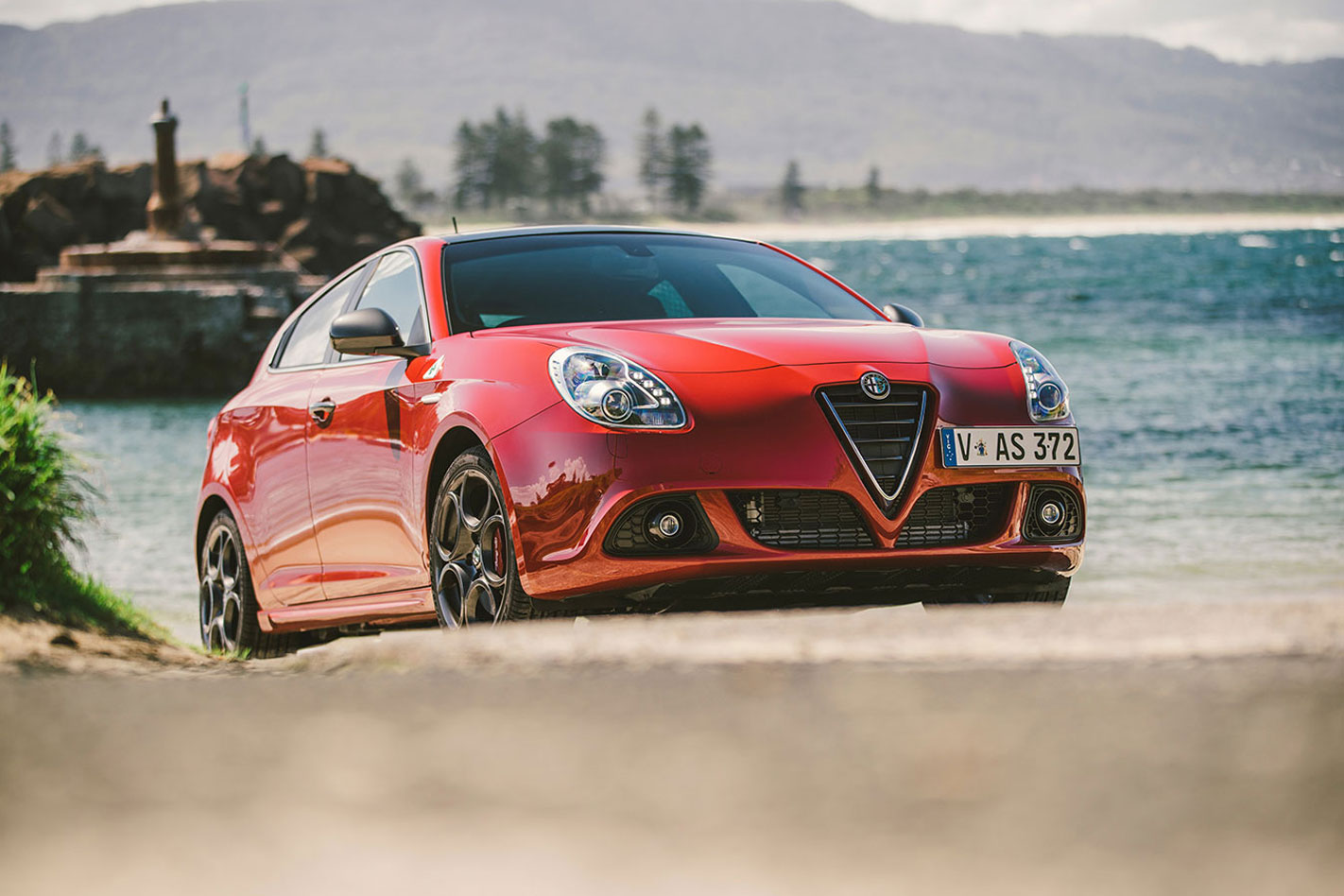
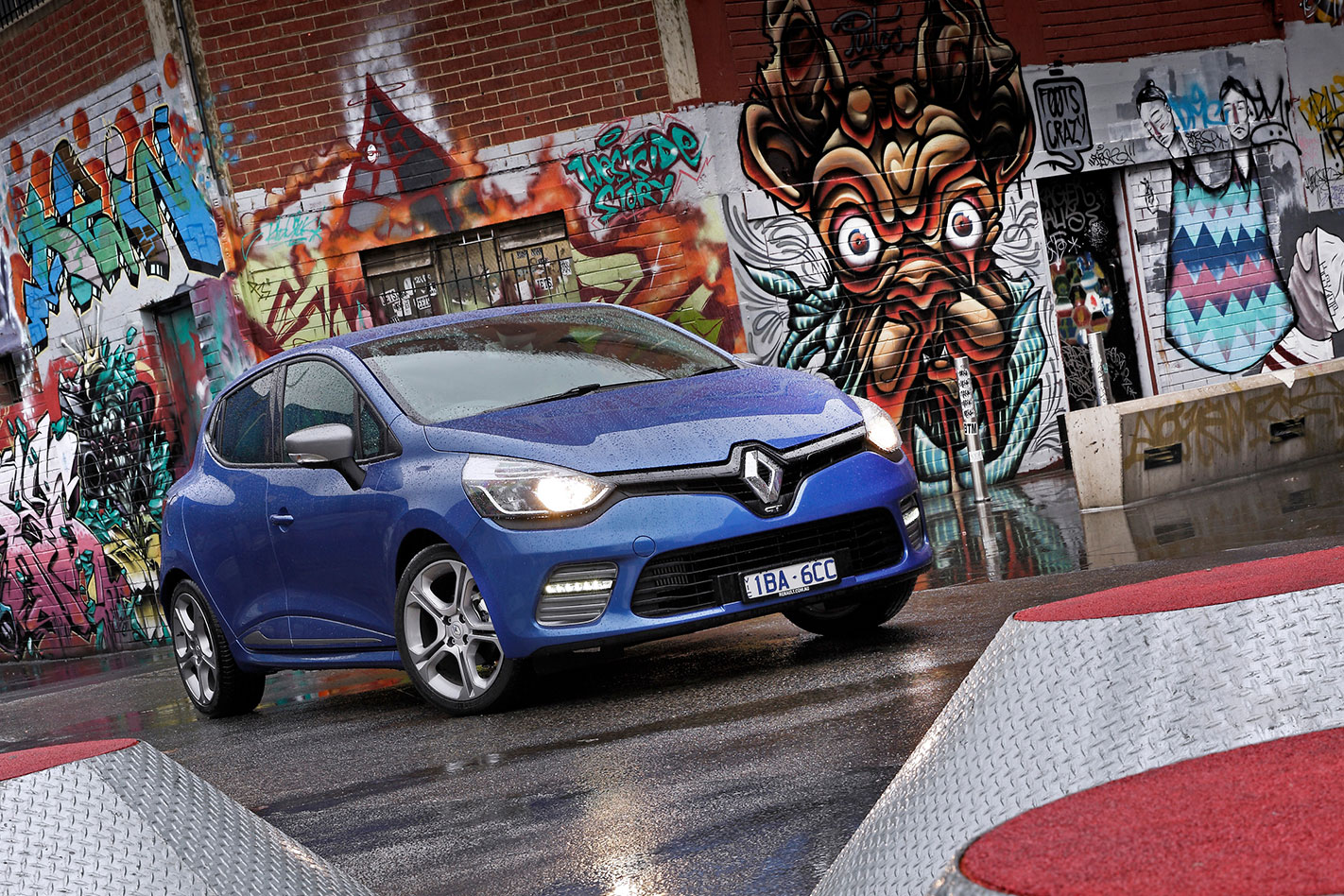
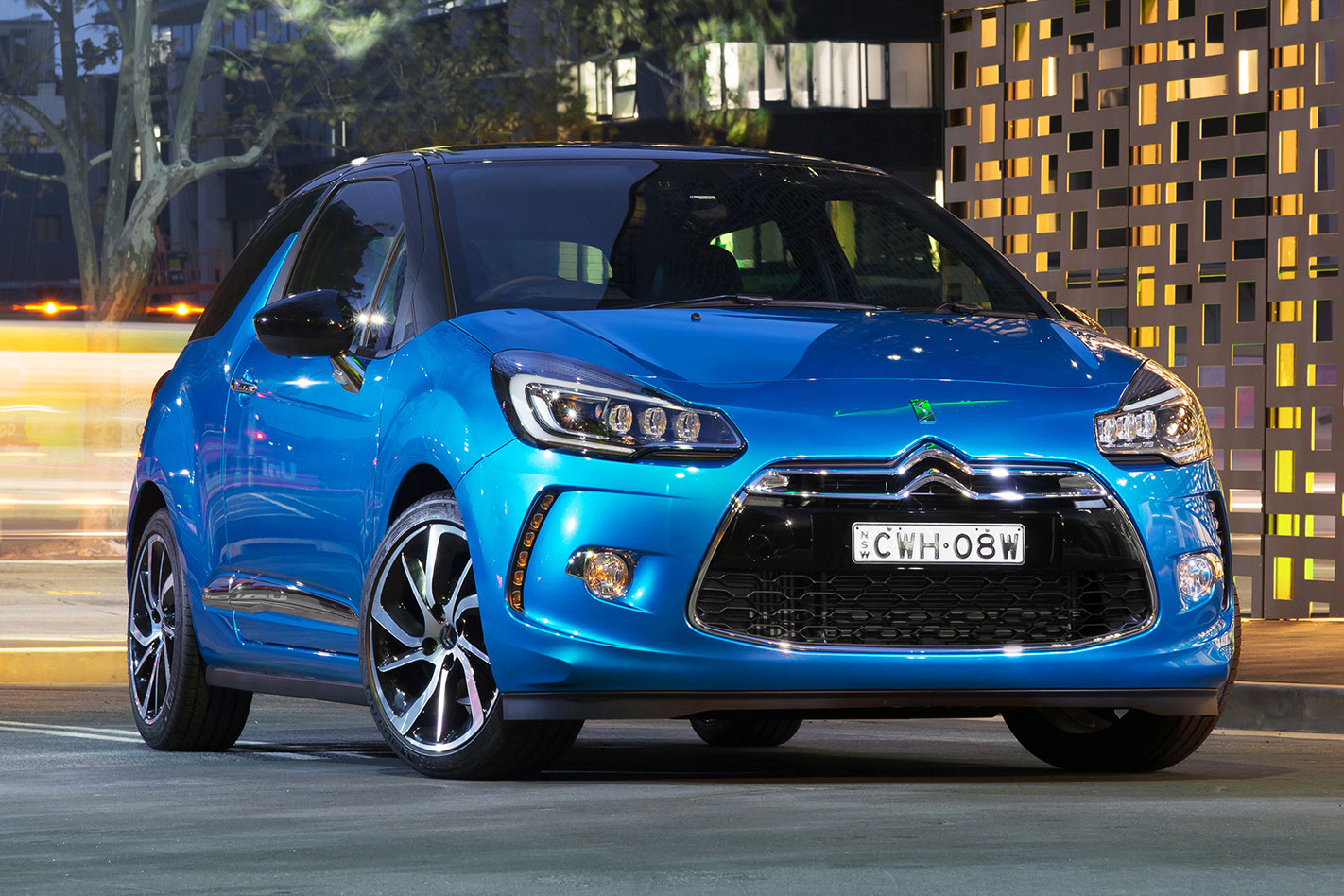
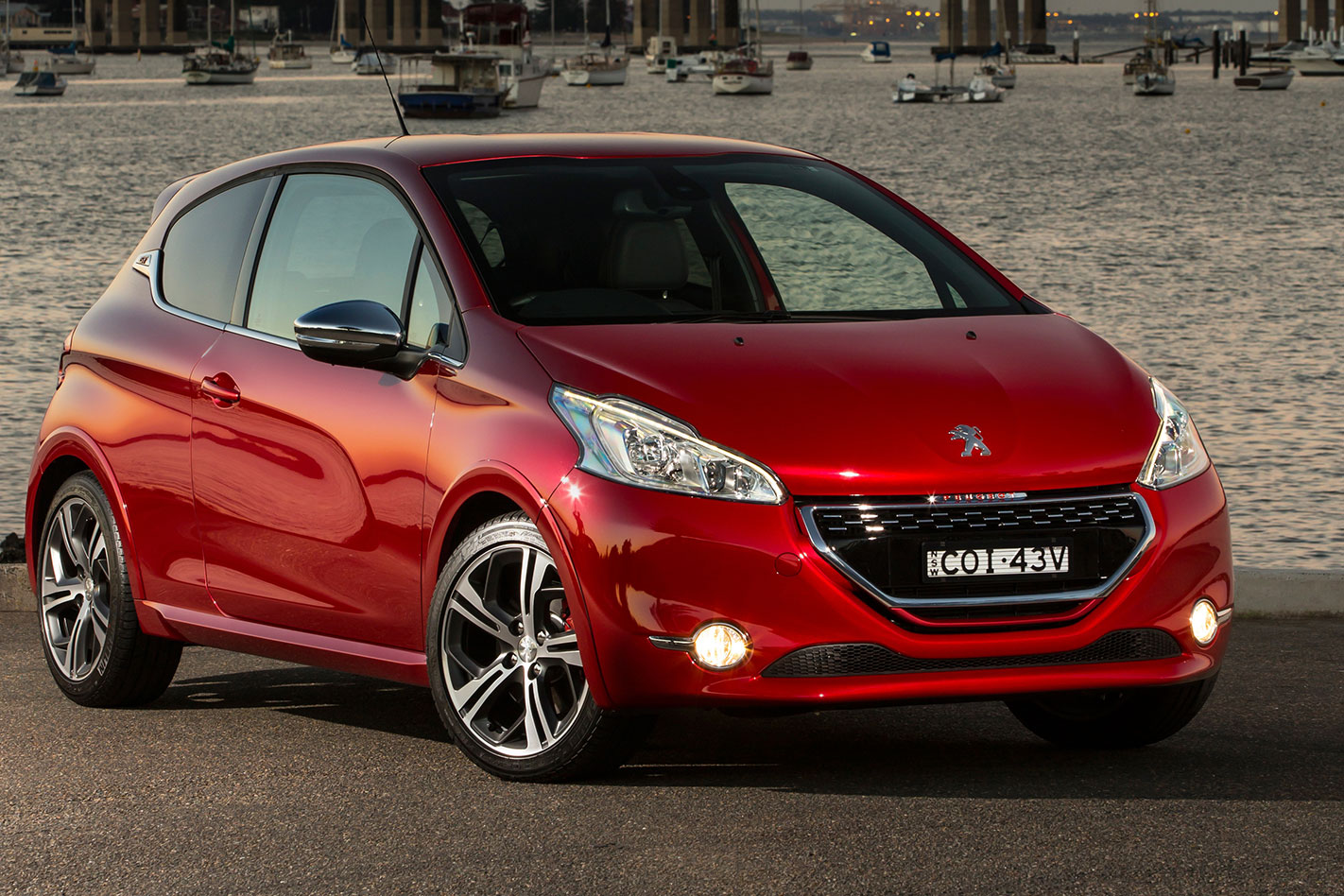
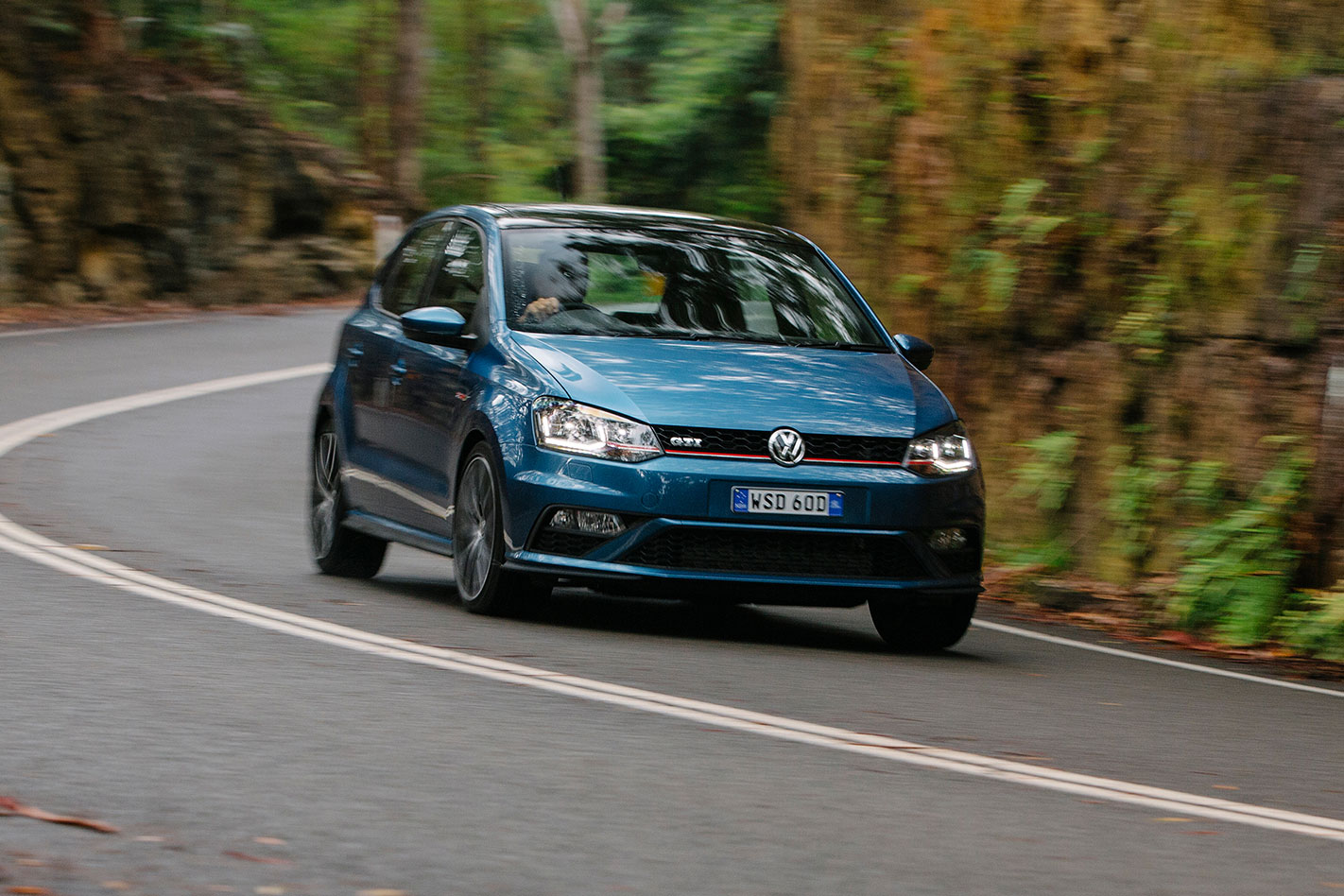
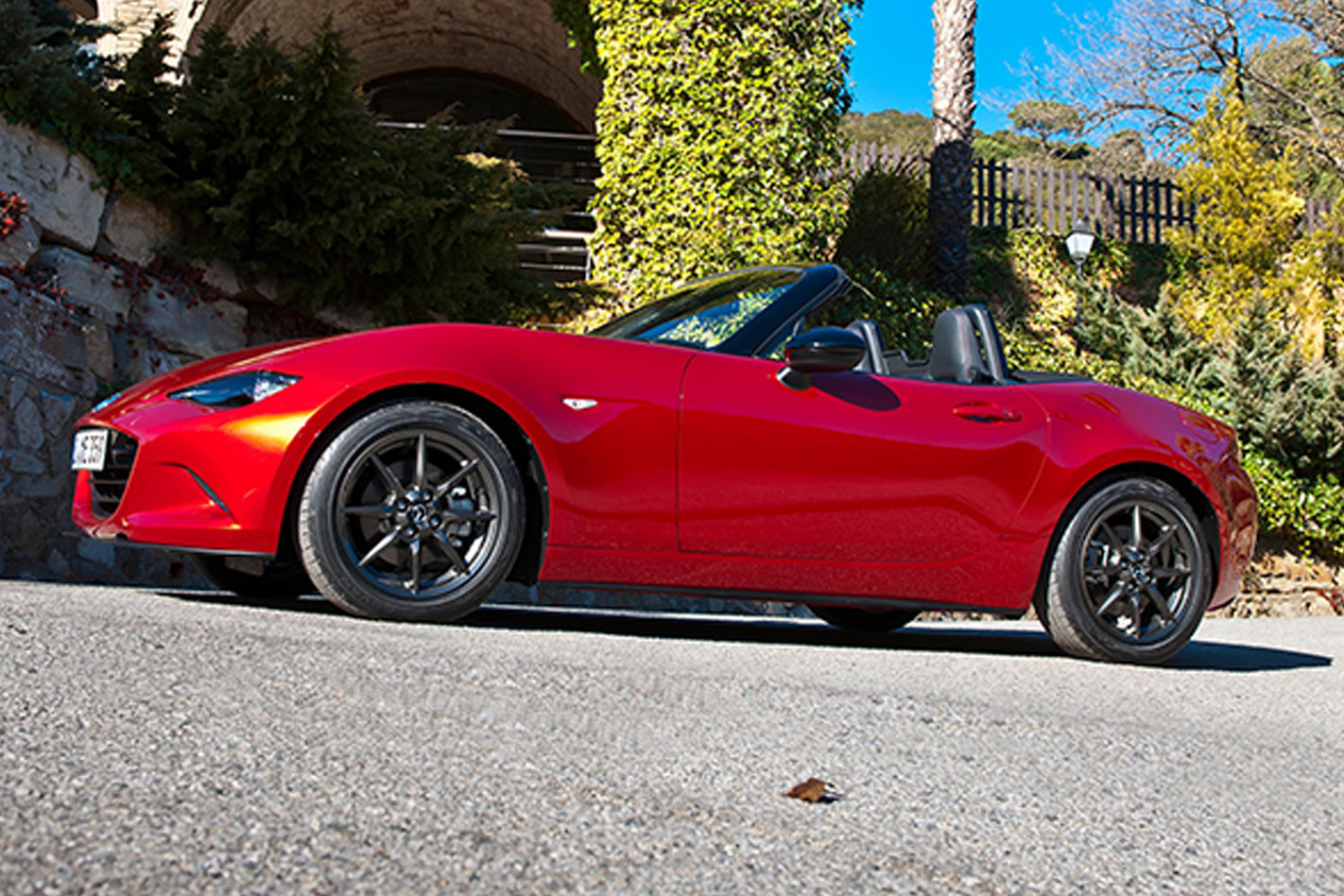
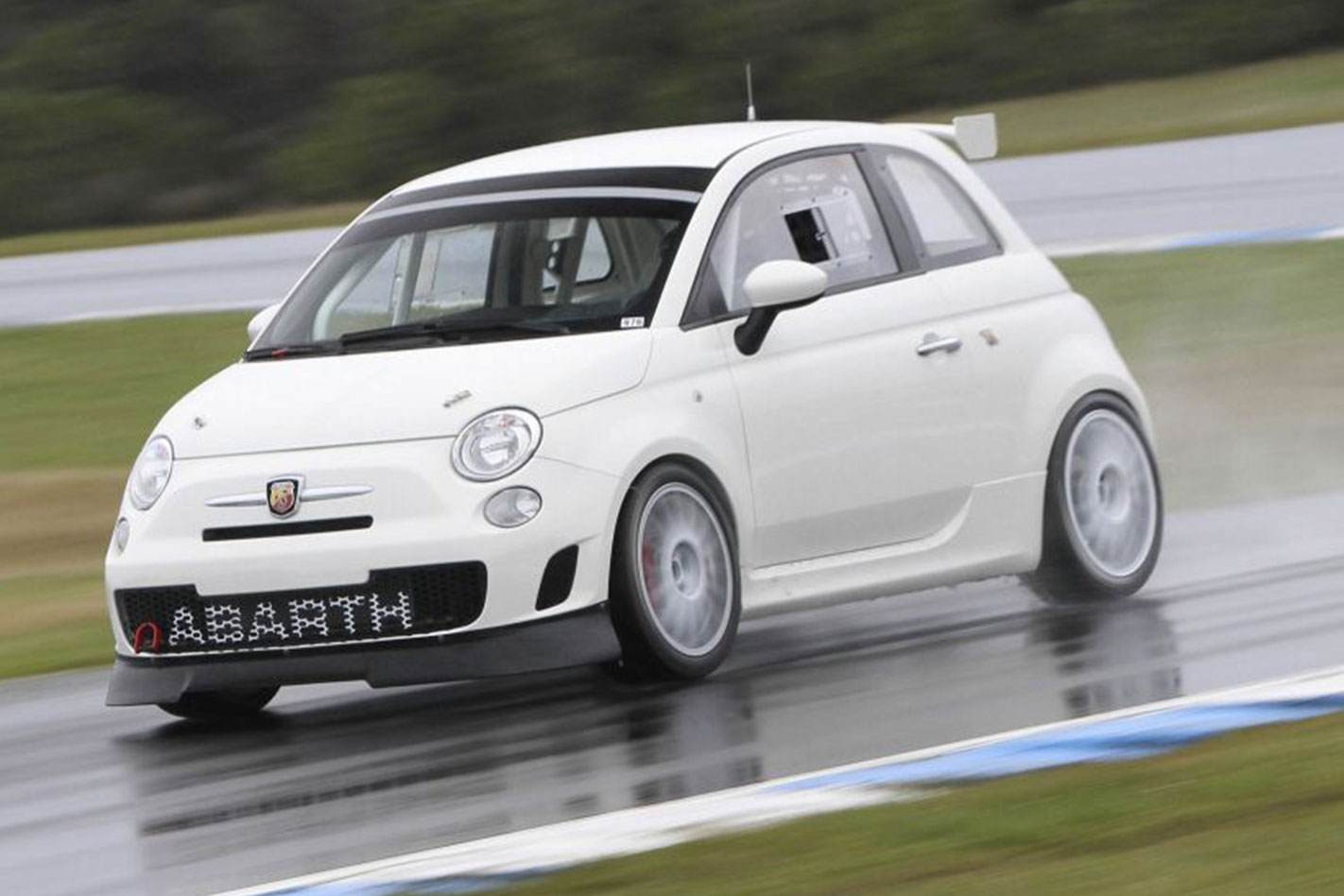
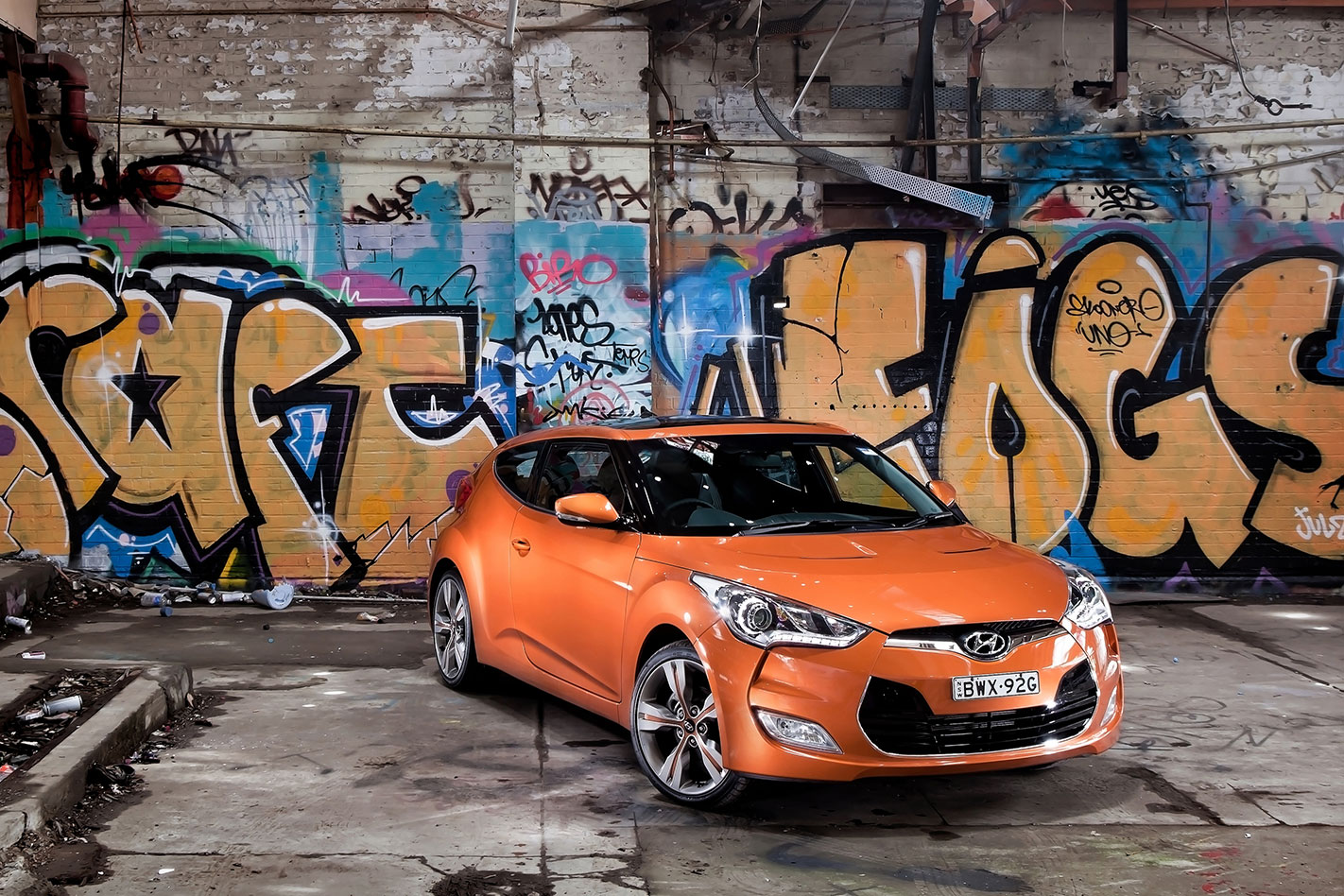
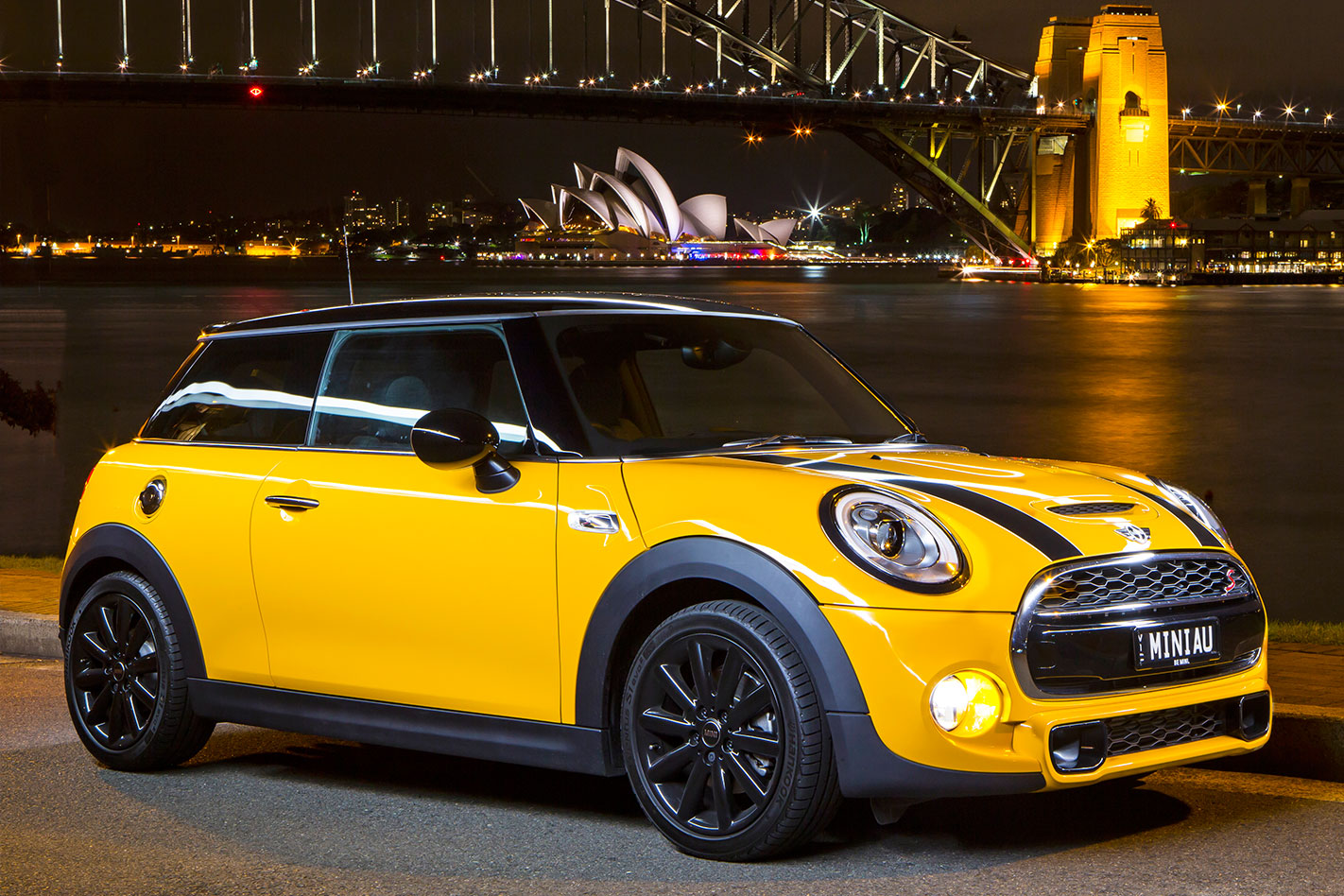
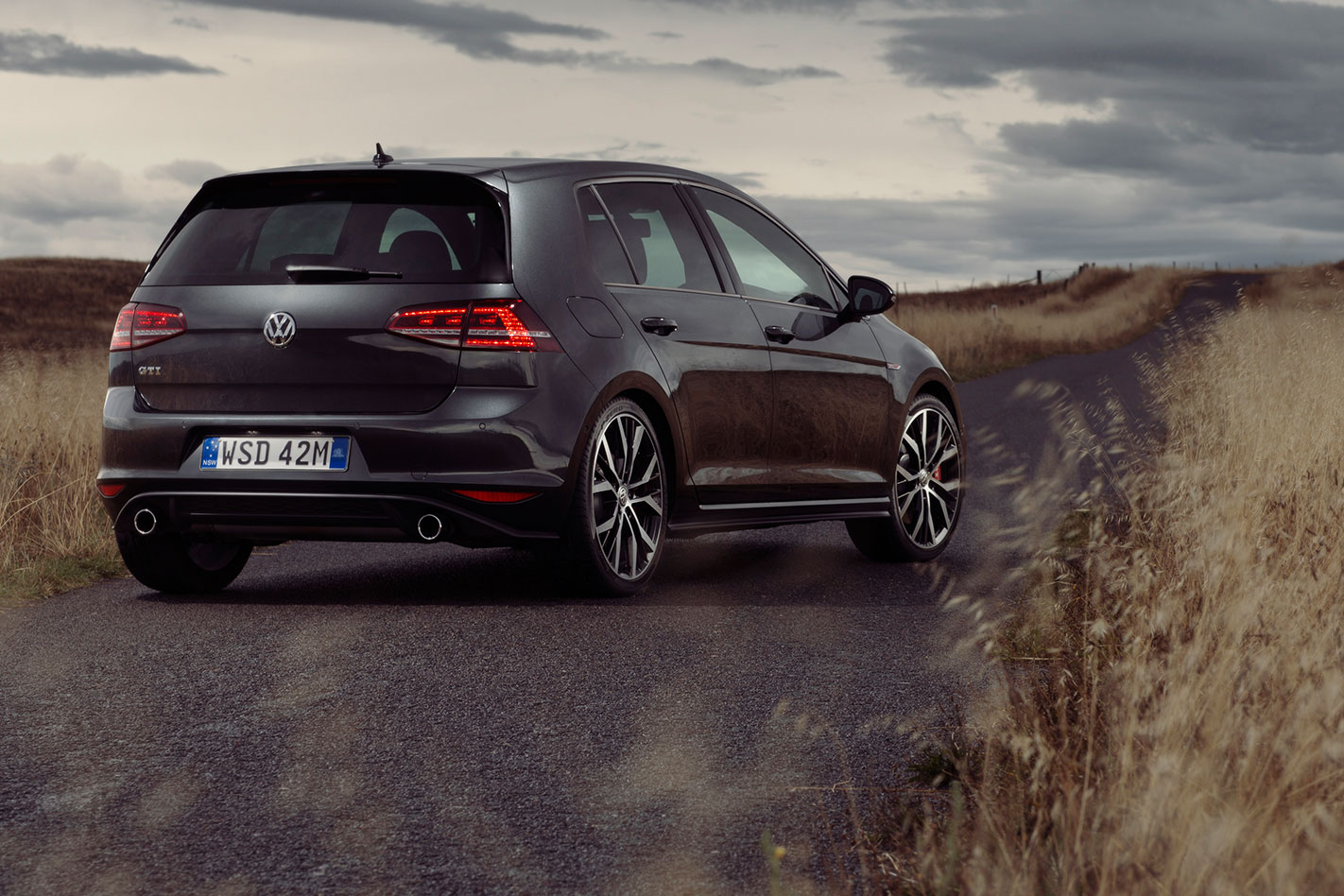
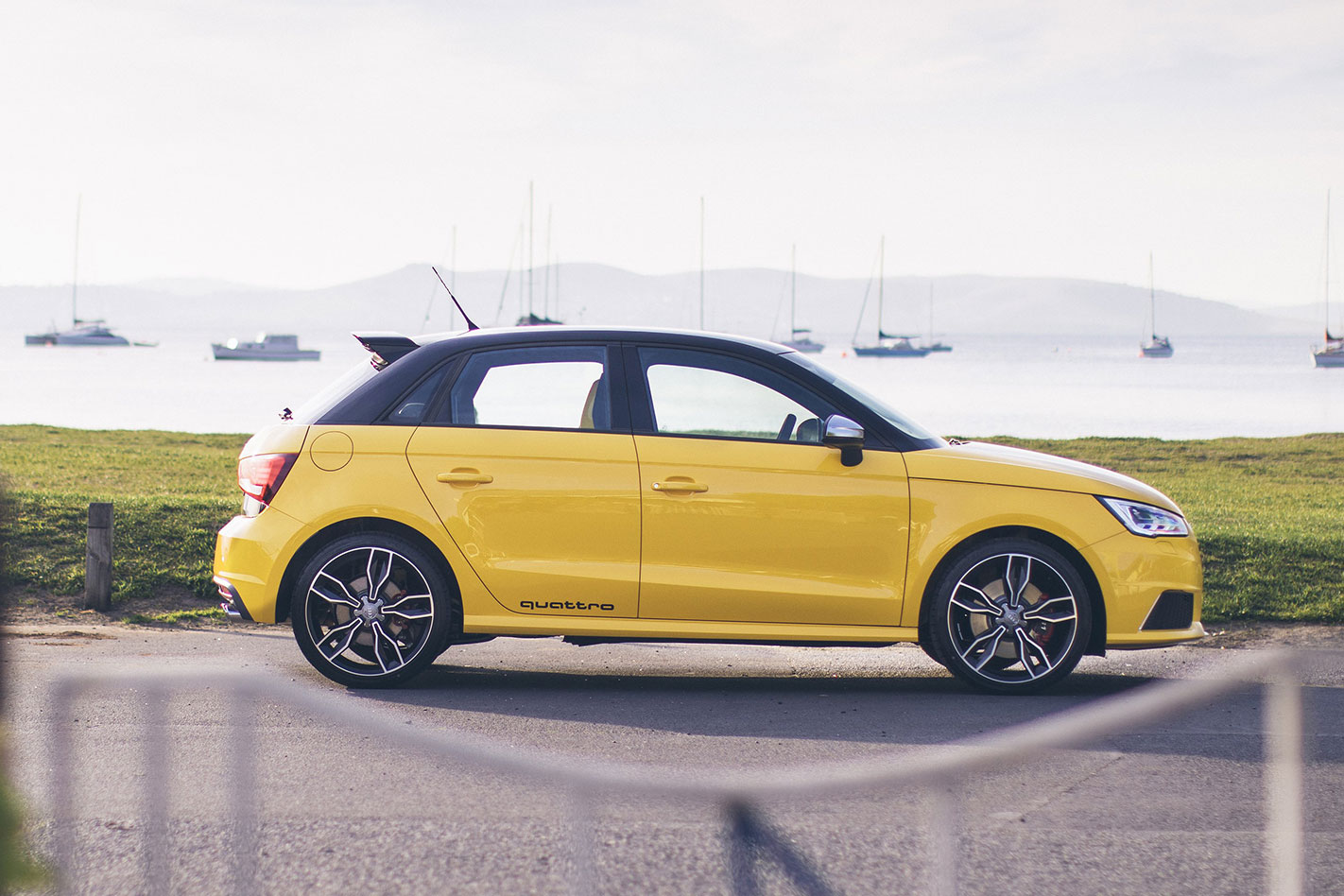
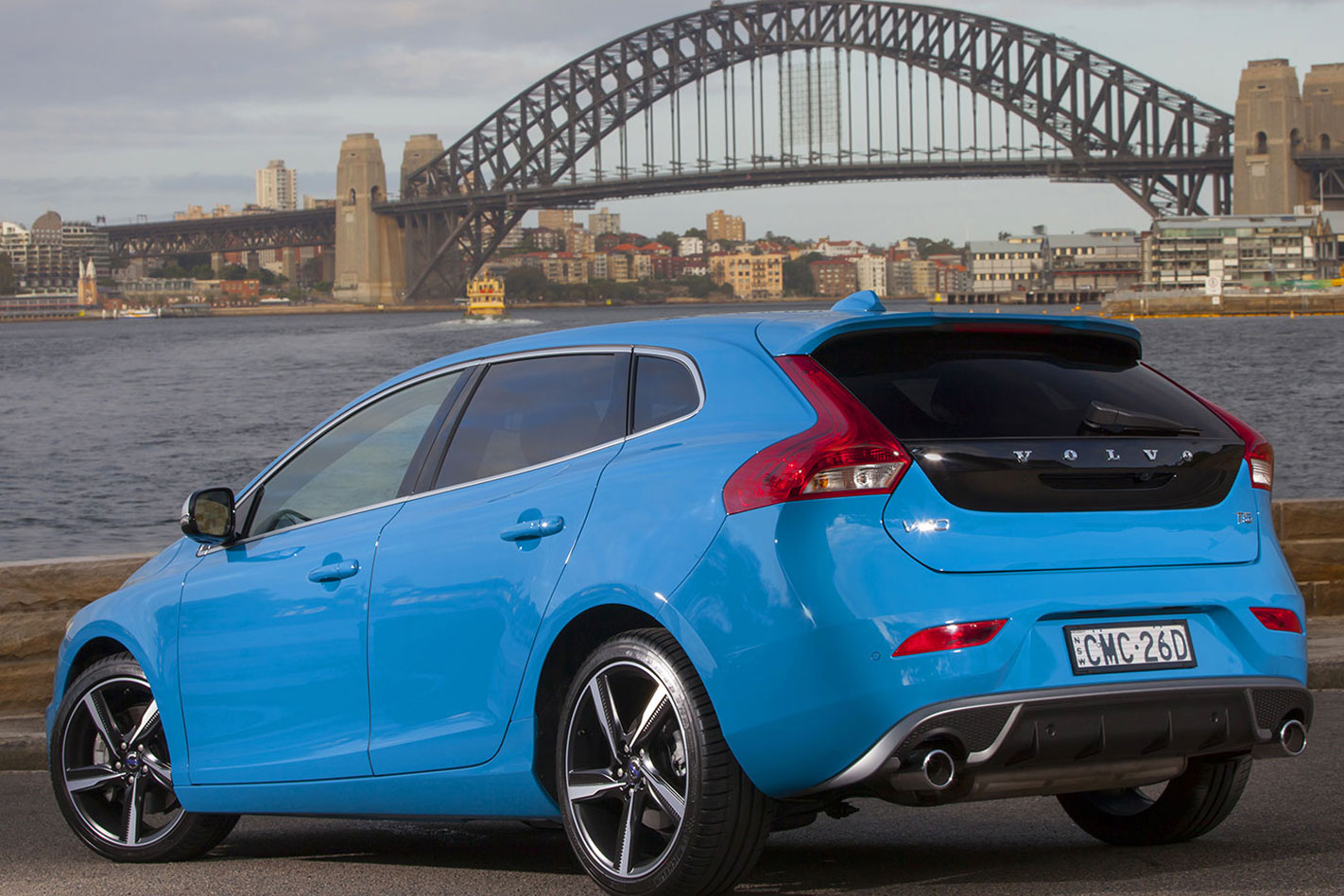
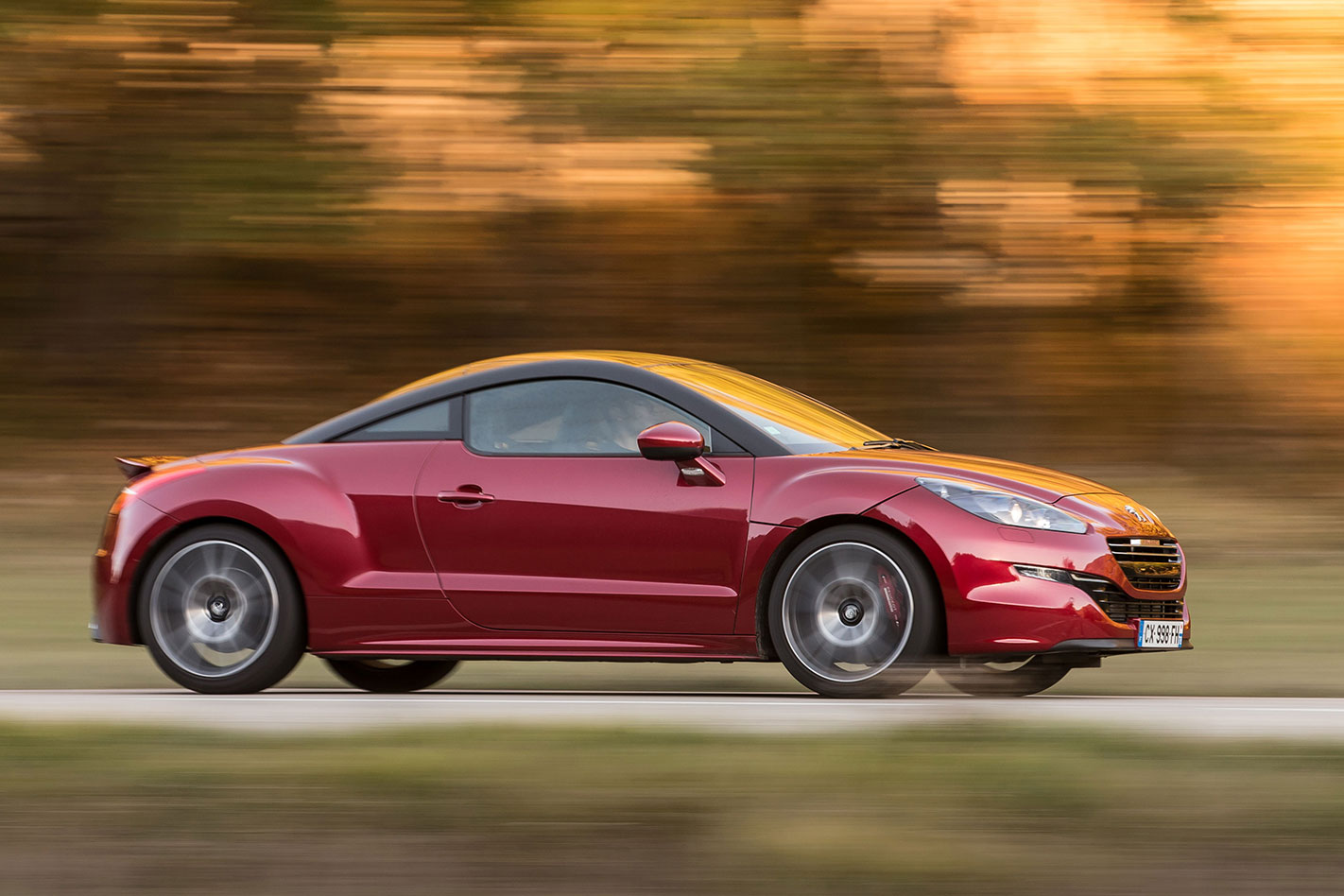
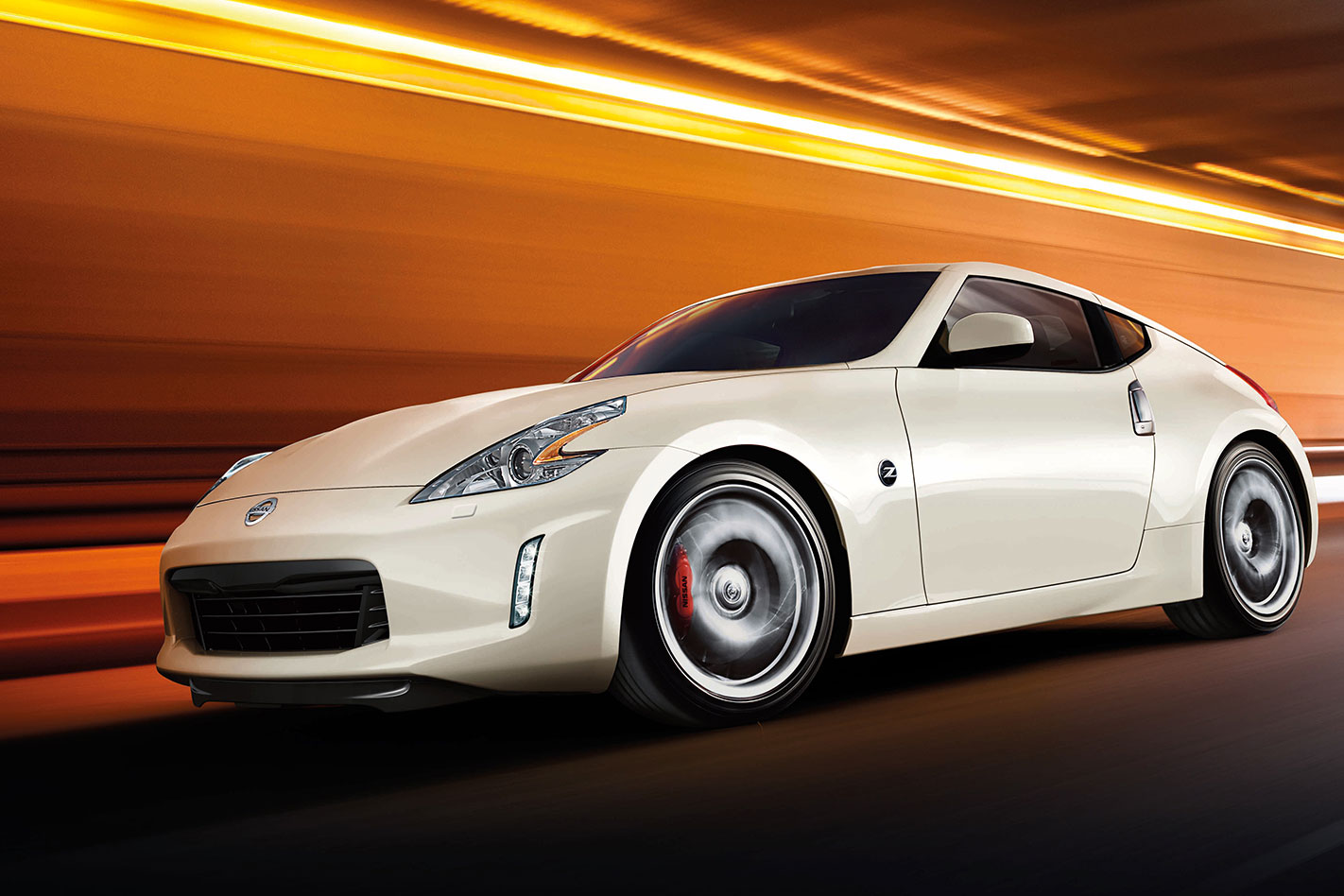
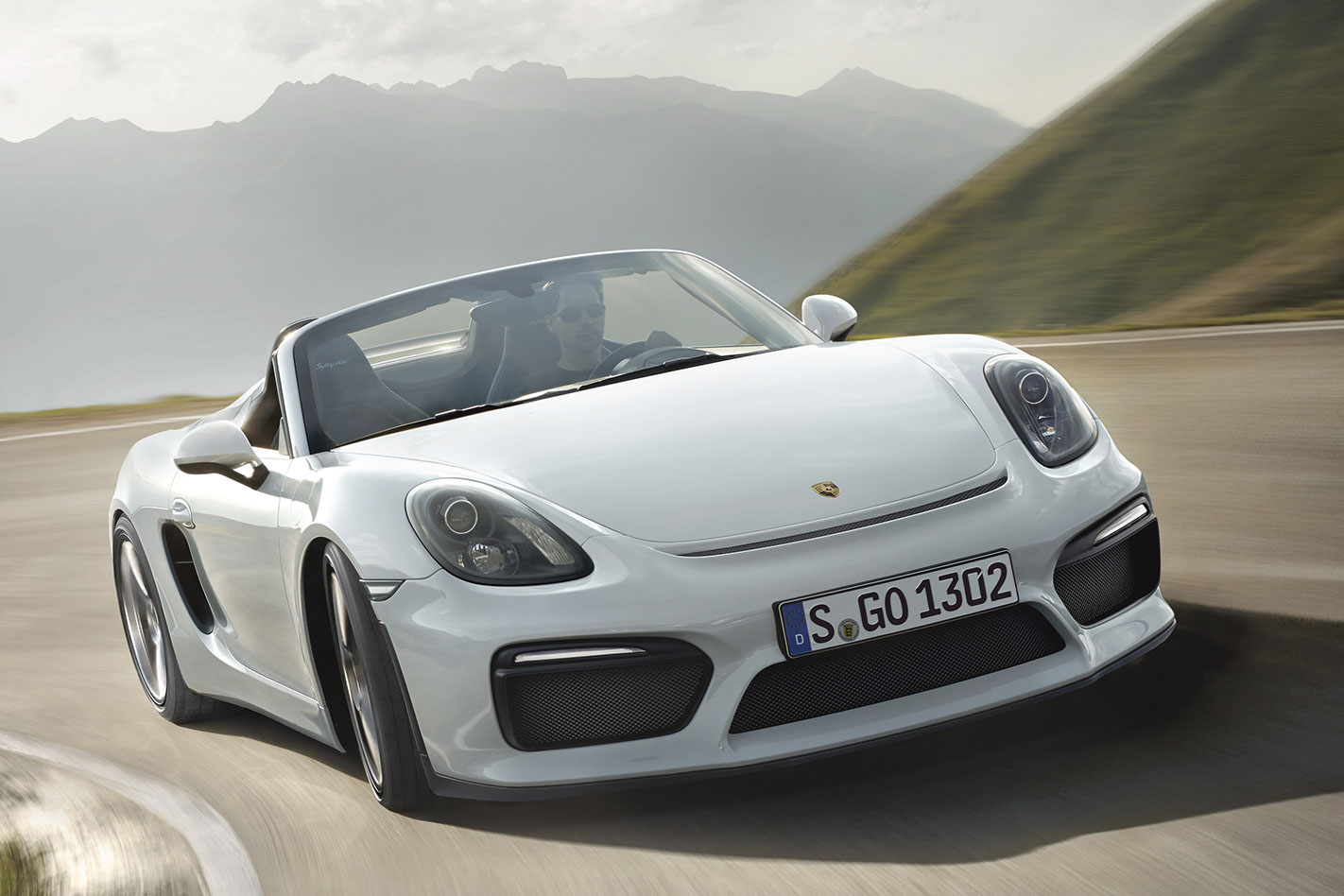
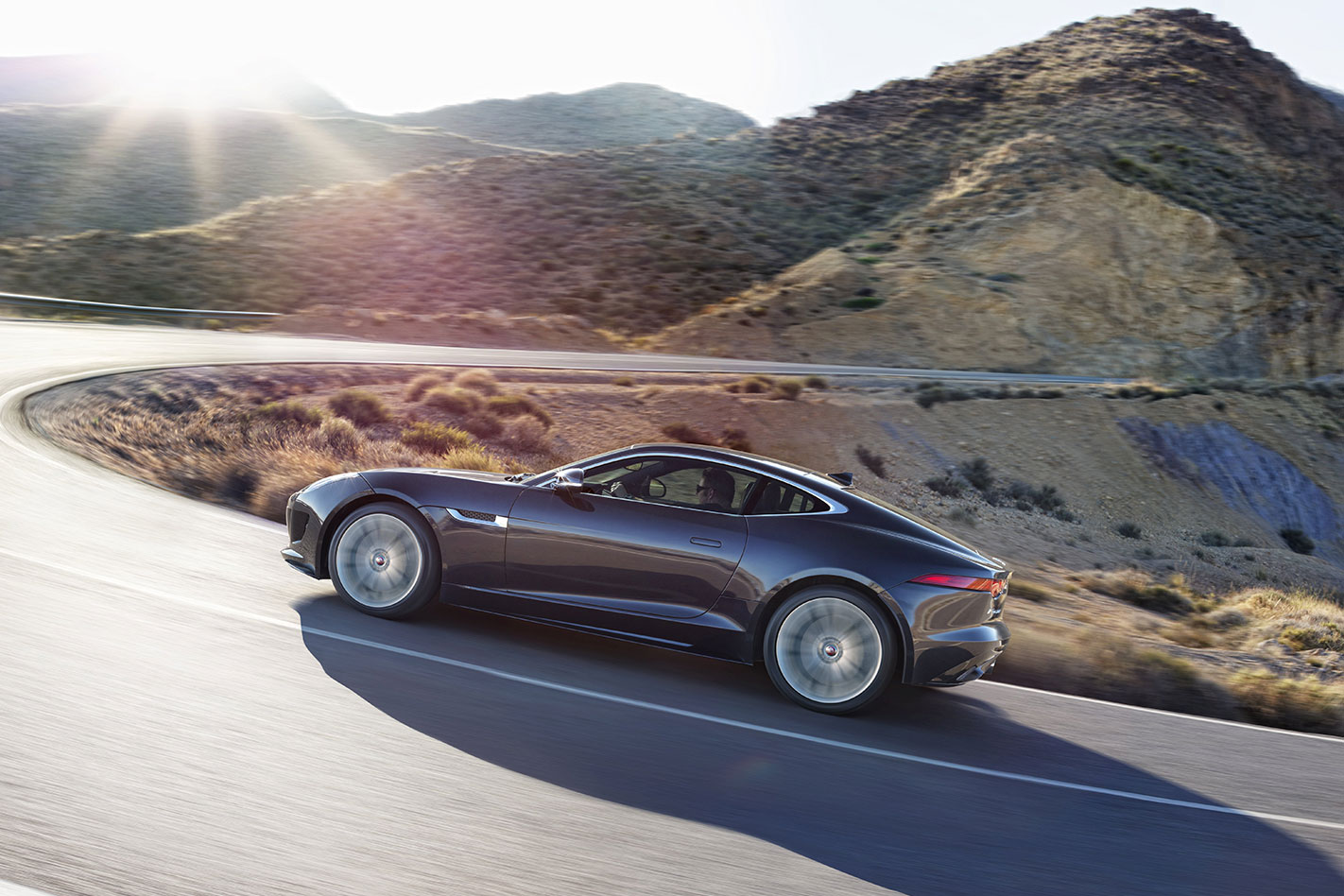
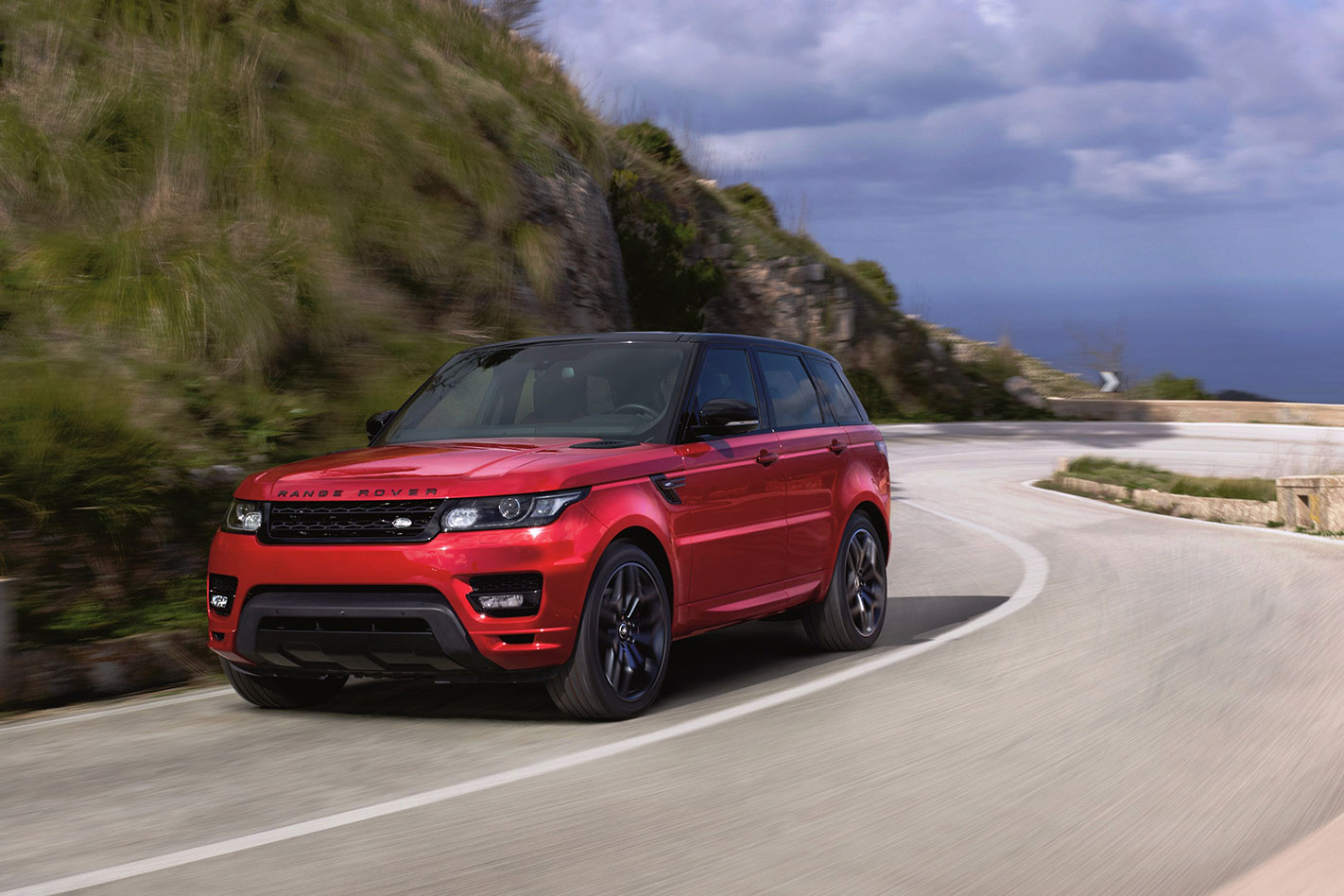
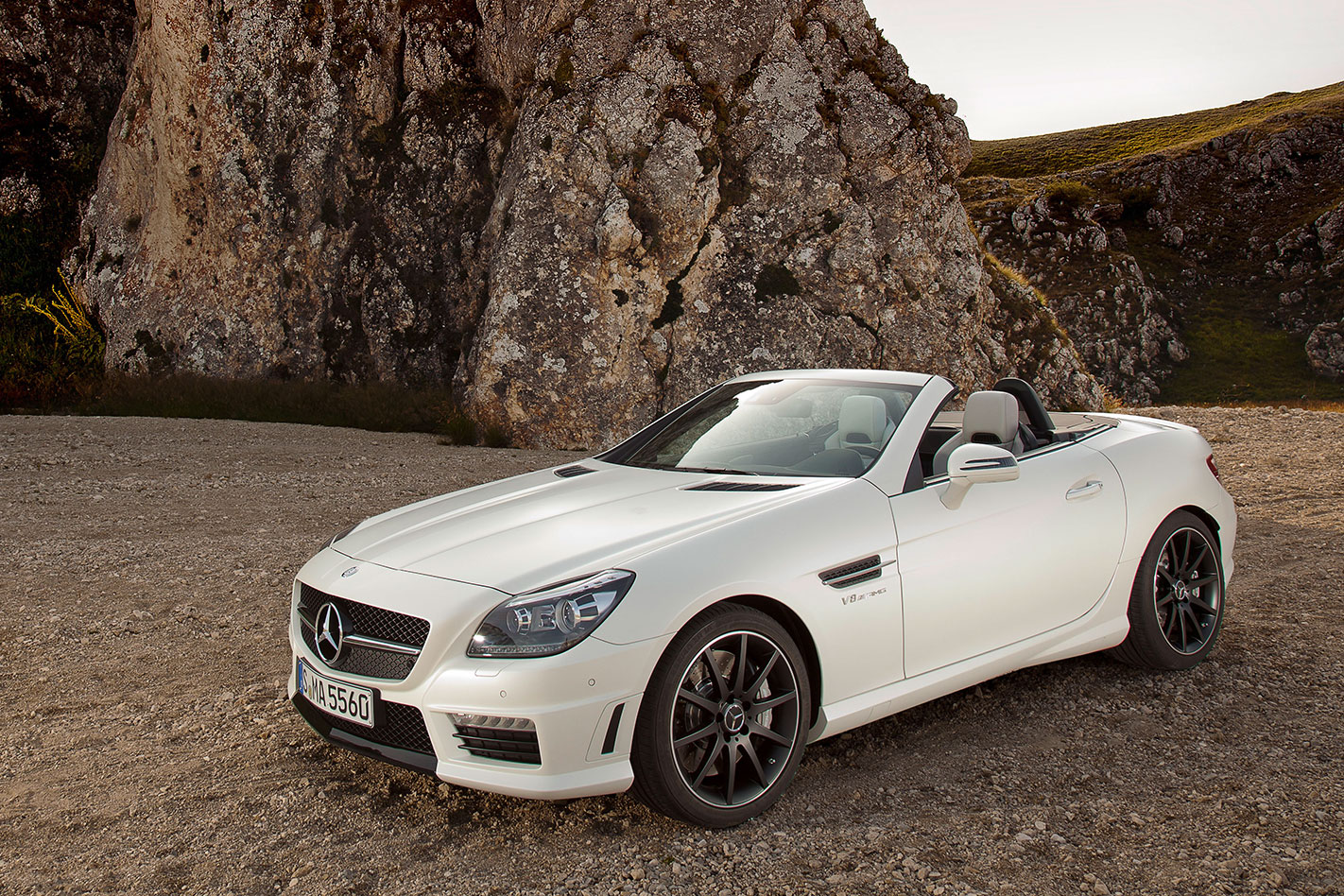
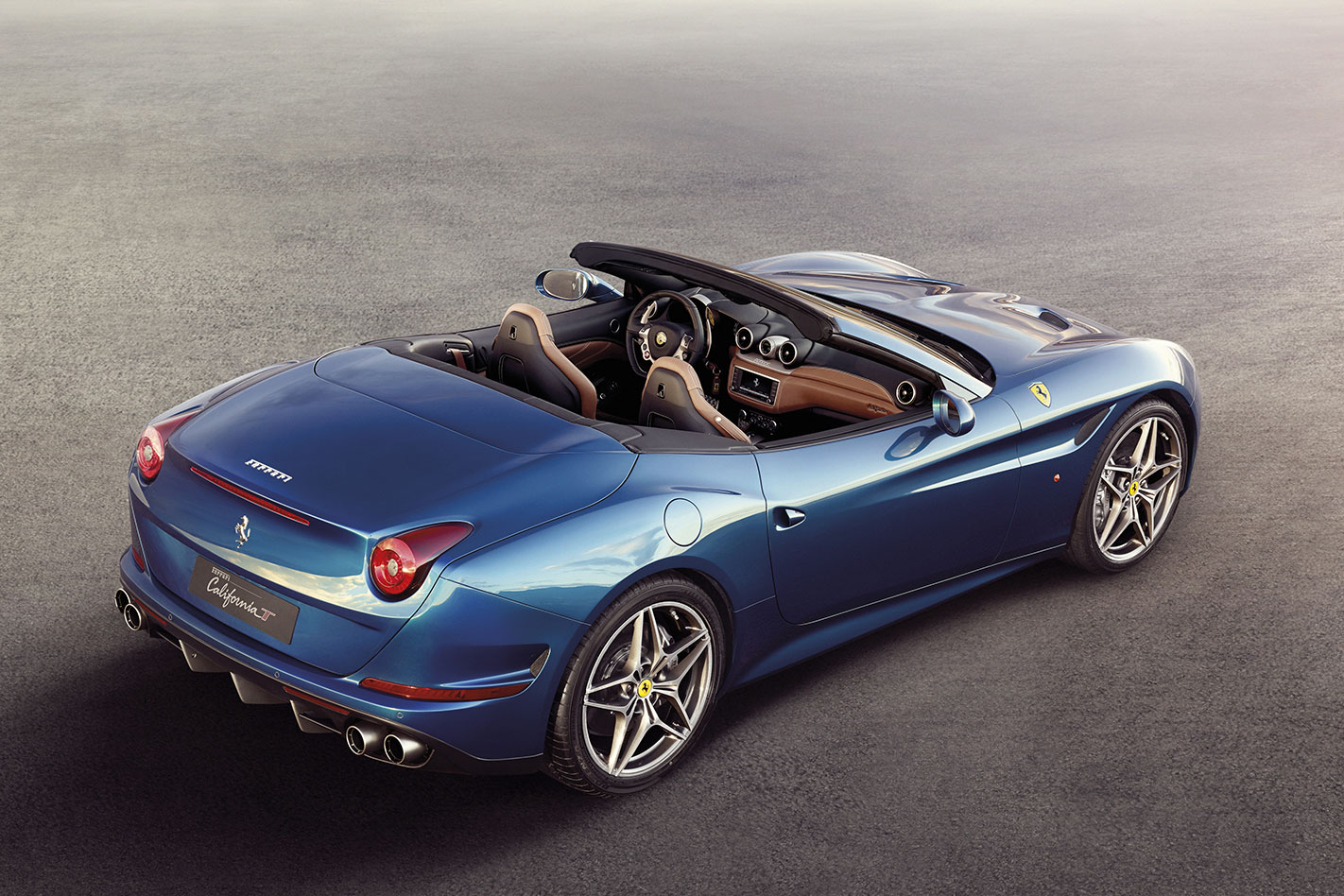
For info on these cars and more, head over to MOTOR.
Crashing a car is every motoring journalist’s worst nightmare.
Unfortunately, the law of averages are against us; if you drive cars fast enough for long enough, something is eventually going to catch you out.
There aren’t too many in the profession that have a clean record (though not many admit it), but all you can really hope is that when things go pear-shaped the consequences aren’t too bad.
One thing you really don’t want to do is crash a valuable prototype, like US journo Patrick George did when attending the first media drive of the new Chevrolet Camaro.
For those who are time-poor, fast forward to the 1:00 mark.
Track drives are always tricky. Following behind a pace car often forces you out of your natural rhythm and add in an unfamiliar circuit and have to talk to camera at the same time and it’s little wonder accidents don’t happen more often!
Thankfully, the greatest damage appears to the Patrick’s pride, and he has the sympathy of all here at MOTOR. Don’t let it get you down!
Get your free weekly report from the world of fast cars – subscribe to the MOTOR newsletter!
EVERYONE on the Mars Exploration Rover Project is amazed that Opportunity is still going after 10 years. We keep wondering when the catastrophic failure will occur.
It is impossible for a machine 50 million kilometres away from Earth to last much longer.
We’ve been saying this for about eight years now, and each year the odds just get more ridiculous.
But for the moment we have a wonderful science robot ‘car’ on Mars, and we will operate it as long as valuable science is attainable.
I was asked to join the project in late 2003, shortly before the Opportunity rover and its sister Spirit were due to land on Mars. The original mission was planned for 90 days, with the rovers expected to fail in their first Martian winter, when temperatures get colder than minus-40 degrees Celsius.
With children in elementary and middle school, I was looking at a more long-term, stable position. Yet the thought of working with a robotic rover driving on the surface of Mars was exciting and enticing – sort of like choosing between a sports car (Opportunity) and a station wagon (long-term work). I went with the sports car.
It hasn’t been easy – the hours are crazy – but the science return has been amazing. The pressure of having the world watch our every move has added to the exhilaration.
We weren’t surprised that our robotic cars on Mars ran into problems. What was the most surprising to me (and many others) was that they kept surviving. There are no service centres on Mars, and we can’t yet send a mechanic. We have to do whatever we can from a distance.
Often, a workaround is used in place of a repair job. Opportunity’s right-front wheel steering motor has failed, so it is permanently at a slight toe-in angle, but all six wheels are still driving. The robotic arm’s shoulder-joint motor started failing, so we picked a position to leave it in all the time. Now we turn the whole rover to swing the arm.
Some science instruments have also failed, but the others continue to operate.
The lead-acid batteries on Opportunity are a real success story. They’re used to store power from the solar panels, and need to work in really harsh conditions. Even with heaters, in winter there are weeks at a time where they don’t get above freezing. Even in the Martian summer, night temperatures drop below freezing.
Despite this, our batteries are still somewhat near 80 percent of the original capacity, with no major cell failures.
We could also use a car wash. Dust constantly settles on the solar panels, affecting how the batteries charge, which is vital to all functions.
Opportunity needs a minimum amount of power to survive, and the dust has been so thick that it blocks out more than half of the available energy from sunlight, forcing us to slow things down.
Fortunately, the wind that drops the dust on the solar panels also blows it off now and then.
What’s ironic is that I thought I was choosing the little red convertible sports car, yet I have unwittingly chosen the durable station wagon.
In my 20-year-plus career at the Jet Propulsion Laboratory, the rover has been my longest mission, even though it was supposed to be the shortest.
After 10 years, our car (Opportunity) is a little beat up, a little dirty, and not all the accessories are working. But it still gets us to work every day.
Scott Lever is the mission manager for NASA’s Mars Exploration Rover Project. He drives a black 2007 Jaguar XJ8 to work every day. Driving Cars on Mars was first published in Wheels in December 2014
What stands out?
The Hyundai Accent is a light city car that is bigger than most. It has more room inside than Hyundai’s i20, for example – but less than the i30. You can have it as a hatchback or a sedan, and it is well built and comes with a five-year warranty. This review covers the Accent range prior to September 2015
What might bug me?
Getting comfortable in the driver’s seat: you can adjust the steering wheel for height but not for reach.Establishing whether people in the back have their seatbelts on: the warning lights are hard to see in daylight.
What body styles are there?
Five-door hatchback and four-door sedan.The sedan is about 15 centimetres longer than the hatch but has no more space for passengers: all the extra length goes into the boot.All Accents are front-wheel drive, and the Accent is classed as a light car, lower priced.
What features do all Accents have?
A 5.0-inch touchscreen, for controlling the audio system and Bluetooth phone functionality.Seatbelt reminders for all five occupants.A full-size spare wheel.Six airbags: one in front of each front-seat occupant; one outside each front occupant to protect their bodies in a side impact; and side-curtain airbags running down the length of the cabin to protect heads in a side impact.Electronic stability control, which can help control a skidding or sliding car. All new cars must have this feature.The Accent is covered by a five-year, unlimited kilometre warranty.
Which engine uses least fuel, and why wouldn’t I choose it?
The Accent is available with two 1.6-litre, four-cylinder engines, one of which has a more sophisticated fuel injection system that improves performance.The better engine is fitted to the more expensive models, the Elite and SR. Hyundai labels it GDi, for gasoline direct injection.Both engines use fuel at about the same rate – 6.1 litres/100km in the official test with a manual gearbox, and about 6.5 litres/100km as an auto (city and country combined).The manual gearbox in each case is a six-speeder. The auto gearbox fitted to the less costly models, the Actives, is a four-speeder. The auto in the Elite and SR is a six-speeder, which enhances performance further.
What key features do I get if I spend more?
The less costly Accents, the Active hatch and sedan, roll on 14-inch steel wheels and have the features common to all models.If you want more you can choose between the Elite sedan and the SR hatch, which share most of their extra equipment.That begins with bigger, nicer looking 16-inch wheels made from aluminium alloy, fitted with wider tyres that have a lower profile, for better grip and more responsive steering.Then there is cruise control, and front foglights. A storage net for the boot prevents smaller items from rolling around.You also get more appealing finishes, among them a striped pattern on the seats, chrome door handles inside and a leather-wrapped steering wheel.Only the SR hatch has headlamps which switch on automatically in low light, and a rear wing (or spoiler) – which does not affect the way it drives but is meant to make it look sportier.The Elite sedan comes standard with auto transmission, which is an extra-cost option on the SR.
Does any upgrade have a down side?
The larger tyres on the Elite and SR could cost more to replace, and the ride feels slightly firmer because the tyres have a lower profile (there is less air between the wheel and the road).White and yellow are the only standard colours, with all others costing extra.
How comfortable is the Hyundai Accent?
The Accent presents well inside, with an unusual, golf-ball like dimpled texture on top of the dash and well laid out switches and buttons.The seats feel soft and spongy, and once moving the suspension feels that way too, so that you are well looked after when driving around town.Music produced by the audio system might not sound rich but it does go quite loud. Six buttons below the central touchscreen can be programmed to tune in your favourite radio stations.It is at highway speeds, or on long trips, when you wish that the seats supported the middle of your back more effectively, that the car felt steadier on bumpy stretches of road, and that less tyre noise intruded into the cabin – the Accent’s tyre roar is quite loud on coarse surfaces.Both engines feel responsive in traffic but run out of puff at country-road speeds. Automatic Active models, in particular, need to be worked hard on steep hills.
What about safety in an Accent?
Curtain airbags and seatbelt reminders for the rear passengers contribute to a safety rating of Very Good for all Accents.Automatic headlamps and daytime running lights are exclusive to the SR and improve its visibility.(To see a full list of the safety features on any model, select the car and look under the features tab. Safety-related features are listed in red.)The Australasian New Car Assessment Program (ANCAP) has rated the Accent’s safety at five stars.
I like driving – will I enjoy this car?
The Accent is more about cost-efficient transport than fun. Both engines feel lethargic when driven gently. Automatic Active models get no help from the four-speed gearbox unless you give the accelerator a hefty prod, when it will shift down one or two gears in an overly dramatic attempt to find more power.The direct injection engine in the Elite and SR models has more pull, and feels happier when worked hard. The six-speed auto does a better job of keeping it in its sweet spot, and the combination makes for a more rewarding drive.Steering in all models feels dull, especially through slight bends and when using the wheel near its centre position.Cornering grip from the small tyres on the Actives is not very strong, either, and the soft suspension allows the body to lean quite noticeably (reducing grip further, because the tyres don’t sit as flat on the road).The 16-inch tyres of the Elite and SR have slightly more grip, although the cornering limits are still modest. The biggest improvement is to the steering, which is more direct and engaging because of the tyres’ lower profile.
How is life in the rear seats?
By light car standards there is good leg room and head room, although adults will find it a bit tight in the back and those taller than 180cm may find their head grazing the roof. The longer roof of the hatchbacks translates to an extra 13mm of rear head room.The rear seatbacks are unusually high, which gives good support to the upper back.While there are three seatbelts, the middle seat is a lot less comfortable than those outside it, with a higher position and no side-support.There are no rear air-conditioning vents.Cabin storage in the rear is light-on, too: there are no door pockets, and a seatback pocket only on the left-hand side.
How is it for carrying stuff?
The boot on the Accent is quite accommodating, with a fairly wide floor. The 60/40 split-fold setup allows long items to extend into the main cabin if necessary.The longer body on the sedan translates to about 30 per cent more luggage space in the boot, but when the rear seats are folded it remains easier to load bulky items such as bicycles into the hatchback.
Where does Hyundai make the Accent?
All Accents are made in South Korea.
What might I miss that similar cars have?
A reversing camera, which is standard on the Toyota Yaris and Honda Jazz, for example, and available on other light cars such as the Mazda2 and Volkswagen Polo.Active safety features, such as automatic emergency braking and lane departure warning. These are available on the Mazda2, for example.
I like this car, but I can’t choose which version. Can you help?
The Accent SR hatchback is the pick of the range. Its extra features create a more pleasant interior feel, and the added zing of the GDi engine makes it more enjoyable to drive.
When did Hyundai update the Accent?
The current shape Accent went on sale in 2011 and received minor updates and tweaks to its model range (including dropping the diesel engine formerly available) in 2012 and 2013. About September 2015 the range was revised, with the Elite version dropped and Accent Active models given a smaller engine with a CVT auto gearbox. The revised range is covered in a revised review on WhichCar. An all new Accent is expected about 2016 or 2017.
Mazda’s legendary sportscar can be parked in you garage for $15K less than its predecessor to make it the potential bargain of the decade
THE 2015 Mazda MX-5 will start at $31,990 when it goes on sale here in August. The $15K haircut for the MX-5 is not a reaction to its only affordable, rear-drive rival, the $29,990 Toyota 86, says Mazda Australia.
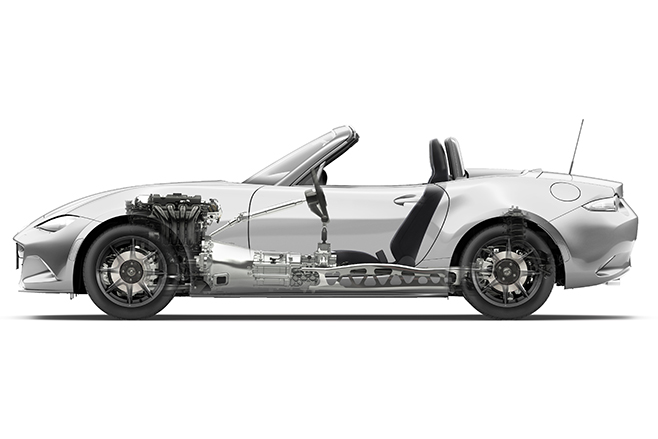
“I don’t know if you could say the MX-5’s pricing is in response to the Toyota 86,” Mazda Australia public relations senior manager Karla Leach told Wheels. “I don’t think people would cross-shop cars out of a segment.”
She also said she did not believe that the previous-generation MX-5 was overpriced by comparison with the new one, which will sell initially with a 96kW 1.5-litre four-cylinder engine before a larger 2.0-litre powerplant joins the range later this year.
“Some people [who paid almost $50,000 for the previous-generation MX-5] will be disappointed, but it’s acknowledging our need to get back to the MX-5’s core values of lightweight, low cost fun,” she said.
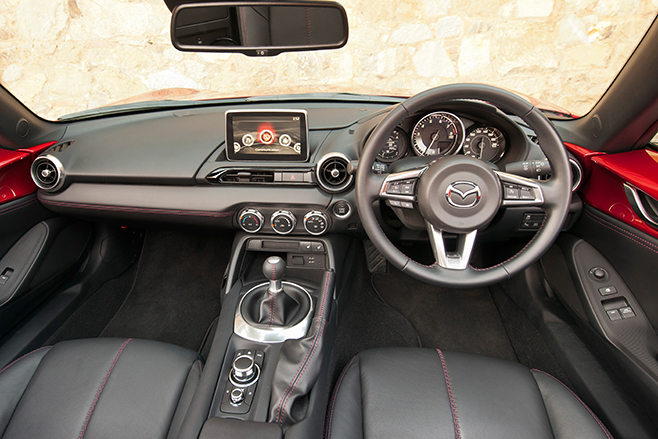
Despite its severe price cut, standard equipment on the MX-5 will run to a Bluetooth phone connection – not even available as an option on the previous-generation car – cruise control, and front and side airbags.
1
Mazda is also yet to announce pricing for the 2.0-litre version of the MX-5, due in about October. It is believed it will also price well under the outgoing model, pricing from about $35,000.
Leach said Mazda expected some buyers would pass on the 1.5-litre version of the MX-5, and instead wait for the bigger engine’s arrival.
Both the Mazda MX-5 and the Toyota 86 are previous winners of Wheels Car of the Year, the MX-5 taking the prize in both 1989 and 2005, with the 86 sharing the award with its mechanial twin, the Subaru BRZ, in 2012.
1
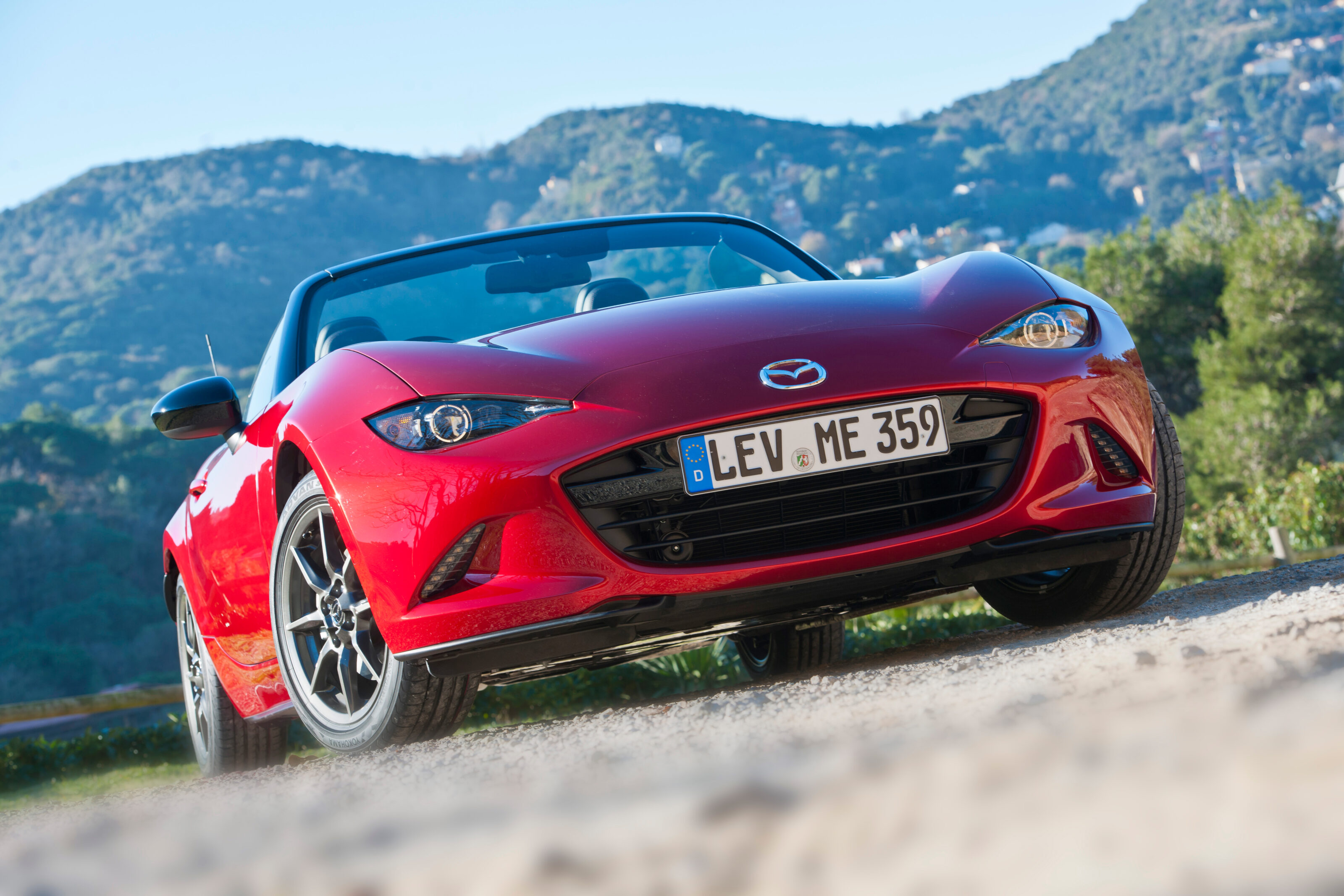
Mazda has taken the hatchet to the pricing of the new MX-5, slashing over $15,000 from the car’s current price.
The new ND-series MX-5 will go on sale from mid-August priced from $31,990 for the six-speed manual. A six-speed automatic will also be available.
This makes it much more competitive against the likes of the Toyota 86, which has dominated the entry-level sports car segment since its introduction in mid-2012.
While the price cut has been significant, it’s not quite like-for-like as the MX-5 now features a 1.5-litre four-cylinder entry model, with the more powerful 2.0-litre version arriving later in 2015.
The new 1.5-litre engine produces 96kW/150Nm compared to 118kW/188Nm from the current car’s 2.0-litre.
However, a kerb weight of just 1009kg means the power-to-weight ratio of the new car is not significantly different.
With the initial press drives scheduled for July, we’re itching to find out whether the new smaller, lighter MX-5 can offer the driving thrills the model is renowed for.
Get your free weekly report from the world of fast cars – subscribe to the MOTOR newsletter!
Having made their name in rallying, Subarus aren’t afraid of a bit of dirt.
I’d wanted to vist the remote Victorian town of Woods Point for a while, as I’d heard that the road leading there was worth a visit.
With 60km of gravel to traverse, it seemed an ideal opportunity to put the WRX STI’s off-road credentials to the test.
Located around 180km north-east of Melbourne, getting to Woods Point involves plenty of twisty road action.
There’s the Black Spur through to Marysville, a dash up and down Lake Mountain if you have time and then the ace run from Lake Mountain through to the turn-off to Reefton Spur.
From there the road almost immediately turns to gravel, but it’s reasonably well surfaced, albeit very slippery over the bits that have recently been graded.
If you don’t care about stone chips it’s an awesome stretch, with heaps of different corner types and surfaces, but a word to the wise is to make sure you have plenty of fuel.
The winding and hilly nature of the road means fuel consumption is high, but after trundling into Woods Point on less than a quarter tank, I was told Tanya in the pub could sort me out.
Nestled in a deep valley, it’s a strange sort of town, a shadow of its gold rush glory days.
However, more worryingly, Tanya didn’t seem to exist, so the STI limped on to Jamieson, only to find it was out of both 98RON and octane booster. Slightly panicked, we made it to Mansfield on fumes.
Also leave plenty of time, as though it’s only 270km from Melbourne-Mansfield via this route, unless you’re Sebastien Ogier it’s likely to take at least four hours, possibly five with a stop or two.
The STI proved fun, fast and unburstably strong, though its new-found stiffness means it’s a bumpy ride on poorly-surfaced roads.
It might not have the pedigree it once did, but Subaru’s rallying heritage is still more than apparent in its latest STI.
Get your free weekly report from the world of fast cars – subscribe to the MOTOR newsletter!
