
Ferdinand Piëch has notoriously ended the tenure of VW Group execs with a pith comment to the media; now he’s at odds with his expected successor, VW CEO Martin Winterkorn
IS Sauron finally losing his grip on Mordor? Ferdinand Piëch, easily the most frightening man in the global car industry, is used to effectively dismissing the most senior executives in the Volkswagen empire with a pithy quote for the press that makes their position untenable. Piëch has just tried to give Martin Winterkorn, CEO of the entire Volkswagen Group, this treatment. Winterkorn’s contract is up next year, but he had been expected to get an extension, then replace Piëch as Chairman of the Supervisory Board when that term expires in 2017. But Piëch told German news magazine Der Spiegel that he is now ‘at a distance’ to his former protégé.
Once, those words would have killed a man’s career. But Winterkorn is refusing to follow the script and slink off. Asked about his future following Piëch’s apparent Nero-style thumbs-down, Winterkorn responded, ‘there is one’. And Piëch is being reminded that Volkswagen is not his personal fiefdom by the other members of the board. “The statement from Dr. Piëch portrays his private opinion, which is not aligned with that of the family,” said his cousin Wolfgang Porsche, who speaks for the Porsche-Piëch clan which owns 51 per cent of the Volkswagen Group. The state of Lower Saxony, which controls 20 per cent of the stock, and the VW labour council which holds half the seats on the supervisory board have both also openly defended Winterkorn.
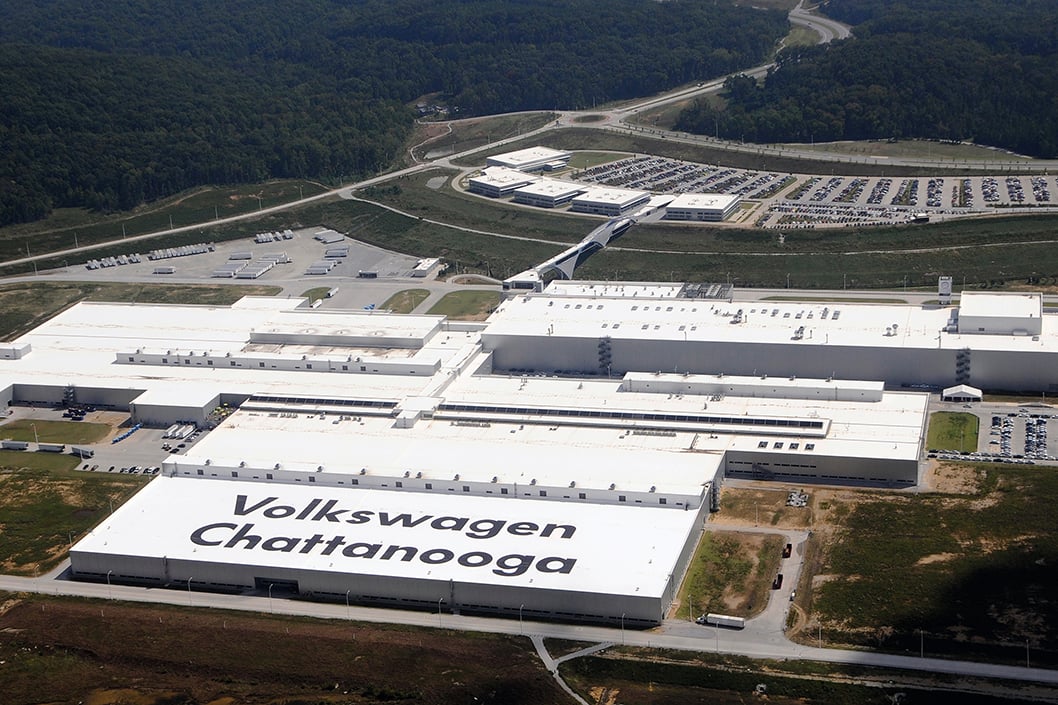
So this may come down to a battle of wills between Piëch and, well, everyone else. Even with those odds, don’t bet against Piëch. He has a dagger collection and studies the tactics of the Japanese in World War II. He ended Franz-Josef Paefgen’s tenure at Audi in 2001 by telling journalists that ‘gridlock reigns there’. Winterkorn’s predecessor Bernd Pischetsrieder got the same treatment: Piëch said that his contract renewal was ‘an open issue’, then suddenly it wasn’t an issue at all. Piëch got rid of Porsche boss Wendelin Wiedeking in 2009, despite the fact that he had massively enriched the Porsche-Piëch clan. Wiedeking offended Piëch by wielding too much power. That’s Piëch ‘s job, so he had to go. When Wiedeking’s plan for Porsche to buy out VW faltered in the credit crunch, Piëch won.
Piëch has legitimate beef with Winterkorn, despite the fact that since the latter became CEO in 2007, group sales have surged from 6 to 10 million. VW is likely to overtake Toyota to become the world’s biggest carmaker this year, three years ahead of the target Winterkorn set. But VW’s operations in the US are a disaster, it has failed to develop a new low-cost brand for emerging markets, and Piëch thinks Winterkorn hasn’t thought big enough about how to counter the challenge from Tesla, Google and Apple. The VW brand itself isn’t profitable enough, and in an early sign of Piëch’s disfavour, Winterkorn was relieved of direct responsibility for it in December.
However this plays out, Porsche CEO Matthias Müller remains the front-runner to succeed Winterkorn. But he may replace a promoted Winterkorn, not a sacked one. Piëch was a brilliant engineer and is an even better power-broker, but his autocratic style – including appointing his current wife, a former nanny, to the VW board – has long grated on his fellow board members and shareholders. With Piëch aged 77 and two years from the end of his term, they might finally be about to take a stand against him. VW insiders say the open row will now go into a quieter ‘diplomacy phase’. But there’s a chance that this time, a few choice words from Piëch will result in his own departure.
Sign up here to receive the latest round-up of Wheels news, reviews and video highlights straight to your inbox each week.
Niche within niches is a peculiarly German phenomenon, as the BMW X6M hammerhead proves. Now in its second-gen guise, the SUV flagship offers more power yet greater efficiency. But the point of it isn’t any clearer
WHAT IS IT? With more performance-orientated luxury-branded SUVs arriving with each passing season, one of the originals – the BMW X6M – steps out with a new set of clothes, increased performance, lower fuel consumption, a completely redesigned interior and improved value. Each boosts the US-built niche-mobile’s appeal.
WHY WE’RE TESTING IT BMW made around 19,000 versions of the old X5M and X6M from 2009 to 2013, with just 415 landing in Australia, but only around 30 per cent of buyers chose the latter in this country, making it a rare beast indeed. Now in its second-gen, F86 guise, the latest X6M ushers in small but worthwhile improvements in all key areas.
MAIN RIVALS Porsche Cayenne Turbo S, Mercedes-Benz GLE Coupe 63 S AMG, Range Rover Sport SVR
THE WHEELS VERDICT Faster, more economical and better equipped, the $194,700 X6M does occupy a place in BMW’s pantheon of performance SUVs, but when the $8800 cheaper X5M offers an identical driving experience in a better looking, roomier and more practical package, then we cannot see the point of it. Try the X6 M50d or – better still – the 80K-cheaper X5 40d instead.
PLUS: Individuality, power, torque, handling, roadholding, attitude MINUS: Styling, queasy ride, thirst, clunky gear lever, divorced feel
THE WHEELS REVIEW ONLY about 100 Australians bought the previous BMW X6M over five years, and – frankly – this stuns us.
Sure, at nearly $200K a pop, that’s a lot of dough. But if you’re keen on something as brash and bolshie as an X6, why not buy the ultimate version? Why not brag about its 4.7-second 0-100km/h capability?
Now a second-gen X6M hits town to remedy that, starting from $194,700. That’s $4125 more than before, but BMW claims there is around $15K worth of extra equipment thrown in, including driver assist systems like M Sport seats, auto parking and lane-change warning, 21-inch alloys, tyre pressure monitors, Harmon Kardon audio, digital radio, and ConnectedDrive internet service.
And that does not include the generational performance, specification and efficiency gains BMW has achieved.
As with all of the current F16 X6s, the F86 M uses a variation of the same platform and running gear as the previous-gen E71, though the engine has been massaged to deliver 15kW more power and 70Nm more torque. Combined with a 100kg weight drop, it helps the 423kW/750Nm 4.4-litre direct-injection bi-turbo V8 petrol powerhouse lop half a second off the 2.3-tonne Bimmer’s 0-100 sprint time.
Aided by a slick-shifting eight (instead of six) speed torque-converter auto, the newcomer hunkers down and rockets off the line with almost unshakeable fanaticism, bursting through the three-digit barrier before being noticed. If one of the multi-configurable sharper-reacting steering and transmission modes is chosen, there’s extra exhaust theatre for more entertainment. Yet even then, the BMW’s performance is smooth, refined… and highly addictive.
Probably even more impressive is the X6M’s ability to glide through corners, the Dynamic Drive active anti-roll tech keeping the massive SUV planted fair and square even at silly speeds. The M-tuned and honed MacPherson strut front and multi-link independent rear end is essentially the same as before, with air suspension and adaptive dampers also fitted as standard. Ferocious brakes also help keep everything in check.
Additionally, the switchable stability system allows for some degree of tail-light out shenanigans, aided by the usually 60/40 rear/front AWD torque split’s rear-drive bias – another M exclusive. It’s quite incongruous.
There are, however, chinks in the X6M’s dynamic armour, like the lack of any real driver connection to the vehicle, since everything feels like it’s doing all the work for you; the interminably jittery ride quality on roads that are anything other than baby-bottom smooth is tiresome, and unfortunately that’s often accompanied by carsick-inducing pitching; and the joystick gear lever is all-too-easily bumped from Drive to Manual mode, resulting a unintentional visits to the rev limiter.
The latest X6’s interior is a highlight in terms of front-seat space, driving interface, dashboard design/layout and overall quality. And the M-specific tombstone-style front seats are glorious. But for an $8800 premium over the X5M, the X6M offers less… less rear headroom (though their wheelbases are the same); 70 litres less luggage space (though the one-piece tailgate is more practical than the former’s wagon-esque split system); and less… handsomeness. We know which BMW would get our wad of cash.
Nevertheless, fans could rightly argue that the overtly aggressive styling is this vehicle’s raison d’être, backed up by its slightly lower centre of gravity and 10kg weight saving make for a sharper dynamic experience – perhaps the best in the SUV business.
So if you like what you see, can stomach the unsettled and unsettling ride, annoying gear lever, and 18L/100km-plus thirst we experienced, then the X6M has improved enough over its pretty samey predecessor to warrant a look-in, especially as to score a faster SUV, the next stop is the $285K Porsche Cayenne Turbo S.
Seen in this context, don’t be surprised if sales for the second-gen model outstrip those of the last one.
SPECS Model: BMW F86 X6M Engine: 4395cc V8, dohc, 32v bi-turbo Max power: 423kW @ 6000-6500rpm Max torque: 750Nm @ 2200-5000rpm Transmission: 8-speed auto Weight: 2265kg 0-100km/h: 4.2sec Fuel economy: 11.1L/100km Price: $194,700 On sale: Now
Smaller and lighter than the M3, the BMW M2 could be the best M-car on sale when it shows itself mid-year, but we’ve spied it getting ready to conquer the world
WELCOME to the BMW M2 – surely one of the most anticipated cars of 2016, sprung here undergoing a final and frenetic wintry shakedown prior to its third-quarter global debut.
Stepping above the delicious BMW M235i Coupe, the F87 two-door is set to take centre stage within the next six months (September’s Frankfurt Motor Show is probably a good bet), before surfacing in Australia in the middle of next year.
What we’ve been hearing has us tantalised – a worked 3.0-litre bi-turbo straight six delivering close to 300kW of power and maybe even up to 500Nm of torque, driving the rear wheels (of course) via a six-speed manual or seven-speed dual-clutch transmission. However, some reports suggest the latter might end up being a revised version of the ZF eight-speed torque converter auto found in the M235i. We hope it’s teh former.
Underpinning the M2 is an M Divison subset of go-faster suspension, steering and differential components, some shared with the larger (and heavier) M3/M4, though of course heavily modified for duty in the lighter 2 Series bodyshell.
The camo in the pix highlights the changes that have had to be made in order to accommodate the wider tracks, resulting in a stronger and stiffer structure. The usual M trademarks like larger air intakes, reprofiled bumpers, mudguard gills, quad pipes and massive brakes are obvious in the images. Expect, too, an M2 Convertible ragtop based on the recently released al fresco 2 Series.
With the larger M cars growing in size, it is clear that the M2 Coupe has a very specific role to play as the true torchbearer of the traditional M Division driver’s car philosophy. Visceral, raw and uncompromised, it needs to eclipse the epic 250kW/450Nm 1M Coupe of 2011 to earn a place among M car greats like the E30 M3 of the mid ‘80s.
Pricing is anybody’s guess at this stage, but we’re hoping the M2 Coupe won’t stray too far from the $99,900 plus on-roads ask of the old 1M, of which 302 made it to Australian showrooms in 2011 and 2012.
Have spy pics of your own? We’d love to see them. Send them to [email protected]Sign up here to receive the latest round-up of Wheels news, reviews and video highlights straight to your inbox each week.
Volkswagen looks set to continue its annual tradition of one-off supercar-slaying Golf GTIs by releasing a teaser video of 2015’s Supersport Vision GT concept.
Video and images on the official website reveal the latest Mk 7-based wide-bodied custom GTI creation that, conceptually, follows closely in the tyre tracks of last year’s GTI Roadster and 2013’s Design Vision GTI hatch.
With its massive guards, radical hill climb special-like aero treatment, twin-nostril bonnet and carbonfibre rear wing, the Supersport looks to ditch the sensual design of the Roadster and return the more mucho aesthetic of the 2013 predecessor.
While specs haven’t been revealed, it’s expected the Supersport’s glory numbers will supplant the eyebrow-raising credentials of the GT Roadster, which debuted at in the flesh at the Woerthersee GTI meeting in Austria last May.
That red roofless version, a product of a design competition within Volkswagen, produced 370kW and 560Nm from its biturbo 3.0-litre V6 TSI engine fed through a seven-speed DSG and all-paw drivetrain. The GTI Roadster is claimed to hit 100km/h from a standstill in just 3.9sec on its way to a 306km/h top speed.
The new Supersport video also teases a raspy, highly strung engine note that suggests that, like its forebears, the new concept is likely to be V6 powered and, if history is most certainly to repeat, twin-turbocharged at that.
It’s expected that Volkswagen will once again adopt the new-aged, two-pronged marketing push of revealing the real car at the famed Austrian hot hatch-fest next month while also offering the concept shortly thereafter as downloadable content for the Playstation-franchised Vision Gran Turismo videogame.
Get your free weekly report from the world of fast cars – subscribe to the MOTOR newsletter!
Will Subaru Australia import the Levorg 2.0GT, its WRX in five-door wagon form? After six months of speculation, the answer is rumoured to be close at hand.
Available in its domestic Japan since early 2014, it’s long been expected that the weirdly named Levorg would land in Aussie showrooms some time this year.
However, Subaru Australia has for the past six months managed to dodge a firm answer on the will-it-or-won’t-it question, even after the Levorg range was confirmed for European release at the Geneva motor show this past March.
The Levorg has been posted as being ‘around the corner’ on the official Subaru.com.au website since it first appeared, in prototype form, at 2013’s Tokyo motor show.
Why the interest? Of the four-model JDM range, the two high-spec GT and top-spec GT-S models feature a 2.0-litre turbo boxer four outputting 221kW and 400Nm.
And while a kerb weight of 1570kg is heavier than the current WRX sedan sold in Oz, the enlarged and more practical body style represents a more family-friendly package without diluting much in the way of WRX firepower.
The only real rub is that the Levorg range only adopts one transmission type, the continuously variable Lineartronic automatic.
A GT-spec Levorg would not only sit neatly besides the four-door-only Aussie WRX range (we don’t get the hatch version), it would bolster the painfully undersubscribed mid-size performance wagon segment currently only populated by Skoda Octavia RS and Renault Megane GT220.
It’s claimed that Levorg sales have been essentially double that of WRX since launch in its domestic Japanese market.
Why the delay? Perhaps Subaru Oz doesn’t want to cannibalize sales from Impreza-based XV, Forester and, importantly, the recently released Outback, which is currently enjoying huge sales success for the local importer.
It expected that the Levorg will be given an official green light for local release within the next month or so.
Get your free weekly report from the world of fast cars – subscribe to the MOTOR newsletter!
NISSAN has threatened to pull Australia’s cheapest battery-powered car off the market unless it gains taxpayer support, saying it can’t keep losing big chunks of money on each Nissan Leaf it sells.
In a rare public outburst from the upper echelon of the Australian car industry, Nissan managing director Richard Emery admitted the $39,990 EV was a loss-leader for the brand, and that it would struggle to keep the car on sale without some form of cash support from the taxpayer.
Over its three years on sale here, Nissan has sold just over 400 Leafs, including only 31 in the first three months of this year.
It was initially sold for between $46,900 and $51,490, but dropped to its current price of $39,990 in May 2013 after the carmaker said it wanted “to capture the attention of buyers considering an EV who might have previously been put off by the comparatively higher purchase price typically associated with these ground-breaking cars”.
“Ever-tightening emissions regulations overseas have brought about the need for electric cars like the Nissan Leaf,” Emery said.
“Vehicles that have lower emissions, to the point of zero, are very much the future of car-making. It’s why we’ve remained committed to this important vehicle, despite the fact every Nissan Leaf sold in Australia costs our company significant money – they don’t make any profit.
“Yes, we want to sell more of them here. Our competitors want to do the same with their own models. But we can’t do this alone.
“The Australian government only has to help with two things, the same two things some of the world’s biggest economies have been doing for years: give Australian buyers sufficient incentives to buy zero-emission vehicles; and help provide vehicle battery recharging infrastructure for the public to use.”
Emery said the Leaf, which can travel up to 150km on a single charge, was sold in 43 markets on four continents.
“Frustratingly, Australia appears to be the only one without any significant government incentives for a consumer to buy a zero-emissions car,” he said.
“[Federal industry] minister Macfarlane can change this. But if it is a whole-of-government view that electric vehicles are not an option for Australia then we will need to seriously consider our position on the Nissan Leaf electric car.”
The Leaf is larger and more advanced than its only other mainstream brand rival, the $48,800 Mitsubishi i-MiEV that was officially on sale here for a few months but then dropped to order-only status.
BMW Australia said its two battery-fuelled products – the Wheels Car of the Year-winning i3 and plug-in hybrid i8 supercar that’s counted among the official EV numbers even though it has a petrol engine – were both “self supporting” models, but were missing out on incentives designed to make low- and zero-emission cars attractive to buyers.
“Every other major market in the world has incentives or low-emission policies set in place by government,” BMW Australia general manager of corporate communications Lenore Fletcher said.
“We definitely need to see some action to build up general interest.”
Mitsubishi Australia, which sells the $48,800 i-MiEV only to customers who walk into showrooms and order it, said it would not talk about an individual model’s profitability.
However, Mitsubishi Australia head of corporate communications Shayna Welsh said the strong showroom appeal of its Outlander plug-in hybrid electric SUV showed it was a “better fit for Australian lifestyles and driving habits”.
“In fact, our parent company has committed to producing new-model ASX and Pajero with a PHEV powertrain option, so it’s likely we’ll see more Mitsubishi plug-in hybrid models in Australia in the near future,” she said.
Nissan, BMW and Mitsubishi join a chorus of carmakers all calling for some form of taxpayer support for low-emission vehicles.
Indian giant Mahindra has even flagged its interest in selling EVs Down Under, saying if it could find a business model that works in the cut-throat Australian market, it could sell EVs anywhere.
The bahn-storming BMW X5M returns for another stab at the super-est SUV title, bringing boosts in power, efficiency and features, for a faster yet more frugal proposition. But cheap it’s not.
WHAT IS IT The BMW X5M is the flagship performance version of an already driver-orientated sports SUV, centred on a highly modified twin-turbo V8 drivetrain, as well as the usual suspension, brakes and interior upgrades associated with the M Performance sub-brand. Loud and aggressive, this is not for wallflowers.
WHY WE’RE TESTING IT The new-generation X5M has more power, more pace and extra gear over its predecessor. In isolation, the $185,900 that BMW is charging for its hottest X5 might seem extortionate for many, but in context of the new X5 M’s 4.2s 0-100km/h performance, it stands as something of a bargain, since Porsche Cayenne buyers must fork out another $100K for a Stuttgart SUV that beats the Bolshie Bavarian.
MAIN RIVALS Range Rover Sport SVR, Mercedes-Benz ML63 AMG, Porsche Cayenne Turbo S, BMW X6M
THE WHEELS VERDICT An extraordinary engineering effort, the X5 M manages to offer stronger performance than before (like it was needed!), while introducing improved efficiency and value to the equation. That’s a win in our books, especially when no equivalent style vehicle can match the Munich super SUV’s stonking acceleration for the money. Silly auto lever and jittery 21-inch wheel ride aside, you have to admire this BMW’s focus.PLUS: Strident performance, handling, comfort, practicality, attitude, value MINUS: Clunky lever, thirst, turning circle, ride
THE WHEELS REVIEW CALLING IT an M X5 just wouldn’t do. Even if the iconic Mazda roadster never existed, it is clear that the BMW SUV flagship is an (albeit blisteringly fast) SUV first and an M car second.
As with all of the new model F15 X5s, the M range-topper is essentially a rebodied version of what went before, though this time the latter gains its own model code: F85. Is there enough change to justify such a statement?
The X5M’s body is not bespoke. It gets headlights from its 2015 BMW X6 sibling, kidney grilles with M-signature double bars, and redesigned bumpers brandishing 50 percent bigger air intakes butches up an already blunt nose. Side-on, the gills adopt chrome, alien-like twin-stalk mirrors mount the doors, and unique 21-inch alloys (on non-runflat rubber) result in a 10mm ride-height drop; finally, out back, the reprofiled bumper’s body-coloured diffuser houses four exhaust pipes.
Building on the X5’s usual space, comfortable, practicality and functionality, the M version gains M-specific seats, steering wheel with paddle-shifters, gear selector and “exclusive” trim finishes – some of dubious taste.
There’s certainly a taste for firepower aplenty, courtesy of a 423kW/750Nm 4.4-litre direct-injection V8, employing two twin-scroll turbos and cross-bank exhaust manifolds to edge power and torque outputs upwards to the tune of four and 10 percent respectively. Conversely, efficiency enhancements like regenerative braking and stop/start tech see fuel consumption drop by 21 percent.
A switch from a six-speed to an eight-speed ZF auto also helps. It’s been reengineered to mimic the characteristics of a dual-clutch gearbox, so while the torque converter stays, low-speed ‘creep’ is gone, cog changes are quick and a new launch control system cuts the 0-100km/h dash to 4.2 seconds – just 0.1s shy of the $100K-more Porsche Cayenne Turbo S.
Even in its most docile Comfort mode, the X5M is a staggering performer, gaining ferocious momentum while maintaining a state of composed grace – on smooth and straight roads at least. The BMW’s biggest strength is its ability to waft along on its own terms, unfazed by inclines, weather or slower moving vehicles. Acceleration is always colossal.
However, while no other 2.3-tonne SUV might be as agile, the Bavarian blunderbuss lacks the laser-guided tactility of other M cars. The X5M’s standard adjustable air suspension with its changeable dampers, variable-ratio steering, torque-vectoring all-wheel drive system (set at a 60/40 rear-drive bias), and astonishing braking capabilities collectively make the driving decisions for you. So while the helm is beautifully measured, the handling reactive and controlled and the roadholding reassuringly tenacious, the net effect is like driving on auto pilot, with precious little real feel or involvement.
For variety, choosing one of many changeable steering, transmission or suspension permutations adds a dramatic edge and/or urgency, accompanied by a thunderous exhaust soundtrack. But the resulting constant pitching, exacerbated by the inevitable body movement (despite the Dynamic Drive roll stabilisers) and deteriorating ride comfort over anything other than velvety smooth surfaces, might dissuade excursions into Sport or Sport+. Dial M for motion sickness anyone?
More palatable is the $185,900 X5M’s relative value. For $2K extra, there’s $15K more kit, including bigger wheels, leather-lined dash, driving/parking assist tech like lane-change alert, Harmon Kardon audio and ConnectedDrive services. Navigation, head-up display, adaptive LED headlights with auto high beam, sunroof, surround-view camera, DAB+ radio/TV tuner and electric tailgate are also included. No autonomous emergency braking is disappointing, though.
Two days of ripping along stunning Tasmanian roads reveal the X5 M’s cracking speed, handling and roadholding, but also highlight issues of thirst, ride, clunky gear lever and driving detachment. The M bits are added-on rather than engineered-in. Stonking as it is, this BMW could never be badged ‘MX5’.
SPECS Model: BMW X5M Engine: 4395cc V8, dohc, 32v twin-turbo Max power: 423kW @ 6000-6500rpm Max torque: 750Nm @ 2200-5000rpm Transmission: 8-speed auto Weight: 2275kg 0-100km/h: 4.2sec Fuel economy: 11.1L/100km Price: $185,900 On sale: Now
Sign up here to receive the latest round-up of Wheels news, reviews and video highlights straight to your inbox each week.

The Honda NSX is coming and we’ve stripped it down to see if it’s a serious threat to the Porsche 911 Turbo; we reveal Holden’s Astra Attack with its German-sourced Opel models and talk to Ford Australia’s new boss about the company’s future and the man he replaces.
Our Bucket List continues as we take up the once-in-a-lifetime chance to drive the Holden Efijy as well as the legendary Phase III Falcon GT-HO before we pay tribute to the designs that made the world take notice of the Aussie car industry.
We also pit the Mazda CX-3 against the Honda HR-V, Renault Captur, Suzuki S-Cross and Holden Trax in a mini-SUV contest, and sample the Porsche Cayman GT4.
Want more? Download the Wheels app, or pick up the May 2015 issue in stores now.
Sign up here to receive the latest round-up of Wheels news, reviews and video highlights straight to your inbox each week.
THE head of one of the few parts of Australia’s once proud car manufacturing history that will survive past 2017 has described government leadership of the industry as “frustrating” and “annoying”.
Richard Emery, the managing director of Nissan Australia, who also oversees the brand’s casting and metal-forming plant that dates back to its car-making roots, has expressed his annoyance at what he says are “knee-jerk comments and short-term decisions” from government.
His dig at the Australian automotive industry’s legislative framework was sparked by comments from federal industry minister Ian Macfarlane at the launch of Hyundai’s hydrogen fuel cell-powered ix35 in Australia earlier this month.
Macfarlane told media that electric cars – such as Nissan’s battery-powered Leaf hatchback – were not a long-term solution for Australia’s future personal transport needs.
“Earlier this month I was surprised and concerned about comments by the federal government that question the role electric cars will play in Australia’s future motoring landscape,” Emery said in a statement released today.
“Ian Macfarlane, who has suddenly expressed great support for the idea of hydrogen-powered cars after declaring they ‘could place Australia in a leadership role for the introduction of zero emission vehicles within the Asia Pacific rim’, has again shown a lack of understanding and appears to have not consulted with the wider automotive industry and his own government colleagues.
“The way governments treat the Australian automotive industry is frustrating. Time and again they fail to take the time to properly consult those who have the facts.
“And it’s especially annoying when governments make knee-jerk comments and short-term decisions.”
Emery said the industry minister talked about the need for tighter emissions targets for new vehicles, yet “pulls the rug from under the future of zero-emissions electric cars in Australia”.
“In the meantime, one of his federal colleagues talks about the possible free importation of new and used vehicles from overseas, with the potential for negative impacts on road-user safety, consumer protection, and the environment from higher exhaust emissions.
“None of this makes sense.”
Emery also used the statement to needle the government over the lack of infrastructure and buyer incentives to make electric vehicles more appealing to potential customers.
“The Nissan LEAF is … the top-selling electric vehicle both globally and in Australia, and continues fighting the challenge of being accepted by consumers,” he said.
“The two barriers to its local acceptance are the same two it has faced everywhere else in the world, and they aren’t marketing or so-called ‘range anxiety’: they are the lack of publicly available battery recharging infrastructure and the absence of government-driven incentives for consumers to buy a zero-emissions car.
“These two facilities are behind the success of electric vehicles in Europe, the USA and Japan. And we need them here.”
Ian Macfarlane’s office issued a statement in response to Emery’s claims, saying the Australian Government “supports innovation across all parts of the automotive industry”.
“Electric, hybrid and hydrogen technologies all have a role in the next generation of low emissions and zero emissions vehicles,” it said.
“Ultimately, it will be up to consumers to decide their preference.”
Last year, only 173 of the battery-fuelled Leafs were sold in Australia, 15 fewer than the number sold in 2013.
Few EV models are sold in Australia. Tesla sells the circa-$100K Model S, BMW sells its quirky i3 for $63,900 in electric-only mode, and customers can special-order the $48,800 Mitsubishi i-MiEV hatchback.
Nissan’s Leaf is the cheapest EV sold in Australia, priced from $39,900 – with every one including a kangaroo-stamped aluminium cover produced at the carmaker’s Dandenong casting plant.
Last year, 1108 ‘electric cars’ were sold in Australia, although the numbers are tainted by the more popular plug-in hybrid electric vehicles that have the back-up of a petrol or diesel engine that steps in when the limited-range batteries are exhausted.
Sign up here to receive the latest round-up of Wheels news, reviews and video highlights straight to your inbox each week.
Upon its release in 2011, the Volkswagen Polo GTI completely blew the performance car market wide open.
Never before had you been able to buy this sort of speed – 0-100km/h in under seven seconds, sub-15sec quarter mile – for so little money.
It won two Bang for your Bucks titles by such a margin that we didn’t know if anything would ever be released that could beat it!
The market responded, of course, as it always does, and the updated Polo GTI faces a much tougher test than when the original surfaced with the sector to itself four years ago.
Opel’s Corsa OPC came and went, but there’s still the Peugeot 208 GTi, Renault Sport Clio RS and, of course, Ford’s wonderful Fiesta ST to beat if the baby Vee Dub wants to recapture its title.
Helping its cause is a new 1.8-litre turbocharged four-cylinder, a destroked version of the EA888 engine in its Golf GTI big brother.
Paired with the carryover seven-speed dual-clutch gearbox, it produces 141kW, nine kW than the old 1.4-litre twin-charge engine, but torque remains the same at 250Nm, though it is now spread from 1250-5300rpm (previously 2000-4500rpm).
The big news, however, is the ability to choose a six-speed manual gearbox. Doing so doesn’t just add a third pedal in the footwell but spreads peak power from 4300-6200rpm rather than 5400-6200rpm in the DSG and increases torque by a huge 70Nm, 320Nm on tap from 1450-4200rpm.
It’s a muscular engine and endows the new Polo GTI with a serious turn of speed. VW claims 6.7sec 0-100km/h for both gearboxes, but we wouldn’t be surprised if both manage to beat that claim.
The manual, in particular, doesn’t feel that much slower than a Golf GTI, which makes sense given its lighter mass (1234kg) makes the two cars’ power-to-weight ratios very similar.
It doesn’t sound particularly special, but it revs strongly past its 6000rpm redline and is incredibly flexible, with virtually no lag.
The gearbox is light and easy to use, though not as slick as that in the Golf, with across-the-gate shifts (e.g 2-3 or 4-5) occasionally needing patience.
As you’d expect, the Polo is a calmer and more refined car on the road than the Fiesta ST, though a back-to-back assessment will be required before it can be given the nod over its French rivals, as there’s a fair degree of ‘hop’ over bumps and compressions.
Unfortunately, the adaptive dampers that are optionally available in Europe will not be coming here, as VW can’t make the sums add up.
Sadly, the chosen drive route didn’t allow for much in the way of dynamic assessment, but initial impressions are the Polo GTI remains a fun device, though not able to offer the laugh-out-loud enjoyment of the Fiesta.
The agile, adjustable chassis offers plenty of grip thanks to wheels 0.5-inch wider all-’round and grippy Continental tyres.
ESP still can’t be fully disabled, but there is now a Sport mode, and it allows enough latitude to not be a huge hindrance, on the road at least.
Sadly, where the Polo GTI has taken a backwards step is steering. While accurate enough, the now electrically-assisted tiller doesn’t offer the feedback and communication of the old hydraulic rack.
It’s not a deal-breaker, but it is a shame, particularly when the steering in the Golf GTI is so good.
What is good news is that thanks to having to shift gears yourself, the Polo GTI is more affordable than ever, with the manual starting at $27,490 with DSG an extra $2500 at $29,990.
An optional Driver Assistance Package adds sat-nav, parking sensors, a rear camera and a driver fatigue detection system for $1700, and the $3300 Luxury Package includes heated leather seats, LED headlights and a sunroof.
Faster and more affordable than ever, the Polo GTI continues to play near the pointy end of the baby hot hatch market. Whether it’ll be enough to take a third Bang for your Bucks title, we’ll find out in a few months’ time.
4/5
Specs Engine: 1798cc four-cylinder, DOHC, 16, turbocharger Power: 141kW @ 4300-6200rpm (manual)/5400-6200rpm (DSG) Torque: 320Nm @ 1450-4200rpm (manual/250Nm @ 1250-5300rpm (DSG) Gearbox: Six-speed manual/seven-speed dual-clutch Weight: 1234kg (manual)1242kg (DSG) 0-100km/h: 6.7sec (claimed) Fuel consumption: 6.1L/100km (manual)/5.7L/100km (DSG) Price: $27,490 (manual/$29,990 (DSG)
Click here to read the full range review of the Volkswagen Polo.
