
Toyota has once again claimed the title of the world’s best-selling automotive group, topping global sales charts in 2025 with a commanding 11.32 million vehicles delivered across its Toyota, Lexus and affiliated brands, according to analysis by car industry researcher Felipe Munoz.
The Japanese giant remains well ahead of its closest rival, the Volkswagen Group, which recorded 8.98 million sales spanning its wide portfolio including VW, Audi, Skoda, Porsche and Bentley.
In third place, the Hyundai Motor Group – covering Hyundai, Kia and Genesis – continued its strong global performance with 7.24 million vehicles, cementing its position as one of the industry’s most consistent high-volume players.
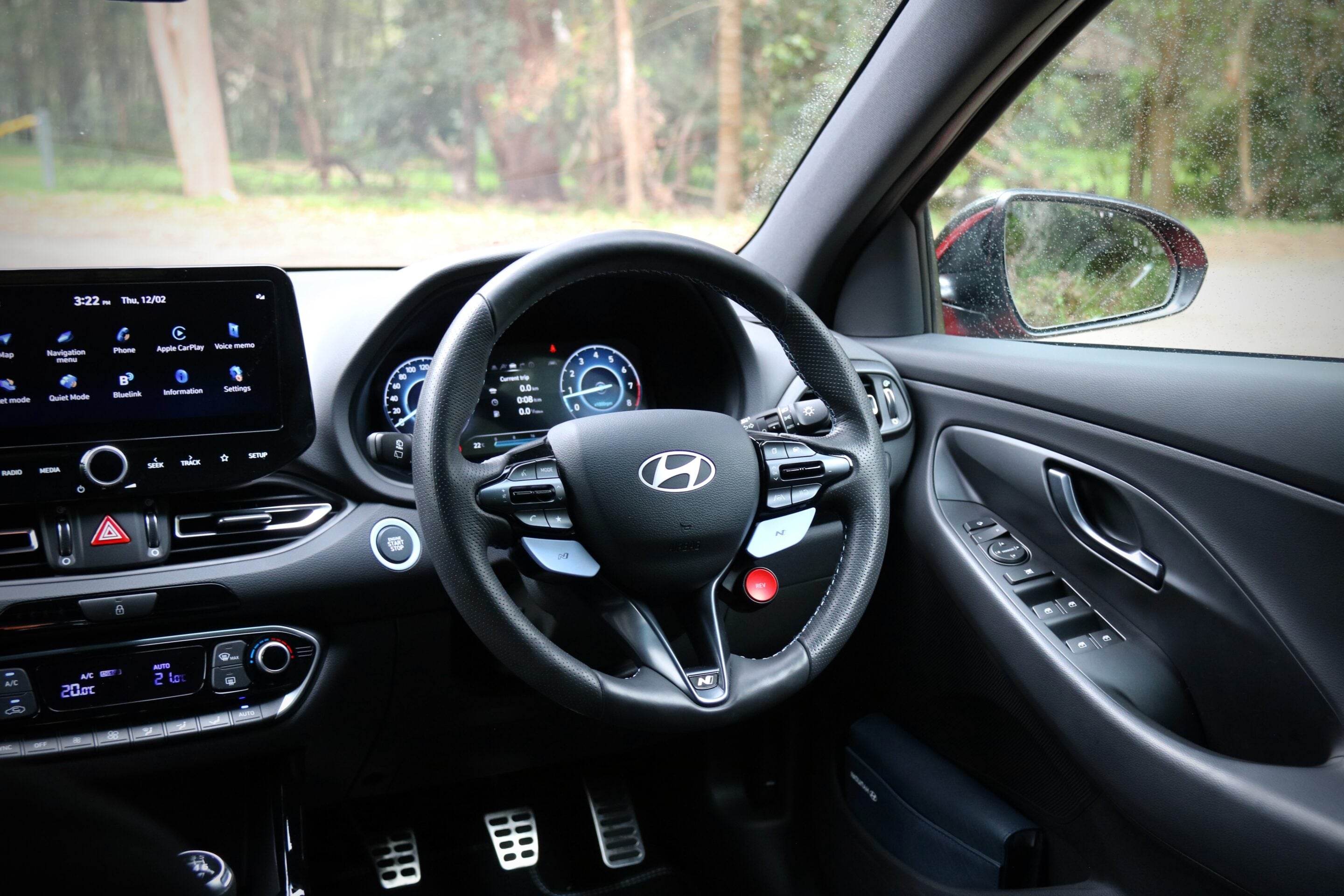
Stellantis ranked fourth with 5.51 million sales, driven by its diverse stable of brands including Fiat, Peugeot, Jeep and Ram.
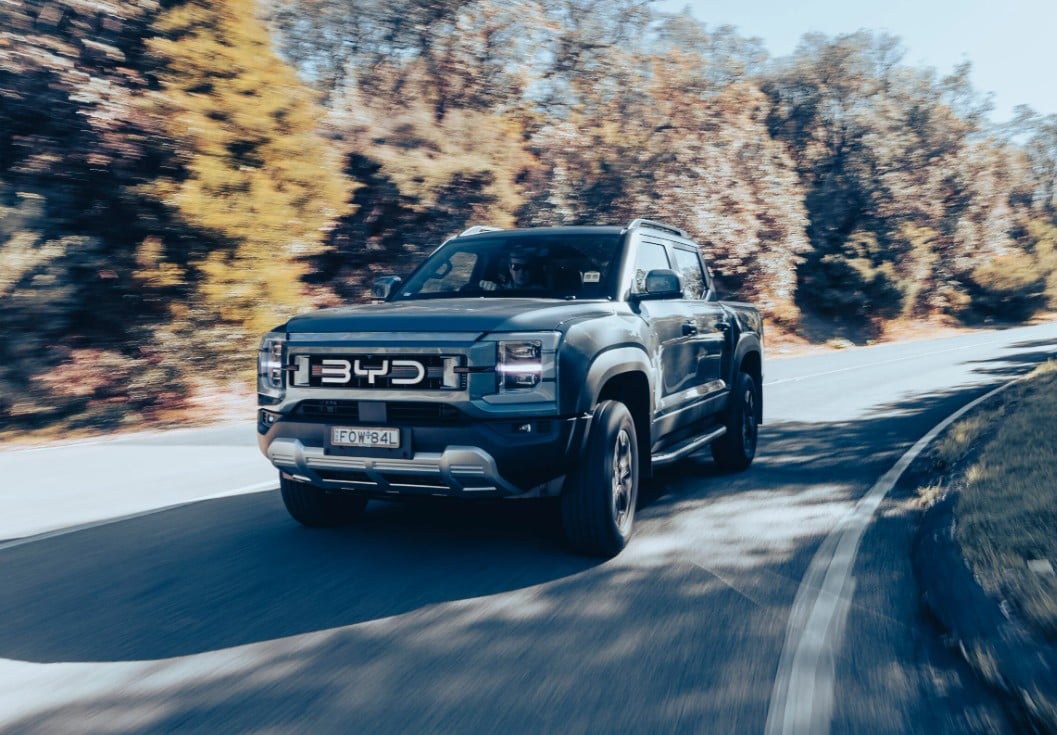
The biggest story in the top five, however, is the rapid rise of China’s BYD. The electrified vehicle specialist surged into fifth place with 4.60 million sales, edging ahead of long-established rivals and underlining the growing influence of Chinese manufacturers on the global stage.
Just behind, General Motors recorded 4.55 million sales, narrowly trailing BYD, while Ford followed with 4.39 million units.
China’s Geely Group, which includes Volvo, Polestar and Lotus, secured eighth with 4.17 million vehicles, ahead of Honda in ninth at 3.46 million.
Rounding out the top 10, Suzuki delivered 3.29 million vehicles, maintaining its strength in key markets such as India and Southeast Asia.
The 2025 rankings highlight a shifting global landscape, with traditional giants still dominant—but facing increasing pressure from fast-growing Chinese brands and evolving consumer demand.
The top 10
- Toyota Group – 11,322,575
- Volkswagen Group – 8,983,807
- Hyundai Motor Group – 7,244,408
- Stellantis – 5,510,368
- BYD Group – 4,602,436
- General Motors – 4,547,918
- Ford Motor Company – 4,395,000
- Geely Group – 4,167,717
- Honda Motor Company – 3,460,000
- Suzuki Motor Corporation – 3,295,013
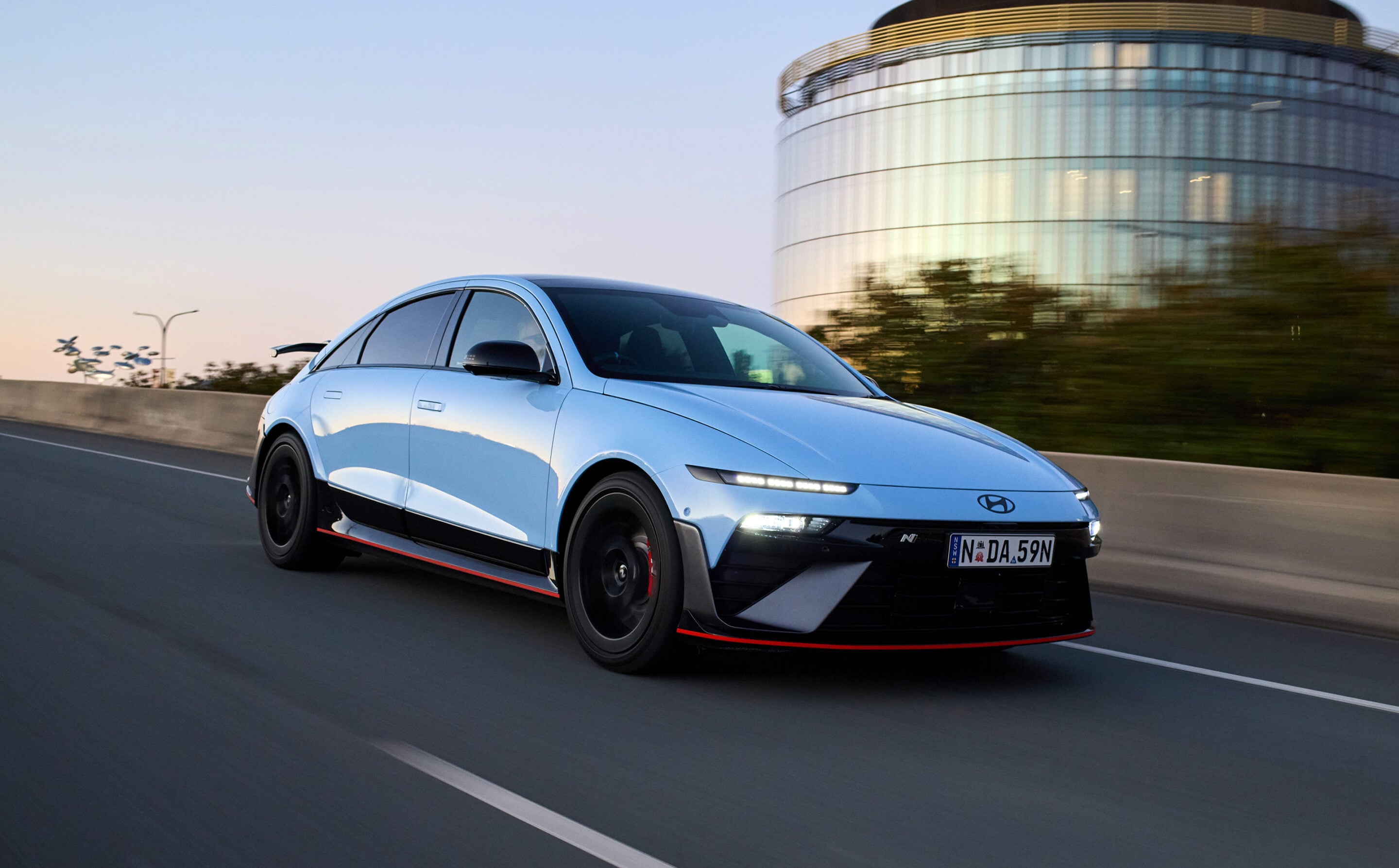
The Hyundai IONIQ 6 N high-performance electric sedan has arrived in Australia with a starting price of $115,000 before on-road costs.
With 478kW and 770Nm from its twin electric motors in N Grin Boost mode, the electric mid-sizer can complete the sprint from 0-100km/h in just 3.2 seconds, making it the fastest Hyundai production car ever, eclipsing the IONIQ 5 N by 0.2s.
The IONIQ 6 N shares much of its underpinnings with the IONIQ 5 N electric SUV but has been refined to better accommodate a sedan body.
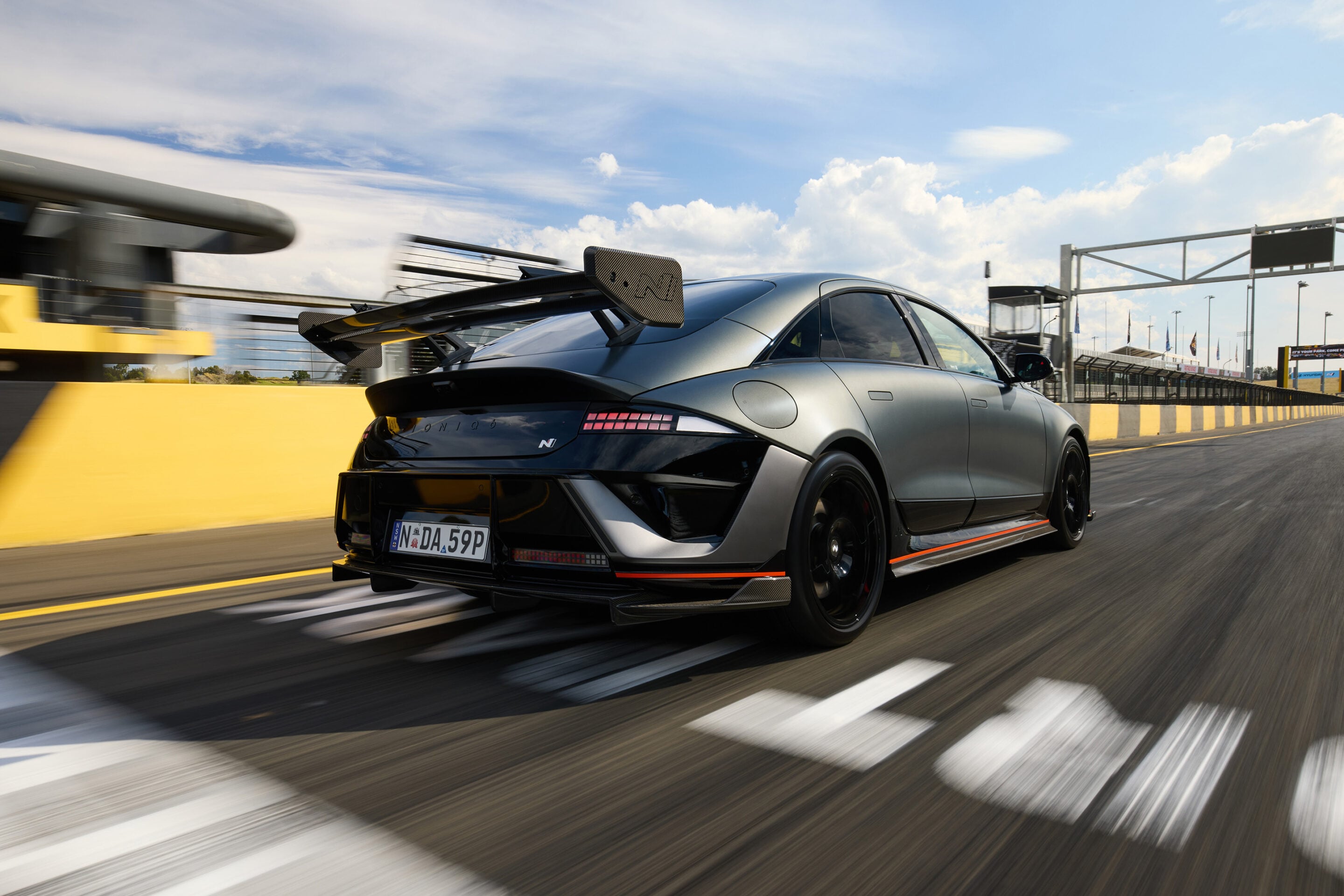
Two electric motors, one at each axle, combine for 448kW and 740Nm in standard trim (without N Grin Boost mode activated), the same outputs as IONIQ 5 N. A single-speed transmission sends drive to all four wheels, although Hyundai’s N Torque Distribution system can apportion 95 per cent of available torque to either the front or rear wheels.
Chassis enhancements over the IONIQ 5 N include revised suspension components, additional strengthening measures, optimised battery thermal management while aero body upgrades have resulted in a drag coefficient of 0.274 Cd.
Standard equipment includes 20-inch alloy wheels, a new design for LED headlights, a 12.3-inch infotainment touchscreen with wireless and wired Apple CarPlay and Android Auto, inbuilt satellite navigation, AM/FM/DAB+ radio, and an eight-speaker Bose sound system.
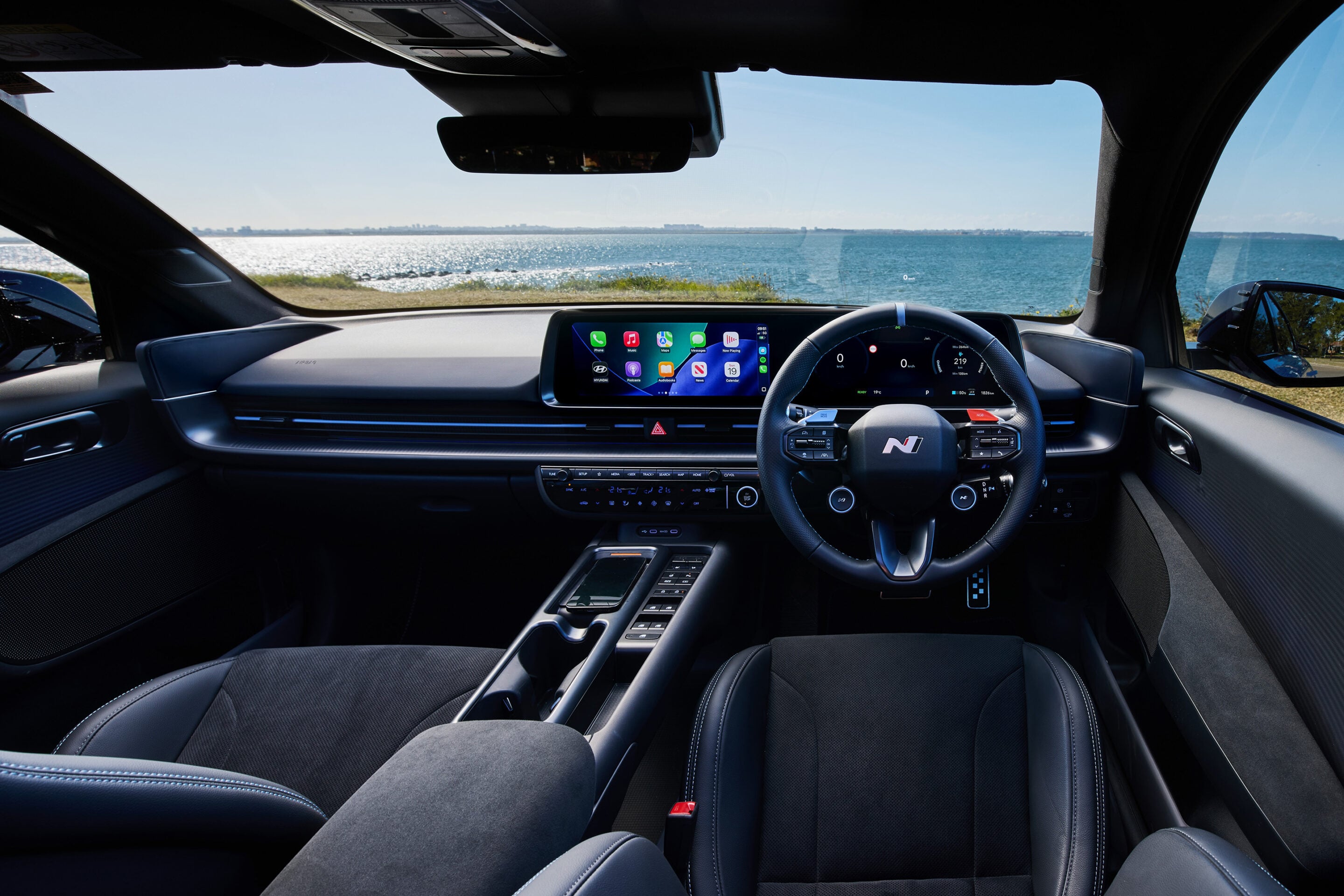
Inside, N-specific manually-adjustable sports seats are trimmed in Alcantara and leather accents while the steering wheel is also wrapped in leather. An electric sunroof is standard but can be deleted at no-cost.
An 84kWh lithium-ion battery claims 487km of driving range, based on WlTP testing. DC fast-charging on a 350kW charger will replenish the battery from 10-80 per cent in 18 minutes, according to Hyundai.
Several N-specific drive settings underscore the IONIQ 6 N’s track-focussed nature including N Grin Boost, N Active Sound+ that pipes synthesised engine sounds into the cabin, N’s unique e-Shift that mimics a traditional gearbox by using the paddle-shifters, and N Drift Optimiser.
Optioning the Performance Pack brings a host of carbon-fibre add-ons including a huge rear wing, front splitter, side skirts, rear diffuser, door sills, and even wheel caps to fit on the Pack’s 20-inch lightweight forged alloy wheels. It’s priced at $24,147.76 with an additional $600 for fitment. Alternatively, buyers can option individual elements from the Performance Pack
Hyundai backs the IONIQ 6 N with a seven-year/unlimited kilometre warranty if serviced by an authorised Hyundai dealer, or five-year/unlimited km if serviced elsewhere. The battery is covered by a separate eight-year/160,000km warranty.
The Hyundai IONIQ 6 N is available to order now, with deliveries expected to take three months due to Hyundai only building the IONIQ 6 N to order.
Electric vehicle sales in Australia continue to accelerate, with April figures showing a sharp rise in deliveries led by Tesla and Polestar—and the Tesla Model Y emerging as the nation’s top-selling vehicle.
Data released by the Electric Vehicle Council (EVC) shows Tesla and Polestar delivered a combined 1458 vehicles in April 2026, more than double the 702 units recorded in April 2025. The result highlights the growing momentum behind EV adoption as supply improves and more buyers enter the market.
Year-to-date, the two brands have recorded 9185 sales, up 47 per cent compared with the same period last year. The Tesla Model Y was the standout performer, topping the overall sales charts in April with 822 units, making it the best-selling vehicle in Australia for the month regardless of powertrain.
New South Wales is leading the national charge, with EV sales in the state up 66 per cent year-to-date compared with January to April 2025. The increase reflects both stronger demand and a wider range of electric models now available across different segments.
The latest figures reinforce the steady shift toward electric vehicles, particularly as more mainstream options reach the market and buyers become more familiar with the technology.
Further evidence of this growing interest can be seen beyond showroom floors. New data from insurer NRMA shows a significant increase in Australians exploring EV ownership, with insurance quote requests for electric vehicles rising 121 per cent in April 2026 compared with the same month last year.
The insurer said the spike points to changing consumer behaviour, as more drivers actively consider switching to electric cars. Interest is also being supported by a broader range of available models and greater confidence in ownership costs.
Together, the sales and insurance figures paint a consistent picture: EVs are gaining traction at a rapid pace. With demand rising across both new and used markets, the upward trend is expected to continue as 2026 progresses.
Mitsubishi Motors Australia has announced that the Black Edition grade has returned to its Outlander medium SUV. Previously available in the pre-updated Outlander range, the Black Edition is based on the second-from-base LS model and adds – as the name suggests – a number of black-themed features to differentiate it from other Outlander models. The first Black Edition models in the updated Outlander range will arrive from June 2026.
Priced from $45,490 plus on-road costs – $1450 above the 2WD LS seven-seat on which it’s based – the exterior of Outlander Black Edition features a black-finished grille, front and rear bumpers and door mirrors, as well as black 20-inch alloy wheels and gloss black finishes to the B- and C-pillars.
The Black Edition styling continues throughout the interior with a black headliner and black synthetic leather and suede seat upholstery.
Part of the Black Edition is a more limited colour palette than the rest of the Outlander range, with only ‘Graphite Grey’, ‘Black Diamond’, ‘Red Diamond’ and ‘White Diamond’ colours available.
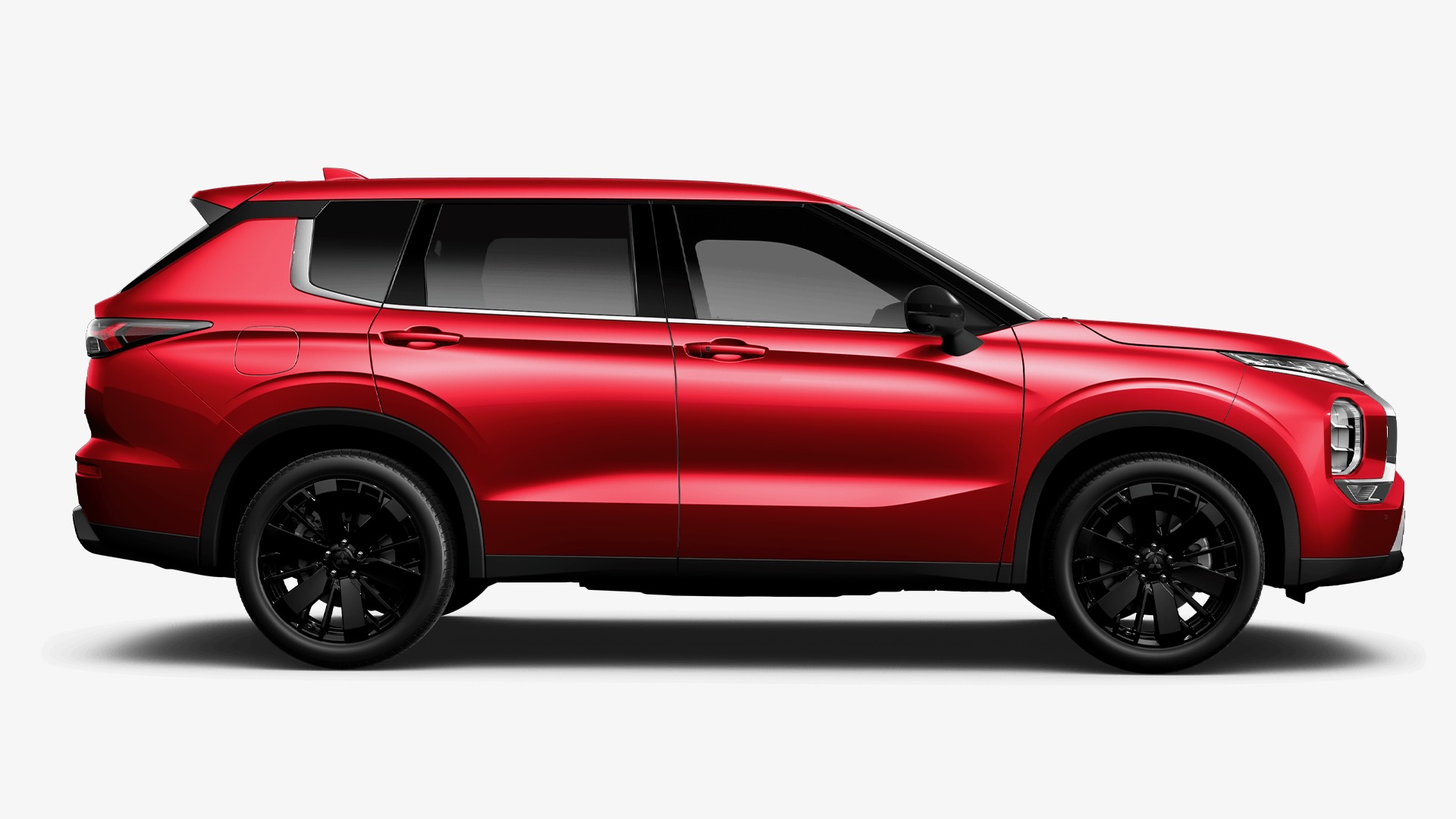
Based on the Outlander LS, the Black Edition is only available in seven-seat front-wheel drive form, and other standard equipment includes automatic LED exterior lighting, dual-zone automatic climate control, dual 12.3-inch displays, Mitsubishi Connect live services, wireless Apple CarPlay and Android Auto, an eight-speaker Yamaha sound system and safety features including autonomous emergency braking, adaptive cruise control, blind-spot monitoring, rear cross-traffic alert, driver attention monitoring and a 360-degree camera.
2026 Mitsubishi Outlander pricing (excluding on-road costs):
| ES 5-seat 2WD | $39,990 |
|---|---|
| ES 5-seat AWD | $43,240 |
| ES 7-seat 2WD | $42,540 |
| LS 7-seat 2WD | $44,040 |
| LS 7-seat AWD | $46,540 |
| Black Edition 7-seat 2WD | $45,490 (new) |
| Aspire 7-seat 2WD | $48,540 |
| Aspire 7-seat AWD | $51,040 |
| Exceed 5-seat AWD | $55,890 |
| Exceed Tourer 5-seat AWD | $58,740 |
The Outlander Black Edition is now available to order, with deliveries due to commence in June.
Electric cars are re-writing many of the rules of motoring, including the requirements for P-Plate drivers. The slingshot straight-line performance of many EVs, even family-focussed medium-sized SUVs, makes them a clear and present danger for newbies on the road.
Older people, too, are potentially threatened by their ability to arrive very briskly at a the scene of a potential crash.
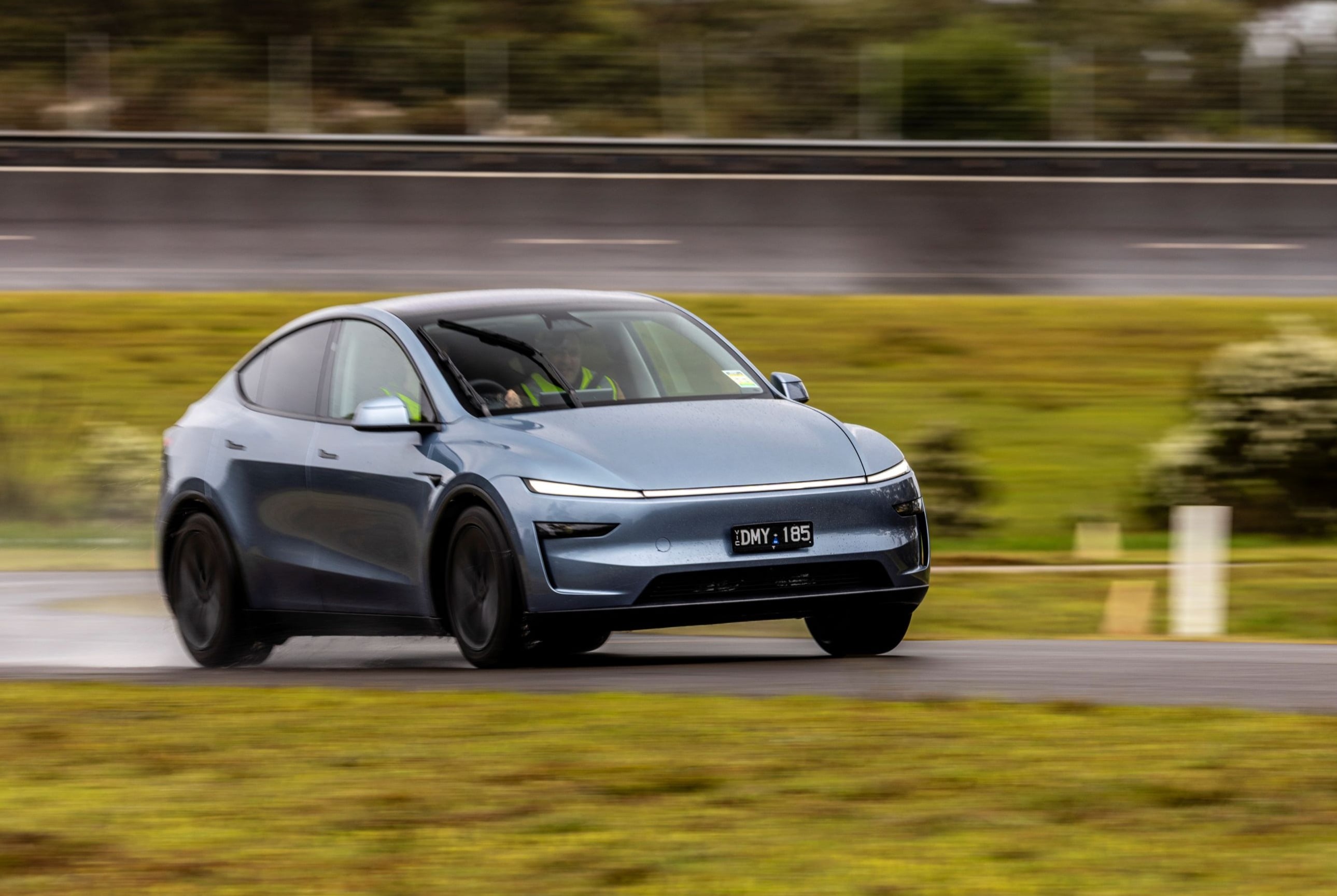
More than 100 cars are now on the banned list compiled by authorities in Victoria and NSW and the number is likely to grow considerably in the future. Some of the headliners on the naughty list are the Tesla Model Y (main, and below) and Model 3 Performance, BYD Shark 6 ute and the Kia EV6 and EV9 GTs, although even the relatively pedestrian and underwhelming Leapmotor C10.
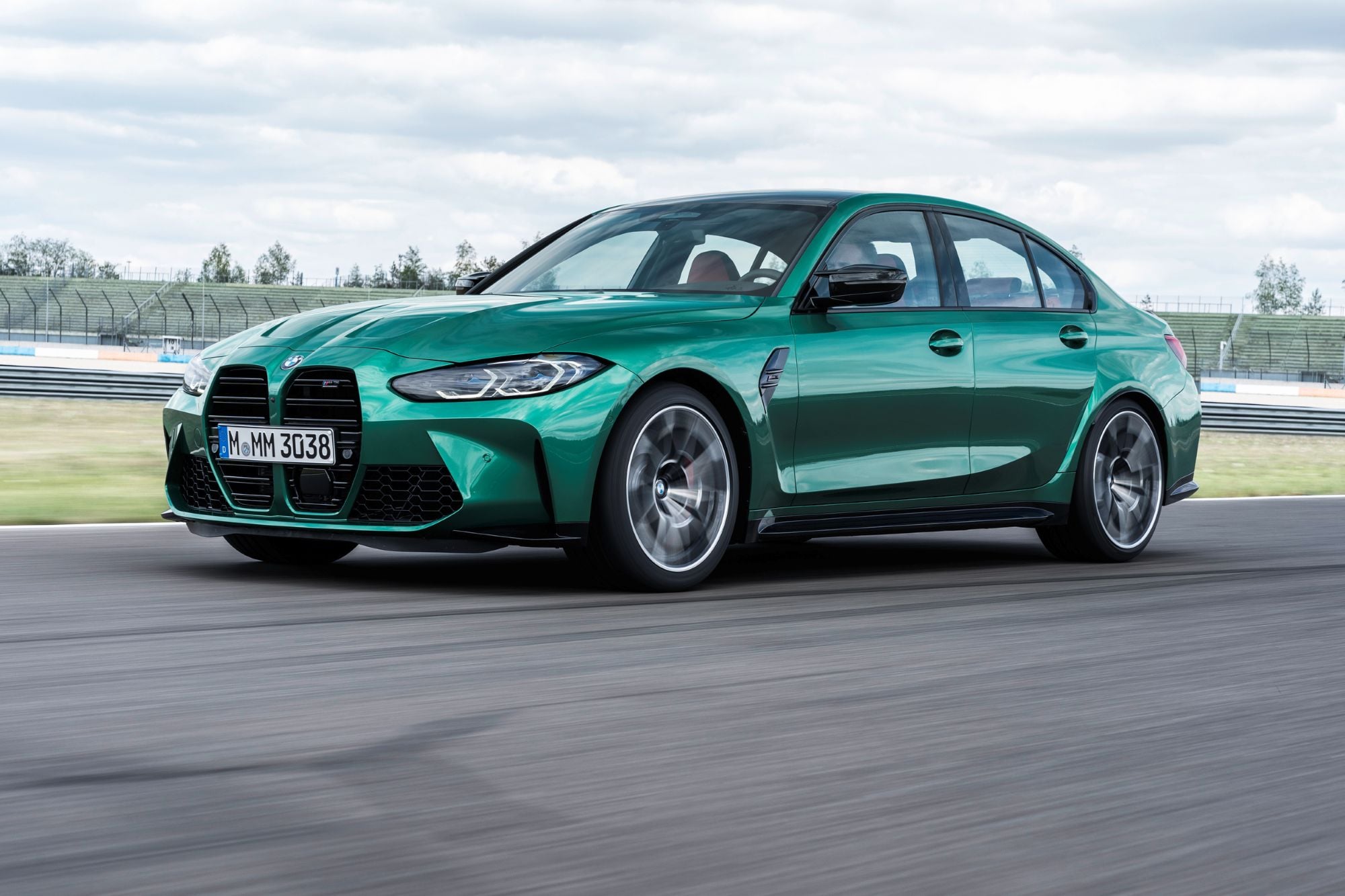
On the combustion front, excluding exotics from Ferrari and Lamborghini and the rest, no-go models for P-Platers including the Ford Mustang GT, Subaru WRX and BMW M3 (below).
But … There is a flaw for the future of the regulations, which are based on a power-to-weight formula.The key figure is 130 kiloWatts-per-tonne, used in both NSW and Victoria as a measure of an unsafe speed potential for P-platers. It’s a similar situation in South Australia and Queensland, but the limit only applies to P-Platers under the age of 25.
P-platers can drive any EV regardless of power in Western Australia, Tasmania, Northern Territory and the ACT. But the performance of EVs is more about their instant-on torque, which does not require the driver to be changing gears and revving the engine to its highest horsepower. They respond very rapidly to any push on the accelerator pedal, something that’s most obvious from a standing start but can also produce a jack-rabbit jump from medium speeds in all conditions.
In NSW, cars can also be added to the banned list if they have “other specifications or data suggesting that it is a high risk for novice drivers”. The philosophy in the state, and in general across Australia, according to the NSW Government’s website, is “high-performance vehicles have greater acceleration and power than other vehicles. The more power a vehicle’s engine has compared to its weight, the more acceleration it can deliver”.
Even the wording of the regulation is outdated, since EVs have an electric ‘motor’ and not a combustion ‘engine’. The EV threat is not as obvious as the challenge from high-performance petrol cars, since an ordinary family EV can often out-sprint a sporty two-door V8 coupe. But the instant zap of an EV can catch out any driver, not just an inexperienced one.
There is little research material so far on crashes and casualties, since EVs have been a slow burn in Australia – apart from the recent spike during the fuel crisis. The acceleration is breathtaking and addictive. Especially to impress friends.
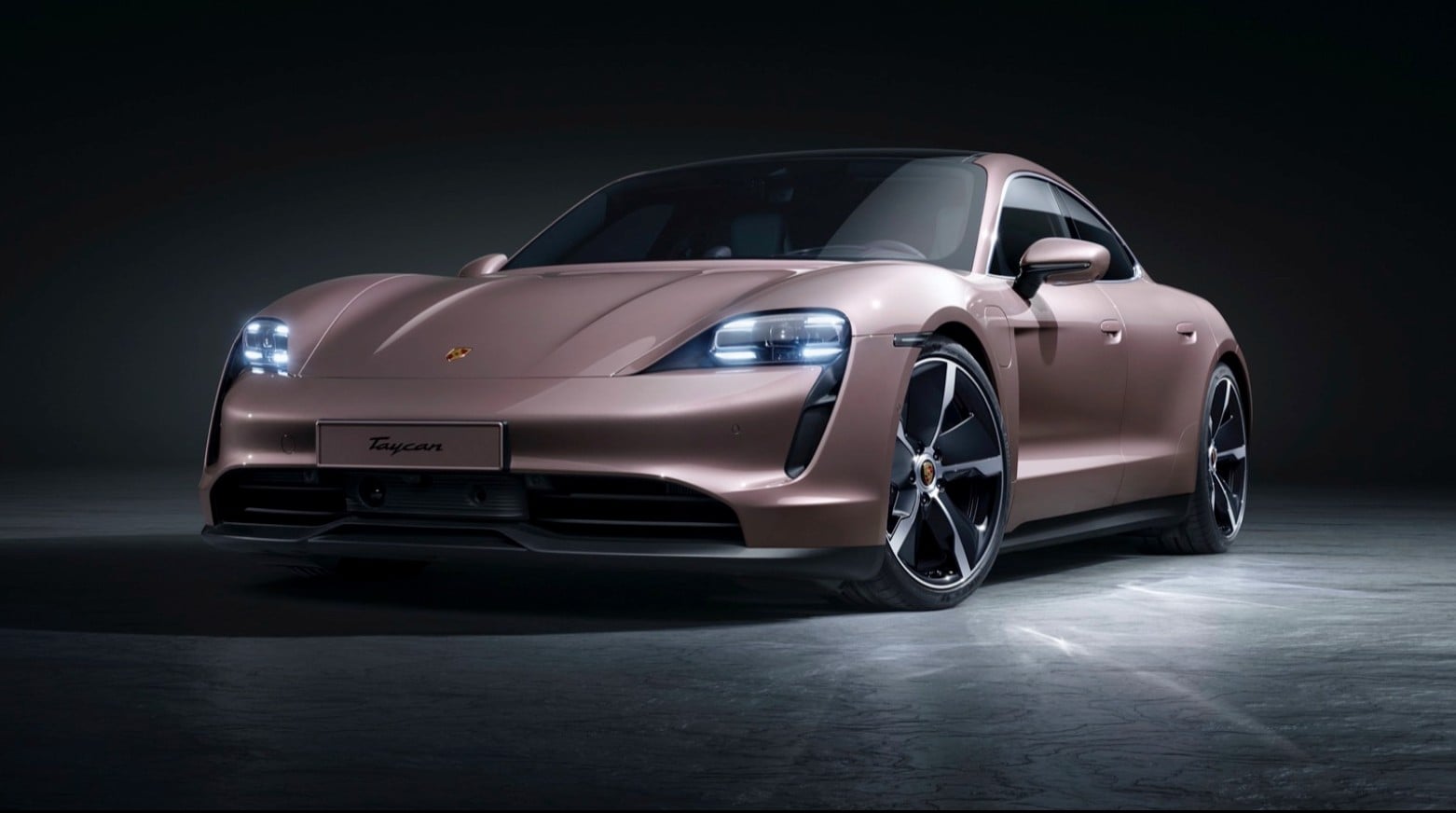
No-one who has ridden in a battery-powered Porsche Taycan (above), which rockets to 100km/h in less than three seconds, will forget the experience. It’s challenging and fun for the driver and a threat to the stomach for a passenger.
Clearly, P-plate drivers will face more EV restrictions as sales rise and the number of vehicles increases as dramatically as the introduction of ’new energy’ brands from China. As always, the authorities and regulations are chasing behind and the EV situation is just another reminder of the need for an Australia-wide approach to all road rules, not the current hodge-podge which doesn’t even have agreement on such basics as licensing and speed limits.
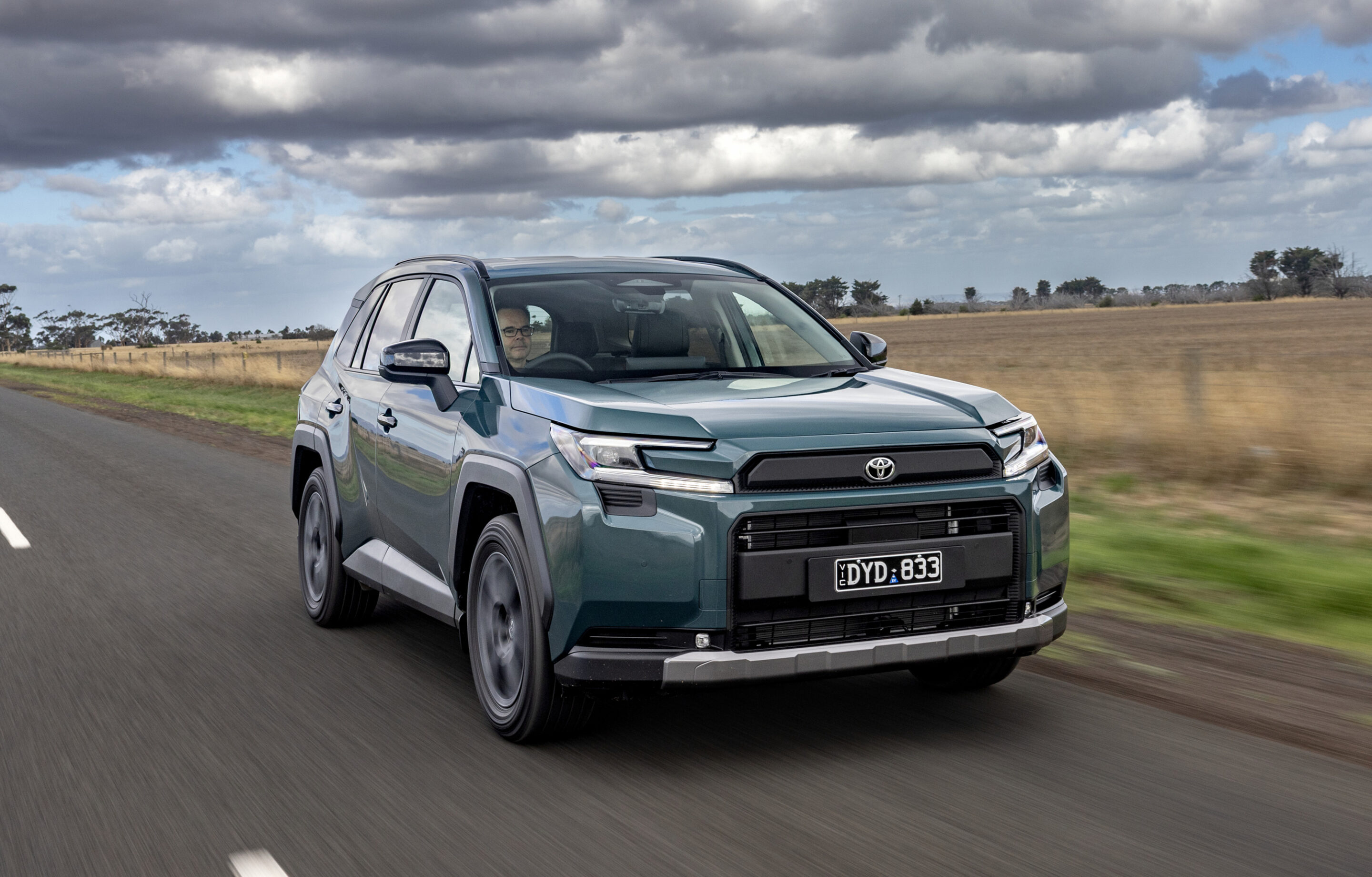
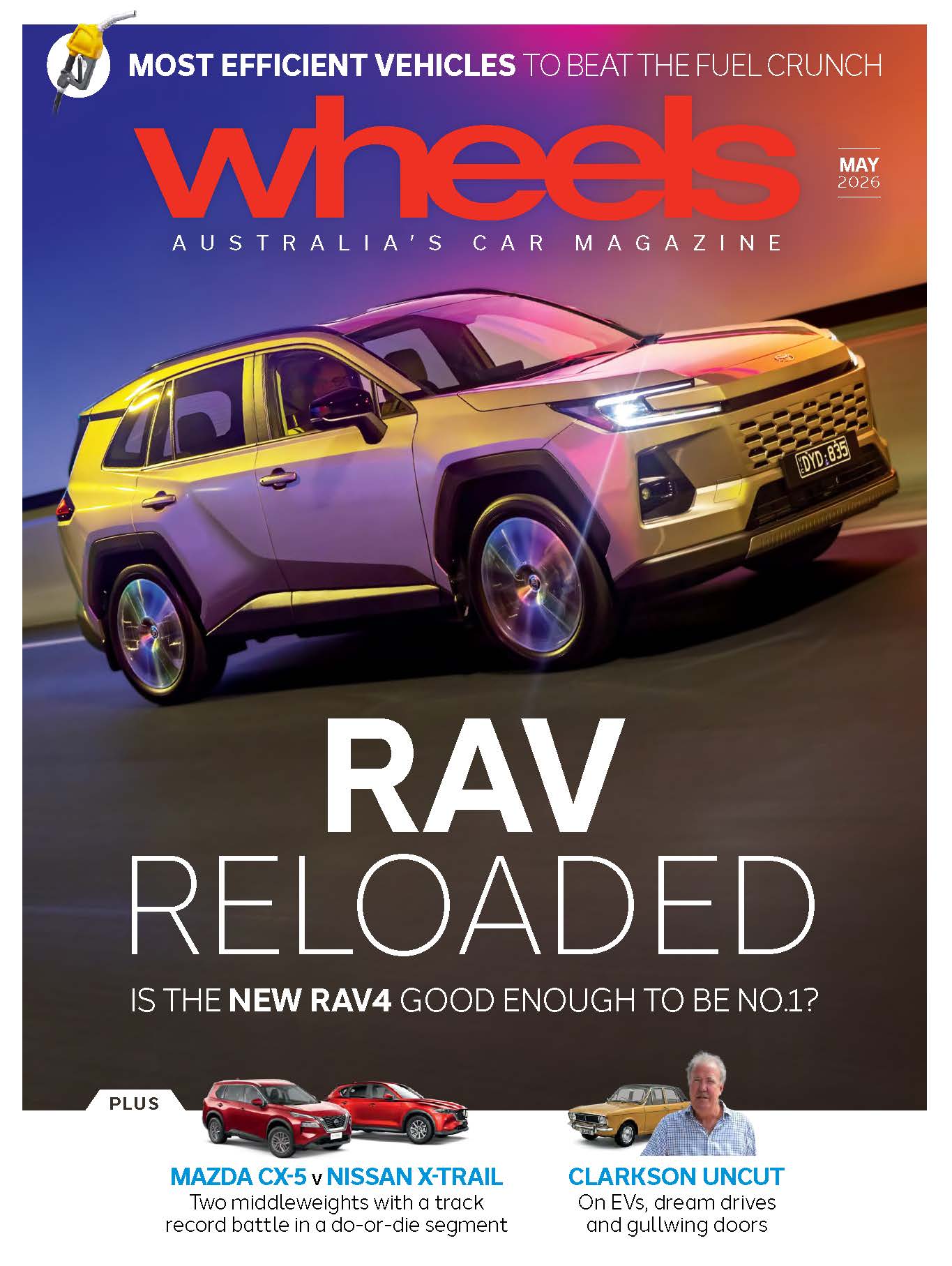
The May 2026 issue of Wheels arrives with one of the year’s biggest stories front and centre: the all-new 2026 Toyota RAV4. As the world’s best-selling SUV evolves once more, we dive deep into what’s changed, what hasn’t, and whether this latest iteration justifies the hype in our comprehensive First Drive. We also explore its remarkable journey in our RAV4 Now and Then feature story, tracing its transformation from quirky soft-roader to global phenomenon.
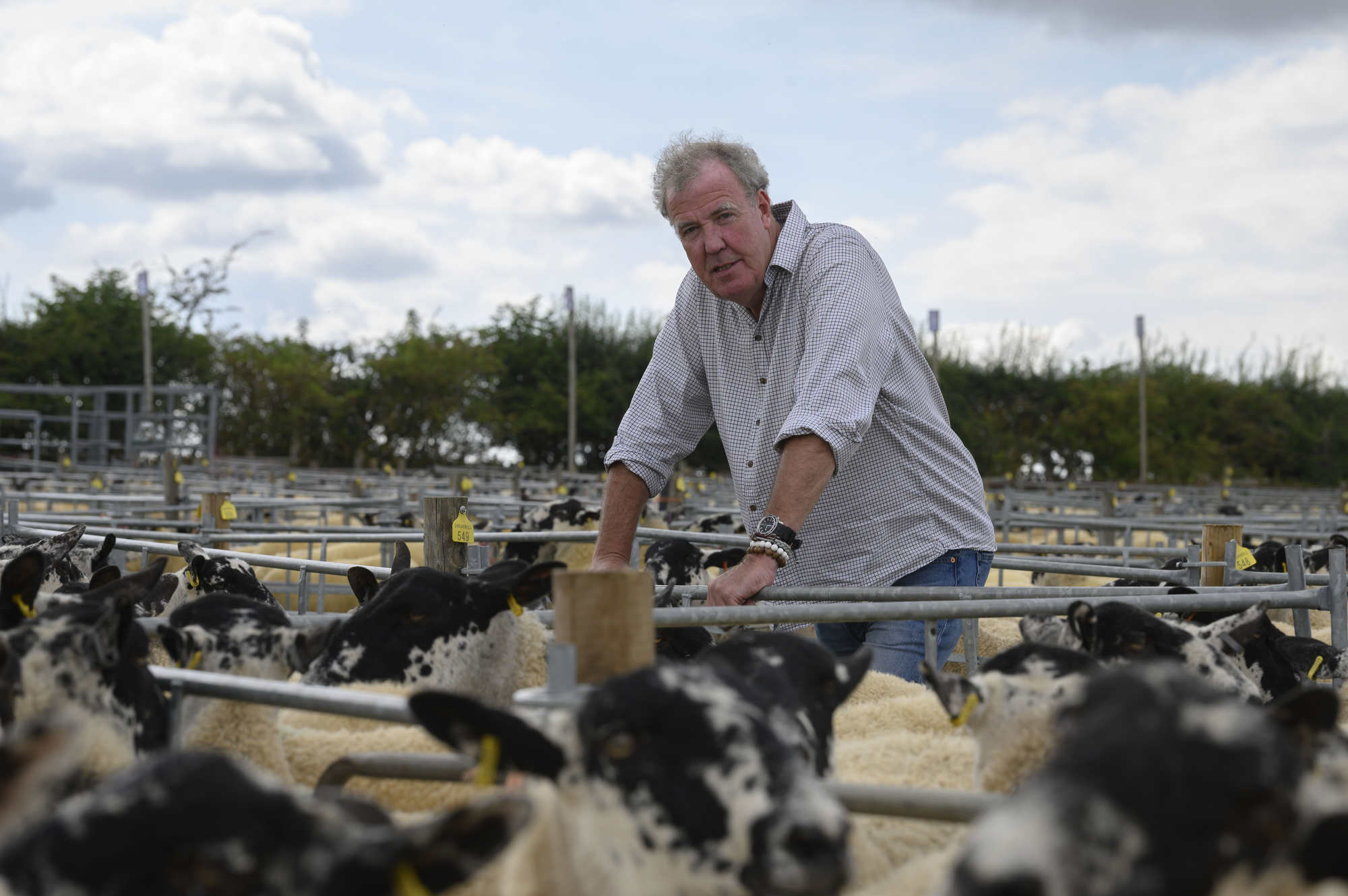
This month’s Wheels Interview features none other than Jeremy Clarkson. The famously sardonic presenter, writer and farmer reflects on a lifetime immersed in cars, from his eclectic personal collection to life on Diddly Squat Farm, as featured in his latest show Clarkson’s Farm. In a revealing conversation, Clarkson explains why he’s fallen out of love with modern car reviews and what still excites him about motoring today.
Our Fuel Busters special tackles the realities of rising fuel costs, rounding up the most efficient vehicles for an increasingly oil-conscious world. If performance and practicality are more your speed, don’t miss our hatchback showdown, where the Kia K4, Volkswagen Golf and Mazda 3 go head-to-head in a fiercely contested segment.
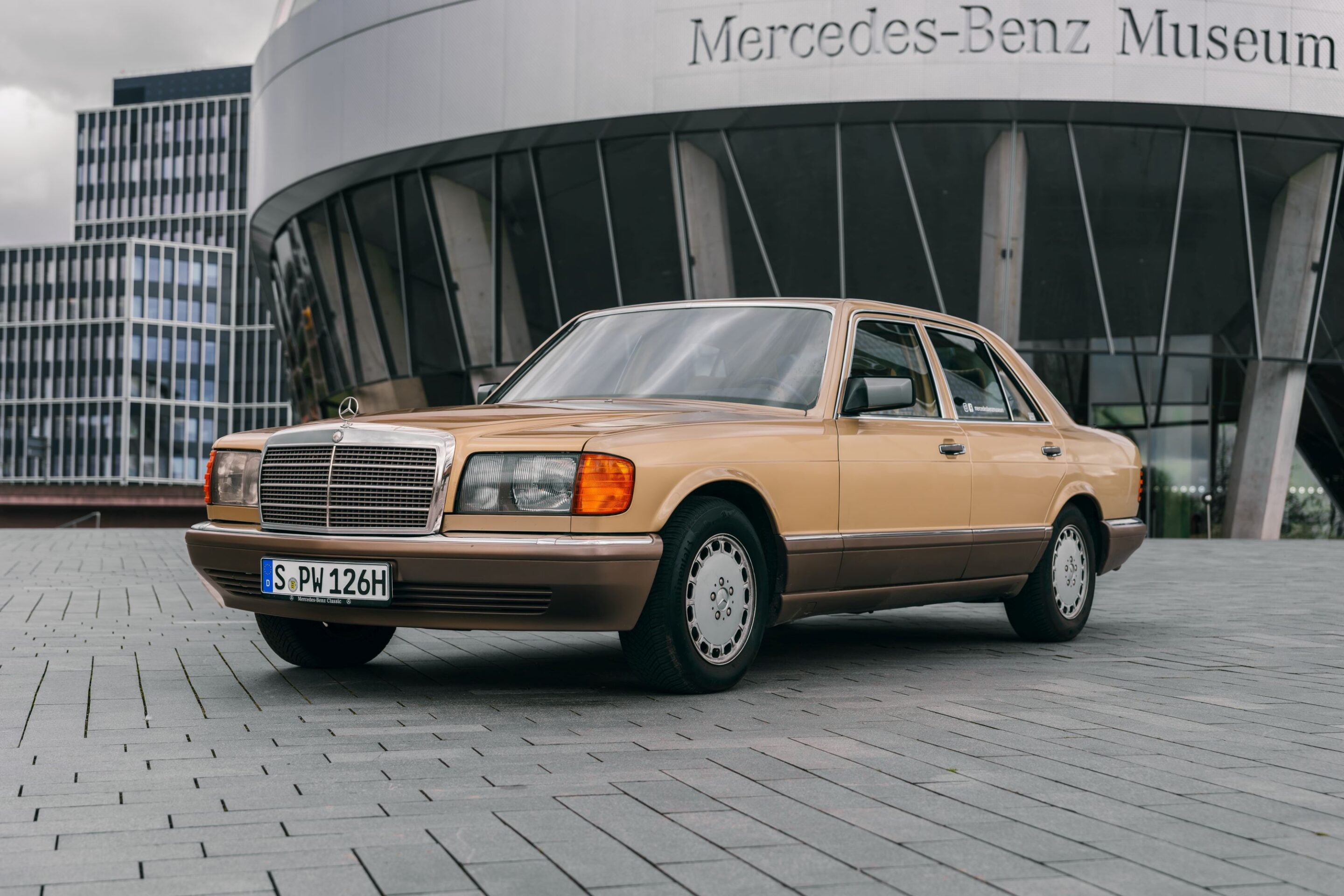
SUV buyers are also well served, with a detailed comparison between the Nissan X-Trail and Mazda CX-5, questioning whether the family favourites can still hold their ground. Meanwhile, our always popular Modern Classic section sees Rob Margeit in Germany revisiting the Mercedes-Benz S-Class (W126), Bruno Sacco’s timeless masterpiece that defined luxury for a generation.
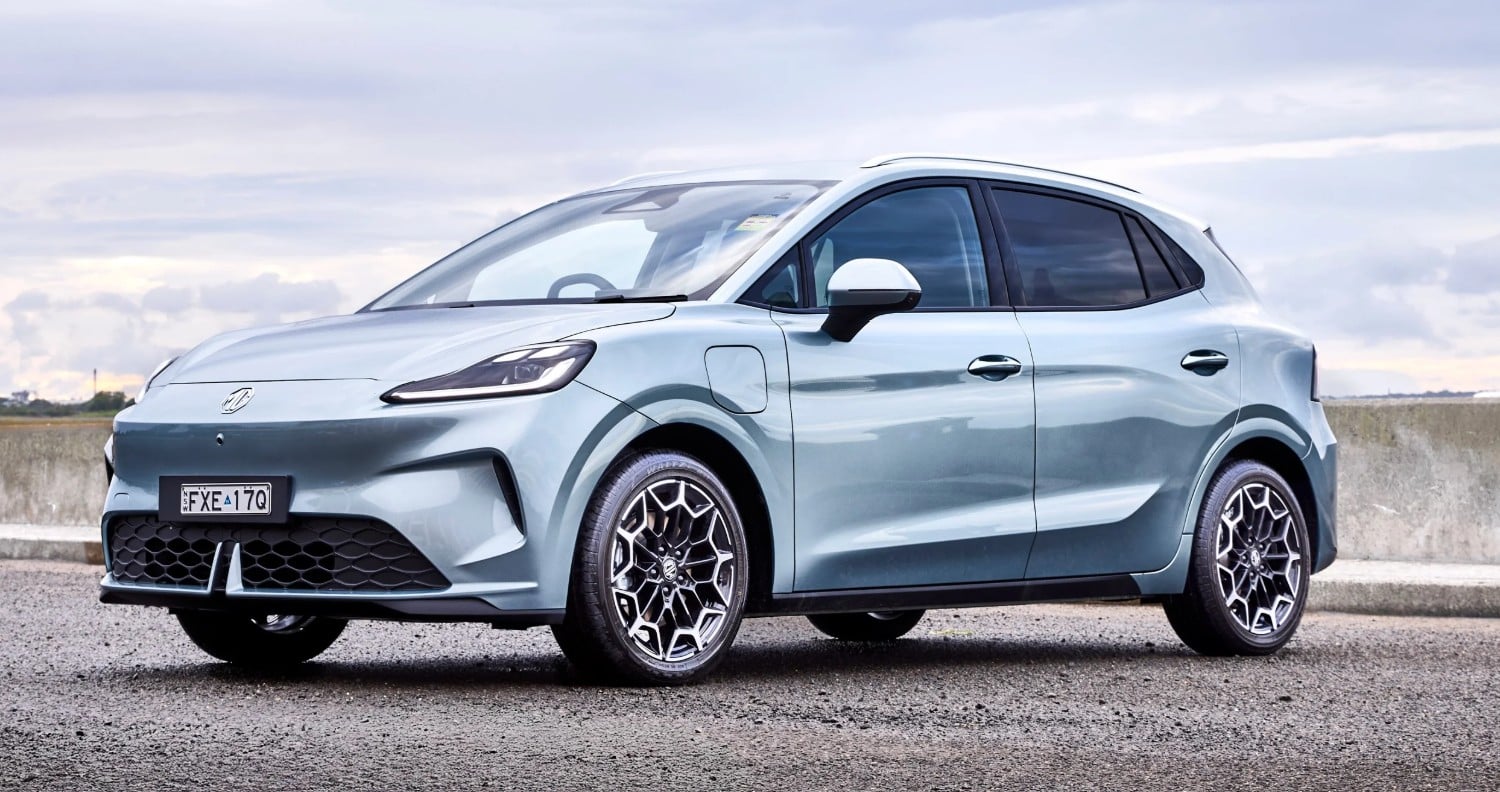
In our regular First Drives section, Wheels takes the wheel of the sharply priced MG4 Urban EV, the Mercedes-Benz GLC Electric, plus Chery’s long-range Tiggo 9 Super Hybrid and the Volvo-related Zeekr X.
Up front, Dashboard brings you highlights from the Melbourne Motor Show and examines why Toyota is holding back on a fully electric RAV4. Our columnists weigh in on politics, science and culture, while Marketplace tracks the surge in EV sales amid the fuel crisis.
Rounding out the issue, Garage, Buyer’s Guide, and Wayback Machine ensure there’s something for every enthusiast – past, present and future.
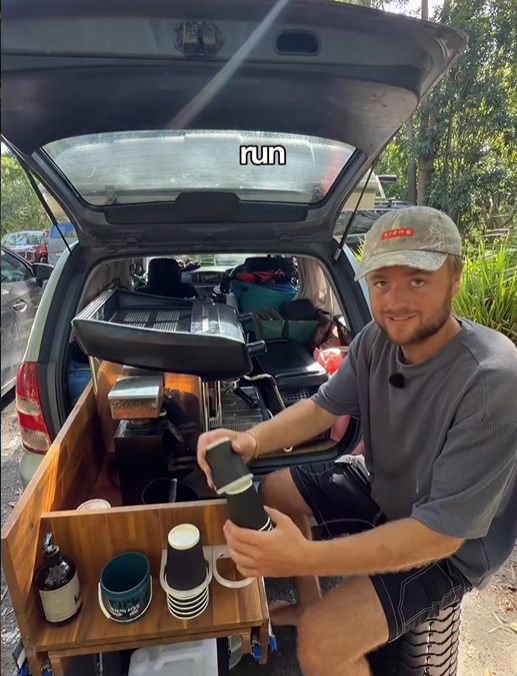
A 24-year-old Victorian has found an unconventional way to fund his lap of Australia – by transforming his $2000 Toyota Corolla into a travelling coffee shop.
Jonny Charles set off earlier this year with a simple ambition: to “work and surf” his way around the country. But with limited savings, he needed a way to make money on the move – so he built one in the back of his car.
Now operating what he calls “Cafe Corolla”, Jonny is selling coffee to strangers he meets along the road, using the earnings to cover everyday expenses like fuel and food.
Speaking to Yahoo News Australia, Jonny said the idea stemmed from his passion for coffee and a desire to connect with people while travelling.
“It’s purely just to help me get by and pay for my next load of fuel,” he told Yahoo News Australia. “Right now, I’m comfortable if it’s just paying off the day to day.”
Jonny hasn’t revealed exactly how much he’s made so far, but says it’s been enough to sustain the journey, covering petrol and meals as he goes. Just two months into the trip, he and his mate are steadily making their way up Australia’s east coast.
Before leaving his hometown of Inverloch in February, Jonny invested heavily in the setup. Despite buying the Corolla for just $2000 – a 2002 Toyota Corolla with 285,000kms on it that he had used for five years as a delivery driver – he spent around $4000 converting it into a functioning coffee station, including $2500 on a commercial-grade coffee machine.
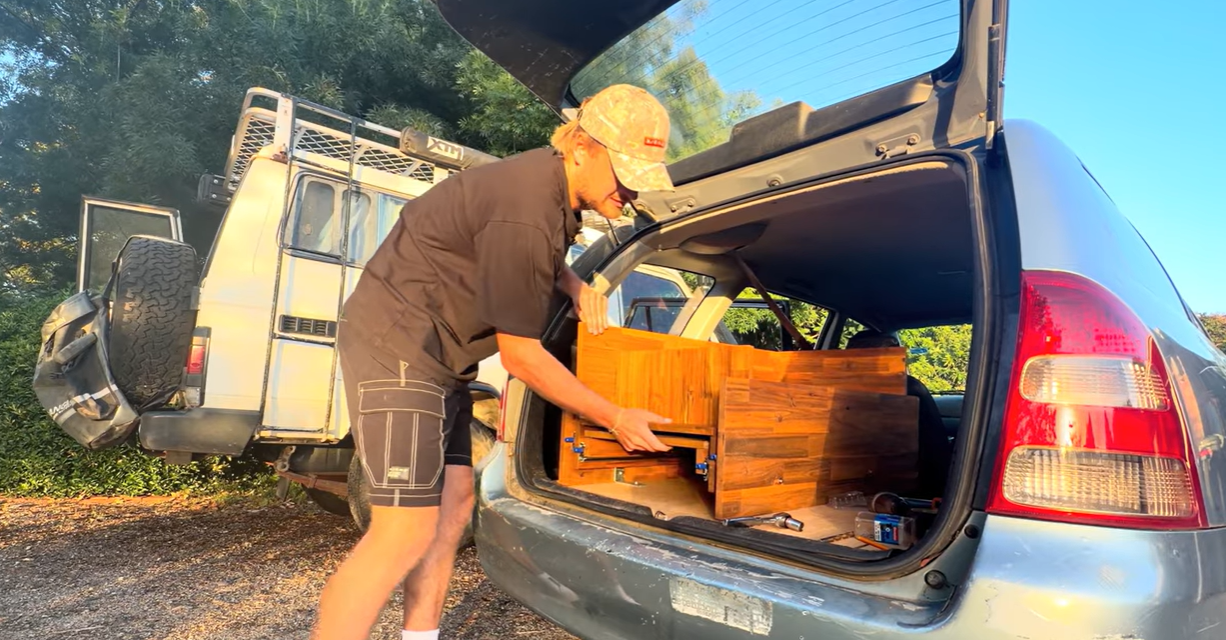
“The coffee machine is worth than more than the car,” he says on his Youtube channel documenting the transformation.
With an engineering background, Jonny built much of the fit-out himself using secondhand materials sourced from his shed. While he hasn’t yet recouped the cost of the setup, he’s hopeful it will eventually pay off.
The plan is to continue north, with Darwin firmly on the itinerary – despite the challenges.
“It’s probably my favourite place in Australia, but it’s pretty remote,” he said. “I might not get many [coffee] sales,” he added with a laugh.
Jonny has been documenting the journey on social media channels including TikTok, Instagram and Youtube, though his approach to travel remains spontaneous. Without council permits, he’s limited in where he can sell coffee, often relying on private property access.
Still, the experience has been rewarding.
“It’s been awesome. And it’s been really fun,” he told Yahoo News Australia.
BYD’s third-generation Yuan Plus recently broke cover at the 2026 Beijing Auto Show with a major transformation – and it’s now confirmed for New Zealand as the BYD Atto 5, according to AutoTrader NZ.
Set to arrive in 2027, the new model represents a significant step up from today’s Atto 3, not just in name but in size, performance and technology. While BYD has yet to lock in Australian plans, the Kiwi market will be among the first outside China to receive the next-generation electric SUV.
The all-new model represents a clean-sheet evolution of BYD’s popular small electric SUV. According to the outlet, the vehicle will replace the current Atto 3 in the Kiwi line-up, with the new name reflecting its move into a larger, more premium segment.
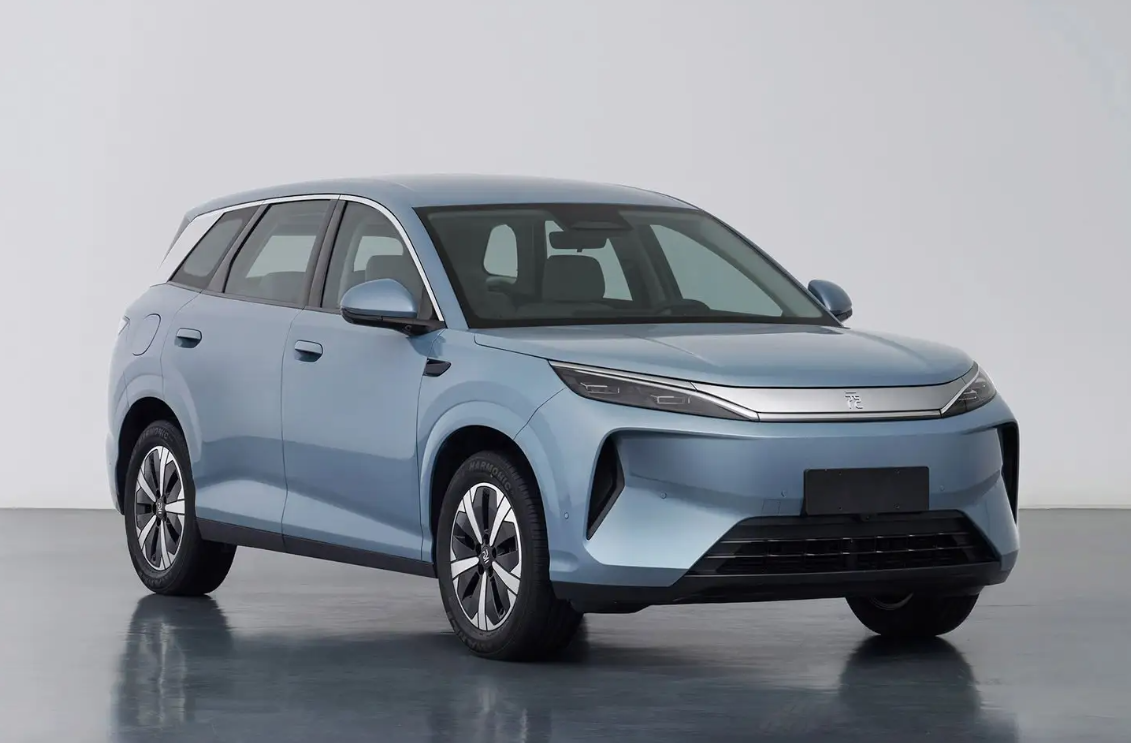
That step up is immediately evident in the dimensions. The new model is approximately 210mm longer, 50mm wider and rides on a wheelbase stretched by 50mm, giving it a noticeably bigger footprint and improved cabin space. Overall measurements are reported at around 4665mm long, 1895mm wide and 2770mm between the axles.
Under the skin, the Yuan Plus adopts a rear-wheel-drive architecture – a significant departure from the front-driven Atto 3 – paired with outputs of up to 200kW or 240kW, depending on variant. The platform also introduces an 800-volt electrical system, enabling one of its biggest headlines: ultra-rapid charging.
BYD claims its new Flash Charging system can take the battery from 10 to 70 per cent in as little as five minutes under ideal conditions, or close to a full charge in under 10 minutes. Energy is supplied by a second-generation Blade battery, offered in 57.5kWh and 68.5kWh capacities with claimed driving ranges of 540km and 630km (CLTC) respectively.
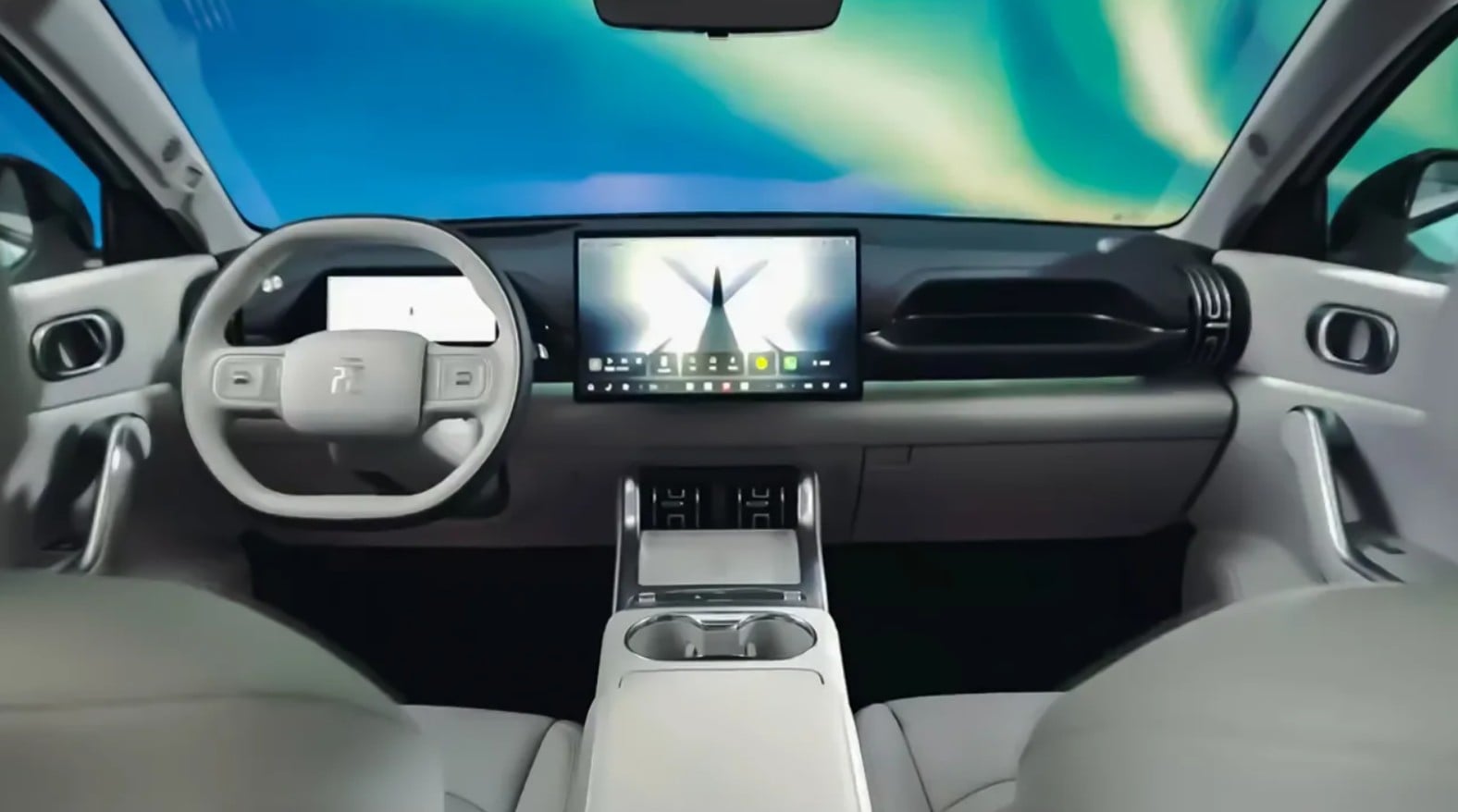
Inside, the cabin takes a step up in both technology and presentation, with a floating infotainment touchscreen, head-up display, two-spoke steering wheel and a premium 16-speaker audio system. Twin wireless charging pads, a heated-and-cooled centre console and a power tailgate also feature.
While Chinese-market versions will offer BYD’s LiDAR-based DiPilot 300 driver assistance system, this advanced hardware is unlikely to be fitted to New Zealand-delivered cars.
BYD Australia has yet to confirm plans for the new model locally. For now, the Atto 3 will continue in Australia, though the Atto 5’s positioning suggests it could eventually slot between existing models should it make the jump across the Tasman.
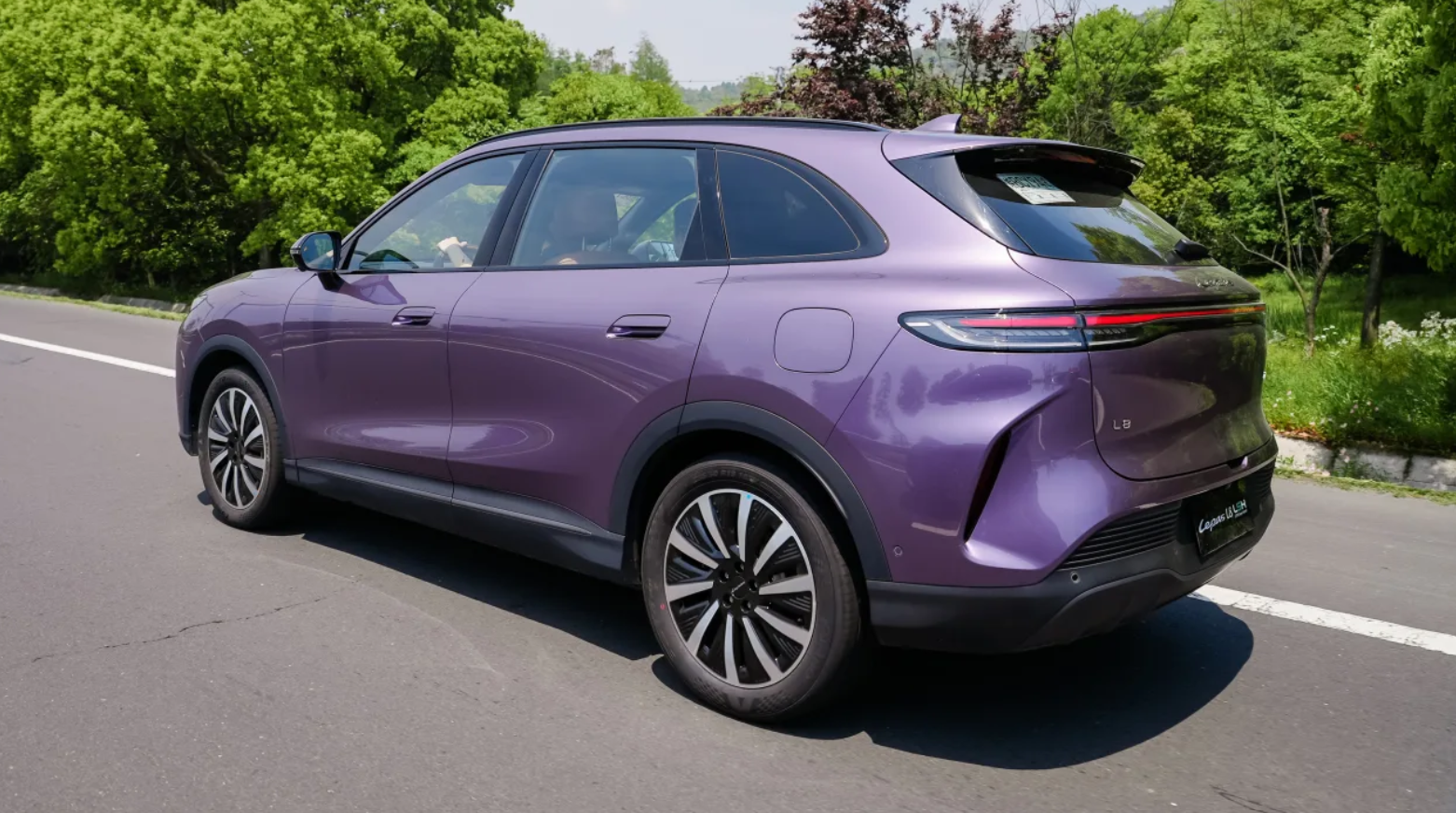
The Lepas L8 arrives as the first model from Chery’s new premium-leaning sub-brand, aiming to take on established mid-size SUVs with a blend of electrification, space and technology. On first impressions, it’s a solid effort – but one that still has some ground to cover.
Measuring close to 4.7 metres in length, the L8 sits squarely in the heart of the popular mid-size SUV segment. It’s offered exclusively as a plug-in hybrid, combining a 1.5-litre petrol engine with an electric motor and battery pack. Total output is around 208kW, delivering brisk initial acceleration and a generally smooth driving experience.
Unlike some rivals, the system behaves more like a range-extender setup, with the electric motor doing most of the work. Around town, that results in seamless progress and minimal drivetrain interruption. However, push harder or run the battery low, and the petrol engine steps in more noticeably, sometimes revving independently of road speed. It’s refined enough, but the disconnect can feel unusual.
The L8 is expected to offer roughly 90km of electric-only driving range, with strong overall efficiency once the hybrid system is in play. Fast charging capability also adds to its everyday usability.
On the road, the L8 prioritises comfort over engagement. Ride quality is generally compliant, but the car’s weight makes itself known through corners, where body control and steering precision fall short of key European competitors. The steering feels light and lacks feedback, and there’s some inconsistency in braking response due to regenerative blending.
Inside, the L8 makes a stronger case for itself. The cabin is well presented, with soft-touch materials and a design that leans toward premium rivals. A large central touchscreen dominates the dashboard and is responsive in use, while physical climate controls remain – a welcome inclusion.
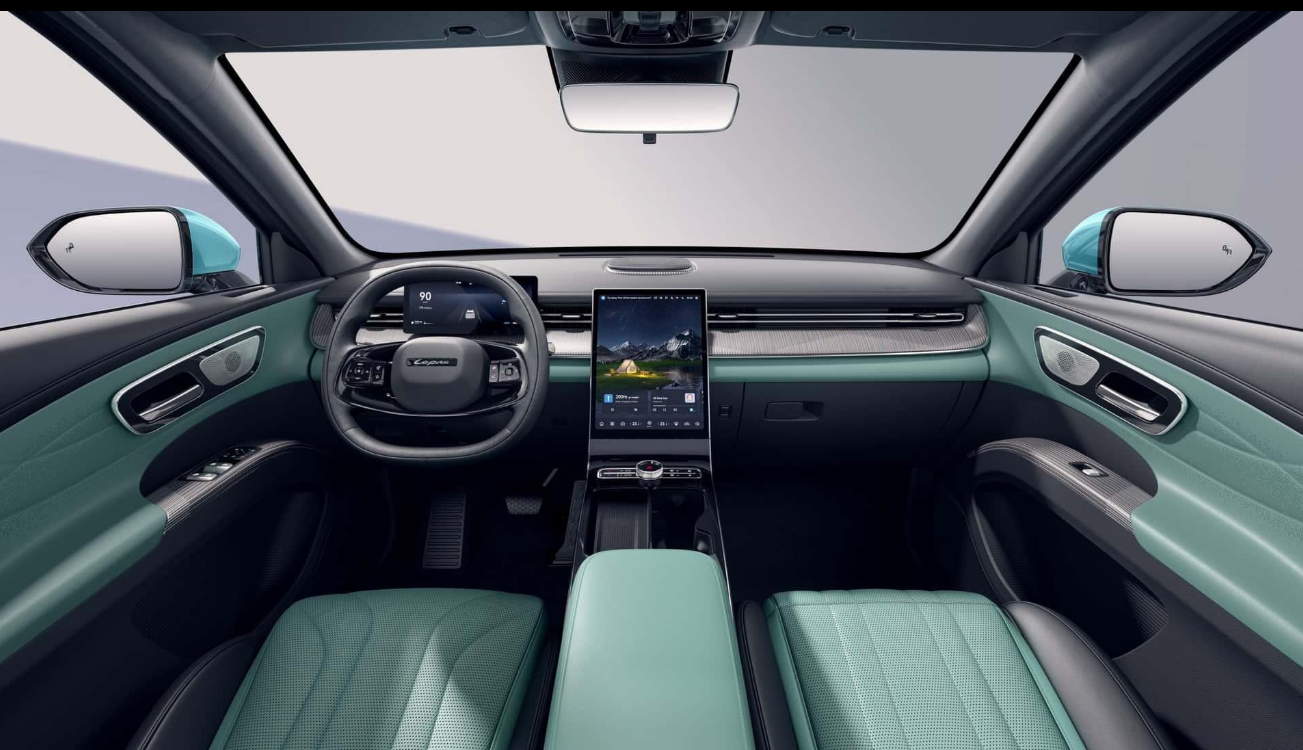
Space is a standout. Rear passengers benefit from generous legroom, and while boot capacity isn’t class-leading due to battery packaging, it remains practical for family duties.
Overall, the Lepas L8 shows promise as a comfortable, tech-heavy SUV with strong efficiency credentials. But to truly compete with established players, it will likely need sharper dynamics – and competitive pricing – when it eventually reaches markets like Australia.
Volkswagen unveiled its largest and most ambitious SUV yet, the ID.Era 9X, at the 2026 Beijing Auto Show, signalling a renewed push into China’s competitive high-end market.
Developed in partnership with SAIC, the Shanghai-based parent company of MG, the ID.Era 9X is a full-size, three-row SUV stretching beyond five metres in length. While it has been designed primarily for Chinese buyers, the model also offers insight into technologies and design features that could influence future Volkswagen models globally.
Inside, the focus is firmly on digital integration and minimalist design. One of the most notable features is a series of hidden displays embedded within interior trim. The main driver display, for example, is seamlessly integrated into the dashboard’s wood finish and disappears when not in use. Similar concealed screens appear in the rear doors, allowing passengers to control seat adjustments, lighting and entertainment functions without disrupting the clean cabin aesthetic.
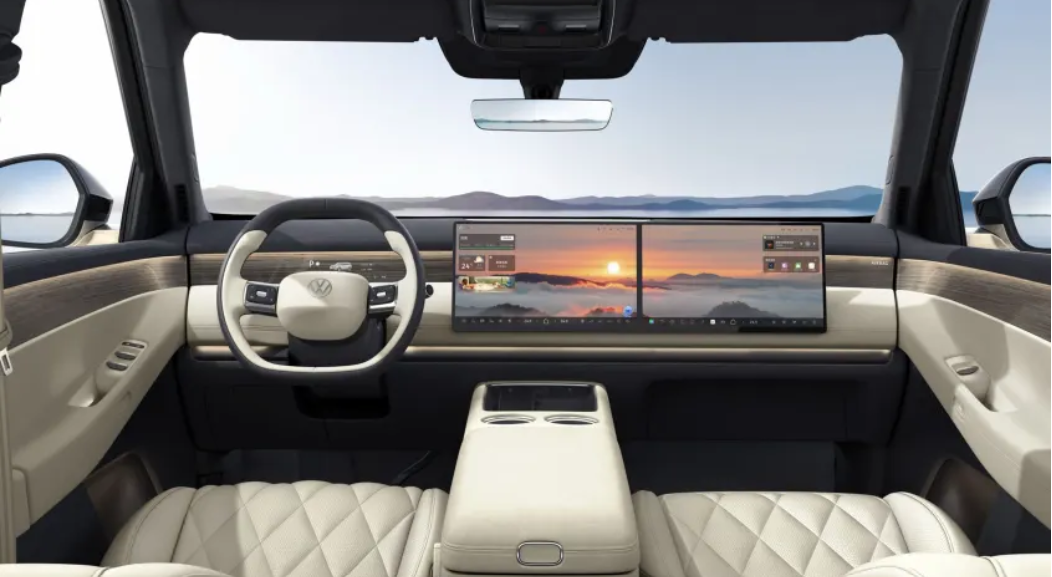
Under the skin, the ID.Era 9X adopts a range-extender hybrid system rather than a fully electric setup. It combines a 1.5-litre turbocharged petrol engine with one or two electric motors, depending on the configuration. Two battery sizes are offered, including a large 65.2kWh pack capable of delivering an electric driving range of up to 400km before the petrol engine is required.
When operating as a hybrid, total driving range is claimed to approach 1600km, highlighting the system’s long-distance capability. The SUV also features an 800-volt electrical architecture, enabling rapid charging from 10 to 80 per cent in around 17 minutes.
Performance is equally strong, with outputs of up to 380kW in all-wheel-drive form. However, the use of a range-extender system may present challenges in markets with stricter emissions standards, limiting its broader global rollout.
Although not confirmed for Australia or Europe, the ID.Era 9X provides a preview of Volkswagen’s future direction, particularly as the brand prepares to introduce a new flagship SUV later this decade on its next-generation SSP platform.
