
By the end of 2014, Audi will have revamped almost the entire RS line-up.
In addition to the familiar TT RS coupe and roadster, the marque is readying the 2010 RS5, the 2011 RS4 Avant, the 2013 RS7 Sportback and the 2014 RS6 Avant.
And, fingers crossed, an RS3 Sportback. With the exception of the RS4/RS5’s 331kW 4.2-litre V8, all RS models are, or will be, powered by turbocharged engines.Why exactly did quattro GmbH opt for a high-revving normally-aspirated direct-injection eight-cylinder unit instead of a brand-new twin-turbo 3.0-litre V6? Stephan Reil, R&D chief of all Audi RS and R models, explains that “the high-revving V8 is better suited for this particular vehicle than the twin-turbo V6 we used for the first-generation RS4.
Considering the extra plumbing, exhaust complexity system and additional cooling, the weight penalty of the normally aspirated V8 is less than 20kg.
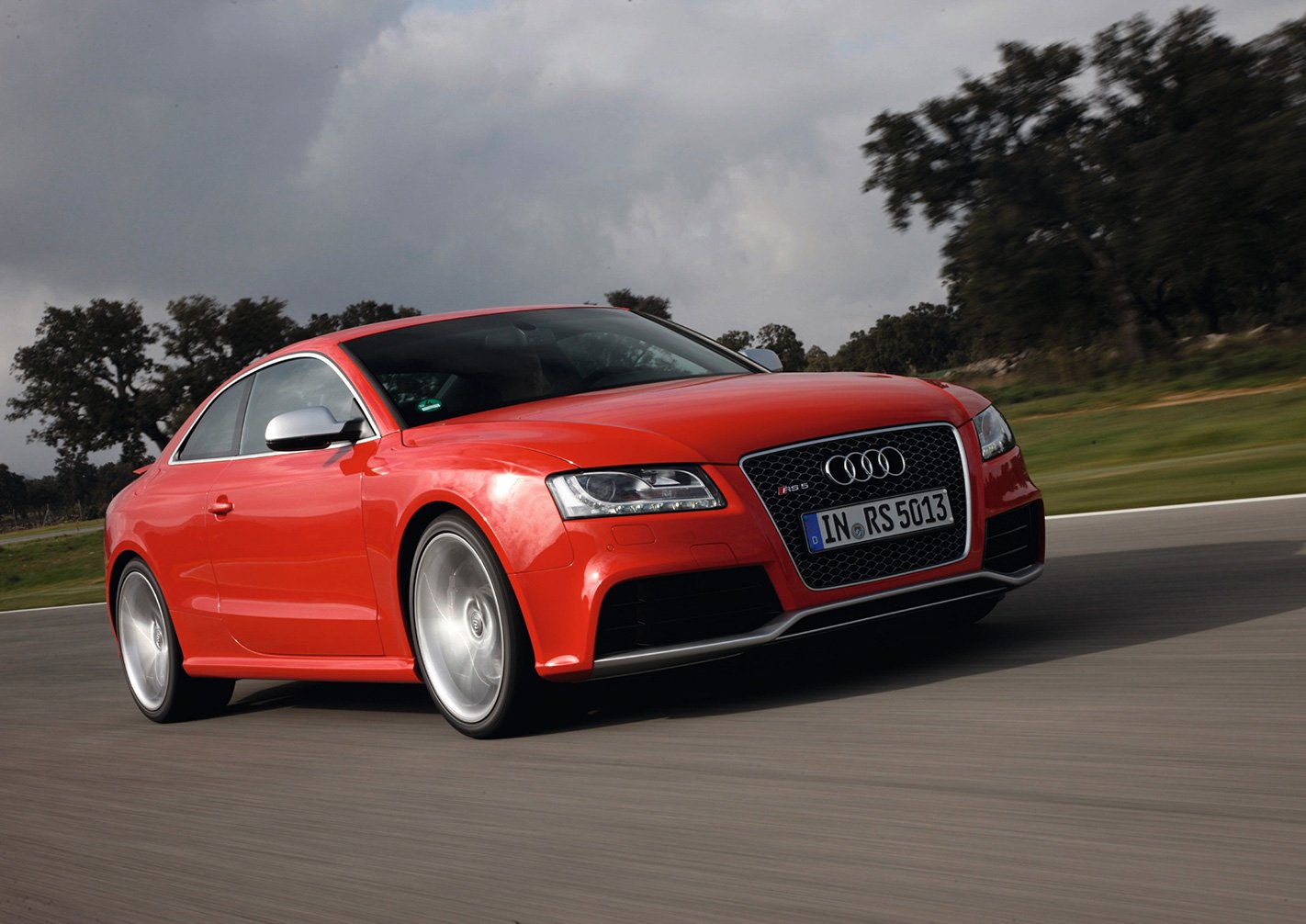
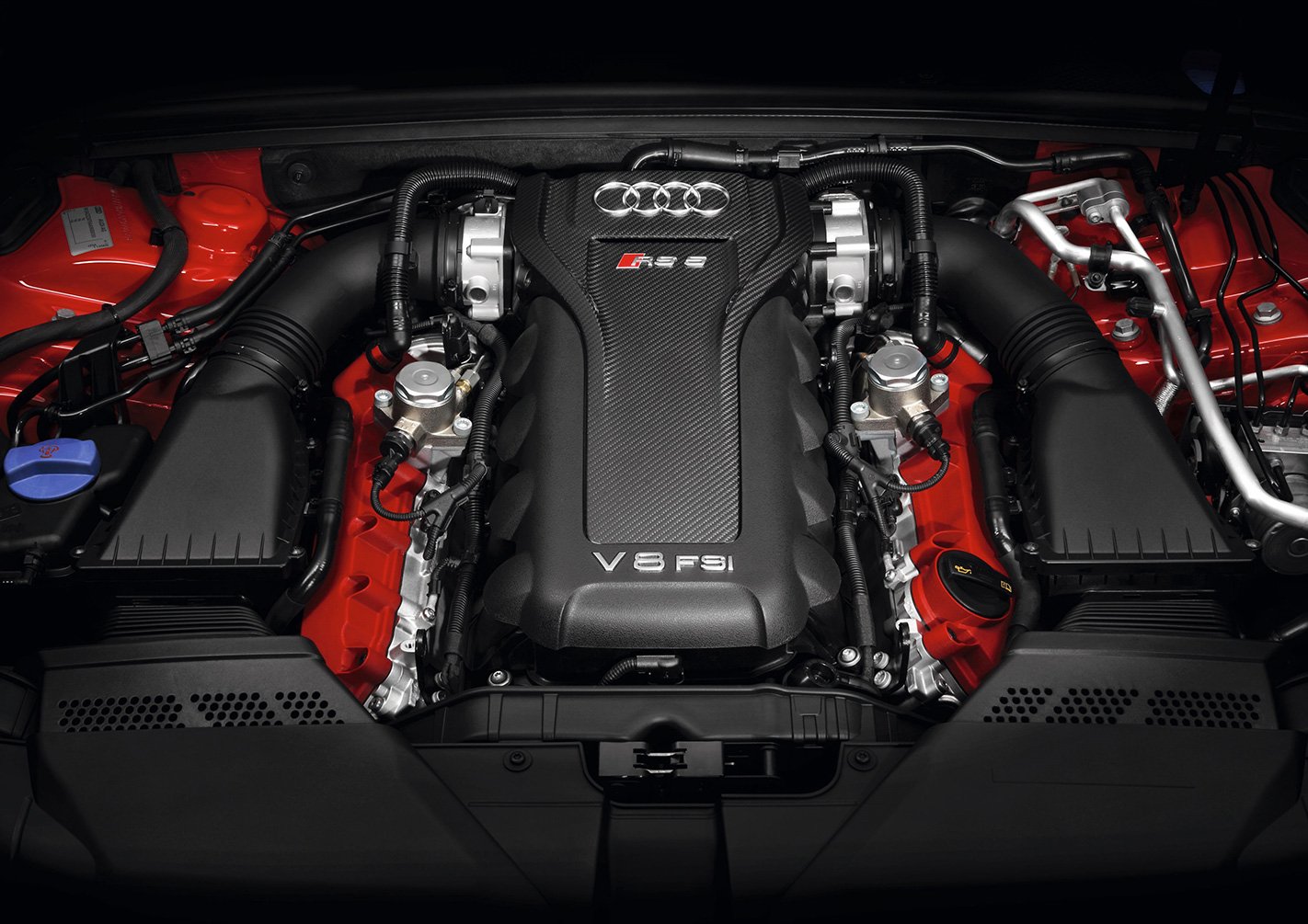
Closely related to the R8 5.2’s V10, the 4163cc FSI V8 delivers its 331kW at 8250rpm, up 22kW on the old RS4. Although the redline was pushed up to 8500rpm, the maximum torque – an identical 430Nm – is now available between a less-frantic 4000 and 6000rpm.
Engineering highlights include a double-barrel intake system with tumble blades, four adjustable overhead camshafts, common rail fuel injection and a switchable dual-chamber exhaust.For improved efficiency, Audi fitted low-friction pistons, a lightweight valvetrain, a belt-driven on-demand oil pump and a brake energy regeneration system which feeds the alternator. Claimed average fuel consumption is 10.8L/100km – substantially more economical than the regular (265kW) S5’s 12.1L/100km – but push hard, as we did, and thirst skyrockets to 20.Acceleration-wise, the RS5 nails triple figures in 4.5sec, just 0.1sec quicker than the much lighter 250kW TT RS. But, importantly, it’s 0.4sec quicker than BMW’s M3. In Europe, top speed is limited to 250km/h, unless you pay extra and Audi will raise it to 280km/h.
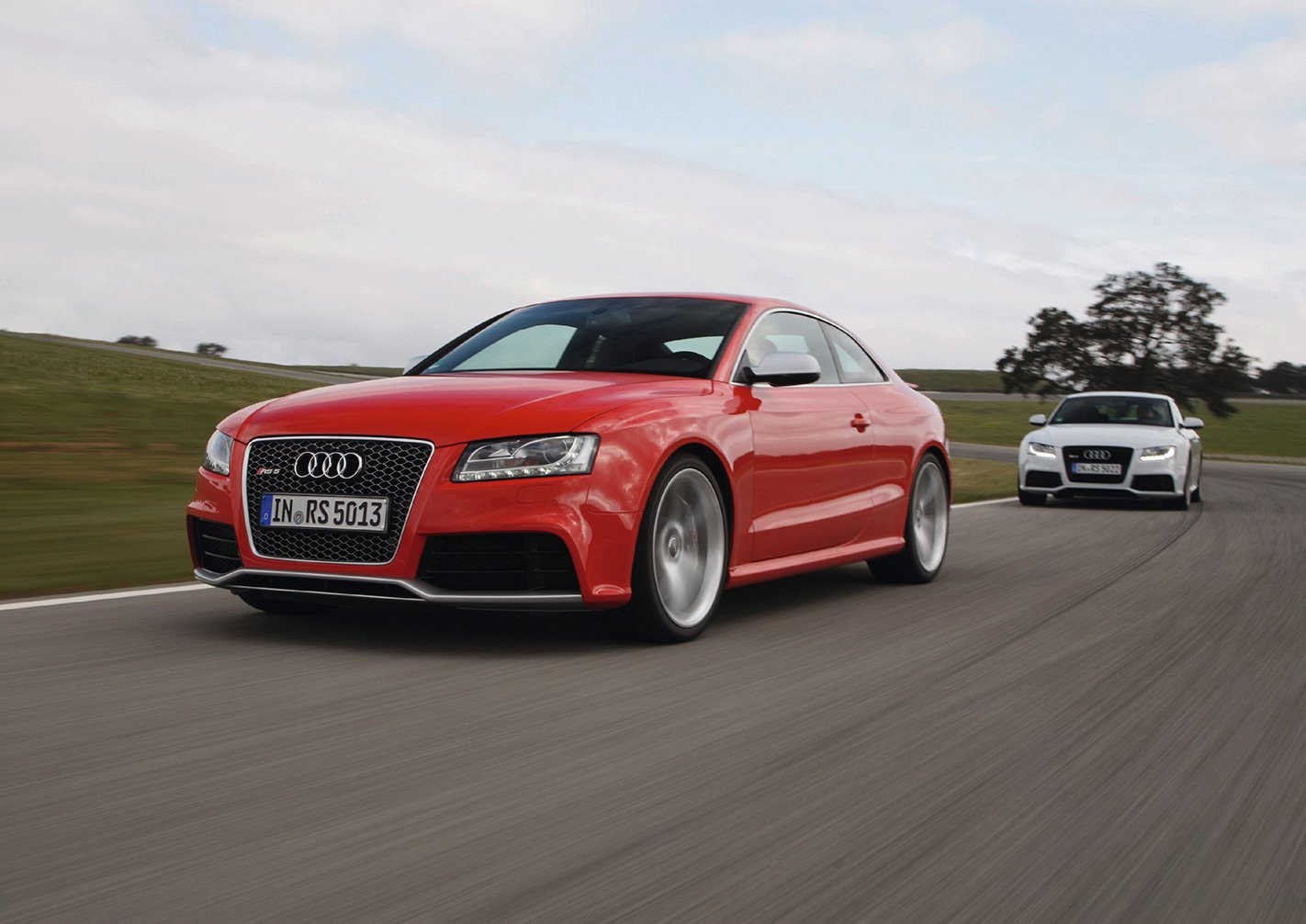
The RS5 debuts the next evolution of quattro all-wheel drive, with three new ingredients that are claimed to make all the difference. First up is a lightweight self-locking crown-wheel centre differential, directing torque up to 70 percent forward or 85 percent rearward, with a static 40:60 split. Next is Audi’s “electronic torque vectoring” function, which, at adhesion’s limit, can decelerate the unloaded inside wheel(s) on the limits, aiding turn-in.Lastly is a new optional sport rear differential, which offers improved poise. The combined result is a new degree of cornering flatness; very little oversteer, even less understeer, and sure-footed all-weather traction. Too boring? Dialling up ESP Sport provides a more emphatic throttle-steer effect.
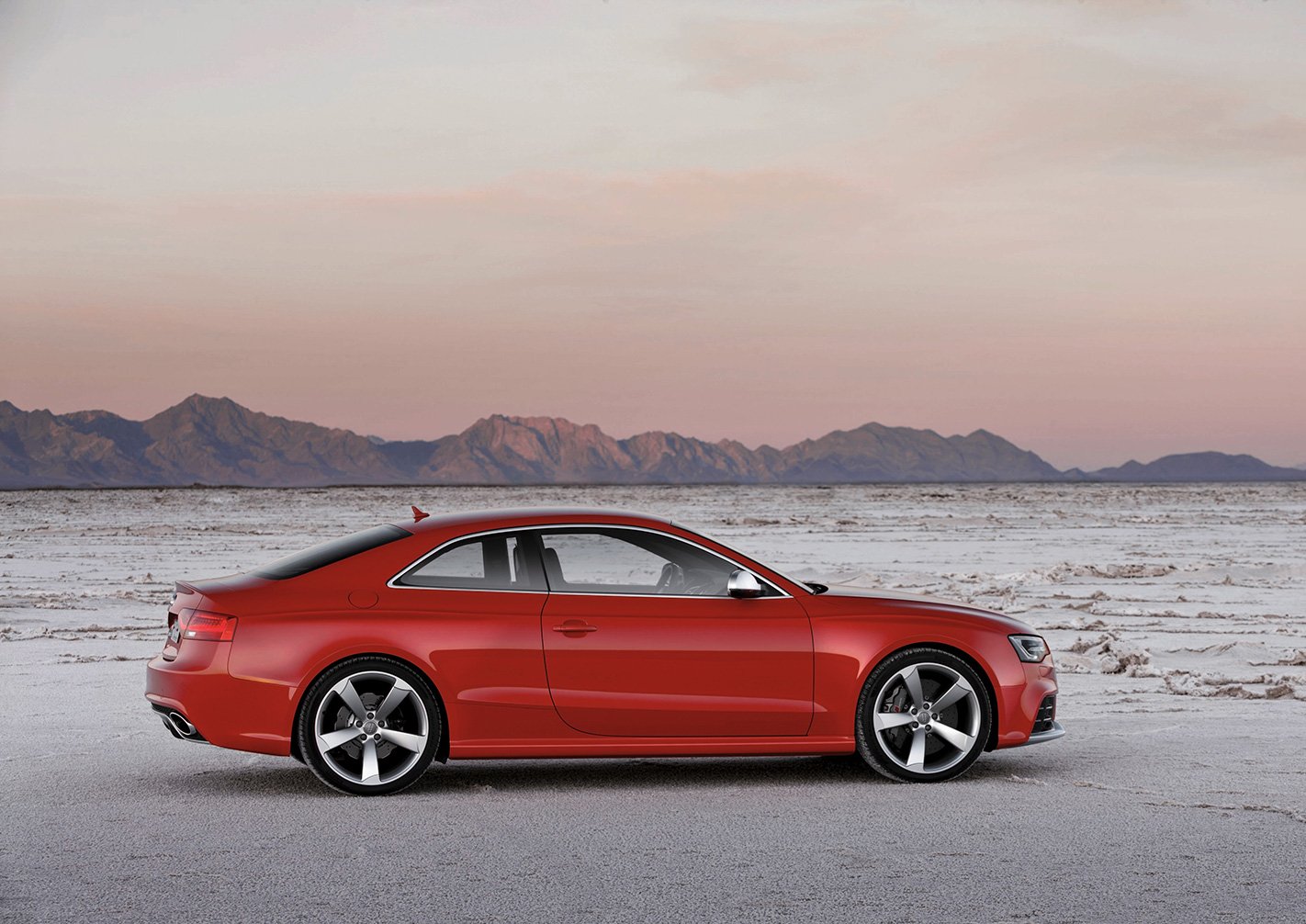
New springs, dampers, anti-roll bars, a 20mm lower ride height and firmer software calibration round out suspension changes. Standard hoops are 265/35 R19, though our test car ran cost-optional 275/30 R20 Pirelli P Zeros. Thicker, larger-diameter (365mm) steel discs with eight-pot calipers up front are new, or you can plump for the optional huge 380mm lightweight carbon-ceramic discs with eight-potters.
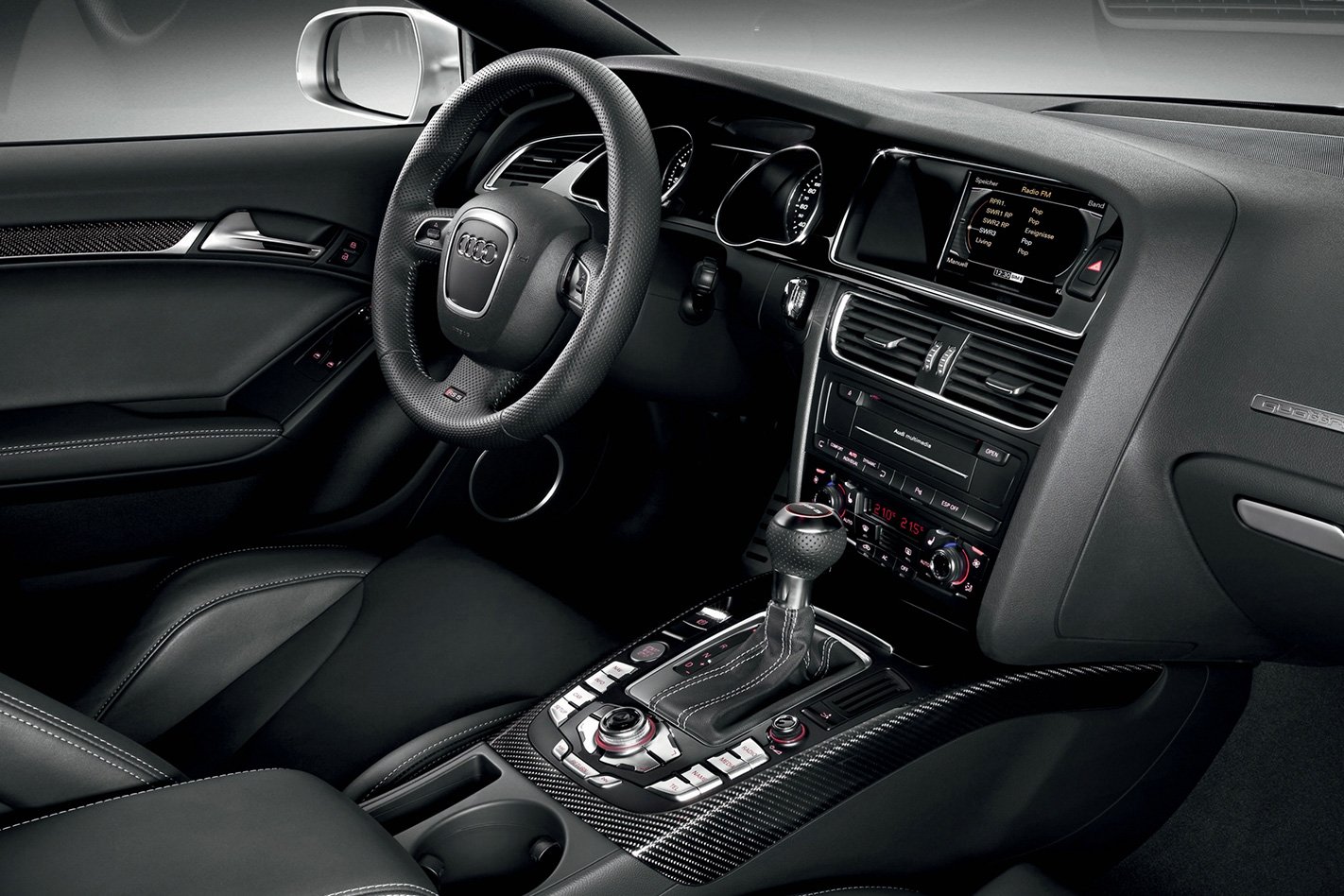
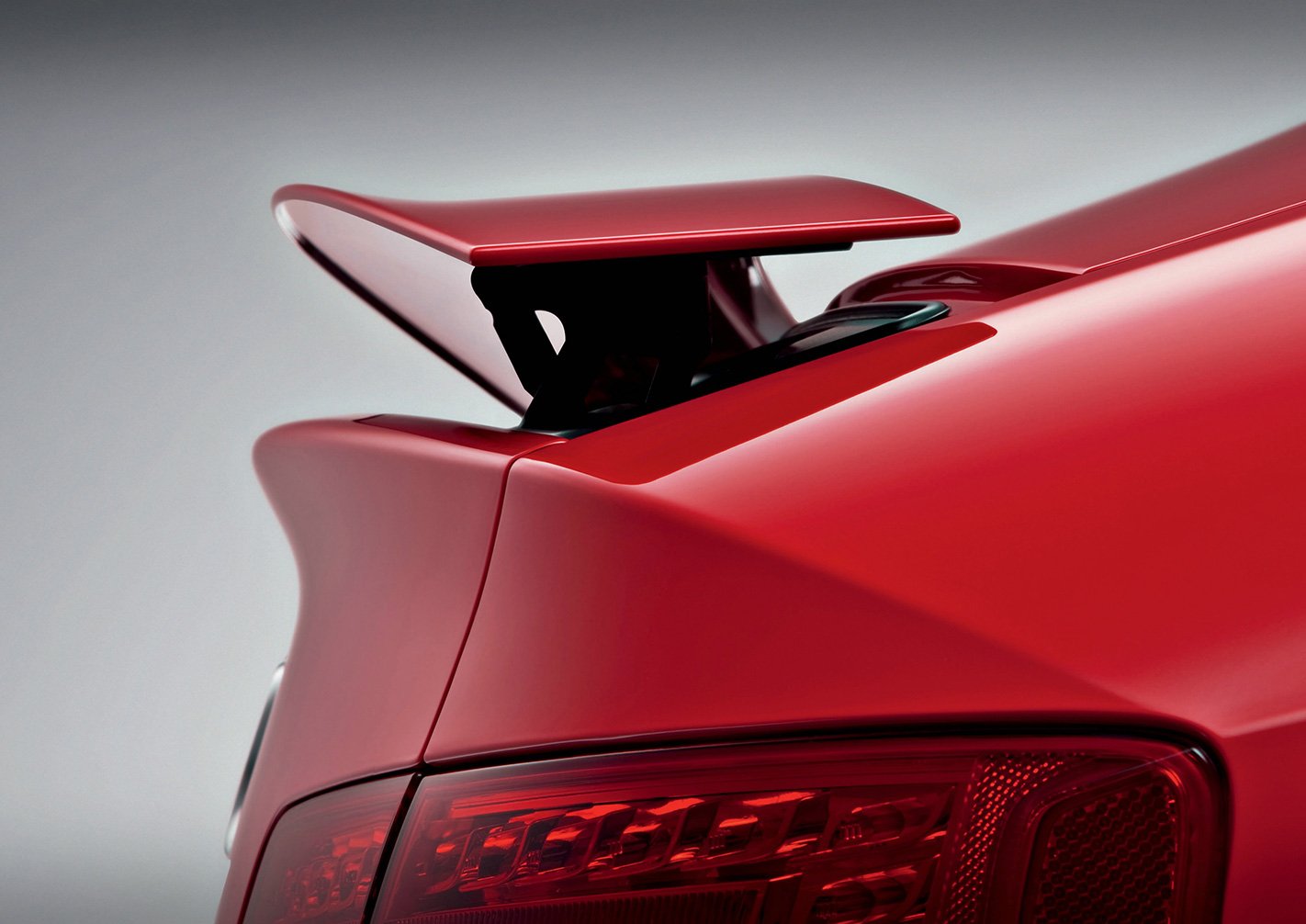
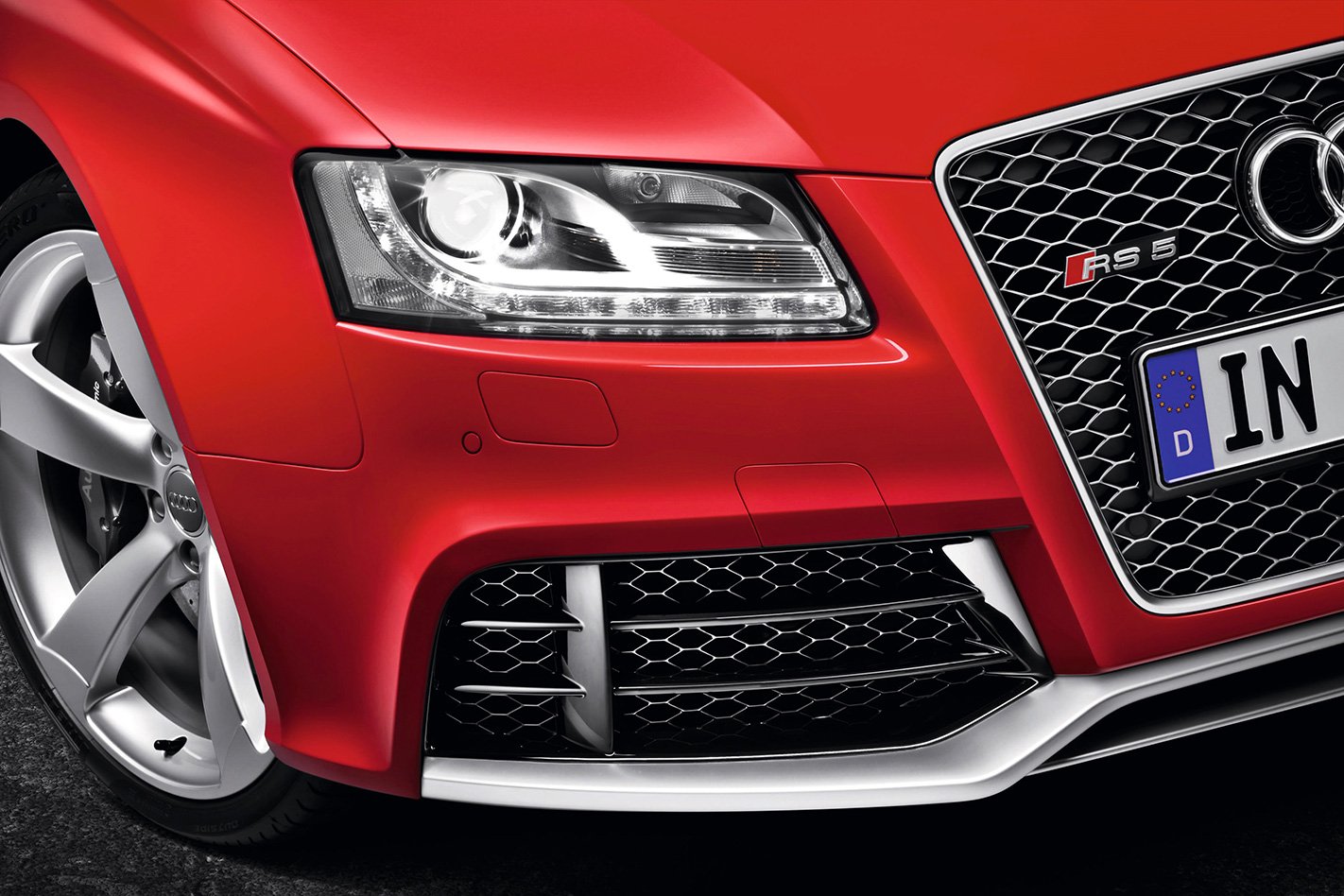
Bespoke RS styling elements include a new grille pattern, enlarged air intakes, restyled bumpers front and rear, plenty of aluminium brightwork, two large oval tailpipes, a rear diffuser and a full aero kit that ensures an impressive drag coefficient of 0.33. A motorised tail spoiler extends at 120km/h and retracts at 80km/h.Inside are electric sports seats trimmed in an Alcantara/leather mix but you can specify snug racing buckets or generously upholstered ventilated comfort seats. The RS instruments wear different graphics, and there is plenty of supple leather, shiny carbonfibre and piano black panelwork to please the eye and to justify the premium price.
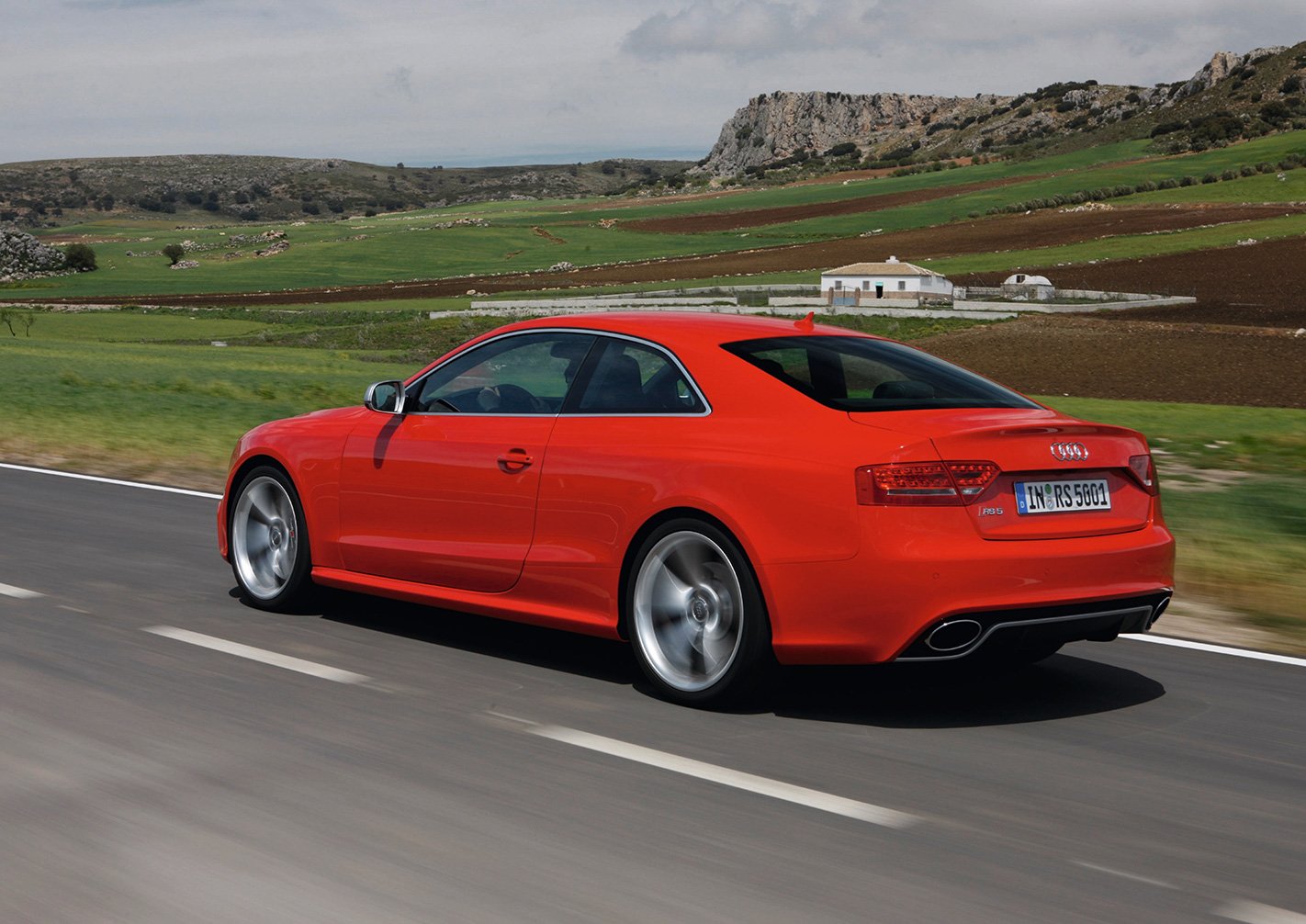
It feels more like a downsized RS6 than the grown-up RS4 you’d hope for. What we loved about the old RS4 is that it wasn’t inflicted with the behaviouristic manipulations forced upon the end user by its BMW rival, the M3. With Drive Select, it’s difficult to befriend an automobile which comes with as many in-built push-button character changes.In theory, Drive Select combines the best of all worlds. In reality, it makes falling in love with this car a combination-dependant trial-and-error experience which can be enlightening, entertaining or frustrating.In view of the Audi’s awesome on-paper form and favourable dry driving conditions, we set off with the engine/exhaust, the transmission and the sport differential in Dynamic mode. And then we lowered the ESP threshold from all chips aboard to the Sport program’s limited liability setting.
Shifting manually (in Dynamic mode) on a hard punt, it’ll try not to change up into sixth or seventh gear, which sounds and feels fast but isn’t a particularly pragmatic proposition.The choice of engine/exhaust calibrations is straightforward: Comfort means don’t bust your guts, Auto means wait for the next kickdown order, Dynamic means tighter reins and matching revs and ratios for maximum punch. Keep the revs up and the RS5 is slingshot-like explosive off the mark. Up to 110km/h, it pairs commendable urge with laudable high-end grunt.
Above 160km/h, however, the energy curve drops slightly as the car encounters all sorts of mechanical, aerodynamic and friction-related impediments. It just loses its punch. And the substantial kerb weight of 1725 kilos doesn’t go unnoticed.Absent from our test car was the dynamic steering and dynamic roll control (DRC) device that, if equipped, cross-links four adjustable dampers for even less body roll and, allegedly, more compliance. But even without either gizmo, the RS5 is not only a true street-carving champ, it’s a new pace-setter for grip, traction and roadholding.
And though the concentrated high technology is fascinating, it’s also slightly frightening. The steering will, for instance, assume one of three different preselect attitudes, no matter whether you are happy with the base servotronic or did opt for the extra-cost dynamic device.It would probably take a race driver on a racetrack to qualify the added value of the Sport differential, which offers three settings and takes the steering and yaw angles, the lateral acceleration and the vehicle speed into consideration.But on a winding country road, the rear diff, quattro system and sports suspension create an almost eerie virtual reality cornering effect. Can these corner speeds be true? Are the RS5 and Kacher still on the same planet? What happened to all the familiar warning signs like body roll, tyre squeal, lift-off oversteer, the steering firming up or becoming lighter?
This is obvious in the case of the dynamic steering, where engineers have found ways and means to massage its action in three almost equally compromised directions. Comfort is stiff, Dynamic is even stiffer, and Auto varies between the two poles that are disappointingly lifeless and uninspiring.As a result, the helm feels heavy and doughy, almost seems to entertain a force of its own, lacking fluidity and progression. This set-up is quite clearly more interested in execution than in communication, thereby confirming earlier impressions which suggested big brother, not close friend.
Like the chassis, the steering overachieves and underdelivers at the same time. The network of filters takes out most of the vagaries and the imponderables, but at the same time it simplifies the car’s complex character and personality.
Check out more MOTOR reviews
I, for one, certainly need more time to adjust to this new quality of focused, fuss-free performance. More time to compile a Drive Select cocktail that really works for me. More time to come to terms with this radical and reduced minimum-input, maximum-result approach. More time to fully explore the suction-cup cornering grip, the time-warp deceleration and the induction-loop stability.On a corporate level, perhaps Audi needs more time to revive its allegedly sidelined anniversary project, a shortened, lightweight A4 quattro powered by a five-cylinder engine on steroids, featuring S-tronic, no-frills steering and a non-adjustable suspension. Alternatively, there may even be scope for a carefully decontented, back-to-the-roots 350kW RS5-plus.
Remember the Lamborghini LM002, the Italian firm’s attempt at a supersonic 4WD from way back in 1986? Seemed ridiculous didn’t it? – shoving a whopping great V12 into a whopping great lump of a thing wearing the raging bull logo that admittedly originated from farm machinery.
At that precise moment, I’m pretty sure the earth sighed and Ferrari laughed, as did the rest of the world’s population. But it planted a seed that would sprout on-masse some time later.The 2000 Mercedes ML55 AMG grew first – a lumbering separate-chassis 4WD with rubbish dynamics but a rip-snorting 255kW 5.4-litre V8 to make up some time on the straights. And people bought it – too many of them, actually – which prompted the likes of Porsche (Cayenne Turbo), BMW (X5 4.8is) and even Land Rover (Range Rover Sport Supercharged) and Jeep (Grand Cherokee SRT8) to follow suit. Again, the earth sighed.But “you can’t stop progress”, to quote Bill ‘The Battler’ Heslop from Muriel’s Wedding, and the whole fast-4WD cycle is well and truly mobilised, and now into its second phase. The awful ML55 has become the rather good ML63, the blown Rangie Sport (along with big-brother Rangie Vogue) has just copped a new-generation supercharged V8, and BMW has, controversially, badgered its iconic M division to create the twin-turbo-V8-powered X5 M. Porsche unveiled its second-generation Cayenne Turbo at Geneva in March (though it won’t reach Australian shores until July), Volkswagen did likewise with its Touareg cousin, and Jeep’s all-new Grand Cherokee SRT8 (with a 6.4-litre Hemi V8) is due in 2011. But fresh off the cargo vessel for this comparo of gigantic proportions is the wildcard of the entire fast-4WD field – Audi’s intriguing Q7 V12 TDI – complete with 1000Nm and room for seven. VW’s now-discontinued Touareg R50 got us used to the idea of a fast diesel 4WD, but with two more cylinders, a litre extra capacity and another 110kW/150Nm, Audi’s mothership takes that to a whole new level.Indeed, it seems to be a bit of an unofficial VW/Audi policy to make their fast 4WDs drink sticky fuel, and there’s no arguing with that reasoning once you experience the uber-Q7’s performance. Its 5934cc common-rail-injected V12 diesel employs every trick in the book – four valves-per-cylinder, double overhead cams, direct piezo injectors and two variable-vane turbochargers – to achieve 500 metric horsepower (368kW) at 3750rpm and a deeply impressive 1000Nm from 1750 to 3250rpm. That’s enough to punch Audi’s elephantine 4WD to 60km/h in just 2.6sec and to 100km/h in 5.65 – surging on the crest of a delicious wave of mega-diesel torque.Being a V12 means the gun Q7 is as smooth and refined as a diesel is ever going to get, but it also means little in the way of acoustic eroticism. Instead, it whooshes and wafts along effortlessly, its laid-back manners doing a sterling job of disguising its serious progress, just like an old four-speed Bentley Arnage. Foot buried in Drive Sport, the Q7’s six-speed auto shifts up from first at just 4000rpm before making a very leisurely transition from second at 4300rpm – presumably to protect the transmission from that continent of torque. But deception is the Audi’s forte. Nail the throttle on the move and, following some momentary turbo lag, this 2635kg beast rams you gently in the slats while demolishing 80-120km/h in just 3.1 seconds.To put the Q7’s rolling muscle into perspective, only one other truck here can match that time – BMW’s twin-turbo-petrol 408kW X5 M. But the Munich mauler has several of its own accelerative aces stuffed up its puffy sleeve – not the least of which is a searing 0-100km/h time of just 5.02sec. That’s on par with numbers we’ve clocked from M3s, M5s and M6s, and its standing-400 number of 13.07sec (at 176.12km/h) is equally on the money. Make no mistake, the M division’s first-ever 4WD upholds the brand by being seriously, addictively ballistic, with superb throttle response and luscious torque, but we kind of expected that. What we weren’t prepared for is the sound made by the X5’s twin-turbo 4.4-litre V8 – all half-dozen of them.Sneakily, BMW has hidden a ‘Power’ setting inside the M-Drive button on the steering wheel that acts as a loud-haler for the exhaust, without actually delivering any more of what it says on the tin. Without it turned on, the X5 M is an incredibly demure beast – almost sounding like a refined diesel at kick-over, and then a previous-generation X5 3.0i cruising around carparks. Nail the throttle, though, and she bursts into life, whizzing the tacho needle to just below the 7000rpm redline before grabbing the next gear and blurting out its rear end. Yep, the X5 M does a fabulous DSG-style, ignition-cut ‘blatt’ at every upshift under full throttle, and if you want to hear it in surround sound, you simply hit the steering wheel’s ‘M’ button.With ‘Power’ on, the X5 M’s character turns sinister. There’s bass at idle that wasn’t there before, and plenty of intrusive exhaust meat under load at middling revs – particularly up hills at 120km/h on freeways. Disengage the noise button and the drone instantly vanishes, but then so does the X5 engine’s personality. You want to hear that twin-turbo V8 rasp and blurt, but in something this fast (and, it must be said, BIG), you just can’t drive around everywhere with your foot to the floor in an attempt to regain that high. Yes, the hard-charging X5 M has a drug-like effect, but the hit is also nothing like what you were expecting, because at no time does this monster-truck sound like a V8. Instead, imagine a Golf GTI with surround-sound cranked to 11, mixed with some five-pot warble and direct-injection snarl, backed by some seriously cool exhaust blurting. It’s unusual, but it’s also intriguingly addictive.The other three V8s – the ML63 and the Rangies – are far more traditional bent-eight, though when one revs to 7350rpm and the other two wear superchargers, what is normal these days? The ML’s thumping 375kW 6.2-litre AMG V8 turns five this year, but it remains a stunner – burbly around town, beautifully progressive in its power delivery, and symphonic when your right foot’s buried and she’s ripping through the gears. It’s a more satisfying V8 than the BMW’s twin-turbo in many ways because it feels more natural around town and it loves to rumble. But it’s also just as quick. To 100km/h, the BMW is 0.07sec ahead, and by 160km/h that margin has stretched to just 0.45sec, while over the standing-400m, it’s 13.07sec (X5 M) versus 13.26 (ML63). Call it a bee’s dick of difference.The ML is bang on for rolling punch, too (80-120km/h in 3.2) and like the BMW’s six-speed ZF, the Benz’s seven-speed 7G-tronic upshifts with impeccable smoothness. Thing is, the M-truck also throttle blips on downshifts, whereas AMG’s tank doesn’t, and the Beemer’s soft rev-limiter at 7100rpm is far more pleasant to nudge against than the Benz’s alarmingly abrupt curtain-call at 7350. And just so you heard that properly, here’s a BMW automatic that will finally hold a manually chosen gear. Not coincidentally, it’s also the first M-badged auto…Both Range Rovers, large and extra-large, share identical drivetrains, meaning Jaguar’s new supercharged, direct-injection 375kW 5.0-litre V8, tied to the same six-speed ZF auto as the Audi and BMW, with each running 3.54:1 final drives. Constructing the smaller of the two out of steel and the larger one with a fair bit of aluminium means the weight difference is a scant 45 kilos, in favour of the 2590kg Sport, but the Vogue’s taller mud-and-snow Continentals mean it’s also taller-geared than its sportier sibling, though not by a huge margin. But whatever. With 625Nm on their side, these Land Rovers haul serious arse – beyond what you’d expect from reading their spec sheets.In fact, both Rangie’s obliterated their performance claims. Land Rover reckons 6.2sec to 100km/h for each, but on a sunny and fairly warm 25-degree morning at Sydney Dragway, the Sport clocked triple figures in just 5.41sec, while the Vogue, nose pointing skyward, wasn’t far behind at 5.63. Yep, five-and-a-half seconds to 100km/h for a frigging Range Rover! In the Vogue in particular, it feels dramatic because there’s so much weight transfer, but both sound as great as each other, with a nice mix of induction burble and metallic exhaust woofle.The Sport ultimately eclipses the Vogue, however, and we’re not talking about straight-line numbers here. It’s the transmission. Both upshift with lovely smoothness and each blips the throttle on manually requested downchanges, but only the Sport has wheel paddles, and it’s also the only one to hold gears to cut-out, though only when its aluminium suspension dial is turned to the twisty-road symbol (Dynamic). The Vogue is far too posh to bother with such tedious details as flappy paddles and switchable suspension damping, so it instead counters with a heated steering wheel. And a heated and fan-cooled, perforated-leather back seat.The simple fact that the blown Rangie Vogue doesn’t have multiple on-road suspension modes puts its point-of-being into sharp focus. It might do a 13.8 quarter and pack 500 old-school horsepower, but this exquisite wedge of 4WD isn’t meant to be a sports car … as we soon discover on our fast-car test roads. Here, the Vogue is, well, hilarious. It’s essentially quite well-balanced, but there’s so much roll through high-speed sweepers that it seems to squat onto its outside rear while leaning well over in the front, alerting a stability-control system that refuses to stay asleep. ‘DSC-off’ in the Vogue means ‘DSC mostly on’, though who’s to say just how wide the Vogue would wander in on-the-limit cornering through 75km/h country-road corners without electronic assistance.Or how much quicker it would be with some active anti-roll tech and a firm damper setting. It’s best to leave the hard-worked 255/50R20 Continental Cross Contact rubber alone, ease back and enjoy the view, because the Vogue’s front end is (intentionally) about as sharp as a mink coat, and its sweet spot is somewhere around six-tenths, not nine.Then there’s the Q7. At 2635kg, it weighs exactly the same as the Vogue, and at 5086mm, it’s even longer, but you couldn’t ask for a more different experience. Simply put, its balance is staggering for its size and weight. In the air suspension’s ‘Dynamic’ mode (there’s also Comfort, Auto, and Lift), you’d never believe the Audi has a massive V12 diesel filling its nose because its turn-in could actually be described as keen. Indeed, you could even call the Q7 chuckable! It uses its 60-percent rear drive bias to great effect, relying on all that torque to make the nose really point, and simply massive 295/35ZR21 Dunlop SP Sport Maxxs to claw the tarmac. Even at highly illegal speeds, the Q7 remains composed, balanced and supremely confident, and that even applies in ‘Comfort’ mode, though with quite a lot more body roll to contend with.
Its steering is even pretty decent for an Audi – precise, with reasonable meat in its weighting, minimal kickback, and nice response either side of centre.The ML63 shares the Q7’s abundance of grip and it has a really wide, planted stance, making it feel solid and surefooted, even car-like, on the road. In an urban setting, the AMG gives the impression of being a more well-rounded open-road car than the firm Q7, but experience proves otherwise. Compared to the Q7, X5, and Rangie Sport, the ML’s steering feels a bit slow and disinterested, and it loads up and kicks back through bumpy corners, though whether the test car’s optional 21s exacerbate this is anyone’s guess.On a smooth road, the bahnstorming Benz demonstrates plenty of neutral balance and cornering talent – as shown by its second-place Wakefield Park lap-time – but introduce surface imperfections and it rocks around on its suspension, regardless of what mode the dampers are in. Surprisingly, the 400kg-heavier Q7 has better body control than the ML, but it’s also more compliant (despite its firmness) and is much more accomplished at handling varying surfaces. The ML is also crying out for an AMG electronics upgrade. At present, it’s stuck back with the old-generation E63, lacking an ESP-Sport setting to let its balance and power-down ability shine.Considering the ML’s questionable off-road credentials, and the Range Rover Sport’s undoubted talent in that department, it’s a big call to say that the baby Rangie is more fun to drive, but for the most part, it is. The Sport has a much heavier body riding on a substantially smaller footprint, but its active anti-roll bars do a Herculean job of keeping the Rangie’s shit together. It doesn’t have the Q7’s front-end bite – preferring a slow-in, fast-out approach – and it moves around more in corners, but it’s also far more supple in its suspension. Where the Audi relies on firmness and AWD torque split to help it corner, the Rangie Sport employs active anti-roll tech, and it’s brilliant.For something so tall, it barely rolls, has plenty of poise and tucks its nose in promptly. If you get over-exuberant, there’s some power understeer exiting a corner, but the AWD system attempts to dissolve it by subtly transferring more drive to the rear while leaving the disabled DSC well alone. And besides, there’s something perversely entertaining about the way the Rangie Sport alters its attitude.Turn the ‘Dynamic’ setting off and the Sport maintains its balance, but the increased roll tends to activate the DSC, and the transmission will override manual gear selections if you touch the rev limiter. But in either mode, the steering on this facelifted Sport is welcome improvement, with much better weighting to complement its inherent sharpness than the over-light old model.If you want a fast-4WD that really handles, though, it’s the X5 M that takes the prize. It really is amazingly agile for 2305kg, regardless of whether its EDC electronic dampers are in ‘Normal’ or ‘Sport’ mode, and if you can imagine how an oversized, neutrally balanced AWD hot-hatch would corner, then you’ve nailed the X5 M’s flavour. Like any of these trucks, its steering typically requires more lock than a regular performance car to tip into a bend, but its turn-in is really sharp, and its grip and balance are both fantastic. If you trail-brake the nose in before gassing hard out of a tight corner, you can feel the BMW’s AWD system transferring drive to the rear for slingshot corner exits, with an occasional hint of oversteer.And you can keep repeating the process again and again because its massive brakes are well up to the task of containing all that weight and stonk – as you’d bloody well hope! Indeed, nothing could out-brake the X5 M, not even the hugely effective ceramic numbers of the Q7, though the Rangie Sport’s and ML63’s are amply man-enough. Only the Vogue showed any signs of significant fade, and then only after two hot-laps around Wakefield Park, though its massively intrusive and overworked ESP system might have had something to do with that.With its Sport dampers activated, the X5 M doesn’t like bumps much, though again, like its engine, that’s speed and aggression dependant. In the city, leaving the dampers in vanilla mode delivers a much better ride than the spicy setting, but out on Australia’s undulating highways, where the other monster-trucks feel comfier in their comfiest settings, the X5 M pitches up and down. The only way to stop the irritation is to select ‘Sport’, because even a sizeable load won’t calm it. That said, none of the really sports-focused 4WDs here ride with any great sense of serenity, and the one that does (the Vogue) has moments of knobbliness before turning floaty if you really get up it.Back in a classy suburb in the urban jungle, nothing cuts a swathe (or fills a parking space) better than a blown Range Rover Vogue, though its facelifted baby brother on optional diamond-cut 20s is the more athletic and modern-looking of the two – particularly after its recent facelift.The ML63 has been around since 2005, and hasn’t been altered since early 2008 when it copped toughened styling, a few interior tweaks and larger wheels, but the AMG Benz has aged remarkably well. On the sexy start-spoke 21s fitted to the test car, the black ML63 is arguably the looker of the entire group, and certainly puts BMW’s rather clumsy effort with the X5 M to shame. Front-on, the gappy-vented X5 has little of the ML63’s class, and instead seems bulky and dorky. And no one liked its uninspiring wheels, either, despite their undisputed size (the rear 20s wear enormous 315/35R20 tyres). Still, it’s better than an X6 M, though praise doesn’t come any fainter.Considering how frequently the stock Q7 has been panned for looking like an oversized whale, the truck-on-steroids V12 version is a welcome visual relief. In typical fast-Audi fashion, it’s the detail finesse that makes the whole thing work, like its sparkly-lit, neatly imposing front-end and its fat 21-inch charcoal five-spoke rims. With its aluminium mirrors and techy new LED lights, it looks expensive … and at $255,400, it is.But all that size and expense doesn’t quite translate into a first-class experience inside. Its Audi-generic dashboard and sporty carbonfibre trim inserts are unquestionably class, and it offers generous seating up front, but the back two rows leave a bit to be desired.The middle pew, which will surely be the one used most, scores plenty of look-at-me gadgets (four air vents, dual-zone climate control, two 12-volt outlets and a glass roof), as well as adjustable backrest rake, but the seat cushion is short and quite flat, and there’s limited toe-room under the front seats. Jump back another row and adults won’t be impressed, and neither will anyone else if they intended bringing along luggage, but then the Q7 is the only truck here to provide seven pews.Of the five seaters, the ML63 has easily the best back seat – at least for the outer two bodies – with great under-thigh support and really plush padding, but its front pair are the least impressive of the lot. Despite miles of adjustment, the cushions are too short, there’s not enough thigh or side support, and the electric lumbar/bolster adjustment is a protruding lump at the front-left of the driver’s seat that fouls your leg. Much of the time, you just want it to piss off. The BMW’s a better bet than the Merc, at least for the front pair, but its back seat is too flat, forcing passengers to sit with splayed legs, and the middle position is hard and unforgiving. Not much flair on the dashboard front, either, though the old Z4 M roadster’s woven carbonfibre-look leather makes a return, and the huge sunroof makes the X5’s cabin feel very light and airy.For vision, though, nothing can match either Range Rover. Rangie’s are known for their hip-height window line and this pair continue the trend. The Sport doesn’t offer as much front seat side support as the X5 M, or as much rear legroom, and its rear bench is similarly deprived of cushion length, but its new dashboard is a gorgeous, high-class piece of work and there’s character in here, as opposed to clinical precision. But nothing can match the Vogue’s super-lux interior.In terms of design, it’s eight years old and you’d never know it. The flagship Rangie is more like a five-star hotel than a 4WD, and it even has leather headlining, as well as a full electric back seat that includes lumbar adjustment. Its techy LCD instruments don’t look as good as the regular analogue dials in the Sport, but you can’t argue with the imperial view from inside this supersonic tank.As far as being a sporting 4WD, though, the Range Rover Vogue Supercharged Autobiography (deep breath) doesn’t really cut it, despite being indecently rapid in a straight line. But you know what? It was never meant to – that’s the Supercharged Sport’s job – and in that respect, it’s hard to criticise the Rolls Royce of 4WDs. The Vogue is all about ambience and presence – two things it succeeds at brilliantly. No 4WD on earth makes you feel as special as the Vogue, on or off road, and its ludicrous turn of speed is a genuine eye-opener. But true petrolheads will miss the Rangie Sport’s handling balance, its active anti-roll bars and its unobtrusive stability control. The wildcard Vogue is just not that type of girl. Not even for an as-tested price of $249,250.The other four are surprisingly hard to separate because they’re all flawed in their own unique ways. For something so expansive and expensive, the $255K Q7 should offer better rear seating and better packaging. It doesn’t do the seven-seat thing particularly well. But it looks tough, it corners with amazing aplomb and its massively torquey TDI V12 has refined thrust by the warehouse-load, while drinking easily the least fuel. However, it’s hard to see the point in such a decadently narrow-focused 4WD. For character and kudos at a quarter-mill, the Vogue eats it.Of the ‘cheap’ $180K offerings, it’s the ML63 that comes off third-best. It has a fabulous drivetrain, its muscular styling has aged gracefully, and there are moments of brilliance – like its superb back seat, its planted stance, and its standard-setting grunt and growl. But there are also several moments of disappointment, and ultimately the ML63 fails to offer the great driving experience that its styling and sound promise.Which leaves the BMW X5 M and the Range Rover Sport Supercharged. Where the Beemer is a spectacularly focused sports truck that annihilates both corners and straights, the Rangie Sport is a more well-rounded proposition. The X5 only really comes alive when having its bottom spanked, at which point it thrills like no other, whereas the Rangie delivers tingles and satisfaction at any speed. It’s also better looking, has a classier interior and way more character, as well as the ability to head off road without beaching itself. But then you’re also more aware, more of the time, that the Rangie Sport is a voluptuous, 2.6-tonne land yacht (as opposed to a 2.3-tonne land power-boat).Of the two, the X5 M comes closest to being a lust-worthy, MOTOR-style fast 4×4, though it’s easier to justify the Rangie’s copious use-of-resources because it’s more than a just one-trick pony. But on the right road, loud-exhaust on, igniton-cut blurting, huge sunroof open, it’s the darting, snarling X5 M’s drug-like attraction that keeps coming flooding back.
The long-awaited Abarth 500 Esseesse has finally arrived.And it’s surprisingly good: surprisingly because we’re not big fans of the stock Fiat 500.But as the importer stresses, the 500 Esseesse is very different to the car that it’s based on.The 1.4-litre turbo four is wicked up to 118kW/230Nm, and is mated to a five-speed manual. It’s deceptively fast, with a bucketload of cornering grip.It’s just a pity that the ride is too firm for our Australian roads.
If Audi’s new A7 Sportback is a sign of things to come from Ingolstadt, then there’s reason for optimism.
The steering is fast and accurate, and offers the best feel of any Audi set-up this side of a TT RS.It eats up fast sections of road, and copes well with smooth and choppy surfaces alike. For a big car – it weighs nearly 1.8 tonnes – it’s also surprisingly agile.Choosing either of the 3.0-litre engines – petrol or diesel – will provide you with enough power, but we’re still looking forward to the more powerful S7.
Mercedes-Benz has released images of the new C63 AMG Coupe, which is based on the new C-Class Coupe range.
The C63 Coupe boasts wider tracks, increased camber, stiffer springs and shocks plus sway bars.It misses out on the new twin-turbo 5.5-litre V8, and has to make do with AMG’s 6.2-litre atmo V8 that kicks out 336kW/600Nm and is fed through the Speedshift MCT 7-speed auto.Like its sedan cousin, the C63 Coupe will also be available with the AMG Performance Pack that hikes peak power to 358kW.A limited-slip diff and carbonfibre pack will be optionally available.
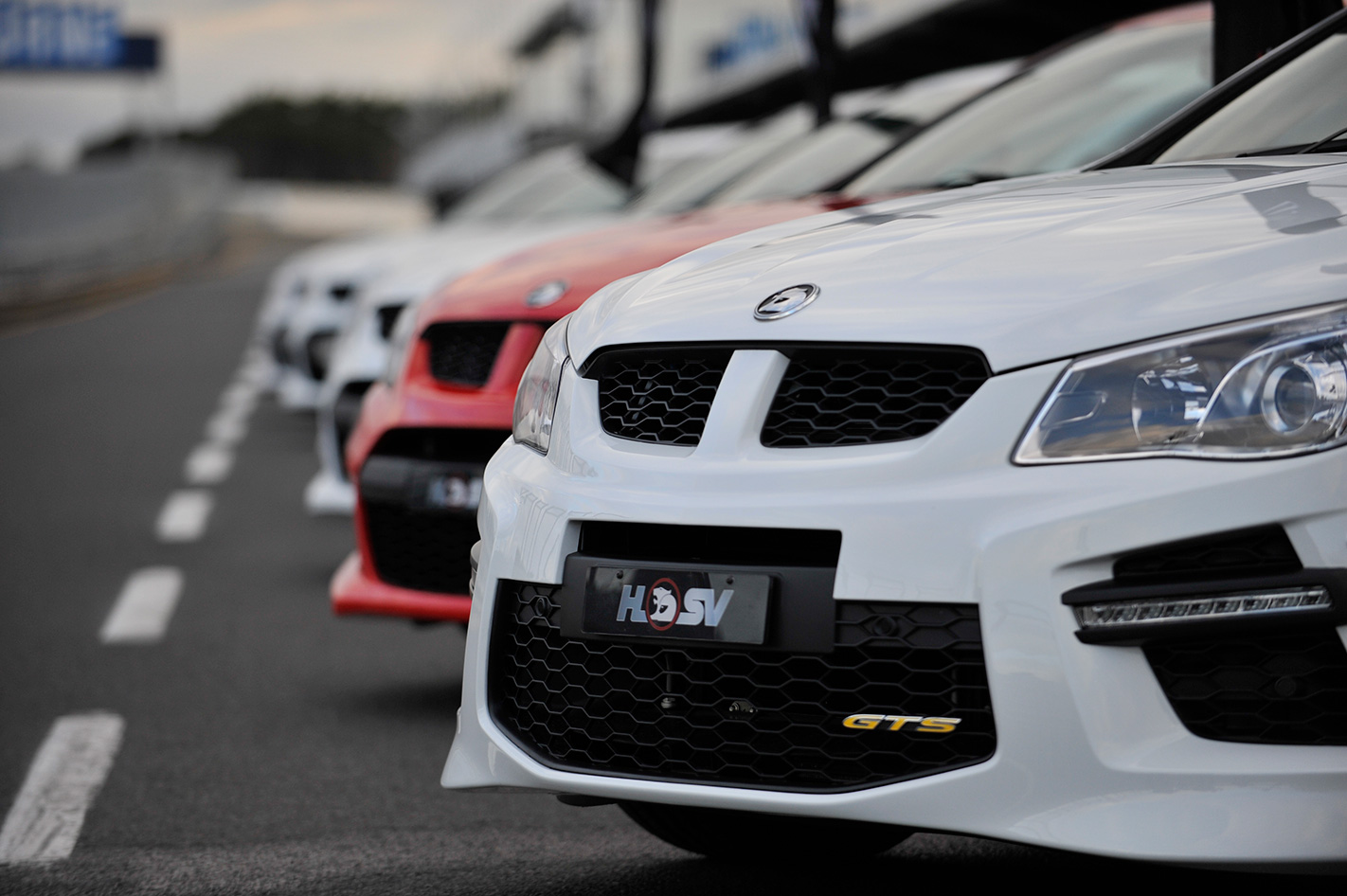
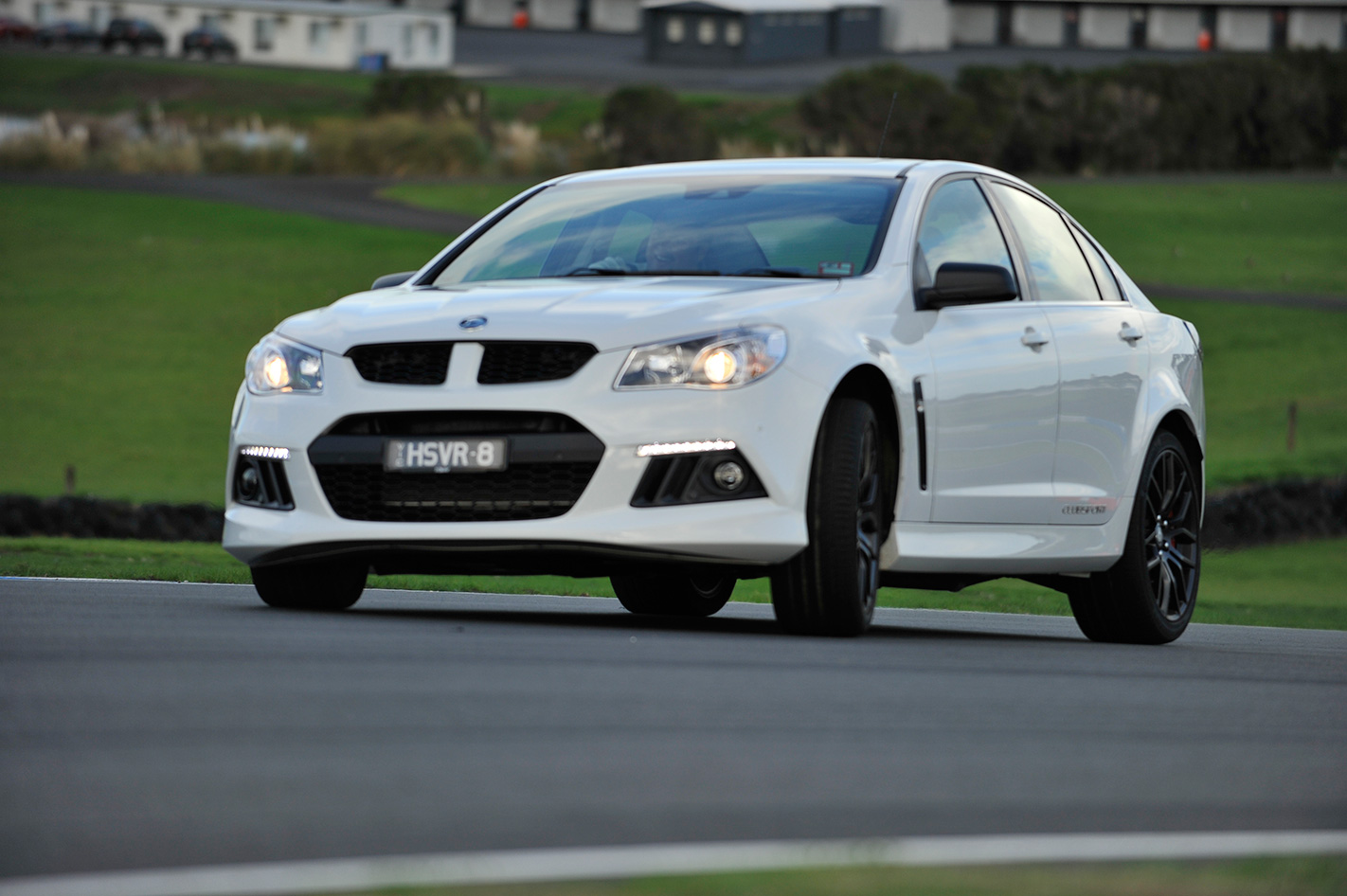
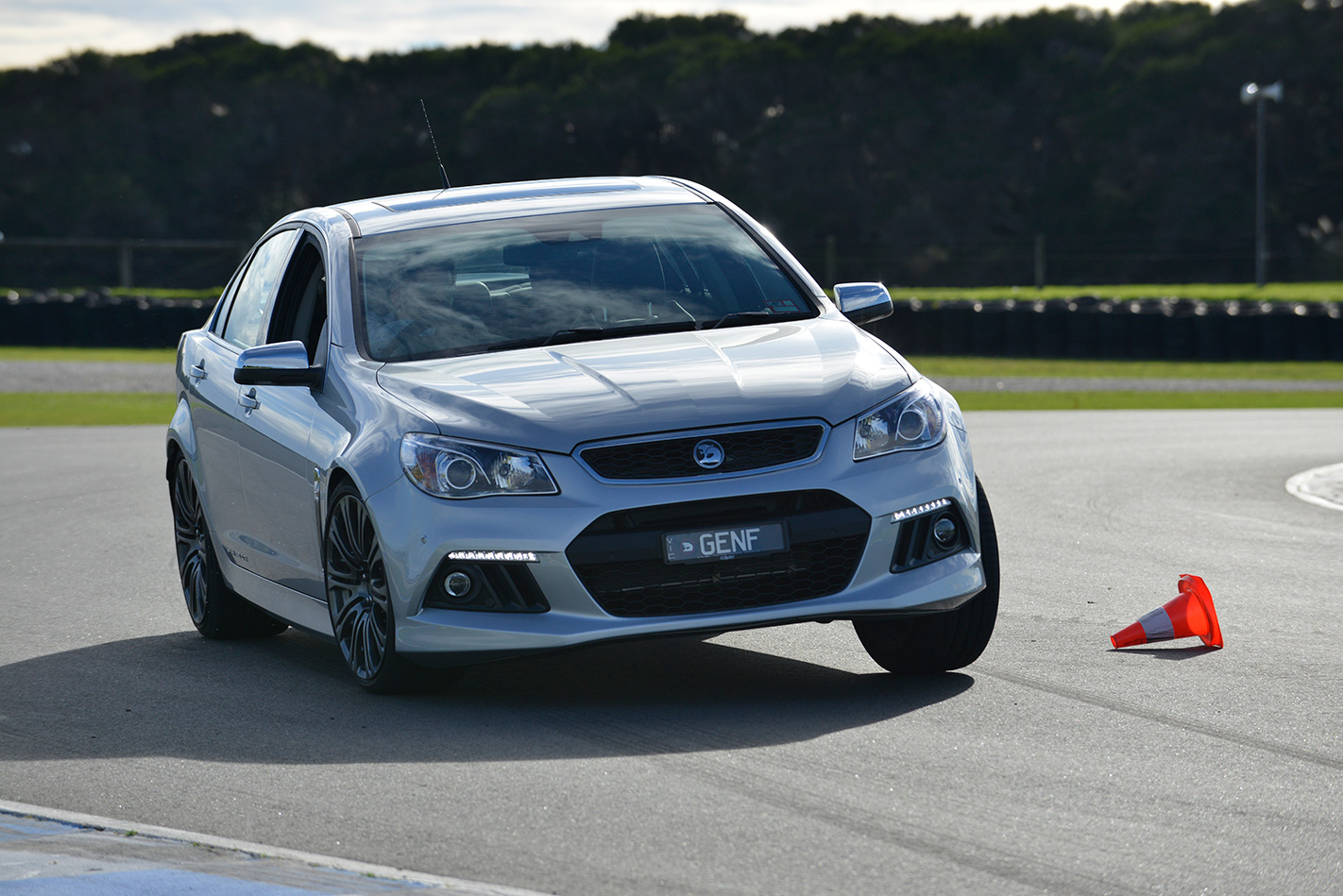
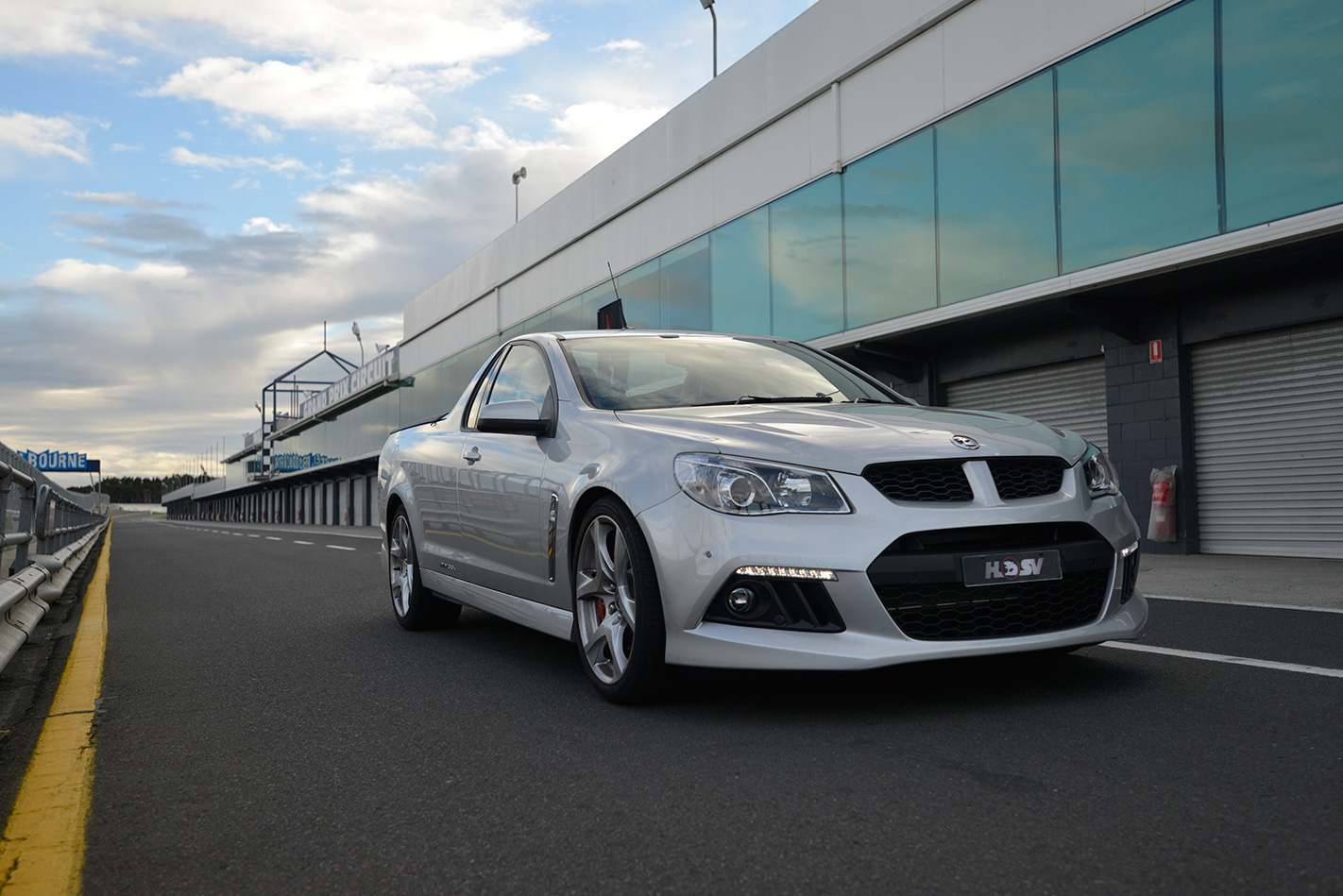
HSV call it an MCE, which stands for a “Mid-Cycle Enhancement”, but there is no mistaking that Holden’s “go-fast arm” put as much work into their new F-Gen range as they would an entire new platform.
Leaving aside the bombastic 430kW GTS (which HSV regard as a separate engineering program) a colossal amount of work has gone into making the new Clubsport, Maloo and Senator platforms genuinely world-class performance cars.
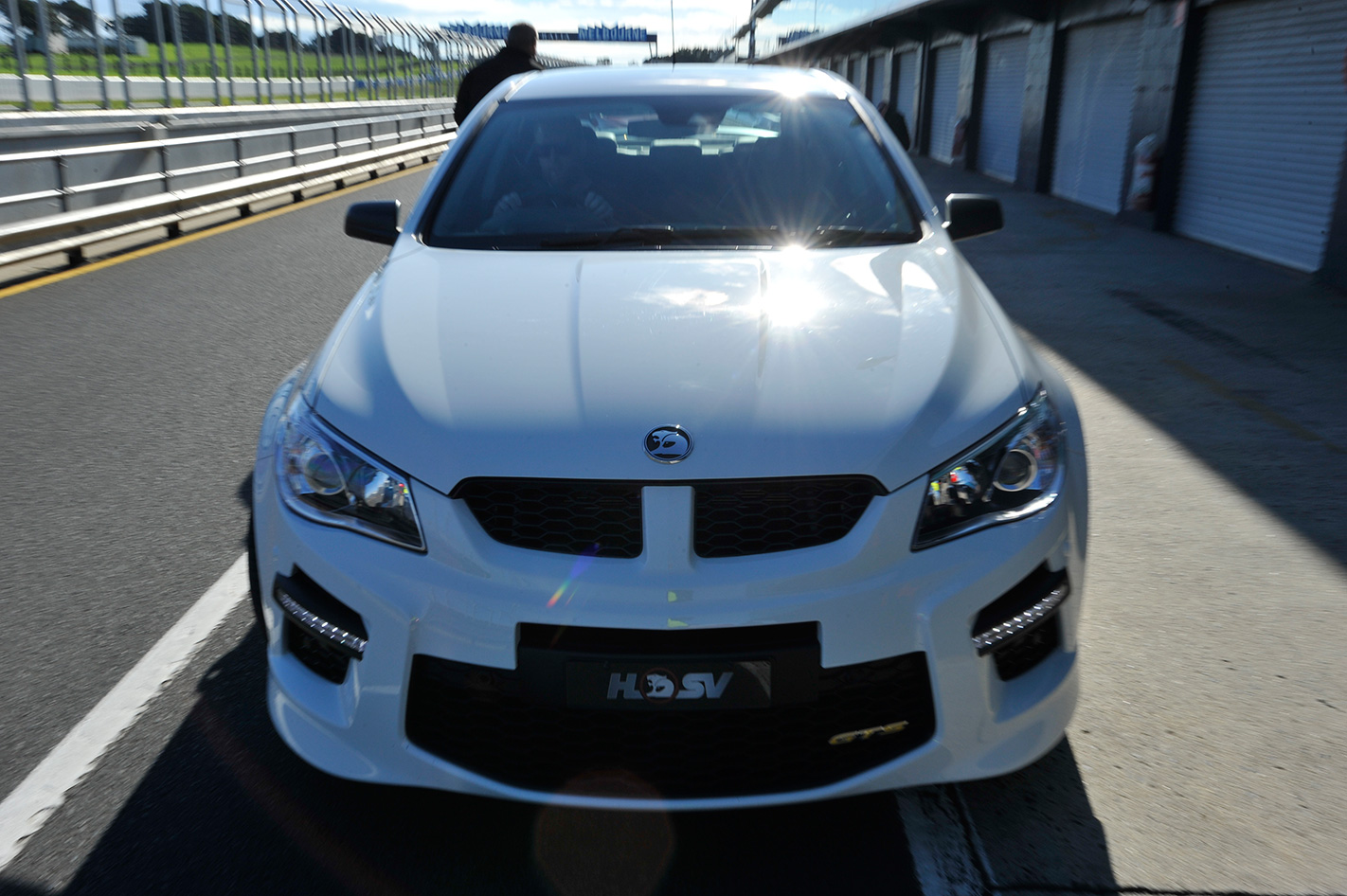
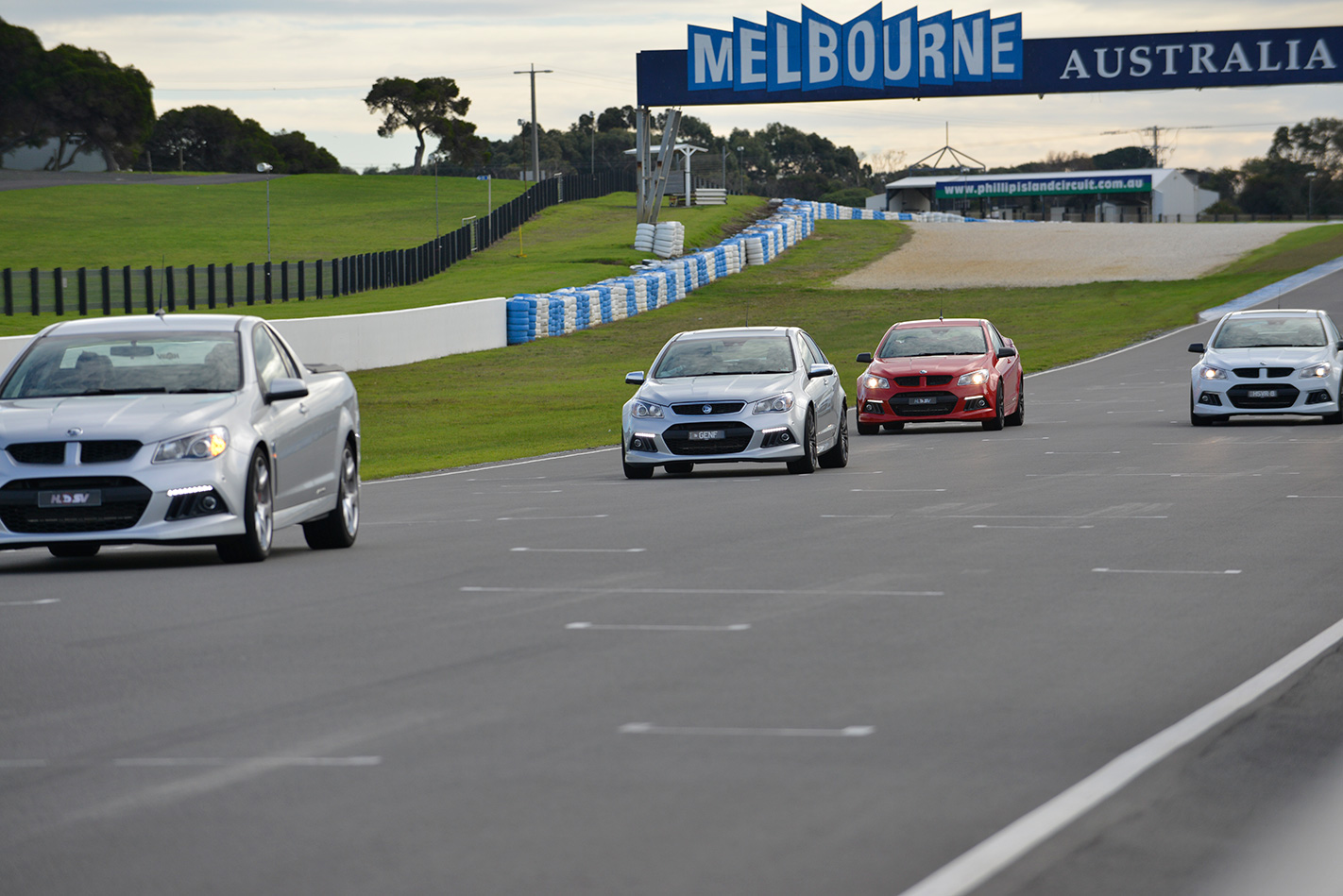
The second day was spent giving the 6.2-litre monsters their head around the Phillip Island Grand Prix track, and it was here we were able to sample a pre-production 430kW (that’s 580hp in the old money) supercharged GTS. Unfortunately, we’ll have to save the driving impression of the GTS until the embargo is lifted in a few months.
That’s not such a bad thing as it gives the rest of the range its time in the spotlight. It is time these cars deserve as they’ve been overshadowed by the King Kong range-topping GTS since the new-gen cars were revealed in mid-May.
The R8 models get black/machined-finish wheel treatment on their cast-alloy 20s, plus a bi-modal exhaust and a swag of electronic goodies, while the Senator and Grange score the utterly awesome third-generation iteration of the Magnetic Ride Control (MRC) with two different levels of performance (Sport and Performance) as opposed to the GTS which has three – Sport, Performance and unique-to-GTS Track mode.
For Maloo, Tourer and Clubsport purchasers wanting a bit more than 325kW, they can spend an extra $5000 on the SV enhancement pack. This scores them the 340kW LS3 engine package, plus new 20×8.5 and 20×9.5-inch forged alloy wheels, bi-modal intake and black-accents on their bodykit.
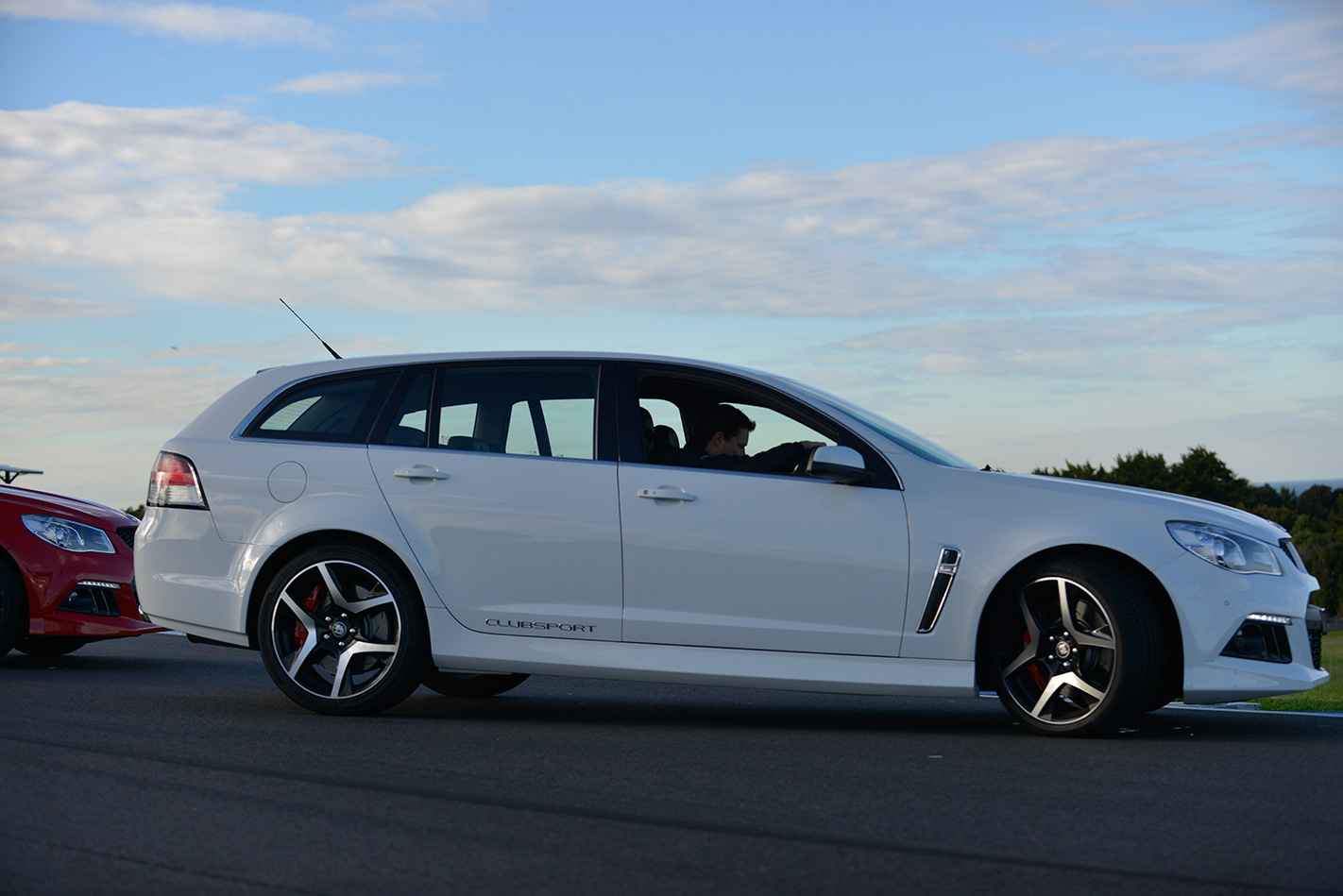
They all get new Continental rubber, spanning 255/35 up front and 275/35 out back. So, you can see they’re pretty well stacked with on-board features and equipment, but how well do they drive? Just between you and I and the wallpaper, bloody well.
We kicked off in the base-model Clubsport on the road loop and the ride quality, fit and finish and levels of Noise, Vibration and Harshness (NVH) are all streets ahead of the E-series range. The new dash layout and buttons feel like they belong in a premium European product and, while the entry-level Clubbie (and Maloo) miss out on a bunch of features, you don’t feel like you’re in a base model stripper edition.
The AP Racing brakes are nothing short of brilliant, with excellent pedal feel and great bite, even when pushed on the track.
The pedals aren’t really set-up all that well for heel-toe changes (they’re a bit high), but that is a minor complaint against an otherwise well set-up cabin that has vastly improved ergonomics over the VE range – we’re so glad Holden moved the window switches back to the door, and there’s a button on the door for the boot release!
As electric steering has been fitted to the regular VF Commodore range, all new HSVs score it, and this is a damn good thing. With the software tweaked to suit a more sporting intent, it is a vast improvement over the VE-generation hydraulic steering. There’s still a very, very slight delay just off-centre, but the steering on whole is rich, full of feedback and beautifully weighted.
In the base cars it tweaks the steering, but in the R8 models (Clubsport, Tourer and Maloo) it also opens up the Bi-Modal exhaust for a bit of hooligan bark. For anyone even remotely interested in driving fast, the Performance setting is definitely the way to fly.
The R8s also score the Enhanced Driver Interface (EDI), which is a fancy way to describe the on-board read-outs on the eight-inch touch-screen in the centre of the dash. There are a bunch of different menus to scroll through, including exhaust flow, G-meter, accelerometer, RPM read-out, lap-timer and even track maps.
As the base models don’t score the Bi-Modal exhaust some die-hard V8 fans will find them a bit too quiet. However, option up your R8 to SV-spec and you’ll get not only the loud/quiet exhaust, but HSV’s brand new Bi-Modal intake developed especially for the F-Gen range.
We had manual and automatic models to sample in basic 317kW and 325kW R8 specifications. The manual is the pick of the two gearboxes on offer for me. The clutch is far lighter than in previous generations of HSVs and the 6060 ’box shifts better than the old T56 Tremec could ever hope to, slotting through ratios with a firm, secure clunk.
On the road I couldn’t sense any difference in grunt between the base model and the R8. Both provide a surge of acceleration that swells through the mid-range and builds into a frantic, blaring top-end that’ll have your license sweating bullets.
The pick of the Clubbies, for me, is definitely the manual 340kW SV. With hand-welded headers from the LSA and a Bi-Modal intake system the SV-enhanced Clubsport really felt like it wanted to rev and meant it felt like a much smaller machine from behind the steering wheel.
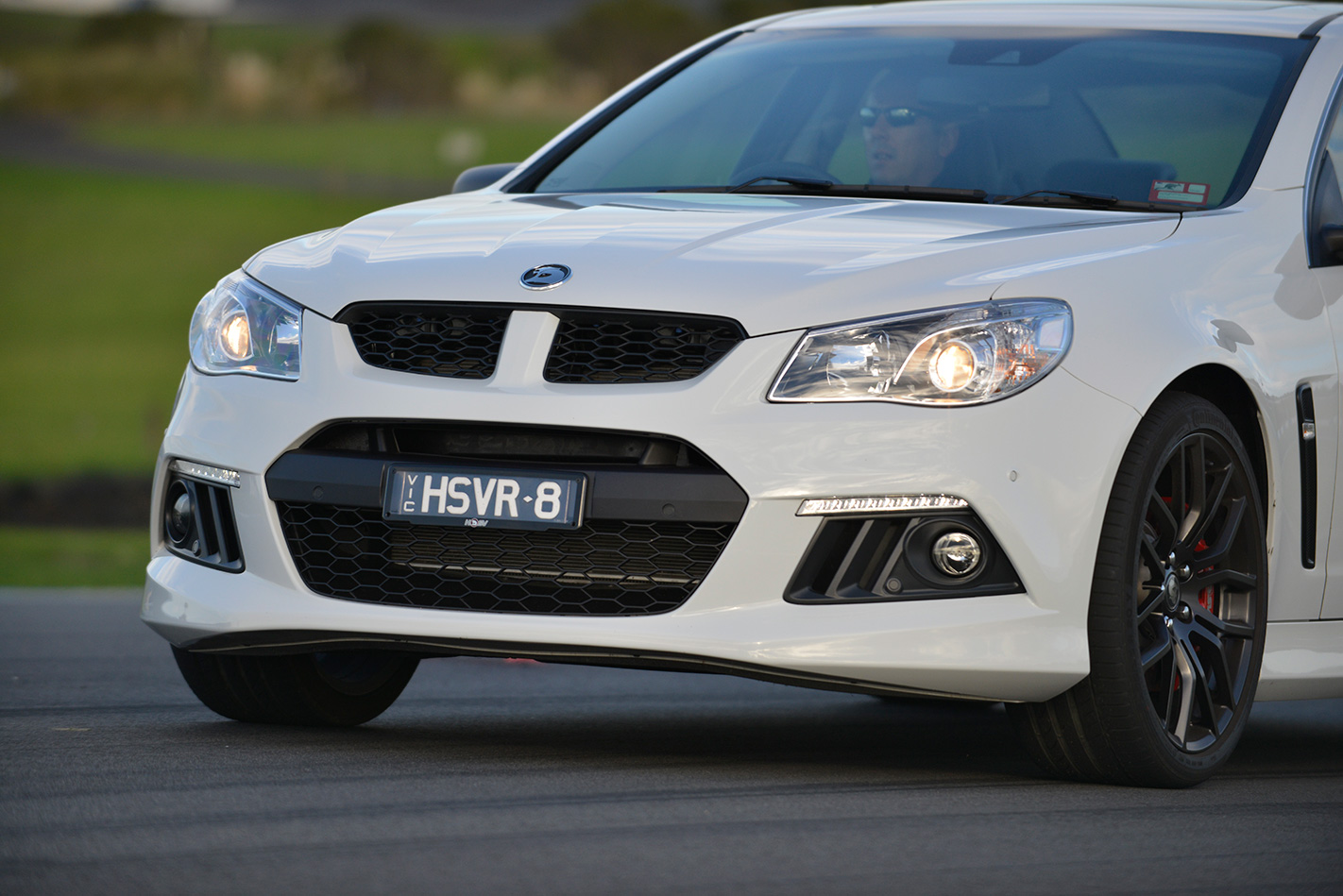
Across the back of the Yarra ranges the SV ate up corners and dispatched straights with ease, soaking up large and small imperfections in the road surface without ever upsetting the big four-door’s balance or poise. Even on greasy, slimy tree-covered Hotmix the F-Gen range were sure-footed and had to be violently provoked into any kind of under or oversteer.
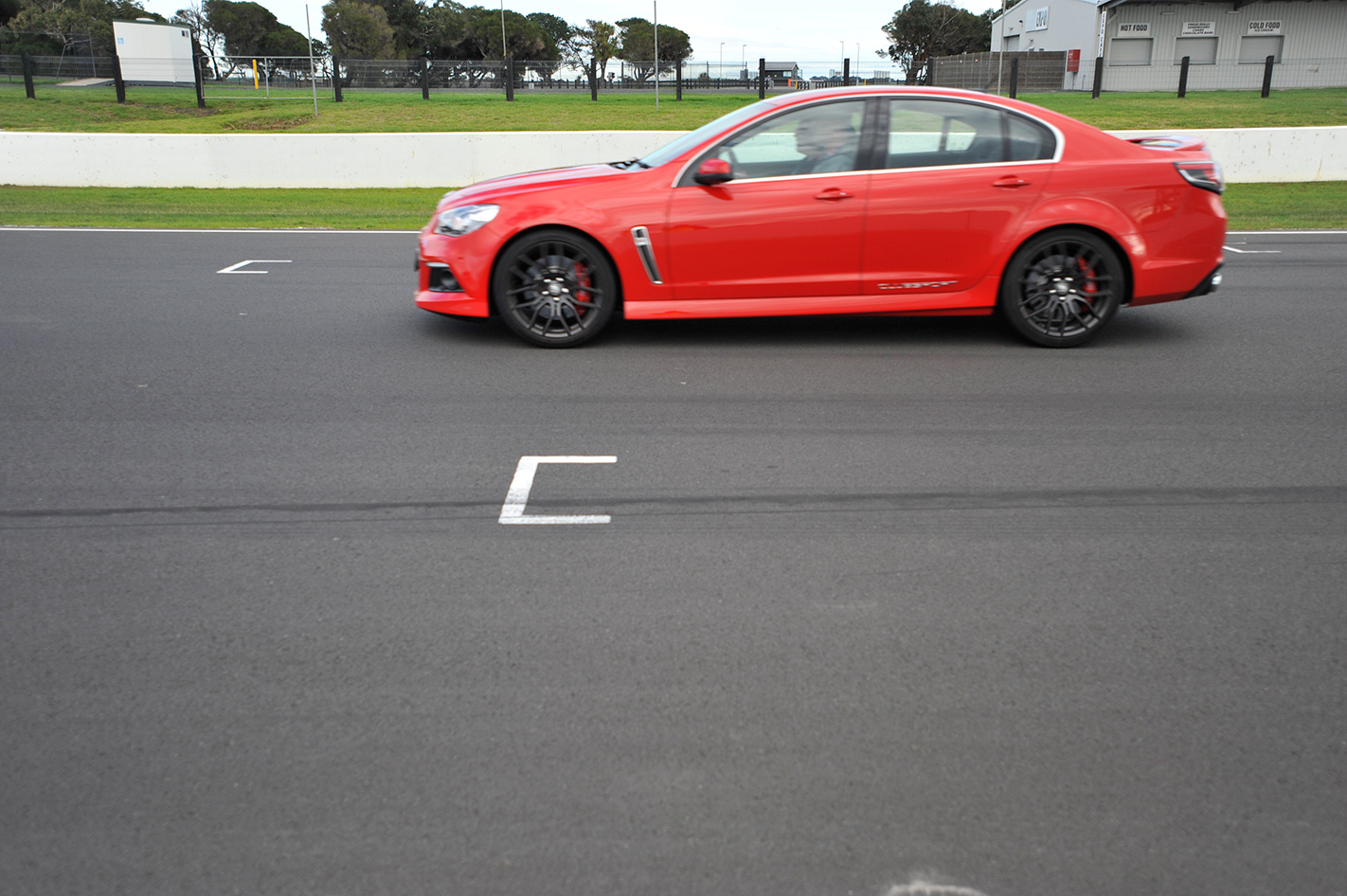
Even the 340kW Maloo SV we tested felt planted on both road and track. We got a slight wiggle from the tail going over the diabolical Lukey Heights complex at Phillip Island, but you’d expect that from even the most dynamically adept machinery given that section of track is the Aussie equivalent of Laguna Seca’s infamous Corkscrew.
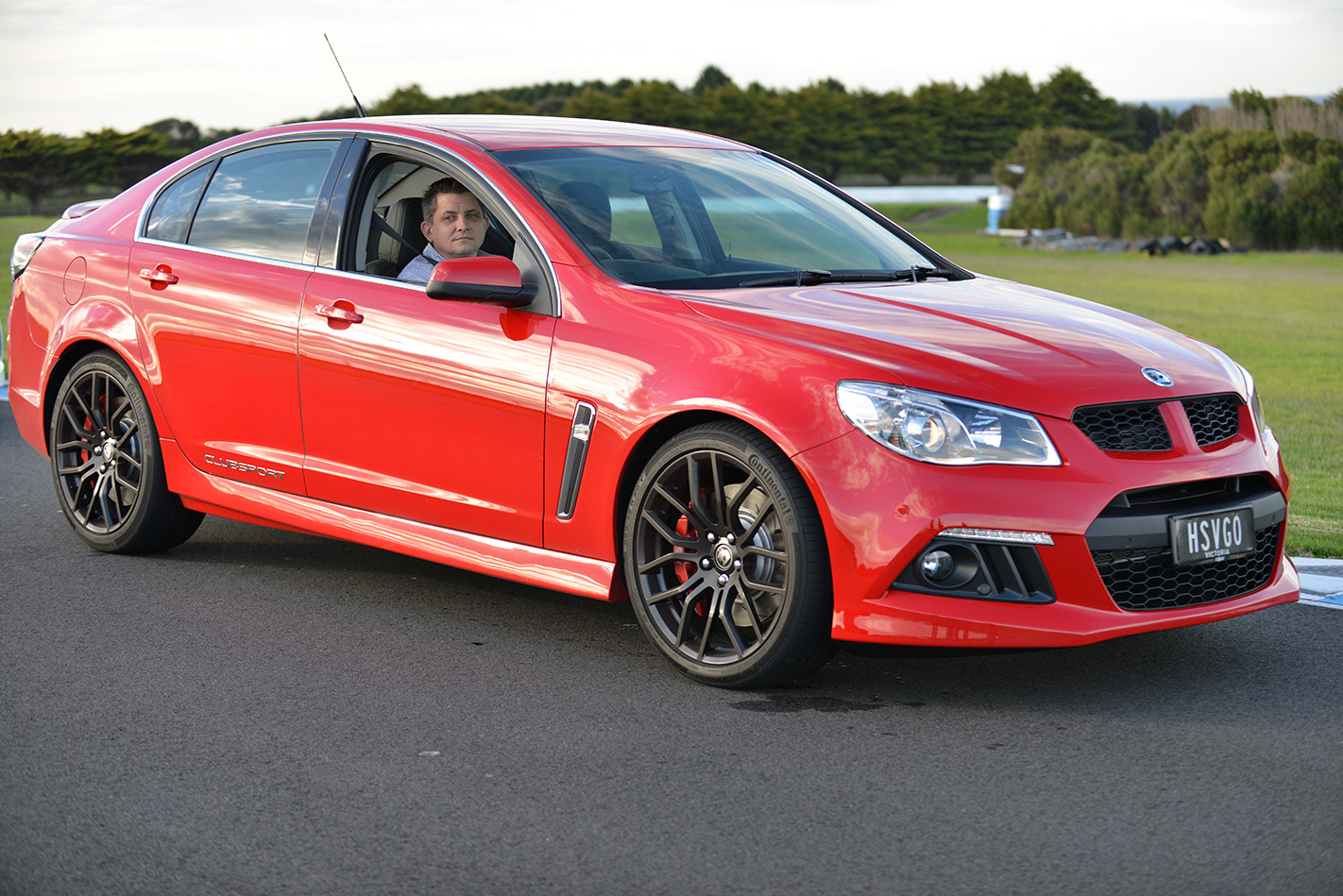
What this means is you can belt down a rough, unpredictable rural road with the car set to the max attack Performance mode and it feels more composed and compliant than the conventionally-suspended models in the range. And yet, tip it into an unexpected corner and it remains flat, stable and predictable.
I tested this thoroughly when another journo and I “borrowed” the Senator for a quick half-hour road loop before dinner on the Wednesday night. We set the suspension to hardcore Performance mode and headed into the ranges behind San Remo in the dark, seeking out a bit of quiet road to test what the other journos had been raving about up to that point.
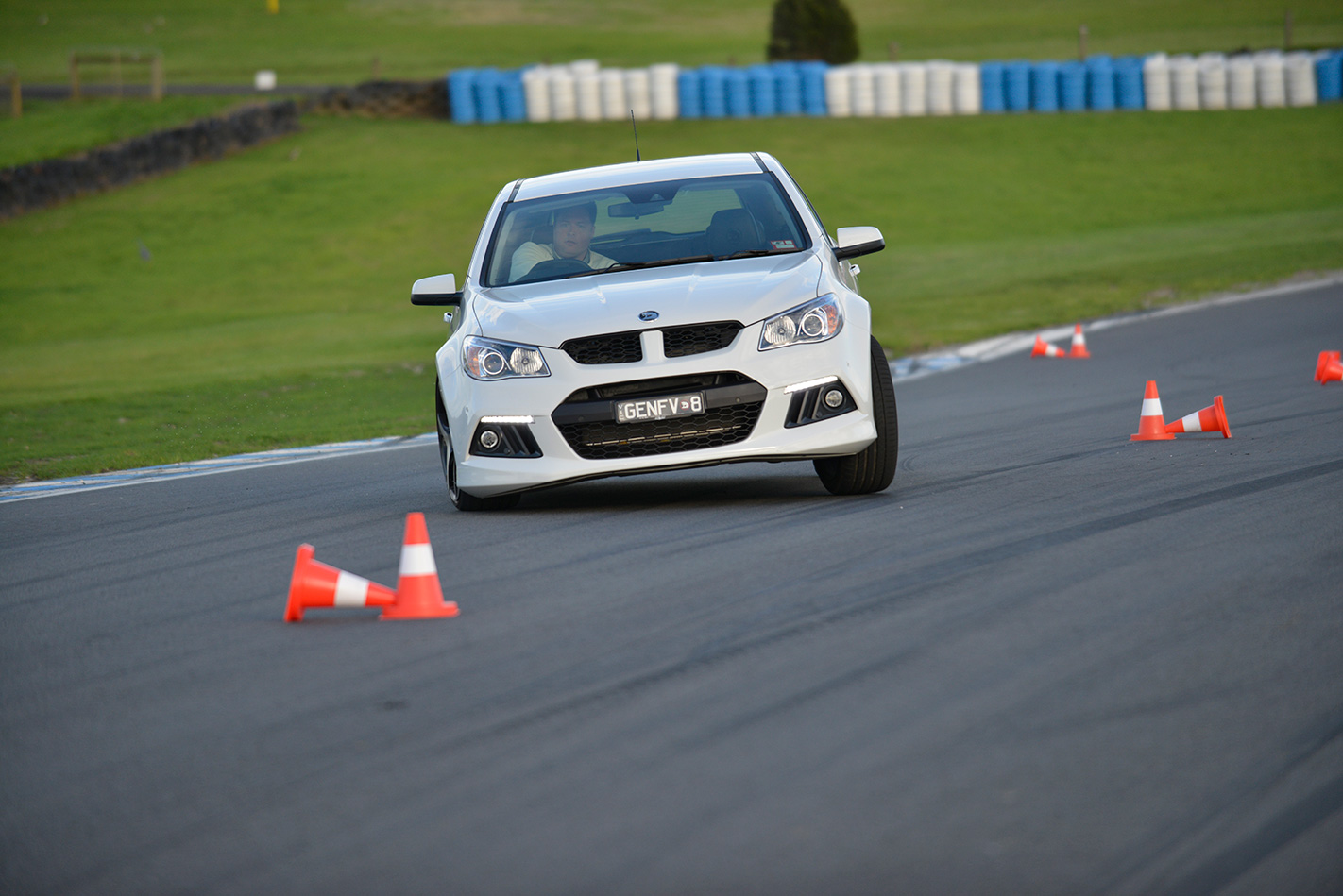
As the road unfurled we were presented with corners that would appear like fast sweepers in the distance, but then suddenly and dramatically tighten as we hit them. They required extra stabs of steering input and late, hard stabs of brake, just to get around them.
Once we got to the track, I couldn’t help but feel the Senator’s edge was blunted by the automatic gearbox. If there had been a manual Senator Signature on the fleet for the launch, I’m pretty sure I’d have just about lived in that car. That MRC suspension with the free-revving 340kW LS3 and the Bi-Modal hooliganism pipes makes for a seriously addictive, seriously practical and seriously well-finished machine.
We just want one.
Inspect-its Gadgets
HSV has benefitted massively from Holden packing the VF range with on-board tech as even their base models have an impressive amount of on-board electronics compared to previous generations of local muscle machinery. And it should perk the interest of Euro buyers.
There’s the usual standard fare of dual-zone climate air, passive (full keyless) entry, auto-start (on automatic models), Electronic Stability Control (featuring re-engineered ABS, traction control, Electronic Brake Distribution, Electronic Brake Assist), power seats, power mirrors and satellite navigation. However, F-Gen has scored trick new tech from VF, including the rear-view camera, launch control, Electronic Park Assist (EPA), Front & Rear Park Assist (FRPA), Enhanced Driver Interface (EDI) readouts, Forward Collision Alert (FCA), Lane Departure Warning (LDW), Head-Up Display (HUD), rain-sensing wipers, the Enhanced Driver Interface (EDI), Side Blind Zone Alert (SBZA), Reverse Traffic Alert (RTA), Hill Hold Control (HHC) and hill start assist (HSA), rain-sensing wipers, multi-function steering wheel (including phone and stereo controls), MyLink infotainment system with eight-inch touch-screen, iPod-integration, BlueTooth streaming, Enhanced Voice Control (for navigation, media, phone and USB audio integration), Pandora and Stitcher SmartRadio applications, nine-speaker BOSE audio.
The base model Clubsport and Maloo miss out on FCA, LDW, HUD, rain-sensing wipers, the EDI, nine-speaker BOSE audio, heated HSV Performance leather seats and power adjustment for the passenger seat.
Why have carmakers by and large been so gun shy about creating high-performance versions of small- to medium-sized SUVs?
You can buy anything from stove hot mini hatches to hi-po utes, limos and obscurities like behemoth family-truckster-coupes like BMW’s X6M, and yet the prospect of a properly hardened take on compact soft-roaders – perhaps the fastest growing segment on the planet – has been an open goal that, mystifyingly, nobody has taken a shot at.
Utilitarian school bus and grocery getter weekdays and crackerjack back-road corner carver on the weekends? The ultimate in practical petrolhead mobiles? As no-brainers go, it’s got to be right up there, yes?
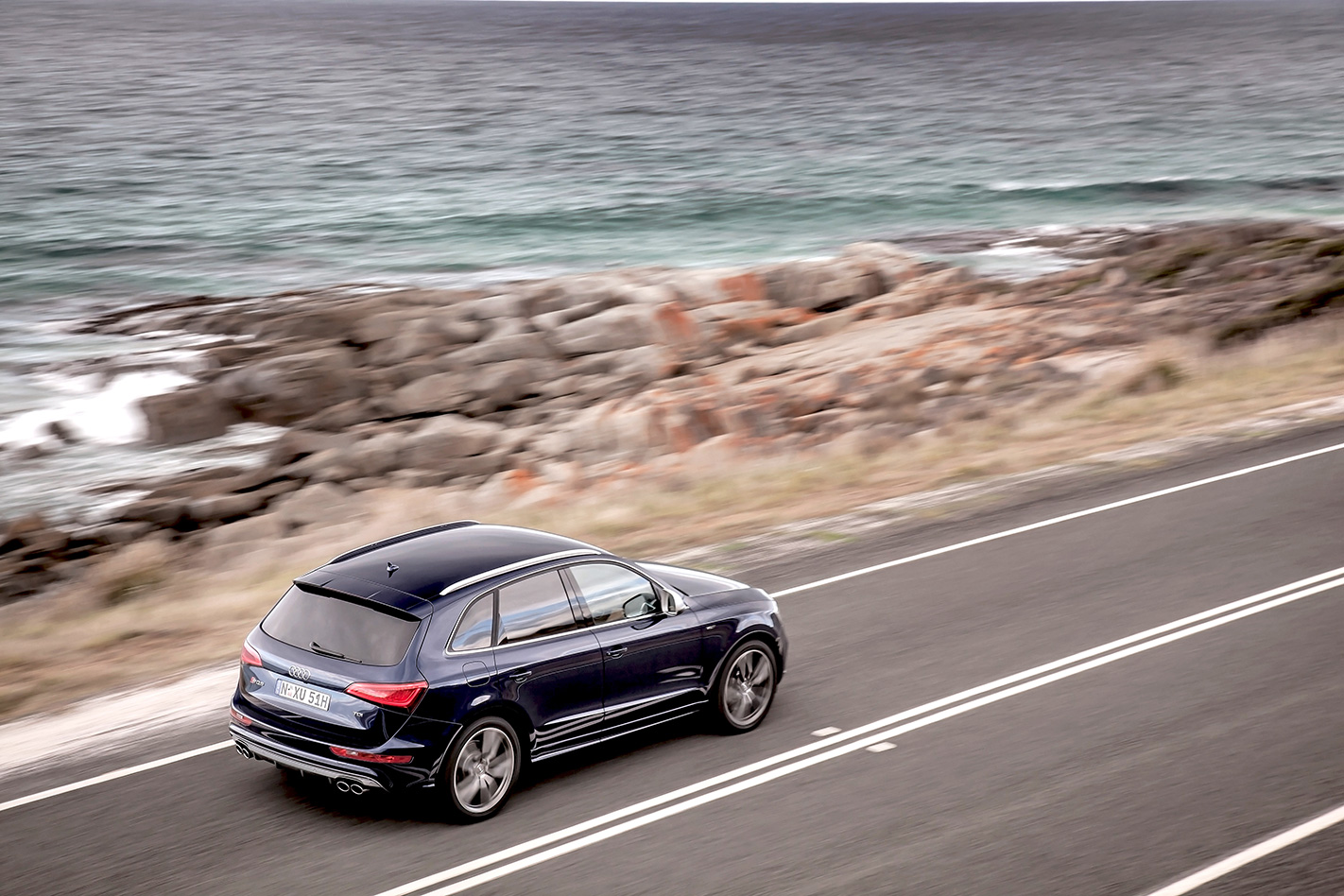
Finally, someone has done it. And that someone is Audi. It’s called the RSQ3. It’s due out early 2014. And it’s not the car before you…
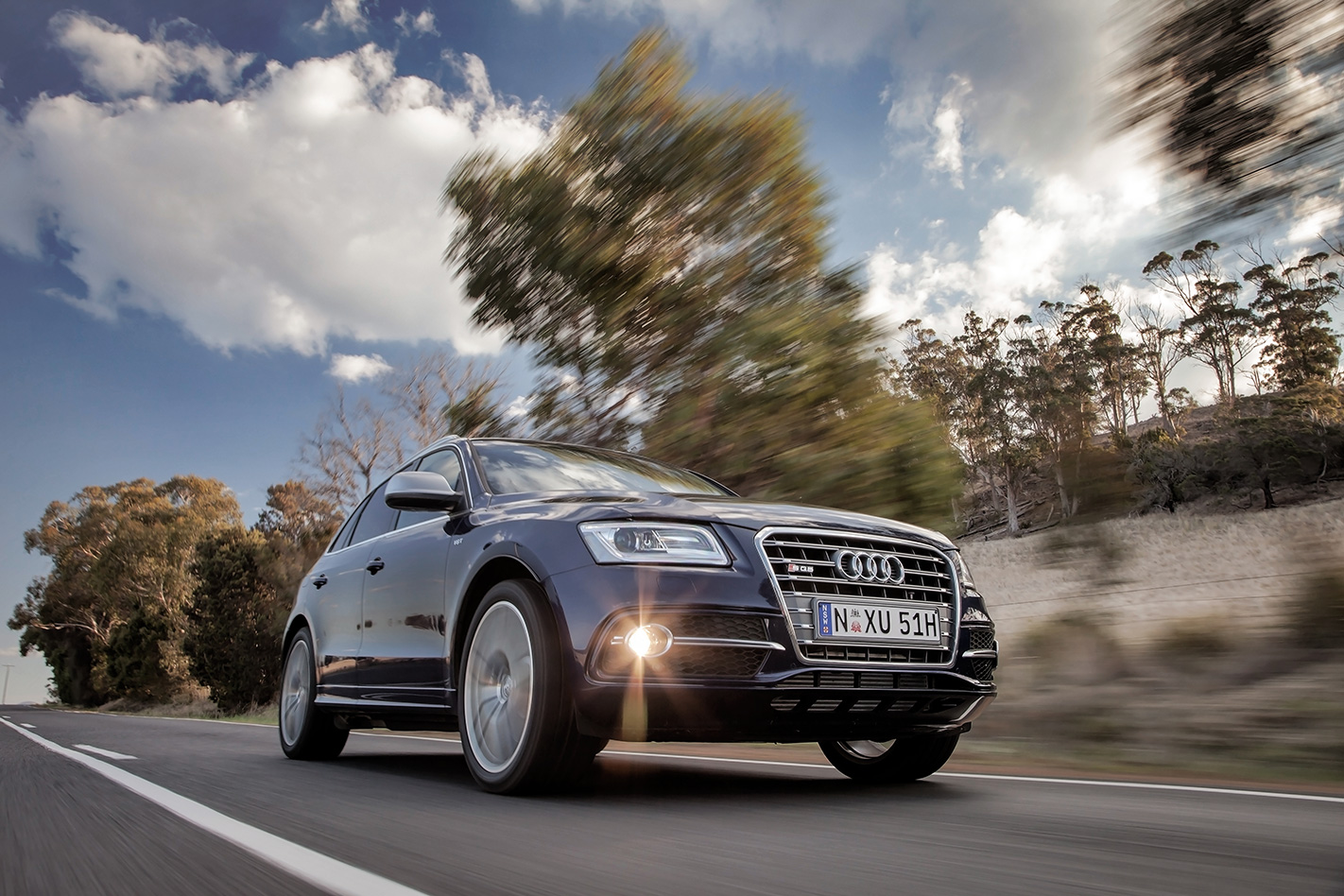
This here, instead, is the SQ5. The ‘S’ badge signifies its performance aspirations are a little less than ‘high-’, and its near-on two-tonne heft suggests ‘medium’ doesn’t describe the weighbridge ticket. It also can’t be had with a petrol engine.
And yet the new sporty version of Audi Australia’s biggest selling model nails the back of the abovementioned net with such conviction that nothing under $100K boasting luxo-performance aspirations and family-lugging promise comes anywhere near it. Not merely due to lack of competition either, but because it’s oh-so good.
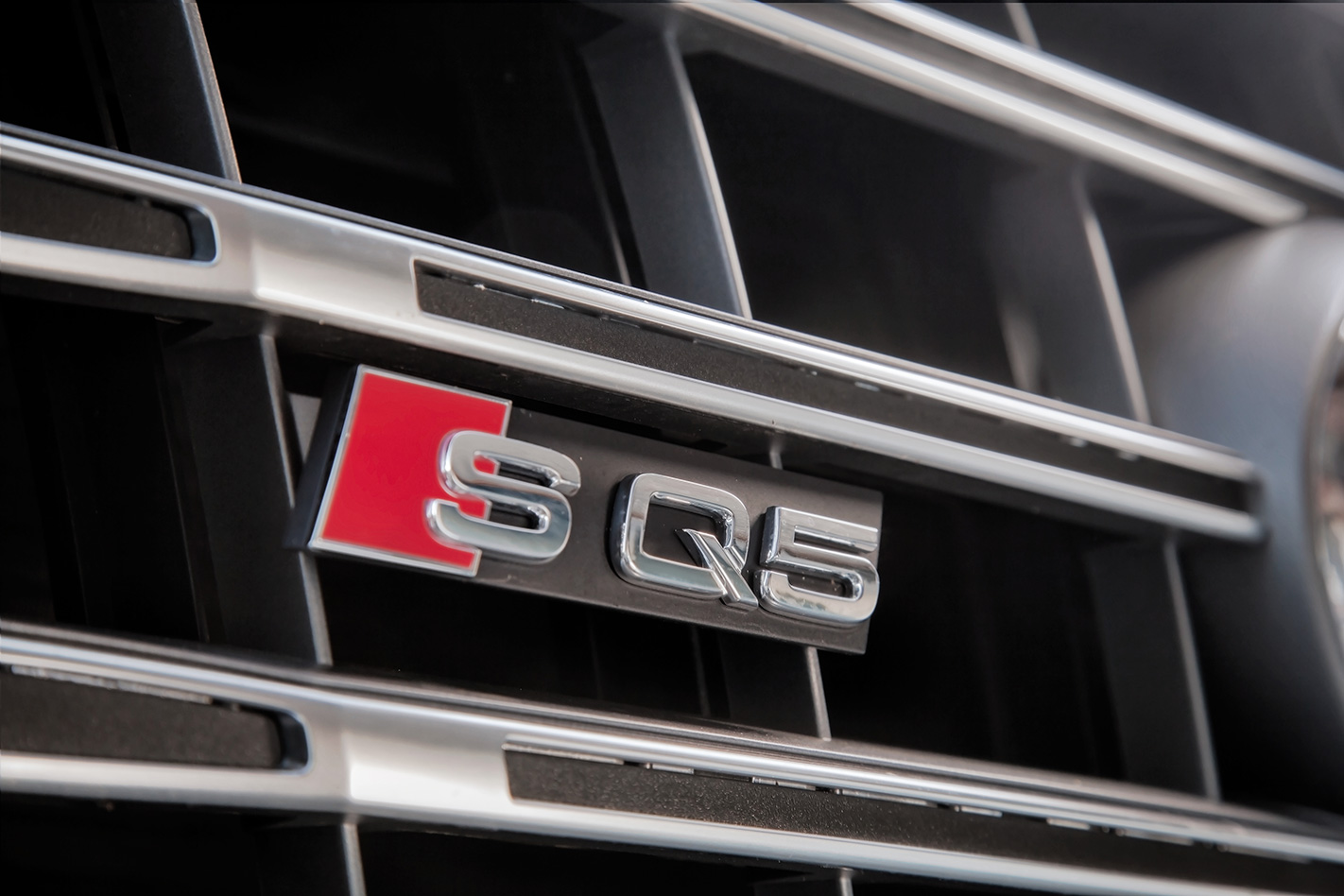
And it lobs into showroom wearing the title of World’s Fastest Diesel “Production-Ready” SUV – or SUV built off a regular assembly line rather than an aftermarket tuning house – says it maker.
You can debate the last claim in the semantics – it’s actually the world’s SUV. And the number Audi attaches to that is a 0-100km/h sprint in just 5.1sec.
That’s proper muscle car pace, some two-tenths quicker than BMW’s oiler benchmark, the mighty triple-turbodiesel X6 M50d ($157K), and about three-tenths slower than Porsche’s petrol-V8-powered Cayenne Turbo S that asks for a quarter mil. The SQ5 wants for just $89,400 in basic form.
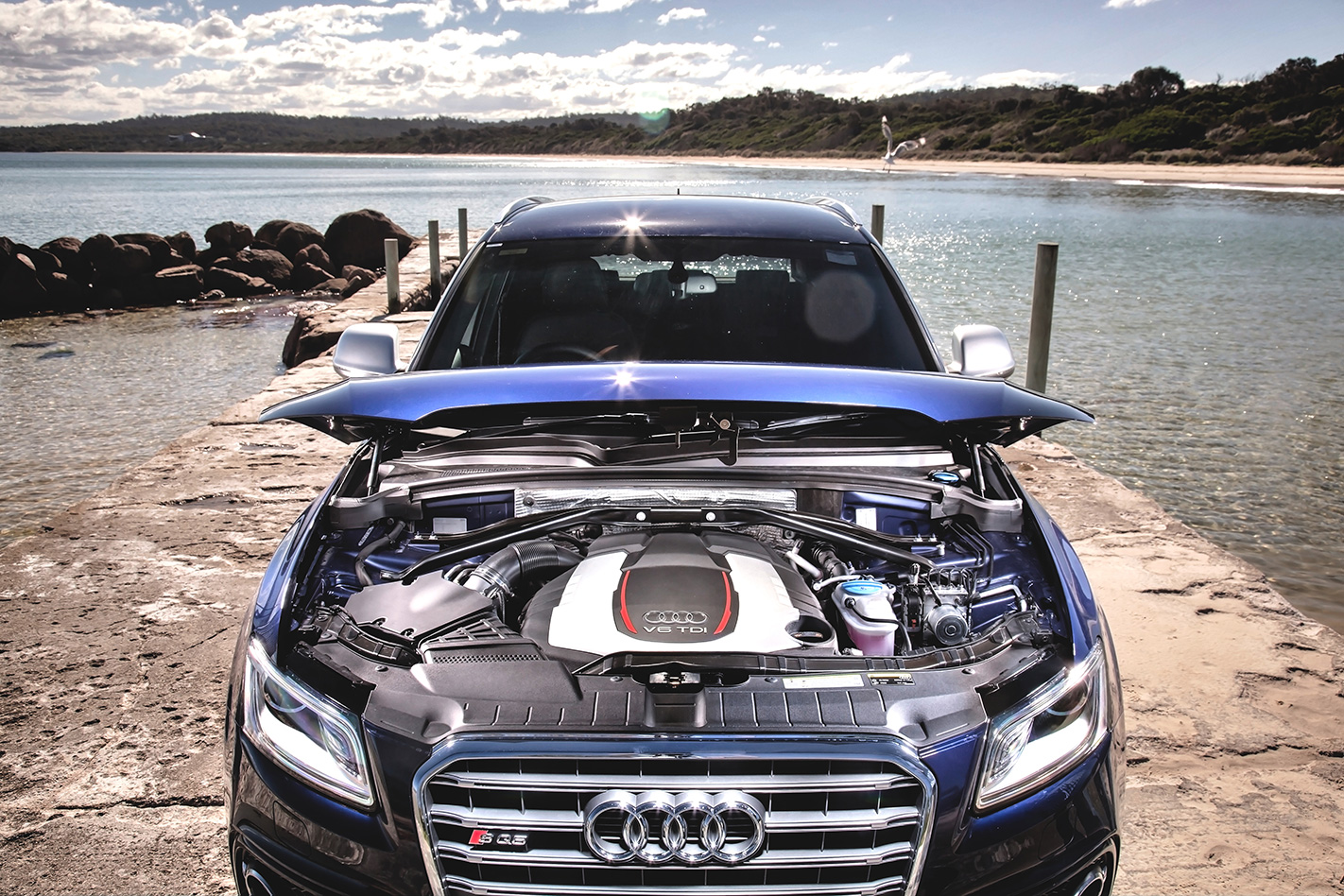
Examine the details the you’ll differences in compression (16.8:1 up from 16.0:1), piston/head/inlet port designs, new eight-port piezo fuel injectors, improved volumetric efficiency and other revisions to fuel, oil and cooling systems.
The sequentially turbocharged six certainly produces the numbers, with 230kW between 3900 and 4500rpm and a whopping 650Nm from 1450 through to 2800rpm. But the real brilliance is in the engine’s character – how it feels and sounds – that’s quite revolutionary and certain to transform many oiler-fobes who try it into diesel converts.
These actuators are proper hardware, too – not merely electronic-based synthesisers – that enhance and amplify the exhaust note both inside and outside the vehicle. Together, the high engine speed and bold note eradicates the diesel engine’s most unsatisfying traits, which is no small step forward for a diesel keen on gaining performance acceptance and legitimacy.
Audi opted for a proper (stall-convertor equipped) ‘tiptronic’ automatic over its more new-school twin-clutch automated manual ‘s tronic’ smarts. And it’s a beautiful marriage with the BiTurbo engine.
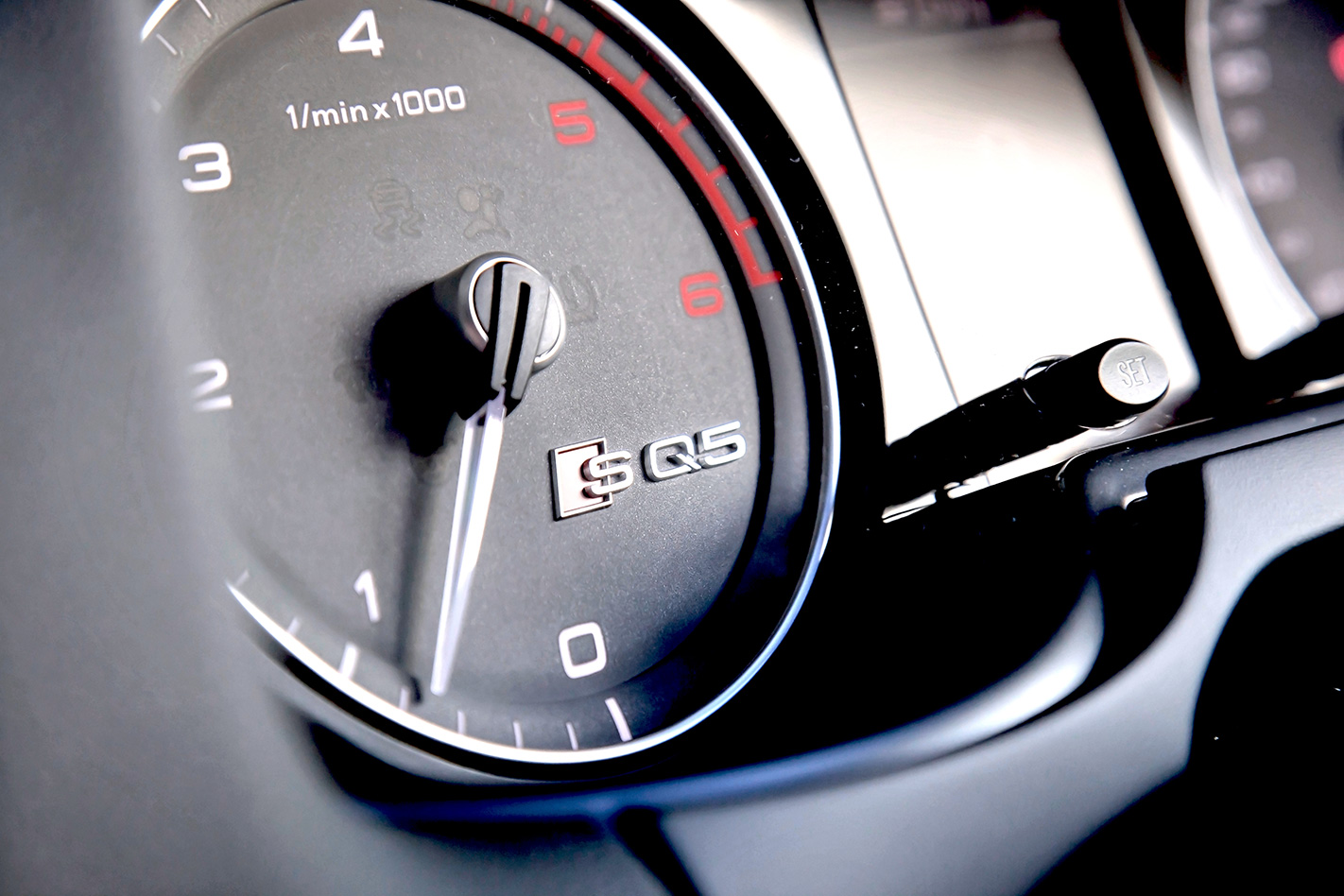
That a two-tonne, full-fruit, 5.1-second-quick prospect – and one that’ll stretch its legs to a 250km/h Vmax – can return such frugality is quite frankly amazing. The sign of very new times.
The auto is beautifully smooth at low speed and the BiTurbo urgently keen to climb the torque curve, and combined their response time to driver input is quicker than many petrol-DSG combos (particularly against VAG’s smaller capacity stuff).
On the move, the auto kicks down crisply and the SQ5 mans the battles stations almost instantaneously regardless of rpm or road speed. Urban crawl, highway cruising or back road punting, it’s a formidably potent powertrain combination. So far, so impressive.
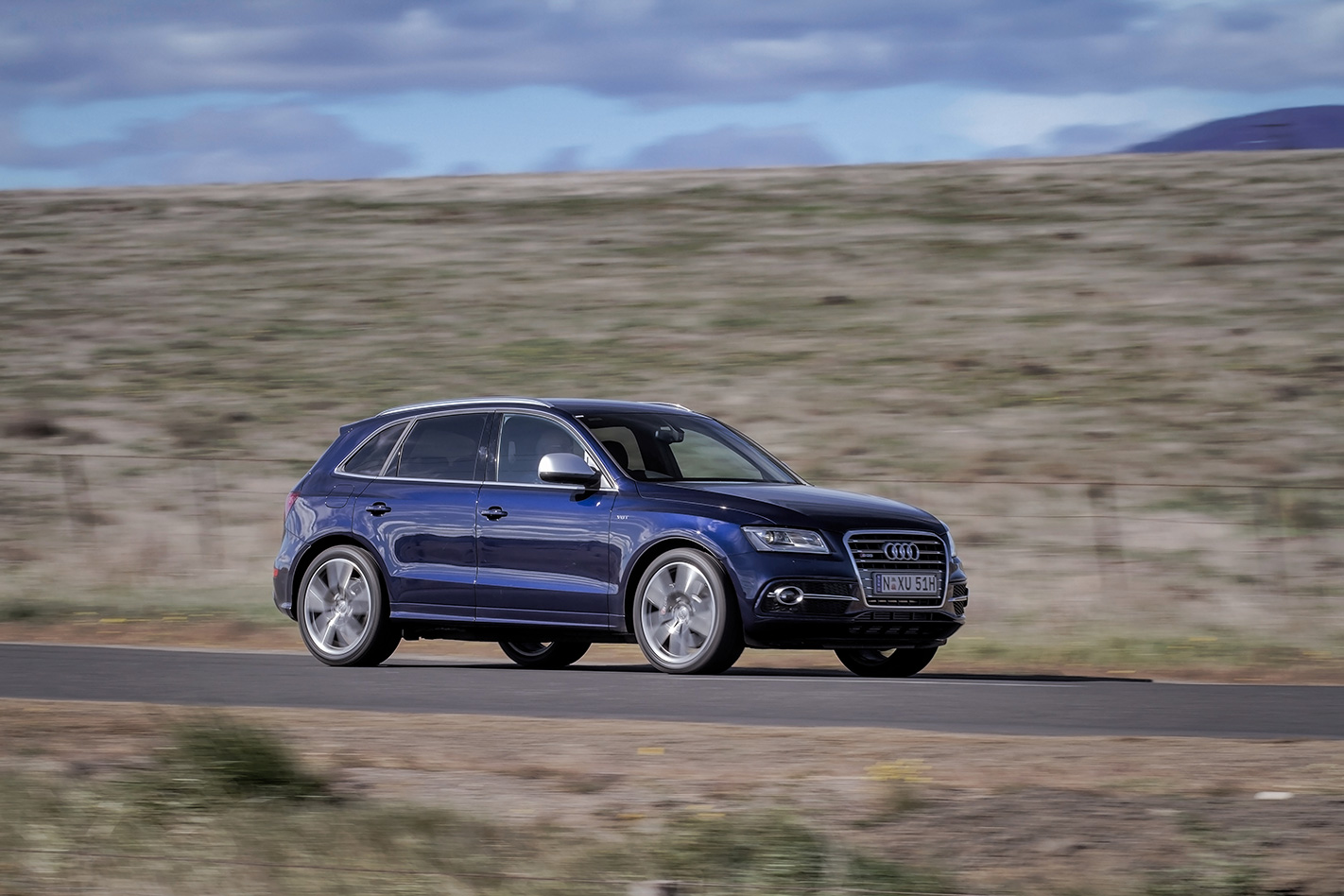
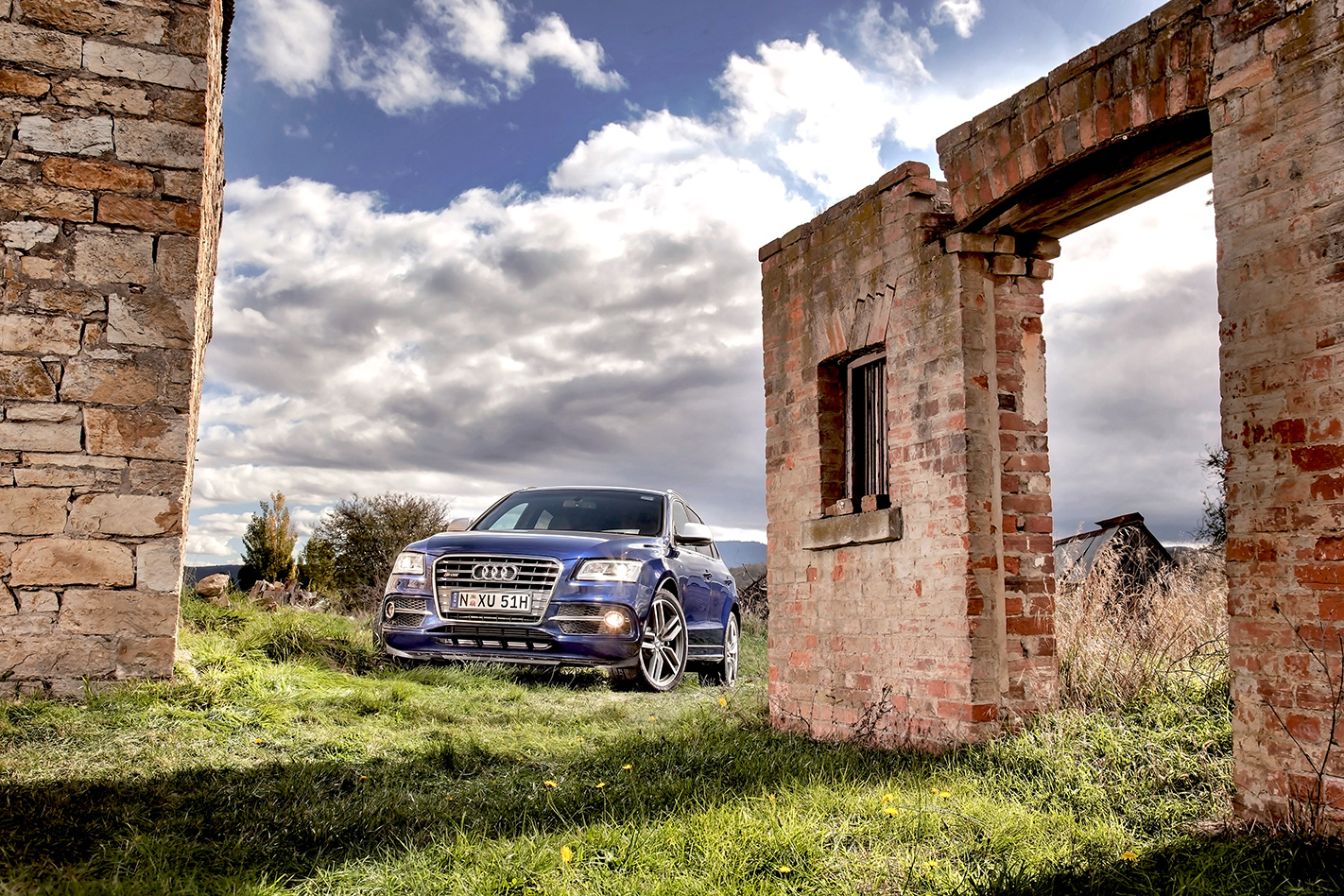
But the ‘S’ hauler adopts wider front and rear tracks, a 30mm lower ride height and firmer spring and damper settings that, unlike the adaptive set-ups in regular Q5s, makes do with essentially one Dynamic Mode setting (Drive Select only effects engine, trans and steering mapping). T
he SQ5 then stakes it claims for sealed road prowess by plying broad 255/45 rubber loaded on 20-inch alloys … unless you foot extra for the optional 21-inch rims and 40-series tyres as fitted to our test car. Brakes are not insignificant 380mm fronts and 330mm rears clamped with oversized two-pot calipers all round.
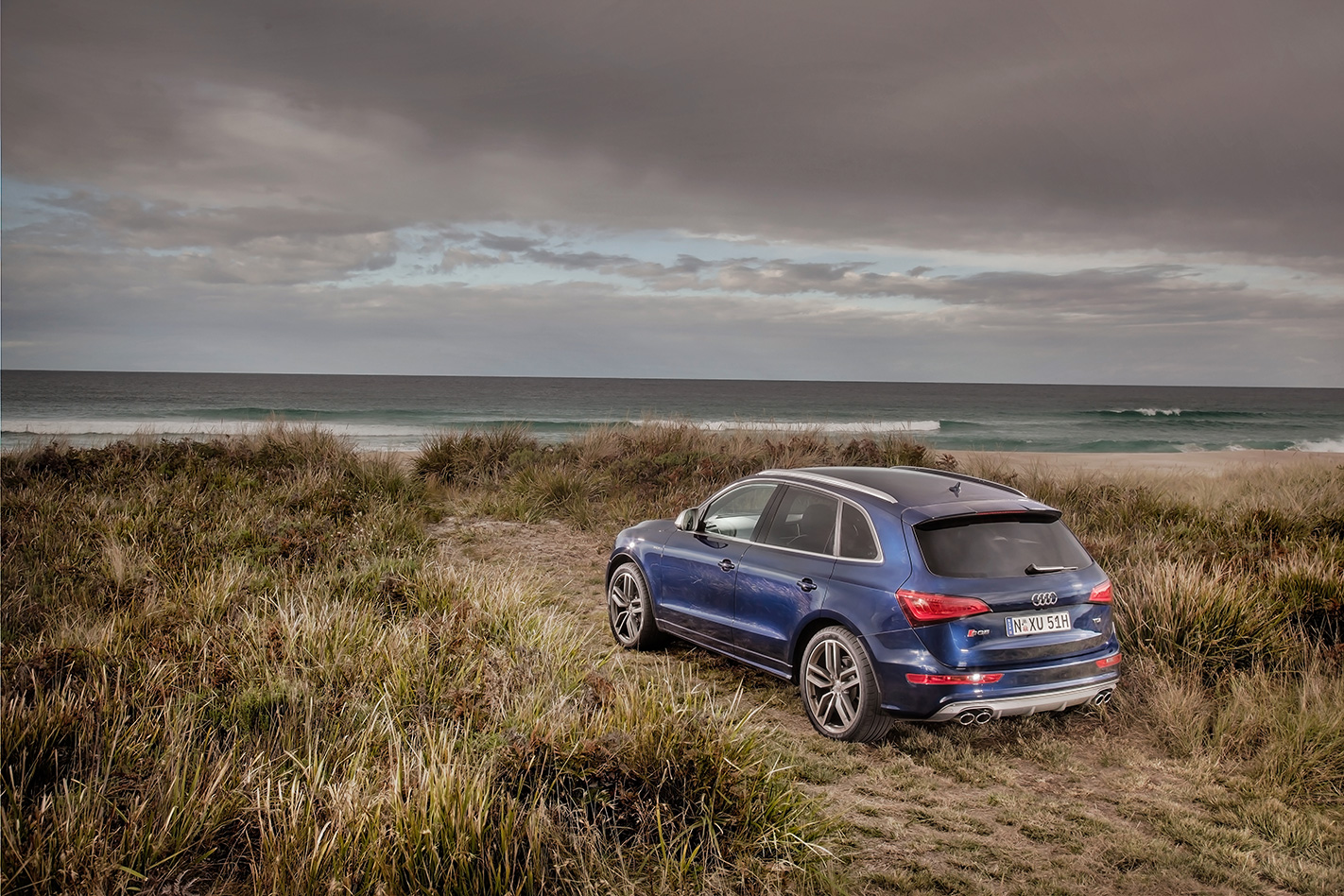
The handling package goes a very long way in imbuing bona-fide agility – or at least as much agility as two-tonnes of glass, metal and rubber mass allows. There’s a proper edge to how the chassis connects with the corners below and the road-holding grip is properly robust.
It sits flat and surefooted in the mid-corner, with much less body roll and none of the malaise-like vagueness that’s usually par for the SUV course. It’s a good communicator.
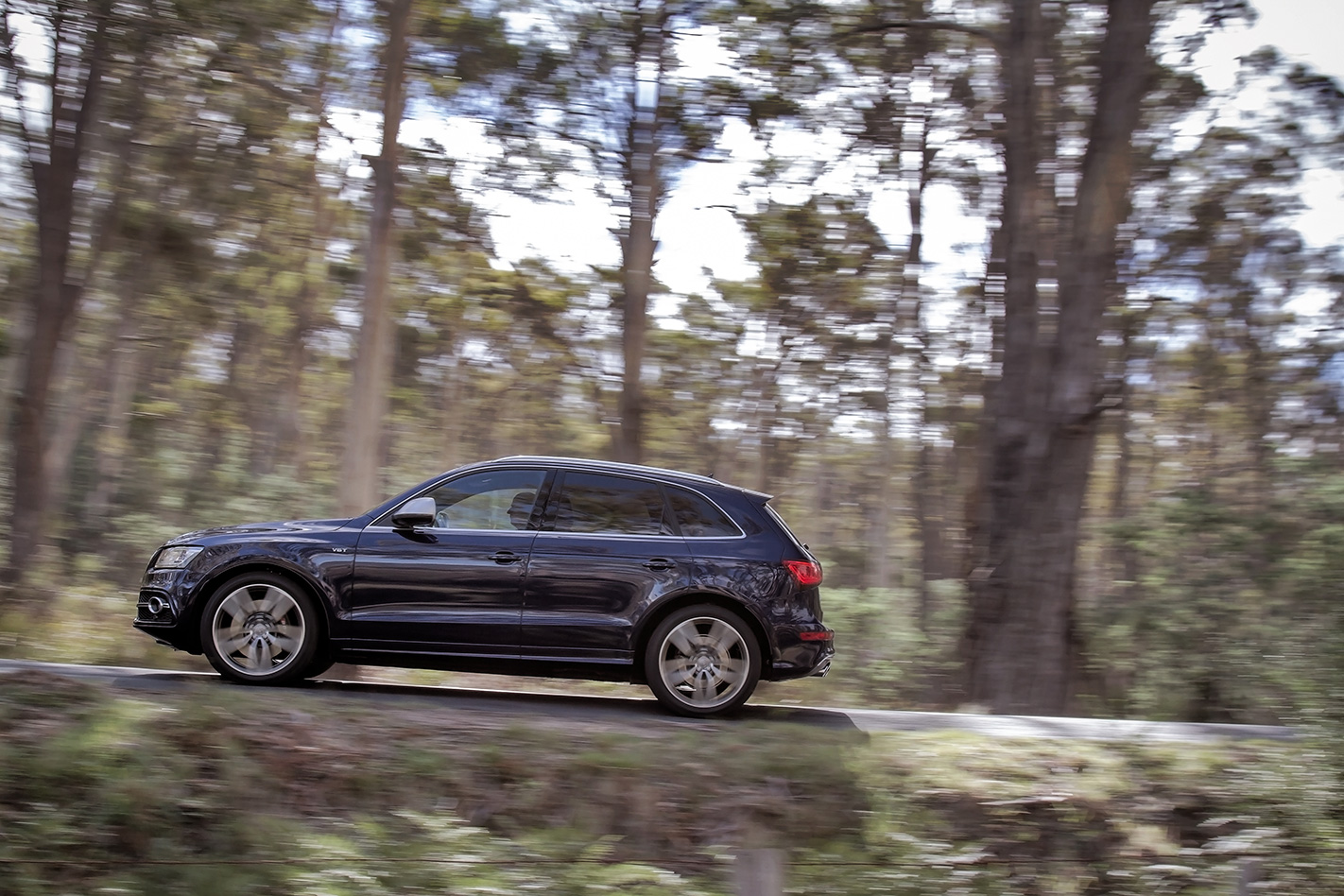
The jury is out, though, on the cost optional electromechancial Dynamic Steering system. It can vary the ratio between loosely comfortable 1:16 and sportingly quick 1:14, using either linear or non-linear (variable) programmes, depending on how you set it using Drive Select.
Sounds complicated and unnecessary, right? Perhaps. By it works so transparently that you don’t really notice it’s there quietly doing whatever clever-dickery it does. A similar system is fitted to the current RS4 Avant where, perhaps due to its relatively more hard-core nature, the system’s adjustments are more evident. And annoying.
Take ride comfort. You’d expect the trade-off of the grip provided by those huge licorice hoops to come in the form of harshness and brittle ride quality. There’s nothing of the sort.
The SQ5’s balance of ride and handling is extemporary – a real eye-opener. And while bit of added tyre roar is expected, the SQ5’s default setting in most driving condition is very much one of quiet, polished comfort and hassle-free A-to-B transit. It’s case of oodles of performance and comfort, rather than approaching either – or both – simply half-cocked or half-hearted.
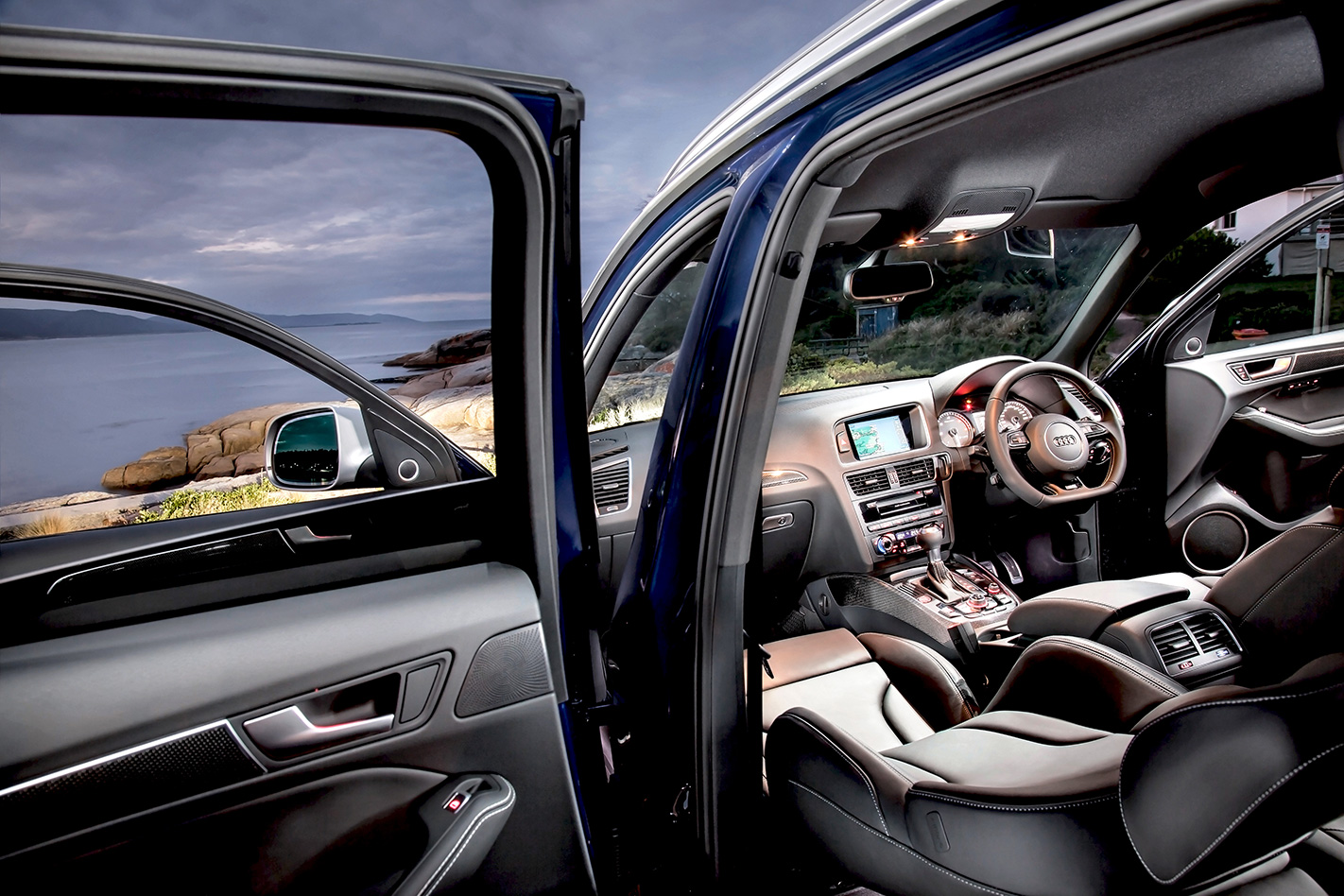
Inside, again, it more about a lift in the details than about big, broad stroke cheesiness. The flat-bottomed tiller and the ‘S’ sport seats and transmission selector knob are the only obvious concessions to sportiness, though necessary ones at that.
The rest of the changes are down to range-topping nicties such as Pearl Nappa and Alacantara trim, raised ‘3D’ instrumentation, high-spec infotainment/nav and a 10-speaker, 180-watt audio system is in for the bargain.
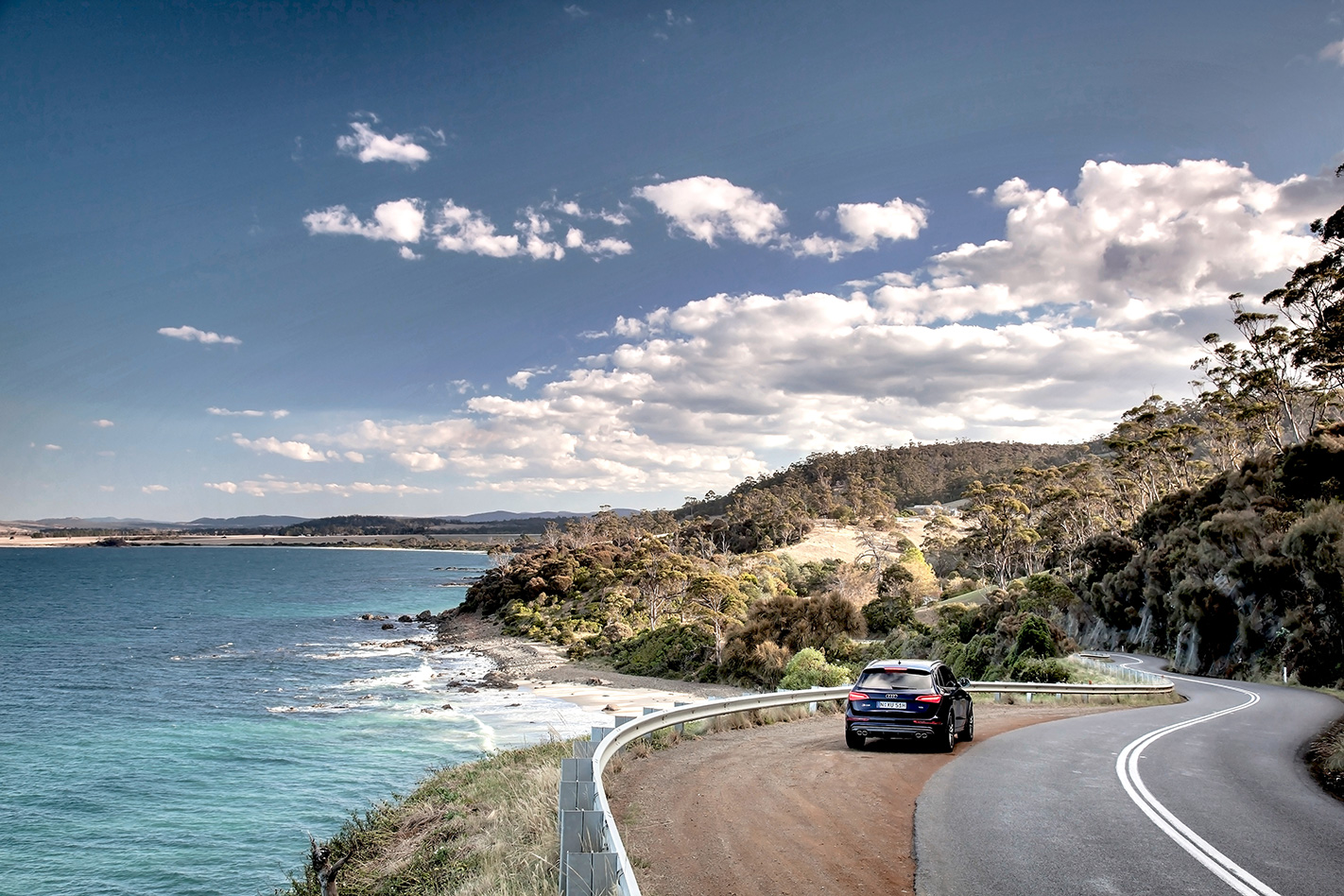
Like other Q5s, the second row seating has 100mm of fore-aft adjustment (even when it’s split 60/40), there’s still a full 540 litres of cargo area (seats up), the electric tailgate can be programmed for height adjustment, the ESP system has different modes calibrated for both on and off-road and, while we’re getting dirty, hill descent control is standard fitment.
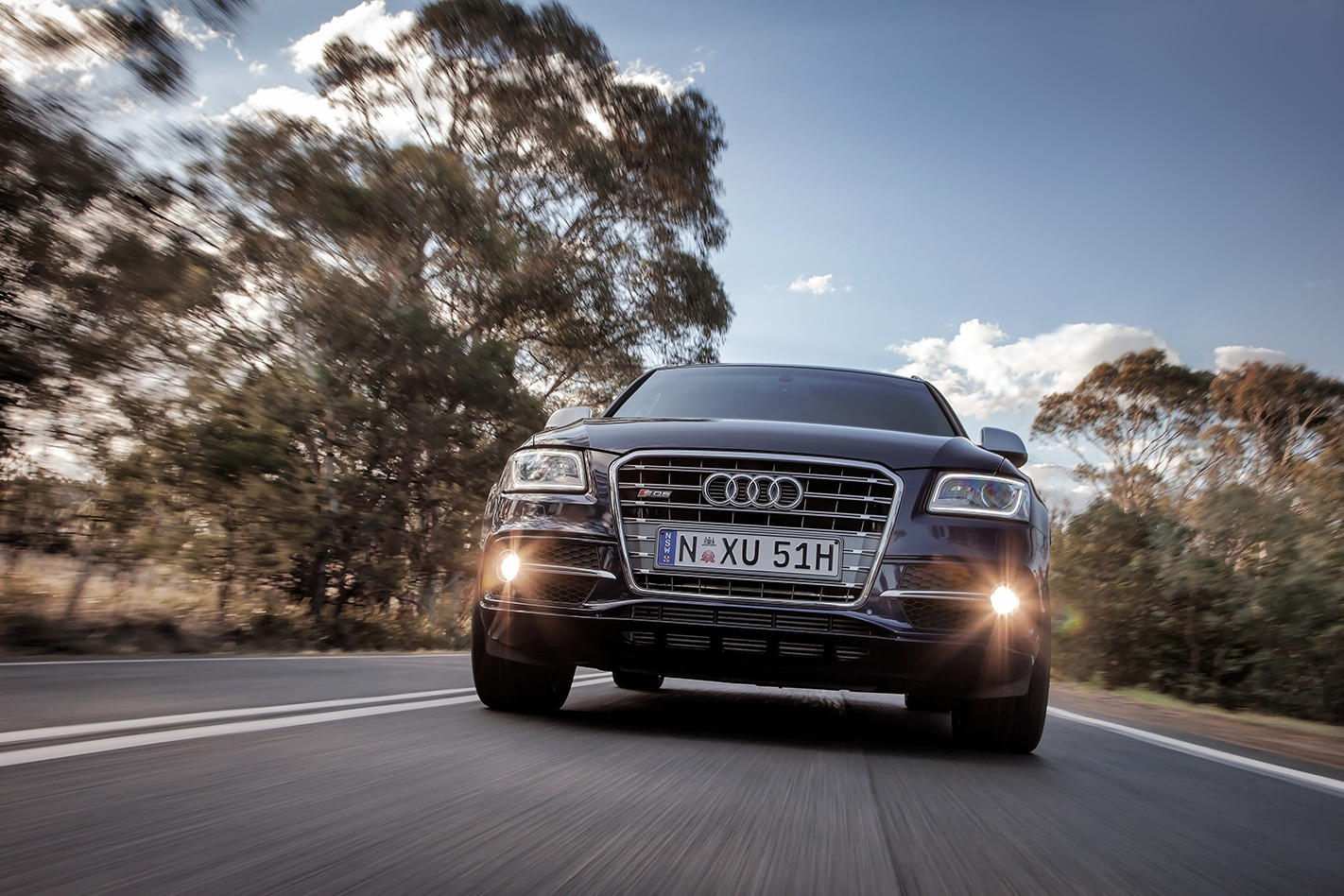
Regardless, the base SQ5 on 21s (which adds $3600), for a total ask of $93K neat, would be our choice. But that said, if you’re after a proper performance SUV for anything like normal money, there only is one choice right now.
And continues to look that way, at least, until the smaller, faster RSQ3 arrives.
Audi SQ5 specs: BODY: 5-door, 5-seat wagon DRIVE: all wheels ENGINE: 90deg V6, DOHC, 24v, turbodiesel MATERIAL: alloy block/alloy head BORE/STROKE: 83.0 x 91.4mm CAPACITY: 2967cc COMPRESSION: 16.8:1 POWER: 230kW @ 3900-4500rpm TORQUE: 650Nm @ 1450-2800rpm REDLINE/CUT: 3900rpm/5200rpm KERB WEIGHT: 1995kg POWER-TO-WEIGHT: 115kW/tonne TRANSMISSION: 8-speed auto RATIOS: 4.71/3.14/2.11/1.67/1.29/1.00/0.84/0.67 FINAL DRIVE: 3.20 SUSPENSION: multi-links, coil springs, anti-roll bar (f&r) LENGTH/WIDTH/HEIGHT: 4644/1911/1624mm WHEELBASE: 2813mm TRACKS: (f/r) 1638/1632mm STEERING: electric rack and pinion BRAKES: 380mm ventilated discs, two-piston calipers (f); 330mm discs, two-piston calipers (r), ABS, EBD, ESC WHEELS: 20 x 8.5-inch (f&r), alloy TYRES: Dunlop SP Sport Maxx GT SIZE: 255/45 R20 (f&r) PRICE: $89,400
Before you order a Renault Sport Clio, do yourself a big favour and get your mitts on a Peugeot 208 GTi.
The first Peugeot GTi to be sold here (from August) since the 206 GTi 180 was pensioned off in 2007, the 208 follows a string of Pugs wearing those famous three letters that didn’t quite live up to the benchmark set by the wonderful, feisty mid-’80s 205.
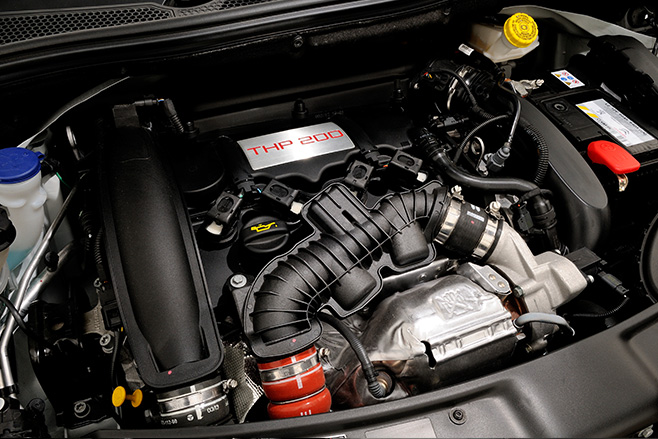
So can the 208 bring GTi redemption? Like its arch-rival Clio, the 208 GTi boasts 147kW 1.6-litre turbo four power under its equally frumpy bonnet. The Pug, however, has a six-speed manual, less weight and fewer doors than the five-door, dual-clutch-only Renault.
Renault Clio RS v Ford Fiesta ST v VW Polo GTI v Peugeot 208 GTi
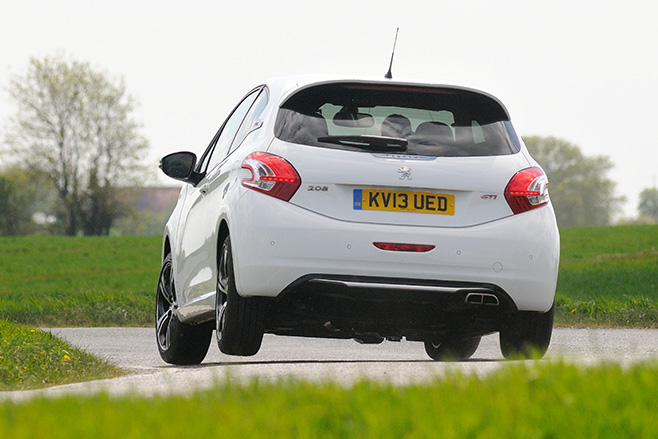
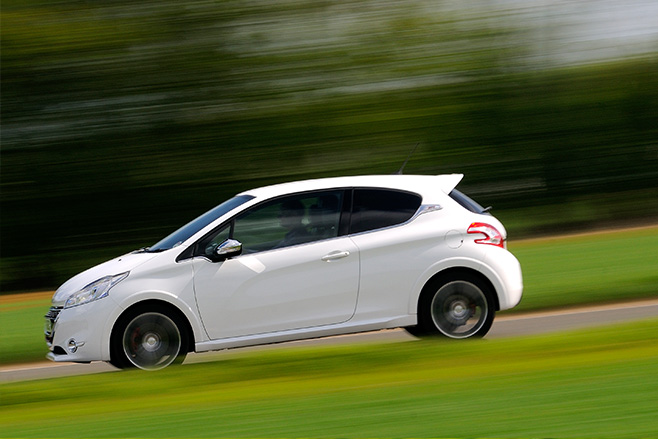
Not that the Pug advertises its pace all that much on the outside. You could say it’s subtle and sophisticated, but look closely and those ‘extended wheelarches’ look glued-on with double-sided tape. And the 17-inch alloys, while being elaborate in design, appear way too small.
The bodykit, too, which includes our test car’s optional nose-bleed lower red vane, looks like an afterthought compared to the more integrated add-ons adorning other compact hot hatch suspects. And from the rear, this anonymous white hatch could easily be mistaken for a Pom’s hire car somewhere in Spain.
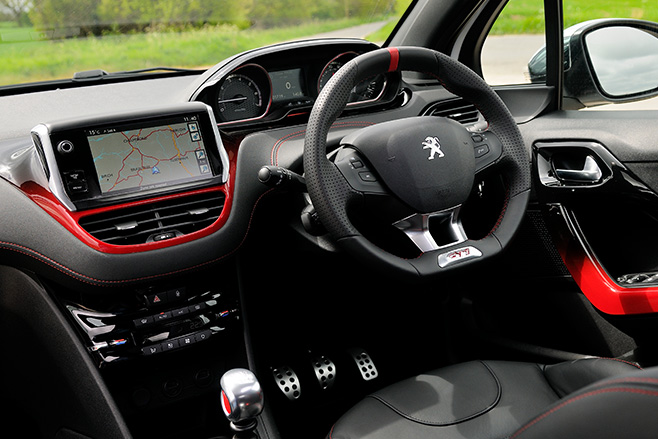
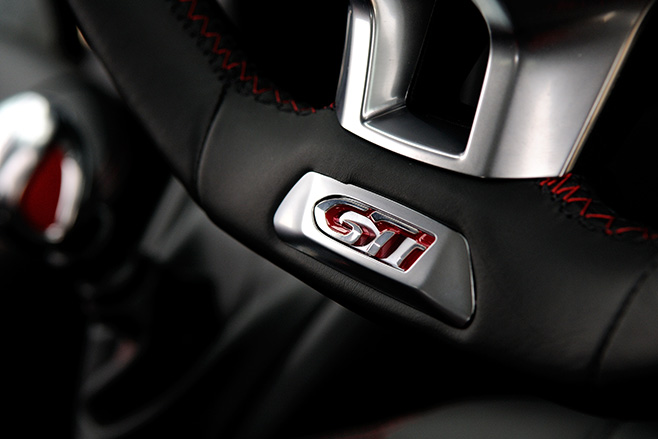
Essential to the sporting ensemble inside is the traditional red stitching, red centre-marker on the leather wheel and the bright red LED that borders the dials that can be switched on or off at the touch of a button. The carbon-patterned instruments are carried over from the concept car and look cool, but you’ll have trouble reading them because the driving position – much like in Peugeot’s RCZ – is an afterthought. Typically French, then…
It’s almost as if the 208 was developed without a performance model in mind, because the steering column doesn’t offer enough adjustment, so you feel like you’re holding the tiny steering wheel too close to your chest once you’ve set the pedals right. Adjust the wheel, and then the pedals are too close. Taller drivers who favour longer-haul, ergonomic comfort need not apply.
The power delivery from the 1.6 turbo – the same PSA donk used in the RCZ, DS3 and Mini – isn’t brutal so you’ll need to drop a gear for instant punch, but it does deliver the goods in a progressive and linear manner. It’s a shame that the GTi’s engine doesn’t have the perky nature that it does in the Mini, where it’s raspy note and soothing burble on overrun make you want to mash the throttle over and over just to hear it again.
The Pug seems too conservative for such shenanigans. Still, the bigger brakes (302mm discs up front!) let you approach corners with gusto, and while the electric steering isn’t super quick, it has great progression despite turn-in not being quite as sharp as other hot hatches out there, such as the Clio.
That doesn’t mean it’s not capable around corners. An extra 10mm front and 20mm rear tracks over the regular 208 endows the GTi with slightly bolder cornering purpose, while its lighter weight encourages you to throw it into curves, where it’s easy to get the nose in and mash the loud pedal on the way out. That said, you still have to modulate the throttle to avoid it all going up in a cloud of smoke – literally. A proper mechanical diff would solve this.
Trouble is, the existence of the Ford Fiesta ST means that both French hatches have their work cut-out for them. And, PR peeps at Peugeot must wish that the 205 GTi never existed, as the glasses become increasingly rose-coloured for the new car’s ancestor.
Peugeot 205 GTI vs 208 GTI 30th Anniversary
For modern hatches, though, things have moved on: lift-off oversteer is not a trait desired by owners these days, sadly. However, balls-out, corner carving is where compact hot hatchdom has been heading since the Clio 197s, Fiesta XR4s and like lobbed onto the small car scene. And right here is where the Peugeot has missed a huge slice of mojo.
While that’s lamentable, it also gives the Pug a niche offering in the small hatch segment as a comfortable, competent performer. Its understated looks could be viewed as a Q-car boon rather than undesired blandness and anonymity, while the more comfort-focused cabin makes rivals such as the Clio look childish and imply that perhaps the money ran out at Ford before they got to the Fiesta ST’s dash.
On the other hand, take a more critical view and you could say the 208 simply hasn’t been honed with same depth and skill as many of its rivals, and that the Pug has a broadly pitched tent rather than a definitive goal, denying it a sharp, focussed role as pure hot hatch. However rewarding and entertaining it is to punt, the 208 GTi falls a little short of its legendary ’80s predecessor’s legacy. Though it’s far from a dud.
Rating: 7.5 stars Pros: Nimble, lively handling, ride comfort, rich interior Cons: Not as hot or focussed as we’d hoped, crook bodykit
Peugeot 208 GTi Specs: Body: 3-door, 5-seat hatch Drive: front wheels Engine: inline four, DOHC, 16v, turbo Material: alloy head/iron block Bore/stroke: 77.0 x 85.8mm Capacity: 1598cc Compression: 10.5:1 Power: 147kW @ 5800rpm Torque: 275Nm @ 1700-4500rpm Kerb weight: 1085kg Power to weight: 135kW/tonne Transmission: 6-speed manual Suspension: struts, A-arms, coil springs, anti-roll bar (f), torsion beam, coil springs, anti-roll bar (r) Length/width/height: 3962/1739/1460mm Wheelbase: 2538mm Tracks (F/R): 1481/1487mm Steering: electric rack and pinion Brakes: 302mm ventilated discs ??? piston calipers (f), 249mm discs single-piston calipers (r), ABS, EBA, ASR, ESP Wheels: 17×7-inch, alloy Tyres: Continental ContiSportContact 3 Size: 205/45 R17 Price: $29,990 (estimated)
Mercedes-Benz has no excuses for not being at the top of the four-seat convertible game. It’s been at it for more than 100 years and its 2014 E500 Cabriolet is now cleaner looking, faster, more economical and far, far safer.
The outgoing E-Class Cabriolet fan barely complained about any of those areas, but Mercedes has just finished the mid-life upgrade of E-Class sedan and is about to deliver an all-new S-Class. The upgraded technology from both exercises was just lying about at Sindelfingen and it mostly fitted quite easily into the E500 Cabriolet.
There was the smoother grille and air intakes of the E-Class sedan, the optional full LED head and tail lights, a raft of new engines (particularly four-cylinder engines) and new materials throughout the interior. Perhaps its most important new technical feature is Benz’s brilliant Stereo Multi-Purpose Camera, which fits inside the windscreen near the rear-view mirror and feeds its 3D data into the stream of other sensor information delivered to the car’s all-calculating computer.
This upgrade gives the car the ability to see risks its driver has ignored, miscalculated or been distracted from and the kinds of safety tricks this info can be used for are only limited by the imagination of Benz’s engineers. The 3D map covers 50 metres in front and to the sides of the car and the data from the 500 metre range of its radar cruise control is also added to the information stream and Benz admits it is only scratching the surface of how to use this information.
From here, it’s all just software coding to brake the car to stop before a problem, to use its electro-hydraulic steering to veer around a problem or a combination of both. With the engine, gearbox, brakes, skid-control systems, airbag and seat belt systems and steering all managed by computer, Benz believes the Stereo Multi Purpose Camera was the missing link in a massive reduction in crashes, large and small.
But while Mercedes-Benz is clearly hinting that this was a facelift born out of convenience rather than necessity, there has also been the provocation of BMW’s upcoming 4-Series Cabriolet as well.
One counterpoint to that the 4-Series is actually just what BMW is now calling the next 3-Series Cabrio, but to counter that, you could just as easily argue that the E-Class Cabriolet is actually a C-Class with a convertible E-Class body design on top of it. Because it is.
It is a C-Class chassis with a lot of underbody bracing and reinforcing, to be fair, and it gives every impression on the road of being from the larger E-Class family.
There are multi-link suspension units at both ends, large brakes, a seven-speed automatic transmission and rear-wheel drive, but the standout feature of the E500 Cabriolet is Benz’s magnificent 4.4-litre twin-turbo V8.
Designed to replace the old, silken, strong atmo V8, the 4.4-litre uses a big bore and a short stroke to deliver an absolutely fuss-free 300kW and 600Nm of torque.
But it’s not just about the numbers. It’s about the delivery. There is no point in its range where it’s weak. There is nowhere that it can be caught doing something soft or harsh. It’s just strong, with it peak torque arriving at 1600rpm and remaining at that level until 4750rpm, then the power peak arrives at 5000rpm and stays there until 5750rpm. Effectively, it means the E500 Cabriolet can deliver huge strength whenever you need it. All it takes is a gentle prod on the gas.
But when you succumb to the temptation of a far-less gentle prod on the gas, the E500 Cabriolet still maintains its air of dignity, even while its exhaust is delivering its own air of aggression.
The numbers suggest it hits 100km/h in 4.9 seconds (a tenth of a second slower than the near-identical E500 Coupe) and goes on to hit a limited 250km/h, but that’s nothing like the whole story. It hits its speed limiter in fifth, sixth and seventh gears and, if anything, feels as though it accelerates even harder than that once its rear tyres hook up.
Its mid-range strength is phenomenal and makes you wonder if anybody really needs an AMG. Benz must have wondered the same thing, because they won’t make an AMG version, so this is as fast as it will get.
The ride and the handling package feels a little old-school Benz, despite Mercedes trumpeting the car’s new-school handling developments. There is grip and there is stability and there is a rock solid feel on any road, at any speed (including its top speed), but there isn’t a lot of involvement. You might always step out of it feeling fresh from the quiet cabin and the quality seats and the terrific ride, but you won’t come out buzzing from the experience.
The roof has seven layers of cloth and tucks away (at up to 40km/h) inside a 390 litre boot. One of the key evolutions is that the unsightly-but-effective Air Cap can now be switched to an automatic mode. That will lift it from its casing (across the top of the windscreen) up by itself at 40km/h and pull it back in at 15km/h for the sole reason of making it less unattractive at cafe-crawling speeds.
The whole package comes together much better than the old E500 Cabriolet did, though. It’s calm, it’s fast, it feels like a rock and it’s extremely comfortable, with very few weak points.
If the price of the E500 Cabrio is too much of a stretch (or its 8.9 litres/100km figure is too thirsty for its 66-litre tank) then step down to the E400 Cabriolet, with its twin-turbo V6 and 245kW and 450Nm of torque, and you won’t be losing much.
Until then, and the arrival of the 4-Series, the E500 Cabriolet is a no-brainer for a very limited market.
SPECS Bore x stroke = 92.2mm x 86.0mm Power 300kW @ 5000-5750rpm Torque 600Nm @ 1600-4750rpm Weight 1815kg Transmission seven-speed auto Suspension multi link front and rear Tyres front: 235/40 R18, rear: 255/35 R18 0-100km/h 4.9 seconds Top speed 250km/h Economy 8.9 litres/100km emissions 209 grams
It felt like yesterday: same roads, same routes, same silly speed.
We used to be driving ourselves dizzy here in trick Mitsubishi Lancer Evos and Subaru Imprezas on steroids, relatively affordable fast cars that loomed large inside our heads and on our bedroom walls.
Ten years on, however, the once untouchable four-door Japanese batmobiles are about as en vogue as the Nokia 3110 mobile phone or a Rio MP3 player. The compact crackerjacks most petrolheads embrace in 2013 still can be had with four doors, four-wheel drive and turbocharged four-cylinder engines, but they are no longer street-legal derivatives of rally-bred icons made in the Far East.
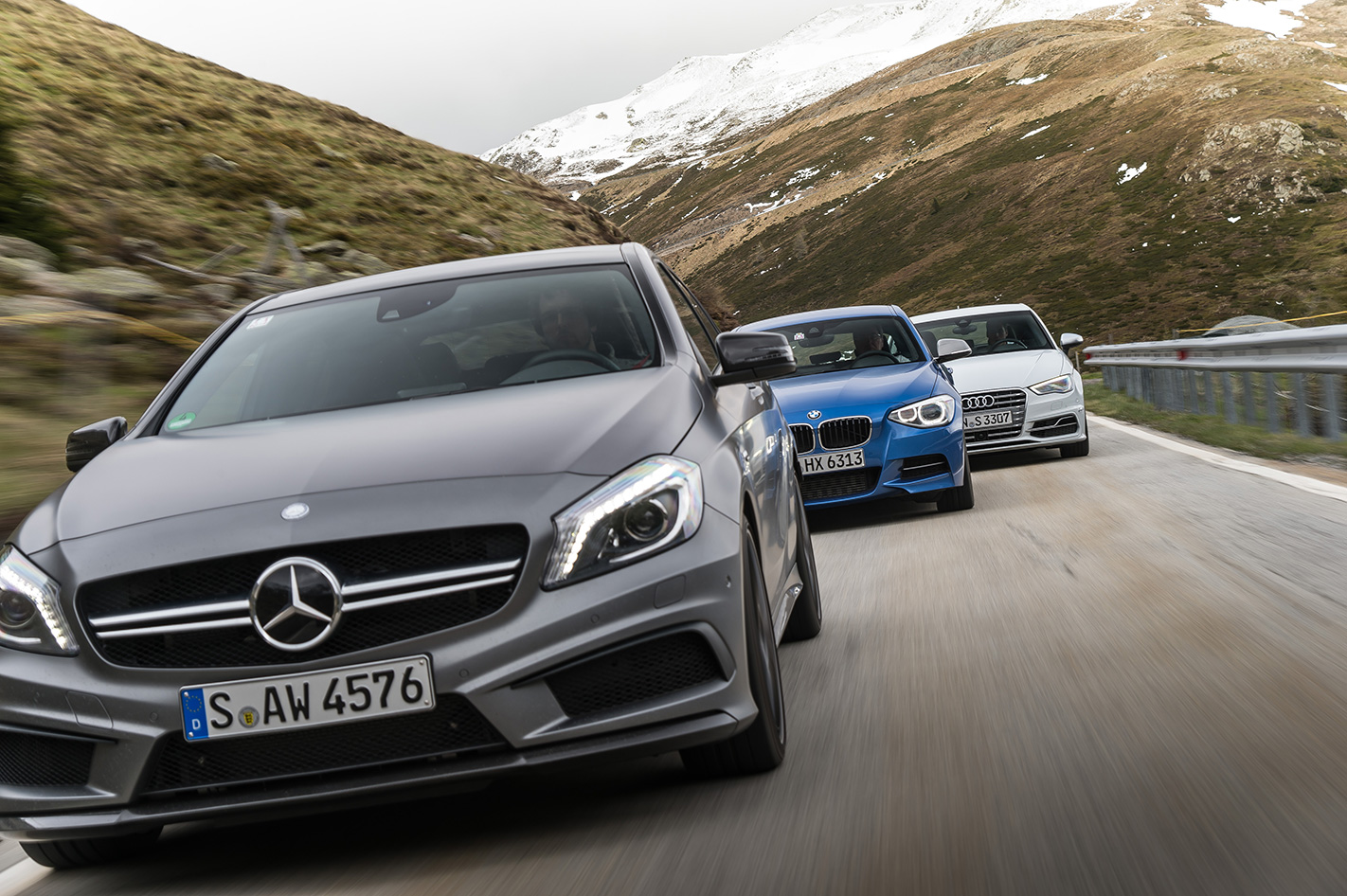
In the not too distant future, this group would have starred the 360bhp BMW M2 and the 380bhp Audi RS3, but right here and now the 360bhp Mercedes-Benz A45 AMG is facing the 300bhp S3 and the 320bhp M135i. Gentlemen, start your engines for a two-day no-holds-barred shootout on the Dolomites’ finest tyre-shredding, brake-eating turf.
Perhaps Mercedes should have known better and offered its silver fox clientele a less uncompromising A-class. One that looked friendlier, had a taller roofline and more rear headroom, not to mention a bigger boot and a softer suspension. Trouble is, this model already exists.
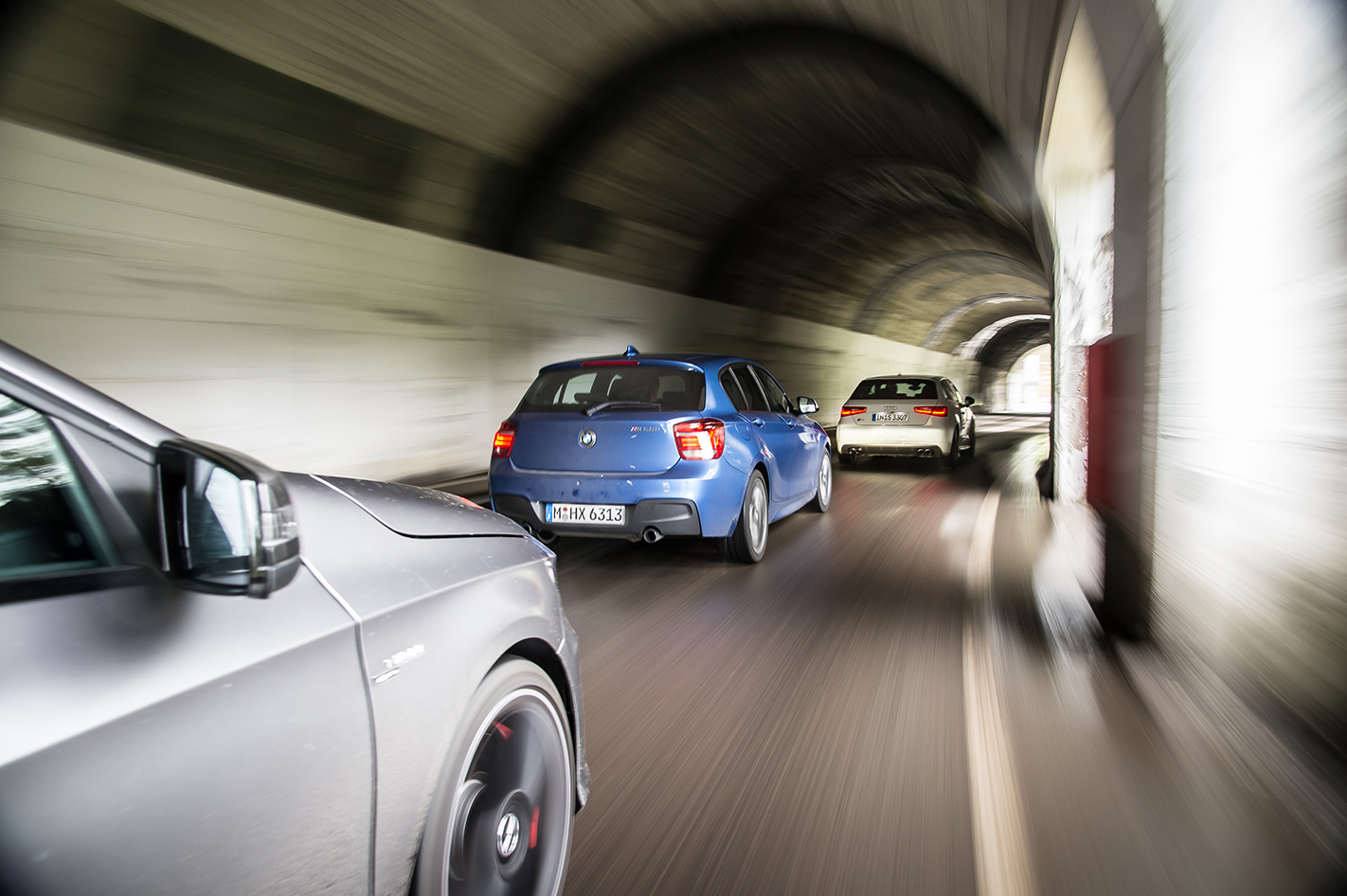
True, the new A-class should ride better, it could do with adjustable dampers, and the dual-clutch transmission has its foibles. But these flaws can be fixed, and the packaging & visibility issues pale against the Merc’s handling and roadholding virtues, its ability to surprise and delight, the sensation of being different from the pack in a way only Audis and BMWs used to be different.
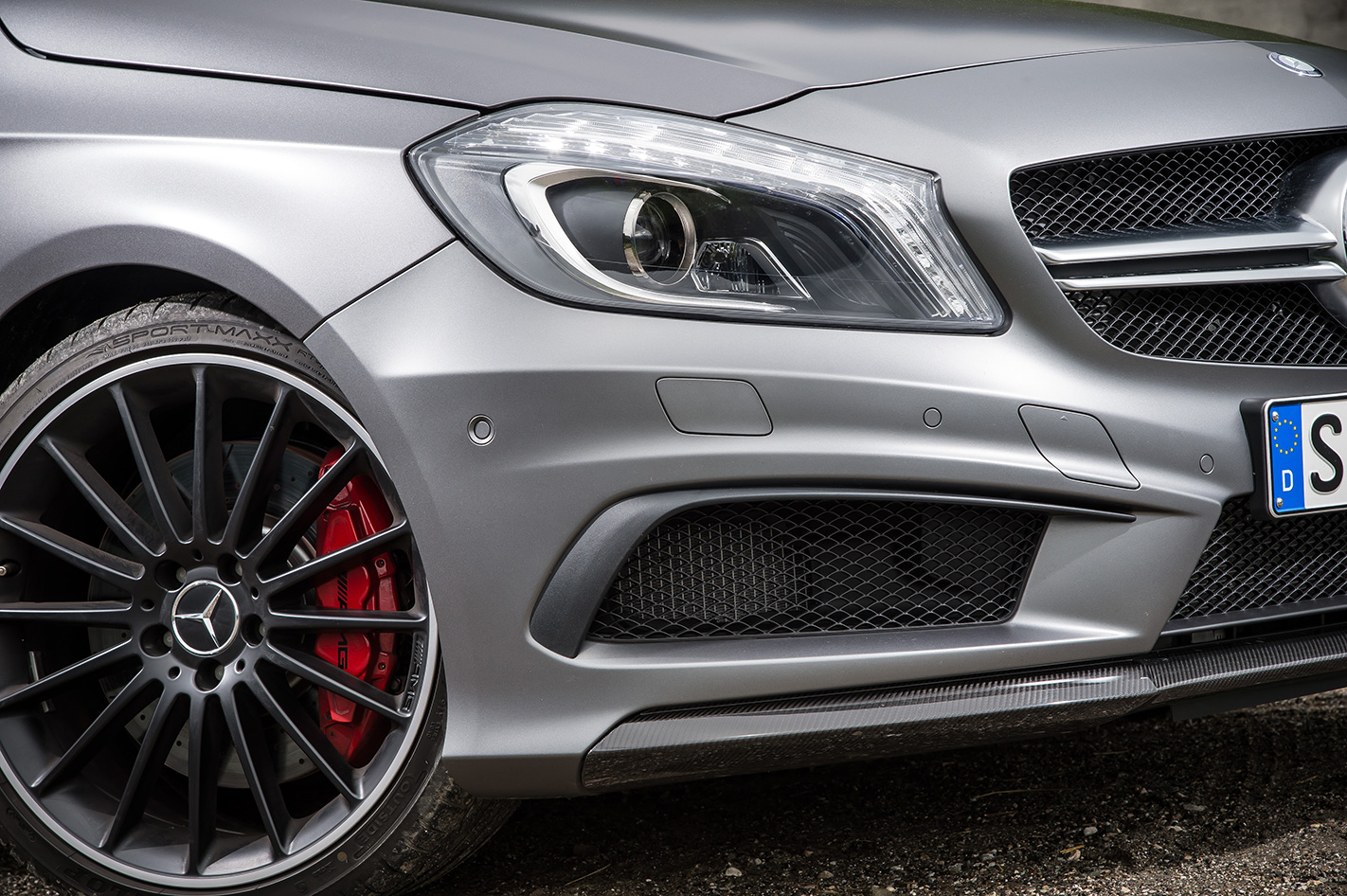
Enter the fully loaded A45 AMG test car, a compact crackerjack costing almost as much as a naked C63 AMG. It is painted matte pewter, runs on black multispoke 19in alloys with polished flanges, and shows off the optional carbon fibre body kit which costs about as much as a six week package holiday in Mallorca.
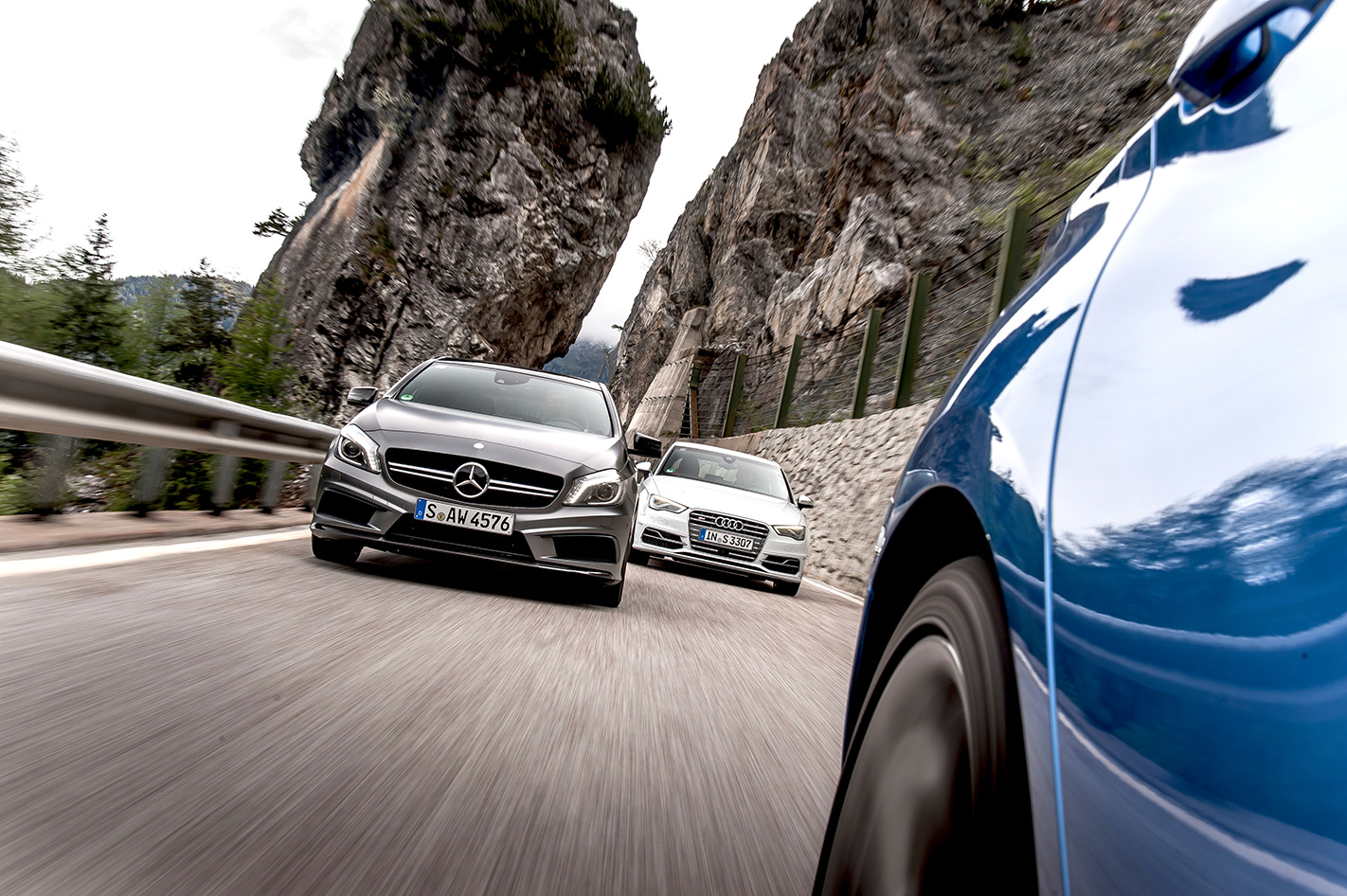
The pursed snout is however a little long in profile, and the behind may be too broad and squashed for some liking, but the proportions are striking and there is no danger of mistaking the real thing for a tarted up A180.
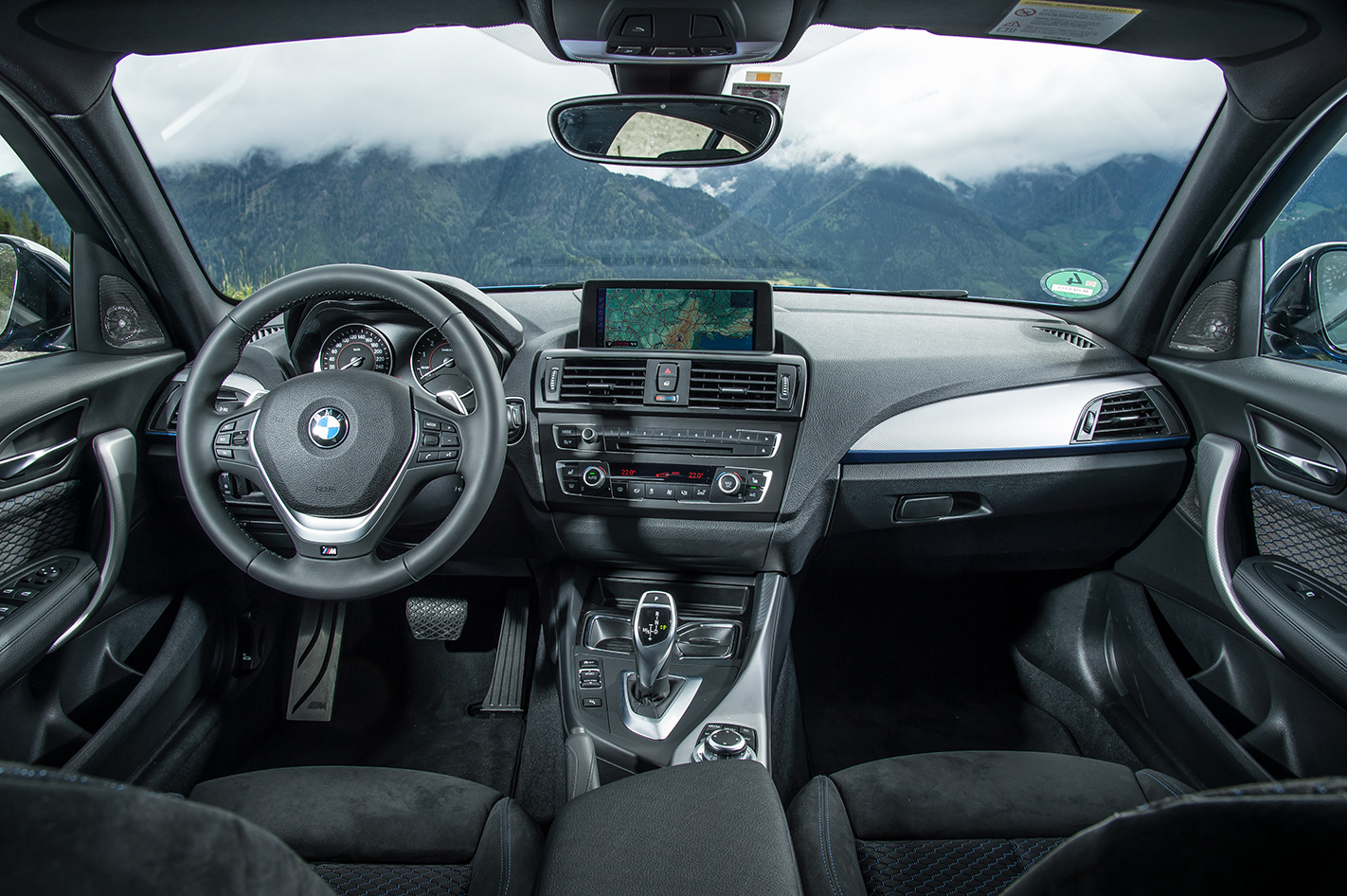
Still very much on subjective ground, we wonder how the 1series could ever be type-approved for daytime operation on public roads. Even in M sports livery, this is at best a mediocre piece of design which does not get any prettier when you climb into the sombre plastic wonderworld the cabin is best described as.
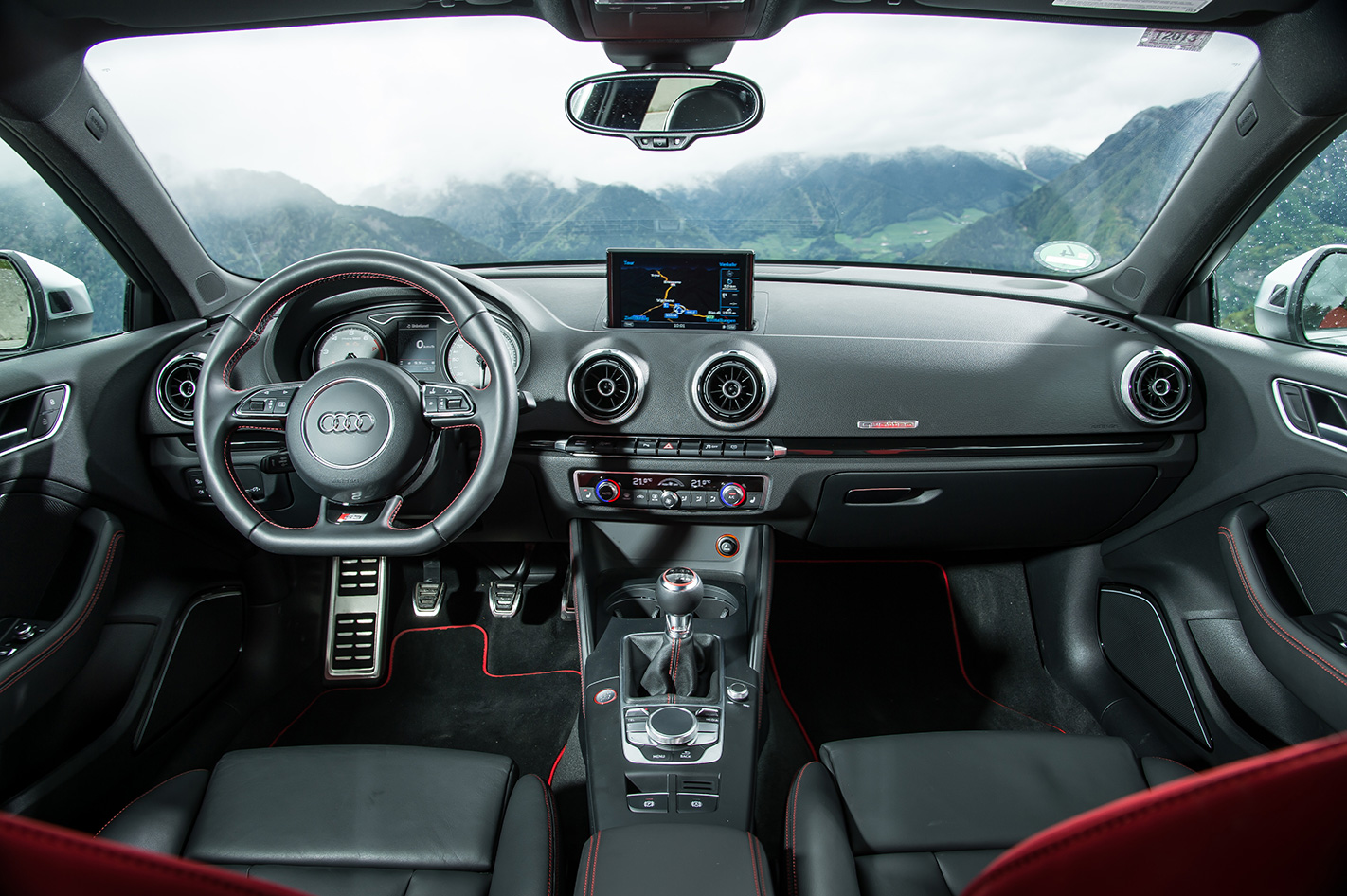
So why is the must-have appeal of the S3 still only a 7 on a scale that stretches to 10? Because the cockpit layout is rather bland, because the three-door model fails to match the visual balance of the five-door Sportback out later this year, and because the S3 looks too much like an A3 S-line with four instead of two exhaust endpipes.
Normally in June, all passes connecting Italy to Austria and Switzerland are open, but since this spring is an autumn which has been pulled forward, evidently erasing summer in the process, we had virtually the entire alps to ourselves.
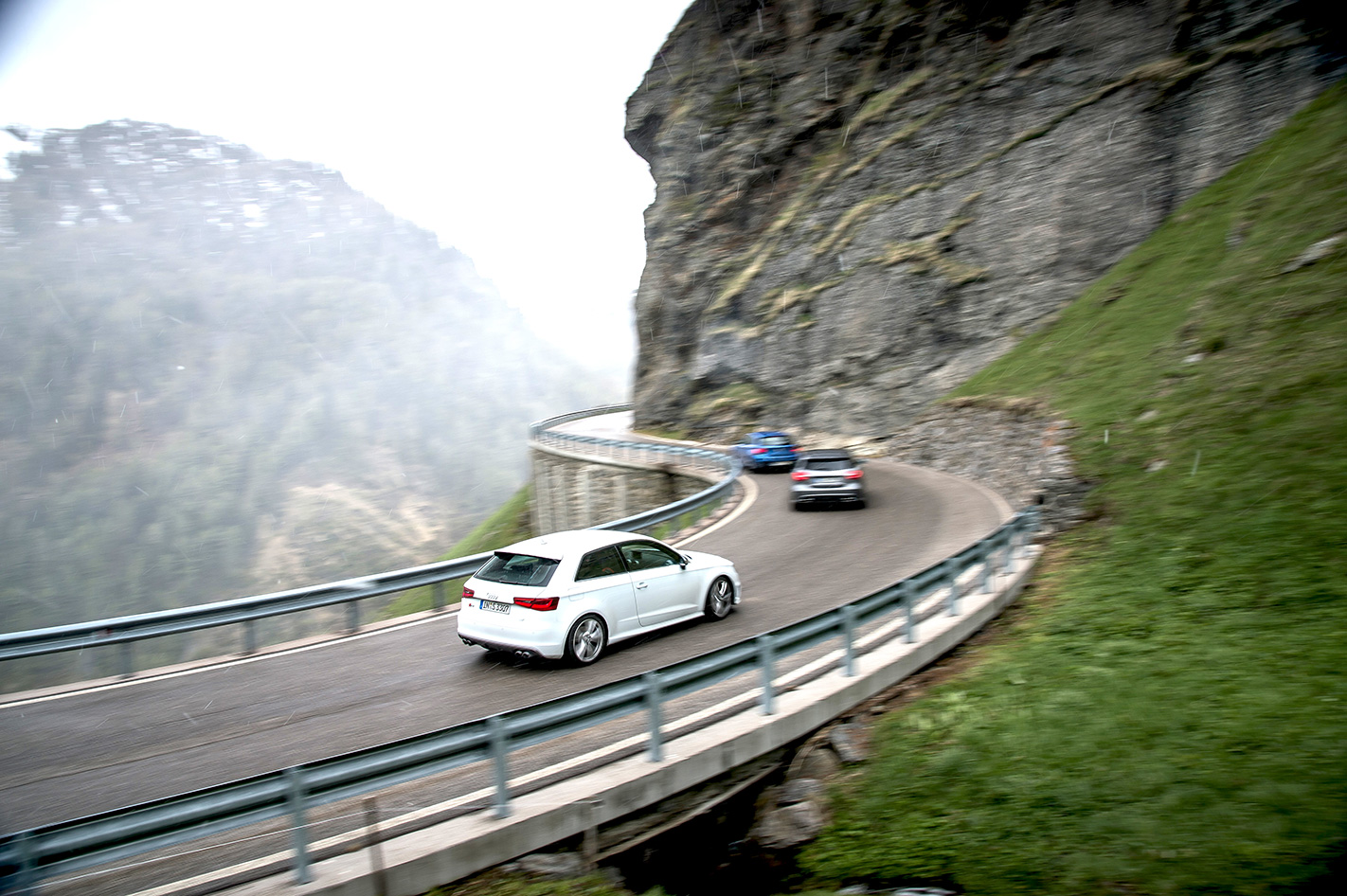
As luck would have it, not all cars arrived in the required specification, which resulted in the widest possible variety of drivetrain and suspension options. Our S3 was one of the very few specimen not fitted with the desirable S-tronic transmission.
The manual shifter works well – short throws, positive action, pragmatically spaced gears, but at 5.2sec, it loses 0.4sec from 0-62mph to the dual-clutch equivalent simply by taking more time to pass on the slices of the nicely stacked torque cake. At 380Nm, the turbocharged 2.0litre unit is not quite as well-endowed as its rivals, and yet it rolls out the dough all the way from 1800 to 5500rpm.
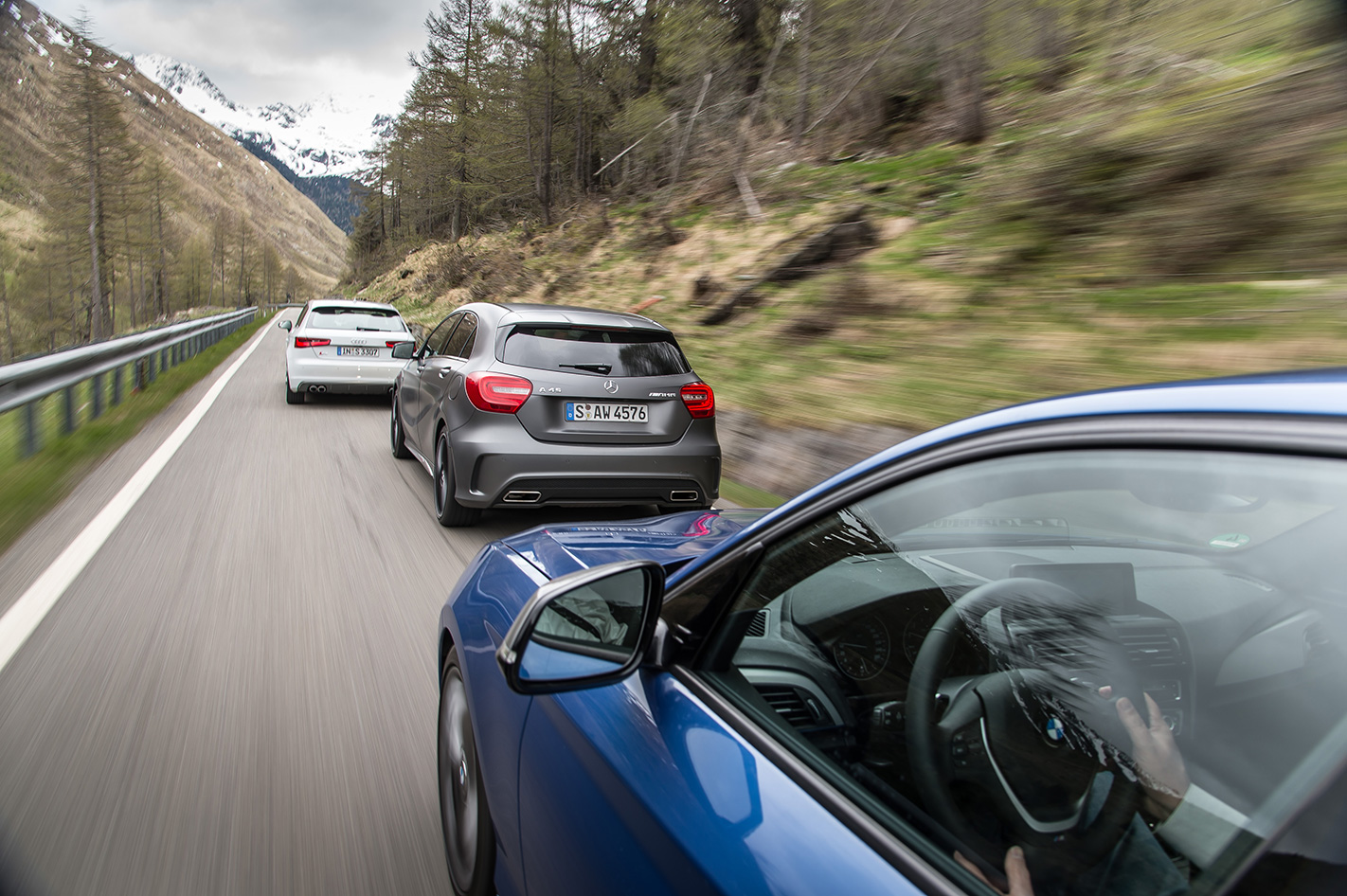
Our BMW M135i came with the optional eight-speed automatic which may be not be particularly M-like but is extremely convenient. It would even be more perfect if there was a positive deterrent between park and drive to secure the lever in reverse, if the transition from sport to manual (to the left of the main gate) was less fiddly, and if coasting was part of the Eco Pro software.
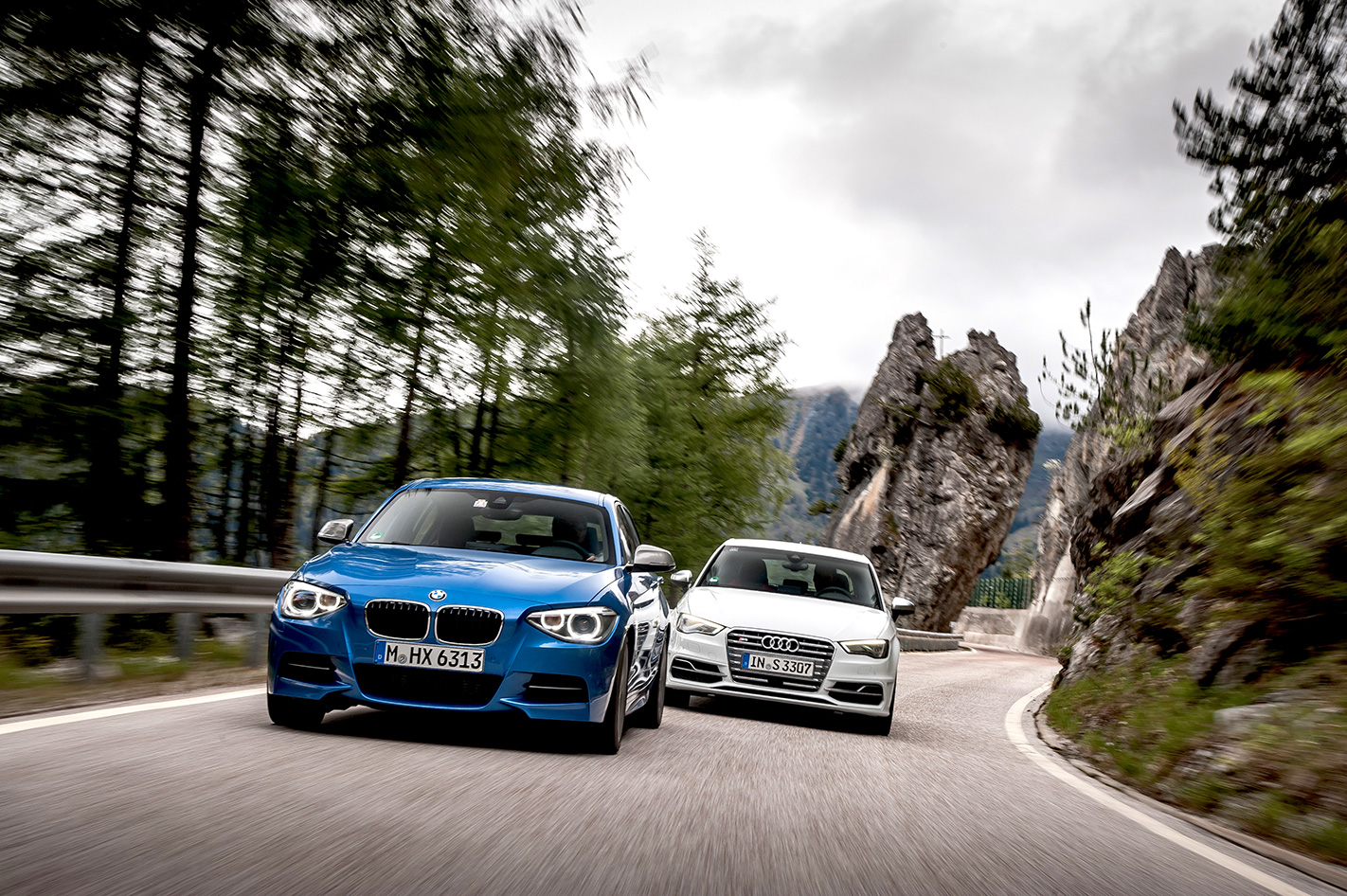
Shaped like a Bavarian beer garden table, the torque curve plateaus from 1300 to 4500rpm at a constant 450Nm. The discontinued Audi RS3 employed a 2.5litre five to generate 340bhp, thereby matching its closest natural enemy, the 1series M coupe.
Although it lacks two cylinders and 1000cc vis-a-vis the BMW, the peak twist action is an identical 450Nm. Again, full muscle is maintained over a wide rpm band, namely from 2250 to 5000rpm. To turn this torque punch into a mighty kick in the butt, the AMG engineers mated their reinforced seven-speed DKG to an aggressively tuned 4Matic driveline.
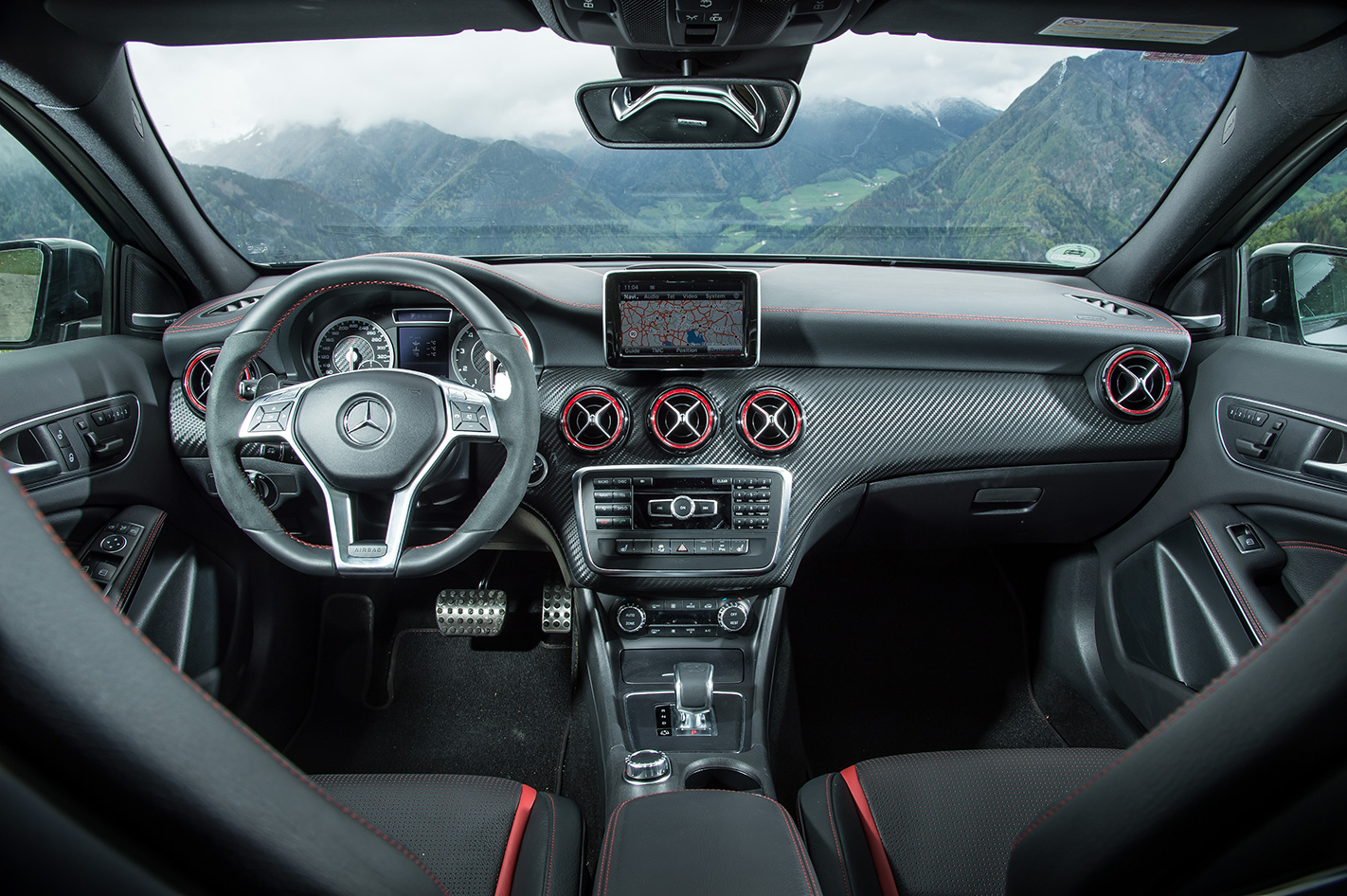
In C (for controlled efficiency), friends of the earth may relish start-stop and super-smooth gear changes at low revs. In S, the same process is repeated at a brisker pace. In M, you do the shifting, so don’t expect the black box to help out when the needle of the rev counter suddenly hits 6250rpm.
Good: on-demand M allows you to play the paddle piano for individual driving manoeuvres without first pushing the select button. Bad: the transmission will not accept early downshift orders. In will in fact only shift down when it reckons that the revolutions are evenly matched, which definitely takes too long on the fast approach to a slow bend.
At least that’s what we thought before setting off on the trails of Hannibal in these highly tuned triplets. No more turbo lag? Hop into the S3, and the ancient vice is back, large as life and annoying. The extra-cost S-tronic may to an extent cushion the effect, but in the manual version one must change down early to keep at least the bottom two LEDs of the boost gauge lit most of the time.
Which is a shame because after the delay there is always enough oomph on tap to zoom the car towards the next apex. It takes an adjustment in attitude and timing to step on the gas earlier so that little momentum is lost when snow white is propelling herself onto the next straight.
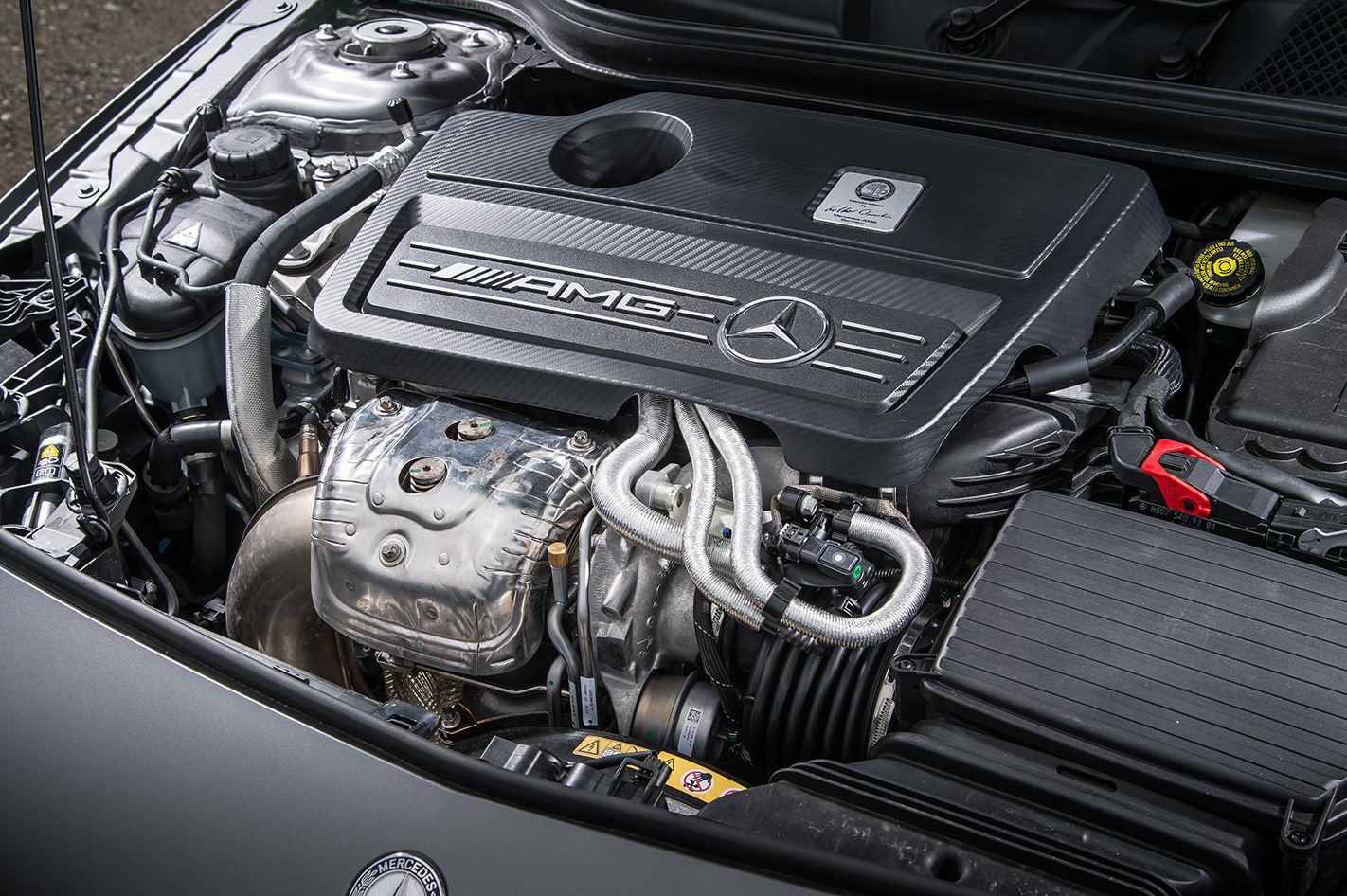
Did the SLS-inspired A45 AMG convince us with a rapid-fire throttle response? Yes and No. In combination with the new exhaust (for reduced back pressure) and the advanced fuel injection (for improved thermodynamic efficiency), the twinscroll charger (which runs at a high 1.8bar) swings the whip hard and early.
It’s the DCT which can undermine this effort by sometimes preselecting the wrong ratio, by taking a little too long to make up its electronic mind now and then, and by occasionally triggering a counter-productive upshift. A software issue perhaps, but one that needs addressing. On a different front, the MB chips do a splendid job relaying a hackle-raising sensation of speed.
With Racestart active, the 1555kilo 360bhp A-class will howl in 4.6 sec from 0-62mph. The official consumption on optional 19in rubber is 39.8mpg. Spend a small fortune on the AMG drivers pack, and the Affalterbach power brokers will kindly raise the top speed from 156 to 169mph which almost equals 6250rpm or the engine’s cut-out speed.
If the A45 is Darth Vader on the prowl and if the S3 is Zorro on his day off, then the M135i is Robin en route to lunch with Catwoman. Forget the German hot hatch competition, forget the Japanese Playstation connection, forget the fact that there is an M in this BMW’s model designation.
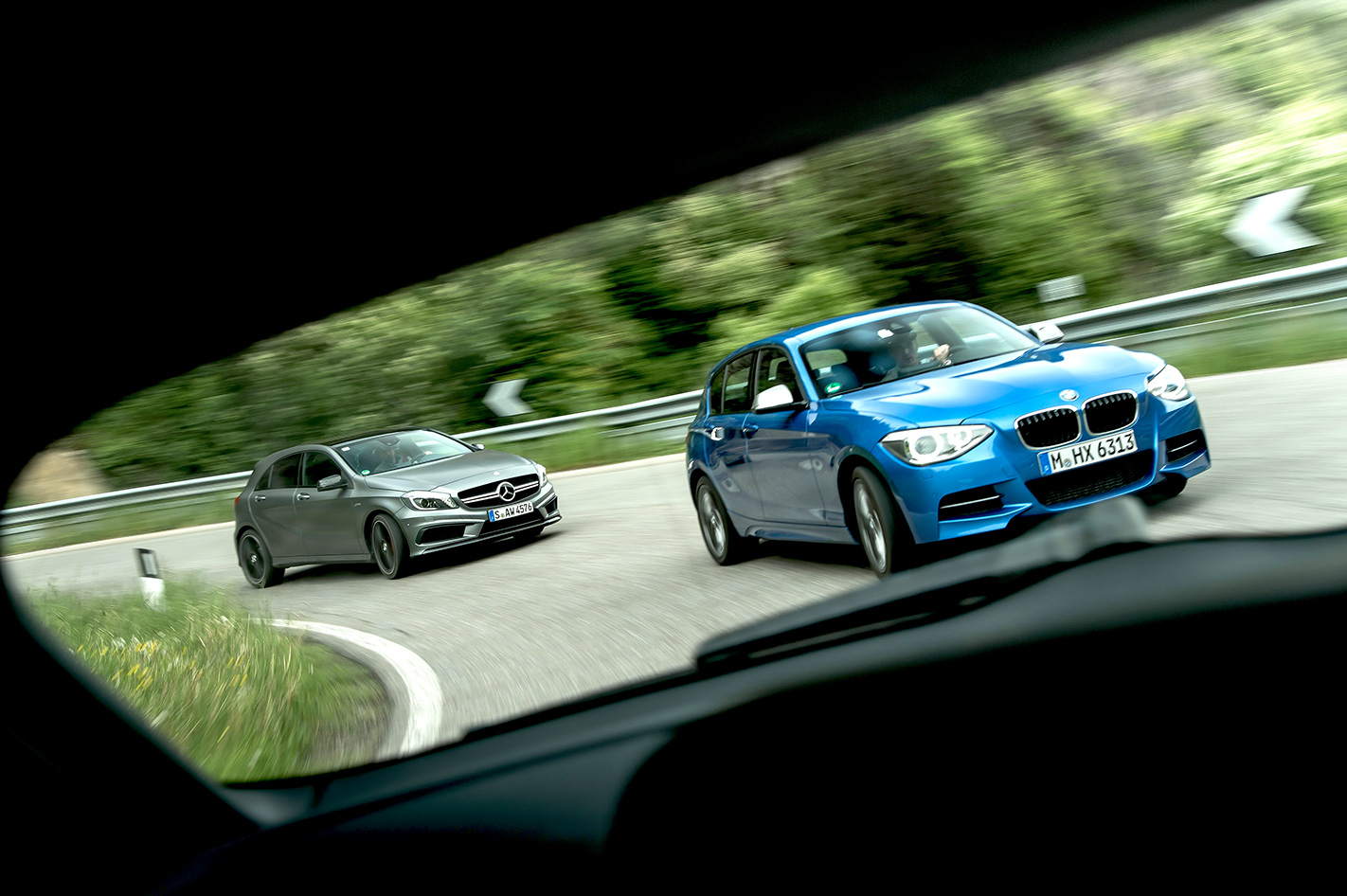
How come? Because the halfbreed M car is benign instead of brutal, cosetting instead of crash-bang hard, relaxed instead of highly strung, easily accessible instead of radically focused. For a start, the 320bhp in-line six runs out of revs at an unambitious 5800rpm, it takes a relatively leisurely 5.1sec to satisfy the stopwatch squad, and its on-paper consumption is a comparatively unexciting 35.3mpg.
On the credit side, any trace of turbo lag disappears inside the fantastic ZF box, the mighty mid-range urge puts the four-cylinder competition into perspective, and there are absolutely no artificial ingredients involved in making this 3.0litre motor sound spine-tinglingly good when the mixture gates open.
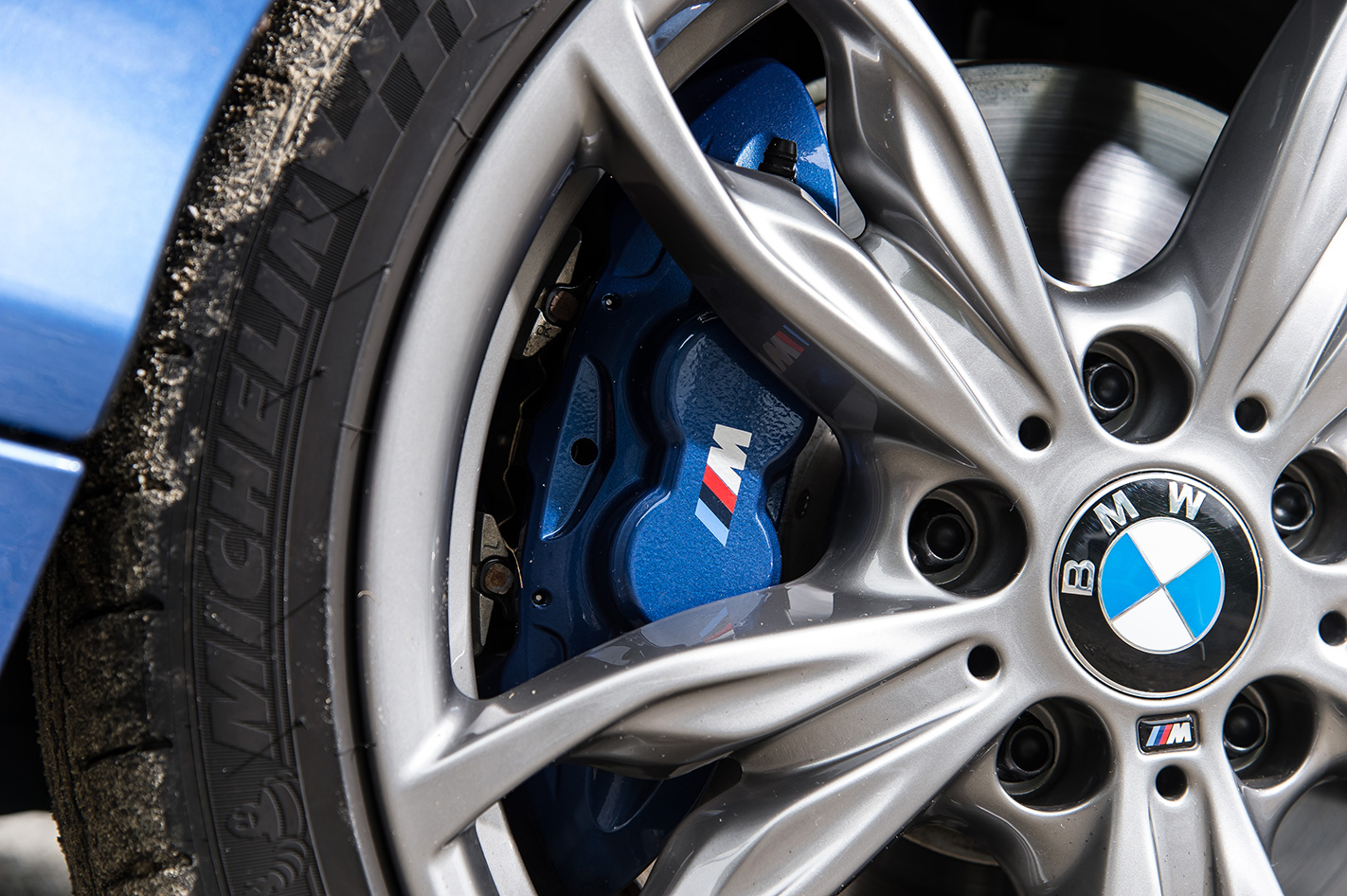
Included in the standard M pack are 18in wheels with 225/40 tyres up front and 245/35 footwear in the rear, sports suspension, sports brakes and variable-rate sports steering. The M135i was our number one choice on the poorly maintained Italian autostrade, but it is a touch too laid back to bring your blood to the boil on those memorable alpine special stages.
The brakes are furthermore on the soft side when pushed, the quick steering (only two turns from lock to lock) feels overdamped and undertransparant, and there is more roll and pitch and dive than we expected from a 1series model wearing the M badge.
Especially at a 10/10 pace, the S3 is even easier to drive than the BMW, which in turn feels significantly softer edged than the 1series M. While the M135i will want to understeer into a corner and oversteer at the exit, the Audi goes round bends like a slot racer with a second pin between the rear wheels.
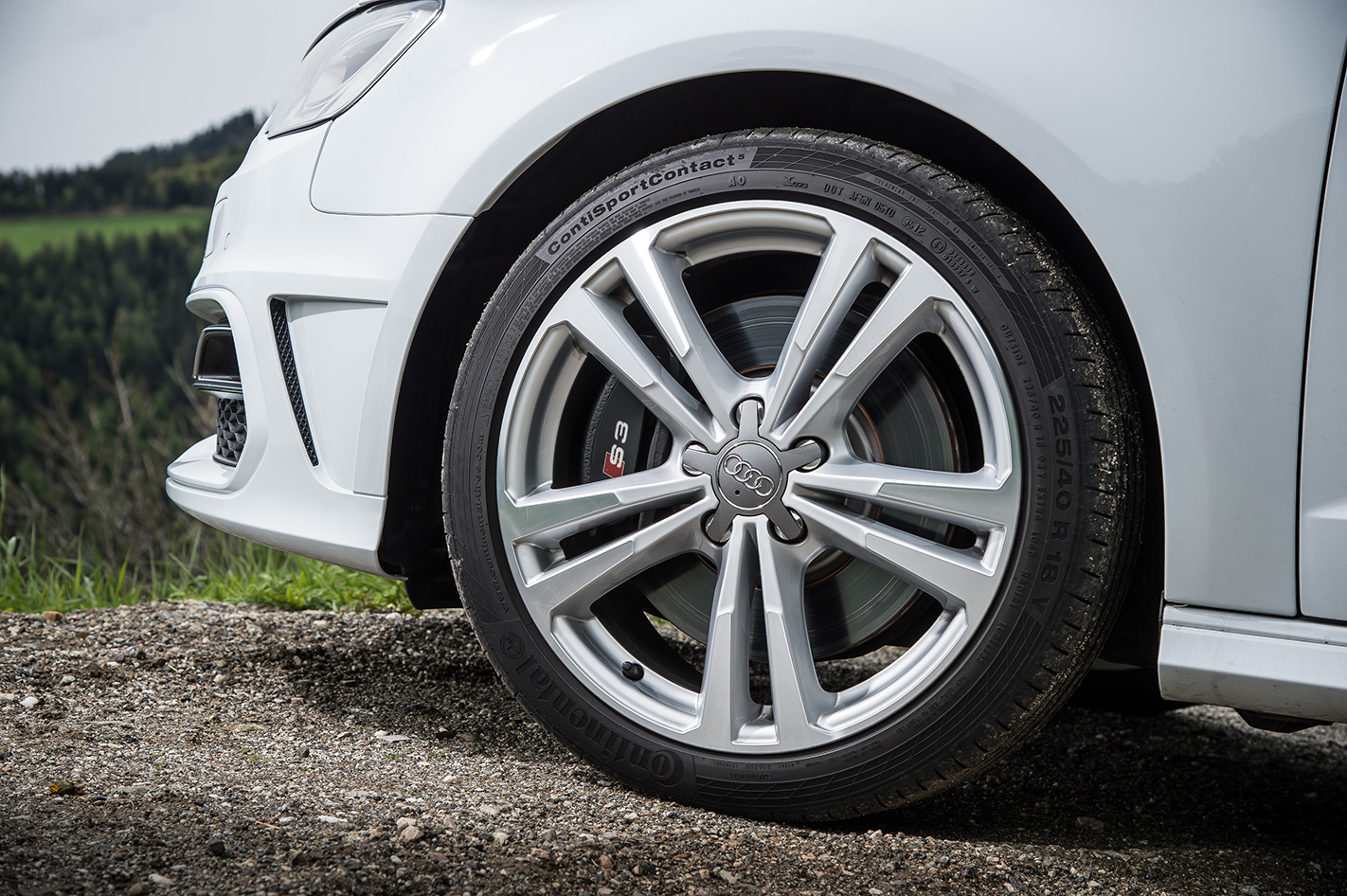
Neutrality is the name of its game, modularity ranks only second on its priority list. Boring? Wrong term. The S3 rewards its driver with a different potpourri of talents. The roadholding is for instance so tenacious that we checked the Conti Sportcontact tyres (225/40 R18 all round) for magnetic metal flakes and hidden velcro strap fragments.
Eventually, the gap will widen and the Audi will drop back, still gracefully maintaining its composure. The car from Ingolstadt is tight-lipped, monosyllabic and reserved, strangely robotic in the way it performs, and flawed in its ability to turn a near-faultless performance into a tangible feelgood experience.
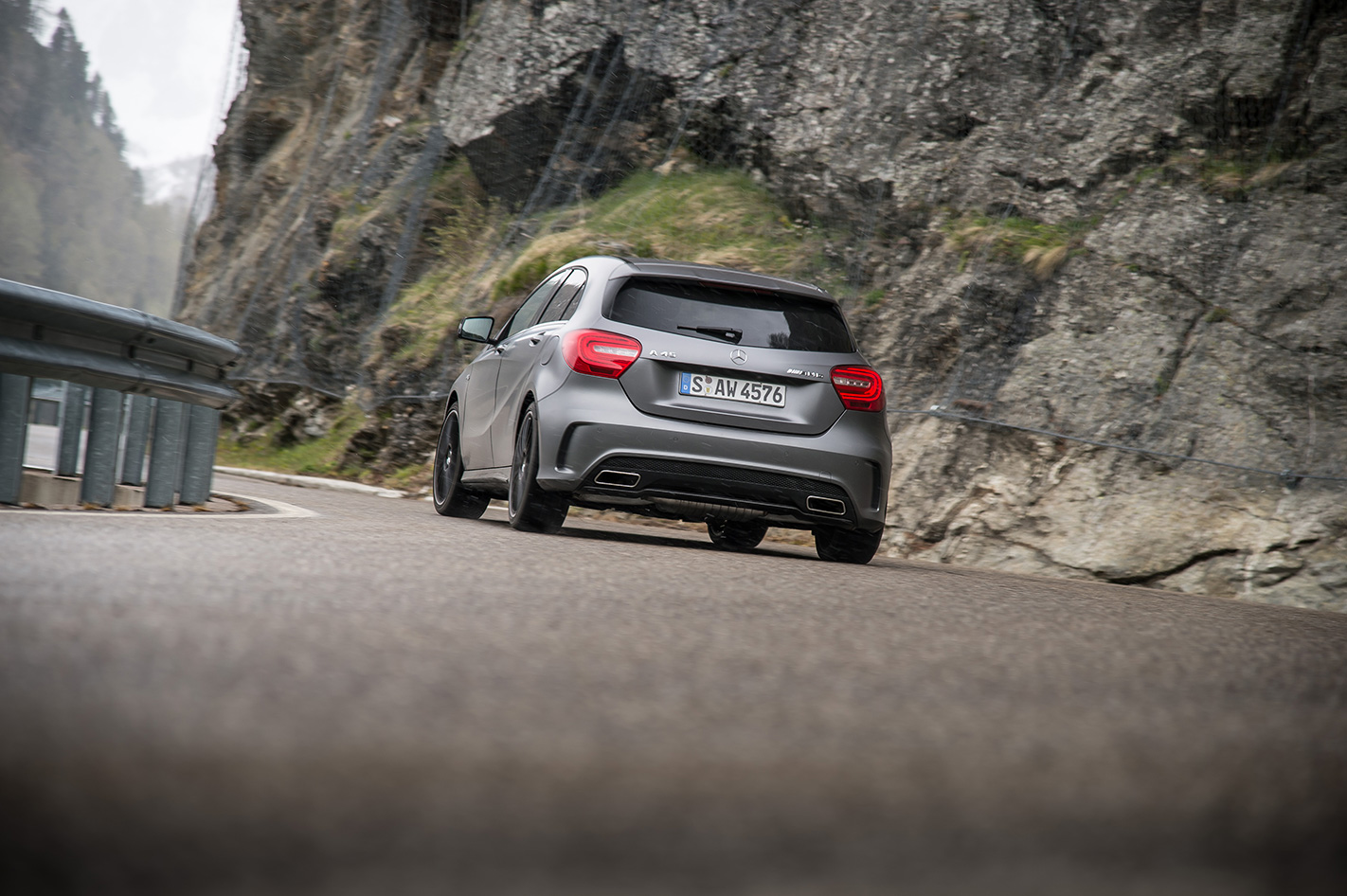
The A45 AMG is not just engine and badges and butch looks. It also boasts a heavily revised front and rear suspension with firmer mountings, recalibrated springs and firmer fixed-rate shock absorbers, fatter anti-roll bars and a reduced ride height.
Also new are the variable-effort but constant-rate steering, the high-performance brakes with ventilated and cross-drilled discs all-round, the more lenient stability control, and the latest-generation 4-Matic which diverts up to 50percent of the torque to the rear wheels.
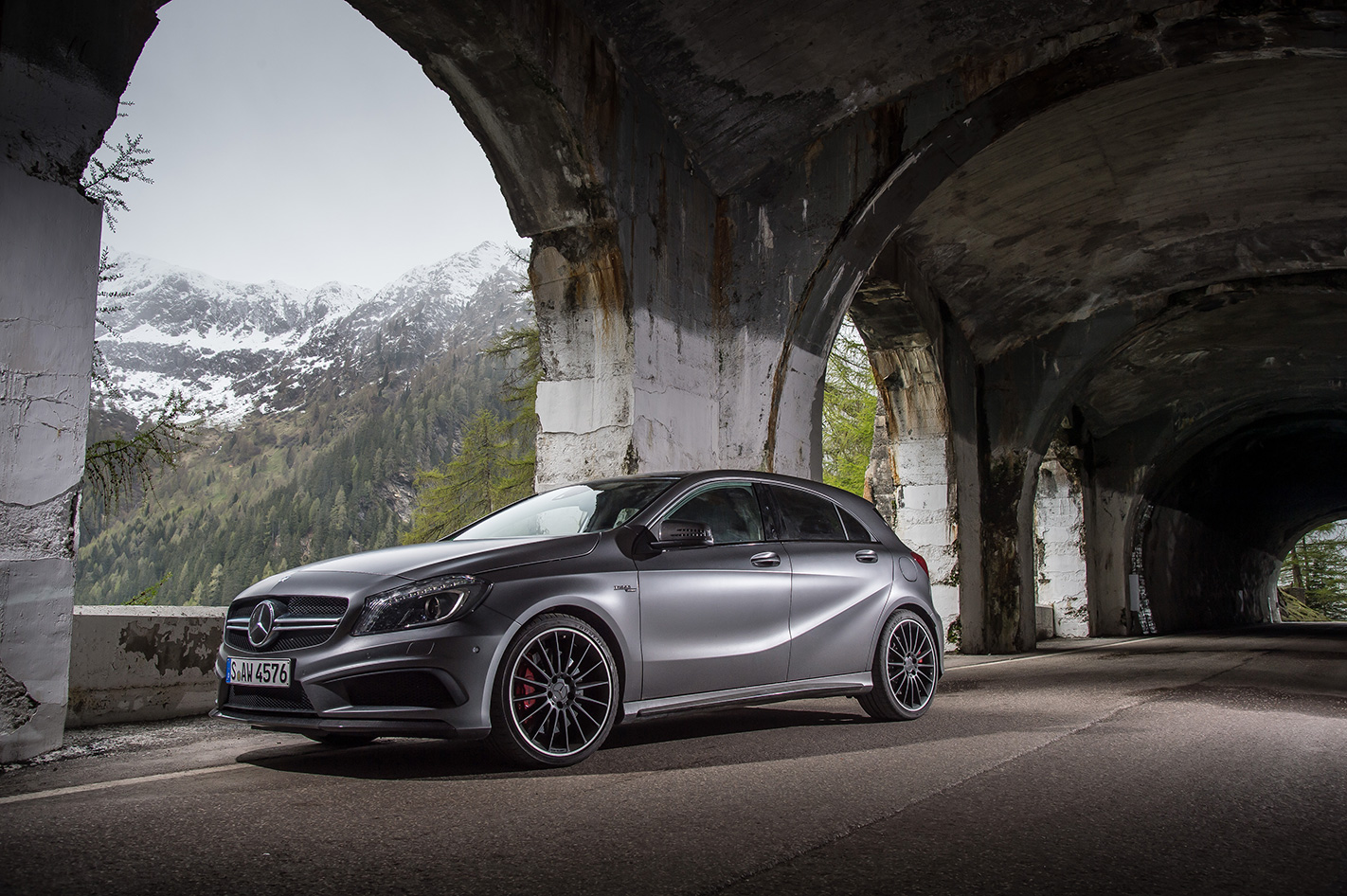
The engine delivers quantifiable extra urge with real authority, the steering fuses input and feedback to a wonderfully three-dimensional level of control, four-wheel drive distributes torque with the eerie professionalism of a poker ace dealing his rounds, and the brakes bite with vigour and determination until, at the foot of the pass, smoke signals beg for mercy.
The A45 AMG is as chuckable as it is sure-footed. It can corner on three wheels, decelerate at a ridiculous yaw angle, put the power down even earlier than the Audi. What it cannot do is ride well, period. Even on smooth blacktop, it is patently obvious that eiderdowns were not on the shopping list.
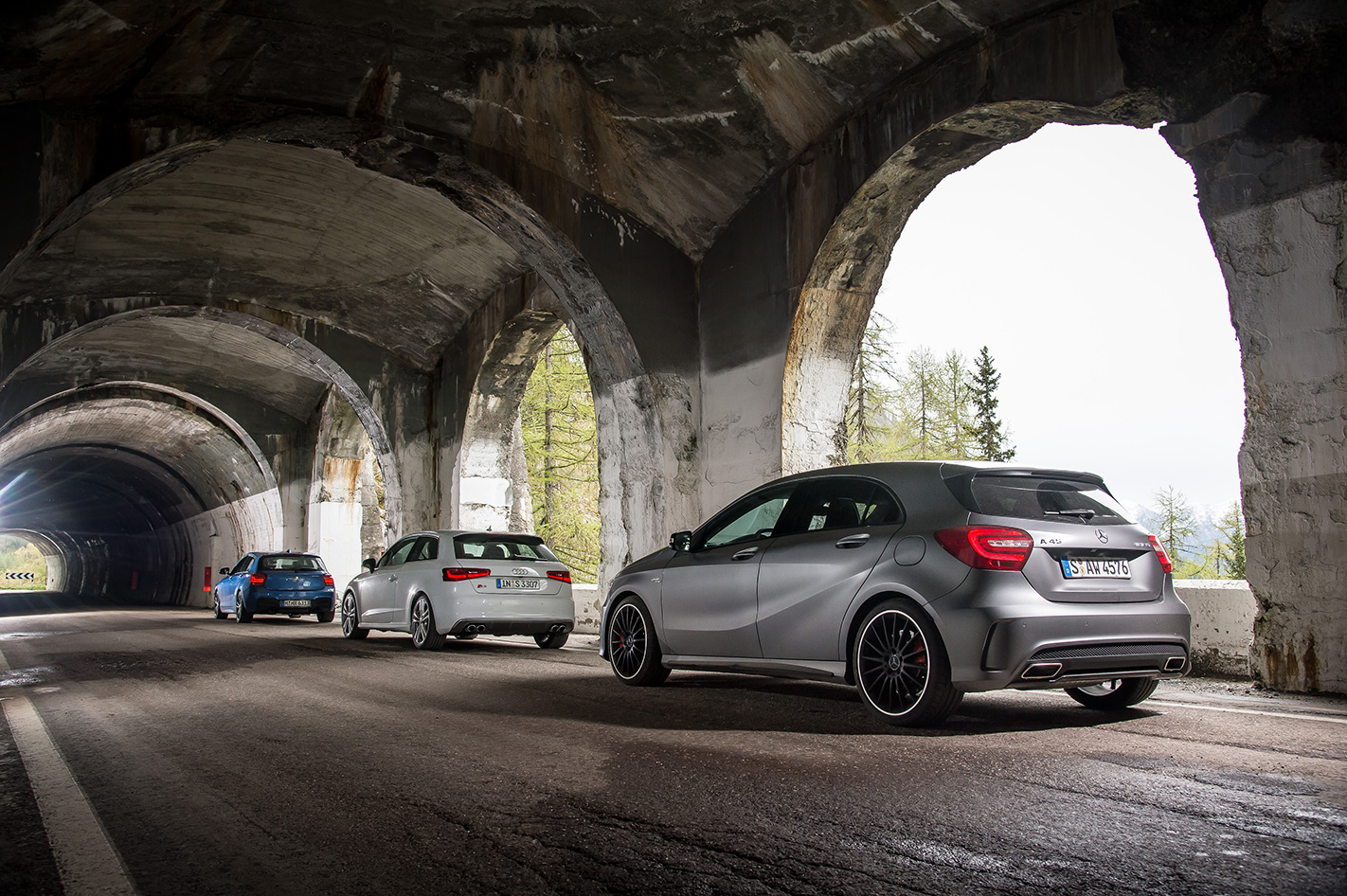
We would love to see the Quattro division succeed in making good cars great again, but the S3 (and the RS6) are tuned primarily for perfection, which is seldom synonymous with excitement. So after 48 hours, 645 kilometres, 269 litres of four-star and three fresh shirts, the A45 AMG takes the trophy ahead of the BMW and the Audi, off-putting price tag and compromised packageing notwithstanding.
BMW Four stars Love: Engine, transmission, ride Hate: Design inside and out, not really an M car Verdict: Wait for the facelift out next year
Audi Four stars Love: Quality, refinement, infotainment, quattro Hate: Bland looks, bland dynamics, not really an S car Verdict: Wait for the Sportback, buy an S-tronic
Mercedes Four stars Love: Engine, noise, appearance, handling, roadholding Hate: Ride, price, transmission idiosyncrasies, instruments Verdict: The real McCoy, soon also available as CLA and GLA
