
Hyundai has unveiled the new IONIQ V at the 2026 Beijing Auto Show, marking a key step in the company’s effort to rebuild its presence in China’s fast-moving electric vehicle market.
The IONIQ V is the first dedicated model in Hyundai’s IONIQ electric line-up developed specifically for Chinese buyers, reflecting a broader shift toward localised product planning. The model is positioned as a mid-to-large electric SUV aimed at combining practicality with a more technology-focused driving experience.
The launch forms part of a wider strategy that will see Beijing Hyundai introduce 20 new models in China over the next five years. The plan includes a mix of battery-electric and extended-range electric vehicles, with the company targeting annual sales of 500,000 units as it looks to regain ground in the region.
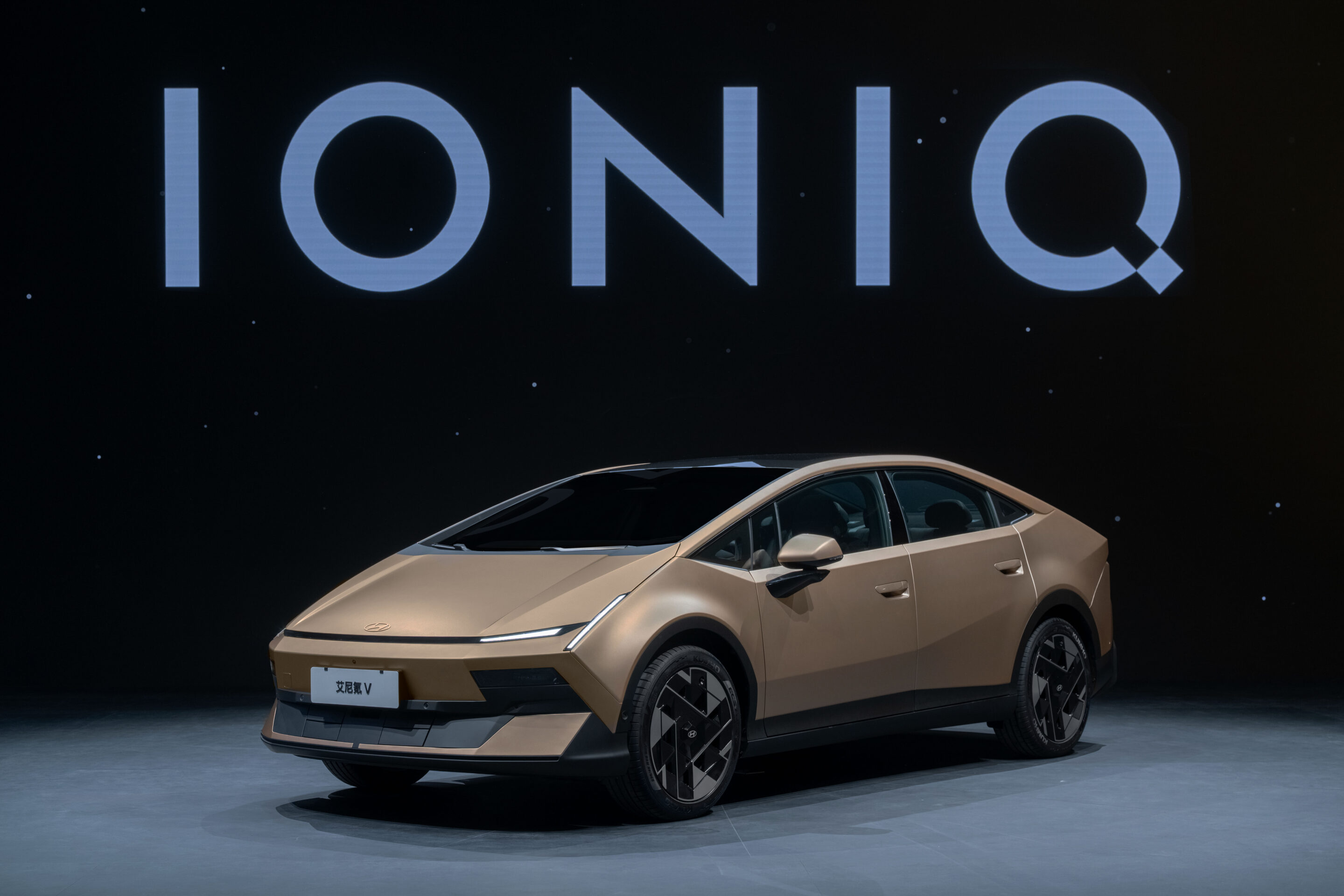
In terms of size, the IONIQ V sits in the mid-size SUV category, measuring just under five metres in length with a long wheelbase designed to maximise interior space. Hyundai has prioritised cabin room and comfort, areas that have become key selling points in China’s EV market, particularly among family buyers.
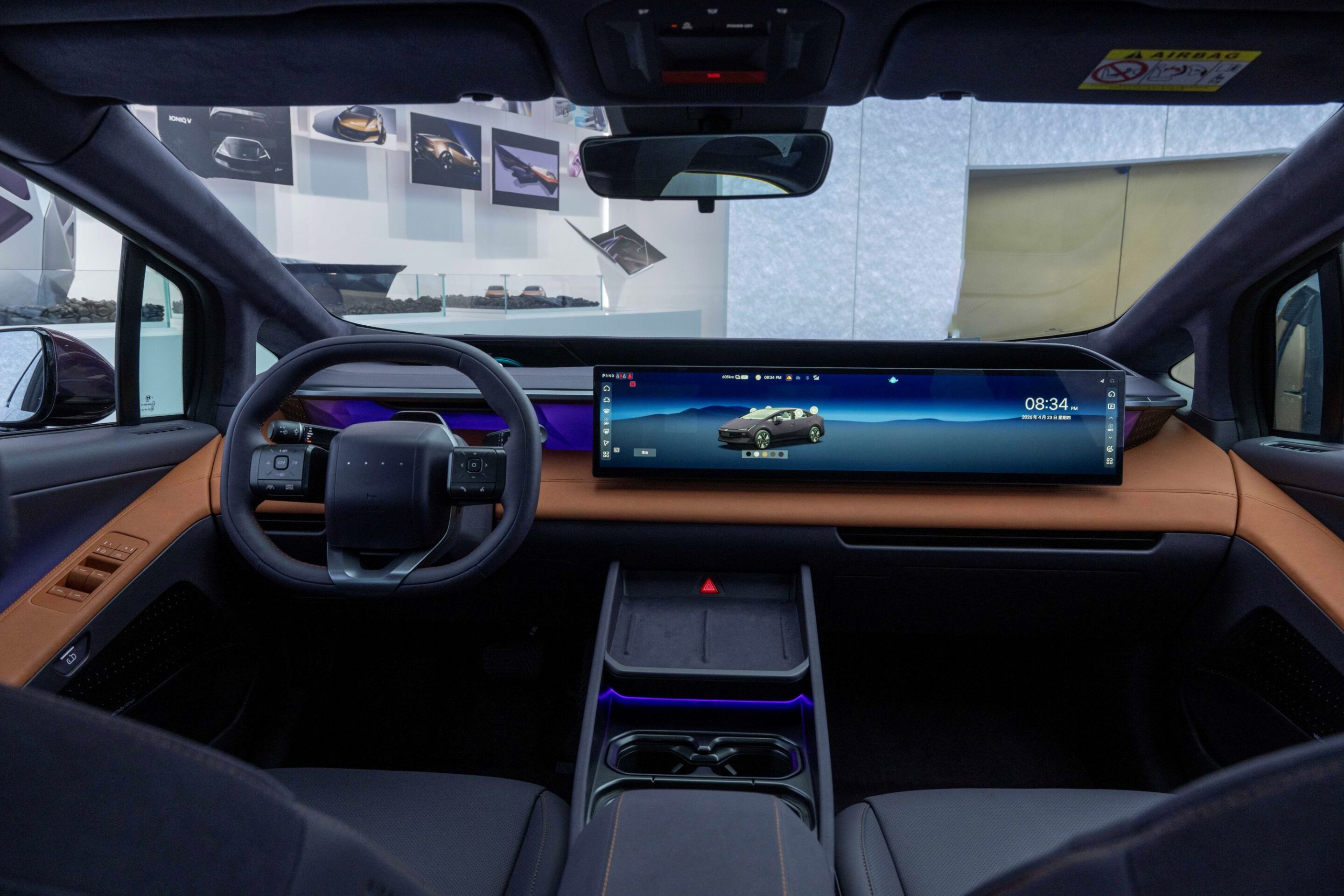
The interior is centred around a large 27-inch display that integrates driving and infotainment functions, alongside a head-up display projecting key information onto the windscreen. This reflects a broader trend across the industry, where digital interfaces and connectivity are increasingly central to vehicle design.
Range is another focus. The IONIQ V is expected to deliver more than 600 kilometres of driving range under China’s CLTC testing standard, placing it in line with many domestic rivals.
Externally, the SUV adopts a clean, streamlined design, with features such as flush surfaces and slim lighting elements aimed at improving aerodynamic efficiency.
The introduction of the IONIQ V highlights Hyundai’s attempt to reposition itself in a market now dominated by local manufacturers and rapid innovation cycles. China has become a global centre for EV development, and international brands are increasingly relying on local engineering and production to remain competitive.
With more models to follow, the IONIQ V is considered the starting point of Hyundai’s next phase in China – one that will be shaped by electrification, localisation and the need to compete directly with established domestic players.
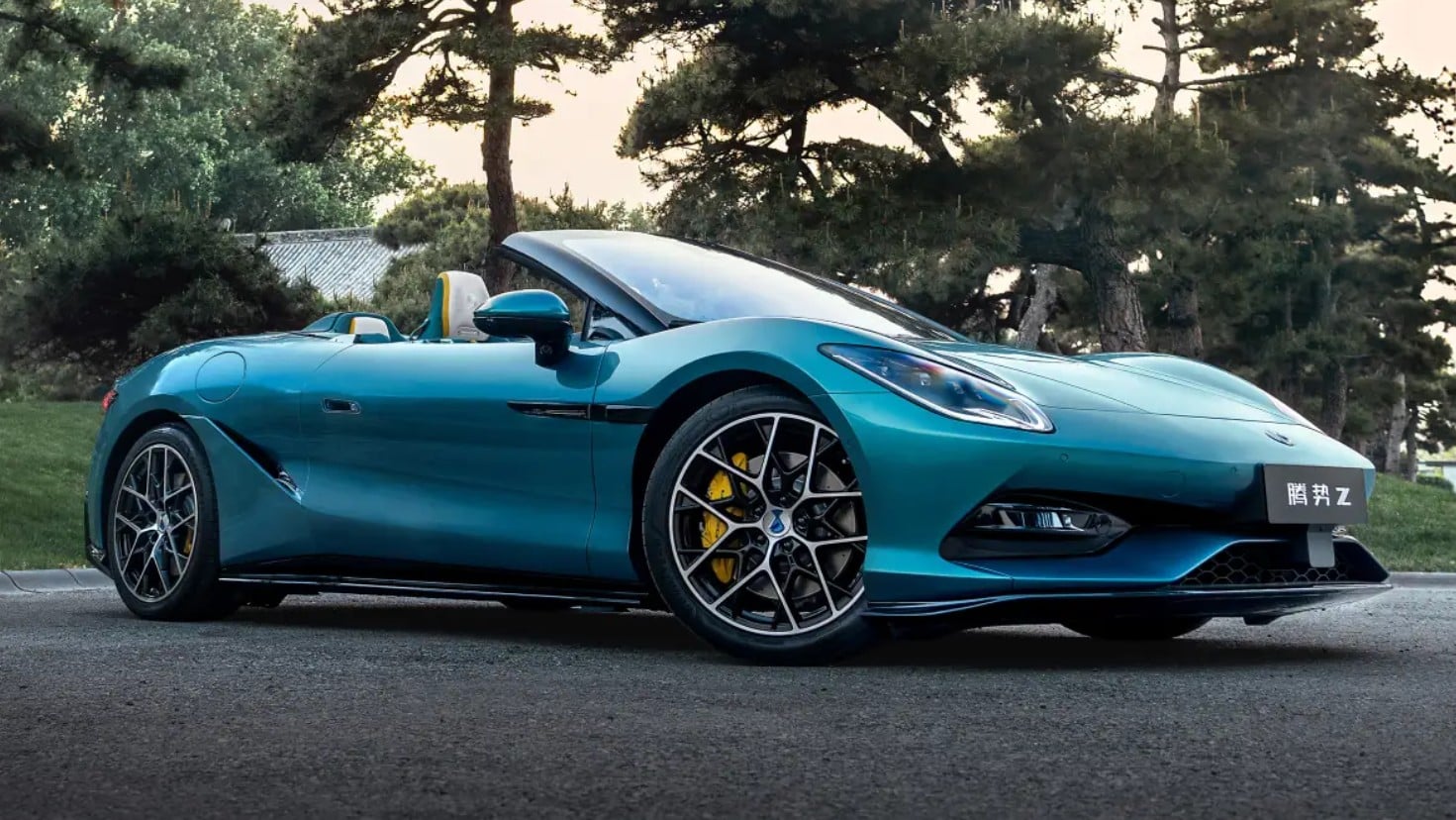
The Denza Z is one of the more striking debuts from the 2026 Beijing Auto Show, signalling BYD’s intent to move further into the high-performance luxury space. Positioned as a four-seat grand tourer, the all-electric coupe is being pitched as a rival to established sports cars, albeit with a very different powertrain approach.
At first glance, the Denza Z leans heavily on classic GT proportions. A long bonnet, low stance and clean surfacing give it a silhouette reminiscent of traditional front-engined sports cars, despite its fully electric underpinnings. The influence of European design is clear, helped by styling leadership with experience across several major performance brands.
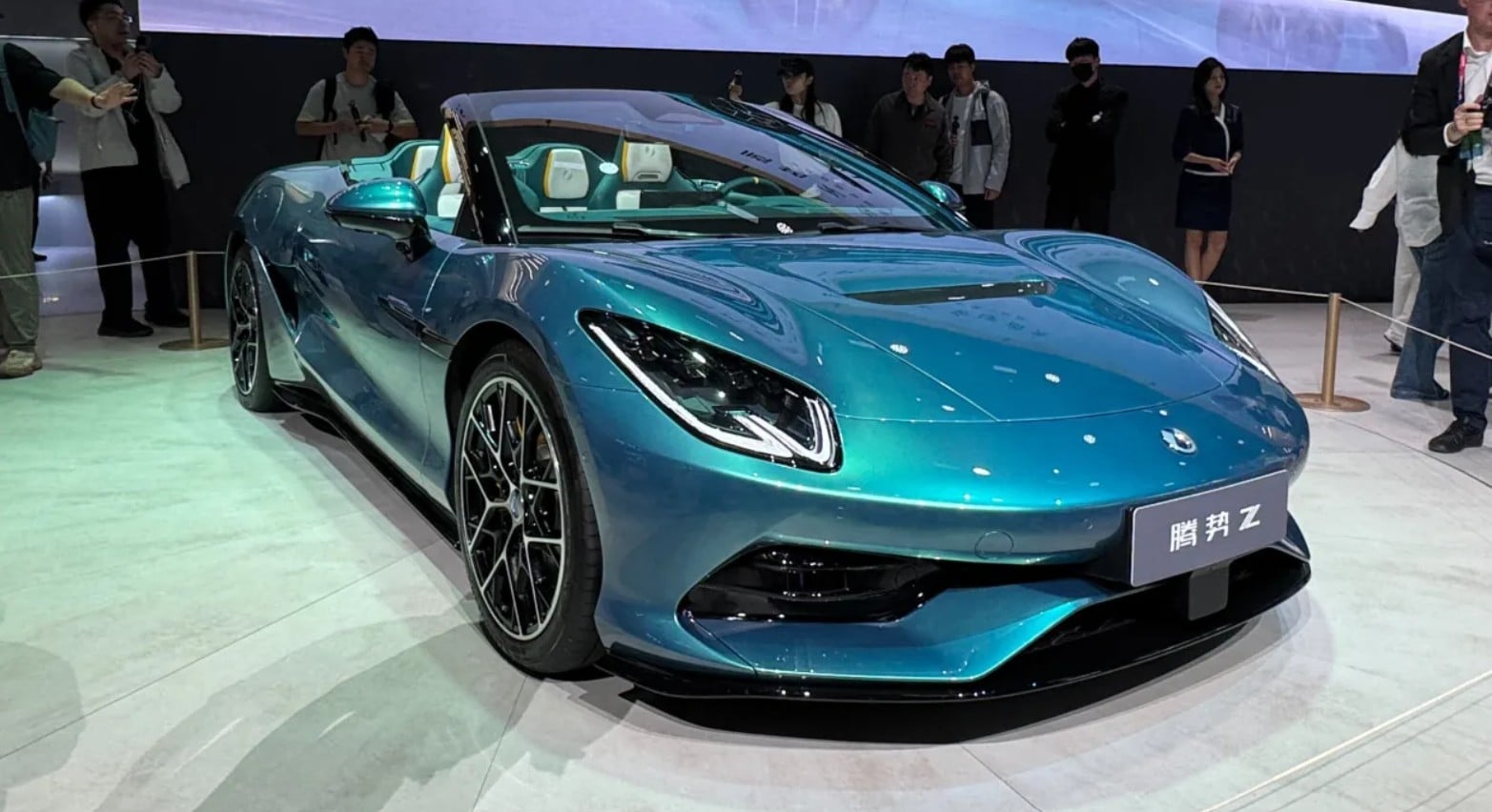
Under the skin, performance is the headline. The Denza Z is expected to produce more than 750kW, placing it firmly in supercar territory. Acceleration is claimed to be under two seconds for the 0–100km/h sprint, which, if accurate, would put it among the fastest road cars currently in development.
While full technical details are still to be confirmed, the car is likely to share its platform and drivetrain architecture with other high-end models from the brand. This includes a multi-motor setup and advanced chassis systems designed to manage the extreme performance. One such feature is an adaptive suspension system that uses magnetic dampers to control body movement, helping maintain stability under hard acceleration and cornering.
The Denza Z also reflects the increasing role of software in performance cars. Features such as advanced driver assistance systems, autonomous capabilities and even functions like “tank turns” are expected, highlighting a shift toward technology-driven driving experiences.
Charging capability is another key focus. The car will utilise ultra-fast charging technology capable of significantly reducing downtime, although exact battery specifications have yet to be detailed.
Multiple body styles are planned, including a coupe, convertible and a more track-focused variant, suggesting a broad approach to the performance segment.
While still some way from production, the Denza Z offers a clear indication of how electric vehicles are reshaping the grand touring category – combining traditional design cues with extreme performance and advanced digital systems.
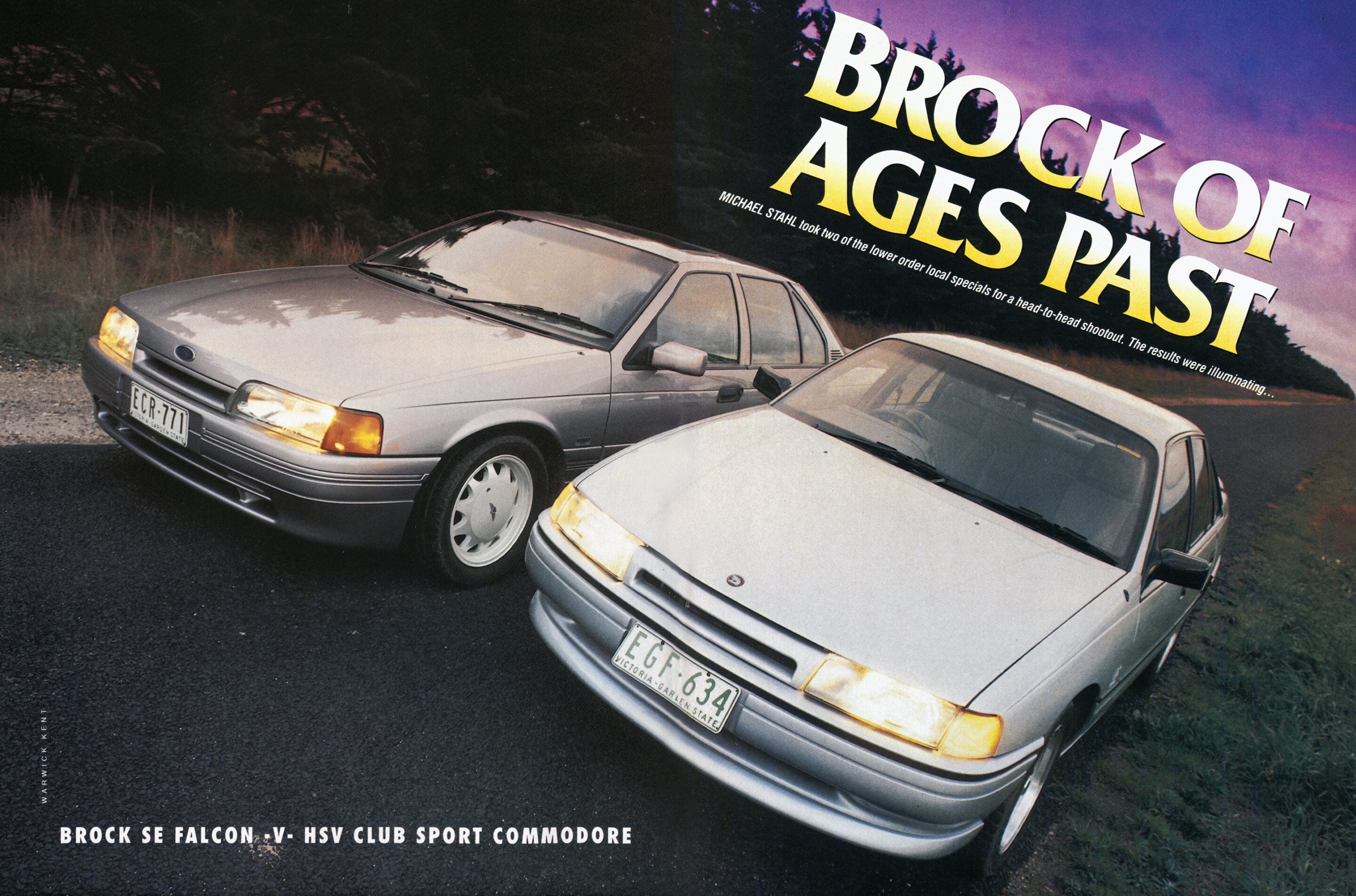
First published in the September 1990 issue of Wheels magazine, Australia’s best car mag since 1953. Subscribe here and gain access to 12 issues for $109 plus online access to every Wheels issue since 1953.
The Hume Highway offers nothing of interest in the Sydney to Melbourne commute. Every radio station seems to be the ABC. Those sad, dying whistle-stop towns are now booming radar-stop towns. Between monitoring the weight gain on one’s right foot and changing the cassette, there’s not a lot to do but drive, and think. I was driving the HSV ClubSport Commodore, and thinking about Peter Brock.
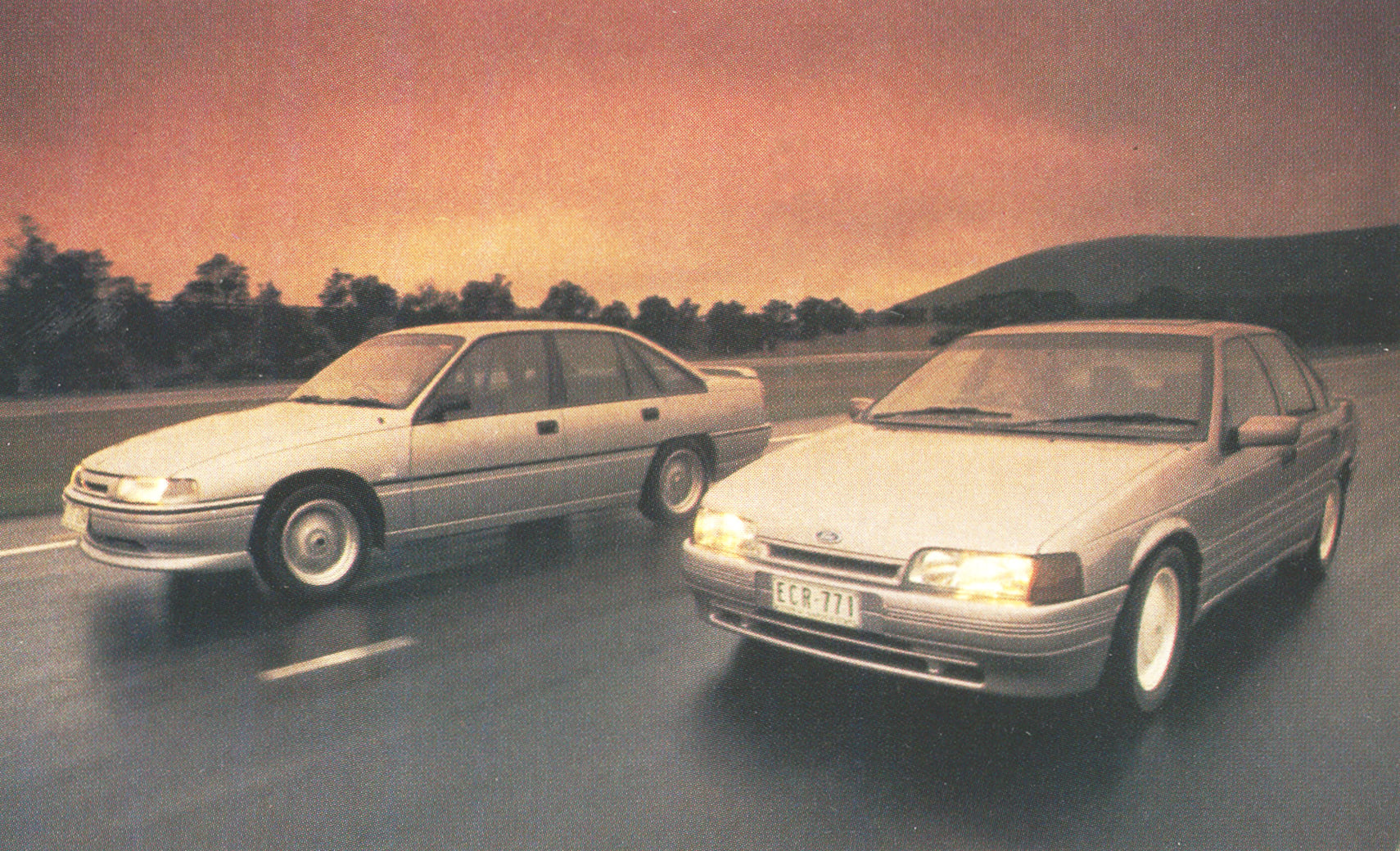
It’s an early picture of Brock that has always stuck in my mind; the longish hair, larrikin grin, the faintest scent of a Miss Australia or a Marlboro girl always on the wind nearby. Then I think of Brock’s cars and they’re always the Commodores that shared the same rough diamond personality. Cars like the VH and VK Group Threes, missile-quick but rough as guts. But I rarely dwelt much on the cars or the man, caring neither one way nor the other.
The policeman was also thinking about Peter Brock and Commodores when he pulled me over. I hadn’t been speeding – it was a random breath test unit in Albury – but naturally he wanted to talk about the ClubSport, and the conversation turned to Brock. The policeman thought it funny that Holden Special Vehicles’ V8 was to take part in a comparison test with a Falcon six-pack, Brock mods or not. “The man must have mellowed a lot lately,” said the policeman, and I wholly agreed.
It was ironic that the ClubSport is perhaps the most Brock-like of all the Commodores so far from HSV. The ClubSport Commodore is essentially a parts-bin package of HSV’s 180kW V8 engine, exhaust system, suspension and wheel/tyre combinations from the SV89 Commodore and SV90 Statesman, bolted into the lightest, least lavishly equipped Executive model. While the concept and the name really sprang from Stuttgart, this $34,000 Commodore came about through John Harvey’s continuing involvement with various HSV owner groups and Holden car clubs. The ClubSport is intended as an on-going model, and is available with either manual or recalibrated auto trans.
Brock, meantime, has gone full circle with the Falcon SE package, though there’s a trace of the old HDT ‘Group’ mentality in the Brock ‘Executive Performance’ packages, available on the 3.9 EFI Falcon in three levels. EP1 involves lowered suspension, reshaped seats and a leather-bound wheel and gear knob; EP2 adds the “free breathing” engine option, comprising an enlarged air intake, extractors and exhaust system with twin catalytic converters, all claimed to lift power to 164kW; and EP3 further adds a body kit and Brock’s own 16-inch alloy wheels with Semperit tyres.
The Brock SE, meantime, is all this and a bit more, but it wasn’t difficult to sense the palms itching for Ford’s forthcoming V8. The Brock boys already have an example under development, but in the opinion of Brock sidekick David Whitehead, these cars probably won’t ever get to the level of modifications formerly applied to the hottest HDT Commodores.
“The V8’s an easy project because there’s so much bolt-on stuff available straight out of the US,” he says. “It meets Californian emissions so it’s usually pretty straightforward here, and you end up with a 290hp (216kW) engine that’s totally legal.”
Pricing and specs
Besides the Sierra Cosworth RS500, Brock’s favourite Ford at the moment is the Falcon S, for it’s on this car that his SE is based. To the $27,387 ask for a standard S five-speed ($27,918 for the auto), you add $16,990 for the SE package.
Unlike Holden Special Vehicles, Brock’s outfit doesn’t go messing in the bottomless pit of camshaft changes and engine management systems. Higher-lift cam profiles were tried in the early development cars, but it was feared that emissions would become marginal as the cars loosened up over time.
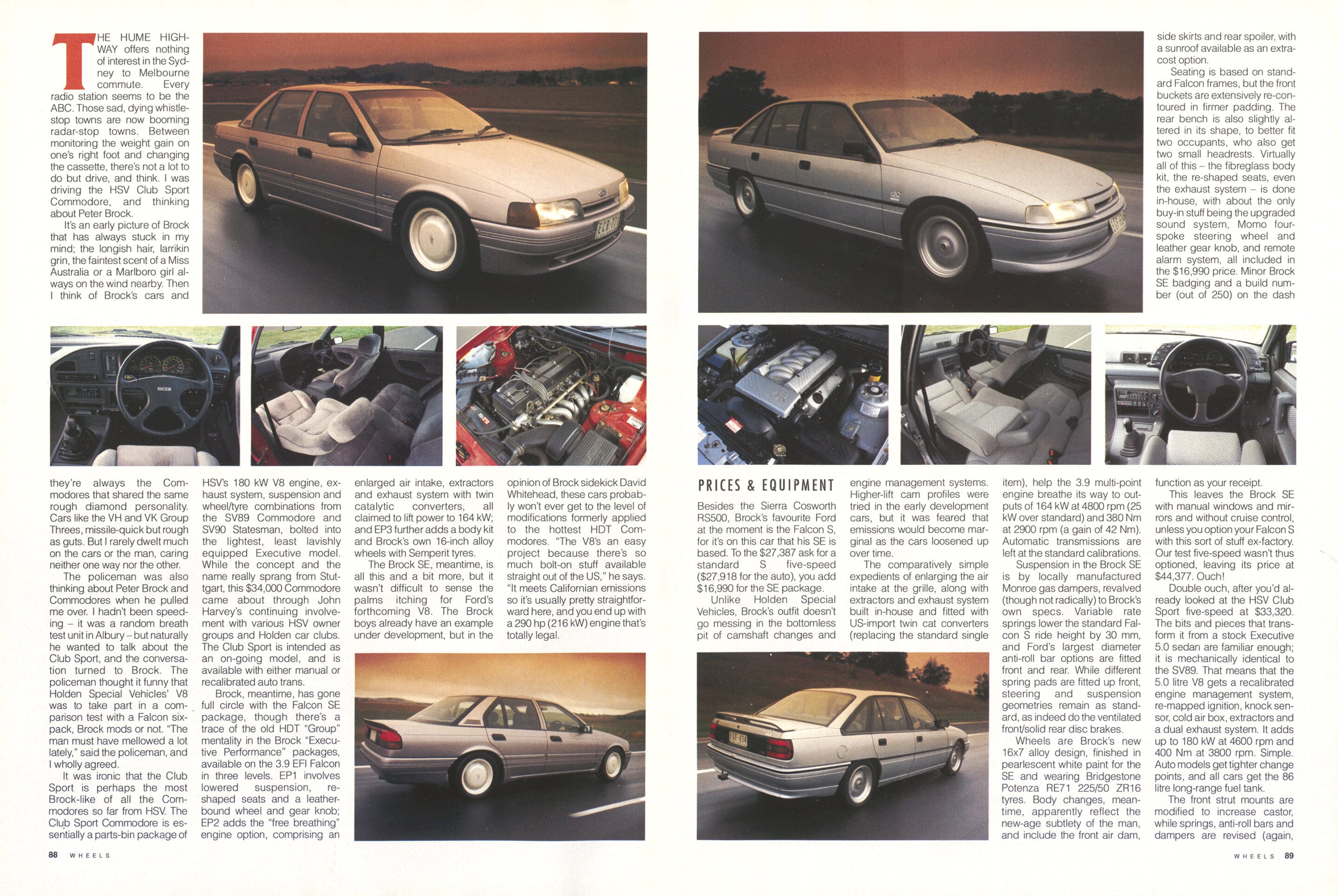
The comparatively simple expedients of enlarging the air intake at the grille, along with extractors and exhaust system built in-house and fitted with US-import twin cat converters (replacing the standard single item), help the 3.9 multi-point engine breathe its way to outputs of 164kW at 4800rpm (25kW over standard) and 380Nm at 2900rpm (a gain of 42Nm). Automatic transmissions are left at the standard calibrations.
Suspension in the Brock SE is by locally manufactured Monroe gas dampers, revalved (though not radically) to Brock’s own specs. Variable rate springs lower the standard Falcon S ride height by 30mm, and Ford’s largest diameter anti-roll bar options are fitted front and rear. While different spring pads are fitted up front, steering and suspension geometries remain as standard, as indeed do the ventilated front/solid rear disc brakes.
Wheels are Brock’s new 16×7 alloy design, finished in pearlescent white paint for the SE and wearing Bridgestone Potenza RE71 225/50 ZR16 tyres. Body changes, meantime, apparently reflect the new-age subtlety of the man, and include the front air dam, side skirts and rear spoiler, with a sunroof available as an extra-cost option.
Seating is based on standard Falcon frames, but the front buckets are extensively re-contoured in firmer padding. The rear bench is also slightly altered in its shape, to better fit two occupants, who also get two small headrests. Virtually all of this – the fibreglass body kit, the re-shaped seats, even the exhaust system – is done in-house, with about the only buy-in stuff being the upgraded sound system, Momo four-spoke steering wheel and leather gear knob, and remote alarm system, all included in the $16,990 price. Minor Brock SE badging and a build number (out of 250) on the dash function as your receipt.
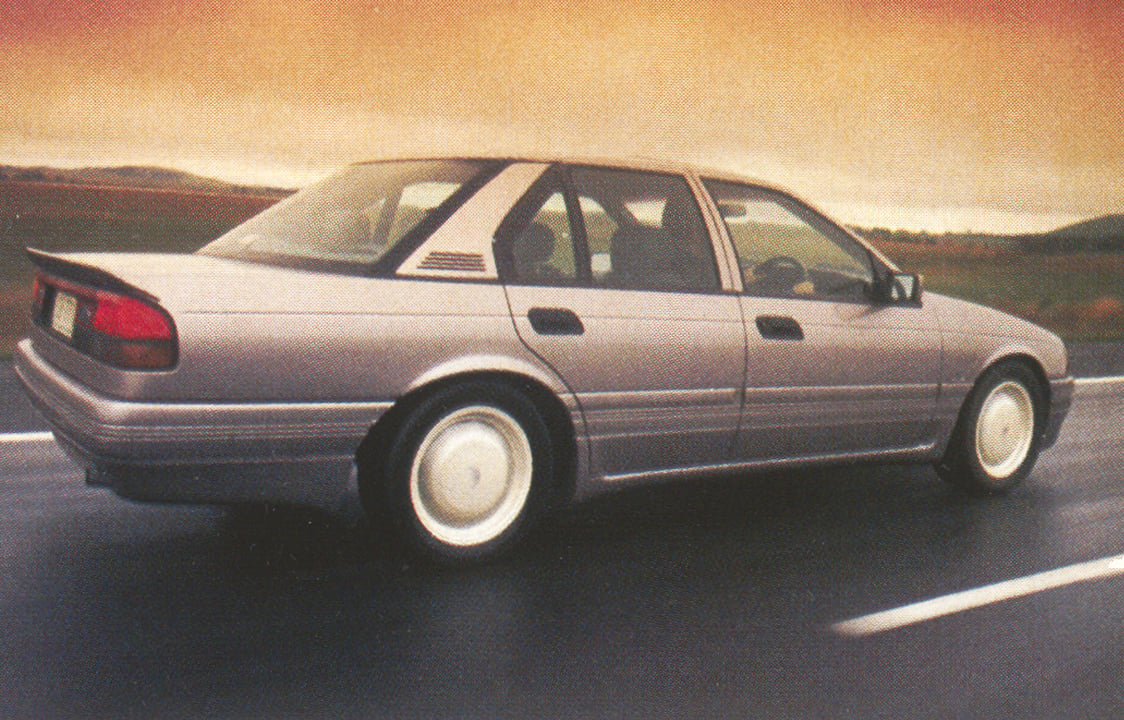
This leaves the Brock SE with manual windows and mirrors and without cruise control, unless you option your Falcon S with this sort of stuff ex-factory. Our test five-speed wasn’t thus optioned, leaving its price at $44,377. Ouch!
Double ouch, after vou’d already looked at the HSV ClubSport five-speed at $33,320. The bits and pieces that transform it from a stock Executive 5.0 sedan are familiar enough; it is mechanically identical to the SV89. That means that the 5.0-litre V8 gets a recalibrated engine management system, re-mapped ignition, knock sen-sor, cold air box, extractors and a dual exhaust system. It adds up to 180kW at 4600rpm and 400Nm at 3800rpm. Simple. Auto models get tighter change points, and all cars get the 86-litre long-range fuel tank.
The front strut mounts are modified to increase castor, while springs, anti-roll bars and dampers are revised (again, the latter being local Monroe equipment). HSV’s stock of five-spoke, 16×7 inch VL Group A wheels is being gradually depleted and fitted with Pirelli P700-Z 205/55 ZR16 tyres. Brakes are regular Commodore V8 vented/solid discs.
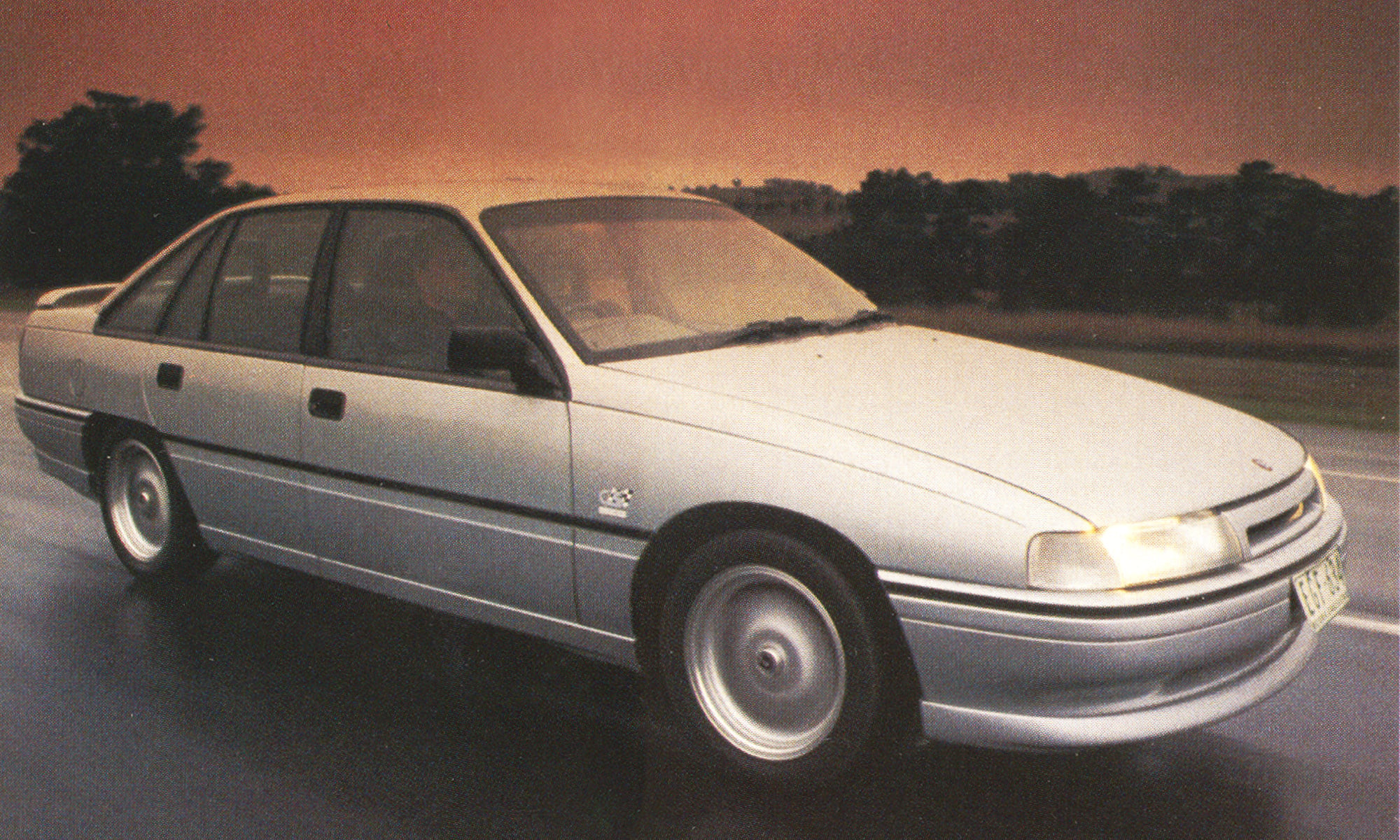
The interior varies only slightly from the standard Executive package, but does so in useful areas. The instrumentation, for instance, is the un-fussed analogue set-up but includes the trip computer usually only available as part of the “power pack” (windows, central locking) Holden option. The standard, so-so front seats can be replaced with the optional sports seats, based on the standard frames but extensively reshaped and still very worthwhile at $2080. Rear head restraints are part of that price. An excellent three-spoke Momo Panther wheel and leather gear knob are standard.
Other options our SV Hume Cruiser carried were the front air dam, side skirts and rear undertray dam ($1100), bringing the test ClubSport’s total price to $36,500. Air conditioning isn’t included in that.
Performance
It’s not really the number of pots and the litres they consume that are significant here, but the kerb weights involved and the resultant weight to power ratios. Umm, for starters, who’da thunk that a five speed Falcon would weigh in at 1447kg when a Commodore V8 Executive manual weighs just 1360kg? These standard kerb weights remain fairly consistent for the Brock SE and HSV ClubSport, meaning weight to power ratios of 7.5kg/kW (Holden) versus 8.8kg/kW for the Ford.
With both cars chockers with fuel – a whole 83 litres (about 63kg worth) in the Holden’s case, and 68 litres (52 kg) in the Ford – the Commodore covered the 400 metres in a serious 14.6 seconds. That is serious, for the $53,000, 200KW SV5000 only manages it in 14.9 seconds, albeit with an auto transmission and 1570kg to carry along.
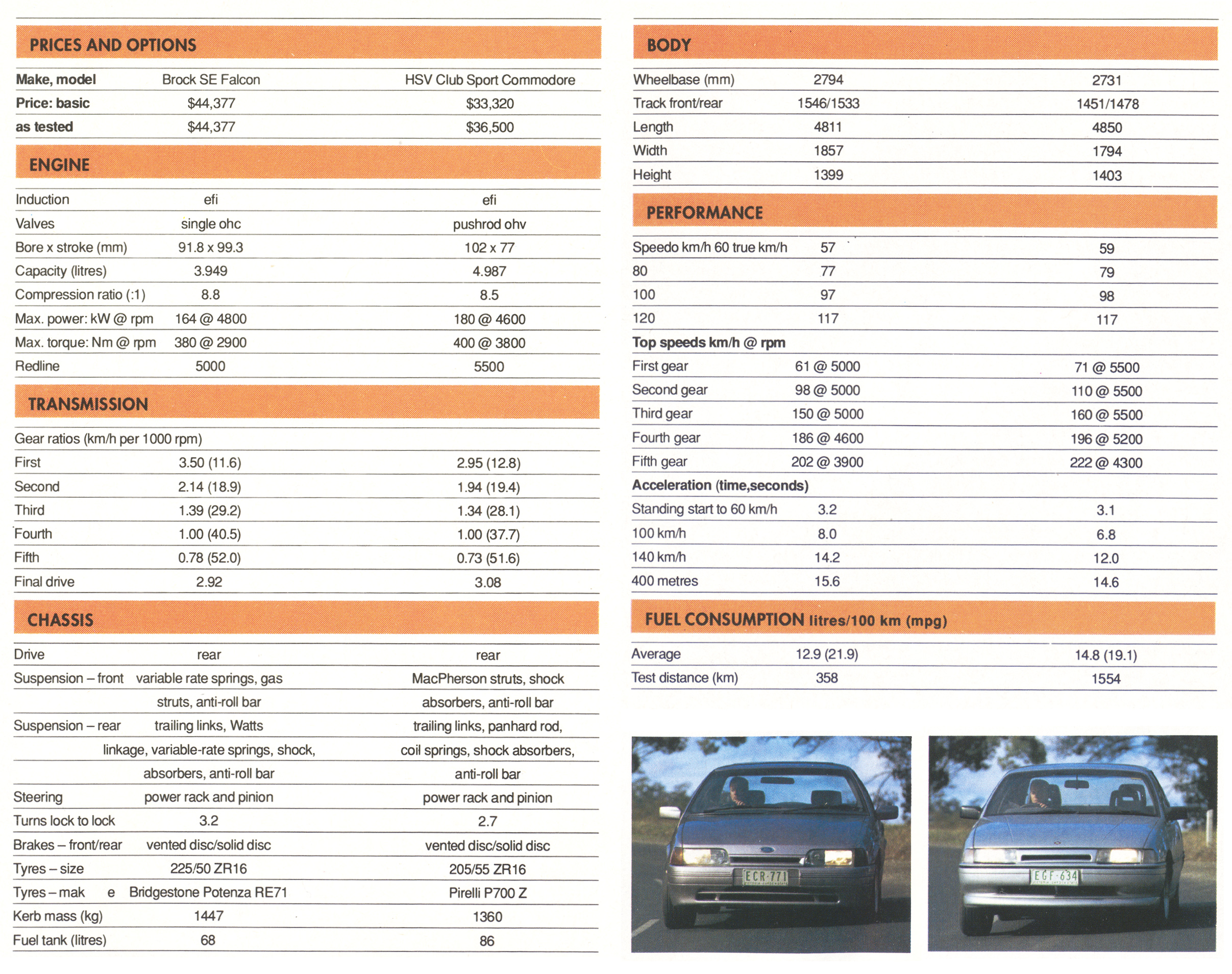
The light weight of the ClubSport does, however, bring out a different character in this 180kW engine. At the risk of repeating ourselves, the bigger and bulkier (1540kg) SV90 Statesman makes this engine feel almost ‘cammy’, needing at least 3000rpm to make any impression on your seat’s back-rest. The much lighter ClubSport surges much more purposefully anywhere from about 1500rpm, is still at its strongest from 3000rpm, but trails off very noticeably beyond the power peak at 4600rpm. Redline, up there at 5500rpm, doesn’t welcome visitors.
Brock’s Ford engine feels mostly like a really well run-in standard unit. There’s a much greater strength felt in its upper-mid range, but the overall impression is of having somebody oiled your billycart wheels for the first time in years.
Our test Brock SE, with a slightly slipping clutch, ran down Calder Park’s 400 metres in 15.6 seconds. This figure, capable of being bettered, still edges out a BMW 535i manual by one-tenth of a second.
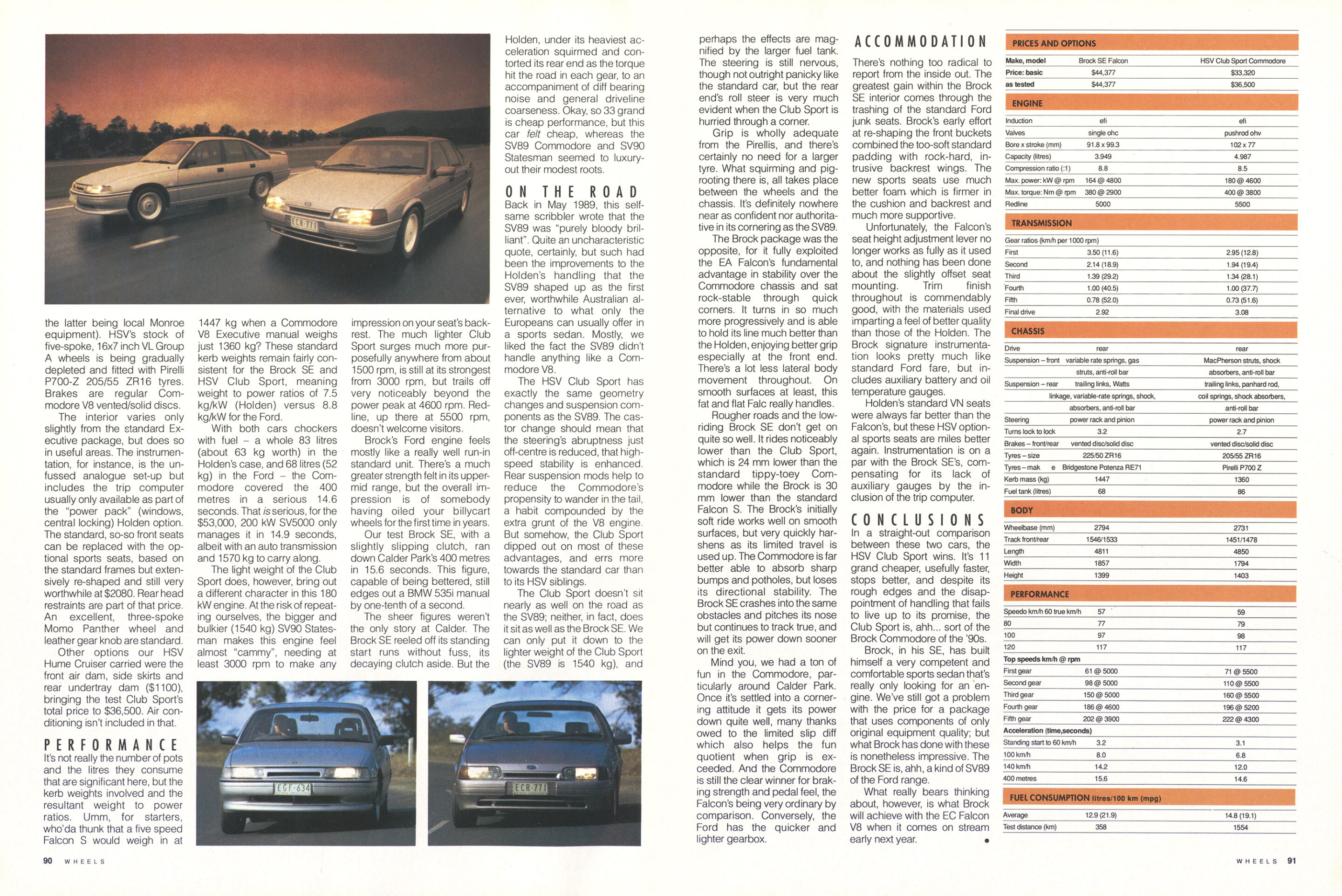
The sheer figures weren’t the only story at Calder. The Brock SE reeled off its standing start runs without fuss, its decaying clutch aside. But the Holden, under its heaviest acceleration squirmed and contorted its rear end as the torque hit the road in each gear, to an accompaniment of diff bearing noise and general driveline coarseness. Okay, so 33 grand is cheap performance, but this car felt cheap, whereas the SV89 Commodore and SV90 Statesman seemed to luxury-out their modest roots.
On the road
Back in May 1989, this selfsame scribbler wrote that the SV89 was “purely bloody brilliant”. Quite an uncharacteristic quote, certainly, but such had been the improvements to the Holden’s handling that the SV89 shaped up as the first ever, worthwhile Australian alternative to what only the Europeans can usually offer in a sports sedan. Mostly, we liked the fact the SV89 didn’t handle anything like a Commodore V8.
The HSV ClubSport has exactly the same geometry changes and suspension components as the SV89. The castor change should mean that the steering’s abruptness just off-centre is reduced, that high-speed stability is enhanced. Rear suspension mods help to reduce the Commodore’s propensity to wander in the tail, a habit compounded by the extra grunt of the V8 engine But somehow, the ClubSport dipped out on most of these advantages, and errs more towards the standard car than to its HSV siblings.
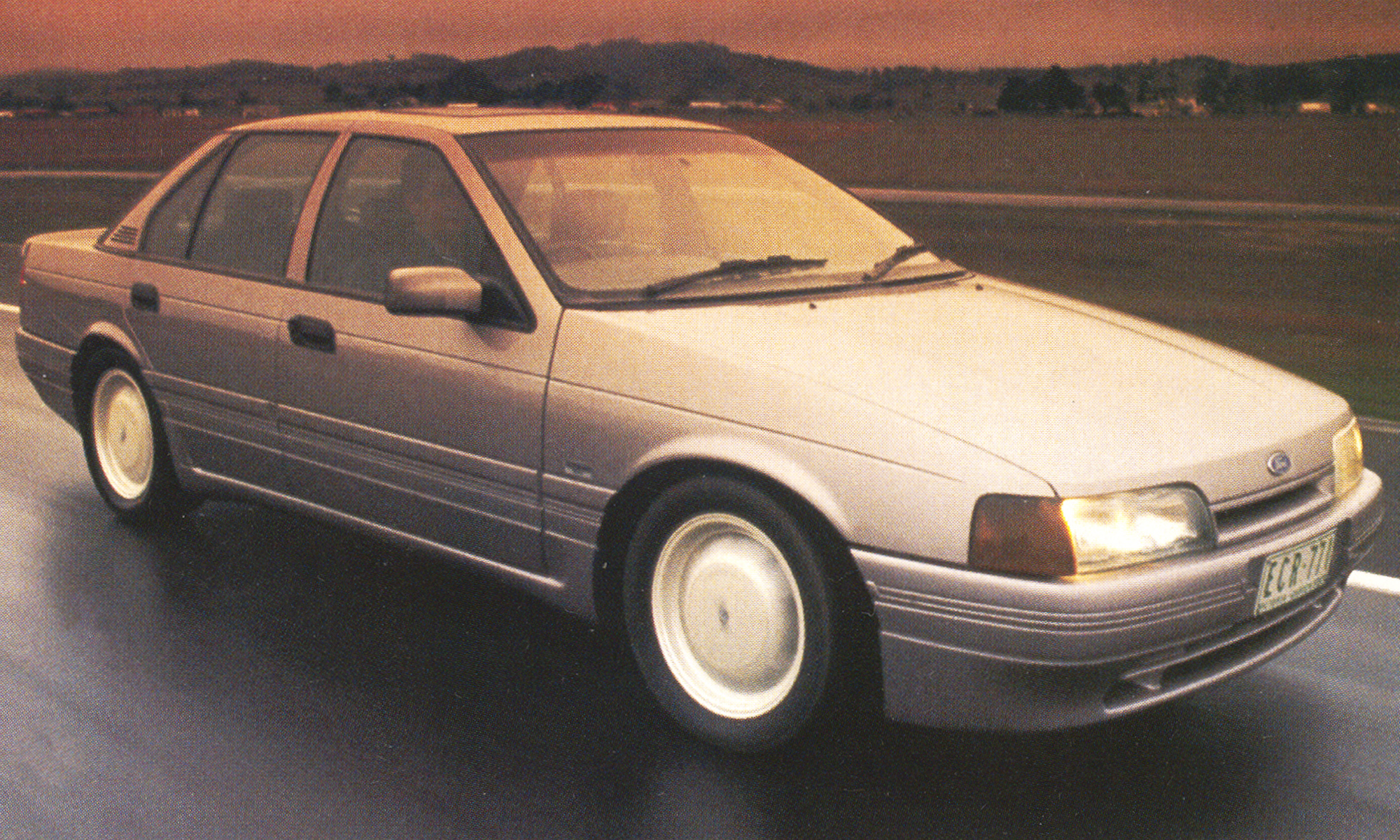
The ClubSport doesn’t sit nearly as well on the road as the SV89; neither, in fact, does it sit as well as the Brock SE. We can only put it down to the lighter weight of the ClubSport (the SV89 is 1540kg), and perhaps the effects are magnified by the larger fuel tank. The steering is still nervous, though not outright panicky like the standard car, but the rear end’s roll steer is very much evident when the ClubSport is hurried through a corner.
Grip is wholly adequate from the Pirellis, and there’s certainly no need for a larger tyre. What squirming and pig-rooting there is, all takes place between the wheels and the chassis. It’s definitely nowhere near as confident nor authoritative in its cornering as the SV89.
The Brock package was the opposite, for it fully exploited the EA Falcon’s fundamental advantage in stability over the Commodore chassis and sat rock-stable through quick corners. It turns in so much more progressively and is able to hold its line much better than the Holden, enjoying better grip especially at the front end. There’s a lot less lateral body movement throughout. On smooth surfaces at least, this fat and flat Falc really handles.
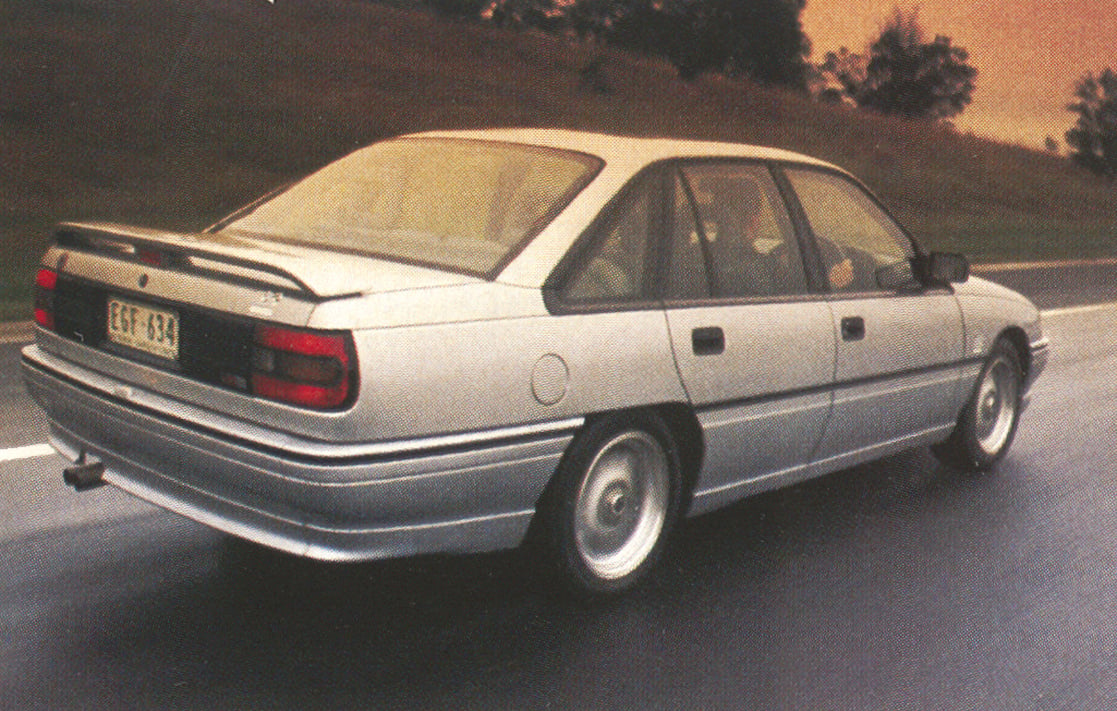
Rougher roads and the low-riding Brock SE don’t get on quite so well. It rides noticeably lower than the ClubSport, which is 24mm lower than the standard tippy-toey Commodore while the Brock is 30mm lower than the standard Falcon S. The Brock’s initially soft ride works well on smooth surfaces, but very quickly harshens as its limited travel is used up. The Commodore is far better able to absorb sharp bumps and potholes, but loses its directional stability. The Brock SE crashes into the same obstacles and pitches its nose but continues to track true, and will get its power down sooner on the exit.
Mind you, we had a ton of fun in the Commodore, particularly around Calder Park. Once it’s settled into a cornering attitude it gets its power down quite well, many thanks owed to the limited slip diff which also helps the fun quotient when grip is exceeded. And the Commodore is still the clear winner for braking strength and pedal feel, the Falcon’s being very ordinary by comparison. Conversely, the Ford has the quicker and lighter gearbox.
Accommodation
There’s nothing too radical to report from the inside out. The greatest gain within the Brock SE interior comes through the trashing of the standard Ford junk seats. Brock’s early effort at reshaping the front buckets combined the too-soft standard padding with rock-hard, intrusive backrest wings. The new sports seats use much better foam which is firmer in the cushion and backrest and much more supportive.
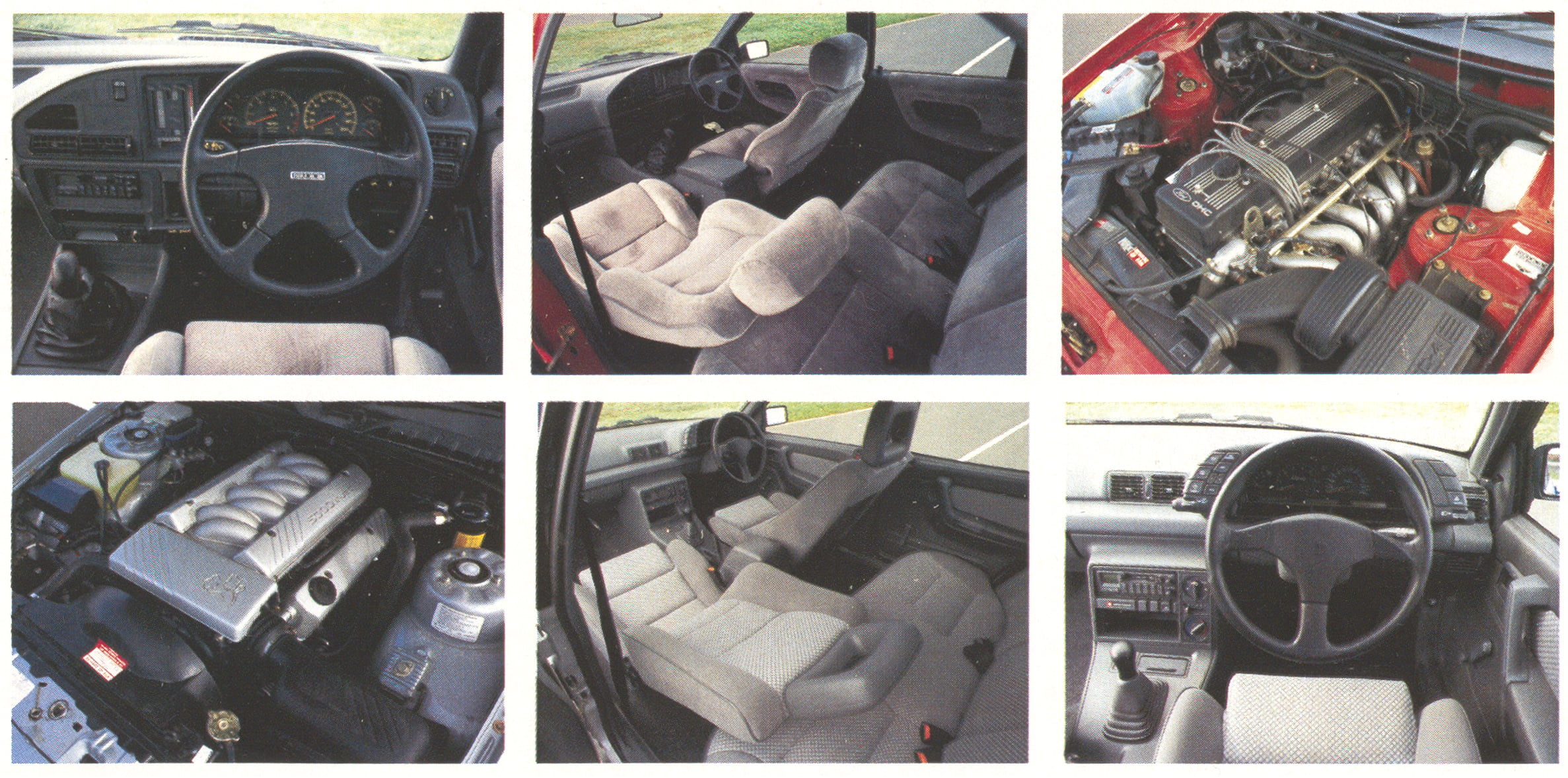
Unfortunately, the Falcon’s seat height adjustment lever no longer works as fully as it used to, and nothing has been done about the slightly offset seat mounting. Trim finish throughout is commendably good, with the materials used imparting a feel of better quality than those of the Holden. The Brock signature instrumentation looks pretty much like standard Ford fare, but includes auxiliary battery and oil temperature gauges.
Holden’s standard VN seats were always far better than the Falcon’s, but these HSV optional sports seats are miles better again. Instrumentation is on a par with the Brock SE’s, compensating for its lack of auxiliary gauges by the inclusion of the trip computer
The Verdict
In a straight-out comparison between these two cars, the HSV ClubSport wins. It’s 11 grand cheaper, usefully faster, stops better, and despite its rough edges and the disappointment of handling that fails to live up to its promise, the ClubSport is, ahh… sort of the Brock Commodore of the ’90s.
Brock, in his SE, has built himself a very competent and comfortable sports sedan that’s really only looking for an engine. We’ve still got a problem with the price for a package that uses components of only original equipment quality; but what Brock has done with these is nonetheless impressive. The Brock SE is, ahh, a kind of SV89 of the Ford range.
What really bears thinking about, however, is what Brock will achieve with the EC Falcon V8 when it comes on stream early next year.
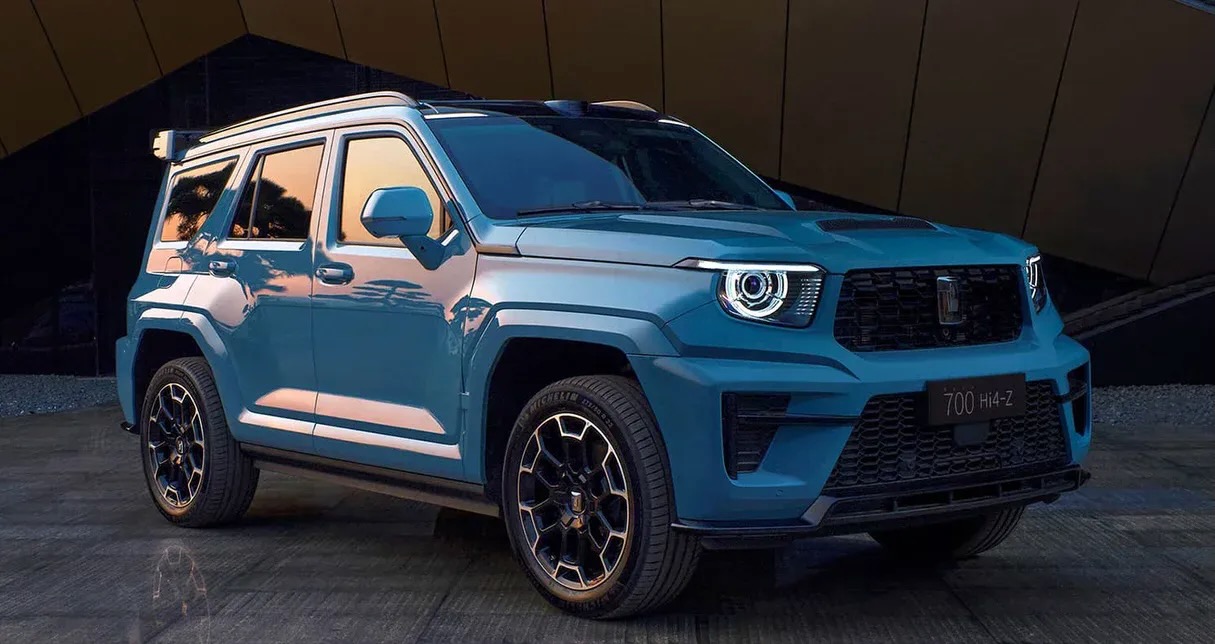
GWM has revealed an updated version of its Tank 700 large off-road SUV, which has given it refreshed styling, new tech and a new plug-in hybrid drivetrain called the Hi4-Z. Already on sale in China since 2024, the updated Tank 700 is priced from around A$88,000 in its home market. Australian sales prospects are unknown at this stage.
Measuring 5105mm long, 2061mm wide and 1985mm tall with a 3000mm wheelbase, the Tank 300 is 115mm longer than a Toyota Prado. Like the Prado, it’s a boxy large SUV but it only offers five seats, with the seven-seat layout of the Prado unavailable. The 22-inch alloy wheels are standard equipment, and part of the update to the Tank 700 are new adaptive LED headlights with 260 LED elements.
Under the bonnet of the Tank 700 Hi4-Z is a new 2.0-litre turbo-petrol plug-in hybrid drivetrain with two electric motors. The engine makes 185kW of power, the front electric motor 215kW and the rear electric motor 240kW. Combined, they make 635kW of power and its claimed 0-100km/h time is 5.6 seconds, which isn’t as quick as you’d first think, likely due to its weight.
A 59kWh battery gives a claimed electric driving range of up to 190km (CLTC), and it’s rated at just 1.1L/100km for fuel consumption (8.5L/100km with the battery drained).
Also available in the Tank 700 tree is a larger version of GWM’s Hi4-T plug-in hybrid system that’s found in cars like the Haval H6 in Australia, but this time using a 3.0-litre petrol V6 engine and nine-speed automatic transmission, making a total 265kW of power. It features a smaller 37.1kWh battery for a claimed 90km of electric driving range, and unlike the Hi4-Z, a mechanical four-wheel drive system for serious off-road ability.
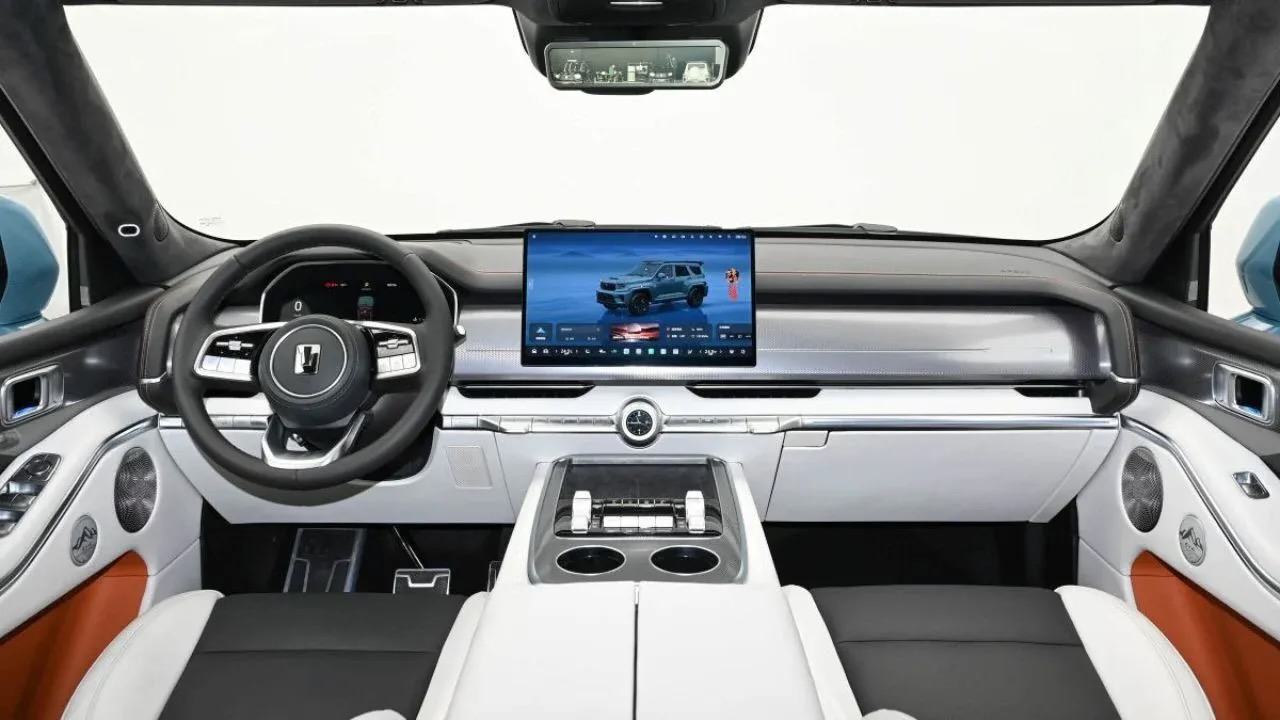
Inside the updated Tank 700 is a new 15.6-inch floating touchscreen with a 12.3-inch digital driver’s display and a 17.3-inch screen mounted on the roof for rear passengers, which can be controlled through a 7-inch touchscreen in the armrest. All seats include heating, ventilation and 10-point massaging, while a 5.4-litre inbuilt fridge and 21-speaker sound system are also standard.
The updated GWM Tank 700 will go on sale in China soon, with Australian prospects yet to be announced. GWM Australia previously brought one to local shores for local media evaluation in the final quarter of 2025, so it’s at least under consideration for our market.
How much does the Kia EV3 Air long range cost to buy?
At the time of testing, Kia listed driveway pricing for all variants of its EV3. The range opens with the Air Standard Range which costs $46,990. Next up, there’s the Air Long Range we’re testing here, which lists at $52,990, then there’s the Earth Long Range, which costs $58,990, while the range-topping GT Line Long Range costs $68,490.
Remember, those prices are all drive away, at the time of testing, in Sydney, NSW.
| Air Standard Range | $46,990 |
|---|---|
| Air Long Range | $52,990 |
| Earth Long Range | $58,990 |
| GT-Line Long Range | $68,490 |
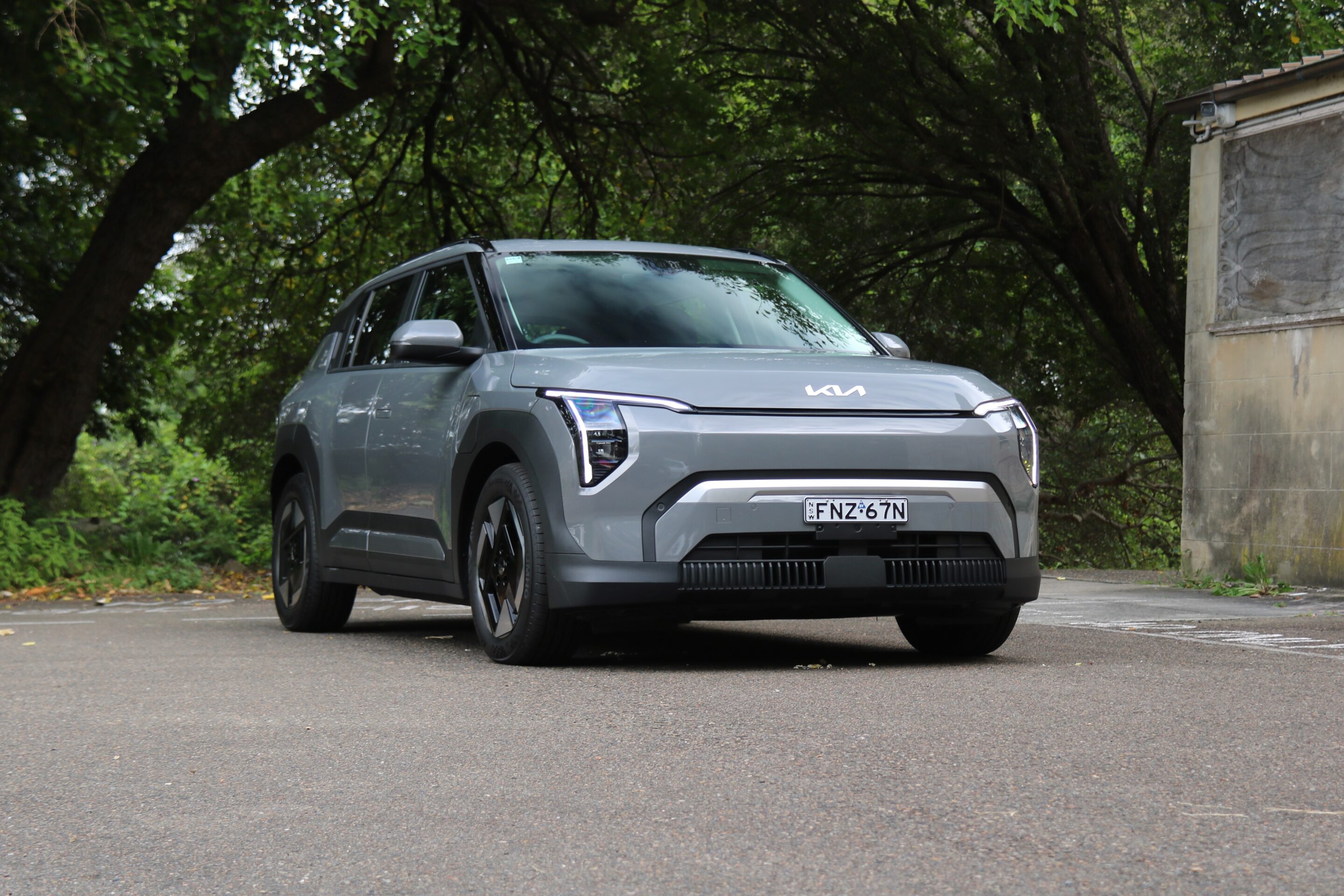
Competition in this segment is fierce, with the standout options being the BYD Atto 3, the Zeekr X and the Volvo EX30. Given the near $70,000 ask for the range-topper, there’s little doubt that the Air as tested here – whether you opt for standard or long range – is the smart choice in the range.
How fast is the Kia EV3 Air Long Range?
In Air Long Range specification, you get an 81.4kWh battery pack with FWD via a single elector motor. Kia claims 604km on the WLTP cycle, and outputs are 150kW and 283Nm. As a result, the EV3 isn’t a silly fast electric car (certainly in Eco and Normal modes), as some can be, but it’s still sharp and responsive (in Sport mode) in the way nearly EV is. Kia claims a run to 100km/h in 7.7 seconds, which is fast enough for normal driving duties.
EV3 is a good thing to drive, around town or on the highway, with Kia’s typical attention to driving detail, ride comfort and bump absorption, all matched by a chassis that handles competently, too. It certainly doesn’t feel as heavy as it might either – at 1885kg in this specification. 17-inch wheels and decent sidewalls play their part here, too.
If we had to pick between the EV3 and the EV5, we’d go with the EV5, such is its competence as an all-rounder on any road. It handles the patchwork of road surfaces in Australia nicely, and quietly, with the cabin always remaining calm. Even on coarse surfaces at 110km/h, the cabin remains quieter than we expected. There’s some tyre noise – and occasionally some wind noise – that enters the cabin, but nothing intrusive.
A really sharp bump or speed hump can transmit into the cabin, but not in a nasty way, and it doesn’t feel heavy from behind the wheel on the move. At slow or high speed, the steering feedback is excellent and it’s nicely balanced. If you wanted an even sharper driving experience, the entry-grade EV3 is lighter with a smaller battery.
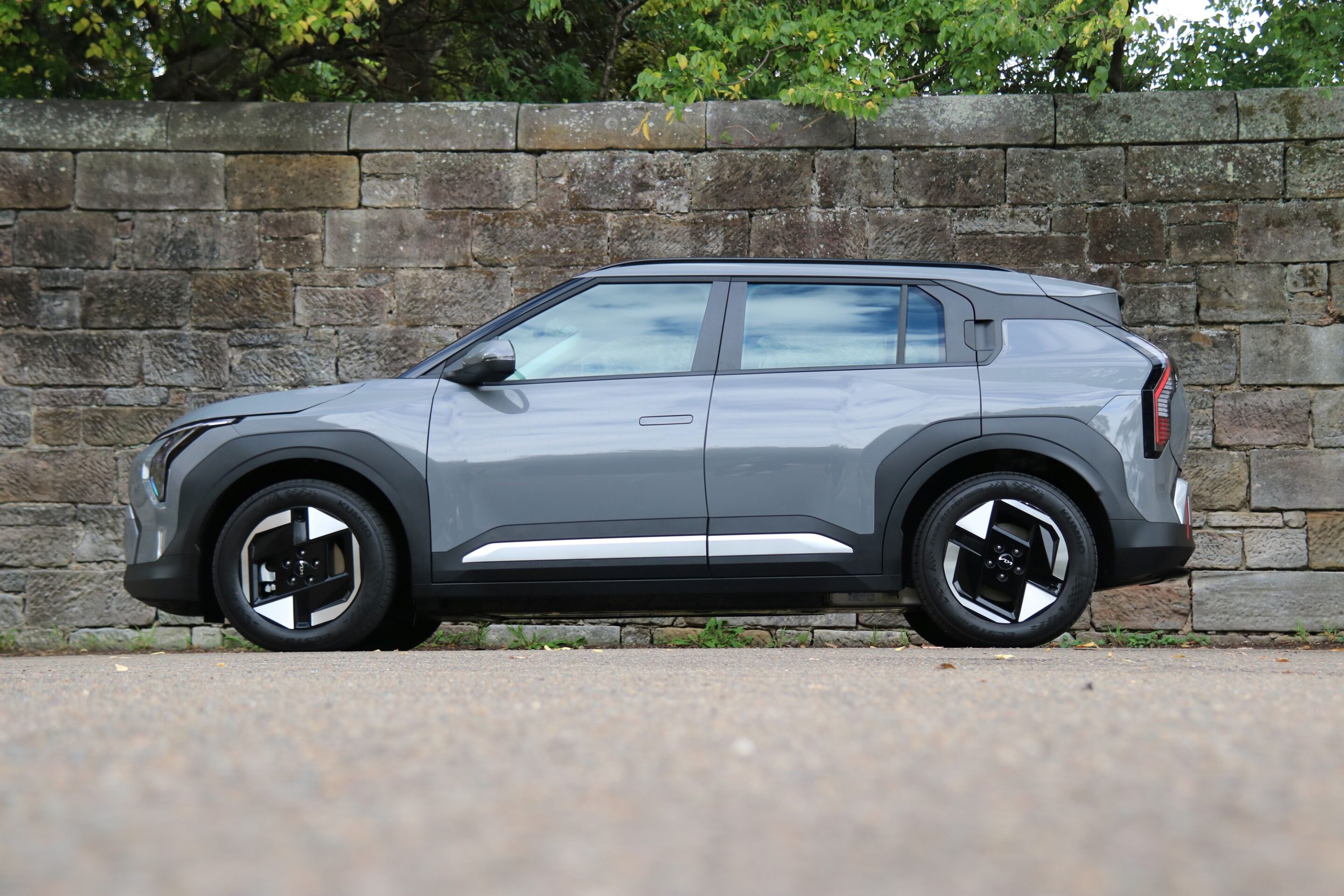
On the subject of steering, the tight turning circle is ideally suited to city use, where you can work the EV3 through tight three-point turns and annoyingly compact parking spaces with ease. You can cycle through multiple modes with the regenerative braking, too, to suit the feel you’re looking for. In dialed-up one-pedal mode, it’s pretty aggressive though, so you’ll need to get used to that.
We found some of the active safety technology to be too enthusiastic, and it kept telling me I was distracted or tired, when I wasn’t. You can deactivate both the fatigue monitor and the distraction monitor, but you have to work through some screens to get there. It could be easier. Speed zone warnings and overspeed warnings were also a little over zealous for our liking, but the one-touch mute button on the steering wheel cancels them out. We don’t debate the inclusion of such technology. We simply maintain that for those of us who are switched on behind the wheel and love driving, they should be easier to turn off.
How fast can the Kia EV3 Air Long Range charge?
Based on a tweaked version of Kia’s E-GMP platform, the EV3 is FWD and runs 400-volt architecture, rather than the other use of the platform where you’d find RWD and 800-volt architecture. EV3 uses nickel-manganese-cobalt (NMC) battery chemistry.
Where the standard range variants can charge at up to 100kW, Long Range models as tested here step that up to 127kW. If you charge at home, you’ll access 11kW capability which means five and a half hours to around seven hours from 10 to 100 per cent, depending on your setup. On the run though, in the best-case scenario, you’ll be able to get the EV3 from 10 to 80 per cent in as little as 31 minutes. On a fast charger, during our test, we saw the EV3 taking on 120kW.
Kia reckons you can average 14.9kWh/100km in the Air variants, and we saw that on the live readout, as an average. Around town, which is what it loves, we dipped down into the mid 12kWh range, while a longer highway run saw that climb to 16.5kWh/100km.
Is the Kia EV3 Air Long Range practical?
Let’s get the practicality gripes out of the way first. The rear door handles are positioned beautifully for styling enhancement, but annoyingly if you need to use them often. And they will be a major pain for shorter kids trying to open the back doors, too. And then there’s the front door handles, which again preference function over form, and look fantastic, but couldn’t be any less strange to use, especially the first few times.
If you’re a multi car family, you’ll constantly have to stop to work them out, if you get out of your regular car before getting into the EV3. They can be hard to grip, hard to work out the best way to use them, and that if yanked with some force, they might come off.
Those gripes aside – and I’m sure plenty of you will actually love them – there’s a lot to like about the practicality of living with the EV3 day-to-day. The cabin design, fit, finish and choice of trim material is excellent, and lends a classy feel to the experience. The finishes are all entirely synthetic – that is, no animal products at all – but they don’t feel uncomfortable in the way that some materials of this type can.
Air specification grade gets cloth seat trim and leather-look steering wheel trim, and they work together nicely to deliver a comfortable cabin in regard to the major touch points.
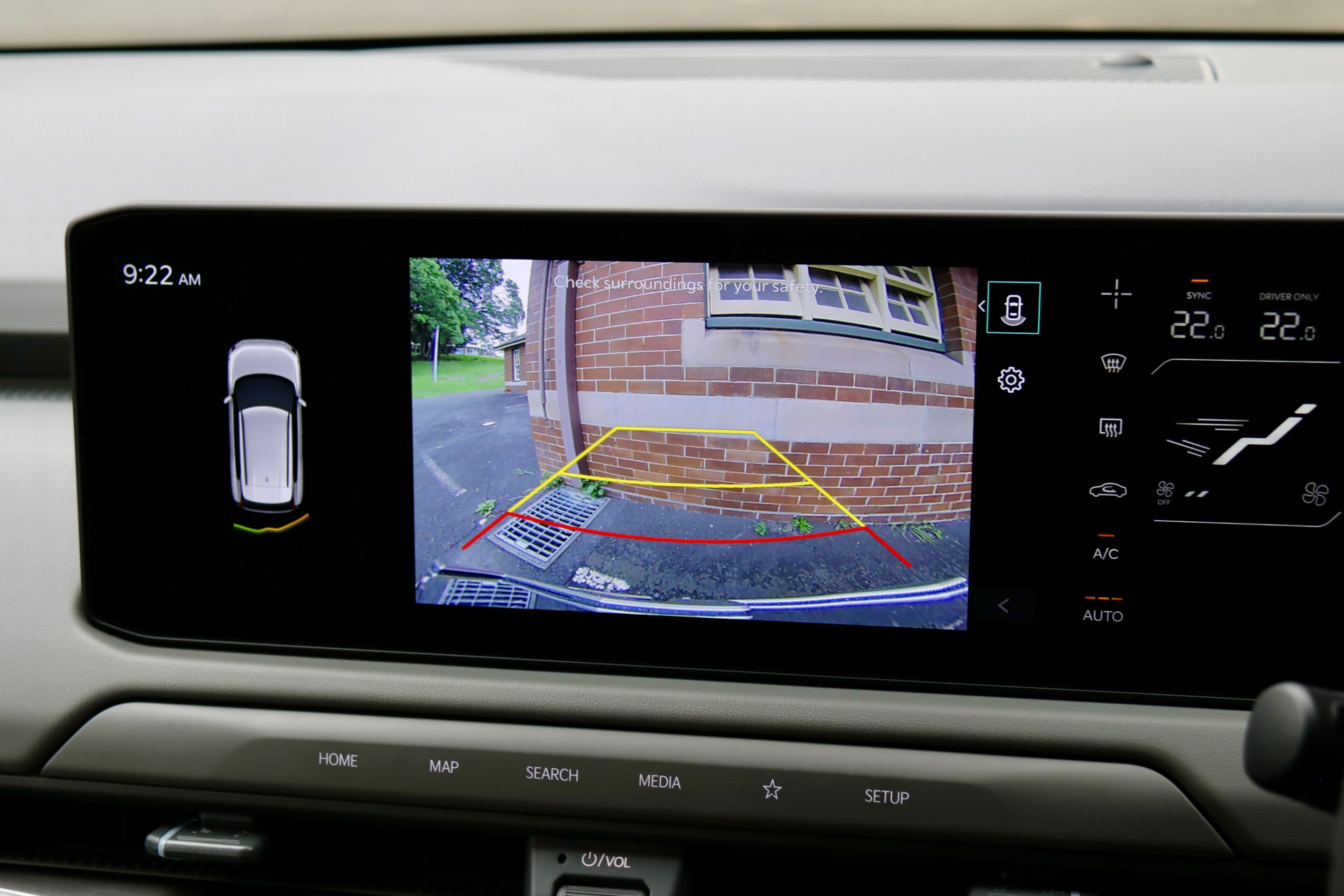
There’s plenty of of clever storage inside the cabin, with a lower console tray that features retractable cup/bottle holder gates to ensure your drinks won’t move around the cabin. Two USB-C ports up front and two in the second row take care of the devices, with wireless charging also standard up front. On that note, we did have some connectivity issues with the wired CarPlay connection, but switching to wireless solved that.
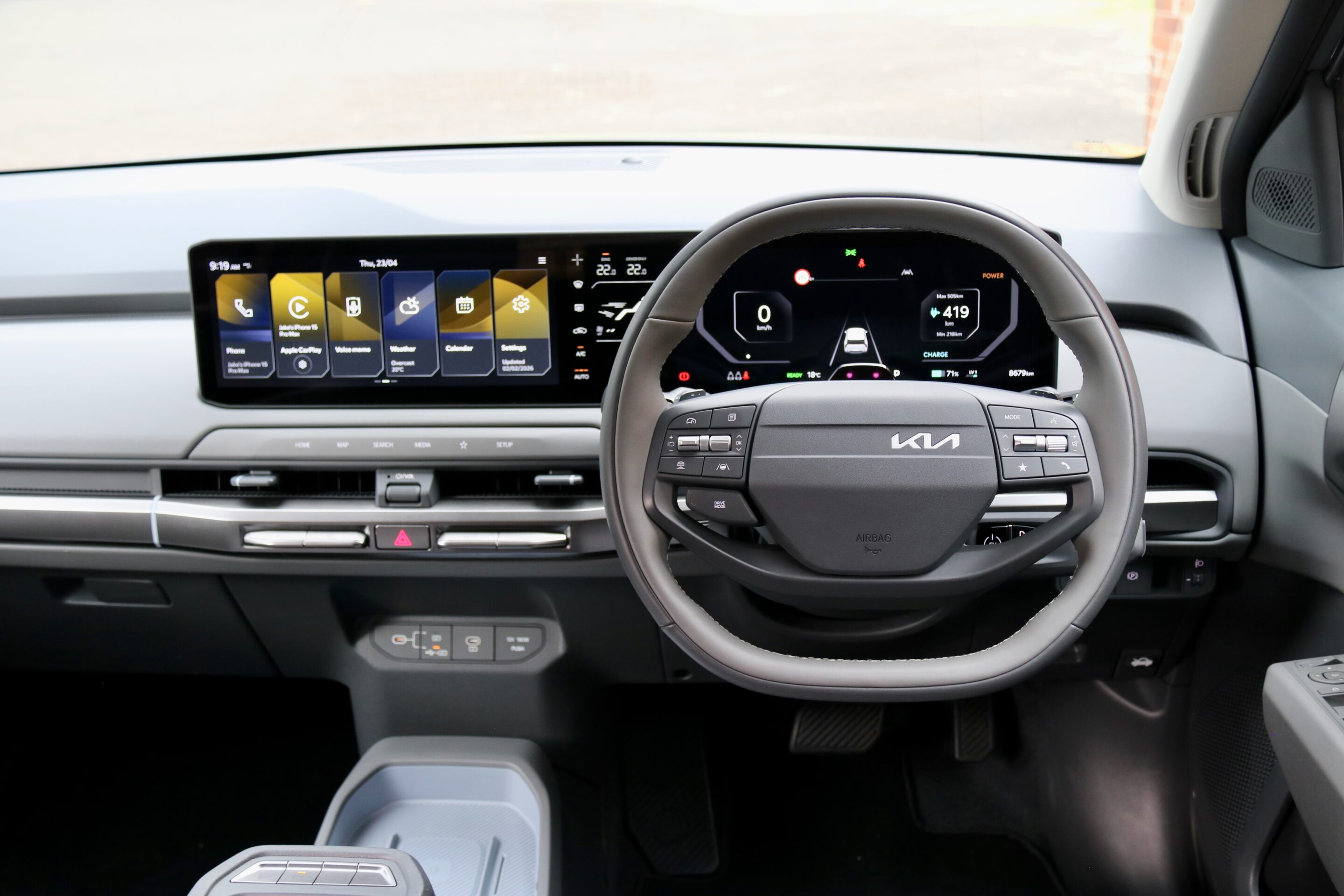
Screens aplenty dominate the cabin, with a 12.3-inch driver’s cluster, another 12.3-inch infotainment touchscreen, and a 5.3-inch screen for climate control functionality. Typical of Kia, the infotainment screen especially is clear, easy to read, and responsive. The driver’s display also works well, displaying what you want, where you want it.
What warranty covers the Kia EV3 Long Range?
Kia covers the EV3 – as it does it’s whole range – with a seven-year/unlimited kilometre warranty for private buyers. The battery pack is covered by an eight-year/150,000km warranty, which is a year less than the industry standard.
Service intervals are 12 months or 15,000km, and you can cap your servicing prices up to seven years, and prepay if you wish to. For seven years, then, the total servicing cost is $1897. There are also three-year ($674) or five-year ($1285) plans available.
Should I buy a Kia EV3 Air Long Range?
There’s no denying the cache, value, and ownership credentials that come with the purchase of a vehicle – electric or otherwise – from a legacy manufacturer like Kia. The history the brand has in this market, the reliability and service track record, the retained value on the second hand market, and the ownership experience are all the result of a hard won reputation in Australia.
As such, when you’e making the plunge into the EV waters, there’s tangible value in spending more money to access something like the Kia EV3, rather than a vehicle from a challenger brand you haven’t experienced before.
Is that enough, though, to push the EV3 in front of an EV with sharper pricing like the BYD Atto 3? For us it is, but for some of you, it may not. If that’s the case, and you’re ultimately on a budget you don’t want to stretch, then the Kia EV3 might not be for you.
However, there’s no denying the appeal of the EV3. It looks funky, it’s fantastic to drive, and the cabin has plenty of space to make it useful. Perhaps it’s most obvious point of attraction though, is the real world range. As such, its an electric vehicle in this segment that should be on your shopping list.
EV3 Air Long Range standard features
- 81.4kWh battery
- 150kW/283Nm electric motor FWD
- 604km WLTP driving range
- Dusk-sensing reflector-beam LED headlights with auto high beam
- LED tail-lights with incandescent element
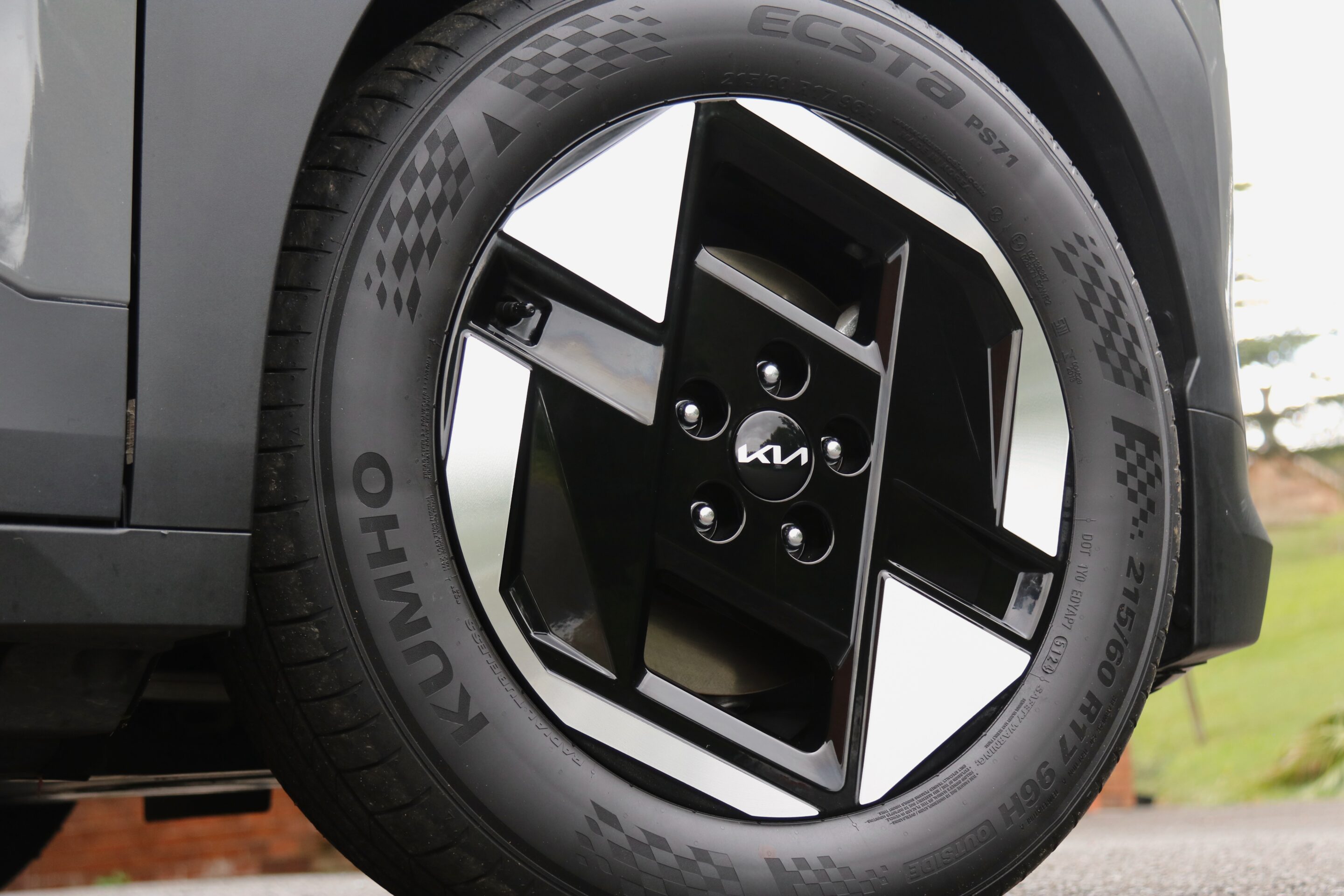
- 17-inch alloy wheels with tyre repair kit, Kumho tyres
- Ventilated front and non-ventilated rear brake discs
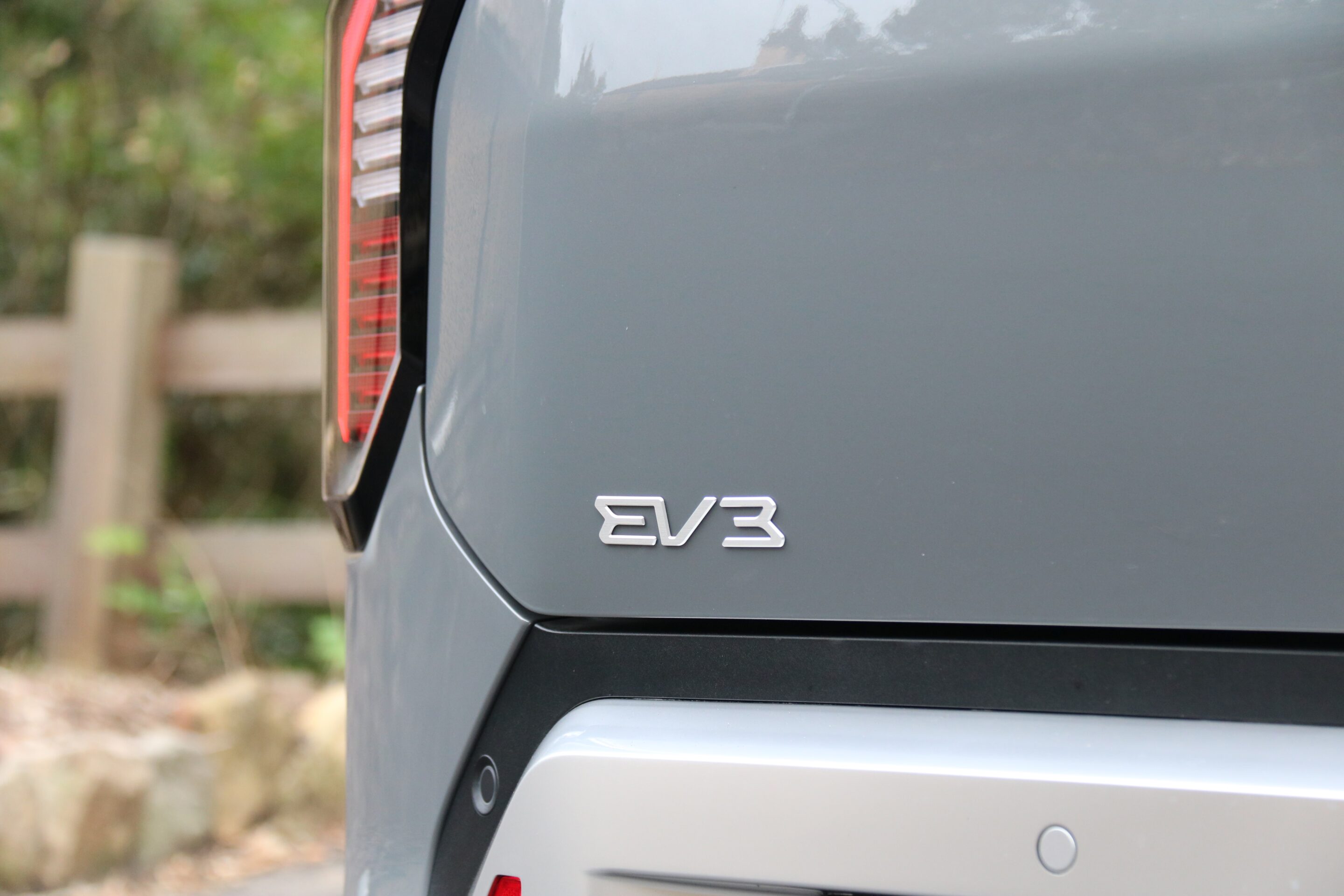
- Matte black plastic wheel-arch surrounds
- Body-coloured side mirrors
- 12.3-inch digital instrument cluster
- 12.3-inch infotainment touchscreen with wireless/wired Apple CarPlay and Android Auto,
- satellite navigation, over-the-air updates, AM/FM/DAB radio
- 5.3-inch climate-control display
- Wireless phone charging
- Keyless entry and start
- Six-speaker sound system
- Dual-zone climate control with rear air vents
- Cloth seat upholstery
- Leather-look steering wheel wrapping
- Blue lower centre-console tray
- Four USB-C ports (two front, two rear) and one USB-C socket
- Kia Connect phone app connectivity
- i-Pedal 3.0 regenerative braking function
- Vehicle-to-load technology (exterior and interior power sockets)
- Power-folding side mirrors with heating
- Rain-sensing wipers
- Seven airbags, including front-centre
- Rear-view camera with dynamic guidelines
- Front and rear parking sensors
- Autonomous emergency braking with pedestrian/cyclist detection, intersection assist,
- oncoming/lane-change awareness
- Adaptive cruise control with stop and go
- Lane-keep assist
- Lane following assist ‘2’
- Highway Driving Assist 2 software with auto lane-change technology
- Blind-spot monitoring with braking function
- Rear cross-traffic alert with braking function
- Door exit warning
- Traffic sign recognition with overspeed alert
- Tyre pressure monitoring
Specs
| Model | Kia EV3 Air Long Range |
|---|---|
| Price | $52,990 drive away |
| Drivetrain | Single-motor electric, front-wheel drive |
| Peak Outputs | 150kW/283Nm |
| Transmission | Single-speed |
| Claimed 0-100km/h | 7.7 seconds |
| Claimed top speed | 170km/h |
| Battery | 81.4kwh |
| Claimed WLTP range | 604km |
| Maximum DC fast charge speed | 127kW |
| Claimed 10-80% charge time | 31 minutes |
| Dimensions (l/w/h/wb) | 4300mm/1850mm/1560mm/2680mm |
| Boot size | 460 litres (25 litres front) |
| Tare mass | 1885kg |
| Warranty | 7-year/unlimited km (car) 7-year/150,000km (batt) |
| 7-year service cost | $1897 |
| On sale | Now |
Porsche has revealed a new all-electric version of its Cayenne Coupé, expanding its SUV range with a more performance-focused design and a trio of high-powered variants. The model made its global debut at the 2026 Beijing Auto Show.
The Cayenne Coupé Electric adopts a lower, more sloping roofline compared with the standard SUV, drawing inspiration from Porsche’s sports cars. While the overall dimensions remain similar, the revised profile reduces height slightly and improves aerodynamics, with a drag coefficient of 0.23.
That change contributes to a claimed driving range of up to 669 kilometres (WLTP), offering a modest improvement over the regular SUV version. Active aerodynamic features, including adjustable cooling flaps and a rear spoiler, are also used to enhance efficiency.
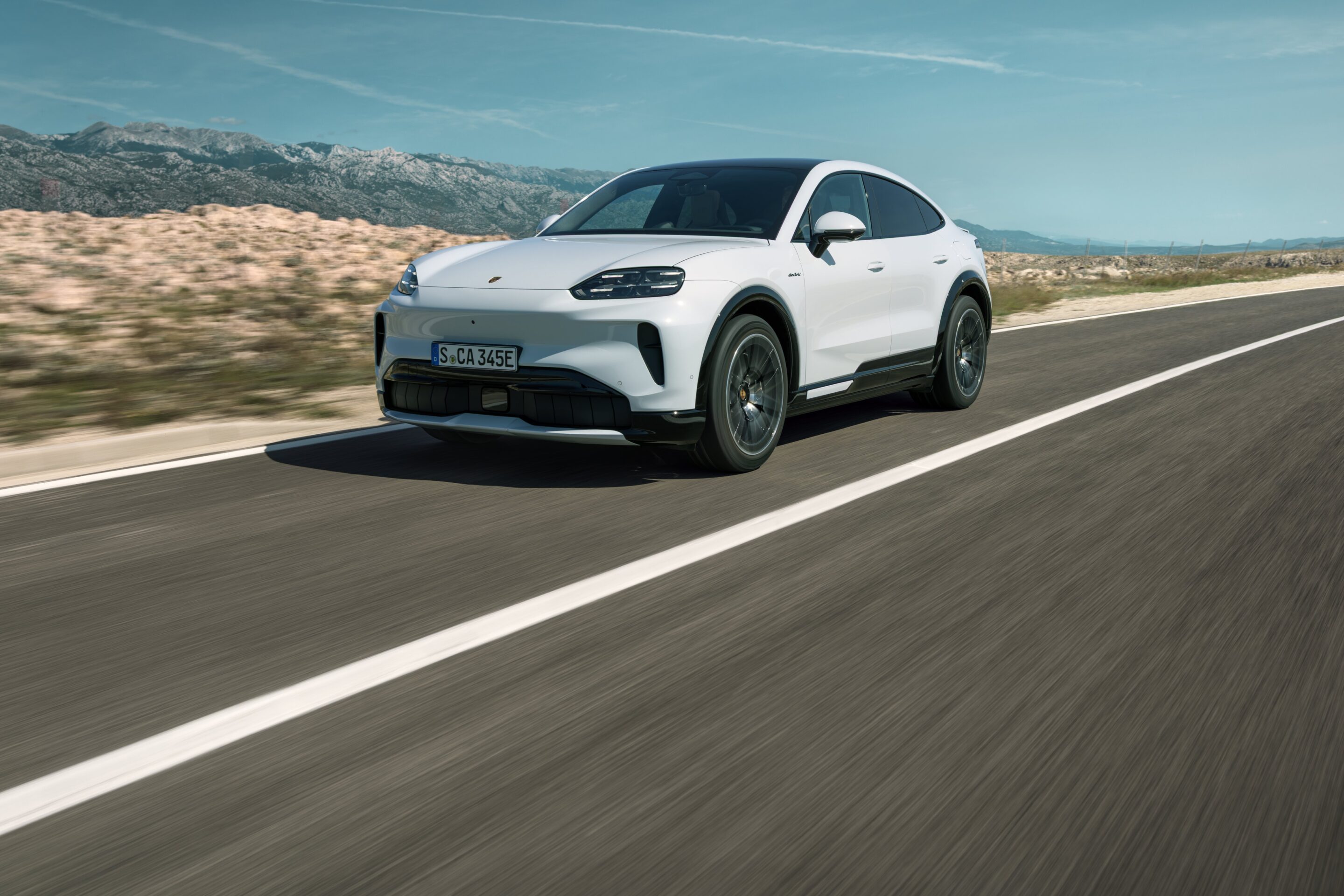
Three variants will be offered at launch, all using dual-motor electric drivetrains. The entry-level Cayenne Coupé Electric produces 300kW, rising to 325kW with overboost, and can accelerate from 0–100km/h in 4.8 seconds. The mid-range S version (above) increases output to 400kW (up to 490kW on overboost), cutting the sprint time to 3.8 seconds.
At the top of the range, the Cayenne Turbo Coupé Electric (below) delivers 630kW, with peak output reaching 850kW in launch mode. Porsche claims a 0–100km/h time of just 2.5 seconds for this flagship model.
Australian pricing has been outlined, with the base model starting from $173,600 before on-road costs, rising to $194,600 for the S and $272,100 for the Turbo.
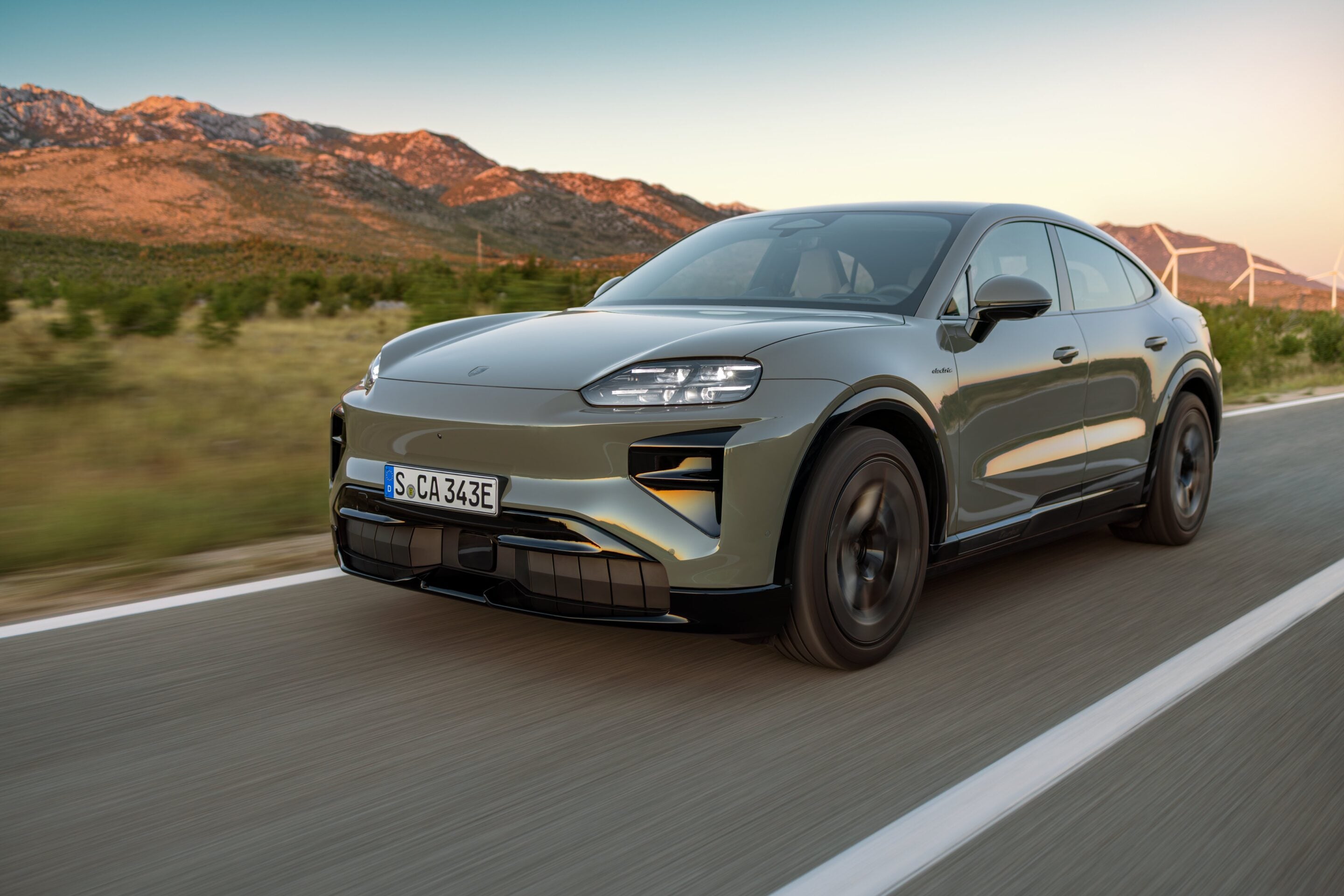
Despite its sportier design, the Cayenne Coupé Electric retains much of the practicality of the standard SUV. Boot capacity ranges from 534 to 1,347 litres, with an additional front storage compartment, while a towing capacity of up to 3.5 tonnes is also available.
The new model is built on Porsche’s 800-volt electrical architecture, supporting DC fast charging at up to 390kW. Under ideal conditions, this enables rapid charging times, while AC charging of up to 22kW is also available.
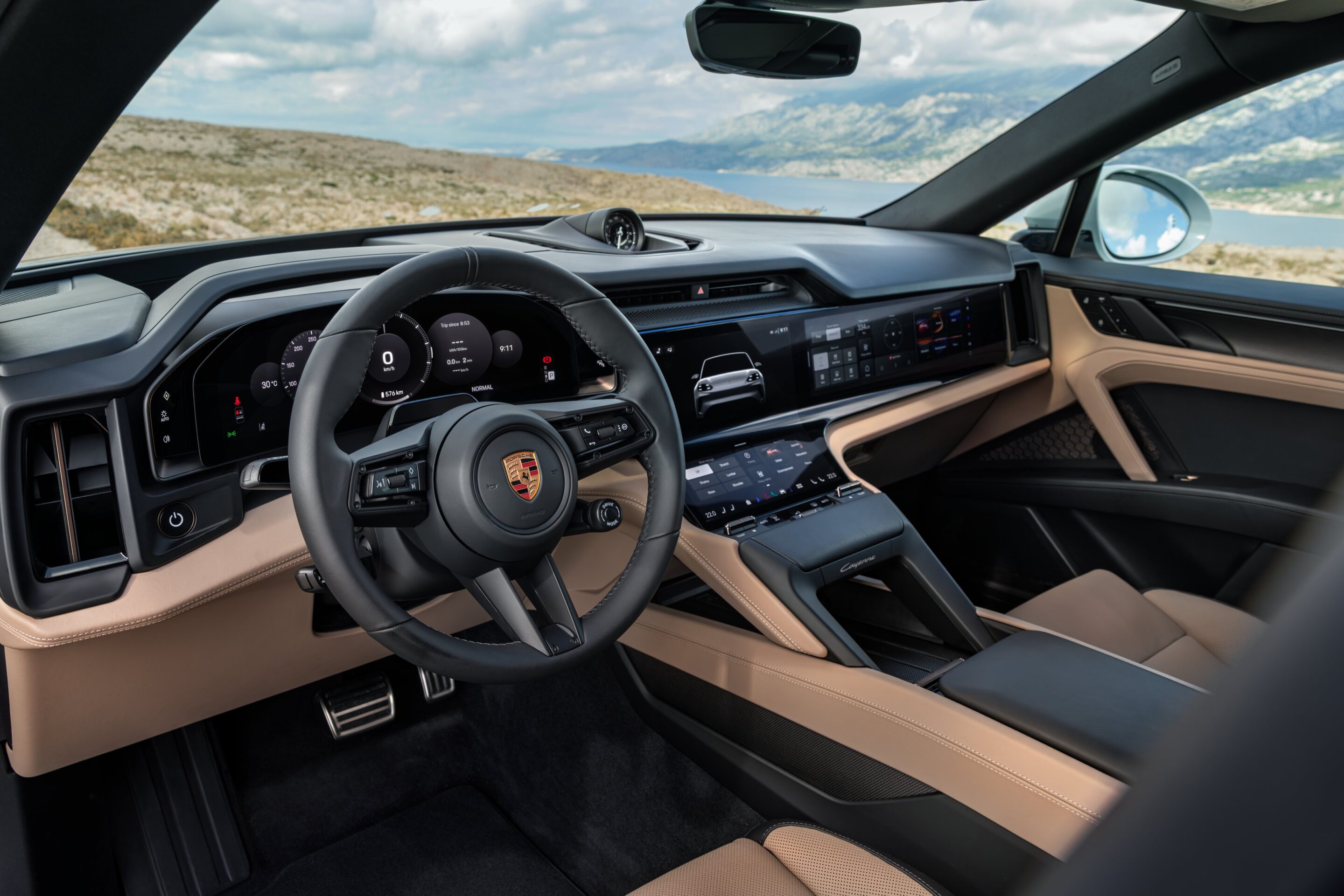
Inside, the Cayenne Coupé Electric adopts a digital-focused layout similar to the SUV, with multiple screens and a driver-oriented interface. A new Lightweight Sport package is also available, reducing weight and adding performance-focused design elements.
The introduction of the electric Coupé marks a further expansion of Porsche’s EV line-up, as the brand continues to add battery-powered variants across its core model range.
Nissan has used the 2026 Beijing Auto Show to preview two new electrified SUV concepts, offering a clearer picture of how the brand plans to rebuild its presence in the world’s largest car market – and potentially beyond.
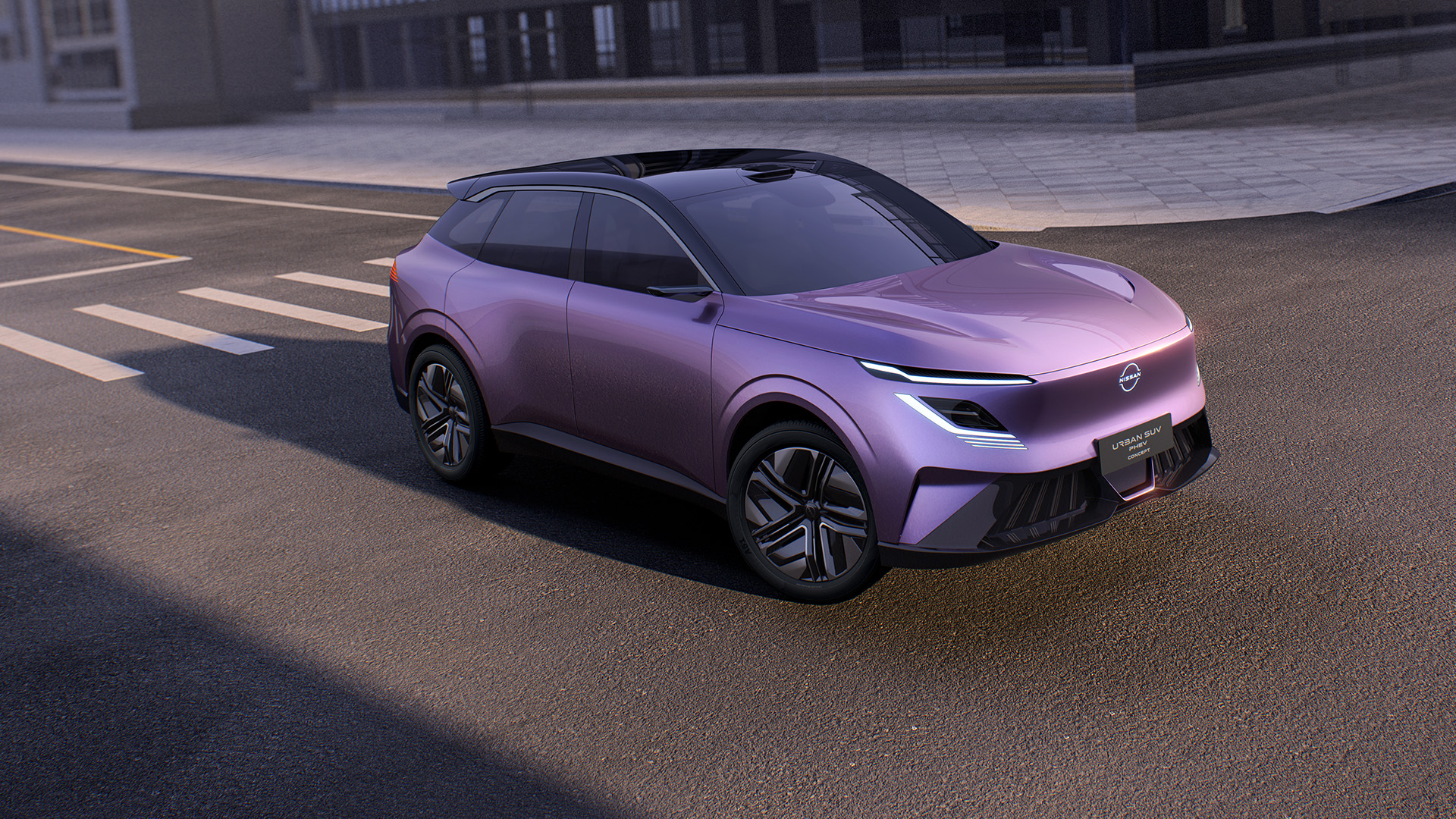
The Urban SUV PHEV Concept (bottom) and the Terrano PHEV Concept (main) were revealed as part of a broader push into so-called “new energy vehicles” (NEVs), a category that includes plug-in hybrids and battery-electric cars. Both models are expected to reach production within the next year, underscoring the speed at which Nissan is trying to expand its electrified line-up.
Of the two, the Urban SUV appears to target younger buyers in cities, with a focus on daily usability and electrified efficiency. While details remain limited, it follows a familiar formula seen across China’s competitive mid-size SUV segment: plug-in hybrid power, tech-focused interiors and a design geared toward urban lifestyles.
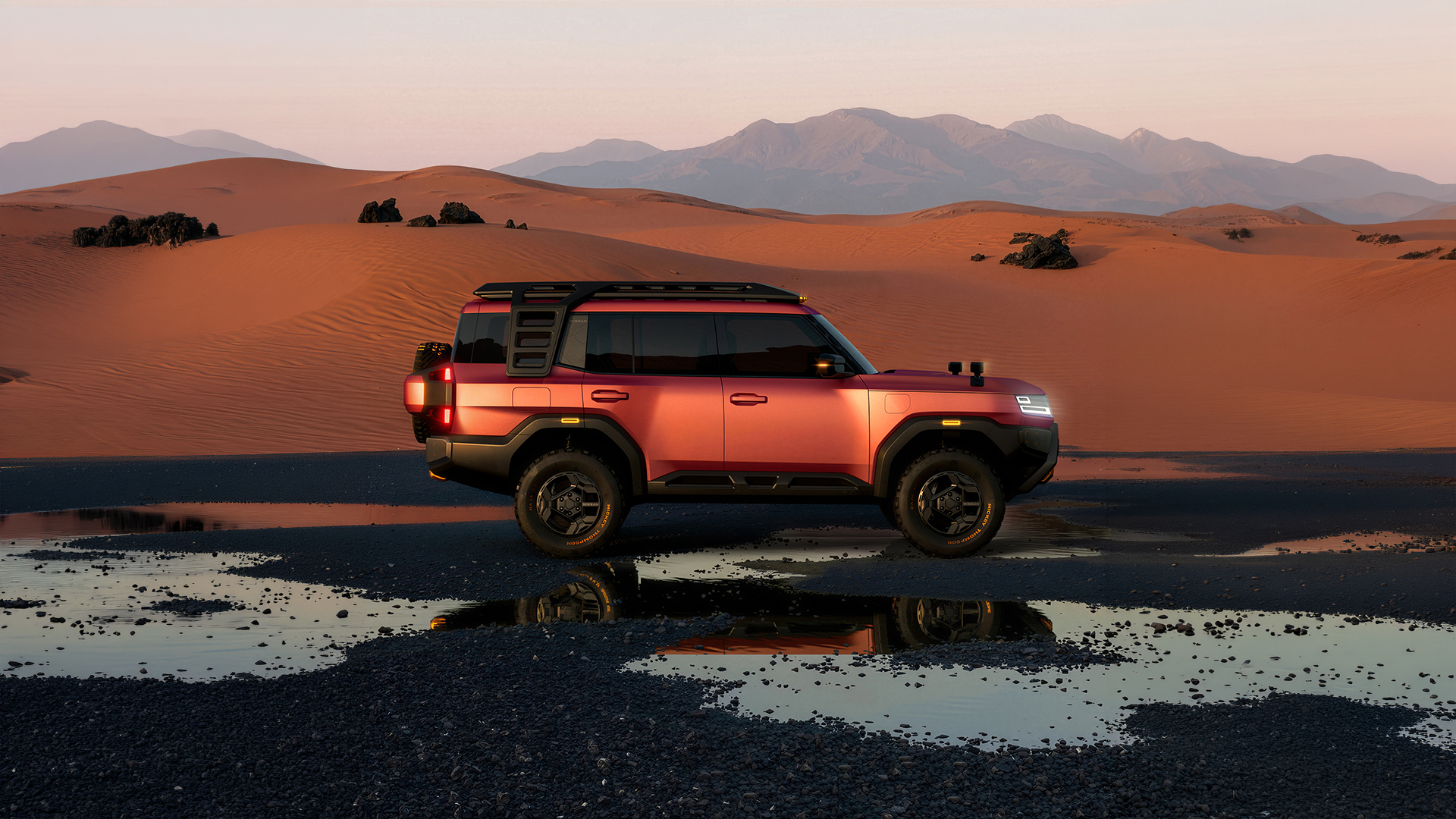
More intriguing is the return of the Terrano name. Once associated with rugged off-road vehicles, the concept reinterprets that identity through a plug-in hybrid lens. Nissan says it aims to combine off-road capability with everyday practicality, reflecting a growing trend among buyers who want SUVs that can handle both commuting and leisure use.
Neither concept breaks radically new ground on its own, but together they signal a shift in strategy. Nissan has lagged behind some rivals in China’s electrification race, particularly against domestic brands that have rapidly developed EV and hybrid technologies. The company is now attempting to close that gap by leaning on local development and faster product cycles.
That approach mirrors a broader industry trend, with global manufacturers increasingly using China not just as a sales market, but as a development hub. Nissan has confirmed that future models developed there will also be exported to regions including Southeast Asia, Latin America and the Middle East.
The move reflects the scale of change underway in the automotive industry. China’s dominance in EV production and battery technology has made it a key battleground for international brands, many of which are restructuring their strategies to remain competitive.
For Nissan, the challenge will be translating these concepts into production models that can stand out in a crowded field. The Urban SUV and Terrano may offer a starting point, but success will depend on execution, pricing and how well they match the expectations of increasingly tech-savvy buyers.
Volkswagen has revealed a new hybrid system for the Golf hatchback and T-Roc small SUV, which will go on sale in Europe in late 2026. Combining a 1.5-litre turbo-petrol engine with an electric motor and a 1.6kWh battery located under the boot floor, the new Volkswagen hybrid models send power exclusively to the front wheels via a seven-speed dual-clutch transmission. Larger hybrid models are expected, like the Tiguan medium SUV, and all are a long time coming.
Making either 101kW or 127kW, official fuel consumption figures for the new hybrid system are yet to be announced. However, European-spec Golf and T-Roc models with the same 1.5-litre turbo-petrol engine with a mild-hybrid system are rated at as low as 5.3L/100km in the Golf and 5.6L/100km in the T-Roc, so we’re expecting the full hybrids to be rated in the 4L/100km bracket.
The new hybrid drivetrain works similarly to the e:HEV system in the Honda Civic, where the electric motor handles most of the propulsion at urban speeds using the engine as a generator and then above 60km/h, the engine handles propulsion with the electric motor assisting. At low speeds and at a gentle take off, it can run purely electrically, though likely not for long.
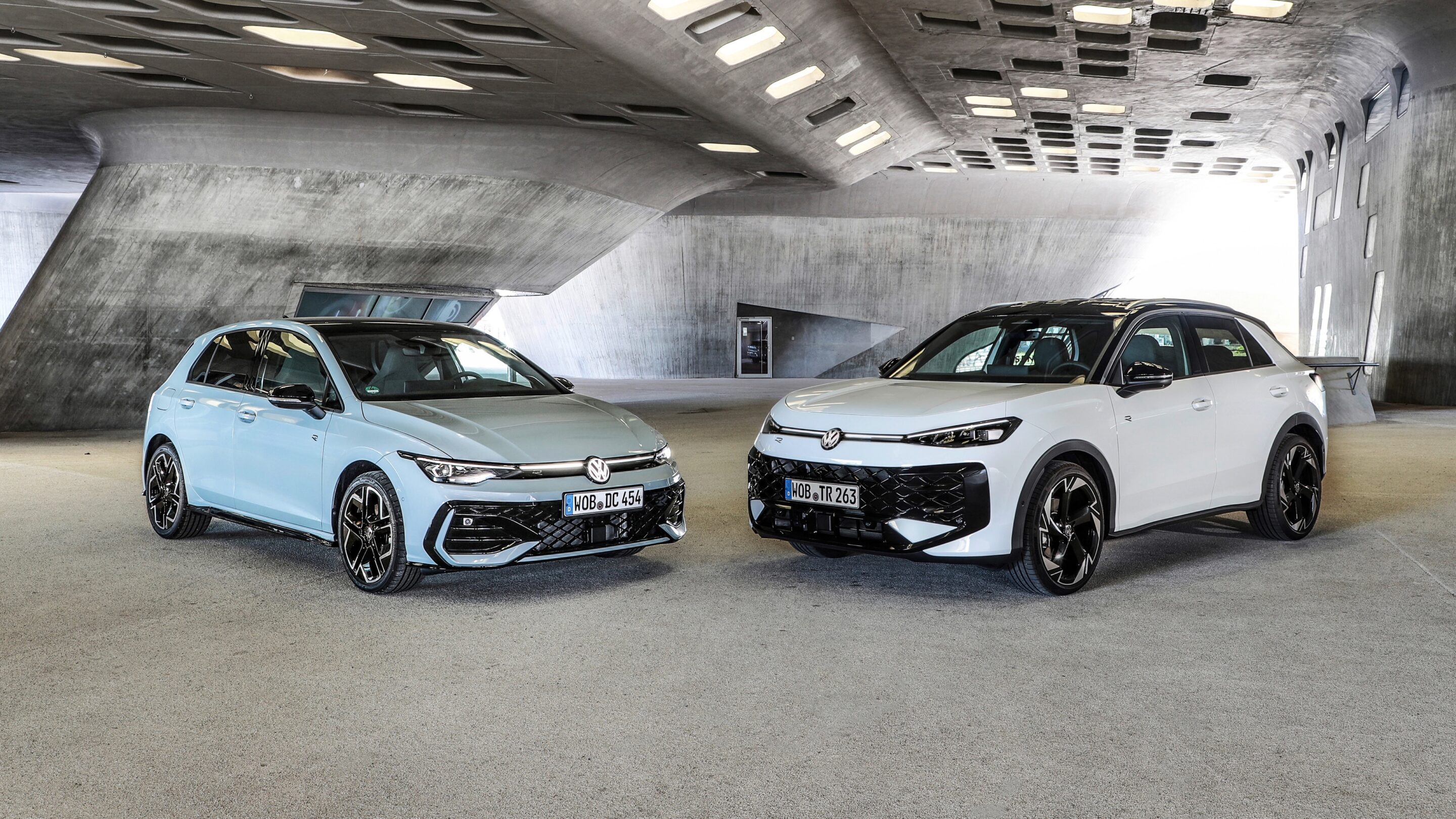
The new Golf Hybrid and T-Roc Hybrid will offer eco, comfort and sport driving modes. With eco, the maximum system output is limited to 70 per cent and the boost function is deactivated to reduce energy consumption. Comfort profile does not limit the system output and allows boosting and in sport mode, sporty characteristics are achieved by the driver changing earlier to serial mode so that full power is made available quickly.
According to Volkswagen, the new full hybrid drive “offers numerous advantages: compared with a simpler mild hybrid, it enables a higher proportion of electric driving and thus lower emissions and consumption values as well as reduced fuel costs”.
“In comparison with an externally rechargeable plug-in hybrid drive, the purchase costs of the full hybrid are lower, and it requires no charging infrastructure.”
Volkswagen Australia is yet to announce any local plans for the new hybrid system, though plug-in hybrid variants of the Tiguan and Tayron SUVs are about to go on sale locally priced from $62,390 plus on-road costs.
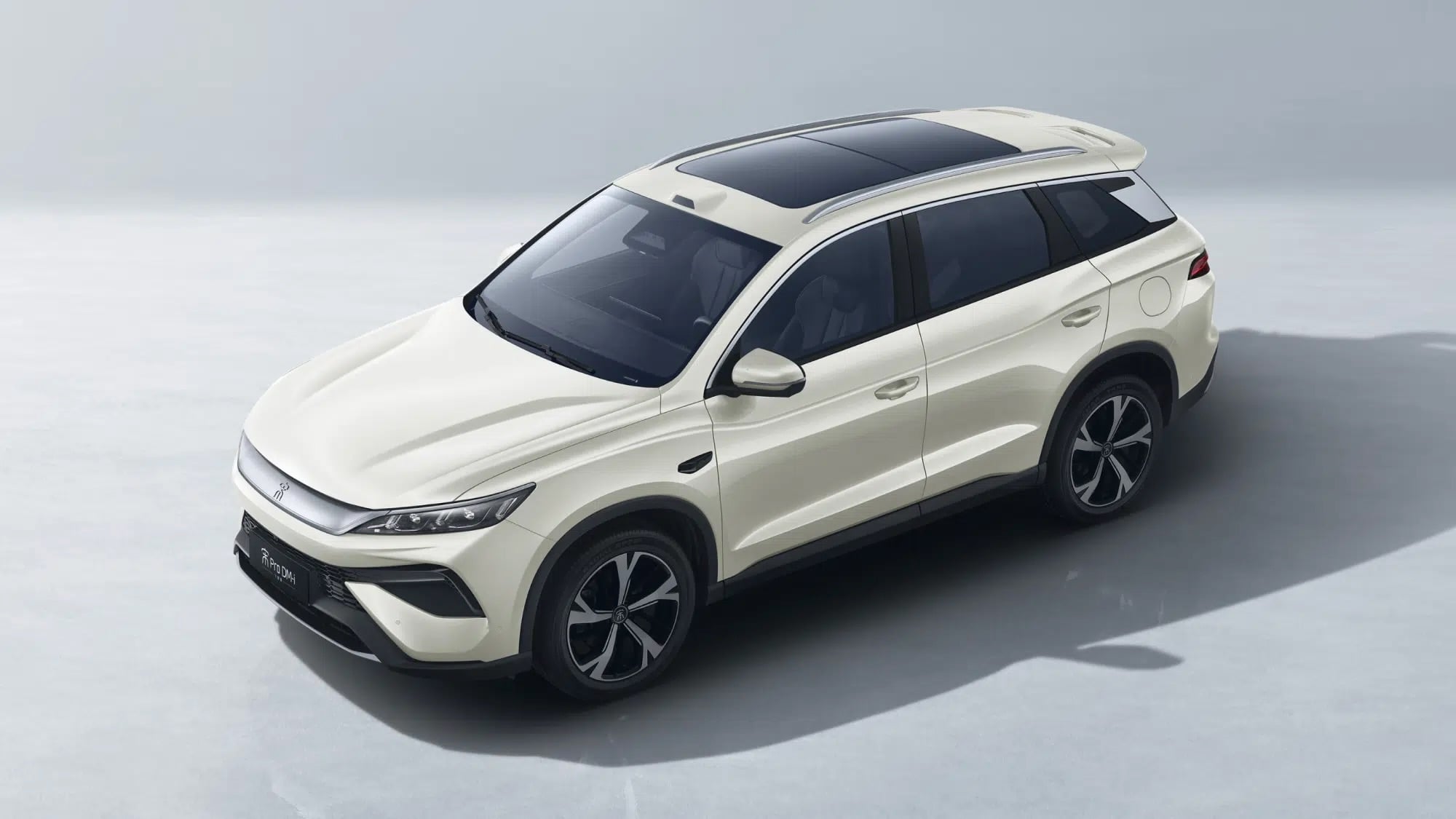
BYD has revealed a big update for the Sealion 5 – not to be confused with the Sealion 05 revealed a few days ago – in China, where it’s called the Song Pro. It features revised styling for a fresher look, new technology and larger battery options for more electric driving range, now up to a claimed 301km (CLTC) or a 33.3 per cent increase in China on the pre-updated model.
On the outside, the updated Sealion 5/Song Pro features a sleeker new front end design, with smaller headlights than the current model and new alloy wheel designs. There’s also a newly-optional LiDAR-based active safety suite, which can be seen from the new LiDAR point on the front of the roof.
At the side, a new vent has been added ahead of the door, and a new rear window design as well, while the rear bumper now sports a chrome piece.
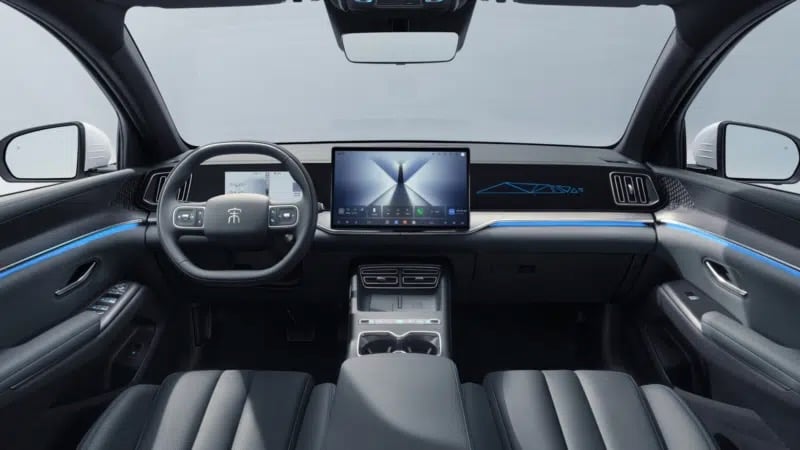
Inside, the Sealion 5’s cabin has been given a new two-spoke steering wheel, a new larger touchscreen and a cleaner centre console design thanks to the new addition of the gear selector located behind the steering wheel.
Under the body, in China at least, the Song Pro’s two battery options have been made larger for more electric driving range. A smaller 26.6kWh unit provides 220km of electric range, and a larger 34.7kWh with up to 301km of electric range – both figures are from China’s lenient CLTC testing cycle, and would be greater than the WLTP-rated range.
However, according to CarNewsChina, those figures are still improvements of up to 33.3 per cent compared with the current model and it’s rated at 3.2L/100km for fuel consumption in China.
For reference, the Australian-spec Sealion 5 currently offers either 12.9kWh or 18.3kWh battery options for between 71km and 100km of NEDC-rated electric range.
BYD has also updated the Song Pro mechanically with its ‘DiSus-C’ adaptive dampers, which reportedly adapt to driving conditions to suppress body roll and enhance handling. The updated Song Pro also boasts a high-speed tyre blowout stability control system.
BYD Australia is yet to comment on the updated Sealion 5/Song Pro, but we predict it being launched locally within the next 12 months.
Driving the 2026 Honda CR-V hybrid at the Australian launch, one thing is clear to WhichCar by Wheels – this is a genuinely impressive medium SUV. By every measure, including purchase price and servicing cost, the Honda CR-V has the ability to take the fight right up to perennial segment favourite, the Toyota RAV4. Why then, doesn’t it take a bigger slice of the sales pie?
“In the United States, RAV4 and CR-V are neck and neck,” Jay Joseph, President and CEO of Honda Australia, told WhichCar by Wheels at the launch of the hybrid CR-V. “Actually on a retail basis, we outsell RAV4, they sell more to non-private.”
And with medium SUVs a crucial battleground for manufacturers in Australia, sales success in the segment is a must. Therefore, if Honda can target a climb up the sales charts to match RAV4 sales, the brand would be in a very strong position.
“I can’t get my head around the fact that we’re not selling as many CR-Vs as Toyota sells RAV4s,” Joseph said, when asked if Honda should put a target on Toyota. “We should be, we absolutely should, because the product stands up to it and the value proposition is there.”
Crucial to Honda’s strategy is fixed, transparent pricing around the country, which protects residual resale values and removes a layer of the purchase process – the haggle – which most Australian new-car buyers say they dislike. Post ownership, though, Honda is adamant that looking after customers at every step in the journey is key.
“The quality of the product is there’s but we need to sell both our product and our services,” Joseph said. “We need to take care of our customers, and we need to make a profit and hopefully (as a brand), we should have a little fun along the way.”
Honda’s drive for sales increase comes on the back of a 10 per cent increase in 2025, with at least a 10 per cent increase forecast for 2026. Last year’s success came despite the absence of new product, some of which is making its way into Honda showrooms for 2026.
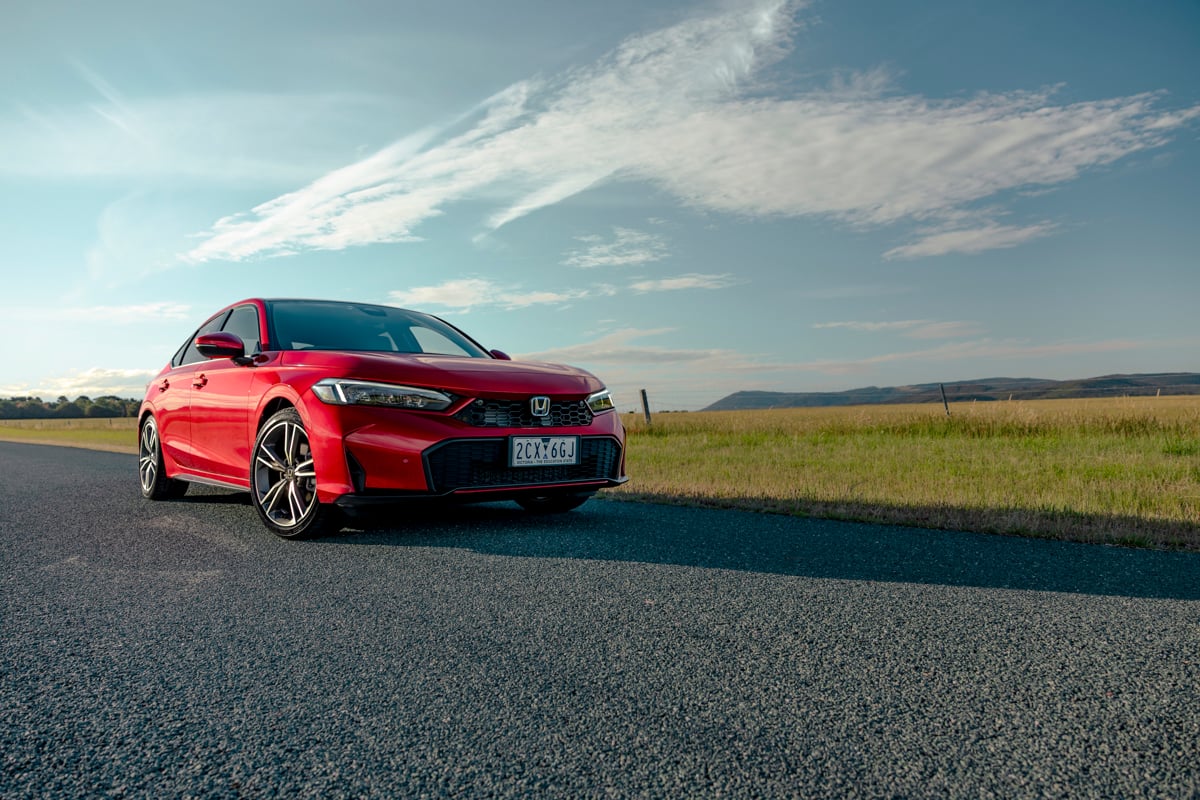
“There are easy ways to sell things, make them cheap, and give them a lot of flashy features,” Joseph said. “I think the responsible manufacturers know that might get you a sale, but it doesn’t get you a repeat customer because if the product doesn’t stand up to the initial promise, you’re one and done and they go back to who they trust.”
Crucial to CR-V’s sales success according to Joseph is warranty and servicing – a five-year/unlimited kilometre warranty with the first five services costing just $199 each. That warranty then extends out for another three years, with roadside assistance as part of the Honda Extend programme. Honda’s internal research shows that 75-80 percent of owners are staying with Honda servicing to take advantage of the programme.
“We’ve been selling more, and that’s without new product,” Joseph said. “We have new product this year, and we have team in place that I think can deliver sales success.”
