
Pricing excludes on-road costs, Tesla’s $400 order fee and $1400 delivery charge, and any eligible EV incentives. Figures are current as at the time of publication.
Timo Bernhard has won Le Mans twice, taken the chequered flag at the 12 Hours of Sebring, has stood on the top step of the podium at the 24 Hours of Daytona and is a five-time winner of the 24 Hours of Nürburgring.
It’s fair to say that he’s fairly handy behind the wheel and has some hair-raising stories of racing at these blue-riband events. But when Wheels caught up with him at the recent launch of the Porsche 718 Spyder RS, there was one thing we had to know. What was it like to smash the Nürburgring lap record?
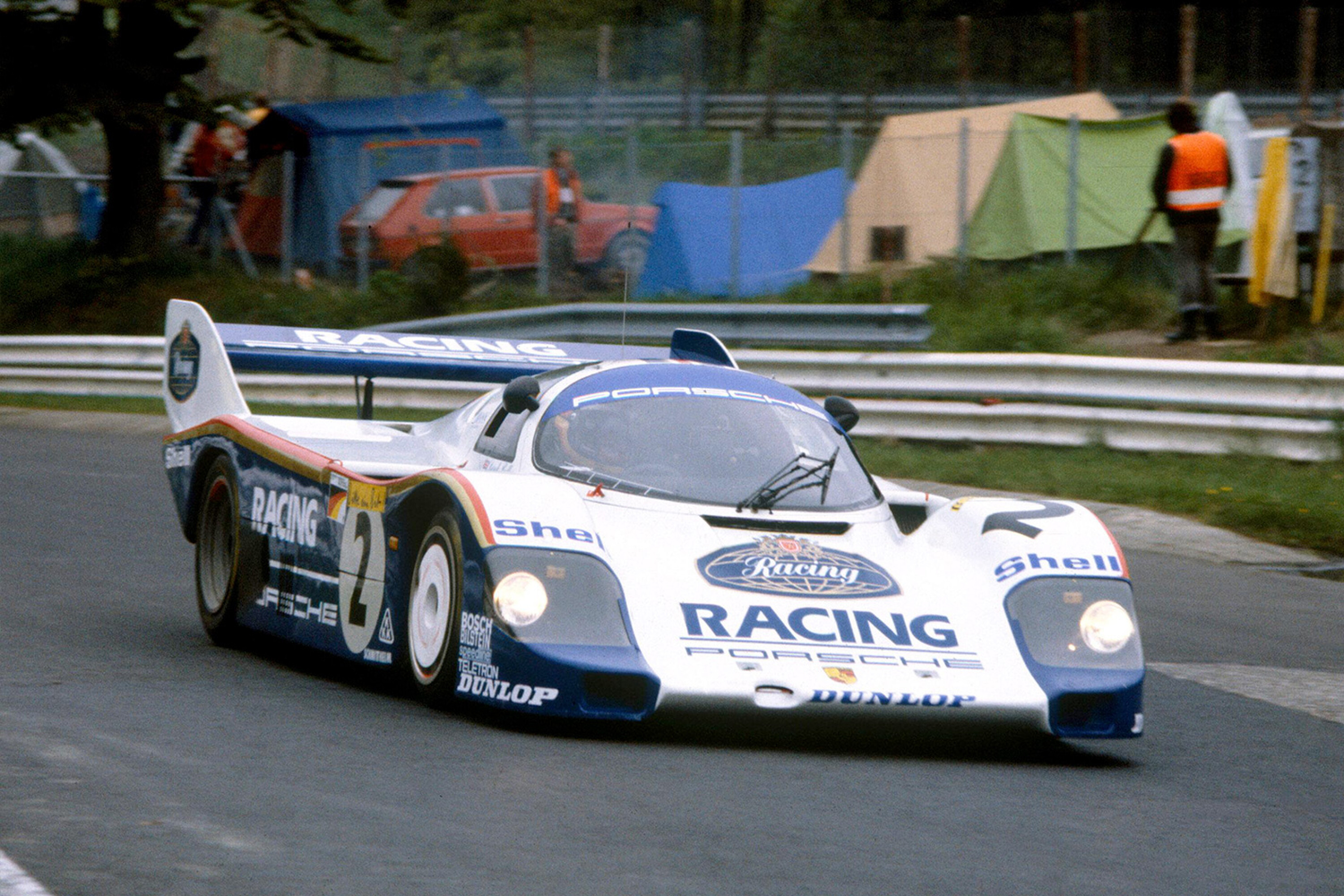
Some backstory first. The pre-existing lap record had stood since 1983 when the late and great Stefan Bellof set a mark of 6m11.13s in his Porsche 956 while qualifying for the Nürburgring 1000km. That’s an average speed of 202.073km/h. For years, this mark seemed unassailable.
1
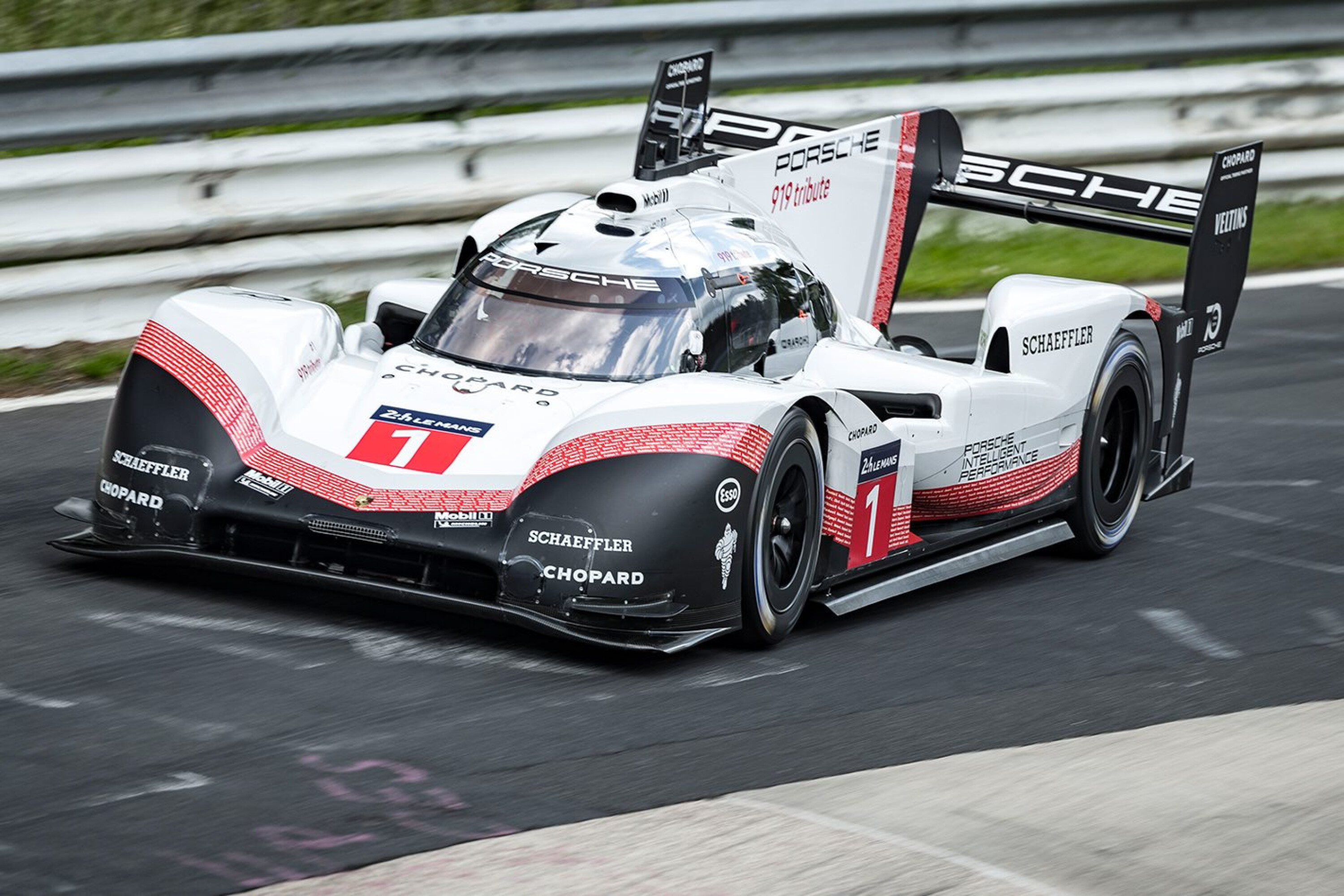
Porsche owned the record then and would come to own it again when they unleashed the 919 Hybrid Evo.
In 2007, internet sleuths pieced together the full throttle parts of ‘Quick’ Nick Heidfeld’s demonstration lap in his BMW Sauber F1 car and came to the conclusion that if he’d stayed on it throughout the lap rather than slowing for photographic duties, it was likely that the laptime would have started with a five. Bellof’s mark was mortal after all.
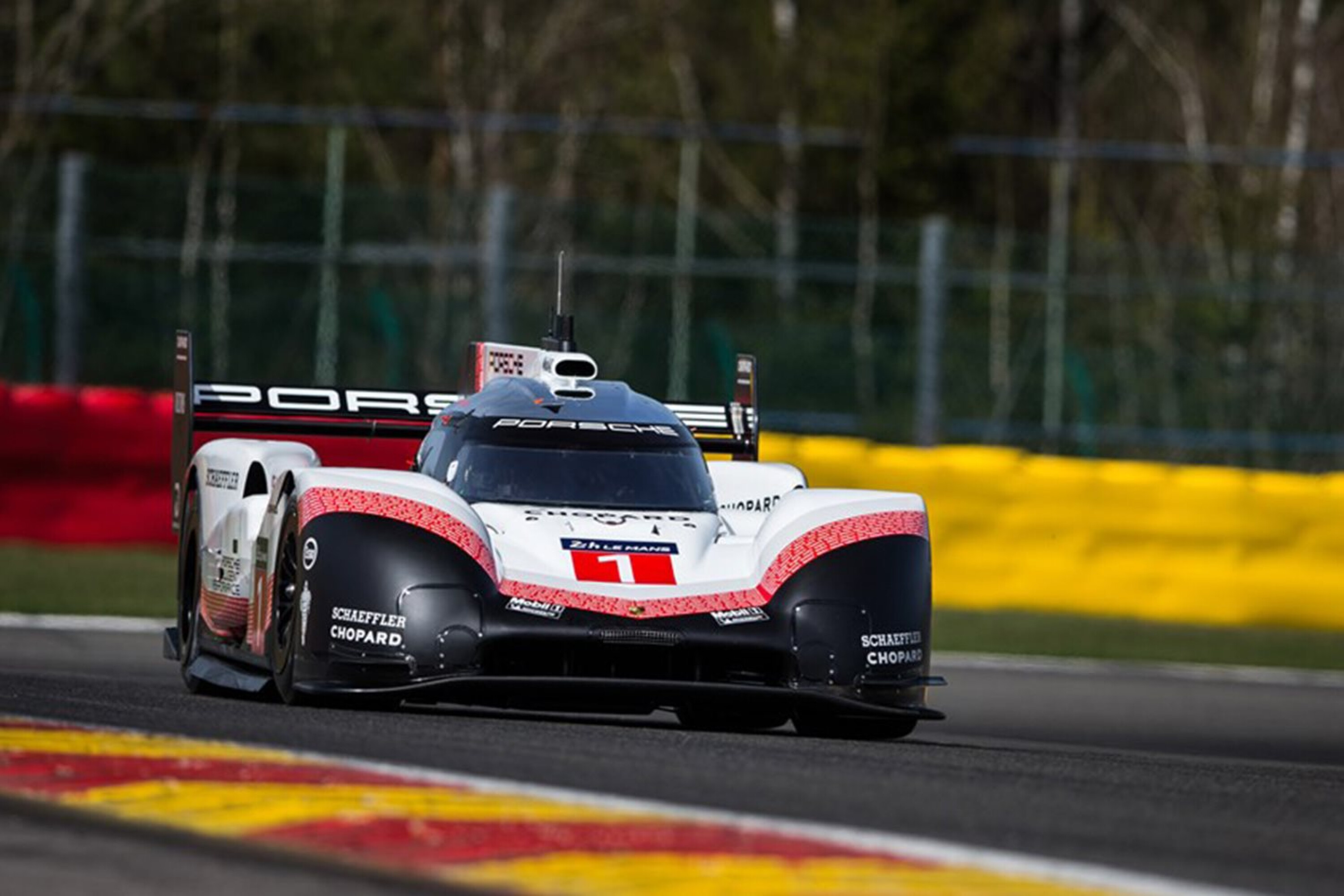
Maybe it wasn’t BMW’s time to take. Porsche owned the record then and would come to own it again when they unleashed the 919 Hybrid Evo. Here’s where things get a little controversial for this was a car developed from the LMP1 racer but was designed outside of racing formulae.
Its sole purpose was to demolish lap records and with ex-World Endurance Champion Bernhard at the wheel, it did exactly that.
1
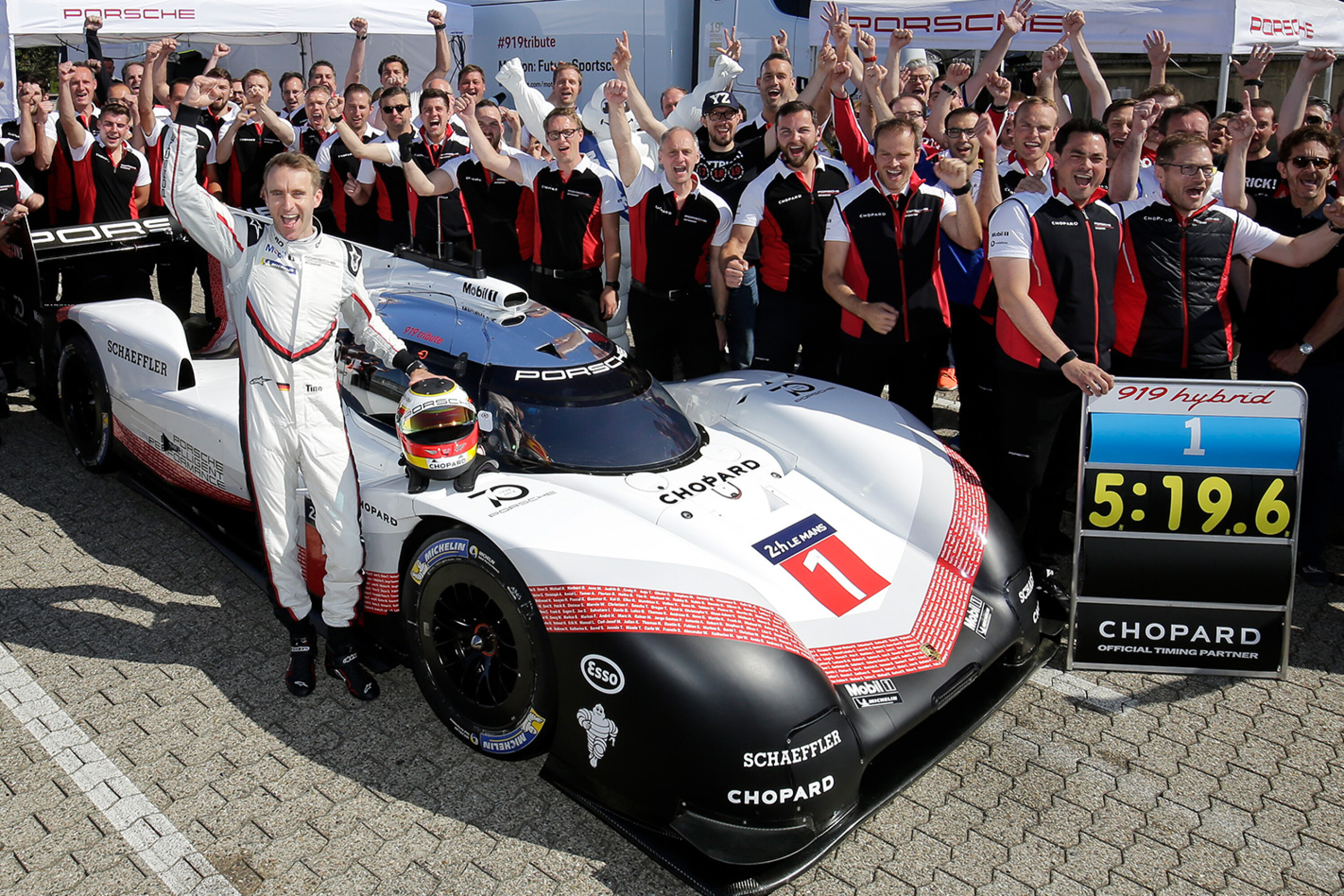
When the watches stopped as the 919 Evo screamed across the line, the result was astonishing.
A new mark of 5m19.546s had taken nearly a minute off Bellof’s mark for the 20.832km full lap. The average speed? A scarcely credible 233.8km/h.
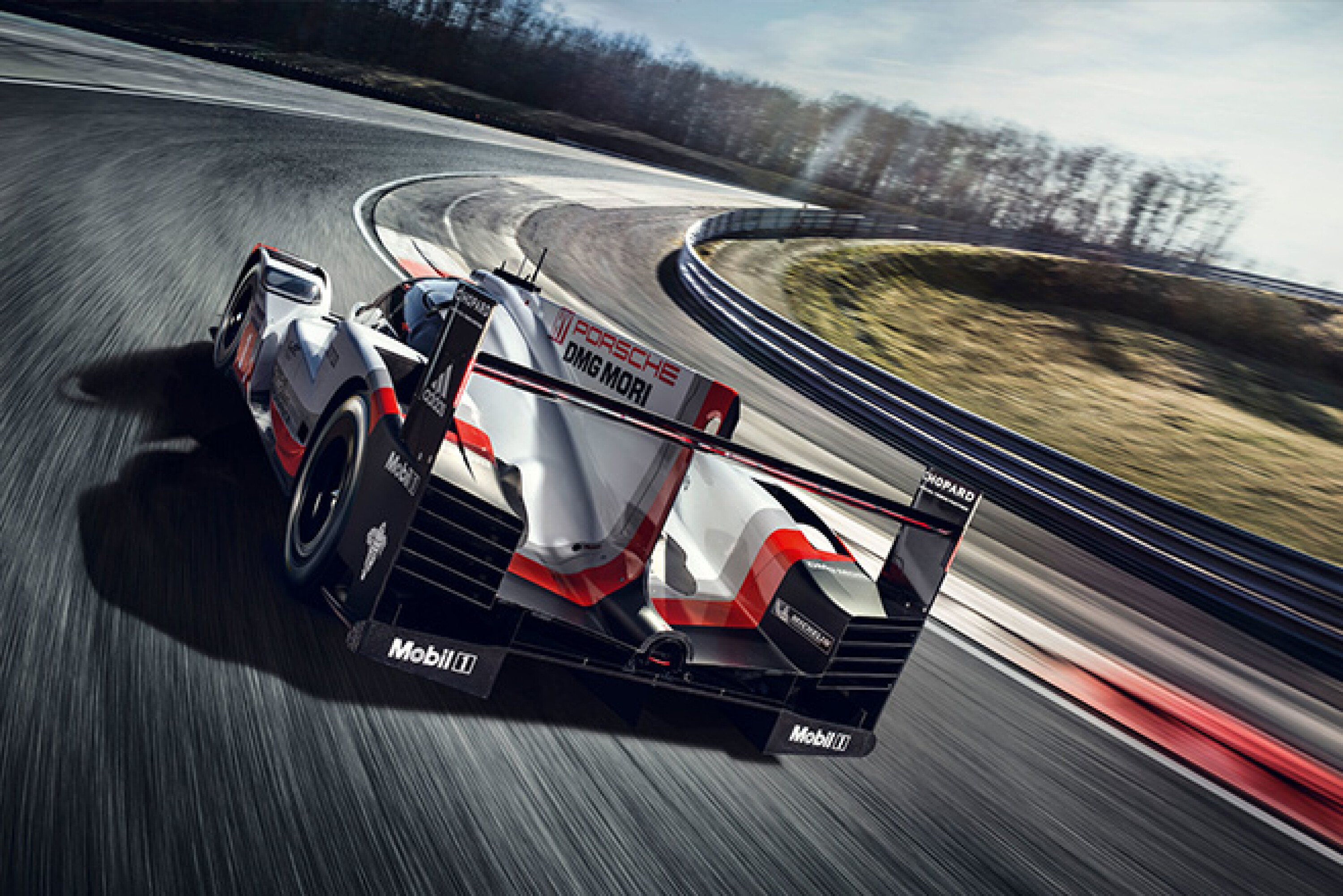
The technical details of the 919 Evo are dizzying. Its 2.0-litre hybrid V4 develops a system output of 853kW and weighs just 849kg. Its active aero system generates over 50 percent more downforce compared to the WEC formula racer. During the Nordschleife lap Bernhard logged a v-max of 369.4 km/h on the Dottinger Hohe straight.
Watch the onboard video [↗] of Bernhard lapping the Nordschleife and it’s almost detached from reality. It looks improbably sped-up. So when we got the chance to ask Bernhard a few questions about the lap, we wanted to know a few key details.
ANDY ENRIGHT: When you set that lap time, did you think there was some time left on the table or did you think you’d pretty much nailed it?
TIMO BERNHARD: It was hard to know. We’d done a lot of work on the car and had one last chance that day. We’d had issues with the car boosting at certain places in the lap.
We’d originally had the boost set automatically and we were still finding it boosting as I was [trying to come off gas for corners]. We also had to change the ride height and play with the balance of the motors.
AE: So there were many different variables to contend with?
TB: Yes. I don’t know what the ‘perfect’ lap time would be but we were happy with what we achieved. I’d set up the DRS system manually beforehand and during the record run, I didn’t need to operate that manually at all. It was all pre-set.
1
AE: The in-car footage was crazy. How did it feel?
TB: There were points when it was relatively comfortable to manage and there were also sections where everything was coming at me so fast that I was just holding on. At Pflanzgarten I was thinking, okay, that’s the limit for my comprehension.
AE: Was the 919 Evo an intimidating car to drive?
TB: It was super-intensive. At those speeds you need to take into account every single surface change. And the 919 would wheelspin in fifth in the dry. I’d never experienced a car that would do this, so that was something that I needed to get used to.
1
AE: Did the speed of the 919 Evo turn what used to be sections where you might lift off the throttle into proper braking zones?
TB: No, not so much. It had so much downforce that you just needed to stay committed and trust that it would stick.
AE: How was the response?
TB: It’s been crazy. I had one fan come up to me and he had the lap time tattooed on his leg. 5:19.546 – three decimal places! He was super-excited.
1
After setting the record, Bernhard drove himself home and took a phone call en route.
The caller? Stefan Bellof’s father. Georg went on to thank Timo for tributes he and the Porsche team had paid to his son, and was keen to send his regards to the new king of the ‘Ring.
MORE
Motorsport
MORE
Everything Porsche
Mini has revealed not one but two electrified models at the IAA motor show in Munich.
Snapshot
- 2024 Mini Cooper hatch and Countryman SUV revealed
- To be offered as electric-only models, following Mini’s transition to an all-EV brand
- Due in Australia in the third quarter of 2024
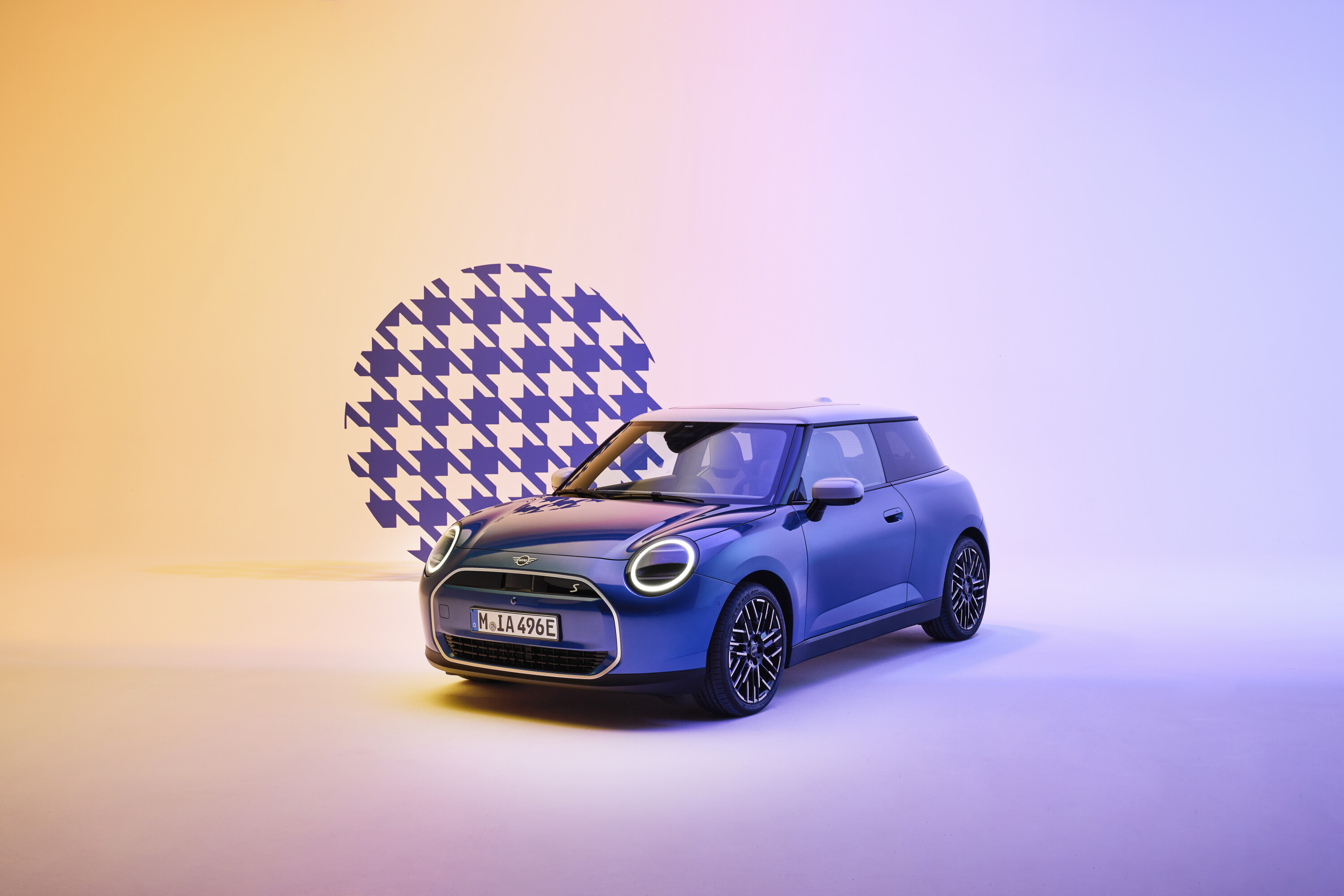
Both the 2024 Mini Cooper hatchback and more all-terrain-focused 2024 Mini Countryman are heading to Australia in the third quarter of 2024.
The brace of zero-emissions Minis marks the start of the company’s transition into an all-electric brand and is the first time the iconic models will be offered as electric-only.
Along with the model’s battery transition, all Mini three- and five-door variants will now be dubbed Cooper with the moniker no longer denoting engine or motor power output. Instead, the range will comprise Cooper E and Cooper SE to differentiate performance and maximum range.
1
A third electric model will be unveiled globally next year with the Aceman joining the pioneering pair although an Australian arrival time is yet to be confirmed.
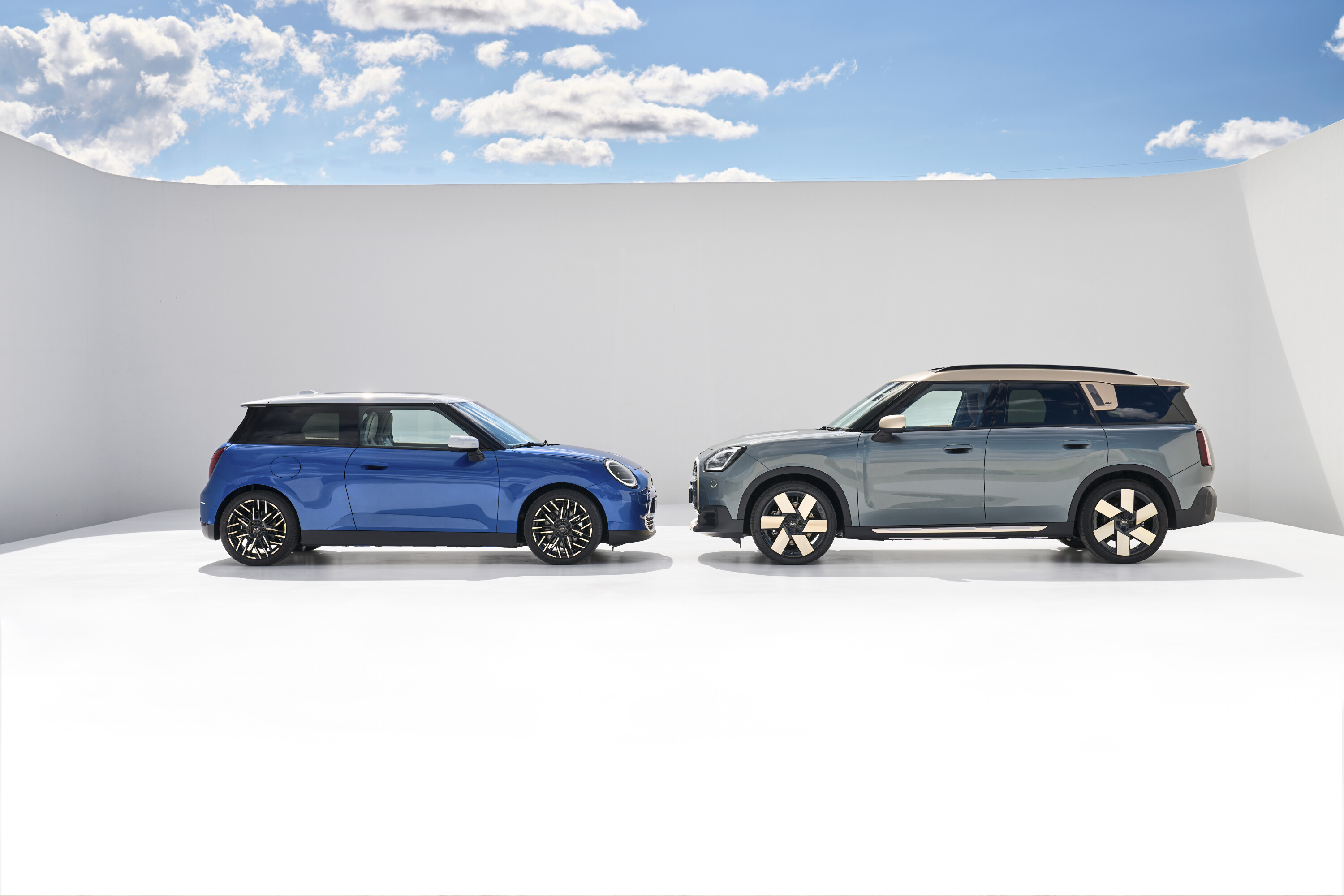
While significantly different in size, proportions and some mechanicals, the Cooper hatch and Countryman share much of Mini’s new electrified architecture and technology, including the introduction of its latest Mini Operating System 9.
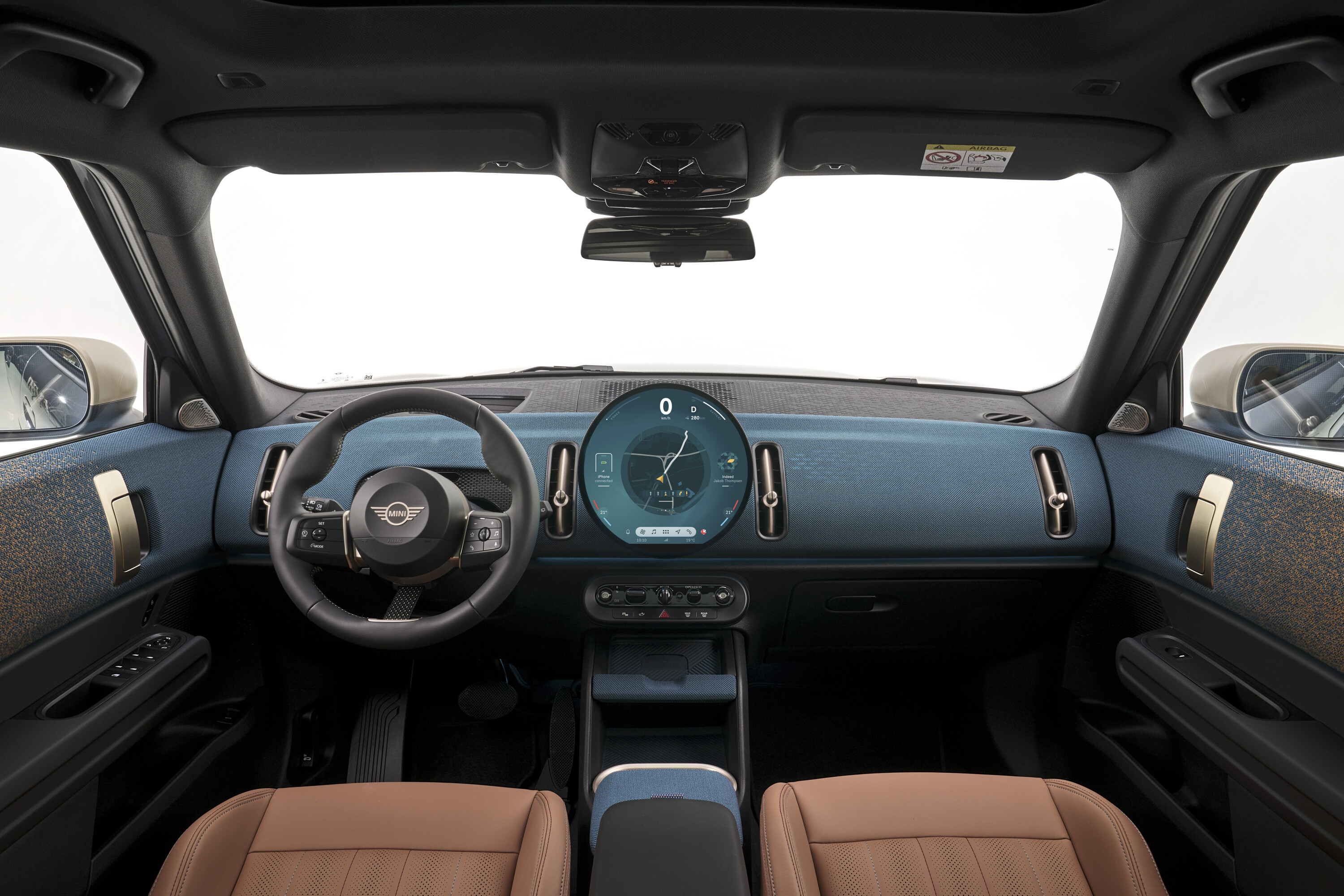
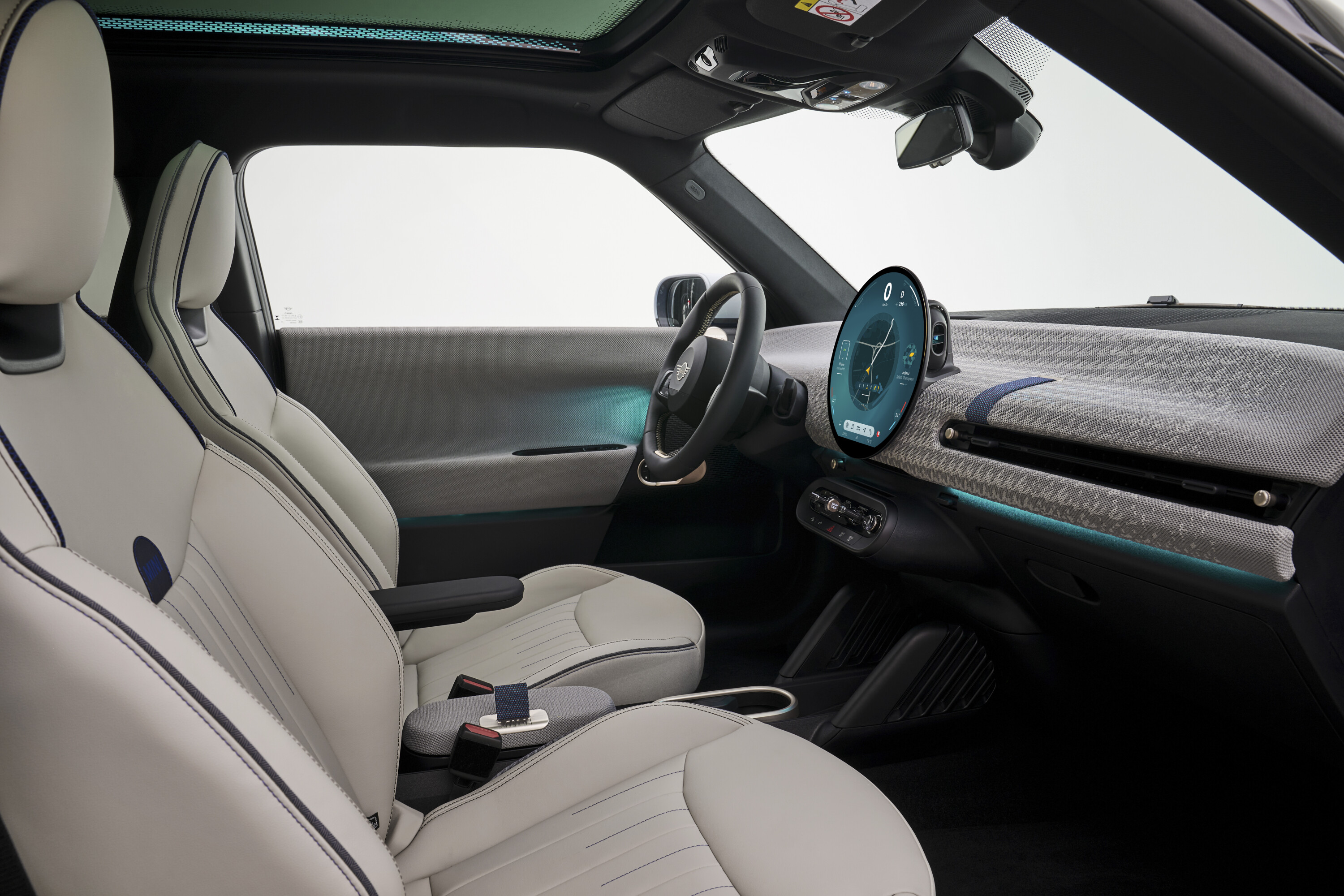
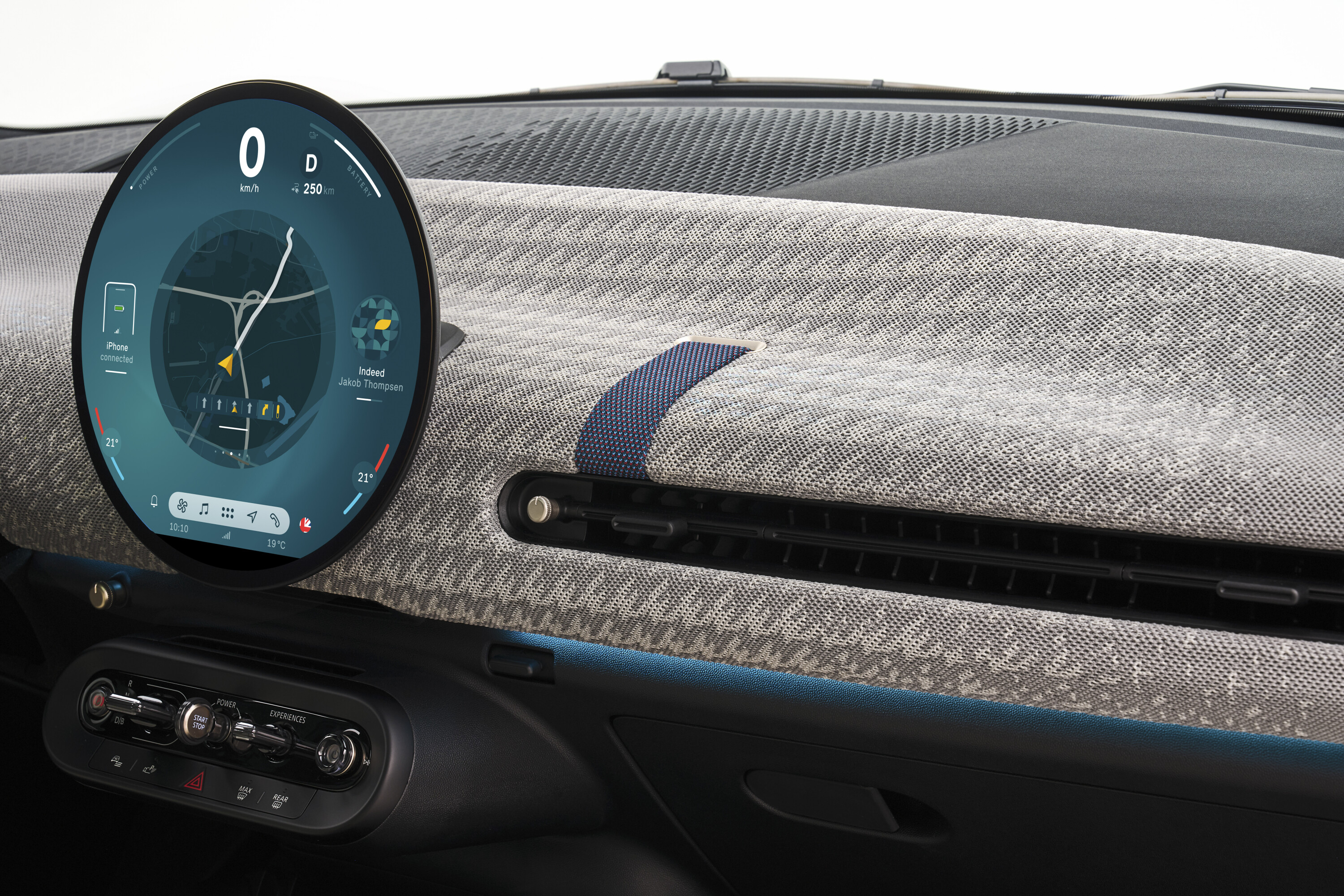
Its round organic LED Mini Interaction Unit display is reminiscent of the original Mini’s centrally mounted speedometer, and has been optimised for touch-sensitive control and voice controls.
1
It serves as a fully digital instrument cluster measuring 240mm in diameter as well as the main information and entertainment display.
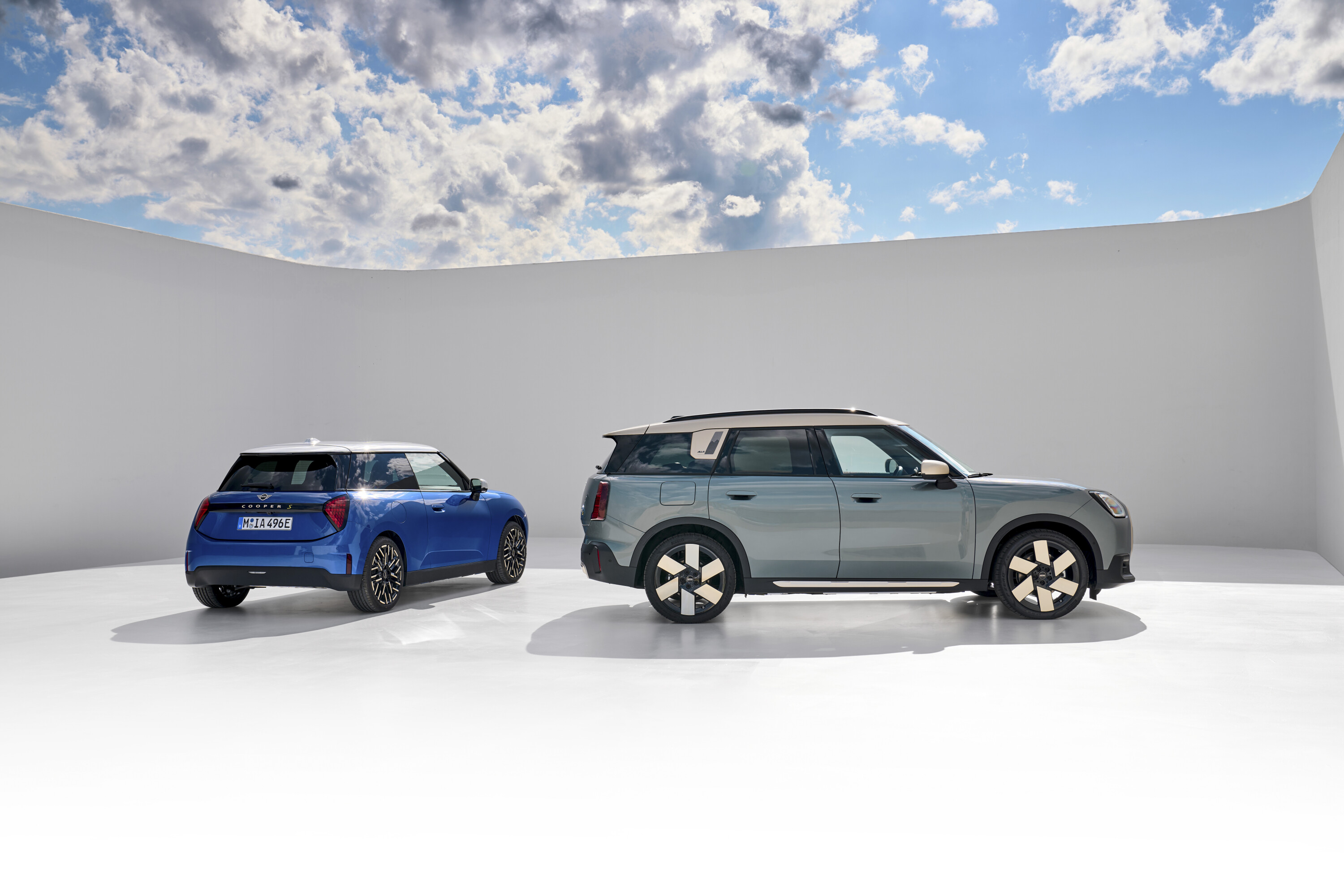
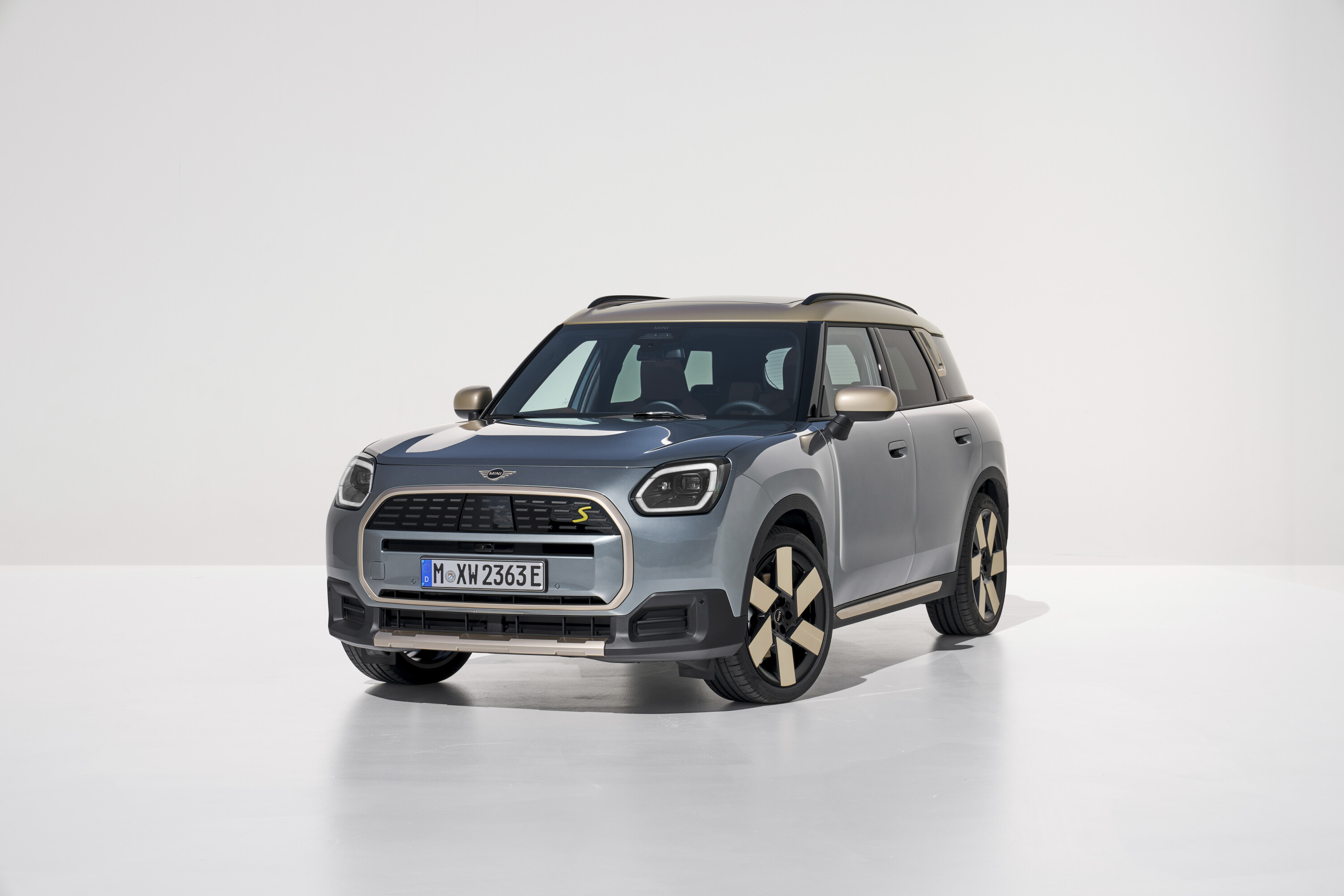
Both models also adopt Mini’s new Charismatic Simplicity design language which brings a clean exterior styling with flush-fitting door handles and simple lines while preserving the short overhangs and bonnet typical to previous generations.
All-LED lighting continues the clean but distinctive aesthetic with multiple light themes available thanks to LED matrix technology, including greeting and farewell light signatures.
1
Despite the shared design language, the pair are distinctly different thanks to the three-door hatchback’s smooth and low-slung stance, while the Countryman rides higher with scuff-resistant body trims, more angular sculpting and five-door practicality.
While more variants are likely, the Cooper three-door arrives with a choice of two variants including the entry Cooper E and the more powerful and longer-range Cooper SE.
With 135kW and 290Nm, the Cooper E can accelerate to 100km/h from a standstill in 7.3 seconds and has a WLTP range of 305km. With a larger battery, the SE ups the performance stakes with 160kW and 330Nm, cutting the milestone dash to 6.7 seconds while offering an extended range of 402km.
1
The Cooper’s interior is trimmed with specially created two-tone knitted textiles that are sustainable and easy to look after, while the cabin has been simplified with the gear selector moved from the centre console to push-buttons below the circular display.
This has freed up more space for wireless device charging and storage in the centre console, says Mini.
As an option, seven Mini Experience Modes similar to BMW’s My Modes allow the cabin and lighting themes to be switched and customised. The options change light projections around the instruments and dashboard enhancing the ‘feel good’ factor of the new electric Cooper.
1
Like the hatchback, the Countryman is also offered as two variants but with more significant differences setting them apart. The entry Countryman E has 150Nm and 250Nm sent to the front wheels alone and is good for 0-100km/h in 8.6s and a range of 462km.
The Countryman SE however, gains All4 all-wheel drive thanks to a pair of electric motors and a boosted power output for more performance and all-terrain ability.
With a peak power output of 230kW and 494Nm, the most potent Countryman for now can accelerate to 100 from zero in 5.6 seconds while its more power-hungry transmission reduces WLTP range to 433km.
1
Propshafts are not necessary for the Countryman’s all-wheel drive ability which has reduced transmission component intrusion into the cabin and allows the largest interior space of any Mini to date.
Interior design highlights include a third steering wheel spoke that is made from fabric rather than solid structural material, while typically horizontally oriented components such as door handles, air vents and dashboard construction buck trends with vertical designs.
Mini’s first crack at a fully electric Cooper received mixed reviews with most criticism stemming from its somewhat limited range that maxed out at about 180km, however, the new version addresses the problem with significantly improved charge capacity.
A dedicated electric platform is mostly to thank, whereas the outgoing Mini Cooper SE shared the combustion model’s chassis with electric parts borrowed from the BMW i3.
1
“The continued high demand for our locally emission-free vehicles confirms our path to a fully electric future,” said Mini brand head Stefanie Wurst.
“It demonstrates the openness of our global Mini community to electric mobility, and I am confident that the new generation of Mini models will inspire even more people.
“Thanks to our electrified go-kart feeling, an immersive user experience and a responsible attitude, the new Mini family is tailor-made for urban target groups all around the world”.
Full details of the electric Mini pair including exact dimensions, local specifications and pricing are expected to emerge during IAA week.
MORE
Everything Mini
The Hyundai Ioniq 5 N is gearing up for an Australian launch in the first quarter of 2024 but ahead of release, it’s cutting laps at the 2023 World Time Attack Challenge in Sydney at the hands of Keiichi Tsuchiya – the Drift King.
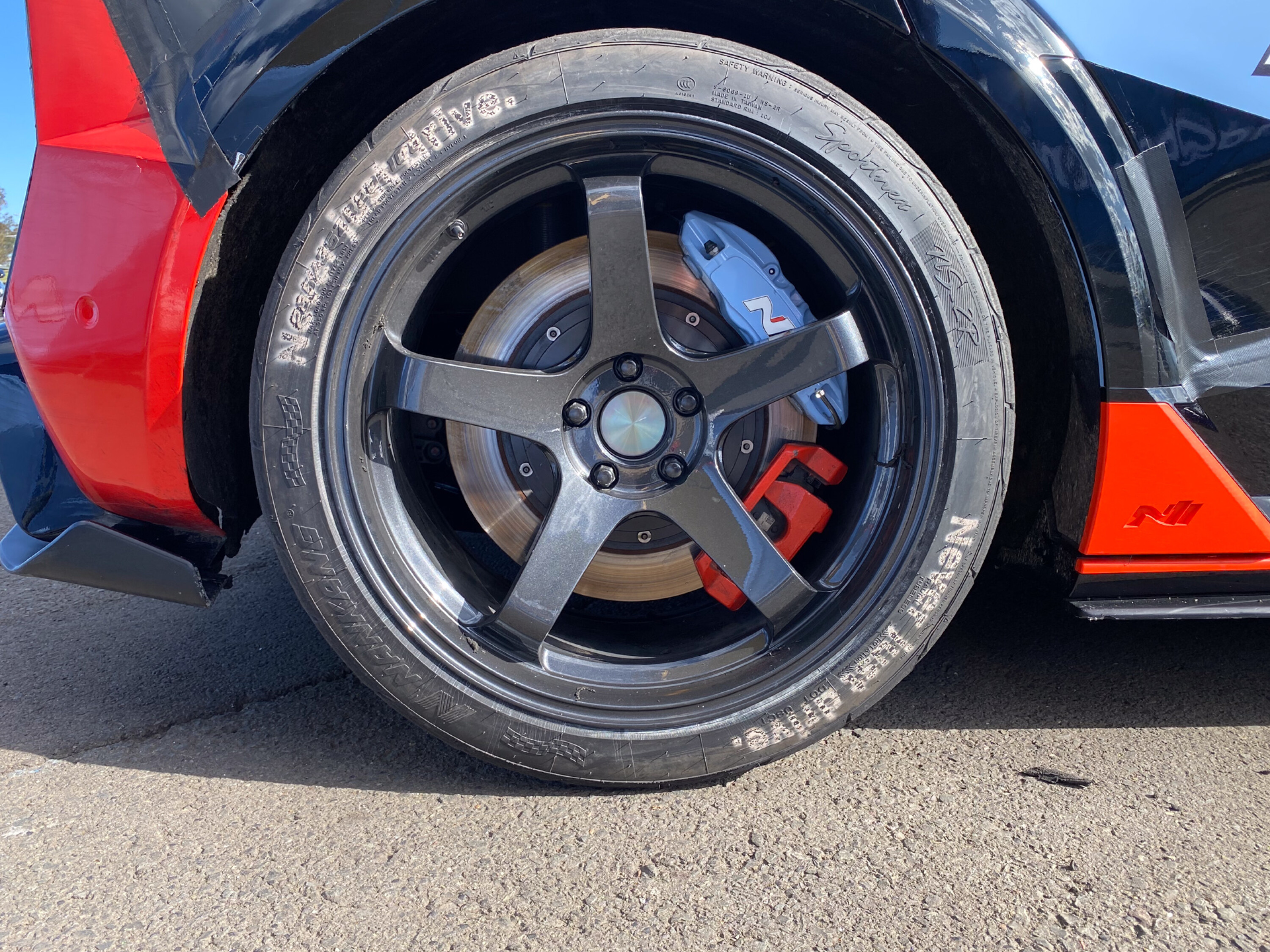
Based on a pre-production mule, the car being driven by Keiichi isn’t entirely standard. It’s pretty obvious that it’s running different wheels and tyres, as well as more aerodynamic features, but what else is different?
The rubber is 10mm wider than standard, measuring a whopping 285mm. To promote rear axle swing, it’s running mixed compounds with a super sticky Nankang AR-1 semi-slicks up front, and a sturdier but less grippy NS-2R boots on the back.
https://www.instagram.com/p/CwonZlhxH2-/
Behind the rear five-spoke forged alloys you might notice an extra red brake caliper accompanying the standard two-piston stopper. This is attached to a stylish, CNC-machined lever in the perfect place for the DK to yank and initiate a slide.
Other interior mods include a quartet of fixed-back bucket seats with harnesses strung to a weld-in roll cage painted Performance blue – this facilitates the necessary passenger rides.

4
To keep the crowd pleased, Hyundai’s ‘N Active Sound’ system has been fettled with – there’s an extra amplifier hiding under the carpet that drives a pair of 10-inch speakers pointed directly at the floor. This elevates the faux sound, with even louder pops and bangs on the ‘overrun’ and throatier bark under acceleration.
Finally, the drift-prepped Ioniq 5 N is running a set of bespoke, adjustable coilovers. It sits a little closer to the curb (which doesn’t matter on smooth racetracks) and the top mounts allowed ‘N-gineers’ to increase negative camber and castor for enhanced front-end grip and promotes better steering self-centering while sliding.
1
Despite losing parts of the interior, the steel roll cage largely offsets any weight savings. Therefore, the Ioniq 5 N still weighs around 2200kg in drift trim.
Apart from that, the Ioniq 5 N is identical to the roadgoing cars we’ll get to pilot soon. It uses the same two motors with a peak power output of 478kW for a 0-100km/h sprint of 3.4 seconds, N Grin shift simulated eight-speed transmission, 0.6G of deceleration from the electric regen, and – naturally – drift mode.
The Ioniq 5 N is being wheeled out tomorrow, check the schedule at the linked article below to find out when you’ll be able to see it in action.

1
All the changes to the pre-production drift mule are reserved for this vehicle only, but what do you think: Should Hyundai produce an ultra-hardcore Ioniq 5 N down the track? Let us know your thoughts in the comments section.
MORE
Everything Hyundai
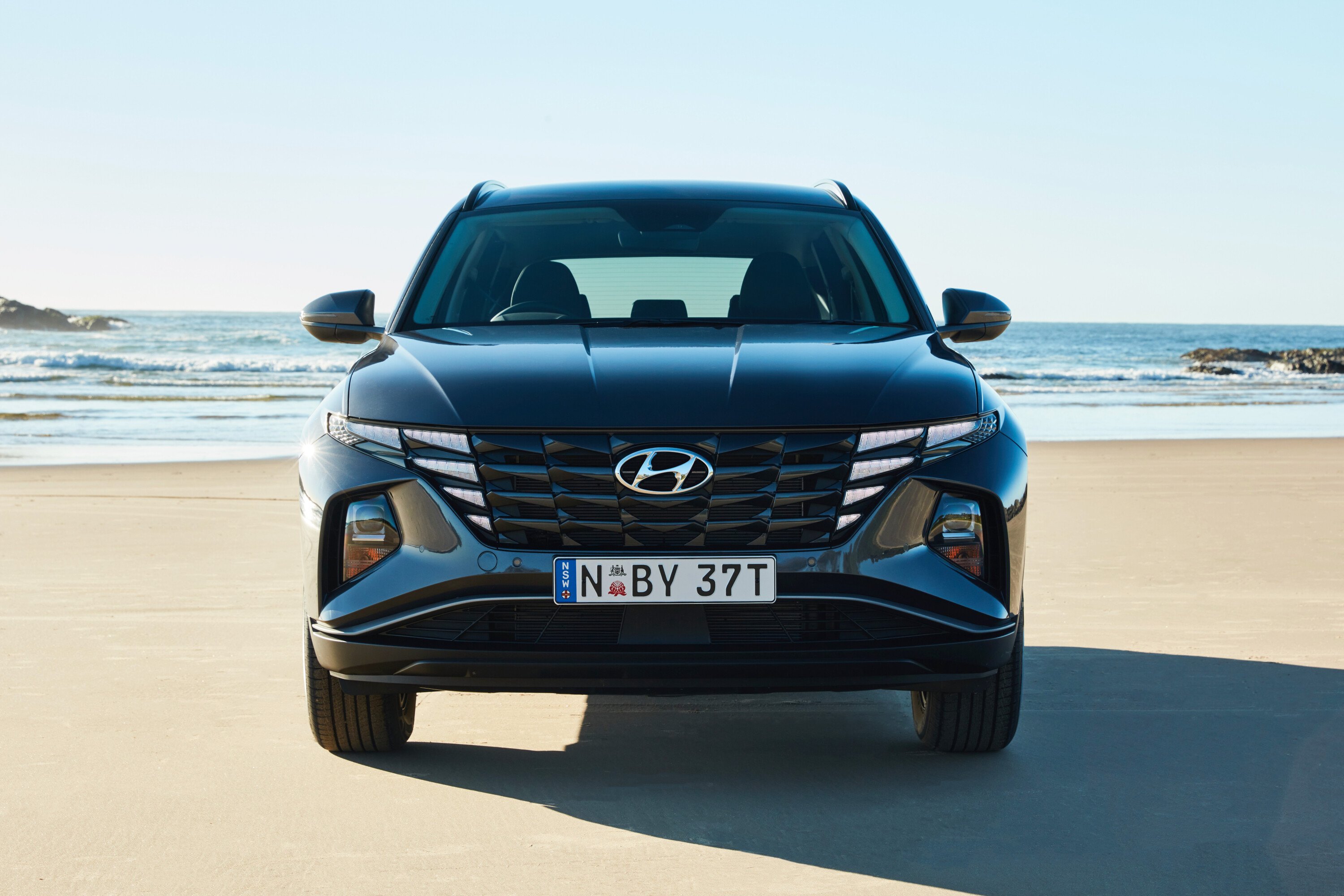
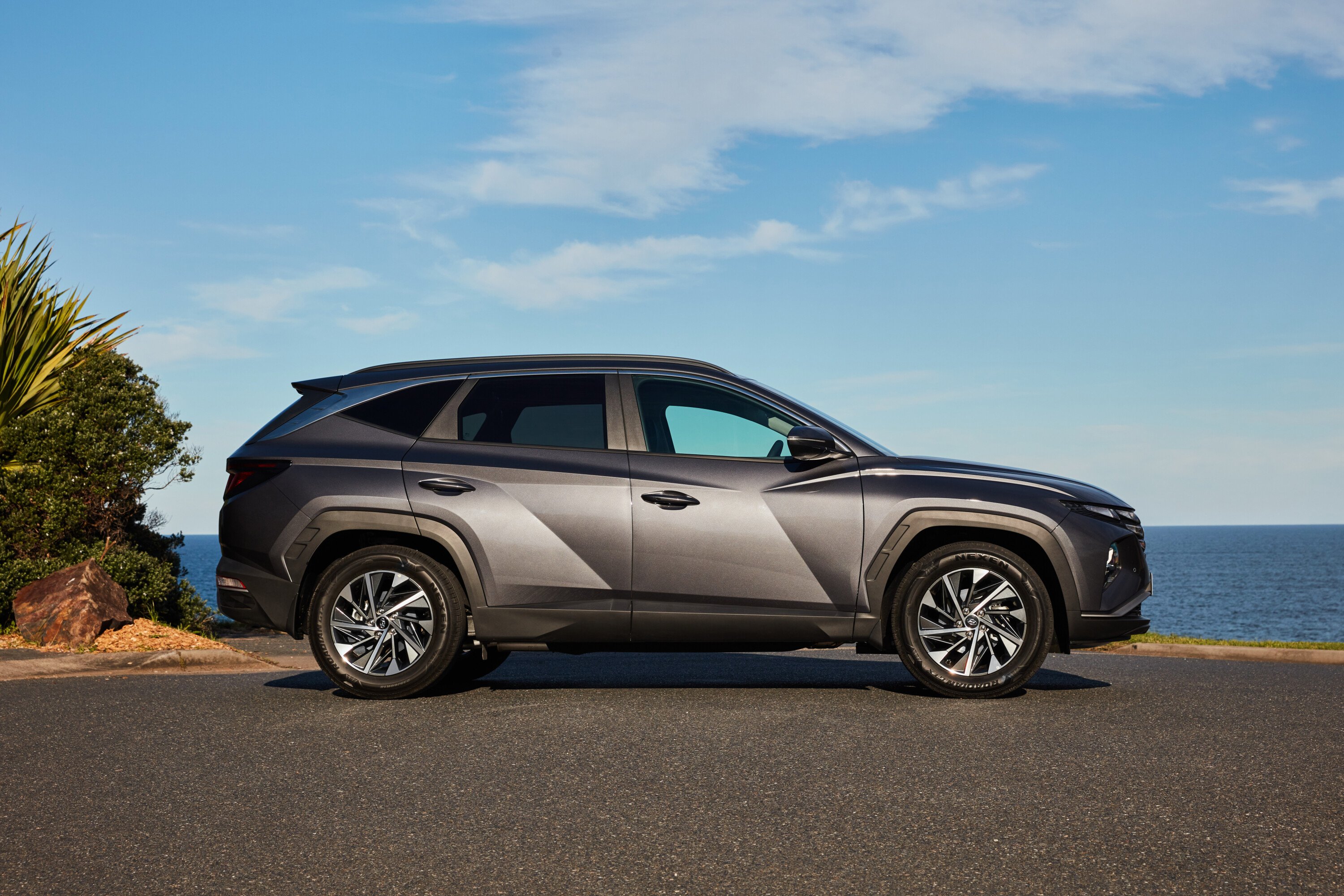
The Hyundai Tucson has consistently been a favourite in the mid-sized SUV segment, and the 2023 Elite variant aims to elevate that reputation.
Marrying a modern design with practical features, the Tucson Elite is poised to appeal to both families and urban adventurers.
But in a market teeming with options, does the Tucson Elite carve a niche for itself?
November 21, 2023: New-look 2024 Tucson revealed
Hyundai’s top-selling vehicle updated with Santa Cruz-like front end, plus a new-look dashboard inspired by the Kona and Santa Fe.
Story continues: Tucson Elite review
1
Pricing and features
The Elite – the middle variant of the Tucson range – starts at $39,900 and tops off at $43,900 before on road costs.
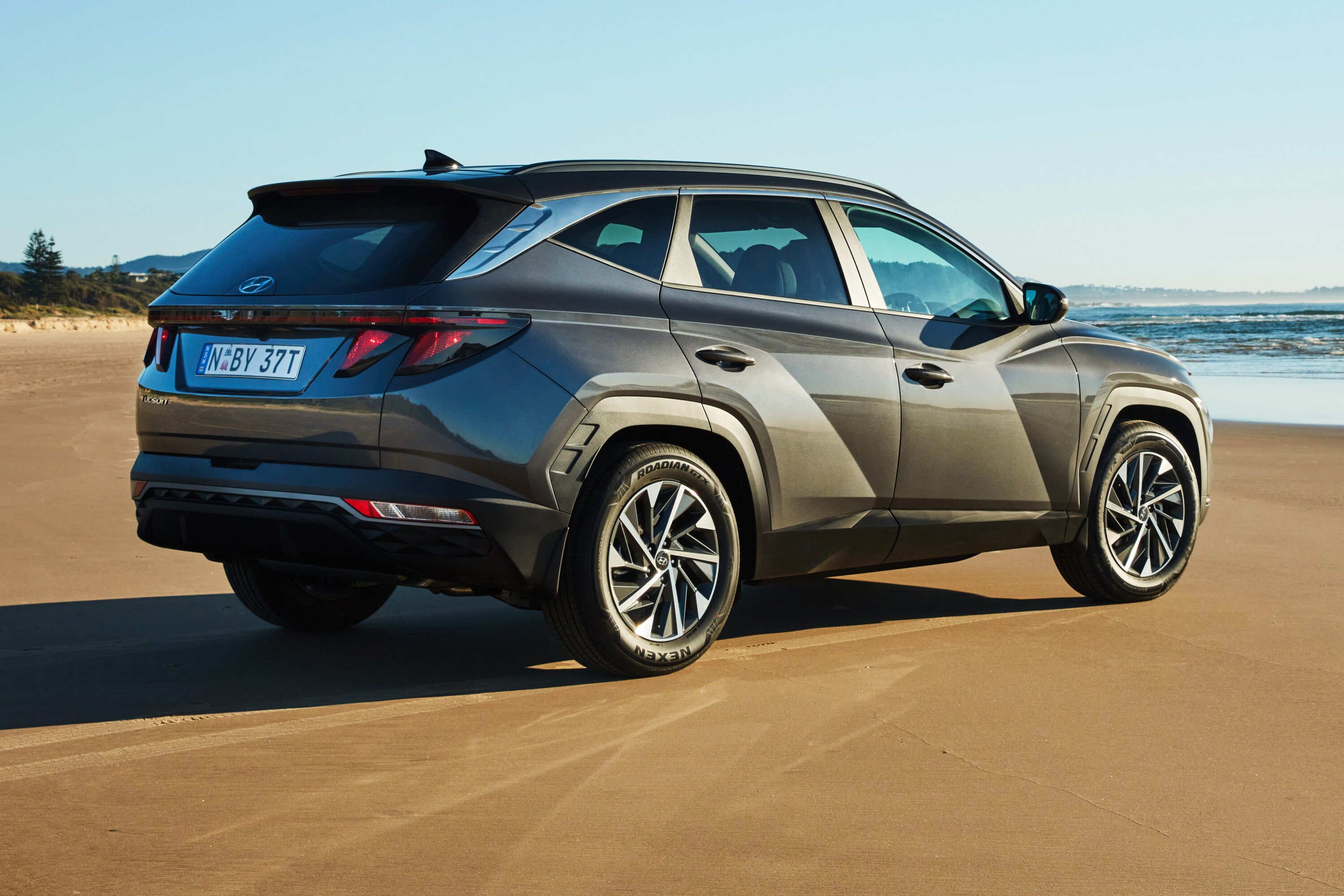
It is available as an automatic or dual clutch transmission only, with the choice of a 2.0L FWD petrol or 1.6T DCT AWD. You’ll also have the choice of the N Line option pack which adds an array of sporty looking features such as N Line exclusive exterior and interior accents.
1
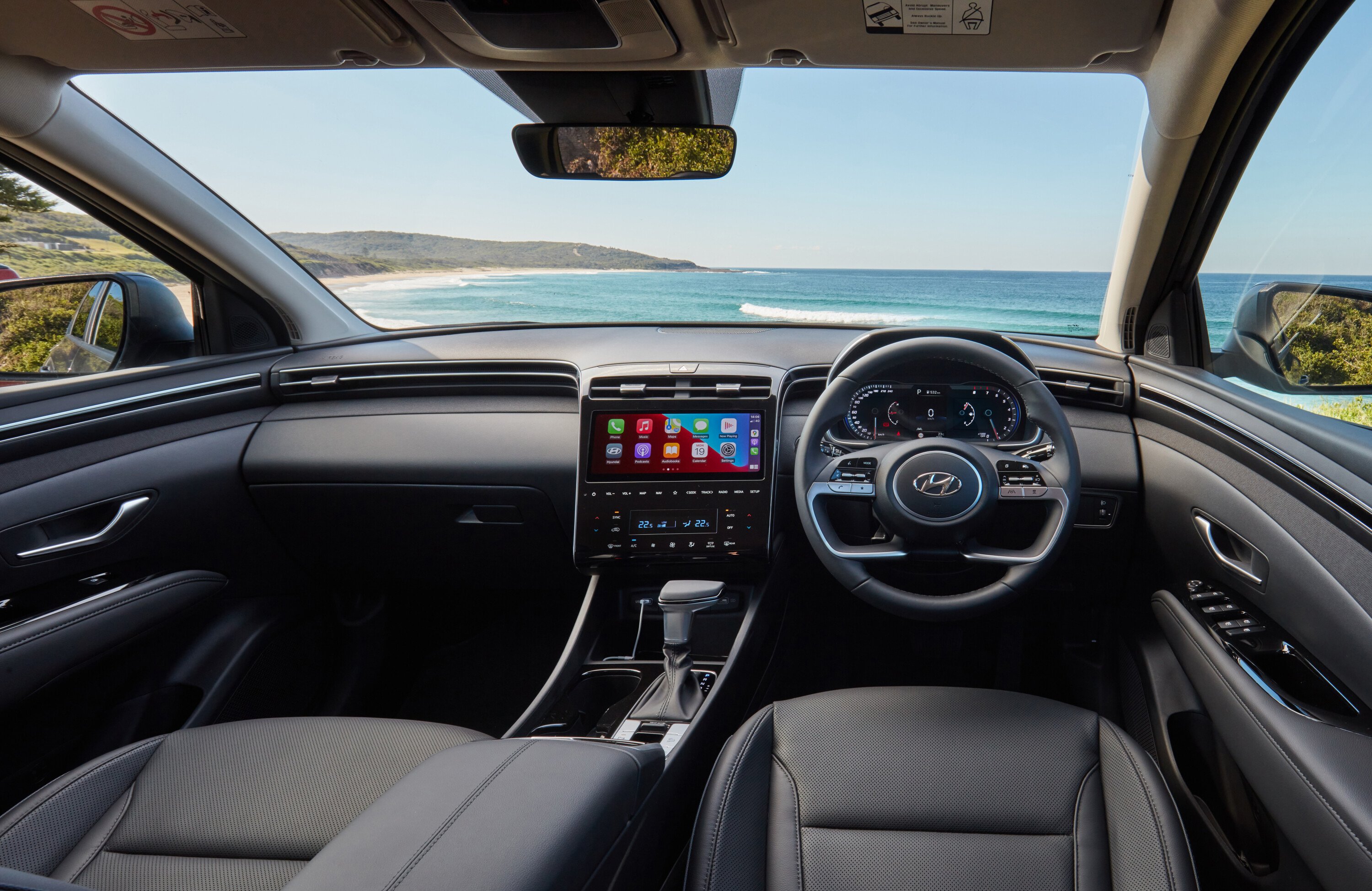
Choosing the mid-spec Elite will get you a well-integrated 10.25-inch infotainment system, rain-sensing wipers, leather-appointed upholstery, a 10-way power driver’s seat, heated front seats and 18-inch alloy wheels.
Practicality is enhanced with features like keyless entry, push-button start, and front parking sensors. Strangely, you miss out on wireless Apple Carplay and Android Auto which is available on other variants.
1
Safety
With its 5-star ANCAP rating, it offers peace of mind to its occupants, specifically for kids with an 87% score for Child Occupant Protection. The Elite variant further enhances safety with features like a 360-degree camera, front and rear parking sensors and adaptive cruise control.
The combination of passive and active safety features ensures a secure driving experience.
Hyundai’s SmartSense safety suite including blind-spot collision-avoidance assist, rear parking sensors and lane-keep and lane-following assist, comes standard. It does miss out however on a blind spot monitoring which seems like a big miss at this price point.
1
Key rivals
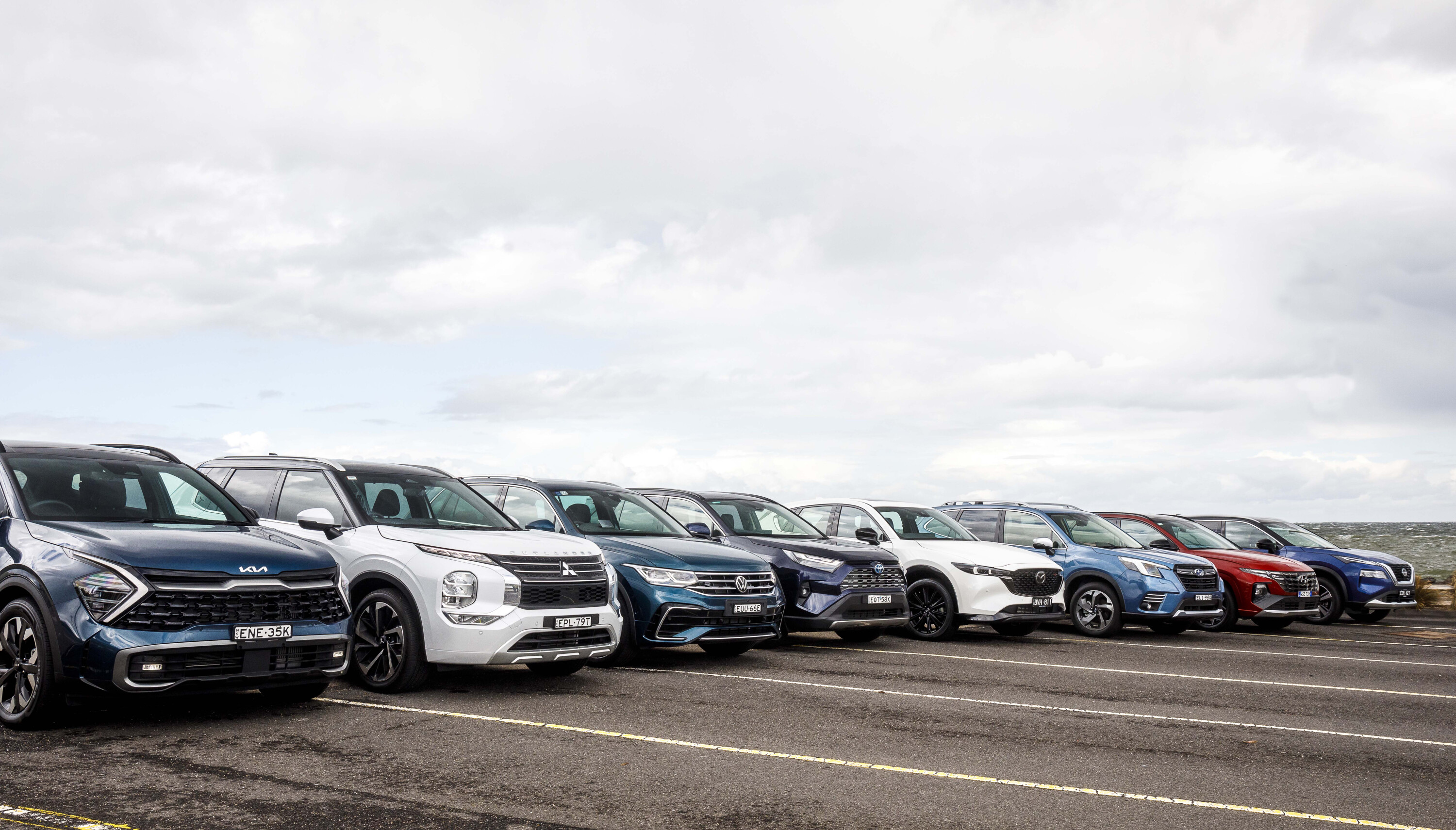
The mid-sized SUV segment in Australia is packed with worthy competition, with well-specced variants such as the:
- Toyota RAV4 GXL
- Mazda CX-5 Touring
- Kia Sportage SX
1
Should I put it on my shortlist?
The 2023 Hyundai Tucson Elite presents a strong case for those in the market for a mid-sized SUV.
It offers a harmonious blend of style, technology, and practicality, making it suitable for a range of drivers.
While there are more fun to drive options available in the segment, the Tucson Elite’s well-rounded nature and value proposition make it a worthy contender for your shortlist.
The facelifted 2024 Tesla Model 3 electric sedan has debuted with a fresher design, improved interior, and driving comfort – but it’s slightly pricier.
Snapshot
- 2024 Model 3 officially unveiled with upmarket design
- No changes to battery and powertrain
- Now on sale, deliveries from 2024
Deliveries are expected to start in January to March 2024; however, the flagship Model 3 Performance variant won’t be available at launch.
The electric vehicle maker told British site Carwow [↗] that around 50 per cent of parts have been changed compared to the outgoing model.
2024 Tesla Model 3 pricing
| 2024 Tesla Model 3 variant | Price (before on-road costs) | Difference (2024 v 2023) |
|---|---|---|
| RWD | $61,900 | up $4500 |
| Long Range | $71,900 | up $1500 |
1
Fresher exterior, more range
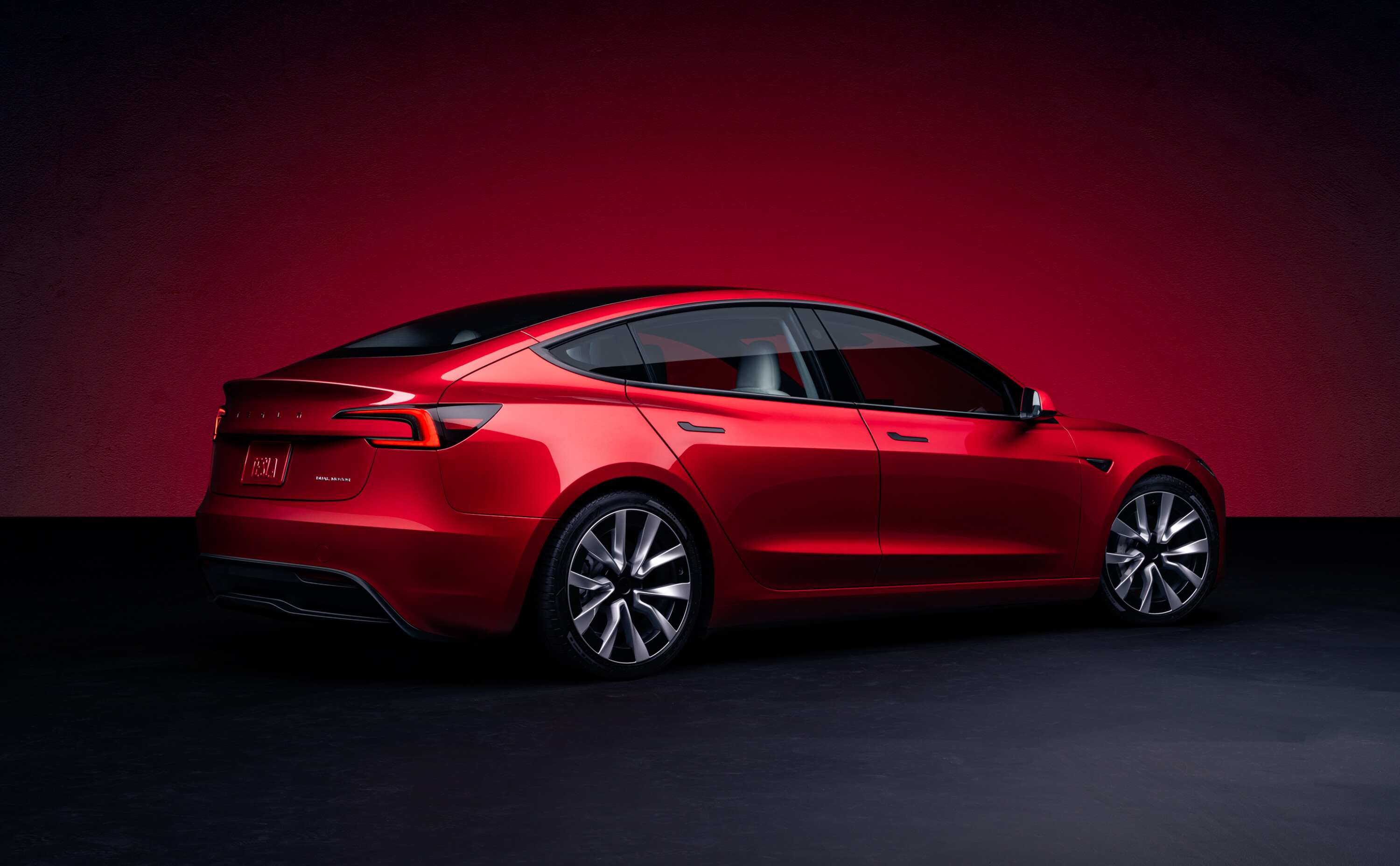
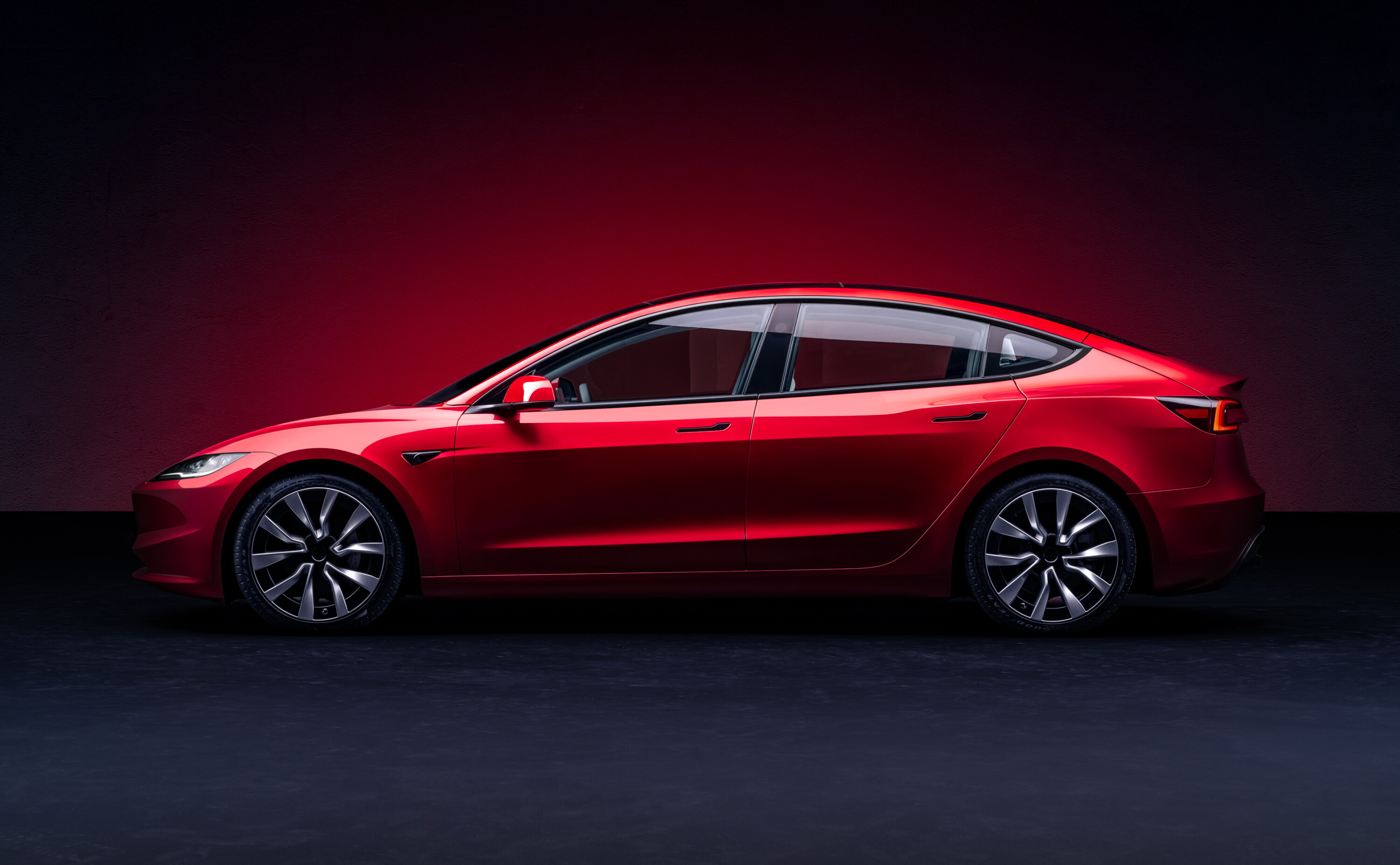
The 2024 Tesla Model 3 introduces a sleeker European-style exterior design, while improving aerodynamic efficiency to maximise driving range.
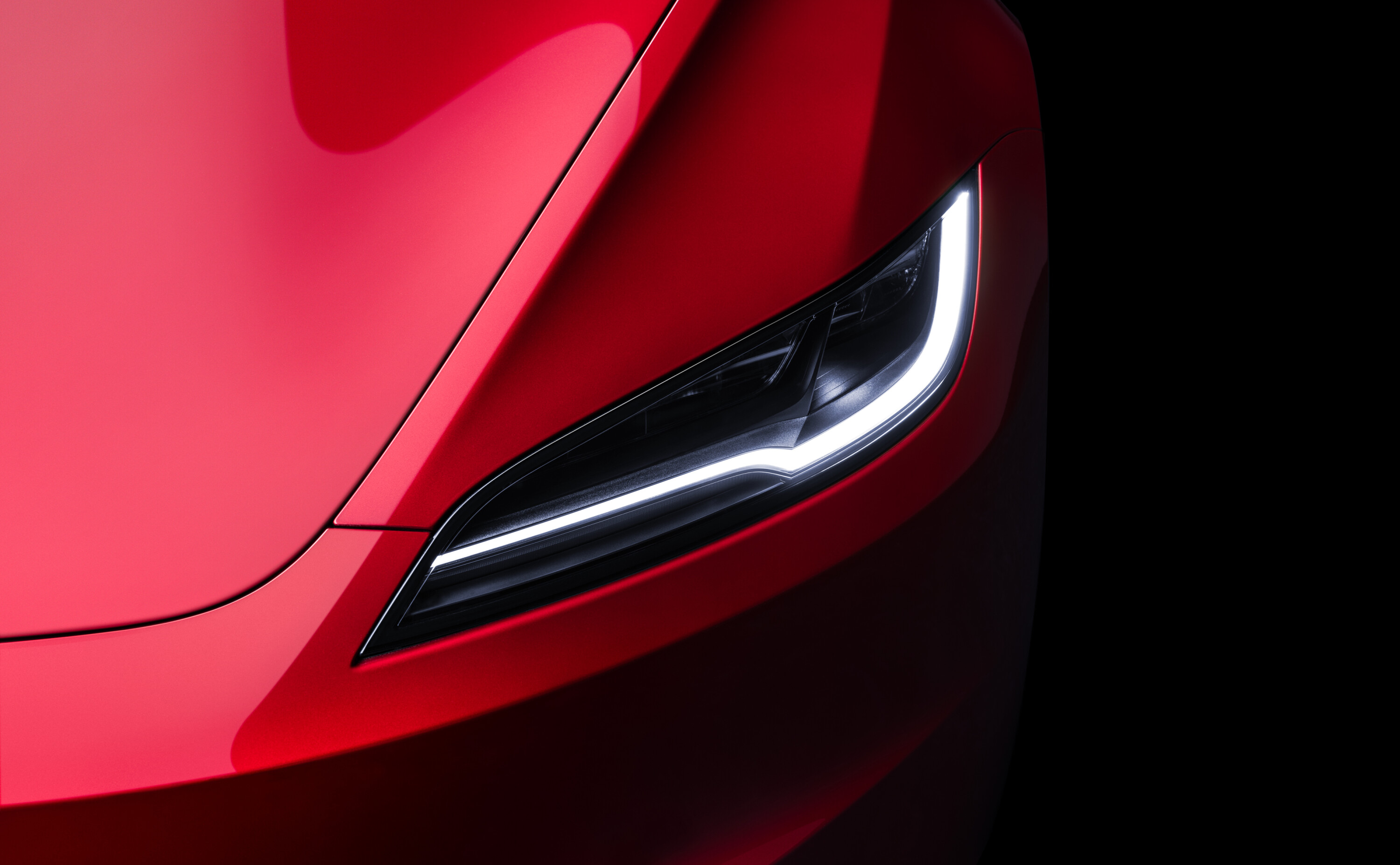
There’s slimmer LED headlights with a skewed C-shape daytime running light signature, a sharper one-piece C-shape tail-light, more efficient 18-inch ‘Photon’ and optional 19-inch ‘Nova’ wheel ($1800) designs, and the availability of Ultra Red ($2600) and Stealth Grey ($2300) exterior colours.
The front bumper is smoother with a wider intake and includes a new forward-facing camera to detect low-lying objects. But, it has removed the front fog light housing and the rear bumper introduces more Model Y electric SUV-esque plastic cladding with rear fog lamps.
Tesla told Carwow [↗] that these design changes have improved the electric sedan’s aerodynamic efficiency by eight per cent to achieve a 0.219 drag coefficient (previously 0.225cd).
| 2024 Tesla Model 3 variant | Claimed WLTP range | Difference (2024 v 2023) |
|---|---|---|
| RWD | 513km | +22km |
| Long Range | 629km | +27km |
1
Despite previous rumours, the battery and powertrain haven’t been changed – but the Long Range is now more competitive with the Hyundai Ioniq 6 Dynamiq (614km WLTP claim) and just-facelifted Polestar 2 Long Range Single Motor (654km WLTP claim).
This means the single-motor RWD has a 57.5kWh usable lithium-iron-phosphate (LFP) battery and a claimed 0-100km/h time in 6.1 seconds, while the all-wheel-driven Long Range provides a 75kWh usable nickel-manganese-cobalt (NMC) pack that launches from 0-100km/h in 4.4 seconds.
As per the outgoing model, this means the RWD can recharge at up to 170kW DC on a compatible fast charging station with no charge limit, whereas the Long Range can charge at up to 250kW DC with Tesla recommending a 90 per cent everyday charging cap only to maintain good battery health.
All variants are capable of three-phase 11kW AC charging rates.
1
Upmarket interior
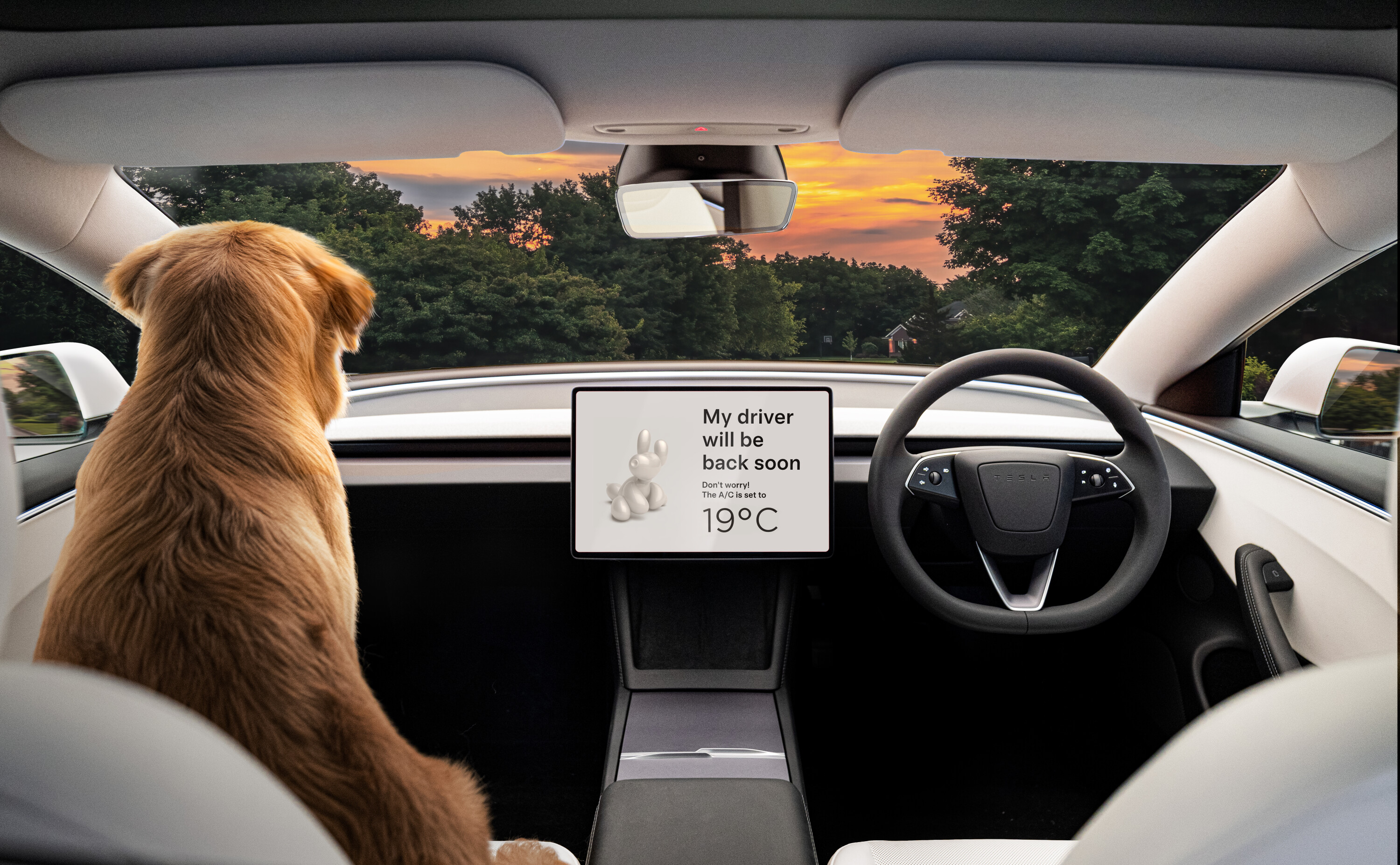
Inside, the 2024 Model 3 goes more upmarket with improved material quality, redesigned dashboard, and a Volkswagen-style ambient lighting strip that runs across the front and into the doors capable of more than 200 colour combinations.
The softer fabric-like material dash piece now faces upwards, while there are more prominent air vents. Owners can now individually turn off the passenger-side vent to maximise driving range.
Additionally, the facelifted electric sedan gains a new steering wheel design. It’s rounded (no yoke here), but the stalks have been removed in favour of touch-sensitive indicators and automatic ‘Smart Shift’ drive selection or manually via the touchscreen.
Addressing complaints on the updated Tesla Model S and Model X large EVs overseas, the horn can still be activated by pressing the centre boss.
1
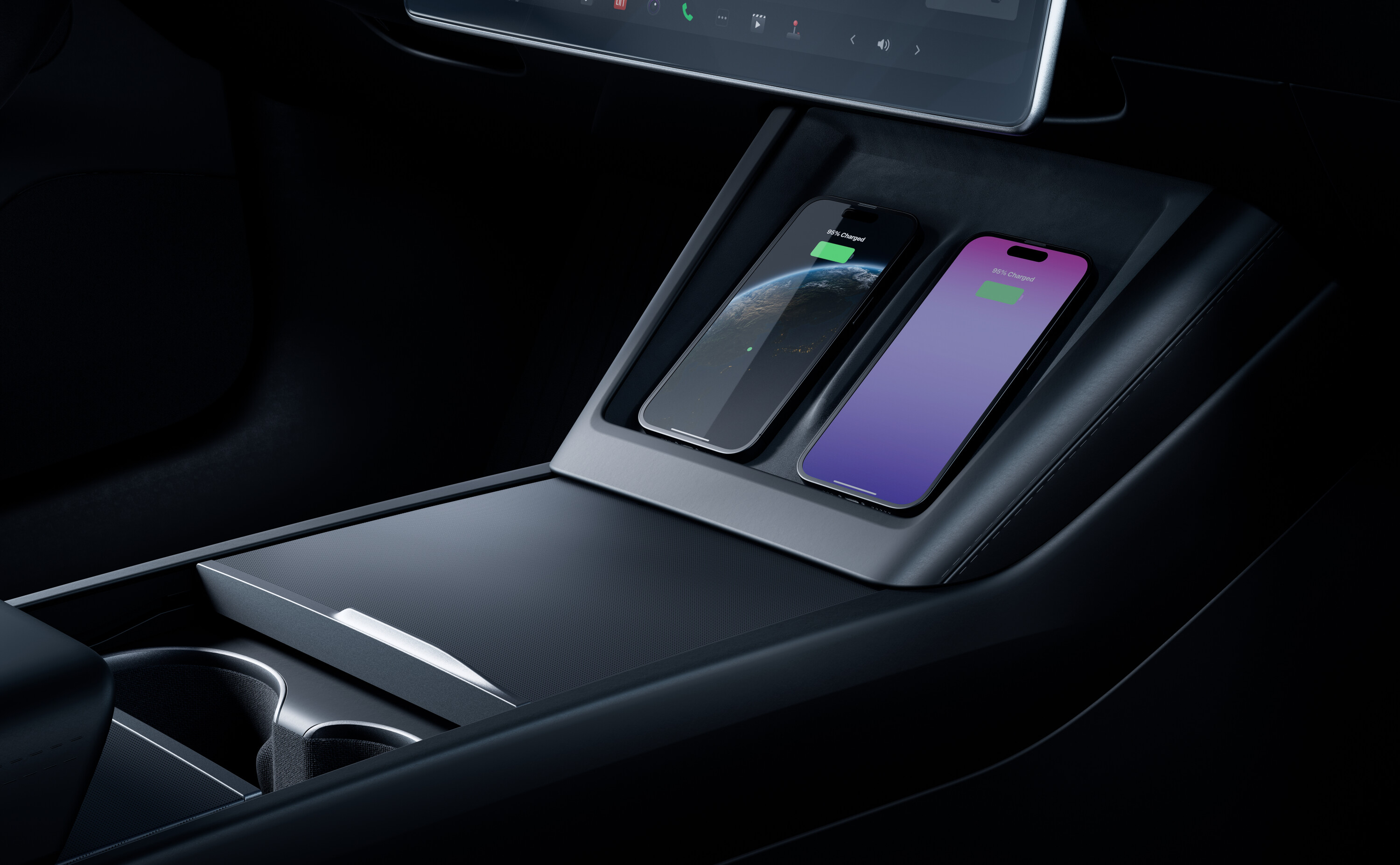
After it was redesigned in the 2021 update, the centre console has again been changed with two sliding mechanisms, akin to the more expensive Model S liftback.
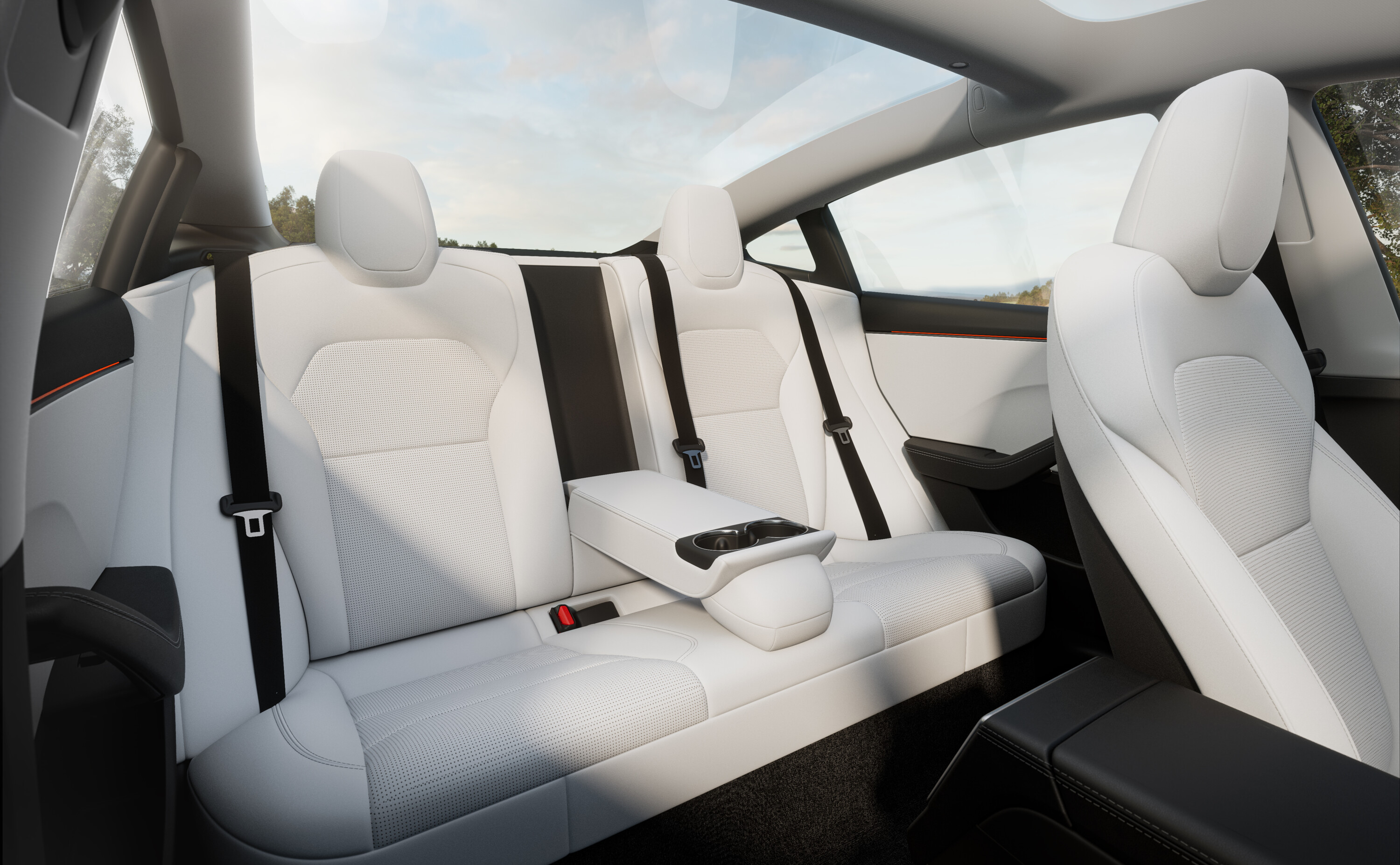
Importantly, for Australia, the 2024 Model 3 comes with perforated seats – enabling ventilation functionality for the front pews for the first time.
This feature isn’t even available on the Model S and X overseas, although it briefly appeared in a limited number of older examples.
1
Improved tech
The 2024 Model 3 features a 15.4-inch central touchscreen with slimmer bezels and is powered by the same AMD Ryzen processor – but Tesla claims it has improved brightness and responsiveness.
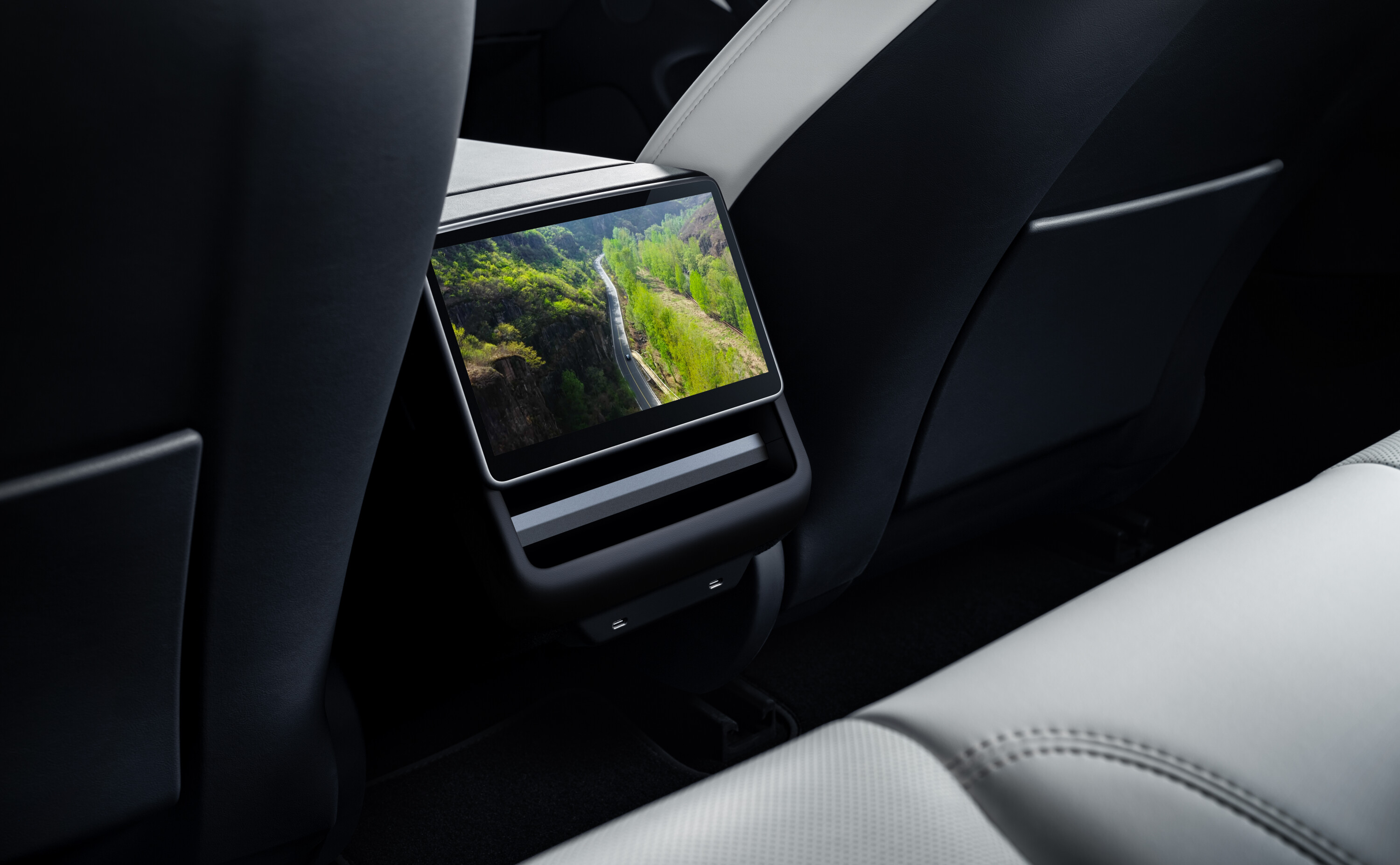
Rear passengers now benefit from a dedicated 8.0-inch touchscreen behind the centre console to control the rear air vents, view videos and play games.
On the Long Range, the audio system has been upgraded to 17 speakers with improved bass from dual subwoofers and amplifiers. However, the base RWD only has nine speakers – which is fewer than before – with a single amplifier.
The USB-C charging ports can now output 65 watts.
Bluetooth, Wi-Fi, cellular and cabin microphones are also said to be improved, while a ultra-wideband (UWB) sensor enables more reliable Tesla phone key functionality when paired with a compatible smartphone.
1
Better driving comfort
Improved materials and addition of acoustic glass on the rear windows and windscreen claim result in a quieter cabin, too.
The new wheel design, tyres and an uptick in the bonnet to deflect wind results in a claimed 30 per cent improvement to wind noise, 25 per cent improvement to impact noises, and 20 per cent improvement to road noise.
Comfort has also improved thanks to new springs, dampers, bushings and tyres designed specifically for the new Model 3.
1
When will the 2024 Tesla Model 3 launch in Australia?
Orders are open now for the facelifted 2024 Tesla Model 3 electric sedan – ahead of first deliveries starting between January to March 2024.
It will directly compete with the Hyundai Ioniq 6 sedan, recently facelifted Polestar 2 liftback, and forthcoming BYD Seal sedan.
MORE
Everything Tesla
More EV stories to help you choose the best car for your needs
- ? EV news, reviews, advice & guides
- ❓ Short & sweet: Your EV questions answered
- ⚡ New EVs: Everything coming to Australia
- ? Australia’s EVs with the longest driving range
- ⚖️ Best-value EVs by driving range
- ? How much do EVs cost in Australia?
- ? How much more expensive are EVs?
- ⚖️ Number crunching: Is it time to switch to an EV?
- ♻ Should you buy a used EV?
- ?️ Are EVs more expensive to insure?
- ? Costs compared: Charging an EV vs fueling a car
- ? EV charging guide
- ? Are there enough EV chargers in Oz?
- ?? EV servicing explained
- ? EV battery types explained
- ? When do EV batteries need replacing?
- ? Hydrogen v EVs: What’s best for Oz?
- ✋? Mind your manners! EV charging etiquette tips
- ? How sustainable are EVs, really?
MORE advice stories to help you with buying and owning a car
The Hyundai Tucson has always been a strong contender in the mid-sized SUV segment, and the 2023 Highlander variant pushes the envelope even further.
With its stylish design, spacious interiors, and a plethora of tech features, it aims to set a new benchmark.
But with a segment filled with strong competitors, does the Tucson Highlander stand out?
November 21, 2023: New-look 2024 Tucson revealed
Hyundai’s top-selling vehicle updated with Santa Cruz-like front end, plus a new-look dashboard inspired by the Kona and Santa Fe.
Story continues: Tucson Highlander review
1
Pricing and features
The Tucson Highlander – as the range-topping variant – starts from $48,400 and tops off at $54,400 before on road costs.
It is available as an automatic or dual clutch transmission only, with the choice of a 2.0L FWD petrol, AWD diesel or 1.6T DCT AWD. You’ll also have the choice of the N Line option pack which adds an array of sporty looking features such as N Line exclusive exterior and interior accents.
1
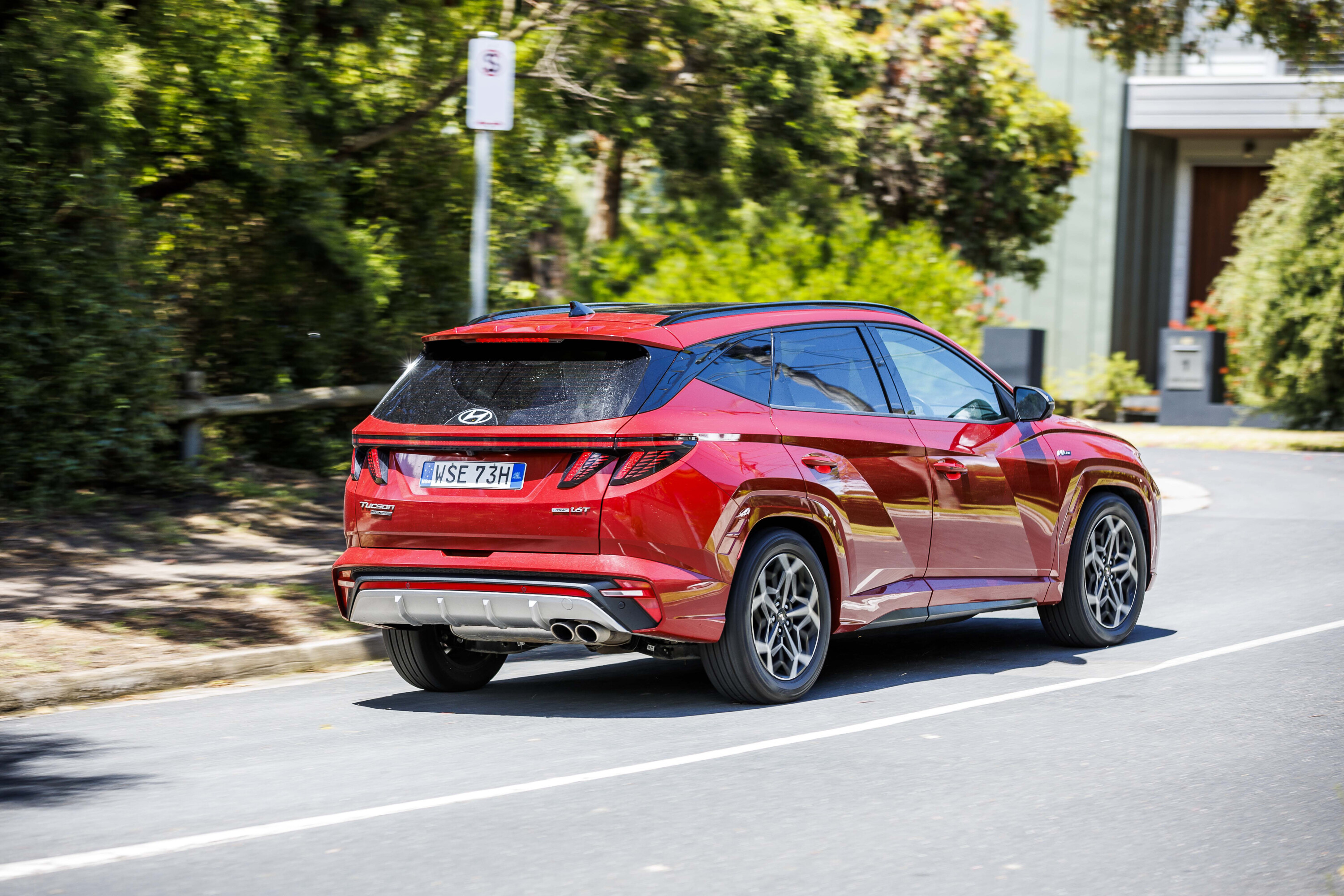
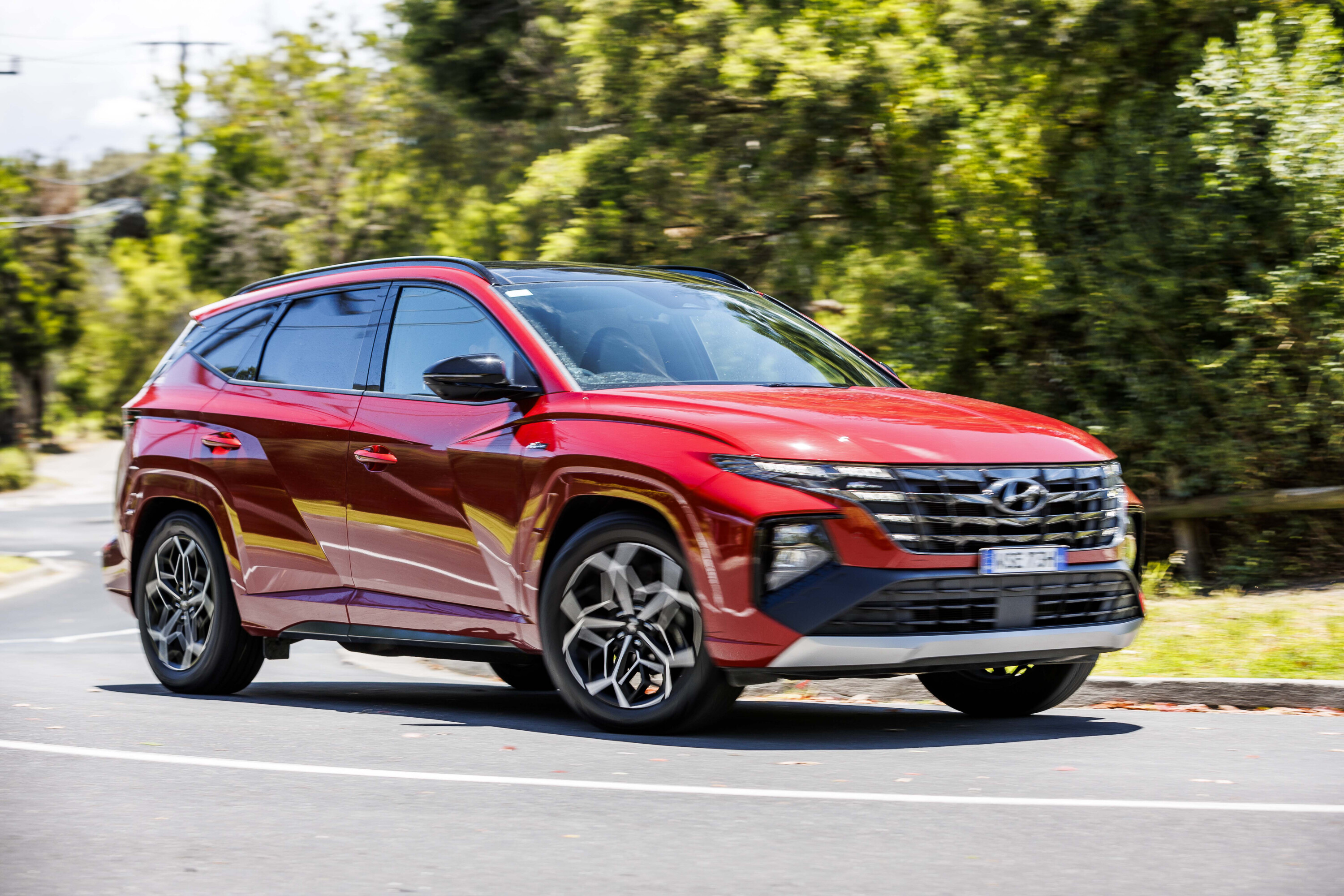
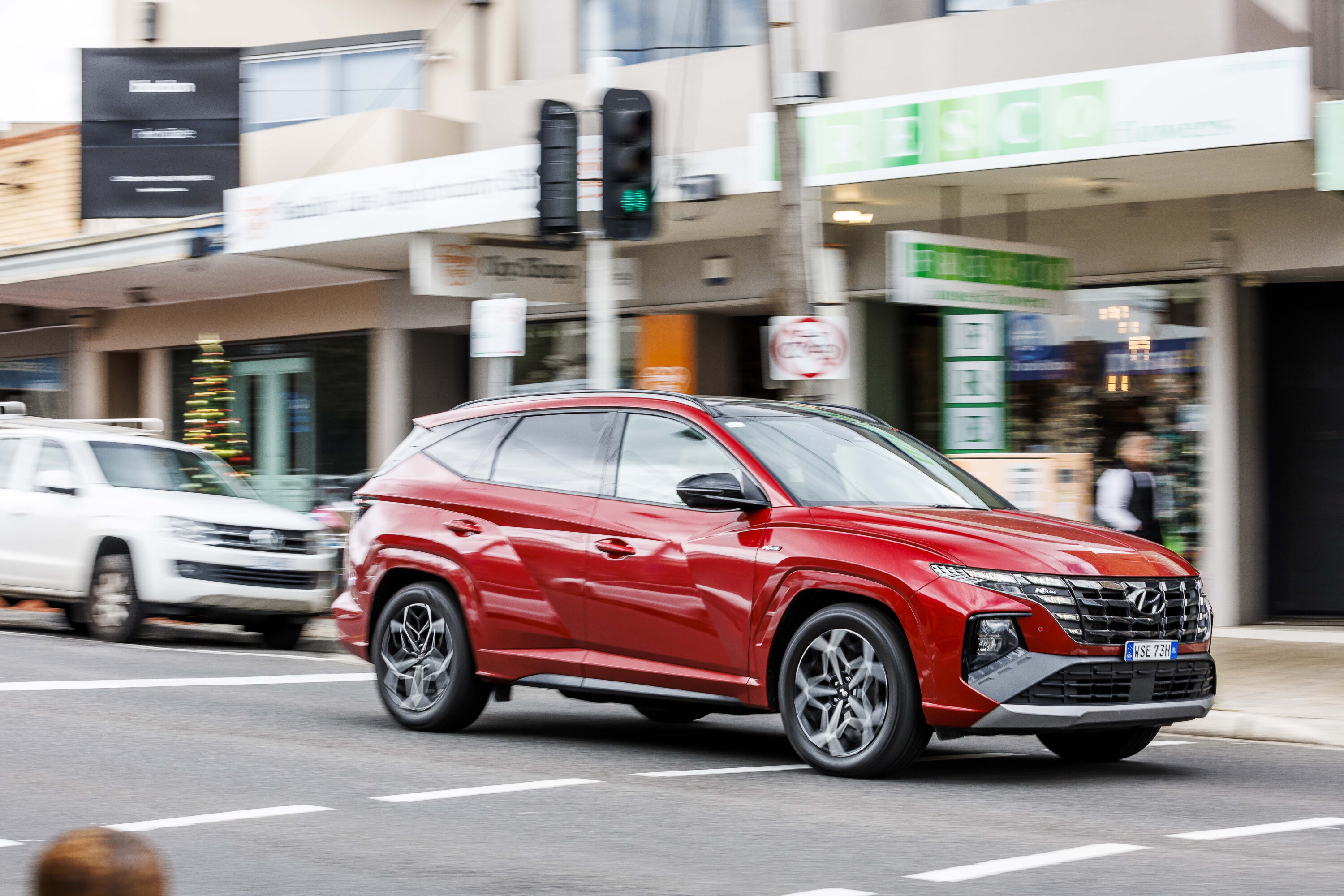
The Highlander is brimming with features that justify its position. The exterior is characterised by its signature parametric grille, dark chrome trims, 19-inch alloys, angular LED DRLs and sleek profile.
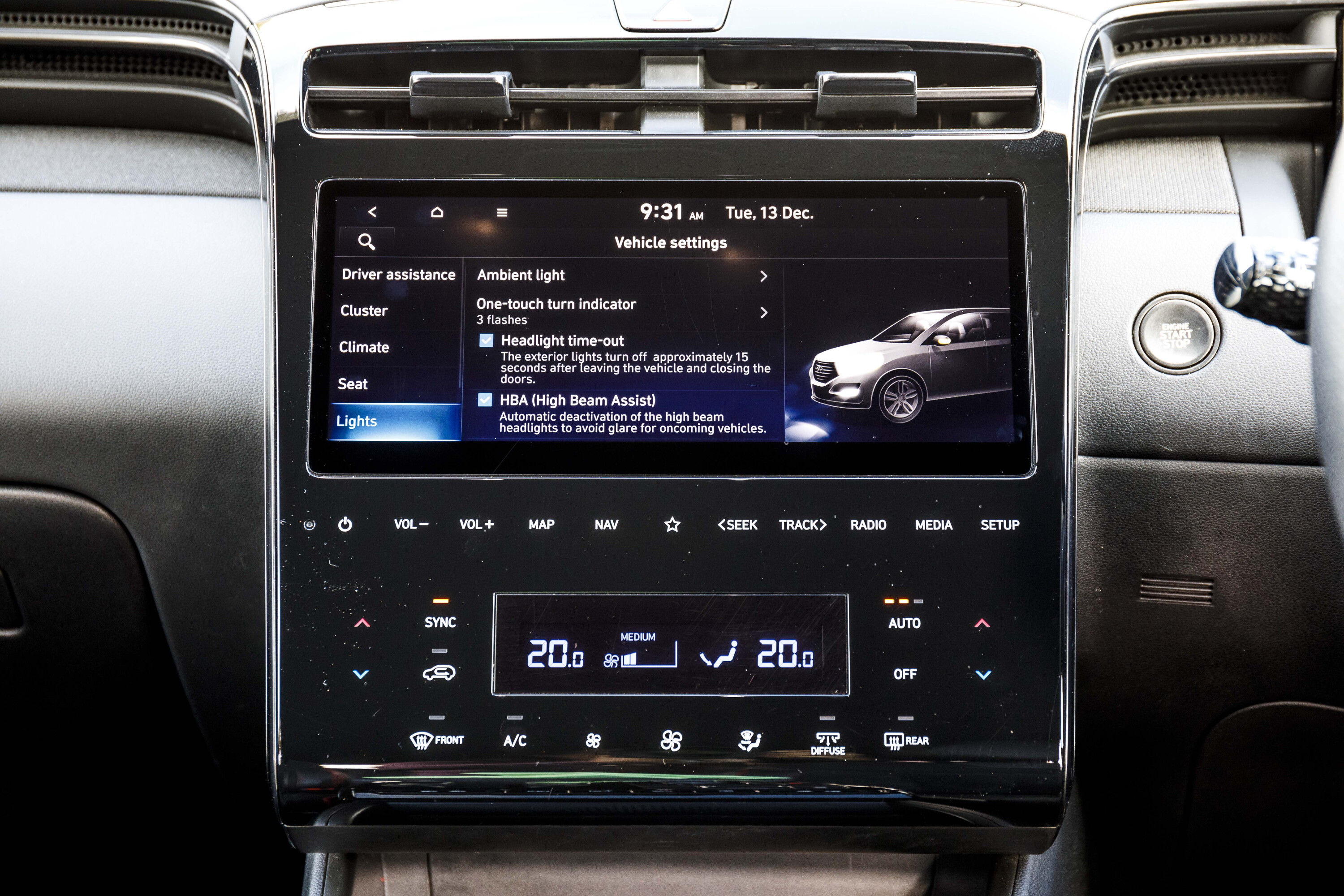
Inside, the cabin is a blend of style and functionality. The 10.25-inch infotainment system seamlessly integrates with the digital driver’s display, offering a futuristic feel.
Features like heated and ventilated front seats, a panoramic sunroof, and ambient lighting elevate the luxury quotient.
1
Safety
With its 5-star ANCAP rating, it offers peace of mind to its occupants. The Highlander variant further enhances safety with features like a 360-degree camera, front and rear parking sensors and adaptive cruise control. The combination of passive and active safety features ensures a secure driving experience.
Hyundai’s SmartSense safety suite which is standard across the range, including blind-spot monitoring, rear parking sensors and lane-keep and lane-following assist, comes standard.
1
Key rivals
The mid-sized SUV segment in Australia is packed with worthy adversaries, in one of Australias largest segments:
- Toyota RAV4 Cruiser
- Mazda CX-5 Akera
- Kia Sportage GT-Line: which shares a platform with the Tucson but has its distinct style and feature set
1
Should I put it on my shortlist?
The 2023 Hyundai Tucson Highlander is a well-rounded SUV that ticks many boxes for potential buyers.
Its modern design, spacious interiors, and feature-packed offerings make it a strong contender in its segment.
While it might not be the sportiest drive in its class, it offers a balanced blend of comfort and tech. If you’re in the market for a mid-sized SUV that offers a touch of luxury and modern tech, the Tucson Highlander should definitely be on your radar.
The 2024 Honda CR-V family SUV is now arriving in Australian showrooms.
Snapshot
- 2024 Honda CR-V pricing and features
- Seven variants, including hybrid and 7-seat
- Sixth-gen family SUV on sale now
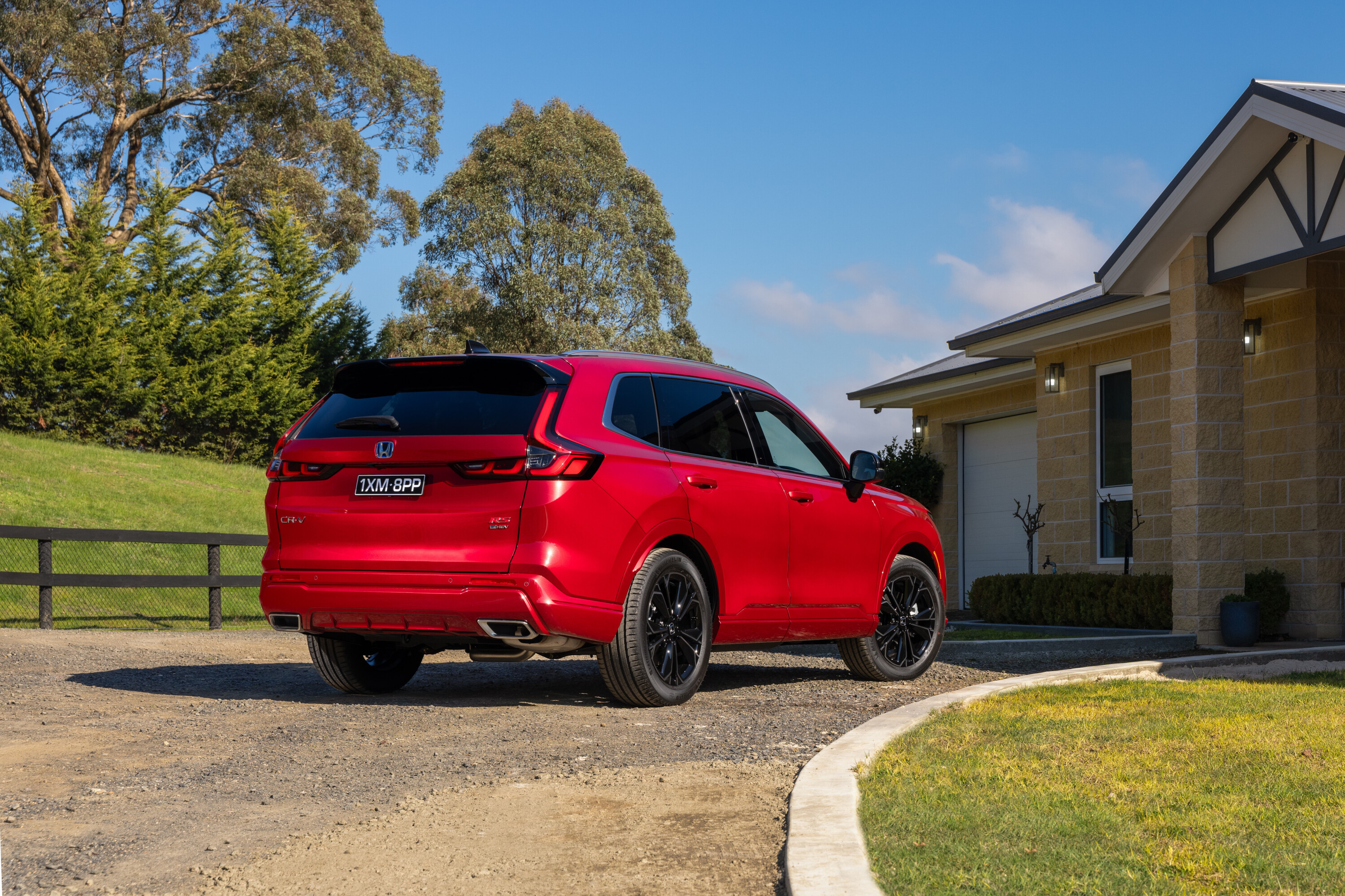
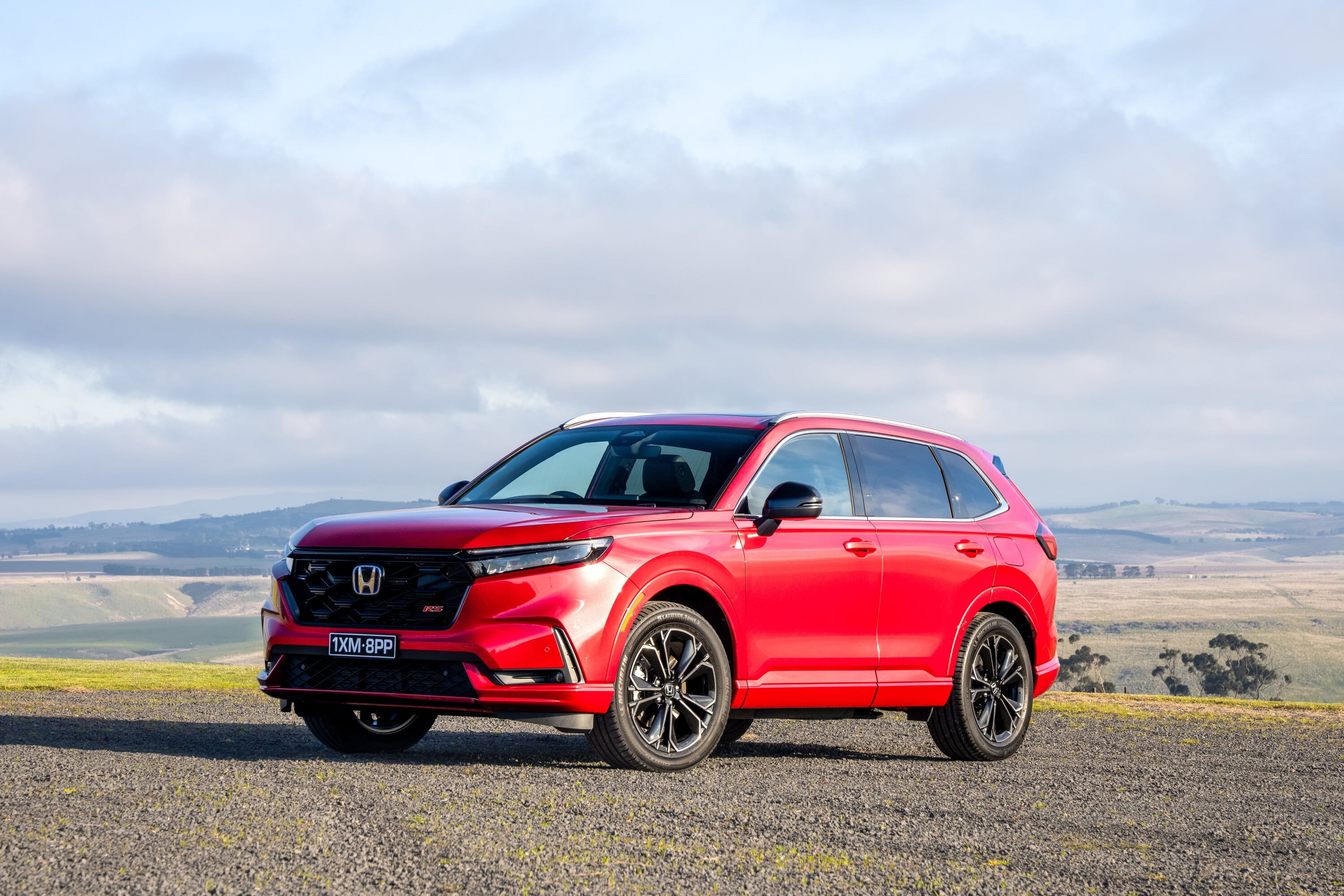
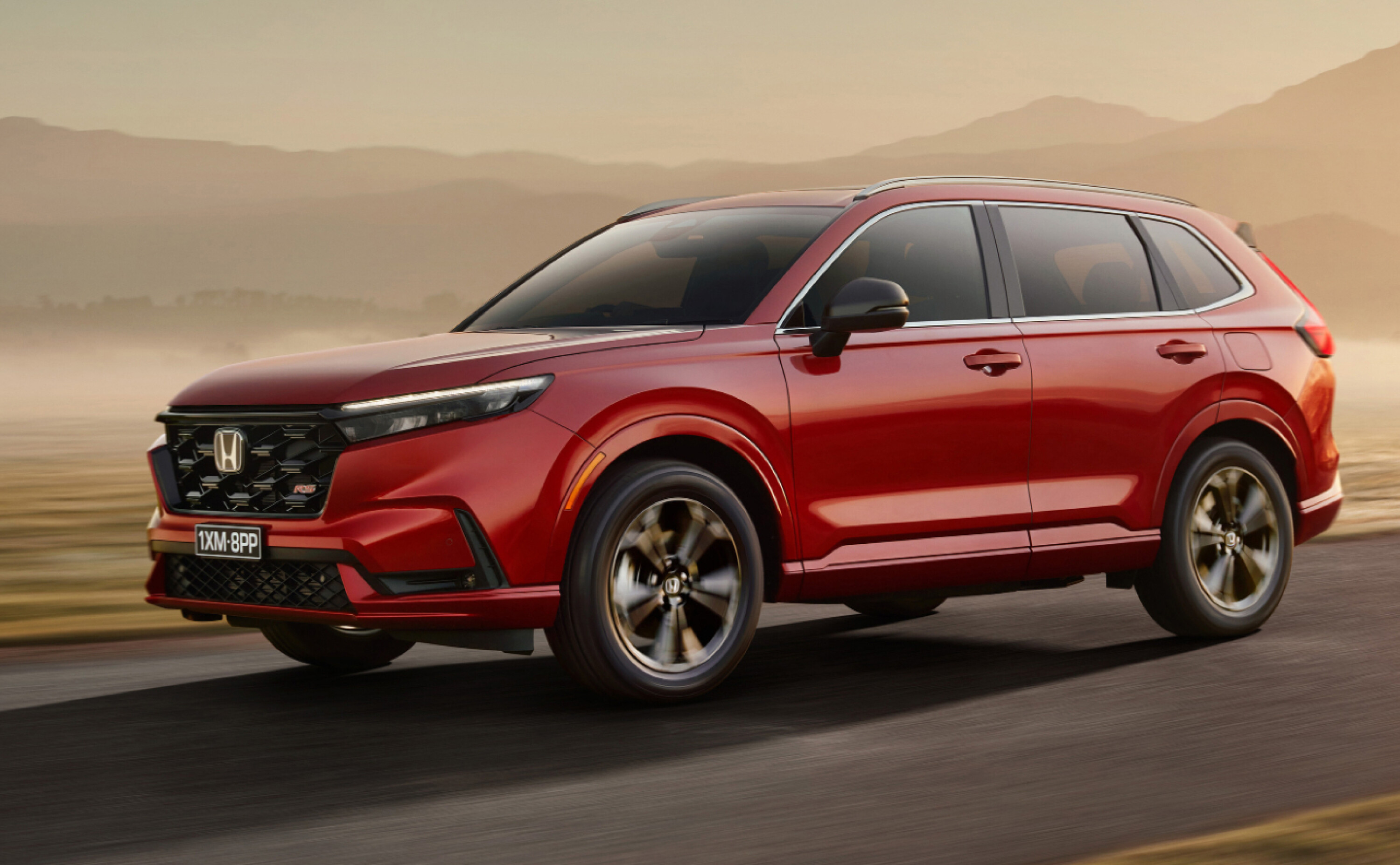
On sale from today, September 1, the sixth-generation CR-V brings an all-new design, increased dimensions, more technology and a first-ever hybrid variant for Australia.
As detailed, the seven-grade CR-V range starts from $44,500 drive-away – up $6000 over the previous model – and tops out with the $59,900 drive-away E:HEV RS hybrid.
Unlike the Civic small car, Honda has sharpened the CR-V’s drive-away pricing to be competitive with typical rivals on paper.
1
For example, the $59,900 drive-away CR-V E:HEV RS is similarly priced to a Nissan X-Trail Ti E-Power and Toyota RAV4 Cruiser Hybrid once on-road costs are added.
With two seven-seat variants available, the 60-millimetre longer CR-V aims to compete against larger mid-size SUVs, such as the seven-seat Mitsubishi Outlander, Nissan X-Trail and Hyundai Santa Fe – rather than the smaller RAV4, Mazda CX-5 and Volkswagen Tiguan, which the new Honda ZR-V is aimed at.
Like all Hondas, the new CR-V is backed by the brand’s five-year/unlimited-kilometre warranty and five low-price services ($199 per visit).
1
Honda Connect connected-car functionality will be complimentary for five years, mirroring the likes of Kia and Hyundai – while others such as Toyota stick with shorter trials.
The new CR-V will remain sourced from Thailand, unlike the latest Civic, HR-V and ZR-V built in Japan.
JUMP AHEAD
- 2024 Honda CR-V pricing
- 2024 Honda CR-V features
- Colours
- Engine, drivetrain, and fuel economy
- Safety
- Dimensions
- Warranty and servicing
- Availability
1
2024 Honda CR-V pricing
All prices are drive-away.
| Model | Pricing | Change |
|---|---|---|
| VTi X FWD five-seat | $44,500 | up $6000 (vs 2023 VTi) |
| VTi X7 FWD seven-seat | $46,800 | up $6000 (vs 2023 VTi 7) |
| VTi L FWD five-seat | $48,800 | up $6900 (vs 2023 VTi X) |
| VTi L AWD five-seat | $51,300 | up $5100 (vs 2023 VTi L AWD) |
| VTi L7 FWD seven-seat | $53,000 | up $3500 (vs 2023 VTi L7) |
| VTi LX AWD five-seat | $57,000 | up $3400 (vs 2023 VTi LX AWD) |
| E:HEV RS FWD five-seat | $59,900 | new |
1
2024 Honda CR-V features
| 2024 Honda CR-V VTi X features | |
|---|---|
| 17-inch alloy wheels | Hands-free electric tailgate with walk-away close |
| Full-size alloy spare wheel | Cloth upholstery |
| 9-inch infotainment system | Plastic steering wheel and gear shifter |
| Wireless Apple CarPlay and wired Android Auto | Dual-zone climate control |
| Honda Connect connected-car service | Conversation mirror |
| Eight-speaker audio system | Eight-way power-adjustable driveru2019s seat |
| Wireless phone charger | LED headlights |
| 7-inch semi-digital instrument cluster | Front and rear parking sensors. |
2024 Honda CR-V VTi X7 features
| In addition to VTi X | |
|---|---|
| Blind-spot alert | Tri-zone climate control |
| Rear cross-traffic alert | Space-saver spare wheel (in lieu of full-size). |
| Third-row seating | |
2024 Honda CR-V VTi L features
| In addition to VTi X | |
|---|---|
| 18-inch alloy wheels | Heated front seats |
| Blind-spot alert | Two-position driveru2019s seat memory function |
| Rear cross-traffic alert | Four-way power-adjustable passenger seat |
| Satellite navigation | Leather-wrapped steering wheel and gear shifter |
| Smart key card | Auto-dimming rear-view mirror |
| Rear privacy glass | u2018iu2019-Dual-zone climate control |
| Roof rails | Rain-sensing wipers. |
| Black leather-appointed upholstery | |
2024 Honda CR-V VTi L7 features
| In addition to VTi L | |
|---|---|
| Panoramic sunroof | Tri-zone climate control |
| Third-row seating | Space-saver spare wheel (in lieu of full-size). |
2024 Honda CR-V VTi LX features
| In addition to VTi L | |
|---|---|
| 19-inch alloy wheels | u2018Sportu2019 front and rear bumpers |
| 12-speaker Bose audio system | Auto-tilting side mirrors in reverse |
| 10.2-inch digital instrument cluster | Ambient interior lighting. |
| Panoramic sunroof | |
2024 Honda CR-V E:HEV RS features
| In addition to VTi LX | |
|---|---|
| 19-inch alloy wheels (dark finish) | Black rear spoiler |
| u2018Sportu2019 drive mode | Black leather upholstery with red stitching |
| Steering wheel-mounted deceleration paddle | Colour-matched wheel arches |
| Adaptive LED headlights with active cornering | Red steering wheel and gear shifter stitching |
| Tyre repair kit (in lieu of full-size alloy spare wheel) | Black headlining |
| Black exterior trim | Deleted: All-wheel drive. |
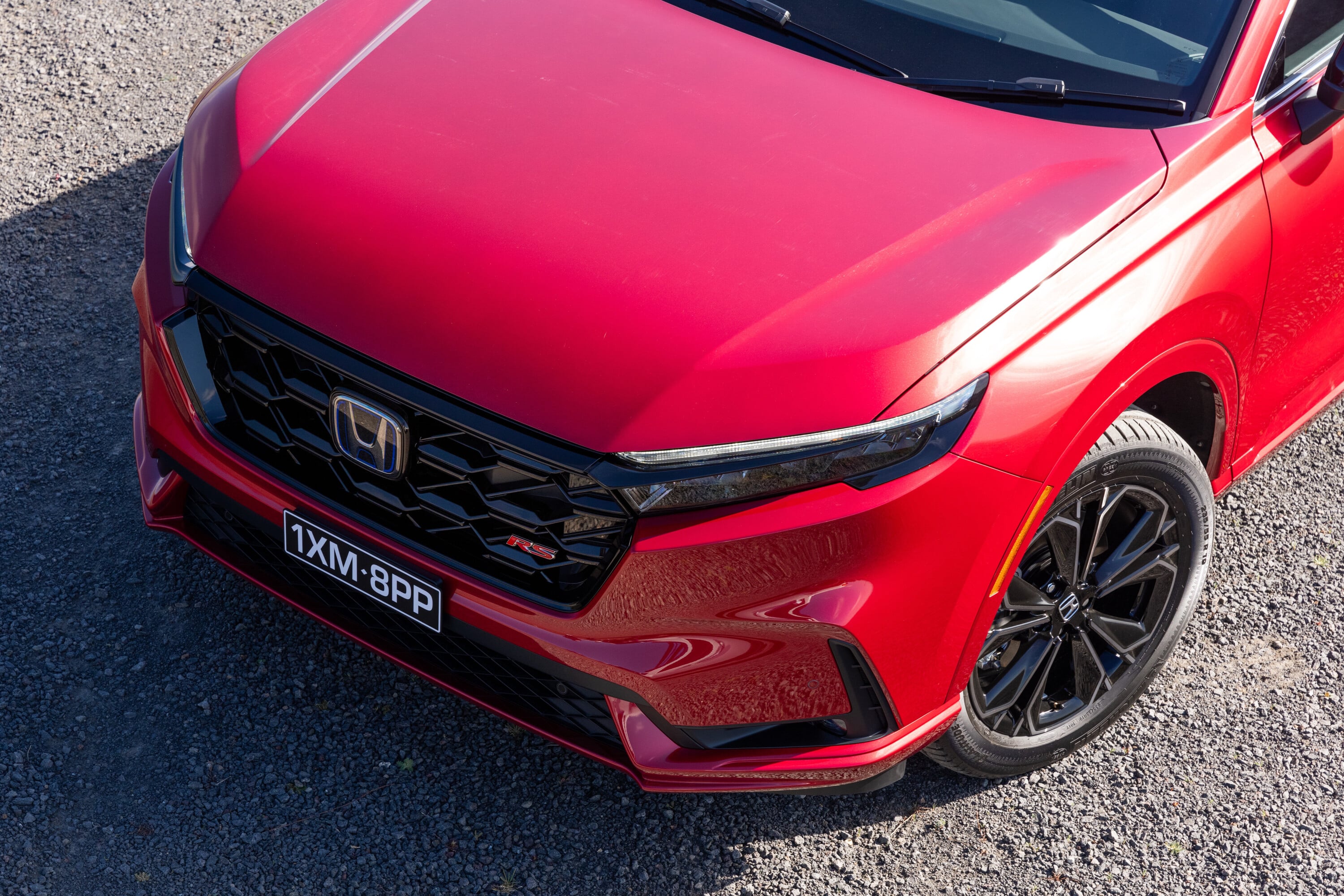
1
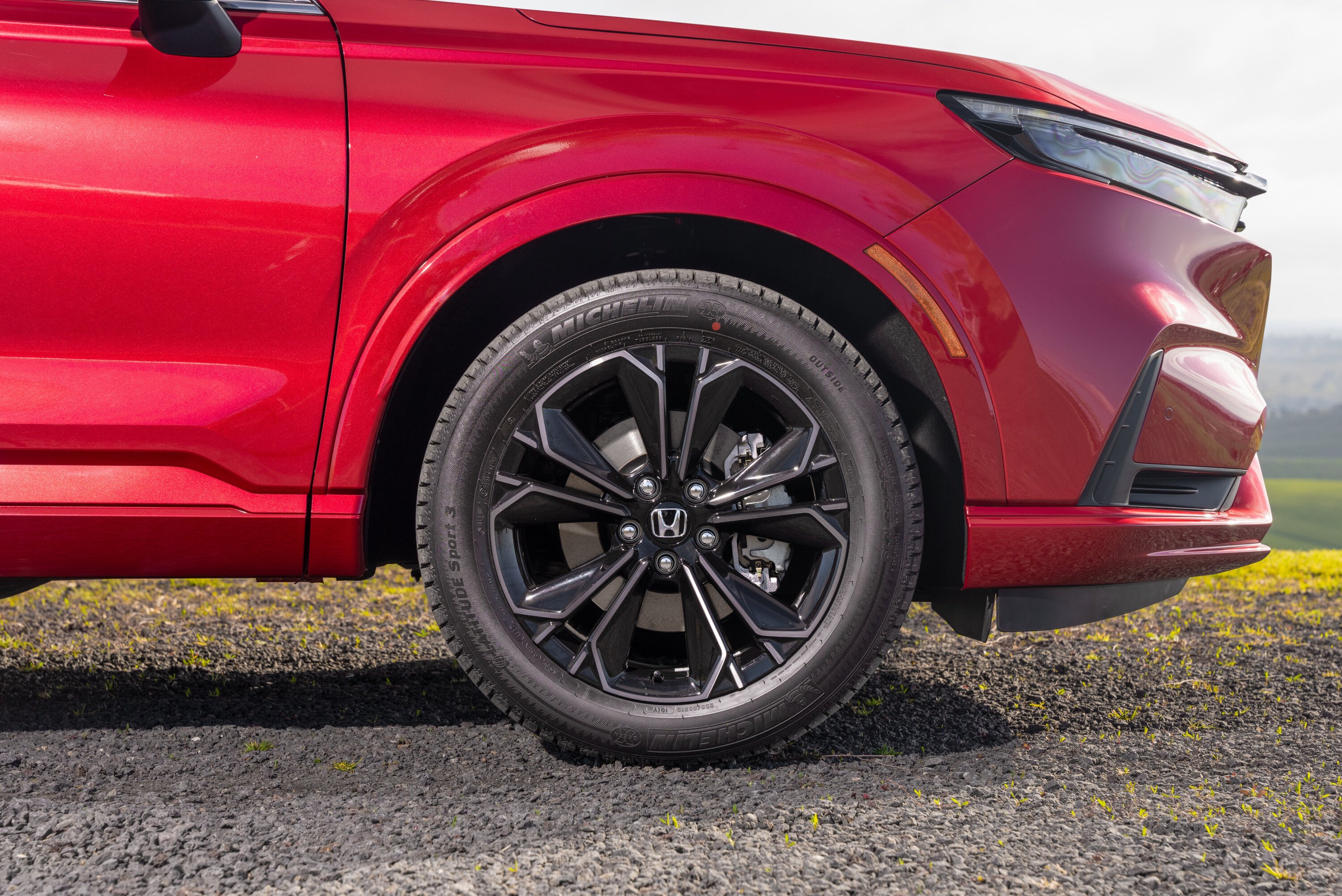
Colours
| Platinum white (all variants) | Lunar silver (all variants) |
| Meteoroid grey (all variants) | Ignite red (all variants) |
| Canyon river blue (excl. VTi X) | Crystal black (excl. VTi X). |
All colours are included in the CR-V’s drive-away price.
1
Engine, drivetrain, and fuel economy
Under the bonnet, all ‘VTi’ variants have an unchanged 140kW/240Nm 1.5-litre four-cylinder turbo-petrol engine, matched to a CVT automatic transmission and front- or all-wheel drive.
Front-drive five-seat variants have a claimed fuel consumption of 7.1L/100km – down 0.3L – while the FWD seven-seat and VTi L AWD variants are unchanged at 7.3L/100km and 7.4L/100km, respectively.
The flagship turbo-petrol VTi LX AWD now consumes 7.7L/100km on the combined cycle – up 0.3L.
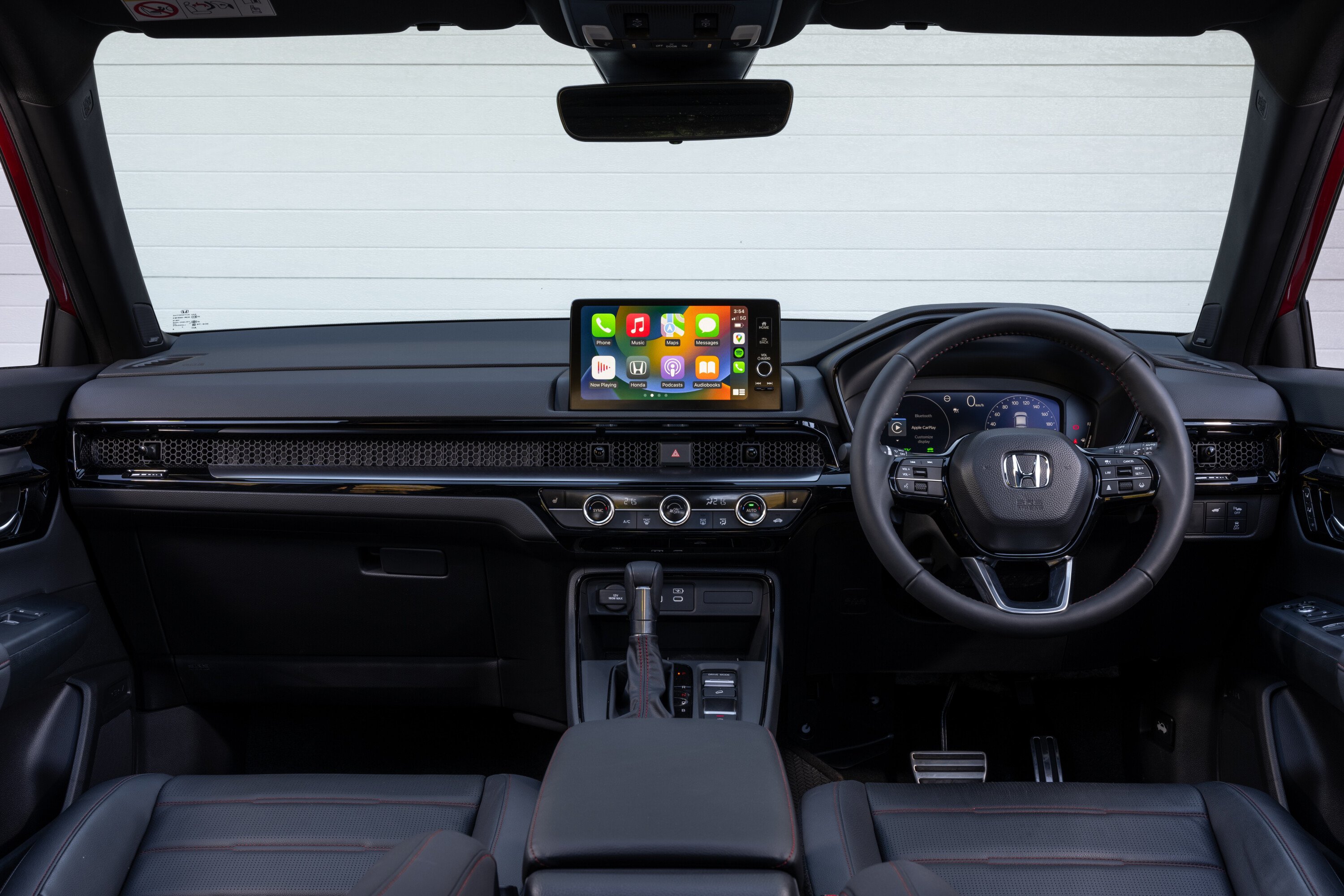
As with the Civic, Accord and ZR-V hybrids, the CR-V E:HEV RS combines a 2.0-litre naturally-aspirated four-cylinder petrol with an electric motor, for a 135kW and 335Nm total system output.
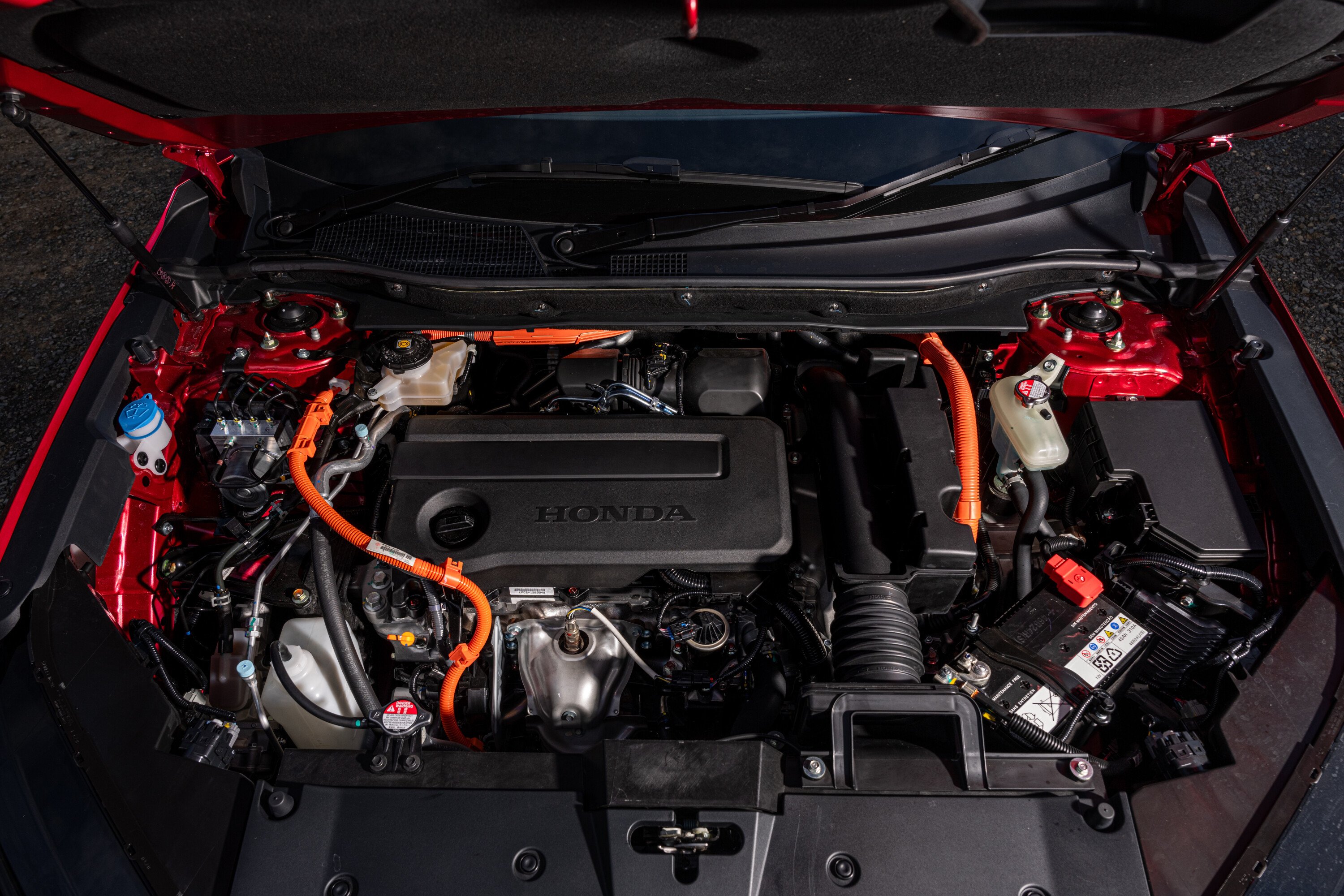
1
It is matched to an ‘E-CVT’ automatic transmission, and while an all-wheel-drive hybrid is available in the United States and South-East Asia, the Australian-spec model will be FWD-only at launch.
Fuel consumption is listed at 5.5L/100km for the CR-V E:HEV RS.
All variants support 91RON unleaded petrol and have a 57-litre fuel tank.
Five-seat petrol versions have a 1500-kilogram braked towing capacity, while seven-seat models are limited to 1000kg. The E:HEV RS hybrid has a lower 750kg limit.
| 2024 Honda CR-V fuel economy | ||
|---|---|---|
| 1.5-litre turbo (5-seat FWD) | 7.1L/100km | 162g/km |
| 1.5-litre turbo (7-seat FWD) | 7.3L/100km | 167g/km |
| 1.5-litre turbo (VTi L AWD) | 7.4L/100km | 169g/km |
| 1.5-litre turbo (VTi LX AWD) | 7.7L/100km | 176g/km |
| 2.0-litre hybrid (E:HEV RS) | 5.5L/100km | 125g/km |
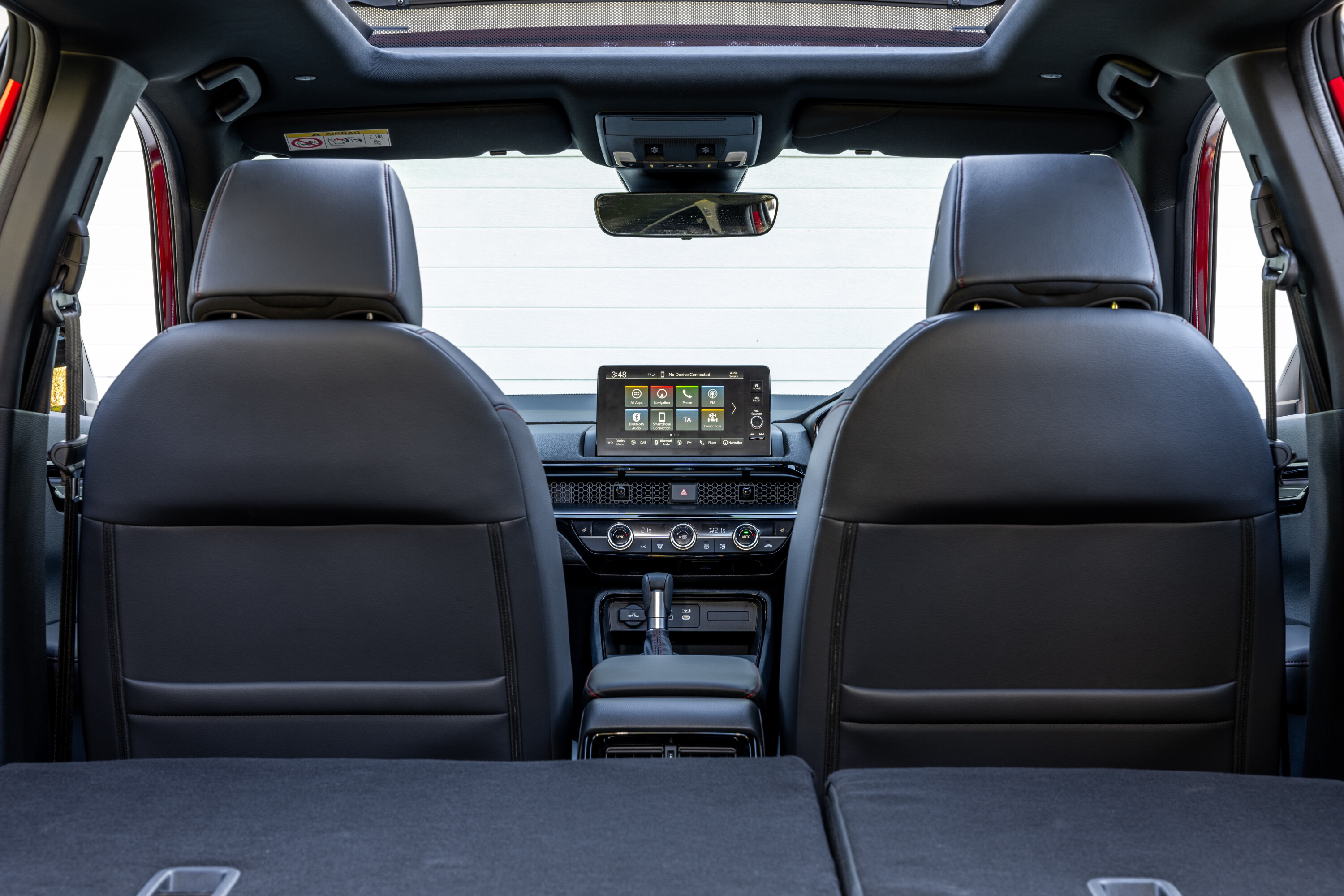
1
Safety
The 2024 Honda CR-V has yet to be assessed by ANCAP.
Eleven airbags (dual front, knee, front and rear side, curtain, and front-centre) are fitted across the CR-V range, up from six in the previous model.
Seven-seat variants include full-length curtain airbags covering the third row.
| 2024 Honda CR-V active safety features | |
|---|---|
| Autonomous emergency braking | Adaptive cruise control with low-speed follow |
| Lane-keep assist | Traffic jam assist |
| Lane departure warning | Traffic sign recognition |
| Road departure mitigation | Automatic high beam. |
Blind-spot and rear cross-traffic alerts are fitted to most variants, but the base five-seat VTi X misses out on this technology.
1
Dimensions
Measuring 4694 millimetres long, 1864mm wide and 1692mm tall, with a 2700mm wheelbase, the new CR-V is 69mm longer, 10mm wider and 2mm taller, with an additional 41mm of space between the front and rear axle.
2023 Honda CR-V boot space
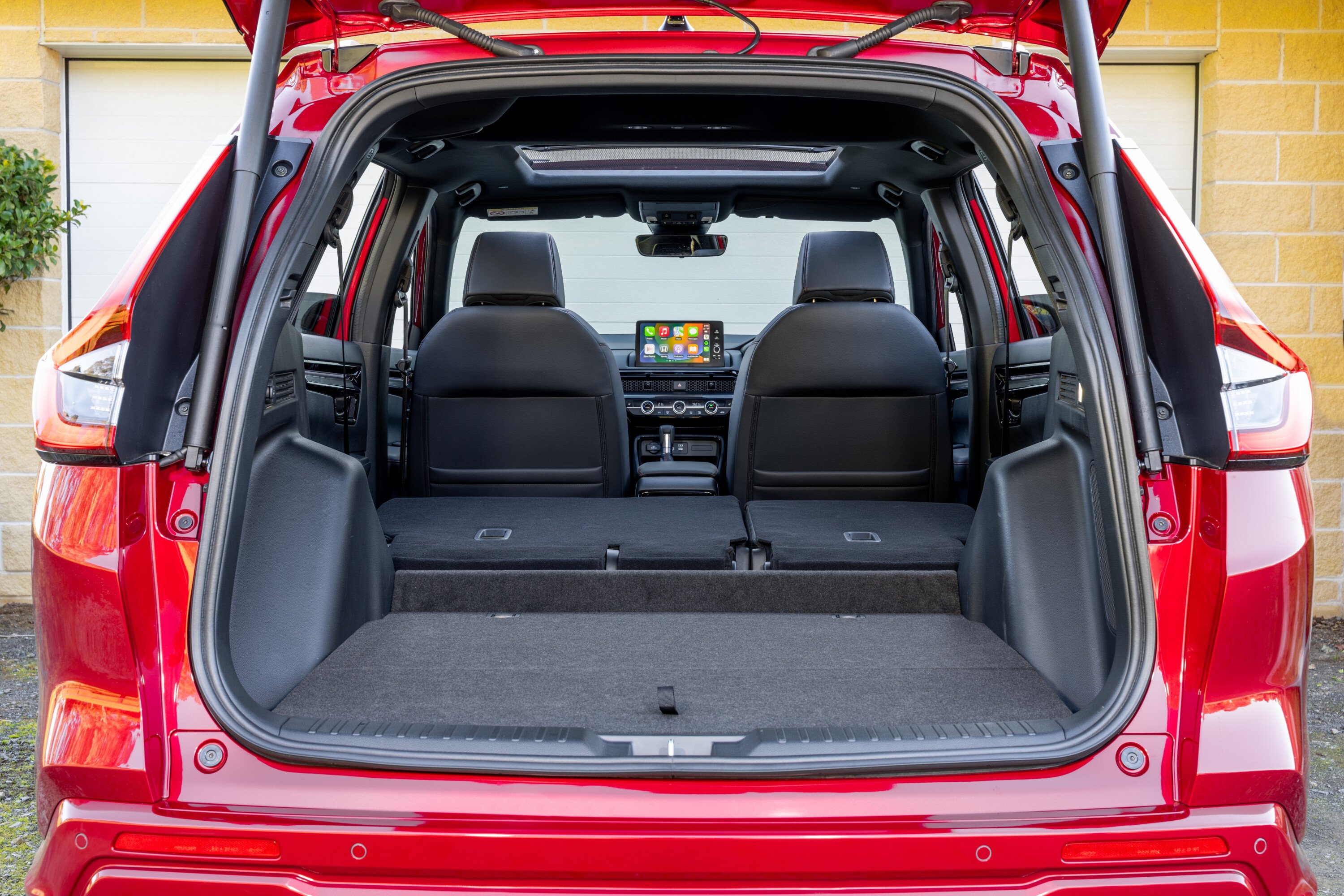
Five-seat variants, including the E:HEV RS hybrid, have a 589-litre luggage capacity with the second-row in place, up 67 litres. With the second-row folded, it increases to 1064-1072 litres.
The seven-seat Honda CR-V VTi X7 and VTi L7 have a 472L boot when the third-row is folded. With all seats in place, it has an unchanged 150L capacity. With the second- and third-row folded, it increases to 840 litres.
1
Warranty and servicing
As per the wider Honda range, the brand’s five-year/unlimited-kilometre warranty covers the CR-V.
The high-voltage battery in the CR-V E:HEV RS hybrid is covered by an eight-year warranty.
Five years of capped-price servicing and complimentary roadside assistance are included.
Maintenance is required every 12 months or 10,000 kilometres, whichever occurs first, with prices capped at $199 for the first five services.
Availability
The 2024 Honda CR-V is now available in Australia.
MORE
Everything Honda
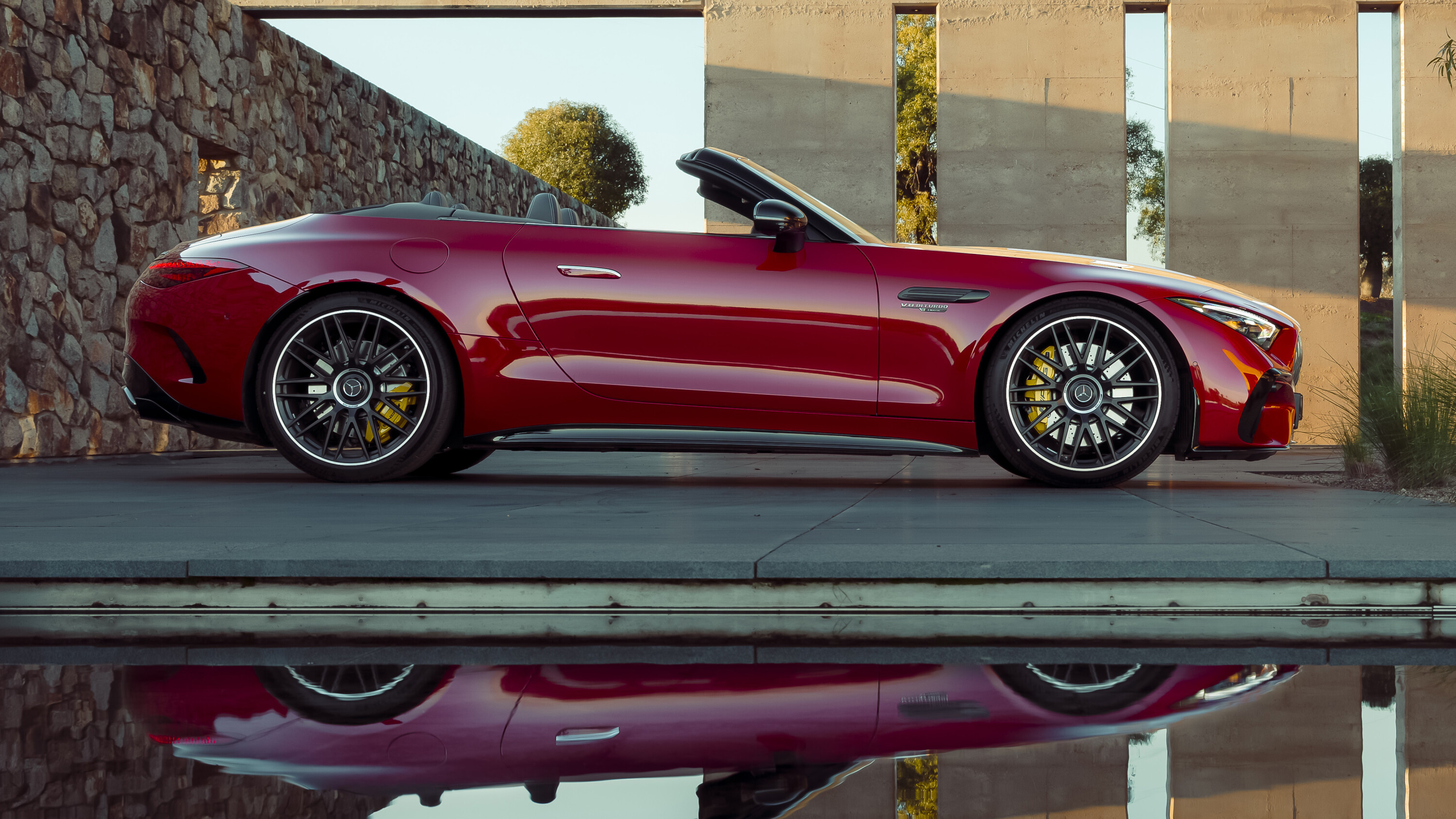
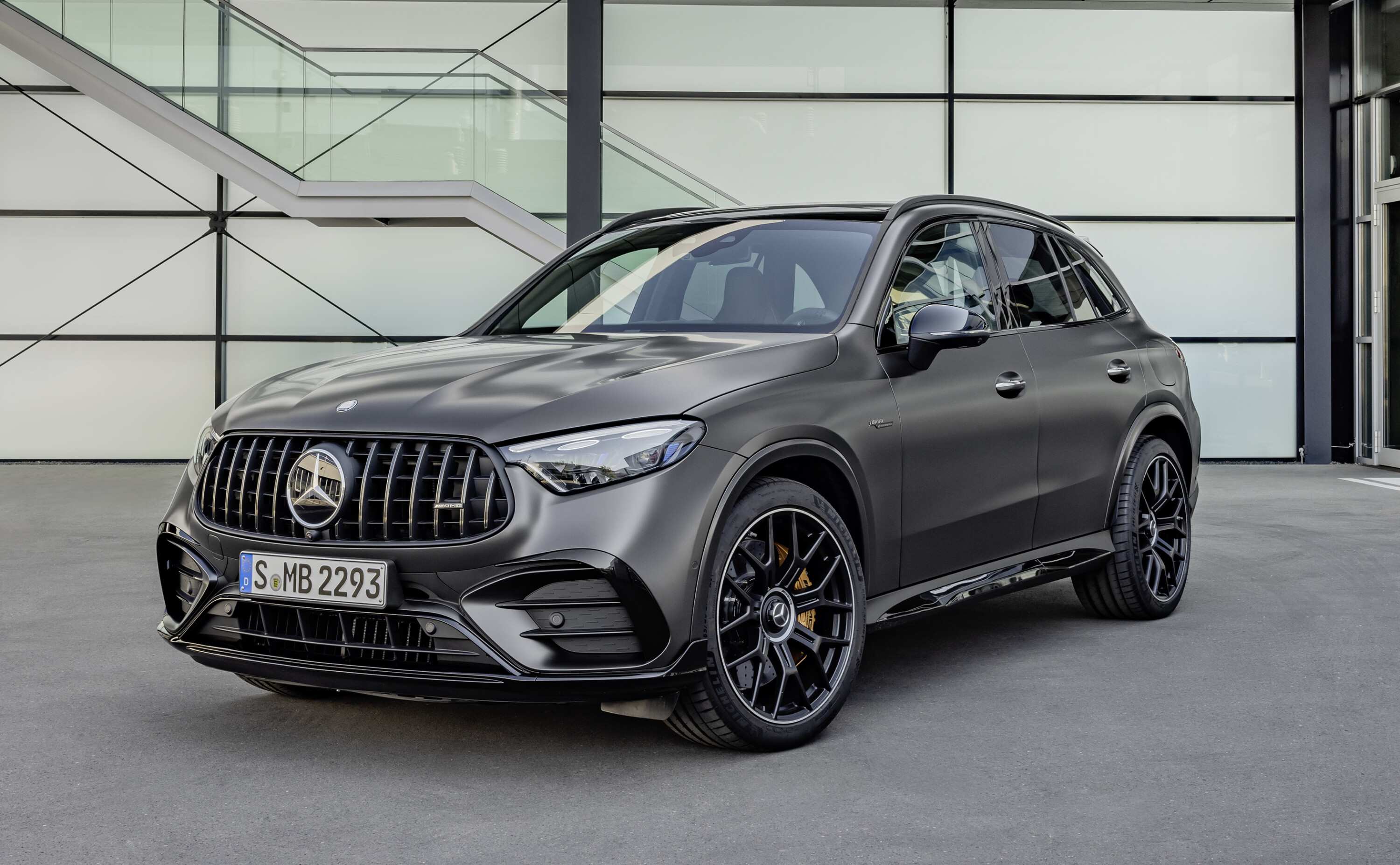
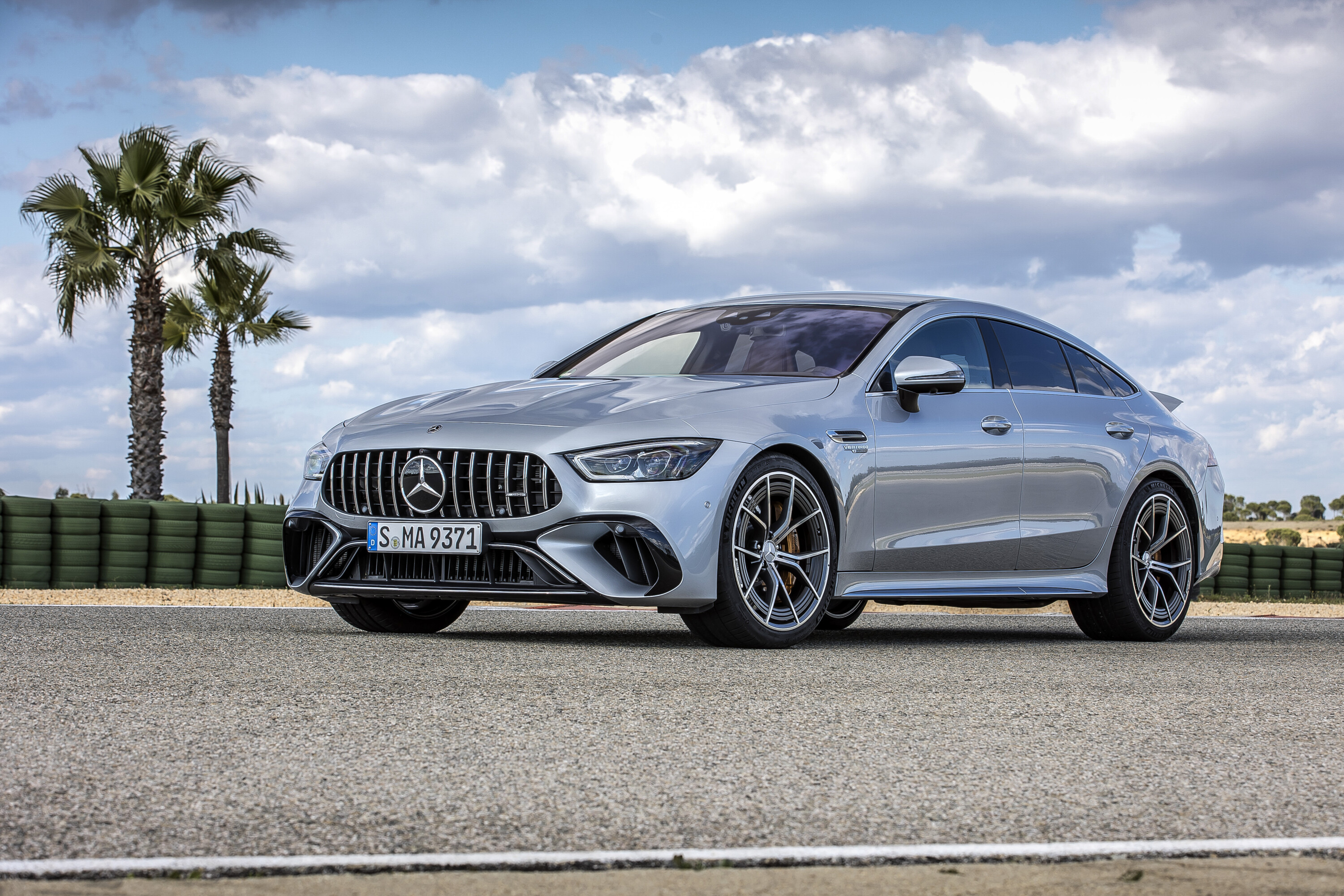
COVID-19 “saved the day” for Mercedes-Benz Australia at a time when aggressive discounting by dealers was threatening to send the carmaker’s profits into a downward spiral.
The recent landmark court case between 38 Mercedes dealers and the company over the introduction of the agency model back in January 2022, heard that between 2017 and 2020 a “culture of aggressive discounting was emerging”.
“At the half year of 2020, the level of discounting on the evidence was, as I recall it, in excess of five per cent… in effect, COVID saved the day”, Mercedes’ barrister, Robert Craig, told the Federal Court. The case could have lasting implications for the future of the Franchising Code in Australia.
1
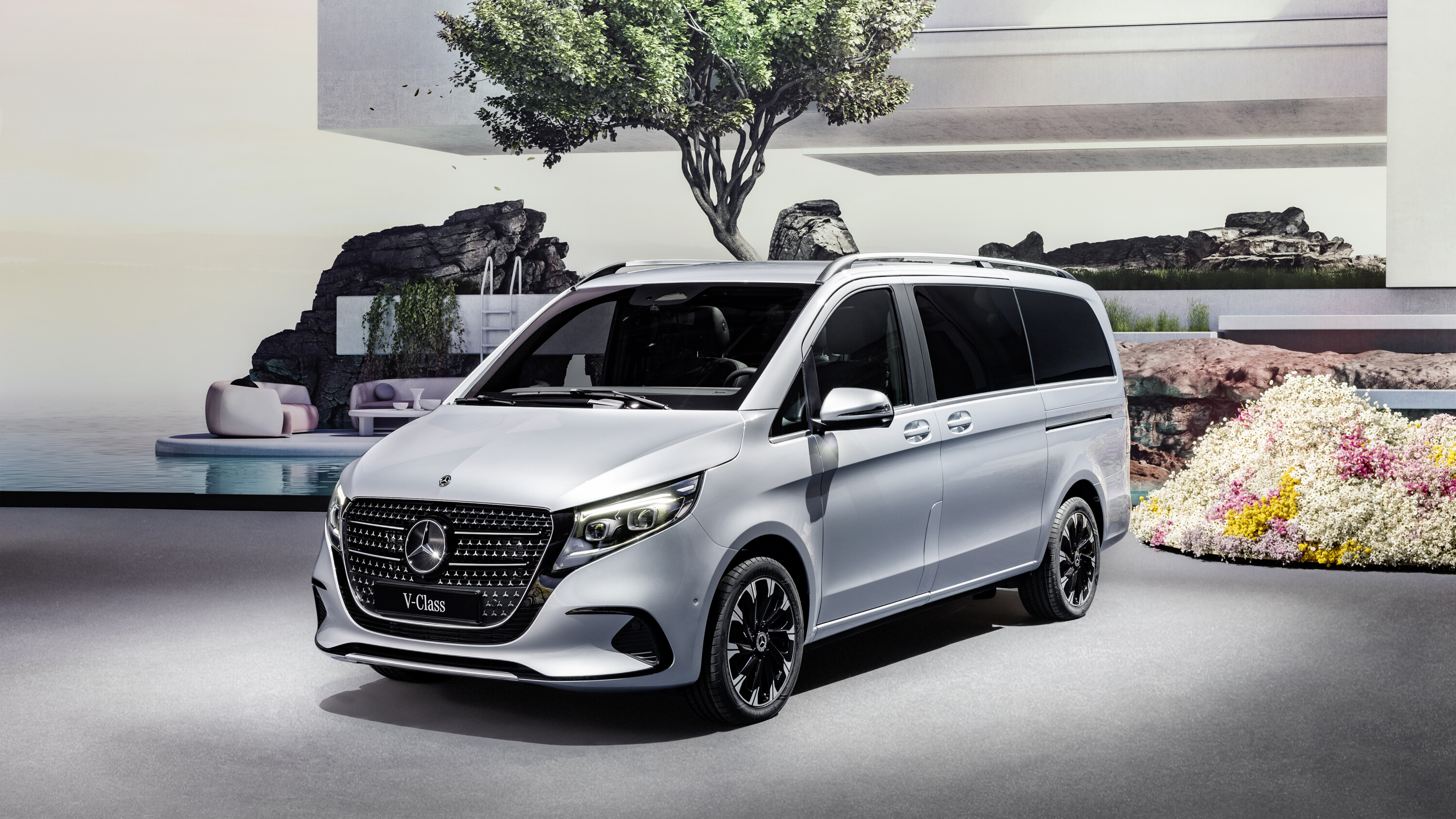
By 2017, 90 per cent of the German carmaker’s customers started their purchases online by researching which model they were interested in. But at that point in time there was no online purchasing in Australia at all.
The need to be able to compete online; together with the prolific discounting going on and resulting decline in profit; need to lower costs; and to combat “disruptors” were, the court heard, behind the company’s desire to switch from the dealer model to the agency model locally.
In this context, the term “disruptors” refers to external market forces which were impacting the firm’s operations. These include impending electrification, shared mobility, increased digitisation, and high-tech players implementing new models at a rapid pace.
1
But the presiding judge, Justice Jonathan Beach, said he wasn’t convinced the threat from the disruptors was so immediate that Mercedes needed to go down the agency model route.
“I understand the discounting point. And of course, the debate is what the cause of the discounting was – highly ambitious targets – but it just seems to me on the material that this idea of disruptors, cyberspace, is blown right out of proportion,” he said.
“Certainly over the next five to 10 years it might have some significance, but it just seemed … yes, there was a problem and people were watching it, but it hardly justified the radical approach of model D [the agency model option].”
1
“[There were] concerns that dealer profitability was declining across the network… [It was a] current and prevailing concern … the fact that dealers were not meeting – or struggling to meet – targets,” Mr Craig responded.
“[The agency model] was presented to dealers in 2018, [dealers] recognised it was a genuine risk. You have got an increase in online presence, which means you have to do something and have to be aware of the threat. Businesses that stand still are the businesses that die, that don’t succeed.
“An online offering has got to engage with declining profitability, aggressive discounting, increasing over the horizon demand for online sales and the consequences of an increasingly savvy internet community.”
1
Unsatisfied, Justice Beach asked why one of the other three models couldn’t have been used in the interim while Mercedes and the dealers hashed out an agreement both sides were happy with.
“[None] of those would solve the profitability or the discounting problem…disruptors have the ability to compete as well, and that’s the point. Once you have got [the agency model] you eliminate their ability to compete,” replied Mr Craig.
“The threat was escalating. They are all linked together, joined by the common need to deal with the emergence of online sales and the obvious ramifications for the future operation of the business, accelerated by the problems in Australia, declining profitability, aggressive discounting and the like.
1
“Where we’re at in this case is really a disagreement as to the solution”
“[Dealers] agreed that retail profitability is going down, agreed it was a significant concern, agreed that there was a discounting culture and that was having an effect on profitability and aggression in the sales process was having a bad effect. Where we’re at in this case is really a disagreement as to the solution”, Mr Craig concluded.
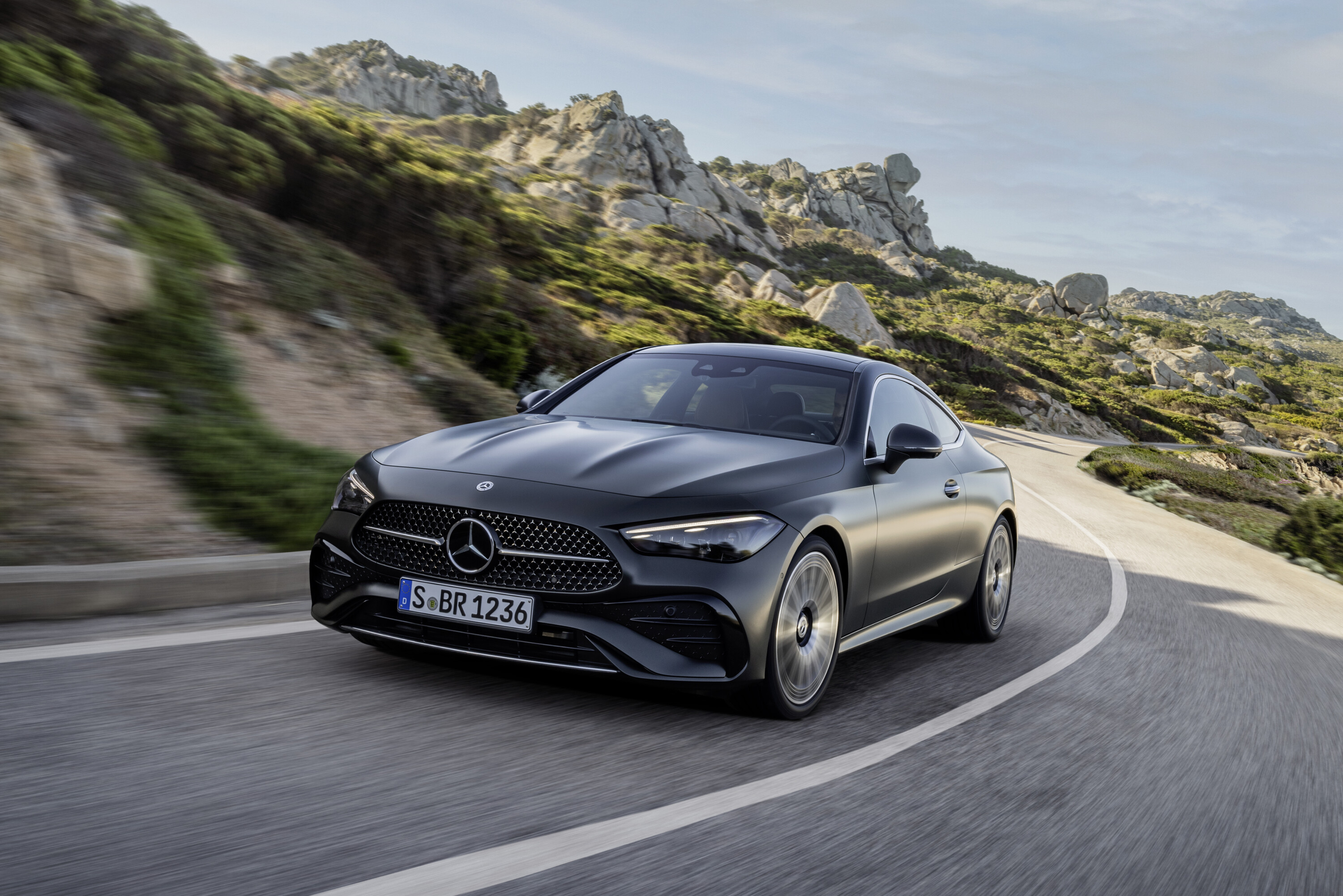
Mercedes-Benz is Australia’s top-selling luxury brand, yet sales have been steadily dropping over the last five years as the German giant adjusts its local sales strategy.
In 2017, Mercedes-Benz Cars (the Vans division has yet to be moved over to the agency model) sold 37,068 vehicles with sales up 3.1 per cent, by 2020 that number had fallen to 29,455 and down 7.9 per cent, while last year – the first full year of the model being in effect – it sold 26,801 cars and was down 5.5 per cent.
Mercedes has been moving away from measuring success by the volume of cars sold, instead focusing on higher equipment levels – even for base cars – in concert with price rises for greater profit per unit. In response to the verdict, Mercedes-Benz made the following statement: “We welcome the court’s decision. Our focus continues to be on delivering luxury, high performance cars for our valued customers around Australia.”
MORE
Wheels Industry
More guides to help you choose the best car & tyres for your needs
- All tyre news & reviews
- Longest warranties & capped-price servicing period
- Buy new or used?
- Best cars for your teenager
- Must-have features for new drivers
- Active safety tech explained
- Australian road rules explained
- Does driving slower save fuel?
- Does my car need the pricier fuel?
- Help, I’ve used the wrong fuel!
- What is a hybrid car?
- How long do tyres last?
- What shoes should I wear to drive?
- What to do after buying a new car
- How much does LCT add to a car’s price?
- The ‘check engine’ light just came on…
- Is it illegal to drive too slowly in Oz?
- FWD v RWD v AWD – which is safer?
- How much can my large SUV tow?
2024 Tesla Model 3 officially unveiled!
Well, that was fast. Hours after images leaked, Tesla has finally revealed the Model 3 facelift – with orders open now.
Our story continues unchanged below – check out whether the rumour mills were true!
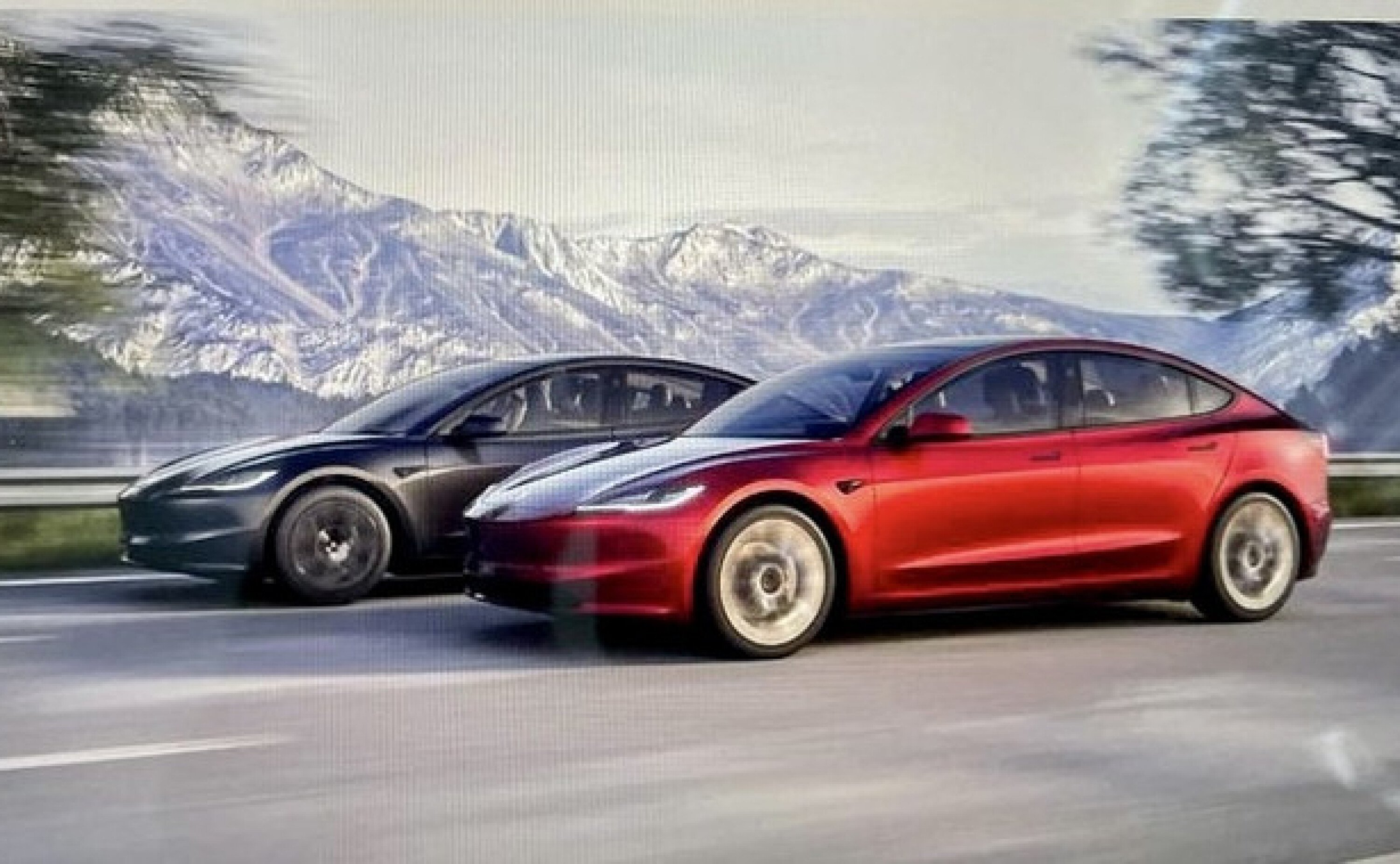
Reports are intensifying around an imminent launch for the facelifted 2024 Tesla Model 3 electric sedan. Here’s everything we know so far and what we could expect.
Snapshot
- Project u2018Highlandu2019 2024 Model 3 may launch within weeks
- New longer range, faster charging LFP battery on all variants
- Expect minor additions and changes, focus on cost-cutting
It might have been only less than a year since the first Reuters report surfaced the rumour that the popular Tesla electric car would receive another major update, internally labelled project ‘Highland’.
The Model 3 is now six years old. It launched in Australia in 2019 and – besides continuous ‘running changes’ – received a major update in 2021.
Its price has also fluctuated over the years as the choice of electric vehicle models grew from new entrants, such as the budget-friendly BYD Dolphin electric hatch, related Tesla Model Y SUV twin, and Polestar 2 liftback rival.
Most reports, public sightings and leaks have indicated that the 2024 refresh could bring a fresher design, new tech and longer range. Here’s what we know so far.
Information in this story is based on unofficial rumours, spy shots and some speculation. Tesla has not officially announced plans for a 2024 Model 3 update.
JUMP AHEAD
- ?️ When will it launch?
- ? How much will it cost?
- ? Will it provide more driving range?
- ? Will it look different?
- ? What new features will it bring?
- ? What about the other Teslas?
- ? Is it time to make the electric switch?
1
?️ When will it launch?
Reports have been mixed on specific timings, but expect the 2024 Tesla Model 3 refresh to debut this month.
Bloomberg [↗] suggested Tesla’s Shanghai factory – which makes the Model 3 sedan and Model Y SUV twins for Australia – will start mass production of the new facelift at the end of September, alongside customer deliveries in China.
This would support Reuters’s [↗] original reporting that project ‘Highland’ would begin production in the third quarter of 2023 (July to September inclusive), after the Chinese factory purportedly underwent upgrades earlier this year.
Tesla leaker Chris Zheng [↗] also claims the Shanghai plant has already shifted to full 2024 Model 3 production, with 7000 units targeted in August and ramping up to 10,000 in September.
Additionally, Chinese state media [via CnEVPost ↗] has reported some Tesla showrooms in the country have already started accepting reservations for the facelifted Model 3, as it offers subsidies and price cuts to clear stock of the current model.
With the current 2023 Tesla Model 3 price at its lowest point yet and estimated delivery dates for the flagship Performance variant slipping later in Australia, these could all be hints of the impending facelift.
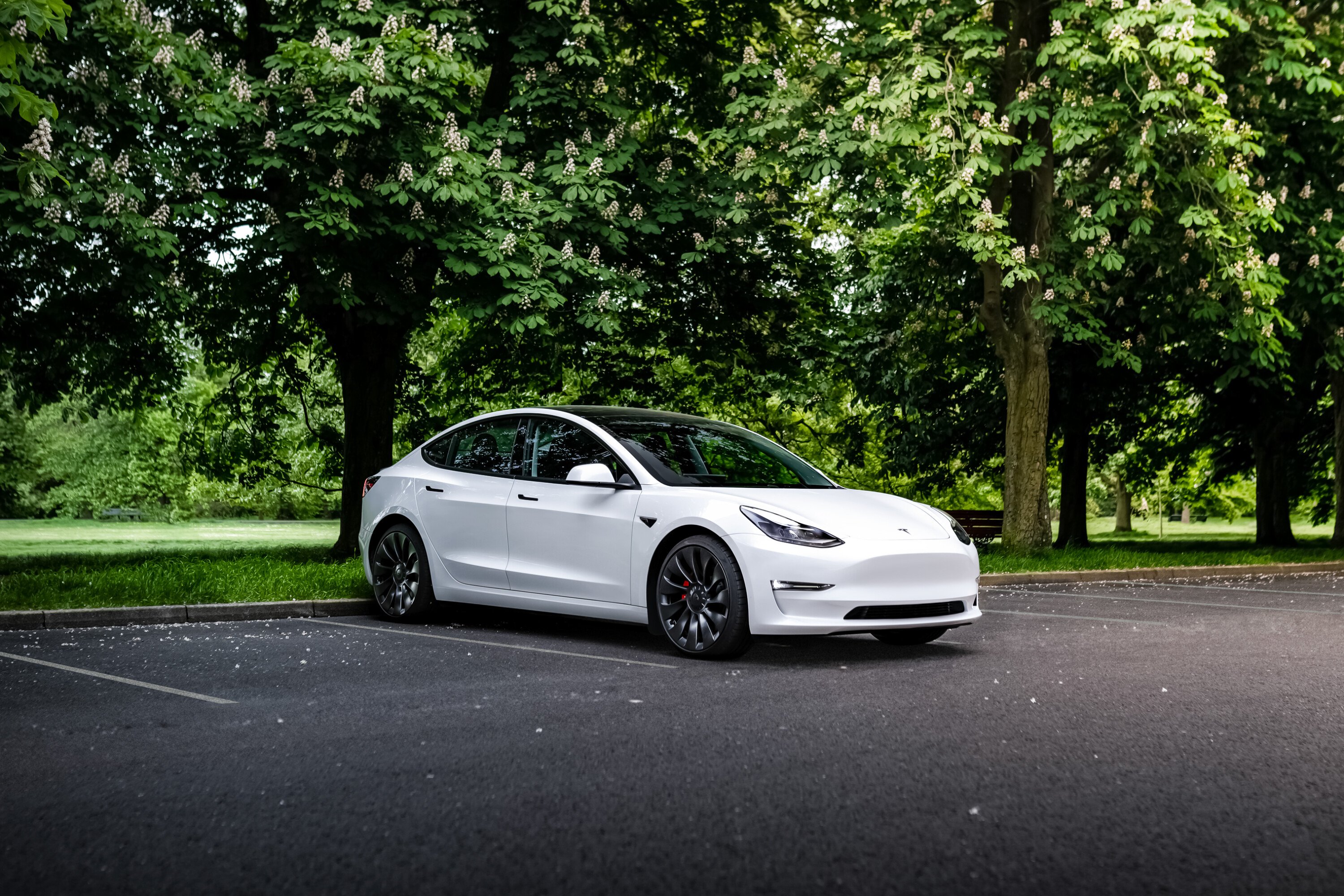
1
? How much will it cost?
There haven’t been any rumours of how much the 2024 Tesla Model 3 facelift will cost – and it’s uncertain whether it’ll be cheaper or pricier.
While traditional new model updates usually carry a price premium, the electric sedan was updated with new features and bigger batteries in 2021 – yet received a price cut of between $7000 to $11,100 and catalysed a sales boost globally.
As at the time of publication, the current 2023 Model 3 is priced from $57,400 before on-road costs in Australia (lowest point), whereas in July 2020, it spiked to start from $73,900 before on-roads (highest point).
As per Tesla style, it continues to make ‘running changes’ to its vehicles without notice, improves manufacturing processes and vertically integrates its supply chain to cut costs.
The American carmaker claimed earlier this year that it has already reduced manufacturing costs of existing Model 3 sedan and Model Y SUV by 30 per cent between 2018 to 2022.
According to Not a Tesla App [↗], the minor update will, unsurprisingly, focus on cost-cutting in areas to potentially reduce the asking price further – to separate itself from the Hyundai Ioniq 6, Polestar 2, and upcoming BYD Seal.
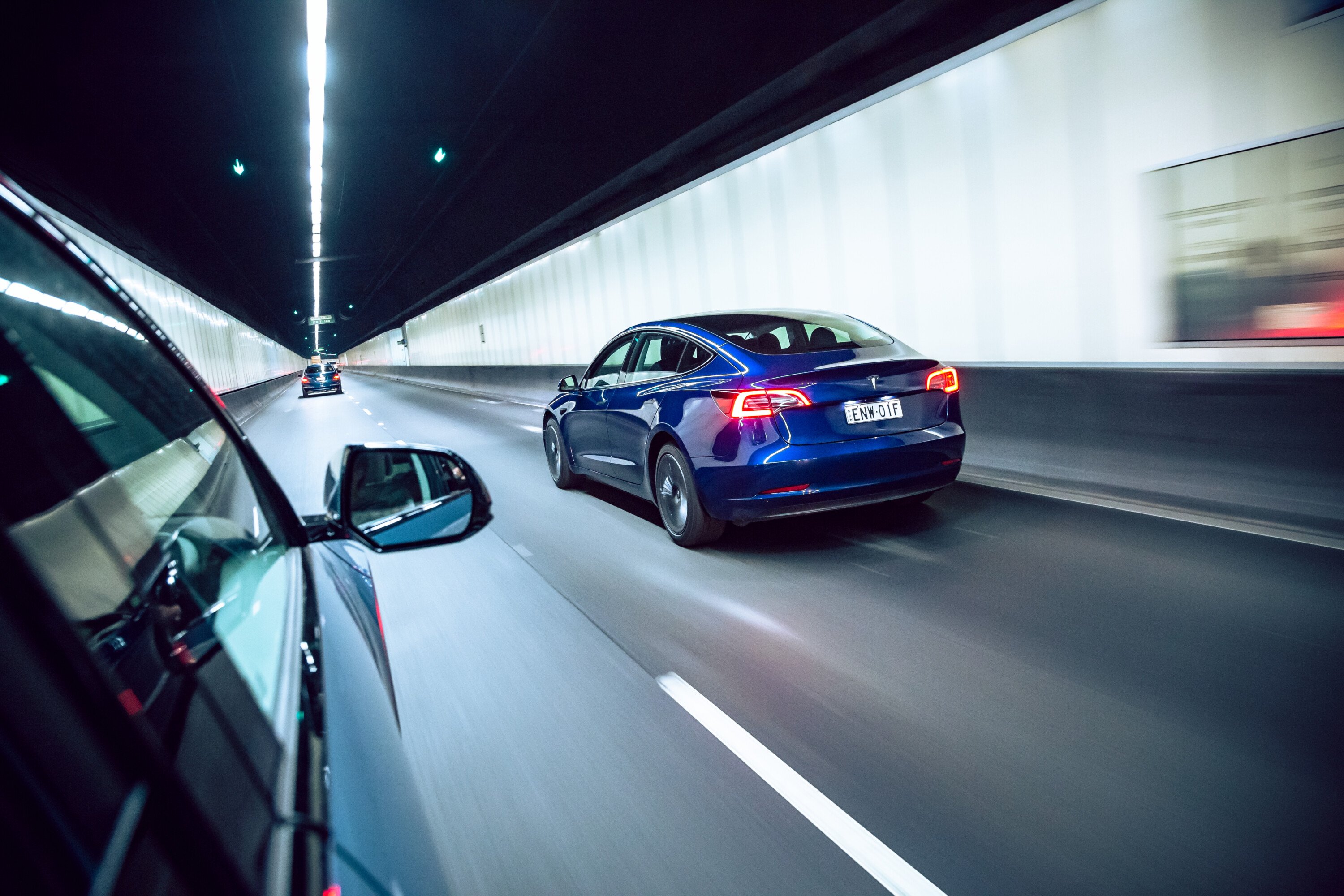
1
? Will it provide more driving range?
Yes, the new 2024 Tesla Model 3 is expected to feature larger, faster-charging lithium-iron-phosphate (LFP) batteries across the line-up.
Chinese battery manufacturer Contemporary Amperex Technology Co. Limited (CATL) – which already supplies made-in-China Model 3s – recently announced an all-new ‘Shenxing’ LFP battery, which claims to provide up to 700 kilometres of driving range on a full charge.
The company claims it has addressed key weaknesses of LFP cathodes – energy density, typically slower charging speeds, and sensitivity to low temperatures.
It suggests 10 minutes on a compatible station can recharge the pack from empty to 80 per cent and provide 400 kilometres of range.
The new LFP battery (curiously and previously codenamed ‘M3P’) will go into production by the end of this year, coinciding with the rumoured 2024 Model 3 facelift.
Corroborating this, Chinese state media [via CnEVPost ↗] have indicated the base Model 3 ‘standard range’ rear-wheel drive (RWD) will get this new CATL LFP battery – with the pack to grow the current 60kWh to a 66kWh (gross) pack and provide slightly more range.
Additionally, the ‘long range’ battery Model 3 Long Range and Performance will transition from the current nickel-manganese-cobalt (NMC) lithium-ion units to the new thermally safer and longer lasting CATL LFP battery.
The headline-grabbing 700km claim is possible for the Long Range to better compete with the aerodynamic Hyundai Ioniq 6 Dynamiq (614km WLTP claim) and facelifted Polestar 2 Long Range Single Motor (654km WLTP claim).
| Current 2023 Tesla Model 3 battery and charging specs (*according to EV Database) | |||
|---|---|---|---|
| RWD | Long Range | Performance | |
| Claimed WLTP driving range | 491km | 602km | 547km |
| Claimed WLTP energy efficiency | 11.7kWh/100km | 12.5kWh/100km | 13.7kWh/100km |
| Usable battery size | 57.5kWh* | 75kWh* | 75kWh* |
| Battery cathode type | LFP | NMC | NMC |
| Max AC / DC charging speeds | 11kW / 170kW | 11kW / 250kW | 11kW / 250kW |
| Recommended charging limit | 100% | 90% | 90% |
4
? Will it look different?
While the current Tesla Model 3 looks subjectively ambiguous – aimed at maximising efficiency and range – the facelift should bring a fresher exterior design.
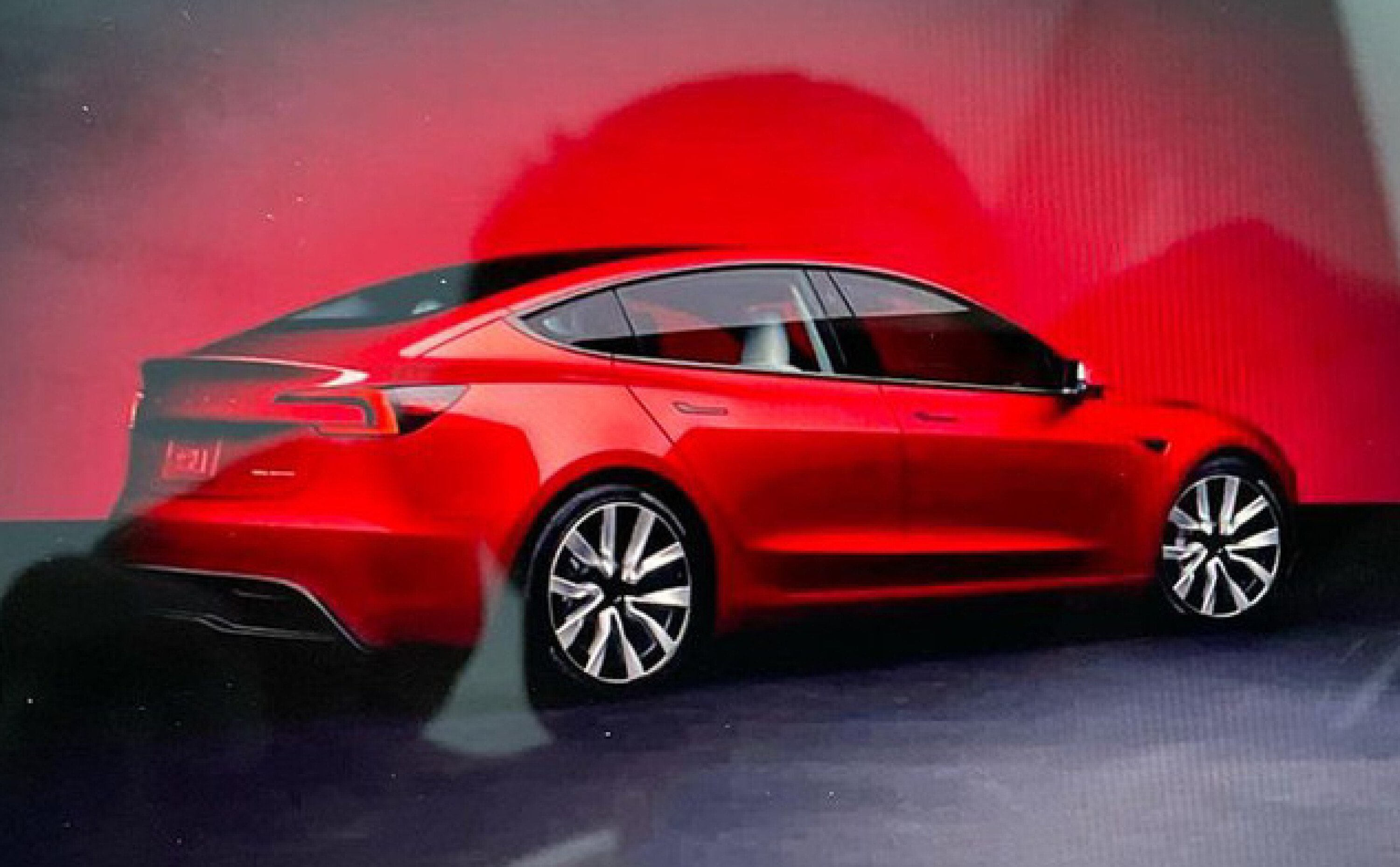
New leaked images from what appears to be Tesla’s press kit sent in China – but shared by CocheSpias [↗] – plus public sightings indicate styling traits in line with the unreleased all-new Tesla Roadster and facelifted Model S and Model X large EVs overseas.
This includes; slimmer and wider headlights, C-shaped tail-lights complemented by a ‘Tesla’ lettering badge, a smoother front bumper, removal of the front fog light on Long Range and Performance variants, a Model Y-esque rear bumper, redesigned alloy wheels, and new aero covers on the base RWD.
Inside, the standard wood dashboard and door trims may be replaced with a new fabric or suede material on the new 2024 Model 3 – similar to the photographed Cybertruck prototype.
Reuters originally reported that it would gain an even “less complex” interior (which is already quite minimal).
However, don’t expect a major design overhaul. Tesla’s design head, Franz von Holzhausen, told the Ride the Lightning podcast [↗] earlier this year: “There are things that we’re always looking at… we haven’t seen a need or a demand for a change. So, ‘don’t fix it if it isn’t broke’ – that’s kind of the mentality.”
‘Don’t fix it if it isn’t broke’ – that’s kind of the mentality.
1
? What new features will it bring?
Expect minor new features and improvements to the 2024 Tesla Model 3 refresh – similar to the 2021 update, which introduced matte black trim, a redesigned centre console, heat pump, and an electric tailgate.
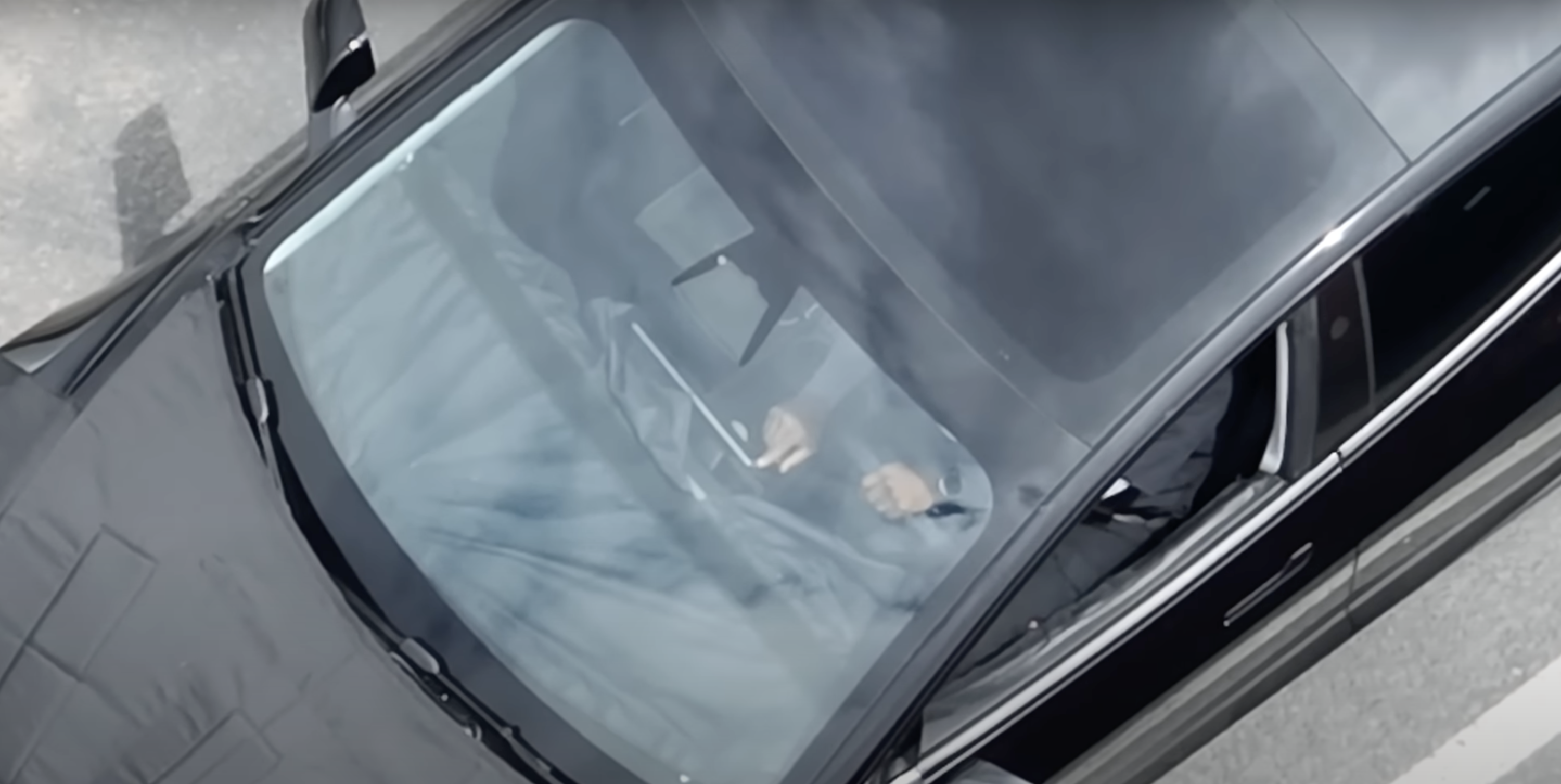
Most notably, drone footage from YouTuber Caliber197 [↗] in May revealed Tesla tested the use of the central touchscreen for changing drive direction and a revised round steering wheel design.
This would follow the facelifted 2022 Model S and Model X large EVs overseas, which debuted an ‘Auto Shift’ feature that suggested going into drive or reverse depending on what the all-around exterior cameras see. Otherwise, the driver would need to swipe on the edge of the touchscreen or use the backup touch-sensitive buttons at the centre console.
It also controversially removed the steering wheel column stalks, and moved the turn indicators and horn as touch-sensitive wheel buttons with haptic feedback.
We could also see improved touchscreen hardware in line with the updated Model S, Model X and photographed Cybertruck prototype – but it appears to still retain the same 15-inch display size.
Unverified spy photos have also depicted a protrusion on the dash in front of the driver, which could hint at the inclusion (finally) of a dedicated instrument display, a head-up display unit projecting onto the windscreen, or it could simply be a test measuring device.
Furthermore, expect Hardware 4.0 with upgraded higher-resolution cameras, which is currently rolling out on current Model 3s and Ys overseas. While rumours have suggested the reintroduction of radar sensors, the carmaker seems committed to its camera-only ‘Tesla Vision’ safety assistance systems.
Sightings of camouflaged examples seemingly hide a front bumper-mounted camera (similar to the Cybertruck electric ute prototype) to better detect low-lying objects due to the omission of ultrasonic parking sensors.
Not a Tesla App [↗] has purported that the two fender-mounted rear-facing cameras on each side will be joined by front-facing units, the removal of the external temperature sensor, and a more accurate Global Positioning System (GPS).
Tesla CEO Elon Musk has also vowed to bring vehicle-to-grid (V2G) bidirectional charging capability by 2025.
1
? What about the other Teslas?
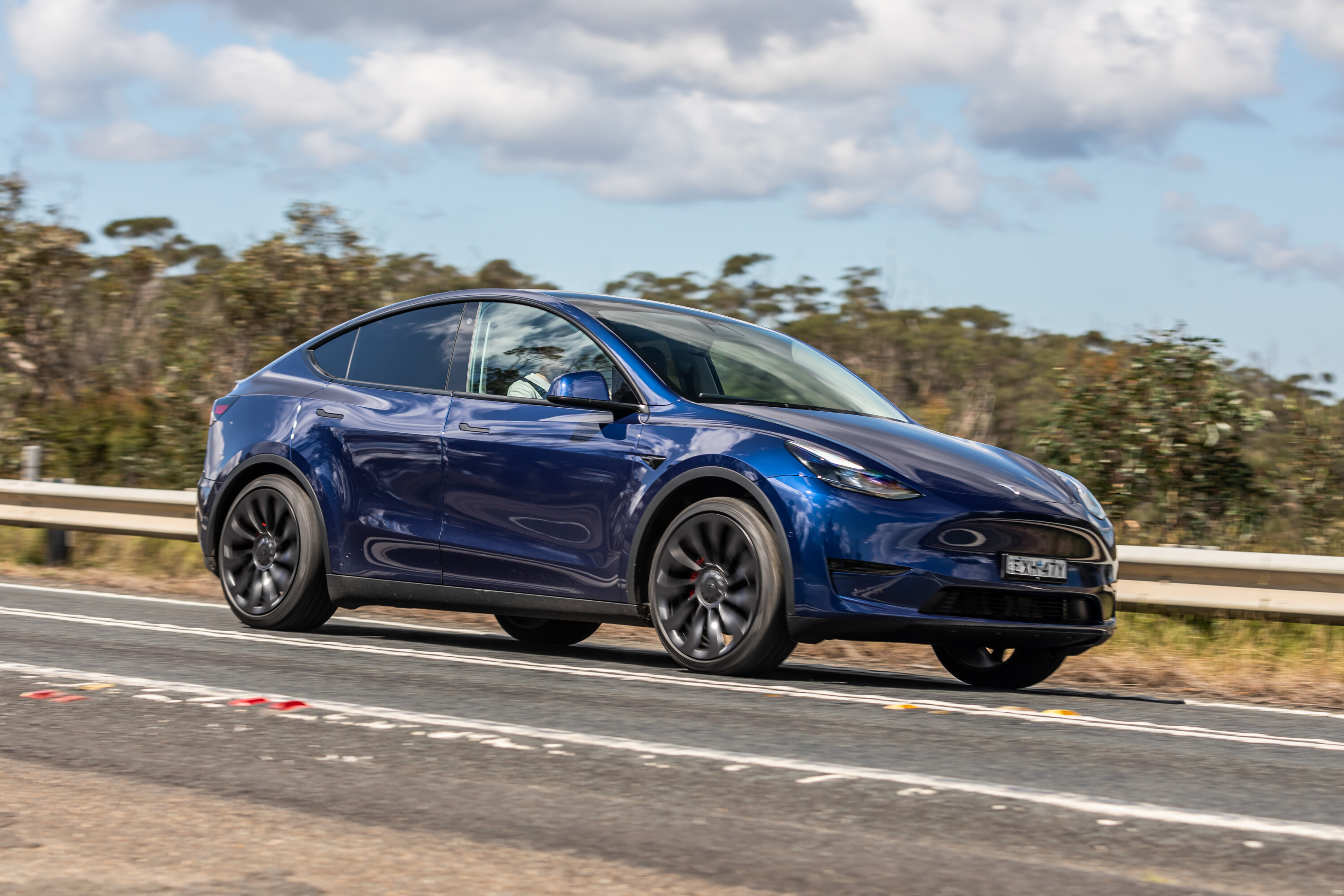
The project ‘Highland’ 2024 Model 3 refresh will likely be the next ‘new’ Tesla introduced in Australia, as doubt continues to cloud other models.
The related and top-selling Tesla Model Y electric SUV will reportedly receive a similar facelift a year later in 2024.
The American carmaker has already confirmed the facelifted large Model S liftback and Model X SUV won’t come to Australia since they will not be produced in right-hand drive. It has already refunded reservations to potential customers globally.
Meanwhile, the futuristic-looking Tesla Cybertruck electric ute is readying for a launch later this year or in 2024, but only in North America first and Australians can no longer pay a reservation.
The low-volume second-generation Tesla Roadster electric coupe continues to be delayed, while a Tesla van, people mover, passenger bus and light-duty truck are all confirmed to be in the pipeline.
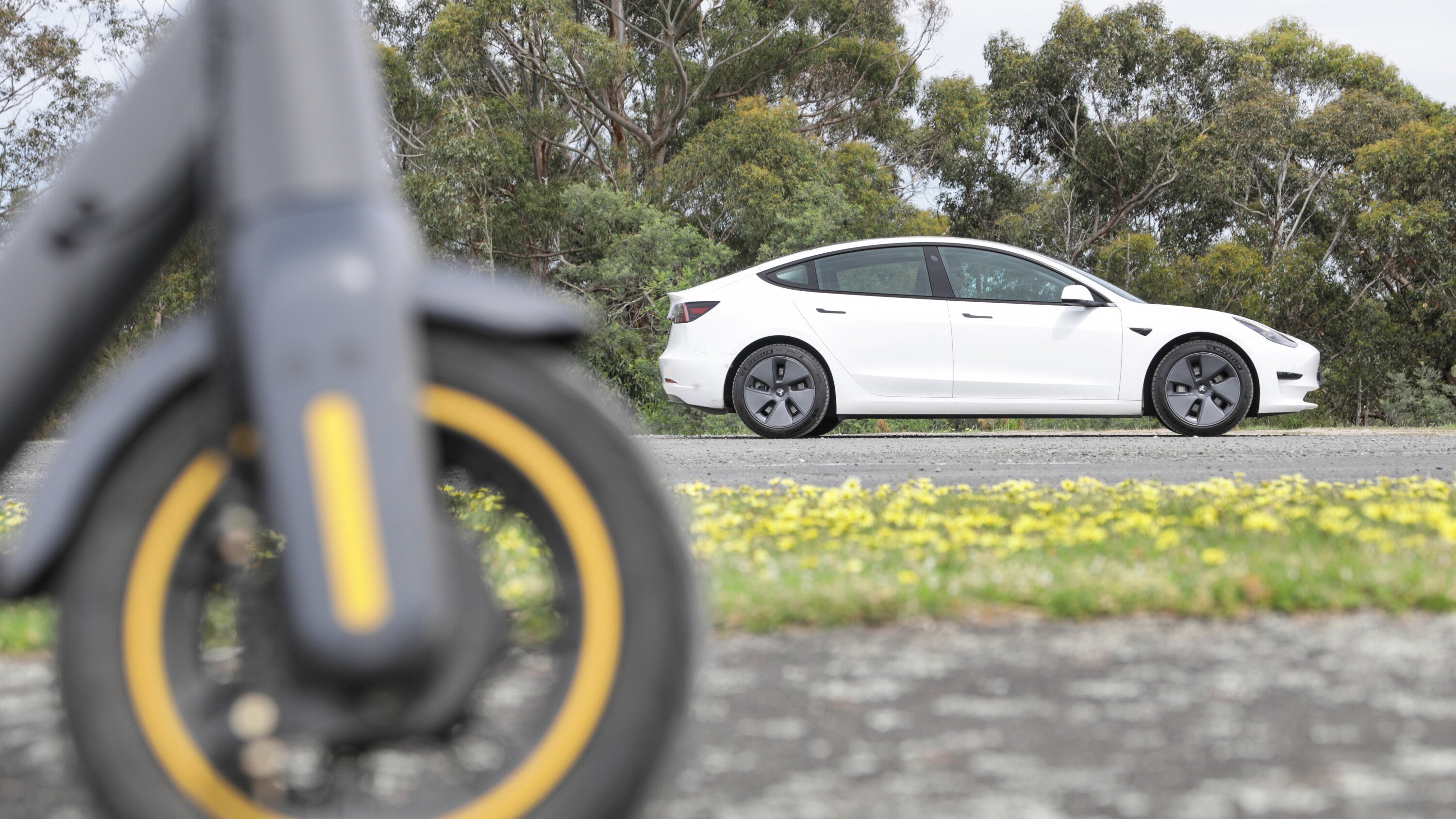
Importantly, for Australians wanting the cut-price BYD Dolphin and MG 4-rivalling entry-level ‘Tesla Model 2’, we’ll likely need to wait some time – if and when it lands.
1
? Is it time to make the electric switch?
Understandably, there’s hesitancy and fear in making the switch away from traditional and familiar combustion petrol- and diesel-engined vehicles.
For everything you need to know about electric cars, check out our comprehensive guides below.
More EV stories to help you choose the best car for your needs
- ? EV news, reviews, advice & guides
- ❓ Short & sweet: Your EV questions answered
- ⚡ New EVs: Everything coming to Australia
- ? Australia’s EVs with the longest driving range
- ⚖️ Best-value EVs by driving range
- ? How much do EVs cost in Australia?
- ? How much more expensive are EVs?
- ⚖️ Number crunching: Is it time to switch to an EV?
- ♻ Should you buy a used EV?
- ?️ Are EVs more expensive to insure?
- ? Costs compared: Charging an EV vs fueling a car
- ? EV charging guide
- ? Are there enough EV chargers in Oz?
- ?? EV servicing explained
- ? EV battery types explained
- ? When do EV batteries need replacing?
- ? Hydrogen v EVs: What’s best for Oz?
- ✋? Mind your manners! EV charging etiquette tips
- ? How sustainable are EVs, really?
MORE advice stories to help you with buying and owning a car
MORE
Everything Tesla
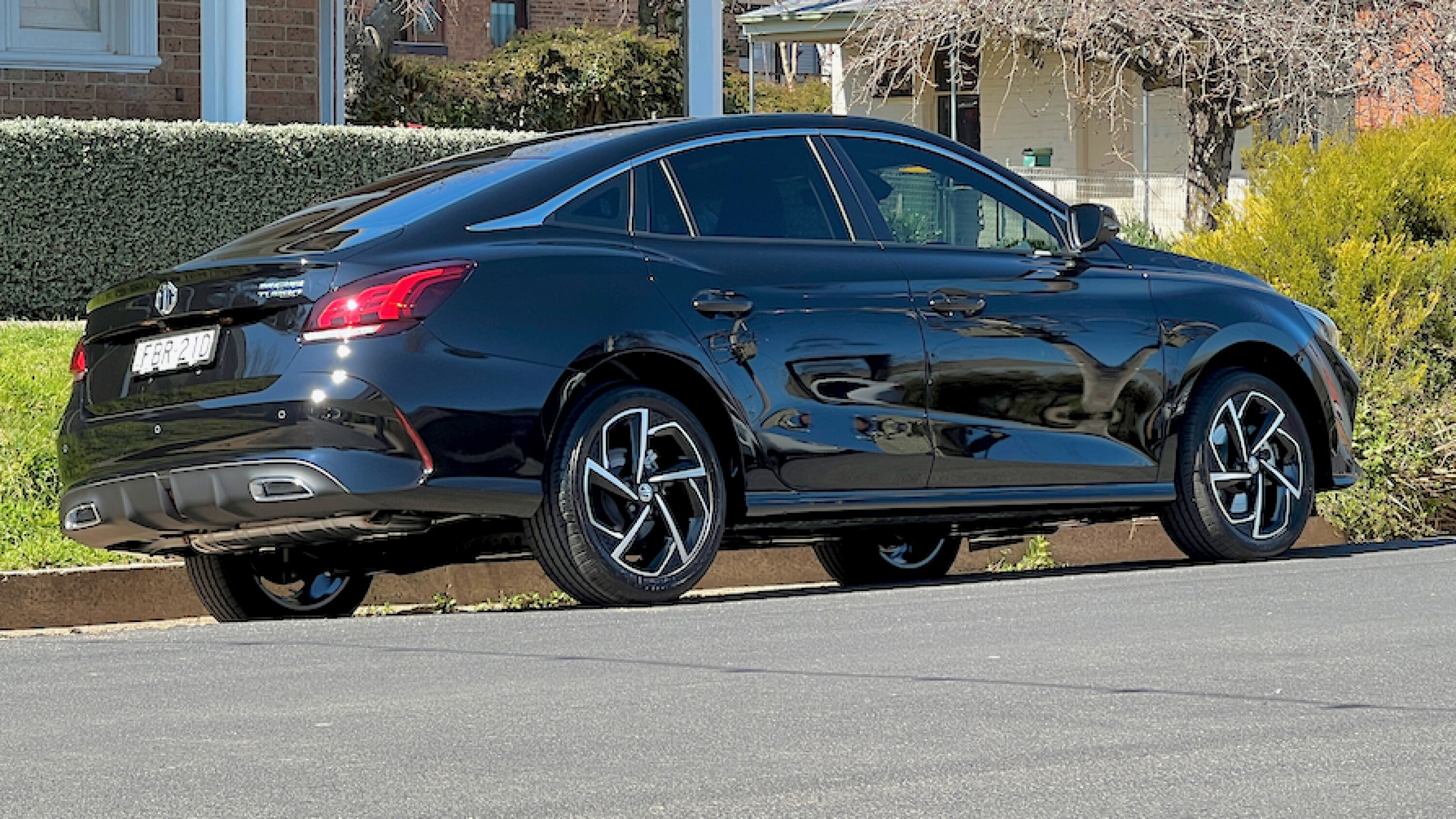
MG has just launched Australia’s cheapest sedan. The MG5 is cheap for a reason, though, because it’s behind the best in class when it comes to safety technology.
That means there’s no five-star ANCAP rating, and nor will there be. If tested, it’d likely score three stars.
But no ‘advanced’ tech also means there is no unending frustration caused by well-meaning systems getting things wrong.
So, is it a cheap car? Or is it a value-for-money bargain for those who don’t need or want electronic nannies ruining their driving experience? Let’s run through it. Oh, and a big thanks to my mates at MG Orange [↗] for teeing this up.
1
JUMP AHEAD
Pricing and features
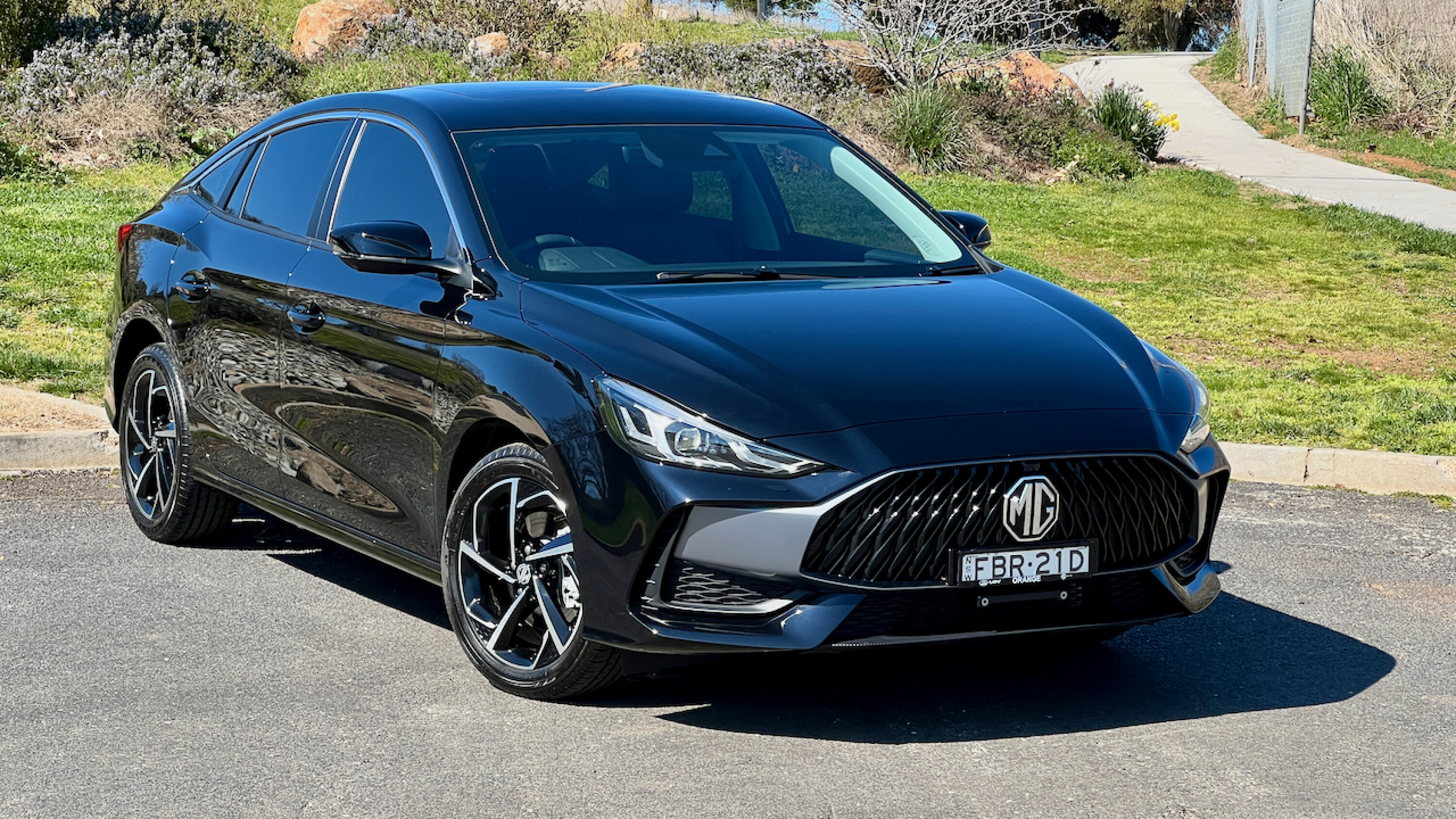
The MG5 Essence was the version I tested, and it’s the flashier flagship that still comes in under thirty grand.
In fact, the turbocharged hero version is $28,990 drive-away, and the only extra you can choose is metallic paint, which adds $700. There are four metallic and two no-cost solid options.
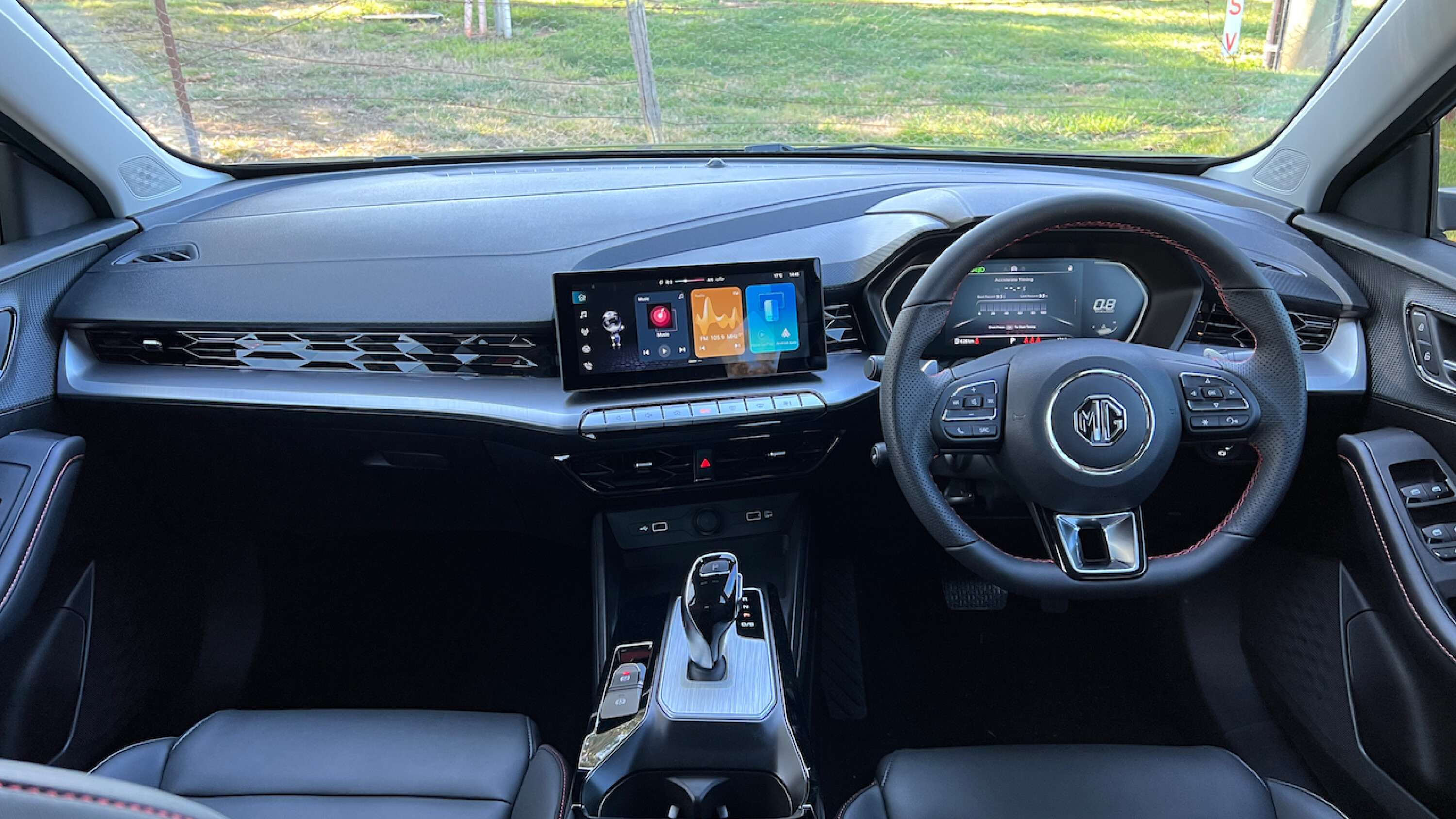
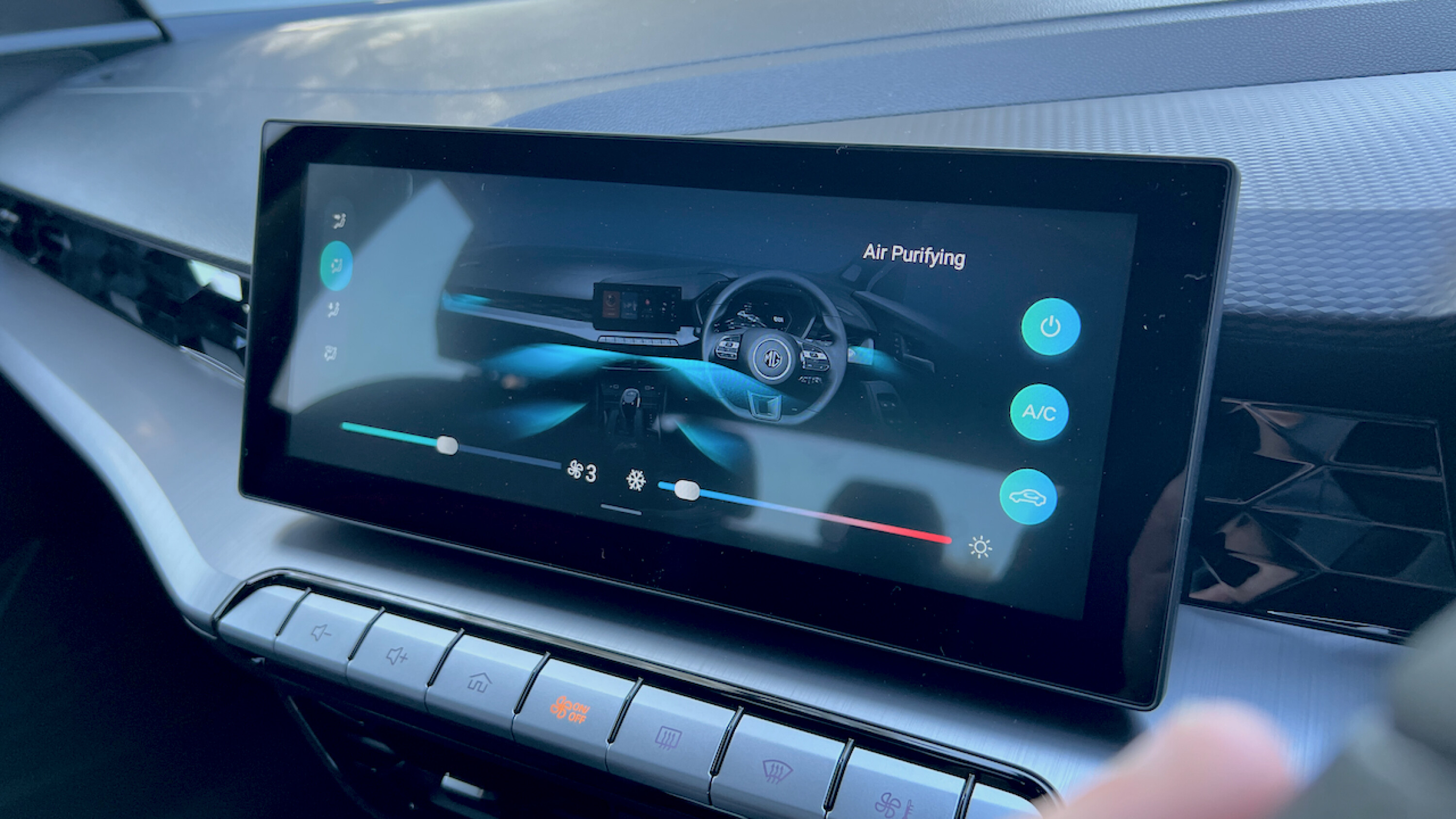
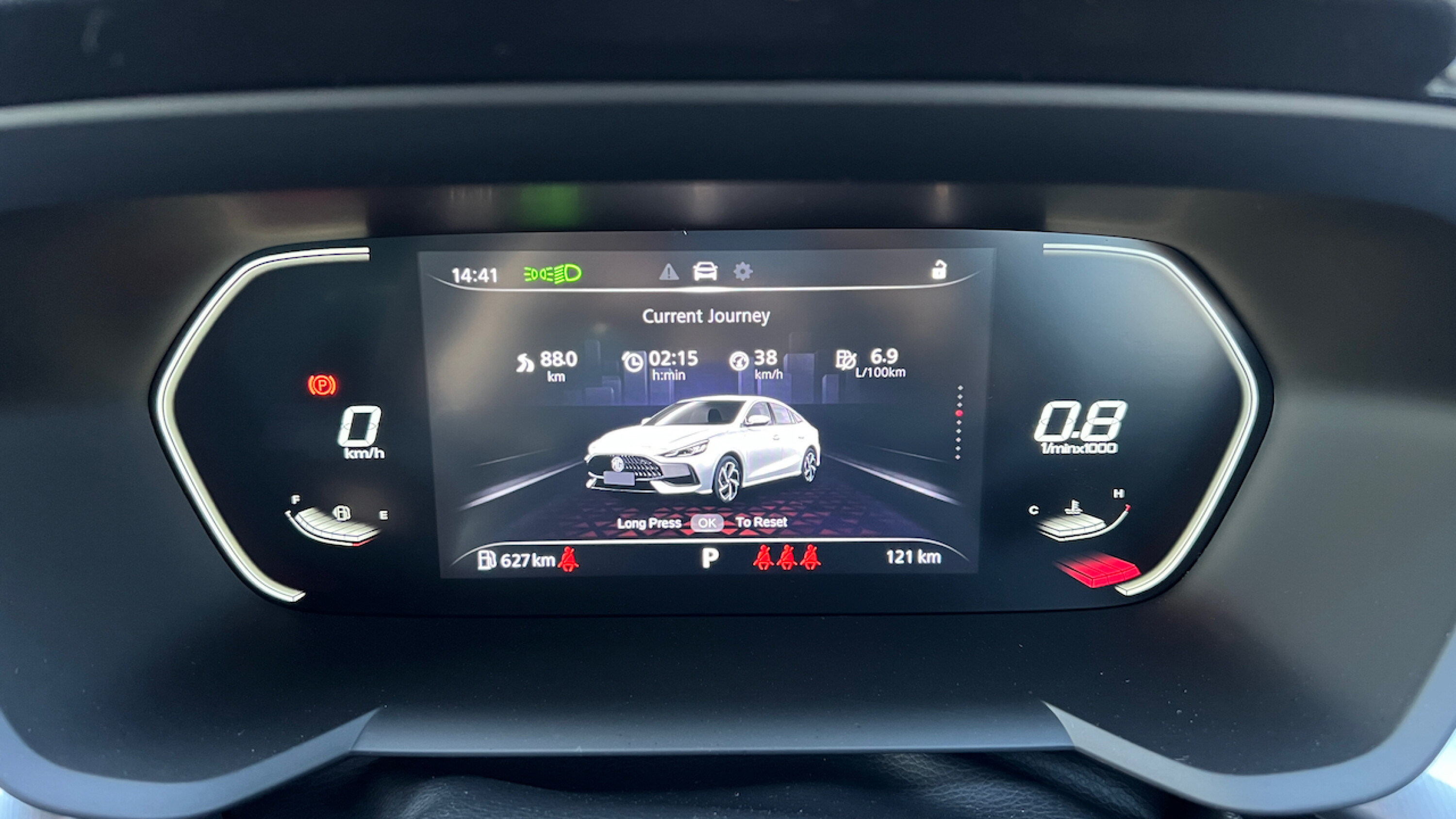
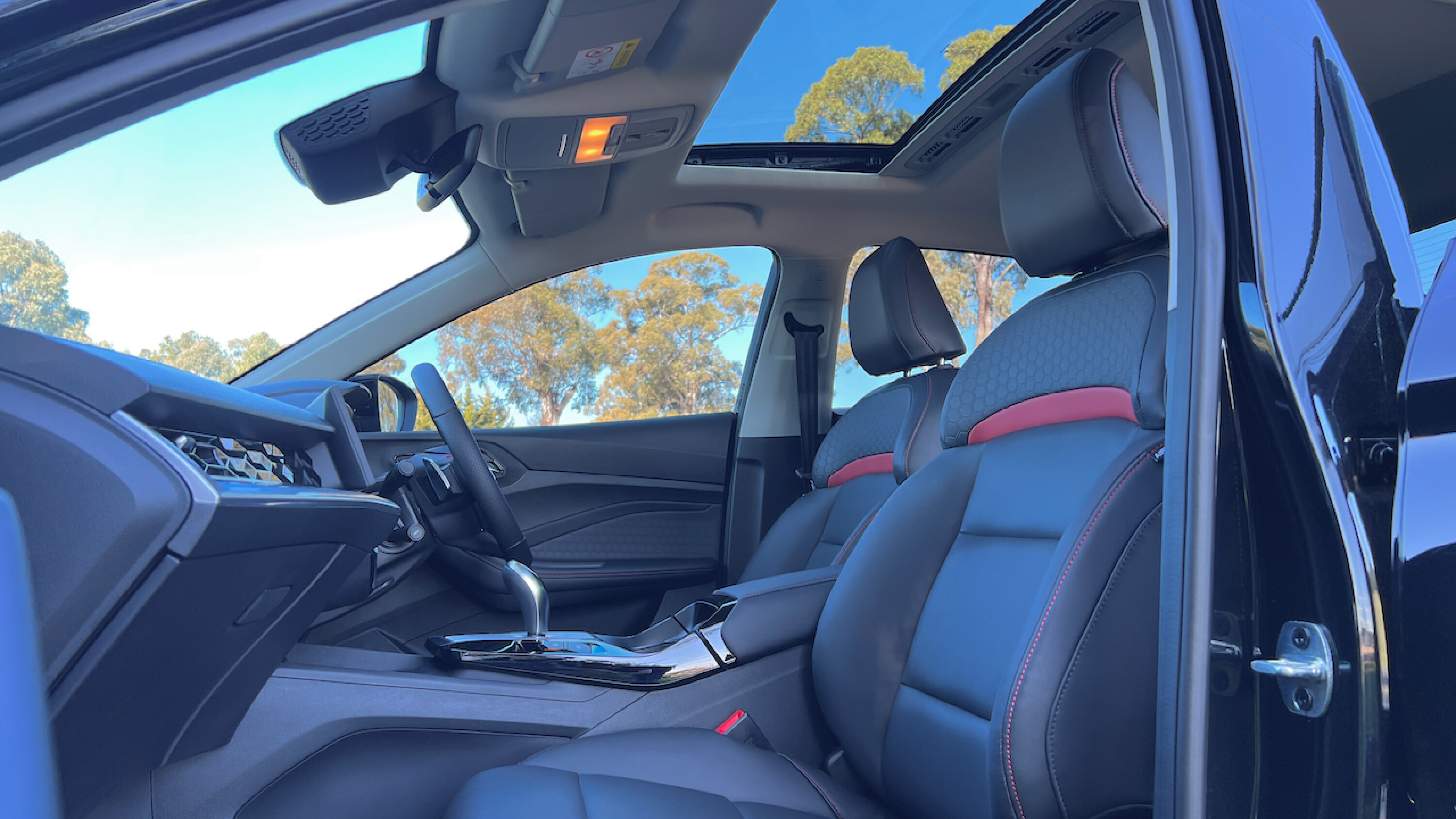
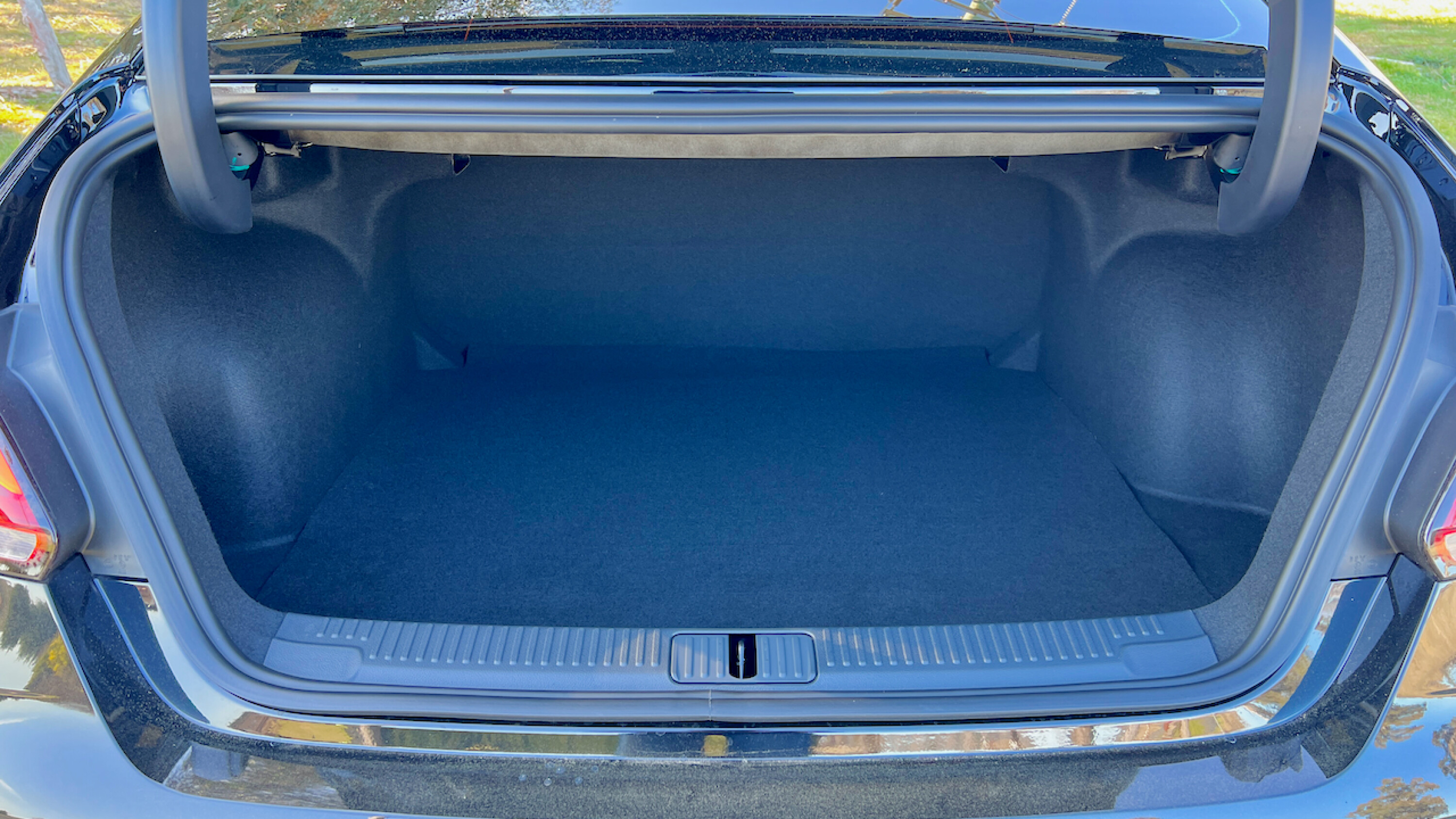
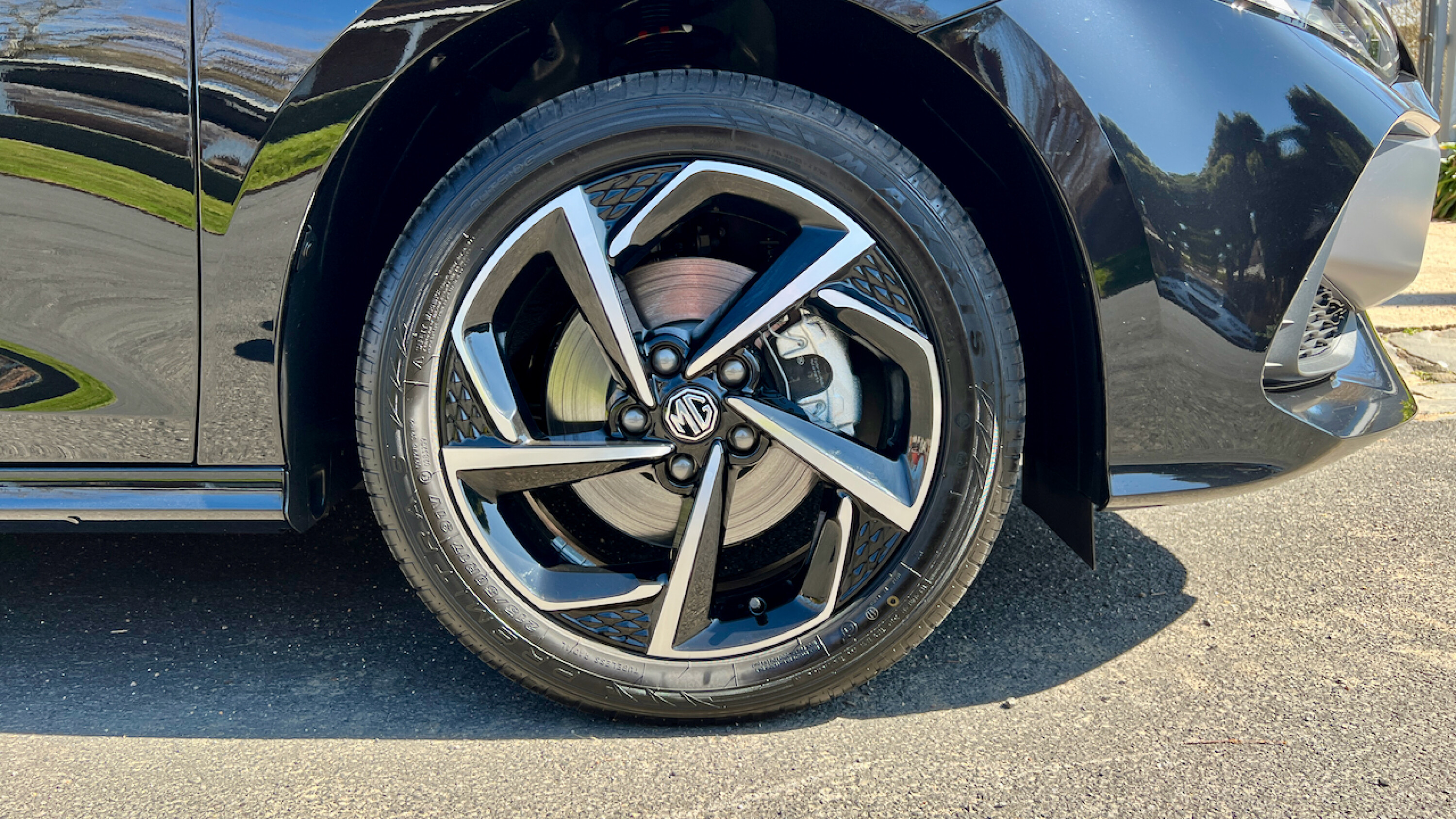
Being the top-spec it has the most equipment, including 17-inch alloy wheels, LED exterior lighting including headlights, daytime running lights and brake lights, a surround-view 360-degree camera system with 3D view, leather-trimmed steering wheel with paddle shifters, faux-leather interior trim with red stitching, a tilt-and-slide sunroof, and more.
1
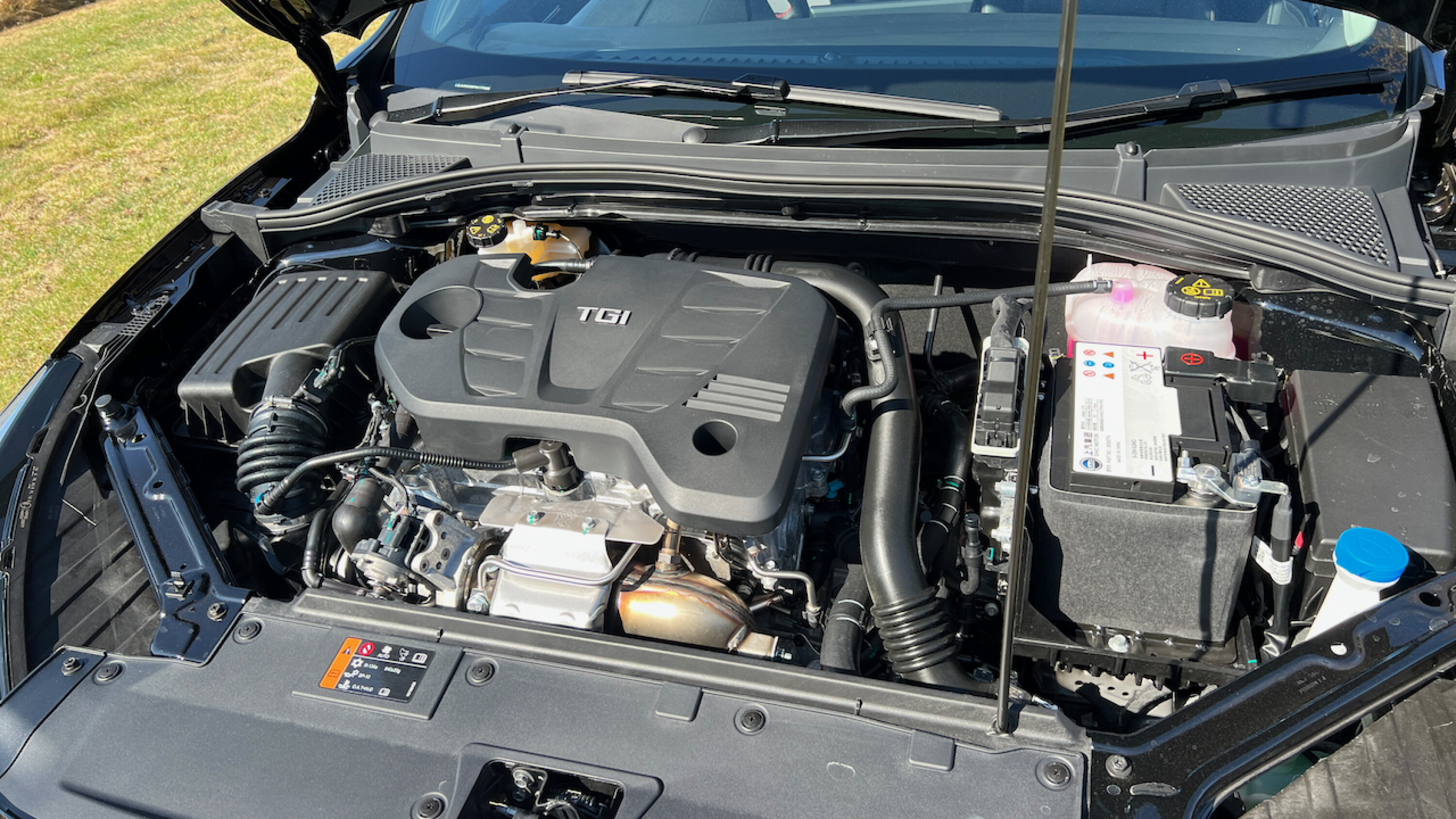
The Essence runs a far punchier 1.5-litre turbo four, with 119kW and 250Nm, paired to a seven-speed dual-clutch auto.
However, even the lower grade Vibe model ($4000 cheaper) has 16-inch alloys, LED lights, keyless entry and push-button start, a 10-inch touchscreen media system with Apple CarPlay and Android Auto, imitation leather interior trim, digital instrumentation for the driver, electronic park brake, three steering modes (Urban, Normal and Dynamic), a reversing camera, rear parking sensors, a space-saver spare wheel and tyre pressure monitoring.
The biggest difference between Vibe and Essence is under the bonnet, with the former running a naturally aspirated 1.5-litre four-cylinder with a meagre 84kW and 150Nm, apparently robbed of any joy by an unlovable CVT auto. I didn’t get a chance to drive it, but I’m kinda okay with that.
1
The Essence runs a far punchier 1.5-litre turbo four, with 119kW and 250Nm, paired to a seven-speed dual-clutch auto.
There’s a seven-year/unlimited-kilometre warranty plan for private buyers (160,000km for commercial users), with the same cover for roadside assist if you maintain it within the MG dealer network.
Service intervals are 12 months/10,000km, which is a bit needy, but there’s a capped-price maintenance plan for the first seven years or 70,000km which averages out to $395 per visit for Essence or $380 for the Vibe.
1
Safety
Make what you will of MG’s decision to launch a car like this in the latter part of 2023 with autonomous emergency braking (or AEB) the sole highlight in its active safety suite.
It is understood there is no advanced safety gear like pedestrian or cyclist detection, nor is there active lane-keeping technology, blind-spot monitoring, rear cross-traffic alert – but that hasn’t stopped tens of thousands of Aussies from buying cars like the MG 3 (the best-seller in its class) or the MG ZS (which misses out on the safety gear that you get in the ZST).
1
Recently I’ve driven a number of new cars – mainly from China – with the boxes ticked for crash test scores, but seemingly no regard paid to the actual driver in the equation. And the approach applied in this car was bloody refreshing, let me tell you.
The entry model has a reversing camera with rear parking sensors, but although you score a multi-view camera system in the top-spec there are sadly no front parking sensors.
You do get, however, dual front, front side and full-length curtain airbags for a total of six.
1
On the road
The biggest foible of this car is the engine and transmission combo at lower speeds, as it can lag then lurch, leading to some “should I or shouldn’t I?” moments when you’re waiting at an intersection.
An upside to that is it makes you a more measured driver. The negative is that it’s frustrating as hell when you’re in a hurry.
Once at speed, the powertrain is a zesty character, with ample grunt for higher-speed driving and heaps of snot for overtaking moves.
1
The steering has a nice and nimble feeling, too, adding to the surprise and delight factor here.
I was really impressed by the car’s ride comfort over some horribly pockmarked and craggy roads in and around Orange in NSW, and though it has a torsion beam rear-end that can be a touch skippy over mid-corner bumps, it’s not even close to being a dealbreaker.
The steering has a nice and nimble feeling, too, adding to the surprise and delight factor here.
Another big issue is road noise, as there’s a bit of that to contend with on coarse-chip roads.
2
Key rivals
If you want to spend less than $30K on a brand-new sedan of this size, your choices are limited.
There’s the Hyundai i30 Sedan Active manual at $26,000 before on-road costs, but based on the company’s website you’re looking at damn near $30K drive-away.
Another pick is a Kia Cerato sedan, which you could get in S with Safety Pack spec for near enough thirty grand ($29,390 drive-away at time of writing), but for the money you’re not getting alloy wheels or even halogen headlights, let alone a turbo engine.
1
Should I put it on my shortlist?
If you don’t insist on the active safety gear, and you’re not going to spend all your time in stop-start traffic situations, I would say it’s definitely worth taking one for a test drive.
The MG5 offers a (mostly) gracious and great value option for buyers who value value more than anything else, and I think it looks great, too.
MORE
Everything MG
MORE
Sedan Buyers Guide
| 2023 MG 5 Essence specifications | |
|---|---|
| Engine | 1.5-litre turbo-petrol 4-cyl |
| Max power | 119kW @ 5600rpm |
| Max torque | 250Nm @ 3000-4000rpm |
| Drivetrain | front-wheel drive |
| ADR fuel claim | 5.9L/100km (combined) |
| Price | $28,990 drive-away |
