Ford Australia has confirmed local pricing and features for the Mustang Mach-E, while Tesla has added the mid-spec Model Y Long Range AWD to its local lineup.
This comparison has been updated to reflect the latest details.

He mentions the Wrangler, like, SIX TIMES. Six!
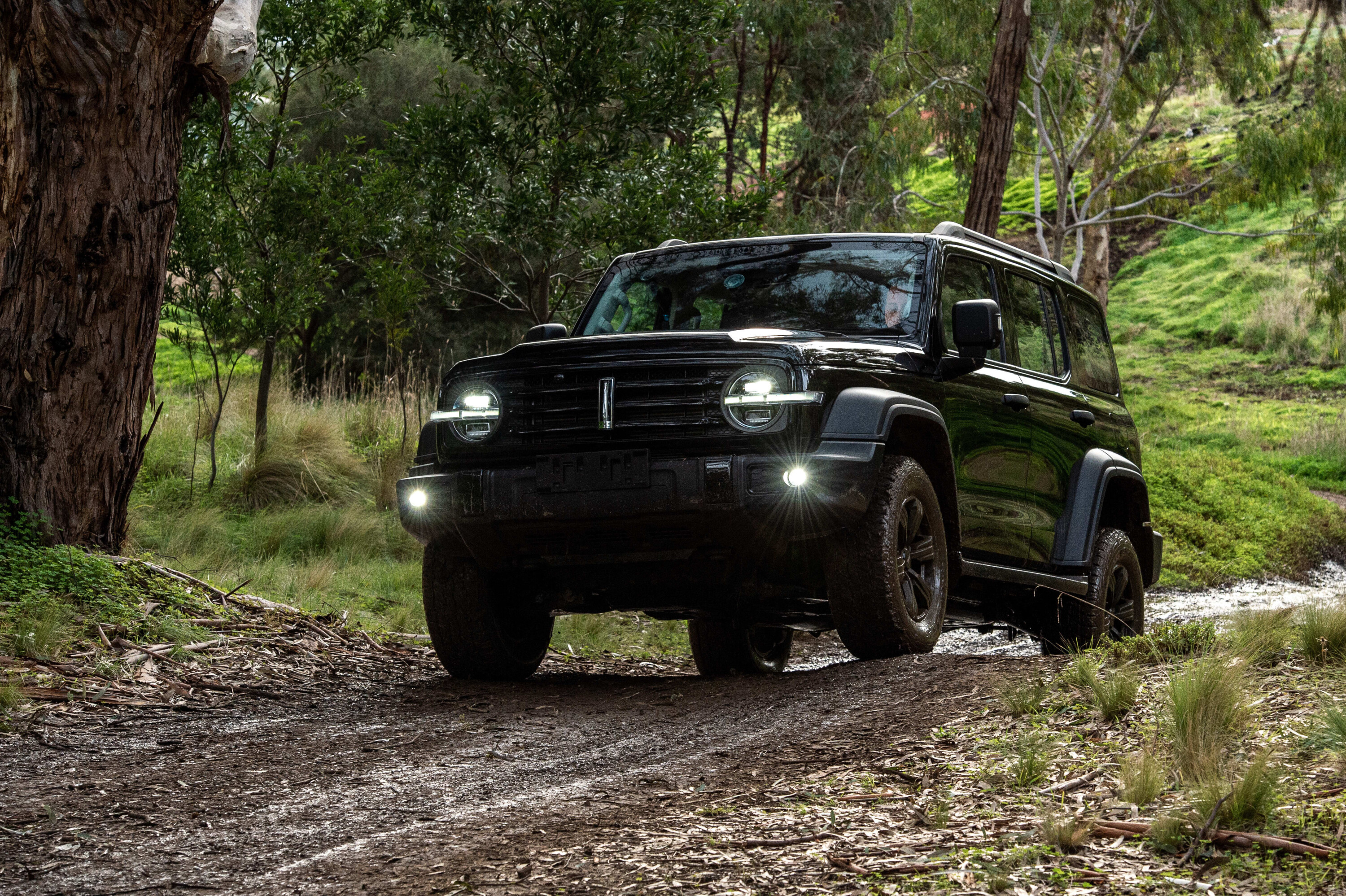
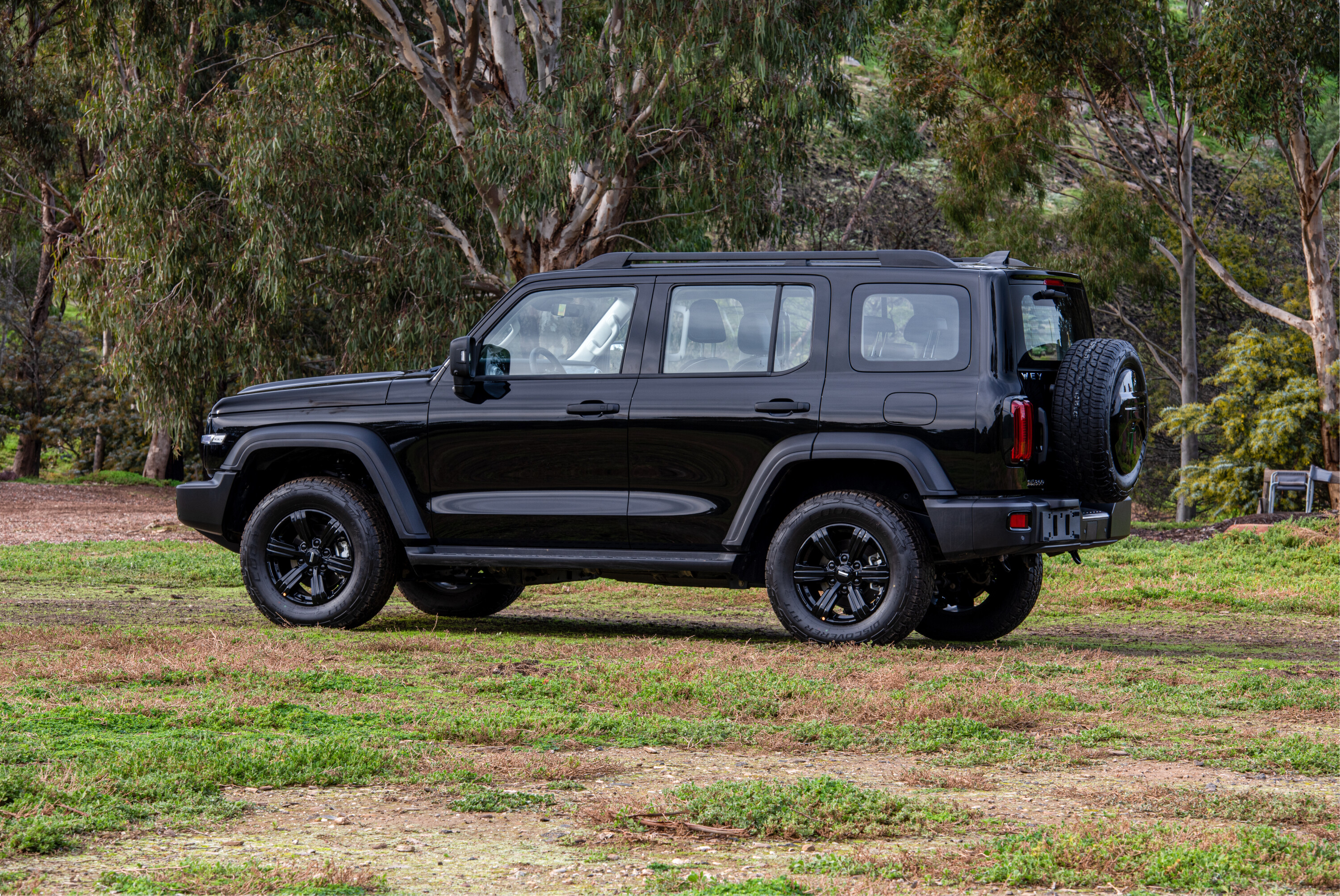
Based off Johnny Law’s first local drive back in January, we reckon China’s GWM Tank 300 could be better buying than a Wrangler, for all but the most hardcore off-roaders (and maybe even them too).
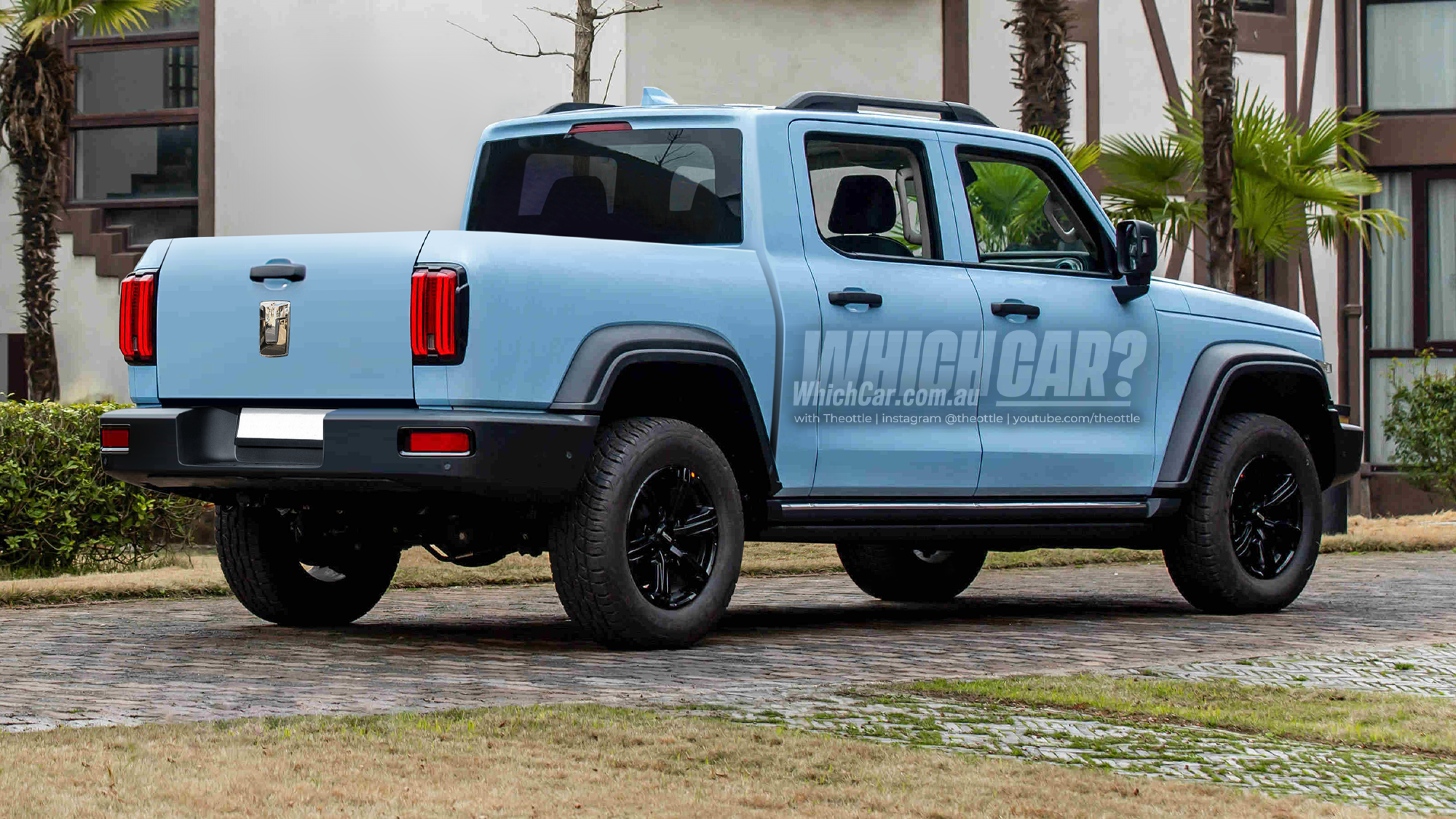
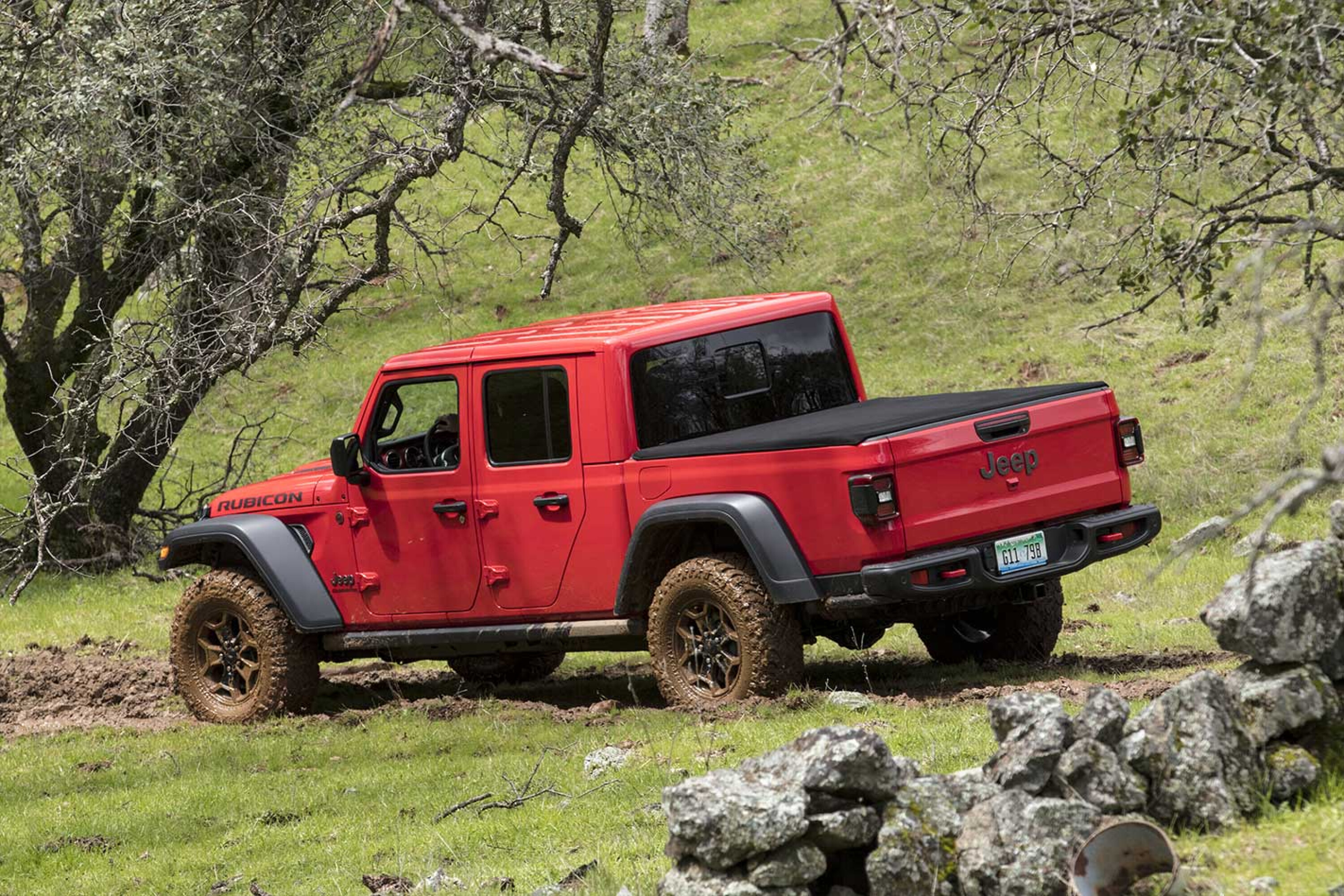
That got us to wondering about the potential for a Tank-badged rival to the Wrangler’s pickup brother, the Gladiator – and it seems our mouse-wielding mate Theottle was wondering the same.
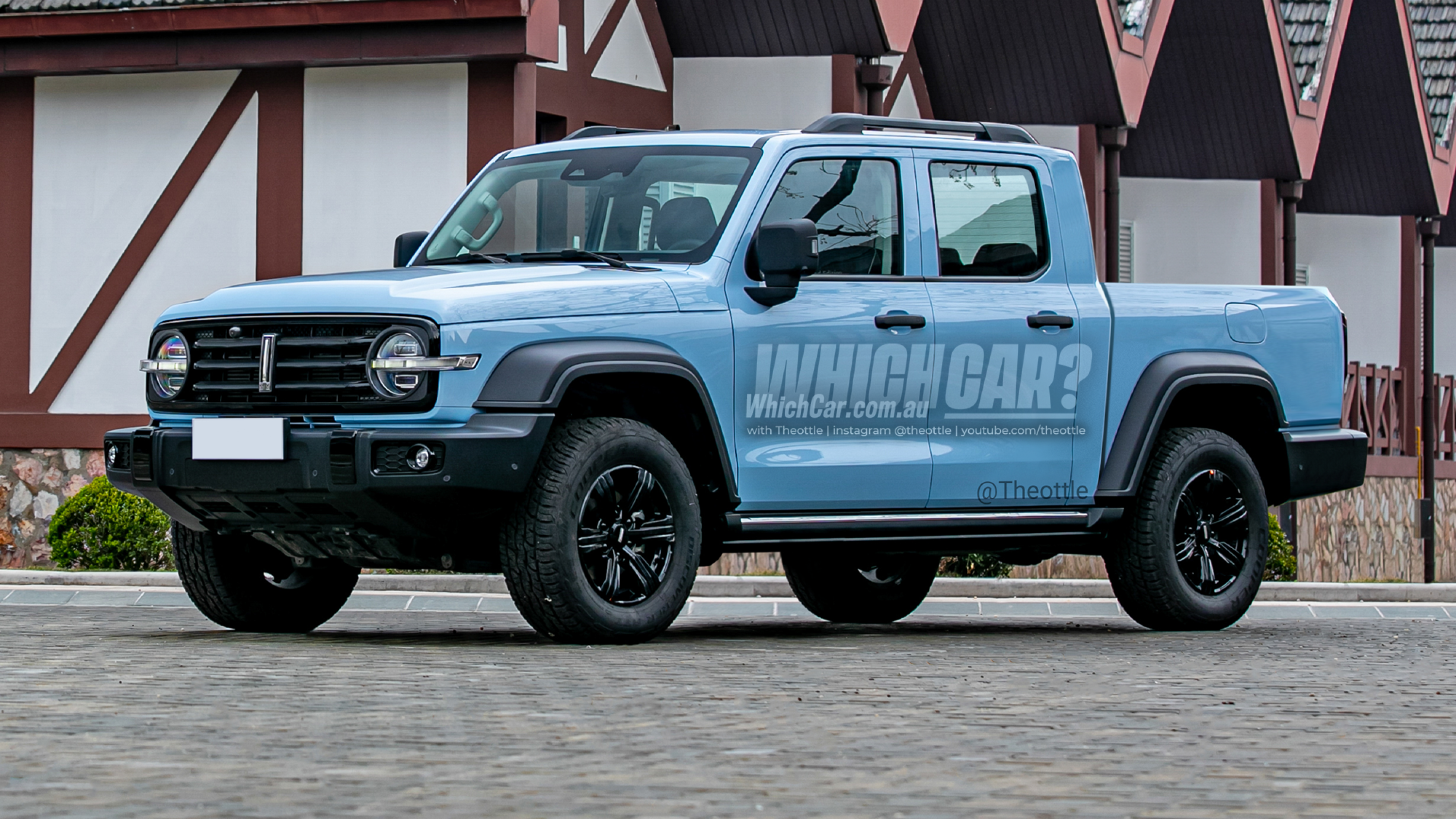
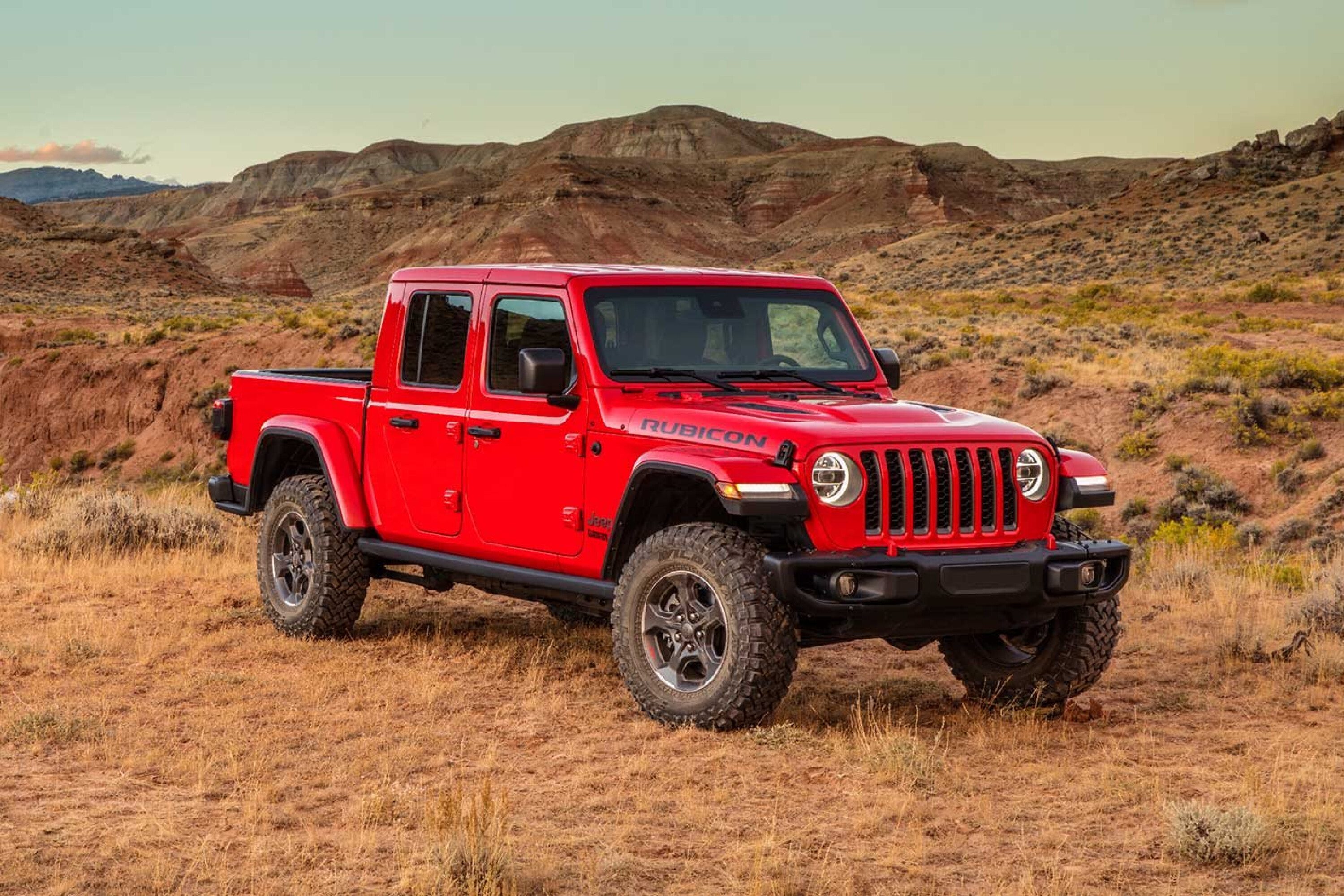
Its styling is perhaps a little more tame than the Gladiator’s muscly military looks, but it might be just the sort of understated ‘halfway’ hero ute some buyers are looking for – not as nuts or as expensive as a Gladiator, but cooler-looking than any of the conventional utes on offer here.
With just nine units registered in January, and a mere two in February, it seems to be struggling to find fans.
Could that simply be down to marketing and/or supply? We’ve put in a call with GWM’s Australian arm and we’ll update this story when we know more.
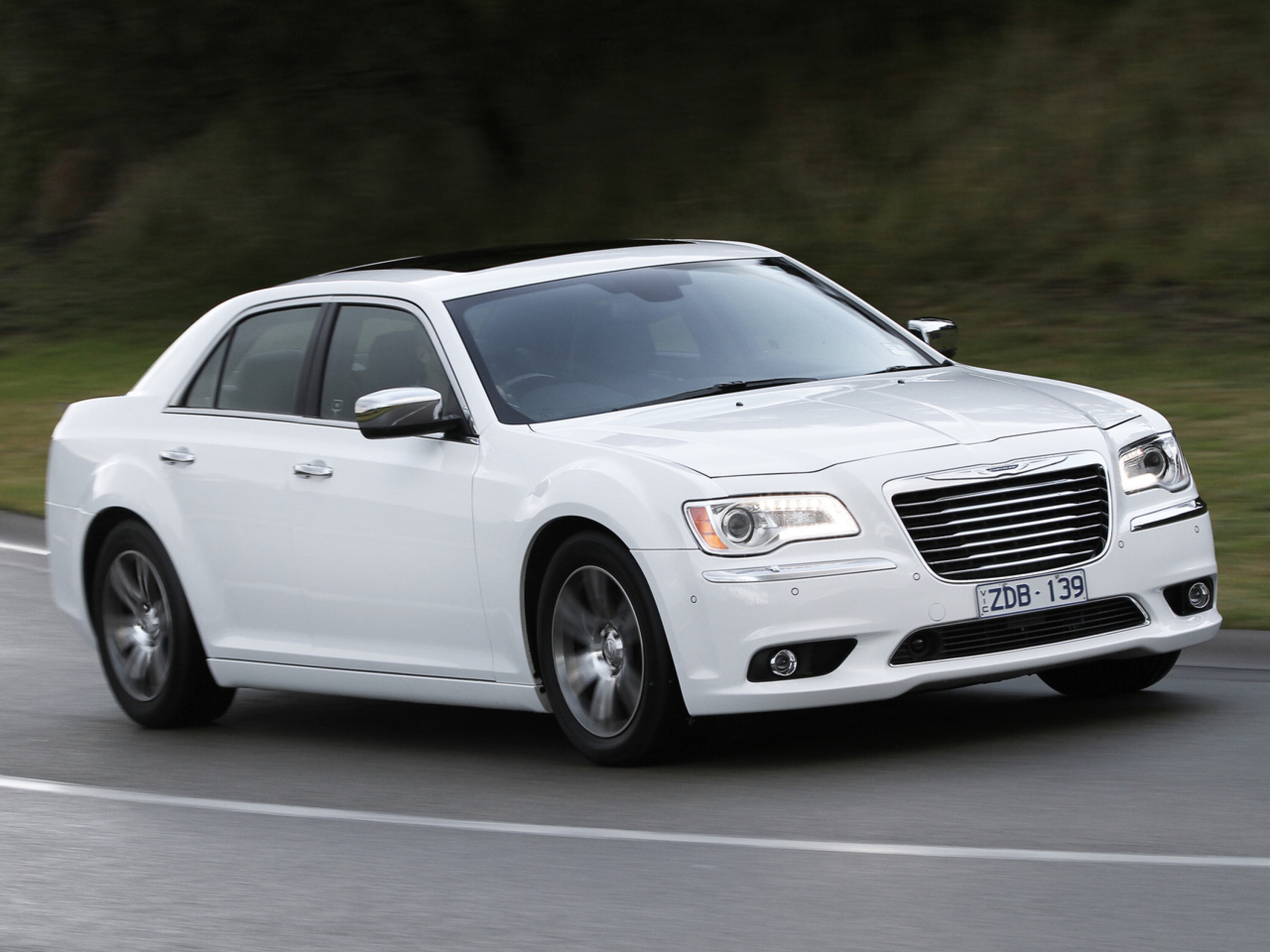
A potential fuel pump fault has resulted in the recall, which affects 3.0-litre turbo-diesel V6 vehicles built between 2011 and 2022.
The diesel Chrysler 300 was sold between 2011 and 2015. The latest recall is the 18th for the previous-generation Jeep Grand Cherokee in Australia.
According to the recall notice issued by the Department of Infrastructure, the “high-pressure fuel pump could fail prematurely and introduce failed component debris into the fuel system.”
“This could impair the fuel supply to the engine and result in a loss of power whilst driving.”
The recall notice states: “A loss of power while driving could increase the risk of an accident causing injury or death to vehicle occupants, other road users and bystanders.”
Affected owners should contact their preferred Jeep dealership to arrange a repair when the follow-up notice is received.
A VIN list for the affected vehicles can be found here [↗] (CSV spreadsheet file).
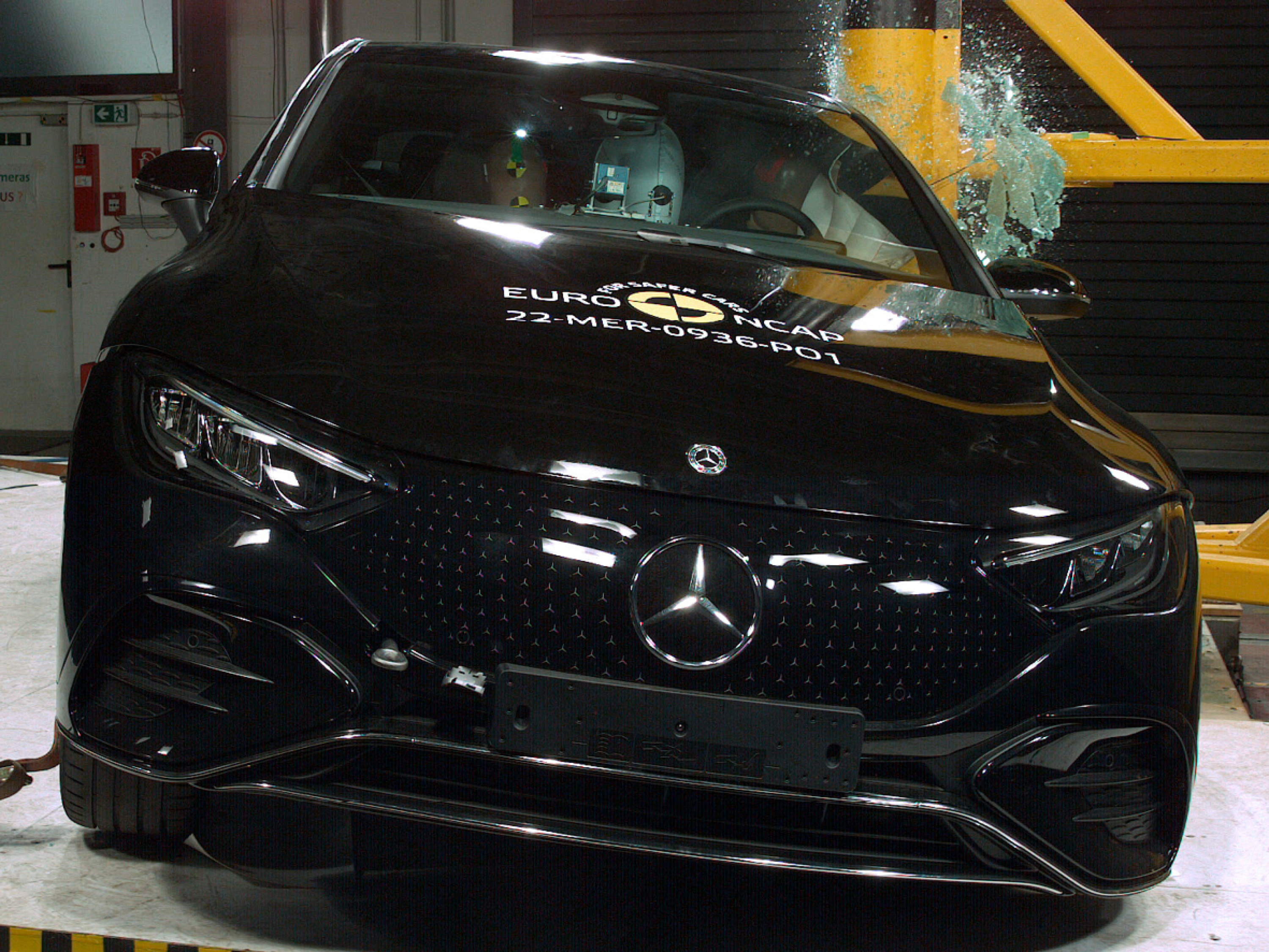
The 2023 Mercedes-Benz EQE electric sedan has been awarded a five-star ANCAP safety rating under the 2020-22 protocols.
The latest five-star result in the Australasian New Car Assessment Program (ANCAP), matches Euro NCAP’s five-star score with an ‘Advanced’ accolade from October 2022.
ANCAP praised the EQE’s ability to protect occupants, with the electric sedan scoring the second-highest protection rating for adult occupants (95 per cent) and child occupants (92 per cent).
“Continuing the marque’s safe and green credentials, the Mercedes-Benz EQE offers another safe and green option,” said Carla Hoorweg, ANCAP chief executive.
There was also praise heaped on the EQE’s forward AEB system for its ability to detect potential obstacles including cars, crossing traffic, and vulnerable road users. Reverse AEB also features, and it can detect vehicles, obstacles and pedestrians at low speeds – potentially saving lives.
The EQE’s airbag count is up to an impressive 10: driver knee, centre, and second-row thorax-protecting airbags are technical highlights and something we’ll see more of in the future.
| 2023 Mercedes-Benz EQE safety features | |
|---|---|
| 10 airbags | Evasive steering assist |
| Adaptive cruise control | Route-based speed adaptation |
| Brake assist with cross-traffic function | Active parking assist |
| Lane change assist | 360-degree cameras |
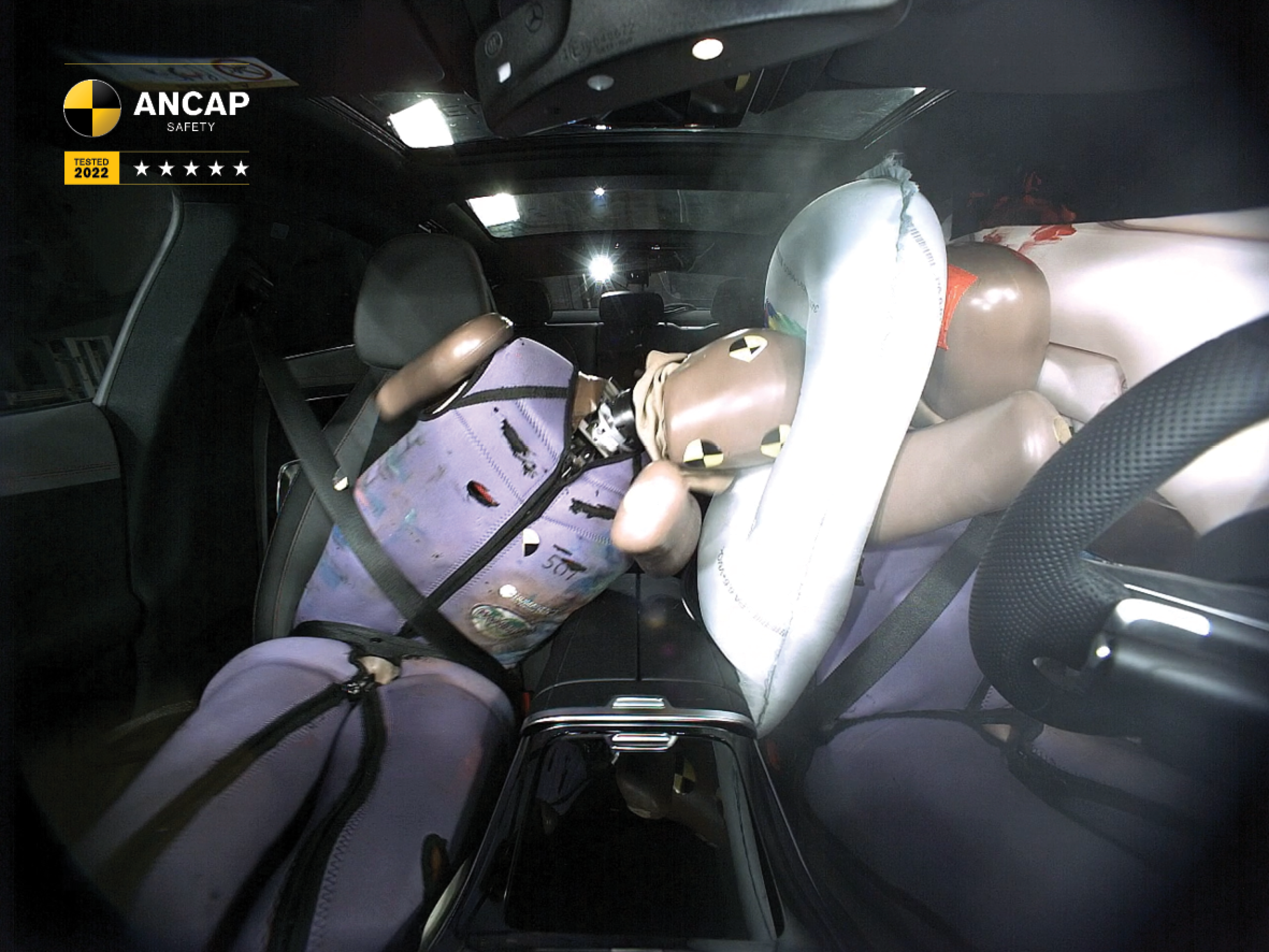
All was not perfect though, with the EQE’s lane-keep assist deemed ‘Good’, though its emergency lane-keep assistance was only adjudicated as ‘Adequate’ by ANCAP.
The EQE joins 60-plus electric five-star certified vehicles on sale in Australia and New Zealand, and can now be found in ANCAP’s ‘Safe and Green’ guide.
“ANCAP’s ‘Safe and Green’ guide is designed to help consumers easily compare the safety of alternative-powered models – and with over 60 current models holding a five-star ANCAP safety rating, there are plenty of options,” said Ms Hoorweg.
In which case, how do you create an E-Class-sized car without an internal combustion engine that still embodies the DNA of Mercedes without alienating a hugely diverse target market? That’s the task of the EQE range and it’s one that, on the face of it, appears an almost impossible brief.
The EQ series of electric vehicles from Mercedes-Benz is rapidly growing, but for now, let’s focus on the EQS, launched in 2021.
As its suffix letter suggests, this is an electric interpretation of an S-Class and, with only a powerhouse EQS 53 AMG model initially launched in Australia, it’s only partially successful in updating what we’d typically consider S-Class traits to suit this new era.
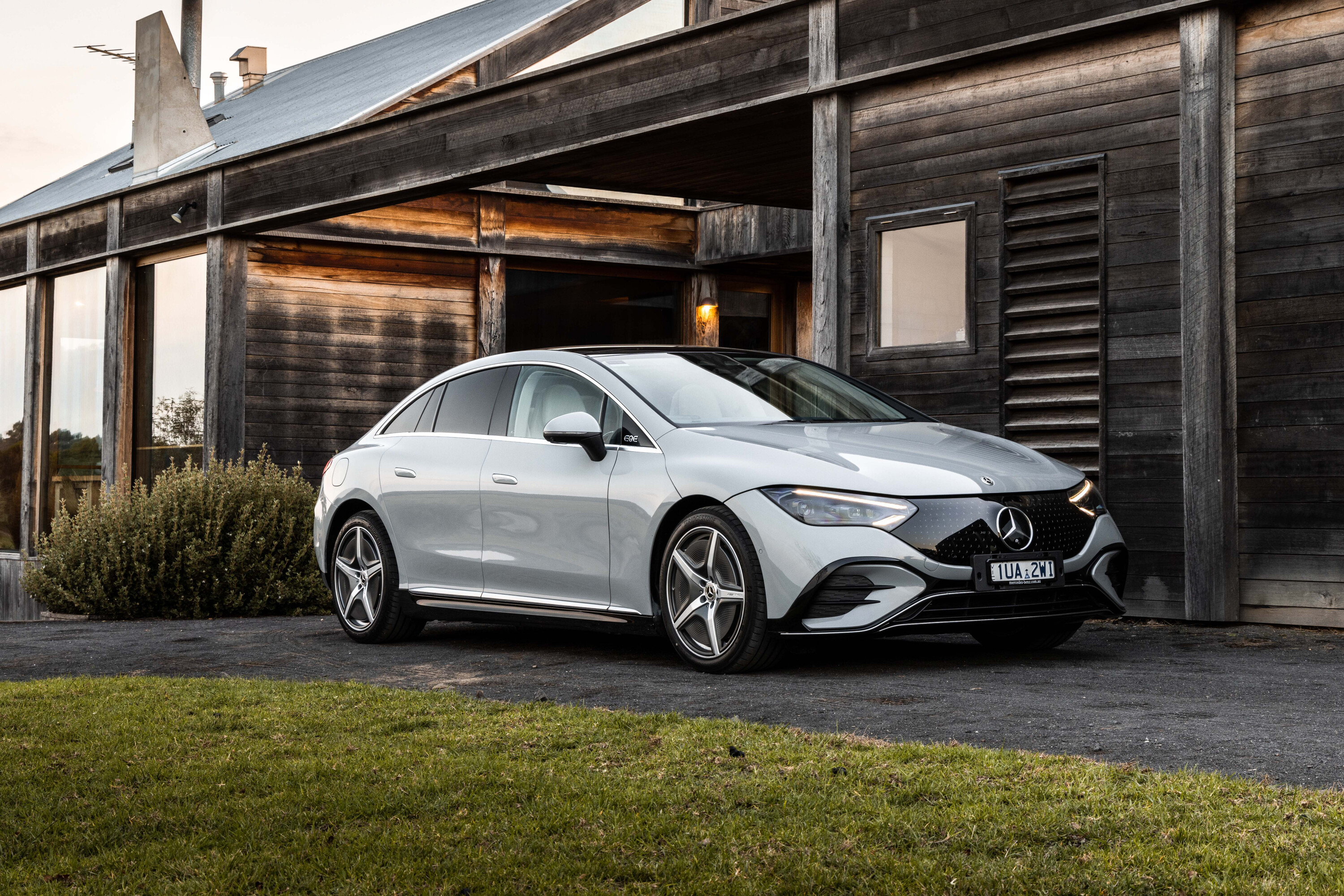
On first acquaintance, the EQE appears to suffer the same issue. Its styling looks like shrunken EQS, with the same well-used bar of soap aesthetic, forged from hours and hours in a Sindelfingen wind tunnel.
There’s none of the lantern-jawed implacability and presence that most have come to expect from an E-Class and it’s fair to say that most observers might be surprised that the range opens at around $135K before on-road costs and options.
Spend a little time with the EQE, however, and it’s clear that Mercedes has done anything but short-change potential customers.
The three-model EQE range is easy to get a handle on. Opening proceedings at $134,900 before on-road costs is the single-motor EQE 300 sedan. The six-phase motor drives the rear wheels only, drawing from an 89kWh (useable) battery resulting in 180kW and 550Nm and the ability to sprint to 100km/h in 7.3 seconds.
Next up is the EQE 350 4Matic which, badging aside, looks identical but costs $154,900 and features all-wheel drive courtesy of dual electric motors. The 90kWh battery nets you 215kW and 765Nm, which translates to 6.3s for the benchmark sprint.
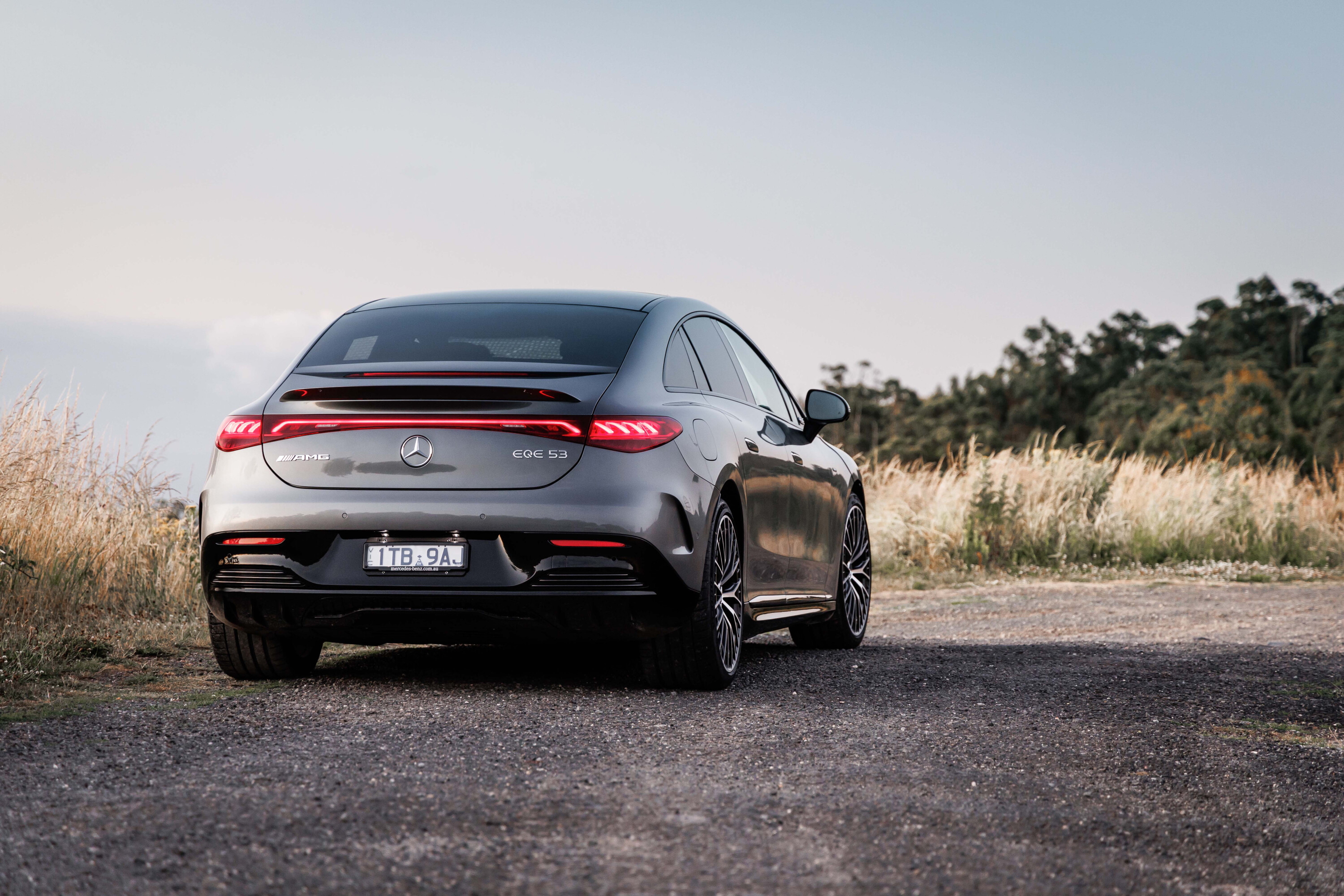
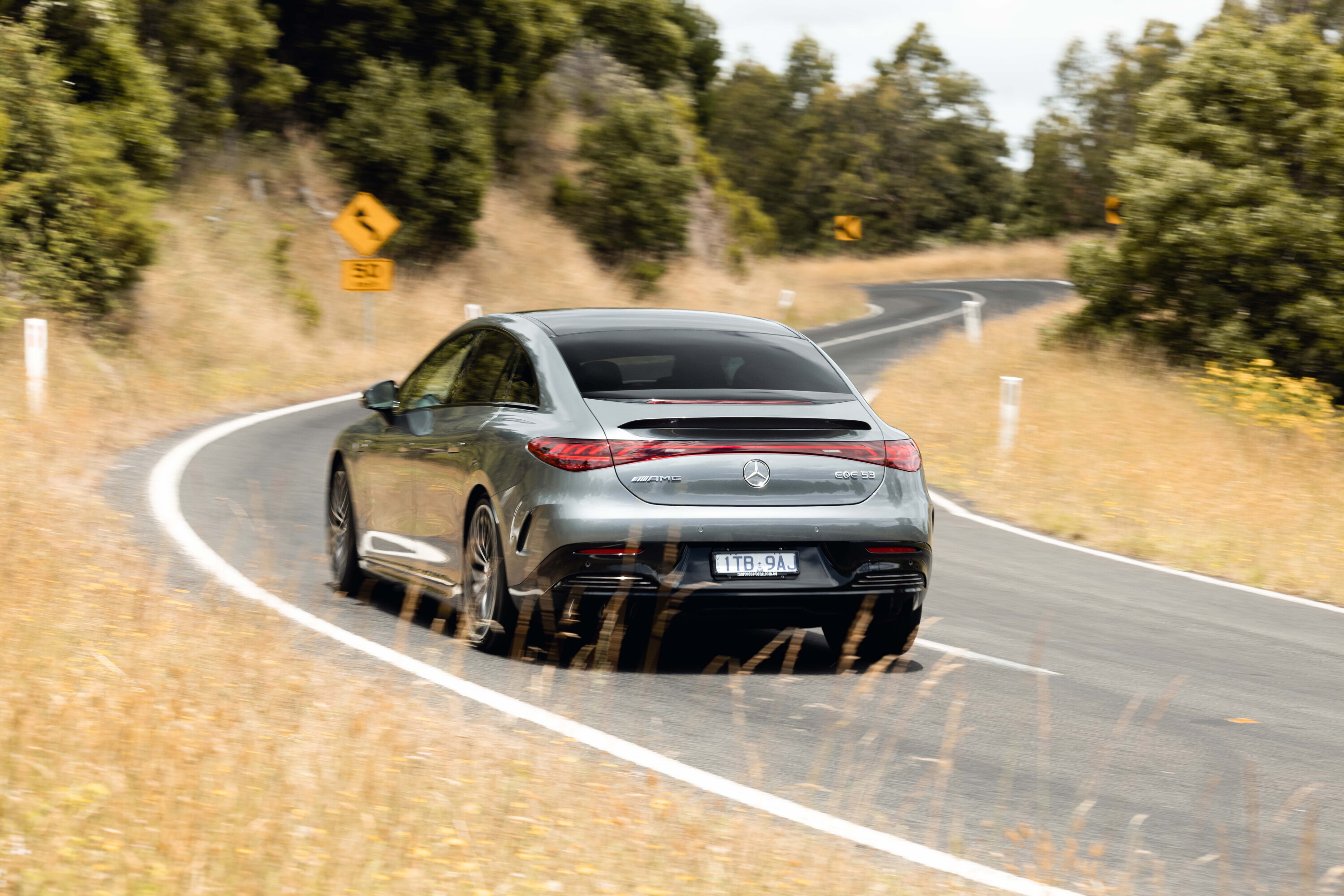
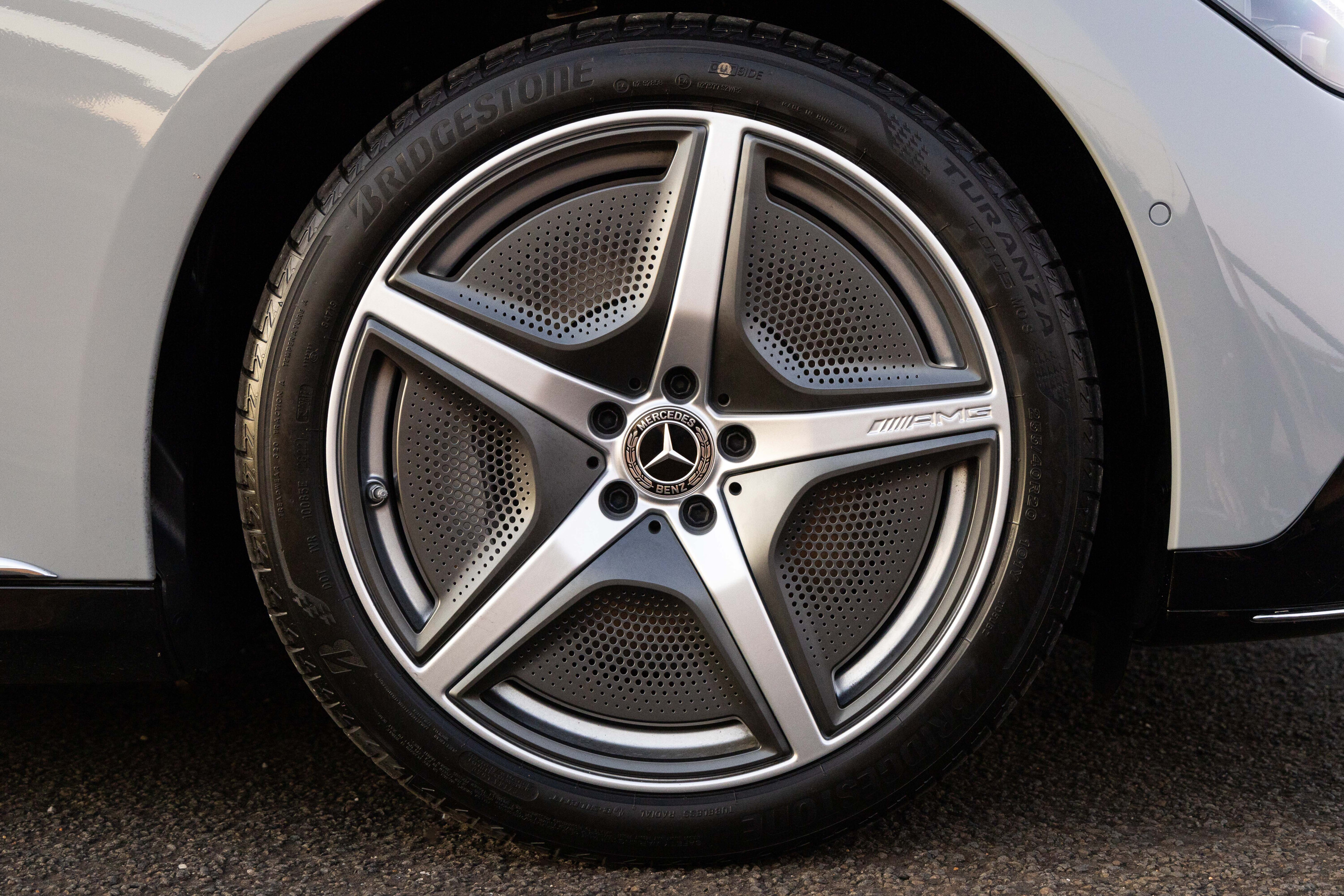
At the top of the range and identifiable by its PanAmericana-look grille, bigger 21-inch alloy wheels and boot spoiler is the Mercedes-AMG EQE 53 4Matic+. This features the same 10-module lithium-ion battery pack as the EQE 350 4Matic but is mated to more powerful AMG-specific motors which means that the outputs are a heady 460kW/950Nm for 3.5s to 100km/h.
The asking price? An equally breathtaking $214,900. Before on-road costs. Stump up another $7400 – and you know that practically every EQE 53 customer will – and you get the Dynamic+ package.
This lifts top speed from 220km/h to 240km/h, which is fairly academic but outputs step up to 505kW and 1000Nm. The 0-100 drops to 3.3 seconds and Race Start (Stuttgart-speak for launch control) is also packaged. AMG Track Pace data logging is also a standard fitment.
Equipment levels even at the entry point to the range are strong, with both the EQE 300 and 350 featuring AMG Line trim as standard. The EQE 300 gets the latest generation MBUX multimedia system, with augmented reality overlays and the central screen features fingerprint scanning for specific driver profiles. Metallic paint is also included in the base price.
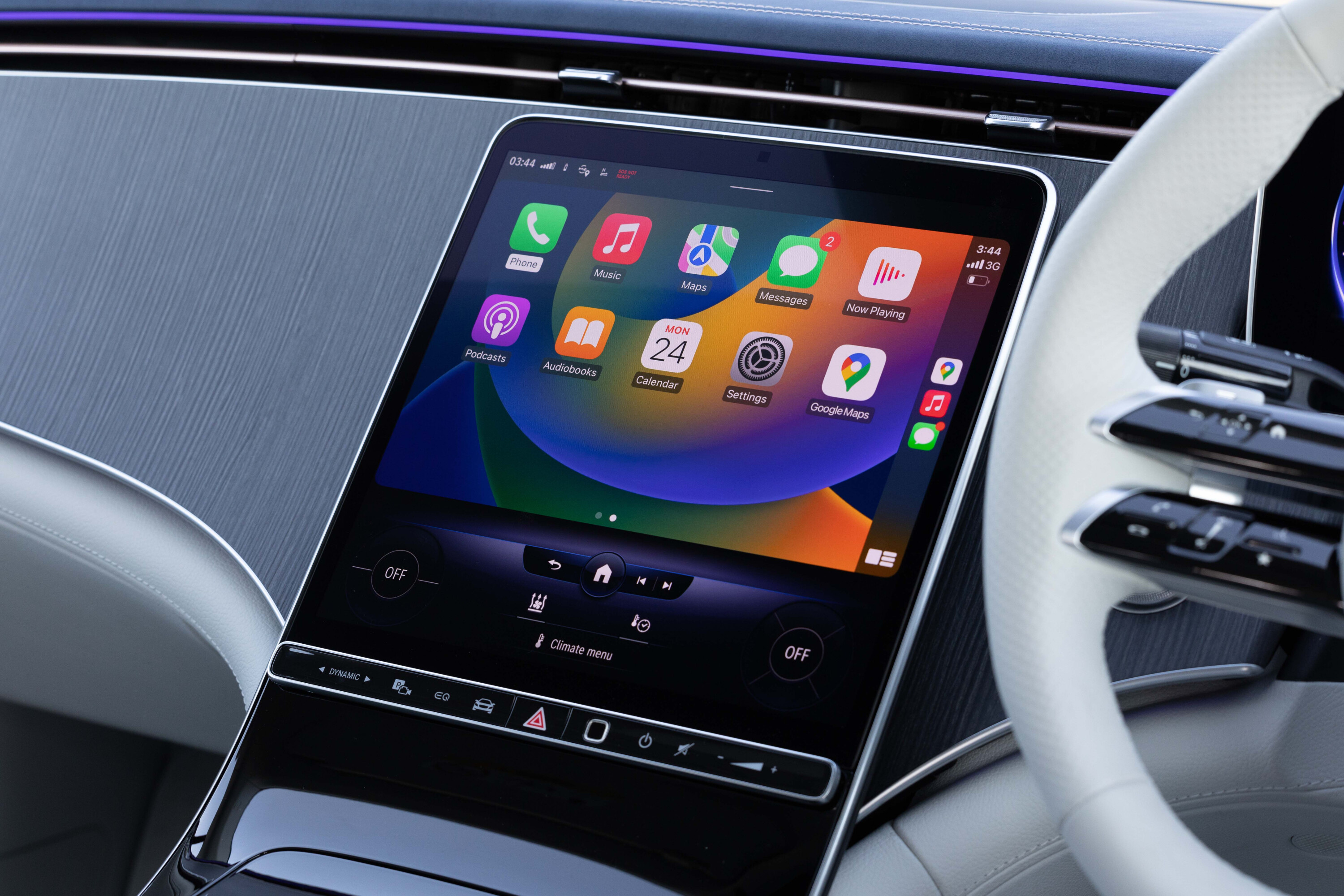
Other standard equipment highlights include:
| 2023 Mercedes-Benz EQE standard features | |
|---|---|
| Burmester surround sound system | Panoramic sliding sunroof |
| Wireless Apple CarPlay and Android Auto | AMG Line body styling and 20-inch AMG five-spoke alloy wheels |
| Head-up display | Digital Light Package including Adaptive Highbeam Assistant Plus |
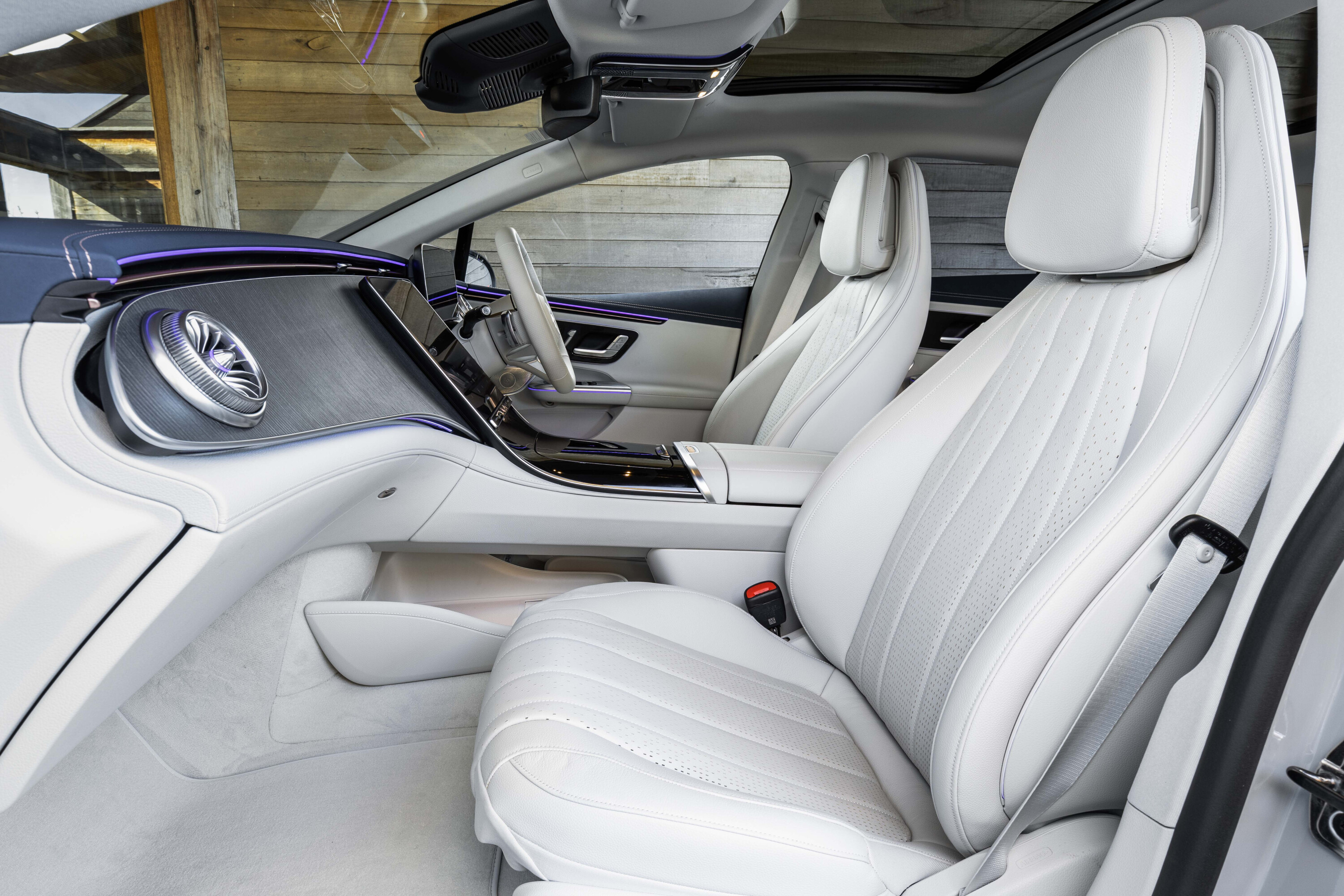
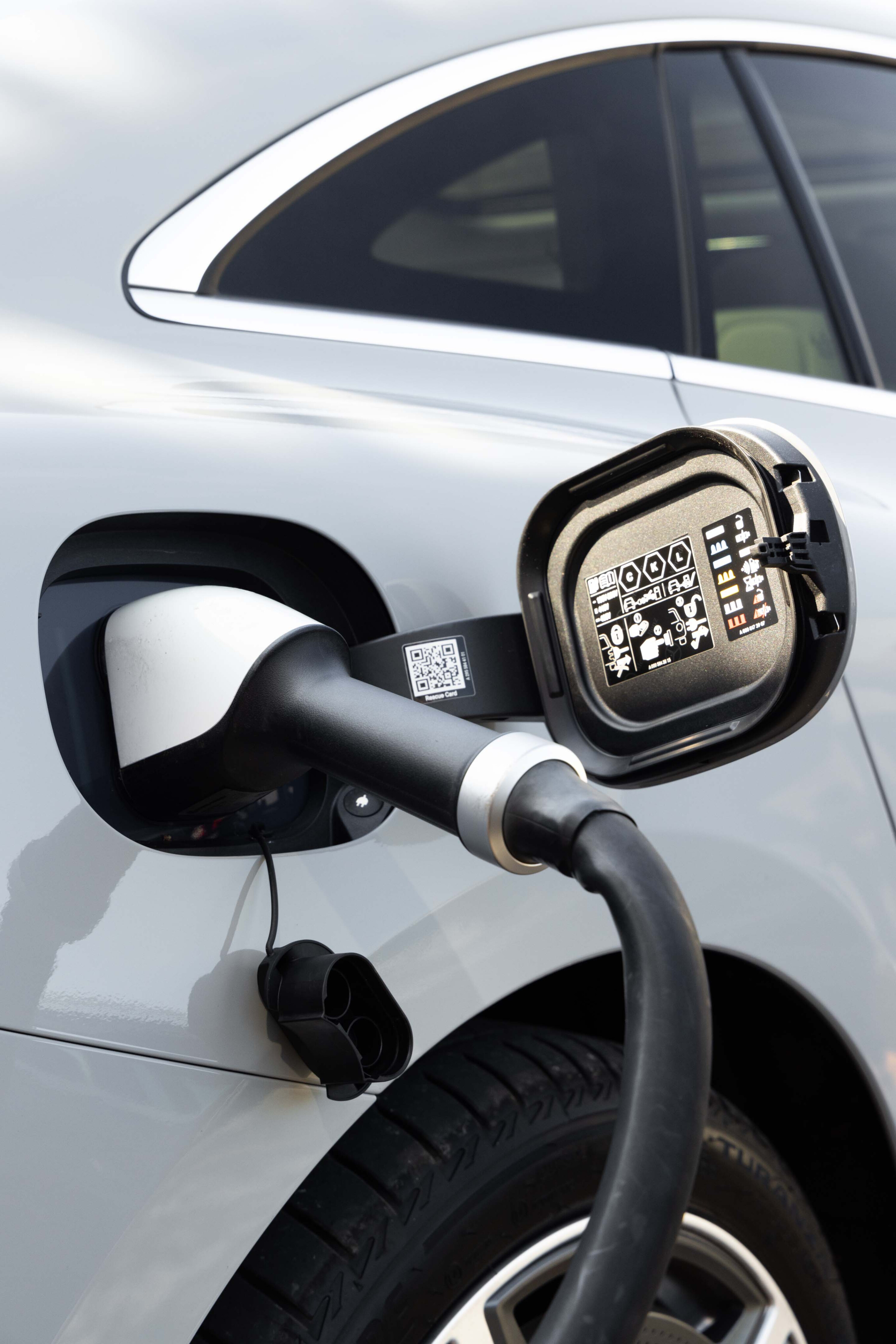
| Heated and electrically adjustable sports seats | Type 2 CCS plug and five-metre charging cable for wallbox and public charging stations plus a charging cable for domestic power sockets |
Options include Airmatic air suspension for the EQE 300 and 350 at $3800 and the triple panel LCD Hyperscreen inside at $15K. EQE 53 buyers can also specify ceramic brake discs at $9400. Mercedes also sells a new Wallbox 2.0 charging station for $2475 plus local installation. This AC unit can charge at up to 22kW and offers a number of functions such as scheduled charging that can be accessed via the Mercedes Benz app.
The key rival to the EQE is, nominally at least, Schrodinger’s Tesla. Yep, the Model S that seems simultaneously both dead and alive, depending on who you speak to and when. If we enter into a little compact where a Model S can be ordered and delivered here in Australia, the price is, at present, unknown and only the demented Plaid version appears on the company’s website, making a meaningful comparison somewhat tricky.
BMW isn’t much more helpful in bowling up a direct EV competitor either, with the smaller i4 and the larger i7 neatly sidestepping a frontal assault from the EQE. Audi’s $181,700 E-Tron GT significantly undercuts the EQE 53 as indeed do all variants of the Porsche Taycan residing beneath the Turbo version. Granted, none are as quick off the mark as the AMG but all arguably offer more in terms of kerbside presence.
At a more attainable price point, the EQE 300’s $135K sticker price finds itself in a bit of a void in the market. The EQE is more spacious than a BMW i4, less vapourware than a Tesla Model S, more affordable than a base Taycan and only really begins to look a little conspicuous if you’re largely drivetrain agnostic. Were that the case, you could certainly argue that a BMW 530e hybrid ($127,400 before on-road costs) represents a compelling alternative that’s versatile, cheaper, quicker and handles more crisply.
In a word, long. Although it’s fully 27cm shorter than the monster EQS, Mercedes has pinned the wheels out to each corner of the EQE’s footprint so that compared with a garden-variety E-Class, the length is up by 23mm and the width by 54mm but the wheelbase extends by a whopping 181mm.
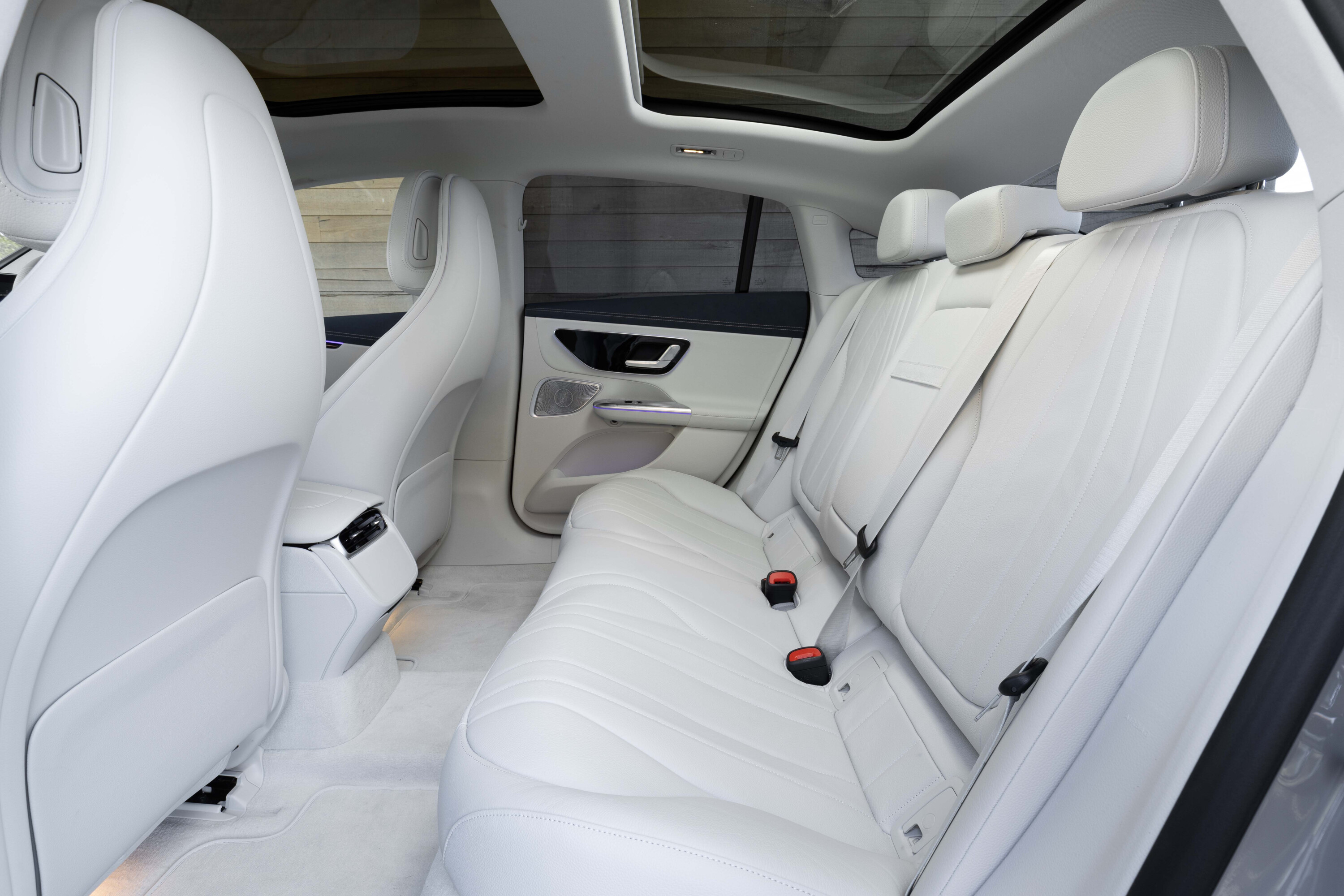
You’ll feel the benefit of all that added wheelbase in the back seats where the 80mm of extra cabin length makes it easy to stretch your legs out. Unfortunately, you’ll also feel the effects of that one-bow coupe-like roofline in the rear, with taller passengers pinched for headroom. The unfussy utility that has always distinguished the E-Class is compromised here, making the EQE open to an accusation of style over substance.
That impression is augmented by the fact that there’s no frunk under the bonnet in which to stow belongings, squandering a key EV advantage of doing without an engine up front. Perhaps that’s more understandable with the dual motor models but the EQE 300? Really?
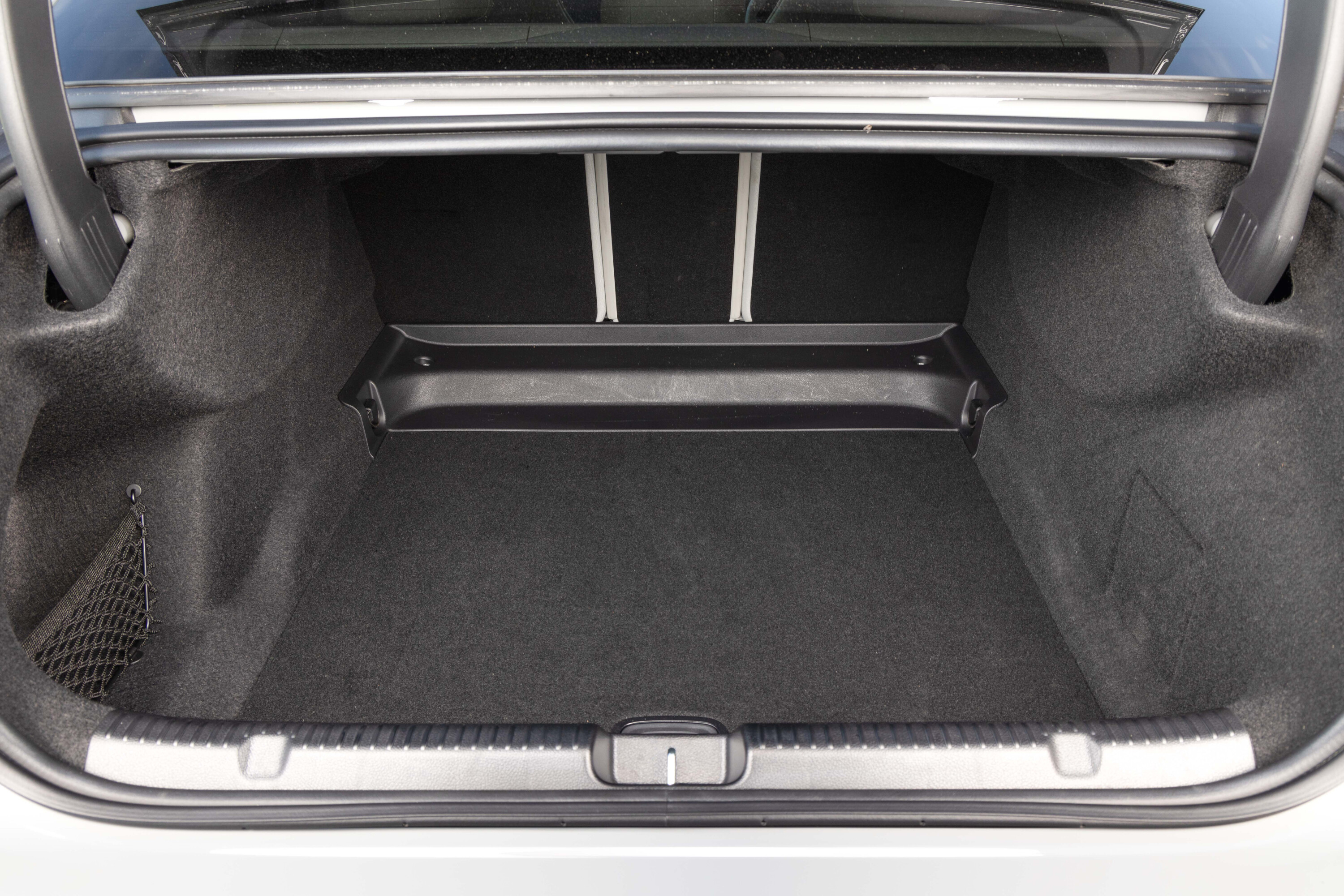
Those expecting the rear glass to lift and reveal the bonus of a practical tailgate may also be a little crestfallen at the fact that despite the slinky silhouette and 0.22Cd drag factor, the EQE is a four-door with a boot. Granted, the boot is reasonably big, offering up 430 litres of space with the rear seats in place.
| Mini match-up boot space | |
|---|---|
| Mercedes EQE 300 | 430L |
| Audi E-Tron GT | 405L (rear) 95L (front) |
| Tesla Model S | 709L (rear) 89L (front) |
| Porsche Taycan | 366L (rear) 81L (front) |
| Mercedes-Benz E-Class | 540L |
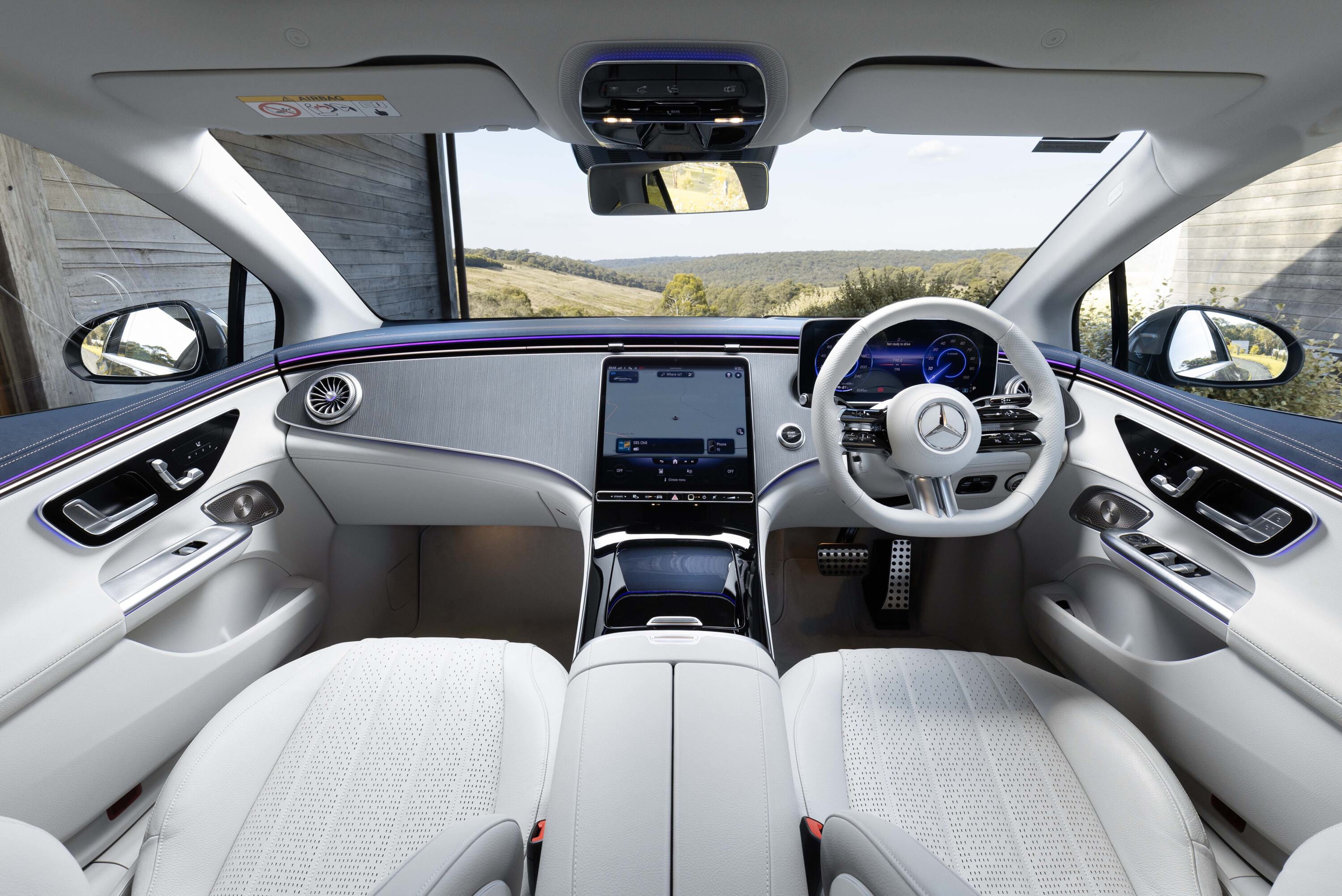
Cabin fit and finish is excellent with various grades of Dinamica used on the doors and dash, a longer grain suede-like grade on the lower door cards and a shorter grain shaved finish on the dash and door roll tops.
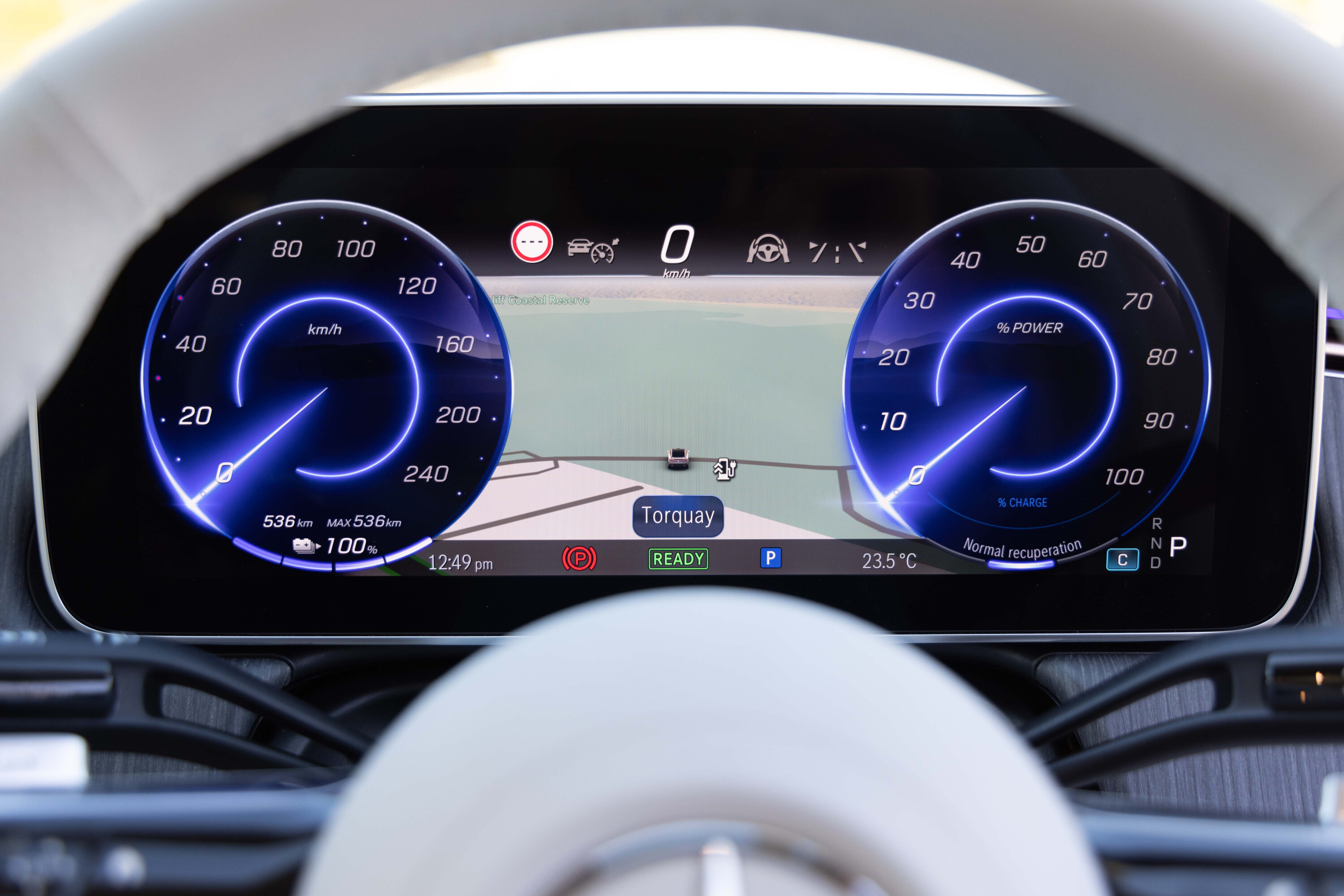
The dash architecture is fairly pared back in standard guise with a neatly-integrated 12.8-inch OLED touchscreen in the centre console, a multi-function steering wheel and a 12.3-inch screen housing the main dial pack. Front passengers are faced with a vast swathe of blank dash that’s at the same time daring and a little shocking in its minimalism.
Specifying the Hyperscreen setup alleviates that, but this one fitment alone would add more than 10 per cent to the asking price of an EQE 300 or 350.
The dash itself is configurable in a dizzying number of ways, with swishing graphics, pulsing effects and a huge amount of camera displays. You’ll probably need the cameras too, because the view out of the back of the car is compromised by its slot-like rear window and bulky pillars, which makes reversing something that you’ll largely be staring at a screen to accomplish.
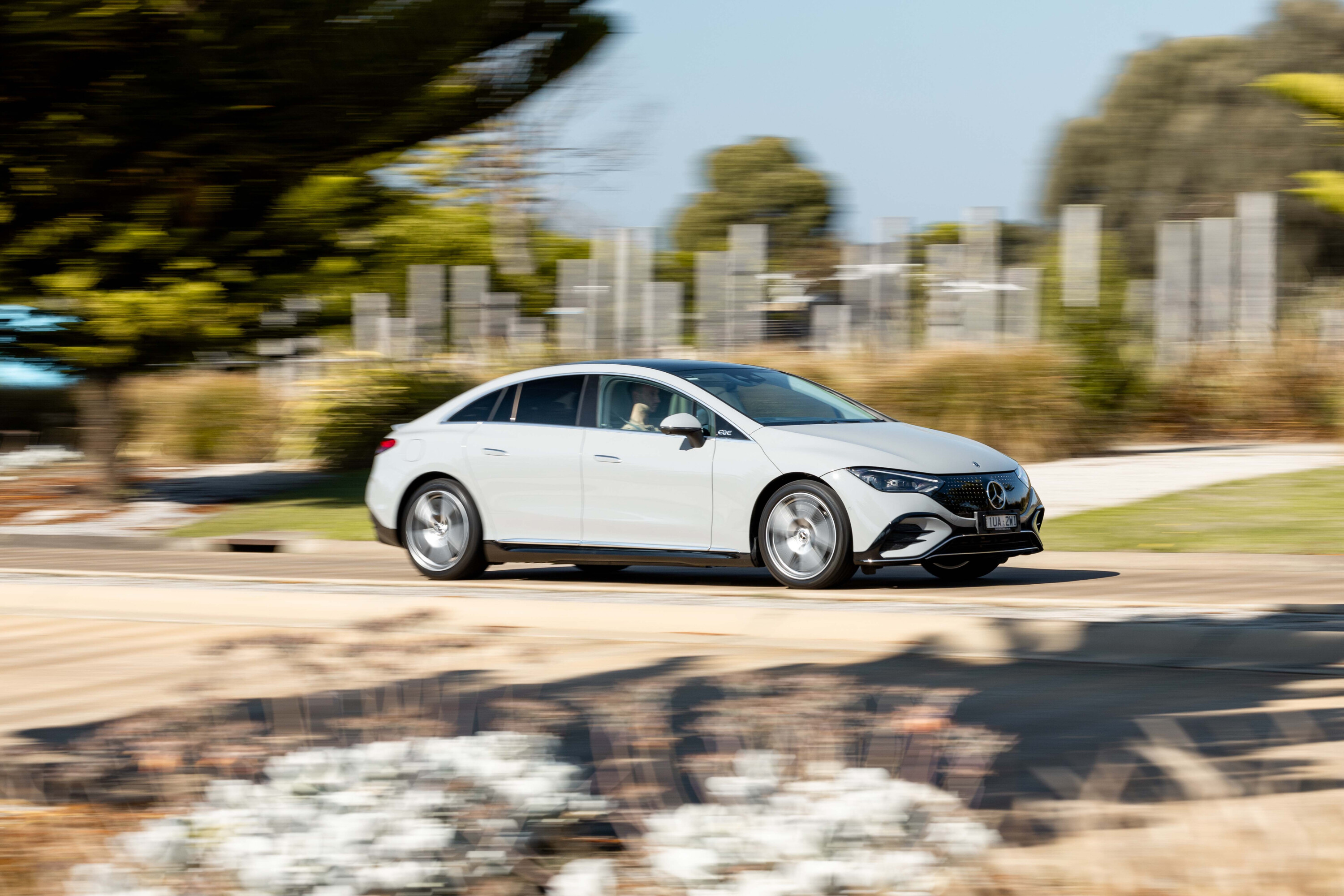
It’s become a bit of a trope that electric cars don’t ride very well. In order to contain all of that weight, all subtlety and nuance disappears from the way the car is damped, leaving you with a nervous, flinty ride. Well, forget about that. Mercedes seems to have cracked it.
The EQE rides brilliantly. Kerb weight ranges from 2380kg for the 300 up to 2530kg for the AMG 53 and you do feel that heft through compressions and over crests but, for the most part, the EQE rides with genuine polish, helped by the way its long wheelbase can breathe with the road.
We’ve tested nearly every EV below six figures in Australia to rank the best on sale today
In many regards, it feels as if it has benefited inordinately from the EQS development cycle and, in most circumstances, the EQE feels a better-damped car than the EQS 53. We tried all three variants but didn’t get to sample the EQE 300 and 350 on the optional air suspension. We’ll report back on that fitment later, but the coil-sprung models certainly won’t have you scrabbling to tick an options box for superior comfort.
The EQE 300 feels a class act, with crisp acceleration and decent body control. Traction, even in the wet, was well managed and it took some deliberate lead-footing in the EQE 350 4Matic to feel the benefit of torque split between four tread patches.
On dual-motor variants the torque split is nominally 36:64 front to rear, although drive can be apportioned 100 per cent to the rear if required.
The EQE 53 is an interesting beast. Right from the off, you’ll feel the weightier steering and more aggressive throttle mapping. Like most such EVs, the acceleration verges on the uncomfortable and the novelty wears off relatively quickly.
On a twisty hill route, there’s a certain amount of fun to be had in the AMG’s ridiculous point-and-squirt ability, but the satisfaction of building a flow through corners is undone by getting too greedy with the throttle and then needing to scrub off speed with a big application of brakes.
Talking of which, unless you have a real aversion to brake dust, I’d save the money and not choose the ceramic discs. The brake pedal feel is strangely inconsistent, requiring a big bootful when cold. Even when warmed up there’s initial bite, then the travel goes flabby before biting again near the end of the pedal’s arc, with a fairly violent pulsing on ABS engagement.
On the EQE 300 and 350 that I drove with steel rotors, there was a more measured and faithful transition between regenerative and friction braking.
Cornering hard in any of the EQE models betrays the weight involved and the cars can lapse into juddering understeer that, upon lifting the throttle, will switch to oversteer that the ESC system does a commendable job of restraining.
It never feels particularly elegant, and it is possible to switch the ESC off if you’re particularly confident, but the electronic guardian will step back in if it thinks you’ve made a genuine mess of things.
There’s also the benefit of 4.5 degrees of rear-wheel steer on the EQE 53 (optional on the other EQE models), reducing the turning circle from 12.5 metres to 11.7 metres while aiding stability at speed. Its AMG Ride Control suspension can also lift and drop the ride height of the vehicle.
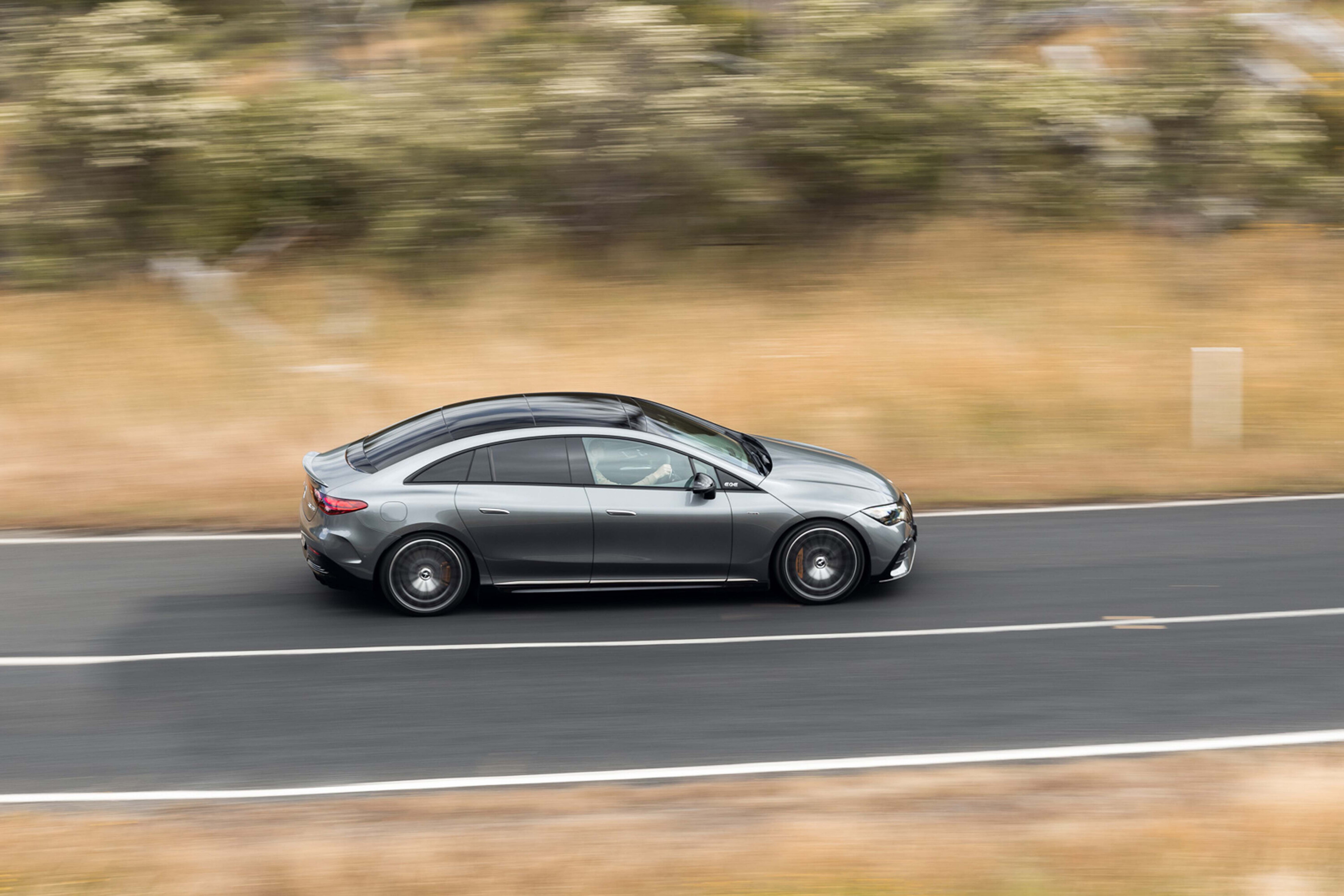
One of the more striking aspects of the EQE is the array of sounds it can generate. We tend to think of EVs as mute partners and, for the most part, that is indeed the case. Switch the EQE into its Balanced soundscape and it’ll whine gently while emanating a low pulsing tone to alert pedestrians of its presence. From there it gets much more interesting. Or annoying, according to your take on these things.
Engage the Sport sound effect and it’ll start some speed-sensitive whooshing as you throttle on, which cues passengers in aurally to the car gathering speed. The Powerful setting sounds as if there’s a squadron of high-altitude jets over your shoulder, introducing a deep white noise effect that sounds faintly menacing.
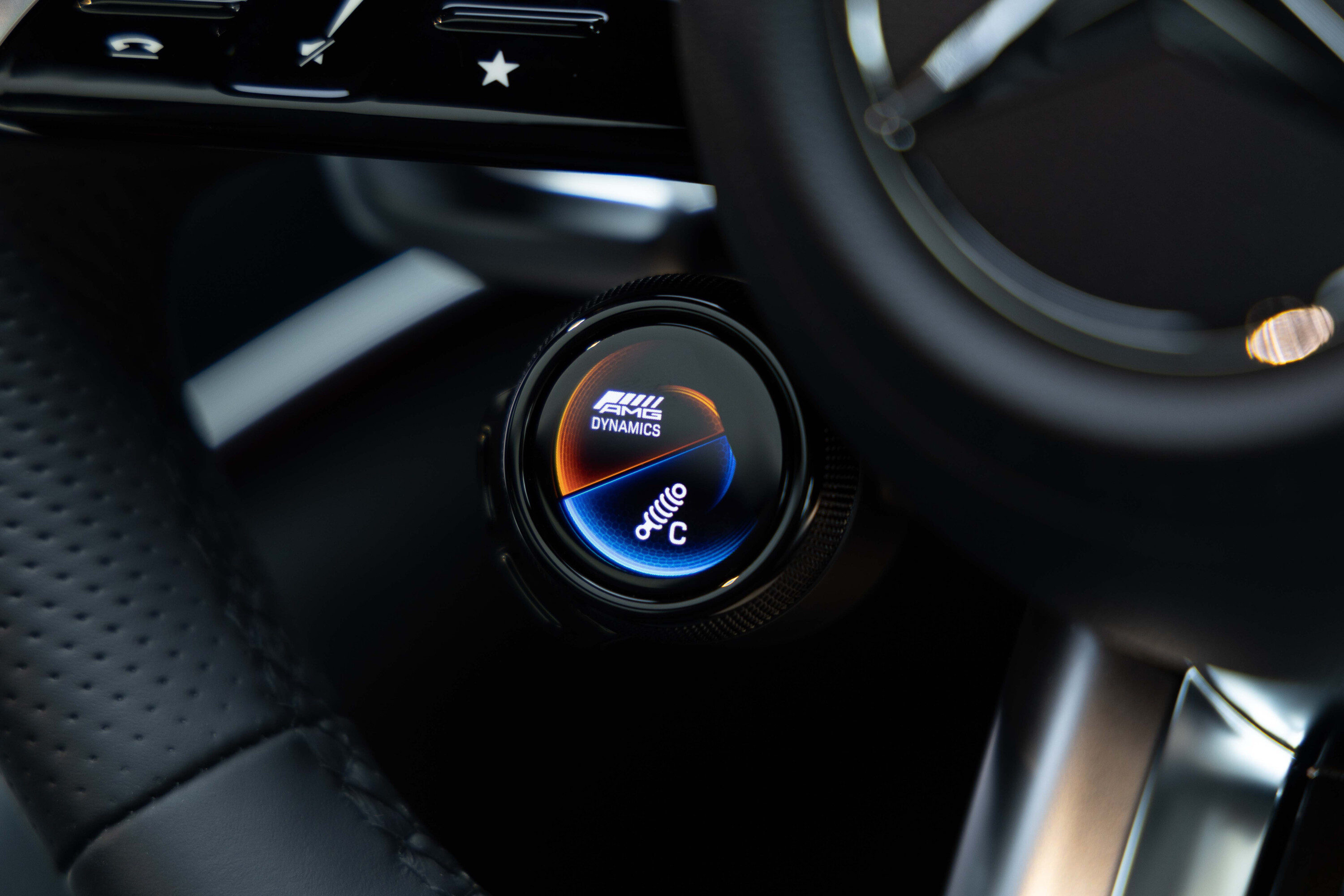
I’ve heard some fairly dreadful artificial sounds in EVs over the years, but I’d consider the Mercedes suite of sound effects the least offensive. These can easily be configured using manettino-like dials on the EQE 53’s steering wheel along with the various drive modes and ESC settings.
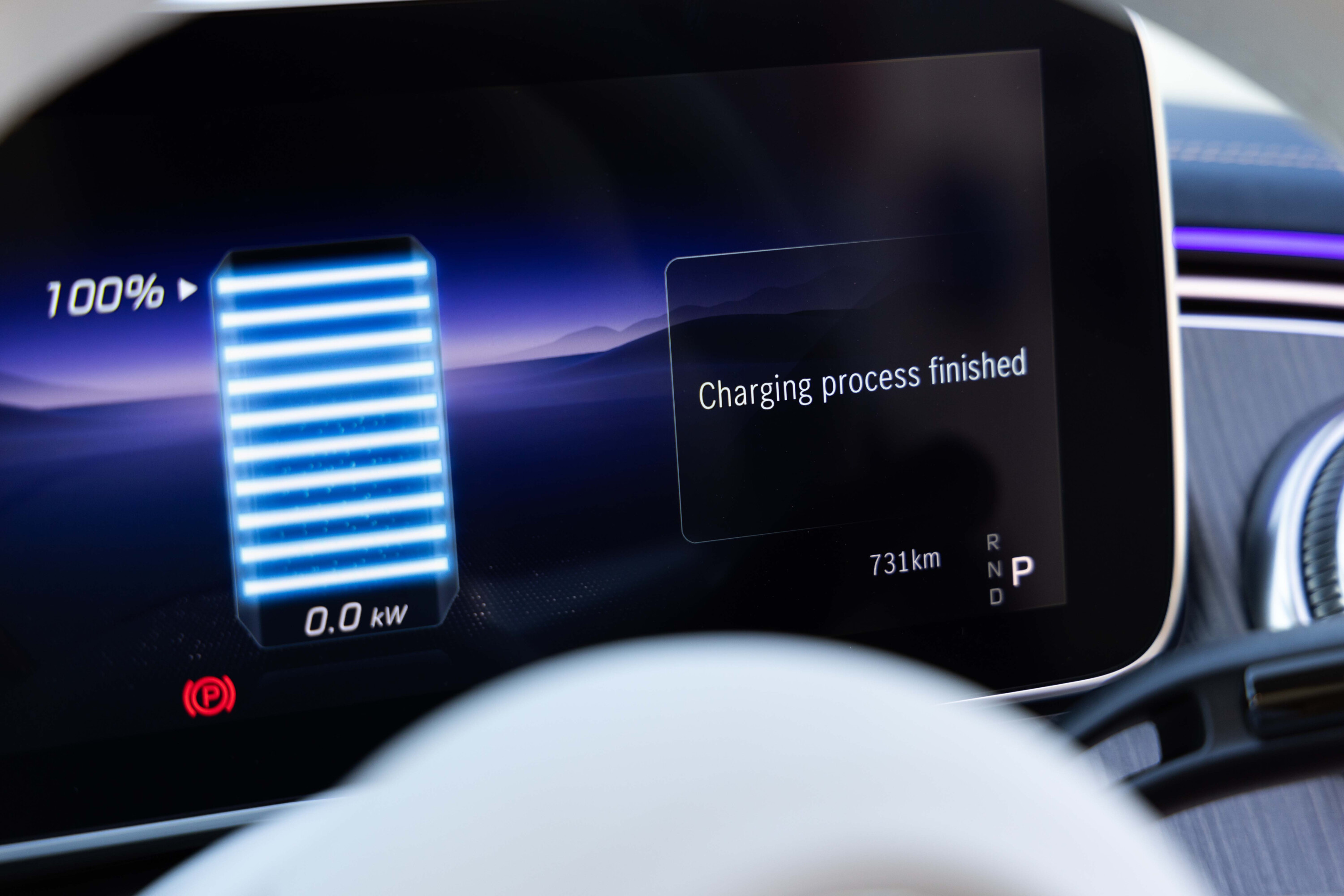
The EQE 300 delivers the longest range of all variants, its single motor consuming 201Wh/km, contributing to an overall range of 508km on the WLTP cycle. Step up to the dual motor 350 4Matic and this chews through electrons at a rate of 225Wh/km to arrive at a figure of 462km for overall range. The flagship EQE 53 features a far more powerful rear motor and its consumption is rated at 235Wh/km with an overall range from its battery pack of 435km.
You can charge the EQE 53 at a slightly higher rate on DC power (200kW) compared to the 170kW rate for the 300 and 350 4Matic models. Even these models will, at a suitably rapid charger, accept up to 248km worth of charge in 15 minutes.
There are a number of intriguing sustainability measures in the EQE, consistent with Mercedes’ move to its Ambition 2039 targets, which aim to make its fleet of new passenger cars CO2 neutral over their entire lifecycle by 2039.
For example, the body is manufactured from fully recycled or ‘secondary’ steel by Salzgitter AG, while both the Bremen factory and the Hedelfingen battery plant are already CO2 neutral. When the vehicle reaches the end of its life, the battery pack is either recycled or can be remanufactured to provide stationary energy storage systems.
The Mercedes-Benz EQE has been awarded a five-star Euro NCAP rating, with its semi-autonomous emergency stop system rated by testers as ‘excellent’. ANCAP has yet to issue the EQE an official star rating.
Its standard Active Emergency Stop Assist function – the first of its kind to be assessed by Euro NCAP – intervenes if the driver is deemed unresponsive, and safely manoeuvres the car to the slowest lane before bringing it to a stop.
Euro NCAP’s secretary general, Michiel van Ratingen, said: “Fully autonomous driving is still some way away but the groundwork is being laid by robust, high-performing assisted-driving systems like this one from Mercedes.”
Standard safety features include:
| 2023 Mercedes-Benz EQE safety features | |
|---|---|
| 10 airbags | Evasive steering assist |
| Adaptive cruise control | Route-based speed adaptation |
| Brake assist with cross-traffic function | Active parking assist |
| Lane change assist | 360-degree cameras |
| Blind-spot monitoring | Traffic sign recognition |
| Lane-keep assist | Acoustic presence indicator |
All EQE models are covered by Mercedes-Benz’s five-year, unlimited-kilometre warranty. In addition, the EQE is also supplied with a battery warranty for a term of 10 years or 250,000km. Service intervals are 15,000km or one year, whichever arrives first.
The Mercedes-Benz EQE feels a more cohesive proposition than the bigger EQS. It’s more comfortable in its own skin and occupies a neat niche in the market. It’s worth bearing in mind that it feels more like an electric CLS in its appeal than an electric E-Class, as there remain some practicality compromises that limit its versatility and appeal.
Another caveat that’s worth issuing is one that applies not just to the EQE but to many EV ranges, namely that the entry-level versions are usually the pick of the bunch. At $134,900, the EQE 300 feels reasonably good value. At $214,900 the AMG EQE 53 does not.
While AMG has tried to differentiate the feel of the EQE 53, the external aesthetic isn’t overt enough to attract traditional customers of the Affalterbach marque, and nor can it rely on the time-honoured acoustic artillery. The 53 never feels like the sort of car you’d drive just for the fun of it; in itself a somewhat damning indictment for an AMG product.
The EQE 300 and 350 4Matic are more rounded propositions. Mercedes should be applauded for delivering a quality electric vehicle with excellent ride quality and, maybe for the first time, a vehicle that doesn’t need to draw down on the equity of its internal combustion-engined forebears. This feels like the base template for a modern Mercedes and the template is good.
Good, but not great. That will come. In the meantime, the EQE edges the game forward, albeit by modest increments. Is that enough? Aussie buyers will be the final arbiter of that.
| 2023 Mercedes-Benz EQE 350 4Matic specifications | |
|---|---|
| Body | 4-door, 5-seat large sedan |
| Drive | all-wheel |
| Motor | dual permanently excited synchronous motors |
| Transmission | single-speed direct drive |
| Power | 215kW |
| Torque | 765Nm |
| 0-100km/h | 6.3 sec |
| Energy consumption | 225Wh/km |
| Range | 462km (WLTP) |
| Weight | 2970kg |
| Suspensions | four-link front / multi-link rear |
| L/W/H | 4946/1906/1512mm |
| Wheelbase | 3120mm |
| Brakes | ventilated disc front / ventilated disc rear |
| Tyres | 285/40 R 20 (f) / 285 / 35 R20 (r) Bridgestone Turanza T005 MO-6 |
| Wheels | 9.0 x 20J alloy (puncture repair kit) |
Following last night’s leaks, Alpine has fully unveiled the A290_β (Beta) electric hot hatch concept car – though the French performance car maker was not forthcoming on power, weight, driving range, or an expected release date.
The A290 made its appearance on a Go Kart-like course at the hands of Esteban Ocon and Pierre Gasly – the brand’s Formula One stars. As you’d expect from any Gallic racer, deft left-foot braking and hydraulic handbrake actuation sent the A290’s rear end sliding around the tight and technical corners.
“This car is critical for our brand”, said CEO of Alpine, Laurent Rossi. “What it symbolises, what it emphasises, are the core principles of Alpine. Even though it’s not a pure sporting car – it’s the modern interpretation of the hot hatch if you will – it’s our urban racer,” he continued.
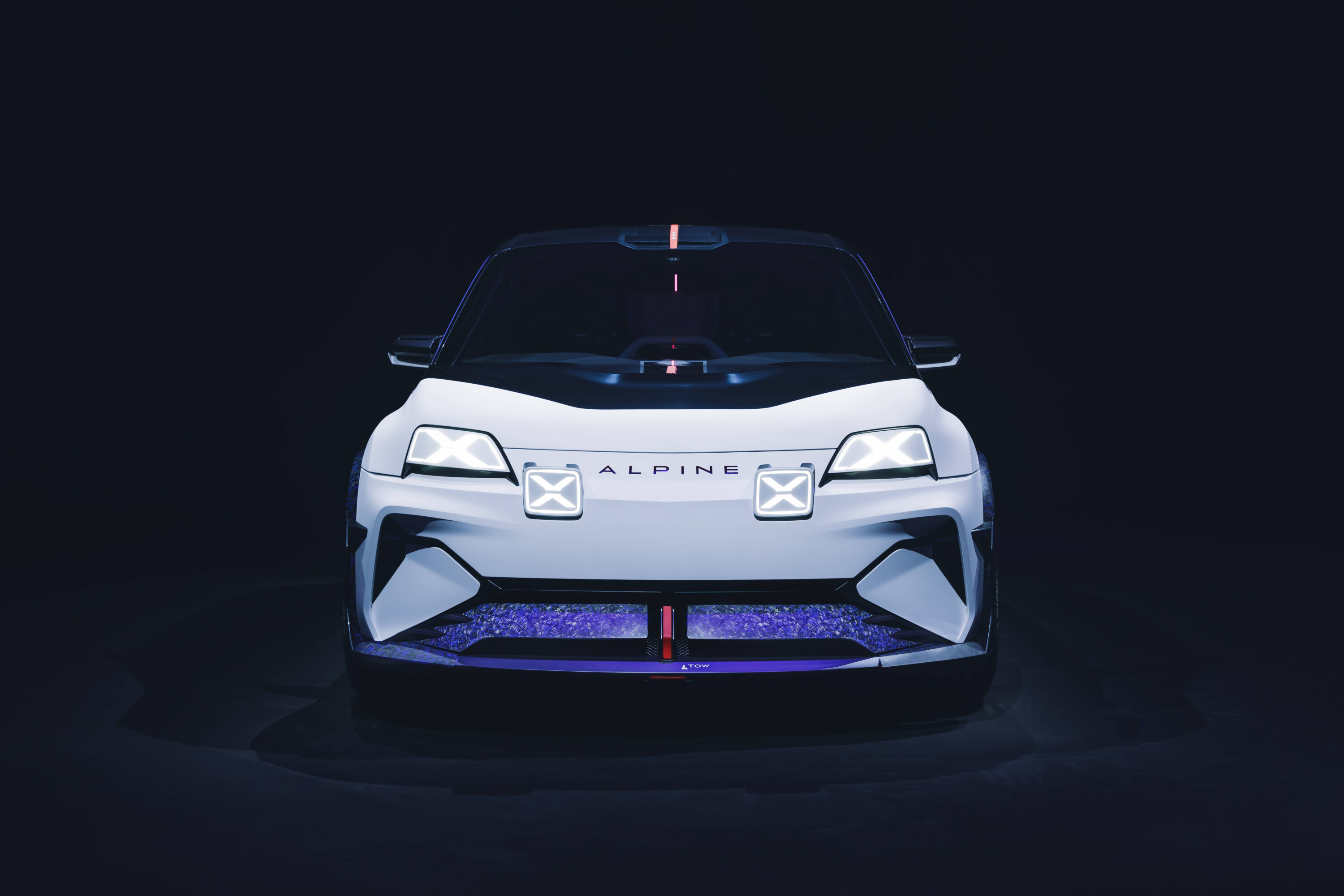
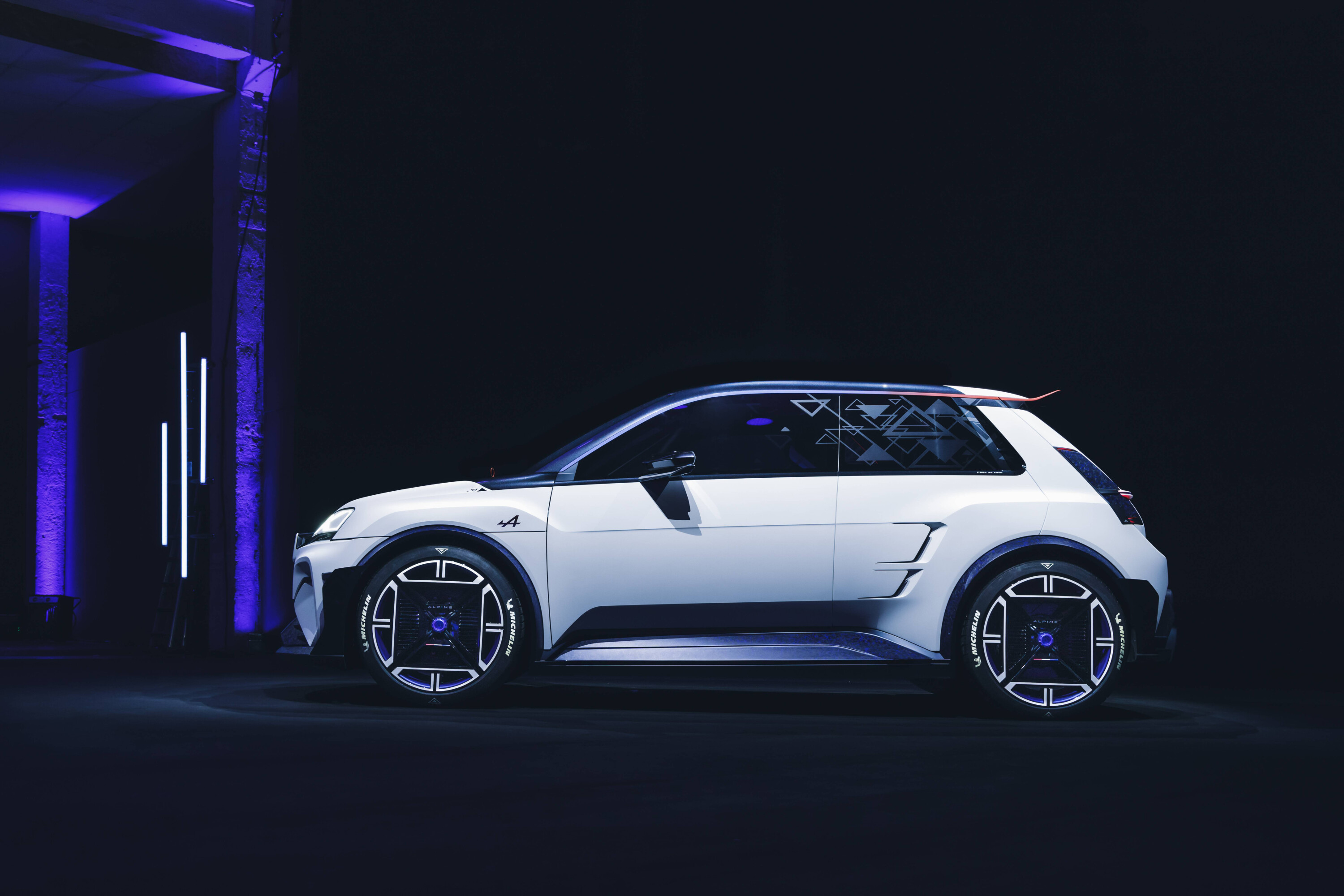
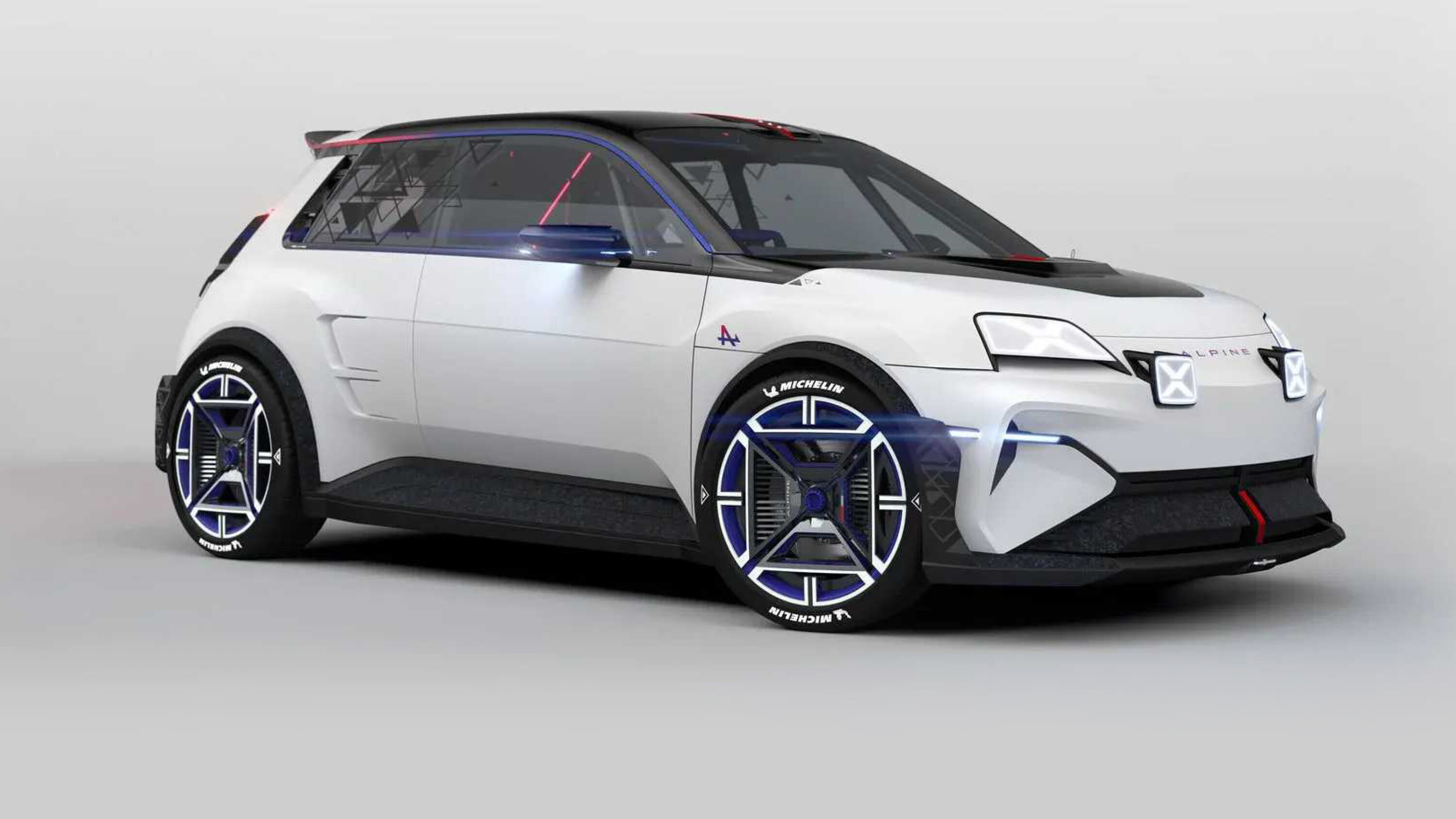
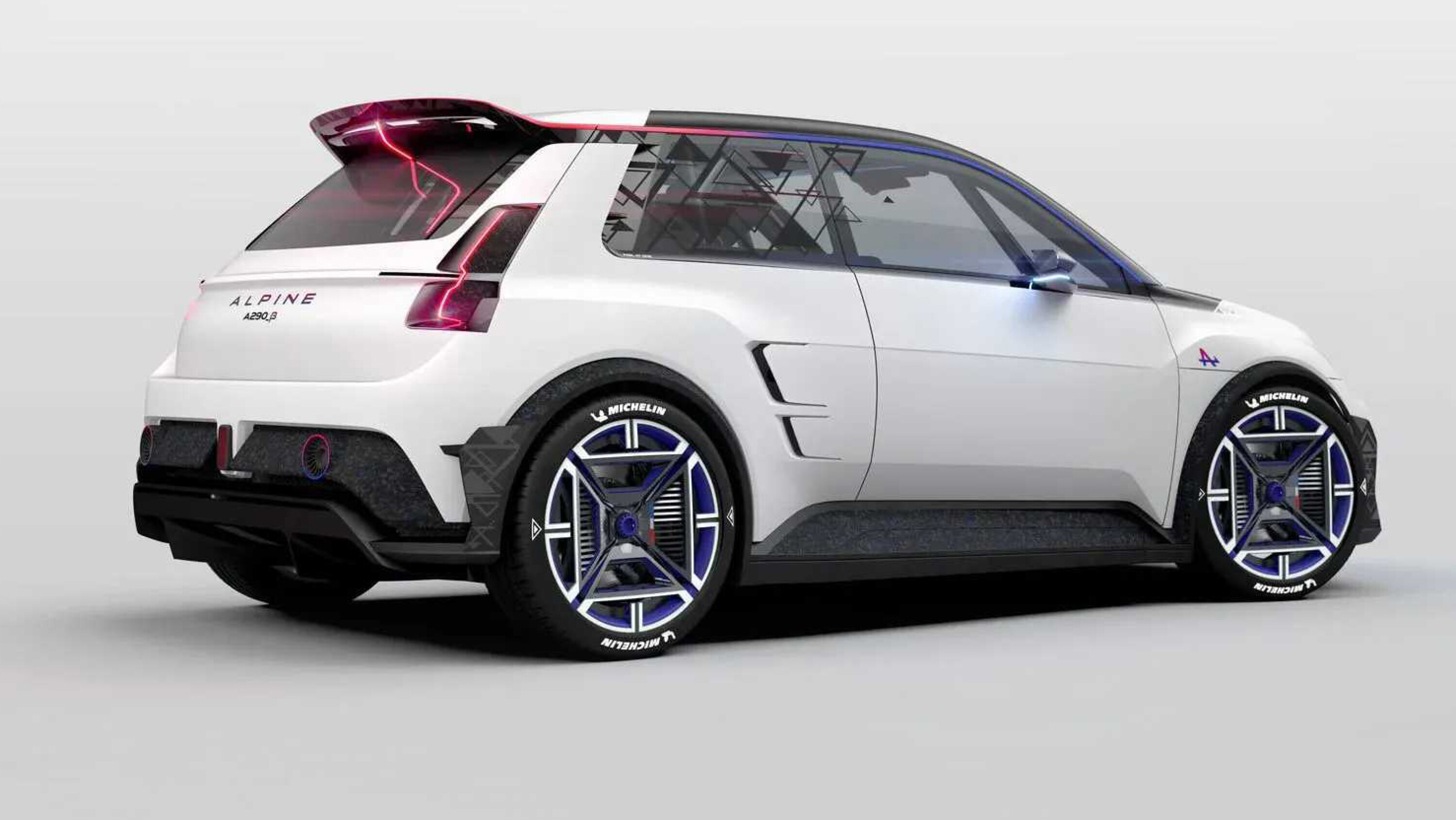
With X-shaped DRL lights at the front evoking Alpine’s rally heritage, the A290 sits low and squat. Measuring just 4050mm long and 1480mm tall, its 1850mm width gives it plenty of presence as do carbon-look arch extensions.
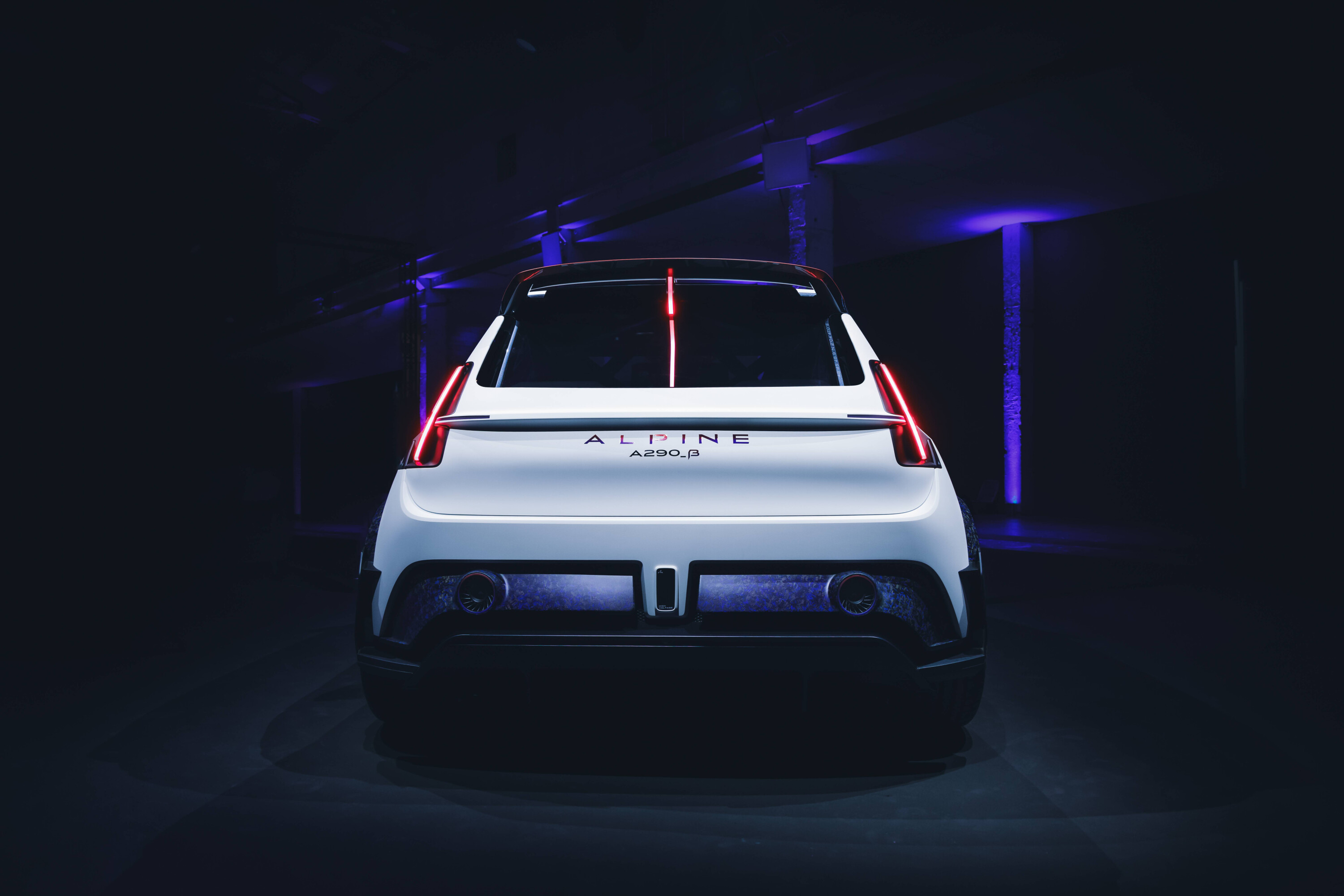
As for the wheels, well, the jury’s out for now. Interestingly, the functional vehicle is wearing more traditional wheels and Michelin rubber than the static car’s near-slick Michies and three-tone alloys that Alpine says ‘faithfully foreshadow’ the production rims.
Aside from knowing the electric hot hatch will be front-wheel drive only and use the same CMF-BEV platform as the forthcoming Renault 5 small hatch, we know precious little more about the A290 after its unveiling.
It doesn’t appear to be as lightning-fast as Tesla Model 3 Performance. Instead, its pace looks visually closer to a Cupra Born, we’d wager between 150-200kW from a front electric motor and a 0-100km/h sprint in the six-second range.
The A290 will feature multi-link rear suspension and front-axle torque vectoring (though Alpine was not clear if this meant torque vectoring by braking, a mechanical LSD, or an electromechanical diff – likely the latter) as well as four-piston brake calipers from the A110 sports car.
Alpine describes the A290 show car as “pleasantly playful at low and mediums speeds – again, to add to the driving sensations”, though promises it will be planted at higher velocities.
Three driving modes are on offer: Wet, Dry, and Full, as well as 11 different settings for the ABS.
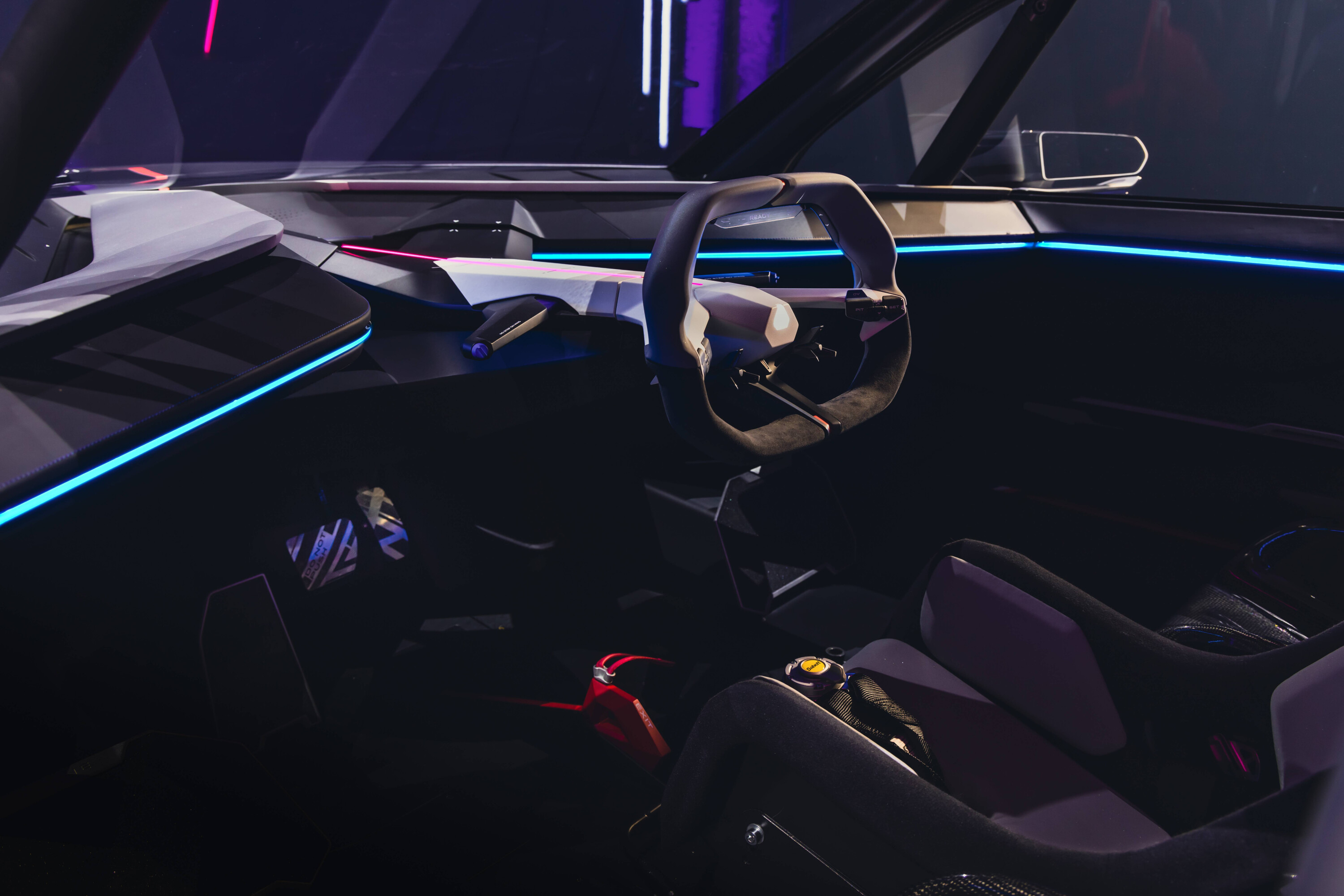
Driving enthusiasts rejoice – there are no distracting touchscreens here. Instead, the view from the central driving position is unimpeded, with augmented reality functions projected onto the windscreen for navigation directions and car information.
Above the driver is a small roof-mounted control panel for key functions when driving. The functional concept car features a single carbon-backed bucket seat, an integrated roll cage, and a racing steering wheel – none of which will likely appear in the production version.
Instead, the static prototype has an octagonal steering wheel with a ‘Boost’ button said to up the A290’s outputs for 10 seconds when on a dry track, with a 10-second cool-down period.
The A290 ‘urban racer’ is the first step in Alpine’s new Dream Garage, and as Rossi confirmed, it will be followed by a trio of electric vehicles before 2030 including the GT-X coupe, an electric A110 successor, and a large SUV.
Our original story, below, continues unchanged
These two photos of the future-previewing A290_β were published in the European press today, in error, and the offending article has now been removed.
There are no official details available at this time, although Alpine – an arm of Renault – has confirmed it will launch a production version of the “100% electric urban sports car” in 2024.
Ahead of tomorrow morning’s reveal, we’ve embedded the placeholder video that should be showing the full event at around 6:30am. See it below these A290 photos.
The concept, known as the Alpine A290 beta, is effectively an electric successor to the cult classic Renault Sport Clio – Alpine refers to it as a “100 per cent electric urban sports car.”
Although Alpine has only shown silhouettes and details of the A290 beta, its profile cuts a similar shape to the forthcoming 2024 Renault 5 electric car (with which it will share its CMF-B EV platform), though with a jutting front fascia, racy rear wing, and bonnet bulge.
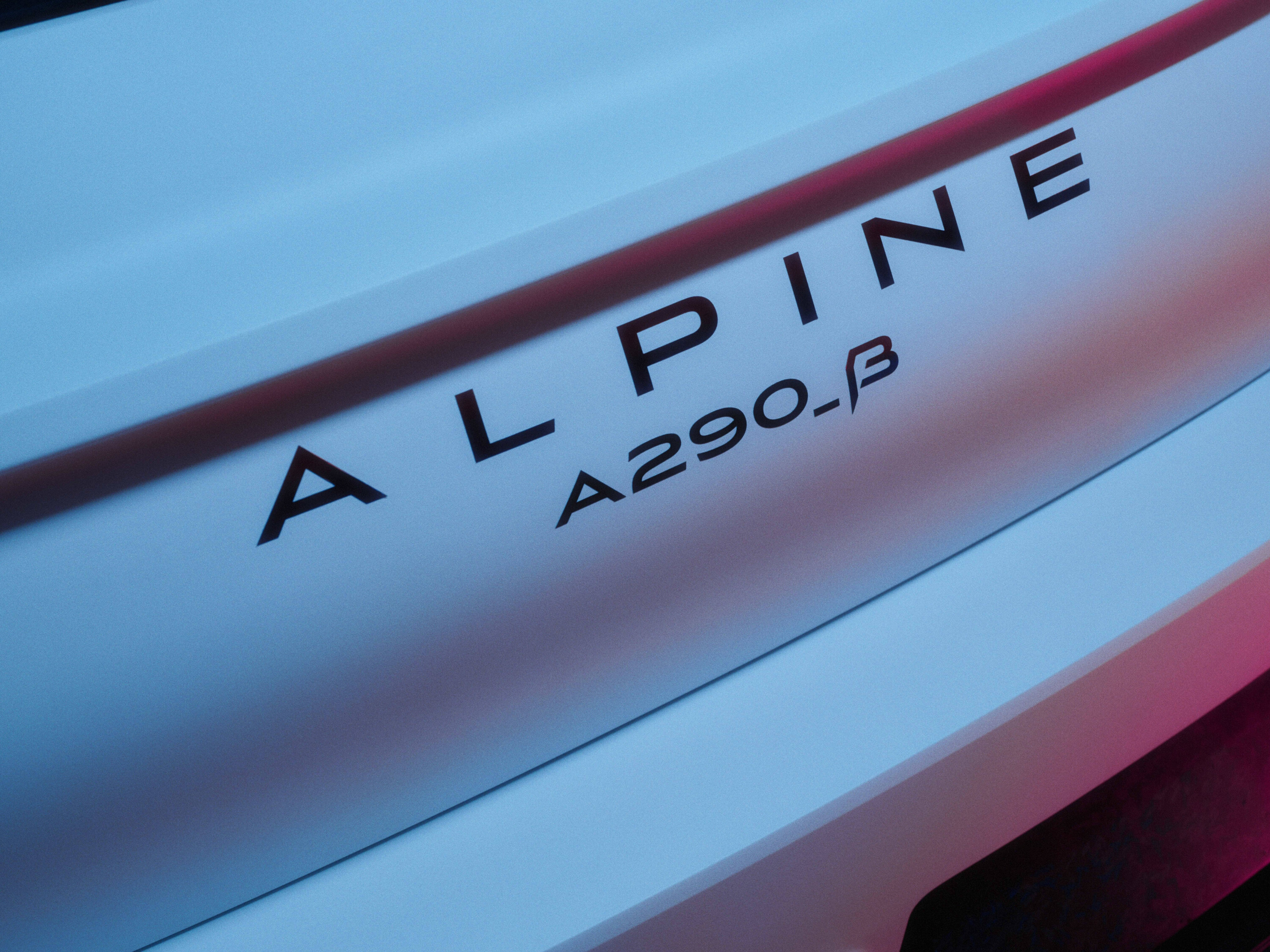

Instead of ‘Alpine 5,’ the French performance specialist has chosen ‘A290’ for its hot hatch. The ‘2’ in the name refers to the vehicle’s size, and the 90 denotes a multi-purpose vehicle. Only pure Alpine sports cars (such as the A110) feature the number ‘10’ in the badge.
While the 5 electric city car will be front-drive and feature a 100kW electric motor, expect more grunt from the Alpine A290. Earlier this year Renault teased an AWD 280kW/700Nm R5 Turbo 3E concept that could point to the first-ever all-paw Alpine product.
It’s more likely, though, that the French hot hatch specialist will stick to tried-and-true front-drive setup for the new Cupra Born rival – potentially using the Megane E-Tech’s 160kW motor or an even more powerful item.
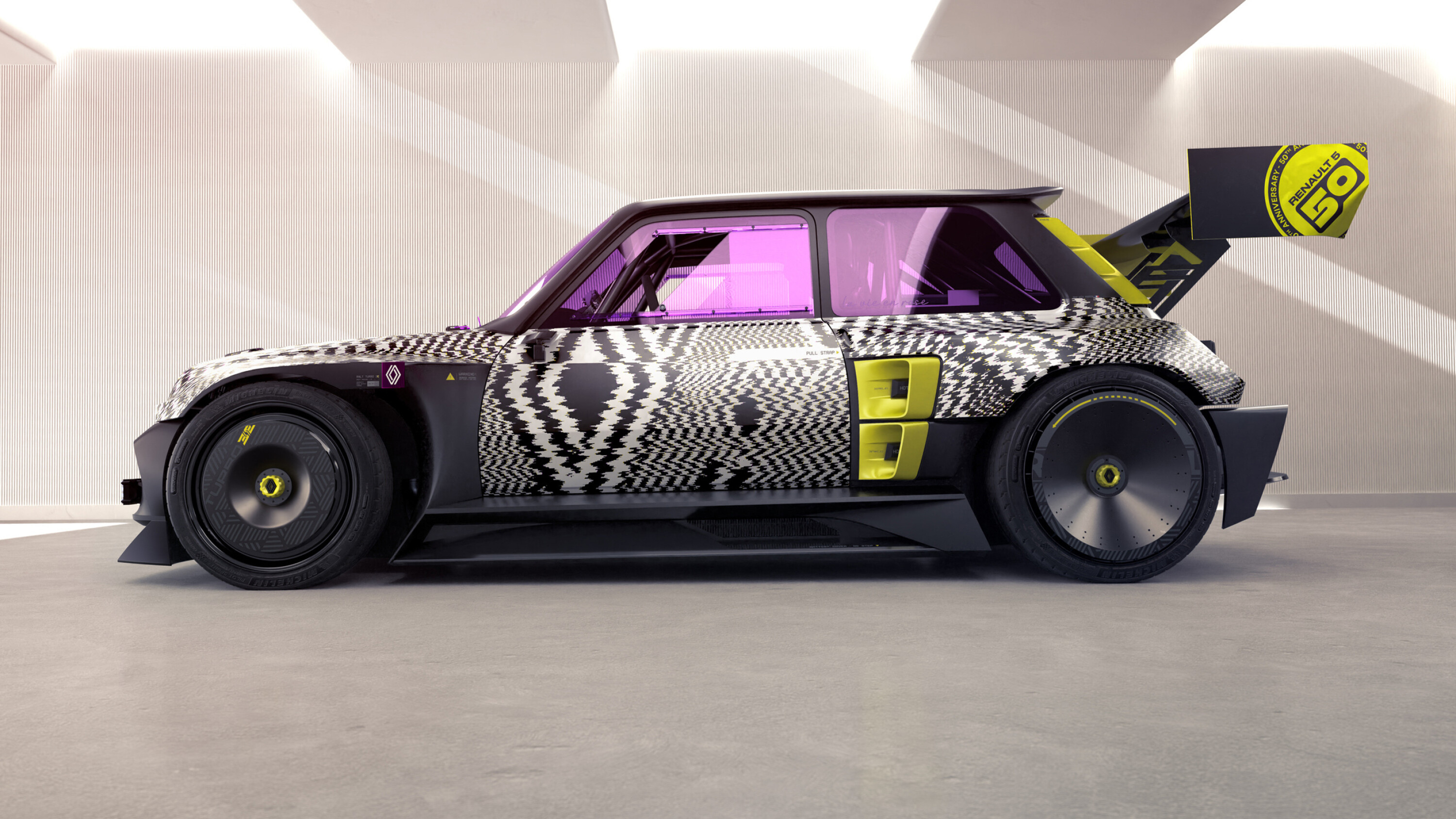
Speaking with UK publication Auto Express, the company’s executive vice-president for engineering, Gilles le Borgne, confirmed the news. “One of the dream garage will be a derivative of the R5,” le Borgne said.
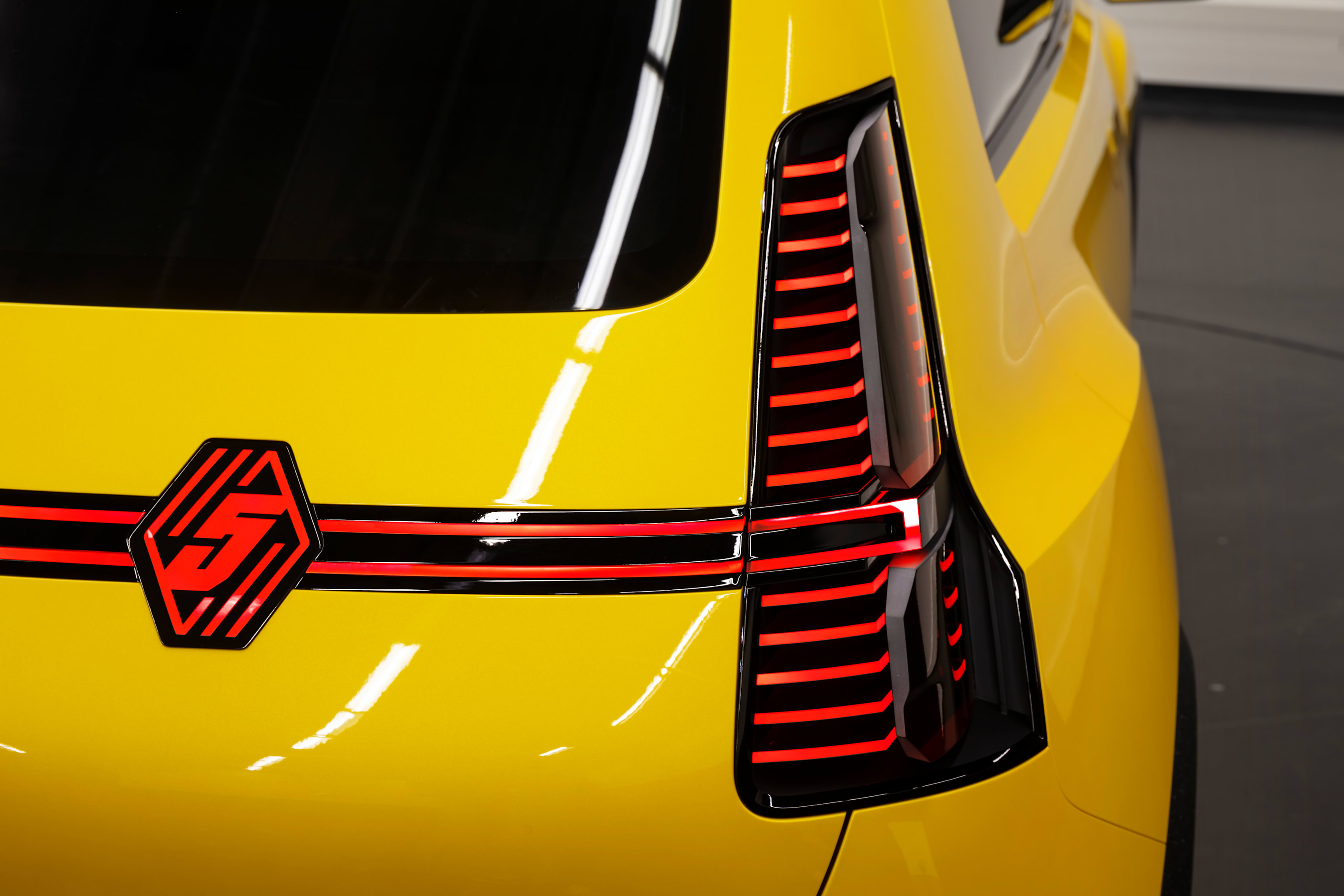
Going one step further, Borgne added details as to how the model will be motivated, using a version of the front-mounted electric motor in the new Renault Megane E-Tech Electric, albeit with some changes. The Megane E-tech produces 160kW and the new R5 from Alpine should achieve a sub-6.0 second 0-100km/h sprint.
“The final answer is yes,” he said when asked if it will use the same motor. “Because we want to do Alpine cars. By shortening the engine [for the regular R5] it has the global installation. We’ll adjust the track because it’ll be a more sporty look on the R5 Alpine.”
Modifications are necessary due to the smaller CMF-BEV platform for the R5, but this will also give it sharp handling and lighter weight by using a 52kWh battery; perfect for a hot hatch.
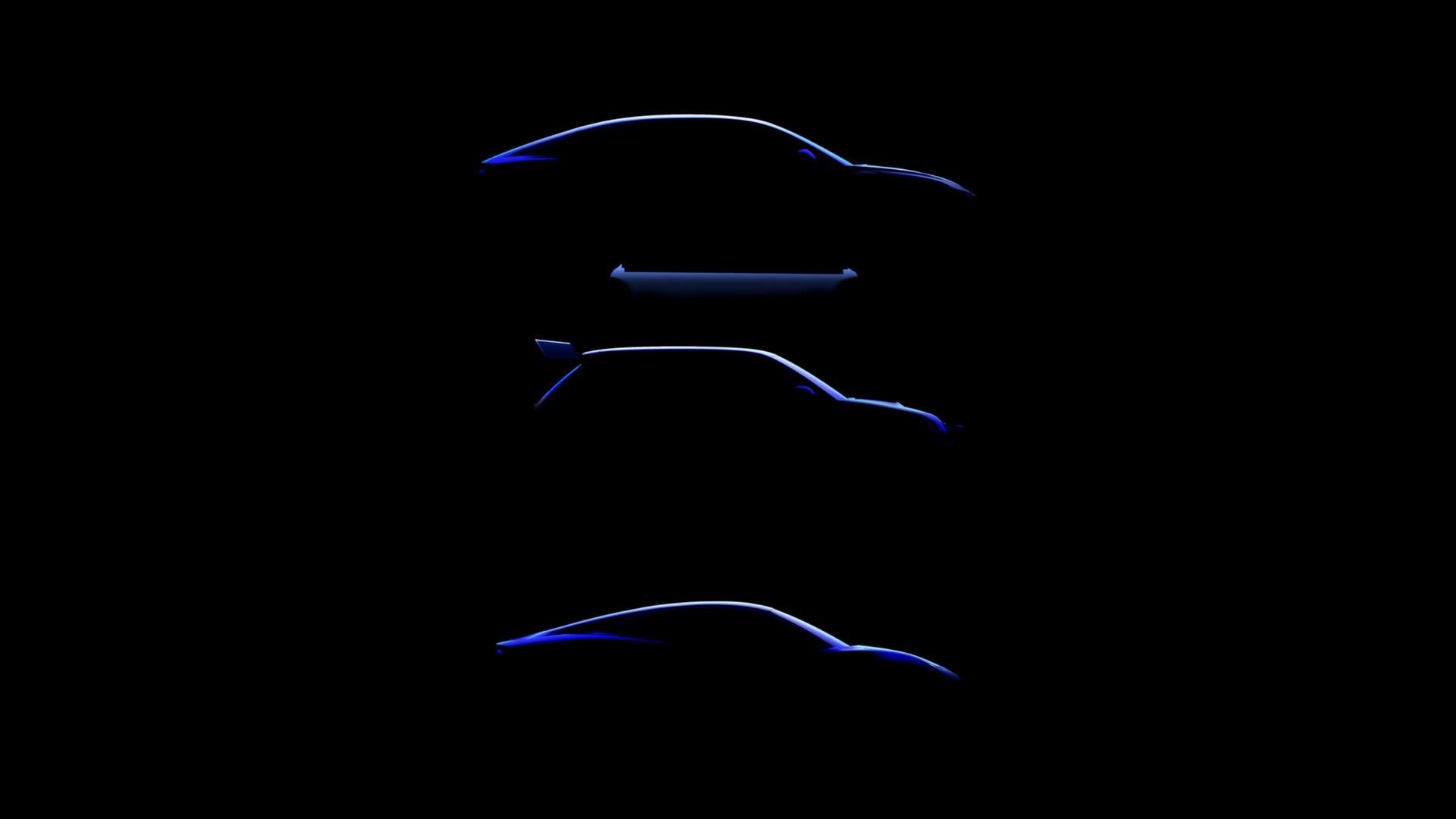
The ‘dream garage’ that Borgne speaks of is a teaser Alpine has given to its new electrified line-up that is due to be on roads from around 2025. There will be this version of the R5 hot hatch, but also a new sports car co-developed with Lotus, and a coupe-style performance SUV.
Borgne also gave further hints to Auto Express on its upcoming EV technology, saying that there will be all-wheel drive used in the SUV with unique torque vectoring, and thus likely a bunch more power than the circa-160kW in the R5.
Jim Chalmers announced the Albanese Government’s 2023-24 federal budget last night and there wasn’t much for motorists – that’ll have to wait until later in the year when the fuel efficiency standards are outlined.
Beginning in 2020 in an effort to combat falling spending habits during Covid, the government allowed businesses with turnovers up to $500 million to instantly write off assets valued up to $150,000 until June 30 2023. This applied to both new and used vehicles – everything from single-cab utes to prime movers.
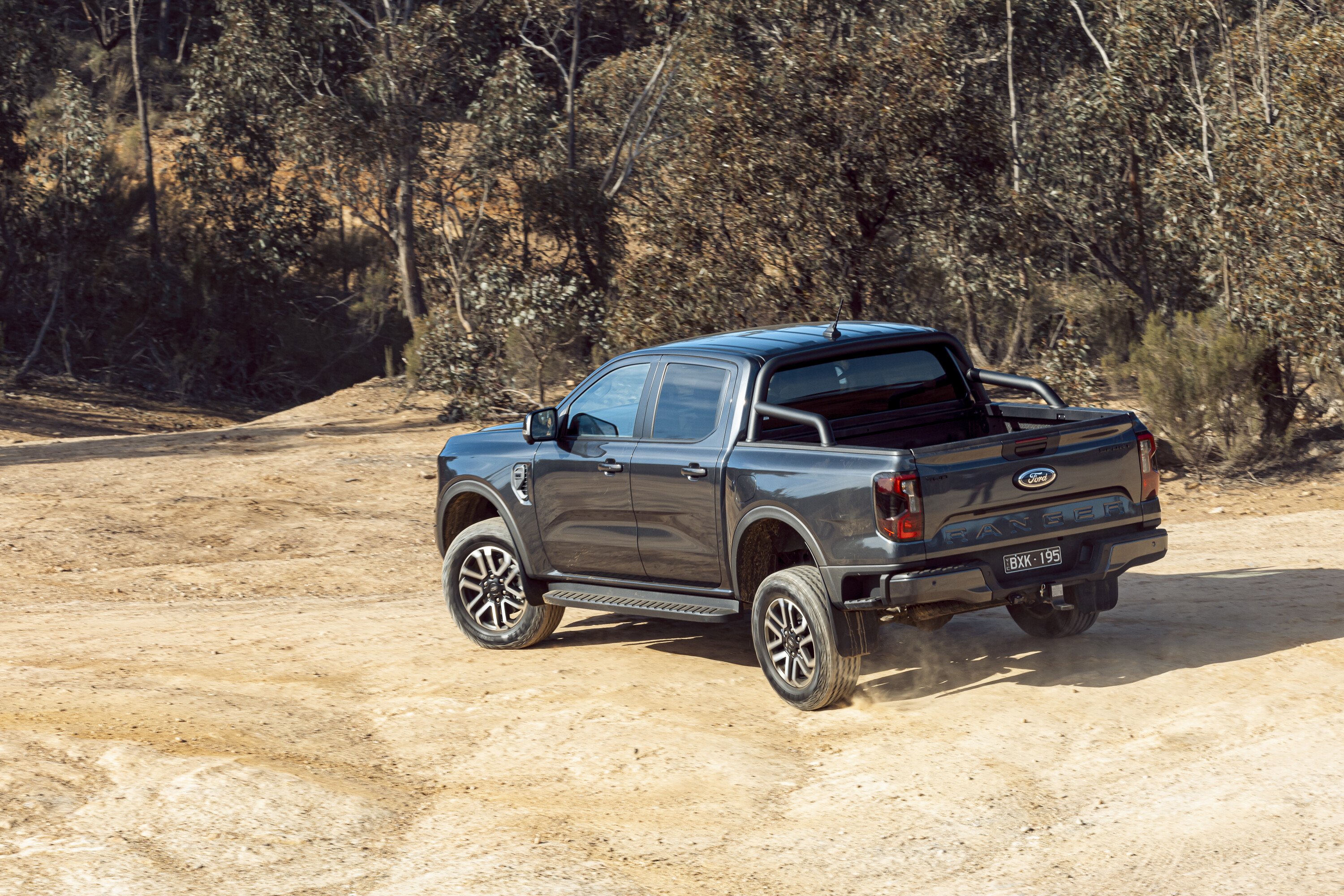
As an example, if you bought a new Toyota HiLux for $50,000 that spent 90 per cent of its time used for business, you’d be eligible to write off $45,000 instantly.
For 2023-24, however, the incentive has been rolled back significantly. Now limited to businesses with a turnover of less than $10 million, the scheme only covers assets up to $20,000.
It’s worth noting that, if you have a work ute on order that isn’t arriving until after June 30, you won’t be eligible for the previous benefits – even if you’ve paid a deposit already.
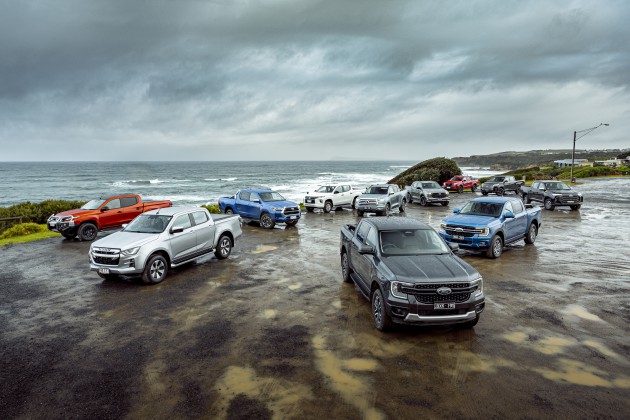
Dual-cab utes have charged in as a firm favourite for family hauling and daily duties, well beyond the old mould of tradie tasks and off-road adventures. It’s time to see which are best suited to the role.
The government is instead encouraging companies to improve energy efficiency. Businesses with annual turnovers less than $50 million are eligible for a 20 per cent tax deduction for more efficient assets valued up to $100,000.
The maximum bonus deduction is $20,000, and this is intended for efficient cooling and heating systems, battery storage devices, and other electrical goods to make businesses more efficient, though it excludes electric vehicles.
Traditional carmakers are paying strong attention to EVs, and both Ford and Volkswagen are expanding availability globally.
Electric vehicle (EV) take-up continues to be slowed by market preferences and minimal incentives in Australia, pushing supply towards more EV-friendly regions.
Ford has confirmed the Mustang Mach-E will arrive from “later this year (2023)”, while Volkswagen claims the ID.4 – and its ID.5 coupe SUV sibling – are due in the first half of 2024.
So, how do the Ford Mustang Mach-E and Volkswagen ID.4 compare against the established and conceptually-similar Tesla Model Y, and the 2022 Wheels Car of the Year-winning Kia EV6? Let’s find out.
Ford Australia has confirmed local pricing and features for the Mustang Mach-E, while Tesla has added the mid-spec Model Y Long Range AWD to its local lineup.
This comparison has been updated to reflect the latest details.
We’ve tested nearly every EV below six figures in Australia to rank the best on sale today
Check out our coverage below.
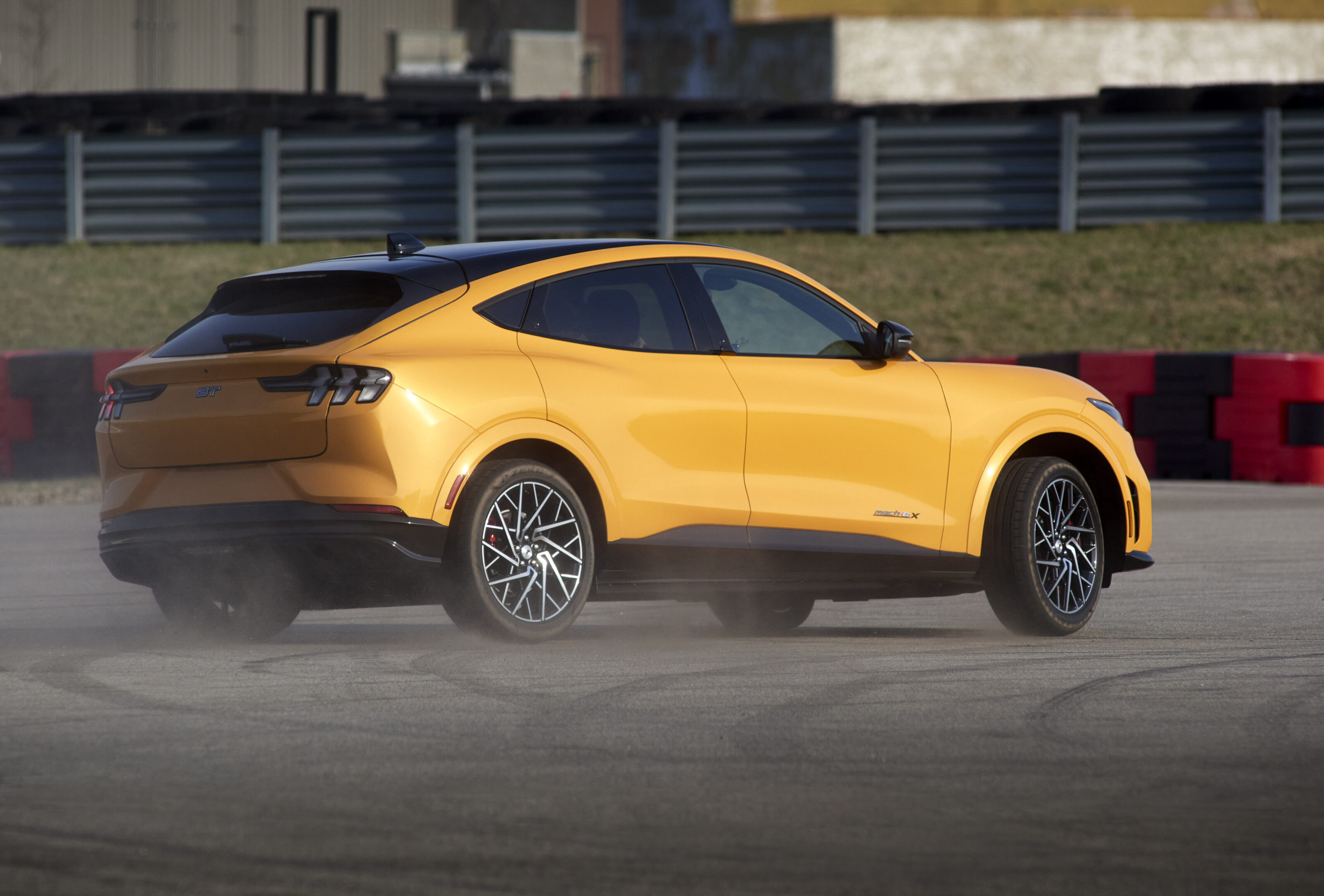
As for the Mustang Mach-E, it is around $10,000 dearer than the Model Y and EV6 for each variant, with the entry-level Select priced from $79,990 before on-road costs. The Mach-E GT is listed at $108,990 plus on-roads.
Last year, Volkswagen managing director for passenger vehicles, Michal Szaniecki, said the ID.4 and its swoopy ID.5 coupe sibling would be priced in line with the Tiguan R-Line and the Tiguan R.
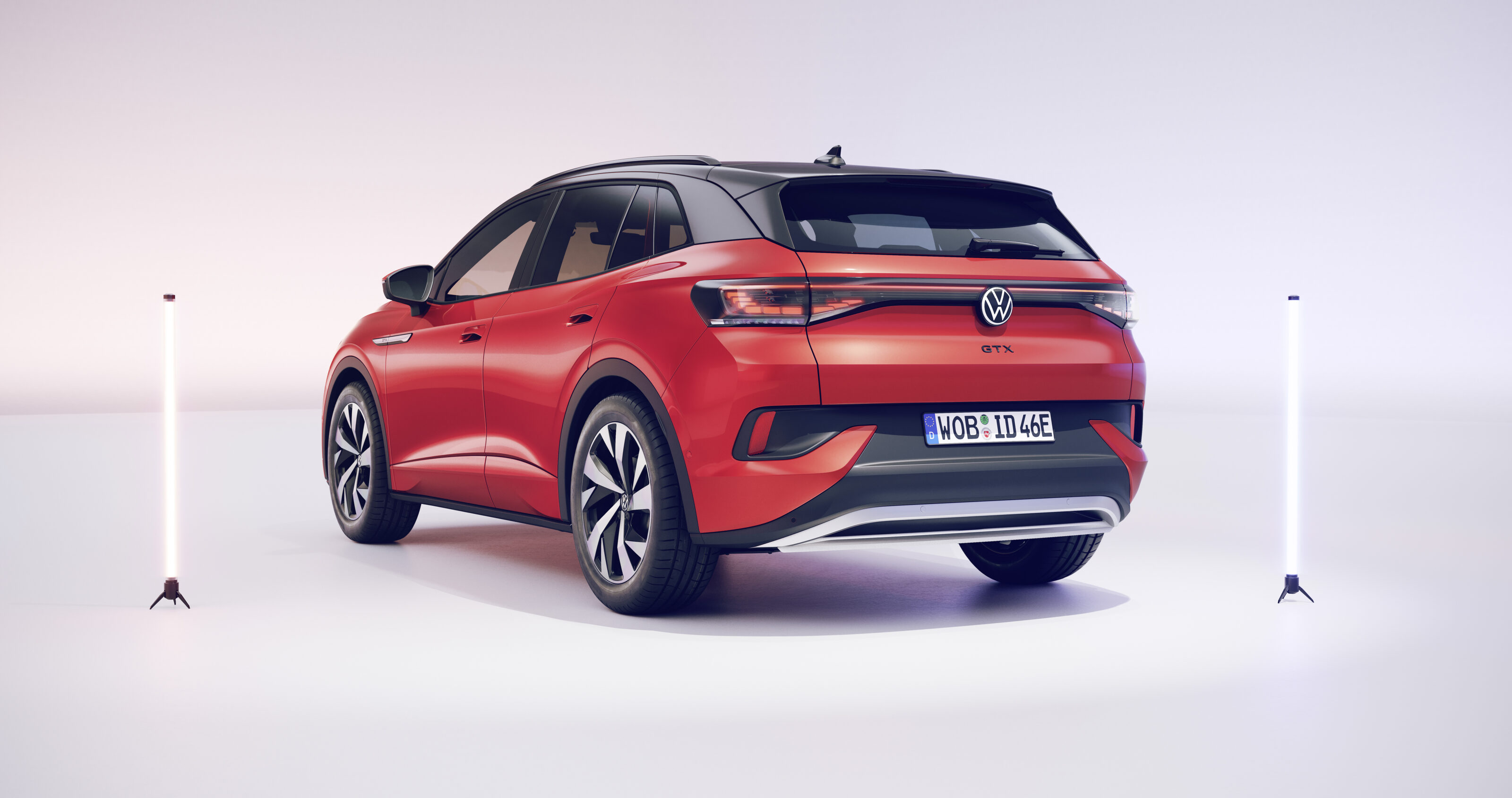
Exact spec hasn’t been locked in, but expect the first batch to match the Pro Performance trim offered in Europe, with a 77kWh battery and a driving range of around 520 kilometres. The flagship GTX will arrive later.
As such, we’d estimate a price between $60,000 for the entry ID.4 and $80,000 for the GTX – similar to the Tiguan R-Line and R, respectively.
All estimated prices exclude on-road costs (taxes, registration, third-party insurance and dealer delivery charges) and EV incentives, which are subject to change.
| Ford Mustang Mach-E | Tesla Model Y | Kia EV6 | Volkswagen ID.4 |
|---|---|---|---|
| u2013 | RWD: $69,300 | Air RWD: $72,590 | RWD: $65,000 (est.) |
| Select RWD: $79,990 | u2013 | GT-Line RWD: $79,590 | AWD: $68,500 (est.) |
| Premium RWD: $92,990 | Long Range AWD: $82,300 | GT-Line AWD: $87,590 | GTX: $80,000 (est.) |
| GT: $108,990 | Performance: $98,955 | GT AWD: $99,590 | u2013 |
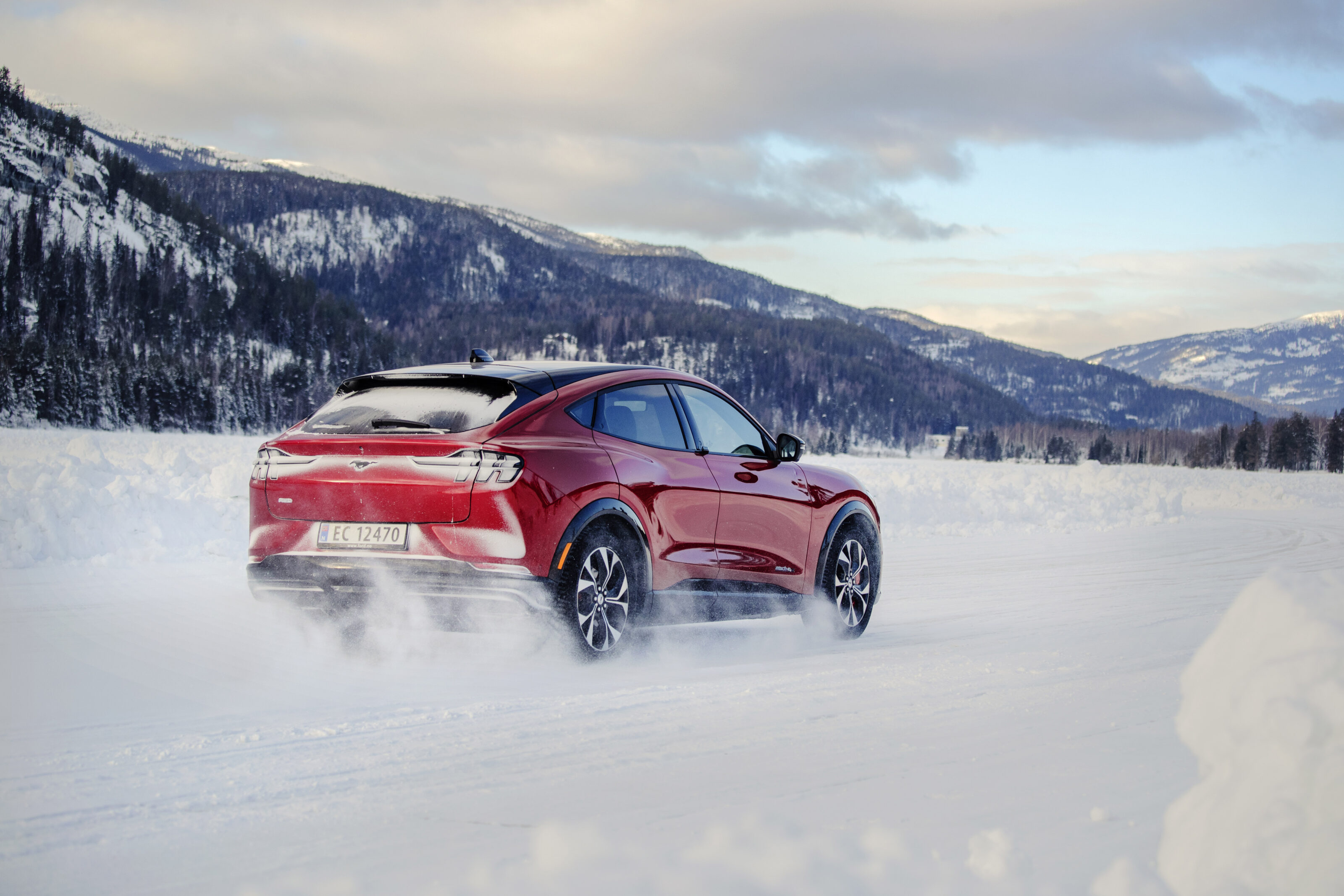
It is followed by the Mach-E and Model Y, which pack a similar punch to provide some serious performance at around $100,000 for the most-powerful versions.
However, the Volkswagen ID.4 still has respectable outputs, and the GTX is pitched as an electric alternative to the traditional Golf GTI.
| Ford Mustang Mach-E | Tesla Model Y | Kia EV6 | Volkswagen ID.4 | |
|---|---|---|---|---|
| Power | Select: 198kW | RWD: 220kW | RWD: 168kW | RWD: 150kW |
| Premium: 216kW | AWD: 378kW | AWD: 239kW | AWD: 195kW | |
| GT: 358kW | Perf: 393kW | GT: 430kW | GTX: 220kW | |
| Torque | Select: 430Nm | RWD: 420Nm (est.) | RWD: 350Nm | RWD: 310Nm |
| Premium: 430Nm | AWD: 493Nm (est.) | AWD: 605Nm | AWD: 425Nm | |
| GT: 860Nm | Perf: 660Nm (est.) | GT: 740Nm | GTX: 460Nm | |
| 0-100 km/h | Select: 6.9s (est.) | RWD: 6.9s | RWD: 7.3s | RWD: 8.5s |
| Premium: 6.9s (est.) | AWD: 5.0s | AWD: 5.2s | AWD: 6.9s | |
| GT: 3.7s | Perf: 3.7s | GT: 3.5s | GTX: 6.2s | |
| Top speed | Select: 179km/h | RWD: 217km/h | RWD: 185km/h | RWD: 159km/h |
| Premium: 179km/h | AWD: 217km/h | AWD: 188km/h | AWD: 159km/h | |
| GT: 200km/h | Perf: 250km/h | GT: 260km/h | GTX: 180km/h |
| Ford Mustang Mach-E | Tesla Model Y | Kia EV6 | Volkswagen ID.4 | |
|---|---|---|---|---|
| Range | Select: 470km | RWD: 455km | RWD: 504-528km | RWD: 535km |
| Premium: 600km | AWD: 533km | AWD: 484km | AWD: 515km | |
| GT: 490km | Perf: 514km | GT: 424km | GTX: 500km | |
| Battery size | 71kWh (Select),u00a091kWh (Premium, GT) | 60kWh (RWD), 75kWh (Perf.) | 77.4kWh | 82kWh |
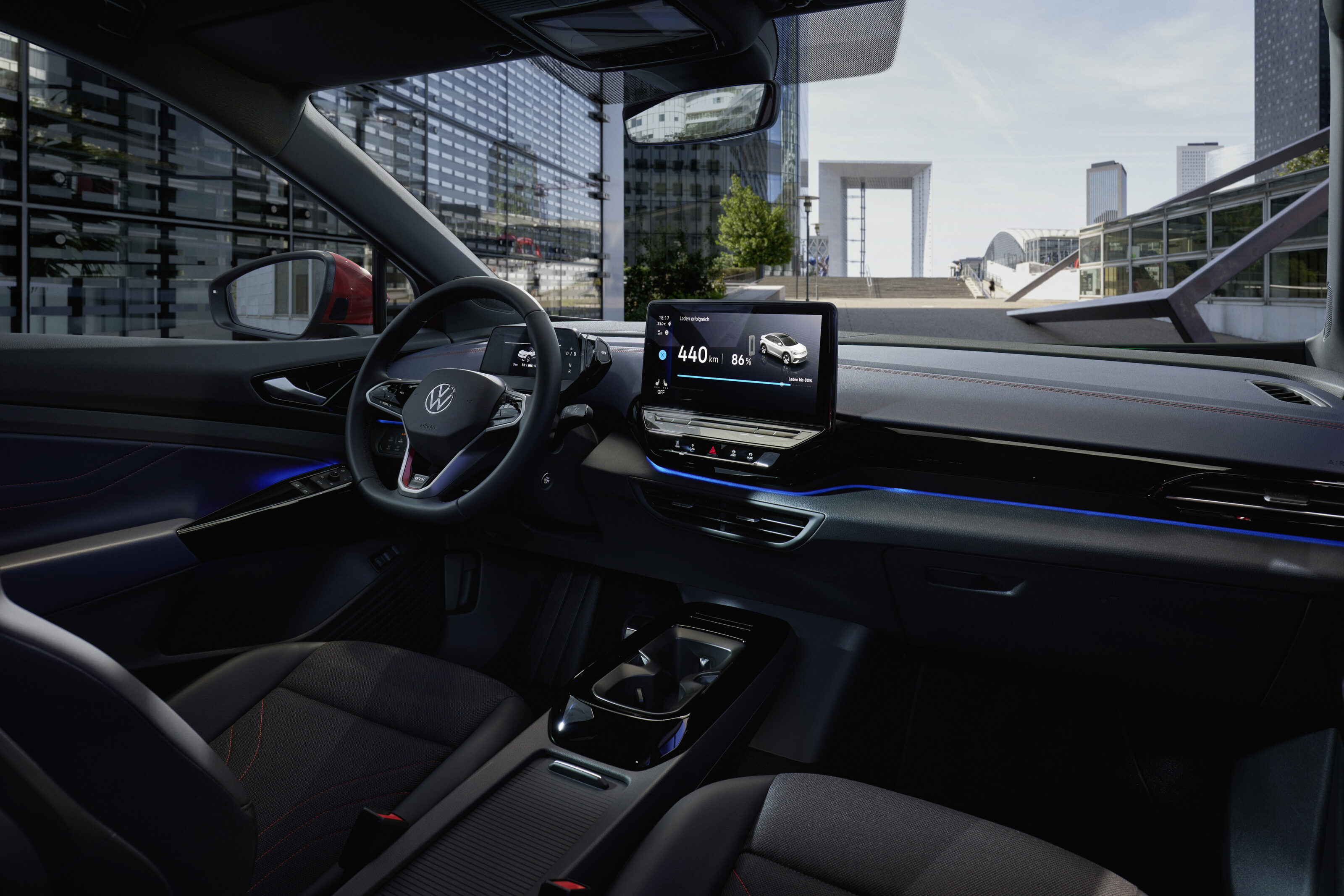
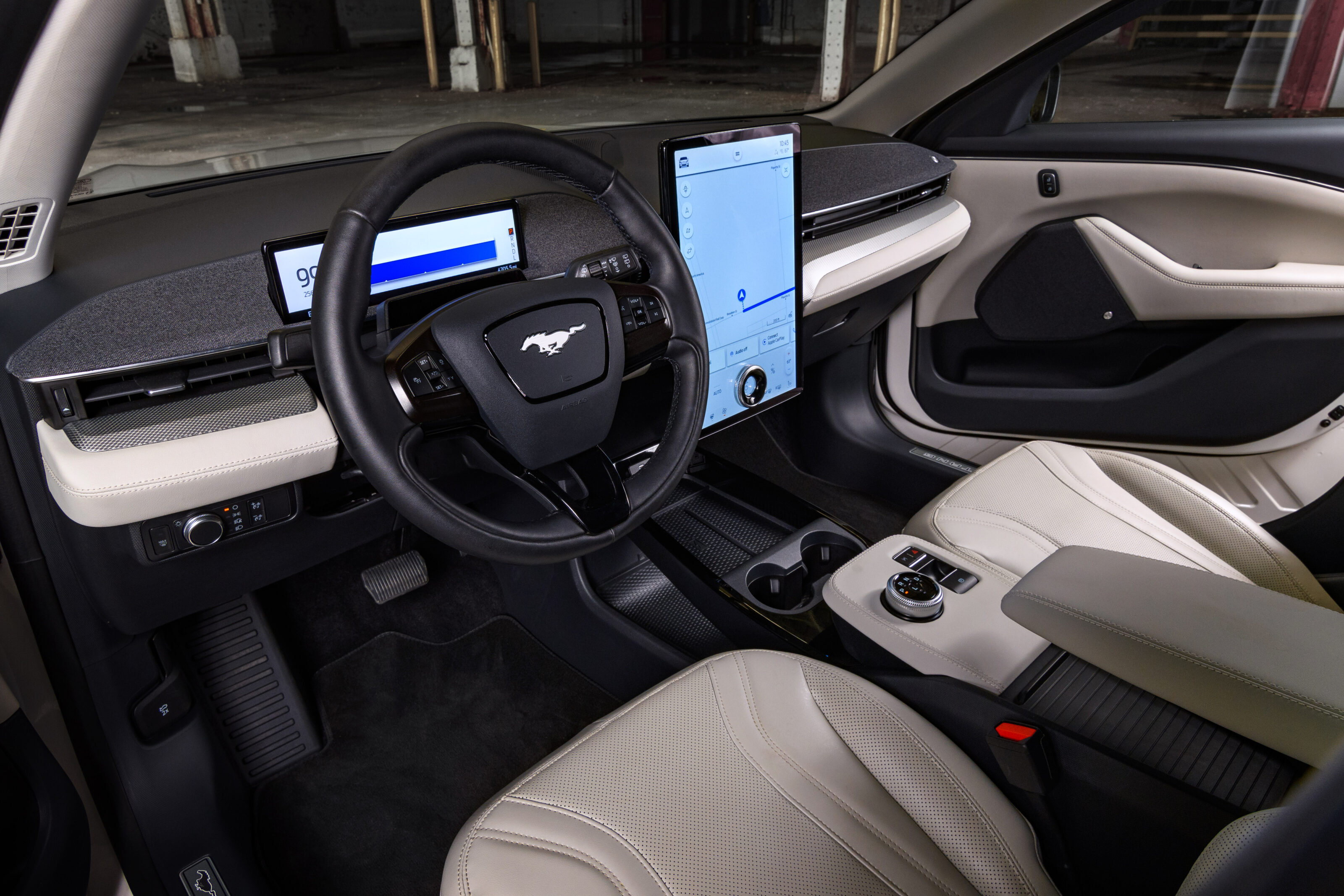
Here, the Ford Mustang Mach-E is shown to be a more spacious offering, with a large-sized footprint similar to the Tesla Model Y and Kia EV6 and, compared to the smaller Volkswagen ID.4, which is likely to slot into the medium SUV category in Australia.
| Ford Mustang Mach-E | Tesla Model Y | Kia EV6 | Volkswagen ID.4 | |
|---|---|---|---|---|
| Wheelbase | 2984mm | 2890mm | 2900mm | 2765mm |
| Length | 4713mm (GT: 4743mm) | 4751mm | 4695mm (Air: 4690mm) | 4584mm |
| Height | 1624mm (GT: 1613mm) | 1624mm | 1550mm (GT: 1545mm) | 1636mm |
| Width | 1881mm | 1921mm | 1890mm (Air: 1880mm) | 1852mm |
With an 800-volt architecture, the Kia EV6 supports 350kW ultra-rapid fast charging – allowing it to charge from 10 to 80 per cent in just 18 minutes.
However, it can be difficult to reach these speeds – particularly in Australia.
The Model Y, meanwhile, fully supports Tesla’s Supercharger network, with a 250kW maximum allowing for a top-up in around 30 minutes.
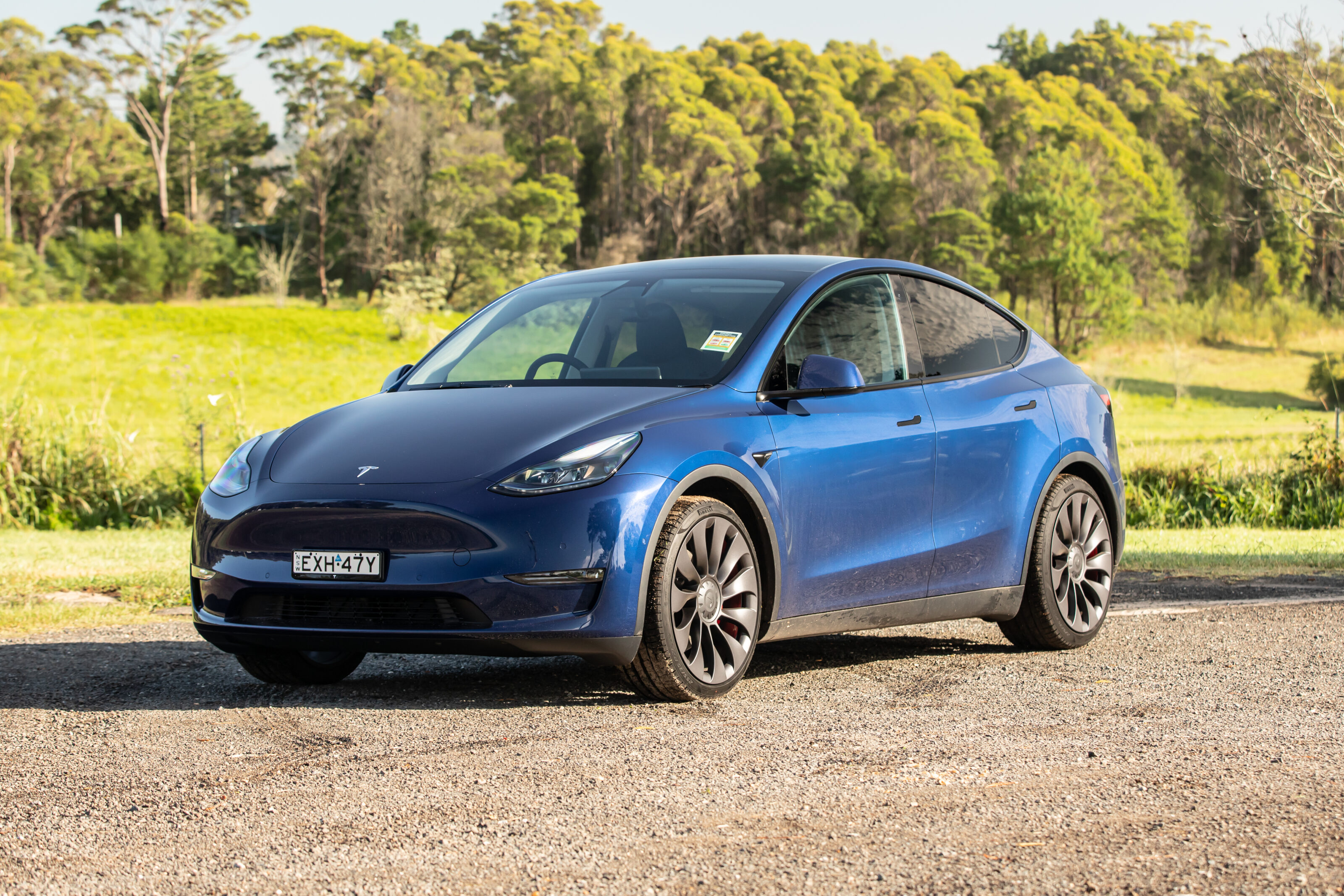
As for the Mach-E and ID.4, a public DC charger should top up the battery of each vehicle from 10 to 80 per cent in around 40 minutes.
This is due to a charging rate around 135kW to 150kW in both vehicles, allowing for a quicker charge than a standard 50kW unit.
For charging at home, all vehicles have a maximum 11kW AC charge rate.
| u00a0 | Ford Mustang Mach-E GT | Tesla Model Y Perf. | Kia EV6 GT | Volkswagen ID.4 GTX |
|---|---|---|---|---|
| DC fast charger | 50kW: approx. 85 minutes (10% u2013 80%) | 50kW:u00a0 | 50kW: approx. 73 minutes (10% u2013 80%) | 50kW: approx. 70 minutes (10% u2013 80%) |
| 150kW: approx. 43 minutes (10% u2013 80%) | 250kW: approx. 27 minutes | 350kW: approx. 18 minutes (10% u2013 80%) | 135kW: approx. 33 minutes (10% u2013 80%) | |
| AC standard charger | Max. capacity: 11kW | Max capacity: 11kW | Max. capacity: 11kW | |
| Approx. 6 hr 45 min. (11kW, 10% u2013 80%) | Approx. 8 hr 15 min (11kW,u00a0 | Approx. 5 hr 45 min. (11kW, 10% u2013 80%) |
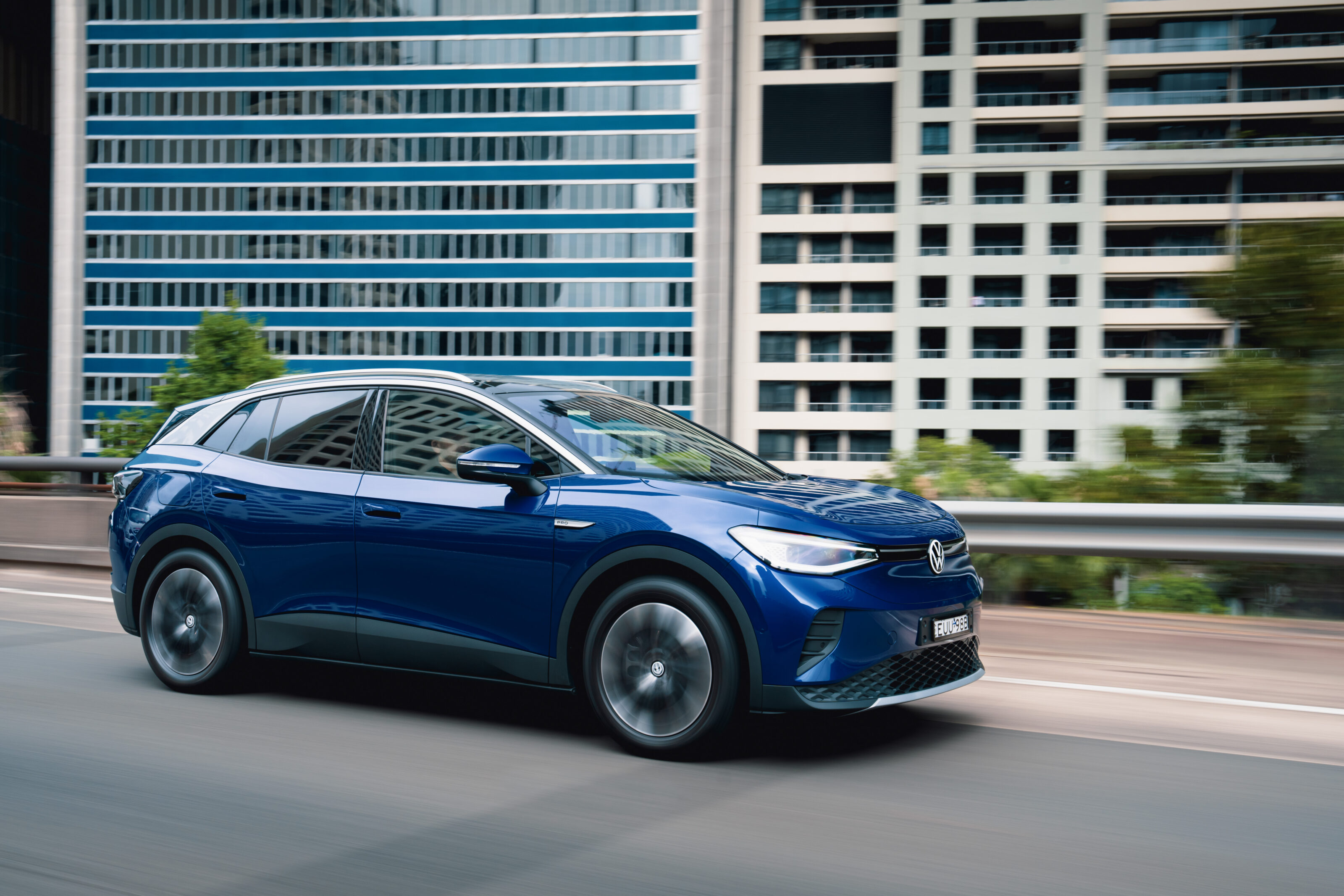
| Volkswagen ID.4 features | |
|---|---|
| 18-, 19- or 20-inch alloy wheels | Wireless phone charger |
| 12-inch Discover Max infotainment system | USB-C ports |
| Apple CarPlay and Android Auto (wireless) | Adaptive suspension (GTX) |
| DAB+ digital radio | Heat pump |
| Voice assistant with ‘ID.Light’ | Vehicle-to-X (V2X) compatibility |
| 5.3-inch digital instrument cluster | 30-colour LED interior ambient lighting |
| LED headlights and tail-lights | Panoramic sunroof |
| Augmented reality head-up display | Massaging seats. |
| 18-, 19- or 20-inch alloy wheels | Wireless phone charger |
|---|---|
| 15.5-inch Sync 4 infotainment system | USB-C ports |
| Apple CarPlay and Android Auto (wireless) | Multi-colour ambient lighting (Premium, GT) |
| DAB+ digital radio | Adaptive suspension (GT) |
| Amazon Alexa voice assistant | Brembo brakes (GT) |
| 10.2-inch digital instrument cluster | Electronic door latches |
| 10-speaker B&O audio system | LED headlights and tail-lights. |
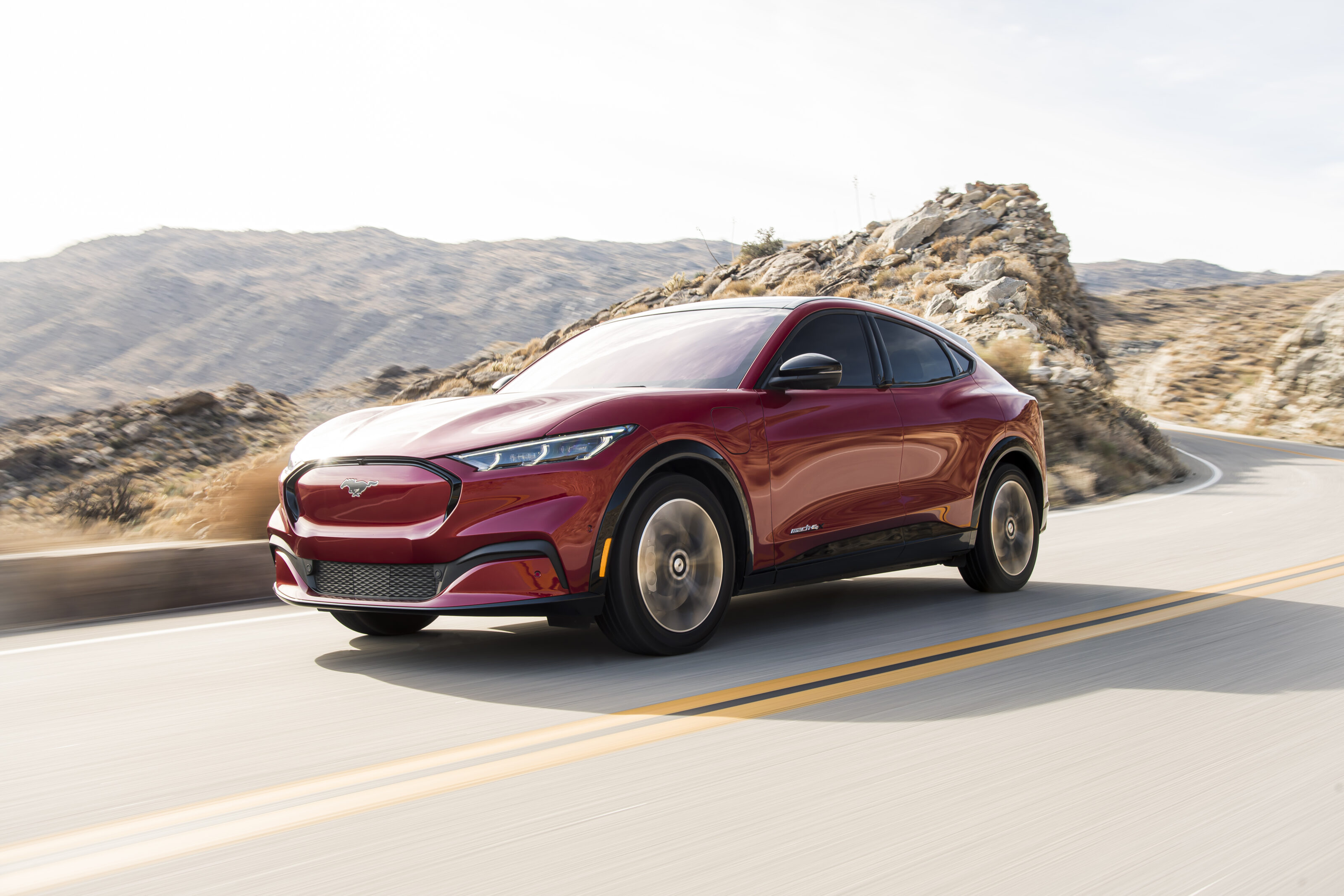
| Ford Mustang Mach-E features | |
|---|---|
| 18-, 19- or 20-inch alloy wheels | Wireless phone charger |
| 15.5-inch Sync 4 infotainment system | USB-C ports |
| Apple CarPlay and Android Auto (wireless) | Multi-colour ambient lighting (Premium, GT) |
| DAB+ digital radio | Adaptive suspension (GT) |
| Amazon Alexa voice assistant | Brembo brakes (GT) |
| 10.2-inch digital instrument cluster | Electronic door latches |
| 10-speaker B&O audio system | LED headlights and tail-lights. |
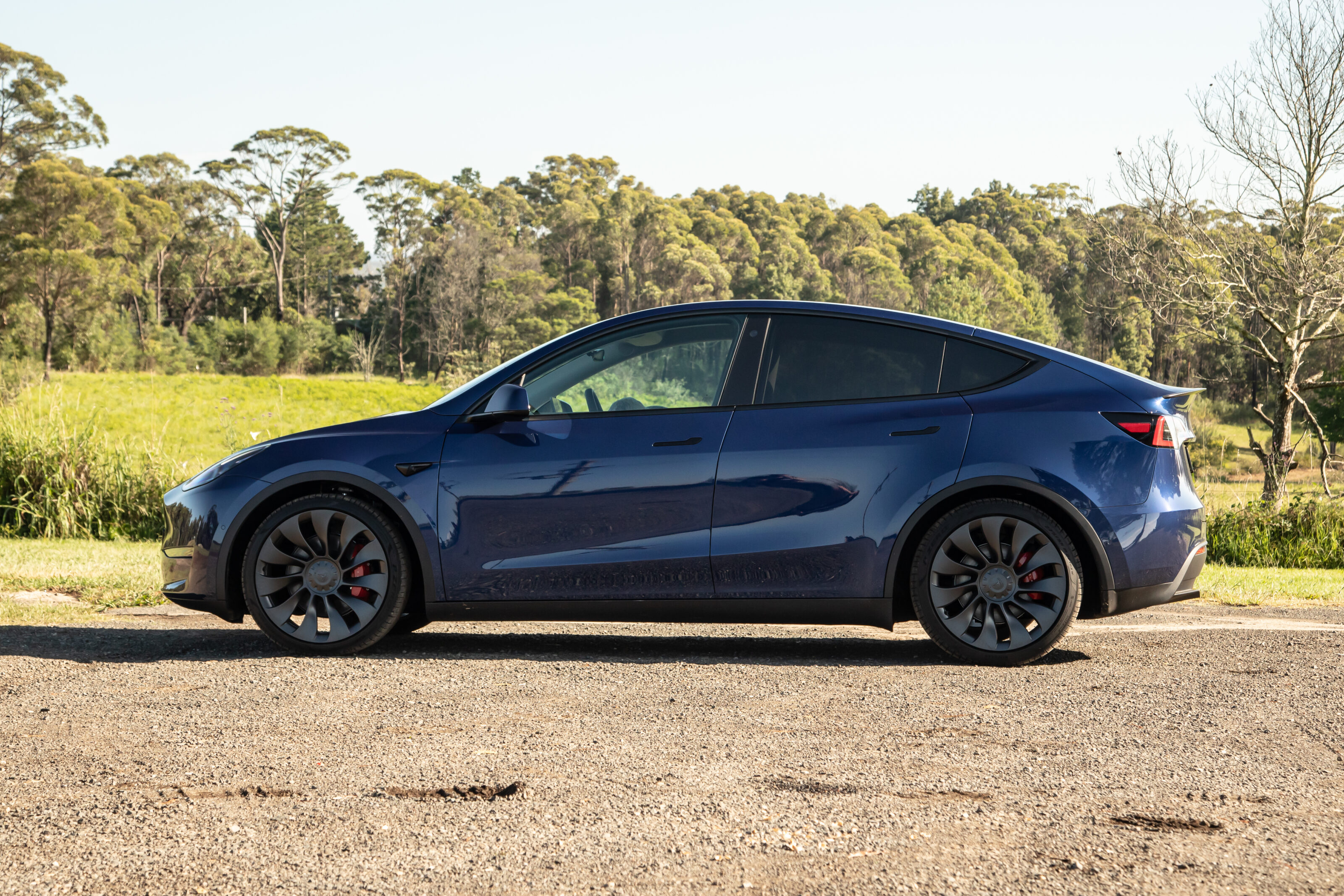
| Kia EV6 features | |
|---|---|
| 19-, 20- or 21-inch alloy wheels | USB-C charge ports |
| 12.3-inch infotainment system | Dual-zone climate control |
| Wired Apple CarPlay and Android Auto | Augmented reality head-up display (GT-Line & GT) |
| DAB+ digital radio | Remote smart park assist (GT-Line & GT) |
| 12.3-inch digital instrument cluster | Heated and ventilated front seats (GT-Line) |
| LED headlights, tail-lights and daytime running lamps | 14-speaker Meridian audio system (GT-Line & GT) |
| Wireless phone charging | 64-colour LED interior ambient lighting (GT-Line & GT) |
| Satellite navigation | Panoramic sunroof (AWD only) |
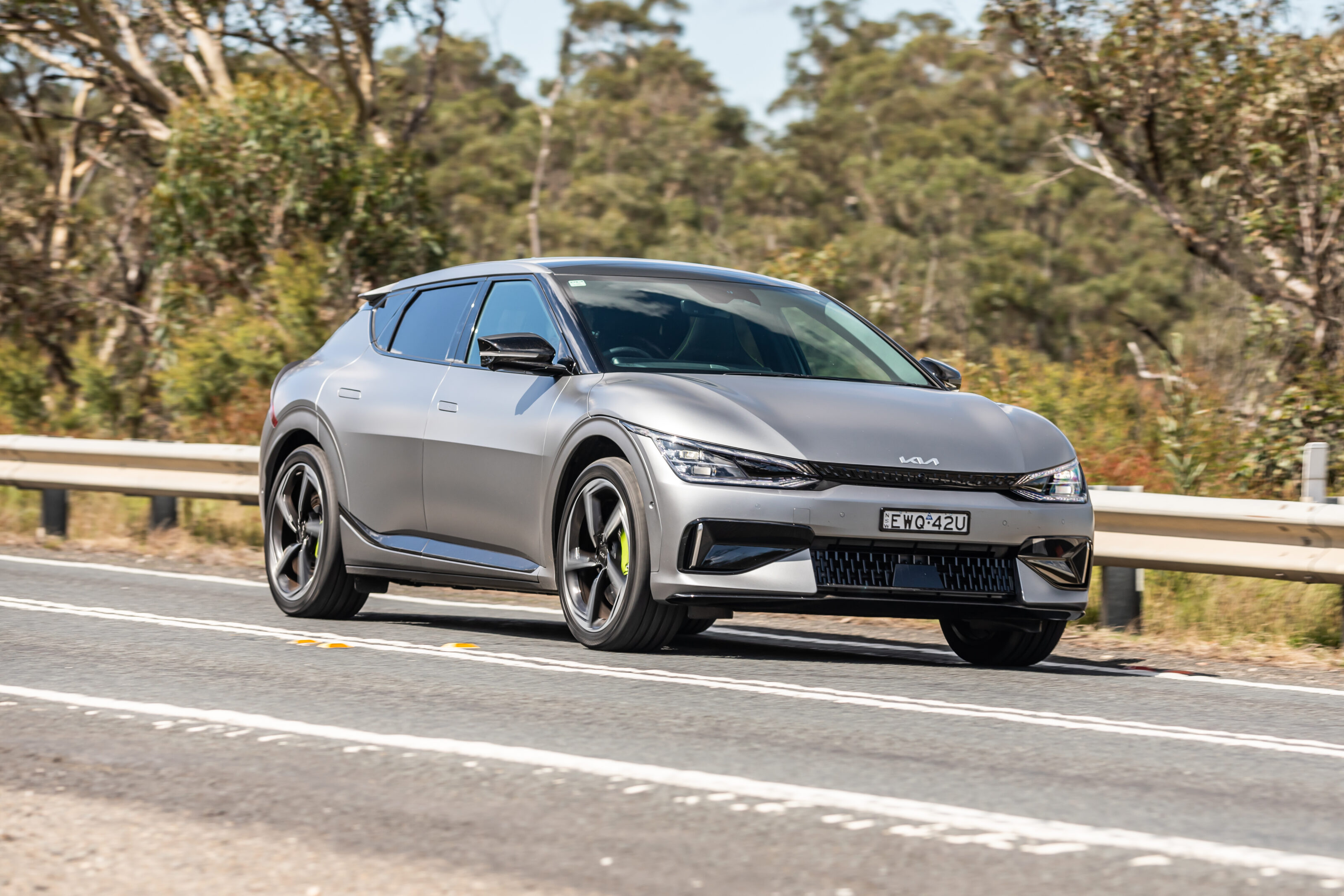
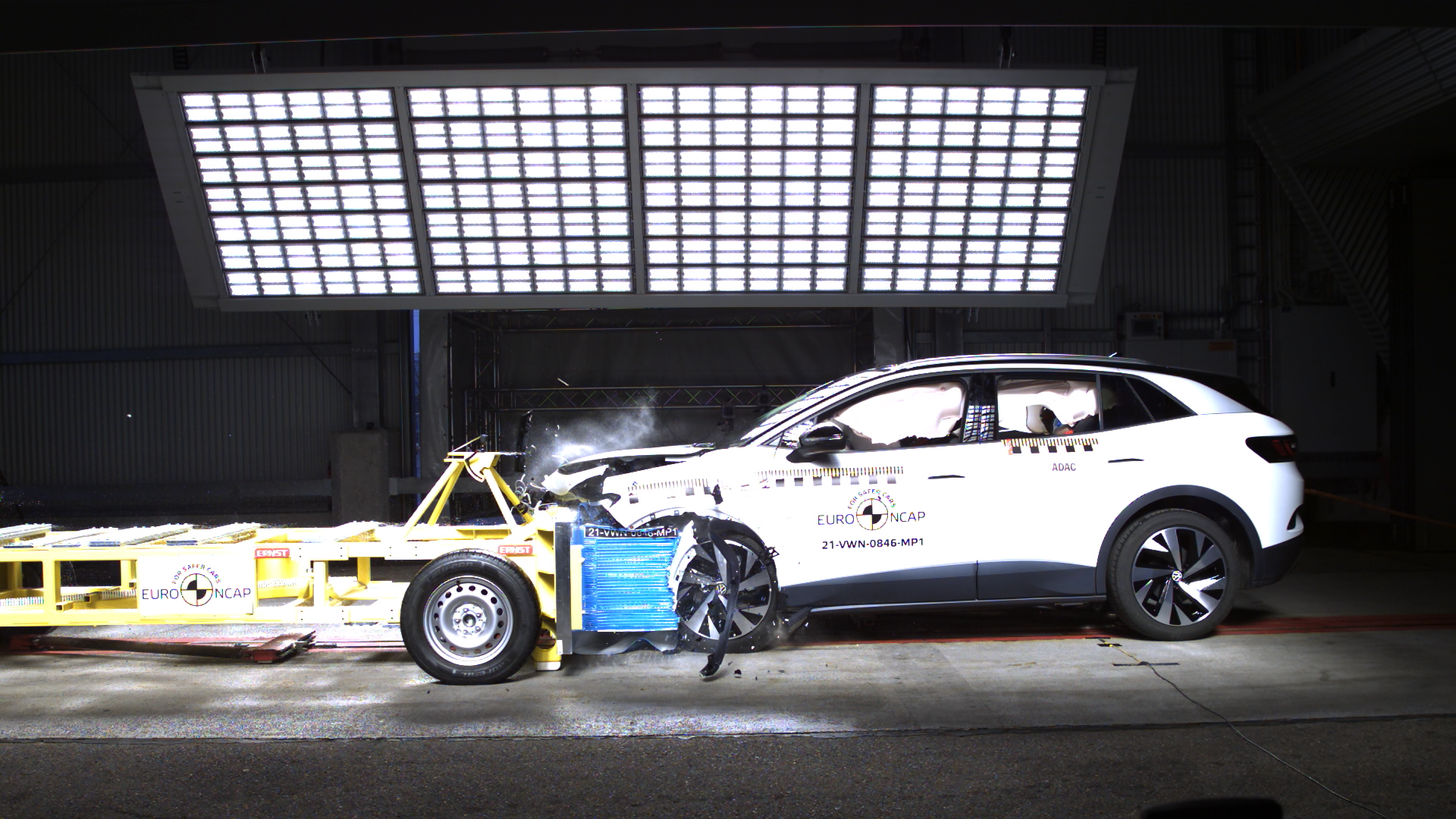
Testing for the Model Y was performed in 2022, while the EV6, Mustang Mach-E and ID.4 were crashed in 2021.
The safety results for the latter two would likely carry across to ANCAP when the vehicles launch in Australia.
Key safety equipment includes; autonomous emergency braking, lane-keep assist, adaptive cruise control and traffic sign recognition.
A 360-degree camera is available on all vehicles – but it is omitted from the entry-level EV6 Air in Australia.
Despite the notable difference in dimensions between the ID.4 and Mustang Mach-E, it is the Volkswagen that has a larger boot – largely due to the Ford’s coupe-like roofline.
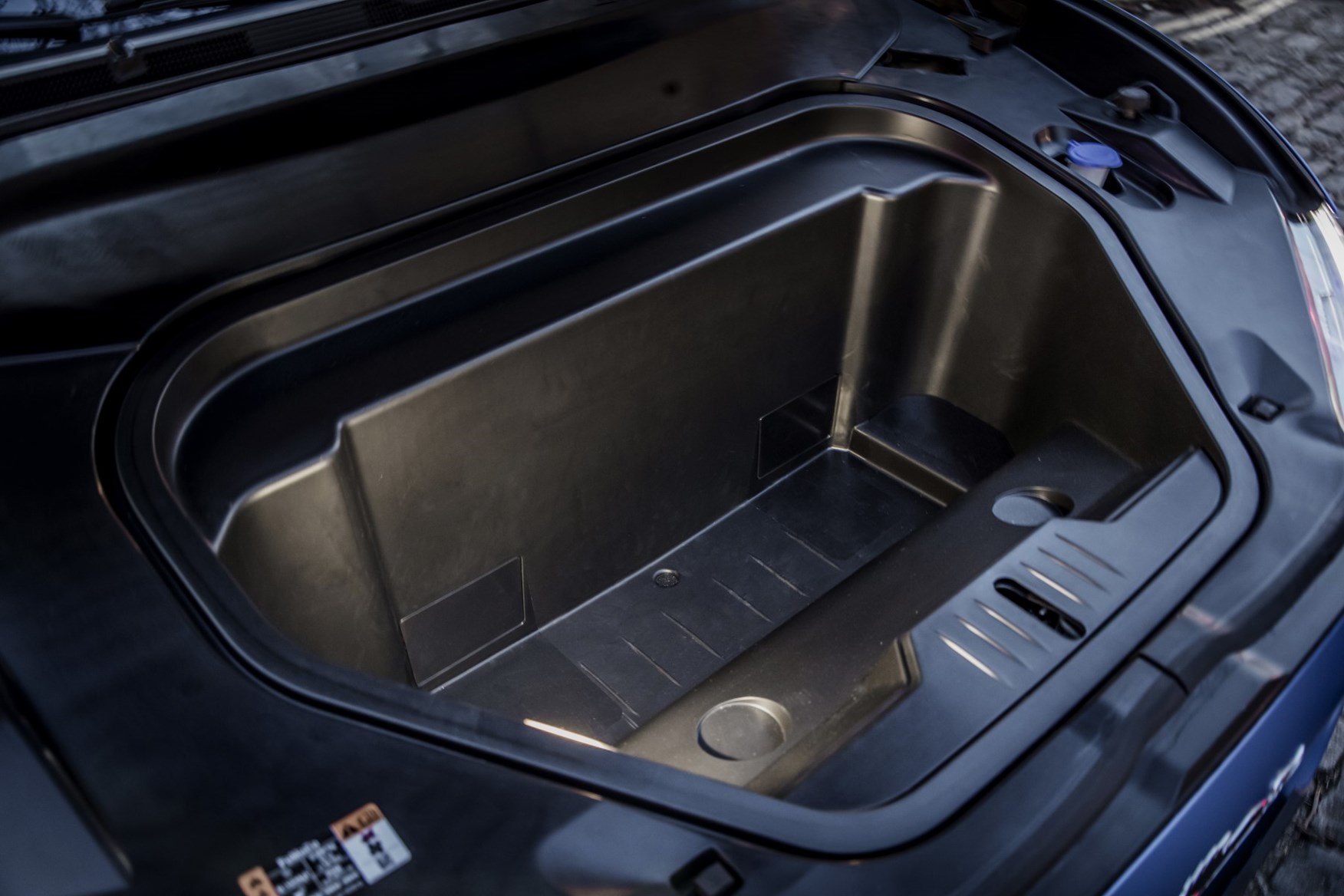
Both the Ford and Tesla offer a front boot, adding extra practicality. There is no need to pack an esky in the Mach-E, as it can be filled with ice, with a drain plug to remove water.
| Ford Mustang Mach-E | Tesla Model Y | Kia EV6 | Volkswagen ID.4 | |
|---|---|---|---|---|
| Boot capacity | 402L | 854L | 480L (Air: 490L) | 543L |
| Front boot (frunk) capacity | 100L | 117L | RWD: 52LAWD: 20L | N/A |
| Electric tailgate | Yes, hands-free | Yes | GT-Line & GT, hands-free | Yes, hands-free |
| Remote-folding second-row seats | N/A | Yes | Yes | N/A |
The Albanese government announced its 2023-24 Federal Budget last night, delivering the first surplus in 15 years with a focus on improving quality of life and cutting the cost of living – but how does it affect motorists?
This year’s budget is fairly thin on specific automotive content, but there is good news for those hoping to transition to electric vehicles – the fuel standard strategy is definitely coming.
Money has also been pledged towards mining ‘critical minerals’ that are essential for EV construction around the world, and the government is investing in local Hydrogen solutions, too.
The government has extended 2020-23’s instant asset write-off scheme but in a reduced form. The maximum asset value has fallen from $150,000 to $20,000 for companies with turnovers up to $10 million on purchases made between July 1 2023-June 30 2024.
The government did not introduce its anticipated fuel efficiency standards in this year’s federal budget, though is looking to implement the legislation before the end of 2023.
A total of $7.4 million will be put towards fuel efficiency standards as part of an EV strategy that the government promises will “ensure consumers have a better choice of electric vehicles and encourage greater use of cleaner, cheaper-to-run vehicles.”
In total, $20.9 million is being spent on greening transport, including $7.8 for transport net zero roadmap that began in 2022-23, as well as $5.2 million over four years for EV charging infrastructure development in housing and public spaces.
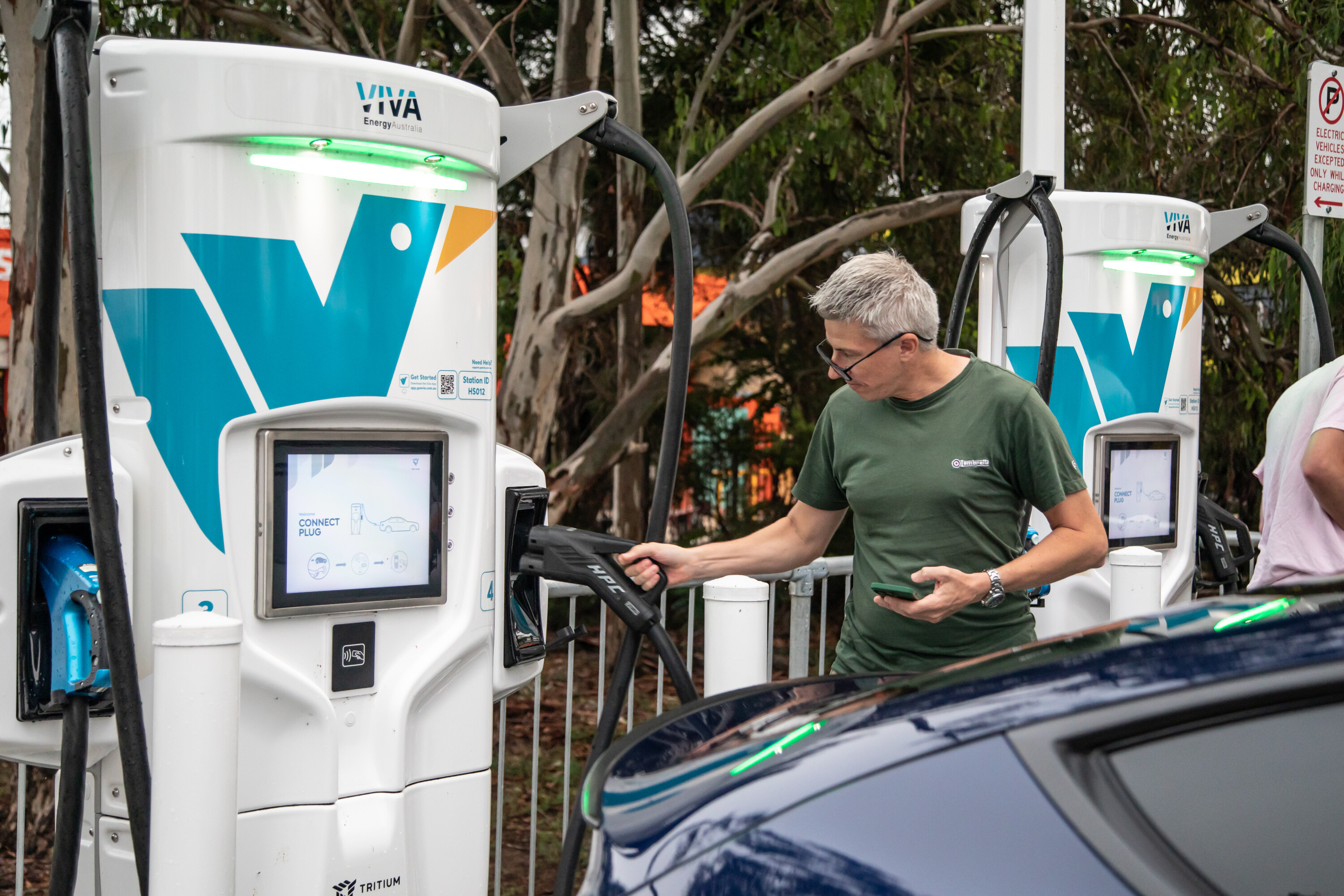
Incentives already on offer include fringe benefits tax exemption for electric vehicles under $85K, and various other state-based incentives. An extra $14.8 million has been allocated to establish programs that advance technology and skills for Australian battery manufacturing.
There’s also $2 billion being spent on becoming a leader in hydrogen generation with the Hydrogen Headstart program. Further green energy targets include promoting more energy-efficient commercial buildings and a future gas strategy that will support Australia’s transition to 82 per cent renewable power by 2030.
The government is keen to capitalise on Australia’s rich resource deposits for a greener future, pledging a total of $80.5 million over four years on the critical minerals sector, $57.1 million of which will be spent on suring up supply chains, while $23.4 million will be directed to new projects and activities showcasing Australia’s credentials to international markets.
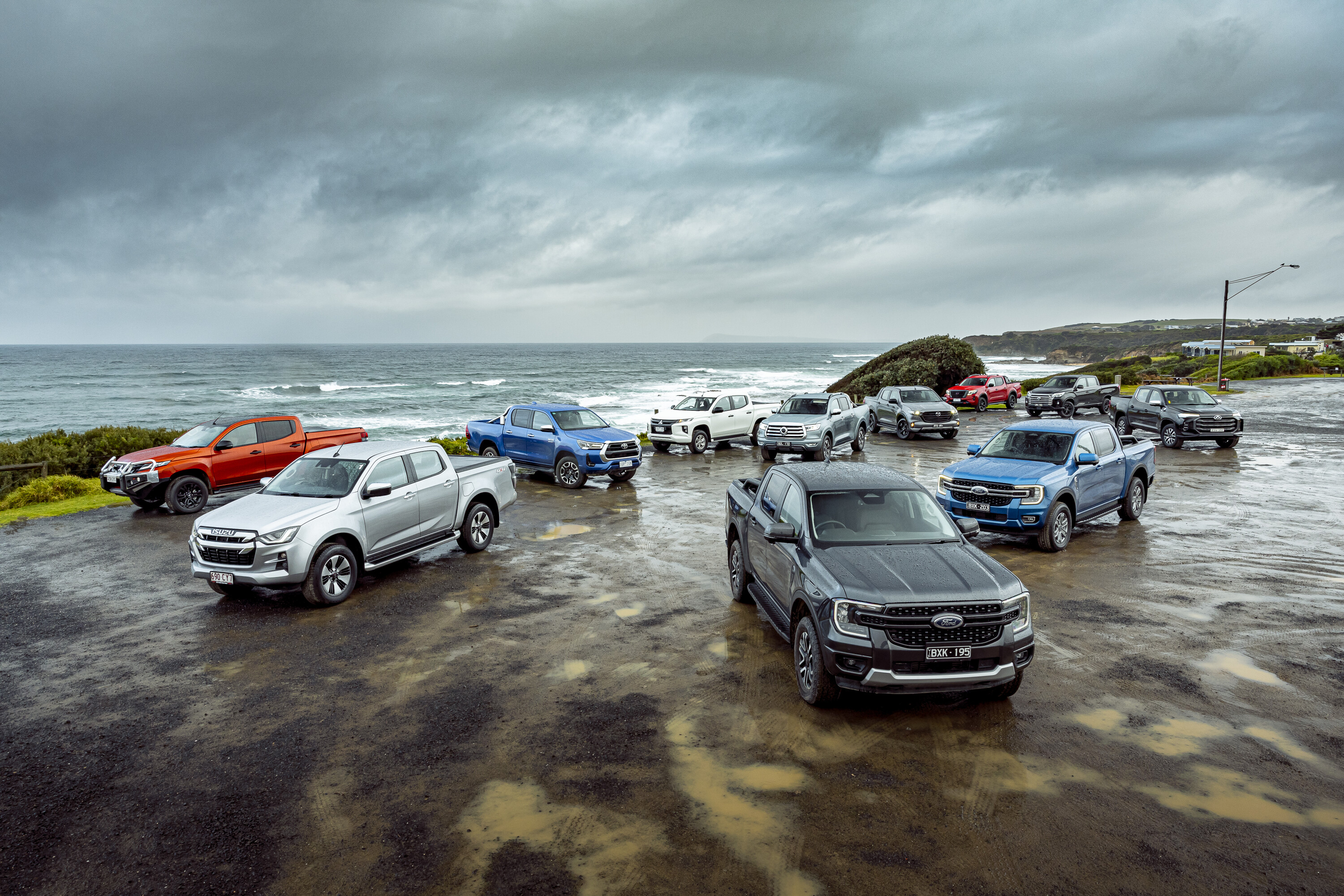
Utes may have a harder time dominating sales charts in Australia as the government softens its instant asset write-off scheme for 2023-24.
Previously available for businesses with turnovers up to $500 million on assets valued up to $150,000, the pared-back scheme applies to businesses with a maximum $10 million turnover and a peak asset value of $20,000.
That means you won’t be able to write the value of a new ute off in full – even an entry-level HiLux or Triton is worth more than $20K. More expensive vehicles will be placed in a depreciation pool, where 15 per cent of the value can be written off as depreciation in the first year, and 30 per cent in the years following.
There is a clause for companies looking to improve energy efficiency – businesses with annual turnovers less than $50 million are eligible for a 20 per cent tax deduction for “assets supporting electrification.”
The maximum expenditure on such goods is $100,000, and the maximum bonus tax deduction is $20,000. The government gives examples of more efficient heating and cooling systems, batteries, and high-efficiency electrical goods – EVs are excluded, however.
With a static road toll over the last five years, the government has pledged funds to make Australia a safer place to drive. Over four years from 2022-23 onwards $43.6 million is destined for a national road safety action grants program focused on education for vulnerable road users, First Nations road safety, technology, innovation, and research in the field.
An additional $18.9 million is going towards improved road safety data and research products over the next three years, with $16.5 million put into improved car safety rating programs over five years for light and used vehicles in particular.
Starting in 2022-23 $64.2 million is going towards transport and infrastructure priorities actioned by the departments of infrastructure, transport, regional development, communications and the arts.
It now promises to have around 130 DC fast-charging sites installed – each with four bays and up to 400kW power output capacity in total.
Note the wording that there will be four designated EV charging bays, but it doesn’t outline four fast charging stations – because some stalls can charge two vehicles via two plugs at the same time (likely one CCS and one CHAdeMO connector).
This means the possibility for either two 200kW stations or four 100kW stations at each site.
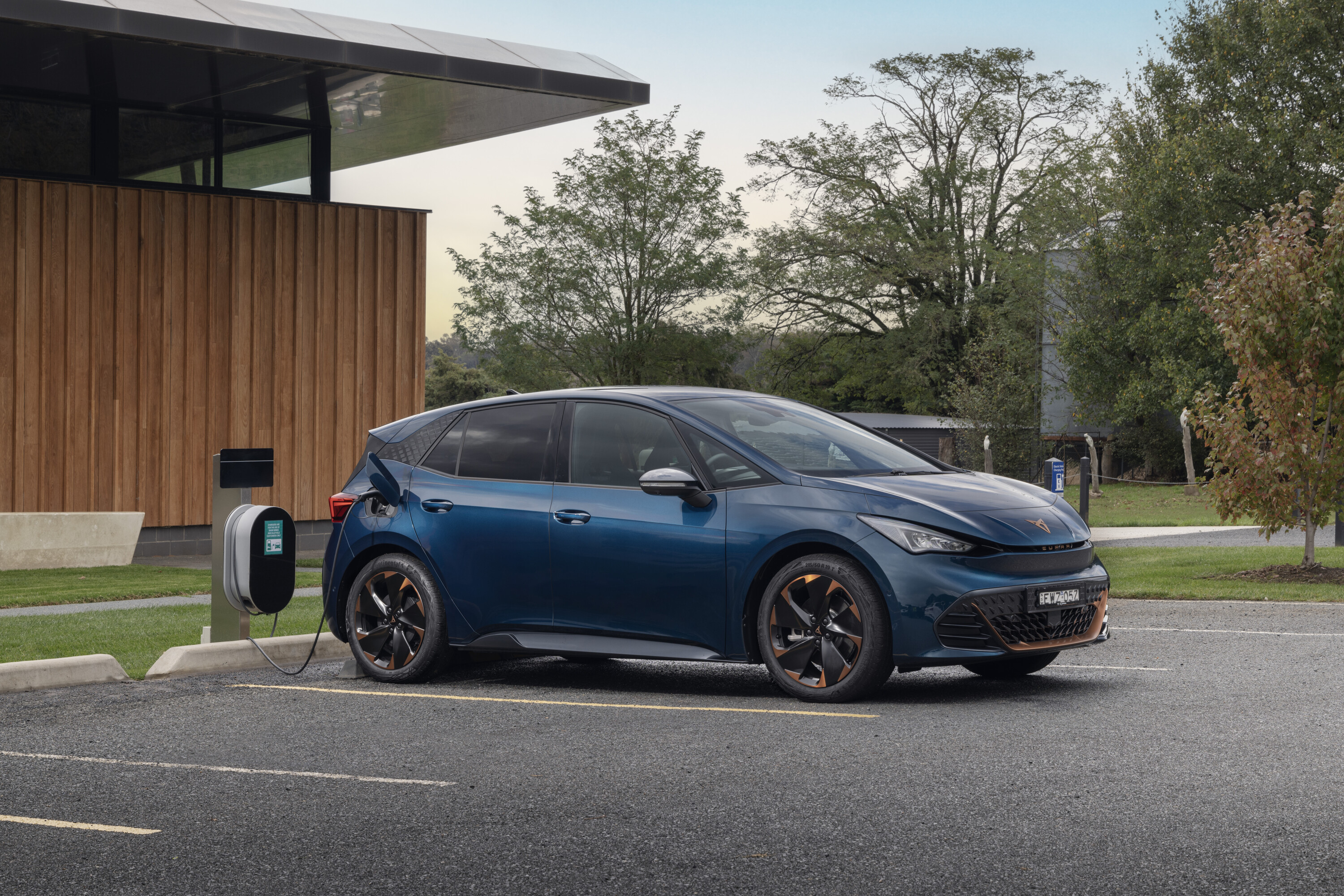
The NRMA also confirmed the network will consist of a mix of charger models from Tritium, ABB and Kempower. It currently only uses Tritium, the Brisbane-founded company now known around the world for its charging systems.
The co-funded project with the federal government is now estimated to cost between $80 to $100 million.
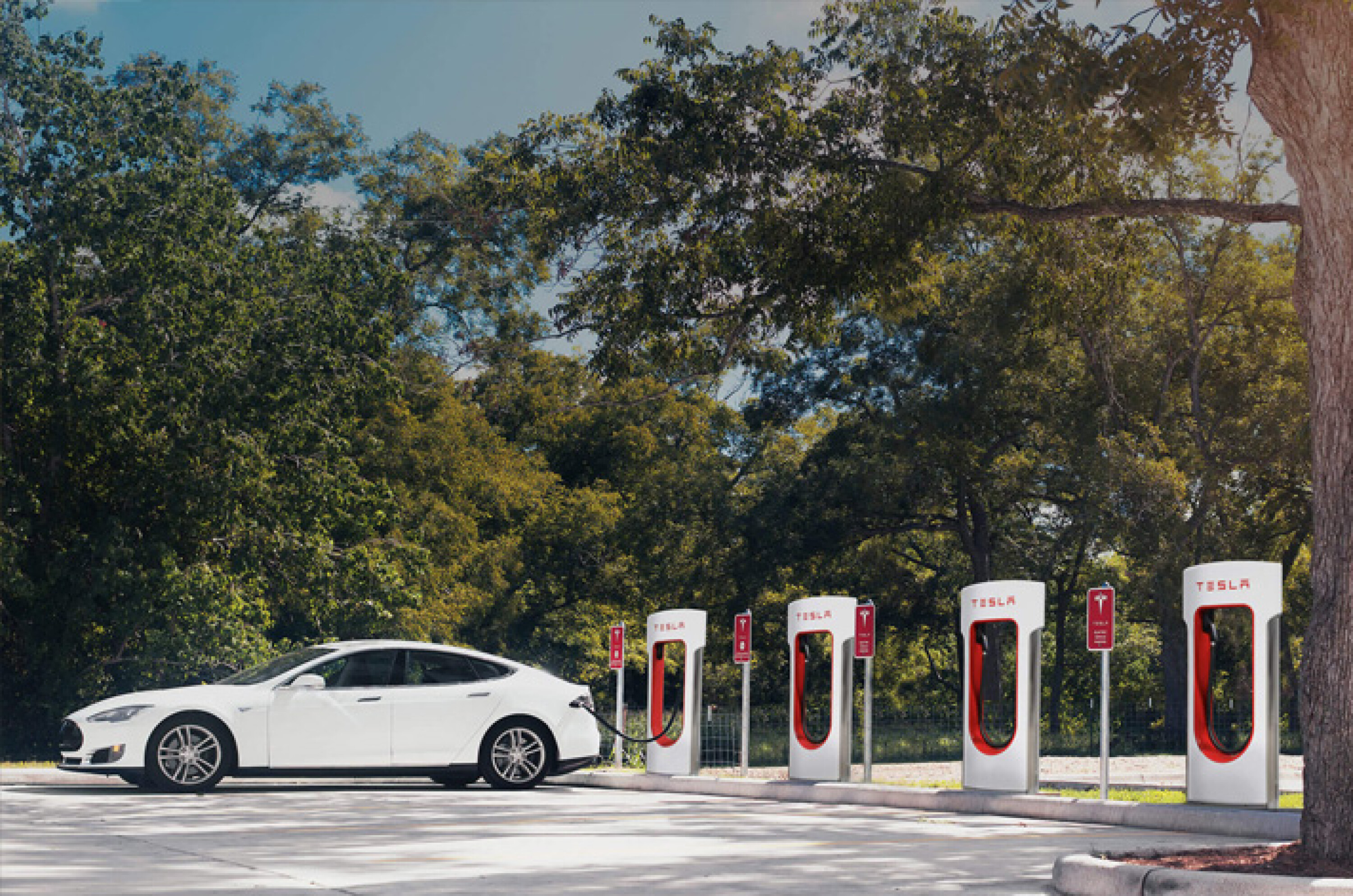
State motoring club NRMA will contribute the remaining amount for the $100 million project, which will see 117 fast DC charging stations linking every state and territory across the nation by 2025.
Interestingly, the media conference announcing this project revealed that it would use ABB charging stations for the first time with CCS Type 2 and CHAdeMO charging plugs – instead of its current network of Brisbane-made Tritium units.
The NRMA is part of Mobility Clubs of Australia, which also includes the RACQ, RACV, RAA, RAC and RACT, and owns the Australian Motoring Services (AMS).
AMS acquired public EV charging provider Chargefox in 2022.
“EVs aren’t just for the cities, and Australians who drive long distances either for work or for holidays should be able to reap the benefits of cars that are cheaper and cleaner to run,” Bowen said.
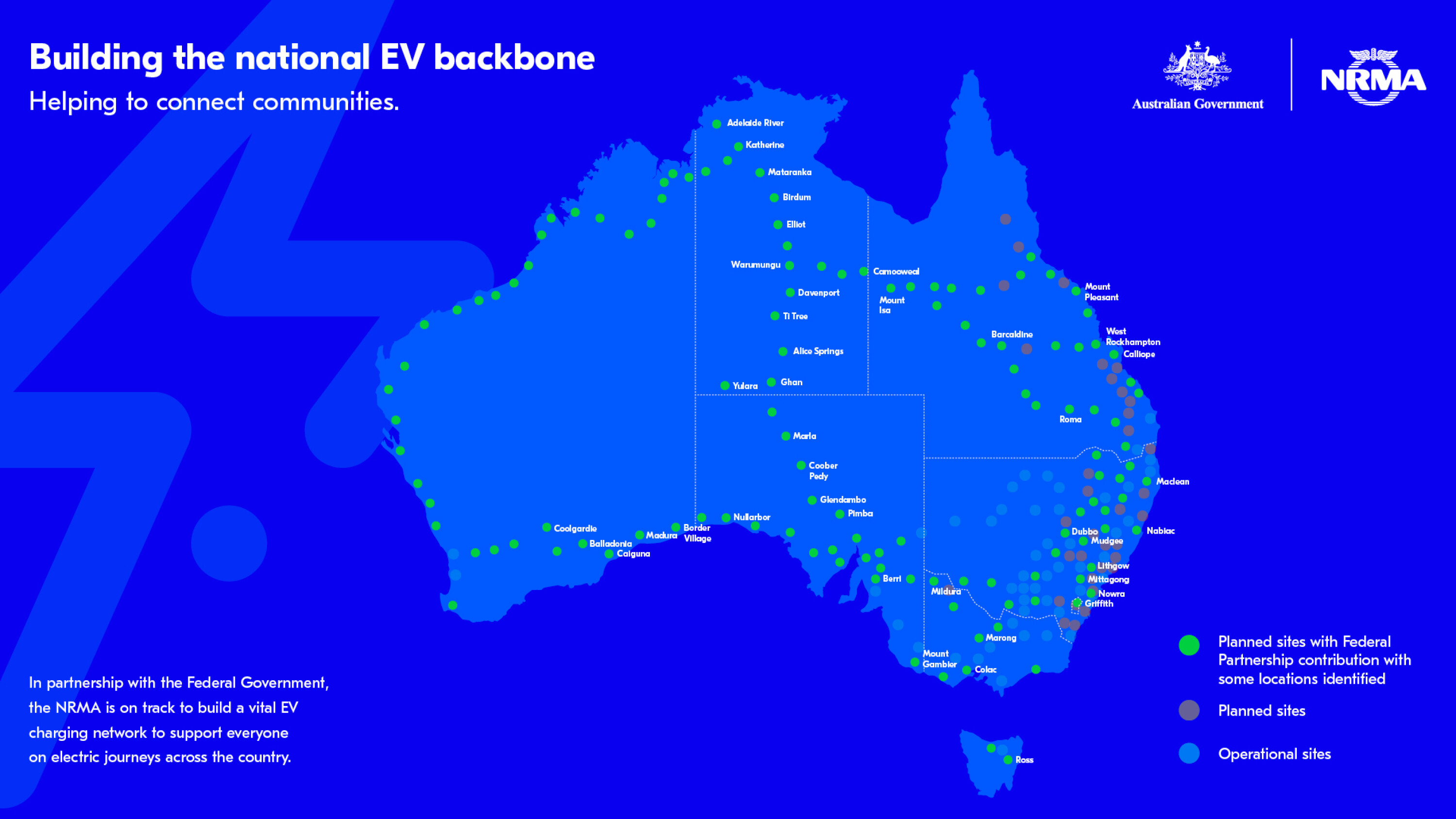
“This project will help close the gaps and known black spots in the network and make it possible to drive from Darwin to Perth, Broken Hill to Adelaide, and from Brisbane to Tennant Creek in the [Northern Territory].”
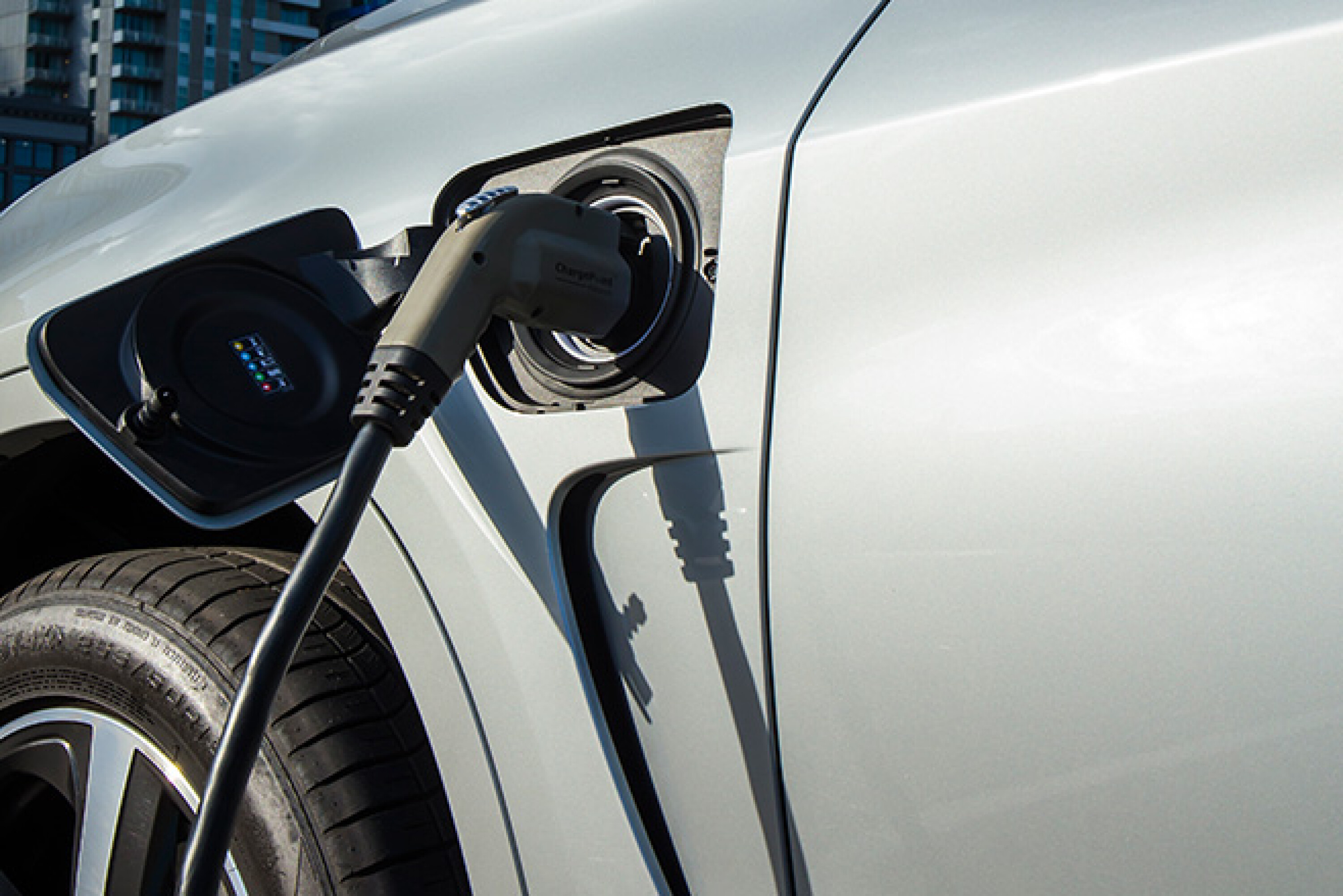
The announcement comes as the government committed to setting a fuel efficiency standard later this year, which could penalise car manufacturers for exceeding a set average carbon emissions threshold for vehicles sold annually.
It aims to boost EV supply and model choice in Australia, which is often relegated down in the priority list for most carmakers due to a lack of an emissions standard compared to other developed countries, such as New Zealand, Europe, and the United States.
| Australian Capital Territory |
|---|
| Griffith |
| Victoria | |
|---|---|
| Colac | Sale |
| Marong | Sea Lake |
| Mildura | Shepparton |
| Port Fairy | |
| Tasmania | |
|---|---|
| Ross | Deloraine |
| South Australia | |
|---|---|
| Berri | Nullarbor |
| Border Village | Nuriootpa |
| Burra | Pimba |
| Ceduna | Port Augusta |
| Coober Pedy | Port Gibbon |
| Coorabie | Port Pirie |
| Glendambo | Port Wakefield |
| Kimba | Wudinna |
| Marla | Yunta / Manna Hill |
| Mount Gambier | |
| Northern Territory | |
|---|---|
| Adelaide River | Katherine |
| Alice Springs | Mataranka |
| Baines | Ranken |
| Birdum | Tablelands |
| Davenport | Ti Tree |
| Delemere | Warumungu |
| Elliot | Yulara |
| Ghan | |
| Western Australia | ||
|---|---|---|
| Balladonia | Kununurra | Pardoo |
| Broome | La Grange | Peedamulla |
| Caiguna | Lake Argyle | Port Hedland |
| Cataby | Lake Mcleod | Roebourne |
| Coolgardie | Madura | Southern Cross |
| Eighty Mile Beach | Manjimup | Warmun |
| Eneabba | Merredin | Wilare |
| Fitzroy Crossing | Nerren Nerren | Wooramel |
| Geraldton | Norseman | Yannarie |
| Halls Creek | Northam | |
Porsche has unveiled the 718 Spyder RS, its most hardcore production convertible yet. Fitted with the same 9000rm 4.0-litre flat-six as the Cayman GT4 RS and a standard stainless sports exhaust, the 718 Spyder RS is sure to tingle some vertebrae.
Porsche has decided to unveil the new Spyder RS on the 30th anniversary of the original Boxster concept (a portmanteau of Boxer and Roadster) that introduced a more attainable drop-top from Stuttgart.
The Porsche 718 Spyder RS will start from $336,100 before on-road costs, and first deliveries are scheduled for the second quarter of 2024.
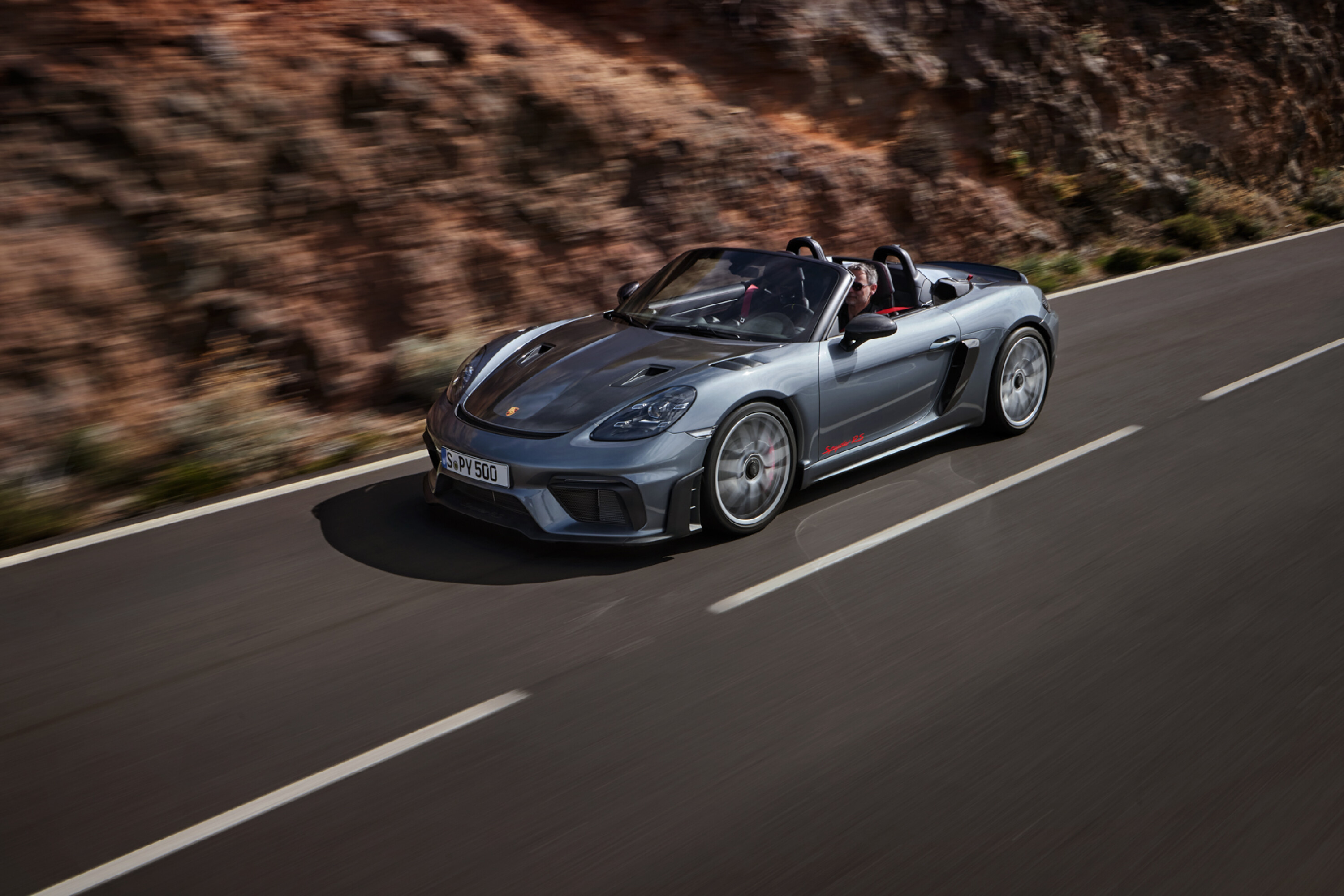
“The 718 Spyder RS raises driving pleasure to a new level for open-top vehicles,” said the legendary Andreas Preuninger, director of Porsche’s GT cars department.
The combination of our unmistakable GT3 engine, the close-ratio transmission, compact dimensions, low weight, road-optimised racing suspension and maximum openness offers an extremely compelling and unfiltered driving experience
Under the Spyder RS’ rear deck is a naturally-aspirated 4.0-litre flat-six petrol engine producing 368kW and 450Nm – identical to the GT4 RS and 911 GT3, and 58kW up on the ‘regular’ 718 Spyder.
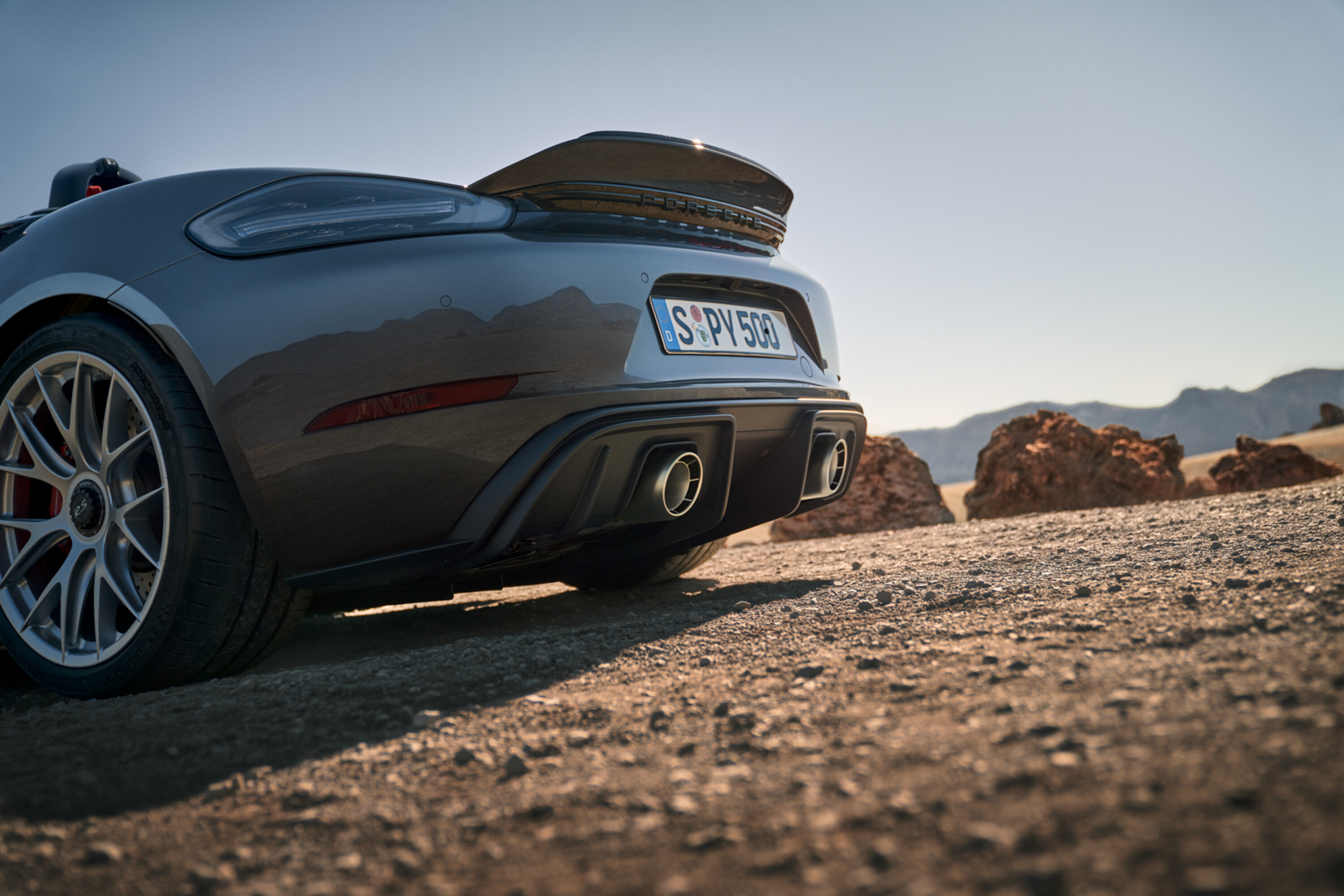
Weighing 1410kg, the Spyder RS is 5kg lighter than the fixed-head Cayman GT4 RS, though it shares the same 0-100km/h sprint time at 3.4 seconds. As the Spyder RS is an RS product, it’s available exclusively with a seven-speed PDK automatic transmission – no manual here.
The 718 Spyder RS gets bodywork upgrades, including a carbon-fibre bonnet with NACA ducts to cool the brakes, canards on the bumper, and a front lip spoiler. The lip is shorter than that of the Cayman GT4 RS, and is balanced by a tasteful ducktail spoiler in place of the Cayman’s wing to produce a “coordinated” aerodynamic balance, says Porsche.
Sitting on 20-inch forged alloy wheels, the Spyder RS scores PASM (adaptive dampers) as standard and rolls out of Weissach sitting 30mm lower than the 718 Spyder. But it doesn’t have to stay that way – like the GT4 RS, the Spyder RS has adjustable ride height, camber, track width and anti-roll bar settings.
It also features rose joints and bearings in the suspension where the standard cars get rubber bushings, as well as an electronically-controlled, mechanically-locking rear differential. To give the Spyder RS a more relaxed ride than the GT4 RS, Porsche has specified softer spring and damper rates.
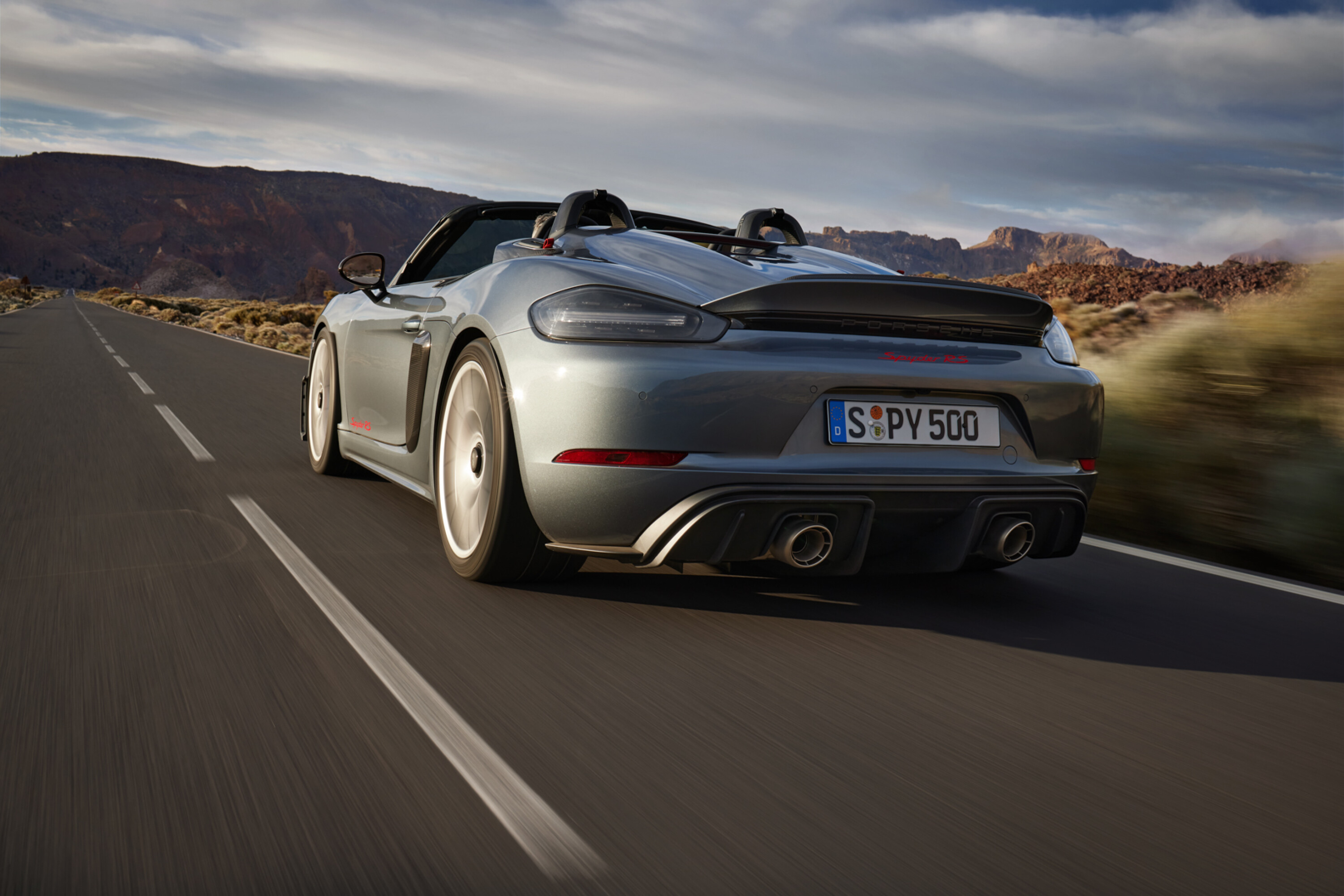
Porsche describes the 18.3kg ‘Bimini top’ of the Spyder RS as “a sun sail and a weather deflector” all in one. Operation is manual, naturally, and it gives owners options. If your chosen Sunday looks hot and sunny, the Spyder RS can be run fully open, or with just the ‘sun sail’ to keep harsh rays off the skin, but air circulating through the cabin.
For the more inclement weekends, a rain protection layer can be installed, kind of like using a tent with a fly. Both parts can be removed and stored in the car, so you never have to venture out with fear of getting rained on without protection – or you can leave it and save 8kg.
An optional Weissach package brings forged magnesium wheels, a titanium exhaust, and an exterior treatment inspired by the 2018 GT2 RS-based 935.
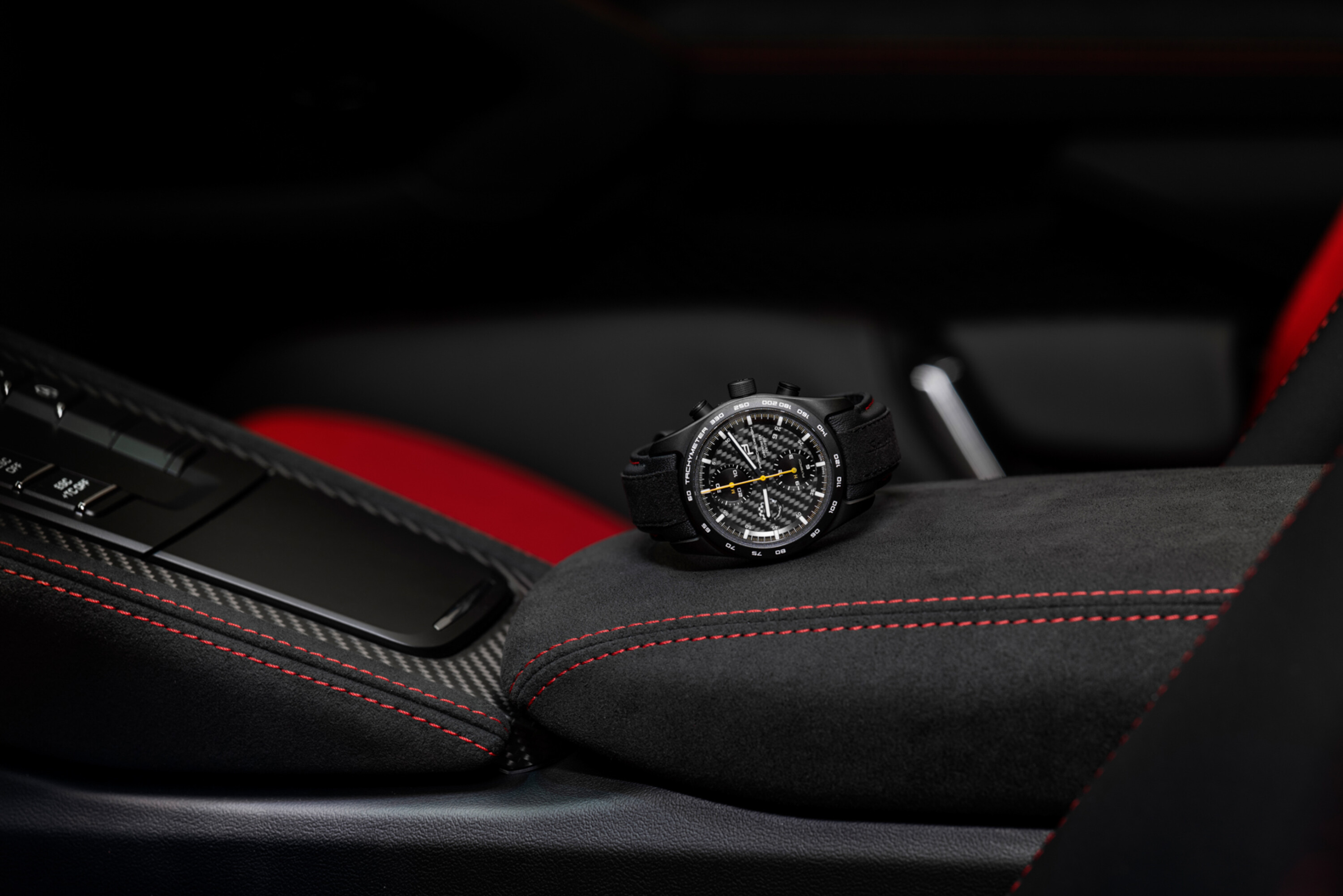
Buyers will also get a handcrafted chronograph from Porsche’s in-house watchmaker in Solothurn, Switzerland that features a titanium body with a carbon dial and strap made from the same seat leather as your Spyder.
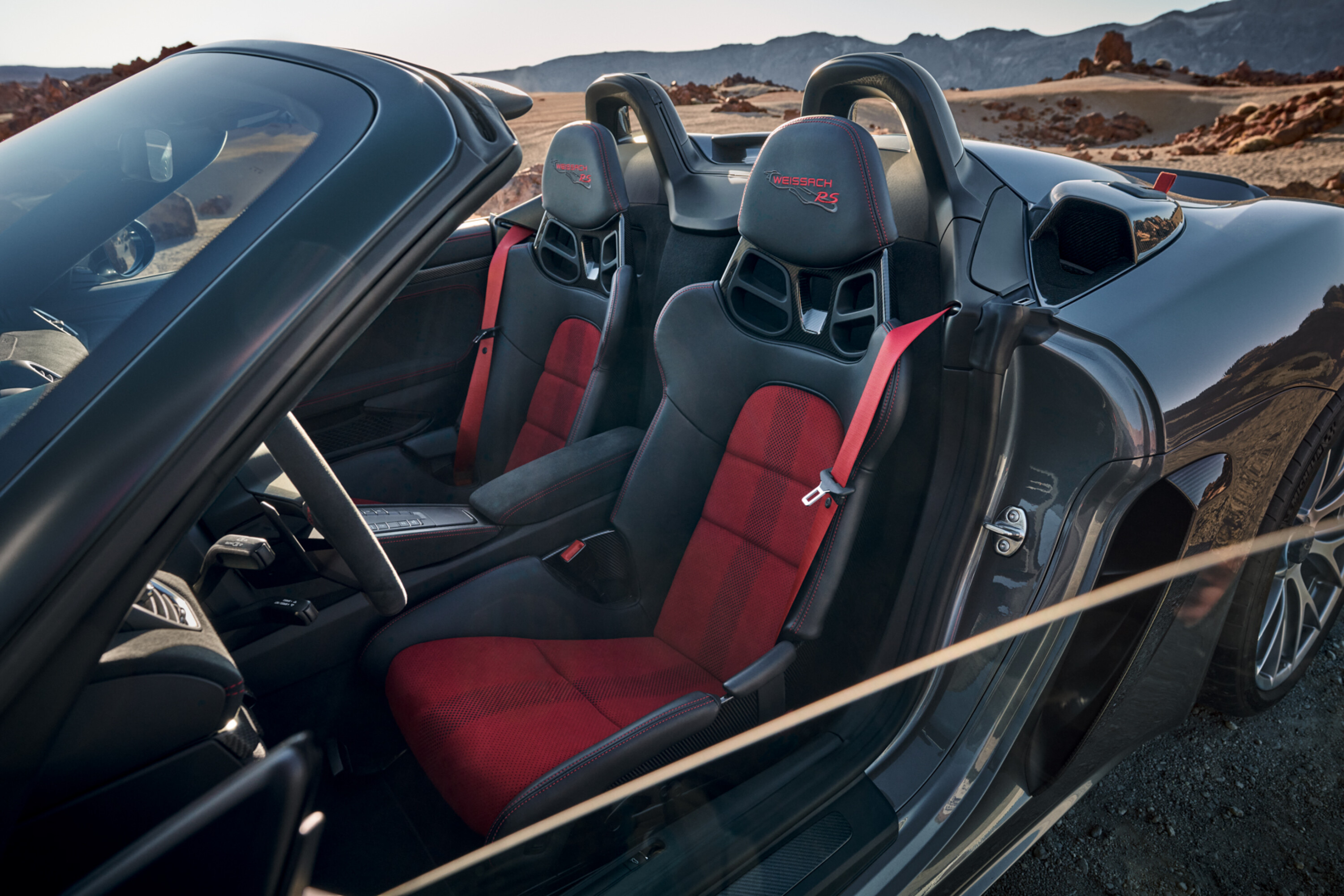
Inside, the Spyder RS gets a Race-Tex (Porsche in-house Alcantara-type material) with a 12 o’clock marker and a set of carbon wing-back bucket seats with a mix of Race-Tex and leather upholstery.
Australian vehicles get a tyre mobility kit, windscreen sun-shield strip, active LED headlights, rain-sensing wipers, cruise control, DAB radio, reversing sensors, and a back-up camera. Buyers will be able to option heated seats and a Bose sound system at no cost, should they wish to add a couple of kilos back on.
Porsche will offer a choice of seven standard paint colours; four solid and three metallics, including, Vanadium grey metallic, Arctic grey, Shark blue and Ruby Star neo.
The Porsche 718 Spyder RS is available to order now from $336,800 before on-road costs and options. Customer deliveries are expected to commence in the second quarter (between April-June inclusive) of 2024.
