
UPDATE, April 6: UX300e update on sale
Lexus has announced Australian pricing and details for its updated UX300e EV, with more driving range and the same upgrades outlined here. See the full story at the link below.
Story continues
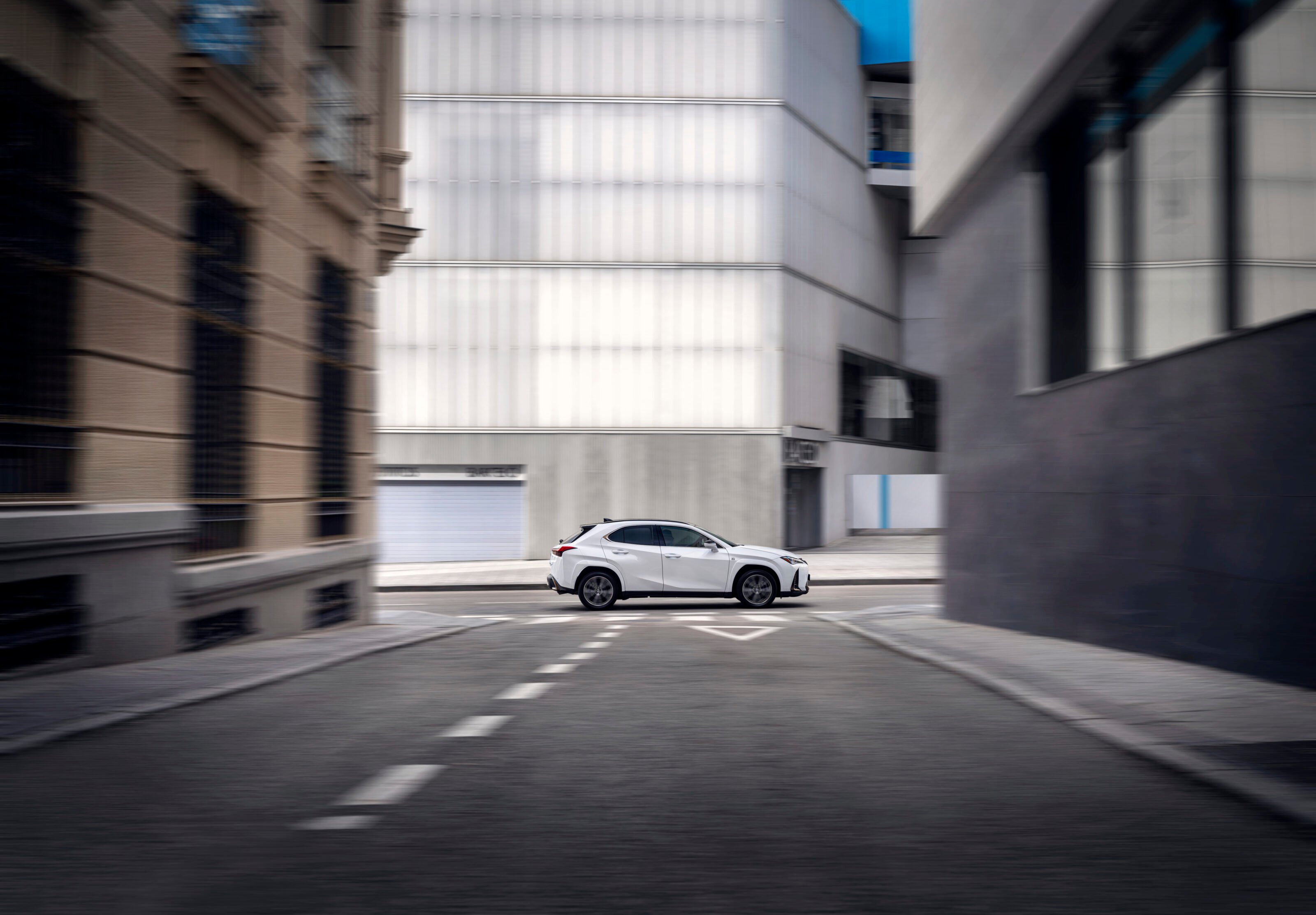
Lexus has added an F Sport Design Special Edition to its UX 250h range.
The UX 250h 2WD F Sport Design Special Edition will arrive in local showrooms from mid-April priced from $58,120 plus on-road costs.
Limited to just 250 units, the Special Edition is available only with a front-wheel-drive hybrid powertrain, with extra exterior and interior enhancements to separate it from the Luxury + EP2 on which it is based.
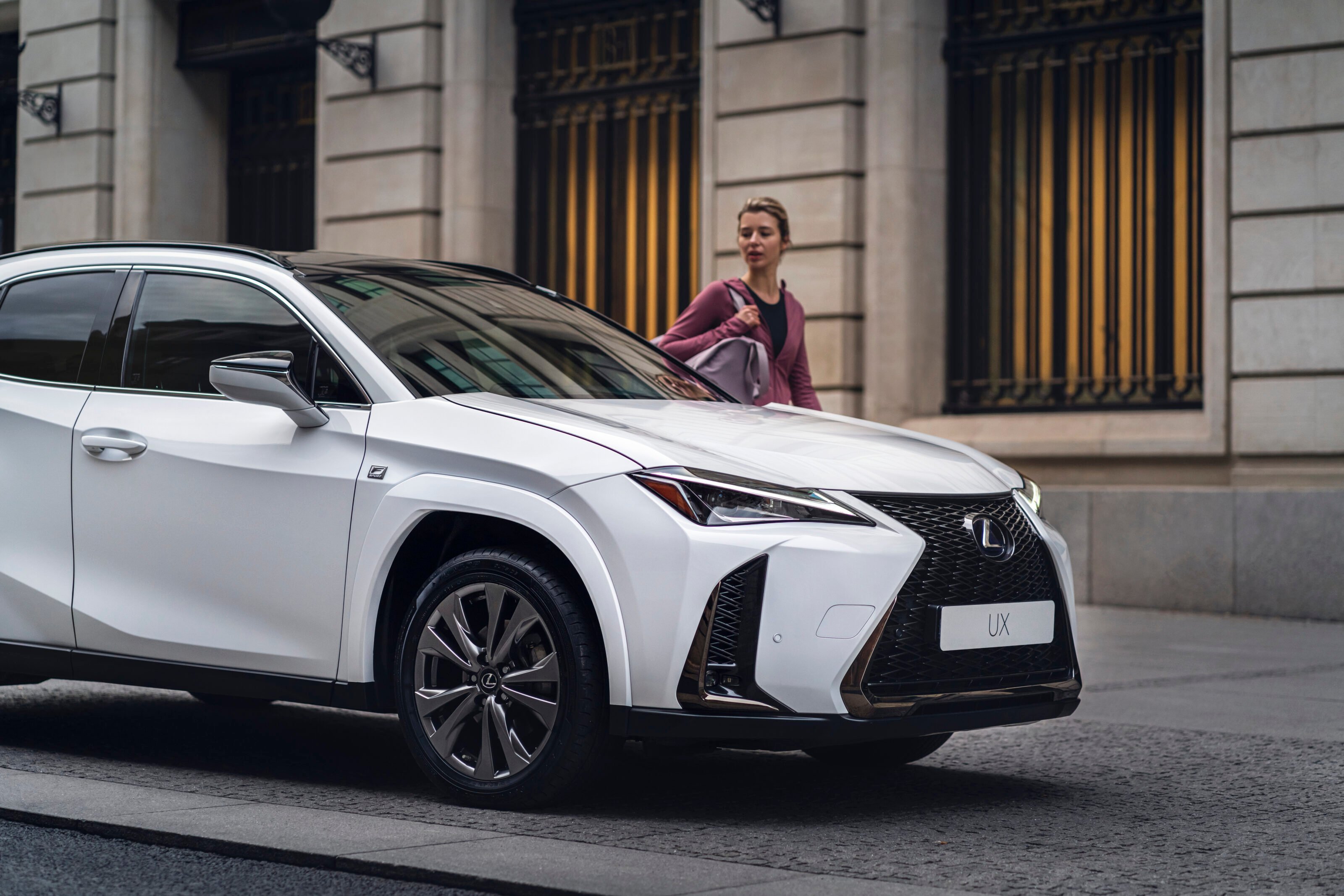
On the outside, it gains bespoke front and rear bumpers, grille, 18-inch wheels with run-flat tyres and an F-Sport Design badge, as well as black roof rails and exterior mirror caps, body-coloured wheel arches and, for the first time on UX, a two-tone roof.
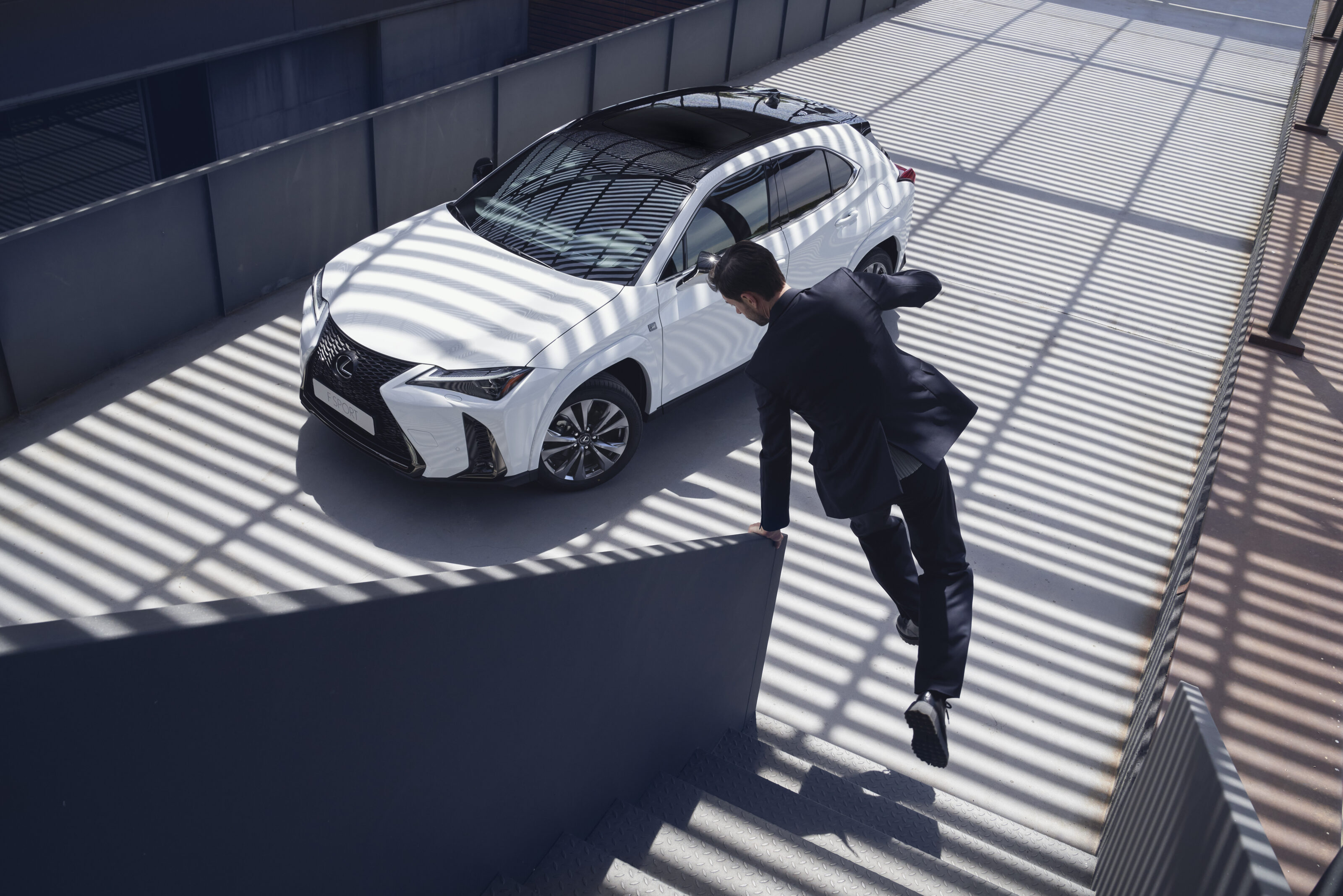
There are also two-tone paint colours which include; white nova, sonic chrome, sonic iridium, caliente, carnelian and cobalt mica.
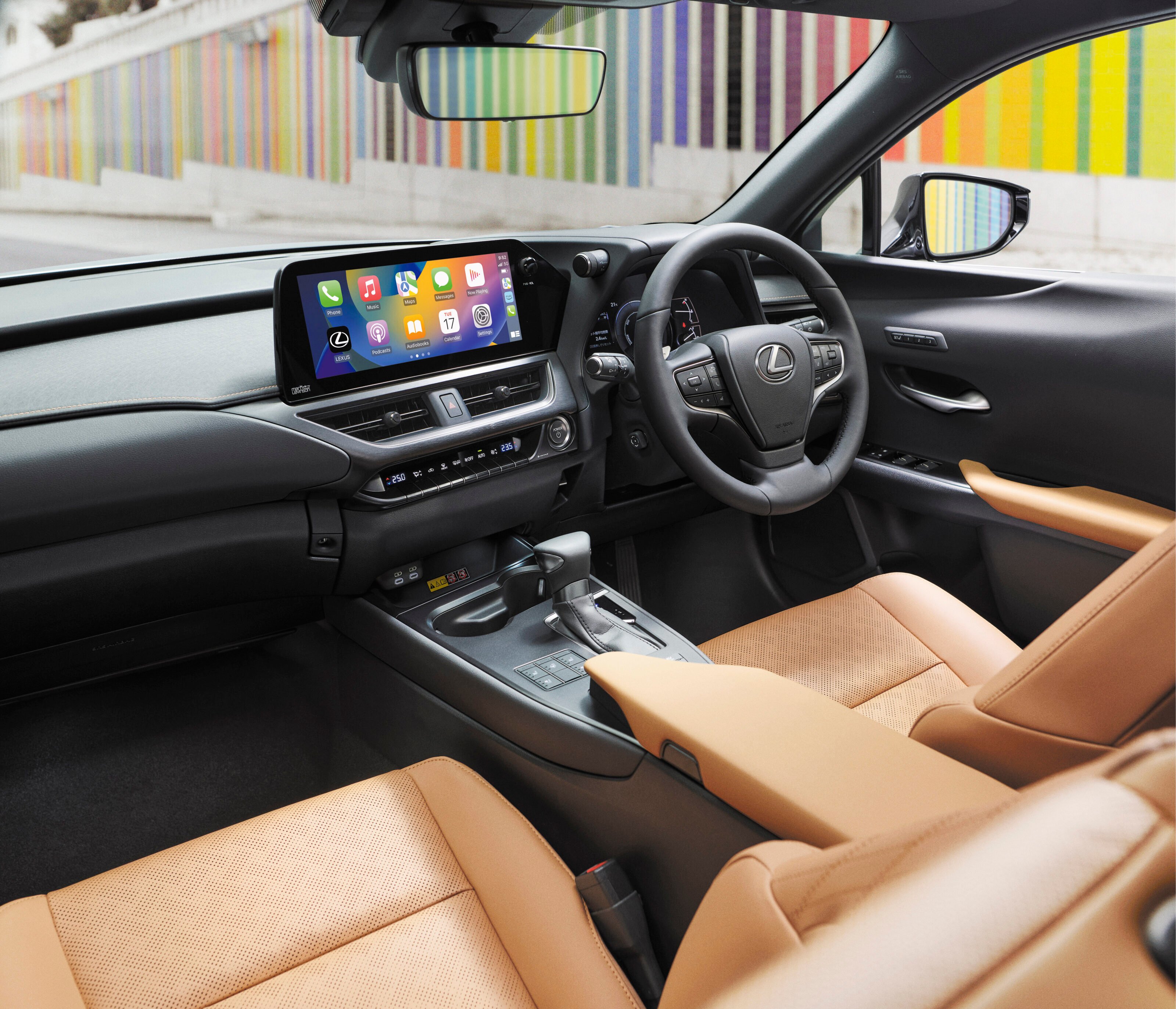
Inside, the special variant adds; a moon roof, colour head-up display, smart key card, and its NuLuxe leather-accented upholstery can be finished in black or white ash – paired with Washi paper.Our original story below has been updated to reflect the latest information.
The story to here
August 2022: The updated 2023 Lexus UX small SUV, with both petrol UX 200 and hybrid UX 250h variants available, will arrive in local Lexus showrooms from mid-September.
The facelifted UX gains increased standard equipment, but for a small increase in price.
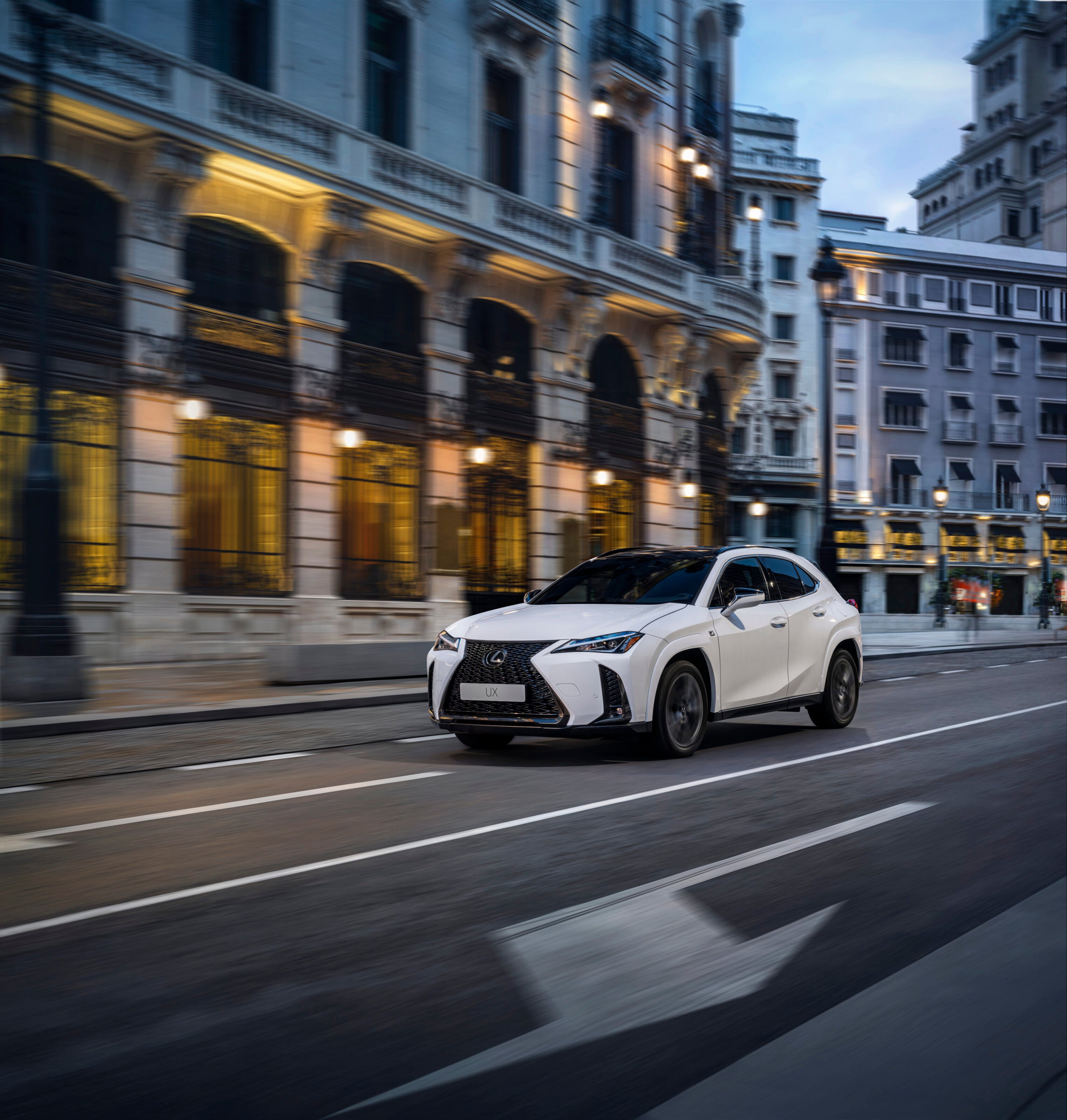
Across the range, prices increase between $1640 and $1895 to cater for the updated equipment. The lineup now begins at $46,085 (before on-road costs) for the entry-level Lexus UX 200 Luxury.
Beyond increased tech and equipment, there have also been various chassis and powertrain developments, too.
The purely combustion-powered UX 200 utilises a 2.0-litre four-cylinder petrol engine with an improved stop-start system, producing 126kW and 205Nm at its peak.
The hybrid UX 250h, available in two- and four-wheel-drive, harnesses a 2.0-litre four-cylinder petrol with either one or two permanent magnetic motors, and a 216V battery, combining for an ultimate 187kW and 390Nm.
2023 Lexus UX Australian pricing
UX 200
| UX 200 Luxury | $46,085 |
| UX 200 Sports Luxury | $56,850 |
| UX 200 F Sport | $57,495 |
UX 250h
| UX 250h 2WD Luxury + EP2 | $53,820 |
| UX 250h 2WD F Sport Design Special Edition | $58,120 |
| UX 250h 2WD Sports Luxury | $60,850 |
| UX 250h 2WD F Sport | $61,495 |
| UX 250h AWD Sports Luxury | $65,350 |
| UX 250h AWD F Sport | $65,995 |
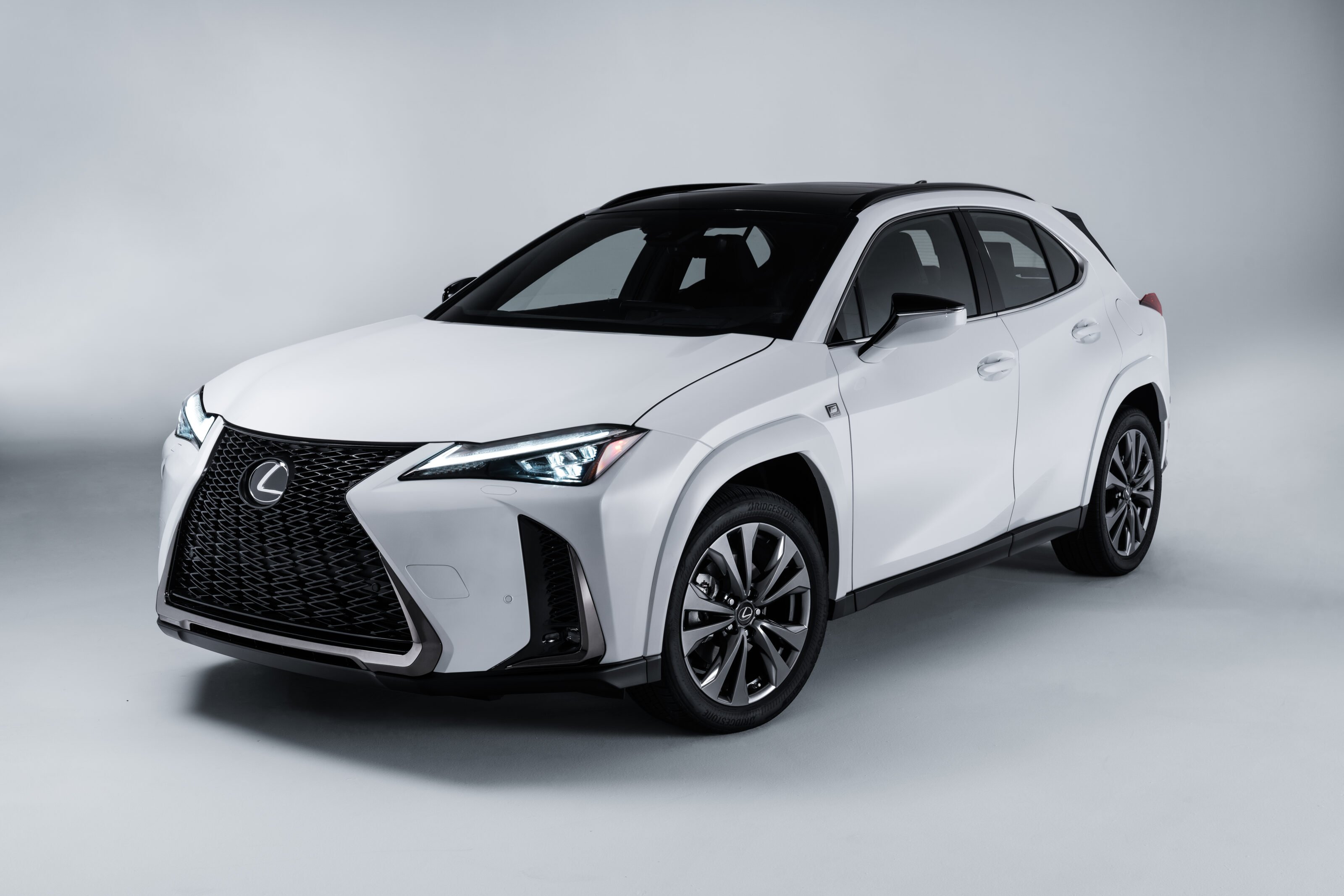
2023 Lexus UX features
2023 Lexus UX 200 Luxury features:
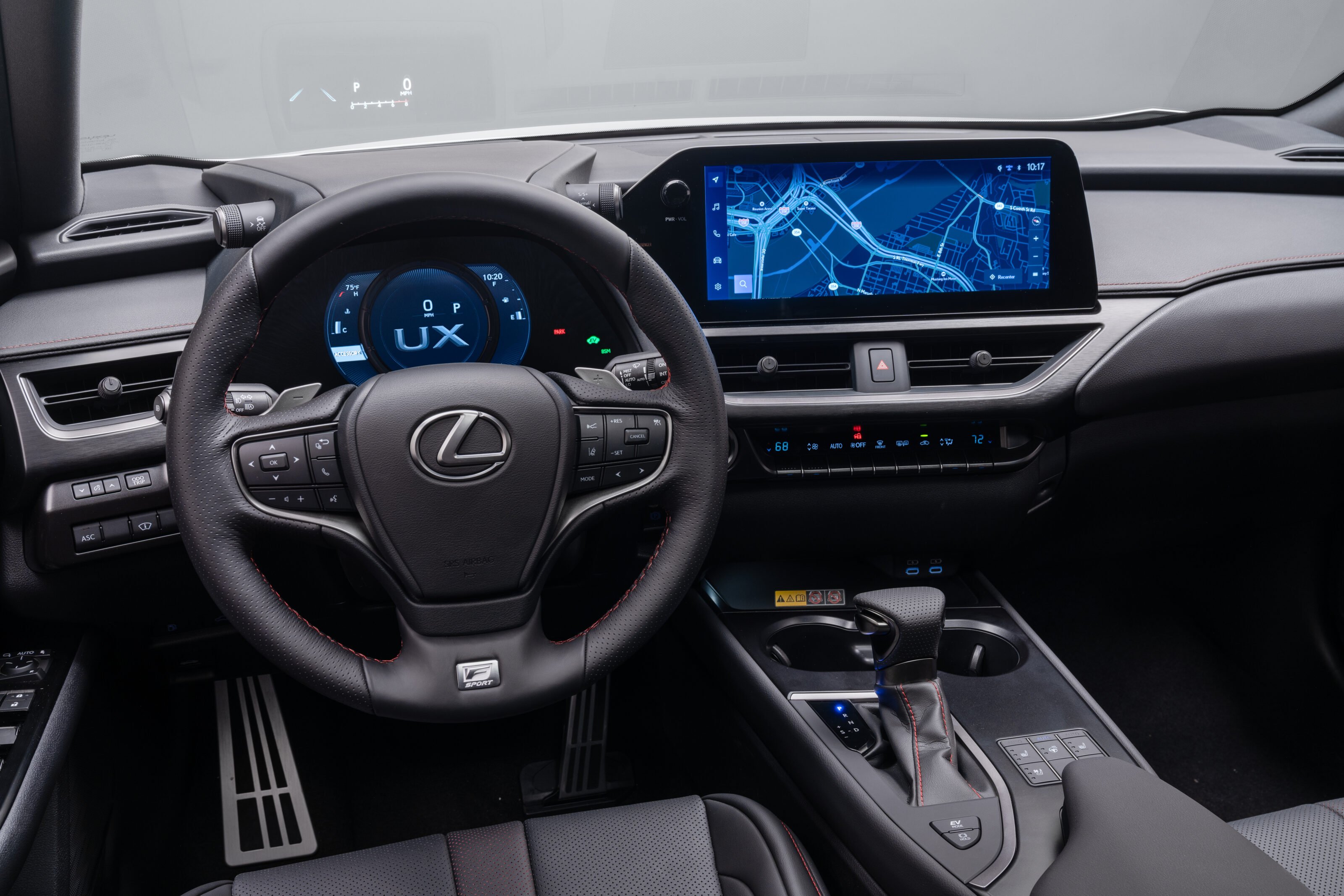
| 12.3-inch touchscreen display |
| Wireless Apple CarPlay and wired Android Auto |
| DAB+ digital radio |
| Satellite navigation |
| 10-speaker audio |
| Washi paper trim and stitching on instrument panel |
| Sharkfin antenna |
| Three-year subscription to Lexus Connected Services |
UX 250h Luxury + EP2 pack adds:
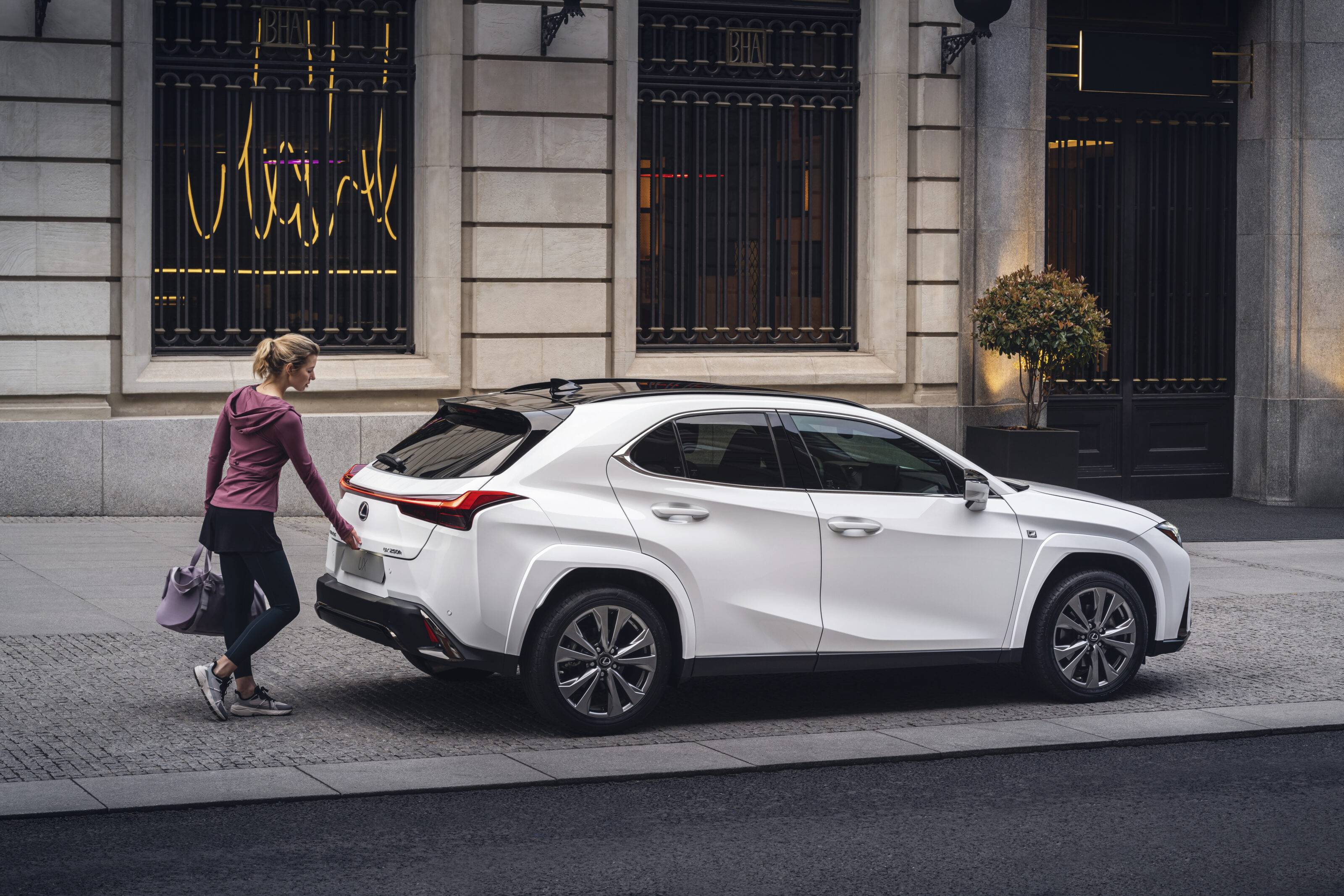
| Power back door (plus kick sensor) |
| Wireless phone charger |
| Cornering lamps |
| Alloy scuff plates |
| Headlamp cleaner |
| Rear privacy glass |
| Roof rails |
| Illuminated entry |
UX 250h F Sport Design Special Edition adds:
| Wireless phone charger |
| Heated seats |
| Eight-way adjustable driver’s seat |
| Powered tailgate |
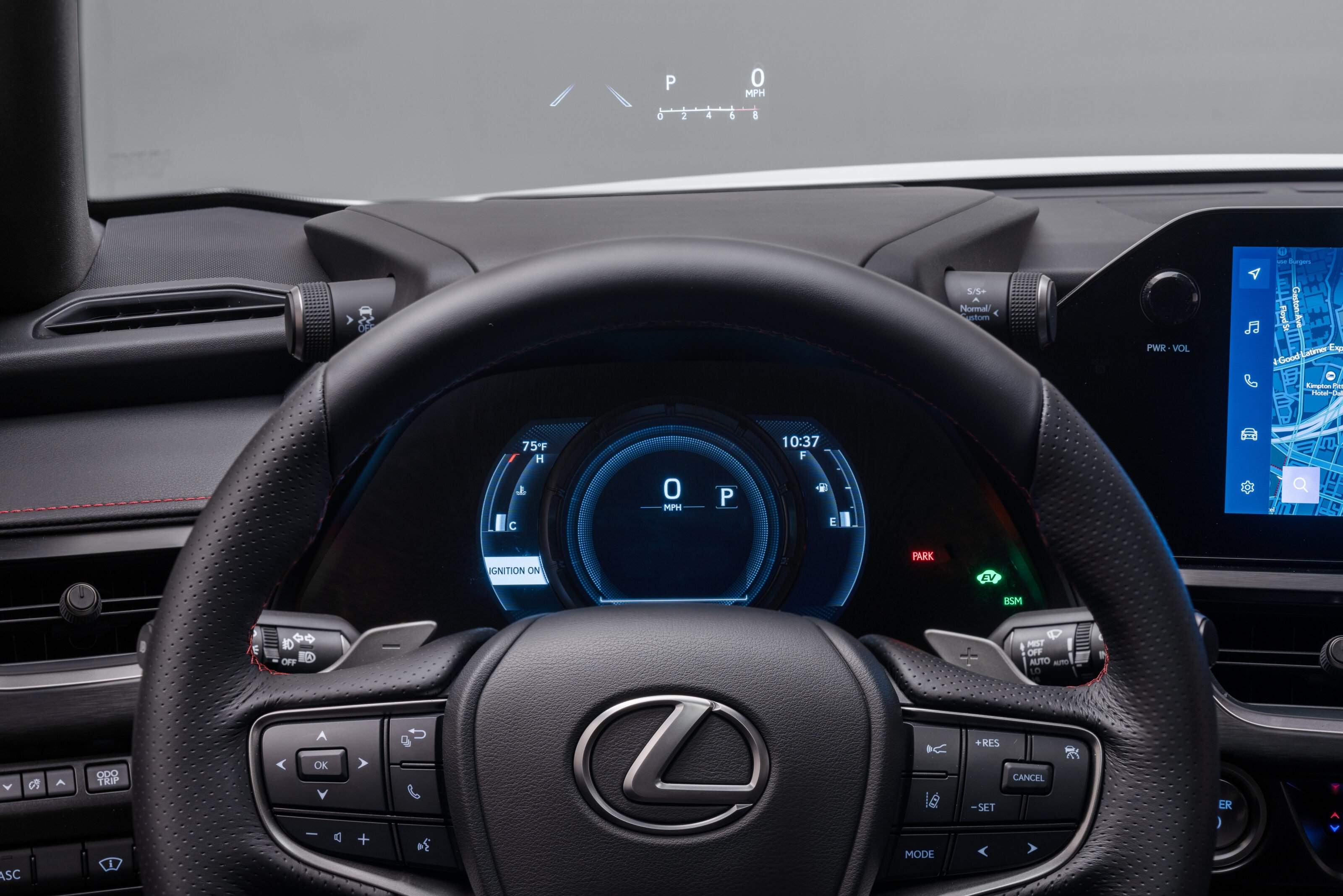
| 7.0-inch digital display |
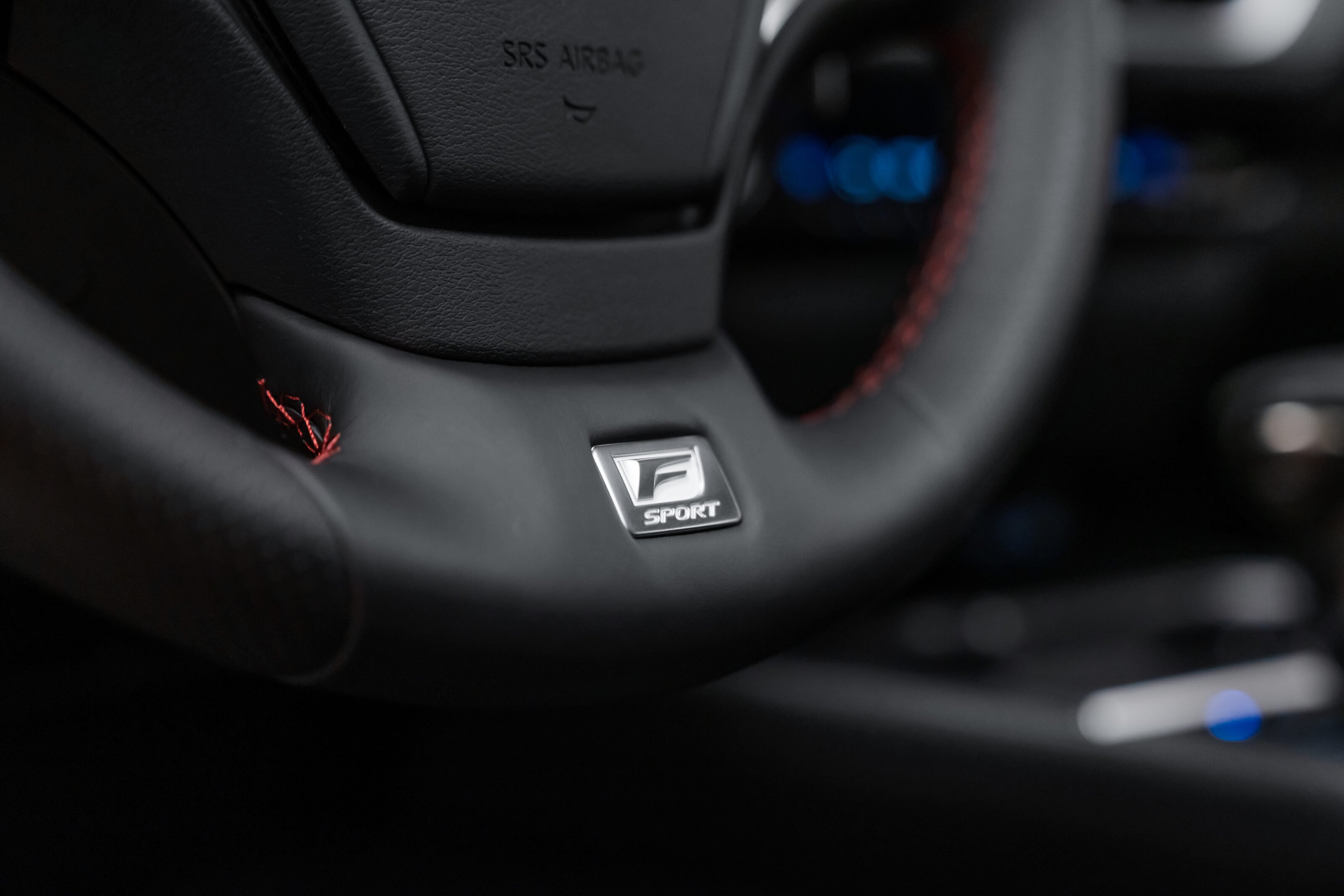
F Sport trim gains:
| LED headlights with auto-levelling |
| LED front turn signals |
| Adaptive high-beam |
| Auto power-folding heated exterior mirrors |
| Reverse link |
| Memory function |
| F-Sport bumpers |
| F Sport grille and badging |
| Dark metallic 18-inch wheels |
| Body-coloured wheel arches |
| F Sport shifter, steering wheel, pedals and aluminium foot rest |
| Active Sound Control |
| 8.0-inch TFT digital instrument cluster |
Sport Luxury trim gains:
| Metallic door and instrument garnish |
| Front seat ventilation |
| Driver side seat memory |
| Easy access system |
| 18-inch alloy wheels |
| Acoustic front and side glass |
| Leather-accented seats |
| 13-speaker Mark Levinson audio |
| Panoramic view monitor |
Engine, drivetrain and fuel economy
The Lexus UX range comprises two powertrain configurations, with both a pure petrol-powered and hybrid counterpart on offer.
The petrol-powered UX 200 harnesses a 2.0-litre turbocharged four-cylinder petrol engine that produces 126kW at 6600rpm and 205Nm between 4400 and 4800rpm, sending power to the rear wheels by way of a continuously variable automatic transmission (CVT).
The UX 200’s 2.0-litre engine has been further refined with an improved stop-start system compatible with Lexus’s included Safety System+ suite of features.
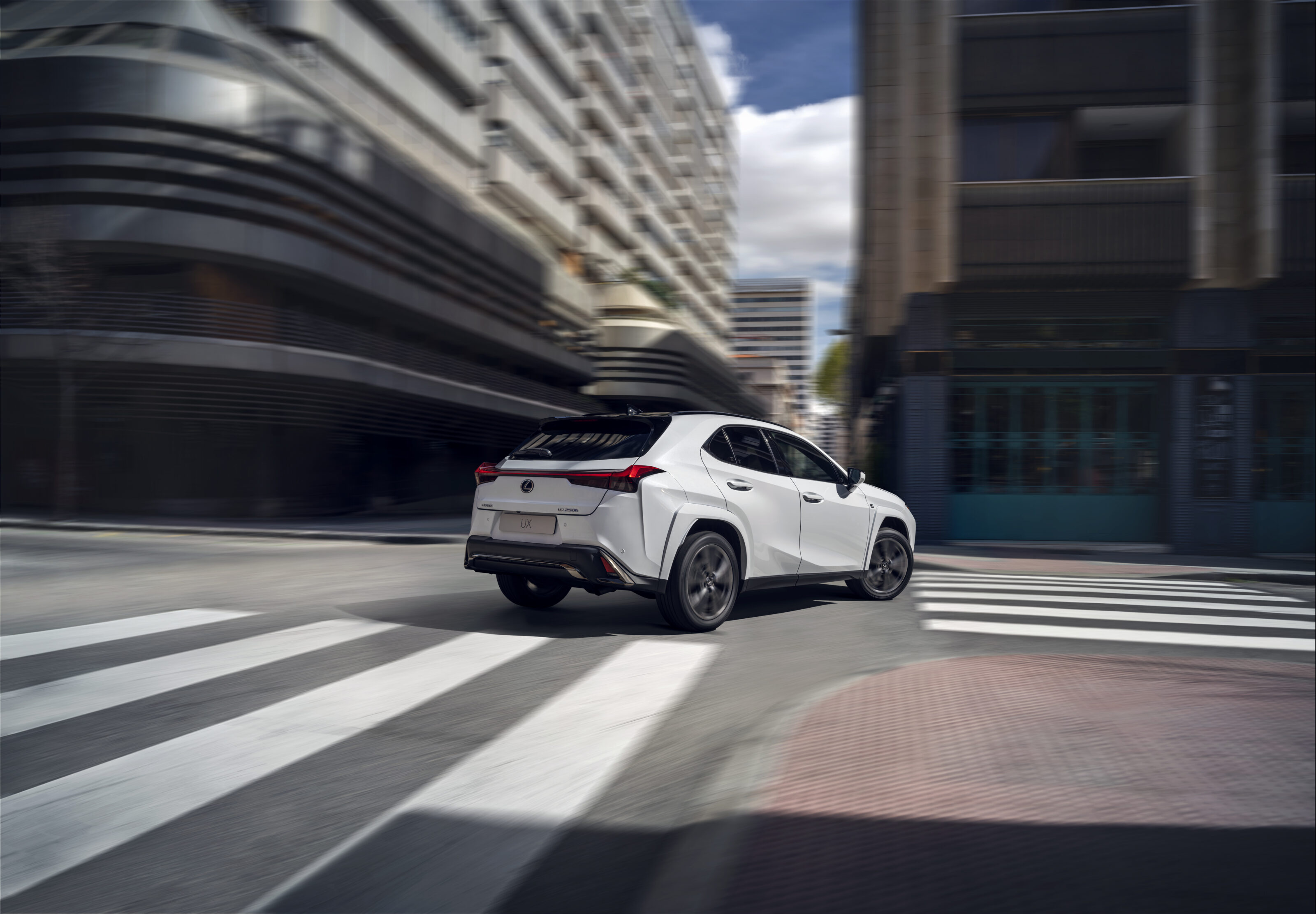
The hybrid UX 250h combines its 2.0-litre four-cylinder petrol engine with either one or two permanent magnetic motors, yielding either two- or all-wheel drive. Whether you opt for the 2WD or AWD UX 250h, combined power output is 135kW, with the 2WD variants claim as low as 4.5L/100km (compared to the UX 200’s claimed 5.8L/100km).
The AWD UX 250h doesn’t gain any more power than its single-motor counterpart, though its rear-axle electric motor delivers front/rear torque biasing.
Vehicles in F Sport trim gain 20 extra spot welds in its chassis, increased rear door reinforcement to aid stiffness and a more rigid steering gearbox mount and suspension member.
Safety
The Lexus UX received a five-star rating from ANCAP, awarded to all variants and powertrains, in November 2018.
The Lexus UX features dual front, side chest-protecting and side curtain airbags, plus knee airbags for the driver and front passenger.
All UXs feature the Lexus Safety System+ suite, which features:
| Pre-collision safety system with pedestrian and daylight cyclist detection |
| Active cruise control |
| Lane trace assist |
| Road sign assist (speed signs only) |
| Automatic high beam |
| Parking assist monitor |
Dimensions
The Lexus UX measures 4495 millimetres long, 1840mm wide and 1520mm tall. Wheelbase is pegged at 2640mm.
Warranty and servicing
All new Lexus’s are covered by a five-year/unlimited-km warranty.
High voltage batteries, pertaining to hybrid, plug-in hybrid and electric vehicles, runs for five-years/unlimited-kilometres, with up to five years of additional coverage – subject to annual health checks after the fifth year.
Availability
The rest of the Lexus UX range arrived in local showrooms from mid-September 2022, while the new UX 250h F Sport Design Special Edition will be available from mid-April 2023.
Jeep has released a pair of teasers ahead of its upcoming annual Easter Safari event next month.
Snapshot
- First of likely several teasers emerge
- Two concepts, one an plug-in hybrid
- Easter Safari to take place in April
The American manufacturer has dropped images of two unique vehicles set to be revealed at the Safari’s 57th annual showing in Moab, Utah, from April 1 to 9.
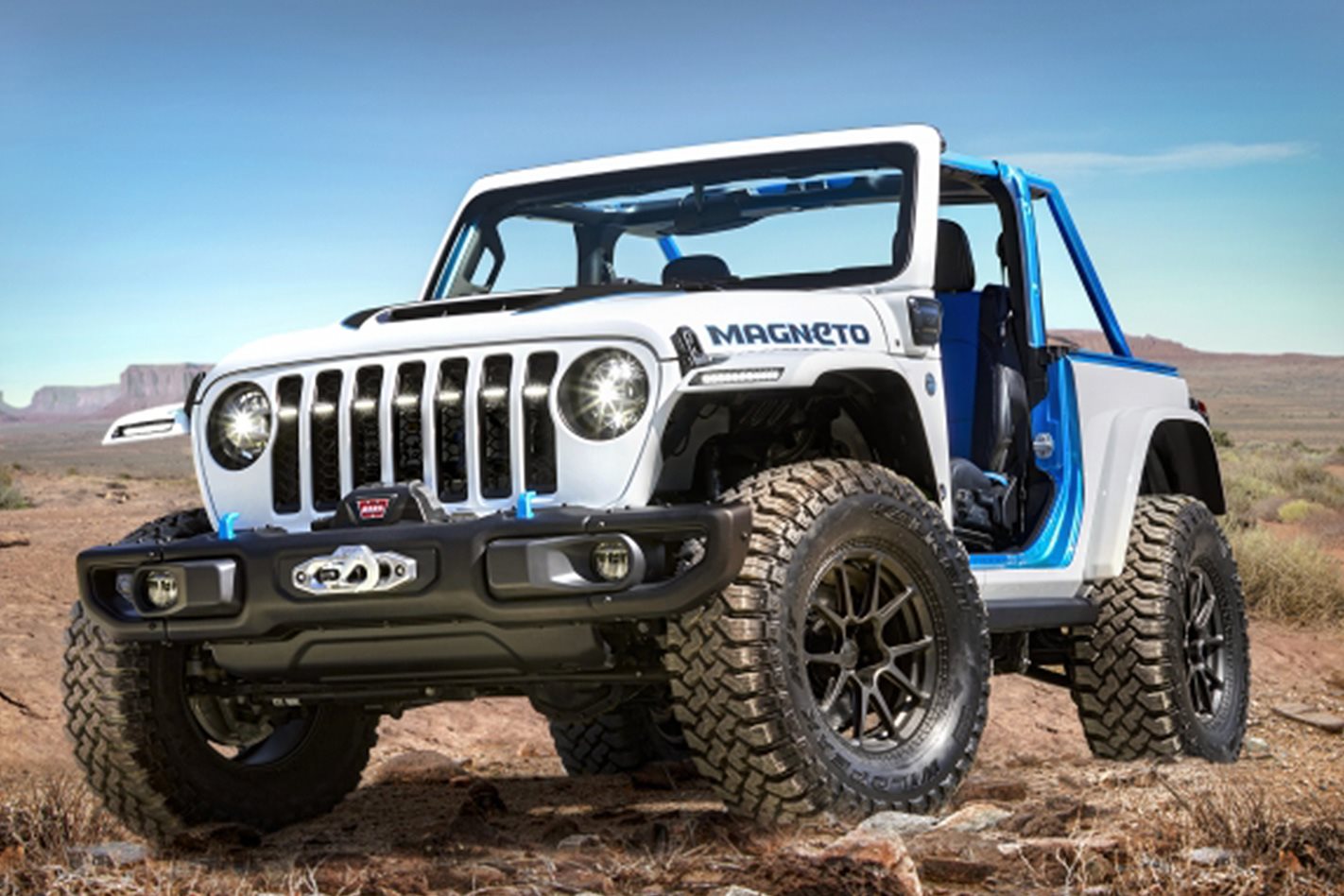
Rather than images or renderings, the company has shown off two eye-catching sketches – one of which appears to be a two-door version of its Gladiator ute wearing knobbly off-road tyres and possibly the largest fenders we’ve ever seen on a Jeep.
Additionally, it seems the driver’s side mirror has moved lower from the A-pillar to sit in front of the fender.
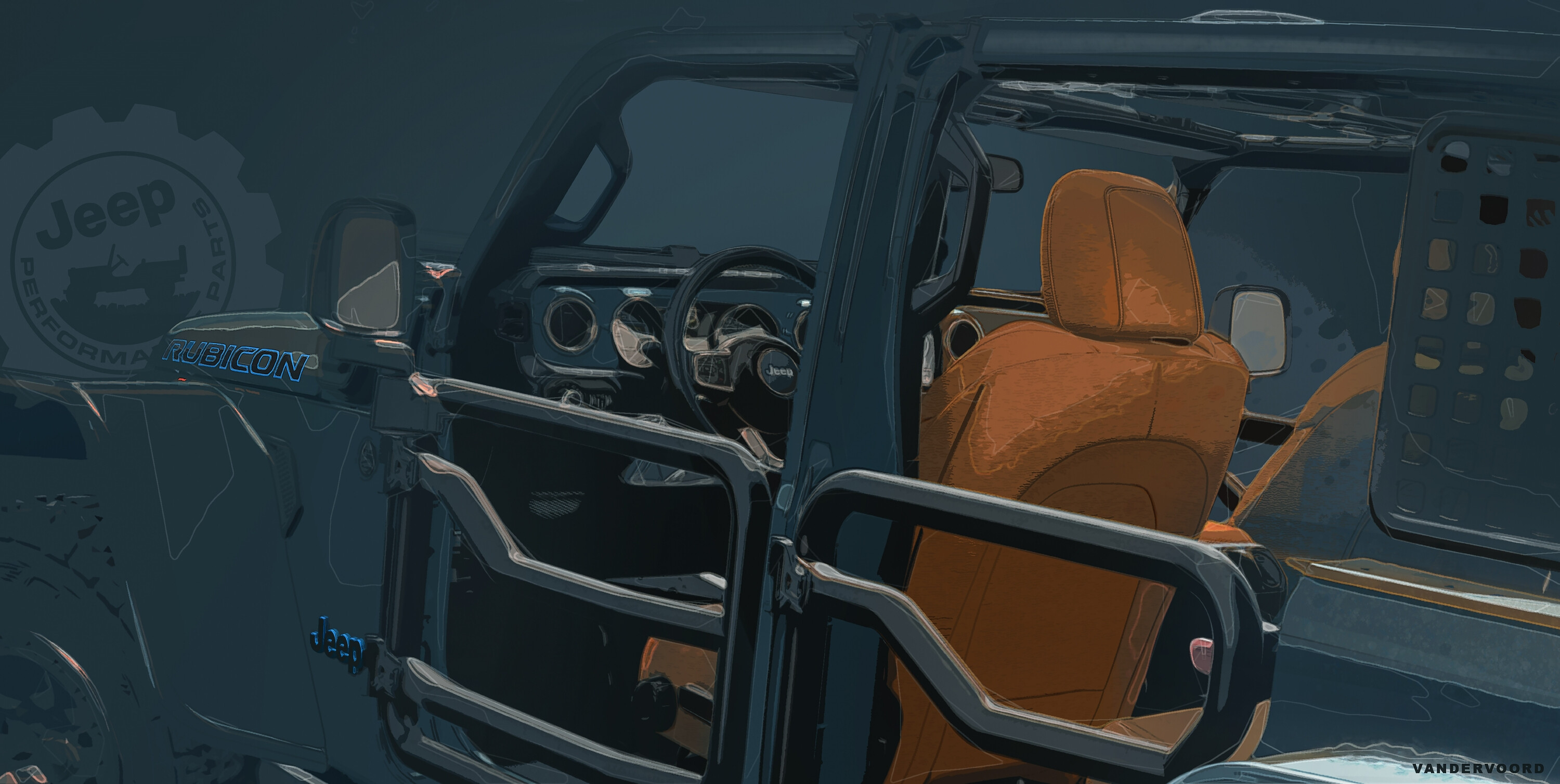
The second sketch appears to be a more straightforward concept of the Wrangler Rubicon off-roader, with blue outlining around the lettering nodding to it being a 4xe hybrid. While again it sports enlarged fenders, the mirror placement looks unchanged.
One element that’s new is that the doors have been replaced by tube half-doors, while the rear windows have been swapped out for some sort of Jeep Performance Parts (JPP) utility rack.
“Just when you thought the Jeep brand couldn’t push the limits any farther, an entirely new collection of eye-catching, mission-capable concept vehicles will be unveiled and driven aggressively during the annual event,” said Jeep.
“The Jeep brand and Jeep Performance Parts (JPP) by Mopar design teams are bringing their A-game to create several one-of-a-kind, rock-crawling, terrain-traversing vehicles that will take four-wheeling to the next level and prove why there’s nothing quite like legendary Jeep 4×4 capability.”
The brand said these were the first teasers to emerge ahead of this year’s event, with it likely releasing several more before it begins on April 1. Last year it brought seven concepts to the 2022 showing.
Jeep brought a handful of brand-new and previously-seen concept cars to the 2022 event, headlined by the Wrangler Magneto 2.0 Concept.
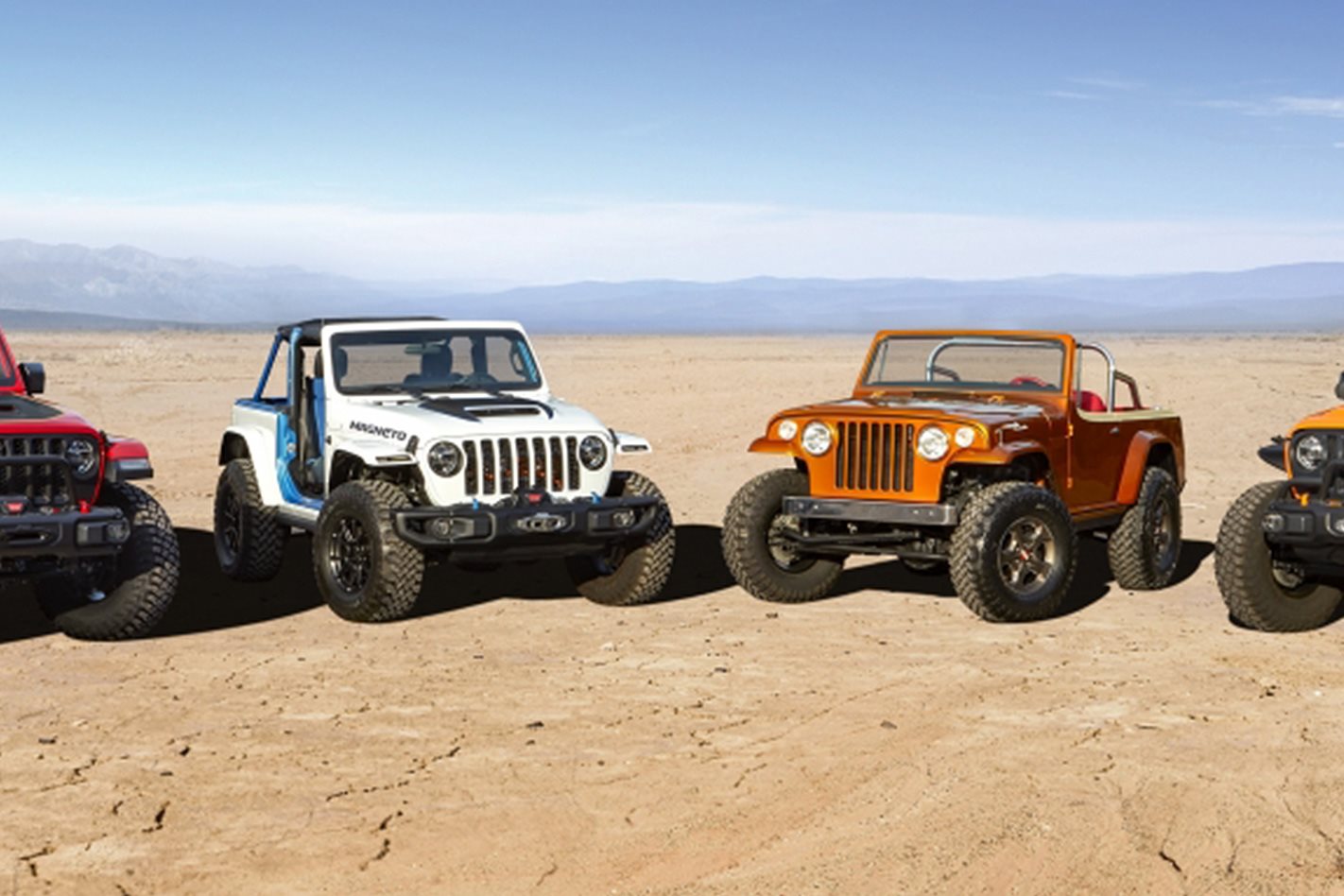
Unlike the majority of battery-powered cars on the road, the Jeep Wrangler Magneto 2.0 doesn’t use electric motors to drive the wheels directly, instead replacing the internal-combustion engine with an e-motor to keep the six-speed manual transmission and low-range gearbox in situ.
While the original Magneto concept from 2021 produced a healthy 213kW and 370Nm, 2022’s 2.0 upped its output to 466kW and an astonishing 1153Nm of torque in bursts of up to 10 seconds.
Jeep claims only two seconds are needed for the Magneto 2.0 to hit 97km/h (60mph) from a standstill.
An extra 305 millimetres has been added to the car’s wheelbase to accommodate powertrain components, while a custom 76mm lift kit, Dynatrac 60 Pro-Rock front axle and Dynatrac 80 rear axle, front and rear differential lockers, and 40-inch off-road tyres on 20-inch wheels help the concept to clear Moab’s boulders.
If there’s anything that ought to be able to shrug off the depredations of a global pandemic, it’s a Land Rover Defender.
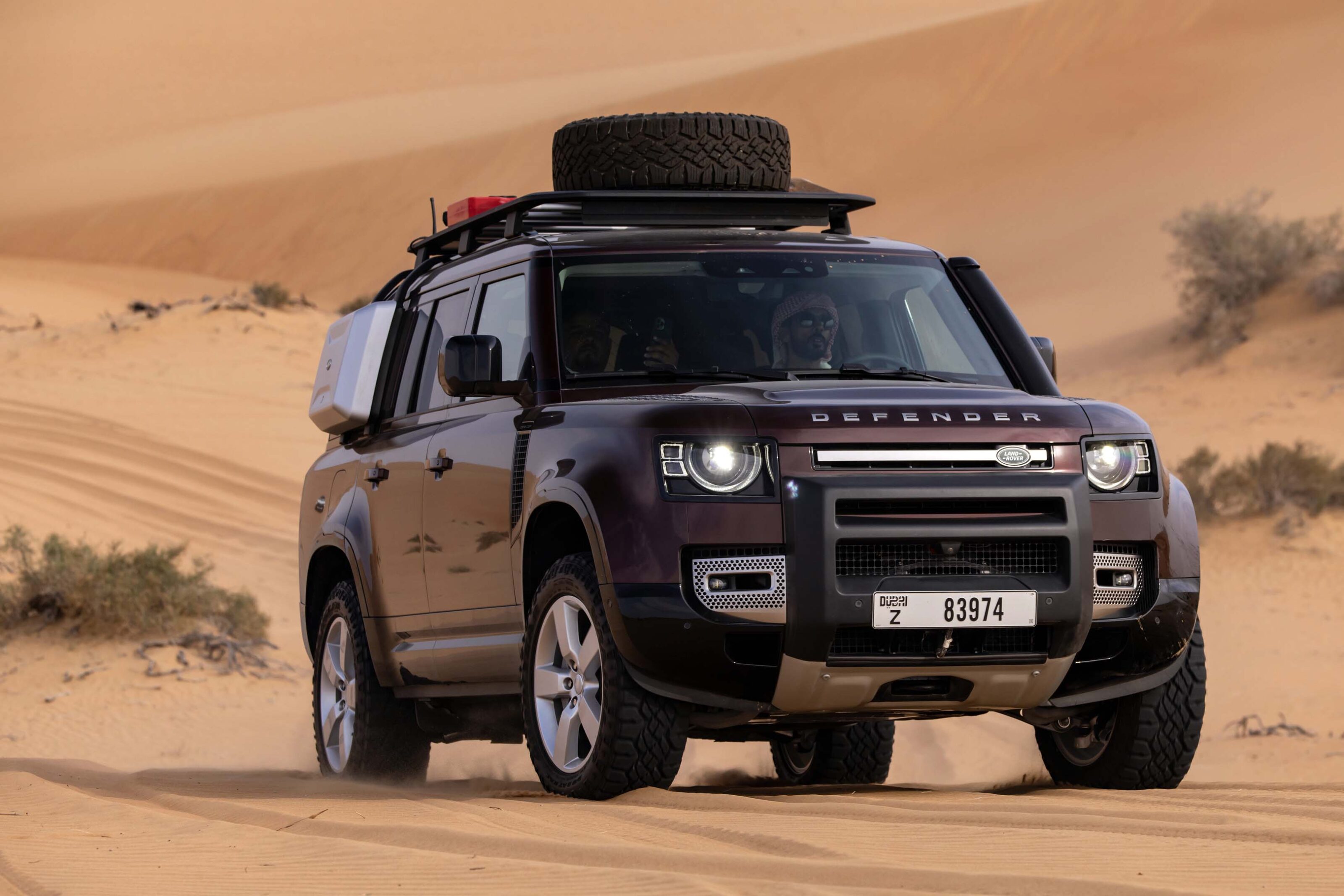
The L663 version of the Defender was proudly displayed at the 2019 Frankfurt Motor Show, shortly before events took an unexpected turn.To complement the short-wheelbase 90 three-door and long-wheelbase 110 five-door, Land Rover has now launched the long-wheelbase 130 eight-seater. All three models were designed at the same time, the 130 reprising a badge you could get with the original Land Rover Defender, which launched in 1985 and sat on a 127-inch (3226mm) wheelbase.
So there’s a little nod to the past, but unlike that car – which was a genuinely stretched wheelbase – this time the Defender 130 sits on the same wheelbase as the 110, carrying all of its extra length aft of the rear axle.
JUMP AHEAD
- How much is it, and what do you get?
- Where is this model in its lifecycle?
- How do rivals compare on value?
- Interior comfort, space and storage
- Technology in the cabin
- What is it like to drive?
- How much fuel does it use?
- How safe is it?
- Warranty and running costs
- VERDICT
- Specifications
How much is it, and what do you get?
| 2023 Land Rover Defender 130 SE features | |
|---|---|
| 19-inch alloy wheels | LED headlights |
| 12.3-inch digital cluster | 10.25-inch touchscreen |
| Navigation | Wired Apple CarPlay/Android Auto |
| 10-speaker Harman Kardon sound system | Dual-zone climate control |
| Leather upholstery (black or Cognac) | Third-row air vents |
The Defender 130 does get a few features not shared with either the existing 90 or 110 models.
Unlike the old Land Rover specification structure that allowed you to mix and match engines, trims and options in any way you saw fit, the crew from Solihull are keeping things a little bit simpler.
The 130 is offered in one SE trim level for Australia, with the choice of either the P400 petrol engine priced at $131,650 or the D300 diesel, which carries a $124,150 price tag (both before on-road costs). So far, so straightforward.
Both are six-cylinder units. We didn’t get to try the D300 on our drive event, which is something of a shame as the Ingenium diesel is good for 221kW and 650Nm from just 1500rpm, which makes it a natural for towing – more on which later.
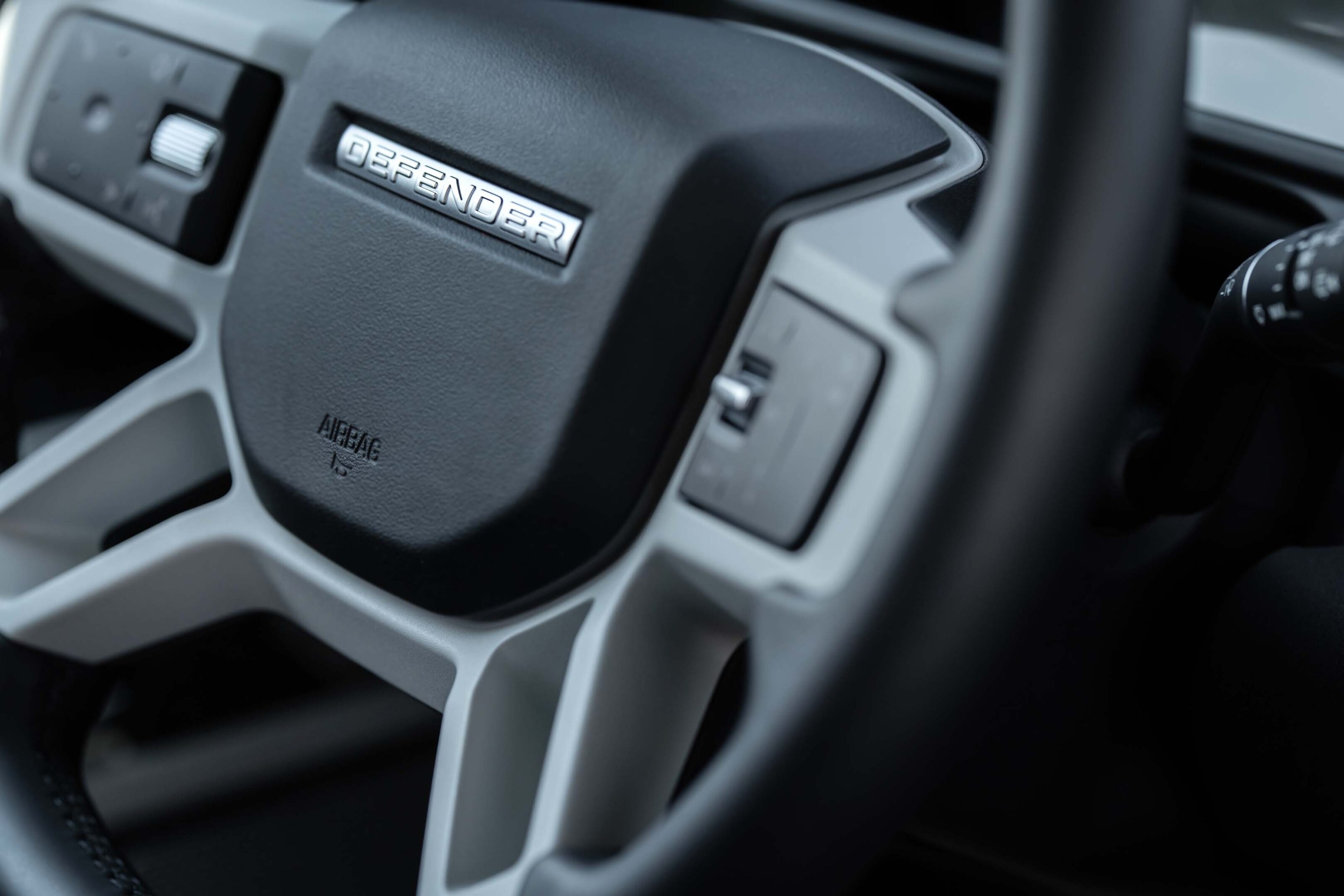
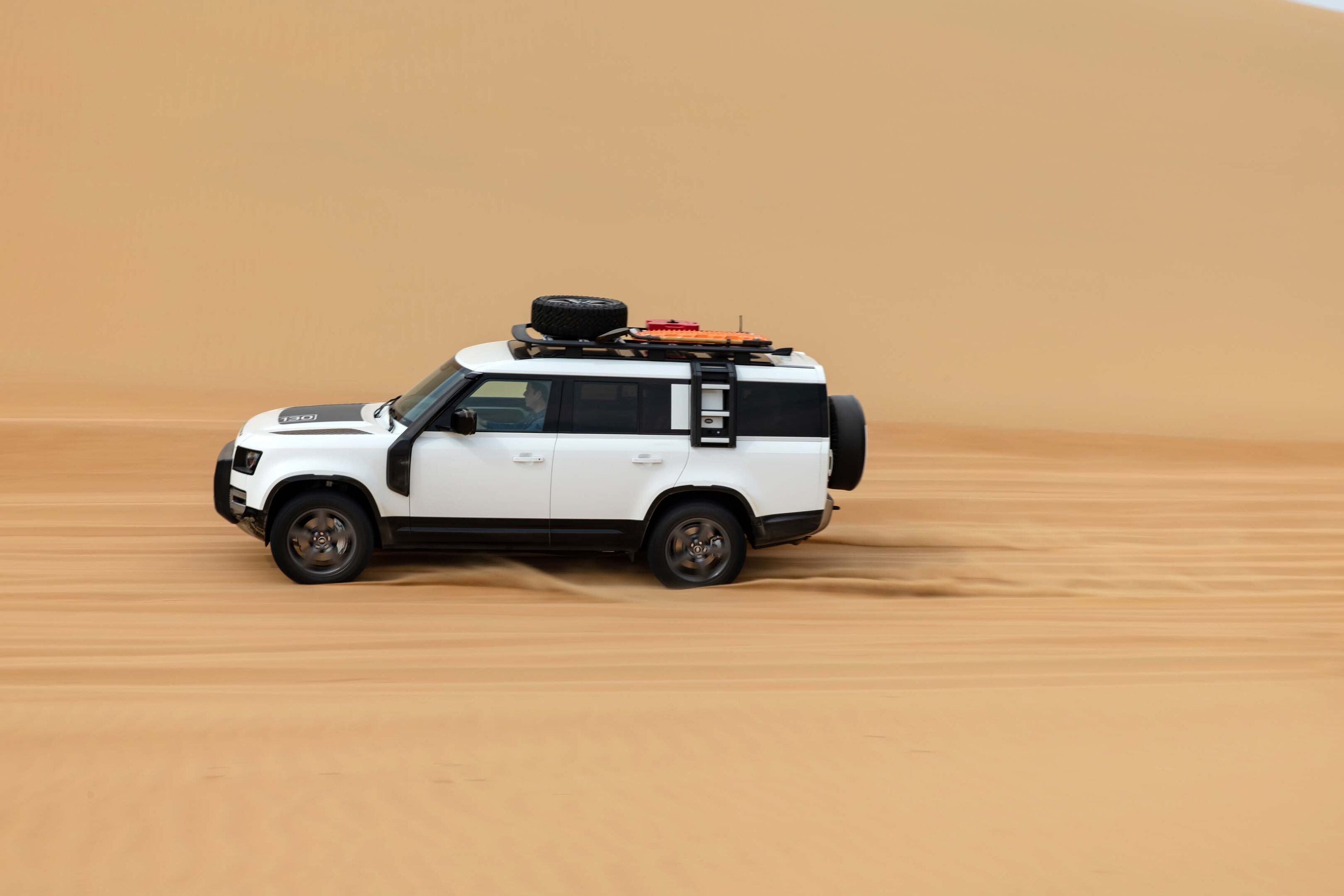
We set out to tackle some dunes somewhere on the border between UAE and Oman in the P400 version, 294kW and 550Nm of turbocharged potency combining to deliver ample acceleration.
So that’s the basic proposition: add on-road costs plus a typical option spend of around $10,000 and your eight-seat Defender isn’t going to leave you change from $150K. So it’ll need to be good. Very good.
In order to sweeten the pot a little, Land Rover has equipped the Defender 130 with a number of standard features that you’d be reaching into your pocket to fund on, say, a 110 SE.
Air suspension is a standard fit, as is a sliding panoramic roof. There’s an exclusive Sedona Red paint finish for the 130 that replaces the Tasman Blue offered on the 90 and 110. A body-coloured rear door-mounted spare wheel cover is also a 130 thing.
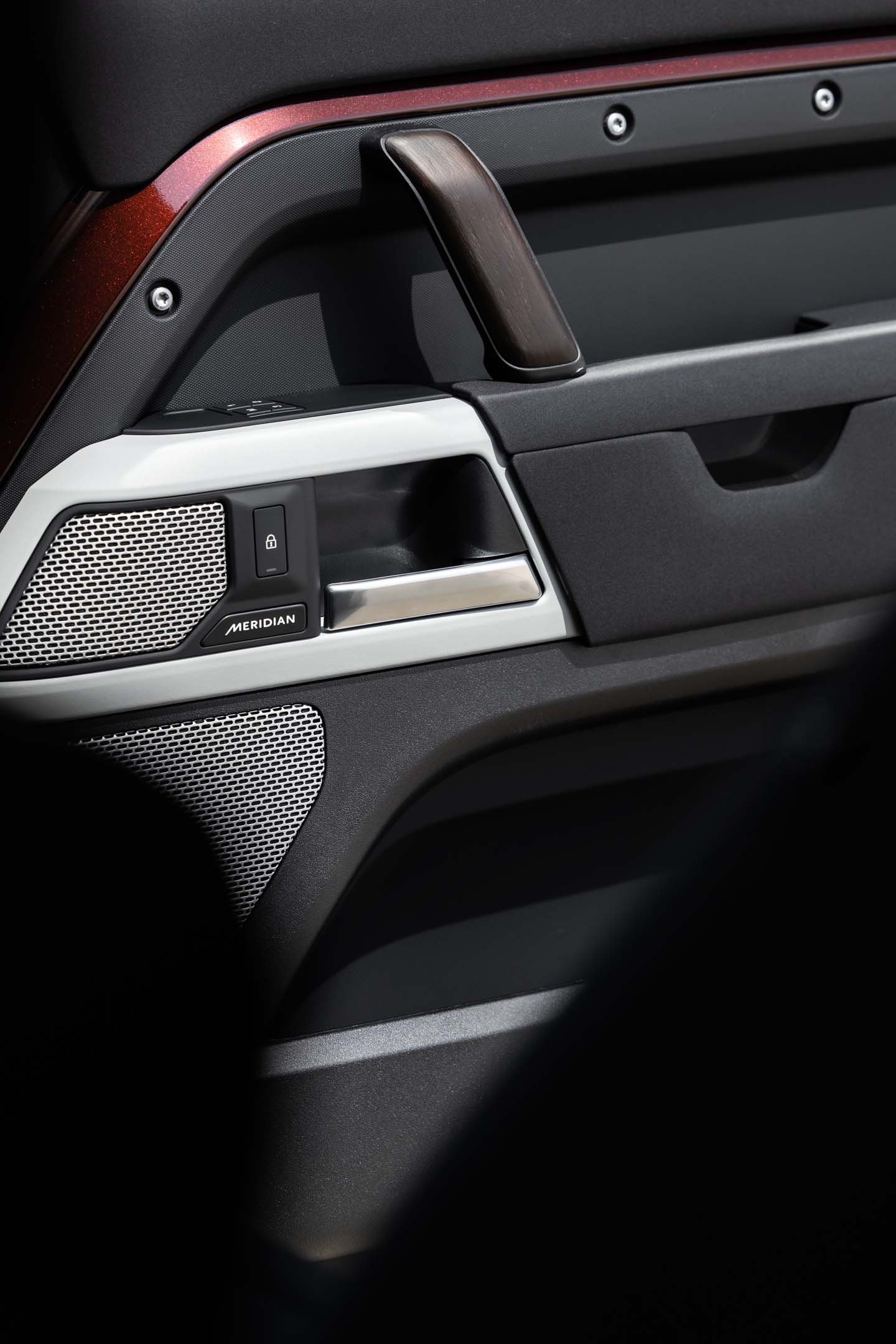
Then there’s the 40:20:40 folding third row of seats, available optionally heated. To ensure that huge mass of cabin air is kept at the right temperature, the 130 also gets a three-zone climate control system with rear-cooling assist and face-level rear-row air vents.
It also gets Cabin Purification Plus, featuring Land Rover’s Nanoe tech, with advanced PM2.5 filtration to cut down on allergens and pathogens. You can even pre-purge the air from the vehicle before you get in using a smartphone app.
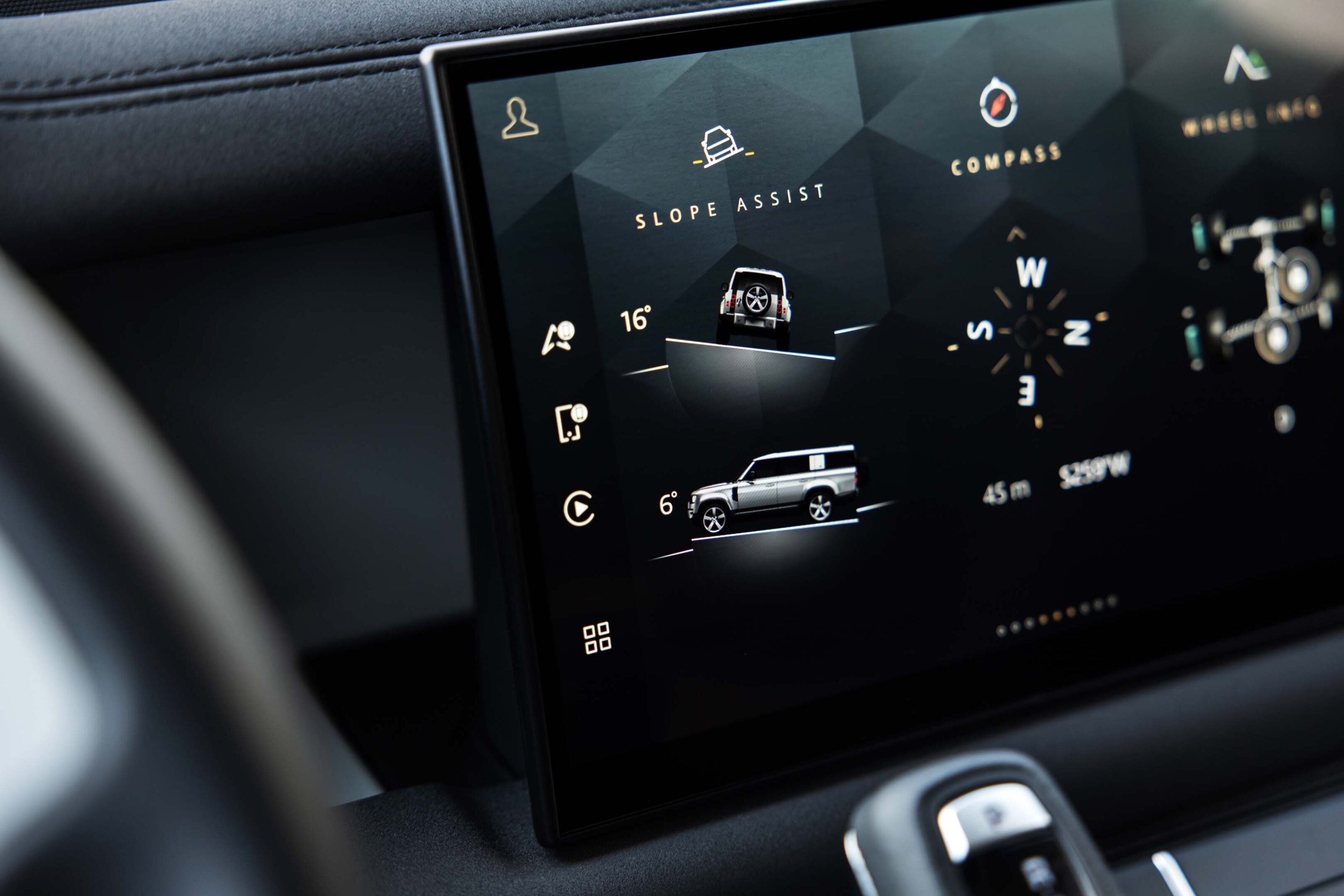
Finally, where the 90 and 110 are supplied as standard with a 10-inch Pivi Pro touchscreen system up front, the 130 gets a bigger 11.4-inch display. That in turn marshals a 400W Meridian 11-speaker stereo with subwoofer.
Where is this model in its lifecycle?
While the Defender 130 is new, the Defender range as a whole is set to come in for a refresh in 2024.
Those changes are unlikely to affect a Defender 130 you buy right now, with Land Rover set to bring in a few additional variants. For a model that we first saw in 2019, the Defender still feels box-fresh. That’s perhaps not so surprising, as the Defender has – like many of JLR’s products – been hamstrung by semiconductor supply shortages.
We’re assured that the vehicles bound for Australia don’t miss out on any kit. Nevertheless, place an order today and it’s likely to be a year before your shiny Defender 130 is in your garage. Patience is a virtue.
How do rivals compare on value?
Rivals? A Defender has no rivals. At least that’s what Land Rover would have you believe. The truth..?
If you’re hankering for a go-(almost)-anywhere vehicle with three rows of seats, it’s a fact that a Ford Everest will do much of what a Defender 130 can do at half the price.
No, it won’t do it with anything like the style, polish or feel-good factor, but 90 per cent of the capability at 50 per cent of the price will nevertheless be a tempting proposition for those who find the Defender 130’s asking price a bit steep.

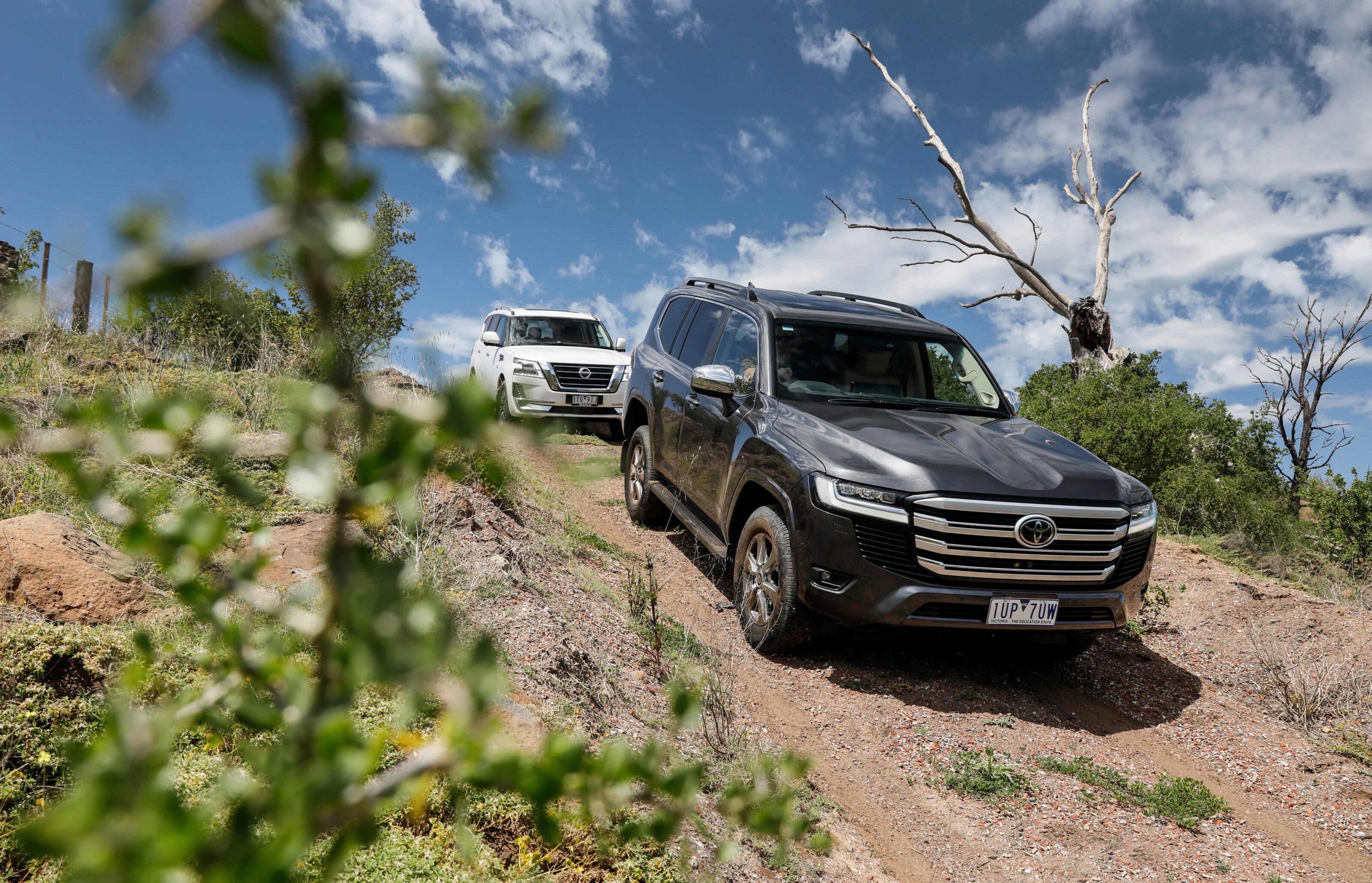
More of a direct rival is the Toyota LandCruiser 300 VX. This is priced at $113,990 before on-road costs and you get a 227kW/700Nm 3.3-litre diesel lump, just about covering the Defender D300 in the engine department.
The Defender counters with eight seats rather than seven and has more space when you start folding chairs. The thing that could split these vehicles is towing capacity.
Whereas the Defender is rated to tow a maximum of 3000kg braked, the LandCruiser can do 3500kg. So if you’ve got a boat that wouldn’t look out of place in Monaco’s marina, you might well need to go for the Toyota. The rest of you, read on.
Interior quality, comfort, space and storage
I think I’ve rented studio flats with less space than the Land Rover Defender 130.
With most three-row vehicles, a six-footer like myself will only climb into the back if someone’s thrown a Mars bar in there first or there’s someone to help pull me back out. The usual drill is that you’ll put up with sitting with your knees tucked under your chin for a few minutes, start worrying about deep-vein thrombosis and then ask for assistance to get back out.
The Defender 130 is different.
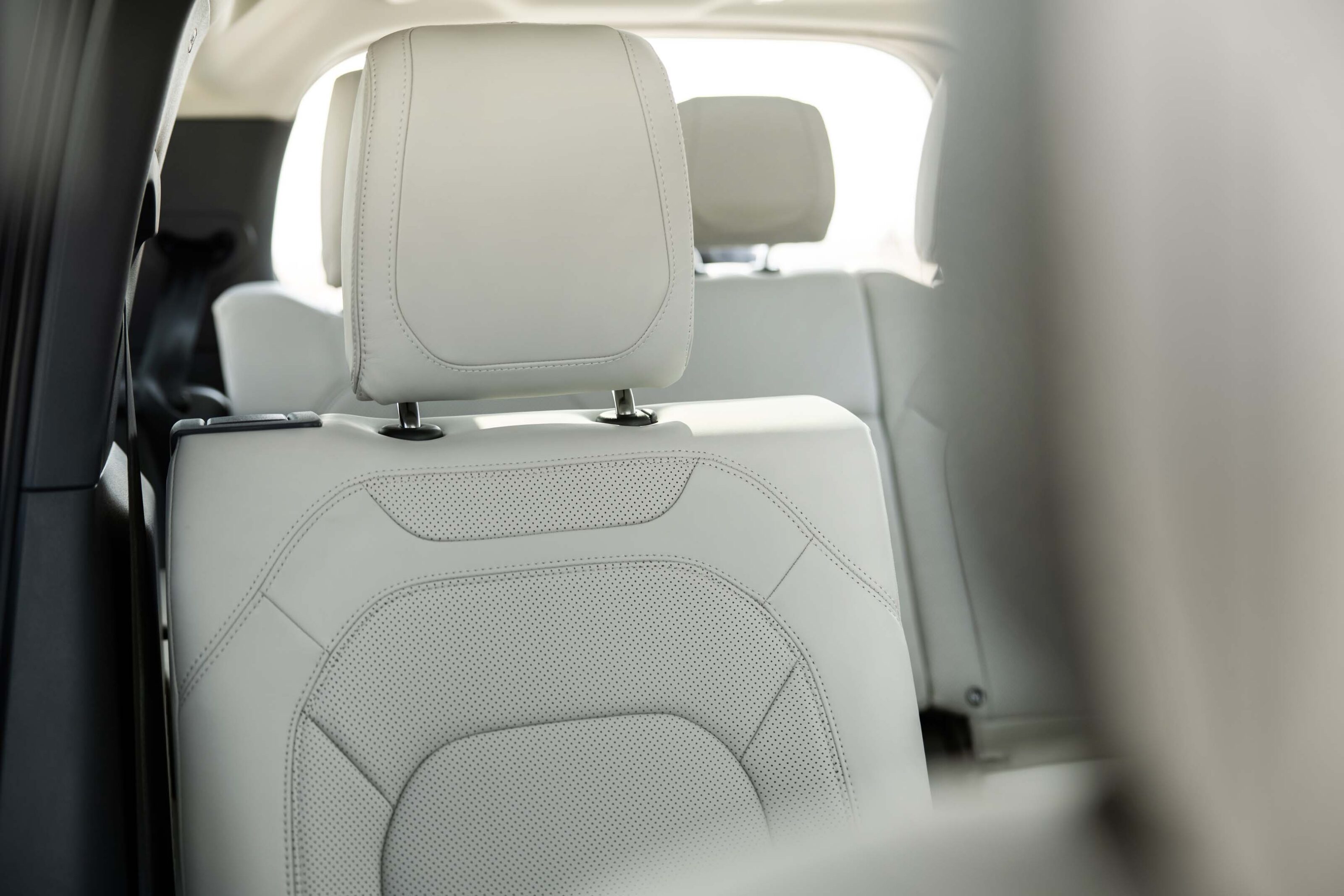
I set the driver’s seat to my driving position and there was ample space in the second row. I then got into the back and was astonished to find that it was reasonably comfortable back there. Land Rover likes to mention the ‘hip to heel dimension’ which it has optimised here to prevent that uncomfortable feeling.
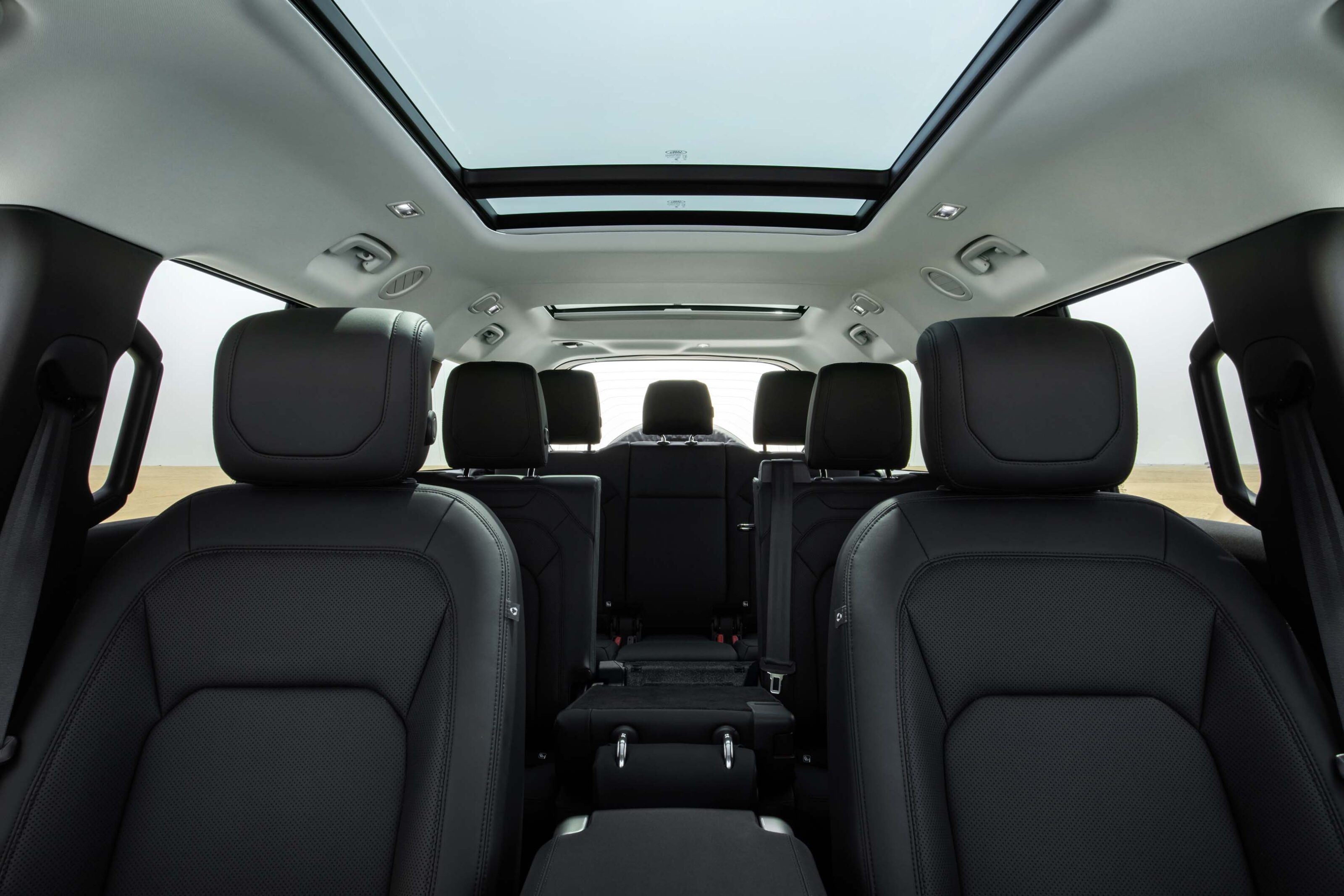
The impression of airiness is helped by an additional overhead pane for the panoramic roof and very good air-conditioning, routed through the roof to exit at face height on the pillars.
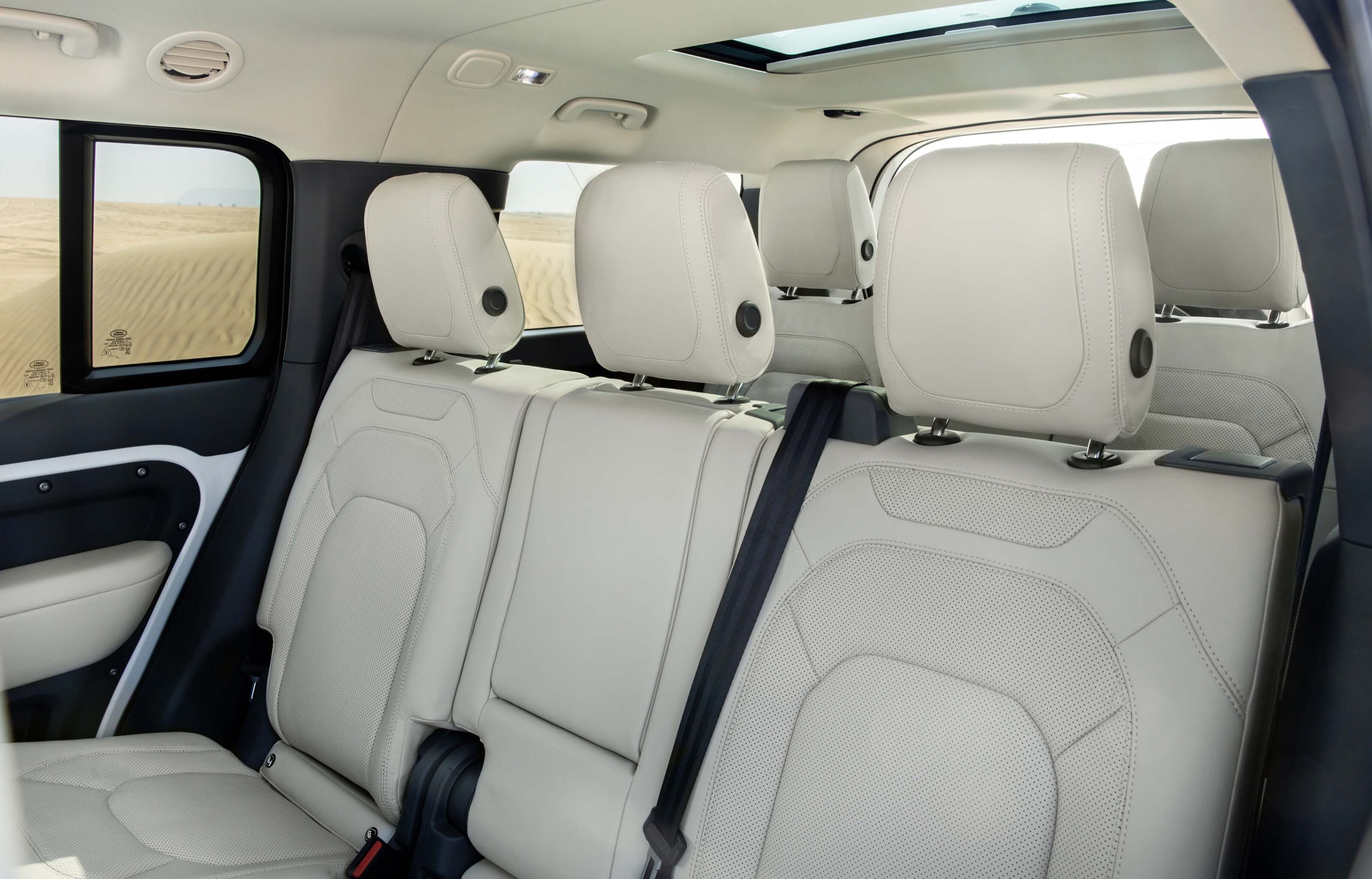
One reason why the Defender offers three seats abreast in the back for a 2+3+3 configuration is that the massive 340mm of extra rear overhang means third-row passengers’ shoulders are actually seated behind the intrusive suspension strut towers.
Their feet, however, are not and the two outermost seats force your feet rather uncomfortably inboard. It’s no great problem if there are two passengers in the back row, but with three it might get a bit squeezy for toe space.
ISOFIX child seat fixings are available on the four outer seats in the second and third rows. Unlike the LandCruiser 300, the Defender also has top tethers for the back row.
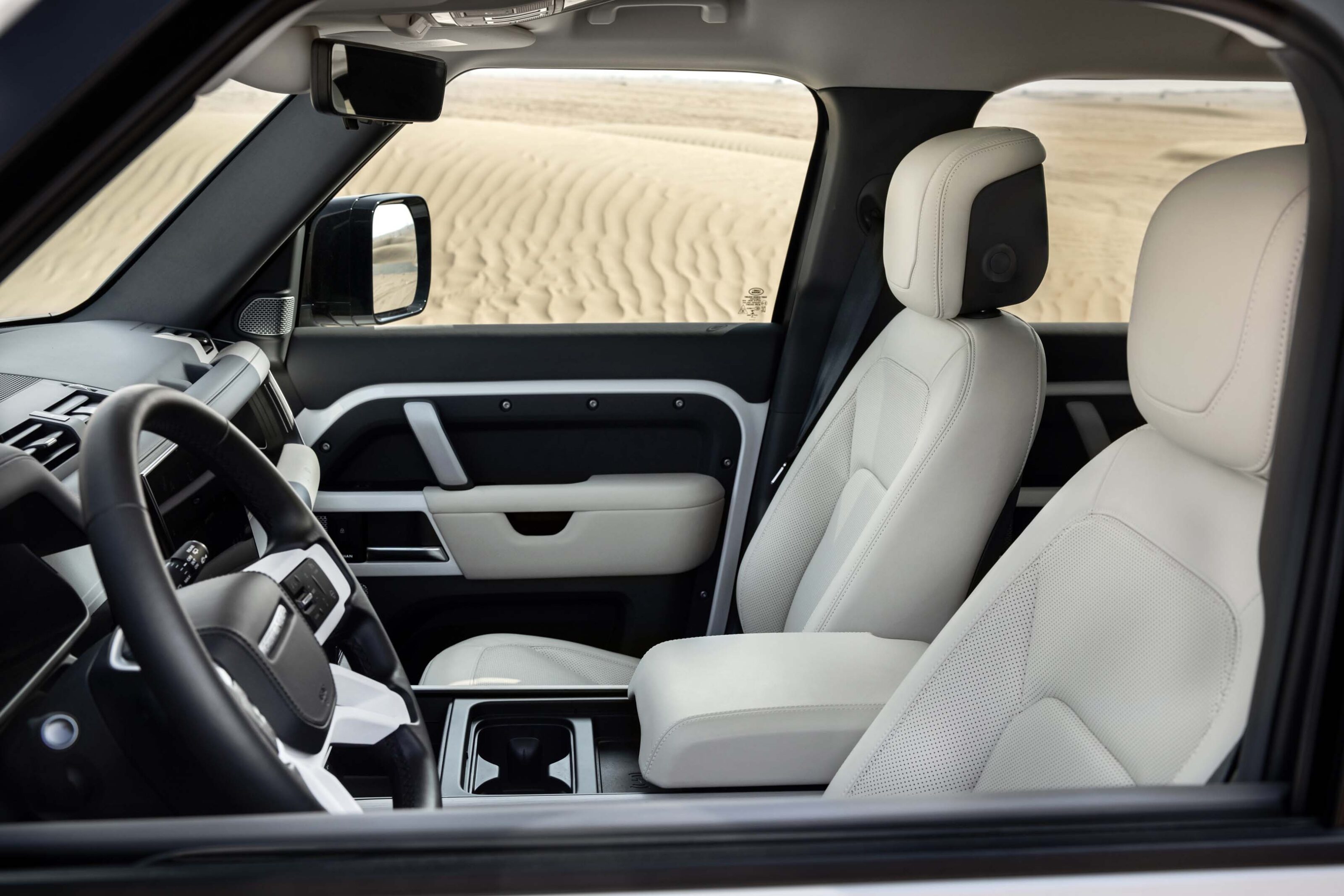
Build quality seems very good, with some very upmarket cabin finishes on offer. In that regard, it’s a long way removed from the more utilitarian LandCruiser 300. The Defender 130’s cabin is fully carpeted, unlike some 90 and 110 models.
The Natural Light Oak engineered wood veneer works particularly well with the Fuji White exterior paint colour. It sounds a bit odd talking of a Defender in this way, but the model has changed and we just have to adapt accordingly.
Boot space
There are all sorts of reasons why you would want a three-row car. You might have two small kids who require child seats and a sizeable dog. Or three kids who just don’t get along. Neither are uncommon scenarios. But it needs to be said that if you want to carry eight people and their luggage, you probably need two cars.
With all the seats in position, Land Rover claims 389 litres of luggage capacity for the Defender 130, and while I don’t doubt the numbers, the actual base footprint of that space is very small indeed.
Drop the third row of seats and you get a far more useable 1232 litres. Fold the second row as well and there’s 2291 litres with which to challenge Ikea to do its worst. The seats don’t fold totally flat, which limits ultimate utility a little, but should you need even more carrying capacity, there’s also the option of diving into the options list and specifying a roof transportation system.
One particularly neat touch is the ability to dump the air out of the Defender’s air suspension and lower the vehicle when you’re loading it. Buttons in the luggage compartment allow you to bring the loading sill as low as possible and then raise it to its prior position.
Mini matchup: Boot space
| MODEL | WHEELBASE | BOOT |
|---|---|---|
| Defender 130 SE | 3022mm | 389-1232-2291L |
| LandCruiser 300 VX | 2850mm | 175-1004-1967L |
| Everest Platinum | 2900mm | 259-858-1823L |
Technology in the cabin
Defenders now feature what3words functionality built into the navigation.
Yep, the Pivi Pro infotainment system can now navigate you to any three-metre square on the planet without the need for a phone signal. You’ll occasionally spot this trio of random words (yes, there is a whole Twitter account devoted to hilarious word combos) and it’s really helpful for identifying off-road waypoints.
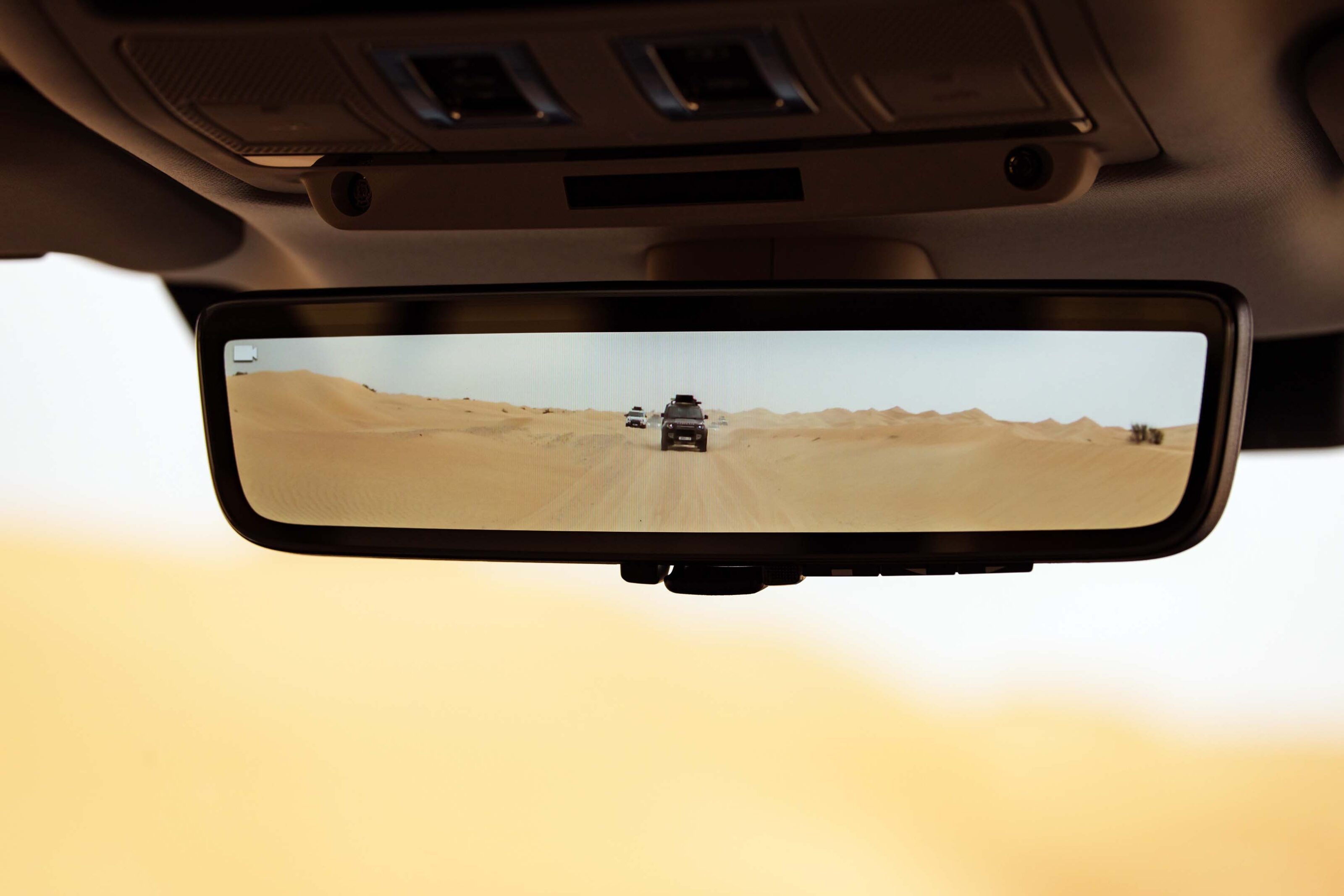
We could cover 3000 words quite easily talking about the Defender 130’s off-road tech, covering its four-wheel drive smarts, electronic air suspension functionality, Terrain Response system, the genius camera systems and so on, but we’ve covered that in some detail in prior Defender reviews.
The Defender features some neat tech including keyless entry with automated walk-away lock. Basically, if the key is within 1.5m of the vehicle, the car unlocks and then re-locks as the key moves out of that zone.
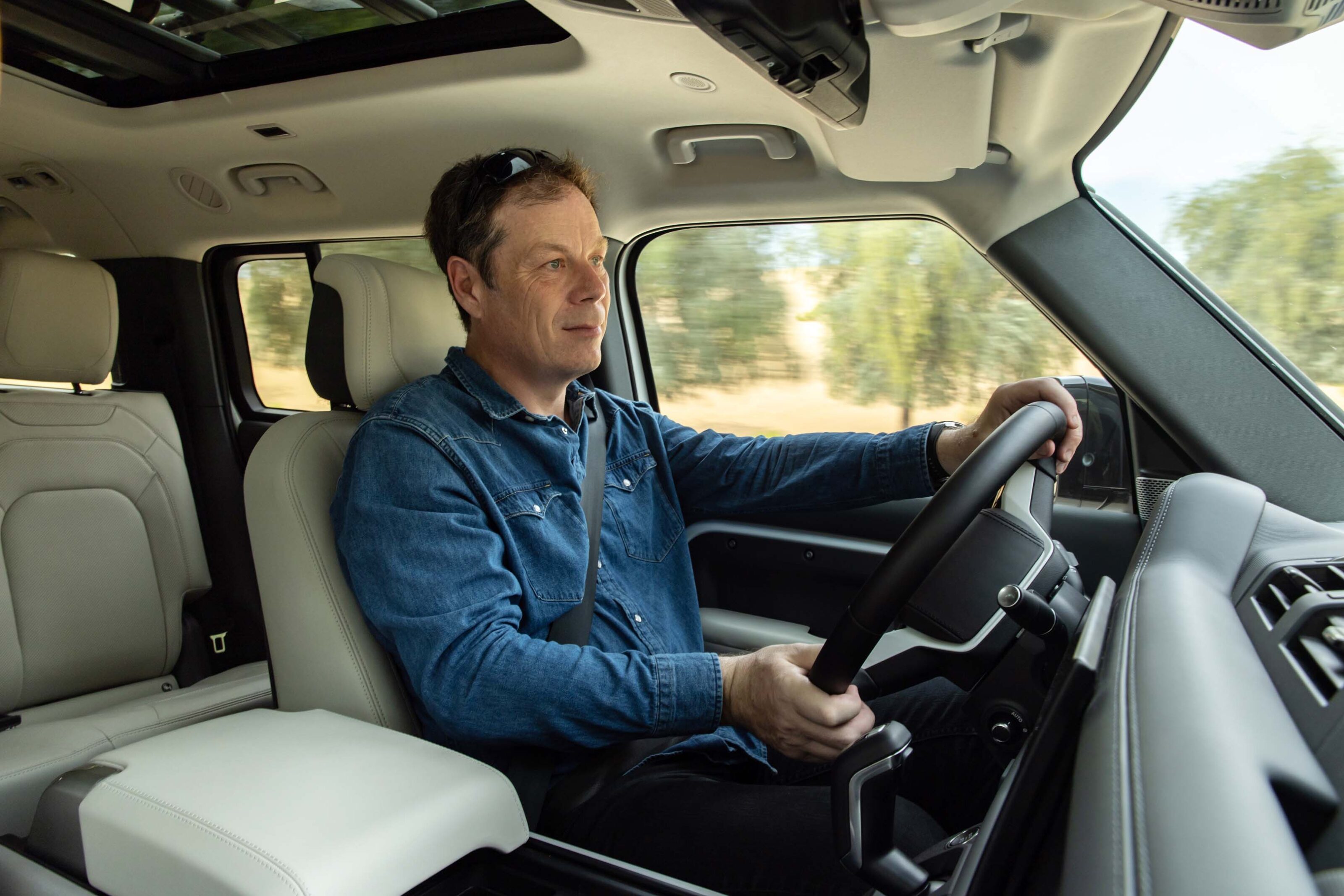
There’s wireless phone charging up front and wireless Android Auto and Apple CarPlay. Pivi Pro worked in a generally glitch-free and easy-to-navigate fashion, enabling a phone to be set up as a vehicle wi-fi hotspot, generating a one-time password if required.
Over-the-air software updates are offered. It sounds slightly churlish pointing this out on a Defender, but a head-up display is not offered.
All rows get USB-C charging points and there’s also the option of a four-zone climate control system should you want to tailor airflow even more specifically.
What is it like to drive?
The P400 certainly feels as if it has enough engine.
Land Rover quotes a 0-100km/h figure of 6.6 seconds and that feels attainable. Go diesel and the D300 will accelerate to 100km/h in 7.5 seconds. But that’s not how we typically use a Defender, is it? We want to get its boots dirty.
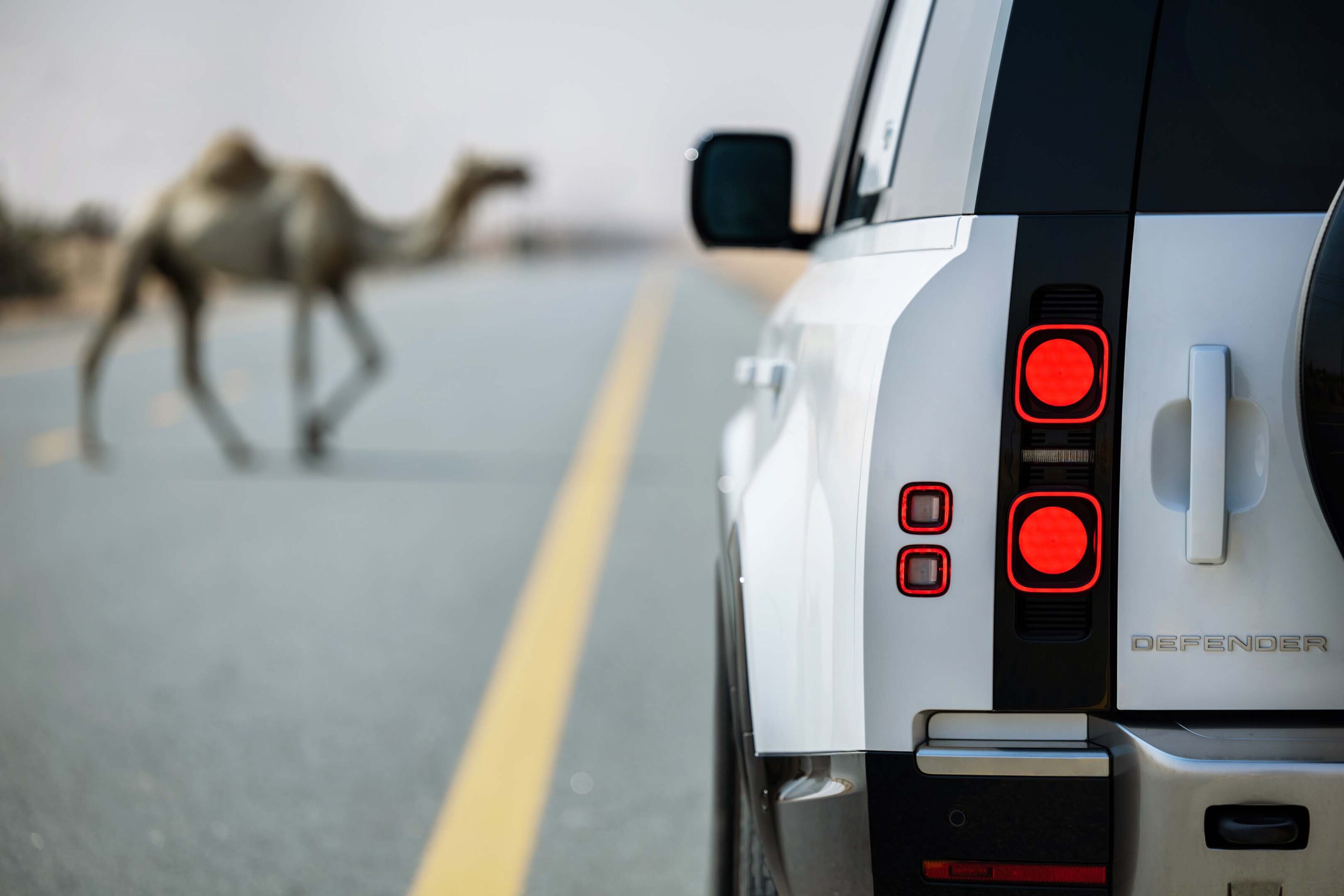
The Defender 130’s vital stats in that regard are 430mm of articulation, a 900mm wading depth, and 71.5mm of additional lift at the front (and 73.5mm at the rear) if you extend the air suspension to give the vehicle all the ground clearance it can get.
Approach, breakover and departure angles (at best) are 37.5, 27.8 and 28.5 degrees respectively. That last figure is key, because the 110 features a departure angle of 40 degrees, as the rear wheels of that vehicle are pushed right out to the corners. If ultimate off-road capability is more important than three spacious rows, go for the 110.
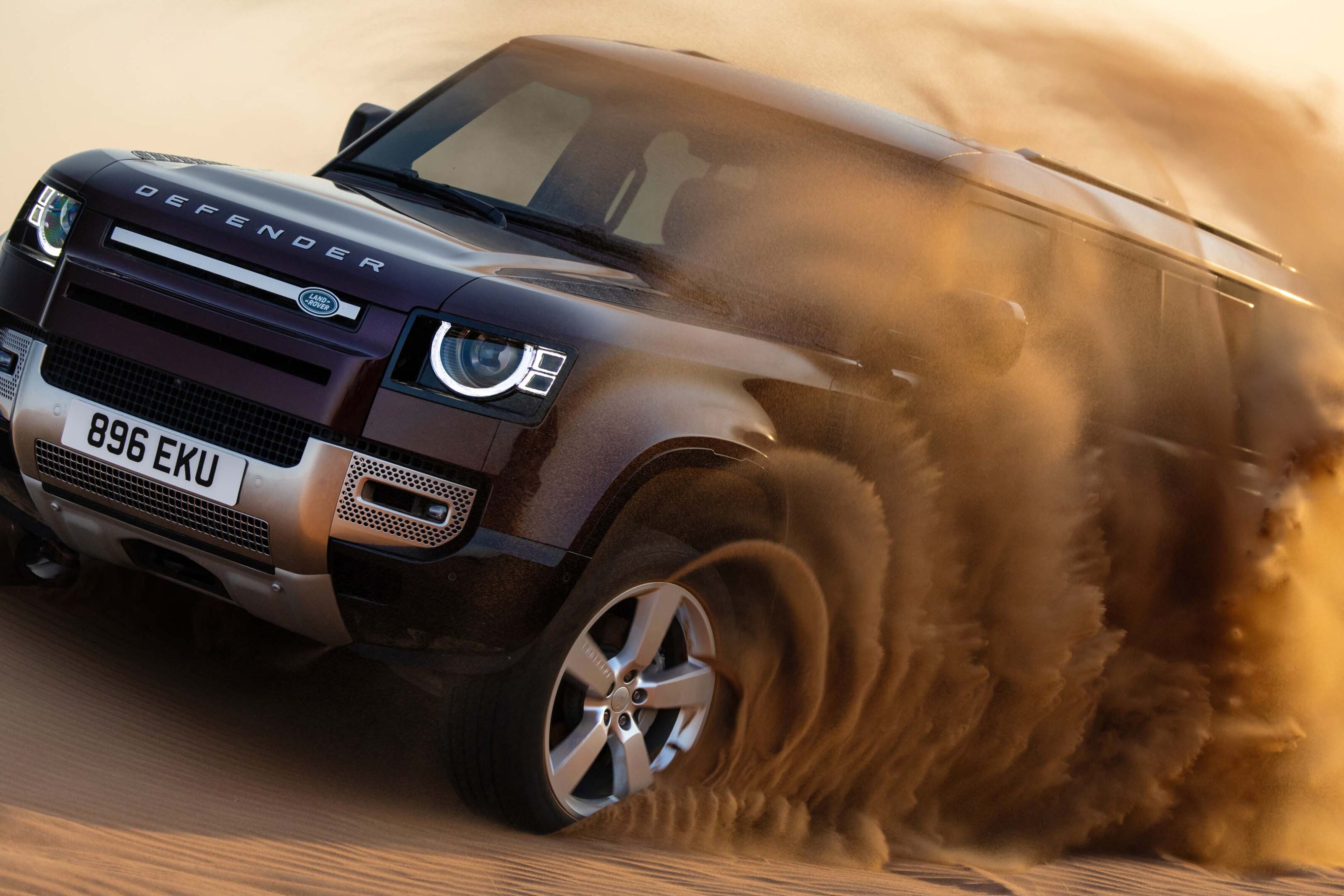
Land Rover slightly cheekily claims that the rear departure angle is better than any of its eight-seater rivals, which is technically correct. While the rear end looks long if you’re accustomed to the pert shapes of the 90 and 110, Land Rover has cleverly kicked up the angle to ensure it still offers plenty of clearance. It’s actually better than the 25 degrees on offer from a LandCruiser 300.
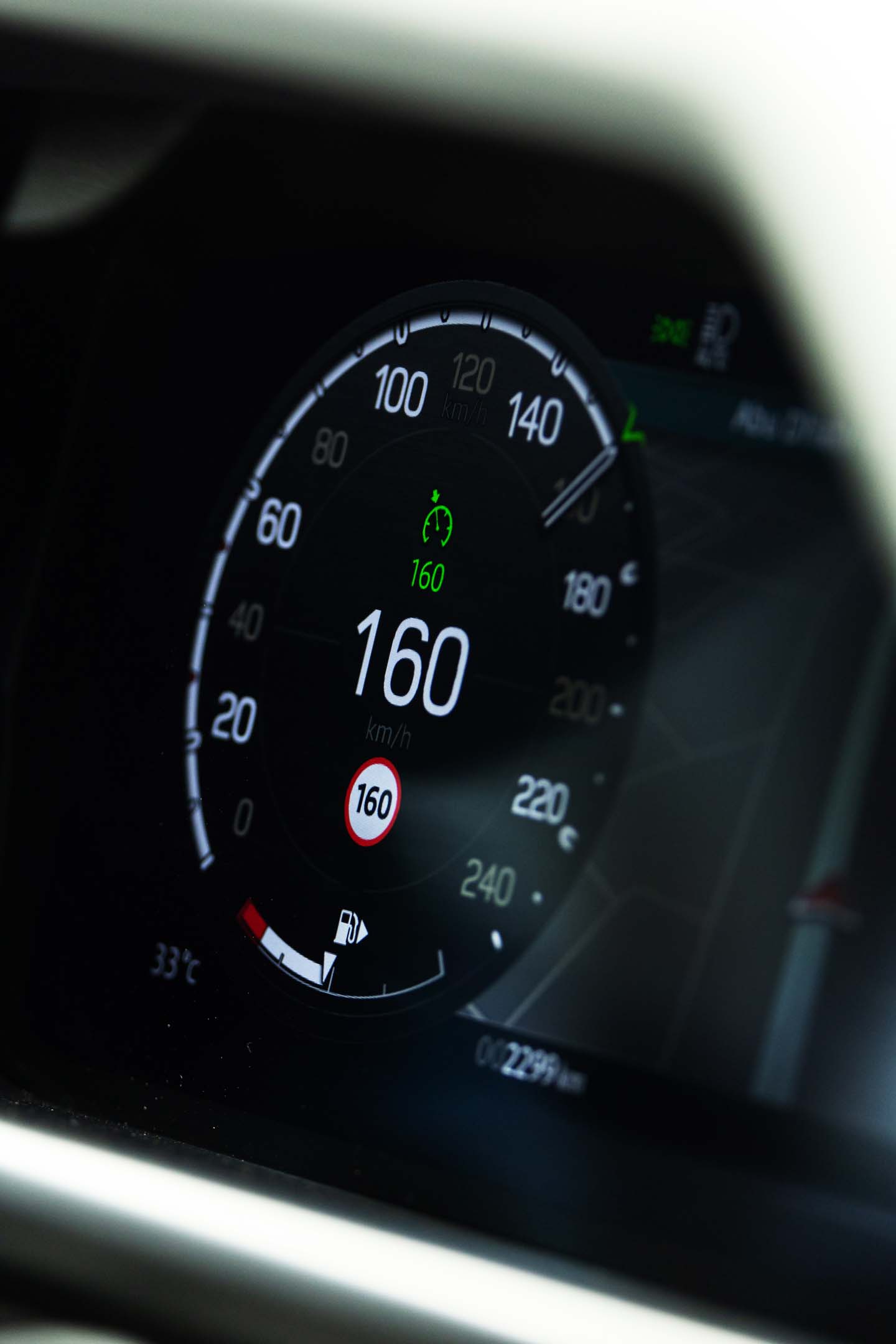
We didn’t have much chance to put the 130’s handling to the test on the UAE’s arrow-straight roads. I can report that at the legal limit of 160km/h, the slab-sided Defender wanders a little under crosswinds, but that’s a decidedly niche aspect of its dynamics.
Ride quality was good and body control is excellent for a big vehicle, with little head toss. That’s because, unlike its ladder-framed rivals, the Defender is a monocoque and its massively superior chassis stiffness gives engineers additional freedom to tune the suspension for a more composed ride on bitumen.
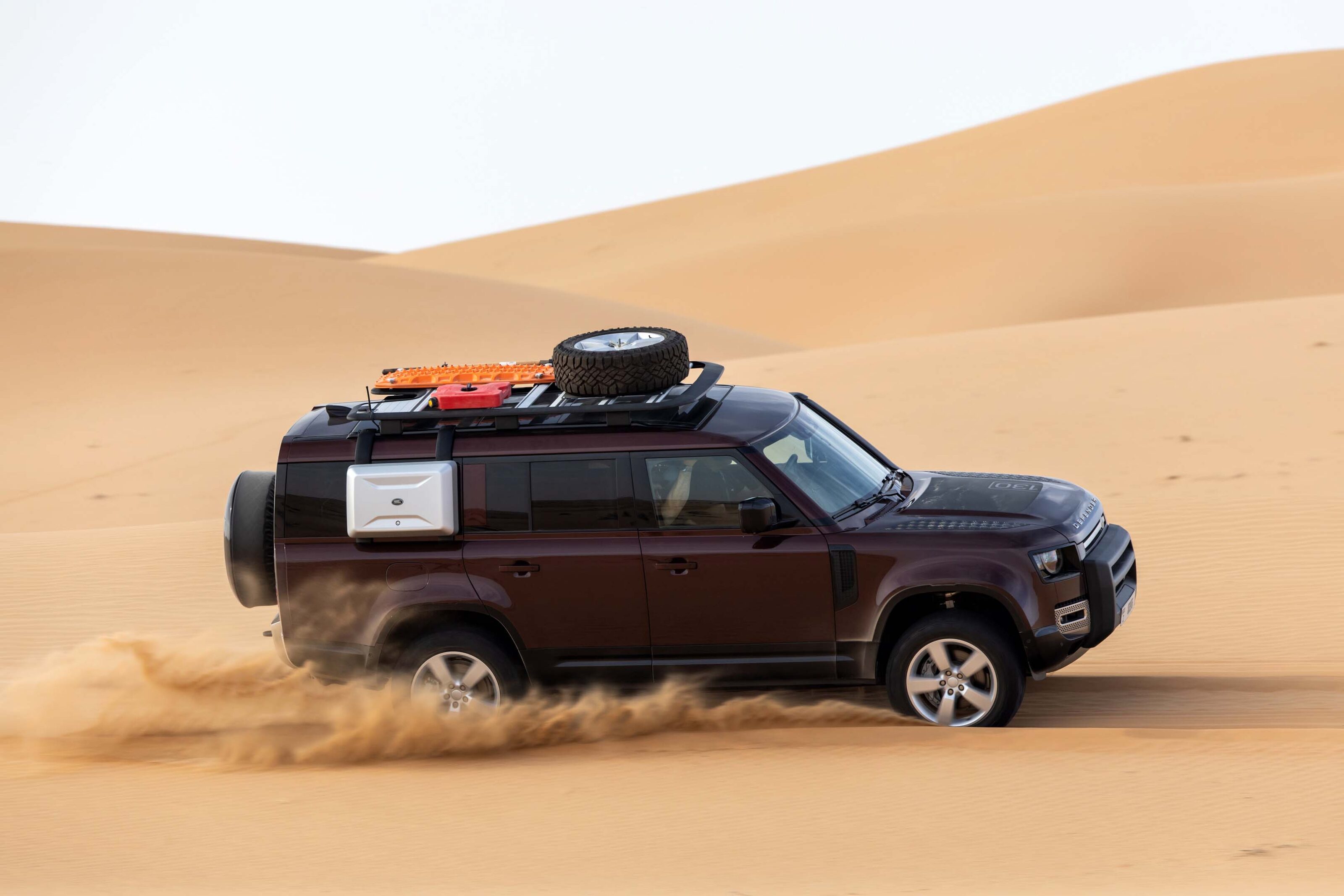
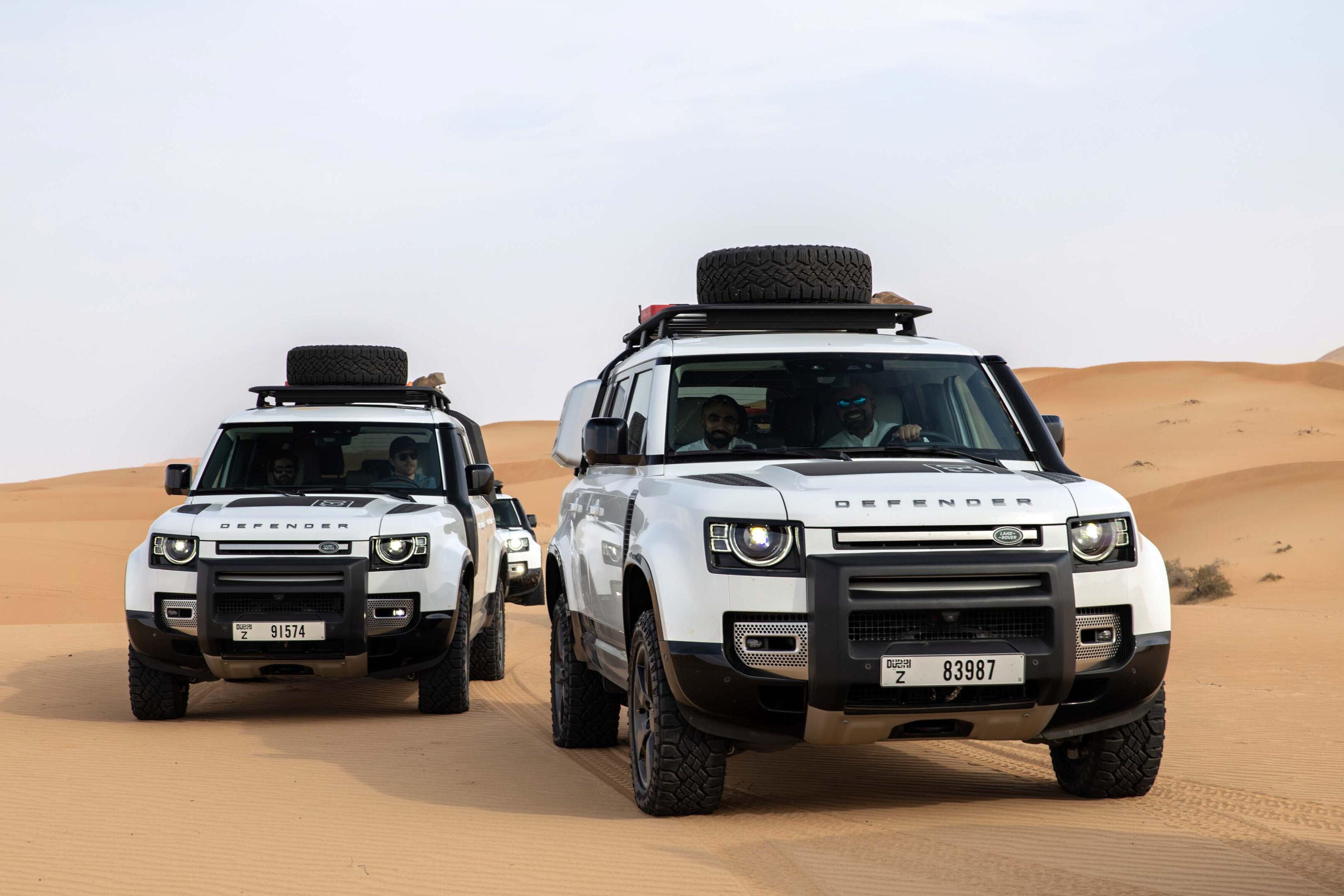
It’s worth mentioning the additional caveats that test cars were on aggressive off-road Goodyear Wrangler Duratrac tyres and any hope of assessing refinement at speed was rather scotched by the fitment of a roof rack with a shovel, MaxTrax and spare wheel whistling away in the wind.
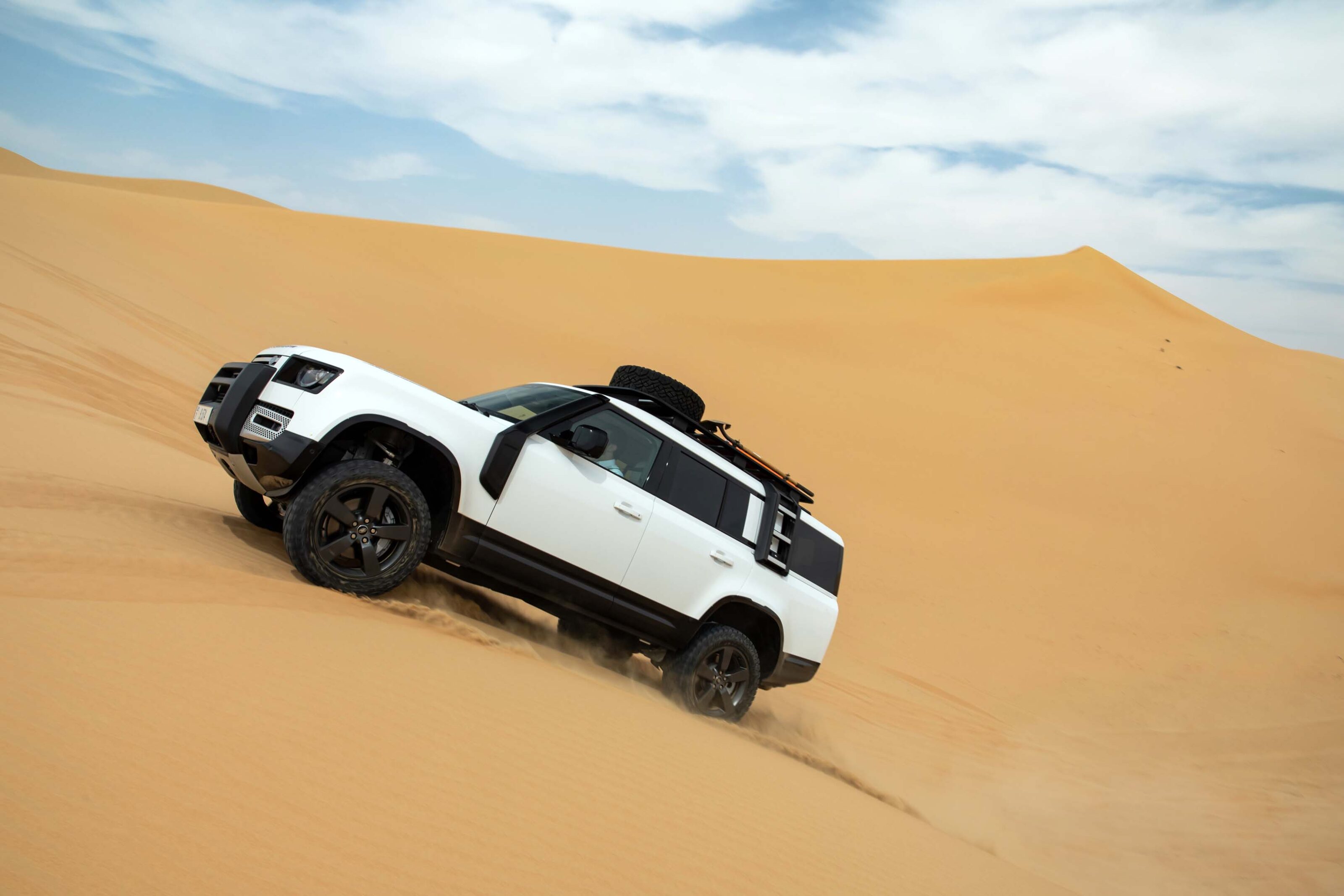
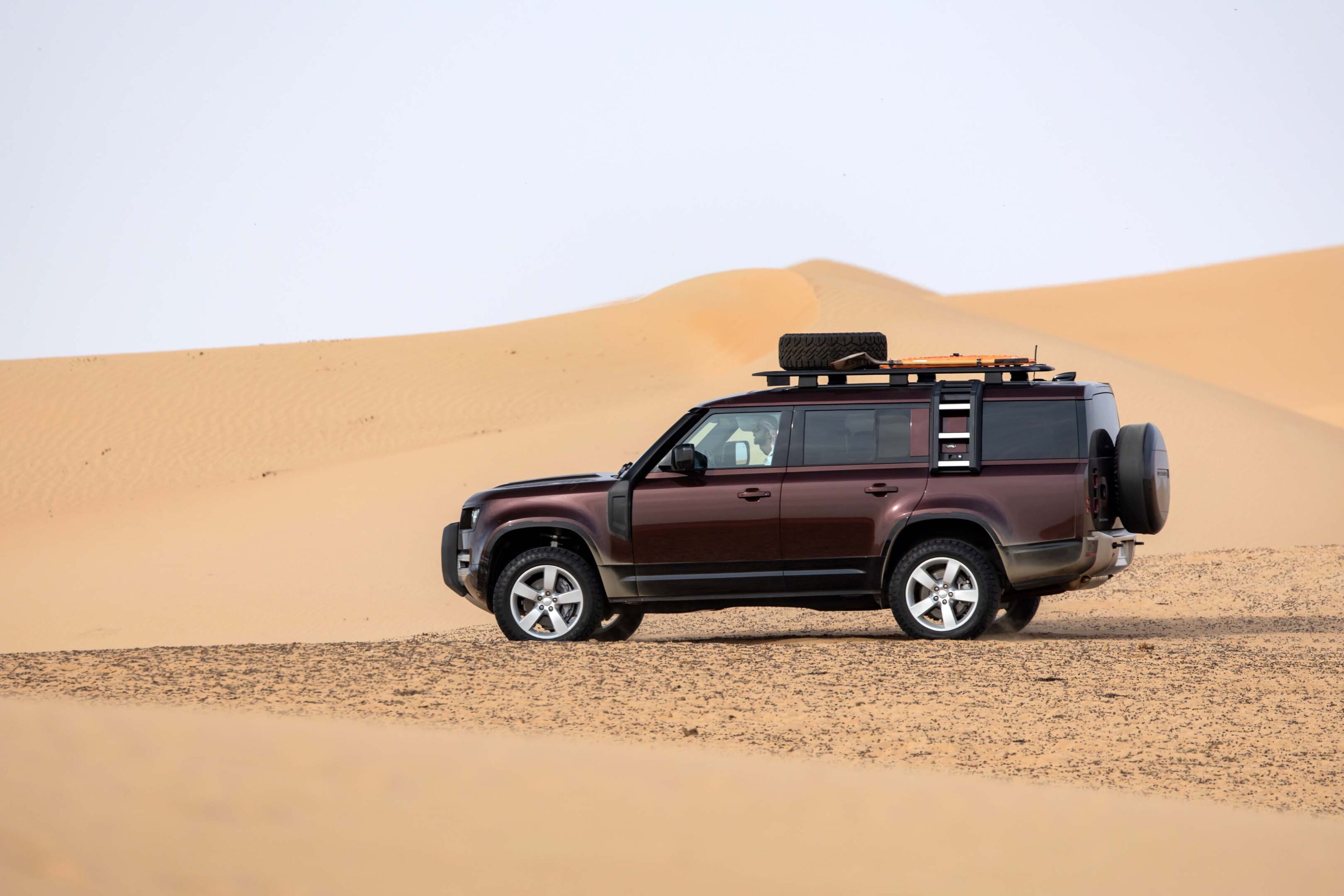
Off-road, the Defender 130 was imperious in the dunes. With Terrain Response set to Sand mode, the throttle response was eased back a little and we didn’t require any form of assistance all day, despite the sand being especially fine.
The eight-speed ZF transmission was left to its own devices all day and did a pretty good job, although the Land Rover tech team later admitted that they preferred to drive the vehicle in manual mode on sand so as to be able to pluck one gear higher than the ZF normally uses and reduce the incidence of wheelspin.
A 130’s body is 128kg heavier than the 110, which is relatively small beer in a vehicle weighing two and a half tonnes.
How is it on fuel?
You probably aren’t going to buy a vehicle with the external dimensions of a blimp shed if you’re fixated on fuel economy, but the news isn’t all bad.
You’ll need to fill the P400 with 95 RON and the claim is for 10.1 litres per 100km, which isn’t at all bad for a vehicle of this weight and potency. The diesel D300 model fares predictably better, returning a combined fuel figure of 7.9L/100km. In case you’re interested, those figures translate into CO2 emissions of 235 and 208g/km respectively.The fuel tank holds 90 litres, which compares to the hefty 110-litre LandCruiser VX. That said, the superior fuel economy of the D300 versus the Toyota helps even the playing field a little. If you’ve plumped for the P400, you’ll definitely need to keep an eye on that fuel gauge if you’re heading bush.
Mini matchup: Fuel consumption
| MODEL | MIN RON | WLTP (COMBINED) |
|---|---|---|
| Defender D300 SE | D | 7.9L/100km |
| LandCruiser 300 VX | D | 8.9L/100km |
| Everest Platinum | D | 8.5L/100km |
How safe is it?
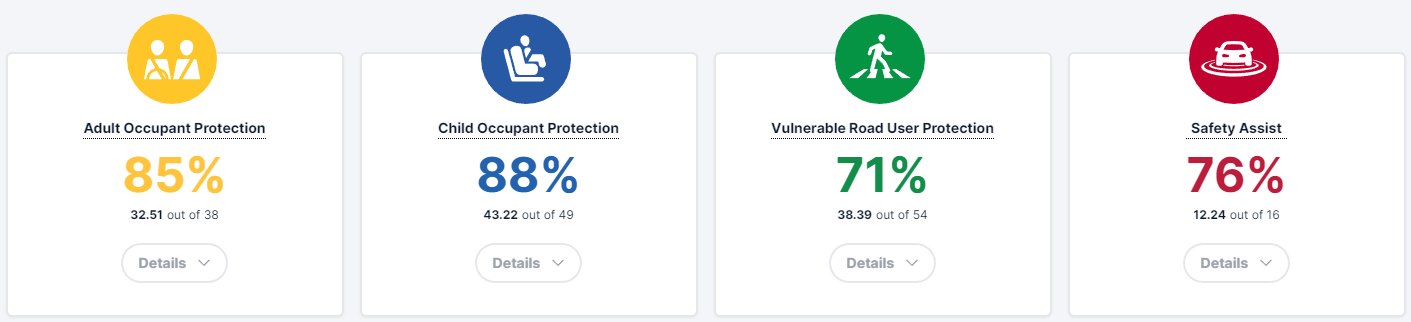
The Defender has a five-star ANCAP rating. It feels almost indestructible.
Standard safety features include auto emergency braking, blind-spot assist, a 3D surround-view camera, adaptive cruise control, lane-keep assist, 360-degree parking aid and rear collision monitor.
That’s on top of traffic sign recognition, wade sensing, a driver fatigue monitor, a tyre pressure management system and rear traffic monitor.
Unlike the optional seats that can be squeezed into the back of the 110, the Defender 130’s third row also comes with two top tethers, so if you’re on ANCAP’s page and it says that the rear seats don’t have top tethers, that’s why.
Warranty and running costs
Five-year warranty with unlimited kilometres. That’s the deal. What’s more, you’re covered for five years on any genuine Land Rover accessories you buy too.
The paint surface is also covered for that period, while the bodywork is covered for six years against corrosion. Note that this is for body panels only, not brightwork or wheels.
Land Rover offers a fixed-price servicing plan for the Defender over five years or a set number of kilometres. Go for the D300 diesel and that plan is priced at $2650 including GST, but opt for the P400 petrol and the asking price drops to $2250.
It’s also worth mentioning that you get Land Rover Roadside Assistance for the length of your warranty. Roadside slightly undersells what you get, however, as the scheme also provides help if you become bogged or disabled on roads that only four-wheel drives can travel. It’d be interesting to test the limits of that wording.

VERDICT
If you have a family or you’re just useless at packing light, the 130 suddenly becomes the Land Rover Defender of choice.
Of course, there are some caveats. It’s the most expensive Defender, it can tow the least and it’s the least capable off-road. All of these considerations are relative though. Taken in isolation, the Defender 130 remains a phenomenally capable vehicle, on road and off.
Some may still have difficulty knowing quite what to expect of a modern Defender. I certainly wouldn’t recommend trying to hose one out. Indeed, the Defender 130, with its fully carpeted cabin, high-end finishes and big infotainment screen almost feels like Range Rover standards of luxury.
Despite the impression of quality, the Defender hasn’t forgotten how to roll its sleeves up and it’s likely that more utilitarian versions will arrive once Land Rover has figured out its supply travails.
There is quite a price to pay for a Defender 130 and that will also serve to limit quite how adventurous owners may feel with their vehicles.
Nevertheless, as our drive in the farthest reaches of the Emirates proved, the Defender retains substance. It’s just added a bit of style. We could come around to that combo.
Specifications
| 2023 Land Rover Defender 130 SE P400 | |
|---|---|
| Engine | 2995cc I6 dohc 24v turbo-petrol |
| Power @rpm | 294kW @ 5500rpm |
| Torque @rpm | 550Nm @ 2000rpm |
| Transmission | 8-speed automatic |
| Body | 5-door, 8-seat full-size 4×4 SUV |
| L/W/H | 5358/2008/1970mm |
| Wheelbase | 3022mm |
| Boot space | (389L / 2291L) |
| Weight | 2527 kg |
| Fuel / tank | 95 RON / 90 litres |
| Fuel use L/100km | 10.1L (claimed) / 13.3L (on test) |
| Suspension | Front: double wishbone, air springs,, anti-roll bar / Rear: multi-link, air spings, anti-roll bar |
| Steering | electric rack-and-pinion; 12.8m turning circle |
| Brakes | ventilated discs front and rear |
| Wheels | 20-inch, Style 5098 five-spoke alloy (as tested) |
| Tyres | Goodyear Wrangler Duratrac (option tyre as tested) |
| Tyre size & spare | 255/60R20 f/r, full-size spare |
| Price | $131,650 + on-road costs |
Volkswagen aims to introduce an electric car for close to $30,000 as it bids to dominate the EV market in the second half of this decade and beyond.
Snapshot
- VW promises baby EV under $40K
- Will sit below ID.2, based on MEB Entry platform
- ID.Buzz LWB, ID.3 GTX, ID.7, Tiguan EV to follow
The model could be called the ID.1, but also has the potential to use the Polo nameplate in some form and become the German automaker’s smallest electric car.
It will sit below the ID.2 that was unveiled overnight in concept form and is due to go on sale in 2026 with a target price of less than EU€25,000 (AU$40,000).
The baby VW electric car is expected to use components from the ID.2, including a variation of its MEB Entry front-wheel-drive battery platform and likely the smaller of two electric motors offered.
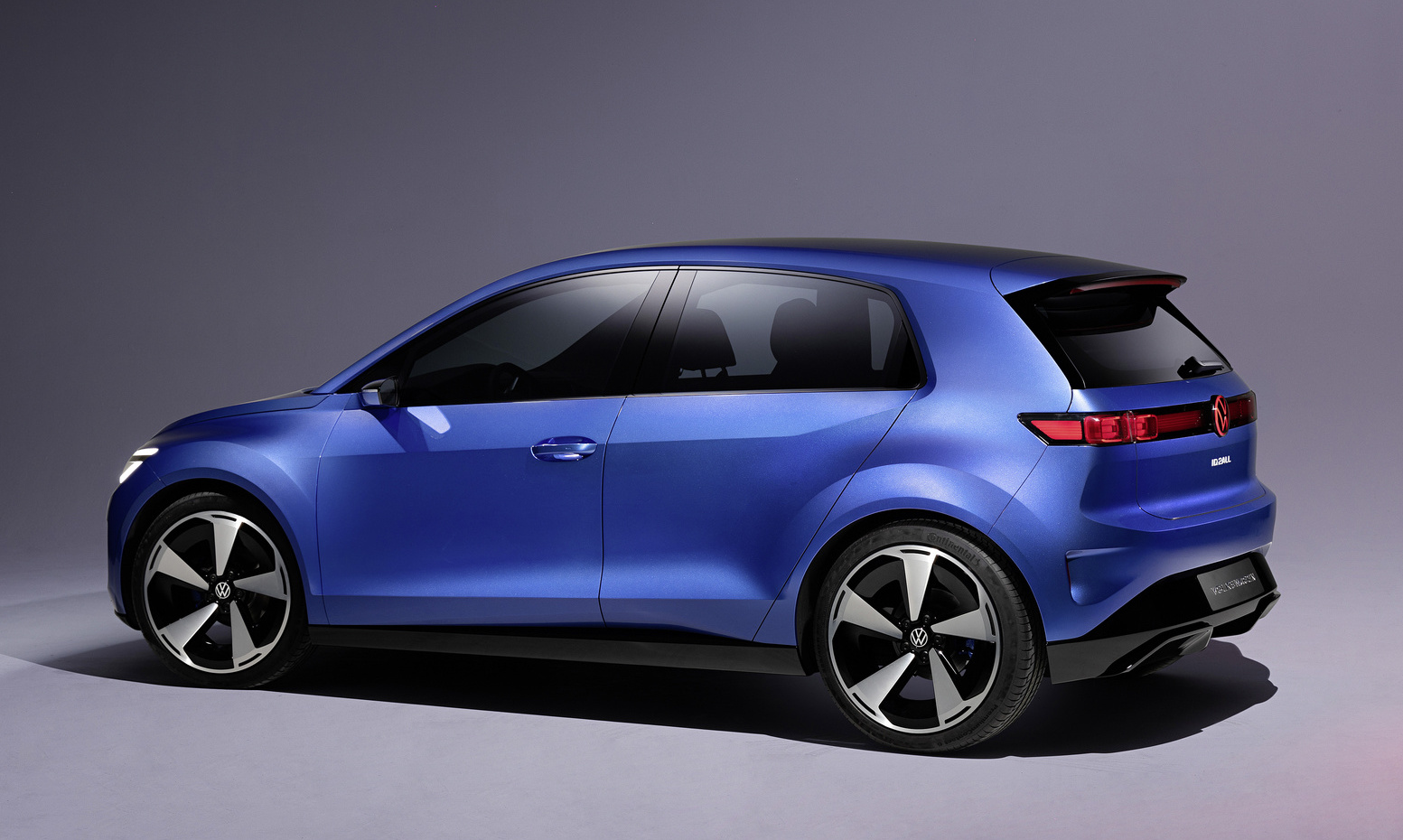
The ID.2all concept (pictured above) is already just four metres long – about the size of a Polo – and it’s unclear at this stage just how much smaller the ‘ID.1’ would be, perhaps Up-sized.
Volkswagen will use lithium-ion phosphate batteries – as seen in base models of the Tesla Model 3 and Y – to help keep costs down. Cupra and Skoda versions of the baby EV are also planned.
In a statement, Volkswagen admitted building a super-affordable EV isn’t a simple task.
“In spite of all the challenges, Volkswagen is also working on an electric car at a price of less than EU€20,000 (AU$32,000),” said the company.
“This will give the car manufacturer the widest range of electric vehicles compared with its competitors, and the company is aiming to achieve an electric car share of 80 per cent in Europe. Volkswagen Passenger Cars has previously based its calculations on a share of 70 per cent.”
Volkswagen will release 10 new EVs by 2026. In addition to the ‘ID.1’ and ID.2, a heavily revised ID.3 hatch is confirmed, along with a long-wheelbase version of the ID.Buzz people-mover, ID.7, and a compact electric SUV.
The Volkswagen Group’s first electric car in Australia will be the Cupra Born, a sporty hatchback which arrives in April with a $59,990 price tag before on-road charges.
VW’s own ID range will debut locally in late 2023 with the ID.4 mid-sized SUV, to be followed by the updated ID.3, ID.5 and ID.Buzz in 2024.
September: ID.GTI concept revealed
The new ID.2all-based ID.GTI concept has made its debut in Munich at the IAA Mobility 2023 motor show.
The concept arrives as a move the German brand describes as “marking the next chapter in the iconic GTI legacy”. Details at the link below!
Story continues…
Volkswagen has whipped the covers off of its ID. 2all concept vehicle, previewing the Wolfsburg brand’s future design language and features.
Thomas Schafer, Volkswagen Passenger Cars CEO, said: “Volkswagen will present the production version of the ID.2all for the European market in 2025. The goal is a starting price of less than EU€25,000.”
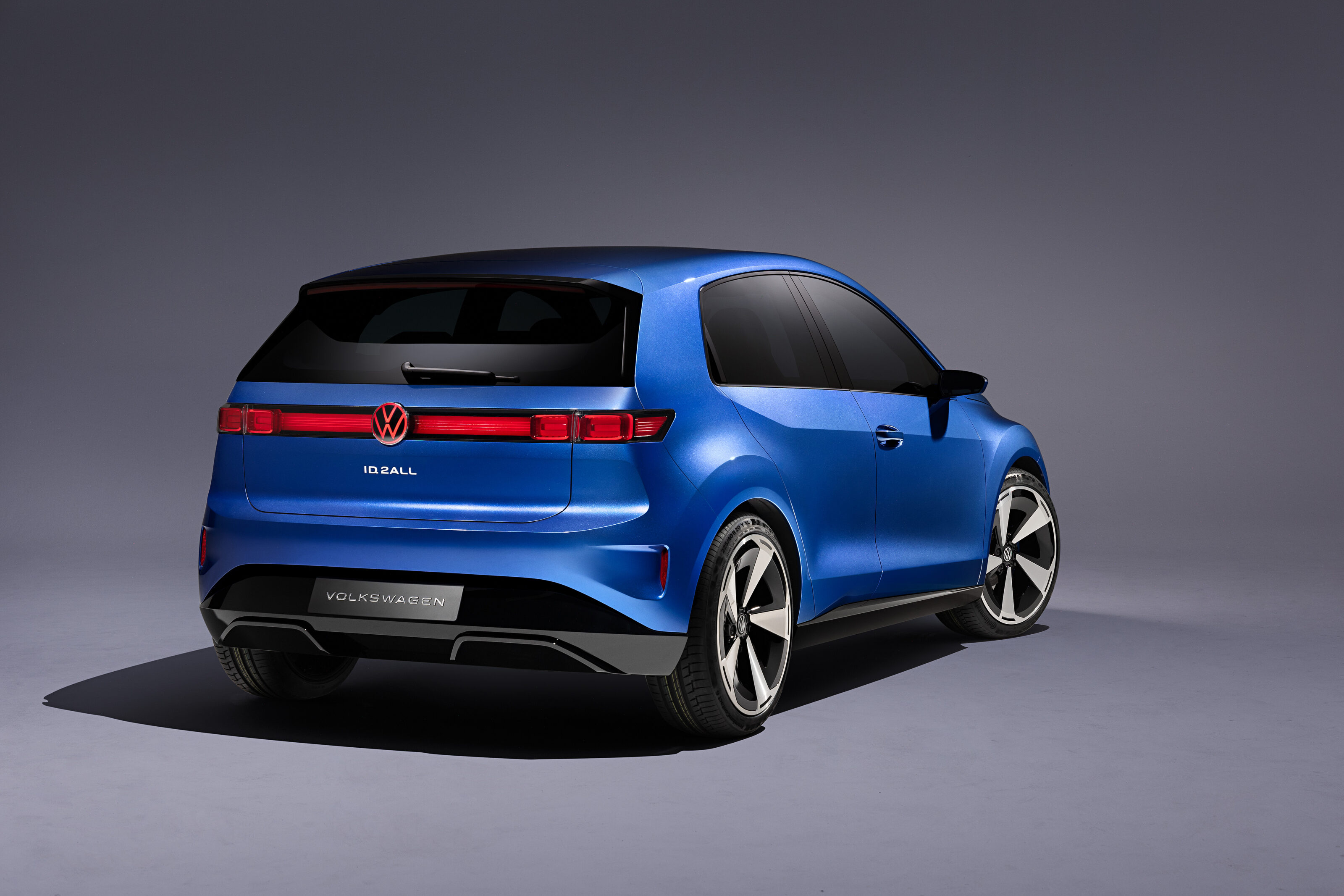
Break out the conversion calculator, and that comes out to an attractive AU$40,000.
The city-sized hatchback is expected to offer up to 450 kilometres of driving range, is based on the MEB Entry platform and represents one of 10 new electric models set to be launched by VW before 2026.
Schafer continues: “The ID. 2all shows where we want to take the brand: closer to the customer, top technologies and a fantastic design. We are implementing the transformation at pace to bring electric mobility to the masses.”
The ID. 2all is underpinned by VW’s MEB Entry platform, an expansion of its existing MEB architecture, which has been specifically designed to serve affordable front-drive battery-electric vehicles (BEVs) in the under EU€25,000 (AU$40,000) segment.
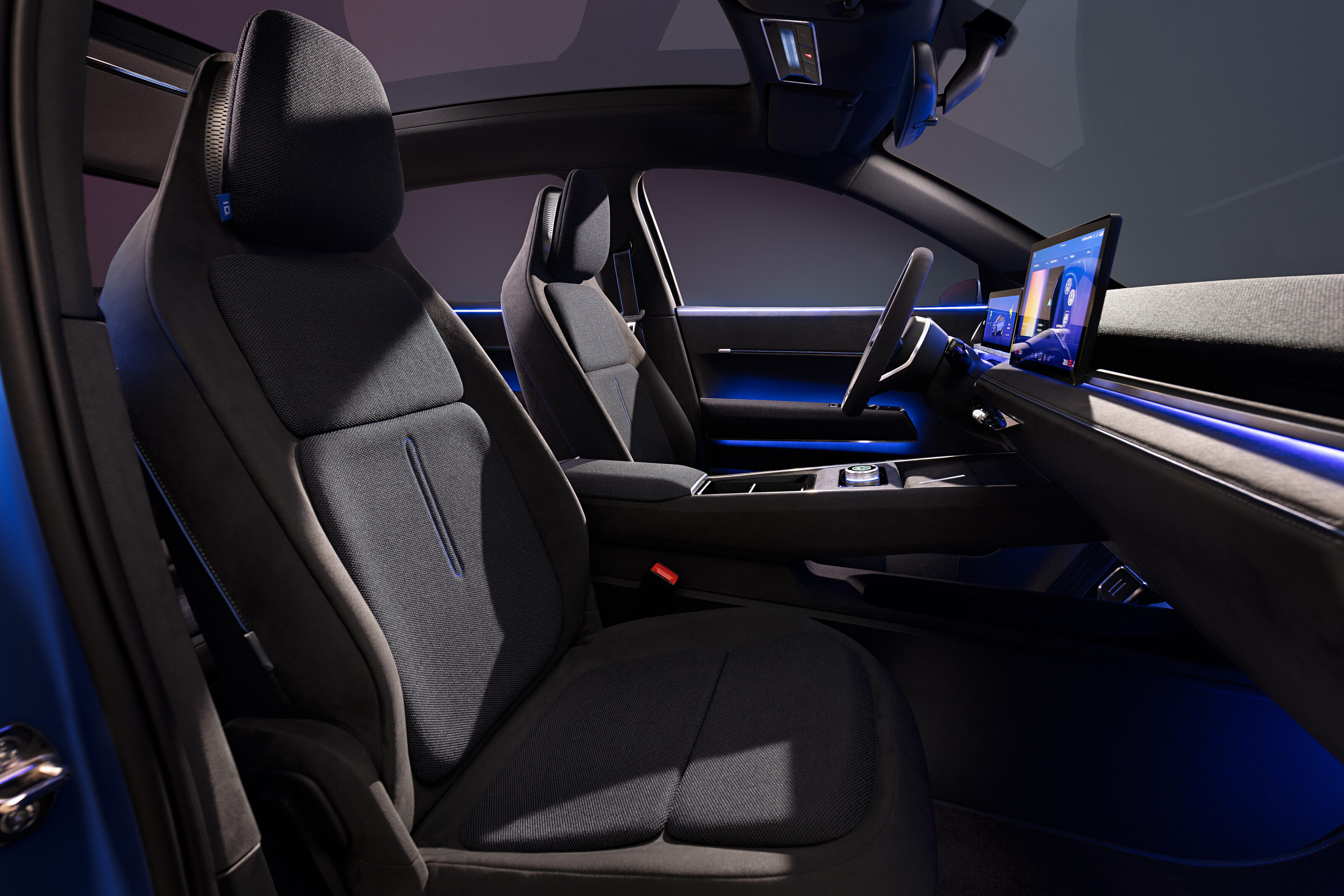
The ID. 2all concept is equipped with a 166kW electric motor, with a calculated WLTP driving range of up to 450km.
This delivers a GTI-like claim of “less than 7.0 seconds” from 0-100km/h and a “limited 160km/h top speed”.
Details regarding the floor-mounted battery size and DC charging capacity have yet to be revealed, however, Volkswagen suggests the ID. 2all concept can be charged from 10 to 80 per cent in less than 20 minutes.
Volkswagen’s ID.2all concept measures 4050 millimetres from stem-to-stern, 1812mm in width, 1530mm in height and rides on a 2600mm wheelbase.
This makes it 24mm shorter but 61mm wider than the existing Volkswagen Polo, and 212mm shorter, and 3mm wider, than the Volkswagen ID. 3.
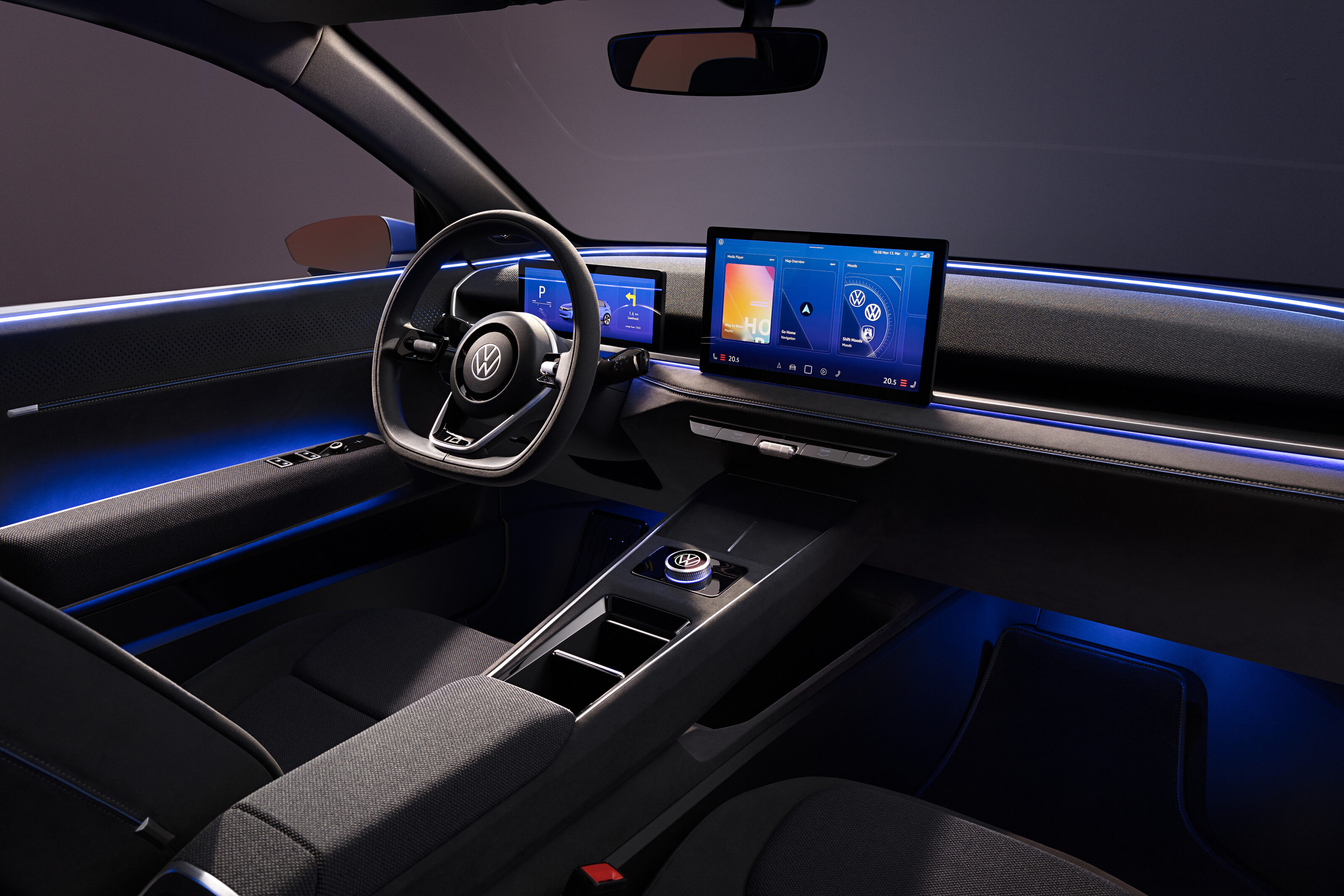
Inside the ID.2all, there are five seats with Volkswagen claiming similar cabin and passenger space to the Mk. 8 Golf, thanks to its flat floor configuration.
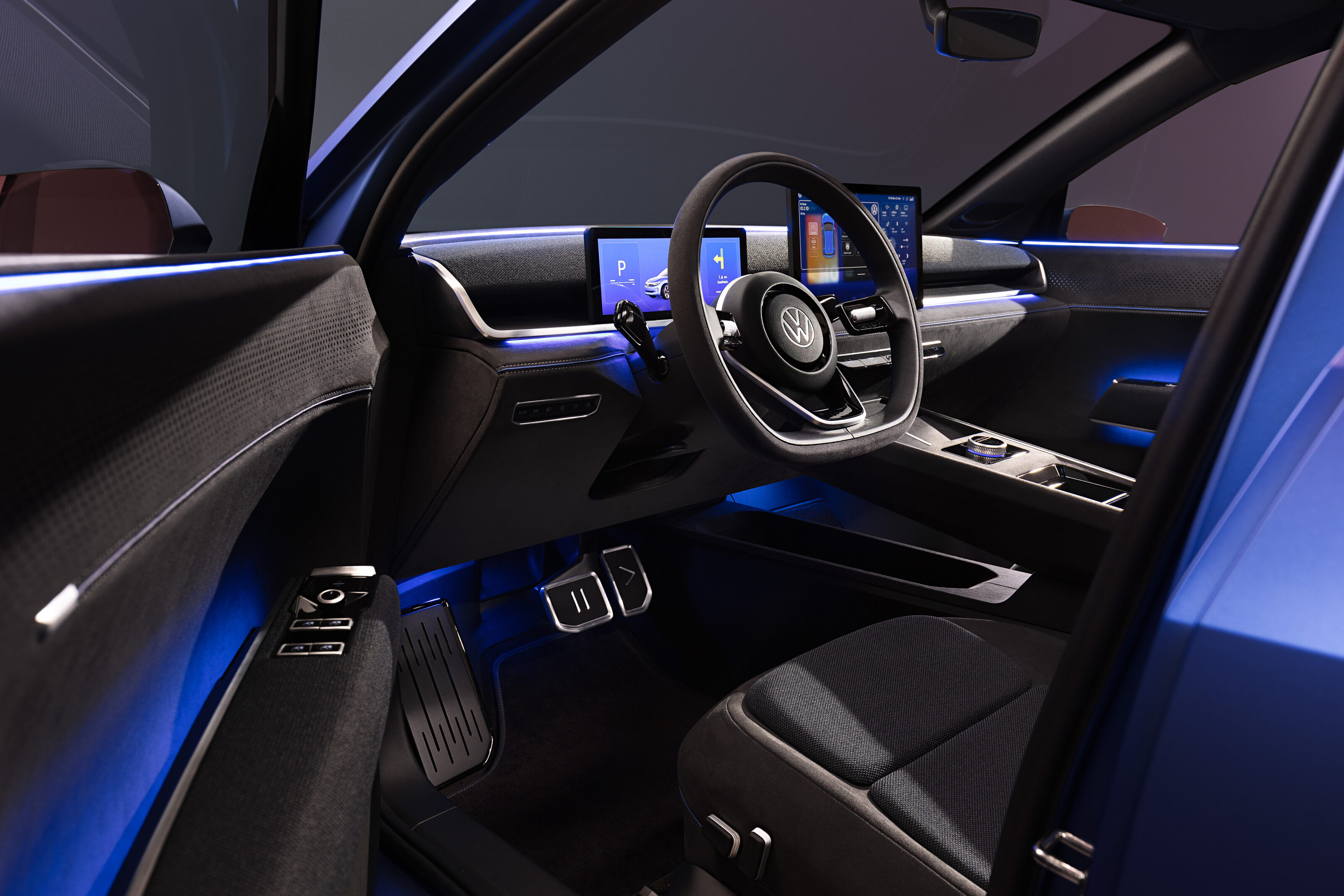
A 10.9-inch digital instrument cluster and a 12.9-inch central infotainment screen sit proud of the otherwise minimal dashboard, with a new multifunction steering wheel with rotary controls.
Elsewhere, we can spot a slim HVAC panel with what look to be physical switches, plus a central rotary dial. There are two wireless and magnetised charging pads up front, with two further charging pads integrated into the front seatbacks for the second row passengers.
Various USB-C ports along with a 230-volt socket handle any charging duties asked.
Rear seats split 60:40, offering a boot capacity of 440 litres with the rear seats in place. With the rear seats folded, slide-through loading measures up to 2.2 metres in length, offering 1330 litres.
A forthcoming production version of the ID.2all is one of 10 new electric Volkswagen models set to be launched globally by 2026.
Among them is also the facelifted ID. 3 already available overseas, along with the ID. Buzz and a production version of the ID. 7 Sedan – it’s believed production examples of these three will be revealed in 2023.
Australia’s best electric cars for 2023
We’ve tested nearly every EV below six figures in Australia to rank the best on sale today
Is the Volkswagen ID. 2 coming to Australia?
It’s too early to tell, with the production version slated for a 2025 debut. Volkswagen Australia, however, has previously expressed interest in the affordably-pitched city car, with Volkswagen’s global language implying that the ID.2all concept is destined to be a worldwide model.
Snapshot
- Almost half of survey participants would switch to an EV if under novated lease
- Younger Australians more interested in going electric
- Initial purchase price remains the key barrier for EVs
According to a study by Novated Lease Australia, Australians would consider switching to a fully-electric vehicle if it was salary-sacrificed under a novated lease.
The survey claims to use an independent panel of 1000 Australians across all states, except the Northern Territory and Tasmania, with a representative age and geographical spread and was commissioned by the novated leasing company.
Novated leases increasing interest
It found that 46 per cent of respondents would consider an EV if it was under a novated lease arrangement with their employer – where the vehicle and running costs are deducted from their pre-tax salary.
Depending on the financial case, it could lower employees’ annual payable tax bracket too.
Australia’s best electric cars for 2023
We’ve tested nearly every EV below six figures in Australia to rank the best on sale today

Younger Australians tend to prefer switching to an EV under a salary -sacrificed novated lease, with 59 per cent of under 30 year-olds indicating they would switch compared to 32 per cent of over 51 year-olds.
The Federal Government is also now waiving the Fringe Benefits Tax (FBT) on eligible full EV and plug-in hybrid models priced under the Luxury Car Tax threshold.
It aims to encourage EV uptake from company fleets and employers that offer novated lease programs for employees to create a larger and cost-competitive used EV market in the future.
Perceived price barrier
Australians were interested in salary sacrificing EVs since 84 per cent of participants perceive initial purchase price as the major barrier to adoption, despite lower long-term ownership costs.
Novated Lease Australia claims such arrangements can save owners more than $5000 after five years on car running costs, which is helped by the FBT exemption.
While not all models are pricier than comparable combustion-engined-powered models, EVs generally carry a 10 to 50 per cent price premium due to expensive and resource-limited raw materials to produce large battery packs.
Older Australians surveyed were more cost-conscious; however, 15 per cent of respondents didn’t believe EVs are too expensive – which applies to a higher proportion of younger Australians and South Australia residents.
“Our research highlights that novated leases are on the rise this year. Electric vehicle prices still have a long way to go… yet an increasing proportion of the public and business sector are becoming more carbon conscious,” Novated Lease Australia founder Shaun McGowan said.
“Perhaps now is the time for organisations that are sustainability-minded to add novated lease agreements for electric vehicles into their decarbonisation strategies.”
According to the National Automotive Leasing and Salary Packaging Association, novated leases are estimated to be used in one in 10 new-car sales annually Down Under.
Snapshot
- 20 Chargefox chargers in NSW and VIC now cost $0.45 per kWh
- 11 per cent increase due to rising electricity costs
- Other stations remain unchanged
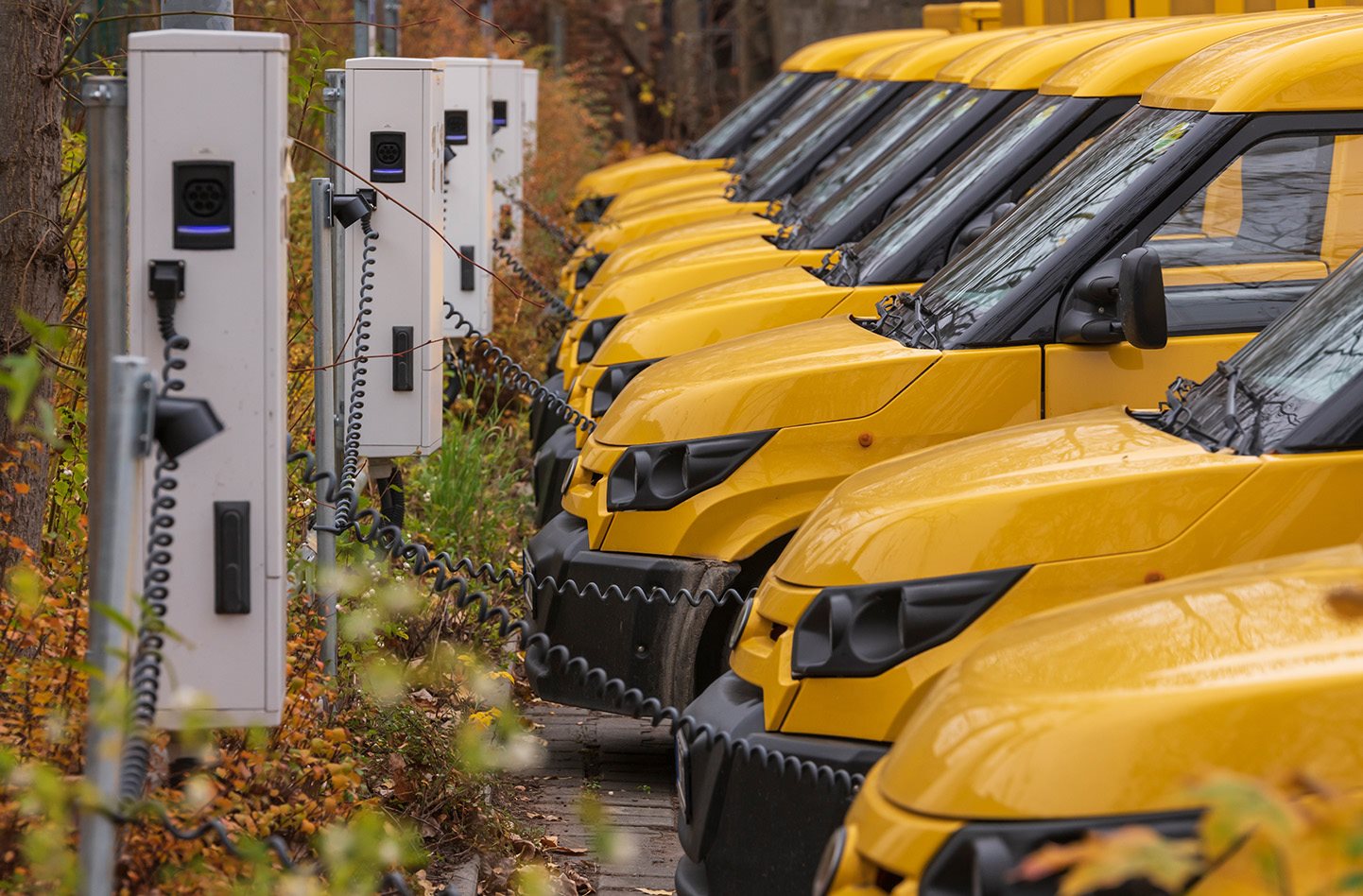
Australia’s largest public electric vehicle charging network, Chargefox, has increased its fees – but it only applies to 20 50kW DC stations in New South Wales and Victoria.
Prices are now up to $0.45 per kilowatt-hour (up from $0.40 per kWh), representing an 11 per cent jump, with the Australian company citing increased electricity costs at select owned and operated sites.
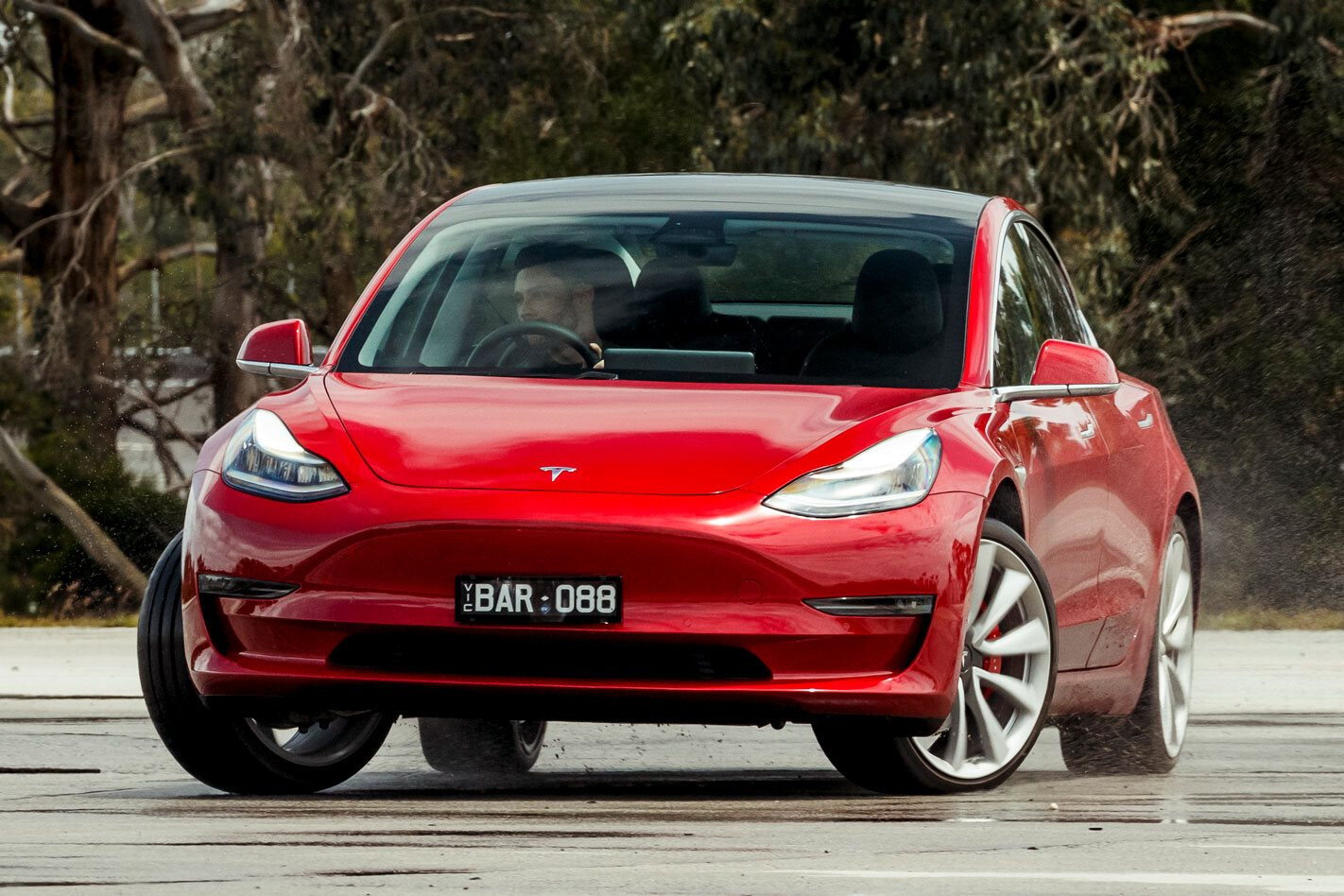
This means recharging a Tesla Model 3 rear-wheel drive from 10 to 80 per cent (with a 57.5kWh usable battery, according to EV Database) now costs around $2.00 more, with the invoice totalling $18.11 to give 344 kilometres of claimed driving range.
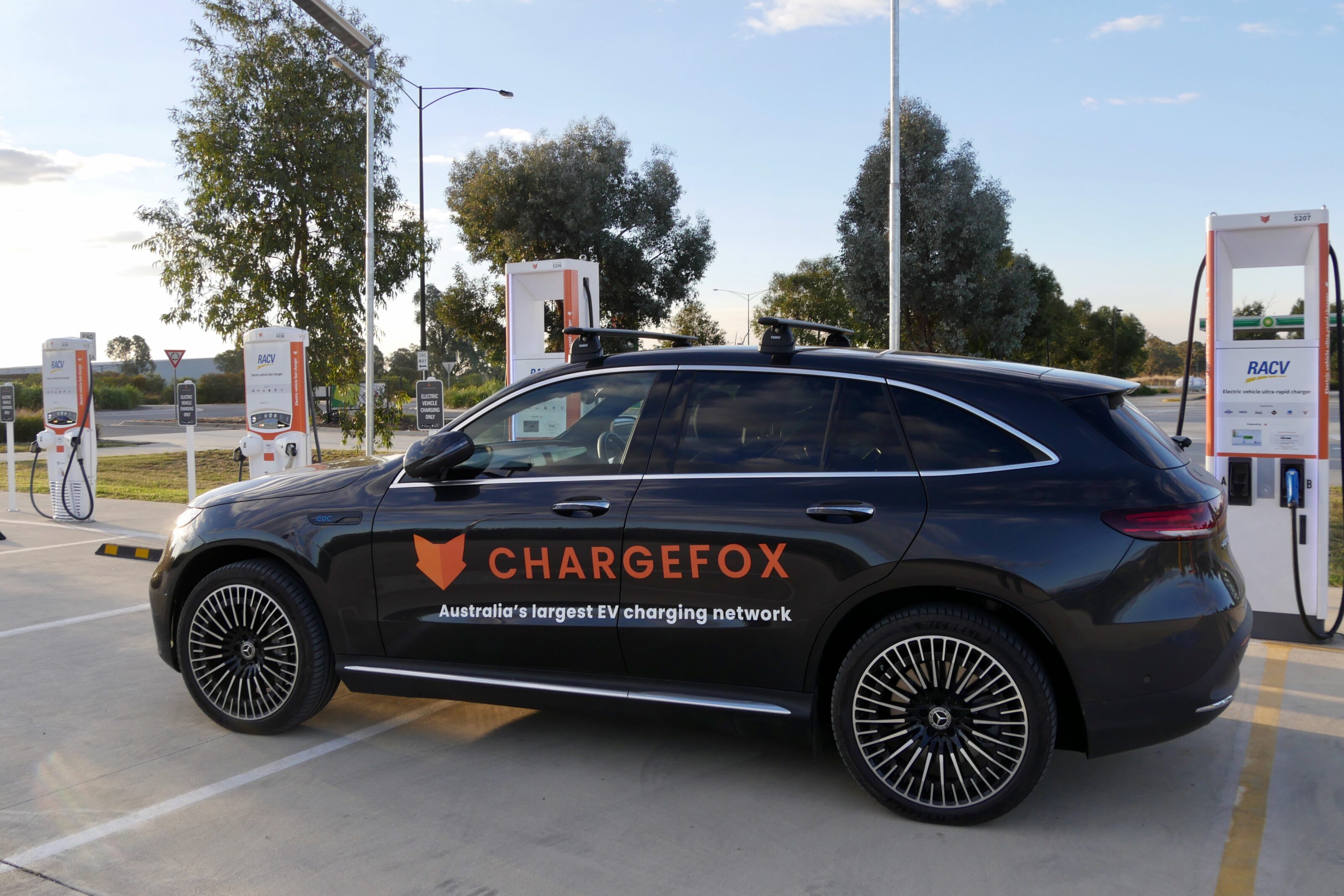
Affected Chargefox charging locations
| NSW | VIC |
|---|---|
| Ballina | Euroa |
| Karuah | Barnawartha |
| Gundagai | Airport West |
| Goulburn | Torquay |
| Cooma | Moe |
| Zetland | Horsham |
| Sydney | Ballarat |
However, prices are unchanged for ultra-rapid 350kW DC chargers at $0.60 per kWh – which undercuts Ampol’s AmpCharge and Tesla Superchargers (which reportedly now fluctuates its price) – and Chargefox stations operated by other companies, including the NRMA, state-backed Queensland Electric Super Highway (QESH), local councils, and businesses remain the same.
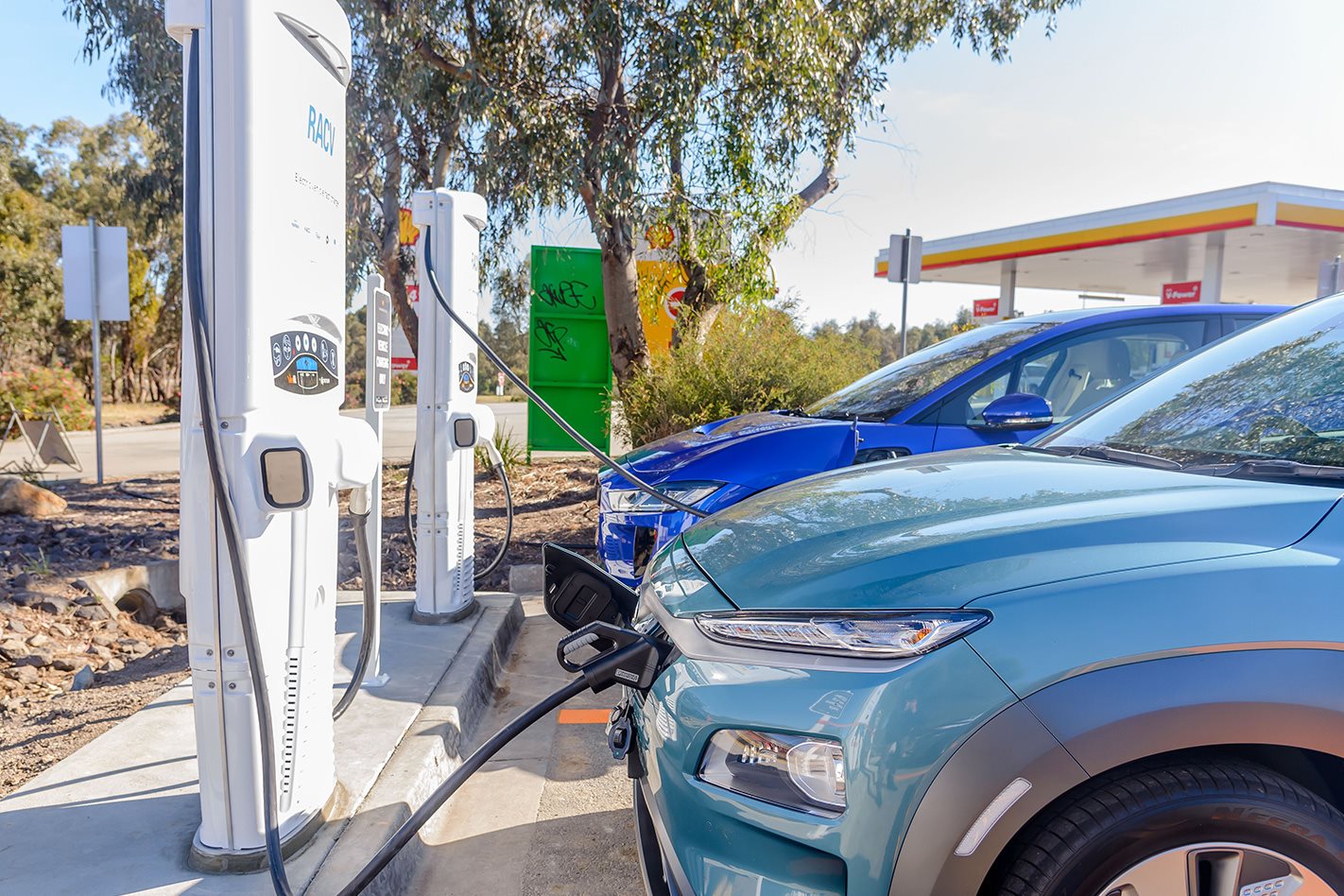
Chargefox follows Evie Networks and AmpCharge, which raised their charging costs by up to 13 per cent last month. All 50kW DC Evie chargers nationwide now cost the same as the affected Chargefox locations.
The company was acquired by Australian Motoring Services last year – which consists of state clubs such as the NRMA, RACV, RACQ, and RAA – and members are still eligible for a 20 per cent discount each fast- or ultra-rapid Chargefox charging session.
According to PlugShare, Chargefox has around 250 AC and DC charging sites across the country, except in the Northern Territory.
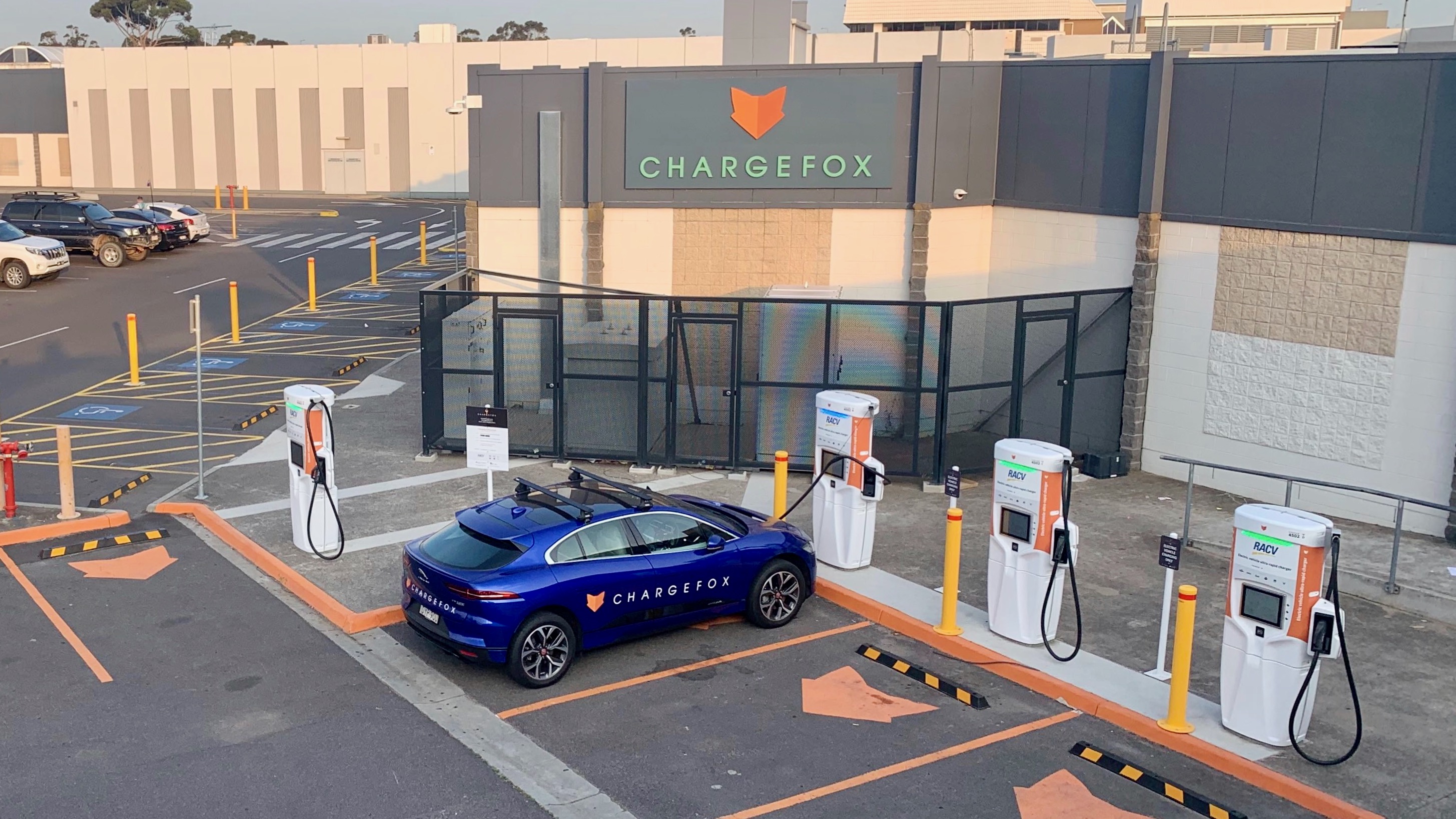
It mostly uses Brisbane-made Tritium chargers, which have been well-documented to be unreliable and have extended repair times due to supply chain component constraints.
Despite rising electricity costs, it is still cheaper to run and own an EV than a conventional petrol or diesel-powered car – except if you charge at more expensive chargers, such as Tesla Superchargers.
The most convenient, cost-effective and reliable way to recharge an EV is from a home socket, especially when harnessing free energy generated from solar panels.
Snapshot
- Hyundai to directly sell used Ioniq 5 EVs in Oz
- u201cSharply pricedu201d with u201cno excessive markupsu201d
- First batch of 23 examples now available to Sydney only
Hyundai Australia has started directly selling second-hand Ioniq 5 electric vehicles – bypassing traditional used car dealers.
A batch of 23 used Ioniq 5 examples are available to order now for Sydney-siders only via Hyundai’s website, as part of a trial before rolling out a wider program.
The first pre-owned EVs are sourced from a mix of ex-company and customer cars – and the South Korean carmaker claims they’re “sharply priced” with “no excessive markups due to high demand”.
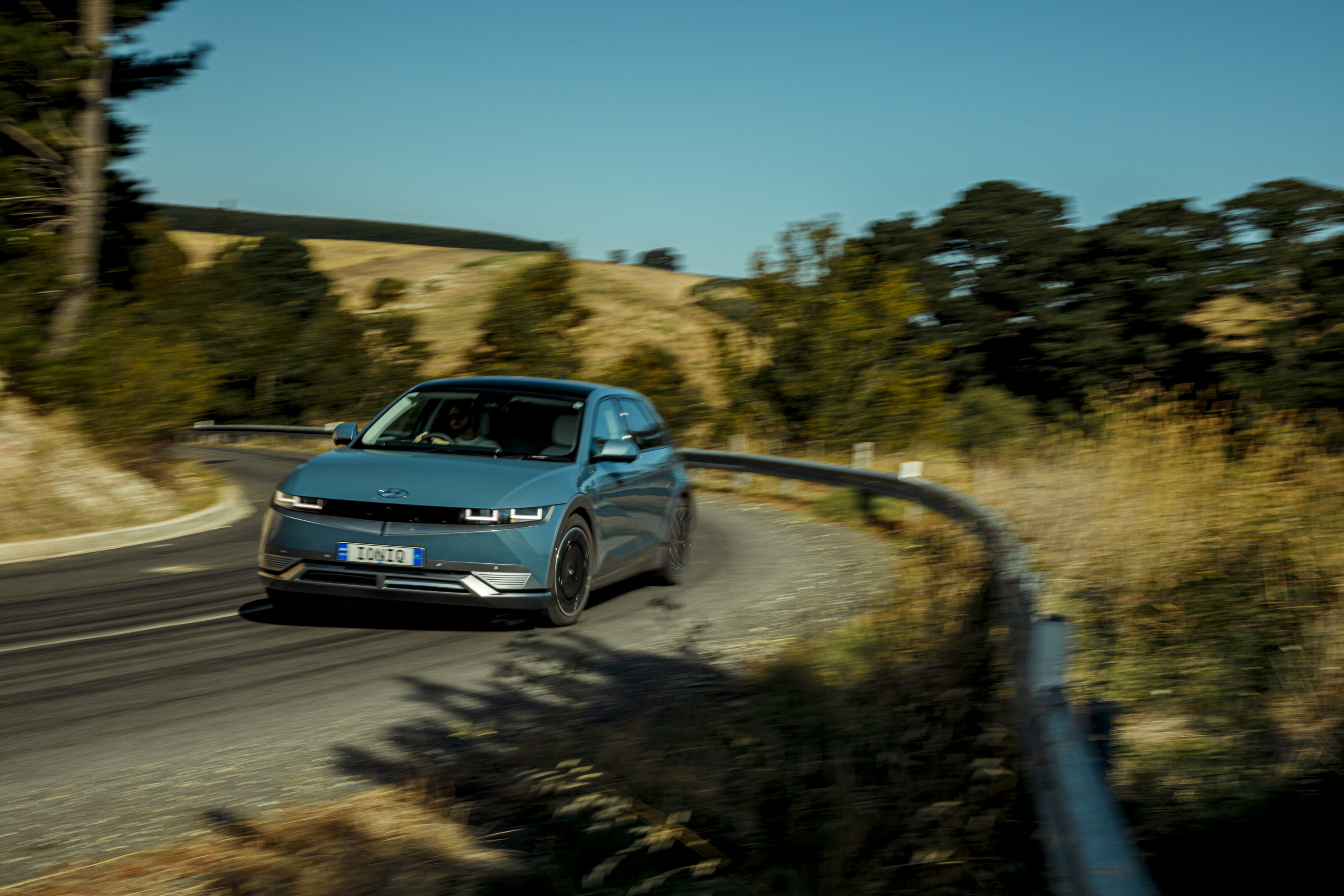
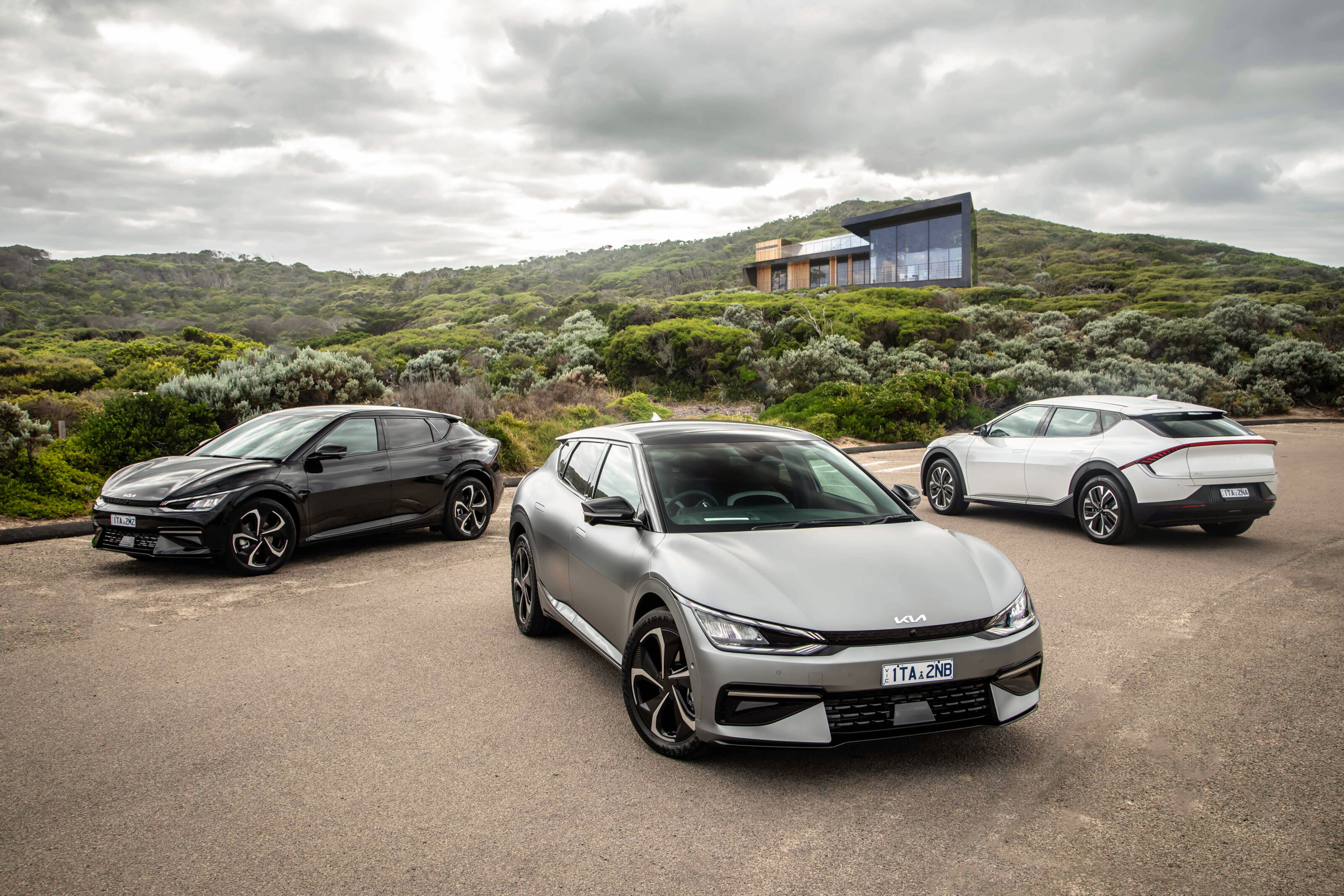
They mostly consist of the launch edition rear-wheel drive and all-wheel drive Ioniq 5 variants, costing from $68,000 drive-away – all thousands cheaper than when bought new – with between around 3000 to 19,000 kilometres driven and many feature the famous ‘NBY’ special registration plate seen on all press cars.
In contrast, used Ioniq 5 EVs are currently fetching between $78,000 to $93,000 on the Carsales classifieds, with 20 to 22,000 kilometres driven.
Certified pre-owned Ioniq 5s maintain the company’s direct-to-consumer online purchasing model, with a fixed price and no haggling approach akin to Tesla, Polestar, and Honda.
All cars come with the remaining registration or a new 12-month registration.
Australia’s best electric cars for 2023
We’ve tested nearly every EV below six figures in Australia to rank the best on sale today
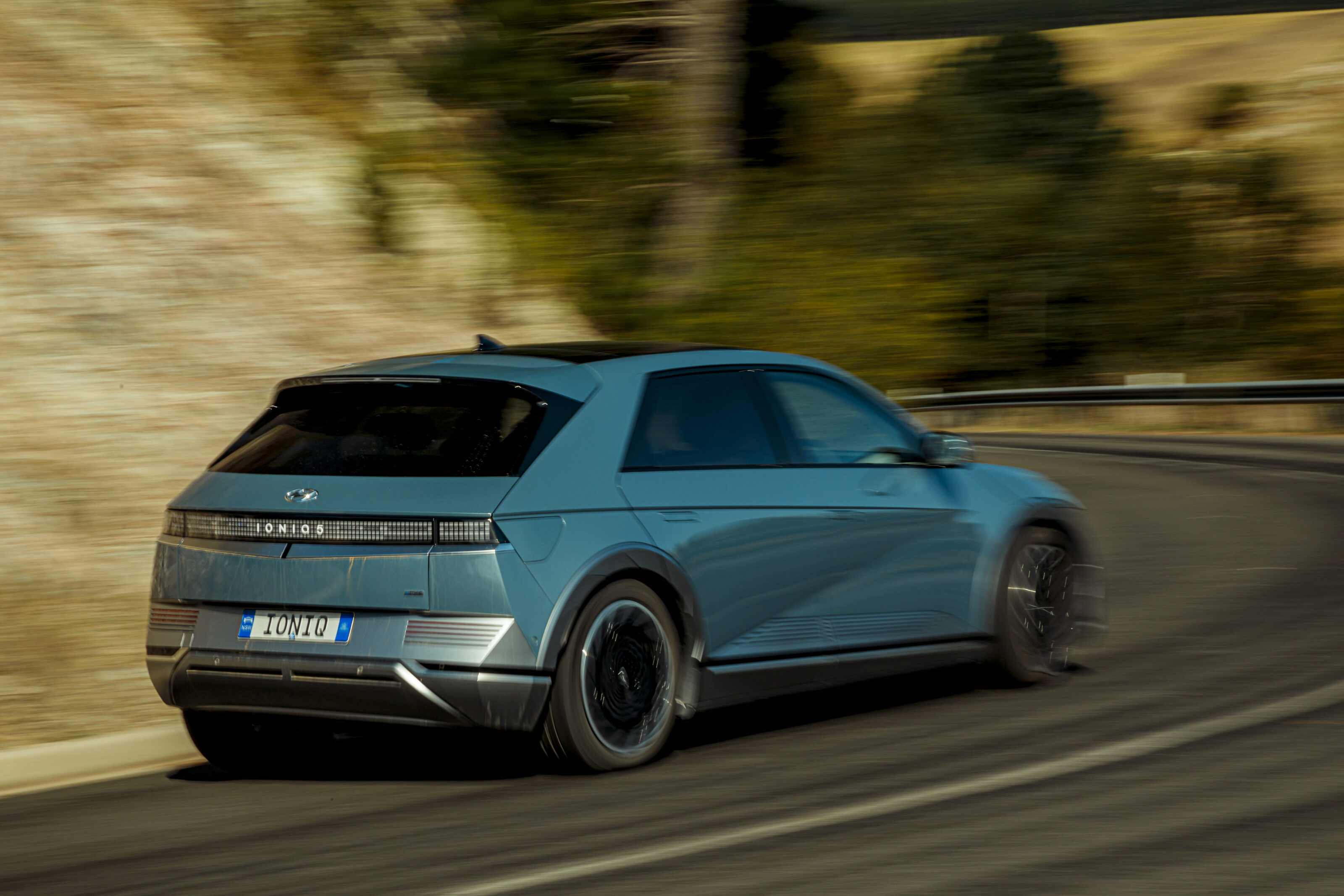
It’s worth noting that the Ioniq 5 has received two minor local specification revisions since its launch edition release in September 2021, with a tweaked model line-up introduced in July 2022, and recently gained a larger battery with a new range-topper in January 2023.
The move comes more than a year after the electric medium SUV launched in Australia and supply constraints continue to linger for new Ioniq 5s, in which the carmaker continues to occasionally drop batches of stock for sale – instead of using a conventional waitlist queue.
A new 2023 Hyundai Ioniq 5 electric crossover today costs from $72,000 to $85,000 before on-road costs and is covered by a five-year, unlimited kilometre vehicle warranty and eight-year/160,000 kilometre battery warranty from first registration.
Snapshot
- Waze adds EV charging station search
- Uses community reports to ensure up-to-date station availability
- Google Maps has had this feature since 2018
Popular navigation application Waze has gained a new search feature to help electric vehicle drivers find a public charging station.
The crowdsourced-based navigation app utilises reports from users, which is then verified, to show up-to-date information on EV charging station availability.
Users can specify their EV model charging plug type within the app which then allows Waze to search the appropriate charge points along their route.
Australia’s best electric cars for 2023
We’ve tested nearly every EV below six figures in Australia to rank the best on sale today

The feature will roll out globally in the coming weeks.
“Charging station information is often inconsistent, outdated or unreliable, creating a major pain point for EV drivers who may navigate to a charging station only to discover they can’t find it or use it,” Waze said.
“Thanks to local Map Editors from our Waze Community, EV data is reviewed and updated in real-time to provide the most accurate, comprehensive information to the map.”
Google Maps has already allowed searching for EV charging locations since 2018, despite the technology search and advertising giant owning Waze since 2013.
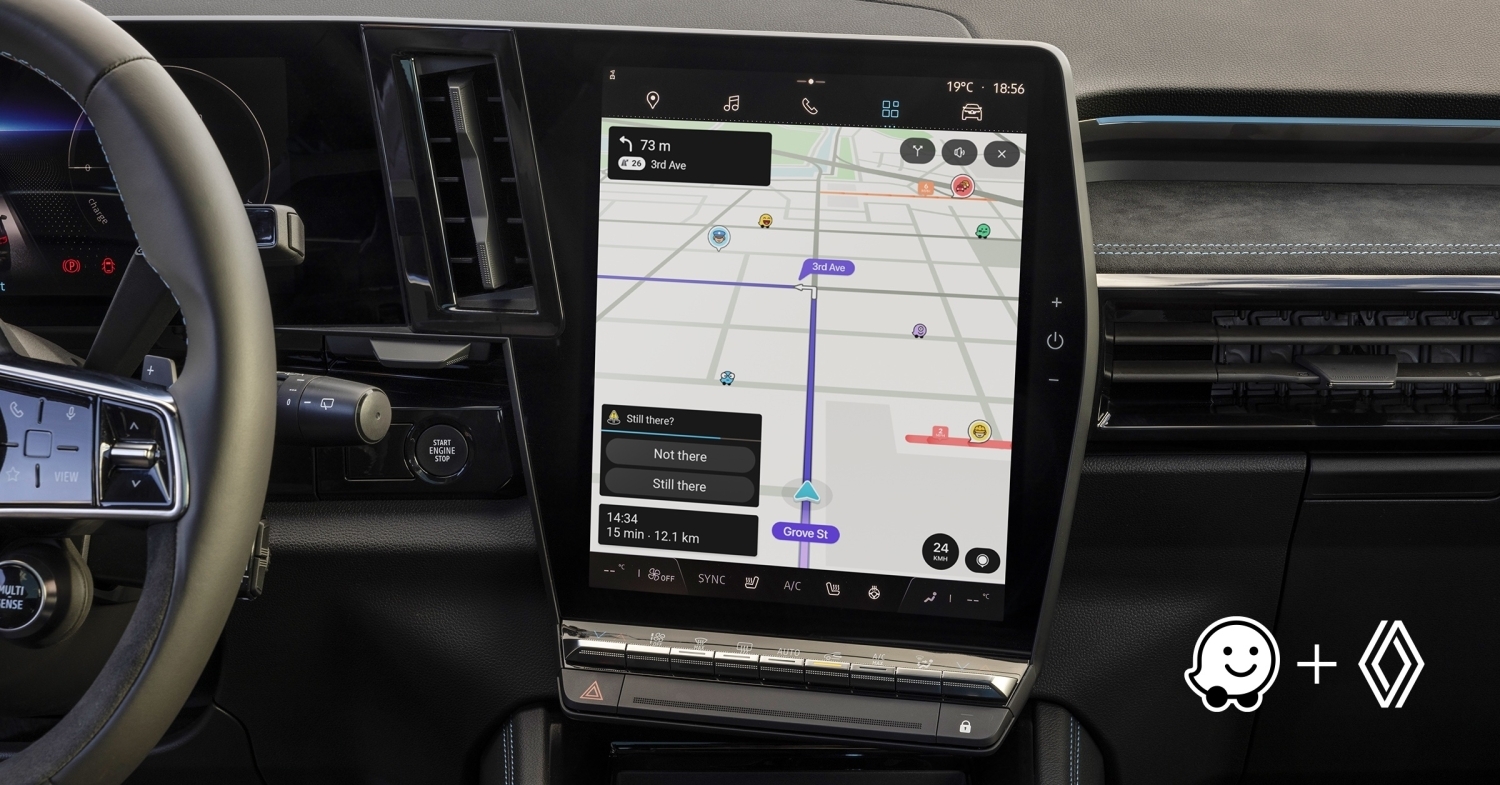
Vehicles with its built-in Android Automotive operating system, including electric cars from Polestar, Volvo and Renault, can even integrate their battery’d state-of-charge to automatically plan charging stops if needed – but this feature first debuted in Tesla’s own system.
Waze doesn’t offer this functionality yet, even though it will roll out a built-in Android Automotive app to Renault vehicles this year.
Apps such as PlugShare already let owners find public EV charging stations and A Better Route Planner can also pre-plan charging stops for those longer road trips based on estimating the car’s energy consumption and battery percentage.
Snapshot
- Porsche talking with Google to add its apps and services
- Not going all-in on Android Automotive
- Previously reluctant to incorporate Google tech at all
Porsche is discussing with Google the possibility of integrating its apps and services in its in-car software, despite years of being reluctant to support the technology giant.
Automotive News Europe reports Volkswagen Group CEO Oliver Blume confirmed talks have started regarding adding Google Automotive Services to Porsche’s infotainment software, which would bring features such as built-in Google Maps navigation and Assistant voice control.
Unlike carmakers such as Polestar, Volvo, Renault and soon BMW, the luxury performance brand won’t completely adopt the Android Automotive operating system – it will continue to use its own infotainment setup.
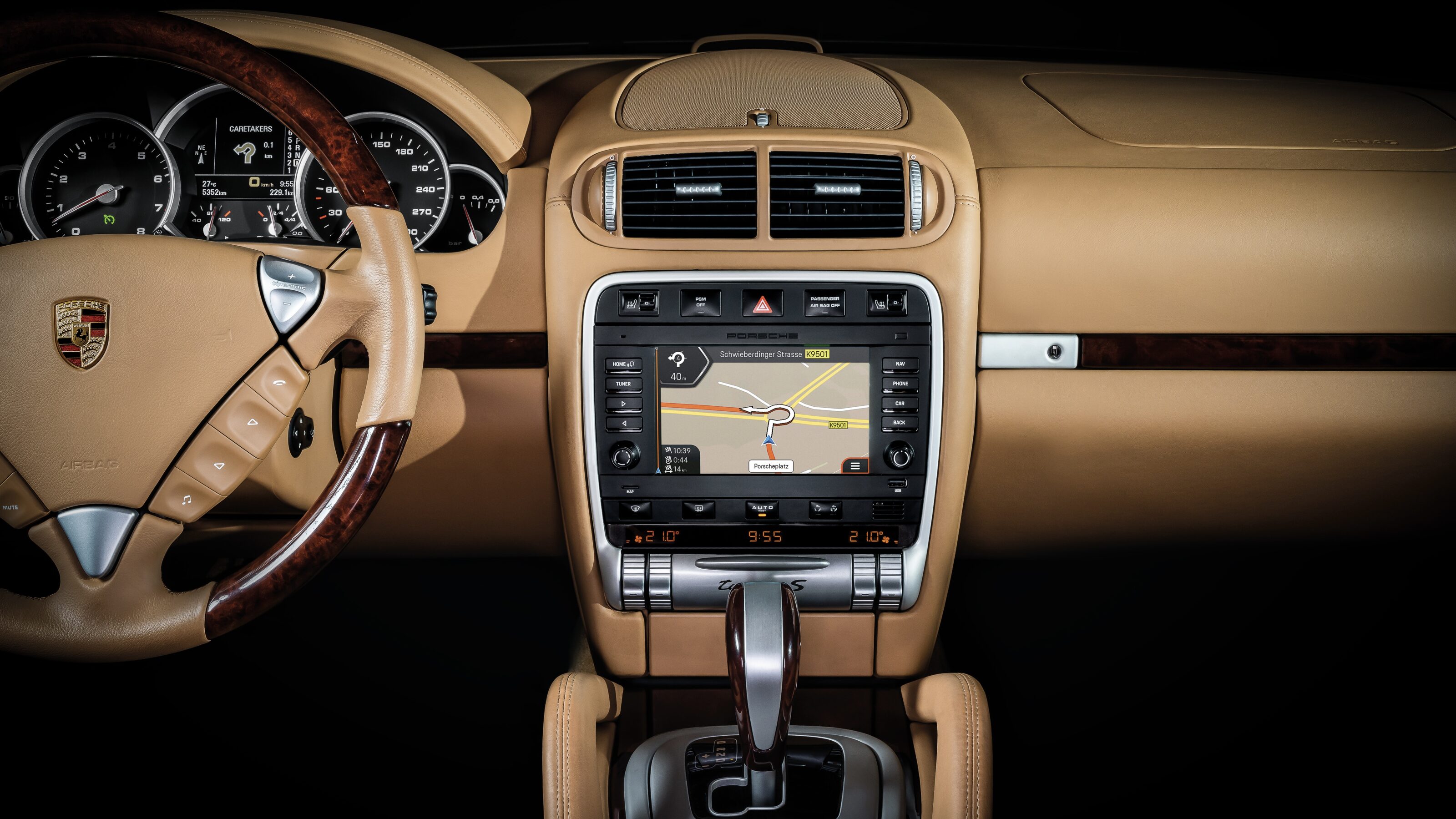
However, the news is in stark contrast to Porsche’s long-standing hesitance over implementing Google technologies.
According to MotorTrend, Porsche previously refused to adopt the search and advertising giant’s Android Auto smartphone projection system due to concerns around its claimed pervasive data collection requirements, including vehicle speed, throttle position, and even the coolant and oil temperature.
In contrast, Apple CarPlay only measures if the vehicle is moving.
Porsche’s claim was refuted by a Google spokesperson and the automaker has since conceded by incorporating Android Auto from all 2022 model-year vehicles – seven years after the tech launched.
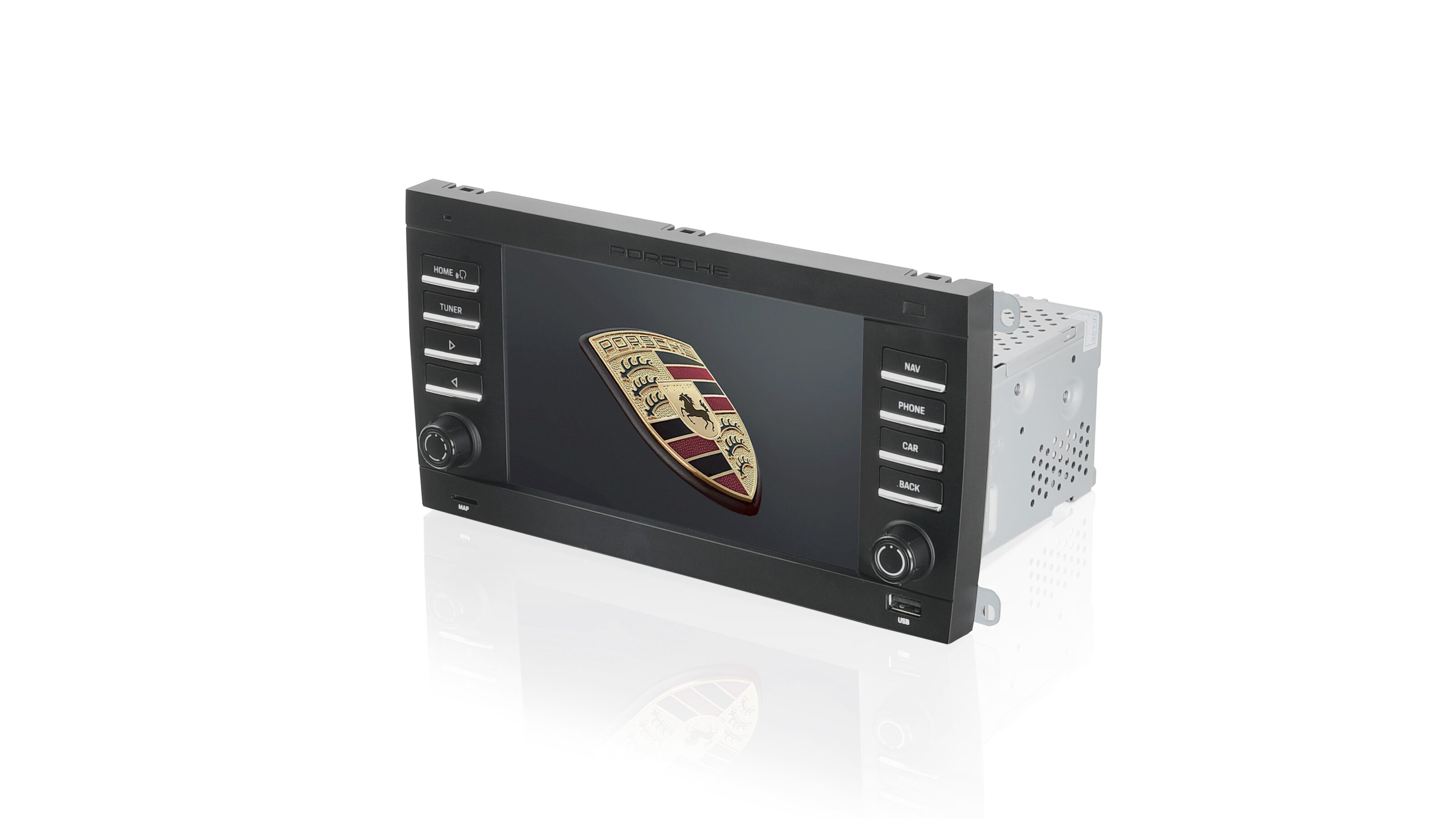
The current Porsche Communication Management (PCM) was upgraded to the sixth-generation version last year across the 911, Taycan, Cayenne and Panamera, featuring built-in Spotify and Apple Music streaming apps, and added wireless Android Auto connectivity.
The Volkswagen Group is also planning to roll out its own app store across all its car brands on future models, with social media platform TikTok already confirmed – similar to Mercedes-Benz.
Porsche is also discussing with tech companies in China about tailored software for the rapidly growing large-car market.
