
The Australian Road Safety Foundation (ARSF) is urging all motorists to be vigilant on the road during the Christmas and New Year period.
It follows a 4.7 per cent increase in the number of deaths on Australian roads between December 2021 and January 2022, with 200 fatalities.
This year, more than 1000 lives have been lost on Australian roads, a 7.1 per cent increase compared to the same time last year.
With 61 per cent of deaths occurring during the day over last year’s Christmas and New Year period, the ARSF said the data suggests a rise in dangerous or unprepared driving.
“In the past, we’ve seen a higher incidence of fatal crashes occur at night when external risk factors are heightened, such as decreased vision and driving under the influence,” said ARSF founder and CEO, Russell White.
“It’s worrying to see the tables turn on this trend, and when paired with an increase in lives lost this year, suggests that Australians are becoming more complacent on our roads than previously.”
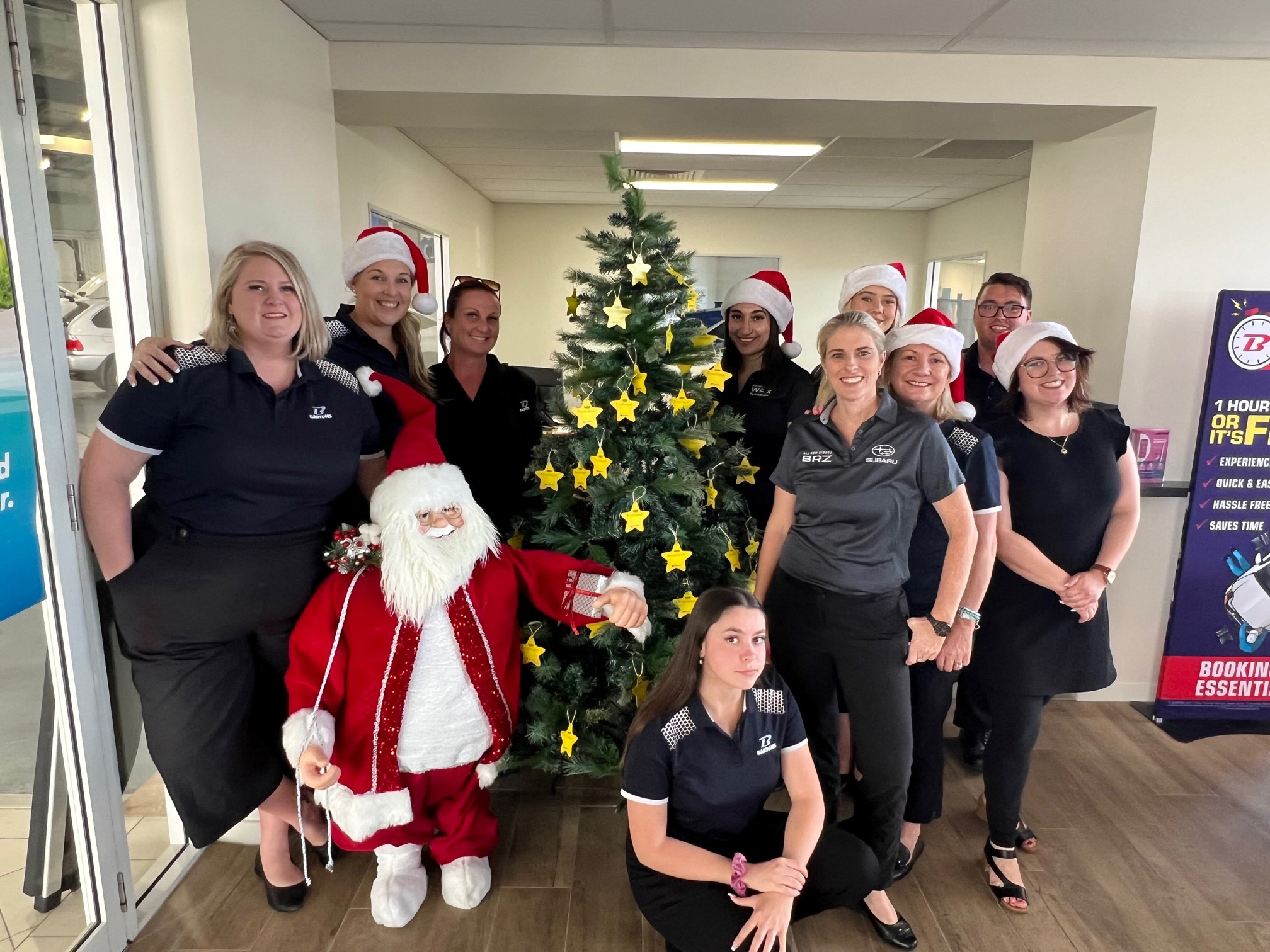
In support of the ARSF, Subaru Australia has provided its dealers with yellow Christmas tree ornaments, with staff and customers signing “their promise to actively participate in road safety.”
“We’re incredibly proud to support our partner, the ARSF, to encourage all road users to think of the responsibility they hold as road users over the busy holiday season,” said Subaru Australia managing director, Blair Read.
“We encourage all Australians to take the pledge to choose road safety this Christmas by taking responsibility for ourselves and others, obeying the road rules and being a safe road user.”
Snapshot
- 200 solar panels on roof of Melbourne office
- Mix of 13 new AC and DC chargers on site
- EV technician apprenticeship training in place
BMW Australia has made a raft of physical changes to its head office in order to prepare for a future dominated by electric vehicles.
The Group, which also includes Mini, has reduced its carbon footprint with the installation of a new solar array, EV charging infrastructure and myriad sustainability measures.
Two hundred solar panels with 100kW of capacity have been installed on the roof of the building in Mulgrave in Melbourne’s south east to generate a combined annual output of 126,000kWh.
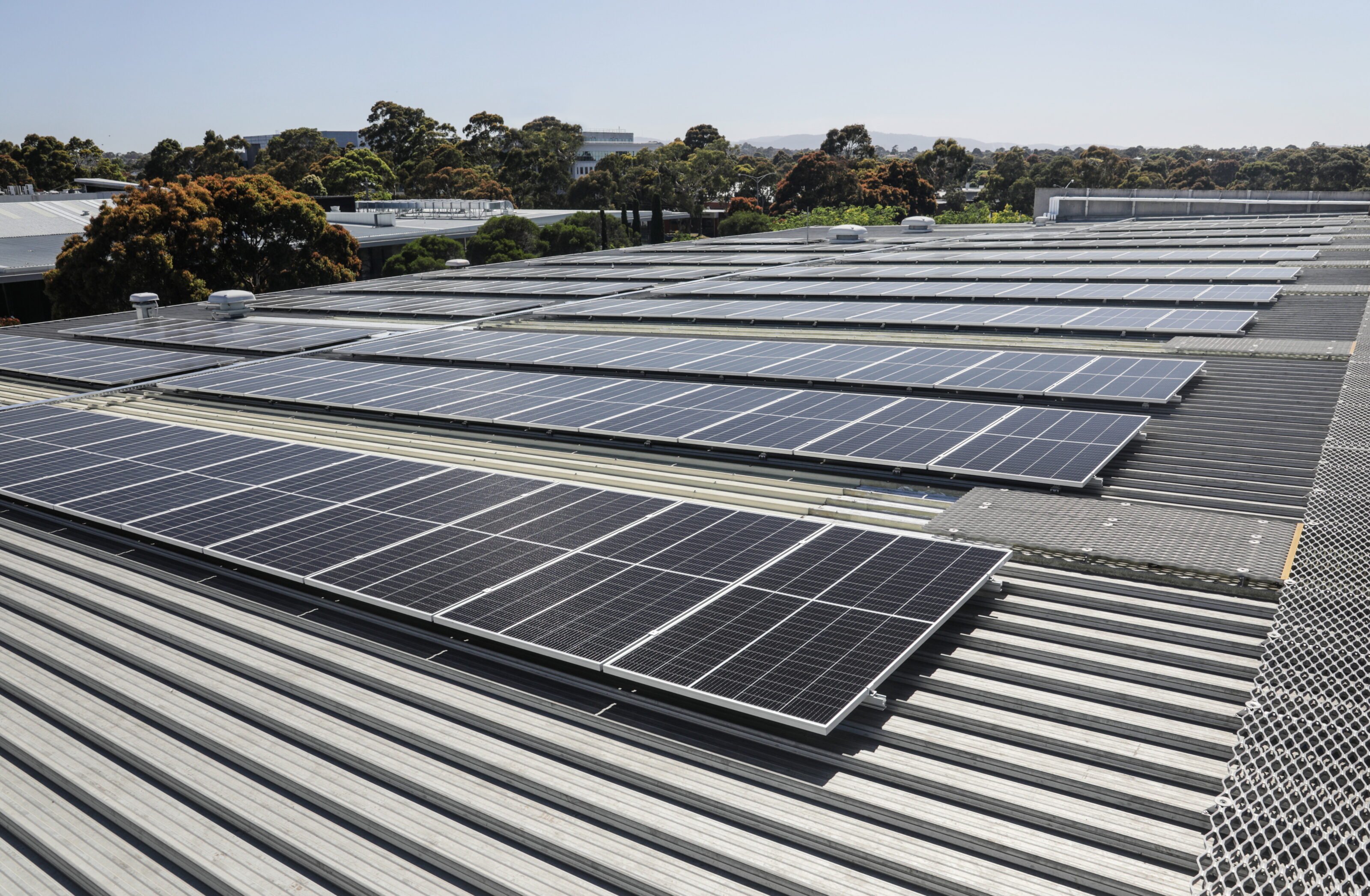
The renewable energy will provide power for the headquarters, as well as also featuring a national training facility, fully-equipped workshop and parts distribution centre to support its 47-strong dealer network.
The panels will additionally provide electricity for 13 new EV chargers, which mix AC and high-speed DC charging capability.
Meanwhile, inside the building, the bistro has removed single use takeaway coffee cups and adopted water bottles with packaging which originates from plant-based materials – resulting in a 74 per cent reduction in carbon emissions compared with the plastic equivalent – and is transitioning away from plastic to glass for other drinks too.
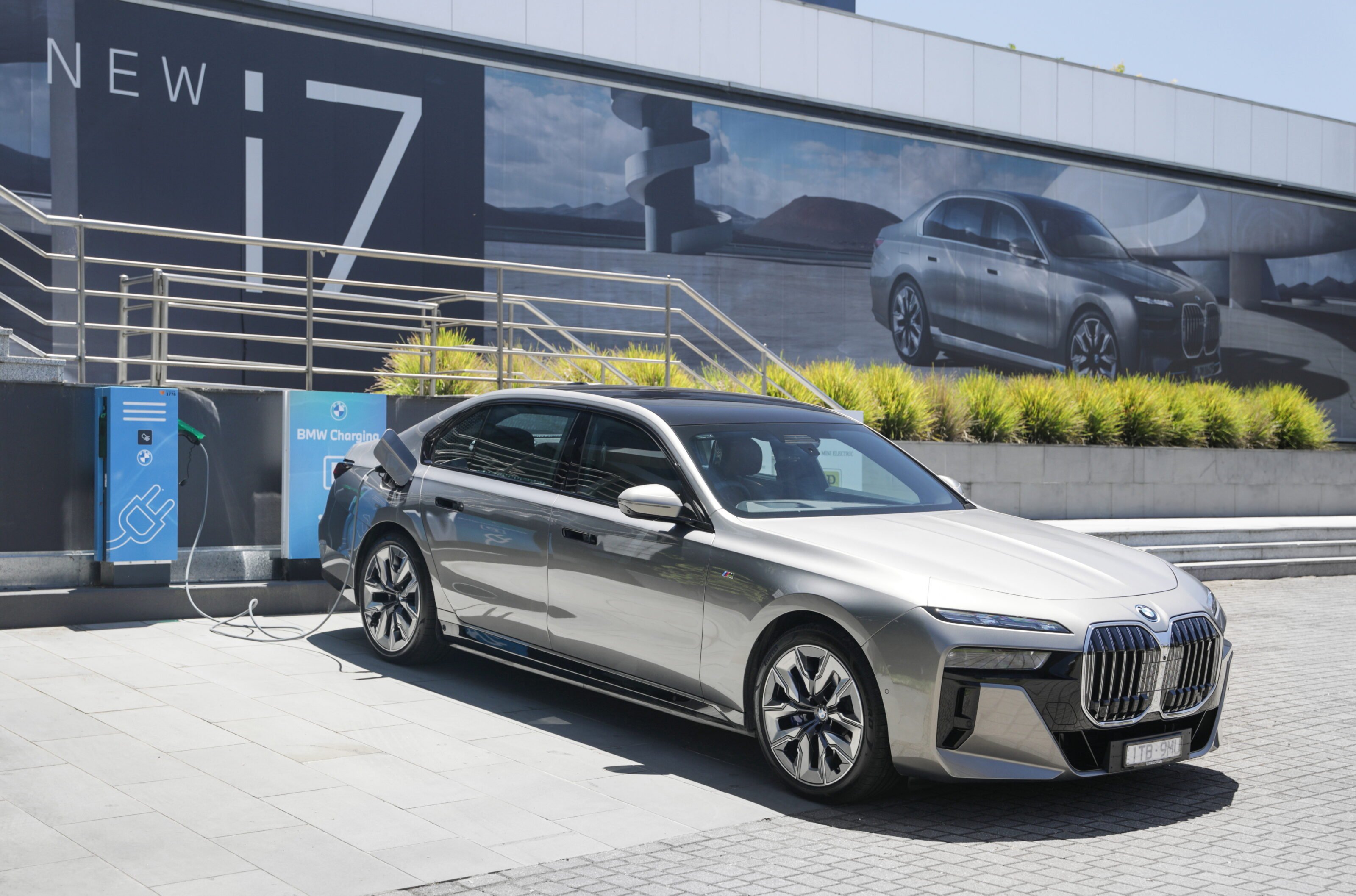
Wolfgang Buechel, CEO of BMW Group Australia, said the measures will help the carmaker to become a carbon-neutral business locally by 2050.
“We are proud to play our part in the BMW Group’s global push to reduce C02 emissions and the commitment to net-zero by 2050 with this local investment in solar power, EV charging and waste-reduction measures at our Melbourne head office,” Buechel said.
“In addition, we are delighted that our valued dealer partners are also very much on board with our strategy and committing resources to renewable energy, while also minimising their waste and water usage and providing accessible EV charging solutions for our customers and expanding fleet of electrified vehicles.”
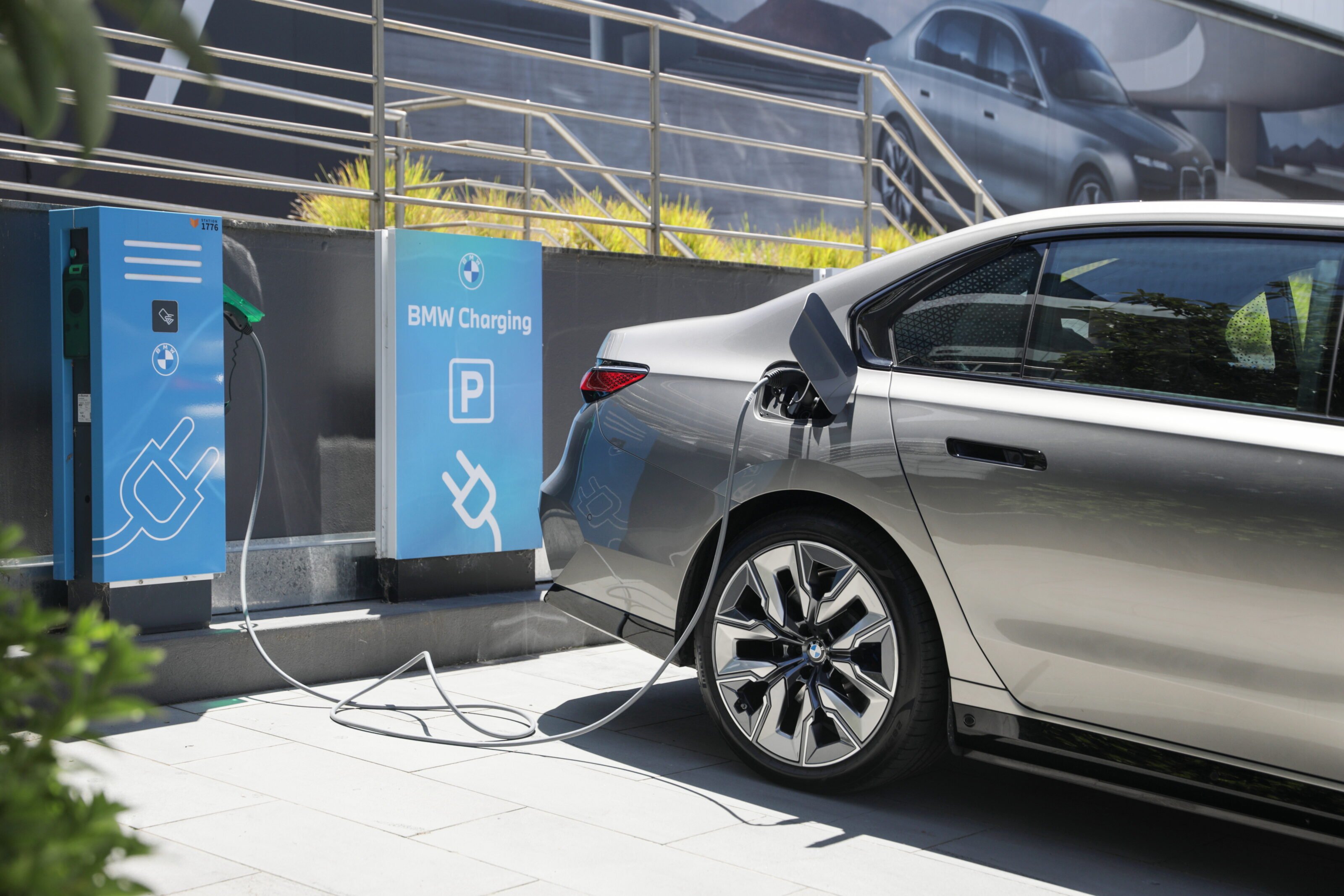
The move follows the recent award presentation for YourMelbourne 2022 – a sustainability competition created in partnership between BMW and RMIT university.
YourMelbourne tasks students with creating their idea of the city in 2030 – factoring in the challenges of climate change, a growing population and the need for evolving transport solutions. As part of the project, they also had to weave in the 17 Sustainable Development Goals set by the United Nations General Assembly.
One of Australia’s largest electricity distributors has announced its intention to install up to 30,000 new electric vehicle charging stations around the country by 2029.
Ausgrid’s plan for a streamlined rollout is to install thousands of box chargers on power poles around the country, in urban and suburban areas, plus major tourist destinations and regional towns.
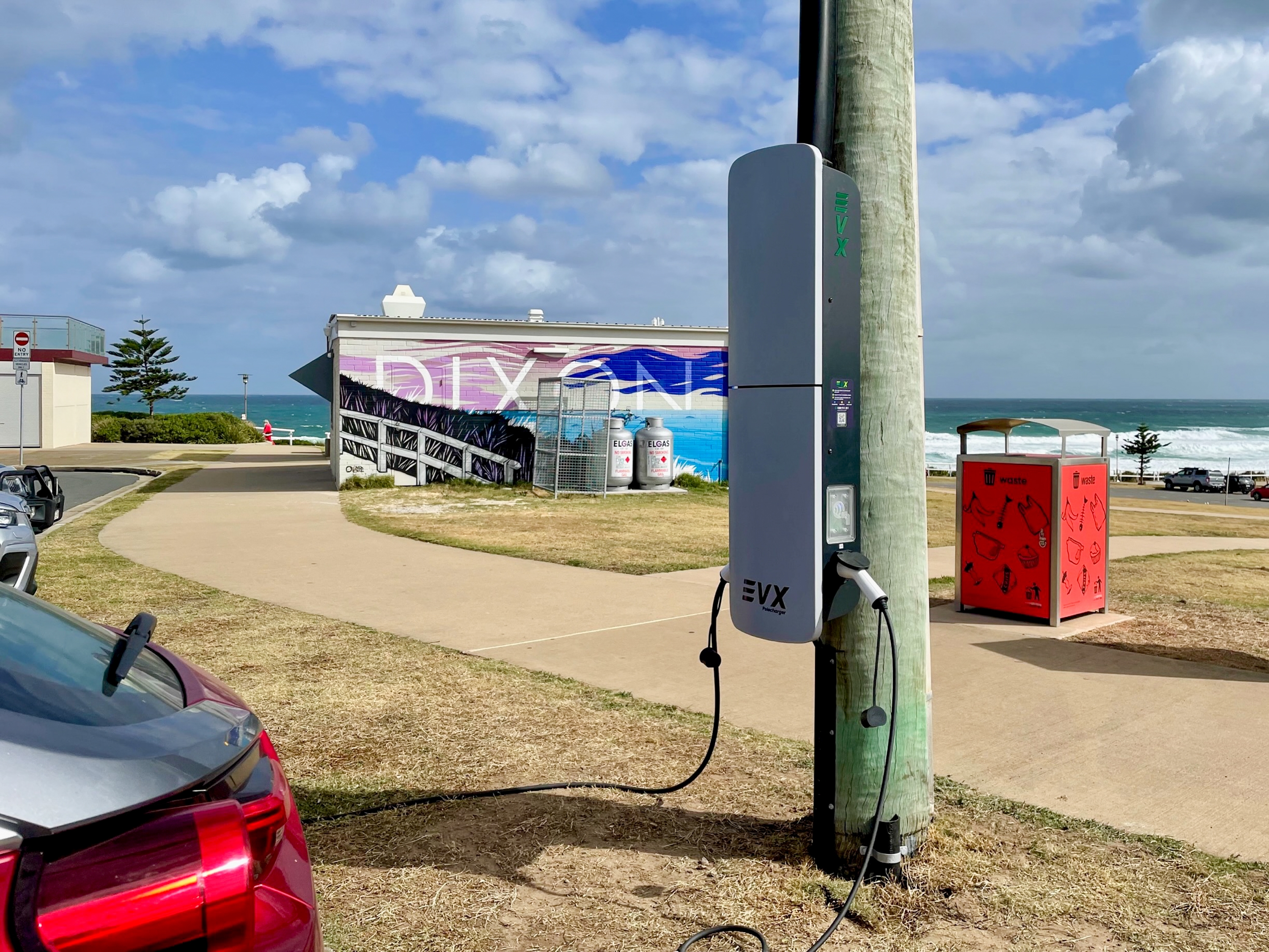
The plan was announced in Newcastle, a stone’s-throw away from where the first chargers will be debuted at Dixon Park Beach in Merewether, NSW.
Ausgrid’s Chief Executive, Richard Gross, said the rollout of EV chargers will boost owner and buyer confidence.
“We know the uptake of EVs is only going to increase in the coming years and projects like this show that if industry and communities work together, we can use existing infrastructure to roll out this technology quickly and conveniently,” he said.
“We believe we have a role to play to help our customers get ready for the energy transition, while making it as affordable and convenient as possible.”

Of course, Ausgrid’s ambitious undertaking can’t be achieved alone, and it will work in conjunction with local councils and technology providers (who supply the physical box and charging hardware) to determine the best locations for its charging network, from “busy suburban streets to popular tourist destinations and small regional towns.”
The first chargers will be installed in a partnership between Ausgrid, charging firm EVX and the City of Newcastle.
These chargers, according to EVX Chief Executive, Andrew Forster, will offer power at a flat rate of $0.50/kWh, lowering the cost barrier and making car charging “more accessible and affordable for both residents and visitors of Newcastle.”
Mounting them on existing power poles streamlines installation, and reduces extra urban clutter, said Gross.
Ausgrid’s announcement follows the NSW Government’s recent $80 million co-investment pledge towards electric chargers.
Brian Innes, a management consultant at Partners in Performance – a global management consulting firm, points out that pole posting could help offer flexible charging options for those who are unable to charge at home.
“If you’re in a city area where you don’t have a lot of off-street parking garages, we have to find a way to solve that, and pole-charging is something the rest of the world is looking at,” says Innes.
“The key question around this space is always who pays [for the infrastructure] and how do they get their money back.”
ANCAP has detailed the top-performing vehicles in its outgoing 2020-22 criteria, as the year draws to a close.
Across the three-year period, 69 vehicles were rated by the safety authority, with all but seven receiving a five-star score.
The vehicles that fell short are; the Honda HR-V (four-star), pre-update Hyundai Palisade (four-star), Citroen C4 (four-star), and the now-discontinued Mitsubishi Express (zero stars).
The New Zealand-only Fiat 500e and Opel Mokka also received a four-star rating, as well as the Palisade.
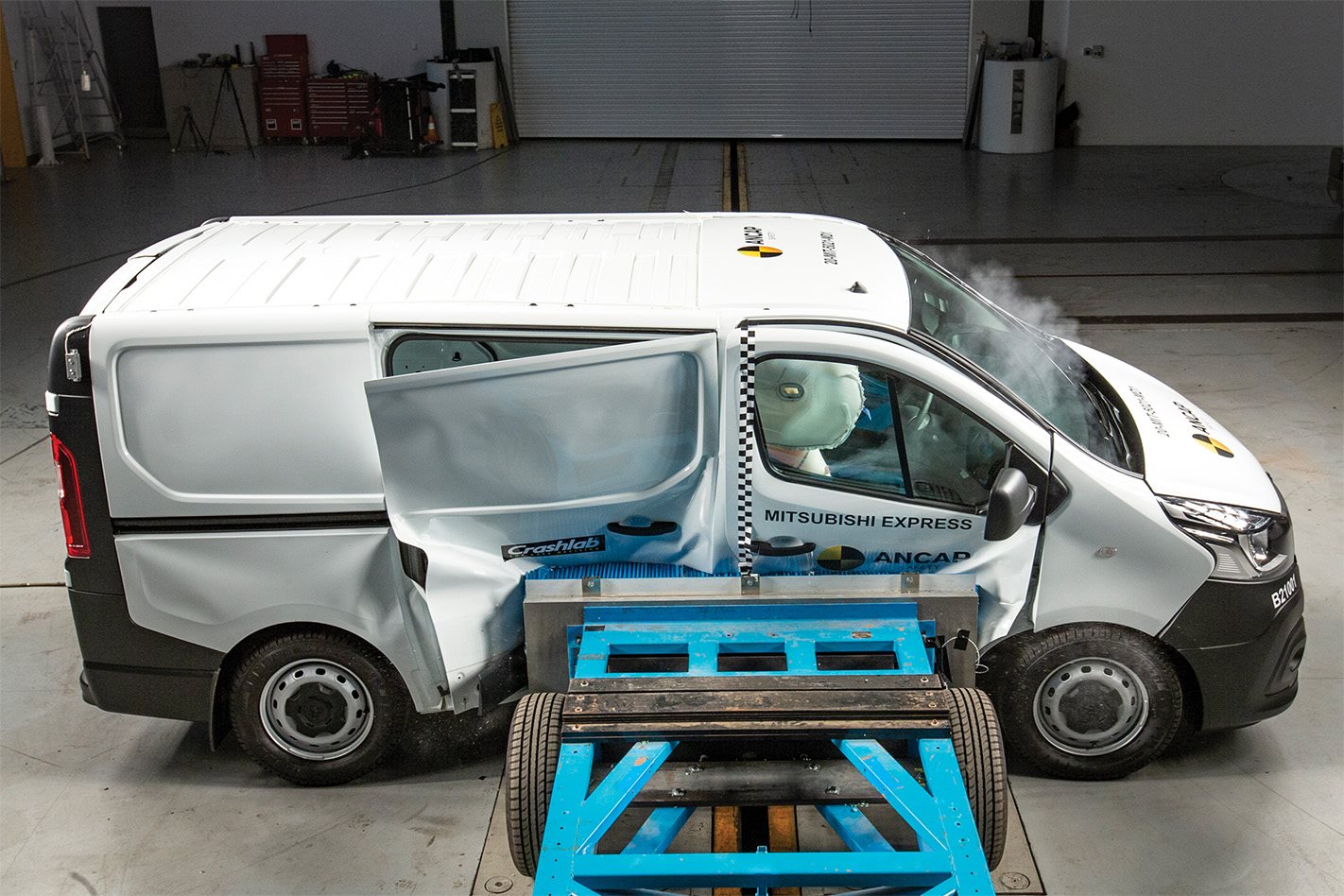
At the opposite end, the highest-scoring vehicle was the Chinese-built Tesla Model Y electric SUV.
It achieved the highest overall weighted score, at 92.6 per cent, with record-breaking scores in adult occupant protection (97 per cent) and safety assist (98 per cent).
In second place is the second-generation Lexus NX medium SUV, with an overall score of 89.2 per cent, followed by two Chinese-built people-movers, the LDV Mifa petrol and Mifa 9 electric, at 87.4 per cent.
“Once again, we’ve seen high levels of safety performance across a range of vehicle types and brands. Of interest this year is that each of the three highest scorers include alternative-powered models,” said ANCAP CEO Carla Hoorweg.
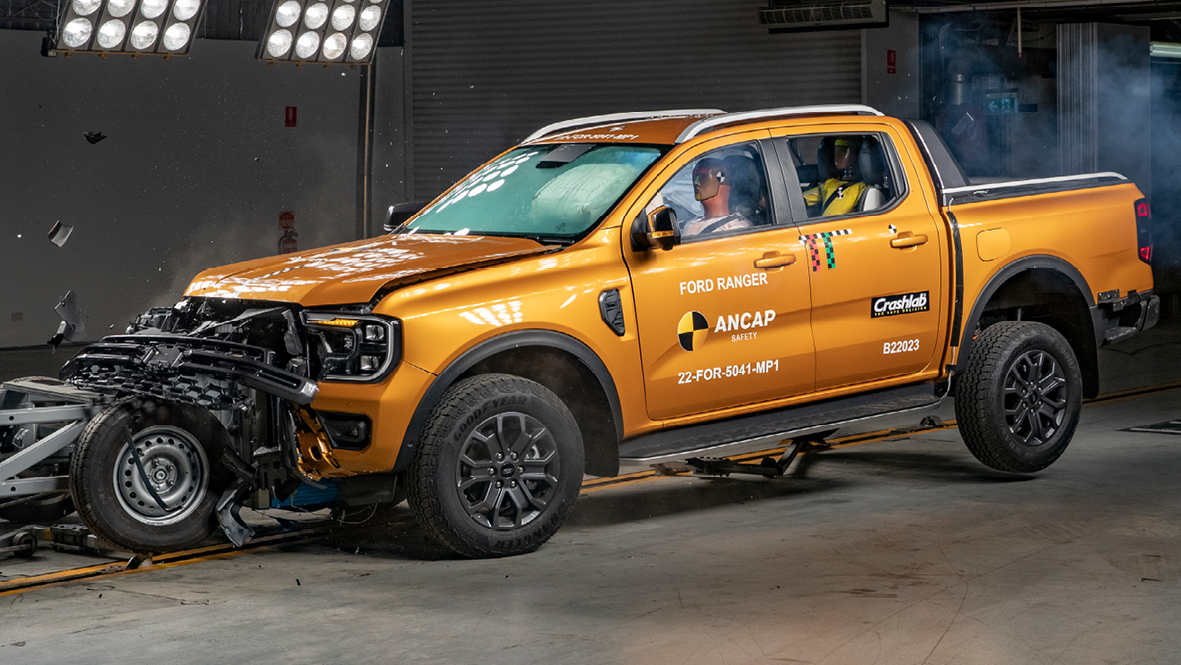
The highest score for child occupant protection was 93 per cent – a result shared between the latest Ford Ranger, Ford Everest, Nissan Qashqai and Nissan Pathfinder, with all rated in 2022.
Vulnerable road-user protection, which assesses how well vehicles protect pedestrians and cyclists in a collision, was topped by the Toyota Corolla Cross small SUV at 87 per cent.
“This clearly shows the desire and commitment of vehicle manufacturers to offer the safest vehicles they can into the Australian and New Zealand markets, and the continued appetite of consumers and fleet buyers who expect the highest level of safety,” added Hoorweg.
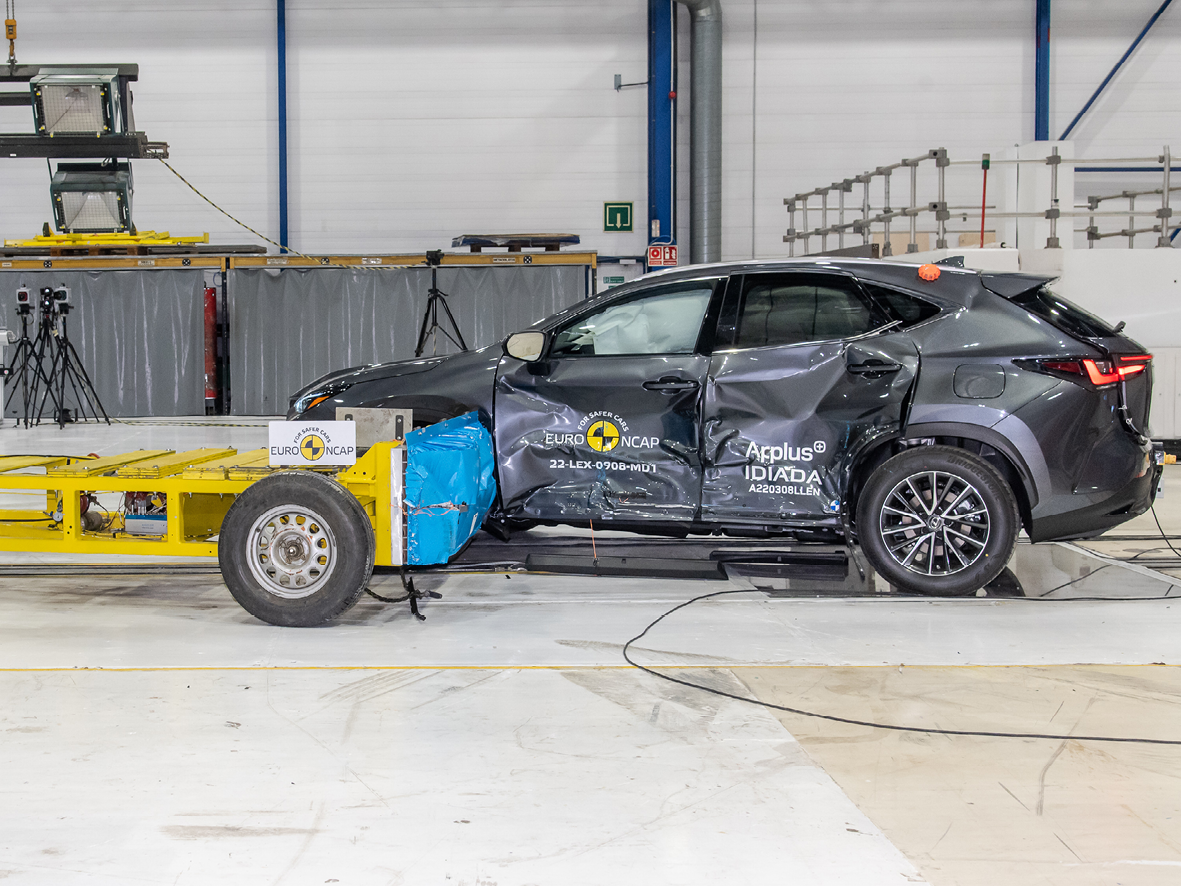
“We know the continued injection of the safest vehicles onto our roads has tangible road safety and economic benefits, and this strong performance of models rated over the past three years will see even an even greater number of lives saved and serious injuries avoided.”
In New Zealand, the Ford Mustang Mach-E and Volkswagen T7 Multivan achieved a five-star rating, with neither vehicle currently locked in for Australia.
ANCAP’s testing criteria will expand in 2023, with an expansion for motorcycle detection, child presence detection, and vehicle submergence.
For everything you need to know about the new criteria, click on the link below.
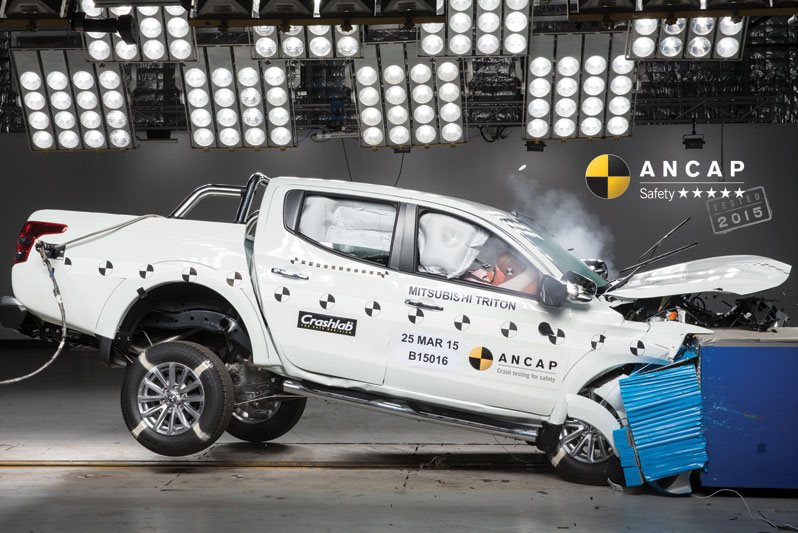
In another change, a newly-introduced six-year time stamp means a number of ratings for some of Australia’s most popular vehicles will be removed on December 31, 2022.
This includes the Mazda 2 and CX-3, Mitsubishi Pajero Sport and Triton, Nissan Navara, Suzuki Vitara, Volkswagen Passat (2015), Mitsubishi ASX (2014), Toyota LandCruiser Prado (2011), and Fiat 500 (2008).
The removal of a rating potentially limits fleet purchases until next-generation models launch in the coming years, as many fleets mandate a five-star ANCAP rating. Popular ride-share application Uber also requires a five-star score for its vehicles.
The current ratings will still apply for cars produced between the test date and 2022, but will appear under the ‘previous models’ section on ANCAP’s website, with an ‘unrated’ label for 2023 and later vehicles.
Snapshot
- Consultation opened in September and closed late October
- More than 500 submissions were made to Government
- Most were in favour of transitioning towards electric cars
More than 500 individuals, groups and businesses have responded to a consultation on Australia’s first electric vehicle strategy – making it is clear Aussies want to have their say.
In September, the Federal Government launched the consultation for the Strategy, which it says is designed to “improve the affordability, supply and uptake of electric vehicles”.
The deadline closed for submissions on October 31, with the Department of Climate Change, Energy, Environment and Water receiving more than 500 entries – which covered over 1200 organisations and 1500 individuals.
Overwhelmingly, according to the Department, these were positive and in favour of the country transitioning to electric vehicles, with a spokesperson saying: “We are delighted by the strong advocacy supporting Australia’s transformation into an EV powerhouse.
“The Government will be working through the submissions closely over the coming weeks and months.”
Although the full list of entries is not currently yet available, Wheels has canvassed the big players to find out what their views were and what the key issues are facing the Government as it creates a national policy.
JUMP AHEAD
Australian Automotive Dealers Association (AADA)
No ICE ban
The AADA does not believe in a strict internal-combustion engine (ICE) ban for Australia, as has been set in places such as Europe and California.
“The AADA is fundamentally opposed to bans being applied to internal-combustion engine vehicles due the potential adverse consequences for the environment Australian consumers, and the automotive industry and the people they employ,” its submission said.
“There are simply too many unknown variables to proceed with a ban. The uncertainty around the industry’s ability to meet the demand for EVs means that there are similar concerns around when price parity for EVs will emerge. Consumers who will not be able to afford an EV will simply hold onto their older ICE vehicle for longer, leaving lower- and middle-income earners with vehicles which are more costly to run, less environmentally friendly and less safe.
“The AADA is fundamentally opposed to bans being applied to internal-combustion engine vehicles”
“Three out of five people [surveyed by the AADA as part of its submission to Government] are concerned they won’t be able to afford a vehicle if there is a ban on the sale of ICE vehicles.
Proponents of a ban will point out that there are several ICE bans in other global markets, such as the UK (2030), the EU (2035) and certain US states (California 2035 and New York 2035). The AADA is not certain that these markets will not revise their plans to ban ICE vehicles. There are already signs that OEMs in those markets are questioning the achievability of those bans.”

Grey imports
The AADA is strongly opposed to increasing the supply of imported used EVs on the basis that it says such a move will have adverse outcomes for consumers, risk undermining confidence in EVs among the Australian public, make Australia a dumping ground for old lithium-ion batteries, and threaten Australian automotive businesses.
“The current system in Australia whereby the overwhelming majority of our vehicles come through an OEM type approval has served the country well,” it said. “Other than New Zealand, the importation of used cars has not been used as a strategy to boost vehicle supply by OECD countries – generally most grey imports are sent to developing countries. The influx of used car imports is why the average age of New Zealand’s vehicle fleet is over 14 years compared to Australia’s which is just over 10 years. In terms of road safety, New Zealand has a rate of road deaths per 100,000 population of 6.01 while in Australia it is 4.26.
“Despite the Government previously ruling out a used car import policy, its Specialist and Enthusiast Vehicle Scheme is [now] being used as a back door to bring in a high-volume of used car imports. We believe the SEVs should be restricted, and any expansion should be roundly rejected due to the Government’s previously articulated concerns around consumer protection and safety. While some proponents will argue that used imports provide an avenue to increase EV supply, this will come with the same risks as conventional vehicles and more.
“Specialist and Enthusiast Vehicle Scheme is [now] being used as a back door to bring in a high-volume of used car imports”
“Expanding the importation of used EVs is a regressive, high risk solution. Advanced economies like the United States and the EU have not resorted to such drastic measures in their attempts to boost their used EV markets. This is a lazy policy solution which will discourage manufacturers from supplying new EVs to Australia; will place consumers at risk due to lack of provenance of these vehicles; and will leave Australia with the unenviable task of recycling and disposing of early generation lithium-ion batteries.
“The best way to increase the number of affordable used EVs is to ensure the highest possible uptake of new EVs, which will eventually make their way onto the used-car market. Incentivising and encouraging Government and other fleets to turn over their EVs sooner is another policy lever which can help boost the number of used cars available.”

Fuel-efficiency standard
The organisation said it supports a fuel-efficiency standard being introduced, but it “needs to be complemented by financial incentives, tax reform, non-financial incentives and charging infrastructure.”
Additionally, it feels a standard must include; an average emissions (grams of CO2 released per kilometre) target for OEMs averaged across all the vehicles they sell in a given period, an appropriate timeframe for the industry to adjust to said target, and should apply to all vehicles first supplied to the Australian market – including used car importers.
There should be the ability for OEMs to trade credits with each other and to transfer credits between their passenger vehicles/small SUV fleets and their light commercial vehicles/large SUVs fleets, as well as penalties for OEMs who exceed the target, according to the AADA.

Tax reform/Luxury Car Tax
The AADA is in favour of taxation reform for the sector, and said “as part of the transition to EVs, Australia needs an urgent review of its Automotive taxation regime.
“Each year, Australians pay tens of billions in motoring taxes and charges to governments. According to the Bureau of Infrastructure, Transport and Regional Economics in the 2019-20 financial year, more than $32 billion in such charges were paid,” it said.
“These taxes are outdated and have been discredited by various independent taxation reviews. Australian governments should work together to abolish or restructure these taxes”
“As fuel-efficient vehicles are increasingly adopted and trends such as ride-sharing accelerate, Australia needs to consider the way in which we tax motorists and create a system which is fit for purpose for the future. At the federal level, a considerable part of that tax revenue has been drawn from the Luxury Car Tax (LCT).
“At a state and territory level we have significant stamp duty and registration charges applied to vehicle sales. These taxes are outdated and have been discredited by various independent taxation reviews. Australian governments should work together to abolish or restructure these taxes to provide consumers and local dealers with some relief, particularly as the new car market faces an uncertain future and supply remains severely constrained.
“Applying excessive taxes to new cars only disadvantages consumers seeking to buy vehicles which deliver greater safety as well as environmental and fuel efficiency benefits. These legacy taxes were introduced in an era when Australia still manufactured passenger cars and maintaining them only disadvantages consumers and local businesses. Domestic passenger vehicle manufacturing no longer exists, but the tax structures that were there to support it continue to make passenger vehicles in Australia more expensive than they should be.”
Federal Chamber of Automotive Industries (FCAI)
“However, the FCAI will not support any policy that puts fuel efficient vehicles using a range of technologies out of reach of every-day Australians”
The FCAI’s submission calls for the focus to be on the availability and affordability of low emission vehicles for Australian drivers.
Chief Executive Tony Weber said an ambitious and achievable fuel efficiency standard, technology mix, infrastructure investment and behaviour change initiatives are needed to reduce emissions, create a cleaner fleet, and ensure a sustainable automotive industry.“With limited worldwide supply of battery electric vehicles set to be an issue for the foreseeable future, the discussion needs to be guided by evidence not emotion, research not rhetoric and proof – not predictions.
“Strong, practical, and challenging policy settings that acknowledge the unique nature of our market and customer preferences can support Australia’s mission to decarbonise the light vehicle fleet.
“However, the FCAI will not support any policy that puts fuel efficient vehicles using a range of technologies out of reach of every-day Australians, particularly those living on the outskirts of our capital cities and rural and regional areas,” he said.

Affordability
The FCAI said it will not support any policy that puts fuel-efficient vehicles, using a range of technologies, out of reach of everyday Australians. Affordability remains a significant barrier to entry.
A 100 per cent BEV mandate by 2030 would lead to the price of at least 30 per cent of the vehicles driven by everyday Australians to increase by as much as $17,000, it contends.Incorrect policy settings that exclude certain technologies or make some products unavailable in Australia will result in older vehicles staying on the road for longer, which will not reduce emissions.
EV Supply
More than 75 per cent of new vehicle sales in Australia are SUV or light commercial. EV technology in these vehicles is limited with little availability and/or high prices.
Road-user charging
A simplified road-user charging approach should be applied to all transport sectors and technologies, not just EVs, as an economy-wide taxation reform to replace revenue currently received through vehicle registration, sales tax, luxury car and luxury sales tax, according to the industry body.
Charging Infrastructure
The FCAI believes greater attention on the reliability and capacity of the electricity grid is still needed. It said governments should work together to implement the National Construction Code 2022 requirement for new apartment buildings to be EV ready by 1 October 2023 and also develop measures to support easy and safe EV charging.
Motor Trades Association of Australia (MTAA)
In many ways, the MTAA’s submission mirrors that of the AADA’s as the key points cover familiar territory.
No ICE ban/penalties for keeping an ICE car
The MTAA believes EV uptake mechanisms, processes, and incentives utilised in other countries cannot necessarily be directly transplanted to Australia.
It said: “Too often, simple comparisons are made with countries such as Norway with misguided assumptions that whatever works there will work here. Australia has its unique logistical challenges in terms of expanding its EV uptake – a widely dispersed population and land mass, infrastructure challenges, a small right-hand drive vehicle market that is not at the forefront of global vehicle manufacturer supply decisions, lack of local manufacturing, lack of incentives and lack of CO2 emission targets. Equally, European consumer preferences are not those of Australians and should not be imposed on Australian consumers.”
The MTAA says it does not support bans on selling certain vehicles by specific dates. “The imposition of penalties to change consumer behaviour is already manifesting in critical touch points in some European countries where a societal divide is starting to emerge due to a stick-and-carrot approach that is arguably not warranted and increasingly divisive,” its submission noted.
“Too often, simple comparisons are made with countries such as Norway with misguided assumptions that whatever works there will work here.”
“Punitive action against ICE vehicle owners through increased taxes and other policy levers (registration, levy, etc.) will cause public anger, particularly among groups where they are prevented from accessing EVs at an acceptable price point, their location or work does not lend itself to EVs available at the time or other factors. Another European observation is that where these policy and tax levers were exercised, there was evidence of increasing discontent and anger – particularly in high-energy environments. Access to EVs must be equitable and fair for all.”

Incentives
Any strategy needs to develop and include an incentives and subsidies framework that may include, but is not limited to: private and public charging, targeted consumer purchase incentives, subsidisation or removal of government fees, and non-financial incentives – such as transit lane access, free parking, access to any government charge points, etc.
Tax reform/Luxury Car Tax
Like the FCAI, the MTAA and its members are in favour of reform for automotive-related taxation, including solutions to road-user charging and the abolition of Stamp Duty and Luxury Car Tax.
Skills shortage and training/end-of-life recycling
Critical to the future success of EVs is to ensure an automotive workforce with the capacity and capability to meet the demands of the entire fleet and the nation’s reliance on road transport.
Therefore, it says, any strategy must take into account “the ongoing training of existing automotive professional tradespeople who service, repair, and maintain the fleet, as well as the training of new industry participants”.
“Encourage rapid uptake too fast and risk decoupling from infrastructure rollout”
Additionally, it must factor in the decommissioning, destruction and recycling/re-use of end-of-life vehicles expected to increase because of EV uptake and the fleet’s transition.
Overall, the National EV Strategic Plan must balance ambition and risk to achieve the aspiration of transitioning Australia from ICE to EV successfully, according to the authority.
“Encourage rapid uptake too fast and risk decoupling from infrastructure rollout,” it warned. “Failure to recognise and accept Australians’ preference for home charge points and provide an imbalance of resources and incentives into public infrastructure without incentivising home charge points risks undermining outcome achievement and goodwill. Attain EV uptake without the necessary infrastructure, power grids to feed it, the services to maintain and repair EVs and other parts of the fleet, or use penalties to direct outcomes, then risk the entire program.”
The Australia Institute
According to one of the country’s leading think tanks, for too long Australia has had no nationally co-ordinated plan to reduce transport emissions. To achieve legislated emissions reductions targets, The Australia Institute says major changes, supported by Government action, will be necessary.
“Federal Government leadership, policy and funding is needed to fast track the uptake of EVs and phase out the sale of internal combustion engine (ICE) vehicles,” its own submission said.
“Being a late-mover to EV technology, Australia has the benefit of hindsight. Australia’s EV strategy should be informed by international experience, modelled on successful international policies, and learn from their pitfalls.
“Fuel efficiency standards have been adopted in approximately 80 per cent of the global light vehicle market and would significantly reduce transport emissions, while encouraging manufactures to bring affordable EV models to Australia and reduce fuel cost for Australian motorists. The introduction of mandatory fuel efficiency standards is a pivotal part of the national EV strategy, and can be modelled on successful overseas standards.
Fuel-efficiency standard
These should be implemented as soon as possible, the Institute says, aiming for 100 per cent of vehicle sales being electric by 2030 or 2035 at the latest and have integrity – be informed by independent emissions data with no loopholes for heavy vehicles or particular manufacturers.
Accessibility for all
The Federal Government should structure its policies around ensuring that low-income households and individuals can access EVs, eg. targeting subsidies at low-income households and making subsidies available at point of sale rather, than as post-sale rebates.
It should “consider the establishment of a regional EV strategy, to ensure regional areas are not left behind, and to address the obstacles to EV adoption that are unique to the regional context.”
Incentives/disincentives and ‘feebates’
On this point, The Australia Institute’s views are three-fold:
Firstly, it believes the national EV strategy should provide temporary and targeted subsidies for EVs, particularly (as outlined above) for low-income households.
Secondly it suggests the Government should remove the instant asset write-off provisions for commercial vehicles that subsidise heavy vehicles and utes for small business owners, and modify the Fuel Tax Credit scheme to remove, or cap, large incentives for diesel use – particularly in the mining industry.
And finally, it recommends a ‘feebate’ system claiming it can be a cost-neutral method of disincentivising higher-emitting vehicles and incentivising lower-emitting vehicles, thereby reducing passenger vehicle emissions – pointing to France’s Bonus Malus and New Zealand’s Clean Car Discount as examples of where this is already happening.
Taxation
As well as those changes to incentives on tax write-offs outlined above, the think tank says the Government should change the definition of a fuel-efficient vehicle under the Luxury Car Tax (LCT) from 7L/100km to 0L/100km.
It also recommends exploring policy changes that increase government revenue while decreasing transport emissions.
For example, the Australia Institute has proposed changes to the Safeguard Mechanism that introduce a voluntary, fixed-price polluter-payment of $25 a tonne. This, it says, would raise billions for the Commonwealth to direct to industry policy to build climate solutions including battery or electric bus manufacturing.
Fleet targets
Expand from the current target of 75 per cent of Commonwealth vehicles being EVs by 2025 to 100 per cent by 2030. According to the think thank, PHEVs should be excluded from this target, because…
Forget hybrids
Emissions associated with PHEVs are highly dependent on how they are charged and driven. PHEVs only reduce emissions if charged enough to be predominantly driven using the battery alone. For this reason, they should not receive public funding, according to the Institute.
It also believes PHEVs should be removed from the current Clean Car Discount policy. The Commonwealth fleet should target ‘zero-emissions vehicles’ instead of ‘low-emissions vehicles’ – excluding PHEVs. If fuel-efficiency standards are introduced, it contends hybrids should not receive any super credits or additional support.

Uber
For its own response to the Government’s consultation, Uber submitted its 2021 report – Electrifying rideshare: Accelerating towards a green future.
In said report it made four recommendations.
The first was to close the interim cost gap between internal-combustion engine vehicles and EVs, especially among high kilometre drivers. That, says the ride-sharing giant, could be achieved by; providing upfront point of sale incentives for EV purchases, including second-hand vehicles, waiving or reducing other fees and taxes such as stamp duty and registration, and by giving EVs urban access advantages such as access to high occupancy lanes.
The second was to ensure all high-km drivers can reliably access overnight charging at or near their home, where they would normally park. This could be done by; supporting the rollout of at home charging infrastructure as well as suburban ‘near home’ public charging with kerbside ‘right to charge’ policies, introducing EV-ready building codes and laws to make it easier for renters and people in multi-unit dwellings to install at home chargers, and continuing to support the roll out of rapid, affordable public charging networks in metropolitan areas, ensuring equitable distribution across cities.

The third focuses on the delay of EV-only road-user charges and policies which widen the interim cost gap, particularly for high km drivers, with policy options that could be looked at including a cap or exemption for commercial EV drivers, either in perpetuity or for around 5-10 years, and moving away from fuel tax and toward a road-user charging scheme for all cars.
And finally, Uber suggested stimulating the market through standards and targets to ensure drivers can access long range BEVs at a reasonable price. This could be done by; introducing fuel-efficiency standards, which would also help lower the cost of fuel for all Australians, introducing zero-emission vehicle sales targets and mandates on vehicle manufacturers/distributors to increase supply and by stimulating demand through point of sale incentives and removal of taxes targeted at affordable and second-hand models.
Honda has upped the price of its five low-cost services from $125 to $199 per visit to the dealer.
The new service pricing kicks in for buyers who signed contracts after October 1 this year. Existing customers who signed up between July 30 2021 and September 30 2022 remain entitled to $125 annual services.
When Honda moved to a fixed-price agency model in Australia mid-2021, one could argue that the ability to bargain for a better price was offset by an easy-to-understand capped-price servicing that was the cheapest available.
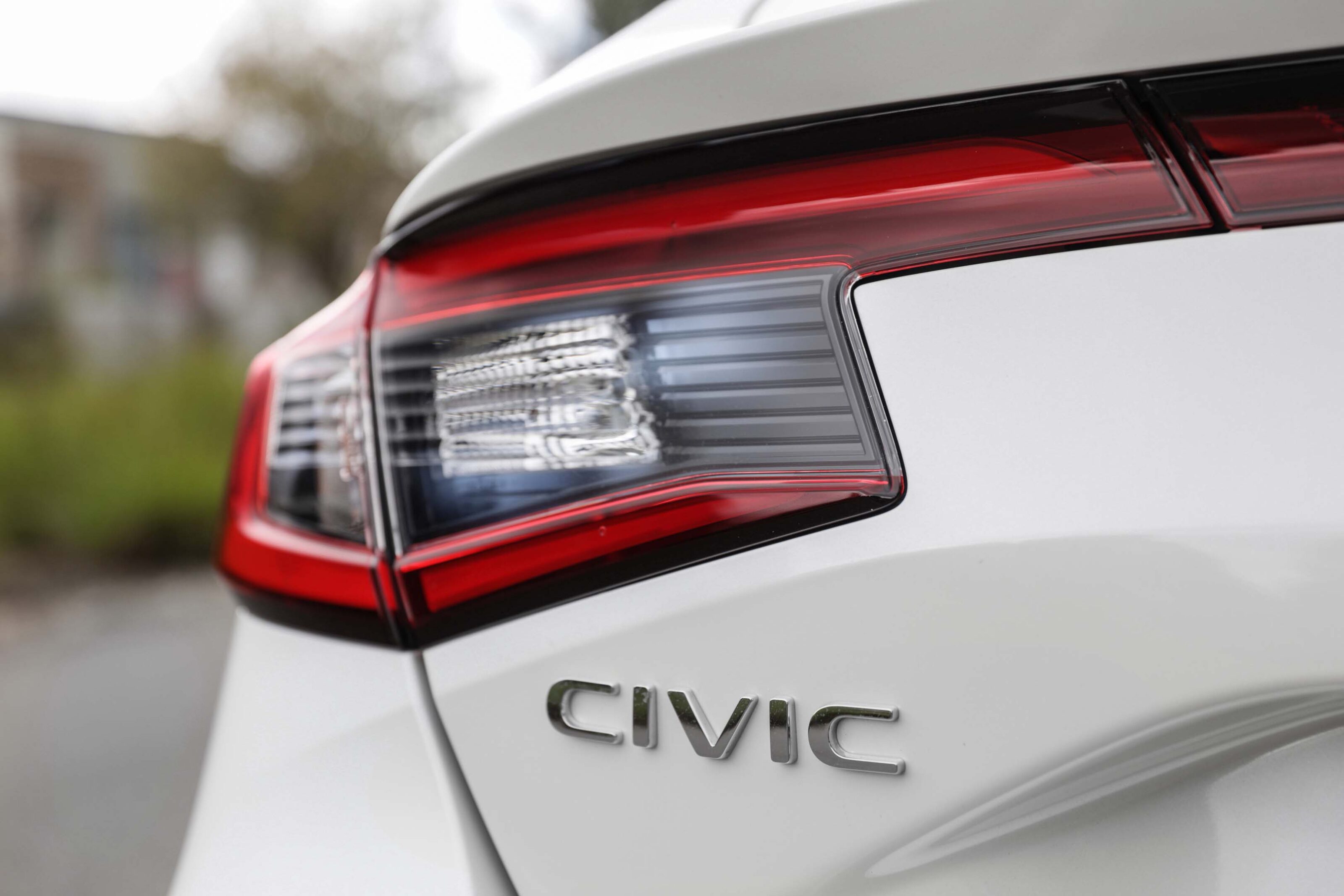
Now, for the Civic small car, Accord medium car, CR-V medium SUV and HR-V small SUV, pricing is up to $199/visit. This represents a five-year cost of $995, or an increase of $370 from the prior offer.
This is still more affordable than Kia’s servicing, with HR-V’s Seltos AWD rival costing an average of $414.40 over a five-year period.
However, it does mean Honda’s ongoing costs for its Civic and HR-V are now closer to rivals from Toyota (Corolla hybrid $205, RAV4 Edge petrol $230).
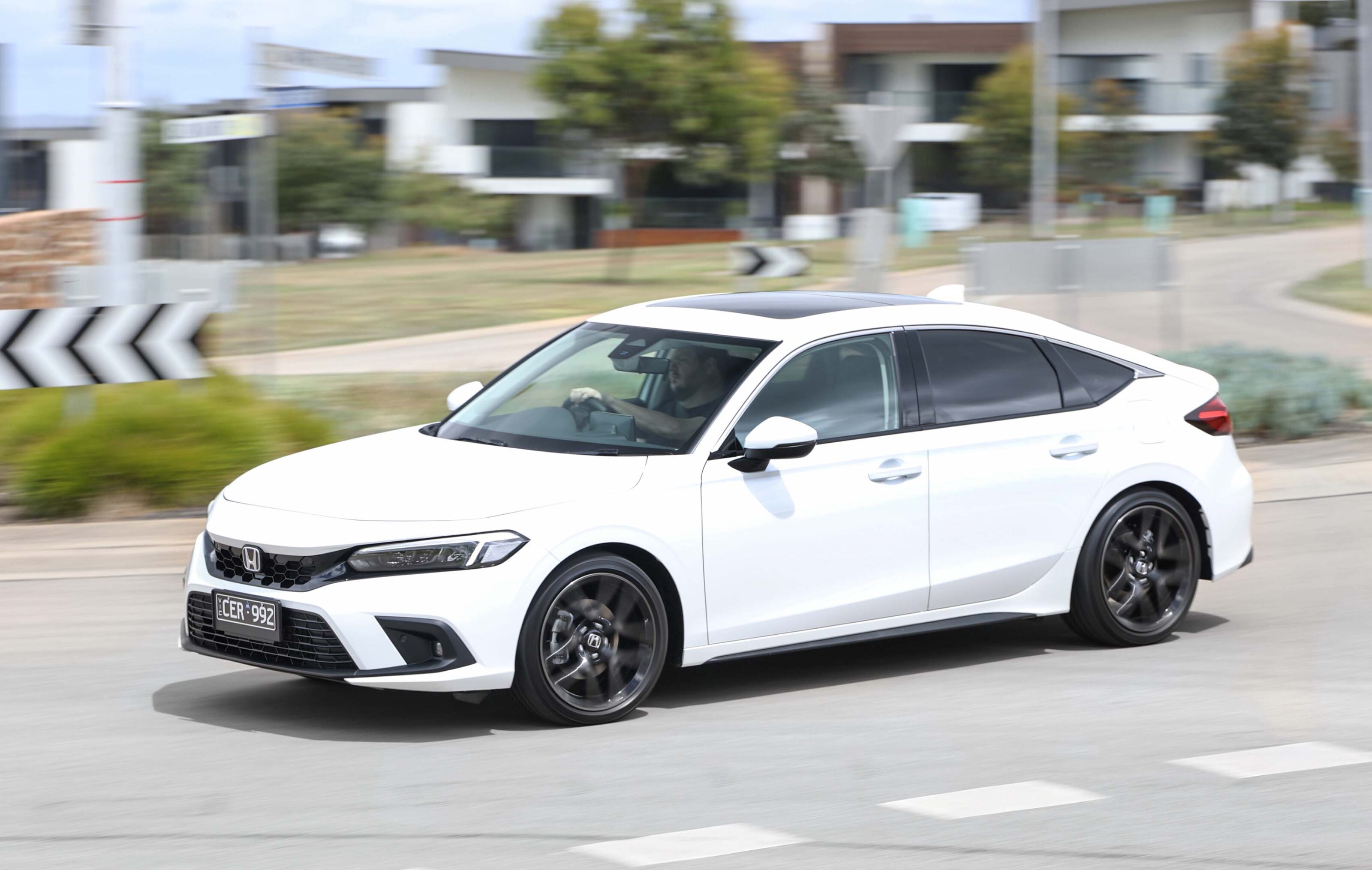
Honda’s servicing schedule stipulates a trip to the dealer every 12 months or 10,000km for all four of its models.
Wheels has contacted Honda for comment and this article will be updated as more information comes to light.
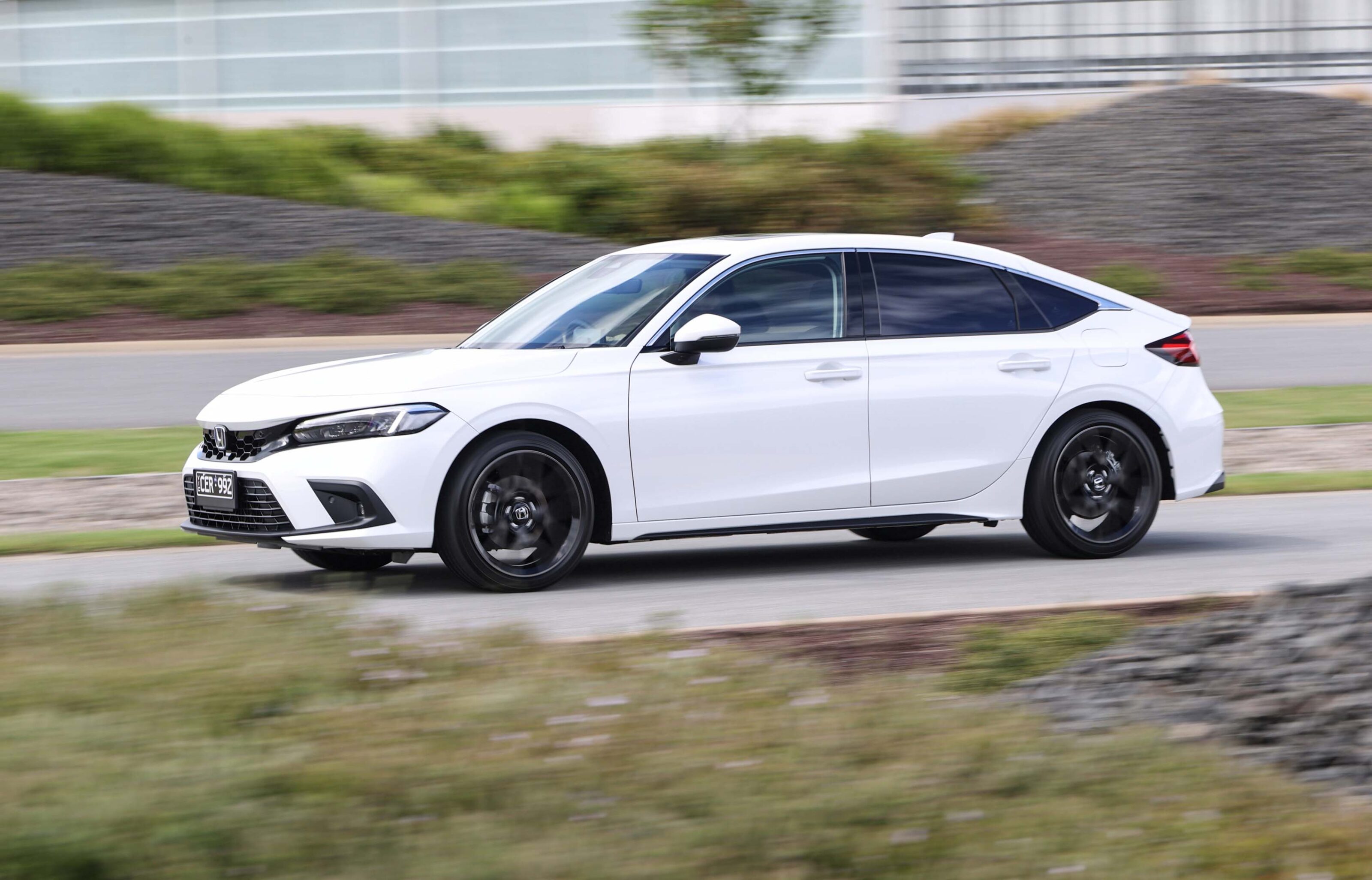
What’s included in Honda’s annual servicing?
Despite increasing the price of an annual service by 59 per cent, Honda’s maintenance schedule remains unchanged.
Below is a breakdown of what’s included in the five-year service plan. Oil and filter changes, as well as diagnostic tests are included, however any more major items that may need replacing – such as tyres, lights or brake parts – will incur additional cost.
| Replace engine oil (& oil filter every 12 months) | Check horn & wiper operation, wiper condition |
| Test electronic operating systems, in accordance with Hondau2019s diagnostic procedures | Inspect tyre condition & rotate tyres as needed |
| Inspect tie rod ends, steering gearbox & boots | Check the operation of the headlights, tail lights, indicators, reversing lights & brake lights |
| Inspect suspension components | Inspect front & rear brakes |
| Inspect drive shaft boots | Inspect exhaust system |
| Inspect brake hoses & lines (including VSA) | A test-drive to assess noise, stability & dashboard operation |
| Check fluid & lubricant levels & condition | Inspect fuel tank, lines & connections |
| Replace items such as brake fluid & air filter (when applicable or when required by the manufacturers schedule) | |
This information is listed in the owner’s section of its Australian website, and was first published by Drive.
Hybrids on test: HR-V v Corolla Cross v Kia Niro …and a CX-30 petrol? Read on.
Just moments ago, the bulk of Australia’s small SUV set seemed more like a reality-show cast than any kind of brains trust.
Larger and heavier than the hatchbacks that sired them, they offered neither the grunt, the space, or the value-for-money of lower-level medium SUVs costing only marginally more. For the most part, the small SUV allure wrested purely on visibility, manoeuvrability, and perceived modernity.
There were exceptions, such as Honda’s second-generation HR-V (2014-21) whose benchmark interior package somehow compensated for its patchy dashboard and detail design, and its dull drivetrain. Mazda’s likeable CX-3, on the other hand – now re-classified as a light SUV – included just enough extra interior room to make it appealing, though without the boost in boot space to sufficiently lift-and-separate it to true SUV status.
Clearly, the increasingly important small SUV category has been crying out for a fundamental shift in thinking – starting with under-bonnet tech and continuing with how much space and choice is offered for the price.
JUMP AHEAD
- The contenders: What do you get?
- Interior quality, comfort and space
- How do they drive?
- The quick word on cabins
- Scoring

The contenders: What do they cost and what do you get?
| The basics | HR-V e:HEV L | NIRO S HYBRID | CX-30 G20 TOURING SP | COROLLA CROSS GXL HYBRID AWD |
|---|---|---|---|---|
| Price | $47,000 D/A (as tested) | $44,900 RRP (as tested) | $39,085 RRP (as tested) | $42,250 RRP (as tested) |
| Body | steel, 5 doors, 4 seats | steel, 5 doors, 5 seats | steel, 5 doors, 5 seats | steel, 5 doors, 5 seats |
| Length / width / height / wheelbase | 4335/1790/1590/2610mm | 4420/1825/1545/2720mm | 4395/1795/1540/2655mm | 4460/1825/1620/2640mm |
| Boot | 304 litres | 425 litres | 317 litres | 390 litres |
| Fuel/tank | 91 RON / 40 litres | 91 RON / 42 litres | 91 RON / 51 litres | 91 RON / 43 litres |
| Economy | 5.6L/100km (tested) | 4.8L/100km (tested) | 8.7L/100km (tested) | 5.9L/100km (tested) |
Toyota’s fresh-faced debutante is the Corolla Cross SUV – the first Australian model since the 1988-92 Corolla 4WD wagon to leverage the Corolla nameplate for a niche variant … though the Corolla Cross won’t be considered niche for long.
In its first month on sale, Toyota Australia shifted 1025 of them – instantly displacing the Corolla hatch and sedan (904 sales) in the popularity stakes, as well as Toyota’s sexier, more youth-oriented C-HR small SUV (585 sales).
What makes the Corolla Cross so appealing is its RAV4-in-a-concentrate vibe, the quality of its engineering DNA and the breadth of its range (eight variants, including five hybrids and two all-wheel-drive models), spanning $33-49K before on-road costs.
But two other new-generation small SUVs are attempting to lure Australian buyers with their cutting-edge chic – the third-generation Honda HR-V ($36-47K drive-away) and the Kia Niro ($44-72K before on-road costs) – plus the forthcoming all-new Nissan Qashqai ($34-47K plus on-road costs).
(You’ll see our Qashqai reviews when the embargo drops in January – Stevo.)

Honda offers a simple two-variant HR-V range – 1.5-litre petrol Vi-X and 1.5-litre petrol-hybrid e:HEV L – while Kia’s second-generation Niro arrives with either hybrid or full-electric power, each in S or GT-Line specification.
At $47,000 drive-away for an HR-V hybrid (in any colour) and $49,361 drive-away for our Niro S hybrid test car, the front-drive Corolla Cross GXL Hybrid’s $43,254 drive-away price starts to look pretty damn sharp … until you consider our wildcard for this test, the Mazda CX-30 G20 Touring SP, which at $43,369 drive-away is both competitive with the Toyota’s ask and $1545 cheaper than the larger-engined CX-30 G25 Touring SP.
Admittedly, the Corolla Cross GXL hybrid we have here is an AWD variant ($46,512 drive-away) – just over three grand more than the front-drive hybrid and garnished with multi-link rear suspension (instead of a torsion beam), a larger 43-litre fuel tank (versus 36 litres) and a tyre repair kit instead of a space-saver spare. But that’s still less than what the HR-V and Niro cost.
In a similar fashion, the obvious CX-30 for this comparison should be a G20e Evolve with its mild-hybrid 2.0-litre engine and an even sharper $41,362 drive-away price.
But with a combined fuel-consumption benefit of just 0.2L/100km over the G20 Touring SP’s non-hybrid engine, Mazda’s ‘M Hybrid’ hype appears to be mainly marketing driven. Indeed, the G20e’s negligible 0.3L/100km consumption benefit over the much more powerful 2.5-litre G25 engine proves that any CX-30 powered by a 2.0-litre is simply about price.

Getting inside
In concept, the Wheels COTY-winning CX-30 is a bit of a lone wolf here.
Intended to act as a more practical alternative to the coupe-like Mazda 3 hatch, the CX-30 maintains the hatch’s sporty, style-driven flavour, despite being classified as an ‘SUV’.
The Corolla Cross, on the other hand, is all about roomy conventionality, because Toyota already has the C-HR for buyers chasing edgy design.

Once you’re inside the Corolla Cross, in fact, all memories of the C-HR’s rear-seat claustrophobia and helmet-like vision instantly vanish.
Not only is it quite big for a small SUV – the longest, tallest and equal-widest here, though sharing its 2640mm wheelbase length with the C-HR – there’s also a sense that the Corolla Cross’s overall design is about suiting as many lifestyles as possible while offending as few people as possible (with the possible exception of its ungainly US-market grille).
Compared to the relatively subtle front-end treatment of the Japanese-market version, the size, shape and positioning of our car’s grille looks jarringly out of place.
Front-seat comfort is generous (the GXL gets all-manual front buckets with electric lumbar for the driver) and there’s plenty of space, particularly headroom in the rear, though the Corolla Cross concedes a significant chunk of rear-seat legroom and cushion comfort to the HR-V.
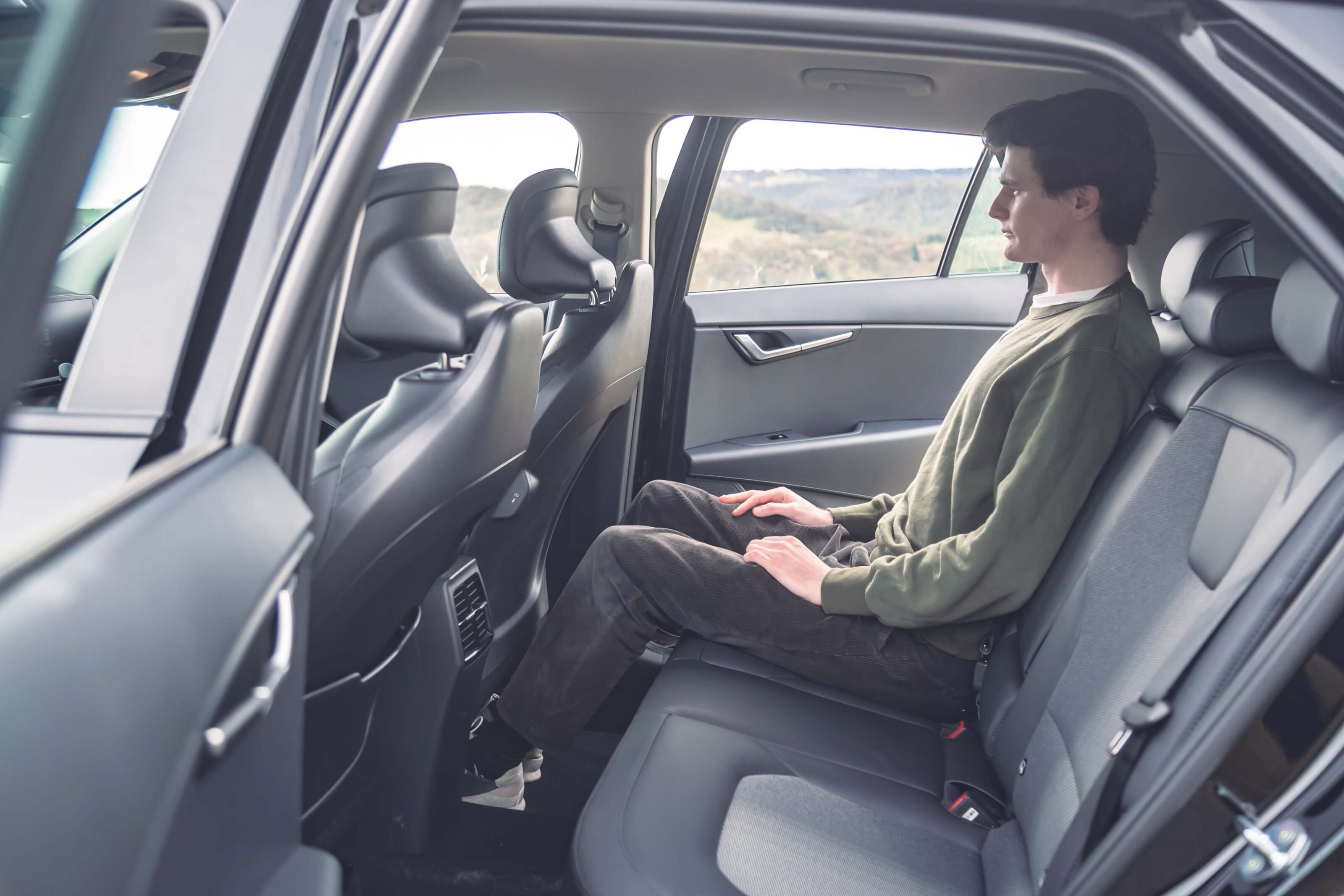
And typically for a manual-seat Toyota, only the driver gets height adjustment, leaving the back-left passenger staring into the broad front headrest of the too-high seat ahead of them.
The new HR-V mimics the Corolla Cross’s positioning in offering both petrol and hybrid powertrains while aiming to similarly maximise space. But it’s shaped more like a coupe than a wagon, which caps rear headroom for adults at no more than 188cm (6ft 2in), though the rear seat itself is excellent, with terrific support and clever footrests beneath the front seats – garnished with the flexibility of being able to lift both cushions vertically or flatten the whole lot in one balletic double movement.
However, the HR-V only gets two rear seatbelts in Australia – limiting it to four occupants – though, given the discomfort of the centre position, that’s less of a problem than it may appear. The all-manual front seats are set quite high, with no height adjustment for the passenger, restricting forward vision for rear-seat passengers.
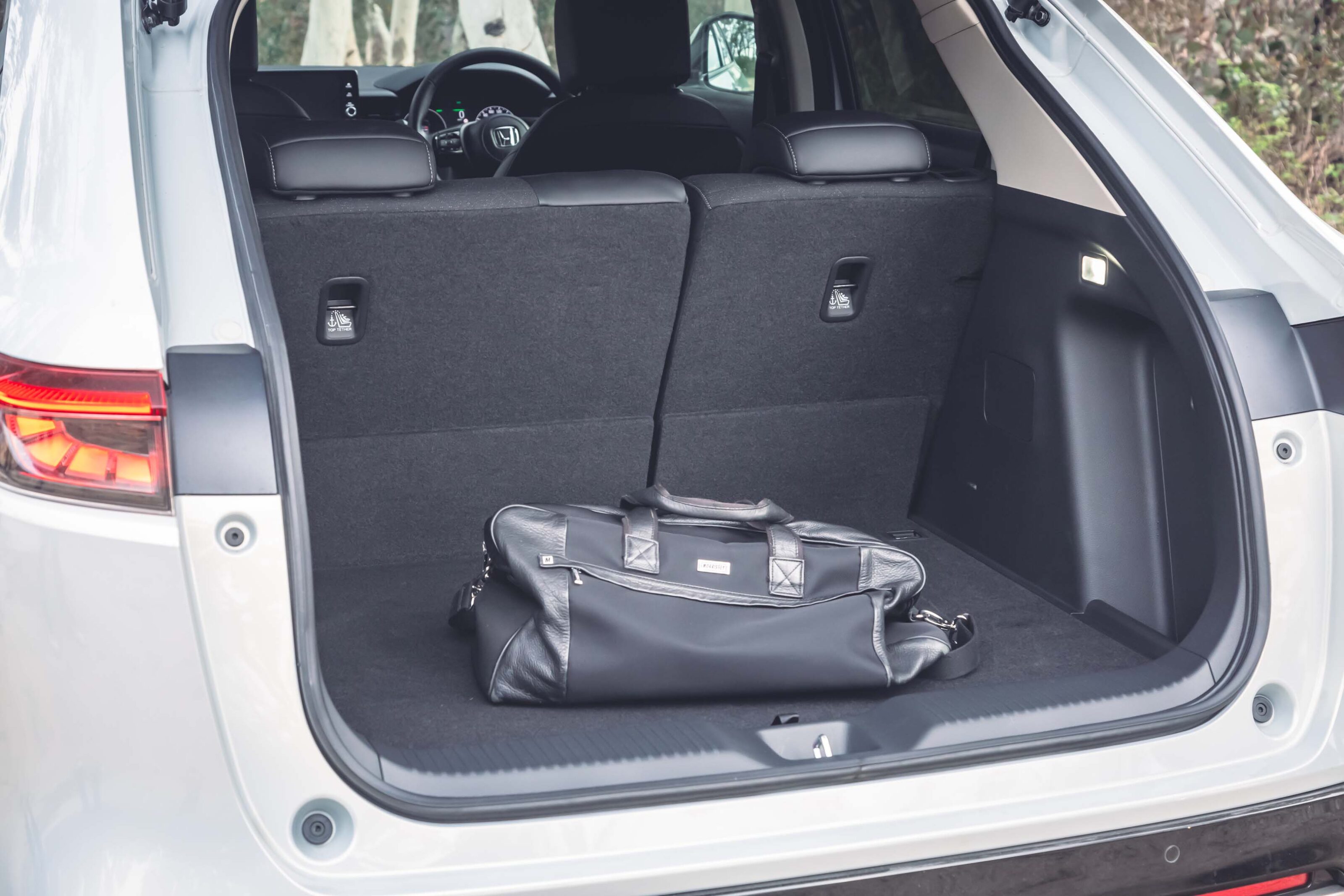
Then in a reversal of fortunes, the HR-V’s front seating lacks the plush comfort of the Corolla Cross’s buckets, though it counters with a lovely steering wheel, a sensible control layout, and an air of classy cohesion that shines in a sea of monotone black.
Aided by its class-leading 2720mm wheelbase, the Niro S is massive inside. The comfortable and supportive front seats feature plasticky-cool headrests that move forward in three positions, and the driver gets eight-way electric adjustment, joined by manual height adjustment for the passenger.
But there’s only one auto up/down window (driver) and the seriously huge rear-seat space is compromised by a seat cushion that’s too short, predominantly vinyl trim that feels clammy, and the ambience of a base model.
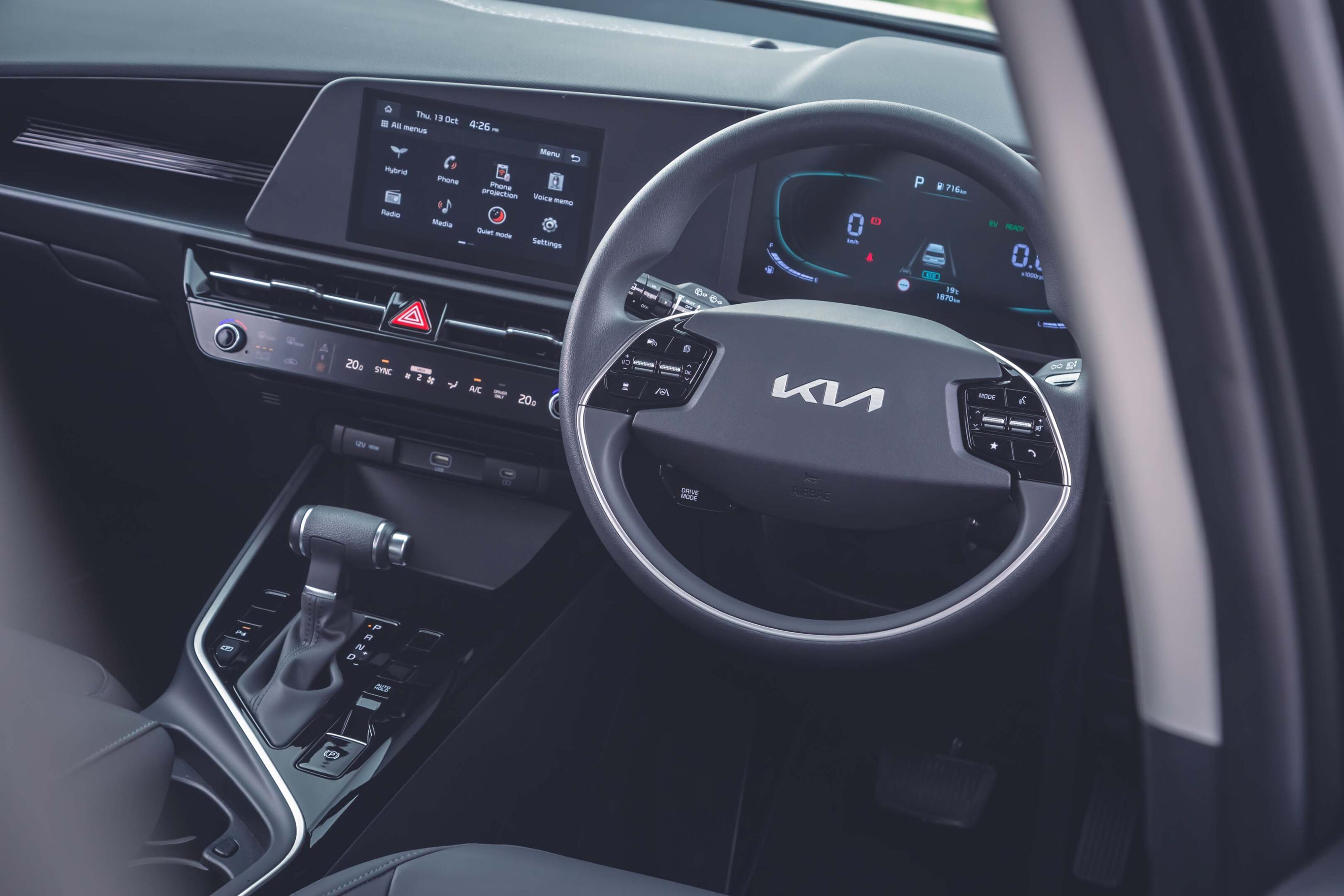
In terms of pure design, the Niro’s cabin is kooky enough to fascinate the inner child in all of us, but the entry-level S just doesn’t bring it together – particularly the low-grade infotainment screen that appears lost in a sea of mismatching plastic, and at odds with the old-school instrument graphics.
Obtaining the full tech effect in a new Niro requires you to stretch $6K further north to the GT-Line hybrid. Otherwise, you’re left wondering what’s missing from this nearly 50-grand car.
The opposite is true of the CX-30 Touring SP. In terms of overall interior quality, it feels special – even better than the Honda in its switchgear feel, plastics tactility, material quality and general feeling of expense, though with the occasional ergonomic hiccup (such as no digital speedo in the instrument pack – only the head-up display).
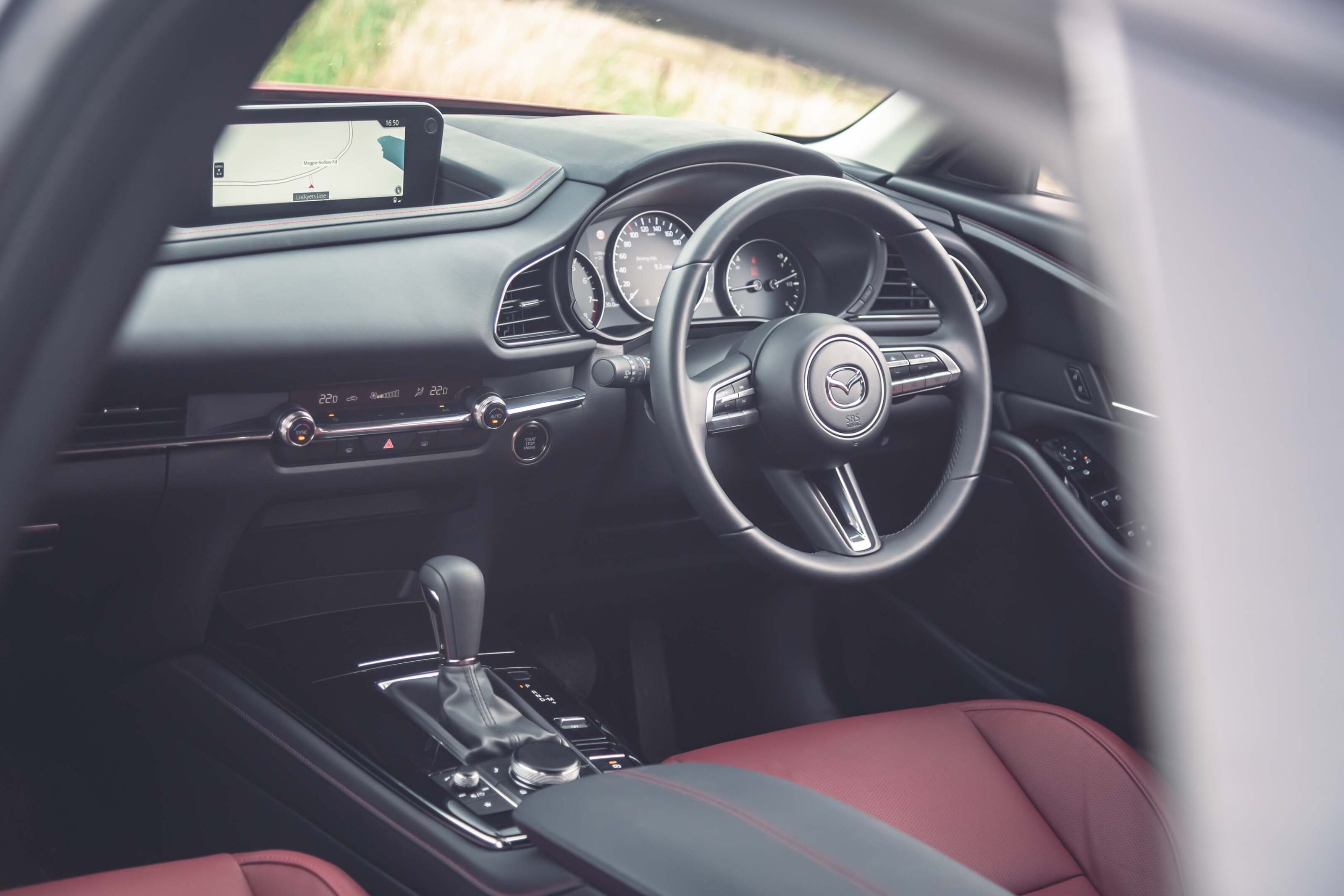
The steering wheel is great to hold, the front seats are excellent with loads of adjustment, and almost no Mazda interior is as colourful as this! The Touring SP mixes ivory-coloured headlining with burgundy leather trim to provide a level of designer chic that effortlessly transcends its low-40s price.
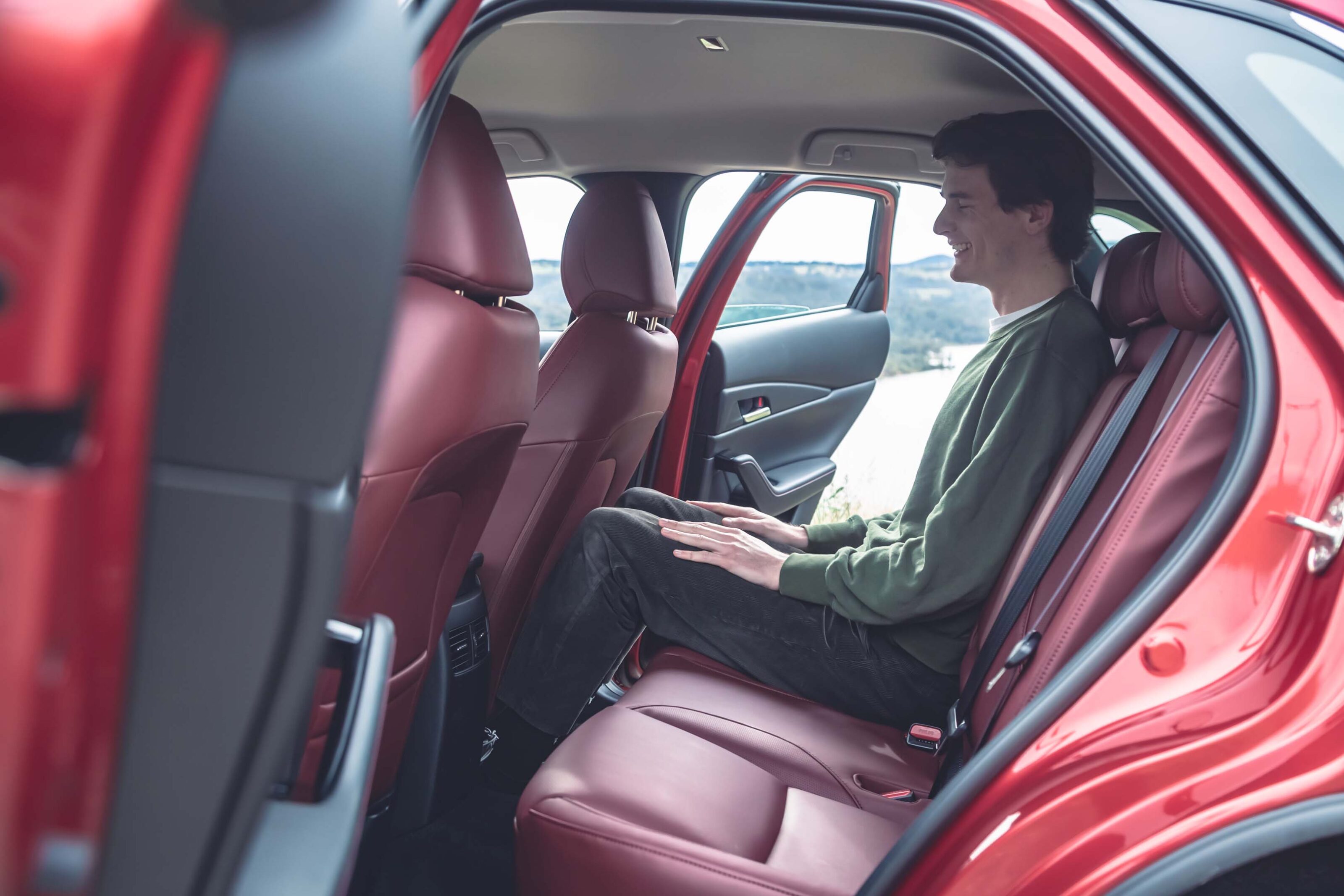
Yet the CX-30 is the opposite of the Niro for rear-seat room. It has a svelteness to its styling that few other small SUVs have, but the by-product of that is a compromised level of space, vision and luggage capacity – 317 litres in boot size compared to 425 litres for the Niro, 425 for the front-drive Corolla Cross (though 390 for the GXL AWD) and 304 litres for the HR-V (which it compensates for via its brilliant seat-folding theatrics).
In isolation, the CX-30 is entirely workable for carrying four adults, but compared to the voluminous Toyota, Honda and Kia, the racy-looking Mazda’s practicality is more of the ‘hatch on stilts’ type than an elevated small wagon.
On the road
As SUVs, ride comfort should always be the priority – so how do these four fare?
| The basics | HR-V e:HEV L | NIRO S HYBRID | CX-30 G20 TOURING SP | COROLLA CROSS GXL HYBRID AWD |
|---|---|---|---|---|
| Power | 96kW @ 4000rpm | 104kW @ 5700rpm | 114kW @ 6000rpm | 146kW |
| Torque | 253Nm @ 0-3500rpm | 265Nm @ 4000rpm | 200Nm @ 4000rpm | not supplied |
| Suspension | Front: struts, A-arms, anti-roll bar. Rear: torsion beam, coil springs, anti-roll bar | Front: struts, A-arms, anti-roll bar. Rear: multi links, coil springs, anti-roll bar | Front: struts, A-arms, anti-roll bar. Rear: torsion beam, coil springs, anti-roll bar | Front: struts, A-arms, anti-roll bar. Rear: multi-links, coil springs, anti-roll bar |
| Steering | electric rack-and-pinion | electric rack-and-pinion | electric rack-and-pinion | electric rack-and-pinion |
| Front brakes | ventilated discs (293mm) | ventilated discs (282mm) | ventilated discs (295mm) | ventilated discs (305mm) |
| Rear brakes | solid discs (282mm) | solid discs (262mm) | solid discs (265mm) | solid discs (281mm) |
| Tyres | Michelin Primacy 4 | Nexen N-blue S | Toyo Proxes R56 | Bridgestone Alenza |
| Tyre size | 225/50R18 95V | 205/60R16 92H | 215/55R18 95H | 215/60R17 96H |
Where the above starts to pay dividends for the CX-30 is on the road. In blending its ‘Japanese BMW’ interior flavour and driving position with a reasonably focused level of dynamic appeal, the CX-30’s reason for being starts to become clearer.
It’s not as fun to drive as the Mazda 3 it’s derived from, yet there’s still much to enjoy about the way it performs on challenging roads – even this 114kW 2.0-litre variant – and the subtlety of its active safety systems if you minimise (or disable) their intrusion.
With four people on board, the CX-30 Touring SP does wash off some speed up hills unless you’re in Sport mode and giving it some throttle – however, when you’re driving one-up, it proves very effective at using the available torque (200Nm at 4000rpm) to comfortably maintain pace.

It also sounds quite pleasant when being extended to 6600rpm, which you need to do to really make it move quickly. And while we were unable to performance-test these four small SUVs at the dragstrip, a four-up, standing-start, foot-flat attack up a winding hill saw the 2.0-litre CX-30 crest the top doing a solid 100km/h.
For those who value polished dynamics over all else, then the best CX-30 variant is the base G20 Pure riding on chubby 215/65R16 tyres, not the 215/55R18s of our Touring SP – especially now that the Pure finally gets leather steering wheel trim. With taller sidewalls, the CX-30 becomes a sweeter-riding, more fluid-handling machine, with less irritation to steering and body movement through bumpy corners.
The most dynamic car of this group, however, is the Corolla Cross hybrid.

It doesn’t initially impress to any great extent – feeling rather bland, with annoyingly touchy low-speed braking response and a ride that isn’t as supple as its 215/60R17 tyres might suggest.
On first acquaintance, it seems to lack the silken dynamic polish of an equivalent-spec Corolla or C-HR, but the more you ask of it, the greater the sparkle of its mechanical DNA.
Admittedly, our test AWD’s multi-link independent rear suspension gives it a distinct advantage over the torsion-beam front-drive model, though given this variant still costs less than a front-drive HR-V or Niro (and about $400 less than a CX-30 Touring SP AWD), it seems like a fair deal.
Indeed, beneath the Corolla Cross’s unexciting wrapping hides a small SUV that’s entertaining to hustle, and keen to go there, with crisp, direct steering and a confident sense of balance that makes for delightfully fluid progress on mountain roads.
Combine its supple high-speed ride and poised handling with easily the strongest performance here – Toyota claims 0-100km/h in 7.6sec for the GXL AWD, which is Corolla SX/GTi hot-hatch territory from 30 years ago! – and it turns out the rather homely Corolla Cross hybrid is packing proper guns and buns.
On our hill test, the Corolla Cross crested at 117km/h – a decisive 20km/h faster than the keen-sounding but not-so-brisk HR-V. The extra torque of Toyota’s 2.0-litre Atkinson-cycle petrol engine with lithium-ion battery (for a combined 146kW) means it offers relaxed acceleration compared to the Honda’s revvy freneticism, with a surging strength to its power delivery.
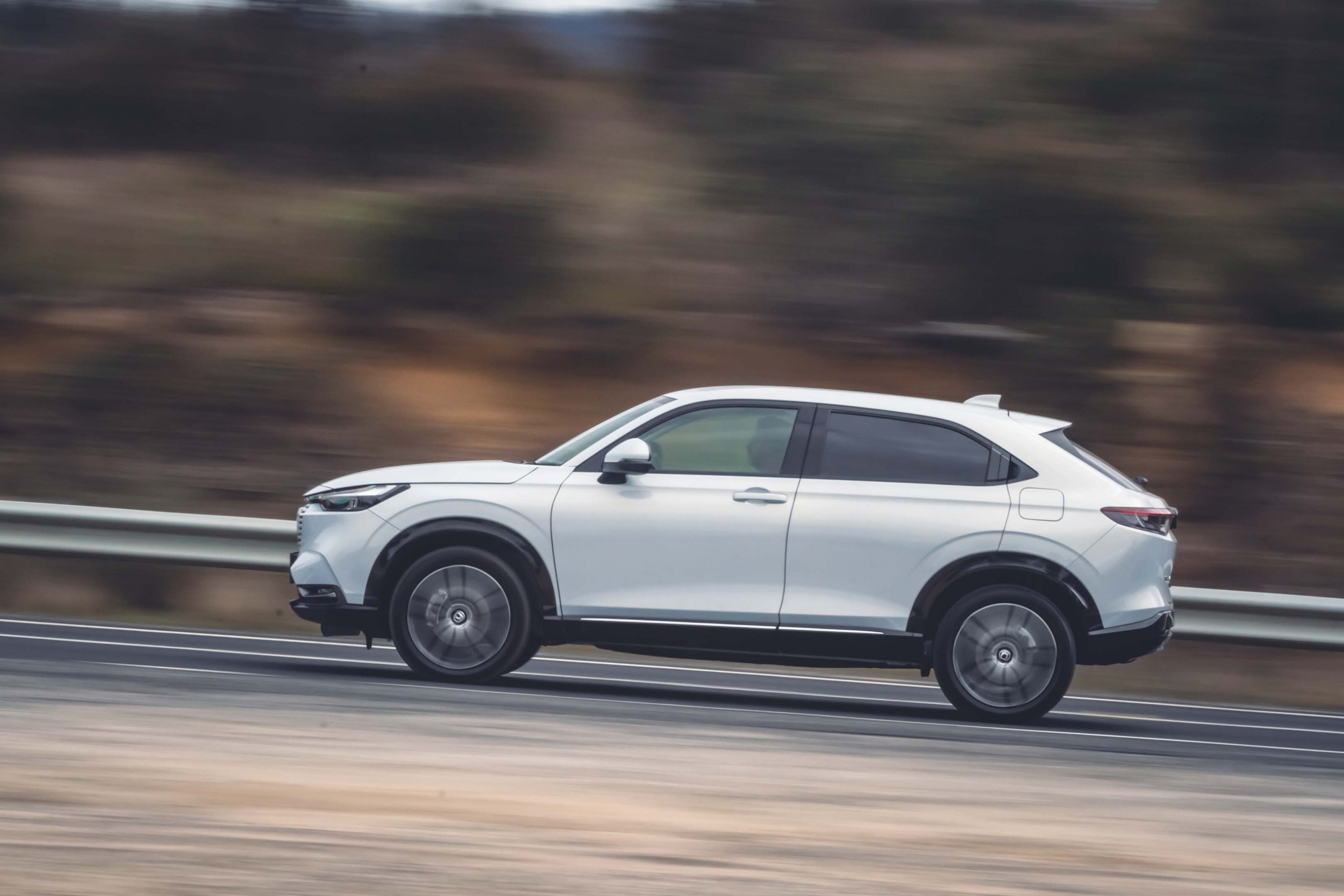
Thanks to its battery torque, the HR-V really kicks from a standing start
While the HR-V channels more than a hint of new-gen Civic in its design and flavour, it rides on a new-generation Jazz platform, hence its torsion-beam rear suspension. Unlike in Japan, our HR-V isn’t available with AWD, and unlike the Corolla Cross, our 96kW/253Nm HR-V hybrid isn’t blessed with grunt … but it’s not so bad.
Thanks to its battery torque, the HR-V really kicks from a standing start and the e-CVT does an excellent job of inserting ratio steps that feel completely natural – much better than any of this would appear on paper.
Honda’s small-capacity petrol engine doesn’t have the constant-rpm refinement that perhaps it could, though it sounds keen when winding itself out … which it needs to do frequently when carrying four people (its maximum, remember!) in hilly conditions. And it will hold a set cruise control speed perfectly.
Steering wheel paddles adjust regenerative braking, though the HR-V defaults back to zero after about 30 seconds in Normal drive mode, whereas in Sport it retains whatever setting you select (while sharpening throttle response and increasing steering weight).
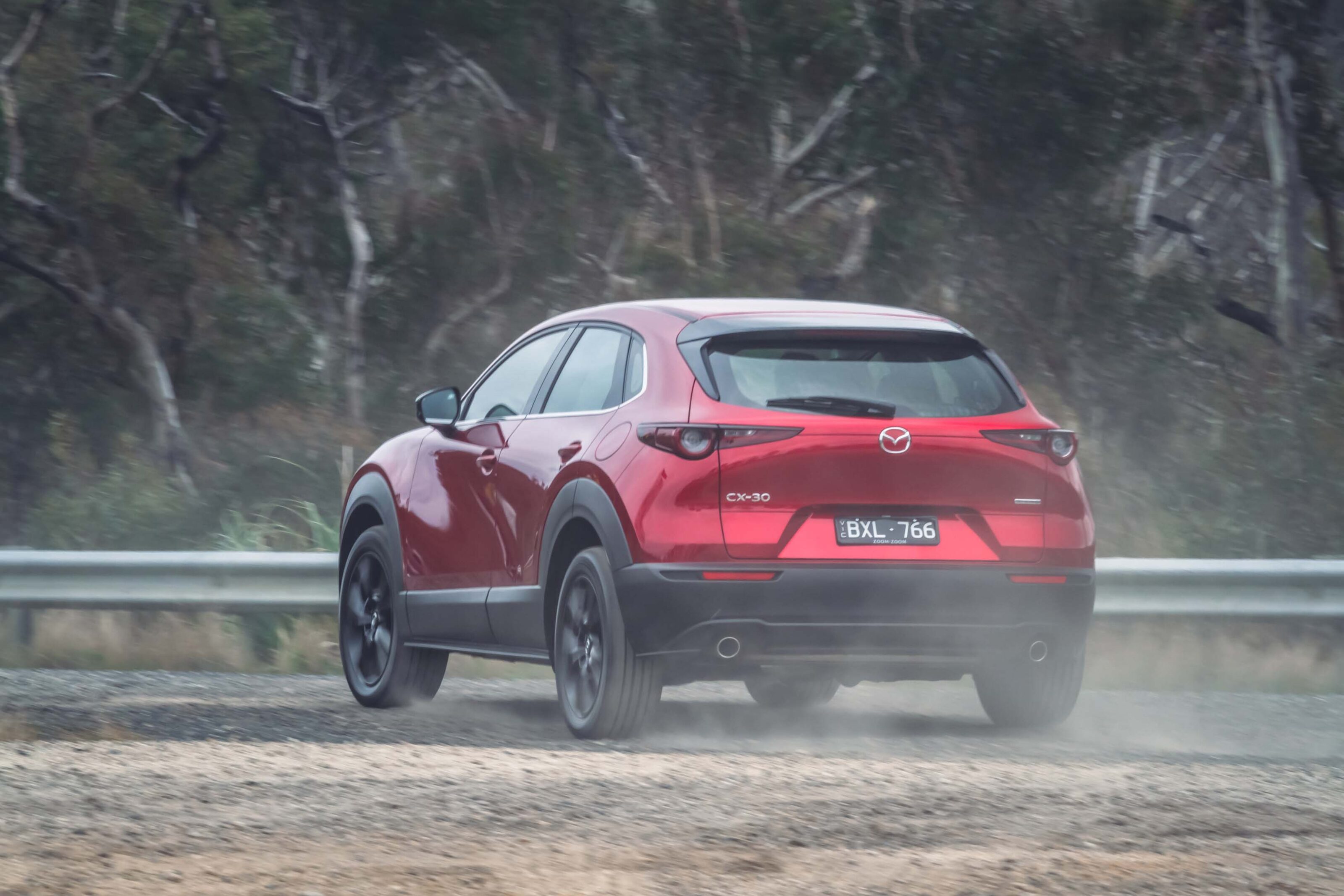
Speaking of which, the HR-V has a lovely steering wheel and an element of the new-gen Civic’s dynamic flavour, though it feels noticeably hiked to the heavens and doesn’t quite connect everything together.
Even though its steering only has 2.5 turns lock-to-lock, it lacks the superb turn-in of a Civic, yet when you’re deep into a corner and hooking it, the HR-V displays a decent wedge of the Civic’s handling balance.
There’s plenty of coarse-surface tyre noise from its 225/50R18 Michelins, though, and the HR-V’s ride quality – while displaying a suppleness under duress that eludes the new Civic – frequently feels lumpier than ideal, and pales in comparison to the polished comfort over rougher surfaces displayed by the Toyota.
Same goes for the Niro S hybrid, even though it’s wearing humble Nexen 205/60R16s. The Kia’s ride is surprisingly fidgety around town, though it does improve at higher speeds.
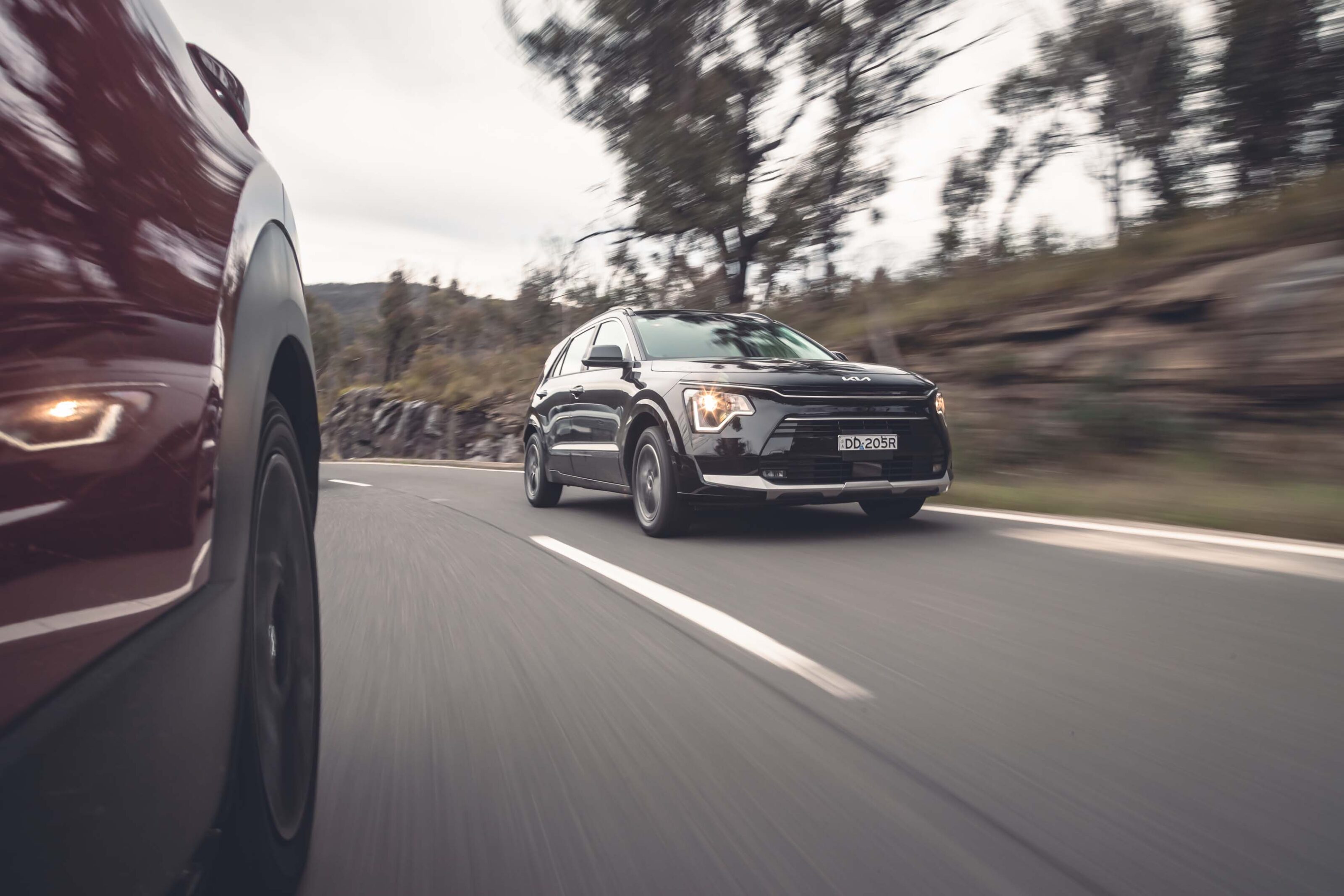
When hustled through corners, body control is good, turn-in is brisk, and handling feels balanced and confident, yet the Niro never feels encouraging or inspiring.
The Niro’s steering is its weakest link, with a heaviness when parking and vagueness at straight ahead, compounded by a cloudy and artificial feel at all speeds. At no point does the steering ever feel natural, regardless of the drive mode selected – choices are Normal and Sport. Or ‘doughy’ and ‘toey’ as we called them, neither of which is ideal in complementing the Niro hybrid’s character.
Normal delivers among the most dismal throttle response we’ve experienced in a modern car, as the driver almost fights with the accelerator travel to transfer right-foot inputs into meaningful movement. And then Sport goes completely the other direction – great if you’re trying to outrun the law but not so subtle at other times, and determined to knock out top gear, which isn’t ideal when you only have six of them.

The Niro hybrid’s 104kW/265Nm 1.6-litre drivetrain with six-speed dual-clutch transmission is reasonably refined and acceptably powerful when asked for everything it has – Kia claims 0-100km/h in 10.4sec – to the point where it managed to outpace the HR-V and CX-30 in our hill test, clocking 105km/h.
More importantly, though, it proved convincingly the most economical on test – averaging an exceptional 4.8L/100km compared to 5.6L/100km for the hybrid HR-V, 5.9L/100km for the Corolla Cross hybrid and 8.7L/100km for the 2.0-litre CX-30.
In isolation, any of those fuel numbers would be respectable – all fed the minimum recommended octane – but then so too would the cars themselves. Size-wise, these four are bang on the zeitgeist for an effortless urban SUV – small enough to enhance their parkability but spacious enough to justify why you might choose one over an equivalent medium SUV. Yet there still isn’t a stand-out winner here.
The Niro hybrid’s 104kW/265Nm 1.6-litre drivetrain with six-speed dual-clutch transmission is reasonably refined and acceptably powerful when asked for everything it has
| The basics | HR-V e:HEV L | NIRO S HYBRID | CX-30 G20 TOURING SP | COROLLA CROSS GXL HYBRID AWD |
|---|---|---|---|---|
| Fuel/tank | 91 RON / 40 litres | 91 RON / 42 litres | 91 RON / 51 litres | 91 RON / 43 litres |
| Economy | 5.6L/100km (tested) | 4.8L/100km (tested) | 8.7L/100km (tested) | 5.9L/100km (tested) |

The car that spreads its talents widest is the Corolla Cross.
It looks awkward from certain angles, it feels cheap in certain areas inside, and it lacks visual flair – almost as if it’s an odd misstep for Toyota. Yet the Corolla Cross GXL hybrid is the only small SUV here that’s a true all-rounder.
When push comes to shove, it’s a clear dynamic leader and by far the strongest performer of the group – backed up by competitive levels of space and comfort, not to mention super-cheap servicing ($230 a pop). We just wish it displayed a bit more sophistication in its overall design.
In that department, the Honda HR-V pulls ahead. It blends a premium interior feel with premium exterior appearance, and beats the Toyota on the affordable servicing front ($199 a service for the first five years).
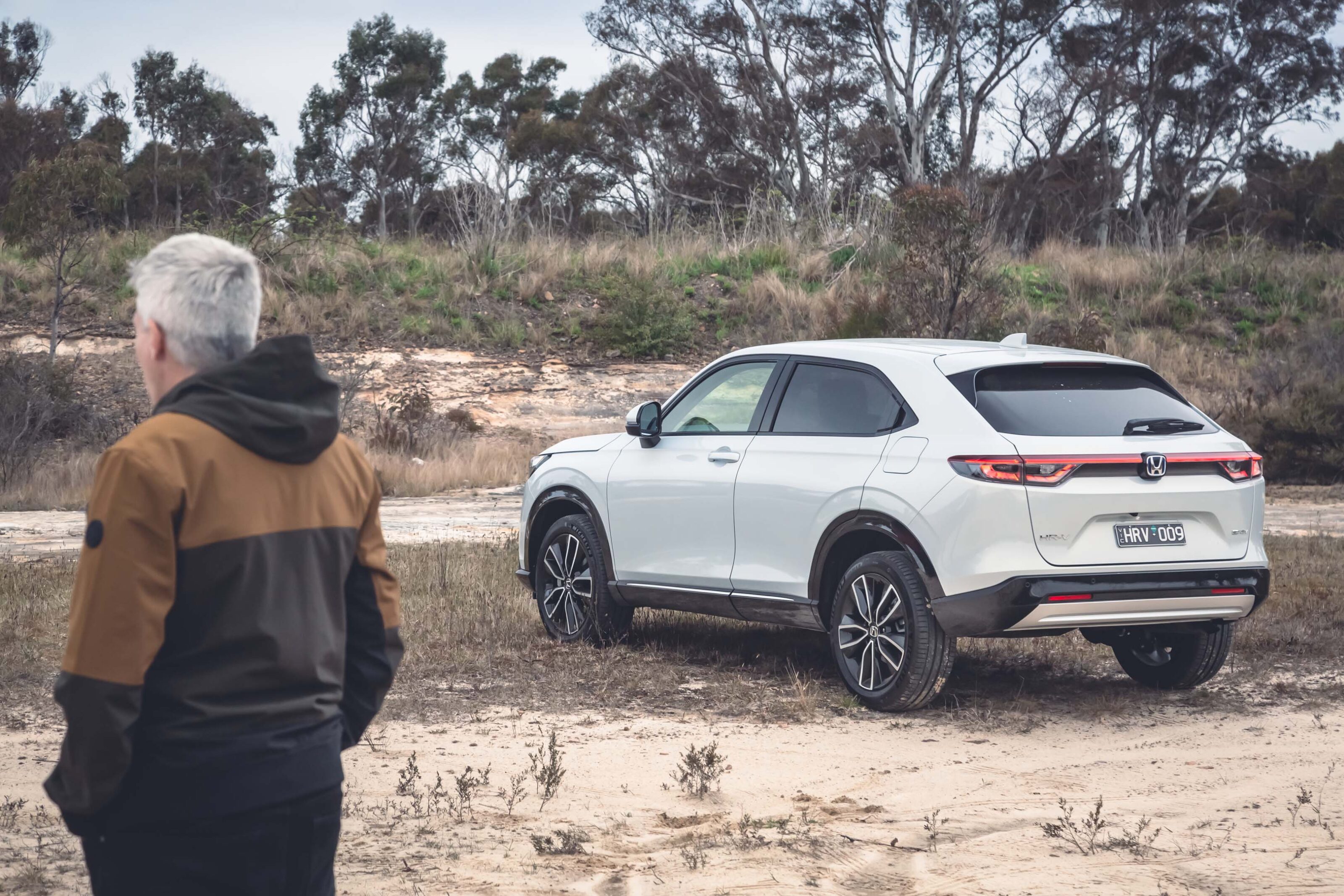
In its preferred environment (smooth, flat, twisty roads), it’s way beyond its predecessor, but we feel that Honda is missing an opportunity here – perhaps with a better-riding base model wearing the sexy 16-inch alloys of the Japanese-market Vezel G, complemented by a range-topper with the fancy interior, glassy roof and perhaps AWD.
The new HR-V hybrid is a handsome, likeable thing, but it’s not as consistent as the Corolla Cross in achieving its assigned tasks.
Kia’s Niro S hybrid treads a similar path, though is very much a car of contrasts. It’s the most expensive car here yet feels the cheapest inside; it’s not particularly quick but is incredibly frugal, even when driven hard; and its high-tech interior design isn’t matched by high-tech features.
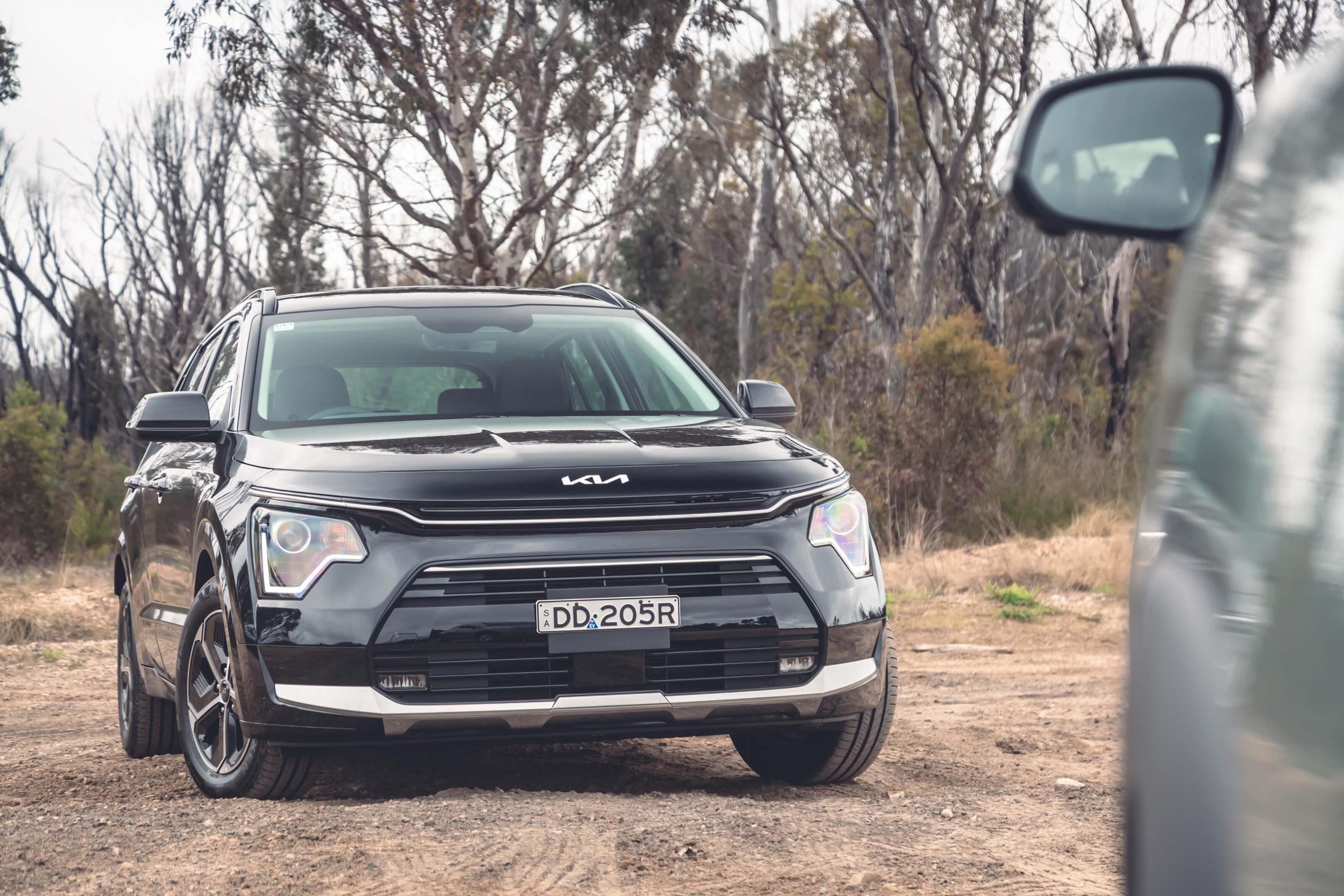
It’s also oddly detached to drive, with an underlying dynamic ability that it somehow doesn’t encourage you to discover. Yet even when you do, you just wish it had more feel.
That said, the Niro S hybrid would be a brilliant ride-share vehicle. Efficient, hugely practical and easy to wipe clean, with an appealingly long warranty, its characterful looks should be easy to spot as its rego plate approaches your front door.
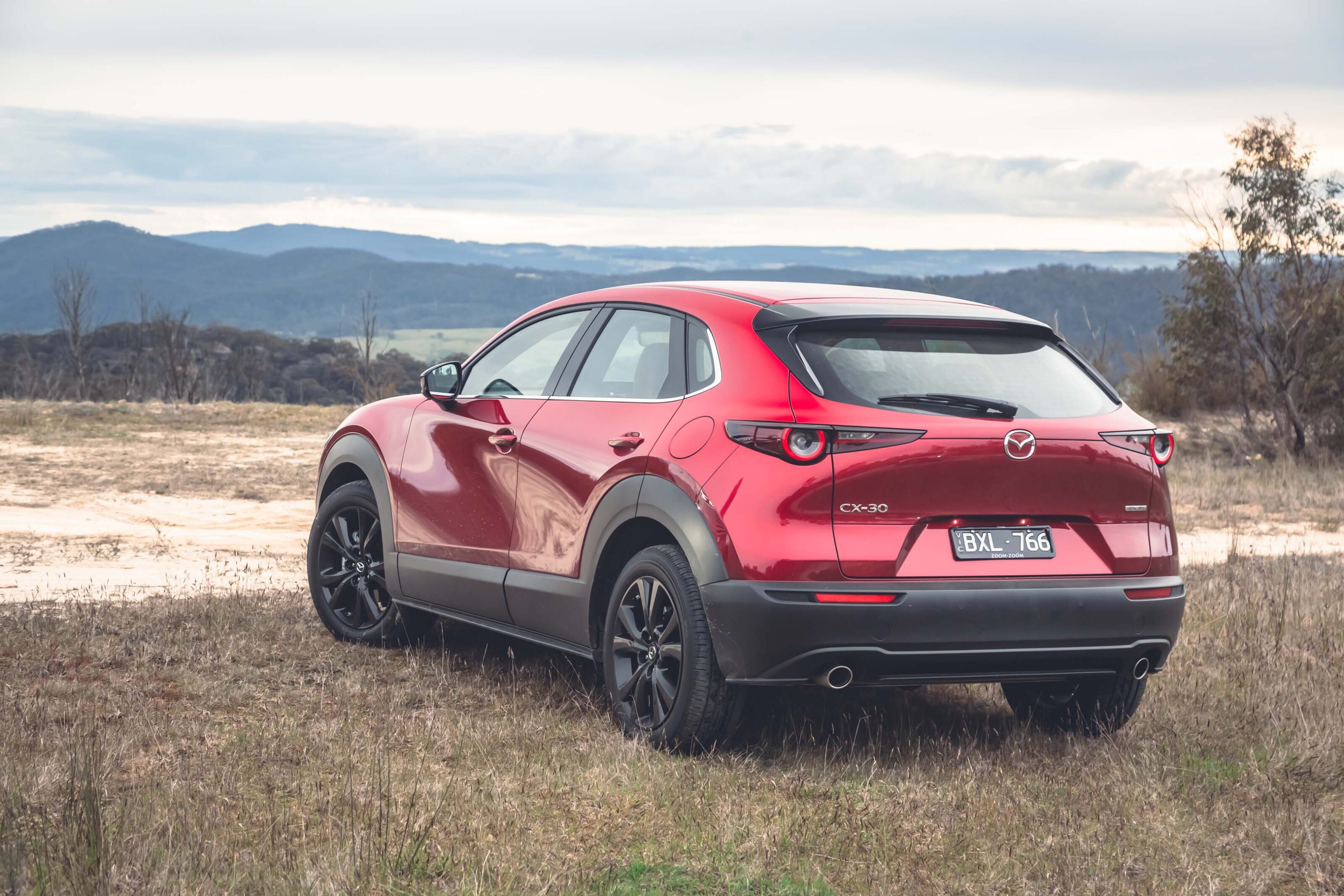
Which leaves the Mazda CX-30 G20 Touring SP. It’s handsome, beautifully built, pleasant to drive briskly and encouragingly tractable, despite being the base-engined variant.
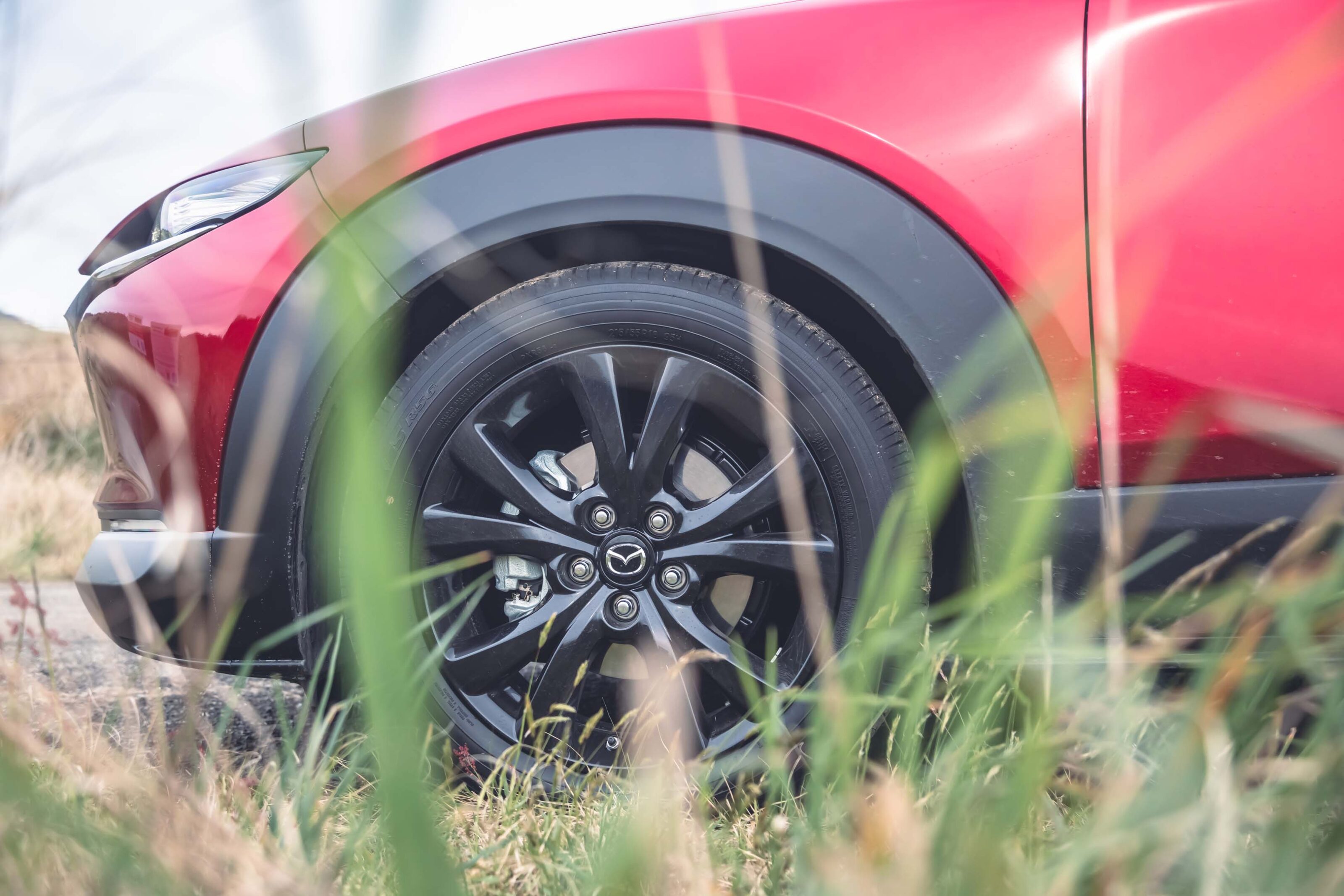
We referred to the CX-30 as a Japanese BMW several times, which provides insight as to how it looks and feels.
But it’s a much better car as a 2.5-litre – not only because it barely suffers in the fuel efficiency department (and let’s face it, the 2.0-litre is already miles behind the hybrids) but because it gives the relatively keen chassis more muscle to work with.
Had it the Toyota’s fast, frugal drivetrain and more packaging cleverness, the CX-30 would be excellent, though as a roomier, glassier, more liveable version of the Mazda 3 hatch, it’s a fine alternative. But as a small SUV intended to haul about families and their clobber, it’s very much an exercise in form over function. Ultimately, the CX-30 is more of a Toyota C-HR competitor than a Corolla Cross rival.
Seeing as Mazda is currently fleshing out its SUV range at Marvel-like speed, maybe a wagon-shaped CX-40 with a proper hybrid drivetrain could be exactly what the small SUV class has been begging for all along.

The quick take on interior appeal
Corolla Cross
The upper dash section is identical to a regular Corolla, and rock hard – just like the rear door trims – though overall treatment is bitsy. The GXL’s low-grade digital driver’s display looks amateur compared to HR-V’s crisp, cohesive set-up, and there’s only a single rear map pocket, no centre-rear armrest and oppressive dark roof lining.
But sub-1.25-litre bottles fit in all doors and there are two rear USB-C slots, as well as a huge 10.5-inch touchscreen with navigation and wireless Apple CarPlay plus robust sound quality from six speakers.

HR-V
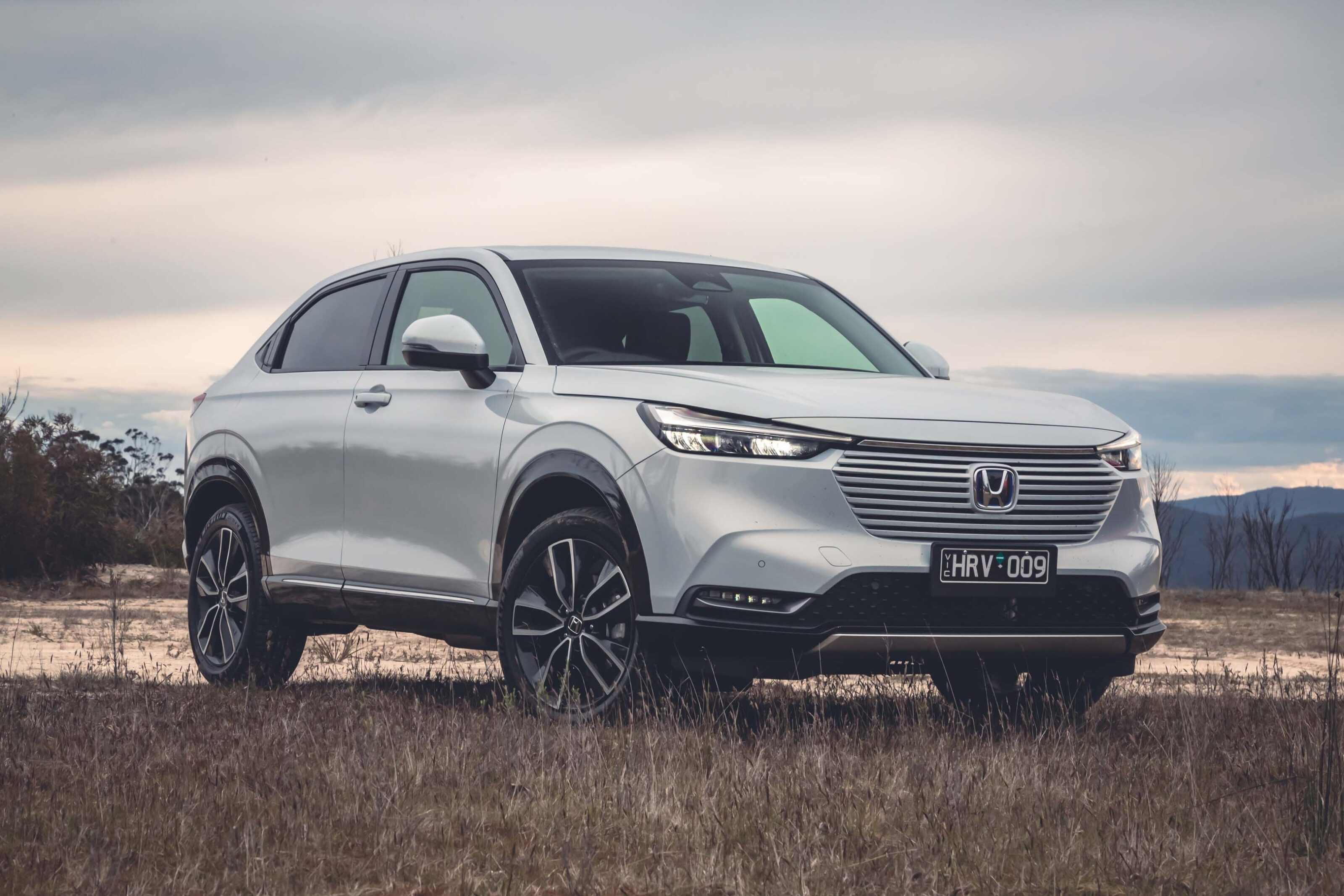
The HR-V’s interior looks premium, like it’s worth the money – unlike the overly plasticky Niro – though it’s missing equipment from the top-spec Japanese model (there’s no dual-pane sunroof or two-tone interior treatment) and wireless charging is optional.
Limited drink storage in all doors compensated by a centre-rear armrest with cup holders, plus two rear USB-A slots and dedicated smartphone holders in the seat backs. A terrific new 9.0-inch touchscreen with decent sound from six speakers is a vast improvement over the outgoing HR-V’s appalling multimedia set-up.
Kia Niro
With its T-bar shifter and single-bar steering wheel (with no leather rim), the Niro S conveys an intriguingly retro feel countered by space-age design flourishes. But closer inspection reveals the materials don’t live up to the hype.
The entire back door trim is just one cheap, hard plastic pressing, without any armrest padding. Poorly designed door pockets limit bottle storage, yet there’s tonnes of centre-console space. Rear passengers get USB-C slots and huge legroom, but only average seat comfort.
Kia’s base 8.0-inch infotainment screen (with wireless Apple CarPlay) lacks the processing speed of the larger 10.25-inch version.
Mazda CX-30
Mazda’s racy-looking CX-30 is defiantly different to its rivals. It’s not trying to be a ‘space-as-the-only-frontier’ wagon, though that means a tight back seat with limited under-thigh support and tight headroom for those over 185cm.
Yet the front seats are excellent, all armrests are padded, as is the dash top, and it has proper door grabs and bottle storage. Premium levels of finish and quality extend to a classy 10.25-inch screen with robust Bose sound, though functionality is exclusively via the console rotary controller – tiresome when Apple CarPlay is being used.
SCORING
Toyota Corolla Cross hybrid: 8/10
What we liked
- Class-leading dynamics
- Strong performance
- Vast touchscreen
- Competitive space,
- Impressive front seats
Not so much
- Bitsy interior design
- Dorky exterior design
- Touchy low-speed braking response
- Patchy rear-seat comfort
Honda HR-V hybrid: 7.5/10
What we liked
- Sophisticated design and packaging flexibility
- Excellent rear seat (for two)
- Smooth-road handling
- Cheap servicing
Not so much
- Modest performance
- Lumpy ride on scarred surfaces
- Average front seats mounted too high
- Only has four seatbelts
Mazda CX-30 petrol: 7.5/10
What we liked
- Premium interior design and finish
- Excellent front seats
- Handsome styling
- Sporty flavour and driving feel
- Good value
Not so much
- Tight back seat
- Intimate cabin
- Thirsty compared to hybrid rivals
- Not as engaging to drive as a Mazda 3
Kia Niro hybrid: 7/10
What we liked
- Outstanding efficiency
- Huge rear-seat room
- Characterful design
- Front seat comfort
- Leading warranty coverage
Not so much
- Fidgety ride quality
- Artificial steering feel
- Plasticky cabin materials
- Equipment anomalies
- Pricier than rivals
| HONDA HR-V e:HEV L | KIA NIRO S HYBRID | MAZDA CX-30 G20 TOURING SP | TOYOTA COROLLA CROSS GXL HYBRID AWD | |
|---|---|---|---|---|
| Price | $47,000 driveaway (as tested) | $44,900 (as tested) | $39,085 (as tested) | $42,250 (as tested) |
| DRIVETRAIN | ||||
| Engine | 4cyl, dohc, 16v + lithium-ion battery | 4cyl, dohc, 16v + lithium-ion battery | 4cyl, dohc, 16v, direct injection | 4cyl, dohc, 16v + lithium-ion battery |
| Layout | front-engine (east-west), front-wheel drive | front-engine (east-west), front-wheel drive | front-engine (east-west), front-wheel drive | front-engine (east-west), all-wheel drive |
| Capacity | 1498cc | 1580cc | 1998cc | 1987cc |
| Power | 96kW @ 4000rpm | 104kW @ 5700rpm | 114kW @ 6000rpm | 146kW |
| Torque | 253Nm @ 0-3500rpm | 265Nm @ 4000rpm | 200Nm @ 4000rpm | not supplied |
| Transmission | CVT automatic | 6-speed dual-clutch | 6-speed automatic | CVT automatic |
| CHASSIS | ||||
| Body | steel, 5 doors, 4 seats | steel, 5 doors, 5 seats | steel, 5 doors, 5 seats | steel, 5 doors, 5 seats |
| L/W/H/Wu2013B | 4335/1790/1590/2610mm | 4420/1825/1545/2720mm | 4395/1795/1540/2655mm | 4460/1825/1620/2640mm |
| Track (f/r) | 1535/1540mm | 1585/1596mm | 1565/1565mm | 1570/1570mm |
| Weight | 1382kg | 1454kg | 1438kg | 1545kg |
| Boot | 304 litres | 425 litres | 317 litres | 390 litres |
| Fuel/tank | 91 RON / 40 litres | 91 RON / 42 litres | 91 RON / 51 litres | 91 RON / 43 litres |
| Economy | 5.6L/100km (tested) | 4.8L/100km (tested) | 8.7L/100km (tested) | 5.9L/100km (tested) |
| Suspension | Front: struts, A-arms, anti-roll bar. Rear: torsion beam, coil springs, anti-roll bar | Front: struts, A-arms, anti-roll bar. Rear: multi links, coil springs, anti-roll bar | Front: struts, A-arms, anti-roll bar. Rear: torsion beam, coil springs, anti-roll bar | Front: struts, A-arms, anti-roll bar. Rear: multi-links, coil springs, anti-roll bar |
| Steering | electric rack-and-pinion | electric rack-and-pinion | electric rack-and-pinion | electric rack-and-pinion |
| Front brakes | ventilated discs (293mm) | ventilated discs (282mm) | ventilated discs (295mm) | ventilated discs (305mm) |
| Rear brakes | solid discs (282mm) | solid discs (262mm) | solid discs (265mm) | solid discs (281mm) |
| Tyres | Michelin Primacy 4 | Nexen N-blue S | Toyo Proxes R56 | Bridgestone Alenza |
| Tyre size | 225/50R18 95V | 205/60R16 92H | 215/55R18 95H | 215/60R17 96H |
| SAFETY | ||||
| ANCAP rating | 4 stars (Euro NCAP) | 5 stars | 5 stars | 5 stars |
| PERFORMANCE | ||||
| 0-100km/h | 10.6sec (claimed) | 10.4sec (claimed) | 10.0sec (claimed) | 7.6sec (claimed) |
The number of Aussie households with two cars has accelerated over the past year. Two-car homes are up to 53%, according to .id community, which analysed figures and National Statistics.
An increased demand for driving in modern life and multi-generation households are behind a surge in two-car ownership across Australia, and MG has a sustainable answer laying within their range.
MG Motor Australia is leading the way when it comes to encouraging families to begin their transformation from internal combustion engines (petrol and diesel) vehicles to EVs by enabling people to become an all-electric family with the MG ZS EV and a transitional solution, with the MG HS Plus EV.
Peter Ciao, MG motor Australia Chief Executive Officer, said second cars are much more likely to get used for short journeys.
“The ZS EV is capable of getting the kids to out-of-school sports practice, through to the daily grind, the second vehicle has become a vital part of everyday life for many working families in Australia and deserves just as much appreciation as the main cars, which a HS Plus EV is perfectly suited to.
“Electric vehicles (EVs) often get compared to smartphones. Society changed when smartphones took over from landlines, and now, something similar is happening with EVs.”
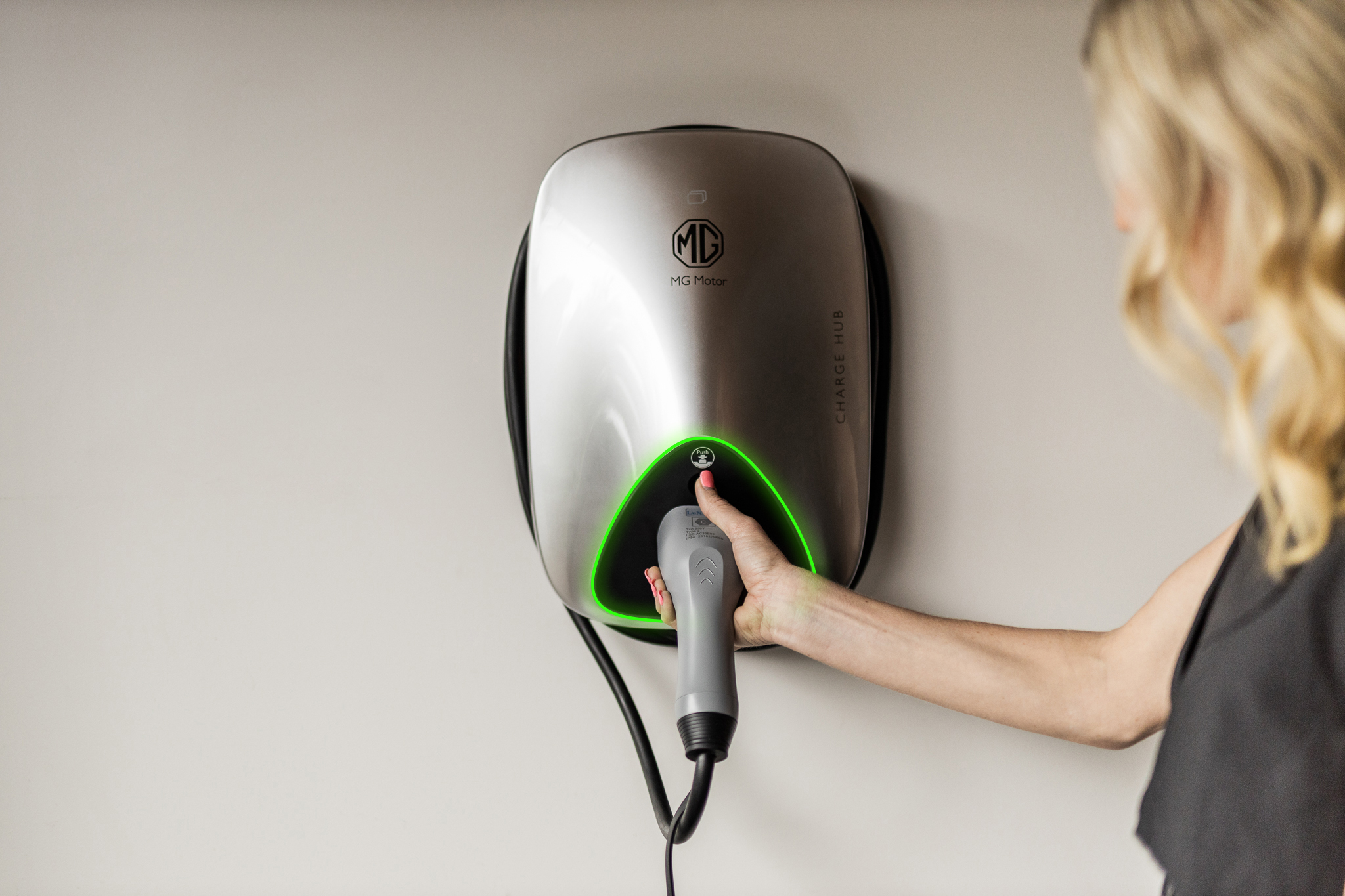
The company has revealed a range of electric vehicle (EV) chargers that are available to purchase now at more than 85 of its dealerships around Australia. Called the MG ChargeHub, the EV charger is available in two different capacities – a 7kW single-phase version and an 11kW three-phase configuration.
The 7kW ChargeHub is capable of recharging an EV with a 44.5kWh battery in a quarter of the time it takes with the emergency cable supplied with the car, which is roughly 19 hours.
“At MG, we’re committed to supporting our customers in any way we can, so we felt it made complete sense to add infrastructure to the products we provide for our electric vehicle and plug in hybrid customers.
“It can deliver significant savings and offers the ease of motoring, giving reassurance and confidence to households facing the pressures of modern life including but not limited to range anxiety.”
To celebrate the role of second cars, MG is offering families the chance to get a rebate on a MG ChargeHub on the purchase of their second car.
“We have achieved our ambition of delivering value and driving discussion. Now, we take the next step by supplying charging hardware that can be used by many electric vehicle owners in Australia.”
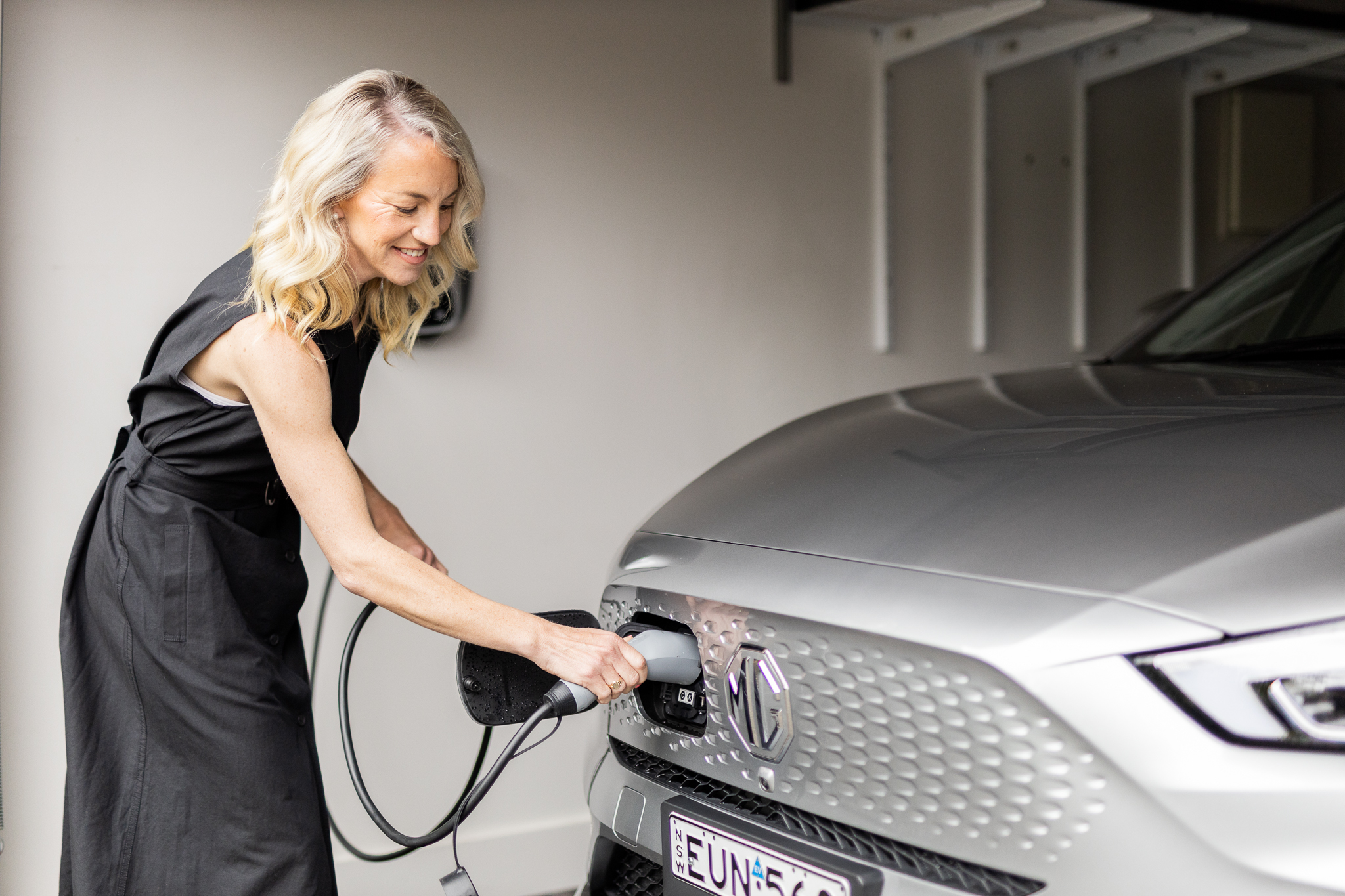
Most days, living with an EV means unplugging in the morning, driving all day without worrying about how many kilometres are left in the battery, and returning home to plug in again. The experience is not unlike that of a smartphone, but instead of serving as a communication device, an electric car is a transportation device.
“There is one difference between owning a ZS EV and an internal combustion engine (ICE) vehicle that is easy to understand: with our ZS EV, you never need to visit a petrol station again unless you need to use the bathroom.
“If you have a ChargeHub, starting each day with a full battery pack and zero range anxiety is easy. Comparatively, most ICE drivers must visit a petrol station when their tank is nearly empty.” He said.
If you don’t have a home charging station, you can power up your ZS EV at a public or workplace charging station.
“Recharging every day with the ZS EV and your HS Plus EV is especially simple if you have a ChargeHub. When you arrive home, you plug your vehicle in, and if you don’t want to, you don’t have to think about the charging process until the next time you want to drive. At that time, you simply unplug, hang up the charging cable, and drive off.”
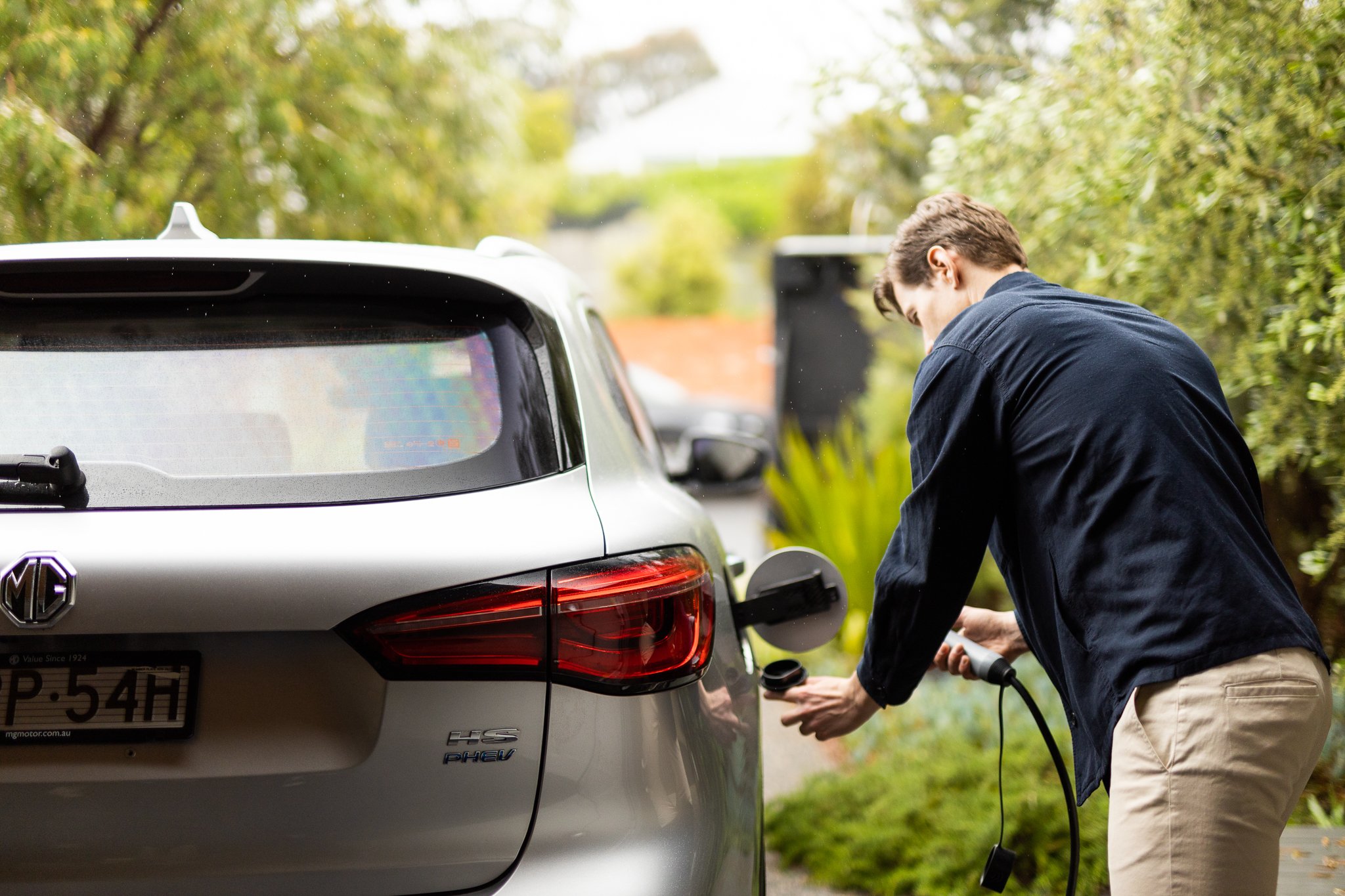
Maintenance on an EV is also much cheaper than on a petrol or diesel car
The ZS EV comes with a seven-year unlimited kilometre warranty paired with fixed-price servicing for peace of mind through the MG Precise Price Servicing plan. This covers all items requiring maintenance as indicated in the service schedule, meaning the price listed is the price you will pay.
Since they have no spark plugs, timing belts, or oil to change, an EV’s maintenance costs are lower than petrol and diesel vehicles. Electric vehicle owners can also replace their vehicle’s brake pads less frequently because regenerative brakes use the motor to assist in slowing down the car, thus reducing brake pad wear.
In addition, there are fewer moving parts in an EV, which means fewer things can break, reducing emergency repair costs. However, some regular maintenance items, like wiper blades and tire rotations, cost about the same no matter the powertrain.
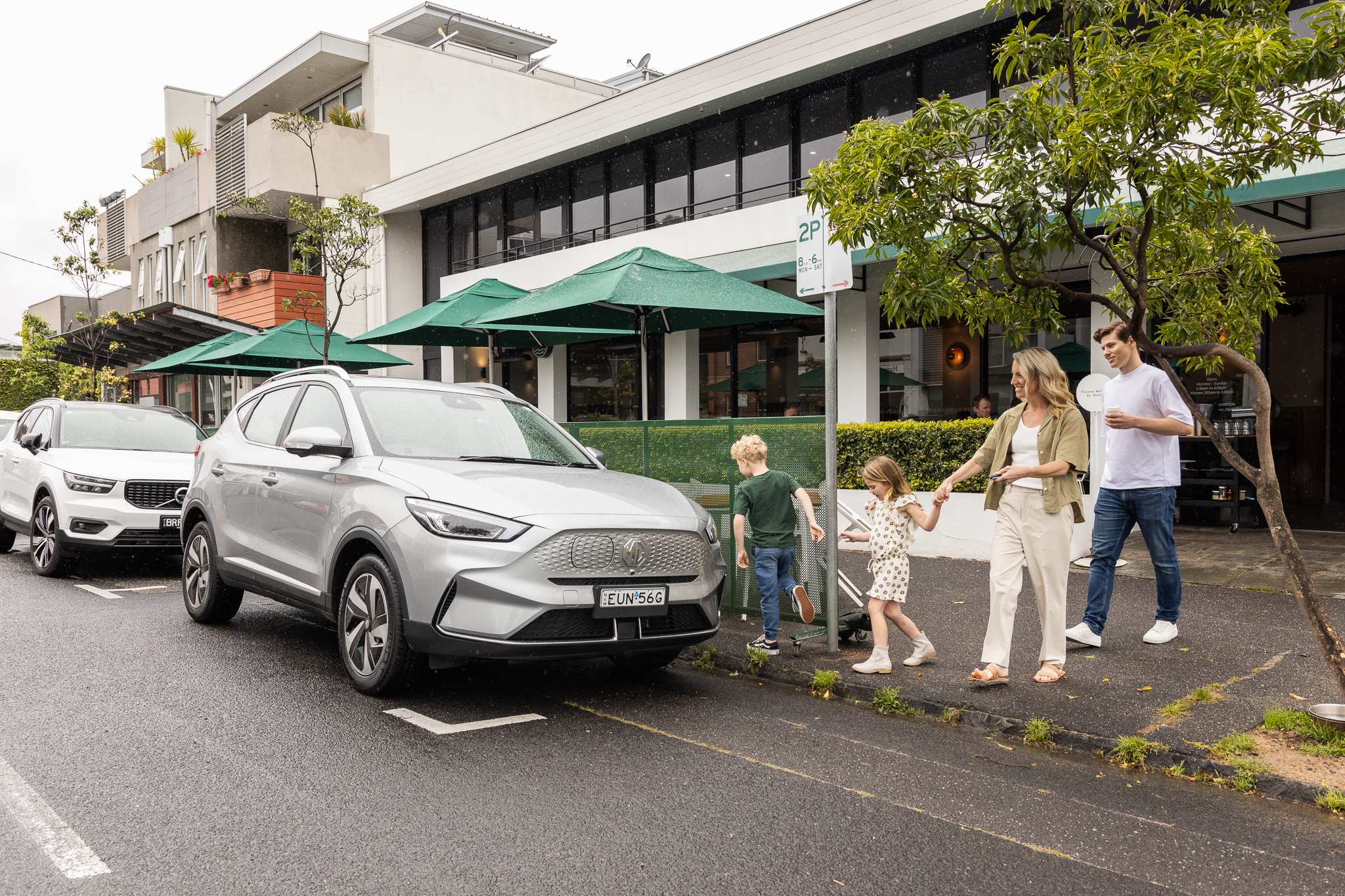
Some other key upsides to owning an EV or plug-in hybrid EV
- With a near-silent powertrain, the ZS EV has no smells and supreme smoothness, the EV driving experience simply cannot be matched by ICE vehicles when it comes to comfort and refinement.
- The range of the ZS EV is sufficient for daily use for most drivers, at 320 kilometres. An HS Plus EV is better suited for weekend getaways or long-distance road trips. However, the increasing availability of charging stations makes it easier than ever for EV owners to travel away from home.
- Unless you have driven one of these vehicles, you will never understand the thrill of experiencing low-end torque in complete silence.
- The combined power of an HS PLUS EV is 189kW and 370Nm – plenty of power for an SUV of this size. You can get just over 60km of pure electric range from this 16.6kWh battery pack. 0-100km/h is claimed to be 6.9 seconds. When battery power depletes, a petrol-powered engine takes over.
UPDATE, January 2023: New Qashqai driven in Australia!
After pricing was announced early in 2022, the new-gen 2023 Nissan Qashqai is finally in Australia – and we’ve driven it! Get our full story at the link below.
Story continues
Snapshot
- Third-gen Qashqai arrives in Oz
- Prices up 19-22 per cent
- Supply looks to be improving, if not perfect
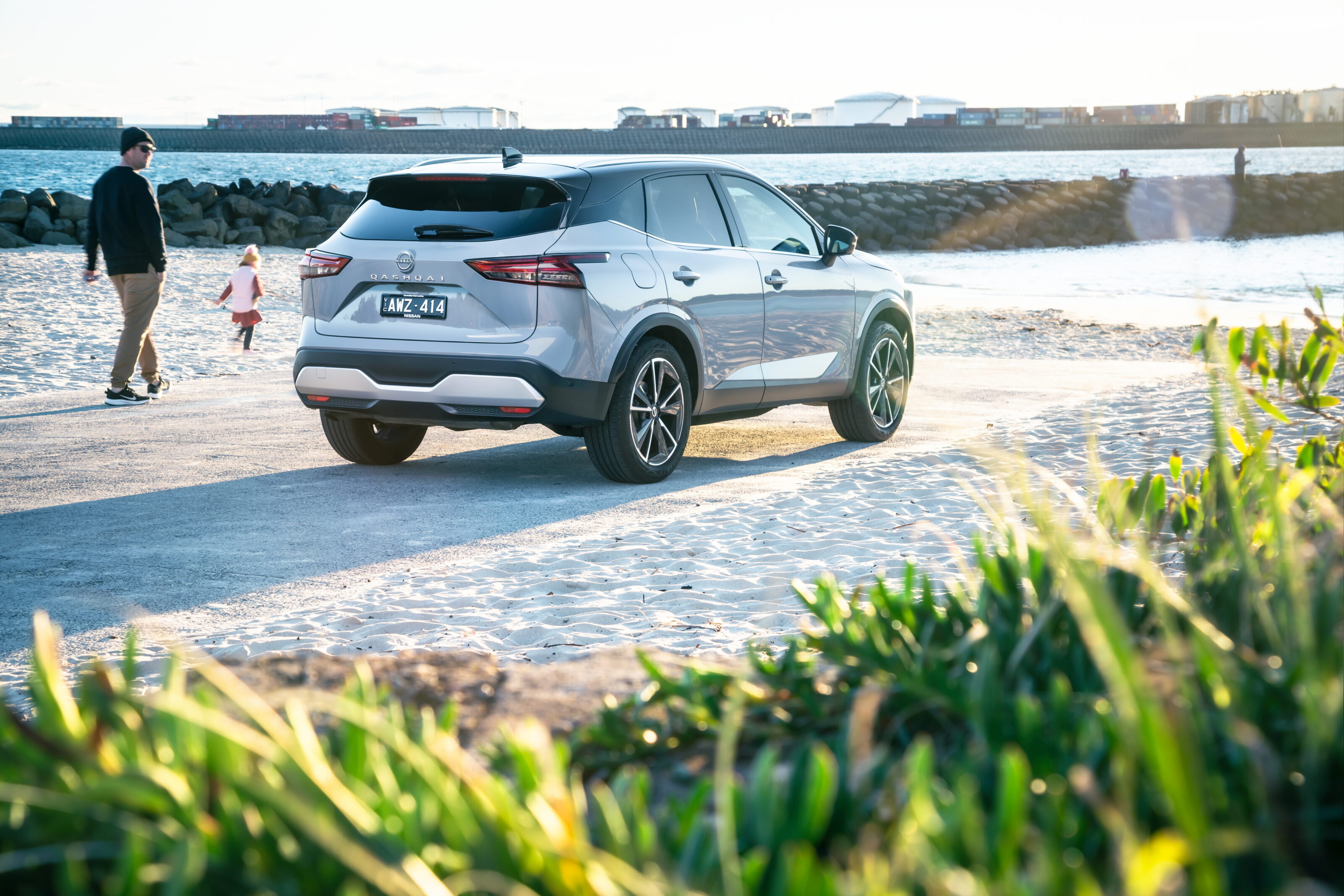
The 2023 Nissan Qashqai has arrived in Australian dealerships. It comes after a dry-spell for the Japanese manufacturer that stopped selling the second-gen small SUV roughly 12 months ago.
The British-built third-gen Qashqai arrives several months late after an expected launch in the first quarter of 2022, with the range spanning from the $33,890 (before on-road costs) ST to the flagship Ti ($47,390).
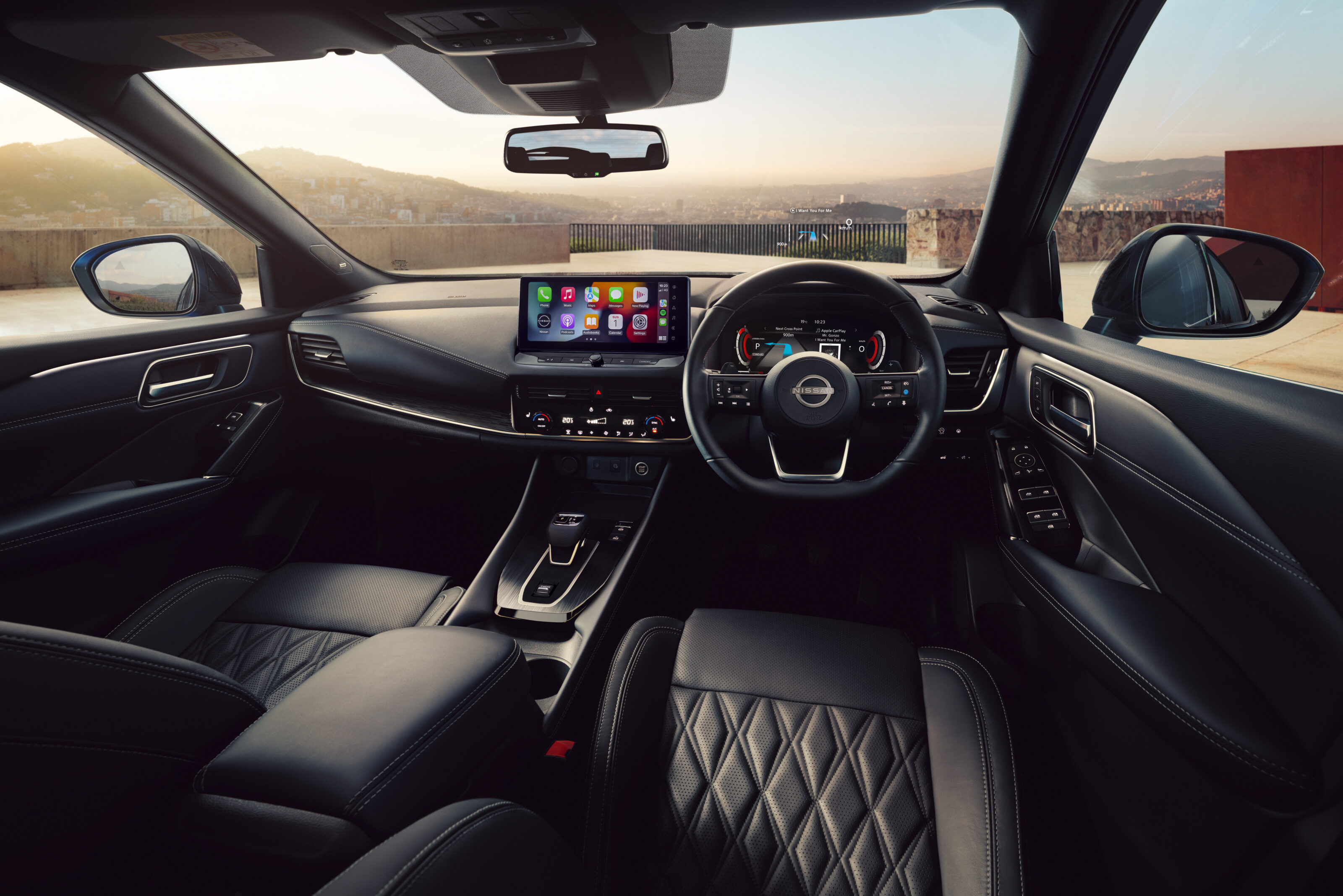
Prices are up between 19-22 per cent over the last-gen car, but with a modern 110kW/250Nm turbo-petrol engine, fresh alliance-developed CMF-C underpinnings and a segment-leading 12.3-inch infotainment touchscreen to justify the hike.
An e-Power hybrid powertrain will also join the lineup in 2023, though timing and pricing is still unconfirmed.
Speaking to Wheels at the media launch of the new Qashqai, Nissan Australia’s managing director, Adam Paterson, confirmed strong demand for the new SUV from dealers and customers despite the nameplate’s extended absence from Aussie showrooms.
“When you don’t have a car and segment that the customer is looking for at that time, then yes, they might decide to purchase something else. I would say the benefit that we have is that, over this period, there hasn’t been a lot of supply – generally speaking – in the market.
“So there are likely customers that are waiting that just didn’t have the option to purchase something else, even though they had a need right away and could have delayed their purchase for us”, said Paterson.
1500 Qashqai orders in Oz
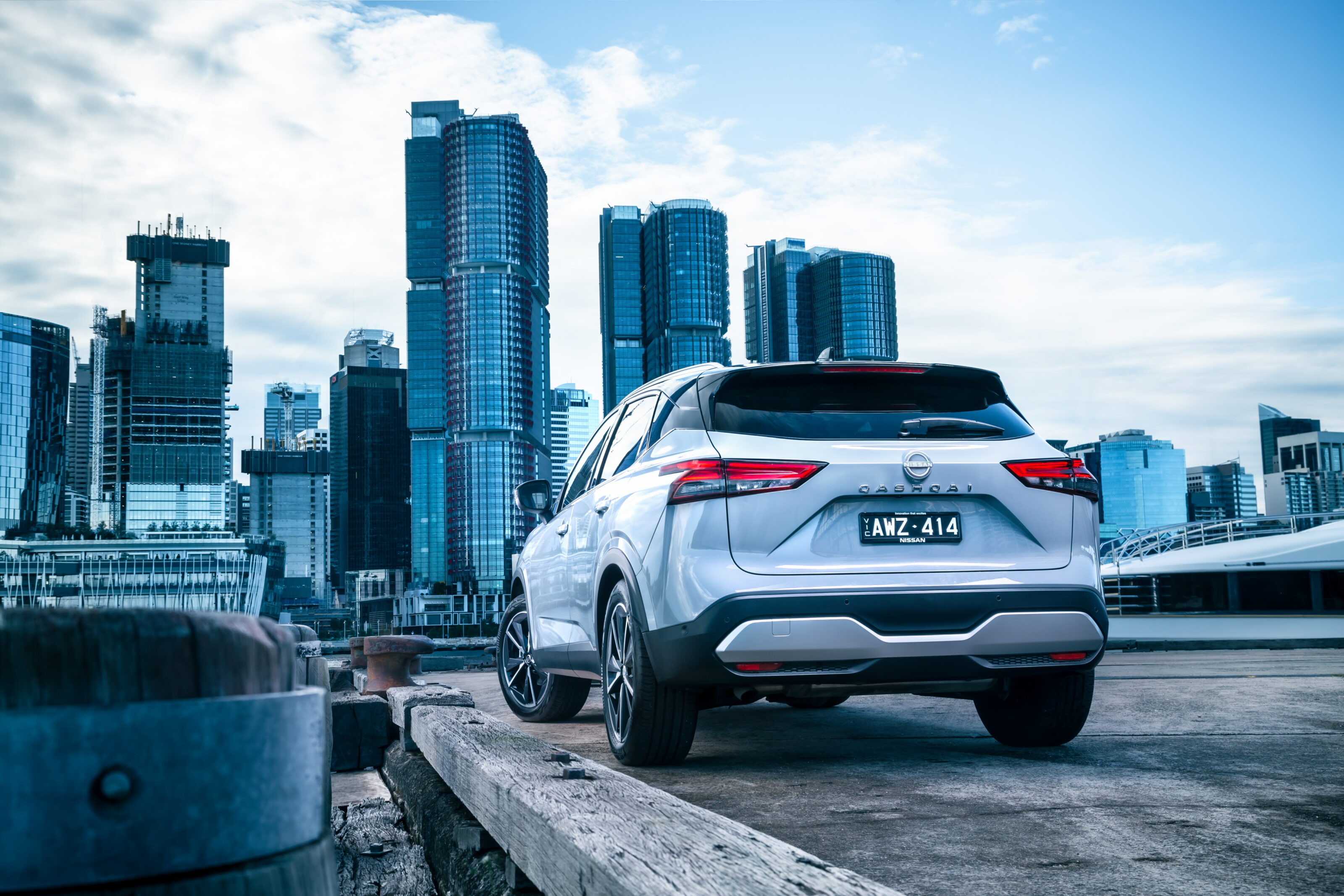
Executives at Nissan Australia confirmed there are currently a little over 1500 Qashqai orders lodged, and 288 new-gen cars delivered to the end of November 2022 – but these numbers aren’t maxing out supply just yet.
“There are far more than 1500 cars on the way and on the water. I have no problem saying that, but the reality is that we’ve got 180 dealers across the country”, Paterson told Wheels.
Naturally, not every one of the 1500 orders will be able to match exactly up with the variants, trims and colour choices on boats. This means there may be some free stock for variants and colours in less desirable combinations. As always, it’s best to contact your local dealer to find out.
“For us, [Qashqai] will likely slot in as our second, third or fourth volume model across the brand behind X-Trail and Navara, and then again it’s probably supply-based if it’ll land at three or four.”
With Nissan’s SUV lineup being so fresh in Australia, with X-Trail and Pathfinder only just ahead of the Qashqai, it’s tricky to get a read on how many sales the brand is targeting here.
Roughly 300 units in the first month on sale is solid, but rivals such as the Toyota Corolla Cross (768) and Volkswagen T-Roc (468) performed more strongly in November. We’ll have to wait until next year for a full read on the Qashqai’s sales potential.
Supply restrictions ease, but not gone for good
At least vehicle supply looks like it’s improving for Nissan, if not returning to normality in a hurry.
“We’re definitely in a much better position than we were last year. And I can just tell you that because we have a longer supply line on Qashqai being European-built than we do on the Japanese- and Thai-built products. There’s lots of cars on the water, or have arrived so far.
“But, again, I think the industry is far from being at any level of absolute normality, where there’s supply constraints. Where there’s not, there are shipping challenges and I don’t think all of that is behind this,” Paterson said.
2023 Nissan Qashqai pricing
| Model | Price |
|---|---|
| Qashqai ST | $33,890 |
| Qashqai ST+ | $37,890 |
| Qashqai ST-L | $42,190 |
| Qashqai Ti | $47,390 |
Mitsubishi Australia has defended the pricing of its new-generation Outlander plug-in hybrid (PHEV) SUV, saying Aussie buyers’ appetite for a bigger battery and more driving range was behind the hike.
Speaking to media, the carmaker was put under pressure to address the pricing gap between combustion-powered Outlanders and the plug-in hybrid variants and why it has not diminished between the previous and current generations of Outlander seven-seater.
The previous generation 2021 Outlander PHEV three-model range started from $47,990 plus on-road costs for the entry-level ES, going up to $56,490 + ORC for the top grade Exceed.
The new Outlander PHEV four-car lineup however, starts at $54,590 + ORC and rises all the way through to $68,490 + ORC for the Exceed Tourer.
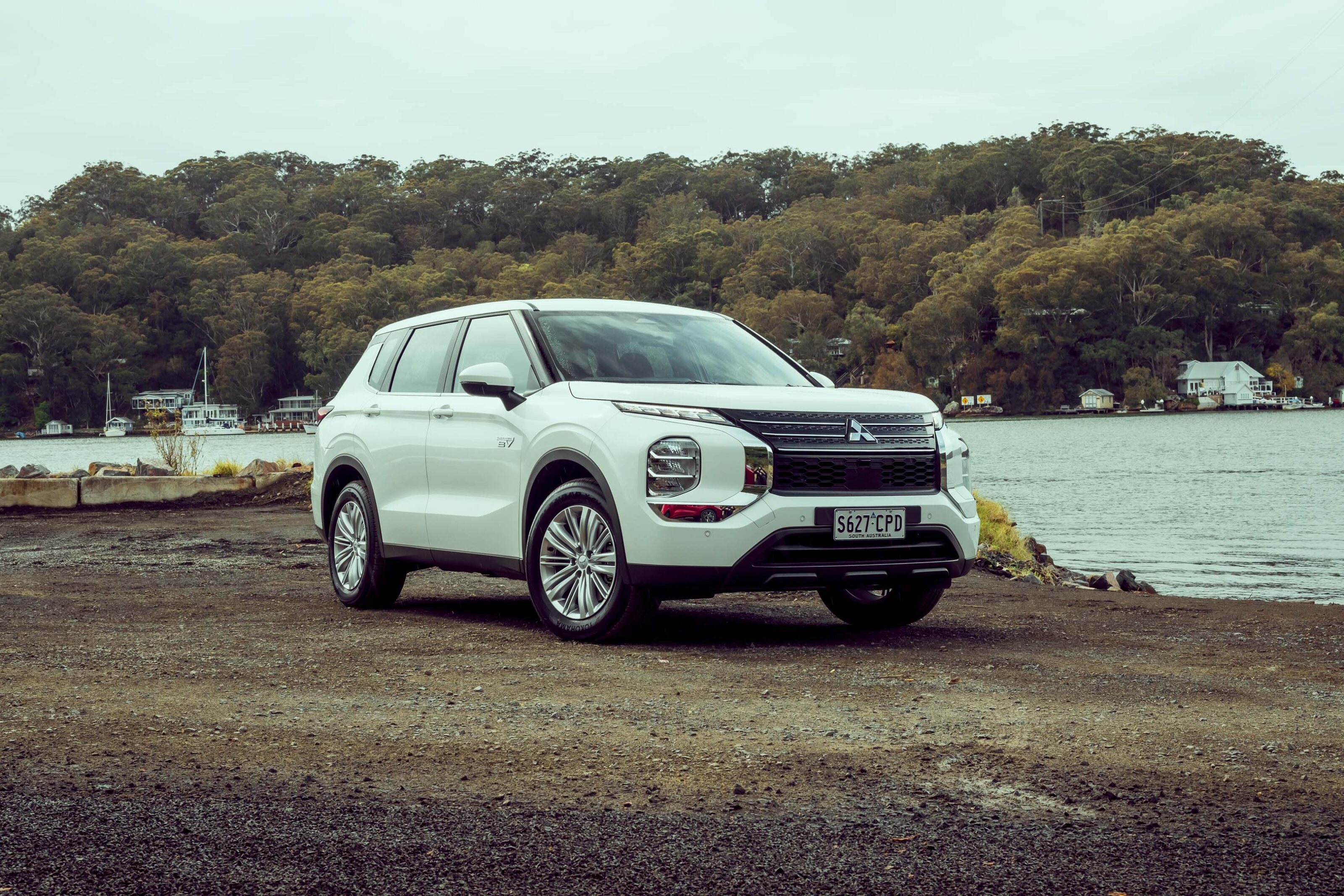
The 2022 Outlander PHEV ES also wears a $2100 premium over the priciest non-hybrid Outlander Exceed Tourer AWD, while the previous generation (2021) Outlander PHEV ES was just $500 pricier than the Outlander Exceed AWD Diesel auto ($47,490).
It’s no secret that the latest generation Outlander represents a massive step up in tech over the old vehicle, and Mitsubishi Australia points out that the increase in capability also carries a price.
Tim Clarke, the firm’s E-Mobility Strategy Manager, said: “Something we learned from the first generation to the second generation is that most people didn’t think it had enough [electric-only] range, which drove MMC [Mitsubishi Motor Company] to increase the battery size.
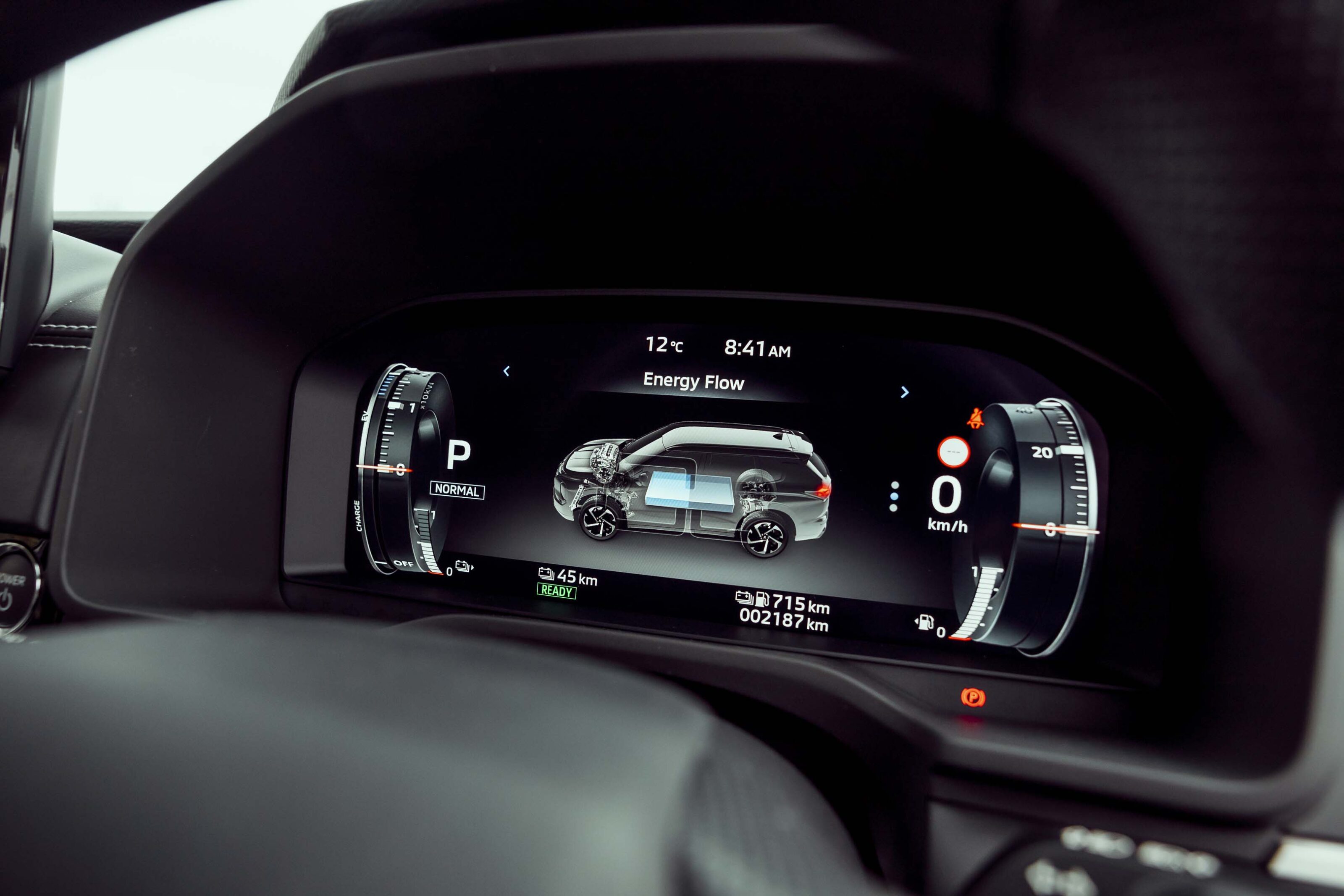
“We also learned from the Australian market feedback that if it had 100 kilometres [of electric range] it would be considered level-pegging with an EV. It’s an emotional number that most people think would be sufficient for their biggest range of use, so that really drove the decision. For the Outlander the bigger battery size meant more cost and we couldn’t avoid that, it was a decision made early in development.”
With a claimed 84km (up from 54km) of electric-only driving range in the Outlander PHEV’s current form, Mitsubishi also hinted at the possibility of improved battery tech arriving in an Outlander update in the not-too-distant future, saying: “We might see an increase in the battery capacity and range before we get to the end of this generation.”
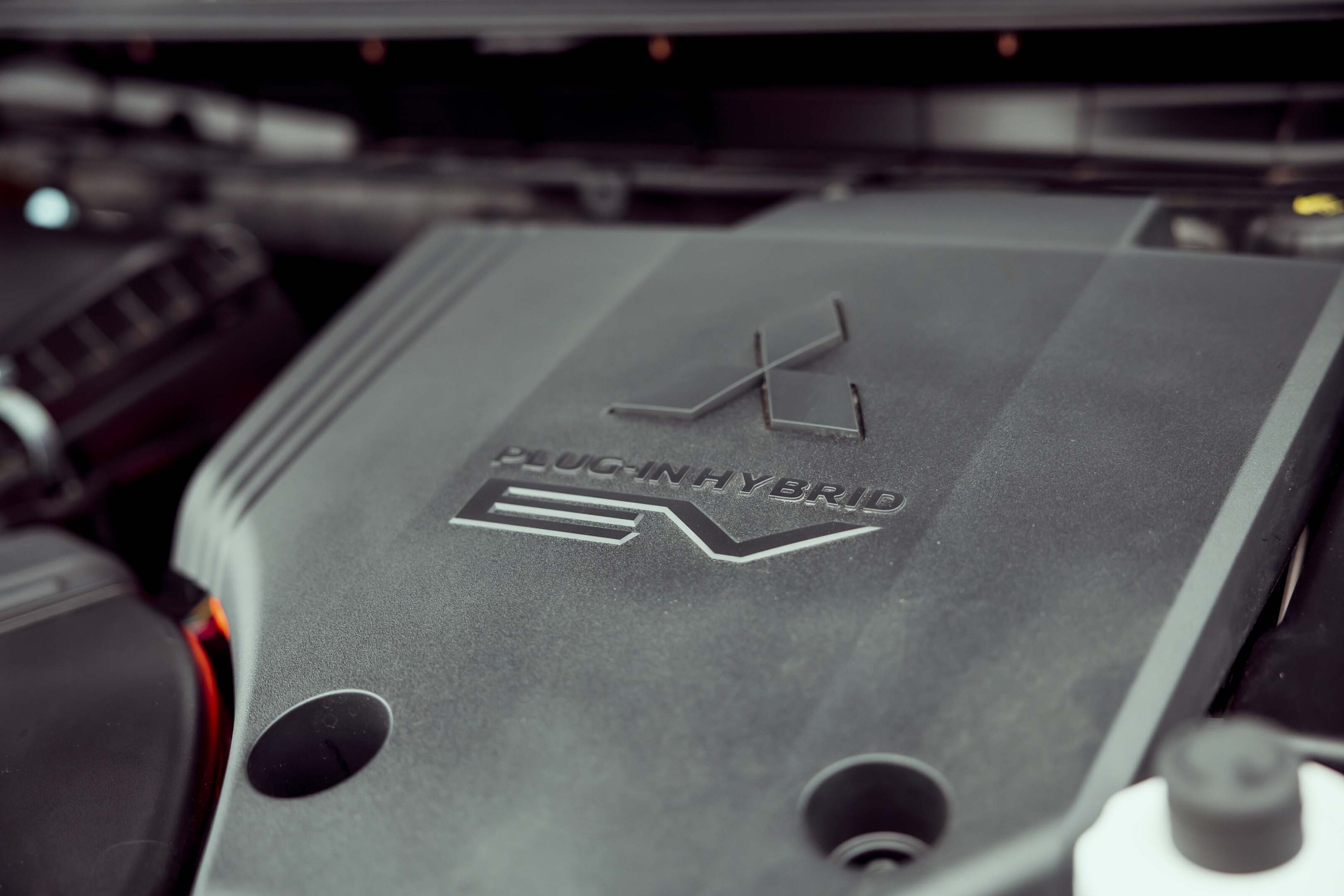
As the worst of the pandemic recedes into the rearview, complex macro supply chain issues continue to affect manufacturers, with Mitsubishi indicating that “there was a forecast for battery pricing to come down over time, but unfortunately with the squeeze on rare earth materials such as lithium, it has kept the cost of EVs high. Until that is resolved, it will keep costs high for all electrified powertrains”.
Supply issues are also putting a strain on plug-in hybrid delivery numbers, which VFACTS data indicates has ceded ground in comparison to conventional hybrid vehicles throughout 2022.
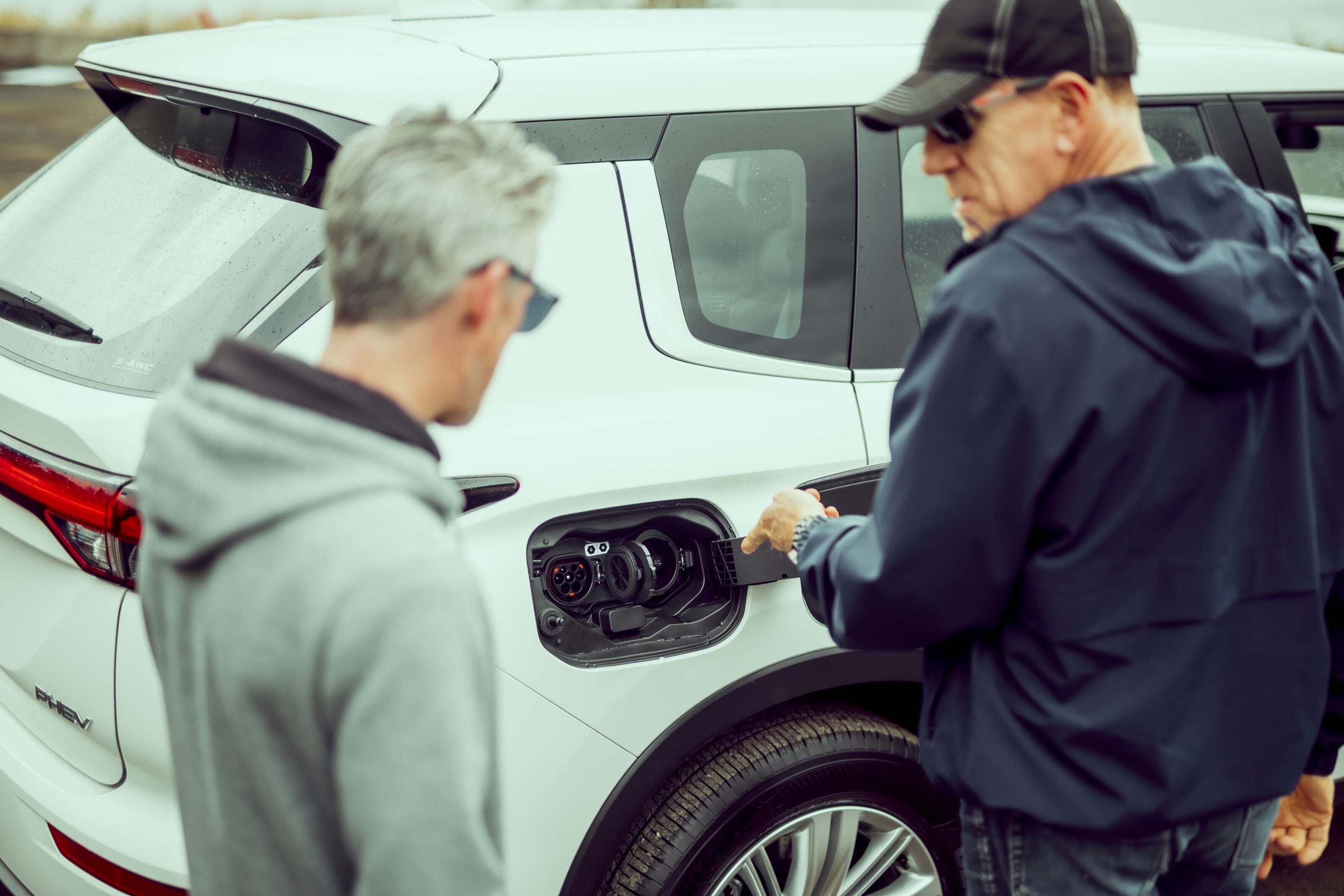
In the case of Mitsubishi, the issue is supply at the moment. “Our MY22 PHEV allocation had sold out within the first month and we’re working really hard to triple or even quadruple that allocation for MY23,” said Clarke.
“As things stand, if we did that we’d already be sold out based on the waiting list as there is such high demand for the new [Outlander] PHEV. We would like to take the position of leading PHEV provider in Australia and we’re working hard to achieve that.”
Mitsubishi points out that, elsewhere in the showroom, its Eclipse Cross PHEV uptake is also up 15 per cent compared to the previous generation.
