Snapshot
- ABS module short circuit could lead to vehicle fire
- Impacts vehicles from 2015-2017
- Does not impact braking system
Hyundai has issued a recall notice affecting around 8800 Santa Fes built between April 2015 and May 2017.
According to the Department of Infrastructure, which issued the notice, when the ABS module is exposed to moisture over time there is an increased potential for a short circuit.
The issue could lead to a vehicle fire which ‘may increase the risk of serious injury or death to vehicle occupants, other road users and bystanders, and/or damage to property’, according to the recall notice.
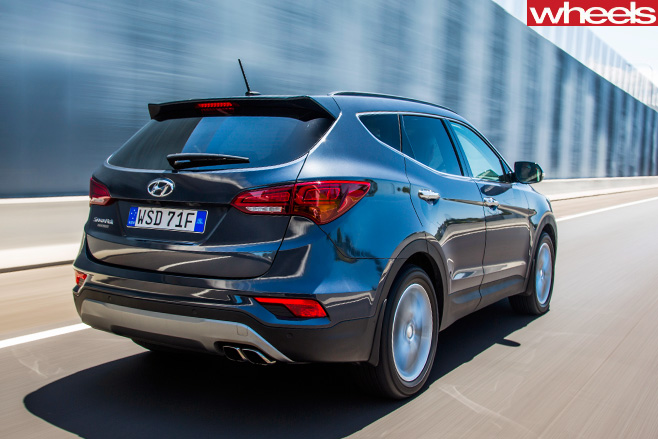
Due to the severe consequences of vehicle fires, Hyundai encourages owners of affected DM Santa Fes to park in open spaces away from flammable materials and not in a garage.
The recall issue notes that the defect does not impact the effectiveness of the braking system.
What should I do?
Hyundai will contact owners of affected vehicles and request they make an appointment with a service centre to rectify the issue free of charge.
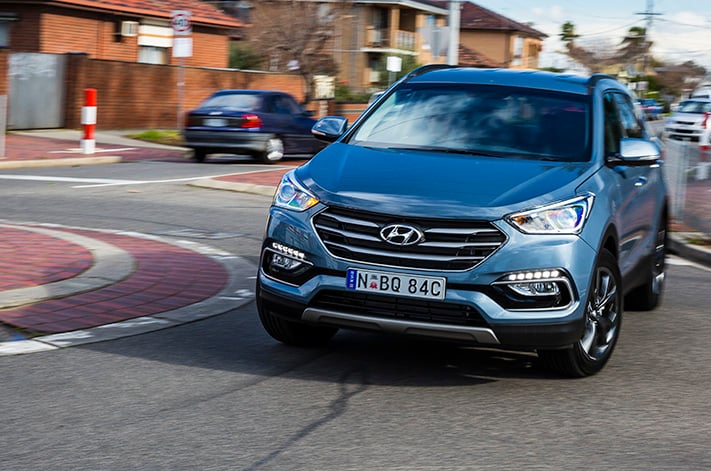
If an engine warning light is displayed, owners are advised to stop driving and contact their Hyundai dealer immediately.
To find out if your vehicle is impacted by the recall, the Department of Infrastructure lists relevant VINs here.
For any questions The Hyundai Customer Experience Team can be contacted on 1800 186 306, or here.
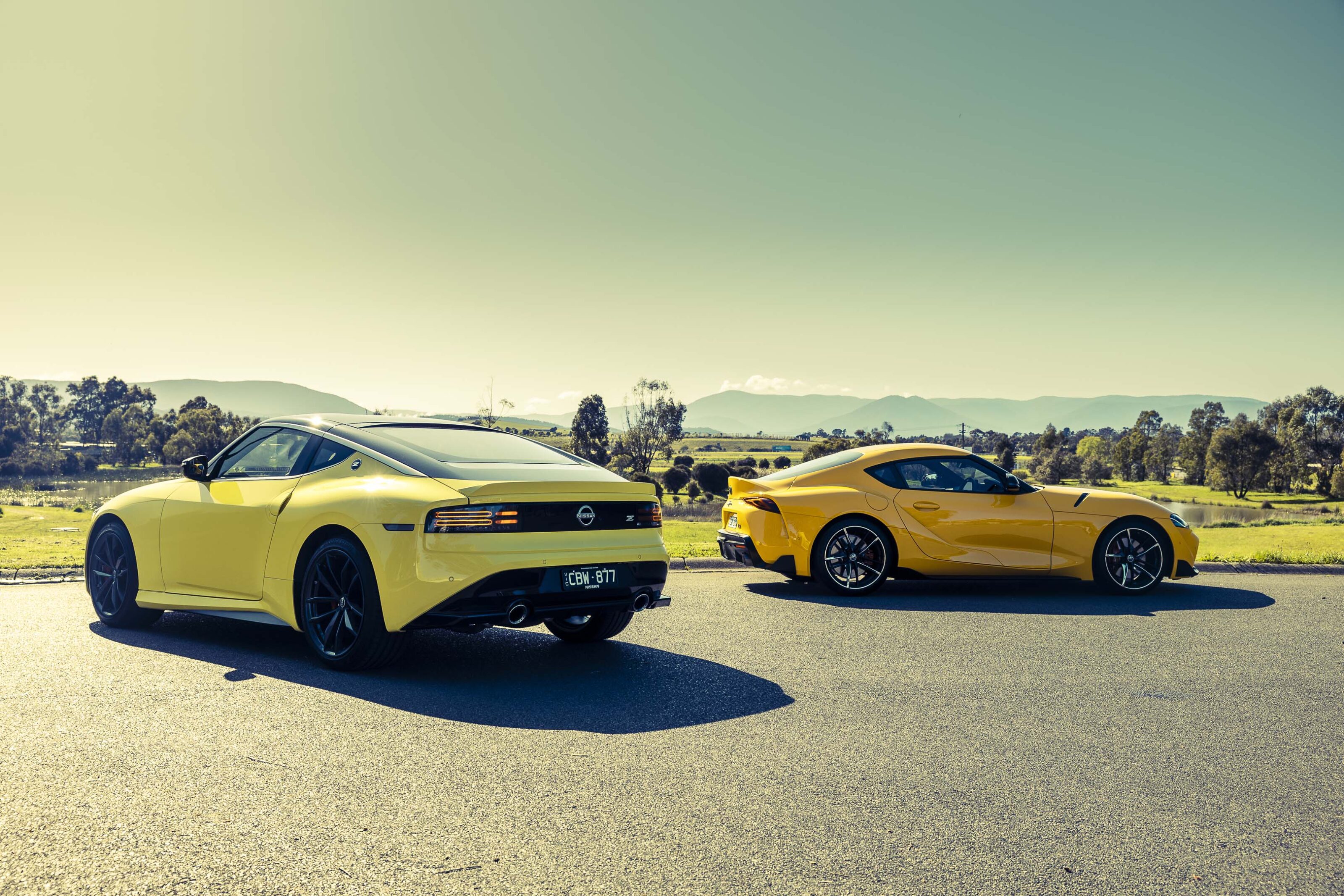
For a time, this comparison test looked impossible: a new, modern Nissan Z facing down a reborn Toyota Supra. But here I am, standing in front both cars, resplendent in their respective yellow hues, turbocharged six-cylinder engines humming at idle, having just demolished a challenging mountain road.
What was once thought impossible wasn’t due to logistics or a world-altering health crisis, but rather because neither model seemed fated to even exist. Until relatively recently, the tea leaves of future product planning appeared to tell us that both legendary nameplates – Fairlady Z and Supra – would be confined to history books with their mortal coils sufficiently disposed.
Life without the Supra had begun to feel normal, after the fourth-gen cult hero A80 having ceased production before the start of the new millennium.
Meanwhile, Our Fairlady of Fun’s sixth Z34 generation became one of the oldest models you could buy, staying on sale fore more than a decade.
Its survival beyond the 370Z was tenuous though, and by the mid-2010s it looked like the end of the line was approaching for the fabled Z car, with five decades of royal sports car lineage seeming without an heir.
It was generally accepted that a replacement for the 370Z just wouldn’t happen. Tightening fuel efficiency standards, Nissan’s tightened fiduciary belts, and a seeming lack of market demand for two-door sports cars had everyone assuming a seventh gen Fairlady would live only in the Too Hard Basket.
But survival is the antithesis of doom, and survive the Z did. Four years after we first heard it was in development it is finally here and ticking all the right boxes.
Under the bonnet the VR30DDTT 3.0-litre twin-turbo V6 sends 298kW and 475Nm to the rear wheels through either a nine-speed automatic (like that fitted to our tester) or six-speed manual, with an old-school mechanical locking diff to boot.
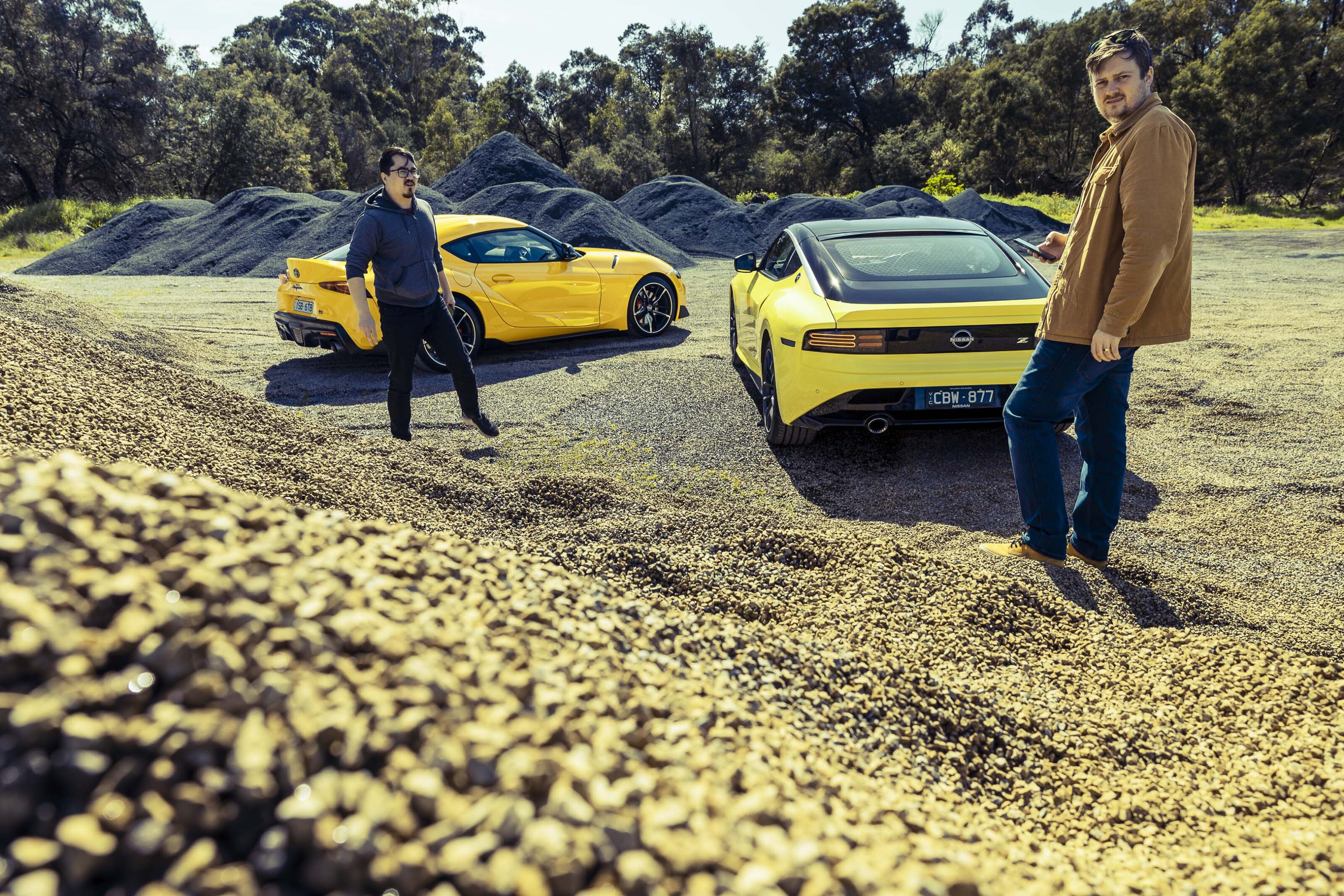
Electrification? Not here. In the modern age this is decidedly old-school design. By design because the car’s survival demanded it. Reality, that harsh master, meant there was no way for the Z to be a white-sheet project. Concessions needed to be made, with smarts, ingenuity and cunning required to ensure the final product was deemed worthy of production.
It arrives only a couple years after the reborn Supra, which itself has ensured its own survival through divergent means. No amount of scrimping and scrounging of coin was going to allow Toyota to breath fresh life into the nameplate – at least not in a way that would do it justice.
Survival came instead through its well-documented partnership with BMW. Safety in numbers. These different paths to the here and now influence every facet of both the Z and Supra, it is the prevailing wind in their sales. While both fulfill the two-door sports car niche of their predecessors, the end results are distinctly different.
2023 Nissan Z v Toyota Supra GTS: The basics
| 2023 Nissan Z | 2023 Toyota Supra GTS | |
|---|---|---|
| Drive | rear-wheel | rear-wheel |
| Engine | 2997cc V6, dohc, 24v, twin-turbo | 2998cc inline-6, DOHC, 24v, turbocharged |
| Power | 298kW @ 6400rpm | 285kW @ 5800-6500rpm |
| Torque | 475Nm @ 1600-5600rpm | 500Nm @ 1800-5000rpm |
| Transmission | 9-speed automatic | 8-speed automatic |
| Weight | 1633kg | 1495kg |
| Tyres | 255/40 R19 (f); 275/35 R19 (r) Bridgestone Potenza S007 | 255/35 ZR19 (f); 275/35 ZR19 (r) Michelin Pilot Super Sport |
| Price | $73,300 | $97,126 |
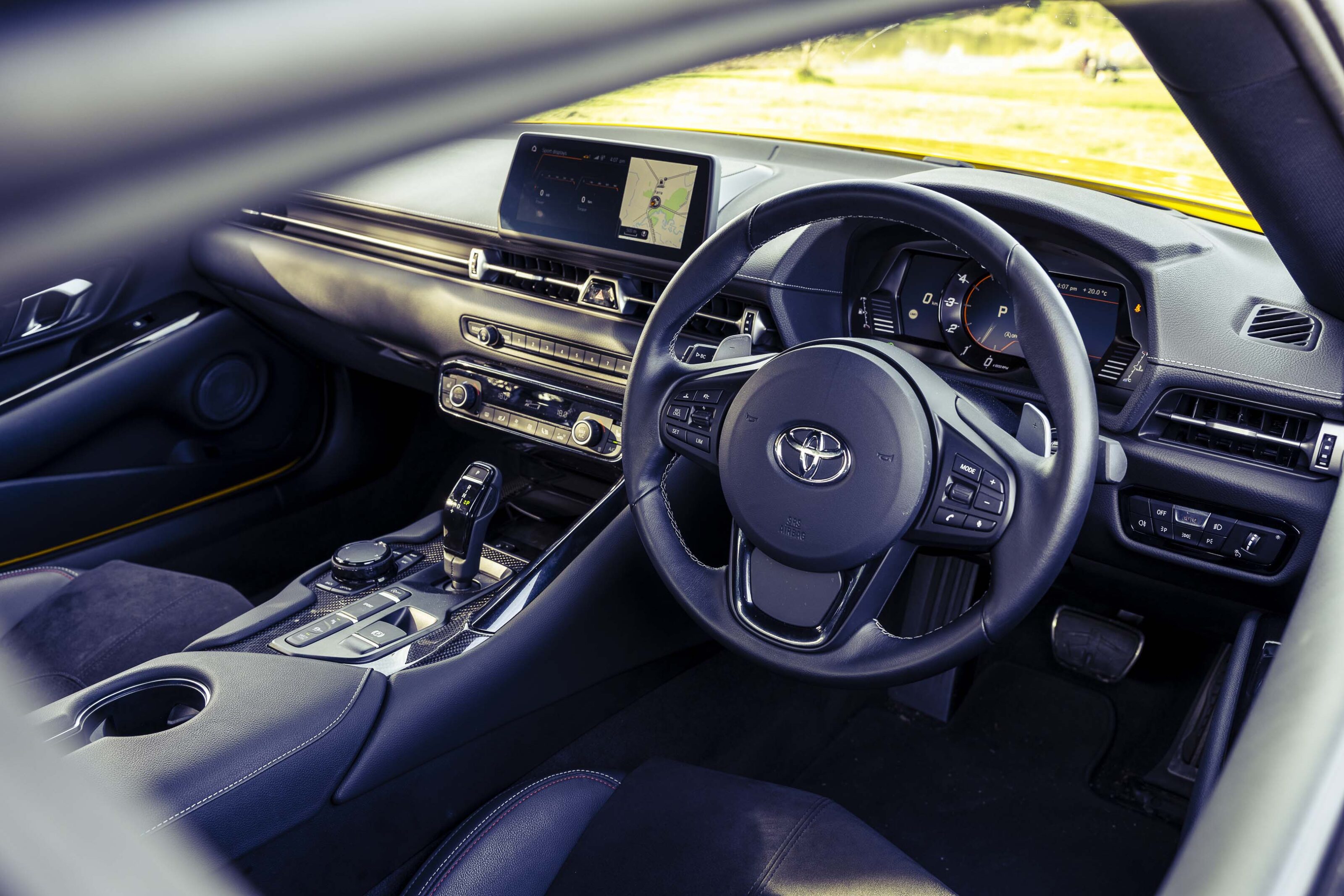
For Toyota, the end result is as sharp a scalpel as you can find for under $100,000.
The GTS we have on test costs $97,000 and delivers a driving experience worth every cent. Last year the car received a mild update that saw the BMW-sourced B58 3.0-litre single turbo engine’s outputs increase to 285kW/500Nm, delivered to the rear wheels via a ZF eight-speed automatic and an electronically locking rear differential.
The entry level GT variant Supra will get you 99.9 per cent of the driving experience of a GTS with an almost 10 per cent saving in the price of entry ($87,000), with the only performance change being a fatter tyre sidewall.
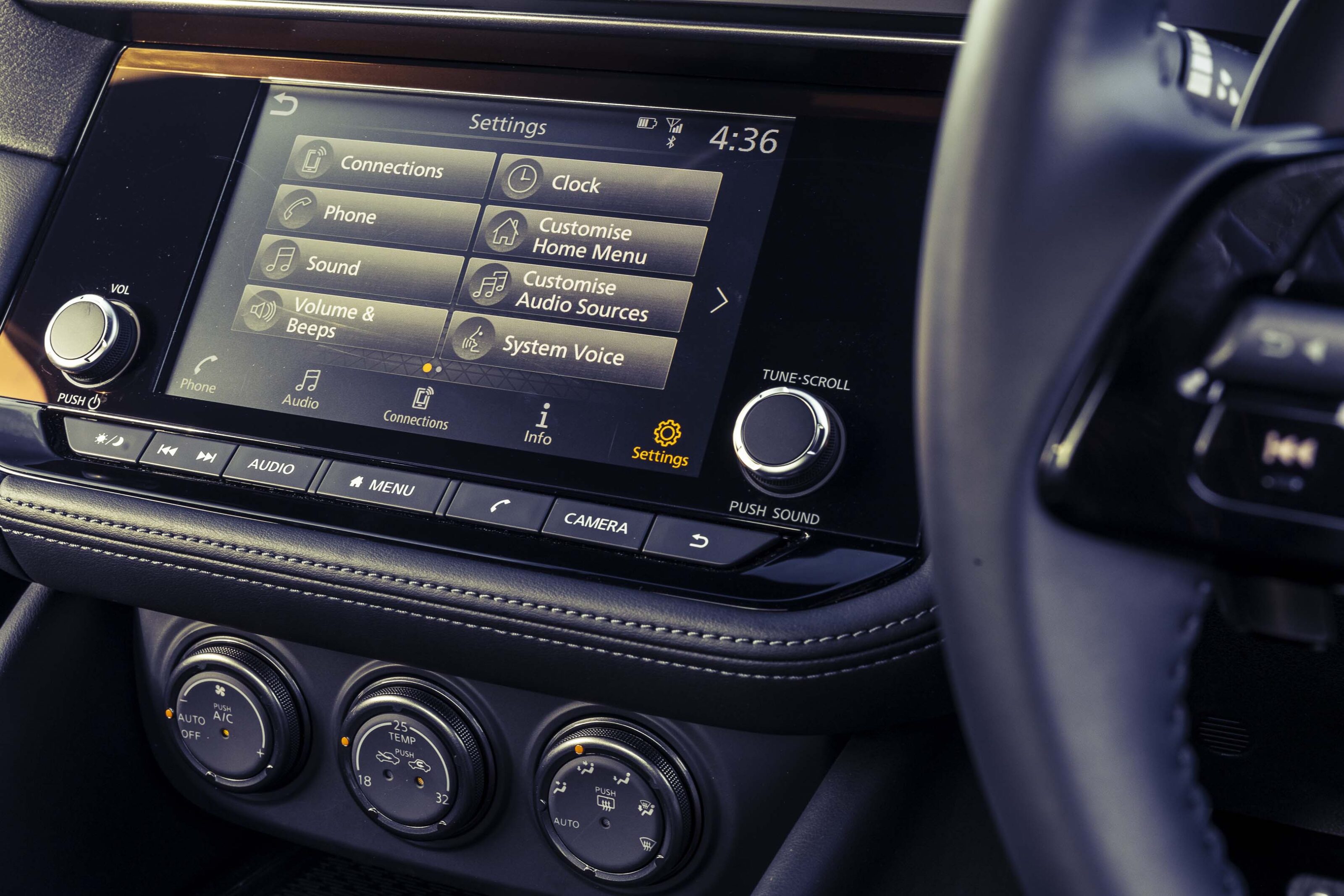
Nissan’s local pricing for the Z undercuts its native rival significantly, with the sole available variant (since the launch special Proto is sold out) costing $73,300.
Dimensionally, both cars are remarkably similar despite their overt styling differences. Where the Z is all creases and retro styling throwbacks, the Supra stretches its metal sinuously over the BMW chassis with curves for days.
Near identical overall lengths are split with the Z using a larger wheelbase, but narrower body and track. This reveals itself in the cabins, with Nissan’s interior feeling spacious and airy compared to the Supra’s slightly cramped confines.
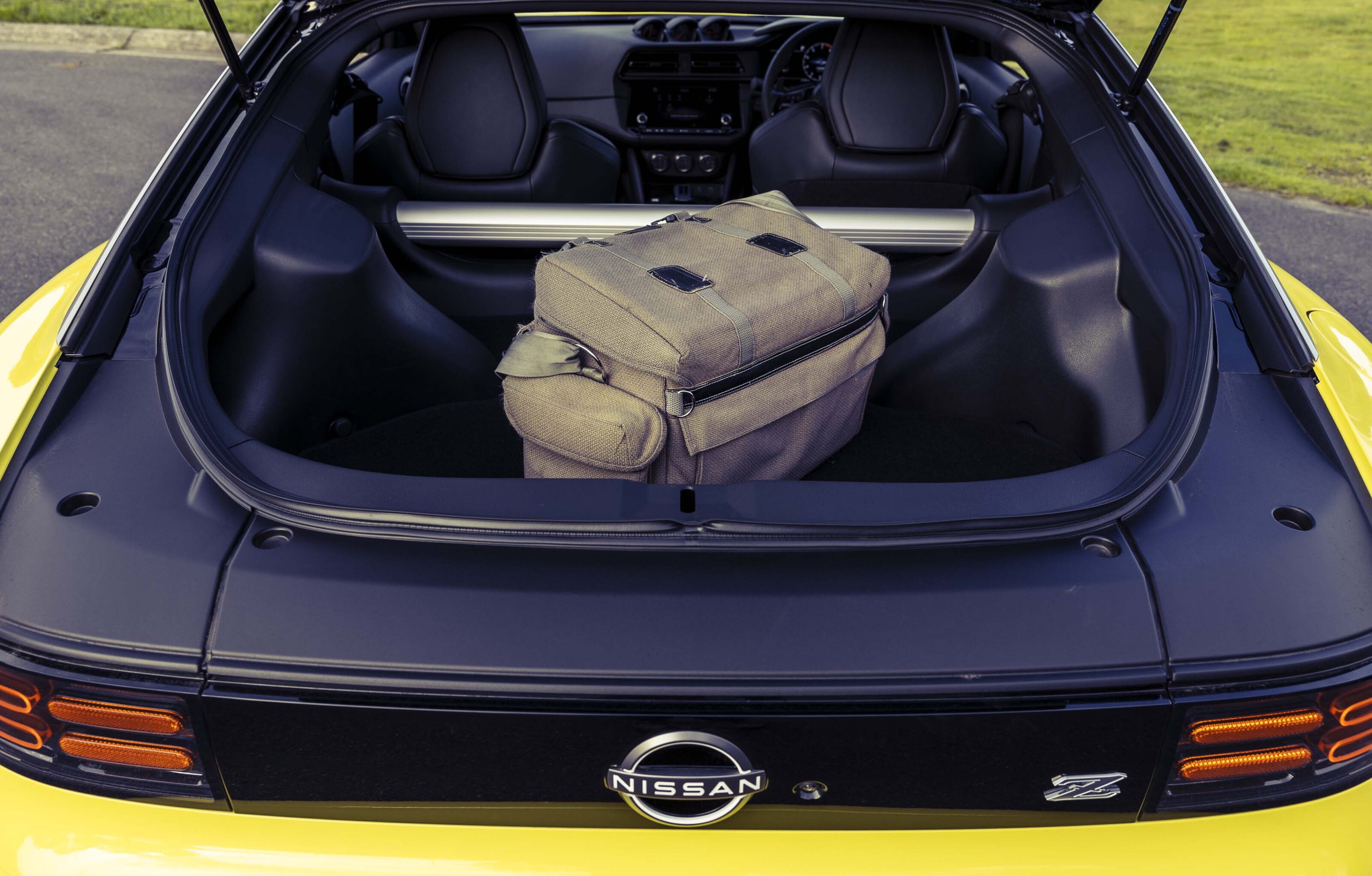
Yet, behind the Z’s seats is 241 litres of boot space, compared to the Supra’s 296 litres.
In terms of fit and finish, the BMW influence pays dividends for Toyota, with a quality of materials that the Z can’t hope to match. You do pay for the privilege, though.
Toyota also has an equipment advantage with the Supra GTS, with features like automatic wipers, wireless phone charging, a head-up display, and even a native navigation system all absent from the Z’s spec sheet. The thing is, the focus inside the Z has been on the things that matter to driving enthusiasts, plus a couple of nice-to-haves like an extra cupholder.
A new digital instrument screen with impressive refresh rates is a highlight, along with the steering wheel which is proportioned to perfection. It is not a coincidence that the tiller shares an identical diameter to that fitted to the R32 GT-R. Good company.
These updates mean there are clear carry-over items from the 370Z spread throughout the cabin. But ask yourself, why should Nissan change the door handles? Who really cares? Not us. Money saved.
Interior accoutrement aside, there is a clear different in intent between the Z and Supra.
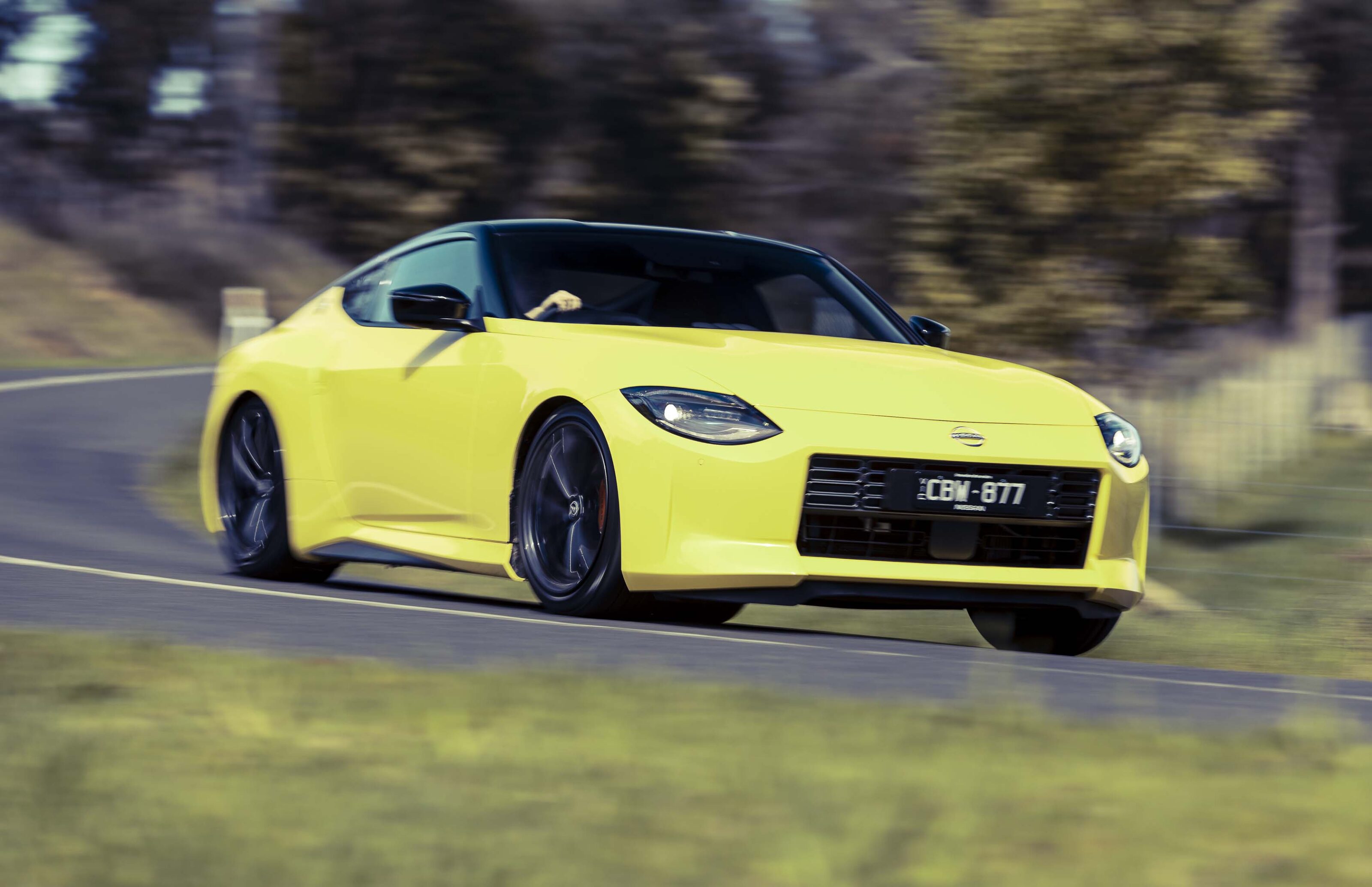
Leveraging its BMW link, the Supra is an out-and-out sports car that prioritises dynamic thrills above all else. It is a potent driving weapon that in the right hands is one of the quickest A-to-B cars in the real-world on the market.
Its outputs are right in the sweet spot of useability, with a vast torque band that thrusts you back into the seat on full throttle applications. The ZF gearbox is intelligent in its calibration when left in automatic, shifting through the gears to match your driving.
Flick into manual mode and ratio changes remain crisp, with a closer stack of ratios compared to the Z. There is a real meat to the steering, giving the car a muscular feel in your hands, though feedback is a tad muted on texture-heavy roads.
What the Supra does best is chassis balance, with the car feeling like a finely crafted tool. It dances on your command, with supreme body control allowing the driver to shift weight swiftly without upsetting the car.
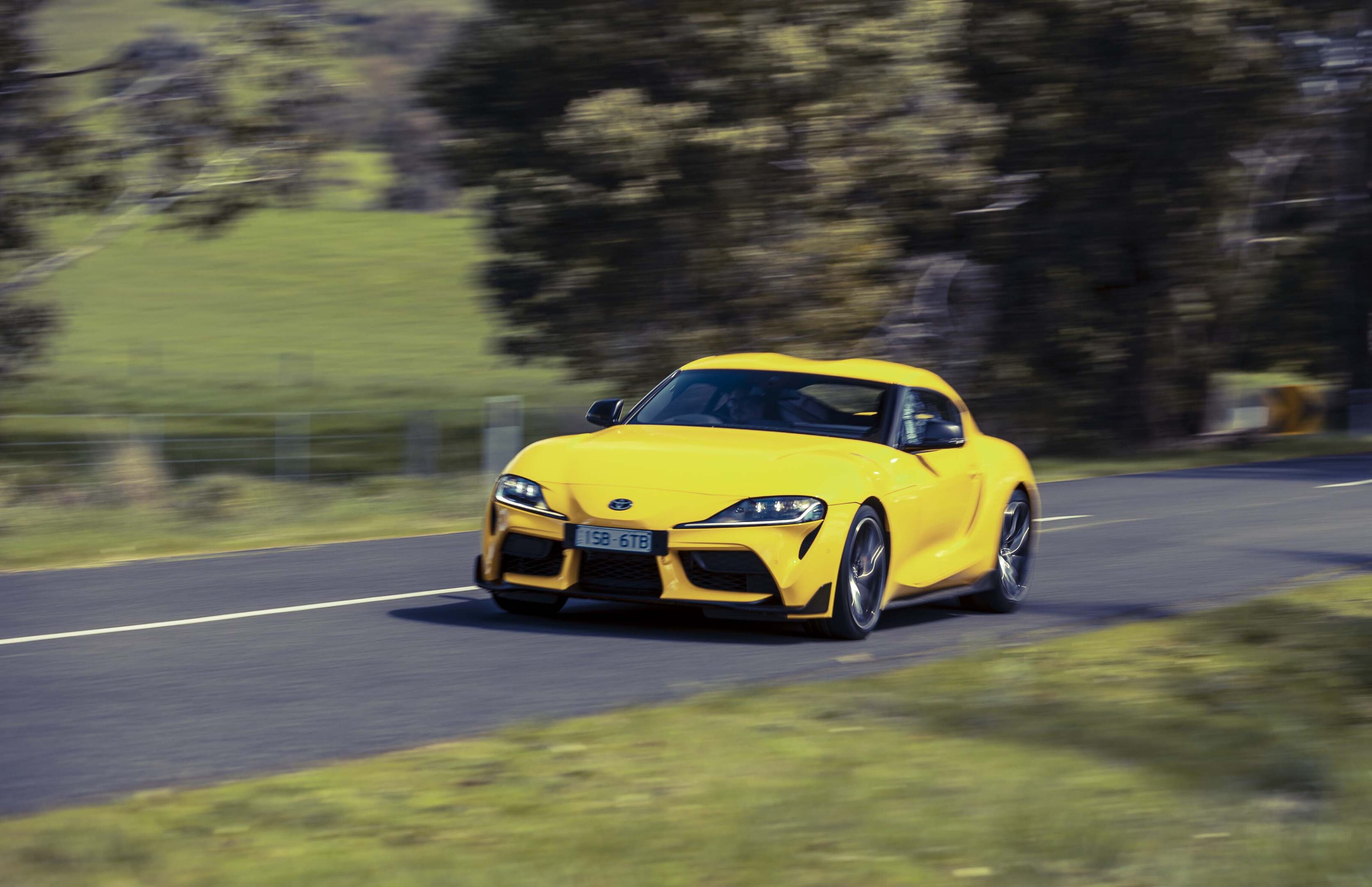
The trade-off is a suspension tune that sits distinctly on the firmer end of the spectrum even in its softest damper modes. While not overly crashy, the Supra doesn’t breath and settle over bumps, with every movement felt in the cabin.
An issue that will plague the Supra in the eyes of some buyers is one that strikes to the very reason it was able to survive. While Toyota had plenty of input, the chassis is one that didn’t originate in Japan – hell, the entire car is assembled in Austria.
Similarly, the drivetrain is distinctly Bavarian. We are happy to overlook these things for the sheer fact the end result is incredibly compelling in its ability as a driver’s car. Can you do the same?
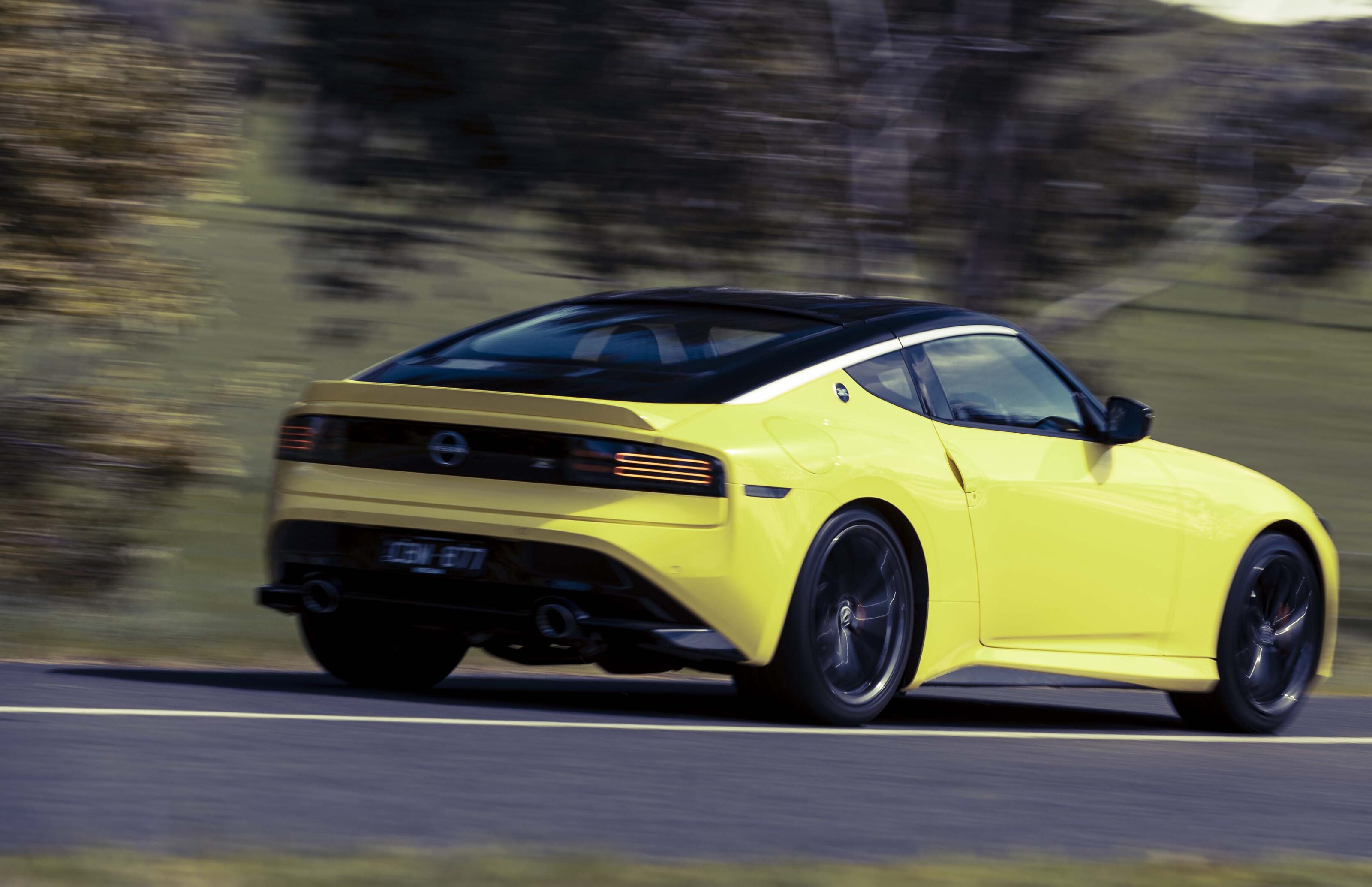
Where the Supra’s dynamics are refined to a sharp point, Nissan has rounded the Z’s edges to make it a more malleable daily proposition with serious touring credentials.
Eschewing tradition of generations getting progressively stiffer as they age, Nissan says it has slackened the damping on the RZ34 compared to its Z34 predecessor to the tune of 20 per cent.
There is ample vertical movement in the Z’s suspension, which can be initially disconcerting. However, take the time to key into its more pronounced movements and you discover a car that is a willing participant when driving enthusiastically.
The mechanical locking diff in that comes standard the Z means the V6’s potent power is delivered with impressive predictability. It is a transfer of grunt to thrust that this engine has been crying out for ever since its dour use in the Infiniti Q50 and Q60 Red Sport twins, which usurped the VZ Commodore as the single pegger king of the road.
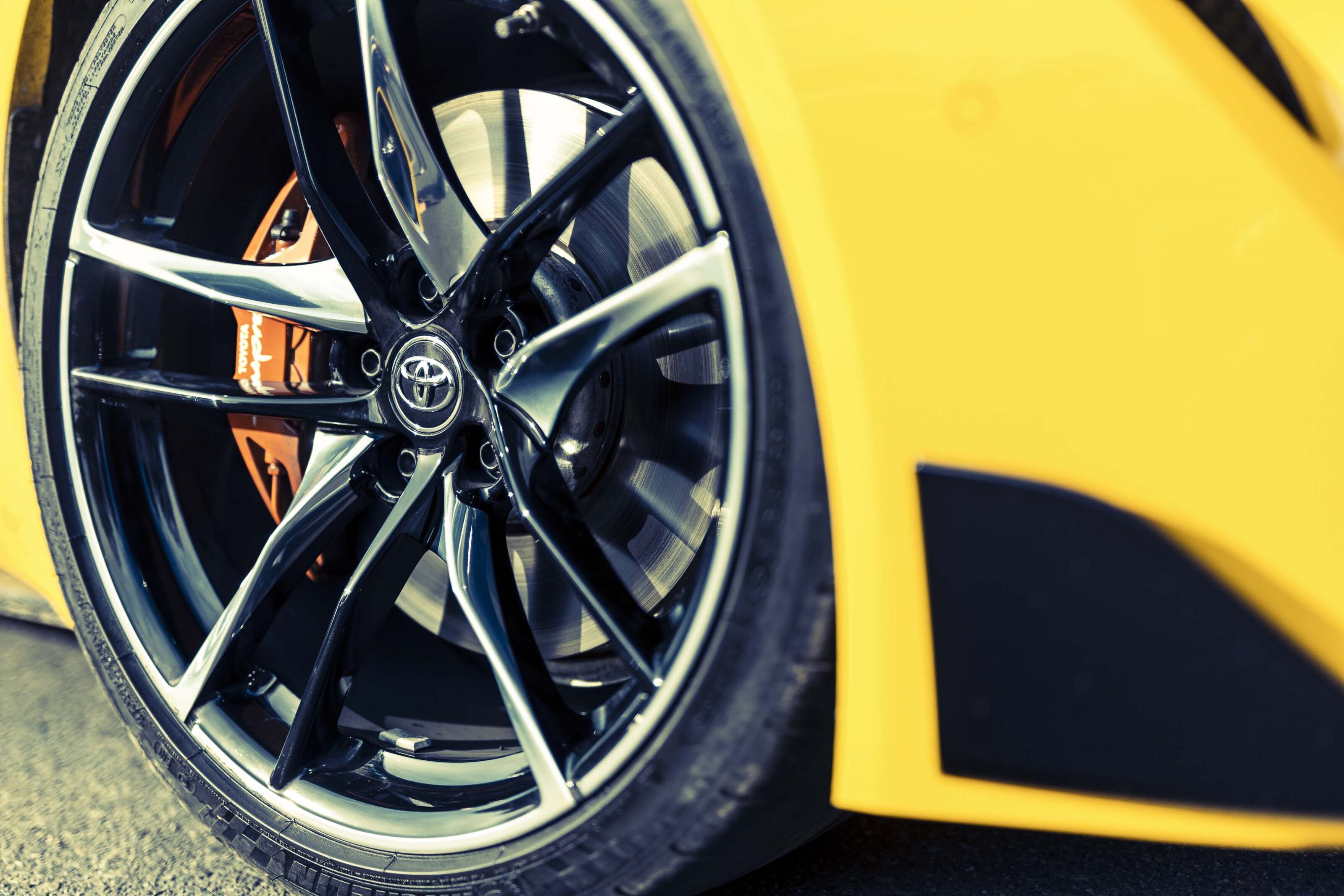
The peach of an engine is letdown somewhat by two factors, the first being a dour exhaust note. Toyota’s aural offering has greater variation in tone and tenor, with authentic burbles sprinkled throughout, while the Z is more anodyne and one-note.
What it lacks in exhaust dramatics, the Z more than makes up for with a howling induction noise at full throttle that sounds cyclonic in its ferocity.
The second letdown in the drivetrain is the gearbox. Borrowed from Mercedes-Benz, the nine-speed automatic slurs nicely around town, but doesn’t have the required logic in its calibration for a proper mountain road.
It will often fail to read the situation properly, either moving to a higher ratio too early during gradual throttle applications at corner exit, or not shift down appropriately on entry. Greater rewards are found selecting gears manually.
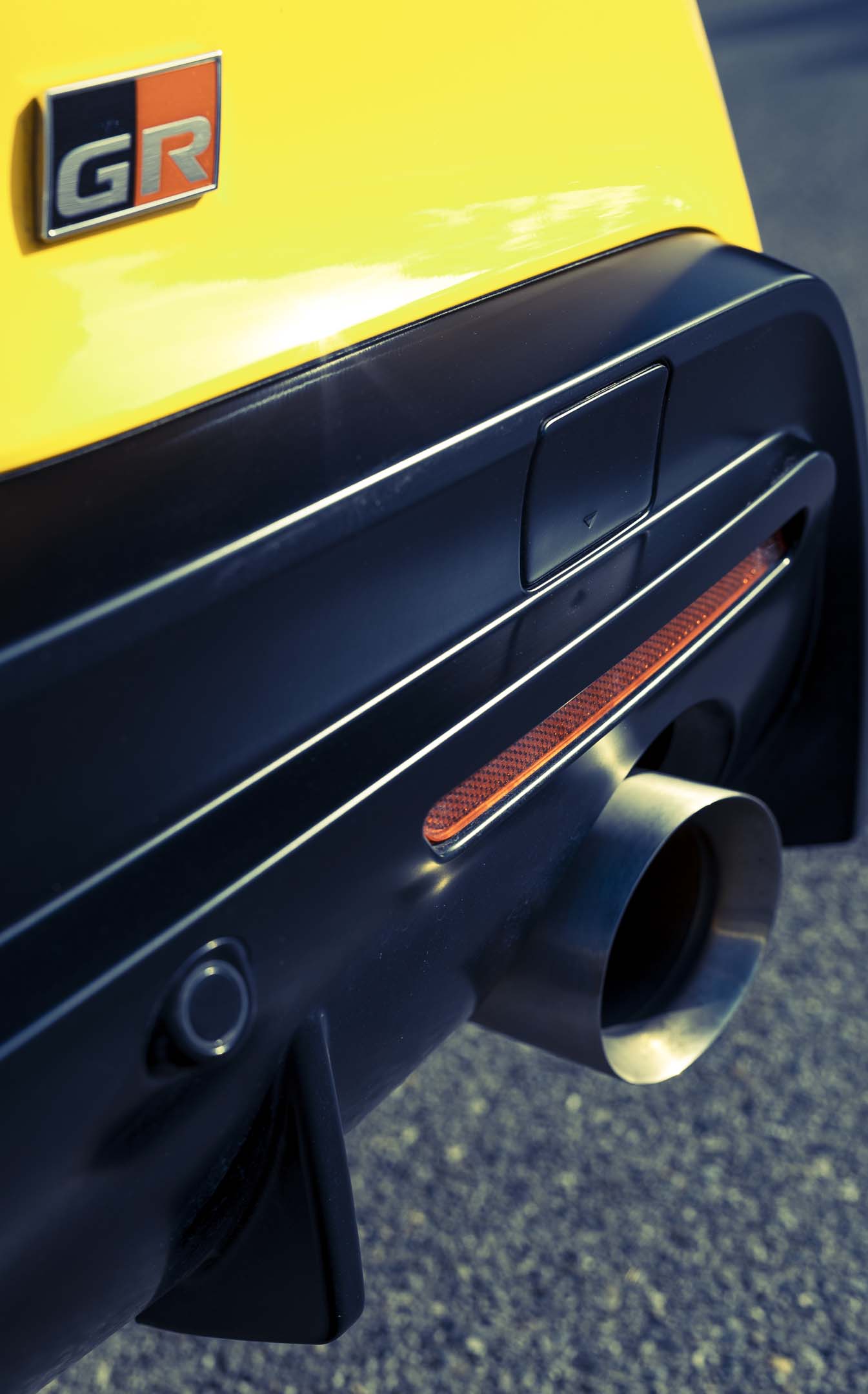
Not only is the Z’s steering wheel wonderfully designed, but it is also well judged in its weight. There is a small dead zone just off centre, but it has a smooth arc that sidesteps unnecessary neurosis and freneticism.
It communicates front axle loads and grip levels clearly, aided by a double wishbone front suspension set-up that is a clear boon compared to the Supra’s struts.
Perhaps the greatest indicator of how the Supra and Z differ in their interpretation of a modern sports car can be found in their respective rubber. Fitted to the Supra is Michelin Pilot Super Sport rubber. A fantastic performance-orientated tyre that provides a clear road-holding advantage the Supra takes full advantage of.
On a warm and dry road, the confidence provided by the rubber fitted to the Toyota cannot be overstated. Push, push, push and push a little more. Still the tyre’s tacky compound hooks its claws into the aggregate. It’s a stark contrast Z that makes do with Bridgestone Potenza S007 rubber.
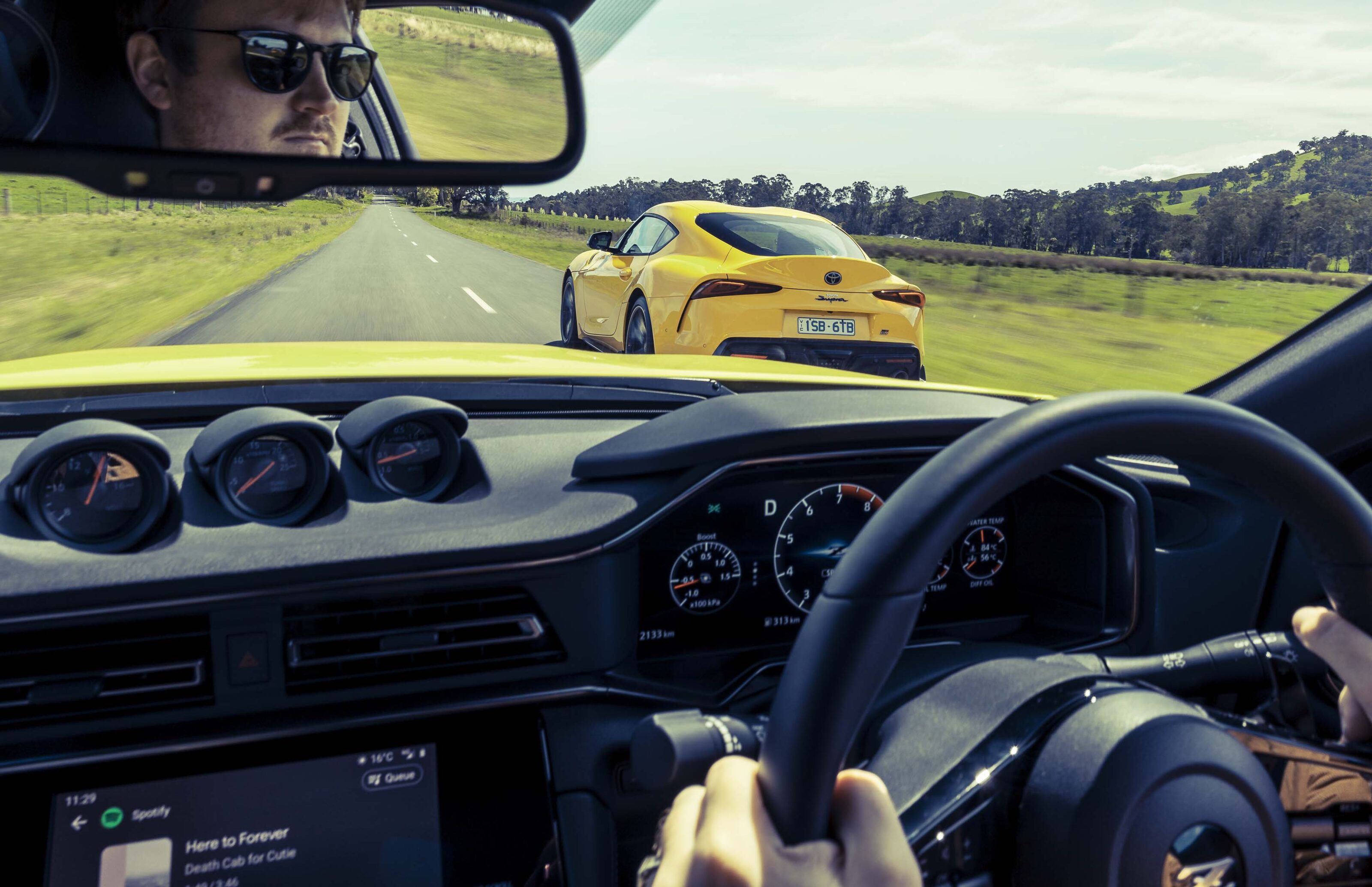
The Bridgestone is more focused on everyday driving with the occasional hard and fast blast. While no slouch in its grip levels, it more readily rolls onto its sidewall, and relinquishes a firm hold on the tarmac at a lower threshold than the Michelin.
This transition is a smooth one, and while we found it happened more frequently to the front tyres, the rear of the Z was more than happy to step out at corner exit with heavy throttle applications. These yaw moments are accentuated by an ESC which allows plenty of lateral movement before intervening.
Pressing the throttle into the firewall, applying opposite lock as the chassis progressively steps into oversteer, you discover there was no need for an all-new architecture for this new Z. While we wouldn’t say no to adaptive dampers, the bones of the Z are still up to the task despite their relative age.
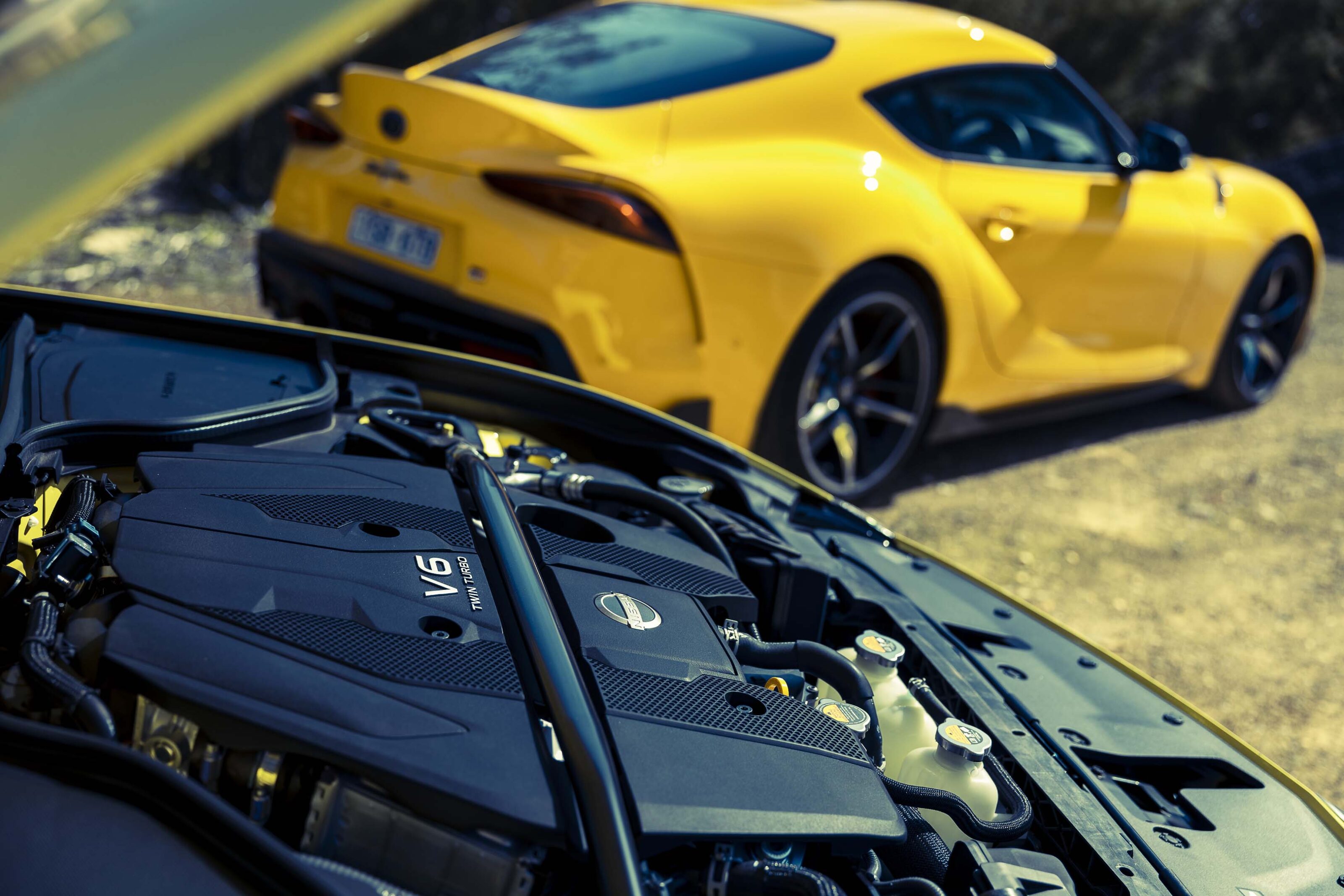
Nissan has designed a sports car that shimmies and shakes but does so in a way that involves you in the process, instead of keeping you at arms lengths. There is ample vertical movement, but we found it settled with purpose instead of suffering prolonged pogoing.
It feels unfair, possibly even cruel, to pick just a single winner between this pair. Just the mere fact that we are here, in 2022, comparing two engaging, fulfilling, and rewarding sports cars from Nissan and Toyota is worth celebrating.
Choosing between them feels personal. It is personal. The companies that manufacture these vehicles had to make core sacrifices, be it fiscal or philosophical, in order to allow the Z and Supra’s continued existence. Those concessions have left indelible marks on the character of both cars, bringing forth a new generation of maturity for their respective storylines.
Which car is right for you will also be a personal choice. Do you want something as focused as possible for the money, or would you prefer a sports car that doesn’t have permanently bruised knuckles?
As for the products themselves, the Supra is faster, has a superior cabin finish, and is easier to key into as a driver. Conversely the Z possesses to us, a more authentic character, greater daily useability, and more scope for post-purchase tweaking.
For the traditionalist, the Z’s lineage is also unblemished. It is pure Nissan. It feels like there is headroom within the Z’s package, and that will have been intentional to allow for an unconfirmed but almost inevitable NISMO version to sit above it in the pecking order.
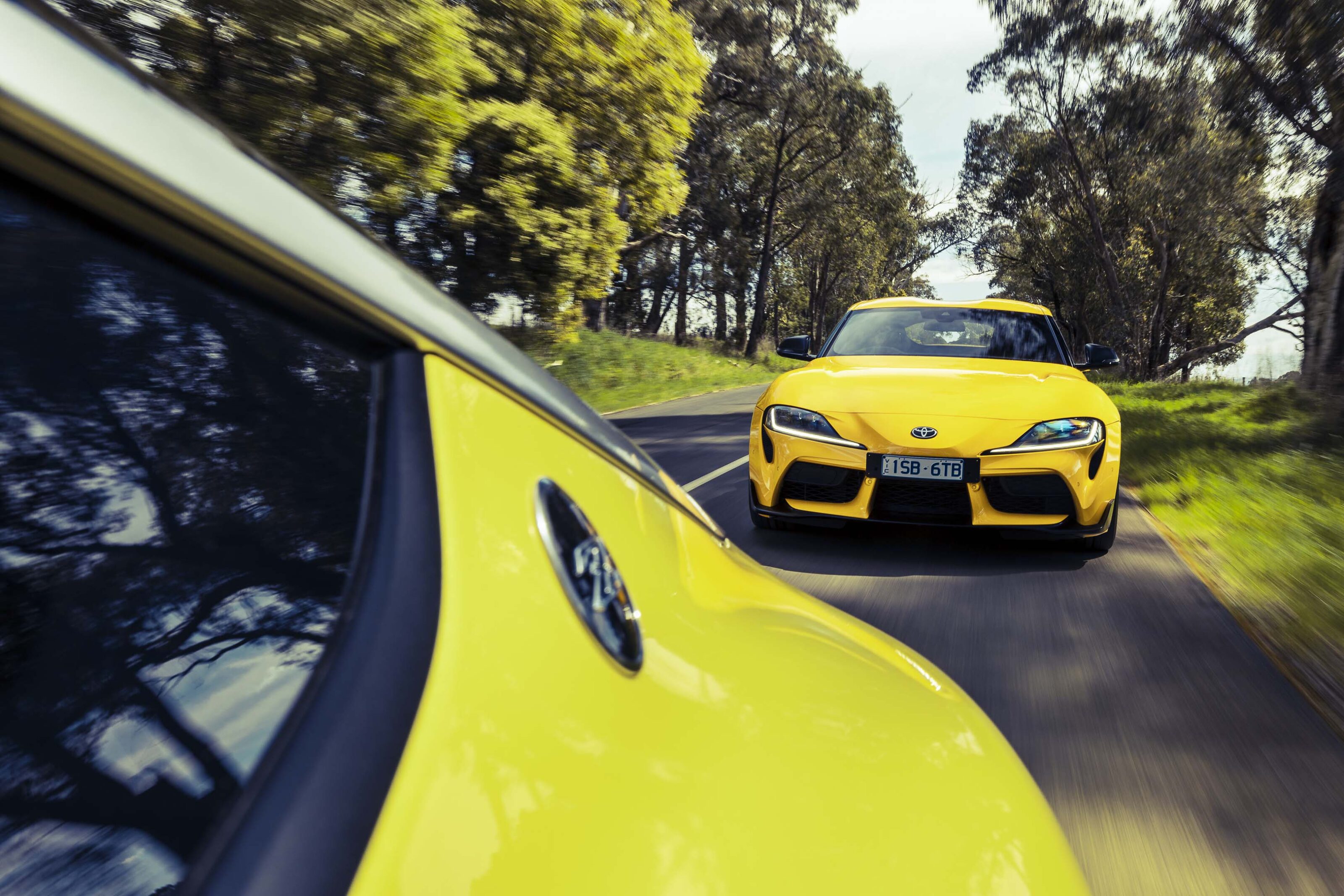
Perhaps that variant will be better suited to battling the Supra on a twisting mountain road. Which brings us nicely to the crux of the issue. As a sports car, the Z doesn’t quite have the finesse to match Toyota’s reborn hero. Yet, there will be plenty of people that can fit the Nissan into a budget but find the GT Supra a stretch too far.
Nissan’s sports car hero offers genuinely impressive bang for your bucks. Yet, perhaps the biggest compliment that can be given to the Z is that it feels cohesive, considered, and purposeful. A parts bin rearrange it is not.
Driving enthusiasts will enjoy the Z as much as those that simply want a powerful and stylish two-door coupe. The fact that this Z will do both is an achievement on its own.
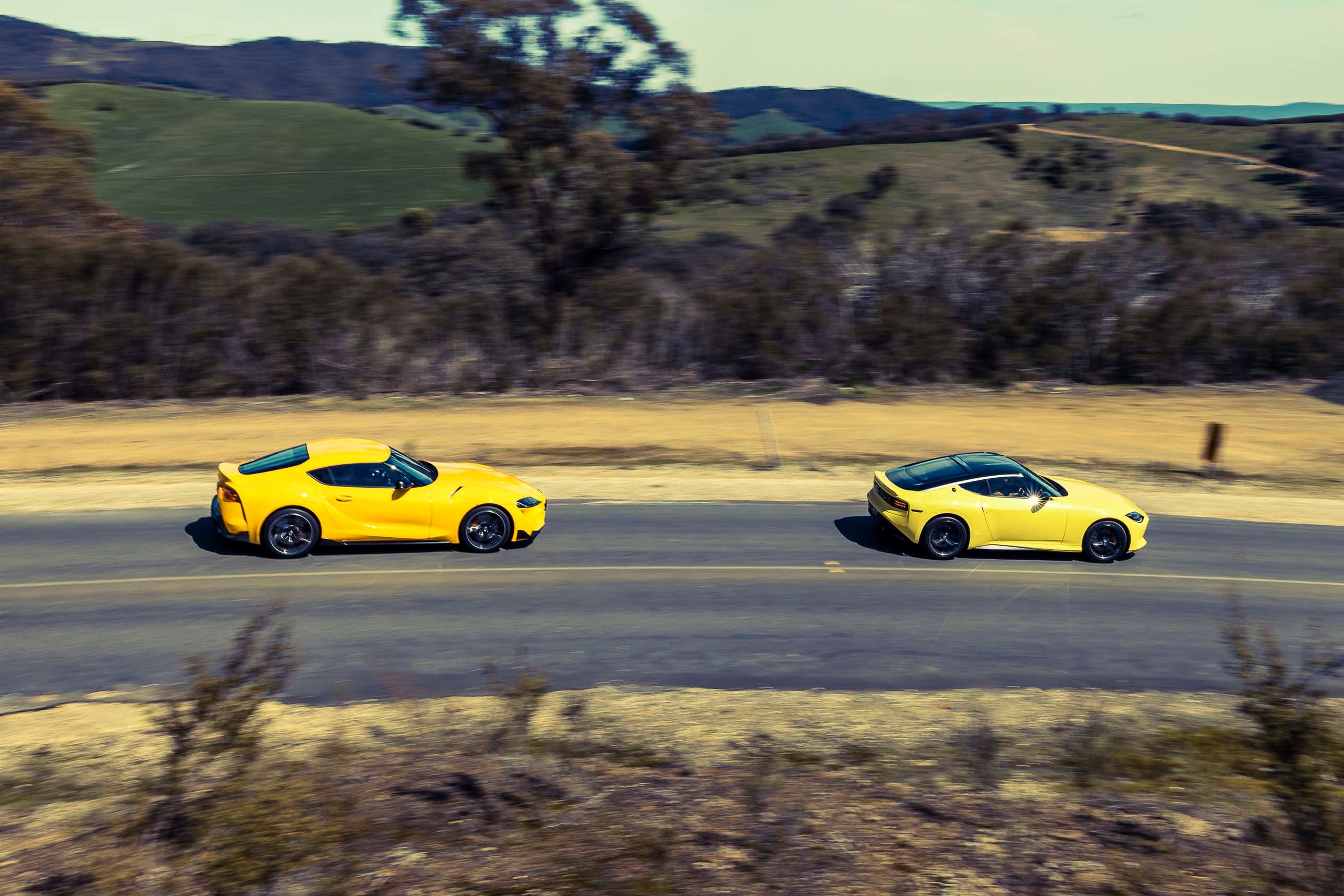
Clever as Nissan’s development process may be, it proves unable to dethrone the Supra from the sports car throne for now. The Japanese-German hybrid is searing hot, with road holding that can be genuinely shocking at times.
Its on-paper outputs are slightly smaller than the Z, but it uses its eight-speed gearbox to greater affect. You can drive it fast by leaving the automatic to its own devices or by taking control yourself with equal reward.
While we remember the ‘90s as the halcyon days of Japanese performance, these two make a compelling argument that the golden age is now. We are glad to see the legendary nameplates survive, and thrilled to see them thrive.
SCORING
Toyota Supra GTS: 9.0/10
What we like
- Scintillating dynamics
- Clever gearbox
- Premium interior
Not so much…
- Booming road noise
- Price premium
- Cramped cabin
Nissan Z: 8.5/10
What we like
- Genuinely useable day-to-day
- Powerhouse engine
- Fantastic value for money
Not so much…
- Could use more focused rubber
- Canu2019t match Supra on interior quality
- Lazy gearbox logic
What’s next?
2023 Nissan Z manual v Ford Mustang GT manual… stay tuned!

2023 Nissan Z and Toyota Supra GTS specifications
Parting ways
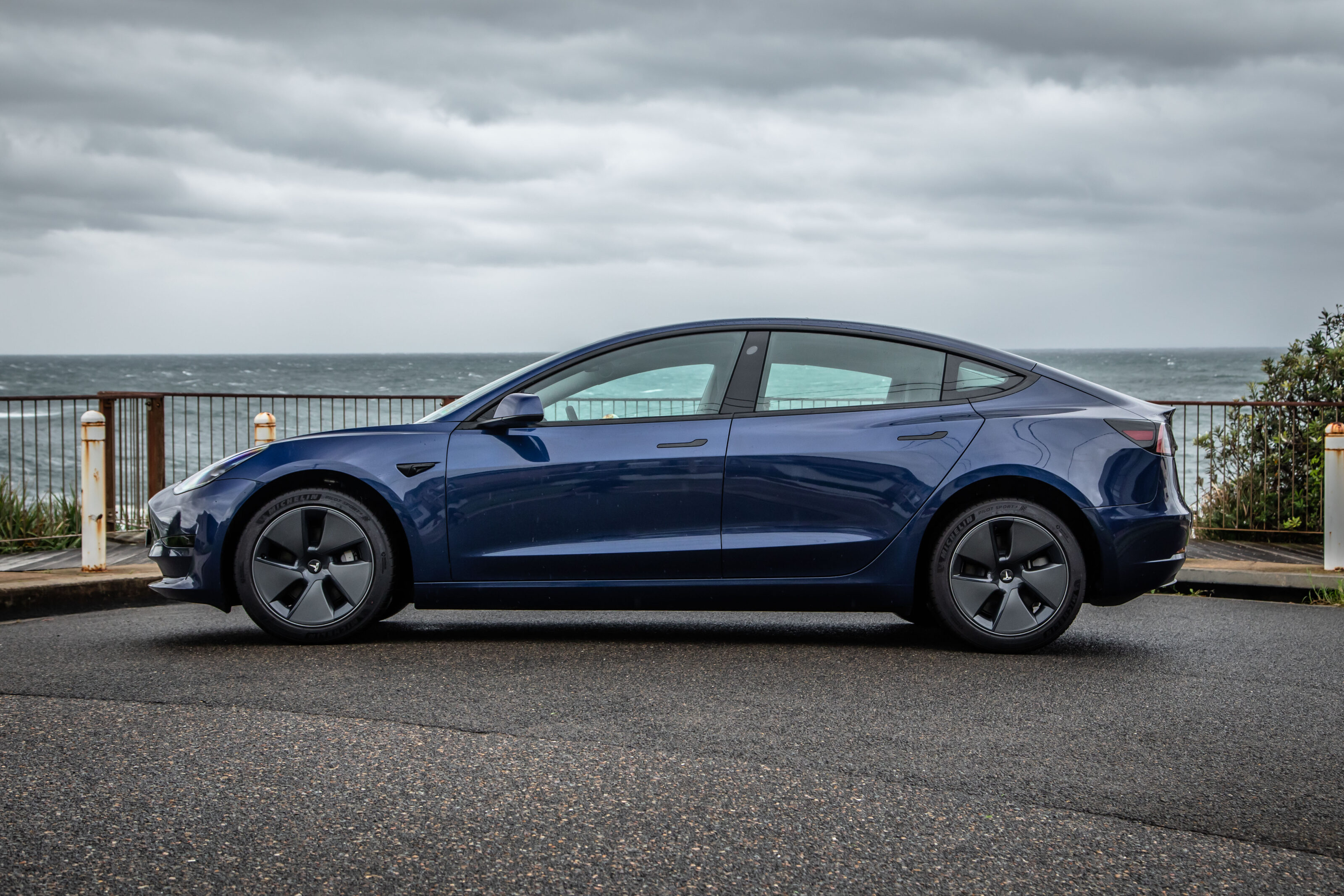
I just read the September issue of Wheels. Regarding Angus MacKenzie’s column ‘New Disrupters’, from someone who wants an EV and has been patiently waiting on VW to release some here in Australia (having owned VWs for 22 of the past 23 years, and is now buying a Tesla Model 3) I agree with Angus’s general thrust.
But the one aspect not mentioned in which these new companies, including Tesla, are not competitive, and frighteningly so in my opinion, is in the area of aftersales service and spare parts.
How often do I read that someone is waiting months for roof glass for a new Tesla Model 3, or a new door panel to replace one damaged in an accident? And Tesla service centres show a remarkable amount of ambivalence to the problem. This is what will come back to bite them.

They’ve got to get better after the car leaves the delivery room. Tesla, BYD, Xpeng and all the other ‘Disrupters’ might have the sale now. But if they can’t ensure their aftersales service and spare part accessibility in the future, we all might buy Tesla now, like I’m about to, only to go back to VW, Toyota, Kia, Hyundai or another of the “established OEMs” for our next EV.
So, why am I buying Tesla then? I want an EV, love the Model 3 interior (it looks like the future) and now that it’s manufactured in China, has a good standard of fit and finish. I’m just hoping not to have to find out first hand about the aftersales service / spare parts lottery…
Rod Davies, Baldivis, WA
Andy: While old Elon might have a thing or two to say about how easy electric vehicles are to manufacture, Rod, it’s a fact that the soft science of building the supporting infrastructure and the culture of the brand is infinitely trickier. And therein lies the challenge for this new wave of car companies. What do they stand for and what do they mean to buyers?
Rebooting COTY
I read with great interest Andy’s September Ed Start and am heartened by his desire to reform Wheels and innovate the magazine and the online platform.
As part of this review and soul searching, may I suggest you revisit the Car of the Year award also. To my mind, you have continued to assess and award the Car of the Year looking too much on it being something that Wheels has done for more than 60 years without more than the occasional tweak and living off something created so long ago. You are leveraging off your past.
You really need to start with a clean sheet to take COTY forward into the future as a meaningful award.
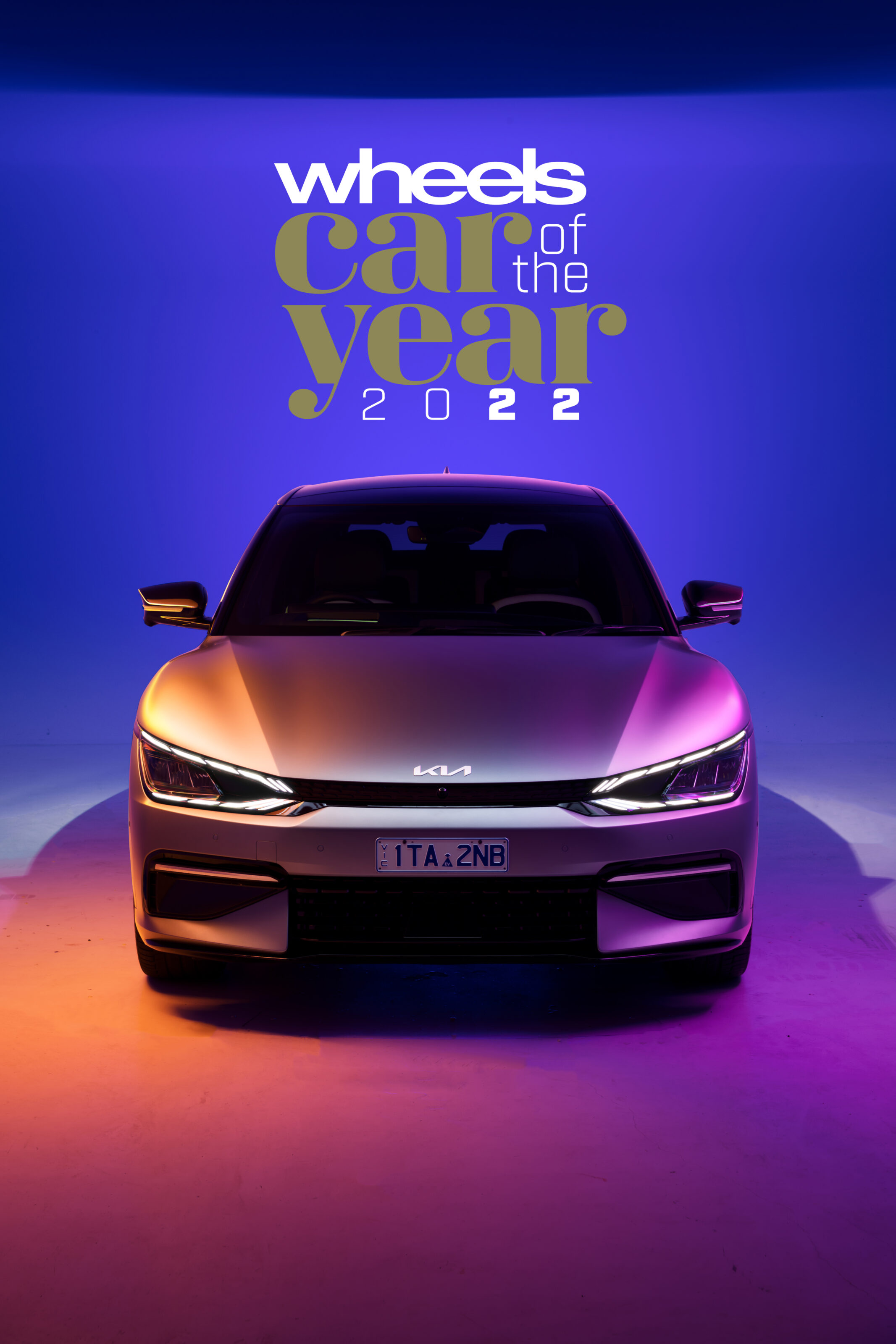
Rereading the 2022 Car of the Year, I cannot see how you can compare such a diverse bunch of 21 different cars to come out with one winner. It’s a meaningless comparison across the board against the six criteria.
A Merc S450L just does not compare in any meaningful way to an i20N or to a Landcruiser 300, a BRZ or a Kia EV6. All interesting stuff, but the outcome is somewhat meaningless to the motoring public. Unless you are in the market for a mid-sized electric SUV in 2022.
Richard Lamb, via email
Andy: As you suggest, the Wheels COTY award has served a purpose in the past, but whether it’s still a relevant and valuable award today is something to which we’ve been giving some thought.
For what it’s worth, my viewpoint mirrors yours almost exactly, Richard. The judging criteria tend to funnel verdicts towards all-rounder SUVs. Time for a rethink?
EV budget hole
I have a concern regarding the transitioning of the Australian fleet to electric vehicles.
I know the question has been floated asking how will the revenue be raised to negate any decline in fuel tax? So far this concern is just discarded to one side, a can to be kicked down the street.
It is easy for any government or opposition to spruik tax cuts or incentives to reduce the purchase price because the number of vehicles in the foreseeable future will likely be relatively negligible.
There is no doubt economies of scale will reduce EV prices. However, when the bottom line of the federal budget becomes severely impacted by falling revenue from fuel taxes then the government will have to fess up and advise where else are they going to get their funding.
EVs have plenty going for them, however they still need roads.
It is a dishonest practice to encourage the uptake of electric vehicles, with a major pillar of the argument being the ‘savings at the bowser’, without a transparent plan of what happens once we get there.
Mike Riordan, Campsie, NSW
Andy: I’ve long felt that it would be irresistible for federal government not to tax remaining fossil fuel users through the nose, thus killing a flock of birds with one stone
Scale models
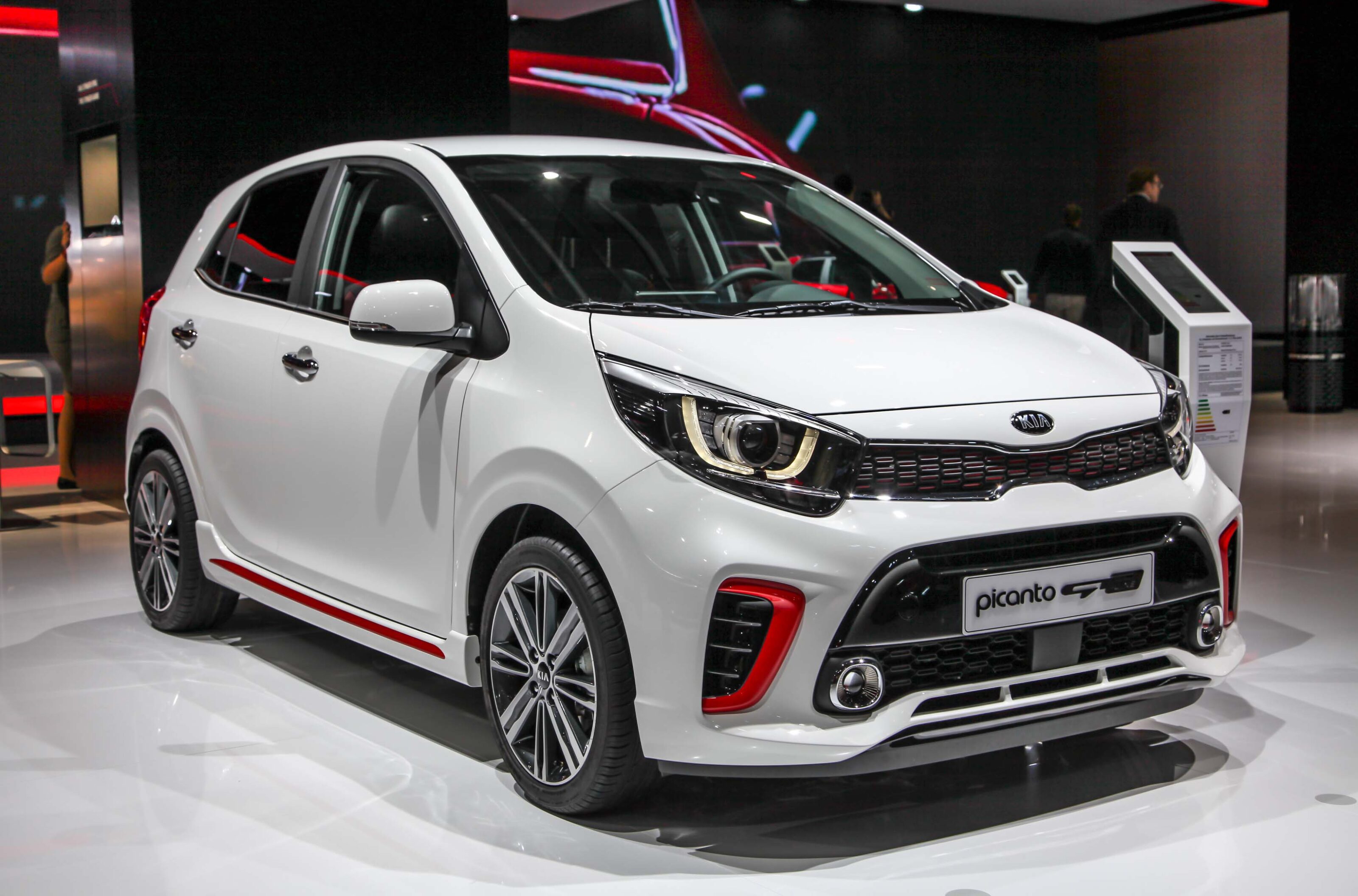
We’ve been in Australia since 1996 and been fortunate enough to have had a ridiculous number of cars from a Subaru Legacy to a Lotus Exige S, via a couple of V8 Hemis and pretty much every type of car in between. However our latest has been something of a revelation. It’s not fast, it’s not expensive; it’s a Kia Picanto GT. A 1.0-litre, three-cylinder turbo, with a manual ‘box, and I can’t recall when I’ve had so much fun day-to-day driving.
In the Picanto you find a backroad and row up and down the ‘box from corner to corner and re-discover the enjoyment of driving again without (too much) unwarranted attention from the constabulary.
We know that ICE cars are on their way out so if you want a last blast before it’s all over you could do far worse than getting behind the wheel of Kia’s smallest, but probably most enjoyable car.
Spencer Harrison, Wallan, Vic
Andy: Yep, we love ’em. Solid choice

The question: Would you like to see a diesel version of the new Raptor?
With 98RON costing better than two bucks a litre, I’d love to see a Raptor that won’t break the bank to refuel. Question is whether Ford has a diesel engine that would work in such an installation.
Alan Graham
Haven’t we been there and come away a bit underwhelmed? Diesel’s a tech from the past. A performance hybrid? Now I’d be interested in that.
Kostas Kalaitzidis
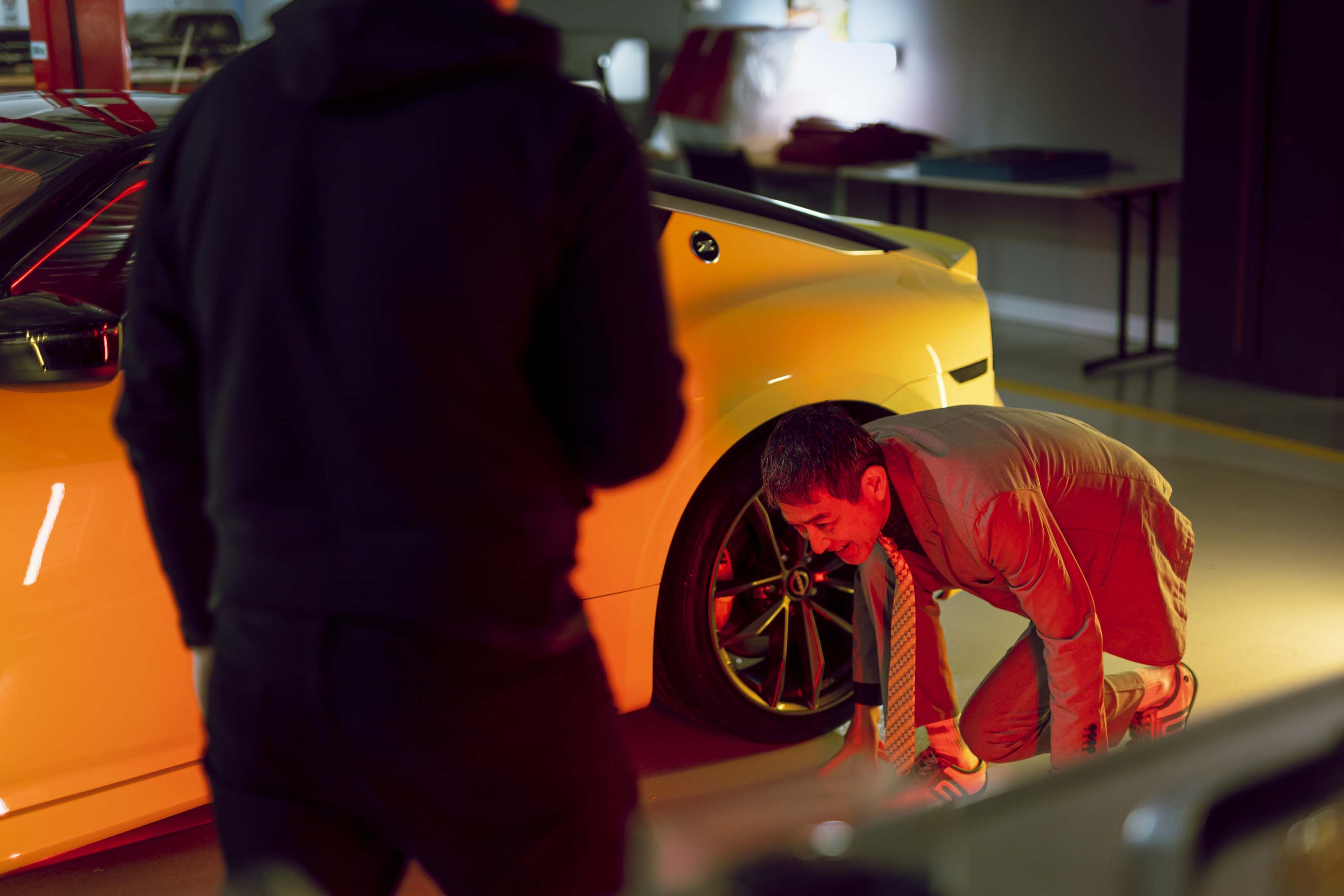
Few execs in the car world are like Hiroshi Tamura. I’m watching the 60 year-old Nissan veteran crouch next to the new Z, hands on the ground, mimicking a sprinter in the starting blocks – a sprinter in a crisp grey suit and driving shoes. With a yell he leaps up and forward like a spring, channeling the energy of a full-bore launch-control start. He does all this just to tell me about a swage line in the sheetmetal.
Nissan’s new Z? To be honest, it’s more like Tamura’s new Z. The man has lived and breathed Nissan performance cars for decades, catching the bug long before he became a Nissan lifer back in ’84, and for Tamura the box-fresh turbo Z represents the culmination of his career.
His heart and soul – both of which he wears on his sleeves – have been poured into it, and he’s fiercely, justifiably proud of the final result.
But it almost didn’t happen.
The business case for sports cars is tenuous at the best of times. However in 2019, a year after Nissan’s design chief Alfonso Albaisa let slip to Wheels that a new Z was already in the works, Nissan began a protracted financial slump that led to its biggest yearly loss ever.
“Now I can be confident, but imagine for three years before [now], everything was nervous about the project, it was floating, suspended,” Tamura explained, now sitting in the driver’s seat of a yellow Z Proto.
“The future was not so easy to see, I was always nervous that suddenly, they would kill this project. There was a risk of this, so many times.”
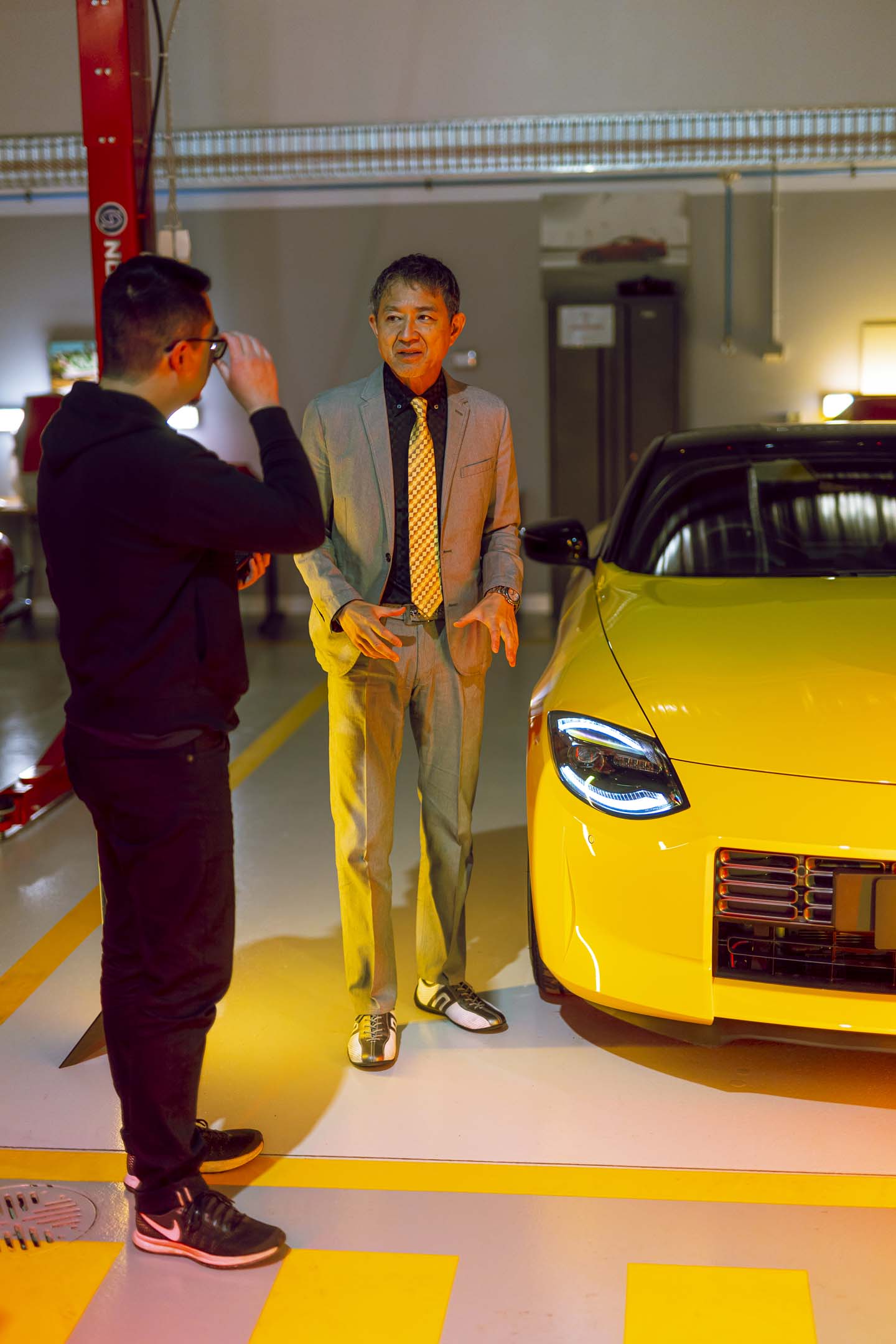
For Tamura, terminating the Z would have robbed him of one last project.
Now approaching retirement age and with the Z’s development done and dusted, Tamura has hung up his spurs as a Chief Product Specialist and has settled into a more relaxed role as a brand ambassador – though the launch schedule for the Z has seen him boarding jets with an unenviable frequency for much of 2022.
In the end Nissan endured its financial trouble and, to its credit, kept the lights on in its sports car development division. Tamura, now able to see the fruit of his labour in the hands of the public, seems relieved. It’s been the end result of five years of hard work for him and his team, and the task of bringing a Z to market in a cost-effective fashion is no easy feat – even without economic headwinds.
It all started on March 1 2017 with a hand-written note, where Tamura sketched out what was needed to take Nissan’s iconic sportscar to a level well beyond the 370Z.
“That note was for the R&D boss, [Kinichi] Tanuma,” Tamura said.
“Tanuma was charged with being the GT-R chief vehicle engineer, so he was one of our team. So he was easy to access, for me to say ‘Tanuma-san, give me your time, just 15 minutes’. So I wrote about my idea very quickly to summarise it for him – let’s make a Z! That was the message”
“What kind of Z, was Tanuma’s question to me. The answer was more about maintaining loyalty to our customers. Normally people love to talk about new, new, new, but for [Z]… how can I say… it’s about blending some feeling for the nostalgic with something new.”
And to help guide the new Z’s development team with imbuing the car with the requisite amount of nostalgic ‘Z-ness’, Tamura looked to the past.
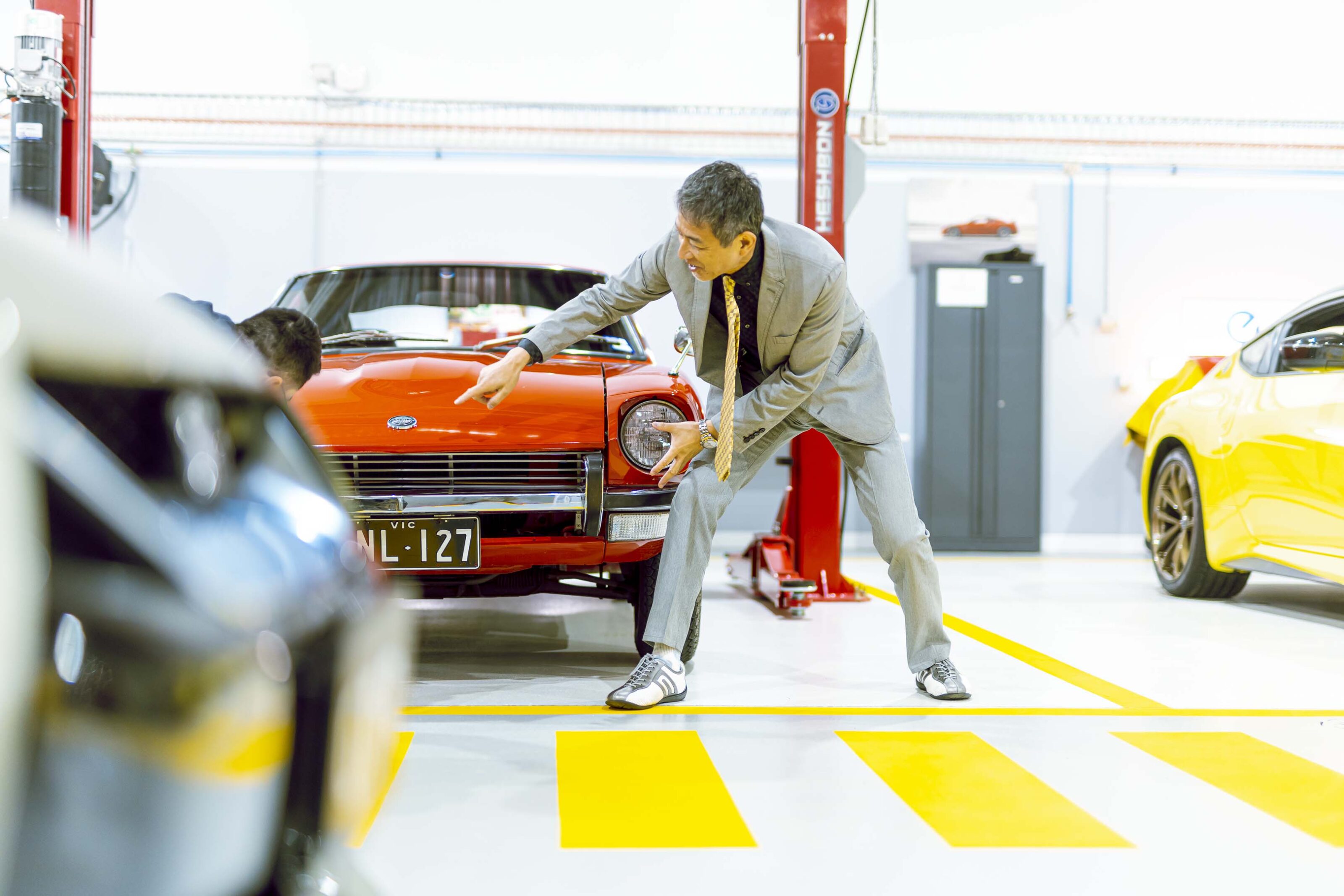
“People love to talk about the first generation Z and of course I respect the S30, the second generation Z, and even the first V6: the Z31. Then in 1989 we had a big jump, which was the Z32.”
The Z32 300ZX, besides taking the Z’s design language away from the big shoulder pads and punch-perm 1980s styling of the Z31, also offered an extremely diverse line-up with two wheelbases, the choice of a two-seat or two-plus-two layout, removable glass targa roof panels for both of those body styles, a fixed all-steel roof option for the two seater, a naturally-aspirated engine and the headline-grabbing twin-turbo V6.
Not to mention the option of a five-speed manual or four-speed auto, plus a soft-top convertible for those who found the targa roof didn’t let enough photons onto their dome.
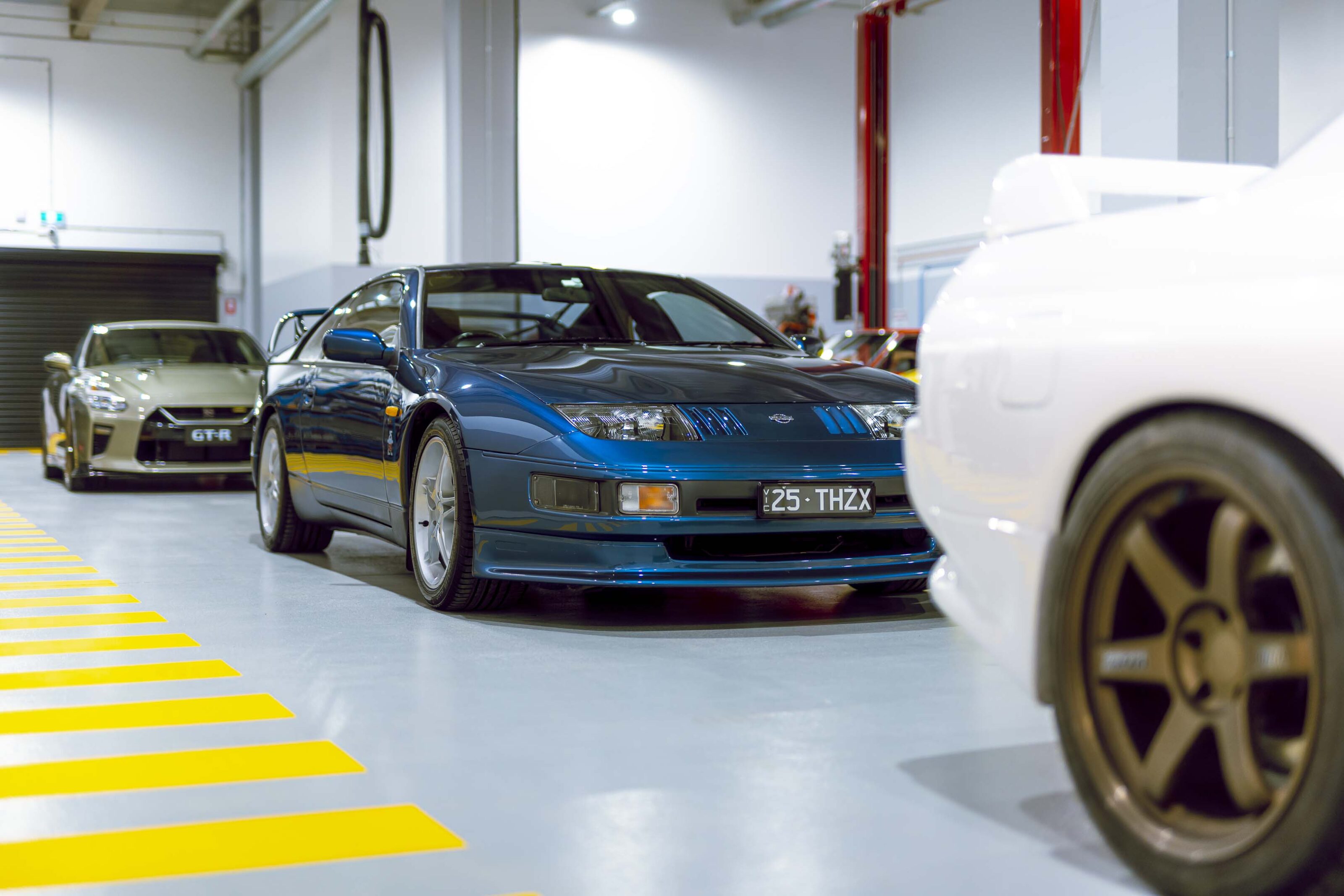
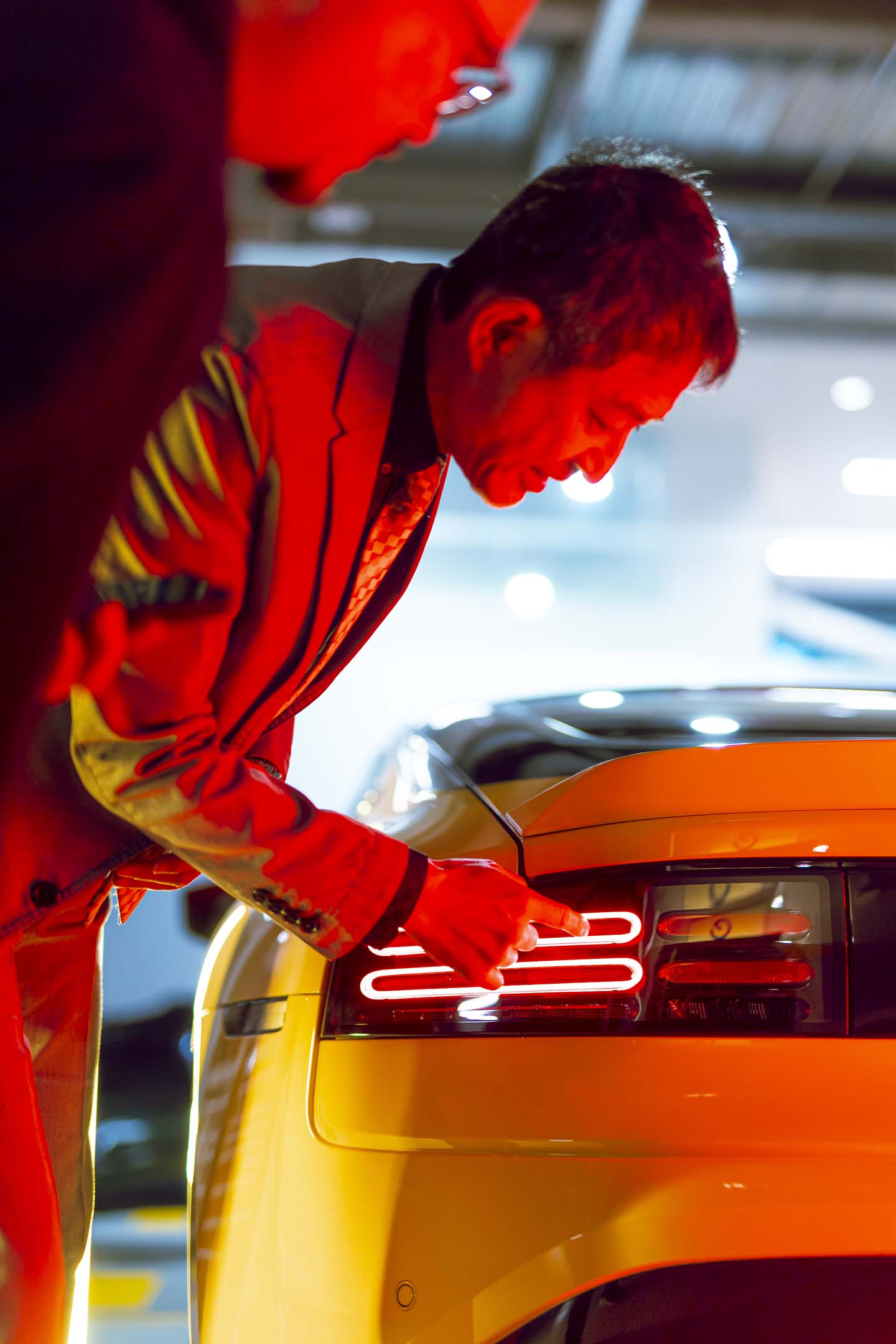
You can see the Z32’s influence in the LED light tubes of the new Z’s tail lights, but asked whether customers wanted a return of the two-plus-two body style, targa tops or even a lower-output base model engine, Tamura said that today’s sports car buyer doesn’t seek that level of diversity anymore.
“From customer voices recently, a sports car must have a compact core, be lightweight,” he said. They did, however, want something else from the Z32 besides its cyberpunk tail lights: a twin-turbo V6.
While there’s boundless enthusiasm for the Z within Nissan’s halls, economic realities were the leash that kept the project from running into the Armco.
Tamura joined Nissan in 1984 as a salesperson before entering product planning two years later, landing him at one of Japan’s biggest automakers at a time of unprecedented economic prosperity – Japan’s infamous bubble economy.
Financial capital was easy to access with the Japanese government encouraging businesses to spend freely, and spend they did: these are the economic conditions that spawned the aforementioned Z32 300ZX and its dizzying menu of variants, along with the R32 GT-R, Silvia and Leopard – all two-door performance cars, a format not known for intensive profitability.
The economy’s a little different these days.
A shoestring development budget necessitated some savvy recycling for the new Z. The platform is the same fundamental floorpan as the 370Z, but with new exterior panels and structural reinforcements around the engine bay, rear floor and hatch opening that grant it a new aesthetic and a 10.8-percent increase in torsional stiffness.
Suspension subframes are the same, but with new geometry affording more caster angle for stronger steering feel and high-speed stability, while the dampers ditch the 370Z’s twin-tube construction in favour of more responsive monotubes.
“Nürburgring times, maximum speed; those individual things are one-dimensional”
There’s some obvious carryover in the interior, with door handles, air vents and indicator/wiper stalks all looking very familiar, but the new dash, vastly improved steering wheel and all-electronic instrument panel (it was actually cheaper to use this display rather than engineering a new set of analogue clocks) modernising the cockpit.
And then there are the greasy bits.
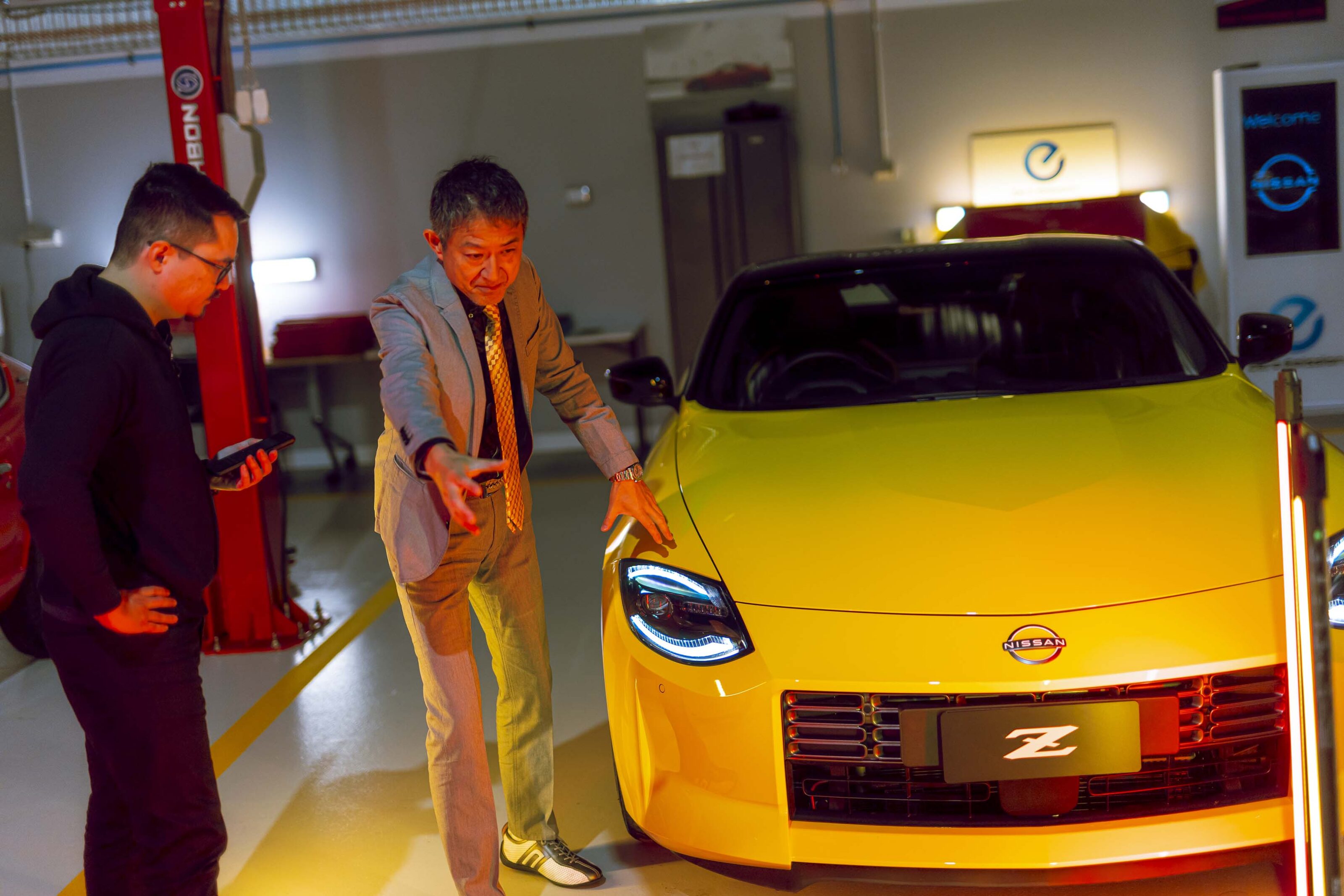
“The engine I could not make from new, of course,” says Tamura. “The motor is from the [Skyline] 400R, or Infiniti Q50 – it’s the same twin-turbo system. But it now has a ‘Dance Partner’ attitude because we added more response, and we did that with the recirculation valve, which was something of an R32 Skyline idea, with the twin valves.”
Those recirc valves make the Z’s version of the VR30DDTT engine unique. Though the peak power and torque outputs of 298kW and 475Nm are the same as the Q50 Red Sport, the Z’s engine keeps its dual compressors spinning faster between lifts of the throttle thanks to the increased flow of its recirculation system, which gets them back on boost quicker when the accelerator pedal is reapplied.
The torque band is wider, too – while the Q50 made max twist at 5200rpm, the Z delivers that number all the way from 1600rpm through to 5600rpm.
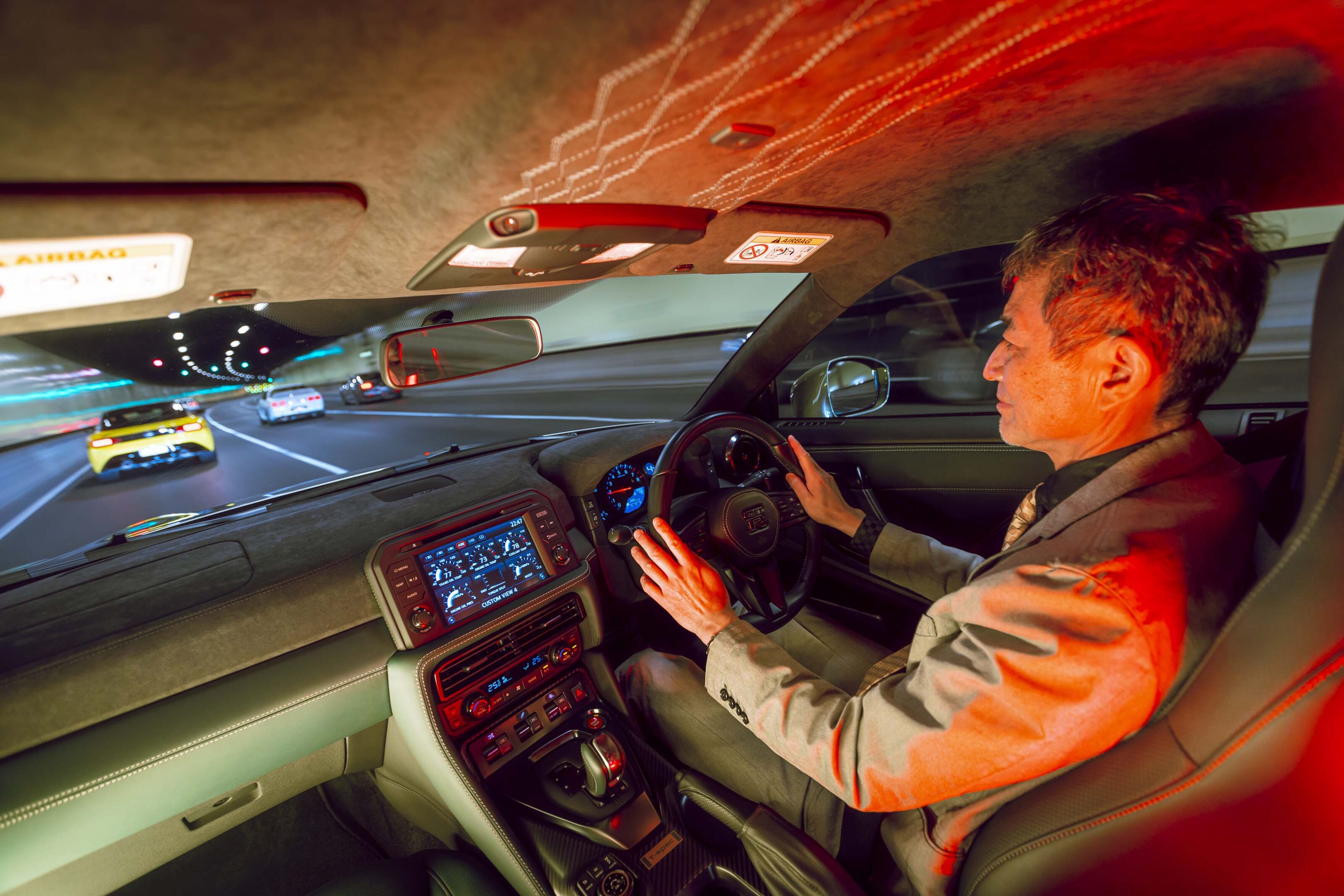
It’s a similar story with the nine-speed automatic, which replaces the 370Z’s seven-speeder.
“Again, 100 per cent brand-new is so tough to get, that’s why we got the nine-speed from the Titan heavy-duty truck.”
“Not only the number of gears is improved, but the gear-to-coverage zone. Each gear can cover a more narrow section [of the rev range] – up or down, third-to-fourth, fourth-to-fifth, even back from fifth to first. It’s easier to do that because there are so many gears to cover the same range. That’s the benefit of the nine-speed.”
But why not just recycle the old seven-speed if constraining cost was so vital, rather than using the more sophisticated nine-speed unit from JATCO?
“The seven-speed was sporty…” he pauses, “…but it wasn’t good enough for the ‘Dance Partner’ level of super-synchronised response that we wanted.”
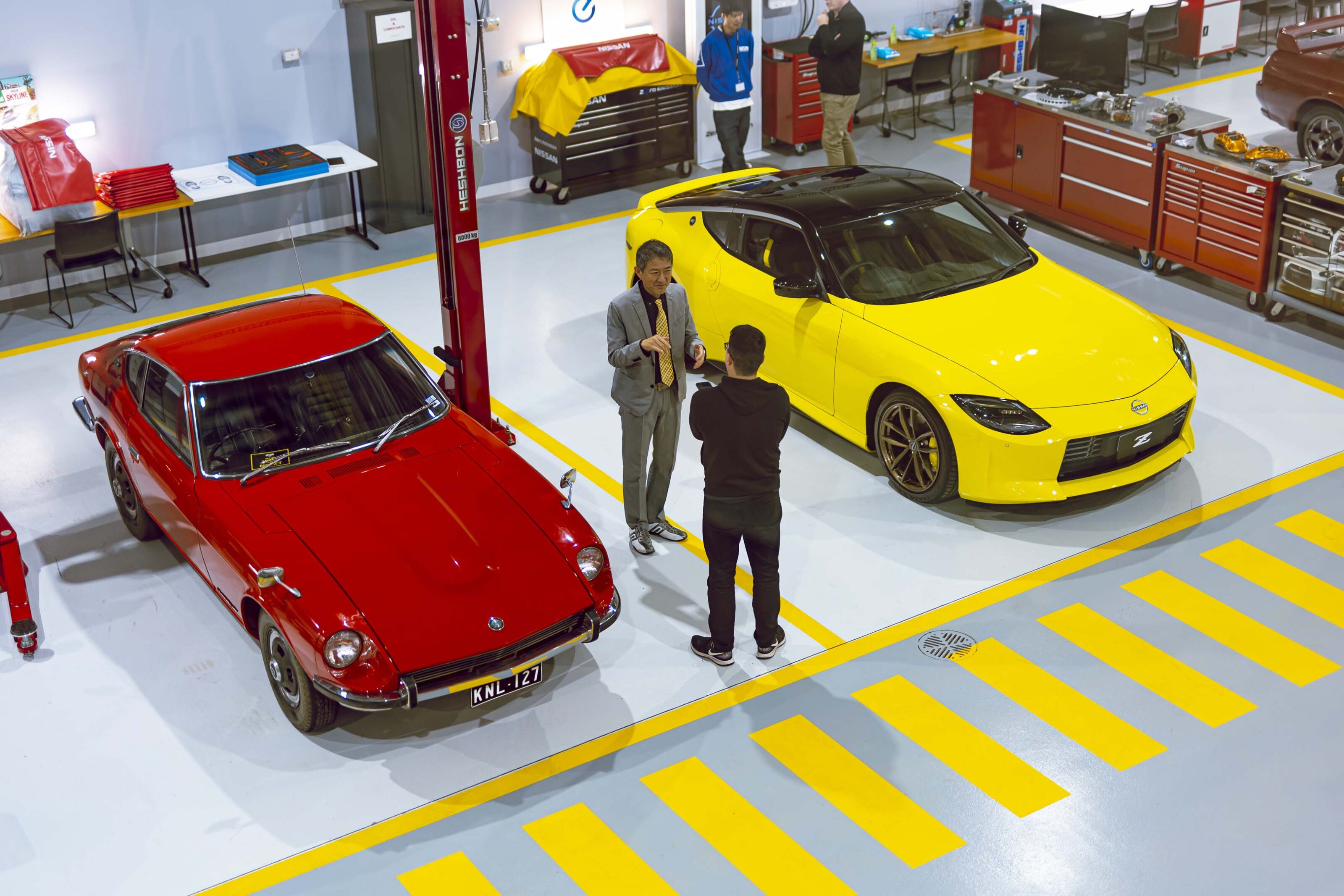
“The powertrain is very expensive; that’s why we are charging more for it. For example, in the USA we charge $10,000 more for the base model [compared to the 370Z], apples-to-apples. For this twin-turbo with a nine-speed, both those things – and the mechanical clutch LSD – are the main reasons for this price increase.”
There are other mechanical changes. Ensuring a manual transmission stayed in the mix was important enough for Tamura to hoodwink his bosses about manual uptake, using the Nismo (in minuscule print) version of the 370Z’s manual/auto split as evidence that people were still buying three-pedal cars.
Had he used the regular 370Z’s stats, we probably wouldn’t have a stick-shift in the new car, and while it’s still fundamentally the same unit as the 370Z, it’s been revised with a reworked shifter for a sportier and less notchy gate, while the final-drive ratio is taller.
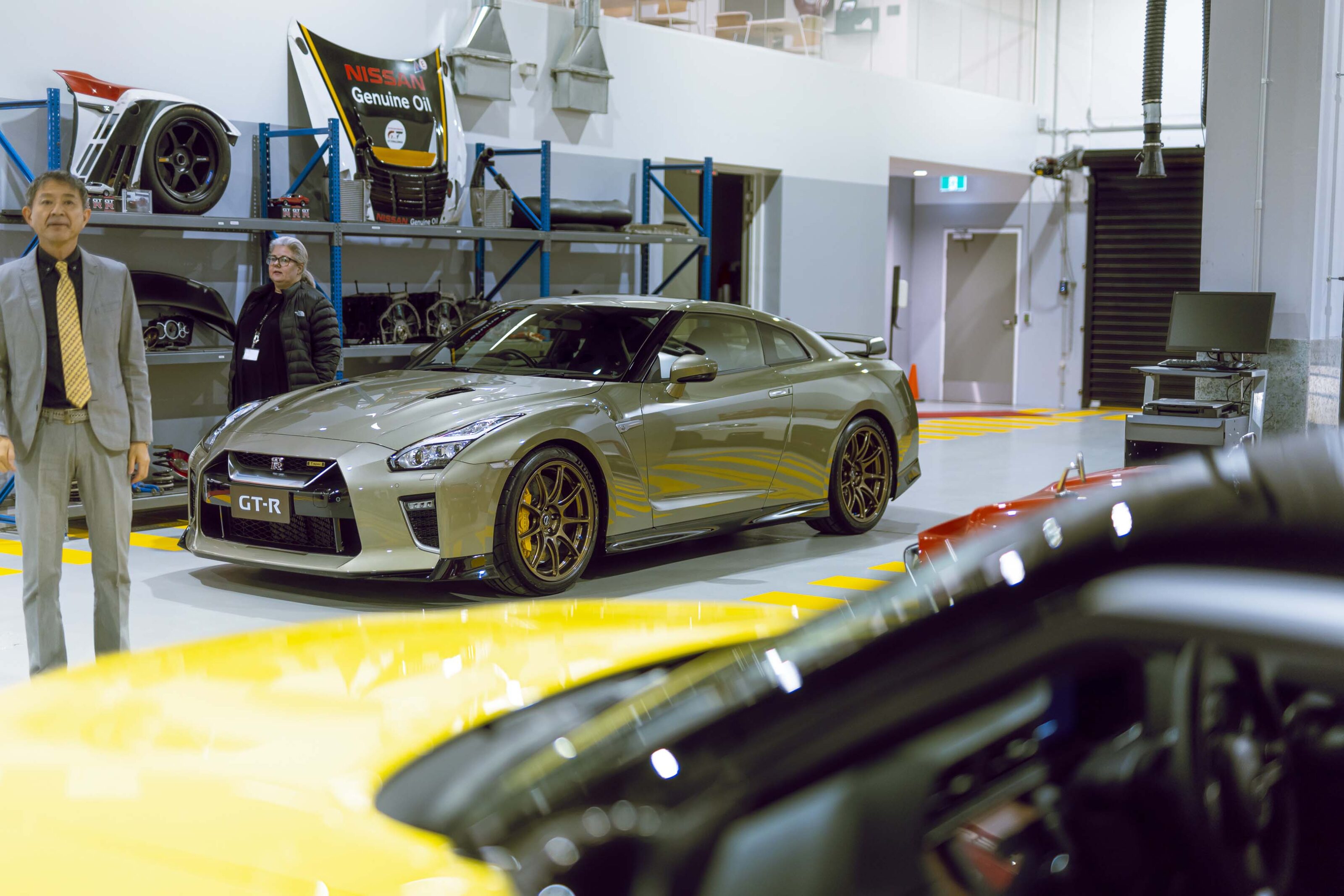
Brake feel is also enhanced. The four-piston front and two-piston rear Akebono calipers and rotors carry over, but with new pad compounds and brake booster sizing to give a more GT-R-like feel to the pedal. The steering is all-new, however, bearing no resemblance to the steer-by-wire system used in the Q50 and Skyline that also used this engine.
That system has been binned in favour of a proper mechanically linked electric power steering system. For Tamura, the sum of all of these parts has to be a car that engages its driver in more than one way.
“People always love to talk about zero to 100km/h times, or Nürburgring times or maximum speed, or horsepower – but those individual things are one-dimensional; a single dot. However we are living in three dimensions; this car is a product of three-dimensional thinking.”
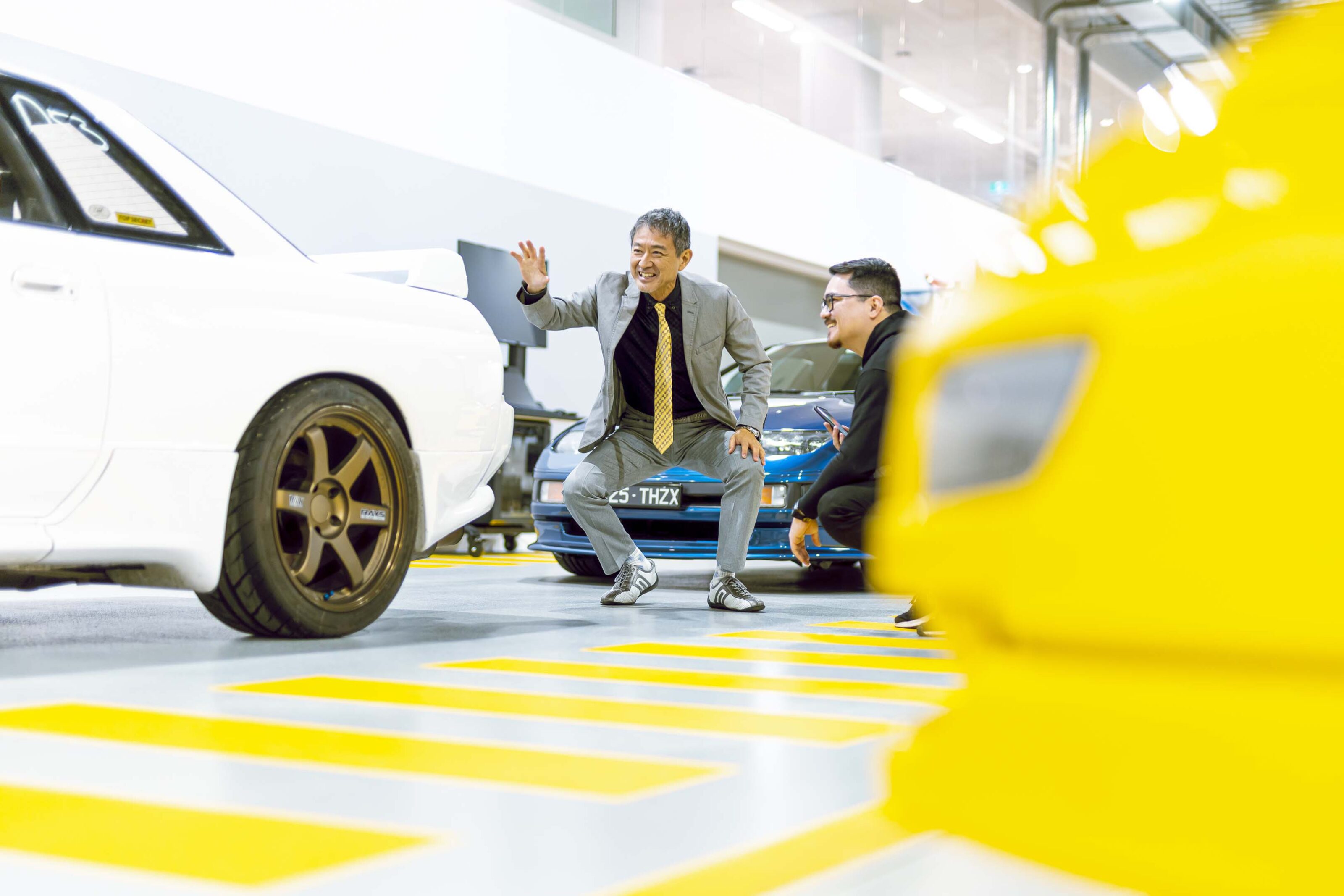
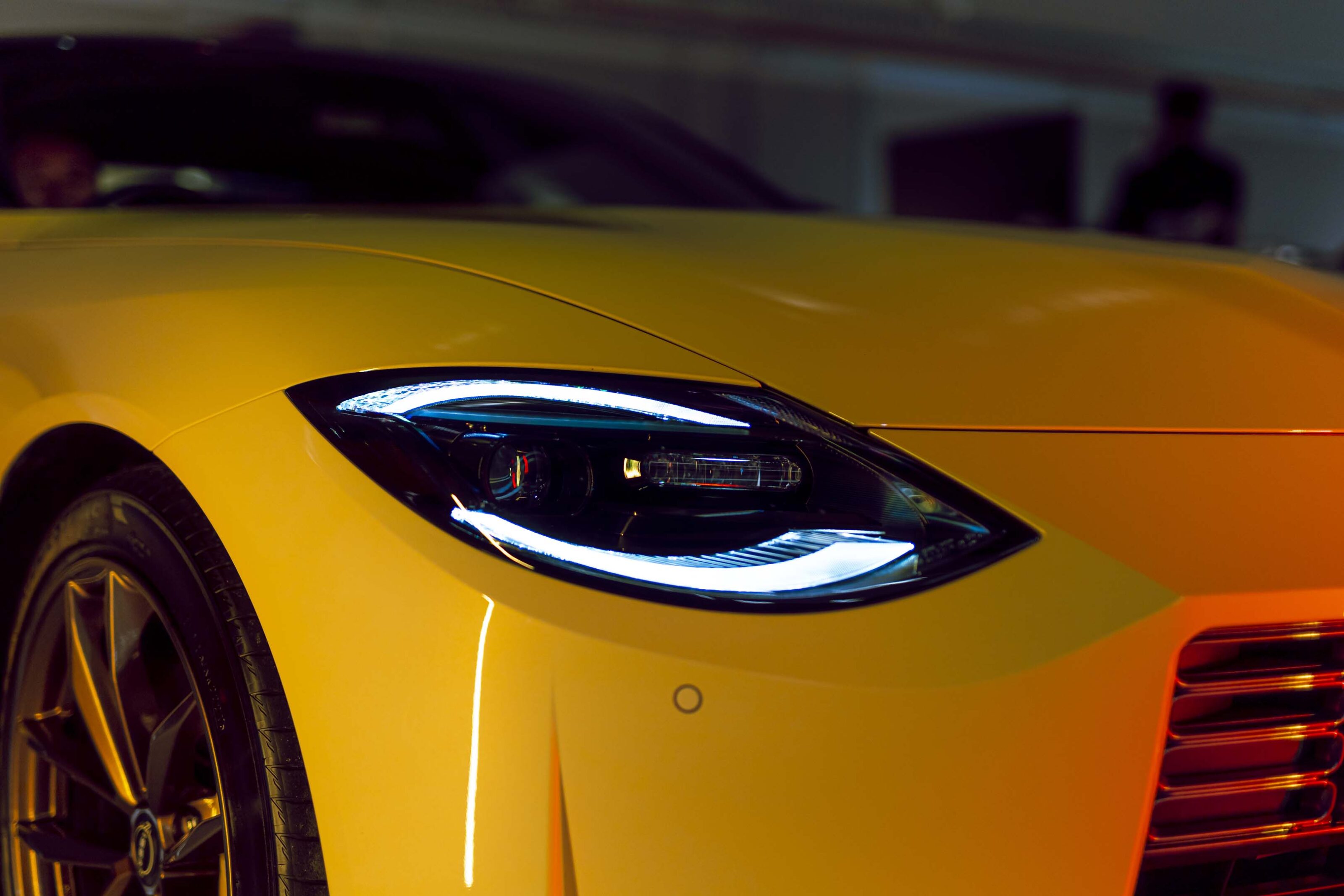
By the same token, the retro throwbacks like the headlamps, rectangular grille and tail lights can’t be one-dimensional either – they must still satisfy core sports car functions.
The grille, for example, hides a crash structure in the centre that’s a modern necessity, but the aperture is shaped to provide as much air as possible to the Z’s cooling package – which, with five separate heat exchangers and a radar unit in front of them all, is considerably more complex and demanding than the 370Z’s, which had just a radiator and an air conditioning condenser to accommodate.
At the back end, the ducktail spoiler isn’t just a visual link to the 240ZG that Tamura owned as his second car, it’s a lift-reducing aerodynamic aid that cleans up the airflow behind the new Z. It also works in conjunction with the squared-off bodywork of the Z’s tail lights.
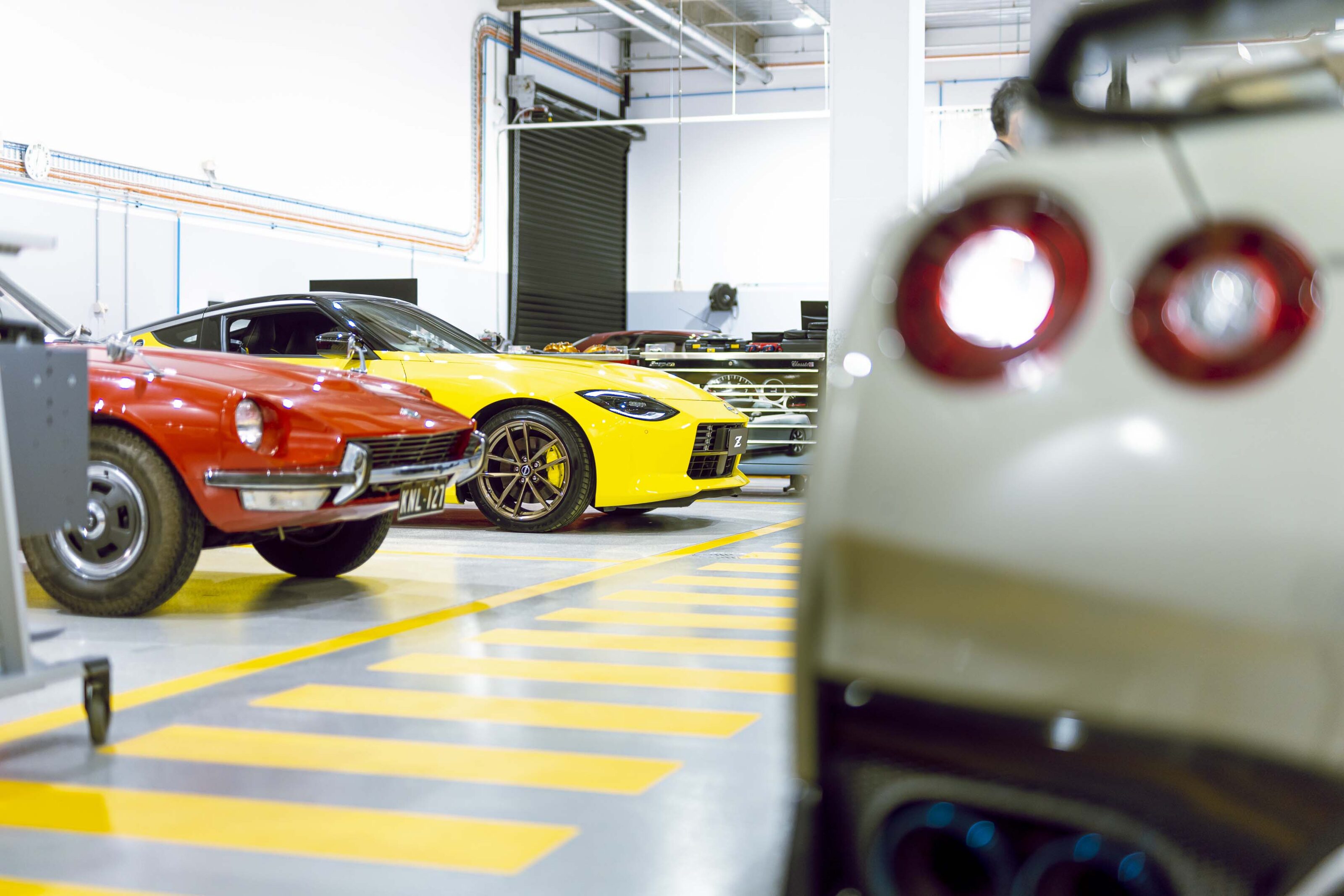
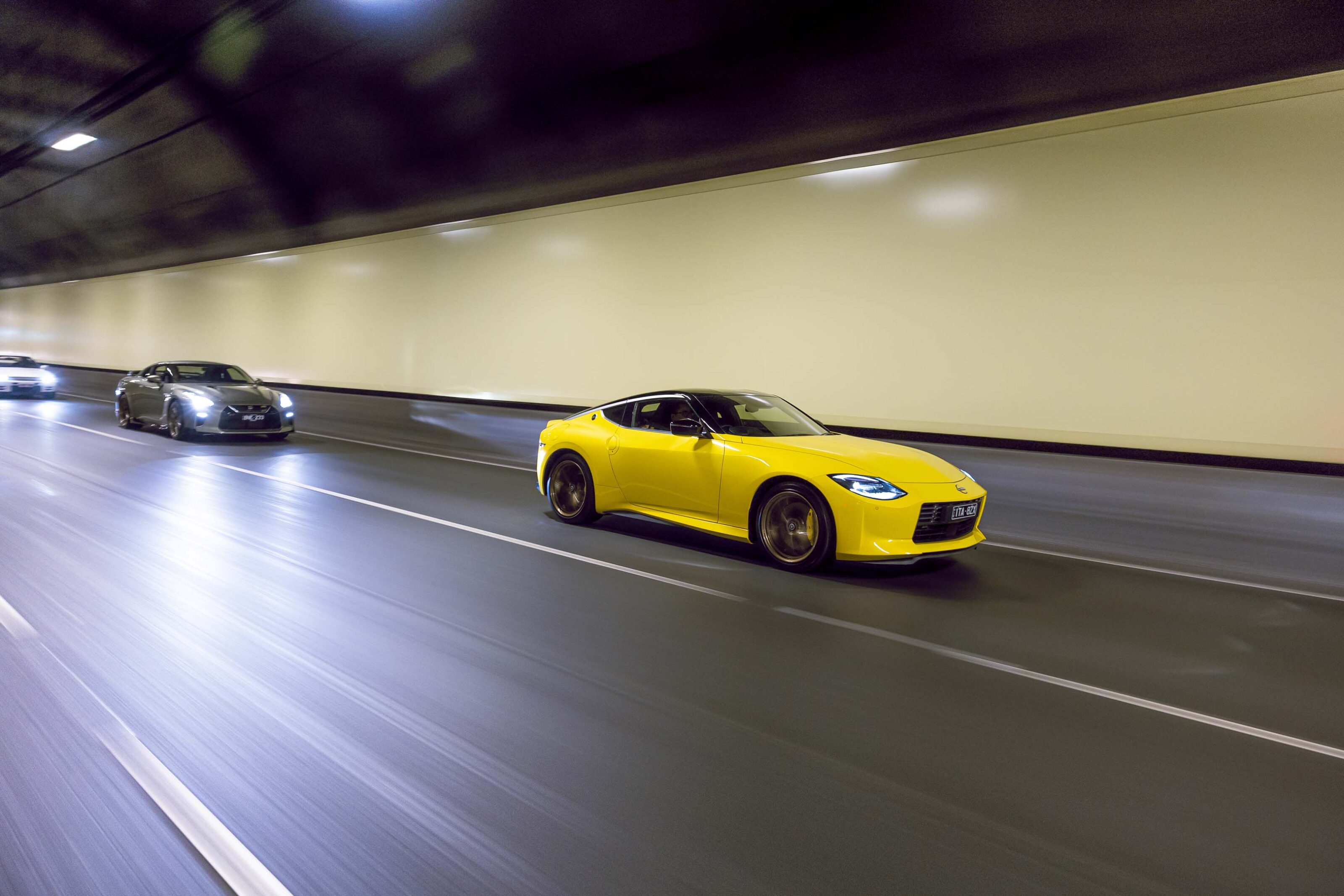
Tamura hops over to a nearby R35 GT-R T-Spec (another of his babies) to point out the abruptly chamfered perimeter of that car’s rear end, which performs a similar drag-reducing function.
Rubbing his chin, Tamura says that if he had his way the whole of the Z’s rear would have been like that, but alas the gentle taper from the rear wheel wells to the tail lights was a design necessity rather than an aerodynamic one.
But he’s content not to have his way on everything. The new Z very much bears Tamura’s stamp, but it was created first and foremost to serve the demands of Nissan’s Z-worshipping zealots.
The Z serves as a fulfilling full-stop to his product planning career, and while his days of product planning are over, he’s recently acquired a classic C110 ‘Kenmeri’ Skyline to fiddle with – the same model as his first car. Tamura’s pursuit of retro authenticity is clearly not confined to business hours.
Skyline’s not the limit
Hiroshi Tamura’s road cars
Hiroshi Tamura’s resume might have things like the R33 Skyline GT-R, R34 Skyline GT-R, R35 GT-R, 370Z Nismo and, now, the new Z on it, but the cars that have passed through his garage give a better insight into his mind.
His first car was a C110 Nissan Skyline coupe, the famed ‘Kenmeri’, which he followed up with a 240ZG, then a turbo Z31 300ZX, then a highly-modified R32 Skyline GT-R – which he still has today.
An engineer by training, Tamura was never the type to keep his cars factory-standard – they were all modified in some way, and that experience – whether botching the cooling performance of his 240ZG or realising that his 800hp R32 was actually much better with ‘just’ 600hp – informed the creation of the new Z.
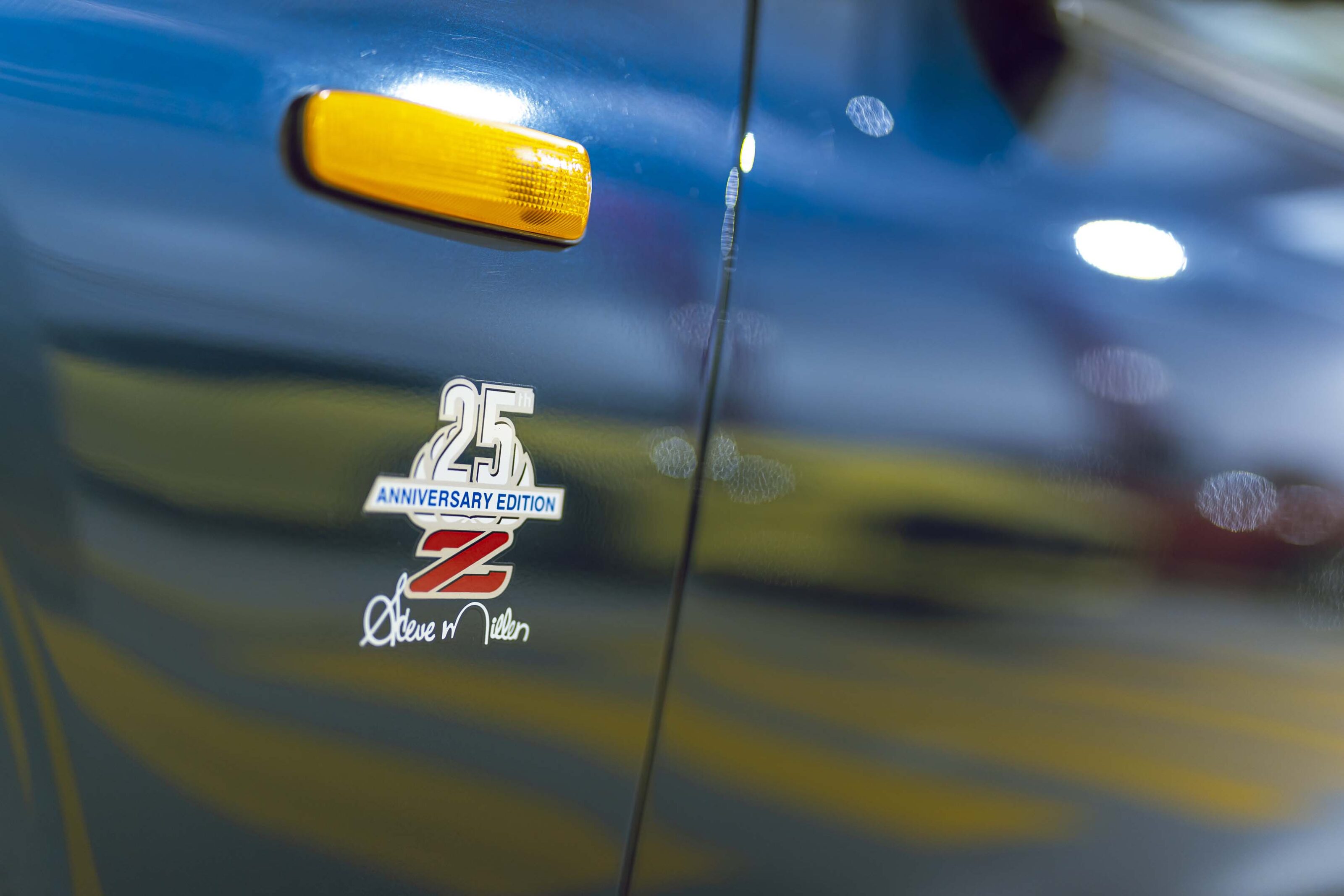
Yesterday I managed to do something I no longer thought was possible: I locked the keys in a car.
With a kiddo in one arm and a bag in the other, I’d thrown the bag on the front seat before moving to the back to buckle in the youngster.
Once there, though, I found the door was locked. “Huh,” I thought. “No worries, I’ll just grab the key…” only to realise two seconds later it was inside the bag on the front seat.
A quick circuit of the car confirmed every door was locked. Even the boot wouldn’t open. I was genuinely perplexed; don’t modern cars have sensors so this can’t happen? The car was a brand new mid-size family SUV with keyless entry, which is how I’d managed to open the door without using the key in the first place, yet somehow I’d managed to completely confuse it.
Still, it was a pretty minor inconvenience, all things considered. Luckily I hadn’t locked the kiddo in the car, which meant my marriage was safe, but unluckily it was pouring rain, so we had a pretty wet and miserable hour while we waited for the RACV.
When help arrived, though, something truly astonishing happened. Had I been driving an older car I probably would have tried to break in myself. My old WB ute, for example, could easily be jimmied open. And I’d seen enough forgetful friends successfully use coat hangers to hook their door handles that I knew it was pretty straightforward. But this was a modern car. They’re much trickier to break into, right?
Foolishly I’d expected the RACV tech to use some kind of electronic decoder to pop the lock. Or at least some high-tech laser-cut master key like Angelina Jolie used in Gone in 60 Seconds. Turns out I’m pretty naive.
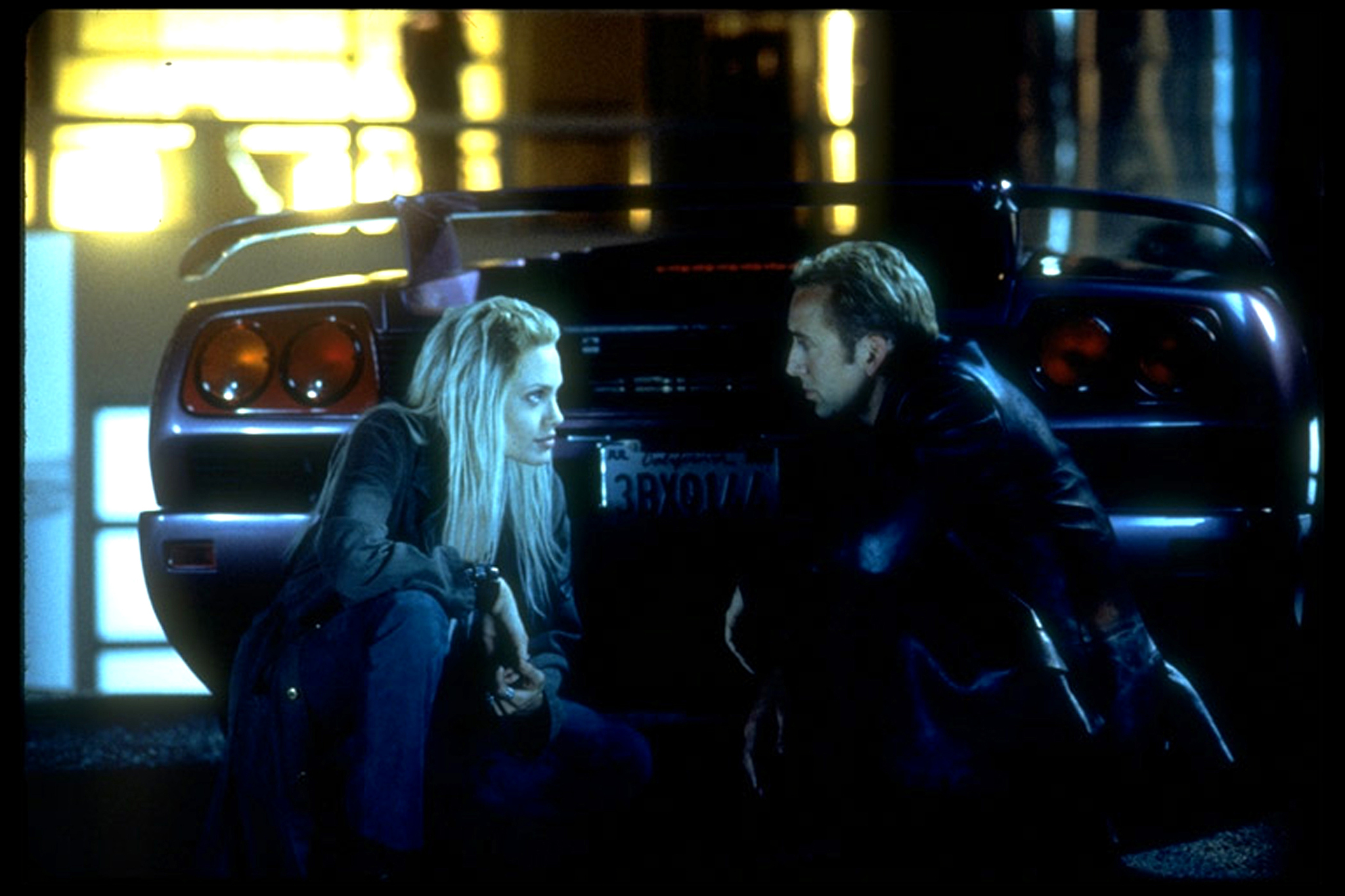
The tech’s tools consisted of a plastic wedge and a small air bag inflated by a hand pump.
He had the door ajar after a few seconds by driving the wedge into the rubber door seal, then he reached into his jacket to produce a long curved piece of metal. It was basically a coat hanger, only a touch thicker, and he used it to hook the door handle. A quick tug later and voila, the car was open.
The whole thing took less than two minutes. With the key safely back in my hand, the technician turned to leave but not before giving me a small smile. “Don’t worry, mate,” he quipped. “This happens all the time. This one was easy, though. Built like a tin can…”
I’ll freely admit I was shocked. You know that sense of disbelief when you first discovered pickles are just cucumbers in vinegar? Or that pineapples grow on the ground and not in trees. That was me on the drive home.
Perhaps because I’ve written about the numerous anti-theft devices and measures built into modern cars, which stretch from alarms to interior monitors and even sensors that can detect if the car is moved or tilted, I simply assumed they must be harder to break into than a bank vault.
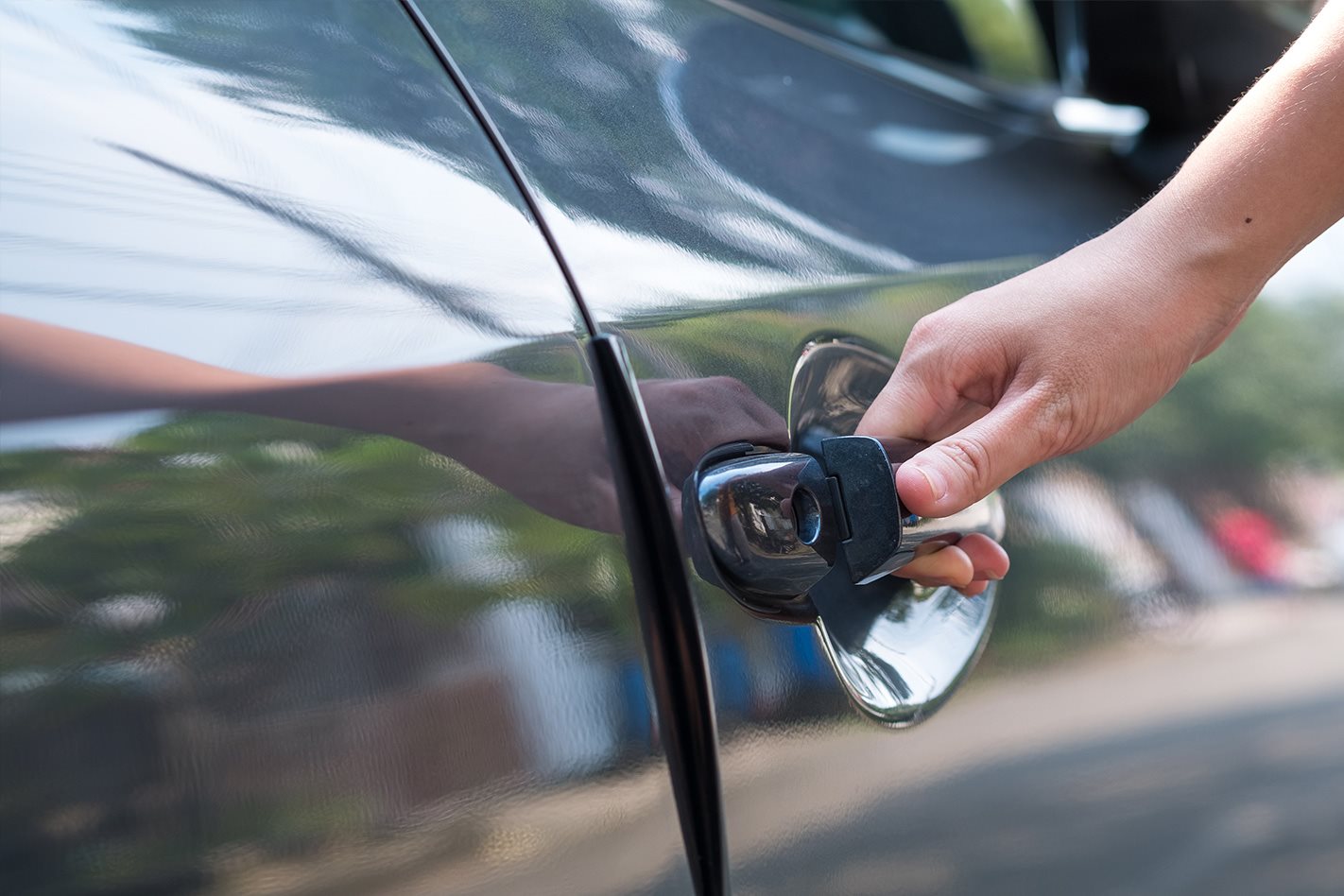
Seeing one cracked open so easily, using tools that you can buy on eBay for $30, was a touch alarming.
Suddenly I was questioning the times I’d left valuables inside overnight and thought they’d be okay because I’d covered them or hidden them under the boot floor.
Some quick Googling did nothing to put my mind at ease either. Last year a car was stolen in Australia every nine minutes. All up, 55,427 cars were nicked in 2021 and there were 134,918 reported instances of theft from break-ins. The good news is the rate of car thefts has been trending down since a peak of 138,500 in 2001, which is the same time that immobilisers were mandated on all new cars.
A consequence of that? Now half of all cars are stolen by people slipping into your house and boosting the keys, which are usually kept conveniently by the front door.
My takeaway? Cars aren’t as impregnable as you might think so do your best not to leave valuables inside, especially if they can be seen through the window.
And instead of throwing your key on a hook or in a dish near your front door, get into the habit of putting them in a drawer or in a bag. Oh, and if you’re tempted by a $30 wedge/hand pump kit from eBay, don’t carry it with you. The police won’t like that.
Tesla dominates the Australian electric vehicle market with even more of an iron grip than Toyota dominates all other categories.
While around one in five cars sold in Australia comes from a Toyota showroom, more than half of the electric cars delivered so far this year were either a Model 3 sedan or a Model Y SUV.
But for those with their mouse hovering over the ‘Continue to payment’ button on the Tesla website – which at the moment is predicting your new car will be delivered between February and May next year regardless of which body style you choose – do you opt for 3 or the Y?
Before you click, have a read of this comparison. Though there are similarities, your priorities and needs will influence which Tesla is right for you.
Compared here are the entry-level rear-wheel-drive versions of the 2022 Tesla Model 3 and Model Y.Note: This comparison features the current Model 3. A facelifted model is coming to Australia in early 2024 – click on feature link below for the details.
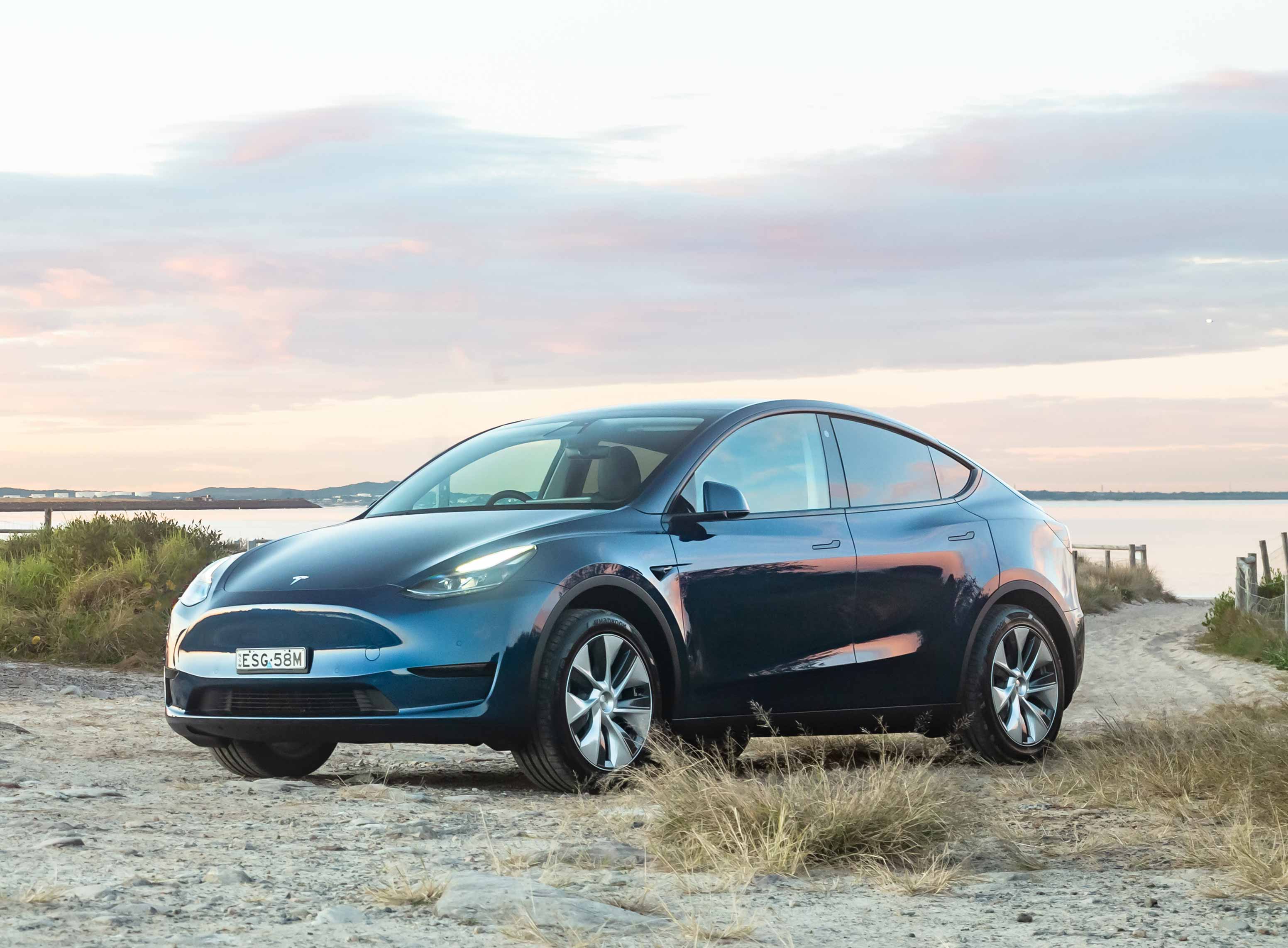
Pricing and features
If you are looking to achieve maximum battery range for your money, the lighter and more aerodynamic Model 3 – from $65,500 before on-road costs and incentives – is the winner.
At entry level, the Model Y costs $6800 more than the equivalent Model 3 but its WLTP-rated battery range of 455km is 36km shy of the sedan; both are rear-wheel drive.
There’s an even bigger gap between the base models in states where rebates are applied for EVs costing less than $70,000 (exact thresholds vary slightly). In NSW, South Australia and Victoria, Model 3 buyers receive $3000 back from the government; in Western Australia it’s $3500.
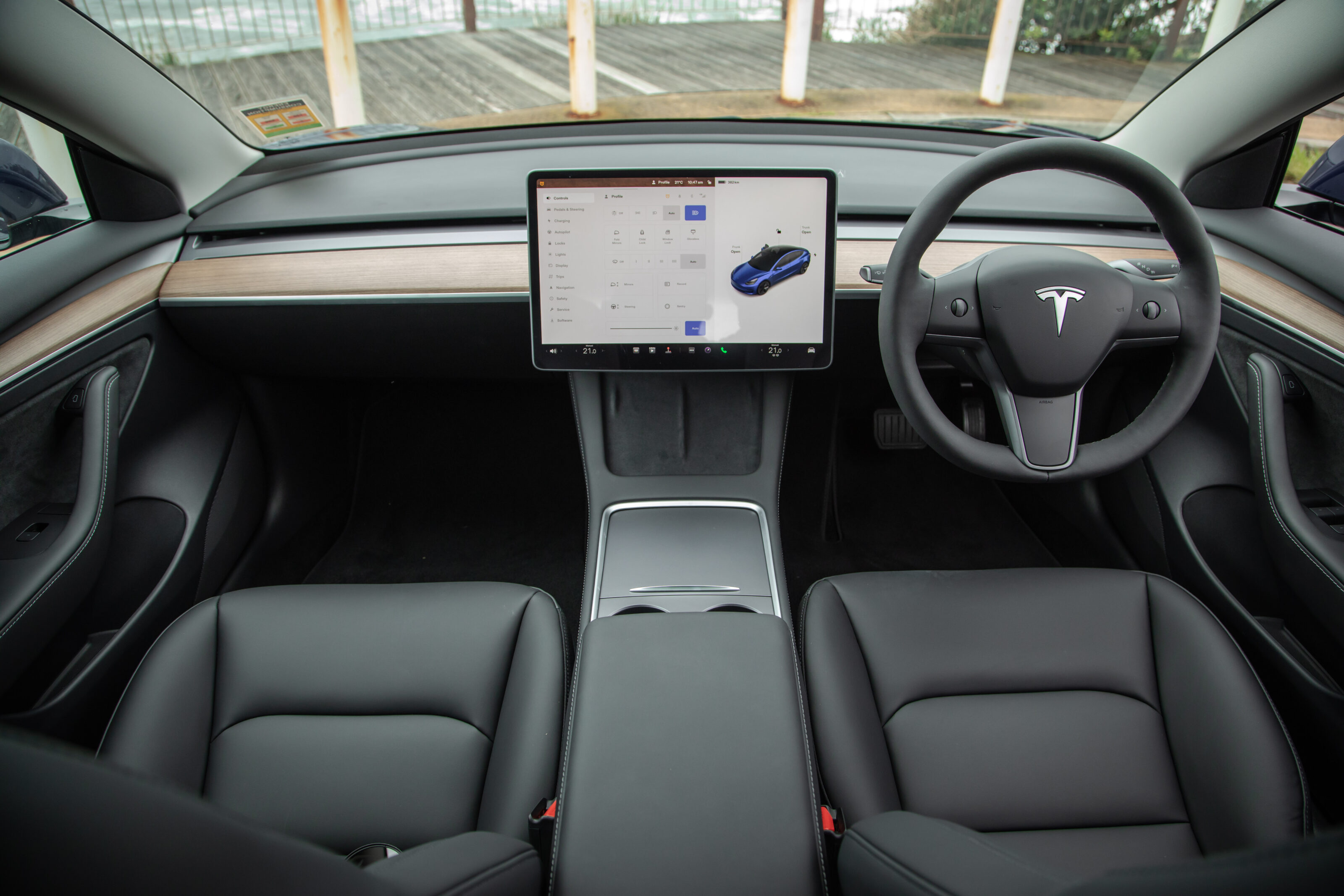
There is also no mid-range Model Y offered as an equivalent to the Long Range Model 3 that has all-wheel drive and a massive 602km WLTP range figure, for $80,000 before on-road costs and incentives.
Both have all-wheel drive Performance variants, the Model 3 priced from $94,122 including luxury car tax but before on-road costs and the leap to an equivalent Model Y requiring a $7490 greater investment.
Again, the Model 3 comes out tops for WLTP range, at 547kM in Performance trim compared with 514km for the Model Y Performance.
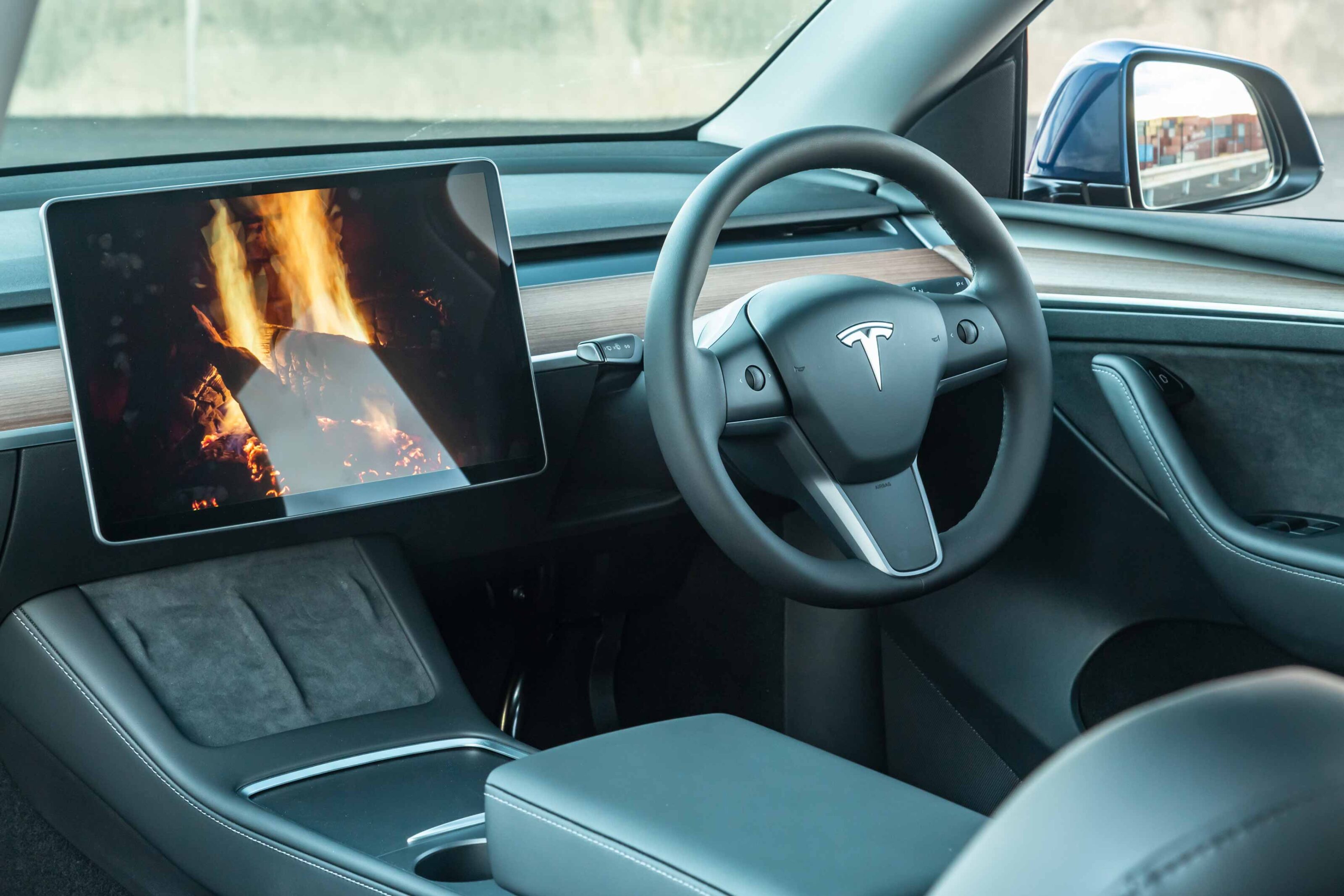
In addition to a bigger battery and more range, the more you spend on a Tesla yields increased performance.
The base Model 3 sends 190kW and 375Nm to its rear wheels and is claimed to accelerate from 0-100km/h in 6.1 seconds whereas the most affordable Model Y takes 6.9s despite delivering a punchier 220kW and 420Nm. Put that down to the Y’s extra 157kg of mass.
A Long Range all-wheel drive Model 3 cuts the triple-digit sprint to just 4.4s courtesy of its 307kW/510Nm dual motor powertrain and has no direct equivalent in the Model Y range.
Topping the Model 3 line-up is the Performance grade that deploys 353kW and 639Nm to deliver a searing 3.3s 0-100km/h dash, with the Model Y taking four-tenths longer despite its 60kW/ 21Nm output advantage.
Tesla Model 3 and Model Y: Driving range, outputs, power and price

Despite the range and performance deficit, spending more on a Model Y brings more than just a bigger vehicle with more interior space.
For example, the Model Y RWD entry variant comes with 19-inch wheels where 18-inch wheels are standard on the base Model 3, as well as a 13-speaker ‘Premium’ audio system that’s an option on the base 3.
Among the shared features are electric front seats, heated front and rear seats, heated steering wheel, and a full-length glass sunroof. Driver aids include blind-spot monitoring, lane departure warning, and forward collision assist.
There’s also a similar options list. White paint is standard; choosing black, silver, or blue (as per our test cars) costs $1500. You can also stump up $2900 for a multi-coat red.
On the Model 3, Tesla commands another $2200 for 19-inch ‘Sport’ wheels and 20-inch ‘Induction’ alloy wheels cost $2900 for the Model Y. You can also spend $1500 for a two-tone black and white interior on both, rather than pure black.
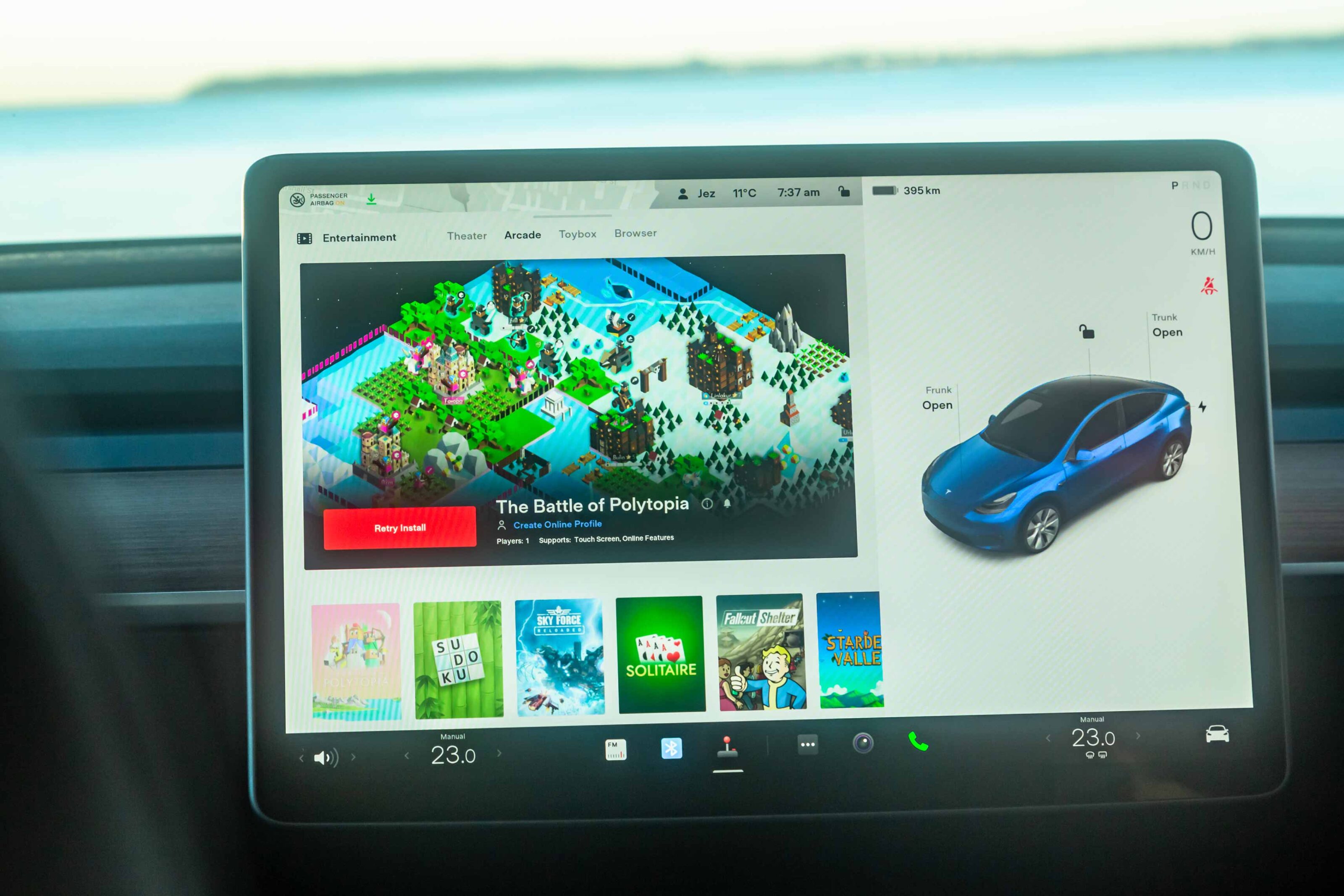
Both models can be specified with the $5100 ‘Enhanced Autopilot’ package of driver assist functions comprising auto lane-changing, auto overtaking, and auto steering/accelerating/braking for freeway use, self-drive parking manoeuvres and Smart Summon that (theoretically, at least) allows owners to bring their parked Tesla to them in a car park via the smartphone app.
The questionably titled Autopilot system can be upgraded further to what Tesla calls Full Self Driving Capability, which includes all Enhanced Autopilot functions plus traffic light and stop sign recognition as well as technological upgrades that will enable high levels of autonomous driving when the software becomes available and legal in Australia.
Regardless of such a wait, the investment in either upgrade is questionable value.

Main rivals for both of these Teslas comprise the Hyundai Ioniq 5 (priced from $69,990) and our 2022 Wheels Car of the Year, the Kia EV6 (priced from $72,590) – both before on-road costs and incentives – although this is fairly moot given the hens-teeth availability of these two.
The Polestar 2 is more specifically aimed at the Model 3 than the Model Y, from $63,900 before on-road costs and incentives. The related Volvo XC40 Recharge Pure Electric is a direct rival to the Y and starts from $ 72,990 before on-road costs and incentives.
Kia’s second-generation Niro EV also enters the fray, if relatively pricey from $65,300 before on-road costs and incentives. More choice is coming, among which are the Toyota BZ4X and Subaru Solterra twins, the Hyundai Ioniq 6, Skoda Enyaq and Volkswagen’s ID.4 and ID.5.
SCORING
| Model 3 | Model Y | |
|---|---|---|
| Pricing and features | 8.5 | 8.5 |
Comfort and space
Platform, batteries and drivetrain tech are all shared by the 3 and Y, though it’s the near-identical, ultra-minimalist cabins that makes it most obvious the two Teslas are related.
An update to the Model 3 that landed earlier this year has been inherited by the Model Y, so previously chrome trim is now black and in other areas matte black supplants gloss black.
There’s also a graphite finish for the seat controls, the steering wheel thumb-scrollers are metallic and the sun visor mirrors have magnetic snap-close covers.
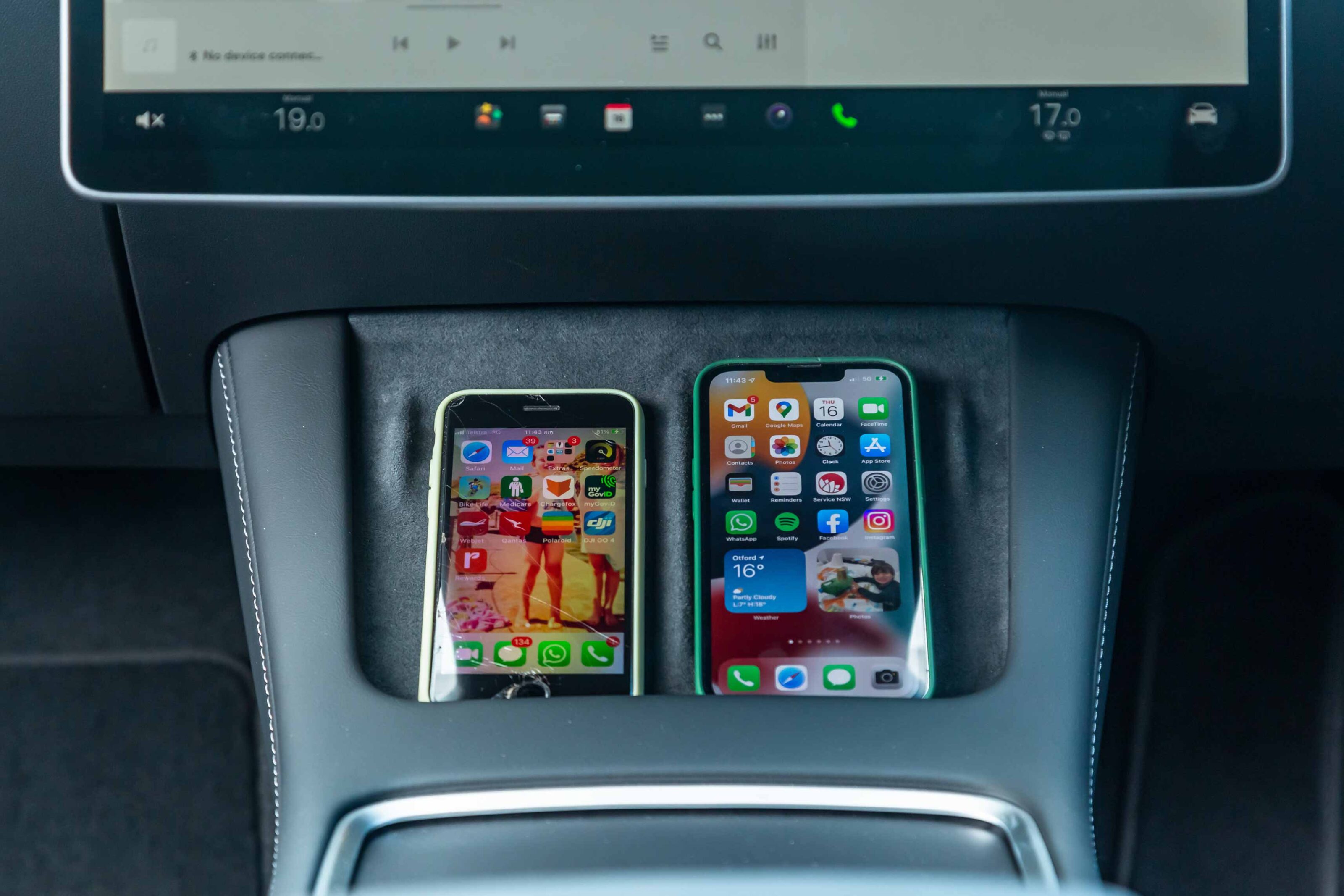
The centre console includes a sliding lid front storage compartment, four USB-C ports (previously two), and there are now dual wireless smartphone charging trays with a suede-like backing. Not everyone will necessarily take a liking to the “All Vegan” vinyl upholstery, though.

In both cars, the front seats are comfortable but the view forward is better in the Y than the 3, though the SUV’s rear vision is very narrow and its side mirrors are relatively small.
Fit and finish blemishes can still be found on both cars – a Tesla bugbear since day one – but this seems to be constantly improving.
Both these cars were much better than the Model 3 we tested in 2020, for example, where not even the insides of the doors were properly painted.
As expected for an SUV, you do sit higher in the Model Y, which has 27mm of extra ride height and raised front seat mountings – with the Y’s taller roofline still giving it extra headroom over the sedan.
For adults, the 3’s low rear bench creates a knees-up seating position, toe space is lacking, and the sloping ceiling restricts headroom. All of these are addressed by the Y, which has noticeably more headroom and legroom than its sedan counterpart.
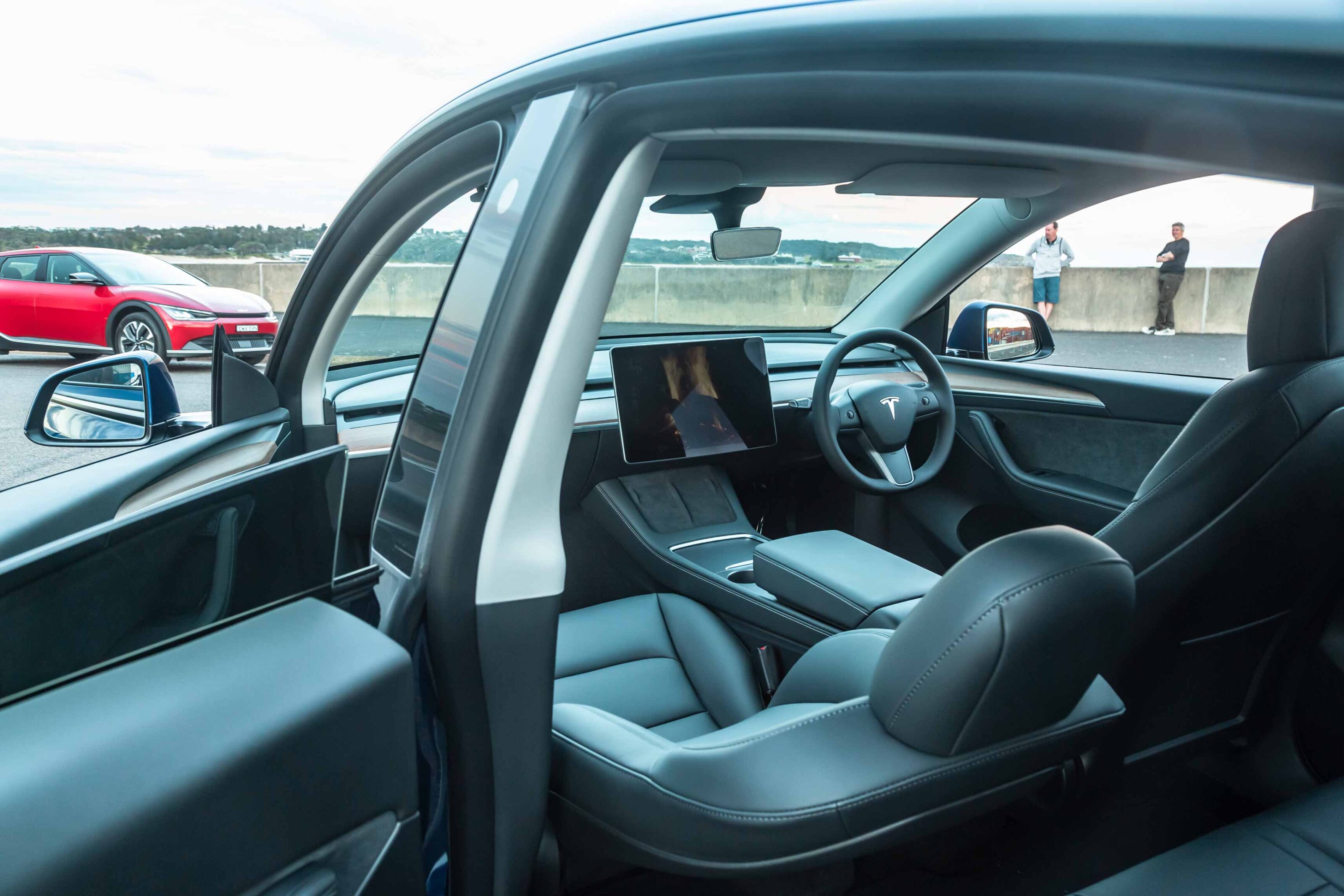
Legroom increases by a whopping 13.5cm in the back of the Model Y, partially achieved by its 1.5cm-longer wheelbase over the Model 3, as well as revised packaging that takes advantage of slightly shortened front legroom.
Whereas the Y’s roof is a seamless expanse of glass, the 3 features a middle beam. Both have UV protective glass but, with no built-in blind, some owners may want to opt for Tesla’s accessory sunshades.
Only the Y’s rear seats offer a choice of two recline positions. ISOFIX points and top tether anchors feature in the outboard positions of both cars to cater for child seats.

Shoulder room is virtually unchanged between the 3 and Y but, according to Tesla’s specs, hip space shrinks by 4.5cm in the Y despite its bodywork’s width puffing out by about 7cm.
A completely flat floor makes the middle seat viable for an adult in either of these Teslas, if still the short straw for longer journeys.
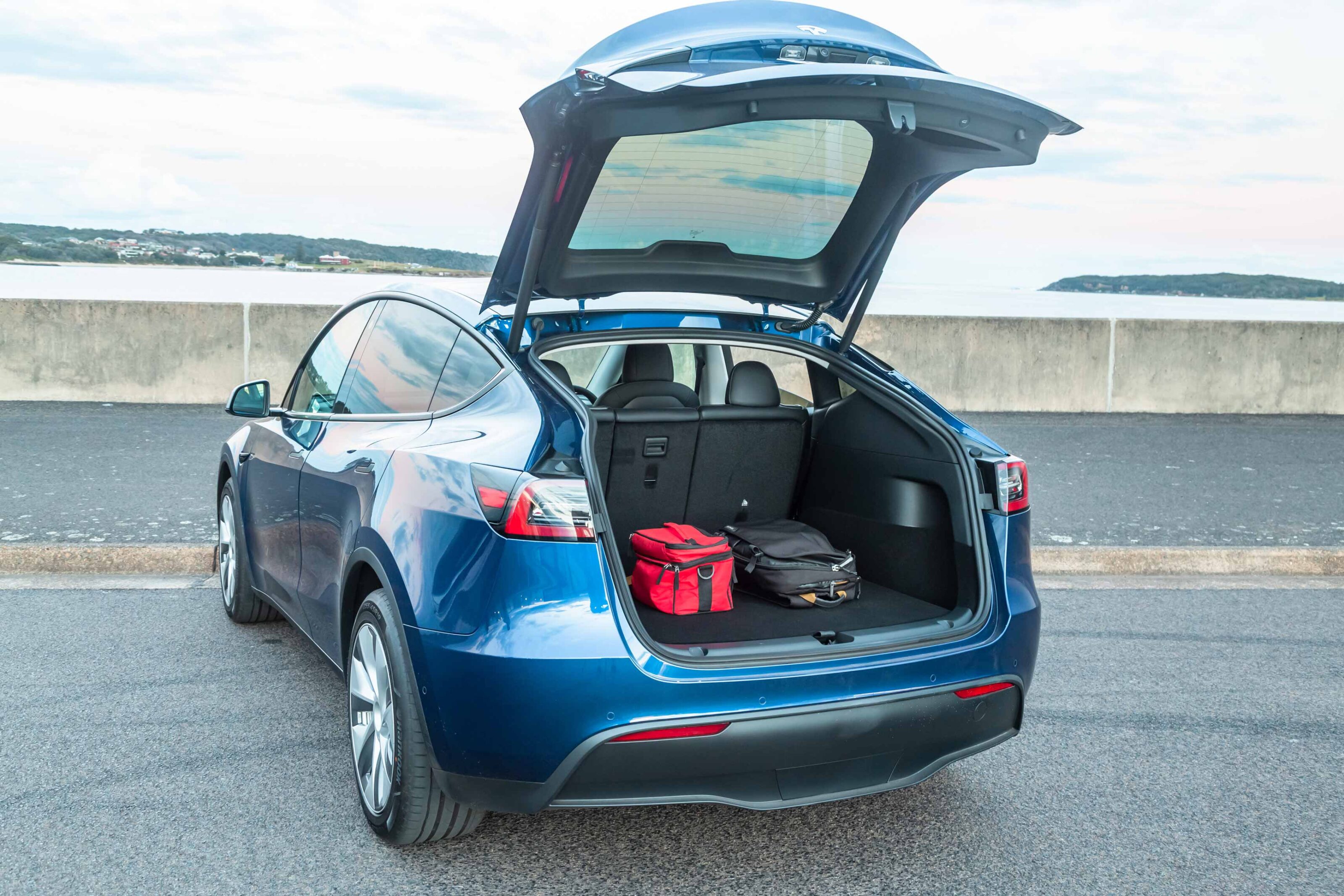
By far the biggest reason to be tempted into a Model Y over a Model 3 is found in the boot, not least because the automatic tailgate provides a far larger aperture than the opening of the sedan’s boot.
Storage space: Tesla Model v Tesla Model Y
Quoted Model Y luggage capacity is a vast 854 litres, which is 52 per cent more than the Model 3’s 561L boot. That said, the Y’s impressive volume figure is measured to the roof rather than the window line (as with the 3’s figure).
For both cars, cargo capacity figures include underfloor storage and the Y posts another advantage here. It features a larger, wider tub nearest the boot opening, while an extra, shallower underfloor section behind that is useful for storing charging cables.
Another bonus is two electric release switches, which fold the 60:40 rear seats completely flat. The middle seatback can be also flattened individually for a ski hatch type set-up.
Unlike the Model 3, the Y will accommodate mountain bikes inside. There’s also a much bigger 117-litre ‘frunk’ (froot?) under the bonnet compared to the Model 3’s 88 litres.

There is a good chance that you are reading this as a first-time Tesla buyer; popular as they may be, and increasingly so, most Australians are yet to experience one.
A major thing to get to grips with is the huge touchscreen display that hoards virtually all car functions and can be daunting for first-timers, especially as all driving information – including the speedo – is on the screen.
Seat heaters, driver profiles and trip information are a bit too deeply buried in submenus, requiring more taps to access.
Although owners have more time to get accustomed to operations, familiarity doesn’t prevent the touchscreen from being a distraction at times on the road, as eyes are averted to press various icons or words that can be quite small.
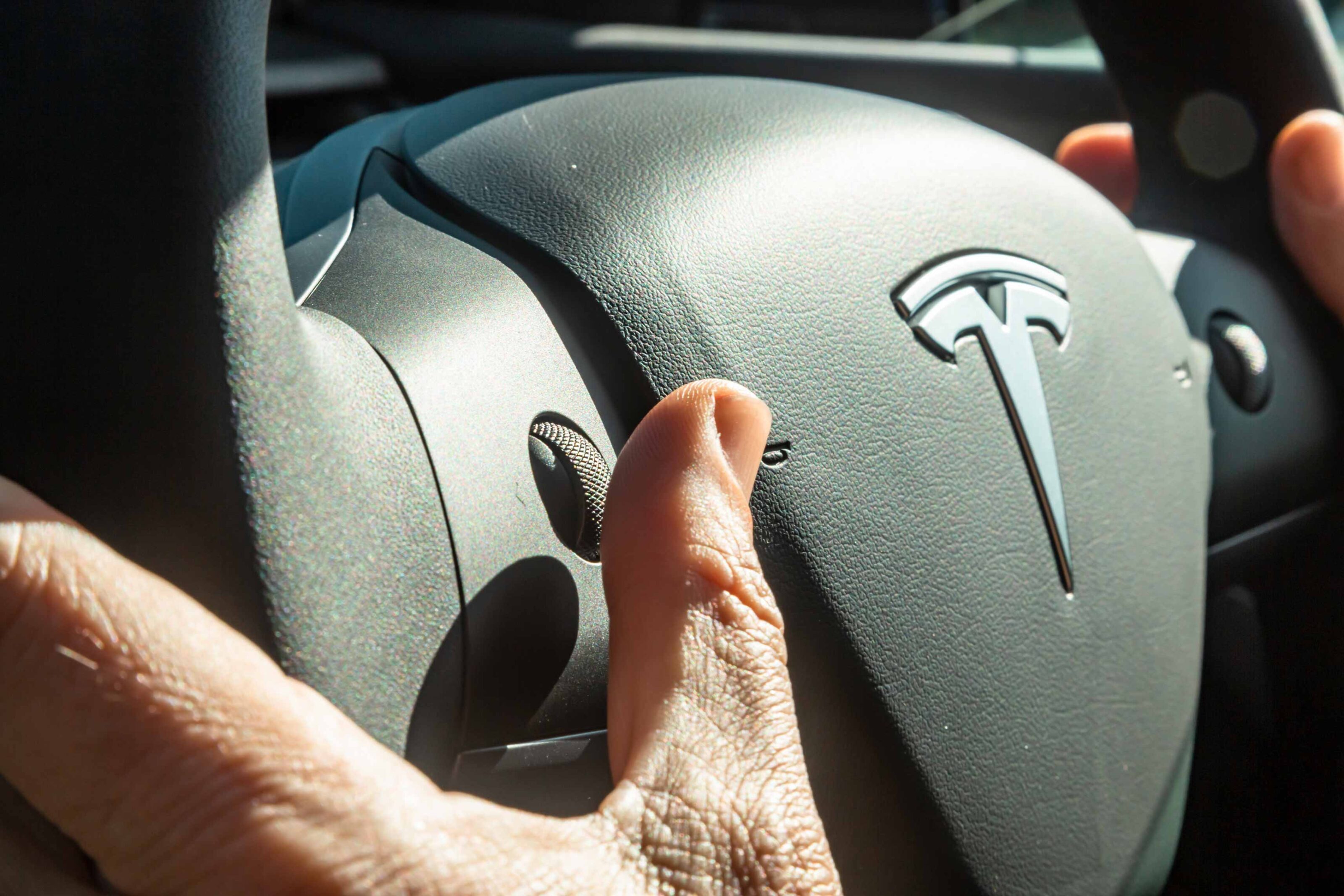
Inclusion of a head-up display would do wonders – indeed there is a thriving aftermarket for them – but at least Tesla’s voice command system is effective.
Overall software design, layout and response are impressive, the Google Maps navigation a stand-out for its intuitive interface, rapidly predicting address inputs and then relaying clear and helpful route guidance.
The right side of the display provides a computer-generated graphic of your surroundings – including vehicles and lane markings – as recognised by the car’s front radar, exterior cameras and multiple ultrasonic sensors.
Peace-of-mind features enabled by this technology include a dashcam that records while driving and Sentry Mode that records when the car is parked and locked. Footage can be recorded to a storage key plugged into a USB-A port inside the glovebox.

An impressive number of in-car entertainment options are available for when parked, too. There’s an assortment of games and you can even stream Netflix or YouTube. It sounds gimmicky but can be handy for all sorts of scenarios, such as providing something to do while using a windswept public charging station on a long journey – especially at night.
After a 30-day complimentary subscription, owners just need to pay a monthly subscription ($9.99 at the time of writing) to retain some of these software features.
Both infotainment systems are constantly upgraded via Tesla’s over-the-air updates but the Model Y’s standard Premium audio system sounds excellent and is a welcome perk in return for your extra spend over the Model 3.
It certainly contributes to the Model Y winning the comfort and space part of this comparison.
SCORING
| Model 3 | Model Y | |
|---|---|---|
| Comfort and space | 8.0 | 9.0 |

On the road
Both of these Teslas will beat the majority of cars – including similar-priced EVs – away from traffic lights with their immediate power delivery and torquey punch.
The Model Y’s acceleration undoubtedly feels slower than the Model 3’s, yet the SUV remains sufficiently, and enjoyably, brisk.
Either is quicker than rear-wheel-drive versions of the Hyundai Ioniq and Kia EV6, as well as the front-drive Polestar 2.
Tesla drivers seeking more relaxed driving can select the ‘Chill’ mode via the touchscreen. So very Silicon Valley.
Less chilled is the way both of these cars ride, though. They would benefit from adaptive dampers or perhaps some local chassis tuning like that applied by Hyundai and Kia.
The Model 3 rides firmly at low speed and tends to fidget over uneven bitumen, while the Model Y – with its larger wheels and heavier body – struggles even more for compliance.
Suppleness increases with speed, though, and both Teslas feel especially comfortable on freeways where relaxed progress is complemented by the effortless electric motor and ‘Autopilot’ adaptive cruise control.
But regardless of surface, suspension noise in the Model Y can be intrusive.
The Model 3’s three-box design does seem to suppress some of these sounds better. We’ve yet to test the Model Y’s optional 20-inch wheels, which we suspect would further exaggerate the ride and noise issues.
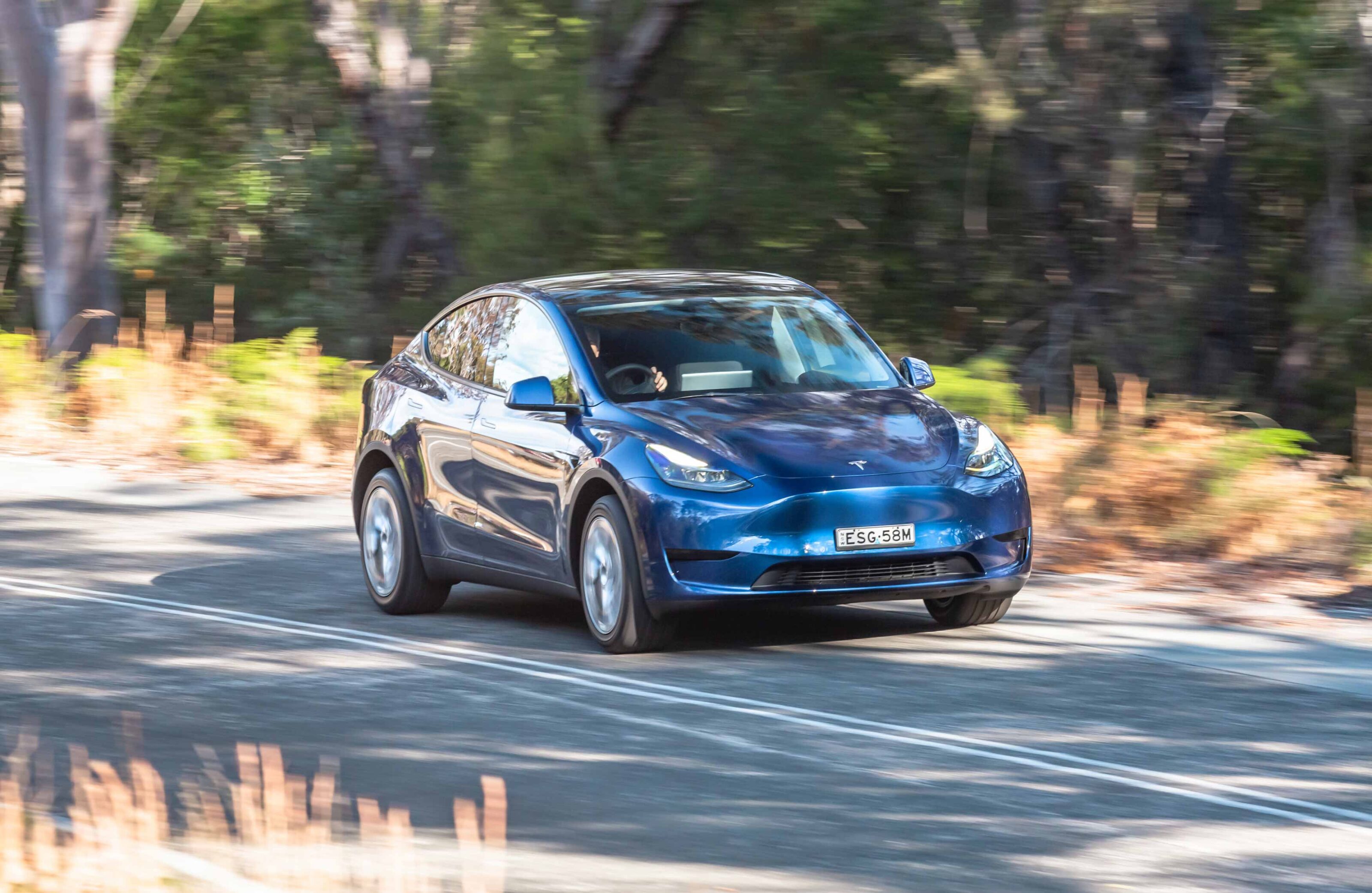
Tesla first-timers might be confronted by the ridiculously quick steering of both these cars – barely two turns lock to lock – and it can take time to become accustomed as the front end is reactive to just a small movement of the steering wheel off centre.
Responses to inputs are quick and precise, though, abetted by a front end that’s unencumbered by a heavy lump of metal under the bonnet.
Steering effort can be adjusted via the touchscreen. Sport mode adds resistance, Comfort is lightest, while the default Standard is predictably in between those settings – and our pick.

Of the two models, keen drivers will derive greater satisfaction from the Model 3.
The sedan’s lower kerb weight is obvious on a country road, and there’s far less body roll than you experience in the SUV.
If you can get your hands on a Kia EV6, though, the Korean electric SUV provides both a generally more relaxing and dynamic motoring experience.
SCORING
| Model 3 | Model Y | |
|---|---|---|
| On the road | 8.0 | 6.0 |
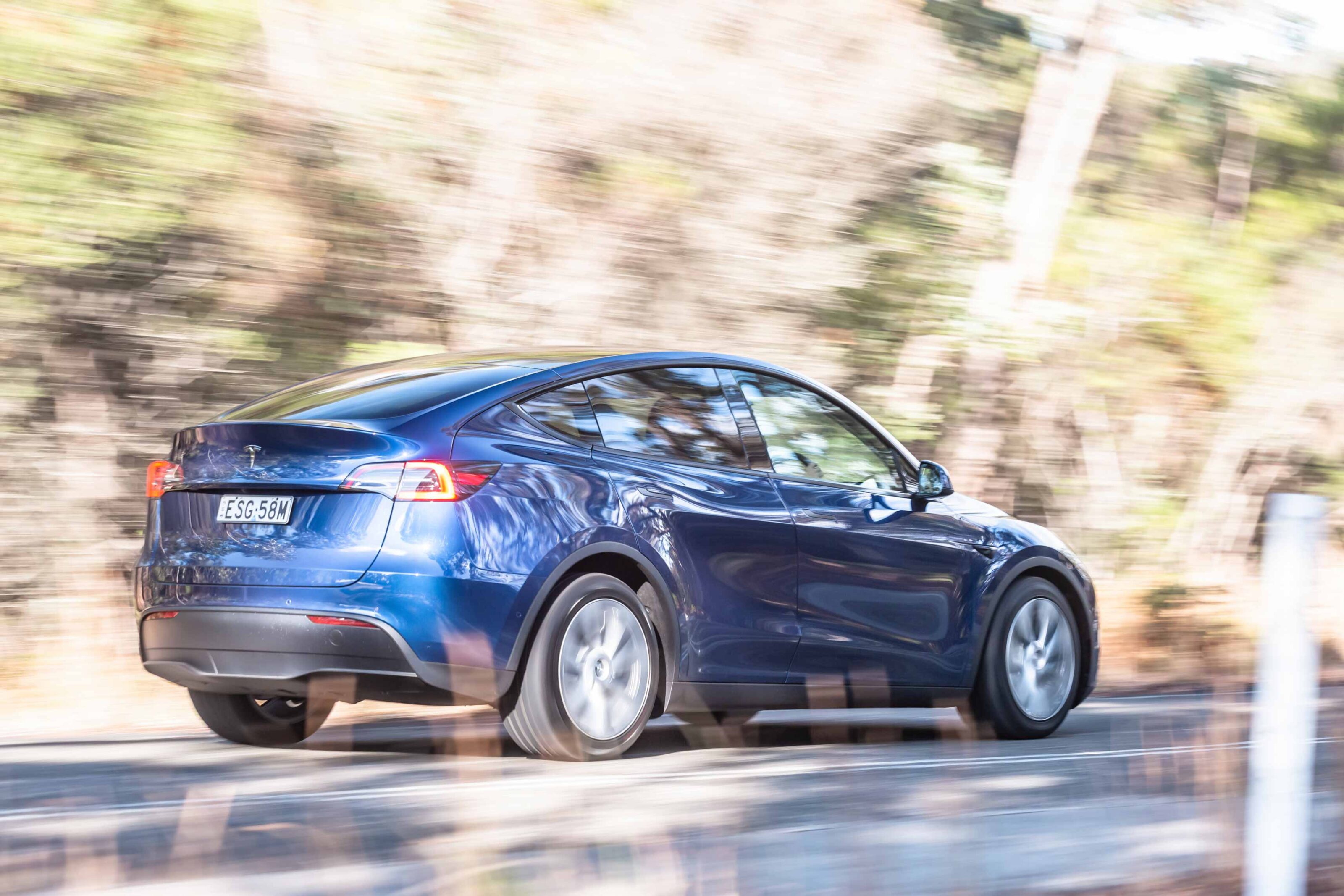
Ownership
When not using Tesla’s Supercharger network, the Model 3 and Model Y can be recharged via CCS ports that most other EVs utilise and are commonplace connectors on non-Tesla public charging stations.
Tesla’s $780 Gen 3 Wall Connector (not including installation costs) is claimed to add about 71km per hour of charging.
For models equipped with an LFP battery (such as the Model 3 and Model Y rear-wheel drive compared here), Tesla recommends sticking to a 100 per cent charge limit and fully charging the vehicle at least once a week.

All-wheel-drive models use a different, Nickel Cobalt Aluminium Oxide (NCA) battery chemistry for which Tesla recommends charging to 90 per cent.
Tesla vehicles come with a general four-year/80,000km warranty, which looks short compared with Kia’s seven-year/150,000km warranty, although Tesla hits back with an eight-year/160,000km battery and drive unit warranty for the rear-wheel drive Model 3 and Model Y (192,000km for all-wheel drive variants) compared with Kia’s seven-year battery coverage.
| Tesla warranty coverage | ||
|---|---|---|
| Main warranty | four years | 80,000km |
| Battery and drive unit | eight years | 160,000km |
| *192,000km for AWD models | ||
| Roadside assistance | complimentary through warranty period, including 800km towing distance | |
Roadside assistance is complimentary for the duration of the main Tesla warranty, covering towing (and transport costs up to 800km) in the event of a malfunction, lockouts, and flat tyres. The latter will be needed if you get a puncture, as neither Model 3 nor Model Y comes with a spare wheel – and an optional tyre repair kit no longer appears to be available.
Tesla claims to design its vehicles “with the goal of eliminating the need for service” and even says new or used vehicle warranties will “not be affected if recommended service is not performed”. However, it does list a number of recommended regular maintenance tasks for filters, tyres, brake fluid and air-conditioning.
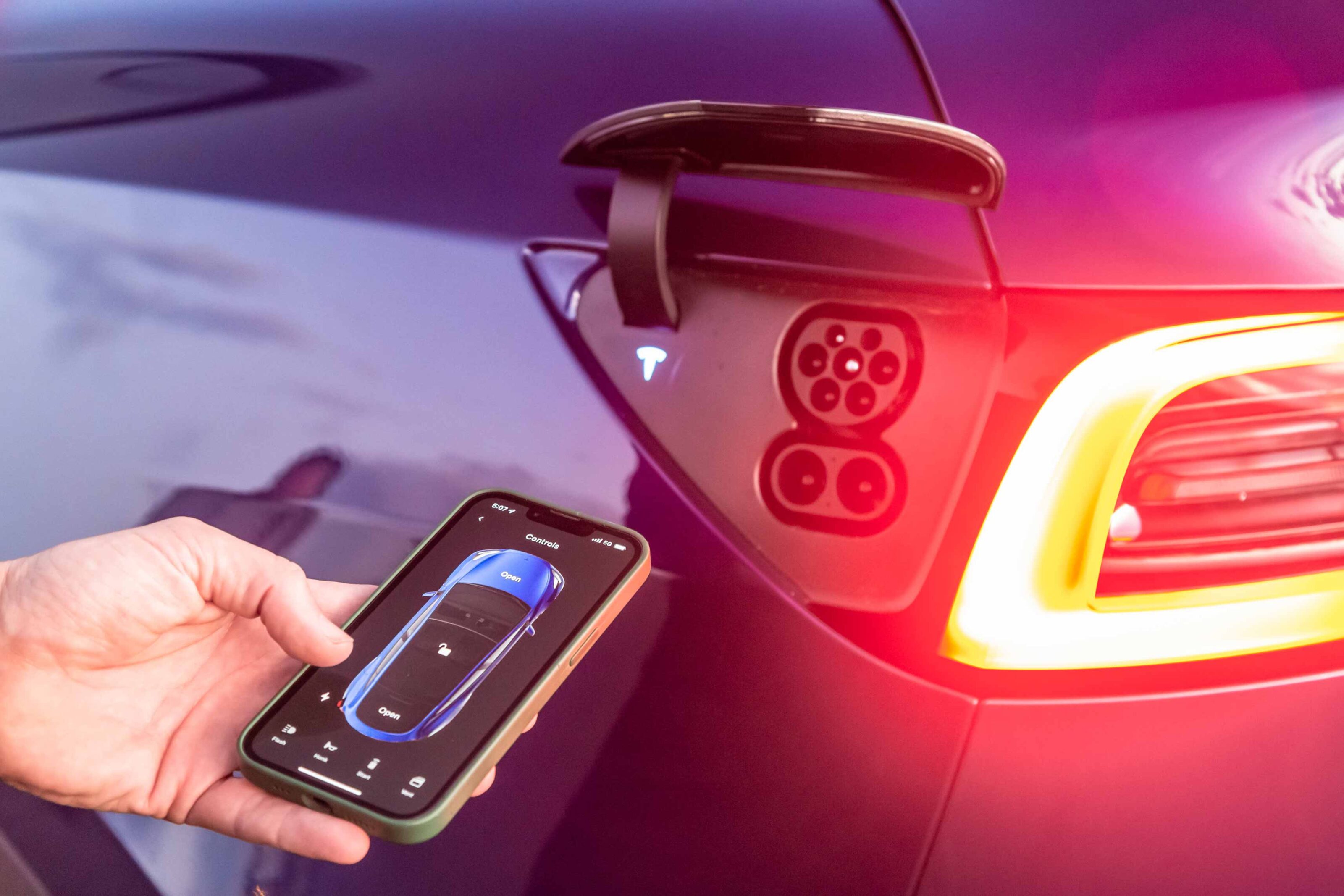
A key pillar of Tesla ownership is the smartphone app, offering a currently unrivalled level of smartphone-based functionality – including booking service and maintenance.

It’s possible to make the key card redundant by connecting it to your phone, then using the lock/unlock function (otherwise entry is achieved by ‘scanning’ the car against the B-pillar).
You can press the respective parts of a birds-eye graphic of the car to open the tailgate or frunk, pre-heat or pre-cool the car before you get to it, and monitor battery life.
One of our favourite features is Location, which provides a map guide to the nearest Tesla Supercharger; select your choice and you can then send the route instructions direct to the Model Y’s navigation on the centre display.
SCORING
| Model 3 | Model Y | |
|---|---|---|
| Ownership | 9.0 | 9.0 |
VERDICT
Australia’s two most affordable Tesla models remain hugely compelling choices in an increasingly competitive EV market, and build quality concerns are diminishing rapidly.
More importantly, the utility and appeal of Tesla’s expansive Supercharger network should not be underestimated; buyers of other brands must make do with Australia’s lacklustre (if slowly improving) public charging infrastructure if planning longer journeys.
Of the pair compared here, the Model Y goes a long way to justifying its higher price with additional interior space over is sedan stablemate – not to mention most medium SUVs battery-powered or otherwise – as well as a small but appreciated uplift in standard equipment.
The Model 3 is still relatively practical for a sedan and, despite no longer being priced below $60,000, it still looks something of a bargain for the performance and range it offers.
Its lighter and lower body also allows it to accelerate faster, drive further, and feel more composed on the road – including a quieter and slightly less troublesome ride – compared with its SUV spin-off.
The entry Model 3 is the best Tesla currently available in our book, but we’re also confident buyers opting for the Model Y won’t be disappointed.
OVERALL SCORING: 2023 Tesla Model 3 v Tesla Model Y
2022 Tesla Model 3 and Tesla Model Y specifications
| Tesla Model 3 RWD | Tesla Model Y RWD | |
|---|---|---|
| Body | 5-door, 5-seat medium sedan | 5-door, 5-seat medium SUV |
| Battery | 60.0-62.3kWh (estimated) | 60.0-62.3kWh (estimated) |
| Drive | rear-wheel | rear-wheel |
| Engine | electric rear motor | electric rear motor |
| Transmission | single-speed reduction gear | single-speed reduction gear |
| Power | 190kW | 220kW |
| Torque | 375Nm | 420Nm |
| 0-100km/h | 6.1 seconds (claimed) | 6.9 seconds (claimed) |
| Range | 491km (WLTP) | 455km (WLTP) |
| Weight | 1752kg | 1909kg |
| Suspension | double wishbones, coil springs (f) / multi-links, coil springs (r) | double wishbones, coil springs (f) / multi-links, coil springs (r) |
| L/W/H | 4694/1933/1443mm | 4751/1921/1623mm |
| Wheelbase | 2875mm | 2890mm |
| Tyres | Michelin Pilot Sport 4 (235/45 R18) | Hankook Ventus S1 Evo 3 (255/45 R19) |
| Wheels | 18-inch alloy 235/45 R18 (optional mobility kit) | 19-inch alloy |
| Price | $65,500 + on-road costs | $72,300 + on-road costs |
Scores from single car reviews
| Model 3 | Model Y | |
|---|---|---|
| Safety, value and features | 9.0 | 8.0 |
| Comfort and space | 8.0 | 9.0 |
| Engine and gearbox | 9.0 | 8.0 |
| Ride and handling | 8.0 | 6.0 |
| Technology | 9.0 | 8.5 |
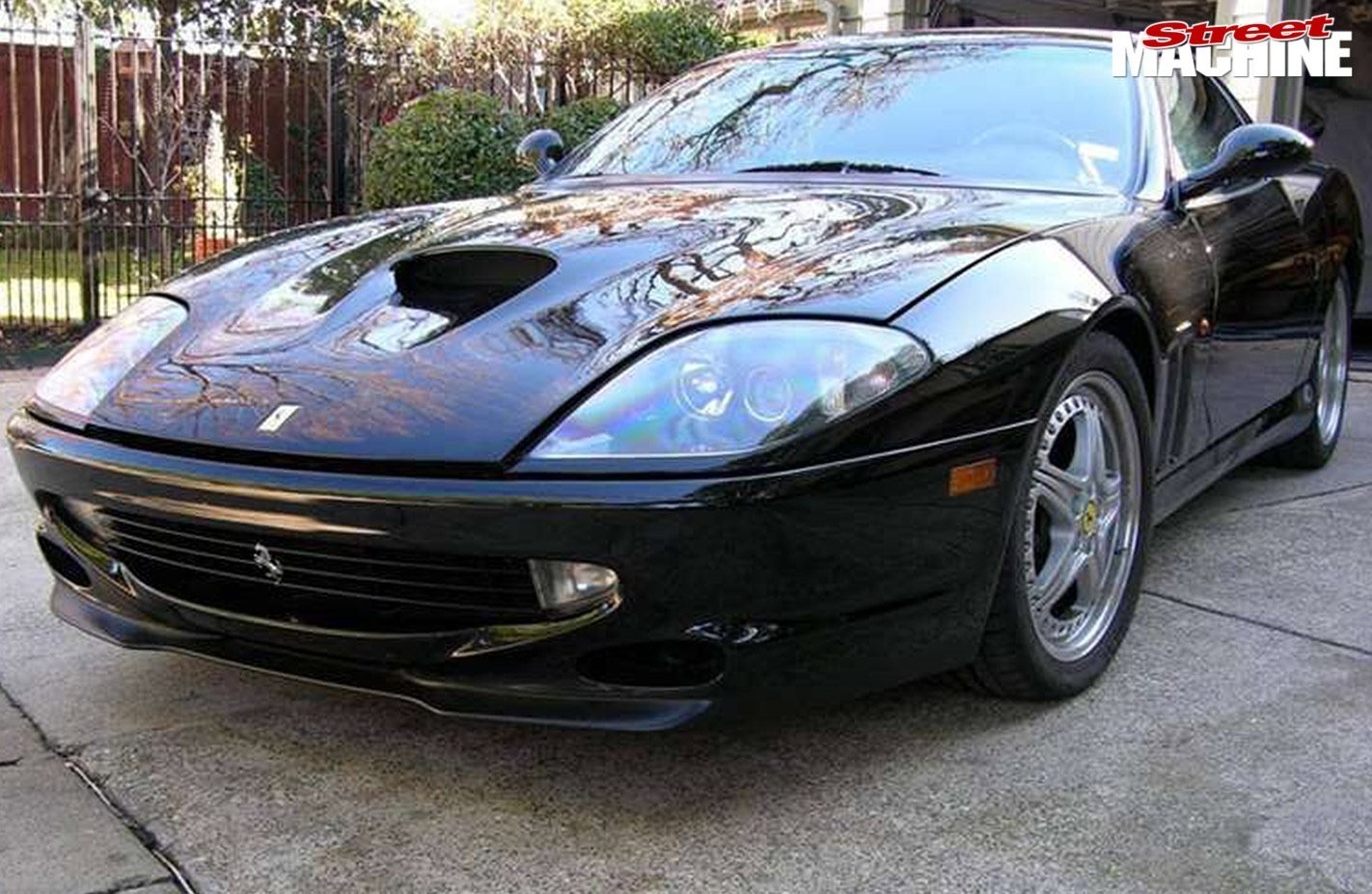
How would you like to earn an easy hundred grand? Simply subscribe to my newsletter and I’ll show you how! Alternatively, just buy a Ferrari 550 Maranello in the UK for the equivalent of $160K, ship it here (it’s allowable on the SEVS list), pay the taxman, undercut every other seller and pocket the change.
Where’s the catch, I hear you ask? At first, there doesn’t seem to be one.
All the numbers check out. Shipping and tax would make the car around $205,000 landed here in Australia and you’d do well to find one for sale for much under $400K. Money in the bank, right?
Then you realise that the examples you’ve been looking at to form your gauge for pricing were there last month and the month before that. They’re just not selling.
We’ve become used to the narrative that a squeeze on new-car supply has bumped up prices for used cars and we should be happy to pay through the nose as long as we end up with something, anything. But that is clearly not applying at the top end of town.
What’s more, the cars that are shifting aren’t the cheapest examples either. It seems that buyers are only willing to part with their money for vehicles with 24-carat service histories. Low mileage, locally-supplied, in the right colour. Preferably rare editions. Everybody knows that we’re operating in a pricing bubble at the moment and nobody wants to be the one left with a big liability when it goes pop.
Even if you’re not in the market for a V12 Ferrari, it’s well worth bearing that in mind when trying to source in-demand mainstream vehicles. Land Rover Defender 90 D250 S? You could pay $90K new or $135K used. Kia EV6 GT? $83K new or $103K with a few thousand kilometres on the clock.
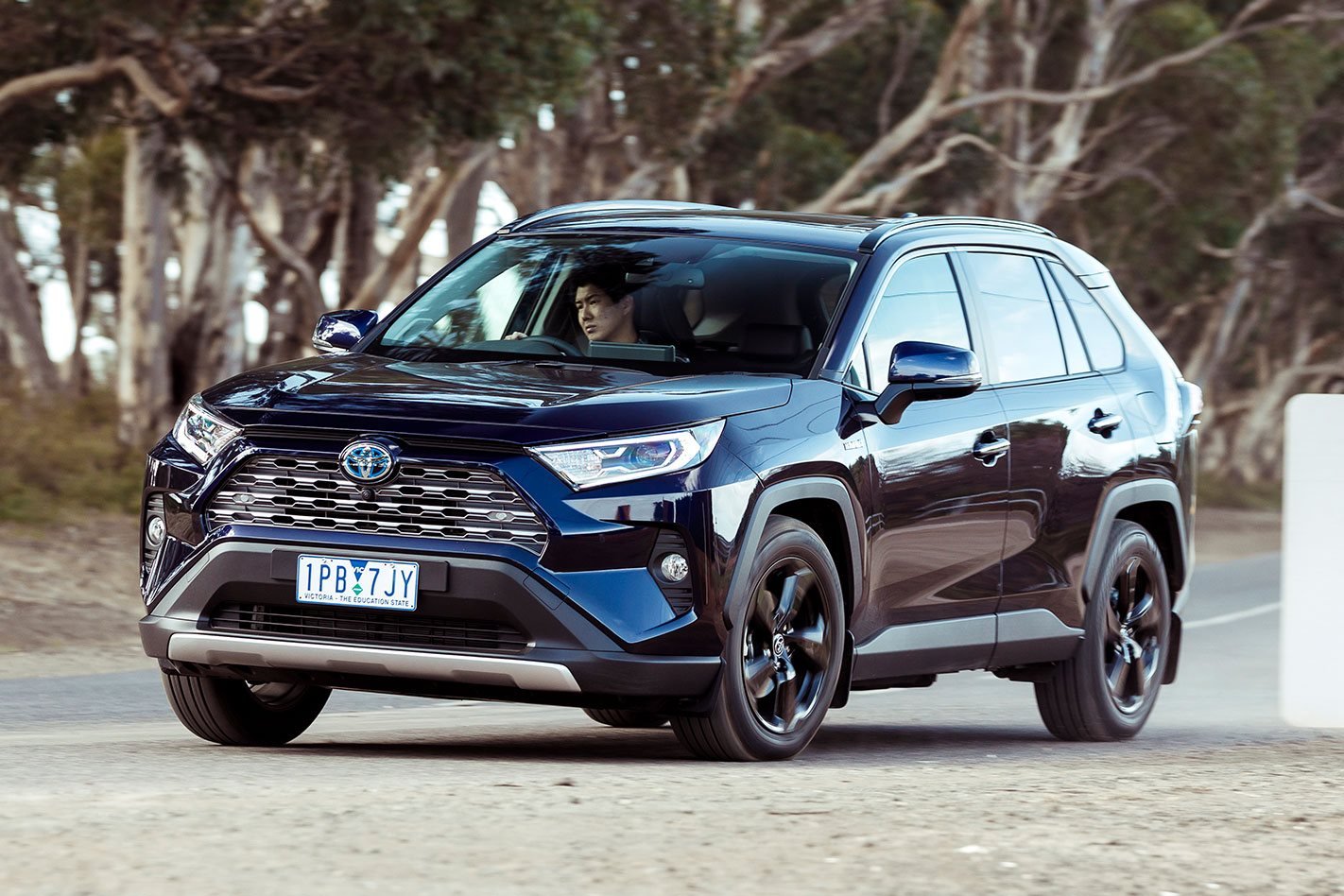
Even Toyota RAV4 Hybrids are still commanding strong money. Instead of paying $45K for a new one, you could pay $55K for a three-year-old example showing 60,000 on the odometer. Yes, you’ll get your hands on these vehicles right away and there is a value inherent in that convenience, but it’s money you have to be mentally prepared to completely write off.
After all, when the supply situation normalises, as it surely will, then the premium you paid for the car in question disappears in an instant. Your vehicle is just another three-year-old used car that’s worth 60-70 percent of the original sticker price.
In other words, there are people buying used cars right now who are about to take an enormous bath. The RAV4 becomes a c.$32K vehicle, and you’re left wearing a 23 grand depreciation bill. That’s not something Aussie motorists are used to and it’ll come as a shock to many.
So how do you sidestep this sort of financial exposure? The smartest way is to buy off the lot when purchasing new. It means that you’ll probably have to compromise on exact colour, trim and spec choices but it means that you can drive away that day in a new car and if you time your purchase correctly, you may find a dealer who is motivated to make end of reporting period numbers and be open to negotiation.
Should you prefer to just order online instead, do yourself a favour and click on wheels.com.au and search for our New Car Delays piece for the latest info about how long you’ll have to wait.
Yes, car dealers can be optimistic in their assessments of waiting times, but there are vagaries in production which can mean that some very popular models are temporarily oversupplied. Identify these and you’ll likely avoid the dealer mark-ups or empty promises about delivery.
Meanwhile it’s back to scrolling through used Ferrari V12s and wondering how brave I’m feeling. Until next month…
A new downloadable update released this week sees Gran Turismo 7 players receive three new cars to race: the Volkswagen ID.R and Porsche Vision Gran Turismo Spyder concepts, and our favourite news, the S14 Nissan Silvia.
The popular PlayStation-based racing simulator went on sale earlier this year, and this ‘version 1.23’ update arrives – alongside bug fixes and Logitech G Pro Racing Wheel Support – as the latest enhancement available in the game.
The Porsche Vision Gran Turismo Spyder follows the reveal of a 950kW hardtop version last year, but of course, neither car is planned for a real-world production debut.
The new Legend cars are joined by a new Menu Book and two Extra Menu Books in the café component, with challenges focused around ‘The Silvia Sisters’, Corvettes, and mid-engined Porsche models.
The update has left some gamers unsatisfied, however, arguing that the numbers of cars on offer isn’t an issue – but rather, a lack of suitable events and a competitive enough AI (artificial intelligence) to deliver truly challenging and entertaining racing.
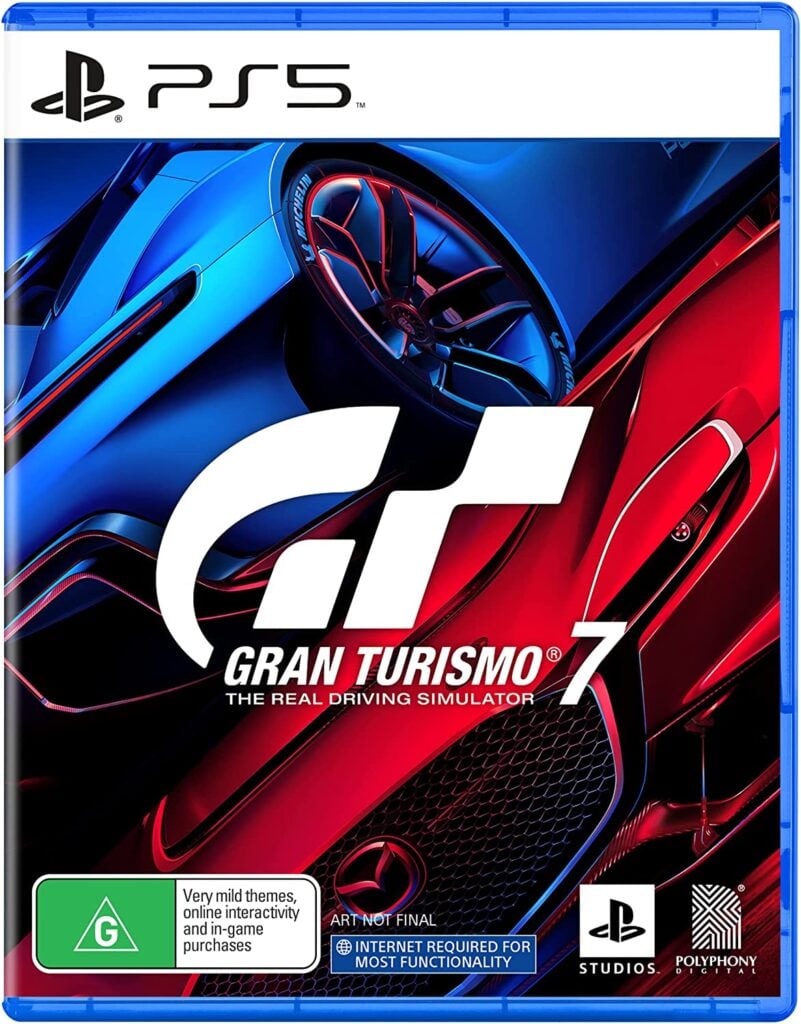
With over 420 cars available at Brand Central* and the Used Car Dealership* from day one, Gran Turismo 7 recreates the look and feel of classic motors and bleeding-edge supercars alike in unparalleled detail. Each car handles differently and feels unique as you navigate over 90 track routes in dynamic weather conditions, including classic courses from GT history.
*Internet connection required to download.
The story to here
UPDATE, March 2, 2022: Gran Turismo 7 now on sale
Gran Turismo 7 is now out, and we’ve played it. Get our full review at the link below.
December 2021: New GT7 details
First announced back in June 2020 but with no sign of it since, Gran Turismo 7 has finally resurfaced.
The game was featured in Sony’s PlayStation Showcase 2021 livestream event today with a new trailer and the announcement of a global release on March 4, 2022 on both PlayStation 4 and 5 consoles.
The latest instalment in the venerable driving franchise is once again being directed by series creator Kazunori Yamauchi and built by his team at Polyphony Digital.
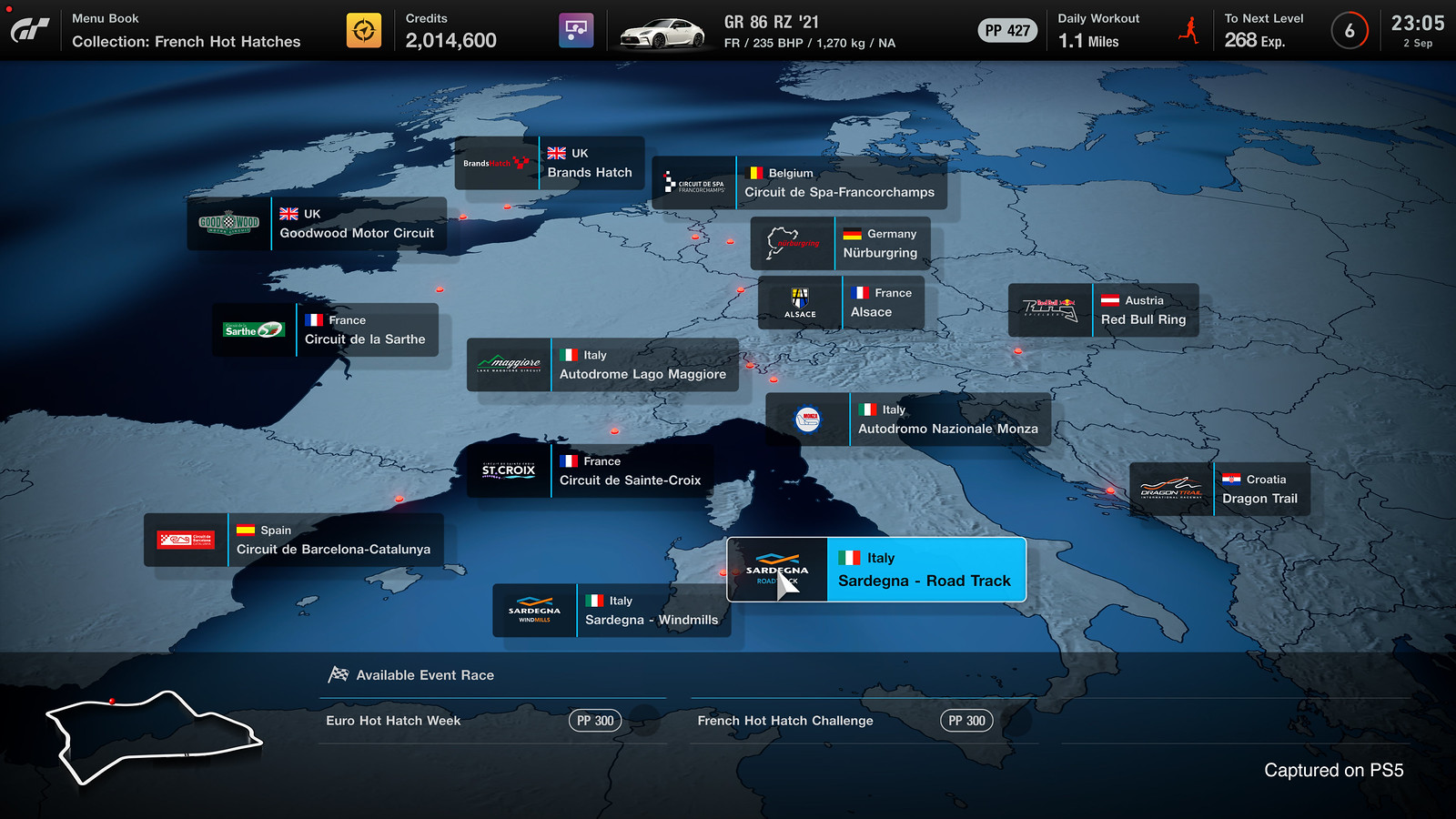
The game was originally scheduled to launch in 2021, but suffered production delays due to the COVID-19 pandemic. Its 2022 release will mark an almost nine-year gap between numbered instalments in the series, with Gran Turismo 6 having been released on the PlayStation 3 back in December 2013.
The most recent release in the series was the smaller-scale, online focused Gran Turismo Sport which launched on the PlayStation 4 at the tail-end of 2017.
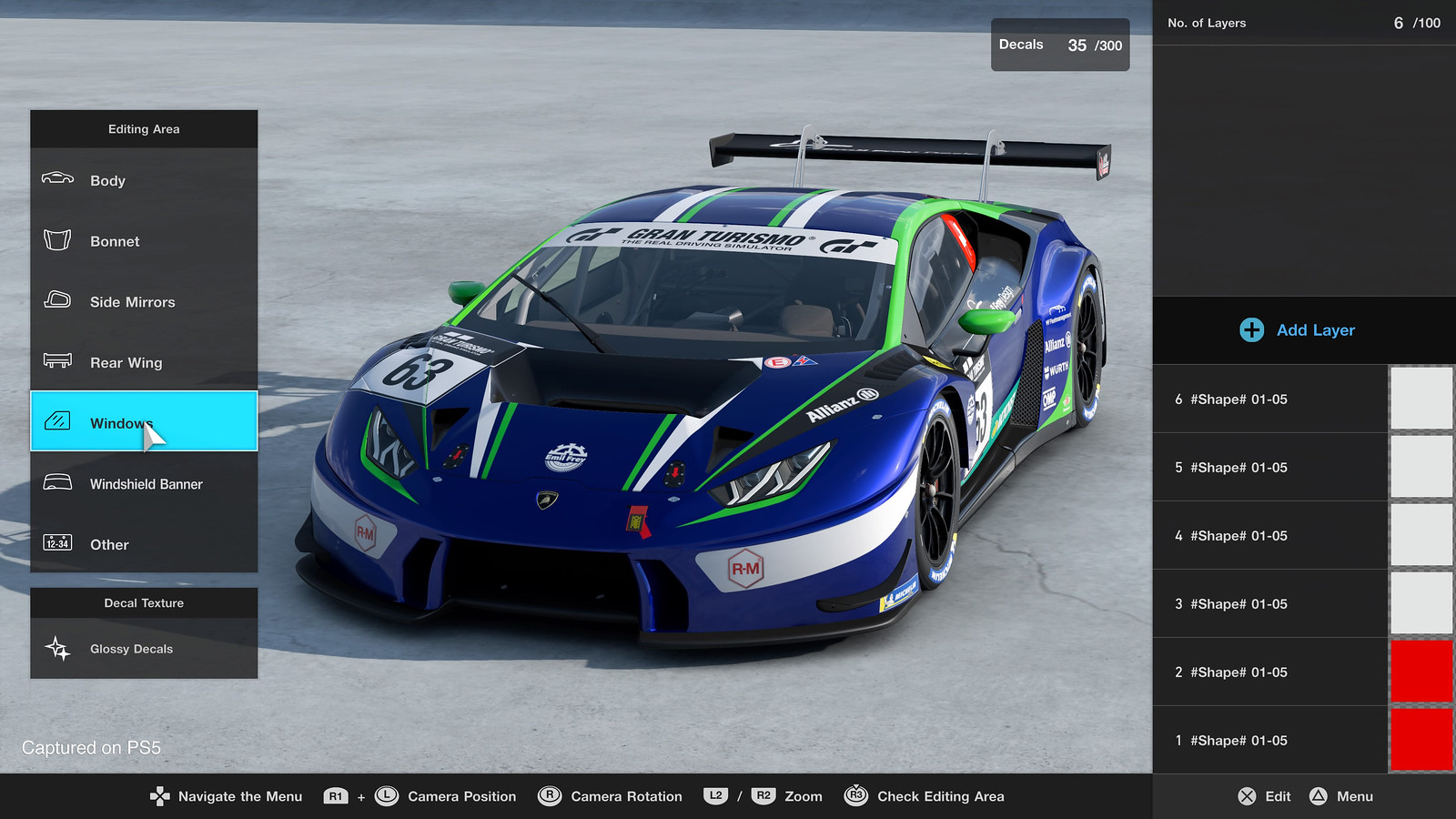
Details of game modes and features can be found in a new post by Yamauchi over on the PlayStation Blog.
Players who purchase the PlayStation 4 version of the game either physically or digitally have been promised that they’ll be able to upgrade to a digital copy of the PlayStation 5 edition for a US$10 fee in a previous Blog post.
The Gran Turismo series has been famous since its beginnings for its protracted gestation cycle. The first game spent a full five years in development before releasing to critical acclaim and enormous sales on the original PlayStation in 1997. The franchise to date has shipped over 80 million units across thirteen titles.
The 2023 Bentley Bentayga Hybrid has gained new variants, a power boost and a larger battery.
Bentley says the updated version is now available to order “in most markets”, but Australian timing remains unclear.
Previously available in a single grade, the Bentayga Hybrid range has expanded with the sporty S and luxurious Azure models.

Earlier this year, a spokesperson for Bentley told Wheels it hopes to launch the Bentayga Hybrid in Australia next year. We’ve contacted the brand for local comment on the S and Azure.
Headlining the changes is the addition of an 18kWh lithium-ion battery pack, which is 0.7kWh larger than the pre-update model. This has allowed for a three-kilometre boost to its driving range, with a WLTP-rated 43-kilometre claim in electric-only mode.
Under the bonnet, the 3.0-litre twin-turbo V6 petrol engine remains, matched with a more-powerful 100kW/400Nm electric motor – up 6kW and 50Nm – and an eight-speed automatic transmission.

It has a 340kW total system output, which is 10kW more than before. A torque figure hasn’t been announced, but the pre-update version achieved 700Nm.
This allows for improved performance, with the 0-100km/h sprint taking 5.3 seconds – 0.2s faster than before – and a top speed of 254km/h.
In identical fashion to the regular Bentayga S, the hybrid version is differentiated by its exclusive 22-inch alloy wheels, red brake calipers, black exterior trim, tinted headlights and tail-lights, an oval-shaped sports exhaust, and a “Speed-style” front bumper and rear spoiler.

This is augmented by a unique chassis, suspension, ESC and sound enhancement tunes to improve the driving experience.
Inside, the digital instrument cluster adopts “performance design dials” inspired by the Bentayga Speed, but with a hybrid power meter within the rev counter.
Meanwhile, the Bentayga Hybrid Azure focuses on luxury, with improved ride comfort and reduced noise, vibration and harshness.

It loses the sports exhaust from the Bentayga S, but gains a chrome lower bumper, ‘Azure’ badging, 22-inch ten-spoke alloy wheels, and a Bentley ‘jewel’ fuel cap.
The cabin of the Bentayga Hybrid Azure features more premium materials, with diamond-quilted Nappa leather upholstery available in 15 finishes, with standard contrast stitching or optional seat piping.
In addition, it sports 22-way power adjustable seats with heating and ventilation, illuminated tread plates, ambient lighting and a two-tone steering wheel with heating.

“Customers can now choose which aspect of the Bentayga’s personality they wish to accentuate with the arrival of the new Bentayga S Hybrid and Bentayga Azure Hybrid models,” said Bentley in a media statement.
“The two new additions mean that 50 per cent of the complete Bentley model range – seven models out of 14 – are now available with a hybrid powertrain.”
In Australia, only the Bentley Flying Spur Hybrid is currently available.
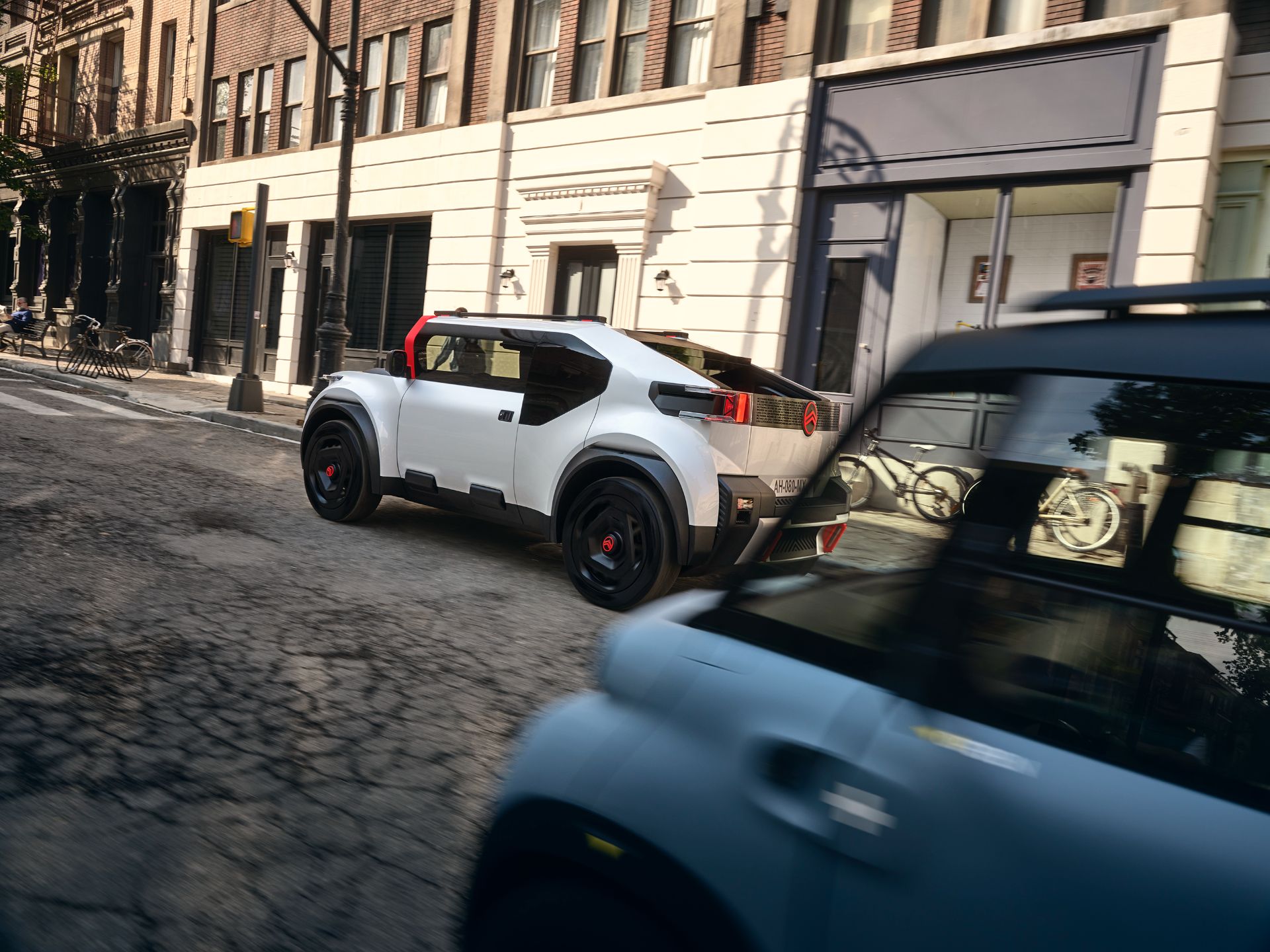
This brutalist thing you see before you is the first design study from a recently-revamped Citroën, called the Oli (pronounced “all-e”).
The concept behind the quirky electric mini 2+2 pick-up anchors around themes of affordability and sustainability. The Oli is made from recycled and recyclable materials and, of course, is electric.
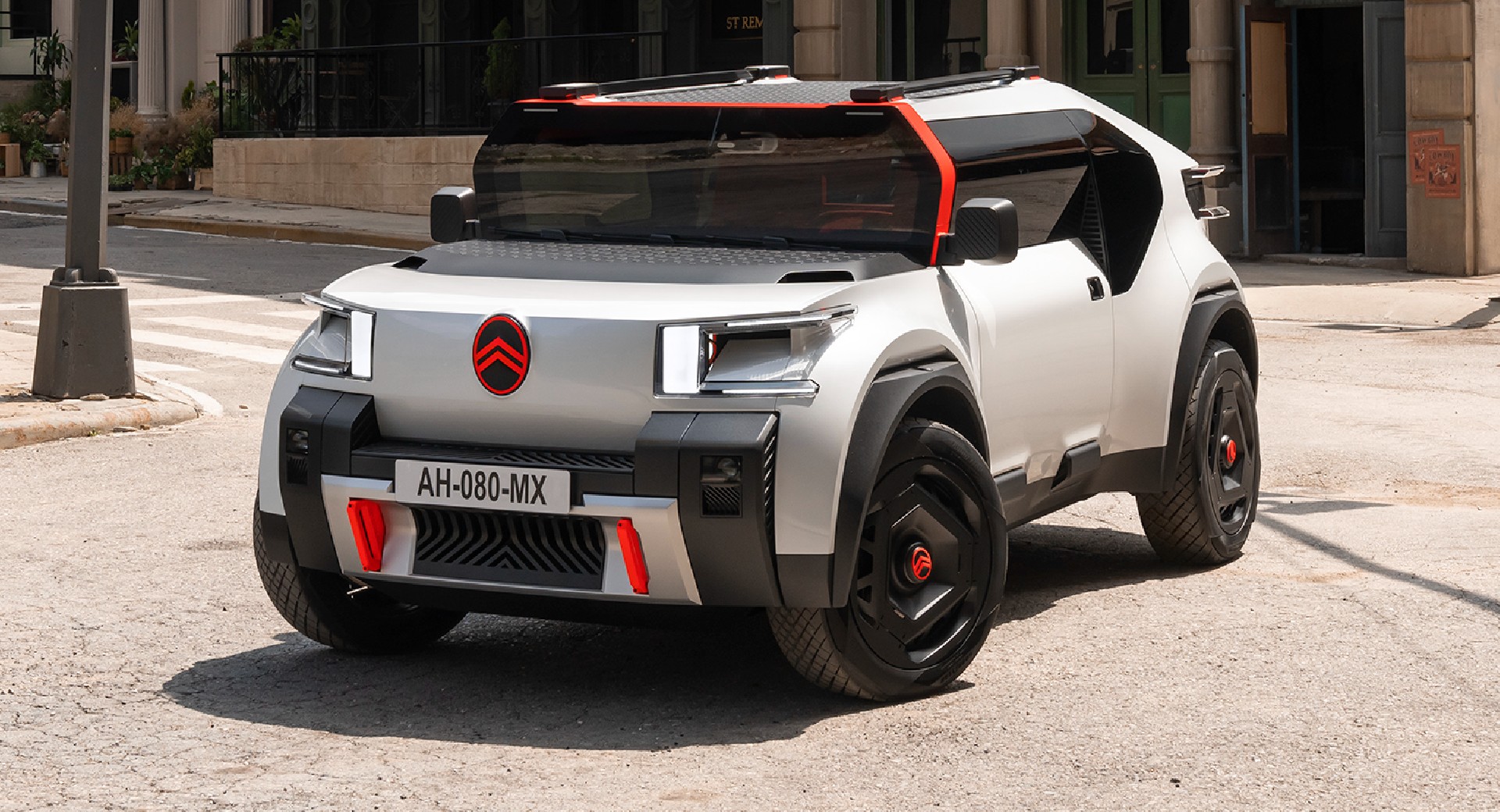
Along with debuting Citroën‘s new badging, the concept car introduces a grille-less front fascia, C-shaped lights, red highlights around the windshield frame and on, what look to be, front and rear tow hooks.
The wheels themselves and the wheel arch mouldings are virtually the only visible curved lines on the silhouette, with the front doors boasting C4 Cactus-like protective bumps. The rear door glass drops in line with the door handle, below the vehicle’s beltline.
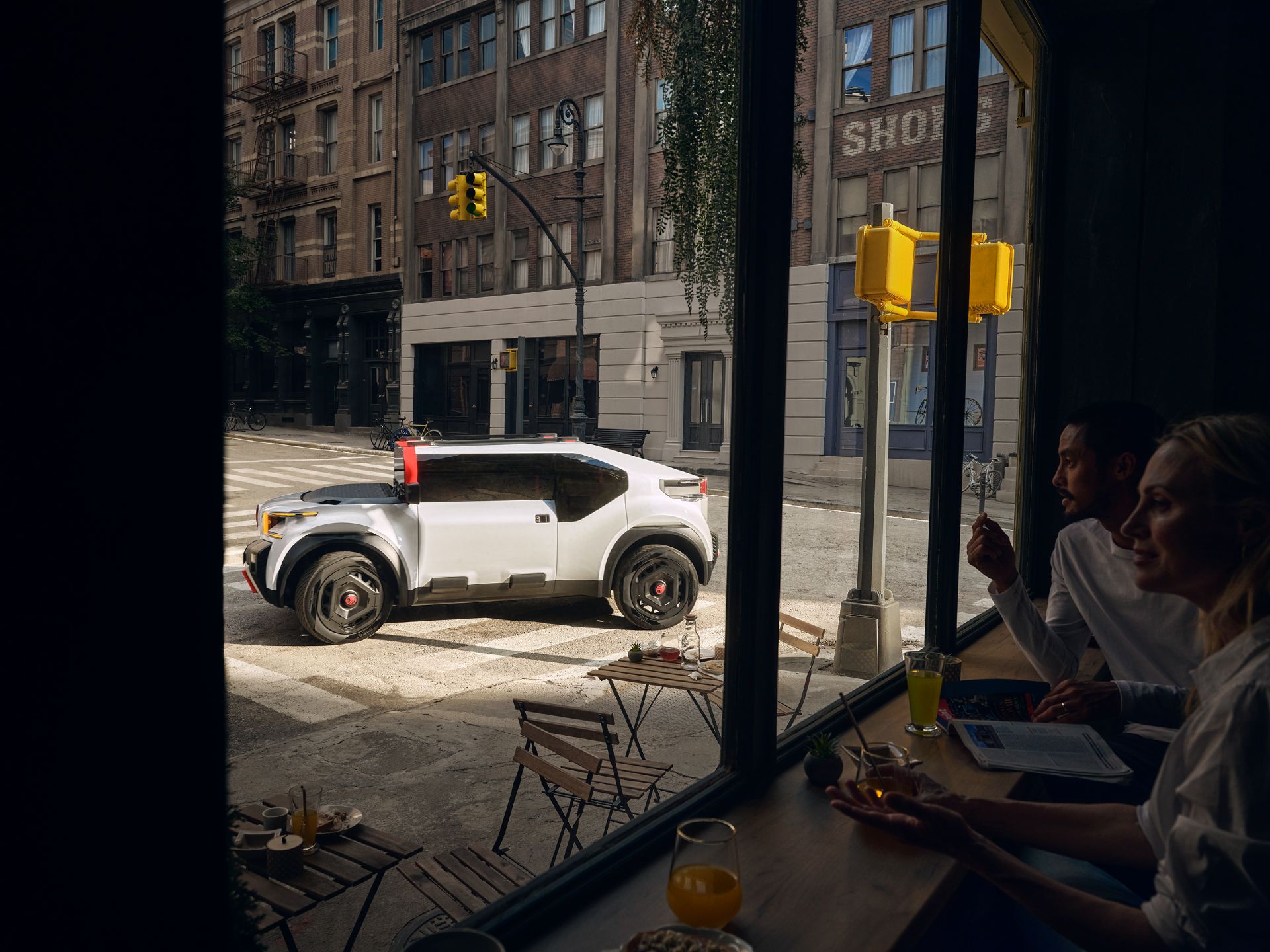
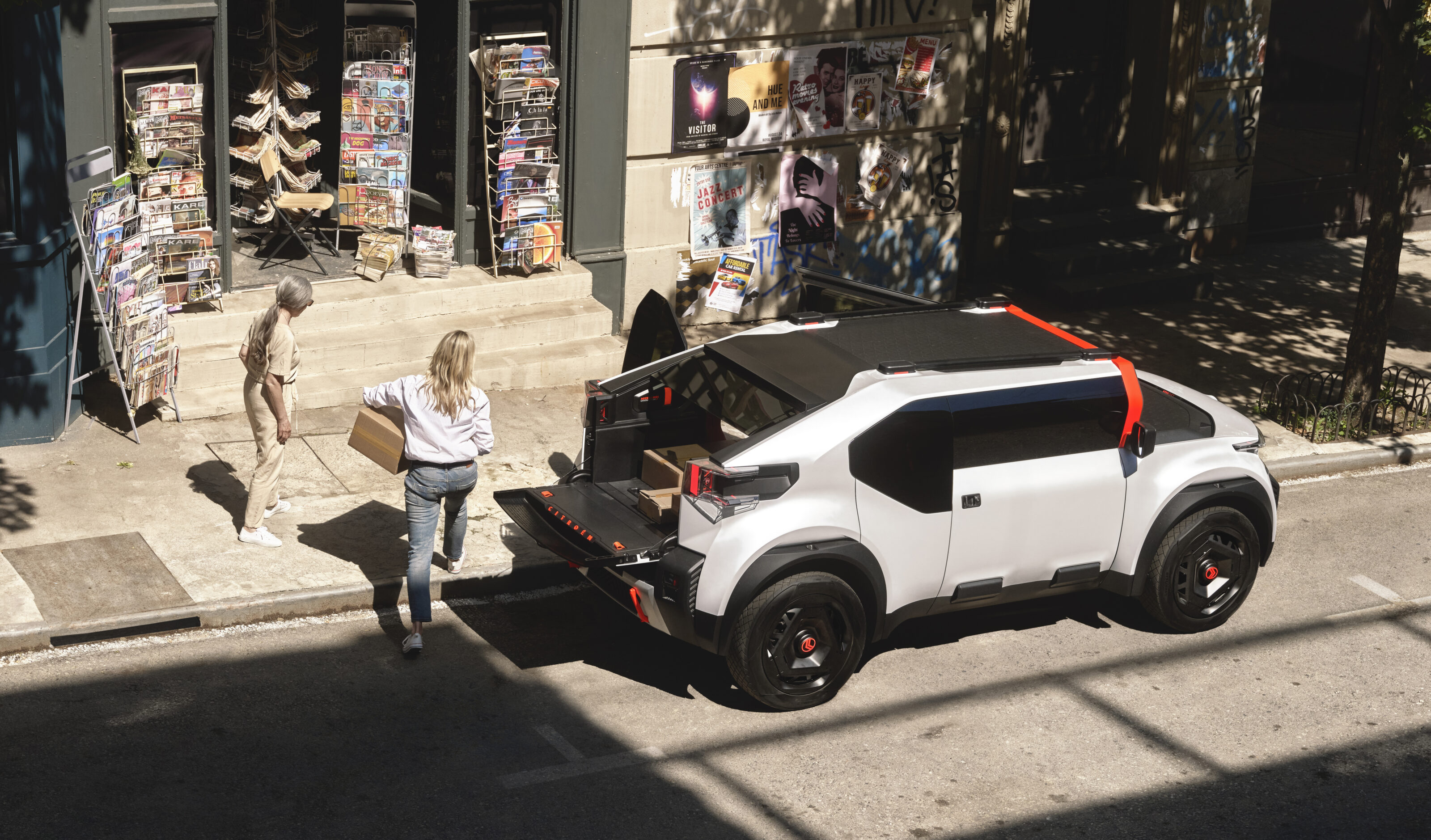
At the rear is a small bed containing a removable tray made from recycled honeycomb cardboard (along with the bonnet and roof, which Citroën says you can stand on). Things are kept hidden and protected by a retracting glass hatch. The cargo area can also be expanded from 679 millimetres to 1050mm in length, and up to 582mm in height with the recycled tray removed and with the glass hatch retracted.
Rear doors are rear-hinged, and open to an eye-searing ‘infra-red’ interior, containing four individual seats. The seat backs are 3D-printed from thermoplastic polurethane (TPU), and attach to tubular frames mounted to the floor and suspended by shock absorbing isolation rings. Citroën says they contain fewer components than a conventional car seat.
The dashboard also utilises minimal components in its construction with sound coming from a removable bluetooth speaker, with a simple smartphone dock on the steering column rendering the need for instruments or screens redundant.
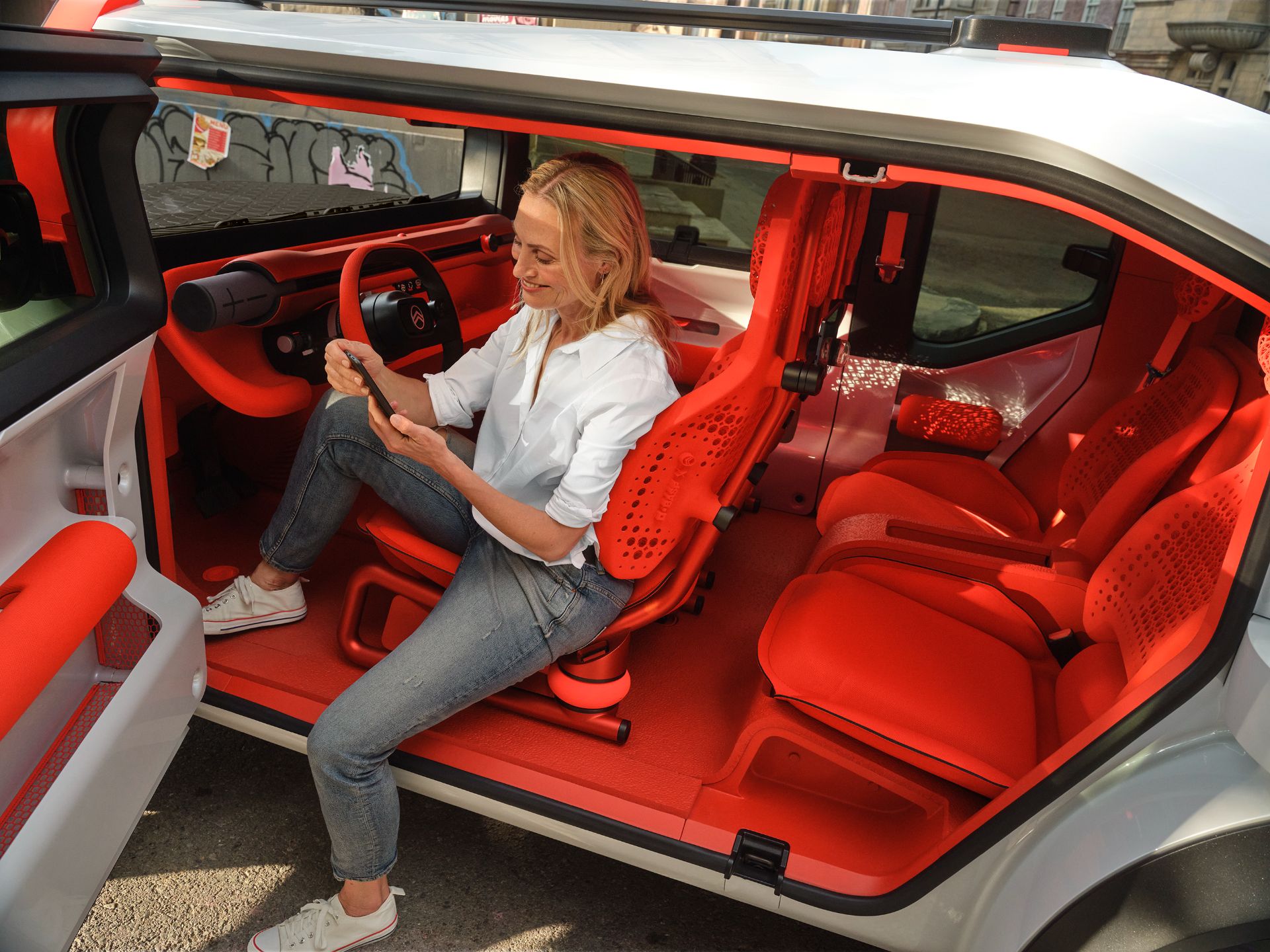
It must be said that this minimal, function-focused interpretation of automotive futurism is rather refreshing in an era where most manufacturers are simply throwing screens at every surface and ambient lighting in every crevice.
The modular floor is made from a single-piece of expanded thermoplastic polyurethane foam (E-TPU), also found in running shoes and bicycle saddles, and can be replaced or colour-coded for personalisation.
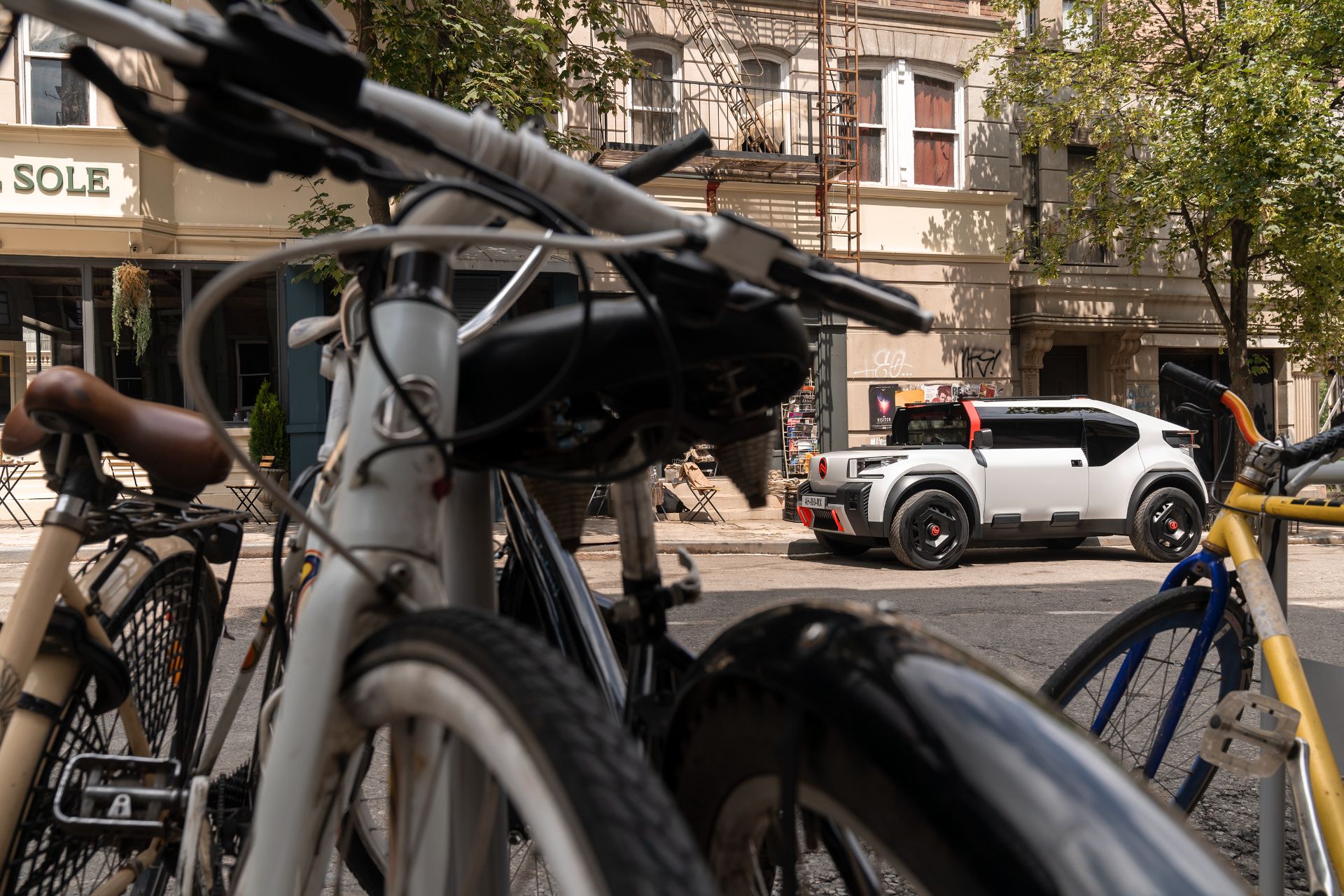
Thanks to clever materials and packaging, despite its EV powertrain, the Citroën Oli tips the scales at a neat 1000 kilograms. The French electric pick-up boasts a 40kWh battery with an estimated range of 400 kilometres, and can charge from 20-80 per cent in 23 minutes.
Its electric architecture also enables V2L (vehicle-to-load) and V2G (vehicle-to-grid) discharge, meaning the Oli can also power external devices, or store and sell excess energy back to the grid.
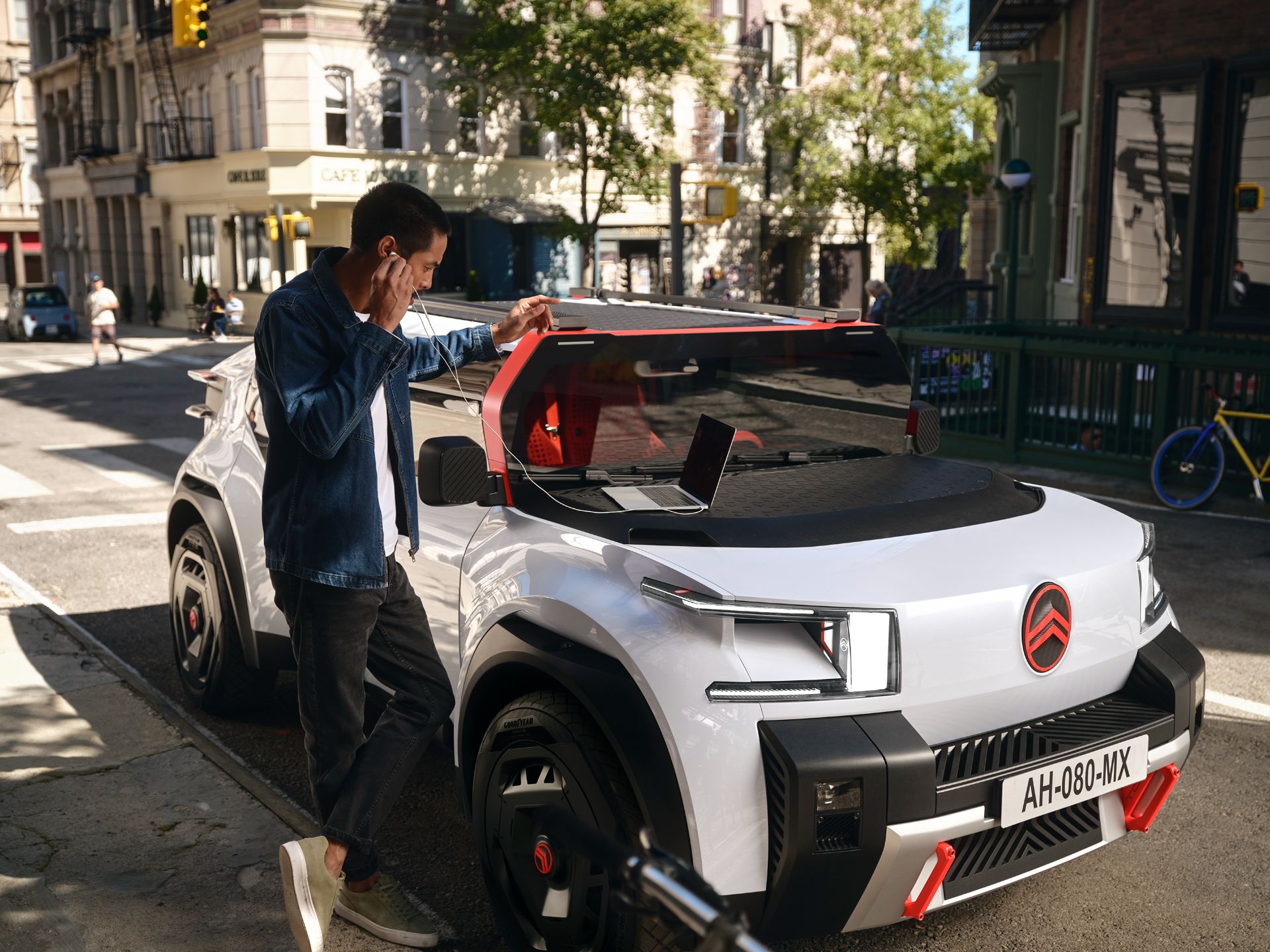
Citroën has considered every stage of the Oli’s lifecycle, with its construction and components intended to form a ‘circular economy’, with the ease and sustainability of replacing components theoretically allowing any Oli to be “affordably reinvented for several subsequent lives with new owners using refurbished parts, new decors or colours, and even upgraded parts over time”.
While full of clever ideas, the Citroën Oli remains a design study for now, though the French manufacturer tells us keep an eye out for its “ideas, design details and interior advances represented in future production models”.