
Range Rover Sport. The contradiction is right there in the name.
Trying to make an SUV drive like a sporty sedan, much less a sports car, is a tough task. Ask the engineers at Porsche who work on the Cayenne. But when your brand is famous for building the world’s plushest, most luxurious, yet impressively off-road capable SUVs on the planet, that takes the challenge to a whole new level.
Yet Land Rover seems to have cracked the code. It has sold more than one million Range Rover Sports since the first-gen model hit the road in 2004. The all-new, third-gen Range Rover Sport thus has big shoes to fill, and big bucks to earn for Jaguar Land Rover. That’s why the new Sport has been developed pretty much alongside the new full-sized Range Rover and shares the bigger car’s aluminium intensive MLA-Flex vehicle architecture and powertrain components.

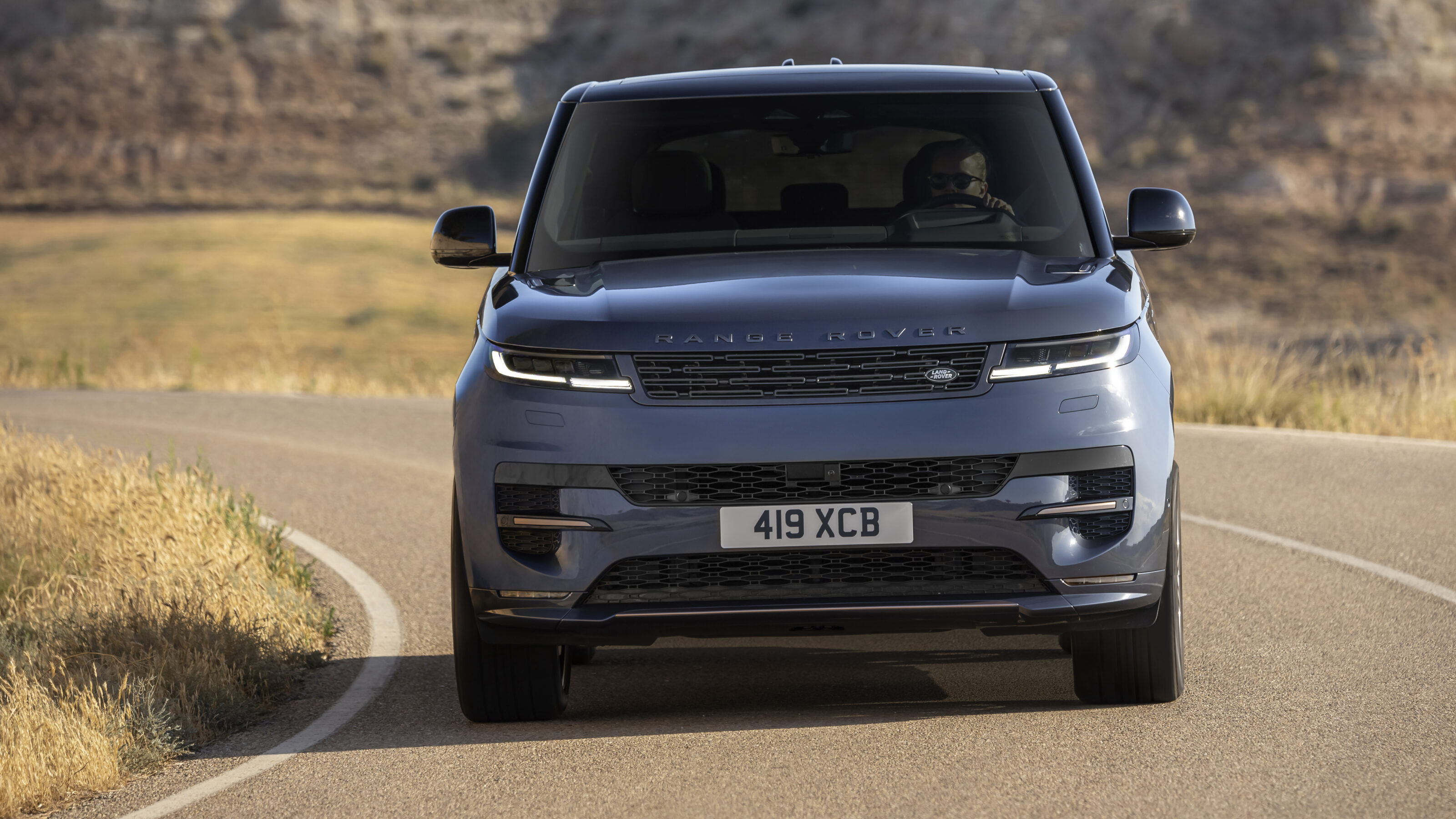
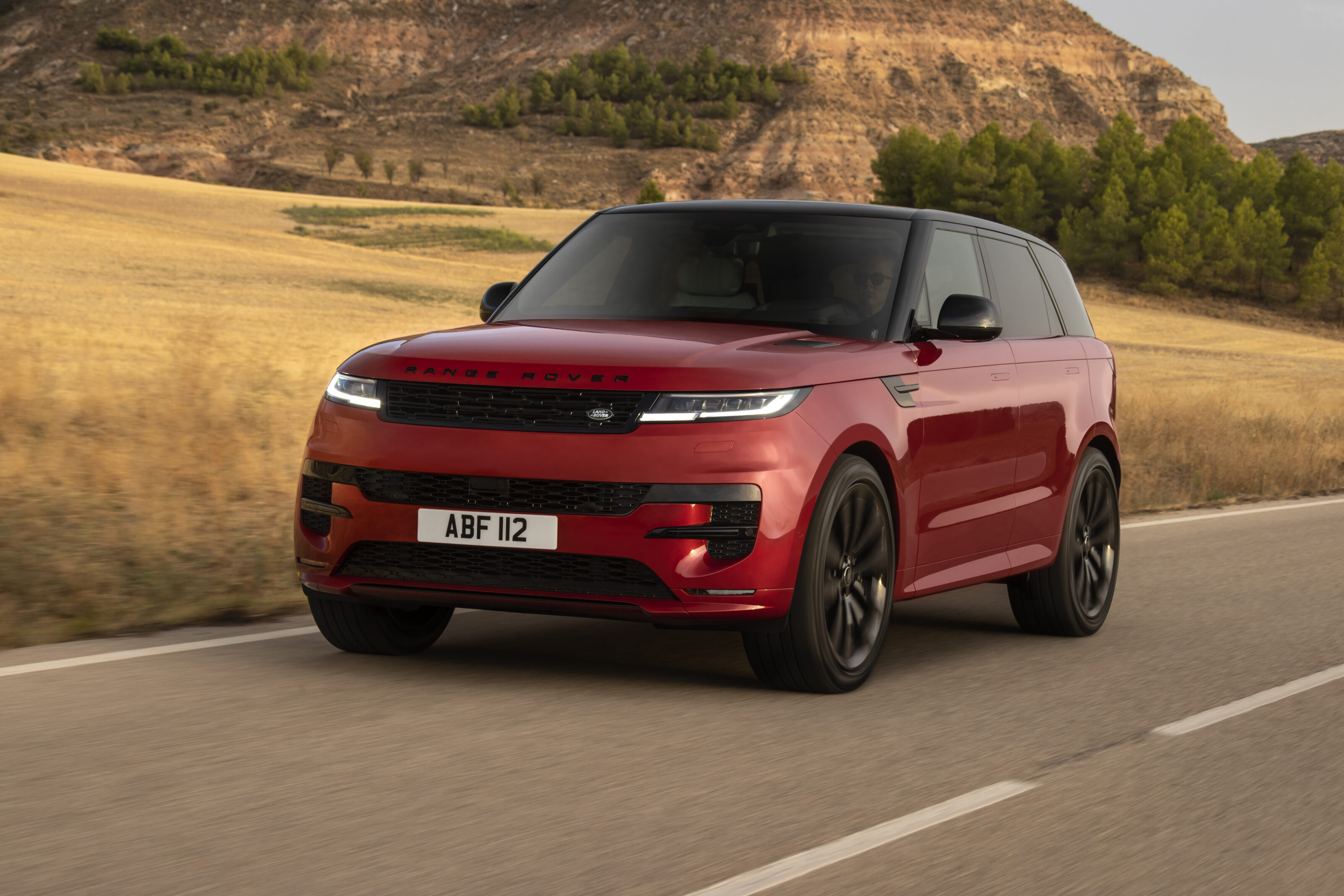
Visually, the new Sport’s basic proportion and stance are very similar to that of the outgoing model, more than 800,000 of which have been sold since 2013, but the all-new sheet metal is smoother and cleaner, the result of JLR chief creative officer Gerry McGovern’s obsession with reductionist design.
The front end features a narrower grille framed by narrower headlights, and a fascia that wraps smoothly around to the body sides. As with the new Range Rover, the tops of the doors roll over to meet the flush side glass without a visible seam or rubber seal and the D-pillar is hidden under glass.
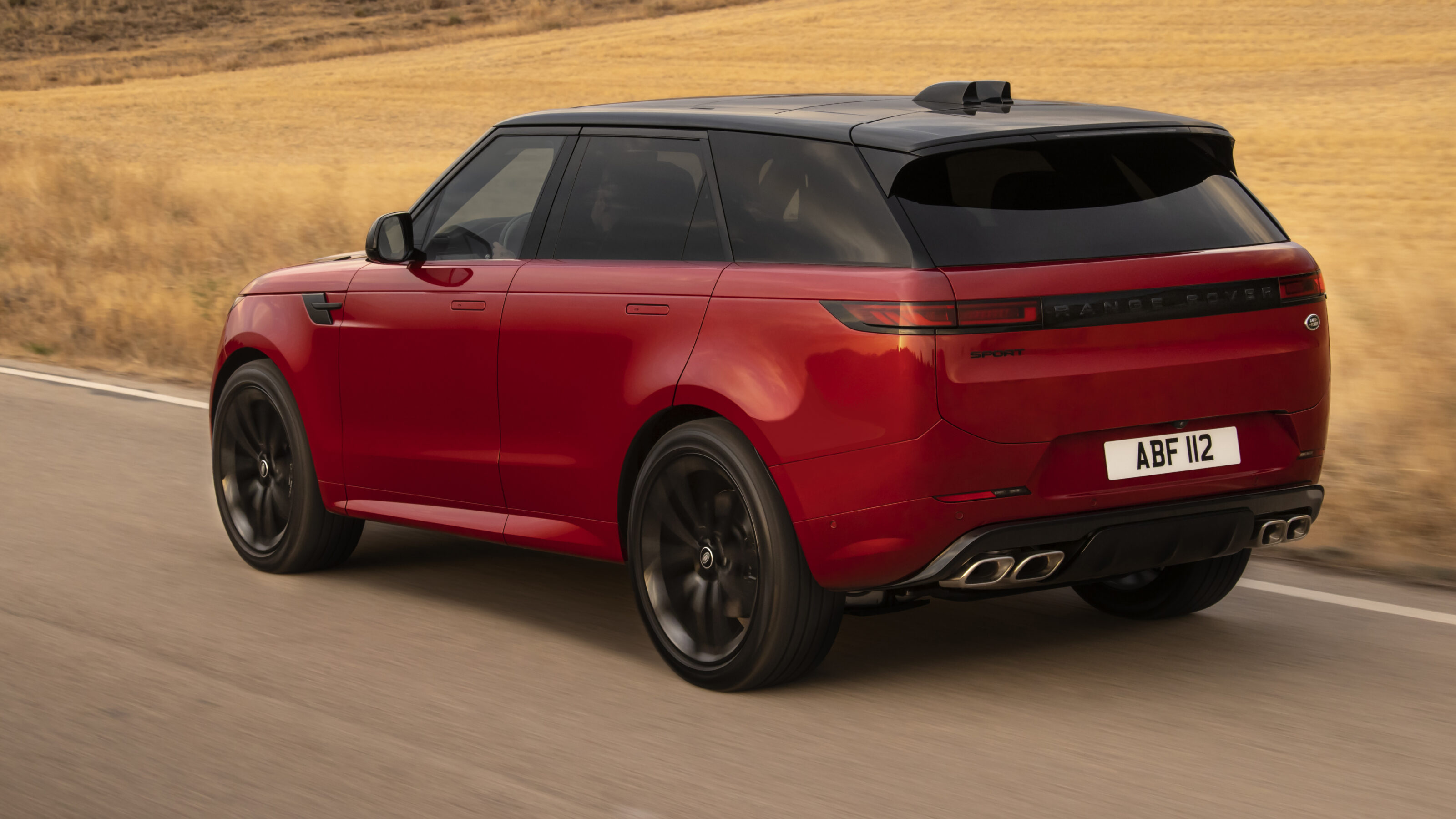
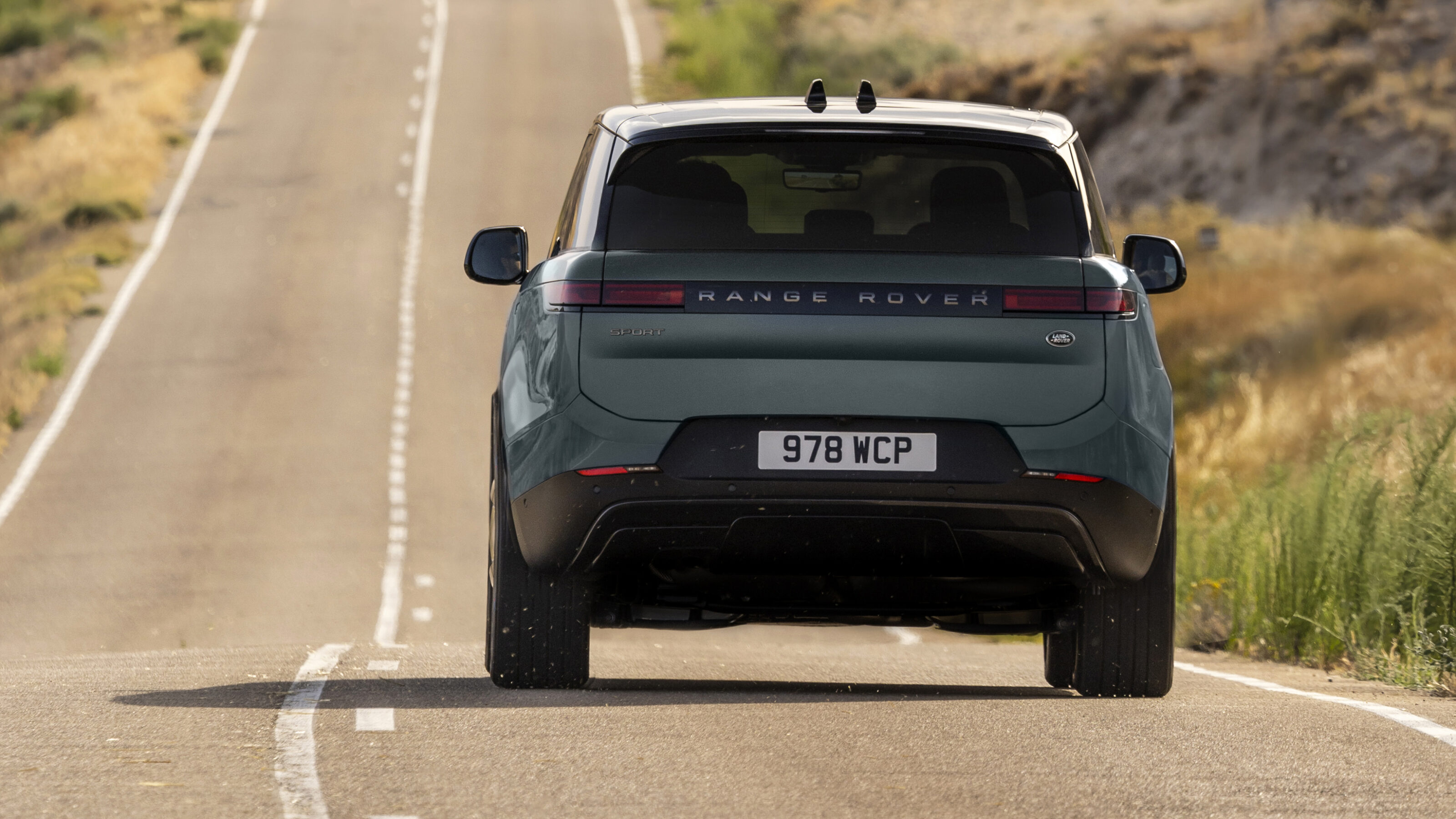
At the rear are new horizontal format LED taillights linked by black panel. The number plate has been repositioned from the tail gate to the bumper.

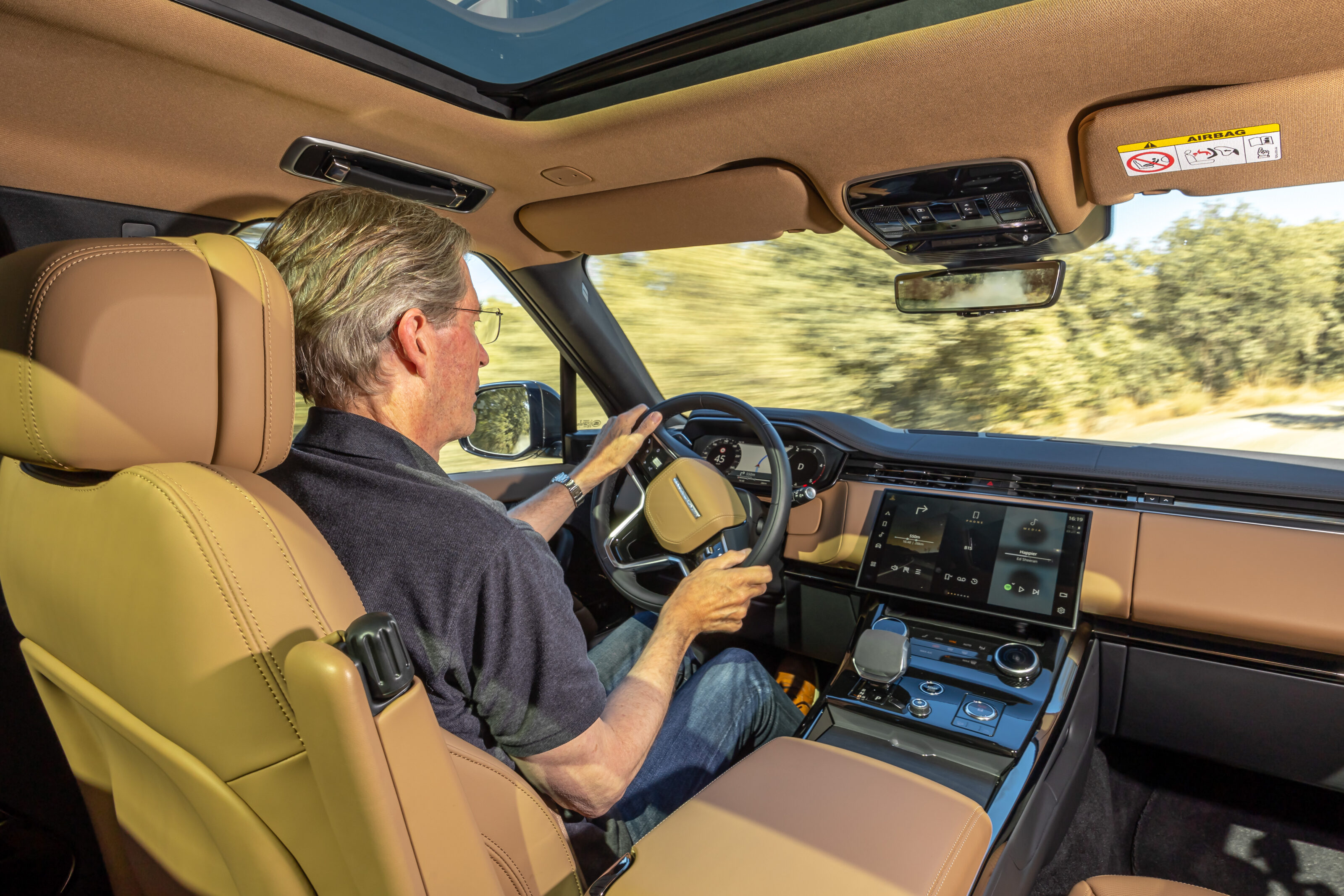
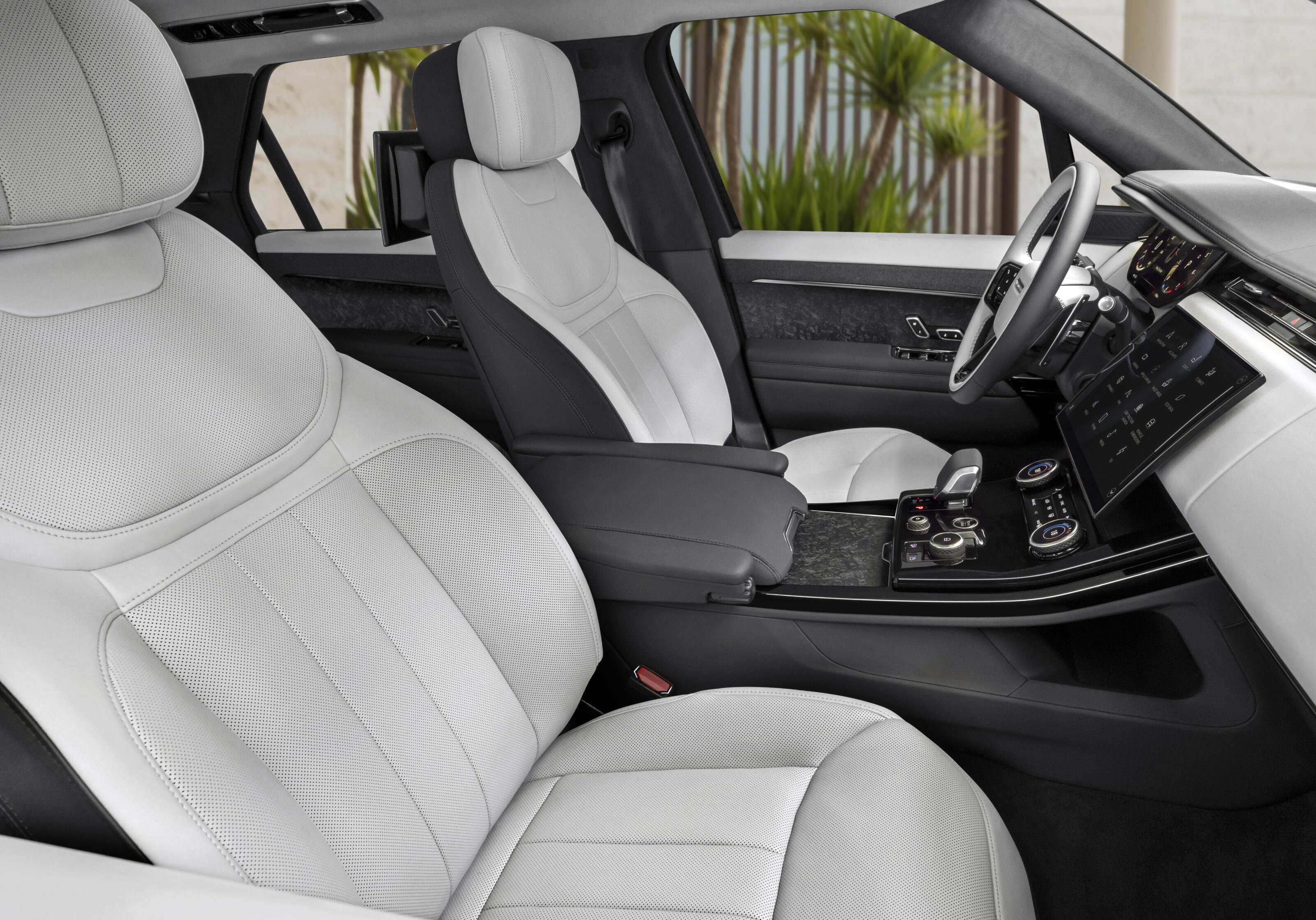
Inside is an interior designed to deliver a sportier, more driver-focused ambience than the ultra-lux vibe of the big Range Rover. The steering wheel has three spokes and is of a slightly smaller diameter than the Range Rover wheel. The high centre console puts the transmission shifter and various minor controls within easy reach.
At the centre of the dash is a curved 13.1-inch haptic response touch screen to control the Pivi Pro infotainment system. Among the apps the system can run is Amazon’s Alexa, and with its 12 ultrasonic sensors and four cameras, the system will allow the Range Rover Sport to park itself.
JLR’s 3.0-litre Ingenium turbocharged straight-six petrol and diesel engines with the 48V mild hybrid (MHEV) system will be the volume-selling powertrains in the Sport.

Powertrains and prices
In Australia the diesel Ingenium will be available in three specifications – 183kW/600Nm D250, 221kW/650Nm D300, and the 258kW/700Nm D350.
The D250 will only be available on the entry-level, $139,160 SE, and the D300 only on the next model up the ladder, the $151,026 Dynamic SE.
The D350 is available in the $168,638 Dynamic HSE and the $191,141 top-of-the-range Autobiography, as well as in the $196,359 First Edition.
In terms of petrol Ingeniums, the P360 version with 265kW and 500Nm is available in the SE, priced from $144,788, while the 294kW, 550Nm P400 can be ordered in the Dynamic SE and Dynamic HSE, priced from $155,608 and $167,547, respectively.
Top petrol engine is a BMW-sourced 4.4-litre twin-turbo V8, badged P530, that produces 390kW and 750Nm. It can be had in the Dynamic HSE for $197,809, and the Autobiography for $220,312. Neither will be available in the 2023 model year, however.

If you’re desperate for a V8-powered Sport, you’ll have to opt for one of 30 identically specified P530 First Edition models JLR Australia has secured for the 2023 model year. All will be finished in Santorini black, with black wheels and a black interior, and priced at $241,021. (All prices without on-road costs.)
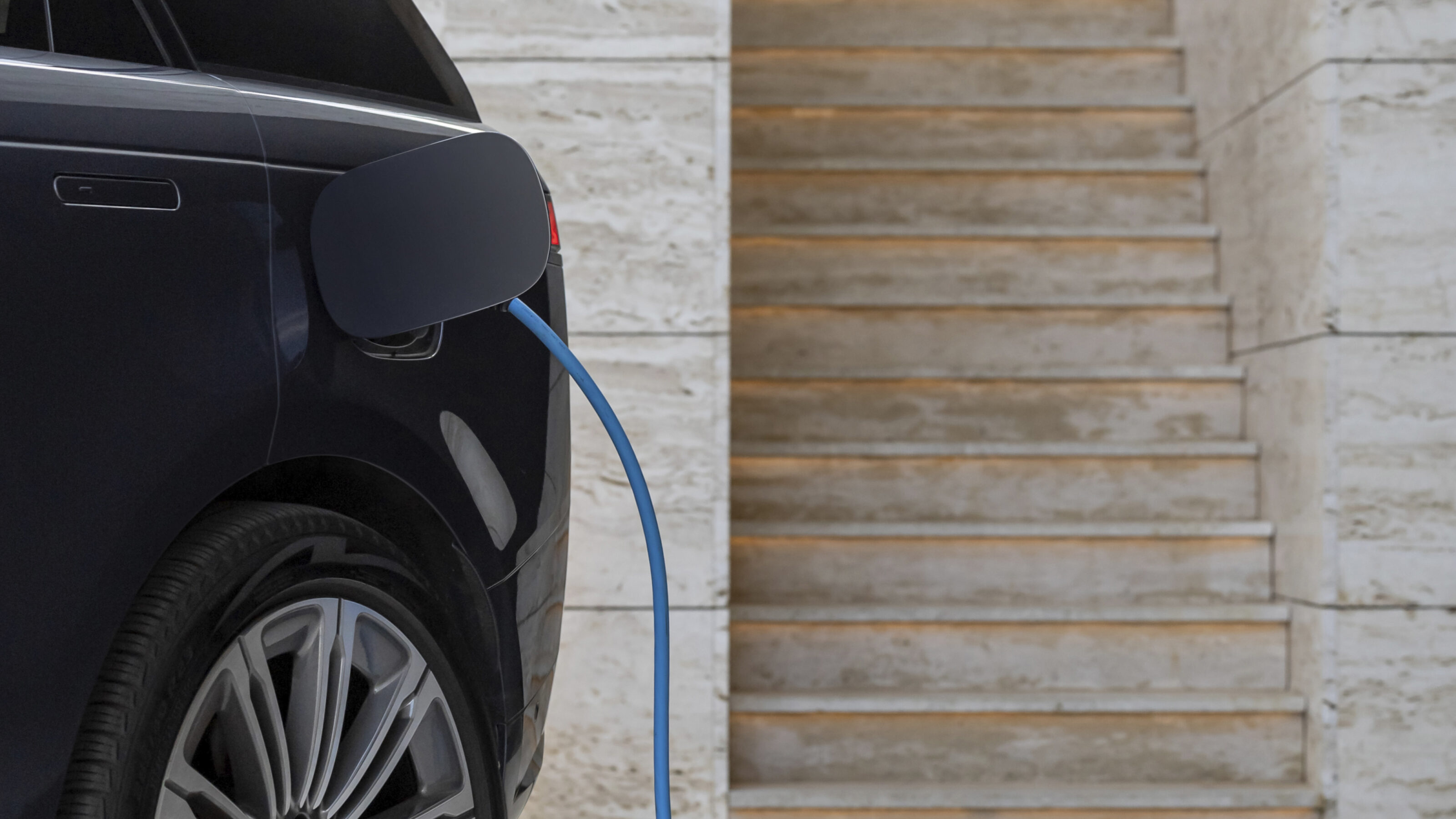
The most interesting powertrain is plug-in hybrid P510e, which will be available only in the Dynamic HSE, and priced at $198,097.
It combines the 294kW petrol Ingenium straight-six with a 105kW e-motor to deliver a total system output of 375kW and 700Nm. The e-motor is fed by a 38.2kWh battery that delivers a 113km pure electric driving range according to the WLTP and helps achieve a total real world driving range of 740km.
On the road
We sampled the SE D300, Dynamic SE P400, a First Edition P530 and an Autobiography P510e on the drive program in Spain.
All were highly specified, with the SE D300 and Dynamic SE P400 equipped with the optional Stormer Handling Pack that included the rear-wheel steering and the active electronic differential with torque vectoring by braking – among other things – which are standard on the Autobiography and First Edition. All cars rolled on 23-inch wheels shod with 285/40 Pirelli Scorpion Zero tyres.
Quick takes: The D300 is a very good diesel, punchy in the low- to mid-range, and willing to spin smoothly all the way to the soft limiter at 4750rpm with a barrel-chested murmur. JLR claims it delivers a 0-100km/h acceleration time of 6.6 seconds for the Sport SE and from 7.9L/100km on the WLTP combined fuel consumption test.
The P530 is a disappointment. In the Sport First Edition the twin-turbo V8 might be good for 0-100km/h in 4.5 seconds, according to JLR’s figures, but it doesn’t feel that fast. You never sense it’s giving you 390kW or 750Nm, especially in the mid-range, where it doesn’t have the same immediacy of the previous model’s 5.0-litre supercharged engine.
The P400 is a pleasant surprise. It doesn’t have the outright urge of the P530, taking 5.7 seconds to get the Sport Dynamic SE to 100km/h, but in real-world driving conditions, this smooth petrol straight six delivers more than enough performance to leave you wondering whether you’d really want to spend 30 grand more for a Dynamic SE with the V8.
Especially as the P400’s WLTP combined fuel economy number of 9.4L/100km is 20 percent better than the V8’s.
The P400 is the value powertrain, but the P510e, which in the Dynamic SE – the only model in which it will be available in Australia – costs just $288 more than the P530 V8, is the most interesting.
With a claimed 0-100km/h time of 5.4 seconds, the P510e isn’t going to worry a P530 at the lights, but, again, in real-world driving it doesn’t feel that much slower than the V8, the 105kW e-motor adroitly delivering meaty dollops of instant-on torque, particularly in the mid-range. Regardless of mode or driving style it’s impossible to pick the transitions between the ICE and the e-motor, so smoothly are they accomplished.
What makes the P510e appealing is its ability to deliver near-V8 performance or better than six-cylinder fuel economy, depending on your mood.
We saw an average of 5.6L/100km indicated on the trip computer during gentle highway cruising in Comfort mode, the hybrid system shutting down the ICE at very opportunity. That went to 13.9L/100 after a flat-out flog on the quiet country roads outside Madrid, with the transmission in Sport and manual shift modes, and the chassis in Dynamic drive mode.
Beyond that, of course, the Sport P510e will waft around town on silent, smooth electric power, and if your daily commute is 80km or less, you may never use any petrol.
Previous generations of the Sport have successfully combined core Range Rover competencies – off-road capability and on-road ride comfort – with a more driver-focused approach to agility and handing, and this new model follows in their wheel tracks.
Land Rover’s legion of clever electronic aids turn challenging off-road problems into simple exercises where, with a modicum of care, the biggest concern is keeping expensive paint and pristine alloy wheels away from rocks and other sharp objects. The Range Rover Sport won’t defy the laws of physics off-road, but it will effortlessly go over terrain that 99.99 percent of owners would never dream of tackling.
It won’t defy the laws of physics on road, either. Though the electronics work hard to persuade you otherwise, there’s no escaping the fact the Sport is still big, tall, and heavy, weighing from 2385kg to 2810kg, depending on powertrain and spec, which is a lot of mass to hustle through the twisties.
That said, the rear-steer system is an excellent addition to the Sport’s dynamic armoury, delivering a noticeable improvement in turn-in response into sharp corners. It’s also very handy for manoeuvring around tight parking lots.
As you’d expect of a Range Rover, the primary ride quality is excellent, the height adjustable air suspension brilliantly calming body motions, both in the vertical axis, and across the axles. Other than its bigger sibling, there’s no more comfortable SUV in the business.
Land Rover was keen to show off the 23-inch wheel and tyre package available on the new Sport. Designers love big wheels – they make cars look smaller, sportier, more tightly rendered – but engineers hate them. They’re heavy, which means more unsprung mass to manage, and the low-profile tyres wrapped around them have uncompromisingly stiff sidewalls.
Stiff sidewalls are fine on a Lambo, but the Range Rover Sport’s suspension sometimes struggled to resolve the disconnect between the impact harshness from the 285/40 tyres and the plushness of the primary ride on some of the less well surfaced Spanish roads, particularly at the rear axle.
Land Rover engineers later confided the new Sport’s chassis has been optimised around the 22-inch wheel and tyre combination that’s standard on the Autobiography. The 22s, or the 21s that are standard on lesser trims, are probably the better choice for optimal comfort.
The one area where the new Sport has gone backwards compared with the previous model is the steering. Independently suspended Rangies have traditionally boasted light and accurate steering, with decent feel. The new Sport’s steering is very heavily weighted on centre, so much so that if you release your hands from the wheel with any lock on, it immediately springs back to centre.
Of course, no-one does that in normal driving. But what you will notice, particularly out on open roads, is the higher effort required to pull the wheel off-centre on the entry to corners, and that holding a consistent line through a sweeper is more difficult, as you’re constantly fighting the steering system’s urge to snap back to the straight ahead.
All the consistency, all the finesse, of the previous generation Sport’s steering has been carpet bombed out of existence. Why? To make the Range Rover Sport’s steering feel, er… sportier than the full-size Rangie, say Land Rover engineers. It doesn’t. It feels leaden.
There’s a lot to like about the new Range Rover Sport. It looks impressively chic and sophisticated, boasts some clever, state-of-the-art chassis and driver assistance technologies, and will go pretty much anywhere with casual aplomb. There’s more room inside than before, and it’s almost as smooth and quiet to ride in as the full-sized Range Rover.
But the steering tune is a red flag. The Range Rover Sport doesn’t need to feel any sportier. It needs to feel like a Range Rover.
Toyota president Akio Toyoda made his famous “No more boring cars” proclamation more than five years ago – and the 2023 Toyota GR Corolla is perhaps the starkest instance yet of the Japanese company leaning into performance on a traditionally conservative, conventional nameplate.
Yes, we’ve seen edgier exterior designs and more aggressive performance versions of mainstream Toyota models across the automaker’s line-up. And, yes, we’ve seen performance versions of the Corolla in the distant past, but nothing like this 224kW, all-wheel-drive, manual-shift-only, sub-5.0-second zero-to-100 meteor the company just unleashed.
Toyota says the GR Corolla is a response to customers pleading for a Toyota hot-hatch for the North American market. And between the recently released GR86 and GR Supra, which is now available with a manual transmission, Toyota is clearly responding to enthusiast desires.
UPDATE: GR Corolla priced for Australia from $62,300 before on-road costs

Unexpectedly, the fast Corolla isn’t going to either the UK or Europe. But it is coming to Australia – sometime in the first quarter of 2023.
For those wondering, GR stands for “Gazoo Racing” and comes from Toyota’s global motorsports division. While it’s an official term associated with Toyota’s modern racing efforts, Gazoo Racing started as a small, almost “underground” endeavor in 2007, and included then Toyota Vice President Akio Toyoda as one of its team drivers.
Mr. Toyoda was given the nickname “Morizo” as part of that early racing effort, and now that name represents the top performance trim for the new GR Corolla that borrows a significant amount of hardware from the GR Yaris.
And, at last, we’ve had the chance to experience the GR Corolla’s performance capabilities – at Utah Motorsports Campus, near Salt Lake City in the United States. Here in the States, three variants are offered, so that’s what we’ll concentrate on, to help you get an idea of what spec and equipment the Australian product planners have to work with.
Australia will get just one model at launch, although we understand the more focussed Morizo Edition is likely. We’ll update this info when local spec and pricing details become available.
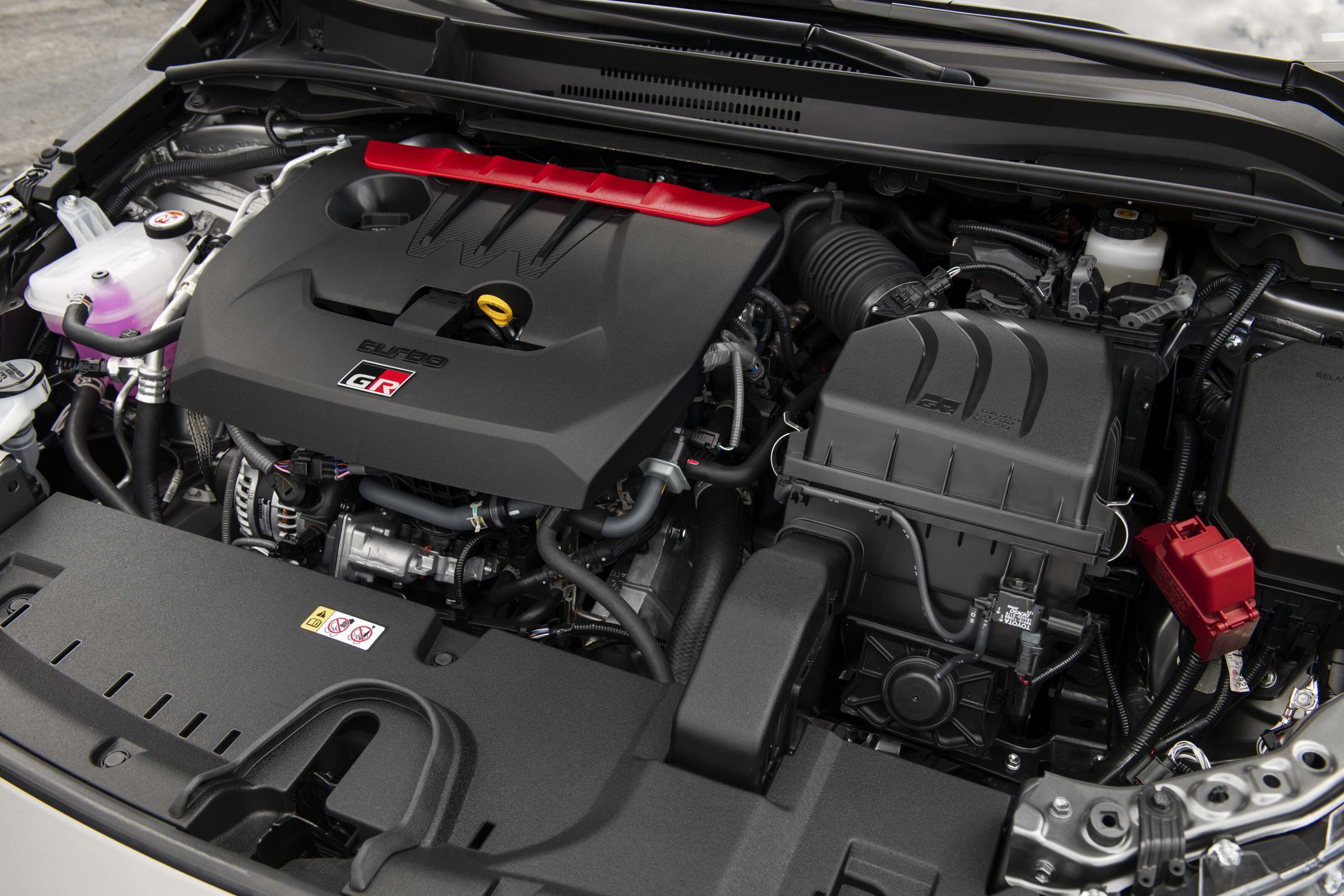
GR Corolla’s G16E-GTS engine produces 220kW and 370Nm from just three cylinders and 1.6-liters of displacement. Credit the high-flow turbo, capable of 25.2psi of boost pressure in the Core Grade and Circuit Edition models. This is bumped to 26.3psi in the Morizo Edition, boosting torque to 400Nm.
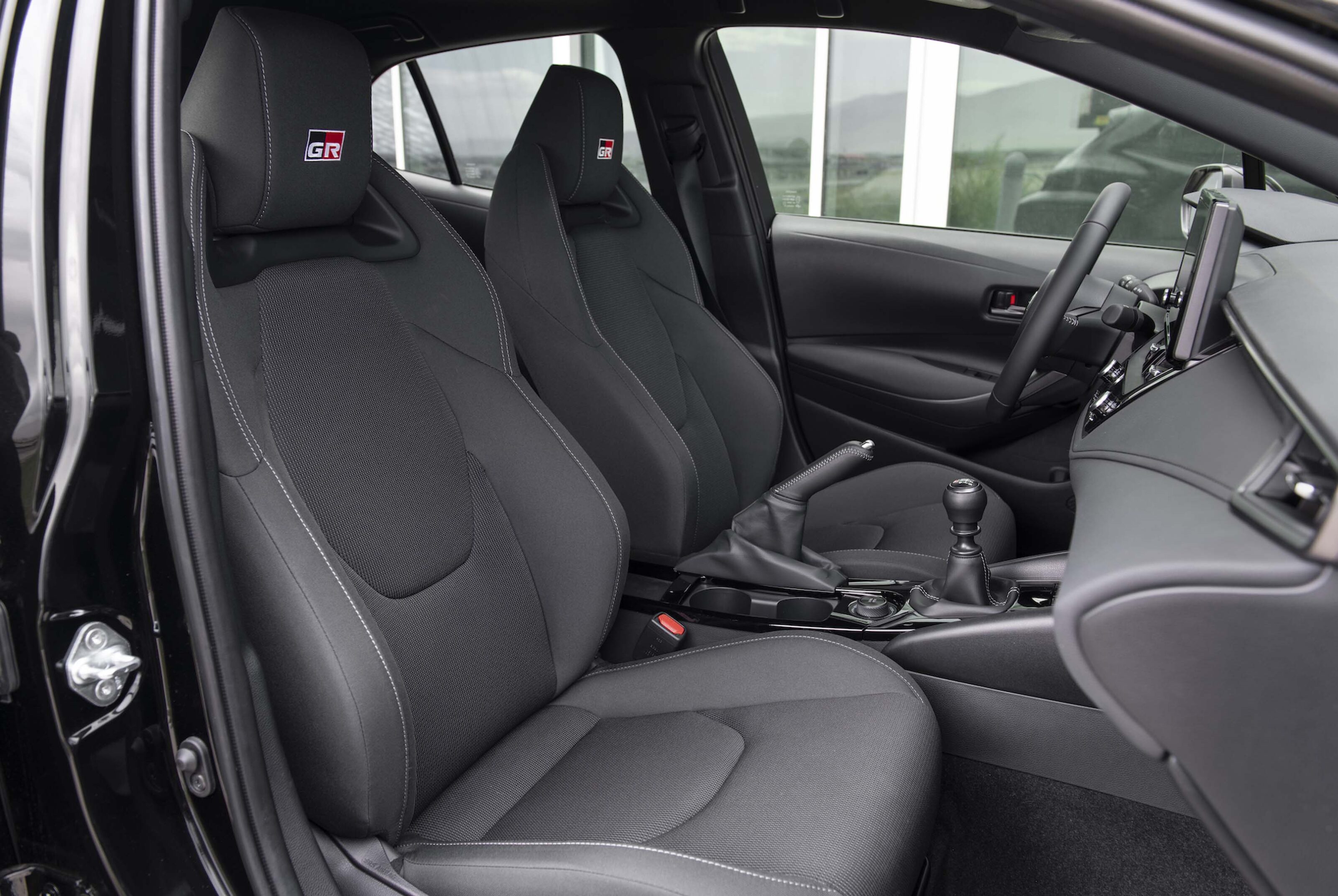
For the GR’s triple exhaust system, where the centre pipe is open from idle to 35km/h to enhance the car’s audible presence, and again above 4500rpm for maximum flow. A six-speed manual transmission with rev-matching transfers power to an all-wheel-drive system with three selectable front-to-rear torque split modes (60:40, 30:70, 50:50).
All GR Corollas ride on an upgraded chassis, featuring 349 additional weld points and three metres of additional bonding adhesive (seven additional metres on the Morizo edition) compared to the standard Corolla. The MacPherson strut front, double-wishbone rear suspensions have been tuned to work with the car’s higher power, lighter weight, and all-wheel drive system.
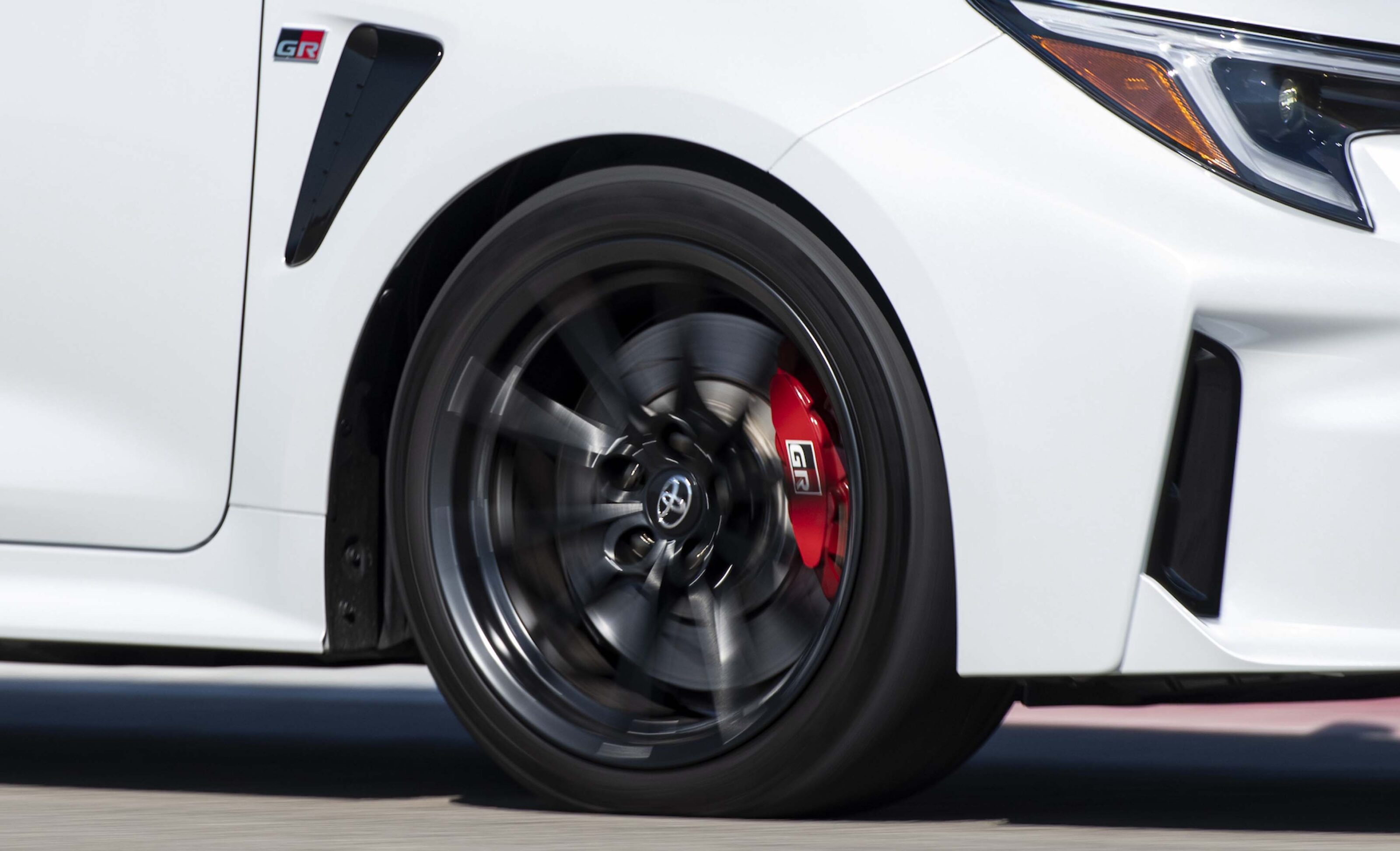
All models feature an aluminium bonnet, while the Morizo has no rear window regulators or rear wiper, to save a few more grams. Upgraded brake components include 355mm front rotors squeezed by four-piston calipers and 297mm rear rotors clamped by twin piston calipers. A traditional, centre-mounted handbrake is there to further alter the GR Corolla’s rate of rotation, when needed.
At the track, the GR Corolla’s high-speed stability, slick six-speed transmission, and powerful brake package made it easy – and exceedingly fun – to wring out every last bit of the considerable performance on offer. In the Core and Circuit models the engine is tuned to provide its 370Nm of peak torque between 3000rpm and 5000rpm, with its 220kW peak power arriving at 6500rpm.
The result is surprisingly consistent power delivery throughout the top half of the rev range, meaning far fewer shifts were required when lapping UMC than one would expect from a small displacement, three-cylinder turbocharged engine.
That’s almost a shame, because the rev-matching six-speed is a delight, allowing the driver rapid upshifts and seamless downshifts. And while leaving the GR Corolla in third gear was an option for much of the road course, we found ourselves working the aluminium pedals just to experience its crisp shift gates while enjoying the engine’s exhaust note.
At the track, the GR Corolla’s stability, slick six-speed manual, and powerful brake package made it easy to wring out every last bit of the considerable performance on offer
The Morizo Edition, with increased turbo boost and higher peak torque (400Nm) delivers its top torque number in a tighter RPM range, between 3250 and 4600rpm.
This doesn’t substantially change driving tactics in the Morizo, but between its increased torque across a narrower rev range, along with wider, stickier tires, we were inspired to shift more often and push even harder through turns.
And when it’s time to turn, the GR Corolla’s adjustable driving modes added yet another degree of entertainment. Switching from its default 60:40 front-to-rear torque split to track mode (with 50:50 distribution) kept the car very stable and predictable while accelerating out of corners, aided by the stiffened chassis and track-focussed suspension tuning.
The rear-biased 30:70 driving mode gave it a more tail-happy demeanour that wasn’t great for lap times, but certainly added to the grin factor. After a relatively short acclimation period we began braking later and applying the throttle sooner, letting the steering input and the AWD system guide the car’s path through high-speed sweepers with 50:50 torque distribution.
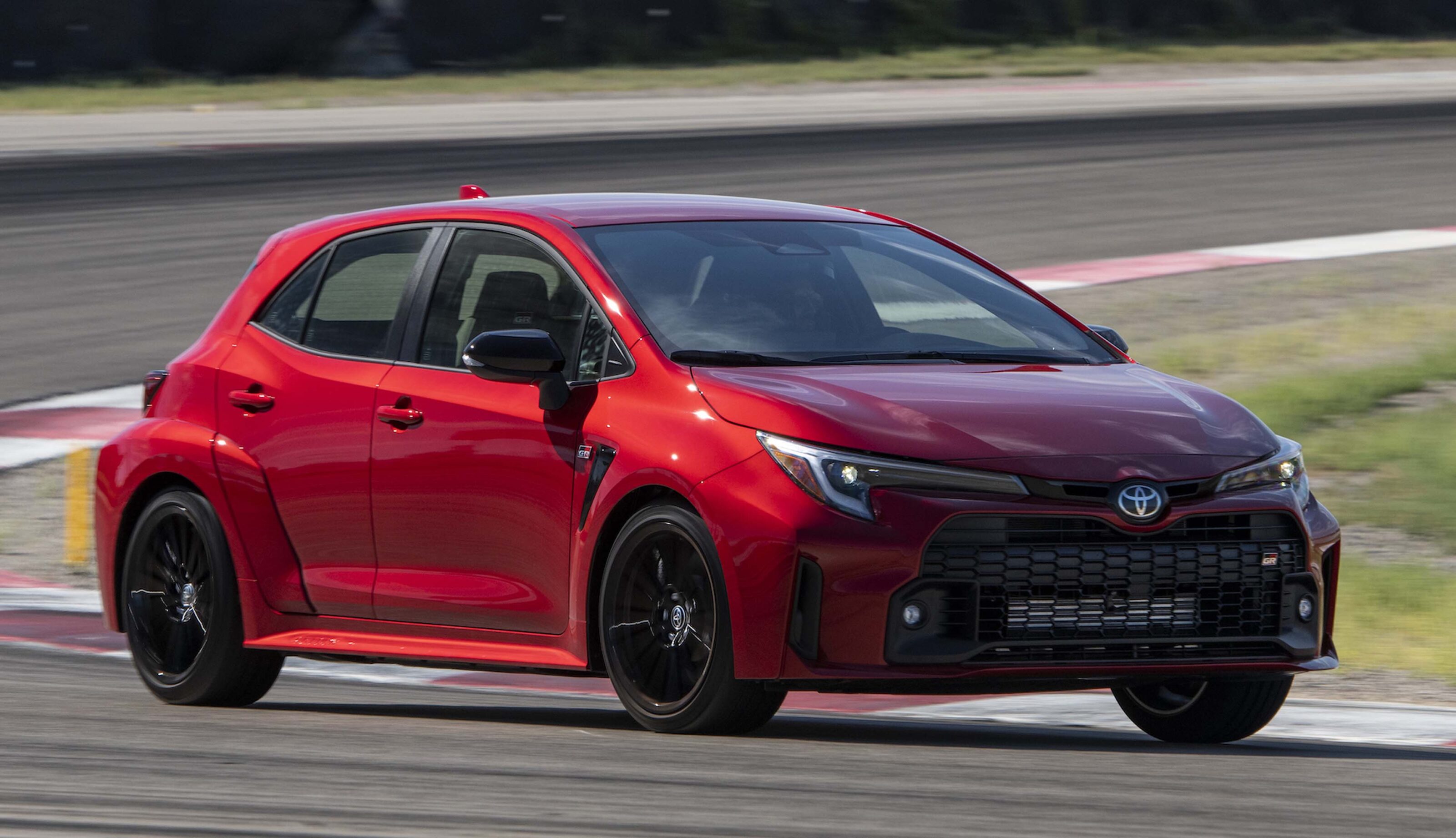
The rear-biased 30:70 driving mode gave it a more tail-happy demeanour that wasn’t great for lap times, but certainly added to the grin factor
However, for maximum fun through UMC’s low-speed, tighter turns, we often switched to the 30:70 setting before stabbing the throttle to elicit giggle-inducing oversteer. It was under these conditions we actually wished for a tad quicker throttle response.
The maximum boost numbers offered by this engine aren’t lacking, but the rate at which that boost materialises feels like it could come faster. That’s not to say the GR Corolla is laggy or feels slow.
Toyota says the GR Corolla will hit 100km/h in under 5 seconds, and we believe them. But in a market segment focused on driver enjoyment, even a subtle lag in power delivery can disappoint enthusiasts.
While all three versions of the GR Corolla deliver similar overall driving traits, there are important differences to consider. The base trim is called Core Grade, and includes the aforementioned 220kW engine, six-speed rev-matching transmission, enhanced brake calipers (painted black) and the adjustable all-wheel-drive system.
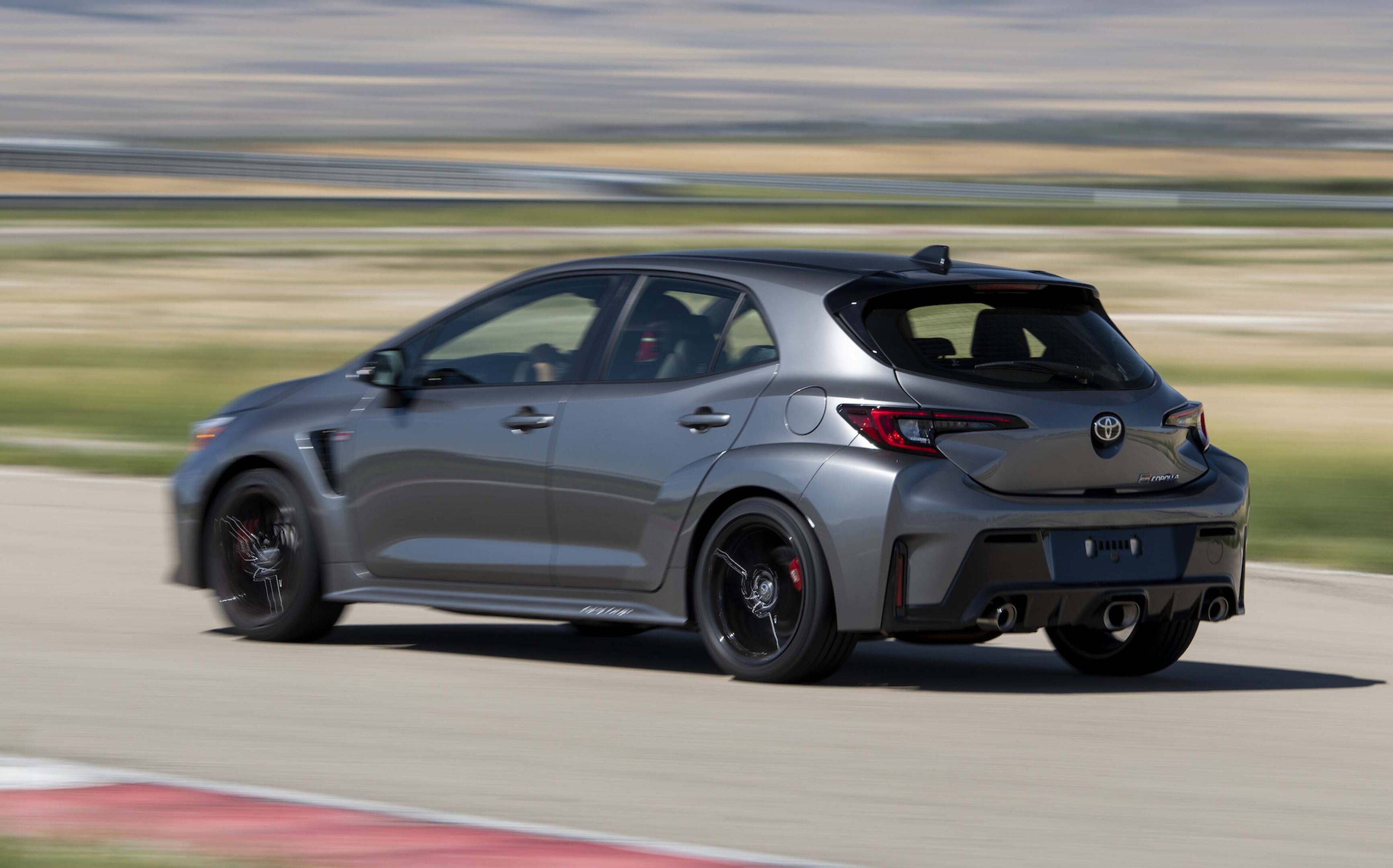
The front and rear differentials are open on Core models, while the seats are cloth and the audio system features six speakers and one USB-C port.
The base price is US$35,900 (AU$53,300), plus a US$1095 dealer handling charge, while an US$1180 Performance package adds Torsen limited slip differentials and red brake calipers. Core Grade colour options include Ice Cap (white), Black, and Supersonic Red.
Stepping up to the mid-grade GR Corolla Circuit Edition adds Torsen limited slip front and rear differentials, along with a forged carbonfibre roof, leather interior, heated front seats and steering wheel, an upgraded eight-speaker, 800-watt JBL audio system with navigation, and a Qi-compatible wireless smartphone charging pad.
The top trim Morizo Edition of the GR Corolla includes all the Circuit Edition equipment, except the upgraded audio system, while bumping peak turbo boost to 26.3psi and peak torque to 400Nm.
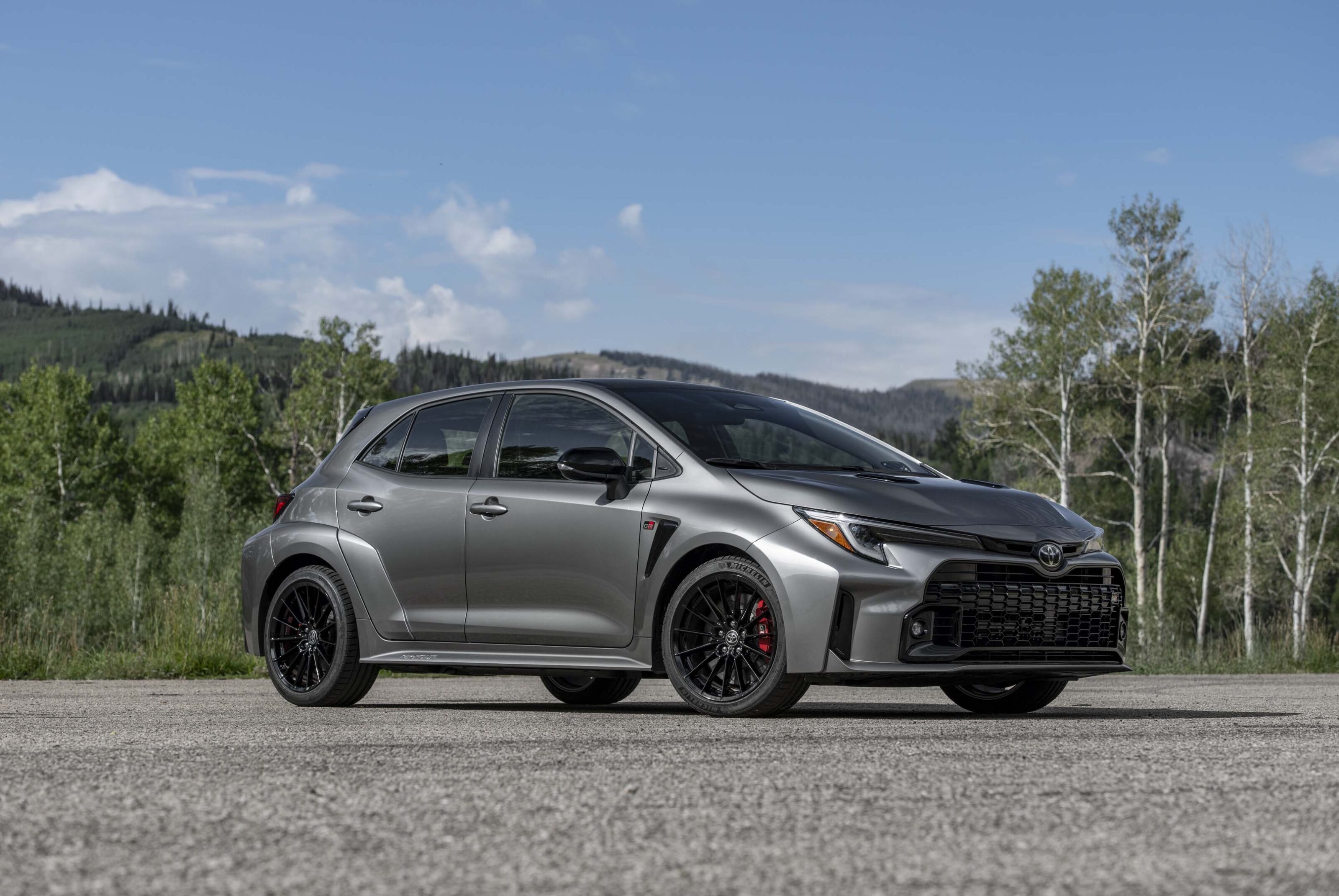
The Morizo also benefits from wider front and rear guards housing wider 18-inch forged alloy wheels with 245 series Michelin Pilot Sport Cup 2 tyres (Core and Circuit models use cast alloy wheels with 235 series Pilot Sport 4 tyres). The Cup 2 undeniably elevated the GR Corolla’s level of grip while providing more progressive breakaway when its lateral traction threshold was exceeded.
To emphasise its performance focus, Morizo Editions lose the 60/40 split-folding rear seat in the Core and Circuit versions, while gaining a 30kg to 40kg advantage over the other trims. Curb weight is 3186 pounds for the Morizo Edition, 3285 for Circuit Edition, and 3252 for a base Core Grade with no options.
Pricing for the Morizo edition starts at US$49,900 (AU$74,100), and colours include Smoke (a very cool matte gray) and Wind Chill Pearl (white)

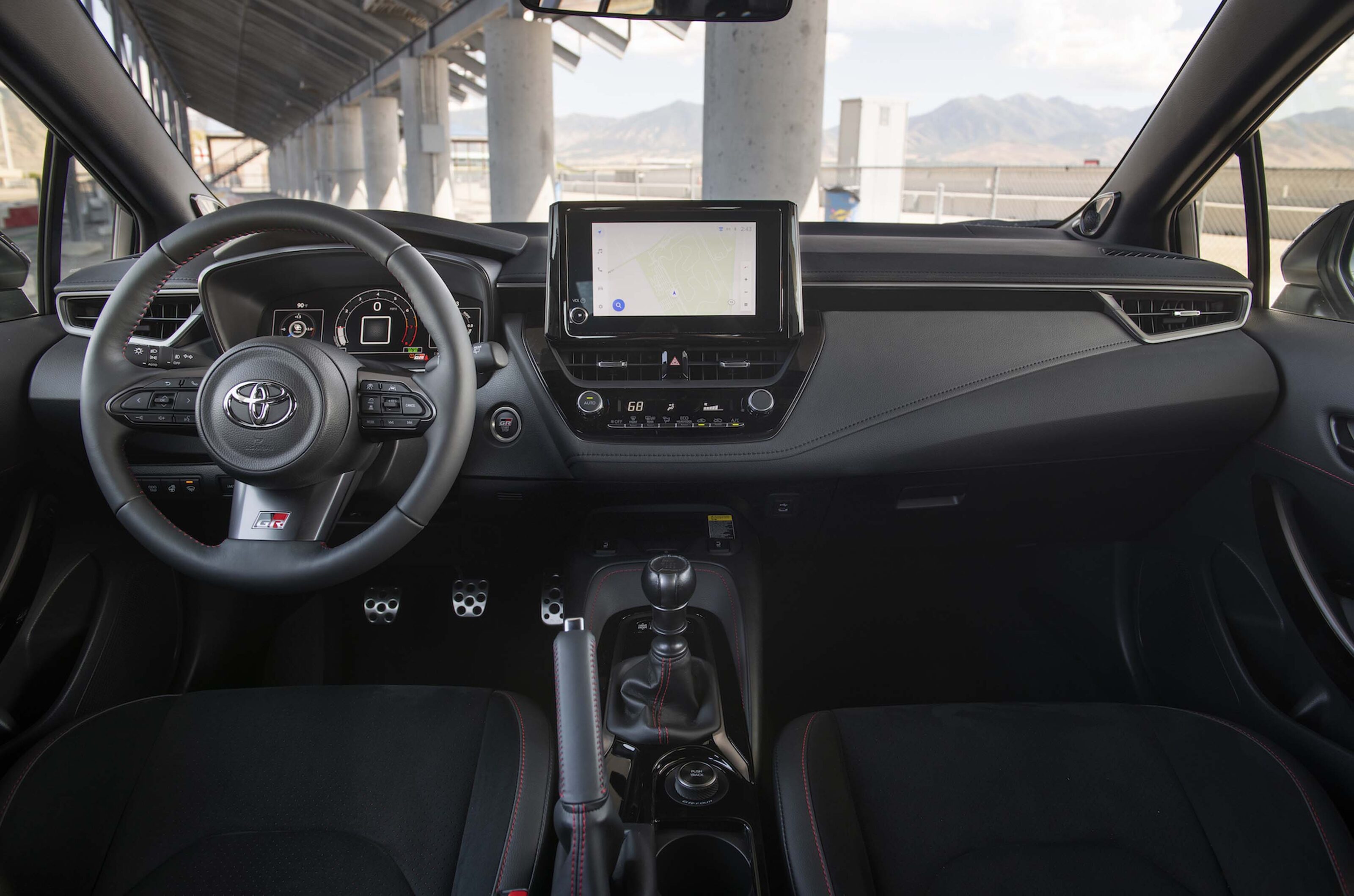
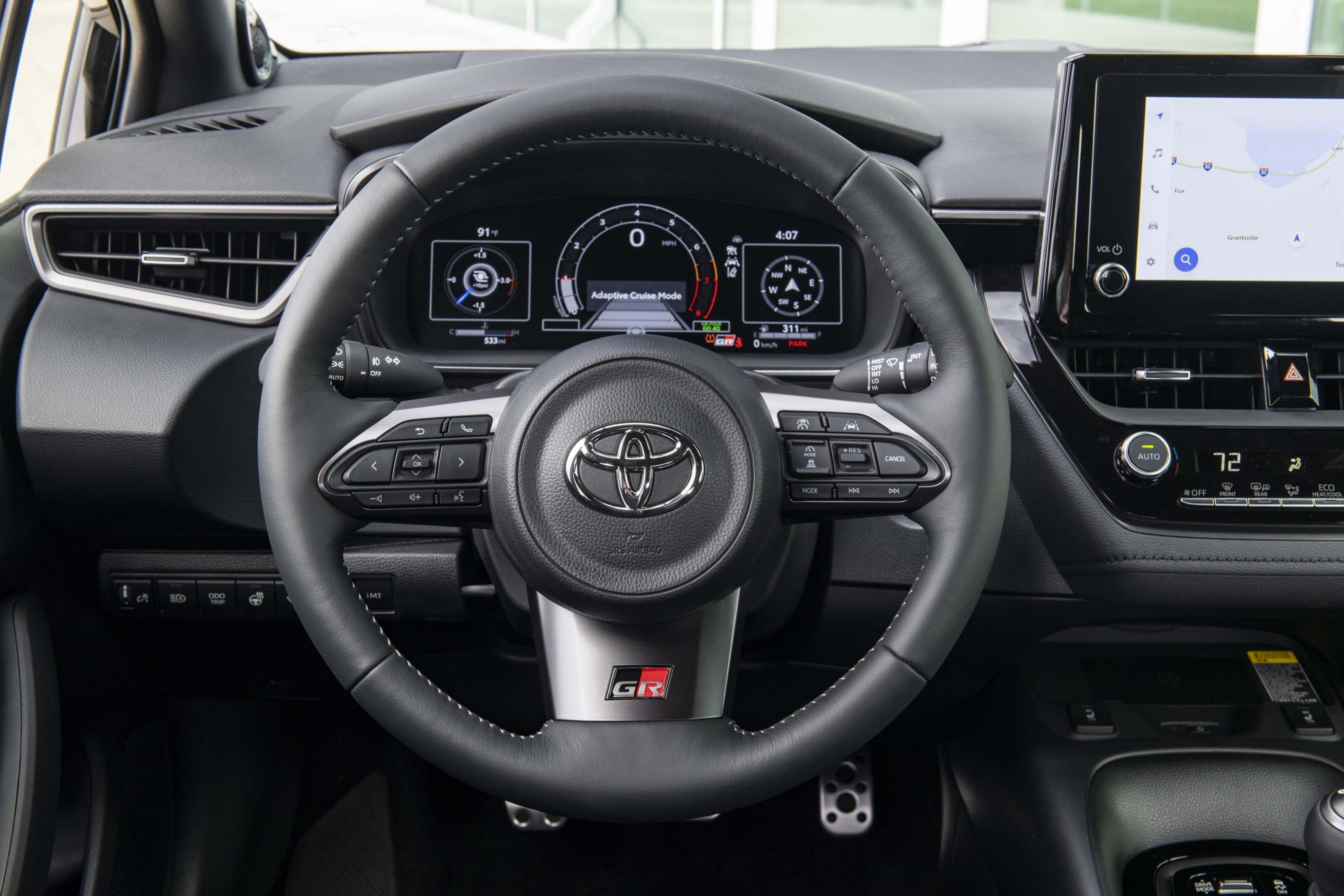
The performance theme continues inside, with aggressively-bolstered front seats, a leather-trimmed steering wheel and shift knob with contrasting stitching, and aluminium sport pedals.
There’s also a standard 12.3-inch digital gauge cluster/information display that features GR start-up animation and specific indicators for AWD torque distribution, turbo boost and drive mode settings.
The Morizo edition swaps the leather steering wheel and shifter material for ultra-suede. All models provide wireless Apple CarPlay and Android Auto, and all come standard with Toyota’s latest Safety Sense 3.0 collection of driver-assist technology.

We found the front seats comfortable without being overly stiff or tight, but that perspective might change depending on individual body shape (and width…). And while our public-road seat time was limited, we’re confident a GR Corolla can serve daily driving duty, at least for its intended buyers profile.
Perhaps the most telling feature included with every GR Corolla is a complimentary one-year membership in the Nation Auto Sport Association, a motorsports club offering high-performance driver training and track events throughout the year in the USA.
2023 Toyota GR Corolla: VERDICT
While the GR Corolla makes a capable daily driver – as long as you don’t have more than one passenger to carry in a Morizo Edition – everything from its torque-rich engine, adjustable all-wheel-drive system, and firm suspension requires a track environment to properly experience the car’s capabilities.
The current-generation Corolla is easily the most driver-friendly version in the nameplate’s history, but the GR aggressively builds on this solid foundation, creating an entirely new, and better, driving experience.
We’re thrilled to see Toyota jumping into this market segment with such vigor. But now comes the biggest hurdle — going up against established players like the Honda Civic Type R, Subaru WRX, and Volkswagen Golf R, along with newer combatants like the Hyundai Elantra N.
Does the GR Corolla deliver emotional and engaging thrills at the level established by these competitors? That’s a tough call without driving them back-to-back, though we suspect the GR might feel slightly muted in its power delivery, even as its suspension tuning, precise shifter, and confident brakes allow it keep pace with them on public roads and closed course tracks.
One thing we do know — this is a question we look forward to answering ASAP.
The current-generation Corolla is easily the most driver-friendly version in the nameplate’s history, but the GR aggressively builds on this solid foundation, creating an entirely new, and better, driving experience.
Snapshot
- Five-star rating confirmed for Tesla Model Y
- New records set for adult protection and safety assist categories
- Full marks for most active safety equipment
September 14: ANCAP probing Tesla code modification in crash testing
Independent safety body ANCAP is investigating allegations made via social media that Tesla has modified software code used in crash test vehicles.
Posting on Twitter over the weekend, user green put the authenticity of the Model Y’s record-breaking test result into question, claiming: “Tesla just added ANCAP support in their code. This is in addition to already existing “I VISTA” (Chinese testing grounds), EuroNCAP and Korea NCAP.”
While there’s no evidence yet to suggest that the modified code, which identifies where the vehicle is being tested, helped the Model Y perform better in the advanced driver assistance systems tests, it has prompted ANCAP to launch a probe.
A spokesperson for ANCAP told Wheels: “We’re aware of the claims made on Twitter and are looking into it.”
According to green, Tesla can ‘geofence’ certain features, such as its Full Self-Driving Beta system, for a particular region – saying: “They do enable/disable other things based on car location (like disable FSDBeta in Vancouver downtown) so the capability is there.”
Wheels has contacted Tesla for comment, but has not received a response by time of publishing.
The story to here
September 7: Tesla Model Y awarded five-star safety rating
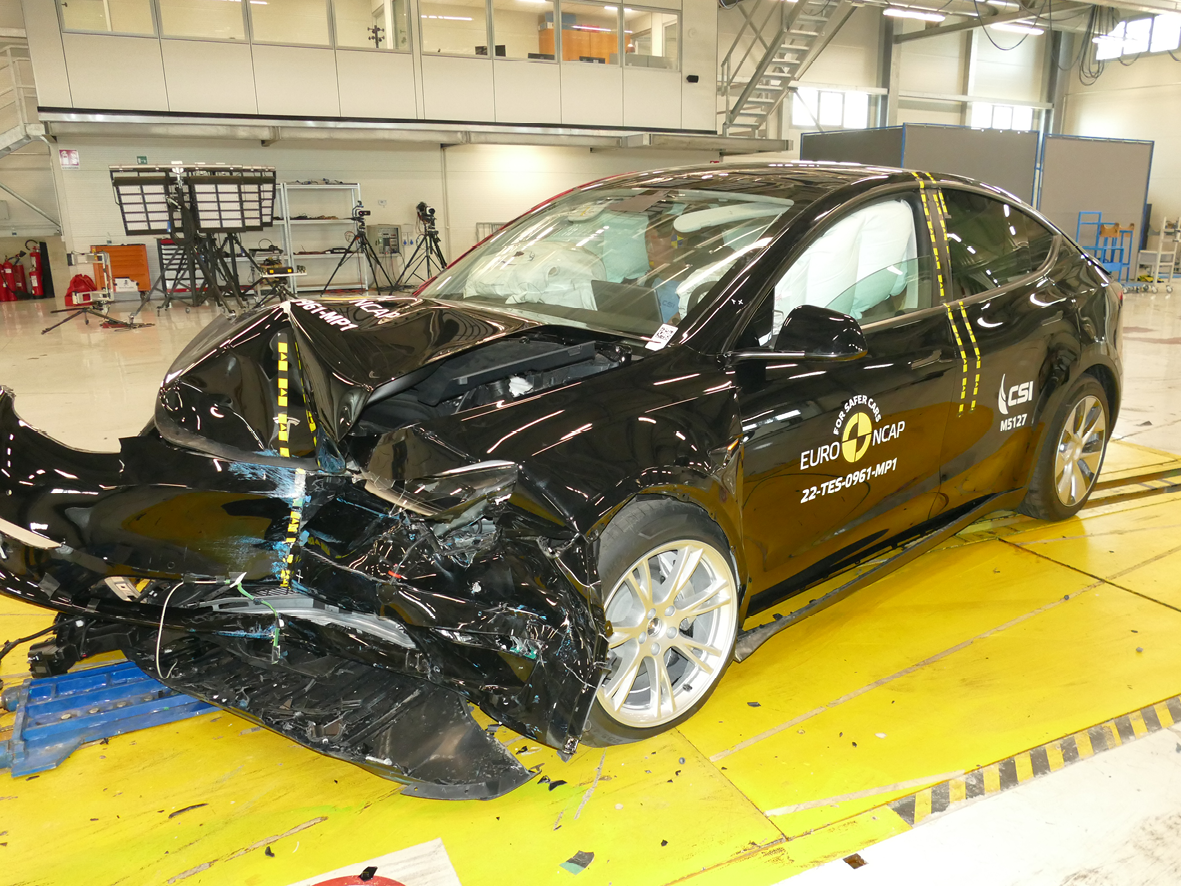
The newly-launched Tesla Model Y electric SUV has received a five-star ANCAP safety rating, courtesy of testing conducted by Euro NCAP.
This applies to all variants that went on sale from June 2022, comprising the entry-level RWD and range-topping Performance AWD.
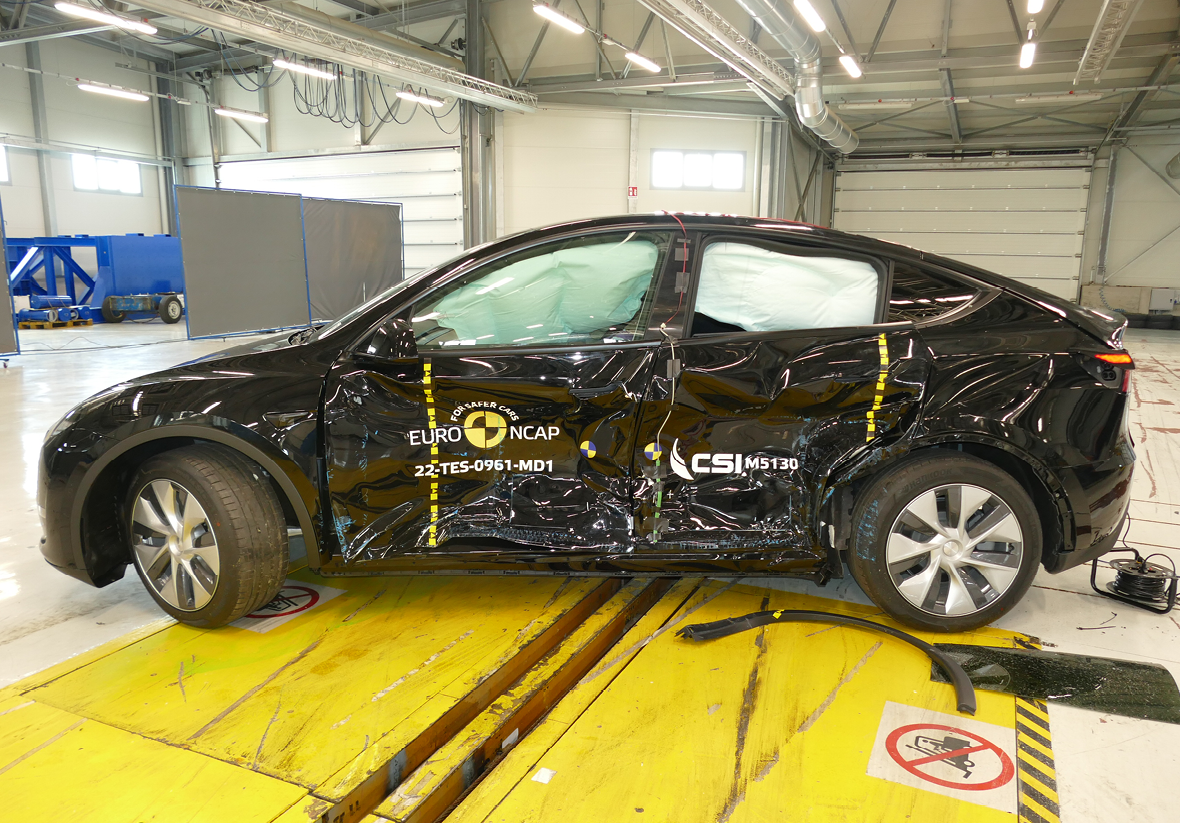
The Model Y scored 97 per cent for adult occupant protection (36.87 out of 38 points), 89 per cent for child occupation protection (43.62 out of 49 points) and 82 per cent for vulnerable road user protection (44.81 out of 54 points).
ANCAP also released results for the Genesis GV60 and Kia Niro today, with all vehicles scoring a maximum five-star safety rating.
The adult occupant protection score of 97 per cent sets a new record for a vehicle tested under the latest 2020-22 criteria, with a strong result in the frontal-offset test.
Standard safety equipment includes; autonomous emergency braking with junction assist, lane departure warning, lane-keep assist, emergency lane keeping, blind-spot monitoring, and adaptive cruise control with a speed limiter.
This contributed to the Model Y setting another record, with a safety assist score of 98 per cent (15.75 out of 16 points).
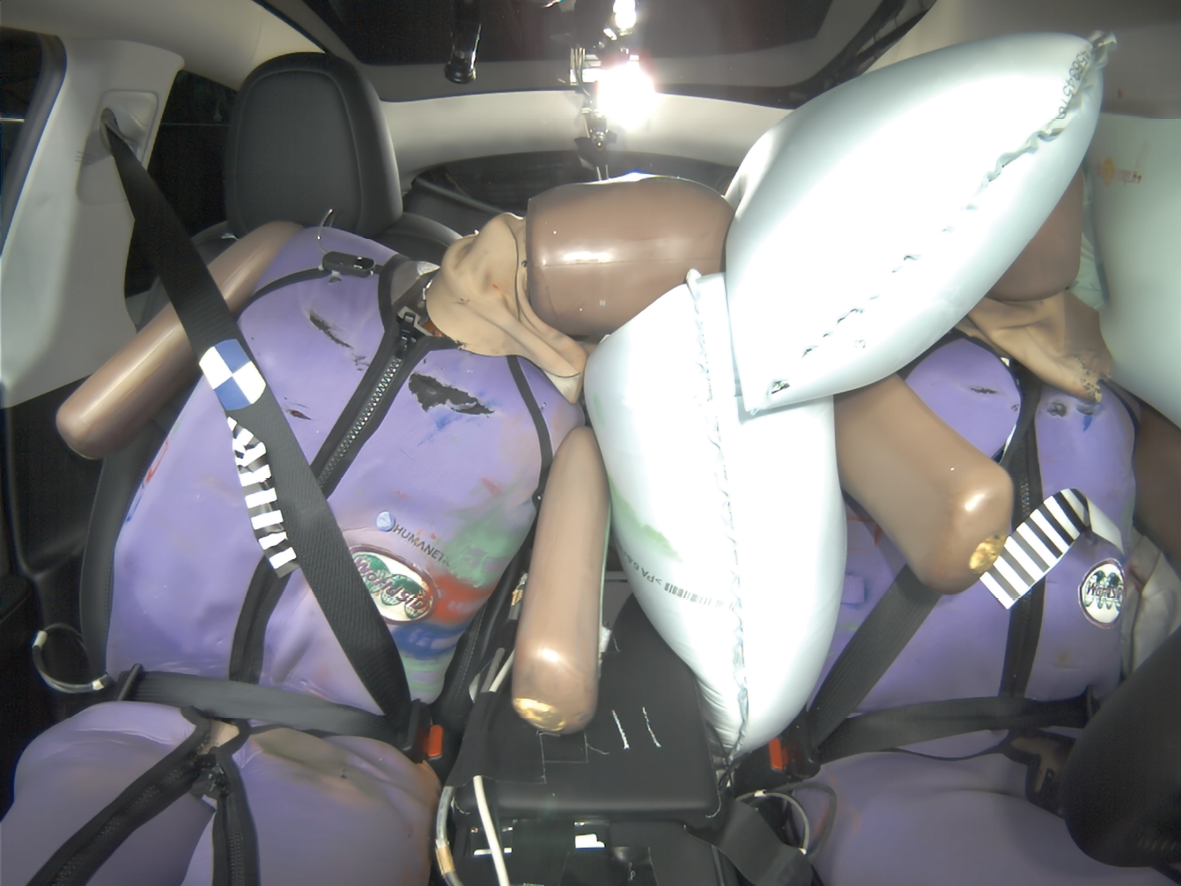
Top marks were awarded for its junction AEB system (2 out of 2 points), which can detect a vehicle entering the road from the side and apply the brakes to prevent a collision, and lane support systems (4 out of 4 points).
Seven airbags (dual frontal, side head, side chest and centre) are fitted as standard.
The centre airbag is fitted to all Tesla Model 3 and Model Y vehicles produced in Shanghai, China (all Australian examples) after June 27, 2022, and is designed to prevent head clashes between the driver and front passenger in a collision.
A ‘direct’ monitoring camera to detect distracted drivers and enhance the sensitivity of the forward collision system is fitted to the Model Y.
This technology will be assessed by ANCAP under its forthcoming 2023 rating criteria, which will also cover floodwater and ‘child presence detection’ tests.
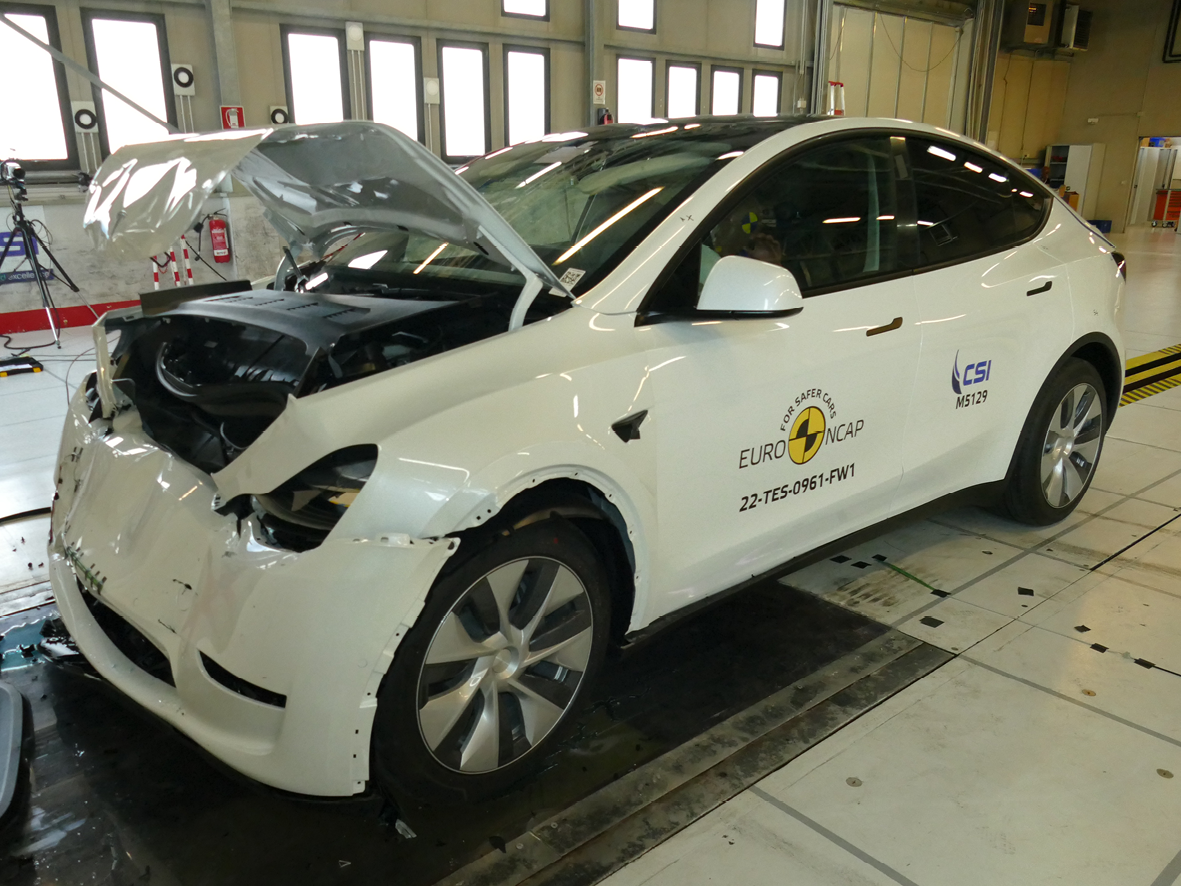
The 2022 Tesla Model Y went on sale locally in June, starting from $72,300 before on-road costs for the RWD variant. The flagship Performance is available from $96,700 plus on-roads.
ANCAP chief executive officer, Carla Hoorweg, said today’s results will provide confidence to buyers looking to purchase an electric SUV in Australia.
“All three models offer high levels of safety performance across the range of ANCAP assessment areas, demonstrating the clear ability for electric vehicle models to tick both the safe and green checkboxes,” she said.
During last month’s electric vehicle summit, ANCAP called for proposed federal government incentives to only apply to vehicles with the highest safety rating.
“Today’s results demonstrate why ANCAP is encouraging all levels of government to ensure subsidies and incentives for alternative-powered vehicles are only provided to models offering the highest levels of safety,” added Hoorweg.
It is believed several examples of the BYD Atto 3 launched last week have recently undergone testing, with results expected in the coming weeks.
Snapshot
- Available on both 90 and 110 body styles
- Price starts at $152,077 plus on-road costs
- Just 75 examples will be available in Australia
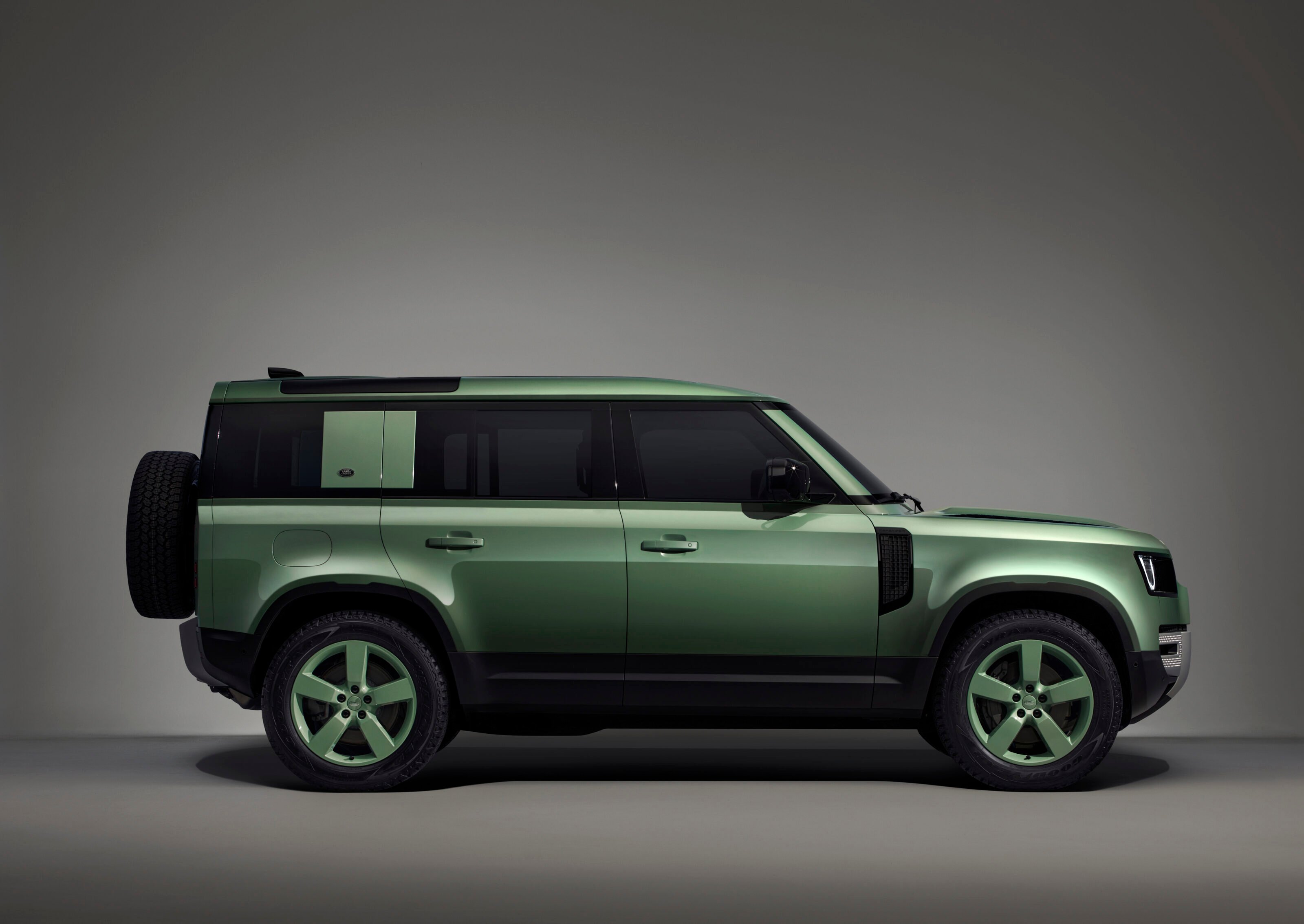
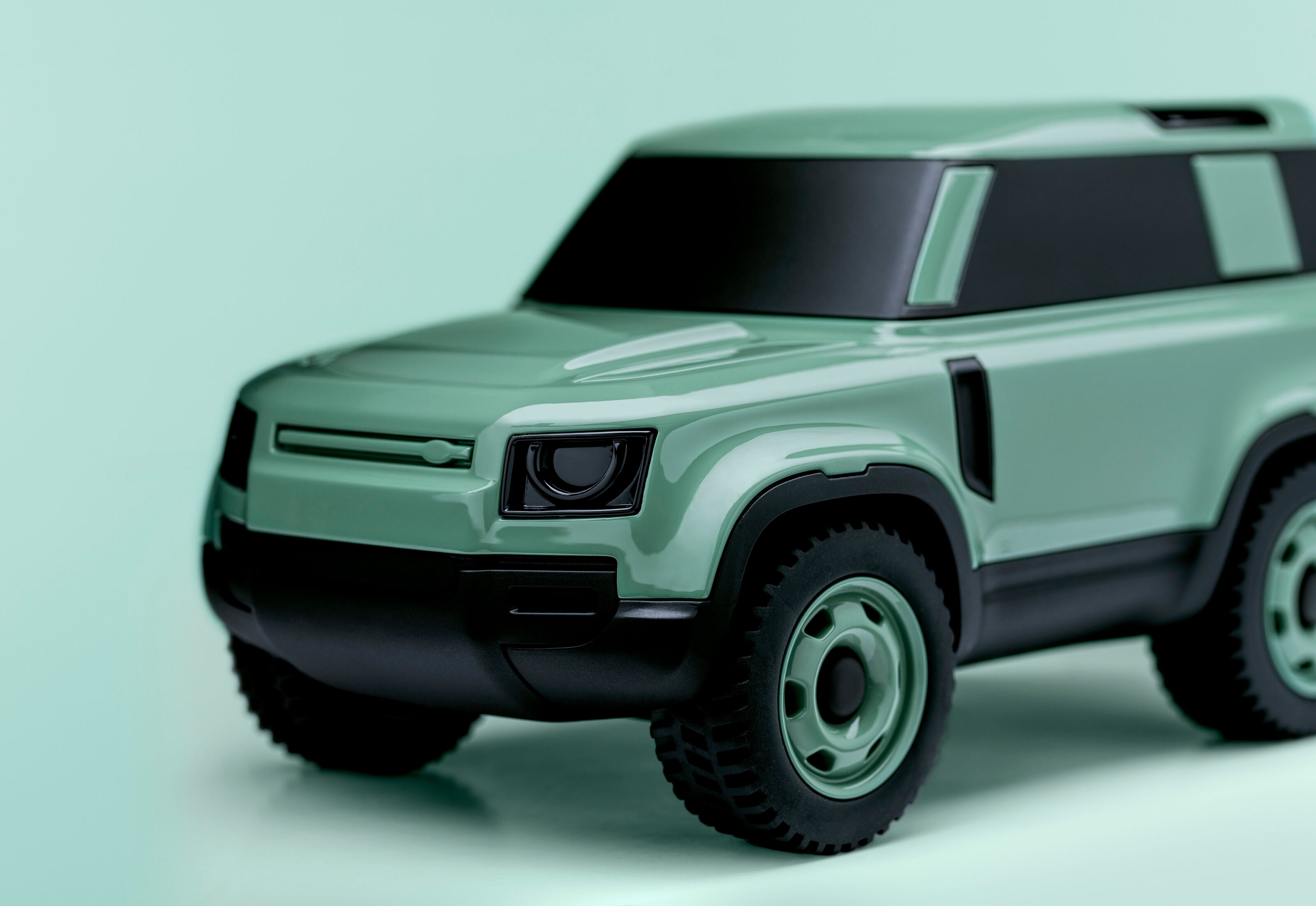
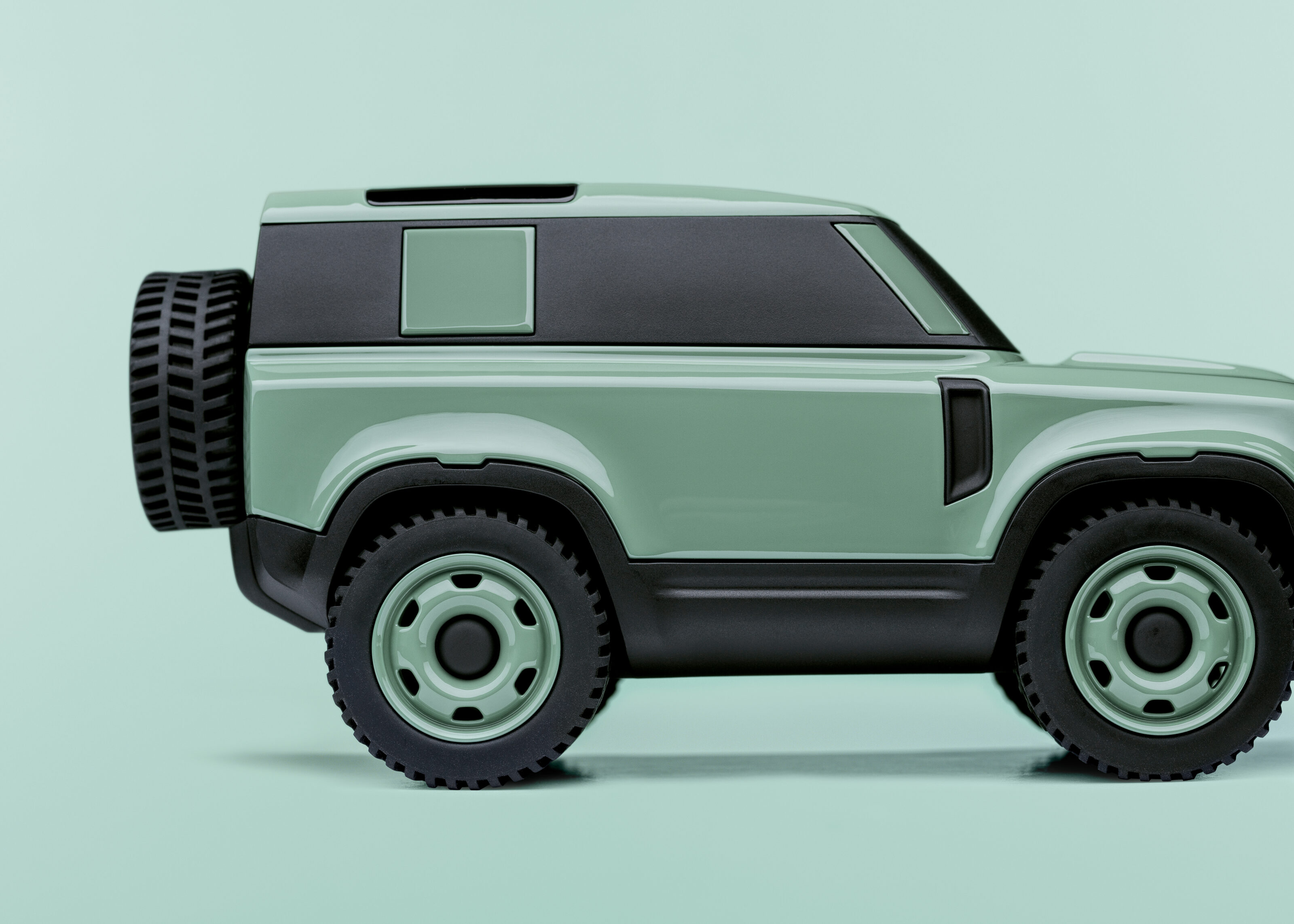
The 2023 Land Rover Defender 75th Limited Edition has been revealed, with the marque confirming examples will be coming to Australia.
The vehicle is being introduced to mark the 75th anniversary of the model, with the Series I having been launched at the Amsterdam Motor Show in 1948, and will be available in both the 90 and 110 body styles.
Pricing for the special Defender starts at $152,077 plus on-road costs for the 90 P400, and $156,157 plus on-road costs for the 110 P400. Just 75 examples will be available in Australia, which are set to arrive in April 2023.
“Since revealing the new Defender, customers around the globe have fallen in love with it and demand remains extremely strong,” said Stuart Frith, Lifecycle Chief Engineer for Defender.
“This new Limited Edition captures the spirit of the past 75 years, with its colour and detailing, and fuses it with innovative, Configurable Terrain Response, software over the air updates and unrivalled all-terrain capability.”
2023 Land Rover Defender 75th Limited Edition Australian pricing
All prices are before on-road costs.
| Variant | Pricing |
|---|---|
| 90 P400 | $152,077 |
| 110 P400 | $156,157 |
Features
The Limited Edition Defender introduces an exclusive Grasmere green exterior paint to the Defender line-up for the first time, 20-inch alloy wheels (also in Grasmere green) with matching centre caps, a unique 75 Years graphic, Ceres silver bumpers and privacy glass.
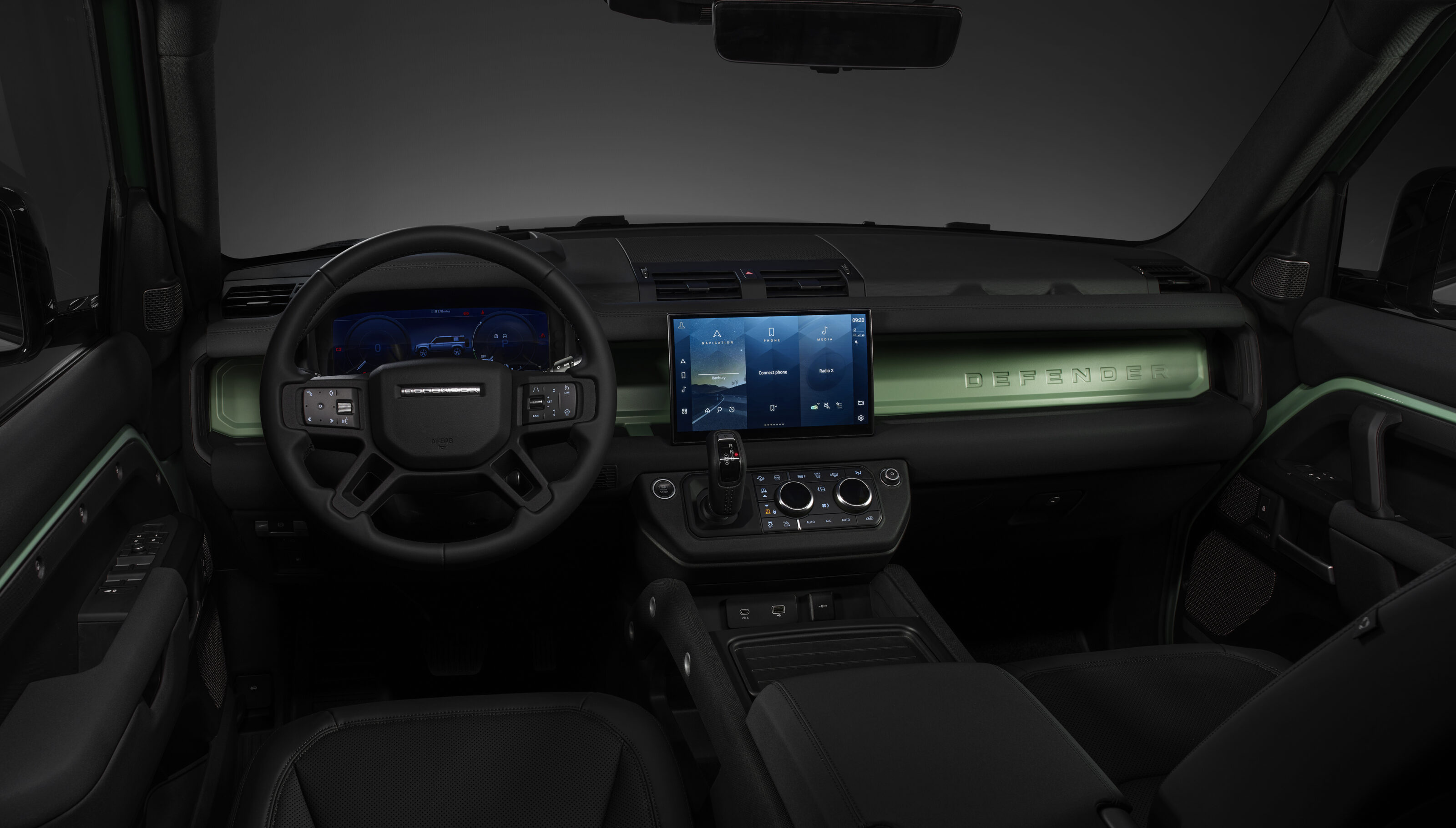
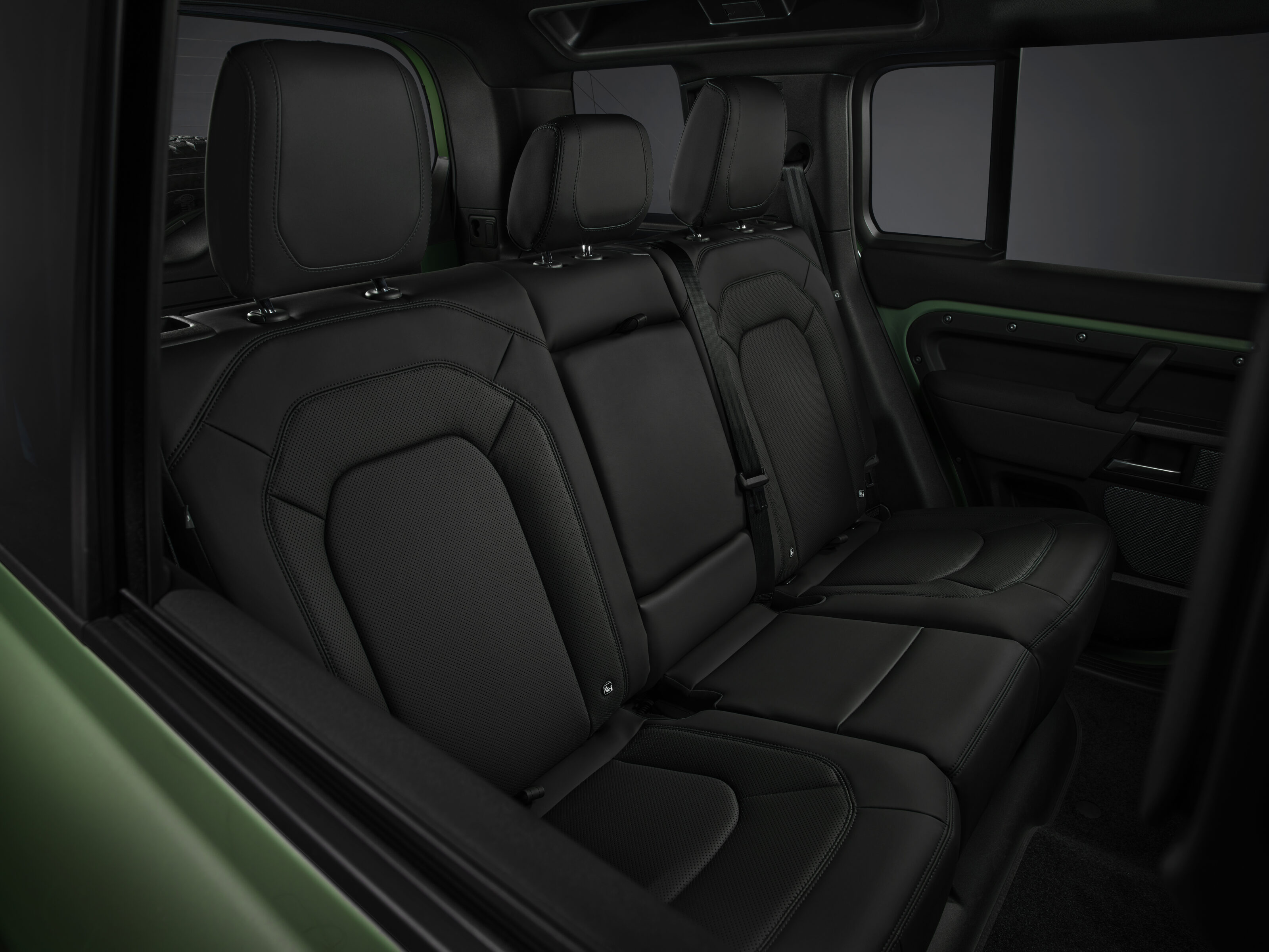
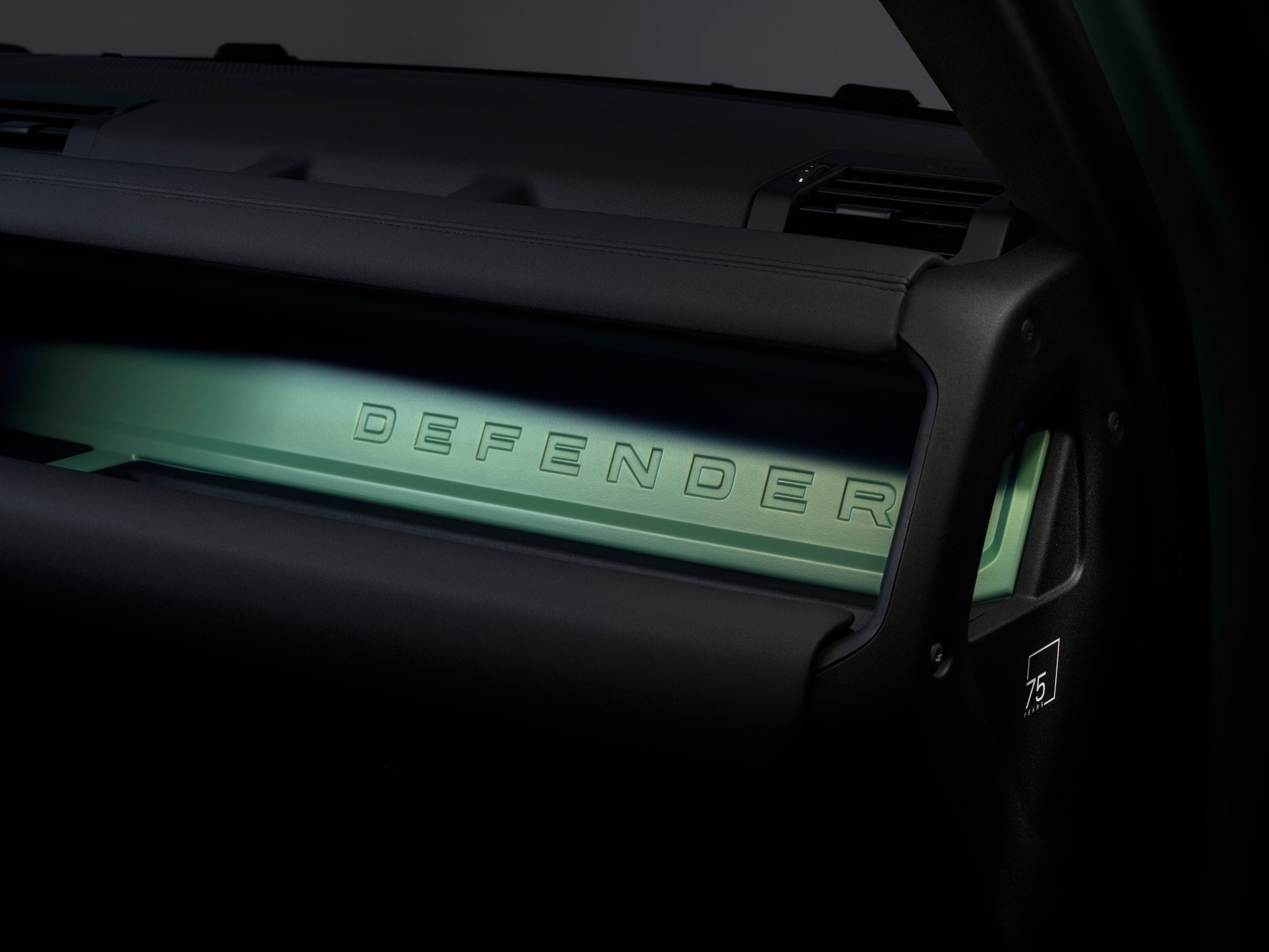
On the inside, the cross car beam is also finished in a brushed Grasmere green powder coat and laser-etched detailing on the end caps. The seats are wrapped in an ebony brown colour, with the hockey stick on the centre console featuring Robustec material.
The 75th anniversary edition is based on the regular 110’s HSE specification and gets as standard:
| Heated, electric, power fold door mirrors |
|---|
| Auto-dimming rearview mirror |
| Matrix LED headlights |
| 20-inch wheels |
| DAB radio |
| Apply CarPlay and Android Auto |
| Online pack with data plan |
| 12-volt power in rear loadspace |
| Keyless entry |
| Tyre pressure monitoring system |
| 40:20:40 fixed rear seats |
| Contrast roof standardised on all X-Dynamics |
| 14-way heated and cooled electric memory front seats with 4-way manual headrests |
| Sliding panoramic roof |
| Extended leather upgrade |
| Heated steering wheel |
| Twin front cupholders with cover |
| 3D surround camera |
| Configurable Terrain Response |
| Meridian sound system |
| 11.4-inch Pivi Pro infotainment system |
| Head-up display |
| Wireless charging |
| Three-zone climate control |
| Tow bar |
Engine and transmission
All Australian delivered 75th Limited Edition Defenders use the P400’s 3.0-lire i6 294kW/550Nm Ingenium petrol engine, which utilises mild-hybrid technology.
As with the regular Defender 90 and Defender 110, the engines are matched with an eight-speed ZF-sourced automatic transmission sending power to all four wheels.
Warranty and servicing
As with the wider Land Rover range, the Defender is covered by the marque’s five-year/unlimited-kilometre warranty.
A complimentary 12-month roadside assistance program is included, which can be extended every year with annual servicing at a Land Rover dealership for up to eight years.
Safety
The new Land Rover has a five-star ANCAP rating awarded in 2020.
As standard the Defender range gets:
| Emergency braking |
|---|
| Blind-spot assist |
| 3D surround camera |
| Clear exit monitor |
| Adaptive cruise control |
| Lane keep assist |
| 360u00b0 parking aid |
| Rear collision monitor |
| Rear traffic monitor |
| Traffic sign recognition and adaptive speed limiter |
| Wade sensing |
| Driver condition monitor |
| Isofix anchors |
Availability
The limited edition Defender is available to order now, with local deliveries set to arrive in April 2023.
UPDATE, December 15: Walkaround review
Ferrari has jetted a Purosangue into Australia, and we’ve spent some time with it. Oh, and they’ve already paused sales due to overwhelming demand! Join John Law for a walkaround review at the link below.
September: Purosangue revealed
The 2023 Ferrari Purosangue has finally been revealed, and it’s a big deal.
Back in 2016, during a Ferrari earnings call, when prodded with the idea of a Ferrari-branded SUV, then-CEO Sergio Marchionne responded, “you’d have to shoot me first”.
Before his non-related passing two years later, he’d turn ‘dead serious’ about a Prancing high-riding Horse, and after one of the most talked-about development paths in recent history, we finally have eyes on the production-ready version of Ferrari’s first-ever SUV.
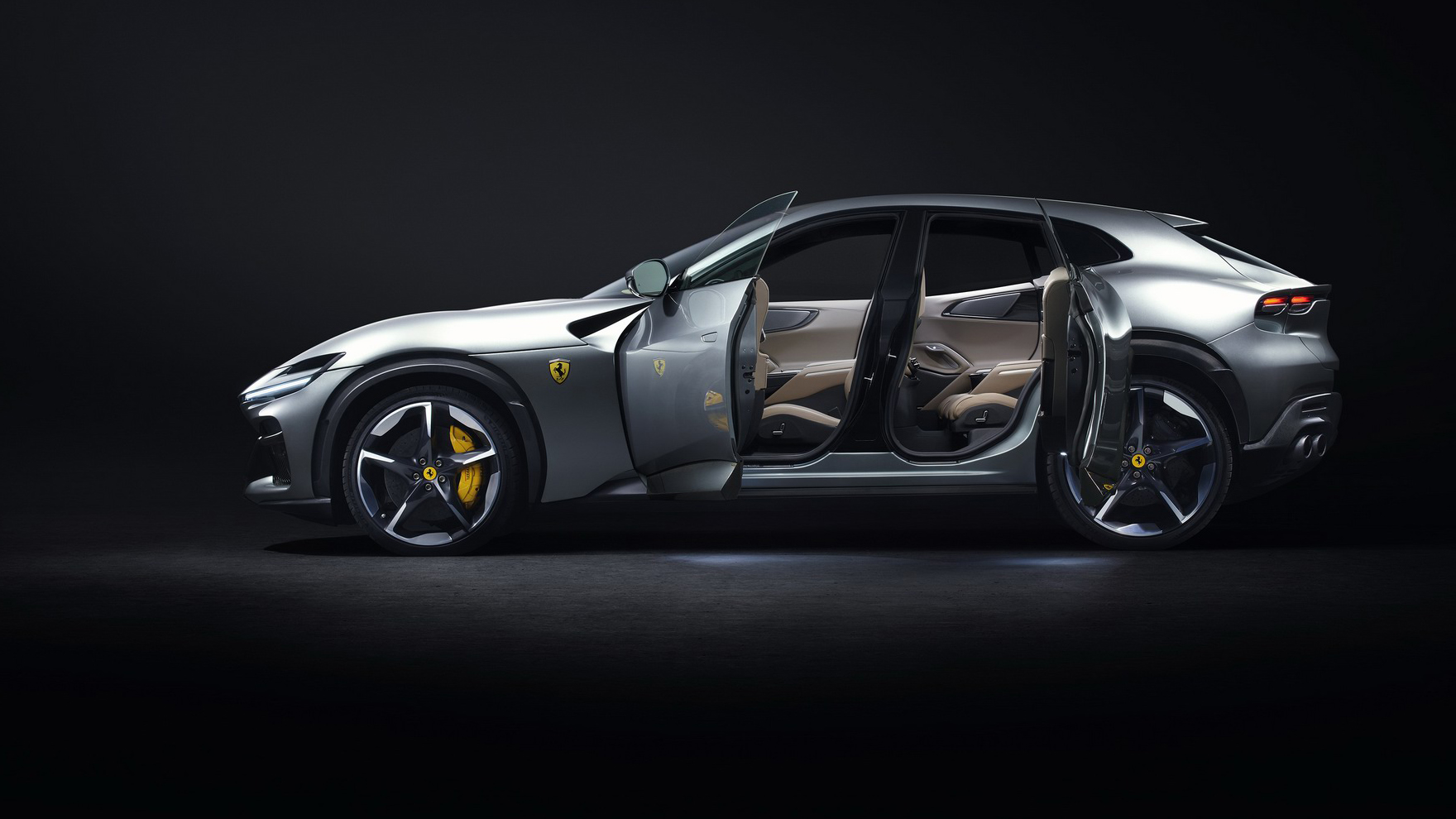
But of course, the 75-year old Maranello marque wouldn’t agree with us describing the Purosangue as an SUV, preferring to simply call it a ‘four-door sports car’. You be the judge of that one.
‘Purosangue’ translates to thoroughbred, and it’s certainly got the heart of one. The new Purosangue features Ferrari’s hallmark 6.5-litre 65-degree dry-sumped V12, optimised for low-end torque as opposed to the traditional high-end power bias of Ferrari’s traditional V12 sports cars.
Peak outputs are 533kW at 7750rpm and 716Nm at 6250rpm – with 80 per cent (573Nm) of maximum torque available from as low as 2100rpm.
Ferrari has confirmed the Purosangue for the Australian market, with the SUV set to arrive locally in the fourth quarter of next year.
Low-end torque curves have been massaged by way of a completely redesigned intake system, ignition timing and exhaust, while the cylinder heads themselves are derived from the 812 Competizione – where we last saw this V12 in use, producing 610kW/692Nm.
Equal length headers bestow Ferrari’s 2+2-seater with that signature, soaring V12 exhaust note.
The Purosangue’s all-wheel drive system is a development of the system found in the GTC4Lusso, and sends drive to the front wheels at up to 200km/h in the first four gears.
Underpinning the Purosangue is a completely new high-strength aluminium alloy chassis. It’s much lighter than Ferrari’s previous four-seaters, while improving on torsional rigidity by 30 per cent and beam stiffness by 25 per cent – aiding structural rigidity for dynamic benefit, and also improving in-cabin NVH.
Suspension features active dampers with electric roll-stabilisation, cornered by staggered 22-inch wheels with 255-section tyres up front, and 23-inch wheels with 315-section tyres at the rear.
A single-shell carbon-fibre roof with integrated sound deadening is a completely new construction for Ferrari, with rigidity levels rivalling that of a glass roof while weighing 20 per cent less than a fixed-head aluminium tin-top.
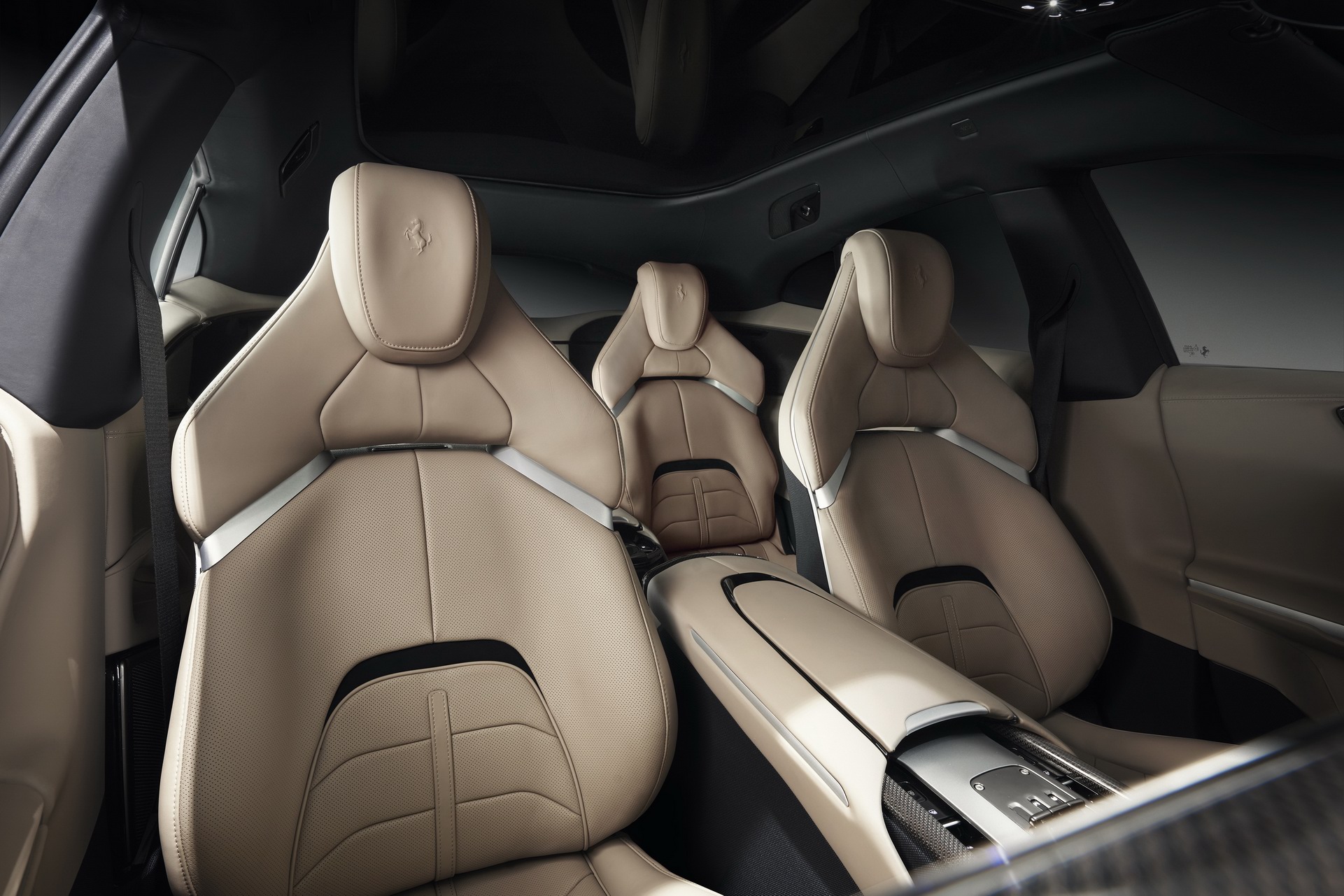
To maximise ease of entry and egress for the Purosangue’s four special guests, the traditional front doors open five degrees further than the rest of the Ferrari range, while the electric rear doors are rear-hinged with a 79-degree aperture.
The bonnet, too, is front-hinged like other Ferrari icons such as the Monza SP1/SP2, so you can really feel like you’ve reached five reputation stars in Need for Speed Underground 2.
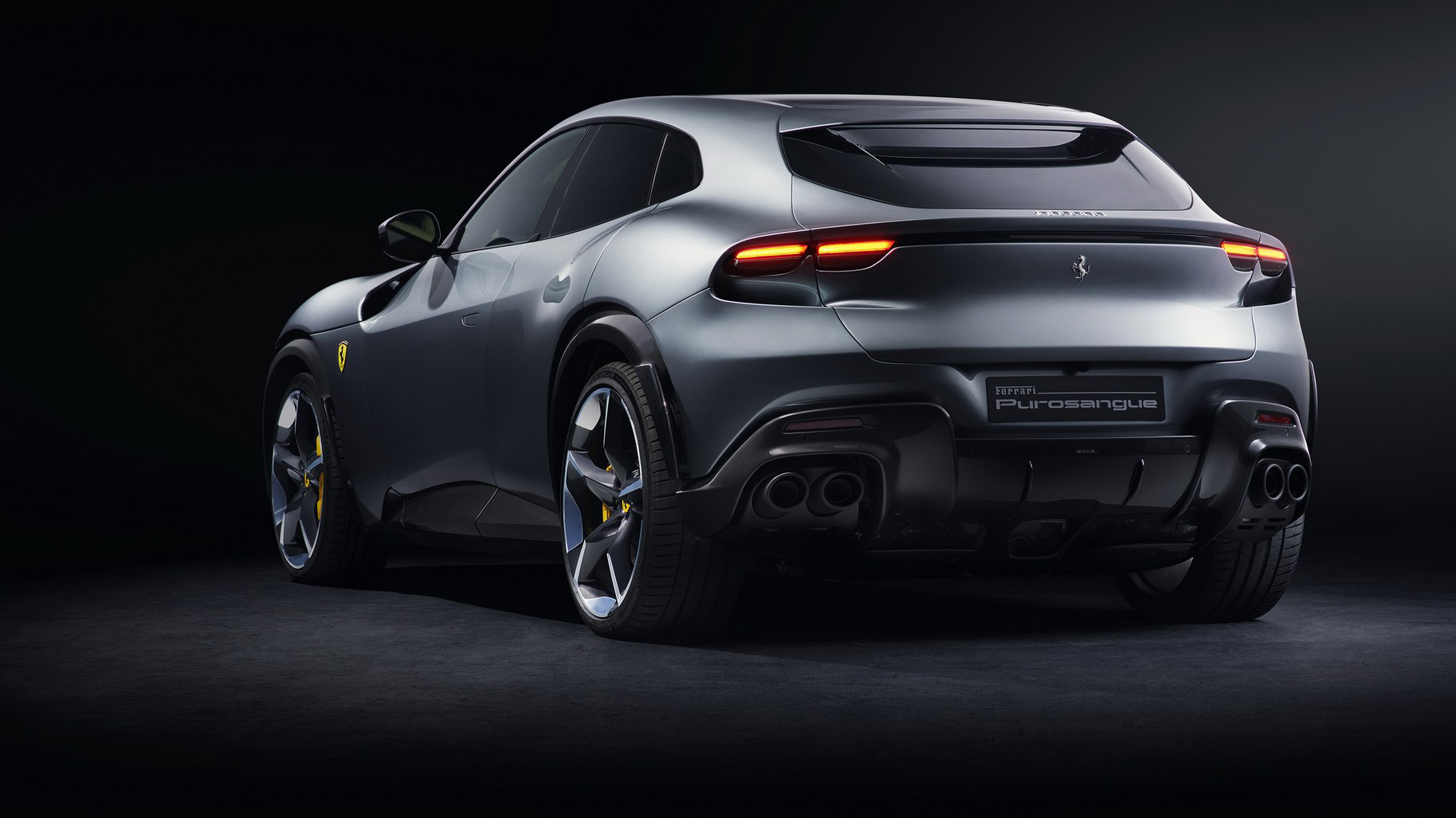
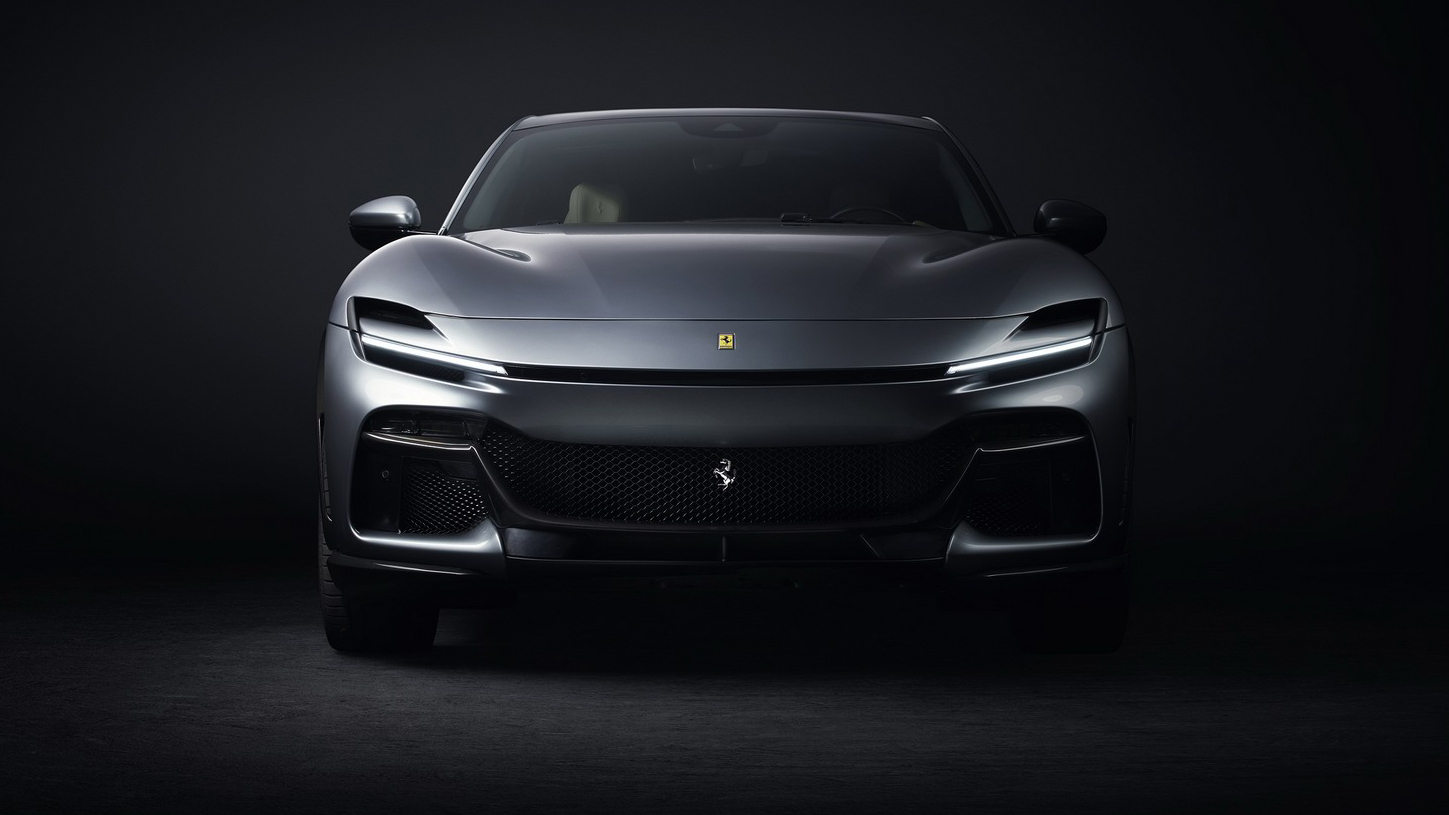
The body itself wears smooth and soft curves, with a sleek turret framed by dramatic pillars. The surfaces look stretched over its chassis, leading to a taut and tough stance with little overhangs at each end.

It’s a considered and graceful design, and in true Ferrari fashion there are many aerodynamic tricks hidden within the details, with Ferrari enacting strict drag reduction targets while catering for the cooling demands of the large-capacity V12. Thousands of hours were spent wind-tunnel testing and running Computational Fluid Dynamics (CFD) simulations.
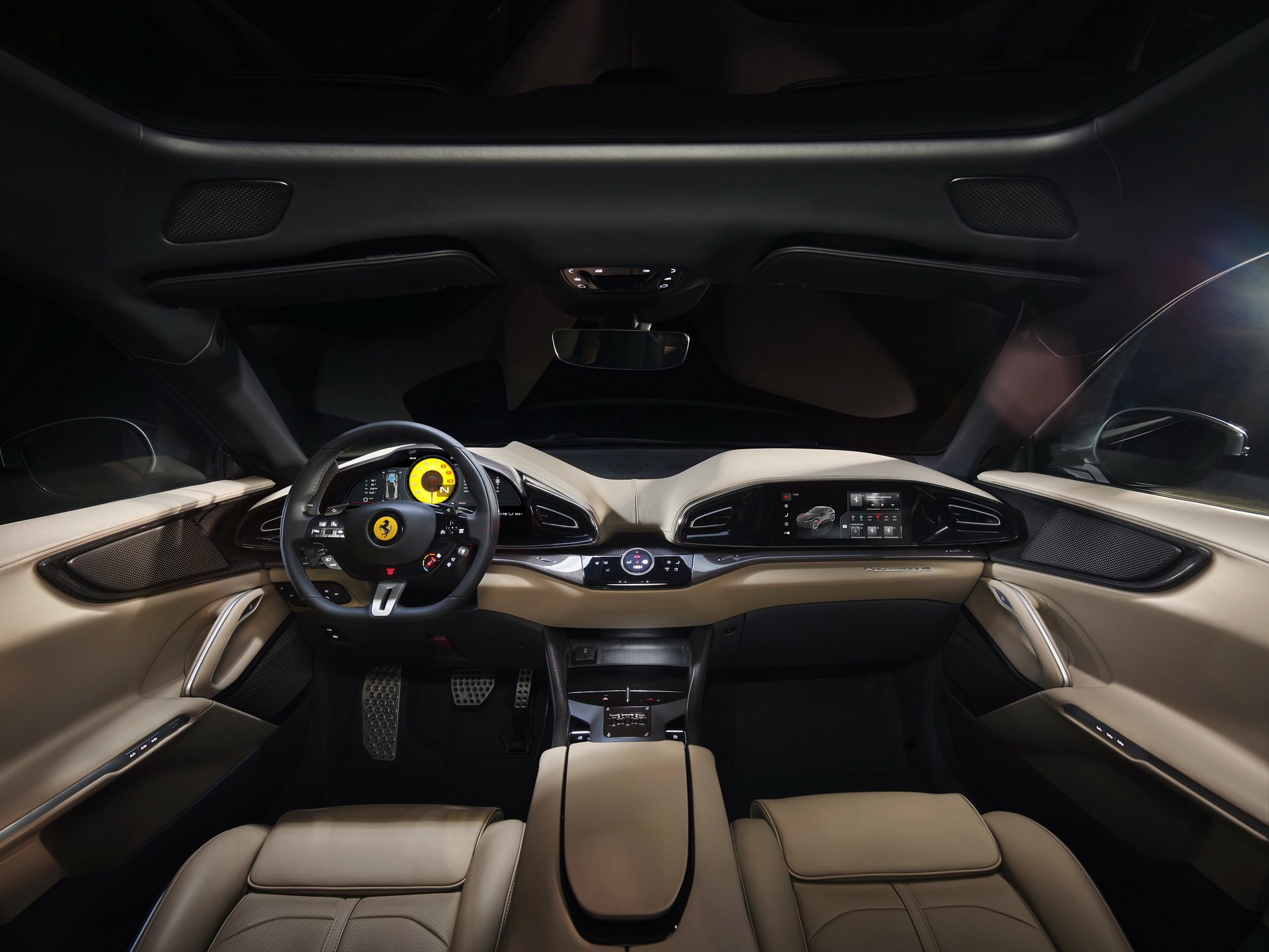
The cabin blends elegance and sporting intent with four reclining bucket-style seats, looking towards a striking sculpted twin-peaked dashboard featuring the same curved 10.2-inch driver display, haptic-touch steering wheel and neat ‘H-pattern’-style sliding shifter found in the SF90 Stradale.
Materials are chosen for their sustainability, made from a variety of sources including recycled polyester and polyamide recycled from fishing nets.
While backed by the 6.5-litre V12, cabin soundtracks will be provided by a Burmester 3D high-end surround sound system with production car-first ribbon tweeters, which are much lighter than a traditional magnetised cone assembly, and a subwoofer with its own dedicated enclosure.
The Purosangue enjoys a seven-year scheduled maintenance program, with intervals occuring every 20,000km or once a year.
Purosangue for Australia
Ferrari has confirmed to Wheels we can expect the Purosangue to arrive locally in the fourth quarter of 2023.
When it debuts in Australia, the Ferrari Purosangue will compete with the likes of Lamborghini’s Urus and the Aston Martin DBX.
Just sayin’…
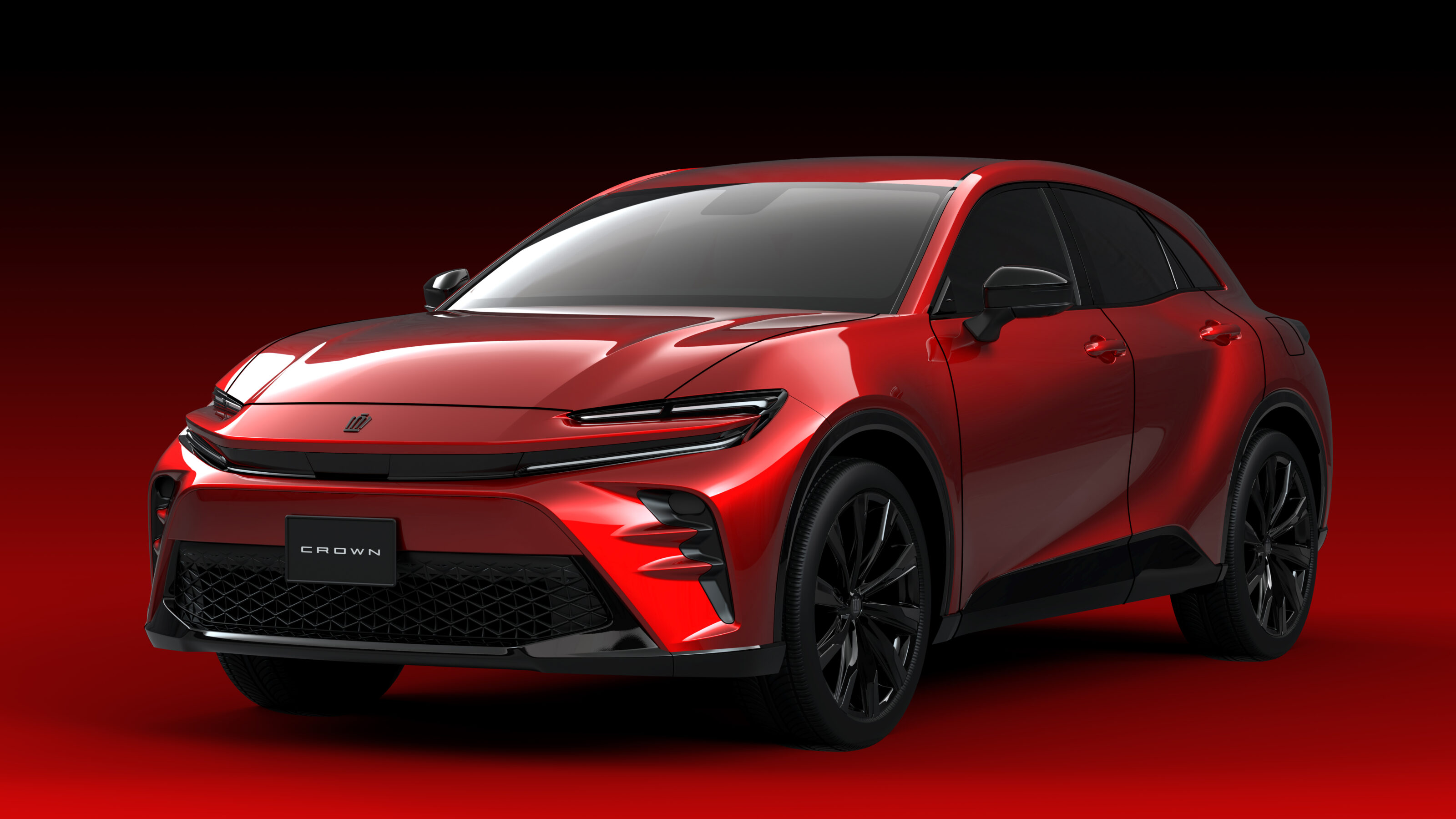
It’s not as powerful, but if you want the look, Toyota’s new Crown SUV is astonishingly close.
Peugeot has increased pricing across its passenger and commercial model ranges “as a result of rising global costs regarding production and logistics”, the carmaker has said.
Affected models include the 508, 2008, 3008 and 5008, as well as Partner, Expert and Boxer vans.
This is not the first hike in 2022 for the French brand, which raised costs on a raft of products at the beginning of the year. Some models of which lost features due to the ongoing semiconductor shortage.
“Rising costs have resulted in an unavoidable increase in the Manufacturer’s List Price”, said a spokesperson for Peugeot Citroën Australia.
Read on below for a breakdown on the most recent changes. All prices shown exclude on-road costs.
Peugeot 508
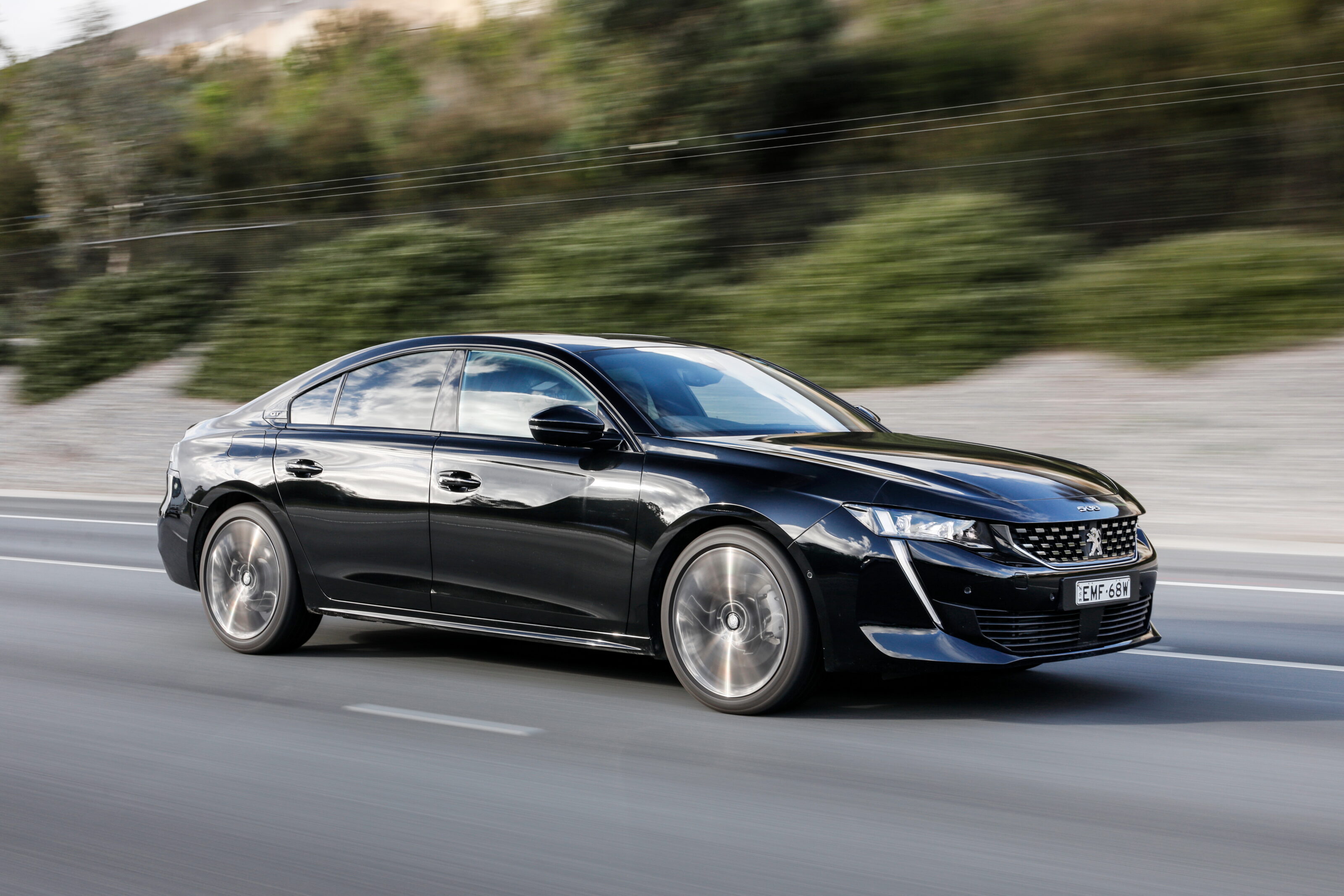
The price of Peugeot’s 508 C-segment offering has crept up over the years, with the entry-level Fastback GT now asking $63,431.
Unlike international markets, however, the local entry-level offering consists of the more powerful 169kW GT, and still undercuts less-powerful rivals such as the BMW 330i and Mercedes-Benz C200.

Peugeot 2008
The stylish small SUV launched in 2021 for $34,990, which increased to $36,740 at the start of 2022.
The most recent adjustment lifts the entry-level 2008 Allure to $38,945, before on-road costs.

Peugeot 3008
The highly-optioned 3008 comprises petrol, diesel and one hybrid option, with the entry-level Allure rising by $2835 from $47,240 to now ask $50,075.
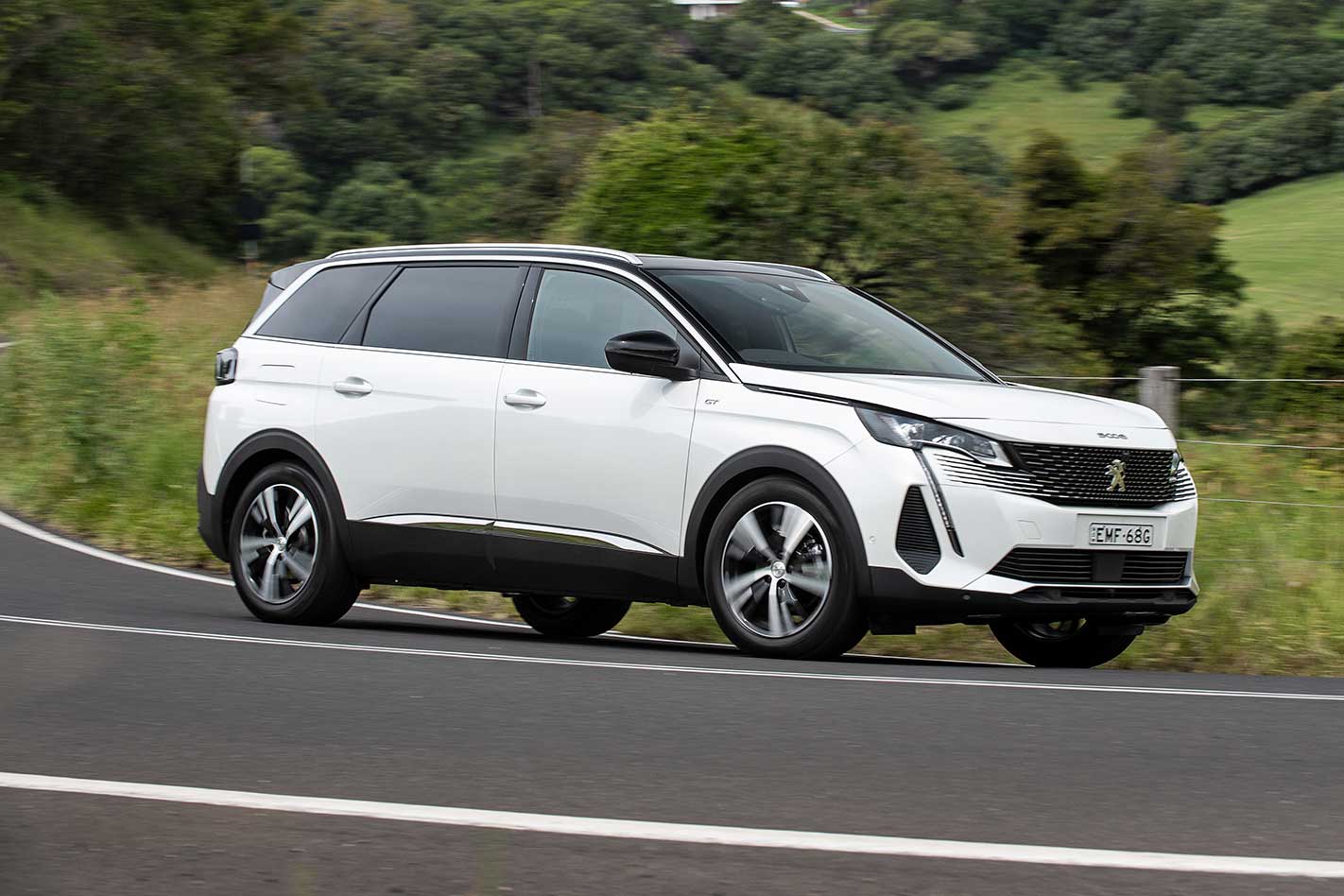
Peugeot 5008
A new-for-2022 GT Sport variant gained a 12kW/10Nm bump in outputs – along with increased standard equipment – compared to the discontinued petrol GT.
Previously disparate pricing between the two powertrains is now more closely aligned with the newest GT Sport asking $65,657 compared to the Diesel GT’s $66,670.
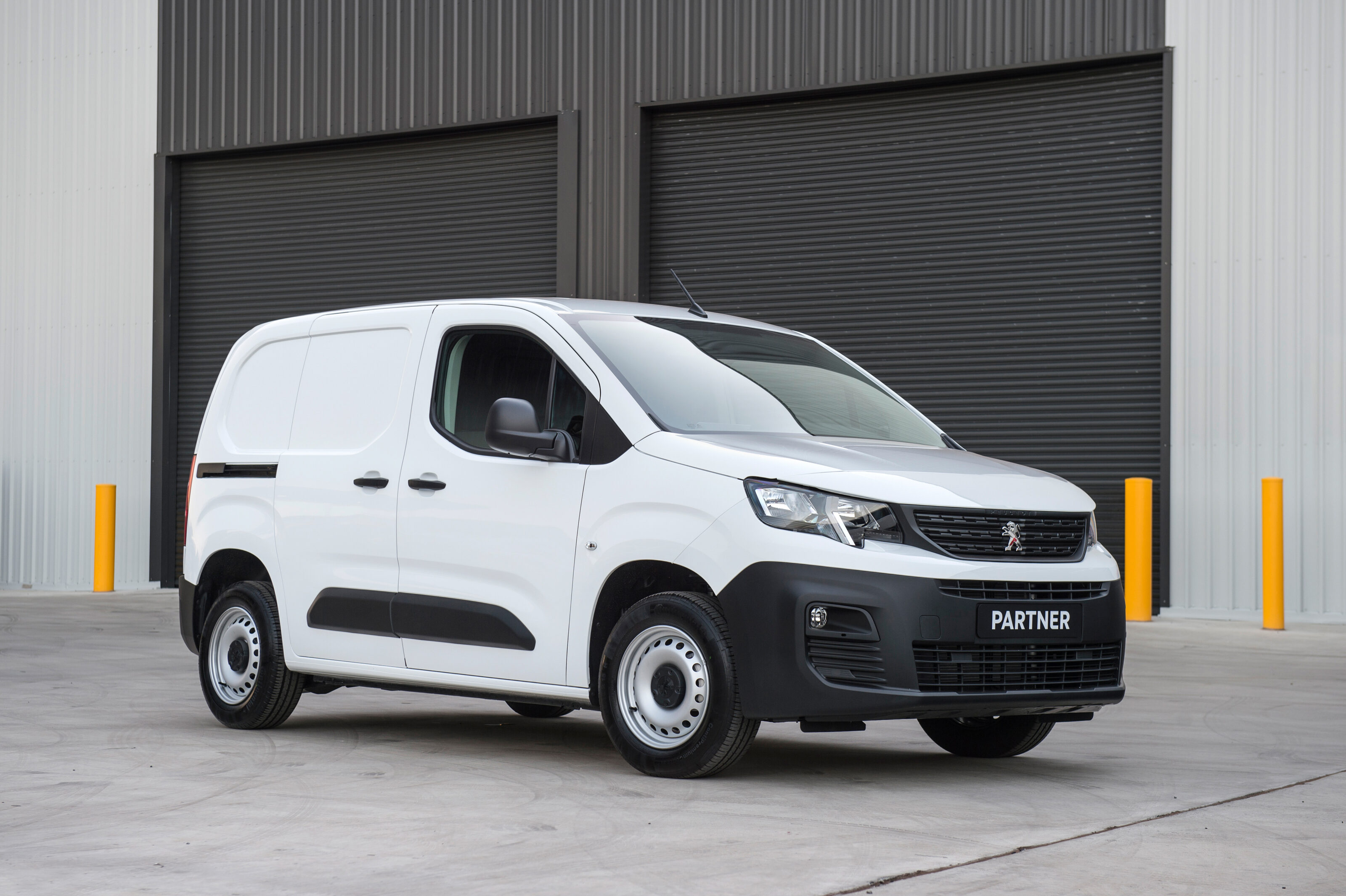
Peugeot Partner
Pro and Premium variants of Peugeot’s Partner small van have received modest hikes.
Short wheelbase configurations of the Pro and Premium variant are up $2016, while long wheelbase variants of the Partner Pro and Premium are up $2173.
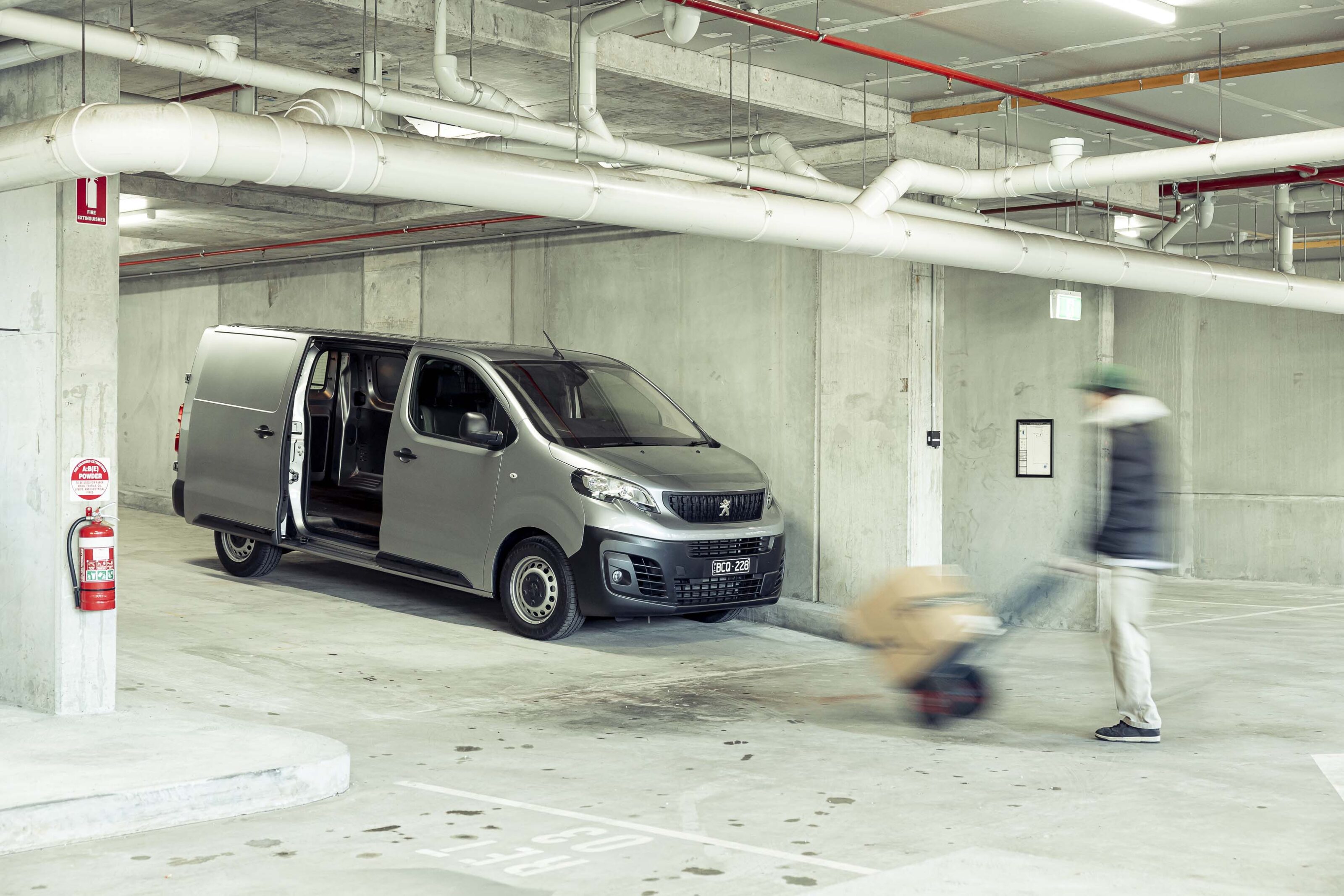
Peugeot Expert
Pricing revisions have also affected many variants of Peugeot’s Expert van, which have been bumped up anywhere from $2457 to $2835.
The previously-limited edition Expert Sport has been removed from Peugeot’s local website, while the entry-level Expert City Short rises to $43,397.
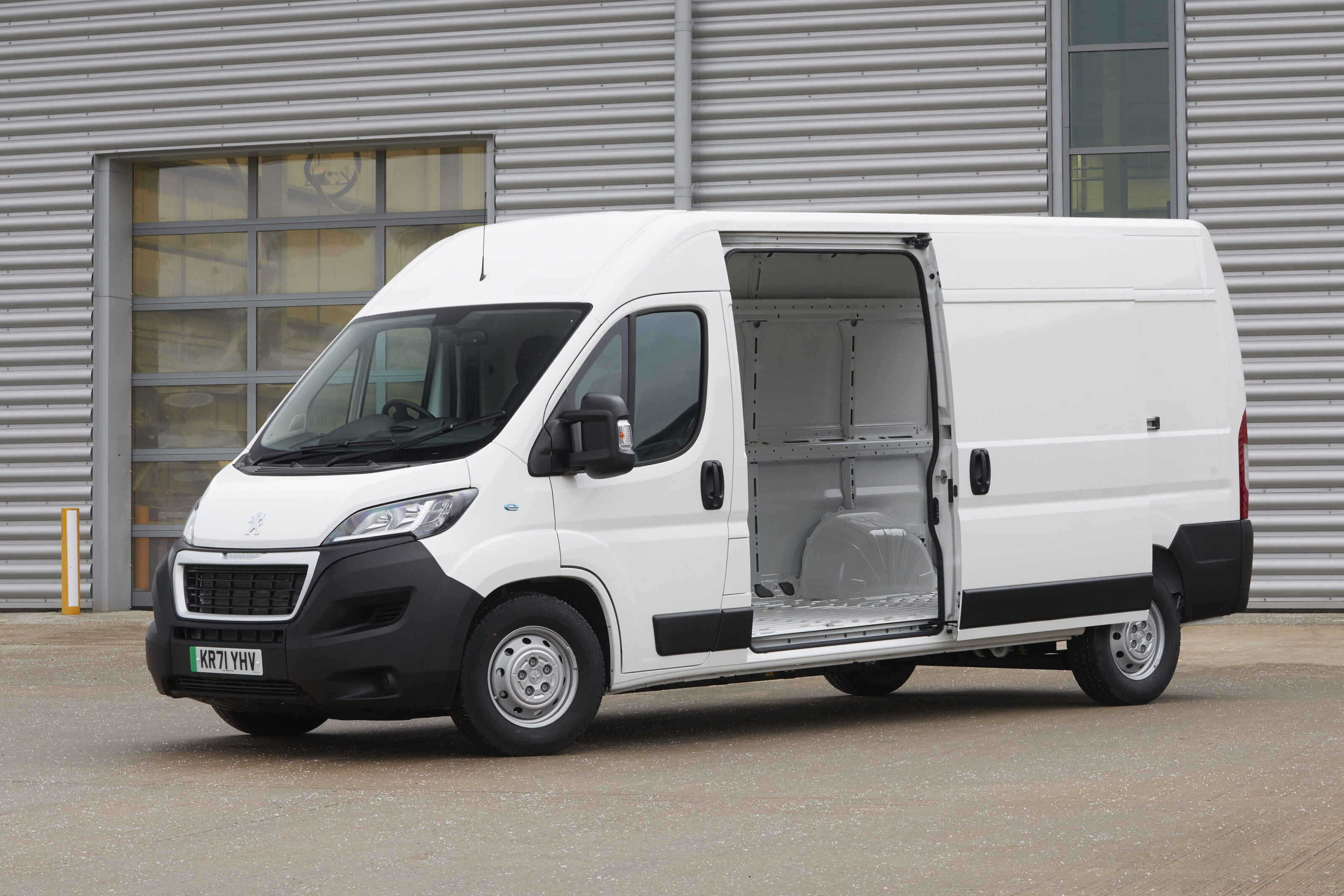
Peugeot Boxer
Initially launched in short and long-wheelbase configurations, Peugeot Australia most recently offered its largest Boxer van in a single Pro-grade in long wheelbase configuration – asking $54,527 before on-road costs.
UPDATE, November 16: Ford Everest vs Toyota Prado
We’ve put the new-generation Ford Everest up against its most popular and obvious rival, the Toyota Prado. Get the full story at the link below.
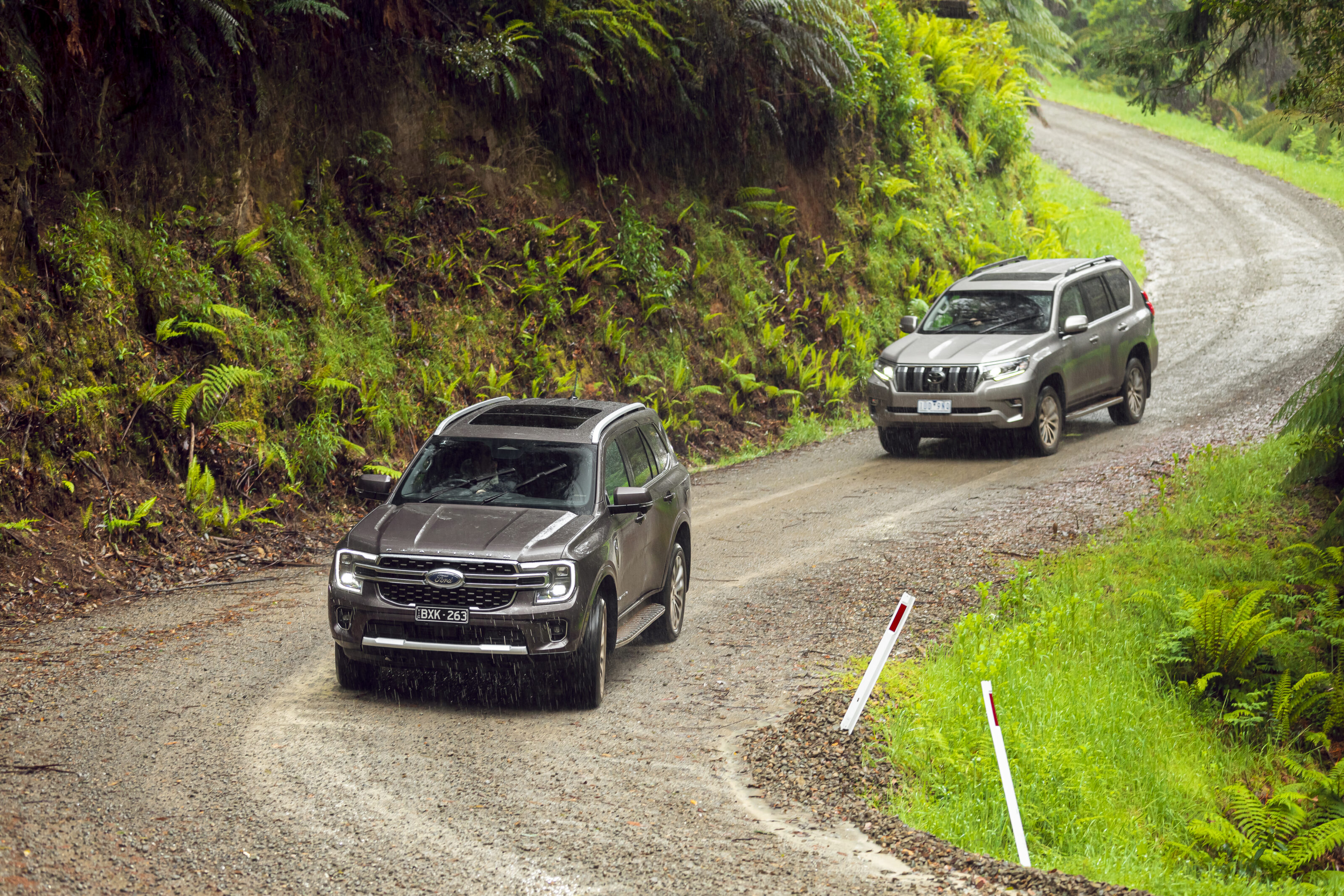
September 13: 2023 Ford Everest pricing and specifications
Snapshot
- 2023 Ford Everest pricing and features
- Choice of a 2.0-litre four-cylinder or a 3.0-litre V6 diesel
- Pricing up by at least $2900
Our earlier coverage, below, has been updated to reflect the Australian launch of the Ford Everest and its five-star ANCAP safety rating.
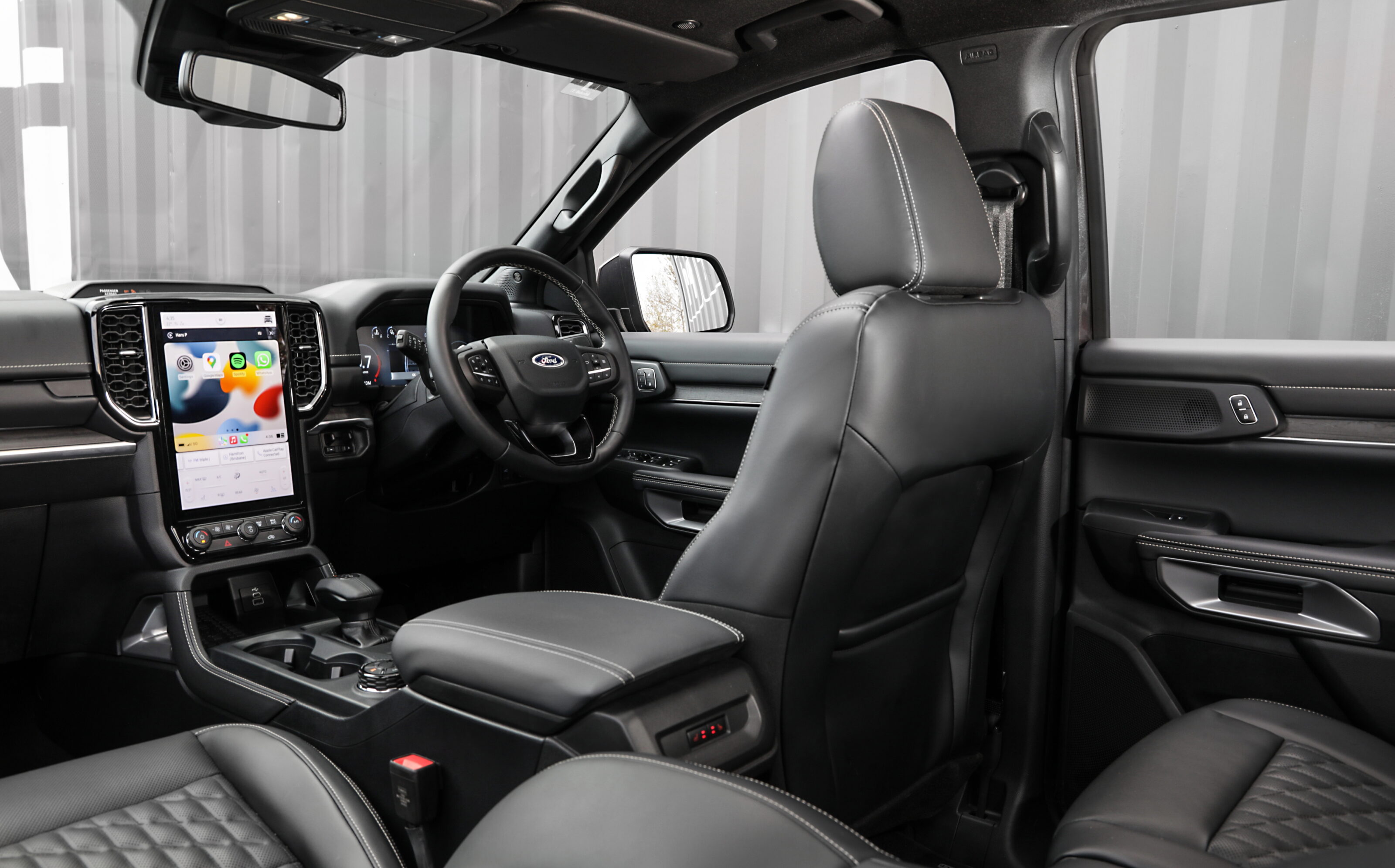
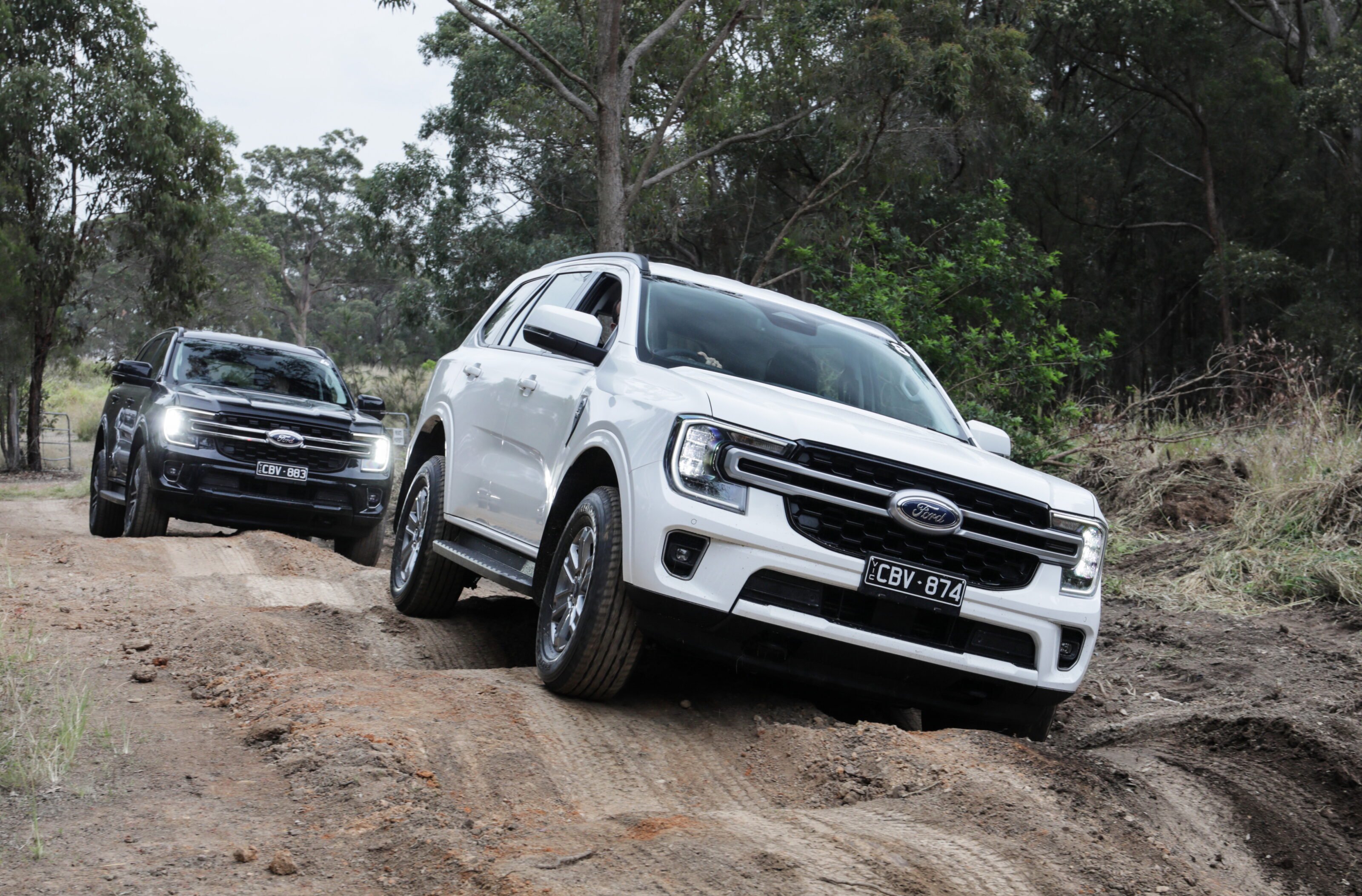
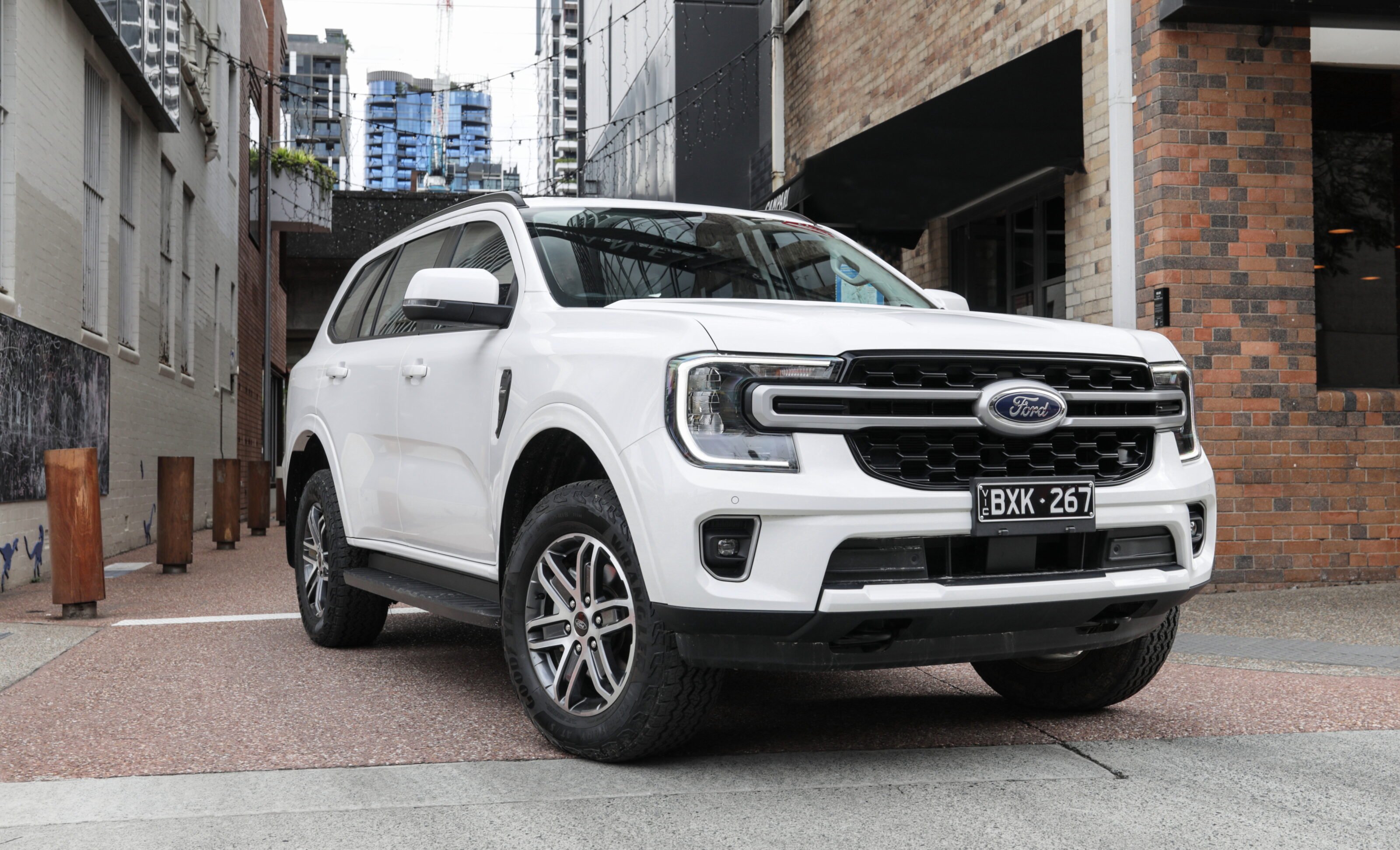
The 2023 Ford Everest large SUV has arrived in Australian showrooms.
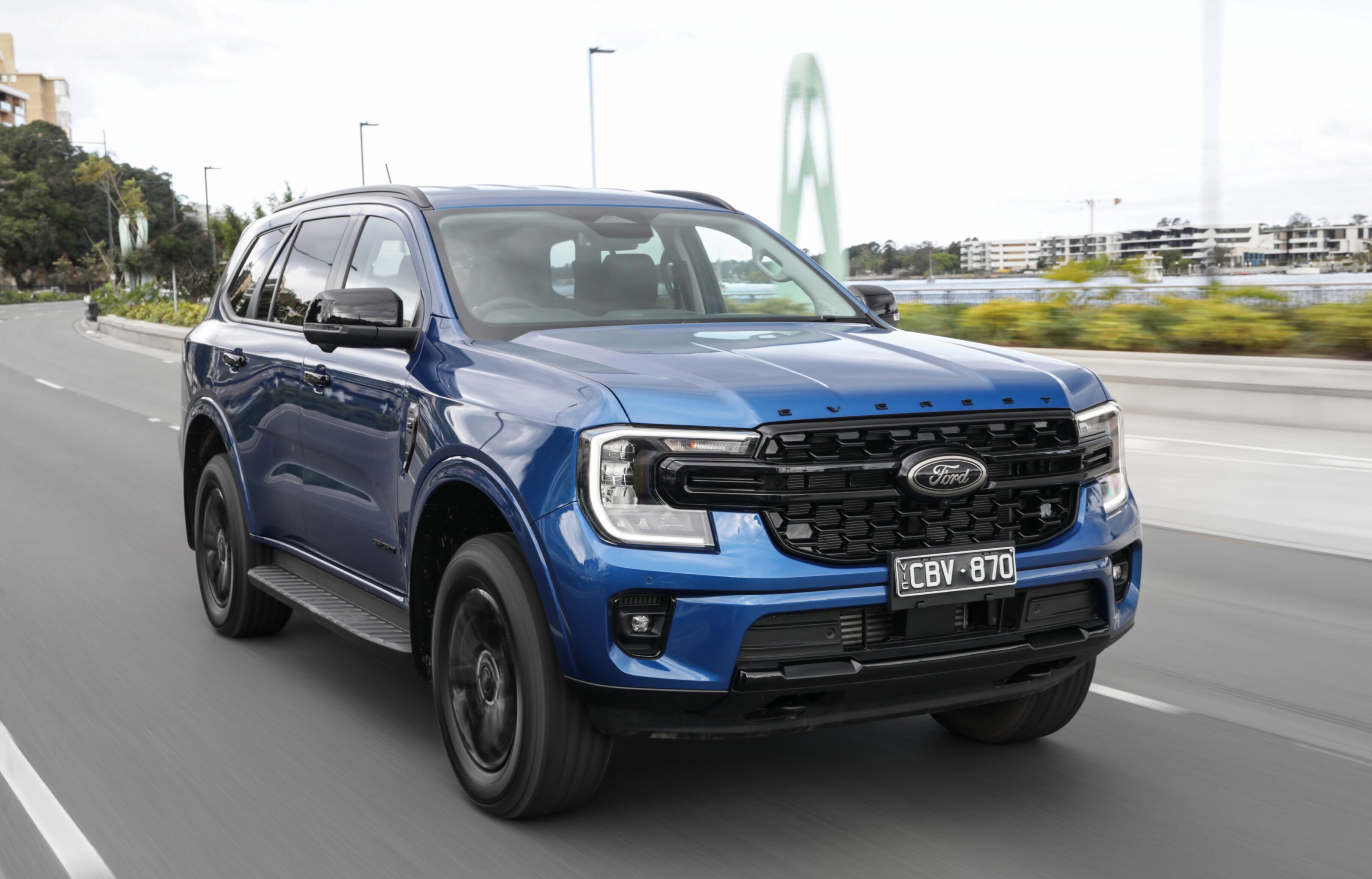
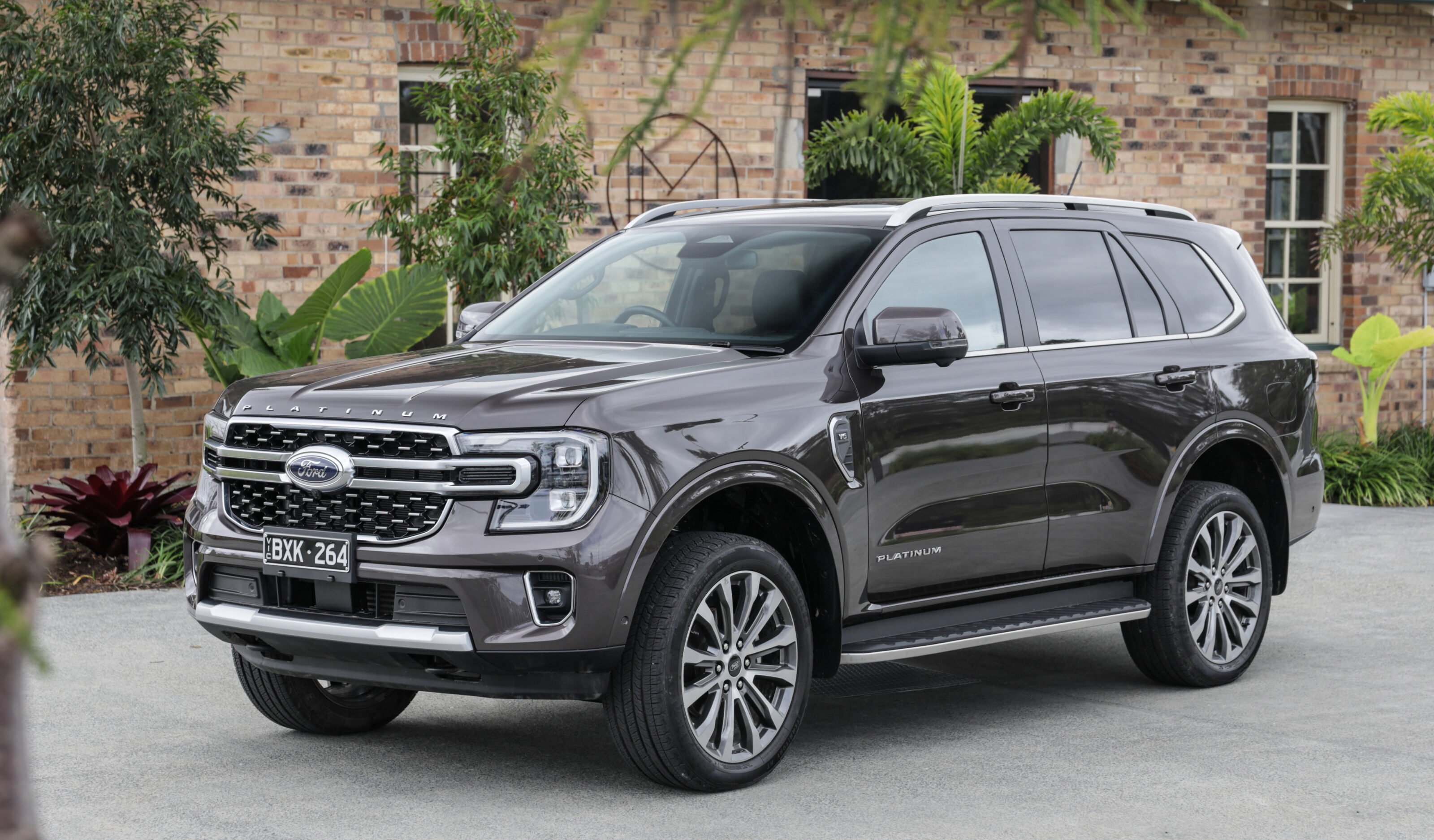
The second-generation Everest will be available in four variants – Ambiente, Trend, Sport and Platinum – with a choice of two diesel engines: a carryover twin-turbo four-cylinder or a new single-turbo V6.
Unlike its Ranger ute sibling, pricing for the Everest has increased by a larger amount than the minor jump first expected.
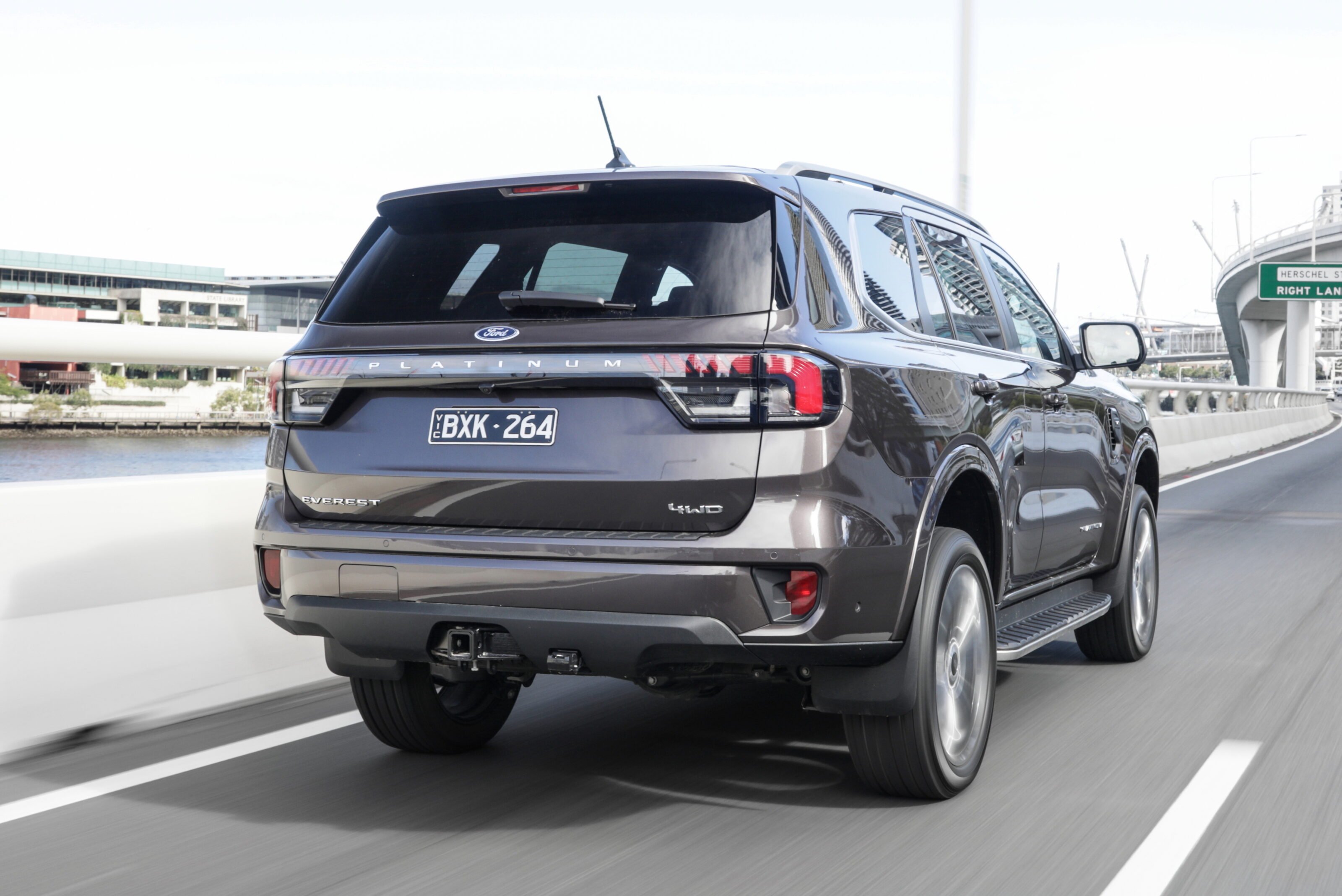
The largest bump for the Ranger resulted in its list price increasing by no more than $2240, while the smallest rise in the Everest is by $2900.
This is largely due to the new powertrains available over the outgoing model.
The smallest jump for the Everest is a $2900 increase for the Ambiente and Trend 4×4 grades, while the Trend 4×2 has gone up by $3200 over its predecessor.
Although the Sport and Platinum (formerly Titanium) have risen by a considerable $4700 and $6500 respectively, both are now powered by Ford’s V6 turbo-diesel, rather than the bi-turbo found in lower variants.
The Ford Everest competes against the Toyota LandCruiser Prado in the large SUV segment, in addition to the Isuzu MU-X, Mitsubishi Pajero Sport and Toyota Fortuner.
New Ford Everest on sale, and we’ve driven it!
The new-generation 2023 Ford Everest is finally on sale in Australia, and our man Matt Raudonikis has driven it. Get the full story, and our first-drive video, below.
2022 Ford Everest Australian pricing
Prices exclude on-road costs.
| Model | Price |
|---|---|
| Ambiente 4×2 2.0L Bi-Turbo diesel | $52,990 (+$2900 over Ambiente 3.2) |
| Ambiente 4×4 2.0L Bi-Turbo diesel | $57,990 (+$2900 over Ambiente 3.2) |
| Trend 4×2 2.0L Bi-Turbo diesel | $60,290 (+$3200) |
| Trend 4×4 2.0L Bi-Turbo diesel | $65,290 (+$2900) |
| Sport 4×4 3.0L V6 turbo-diesel | $69,090 (+$4700 over Sport 2.0 Bi-Turbo) |
| Platinum 4×4 3.0L V6 turbo-diesel | $77,690 (+$6500 over Titanium 2.0) |
2023 Ford Everest features
Ambiente
Trend, in addition to Ambiente
Sport, in addition to Trend
Platinum, in addition to Sport
Options
Ford also offers equipment and accessory packages across the Everest range, with pricing for the factory-fit options listed below.
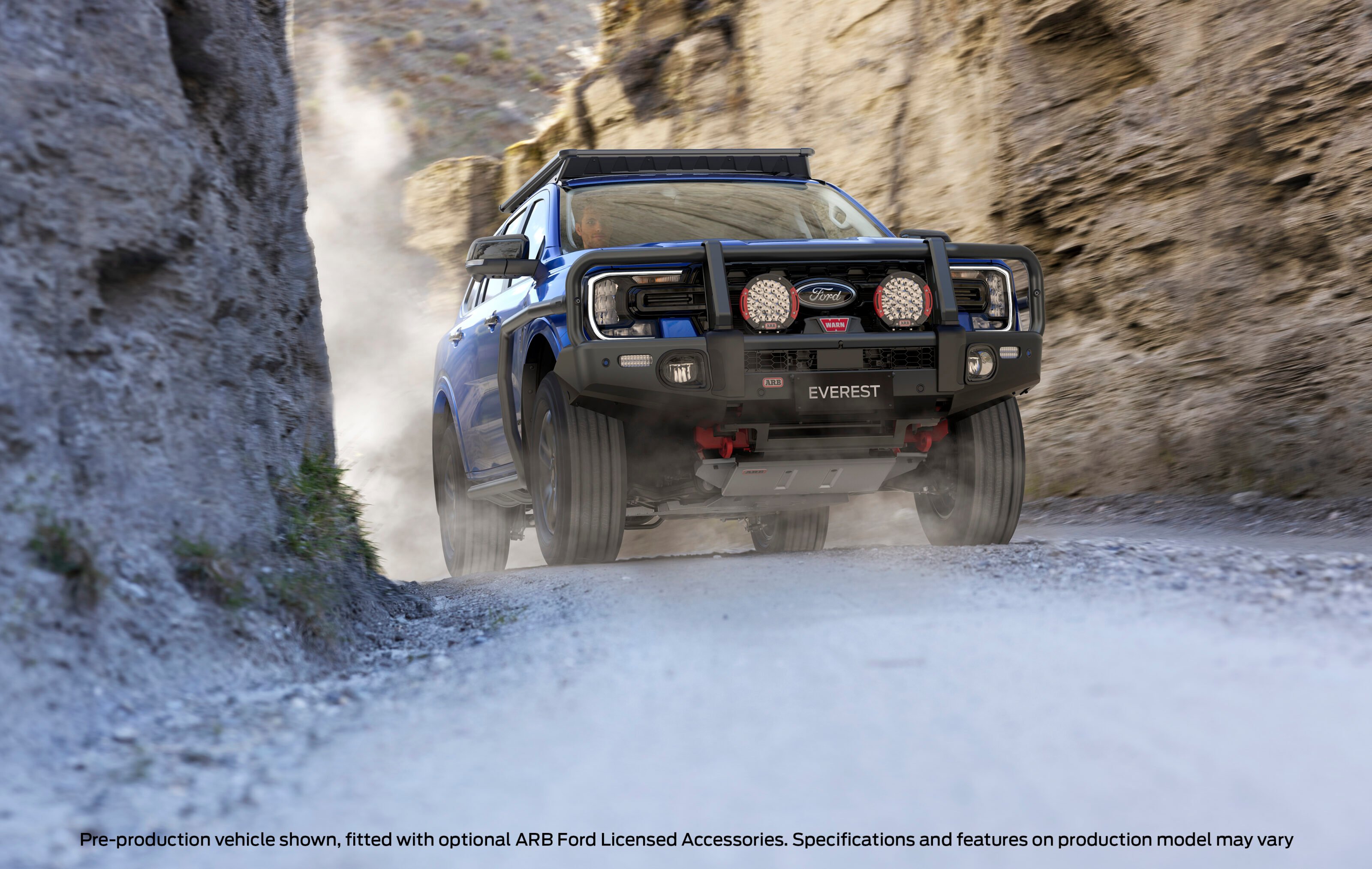
In addition, the brand has partnered with aftermarket specialist ARB to offer a range of factory-backed accessories, including bull bars, a long-range fuel tank and under-vehicle protection.
Touring Pack – $1950 (Trend 4×4 and Sport 4×4 only)
| 360-degree camera |
| Zone lighting |
| Tow bar with integrated brake controller |
Tow Pack – $1700 (all grades)
| Tow bar with integrated brake controller |
Premium Seat Pack – $900 (Trend 4×2 and 4×4 only)
| Heated and cooled front seats |
| 10-way power driver seat with memory |
| Eight-way power front passenger seat |
Metallic paint – $675 (all colours excluding arctic white)
| Shadow black, aluminium, arctic white, meteor grey, Sedona orange and equinox bronze (all grades)u00a0 |
| Blue lightning (Sport only) |
Engine, drivetrain and fuel economy
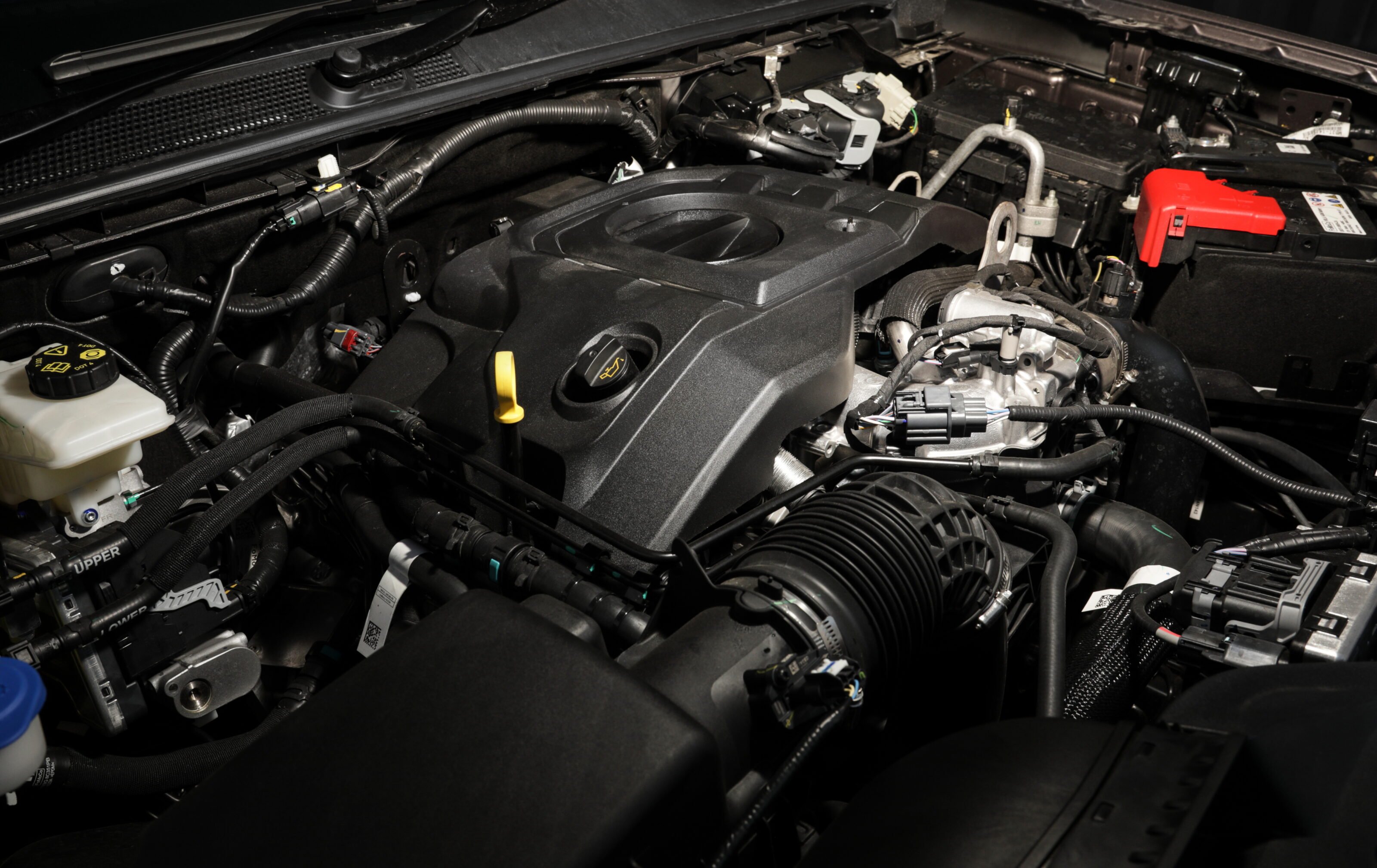
Carrying across from the outgoing Everest is Ford’s 2.0-litre, bi-turbo diesel four-cylinder engine, with its power cut by 3kW to 154kW at 3750rpm, while torque remains unchanged at 500Nm between 1750 and 2000rpm.
New to the Everest is a V6, with the 3.0-litre, single-turbo diesel powerplant pushing out 184kW at 3250rpm and 600Nm between 1750 to 2250rpm – a jump of 41kW and 130Nm over the old 3.2-litre five-cylinder diesel.
While a 10-speed torque converter automatic transmission is standard across the range, the entry-level Ambiente and Trend variants can be ordered with 4×2 or full-time 4×4, while all V6-powered models feature 4×4 as standard.
Fuel economy figures can be found in the table below:
Safety
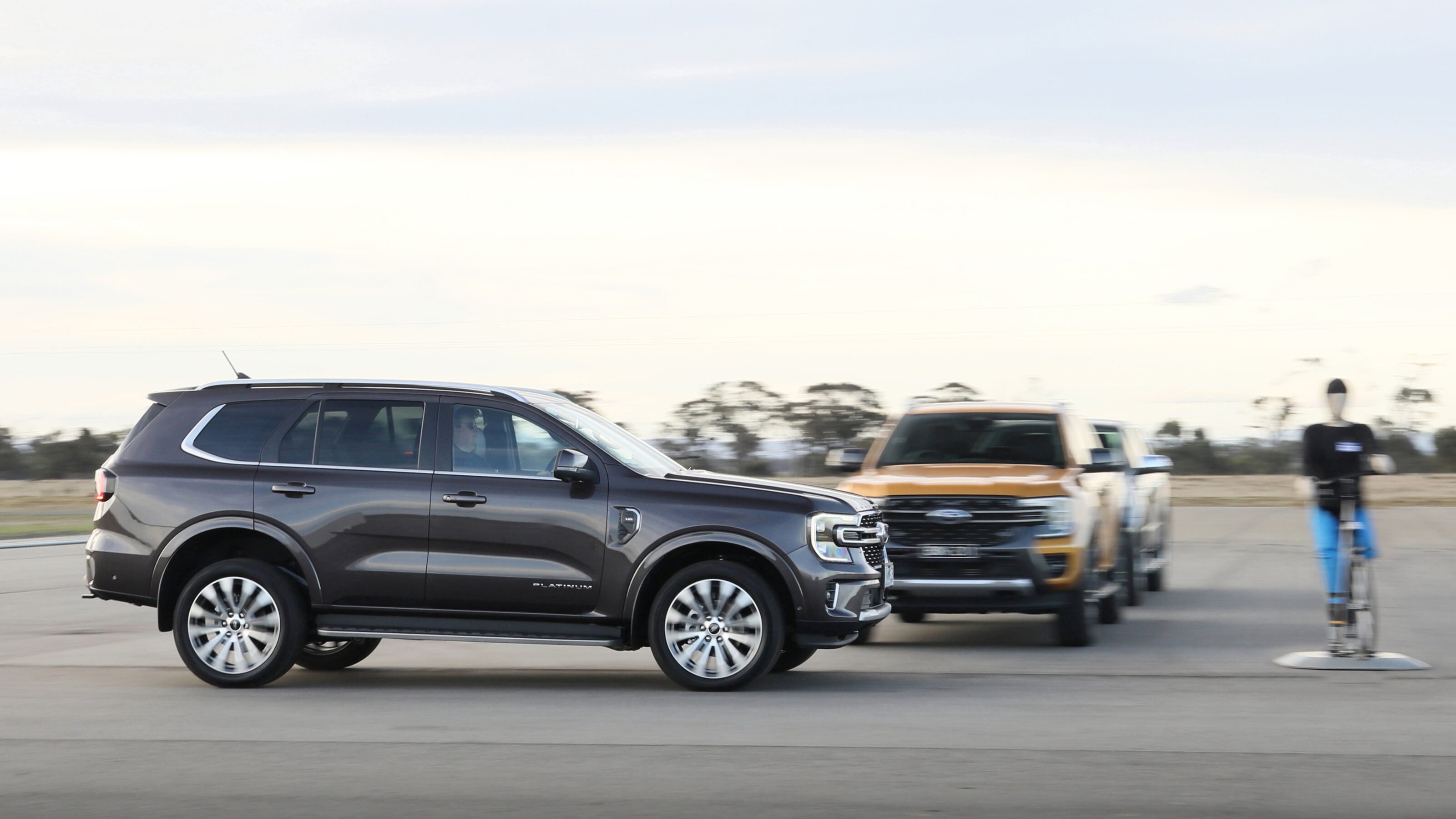
The latest Ford Everest is covered by a five-star rating from ANCAP, based on testing conducted under the latest 2020-22 criteria.
It has an 86 per cent score for adult occupant protection, 93 per cent for children, 74 per cent for vulnerable road users, and 86 per cent for safety assist.
For a full safety report, read our story here.
Examples produced before August 20, 2022, will require a software update to become eligible for a five-star rating, due to the ability to leave lane-keep assist switched off when the vehicle is restarted, which contravenes ANCAP’s rules for a top rating.
Nine airbags (dual front, side head, curtain, driver and front passenger knee, and front-centre) are fitted across the range.
Each variant includes the following active safety equipment as standard:
Dimensions
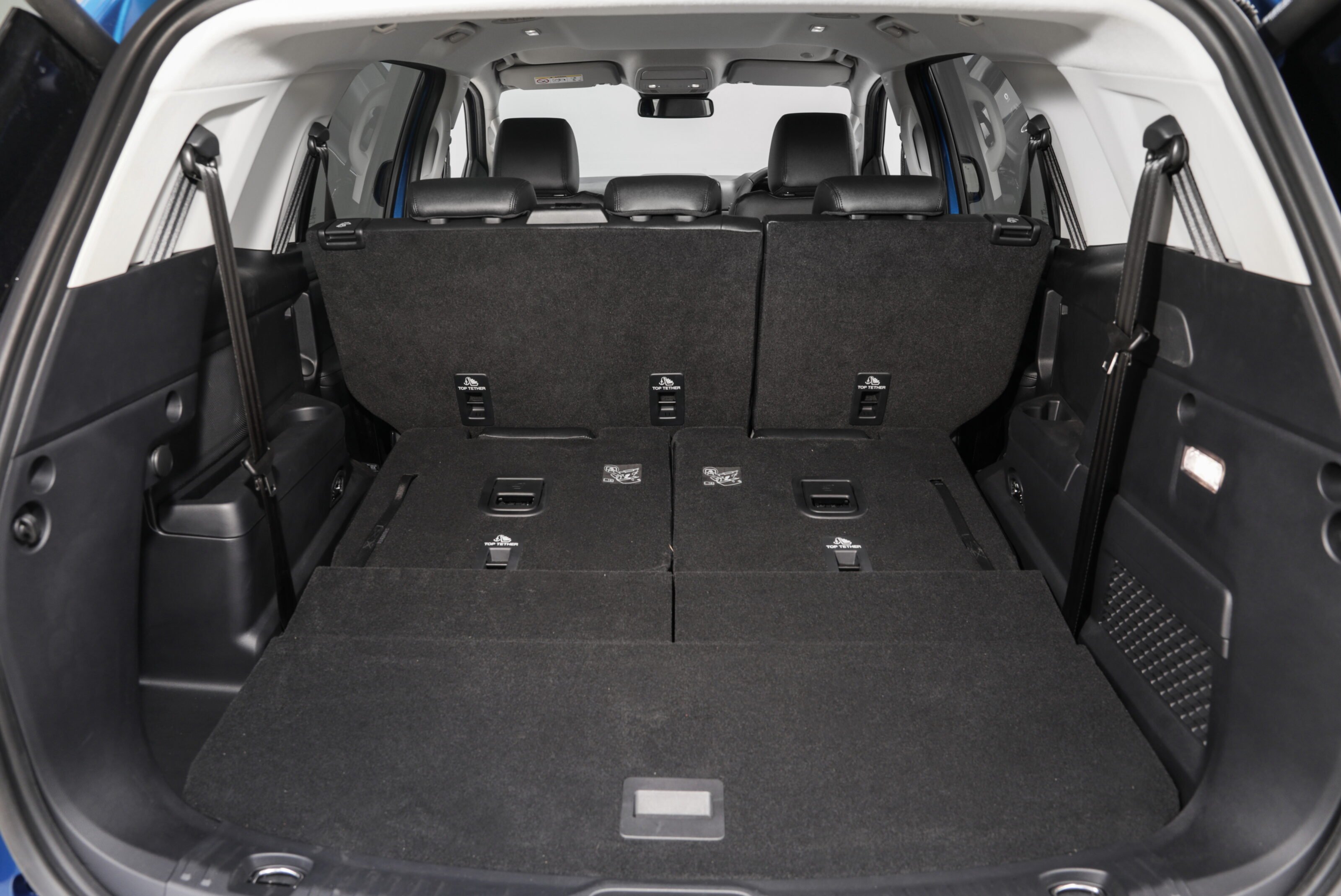
The Ford Everest has a wheelbase of 2900 millimetres, and is 4914mm long, 2207mm wide and 1842mm high.
It has claimed 898-litre boot capacity with the third-row down, expanding to 1823L with the second-row folded. With all seats in use, it has a 239-litre capacity.
Warranty and servicing
As per the wider Ford range, the Everest is covered by the brand’s five-year, unlimited-kilometre warranty, along with 12 months of roadside assistance.
This program can be extended for up to seven years through annual servicing at a Ford dealership.
Servicing is required every 12 months or 15,000 kilometres, whichever occurs first, with the first five services priced at $329 under Ford’s capped-price program.
Availability
The 2023 Ford Everest is on sale now.
For a guide on estimated wait times, click below to read our story on the Ford range:
Frequently Asked Questions
Volkswagen apprentices have transformed the forthcoming ID.5 electric SUV into a wild, eye-catching concept car complete with custom paint and a boot-full of audio equipment.
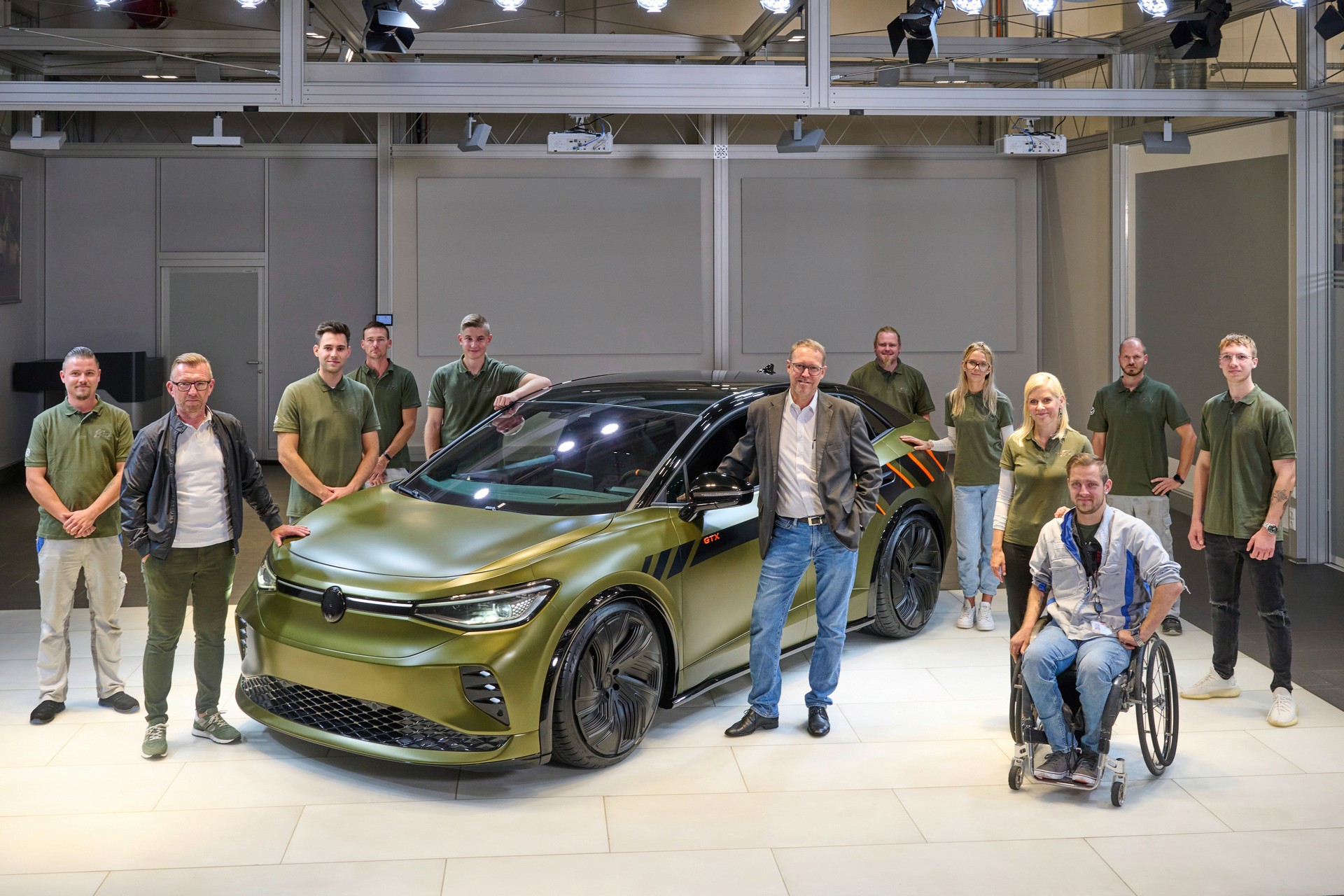
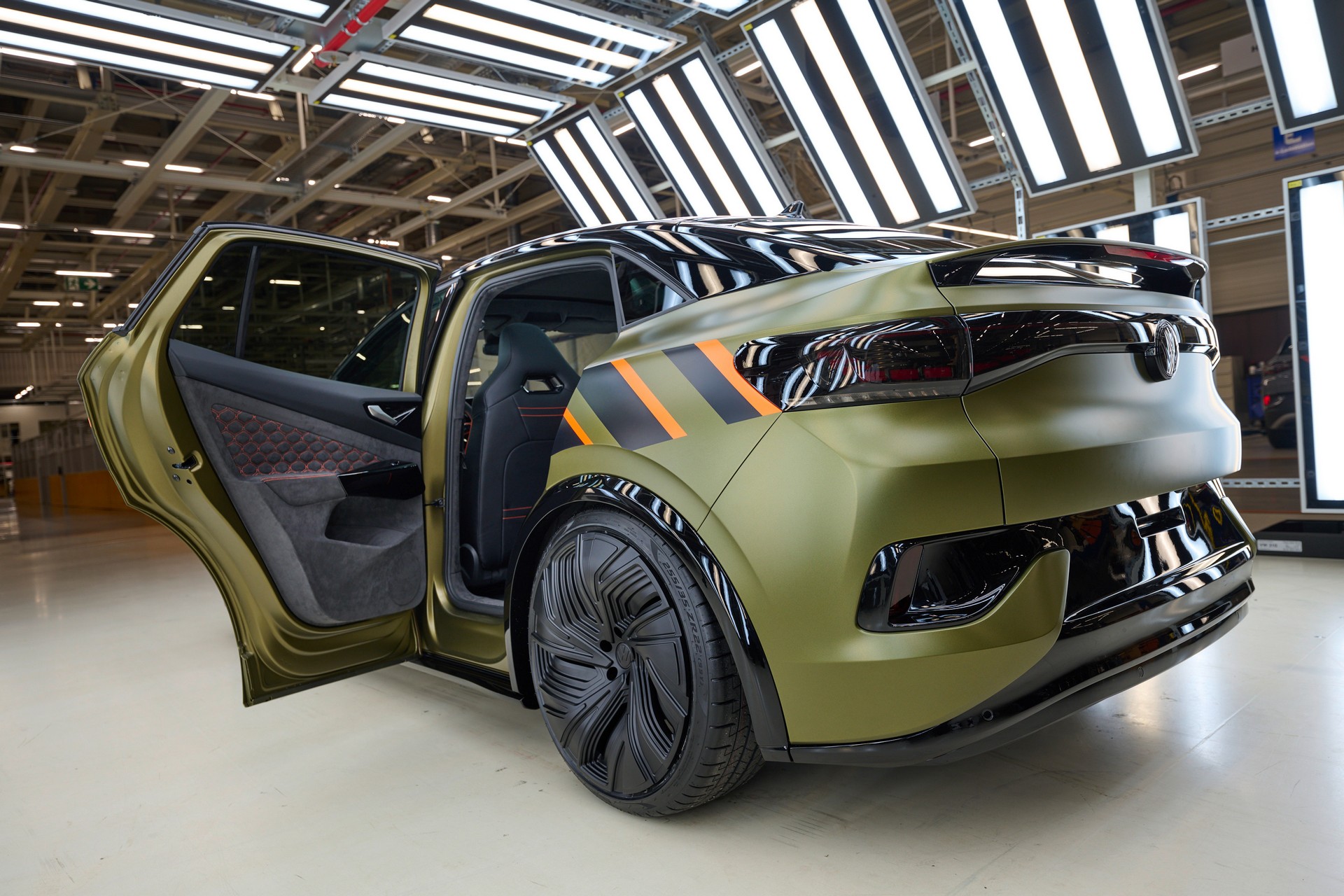
The vehicle, dubbed the Volkswagen ID.5 GTX Xcite concept, comes clad in militaristic satin green paint, inspired by hues found within Lamborghini and Volkswagen‘s colour palettes.
Subtly widened side skirts and wheel-arch mouldings run along the sides of the vehicle, framing larger 22-inch wheels that mimic the factory design of the ID.5 – albeit with a much more intricately-stepped design.
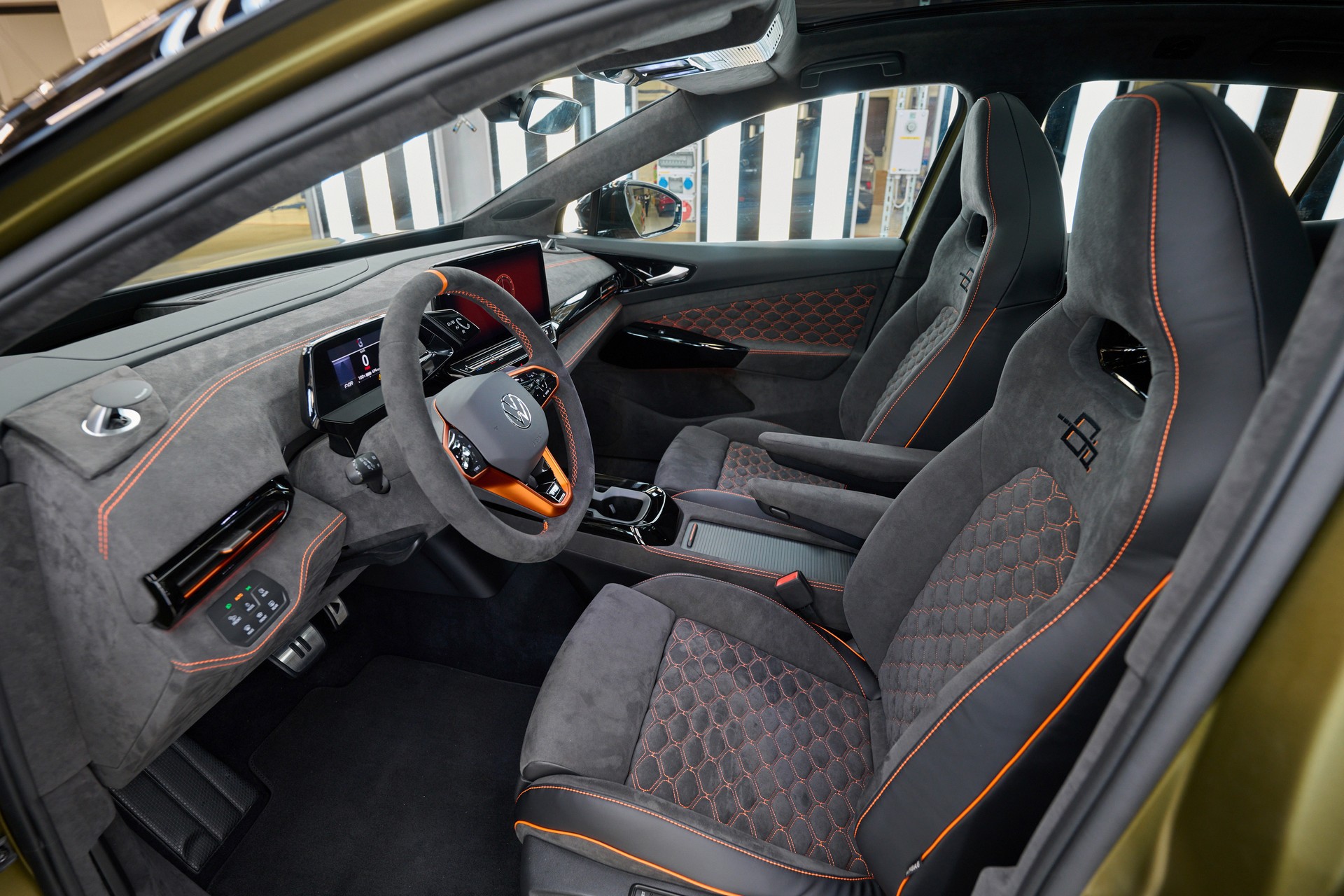
The interior cabin has been comprehensively re-upholstered with Alcantara and vegan leather, highlighted by contrasting orange piping and honeycomb stitching.
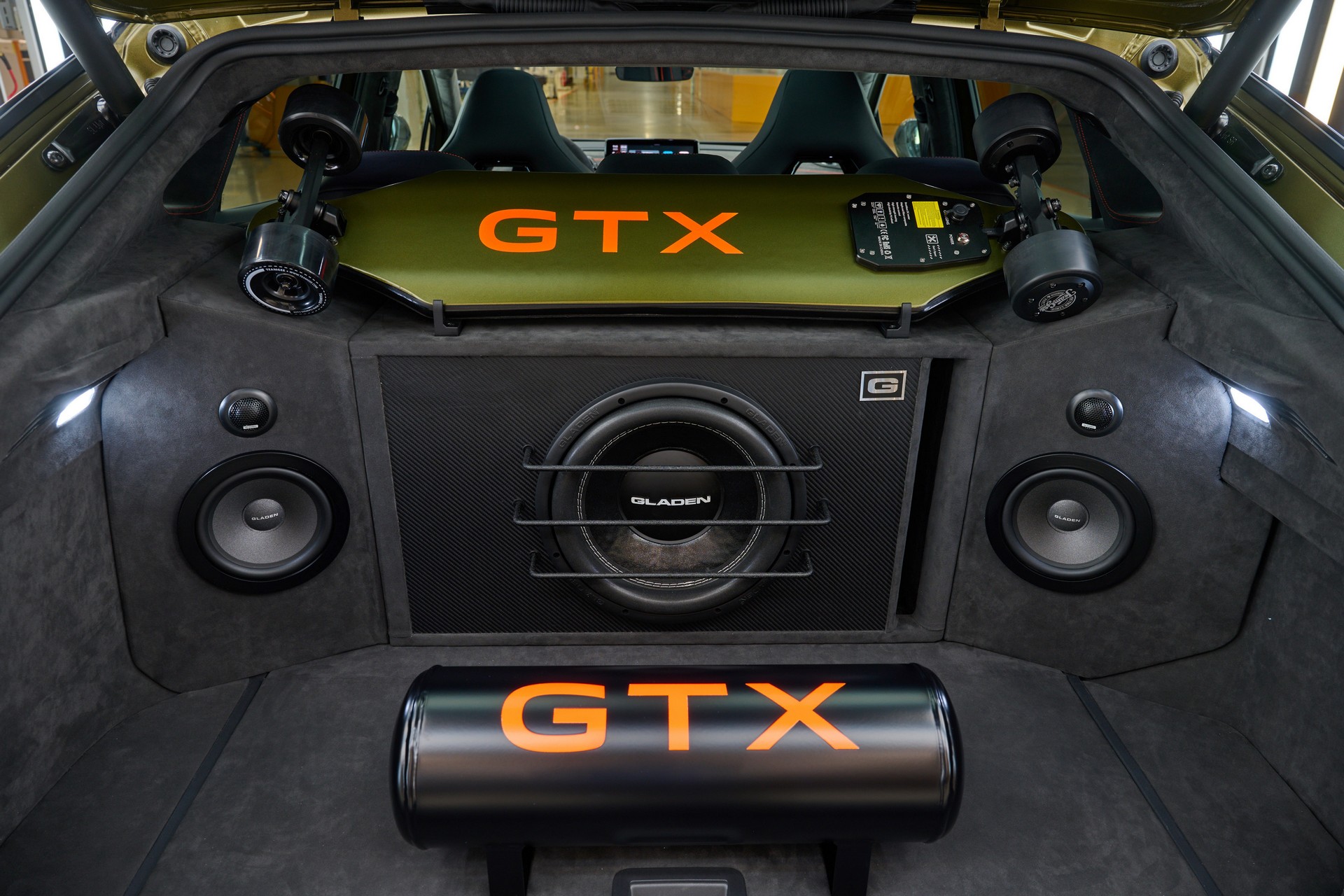
The real party-piece, however, is found in the boot – which features a high-end audio system made from Gladen, Musway and Bang & Olufsen products.
The 2000-watt system features 10 amplifiers and a subwoofer. Also mounted in the boot is a colour-matched Teamgee G5 electric skateboard to ease the “last few metres from the car park to the driver’s destination”.
Volkswagen’s ID.5 (and more conventionally-styled ID.4 SUV) are expected to launch in Australia in 2023, to be joined later by the ID. Buzz ‘Kombi’.
GTX denotes the flagship ID variant, delivering all-wheel drive traction from two electric motors, with an 82kWh battery producing 220kW/460Nm and an WTLP-rated driving range of 490 kilometres.
In the case of the ID.5 GTX Xcite, however, we’d expect that range to be neutered by the added weight and power drain from that imposing car audio system.
Nevertheless, should Australia’s early-2000s car show scene make a comeback, Volkswagen’s team of apprentices have proved that the electric vehicles of the future can fit right in.
Renault has confirmed it will unveil a retro-inspired electric concept version of the Renault 4 at the 2022 Paris Motor Show.
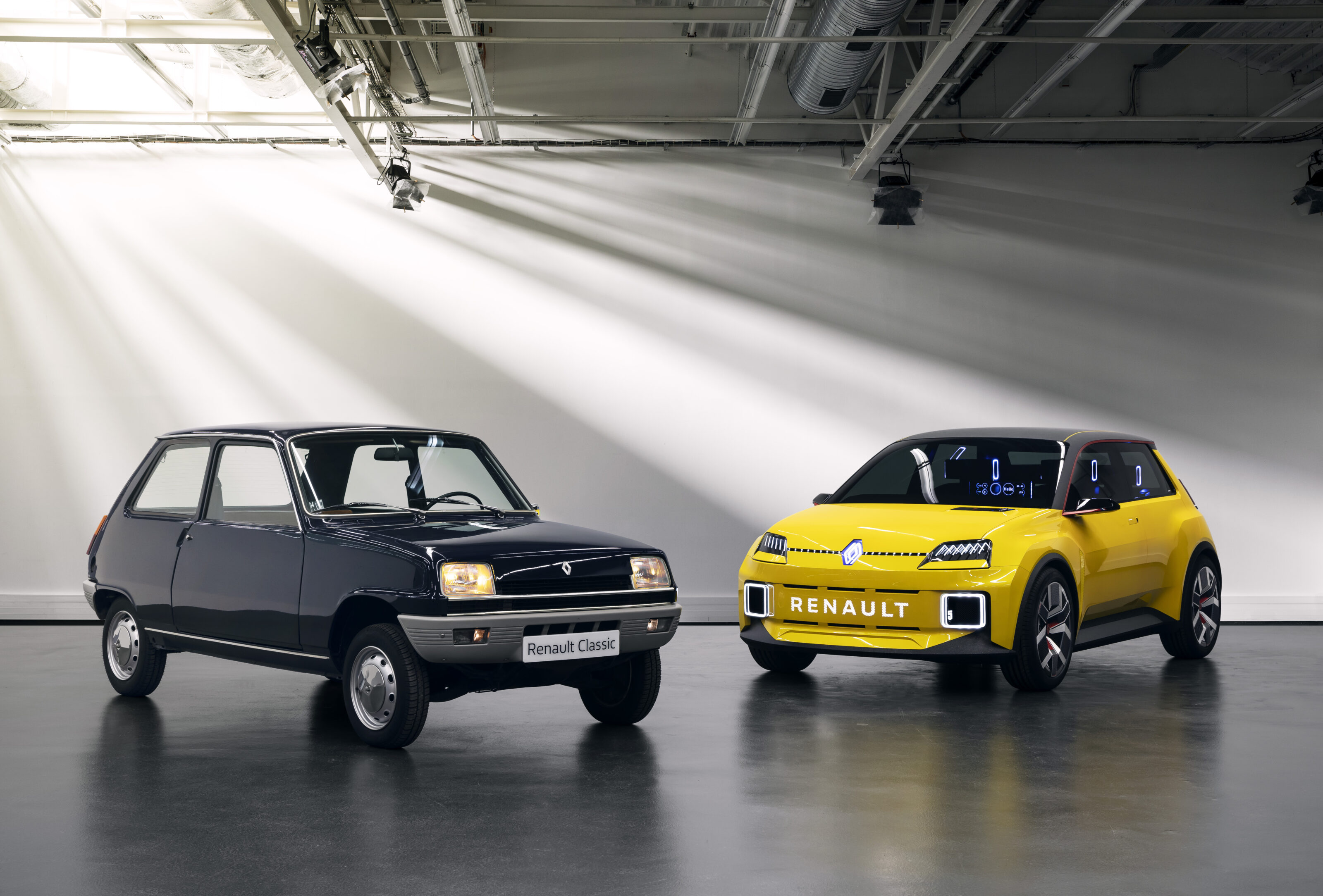
The brand claims it will be a “reinterpretation” of the small Renault 4 hatchback, akin to the larger Renault 5 concept revealed in early 2021.
The reborn Renault 4 concept will be similar to the 1960s classic in name only, taking the form of a compact SUV, with reports suggesting production will commence in 2025, badged 4ever.
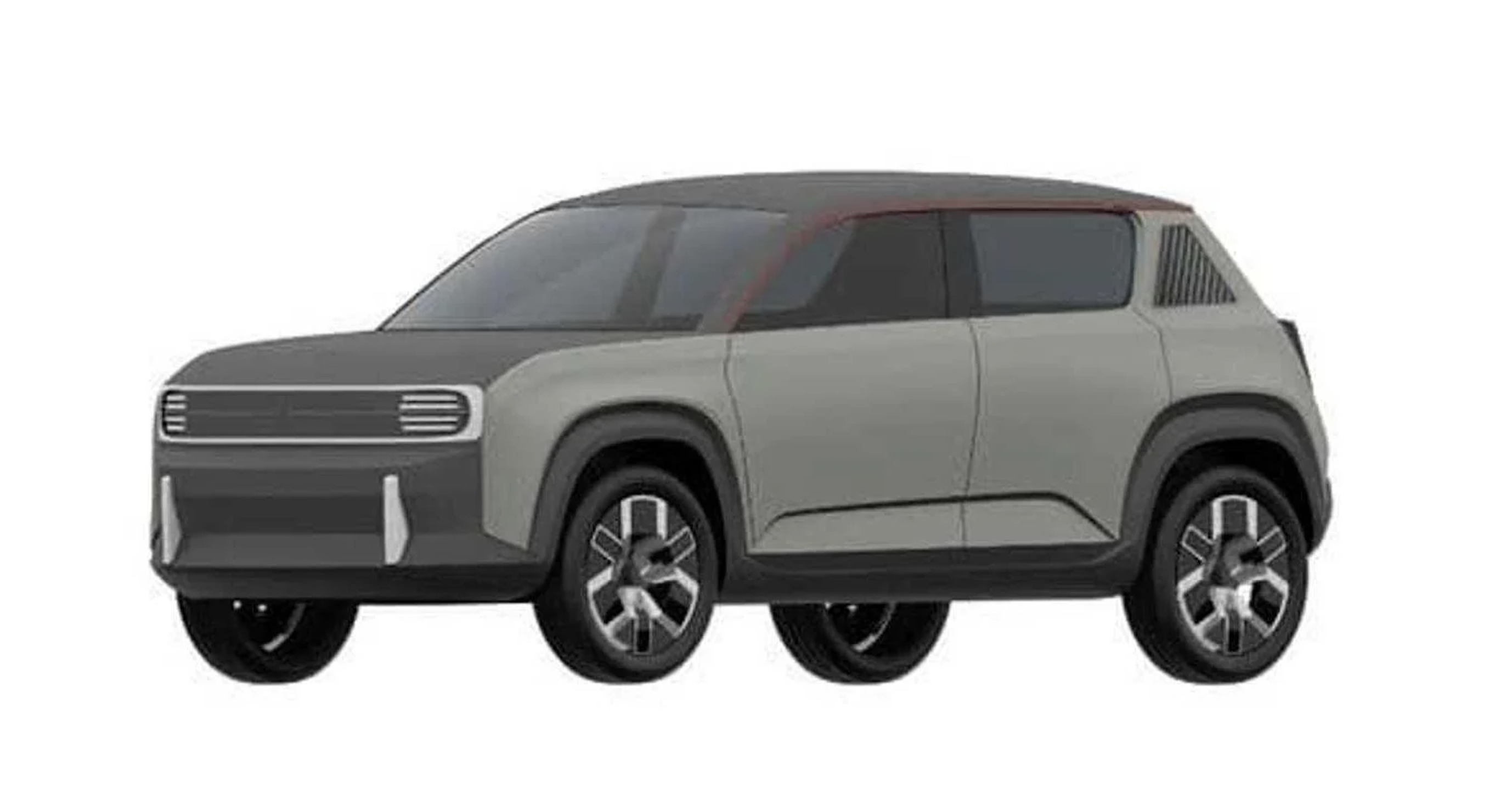
A leaked patent filing, shared by Dutch publication Autovisie in May 2021, reveals the concept will feature an upright body, with a flat nose and a unique C-pillar shape.
The production version will be underpinned, like the Renault 5, by the Renault-Nissan-Mitsubishi Alliance’s CMF-B EV platform.
Alongside the 4 concept, Renault will unveil a “sporty and offbeat show car” based on the Renault 5 to celebrate its 50th anniversary, and the Megane E-Tech Electric – which is set for Australia in 2023 – and Kadjar-replacing Austral crossovers.
At the event, Renault will additionally unveil a people-mover version of the Kangoo E-Tech electric van, while subsidiaries Alpine and Dacia will also be present.
Alpine will debut a new sports car concept likely to preview its upcoming electric vehicles, as it transitions into an EV-only performance brand.
The French marque has confirmed it will launch three new EVs by 2026, starting with a hot version of the Renault 5, known as the Alpine R5.
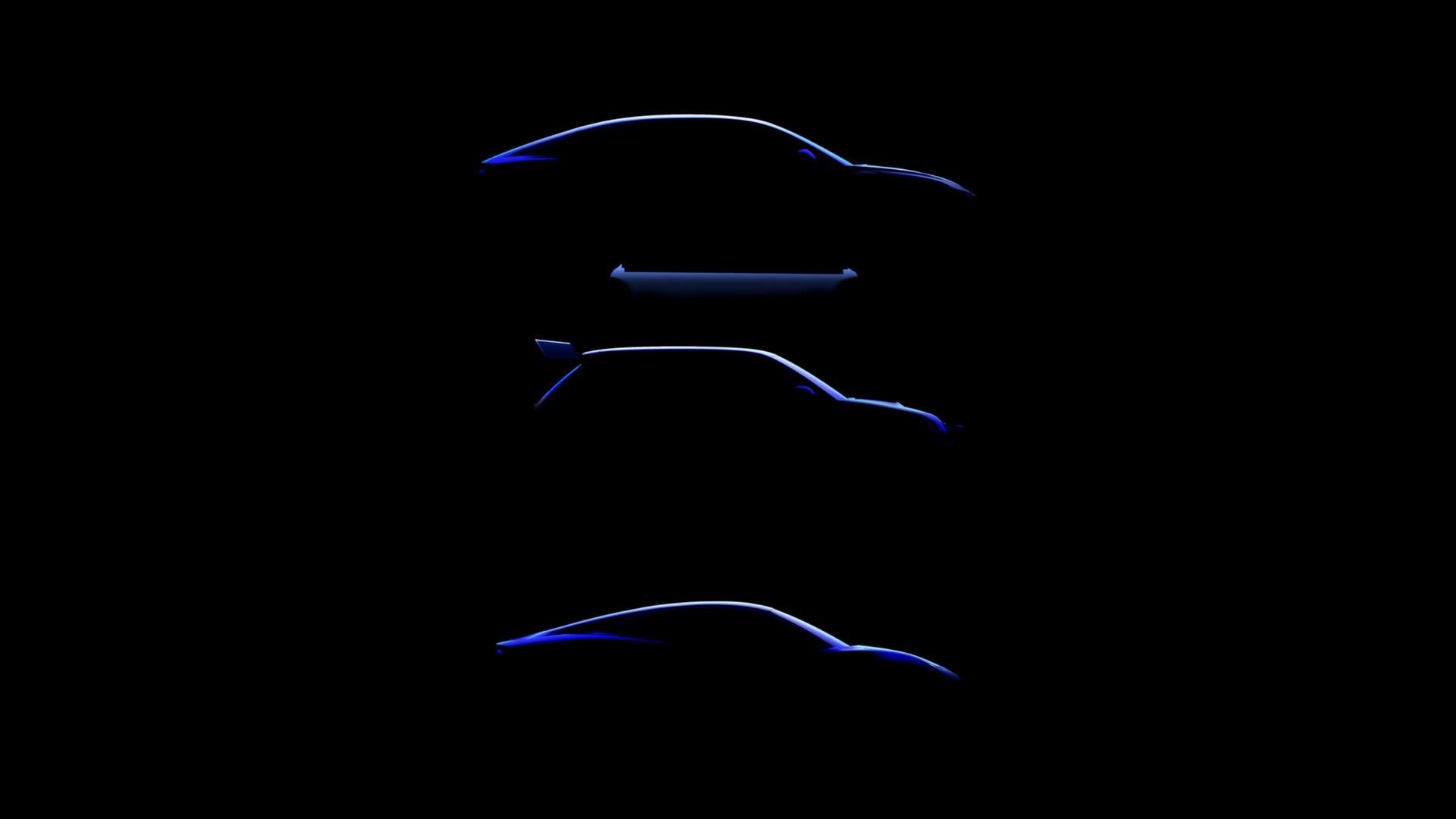
A performance coupe SUV – badged GT X-Over – will commence production in 2025, followed by an all-electric replacement for the current A110 in 2026.
The current internal-combustion Alpine A110 left the Australian market in late 2021 due to its incompatibility with new Australian Design Rules requirements, however, it remains available overseas.
Dacia will showcase its new corporate identity – including its new logo and emblem first revealed in June 2021 – across its line-up at the Paris show.
The LDV G90 people-mover is one step closer to Australia, following a recent trademark application.
While registering a trademark doesn’t confirm a local launch, it is an important step in preparing a new model for sale in Australia.
The LDV G90 would compete against the Kia Carnival, Hyundai Staria and Toyota Granvia – and potentially join the Mercedes-Benz eVito Tourer in offering an electric option.
Of note, introducing a new people-mover would fill a gap in LDV’s range, following the discontinuation of the similarly-sized G10 MPV earlier this year. The cargo van model remains on sale for now.
Interestingly, although the Genesis G90 limousine isn’t sold in Australia, Hyundai has held a G90 trademark locally since 2015, which could lead to opposition from the Korean giant.
Under the bonnet, the regular G90 is powered by a 170kW turbocharged 2.0-litre four-cylinder petrol engine, matched with a 48-volt mild-hybrid system and an Aisin-sourced eight-speed automatic transmission.
Pricing starts at 230,000 yen (AU$48,300) and extends to 350,000 yen (AU$73,500).
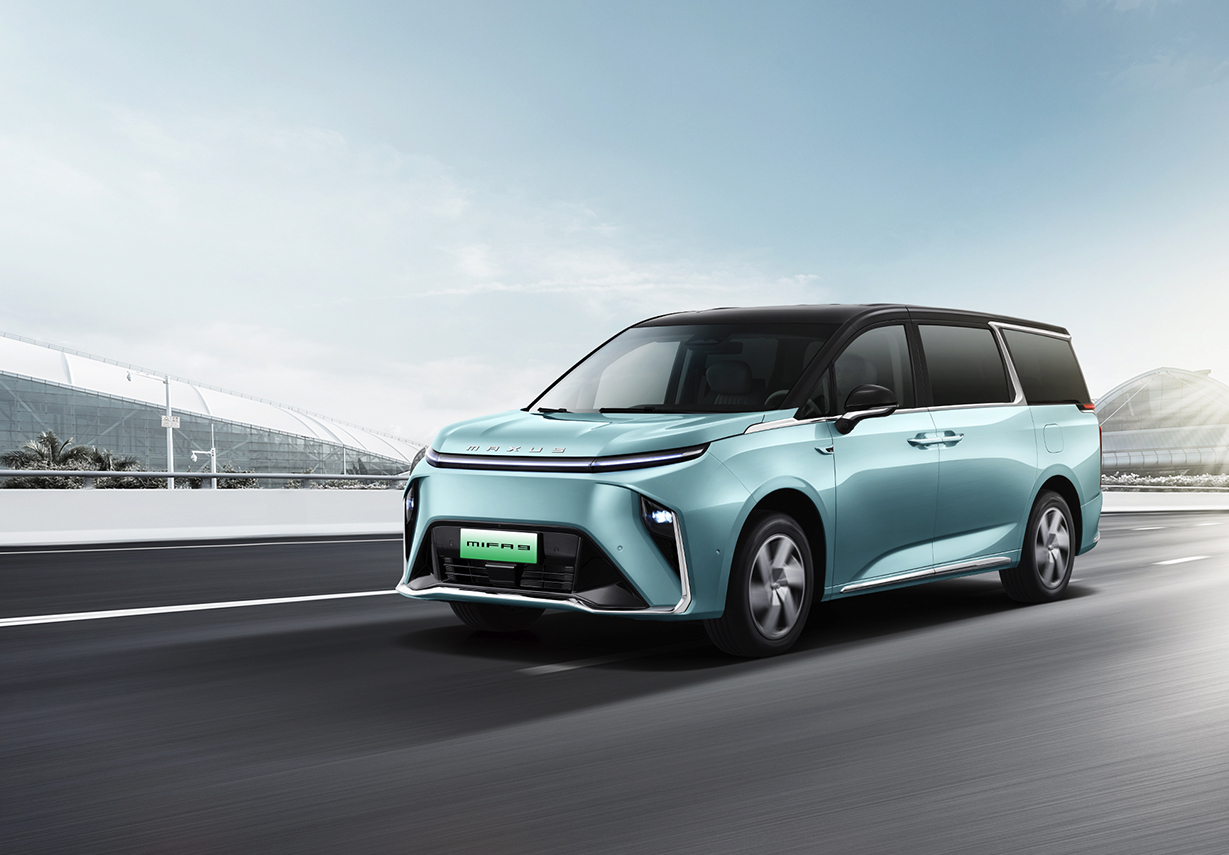
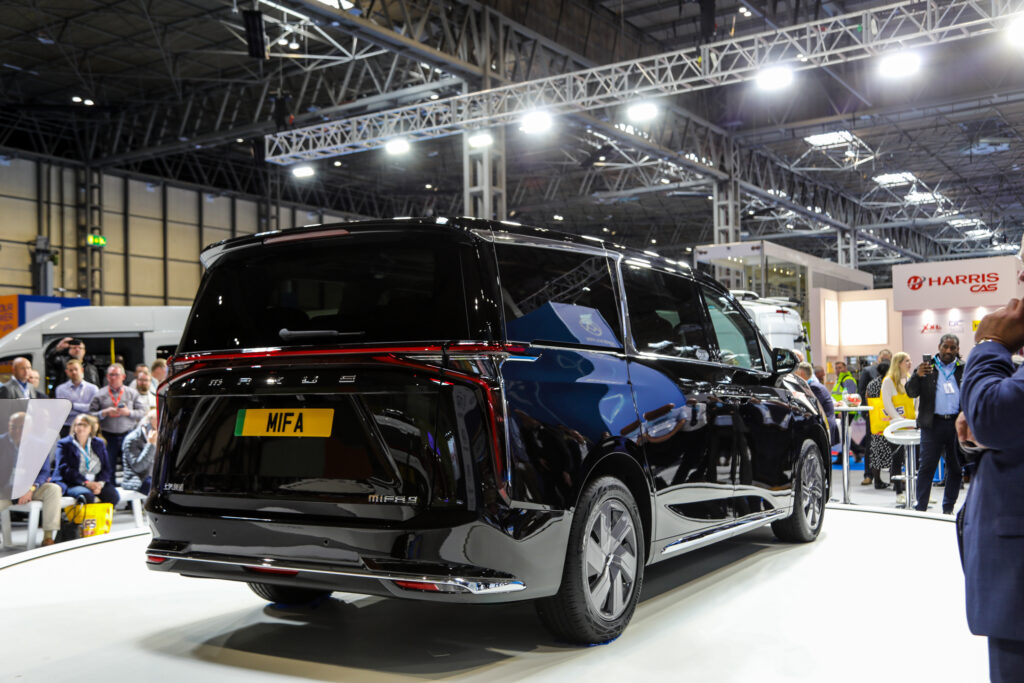
Marketed under the Maxus brand in China and the United Kingdom, the G90 is also available in an all-electric guise – known as Mifa 9.
A 90kWh battery pack sits underneath the body of the Mifa 9, allowing for a claimed driving range of 520 kilometres on the more-lenient NEDC cycle.
Power is rated at 180kW and 350Nm, while consumption is listed at 17.9kWh/100km.
UK pricing for the Mifa 9 – which could retain the G90 nameplate in Australia – is yet to be announced, with pre-orders expected to commence in the coming weeks.
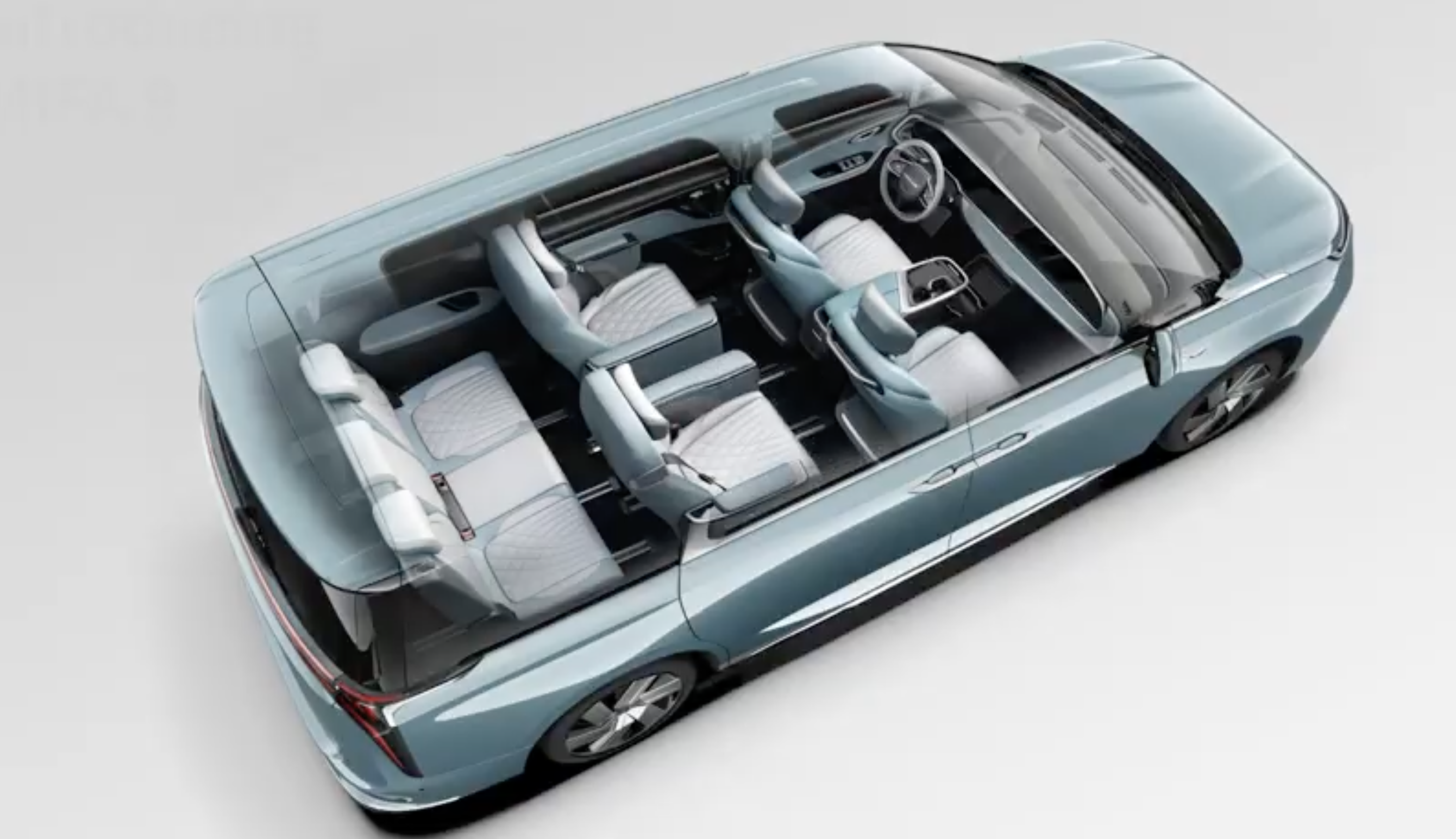
Measuring 5280 millimetres long with a 3200mm wheelbase, the van is larger than the mammoth Mercedes-Maybach GLS, with a jumbo-sized grille to match in petrol guise.
Outside, it wears slim LED headlights, large front air intakes, chrome lashings, large rear tail-lights, and aero wheel covers for the electric model.
First revealed at the 2021 Guangzhou Auto Show, the G90 sports a large widescreen display that spans almost the entire width of the dashboard – with 10 displays, including a rear seat entertainment system and armrest screens, on offer in China.
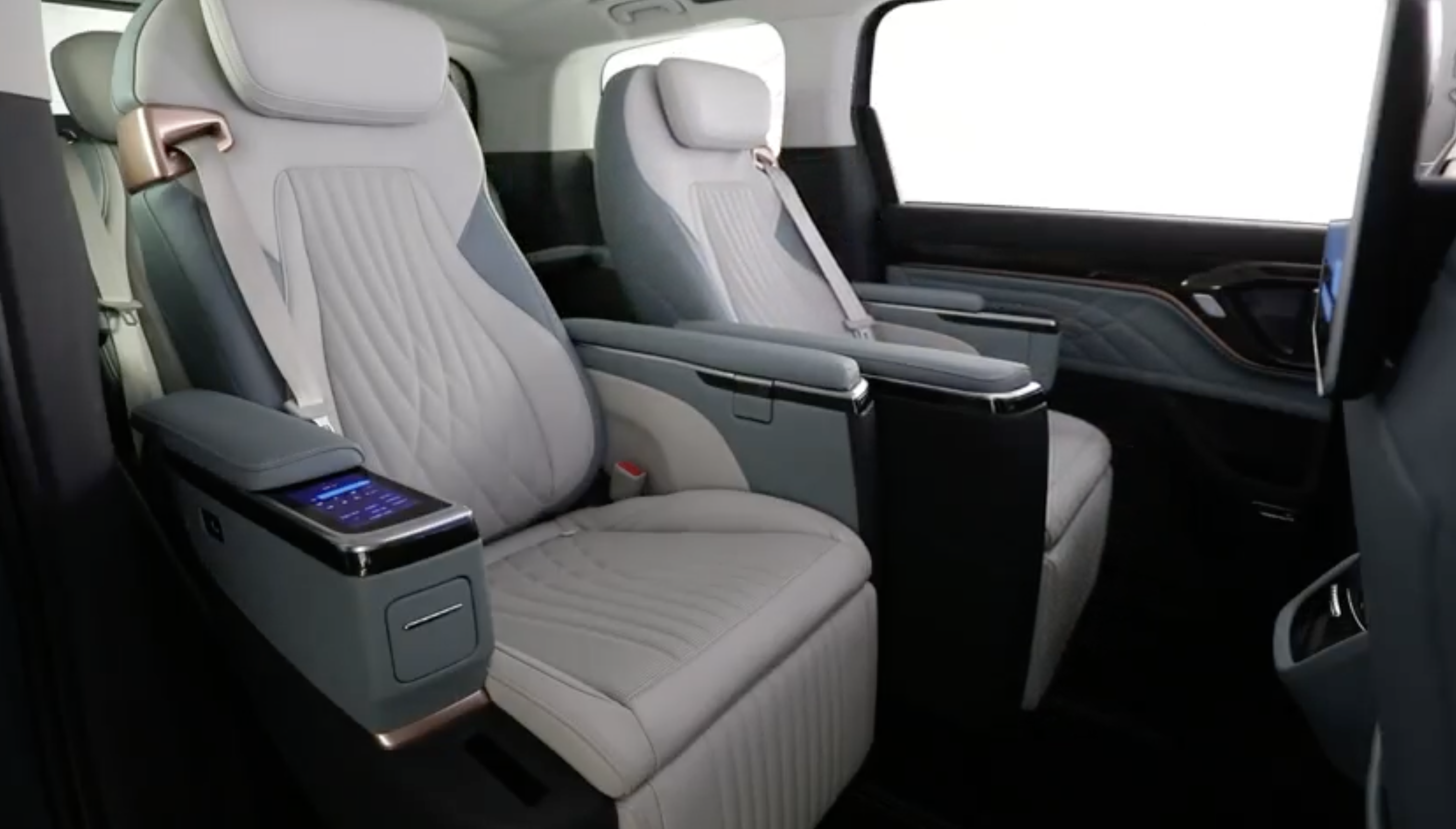
All six individual seats feature power adjustment, and heating, ventilation and massaging functions.
It also features an intelligent ‘pilot’ driving assistance system, allowing point-to-point assisted driving, automatic lane changes, smart parking and emergency avoidance assistance.
The addition of the electric G90 could be joined by an electric version of the T60 dual-cab, badged T60 EV overseas.
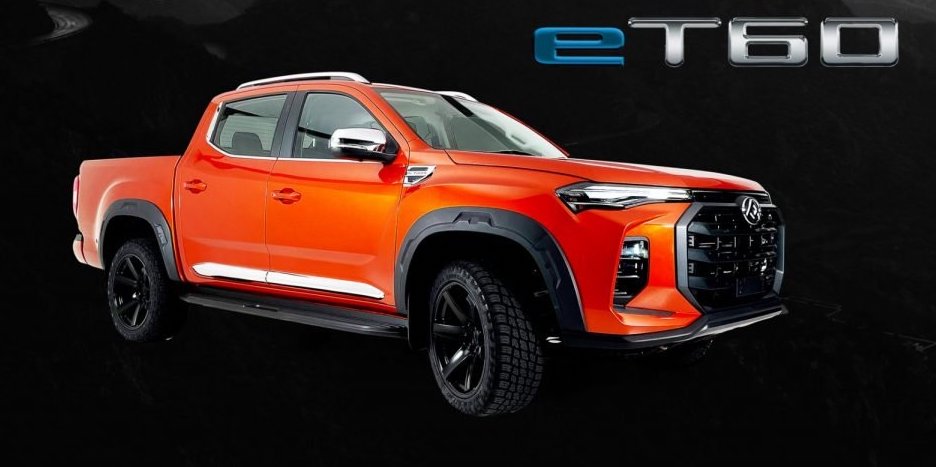
A business case for the vehicle is believed to be under preparation, allowing the T60 EV to potentially become Australia’s first all-electric ute.
LDV also offers an electric Deliver 9 van in other right-hand drive markets, including New Zealand and the UK.
In addition, an updated version of the T60 Max-based D90 petrol/diesel, body-on-frame large SUV is tipped to launch soon, following its unveiling at the Chengdu Motor Show in China in late August.
A spokesperson for Ateco Automotive, the local third-party distributor of the Chinese marque, told Wheels it had “nothing to communicate at this stage”.
