
Snapshot
- Costs increased from July 1
- Speeding and not wearing a seatbelt among higher penalties
- Some offences will get double the fine
Queensland is hitting those falling foul of the law on its roads with tougher penalties as of this month.
Motorists in the Sunshine State can also expect to pay more for their registration and licence fees, tolls, public transport, and parking in the Brisbane CBD too, according to the Royal Automobile Club of Queensland (RACQ).
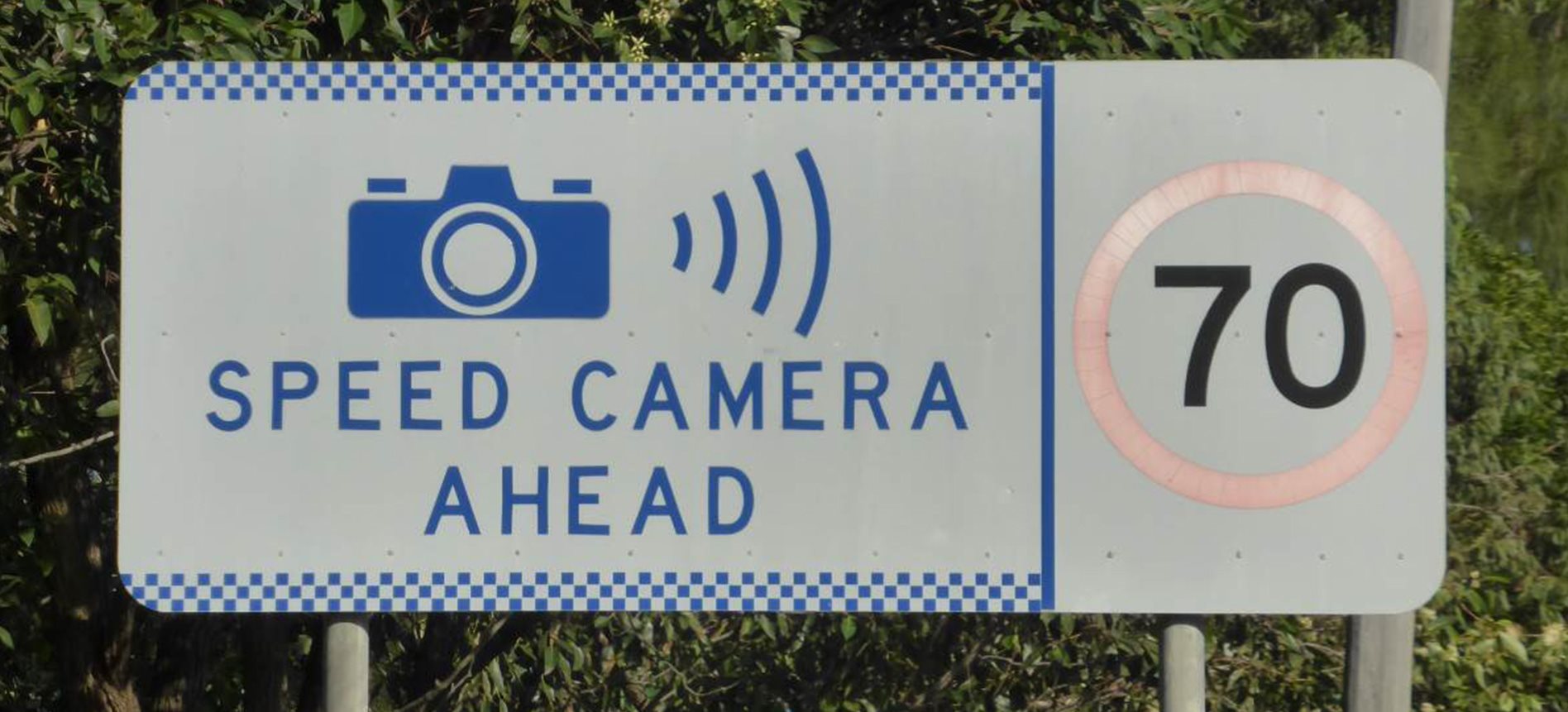
Club traffic and safety engineering manager Gregory Miszkowycz warned drivers would be paying a significantly higher price for speeding, running a red light, and not wearing a seatbelt.
“From the start of the new financial year the State Government is significantly increasing penalties for some critical road safety offences,” he said.
“The price of not wearing a seatbelt is set to more than double from $413 to $1078, coming into line with the cost of using your mobile phone behind the wheel.
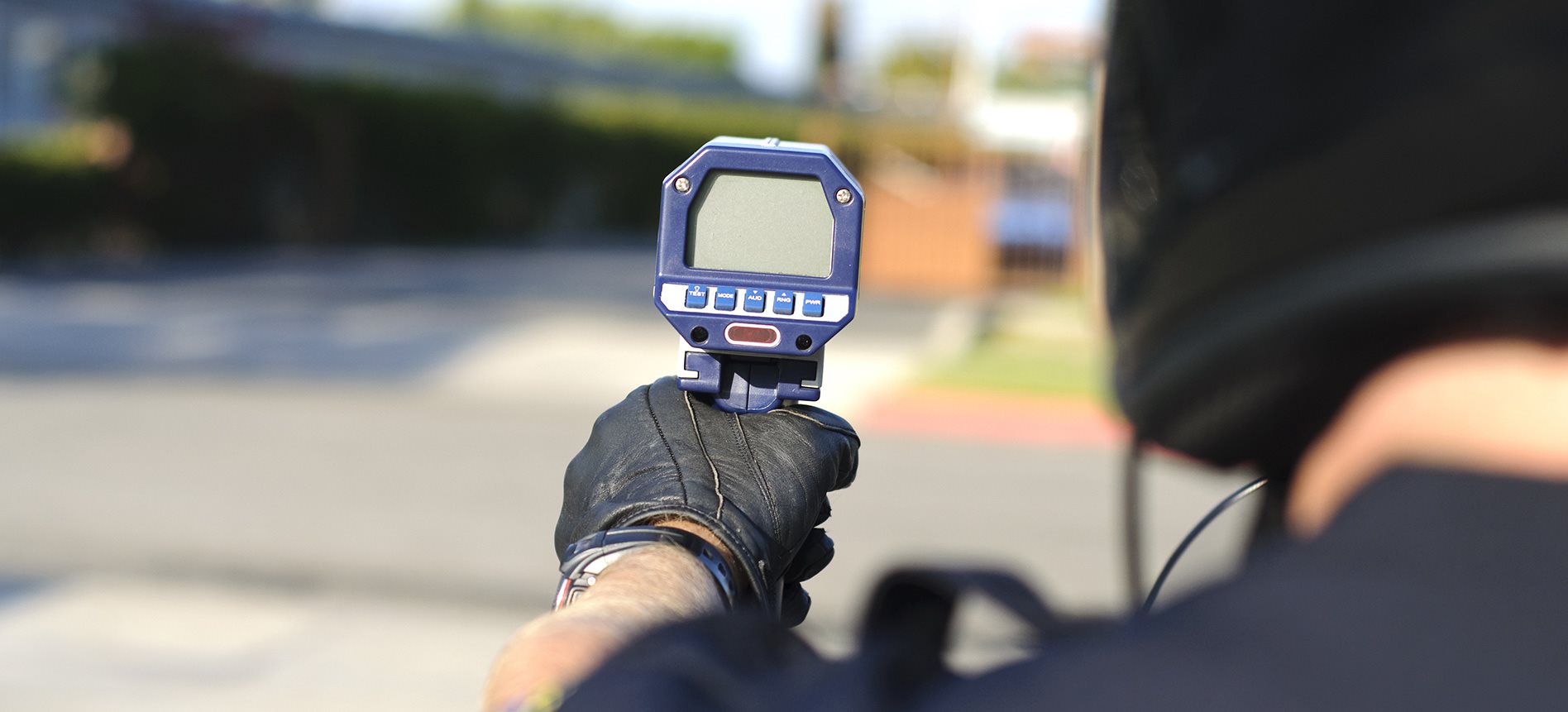
“The fine for running a red light will increase from $413 to $575 and penalties for speeding will also rise.”
Meanwhile, registration and driver licence costs have been capped at a 2.5 per cent increase, as have public transport fares – which rose in south east Queensland on July 4 after being frozen for the past 18 months.
The cost of using toll roads is going up too, increasing by the Brisbane CPI figure of six per cent, and on-street parking for cars and motorcycles in Zone 1 in the Brisbane CBD and surrounds is being hiked by 25 cents per hour.
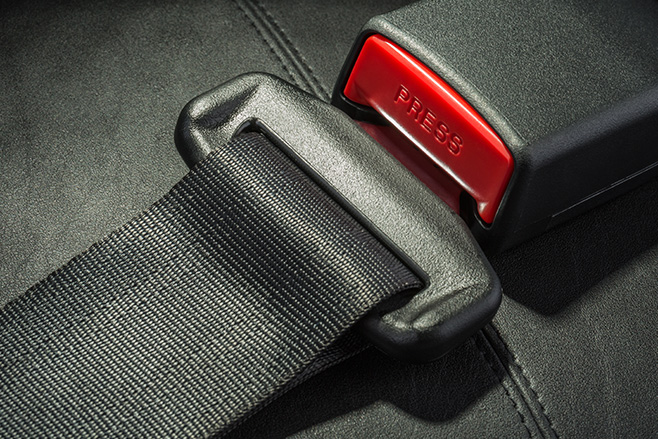
“We’ve been educating drivers on the importance of seatbelts for 50 years, but somehow the message didn’t get through to almost 14,000 people, so it’s time to get tough,” Queensland’s Transport and Main Roads Minister Mark Bailey said earlier this year.
“We make no apologies for being tough on this reckless and dangerous behaviour, just like we did for mobile phone offences.
“The message is simple, if you don’t want one of these fines, do the right thing on our roads.”
Fines
| Offence | Previous cost | New cost | |
| Not wearing a seatbelt | $413 | $1078 | |
| Not stopping at a red light | $413 | $575 | |
| Speeding | 1-10km/h | $183 | $287 |
| 11-20km/h | $275 | $431 | |
| 21-30km/h | $459 | $646 | |
| 31-40km/h | $643 | $1,078 | |
| 40km/h”}”>>40km/h | $1,286 | $1,653 | |
Registration
| Registration (by number of cylinders) | Previous cost | New cost |
| 1, 2, 3 cylinders or electric car | $326.85 | $335.05 |
| 4 cylinders | $399.55 | $409.55 |
| 5 or 6 cylinders | $598.00 | $612.95 |
| 7 or 8 cylinders | $813.70 | $834.05 |
Licence
| Licence | Previous cost | New cost |
| 1-year driver licence | $83.55 | $85.65 |
| 2-year driver licence | $116.50 | $119.40 |
| 3-year driver licence | $144.10 | $147.70 |
| 4-year driver licence | $166.75 | $170.90 |
| 5-year driver licence | $187.10 | $191.80 |
| Replacement driver licence | $80.10 | $82.10 |
Tolls
| Toll | Previous cost | New cost |
| Go Between Bridge | $3.35 | $3.55 |
| Clem7 | $5.37 | $5.70 |
| Legacy Way | $5.79 | $6.14 |
| Toowoomba Bypass | $2.38 | $2.53 |
| Gateway & Logan Motorways | Previous cost | New cost |
| Murarrie | $4.78 | $5.07 |
| Kuraby/Compton Road | $2.82 | $2.99 |
| Loganlea | $1.81 | $1.92 |
| Heathwood | $2.98 | $3.16 |
| Paradise Road | $2.98 | $3.16 |
UPDATE: 2023 Toyota Kluger pricing and features
Toyota Australia has confirmed pricing and features for its updated 2023 Kluger large SUV.
For a full run-down, click on the read more link below:
The story to here
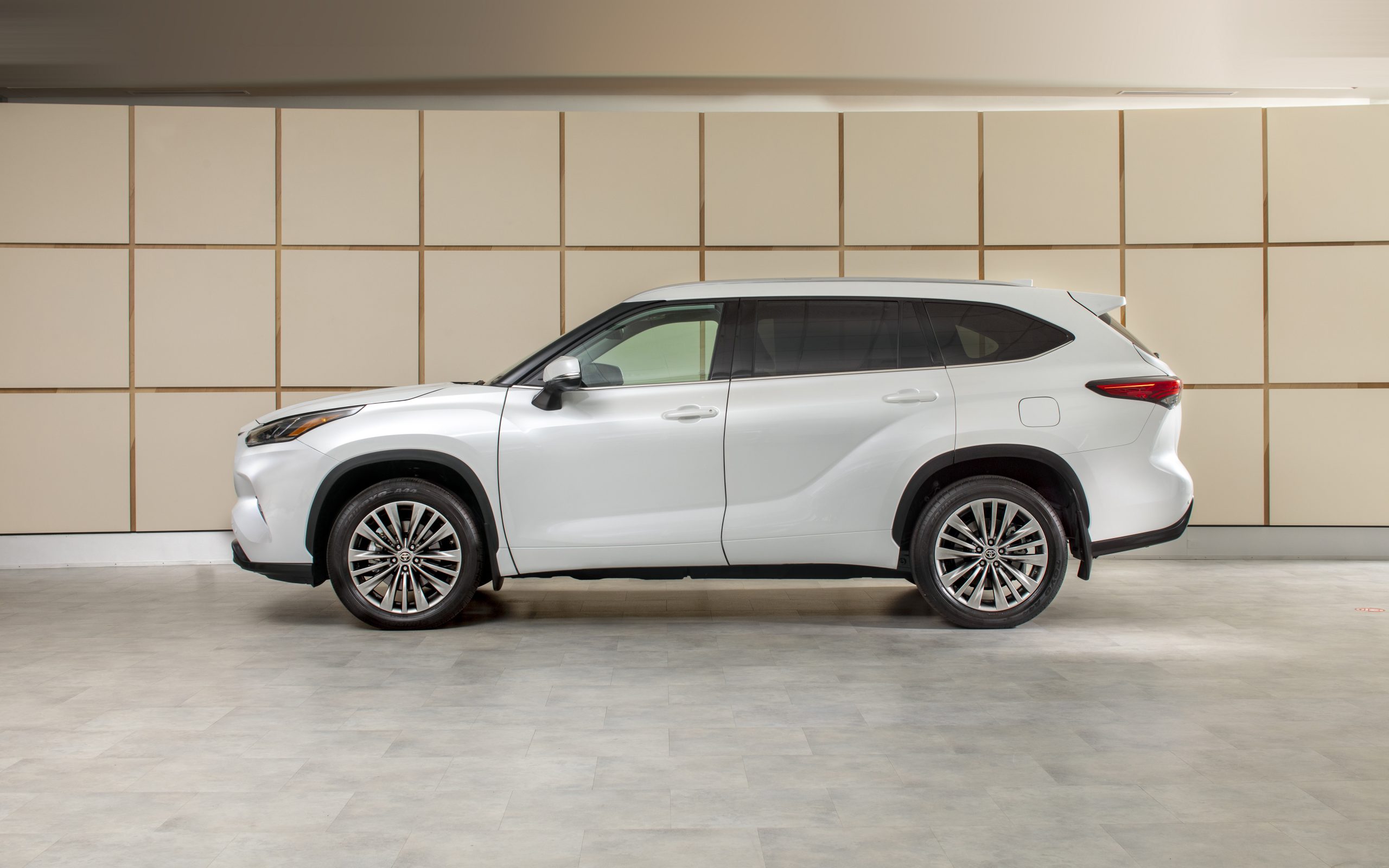
The 2023 Toyota Kluger will gain a new 2.4-litre turbocharged four-cylinder engine from the first quarter of next year, replacing the long-serving 3.5-litre V6.
The new engine promises increased efficiency and response for Australia’s second most popular Large SUV (year-to-date sales are bested only by its Toyota Prado sibling) by employing a number of technical advances; such as a new turbocharger unit, optimised fuel injection and a longer piston stroke.
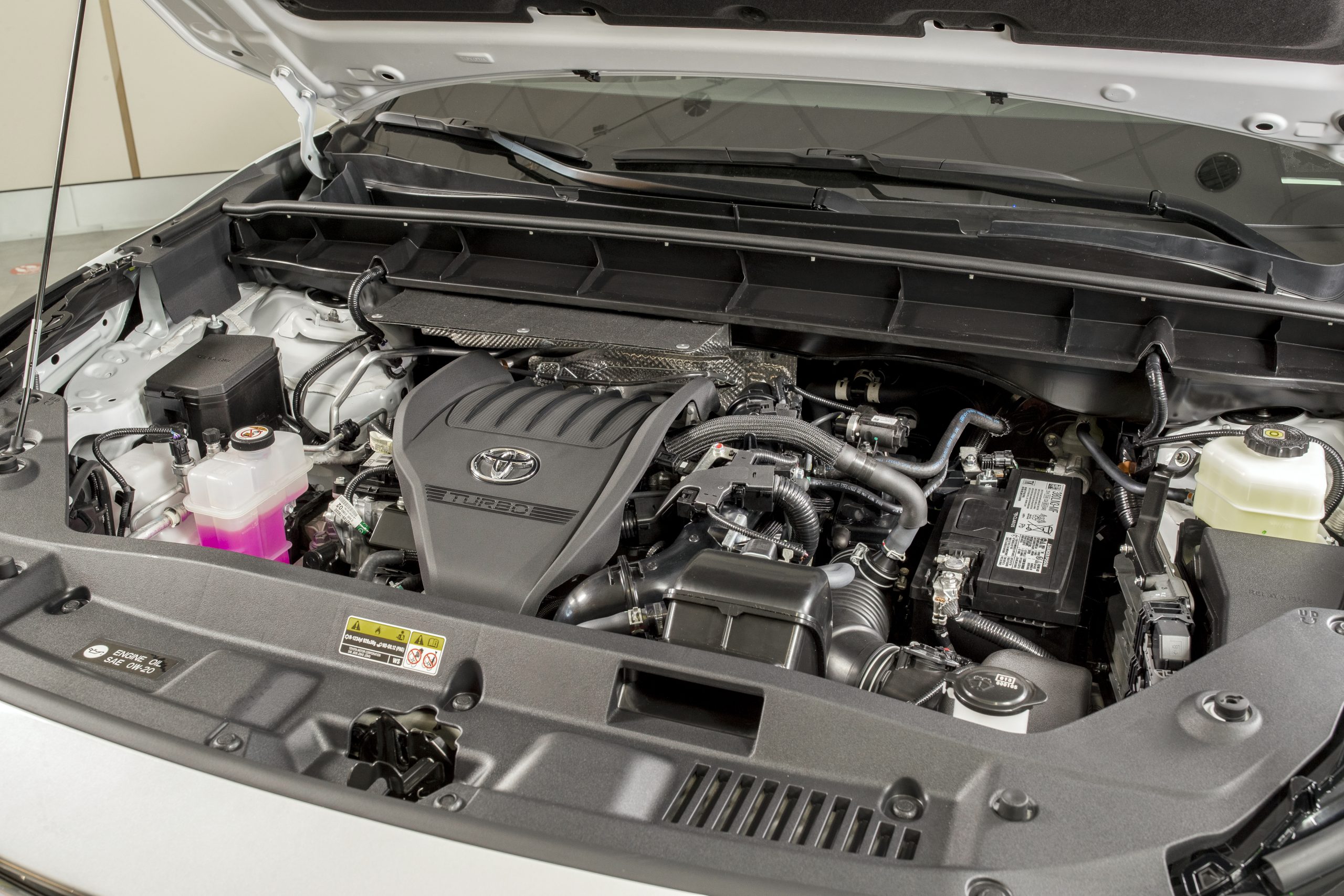
Producing a peak of 198kW/420Nm, the new 2.4-litre four-pot makes a significant 70Nm improvement in torque but sacrifices 20kW to the outgoing V6, with the existing eight-speed automatic transmission is carried across to the new engine.
The new four-cylinder turbocharged engine will join the existing hybrid powertrains, and will feature in front- and all-wheel-drive Kluger variants across all GX, GXL and Grande trim levels.
The Toyota Kluger also receives other safety and convenience updates for 2023. The 4.2-inch central display on the entry GX variants will be replaced by a 7.0-inch colour monitor, while the GXL and Grande’s current 8.0-inch infotainment display will swell to an impressive 12.3-inch touchscreen.
All Klugers from 2023 will also be offered with a complimentary three years’ subscription to Toyota Connected Services, harnessing an in-built data communication module (DCM) that enables handy safety services including automatic collision notification (automatically notifies the Emergency Call Centre in the event of a collision), SOS emergency call and stolen vehicle tracking.
Further details, including pricing, will be announced closer to the updated Kluger’s expected arrival in the first quarter of 2023.
Sean Hanley, Toyota Australia’s Vice President of Sales, Marketing and Franchise Operations, said: “We expect the addition of this strong new engine will make the popular Kluger family SUV an even more enticing prospect for buyers.”
March 2024: Updated 2025 Ioniq 5 revealed
Hyundai’s big Ioniq 5 electric SUV will welcome a sports-styled N Line grade this year, arriving in Australia from around the middle of 2024.
October 2022: Ioniq 5 pricing and features
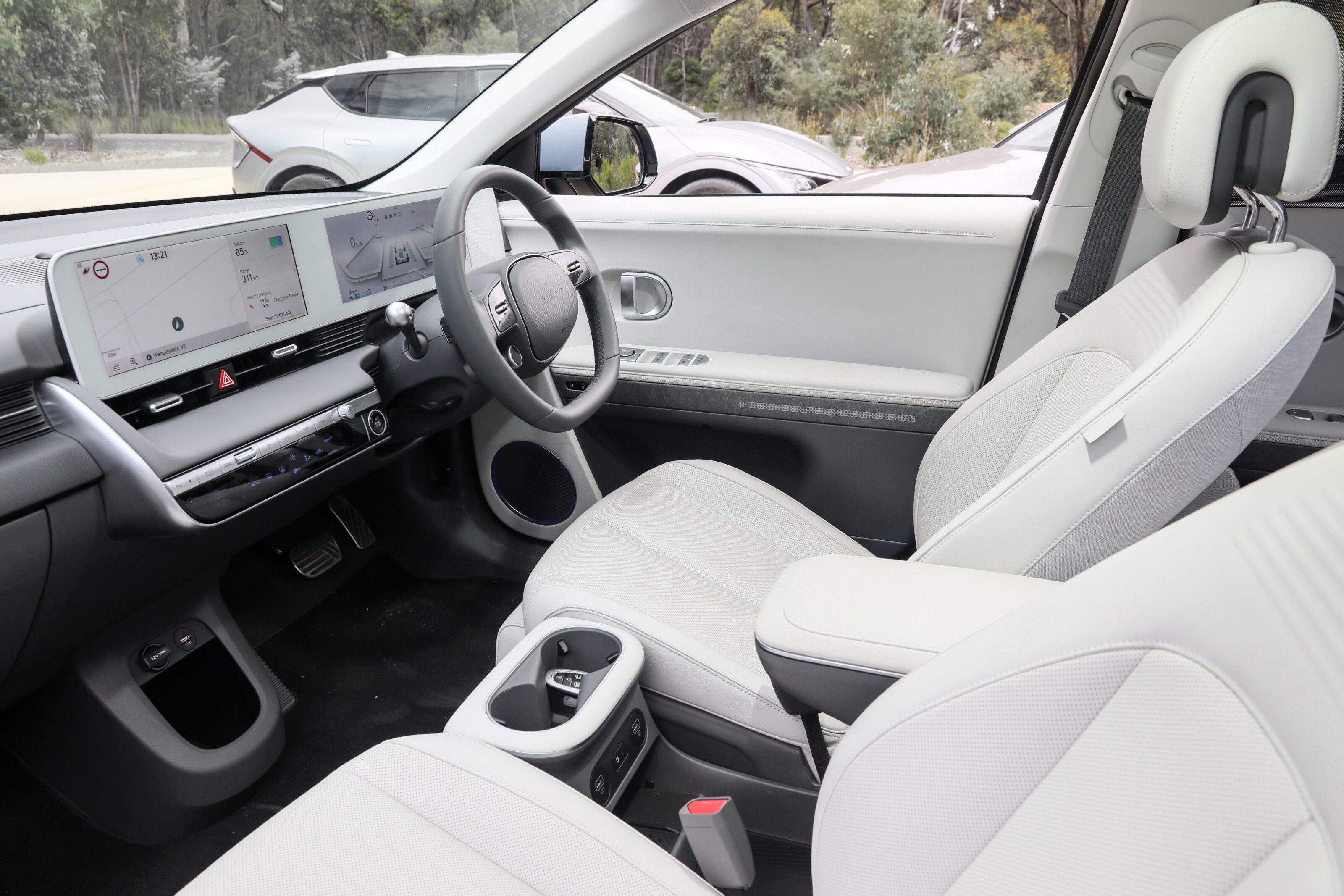
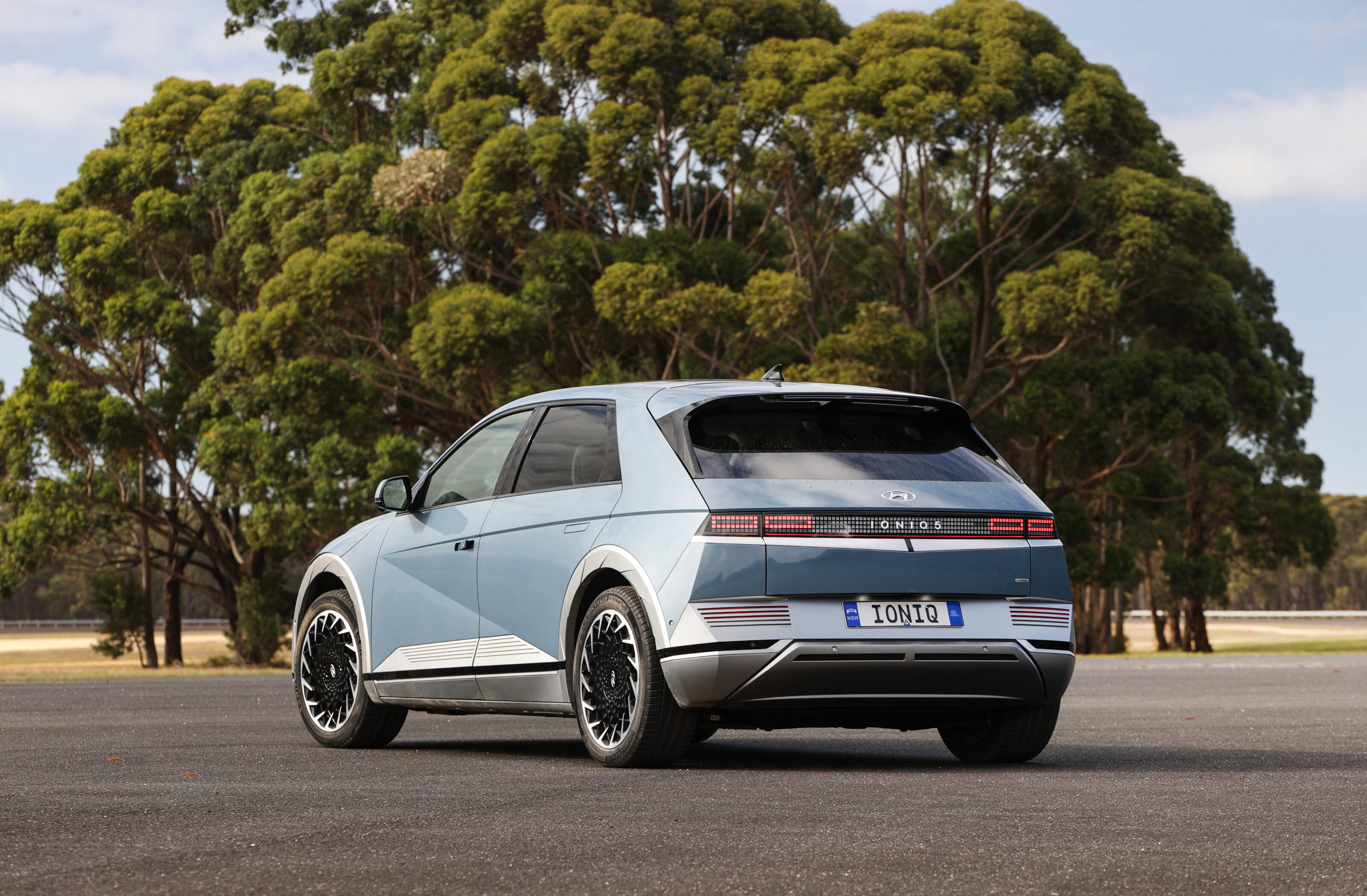
An updated 2022 Hyundai Ioniq 5 has been announced, introducing a new naming structure along with new features for the flagship electric vehicle.
Snapshot
- Dynamiq and Techniq variants replace outgoing 2WD and AWD grades respectively
- Prices now start from $69,900, flagship up to $77,500
- Batch of 119 Techniqs to go on sale on July 20 at 1pm
The existing single-motor, rear-wheel drive and the dual-motor, all-wheel drive variants of the Hyundai Ioniq 5 are now named Dynamiq and Techniq for the 2022 model year, each getting a price adjustment while gaining new features.
The entry-level Ioniq 5 Dynamiq now boasts an increased driving range of 481km as well as a handful of new standard features, and the Ioniq 5 Techniq offers an optional fixed glass ‘Vision Roof’, complete with an electric sunblind.
What neither new variant offers, however, is any great boost in production capacity for eager buyers.
Editor’s note: Despite the timing of this name and spec change, when model years usually flip to the coming year, Hyundai insists this latest update remains an MY22 car.
2022 Hyundai Ioniq 5 pricing
Despite its driving range increasing and a number of tech upgrades being handed down, the base Dynamiq grade is now $2000 cheaper than its predecessor at $69,900.
The flagship Techniq has gone up by $1510 to $77,500.
Prices exclude on-road costs.
| Model | Price |
|---|---|
| Ioniq 5 Dynamiq | $69,900 (down $2000 from RWD) |
| Ioniq 5 Techniq | $77,500 (up $1510 from AWD) |
Availability
Hyundai has confirmed it will open order books for a limited run of 119 Techniq variants on July 20 at 1pm Australian Eastern Standard Time, with a second batch expected to be released at some point throughout August.
It’s unclear as to exactly when the Ioniq 5 Dynamiq will go on sale, after Hyundai said the entry-level grade, and the optional Techniq Vision Roof, will be available to order later this year.
That means, if you’re keen to get into an Ioniq 5 sooner rather than later, you’ll still be paying $77,500 plus costs – rather than that cheaper new entry price.
| Model | Price |
|---|---|
| Ioniq 5 Dynamiq | $69,900 (down $2000 from RWD) |
| Ioniq 5 Techniq | $77,500 (up $1510 from AWD) |
Features
Ioniq 5 Dynamiq
| 19-inch alloy wheels (down from 20-inches) with Michelin Primacy 4 235/55 tyres |
| Augmented reality head-up display (new) |
| Vehicle to Load (inside and outside) |
| 12.3-inch digital instrument cluster |
| 12.3-inch infotainment with sat nav, Apple CarPlay and Android Auto |
| Eight-speaker Bose audio system |
| Heated steering wheel |
| Heated 12-way power front seats with memory |
| Heated power rear seats with memory and 60:40 split |
| Eco-leather interior |
| Smart power tailgate |
| LED headlights with high-beam assist |
| Matte paint ($1000 optional extra) |
Ioniq 5 Techniq adds
| Under-bonnet insulator |
| 20-inch alloy wheels with Michelin Pilot Sport EV 255/45 tyres |
| Premium u2018relaxationu2019 front seats with ventilation |
| Rear door sunshades |
| Heated steering wheel |
| Heated rear seats |
| 25 litre front under-bonnet cargo capacity |
| Vision roof ($1500 optional extra, available later this year) |
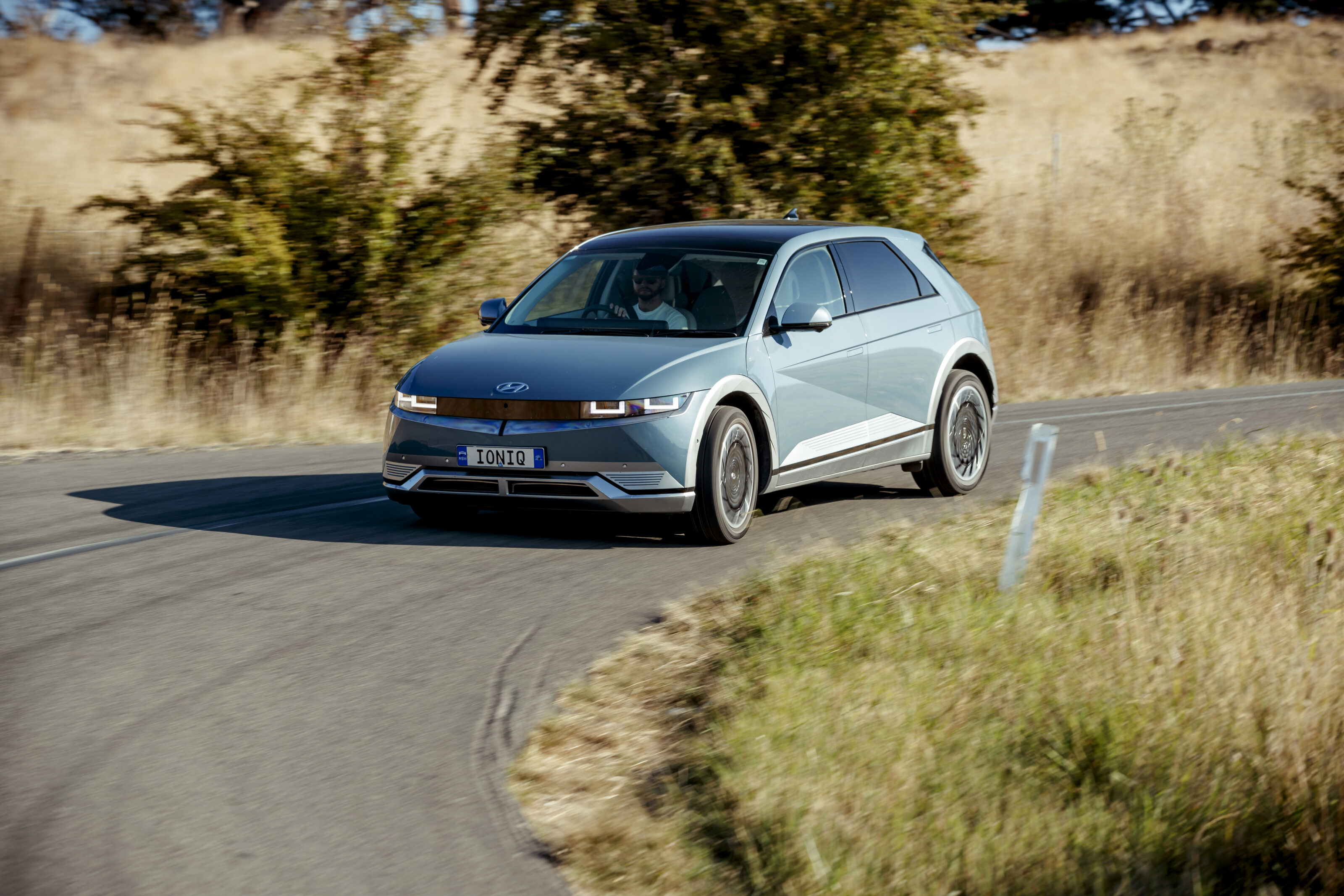
Drivetrain and economy
Although their names have changed, the Ioniq 5’s two grades carry across unaltered specs from the outgoing RWD and AWD variants.
While the Dynamiq is powered by a single 160kW motor on the rear axle, the Techniq combines a 70kW front motor and 155kW rear motor for its drive propulsion.
Both cars continue to be underpinned by a 72.6kWh battery pack (instead of the 77.4kWh pack available in the UK).
The Techniq claims 430km of driving range, while the Dynamiq now manages an extra 30km from a full charge compared to the previous RWD, bumping up to 481km thanks to its smaller 19-inch wheels and thinner 235-section tyres.
Safety
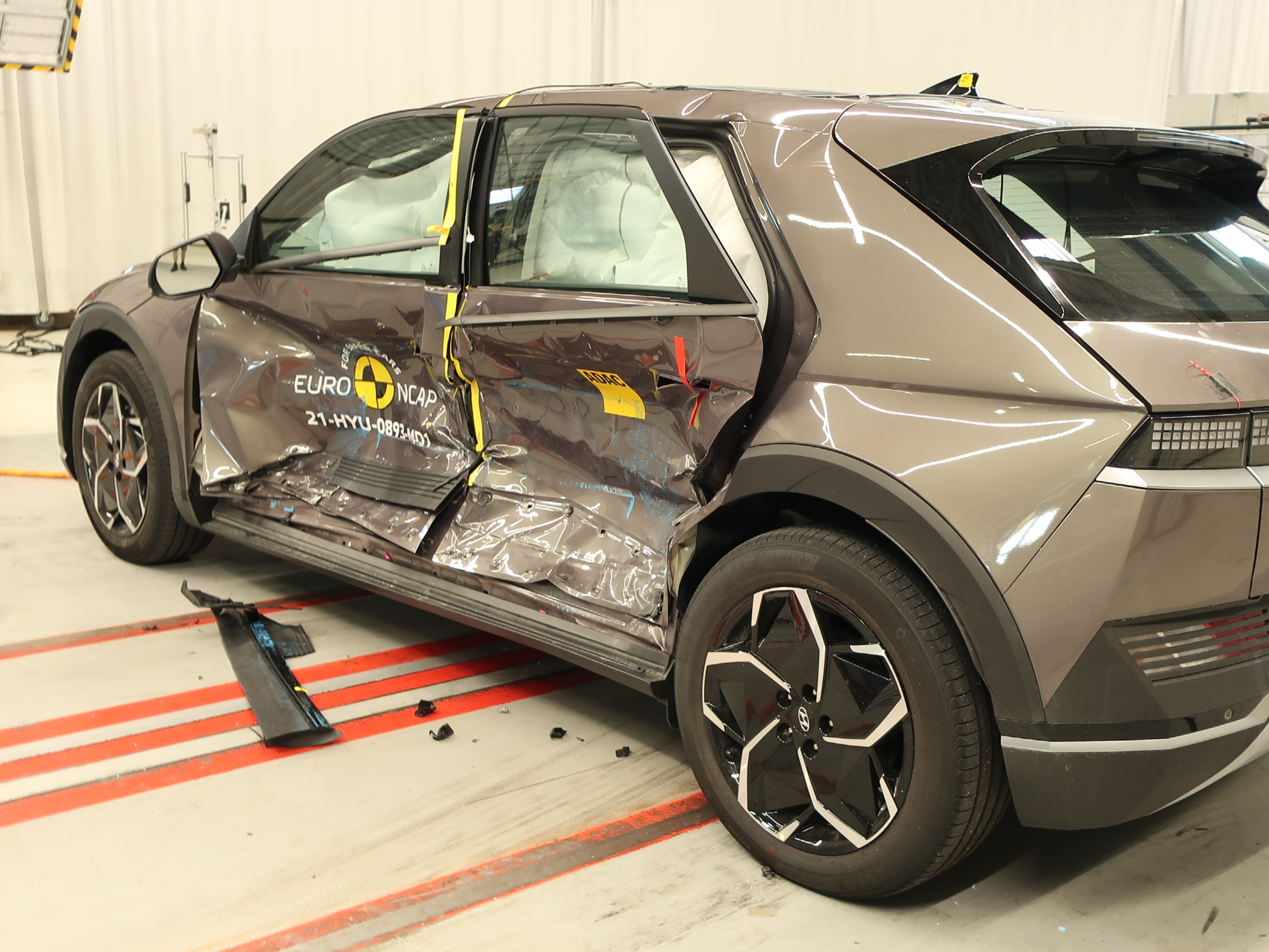
For 2023 no safety changes have been made to the Ioniq 5 range, with its five-star ANCAP safety rating still applying thanks to a suite of safety technology, including:
| Seven airbags |
| Forward collision avoidance assist with pedestrian and cyclist detection |
| Evasive steering assist |
| Blind-spot collision avoidance assist |
| Blind-spot view monitor |
| Driver attention warning with vehicle departure alert |
| Intelligent/manual speed limit assist |
| Lane-keep assist |
| Rear parking collision avoidance |
| Front and rear parking sensors |
| Rear cross-traffic collision avoidance |
| Rear occupant alert |
| Safe exit assist |
| Radar cruise control with stop and go and machine learning |
| 360-degree cameras. |

Warranty and servicing
As with the rest of Hyundai’s model range, the Ioniq 5 is covered by a five-year / unlimited-kilometre warranty, while its battery is receives eight years and 160,000 kilometres of coverage.
| Service Interval | Price |
|---|---|
| 15,000km/12-months | $220 |
| 30,000km/24-months | $220 |
| 45,000km/36-months | $220 |
| 60,000km/48-months | $804 |
| 75,000km/60-months | $220 |
Snapshot
- Model 3 and Model Y no longer include Mobile Connector as standard
- Charger now costs $550 from Tesla’s store
- All vehicle order fees now non-refundable, aren’t included in the vehicle cost
Tesla is stripping back the standard equipment shipped with its most popular models, with its Mobile Connector home charging cable no longer included.
Discovered by Twitter user @dwhes, Wheels has confirmed Tesla no longer equips its Model 3 and Model Y electric vehicles with the entry-level charger as standard, now asking $550 for the charger which is compatible with three-pin, 240V outlets.
Pricing for Tesla’s locally-delivered models won’t change, despite the charger being omitted, coming less than a month after the list prices of the Model 3 and Model Y were increased – now starting at $65,500 and $72,300 before on-road costs respectively.
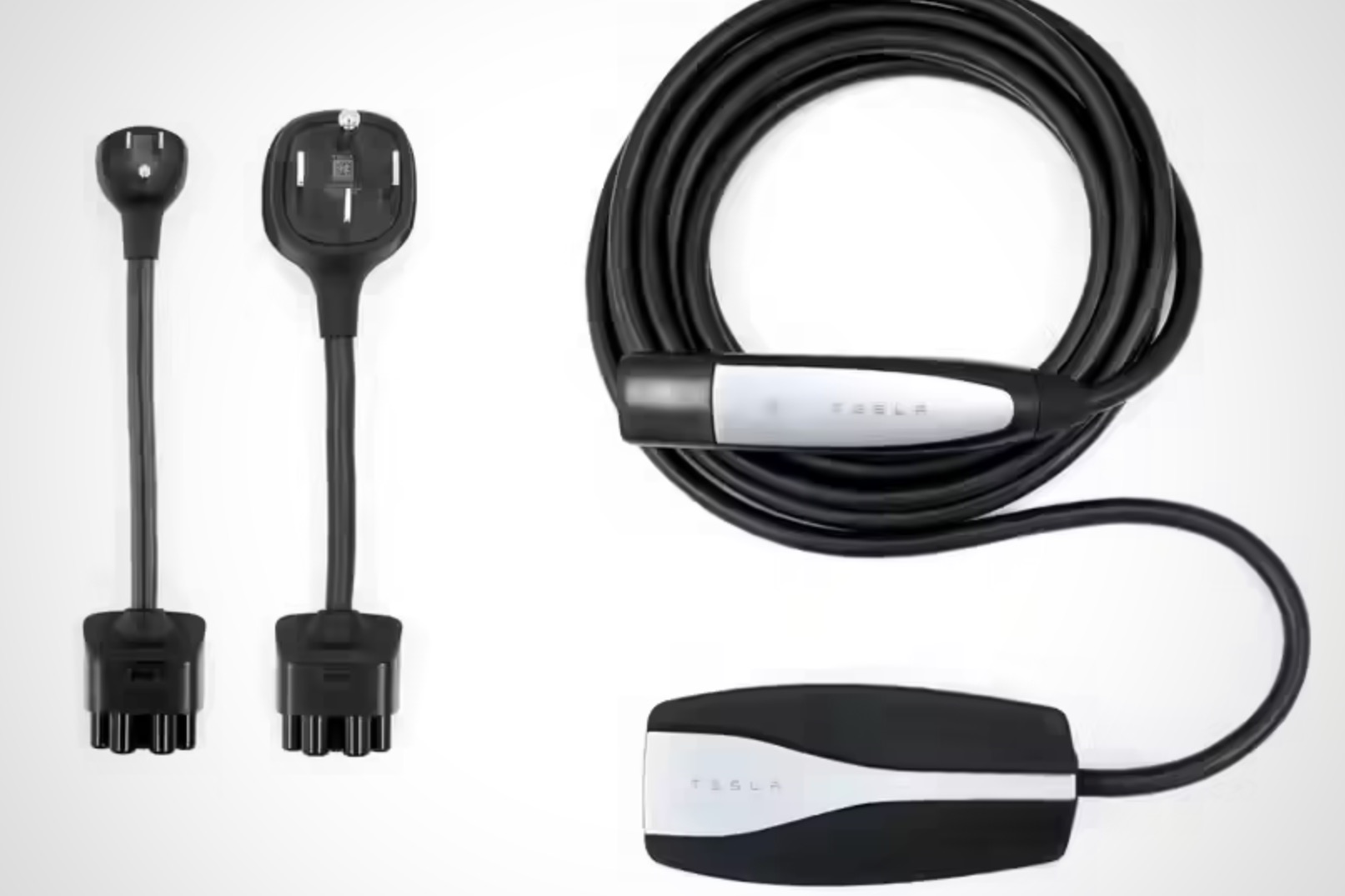
It’s understood all orders made before the end of last week will continue to be shipped with the Mobile Connector, while those places from Saturday won’t be – forcing buyers to either fork out for the charger through Tesla’s store or to install a faster-charging wallbox for an at-home solution.
The decision to remove the charger as a free piece of equipment comes just under three months since Telsa’s US operation did the same thing, backed up by CEO Elon Musk saying the decision was driven by low usage.
“Usage statistics were super low, so seemed wasteful. On the (minor) plus side, we will be including more plug adapters with the mobile connector kit,” Musk tweeted.
“Based on feedback received, we will drop the mobile connector price to [US]$200 and make it easy to order with car.
“Note, mobile connector is not needed if you have a Tesla wall connector or to use Superchargers. [We] recommend installing a Tesla wall connector well before the car arrives.”

On top of this, Tesla has also removed the ability for buyers to get a refund on their order fee when purchasing a vehicle online.
While the charge was previously refundable, the website now clearly states the $350 down payment required to buy a Model 3 or Model Y can’t be returned if a customer decides to cancel their purchase.
It’s also worth noting the order fee is not then absorbed by the purchase price of the vehicle, meaning Tesla’s prices incur an additional $350 premium for placing the order.
How far can you drive on ’empty’? It’s a common question, especially when fuel prices are so high.
A few years ago, Aussie comedy duo Hamish and Andy put the age-old question to the test. Just how far will my car travel once the fuel reserve light is on?
The pair were at the helm of an Audi SQ5 in Melbourne with an indicated 10km of fuel remaining.
Once that indicated range distance ticked down to zero, they set the odometer, and began a long and nervous journey to see just how far they could go.
Incredibly, the pair sailed past what most would have thought reasonable, and drove for another hour and a half with the car saying there was no fuel in the tank!
In total, the lads were able to travel a further 111 kilometres once the Audi had said the tank was dry.
How much fuel does my ‘reserve tank’ carry?
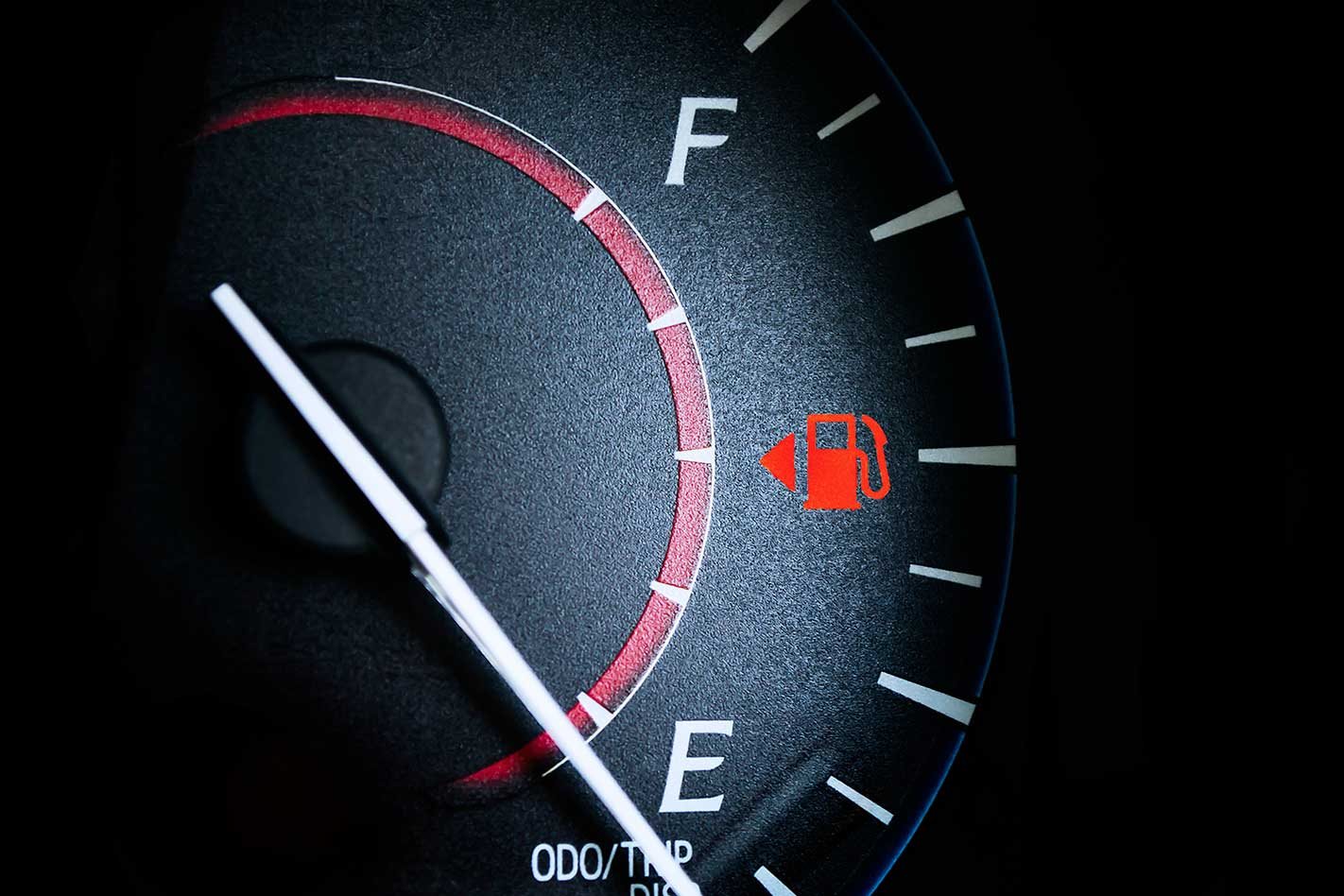
At some point, most motorists have let the tank get low, seen the fuel level warning light illuminate and wondered just how far they could keep going before the engine chugs to a halt.
Alas, there is no industry standard or regulation that dictates how much fuel a tank must accommodate, or how far a vehicle must be able to travel after the reserve light comes on.
Therefore, no definitive answer exists – but here are some tips that might help when you think you’re running on vapour and don’t have a trip computer to count down till the last drop.
Firstly, how big is your tank?
Firstly, apart from a handful of hardcore long-range vehicles, cars rarely have a separate tank to store emergency fuel, and the reserve light is simply illuminated when the main tank level drops below a certain level.
Every model is different, but the reserve portion of a tank is typically around 10 to 15 percent of the total capacity.
If you know the volume of the tank in your vehicle, some rudimentary maths will give you a rough figure of how much is left when that little amber light comes on.
If you also know the approximate fuel economy (fuel consumption figures) of your car (a browse of the owner’s manual should confirm these figures), then a bit more maths will have you arrive at a rough distance that you will be able to travel.
It’s not quite that simples though.
The driving environment matters in knowing how far you can drive
Remember that, like any fuel economy figure, range is affected by driving conditions and style.
Hard acceleration, high speeds, low tyre pressures, heavy loads, certain weather conditions and the type of fuel will all reduce your range – so it’s important to take measures to save fuel.
Also consider that, while driving up a steep hill will increase fuel consumption, it can also cause the precious last drops of fuel to surge from one part of the tank to another. If the fuel pick-up goes dry, the engine will be starved of fuel as if the tank was completely empty.
The same effect can result from enthusiastic cornering and heavy braking, although the latter is less applicable because the engine is generally less thirsty under zero-throttle braking.
Learn from other’s misfortune: do your research
There are a number of online services that collect information from drivers that have been left high and dry and offer it to motorists to help them avoid the situation.
Trawling these figures and averaging out the top nine most popular entries reveals a general average figure of about 67 kilometres. Surprised?
Testing the tank is not the way: It’s not great for your car
Whichever method of rough calculation, estimation or blind faith you choose, we do not recommend deliberately running the tank dry to find out how far your car can manage.
Many cars will not thank you for running the fuel system dry and, depending on the age of the vehicle, some require a special fuel system purge or bleed procedure before they will restart.
Further, standing on the side of the road refilling with a jerry can can be hazardous in busy traffic, and carrying any combustible liquid in a vehicle should be avoided wherever possible.
Myths busted!
One low-fuel myth states that running your tank low allows sludge or other foreign matter at the bottom of the tank to be sucked up which then goes on to clog the various components in the fuel system.
This is not true, as all modern fuel systems include at least one fine-grade filter plus a gauze sock over the tank pickup to catch larger bits. The pickup is also located at the lowest point of the tank where it slurps debris under all circumstances.
Another urban legend among car enthusiasts suggests that running a prolonged low-fuel level leaves a large air space in the tank which can allow corrosion to take hold. This was true when vehicles more commonly used pressed-steel tanks, but the widespread use of more durable plastic tanks in newer cars has put an end to that.
In the end, our best advice is to keep a close eye on that fuel gauge and visit a service station before the light comes on.
UPDATE, November 23: 2023 Toyota RAV4 pricing announced
Australian pricing and specs for the updated 2023 Toyota RAV4 have been announced. Get all the details at the link below.
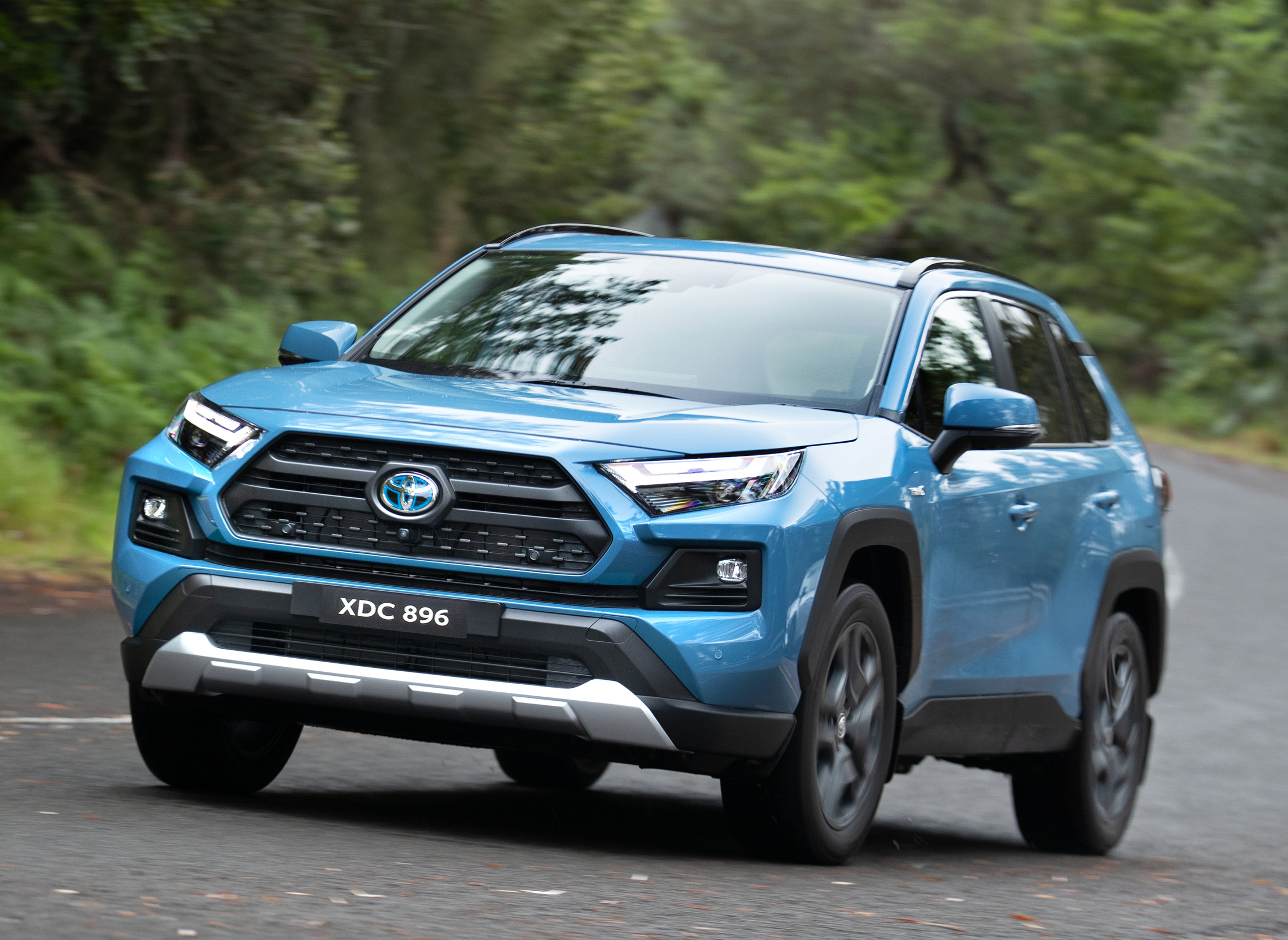
STORY CONTINUES: 2022 Toyota RAV4 GXL Hybrid 2WD review
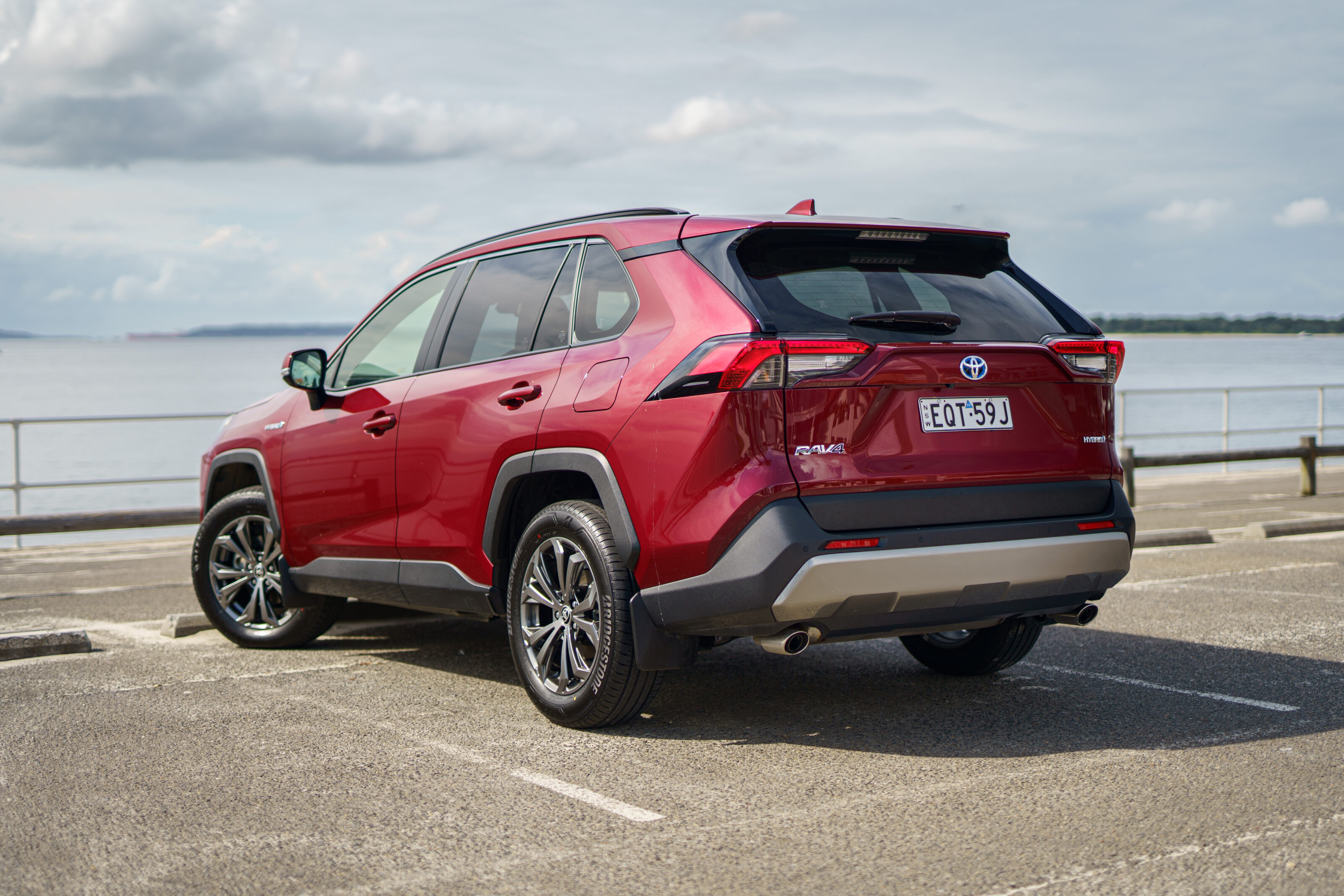
I’ll never stop giggling at the use of the 1970s-era GXL badge for what is probably the pick of the Toyota RAV4 range. It conjures up those pale yellow short-sleeved shirts, brown ties, Hush Puppies, brown shorts and long socks pulled up to the knee. So, a 1970s car dealer.
If you’ve been paying attention, you’ll know that not only is the RAV4 wildly popular, a few global events underway mean the car is virtually impossible to get within a year unless someone’s finance falls through and the dealer is feeling well-disposed towards you. Hybrids are an extra nightmare to get a hold of because depending on the day, Toyota says either two-in-three or three-in-four RAV4s are electrified.
The GXL doesn’t have to be electrified – you can get it in 2.0-litre front-wheel drive form – but there are two hybrid options, the front-drive or the eFour all-wheel-drive.
I spent a week with the front-wheel-drive variant, hot on the heels of Chinese interloper, the Haval H6 Hybrid, to see if Toyota has anything to worry about.
Pricing and features
The three GXLs start at $37,950 for the least attractive, the 2.0-litre 2WD. For $43,450 you can have the eFour with all-wheel drive and snuggled in the middle is the hybrid 2WD for $40,450. All prices before on-road costs.
Your money gets you a Japanese-built RAV4. If I had a buck for every time someone asked me why their RAV4 is made in Mexico (it wasn’t) I’d have enough to put down a deposit and wait for up to 12 months for one of these bad boys.
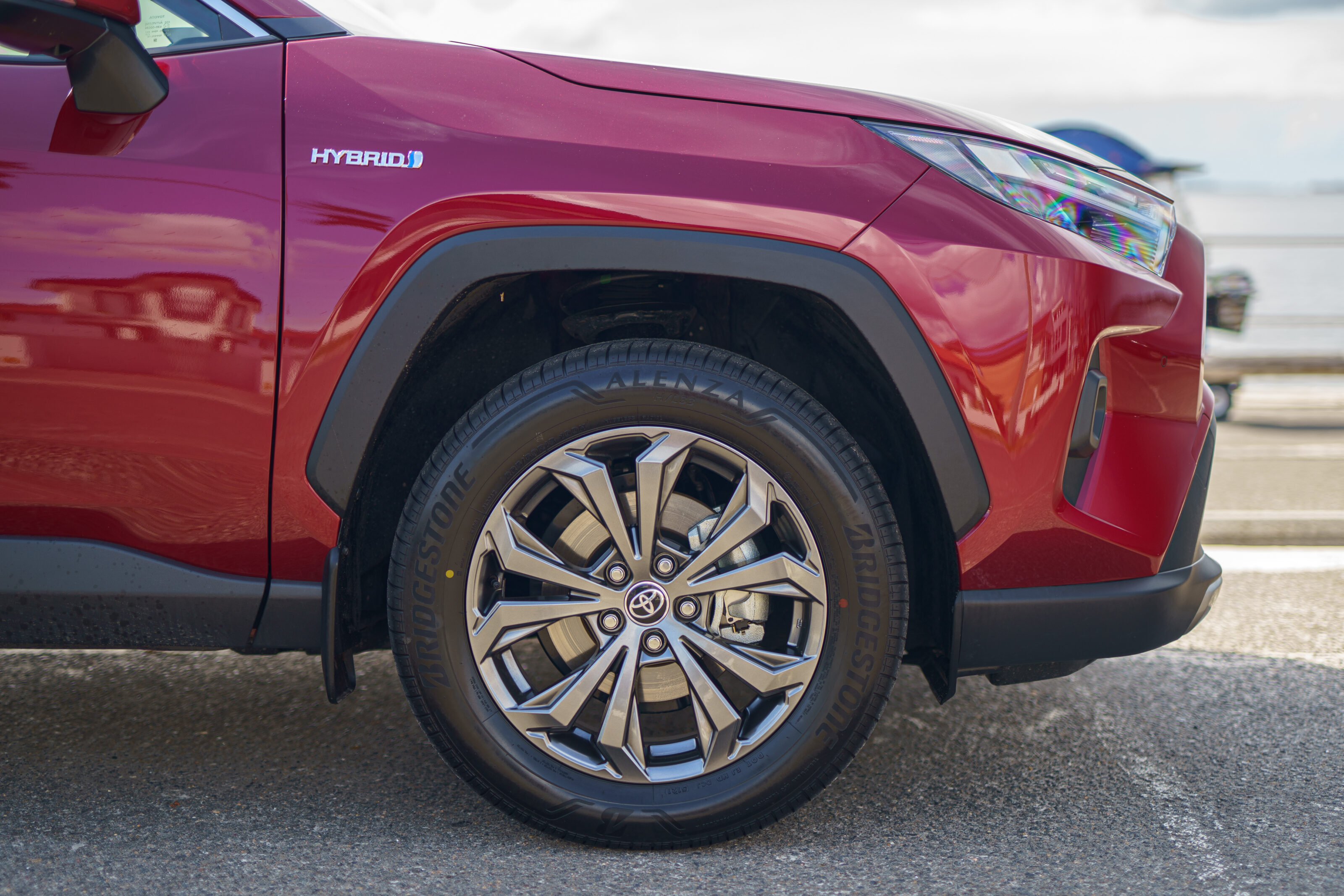
You also get 18-inch alloys, a six-speaker stereo, dual-zone climate control, keyless entry and start, adaptive cruise control, sat-nav, auto LED headlights, power windows, powered and heated folding door mirrors, wireless phone charger, auto wipers and a space-saver spare.
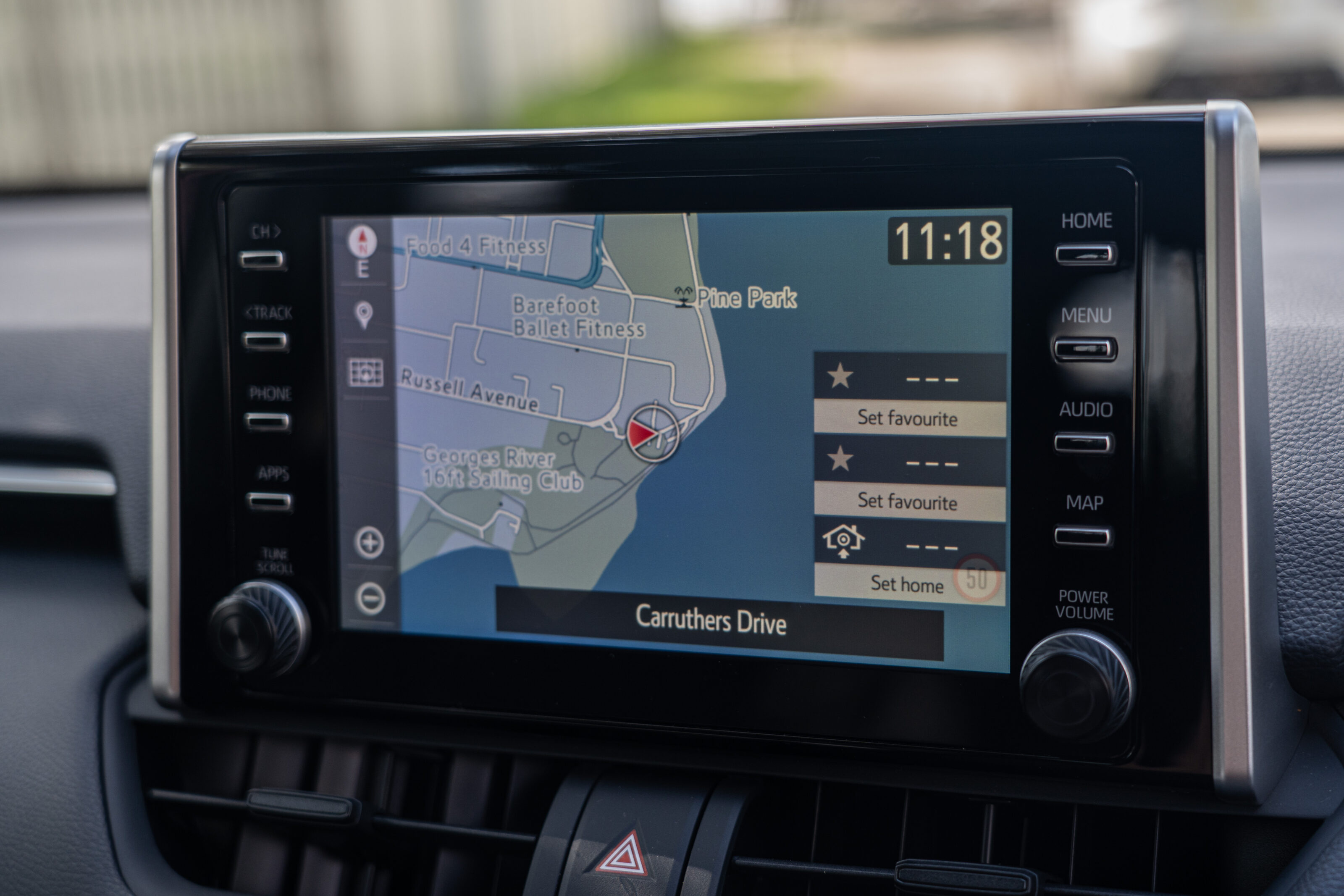
Toyota’s deeply ordinary 8.0-inch touchscreen comes with the Alibaba special software that is better than it used to be but is still not good enough for the largest carmaker on Earth.
It does have a built-in sat-nav but also has USB-connected Apple CarPlay and Android Auto, both saving the day, although the screen has a washed-out colour appearance and stretched graphics. Like I said, not good enough.
Safety
Safety extends to seven airbags (including a driver’s knee airbag), the usual braking and stability controls, forward auto emergency braking, forward collision warning, reverse cross-traffic alert, lane departure warning, lane trace assist, blind-spot monitoring, road sign assist and auto high beam. The RAV4 also has three top tether anchors and two ISOFIX points.
It’s missing the reverse AEB of some conspicuous non-hybrid rivals (such as the Mazda CX-5) but also falls down against the list of features in the H6, which adds in rear AEB, collision braking, more cameras and intersection assist.
That said, Toyota has announced an upgrade is coming that will address some of these and hopefully improve the touchscreen as well.
The Haval’s seventh airbag is a centre front airbag to reduce the impact of head clashes in a side impact and so scored a 2022-spec ANCAP rating of five stars. The Toyota’s dates back to 2019.
Aside from dealer-fit accessories, the only option on a RAV4 GXL is paint, with Glacier White the sole freebie and the other seven colours commanding an extra $675.
Comfort and space
This generation of RAV4 is by far my favourite. While that’s not saying much, the galactic difference between this car and its immediate predecessor is scarcely believable. It has an excellent interior full of clever features (touchscreen aside) and is tailor-made for hard-on-cars families.
The GXL starts with a very durable fabric trim that feels like it might even resist a box cutter (didn’t try, and I’m obviously exaggerating) but even a determined child will have trouble ruining things.
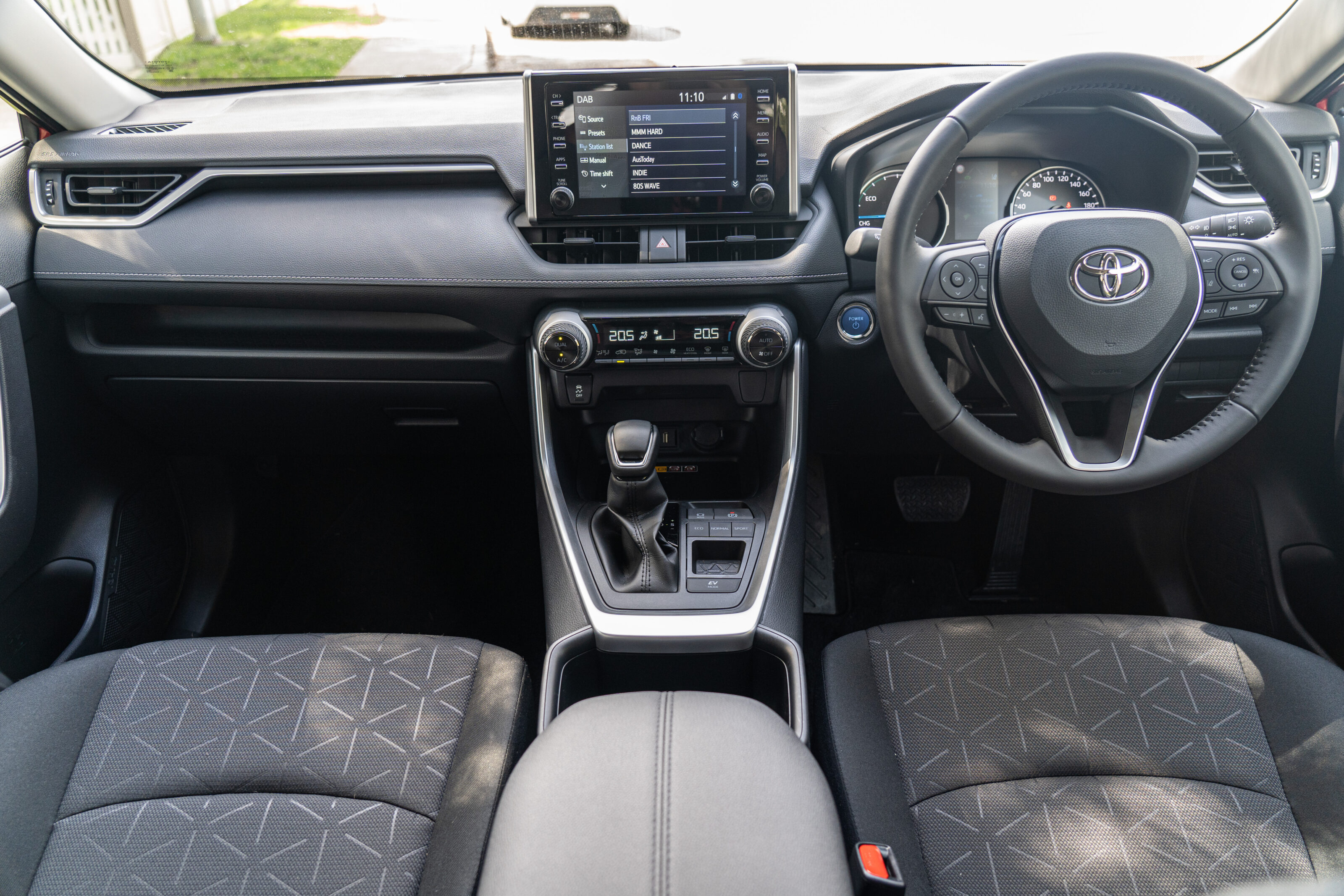
Most of the plastics are pretty good but the overwhelming feeling is of quality, durability and solidity. I really like the rubberised controls and the big, easy to use climate control dials look cool.
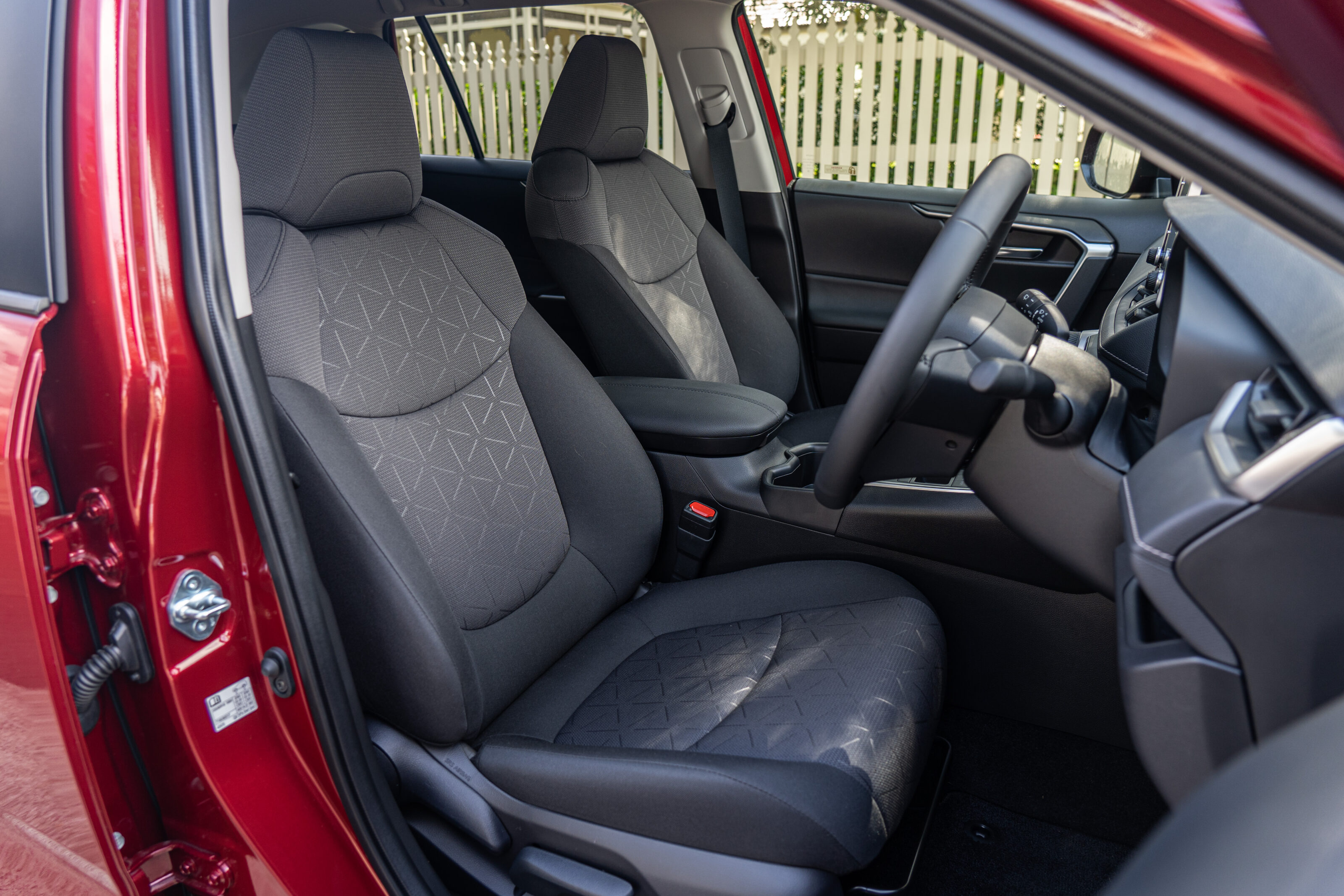
The front seats are typical of current Toyotas, which is to say they look good and are very comfortable. You get two cup holders, a wireless phone charging tray, bottle holders in the doors, a few little storage trays and slots and that Kluger-inspired, rubber-lined shelf in front of the passenger.
For rear passengers, the seats have a little bit of shape to them but are very comfortable and offer a lot of legroom. I have a ton of space behind where I sit to drive and I’m 180cm tall, so most teenagers will be fine back here. Headroom for days, too. Three across the back will be hampered by a reasonably big transmission tunnel but if you do squeeze in a trio, at least there are air vents to cool them down.
A centre armrest packs a pair of cup holders too. Two USB ports back there join the three in the front, so you can keep everything charged, no problem.
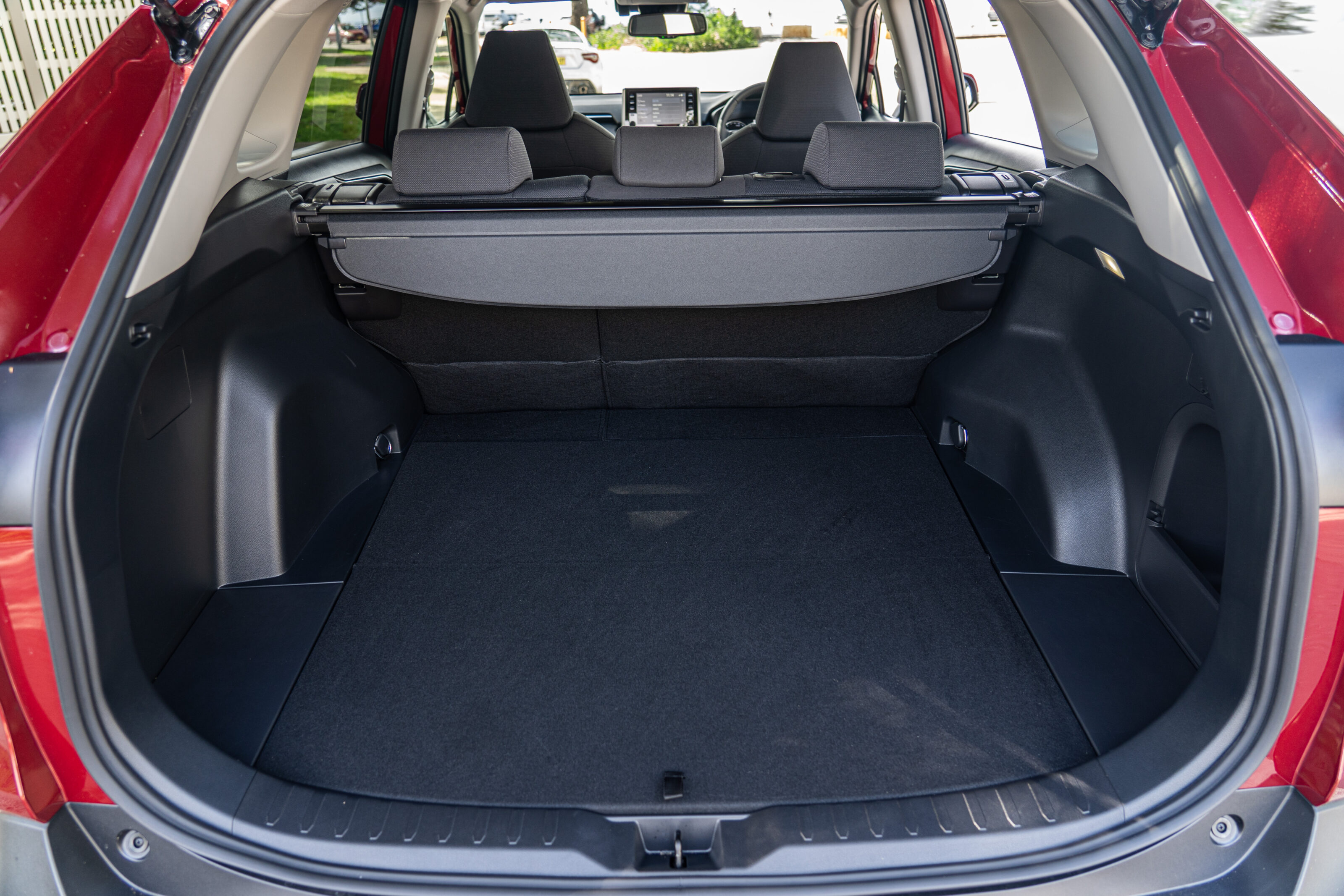
You can pack up to 580 litres of stuff into the boot, which does suffer a little from wheelarch intrusion but nothing dramatic. With the seats folded away, you’ll have 1690 litres available to you.
And if you must, you can tow up to 1500kg.
On the road
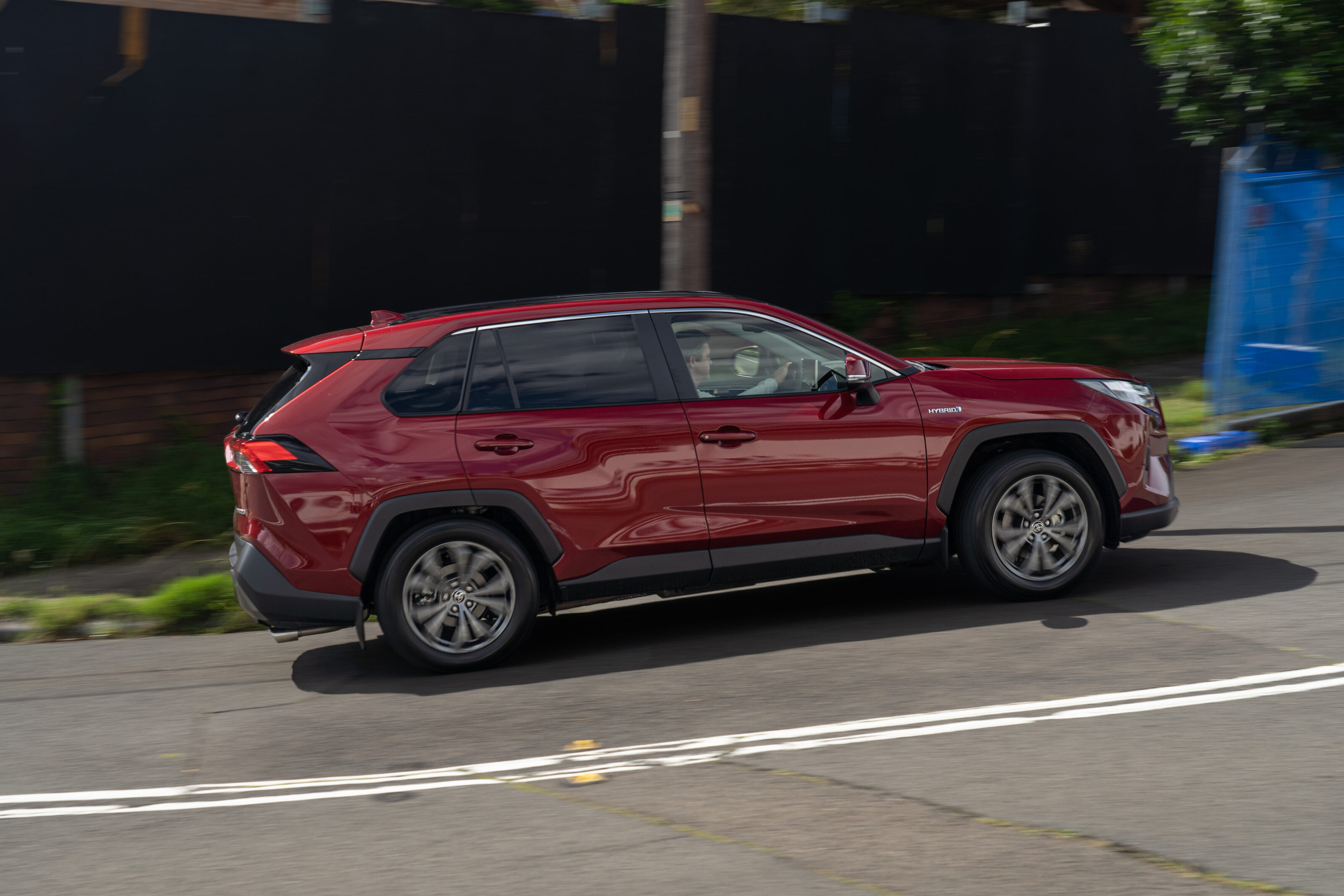
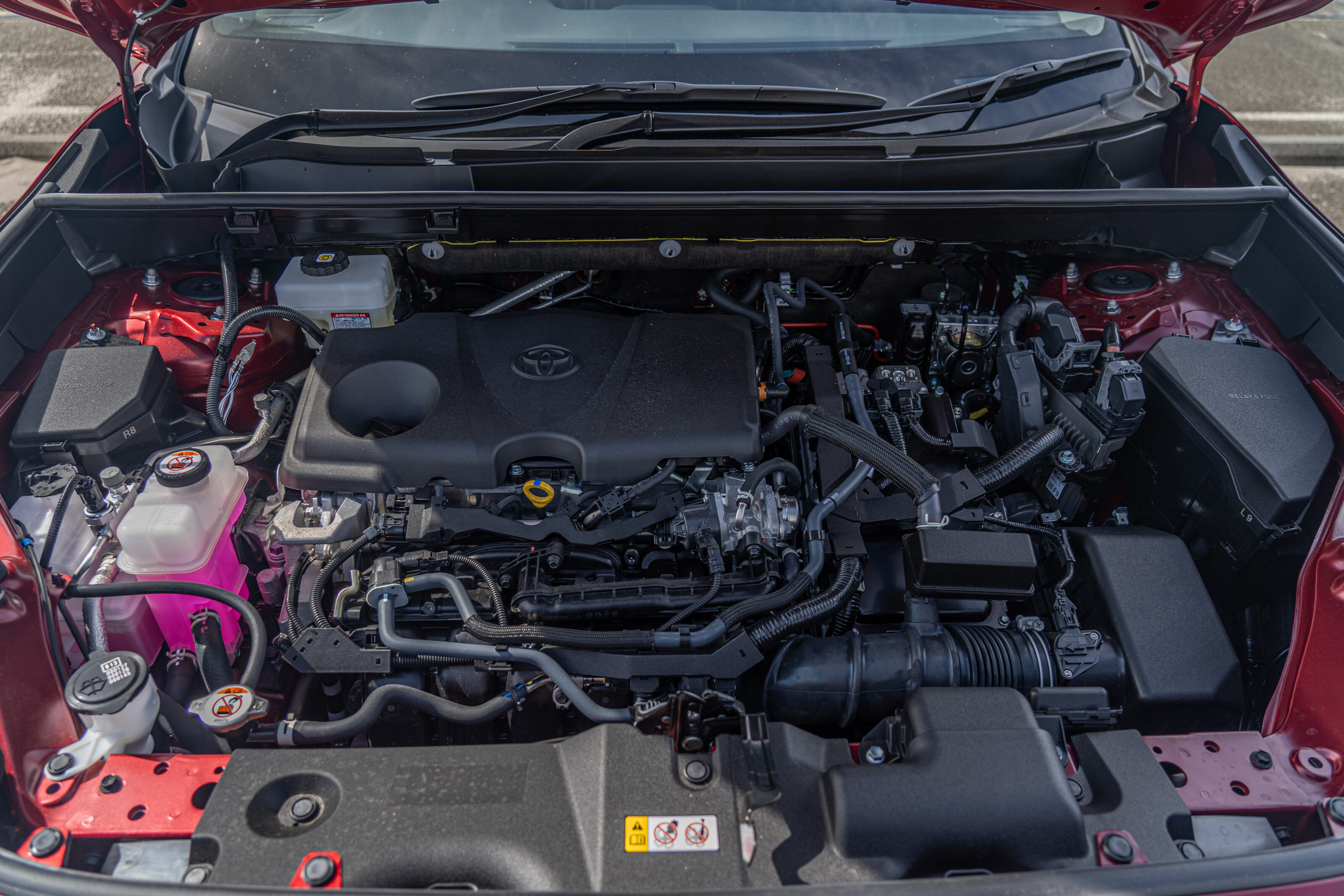
I won’t pretend I’m a massive fan of the RAV4 hybrid’s drivetrain but it could have been a hell of a lot worse. First, the good. It’s a 2.5-litre four-cylinder naturally-aspirated engine with an electric motor to boost power and look after the low-speed dribbling about and doing the heavy lifting to get the car moving from a standstill.
In this version, you’re getting power to the front wheels via continuously variable transmission. Combined power is 160kW, while Toyota persists with only offering a torque figure for the piston engine, 221Nm, which isn’t a lot. Thankfully the electric motor provides a hefty torque boost.
There’s no bad, really. It’s a fairly characterless unit, but that’s to be expected. What it does, though, is barely touch its drink.
While the claimed combined cycle fuel consumption figure is an ambitious 4.7L/100km, it actually feels gettable.
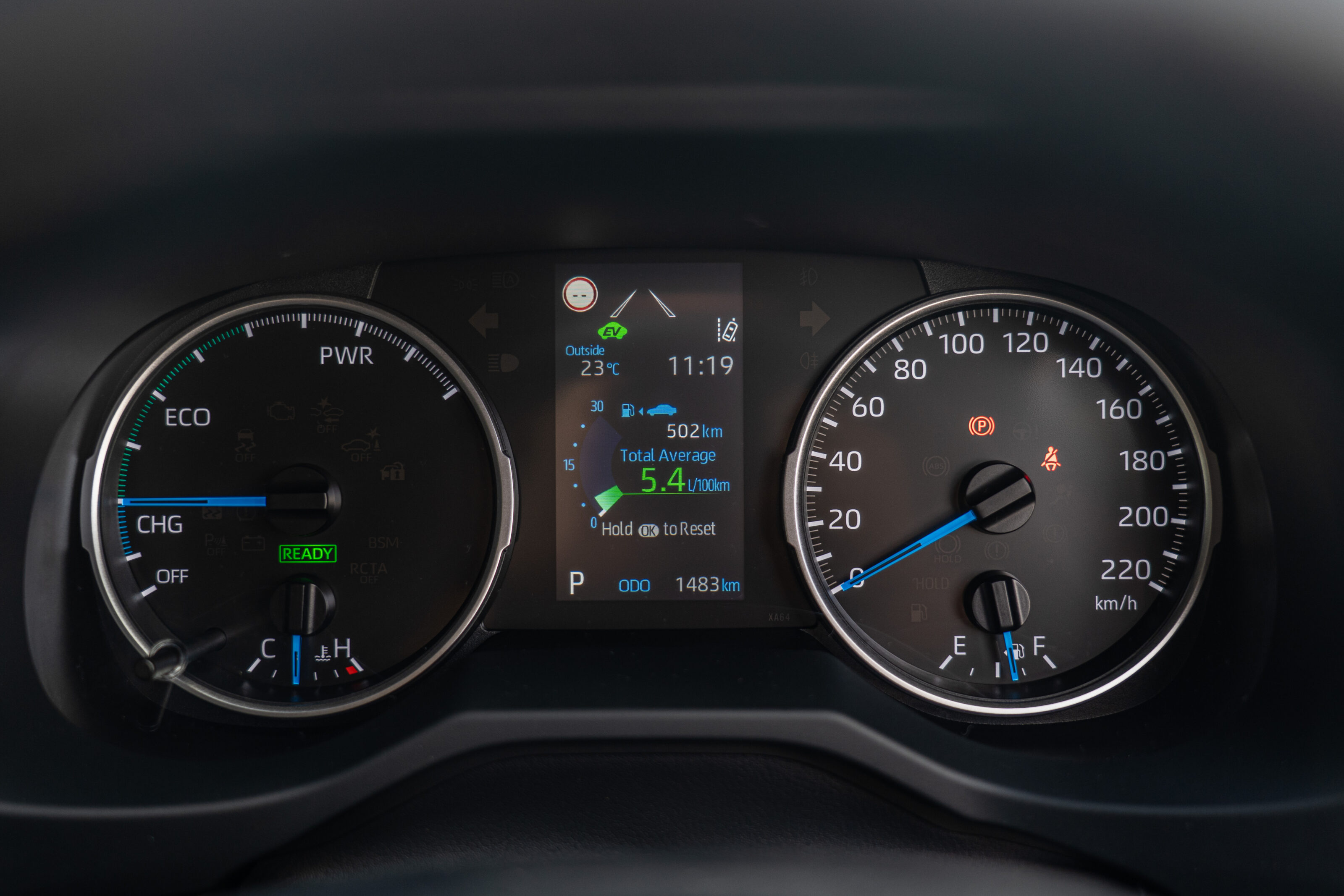
I only switch on Eco mode in these cars to confirm my suspicion it’s horrible (spoiler: it is) so spent most of the time in Sport or Normal modes. I still got 5.4L/100km with a good mix of suburban, city and highway running.
There’s also an EV mode that won’t get you very far but is fun to use creeping silently around car parks or down the driveway. Even in Normal mode, electricity alone will get you up to a reasonable speed on a light throttle, which is how you save fuel.
Getting over a ton and a half of metal and glass moving takes a lot of energy and combustion engines aren’t very good at doing that efficiently.
The battery obviously isn’t very big and is hardly the last word in technology but they appear to be quite reliable. Toyota cheekily calls their hybrid range “self-charging” which means you can’t plug them in to top up from the mains; it all happens from regenerative braking and the petrol motor supplying the electrons.
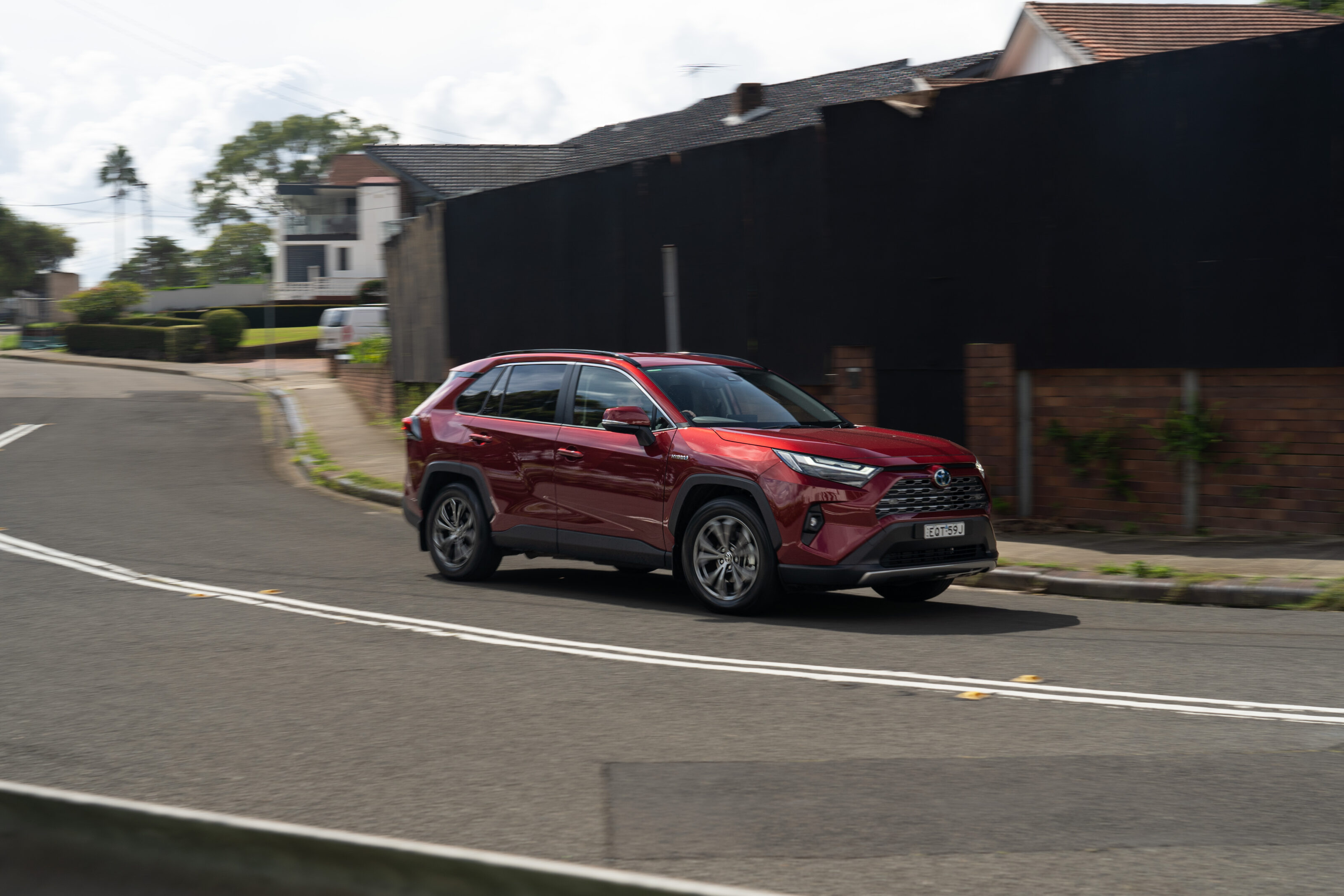
Around town, the RAV4 is excellent. Steering is light but chatty enough through the high profile tyres and you can feel some real effort has gone into keeping the body from lurching about. Toyota is getting a lot better at this. The fact this particular GXL is front-wheel drive was never an issue and it drives and rides competitively well in this hard-fought class, which is brimming with talent.
Longer highway trips also delivered a quiet, relaxed ride and given they took place on a windy day, showed that the RAV is resistant to crosswinds.
Ownership
Toyota offers a five-year, unlimited-kilometre warranty with a two-year extension on the driveline if you service with Toyota.
You’re expected back for a service every 12 months or 15,000km and the first five are an incredibly reasonable $230 per interval.
You can book a service on the myToyota mobile app, which also gives you a fuel discount at Ampol, as well as some sort of rewards program offering discounts on various family fun and fellowship oriented purchases.
Some dealers offer Express Maintenance, which is a while-you-wait service that gets you in and out of the dealership in 90 minutes all going well.
VERDICT
The RAV4 is the king of the hybrids, mostly because it’s the only one that’s been available in any sort of volume. The other carmakers have woken, though, in the form of established competition from Kia (with Hyundai likely to follow) as well as challengers like Haval.
It’s a big deal because the RAV4 has a stranglehold on buyers’ hearts and minds when it comes to light-touch electrification because Toyota has been doing it for so long. But they’re coming and Toyota might have to respond.
That said, with a waiting list stretching into 2023 and Toyota assuring us that few people are cancelling their orders, the RAV4 is likely to be the king for a while longer.
Related video
2022 Toyota RAV4 GXL Hybrid 2WD specifications
Snapshot
- Ultra Tune allegedly breached court orders
- ACCC begins contempt of court proceedings
- Servicing business previously penalised in 2019
Vehicle servicing business Ultra Tune is being accused of contempt of court by the Australian Competition and Consumer Commission (ACCC) over alleged breaches of the Franchising Code of Conduct.
It’s alleged Ultra Tune breached court orders by contravening parts of the Franchising Code, as well as failing to comply with the requirements of a court-ordered compliance program.
The latest legal drama comes off the back of a Federal Court ruling in 2019, which found Ultra Tune had breached Australian Consumer Law and the Franchising Code by providing “no meaningful information” in its marketing fund statements to franchisees.

This subsequently meant Ultra Tune was required to provide disclosure documents and marketing fund statements to franchisees in compliance with the Franchising Code, in addition to a having to pay penalties totalling $2.014 million (reduced from $2.6m on appeal).
Fast forward to 2022 and the ACCC now alleges that, between 2019 and 2021, Ultra Tune’s disclosure document was not updated in time, nor did it prepare two marketing fund statements within the timeframe required by the Franchising Code.
For the 2019 and 2020 financial years, Ultra Tune allegedly failed to prepare marketing fund statements and audit reports until after the date on which the Franchising Code required it to do so, in addition to being late to update its disclosure document in 2020.

With more than 270 service centres throughout Australia, the ACCC believes a lack of transparency on how marketing funds raised by the franchisees are spent by Ultra Tune is a major concern.
“We allege that Ultra Tune disregarded its obligations under the Franchising Code, which are designed to provide transparency to franchisees,” said ACCC Commissioner, Liza Carver.
“In particular, we allege that Ultra Tune repeatedly failed to prepare important documents for franchisees within the required timeframe, which meant they were denied the opportunity to see, in a timely manner, how their contributions to the marketing fund were being used by Ultra Tune.
“The alleged failure by Ultra Tune to update its disclosure document is also concerning, as this document is used to give prospective franchisees key information about the franchise system, and existing franchisees current information about the running of the franchise.”
In the 2019 ruling, the Federal Court ordered Ultra Tune to implement a compliance program to ensure there were no further breaches of the Franchising Code or the ACL.
The ACCC alleges Ultra Tune failed to ensure its compliance officer provided quarterly reports on the continuing effectiveness of its compliance program to the company, occuring for the three quarters of 2021 between April and December.
“Given Ultra Tune’s previous breaches of the Franchising Code and the consumer law, ongoing monitoring of compliance is important,” added Carver.
“The ACCC will pursue contempt of court action when it considers court orders, including those obtained for the protection of franchisees, have been breached.”
Wheels has contacted Ultra Tune for a response.
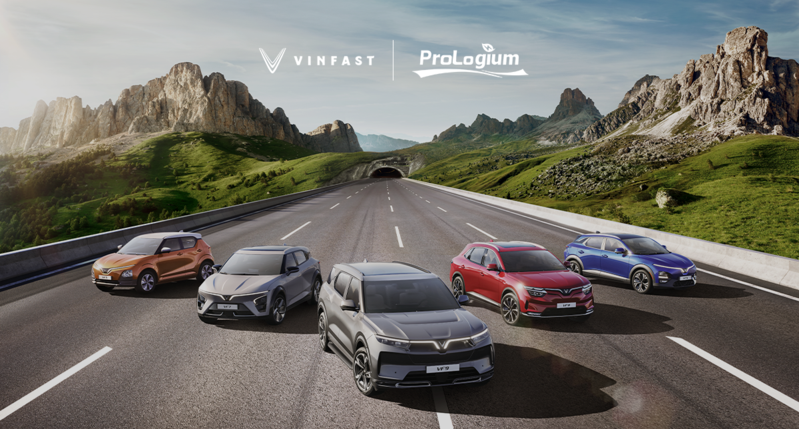
Vietnamese manufacturer VinFast has announced a multi-million dollar partnership with developer ProLogium to develop solid-state batteries for its next-generation of electric vehicles.
VinFast and ProLogium will become long-term strategic partners through the deal, with the carmaker investing “tens of millions of US dollars” into the battery supplier, aiming to secure solid-state batteries from 2024.
In layman’s terms, solid-state batteries have roughly two to 10 times the energy density of equally-sized lithium-ion batteries, potentially allowing more power output without taking up more space – or conversely, providing smaller packs without a drop in power.
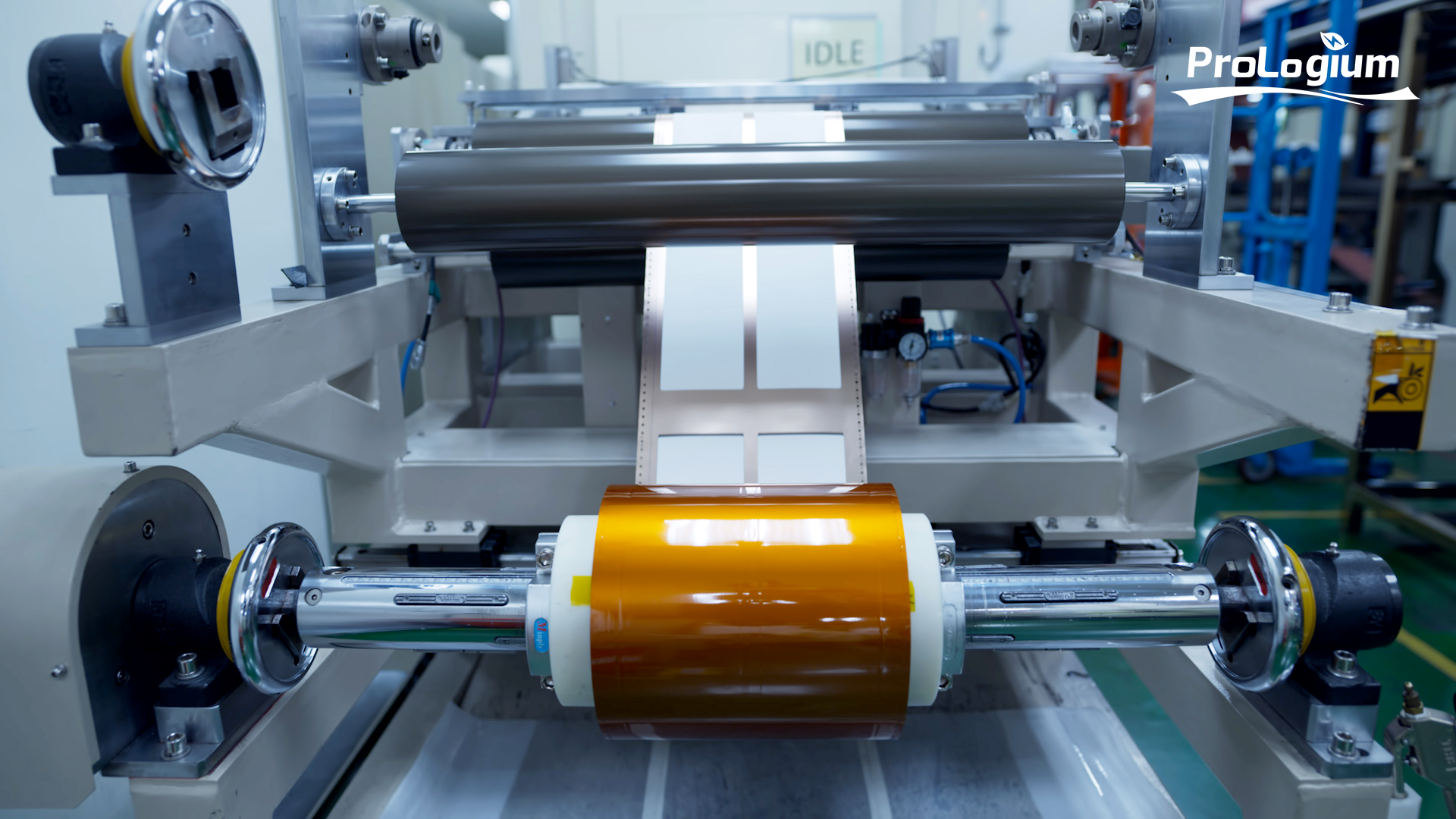
This is not only appealing to manufacturers looking to extract as much driving range as possible out of a vehicle, but it also provides benefits for those who are looking for better performance without sacrificing distance between charges.
ProLogium is currently on track to launch its first major solid-state, 3GWh battery plant early next year, announcing it will ‘devote a significant portion of the facility’s production capacity to supply VinFast’ before a potential joint-venture factory is constructed in Vietnam.
“VinFast has focused on investing and building strategic partnerships with leading companies in the industry and breakthrough technology companies to quickly grasp and apply technologies for smart and sustainable mobility solutions,” said VinFast Global CEO, Le Thi Thu Thuy.
“ProLogium is one of our key partners, helping VinFast quickly master the supply of solid-state batteries, while continuing to deliver EV products with advanced battery technology for a more enjoyable and safer driving experience.”
Having previously delivered more than 7300 EV battery cells with capacities of between 50 to 60Ah to manufacturers for verification, ProLogium CEO Vincent Yang believes it can lead the way with VinFast in delivering the best solid-state batteries in the industry.
“ProLogium and VinFast will together unveil smart electric vehicles powered by our market leading next-generation solid-state battery technologies,” said Yang
“We are a major innovator in battery technology with already proven manufacturing capabilities and we aim to become a main driver for a sustainable world through high performance, safe and affordable technologies.
“We share this vision with our new partner, and together we will become a powerful force to deliver a more enjoyable and safer driving experience.”
VinFast’s North American expansion was highlighted by the reveal of five models for the market earlier this year, planning to put its first cars on sale before the end of the year.
‘Warm’ GT models? “That’s gone now”.
Ford reserves the RS badge for hero models. Holden, in its last days, stuck it on a barely-warmed Astra.
More recently, Kia’s GT models have sat somewhere between those two ideas – but now it appears to have found clarity in its plan.
Responding to the notion that Kia’s GT models are only warm options rather than hot, local product planning boss Roland Rivero told us this week: “that’s gone now”.
“As an example… probably revealing too much, but I’ll give an example: there’ll never be another case where the 1.6 turbo Cerato will be a GT. It’ll just be a GT-Line.”

In this respect, it seems Kia is aligning to some extent with Hyundai’s approach: the 1.6 turbo is used in the i30 N-Line, while the lone designate N is for proper hotties.
“Yes. So, to get the GT badge, it has to perform.”
Would that make it a full N equivalent, however? On this, Rivero would not be moved to comment. Indeed, Rivero could offer no specific insight on where a newly hotted-up GT model – such as a Cerato GT – would sit in the segment, but clearly it will at least go harder than the variant offered today.
“I would say it’s more hot than warm, whereas right now – your words – the Cerato GT is really a ‘warm’ not a ‘hot’. From now on, GT means hot.”
Rivero went on to say that the upcoming EV6 eGT “can proudly wear the GT badge and be considered hot”.

This latest evolution of Kia’s GT brand is sure to be good news for Kia fans – yes, there are hardcore Kia fans these days – with the Hyundai Group’s former performance boss Albert Biermann telling this writer at the 2018 Detroit Motor Show the existing GT range is “good enough”.
Fun, sure. But “good enough”? Now that’s open to interpretation.
The next-gen Cerato is expected to debut sometime in 2024 or 2025, and it stands to reason that could be the first model – other than the EV6 eGT – to debut a hotter GT variant.
Of course, as more brands move to electrify their performance models – even the all-conquering AMG C63 – could it be that future GT models will draw on electric power for their extra shove? Time will tell.
Snapshot
- Porsche is investing US$75 million (AU$99 million) into efuels
- HIF Tasmania will be the first site
- Australian synthetic fuel plant could be operational by 2026
July 8, 2022: Porsche to build Australian efuels plant in Tasmania
Porsche has announced its Australian plant for efuel production will be located in the north-west of Tasmania, with operations slated to begin in 2026.
After the German manufacturer announced its plans to build a local facility in April (see below), it has now locked in the HIF (Highly Innovative Fuels) Tasmania Carbon Neutral eFuel Plant as its first commercial-scale facility to be built in Australia.
Slated to have a 40-year operational life, the 250-megawatt facility promises to use renewables to produce green hydrogen, projecting production outputs of over 100 million litres of carbon-neutral efuels annually, with the ability to pump out up to 190 tonnes a day.
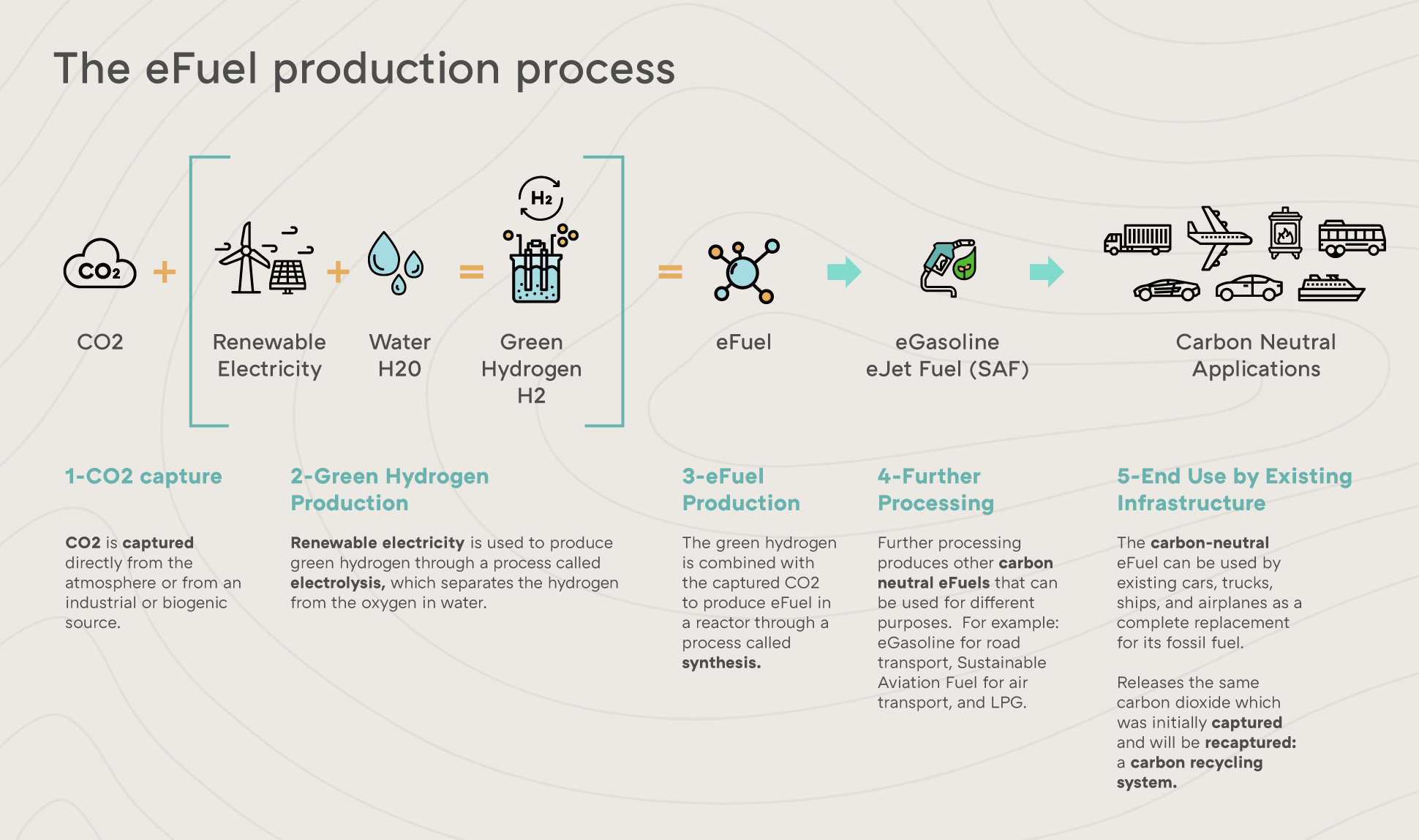
Porsche estimates the switch to efuels will result in a drop in CO2 emissions of roughly 260,000 tonnes per year, allowing internal combustion engines to continue on despite tightening emissions nets globally.
The development phase of the plant starts now – beginning with finding a location in the Apple Isle – while construction is expected to begin in 2024 before production kicks off halfway through 2026.
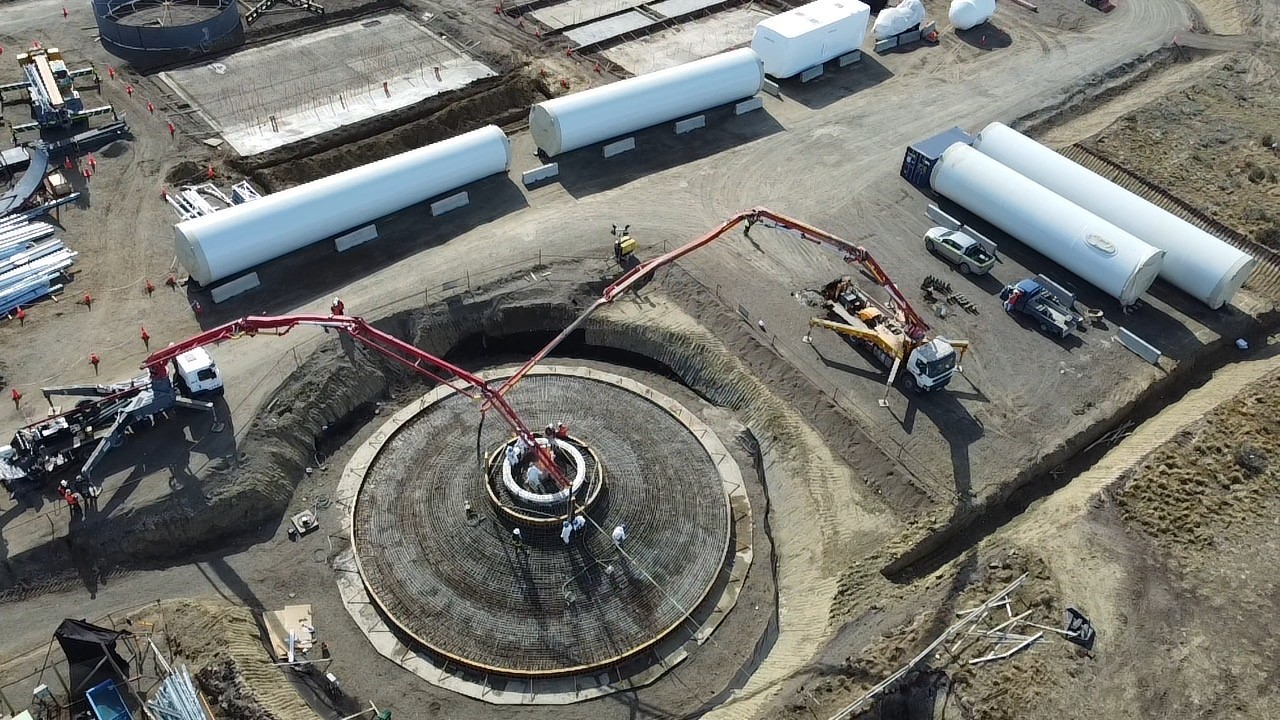
HIF is currently constructing the Haru Oni Demonstration Plant in southern Chile, applying lessons learned from the South American facility to its north-west Tasmanian site.
Read on below to find out more about Porsche’s investment in synthetic fuels.
The story to here
April 7, 2022: Porsche to create synthetic fuels in Australia
Porsche is to invest almost $100 million in the development of efuels – in part by building a production facility here in Australia within the next four years.
The German sports car manufacturer announced it is investing US$75 million (AU$99 million) in Chilean company HIF Global LLC as part of acquiring a long-term stake in the business.
HIF Global LLC is responsible for building the Haru Oni efuel plant in Chile that Porsche is heavily involved in, alongside partners Siemens Energy and ExxonMobil.
As part of the increase in investment, an Australian synthetic fuel plant is expected to be constructed, and potentially fully-functioning around 2026. This facility would use renewable energy to create carbon neutral fuels that can be used in vehicles on Aussie roads today.
The deal also includes the construction of a synthetic fuel production facility in the US.
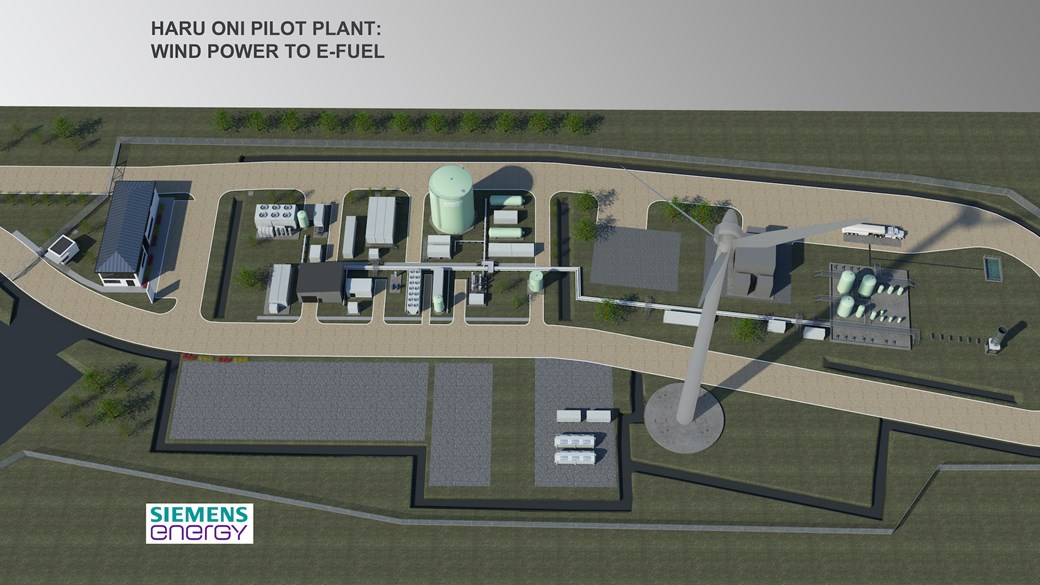
It is expected a future Australian synthetic fuel plant would be similar in size to the Haru Oni facility being built in Chile, with a build time of roughly two and a half years.
Construction on the Haru Oni plant is expected to be completed next year, with an aim to produce 55 millions litres of synthetic fuel at that location by the end of 2024, and onwards to 550 million litres two years later. An Australian facility’s outputs would be similar.
A location for the Australian plant is yet to be determined. Currently options in North Queensland, Victoria, and Tasmania are being evaluated.
The ready availability of constant renewable energy, as well as relative proximity to appropriate infrastructure are key factors in deciding the final location.
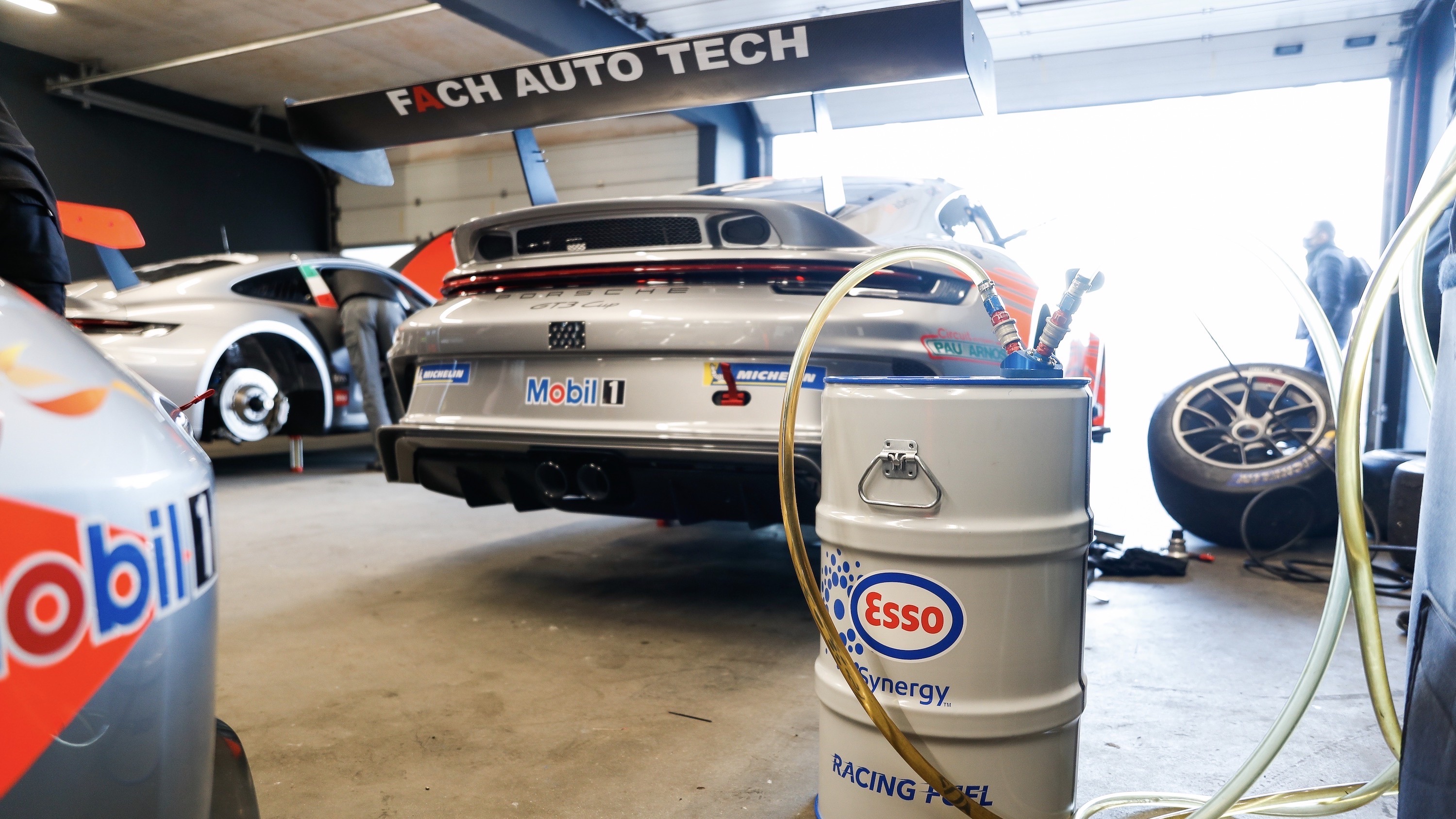
Porsche has been at the vanguard of synthetic fuel proliferation. On top of its monetary investment, its 718 Cayman GT4 RS road car has been developed to run on synthetic fuel, as well as the 911 GT3 Cup race car. In fact, the entire Porsche Supercup field will race using a biofuel this year.
“Efuels make an important contribution to climate protection and complement our electromobility in a meaningful way,” said Barbara Frenkel, Member of the Executive Board for Procurement at Porsche.
“By investing in industrial efuel production, Porsche is further expanding its commitment to sustainable mobility. In total, our investment in the development and provision of this innovative technology amounts to more than US$100 million (AU$132 million).”
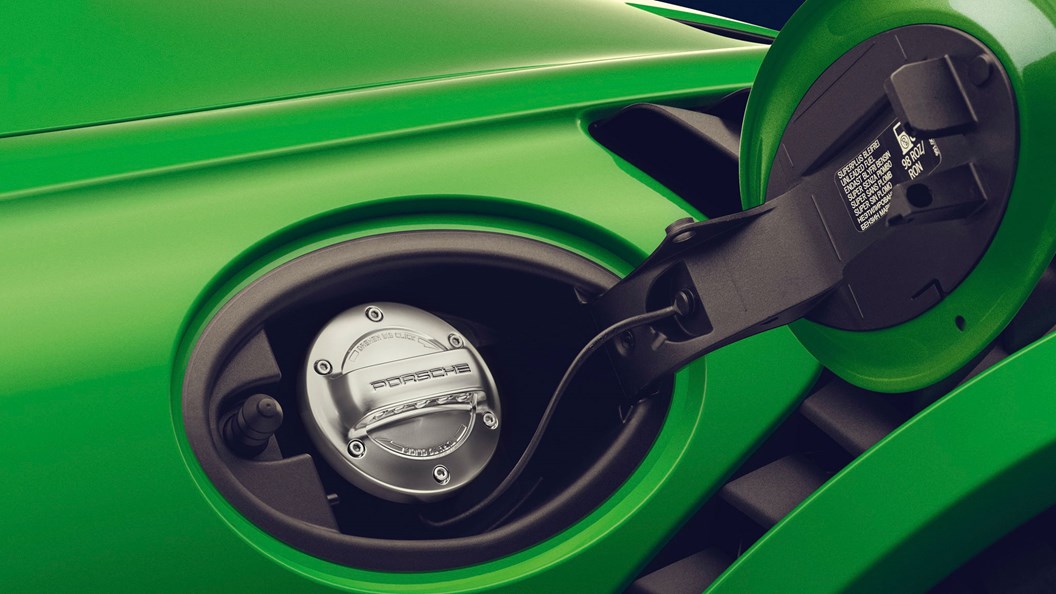
While synthetic fuels can be used in modern road cars without the need for modification, the major use for the technology, at least initially, will be in the world of motorsport.
It is important to note that synthetic fuels will play an important part in Porsche’s wider push to reduce company-wide emissions. It is still forging ahead with its move toward electrification with the next generation Cayman and Boxster both confirmed to utilise battery-electric powertrains when they are put into production.
Australia is a safe haven for internal combustion vehicles given our relative lack of emissions regulations when compared to places like the European Union. This means that Porsche could still send vehicles Down Under that would otherwise be outlawed in Europe. Synthetic fuel, and in particular synthetic fuel produced in Australia, would help offset any of those vehicles’ emissions when Porsche is calculating its global fleet’s CO2 outputs.
The synthetic fuel being produced by the Haru Oni plant is estimated to cost roughly $13 a litre to produce, with Porsche CEO Oliver Blume previously publicly stating that this needs to be in the region of $5 a litre for the technology to be viable.
One of the major factors in bringing that cost down is the price of producing renewable energy, while increasing taxes on fossil fuels through government excises is also expected to level the playing field.
Porsche isn’t the only one putting money toward HIF Global LLC, with Chilean company Andes Mining and Energy, and American companies EIG, Baker Hughes Company and Gemstone Investments also pitching in on the financing.
In total Porsche says a figure “in the low nine-figure USD range” (in excess of $AU1 billion dollars) has been invested.
Andes Mining and Energy will remain the majority stakeholder in HIF Global LLC, with the additional invested capital being put towards developing synthetic fuel facilities in Australia, as well as Chile and the United States.
The investment means Porsche now holds a roughly 12.5 per cent stake in HIF Global LLC. The deal is pending final approval by relevant antitrust authorities.
