
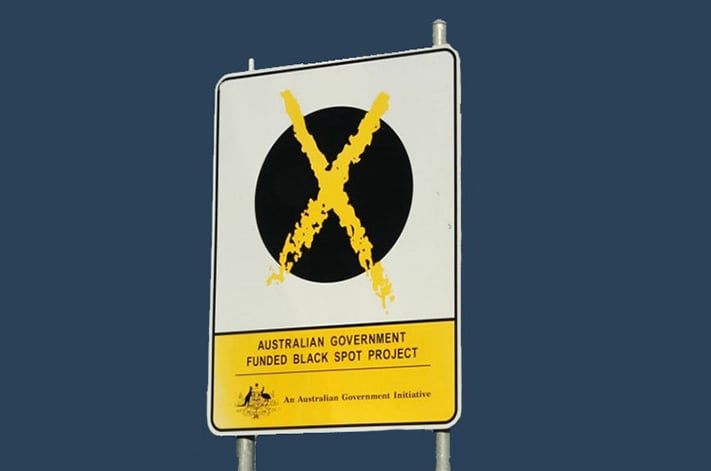
The Australian Government has announced it will reduce funding for its Black Spot Program by as much as 20 per cent by 2026.
In the Federal Budget delivered last night, it was revealed funding will gradually be decreased – shrinking investment by six per cent in the first financial year.
First introduced in 1990, the program is meant to identify and change black spots – the name given to roads where accidents occur frequently – to make them safer for road users.
“Any reduction in road safety funding is a massive concern,” Russell White, CEO of the Australian Road Safety Foundation, told Wheels.
“I think when road trauma’s so high on the list of causes for people losing their lives or being injured, any reduction in terms of that sort of infrastructure – or any other road safety activity – is a massive concern.”
The Budget announcement comes just one day after a wide-ranging report into road safety was tabled in Parliament showing regional roads have an increased risk of a motor vehicle accident compared with metropolitan roads.
“Sometimes there does appear to be that disconnect,” White said.
“[Motor vehicle accidents] are the number one killer of kids aged between one and 14, second only to youth suicide in the 14 to 25 age bracket… it’s the number one thing that’s causing death and injury in the workplace.
“So I think when we’re looking at road safety, it’s not just road infrastructure, it’s also looking at how you’re investing in developing road users, as well as the infrastructure that goes with that.”
Bernadette Nugent, CEO of Road Trauma Support Services Victoria, also expressed concern, telling Wheels it “is disappointing that the Government plans to reduce funding for Black Spot projects”.
Nugent also said not all the responsibility lies on the condition of the road, adding: “As a community, we need to continue to take individual responsibility for our driving behaviour and keeping ourselves and other road users safe”.
However, while the Federal Government is reducing Black Spot Program funding, it is increasing its investment in road infrastructure each financial year to 2025, before it almost halves for 2025-26.
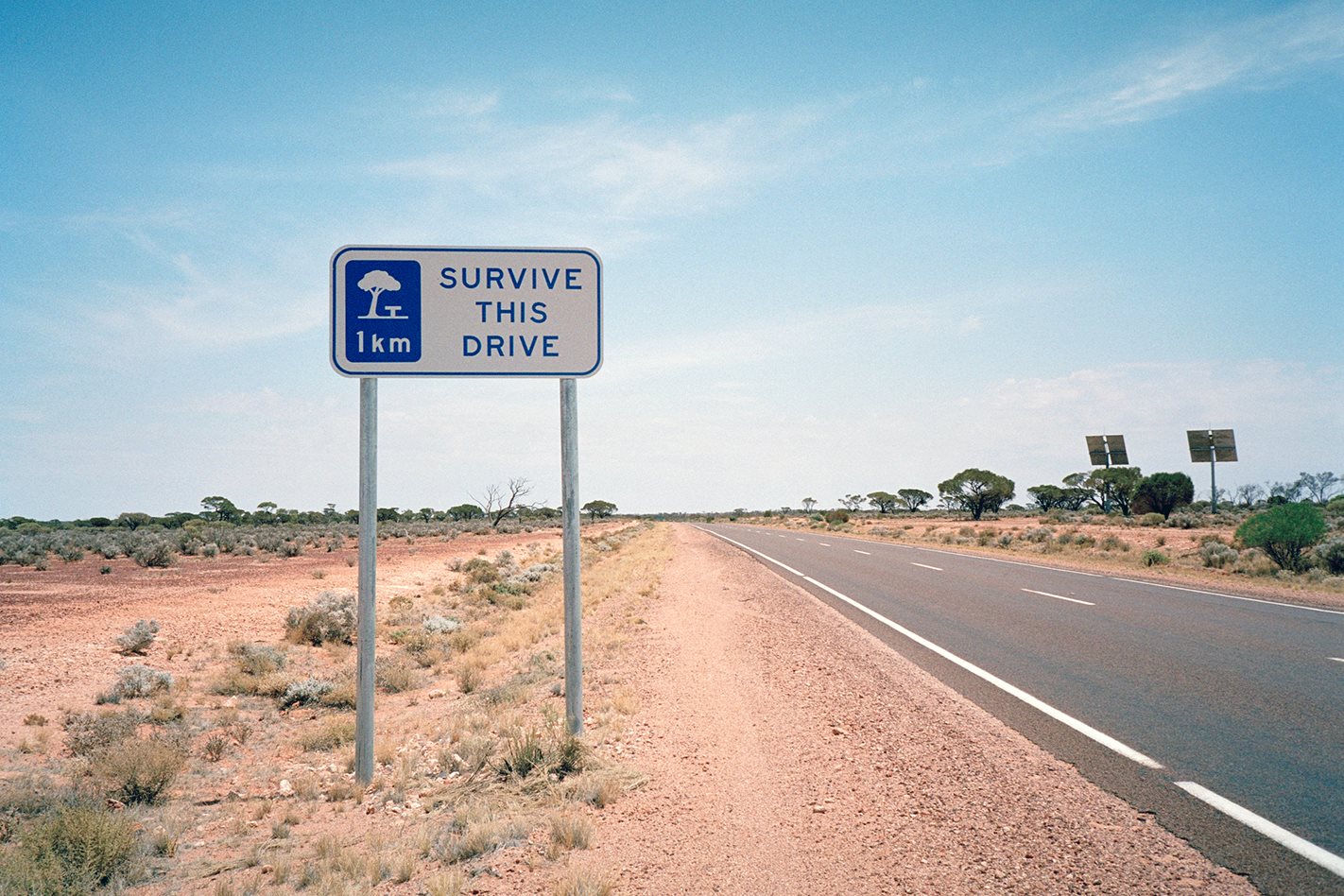
“New funding in this year’s Budget will deliver more road safety projects in regional areas, where the road fatality rate is disproportionately 10 deaths per 100,000 people compared to two deaths per 100,000 in metropolitan areas,” the Government said in a statement.
The money will be used to improve safety at railway crossings in regional areas, sealing 1000 kilometres of road in the Outback, and targeting “nationally significant projects that will improve the efficiency and safety of Australia’s road network”.
“Australia has failed to reach its road safety reduction targets over the past five years – even during COVID-19, we’ve actually seen significant increases in the amount of people losing their lives on Australian roads,” Russell White said following the Budget announcement.
“And whilst we’ve always had great progress in terms of always trying to address areas like black spots, it’s clear that if we’re missing our targets, then reducing funding is not the answer, we actually should be providing more to it.”
Wheels has approached the Federal Minister for Infrastructure, Transport and Regional Development for comment.
Snapshot
- $6.5 million will go to real-world emissions testing
- The AAA will receive the funds to carry out the testing
- Most cars use 25% more fuel than their official figures state
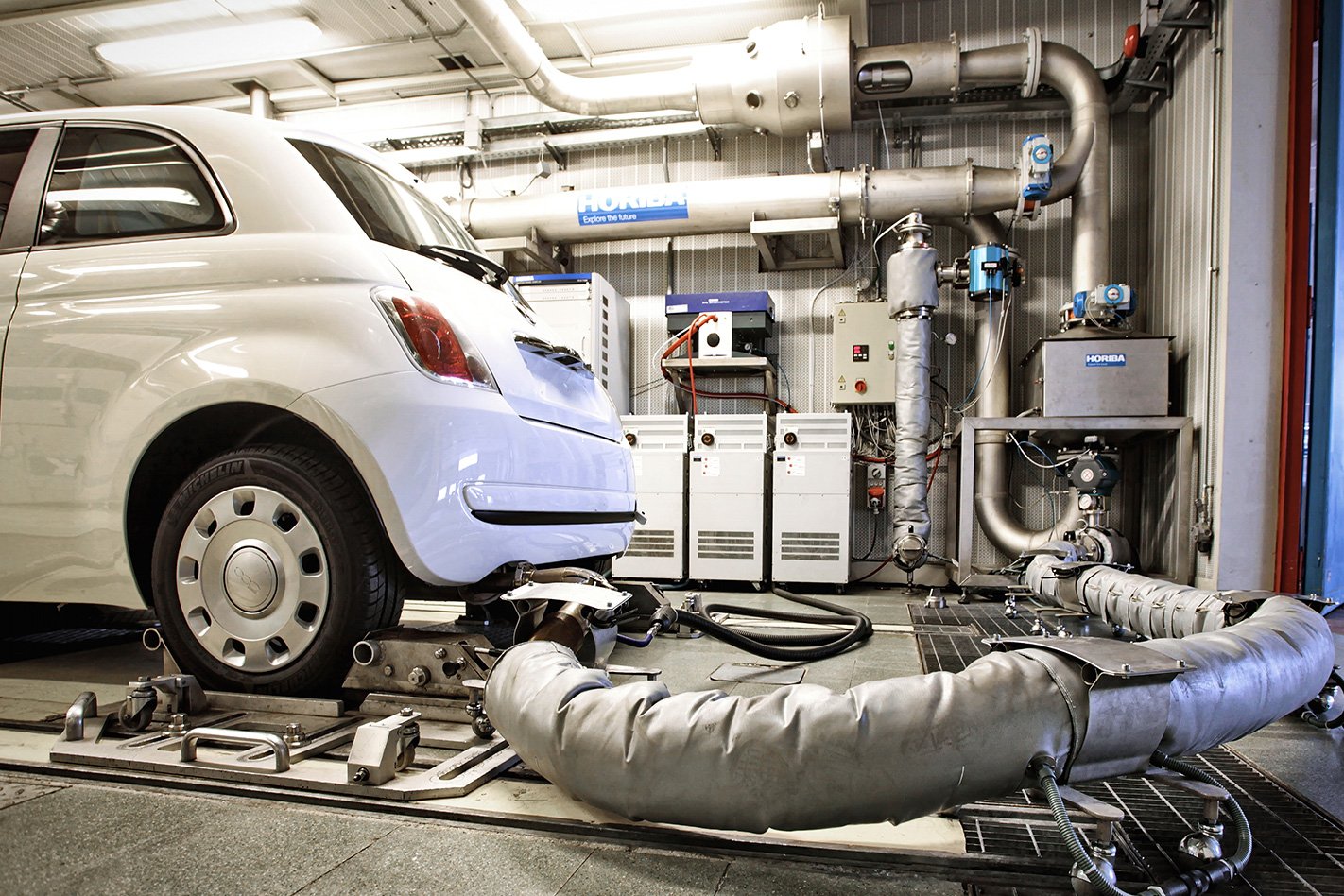
‘Real-world’ emissions testing for light vehicles has been given a funding boost – after Treasurer Josh Frydenberg made a surprise commitment of $6.5 million to it in last night’s Federal Budget.
The Federal Coalition had resisted calls for cars sold in Australia to be subject to real-world fuel economy testing under local conditions over the carmakers’ official ‘laboratory’ figures derived from a formula.
The Australian Automobile Association (AAA) will receive the $6.5 million to run the testing, which is something it has long campaigned for, after its own program revealed 17 out of the 30 vehicles involved used 25 per cent more fuel on average than their official rating – with some even recording a figure as high as 60 per cent.
AAA managing director Michael Bradley naturally was very pleased with the announcement, saying the establishment of a ‘real world’ emissions testing is a huge win for Australian families and businesses, and forms the logical first step in any long-term approach to reduce emissions from Australia’s transport sector.
“Australian consumers will now know how much fuel a car will use on an Australian road, not just what it achieved in a foreign laboratory.
“Reporting real-world performance will inform consumers and ultimately crush demand for cars that fail to deliver promised fuel savings and environmental performance,” he said.
In its pre-Budget submission, the AAA estimated it would cost about $3 million annually to subject 60 vehicles per year to an on-road test. If this number of vehicles was tested every year, within two years results would cover about 60 per cent of new vehicle sales.
The results will be advisory only and not be part of the regulatory process.
The Australian Labor Party has previously declared it would establish a similar program to inform consumer choice if it wins the upcoming Federal Election.
More to come.
JUNE 2023: We’ve driven the EV9!
Get our full written and video review at the linked story below.
STORY CONTINUES
March 2023: EV9 leaked!
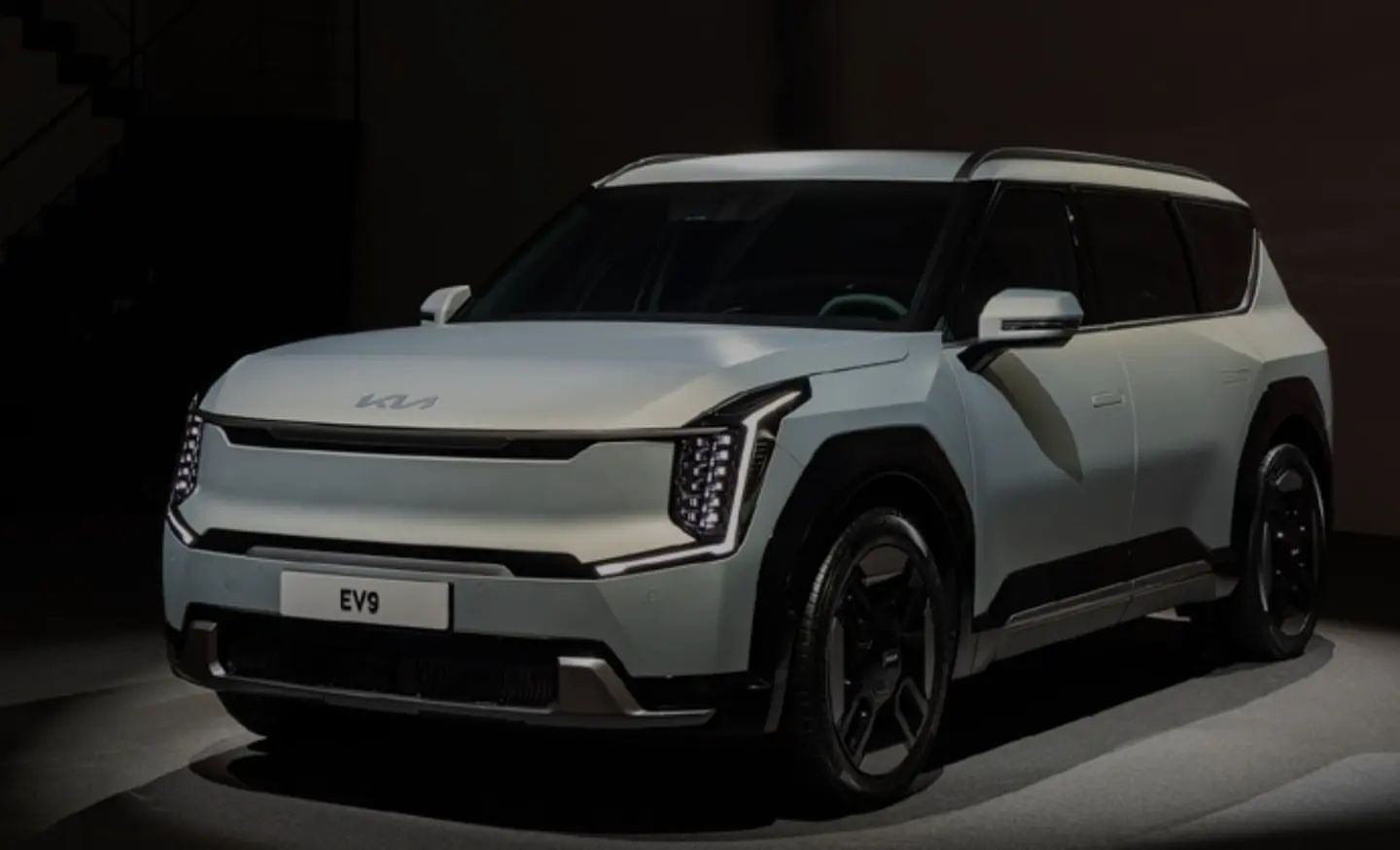
The upcoming Kia EV9 has surfaced in online social media, offering a first clear look at official marketing shots. Get the full story at the link below.
The story to here
UPDATE, March 30: The 2023 Kia EV9 will be making its debut next year in right-hand-drive, the company has announced.
Kia confirmed the electric EV9 will launch in Europe in 2023, verifying an earlier leaked report out of South Korea pointing to a production start date of April.
“It is under consideration however the detailed plans of Kia’s future EV line-up such as EV9, are not yet fixed and will be announced in due course,” a spokesperson for Kia Australia told Wheels.
With the battery-powered SUV set to go on sale in the UK, it’s a good sign Australia will get a right-hand-drive version of the vehicle.
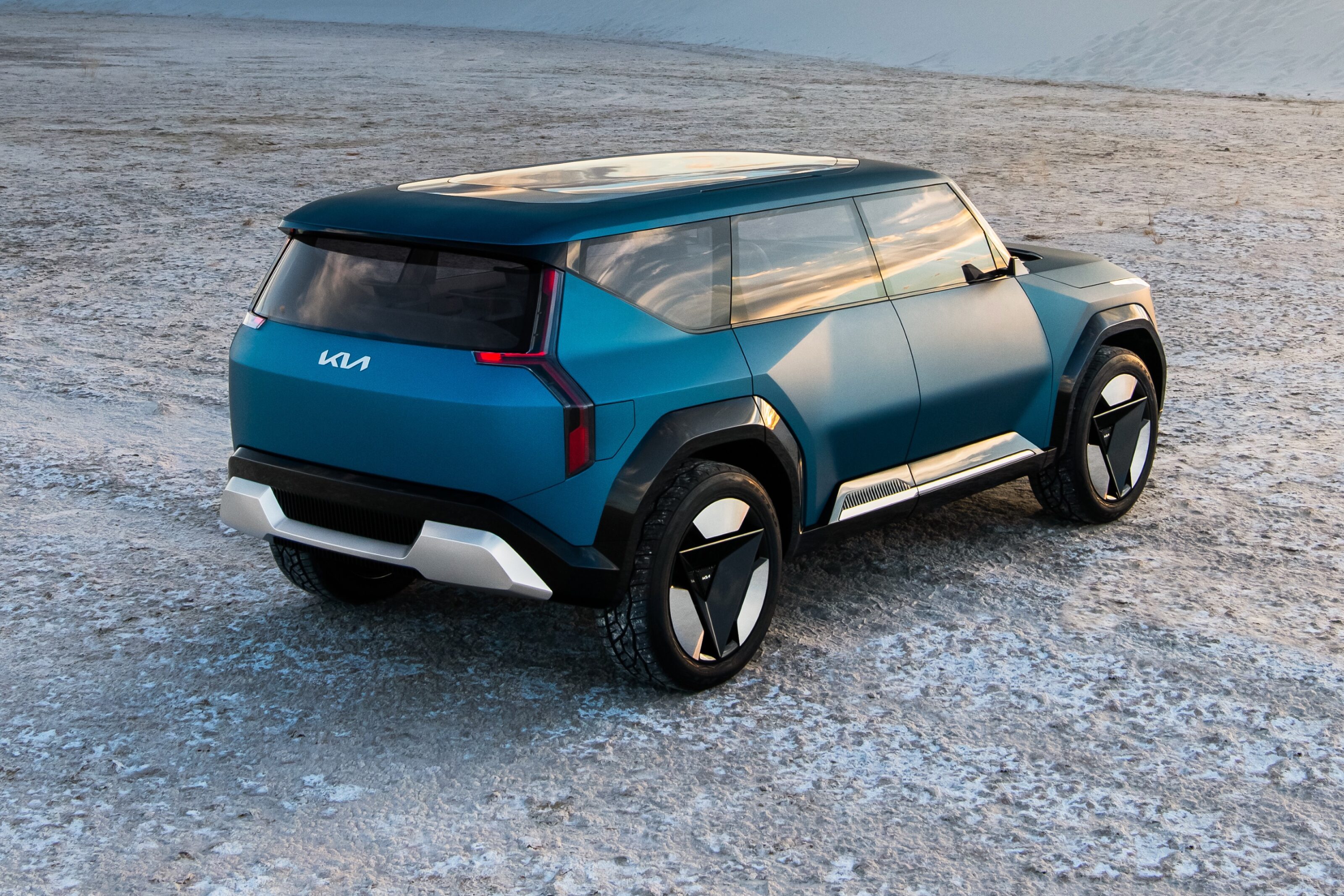
“The Kia Concept EV9 is another important marker for us in what has been an incredible journey so far for the new Kia brand,” Kia’s design boss Karim Habib said.
“Having made our intentions clear – to become a global leader in sustainable mobility solutions – we have had to carefully assess how the near- to medium-term future will impact every type of vehicle and model. This includes the SUV.”
The EV9 has yet to be confirmed for Australia – but given the overwhelming success of the EV6, there’s every chance Kia Australia has put its hand up for the model.
The story to here
March 22: The 2023 Kia EV9 is rumoured to be entering production next year, as more details of the electric SUV surface.
While originally referred to as the EV7, the EV9 is set to become Kia’s flagship model, coming in at around 5000 millimetres long according to The Korean Car Blog – making it roughly on par with the LandCruiser 300 Series and LandCruiser Prado.
The report says the interior of the seven-seater EV9 will be on par with the Kia Carnival people-mover, with more legroom available for third-row passengers thanks to its battery-powered E-GMP platform, which allows for a flat cabin floor.
This rendering by Korean digital artist Hitekro imagines what the production car could look like, based on the concept vehicle shown in November.
Occupants can also expect an ultra-wide display akin to that found in the EV6.
As well as over-the-air software updates (OTA), the EV9 will reportedly offer Level 3 autonomous driving technology, known as Highway Driving Pilot (HDP).
Details of the electric powertrain aren’t known at this stage, but the driving range is said to remain at under 500 kilometres, likely matching the 482km claimed for the EV9 Concept.
What appears to be leaked internal information from the company’s Sohari plant earlier this month points to production beginning in April 2023, while other information suggests the model will launch in September.
A return of Opel to Australia has been ruled out by Stellantis, despite the German brand’s forthcoming re-launch in New Zealand.
Opel cars are returning to New Zealand in the second half of 2022 to take advantage of the country’s new Clean Car Standard, which will offer rebates for low-emission vehicles.
Auto Distributors New Zealand will import economical turbo-petrol and electric models that all qualify for rebates by emitting 146 grams of CO2 per kilometre.
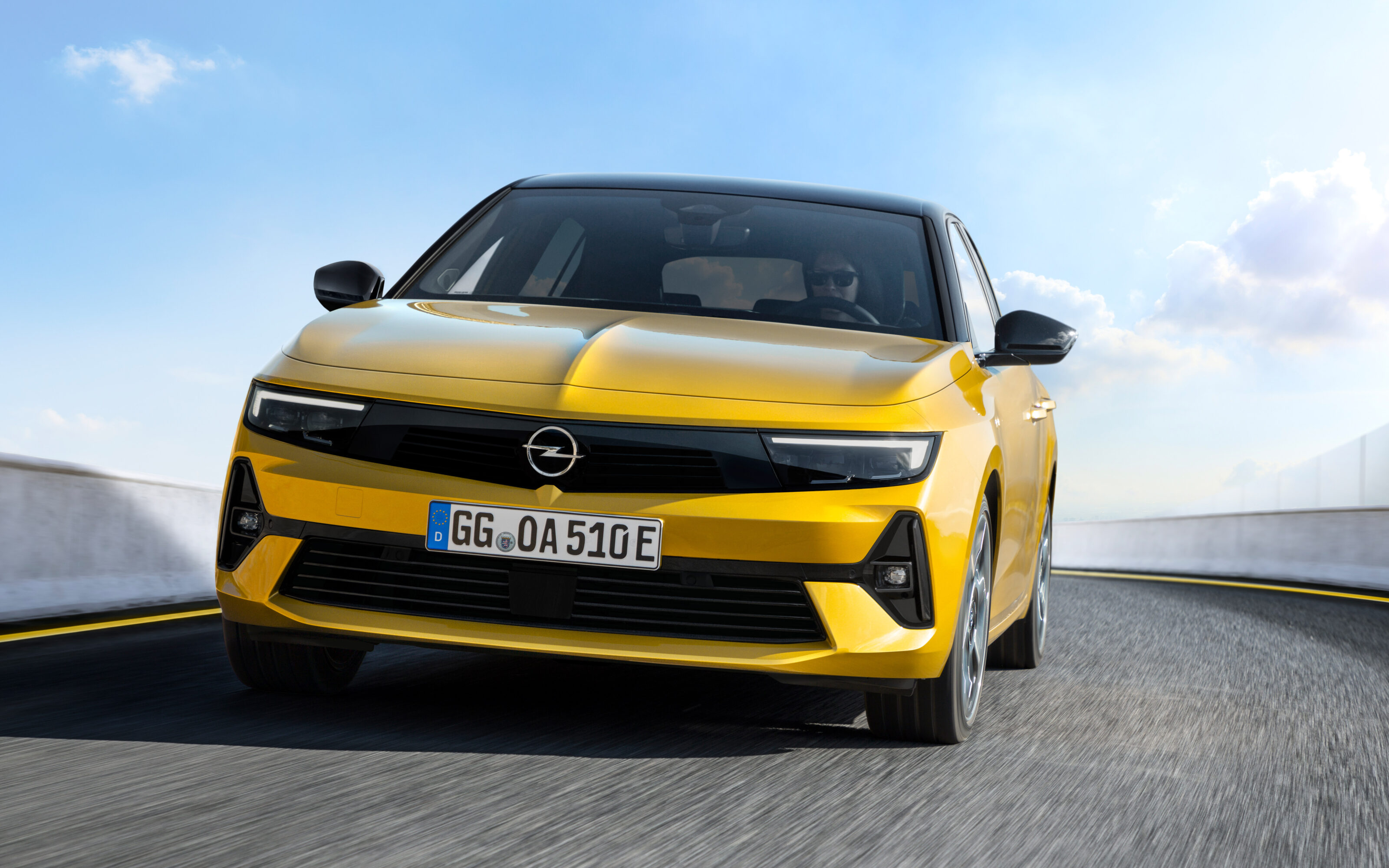
Opel is being pitched in New Zealand as “Germany’s most efficient brand”.
The company already looks after the Peugeot and Citroën brands, making for a natural fit. The Peugeot-Citroen group (PSA) bought Peugeot from General Motors in 2017.
In 2020, PSA and FiatChrysler merged under the new group name Stellantis.
Stellantis’s Australian arm, however, says there is no intention to revive a brand that has had a troubled existence locally.
“There are no plans to bring Opel to Australia,” a Stellantis spokesperson told Wheels.
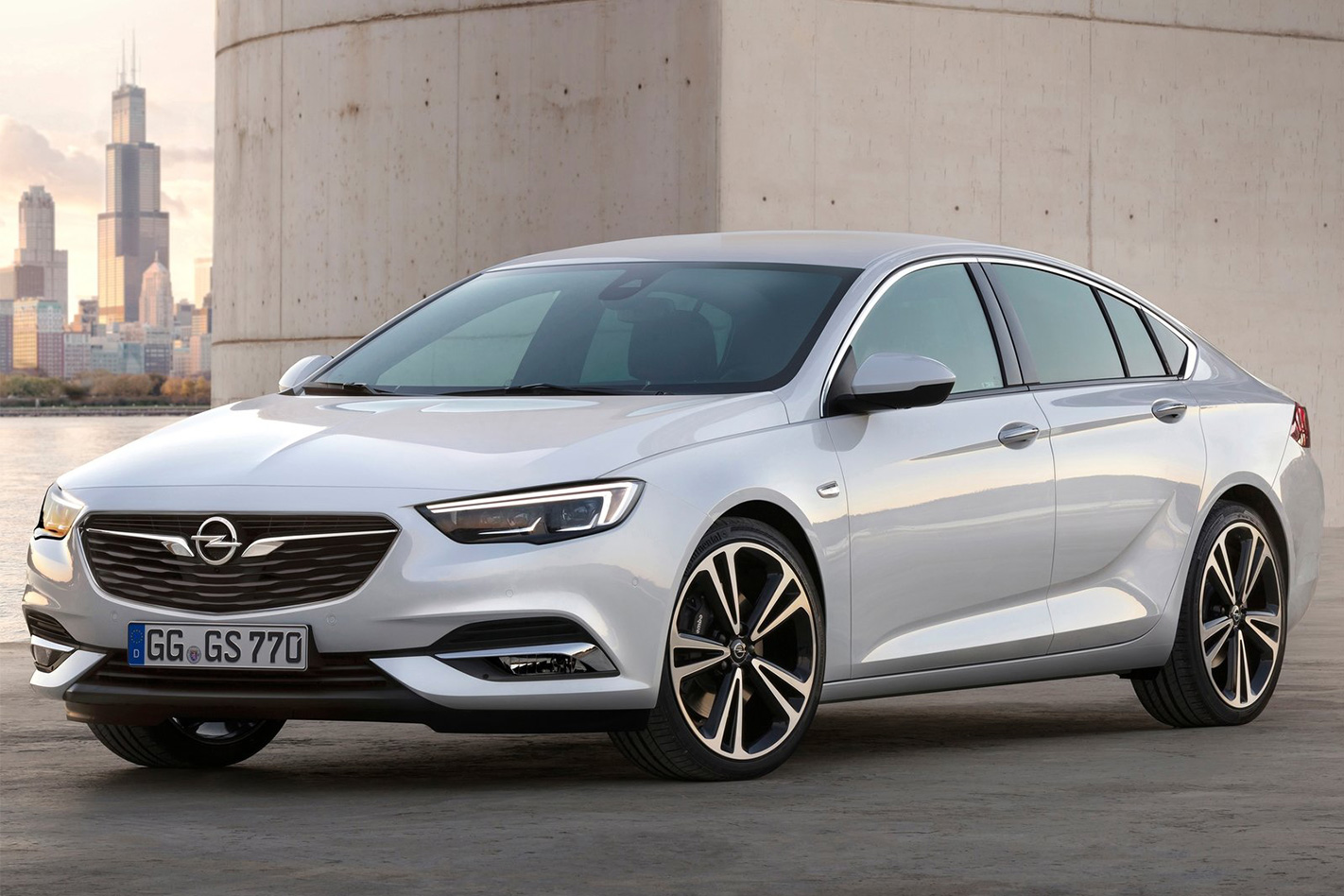
Opel vehicles planned for New Zealand include petrol and electric versions of the Corsa city car and Mokka compact SUV, petrol and hybrid versions of the new-generation Astra hatchback, and the midsized Grandland SUV.
The larger Crossland SUV, Combo Life multi-seater people-mover, plus the Vivaro and Movano vans are in the future-product pipeline.
Opels were last sold in Australia in 2020 when the Astra and Insignia were rebadged Holdens prior to the brand’s famous closure.
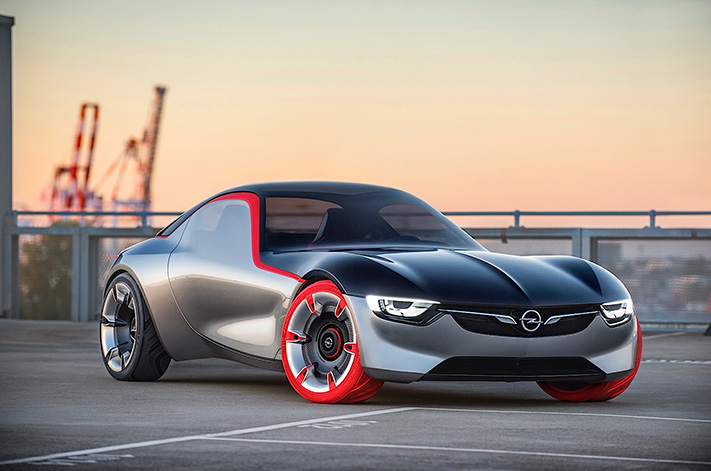
The Insignia name was changed to Commodore, but the front-wheel-drive and all-wheel-drive large car with four- and six-cylinder engines struggled to appeal to Australians accustomed to rear-wheel drive and V8s.
The Opel brand was introduced to Australia in 2012, selling the Corsa, Astra, Insignia and Zafira (people-mover) models. However, after poor initial sales – fewer than a thousand over a nine-month period – Opel made a premature exit from the market.
Snapshot
- 0-100 in less than three seconds
- 100kWh battery delivers a claimed 600km driving range
- Coming to Australia 2024
It’s fair to say Colin Chapman would struggle to come to terms with the Lotus Eletre. ‘Simplify, and add lightness’ was the Lotus founder’s mantra.
The Eletre is neither simple, nor light. Nevertheless, this electric-powered SUV is perhaps the most significant Lotus in the history of the British sports car manufacturer.
And not because of what it isn’t. But because of what it portends.

The Eletre (it’s pronounced ee-let-truh, and apart from the obvious play on ‘electric’, the word apparently means ‘coming to life’ in some eastern European languages) marks a key step in Lotus’s transition to becoming a full line electric vehicle manufacturer by 2030. And, along with the new Emira coupe – the last internal combustion-engined Lotus ever – it will spearhead the iconic brand’s rebirth in markets around the globe.
The Eletre will go on sale in Europe, the UK and China in 2023, and is scheduled to be rolled out to markets in the rest of the world, including Australia and the US, in 2024 and 2025.

Powering the all-wheel-drive Eletre are compact e-motors with integrated controllers and reducers at the front and rear axles, producing a total of 447kW. Lotus says the Eletre will sprint from 0 to 100km/h in less than 3.0 seconds and hit a top speed of 260km/h.
A big 100kWh battery delivers a claimed 600 kilometres of driving range on the European WLTP cycle, and the Eletre’s 800V architecture means the battery can be topped up to deliver 400km in 20 minutes when the car is hooked up to a 350kW charger.
The Eletre is built on the all-new Lotus Electric Premium Architecture (EPA) developed jointly with its Chinese parent company, Geely – which also owns Volvo and Polestar and is the largest single shareholder in Mercedes-Benz, with a 9.7 per cent stake.

Lotus says EPA, which is different from the Electric Sportscar Architecture (ESA) it is working on with Renault’s Alpine brand, can be easily adapted to accommodate different battery sizes, motors, component layouts and intelligent driving technologies.
Despite being the tallest and heaviest car in the company’s history, the Eletre has been tuned to deliver the dynamics expected of a Lotus, says vehicle attributes and product integrity director Gavan Kershaw.
“Dynamically, the Eletre has been developed to deliver everything you would expect from a Lotus – outstanding ride and handling, highly communicative steering and exceptional driver engagement,” Kershaw says. “From a performance perspective, we know the world is watching, so there has been an obsession with getting everything just right.”
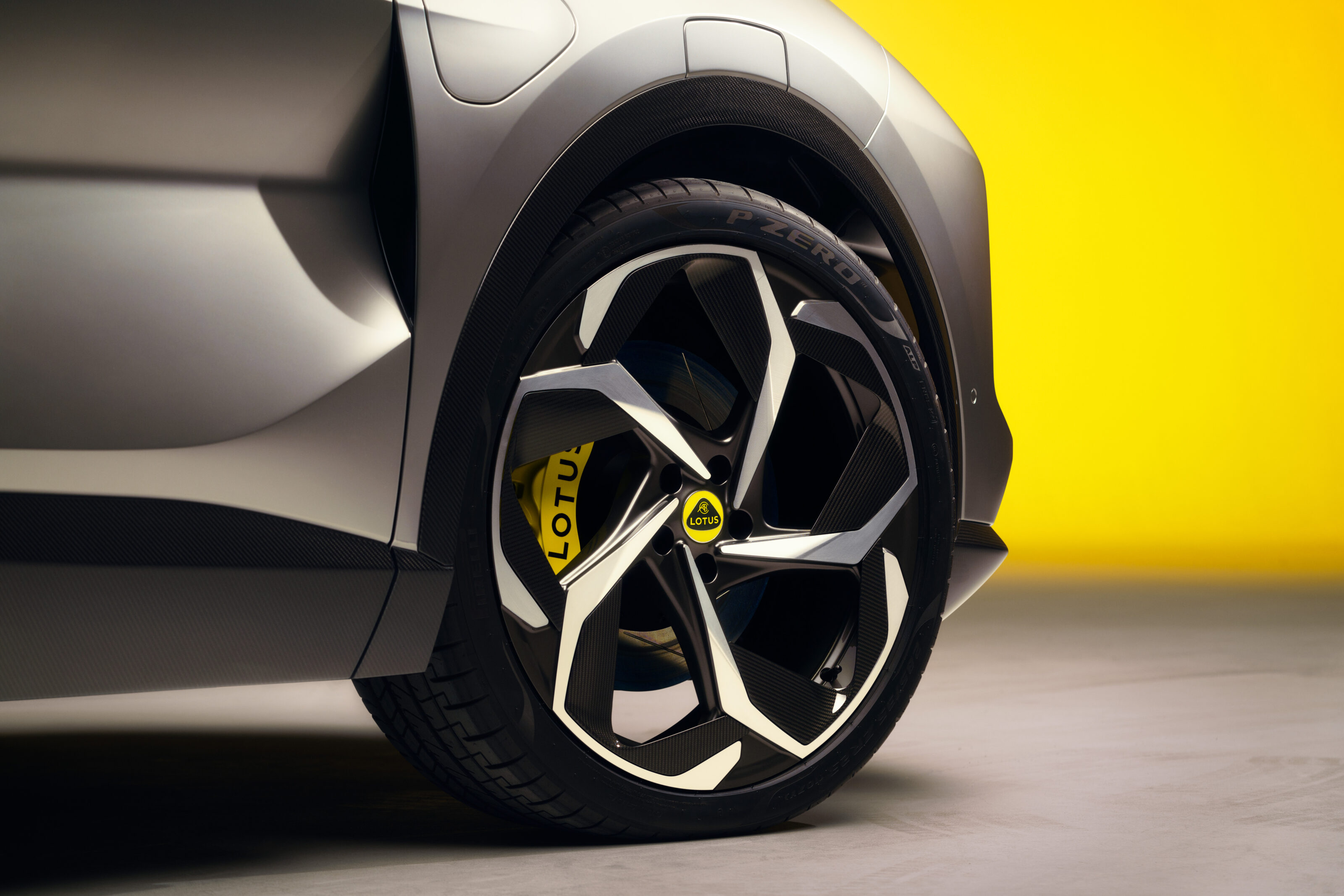
In addition to its 100kWh battery and compact dual-motors, the Eletre has multi-link air suspension with continuously variable damping all round. Active ride height and active anti-roll bars, along with rear-wheel steering and torque vectoring, will be available as options – along with 23-inch alloy wheels and carbon-ceramic brakes with 10-piston calipers.
Four different drive modes – Range, Tour, Sport and Off-Road – adjust steering and accelerator pedal response, along with damping rates and powertrain output. An Individual mode will allow drivers to mix and match some settings to suit their personal driving styles.
At 5103 millimetres, the Eletre is 421mm longer overall than a Jaguar I-Pace; longer, too, than a Tesla Model X – by 67mm. Its 3019mm wheelbase exceeds that of the Jaguar by 29mm and the Tesla’s by 55mm. This is not a small Lotus.
Designed under the direction of Ben Payne, head of design at the Lotus Tech Creative Centre in Warwickshire, England (a facility overseen by former Volvo and Geely design chief Peter Horbury), the Eletre has a cab-forward stance that recalls mid-engine Lotus sports cars, and dramatically sculpted aluminium panels.
Up front are daytime running lights mounted high at the leading edge of the bodywork above a full-width black section – concealing recessed headlights and hidden vents, which direct air up and over the hood and past the front wheels. Below that is an active grille made up of a series of interconnecting triangular panels that open to feed air into the radiator when the electric motors, battery pack and front brakes need cooling.
The heavily sculpted front doors allow air to flow from the vents on the trailing edge of the front guards. A pronounced haunch over the rear wheel rises to meet a roofline which gracefully falls away from the steeply raked A-pillars to floating D-pillars with integrated air blades to improve aerodynamic efficiency.
At the rear are two large vents bridged by a thin, full-width light bar, and a roof spoiler system comprising two carbon fibre winglets cantilevered from the roof cant rails. The winglets’ function, just like a conventional, full-width spoiler, is to guide airflow over the rear window and on to a second spoiler that deploys out of the tailgate at speed.
All those vents recall the design language of the 1470kW electric-powered Evija hypercar Lotus unveiled in 2019. There’s function behind the form, says design chief Payne: Air channelled through the car – what Lotus describes as ‘porosity’ – as well as over, under and around it to help make the Eletre more efficient in terms of its driving range, speed and performance.
Lotus interiors have long tended towards being functional rather than premium. The Eletre changes all that.
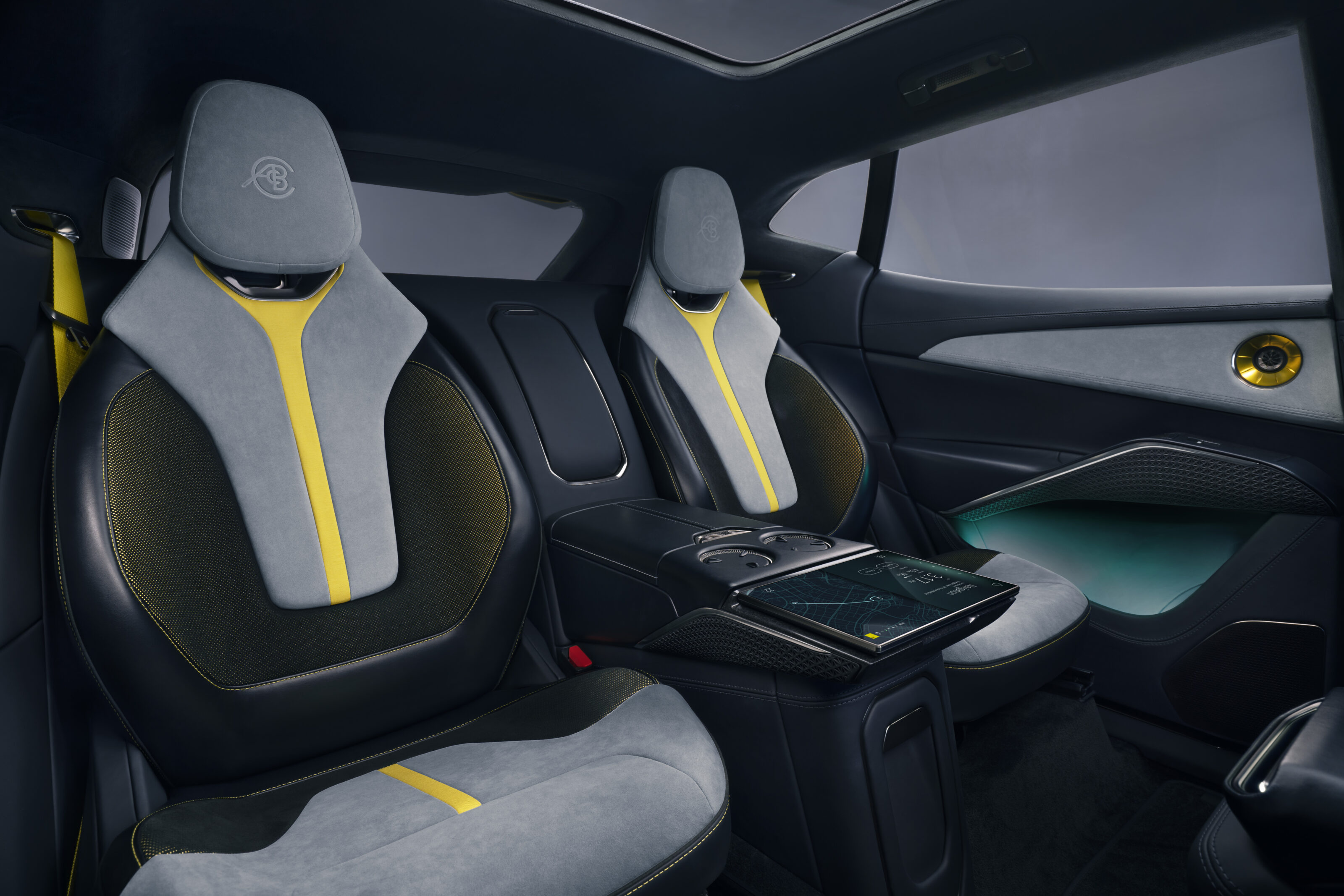
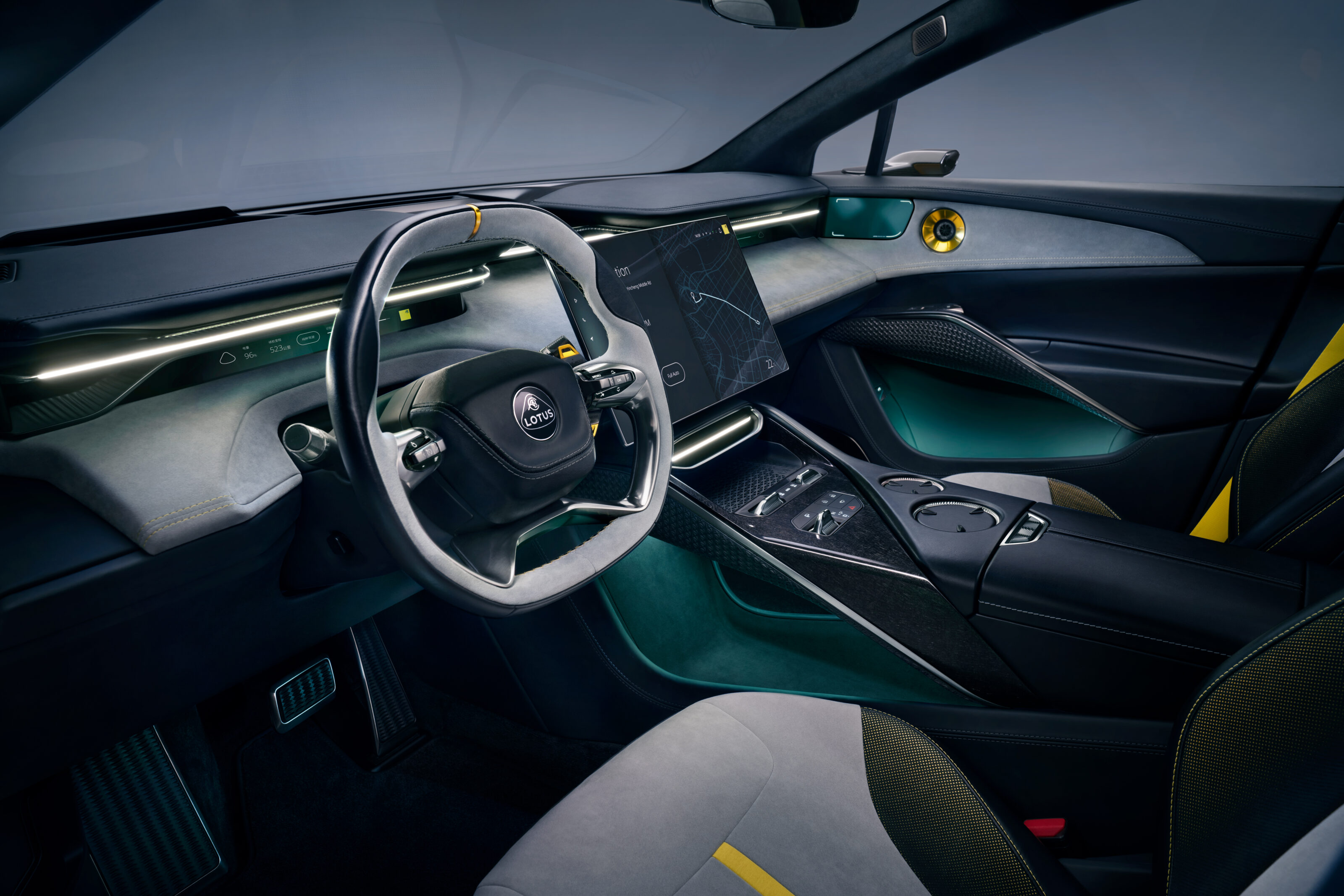
Available as a four- or five-seater, the Eletre has premium, highly durable man-made microfibres on the primary touchpoints and an advanced wool-blend fabric on the seats. The hard surfaces are carbon fibre, the fibres taken from the edge of woven carbon fibre mats used elsewhere by Lotus and reconstructed and compressed in a resin to create a marble-like finish.
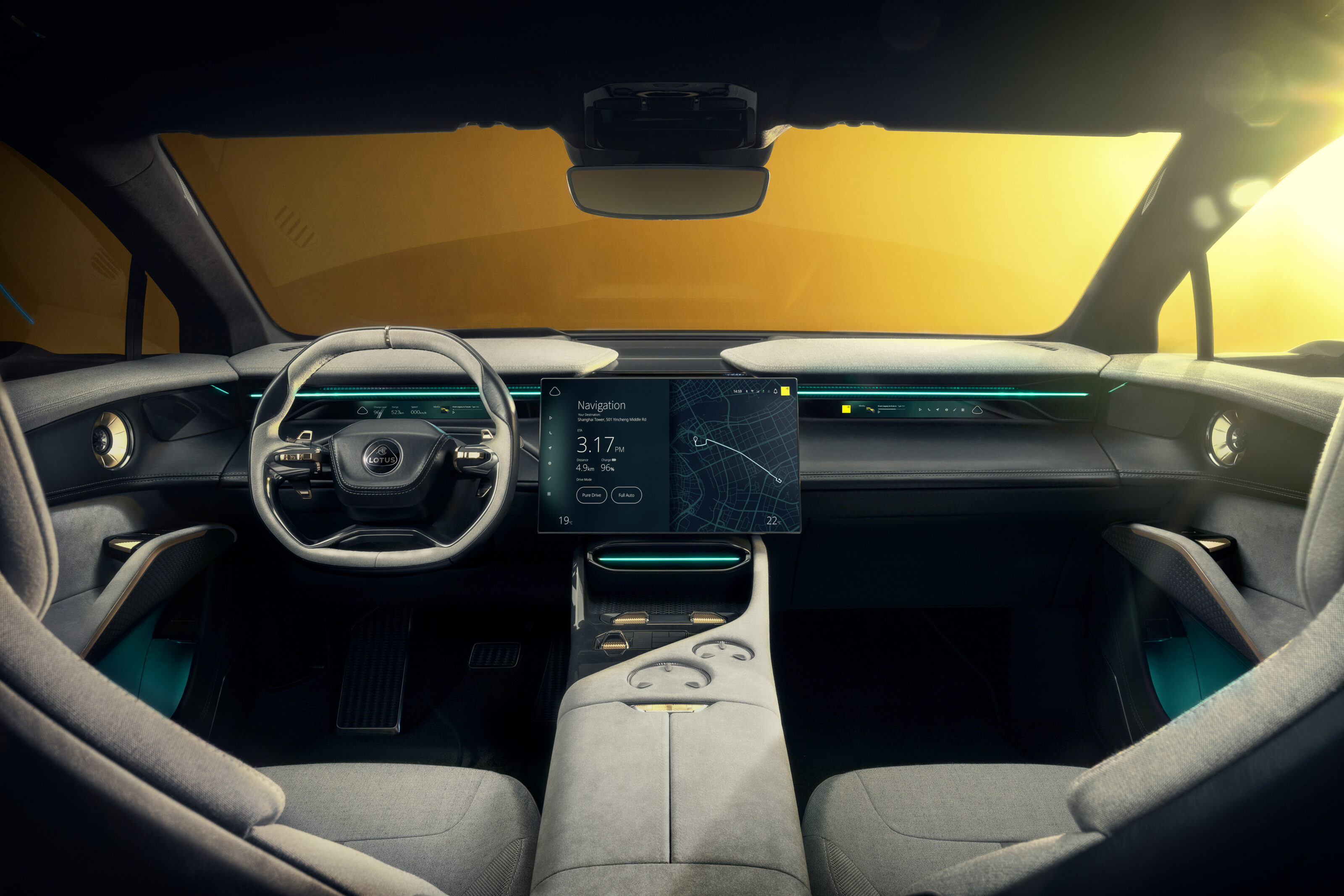
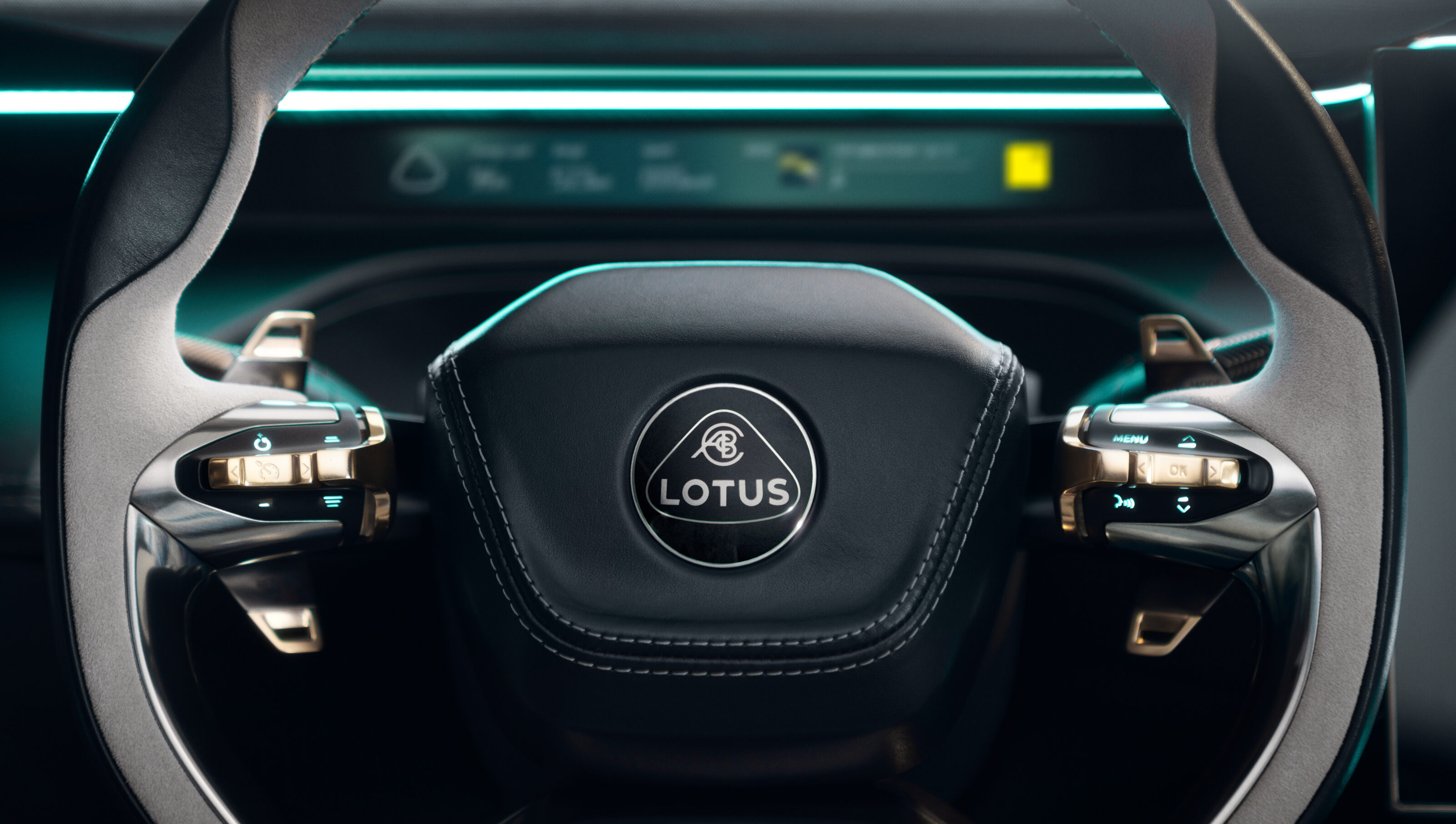
The dash features a light blade that runs the full width of the car and changes colour to alert occupants to incoming phone calls, alterations in cabin temperature, and to the battery charge status.
There’s no big instrument binnacle behind the steering wheel. Instead, a 30mm-wide panel just below the light bar shows the driver key information. A similar panel on the other side of the dash shows the front seat passenger entertainment and location information.
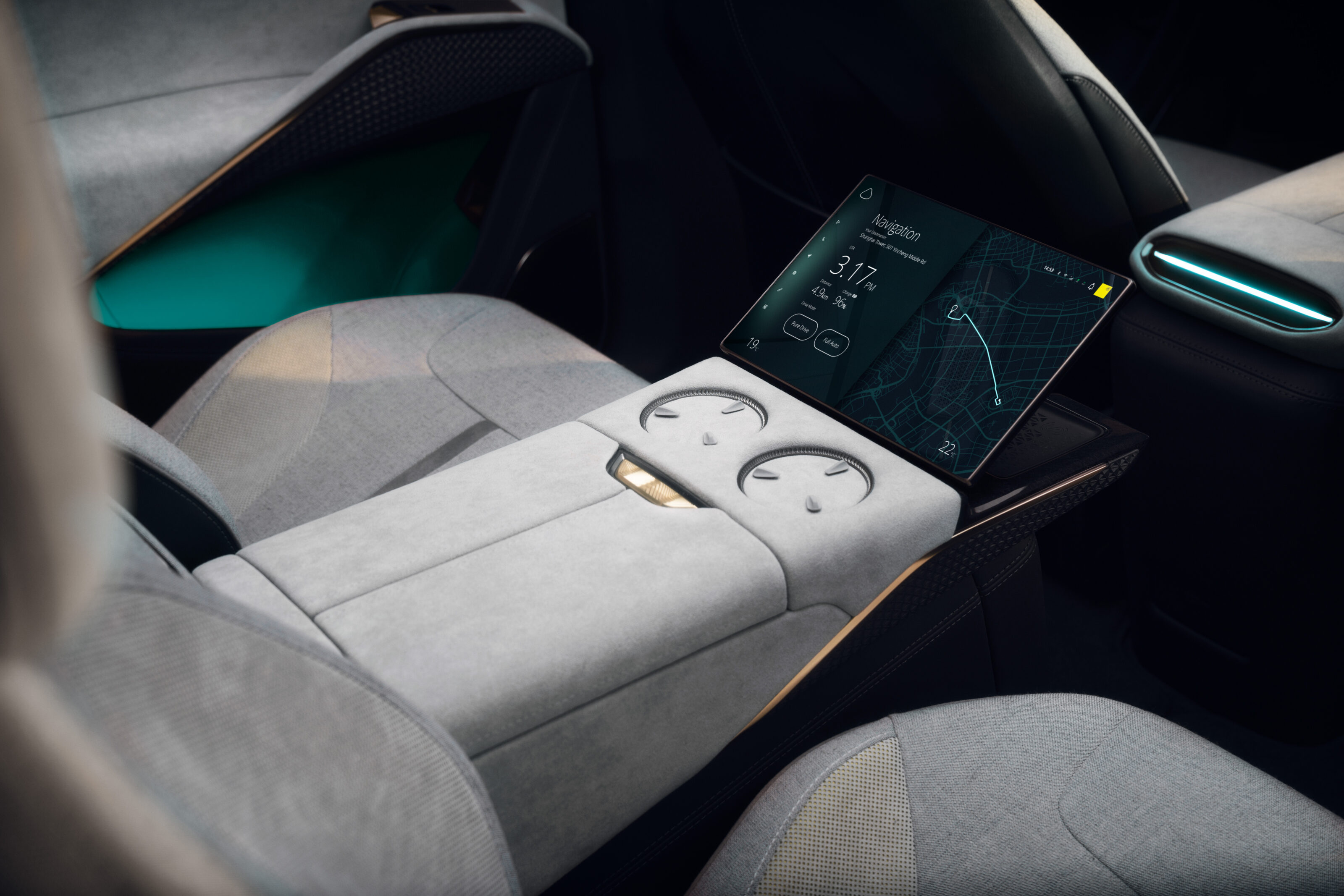
Between the two panels, at the centre of the dash, is a 15.1-inch OLED touch screen. Lotus says 95 per cent of the Eletre’s functionality can be accessed with no more than three touches on the screen.
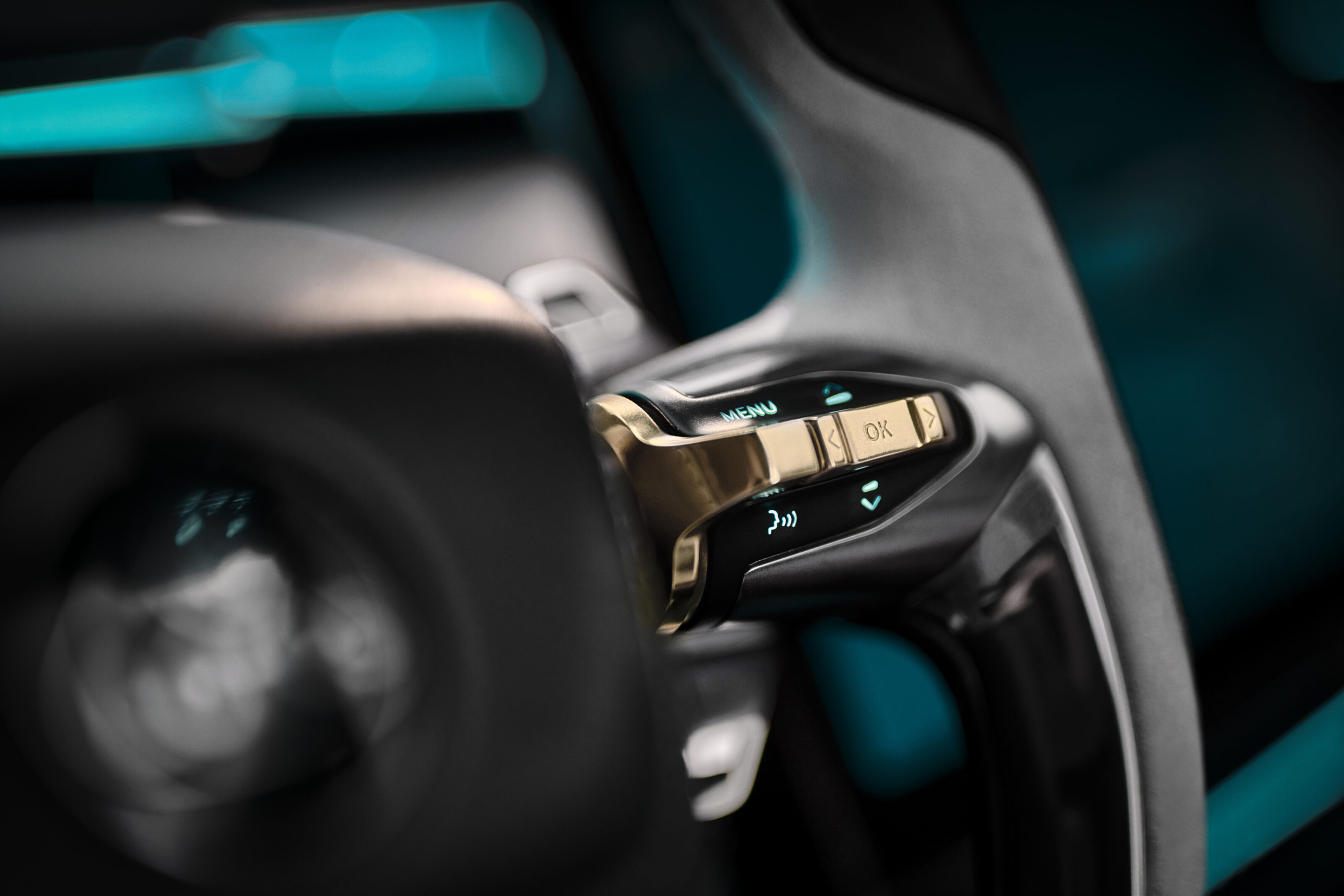
Even so, certain key controls, such as; drive selection, climate control temperature settings, audio adjustment, and adaptive cruise control actuation, can also be controlled via simple, easy to use analogue switches.
The OLED screen automatically folds flat when not in use. Information can also be displayed to the driver via the standard augmented reality head-up display.
The standard audio system is from British premium manufacturer KEF and features an 800-watt, 15-speaker set-up. Those wanting even higher fidelity sound in their Eletres can upgrade to the 1500-watt, 23-speaker KEF Reference system, which features the first application of the company’s high-performance speaker and sub-woofer design in an automotive audio system.
The Eletre bristles with advanced technologies, including the world’s first deployable LIDAR system. The four LIDAR units – one at the top of the windscreen, one at the top of the rear window, and one on each front guard – are hidden when not in use. The rear-facing unit drove the development of the winglets at the rear of the Eletre’s roof: Eliminating the centre section of the spoiler not only saved weight, but also allowed the rear-facing Lidar to deploy when needed.
The Lidar system not only supports many of the Eletre’s advanced driver assistance systems, but will also enable “end-to-end” autonomous driving capability. What that means, says Lotus, is customers will be able to use their smartphone app to request their Eletre to drive to them autonomously from a nearby parking space, and then autonomously repark itself at the end of the journey.
Lotus says further autonomous driving capability can be added via over-the-air software updates, as and when it is allowed by local market regulations. Many of the Eletre’s other driver assist systems will also be able to have their features and capabilities enhanced via over-the-air updates.
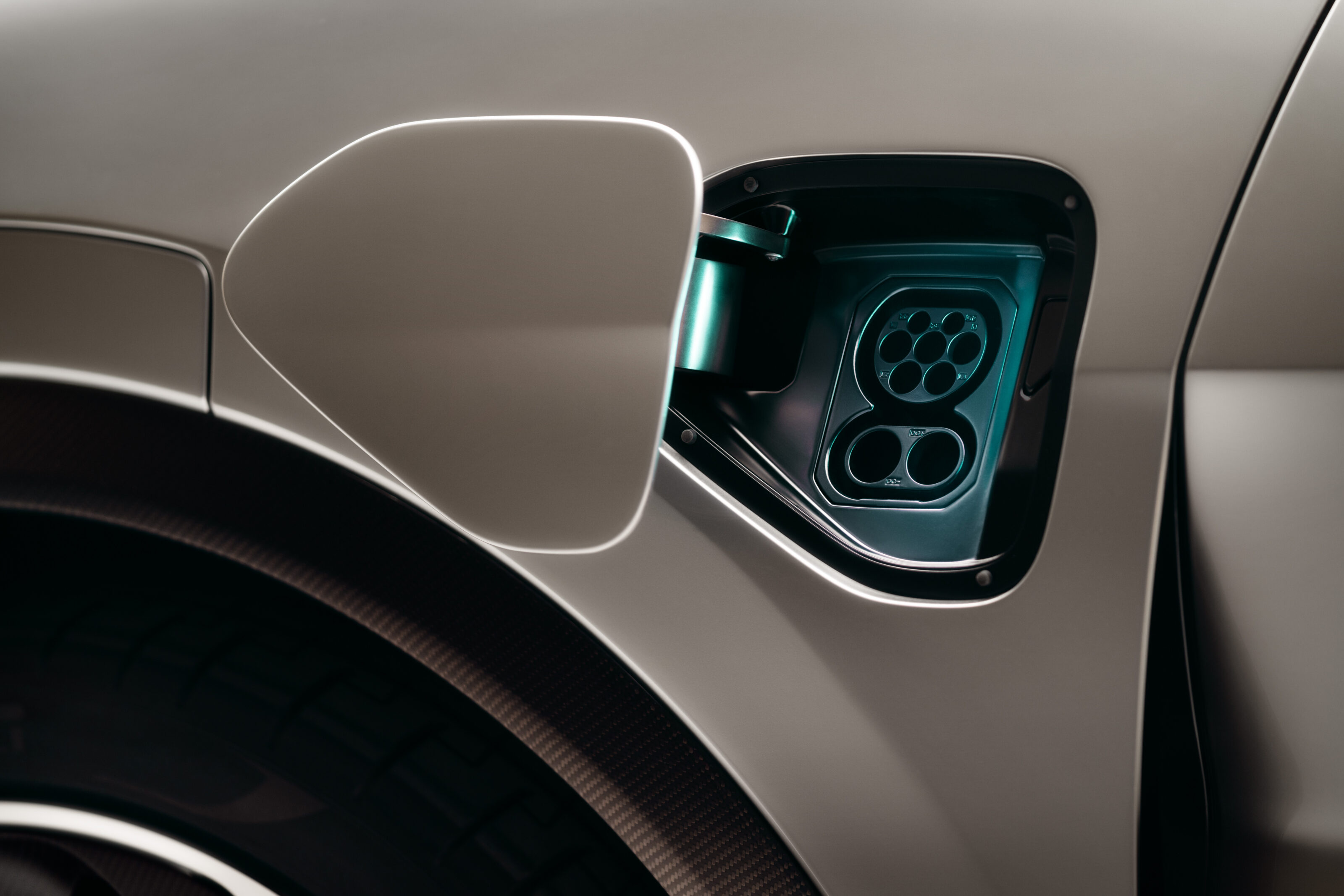
Yes, Colin Chapman would have struggled with the Lotus Eletre. But as Porsche and Lamborghini have learned, building a high-performance SUV means you can continue to build the sports cars that made you famous. Lotus, helped by Geely’s deep pockets, is simply following what is now a well-worn path.
“This car has the soul of a Lotus and the usability of an SUV,” insists Lotus managing director Matt Windle. “We’re confident it will delight performance car customers and offer a distinct alternative to the segment’s established players.”
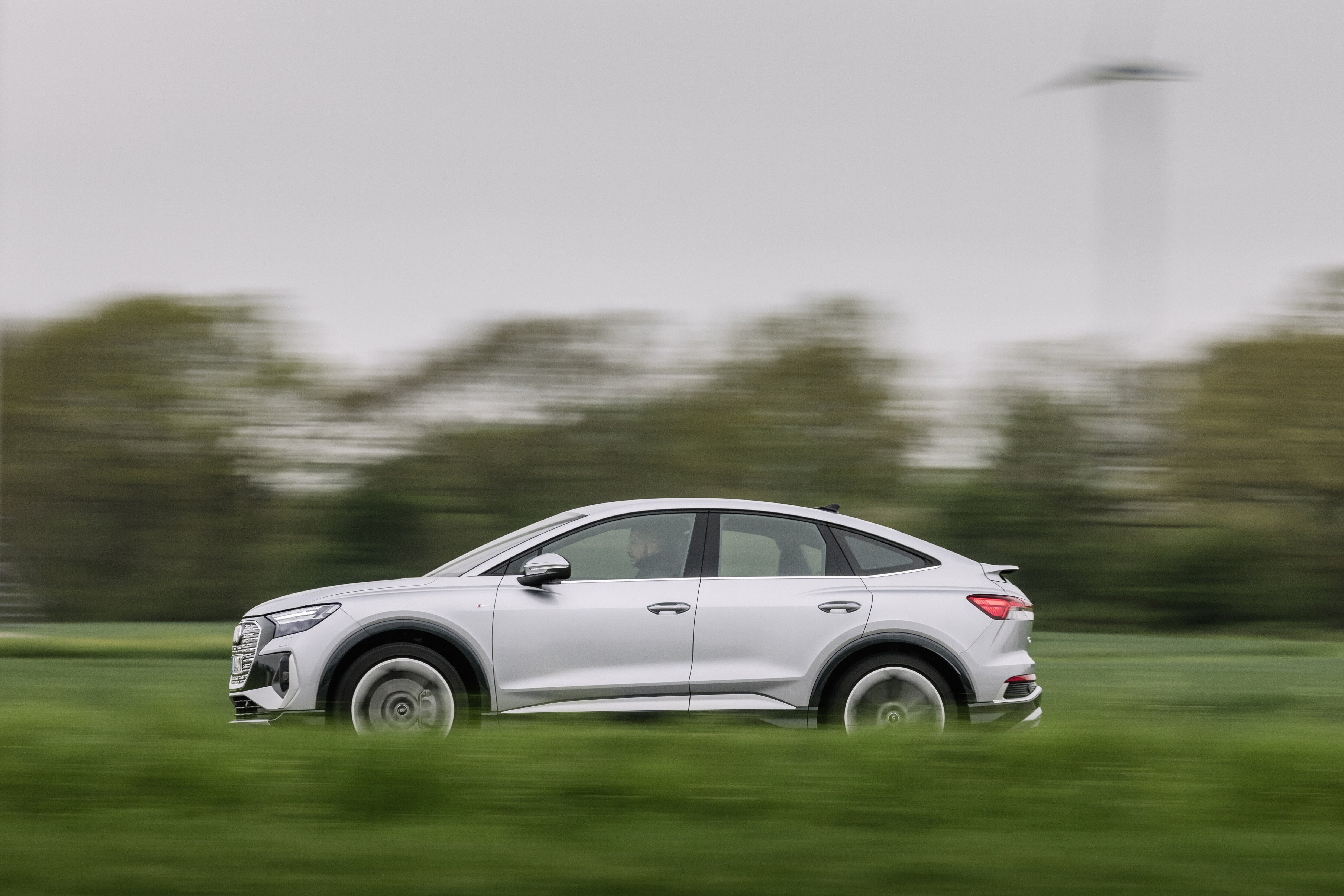
The calculations started the moment I pulled away from the Hilton Munich Airport Hotel in the Audi Q4 Sportback e-Tron.
My destination was Stuttgart, 264km to the west along the A8 autobahn, where tomorrow I’d be going for a ride in a Mercedes-EQ EQE prototype. But along the way I wanted to give Audi’s latest EV a run along some quiet roads to see how it compared with the Volkswagen ID.3 and ID.4 models with which it shares its platform and electric powertrain.
I quickly ruled out heading north to Nuremberg and then cutting southwest back through the rolling Baden-Wüttemberg hills to Stuttgart. That was a 475km route, and the Audi’s dash showed that with a 98 per cent charge in the battery its predicted range was 304km.
But if I headed to Donauworth, hooked left to Nördlingen and then on to Stuttgart, I could still sample some fun roads. Total distance, 305km. That might work.
The process took me back more than 30 years, to when calculating range and distance was a normal part of any longish drive outside Australia’s capital cities.
I’d learned from bitter experience hustling my Datsun 1600 through the back blocks of Victoria en route from Adelaide to the Alpine Rally one year that finding a servo open in a country town at 2 am wasn’t a given.
Then there was the night I coasted a VW Kombi down the Great Alpine Road, engine off, the old girl leaning in the corners like a Sydney-Hobart yacht on a spinnaker run, to arrive in Bright with little more than fumes in the tank. I’d also willed a Jaguar XJ that had been running on empty for 60km through the Mallee sunset to make it to Tailem Bend.
Range anxiety. It was a thing in Australia long before electric vehicles.
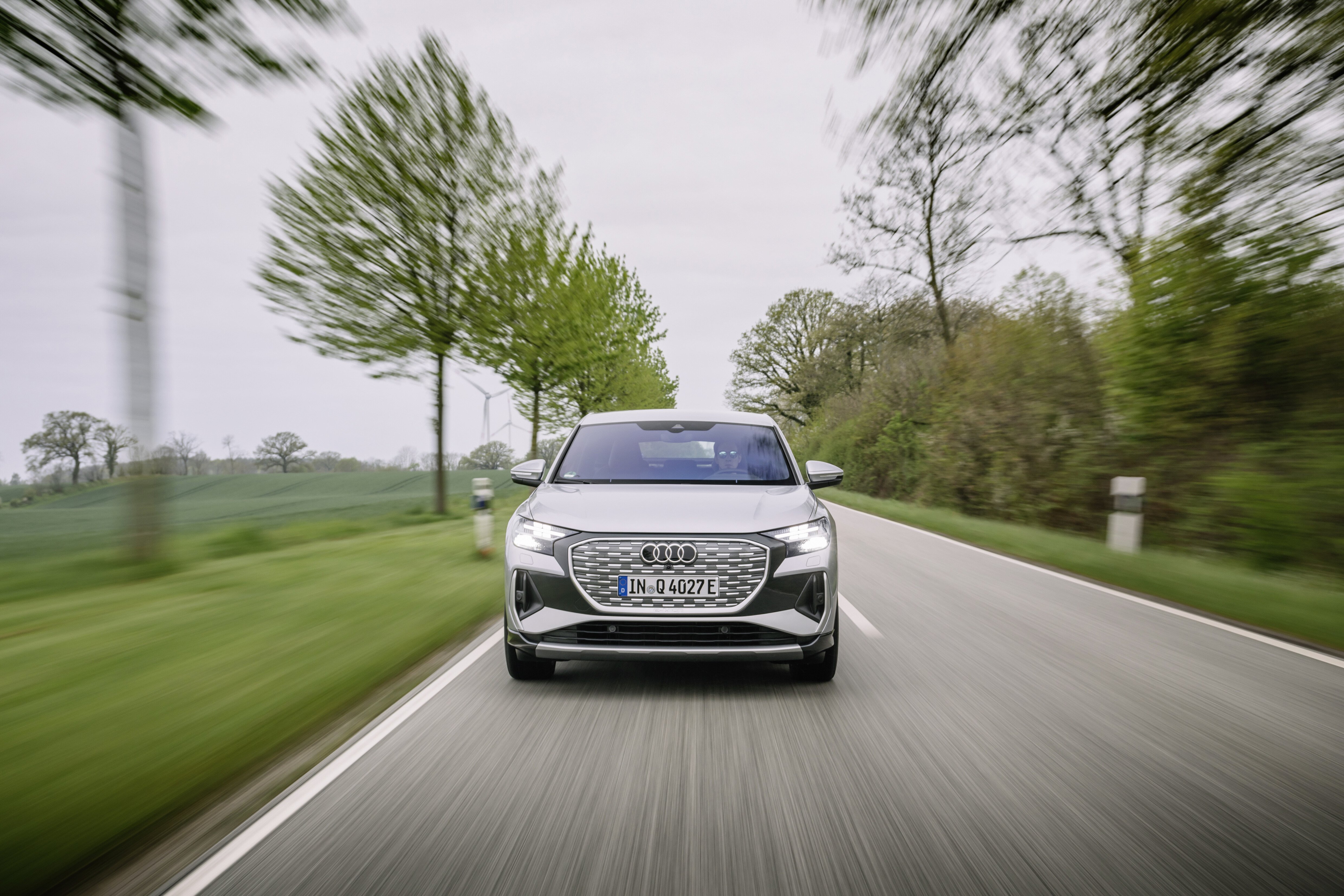
It’s the only time in my life I’d not driven as fast as conditions would allow on an unrestricted autobahn – the calculations continued. Range and distance. Range and distance
Stuttgart wasn’t my final destination in the Audi Q4 Sportback e-Tron. The day after my Mercedes EQE ride, I would be heading a further 228km west, to Hambach in France, to see the factory where the new Ineos Grenadier was being built.
The day after that, I had a 100km round trip to and from the abandoned coal mine where I was scheduled to take a prototype Grenadier for an off-road test drive. And finally, there was the 460km run back to Munich to get my plane to London. All up, more than 1000km.
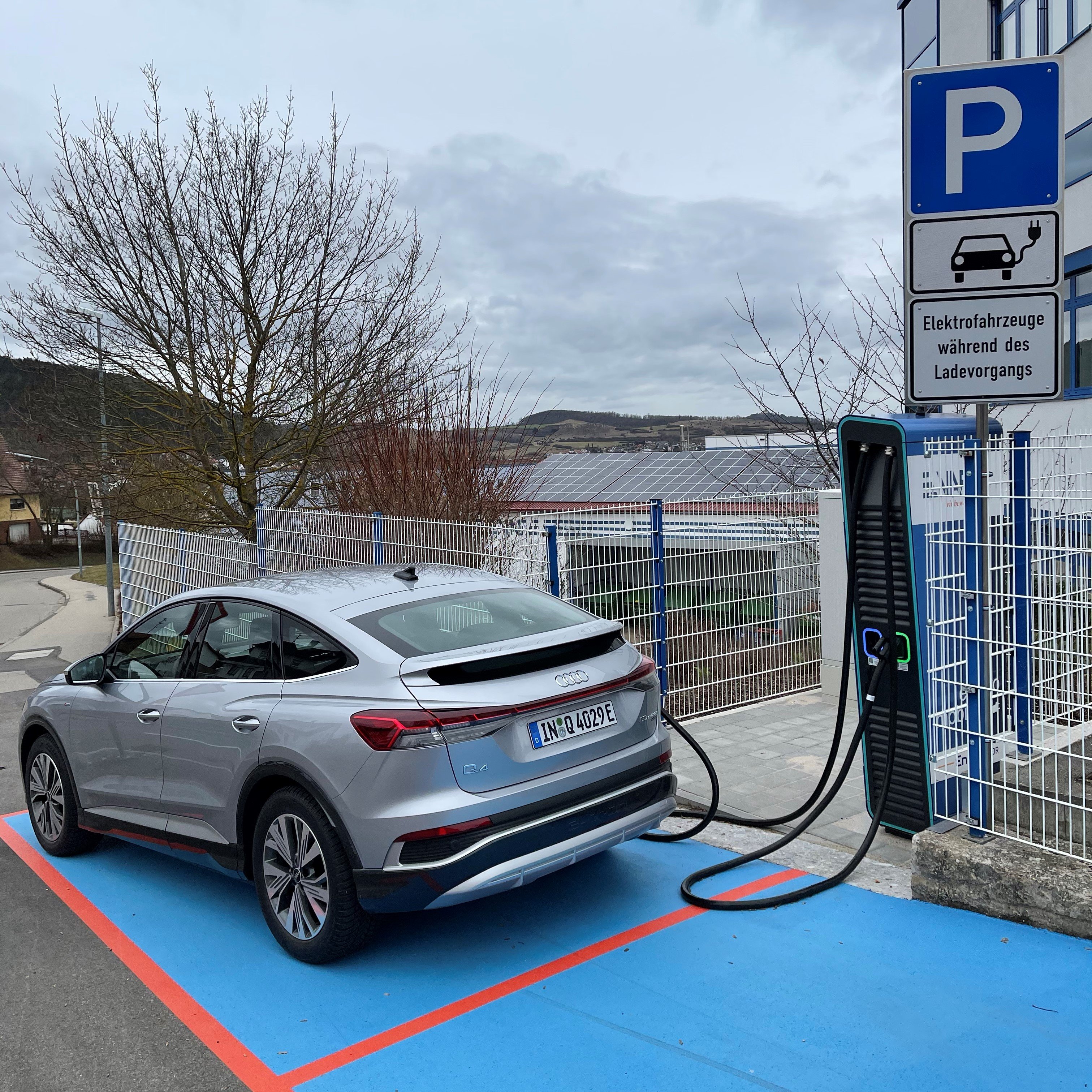
Audi’s e-Tron Charging Service Card was tucked into the sun visor of the Q4 Sportback. Plug in at a charger, tap the card, and you’re good to go, the Audi people said.
But as I merged onto the A8, dialled up 130km/h on the cruise control and headed for Augsburg – the only time in my life I’ve never driven as fast as traffic and conditions would allow on an unrestricted autobahn – the calculations continued. Range and distance. Range and distance.
This wasn’t my first long trip in an EV. Back in 2018, I drove the then-new Jaguar i-Pace almost 1100km from London to Berlin. Now that had been an adventure. Chargers were few and far between, and most were slow old 22kW units that, even if they worked, didn’t always allow you to pay by credit card nor handshake with the Jaguar’s onboard charging software.
It had taken five hours to complete the first charge of the trip, a saga that had started with a string of busted or malfunctioning chargers at Jabbeke near the pancake-flat Belgian coast and finished at an Audi dealer in Ghent who’d just had a 50kW charger installed for the Audi e-Trons. The Jaguar had arrived with just 14km range remaining after I’d feather-footed it for 55km from Jabbeke.
In 1949, Jabbeke had been the making of the Jaguar XK120 when a prototype had achieved just over 213km/h on a closed section of the autoroute near the town. Almost 70 years later, Jabbeke had nearly broken the Jaguar i-Pace.
A lot has changed since then. Germany has EV chargers all over the country. What I didn’t know was how many would be easily accessible or available, or how accurately the Audi monitored its consumption rate and battery charge levels. And could I trust the navigation system to get me to a charger when the car needed a top-up? Range and distance.
I quickly learned the Q4 Sportback e-Tron’s nav system not only tells you where you are and where you’re going but will also plan your journeys to take the most efficient route, considering everything from road gradients to traffic density to ambient temperatures to the location and speed of chargers. Combined with active driver aids such as adaptive cruise control and lane-keep assist, the Q4 – like many modern cars – takes a lot of the brainwork out of a long-distance drive.
Providing, that is, you’re happy to go the way the car wants to go, in the manner the car wants to get there.

When deciding to take an interesting shortcut, working off the sat-nav map rather than using a route guidance system programmed to find the road of least resistance, I found I had to manage the Q4 Sportback just like in the old days, mentally calculating battery charge and range, using the nav system to scout the locations of chargers, and working out likely points of no return that would commit me to one route or the other.
It wasn’t just the shape of the roads I had to think about, either. It was the gradients, too. And the longer I drove the Q4 Sportback, the more I understood how the environment affected its range, with ambient temperatures and wind direction all having a noticeable impact.
Left to its own devices, the Audi does a lot of the thinking for the driver, anticipating speed restrictions, automatically increasing regen to improve efficiency
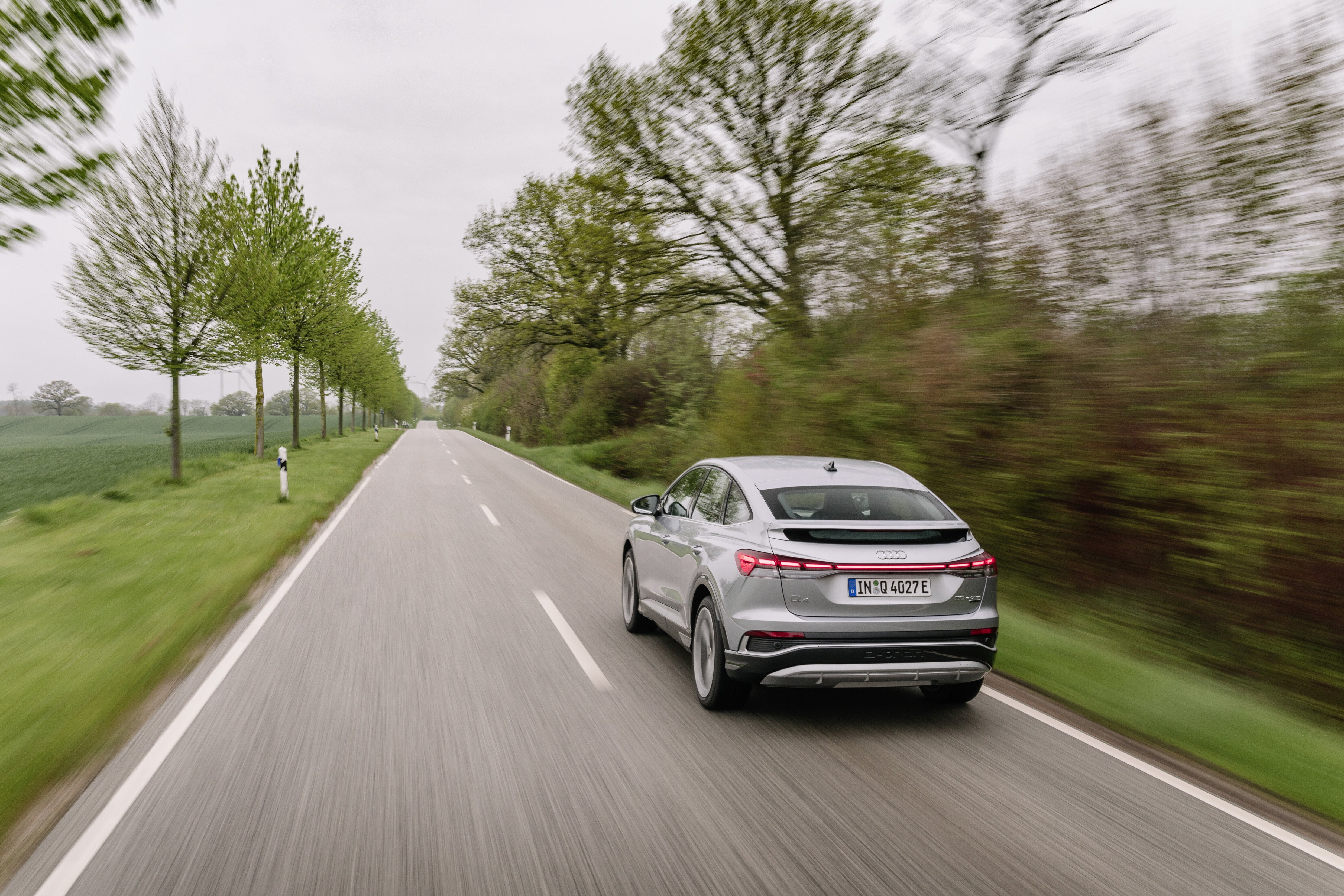
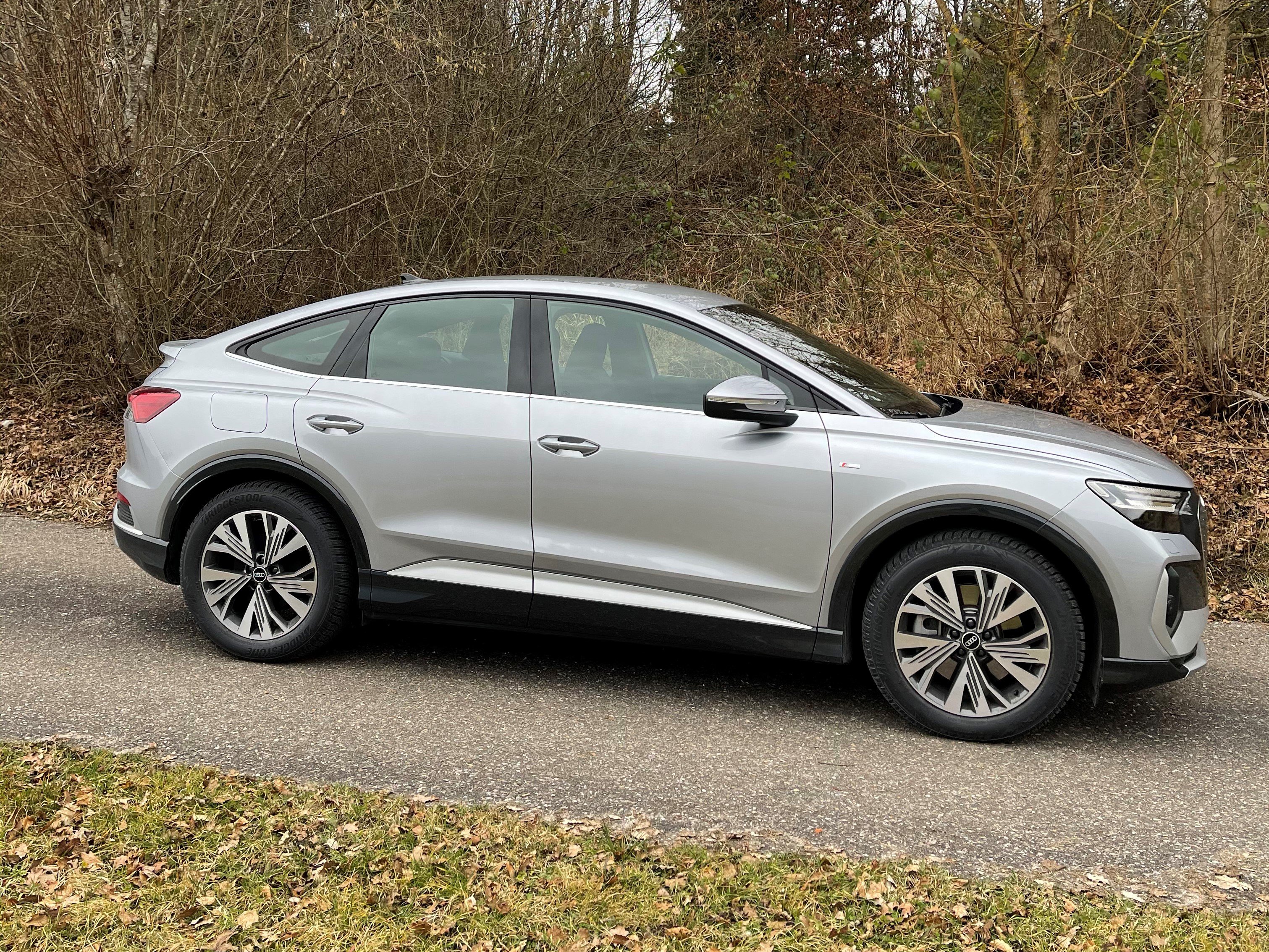
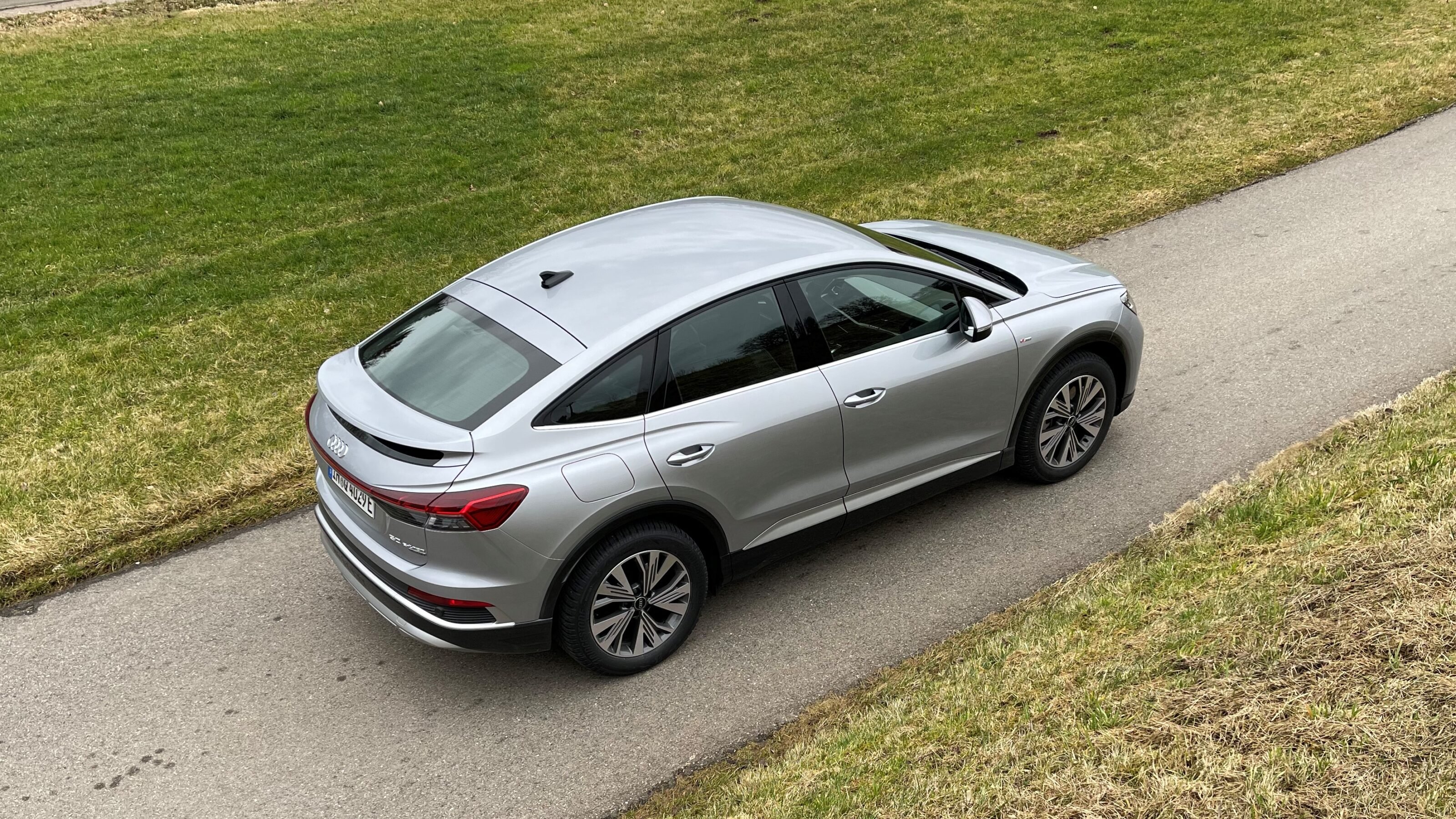
The Audi Q4 Sportback e-Tron is one of Audi’s entry-level EVs. Like the cheaper Q4 e-Tron (the Sportback has, as its name implies, a more steeply raked D-pillar than the regular, hatch-profile Q4 e-Tron) it rolls on VW Group’s high volume, low-cost MEB electric vehicle platform.
My top-spec Prestige model boasted dual motors that produced a total of 220kW and 460Nm, powered by an 82kWh battery with a usable 76.6kWh of energy storage that gave a WLTP range of between 412km and 488km.
It was a shock to spot drum brakes lurking behind the alloy rear wheels, a visual reminder of the Q4 Sportback’s plebian underpinnings, despite the top-end MMI navigation and virtual cockpit systems, LED matrix headlights, Sonos audio system and augmented reality head-up display that are part and parcel of the Prestige trim package.
The good news is that unlike Volkswagen, the ID interiors of which look unforgivably cheap, Audi can make modest plastics look upscale. The grained stuff looks almost like leather, and shiny stuff on the dash looks like metal. Even the piano black looks like it belongs on a piano.
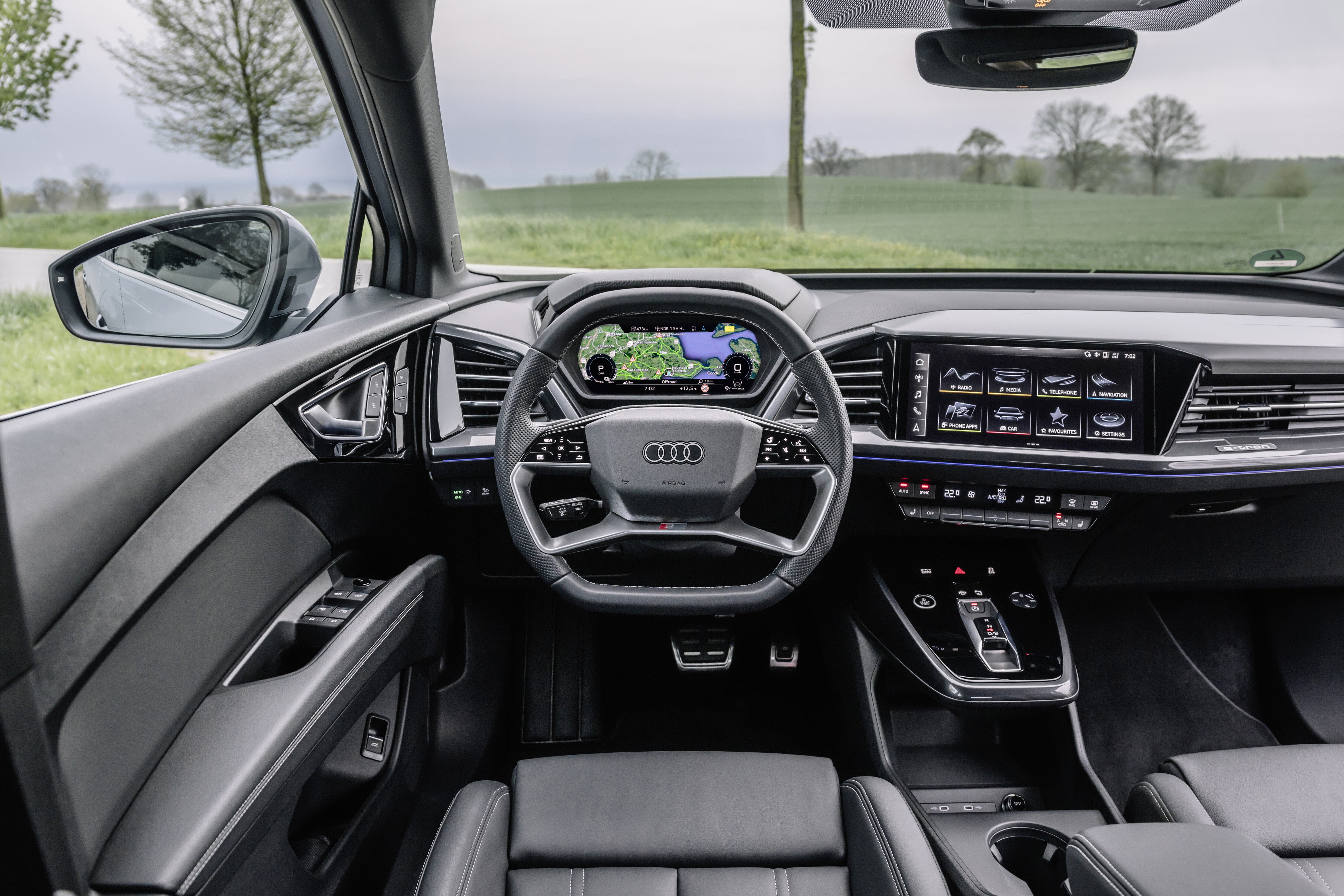
Left to its own devices in the default Auto drive mode, the Audi does a lot of the thinking for the driver, anticipating speed restrictions and junctions, automatically increasing the level of regen as you approach them while prompting you to lift off the throttle to reduce speed and improve efficiency. All while making sure you stay in the right lane.
I like to do my own thinking behind the wheel, however, so every time I climbed behind the wheel, I disabled the lane-keeping assistance to stop red and green lines floating into my field of vision in the head-up display. More importantly, though, this also killed the aggressive reactions through the steering wheel that made the Audi feel truculent if I took a line it didn’t like.
The Q4 Sportback e-Tron has three levels of lift-off regenerative braking – low, medium, and high – as well as a coast mode. All are controlled by the paddles on the steering wheel, though, confusingly, the plus paddle means less regen, while the minus paddle gives you more. To make the Audi’s progress down the road feel more fluid, I mostly left it in coast mode, or the lowest level of regen.
Through the hills, I also quickly learned that the best drive mode is Dynamic. This didn’t just make the Audi feel sharper and more responsive. It put me even more in charge, reducing the interventions from the electronic nannies. What it also revealed, however, is that despite its relatively stiff suspension the Q4 Sportback e-Tron isn’t hugely … dynamic.
There’s plenty of grip and decent thrust, but little adjustability in the chassis. The Audi feels lazy on turn-in and understeers when you go to power. Slow in, fast out; fast in, slow out – it doesn’t matter what you try, the Q4 Sportback e-Tron remains stubbornly one-dimensional in its responses. There’s not a ton of feedback through the steering, and it doesn’t punch out of corners from the rear axle like some other dual-motor EVs I’ve driven.
Like every MEB-platform car I’ve sampled so far, the Q4 Sportback e-Tron is competent but disappointingly dull.
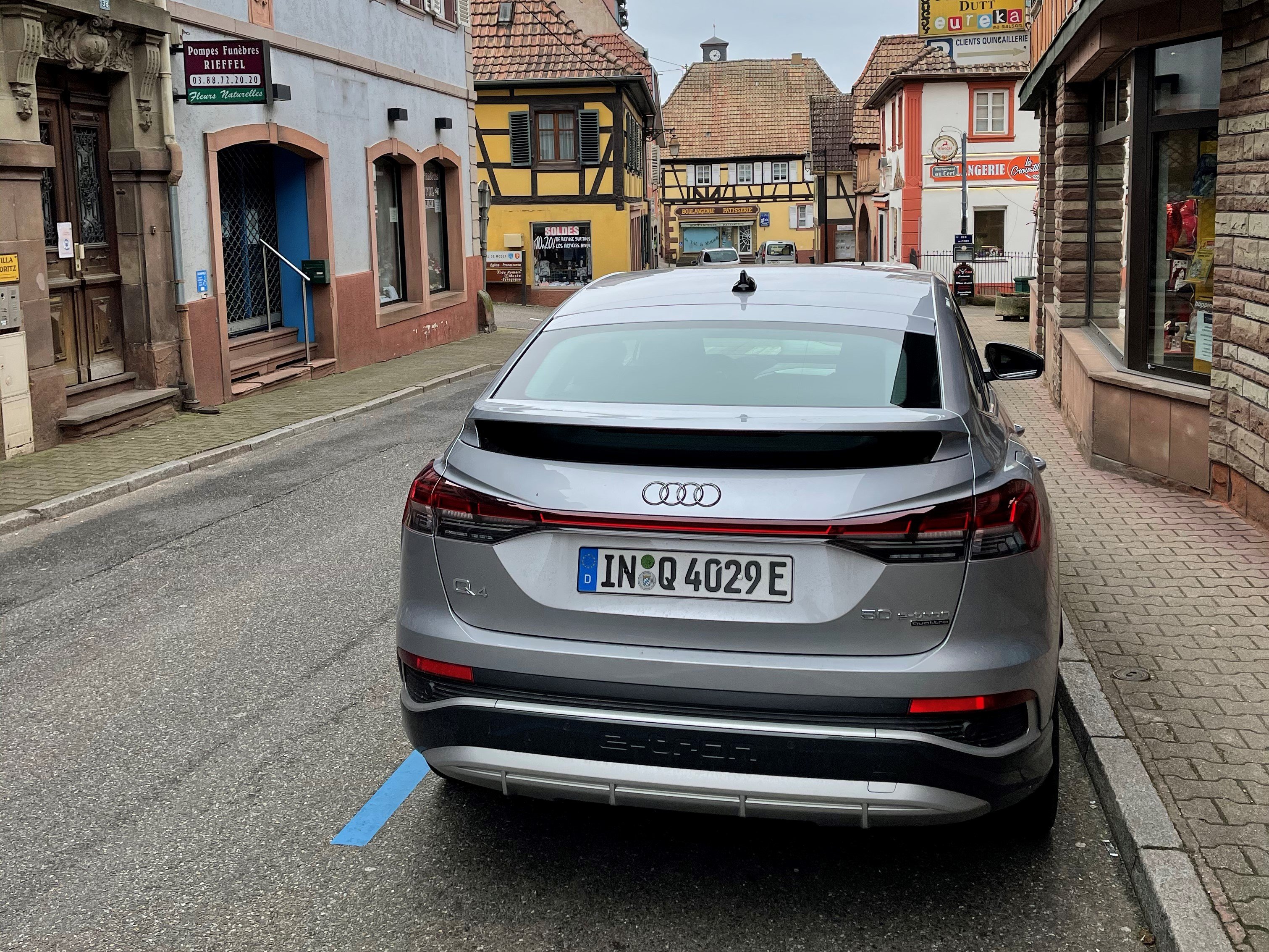
I’m sure Schloss Flochberg was a fascinating place back in the 12th century, but today it’s just a handful of ruined walls atop a wind-blown hill. I’m here because, with the battery charge down to 32 per cent after 170km of mainly autobahn and main-road running, the Audi’s going to need more energy to get through the hills to Stuttgart.
The nav system had immediately directed me to the nearest 150kW charger when asked. It didn’t tell me that the charger was located just outside the gate of a factory in a drab village that seemed devoid of life and, most critically, any sign of a coffee shop. I walked up to the ruined Schloss because, well, there wasn’t much else to do. It took precisely 48.23 minutes for the Q4 Sportback to suck down 45.39kWh, boosting the indicated range to 268km.
Audi’s sat-nav system would prove unerringly accurate over the next few days, showing not only the location of chargers on the map, but also whether they were high-speed chargers – 150kW or better – and with a couple of taps on the menu, whether they were free or not. That allowed me to factor another element into my range and distance calculations – time.
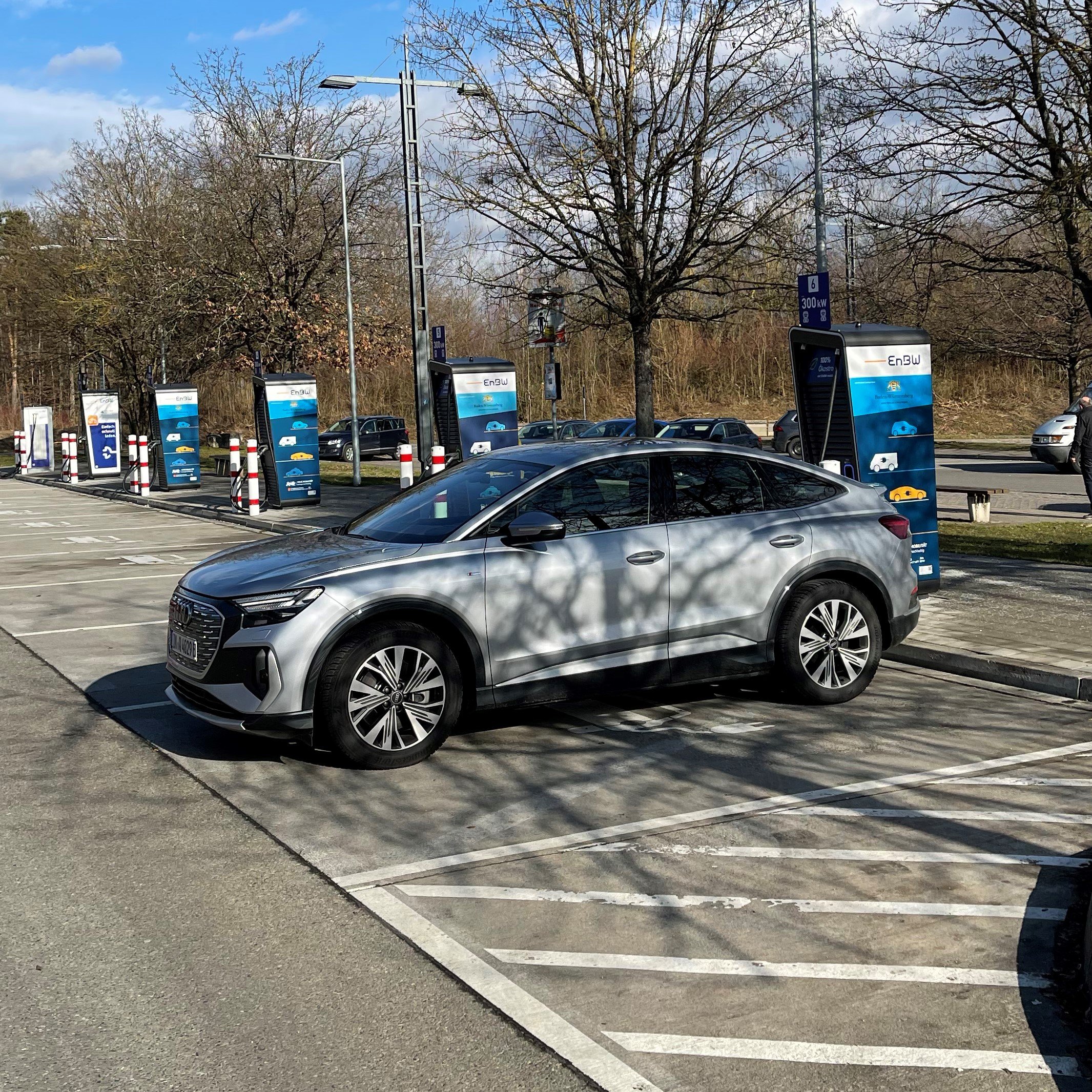
A peculiar characteristic of charging an EV’s battery is that the rate at which it will accept a charge slows, especially once the state of charge exceeds 80 per cent. That, and the fact that batteries aren’t happy being always recharged to 100 per cent, is the reason most EV experts suggest recharging from 10 per cent to 80 per cent is the most efficient, both in terms of time spent at a standstill and long-term battery health.
I found the Audi’s 400V system meant waiting about 50 minutes for a 150kW charger to get the battery from 30 per cent charge to 90 per cent charge, or 40 per cent charge to 100 per cent charge. I proved the worth of a quick ‘park and spark’ strategy – and the potential of 350kW chargers – when I plugged the Audi into one near Stuttgart and the battery’s state of charge zoomed from 11 per cent to 48 per cent in just 15 minutes, adding 115km of range.
The equivalent of a long-range fuel tank on an EV is a big-ass battery. Unfortunately, current EV battery technology is such that big means heavy
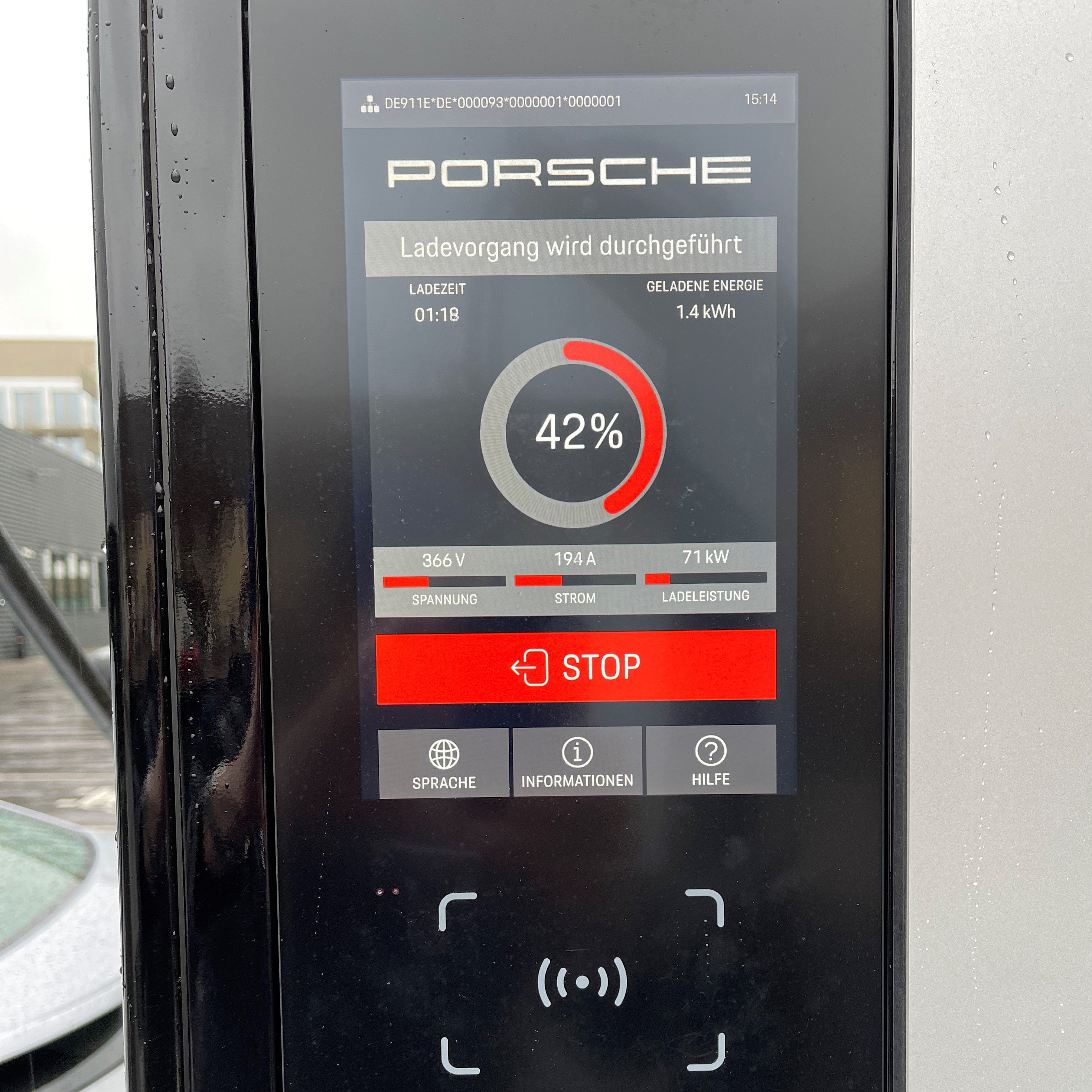
The equivalent of a long-range fuel tank on an EV is a big-ass battery.
Unfortunately, current EV battery technology is such that big means heavy: The 212.7kWh battery in the giant GMC Hummer EV Pickup recently launched in the US weighs as much as a Honda Civic.
What’s more useful is a fast charge rate. If the Audi had an 800V architecture like Hyundai’s Ioniq 5 and Kia’s EV6 – or Audi’s own e-Tron GT for that matter – my time spent at 300kW or 350kW chargers would have effectively been halved.
Efficiency? Over six days I put 250.7kW into the Q4 Sportback before finishing back at Munich Airport with an indicated 26 per cent of battery charge remaining. A quick back-of-the-envelope calculation suggested the Q4 Sportback e-Tron therefore used a total of 307.4kW to cover 1140km, which translated to consumption of 27kWh/100km.
That’s worse than the 17.9kWh/100km to 21.3kWh/100km Audi claims under WLTP, but to be fair I didn’t treat Q4 Sportback with kid gloves, upping my cruising speed on the autobahn to 140km/h-145km/h, with a couple of bursts to verify the claimed 180km/h top speed, and hustling the car along winding country roads in Germany and France. It was cold, too, the mercury hovering around five degrees C, with blustery headwinds on much of the journey west.
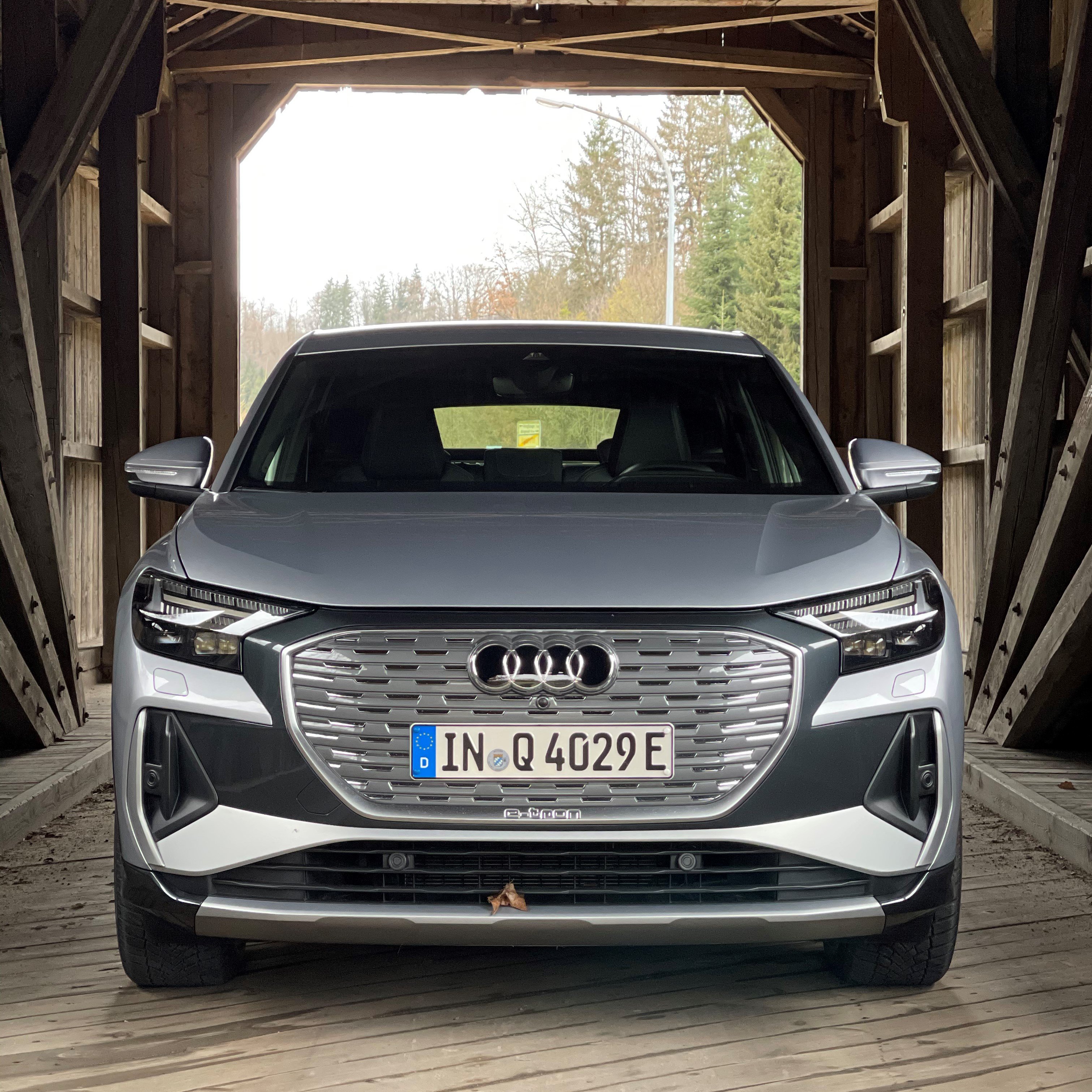
And the single most important thing I learned after 1140km in an electric vehicle? Infrastructure is everything. Germany has in just a few years built a charging infrastructure that makes it possible to drive an EV the length and breadth of the country.
Yes, Germany has 70 times the population density of Australia. But Australia has fewer major population centres, and fewer roads connecting them. In the context of previous Australian national infrastructure projects, it wouldn’t take much effort or investment to install a network of 350kW chargers at key intervals along the major highways connecting all our capital cities.
Long-distance journeys in EVs would then be viable and practical.
Just make sure there’s a decent coffee shop at each of them.
The year of 1997 was marked by a number of memorable milestones in Australia. Among them, Pauline Hanson founded the One Nation party, Celine Dion released her album Let’s Talk About Love, and Melbourne’s Crown Casino finally offered an answer to the question: what am I going to do with all this cash I’ve been saving for the kids’ education? But it wasn’t all bad news.
During the same year, a little-known car manufacturer opened its doors selling an affordable range of cars from the Czech Republic, offering a European marque without the premium price tag. But despite all of these things happening a quarter of a century ago, Skoda is still regarded as a relative newcomer in the Australian market.
Since it started trading locally with the Octavia and Roomster, the winged arrow brand has steadily grown its presence to seven models, enjoyed more than 50 percent growth in early 2021 and now has a national network of 45 dealerships and service centres. But still, many regard Skoda as ‘new’.
In fact, Skoda is one of the oldest car manufacturers on the planet with a rich history of racing, innovation, success and adversity that reaches back 100 years before its local launch.
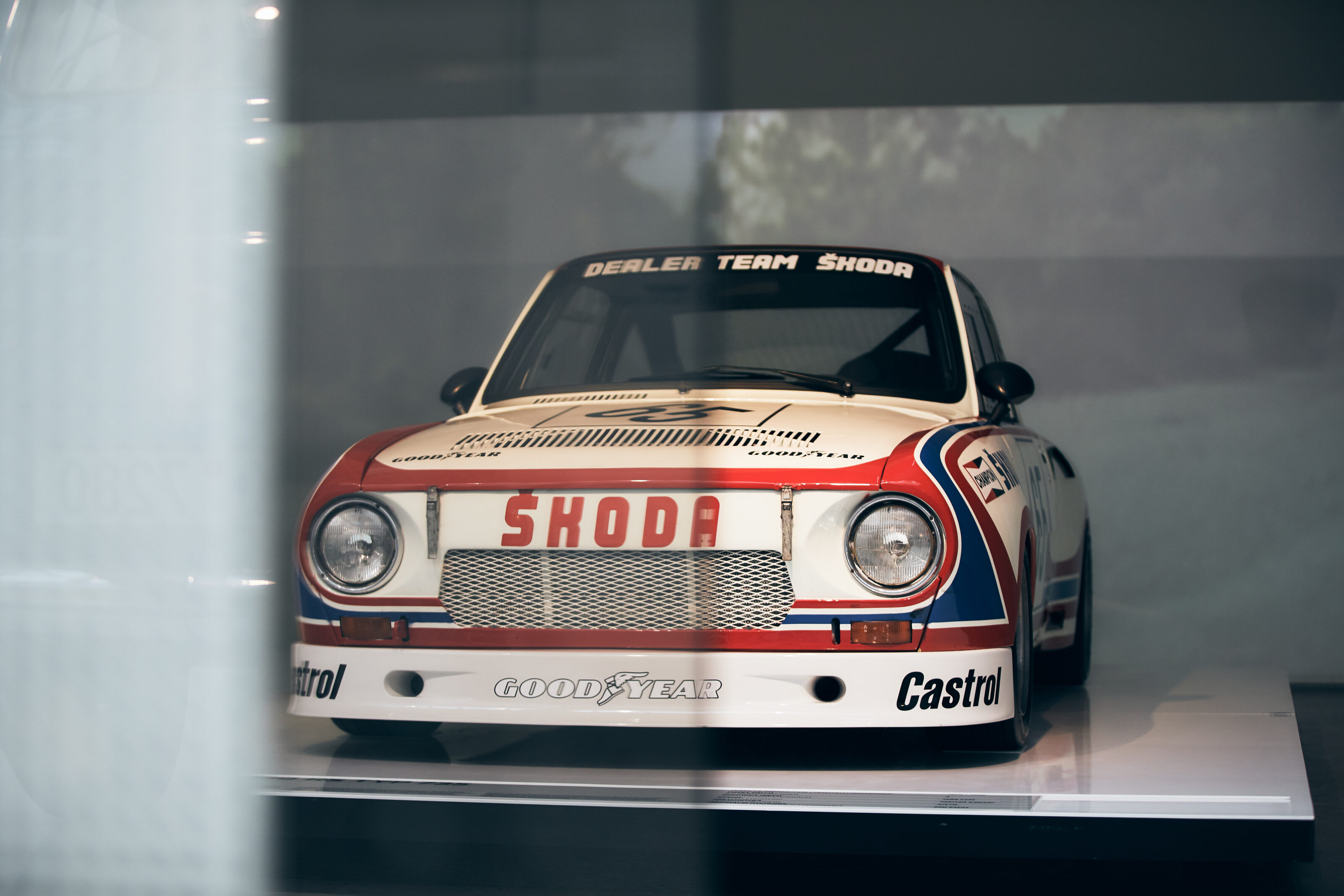
And almost the entire story is housed in a building nestled within the manufacturing facility of Mlada Boleslav 50 minutes outside Prague.
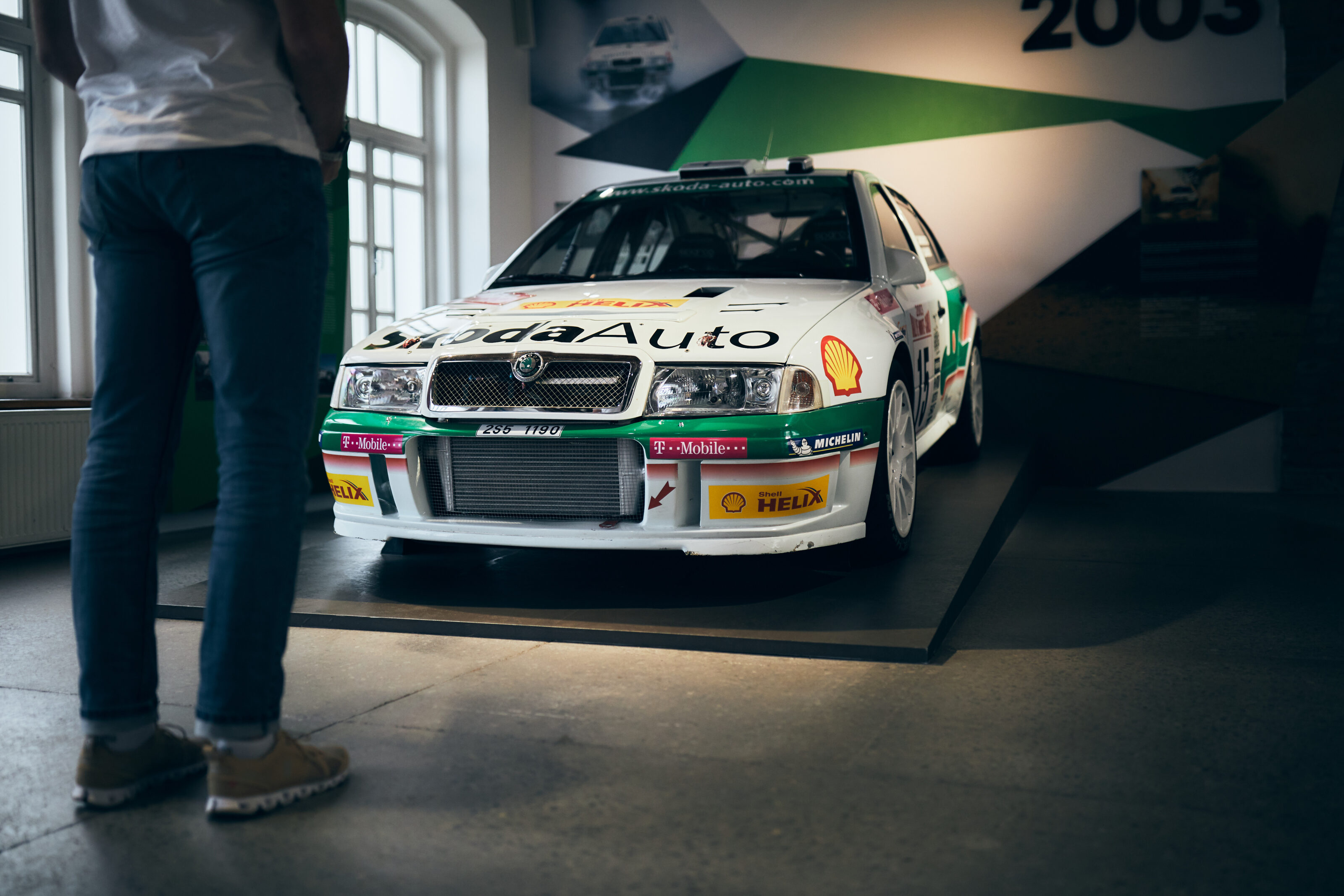
Awaiting visitors in the foyer is Kalle Rovanpera’s Fabia R5 – a humble brag and a reminder that Skoda is enjoying a bit of a purple patch. With more than 400 sold, the €200,000 factory-built rally machine is not just a hugely popular motorsport model but easily the company’s most successful racing car to date.
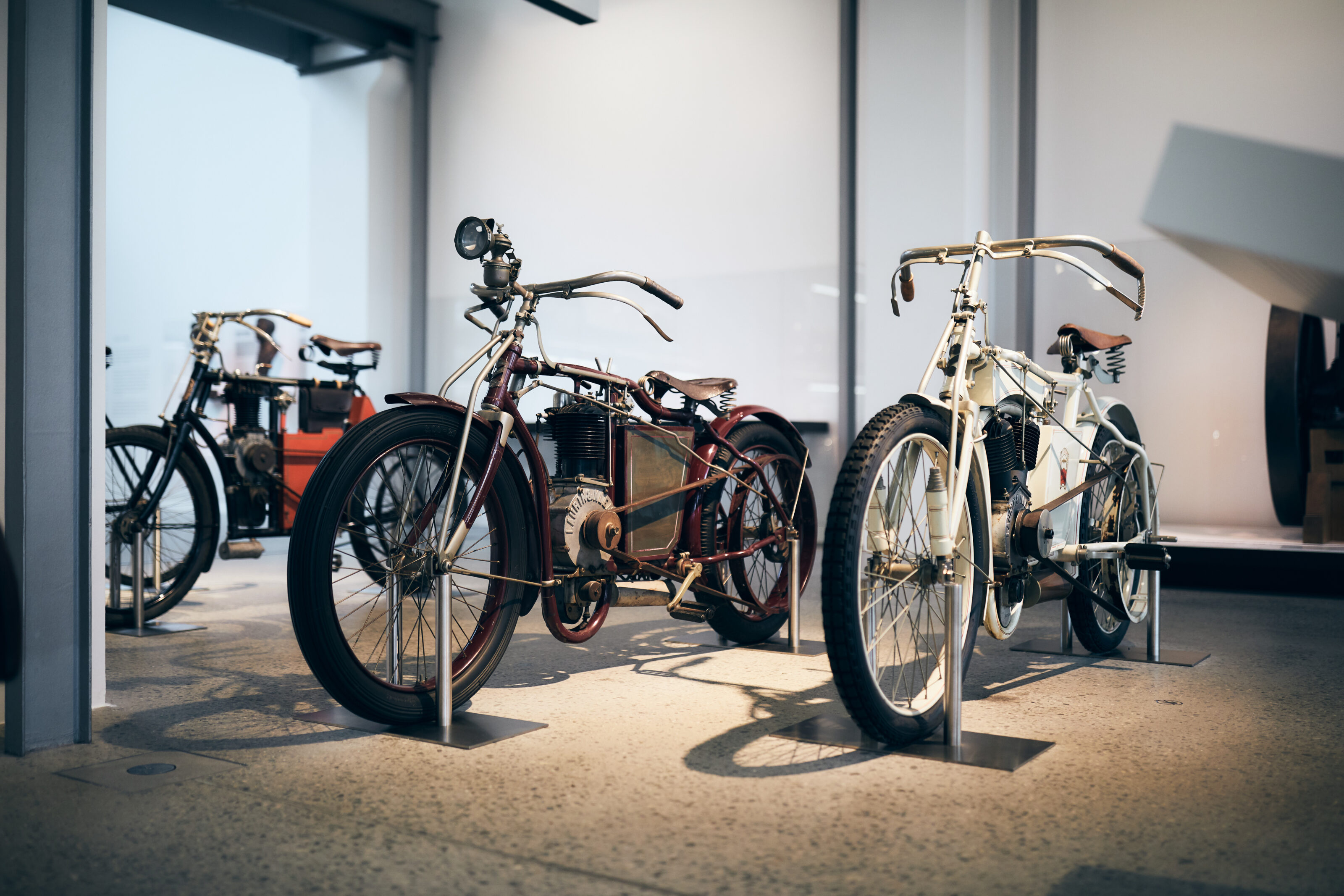
Next to it sits a slender and elegant motorcycle from the early 1900s and one of the very first vehicles to emerge from the Laurin and Klement partnership that would become Skoda as we know it today. It’s a poignant welcome, a dramatic illustration of Skoda’s path from genesis to today, and all the stuff in between lies in the catacombs beyond.
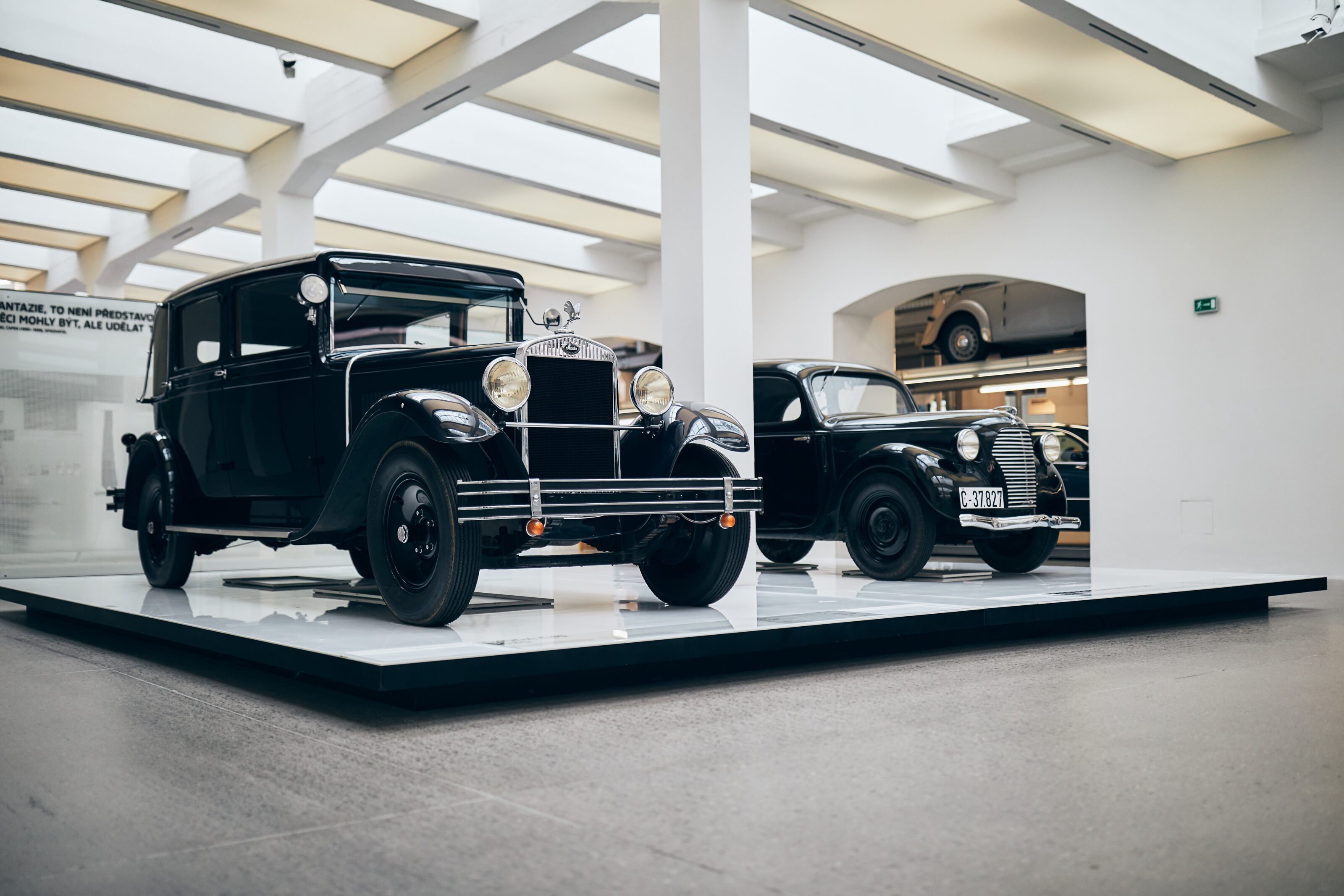
The very origin of the Skoda empire can be found in bicycles, motorcycles, and stationary engines spanning at least a decade before its first car – the Voiturette A emerged in 1905 – and the halls are littered with exhibits. Amazingly, each of the 300 vehicles housed in Skoda’s private collection – including the primitive two-wheeled models and its very first car – all start and drive.
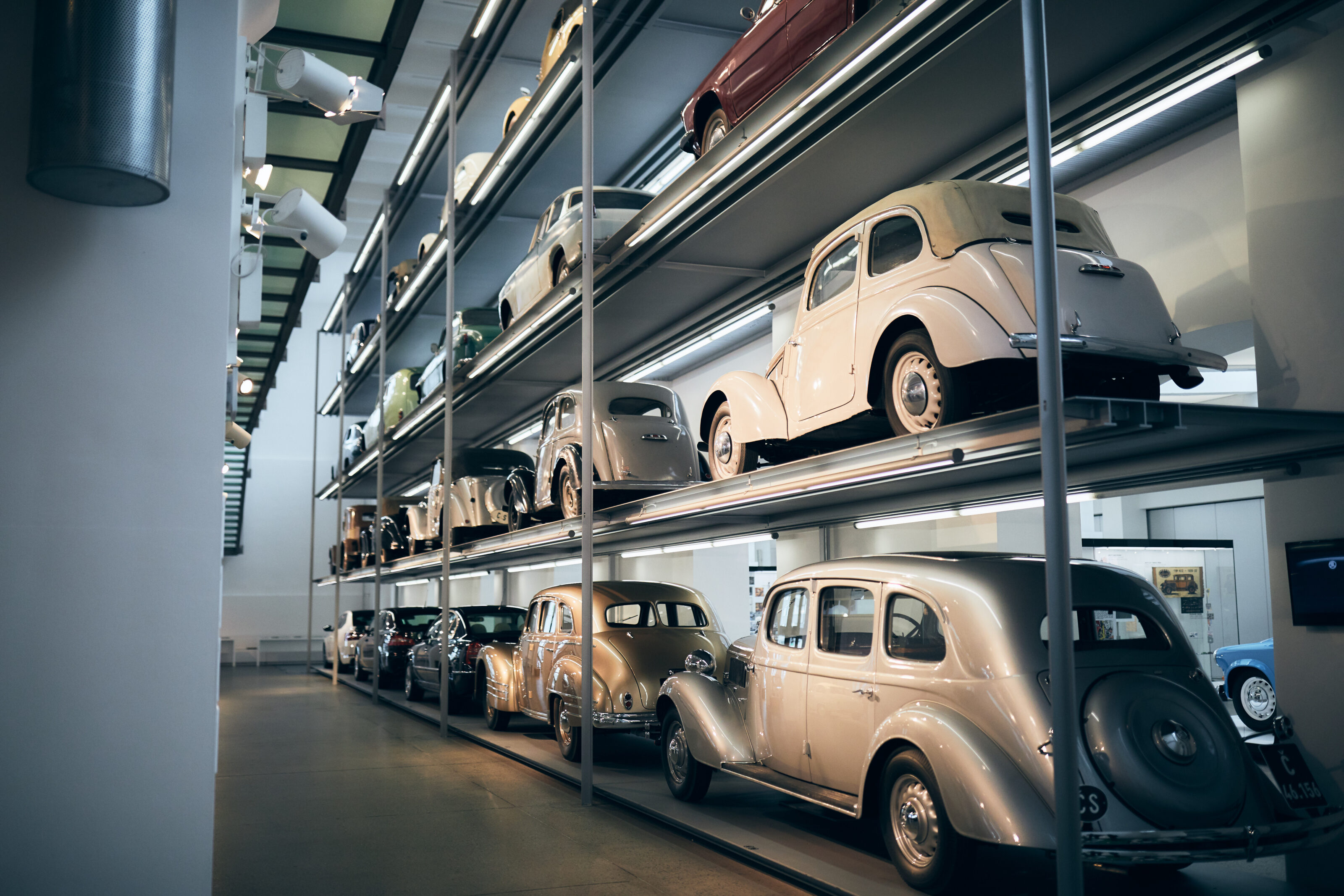
Almost as staggering is how long many of the Skoda model names have been running. Stacked in giant shelves from the entrance is the entire bloodline of the Superb spanning eight generations starting not in 2001 as many websites will have you believe, but 1934 with the Type 640. It’s a similar story for the Rapid which was born in 1935, and the Octavia and Felicia which kicked off in 1959.
There’s no shortage of cool monikers the company can call on for future retro and revival projects. My money would be on Trekka for a model that shares the VW Amarok’s oily parts. And if there’s any weight to that theory, the Trekka would make a return to the southern hemisphere with the Land Rover Series II-like model previously designed and built in New Zealand from 1966.
Many of the cars here didn’t look quite as fresh when they came into Skoda custody, so the site also houses a restoration centre with a seven-strong team of craftspeople. The collection is still acquiring Skodas of all ages through donations, barn-finds and active searches for significant cars. Restoration actually starts with a complex identification process.
Such is the diversity of the brand’s model range over the years, recognising the exact model and variant on first inspection is rarely possible. Once it’s identified, the car is stripped to nuts and bolts before the remanufacturing can begin. For the older race cars, the team works by the mantra, ‘An hour on the road, 10 hours in the workshop’. At the time of our visit, the museum was preparing to unveil its latest project – an 1100 OHC coupe – of which only two were built.
Skoda is one of the oldest car manufacturers on the planet with a long and rich history
Of course, there are glass cabinets stuffed with significant Skoda memorabilia and artefacts in addition to the many vehicles on show. An evolution of the bonnet badge, trophies and tortured pieces of sheet metal are not difficult to explain but I need a little help when it comes to a sleeping bag packed in among the treasures.
It’s easy to forget how people used to buy cars without the ease of online ordering and to-your-door services offered by many brands today, but if you wanted to buy a Skoda in 1960s Czechoslovakia, camping at a dealership for up to four days was necessary to order and after that, customers went on a waiting list of 10 to 15 years. Think about that next time you roll your eyes at a lead time of a few months.
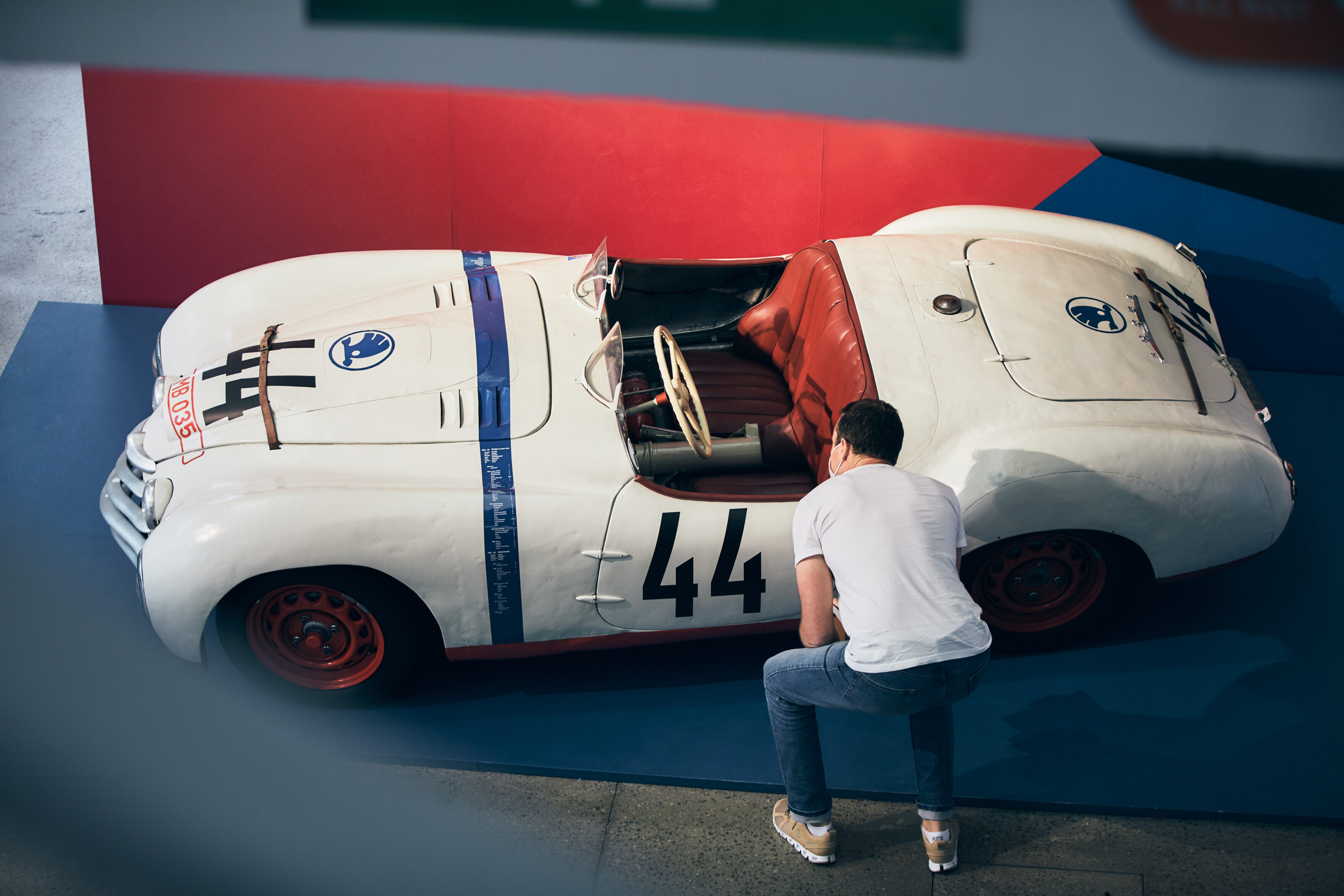
Each corner turned reveals another eye-opening machine. A 12-cylinder 450hp aero engine; one of only 10 Skoda Superbs from the first generation fitted with a V8 engine (six cylinders were standard), while the Vision iV and Vision RS concepts are the museum representatives of present and future. The former has only just been revealed as the precursor to the Enyaq Coupe EV, while the latter will become the production Scala RS. It feel strange but warm being simultaneously immersed in such a long line of Skodas from the earliest to ones that even pierce the bubble of the unknown.
All of the exhibits thus far have been available for public viewing since the museum was redeveloped and expanded in 2012 but next, our guide leads us to one of Skoda’s three depositories containing a selection of special cars that you definitely can’t just turn up and see.
This particular unassuming building houses a fleet of past concepts and racing machines providing a kaleidoscope of pumped panels, lurid colours and radical designs that appear familiar but jarringly unconventional and new all at the same time. One deep crimson design study wears the nose of the early 2000s Superb but its body has been smoothed into the form of an elegant three-door, while the Tudor has the presence and scale of a Rolls-Royce Wraith.
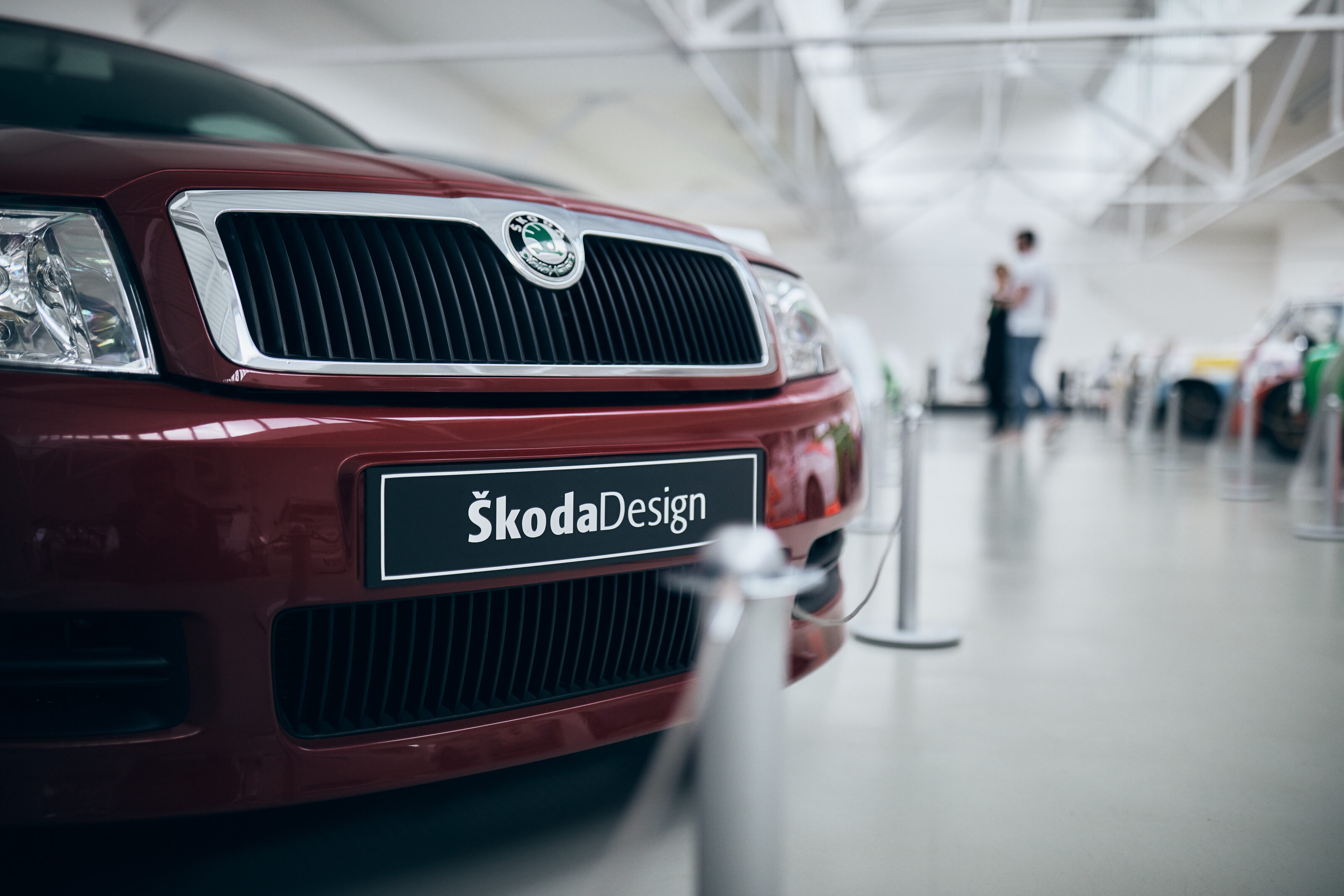
Next to it is the concept that forged the Yeti, highlighting the few details that changed between it and the production model. Its neighbour is the stillborn Ahoj! – a car that would have taken the fight to the Fiat Panda if only it had made the grade.
A trio of 1960s open-wheeled single-seat race cars adorn the stage at the end of the long room, including the Lucia F3 and F3 Type 992. These add another string to this brand’s bow I was previously oblivious to, along with a whole row of circuit and rally machines that flank the other side of the building. A fluoro red and white 130 RS A5 engine-proving prototype draws my eye with its incredible stance and aggression that couldn’t be more removed from the dumpy road car it’s based on.
This ‘Silhouette Car’ packed a 140kW 1.6-litre twin-cam 16-valve engine and could crack 250km/h – not bad for the late 1970s. In fact, a less heavily modified version of the 130 RS situated in the main museum is the vehicle responsible for one of Skoda’s greatest motorsport victories. In 1977 the car won the Monte Carlo rally, earning it the nickname “Porsche of the East”.
Buying a Skoda in 1960s Czechoslovakia meant camping at a dealership for up to four days
We stroll on back through the main building and with the reliability of a lie-detector, it’s possible to grade my emotional response to each car with the speed of my paces. Alongside the ridiculously pretty 1100 OHC Spider and Skoda Sport I slow to a crawl but, during the whole visit, my footsteps are never slower than when we come to the Skoda 105 and 130.
These models represent arguably the most awkwardly styled and certainly among the least-reliable in Skoda history, but they’re also the ones I remember as a child copping mire and flak for being as terrible as they were. Even our guide knows the joke about why they had rear-window heaters (to keep your hands warm while pushing them, if you were wondering).
But shortly after this generation came the switch from rear-engine to front-engine and front-drive in the form of the Favorit – another that received widespread criticism and, I’m sorry, but reminding the world it was designed by Bertone makes it no prettier. It’s hideous – even the near-perfect 52,000km example here. But what makes these cars so captivating for me is what happened next.
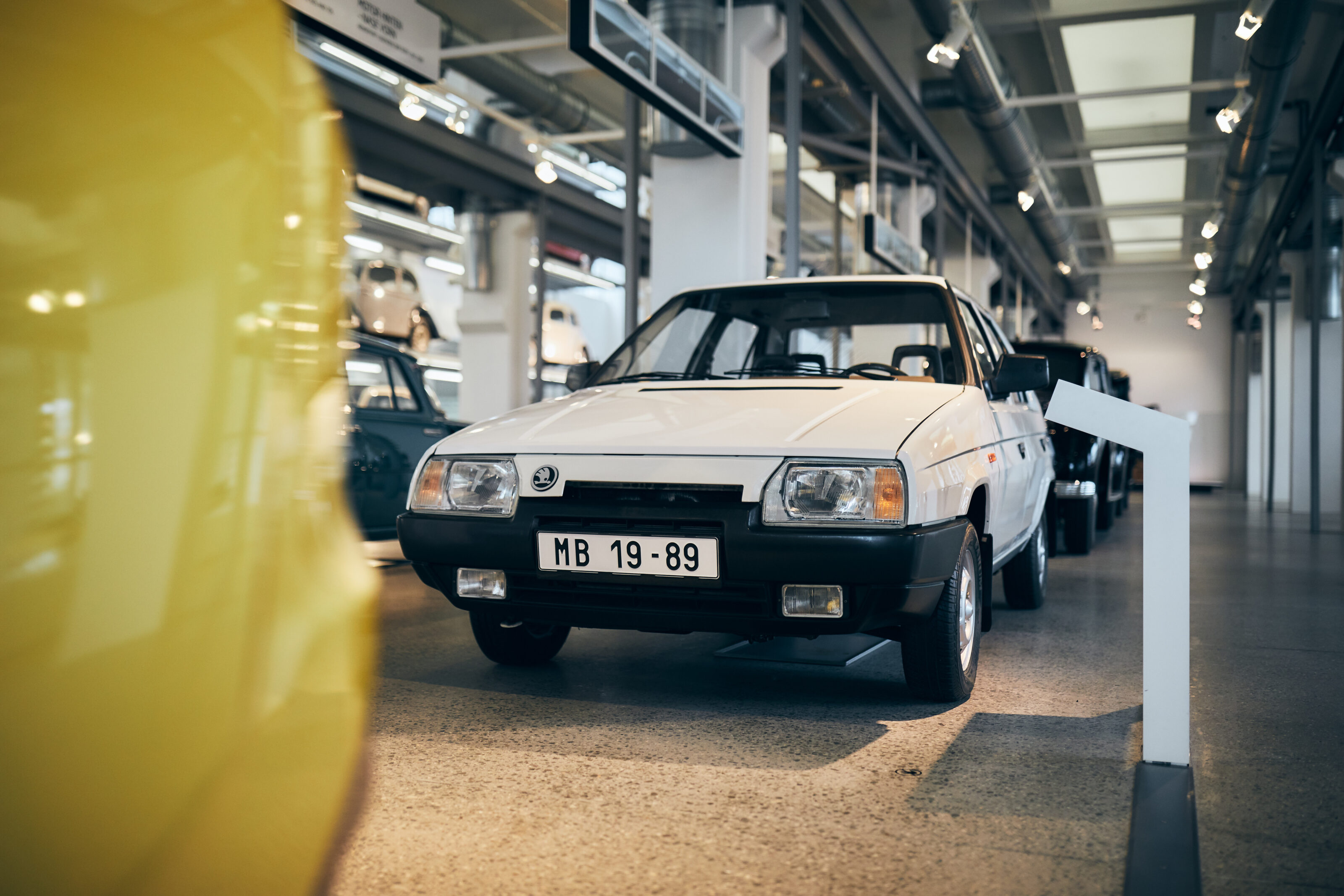
In 1995, the company wheeled out its successor to the Favorit; an all-new small hatchback named the Felicia. But like archeologists trying to connect primates to modern humans, there appeared to be a significant missing link in the visual and mechanical timeline.
In person, it’s benign but sweet and universally likeable, dependable to use and irrefutable evidence that, from 1991, Volkswagen had skin in Skoda. From this point on, the company went from teetering on the precipice of disaster to a veritable renaissance and the rest is history on show.
But perhaps the most intriguing exhibit in Skoda’s precious swag of treasures is the one that isn’t here yet. Such is the comprehensiveness of this trove of cars evolving from the earliest to the most ambitious, documented by an almost unbroken bloodline, it’s possible to plot more points on the graph and follow the trajectory through recent concepts onto what the Skoda of the future will look like. It’s radical.
Along with more practical ‘simply clever’ innovations, the crystalline sculpting and unmistakable design language will become something even more visceral – and keep your eyes on a certain tax haven in the Mediterranean, too.
Personally, Skoda won my respect as soon as it started demonstrating it could offer something different despite being somewhat constrained by its shared VW family DNA, but a visit to its hallowed halls reveals a wonderfully rich tapestry of achievements spanning more than a century and a unique identity that suddenly makes more sense.
Skoda has no plans to deviate from its innovative, unapologetic path, and the next chapters in its evolution promise to be even more polarising and bold than any before. The best evidence of that comes not from squinting at the horizon, but staring wide-eyed at its past.
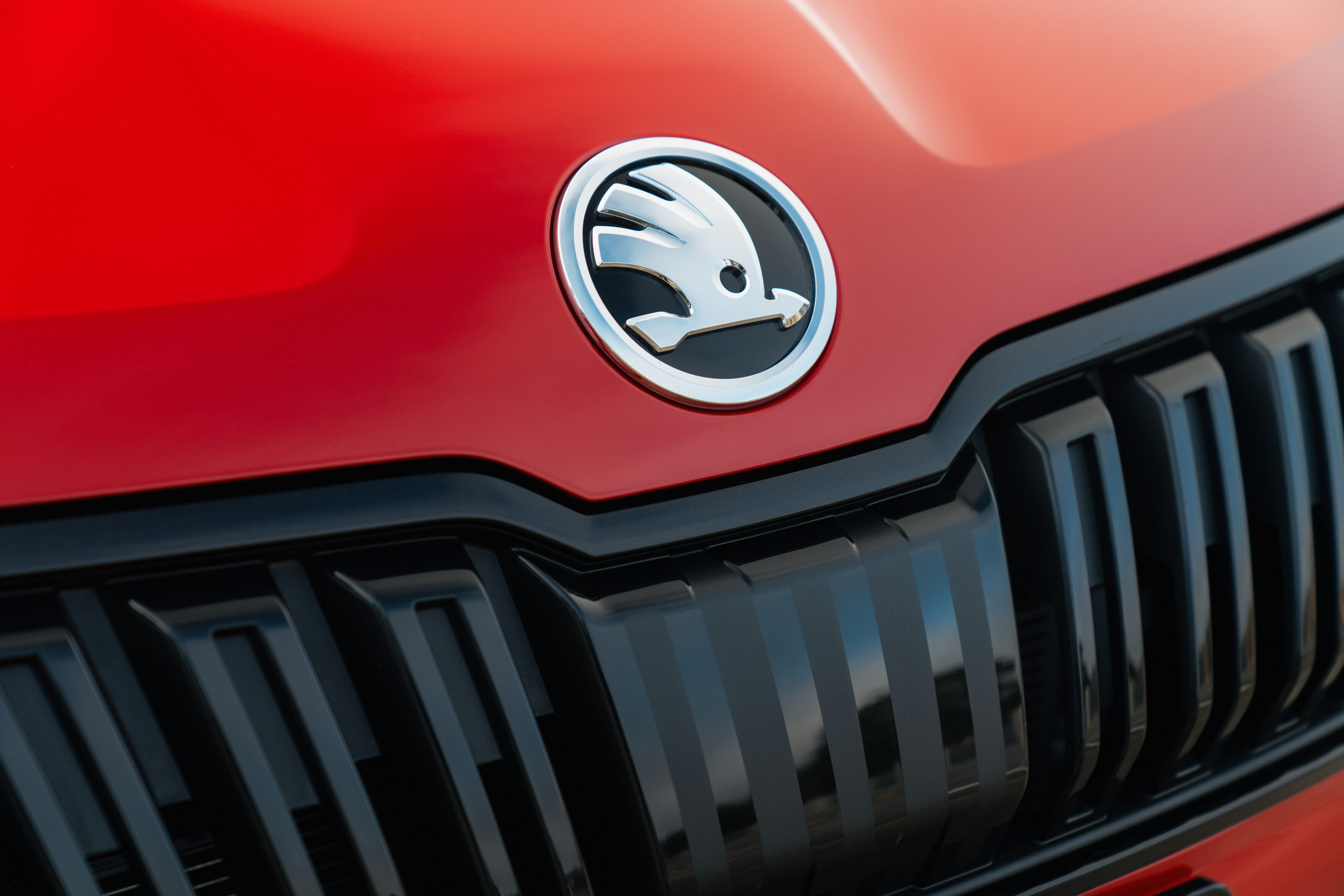
Closer look: Skoda’s badge explained
The winged arrow Skoda badge as it’s known today started appearing on models in 1927, and was inspired by a native American Indian headdress. The arrow element represents the company’s mission to pioneer manufacturing using advanced metals, the wings are a symbol of global export and the eye is said to represent a focus on precision engineering and accuracy.
The Skoda name came earlier in 1925 when the founder company Klement and Laurin merged with a machinery manufacturer adopting its name. The word skoda has unfortunate connotations in the native Czech tongue meaning ‘a pity’ or ‘damage’ but the merger was anything but, enabling the company to radically scale up production.
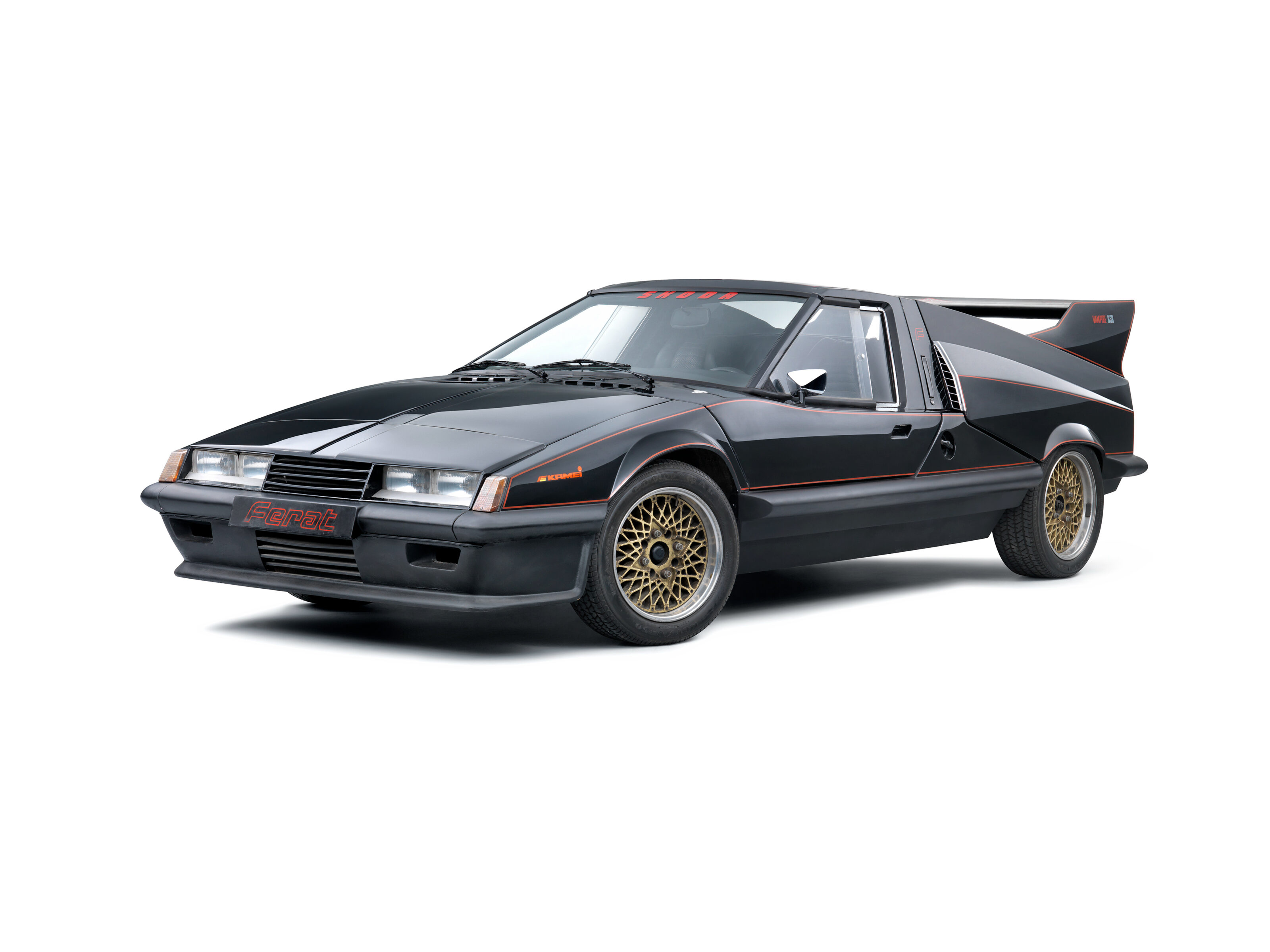
Up in lights: Screen queen
In 1971, Skoda produced two examples of a 110 Super Sport concept – a radical wedge-shaped sports coupe, but one would go on to have a far more interesting life. In 1981, designer Theodor Pistek significantly modified one of the vehicles, deleting the pop-up headlights, and applying a Batman-style paint job and massive rear spoiler.
It was created for the starring role in a sci-fi horror feature film entitled The Ferat Vampire in which the car ran not on petrol but the blood of the driver sucked through its accelerator pedal. Lord only knows what its emissions were but this could be the first true eco-car to wear the Skoda badge. Now that’s what we call a re-vamp.
Herbert Diess was right. The Ionity charging station wasn’t great. The VW Group boss had given it a scathing appraisal on Linkedin a couple of months earlier.
Though written in German, the post got widespread attention across Europe and the USA.
“No bathroom, no coffee, an out-of-service/broken charging point, a sad state of affairs. It was anything but a premium charging experience, Ionity!” he wrote. Diess was heading off for his summer holiday, and it wasn’t going well.
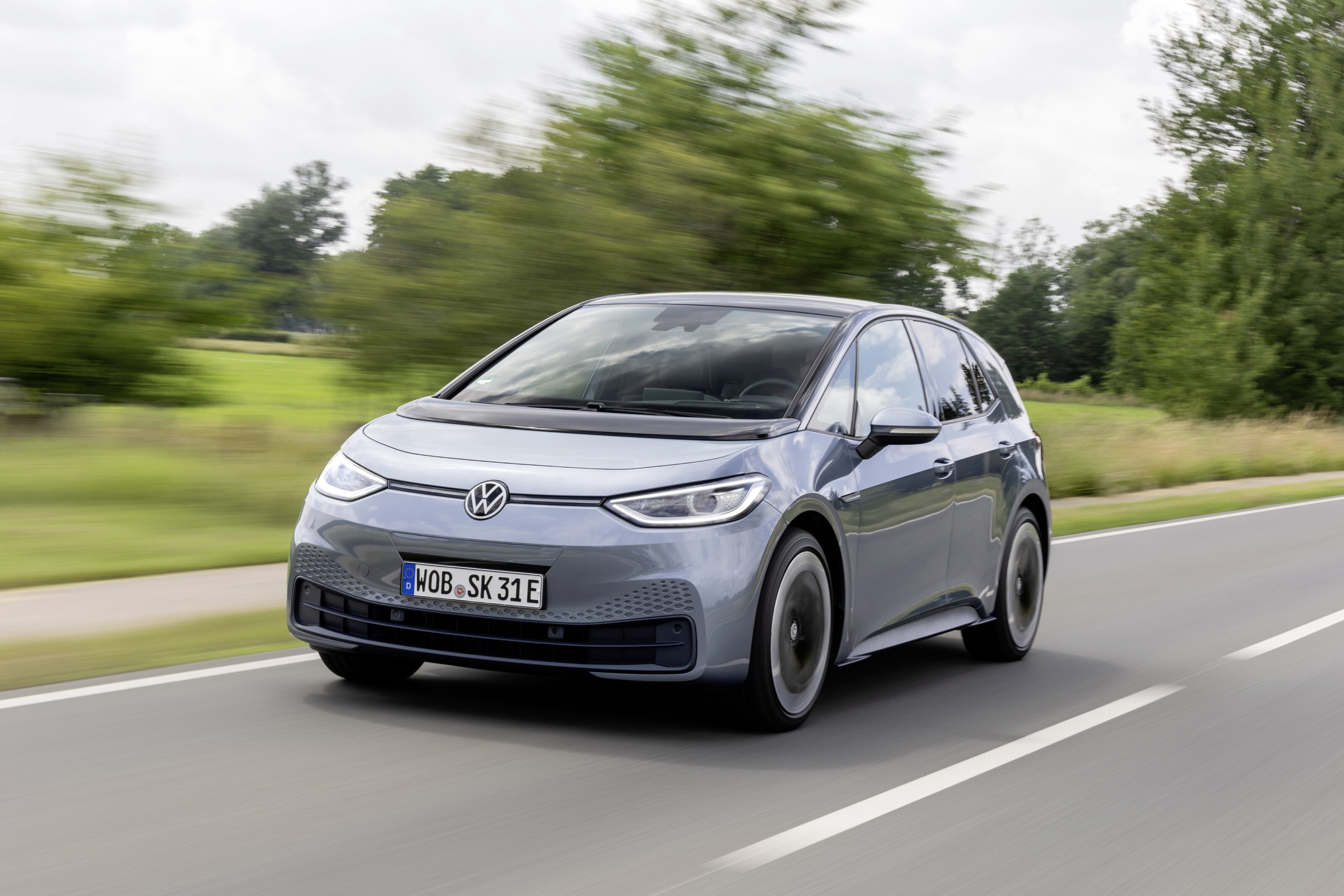
The exec was driving an EV, a VW ID3 Pro, south from Germany, across Austria, and on to Italy. None of the four DC fast chargers at the Ionity station at the top of the Brenner Pass between Austria and Italy was available, which must have been mildly annoying. So he chose to drive another 140km south to Trento, site of the next Ionity station on his route.
By this time the VW must have been running low on energy. The ID3 Pro comes with a 58kWh or 77kWh battery pack, depending on the variant. The smaller pack is good for a real-world range of around 350km, the larger around 450km.
Maybe you’re wondering why he didn’t simply check his options with other charging networks. Good question. And one with an intriguing answer…
Diess’s criticism was newsworthy because VW Group is a part owner of Ionity. The German giant invested a reported €200 million in a joint venture with BMW Group, Mercedes-Benz and Ford to launch Ionity in 2017. They’ve since been joined by Hyundai.
The electrons weren’t flowing. Even worse, the charging cable was locked into the VW’s charging port and wouldn’t release
Understandable, then, that Diess would choose to use Ionity. His holiday drive was a chance to check on how VW’s investment was performing. That’s certainly how plenty of commentators interpreted his post… which I wish I’d seen earlier than I did.
I didn’t know it at the time, but I connected my ID4, borrowed from VW Italia, to exactly the same Ionity charger in Trento as Diess in his ID3 a couple of months earlier.

The electrons weren’t flowing. Even worse, the charging cable was locked into the VW’s charging port and wouldn’t release. So I was tethered to the spot. And there wasn’t enough charge in the battery to be certain of reaching my weekend getaway destination in the Dolomite mountains.
The four chargers were right beside an Eni service station, but the place was closed. Nowhere convenient to take a pee or down an espresso, then. There was nothing nearby, either. The station was in a business zone on the city outskirts that was dead and deserted on this Saturday afternoon.
But it was conveniently close to an exit from the A22 autostrada, which is one of the reasons I’d planned to stop here. The other was that it had four 350kW DC fast chargers.
The ID4 can’t use all that power. Its maximum DC fast-charge rate is 125kW, but the other chargers I found when researching the route were 50kW units. These would take more than twice as long to charge the VW. So I signed up with one of the big Italian charging networks that offers Ionity access and downloaded their app.
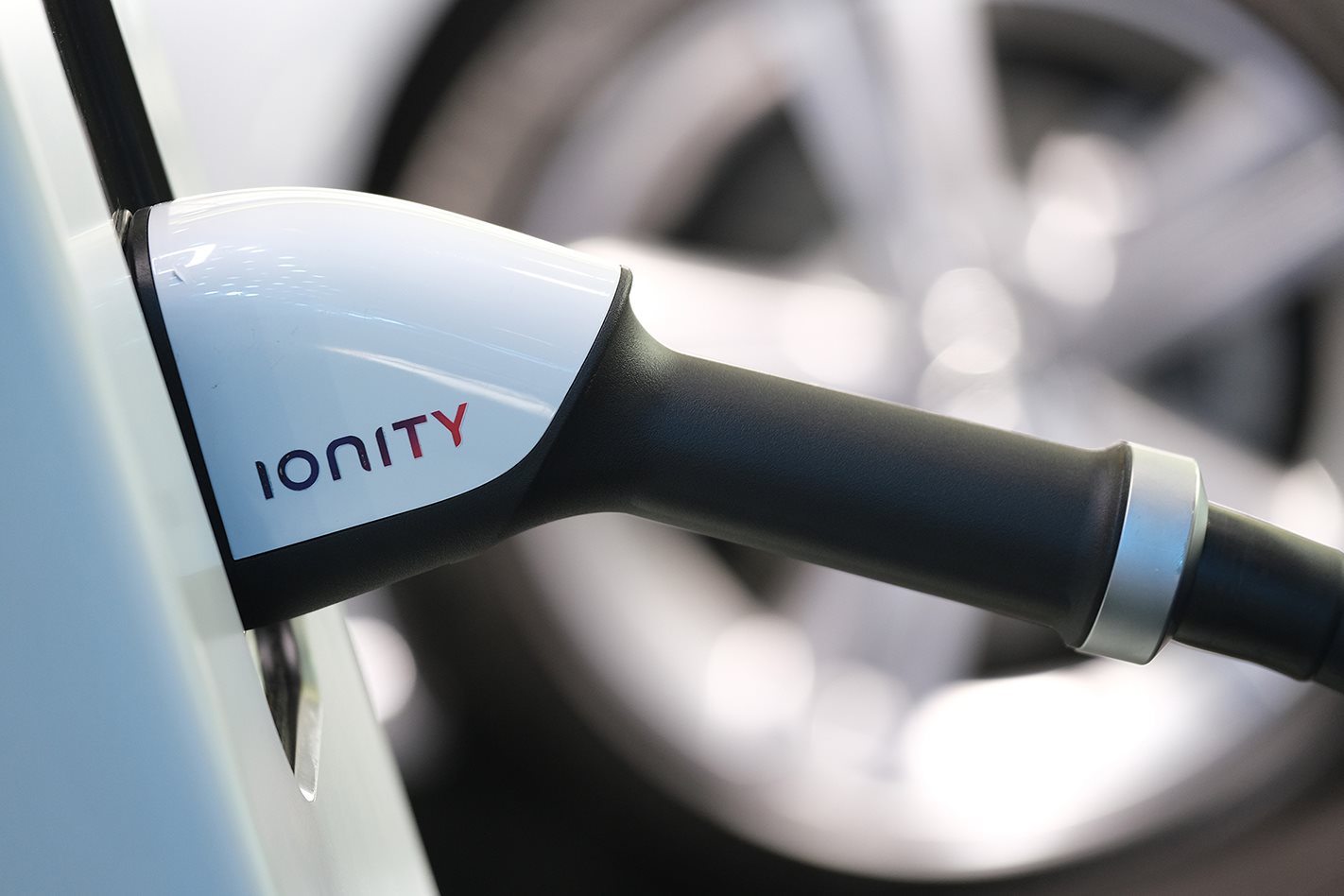
It took some time for the Ionity helpline to solve my Trento problem. From a call centre many miles away in London they were able to remotely release the ID4 from the faulty charger and initiate a free-of-charge recharge from the adjacent unit. The 50 percent fill would have cost the equivalent of $45; Ionity’s prices for 350kW charging are very high.
Australia may lag most of the wealthy nations of the world when it comes to EV adoption, which means a chance to avoid the mistakes others are making.
A network of DC fast chargers will be absolutely crucial to making EVs practical for long-distance driving in Australia. The number of stations installed is the obvious and easy way to measure progress. But charger location and reliability are critically important factors too, as Herbert and I have both discovered.
Snapshot
- 338 Taycans recalled
- ISOFIX anchor point access may be impaired
- Porsche to carry out the fix free of charge
A recall notice has been issued for the flagship Porsche Taycan, affecting just under 400 Australian units.
According to the German manufacturer, the wiring harness for the rear seat-belt buckle may impair the access to the ISOFIX child seat anchoring system, preventing it from being secured properly.
If the child seat isn’t correctly installed, it could lead to serious injury for occupants in the event of an accident.
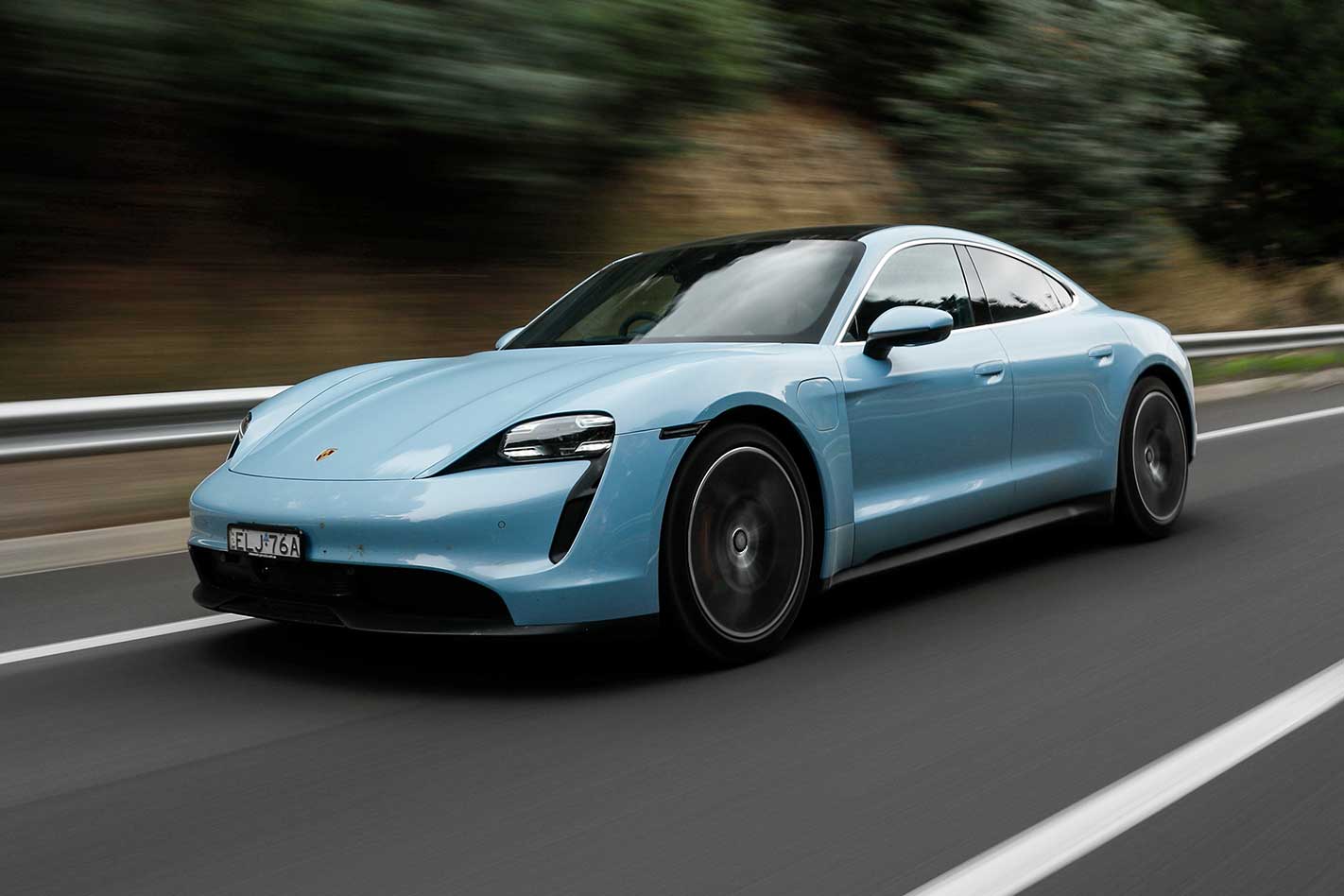
A total of 388 vehicles built between 2020 and 2021 have been recalled, with Porsche offering to fix the issue free-of-charge for owners.
Owners are encouraged to contact their preferred Porsche centre for the work to be carried out.
A list of affected VINs can be found here.
Would the Mercedes-AMG GT Black Series have been able to beat Porsche’s 992 GT3 into second place if it had bowled up at Phillip Island this year? Eyebrows will undoubtedly be raised by the fact that Affalterbach, fresh from their maiden PCOTY win with the GT R Pro last year, didn’t supply an example of the Black Series to throw into Australia’s premier performance car competition.
The more world-weary among you might well look at the Porsche 911’s record of success in PCOTY and reason that perhaps Mercedes-AMG felt that putting anything up against a new 911 GT3 was putting them on a hiding to nothing. The reality is a little more prosaic. Put simply, all the cars had gone to their new owners and no vehicle was available for testing. But how would it have stacked up had it made the starting line?
There aren’t too many people who have driven a Mercedes-AMG GT Black Series and a new Porsche 992 GT3 flat-out around Phillip Island but I’m lucky enough to be part of that number. Given that I’m also chair of the judging panel for PCOTY, I find myself in a strangely qualified position to comment.
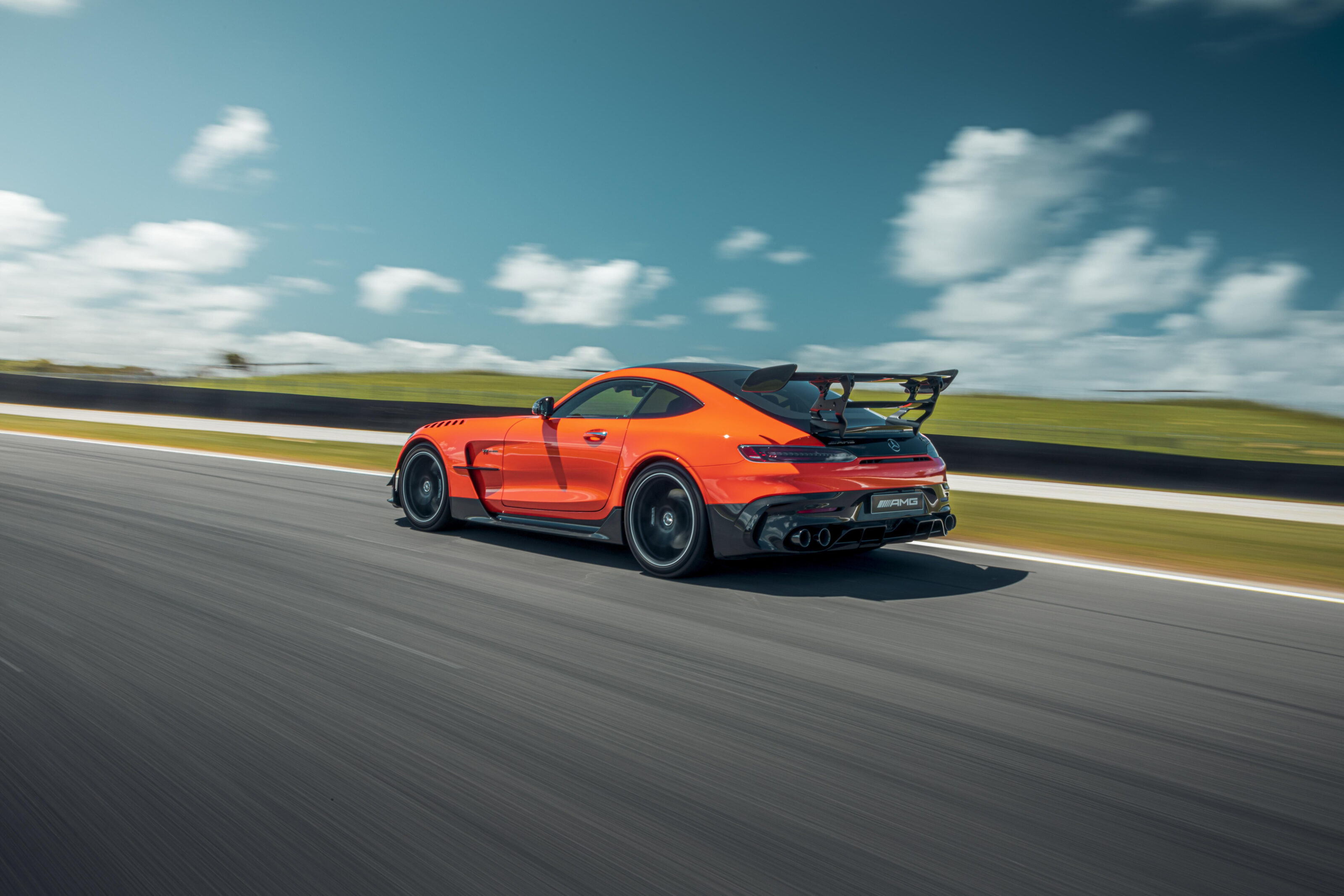
It wouldn’t have struggled to lay down a decent lap time, that’s for sure. The Porsche scorched to a 1:39.7 mark around the GP circuit, making it the quickest production car MOTOR has ever tested there. Only the Porsche 918 Spyder hypercar has registered a quicker time.
Look at other tracks that are comparable to Phillip Island, such as Hockenheim GP, and the Black Series (328kW/tonne) easily eclipses the 992 GT3 (258kW/tonne) in that instance by 2.5 seconds. It’s 2.5 seconds quicker at Sachsenring and four seconds quicker around Bilster Berg.
Even allowing for an unfavourable engine position for sprinting off the line when compared to the Porsche, the AMG is also just quicker over the standing quarter.
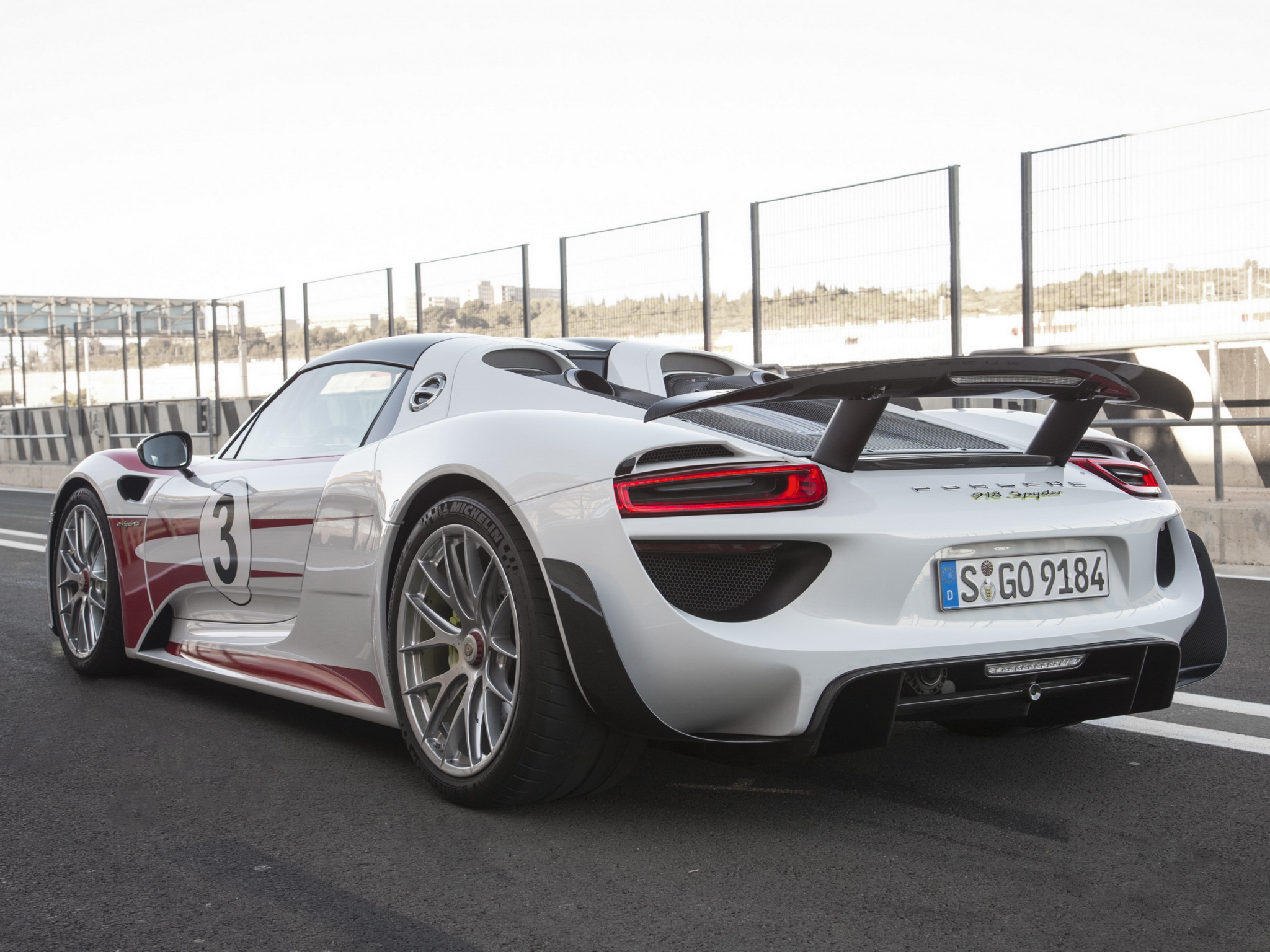
So the stats says so and the seat of the pants also tells me that the AMG would have the Porsche’s measure on track. Taking away that absolute measure of superiority at PCOTY would indeed have dented the 992 GT3’s aura of invincibility somewhat, but the Porsche would have aced the AMG in terms of excitement and tactility.
The discordant blare of the AMG’s flat-plane crank V8 contrasts wildly with the naturally-aspirated shriek of the 911’s 4.0-litre as it approaches redline, and the AMG is a much harder car to rapidly gel with. Given time you learn to trust it, but the GT3 engenders so much confidence so quickly that you never feel intimidated by it.
The acoustics of the Black Series are such that given the choice, I’d rather be in the GT R Pro that won PCOTY 2021. That was a car with a genuinely charismatic engine note and it wasn’t exactly slow, easily leaving the 992 Turbo S in its wake at Winton. One thing I haven’t been able to do is drive the AMG GT Black Series on road, so I can only speculate how it would have fared.
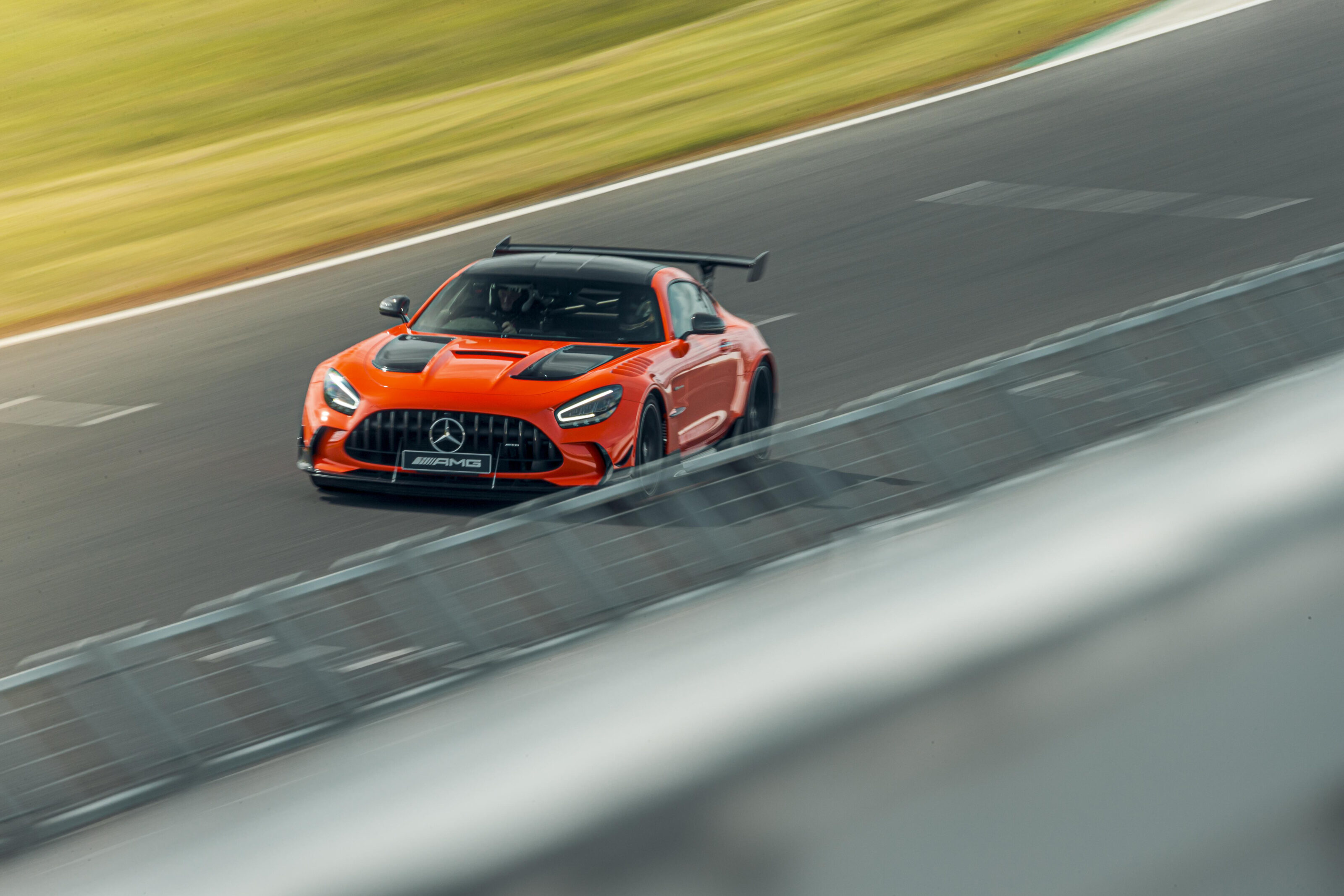
There’s no doubt that the Black feels more special and more like a race car, with its exotic engineering and serious mien. But at PCOTY that focus can occasionally work against a contender. Liveability and value are scoring criteria and the Porsche would have probably have beaten the AMG on those scores.
So while I can’t make a definitive call because the two cars weren’t there at the same time and in the same conditions, my gut tells me that the 911 GT3 would still have prevailed by some margin. The GT3 and the GT R Pro against one another?
PCOTY champs head to head would be a real battle for the ages. We know Porsche would be up for it, but tracking down one of the 15 GT R Pros that are now with their owners would be tough. Do get in touch if you own a GT R Pro and want to find out first-hand how it stacks up against the GT3.
