
On the face of it there isn’t much to link the Porsche 911 GT3 and Subaru BRZ. Price, power, speed – on all accounts the two are vastly different.
However, look a little deeper and some similarities begin to appear.
The Porsche is the ultimate evolution of the brand’s ultimate sports car. Honed and refined with decades of development.
Over at Subaru, the BRZ hasn’t had the same lengthy time to grow into its bones, but this second-generation model has focused on, you guessed it, evolution instead of revolution.
The changes have been incremental, considered, and measured. Resulting a car that improves in all the areas the previous generation fell short.

As the winners of our Performance Car of the Year and Sports Car of the Year awards for 2022, both tell an interesting story about the state of modern performance cars.
The landscape within which modern performance cars must perform has changed dramatically since PCOTY first launched in 1996 (won by the Porsche 993 Turbo, no less). Modern performance cars need to justify their existence in a boardroom long before they ever make it to the showroom. When they finally make it on sale, they face more competition than ever before, and customers who demand they be able to perform better than at any other point in history
While sitting at opposite ends of the price spectrum, both of our winners are unashamedly focused on appeasing enthusiasts. They don’t feign any dual-purpose, instead achieving with grace a singular goal of being the best drivers’ cars in their respective price brackets.

At the top end of town you get a car capable of driving to a race track, lapping all day nearing production car lap record pace, and then tootling home without issue. The GT3 is more focused and poised than ever, but simultaneously advancements in damper technology and engineering know-how have made it more poised on the road and surprisingly liveable.
Our Sports Car of the Year winner proves that you don’t need six figures to get that same experience. Supercar owners would do well to add a BRZ to their garage, as a reminder of what a purist driving experience is really like. Thrills minus the prohibitive price tag.
Neither of our winners even have turbochargers, a remarkable feat in the modern era of emission constraints. But they are all the better for it, both revving with vigour and exhaling authentic sounds.
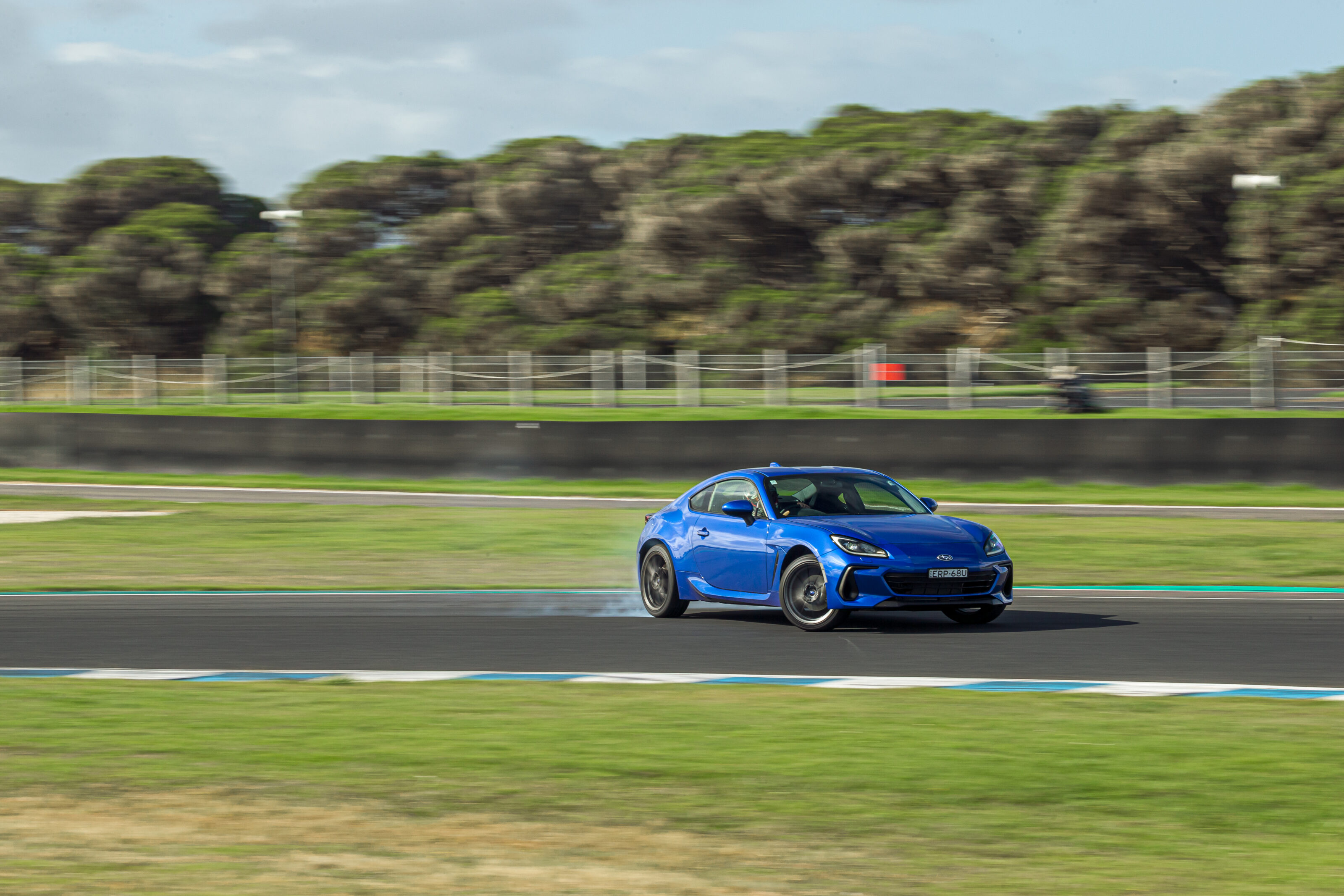
Both cars also more with less power compared to rivals. The GT3 fights against machinery with 400-500kW, sometimes more, but can still run rings around the opposition by deploying what it has more effectively. Such is its power-down ability that the track-ready 911 feels like it has a 100kW more than the spec sheet suggests.
The BRZ too, while increasing in power this generation, is outgunned by modern front-drive hatches. Yet it thrills not with outright speed, but balance and feedback. Communicating with the driver the forge a greater connection between man and machine.
We haven’t had a hybrid win Performance Car of the Year before, and 2022 marked the first time a full EV had ever contested Australia’s ultimate performance car award.

But the inevitable progress of the automotive world means that electrified drivetrains will claim top honours in time, if only because they will be the lone cars eligible.
Do not mourn the end of solus internal combustion performance cars. Rejoice in the fact they are better than ever. And find consolation in the way both Subaru and Porsche have evolved their products into a more fulfilling whole – mindset that will carry over into our electrically assisted future.
Forget Year of the Tiger, 2022 is now officially the Year of the Boxer.
Listening to your audience isn’t a bad idea. Last year we had a number of readers ask us for the return of Bang For Your Bucks, our annual shootout of sub-$100k cars that had been temporarily put in a holding pattern due to Covid.
Others had pointed out that the Performance Car of the Year judging criteria naturally weighed in favour of pure sports cars at the expense of the sort of cars that most of us buy.
Take those two components into consideration and the solution seemed relatively straightforward – split PCOTY into two awards: one title for more affordable cars and the other for more uncompromising hardware.
For 2022 say hello to Sports Car of the Year and Performance Car of the Year.
Sports Car of the Year is an award with a cut-off point of $100k. We have an absolutely stacked field of 10 of the very best cars launched or updated within the past year that includes the brilliant Hyundai i20 N, the Subaru BRZ, the Volkswagen Golf GTI Mk8, the Ford Mustang Mach 1 and the Mazda MX-5 GT RS.
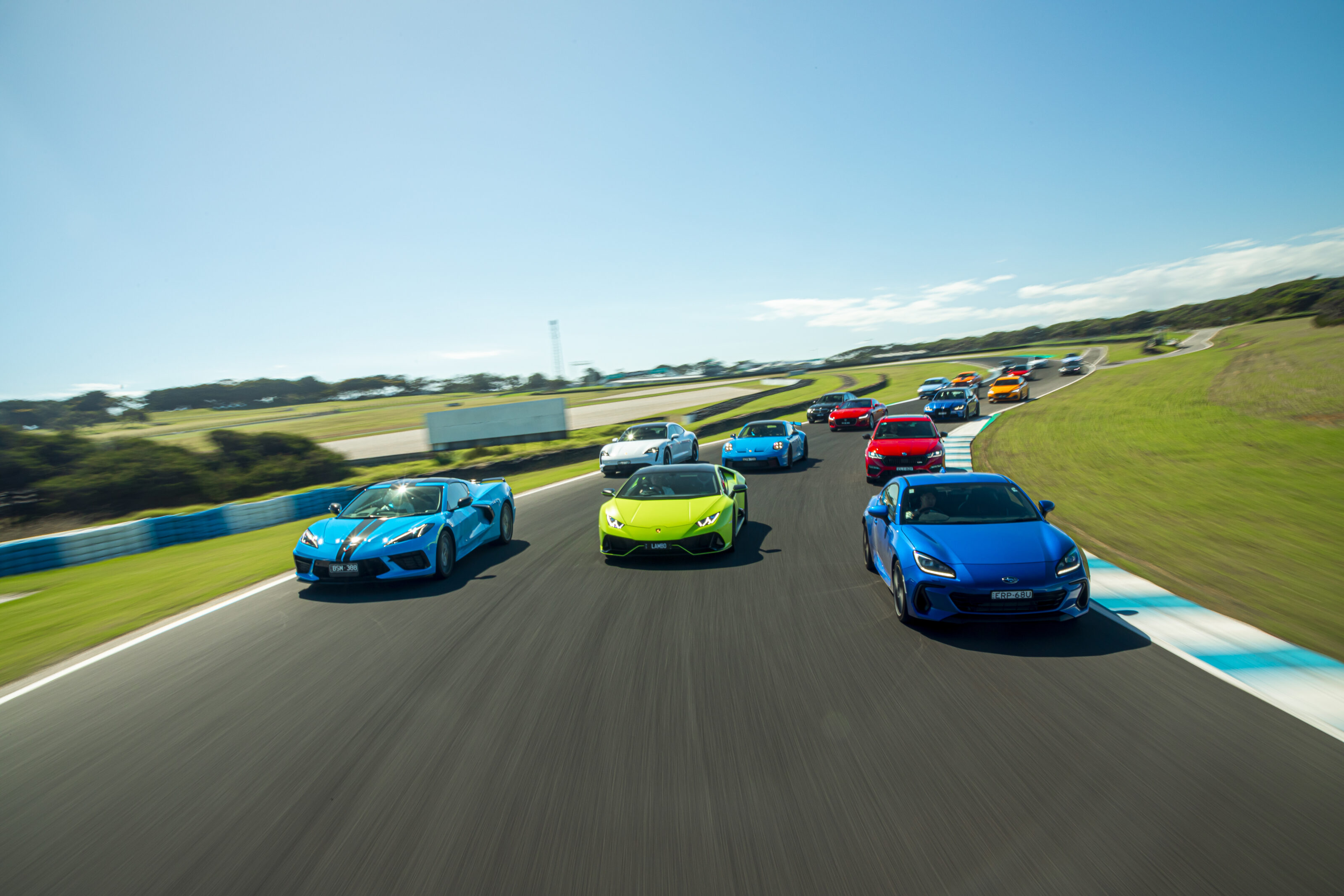
Performance Car of the Year is where the true heavy hitters knock lumps out of each other and this year the least powerful car in the field fronts up with 294kW and the most powerful packs a 560kW wallop.
Porsche arrives with a triple-pronged attack, headed by the astonishing 911 GT3, while the new mid-engined Corvette C8, a supercharged rear-drive Jaguar F-Type and a manual BMW M3 punch in alongside exotica from Lamborghini and Alpina.
Oh, and did we mention we’ve got Luffy back in the hot seat and the performance testing is at Australia’s fastest permanent race track, Phillip Island Grand Prix circuit?
The two awards carry absolute equal weight, despite the event as a whole continuing to be known as PCOTY. I guess some old habits die hard.
We’re stoked that the sort of cars that most of us actually buy with our own money can have their moment in the sun. And, without issuing anything in the way of a spoiler, we think the 2022 Sports Car of the Year gets the inaugural title off to one heck of a start.
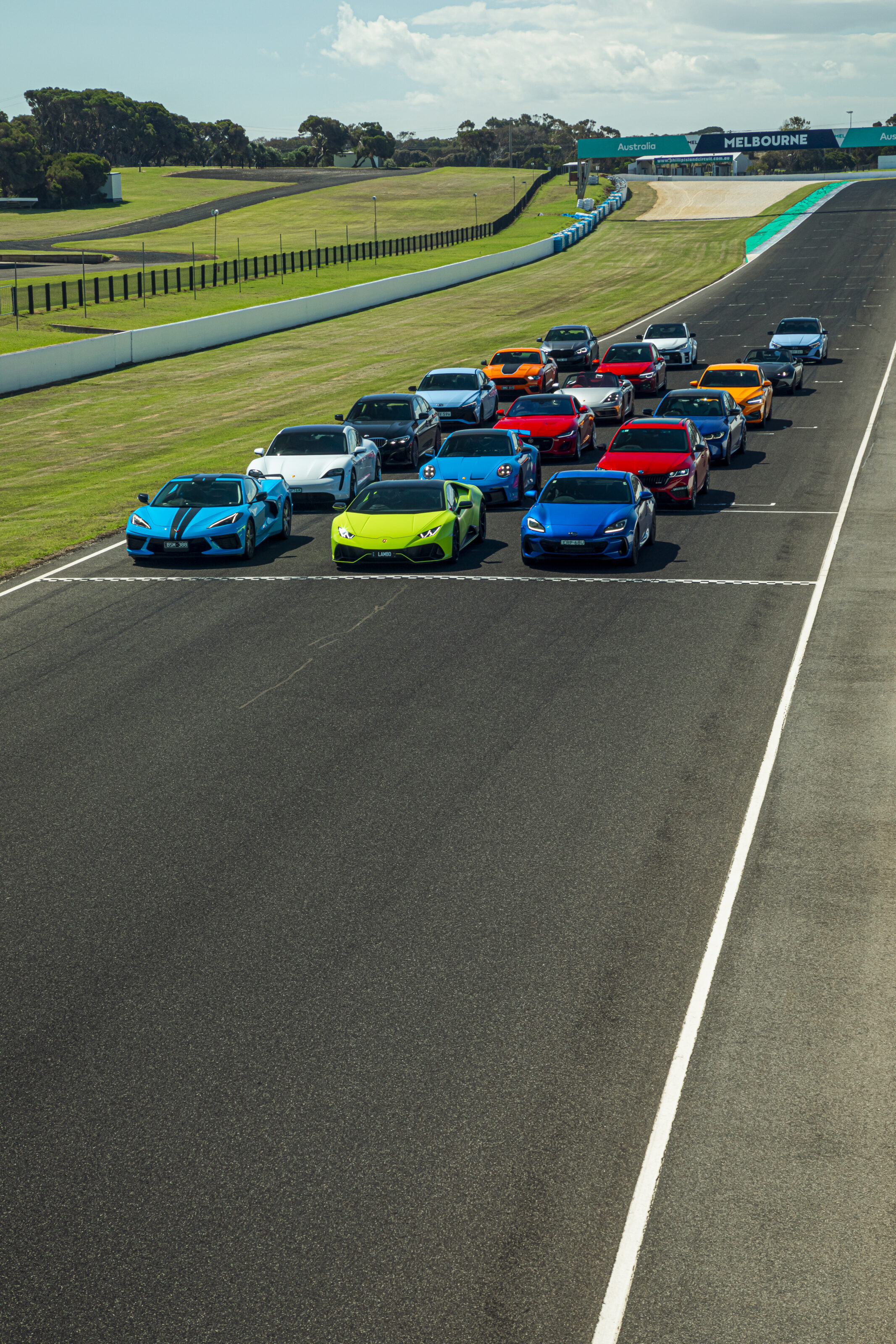
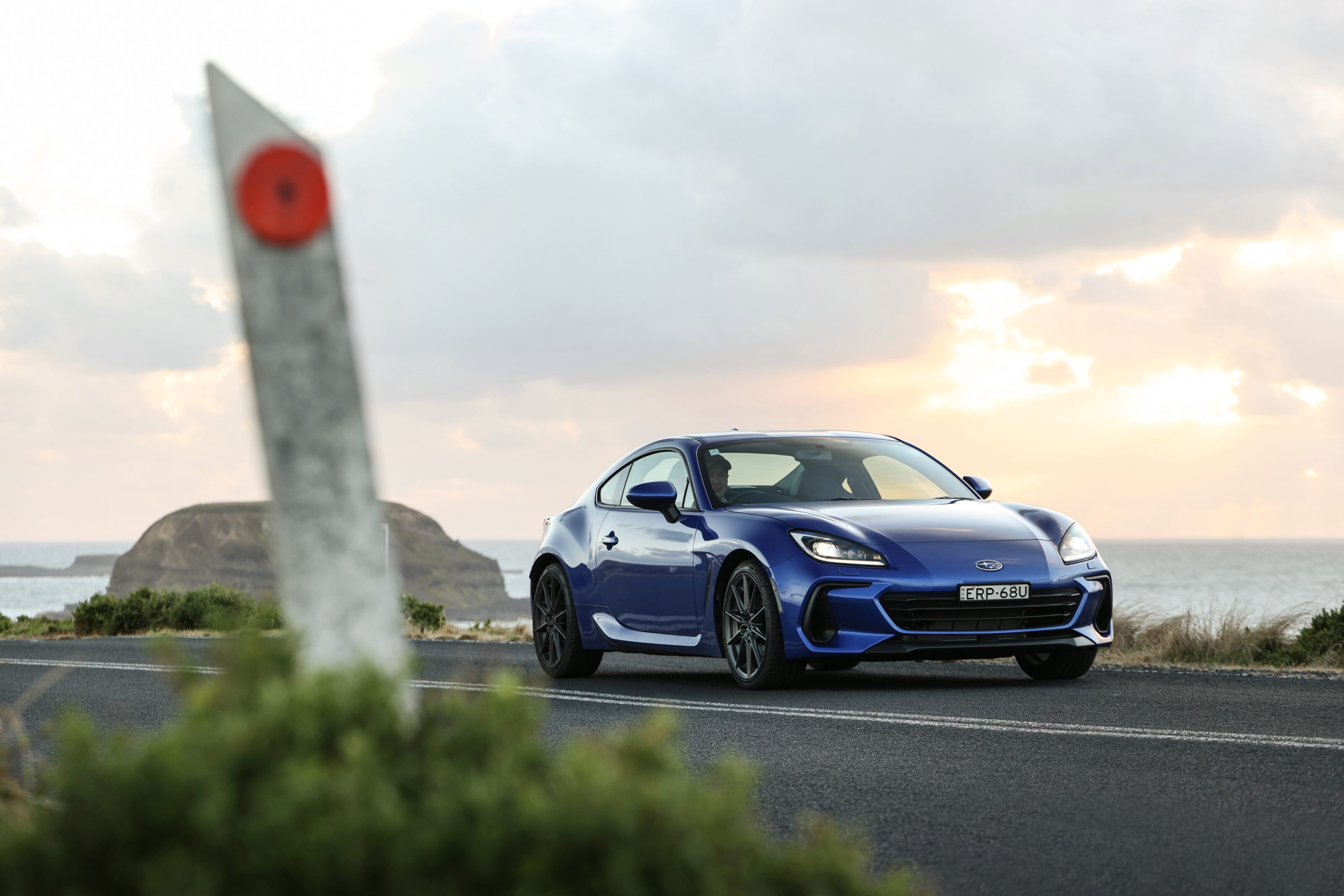
The original BRZ was a story of unrealised potential. This time round, Subaru has nailed the brief. Say hello to the winner of MOTOR’s inaugural Sports Car of the Year competition for 2022 – the Subaru BRZ
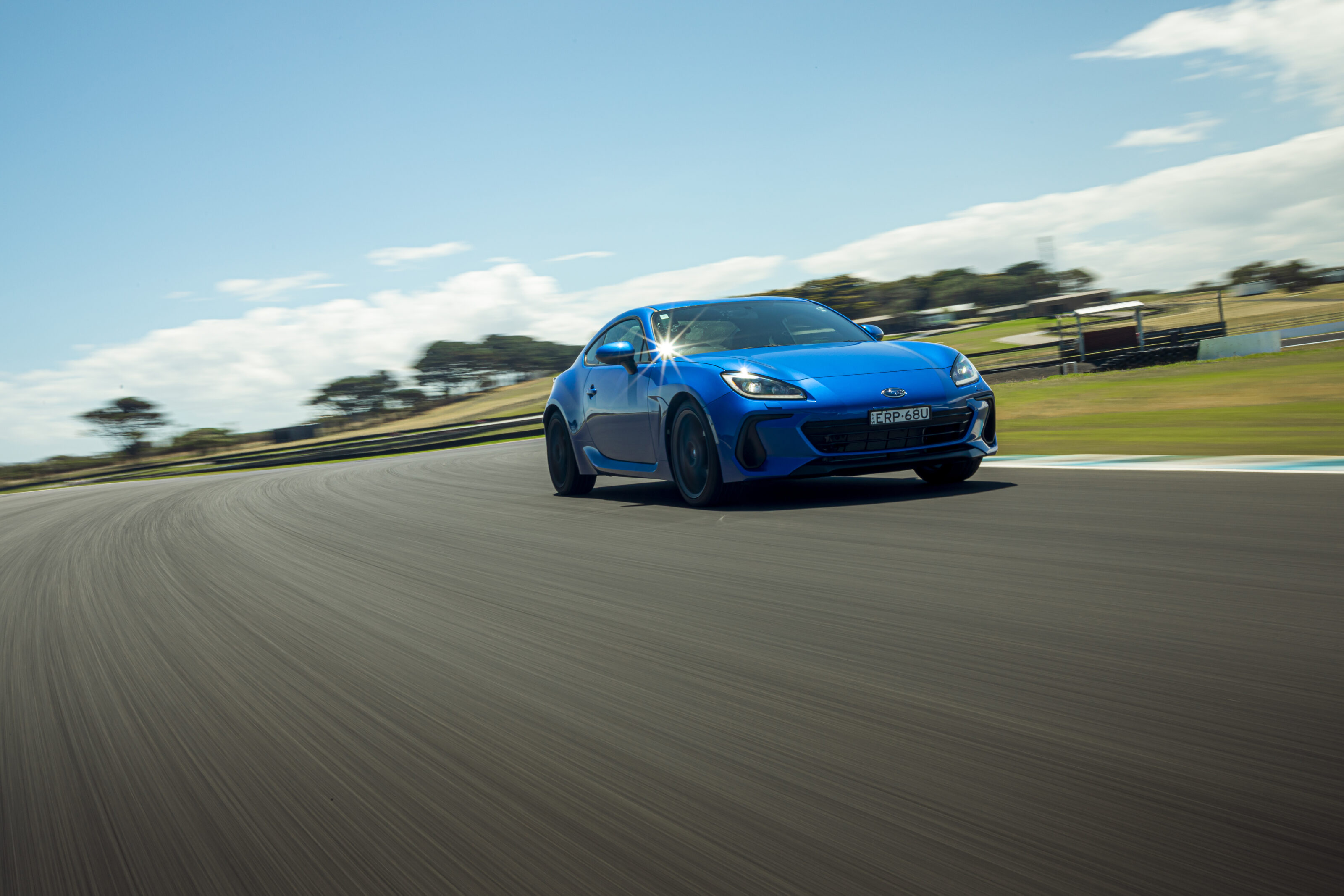
Breakout success can be a double-edged sword, raising questions on how to produce a convincing follow-up.
Some become a slave to a winning formula, while others dare to experiment at risk of alienating their core fans. The best artists, however, retain the elements – and the fans – that made them successful in the first place while subtly elevating the entire canon of work.
The 2022 Subaru BRZ treads the path of the latter. Subaru and Toyota’s original pair of compact sports coupes represented a bold commitment to pure driving and impressed the PCOTY panel back in 2012, but not quite enough to take the win. It was also bested by the defending VW Polo GTI champ in that year’s Bang For Your Bucks competition, SCOTY’s spiritual predecessor. A few well-documented flaws curtailed its ambitions, but the new and improved car is belatedly back with answers.
The biggest chink in the original car’s armour was the infamous low-end torque hole. “The old car was good but it just needed more engine,” says Enright.
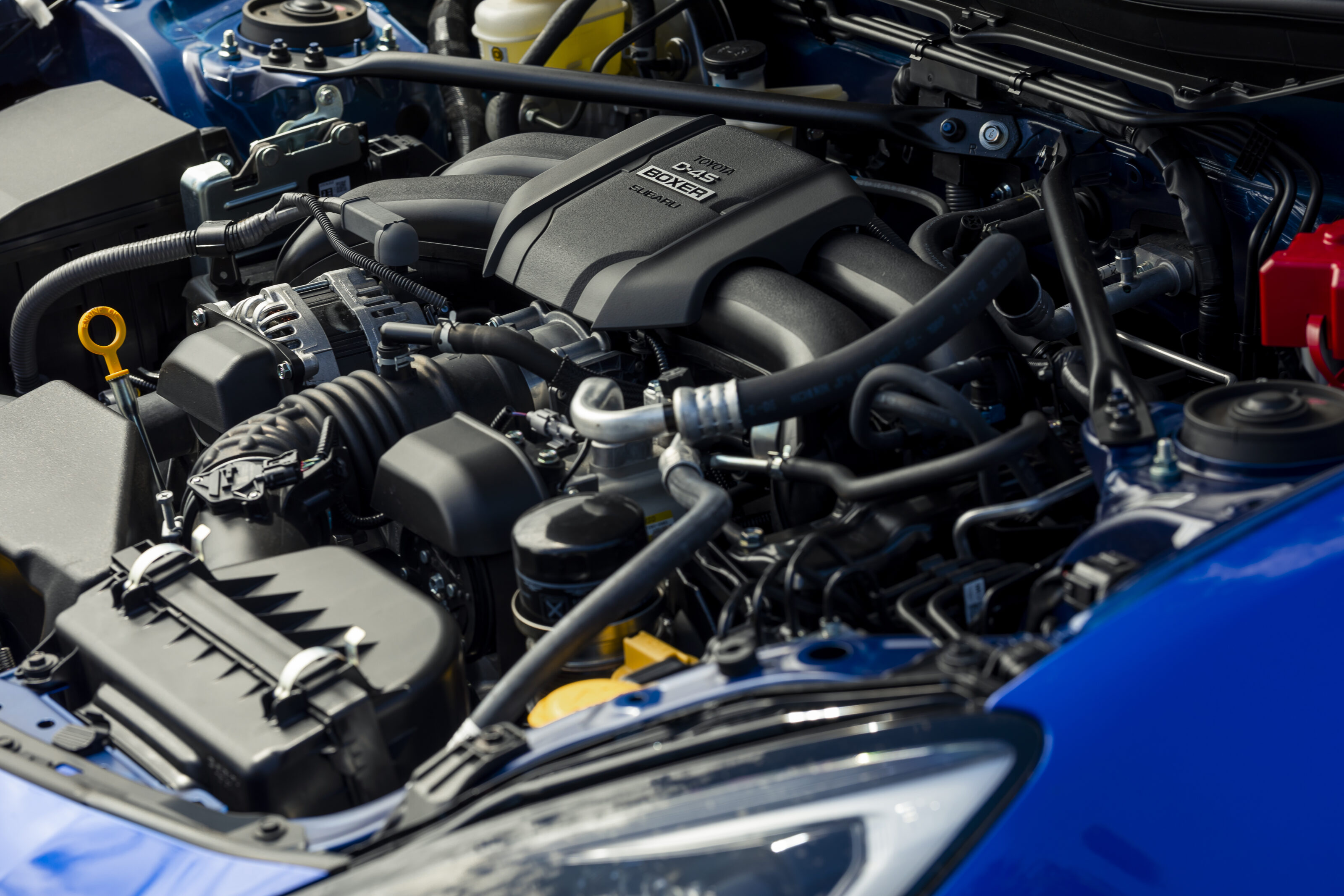
The new BRZ gives us exactly that, now powered by a bigger 2.4-litre flat-four producing 174kW/250Nm, providing the very welcome bump in outputs. Subaru hasn’t resorted to a simple bore and stroke job, however, as the newly denoted FA24 engine utilises a different engine block, revised internals and a new induction system with both port and direct injection.
From the first press of the throttle, improvements to power and torque are instantly clear. It lacks the hurried rush of some of the turbocharged competitors, but it’s a far more flexible unit with newfound levels of low-end tractability. In effect, you no longer need to wring its neck to make meaningful progress and it builds pace with a beautiful linearity and the same slightly oversized feeling as the 2.0-litre MX-5’s powerplant.
“It’s so much more than just a new engine,” notes Trent, and he’s right. Framing the second-gen BRZ as a restyle with a bigger engine undersells its talents. Indeed, in many regards, the major headlines surrounding the new Subaru BRZ don’t tell the full story. There’s a real depth to the development of this new car. A revised version of the existing chassis sees torsional stiffness boosted by 50 per cent and lateral rigidity up 60 per cent.
Steering and clutch action also feel more MX-5-like, with a marginally slower ratio (13.5:1 versus 13.1:1 in the original BRZ) and less inherent weight. I, for one, miss the slight heft in the hands of the original car, but the resounding takeaway among the judging panel is an overarching feeling of nimbleness and agility.
Slower steering sounds counter-intuitive as a dynamic plus, but it’s barely noticeable and requires just a bit more input for the nose to react. In practice, rapid direction changes are a more fluid affair, with oversteer corrections feeling more natural and intuitive.
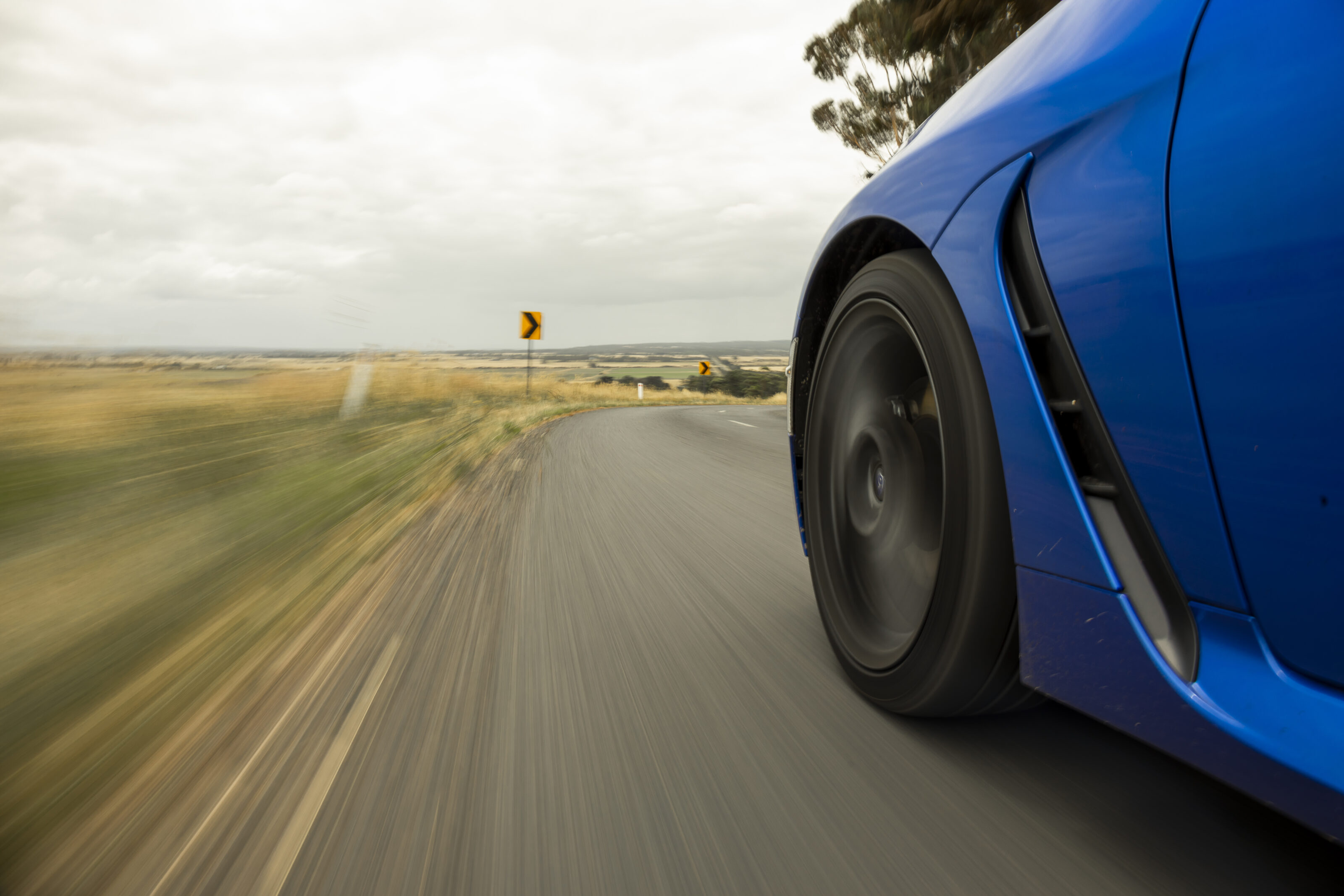
Yet chassis developments and output increases are only as good as the contact patches to the road. In that respect, the 2022 BRZ’s vastly improved Michelin Pilot Sport 4 tyres are transformative in comparison to the notorious old Michelin Primacy rubber.
The result is increased confidence to push harder and harder, while supported by ample mid-corner traction. Indeed, Luffy’s apex speed at the high-commitment Turn One was quicker than rivals like the GR Yaris Rallye and the i30 Sedan N. The braking system feels noticeably less servo-assisted than the prior generation, requiring stronger pedal effort to realise full braking power. Given the increased pace, those very familiar with the original car may be caught off guard. In practice, though, the pedal is ultra-progressive and very forgiving to those who are still practising left-foot braking.
Prosaic improvements alone, however, aren’t enough to win at SCOTY. Contrasted with the PCOTY proceedings, the more affordable field was even more closely fought.
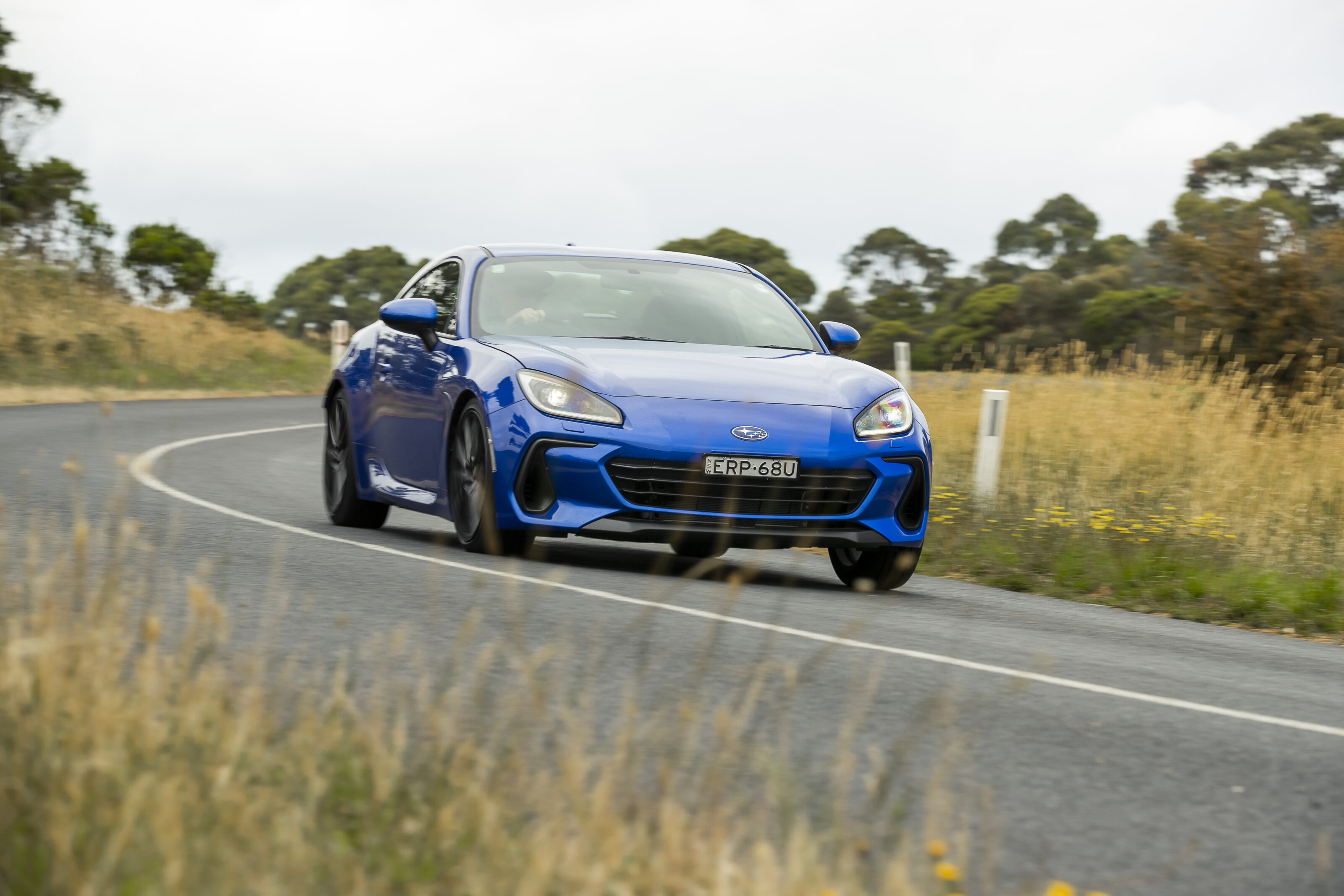
With heavily publicised improvements to pace, power and mechanical grip, there was cause for concern that the anticipated new coupe had lost the playful side of its character. The road component was all it took for us to lay any such concerns to rest. Even with all systems on, the BRZ gives frequent hints of neutrality. There’s a fluid playfulness to the car that only the MX-5 and Focus ST could rival. And yet the BRZ, more than any other car at SCOTY this year, was the one that judges most wanted to return to in order to keep peeling back its dynamic layers.
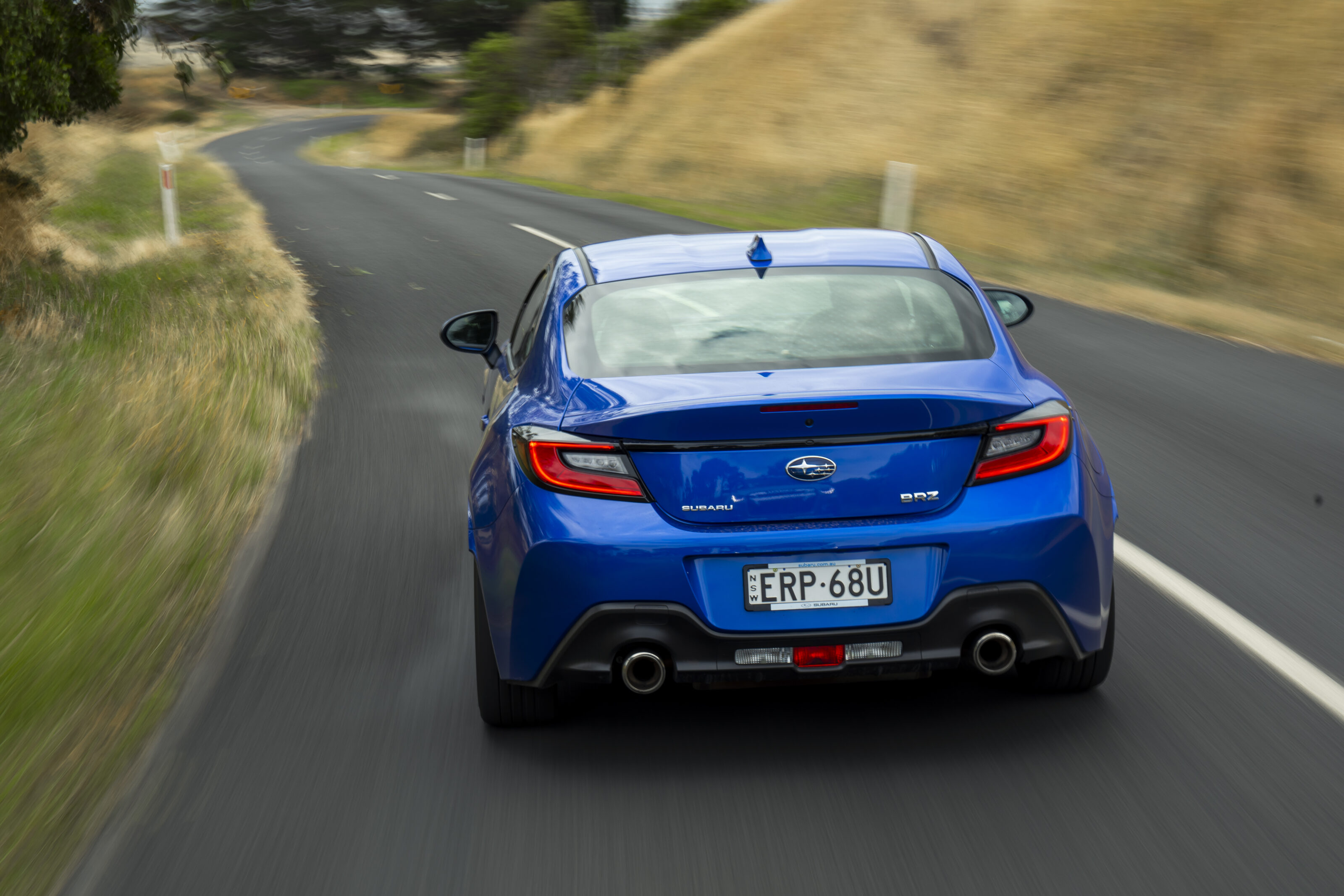
It just has an unburstable appetite to be driven. It feels robust, as if it will never let you down and is an even more engaging and involving car to drive fast than the original. Even Subaru’s ‘Active Sound Design’ is more successful than you might imagine. The way the in-cabin soundtrack extends from about 6500rpm sounds more reminiscent of Honda’s howling and highly strung inline-fours of the past than the typically rather industrial bass tones of Subaru’s boxer powerplants.
“When you’re really driving it hard, it genuinely feels like there’s some sort of private party going on in the cabin,” said Bernie. While the BRZ was expected to ace the road route, some judges had voiced concerns that the normally aspirated coupe could feel dwarfed by Phillip Island’s sheer size and speed.
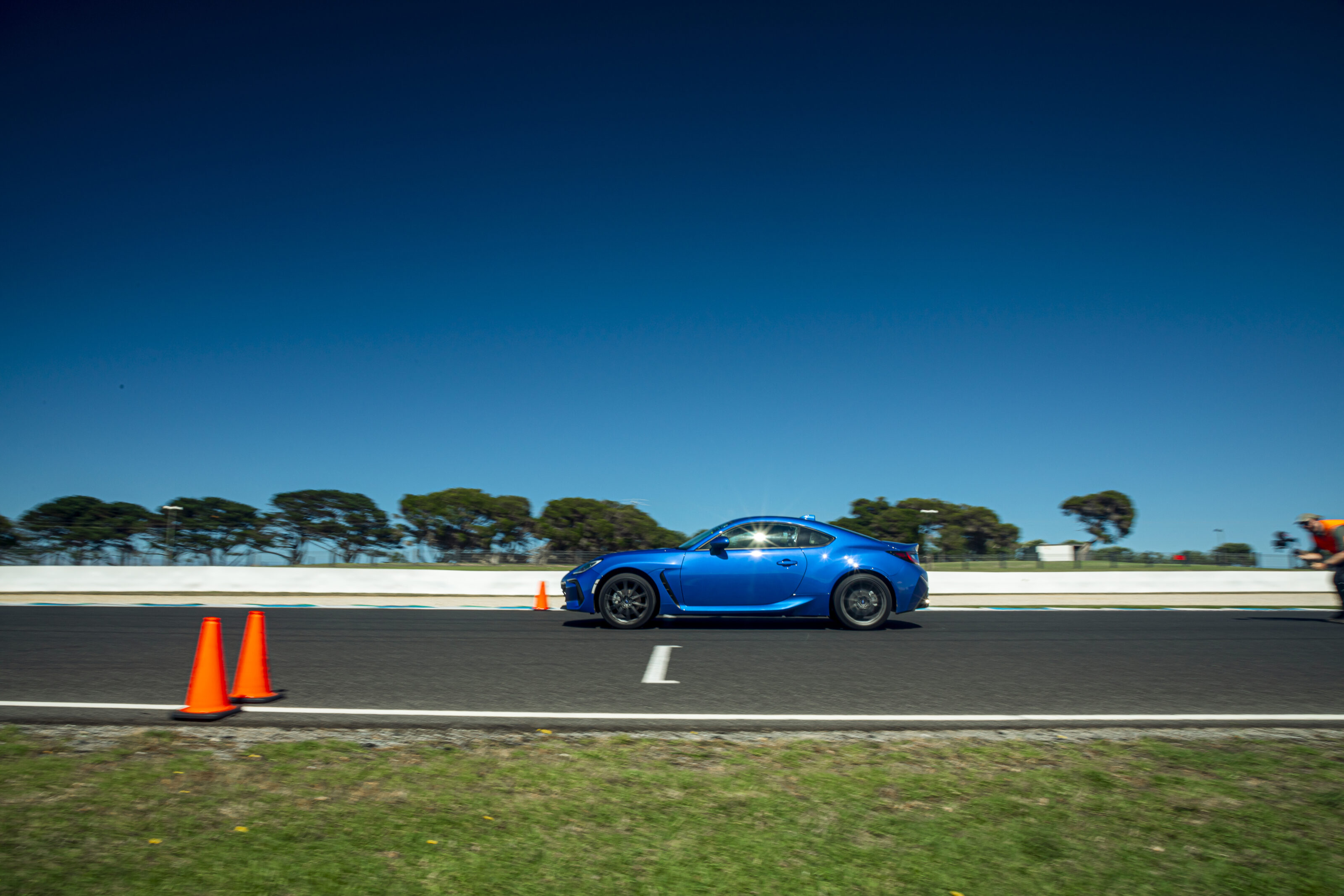
In straight-line testing, the BRZ performed strongly, stopping the clock at 6.21sec from 0-100km/h, besting the Focus ST (6.44sec) and matching Volkswagen’s Mk8 Golf GTI. That’s a marked improvement on the original car which MOTOR never tested below seven seconds. The quarter-mile time of 14.24sec is mightily respectable and yields just tenths of a second to the far more powerful Hyundai i30 Sedan N.
While the 1:54.41 time around Phillip Island didn’t threaten any lap records, what Racelogic’s telemetry doesn’t show is the grin factor. The BRZ is playful and tremendously involving, but it’s also predictable and approachable. Luffy calls it “a very easy car to drive on the limit”, with Trent saying: “it wants to work with you to get the most out of it”. It’s telling that, on separate occasions, more than one judge exclaimed there was more than a hint of Porsche to the tactility and consistency of control weights of the BRZ.
A soft brake pedal after more circuit laps than any other car here was the only criticism, and is virtually the only dynamic shortcoming carried over from the breakout original. In all other respects, there’s an immersive feeling of durability and eagerness to the BRZ – it just wants to keep going.
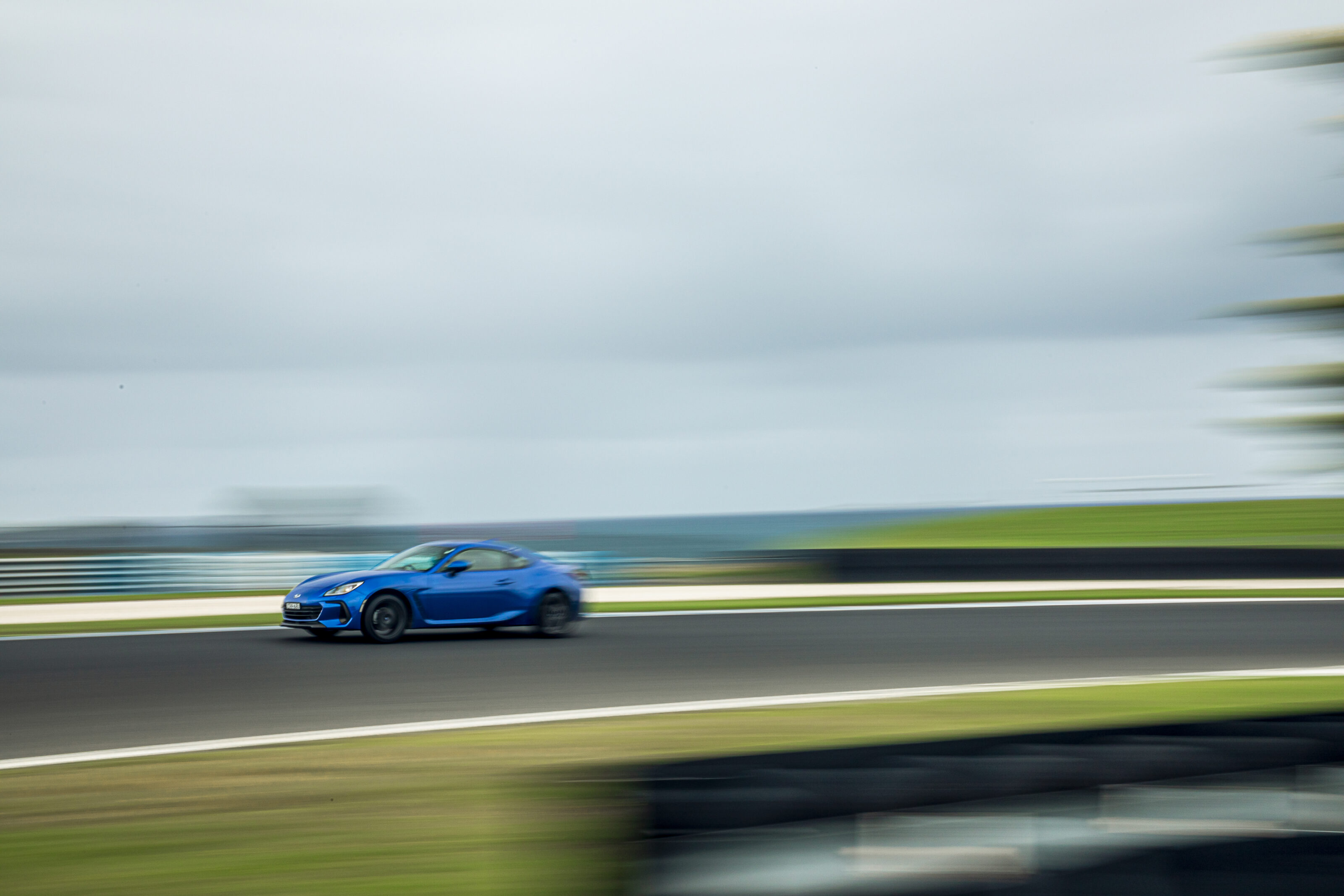
So what separates it from the rest? In a technical sense, the Subaru does little to break new ground and many of its dynamic highlights – movement on corner entry, mid-corner purchase, steering fidelity etc. – can be found in isolation elsewhere in the SCOTY field. The Focus ST comes close to delivering the BRZ’s low-speed playfulness and involvement, snagging one first place vote, and the i20 N, while fizzy and infectious, misses that final few per cent of overall adjustability and engagement. The BRZ always felt as if it offered the keen driver more in the way of limit-handling options.
As a package, the second generation of Subaru’s BRZ emerges as far more than the sum of its parts and addresses previous criticisms with a rare and direct focus while losing none of what made it great in the first place. That in itself is no small achievement.
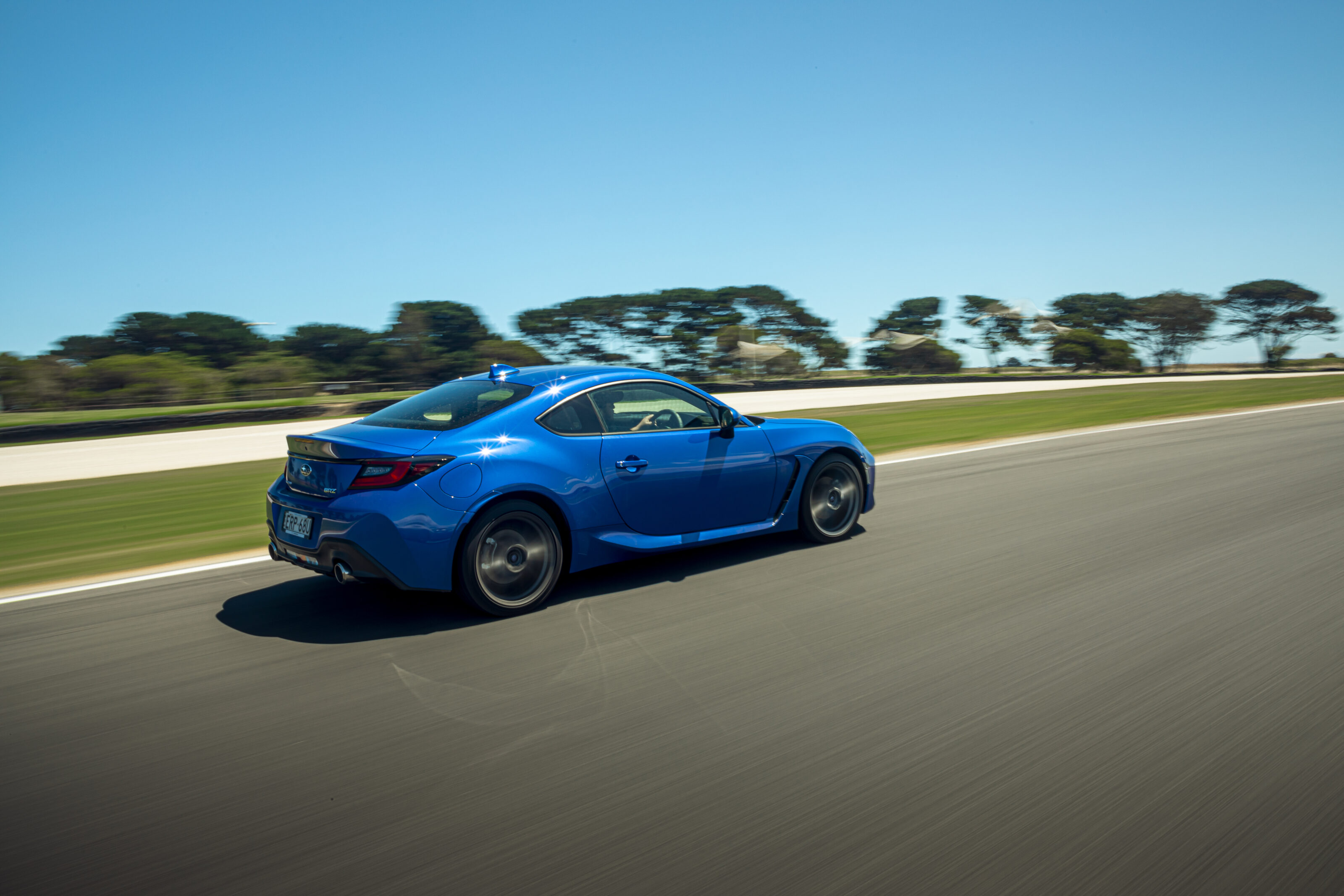
Hyundai’s N Division rightly gets a lot of praise for its five-year track warranty, but one glance at the BRZ’s easily accessible oil filter, almost as if it’s on display, speaks to a rare level of consideration by engineers for the at-home enthusiast mechanic. The cabin’s had a welcome sprucing and the driving position never feels misaligned, cramped or compromised. That consideration in and of itself is important, and one that certain SCOTY contenders neglect.
There are still utility issues such as the token rear seats and the small boot that seems to act merely as a receptacle for the full-sized spare wheel. Given the payoff from the driver’s seat, however, much of that will likely be of peripheral concern.
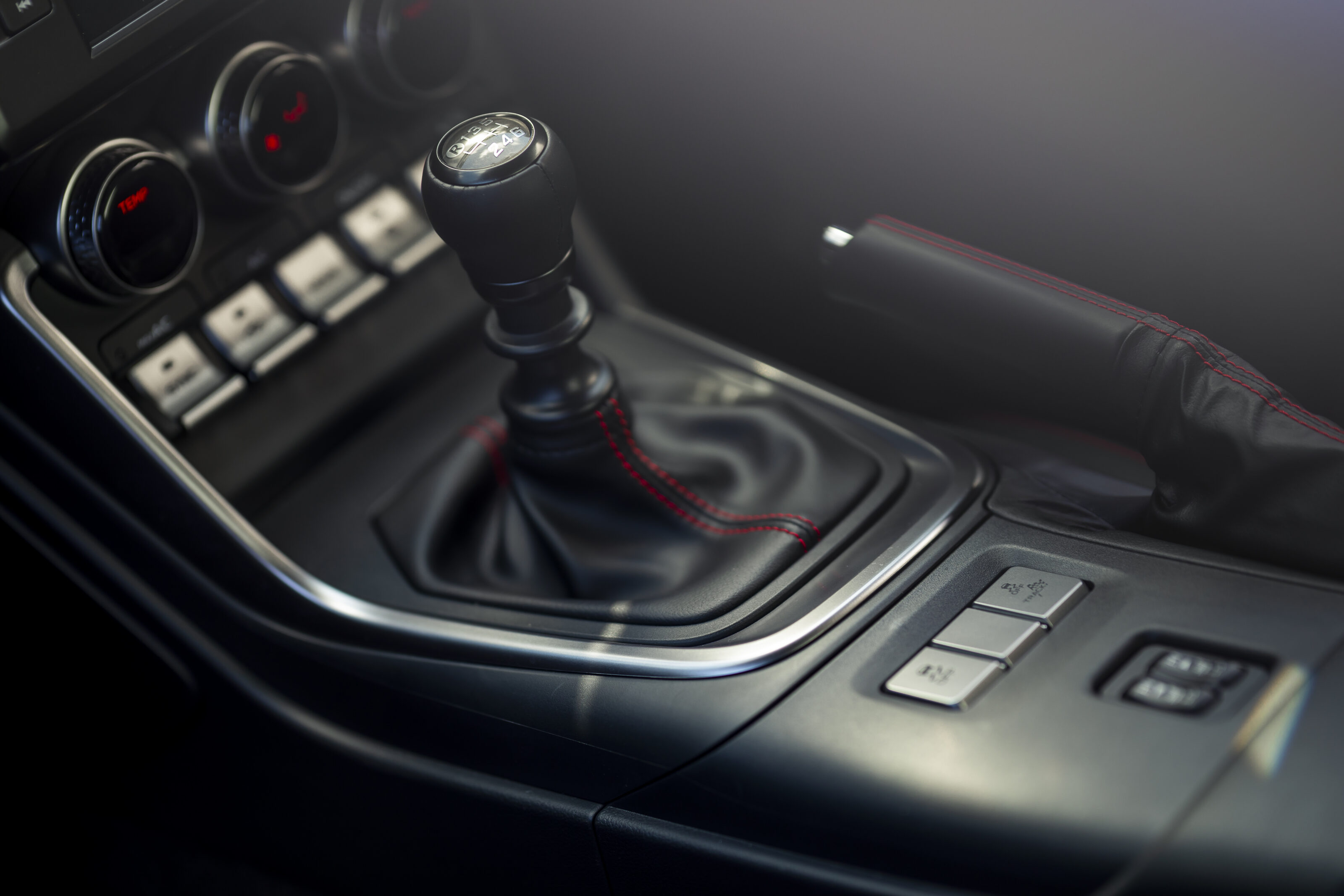
Bernie summarised it best when pondering what PCOTY is all about. According to our guest judge, it’s finding out “what does the car give back to the buyer? The Subaru BRZ is going to give you a hell of a lot back” enthuses Bernie. “It’s going to feel like your best mate”.
After five days of testing and a lengthy judge’s discussion, it was Subaru’s back-to-basics sports coupe that stood above all. It’s masterfully executed and a worthy winner of the inaugural Sports Car of the Year competition, marking Subaru’s first invite to MOTOR’s very top table.
It was a decade ago that Subaru and Toyota’s joint venture first hit our shores. The new BRZ doesn’t just rectify the weaknesses of its predecessor, it makes good on its untapped promise, the narrative arc of the project finally complete. The result? A pure, fresh and total testament to the joy of driving.
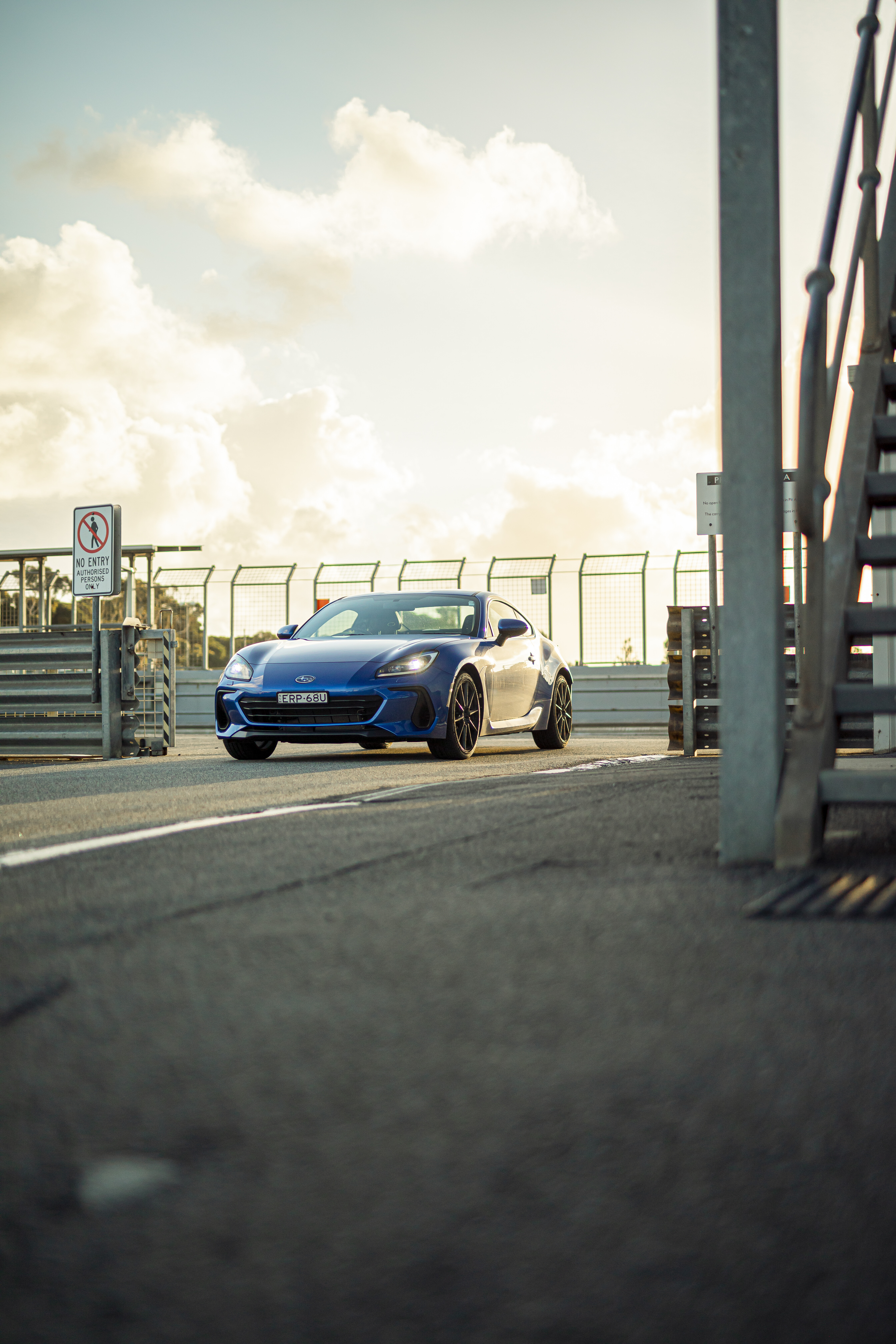
The judges’ comments
Alex Affat
“This BRZ represents a truly significant update. The dynamics are elevated in virtually every area”
Ranking: 1st
Andy Enright
“I’m still stunned that a sports coupe this much fun and this capable is so affordable. Buy one”
Ranking: 1st
Trent Giunco
“The interior’s been vastly improved in terms of quality and functionality. The BRZ needed that”
Ranking: 1st
Cameron Kirby
“The FA24 has enough about it that you’re no longer searching for torque every time you change gear”
Ranking: 1st
Bernie Quinn
“A riot! I was blown away considering how dissatisfied I was with the previous generation of this car”
Ranking: 3rd
Luffy’s view
“The BRZ is amazing. It’s all driver focus. An easy car to drive on the limit but it’s one that rewards good driving”
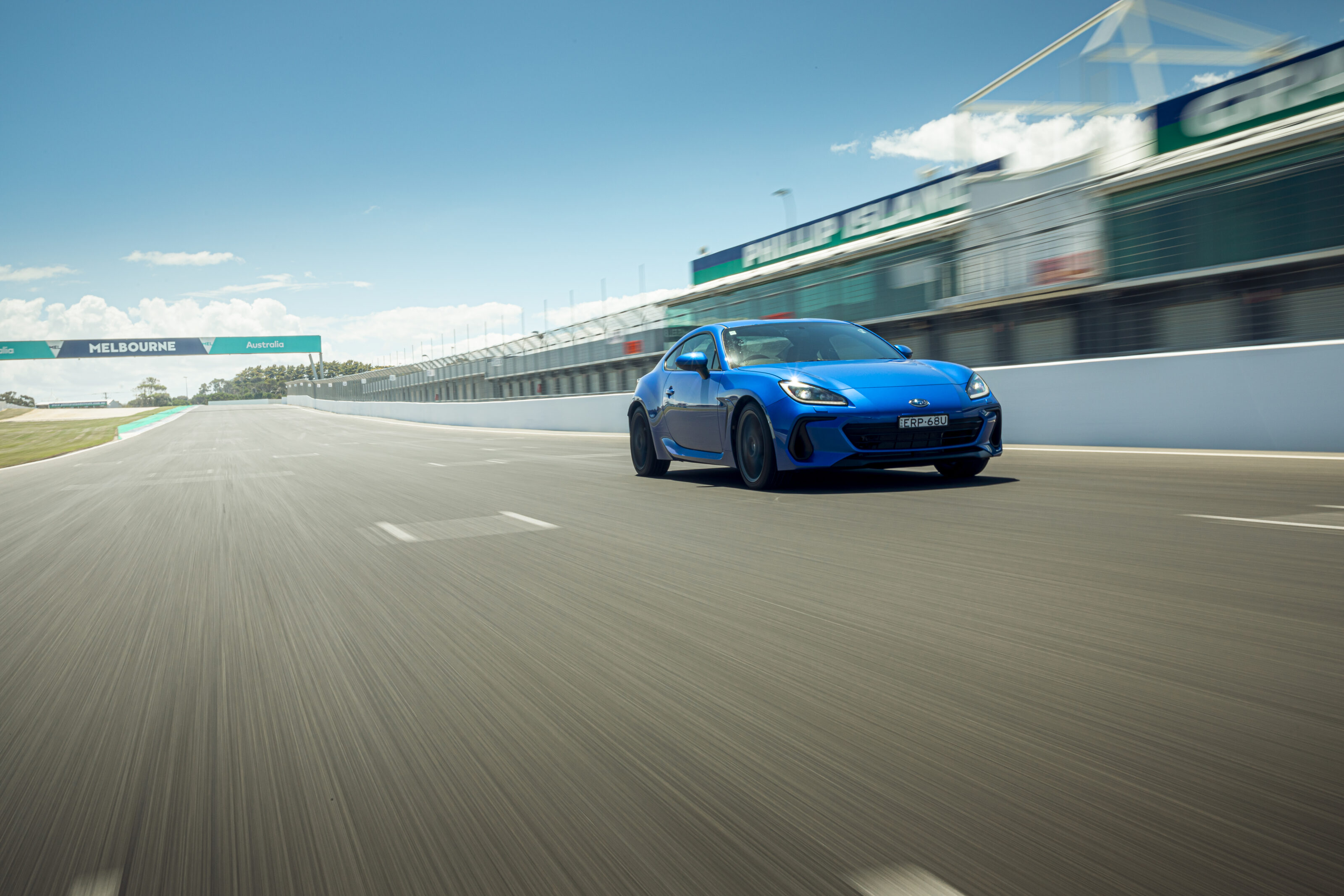
Key figures
Australians have been forced to wait a long time for this moment. The Chevrolet C8 Corvette is finally being sold on our shores, direct from the famous Bowling Green factory in Kentucky, with the steering wheel on the correct, right-hand side of the car. First revealed in July 2019, the radically rethought C8 generation ’Vette has taken its time landing Down Under. But it is here now, and we managed to steal the keys to one of the very first examples in the country as part of our Performance Car of the Year testing. Was it worth the wait?
Australians have the choice of either coupe or convertible body styles with this new Corvette, while two trim levels are available: 2LT and 3LT. Don’t confuse these with the 6.2-litre naturally aspirated mid-mounted engine, which GM calls a LT2. Still with us? The hard-top models start at $144,990 for the 2LT, and $160,600 for the 3LT. Convertibles demand a $15,000 premium. Every Australian Corvette comes from the factory with a front-nose lift fitted as standard, but most importantly, the Z51 Performance Package equipped.

This adds a dual-mode exhaust, Magnetic Ride 4.0 suspension, bigger Brembo brakes, an electronic-limited-slip differential, extra cooling and a Z51-specific final gear ratio. Visually, it also means the cars are equipped with a front splitter and rear spoiler.
The Corvette’s natural performance rivals are the likes of the Jaguar F-Type, which will set you back $166,048 for a supercharged-V8 R-Dynamic P450. Or the Porsche 911, of which a base Carrera demands $241,200 from prospective owners. That’s some lofty competition, and the C8 Corvette squares up with plenty of punch.
Being mid-engined for the first time, the C8 is ready to throw down with its European rivals … At the heart of everything is the 6.2-litre LT2 V8

Being mid-engined for the first time in the nameplate’s history, the C8 is ready to throw down with its European rivals using a recipe they’ve refined for decades. At the heart of everything is the 6.2-litre LT2 V8, which has a number of significant upgrades over the LT1 that Australians will be familiar with from the Camaro 2SS. The intake and exhaust are redesigned for the mid-engine layout, while gaining dry-sump lubrication and an upgraded camshaft. All accounted for, it will produce 369kW at 6450rpm, and 637Nm at 5150rpm. Despite its old school pushrod design, the LT2 is tractable and has a top-end that urges you to eek out every final revolution.
The classically American engine is mated with a thoroughly advanced transmission, shared with the exotic Maserati MC20. The Tremec eight-speed dual-clutch gearbox shifts between ratios smoothly and quickly. Calibration is clever, able to remain sly and subtle in its standard setting, while delivering kicking and quick up- and downshifts in more aggressive modes.

To coincide with the mechanical generational overhaul, the C8’s styling has undergone a similar dramatic update. While still clearly a Corvette, with unmistakable key design cues like the headlights being a clear nod to predecessors, the bodywork isn’t able to universally win over onlookers. Part of what makes the styling so divisive is the fact the Corvette still has a rear boot capable of holding a set of golf clubs – a traditional feature of all modern Corvettes. In previous front-engine models this didn’t prove too much of a challenge, but the C8’s mid-engine layout adds an obvious, eight-cylinder, impediment.
As a result, there’s about an extra foot of bodywork at the rear of the Corvette that required styling. Lift the hatch to the boot and engine, and you can begin to see the bones of the Holden Commodore ute turned test mule, Blackjack, that was the world’s first glimpse of the C8. With both front and rear storage compartments, there’s a surprising amount of luggage-hauling ability in the mid-engine platform.

Visibility out of the Corvette is impressive. Forward vision is hampered a touch by the top of the windshield clashing with the slightly raised seat (even in its lowest setting), but you can see clearly out the back thanks to the engine sitting low in the engine bay due to its dry-sump set-up. The C8 is genuinely useable every day as a result and would make for a supremely capable grand tourer.
Where the useability takes a hit is inside the cabin, which is unashamedly driver-focused. Everything is centred on the pilot in the Corvette, including the large line of buttons that runs the length of the centre console. Sit in the passenger seat and it is as if a miniature diorama of the Berlin Wall has been erected, partitioning you into what can at times feel like a cramped space. There are other ergonomic foibles, like a seat that sits higher than we’d like in its lowest setting. Finding a comfortable driving position wasn’t entirely straight forward. While there is plenty of leather and soft-touch materials in the cabin, the final fit and finish can’t quite match its more premium rivals.

Then you get to the actual act of driving, and everything that might fall slightly short in terms of ergonomics or materials fades into the background. This is a car that was designed to be driven, and driven hard. It offers a depth of talent that is well worth the two-year wait. On a flowing road the C8 rewards a keen driver with an experience that is smooth and involving. Old cliches about American sports cars need not apply. While not featherweight, the Corvette’s 1545kg mass is right in the ballpark for a car of this size, and well managed. Ride quality is impressive, with the Magnetic shocks doing a wonderful job of both body control and bump-management.
Ample forward vision and a direct steering means the C8 is easy to place on the road. The ratio falls in a sweet spot of not-too-darty, not-too-lethargic

You’ll want to ensure your trail braking technique is up to scratch if you intend to drive the C8 hard, as it is required to keep the front-axle planted into turns. Traction from the Michelin Pilot Sport 4S tyres is impressive, particularly on corner exit. All of the naturally aspirated engine’s power is deployed deftly, thrusting you back in the seat. The V8 note is rich and authentic, harmonised with plenty of induction noise. You are treated to a stirring soundtrack in the cabin that adds an extra layer of sensory involvement to the driving experience. Despite its relatively large capacity, the LT2 revs toward redline eagerly in the first four gears, before hitting the fifth ratio which seemingly goes on forever.
Ample forward vision and a direct steering means the C8 is easy to place on the road. The ratio falls in a sweet spot of not-too-darty, not-too-lethargic. However, the wheel has an artificial springiness that requires some attuning to, while also muting most of the feedback transmitted back to the driver from the tyres. Thankfully, the ample grip and natural slip progression is easy to key into despite the lack of feel via the wheel.

Not just a competent canyon carver, the C8 Corvette is also a ready track car. Driving the C8 on a race track only exemplifies its dynamic talents further. More than that though, what impressed us most was the way the Corvette inspired confidence on a circuit. The chassis’ neutral balance encourages you to push it hard. Turn-in is the only real shortcoming, with consistent trail braking required to keep the car planted on corner entry. From there, however, the C8 is wonderfully malleable, rotating with grace mid-corner and finding traction with ease at exit.
The C8 Corvette is unlike its European rivals, dripping in character… There is nuance to its dynamic ability and genuine attention given to its engineering

We also took the opportunity to strap timing gear to the ’Vette, but were unable to match its ambitious sub-3.0 second claimed acceleration time (even on the downhill Gardner Straight at Phillip Island). Our best effort was a 3.63sec 0-100km/h sprint, with a quarter mile slip of 11.68sec and 194.5km/h trap speed. Don’t get it twisted, those are very impressive numbers.
Now, we weren’t going to let an opportunity to put Warren Luff into the car go wanting. MOTOR’s tame racing driver strapped in for a lap around the Phillip Island Grand Prix circuit, recording a 1:45.22 best – on par with the likes of the BMW M3 manual. On the Gardner straight, Luff topped out at 242.4km/h in the Corvette, down compared to rivals as a result of the lengthy fifth gear, but a deficit more than made up for at apex.

The C8 Corvette is unlike any of its European rivals, dripping in charismatic character. Yet it also shirks any stereotypes usually levelled at American products. There is nuance to its dynamic ability, refinement in its liveability, and genuine care and attention given to its engineering. Yes, some of the ergonomics require adapting to. And while it won’t be universally loved, there is a definite character to the C8’s styling. But as far as mid-engine sports cars go, the C8 has a broad range of talents that sees it reward both the eager driving enthusiast, and day-to-day user.
The C8 Corvette is a welcome and much-needed addition to the Australian performance landscape. But what should really excite is the fact that this is just the start, an entry-level model that signals what is to come. So composed is the Corvette, that it feels like the C8’s chassis is built to handle more power. Much, much, more power. Like, 499kW of power. Bring it on!
2022 Chevrolet C8 Corvette Stingray Z51 specifications
| Body | 2-door, 2-seat targa |
|---|---|
| Drive | rear-wheel |
| Engine | 6162cc V8, OHV, 16v |
| Bore/Stroke | 103.2 x 92.0mm |
| Compression | 11.5:1 |
| Power | 369kW @ 6450rpm |
| Torque | 637Nm @ 5150rpm |
| Weight | 1545kg |
| Transmission | 8-speed dual-clutch automatic |
| Suspension | double wishbones, adaptive dampers, coils (f); double wishbones, adaptive dampers, coils, anti-roll bar (r) |
| L/W/H | 4630/1934/1234mm |
| Wheelbase | 2722mm |
| Tracks | 1648/1586mm (f/r) |
| Steering | electrically assisted rack-and-pinion |
| Brakes | 345mm discs, 4-piston calipers (f); 350mm discs, 4-piston calipers (r) |
| Wheels | 19.0 x 8.5-inch (f); 20.0 x 11.0-inch (r) |
| Tyres | Michelin Pilot Super 4S; 245/35 ZR19 (f), 305/30 ZR20 (r) |
| Price | $160,600 |
Oscar Wilde famously said, “Imitation is the sincerest form of flattery.”
Indeed, a fascinating aspect about human behaviour is that no sooner has one person created something original, another immediately begins the competitive process to adapt or ‘borrow’ the idea and apply a slightly different aesthetic.
Consider the most fundamental elements of our daily lives and the implements we use, such as cutlery, furniture, tools, stationery and so on. And then think of how we can choose from thousands of differently styled versions of the same product, in most cases performing precisely the same function. Of course, the basis of evolution is building upon the work of our predecessors. As Isaac Newton humbly proffered, “If I have seen further, it is by standing on the shoulders of giants”.
In the car business, heritage is a big part of a brand identity, so it’s no surprise that designers will look for inspiration from the past when designing for the future. This is entirely valid because it is important to retain the essence of the brand values; owning distinctive styling cues is a valuable marketing asset, particularly in a crowded market.
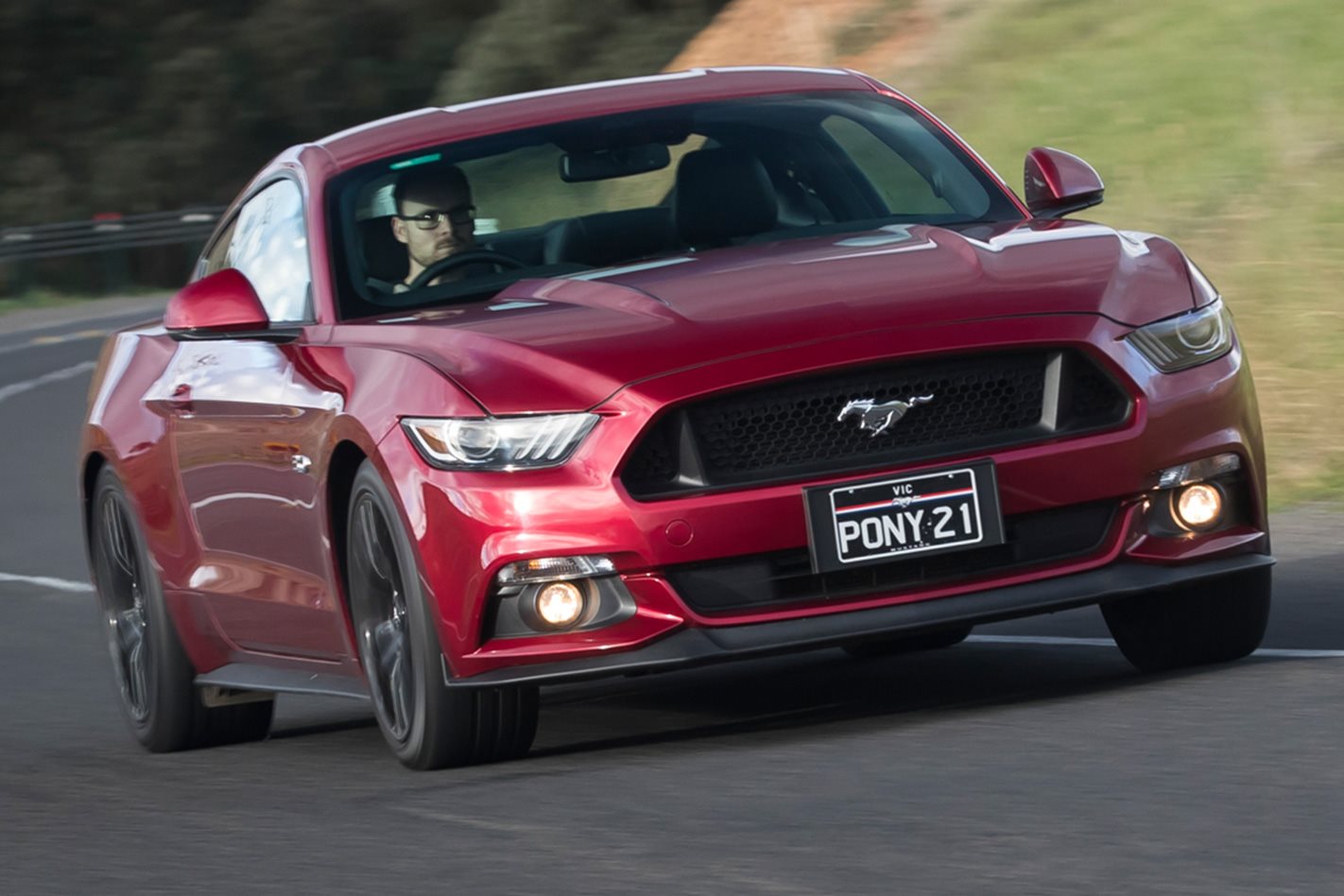
Most car companies have also explored retro-themed models, particularly the established brands which have the rightful opportunity to capitalise on their popular models from the past, that later became cultural icons.
Retro-inspired cars gained popularity in the late 1980s in Japan with playful offerings like the Nissan S-cargo and Figaro. By the ’90s, the big American and European brands joined the craze. Chrysler revealed a series of daring concepts like the Plymouth Prowler, Chrysler Atlantic and Chronos.
The Prowler, a 1930s-style hot rod, actually made it to production but sadly, it was powered by an uncharacteristic V6 engine. The compact PT Cruiser was more successful with over 1.3 million sold.
But the real success stories for the big three American carmakers are the Ford Mustang, Chevy Camaro and Dodge Challenger. This ‘peas-in-a-pod’ trio follows the copybook formula of reviving the ‘Pony Car’ period of the mid-to-late 1960s.
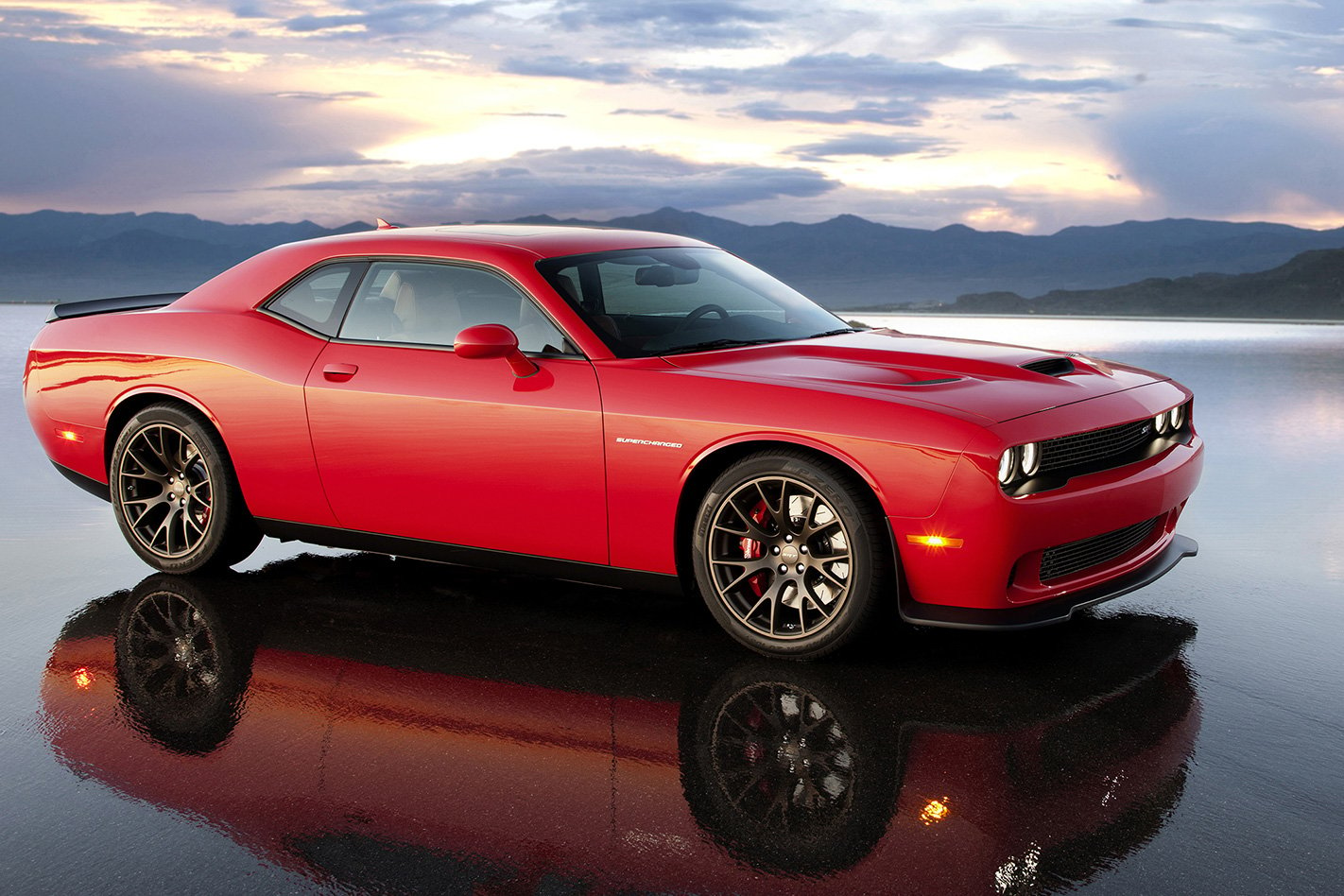
The Mustang invented this segment in 1964 and is the only one of the three to have been in continuous production. Although, it too lost its way after the ’70s with some very forgettable offerings for decades.
The fifth-generation Mustang of 2005 echoed nostalgic cues from the original and things turned around. In 2006, Chevrolet revealed a Camaro Concept reminiscent of the first-generation 1967 model, and it too struck a chord with the public. The assignment to production-ise the design and engineering of the Camaro was granted to us at Holden, based on our VE Commodore ‘Zeta’ architecture.
European brands have also enjoyed tremendous success with retro styling. The obvious standouts are the Mini, Fiat 500 and VW Beetle. Although the new Beetle was first on the scene 1998, it was overshadowed by the others and is no longer in production. BMW has transformed the Mini into a trendy, standalone brand with clever marketing and customising options. Likewise, the loveable Fiat 500 continues to enjoy global popularity with over 2 million sales since its rebirth.

Interestingly, the common premise of the original cars was basic, entry-level transport for the mass population in Europe during the post-war years. Today, their reincarnations carry a premium status, based on timeless and endearing style.
I have often heard dismissive comments about retro-styling, labelling it as dated, lazy and opportunistic. This is certainly true in cases of shameless plagiarism. But as a card-carrying retro fan, I believe it has a legitimate place provided the new iteration evolves from the original DNA with a fresh interpretation, stimulated by modern sensibilities and new technologies.
Styling is an entirely subjective topic, so arguably there is no right or wrong. Moreover, it can be measured by good or bad execution. When executed well, retro pays homage to great designs of the past. A poor execution will suffer an uncomfortable death.
Richard Ferlazzo is the former GM Holden Design Director
The Queensland Police Service is asking the public to upload photos and videos of dangerous driving as part of an effort to target hoons.
A new portal called Policelink has been set up for citizens to share evidence, in what the Queensland Police Service (QPS) is calling a “world first”.
The videos and photos can be used by police to identify drivers and assign fines and lay charges.
“The online facility has only been operating for a matter of weeks, and already the community has responded providing police with critical pieces of evidence,” Assistant Commissioner Ben Marcus of the Road Policing and Regional Support Command said at the announcement.
“The support and co-operation of the community is very important to police work, and this upload capability provides another significant way in which members of the public can assist police,” he said, adding the system meets the organisation’s cybersecurity guidelines.
An anonymous Queensland-based group known for uploading videos of hoon behaviour ridiculed the announcement on its Facebook page, saying there was a reason similar programs didn’t exist elsewhere.
“Other police forces around the world actually do their jobs rather than focus on rubber tyres breaking traction on a road.”
Along with having their vehicle impounded or immobilised, hoon-related offences can attract fines of up to $5338 and terms of imprisonment of up to six months.
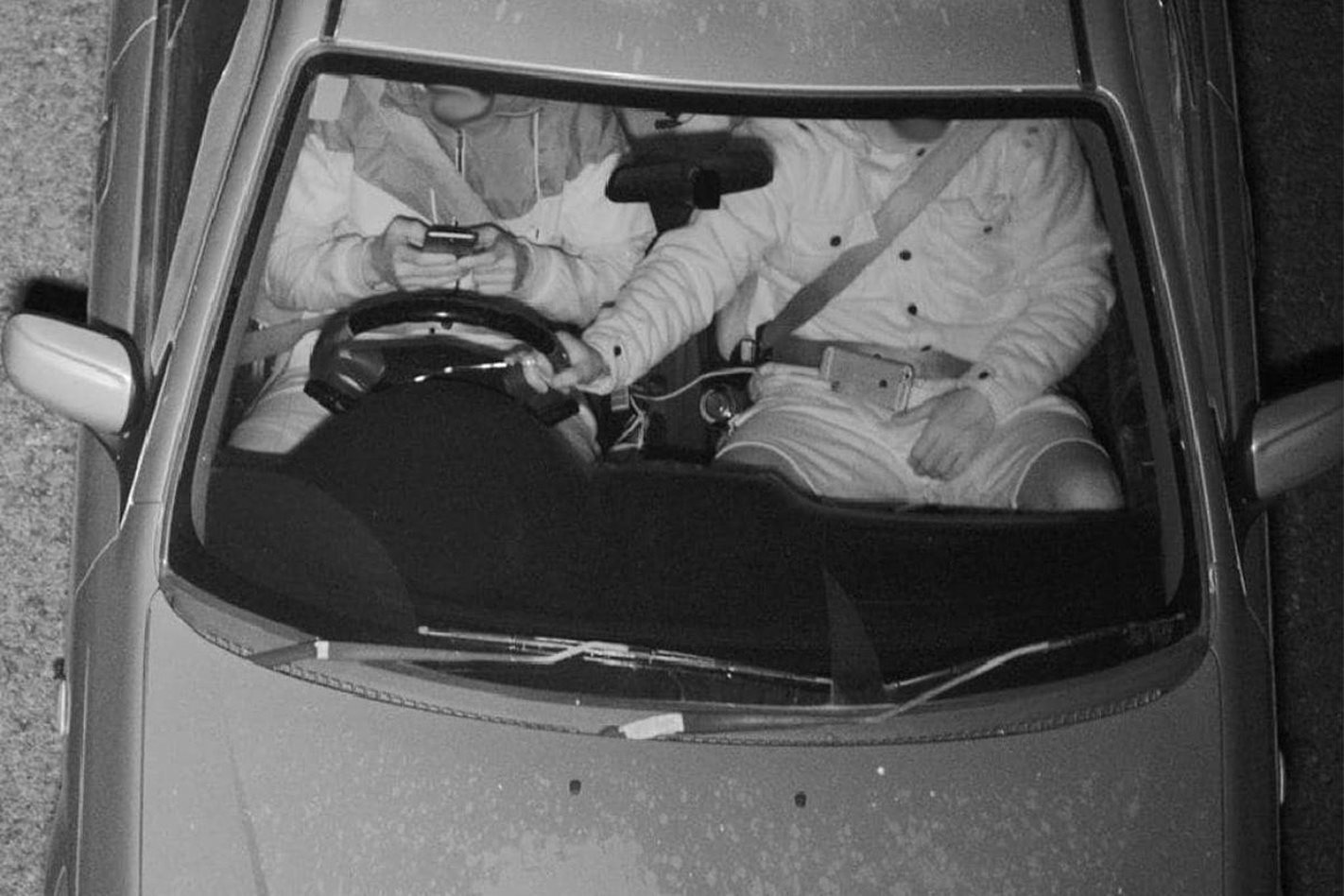
The QPS has been leaning on video technology to catch drivers doing the wrong thing, with another initiative catching almost 500 people each day either not wearing their seatbelt or using a mobile phone.
“We’re cracking down on phone fiends and those not wearing seatbelts – with new anywhere, anytime high-tech cameras and heavy fines,” Transport and Main Roads Minister Mark Bailey said.
“We know using a phone while driving is the equivalent of getting behind the wheel with a blood alcohol concentration of 0.07-0.10 – it’s just not on.”
Despite a three-month warning period, more than 37,500 people have been caught by the cameras since November 1 last year, with 70 per cent found to have been using their phone while driving.
Edison Motors’s consortium take-over bid for SsangYong looks to be in doubt, with reports out of South Korea saying the deal has been cancelled.
According to Yonhap News Agency, SsangYong has walked away from the agreement after Edison Motors and its associates failed to pay the balance of US$226.5 million (AU$300.9 million) by March 25.
It’s believed under the terms of the acquisition deal, SsangYong will pocket the deposit – around US$25 million (AU$33.2 million).
The Seoul Bankruptcy Court has been overseeing the ownership transfer from Mahindra & Mahindra, and will likely have to approve SsangYong’s wish to void the contract due to the payment default.
Rumours of disagreements and infighting have emerged in the months since the deal was penned, with Keystone Private Equity pulling out of the consortium led by Edison Motors.
SsangYong and Edison Motors are said to have been unable to agree on the management structure, while the Korea Herald reports SsangYong’s creditors were unhappy with the rehabilitation plan.
If the court grants SsangYong’s wishes, it could reset the clock and allow the company more time to find a new owner.
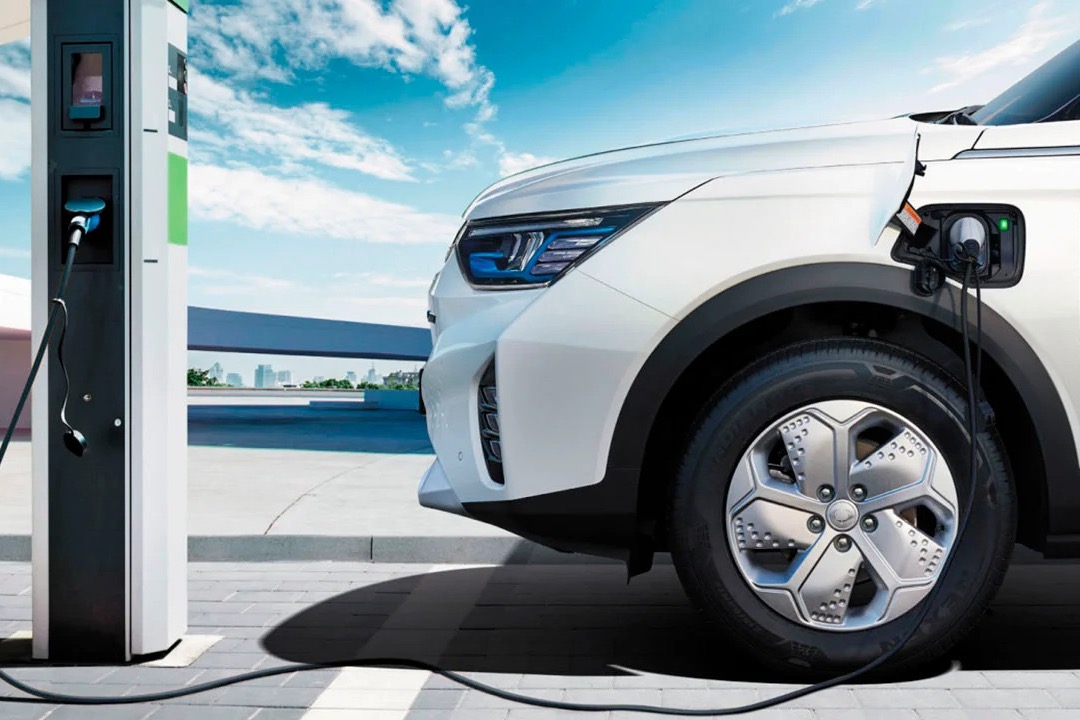
SsangYong has been pushing ahead with its move to an electric vehicle line-up, launching the Korando E-Motion in some markets, while the future model known as the J100 has been spied undergoing testing.
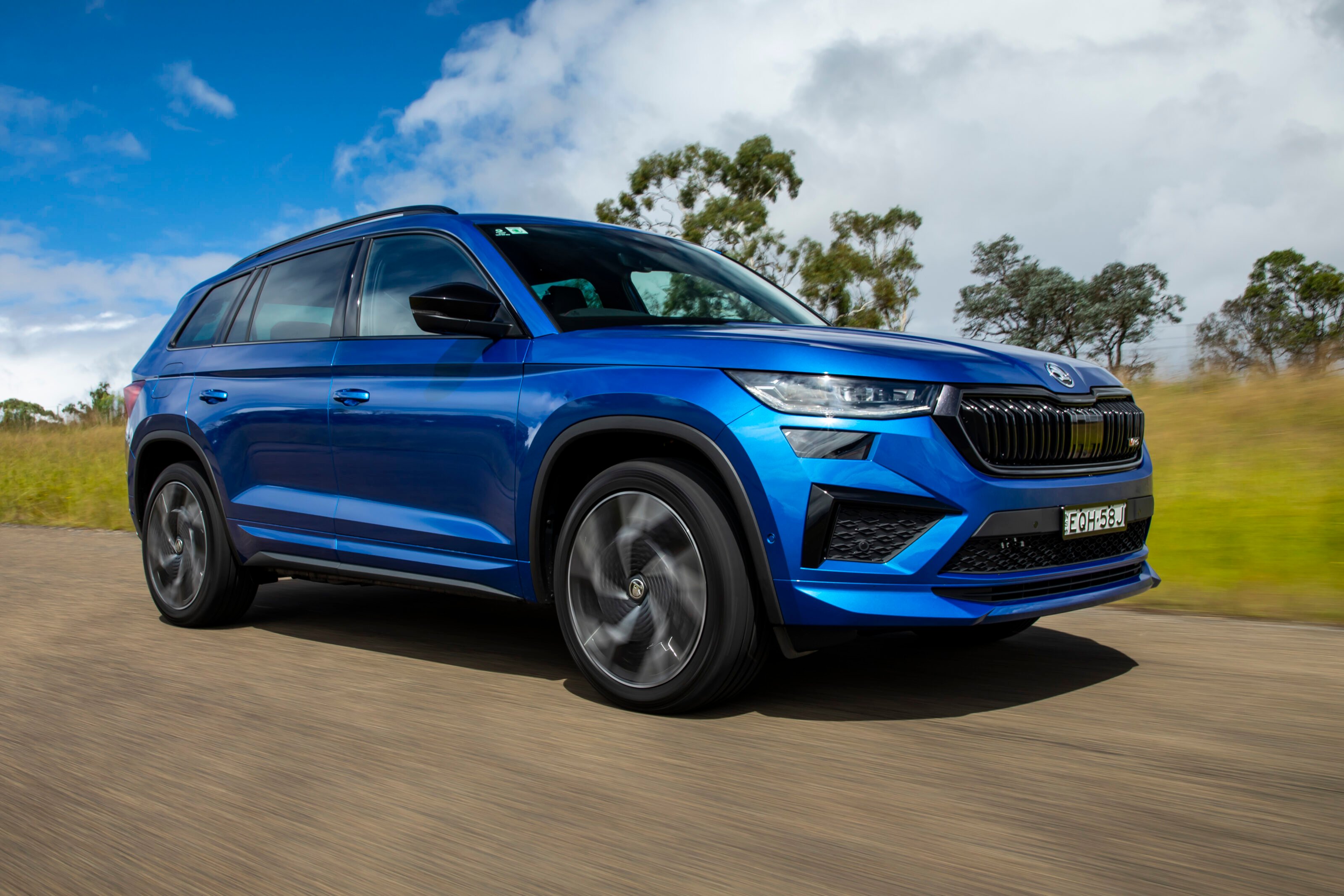
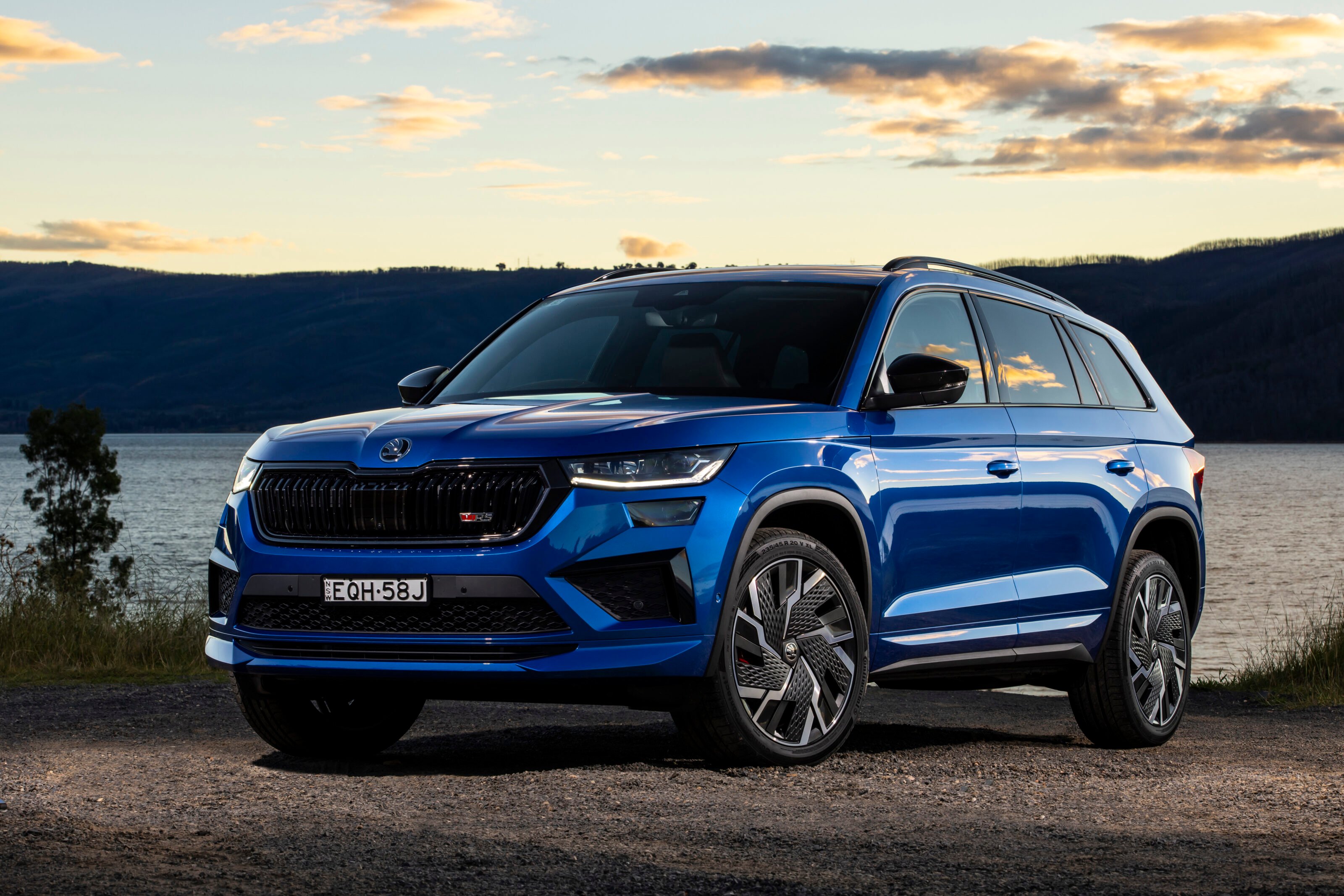
It’s rare for a vehicle to have no direct rivals, yet that’s exactly the case with the 2022 Skoda Kodiaq RS.
Arriving in 2020 as a distinctive seven-seat performance SUV, it’s only the third Skoda to adopt the RS badge, following the cultish Octavia RS and the now-discontinued Fabia RS.
From April there will be the similarly priced Tiguan R from Skoda’s parent company Volkswagen, though that model is strictly a five-seater.
The two models would previously also have been split by choice of fuel, had the Kodiaq RS not switched from the original’s twin-turbo diesel engine to a turbocharged petrol four-cylinder as part of the SUV’s 2022 facelift.
It continues the demise of performance diesels that became trendy after Audi won the 2006 Le Man 24 Hours with its R10 TDI – before launching the popular SQ5 SUV.
Pricing and Features
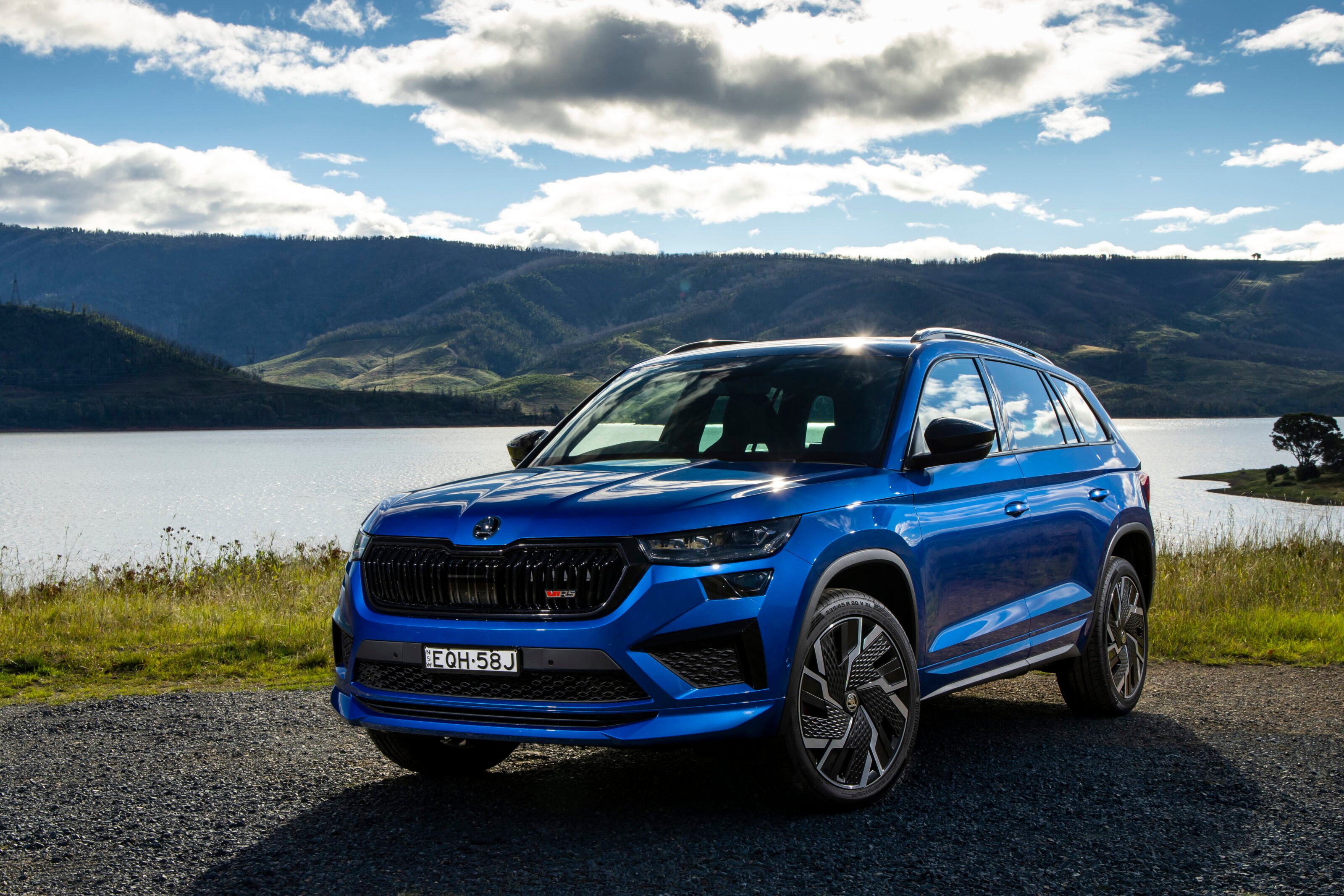
Although the cost of entry to Skoda’s halo model has risen $1450 to $67,440 before on-road costs, the RS’s value has improved – not least because the actual drive-away price has dropped by $1000 to $74,990.
A panoramic sunroof that was previously a $1900 option is now standard, and an expanded equipment list includes Matrix LED headlights, dynamic scrolling LED rear indicators, luggage nets for the boot, ‘Skoda’ puddle lights, and ventilation for the front seats that switch to full leather where previously the upholstery was a mix of Alcantara and leather.
For those staring at a $14,000-plus gap to the mid-range Sportline, the RS justifies more than half of that with standard gear
For those staring slightly wide-eyed at a $14,000-plus gap to the mid-range Sportline, the RS justifies more than half of that with standard gear that would require an $8500 spend in option packs and sunroof. That leaves buyers to assess the value of a more powerful engine.
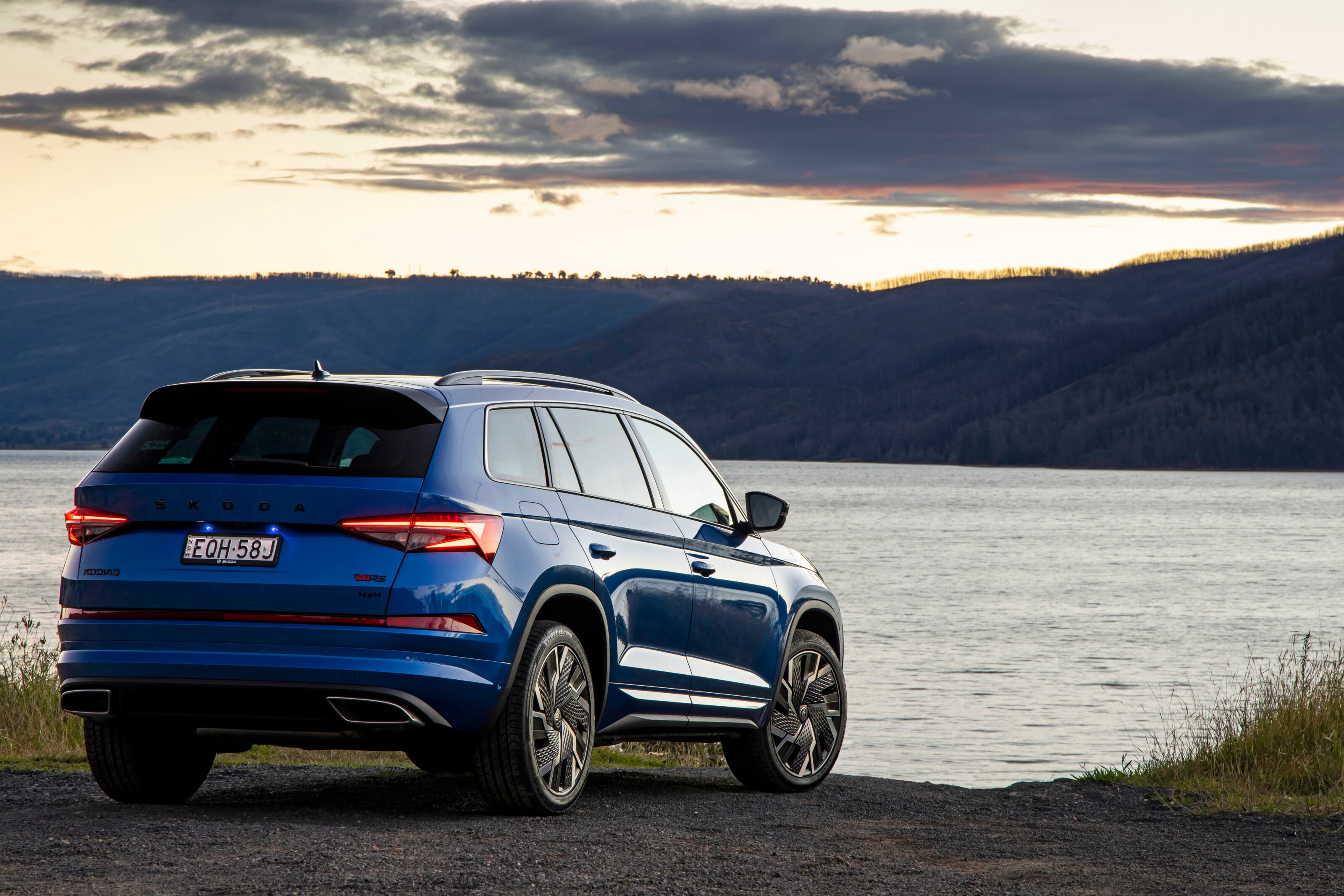
Paintwork ranges from free (Steel Grey) to $1100 (Velvet Red), with $770 metallics in between – including an RS-exclusive Race Blue.
No bright Mamba Green, more’s the pity, as offered on the Octavia RS.
If seven seats aren’t a must-have feature, the $68,990 (before on-road costs) Tiguan R – which launches locally in April – looks tempting with its 235kW Golf R drivetrain, bigger 21-inch wheels and extra tech such as a head-up display.
On the Road
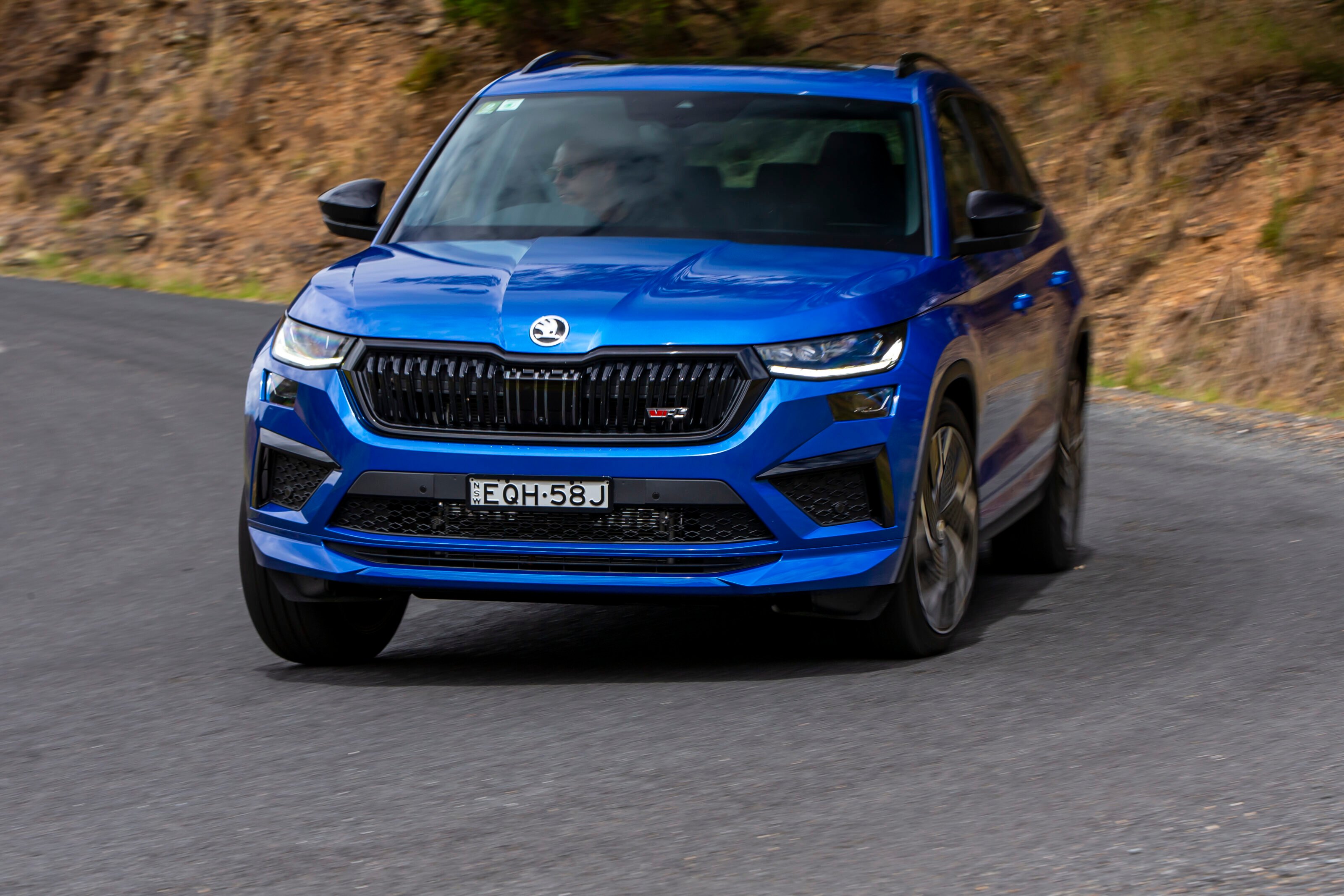
We’re focusing on the driving experience before areas such as cabin space and practicality – we’re presuming this is a priority for those considering the RS model; otherwise, a regular Kodiaq would surely suffice.
Thankfully, Skoda’s engineers have remembered their performance SUV is still aimed at families and haven’t made it excessively stiff.
Even the firmest Sport setting of the RS’s adaptive damper set-up is never jarring, though it can be busy – making the Comfort and Normal modes important options to introduce a more relaxing ride.
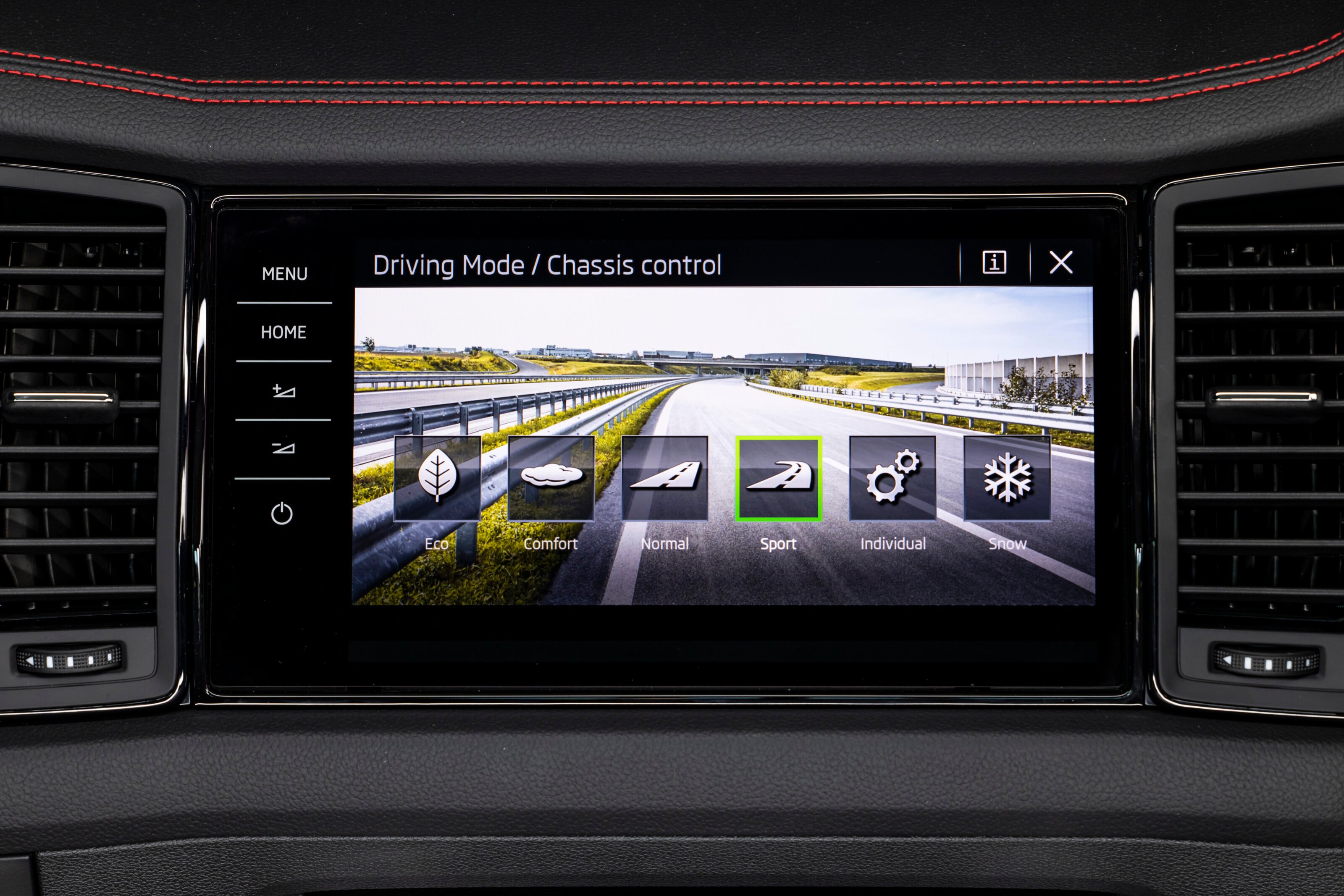
Driving modes are selected via a centre console button that brings up the various options on the central touchscreen. Either cycle through using that button or press your choice on the display.
Comfort can be largely left as a default choice for most driving and is the mode of choice for cushioning the blows that can come on potholed off-road trails. It’s also here where Skoda’s decision to go with 45-aspect rubber rather than a hardcore, super-thin tyre profile is appreciated.
Normal is a welcome middle setting for bumpier sections of country road; it is quicker to settle the Kodiaq whereas it can become floaty with its damping forces at their most passive.
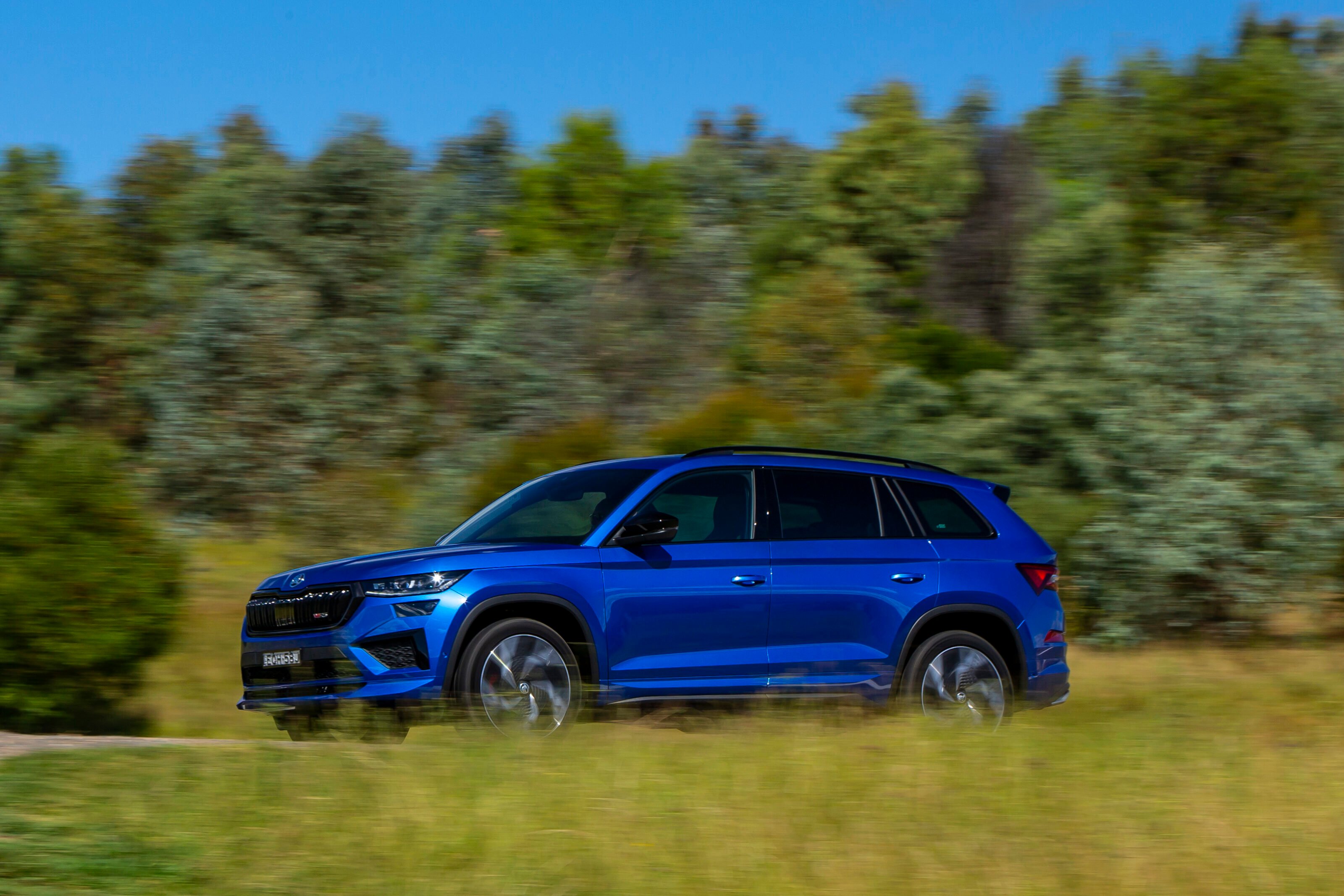
Body control through a series of corners is naturally at its tautest in Sport, a mode that brings out the best in the steering by adding some much-needed heft if no discernible feedback.
The Kodiaq RS is an enjoyable SUV to drive quickly because it steers with accuracy from right on centre, the brakes are strong and progressive, and there’s a surfeit of grip from the Continental ContiSportContact tyres.
There’s also less weight over the nose now, with the petrol engine saving 56kg compared with the former diesel donk.
Keen drivers stepping up to a family SUV – accustomed to hot-hatch thrills – need to temper expectations, as the RS delivers contentment rather than excitement
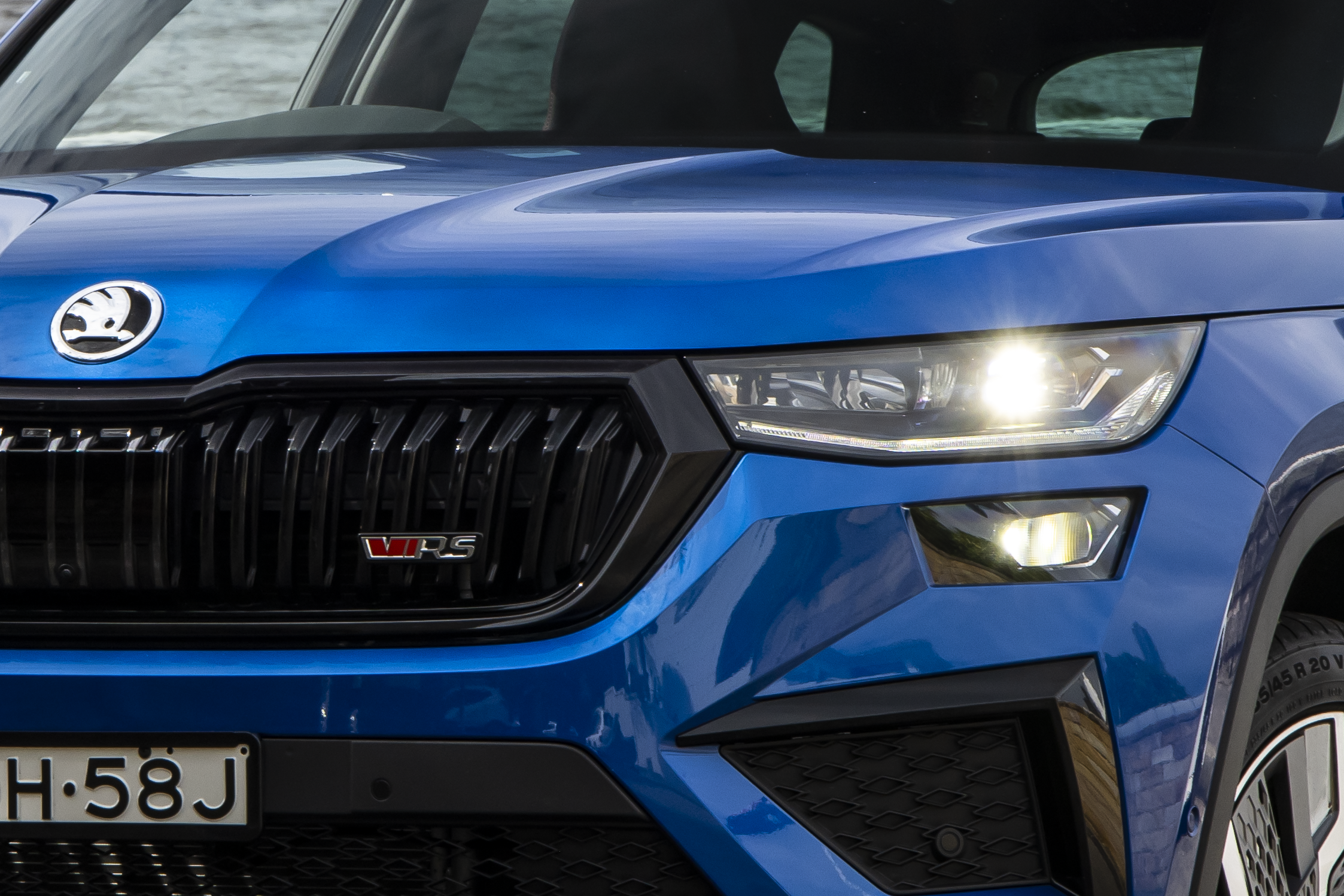
Any keen drivers stepping up to a family SUV for the first time – perhaps accustomed to hot-hatch thrills – just need to temper expectations, as the RS’s dynamics deliver contentment rather than excitement.
The same could be said about the RS’s EA888 ‘GTI’ engine (which is also employed in the Octavia RS sedan/wagon).
The 180kW/370Nm 2.0-litre turbo shaves a useful four-tenths off the diesel RS’s claimed 0-100km/h time, delivering a more respectable, if still unremarkable, 6.6 seconds (the Tiguan R is quoted at 5.1 seconds, for example).
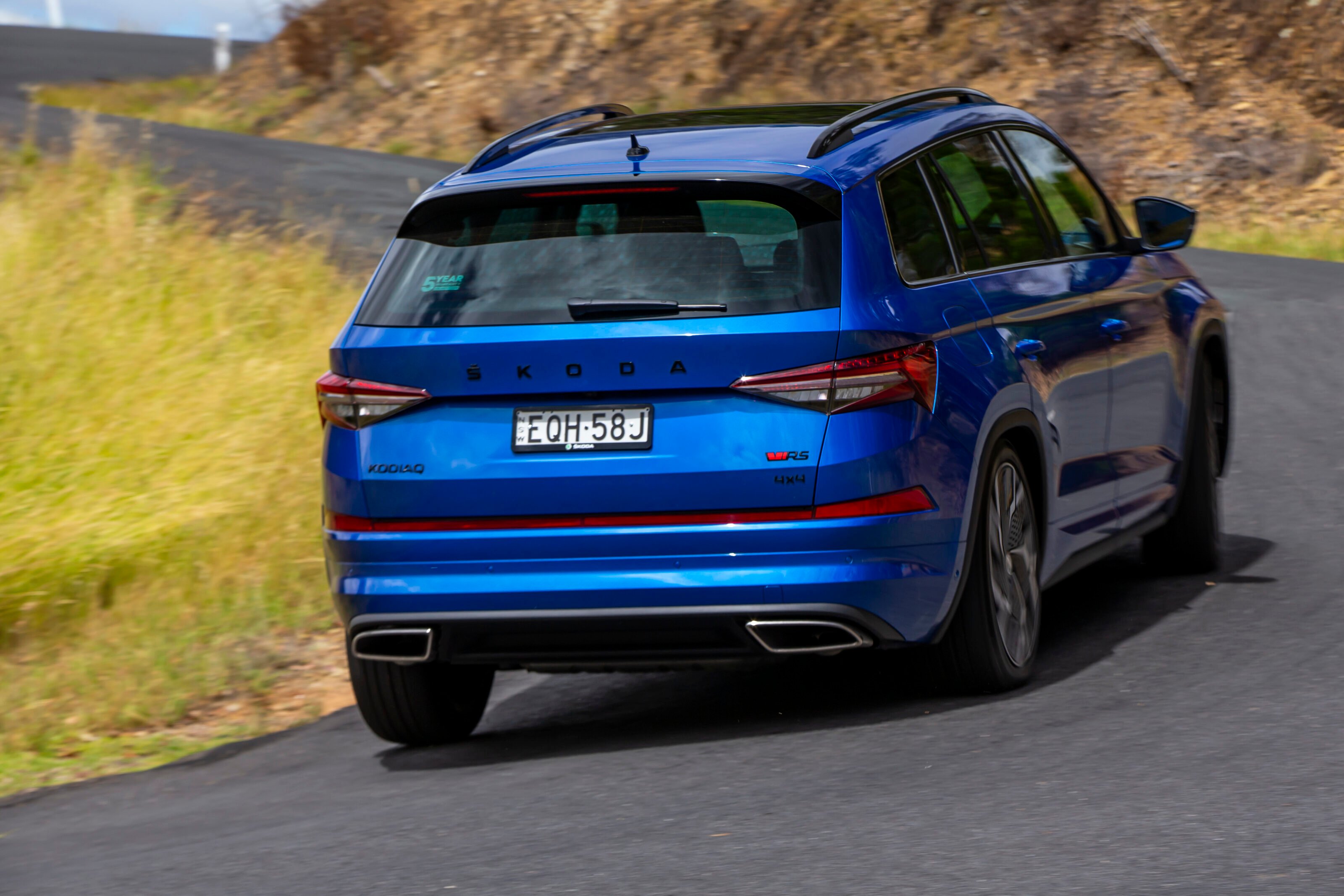
The extra thrust over the 132kW/320Nm turbo-petrol in the regular Kodiaq is also clearly evident.
While it’s an inherently sportier engine than the former turbo-diesel, it also concedes 130Nm. It’s a huge chunk of torque that doesn’t go unnoticed, though the petrol RS still provides a sufficiently potent mid-range for effective overtaking.
The petrol is thirstier and its higher-revving capability is also made irrelevant at times, with a transmission that overrides the driver’s paddle-selected gears even in Sport mode.
Skoda has given the four-cylinder an artificial soundtrack … the resonance of the fake noise can also be tiring, but relief is possible by putting the car in Comfort mode
It’s not a big deal on more open, flowing country roads, but in tighter, uphill sections the dual-clutch auto’s habit of changing up prematurely reduces engine response when it’s most needed or wanted.
Skoda’s engineers have also given the four-cylinder an artificial soundtrack that could be dubbed ‘Audi RS3’, though you’re simply left wishing there was a real five-cylinder throbbing away under the bonnet.
The resonance of the fake noise can also be tiring, but – gratefully – relief is possible by putting the car in Comfort mode. It can also be turned off as a single element in the Individual setting, so it’s possible to enjoy a more natural four-cylinder sound with the RS in Sport mode.
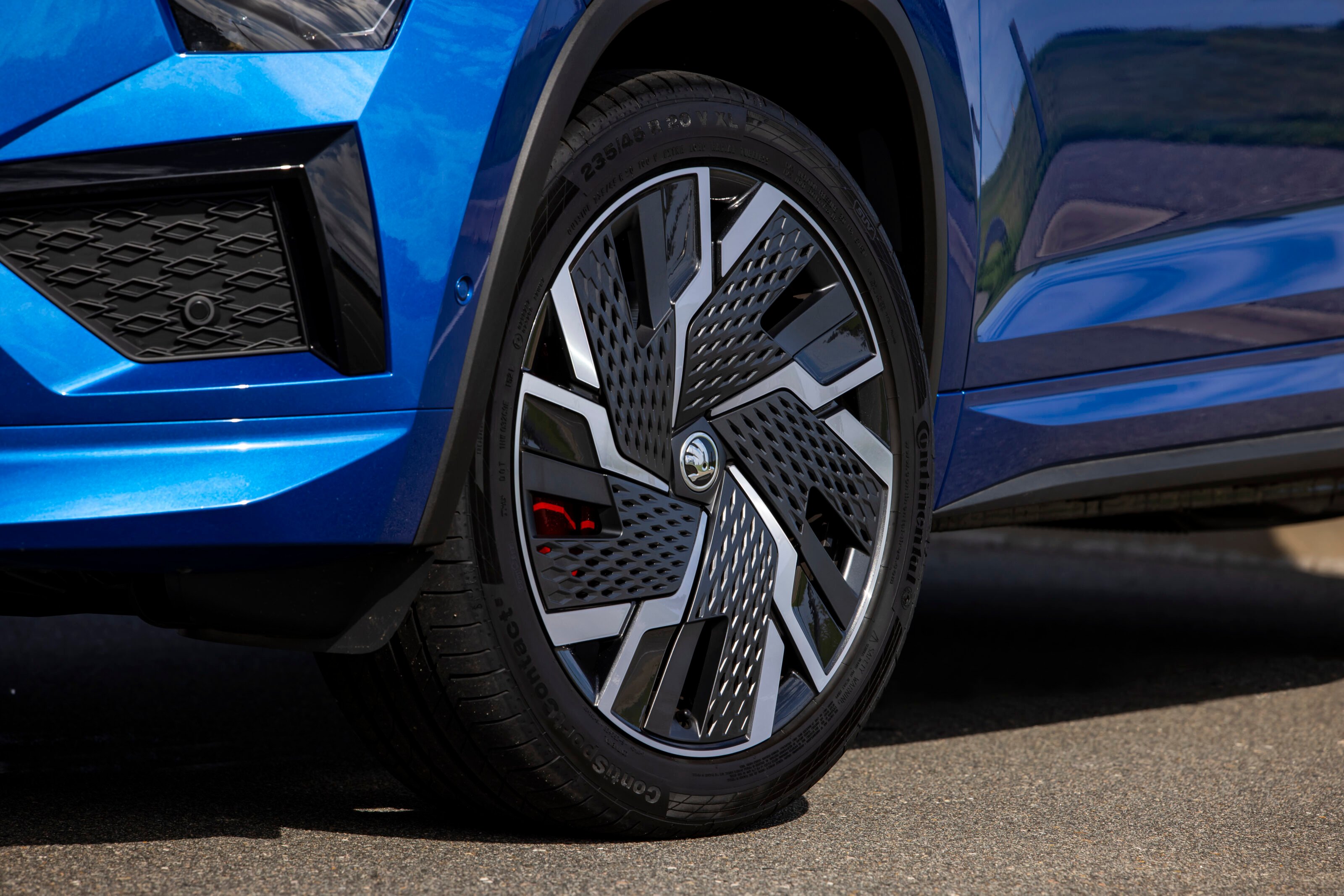
While the Continental tyres are noisier than the Pirelli Scorpions that were fitted to the Kodiaq Sportline we tested the same week, the level never becomes intrusive.
A night-time country excursion that included off-road trails proved the excellence of the Kodiaq’s new Matrix LED headlights.
Comfort and Space
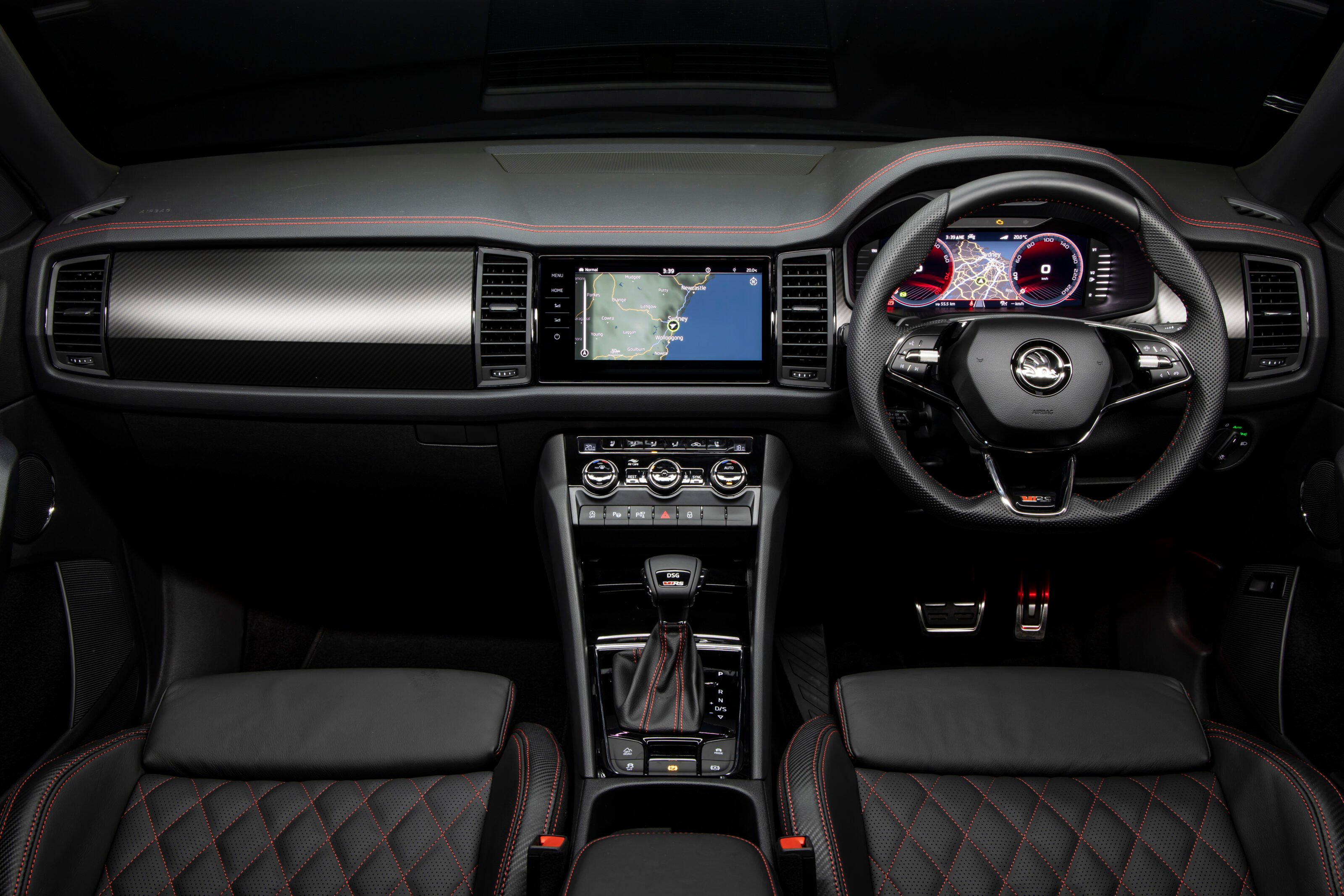
Skoda’s interior designers have made an effort to distinguish the RS’s cabin from the mid-range Sportline that has its own sporty flavour. Red stitching is omnipresent, weaved into the steering wheel, dash, door armrests, gear selector sleeve, and the upholstery (giving the diamond pattern greater emphasis compared with the standard all-black seats of the Sportline).
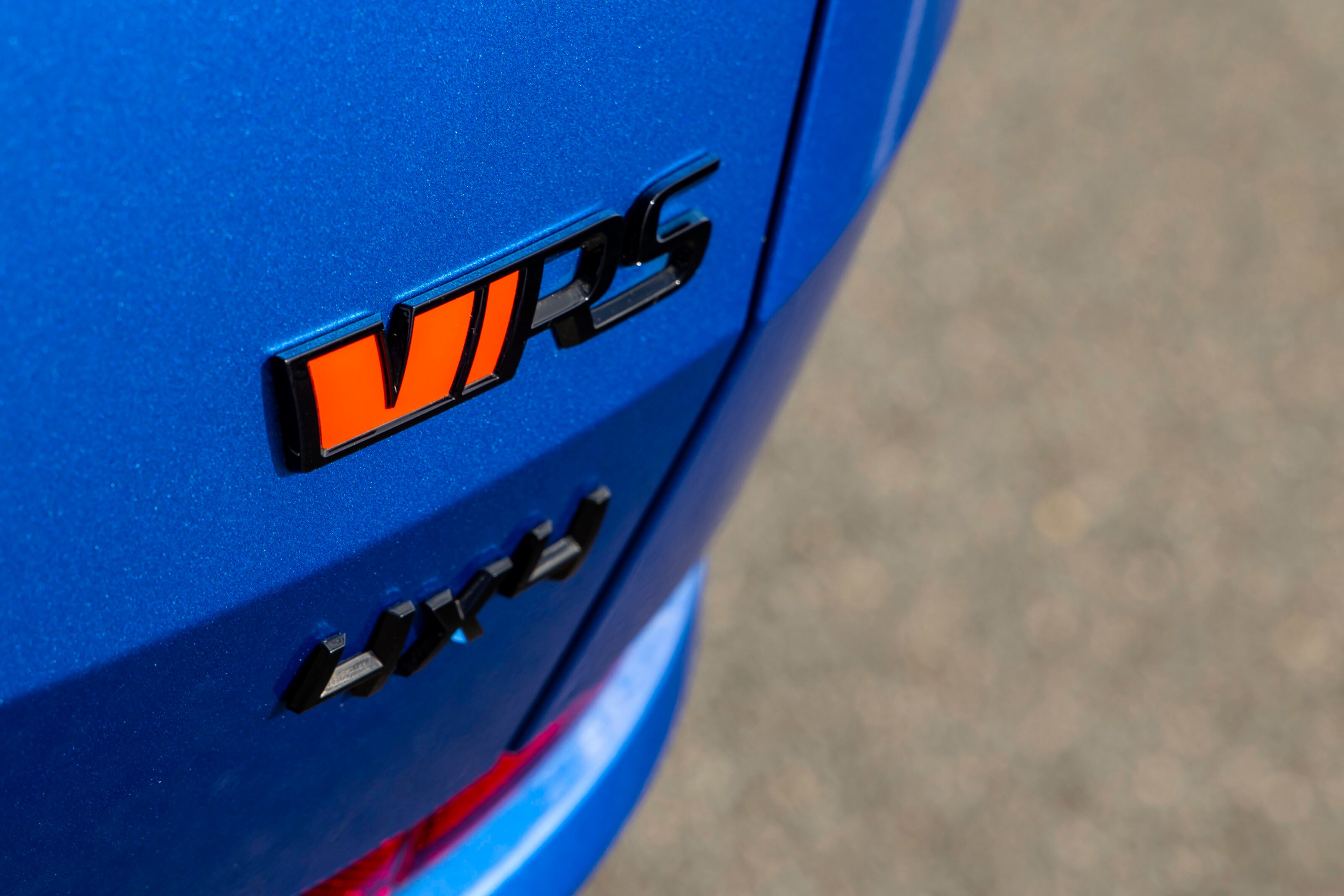
RS logos feature on the steering wheel, gear lever, start-up screens for the digital driver and infotainment displays, as well as the headrests of the sports seats. The bolstering features a carbon-fibre weave pattern.
The seat bolstering isn’t aggressive, again reflecting Skoda’s ethos of not going too extreme with its RS performance approach
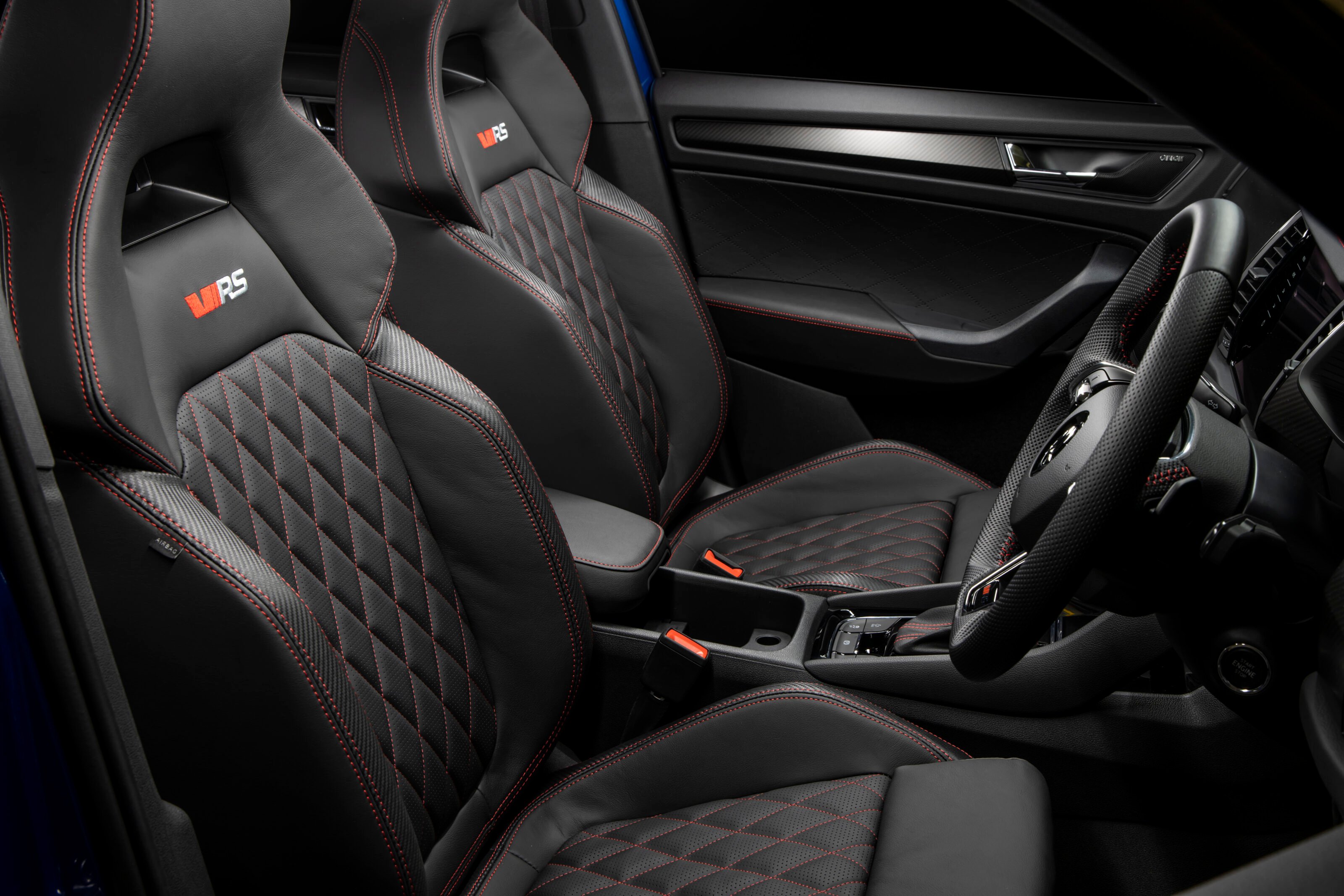
Imitation carbonfibre is used for door inserts and the upper glove box, as they are in the Sportline.
Seat bolstering isn’t aggressive, again reflecting Skoda’s ethos of not going too extreme with its RS performance approach.
The rest of the interior experience is shared with other Kodiaq models. So, there’s excellent second-row space all round and plenty of light courtesy of the panoramic sunroof that’s standard only on the RS (but optional on the Style and Sportline).
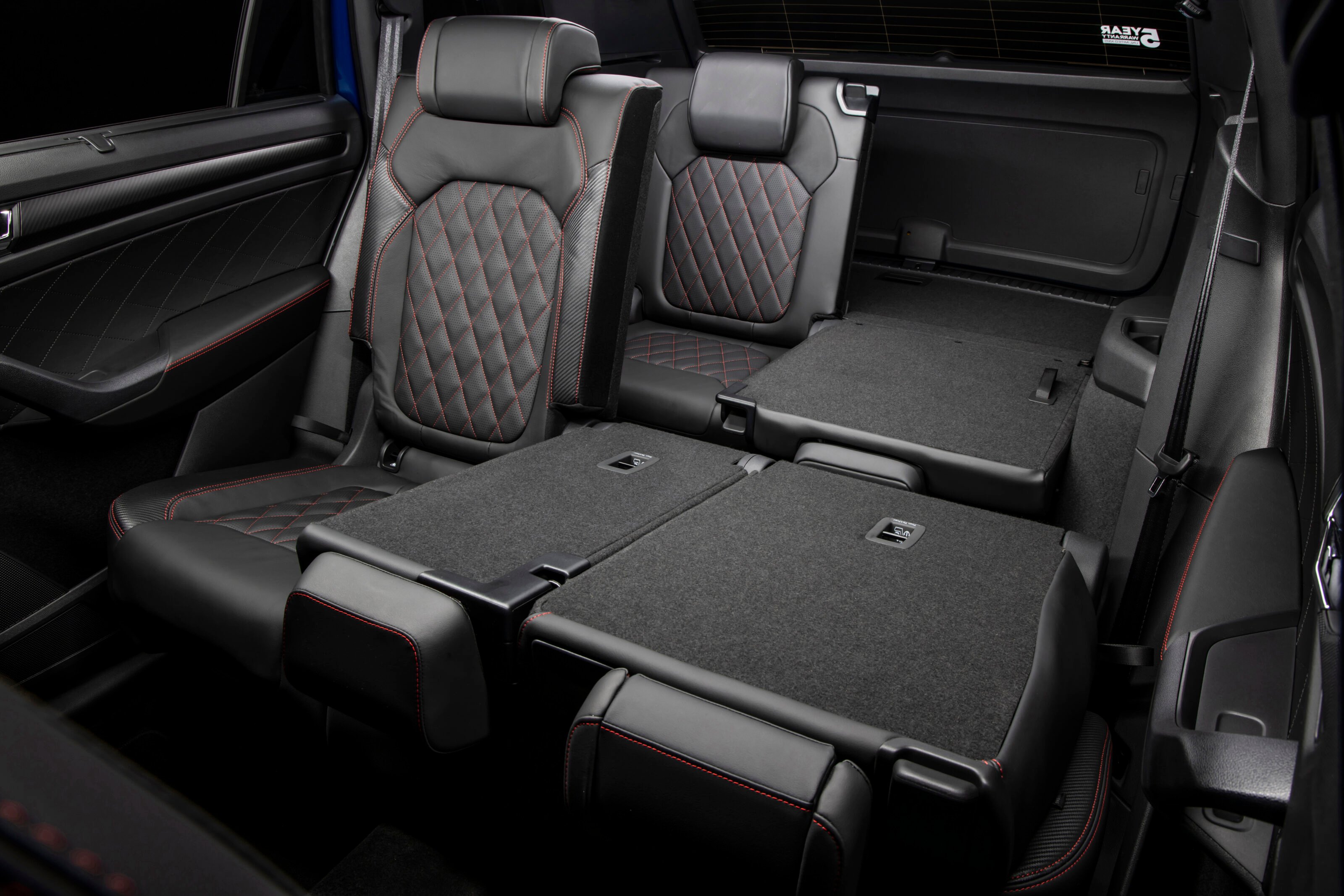
In the third row, knee space is at a premium even if headroom is okay. Kids old enough to use a seatbelt will generally be fine back there, but there are no anchor points for child seats and adults would probably need an emergency session with their chiropractor if they were to spend more than half an hour there.
Quoted five-seater boot capacity of 765 litres puts the Kodiaq up there for luggage space, while its 270 litres with the third-row seats in place is also above average.
Storage throughout the cabin is as typically Skoda-thoughtful as we have come to expect from the brand.
Ownership
Maintenance costs for the Skoda Kodiaq RS can be bundled into the overall vehicle price via pre-paid service packs or spread out with monthly payments.
It’s a $2000 cost for a five-year service pack or $2900 for seven years (both $200 extra over regular Kodiaqs).
Monthly plans are determined by a choice of annual mileage and level of coverage. There’s a basic Value plan, a middle Essential plan that takes care of engine oil, batteries, wiper blades and brake discs/pads, and Complete throws in tyre maintenance.
The Skoda Kodiaq RS comes with a five-year factory warranty.
VERDICT
We’re not convinced that the switch from diesel has done the Kodiaq RS a huge favour. The petrol doesn’t transform Skoda’s large SUV into a thrilling drive, yet in the process does lose some mid-range shove as well as fuel efficiency.
The VW Tiguan R also looks better value on paper, and the Sportline is our pick of the Kodiaq range.
But if you’re looking for a vehicle that pairs performance with seven-seater pragmatism – as well as ride comfort that will get the tick from non-enthusiast partners – then the Kodiaq RS is well worth a look.
2022 Skoda Kodiaq RS specifications
| Body | 5-door 7-seat SUV |
|---|---|
| Drive | all-wheel |
| Engine | 2.0-litre turbocharged four-cylinder petrol |
| Power | 180kW @ 5250-6500rpm |
| Torque | 370Nm @ 1600-4300pm |
| Transmission | 7-speed dual-clutch auto |
| 0-100km/h | 6.6 seconds (claimed) |
| Weight | 1790kg |
| Fuel consumption | 7.5L/100km (combined) |
| Suspension | strut (front), multi-links (rear) |
| L/W/h | 4699/1882/1685mm |
| Wheelbase | 2791mm |
| Tyres | Continental ContiSportContact 235/45R20 (f/r) |
| Wheels | 20-inch u2018Sagittariusu2019 alloys |
| Price | $67,440 before on-road costs ($74,990 drive-away) |
Key Points
- Lotus to unveil Eletre on March 30 Australian time
- SUV will be the brand’s first-ever electric vehicle
- Active aerodynamics previously confirmed as a standard feature
UPDATE, March 30, 2022: Lotus has finally unveiled its new electric SUV, the Eletre. Get the full story at the link below.

The story to here
UPDATE, March 28, 2022: Just under 48 hours away from its official reveal, Lotus has announced the name of its first-ever SUV – Eletre.
An all-electric, high-riding four-door, it’s a drastic departure from the lightweight sports cars Lotus is known for – but, with the automotive landscape moving away from internal combustion engines, now is the time for Colin Chapman’s company to make the switch.
While patent images have already shown us what the Eletre will look like on the outside, its reveal on March 30 at 5:30 AM, AEDT, is set to give us a closer look at what might be the most important Lotus model in modern times.
March 1, 2022: Lotus has locked in a date for the launch of its first-ever SUV, announcing it will take the covers off the Type 132 on March 29.
First teased late last year, the SUV is not only Lotus’s first departure from its main business of building sports cars, but also signifies the beginning of a new era – becoming the British manufacturer’s debut electric vehicle.
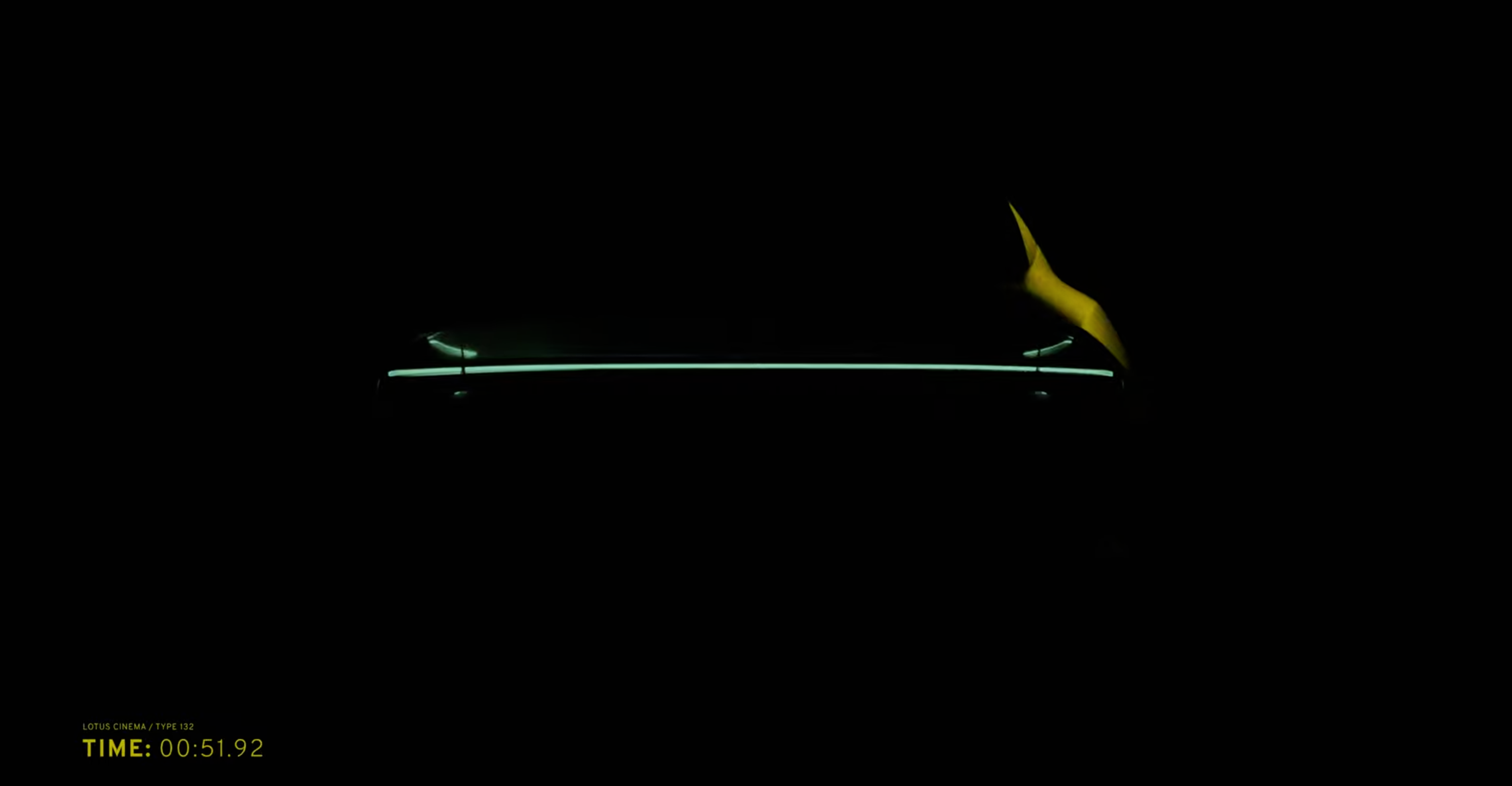
From the latest teaser video shown, we can see it features a narrow, wrap-around light at the rear end – unlike anything in the brand’s current catalogue – while previous information (below) has demonstrated the Type 132’s active aerodynamics.
Customers in the United Kingdom can reserve their own SUV for a £2000 ($3700) fee.
November 22, 2021: The upcoming Lotus electric SUV will be unveiled in the second quarter of 2022.
The latest update from Lotus has revealed the new model will make its debut in the northern hemisphere’s spring – our autumn.
Since the first teaser was shown earlier this month, Lotus has released a handful of shadowy videos previewing features of the ‘Type 132’.
Along with the grille shutters, the vehicle will also feature an active rear wing, expected to deploy for improved rear traction, or retract to reduce drag.
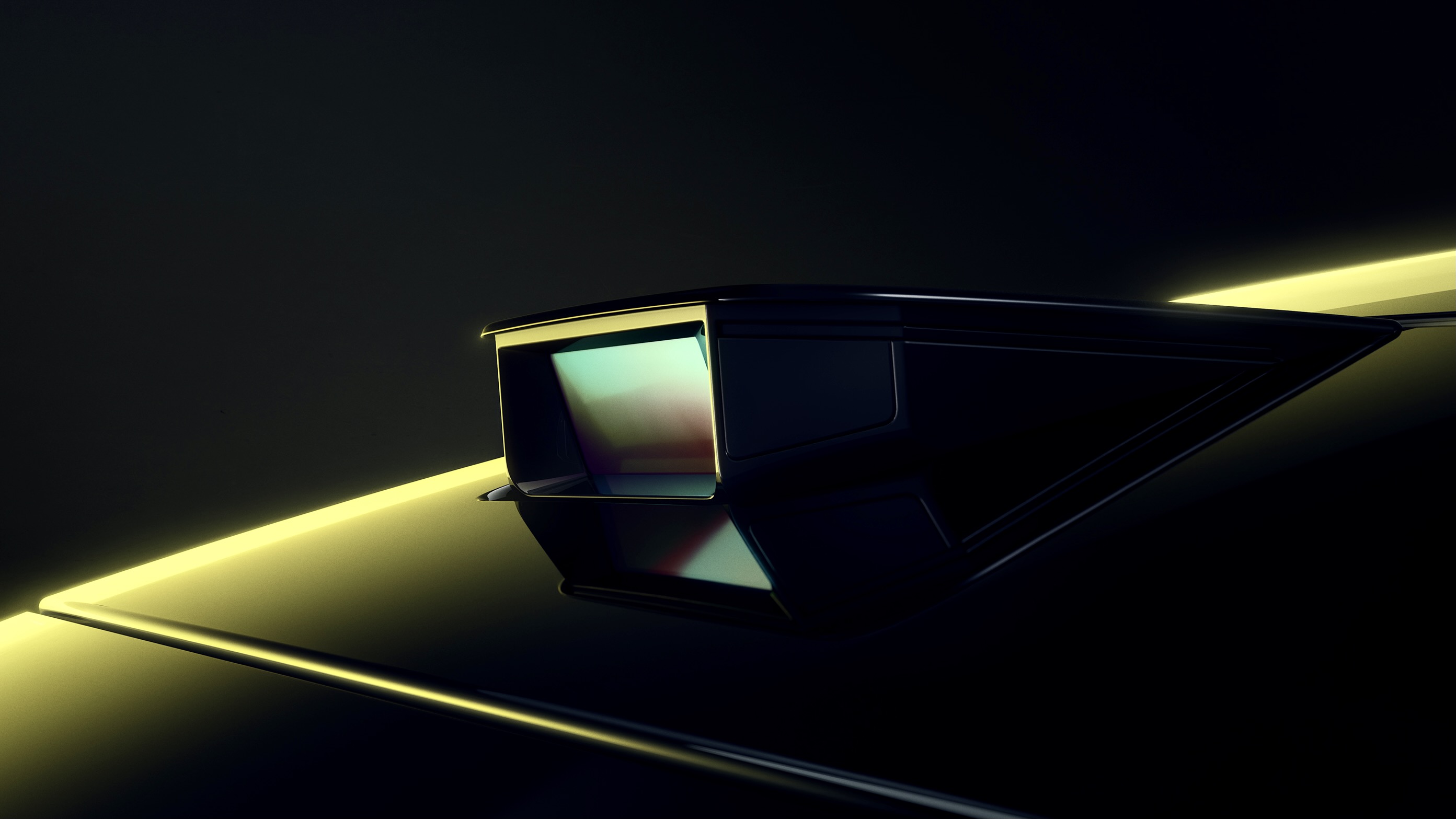
Perhaps the most interesting feature is the addition of Lidar – a type of roof-mounted laser radar, which can be used in conjunction with autonomous driving technology. The addition of Lidar suggests the Lotus will launch with an advanced self-driving system, likely at a Level Three or higher.
Expect more teaser videos to be released in the lead up to the Type 132’s unveiling in Q2.
The original story continues unchanged below.
November 10: Lotus has given a glimpse of its first SUV, showing off the vehicle’s active aerodynamics.
The electric full-size SUV, codenamed Type 132, is due to be unveiled next year – with the expectation the new Lotus will be a direct competitor to the future battery-powered Porsche Cayenne.
In a teaser video titled ‘Breathe’, the Lotus SUV electric vehicle shows off its active grille shutter system, allowing the vehicle to adjust aerodynamics and air cooling.
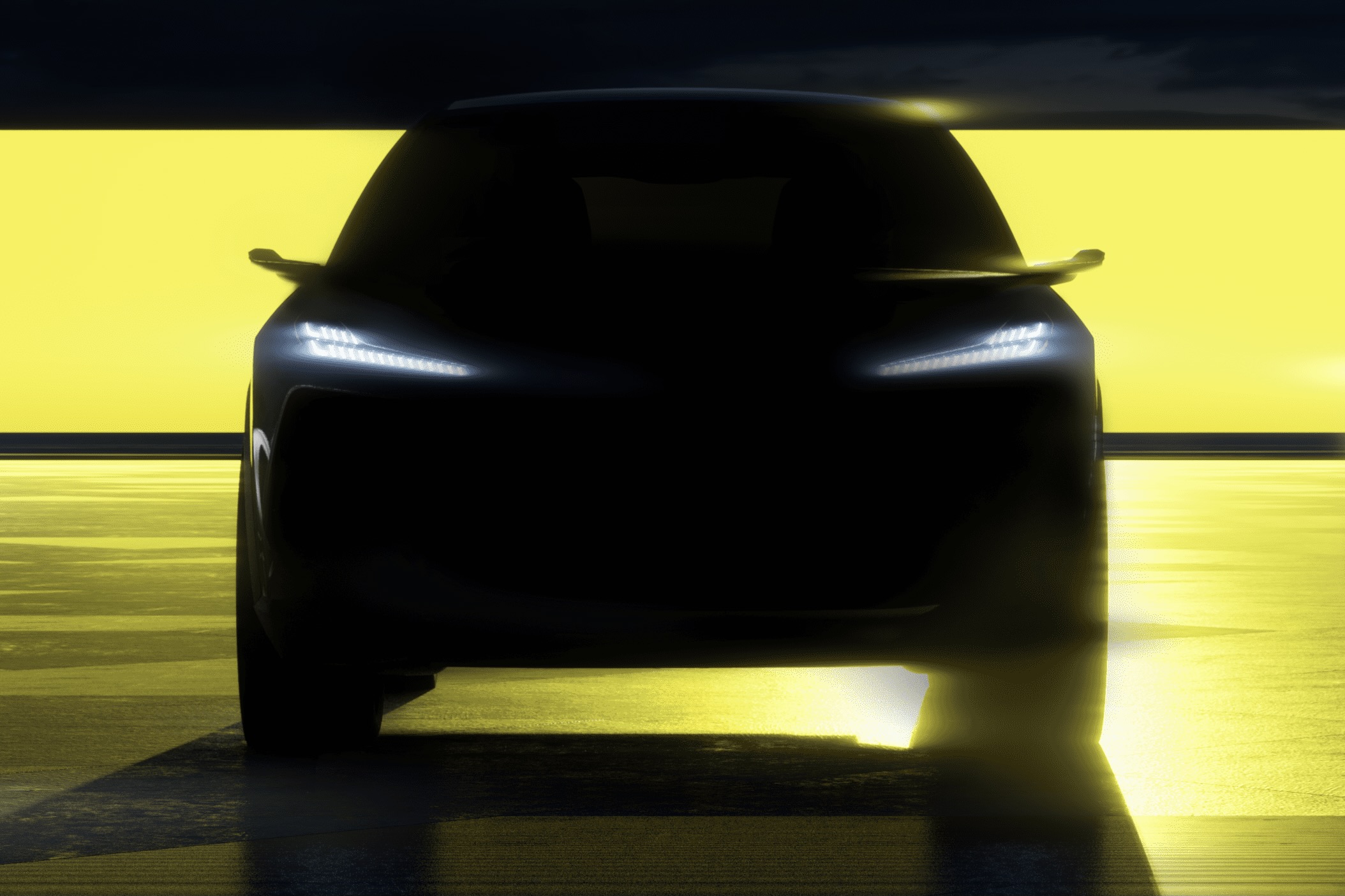
While details have yet to be outlined, expect a 0-100km/h sprint time as low as three seconds – with Autocar reporting two variants offering approximately 450kW and 560kW, from 92kWh and 120kWh battery packs respectively.
Its 800-volt charging system could see batteries refilled to 80 per cent in around 20 minutes.
Slated to be built in China, the BMW X5-sized Lotus may not have been what company founder Colin Chapman had in mind, but the carbon-fibre appears to show the Type 132 will at least attempt to follow the brand’s ethos of reducing weight.
The electric Lotus SUV is expected to be unveiled in 2022.
Snapshot
- Hydrogen superhighway will be a joint project between the east coast states
- Victoria aims to halve emissions by 2030, go net-zero by 2050
- Network will initially service heavy transport only
Australia’s eastern states have made a landmark announcement with a common goal in reducing carbon emissions, with a new hydrogen superhighway to be built up and down the east coast.
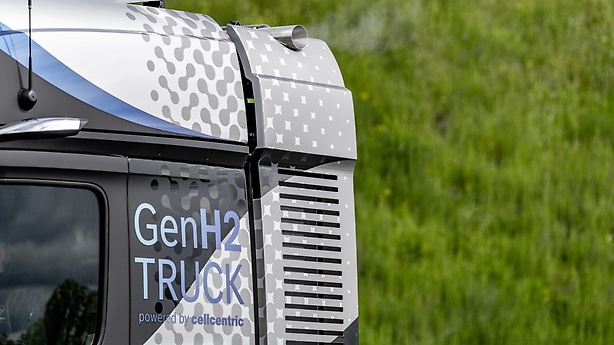
The hydrogen refuelling network will service heavy transport and logistics vehicles throughout Queensland, New South Wales and Victoria, aiming to not only reduce emissions but to also provide better fuel security for Australia.
A Memorandum of Understanding between the three states has been signed to develop and implement the refuelling network for freight vehicles on the Hume Highway, Pacific Highway and Newell Highway, although no timeline has yet been given as to when it will become operational.
Queensland Minister for Energy, Renewables and Hydrogen, Mick de Brenni, said the last two years have shown how Australia needs to be independent with its fuel supply, while the transport sector is the easiest to target in reducing emissions.
“When you consider the impacts of the COVID pandemic and international conflicts, it’s clear Australia must achieve energy independence, to shield our nation from foreign companies and foreign powers,” said de Brenni.
“Low-emissions electricity and hydrogen-fuelled heavy transport will sit at the heart of the renewable energy eco-system. Transport is the fastest growing sector for emissions and ironically it could also be the key to reducing them.
“Transport applications are one of the most economic uses of hydrogen, where it is already competitive with diesel on a cost-of-fuel basis. However, Government support is needed to help develop refuelling stations so transport companies can economically invest in new vehicles.”
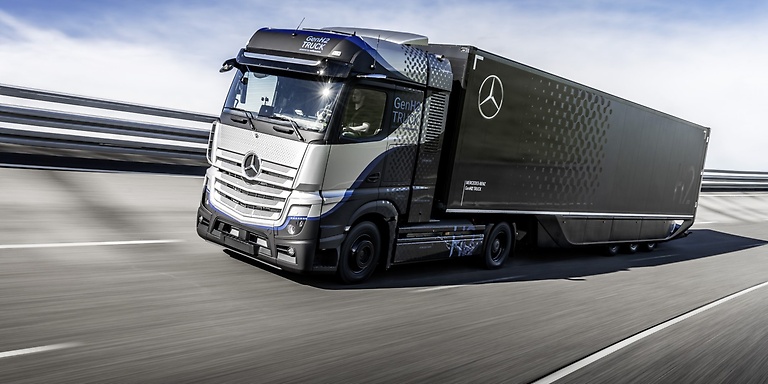
Victorian Minister for Energy, Environment and Climate Change, Lily D’Ambrosio, reiterated the importance of the hydrogen superhighway’s development to the state’s own emissions reduction targets.
“The renewable hydrogen highway will create new jobs, drive investment across the east coast and is a landmark step towards meeting Victoria’s target to halve emissions by 2030 and reach net-zero by 2050,” said D’Ambrosio.
“This historic collaboration between Victoria, New South Wales and Queensland will revolutionise Australia’s busiest freight corridor, lighting a pathway to a zero-emissions transport sector.”
Her sentiments were echoed by New South Wales Energy Minister Matt Kean, saying the refuelling network will allow freight companies to begin their transition towards zero-emissions vehicles.
“Renewable hydrogen will increasingly become a competitive zero-emissions fuel option for our heavy transport sector, giving our trucking industry the opportunity to decarbonise their fleets,” said Kean.
“The governments of NSW, Victoria and Queensland are signing Memorandums of Understanding for the refuelling corridors, starting with the Hume Highway, the Pacific Highway and the Newell Highway.”
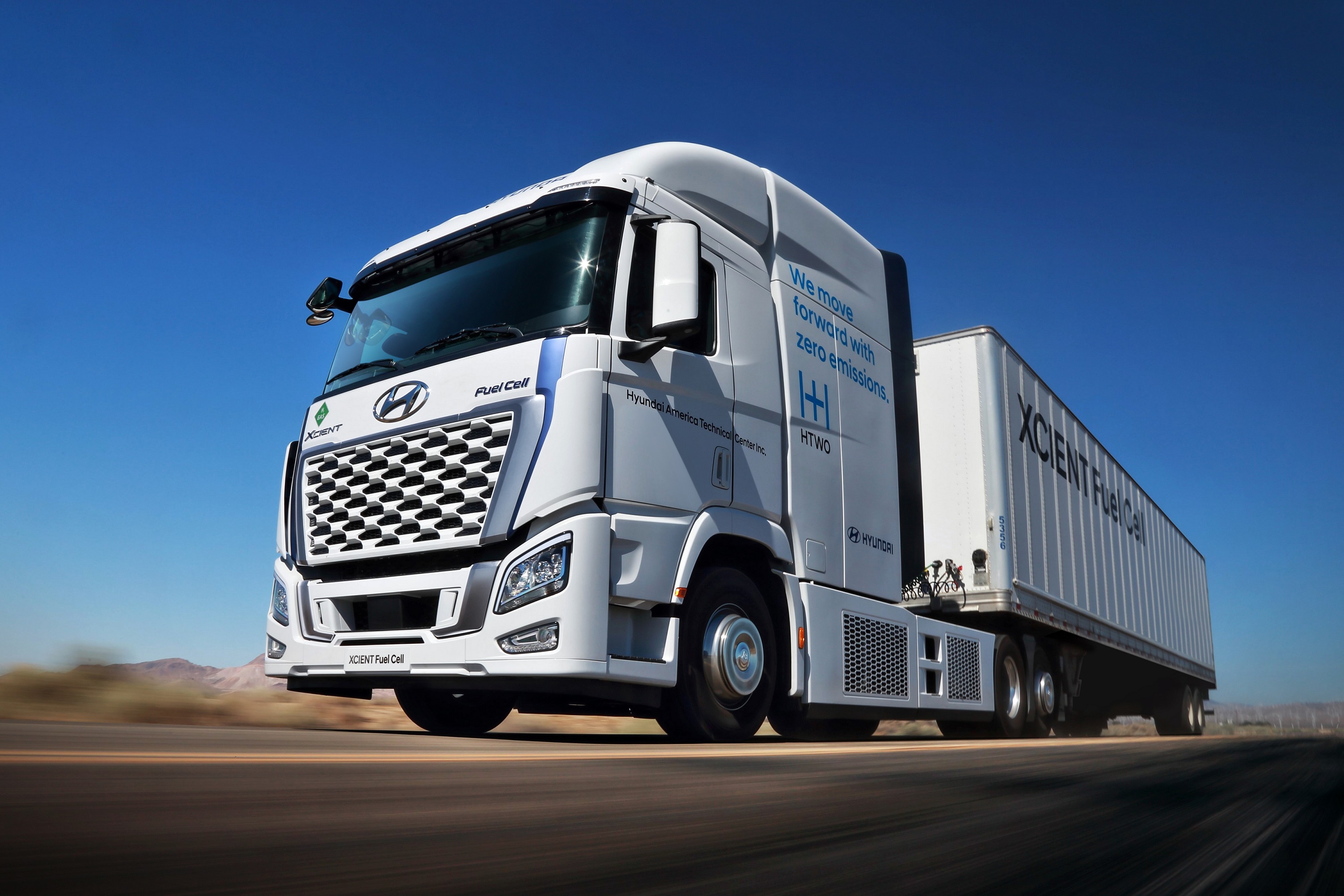
The project has also seen support from Volvo Group Australia’s vice president of emerging technology business development, Paul Illmer, believing it aligns with the automotive company’s own goals.
“Hydrogen will play a vital part in Volvo Group Australia’s decarbonization strategy during the latter half of this decade,” said Illmer.
“A holistic approach to fueling the Australian economy is needed to accelerate our journey to a fossil fuel free future.
“And for our part we are committed to building Australian engineered battery electric and hydrogen fuel cell heavy vehicles here in Queensland as a part of that strategy.
“The roll out of local hydrogen infrastructure gives us the certainty to push ahead on that journey.”
While the refuelling network will initially be designed with heavy vehicles in mind, the infrastructure could eventually support hydrogen passenger vehicles, as the only stations in Australia are currently located within Melbourne, Sydney, Canberra and Brisbane.
