
A longer six-seat version of Tesla’s Model Y mid-size SUV has been approved for sale in Australia. Government documents sighted by Whichcar by Wheels confirm that a three-row, six-seat variant of Australia’s best-selling electric vehicle is destined for local showrooms. It will be the first three-row Tesla available in Australia since the Model X was axed in 2020.
To make room for the third row of seats, Tesla has stretched the regular Model Y’s wheelbase by 150mm to 3040mm while overall length has increased by 177mm to 4969mm. It’s also taller by 44mm although width remains the same at 1920mm (without mirrors).
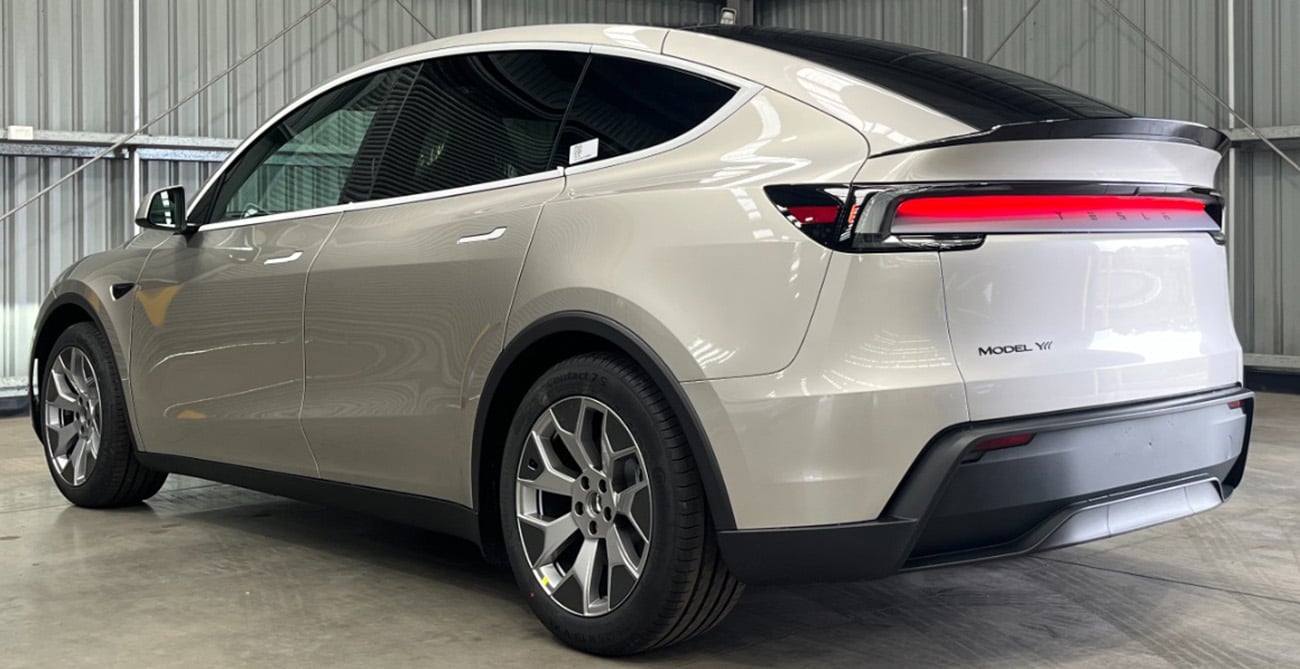
The increased dimensions could see the Model Y L sold and marketed as a large SUV (the current Model Y is classified as a medium SUV), pitting it against the likes of Toyota Kluger, Kia Sorento and Hyundai Santa Fe.
Maximum boot capacity increases from 2022 litres in the Model Y Long Range AWD to 2539 litres.
According to government documents two electric motors – one at each axle – power the all-wheel drive Model Y L which shares much of its underpinnings with the Model Y Long Range AWD including its 85kWh lithium-ion battery array.
However, due to its extra size and weight (the Model Y L is 96kg heavier than its five-seat counterpart, according to official documents), buyers can expect a slight reduction in the regular Model Y’s 600km (WLTP tested) driving range.
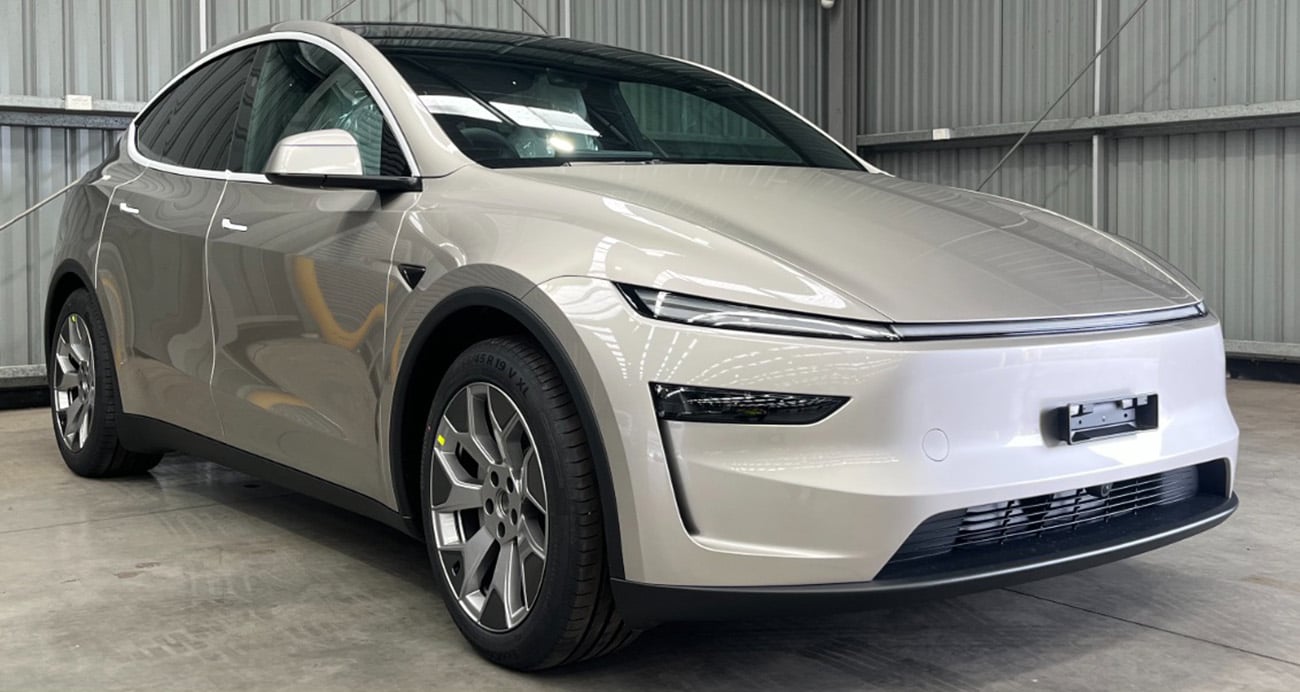
Photos from the official government documents show the Model Y L will receive 19-inch wheels in a unique design. Additionally, Chinese-specified vehicles show a unique gold exterior colour while the three-seat bench of the second row in regular models has made way for individual captain’s chairs.
The Tesla Model Y L is priced in China for the equivalent of US$47,000 or around A$66,600. In Australia, the regular Model Y Long Range AWD is priced at $68,900 before on-road costs so it wouldn’t be a stretch to suggest the stretched Model Y L will attract a premium at local dealerships.
The Tesla Model Y has been the best-selling electric vehicle in Australia since 2023, with sales of over 72,000 over the last three years.
The popular Lexus IS sedan exited Australia in 2021, in the face of tightening restrictions on safety standards, has remained on sale in the United States, and was facelifted in 2025 to ensure sales would continue in what is now its largest market.
Lexus launched the the third-generation IS in Australia, in 2013, with a 2017 facelift following, and then a significant update in 2020. During its run in the US, buyers could opt for a hybrid IS 300h, a V6-powered IS 350 or the V8-powered IS 500 F Sport version.
However, a recent report by Car And Driver in the United States, suggests that the mid-size sedan could be revitalised with an electric powertrain. Car And Driver cites a report by Japanese outlet Best Car that claims Lexus is planning on launching an electric new generation IS sometime in 2027.
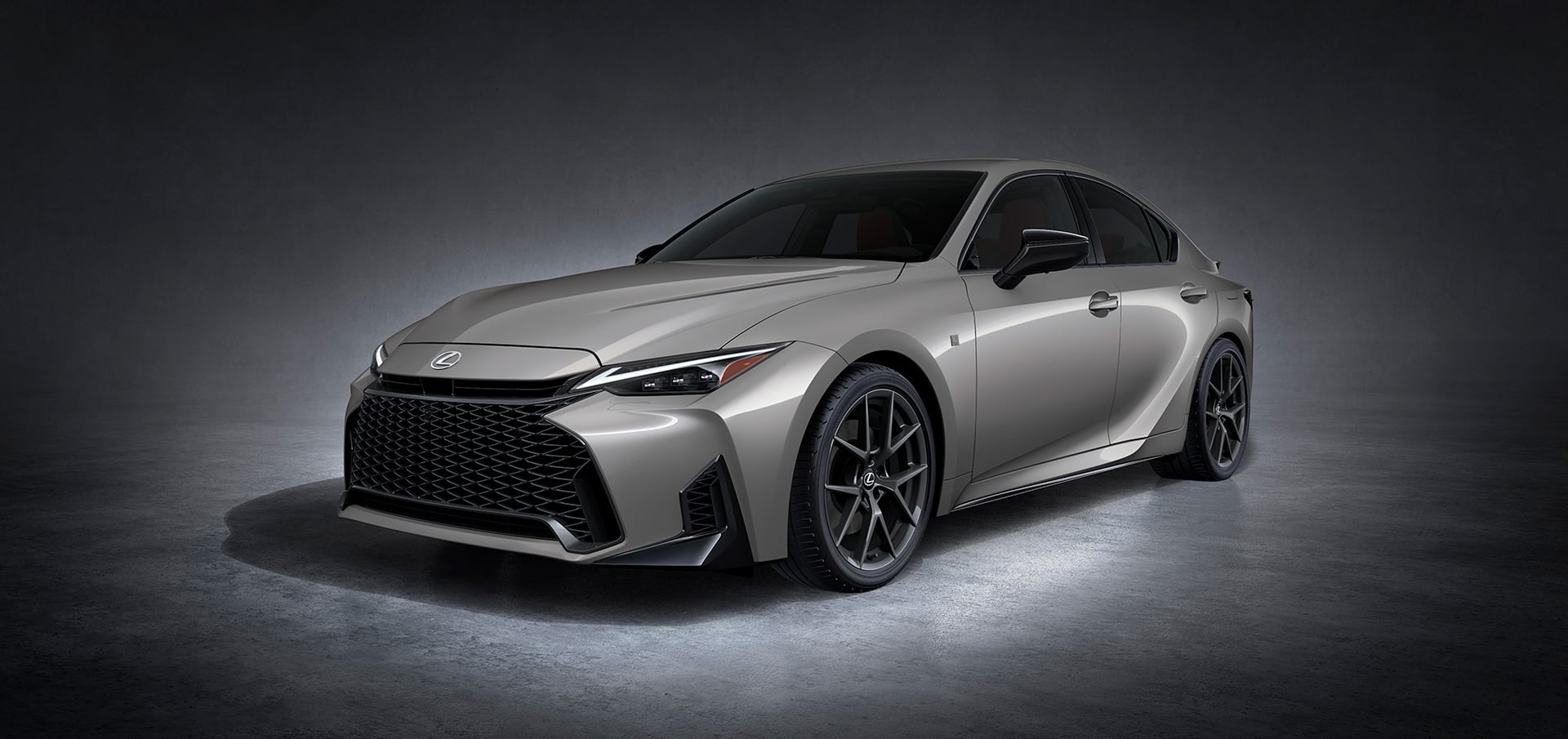
Despite not being available in Australia for nearly five years, the IS (above) has continued to sell well for the brand in North America, a market that was always strong for the luxury sedan. The most recent update for the United States, saw the IS grow by 10mm in overall length, while other dimensions remained the same.
Inside, the model update also included a revised dashboard design with two 12.3-inch screens, one for infotainment functionality and one for the driver display. Lexus also moved away from its traditional centre console mouse-style controller delivering a much cleaner console area, but also touchscreen functionality.
Car And Driver reports that the new IS could feature single and dual-motor variants, which would mean AWD and power outputs as high as high as 370kW. Styling cues could be taken from the LF-ZC that first broke cover in 2023, at which time Lexus told the world’s motoring press that a production version of that car would be built in 2026.
Hyundai has introduced the new Elexio electric SUV to Australia, with a second, more affordable variant scheduled to join the line-up in 2026.
Arriving initially in Elite guise, the Elexio is priced at an introductory $59,990 driveaway (or $61,990 manufacturer list price after April 1) and slots between the smaller Kona Electric and the Ioniq 5 in Hyundai’s expanding EV range.
A lower-priced entry variant is due in the second quarter of 2026, broadening the model’s appeal and sharpening its position in the competitive mid-size electric SUV segment.
The Elexio is powered by a single front-mounted electric motor producing 160kW and 310Nm, driving the front wheels. Energy is supplied by an 88.1kWh lithium iron phosphate (LFP) battery, delivering a claimed driving range of up to 546km on the WLTP cycle.
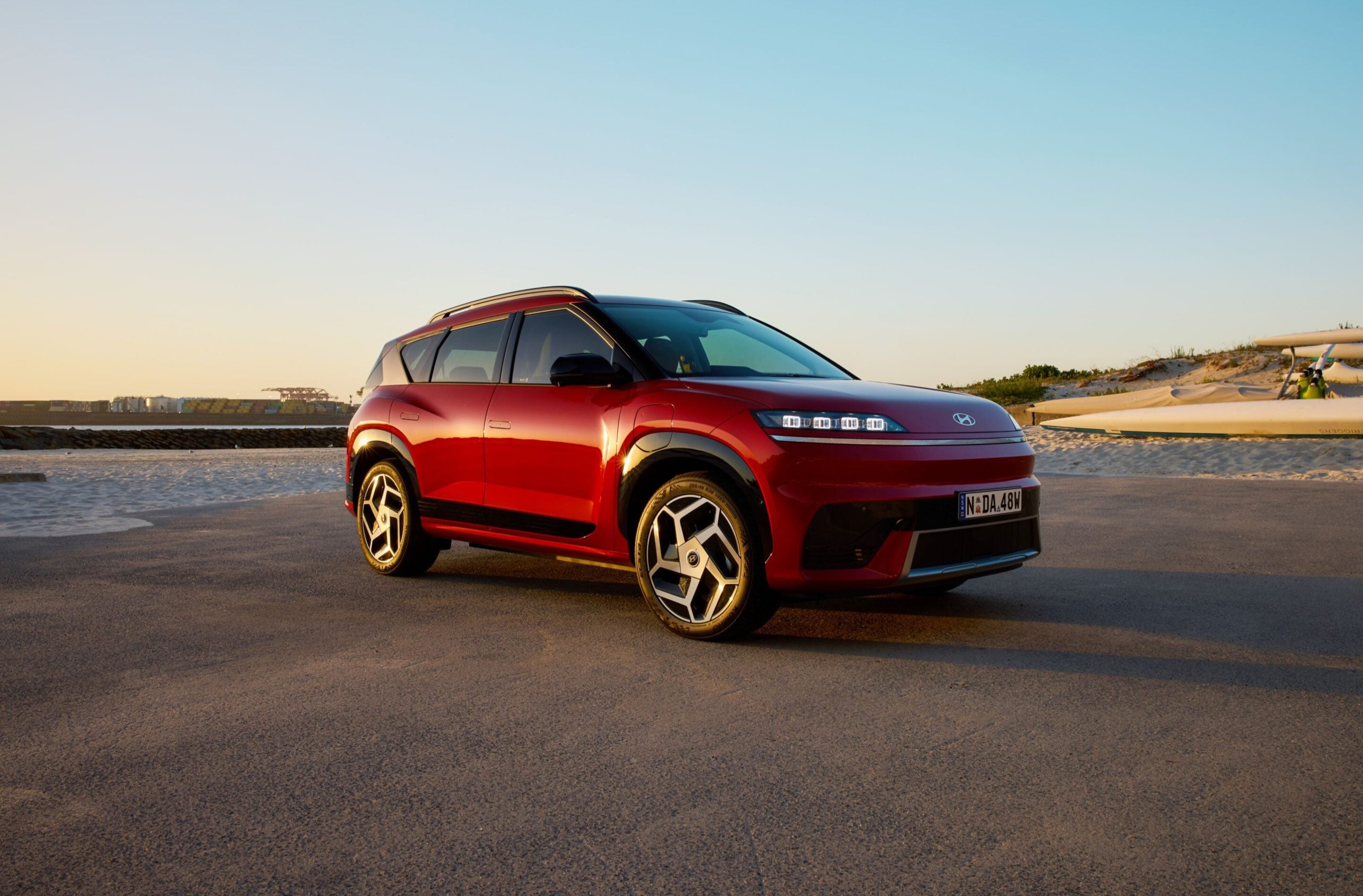
Built on Hyundai’s dedicated E-GMP electric vehicle platform, the Elexio supports DC fast charging from 10 to 80 per cent in as little as 38 minutes under optimal conditions. The platform also enables Vehicle-to-Load (V2L) capability, allowing external devices to be powered via an internal outlet.
Positioned as a family-focused five-seater, the Elexio combines a relatively large battery and long driving range with a practical cabin layout. Hyundai says the model has been designed with an emphasis on interior space and user-friendly technology, wrapped in a clean, minimalist exterior and dashboard design.
Standard equipment in the Elite includes a suite of driver assistance systems and connected technology, in line with Hyundai’s broader electric vehicle strategy.
With the confirmation of a second variant for 2026, Hyundai is signalling its intent to expand the Elexio range quickly, potentially offering buyers a more accessible price point in the near future while maintaining the same core platform and electric drivetrain fundamentals.
Pricing
| ELEXIO Elite | $59,990 Drive Away ($61,990 MLP) |
|---|---|
| ELEXIO | $58,990 MLP |
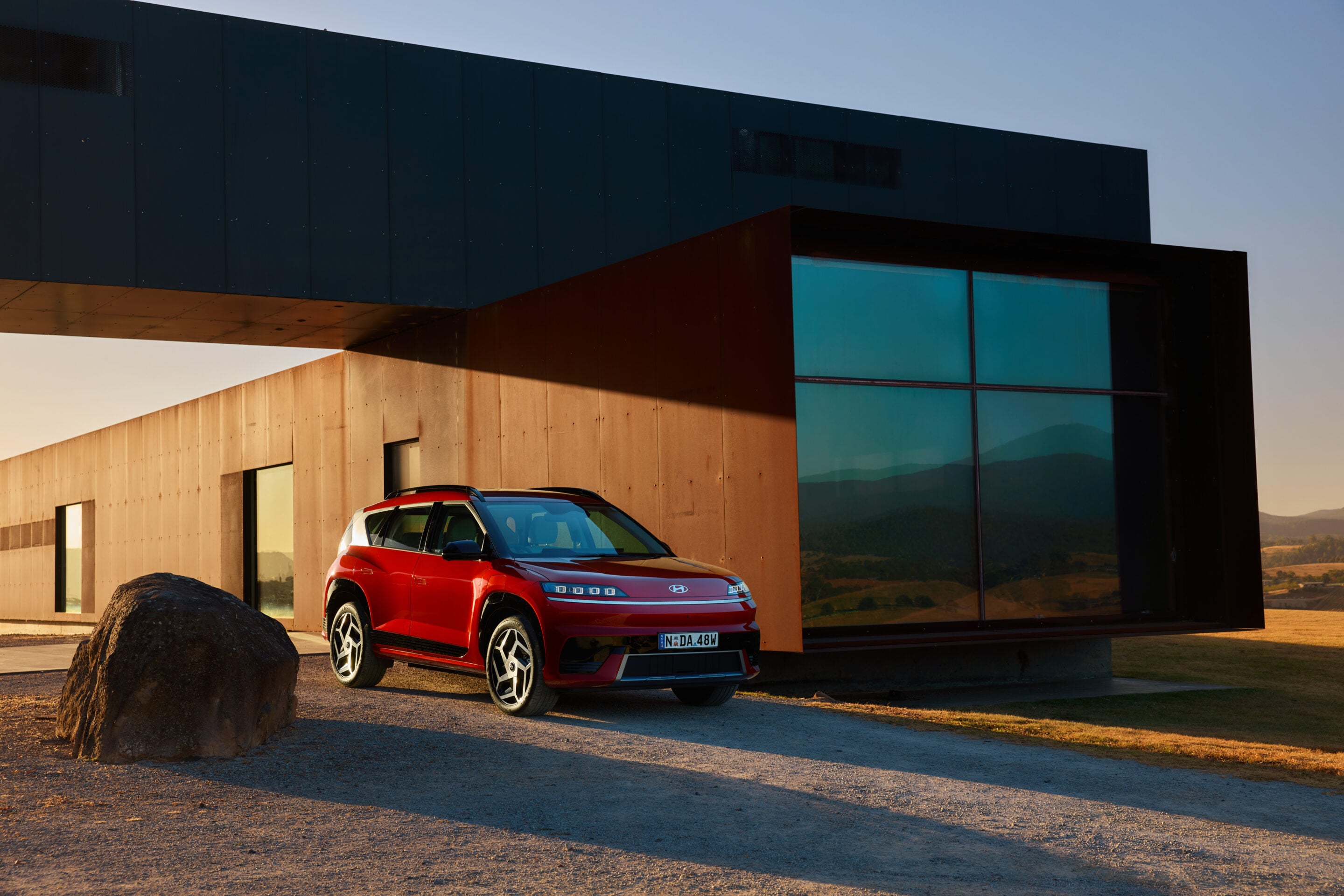
Visually, ELEXIO adopts a clean, futuristic design language inside and out. The exterior features a smooth, aerodynamic silhouette, with both the front and rear characterised by layered horizontal elements that emphasise width and give the SUV a confident stance.
Five mica exterior colours will be available, including Crystal White as standard, with Medium Grey, Pebble Blue, Dragon Red and Phantom Black offered as premium finishes.
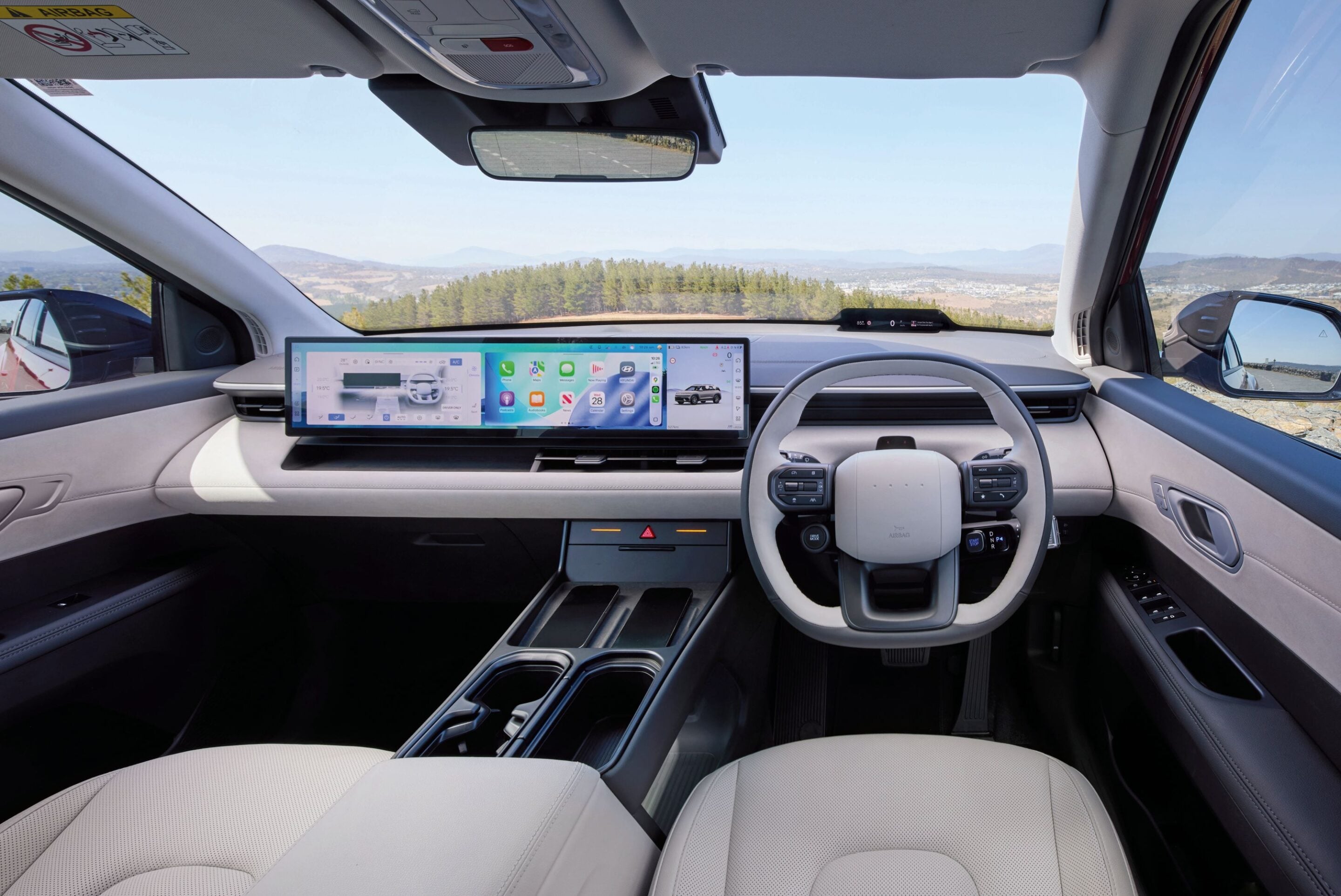
Inside, the cabin blends strong structural lines with soft curves to create a modern yet welcoming atmosphere. The leather-appointed interior is available in Obsidian Black or Dove Grey and includes heated and ventilated front seats, dual wireless smartphone chargers, and a suite of connected technologies. Over-the-air update capability, Bluelink Connected Car Services and Digital Key 2 with NFC smartphone entry and start are all standard.
Designed with family use in mind, ELEXIO offers a generous 506 litres of boot space, expanding to 1540 litres with the rear seatbacks folded flat.
ELEXIO will also debut Hyundai’s new Connect-C infotainment system in Australia. Based on the Android Automotive Operating System, the system is displayed via a striking 27-inch ultra-thin 4K panoramic screen that integrates infotainment and vehicle controls. A head-up display is standard, projecting key driving information directly into the driver’s line of sight.
Importantly for Australian conditions, ELEXIO has undergone an extensive local ride and handling tuning program. Hyundai engineers from Korea worked alongside the Australian chassis team in Sydney to develop bespoke suspension and steering calibrations, ensuring the SUV delivers the right balance of comfort, stability and refinement on local roads.
Specs
| Battery Size | 88 kWh |
|---|---|
| Battery Type | LFP |
| Range (WLTP) | 546 km |
| Maximum Power | 160 kW |
| Maximum Torque | 310 Nm |
| Combined Fuel Efficiency | 18.2 kWh/100km |
| Charging (10 to 80%) | 38 mins (350 kW DC Charger) |
Features
Safety
- 9 Airbags (front, front side thorax + pelvis, rear side thorax, curtain & front centre side)
- Front seat belts with height adjusters & pre-tensioners
- Rear outboard seatbelt pre-tensioners
- Rear power child safety locks (auto)
- Blind-Spot Collision-Avoidance Assist (BCA); Rear/Exit
- Blind-Spot View Monitor (BVM)
- Driver Attention Warning (DAW)
- Forward Collision-Avoidance Assist 2.0 (FCA 2.0); Car/Ped/Cyc/JT/JC/LO/LS/DO w/ESA
- High Beam Assist (HBA)
- Highway Driving Assist 2 (HDA2)
- Hands On Detection (HOD); steering wheel w/haptic warning function
- In Cabin Camera (ICC); Driver
- Intelligent Speed Limit Assist (ISLA)
- Lane Following Assist 2 (LFA 2)
- Lane Departure Warning (LDW)
- Lane Keeping Assist (LKA); Line/Road-edge
- Manual Speed Limit Assist (MSLA)
- Navigation-based Smart Cruise Control-Curve (NSCC-C)
- Parking Collision-Avoidance Assist; Forward/Side/Reverse (PCA-F/S/R)
- Rear Occupant Alert (ROA) w/o sensor
- Rear Cross-traffic Collision Avoidance-Assist (RCCA)
- Remote Smart Park Assist 3 (RSPA 3)
- Surround View Monitor (SVM)
- Smart Cruise Control (SCC 2) w/Stop & Go
- Safe Exit Assist (SEA)
- Tyre Pressure Monitoring System (TPMS) – High Line
- Virtual Engine Sound System (VESS)
Exterior
- 20″ x 8.0″ alloy wheels w/255/45 tyres
- Roof rails
- Body coloured side sills
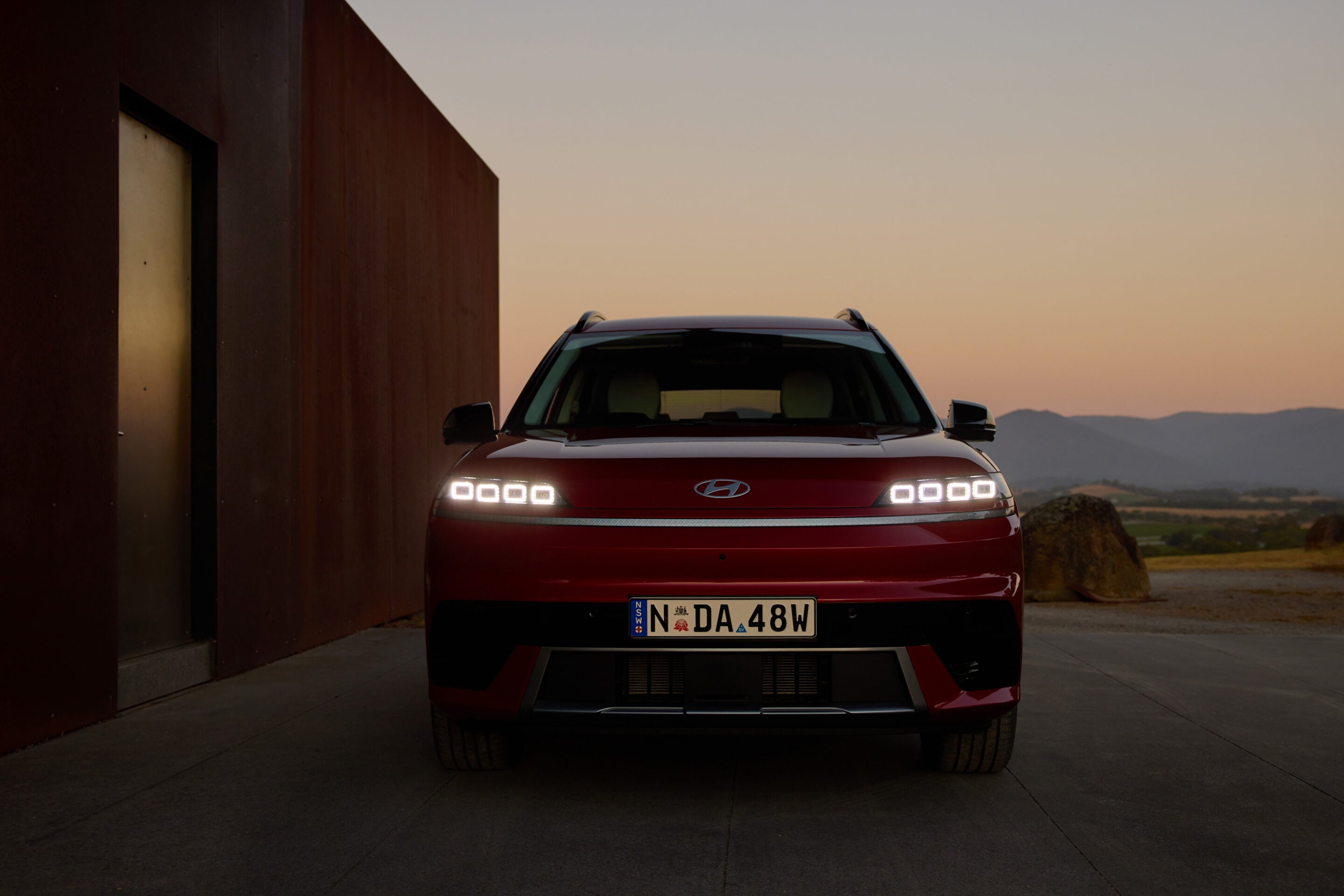
- LED Headlamps (4 Cube projection) w/Auto light control
- LED DRL, positioning lamp
- Dynamic Welcome Light (front) & dynamic turn signals (front + rear)
- LED rear combination lamp
- Rear spoiler w/LED High Mount Stop Lamp (HMSL)
- LED rear fog lamp & LED reverse lamp
- Heated & power folding outside mirrors w/ LED side repeater lamp
- Acoustic film windshield
- Tinted windshield, door & backlite glass
- Auto flush door handles
- Smart power tailgate
Interior
- Leather appointed seat covering
- Cloth roof trim + A -pillar trim
- 4-spoke leather steering wheel
- Satin chrome centre inserts
- Console with suede-like material
- Standard door scuff plates
Convenience
- Smart Key w/push button start
- Digital Key 2.0 (NFC type)
- 14-way IMS (memory) driver seat; includes:
- 4-way lumbar support (2-cell aircell type)
- Tilt adjuster; base
- Bolster adjuster; backrest
- 4-way power passenger seat
- Front headrests w/tilt function
- Heated & Ventilated front seats
- Heated steering wheel
- 60:40 spilt folding & reclining rear seat w/armrest & cupholders
- LED interior lighting (with bulb cargo lamp)
- Illuminated LED vanity mirrors
- Electrochromic Mirror (ECM) inside rear view mirror
- Auto up/down + safety windows; front & rear
- Dual wireless charging pads
- USB-C charger-front centre console (2 port)
- USB-C data & charging port (1 port)
- USB-C charger-console – 2nd row (2 port)
- Inside V2L
- Auto temperature control: Dual zone w/Auto window defog
- Rear air vent & heating duct: 2nd row
- Rain sensor
Multimedia/Display
- Cluster 27″ Integrated Display
- Head-Up Display (HUD) non-film Horizon type
- Navigation (AVN)
- Bluelink (Connected Car Services)
- Over The Air (OTA) software updates
- 6 speakers
- Voice Control with 4-zone voice recognition
Check back Thursday, February 26 for a full review of the new Elexio.
It’s almost 40 years since BMW – almost accidentally – launched its first ever station wagon.
BMW engineer Max Reisböck faced a personal conundrum – how to enjoy weekend road trips with his growing family, and their luggage, in comfort and style and without diluting the driving dynamics BMW had become renowned for.
His solution was to take an accident-damaged E30 3 Series sedan and over a period of six months in his home garage, Reisböck crafted it into a station wagon.
It looked good too. With his background as a bodywork engineer, the DIY 3 Series wagon looked factory-fresh and when he showed his creation to BMW’s board, they recognised the potential and commercial viability of having a wagon in their model line-up. The project was green-lit, and using Reisböck’s creation as the blueprint, the 1987 BMW 320i Touring, the first ever station wagon from the Bavarian automaker was born.
Reisböck’s vision is still keenly felt in the car we’re driving today, the 2026 BMW M3 CS Touring.
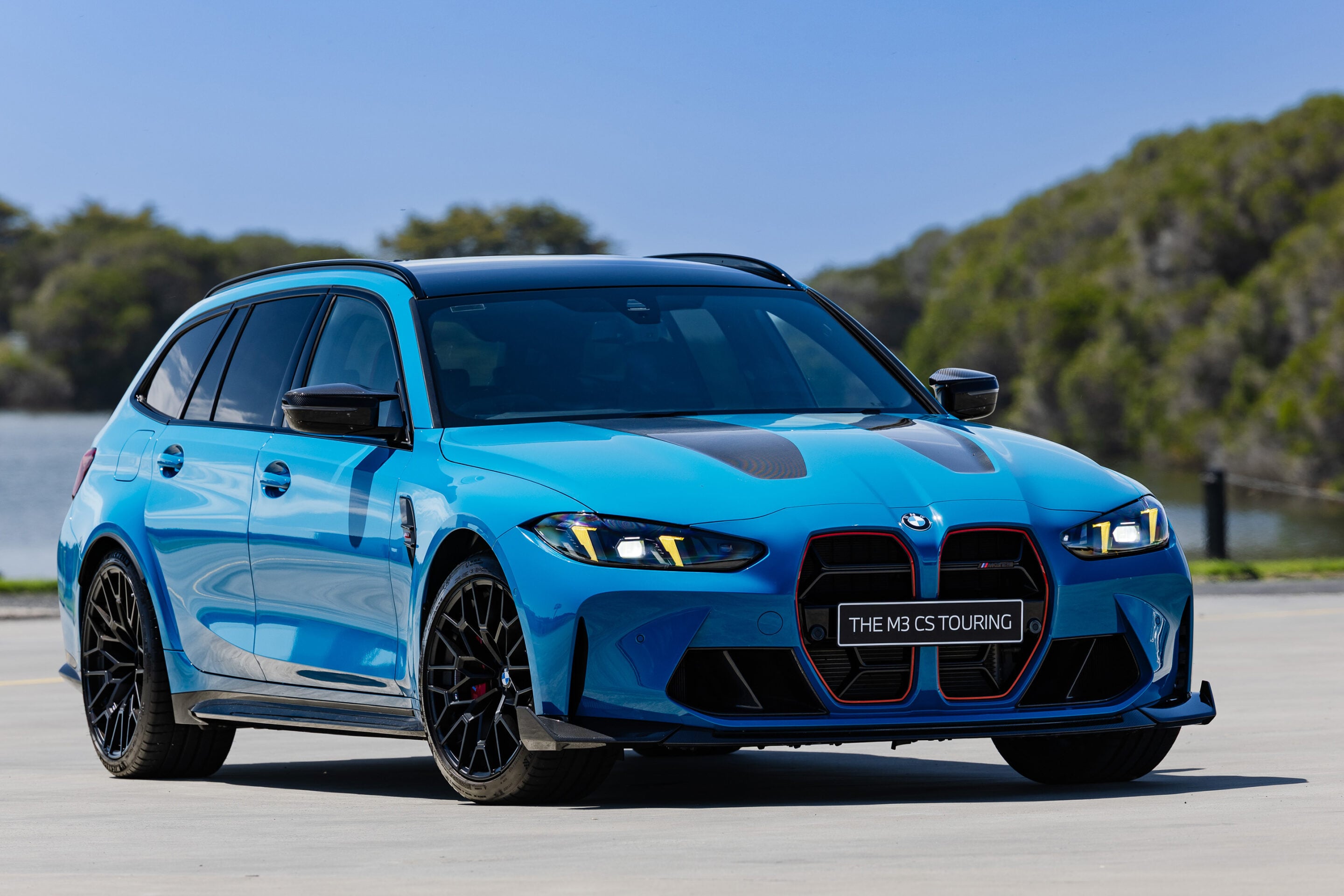
Taking what was already an other-worldly high-po station wagon in the ‘regular’ M3 Competition Touring, BMW’s M Division has woven its CS magic wand even further to create the undeniable apex predator of the line-up.
It doesn’t come cheap though, the M3 CS Touring asking for $253,900 before on-road costs and options. That’s a healthy $65,800 premium over the M3 Competition Touring, but you do get a whole lot more than merely a red-ringed, blacked-out CS on the bootlid for the extra spend.
Under the bonnet, the same twin-turbo inline-six as found in regular M models does the heavy lifting. But a tweak to the twin-turbo’s boost pressure (increased by 2.1 bar) sees a lift in power, now rated at 405kW against the Competition’s 390kW. Torque remains unchanged at 650Nm but with peak available higher in the rev range (5950rpm) than the regular Competition’s 5730rpm. An eight-speed M Steptronic torque converter automatic transmission sends those outputs to all four wheels via BMW’s xDrive all-wheel drive system.
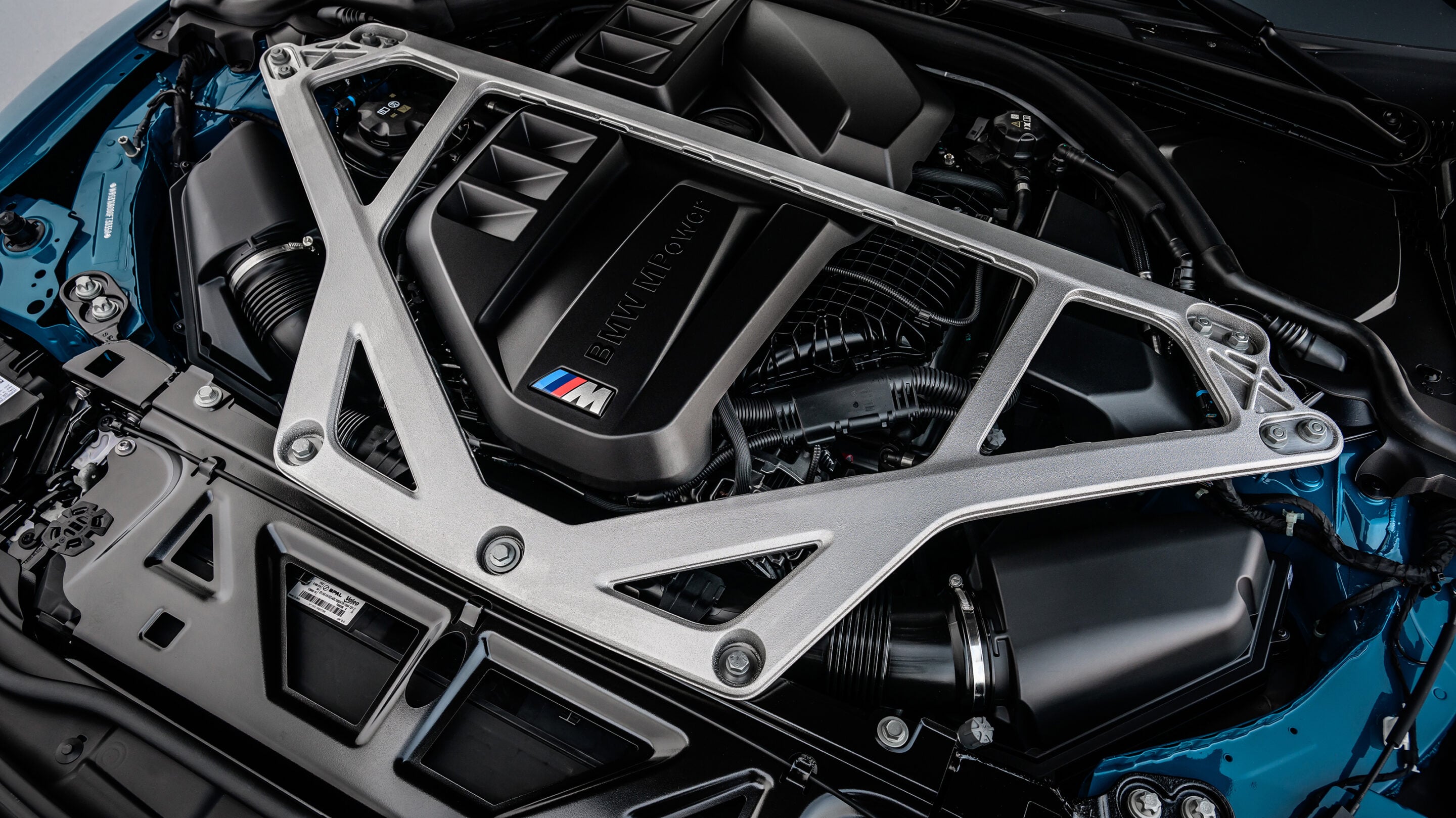
Stiffer engine mounts, a CS-specific tune for the stability control, as well as the adaptive dampers, steering and standard M brakes (carbon ceramic brakes are a $19,000 option) underscore the track-focussed dynamics of the CS Touring.
A carbon-fibre bonnet (the Competition is fitted with an aluminium front lid) helps shave weight although one common feature emblematic of M models in general and CS models in particular is missing in action – a carbon-fibre roof. BMW cites construction restraints and the cost of tooling for what is, ostensibly, a low-volume vehicle as the main reason.
BMW has found other ways to shave some extra kegs, with carbon-fibre sprinkled liberally throughout the cabin – on the pared back centre console (there are no cupholders, but really, who cares?), bucket seats, paddle-shifters, and dashboard. All up the CS Touring tips the scale 15kg less than the regular M3 Touring.
Inside, the cabin prioritises performance with aggressively moulded carbon-fibre sports seats (heavily accented with red elements) that require a clamber to sink into but once ensconced, hold you firmly in place.
The centre console does away with a central storage bin, and the accompanying armrest as well as cupholders while there are no climate controls for the second row.
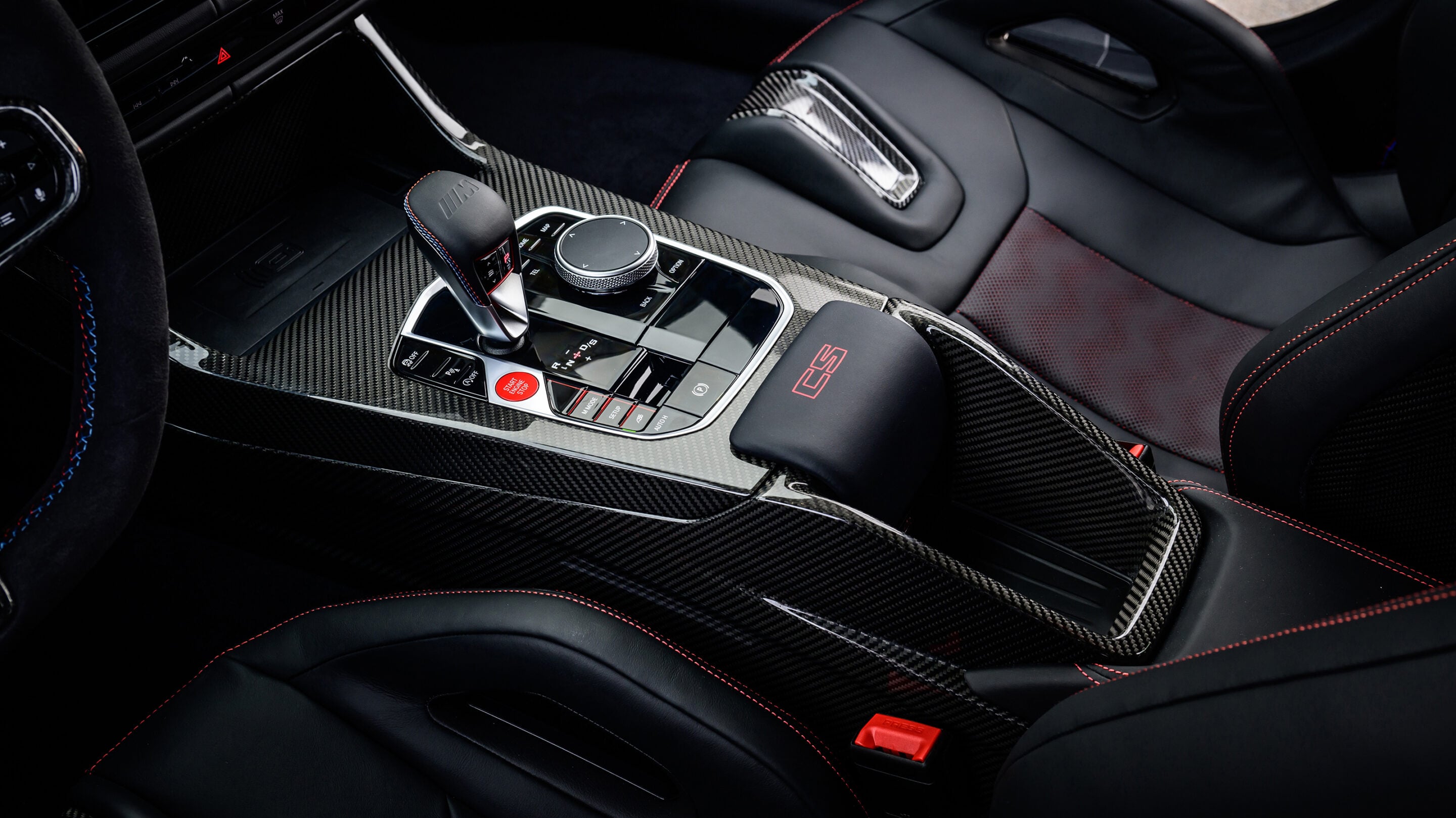
That’s not to say the CS Touring’s interior is Spartan. There’s the usual array of tech found in the broader M range highlighted by the in-your-face gently-curved single-frame widescreen incorporating a 14.9-inch infotainment display and 12.3-inch digital instrument cluster. It runs BMW’s 8.5 operating system. The standout feature, however, is the M Drive Professional software that brings a host of track-focused telemetry and data including lap times, a drift analyser and 10-stage traction control settings. It can be shown on the screen itself or on the CS Touring’s crisp head-up display. Or both.
Out back, the CS Touring underlines its family practicality with a cargo area measuring in at 500 litres. That expands to 1510 litres with the second row flooded away, more than enough for the average Bunnings run although the likelihood of lengths of timber and buckets of house paint seeing the inside of the M3 CS Touring are, I’d wager, pretty remote.
Because this is, first and foremost, a balls-out performance car with the chops to deliver both on the road and on the race track.
The likelihood of hitting the Touring’s performance ceiling out on the open road is zero-to-none, such is its breadth of ability. But that doesn’t mean you can’t have fun, because you most assuredly can.
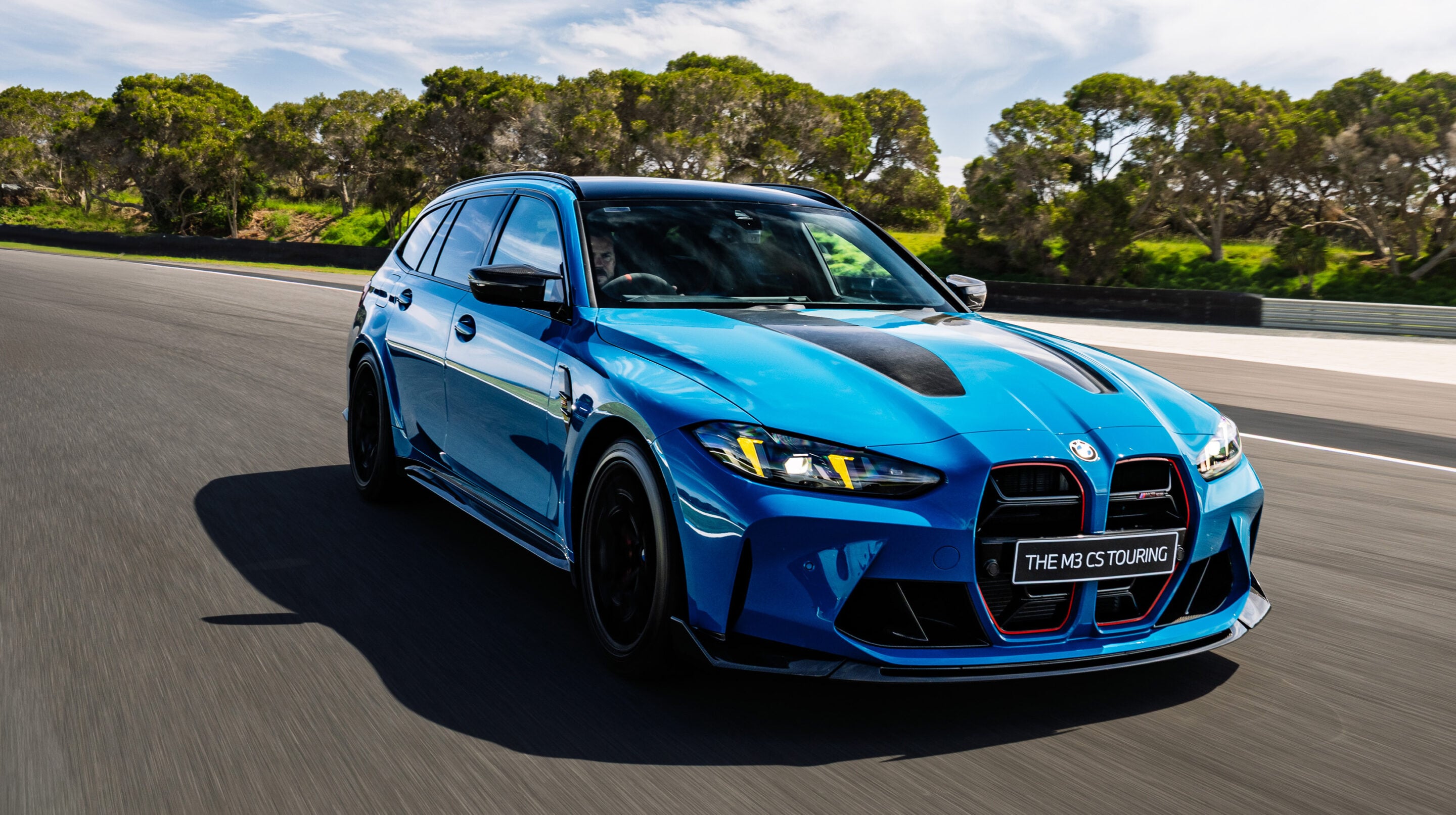
That heroic inline-six grumbles angrily at start-up, a baritone tune that promises much. And then delivers.
BMW says the CS Touring is good for a zero to 100km/h sprint claim of 3.5 seconds and 0-200km/h in a scant 11.7s. Rural Australian backroads aren’t the right place to test those claims but what is apparent is just how focused the CS Touring can be. Yes, the suspension is sharp, especially in the CS’s sportier drive modes, but Comfort mode does provide a measure of everyday liveability not found in some other CS models.
Certainly, the Touring can feel a little taut as it bounces over corrugated surfaces and rutted roads but it does so with a measure of predictability that’s reassuringly felt through the steering and through the carbon-fibre buckets under your bum. The only downside is excessive road noise, those thin-walled Michelins and taut nature of the suspension transmitting plenty of roar into the cabin.
The inline-six is the undoubted hero, with plenty of punch out of corners as it sings angrily even way before the 7200 redline and cut-out is reached. But the reality is, the CS Touring is a lot of car for public roads and you need a race track to fully tap into its heroics.
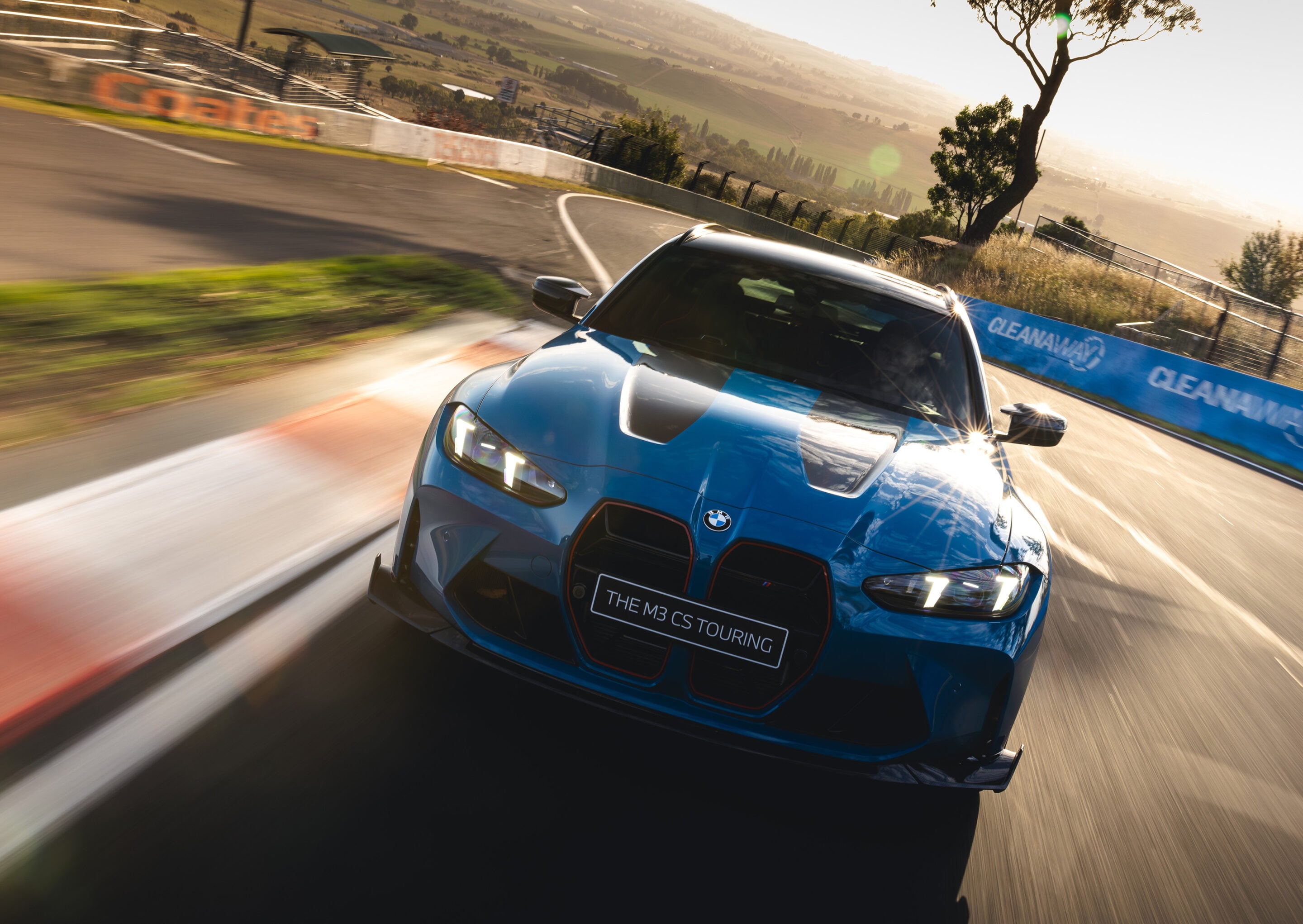
Helpfully, BMW did exactly that, and at Bathurst no less. Mount Panorama needs little introduction, suffice to say it’s arguably one of the world’s most challenging and demanding race tracks.
Here then, the M3 CS Touring, let off its chain, is able to showcase its true credentials, with a blistering explosion of performance that belies its ‘family-friendly’ nature.
If the inline-six and its sonorous rumble out on the open road proved the hero, then it is here on the track where it can really sing for its supper. The wider torque curve of this, the CS model, is keenly felt with the M3’s relentless acceleration pushing you back into the grasp of those firm but comfortable carbon-fibre buckets.
The eight-speed automatic left to its own devices is up to the task, but really, switching to manual mode and controlling your own destiny via paddle-shifters is the more rewarding option, each up-shift met with a satisfying bang, each pull down an explosion of over-run from the exhaust.
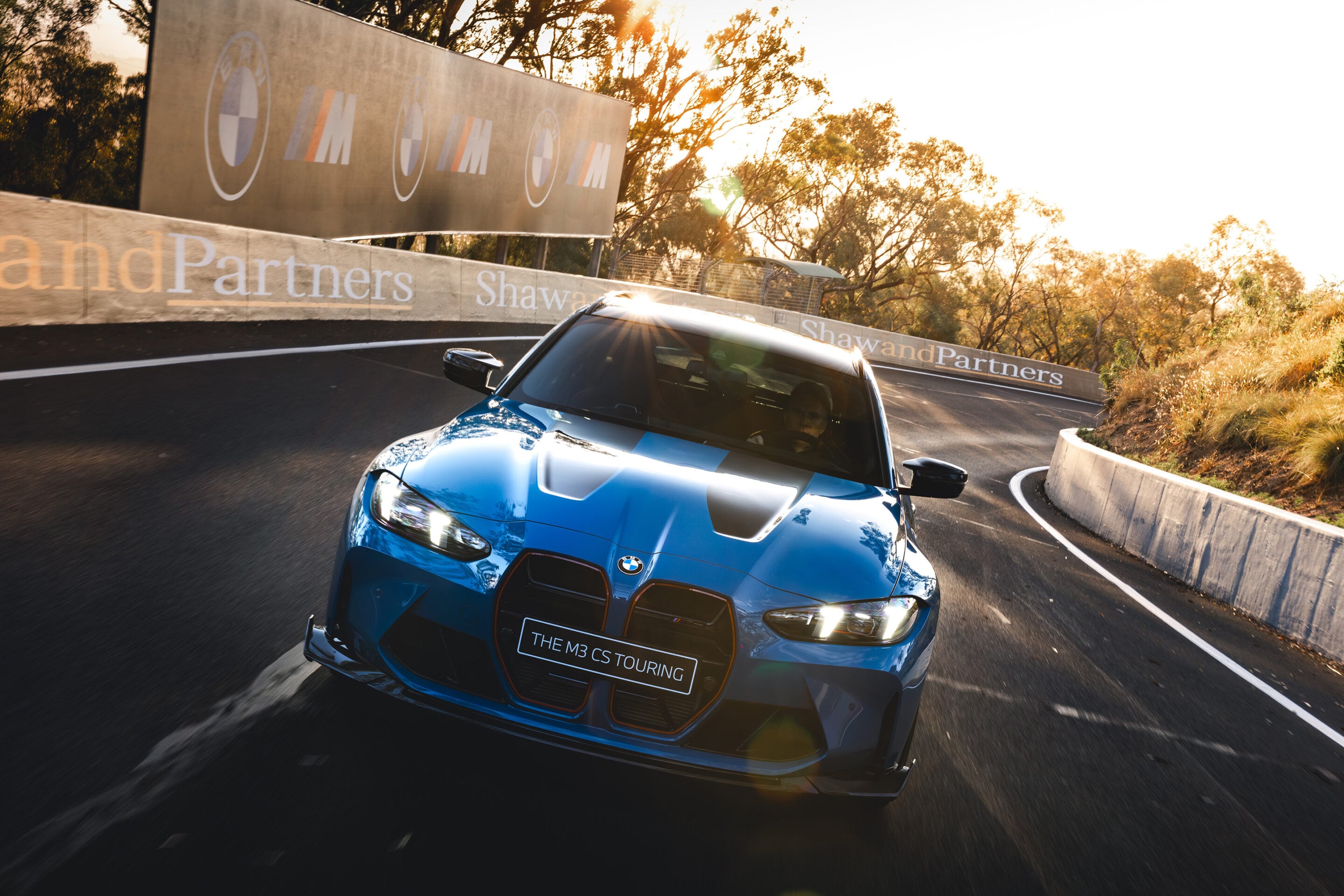
The steering is nicely-weighted too and responds to inputs, even minor ones, with alacrity and precision. And Mount Panorama requires precision. From the tricky right-left combinations of the Cutting to the steeply downhill Dipper and Esses, there’s little margin for error from either the driver or the car. And this here, is where the CS Touring shines, with its combination of nicely-balanced chassis, all-wheel drive (although nicely rear-biased in Sport modes) grip and a reassurance that there’s a whole lot more this car can do that you or me, the average punter, can’t get close to.
It builds confidence too, as you learn its intricacies and sheer breadth of ability, each successive lap quicker than the one preceding it.
The brakes remain sharp and effective for lap after lap, and session after session, with no hint of fade despite working overtime on Mt Panorama’s more challenging sections.
Nudging 270km/h at the end of Conrod Straight as you approach The Chase grabs your attention but such is the sure-footedness of the xDrive system that even tipping in at a speed-washed 200km/h brings nothing but confidence that this ‘humble’ station wagon can handle whatever you ask of it. Lap-after-lap.
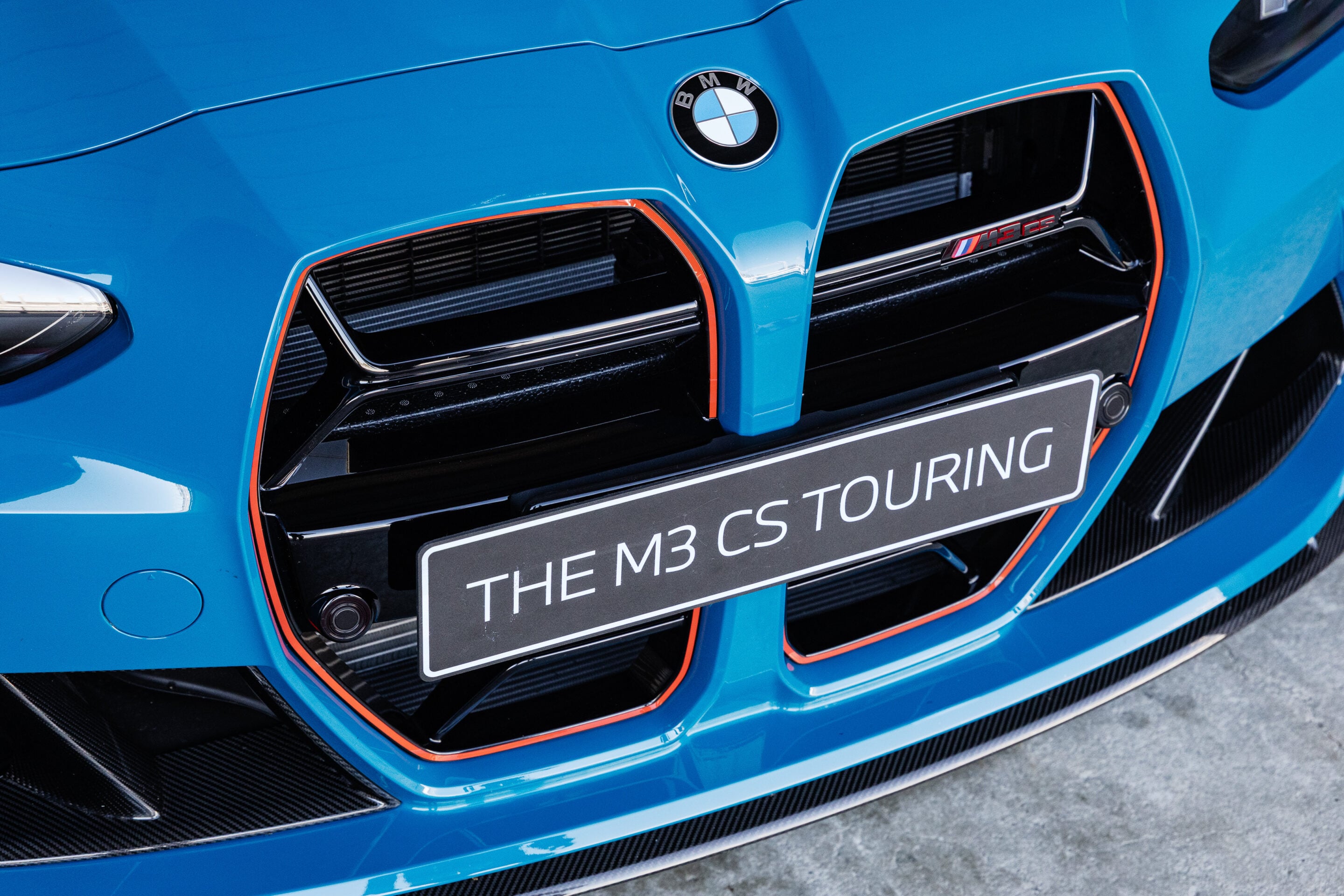
When Max Reisböck created his do-it-yourself 3 Series wagon back in the mid-1980s, one of his key requirements was that it must still feel like a BMW to drive. And while the 2.0-litre inline-six found under the bonnet of his self-made wagon lacked the ferocity of today’s CS Touring, there’s no question Reisböck’s blueprint remains firmly in place. Is it the best station wagon in the world right now? It just might be.
Specs
| Model | 2026 BMW M3 CS Touring |
|---|---|
| Price | $253,900 (plus on-road costs) |
| Engine | 3.0-litre twin-turbo in-line six-cylinder |
| Peak power | 405kW |
| Peak torque | 650Nm |
| Transmission | Eight-speed automatic, AWD |
| 0-100km/h | 3.5 seconds |
| 0-200km/h | 11.7 seconds |
| Top speed 300km/h (limited) | 300km/h (limited) |
| Fuel consumption | 10.5L/100km (claimed) |
| Fuel type/tank size | 98 RON unleaded/59L |
| Weight | 1850kg (kerb) |
| L/W/H/W-B | 4796/1918/1447/2857mm |
| Warranty | 5yr/unlimited km |
| On sale | Now |
Lamborghini has stepped back from plans to introduce a fully electric production model, opting instead to concentrate on plug-in hybrid technology across its future line-up.
The Italian manufacturer had previewed its electric ambitions with the Lanzador concept in 2023, positioning it as a glimpse of the brand’s first battery-electric vehicle. However, chief executive Stephan Winkelmann has confirmed the model will not proceed to production in its originally intended form, with a plug-in hybrid expected to take its place.
In a report in The Guardian, Winkelmann said demand for high-end electric supercars has not developed as anticipated. He indicated that interest in battery-only vehicles among Lamborghini buyers remains limited, raising concerns about the commercial viability of investing heavily in a full-EV program.
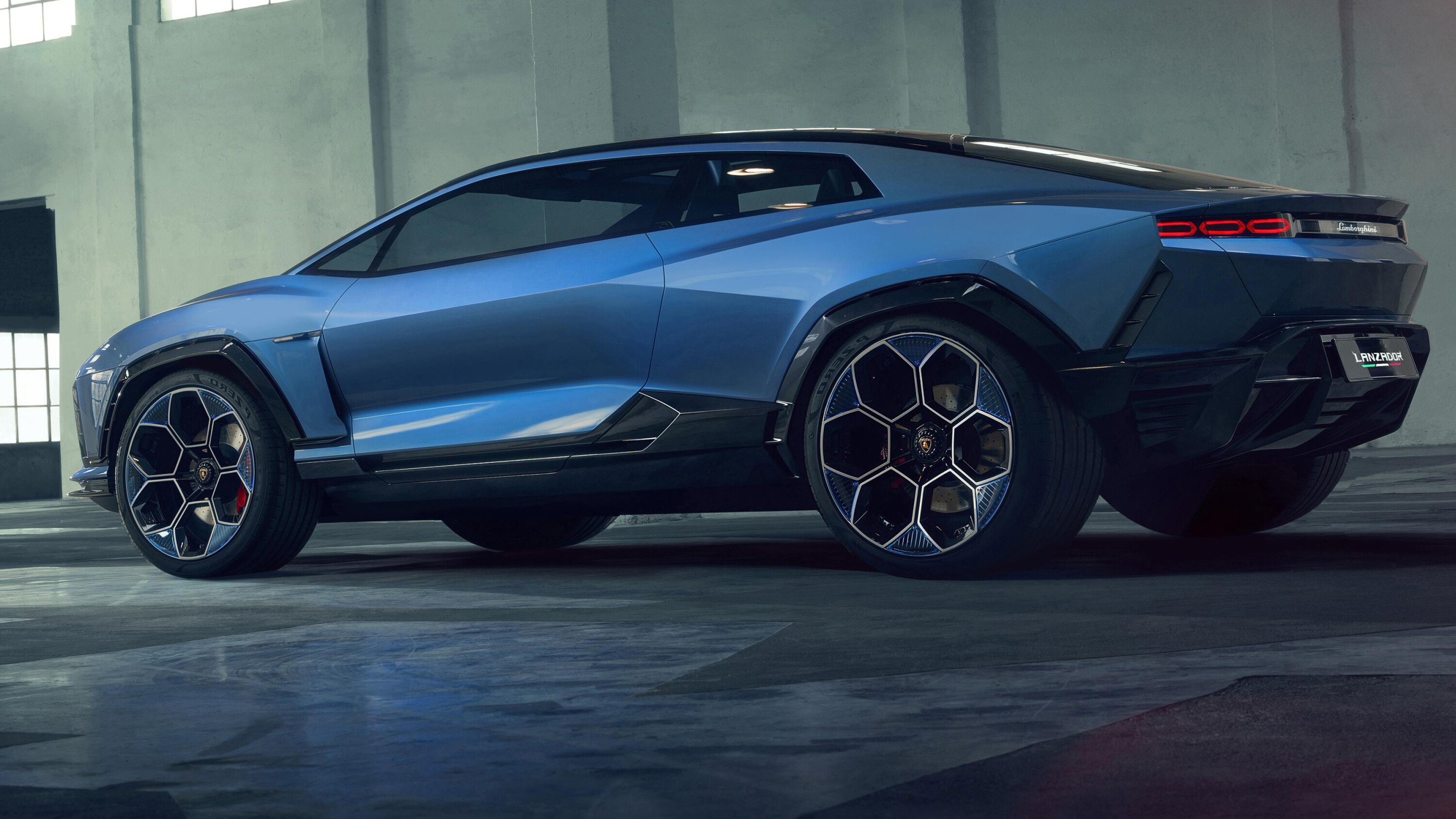
Instead, the company plans to offer a range made up entirely of plug-in hybrids by the end of the decade, while continuing to produce internal combustion-engined vehicles for as long as regulations and market conditions allow.
Lamborghini, part of the Volkswagen Group through Audi, delivered a record 10,747 vehicles globally in 2025. The company attributed its recent performance to strong uptake of its hybrid models, including the Revuelto V12 plug-in hybrid and the updated Urus SUV, now also offered with plug-in technology. The Temerario hybrid, introduced last year, completed the transition to electrified drivetrains across the range.
Europe remains Lamborghini’s largest market, followed by the Americas and Asia-Pacific.
Winkelmann has previously noted that some customers feel battery-electric cars lack the sensory elements traditionally associated with the brand, particularly engine sound and character. He argues that plug-in hybrids better align with Lamborghini’s identity, combining electric assistance with conventional performance attributes.
The revised strategy represents a shift from earlier plans announced in 2021, when Lamborghini outlined significant investment in hybridisation and flagged a fully electric model as part of its longer-term roadmap.
The NSW Government has announced plans to introduce a minimum age for e-bike riders, citing growing safety concerns and a rise in incidents involving young people.
The Minns Labor Government confirmed last week it is considering setting the minimum age between 12 and 16. A final decision, including rules around carrying passengers, is expected by June following further advice and consultation.
Astor Legal principal lawyer Avinash Singh said the proposal follows a series of dangerous riding incidents and an increase in public complaints.
“There have been a number of cases involving youths riding e-bikes in a dangerous manner,” Singh said. “There has also been a significant rise in complaints from members of the public, as well as serious injuries and, in some cases, fatalities involving young riders.”
Singh said introducing a minimum age would likely improve safety for both riders and other road users. “Young people using e-bikes have, at times, put themselves and others at risk,” he said.
The Government has also flagged plans to align NSW with European safety standards for e-bikes. From March 1, 2029, only e-bikes that comply with EU regulations – which are designed to ensure the bikes operate more like conventional bicycles than motorcycles – will be permitted for sale and use in the state.
Questions remain about how an age restriction would be enforced. Singh said police would likely stop riders and request identification, although many younger teenagers do not carry formal ID. One option could involve introducing a licensing or registration system for e-bike riders.
However, Singh cautioned that raising the minimum age could have unintended consequences, particularly in regional areas where young people rely on e-bikes for transport to school, sport and part-time work. Any restriction, he said, would need to balance improved safety outcomes with the mobility needs of families outside metropolitan centres.
Chery has revealed its new dual-cab ute to launch in Australia in 2026. Focusing on towing, performance and efficiency, according to Chery, the brand’s ute will launch with a four-cylinder turbo-diesel plug-in hybrid drivetrain and will “reinvent the ute buying experience”.
Revealed at a recent local media event, the new Chery ute debuted a muscular and modern design that’s quite different to the brand’s models on sale in Australia such as the Tiggo 4 and Tiggo 8. Previewed with an off-road model like a Ford Ranger Tremor, the new Chery ute is quite large – Chery is yet to reveal dimensions – and features details such as grille lighting, pumped guards, off-road wheels with BF Goodrich off-road tyres and a configurable rack system for the tray.
The Chery ute will use a new 2.5-litre turbo-diesel plug-in hybrid drivetrain, which will be unique in the Australian market. Brands such as Mercedes-Benz sell diesel PHEVs in some markets globally but this is the first time that one has been offered locally.
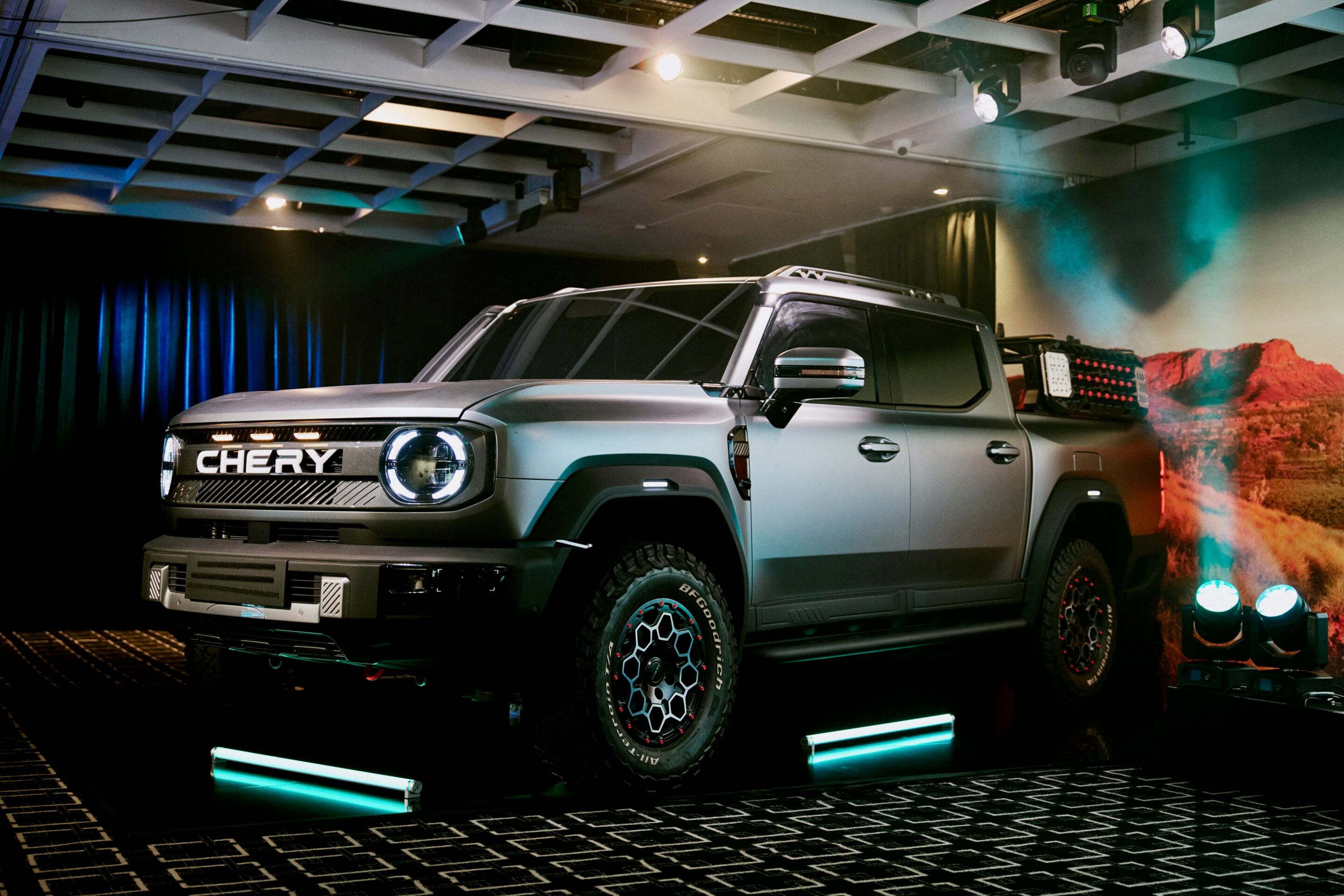
According to Lucas Harris, the COO of Chery Australia, the local arm “partitioned the factory hard for a diesel PHEV”. Considering diesel’s popularity and the rise of hybrids in the Australian ute market, Harris’ comments suggest that the new drivetrain was specifically developed for Australia.
While Chery is yet to reveal full details about the drivetrain such as the battery size, range and performance figures, it’s targeting 47 per cent thermal efficiency, 10 per cent greater fuel efficiency, a 10 per cent lighter weight and a 30 per cent reduction in noise compared with other utes. Importantly, the Chery ute has also been designed to tow 3500kg and carry a 1000kg payload to match utes like the Toyota HiLux and Ford Ranger.
While the Chery ute will launch with the new diesel PHEV system in 2026, it will also launch a petrol PHEV drivetrain like in the BYD Shark in 2027, though the company is yet to reveal any details about it.
The prototype of the Chery ute did feature a luxurious-looking interior with plenty of suede and leather throughout, as well as a huge touchscreen and digital driver’s display, though the company cautioned that the final interior design is yet to be decided on. Regardless, the rear seat is spacious for the segment, and the tray is large as well.
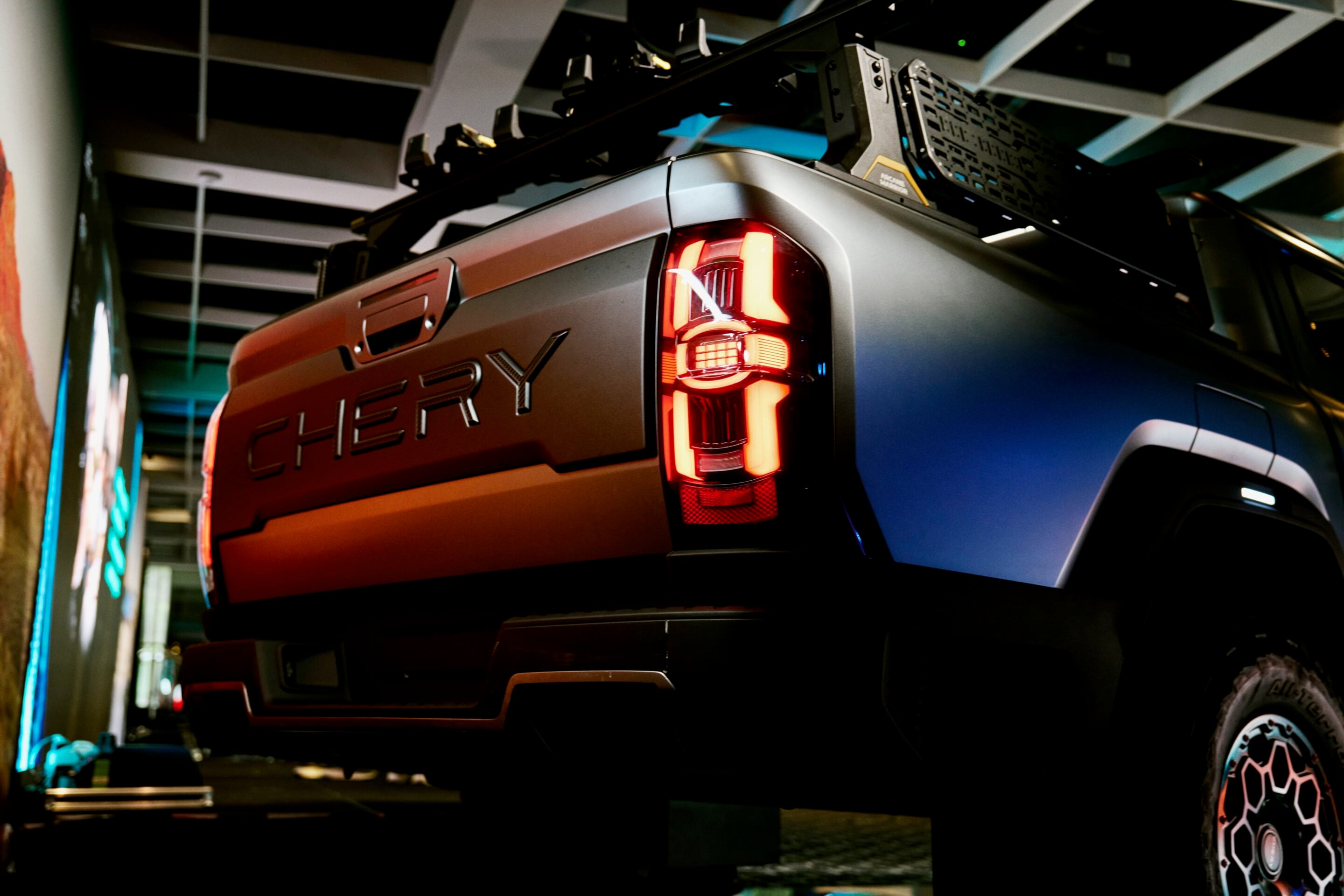
According to local Chery staff, the new ute will target two main segments: family and business dual use lifestyle buyers and then off-road and leisure buyers, suggesting that there will be a variety of models, including the off-road themed model previewed at the reveal. However, a cab chassis variant is not planned, at least initially.
Another detail we’re not yet sure about is its name. At the reveal event, Chery executives referred to it as its ‘KP31’ codename, but are yet to confirm its actual name. Considering its Australian focus, we’re expecting an Australian name like the Kia Tasman. The Chery Great Barrier Reef, perhaps?
The Chery ute will go on sale in Australia sometime later in 2026, with more details such as the interior design, drivetrain figures and pricing yet to be revealed.
The entry-level price of the Tesla Cybertruck has been slashed, with the introduction of a new Dual-Motor All-Wheel Drive model replacing the now deleted single-motor Rear-Wheel drive model.
Despite the addition of an extra motor and AWD capability, at US$59,990 (A$84,733) is US$10,000 (A$14,100) less than the rear-wheel drive model it replaces in the Cybertruck hierarchy. But, despite the price cut, the new base Cybertruck is still significantly more expensive than the US$40,000 (A$56,500) Tesla honcho Elon Musk promised at the model’s launch in November, 2019.
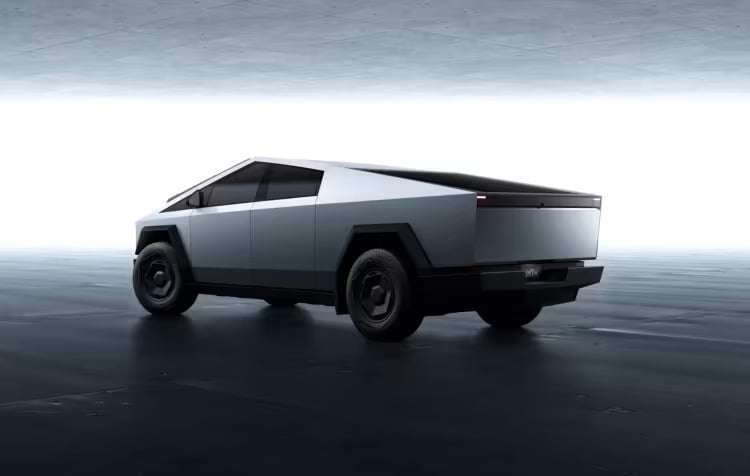
However, the catch could be that this sub-60k price could only last for 10 days, according to a cryptic post by Musk on his social media platform, X, where he wrote “Just for 10 days”. When asked by an X user how much the new entry-level model would cost after the “10 days”, Musk responded with “Depends on how much demand we see at this price level.”
Equipment levels for the new entry-level Cybertruck include four-wheel steering, a powered tonneau, and fabric seats (replacing Tesla’s usual faux leather coverings), and heated front seats. Further cost-saving measures include swapping out the regular model’s 15-speaker audio system with a nine-speaker set-up while second-row passengers miss out on the 9.4-inch touchscreen from more expensive models.
The new model drops the regular range’s air suspension, now fitted with coil springs and adaptive dampers. That’s seen tow rating reduced from 4990kg to 3400kg.
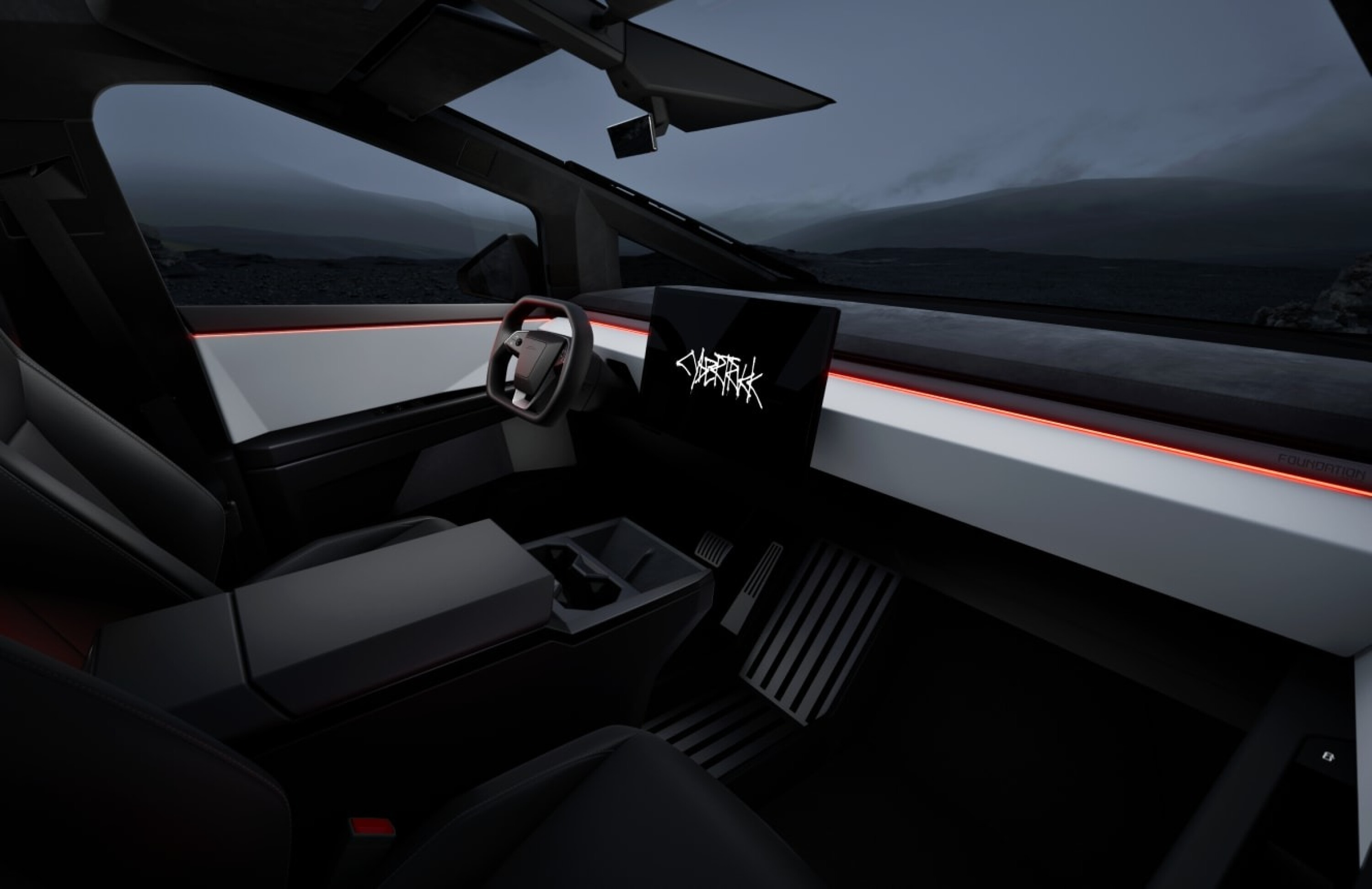
The addition of an electric motor at the front wheels has impacted driving range, dropping to 515km from the rear-wheel drive model’s 563km. But thanks to the extra power, the new entry-level model’s 0-100km/h claim is now 4.1 seconds, a significant improvement over the RWD model’s 6.5 seconds.
Although not explicitly stated, the new cut-price entry model is likely a bid to halt the Cybertruck’s sales slide. Tesla sold just 20,000 Cybertrucks in the US in 2025, less than half of its 2024 sales and well short of the projected 250,000 annual sales Musk promised at launch.
The current automotive landscape is obviously very different to even five years ago. I remember quite clearly within the last decade, a senior exec from a Korean manufacturer telling the the only reason an otherwise excellent car couldn’t come to Australia was because, ‘Aussies won’t pay 70 grand for it’. The insinuation was that the ask was too high for a brand associated with value.
Well, here we are, in 2026 with BYD’s luxury arm Denza launching the B5 Leopard that Wheels is testing this month, with an asking price of more than $80,000 once on-road costs are added. At the time of testing, the starting price for the off-road focused B5 Leopard was $79,990 before on-road costs. From a sub-brand most of you have never heard of. And, if the recent surge in sales from all challenger brands is any indication, it won’t make one iota of difference.
BYD has already known huge success in this country – and in theory at least, an assault on the more luxurious end of the market here makes sense – especially if you have the tools at your disposal to attempt it. Denza will launch with two models – the B5 as tested here and the six-or-seven seat B8. You’d expect the B5 to be the higher volume seller, and it’s armed with a more potent execution of the BYD Shark 6’s PHEV drivetrain. That alone, promises to deliver interesting performance.
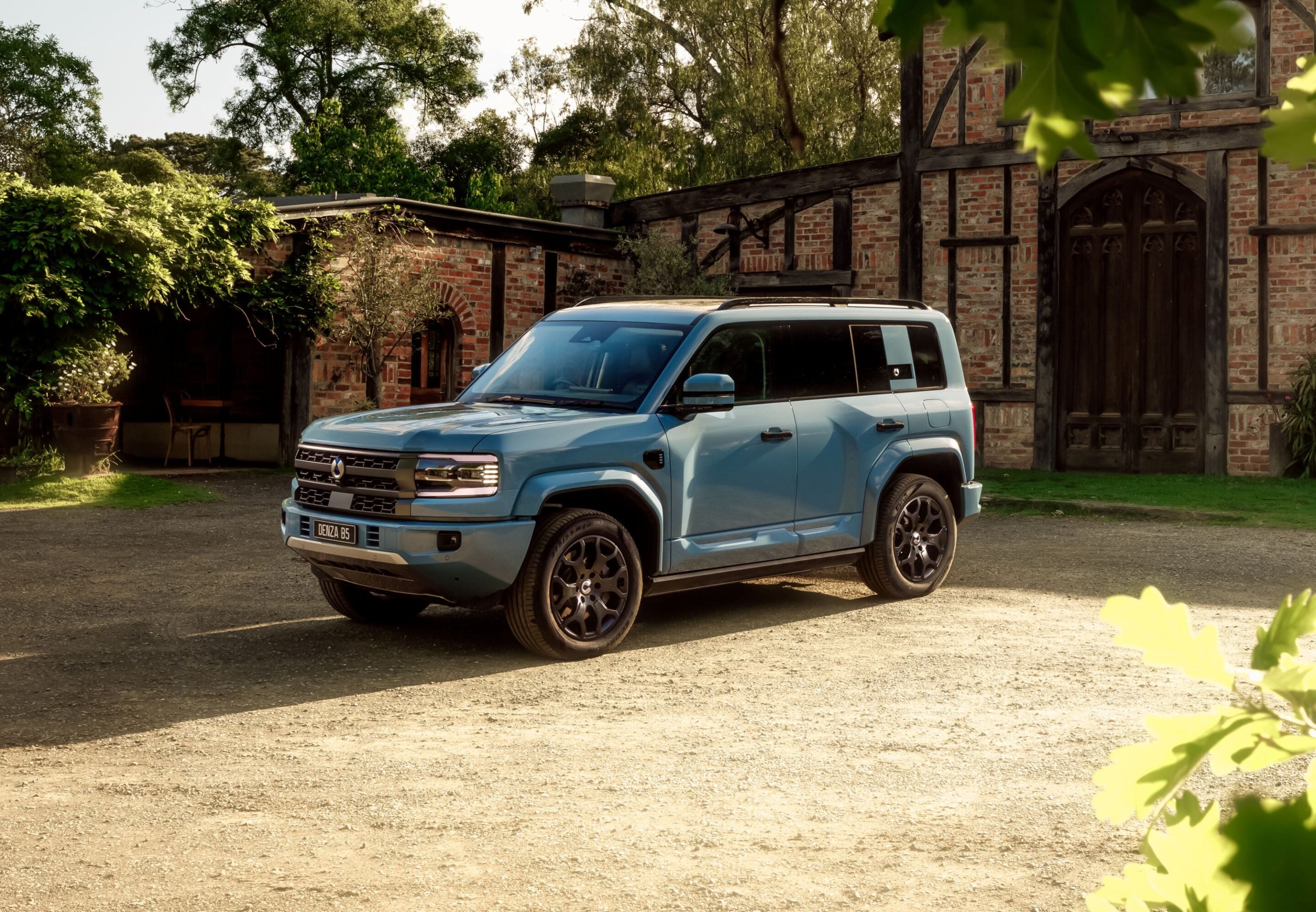
Given the disruption that Shark has caused in the dual-cab segment, you could reasonably assume that the B5 is capable of the same, but there’s one significant difference. The Shark undercuts the traditional badges with serious value – the B5 is a different proposition for buyers.
What are the Denza’s key features
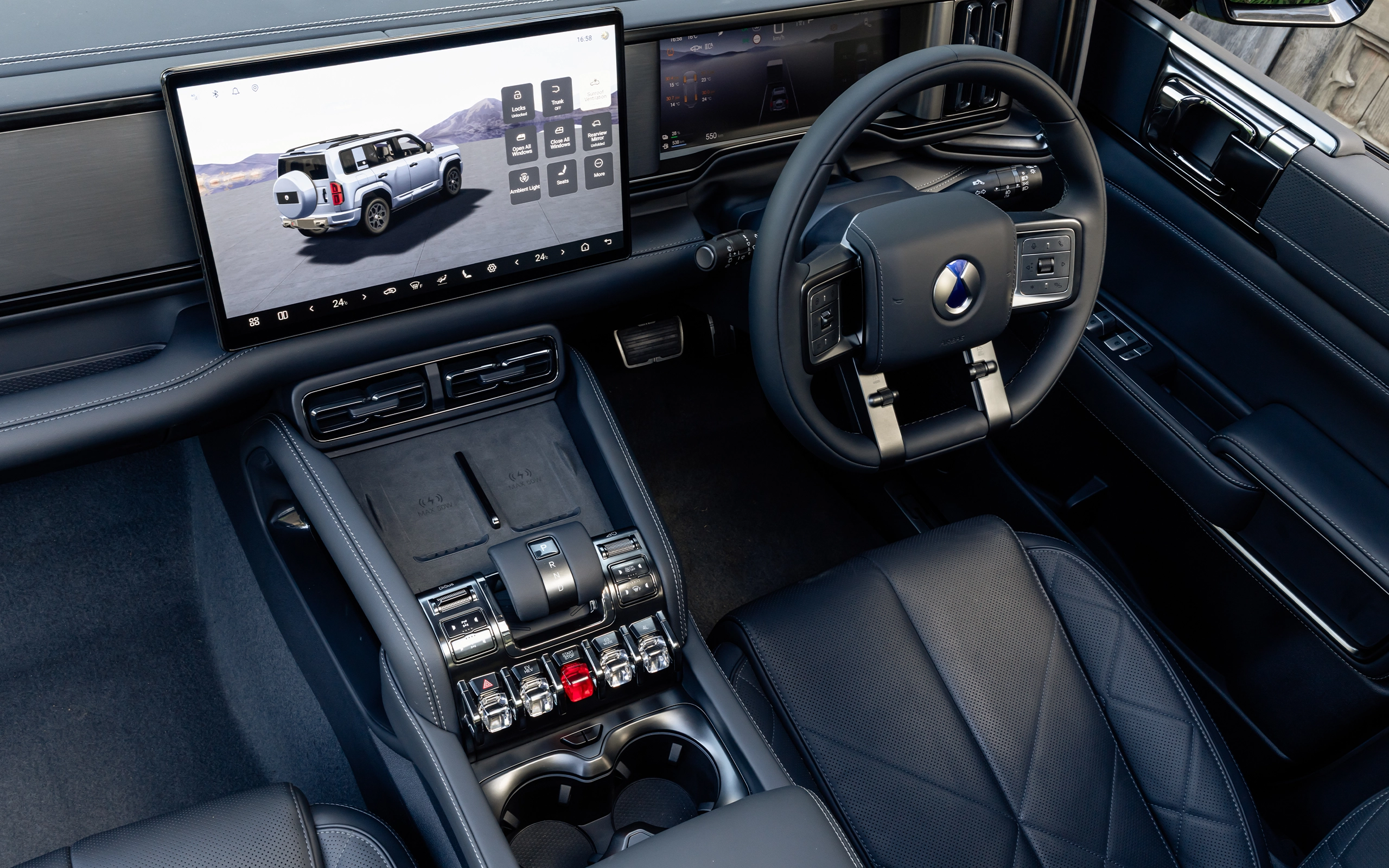
However, the standard specification list, remains impressive. The Leopard we’re testing features 20-inch alloy wheels, wrapped in Pirelli Scorpion rubber, Napa leather interior trim, heated and ventilated front and rear seats, a digital rear-view mirror, two wireless charge pads, matrix LED headlights, 15.6-inch touchscreen, wireless smartphone connectivity a 16-speaker audio system, 12.3-inch digital driver’s display, head-up display, dual-zone AC, panoramic sunroof, and hydraulically controlled adaptive DiSus-P suspension.
The Leopard even has a heated and cooled console bin, all the electronic safety equipment you’d expect, front and rear parking sensors, a 360-degree camera and ambient interior lighting. It really is a very premium cabin. At the time of testing, Wheels had a Lexus GX550 in the garage, and the presentation and execution of the Denza cabin certainly holds the Lexus to account.
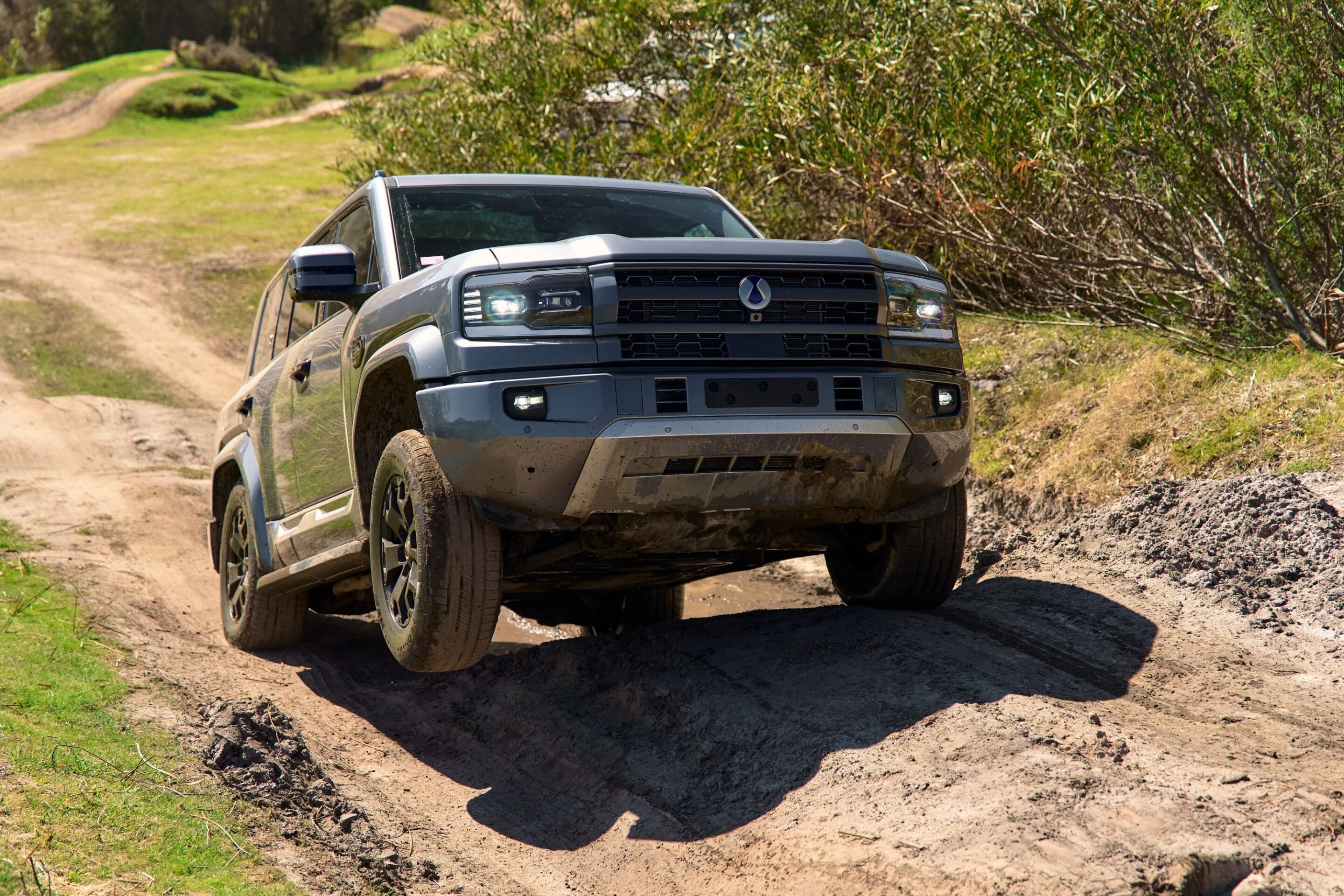
Interestingly – and Wheels will test the off-road capability more specifically post-launch – the Denza B5 comes standard with some pretty focused off-road hardware in the form of a low-range mode, electronic front and rear diff locks, as well as 16 drive modes, off-road cruise control and a ‘tank turn’ function. I write interestingly, because the luxury off-road market is fascinating. Most 4WDers I speak to, question the need for proper off-road ability in a luxury SUV, given most of them will never experience true off-road work. It’s the prerogative of the manufacturer of course, to equip its SUV however it wants to, but I’d argue just about every 80 odd thousand dollar Denza B5 Leopard that is sold will be lucky to ever see a dirt road, let alone low-range terrain.
At 4921mm long, the B5 isn’t a monster, it’s almost Prado-sized (4990mm) in the real wold, and that will work for family SUV buyers. The wide, side steps make entry and exit into the cabin easy, but you’ll need to use them if you don’t want to dirty your trouser legs on exit if it’s been raining. There’s plenty of space in the second row, and the Nappa leather trim is luxurious, comfortable as well, but it lends a high-end feel to the cabin.
That’s important, too, because Denza will need to sell on the presentation and execution of its tech-laden cabin. The big screen will appeal, and they are clear and easy to decipher. There’s a lot going on, control-wise, with off-road modes, and drive modes, vying for console space with the shifter that rises out of the console when you hit the start button.
A six-year/150,000km warranty is added to by the eight-year/160,000km battery warranty, and servicing is required every 12 months or 20,000km. It’s covered by a five-star ANCAP safety rating, too, tested in 2025.
What are the details of the drivetrain?
The Denza’s engine is familiar, but slightly different. It’s very similar to drive to a Shark 6, but it’s better on paper, and better in the real world, too, thanks to uprated power. The 1.5-litre, turbocharged petrol engine is the same, but higher output electric motors now generate 200kW at the front and 285kW at the rear. Combined, Denza quotes 400kw and 760Nm, which is serious mumbo, but there is also the small matter of 3007kg which needs to be motivated. In Eco mode, the accelerator pedal’s response is too docile for our liking, with Normal the drive mode we preferred.
In effect, the electric motors do the heavy lifting, relegating the petrol engine to generator status, though it can drive the wheels as required. In short, the power delivering v whether getting off the mark or rolling up to speed – isn’t as effortless or linear as the best diesel 4WDs.
Ride quality is good without being great. There’s a firm edge to the bump absorption and some sharpness to the way the suspension takes a nastier hit, but it’s not uncomfortable either – more in line with what you’d expect from a European SUV suspension tune. With 16 different drive modes, you will spend days working out what they all do, but that’s for a longer test than we have time for here.
What’s fuel consumption like?
Fuel use is complex in the new-generation PHEV space, because of the way they work depending on how you charge the battery. In theory, the smartest way to use a PHEV is to have it fully-charged every time you leave home, to maximise its efficiency – regardless of brand. Denza claims 3.9L/100km if the battery is between 25 percent and 100 percent, and then 10.9L/100km once the battery drops below 25 percent. In Hybrid mode, Wheels used 8.9-9.5L/100km, over 300km of testing, starting with a full charge. Denza claims 90km on battery power alone, and twice we got 75km under normal driving. In more stop/start traffic, you’d get even closer to 90km.
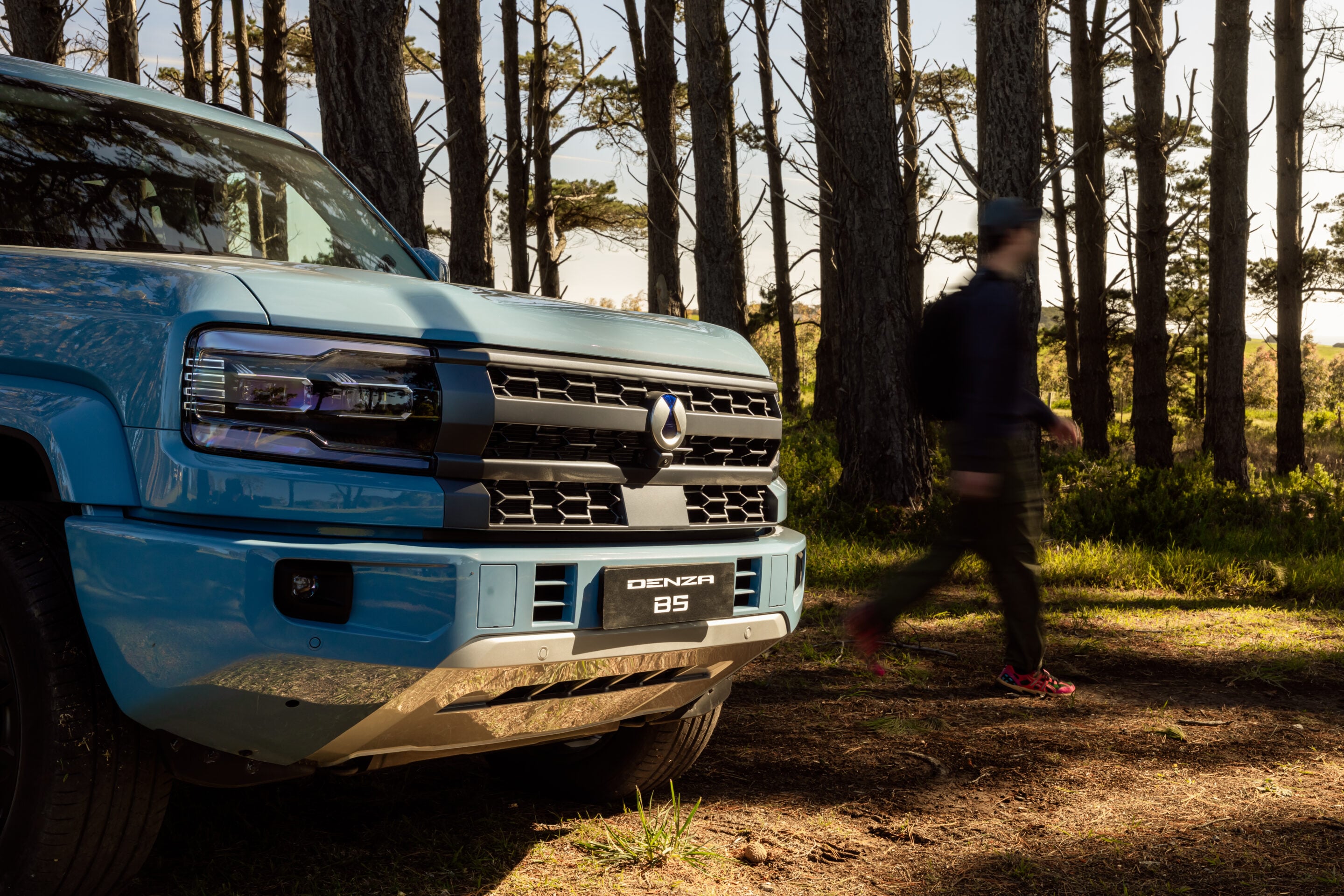
Negatives aren’t overly grating, but there are a few. As is the way with so much modern technology, too much of it is accessed via the touchscreen. Things like temperature control, fan speed, seat heating and cooling, require an eye on the screen and multiple steps to access and adjust. Switches and dials would be significantly easier and more intuitive and while I understand the desire for decluttering, it isn’t always the best way forward.
Some of the driver assist systems are overly enthusiastic – and that’s being kind. Being told that fatigue has been detected two minutes after leaving my garage in the morning, is both offensive and annoying, and some of the chimes and assistance mechanisms could do with fine-tuning. Likewise, stop telling me too keep my eyes on the road – when they are already on the road. The last one would be what I’d like to see Denza do with its cabin – a clearer move from similar switchgear to a BYD would be a smart move.
Those negatives aside though, it’s worth noting that the B5 is a strong entrant into what is unchartered waters for the BYD brand. It’s a much more difficult ask to mail the luxury segments than it is the value segments BYD is already taking chunks out of. However, the Denza B5 looks and feels like it can make some inroads. Time – and some further Wheels testing post launch – will tell.
Specs
| Model | Denza B5 Leopard |
|---|---|
| Price | $79,990 (plus on-road costs) |
| Engine | 1.5-litre turbocharged 4-cylinder plug-in hybrid |
| Peak power | 400kW |
| Peak torque | 760Nm |
| Transmission | Continuously variable (CVT) auto, AWD |
| Battery Size | 31.8kWh |
| Electric Range | 90km (WLTP) |
| Fuel consumption | 3.9L/100km (WLTP combined) |
| Fuel type/tank size | 91 RON unleaded/83L |
| Weight | 3007kg (kerb) |
| L/W/H/W-B | 4921/1970/1930/2800mm |
| Towing | 3000kg (braked)/750kg (un-braked) |
| Warranty | 6yr/150,000 km (vehicle), 8yr/160,000km (battery) |
| On sale | Now |
It could be the first time WhichCar by Wheels has ever heard the boss of a car company state that the primary focus of an otherwise expensive endeavour was not to sell more cars, but that’s exactly what John Pappas, Vice President of National Sales, Marketing and Franchise Operations for Toyota Australia told journalists on the eve of the Japanese giant’s first foray into the Supercars category.
“Look for us, actually, this isn’t about selling more cars,” Pappas said. “It’s actually more about building the GR brand, and it’s really more about just learning. Leaning to build better cars, better people. They are the key things fort us, right? This is not about sales and trying to sell cars. It’s about building better vehicles and building the GR brand.”
It’s an admission that raised some eyebrows, but isn’t quite as left-field as it might seem, given the sharp rise of the GR brand in this country, and the associated following that has come with it. GR Yaris got the tyres rolling, followed by GR Corolla, GR86 and of course the GR Supra, a car that Toyota stopped taking orders for in August 2025.
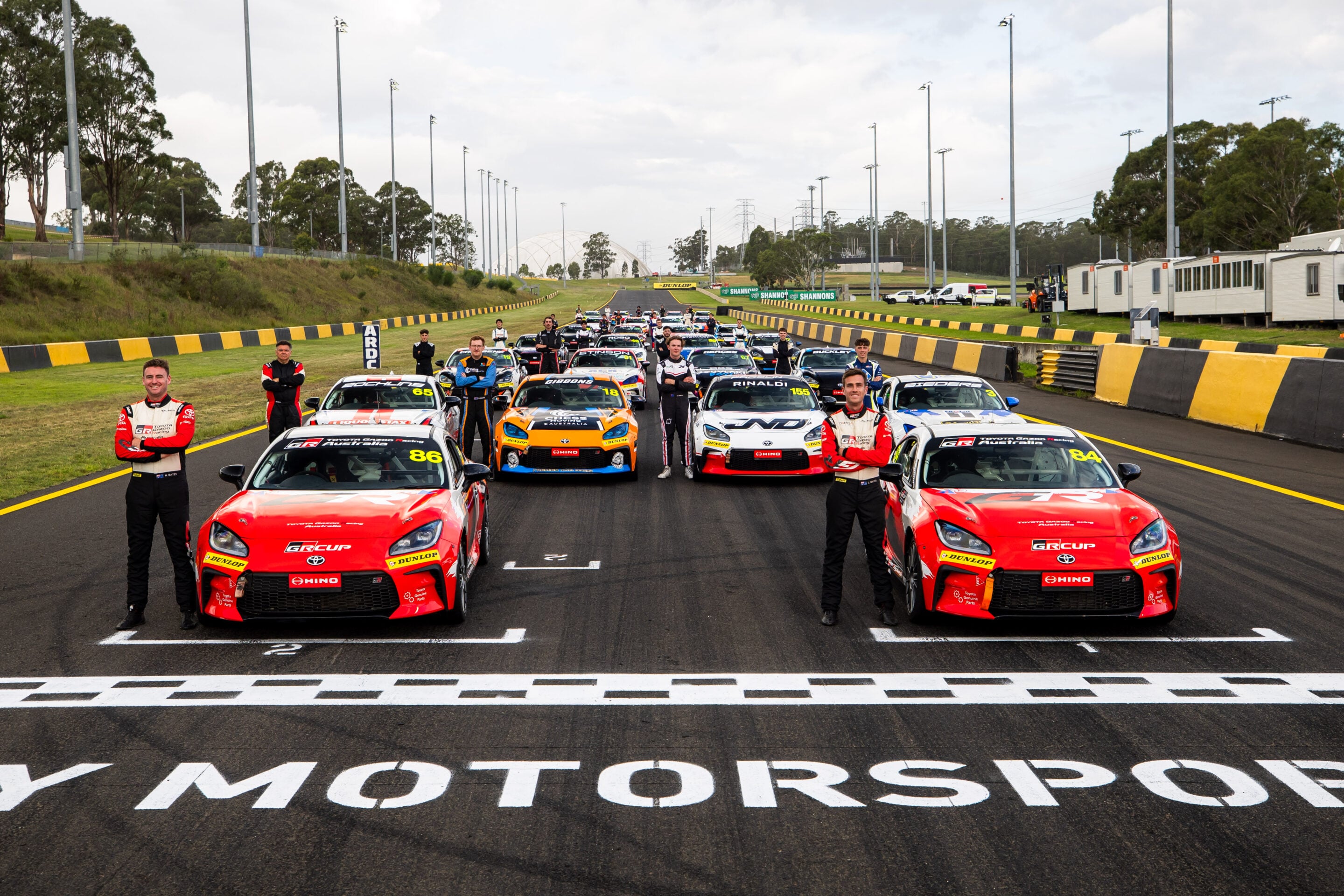
Further, with Supra joining Camaro as race versions of cars no longer on sale to the general public, Toyota has guaranteed a further five years for the two-door sports car in the Supercars category. That rules out a switch to a different model or body style in the next few years.
Executive Chairman Akio Toyoda has stepped back from the daily running of Toyota globally, but his love of motor racing and his steadfast belief in the GR brand is behind Toyota’s Supercars push, following almost 25 years of deliberation at a local level.
Partnering with Walkinshaw and Brad Jones Racing for a five-car lineup, the rise of Gazoo Racing and it’s associated links to high performance versions of Toyota’s cars, paved the way for Toyota’s move into Supercars. And harked back to the glory days of some of Toyota’s great sports cars and hatches through the 80s and 90s particularly.
What started as a pet project for Toyoda personally, has shifted to become Toyota’s recognised performance brand globally, and now encompasses various racing interests around the world including the link to the Haas F1 team.
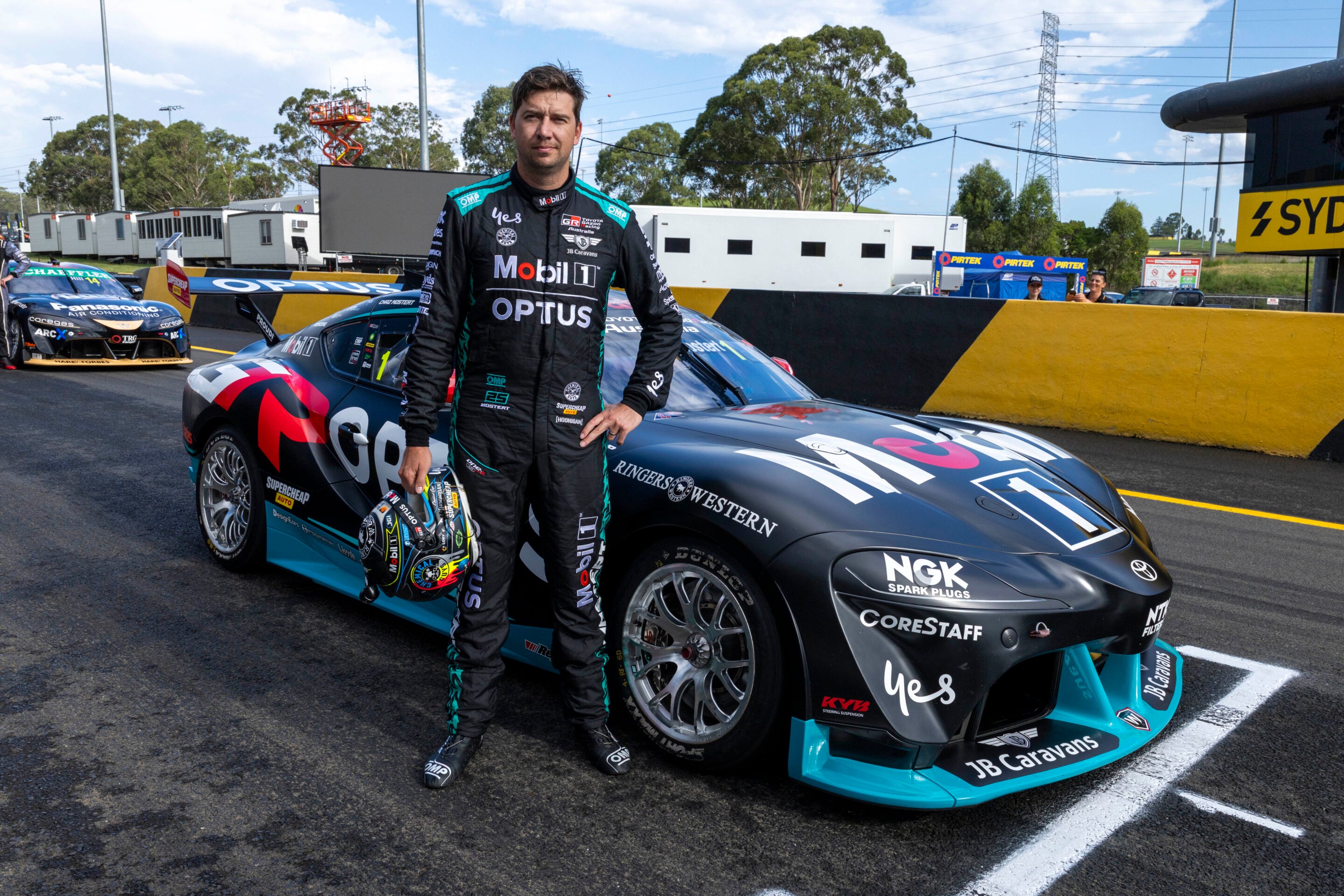
“Akio’s philosophy is about producing better cars,” Pappas said. “He talks about that. I look at that and it just inspires us globally to continue to build, particularly the GR brand in this case. We love to see that expansion and what we’ve seen today, the trajectory that we’re on, we continue to build the GR brand.”
All five Toyota Supras finished inside the top 10 in Sunday’s Supercars race at Sydney Motorsport Park, marking a significant turnaround from Saturday’s struggles for the new model. Up front, Broc Feeney claimed victory after overcoming a failed cool suit, rising engine temperatures and a late-race challenge from Kai Allen in a dramatic, weather-affected contest.
