
There is a term in the water skiing fraternity called ‘pass the handle’. It reaches beyond the literal physical act of passing someone a ski handle and is a way for current enthusiasts to help keep the hobby alive. The premise is that at least once a year you should teach someone new how to water ski. That’s it. It’s a low effort movement that promises big rewards in helping maintain and build a vibrant community for what is a niche sport.
Motorsport could benefit from a similar mindset. Before you take your Grandma to hire karts and send her into the Shadow Realm with an overzealous divebomb I should explain. Instead of ‘pass the handle’, it’s time for racing fans to ‘pass the hot chips’ – yes, the ubiquitous, if a tad overpriced, trackside master food.
Okay, the catchphrase might need some work, but the concept is simple. Invite someone who hasn’t experienced it before to join you trackside and witness racing at its purest, rawest form – in person. If you yourself haven’t been to watch trackside before, change that in 2022. It’s a joyous experience that you’ll remember vividly for the rest of your life.

If we want to enjoy a thriving, diverse and successful motorsport landscape in the future, the opportunity to help make that happen is with us, the fans. That’s not to say we are the only factor in motorsport’s future being an enjoyable one, but there is no point leaving the popularity of the sport to an ethereal other.
Want more fans? We need to play our part to help share the passion. More fans are always a good thing. It means more sponsor opportunities for teams, more TV coverage and better funding. Cricket and Rugby don’t swim in government grant money and breathless mainstream media coverage on luck alone.
That’s why my personal goal for 2022 is to introduce more of my friends to live motorsport, and the joy of a trackside hot chip. As a racing fan I feel duty-bound to help share the passion and introduce new people to the sport. Some of that will be in writing this column, but the best way will be in person. Watching, hearing, smelling and seeing it all at once.
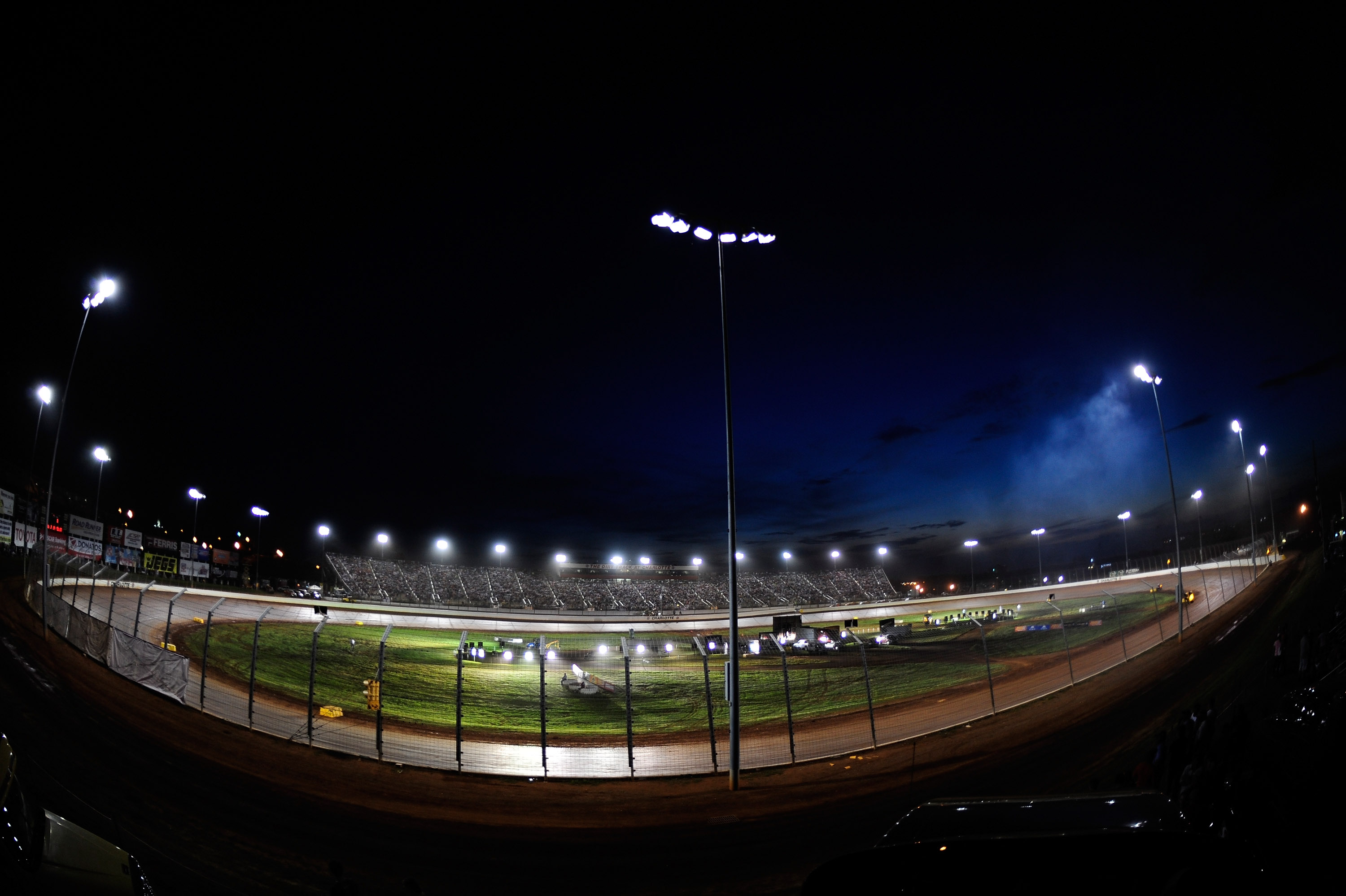
I’m lucky to be raised in a family that proudly stood by its motto of “if it doesn’t have an engine, it’s not a real sport”, so I don’t have any challenges in convincing my kin to join me in leaning against a chicken wire fence to watch cars and bikes blast past under the hot sun (or during our frequent trips to Phillip Island, the frigid rain). Instead, I’ll be able to focus on those who have seen fit to tolerate my company in the name of friendship.
If you’ve ever had a friend or family member ask you about Netflix sensation Drive to Survive, capitalise on that. Instead of looking down your nose at those who use a widely distributed form of entertainment as their pathway into fandom, make the most of the opportunity to add a lifelong member to the motorsport fraternity. Australian Grand Prix tickets aren’t cheap, my bank account knows that much, but some of the best live motorsport I’ve seen has also been the cheapest.
Speedway is a fantastic example. During the summer months races happen at local tracks all around the country, with a night’s racing likely costing less than an eggs benny at your local café. The on-track battles are almost universally fantastic, with short, punchy formats that cater to shorter attention spans. Though, a note from the wise, tell your companions to pack clothes they are happy to get dirty, and don’t forget the safety glasses!

While that in and of itself can be off-putting for some, rest assured that a night of speedway racing will be unlike anything a newbie has ever experienced. It’s an all-encompassing, visceral sensory experience. The rich, sweet smell of methanol fuel fills the air, big screaming V8s roar into the night – it’s racing in its simplest form. Don’t want to get dirty? Try drag racing. The vehicles are shockingly fast, and everything happens in a single quarter-mile stretch so you won’t miss a thing.
There is an entire world of fantastic motorsport out there ready and waiting to be shared. You’ll be making the sport a better place by bringing someone new along for the ride, so get to it.
And don’t forget the hot chips!

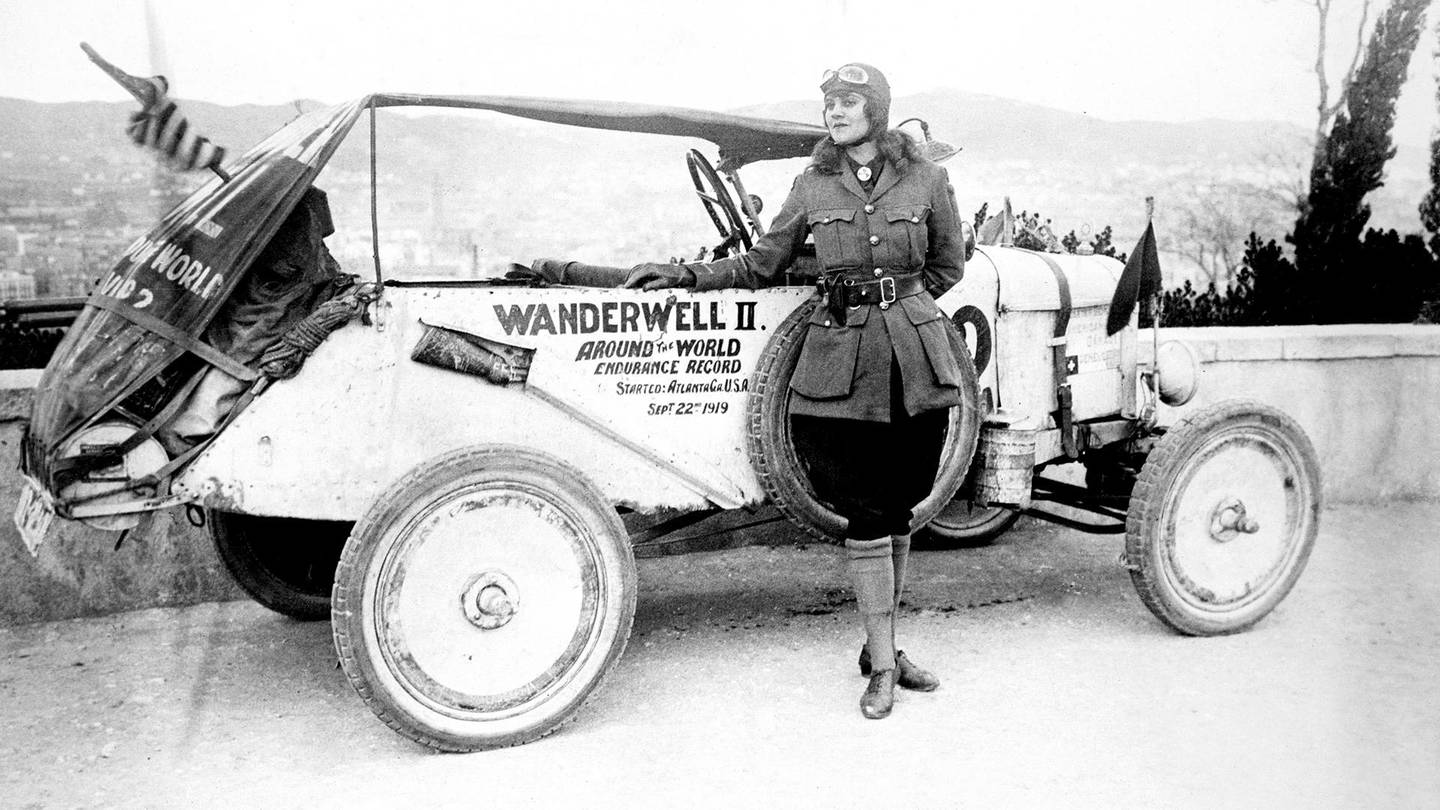
It was 1922 when a 16-year-old Idris Welsh met self-appointed ‘Captain’ Walter Wanderwell. Within days she had adopted the stage name ‘Aloha Wanderwell’, and had taken off for an adventure by car.
After five years of driving a pair of heavily modified 1917 Ford Model Ts, tasked with translating and filmmaking along the way, Aloha became the first woman to drive around the world, as recognised by Guinness World Records.
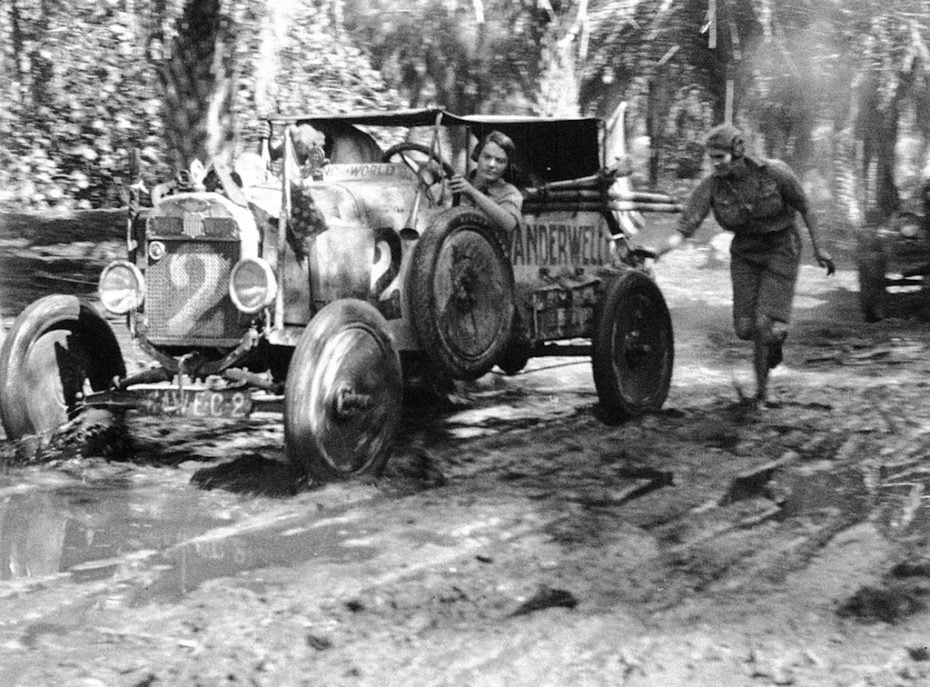
“Our worst experiences were in the heat of Portuguese East Africa, where we were among natives who had never before seen white people, far less a car,” Aloha told reporters when she arrived in London, The Brisbane Courier reported on January 21, 1930.
“They proved quite friendly, however, our real enemies being hunger and thirst. At one time we were fifty kilometres from water, and if our cars had broken down or our tyres punctured on the rough veldt we should have starved to death; but our Dunlops gave no trouble, and we eked out our precious petrol supply ‘til we arrived at comparative civilisation.”
She had just driven through 43 countries, covering nearly 100,000 kilometres in the process, and marrying the ‘Cap’ on their travels through the US in 1925.
The Wanderwells eventually presented a Model T to Henry Ford for use in the company’s museum.
Tragically, in 1932, her husband Walter Wanderwell was murdered in California while on his yacht, one day before they were scheduled to leave on another adventure. The crime was never solved, but garnered widespread media fanfare.
A year later Aloha remarried to cameraman Walter Baker, and the two set off on a worldwide adventure in their V8-powered Ford Phaeton, showing their films and providing lectures along the way.
After 30,000km, and with 75 badges attached to the Ford, Aloha arrived in Perth with her husband in early May, 1936, telling the local Sunday Times they were planning to travel down the coast of Western Australia before heading east.
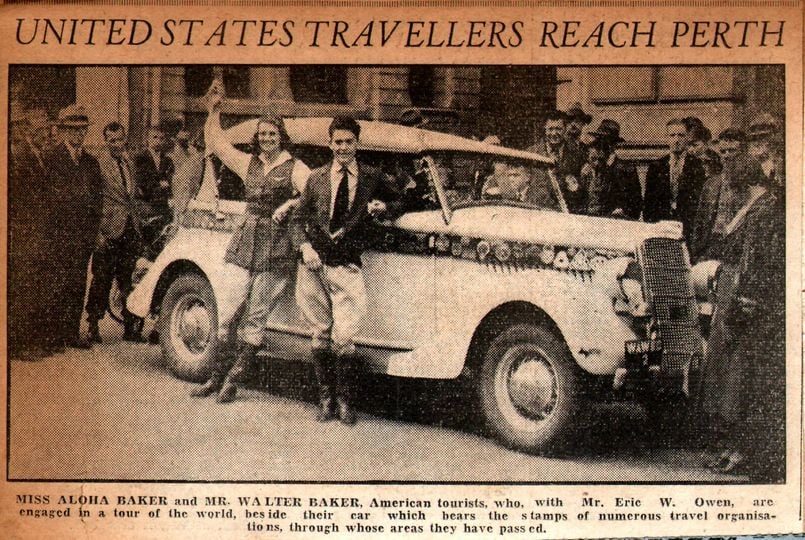
“I have been told that the jarrahs and gums In the south-west are equal to the Californian redwoods, and I really must verify this. I also want to see some kangaroos,” she said.
“I am very eager to cross the continent, and am looking forward to the journey across the plains. We are going to Melbourne and Sydney and probably as far north as Brisbane and then home, which we haven’t seen since last September.”
Aloha wrote a number of feature stories for Australian Ford News during her time in the country, as they travelled across to Melbourne and as far north as Townsville, before returning south to Lismore, telling a local newspaper they would be visiting New Zealand before returning to the US.
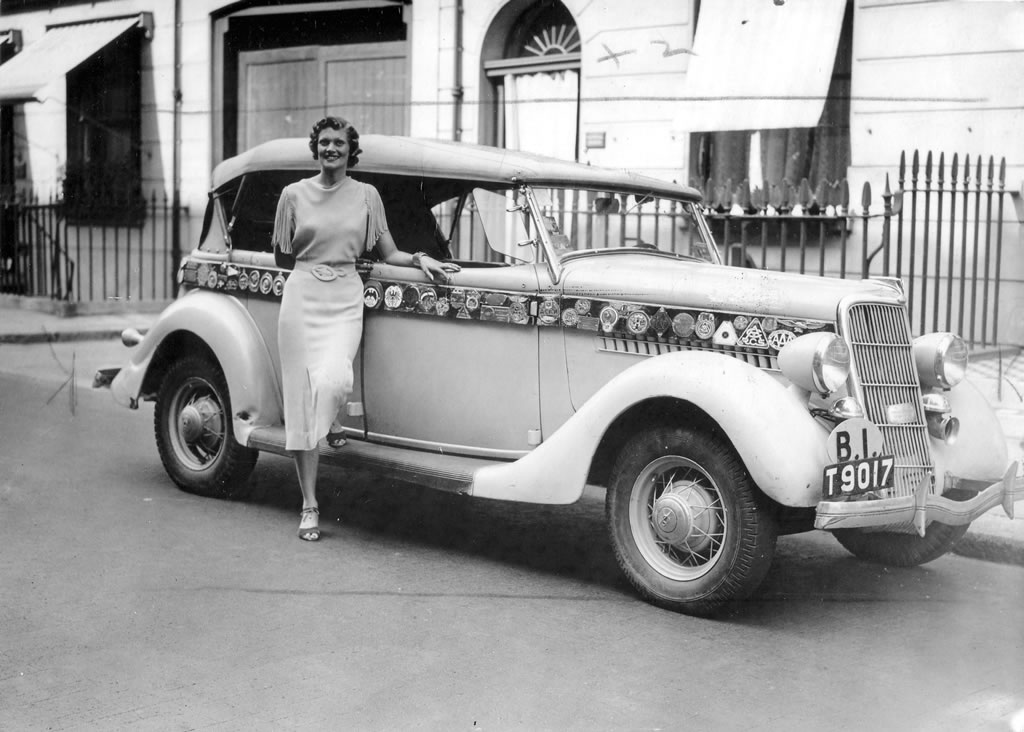
While she is best known for her motoring adventures, Aloha reportedly spoke 14 languages, and is credited with producing 12 films, in which she was cinematographer, screenwriter, director, and editor, including Australia Now.
Aloha spent the rest of her years living in the US, working in radio broadcasting and print journalism, before passing away on June 4, 1996, aged 89.
You can watch footage from Ahola’s travels in the video biography above, or learn more by visiting her website, curated by her family, by clicking here.
Snapshot
- Almost 4000 sales achieved in February
- Best ever result for a single month
- Spearheaded by ZS model
Chinese carmaker MG has had its best sales month ever, selling almost 4000 cars in Australia for the first time since the brand arrived here in 2016.
According to February’s new car sales figures, MG sold 3767 units last month, up 25 per cent on this time last year – cementing its position as a top-10 brand.
Out of its three model-strong lineup, made up of the HS and ZS SUVs and MG3 city car, the ZS delivered the best result, as it has done solidly for the last six months.

In February the ZS, which can be had either with a 1.5-litre petrol engine, 1.3-litre turbo-petrol or an electric motor, was Australia’s sixth most popular car with 1953 sales – up 50 per cent from 651 in February 2021.
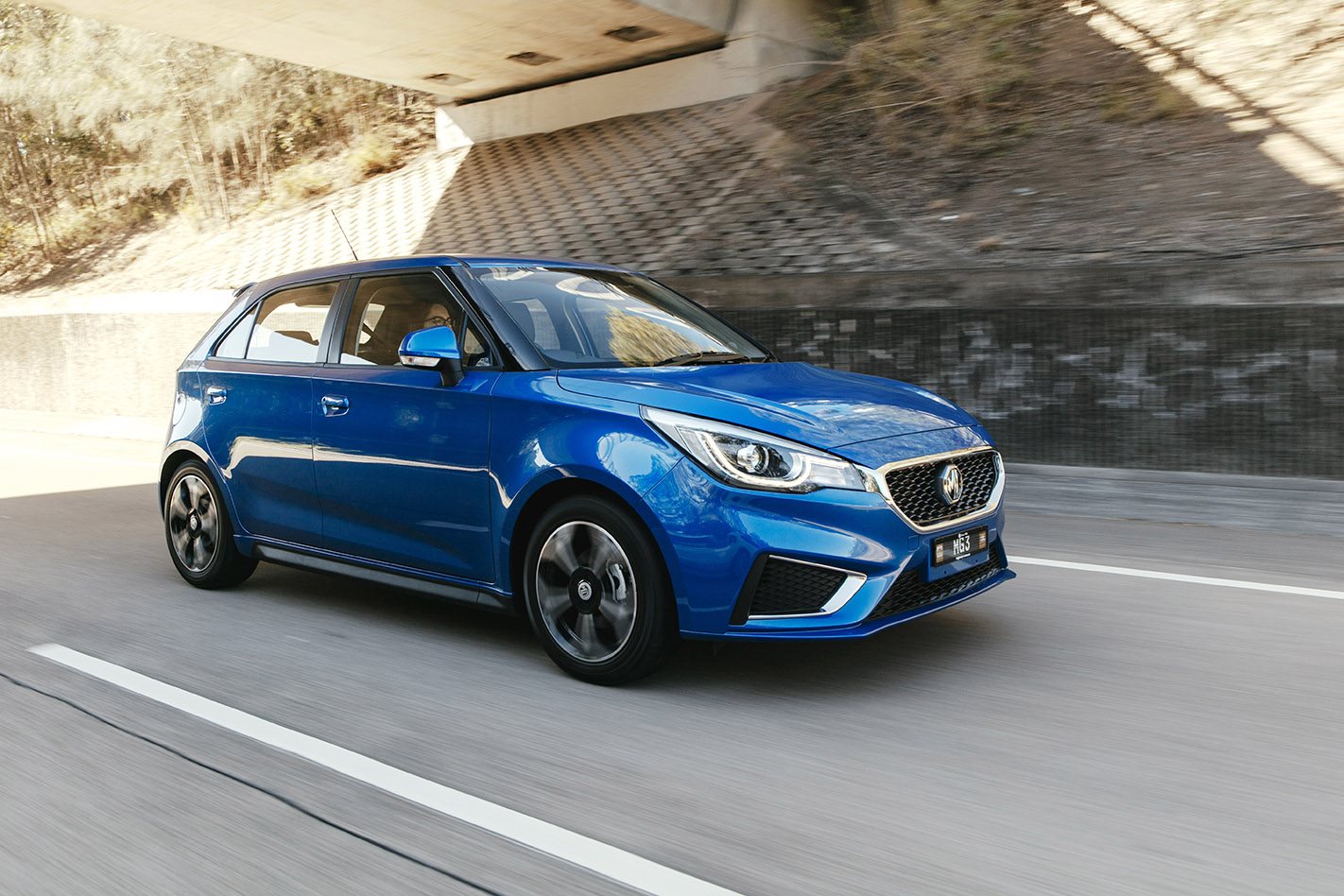
The MG3 meanwhile, despite dropping back out of the top 10 after appearing for the first time in January, also sold well last month – notching up 1437 sales versus 1313 in February 2021, up nine per cent. The HS in comparison was the poorer sibling, selling just 377 units, down six per cent on this time in 2021.
According to MG, while it is working amongst challenging market conditions when it comes to supply just like other carmakers, particularly on the logistics side, it isn’t as badly affected by shortages and has still managed to land almost 4000 cars a month in Australia for the last year.
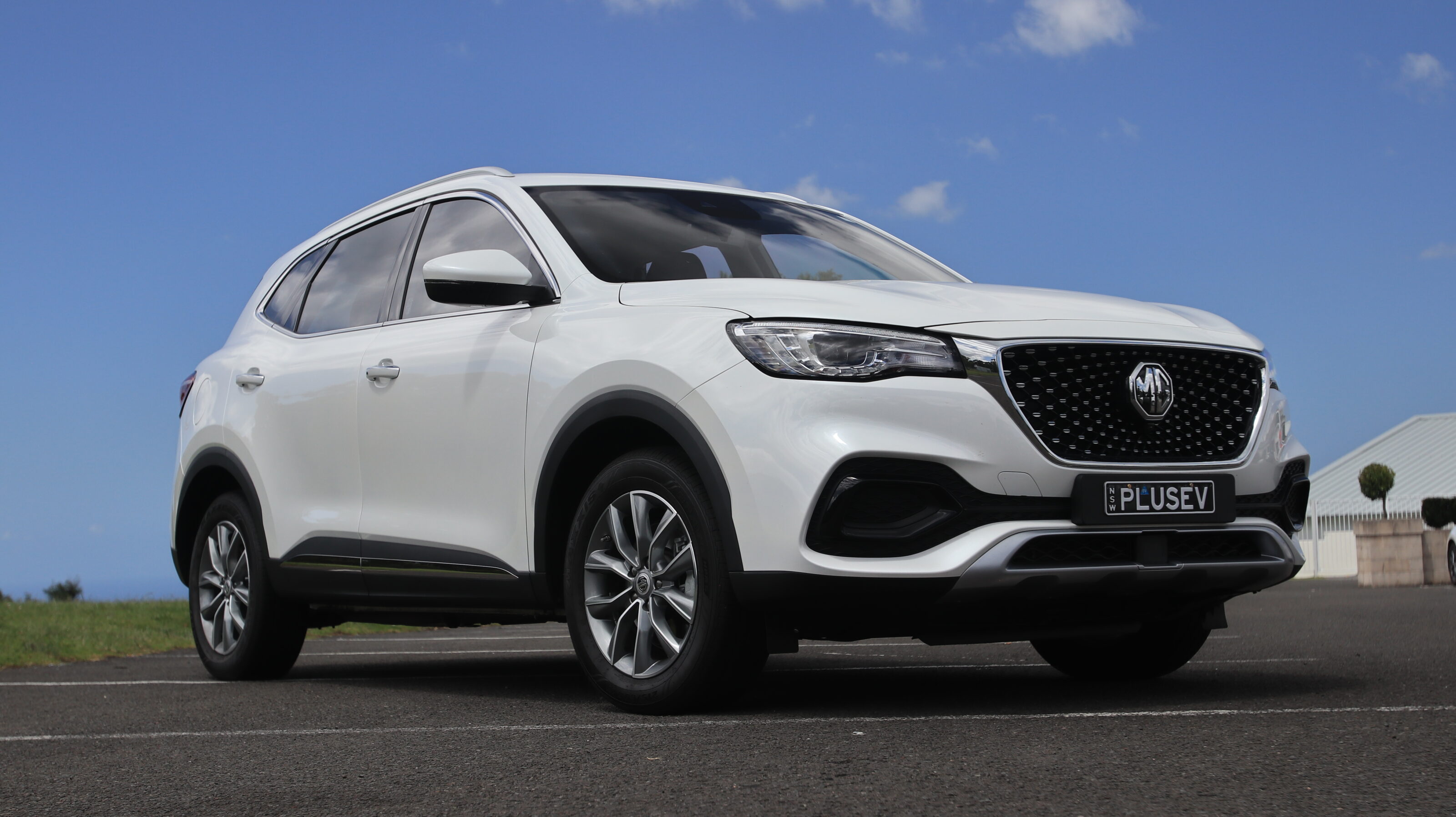
It plans to continue landing similar volumes moving forward into 2022, beginning with its HS Plus EV plug-in hybrid in January and facelifted ZS EV in July.
“MG recorded its best month of sales ever in February, topping 3700 units for the first time in the company’s local history,” a spokesperson told Wheels.
“We’ve got really good numbers, we’ve got around 4000 cars coming in a month. We’re selling every single one we can get. The supply is only limited by the number on the ship and the slots we can get – there are no plans to modify the specifications of any Australian- or New Zealand-bound MG products.
“We will continue to work hard to fulfil the extraordinary demand for MG products by our loyal customers.”
Last year was also a big one for MG, finding its place as a regular in the top 10 sales chart for the first time and rounding off the 12 months with 39,025 sales. And in July 2021 it also received its first ever full shipment of vehicles to Port Kembla in New South Wales.
Snapshot
- Volkswagen cuts development times from 54 to 40 months
- New Campus Sandkamp to benefit from u20ac800m investment
- SSP architecture and Project Trinity to be launched in coming years
Faster model development is now a key strategy for Volkswagen after it announced a 25 per cent reduction in vehicle development times.
As a part of its realigned plans for the Technical Development (TD) division, Volkswagen has shortened its vehicle development timeline from 54 to 40 months, starting at the point where a model’s software architecture is first implemented to when it is completed.
The TD team is now the largest in Volkswagen’s operations with 11,500 staff on the books, focused on transforming the automotive manufacturer into a technology company alongside its existing business model.
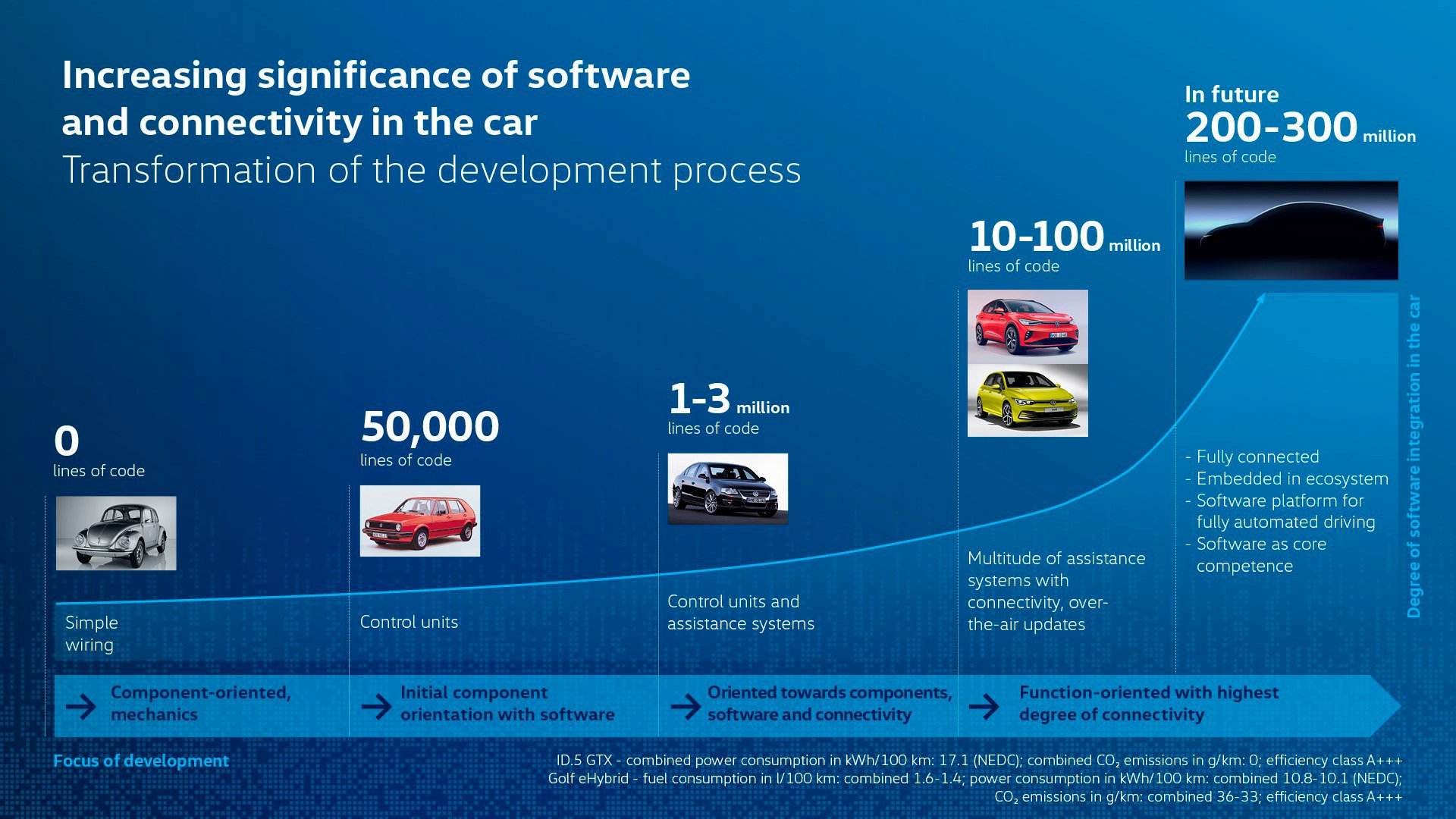
Thomas Ulbrich, member of the Board of Management responsible for TD, said the investment in the division is essential to help aid Volkswagen’s future shift.
“If the car is increasingly becoming an electrically driven software product, then its development must also evolve in all dimensions,” said Ulbrich.
“We are making TD more connected and more efficient by focusing our processes and organisation on systems and functions rather than on components. Software first rather than hardware first.
“This will enable us to cut development times by 25 per cent – in the future, vehicle projects will be completed in 40 months from the point at which the basic software architecture is in place, instead of 54 months as before.”
An investment of €800 million (AU$1.17 billion) has also been announced for Volkswagen’s Campus Sandkamp within the Wolfsburg base, set to be rolled out over the next five years to support 4000 employees working on the brand’s flagship projects.
“This year, the transformation will also become visible outside the Group with the Campus Sandkamp development center [sic] planned for Wolfsburg,” said Ulbrich.
“We will spend €800 million on making Campus Sandkamp the most cutting-edge vehicle development center [sic] in the world. In this way, we are highlighting that TD is ratcheting up the pace of transforming Volkswagen into a tech company.”
The next five years will be a booming time for Volkswagen’s electric vehicles operations, from the implementation of its Scalable Systems Platform (SSP) across Group brands to the introduction of the Project Trinity EV before 2026.
The 2023 BMW M4 CSL is edging closer to its unveiling.
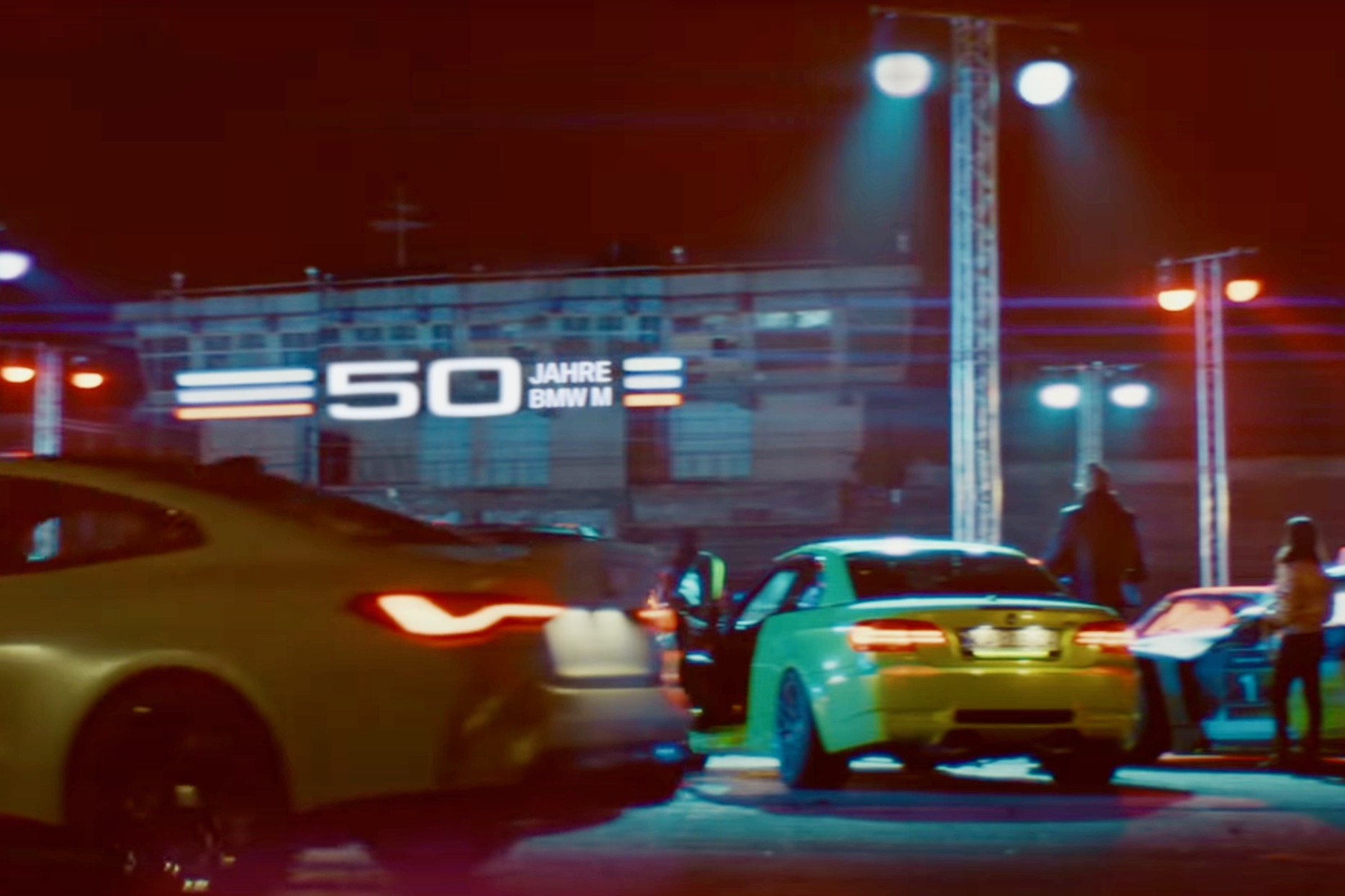
Barely a week after BMW teased the lightweight M4 during its 50th anniversary celebration, website BMWBlog is reporting the new special-edition will make its debut in May, with limited numbers of the CSL likely to arrive before the end of the year.
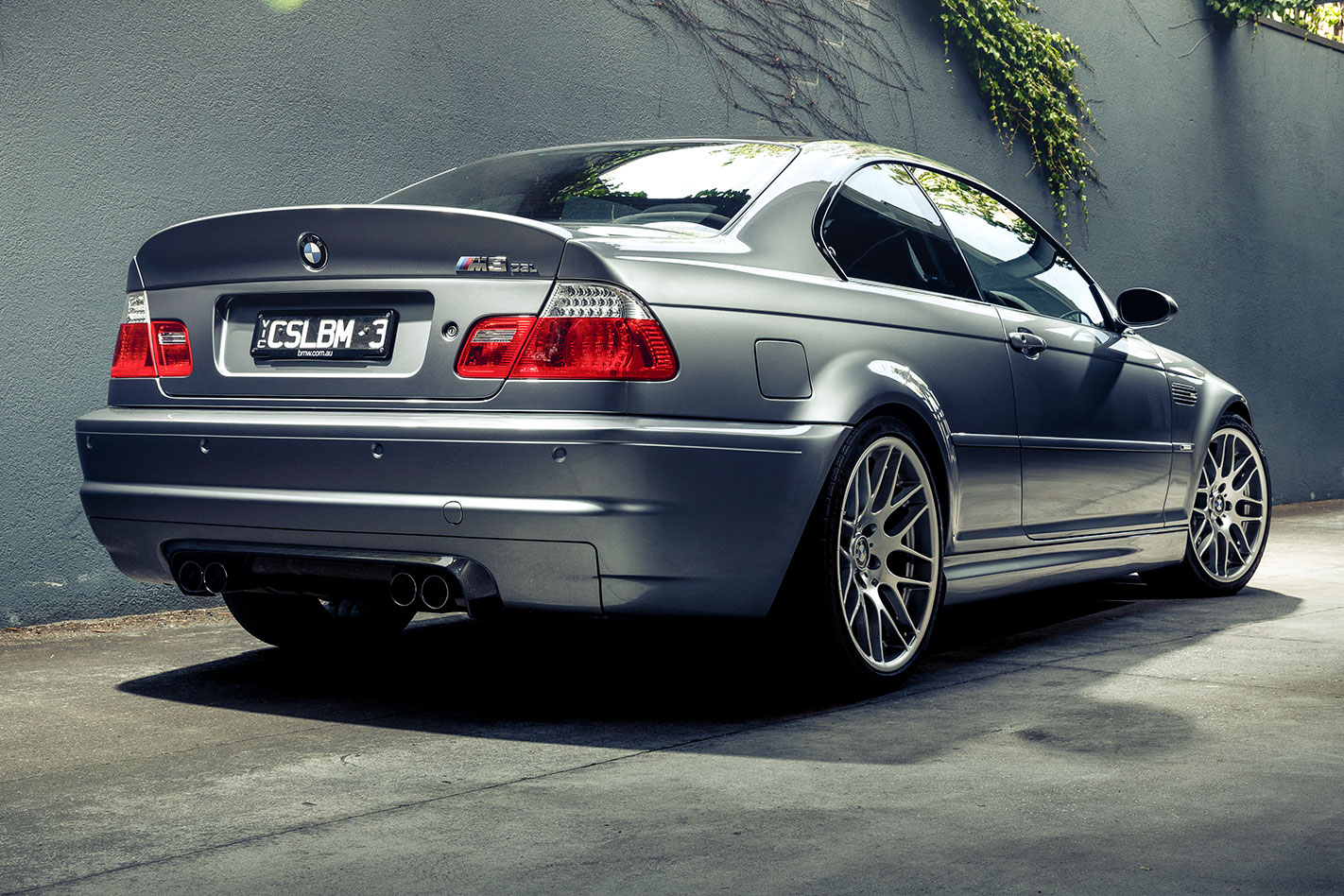
Taking its cues from the E46 M3 CSL – the last CSL to be released, almost two decades ago in 2003 – the G82 M4 CSL will feature a ducktail rear spoiler and plenty of carbon-fibre.
A unique front ‘coffin’ grille will be integrated into the front spoiler, along with a deeper front splitter and side winglets.
Like the previous CSL, the new model will likely be going on a diet to remove excess kilos in an effort to improve acceleration, braking, and handling.
Former BMW M boss Markus Flasch confirmed to German publication Auto Motor und Sport in November the division was “aiming for a three-digit weight saving”, suggesting the new CSL – which translates to ‘Coupé Sport Lightweight’ in English – will tip the scales at less than 1625 kilograms.
While the last CSL enjoyed a near 13 per cent weight reduction, a 100kg reduction is less than a 5.8 per cent drop.
The M4’s 3.0-litre twin-turbo inline six-cylinder engine will also be massaged, according to reputable BimmerPost leaker ‘ynguldyn’, with a reported power bump from 375kW to 403kW.
Like the E46, the G82 is said to be coming solely with an automatic transmission – likely the same eight-speed automatic found in the rest of the M4 line-up.
However, the BMW insider has hinted at “a very special limited-edition M4 GT/H will be produced” following the CSL.
“It will be mostly configured like the CSL, but with [a] manual transmission, several options (comfort access, parking sensors, electric seats) deleted, and the forged wheels off [the upcoming G81 M3 wagon],” writes ynguldyn.
Other rumoured features of the M4 CSL include; an Alcantara steering wheel, racing buckets as standard, and a choice of either high-performance road tyres or road-legal track tyres.
With the 2023 BMW G82 M4 CSL due to be unveiled at the Concorso d’Eleganza Villa D’Este event on May 20, and production slated to begin in July, expect the new lightweight model to arrive in the fourth quarter of 2022.
You can watch a video of a prototype M4 CSL testing at the Nürburgring above, from YouTube channel CarSpyMedia.
Key Points
- C40 electric SUV to be available with single and dual motors
- Production began in October 2021
- Australian launch pencilled in for late-2022
UPDATE, March 7, 2022: Volvo has given its fully-electric C40 small SUV a new variant for 2022.
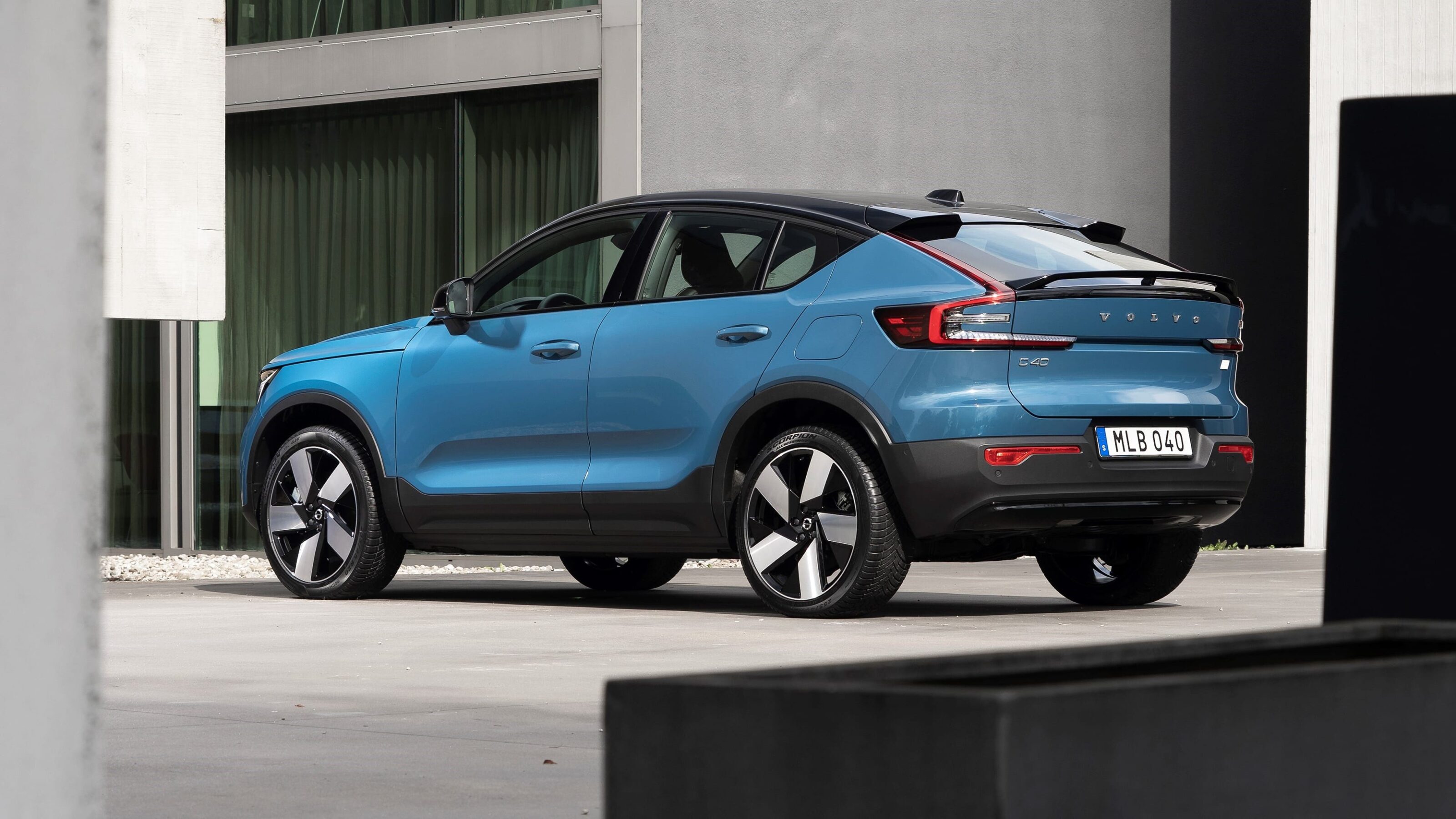
Heading into the second quarter of the year, the C40 line-up has now expanded to two grades with the addition of a single-motor variant to be sold alongside the dual-motor Recharge, having entered production for Europe in October last year.
The less powerful single-motor grade will feature a smaller capacity battery, dropping to 69kWh from 76kWh, but boasts a higher WLTP driving range, eeking out 434 kilometres on a charge compared to the dual-motor’s 420 kilometres.
A smaller battery pack also means faster charging, with Volvo claiming the 69kWh unit can go from 10 to 80 per cent in as little as 32 minutes – eight minutes less than the larger 76kWh lithium-ion battery.
The UK arm of the Swedish manufacturer has said the first deliveries can be expected around the third quarter of 2022 – roughly the same time as when the dual-motor C40 is anticipated to launch in Australia.

The story to here
October 8, 2021: The latest electric offering from Swedish manufacturer Volvo has entered production, with the C40 Recharge currently working its way down the production line.
Built at Volvo’s plant in Ghent, Belgium, the C40 is a coupe-style SUV which is solely powered by a battery-electric powertrain, as opposed to the internal combustion engine, mild-hybrid and PHEV variants of its XC40 sibling.
Its 78kWh battery pack provides power to two electric motors, one for each axle, while delivering an estimated driving range of up to 420 kilometres – charging up to 80 per cent in around 40 minutes.

Javier Varela, Senior Vice President for Industrial Operations and Quality at Volvo Cars, said the C40 Recharge is an important vehicle for the manufacturer as it gears up to go electric-only by 2030.
“The C40 Recharge is a car that represents our future,” said Varela.
“Our manufacturing operations and a close collaboration with our suppliers are key in achieving our future ambitions in terms of electrification and climate neutrality. Our Ghent plant is ready for an all-electric future and will be an important part of our global industrial network for the years to come.”

The C40 Recharge has previously been green-lit for Australia in late 2022, joining the XC40 Recharge as Volvo’s only all-electric options amongst its line-up of mild-hybrid and plug-in hybrid models.
Debuting Volvo’s new pixel technology headlights, the C40 Recharge will also feature the carmaker’s new infotainment operating system, which was developed with Google, providing in-built apps such as Google Assistant, Google Maps and Google Play.
In the United Kingdom the C40 Recharge is available from £57,400 (AU$107,000).
Though it wears a Ferrari badge, the Ferrari 296 GTB is above all a delivery vehicle. This is the car created to carry the company’s most important new road-car engine in decades into the arena.
Codenamed F163, this V6 will power who-knows-how-many future Ferraris (see below). And for its first appearance, Maranello has chosen to demonstrate that less, done their way, is more.
The electrified 3.0-litre engine of the 296 GTB isn’t just a little more powerful than the 3.9-litre V8 of the F8 Tributo, it’s a lot more. While its 80kW advantage isn’t the only factor at work, the 296 GTB also cuts a significantly quicker lap of Ferrari’s famed Circuito di Fiorano test track. Reflecting its place in the performance pecking order, the 296 GTB is priced above the F8 Tributo.
Judged by numbers alone, the 296 GTB is a pretty persuasive introduction to the F163. Which is surely what Ferrari was aiming to achieve.
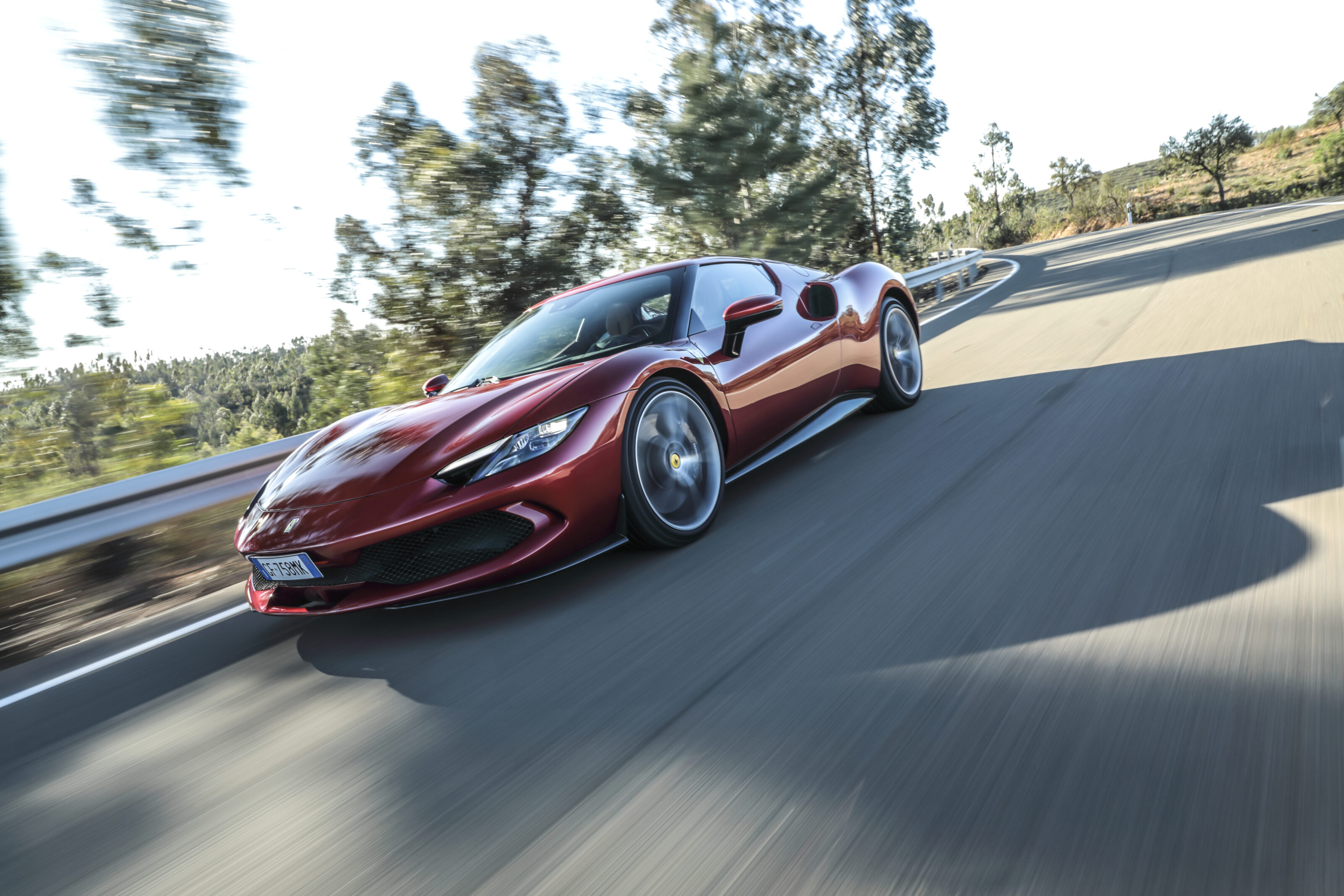
According to Ferrari engineers, the V6 was conceived, designed and tested in unelectrified form before being assigned to the 296 GTB project. And only at this time was the decision taken to make the F163 the centrepiece of a plug-in hybrid drive system with V8-beating power.
The F163 is an unusual V6, and not only because it’s the first one in a Ferrari road car (the Dino-badged 206 and 246 from the ’60s and ’70s don’t count, argue Maranello’s PR people, and you might agree with them… or not).
First of all, the angle between its cylinder banks is 120 degrees; 60- or 90-degree angles are the norm for V6s. This arrangement has many advantages. Each pair of cylinders in the vee is connected to a single crankpin, meaning its crankshaft is very compact. Bore and stroke dimensions, by the way, are the same as in the SF90 Stradale‘s 4.0-litre V8. But the bare F163 V6 is more than 80mm shorter than any member of Ferrari’s current F154 V8 family, say the engineers.
The new V6 layout also delivers evenly spaced firing intervals. As well as providing optimal exhaust gas flow to each of the engine’s two turbos, this arrangement should – in theory – create a harmonious exhaust sound.
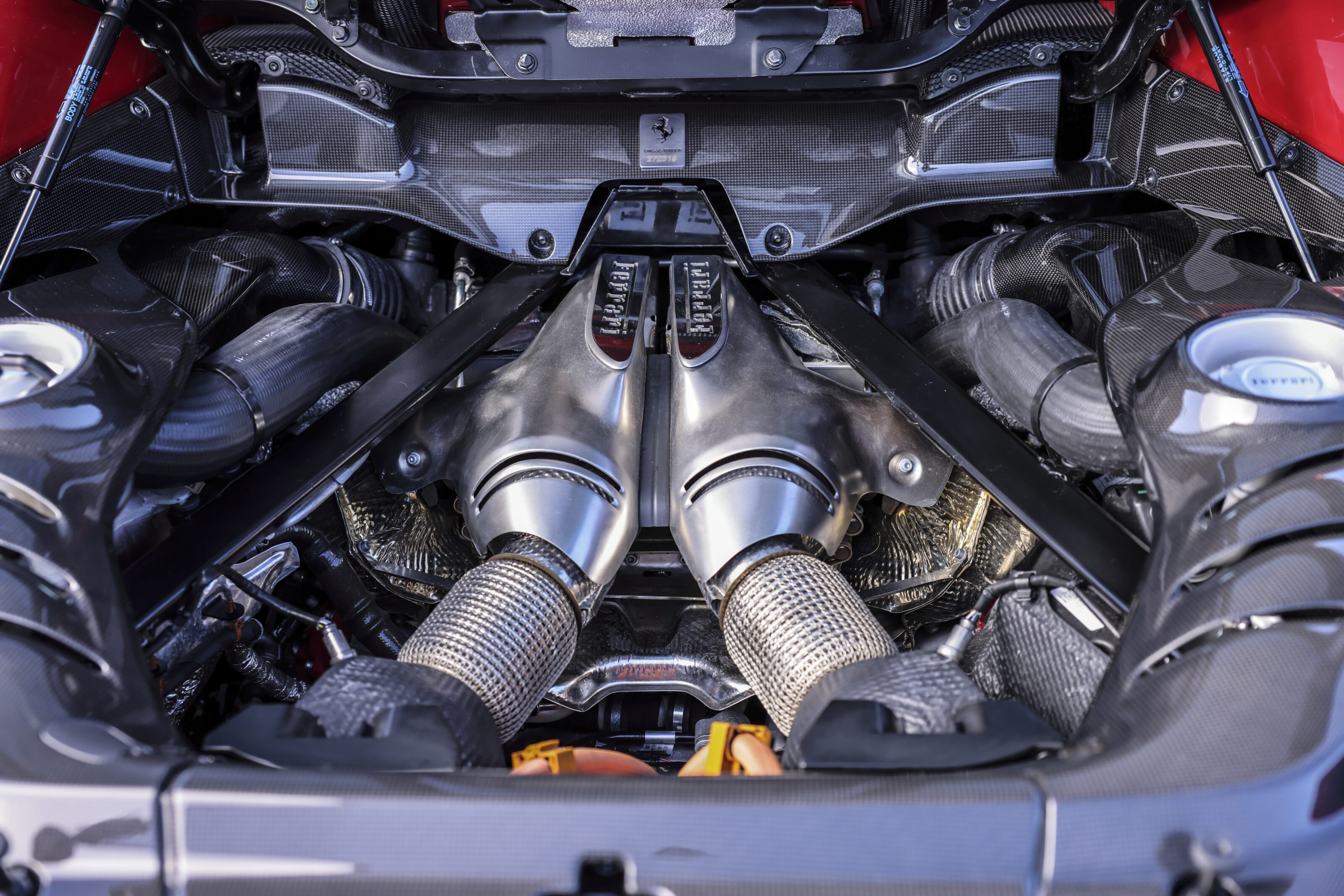
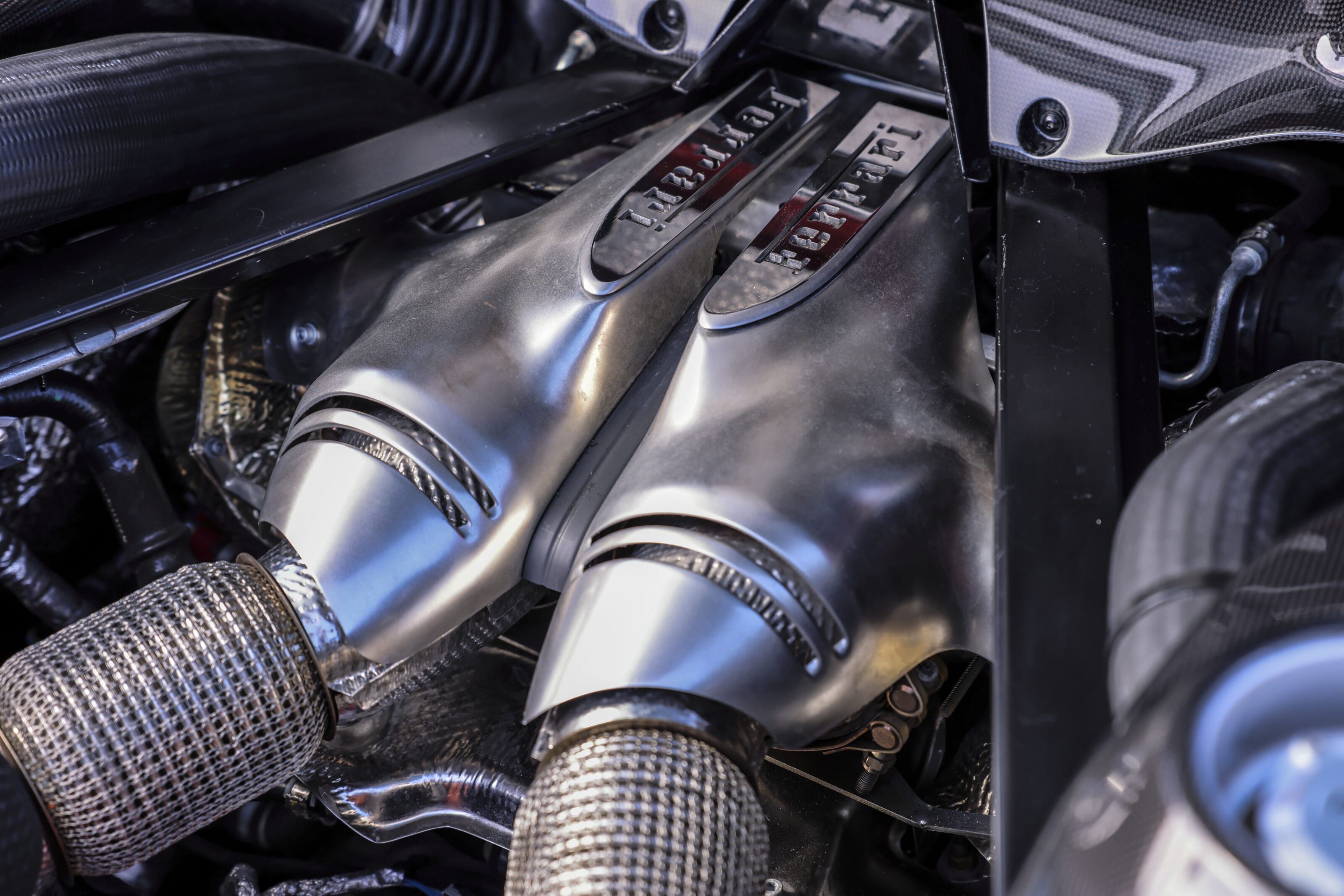
In another first for a Ferrari road car, the F163’s turbochargers are located in the shallow and spacious valley between the cylinder banks. This makes it a hot-vee engine. The IHI turbochargers are mirror images of each other, so their turbine and compressor assemblies spin in opposite directions. Their upper rev limit has been increased to 180,000rpm, more than in Ferrari’s V8s, improving boost efficiency. The turbines and compressors are slightly smaller and lighter, too.
One aesthetic side-effect of the switch to a hot-vee layout is that there are no crackle-painted inlet air plenums to admire beneath the 296 GTB’s engine cover. The V6’s intake manifolds aren’t only completely hidden from view below the widely splayed cylinder heads, they’re made from black plastic.
Looking into the engine compartment, a shapely, shiny shield bearing the Ferrari name and concealing the turbochargers is the focus point. From here the exhaust system makes a short, straight journey to the 296 GTB’s single central outlet.
The F163 is an unusual V6 … the angle between its cylinder banks is 120 degrees. The vee is connected to a single crankpin, meaning its crankshaft is very compact
The sound? It’s not like any other V6 you’ve ever heard, but it is definitely the kind of noise a Ferrari is expected to make. From a menace-laced rasp in the middle of the rev range, the note rises to a melodic wail as the tachometer twists through the top third of its arc to the 8500rpm redline.
Although from outside the 296 GTB can seem muted, from the driver’s seat the sound is urgent, angry and plenty loud enough when driving hard. The exhaust isn’t the only source of audio entertainment. There’s accompaniment from the turbochargers, which add whistles and whooshes. If it all seems orchestrated to please the ear, it’s because Ferrari took particular care to make it this way.
The melodic drama is an apt soundtrack for the 296 GTB’s epic acceleration. It’s not only that there’s more raw thrust than Ferrari’s rather special V8, the way it’s delivered is different, thanks to the Ferrari’s electric motor. It adds the kind of instant energy kick to the bottom and middle of the rev range that turbos cannot. The result, as perceived by the driver, is exact, exciting and altogether excellent throttle responsiveness right where it’s wanted.
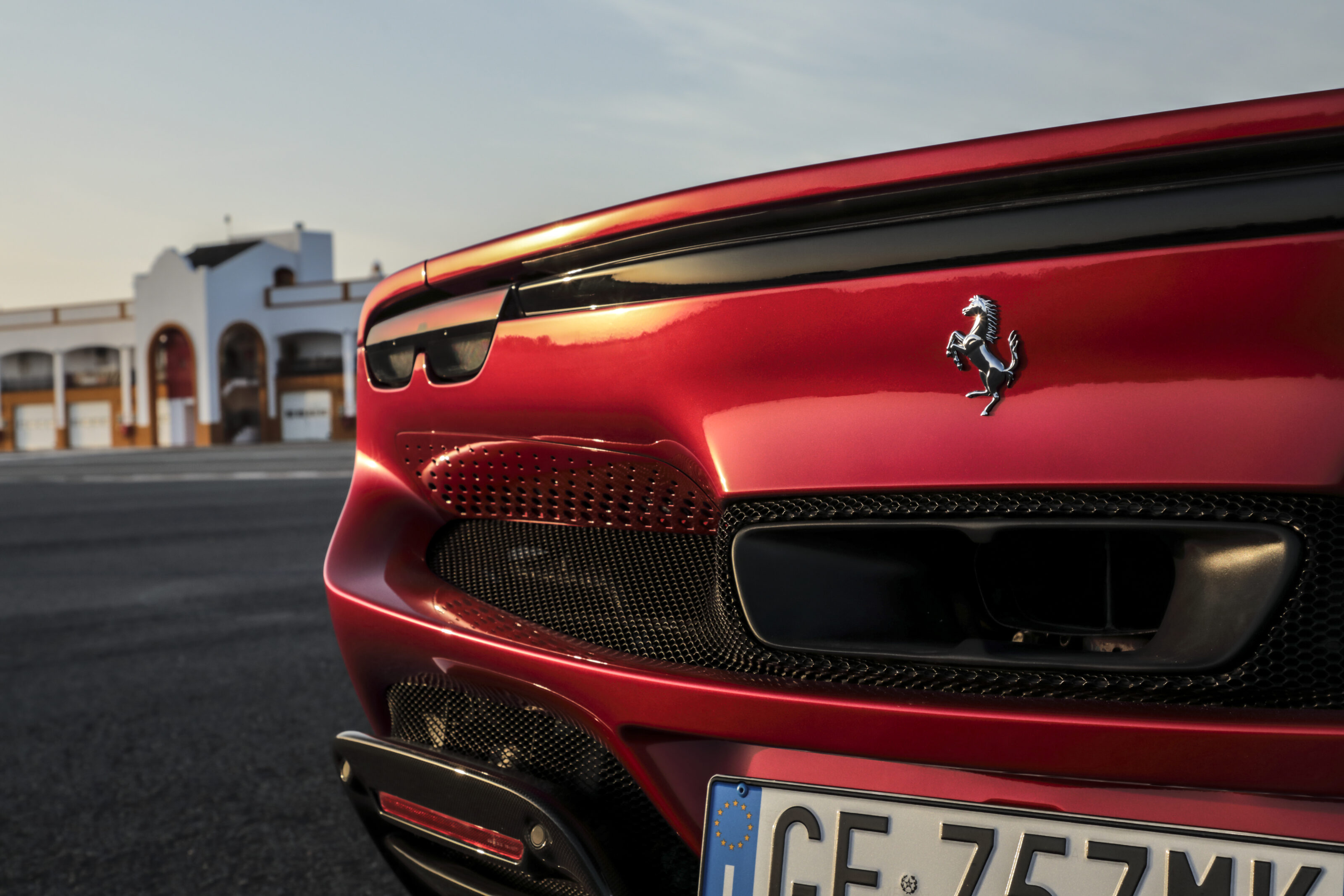
Although there’s a close relationship between the electric motors found between the engine and transmission of the all-wheel-drive SF90 Stradale – Ferrari’s first-ever plug-in hybrid – and the rear-drive 296 GTB, they’re not identical.
Both are compact axial-flux units made by British company Yasa (recently bought by Mercedes-Benz), but the 296 GTB’s motor punches harder. Its higher maximum torque output of 315Nm requires an uprated inverter to supply the extra energy.
The sound? It’s not like any other V6 you’ve ever heard, but it is definitely the kind of noise a Ferrari is expected to make
The other key alteration is the addition of a clutch between the 296 GTB’s engine and its single electric motor. This is required to enable electric-only operation with the car’s single motor by decoupling it from the V6. This isn’t a requirement in the SF90 Stradale. It has three electric motors, using only the pair in its front axle for purely electric driving.
These also take care of going backwards in the SF90 Stradale, which doesn’t have a reverse gear in its eight-speed dual-clutch gearbox. The 296 GTB uses the same transmission but equipped with a mechanical reverse.
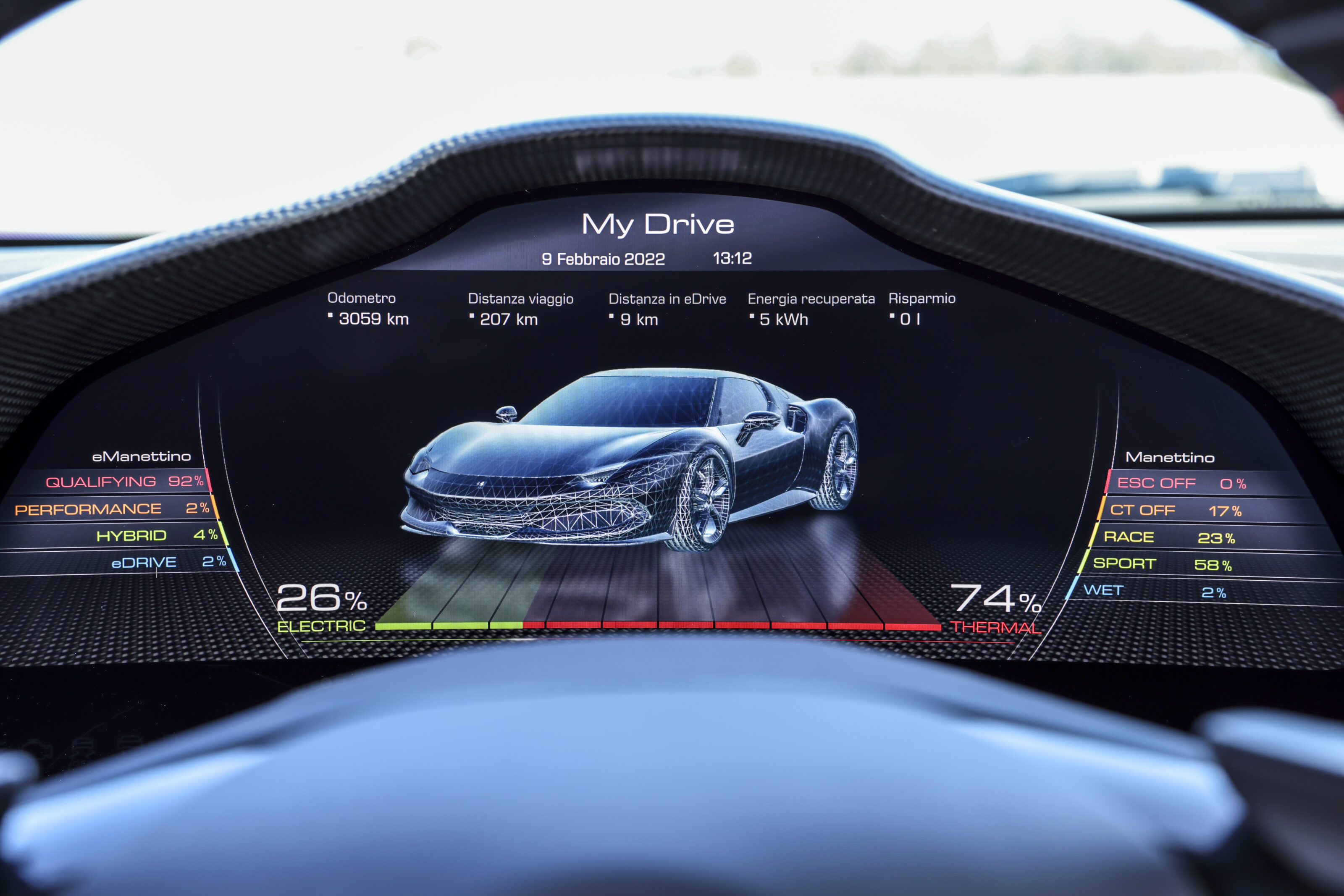
While Ferrari says its new V6 sportscar can drive around 25km using the 7.5kWh of energy stored in the 80 cells of its small lithium-ion battery pack, they admit its official WLTP-rated electric driving range will be more like 17km.
It is a paltry number compared to the latest mainstream plug-in hybrids, some of which have big enough battery packs to drive 100km electrically, and a pointer to Ferrari prioritising performance above almost all else with the 296 GTB.
Out of curiosity, I choose battery-power eDrive when it’s time to trail the photographic car for a couple of slow laps of the Monteblanco circuit outside Seville in the south of Spain. Though the 296 GTB’s electric motor maxes at only 122kW and top speed is limited to 135km/h, it’s plenty for this job. And the fluid finesse of the gearshifting is kind of impressive.
The car’s default driving mode on start-up is Hybrid. Thumbing the starter button gets you a Prius-like ‘Ready’ light glowing silently in the instrument screen rather than the bark of the engine bursting to life.
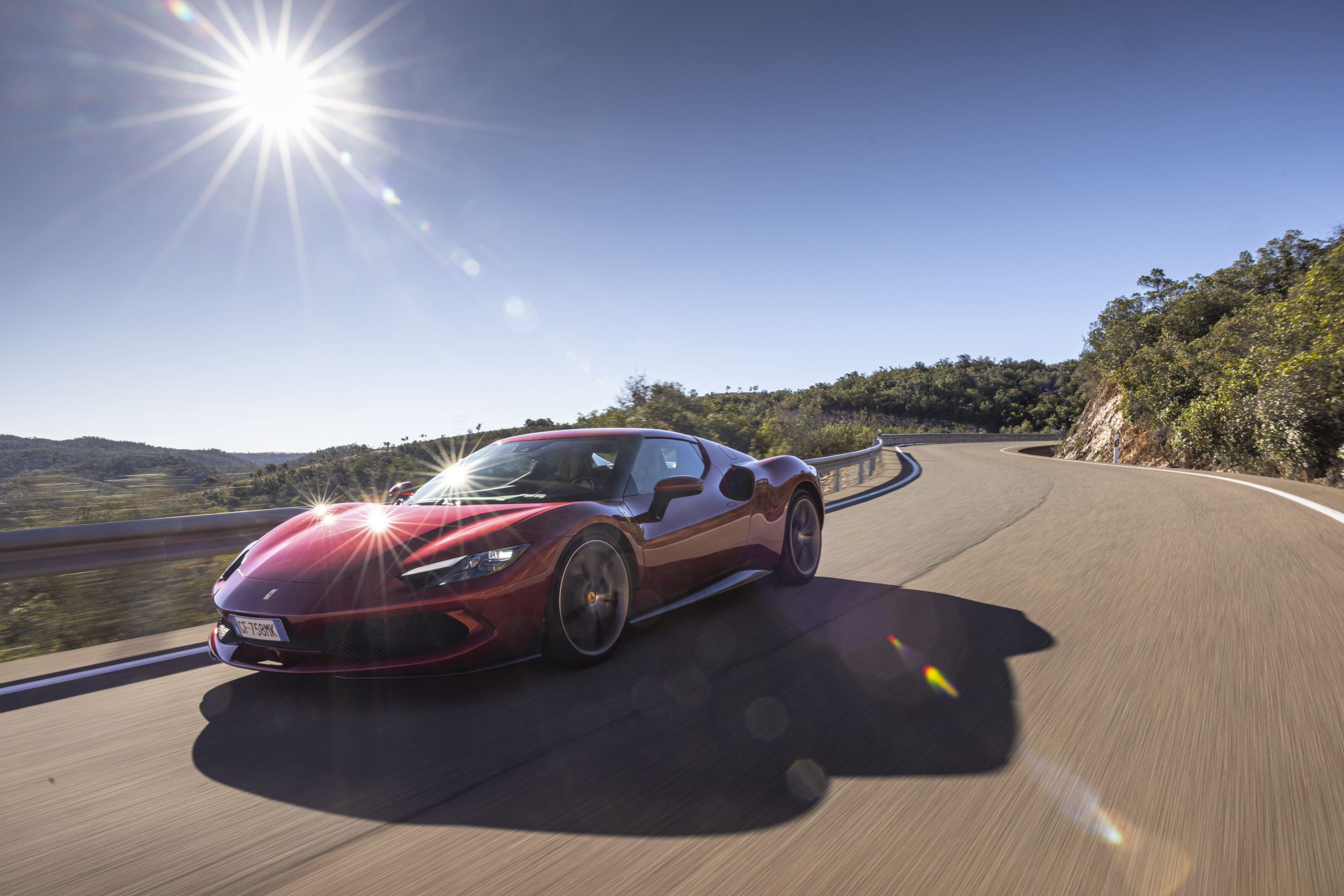
The 296 GTB is an awful lot of car for a public road. The test loop Ferrari has chosen for this event heads into the hills of Andalucia. There’s not a lot of traffic in this corner of Spain, and nothing I can’t get by on the shortest of straights.
So I decide to analyse Hybrid mode. What’s surprising is how frequently the Ferrari shuts down its engine … often on light throttle openings at open-road speeds
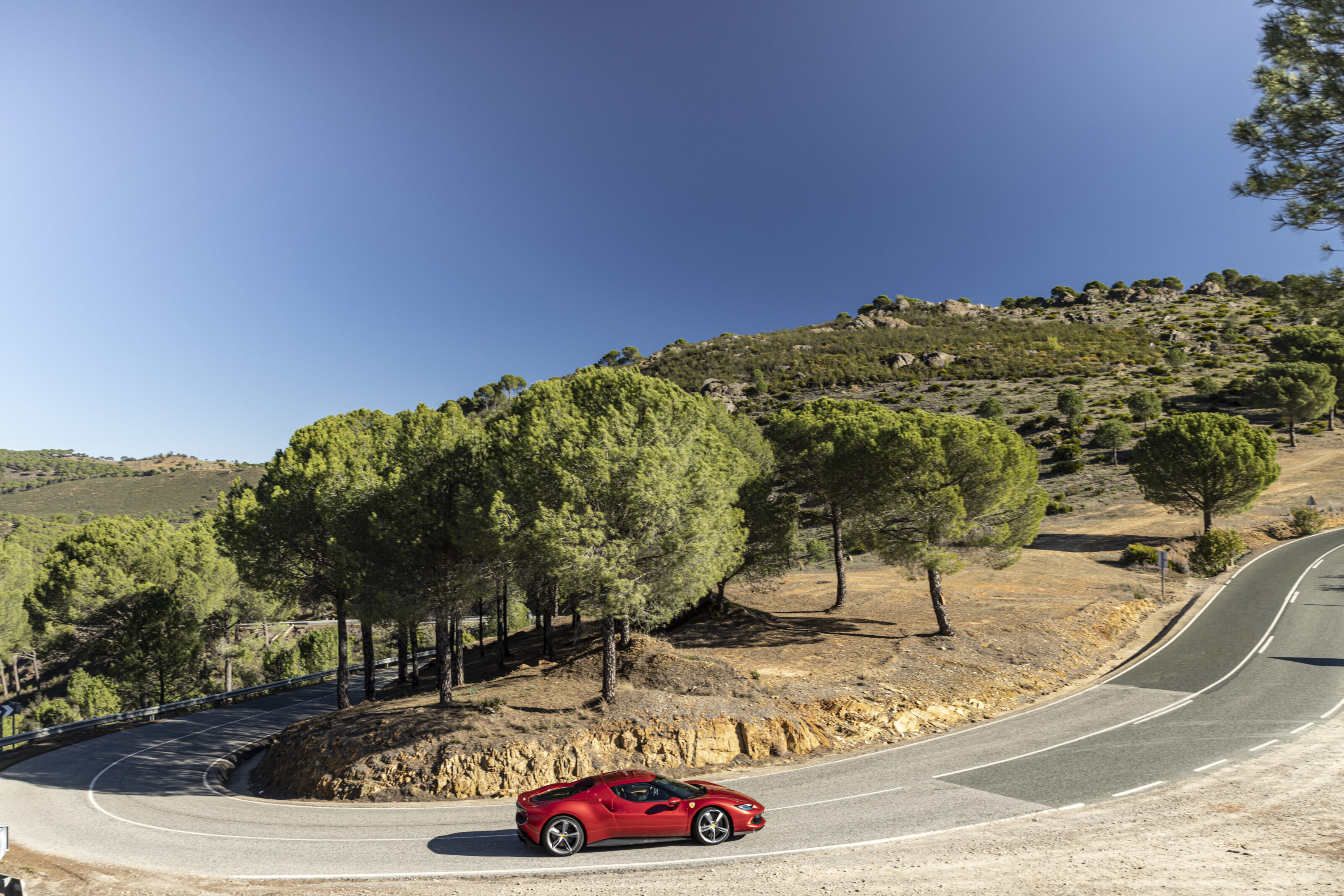
When I pull over for a breather, a BMW rider I’ve recently overtaken stops for a chat. My Spanish is minimal, like his English, but the motorcyclist is clearly well impressed by the 296 GTB’s grace and pace. He wants a photograph, which reminds me of the several speed cameras the Ferrari people made a point of mentioning during the pre-drive briefing.
So I decide to take it easy from here and analyse Hybrid mode. What’s surprising is how frequently the Ferrari shuts down its engine. It doesn’t do it only when ambling through villages with 30km/h or 50km/h speed limits. Often it happens on light throttle openings at open-road speeds, especially if the gradient is a little or a lot downhill. In this mode, the 296 GTB is going to be very fuel-efficient… for a supercar.
The battery pack’s state of charge has an effect, too. When the SOC is very low the car will harvest some of the internal combustion engine’s power to recharge the battery enough to cover demand for maximum performance. Load-point shifting is what the engineers call it.
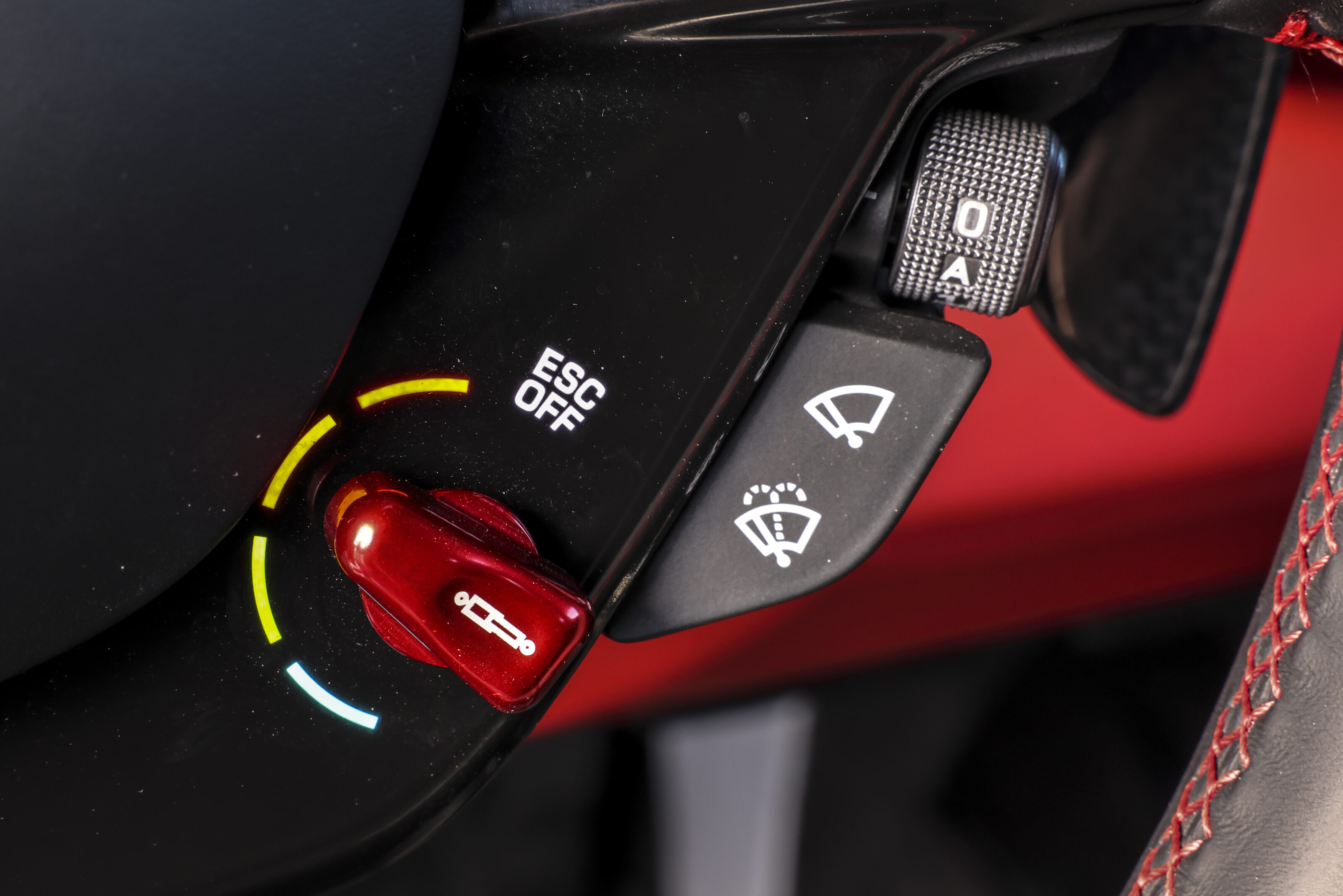
Driver control of the 296 GTB’s powertrain is via the e-manettino in the lower left quadrant of the steering wheel boss. The four touch-sensitive switches, from the bottom up, are eDrive, Hybrid, Performance and Qualifying. Maximum system power is available only in Qualifying, and only so long as the battery pack’s SOC is high enough to support maximum power from the axial-flux electric motor. Performance, in contrast, constantly manages SOC to deliver a level of performance that’s sustainable.
For laps of Monteblanco in an Assetto Fiorano-kitted car wearing stickier Michelin Pilot Sport Cup 2R tyres (rather than the Pilot Sport 4S rubber of the base 296 GTB driven on the road), Performance is what I choose.
The classic Ferrari dynamic manettino in the lower right quadrant offers a choice of Wet, Sport, Race, CT Off and – for only the very skilled or very foolish, and a place I’m not going – all off.
Quick, precise and perfectly weighted, the steering is superb. No surprise here, as the 296 GTB has the same steering rack as the SF90 Stradale

Compact engine, compact car; the wheelbase of the 296 GTB is 50mm shorter than Maranello’s current mid-engine V8 models. And it’s also the first Ferrari to feature a number of significant tech upgrades. The most important of these is a more advanced ABS calibration. In manettino Race mode or above, more exact calculation of the grip level of each wheel enables an increase in overall braking force.
Ferrari’s stated objective with the 296 GTB was to exploit the opportunities offered by new dimensions and technology to create something agile and fun to drive. Well, they all say that, don’t they. But few, if any, of them succeed like Ferrari has with its V6 plug-in hybrid. Even more than the SF90 Stradale, the 296 GTB makes its extraordinary performance and handling easily accessible.
My respect for Ferrari’s expertise in creating software that tames the hardware, but not the driving experience, was already immense. The 296 GTB raises it another notch.

Quick, precise and perfectly weighted, the steering is superb. No surprise here, as the 296 GTB has the same steering rack as the SF90 Stradale.
The brakes are even more impressive. Slowing late and hard in Race mode, the 296 GTB allows a little sideways to be added to the cornering equation. In this car it’s not a prelude to disaster, just a satisfying signal that every iota of grip is being exploited.
It’s the same accelerating away from a corner. The 296 GTB will oversteer. Obviously. It’s rear-drive, hugely powerful, and Michelin’s men are not magicians able to conjure infinite grip. Don’t be daunted. Go there, and you’ll find this fierce Ferrari is friend not foe.

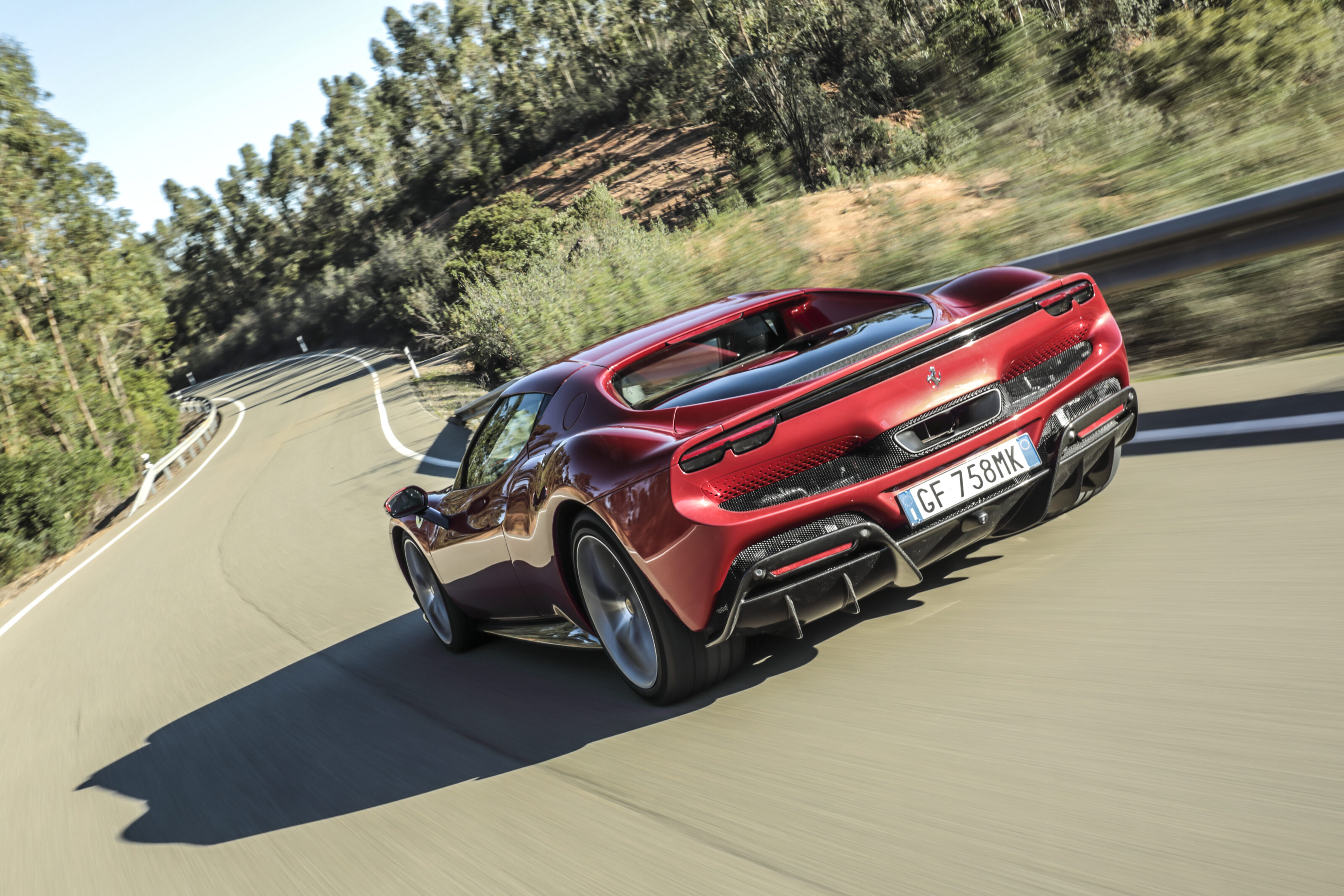
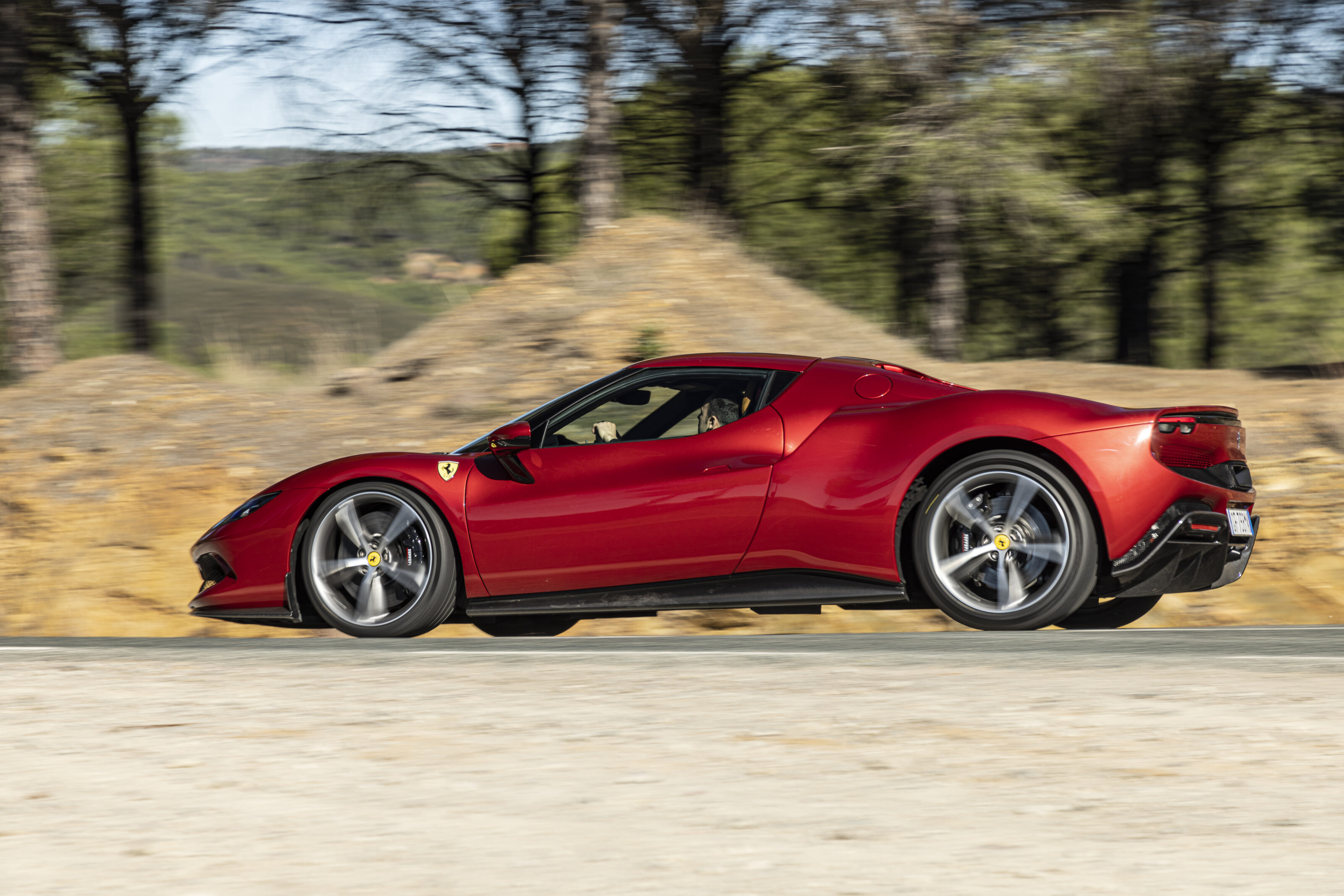
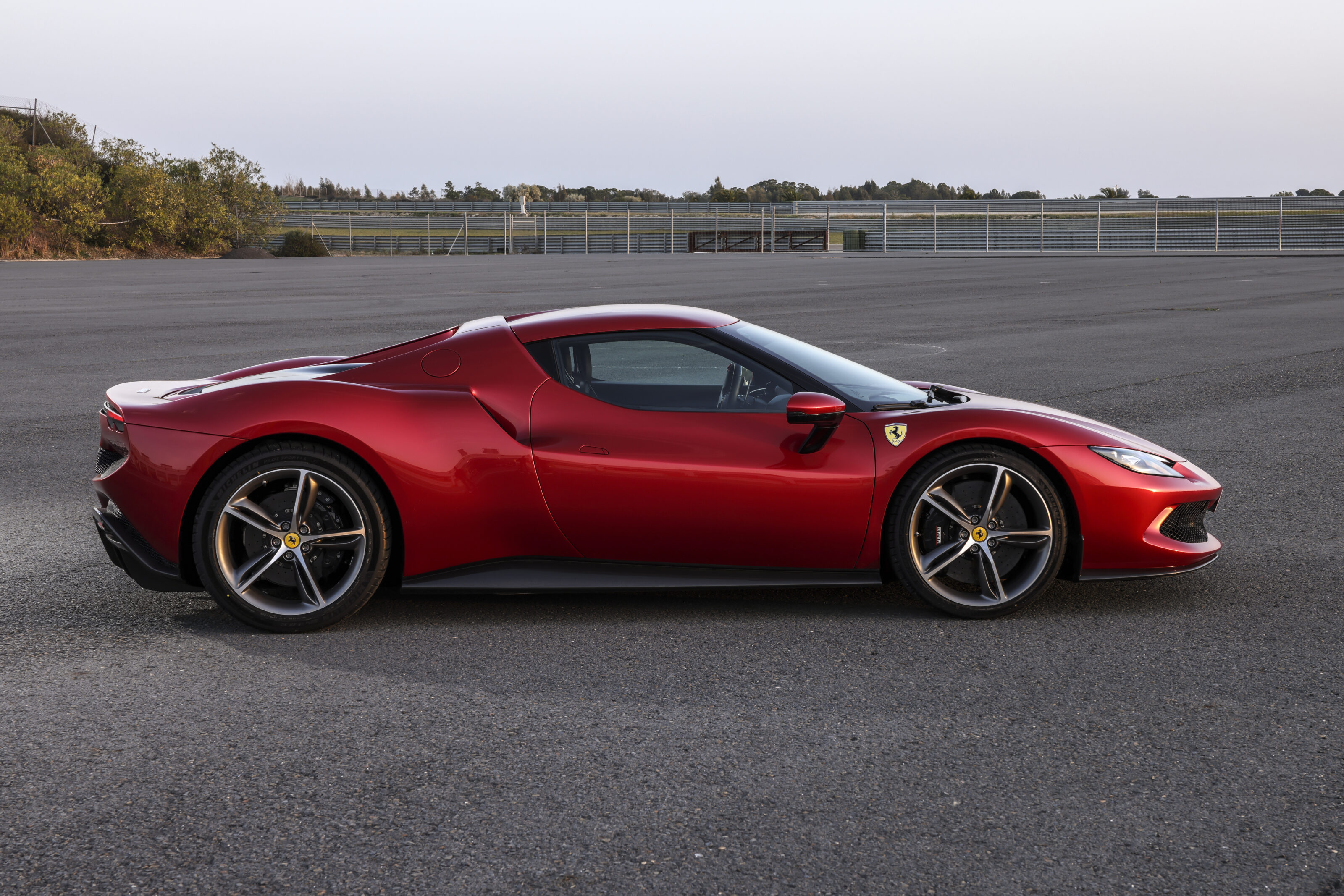
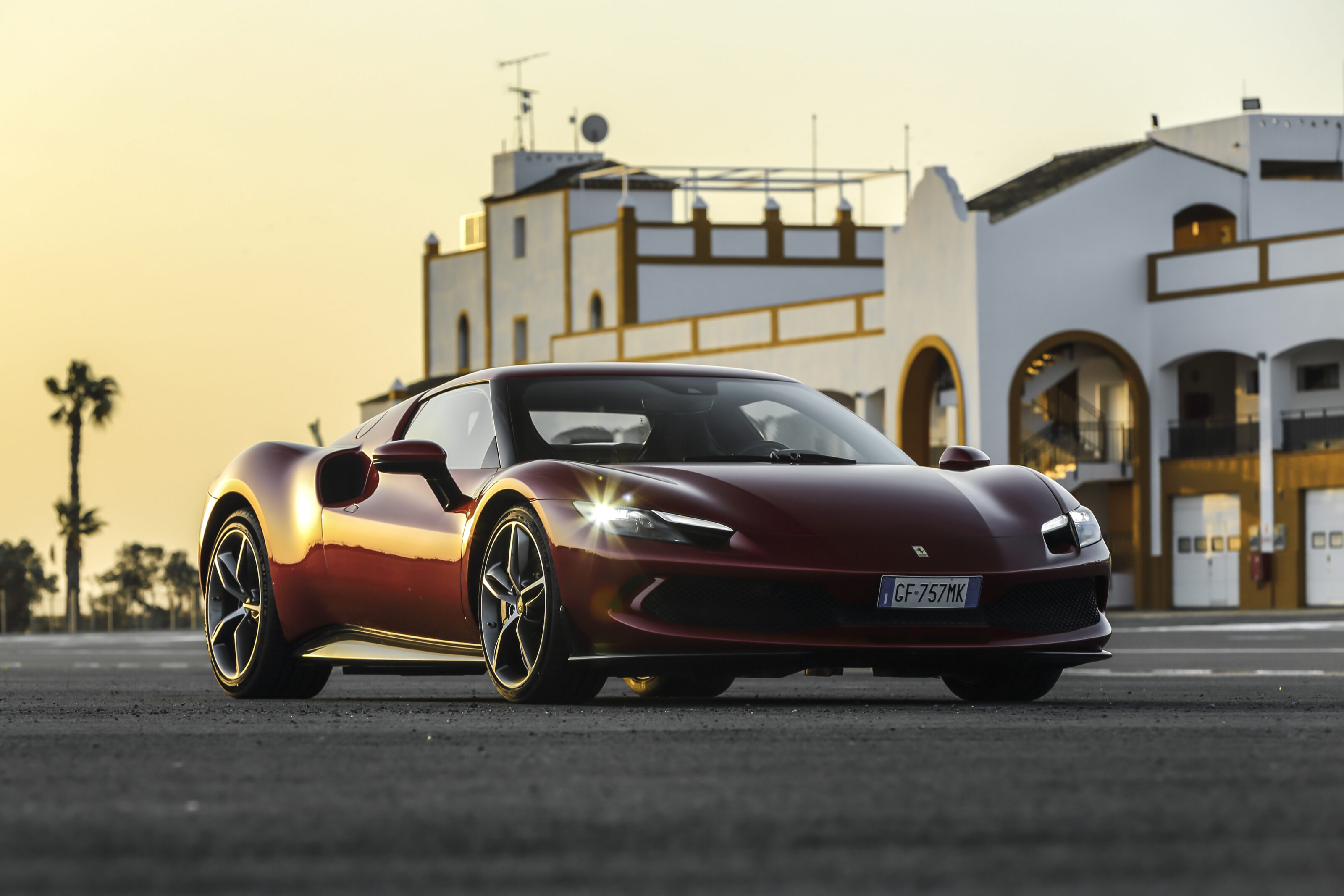
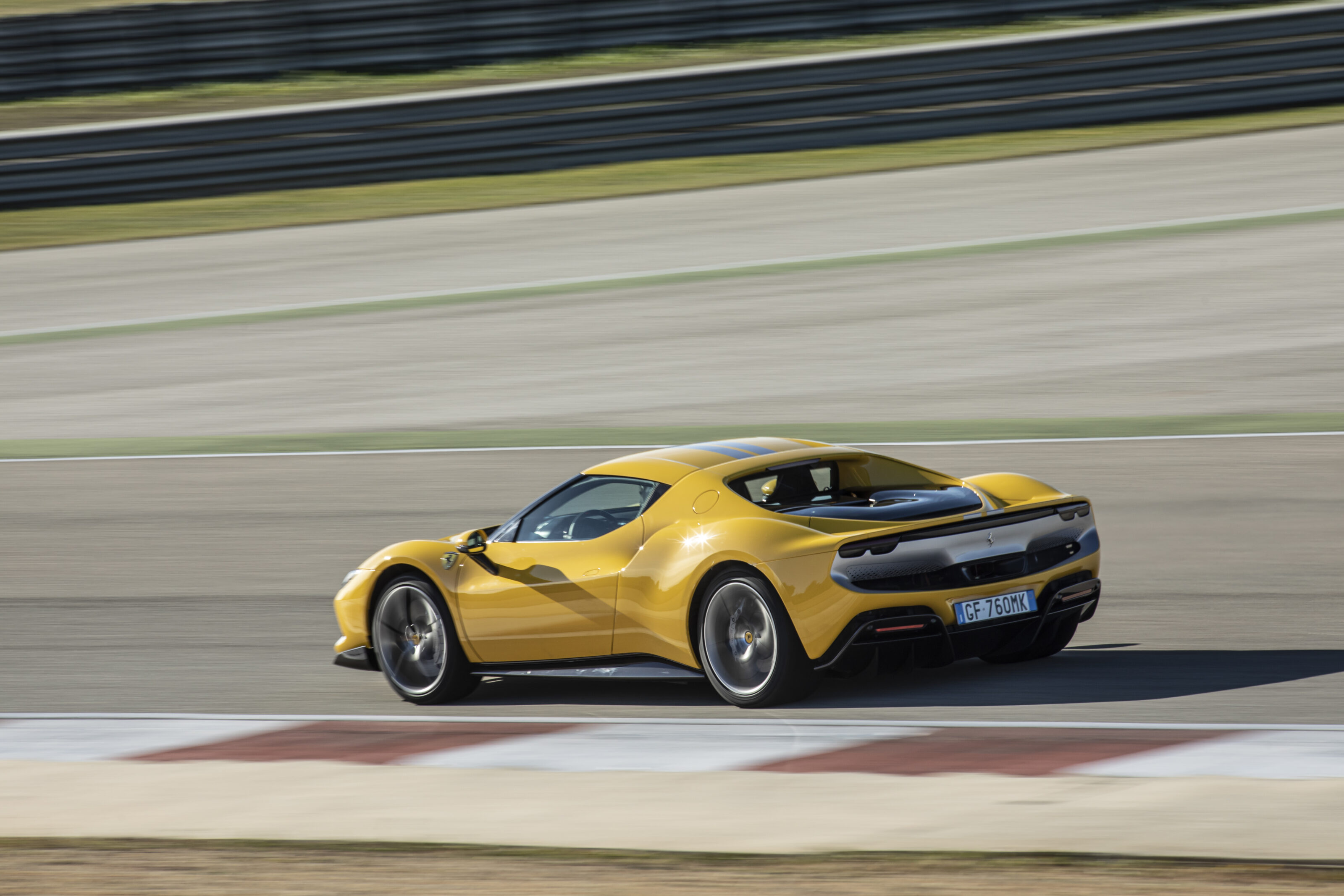
And there are looks to go with the personality. In both profile and rear three-quarter view (its best angle, according to a Ferrari designer who worked on it, and I agree) the 296 GTB echoes the famed 250 LM of the 1960s.
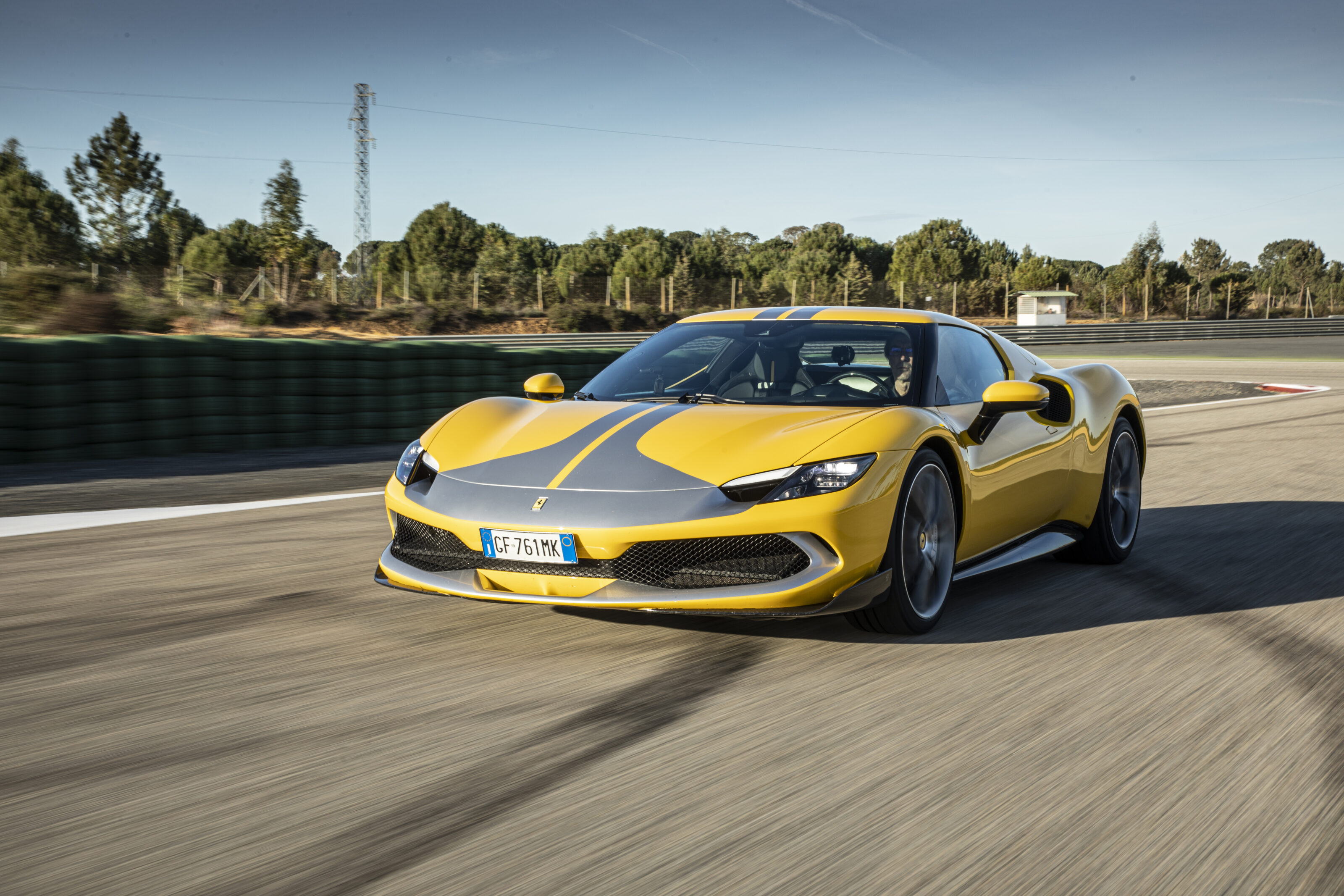
The tapered nose of the car sidesteps generic Ferrari sportscar blandness thanks to intriguing details like the brake cooling duct inlets adjacent to the headlights and the ‘tea tray’ aero aid incorporated in the bottom centre section of the front bumper. The overall effect is a very nicely judged blend of elegance and aggression.
The 296 GTB will oversteer. Obviously. Don’t be daunted. Go there, and you’ll find this fierce Ferrari is friend not foe

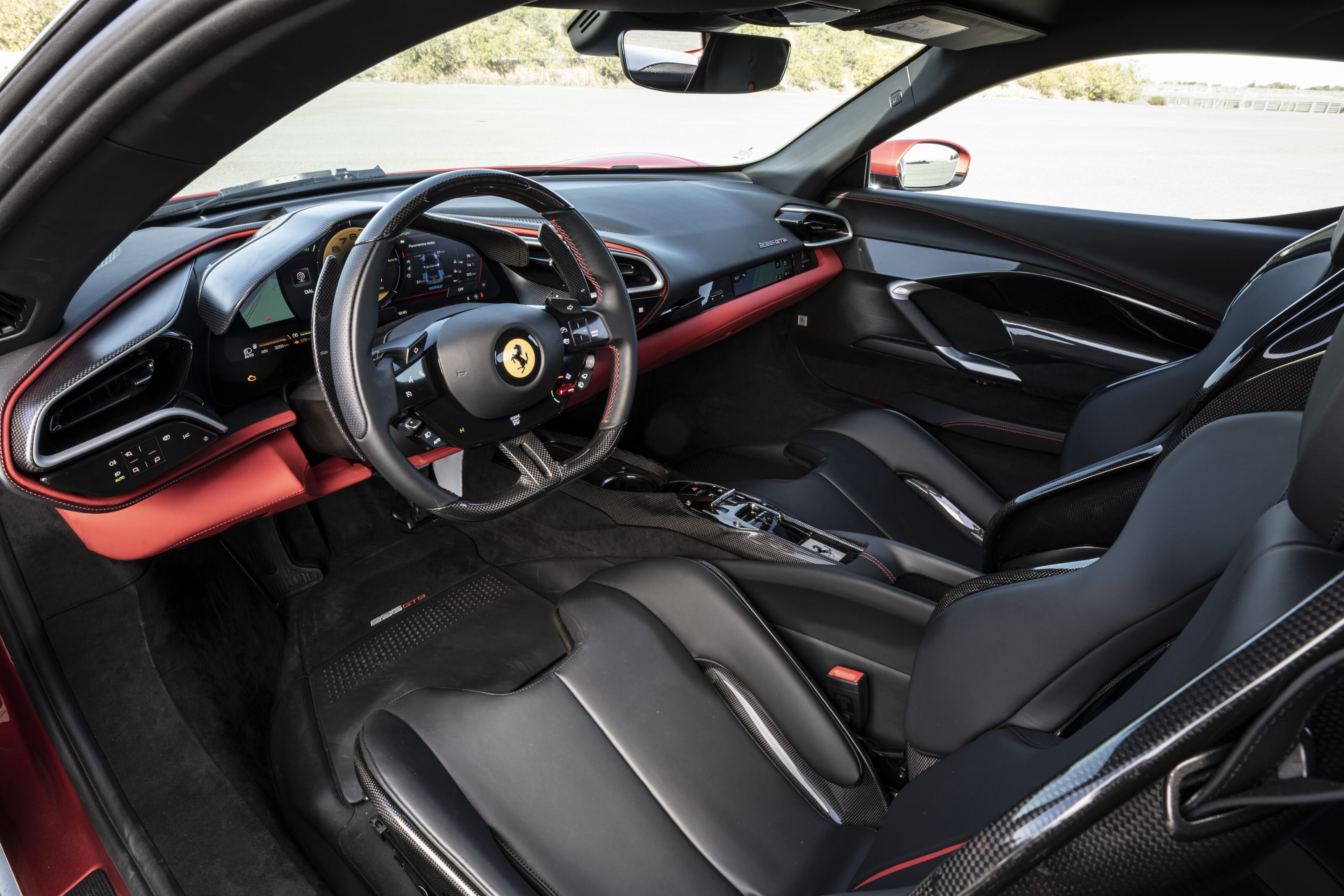
The snug-fitting cabin of the 296 GTB uses many of the same components already seen in the SF90 Stradale and the Roma, and sticks with similar design themes. The materials, quality and design of the interior create an environment worthy of the badge, meaning it’s a big improvement compared to Ferraris of not so long ago.
Inevitably there will be those who doubt even Ferrari can create a 3.0-litre V6 plug-in hybrid that’s as satisfying to drive as it is desirable. The 296 GTB is a message that they’re wrong… special delivery from Maranello.
Ferrari’s V6 future
Where next for the new V6 introduced in the 296 GTB? While Ferrari engineers will never discuss future models, they do drop hints.
“This kind of engine is very versatile,” says senior engine development engineer Emanuele Fresia, who worked on the F163. “It’s a strong point for us for the future.”
Read that as confirmation we’ll be seeing more of this engine, and not necessarily in electrified hybrid form.
The engineer reveals that the V6 existed before the 296 GTB program was given the go-ahead by Ferrari management. “In this particular case, the engine was born before the vehicle project.”
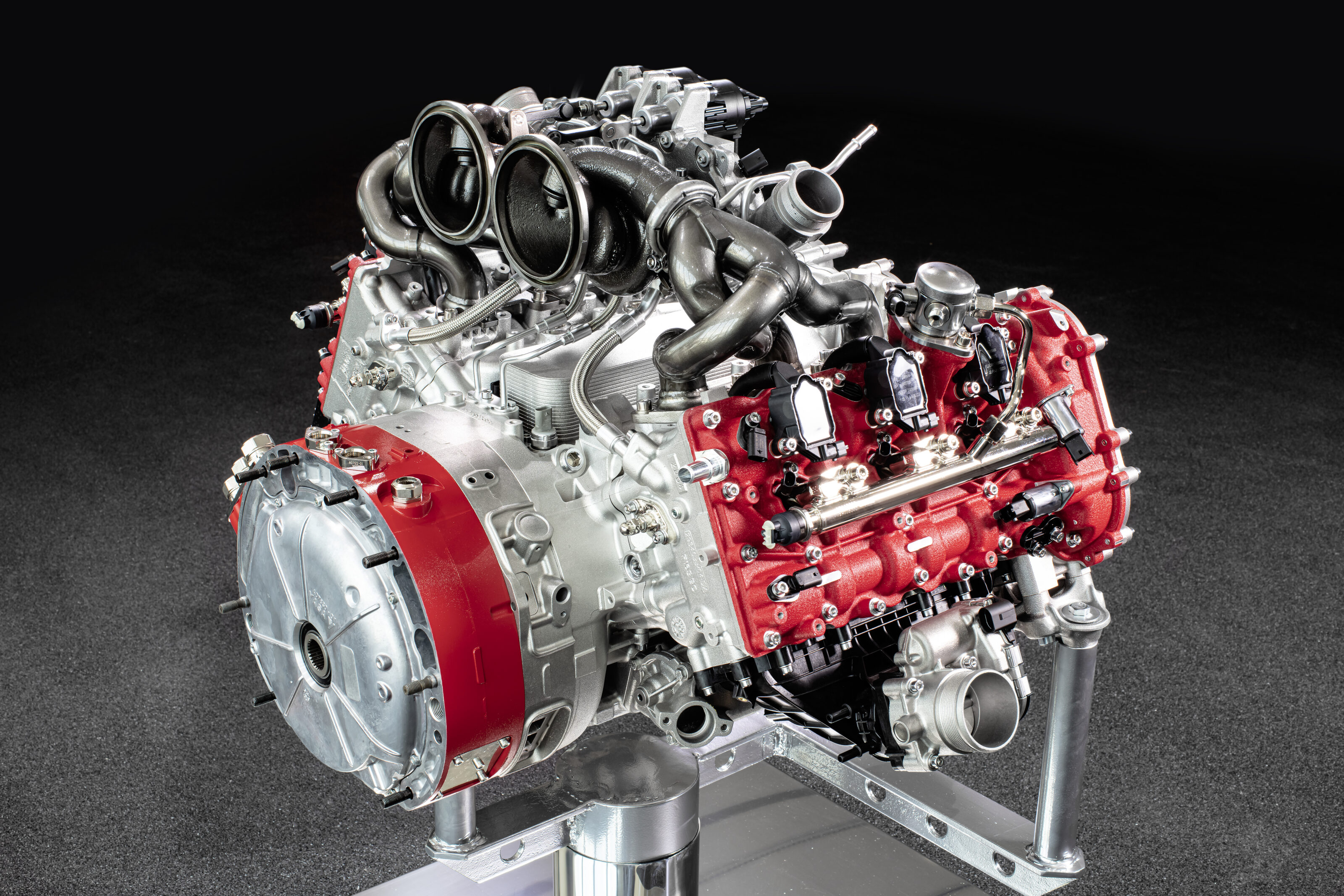
Until this point, the F163 was not electrified. And there’s nothing to stop Ferrari producing the engine in non-hybrid form. “Yes. It could be, yeah,” says Fresia.
In the 296 GTB, the hybrid system’s powerful electric motor also serves as the V6’s starter motor. Not a problem, says Fresia’s colleague Andrea Giacomini. With “some little modification” it could be done.
Until this point, the F163 was not electrified. And there’s nothing to stop Ferrari producing the engine in non-hybrid form
The bigger question is exactly what role the V6 will play in Ferrari’s future. In both hybrid and non-hybrid forms, it can produce enough power and torque to take the place of the V8.
Or there’s an alternative scenario, one that’s perhaps more likely. Electrifying the V8, F163 style, would increase its outputs to a level well above the V6’s. And this would make it a potential replacement for the non-turbo V12, currently Ferrari’s oldest engine.
2022 Ferrari 296 GTB specifications
| Engine | 2992cc V6 (120 degrees), dohc, 24v, twin turbos |
|---|---|
| Power | 488kW @ 8000rpm |
| Torque | 740Nm @ 6250rpm |
| Electric motor | 3-phase axial-flux, single stator, dual rotors |
| Motor power | 122kW |
| Motor torque | 315Nm |
| Combined output | 610kW @ 8000rpm |
| Battery | 7.5kWh |
| Transmission | 8-speed dual-clutch auto |
| 0-100km/h | 2.9sec (claimed) |
| Weight | 1470kg |
| L/W/h | 4565/1958/1187mm |
| Wheelbase | 2600mm |
| Price | $568,300 + on-road costs (Assetto Fiorano $641,599) |
| On sale | Q4 2022 |
An epic yowl fills the cabin, the intensity rising in sync with the unrelenting surge of acceleration. The readout on the digital speedo flickers past 270km/h. The 250-metre braking marker flashes through the peripheral vision as the first blue shift light appears on the steering wheel. Wait a heartbeat… now! Grenade the brake pedal just at the 200-metre board. The nose dips and the shoulder belts of the four-point harness bite, but the Ferrari 296 GTB tracks straight and true. The entry to the sharp right hander is looming fast. Too fast.
Keep the left foot hard, hard on the brake. Work the left-hand paddle and wait for the late turn-in. There! Crank the steering wheel and, counter-intuitively, stay hard on the brakes. The front-end bites and the Ferrari dives into the corner, the rear axle obediently following. Off the brakes at the apex and onto the throttle, opening the steering.
Torque and power arrive in one seamless rush. There’s a slight wiggle at the rear, tamed with a touch of counter-steer, as the tacho needle sweeps around to the 8500rpm redline. Then the Ferrari grips and slingshots down the straight at a rapid pace.
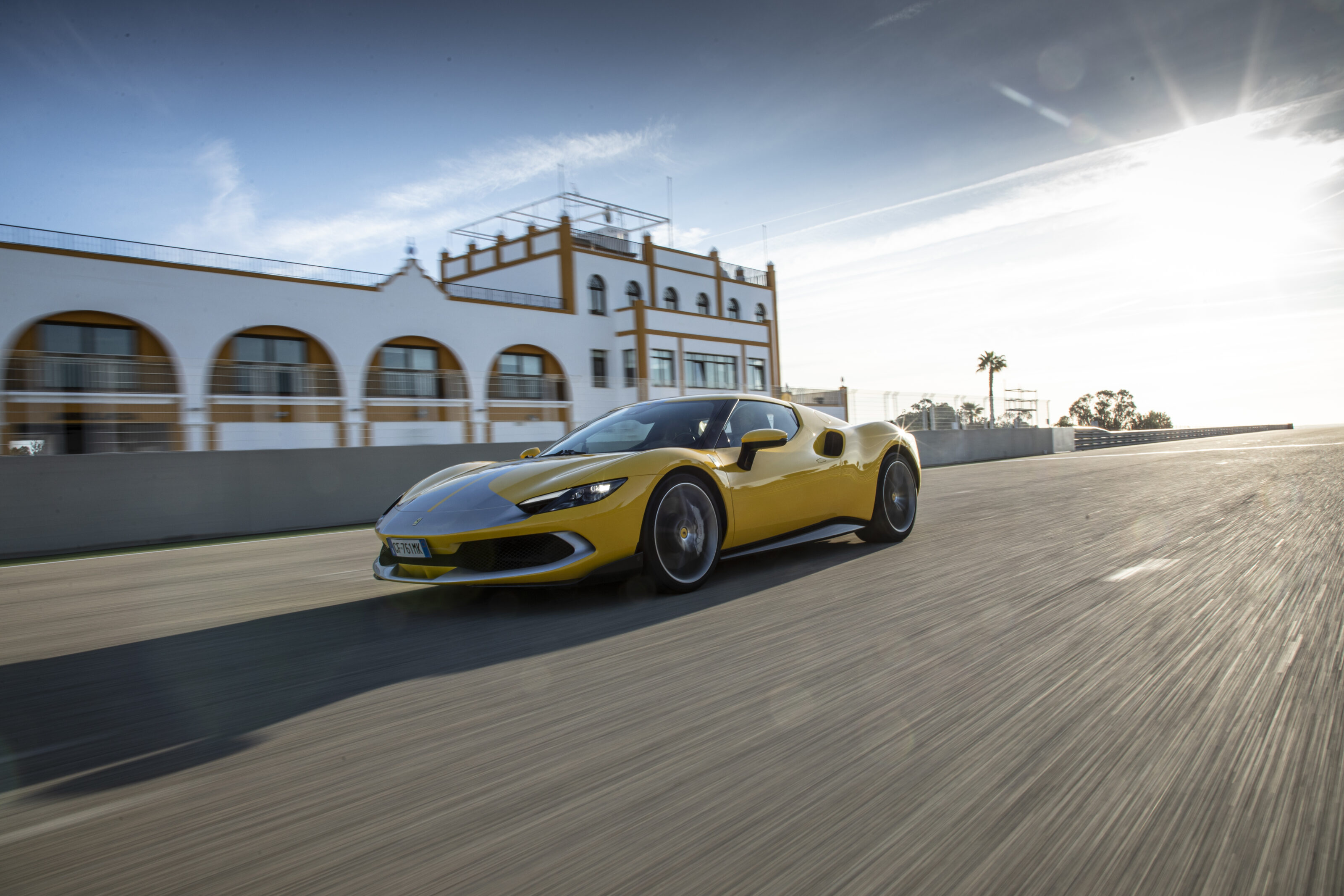
It’s so fast, so agile, this Ferrari. And yet everything happens with such sublime control and communication, precision and predictability, it creates time for the driver to analyse and adjust its every move. Old-school purists might be wringing their hands over the fact it’s a plug-in hybrid with a six-cylinder engine, but the Ferrari 296 GTB makes you feel like a driving god.
The 296 GTB is the first six-cylinder road-going Ferrari in history. Ah, but what about the jewel-like V6-powered Dino 206s and 246s built between 1967 and 1974? They were never badged or sold as Ferraris, Maranello insists, the Dino brand created as an epitaph by Enzo Ferrari for his son Alfredo, who is credited with suggesting a 1.5-litre V6 engine for Ferrari’s F2 cars just before he died in 1956. But what’s more important, however, is that few people would ever guess the 296 GTB is a six-cylinder car on pace.
It doesn’t sound like a six-cylinder car. And it certainly doesn’t feel like a six-cylinder car when you mat the throttle. The compact new twin-turbo 2.9-litre V6 at the heart of the 296 GTB powertrain, codenamed F163, features a wide-angle 120-degree vee, with the fast-responding counter-rotating turbochargers mounted in the vee and the intakes on the outside of the cylinder heads. The wide-angle vee not only lowers the centre of gravity by reducing the height between the tops of the cylinder heads and the forged crankshaft, but also gives the engine a symmetrical firing order. Clever stuff.
As a result, the F163 spins smoothly to the 8500rpm rev limiter while generating similar third-order harmonics to that of a V12, which Ferrari engineers have amplified into the cockpit via its patented ‘hot-tube’ system, which takes sound from the exhaust before the hot gases hit the catalytic converters. And it really does sound like a V12. One full throttle run is all you need to understand why Ferrari engineers took to calling the F163 the ‘piccolo V12’ during its development.
The 296 GTB is also Ferrari’s first rear-drive-only PHEV, with an e-motor/generator – dubbed the MGU-K by Ferrari in a nod to the similar technology used on its Formula 1 cars – sandwiched between the V6’s block and the compact new eight-speed dual-clutch transmission.
An evolution of the unit used in the SF90, the 296 GTB’s MGU-K develops 123kW and maximum torque of 315Nm, a 20 per cent improvement on previous versions. Fed by a 7.45kWh battery pack that stretches across the car between the cockpit and the engine, the MGU-K can drive the 296 GTB up to 25km on pure e-power.
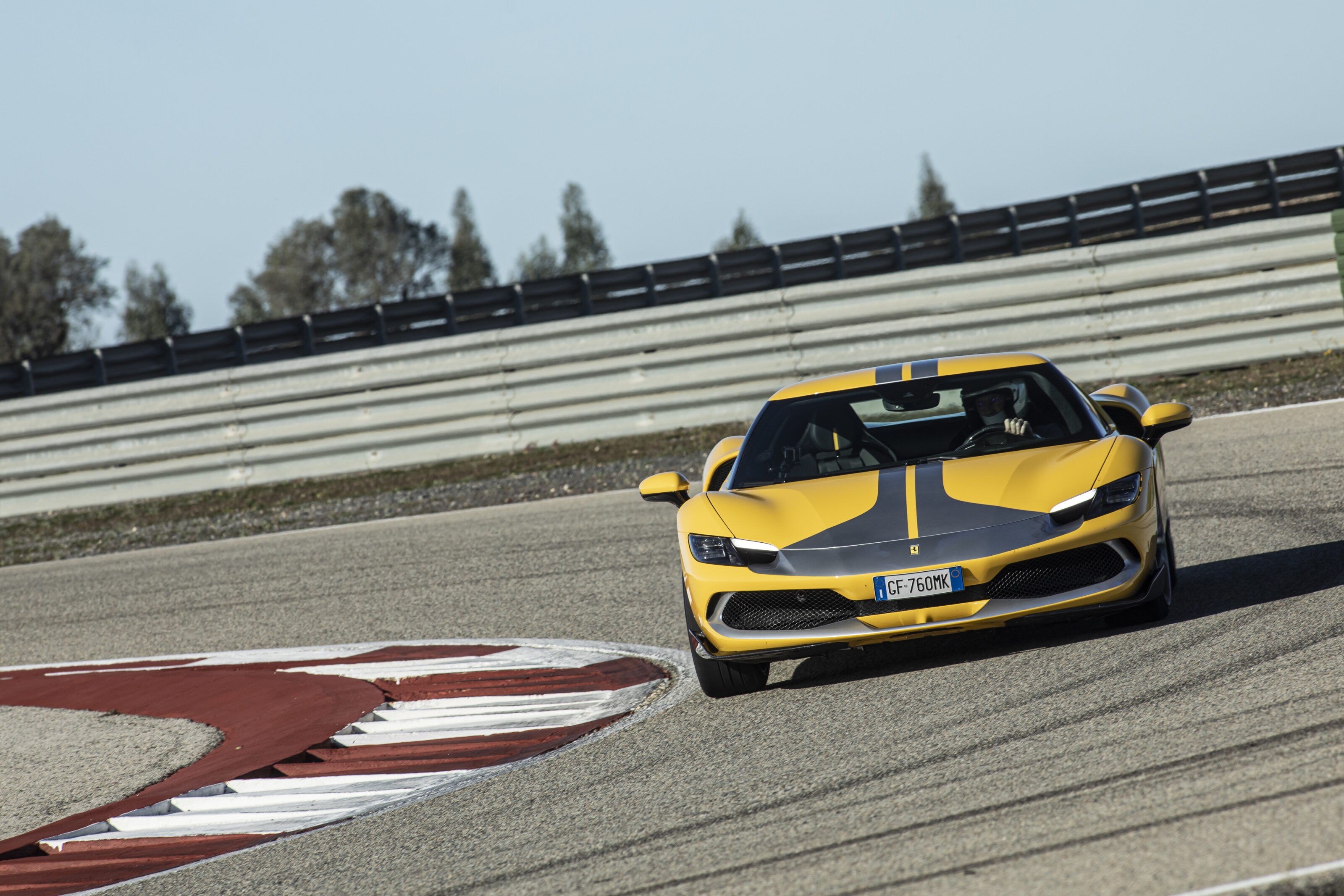
But its main job is to provide torque fill at low revs, and to boost power at higher revs. On its own the F163 V6 makes 488kW, a specific output of 163kW per litre that is a new record for a production car internal combustion engine. With the MGU-K lending a helping hand, the 296 GTB’s powertrain punches out a mighty 610kW at 8000rpm and 740Nm of torque at 6250rpm.
The interaction between the ICE and the MGU-K has been carefully tuned to ensure the powertrain delivers the searing, soaring surge of acceleration right to the redline that is the hallmark of the finest naturally aspirated 12-cylinder Ferrari engines. The instant-on torque output of the e-motor is adjusted for each gear to keep the delivery as linear as possible. “We are not using all the powertrain at the lower end yet,” confirms Ferrari test and development driver Raffaele de Simone at the launch. “The car can do more.”
The result is a powertrain of extraordinary range and flexibility. Ferrari claims a 0-100km/h acceleration time of 2.9 seconds, while the 0-200km/h sprint takes 7.3sec on the way to a top speed of more than 330km/h.
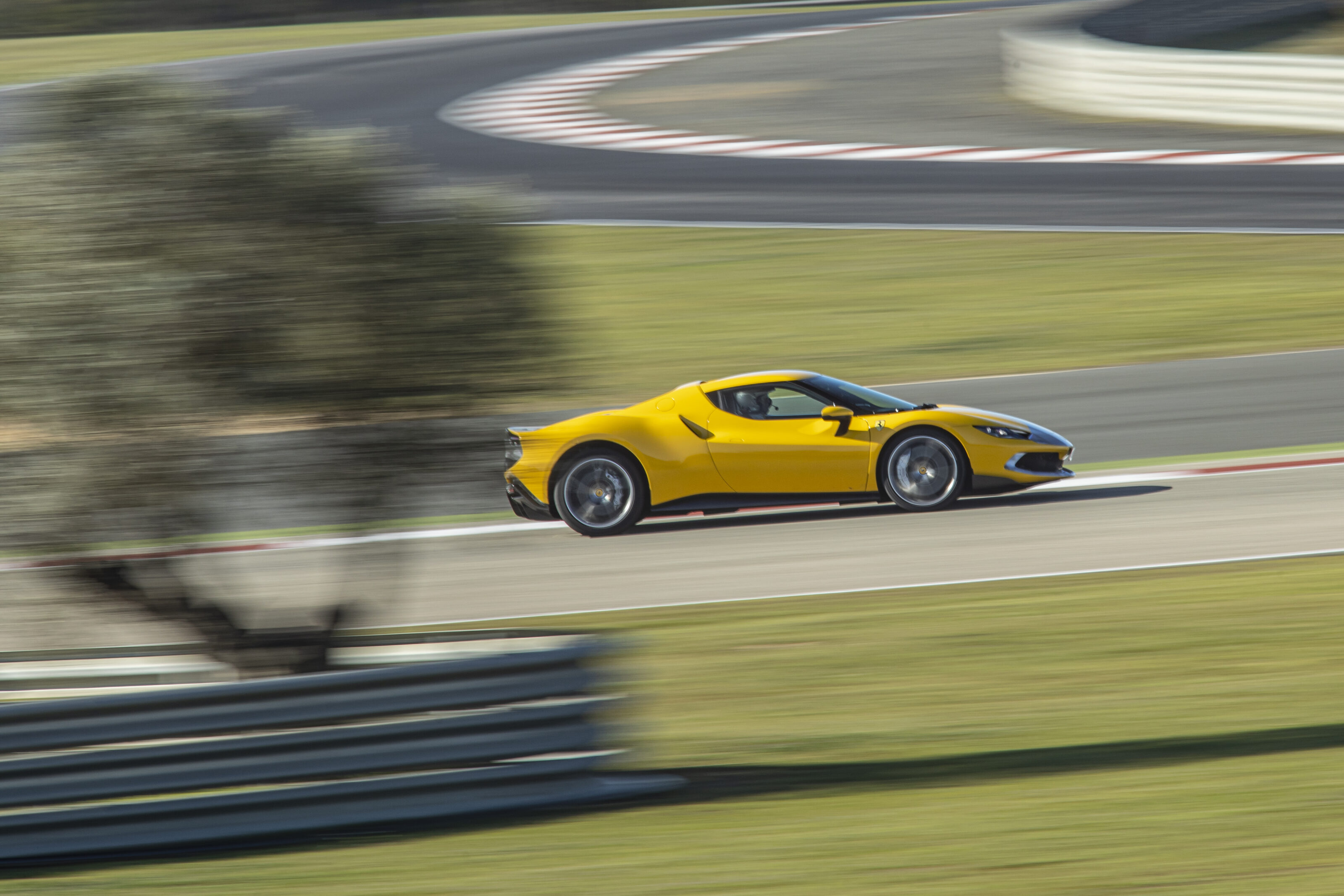
However, those numbers don’t tell the full story: In sixth gear the 296 GTB will pull cleanly and strongly from 1400rpm – about 50km/h – to… well, we couldn’t empirically confirm it because we ran out of road at 235km/h, but simple maths suggests the Ferrari still had another 50km/h to go before it needed seventh gear.
What that means is that, although the eight-speed transmission’s ratios are beautifully spaced, you don’t have to be in precisely the right gear to get the 296 GTB to punch hard out of corners. There’s torque and there’s power, whenever you need it.
Even better, you can make the most of it because the chassis is every bit as accomplished as the powertrain. The 2600mm wheelbase is the shortest in the current Ferrari lineup, and the compact dimensions were deliberately chosen to deliver maximum agility. But it’s not just geometry that makes the 296 GTB feel preternaturally alert yet supremely composed: Ferrari has delved into the electronic dark arts to give the chassis the dynamic range to match the powertrain.
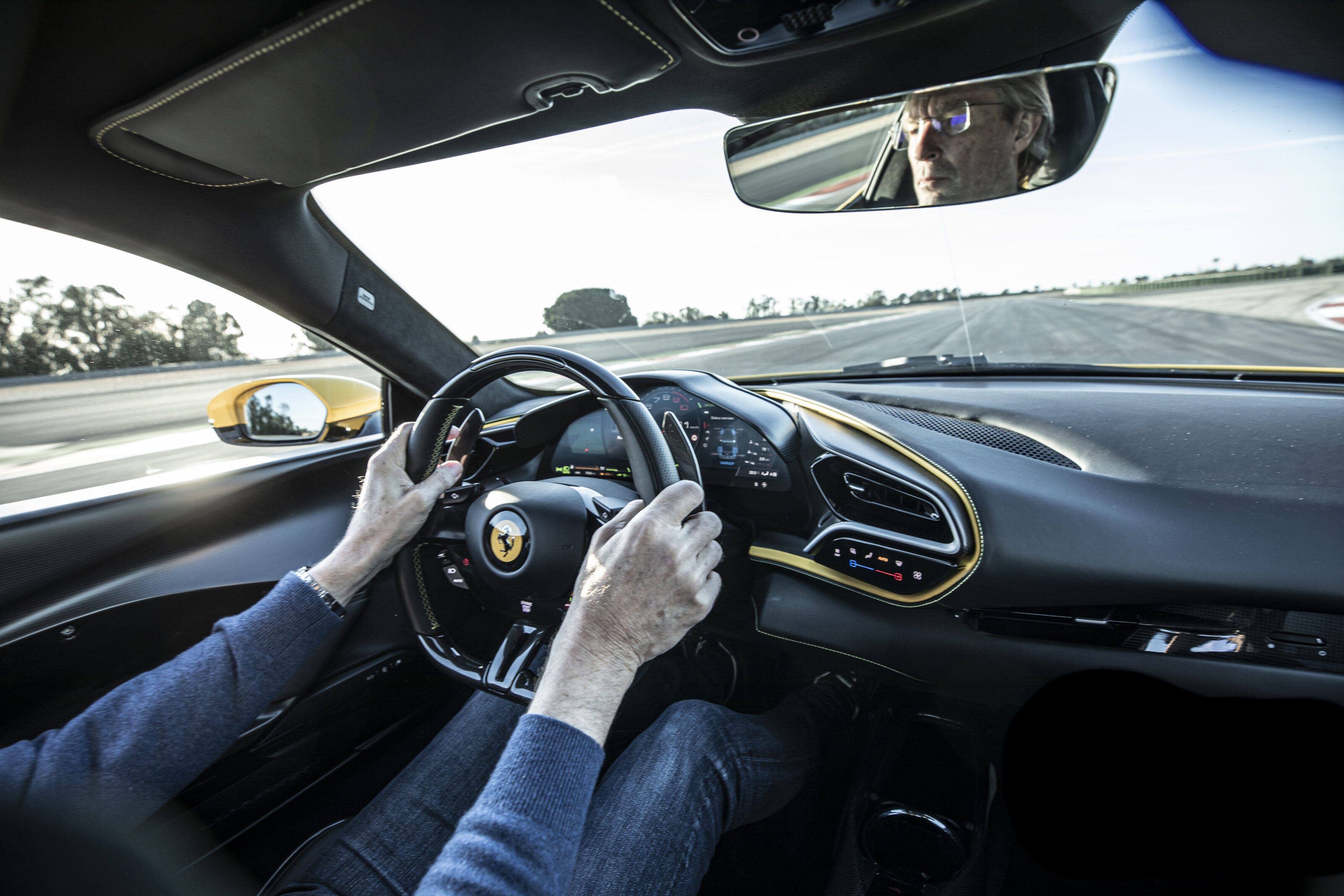
The 296 GTB is the first rear-drive Ferrari with electronic power steering (the SF90, which has electrically driven front wheels, also has it). It has half the compliance of the previously used hydraulic systems, improving response, and learnings from the SF90 have enabled Ferrari to carefully tune the system to filter unwanted road shock while retaining maximum feel and feedback. “We moved to EPS later than the others because we can now give it the Ferrari feeling,” says Raffaele de Simone.
Getting the front axle to react quickly is one thing. The trick is getting the rear axle to support that rapid response. A key element of the rear suspension setup is the 305/35 ZR20 rear tyre – a Michelin Pilot Sport 4S in standard spec, or a Michelin Pilot Sport Cup 2R, which comes with the optional, track-focused Assetto Fiorano package.
The 35 per cent aspect ratio (most modern mid-engine Ferraris have a 30 per cent aspect ratio rear tyre) gives the right amount of flex in the sidewall, says de Simone, to smoothly ramp the initial load response into the rear suspension.
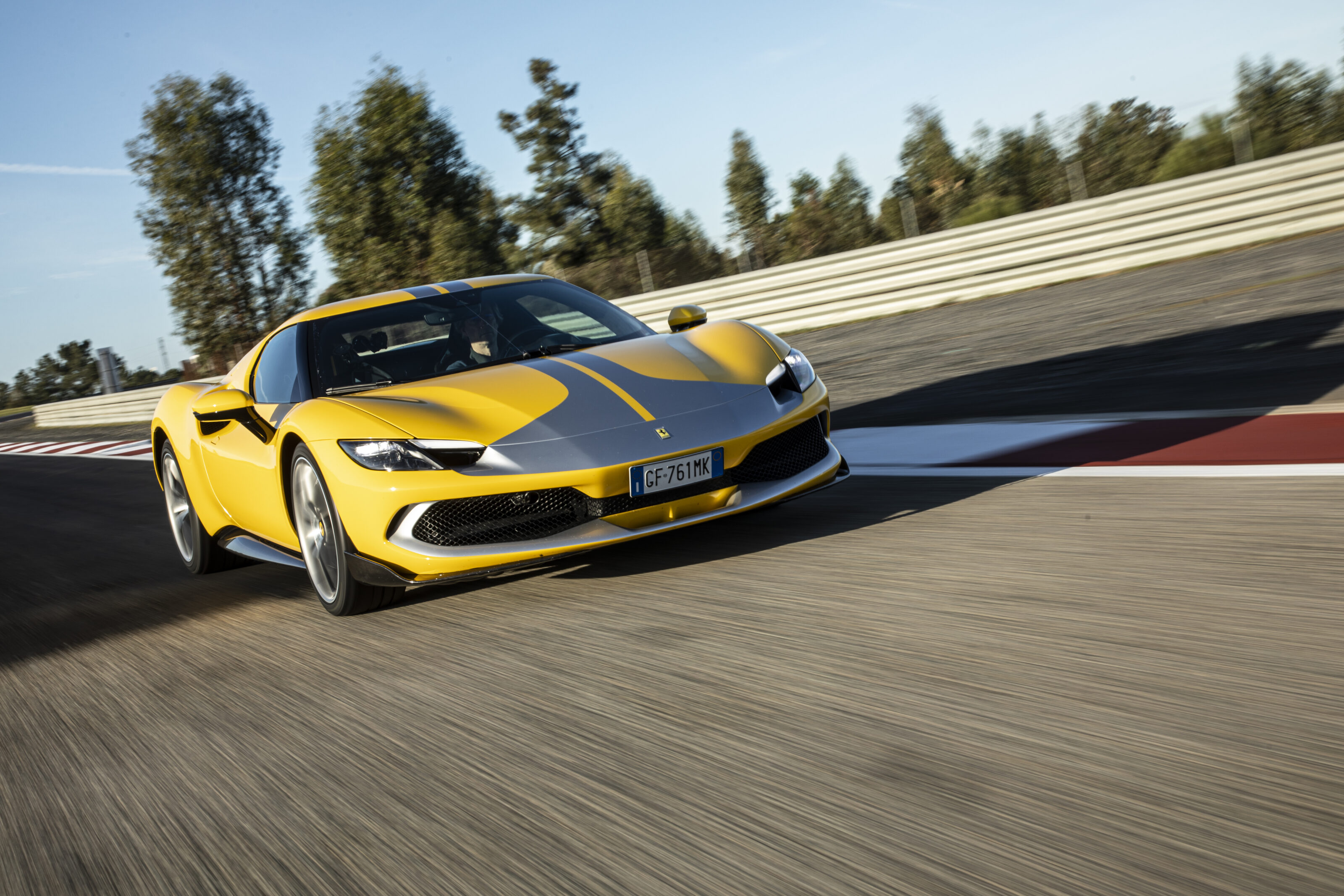
Underpinning the chassis hardware, of course, is the latest iteration of Ferrari’s superb Side Slip Control (SSC) system. SSC is not interventionist like many stability control systems, but expansionist; it uses its vast array of sensors and actuators not to tell the driver off when they make a mistake, but to help them achieve what they’re trying to do. Each iteration of SSC, which debuted on the 458 Speciale in 2013, has been better, more seamless than the last. The 296 GTB’s version helps you brake like Daniel Ricciardo.
The 296 GTB’s 398mm front and 360mm rear carbon-ceramic rotors are controlled by a sophisticated brake-by-wire system and next-generation ABS that allows precise control of the braking efforts at each individual wheel; so precise, in fact, it will allow you to keep your foot hard on the brake pedal all the way into the apex of the corner while it works with all the other systems to ensure the car stays on the line you want.
Think of it as a trail-braking aid. It doesn’t rewrite the laws of physics, but it’ll have old Isaac Newton wondering. You can go so deep under brakes into corners with complete control.
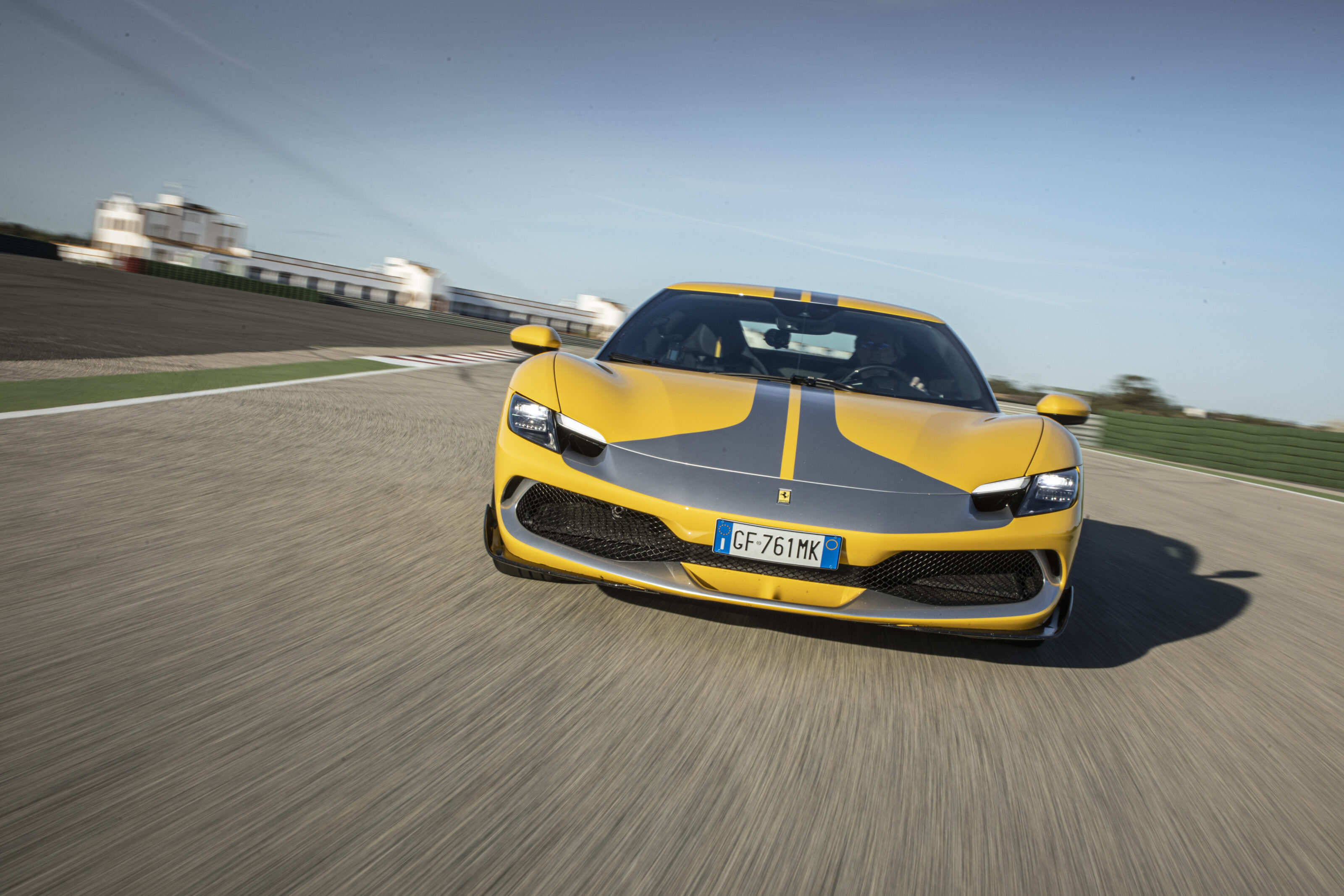
Raffaele de Simone says he uses the same lines around Ferrari’s Fiorano test track in the 296 GTB as he does in a 488 Pista, staying on the brakes right until he’s ready to go to power. It’s at this point where you may have to adjust your driving style slightly to make the most of this Ferrari: Get too heavy on the throttle in tight corners before you’ve begun to open the steering, and the front end will push slightly due to the enormous traction from the rear.
The Ferrari 296 GTB is a welcome break from the supercar arms race. It’s not meant to be the fastest or most powerful Ferrari. It’s meant to be the most fun to drive Ferrari. And it is. It’s also a very liveable Ferrari, a car that can genuinely be used every day.
The manual manettino switch on the right side of the steering wheel that controls the dynamic systems is complemented by a touch-panel e-manettino on the left that controls the powertrain modes. Default start mode is Hybrid, in which the car can be driven on pure electric power for 25km before the engine fires up with – at least for the first time – a disconcerting bellow that lasts until the catalytic converters have warmed up sufficiently.
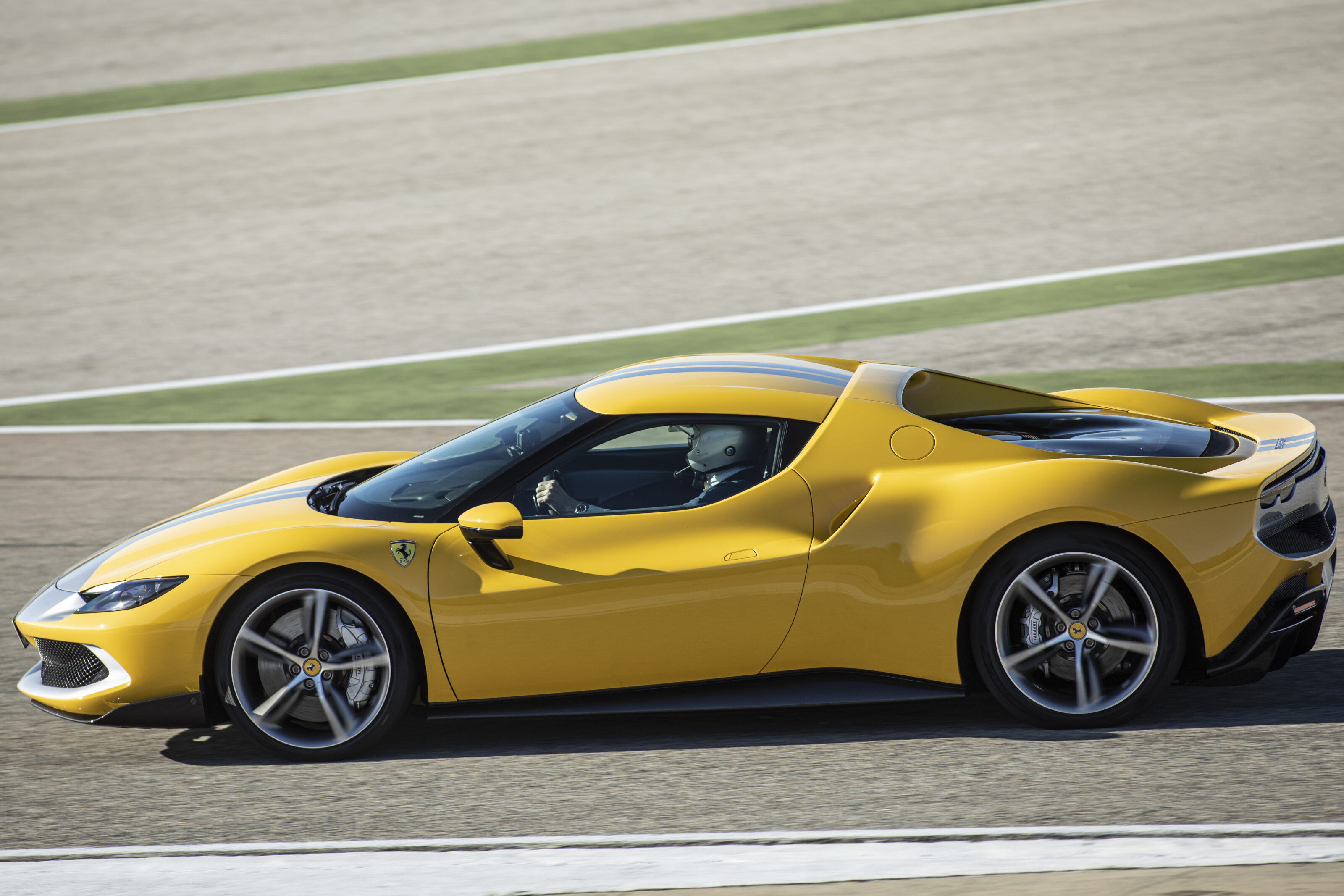
The system then mixes and matches ICE and e-power to achieve the best combination of efficiency and performance, though whenever the V6 is running the powertrain is ready to produce maximum power and torque on demand. The transitions between e-motor and ICE are seamless.
There is an eDrive mode that allows pure EV driving at speeds up to 135km/h. Performance mode ensures the V6 is always kept running to make sure the battery is always fully charged. Qualifying mode – yes, really – cuts the amount of time spent recharging the battery to always ensure the maximum powertrain output.
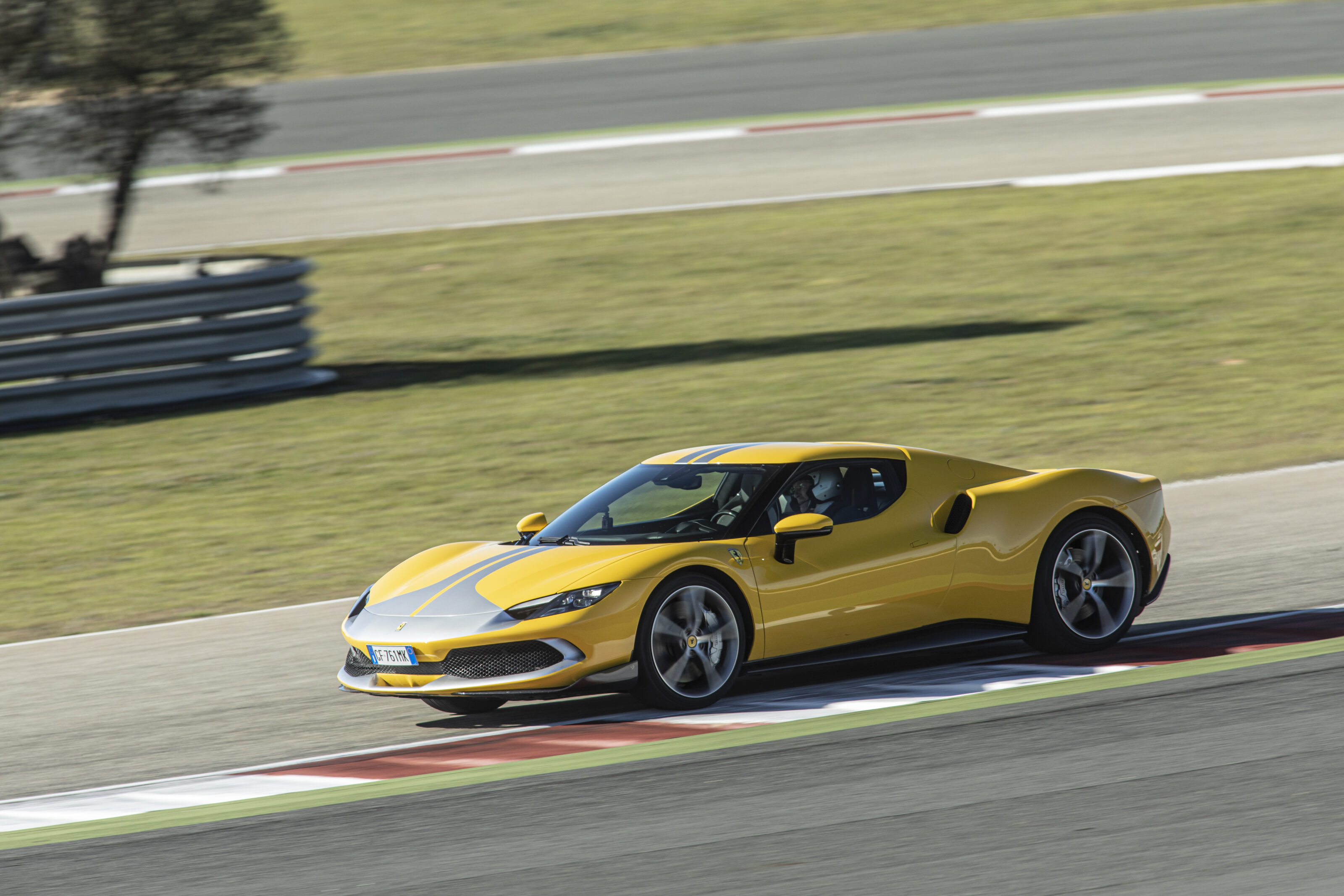
Yes, it looks good here, but photos don’t really do the 296 GTB justice. It’s beautifully proportioned and surfaced, and the easter-egg homages to the mid-engine 250LM built in the 1960s – the voluptuous rear haunches, the vertical rear screen shrouded by flying buttresses extending from the B-pillar ‘bridge’ that arcs over the rear of the roof – add a lot of character that’s only really evident when you walk around the car.
As on the Roma gran turismo, the 296 GTB’s rear lights eschew Ferrari’s traditional round format – a move that took a lot of selling from the in-house design team, says exterior designer Carlo Palazzini. But the technically styled, flush-mounted lights allow the forms and surfaces to define the rear-end graphic.
The large central exhaust outlet adds visual – and aural – drama. The only active piece of aerodynamic kit, a vertical spoiler that deploys at speed or under braking – has been ingeniously packaged to slide out from between the lights.
Ferrari has long built exotic and desirable, if sometimes unforgivably flawed, sports cars. But the 296 GTB is the product of a coolly confident Ferrari at the top of its game; a Ferrari that’s not afraid to embrace cutting edge, even controversial, technologies to create the best performing, best handling, best driving sports cars it knows how to build. Maranello fully understands the potent market power of its traditions, its myths, and its legends, however, it is at last refusing to have its cars trapped by them.
VERDICT
Things we like: Balance; versatility; depth of engineering; truly potent performance
Things we dislike: Styling divides opinion; front-end push at limit; we need a local drive
2022 Ferrari 296 GTB specifications
| Engine: | 2992cc V6 (120 degrees), dohc, 24v, twin turbosu00a0 |
|---|---|
| Max power: | 488kW at 8000rpm (check rpm) |
| Max torque: | 740Nm at 6250rpm |
| Electric motor: | 3-phase axial-flux, single stator, dual rotors |
| Max electric power: | 122kW |
| Max electric torque: | 315Nm |
| Hybrid system combined max power: | 610kW at 8000rpm |
| Transmission: | 8-speed dual-clutch auto |
| Battery: | 7.5kWh |
| 0-100km/h: | 2.9sec (claimed) |
| Weight: | 1470kg |
| L/W/W/WB: | 4565/1958/1187/2600mm |
| Price: | $568,300 (Assetto Fiorano $641,599) |
| On sale: | Q4 2022 |
UPDATE, March 7: Rivian has done an about-face, announcing it will honour its original pricing for customers who had placed orders prior to March 1, 2022.
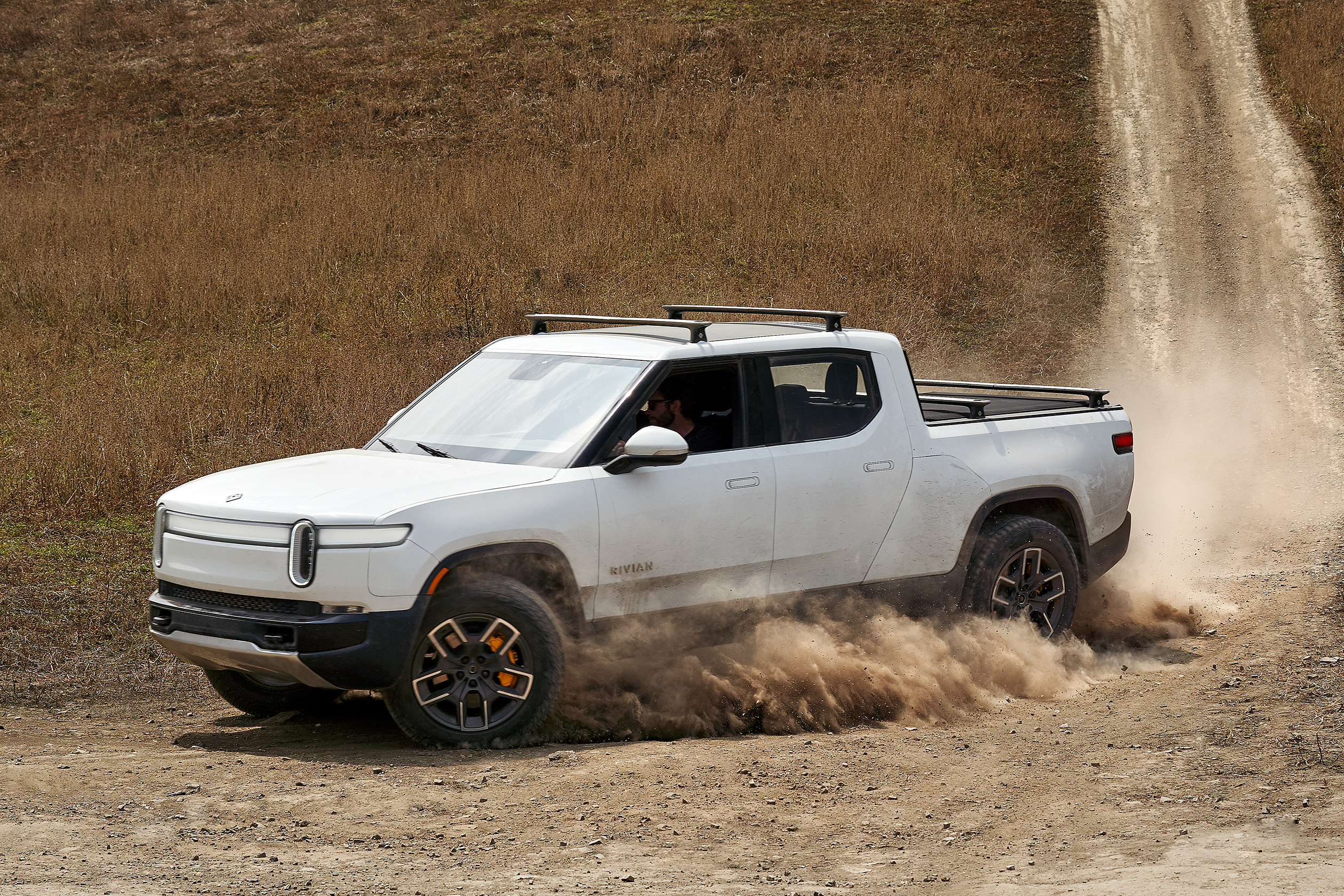
Rivian received widespread backlash following its decision to increase prices of its R1T electric pick-up and R1S electric SUV by up to 20 per cent last week, applying the price hike to customers who have ordered their vehicles but haven’t yet received them.
“Since originally setting our pricing structure, and most especially in recent months, a lot has changed,” Rivian CEO and founder RJ Scaringe said in a statement.
“Everything from semiconductors to sheet metal to seats has become more expensive and with this we have seen average new vehicle pricing across the US rise more than 30 per cent since 2018. Given our build lead up times, we need to plan production costs not only for today, but also for the future,” Scaringe said.
“As we worked to update pricing to reflect these cost increases, we wrongly decided to make these changes apply to all future deliveries, including pre-existing configured preorders. We failed to appreciate how you viewed your configuration as price locked, and we wrongly assumed the announced Dual-Motor and Standard battery pack would provide configurations that would deliver price points similar to your original configuration. While this was the logic, it was wrong and we broke your trust in Rivian.”
Prior to the backflip, a poll conducted on the Rivian Reddit forum suggested more than half of those with pre-orders would not proceed with their purchase due to the price change.
The story to here
March 3: US electric vehicle start-up Rivian has announced it’s raising the prices of its two models.
The quad-motor R1T electric pick-up truck has gone up by 17 per cent to US$79,500 (AU$109,400), while its SUV-bodied sibling, the R1S, has jumped from US$70,000 to US$84,500 (AU$96,300 to AU$116,200) – an increase of 20 per cent.
Rivian is applying the price hike to all existing orders, or giving customers the option to change their vehicle to a lower specification, and with a significantly longer wait time.
“Like most manufacturers, Rivian is being confronted with inflationary pressure, increasing component costs, and unprecedented supply chain shortages and delays for parts (including semiconductor chips),” Rivian’s chief growth officer Jiten Behl said in a statement to Reuters.
In an attempt to offer more affordable options, Rivian is offering dual-motor R1T and R1S variants with decreased performance and a smaller battery pack, priced from US$67,500 and US$70,000 respectively. However, it’s understood these vehicles won’t be delivered until 2024.
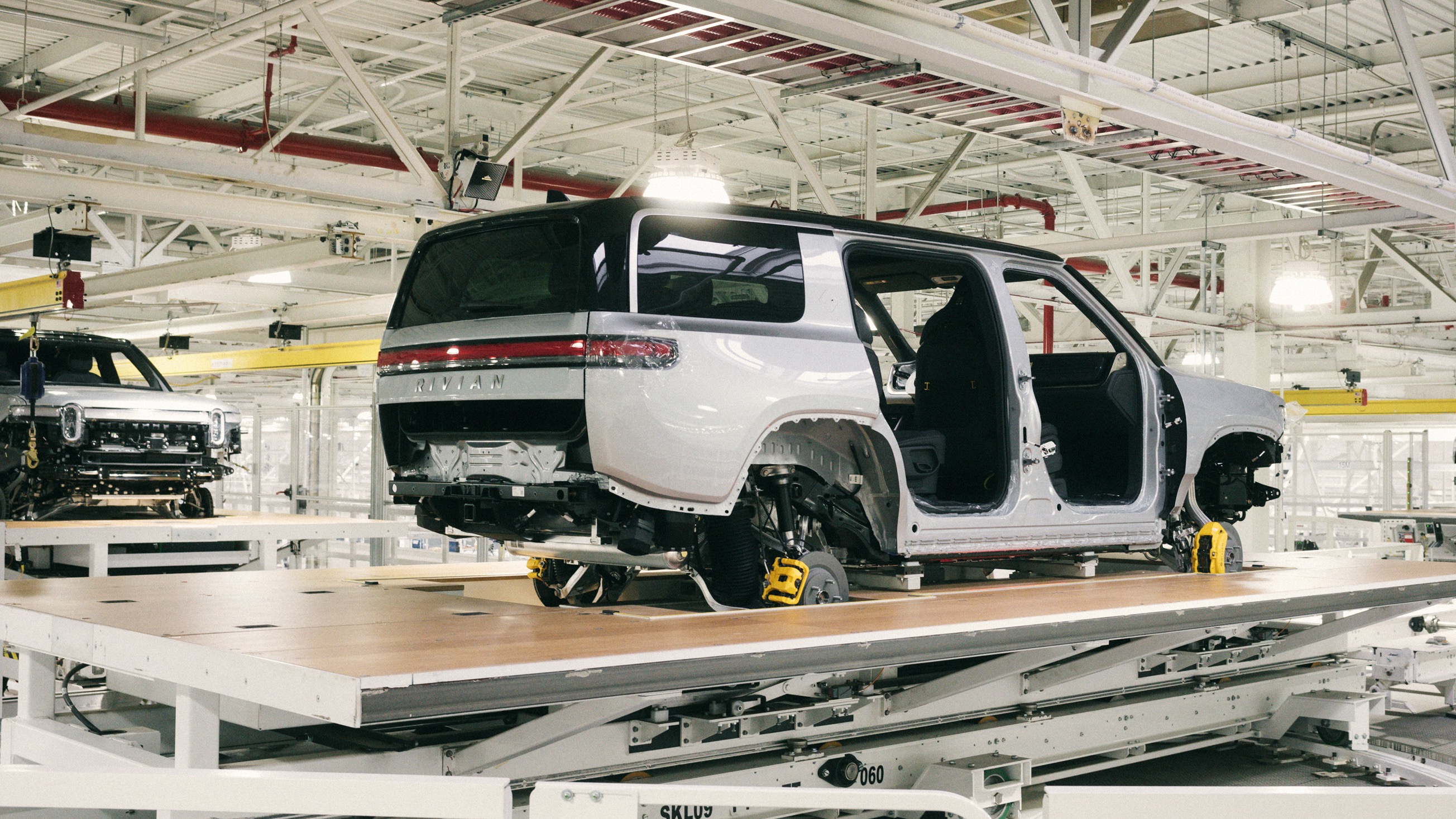
The five-seater R1S has also been dropped from the line-up, with seven-seater models only being offered.
The company has received widespread negative feedback from customers holding reservations, with a number announcing they would be cancelling their orders due to the price change.
Tesla CEO Elon Musk also commented on the news, writing on Twitter: “Our primary challenge is affordability. Creating an expensive truck is relatively easy. If it is extremely hard [for Tesla to make a cheap truck], despite our much greater economies of scale and better technology, then it is damn near impossible for others.”
A 2004 Porsche Carrera GT previously owned by American comedian and actor Jerry Seinfeld will be auctioned off next week.
Just weeks after another Carrera GT sold for a record-breaking US$1.9 million (AU$2.65 million), this example – one of just 1270 produced – is set to go under the hammer by Bring a Trailer on March 12.
It was purchased new by Seinfeld at a Porsche dealer in New York for US$448,300, before it was sold in 2011 and again in 2015.
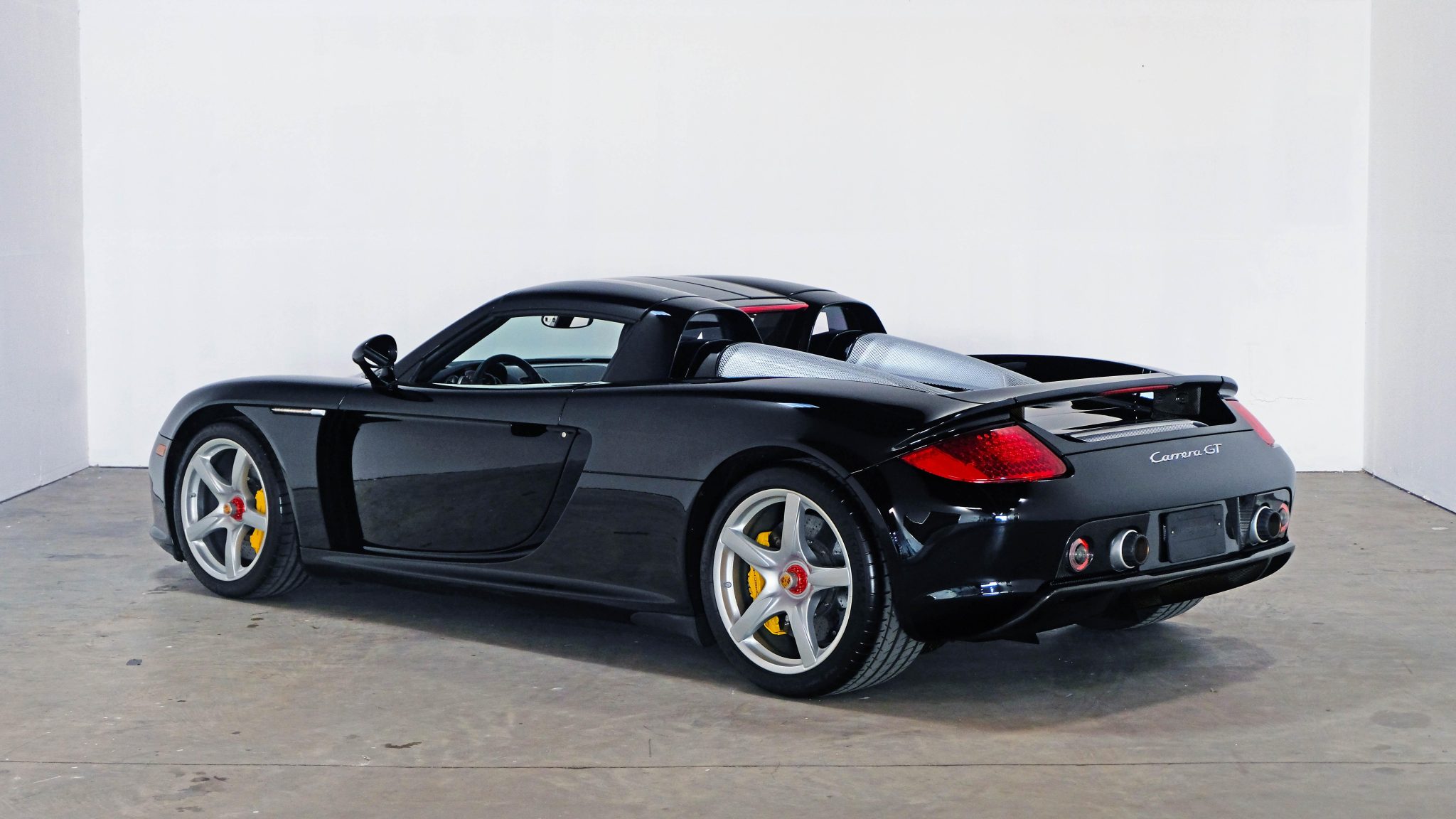
With the current bid sitting at US$1,851,000 (AU$2.5m) at the time of writing, the 2004 Porsche Carrera GT is expected to reach a hefty price when the auction concludes on March 12 (US time).
The advertisement includes the original specification list and New York registration title, while the vehicle has just 5193 kilometres on the odometer.
In production from 2004 to 2007, the Carrera GT is the first and only Porsche installed with a V10 engine – a 5.7-litre naturally-aspirated unit producing 450kW of power and 590Nm of torque, matched with a six-speed manual transmission.
Development of the engine can be traced back to the 1990s, with plans to use it in the Formula 1 scrapped, before it was picked up by Porsche engineers for use in the Carrera GT.
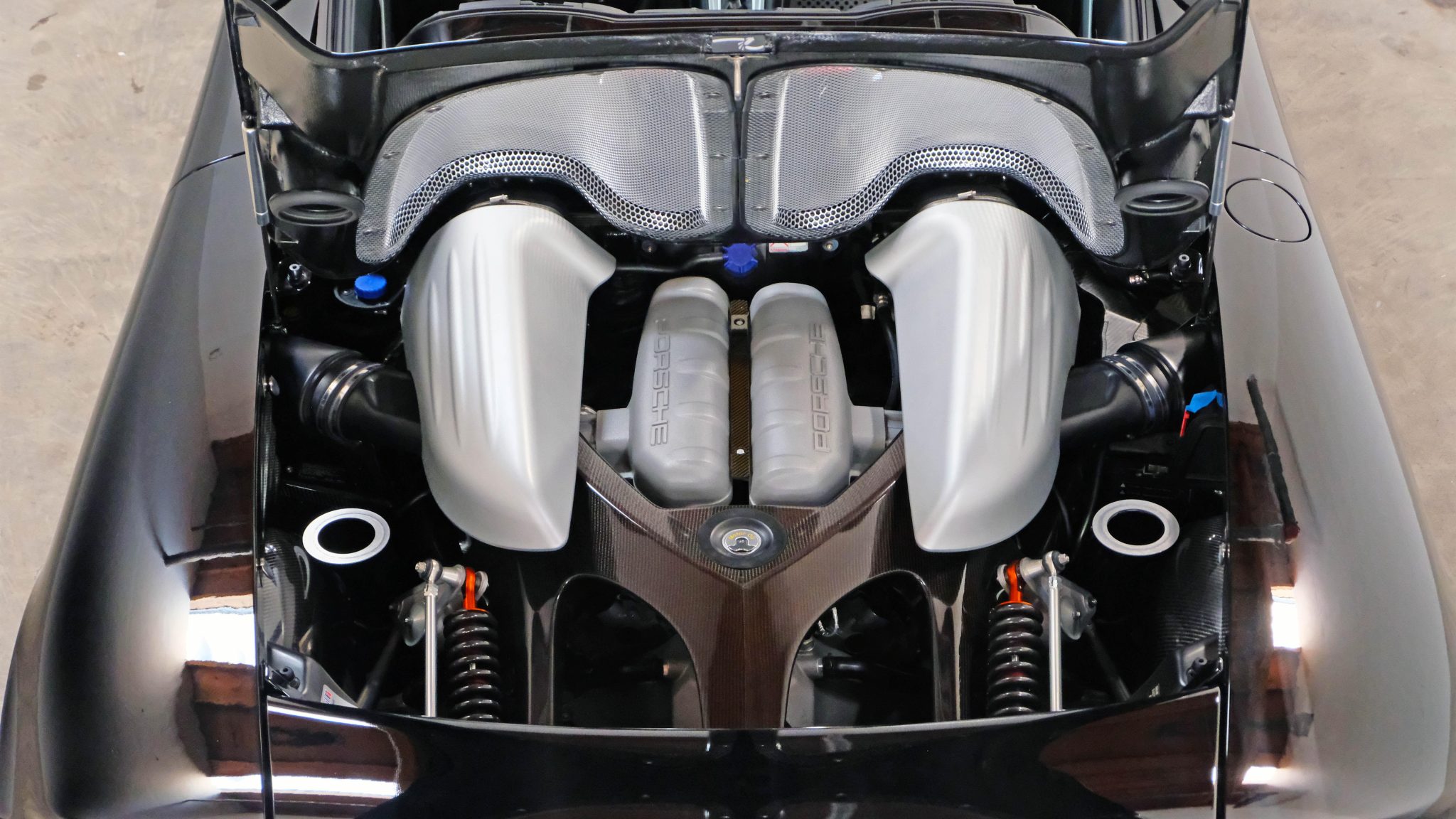
The two-seat, mid-engined convertible is capable of a 0-97km/h sprint in just 3.5 seconds, with a claimed top speed of 330km/h.
It was not the only Porsche owned by Seinfeld, who transformed a former three-story plumbing business into a sprawling vehicle garage housing a number of vehicles from the German marque.
Several Porsche cars, worth AU$30 million in total, featured in his collection were auctioned off in 2016, however, it is widely speculated that a number of old and new Porsche’s remain behind the walls of the New York brownstone warehouse.
